EP1518823B1 - Metalloxidnanoröhren und herstellungsverfahren dafür - Google Patents
Metalloxidnanoröhren und herstellungsverfahren dafür Download PDFInfo
- Publication number
- EP1518823B1 EP1518823B1 EP03715443A EP03715443A EP1518823B1 EP 1518823 B1 EP1518823 B1 EP 1518823B1 EP 03715443 A EP03715443 A EP 03715443A EP 03715443 A EP03715443 A EP 03715443A EP 1518823 B1 EP1518823 B1 EP 1518823B1
- Authority
- EP
- European Patent Office
- Prior art keywords
- metal oxide
- compound
- chemical formula
- nanotubes
- nanotube
- Prior art date
- Legal status (The legal status is an assumption and is not a legal conclusion. Google has not performed a legal analysis and makes no representation as to the accuracy of the status listed.)
- Expired - Lifetime
Links
Images



Classifications
-
- B—PERFORMING OPERATIONS; TRANSPORTING
- B01—PHYSICAL OR CHEMICAL PROCESSES OR APPARATUS IN GENERAL
- B01J—CHEMICAL OR PHYSICAL PROCESSES, e.g. CATALYSIS OR COLLOID CHEMISTRY; THEIR RELEVANT APPARATUS
- B01J20/00—Solid sorbent compositions or filter aid compositions; Sorbents for chromatography; Processes for preparing, regenerating or reactivating thereof
- B01J20/02—Solid sorbent compositions or filter aid compositions; Sorbents for chromatography; Processes for preparing, regenerating or reactivating thereof comprising inorganic material
- B01J20/06—Solid sorbent compositions or filter aid compositions; Sorbents for chromatography; Processes for preparing, regenerating or reactivating thereof comprising inorganic material comprising oxides or hydroxides of metals not provided for in group B01J20/04
-
- B—PERFORMING OPERATIONS; TRANSPORTING
- B01—PHYSICAL OR CHEMICAL PROCESSES OR APPARATUS IN GENERAL
- B01J—CHEMICAL OR PHYSICAL PROCESSES, e.g. CATALYSIS OR COLLOID CHEMISTRY; THEIR RELEVANT APPARATUS
- B01J20/00—Solid sorbent compositions or filter aid compositions; Sorbents for chromatography; Processes for preparing, regenerating or reactivating thereof
- B01J20/28—Solid sorbent compositions or filter aid compositions; Sorbents for chromatography; Processes for preparing, regenerating or reactivating thereof characterised by their form or physical properties
- B01J20/28002—Solid sorbent compositions or filter aid compositions; Sorbents for chromatography; Processes for preparing, regenerating or reactivating thereof characterised by their form or physical properties characterised by their physical properties
- B01J20/28004—Sorbent size or size distribution, e.g. particle size
- B01J20/28007—Sorbent size or size distribution, e.g. particle size with size in the range 1-100 nanometers, e.g. nanosized particles, nanofibers, nanotubes, nanowires or the like
-
- B—PERFORMING OPERATIONS; TRANSPORTING
- B01—PHYSICAL OR CHEMICAL PROCESSES OR APPARATUS IN GENERAL
- B01J—CHEMICAL OR PHYSICAL PROCESSES, e.g. CATALYSIS OR COLLOID CHEMISTRY; THEIR RELEVANT APPARATUS
- B01J20/00—Solid sorbent compositions or filter aid compositions; Sorbents for chromatography; Processes for preparing, regenerating or reactivating thereof
- B01J20/28—Solid sorbent compositions or filter aid compositions; Sorbents for chromatography; Processes for preparing, regenerating or reactivating thereof characterised by their form or physical properties
- B01J20/28014—Solid sorbent compositions or filter aid compositions; Sorbents for chromatography; Processes for preparing, regenerating or reactivating thereof characterised by their form or physical properties characterised by their form
- B01J20/28023—Fibres or filaments
-
- B—PERFORMING OPERATIONS; TRANSPORTING
- B01—PHYSICAL OR CHEMICAL PROCESSES OR APPARATUS IN GENERAL
- B01J—CHEMICAL OR PHYSICAL PROCESSES, e.g. CATALYSIS OR COLLOID CHEMISTRY; THEIR RELEVANT APPARATUS
- B01J20/00—Solid sorbent compositions or filter aid compositions; Sorbents for chromatography; Processes for preparing, regenerating or reactivating thereof
- B01J20/28—Solid sorbent compositions or filter aid compositions; Sorbents for chromatography; Processes for preparing, regenerating or reactivating thereof characterised by their form or physical properties
- B01J20/28054—Solid sorbent compositions or filter aid compositions; Sorbents for chromatography; Processes for preparing, regenerating or reactivating thereof characterised by their form or physical properties characterised by their surface properties or porosity
- B01J20/28088—Pore-size distribution
- B01J20/28092—Bimodal, polymodal, different types of pores or different pore size distributions in different parts of the sorbent
-
- B—PERFORMING OPERATIONS; TRANSPORTING
- B01—PHYSICAL OR CHEMICAL PROCESSES OR APPARATUS IN GENERAL
- B01J—CHEMICAL OR PHYSICAL PROCESSES, e.g. CATALYSIS OR COLLOID CHEMISTRY; THEIR RELEVANT APPARATUS
- B01J20/00—Solid sorbent compositions or filter aid compositions; Sorbents for chromatography; Processes for preparing, regenerating or reactivating thereof
- B01J20/30—Processes for preparing, regenerating, or reactivating
-
- B—PERFORMING OPERATIONS; TRANSPORTING
- B82—NANOTECHNOLOGY
- B82Y—SPECIFIC USES OR APPLICATIONS OF NANOSTRUCTURES; MEASUREMENT OR ANALYSIS OF NANOSTRUCTURES; MANUFACTURE OR TREATMENT OF NANOSTRUCTURES
- B82Y30/00—Nanotechnology for materials or surface science, e.g. nanocomposites
-
- C—CHEMISTRY; METALLURGY
- C01—INORGANIC CHEMISTRY
- C01B—NON-METALLIC ELEMENTS; COMPOUNDS THEREOF; METALLOIDS OR COMPOUNDS THEREOF NOT COVERED BY SUBCLASS C01C
- C01B13/00—Oxygen; Ozone; Oxides or hydroxides in general
- C01B13/14—Methods for preparing oxides or hydroxides in general
-
- C—CHEMISTRY; METALLURGY
- C01—INORGANIC CHEMISTRY
- C01B—NON-METALLIC ELEMENTS; COMPOUNDS THEREOF; METALLOIDS OR COMPOUNDS THEREOF NOT COVERED BY SUBCLASS C01C
- C01B13/00—Oxygen; Ozone; Oxides or hydroxides in general
- C01B13/14—Methods for preparing oxides or hydroxides in general
- C01B13/32—Methods for preparing oxides or hydroxides in general by oxidation or hydrolysis of elements or compounds in the liquid or solid state or in non-aqueous solution, e.g. sol-gel process
-
- C—CHEMISTRY; METALLURGY
- C01—INORGANIC CHEMISTRY
- C01B—NON-METALLIC ELEMENTS; COMPOUNDS THEREOF; METALLOIDS OR COMPOUNDS THEREOF NOT COVERED BY SUBCLASS C01C
- C01B3/00—Hydrogen; Gaseous mixtures containing hydrogen; Separation of hydrogen from mixtures containing it; Purification of hydrogen; Reversible storage of hydrogen
- C01B3/0005—Reversible storage of hydrogen, e.g. by hydrogen getters or electrodes
- C01B3/001—Reversible storage of hydrogen, e.g. by hydrogen getters or electrodes characterised by the uptaking media; Treatment thereof
-
- C—CHEMISTRY; METALLURGY
- C01—INORGANIC CHEMISTRY
- C01B—NON-METALLIC ELEMENTS; COMPOUNDS THEREOF; METALLOIDS OR COMPOUNDS THEREOF NOT COVERED BY SUBCLASS C01C
- C01B33/00—Silicon; Compounds thereof
- C01B33/113—Silicon oxides; Hydrates thereof
- C01B33/12—Silica; Hydrates thereof, e.g. lepidoic silicic acid
-
- C—CHEMISTRY; METALLURGY
- C01—INORGANIC CHEMISTRY
- C01G—COMPOUNDS CONTAINING METALS NOT COVERED BY SUBCLASSES C01D OR C01F
- C01G1/00—Methods of preparing compounds of metals not covered by subclasses C01B, C01C, C01D, or C01F, in general
- C01G1/02—Oxides
-
- C—CHEMISTRY; METALLURGY
- C01—INORGANIC CHEMISTRY
- C01G—COMPOUNDS CONTAINING METALS NOT COVERED BY SUBCLASSES C01D OR C01F
- C01G23/00—Compounds of titanium
- C01G23/04—Oxides; Hydroxides
- C01G23/047—Titanium dioxide
-
- C—CHEMISTRY; METALLURGY
- C01—INORGANIC CHEMISTRY
- C01G—COMPOUNDS CONTAINING METALS NOT COVERED BY SUBCLASSES C01D OR C01F
- C01G25/00—Compounds of zirconium
- C01G25/02—Oxides
-
- C—CHEMISTRY; METALLURGY
- C01—INORGANIC CHEMISTRY
- C01P—INDEXING SCHEME RELATING TO STRUCTURAL AND PHYSICAL ASPECTS OF SOLID INORGANIC COMPOUNDS
- C01P2004/00—Particle morphology
- C01P2004/01—Particle morphology depicted by an image
- C01P2004/04—Particle morphology depicted by an image obtained by TEM, STEM, STM or AFM
-
- C—CHEMISTRY; METALLURGY
- C01—INORGANIC CHEMISTRY
- C01P—INDEXING SCHEME RELATING TO STRUCTURAL AND PHYSICAL ASPECTS OF SOLID INORGANIC COMPOUNDS
- C01P2004/00—Particle morphology
- C01P2004/10—Particle morphology extending in one dimension, e.g. needle-like
- C01P2004/13—Nanotubes
-
- C—CHEMISTRY; METALLURGY
- C01—INORGANIC CHEMISTRY
- C01P—INDEXING SCHEME RELATING TO STRUCTURAL AND PHYSICAL ASPECTS OF SOLID INORGANIC COMPOUNDS
- C01P2006/00—Physical properties of inorganic compounds
- C01P2006/12—Surface area
-
- C—CHEMISTRY; METALLURGY
- C01—INORGANIC CHEMISTRY
- C01P—INDEXING SCHEME RELATING TO STRUCTURAL AND PHYSICAL ASPECTS OF SOLID INORGANIC COMPOUNDS
- C01P2006/00—Physical properties of inorganic compounds
- C01P2006/16—Pore diameter
- C01P2006/17—Pore diameter distribution
-
- C—CHEMISTRY; METALLURGY
- C01—INORGANIC CHEMISTRY
- C01P—INDEXING SCHEME RELATING TO STRUCTURAL AND PHYSICAL ASPECTS OF SOLID INORGANIC COMPOUNDS
- C01P2006/00—Physical properties of inorganic compounds
- C01P2006/80—Compositional purity
-
- Y—GENERAL TAGGING OF NEW TECHNOLOGICAL DEVELOPMENTS; GENERAL TAGGING OF CROSS-SECTIONAL TECHNOLOGIES SPANNING OVER SEVERAL SECTIONS OF THE IPC; TECHNICAL SUBJECTS COVERED BY FORMER USPC CROSS-REFERENCE ART COLLECTIONS [XRACs] AND DIGESTS
- Y02—TECHNOLOGIES OR APPLICATIONS FOR MITIGATION OR ADAPTATION AGAINST CLIMATE CHANGE
- Y02E—REDUCTION OF GREENHOUSE GAS [GHG] EMISSIONS, RELATED TO ENERGY GENERATION, TRANSMISSION OR DISTRIBUTION
- Y02E60/00—Enabling technologies; Technologies with a potential or indirect contribution to GHG emissions mitigation
- Y02E60/30—Hydrogen technology
- Y02E60/32—Hydrogen storage
-
- Y—GENERAL TAGGING OF NEW TECHNOLOGICAL DEVELOPMENTS; GENERAL TAGGING OF CROSS-SECTIONAL TECHNOLOGIES SPANNING OVER SEVERAL SECTIONS OF THE IPC; TECHNICAL SUBJECTS COVERED BY FORMER USPC CROSS-REFERENCE ART COLLECTIONS [XRACs] AND DIGESTS
- Y10—TECHNICAL SUBJECTS COVERED BY FORMER USPC
- Y10S—TECHNICAL SUBJECTS COVERED BY FORMER USPC CROSS-REFERENCE ART COLLECTIONS [XRACs] AND DIGESTS
- Y10S977/00—Nanotechnology
- Y10S977/70—Nanostructure
- Y10S977/811—Of specified metal oxide composition, e.g. conducting or semiconducting compositions such as ITO, ZnOx
-
- Y—GENERAL TAGGING OF NEW TECHNOLOGICAL DEVELOPMENTS; GENERAL TAGGING OF CROSS-SECTIONAL TECHNOLOGIES SPANNING OVER SEVERAL SECTIONS OF THE IPC; TECHNICAL SUBJECTS COVERED BY FORMER USPC CROSS-REFERENCE ART COLLECTIONS [XRACs] AND DIGESTS
- Y10—TECHNICAL SUBJECTS COVERED BY FORMER USPC
- Y10S—TECHNICAL SUBJECTS COVERED BY FORMER USPC CROSS-REFERENCE ART COLLECTIONS [XRACs] AND DIGESTS
- Y10S977/00—Nanotechnology
- Y10S977/963—Miscellaneous
Definitions
- the present invention relates to metal oxide nanotubes consisting solely of a metal oxide manufactured by using a hydrogel comprising a self aggregating organic compound as a template, more specifically, to metal oxide nanotubes having hollow cylinder micro structures constituting a metal oxide and having a capability to adsorb and store gas, particularly, a capability to adsorb and store hydrogen.
- the inventors have been conducting research on the formation of nanometer sized aggregates through self aggregation in solution of organic materials having specific structures.
- Carbon nanotubes, carbon fibers and the like having nanometer sized spaces and voids have been known as materials having such ability to adsorb and store hydrogen.
- WO 00/40509 Japanese Patent Provisional Publication 2002-54559 .
- some of the carbon nanotubes displayed hydrogen adsorption and storage capacities of 4% by weight to 8% by weight in some experimental examples, but their problems included high pressure conditions that made them impractical to use, measurements made at liquid nitrogen temperatures and the inability to perform the function repeatedly since they were used only under irreversible conditions.
- J. Richter, R. Seidel, R. Kirsch, M. Merting, W. Pompe, J. Plaschke, H. Schacker Adv. Mater., 12, 507 (2000 ).
- a hydrogen adsorption and storage capacity of about 3% by weight is considered necessary for an ordinary passenger vehicle to store the hydrogen gas needed to travel 500 km, and this is an accepted practical target level.
- single layer and multiple layer carbon nanotubes have many problems that need to be solved. For example, they are very expensive and are not adaptable to large volume production.
- Hydrogen adsorbing and storing alloys, mesoporous materials, porous organic materials and the like having nanometer sized voids are also known as hydrogen adsorbing and storing materials ( Japanese Patent Provisional Publication 2002-105609 ), but their performance as far as hydrogen adsorption and storage capacity is concerned has not reached the level adequate for practical applications. This is particularly true of hydrogen adsorbing and storing alloys which have high specific gravity, toxicity, contain a rare and expensive metal as an active ingredient or disintegrate into fine powder upon adsorption and desorption of hydrogen leaving many problems unsolved.
- Spiral silicon oxide nanotubes have been produced by gelating tantalum, titanium and vanadium alkoxides with a salt-type organogelator ( Kobayashi, S.; Hamasaki, N.; Suzuki, M.; Kimura, M.; Shirai, H.; Hanabusa, K.: J. Am. Chem. Soc. 2002, 124,6550 ). These nanotubes have an inner diameter of 30-180 nm.
- spiral shaped fibers were obtained through the self aggregation in water of the compound represented by the chemical formula (Chemical Formula 1) shown below (in which formula A represents a saccharide radical and R represents an alkyl group) ( Japanese Patent Application 2001-239014 ).
- formula A represents a saccharide radical and R represents an alkyl group
- R represents an alkyl group
- spiral shaped fibers are similarly formed when a portion of Compound (1) is substituted by Compound (2) represented by the chemical formula (Chemical Formula 2) shown below (in which formula B represents a saccharide radical and R' represents a hydrogen atom or an alkyl group).
- a precursor of a metal oxide is adsorbed on the surface of the spiral shaped surface due to hydrogen bonding of the amino groups [the primary amino groups (-NH 2 ) and the secondary amino groups (-NRH)] and the precursor when a precursor (for example, an alkoxide) of a metal oxide is added.
- a precursor for example, an alkoxide
- a metal oxide structural material is formed using the spiral shaped fiber as the template.
- a gel comprising a metal oxide and the aforementioned organic compound [spiral shaped fibers comprising Compound (1) and Compound (2)] is formed, and nanotubes comprising solely the metal oxide are formed upon removing the organic material by sintering at high temperatures.
- the present invention is a metal oxide nanotube consisting solely of a metal oxide that may contain hydroxyl groups, which is constructed in a double spiral and a hollow cylinder and has a hole diameter distribution containing two peak hole diameters ranging from 1 to 2 nm and from 3 to 7 nm. That is, the nanotube of the present invention has two hollow cylinder nanotubes having a hole diameter distribution with a peak hole diameter of 1-2 nm, particularly 1.2-1.5 nm, constructing a double spiral having a peak distance between nanotubes ranging 3-7 nm, particularly 4-6 nm.
- the hole diameter distribution is determined according to Brunauer-Emmett-Teller (BET) method.
- the metal oxide nanotube are preferably formed in water or a mixed solution of water and alcohol by dissolving compound 1 represented by the chemical formula (chemical formula 1) shown below and compound 2 represented by the chemical formula (chemical formula 2) shown below (in the formula A and B, may be identical or different from each other, represent saccharide radicals, R represents an alkyl group and R' represents a hydrogen atom or an alkyl group) in water or a mixed solution of water and alcohol and allowing to stand.
- a and B may be identical or different from each other and represent saccharide radicals.
- a and B being identical saccharide radicals is preferred for efficient formation of spiral shaped fibers.
- the saccharide may be monosaccharides, oligosaccharides or polysaccharides, but monosaccharides are preferred.
- the monosaccharides any one of glucose, galactose, N-acetyl glucosamine and other hexose, L-arabinose, xylose and other pentose may be used, but aldopyranose is particularly preferred. Pyranose is available in two types, ⁇ and ⁇ , and either one may be used.
- aldopyranose glucopyranose, galactopyranose, mannopyranose, allopyranose, altropyranose, gulopyranose, idopyranose, talopyranose and the like may be used.
- aldopyranose glucopyranose or galactopyranose is preferred.
- radical refers to a radical from which a hydrogen from one of the hydroxyl groups of saccharide has been removed, but a radical obtained by removing a hydrogen from any one of the hydroxyl groups bonded to the six membered aldopyranose ring is preferred.
- alkanoylamino group (-NHCOR) in Compound (1) may be located at any one of o-, m- or p- positions in relation to the saccharide radical (A), but the para position is preferred.
- the amino group (-NR'H) in Compound (2) may be located at any one of o-, m- or p- position in relation to the saccharide radical (B), but the para position is preferred.
- the R in the Chemical Formula (1) shown above represents an alkyl group.
- This alkyl group may contain linear or branched chains, but linear chains are preferred.
- the number of carbon atoms is preferable six to twenty, more preferably ten to twenty, and even more preferably ten to fourteen.
- the dodecyl group, tridecyl group, tetradecyl group, pentadecyl group, hexadecyl group and the like, for example, may be used.
- R' in the Chemical Formula (2) shown above represents a hydrogen atom or an alkyl group, but a hydrogen atom is preferred.
- alkyl group those containing four or fewer carbon atoms are preferred, and linear chains are more preferred.
- Compound (2) can be obtained using an ordinary method of reducing a corresponding nitrophenyl aldopyranoside, and Compound (1) may be obtained by allowing a long chain alkyl fatty acid chloride to react with Compound (2).
- the metal oxide may be a metal oxide with its precursor adsorbed on the amino groups on the surface of spiral shaped fibers formed from Compounds (1) and (2).
- Th metal may be Si, Ti, Zr, Zn, Ba, Ca, Ni, Al, Nb, Ta, W, Hf, Sn, Ge, Mn, Th, Ce or U or mixtures thereof, prefrably Si, Ti, Zr, Zn, Ba, Ca, Ni, Al, Nb, Ta, W, Hf or Sn or mixtures thereof, and even more preferably Si, Ti or Zr or mixtures thereof.
- a metal oxide does not necessarily need to be represented by compositional formulae such as ZnO, BaO, CaO, NiO 2 , Al 2 O 3 , NbO 5 , WO 3 , HfO 2 , SnO 2 , SiAlO 3.5 , SiTiO 4 , ZrTiO 4 , AlTiO 5 , ZrW 2 O 8 , SiO 2 , GeO 2 , TriO 2 , MnO 2 , ZrO 2 , ThO 2 , CeO 2 or UO 2 , and those containing hydroxyl groups also may be included.
- compositional formulae such as ZnO, BaO, CaO, NiO 2 , Al 2 O 3 , NbO 5 , WO 3 , HfO 2 , SnO 2 , SiAlO 3.5 , SiTiO 4 , ZrTiO 4 , AlTiO 5 , ZrW 2 O 8 , SiO 2 , GeO 2 ,
- Q1, Q2, Q3 and Q4 are available in the silicon oxide obtained from alkoxy silica.
- all four bonds are connected to oxygen atoms which in turn are connected to adjacent silicon atoms (Q4).
- the second type has one of the four bonds terminated with a hydroxyl group and others connected to oxygen atoms (Q3).
- the third type has two bonds terminated with hydroxyl groups and the remaining two bonds connected to oxygen atoms (Q2).
- Q2 has three bonds terminated with hydroxyl groups and the remaining bond connected to an oxygen atom (Q1).
- An examination of the silicon atoms using NMR can distinguish these structures and relative proportions.
- Q4/Q3 values are between 2 and 6.
- the present invention is a gas adsorption - desorption and storage material comprising any one of the aforementioned metal oxide nanotubes. More specifically, the present invention is a hydrogen adsorption and storage material wherein the gas is hydrogen.
- the production process for the metal oxide nanotubes of the present invention comprises a step (first step) wherein Compound (1) represented by the chemical formula (Chemical Formula 1) shown below and Compound (2) represented by the chemical formula (Chemical Formula 2) shown below (in the formulae, A, B, R and R' are as defined above) are allowed to dissolve in water or a mixed solution of water and alcohol and allowed to stand, a step (second step) wherein a metal oxide precursor is further mixed, a step (third step) wherein a catalyst designed to further convert the metal oxide precursor to a metal oxide is mixed and a step (fourth step) wherein the gel formed in the previous step is sintered.
- the first step through the fourth step are executed in this order.
- Compound (1) and Compound (2) are mixed and dissolved in water or a water/alcohol mixed solvent.
- Conducting the first step in a mixed solution of water and alcohol is preferred.
- the number of carbon atoms in the alcohol is preferably four or less, and methanol, ethanol and propanol are preferred.
- the proportion of alcohol in the mixed solution is preferably 10 to 50% by weight. When too much alcohol is present in the mixed solution, gel formation does not occur and the components remain dissolved resulting in difficulties in forming extra fine molecular aggregates of spiral shaped fibers effective as templates. When the alcohol component concentration in the mixed solution is too low, individual components encounter difficulty dispersing and dissolving effectively.
- the appropriate concentration of Compound (1) and Compound (2) in the solvent (a mixed solution) is about 1 to 20 g/liter, but about 5 to 10 g/liter is preferred.
- a molar ratio of Compound (2) to the sum of Compound (1) and Compound (2) of at least 20% is appropriate, and 20 to 90 mol % is preferred.
- this ratio is too low, the molecular aggregate obtained is granular and has difficulty forming fibrous aggregates.
- about 20% of Compound (2) was found to be present regardless of the ratio at which the components were mixed.
- the presence of 40 to 50% of Compound (2) in an entire solution is most desirable.
- Slight heating may be used in the first step to accelerate dissolution of Compound (1) and Compound (2).
- the solution is preferably allowed to stand subsequently at room temperature for spiral shaped fibers to form through self coagulation of Compound (1) and Compound (2).
- the time needed for the spiral shaped fibers to form can be established upon observing the gel formation and is ordinarily within half a day.
- a metal oxide precursor is blended in the second step after spiral shaped fibers are formed.
- This metal oxide precursor may be in any form as long as it forms the aforementioned metal oxide, but metal alkoxides are preferred and alkoxides containing silicon, titanium or zirconium are more preferred.
- metal alkoxides are preferred and alkoxides containing silicon, titanium or zirconium are more preferred.
- tetraethoxysilane, tetrapropoxysilane, tetrabutoxysilane, (chloromethyl) triethoxysilane, diethoxymethylsilane, diethoxyisopropylsilane, aminopropyl triethoxysilane, titanium derivatives of these compounds and zirconium derivatives of these compounds may be cited.
- Tetraethoxysilane, tetraethoxy titanium and tetraethoxy zirconium are preferred based on the ease of raw material availability and the cost.
- the metal oxide precursor When a metal oxide precursor is added at this step, the metal oxide precursor is adsorbed on the surface of the molecular aggregates (spiral shaped fibers) formed in the previous step. That is, the anion, a metal oxide precursor, becomes strongly adsorbed on an aggregate surface in this step through the hydrogen bonding and electrostatic interactions with Compound (2) partially incorporated into the molecular aggregate (spiral shaped fibers).
- the ratio of the metal in a metal oxide precursor to Compound (1) is preferably 10 to 150 fold equivalent, but 10 to 100 fold equivalent is more preferred.
- the mixed reaction solution is allowed to stand for about a day to 10 days at room temperature. The longer the standing period, the greater the adsorption rate of the metal oxide precursor on the surface of the spiral shaped fiber molecular aggregate and the thicker the hollow cylinder micro metal oxide structure material obtained after sintering. 4 to 8 days is ideal.
- the metal oxide precursor is allowed to polymerize to form a metal oxide in the third step.
- this metal oxide may contain hydroxyl groups.
- a basic catalyst is desirable for this polymerization, and ethylamine, propylamine, butylamine, pentylamine, hexylamine, benzylamine, diethylamine, dipropylamine, dibutylamine, dipentylamine, dihexylamine, ammonium hydroxide, alkali metal hydroxides and the like may be cited.
- the amount of catalyst used may be in about the same weight ratio as that of Compound (1) charged.
- a pH value of about 4 to 10 is appropriate, but 7 to 10 is optimum.
- the most preferred approach is to conduct the next step upon completion of the previous step.
- the next step may be conducted prior to the completion of the previous step or before confirming the completion.
- a sintering reaction is conducted to eliminate and remove the organic material from the product of the third step.
- metal oxide nanotubes comprising solely metal oxide are obtained using molecular aggregates (spiral shaped fibers), an organic material, as templates.
- the product from the third step is heated for about two hours at 100 to 200°C, and the temperature is subsequently raised to 500°C. These procedures are preferably conducted in a nitrogen gas atmosphere. The reason the sintering reaction is initially conducted at relatively low temperatures is to allow water and alcohol present as the solvent to evaporate slowly at first.
- the sintering is subsequently allowed to continue for 4 to 6 hours at 500°C in air.
- the sintering time is largely dependent on the sample amount and the sintering device capability. Several hours are needed when a small device and milligram sized samples are used, but several days of sintering is needed when the samples are in the order of grams.
- the metal oxide nanotubes are extremely useful as gas adsorption and storage materials, particularly to adsorb and store hydrogen.
- the hydrogen adsorption and storage capacity per unit volume of the metal oxide nanotubes is extremely high. Therefore, the metal oxide nanotubes are useful in hydrogen manufacturing, storing, transporting and utilization technologies.
- the utility value is very high, particularly as storage related materials used in hydrogen electrical generation facilities, as fuel storage materials used in hydrogen fueled vehicles, as fuel cell materials and in other energy and environment related areas.
- the present invention is illustrated by using the examples below, and it is not intended to restrict the present invention by these.
- the spiral shaped fibers formed and the nanofibers were examined using EF-TEM (a transmission type electron microscope equipped with energy filters) (Nakazawa, I.; Masuda, M.; Okada, Y.; Hanada, T.; Yase, K.; Asai, M.; Shimizu, T. Langmuir 1999, 15, 4757), NMR, FT-IR and XRD.
- the Rf value obtained by using a hexane/ethyl acetate (volume ratio 6/4) mixed solvent as the developing solvent was defined as Rf 1 for thin layer chromatography.
- p-Nitrophenyl- ⁇ -D-glucopyranoside (Tokyo Kasei) (250 mg) was dissolved in methanol/tetrahydrofuran mixed solvent (20 ml/5 ml), and 10% palladium carbon (250 mg) was added to the solution. Hydrogen gas was introduced into the reaction solution for three hours under a nitrogen gas atmosphere at room temperature. The reaction mixture was filtered to remove the palladium carbon, and the filtrate was evaporated under vacuum to dry. The solid residue was purified using silica gel chromatography using tetrahydrofuran/chloroform mixed solvent (1/1, volume ratio) as the elution solution to obtain p-aminophenyl- ⁇ -D-glucopyranoside.
- the p-aminophenyl- ⁇ -D-glucopyranoside (250 mg) obtained in the manner described above was dissolved in tetrahydrofuran (20 ml), and lauroyl chloride (300 mg) and triethylamine (1.0 g) were added. The reaction mixture was refluxed for five hours. The reaction solution was filtered to remove the solids, and the filtrate was evaporated under vacuum to provide solids. The residue was purified using silica gel column chromatography using methanol/chloroform (1/1, volume ratio) as the elution solution to obtain dodecanoylaminophenyl- ⁇ -D-glucopyranoside.
- p-Dodecanoylamino phenyl glucopyranoside (3 mg) obtained in Production Example 1 and p-aminophenylglucopyranoside (3 mg) were dissolved in water-methanol mixed solvent (10:1, volume ratio, 1 ml) by heating the solution to 70°C. Next, tetraethoxysilane (20 mg) was added, and benzylamine (6 mg) was subsequently added.
- a gel was obtained through gradual cooling and was allowed to stand without any additional treatment for seven days at room temperature without agitation.
- the sample was sintered in a nitrogen gas atmosphere first for two hours at 200°C and subsequently for four hours at 500°C to completely remove the organic material.
- a metal oxide micro structure material metal oxide nanotubes
- the metal oxide nanotubes were examined using a transmission type electron microscope.
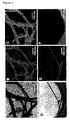
- a scanning electron microscope photograph is shown in Figure 1
- a transmission electron microscope photograph is shown in Figure 2.
- Double spiral shaped fibers comprising two nanotubes were observed.
- an adsorption - desorption isothermic curve for nitrogen gas was obtained using a Brunauer-Emmett-Teller (BET) method. That is, metal oxide nanotubes were completely degassed under high vacuum at 300°C for 71 hours and were slowly cooled to room temperature. Next, a known amount of nitrogen gas was continuously added to the sample cell under liquid nitrogen temperature conditions (about -195°C), and the pressure was measured. By repeating this procedure, adsorption isotherms were obtained. Similarly, desorption isotherms were obtained by measuring the amount of gas released from a sample when relative pressures were gradually lowered from one. The hole diameter size-volume curve shown in Figure 4 was obtained.
- BET Brunauer-Emmett-Teller
- the nanotubes were thought to be composed solely of a metal oxide and were thought to constitute double spiral (the distance between two nanotubes was about 5 nm) hollow cylinder shaped nanotubes having external diameters of about 2.5 nm, internal diameters of about 1.2-1.5 nm and lengths of several hundred micrometers as shown in Figure 5.
- the gas adsorption - desorption rate was calculated using the weight change rate observed when the metal oxide nanotubes obtained were completely degassed using the same method used to adsorb and desorb nitrogen gas, hydrogen gas was introduced at constant temperature by changing the pressure from 1 MPa to 10 MPa, and adsorption - desorption isothermic curves were obtained.
- the hydrogen adsorption - desorption isothermic curve of the double spiral silica nanotubes obtained in Example 1 is shown in Figure 6.
- the hydrogen adsorption capacity of the metal oxide nanotubes at 10 MPa and 273 K was 3.66% by weight (curve A).
- the hydrogen adsorption capacity of the metal oxide nanotubes at 10 MPa and 288 K was about 3.22% by weight (curve B) and at 10 MPa and 298 K was about 3.0% by weight (curve C).
- p-Dodecanoylamino phenylgalactopyranoside was used in place of p-dodecanoylamino phenylglucopyranoside in Example 1 and p-aminophenyl galactopyranoside was used in place of p-aminophenyl glucopyranoside to conduct the same operations described in Example 1, and similar double spiral silica nanotubes were obtained.
- p-Tetradecanoylamino phenylglucopyranoside was used in place of p-dodecanoylamino phenylglucopyranoside in Example 1 to conduct the same operations described in Example 1, and, similarly, double spiral silica nanotubes were obtained.
- Hexylamine was used in place of benzylamine in Example 1 to conduct the same operations described in Example 1, and, similarly, double spiral silica nanotubes were obtained.
- a potassium complex was obtained by dissolving a gel forming agent (5 mg) containing cholesterol and diazacrown ether segments at both ends of the molecules in one gram of dichloromethane in the presence of an equimolar amount of potassium perchlorate.
- the potassium complex was added to 1-butanol (95 mg) containing tetraethoxy silane (15 mg) and benzylamine (6 mg), and the mixture was heated to facilitate dissolution. The solution was left standing for a day at room temperature.
- the gel obtained was dried in vacuum, and multilayered silica nanotubes having an internal diameter of about 300 nm to 500 nm were obtained by subsequently drying and sintering the gel for an hour at 200°C and two hours at 500°C under nitrogen gas atmosphere and further for four hours at 500°C in air [ J.H. Jung, Y. Ono, S. Shinkai, Langmuir, 16, 1643 (2000 )].
Landscapes
- Chemical & Material Sciences (AREA)
- Organic Chemistry (AREA)
- Inorganic Chemistry (AREA)
- Chemical Kinetics & Catalysis (AREA)
- Analytical Chemistry (AREA)
- Engineering & Computer Science (AREA)
- Nanotechnology (AREA)
- Materials Engineering (AREA)
- Crystallography & Structural Chemistry (AREA)
- Physics & Mathematics (AREA)
- Geology (AREA)
- Condensed Matter Physics & Semiconductors (AREA)
- Composite Materials (AREA)
- Life Sciences & Earth Sciences (AREA)
- Environmental & Geological Engineering (AREA)
- General Life Sciences & Earth Sciences (AREA)
- General Physics & Mathematics (AREA)
- Combustion & Propulsion (AREA)
- Solid-Sorbent Or Filter-Aiding Compositions (AREA)
- Oxygen, Ozone, And Oxides In General (AREA)
- Carbon And Carbon Compounds (AREA)
- Silicon Compounds (AREA)
- Hydrogen, Water And Hydrids (AREA)
Claims (15)
- Ein Metalloxidnanoröhrchen bestehend ausschließlich aus einem Metalloxid, welches Hydroxylgruppen enthalten kann, umfassend zwei hohle Nanoröhrchenzylinder, welche eine Lochdurchmesserverteilung mit einem maximalen Lochdurchmesser von zwischen 1 bis 2nm aufweisen, und welche eine Doppelspirale mit einem maximalen Abstand zwischen den Nanoröhrchen im Bereich von 3 bis 7 nm bilden.
- Metalloxidnanoröhrchen nach Anspruch 1, mit einer Lochdurchmesserverteilung enthaltend zwei maximale Lochdurchmesser in dem Bereich von 1 bis 2 nm und zwischen 3 bis 7 nm gemäß des Brunauer-Emmett-Teller (BET) Verfahrens.
- Metalloxidnanoröhrchen nach Anspruch 1 oder 2, wobei das Metall Si, Ti oder Zr oder Mischungen dieser ist.
- Metalloxidnanoröhrchen nach einem der Ansprüche 1 bis 3, geformt unter Verwendung der spiralförmigen Fasern als eine Vorlage, welche gebildet sind, durch Auflö= sen der Verbindung 1, dargestellt durch die chemische Formel (Chemische Formel 1), welche nachfolgend dargestellt ist


- Ein Gasadsorptions- und Lagerungsmaterial umfassend das Metalloxidnanoröhrchen nach einem der Ansprüche 1 bis 4.
- Ein Wasserstoffadsorptions- und Lagerungsmaterial umfassend das Metalloxidnanoröhrchen nach einem der Ansprüche 1 bis 4.
- Verfahren zur Herstellung eines Metalloxidnanoröhrchens umfassend die Schritte des Auflösens der Verbindung 1, dargestellt durch die chemische Formel (Chemische Formel 1), welche nachfolgend dargestellt ist


- Verfahren nach Anspruch 7, wobei das Metall Si, Ti oder Zr oder eine Mischung dieser ist.
- Verfahren nach Anspruch 7 oder 8, wobei der Metalloxidvorläufer ein Alkoxid des Metalls ist.
- Verfahren nach einem der Ansprüche 7 bis 9, wobei der erste Schritt in einer gemischten Lösung aus Wasser und Alkohol durchgeführt wird, wobei die Anzahl der Kohlenstoffatome des Alkohols vier oder weniger beträgt und wobei der Anteil des Alkohols in der gemischten Lösung 10 oder 50 Gew.-% beträgt.
- Verfahren nach einem der Ansprüche 7 bis 10, wobei der Katalysator ein basischer Katalysator ist.
- Verfahren nach einem der Ansprüche 7 bis 11, wobei das Verhältnis der Verbindung 1 zu der Gesamtsumme der Verbindungen 1 und 2 20 bis 90 mol % beträgt und das Verhältnis des Metalls in dem Metalloxidvorläufer zu der Verbindung 1 das 10- bis 150-fache Äquivalent beträgt.
- Verfahren nach einem der Ansprüche 7 bis 12, wobei A und B identisch oder verschieden von einander sein können, und Radikale darstellen, erhalten durch das Entfernen von Wasserstoff aus jeder der Hydroxylgruppen, welche mit einem sechsgliedrigem Aldopyranosering verbunden sind.
- Verfahren nach Anspruch 13, wobei die Aldopyranose Glukopyranose oder Galaktopyranose ist.
- Verfahren nach einem der Ansprüche 7 bis 14, wobei die Alkanoylgruppe (-NHCOR) der Verbindung 1 in einer Paraposition zu dem Saccharidradikal A angeordnet ist, die Aminogruppe (-NR'H) der Verbindung 2 in einer Paraposition zu dem Saccharid-B-Radikal angeordnet ist, A und B identische Saccharidradikale sind, R eine lineare Alkylgruppe mit sechs bis zwanzig Kohlenstoffatomen ist und R' ein Wasserstoffatom ist.
Applications Claiming Priority (3)
| Application Number | Priority Date | Filing Date | Title |
|---|---|---|---|
| JP2002150356 | 2002-05-24 | ||
| JP2002150356A JP3821223B2 (ja) | 2002-05-24 | 2002-05-24 | 金属酸化物ナノチューブ及びその製法 |
| PCT/JP2003/003755 WO2003099713A1 (en) | 2002-05-24 | 2003-03-26 | Metal oxide nanotube and process for production thereof |
Publications (3)
| Publication Number | Publication Date |
|---|---|
| EP1518823A1 EP1518823A1 (de) | 2005-03-30 |
| EP1518823A4 EP1518823A4 (de) | 2006-10-04 |
| EP1518823B1 true EP1518823B1 (de) | 2007-09-26 |
Family
ID=29561226
Family Applications (1)
| Application Number | Title | Priority Date | Filing Date |
|---|---|---|---|
| EP03715443A Expired - Lifetime EP1518823B1 (de) | 2002-05-24 | 2003-03-26 | Metalloxidnanoröhren und herstellungsverfahren dafür |
Country Status (5)
| Country | Link |
|---|---|
| US (1) | US7172747B2 (de) |
| EP (1) | EP1518823B1 (de) |
| JP (1) | JP3821223B2 (de) |
| DE (1) | DE60316564T2 (de) |
| WO (1) | WO2003099713A1 (de) |
Families Citing this family (15)
| Publication number | Priority date | Publication date | Assignee | Title |
|---|---|---|---|---|
| JP2005306663A (ja) * | 2004-04-21 | 2005-11-04 | National Institute For Materials Science | シリカナノチューブの製造方法とナノサイズ領域の微小温度計 |
| FR2872716B1 (fr) * | 2004-07-06 | 2006-11-03 | Altreg Sarl | Produit de stockage reversible de dihydrogene, procede de fabrication d'un tel produit, et utilisation d'un tel produit pour le stockage reversible de dihydrogene |
| JP4719848B2 (ja) * | 2005-02-24 | 2011-07-06 | 独立行政法人科学技術振興機構 | 遷移金属酸化物ナノチューブ |
| US7771512B2 (en) * | 2005-06-24 | 2010-08-10 | Washington State University Research Foundation | Apparatus with high surface area nanostructures for hydrogen storage, and methods of storing hydrogen |
| US20100215915A1 (en) * | 2005-06-24 | 2010-08-26 | Washington State University | Method for manufacture and coating of nanostructured components |
| US7736485B2 (en) * | 2006-08-11 | 2010-06-15 | Aqua Resources Corporation | Nanoplatelet magnesium hydroxides and methods of preparing same |
| US8822030B2 (en) | 2006-08-11 | 2014-09-02 | Aqua Resources Corporation | Nanoplatelet metal hydroxides and methods of preparing same |
| WO2008140618A1 (en) * | 2006-12-22 | 2008-11-20 | Washington State University Research Foundation | Apparatus with high surface area nanostructures for hydrogen storage, and methods of storing hydrogen |
| KR100828575B1 (ko) * | 2007-01-22 | 2008-05-13 | 인하대학교 산학협력단 | 짧은 수직 채널의 메조 세공을 갖는 소평판형 실리카 |
| US20110053020A1 (en) * | 2007-11-09 | 2011-03-03 | Washington State University Research Foundation | Catalysts and related methods |
| JP5594481B2 (ja) * | 2008-04-25 | 2014-09-24 | サーモロン コリア カンパニー,リミテッド | 1次元のらせん状ナノポーラス構造体の合成方法及び該らせん状ナノポーラス構造体を合成するためのグリシン誘導型界面活性剤の合成方法 |
| EP2365857A2 (de) * | 2008-12-05 | 2011-09-21 | Centre National de la Recherche Scientifique - CNRS | Verfahren zum auflösen, rückgewinnen und behandeln von dihydrogen, anlage zum speichern von dihydrogen und herstellungsverfahren dafür |
| CN101518728B (zh) * | 2009-04-10 | 2011-05-25 | 北京化工大学 | 一种整体式高比表面积多孔吸附剂及其制备方法 |
| KR20150097817A (ko) | 2011-10-31 | 2015-08-26 | 가부시끼가이샤 리켄 | 피스톤 링 |
| RU2722157C1 (ru) | 2015-07-22 | 2020-05-27 | Басф Корпорейшн | Катализаторы с высокой геометрической площадью поверхности для получения винилацетатного мономера |
Family Cites Families (8)
| Publication number | Priority date | Publication date | Assignee | Title |
|---|---|---|---|---|
| WO2000040509A1 (en) | 1998-12-28 | 2000-07-13 | Osaka Gas Company Limited | Amorphous nano-scale carbon tube and production method therefor |
| JP4252188B2 (ja) | 2000-03-13 | 2009-04-08 | 独立行政法人科学技術振興機構 | 螺旋の向きが制御された螺旋構造を有する有機無機複合体の製造方法 |
| JP4092070B2 (ja) | 2000-11-27 | 2008-05-28 | 独立行政法人科学技術振興機構 | 糖誘導体を用いる有機無機複合体および金属酸化物の製造方法 |
| EP1246219A1 (de) * | 2001-03-26 | 2002-10-02 | Abb Research Ltd. | Feldemissionskathode |
| JP4164247B2 (ja) | 2001-08-07 | 2008-10-15 | 独立行政法人科学技術振興機構 | 糖由来のゲル化剤 |
| JP2003261331A (ja) * | 2002-03-08 | 2003-09-16 | Inst For Fundamental Chemistry | 導電性金属酸化物ナノチューブ |
| WO2004011375A1 (de) * | 2002-07-26 | 2004-02-05 | Eidgenössische Technische Hochschule Zürich | Verfahren zur herstellung von übergangsmetalloxid-nanotubes und nach diesem verfahren hergestellte nanotubes |
| US7147834B2 (en) * | 2003-08-11 | 2006-12-12 | The Research Foundation Of State University Of New York | Hydrothermal synthesis of perovskite nanotubes |
-
2002
- 2002-05-24 JP JP2002150356A patent/JP3821223B2/ja not_active Expired - Lifetime
-
2003
- 2003-03-26 EP EP03715443A patent/EP1518823B1/de not_active Expired - Lifetime
- 2003-03-26 US US10/502,562 patent/US7172747B2/en not_active Expired - Fee Related
- 2003-03-26 WO PCT/JP2003/003755 patent/WO2003099713A1/ja not_active Ceased
- 2003-03-26 DE DE60316564T patent/DE60316564T2/de not_active Expired - Lifetime
Also Published As
| Publication number | Publication date |
|---|---|
| JP3821223B2 (ja) | 2006-09-13 |
| JP2004026509A (ja) | 2004-01-29 |
| DE60316564T2 (de) | 2008-07-03 |
| US20050077496A1 (en) | 2005-04-14 |
| WO2003099713A1 (en) | 2003-12-04 |
| US7172747B2 (en) | 2007-02-06 |
| EP1518823A1 (de) | 2005-03-30 |
| EP1518823A4 (de) | 2006-10-04 |
| DE60316564D1 (de) | 2007-11-08 |
Similar Documents
| Publication | Publication Date | Title |
|---|---|---|
| EP1518823B1 (de) | Metalloxidnanoröhren und herstellungsverfahren dafür | |
| Wang et al. | Synthesis and enhanced intercalation properties of nanostructured vanadium oxides | |
| EP2132756B1 (de) | Kondensator mit elektroden umfassend kohlenstoffnanoröhren, die mit einem oder mehreren nicht-kohlenstoffmaterialien gefüllt sind | |
| EP0876295B1 (de) | Verfahren zur herstellung von nanostrukturierten oxiden und hydroxiden | |
| US7632769B2 (en) | Zirconia porous body and manufacturing method thereof | |
| CN102906016B (zh) | 制备基于石墨烯的二维夹层纳米材料的方法 | |
| US20100311576A1 (en) | Nanostructured titanium oxide material and its synthesis procedure | |
| AU2017203883A1 (en) | Metal and ceramic nanofibers | |
| Mohanty et al. | Redox mediator-enhanced charge storage in dimensionally tailored nanostructures towards flexible hybrid solid-state supercapacitors | |
| KR20100014074A (ko) | 다공질 탄소 재료 및 그 제조 방법 및 흡착제, 마스크, 흡착 시트 및 담지체 | |
| US20160207789A1 (en) | Elongated titanate nanotube, its synthesis method, and its use | |
| Samal et al. | An anionic and cationic surfactant-assisted hydrothermal synthesis of cobalt oxide nanoparticles as the active electrode material for supercapacitors | |
| Jung et al. | Preparation of novel silica structures using a library of carbohydrate gel assemblies as templates for sol–gel transcription | |
| EP1748033A1 (de) | Nanostrukturiertes titanoxidmaterial und herstellungsverfahren dafür | |
| Pitchai et al. | Graphene-guided growth of rare earth-doped Bi 2 Mo 2 O 9 nano self-assembly for enhanced asymmetric supercapacitor device performance | |
| WO2010096527A1 (en) | High performance electrochemical redox capacitors using materials possessing non-stoichiometry and defect chemical equilibrium | |
| US20060240256A1 (en) | Nano-structured metal-carbon composite and process for preparation thereof | |
| Gholami et al. | Investigate the effect of silica on improvement electrochemical storage of hydrogen in ZnAl2O4 spinel | |
| Zhao et al. | Synthesis of dandelion-like NiO hierarchical structures assembled with dendritic units and their performances for ethanol gas sensing | |
| JP2002242026A (ja) | 繊維状炭素ナノ物質の製造方法及びこれを用いた電気化学キャパシタ用電極材 | |
| Gai et al. | Luminescence functionalization of MCM-48 by YVO 4: Eu 3+ for controlled drug delivery | |
| KR100488100B1 (ko) | 메조다공성 전이금속 산화물 박막 및 분말, 및 이의제조방법 | |
| KR100624084B1 (ko) | 나노 구조를 가진 금속-카본 복합체 및 그의 제조방법 | |
| JP4803422B2 (ja) | 窒化ホウ素系多孔体およびその製造方法 | |
| EP1792873A1 (de) | Nanostrukturierte Oxide und Hydroxide sowie Verfahren zu deren Herstellung |
Legal Events
| Date | Code | Title | Description |
|---|---|---|---|
| PUAI | Public reference made under article 153(3) epc to a published international application that has entered the european phase |
Free format text: ORIGINAL CODE: 0009012 |
|
| 17P | Request for examination filed |
Effective date: 20040708 |
|
| AK | Designated contracting states |
Kind code of ref document: A1 Designated state(s): DE FR GB NL |
|
| RIN1 | Information on inventor provided before grant (corrected) |
Inventor name: SHIMIZU, T.,TSUKUBA CENTER,NAT. INST. ADV. IND. Inventor name: JUNG, JONG HWA |
|
| A4 | Supplementary search report drawn up and despatched |
Effective date: 20060904 |
|
| GRAP | Despatch of communication of intention to grant a patent |
Free format text: ORIGINAL CODE: EPIDOSNIGR1 |
|
| GRAS | Grant fee paid |
Free format text: ORIGINAL CODE: EPIDOSNIGR3 |
|
| GRAA | (expected) grant |
Free format text: ORIGINAL CODE: 0009210 |
|
| AK | Designated contracting states |
Kind code of ref document: B1 Designated state(s): DE FR GB NL |
|
| REG | Reference to a national code |
Ref country code: GB Ref legal event code: FG4D |
|
| REF | Corresponds to: |
Ref document number: 60316564 Country of ref document: DE Date of ref document: 20071108 Kind code of ref document: P |
|
| ET | Fr: translation filed | ||
| PLBE | No opposition filed within time limit |
Free format text: ORIGINAL CODE: 0009261 |
|
| STAA | Information on the status of an ep patent application or granted ep patent |
Free format text: STATUS: NO OPPOSITION FILED WITHIN TIME LIMIT |
|
| 26N | No opposition filed |
Effective date: 20080627 |
|
| PGFP | Annual fee paid to national office [announced via postgrant information from national office to epo] |
Ref country code: DE Payment date: 20140211 Year of fee payment: 12 Ref country code: NL Payment date: 20140213 Year of fee payment: 12 |
|
| PGFP | Annual fee paid to national office [announced via postgrant information from national office to epo] |
Ref country code: FR Payment date: 20140211 Year of fee payment: 12 |
|
| PGFP | Annual fee paid to national office [announced via postgrant information from national office to epo] |
Ref country code: GB Payment date: 20140211 Year of fee payment: 12 |
|
| REG | Reference to a national code |
Ref country code: DE Ref legal event code: R119 Ref document number: 60316564 Country of ref document: DE |
|
| GBPC | Gb: european patent ceased through non-payment of renewal fee |
Effective date: 20150326 |
|
| REG | Reference to a national code |
Ref country code: NL Ref legal event code: MM Effective date: 20150401 |
|
| REG | Reference to a national code |
Ref country code: FR Ref legal event code: ST Effective date: 20151130 |
|
| PG25 | Lapsed in a contracting state [announced via postgrant information from national office to epo] |
Ref country code: DE Free format text: LAPSE BECAUSE OF NON-PAYMENT OF DUE FEES Effective date: 20151001 Ref country code: GB Free format text: LAPSE BECAUSE OF NON-PAYMENT OF DUE FEES Effective date: 20150326 |
|
| PG25 | Lapsed in a contracting state [announced via postgrant information from national office to epo] |
Ref country code: FR Free format text: LAPSE BECAUSE OF NON-PAYMENT OF DUE FEES Effective date: 20150331 |
|
| PG25 | Lapsed in a contracting state [announced via postgrant information from national office to epo] |
Ref country code: NL Free format text: LAPSE BECAUSE OF NON-PAYMENT OF DUE FEES Effective date: 20150401 |