EP1517155B1 - System und Verfahren zur Bereitstellung eines Telematikdienstes mit AGPS Funktion - Google Patents
System und Verfahren zur Bereitstellung eines Telematikdienstes mit AGPS Funktion Download PDFInfo
- Publication number
- EP1517155B1 EP1517155B1 EP04022312A EP04022312A EP1517155B1 EP 1517155 B1 EP1517155 B1 EP 1517155B1 EP 04022312 A EP04022312 A EP 04022312A EP 04022312 A EP04022312 A EP 04022312A EP 1517155 B1 EP1517155 B1 EP 1517155B1
- Authority
- EP
- European Patent Office
- Prior art keywords
- telematics
- information
- agps
- server
- telematics terminal
- Prior art date
- Legal status (The legal status is an assumption and is not a legal conclusion. Google has not performed a legal analysis and makes no representation as to the accuracy of the status listed.)
- Expired - Lifetime
Links
Images


Classifications
-
- G—PHYSICS
- G08—SIGNALLING
- G08G—TRAFFIC CONTROL SYSTEMS
- G08G1/00—Traffic control systems for road vehicles
- G08G1/09—Arrangements for giving variable traffic instructions
- G08G1/0962—Arrangements for giving variable traffic instructions having an indicator mounted inside the vehicle, e.g. giving voice messages
- G08G1/0968—Systems involving transmission of navigation instructions to the vehicle
-
- G—PHYSICS
- G01—MEASURING; TESTING
- G01S—RADIO DIRECTION-FINDING; RADIO NAVIGATION; DETERMINING DISTANCE OR VELOCITY BY USE OF RADIO WAVES; LOCATING OR PRESENCE-DETECTING BY USE OF THE REFLECTION OR RERADIATION OF RADIO WAVES; ANALOGOUS ARRANGEMENTS USING OTHER WAVES
- G01S19/00—Satellite radio beacon positioning systems; Determining position, velocity or attitude using signals transmitted by such systems
- G01S19/01—Satellite radio beacon positioning systems transmitting time-stamped messages, e.g. GPS [Global Positioning System], GLONASS [Global Orbiting Navigation Satellite System] or GALILEO
- G01S19/03—Cooperating elements; Interaction or communication between different cooperating elements or between cooperating elements and receivers
- G01S19/05—Cooperating elements; Interaction or communication between different cooperating elements or between cooperating elements and receivers providing aiding data
-
- G—PHYSICS
- G01—MEASURING; TESTING
- G01S—RADIO DIRECTION-FINDING; RADIO NAVIGATION; DETERMINING DISTANCE OR VELOCITY BY USE OF RADIO WAVES; LOCATING OR PRESENCE-DETECTING BY USE OF THE REFLECTION OR RERADIATION OF RADIO WAVES; ANALOGOUS ARRANGEMENTS USING OTHER WAVES
- G01S19/00—Satellite radio beacon positioning systems; Determining position, velocity or attitude using signals transmitted by such systems
- G01S19/01—Satellite radio beacon positioning systems transmitting time-stamped messages, e.g. GPS [Global Positioning System], GLONASS [Global Orbiting Navigation Satellite System] or GALILEO
- G01S19/13—Receivers
- G01S19/14—Receivers specially adapted for specific applications
-
- H—ELECTRICITY
- H04—ELECTRIC COMMUNICATION TECHNIQUE
- H04W—WIRELESS COMMUNICATION NETWORKS
- H04W4/00—Services specially adapted for wireless communication networks; Facilities therefor
- H04W4/02—Services making use of location information
Definitions
- the present invention relates generally to an apparatus for providing a telematics service, and more particularly to a telematics system including an AGPS (Assisted Global Positioning System) function and a mobile communication terminal.
- AGPS Assisted Global Positioning System
- Telematics is a compound of "telecommunication" and “informatics”. Telematics is a technique for providing a mobile communication service and a position tracking service to a vehicle so as to provide information about a vehicle accident, a vehicle burglary, a driving route, traffic and life information, and games in real time. Telematics systems provide services in relation to a present position of a user, so telematics systems are based on a GPS (global positioning system) capable of detecting the present position of the user.
- GPS global positioning system
- GPS has been designed for military use by the ministry of defense. However, some GPS functions have been permitted to be used by private businesses.
- the GPS satellite signals which are permitted to be used by private businesses, are created by modulating signals, which are obtained by multiplying navigation data by a pseudo random noise code of each satellite, into a carrier.
- Navigation data is transmitted from the GPS satellite with a transmission speed of 50bps and enables the user to recognize a position of the GPS satellite.
- the navigation data includes information about a normal operating state of the satellite, parameters for calculating a satellite clock error, ephemeris information of the satellite, and compensating values for determining a time delay of signals caused by an ionospheric layer.
- a GPS receiver receives GPS satellite signals in order to demodulate the carrier and the pseudo random code, and to decode navigation data contained in the GPS satellite signals.
- a mobile communication terminal equipped with the GPS receiver determines its position by measuring a distance between a satellite and the mobile communication terminal, after precisely calculating a position of the corresponding satellite based on the navigation data.
- the distance between the satellite and the mobile communication terminal which is called a "pseudo-range" may be obtained by calculating a wave arrive time from the satellite to the mobile communication terminal, after measuring a phase of the pseudo random network code of each satellite included in the GPS signals.
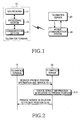
- the telematics terminal 10 receives the GPS signal and measures a present position.
- the telematics terminal 10 transmits the measuring result to the telematics server 20 in order to request a service in relation to present position information in step S11.
- the GPS receiver 11 receives the GPS signal from the GPS satellite and transmits the GPS signal into the processing section 13.
- the processing section 13 measures the present position of the telematics terminal 10 and transmits present position information to the communication section 15.
- the communication section 15 transmits present position information in the form of a message to the telematics server 20.
- the communication section 15 transmits destination information requested by the user to the telematics server 20 by adding destination information to the present position information in the form of a message.
- the telematics server 20 creates various types of service information in relation to the present position of the telematics terminal 10 by using present position information transmitted from the telematics terminal 10 in step S 13 and provides services in relation to the present position of the telematics terminal 10 to the telematics terminal 10 in step S15.
- the conventional telematics system must sequentially search a search area, which consists of frequencies and codes with respect to each satellite, in order to enable the telematics terminal 10 to obtain the GPS signal, if information is not provided.
- the conventional telematics system does not use satellite ephemeris information and user position/time information.
- the conventional telematics system takes a long time to measure an initial position of the telematics terminal, and a start time for the service may be delayed.
- US 2002/0164998 A1 relates to providing position related information to a user of a wireless device.
- a position determination entity PDE
- PDE position determination entity
- This GPS aiding information is transmitted to the wireless device through the base station. Because the wireless device is in communication with, and therefore proximate to, the base station, the GPS aiding information provides the wireless device with the approximate positions of the GPS satellites in view, thereby reducing the search frequency range. Once the GPS satellite signals are acquired, the geographic position of the wireless device may be determined.
- the wireless device simultaneously collects measurements from the GPS satellites and the base station and transmits the information to the PDE which carries out accurate position calculations using the data previously collected by the PDE. Thereafter, position related information and services can be provided to the user of the wireless device.
- WO 03/045084 A2 describes a location service client that receives information concerning the locations of a target user equipment.
- the location service client makes use of location information including service applications such as viewer location information services, games and fleet management applications.
- a location information service receives CDMA base station information and a request for transmitting assist information from a cellular phone.
- the location information server determines an approximate position of the cellular phone based on the CDMA base station information. Based on the approximate position of the cellular phone, the location information server computes the assist information which is useful to the cellular phone in searching GPS satellites and transmits the computed assist information to the cellular phone.
- WO 02/075349 A2 describes time acquisition in a wireless position determination system.
- US 2001/0029425 A1 relates to real time vehicle guidance and traffic forecasting systems.
- a first advantage of the present invention is to provide a telematics system and a method for rapidly providing a telematics service by shortening an initial position measuring time of the telematics system.
- a second advantage of the present invention is to provide a telematics system and a method for improving a receive sensitivity of a GPS signal in a downtown area in which the GPS signal is attenuated, by utilizing satellite ephemeris information and user position information.
- a telematics system comprising: a position determination entity server for storing and managing AGPS information including ephemeris information and compensation information of a satellite; a telematics terminal for receiving AGPS information from the position determination entity server to measure a present position of a moving object by using the AGPS information and requesting a telematics service by using the present position information; and a telematics server for receiving AGPS information from the position determination entity server in response to the telematics service request of the telematics, transmitting the AGPS information to the telematics terminal, and providing the telematics terminal with the telematics service requested by the telematics terminal by using the present position information of the telematics terminal.
- a method for providing a telematics service comprising the steps of receiving AGPS information including ephemeris information and compensation information of a satellite by using a telematics terminal in order to measure a present position of a moving object, measuring the present position of the moving object by using the AGSP information and time information of the telematics terminal, and receiving a position-related service based on present position of the moving object.
- FIG. 3 is a block view illustrating a structure of a telematics system according to an embodiment of the present invention.
- the telematics system of the present invention comprises a telematics terminal 100 including an AGPS (assisted global positioning system) module 110, a processing section 130, and a communication section 150, a telematics server 200, a mobile communication system 300, and a PDE (position determination entity) server 400.
- AGPS assisted global positioning system
- PDE position determination entity
- the AGPS module 110 receives the GPS signal in order to measure a position of the telematics terminal 100 by using predetermined satellite ephemeris information and error information.
- the AGPS module 110 helps reduce a long warm-up time derived from a receipt of navigation data, so that the position of the telematics terminal 100 can be detected in a shorter time. That is, the conventional GPS receiver must sequentially search a search area consisting of frequencies and codes with respect to each satellite, in order to obtain the GPS signal.
- the GPS receiver (not shown, but included in the AGPS module 110) may substantially know position/time information of the user based on pre-measured satellite ephemeris information and error information.
- the structure and operation of the mobile communication system 300 is widely known to one skilled in the art, so a detailed structure of the mobile communication system 300 is omitted in FIG. 3 . In addition, the structure of the mobile communication system 300 will not be further described herein below.
- the AGPS module 110 of the telematics terminal 100 illustrated in FIG. 3 enables the telematics terminal 100 to perform AGPS functions. More specifically, the PDE server 400 stores and manages satellite ephemeris information and correction information, i.e., AGPS information. When the telematics terminal 100 requests the AGPS information, the PDE server 400 receives the AGPS information from the telematics server 200 and transmits the AGPS information to the telematics terminal through the telematics server 200. At this time, as illustrated in FIG. 3 , the telematics terminal 100 communicates, i.e., transfers data, with the telematics server 200 through the mobile communication system 300. This kind of data communication may be applied to the entire following procedure.
- the telematics terminal 100 is mounted on a moving object, such as a vehicle, so as to measure the present position of the moving object.
- the telematics terminal 100 transmits present position information to the telematics server 200 in order to receive services utilizing the present position information in response to a request of the user. If the user has requested a route guide service, the telematics terminal 100 transmits destination information to the telematics server 200 together with present position information.
- the telematics terminal 100 requests AGPS information from the PDE server 400 through the telematics server 200, and receives AGPS information in response to the request. Then, the telematics terminal 100 measures the present position based on AGPS information.
- the telematics terminal 100 includes the AGPS module 110, the processing section 130, and the communication section 150.
- the processing section 130 manages the operation of the telematics terminal 100 based on an external operating signal.
- the processing section 130 transmits a control signal requesting AGPS information to the AGPS module 110 when the external operating signal requesting the present position is transmitted thereto.
- the processing section 130 receives data required for calculating the present position from the AGPS module 110, such as pre-measured satellite ephemeris information and error information, so as to transmit data request information to the telematics server 200 through the communication section 150.
- the processing section 130 transmits the AGPS information, which has been transmitted from the telematics server 200 through the communication section 150, to the AGPS module 110. Thereafter, the AGPS module 110 measures the present position by using the AGPS information.
- the processing section 130 receives resultant data for the present position from the AGPS module 110 and transmits the resultant data to the communication section 150. Accordingly, the communication section 150 requests the service utilizing the present position information by transmitting present position information to the telematics server 200.
- the communication section 150 transmits destination information, which is determined by the external operating signal, to the telematics server 200 together with present position information.
- the communication section 150 not only makes data communication between the telematics terminal 100 and the telematics server 200 through the mobile communication system 300, but also performs a conventional mobile communication function. Therefore, the communication section 150 must include a communication module capable of performing mobile communication, such as CDMA (code division multiple access) and UMTS (universal mobile telecommunication).
- CDMA code division multiple access
- UMTS universal mobile telecommunication
- the telematics server 200 manages all telematic services. More particularly, the telematics server 200 provides a service utilizing present position information to the telematics terminal 100, when the telematics terminal 100 requests the service. In addition, when the telematics terminal 100 requests AGPS information, the telematics server 200 requests the AGPS information from the PDE server 400 in order to provide the AGPS information to the telematics terminal 100.
- the telematics terminal 100 described above includes the communication section 150, it is also possible to use the telematics terminal without the communication module.
- the telematics terminal 100 is connected to a conventional mobile communication terminal with an interface, such as a UART (universal asynchronous receiver/transmitter).
- UART universal asynchronous receiver/transmitter
- the mobile communication terminal can receive the AGPS signal even if the mobile communication terminal has no GPS function.
- FIG. 4 is a schematic block view illustrating the AGPS module 110 according to an embodiment of the present invention.
- the AGPS module 110 of the present invention includes a GPS receiving section 111 and a position calculating section 113.
- the GPS receiving section 111 analyzes the GPS signal transmitted from the GPS satellite and transmits data thereof to the position calculating section 113. More specifically, the GPS receiving section 111 reduces a search range for receiving the GPS signal by utilizing AGPS information transmitted from the PDE server 400, and as a result, it is possible to obtain the satellite signal within a shorter period of time.
- the position calculating section 113 measures the present position of the telematics terminal 100 using the GPS signal transmitted from the GPS receiving section 111.
- the position calculating section 113 utilizes satellite position information among the AGPS information transmitted from the PDE server 400, and rapidly measures the present position of the telematics terminal 100.
- FIG. 5 is a schematic block view illustrating the PDE server 400 according to an embodiment of the present invention.
- the PDE server 400 includes a GPS receiving section 410, a position calculating section 420, and a telematics interface section (I/F) 430.
- the GPS receiving section 410 receives GPS information required to calculate the position of the telematics terminal 100 from the GPS satellite and transmits GPS information to the position calculating section 420.
- the position calculating section 420 calculates the position of the telematics terminal 100 using the GPS satellite signal transmitted thereto from the GPS receiving section 410 and related information thereof.
- the position calculating section 420 calculates the position of the PDE server 400 using the GPS signal transmitted from the GPS receiving section 410 and measures satellite ephemeris information observed from the PDE server 400 and error information thereof, in order to calculate the position of the telematics terminal 100.
- the PDE server 400 provides the telematics terminal 100 located in a management area of the PDE server 400 with satellite ephemeris information and position information of the telematics terminal 100 so that the telematics terminal 100 can rapidly measure its own present position.
- FIG. 6 is a view illustrating a service procedure using present position information of the telematics system according to an embodiment of the present invention.
- the processing section 130 requests an initialization of the AGPS module 110 in step S101.
- the AGPS module 110 which has been initialized, requests AGPS information required for calculating the present position from the PDE server 400 in steps S 103, S105, S107, and S109.
- an AGPS information requesting message of the AGPS module 110 is transmitted to the telematics server 200 through the processing section 130 and the communication section 150 of the navigation terminal 100 in steps S103, S105, and S107, and the telematics server 200 transmits the AGPS information requesting message to the PDE server 400 (S109).
- AGPS information created from the PDE server 400 in response to the AGPS information request message is transmitted to the AGPS module 110 from
- the telematics server 200 communicates with the communication section 150 of the telematics terminal 100 through the mobile communication system.
- the AGPS information which is requested by the AGPS module 110 and transmitted from the PDE server 400, includes GPS sensitivity assistance, GPS ephemeris, location response, and GPS satellite health information.
- the AGPS module 110 Upon receiving the AGPS information, the AGPS module 110 calculates the present position of the telematics terminal 100 in step S127. However, in order to calculate the present position of the telematics terminal 100, time information of the telematics terminal 100 is required. Accordingly, the AGPS module 110 requests the time information from the communication section 150 performing a mobile communication function through the processing section 130 in steps S111 and S 113. In response to the request, the communication section 150 transmits AGPS time information to the AGPS module 110 through the processing section 130 in steps S 115 and S 117.
- the AGPS module 110 after receiving the AGPS information and the AGPS time information through above steps S103 to S125, calculates the present position of the telematics terminal 100 by using AGPS information and AGPS time information in step S127.
- the method for calculating the present position of the telematics terminal 100 using AGPS information and AGPS time information is already-known in the art (for example, Global Positioning System: Theory and Application Volume 1, edited by Bradford W. Parkinson, James J. Spilkere Jr., Published by the American Institute of Aeronautics and Astronautics, Inc. ).
- the AGPS module 110 transmits the present position information of the telematics terminal 100 to the telematics server 200 through the processing section 130 and the communication section 150 in steps S129, S131, and S133.
- the telematics server 200 which receives present position information from the telematics terminal 100, provides various services using the present position information, such as an emergency service (for example, E-911), a navigation service, and a traffic information service.
- Steps S129, S131, and S133, for transmitting present position information from the telematics terminal 100 to the telematics server 200 can be omitted depending on the type of service. For example, if the telematics terminal 100 itself calculates the route for the navigation, steps S129, S 131 and S133 may be omitted.
- the telematics server 200 After receiving present position information from the telematics terminal through steps S129, S131, and S133, the telematics server 200 creates service information in relation to the present position (for example, an optimal route) by using the present position information in step S135, and provides such service information to the telematics terminal 100 in steps S137 and S139.
- the optimal route may be calculated through various methods, which are well-known in telematics and navigation fields, and therefore, not described herein.
- FIG. 7 is a flow chart illustrating a position calculating procedure of a telematics system according to an embodiment of the present invention. That is, a procedure for calculating the present position of the AGPS module 110 (referred to FIG. 6 ) is illustrated in FIG. 7 .
- the AGPS module 110 requests information required for operating the AGPS from the PDE server 400 in step S220.
- the information includes GPS sensitivity assistance, GPS ephemeris, location response, and GPS satellite health information.
- the AGPS module 110 requests time information from the communication section 150 in order to rapidly measure the present position in step S230.
- the AGPS module 110 then receives the AGPS information and the AGPS time information. At this time, if received AGPS time information has a precision degree of minimum 1 second, a satellite search range can be reduced when receiving the GPS satellite signal. Thus, it is possible to obtain the satellite signal within a short time due to the reduced search range.
- step S240 the AGPS determines whether it has received the AGPS information and the AGPS time information. If the AGPS information and the AGPS time information has been received, the process proceeds to step S250. However, if the AGPS information and the AGPS time information has not been received, the AGPS module 110 re-requests the AGPS information and the AGPS time information in step S220 and S230.
- the AGPS module 110 receiving AGPS information and AGPS time information obtains the signal from the satellite by using above information.
- the telematics terminal 100 calculates the present position by utilizing the obtained signal in step S250.
- This calculation step S250 corresponds to step S127 of calculating the present position illustrated in FIG. 6 .
- step 250 will be described in more detail.
- the AGPS module 110 calculates a position of the satellite, a moving speed of the satellite, and a relative distance and a relative speed of the satellite with respect to corresponding GPS receiver in step S251. Then, the AGPS module 110 determines a code capable of rapidly obtaining the GPS signal in an early stage, and a search range and a central search point of Doppler in step S252. Next, the AGPS module 110 predicts a GPS navigation bit in order to improve sensitivity of the GPS in step S253, and performs a search by increasing a synchronous integration period using the predicted GPS navigation bit.
- the AGPS module 110 performs a GPS signal tracking/detecting in step S254.
- the AGPS module 110 measures a pseudo-range between the satellite and the GPS receiver in step S255 and calculates the position of the GPS receiver (that is, the position of the user) using ephemeris information of the GPS satellite transmitted thereto from the server in step S256.
- the AGPS is utilized when measuring an initial position required for providing a telematics service.
- an initial position measuring time can be reduced, thereby advancing a start point of the telematics service. That is, a standby time of the user, which is required until the present position has been represented in the GPS receiver to obtain the initial position of the user, can be significantly reduced.
- the present invention uses AGPS information, the reception sensitivity of the GPS signal in a downtown area, in which the GPS signal is attenuated, can be improved and the position of the user can be precisely measured. As a result, it is possible to significantly reduce a route departure phenomenon while a telematics routing service is being provided even if the user is in a GPS shadow area of the downtown where the GPS does not measure the position of the user.
- the present invention utilizes the conventional telematics server and the conventional PDE server, conventional telematics services and AGPS functions can be achieved. Accordingly, the present invention may effectively provide the telematics services to the user.
Landscapes
- Engineering & Computer Science (AREA)
- Radar, Positioning & Navigation (AREA)
- Remote Sensing (AREA)
- Computer Networks & Wireless Communication (AREA)
- Physics & Mathematics (AREA)
- General Physics & Mathematics (AREA)
- Signal Processing (AREA)
- Position Fixing By Use Of Radio Waves (AREA)
- Mobile Radio Communication Systems (AREA)
Claims (19)
- Telematik-System, das umfasst:einen PDE-Server (Position Determination Entity server) (400) zum Speichern und Verwalten von AGPS-Information (Assisted Global Positioning System information), die Ephemeris-Informationen und Kompensations-Informationen eines Satelliten einschließen;ein Telematik-Endgerät (100), mit dem die AGPS-Informationen angefordert werden (S103-S109), die angeforderten AGPS-Informationen empfangen werden (S119-S125), eine aktuelle Positionsinformation des Telematik-Endgerätes unter Verwendung der empfangenen AGPS-Informationen und von Zeit-Informationen des Telematik-Endgerätes bestimmt werden (S127, S250) und ein Telematik-Dienst unter Verwendung der aktuellen Positionsinformation angefordert wird; undeinen Telematik-Server (200), mit dem dem Telematik-Endgerät der durch das Telematik-Endgerät angeforderte Telematik-Dienst unter Verwendung der aktuellen Positionsinformation des Telematik-Endgerätes bereitgestellt wird,wobei der Telematik-Server so eingerichtet ist, dass er die AGPS-Informationen von dem PDE-Server empfängt (S119) und die AGPS-Informationen zu dem Telematik-Endgerät sendet (S121), und so das Telematik-Endgerät befähigt wird, die angeforderten AGPS-Informationen von dem PDE-Server über den Telematik-Server zu empfangen,das Telematik-Endgerät so eingerichtet ist, dass es die aktuelle Positions-Information zu dem Telematik-Server sendet (S129-S133), und der Telematik-Server so eingerichtet ist,dass er dem Telematik-Endgerät, wenn das Telematik-Endgerät den Telematik-Dienst anfordert, den Telematik-Dienst unter Verwendung der aktuellen Positionsinformation bereitstellt, und so der Telematik-Server befähigt wird, die aktuelle Positionsinformation von dem Telematik-Endgerät zu empfangen, unddas Telematik-Endgerät so eingerichtet ist, dass es die Zeit-Informationen des Telematik-Endgerätes bezieht, indem es eine Anforderung von dem AGPS-Modul (110) des Telematik-Endgerätes zu einem Kommunikationsabschnitt (150) des Telematik-Endgerätes sendet und die angeforderten Zeit-Informationen des Telematik-Endgerätes an dem AGPS-Modul von dem Kommunikationsabschnitt empfängt, wobei der Kommunikationsabschnitt zum Durchführen einer Mobilkommunikations-Funktion eingerichtet ist und das AGPS-Modul so eingerichtet ist, dass es die Anforderung sendet, nachdem das Telematik-Endgerät begonnen hat, die AGPS-Informationen anzufordern, und es die angeforderten Zeitinformationen des Telematik-Endgerätes empfängt, bevor das Telematik-Endgerät die angeforderten AGPS-Informationen empfangen hat.
- Telematik-System nach Anspruch 1, wobei der PDE-Server direkt mit dem Telematik-Server verbunden ist, um die AGPS-Informationen zu dem Telematik-Server zu senden und von ihm zu empfangen.
- Telematik-System nach Anspruch 1 oder 2, wobei der PDE-Server umfasst:einen ersten GPS-Empfangsabschnitt (410) zum Empfangen eines GPS-Signals von einem GPS-Satelliten,einen ersten Positionsberechnungsabschnitt (420), mit dem eine Position des PDE-Servers unter Verwendung des von dem ersten GPS-Empfangsabschnitt empfangenen GPS-Signals berechnet wird, die Ephemeris-Informationen und die Fehler-Informationen gemessen werden und eine Position des Telematik-Endgerätes unter Verwendung der Ephemeris-Informationen und der Fehler-Informationen des Satelliten berechnet wird, undeinen Telematik-Schnittstellenabschnitt (430), der eine Schnittstelle mit dem Telematik-Server bildet.
- Telematik-System nach einem der Ansprüche 1 bis 3, wobei das Telematik-Endgerät umfasst:einen Verarbeitungsabschnitt (130), mit dem ein Betrieb des Telematik-Endgerätes auf Basis eines externen Betriebssignals verwaltet wird,einen Kommunikationsabschnitt (150), mit dem, gesteuert von dem Verarbeitungsabschnitt, mit dem Telematik-Server kommuniziert wird, um die AGPS-Informationen zu empfangen, undein AGPS-Modul (110), mit dem die aktuelle Position des beweglichen Objektes unter Verwendung der von dem Kommunikationsabschnitt zu ihm gesendeten AGPS-Informationen bestimmt wird (S127, S250).
- Telematik-System nach Anspruch 4, wobei der Verarbeitungsabschnitt ein Steuersignal, das zum Bestimmen der aktuellen Position erforderlich ist, zu dem AGPS-Modul sendet (S101), eine AGPS-Informations-Anforderungsnachricht, die zum Berechnen einer Position erforderlich ist, von dem AGPS-Modul empfängt (S103) und die AGPS-Informations-Anforderungsnachricht über den Kommunikationsabschnitt zu dem Telematik-Server sendet (S105, S107).
- Telematik-System nach Anspruch 4 oder 5, wobei der Verarbeitungsabschnitt die aktuelle Positionsinformation von dem AGPS-Modul empfängt (S129), die aktuelle Positionsinformation über den Kommunikationsabschnitt zu dem Telematik-Server sendet (S131, S133) und einen Dienst unter Verwendung der aktuellen Positionsinformation anfordert.
- Telematik-System nach einem der Ansprüche 4 bis 6, wobei der Verarbeitungsabschnitt die AGPS-Informationen und einen Dienst unter Verwendung der aktuellen Positionsinformation von dem Telematik-Server über den Kommunikationsabschnitt empfängt (S121, S123, S137, S139), um die AGPS-Informationen zu dem AGPS-Modul zu senden (S125) und den Dienst unter Verwendung der aktuellen Positionsinformation einem Benutzer bereitzustellen.
- Telematik-System nach einem der Ansprüche 4 bis 7, wobei der Kommunikationsabschnitt ein individuelles Mobilkommunikations-Endgerät umfasst, das mit einem Mobilkommunikationsnetz verbunden ist.
- Telematik-System nach einem der Ansprüche 4 bis 8, wobei der Kommunikationsabschnitt ein Mobilkommunikations-Modul umfasst, das in dem Telematik-Endgerät aufgenommen ist.
- Telematik-System nach einem der Ansprüche 4 bis 9, wobei das AGPS-Modul umfasst:einen zweiten GPS-Empfangsabschnitt (111), mit dem ein GPS-Signal von einem GPS-Satelliten unter Verwendung der AGPS-Informationen empfangen wird; undeinen zweiten Positionsberechnungsabschnitt (113), mit dem die aktuelle Position des Telematik-Endgerätes unter Verwenden des in dem zweiten GPS-Empfangsabschnitt empfangenen GPS-Signals bestimmt wird (S127, S250).
- Telematik-System nach einem der Ansprüche 4 bis 10, wobei der Kommunikationsabschnitt Zeitinformationen des Telematik-Systems bezieht, die Zeitinformationen des Telematik-Systems mit Zeitinformationen des Telematik-Endgerätes synchronisiert und die synchronisierten Zeitinformationen zu dem AGPS-Modul sendet (S115, S117).
- Telematik-System nach Anspruch 11, wobei das AGPS-Modul eine aktuelle Position des beweglichen Objektes unter Verwendung der Zeitinformationen und der AGPS-Informationen berechnet (S127, S250), die von dem Kommunikationsabschnitt zu ihm gesendet werden.
- Verfahren zum Bereitstellen eines Telematik-Dienstes in einem Telematik-System, das einen PDE-Server (Position Determination Entity server), ein Telematik-Endgerät und einen Telematik-Server aufweist, wobei das Verfahren die folgenden Schritte umfasst:a) Anfordern von AGPS-Informationen (Assisted Global Positioning System information), die Ephemeris-Informationen und Kompensations-Informationen eines Satelliten einschließen, an dem Telematik-Endgerät (100);b) Beziehen (S111-S117) von Zeitinformationen des Telematik-Endgerätes von einem Kommunikationsabschnitt des Telematik-Endgerätes durch Senden (S111-S113) einer Anforderung von einem AGPS-Modul (110) des Telematik-Endgerätes zu einem Kommunikationsabschnitt (150) des Telematik-Endgerätes und Empfangen (S115-S117) der angeforderten Zeitinformationen des Telematik-Endgerätes an dem AGPS-Modul von dem Kommunikationsabschnitt, wobei der Kommunikationsabschnitt zum Durchführen einer Mobilkommunikations-Funktion eingerichtet ist und die Anforderung gesendet wird, nachdem das Telematik-Endgerät begonnen hat, die AGPS-Informationen anzufordern;c) Empfangen (S119-S125) der angeforderten AGPS-Informationen an dem Telematik-Endgerät (100), um eine aktuelle Position des Telematik-Endgerätes zu messen, wobei das Telematik-Endgerät die AGPS-Informationen von dem PDE-Server über den Telematik-Server empfängt, nachdem das AGPS-Modul die angeforderten Zeitinformationen empfangen hat;d) Messen (S127, S250) der aktuellen Position des Telematik-Endgerätes unter Verwendung der AGPS-Informationen und der Zeitinformationen des Telematik-Endgerätes; unde) Empfangen (S137, S139) eines positionsbezogenen Dienstes auf Basis der aktuellen Position des Telematik-Endgerätes in Reaktion auf Senden der aktuellen Positions-information von dem Telematik-Endgerät zu dem Telematik-Server, so dass der Telematik-Server befähigt wird, die aktuelle Positionsinformation von dem Telematik-Endgerät zu empfangen.
- Verfahren nach Anspruch 13, wobei Schritt c) die Teilschritte des Sendens (S103-S109) eines Signals, das die AGPS-Informationen anfordert, zu einem PDE-Server (400), der die AGPS-Informationen speichert und verwaltet, die die Ephemeris-Informationen und Kommunikationsinformationen des Satelliten einschließen, und
des Empfangens (S119-S125) der AGPS-Informationen von dem PDE-Server einschließt. - Verfahren nach Anspruch 13 oder 14, wobei die Zeitinformationen des Telematik-Endgerätes mittels eines Kommunikationsabschnitts mit Zeitinformationen eines Telematik-Systems synchronisiert werden.
- Verfahren nach einem der Ansprüche 13 bis 15, wobei die Zeitinformationen des Telematik-Endgerätes zusammen mit den AGPS-Informationen in dem Telematik-Endgerät empfangen werden.
- Verfahren nach einem der Ansprüche 13 bis 16, wobei der positionsbezogene Dienst einen Notrettungsdienst einschließt, für den Informationen verwendet werden, die sich auf die aktuelle Position des beweglichen Objektes beziehen.
- Verfahren nach einem der Ansprüche 13 bis 17, wobei der positionsbezogene Dienst einen Verkehrsinformationsdienst umfasst, für den Informationen verwendet werden, die sich auf die aktuelle Position des beweglichen Objektes beziehen.
- Verfahren nach einem der Ansprüche 13 bis 18, wobei der positionsbezogene Dienst einen Navigationsdienst enthält, für den Informationen verwendet werden, die sich auf die aktuelle Position des beweglichen Objektes beziehen.
Applications Claiming Priority (2)
| Application Number | Priority Date | Filing Date | Title |
|---|---|---|---|
| KR2003065400 | 2003-09-20 | ||
| KR10-2003-0065400A KR100526569B1 (ko) | 2003-09-20 | 2003-09-20 | 에이.지.피.에스 기능을 갖는 텔레매틱스 서비스 제공 장치 및 방법 |
Publications (3)
| Publication Number | Publication Date |
|---|---|
| EP1517155A2 EP1517155A2 (de) | 2005-03-23 |
| EP1517155A3 EP1517155A3 (de) | 2006-04-12 |
| EP1517155B1 true EP1517155B1 (de) | 2011-06-29 |
Family
ID=34192256
Family Applications (1)
| Application Number | Title | Priority Date | Filing Date |
|---|---|---|---|
| EP04022312A Expired - Lifetime EP1517155B1 (de) | 2003-09-20 | 2004-09-20 | System und Verfahren zur Bereitstellung eines Telematikdienstes mit AGPS Funktion |
Country Status (4)
| Country | Link |
|---|---|
| US (1) | US7330789B2 (de) |
| EP (1) | EP1517155B1 (de) |
| KR (1) | KR100526569B1 (de) |
| CN (1) | CN1310036C (de) |
Families Citing this family (15)
| Publication number | Priority date | Publication date | Assignee | Title |
|---|---|---|---|---|
| KR100617787B1 (ko) * | 2004-06-29 | 2006-08-28 | 삼성전자주식회사 | 고속 퓨리에 변환을 이용하여 방해전파를 검출하는전세계위치확인 시스템 수신기 및 방법 |
| KR100716882B1 (ko) * | 2005-01-07 | 2007-05-09 | 주식회사 현대오토넷 | 이동통신시스템을 이용한 위치정보 공유 시스템 및 방법 |
| KR100839342B1 (ko) * | 2005-05-03 | 2008-06-17 | 에스케이 텔레콤주식회사 | 네비게이션 서비스 제공 방법 및 시스템 |
| US7788002B2 (en) * | 2005-08-08 | 2010-08-31 | The Boeing Company | Fault data management |
| EP1783509A1 (de) | 2005-11-08 | 2007-05-09 | The European GNSS Supervisory Authority | Verfahren zur Bereitstellung von Hilfsdaten für eine mobile Station eines Satellitenpositionierungssystems |
| US8020029B2 (en) * | 2006-02-17 | 2011-09-13 | Alcatel Lucent | Method and apparatus for rendering game assets in distributed systems |
| US7996019B2 (en) | 2006-12-26 | 2011-08-09 | Motorola Mobilty, Inc. | Intelligent location-based services |
| CN101115308B (zh) * | 2007-06-19 | 2010-06-02 | 中兴通讯股份有限公司 | 一种辅助全球定位过程中实现用户隐私安全的方法及系统 |
| US20090066565A1 (en) * | 2007-09-11 | 2009-03-12 | Mediatek Inc. | Gnss terminals automatically retrieving aiding data and aiding data systems |
| CN101159915B (zh) * | 2007-11-16 | 2010-09-08 | 中兴通讯股份有限公司 | 位置业务服务系统及其提供位置信息的方法 |
| FR2945400B1 (fr) * | 2009-05-05 | 2012-02-17 | St Ericsson Sa St Ericsson Ltd | Procede et dispositif de mise a jour de la date et de l'heure d'un systeme electronique, en particulier un telephone mobile cellulaire |
| JP2012042279A (ja) * | 2010-08-17 | 2012-03-01 | Sony Corp | 受信装置、受信方法およびコンピュータプログラム |
| CN103200213A (zh) * | 2012-01-09 | 2013-07-10 | 北京四维图新科技股份有限公司 | 远程信息服务系统的数据传输方法及装置 |
| US9354322B2 (en) * | 2013-05-15 | 2016-05-31 | General Motors Llc | Configuring Global Navigation Satellite System receiver units via over-the-air communications with control center |
| WO2017204053A1 (ja) * | 2016-05-23 | 2017-11-30 | 日本電気株式会社 | サービス提供装置、サービス提供方法およびプログラム記録媒体 |
Citations (2)
| Publication number | Priority date | Publication date | Assignee | Title |
|---|---|---|---|---|
| US20010029425A1 (en) * | 2000-03-17 | 2001-10-11 | David Myr | Real time vehicle guidance and traffic forecasting system |
| WO2002075349A2 (en) * | 2001-03-15 | 2002-09-26 | Qualcomm Incorporated | Time acquisition in a wireless position determination system |
Family Cites Families (15)
| Publication number | Priority date | Publication date | Assignee | Title |
|---|---|---|---|---|
| US6462708B1 (en) * | 2001-04-05 | 2002-10-08 | Sirf Technology, Inc. | GPS-based positioning system for mobile GPS terminals |
| US7009948B1 (en) | 2000-10-05 | 2006-03-07 | Ericsson Inc. | Systems and methods for providing GPS time and assistance in a communications network |
| US20020164998A1 (en) * | 2001-05-01 | 2002-11-07 | Saed Younis | System and method for providing position-based information to a user of a wireless device |
| JP3785968B2 (ja) | 2001-08-30 | 2006-06-14 | 株式会社デンソー | 無線通信端末 |
| US6900798B2 (en) * | 2001-08-31 | 2005-05-31 | Nokia Corporation | Power-conservation feature for liquid crystal display |
| US7822423B2 (en) | 2001-11-19 | 2010-10-26 | Nokia Corporation | Provision of location information |
| JP3656601B2 (ja) * | 2001-12-27 | 2005-06-08 | 株式会社デンソー | Gps受信システム |
| US7398094B2 (en) * | 2002-01-16 | 2008-07-08 | Kyocera Wireless Corp. | Systems and methods for transmitting global positioning system information from a wireless communication system base station |
| AU2002238814A1 (en) * | 2002-01-21 | 2003-07-30 | Nokia Corporation | Provision of location information |
| US6950664B2 (en) * | 2002-01-24 | 2005-09-27 | Lucent Technologies Inc. | Geolocation using enhanced timing advance techniques |
| US6760582B2 (en) * | 2002-02-04 | 2004-07-06 | Qualcomm Incorporated | Method and apparatus for testing assisted position location capable devices |
| US6701253B2 (en) * | 2002-02-19 | 2004-03-02 | Eride, Inc. | Total correction strategy |
| US6999778B2 (en) * | 2002-07-03 | 2006-02-14 | Denso Corporation | Multipath assistance for pilot phase measurement processes |
| US6865395B2 (en) * | 2002-08-08 | 2005-03-08 | Qualcomm Inc. | Area based position determination for terminals in a wireless network |
| US20040198378A1 (en) * | 2002-08-20 | 2004-10-07 | General Motors Corporation | Method and system for amending wireless assisted global positioning system networks |
-
2003
- 2003-09-20 KR KR10-2003-0065400A patent/KR100526569B1/ko not_active Expired - Fee Related
-
2004
- 2004-08-12 US US10/917,122 patent/US7330789B2/en not_active Expired - Lifetime
- 2004-09-20 CN CNB2004100825316A patent/CN1310036C/zh not_active Expired - Fee Related
- 2004-09-20 EP EP04022312A patent/EP1517155B1/de not_active Expired - Lifetime
Patent Citations (2)
| Publication number | Priority date | Publication date | Assignee | Title |
|---|---|---|---|---|
| US20010029425A1 (en) * | 2000-03-17 | 2001-10-11 | David Myr | Real time vehicle guidance and traffic forecasting system |
| WO2002075349A2 (en) * | 2001-03-15 | 2002-09-26 | Qualcomm Incorporated | Time acquisition in a wireless position determination system |
Also Published As
| Publication number | Publication date |
|---|---|
| US20050065725A1 (en) | 2005-03-24 |
| KR20050029290A (ko) | 2005-03-24 |
| CN1598892A (zh) | 2005-03-23 |
| EP1517155A2 (de) | 2005-03-23 |
| US7330789B2 (en) | 2008-02-12 |
| CN1310036C (zh) | 2007-04-11 |
| EP1517155A3 (de) | 2006-04-12 |
| KR100526569B1 (ko) | 2005-11-03 |
Similar Documents
| Publication | Publication Date | Title |
|---|---|---|
| KR100616247B1 (ko) | 코드시프트 검색공간이 감소된 셀룰러 이동전화시스템용전지구 측위시스템수신기 | |
| US7236126B2 (en) | AGPS system using NTP server and method for determining the location of a terminal using a NTP server | |
| EP2428812B1 (de) | System und Verfahren zum Erhalt von Signalerfassungshilfsdaten | |
| EP1237009B1 (de) | Positionierverfahren, Positionierungssystem und Mobilgerät | |
| US7463979B2 (en) | Method and apparatus for initializing an approximate position in a GPS receiver | |
| US6671620B1 (en) | Method and apparatus for determining global position using almanac information | |
| EP1330662B1 (de) | Unterstützungssystem sowie verfahren zur erfassung von gps-satellitensignalen in einem funknetz | |
| EP2434308B1 (de) | Verfahren und System zur Bestätigung der Standortbestimmung einer Mobilstation | |
| EP1260829A1 (de) | Autonome Kalibrierung einer drahtlosen globalen Navigationsanlage | |
| JP2002525638A (ja) | インターネットを使用する移動電話機用のgpsによる位置検出 | |
| JP2002532724A (ja) | 衛星位置決めシステム信号を得る方法および装置 | |
| EP1517155A2 (de) | System und Verfahren zur Bereitstellung eines Telematikdienstes mit AGPS Funktion | |
| JP2002508521A (ja) | 推定基準時間を利用してgps受信機の位置を測定する方法 | |
| AU2002215342A1 (en) | GPS satellite signal acquisition assistance system and method in a wireless communications network | |
| KR100922937B1 (ko) | 이동통신 단말기의 위치를 측정하기 위한 위성 획득 정보계산 장치 및 방법 | |
| KR100448574B1 (ko) | 지피에스 단말기 및 무선통신 단말기에 대한 측위 방법 | |
| US8638258B2 (en) | Method and system for a virtual wide area GNSS reference network | |
| JP2002214321A (ja) | Gps測位システム | |
| JP2004125667A (ja) | 測位装置 | |
| KR20020053223A (ko) | 이동통신 시스템에서 단말기의 위치를 측정하기 위한검색범위 결정장치 및 방법 | |
| Duffett-Smith et al. | Matrix, and enhanced satellite positioning | |
| KR20050064166A (ko) | 에이.지.피.에스 기능을 갖는 텔레매틱스 시스템 | |
| HK1033181B (en) | Reduced global positioning system receiver code shift search space for a cellular telephone system |
Legal Events
| Date | Code | Title | Description |
|---|---|---|---|
| PUAI | Public reference made under article 153(3) epc to a published international application that has entered the european phase |
Free format text: ORIGINAL CODE: 0009012 |
|
| 17P | Request for examination filed |
Effective date: 20040920 |
|
| AK | Designated contracting states |
Kind code of ref document: A2 Designated state(s): AT BE BG CH CY CZ DE DK EE ES FI FR GB GR HU IE IT LI LU MC NL PL PT RO SE SI SK TR |
|
| AX | Request for extension of the european patent |
Extension state: AL HR LT LV MK |
|
| PUAL | Search report despatched |
Free format text: ORIGINAL CODE: 0009013 |
|
| AK | Designated contracting states |
Kind code of ref document: A3 Designated state(s): AT BE BG CH CY CZ DE DK EE ES FI FR GB GR HU IE IT LI LU MC NL PL PT RO SE SI SK TR |
|
| AX | Request for extension of the european patent |
Extension state: AL HR LT LV MK |
|
| RIC1 | Information provided on ipc code assigned before grant |
Ipc: H04Q 7/22 20060101ALI20060220BHEP Ipc: G01S 1/00 20060101AFI20050112BHEP |
|
| 17Q | First examination report despatched |
Effective date: 20060721 |
|
| AKX | Designation fees paid |
Designated state(s): DE FR GB |
|
| RIC1 | Information provided on ipc code assigned before grant |
Ipc: G01S 19/05 20100101AFI20101124BHEP Ipc: G01S 19/14 20100101ALI20101124BHEP |
|
| GRAP | Despatch of communication of intention to grant a patent |
Free format text: ORIGINAL CODE: EPIDOSNIGR1 |
|
| GRAS | Grant fee paid |
Free format text: ORIGINAL CODE: EPIDOSNIGR3 |
|
| GRAA | (expected) grant |
Free format text: ORIGINAL CODE: 0009210 |
|
| AK | Designated contracting states |
Kind code of ref document: B1 Designated state(s): DE FR GB |
|
| REG | Reference to a national code |
Ref country code: GB Ref legal event code: FG4D |
|
| REG | Reference to a national code |
Ref country code: DE Ref legal event code: R096 Ref document number: 602004033251 Country of ref document: DE Effective date: 20110818 |
|
| PLBE | No opposition filed within time limit |
Free format text: ORIGINAL CODE: 0009261 |
|
| STAA | Information on the status of an ep patent application or granted ep patent |
Free format text: STATUS: NO OPPOSITION FILED WITHIN TIME LIMIT |
|
| 26N | No opposition filed |
Effective date: 20120330 |
|
| REG | Reference to a national code |
Ref country code: DE Ref legal event code: R097 Ref document number: 602004033251 Country of ref document: DE Effective date: 20120330 |
|
| REG | Reference to a national code |
Ref country code: FR Ref legal event code: PLFP Year of fee payment: 13 |
|
| REG | Reference to a national code |
Ref country code: FR Ref legal event code: PLFP Year of fee payment: 14 |
|
| REG | Reference to a national code |
Ref country code: FR Ref legal event code: PLFP Year of fee payment: 15 |
|
| PGFP | Annual fee paid to national office [announced via postgrant information from national office to epo] |
Ref country code: DE Payment date: 20190820 Year of fee payment: 16 |
|
| PGFP | Annual fee paid to national office [announced via postgrant information from national office to epo] |
Ref country code: FR Payment date: 20200824 Year of fee payment: 17 Ref country code: GB Payment date: 20200824 Year of fee payment: 17 |
|
| REG | Reference to a national code |
Ref country code: DE Ref legal event code: R119 Ref document number: 602004033251 Country of ref document: DE |
|
| PG25 | Lapsed in a contracting state [announced via postgrant information from national office to epo] |
Ref country code: DE Free format text: LAPSE BECAUSE OF NON-PAYMENT OF DUE FEES Effective date: 20210401 |
|
| GBPC | Gb: european patent ceased through non-payment of renewal fee |
Effective date: 20210920 |
|
| PG25 | Lapsed in a contracting state [announced via postgrant information from national office to epo] |
Ref country code: GB Free format text: LAPSE BECAUSE OF NON-PAYMENT OF DUE FEES Effective date: 20210920 Ref country code: FR Free format text: LAPSE BECAUSE OF NON-PAYMENT OF DUE FEES Effective date: 20210930 |