EP1516871A1 - Dérivés de benzoindoline avec une activité adrénergique - Google Patents
Dérivés de benzoindoline avec une activité adrénergique Download PDFInfo
- Publication number
- EP1516871A1 EP1516871A1 EP04292211A EP04292211A EP1516871A1 EP 1516871 A1 EP1516871 A1 EP 1516871A1 EP 04292211 A EP04292211 A EP 04292211A EP 04292211 A EP04292211 A EP 04292211A EP 1516871 A1 EP1516871 A1 EP 1516871A1
- Authority
- EP
- European Patent Office
- Prior art keywords
- formula
- alkyl
- pharmaceutically acceptable
- alkoxy
- benzo
- Prior art date
- Legal status (The legal status is an assumption and is not a legal conclusion. Google has not performed a legal analysis and makes no representation as to the accuracy of the status listed.)
- Withdrawn
Links
Classifications
-
- C—CHEMISTRY; METALLURGY
- C07—ORGANIC CHEMISTRY
- C07D—HETEROCYCLIC COMPOUNDS
- C07D209/00—Heterocyclic compounds containing five-membered rings, condensed with other rings, with one nitrogen atom as the only ring hetero atom
- C07D209/56—Ring systems containing three or more rings
- C07D209/58—[b]- or [c]-condensed
- C07D209/60—Naphtho [b] pyrroles; Hydrogenated naphtho [b] pyrroles
-
- C—CHEMISTRY; METALLURGY
- C07—ORGANIC CHEMISTRY
- C07D—HETEROCYCLIC COMPOUNDS
- C07D401/00—Heterocyclic compounds containing two or more hetero rings, having nitrogen atoms as the only ring hetero atoms, at least one ring being a six-membered ring with only one nitrogen atom
- C07D401/02—Heterocyclic compounds containing two or more hetero rings, having nitrogen atoms as the only ring hetero atoms, at least one ring being a six-membered ring with only one nitrogen atom containing two hetero rings
- C07D401/12—Heterocyclic compounds containing two or more hetero rings, having nitrogen atoms as the only ring hetero atoms, at least one ring being a six-membered ring with only one nitrogen atom containing two hetero rings linked by a chain containing hetero atoms as chain links
-
- A—HUMAN NECESSITIES
- A61—MEDICAL OR VETERINARY SCIENCE; HYGIENE
- A61P—SPECIFIC THERAPEUTIC ACTIVITY OF CHEMICAL COMPOUNDS OR MEDICINAL PREPARATIONS
- A61P15/00—Drugs for genital or sexual disorders; Contraceptives
-
- A—HUMAN NECESSITIES
- A61—MEDICAL OR VETERINARY SCIENCE; HYGIENE
- A61P—SPECIFIC THERAPEUTIC ACTIVITY OF CHEMICAL COMPOUNDS OR MEDICINAL PREPARATIONS
- A61P15/00—Drugs for genital or sexual disorders; Contraceptives
- A61P15/08—Drugs for genital or sexual disorders; Contraceptives for gonadal disorders or for enhancing fertility, e.g. inducers of ovulation or of spermatogenesis
-
- A—HUMAN NECESSITIES
- A61—MEDICAL OR VETERINARY SCIENCE; HYGIENE
- A61P—SPECIFIC THERAPEUTIC ACTIVITY OF CHEMICAL COMPOUNDS OR MEDICINAL PREPARATIONS
- A61P15/00—Drugs for genital or sexual disorders; Contraceptives
- A61P15/10—Drugs for genital or sexual disorders; Contraceptives for impotence
-
- A—HUMAN NECESSITIES
- A61—MEDICAL OR VETERINARY SCIENCE; HYGIENE
- A61P—SPECIFIC THERAPEUTIC ACTIVITY OF CHEMICAL COMPOUNDS OR MEDICINAL PREPARATIONS
- A61P25/00—Drugs for disorders of the nervous system
-
- A—HUMAN NECESSITIES
- A61—MEDICAL OR VETERINARY SCIENCE; HYGIENE
- A61P—SPECIFIC THERAPEUTIC ACTIVITY OF CHEMICAL COMPOUNDS OR MEDICINAL PREPARATIONS
- A61P25/00—Drugs for disorders of the nervous system
- A61P25/14—Drugs for disorders of the nervous system for treating abnormal movements, e.g. chorea, dyskinesia
- A61P25/16—Anti-Parkinson drugs
-
- A—HUMAN NECESSITIES
- A61—MEDICAL OR VETERINARY SCIENCE; HYGIENE
- A61P—SPECIFIC THERAPEUTIC ACTIVITY OF CHEMICAL COMPOUNDS OR MEDICINAL PREPARATIONS
- A61P25/00—Drugs for disorders of the nervous system
- A61P25/18—Antipsychotics, i.e. neuroleptics; Drugs for mania or schizophrenia
-
- A—HUMAN NECESSITIES
- A61—MEDICAL OR VETERINARY SCIENCE; HYGIENE
- A61P—SPECIFIC THERAPEUTIC ACTIVITY OF CHEMICAL COMPOUNDS OR MEDICINAL PREPARATIONS
- A61P25/00—Drugs for disorders of the nervous system
- A61P25/20—Hypnotics; Sedatives
-
- A—HUMAN NECESSITIES
- A61—MEDICAL OR VETERINARY SCIENCE; HYGIENE
- A61P—SPECIFIC THERAPEUTIC ACTIVITY OF CHEMICAL COMPOUNDS OR MEDICINAL PREPARATIONS
- A61P25/00—Drugs for disorders of the nervous system
- A61P25/22—Anxiolytics
-
- A—HUMAN NECESSITIES
- A61—MEDICAL OR VETERINARY SCIENCE; HYGIENE
- A61P—SPECIFIC THERAPEUTIC ACTIVITY OF CHEMICAL COMPOUNDS OR MEDICINAL PREPARATIONS
- A61P25/00—Drugs for disorders of the nervous system
- A61P25/24—Antidepressants
-
- A—HUMAN NECESSITIES
- A61—MEDICAL OR VETERINARY SCIENCE; HYGIENE
- A61P—SPECIFIC THERAPEUTIC ACTIVITY OF CHEMICAL COMPOUNDS OR MEDICINAL PREPARATIONS
- A61P25/00—Drugs for disorders of the nervous system
- A61P25/28—Drugs for disorders of the nervous system for treating neurodegenerative disorders of the central nervous system, e.g. nootropic agents, cognition enhancers, drugs for treating Alzheimer's disease or other forms of dementia
-
- A—HUMAN NECESSITIES
- A61—MEDICAL OR VETERINARY SCIENCE; HYGIENE
- A61P—SPECIFIC THERAPEUTIC ACTIVITY OF CHEMICAL COMPOUNDS OR MEDICINAL PREPARATIONS
- A61P43/00—Drugs for specific purposes, not provided for in groups A61P1/00-A61P41/00
-
- C—CHEMISTRY; METALLURGY
- C07—ORGANIC CHEMISTRY
- C07D—HETEROCYCLIC COMPOUNDS
- C07D403/00—Heterocyclic compounds containing two or more hetero rings, having nitrogen atoms as the only ring hetero atoms, not provided for by group C07D401/00
- C07D403/02—Heterocyclic compounds containing two or more hetero rings, having nitrogen atoms as the only ring hetero atoms, not provided for by group C07D401/00 containing two hetero rings
- C07D403/12—Heterocyclic compounds containing two or more hetero rings, having nitrogen atoms as the only ring hetero atoms, not provided for by group C07D401/00 containing two hetero rings linked by a chain containing hetero atoms as chain links
Definitions
- the present invention selection of the patent EP-1170288, relates to new derivatives benzoindoline their process of preparation and the pharmaceutical compositions which contain.
- the frontal cortex plays a vital role in the processes that control the functions impaired in psychiatric disorders.
- the disruption of noradrenergic, dopaminergic and cholinergic transmission is strongly implicated in the etiology of these different disorders.
- the activity of these neuromediators is decreased at the level of the regions corticolimbic.
- ⁇ 2 -AR Adreno Receptors
- 5-HT 2C receptors Two receptor subtypes act in the same direction by inhibiting dopaminergic and adrenergic transmission.
- an inhibitory control is exerted by ⁇ 2 -AR receptors on dopaminergic, noradrenergic and cholinergic neurons [ The Journal of Pharmacology and Experimental Therapeutics, 270, 958 (1994); European Journal of Neuroscience, 12 , 1079-1095 (2000), The Journal of Pharmacology and Experimental Therapeutics, 305, 338-346 (2003)], and secondly, 5-HT 2C receptors exert inhibitory control on the dopaminergic and noradrenergic transmission [ Neuropharmacology , 36, 609 (1997)].
- 5HT 2C receptor antagonist compounds have been shown to be useful in the treatment of sexual dysfunction [ Life Sciences, 45, 1263-1270 (1989); Pharmacological Biochemistry and Behavior, 39, 605-612 (1991); Psychopharmacology, 119, 291-294 (1995); Neuroendocrinology , 76, 28-34 (2002)] of Parkinson's disease [ Drug News Perspect, 12 (8), 477-483 (1999)], but also depression [ Prog. Neuro-Psychopharmacol. Biol.
- the compounds of the invention have an original benzoindoline structure which gives them the character of double ⁇ 2 -AR / 5-HT 2C antagonists and are therefore useful in the treatment of depression, anxiety, schizophrenia, Parkinson's disease, cognitive disorders, libido disorders and sexual dysfunction, sleep disorders, and impulsive behavior disorders.
- the present invention relates to novel benzoindoline derivatives which constitute a selection of the compounds described in application EP-1170288. These compounds are new and differ from those described and exemplified in the application EP-1170288 no only by the absence of a halogen atom on indoline, but especially by the presence a benzo group fused to the indoline group.
- the use of the benzoindoline radical has made it possible to remarkably improve the pharmacological properties of the compounds of the invention.
- hydrochloric acids hydrobromic, sulfuric, phosphonic, acetic, trifluoroacetic, lactic, pyruvic, malonic, succinic, glutaric, fumaric, tartaric, maleic, citric, ascorbic, methane sulphonic, camphoric, etc ...
- An advantageous aspect of the invention relates to the compounds for which R 1 , R 2 together form a benzo ring optionally substituted by a halogen atom or an alkyl, alkoxy, cyano, nitro, hydroxy, amino, alkylamino, dialkylamino or trifluoromethyl group. and R 3 , R 4 represent a hydrogen atom.
- the present invention also relates to pharmaceutical compositions containing as active principle at least one compound of formula (I), alone or in combination with one or more non-toxic excipients or inert vehicles, pharmaceutically acceptable.
- compositions according to the invention mention may be made of particularly those suitable for oral, parenteral, nasal transdermal tablets, simple or sugar-coated tablets, sublingual tablets, capsules, tablets, suppositories, creams, ointments, dermal gels, etc.
- the dosage varies with the age and weight of the patient, the nature and severity of the the condition as well as the route of administration. This can be oral, nasal, rectal or parenteral. In general, the unit dose ranges from 0.05 to 500 mg for 1 to 3 treatment in 24 hours.
- the starting materials used are known products or prepared according to known operating procedures.
- Step A N - (5-Cyano-2-naphthyl) acetamide
- Step A 6-Methoxy-3,4-dihydro-1 ( 2H ) -naphthalenone oxime
- the affinity was determined by competition experiments with [3 H]-RX 821.002.
- the membranes are prepared from rat cerebral cortex and incubated in triplicate with 0.4 nM [ 3 H] -RX 821.002 and the test compound in a final volume of 1.0 mL, for 60 minutes at 22 ° C.
- the incubation buffer contains 50 nM TRIS-HCl (pH 7.5), 1 mM EDTA and 100 ⁇ M GppNHp. Nonspecific binding is determined with 10 ⁇ M phentolamine.
- the incubation medium is filtered through WHATMAN GF / B filters impregnated with 0.1% polyethylenimine and washed three times with 5 ml of cooled buffer. The radioactivity retained on the filters is determined by counting the scintillation liquid. The binding isotherms are analyzed by nonlinear regression.
- the compounds of the invention show an ⁇ 2 -adrenergic receptor specific antagonistic activity with, for example, for the compound of Example 1 a pKi of 7.4, whereas for the comparator, (example 11 of the application EP-1170288) 6-chloro-5-fluoro- N - [4-methoxy-3- (4-methyl-1-piperazinyl) phenyl] -1-indolinecarboxamide, the pKi is 6.4.
- the dissociation constant K D of [ 3 H] mesulergine is 0.54 mM.
- the nonspecific fraction is defined in the presence of 1 ⁇ M mianserin, the latter also being the reference product for each experiment.
- the medium is filtered through GF / B-Unifilter filters pre-treated with PEI (0.1%), followed by three washes with the incubation buffer. The radioactivity retained on the filters is determined by counting the scintillation liquid.
- the binding isotherms are analyzed by nonlinear regression to determine IC 50 values. They are converted to pK i (where K i is the dissociation constant).
- the compounds of the invention have a high affinity for 5-HT 2c receptors, for example the compound of Example 1 has a pKi of 8.2 whereas the comparator, 1170288) 6-Chloro-5-fluoro- N - [4-methoxy-3- (4-methyl-1-piperazinyl) phenyl] -1-indolinecarboxamide has a pKi of 7.4.
- Norepinephrine (NA) and dopamine (DA) are measured as follows: 20 ⁇ l of dialysate sample are diluted with 20 ⁇ l of mobile phase (NaH 2 PO 4 : 75 mM, EDTA: 20 ⁇ M, sodium decanesulphonate: 1 mM, methanol: 17.5%, 0.01% triethylamine, pH 5.70) and 33 ⁇ l are analyzed by HPLC using, for separation, a reverse phase column (C 18 hypersilene, 150 ⁇ 4.6 mm, particle size, 5 ⁇ m) thermostated at room temperature. 43 ° C and for quantification, a coulometric detector (ESA5014, Coulochem II, ESA, Chelmstord, USA). The potential of the first electrode is -90 mV (reduction) and the second of + 280 mV (oxidation). The flow rate of the mobile phase is 2 ml / min. The sensitivity limit for NA and DA is 0.2 pg.
- Acetylcholine (ACh) is measured and quantified in the absence of acetylcholine esterase inhibitor (AChE). 20 ⁇ l of dialysate sample are collected on 10 ⁇ l of acetic acid 0.01%. Aliquots of 20 ⁇ l are analyzed by HPLC. The mobile phase is composed of Na 2 HPO 4 : 50 mM and proclin: 0.5% (BAS, Congleton, UK), pH 8.2.
- the stationary phase consists of a cation exchange column (Sepstik, 530 x 1.0 mm, particle size, 10 ⁇ m, BAS), a pre-column (choline oxidase / catalase enzymatic reactor, 55 x 1 mm, BAS ) and a post-column (choline oxidase / AChE enzymatic reactor, 50 x 1 mm, BAS).
- the system is maintained at 35 ° C. Quantification is performed using an amperometric detector (LC-4B, BAS).
- LC-4B, BAS amperometric detector
- On the glassy carbon working electrode (MF2098, BAS) is deposited a layer of peroxidase-redox polymer. The potential of this electrode is + 100 mV with respect to the Ag / AgCl reference electrode.
- the flow rate of the mobile phase is 0.14 ml / min.
- the sensitivity limit for ACh is 0.1 pg.
- the compound of Example 1 (10.0 mg / kg, sc) induces a significant increase in the extracellular concentrations of NA, DA and ACh in the dialysas collected in the frontal cortex of the conscious rats (Table 1).
- the comparator (example 11 of the application EP-1170288) 6-chloro-5-fluoro- N - [4-methoxy-3- (4-methyl-1-piperazinyl) -phenyl] -1-indolinecarboxamide, (10.0 mg / kg, sc), induced a very modest increase in extracellular concentrations of NA and DA and no change in the extracellular concentration of ACh (Table 1).
- the NA, DA and ACh levels are expressed as the percentage of area under the curve (% AUC) ⁇ ESM of time 20 min. at 120 min. after the administration of the drug.
- the effects of the compound of Example 1 are compared (ANOVA) with those obtained in the animals treated with the solvent or with 6-chloro-5-fluoro- N - [4-methoxy-3- (4-methyl-1) piperazinyl) phenyl] -1-indoline-carboxamide.
- Example 11-EP-1170288 ESM Solvent Compound of Example 1 Comparator (Example 11-EP-1170288) N / A + 18.2 ⁇ 5.0 + 105.4 ⁇ 7.3 , + 39.8 ⁇ 6.7 DA + 4.4 ⁇ 2.5 + 52.9 ⁇ 6.6 + 19.5 ⁇ 4.9 ACh + 16.5 ⁇ 5.5 + 107.7 ⁇ 13.5 , + 15.1 ⁇ 12.3
Landscapes
- Health & Medical Sciences (AREA)
- Organic Chemistry (AREA)
- Chemical & Material Sciences (AREA)
- Bioinformatics & Cheminformatics (AREA)
- Engineering & Computer Science (AREA)
- Veterinary Medicine (AREA)
- Medicinal Chemistry (AREA)
- Nuclear Medicine, Radiotherapy & Molecular Imaging (AREA)
- General Chemical & Material Sciences (AREA)
- Pharmacology & Pharmacy (AREA)
- Life Sciences & Earth Sciences (AREA)
- Animal Behavior & Ethology (AREA)
- General Health & Medical Sciences (AREA)
- Public Health (AREA)
- Chemical Kinetics & Catalysis (AREA)
- Neurosurgery (AREA)
- Neurology (AREA)
- Biomedical Technology (AREA)
- Reproductive Health (AREA)
- Psychiatry (AREA)
- Endocrinology (AREA)
- Gynecology & Obstetrics (AREA)
- Pain & Pain Management (AREA)
- Anesthesiology (AREA)
- Psychology (AREA)
- Pregnancy & Childbirth (AREA)
- Hospice & Palliative Care (AREA)
- Pharmaceuticals Containing Other Organic And Inorganic Compounds (AREA)
- Indole Compounds (AREA)
- Nitrogen Condensed Heterocyclic Rings (AREA)
- Acyclic And Carbocyclic Compounds In Medicinal Compositions (AREA)
Abstract

R1, R2, R3 et R4 sont tels que définis dans la description,
et leurs sels d'addition à un acide ou à une base pharmaceutiquement acceptable,
Médicaments.
Description

R1, R2 forment ensemble un cycle benzo éventuellement substitué par un atome d'halogène ou un groupement alkyle, alkoxy, cyano, nitro, hydroxy, amino, alkylamino, dialkylamino ou trifluorométhyle, et R3, R4 représentent un atome d'hydrogène,
ou
R1, R4 représentent un atome d'hydrogène et R2, R3 forment ensemble un cycle benzo éventuellement substitué par un atome d'halogène ou un groupement alkyle, alkoxy, cyano, nitro, hydroxy, amino, alkylamino, dialkylamino ou trifluorométhyle,
ou alors
R1, R2 représentent un atome d'hydrogène et, R3, R4 forment ensemble un cycle benzo éventuellement substitué par un atome d'halogène ou un groupement alkyle, alkoxy, cyano, nitro, hydroxy, amino, alkylamino, dialkylamino ou trifluorométhyle,
leurs énantiomères, diastéréoisomères et leurs sels d'addition à un acide ou à une base pharmaceutiquement acceptable,
étant entendu que :
- le terme alkyle désigne une chaíne hydrocarbonée, linéaire ou ramifiée contenant de 1 à 6 atomes de carbone,
- le terme alkoxy désigne un groupement alkyle-oxy, linéaire ou ramifié, contenant de 1 à 6 atomes de carbone.
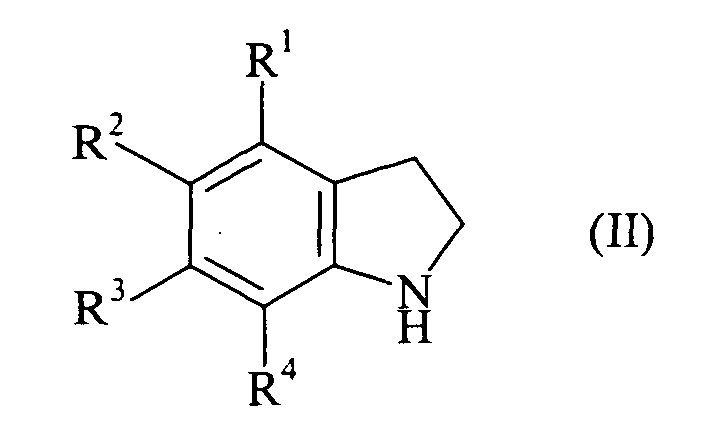
qui se condense avec un dérivé de formule (III) :
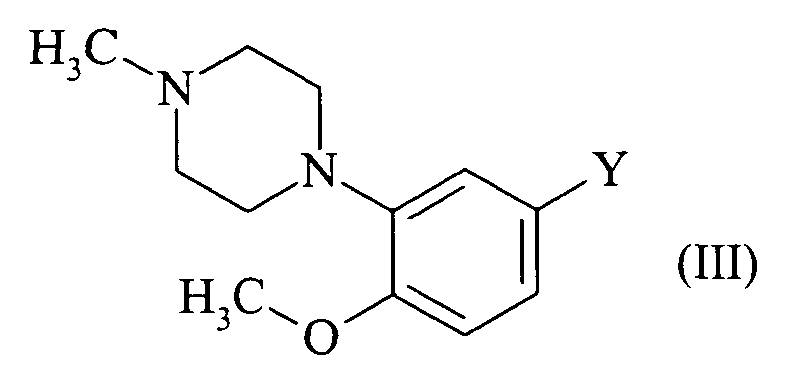
pour conduire au composé de formule (I),
- qui peut être le cas échéant purifié selon une technique classique de purification,
- dont les isomères (diastéréoisomères et énantiomères) sont séparés si nécessaire par une technique classique de séparation,
- que l'on transforme, si on le souhaite, en ses sels d'addition à un acide ou à une base pharmaceutiquement acceptable,
On obtient 65 g de produit.
Recristalliser ces 65 g dans un mélange cyclohexane/acétate d'éthyle : 50/50 : v/v.
Le résidu est purifié par chromatographie sur silice éluant cyclohexane/acétate d'éthyle : 80/20 : v/v.
Après neutralisation par une solution saturée d'hydrogénocarbonate de sodium, la phase organique est décantée et lavée par de l'eau. Le résidu obtenu après concentration est purifié par chromatographie sur gel de silice en utilisant comme éluant un mélange cyclohexane/acétate d'éthyle : 80/20 :v/v.
Après évaporation du méthanol la phase aqueuse est extraite deux fois par du dichlorométhane. Celui-ci est ensuite séché et évaporé. Le résidu est cristallisé dans un mélange dichlorométhane-méthanol.
La base est ensuite salifiée par l'acide chlorhydrique en solution éthanolique.
Point de fusion : 176-178 °C.
A la fin de la période d'incubation le milieu est filtré au travers de filtres GF/B-Unifilter pré-traités au PEI (0,1 %), suivi de trois lavages avec le tampon d'incubation. La radioactivité retenue sur les filtres est déterminée par comptage du liquide de scintillation. Les isothermes de binding sont analysées par régression non-linéaire pour déterminer les valeurs d'IC50. Elles sont converties en pKi (où Ki est la constante de dissociation).
| %ASC ± E.S.M. | Solvant | Composé de l'Exemple 1 | Comparateur (Exemple 11-EP-1170288) |
| NA | + 18.2 ± 5.0 | + 105.4 ± 7.3 , | + 39.8 ± 6.7 |
| DA | + 4.4 ± 2.5 | + 52.9 ± 6.6 | + 19.5 ± 4.9 |
| ACh | + 16.5 ± 5.5 | + 107.7 ± 13.5 , | + 15.1 ± 12.3 |
| Formule de préparation pour 1000 comprimés dosés à 10 mg | |
| Composé de l'exemple 1 | 10 g |
| Hydroxypropylcellulose | 2 g |
| Amidon de blé | 10 g |
| Lactose | 100 g |
| Stéarate de magnésium | 3 g |
| Talc | 3 g |
Claims (7)
- Composés de formule (I) :dans laquelle :
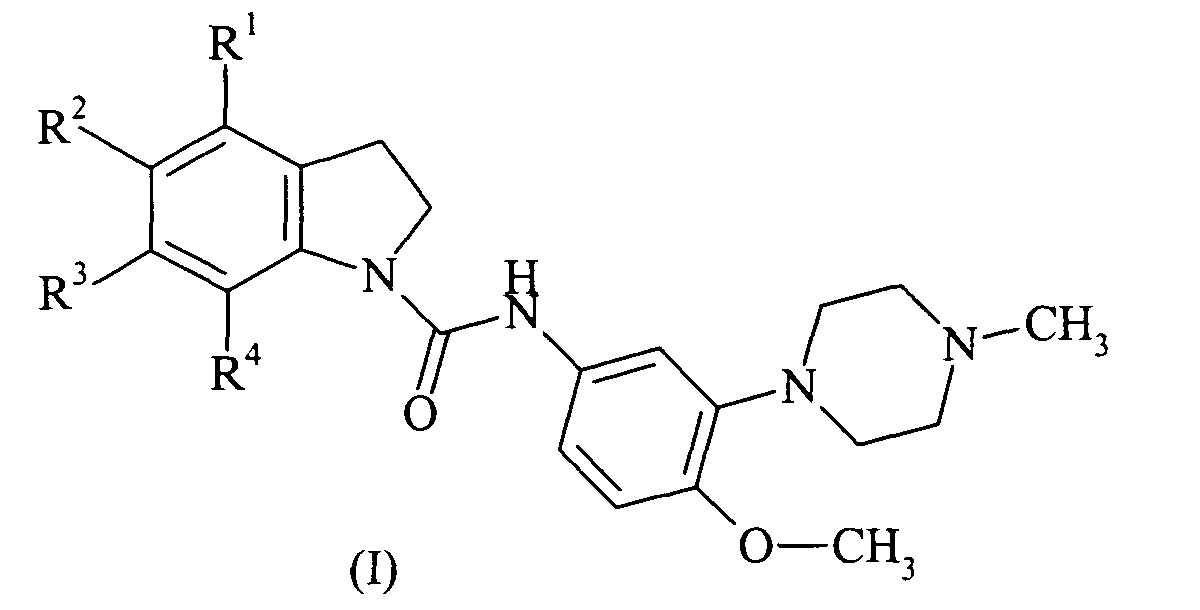 ou un groupement alkyle, alkoxy, cyano, nitro, hydroxy, amino, alkylamino, dialkylaminoR1, R2 forment ensemble un cycle benzo éventuellement substitué par un atome d'halogène
ou trifluorométhyle, et R3, R4 représentent un atome d'hydrogène,
ou
R1, R4 représentent un atome d'hydrogène et R2, R3 forment ensemble un cycle benzo éventuellement substitué par un atome d'halogène ou un groupement alkyle, alkoxy, cyano, nitro, hydroxy, amino, alkylamino, dialkylamino ou trifluorométhyle,
ou alors
R1, R2 représentent un atome d'hydrogène et, R3, R4 forment ensemble un cycle benzo éventuellement substitué par un atome d'halogène ou un groupement alkyle, alkoxy, cyano, nitro, hydroxy, amino, alkylamino, dialkylamino ou trifluorométhyle,
leurs énantiomères, diastéréoisomères et leurs sels d'addition à un acide ou à une base pharmaceutiquement acceptable,
étant entendu que :le terme alkyle désigne une chaíne hydrocarbonée, linéaire ou ramifiée contenant de 1 à 6 atomes de carbone,le terme alkoxy désigne un groupement alkyle-oxy, linéaire ou ramifié, contenant de 1 à 6 atomes de carbone. - Composés de formule (I), selon la revendication 1 pour lesquels R1, R2 forment ensemble un cycle benzo éventuellement substitué par un atome d'halogène ou un groupement alkyle, alkoxy, cyano, nitro, hydroxy, amino, alkylamino, dialkylamino ou trifluorométhyle, et R3, R4 représentent un atome d'hydrogène, leurs énantiomères, diastéréoisomères et leurs sels d'addition à un acide ou à une base pharmaceutiquement acceptable.
- Composés de formule (I), selon une quelconques des revendications 1 ou 2 qui est la N-[4-méthoxy-3-(4-méthyl-1-pipérazinyl)phényl]-1,2-dihydro-3H-benzo[e]indole-3-carboxamide et ses sels d'addition à un acide ou à une base pharmaceutiquement acceptable.
- Procédé de préparation d'un composé de formule (I), selon la revendication 1, caractérisé en ce que nous utilisions comme produit de départ un dérivé benzoindole de formule (II) :dans laquelle R1, R2, R3 et R4 sont tels que définis dans la formule (I),
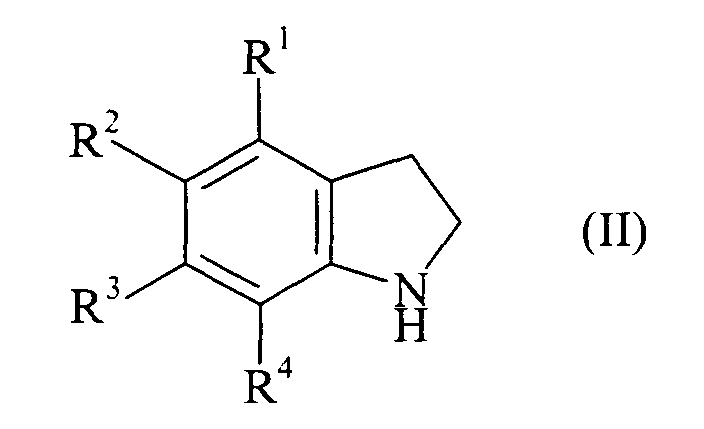
qui se condense avec un dérivé de formule (III) :dans laquelle Y représente un groupement -N=C=O ou -C(O)-N3,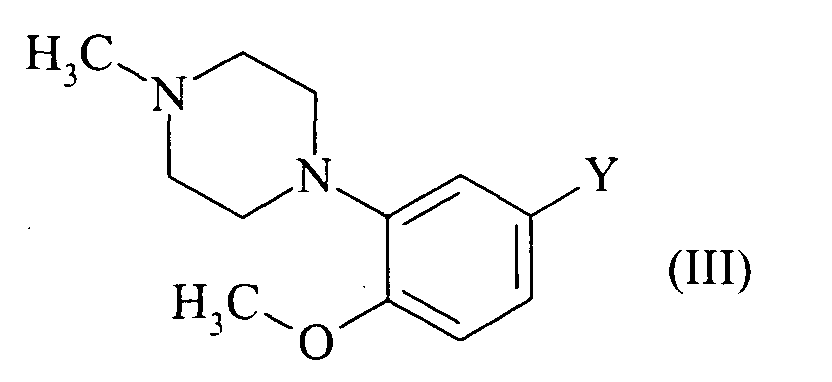
pour conduire au composé de formule (I),que l'on transforme, si on le souhaite, en ses sels d'addition à un acide ou à une base pharmaceutiquement acceptable.qui peut être le cas échéant purifié selon une technique classique de purification,dont les isomères (diastéréoisomères et énantiomères) sont séparés si nécessaire par une technique classique de séparation, - Compositions pharmaceutiques contenant comme principe actif au moins un composé selon l'une quelconque des revendications 1 à 3, seul ou en combinaison avec un ou plusieurs excipients ou véhicules inertes non toxiques, pharmaceutiquement acceptables.
- Compositions pharmaceutiques selon la revendication 5 contenant au moins un principe actif selon l'une quelconque des revendications 1 à 3 utiles pour la fabrication de médicaments antagonistes double α2-AR/5-HT2C.
- Compositions pharmaceutiques selon la revendication 5 contenant au moins un principe actif selon l'une quelconque des revendications 1 à 3 utiles pour la fabrication de médicaments utiles dans le traitement de la dépression, de l'anxiété, des désordres impulsifs, de la schizophrénie, de la maladie de Parkinson, des troubles cognitifs, des troubles de la libido et des dysfonctionnements sexuels, et des troubles du sommeil.
Applications Claiming Priority (2)
| Application Number | Priority Date | Filing Date | Title |
|---|---|---|---|
| FR0310828A FR2859723B1 (fr) | 2003-09-16 | 2003-09-16 | Nouveaux derives de benzoindoline, leur procede de preparation et les compositions pharmaceutiques qui les contiennent |
| FR0310828 | 2003-09-16 |
Publications (1)
| Publication Number | Publication Date |
|---|---|
| EP1516871A1 true EP1516871A1 (fr) | 2005-03-23 |
Family
ID=34178903
Family Applications (1)
| Application Number | Title | Priority Date | Filing Date |
|---|---|---|---|
| EP04292211A Withdrawn EP1516871A1 (fr) | 2003-09-16 | 2004-09-15 | Dérivés de benzoindoline avec une activité adrénergique |
Country Status (17)
| Country | Link |
|---|---|
| US (1) | US6998403B2 (fr) |
| EP (1) | EP1516871A1 (fr) |
| JP (1) | JP2005097303A (fr) |
| KR (1) | KR20050027967A (fr) |
| CN (1) | CN1616425A (fr) |
| AR (1) | AR045749A1 (fr) |
| AU (1) | AU2004212578A1 (fr) |
| BR (1) | BRPI0404006A (fr) |
| CA (1) | CA2480218A1 (fr) |
| EA (1) | EA007231B1 (fr) |
| FR (1) | FR2859723B1 (fr) |
| MA (1) | MA27109A1 (fr) |
| MX (1) | MXPA04008880A (fr) |
| NO (1) | NO20043880L (fr) |
| NZ (1) | NZ535332A (fr) |
| SG (1) | SG110170A1 (fr) |
| ZA (1) | ZA200407444B (fr) |
Families Citing this family (4)
| Publication number | Priority date | Publication date | Assignee | Title |
|---|---|---|---|---|
| ES2555780T3 (es) | 2006-12-07 | 2016-01-08 | Grace Gmbh & Co. Kg | Agente mateante |
| KR101062376B1 (ko) * | 2008-04-10 | 2011-09-06 | 한국화학연구원 | 신규 인돌 카르복실산 비스피리딜 카르복사마이드 유도체,이의 제조방법 및 이를 유효성분으로 함유하는 조성물 |
| JP6472419B2 (ja) * | 2015-09-30 | 2019-02-20 | 富士フイルム株式会社 | 芳香族化合物の製造方法 |
| CN105367513A (zh) * | 2015-11-11 | 2016-03-02 | 北京万全德众医药生物技术有限公司 | 普拉克索衍生物的结构及其用途 |
Citations (1)
| Publication number | Priority date | Publication date | Assignee | Title |
|---|---|---|---|---|
| EP1170288A2 (fr) * | 2000-06-29 | 2002-01-09 | Les Laboratoires Servier | Dérivés de diphenylurée et leur utilisation en tant qu'antagonistes alpha2/5-HT2c |
-
2003
- 2003-09-16 FR FR0310828A patent/FR2859723B1/fr not_active Expired - Fee Related
-
2004
- 2004-08-25 US US10/925,712 patent/US6998403B2/en not_active Expired - Fee Related
- 2004-09-09 SG SG200405470A patent/SG110170A1/en unknown
- 2004-09-10 CA CA002480218A patent/CA2480218A1/fr not_active Abandoned
- 2004-09-13 MX MXPA04008880A patent/MXPA04008880A/es not_active Application Discontinuation
- 2004-09-15 NO NO20043880A patent/NO20043880L/no unknown
- 2004-09-15 AR ARP040103287A patent/AR045749A1/es unknown
- 2004-09-15 NZ NZ535332A patent/NZ535332A/en unknown
- 2004-09-15 EA EA200401082A patent/EA007231B1/ru not_active IP Right Cessation
- 2004-09-15 BR BR0404006-6A patent/BRPI0404006A/pt not_active IP Right Cessation
- 2004-09-15 EP EP04292211A patent/EP1516871A1/fr not_active Withdrawn
- 2004-09-16 ZA ZA200407444A patent/ZA200407444B/xx unknown
- 2004-09-16 JP JP2004269133A patent/JP2005097303A/ja active Pending
- 2004-09-16 AU AU2004212578A patent/AU2004212578A1/en not_active Abandoned
- 2004-09-16 KR KR1020040074114A patent/KR20050027967A/ko not_active Ceased
- 2004-09-16 MA MA27861A patent/MA27109A1/fr unknown
- 2004-09-16 CN CNA2004100778724A patent/CN1616425A/zh active Pending
Patent Citations (1)
| Publication number | Priority date | Publication date | Assignee | Title |
|---|---|---|---|---|
| EP1170288A2 (fr) * | 2000-06-29 | 2002-01-09 | Les Laboratoires Servier | Dérivés de diphenylurée et leur utilisation en tant qu'antagonistes alpha2/5-HT2c |
Also Published As
| Publication number | Publication date |
|---|---|
| NZ535332A (en) | 2006-02-24 |
| MA27109A1 (fr) | 2004-12-20 |
| EA007231B1 (ru) | 2006-08-25 |
| KR20050027967A (ko) | 2005-03-21 |
| US20050059675A1 (en) | 2005-03-17 |
| ZA200407444B (en) | 2005-06-30 |
| CN1616425A (zh) | 2005-05-18 |
| US6998403B2 (en) | 2006-02-14 |
| AR045749A1 (es) | 2005-11-09 |
| NO20043880L (no) | 2005-03-17 |
| AU2004212578A1 (en) | 2005-04-07 |
| MXPA04008880A (es) | 2007-07-18 |
| BRPI0404006A (pt) | 2005-06-21 |
| JP2005097303A (ja) | 2005-04-14 |
| EA200401082A1 (ru) | 2005-04-28 |
| SG110170A1 (en) | 2005-04-28 |
| FR2859723B1 (fr) | 2005-10-21 |
| CA2480218A1 (fr) | 2005-03-16 |
| FR2859723A1 (fr) | 2005-03-18 |
Similar Documents
| Publication | Publication Date | Title |
|---|---|---|
| EP0478446B1 (fr) | Nouvelles amines alkyl hétérocycliques, leur procédé de préparation et les compositions pharmaceutiques qui les contiennent | |
| EP0364327B1 (fr) | Dérivés de quinoléinone, leur préparation et leur application en thérapeutique | |
| EP0527081B1 (fr) | Nouvelles pipérazinylalcoyl-3 dihydro-2,3 4H-benzoxazine-1,3 ones-4 substituées, leur préparation et leur application en thérapeutique | |
| EP0452204B1 (fr) | Nouveaux dérivés du 3-aminochromane, leur procédé de préparation et les compositions pharmaceutiques qui les contiennent | |
| EP0178201B1 (fr) | Dérivés de furo [3,2-c]pyridines, leur préparation et leur application en thérapeutique | |
| FR2859723A1 (fr) | Nouveaux derives de benzoindoline, leur procede de preparation et les compositions pharmaceutiques qui les contiennent | |
| EP0382618B1 (fr) | Dérivés aminoalkoxyphényle, leur procédé de préparation ainsi que les compositions en contenant | |
| EP1348704B1 (fr) | Dérivés d'indole possédant des propriétés antagonistes 5-HT2C, leur procédé de préparation et les compositions pharmaceutiques qui les contiennent | |
| EP1256583B1 (fr) | Dérivés de pyrimidin-4-ones, leur procédé de préparation et les compositions pharmaceutiques qui les contiennent | |
| CA2346506C (fr) | Derives d'aryl-{4-fluoro-4-[(2-pyridin-2-yl-ethylamino)-methyl]-piperidin-1-yl}-methanone comme agonistes du recepteur 5-ht1 | |
| JP2994457B2 (ja) | インドール誘導体 | |
| EP1224182B1 (fr) | 1-(butyrolactone)-isoquinolines n-substituees pour le traitement des troubles nerveux | |
| KR100276994B1 (ko) | 아릴알콕시페녹시-이미다졸린화합물 | |
| EP1146041A1 (fr) | Dérivés d'hétérocycloalkylbenzocyclobutane et d'hétéroarylbenzocyclobutane et leur utilisation en tant qu'inhibiteurs de recapture de la sérotonine et de la noradrénaline | |
| EP0580465A1 (fr) | Nouvelle utilisation thérapeutique d'hétérocyclyl-pipérazines comme 5-HT3 agonistes et nouveaux dérivés | |
| EP0035924A1 (fr) | Nouvelles benzothiopyrano/2,3-c/pyridines et leurs sels avec les acides, leur préparation, leur application à titre de médicaments et les compositions les renfermant | |
| HK1077821A (en) | New benzoindoline compounds, a process for their preparation and pharmaceutical compositions containing them | |
| BE857363A (fr) | Nouveaux derives de la benzo(c,d)indolyl-l-guanidine, leur preparation et leur application comme medicaments |
Legal Events
| Date | Code | Title | Description |
|---|---|---|---|
| PUAI | Public reference made under article 153(3) epc to a published international application that has entered the european phase |
Free format text: ORIGINAL CODE: 0009012 |
|
| 17P | Request for examination filed |
Effective date: 20040922 |
|
| AK | Designated contracting states |
Kind code of ref document: A1 Designated state(s): AT BE BG CH CY CZ DE DK EE ES FI FR GB GR HU IE IT LI LU MC NL PL PT RO SE SI SK TR |
|
| AX | Request for extension of the european patent |
Extension state: AL HR LT LV MK |
|
| AKX | Designation fees paid |
Designated state(s): AT BE BG CH CY CZ DE DK EE ES FI FR GB GR HU IE IT LI LU MC NL PL PT RO SE SI SK TR |
|
| AXX | Extension fees paid |
Extension state: MK Payment date: 20040922 Extension state: LV Payment date: 20040922 Extension state: LT Payment date: 20040922 Extension state: HR Payment date: 20040922 Extension state: AL Payment date: 20040922 |
|
| STAA | Information on the status of an ep patent application or granted ep patent |
Free format text: STATUS: THE APPLICATION IS DEEMED TO BE WITHDRAWN |
|
| 18D | Application deemed to be withdrawn |
Effective date: 20070403 |