EP1513506B1 - Vektorsystem enthaltend nanopartikeln gleichmässiger grösse,welche aus zumindestens einem polymer und einem positiv geladenen polysaccharid bestehen,und herstellungsverfahren dieses systems - Google Patents
Vektorsystem enthaltend nanopartikeln gleichmässiger grösse,welche aus zumindestens einem polymer und einem positiv geladenen polysaccharid bestehen,und herstellungsverfahren dieses systems Download PDFInfo
- Publication number
- EP1513506B1 EP1513506B1 EP03760766A EP03760766A EP1513506B1 EP 1513506 B1 EP1513506 B1 EP 1513506B1 EP 03760766 A EP03760766 A EP 03760766A EP 03760766 A EP03760766 A EP 03760766A EP 1513506 B1 EP1513506 B1 EP 1513506B1
- Authority
- EP
- European Patent Office
- Prior art keywords
- substances
- chitosan
- interest
- nanoparticles
- cells
- Prior art date
- Legal status (The legal status is an assumption and is not a legal conclusion. Google has not performed a legal analysis and makes no representation as to the accuracy of the status listed.)
- Expired - Lifetime
Links
- 239000002105 nanoparticle Substances 0.000 title claims abstract description 80
- 150000004676 glycans Chemical class 0.000 title claims abstract description 28
- 229920001282 polysaccharide Polymers 0.000 title claims abstract description 26
- 239000005017 polysaccharide Substances 0.000 title claims abstract description 26
- 229920000642 polymer Polymers 0.000 title claims abstract description 17
- 238000002360 preparation method Methods 0.000 title description 10
- 230000008685 targeting Effects 0.000 title description 4
- 239000000126 substance Substances 0.000 claims abstract description 42
- 238000009826 distribution Methods 0.000 claims abstract description 7
- 231100000252 nontoxic Toxicity 0.000 claims abstract description 5
- 230000003000 nontoxic effect Effects 0.000 claims abstract description 5
- 230000001225 therapeutic effect Effects 0.000 claims abstract description 4
- 229920001661 Chitosan Polymers 0.000 claims description 131
- 238000000034 method Methods 0.000 claims description 39
- 239000000725 suspension Substances 0.000 claims description 16
- 108090000623 proteins and genes Proteins 0.000 claims description 15
- 230000000692 anti-sense effect Effects 0.000 claims description 14
- 102000004169 proteins and genes Human genes 0.000 claims description 11
- 125000000129 anionic group Chemical group 0.000 claims description 10
- KRKNYBCHXYNGOX-UHFFFAOYSA-N citric acid Chemical compound OC(=O)CC(O)(C(O)=O)CC(O)=O KRKNYBCHXYNGOX-UHFFFAOYSA-N 0.000 claims description 9
- 150000001875 compounds Chemical class 0.000 claims description 9
- 230000015572 biosynthetic process Effects 0.000 claims description 8
- 108090000765 processed proteins & peptides Proteins 0.000 claims description 8
- 102000004196 processed proteins & peptides Human genes 0.000 claims description 8
- 239000000203 mixture Substances 0.000 claims description 7
- HFHDHCJBZVLPGP-UHFFFAOYSA-N schardinger α-dextrin Chemical class O1C(C(C2O)O)C(CO)OC2OC(C(C2O)O)C(CO)OC2OC(C(C2O)O)C(CO)OC2OC(C(O)C2O)C(CO)OC2OC(C(C2O)O)C(CO)OC2OC2C(O)C(O)C1OC2CO HFHDHCJBZVLPGP-UHFFFAOYSA-N 0.000 claims description 7
- 229920000858 Cyclodextrin Polymers 0.000 claims description 6
- -1 poly(cyanoacrylate) Polymers 0.000 claims description 6
- QIGBRXMKCJKVMJ-UHFFFAOYSA-N Hydroquinone Chemical compound OC1=CC=C(O)C=C1 QIGBRXMKCJKVMJ-UHFFFAOYSA-N 0.000 claims description 4
- 239000002253 acid Substances 0.000 claims description 4
- 125000000217 alkyl group Chemical group 0.000 claims description 4
- 230000000536 complexating effect Effects 0.000 claims description 4
- 230000009368 gene silencing by RNA Effects 0.000 claims description 3
- 125000002887 hydroxy group Chemical group [H]O* 0.000 claims description 3
- 229920001184 polypeptide Polymers 0.000 claims description 3
- 125000004432 carbon atom Chemical group C* 0.000 claims description 2
- 239000000178 monomer Substances 0.000 claims description 2
- 230000007935 neutral effect Effects 0.000 claims description 2
- 229940124276 oligodeoxyribonucleotide Drugs 0.000 claims description 2
- 229920001542 oligosaccharide Polymers 0.000 claims description 2
- 102000014150 Interferons Human genes 0.000 claims 1
- 108010050904 Interferons Proteins 0.000 claims 1
- 241000238425 Polyplacophora Species 0.000 claims 1
- 239000012736 aqueous medium Substances 0.000 claims 1
- 229940079322 interferon Drugs 0.000 claims 1
- 210000004027 cell Anatomy 0.000 description 104
- 229940046166 oligodeoxynucleotide Drugs 0.000 description 73
- 206010028980 Neoplasm Diseases 0.000 description 31
- FAPWRFPIFSIZLT-UHFFFAOYSA-M Sodium chloride Chemical compound [Na+].[Cl-] FAPWRFPIFSIZLT-UHFFFAOYSA-M 0.000 description 25
- LZZYPRNAOMGNLH-UHFFFAOYSA-M Cetrimonium bromide Chemical compound [Br-].CCCCCCCCCCCCCCCC[N+](C)(C)C LZZYPRNAOMGNLH-UHFFFAOYSA-M 0.000 description 21
- 238000001890 transfection Methods 0.000 description 21
- 241001465754 Metazoa Species 0.000 description 19
- 239000000243 solution Substances 0.000 description 18
- 231100000419 toxicity Toxicity 0.000 description 17
- 230000001988 toxicity Effects 0.000 description 17
- 230000005764 inhibitory process Effects 0.000 description 16
- 101500027983 Rattus norvegicus Octadecaneuropeptide Proteins 0.000 description 13
- 108020004459 Small interfering RNA Proteins 0.000 description 12
- 239000002609 medium Substances 0.000 description 12
- 239000013612 plasmid Substances 0.000 description 12
- 238000006116 polymerization reaction Methods 0.000 description 12
- 239000011780 sodium chloride Substances 0.000 description 12
- 239000000463 material Substances 0.000 description 11
- 230000000694 effects Effects 0.000 description 10
- 238000001727 in vivo Methods 0.000 description 10
- 238000011282 treatment Methods 0.000 description 10
- 230000004614 tumor growth Effects 0.000 description 10
- 108700037122 EWS-FLI fusion Proteins 0.000 description 9
- 239000004480 active ingredient Substances 0.000 description 9
- 241000699660 Mus musculus Species 0.000 description 8
- 108091034117 Oligonucleotide Proteins 0.000 description 8
- 108010005774 beta-Galactosidase Proteins 0.000 description 8
- 108020004999 messenger RNA Proteins 0.000 description 8
- 238000011580 nude mouse model Methods 0.000 description 8
- 238000001179 sorption measurement Methods 0.000 description 8
- 108020004414 DNA Proteins 0.000 description 7
- 238000000636 Northern blotting Methods 0.000 description 7
- 239000001963 growth medium Substances 0.000 description 7
- 238000011534 incubation Methods 0.000 description 7
- 229920000771 poly (alkylcyanoacrylate) Polymers 0.000 description 7
- 230000008569 process Effects 0.000 description 7
- 231100000331 toxic Toxicity 0.000 description 7
- 230000002588 toxic effect Effects 0.000 description 7
- 239000013598 vector Substances 0.000 description 7
- 101100227322 Caenorhabditis elegans fli-1 gene Proteins 0.000 description 6
- 101100281205 Mus musculus Fli1 gene Proteins 0.000 description 6
- 108090000740 RNA-binding protein EWS Proteins 0.000 description 6
- JLCPHMBAVCMARE-UHFFFAOYSA-N [3-[[3-[[3-[[3-[[3-[[3-[[3-[[3-[[3-[[3-[[3-[[5-(2-amino-6-oxo-1H-purin-9-yl)-3-[[3-[[3-[[3-[[3-[[3-[[5-(2-amino-6-oxo-1H-purin-9-yl)-3-[[5-(2-amino-6-oxo-1H-purin-9-yl)-3-hydroxyoxolan-2-yl]methoxy-hydroxyphosphoryl]oxyoxolan-2-yl]methoxy-hydroxyphosphoryl]oxy-5-(5-methyl-2,4-dioxopyrimidin-1-yl)oxolan-2-yl]methoxy-hydroxyphosphoryl]oxy-5-(6-aminopurin-9-yl)oxolan-2-yl]methoxy-hydroxyphosphoryl]oxy-5-(6-aminopurin-9-yl)oxolan-2-yl]methoxy-hydroxyphosphoryl]oxy-5-(6-aminopurin-9-yl)oxolan-2-yl]methoxy-hydroxyphosphoryl]oxy-5-(6-aminopurin-9-yl)oxolan-2-yl]methoxy-hydroxyphosphoryl]oxyoxolan-2-yl]methoxy-hydroxyphosphoryl]oxy-5-(5-methyl-2,4-dioxopyrimidin-1-yl)oxolan-2-yl]methoxy-hydroxyphosphoryl]oxy-5-(4-amino-2-oxopyrimidin-1-yl)oxolan-2-yl]methoxy-hydroxyphosphoryl]oxy-5-(5-methyl-2,4-dioxopyrimidin-1-yl)oxolan-2-yl]methoxy-hydroxyphosphoryl]oxy-5-(5-methyl-2,4-dioxopyrimidin-1-yl)oxolan-2-yl]methoxy-hydroxyphosphoryl]oxy-5-(6-aminopurin-9-yl)oxolan-2-yl]methoxy-hydroxyphosphoryl]oxy-5-(6-aminopurin-9-yl)oxolan-2-yl]methoxy-hydroxyphosphoryl]oxy-5-(4-amino-2-oxopyrimidin-1-yl)oxolan-2-yl]methoxy-hydroxyphosphoryl]oxy-5-(4-amino-2-oxopyrimidin-1-yl)oxolan-2-yl]methoxy-hydroxyphosphoryl]oxy-5-(4-amino-2-oxopyrimidin-1-yl)oxolan-2-yl]methoxy-hydroxyphosphoryl]oxy-5-(6-aminopurin-9-yl)oxolan-2-yl]methoxy-hydroxyphosphoryl]oxy-5-(4-amino-2-oxopyrimidin-1-yl)oxolan-2-yl]methyl [5-(6-aminopurin-9-yl)-2-(hydroxymethyl)oxolan-3-yl] hydrogen phosphate Polymers Cc1cn(C2CC(OP(O)(=O)OCC3OC(CC3OP(O)(=O)OCC3OC(CC3O)n3cnc4c3nc(N)[nH]c4=O)n3cnc4c3nc(N)[nH]c4=O)C(COP(O)(=O)OC3CC(OC3COP(O)(=O)OC3CC(OC3COP(O)(=O)OC3CC(OC3COP(O)(=O)OC3CC(OC3COP(O)(=O)OC3CC(OC3COP(O)(=O)OC3CC(OC3COP(O)(=O)OC3CC(OC3COP(O)(=O)OC3CC(OC3COP(O)(=O)OC3CC(OC3COP(O)(=O)OC3CC(OC3COP(O)(=O)OC3CC(OC3COP(O)(=O)OC3CC(OC3COP(O)(=O)OC3CC(OC3COP(O)(=O)OC3CC(OC3COP(O)(=O)OC3CC(OC3COP(O)(=O)OC3CC(OC3COP(O)(=O)OC3CC(OC3CO)n3cnc4c(N)ncnc34)n3ccc(N)nc3=O)n3cnc4c(N)ncnc34)n3ccc(N)nc3=O)n3ccc(N)nc3=O)n3ccc(N)nc3=O)n3cnc4c(N)ncnc34)n3cnc4c(N)ncnc34)n3cc(C)c(=O)[nH]c3=O)n3cc(C)c(=O)[nH]c3=O)n3ccc(N)nc3=O)n3cc(C)c(=O)[nH]c3=O)n3cnc4c3nc(N)[nH]c4=O)n3cnc4c(N)ncnc34)n3cnc4c(N)ncnc34)n3cnc4c(N)ncnc34)n3cnc4c(N)ncnc34)O2)c(=O)[nH]c1=O JLCPHMBAVCMARE-UHFFFAOYSA-N 0.000 description 6
- 238000000338 in vitro Methods 0.000 description 6
- 102000053602 DNA Human genes 0.000 description 5
- 229920002307 Dextran Polymers 0.000 description 5
- WSFSSNUMVMOOMR-UHFFFAOYSA-N Formaldehyde Chemical compound O=C WSFSSNUMVMOOMR-UHFFFAOYSA-N 0.000 description 5
- WQZGKKKJIJFFOK-FPRJBGLDSA-N beta-D-galactose Chemical compound OC[C@H]1O[C@@H](O)[C@H](O)[C@@H](O)[C@H]1O WQZGKKKJIJFFOK-FPRJBGLDSA-N 0.000 description 5
- 238000001514 detection method Methods 0.000 description 5
- 239000012634 fragment Substances 0.000 description 5
- 239000005022 packaging material Substances 0.000 description 5
- 239000002245 particle Substances 0.000 description 5
- 238000007920 subcutaneous administration Methods 0.000 description 5
- XLYOFNOQVPJJNP-UHFFFAOYSA-N water Substances O XLYOFNOQVPJJNP-UHFFFAOYSA-N 0.000 description 5
- 108091032973 (ribonucleotides)n+m Proteins 0.000 description 4
- 108091003079 Bovine Serum Albumin Proteins 0.000 description 4
- 229920002101 Chitin Polymers 0.000 description 4
- HEDRZPFGACZZDS-UHFFFAOYSA-N Chloroform Chemical compound ClC(Cl)Cl HEDRZPFGACZZDS-UHFFFAOYSA-N 0.000 description 4
- ZHNUHDYFZUAESO-UHFFFAOYSA-N Formamide Chemical compound NC=O ZHNUHDYFZUAESO-UHFFFAOYSA-N 0.000 description 4
- 230000002378 acidificating effect Effects 0.000 description 4
- 125000002091 cationic group Chemical group 0.000 description 4
- 239000012894 fetal calf serum Substances 0.000 description 4
- 238000009472 formulation Methods 0.000 description 4
- 230000009036 growth inhibition Effects 0.000 description 4
- 230000002601 intratumoral effect Effects 0.000 description 4
- PHTQWCKDNZKARW-UHFFFAOYSA-N isoamylol Chemical compound CC(C)CCO PHTQWCKDNZKARW-UHFFFAOYSA-N 0.000 description 4
- 238000005259 measurement Methods 0.000 description 4
- 239000012528 membrane Substances 0.000 description 4
- VMGAPWLDMVPYIA-HIDZBRGKSA-N n'-amino-n-iminomethanimidamide Chemical compound N\N=C\N=N VMGAPWLDMVPYIA-HIDZBRGKSA-N 0.000 description 4
- 230000035515 penetration Effects 0.000 description 4
- RXWNCPJZOCPEPQ-NVWDDTSBSA-N puromycin Chemical compound C1=CC(OC)=CC=C1C[C@H](N)C(=O)N[C@H]1[C@@H](O)[C@H](N2C3=NC=NC(=C3N=C2)N(C)C)O[C@@H]1CO RXWNCPJZOCPEPQ-NVWDDTSBSA-N 0.000 description 4
- BOLDJAUMGUJJKM-LSDHHAIUSA-N renifolin D Natural products CC(=C)[C@@H]1Cc2c(O)c(O)ccc2[C@H]1CC(=O)c3ccc(O)cc3O BOLDJAUMGUJJKM-LSDHHAIUSA-N 0.000 description 4
- BFSVOASYOCHEOV-UHFFFAOYSA-N 2-diethylaminoethanol Chemical compound CCN(CC)CCO BFSVOASYOCHEOV-UHFFFAOYSA-N 0.000 description 3
- IJGRMHOSHXDMSA-UHFFFAOYSA-N Atomic nitrogen Chemical compound N#N IJGRMHOSHXDMSA-UHFFFAOYSA-N 0.000 description 3
- 208000006168 Ewing Sarcoma Diseases 0.000 description 3
- 241000699729 Muridae Species 0.000 description 3
- 241000699670 Mus sp. Species 0.000 description 3
- ISWSIDIOOBJBQZ-UHFFFAOYSA-N Phenol Chemical compound OC1=CC=CC=C1 ISWSIDIOOBJBQZ-UHFFFAOYSA-N 0.000 description 3
- RVGRUAULSDPKGF-UHFFFAOYSA-N Poloxamer Chemical compound C1CO1.CC1CO1 RVGRUAULSDPKGF-UHFFFAOYSA-N 0.000 description 3
- HEMHJVSKTPXQMS-UHFFFAOYSA-M Sodium hydroxide Chemical compound [OH-].[Na+] HEMHJVSKTPXQMS-UHFFFAOYSA-M 0.000 description 3
- 230000009471 action Effects 0.000 description 3
- 239000013543 active substance Substances 0.000 description 3
- 230000001464 adherent effect Effects 0.000 description 3
- 238000001415 gene therapy Methods 0.000 description 3
- 238000012309 immunohistochemistry technique Methods 0.000 description 3
- 238000001990 intravenous administration Methods 0.000 description 3
- 238000002372 labelling Methods 0.000 description 3
- 230000004807 localization Effects 0.000 description 3
- 239000002077 nanosphere Substances 0.000 description 3
- 229920001993 poloxamer 188 Polymers 0.000 description 3
- 229940044519 poloxamer 188 Drugs 0.000 description 3
- PYWVYCXTNDRMGF-UHFFFAOYSA-N rhodamine B Chemical compound [Cl-].C=12C=CC(=[N+](CC)CC)C=C2OC2=CC(N(CC)CC)=CC=C2C=1C1=CC=CC=C1C(O)=O PYWVYCXTNDRMGF-UHFFFAOYSA-N 0.000 description 3
- 238000003786 synthesis reaction Methods 0.000 description 3
- 230000003612 virological effect Effects 0.000 description 3
- CSCPPACGZOOCGX-UHFFFAOYSA-N Acetone Chemical compound CC(C)=O CSCPPACGZOOCGX-UHFFFAOYSA-N 0.000 description 2
- VTYYLEPIZMXCLO-UHFFFAOYSA-L Calcium carbonate Chemical class [Ca+2].[O-]C([O-])=O VTYYLEPIZMXCLO-UHFFFAOYSA-L 0.000 description 2
- 101710088194 Dehydrogenase Proteins 0.000 description 2
- 108090000790 Enzymes Proteins 0.000 description 2
- 102000004190 Enzymes Human genes 0.000 description 2
- LFQSCWFLJHTTHZ-UHFFFAOYSA-N Ethanol Chemical compound CCO LFQSCWFLJHTTHZ-UHFFFAOYSA-N 0.000 description 2
- KFZMGEQAYNKOFK-UHFFFAOYSA-N Isopropanol Chemical compound CC(C)O KFZMGEQAYNKOFK-UHFFFAOYSA-N 0.000 description 2
- 241000699666 Mus <mouse, genus> Species 0.000 description 2
- 239000000020 Nitrocellulose Substances 0.000 description 2
- 229920002873 Polyethylenimine Polymers 0.000 description 2
- 239000007983 Tris buffer Substances 0.000 description 2
- 238000006640 acetylation reaction Methods 0.000 description 2
- 229940069428 antacid Drugs 0.000 description 2
- 239000003159 antacid agent Substances 0.000 description 2
- 230000001458 anti-acid effect Effects 0.000 description 2
- 238000013459 approach Methods 0.000 description 2
- 210000002469 basement membrane Anatomy 0.000 description 2
- 230000008901 benefit Effects 0.000 description 2
- 102000005936 beta-Galactosidase Human genes 0.000 description 2
- UDSAIICHUKSCKT-UHFFFAOYSA-N bromophenol blue Chemical compound C1=C(Br)C(O)=C(Br)C=C1C1(C=2C=C(Br)C(O)=C(Br)C=2)C2=CC=CC=C2S(=O)(=O)O1 UDSAIICHUKSCKT-UHFFFAOYSA-N 0.000 description 2
- 239000000872 buffer Substances 0.000 description 2
- 244000309466 calf Species 0.000 description 2
- 230000015556 catabolic process Effects 0.000 description 2
- 229920006317 cationic polymer Polymers 0.000 description 2
- 230000030570 cellular localization Effects 0.000 description 2
- 229920002678 cellulose Polymers 0.000 description 2
- 239000001913 cellulose Substances 0.000 description 2
- 230000000052 comparative effect Effects 0.000 description 2
- 238000004624 confocal microscopy Methods 0.000 description 2
- 238000013270 controlled release Methods 0.000 description 2
- 230000009089 cytolysis Effects 0.000 description 2
- 231100000135 cytotoxicity Toxicity 0.000 description 2
- 230000003013 cytotoxicity Effects 0.000 description 2
- 238000006731 degradation reaction Methods 0.000 description 2
- 239000003599 detergent Substances 0.000 description 2
- 238000011161 development Methods 0.000 description 2
- 238000010790 dilution Methods 0.000 description 2
- 239000012895 dilution Substances 0.000 description 2
- 238000007720 emulsion polymerization reaction Methods 0.000 description 2
- 238000005516 engineering process Methods 0.000 description 2
- OVBPIULPVIDEAO-LBPRGKRZSA-N folic acid Chemical compound C=1N=C2NC(N)=NC(=O)C2=NC=1CNC1=CC=C(C(=O)N[C@@H](CCC(O)=O)C(O)=O)C=C1 OVBPIULPVIDEAO-LBPRGKRZSA-N 0.000 description 2
- 239000000499 gel Substances 0.000 description 2
- 238000001476 gene delivery Methods 0.000 description 2
- 238000003384 imaging method Methods 0.000 description 2
- 238000011081 inoculation Methods 0.000 description 2
- NOESYZHRGYRDHS-UHFFFAOYSA-N insulin Chemical compound N1C(=O)C(NC(=O)C(CCC(N)=O)NC(=O)C(CCC(O)=O)NC(=O)C(C(C)C)NC(=O)C(NC(=O)CN)C(C)CC)CSSCC(C(NC(CO)C(=O)NC(CC(C)C)C(=O)NC(CC=2C=CC(O)=CC=2)C(=O)NC(CCC(N)=O)C(=O)NC(CC(C)C)C(=O)NC(CCC(O)=O)C(=O)NC(CC(N)=O)C(=O)NC(CC=2C=CC(O)=CC=2)C(=O)NC(CSSCC(NC(=O)C(C(C)C)NC(=O)C(CC(C)C)NC(=O)C(CC=2C=CC(O)=CC=2)NC(=O)C(CC(C)C)NC(=O)C(C)NC(=O)C(CCC(O)=O)NC(=O)C(C(C)C)NC(=O)C(CC(C)C)NC(=O)C(CC=2NC=NC=2)NC(=O)C(CO)NC(=O)CNC2=O)C(=O)NCC(=O)NC(CCC(O)=O)C(=O)NC(CCCNC(N)=N)C(=O)NCC(=O)NC(CC=3C=CC=CC=3)C(=O)NC(CC=3C=CC=CC=3)C(=O)NC(CC=3C=CC(O)=CC=3)C(=O)NC(C(C)O)C(=O)N3C(CCC3)C(=O)NC(CCCCN)C(=O)NC(C)C(O)=O)C(=O)NC(CC(N)=O)C(O)=O)=O)NC(=O)C(C(C)CC)NC(=O)C(CO)NC(=O)C(C(C)O)NC(=O)C1CSSCC2NC(=O)C(CC(C)C)NC(=O)C(NC(=O)C(CCC(N)=O)NC(=O)C(CC(N)=O)NC(=O)C(NC(=O)C(N)CC=1C=CC=CC=1)C(C)C)CC1=CN=CN1 NOESYZHRGYRDHS-UHFFFAOYSA-N 0.000 description 2
- 230000002452 interceptive effect Effects 0.000 description 2
- 230000003834 intracellular effect Effects 0.000 description 2
- 229920002521 macromolecule Polymers 0.000 description 2
- 238000004519 manufacturing process Methods 0.000 description 2
- 210000004379 membrane Anatomy 0.000 description 2
- 230000002438 mitochondrial effect Effects 0.000 description 2
- 238000000329 molecular dynamics simulation Methods 0.000 description 2
- 239000002088 nanocapsule Substances 0.000 description 2
- 229920001220 nitrocellulos Polymers 0.000 description 2
- 239000002736 nonionic surfactant Substances 0.000 description 2
- 231100000956 nontoxicity Toxicity 0.000 description 2
- 102000039446 nucleic acids Human genes 0.000 description 2
- 108020004707 nucleic acids Proteins 0.000 description 2
- 150000007523 nucleic acids Chemical class 0.000 description 2
- 230000003287 optical effect Effects 0.000 description 2
- 230000003647 oxidation Effects 0.000 description 2
- 238000007254 oxidation reaction Methods 0.000 description 2
- 239000012188 paraffin wax Substances 0.000 description 2
- 239000008188 pellet Substances 0.000 description 2
- 229920000962 poly(amidoamine) Polymers 0.000 description 2
- 239000000047 product Substances 0.000 description 2
- 229950010131 puromycin Drugs 0.000 description 2
- 230000009467 reduction Effects 0.000 description 2
- 210000002966 serum Anatomy 0.000 description 2
- UCSJYZPVAKXKNQ-HZYVHMACSA-N streptomycin Chemical compound CN[C@H]1[C@H](O)[C@@H](O)[C@H](CO)O[C@H]1O[C@@H]1[C@](C=O)(O)[C@H](C)O[C@H]1O[C@@H]1[C@@H](NC(N)=N)[C@H](O)[C@@H](NC(N)=N)[C@H](O)[C@H]1O UCSJYZPVAKXKNQ-HZYVHMACSA-N 0.000 description 2
- 239000006228 supernatant Substances 0.000 description 2
- 238000012360 testing method Methods 0.000 description 2
- 231100001274 therapeutic index Toxicity 0.000 description 2
- AYEKOFBPNLCAJY-UHFFFAOYSA-O thiamine pyrophosphate Chemical compound CC1=C(CCOP(O)(=O)OP(O)(O)=O)SC=[N+]1CC1=CN=C(C)N=C1N AYEKOFBPNLCAJY-UHFFFAOYSA-O 0.000 description 2
- 210000001519 tissue Anatomy 0.000 description 2
- LENZDBCJOHFCAS-UHFFFAOYSA-N tris Chemical compound OCC(N)(CO)CO LENZDBCJOHFCAS-UHFFFAOYSA-N 0.000 description 2
- 239000013603 viral vector Substances 0.000 description 2
- NLIVDORGVGAOOJ-MAHBNPEESA-M xylene cyanol Chemical compound [Na+].C1=C(C)C(NCC)=CC=C1C(\C=1C(=CC(OS([O-])=O)=CC=1)OS([O-])=O)=C\1C=C(C)\C(=[NH+]/CC)\C=C/1 NLIVDORGVGAOOJ-MAHBNPEESA-M 0.000 description 2
- OPCHFPHZPIURNA-MFERNQICSA-N (2s)-2,5-bis(3-aminopropylamino)-n-[2-(dioctadecylamino)acetyl]pentanamide Chemical compound CCCCCCCCCCCCCCCCCCN(CC(=O)NC(=O)[C@H](CCCNCCCN)NCCCN)CCCCCCCCCCCCCCCCCC OPCHFPHZPIURNA-MFERNQICSA-N 0.000 description 1
- VGIRNWJSIRVFRT-UHFFFAOYSA-N 2',7'-difluorofluorescein Chemical compound OC(=O)C1=CC=CC=C1C1=C2C=C(F)C(=O)C=C2OC2=CC(O)=C(F)C=C21 VGIRNWJSIRVFRT-UHFFFAOYSA-N 0.000 description 1
- QKNYBSVHEMOAJP-UHFFFAOYSA-N 2-amino-2-(hydroxymethyl)propane-1,3-diol;hydron;chloride Chemical compound Cl.OCC(N)(CO)CO QKNYBSVHEMOAJP-UHFFFAOYSA-N 0.000 description 1
- 125000000972 4,5-dimethylthiazol-2-yl group Chemical group [H]C([H])([H])C1=C(N=C(*)S1)C([H])([H])[H] 0.000 description 1
- QTBSBXVTEAMEQO-UHFFFAOYSA-M Acetate Chemical compound CC([O-])=O QTBSBXVTEAMEQO-UHFFFAOYSA-M 0.000 description 1
- 108020000948 Antisense Oligonucleotides Proteins 0.000 description 1
- 208000031968 Cadaver Diseases 0.000 description 1
- 102000055006 Calcitonin Human genes 0.000 description 1
- 108060001064 Calcitonin Proteins 0.000 description 1
- KRKNYBCHXYNGOX-UHFFFAOYSA-K Citrate Chemical compound [O-]C(=O)CC(O)(CC([O-])=O)C([O-])=O KRKNYBCHXYNGOX-UHFFFAOYSA-K 0.000 description 1
- 241000238424 Crustacea Species 0.000 description 1
- 239000006144 Dulbecco’s modified Eagle's medium Substances 0.000 description 1
- 229920005682 EO-PO block copolymer Polymers 0.000 description 1
- 241000233866 Fungi Species 0.000 description 1
- 229920000209 Hexadimethrine bromide Polymers 0.000 description 1
- 241000238631 Hexapoda Species 0.000 description 1
- 208000026350 Inborn Genetic disease Diseases 0.000 description 1
- 102000004877 Insulin Human genes 0.000 description 1
- 108090001061 Insulin Proteins 0.000 description 1
- 239000004472 Lysine Substances 0.000 description 1
- 239000007993 MOPS buffer Substances 0.000 description 1
- 241001508691 Martes zibellina Species 0.000 description 1
- OVBPIULPVIDEAO-UHFFFAOYSA-N N-Pteroyl-L-glutaminsaeure Natural products C=1N=C2NC(N)=NC(=O)C2=NC=1CNC1=CC=C(C(=O)NC(CCC(O)=O)C(O)=O)C=C1 OVBPIULPVIDEAO-UHFFFAOYSA-N 0.000 description 1
- 229930182555 Penicillin Natural products 0.000 description 1
- JGSARLDLIJGVTE-MBNYWOFBSA-N Penicillin G Chemical compound N([C@H]1[C@H]2SC([C@@H](N2C1=O)C(O)=O)(C)C)C(=O)CC1=CC=CC=C1 JGSARLDLIJGVTE-MBNYWOFBSA-N 0.000 description 1
- 239000002202 Polyethylene glycol Substances 0.000 description 1
- 108010039918 Polylysine Proteins 0.000 description 1
- 108091030071 RNAI Proteins 0.000 description 1
- 239000012979 RPMI medium Substances 0.000 description 1
- 206010039491 Sarcoma Diseases 0.000 description 1
- ZMZDMBWJUHKJPS-UHFFFAOYSA-M Thiocyanate anion Chemical compound [S-]C#N ZMZDMBWJUHKJPS-UHFFFAOYSA-M 0.000 description 1
- 108010050144 Triptorelin Pamoate Proteins 0.000 description 1
- 208000025865 Ulcer Diseases 0.000 description 1
- XSQUKJJJFZCRTK-UHFFFAOYSA-N Urea Chemical compound NC(N)=O XSQUKJJJFZCRTK-UHFFFAOYSA-N 0.000 description 1
- MZVQCMJNVPIDEA-UHFFFAOYSA-N [CH2]CN(CC)CC Chemical group [CH2]CN(CC)CC MZVQCMJNVPIDEA-UHFFFAOYSA-N 0.000 description 1
- 239000002671 adjuvant Substances 0.000 description 1
- 239000011543 agarose gel Substances 0.000 description 1
- 150000001298 alcohols Chemical class 0.000 description 1
- 125000001931 aliphatic group Chemical group 0.000 description 1
- 125000003277 amino group Chemical group 0.000 description 1
- 239000000074 antisense oligonucleotide Substances 0.000 description 1
- 238000012230 antisense oligonucleotides Methods 0.000 description 1
- 239000008346 aqueous phase Substances 0.000 description 1
- 125000003710 aryl alkyl group Chemical group 0.000 description 1
- 125000003118 aryl group Chemical group 0.000 description 1
- 229920002988 biodegradable polymer Polymers 0.000 description 1
- 239000004621 biodegradable polymer Substances 0.000 description 1
- 230000004071 biological effect Effects 0.000 description 1
- 229940088623 biologically active substance Drugs 0.000 description 1
- 229920001222 biopolymer Polymers 0.000 description 1
- BBBFJLBPOGFECG-VJVYQDLKSA-N calcitonin Chemical compound N([C@H](C(=O)N[C@@H](CC(C)C)C(=O)NCC(=O)N[C@@H](CCCCN)C(=O)N[C@@H](CC(C)C)C(=O)N[C@@H](CO)C(=O)N[C@@H](CCC(N)=O)C(=O)N[C@@H](CCC(O)=O)C(=O)N[C@@H](CC(C)C)C(=O)N[C@@H](CC=1NC=NC=1)C(=O)N[C@@H](CCCCN)C(=O)N[C@@H](CC(C)C)C(=O)N[C@@H](CCC(N)=O)C(=O)N[C@@H]([C@@H](C)O)C(=O)N[C@@H](CC=1C=CC(O)=CC=1)C(=O)N1[C@@H](CCC1)C(=O)N[C@@H](CCCNC(N)=N)C(=O)N[C@@H]([C@@H](C)O)C(=O)N[C@@H](CC(N)=O)C(=O)N[C@@H]([C@@H](C)O)C(=O)NCC(=O)N[C@@H](CO)C(=O)NCC(=O)N[C@@H]([C@@H](C)O)C(=O)N1[C@@H](CCC1)C(N)=O)C(C)C)C(=O)[C@@H]1CSSC[C@H](N)C(=O)N[C@@H](CO)C(=O)N[C@@H](CC(N)=O)C(=O)N[C@@H](CC(C)C)C(=O)N[C@@H](CO)C(=O)N[C@@H]([C@@H](C)O)C(=O)N1 BBBFJLBPOGFECG-VJVYQDLKSA-N 0.000 description 1
- 229960004015 calcitonin Drugs 0.000 description 1
- 239000001506 calcium phosphate Substances 0.000 description 1
- 229910000389 calcium phosphate Inorganic materials 0.000 description 1
- 235000011010 calcium phosphates Nutrition 0.000 description 1
- 201000011510 cancer Diseases 0.000 description 1
- 239000004202 carbamide Substances 0.000 description 1
- 239000000969 carrier Substances 0.000 description 1
- 229920003118 cationic copolymer Polymers 0.000 description 1
- 150000001768 cations Chemical class 0.000 description 1
- 230000003833 cell viability Effects 0.000 description 1
- 230000001413 cellular effect Effects 0.000 description 1
- 238000000975 co-precipitation Methods 0.000 description 1
- 239000000084 colloidal system Substances 0.000 description 1
- 238000004040 coloring Methods 0.000 description 1
- 230000024203 complement activation Effects 0.000 description 1
- 239000002299 complementary DNA Substances 0.000 description 1
- 229920001577 copolymer Polymers 0.000 description 1
- 210000000172 cytosol Anatomy 0.000 description 1
- RGWHQCVHVJXOKC-SHYZEUOFSA-J dCTP(4-) Chemical compound O=C1N=C(N)C=CN1[C@@H]1O[C@H](COP([O-])(=O)OP([O-])(=O)OP([O-])([O-])=O)[C@@H](O)C1 RGWHQCVHVJXOKC-SHYZEUOFSA-J 0.000 description 1
- 239000000412 dendrimer Substances 0.000 description 1
- 229920000736 dendritic polymer Polymers 0.000 description 1
- 238000003745 diagnosis Methods 0.000 description 1
- 239000003814 drug Substances 0.000 description 1
- 229940079593 drug Drugs 0.000 description 1
- 238000001035 drying Methods 0.000 description 1
- 230000004064 dysfunction Effects 0.000 description 1
- 238000001962 electrophoresis Methods 0.000 description 1
- 238000004520 electroporation Methods 0.000 description 1
- 230000032050 esterification Effects 0.000 description 1
- 238000005886 esterification reaction Methods 0.000 description 1
- 238000000605 extraction Methods 0.000 description 1
- 230000002349 favourable effect Effects 0.000 description 1
- GNBHRKFJIUUOQI-UHFFFAOYSA-N fluorescein Chemical compound O1C(=O)C2=CC=CC=C2C21C1=CC=C(O)C=C1OC1=CC(O)=CC=C21 GNBHRKFJIUUOQI-UHFFFAOYSA-N 0.000 description 1
- MHMNJMPURVTYEJ-UHFFFAOYSA-N fluorescein-5-isothiocyanate Chemical compound O1C(=O)C2=CC(N=C=S)=CC=C2C21C1=CC=C(O)C=C1OC1=CC(O)=CC=C21 MHMNJMPURVTYEJ-UHFFFAOYSA-N 0.000 description 1
- 229960000304 folic acid Drugs 0.000 description 1
- 235000019152 folic acid Nutrition 0.000 description 1
- 239000011724 folic acid Substances 0.000 description 1
- 208000016361 genetic disease Diseases 0.000 description 1
- 229960002442 glucosamine Drugs 0.000 description 1
- 125000003563 glycoside group Chemical group 0.000 description 1
- 230000000025 haemostatic effect Effects 0.000 description 1
- 230000035876 healing Effects 0.000 description 1
- 231100000086 high toxicity Toxicity 0.000 description 1
- 238000000265 homogenisation Methods 0.000 description 1
- 210000005260 human cell Anatomy 0.000 description 1
- ZMZDMBWJUHKJPS-UHFFFAOYSA-N hydrogen thiocyanate Natural products SC#N ZMZDMBWJUHKJPS-UHFFFAOYSA-N 0.000 description 1
- 230000002209 hydrophobic effect Effects 0.000 description 1
- 238000007654 immersion Methods 0.000 description 1
- 230000001900 immune effect Effects 0.000 description 1
- 230000002163 immunogen Effects 0.000 description 1
- 230000005847 immunogenicity Effects 0.000 description 1
- 230000006872 improvement Effects 0.000 description 1
- 230000006698 induction Effects 0.000 description 1
- 238000002347 injection Methods 0.000 description 1
- 239000007924 injection Substances 0.000 description 1
- 229940125396 insulin Drugs 0.000 description 1
- 230000003993 interaction Effects 0.000 description 1
- 230000037041 intracellular level Effects 0.000 description 1
- 238000010253 intravenous injection Methods 0.000 description 1
- 150000002500 ions Chemical class 0.000 description 1
- 239000002502 liposome Substances 0.000 description 1
- 239000007788 liquid Substances 0.000 description 1
- MHCFAGZWMAWTNR-UHFFFAOYSA-M lithium perchlorate Chemical compound [Li+].[O-]Cl(=O)(=O)=O MHCFAGZWMAWTNR-UHFFFAOYSA-M 0.000 description 1
- 229910001486 lithium perchlorate Inorganic materials 0.000 description 1
- 210000004185 liver Anatomy 0.000 description 1
- 210000004072 lung Anatomy 0.000 description 1
- 210000004962 mammalian cell Anatomy 0.000 description 1
- 239000004530 micro-emulsion Substances 0.000 description 1
- 239000011859 microparticle Substances 0.000 description 1
- 239000003068 molecular probe Substances 0.000 description 1
- 238000004264 monolayer culture Methods 0.000 description 1
- 210000003205 muscle Anatomy 0.000 description 1
- 239000002539 nanocarrier Substances 0.000 description 1
- 229910052757 nitrogen Inorganic materials 0.000 description 1
- 210000000056 organ Anatomy 0.000 description 1
- 229940049954 penicillin Drugs 0.000 description 1
- 239000002831 pharmacologic agent Substances 0.000 description 1
- 230000000144 pharmacologic effect Effects 0.000 description 1
- 229920002401 polyacrylamide Polymers 0.000 description 1
- 229920001223 polyethylene glycol Polymers 0.000 description 1
- 229920000656 polylysine Polymers 0.000 description 1
- 230000003449 preventive effect Effects 0.000 description 1
- XJMOSONTPMZWPB-UHFFFAOYSA-M propidium iodide Chemical compound [I-].[I-].C12=CC(N)=CC=C2C2=CC=C(N)C=C2[N+](CCC[N+](C)(CC)CC)=C1C1=CC=CC=C1 XJMOSONTPMZWPB-UHFFFAOYSA-M 0.000 description 1
- 231100000916 relative toxicity Toxicity 0.000 description 1
- 230000000979 retarding effect Effects 0.000 description 1
- 229920006395 saturated elastomer Polymers 0.000 description 1
- 230000001150 spermicidal effect Effects 0.000 description 1
- 238000010186 staining Methods 0.000 description 1
- 238000007619 statistical method Methods 0.000 description 1
- 239000008223 sterile water Substances 0.000 description 1
- 238000003756 stirring Methods 0.000 description 1
- 239000011550 stock solution Substances 0.000 description 1
- 229960005322 streptomycin Drugs 0.000 description 1
- 238000006467 substitution reaction Methods 0.000 description 1
- 235000000346 sugar Nutrition 0.000 description 1
- 238000007910 systemic administration Methods 0.000 description 1
- 231100000048 toxicity data Toxicity 0.000 description 1
- 238000013519 translation Methods 0.000 description 1
- QORWJWZARLRLPR-UHFFFAOYSA-H tricalcium bis(phosphate) Chemical compound [Ca+2].[Ca+2].[Ca+2].[O-]P([O-])([O-])=O.[O-]P([O-])([O-])=O QORWJWZARLRLPR-UHFFFAOYSA-H 0.000 description 1
- VXKHXGOKWPXYNA-PGBVPBMZSA-N triptorelin Chemical compound C([C@@H](C(=O)N[C@H](CC=1C2=CC=CC=C2NC=1)C(=O)N[C@@H](CC(C)C)C(=O)N[C@@H](CCCNC(N)=N)C(=O)N1[C@@H](CCC1)C(=O)NCC(N)=O)NC(=O)[C@H](CO)NC(=O)[C@H](CC=1C2=CC=CC=C2NC=1)NC(=O)[C@H](CC=1N=CNC=1)NC(=O)[C@H]1NC(=O)CC1)C1=CC=C(O)C=C1 VXKHXGOKWPXYNA-PGBVPBMZSA-N 0.000 description 1
- 229960004824 triptorelin Drugs 0.000 description 1
- 230000010415 tropism Effects 0.000 description 1
- 229960005486 vaccine Drugs 0.000 description 1
- 229920002554 vinyl polymer Polymers 0.000 description 1
- 238000003260 vortexing Methods 0.000 description 1
- 238000005406 washing Methods 0.000 description 1
- DGVVWUTYPXICAM-UHFFFAOYSA-N β‐Mercaptoethanol Chemical compound OCCS DGVVWUTYPXICAM-UHFFFAOYSA-N 0.000 description 1
Images






Classifications
-
- A—HUMAN NECESSITIES
- A61—MEDICAL OR VETERINARY SCIENCE; HYGIENE
- A61K—PREPARATIONS FOR MEDICAL, DENTAL OR TOILETRY PURPOSES
- A61K9/00—Medicinal preparations characterised by special physical form
- A61K9/48—Preparations in capsules, e.g. of gelatin, of chocolate
- A61K9/50—Microcapsules having a gas, liquid or semi-solid filling; Solid microparticles or pellets surrounded by a distinct coating layer, e.g. coated microspheres, coated drug crystals
- A61K9/51—Nanocapsules; Nanoparticles
- A61K9/5107—Excipients; Inactive ingredients
- A61K9/513—Organic macromolecular compounds; Dendrimers
- A61K9/5138—Organic macromolecular compounds; Dendrimers obtained by reactions only involving carbon-to-carbon unsaturated bonds, e.g. polyvinyl pyrrolidone, poly(meth)acrylates
-
- A—HUMAN NECESSITIES
- A61—MEDICAL OR VETERINARY SCIENCE; HYGIENE
- A61K—PREPARATIONS FOR MEDICAL, DENTAL OR TOILETRY PURPOSES
- A61K9/00—Medicinal preparations characterised by special physical form
- A61K9/48—Preparations in capsules, e.g. of gelatin, of chocolate
- A61K9/50—Microcapsules having a gas, liquid or semi-solid filling; Solid microparticles or pellets surrounded by a distinct coating layer, e.g. coated microspheres, coated drug crystals
- A61K9/51—Nanocapsules; Nanoparticles
- A61K9/5107—Excipients; Inactive ingredients
- A61K9/513—Organic macromolecular compounds; Dendrimers
- A61K9/5146—Organic macromolecular compounds; Dendrimers obtained otherwise than by reactions only involving carbon-to-carbon unsaturated bonds, e.g. polyethylene glycol, polyamines, polyanhydrides
-
- A—HUMAN NECESSITIES
- A61—MEDICAL OR VETERINARY SCIENCE; HYGIENE
- A61K—PREPARATIONS FOR MEDICAL, DENTAL OR TOILETRY PURPOSES
- A61K9/00—Medicinal preparations characterised by special physical form
- A61K9/48—Preparations in capsules, e.g. of gelatin, of chocolate
- A61K9/50—Microcapsules having a gas, liquid or semi-solid filling; Solid microparticles or pellets surrounded by a distinct coating layer, e.g. coated microspheres, coated drug crystals
- A61K9/51—Nanocapsules; Nanoparticles
- A61K9/5107—Excipients; Inactive ingredients
- A61K9/513—Organic macromolecular compounds; Dendrimers
- A61K9/5161—Polysaccharides, e.g. alginate, chitosan, cellulose derivatives; Cyclodextrin
-
- A—HUMAN NECESSITIES
- A61—MEDICAL OR VETERINARY SCIENCE; HYGIENE
- A61K—PREPARATIONS FOR MEDICAL, DENTAL OR TOILETRY PURPOSES
- A61K9/00—Medicinal preparations characterised by special physical form
- A61K9/48—Preparations in capsules, e.g. of gelatin, of chocolate
- A61K9/50—Microcapsules having a gas, liquid or semi-solid filling; Solid microparticles or pellets surrounded by a distinct coating layer, e.g. coated microspheres, coated drug crystals
- A61K9/51—Nanocapsules; Nanoparticles
- A61K9/5192—Processes
-
- A—HUMAN NECESSITIES
- A61—MEDICAL OR VETERINARY SCIENCE; HYGIENE
- A61P—SPECIFIC THERAPEUTIC ACTIVITY OF CHEMICAL COMPOUNDS OR MEDICINAL PREPARATIONS
- A61P35/00—Antineoplastic agents
-
- Y—GENERAL TAGGING OF NEW TECHNOLOGICAL DEVELOPMENTS; GENERAL TAGGING OF CROSS-SECTIONAL TECHNOLOGIES SPANNING OVER SEVERAL SECTIONS OF THE IPC; TECHNICAL SUBJECTS COVERED BY FORMER USPC CROSS-REFERENCE ART COLLECTIONS [XRACs] AND DIGESTS
- Y10—TECHNICAL SUBJECTS COVERED BY FORMER USPC
- Y10S—TECHNICAL SUBJECTS COVERED BY FORMER USPC CROSS-REFERENCE ART COLLECTIONS [XRACs] AND DIGESTS
- Y10S977/00—Nanotechnology
- Y10S977/902—Specified use of nanostructure
- Y10S977/904—Specified use of nanostructure for medical, immunological, body treatment, or diagnosis
- Y10S977/906—Drug delivery
Definitions
- the invention relates to the delivery of active principles used in particular in the field of preventive, curative or diagnostic drugs. It more particularly relates to a delivery system and vectorization of substances of interest consisting of nanoparticles based on at least one polymer, preferably a poly (alkyl cyanoacrylate) and at least one positively charged polysaccharide, preferably a low molecular weight chitosan and anionic substances of interest, or comprising an anionic region, adhered to or incorporated in said nanoparticles.
- a delivery system and vectorization of substances of interest consisting of nanoparticles based on at least one polymer, preferably a poly (alkyl cyanoacrylate) and at least one positively charged polysaccharide, preferably a low molecular weight chitosan and anionic substances of interest, or comprising an anionic region, adhered to or incorporated in said nanoparticles.
- the objective of the development of novel systems for the delivery or release of active principles is primarily the controlled delivery of an active agent, in particular a pharmacological agent, to its site of action at a therapeutically optimal rate and dosage (J. Kreuter, 1994).
- an active agent in particular a pharmacological agent
- the association of the active ingredient with the delivery system notably allows its delivery specifically to the action site or its controlled release after targeting the site of action.
- the reduction of the amount of active principle in the compartments where its presence is not desirable makes it possible to increase the effectiveness of said active principle, to reduce its toxic side effects, or even to modify or restore its activity.
- cationic lipids such as Transfectam (Behr et al., 1989) have good transfection properties, but their in vivo application is limited by their toxicity, complement activation and their important tropism for the human body. liver and lungs.
- transfection efficiency with polymers is relatively low and many of these cationic polymers have shown relative toxicity with low intravenous repeat delivery potentials.
- the polymers used directly with the active ingredients, in particular DNA are limited by their transfection efficiency and consume a large quantity of active ingredient and therefore require the use of a large quantity of polymer, itself toxic.
- the colloidal systems used for the delivery in particular of genes in vivo are more economical in polymers and in active principle.
- Colloidal delivery systems of active principles include liposomes, microemulsions, nanocapsules, nanospheres, microparticles and nanoparticles.
- the nanoparticles have advantages of targeting, distribution modulation and formulation flexibility and have a polymeric structure that can be designed and implemented in a manner suited to the purpose. They have proved particularly promising for obtaining a better therapeutic index in the sense defined above, because of their ability to ensure controlled release, site-specific delivery or targeted delivery, allowing both an increase in effectiveness and a reduction of toxic side effects in other organs.
- the polyalkylcyanoacrylates disclosed in EP-B-0 007 895 ( US Patent 4,329,332 & US Patent 4,489,055 ) FR 2 649 321-A , FR 2 724 935-A and EP-B-0 064 967 ( US Patent 4,913,908 ) are particularly interesting because their bioerosion is observed rapidly compared to other biodegradable polymers and takes place for periods of time compatible with therapeutic or diagnostic applications.
- the nanoparticles are colloidal vectors whose diameter varies between 10 nm and 1000 nm. These particles are formed by macromolecules in which the biologically active substance is trapped, encapsulated or adsorbed on the surface.
- Nanoparticles or nanospheres have been described by Birrenbach and Chapterr (1976) in terms of “nanopellet” and nanocapsules, and qualified by Kreuter and Chapterr (1976) as “adjuvants” and “systems for the delivery of active substances” by Kreuter (1983).
- particulate vectors such as nanoparticles
- their use has been limited by the toxicity of the substance used to fix the active ingredient to the nanoparticle.
- the most studied polymer nanoparticles are polyisohexylcyanoacrylates (PIHCA). However, since these nanoparticles have a negative surface charge, a cationic copolymer (Diethylaminoethyl (DEAE) Dextran) or a cationic hydrophobic detergent (cetyl trimethylammonium bromide (CTAB)) have been combined with the polyalkylcyanoacrylates (PACA) to facilitate the combination. ODN by ion pair formation on the nanoparticles. Thus, ODNs have been effectively associated with PACA nanoparticles containing a hydrophobic cation such as CTAB (cetyl trimethylammonium bromide, Chavany et al. , 1992). CTAB has toxicity problems, Zobel et al ., 1987 replaced CTAB with DEAE dextran which was introduced into the polymerization medium prior to nanosphere formation. DEAE Dextran was also toxic.
- CTAB has toxicity problems, Zobel et al
- polymer nanoparticles particularly polyalkyl cyanoacrylates, associated with one or more positively charged polysaccharides.
- the subject of the invention is therefore a system for vectorization and delivery of substances of therapeutic interest or of diagnosis, of the type consisting of nanoparticles, characterized in that said nanoparticles have a size distribution.
- homogeneous comprise (i) at least one polymer and (ii) at least one positively nontoxic positively charged polysaccharide.
- the substances of interest are internalized or adsorbed at the level of said nanoparticles.
- the vectorization and delivery system according to the invention is particularly suitable for substances of anionic interest or comprising an anionic region.
- the polymer is a poly (alkyl cyanoacrylate) wherein the linear or branched alkyl group comprises from 1 to 12 carbon atoms.
- the polysaccharide (s) used in the composition of the nanoparticles of the invention are non-toxic, unlike the substances proposed in the prior art such as CTAB or DEAE-Dextran.
- the invention particularly relates to a positively charged polysaccharide which is linear, it is preferably a derivative of chitin and most preferably chitosan or its derivatives as soon as they are positively charged.
- Chitin is a polysaccharide abundantly found in nature after Cellulose.
- the skeleton is composed of ⁇ 1-4-glucosamine sugars with a high degree of N-acetylation. This structure is close to that of Cellulose, the difference being the replacement of the hydroxyl function by an amino group (Roberts, 1992).
- These polycationic biopolymers are the exoskeleton of crustaceans and insects, but they are also present in some fungi (Roberts, 1992).
- the main derivative of Chitin called Chitosan is usually obtained by alkaline de-acetylation.
- the two types of polymers (Chitin and Chitosan) are different by their solubility or insolubility in a dilute acid solution (Roberts, 1992).
- Chitosan has been described as possessing valuable pharmacological properties such as its cholesterol-lowering activity (Kobayashi et al ., 1979), its healing properties (Balassa and Grove, 1972), and its antacid and antacid activities. ulcerative (Hillyard et al ., 1964).
- its polycationic character confers on it the ability to strongly associate with mammalian cells, allowing potential uses for its haemostatic activity (Fradet et al. , 1986) and its spermicidal activity (Smith, 1984).
- the molecular weight of the polysaccharides used in the invention has been carefully selected in order to obtain homogeneous nanoparticles and of sufficiently small size to facilitate their administration.
- these polysaccharides, and especially chitosan or its derivatives have a molecular weight of less than 100,000 Da, preferably less than 30,000 Da.
- Chitosan of 5000, 10000 and 30000 Da was synthesized in the context of the invention.
- chitosan derivatives mention may be made of pegylated Chitosan, that is to say chitosan which has been grafted polyethylene glycol or Chitosan functionalized with folic acid for the targeting of cancer cells.
- the delivery and vectorization system according to the invention makes it possible to modulate the delivery of the substance of interest depending on the amount of positively charged polysaccharide in the nanoparticles.
- This charge modulation was impossible in the prior art because of the toxicity of detergents such as CTAB or copolymers such as DEAE-Dextran.
- the amount of polysaccharide is between 0.1 and 1% relative to the amount of polymer.
- the nanoparticles of the invention may also comprise at least one compound capable of complexing the substance of interest.
- the compound capable of complexing the active substance is a cyclic oligosaccharide, preferably a neutral or charged, native, branched cyclodextrin. or polymerized or chemically modified. It may be a cyclodextrin chemically modified by substitution of one or more hydroxypropyls with alkyl, aryl, arylalkyl or glycoside groups, or by esterification with alcohols or aliphatic acids.
- the vectorization and delivery system according to the invention is particularly suitable for substances of anionic interest or comprising an anionic region.
- substances of interest may also be substances of interest which are not charged or positively charged but which are modified so as to give them all or part of a negative charge allowing their association with the nanoparticles, according to the invention, positively charged.
- the substance of interest is fixed on the nanoparticles covalently or not.
- DNA or oligodeoxyribonucleotides or oligoribonucleotides in particular antisense or interfering RNA (siRNA), or peptides, polypeptides or proteins, compounds chemical.
- Nucleic acids are anionic substances, but some peptides, polypeptides or proteins are also anionic or comprise a negatively charged region.
- substances of interest that may be associated with the nanoparticles of the invention, mention may be made of insulin, calcitonin and triptorelin at pH levels greater than their pHi.
- the nanoparticles according to the invention have a homogeneous diameter of between 10 and 300 nm depending on the PM of Chitosan and the concentration used. They can be prepared by emulsion polymerization techniques (Couvreur et al., 1979) of the type described in French Patent No. 2,775,435 as well as in the experimental part below.
- the invention particularly relates to a process for preparing these nanoparticles comprising polymerization at acidic pH greater than 1 of the monomers in the presence of the positively charged polysaccharide.
- the polysaccharide is added at the beginning of the polymerization and the acidic pH is greater than 3.
- the polymerization is carried out in the presence of a polymerization retarding compound such as SO 2 or hydroquinone, which binds to the OH groups of the aqueous polymerization medium or the polysaccharide.
- a suspension of nanoparticles of polymer and polysaccharide whose positive charge depends on the amount of polyssacharide added.
- the amount of polysaccharide is advantageously between 0.01% and 5% and preferably between 0.1% and 1% relative to the weight of the suspension.
- the substance of cationic interest can be added at any time of the above process. Indeed, the polymerization at a pH, certainly acid but greater than 1, makes it possible to introduce from the beginning of the process substances of interest sensitive to pH too acidic.
- the quantity of substance of interest is advantageously between 0.5% and 50% relative to the weight of the suspension.
- the pH of the polymerization medium is between 2.5 and 5, where the active ingredients are stable.
- the method described by Yang S.C. et al. implements a chitosan of molecular weight greater than 30000 Da.
- the use of chitosan with a molecular weight greater than 10,000 Da is toxic (Richardson S.C.W., et al., 1999).
- the nanoparticles according to the present invention comprise low molecular weight chitosan (5000 and 10,000 Da), which also makes it possible to obtain nanoparticles having a monodisperse size distribution and therefore with a better tolerance.
- the method described by Yang SC et al. is limited by the concentration of chitosan present in the polymerization medium, because at a concentration of chitosan less than 0.25%, the nanoparticles obtained are unstable.
- the process according to the invention makes it possible to obtain stable nanoparticles for chitosan concentrations of less than 0.25%.
- the system for vectorization and delivery of a substance of interest according to the invention may be in the form of a suspension of nanoparticles, or in the form of a lyophilizate of nanoparticles. It allows non-denaturing administration of the substance of interest intravenously, orally, by the local route.
- Example I Study of the Comparative Toxicity of Chitosan of Different Molecular Weight and CTAB on Different Cell Lines
- the NIH3T3 and NIH3T3 EWS-Fli-1 cells are seeded in 6-well plates to 100,000 cells per well in their culture medium without puromycin and the IW35 cells (suspended cells) in 12-well plates at a rate of 750,000 cells per well. Other cells suspended in CEM 4FX were also tested, they are seeded at 10,000 cells per well in the 96-well plates.
- the cells are inoculated 24 hours before transfection.
- the medium is then removed and 100 ⁇ L of the solution of complex to be tested are placed in contact with the cells in 900 .mu.l of medium.
- Two controls are used and correspond to the cells in culture medium on the one hand and in culture medium containing 100 ⁇ l of 150 mM NaCl on the other hand.
- the cytotoxicity measurements are made by a test measuring the activity of mitochondrial dehydrogenase enzymes of living cells by oxidation of MTT (3- (4,5-dimethylthiazol-2-yl) -2-bromide, 5-diphenyltetrazolium; SIGMA) to formazan.
- MTT 3- (4,5-dimethylthiazol-2-yl) -2-bromide, 5-diphenyltetrazolium; SIGMA
- the amount of Formazan produced is directly proportional to the number of living metabolically active cells.
- the cells are washed with PBS and 1 ml of the medium is added. The cells are then incubated at 37 ° C.
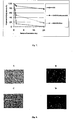
- toxicity of the different preparations on the different cells is represented as a function of the positively charged molecule concentration ( Figure 1-4 ).
- NIH 3T3 cells with and without EWS-Fli 1 (adherent cells) ( figures 1-2 ) there is a significant toxicity of CTAB compared to Chitosan of 5 or 10 KDa.
- Chitosan 5 KDa is not toxic and stimulates cell viability.
- Example II Formulation of positively charged nanoparticles in the presence of Chitosan of different molecular weights
- Table 1 below reports the size and zeta potential of nanoparticles as a function of the molecular weight of chitosan. ⁇ u> Table 1 ⁇ / u> Diameter (nm) Standard deviation Polydispersity index Zeta potential NP / chitosan PM 5 KDa 58 16 0,025 21 NP / chitosan PM 5-10 KDa 60 15 0,065 22
- the particle diameter does not vary with the PM of Chitosan. Whatever the PM of chitosan used at the 0.2% concentration, very small and monodisperse nanoparticles are obtained as evidenced by the value of the polydispersity index.
- the zeta potential of these particles is positive and the charge is independent of the molecular weight of chitosan.
- Example III Study of the comparative toxicity of nanoparticles loaded with Chitosan and CTAB.
- CEM 4FX suspension cells were inoculated at 10,000 cells per well in 96-well plates. Different concentrations of nanoparticles with positive charges by addition of CTAB or Chitosan 5 KDa and 10 KDa were tested.
- Two controls are used and correspond to the cells in culture medium on the one hand and in culture medium containing 100 ⁇ l of 150 mM NaCl on the other hand.
- the cytotoxicity measurements are made by a test measuring the activity of mitochondrial dehydrogenase enzymes of living cells by oxidation of MTT to Formazan.
- the amount of Formazan produced is directly proportional to the number of living metabolically active cells.
- the cells are washed with PBS and 1 ml of the medium is added. The cells are then incubated at 37 ° C. with 100 ⁇ l of a solution of MTT (5 mg / ml in PBS) for 3 hours.
- lysis solution (10% SDS, 10 mM Tris,) is then added to each well.
- the cells are incubated at 37 ° C for the night.
- the medium is homogenized and the optical density is read at 560 nm (Dynatech MRX).
- the nanoparticles of Chitosan 5 and 10 KDa have a toxicity starting from 10 ⁇ g / mL only, whereas the nanoparticles loaded with CTAB are toxic starting from 1 ⁇ g / mL ( figure 5 ).
- Oligonucleotides are negatively charged macromolecules capable of interacting with positively charged surfaces.
- Antisense ONs are nucleic sequences capable of hybridizing selectively with cellular-target messenger RNAs to inhibit their translation into protein. These ONs form with the mRNA-target, locally, double-stranded regions, by conventional Watson-Crick type interactions.
- the adsorption of the oligonucleotides on the nanoparticles of Chitosan is done in 150 mM NaCl for 30 minutes at room temperature after vortexing the solutions for about 30 seconds. The complexes are then incubated for 30 minutes at room temperature.
- CTAB-ODN nanoparticle complexes is carried out in the presence of CTAB (at the rate of 3 ⁇ moles of CTAB for 5 ⁇ g of NP) and of ODN in 150 mM of NaCl.
- the ODNs are adsorbed on NP-CTAB after 2 hours with stirring at room temperature.
- the complexes are prepared in a final volume of 200 ⁇ L.
- ODN 30 mer (EF3008AS) (20, 50, 100, 125, 150, and 200 ⁇ g) (20, 50, 100, 125, 150, and 200 ⁇ g) are mixed with 100 ⁇ g NP-Chitosan 5 KDa, NP-Chitosan 5-10 KDa.
- the nanoparticles loaded with ODN, as well as the ODNs alone, are centrifuged at 35,000 rpm (Beckman Optima L80, rotor TW50, 1) for 30 minutes at 4 ° C.
- the amount NP-adsorbed ODN was calculated by determining the amount of free ODN in the supernatants ( figure 6 ).
- Example V Study of the Protection of the ODNs Adsorbed on the NPs.
- ODN EF3008AS alone and associated with NP Chitosan was determined in 10% newborn calf serum decomplemented.
- the various complexes are incubated in 120 ⁇ l of 150 mM NaCl with 10% of decomplemented newborn calf serum. At different incubation times, 15 .mu.l samples are taken, mixed with the same volume of a solution of formamide / water (4/1), 0.01% of Bromophenol blue and 0.01% of Xylene Cyanol and frozen at - 20 ° C.
- the ODNs are then recovered by double phenol / chloroform / isoamyl alcohol extraction (25/24/1) and are then precipitated in 10 volumes of acetone containing 2% lithium perchlorate for 30 minutes at -20 ° C.
- the ODNs are then taken up in 5 ⁇ l of formamide / water solution (4/1), 0.01% of bromophenol blue and 0.01% of Xylene Cyanol, heated for 5 minutes at 95 ° C. and then put in ice. They are analyzed on a denaturing gel containing 20% polyacrylamide, 7M urea and 1X TBE. The gel is scanned by a phosphoimager (Storm 840, Molecular Dynamics). ODN degradation is quantified by performing the signal ratio of the bands corresponding to the intact ODNs and the degraded ODNs.
- the figure 7 shows that there is good protection of ODN 30 mer by NP-Chitosan.
- Human CEM4FX cells were used. 500,000 cells in suspension are seeded in 12-well plates (TPP, Switzerland) in 850 ⁇ l of RPMI medium containing 10% FCS (fetal calf serum)
- 150 ⁇ l of the suspension of nanoparticles prepared above are brought into contact with the cells for 24 hours.
- the cells are then fixed before being able to perform a fluorescence observation. After 24 hours of incubation of the cells in the presence of the nanoparticles, 1 ⁇ g of propidium iodide is added to each well. It helps to recognize dead cells by coloring them in red.
- the cells are then centrifuged at 1000 rpm for 5 min. The supernatant is removed and the cells are washed once again with PBS. 200 .mu.l of PBS containing 4% formaldehyde are then added and the cells are left at room temperature for 30 minutes. The cells are then washed twice with 0.1X PBS. Another wash with sterile water is also performed to complete. 20 ⁇ l of poly-lysine are added at the end. The cells are observed under a microscope fitted with a 480 nm filter.
- Chitosan 5 KDa-ODN nanoparticles are highly fluorescent and no toxicity is visible. In the presence of the Chitosan 5 KDa-Cyd-ODN nanoparticle formulation, they are also fluorescent but several dead cells are visible.
- Chitosan 10 KDa-Cyd-ODN nanoparticles also have good fluorescence but also a slightly greater toxicity than 5KDa-Cyd-ODN nanoparticles. In the presence of KDa-Cyd-ODN nanoparticles, the cells are also very fluorescent, but the number of dead cells is even greater than in the two previous cases.
- CTAB-Cyd-ON nanoparticles In the case of cells incubated in the presence of CTAB-Cyd-ON nanoparticles, the fluorescence is low and the toxicity is very important.
- the CTAB-ODN complex shows no cell fluorescence.
- NIH-3T3 EWS-Fli 1 cells are seeded in 6-well plates (TPP, Switzerland) 24 hours before transfection in order to reach 60-70% confluency.
- the cells are washed with 2 ml of 1X PBS per well and then 800 ⁇ l of DMEM containing 2% of FCS are added to each well.
- the complexes (200 ⁇ l) are brought into contact with NIH-3T3 EWS-Fli 1 cells for 16 hours at 37 ° C. Images of the fluorescent cells are shown in the photograph ( Figure 11B and 11D ).
- EWS-Fli1 cells are obtained by transfection of NIH 3T3 cells with the EWS-Fli1 oncogene. They are then cultured. When the cells have reached 70% confluence, they are suspended in PBS at a concentration of 6.5 ⁇ 10 6 cells / ml. These cells are subsequently inoculated into subcutaneous nude mice at the rate of 1.3 ⁇ 10 6 cells / mouse.
- the animals are treated either with 100 ⁇ l NP-chitosan 5kDa (60 ⁇ g) combined with 10 ⁇ g of plasmid pCMV ⁇ -gal or with 100 ⁇ l of plasmid pCMV ⁇ -gal (10 ⁇ g). 24 hours after treatment, the tumor was removed for histological study after immersion in Glyo-Fixx (Shandon).
- the tumor fragments are cast in paraffin and labeled with a hematein-eosin-saffranine solution.
- the ⁇ -gal protein is detected on a 4 ⁇ m tumor fragment section by an anti- ⁇ -gal antibody (Clontech) (1: 30) and monitored by the Power Vision Histostaining kit (Immuno Vision Technology, CA) after against counter marking, the samples are observed under a microscope (Zeiss) associated with a camera CDD Camera Imaging System (Sony).
- NIH 3T3 cells EWS / Fli-1 were seeded 24 h prior to transfection in culture medium without puromycin in the culture chambers mounted lamina (LabTek ® 4 wells, Nunc Inc.) at 100 000 cells per well. The cells are rinsed with PBS and incubated for 24 h in 400 ⁇ l of OPT1-MEM1 medium supplemented with 2.5% FCS, 100 U / ml penicillin and 100 ⁇ g / ml streptomycin in the presence of the various NP-chitosan complexes: ODN-FITC at 5: 1, 10: 1 and 20: 1 mass ratios. These complexes are prepared in 150 mM NaCl for a final volume of 100 ⁇ l.
- Two controls were used corresponding, on the one hand, to the cells incubated with the free As-FITC ODN (1 ⁇ g) and, on the other hand, to the cells incubated with 1 nmol of fluorescein (Aldrich).
- the penetration of the AS-FITC ODNs into the cells is visualized by confocal microscopy using a Leica TCS NT (Leica) device mounted on a Leica DM IRB / E inverted microscope.
- FIG. 13A and 13B present a field of cells incubated respectively with NP-chitosan complexes 5kDa: ODN AS-FITC and NP-chitosan 10kDa :: ODN AS-FITC at ratio (5: 1). They show that the fluorescence is dispersed in the cytosol when the ODN-FITC are vectorized by NP-chitosan 5 kDa and concentrated at the nucleus in the case of NP-chitosan 10 kDa.
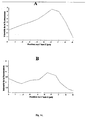
- the curves of the Figure 14A and 14B present the sum of the fluorescence intensities recorded in different Z planes of the cell.
- the Fluorescence is located at the apical membrane of the cells.
- a depth of 8 to 9 ⁇ m corresponds to their basement membrane.
- the fluorescence is located at the intracellular level.
- the fluorescence intensity inside the cells is higher when the ODN-FITC is vectorized by NP-chitosan 5 kDa.
- the cellular localization of the fluorescence is the same for NP-chitosan ratios: ODN (10: 1) and (20: 1) as the ratio (5: 1) for the two types of NP-chitosan.
- Example X Inhibition of tumor growth after intratumoral administration of NP-chitosan to nude mice that developed the subcutaneous form of Ewing's sarcoma.
- mice 35 female nude mice aged 6-8 weeks are irradiated with Gray. 24 hours after irradiation, the mice received subcutaneously in the right flank 200 ⁇ l of a suspension of NIH 3T3 EWS-Fli cells at 5 ⁇ 10 6 cells / ml in PBS. The animals develop a tumor after 14-21 days. 4 groups of 7 animals are constituted (PBS group, ODN EF3008AS group, NP-chitosan group 5 kDa ODN EF3008AS and NP-chitosan group 5kDa ODN control. The groups are randomized and the treatment will start when the tumor has reached 2 mm 3 . treatment consists of 5 intratumoral administrations of the products in two-day intervals.
- VT tumor volume
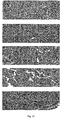
- Tumor growth inhibition results show growth inhibition when animals are treated with ODN EF3008AS and NP-chitosan 5kDa ODN EF3008AS. However, there is greater growth inhibition when the animals are treated with NPK-chitosan 5kDa ODN EF3008AS compared to animals that received ODN EF3008AS. Control animals that received PBS or NP-chitosan 5kDa ODN control showed poor inhibition of tumor growth.
- Example XI Inhibition of tumor growth after intravenous administration of the treatment to mice that developed the subcutaneous form of Ewing's sarcoma
- mice 36 female nude mice aged 6-8 weeks are irradiated at 5 gray. 24 hours after irradiation, the mice received subcutaneously in the right flank 200 .mu.l of a suspension of EWS-Flil cells at 5X10 6 cells / ml in PBS. The animals develop a tumor after 10-20 days. 6 groups of 6 animals are constituted (group NP-chitosan 5kDa ODN EF3008AS (ON AS / NP), ODN EF3008AS (ON AS), ODN control (ON CON), NP-chitosan 5kDa ODN control (ON CON / NP), 5kDa NP-chitosan (NP) and 0.9% NaCl (NaCl)).
- the groups are randomized and treatment will begin when the tumor reaches 10-40 mm 3 .
- the treatment consists of 5 intravenous administrations of the products per interval of 2 or 3 days.
- the efficacy of the treatments will be evaluated after 15 days by the average of the ratios between the measurement of the tumor volume on day 14 and the measurement of the tumor volume on day 1 of the groups of treated animals compared to the control groups.
- the tumor volume is calculated as in Example X.
- FIG. 16 The results of tumor growth ( Figure 16 ) show growth inhibition when animals are treated with ODN EF3008AS (ON AS group) and NP-chitosan 5kDa ODN EF3008AS (ON AS / NP). However, there is greater inhibition of tumor growth when animals are treated with the NPK chitosan 5kDa ODN EF3008AS (ON AS / NP group) compared to animals that received ODN EF3008AS without NP-chitosan (group WE HAVE). Animals in the control groups that received NaCl, NP-chitosan alone (NP group) or ODN control with or without NP-chitosan (ON CON / NP and ON CON groups respectively) show poor growth inhibition. tumor.
- the tumor fragments are cast in paraffin and labeled with a hematein-eosin-saffarin solution.
- GFP is detected on a 4 ⁇ m section by an anti-GFP anti-body (Clontech) (1:30) and monitored by the Power Vision Histostaining kit (ImmunoVision Technology CA) after counter-labeling, samples are observed under a microscope (Zeiss) associated with a camera CDD Camera Imaging System (Sony).
- RNA was transferred to a nitrocellulose membrane (BA-S85, Schleicher & Shuell) in SSC buffer (10X).
- the GFP mRNA is detected by the Northern blot technique with a 770pb GFP cDNA fragment labeled with ⁇ 32 -P dCTP 300 ci / mM (ICN, France) and Prime-a-gene labeling system ( Promega). After washing, the nitrocellulose membrane was analyzed by the Storm 840 phosphorimager (Molecular Dynamic).
Landscapes
- Health & Medical Sciences (AREA)
- Chemical & Material Sciences (AREA)
- Bioinformatics & Cheminformatics (AREA)
- Engineering & Computer Science (AREA)
- Public Health (AREA)
- Medicinal Chemistry (AREA)
- Veterinary Medicine (AREA)
- Pharmacology & Pharmacy (AREA)
- Life Sciences & Earth Sciences (AREA)
- Animal Behavior & Ethology (AREA)
- General Health & Medical Sciences (AREA)
- Optics & Photonics (AREA)
- Biomedical Technology (AREA)
- Physics & Mathematics (AREA)
- Epidemiology (AREA)
- Nanotechnology (AREA)
- Chemical Kinetics & Catalysis (AREA)
- General Chemical & Material Sciences (AREA)
- Organic Chemistry (AREA)
- Nuclear Medicine, Radiotherapy & Molecular Imaging (AREA)
- Medicinal Preparation (AREA)
- Pharmaceuticals Containing Other Organic And Inorganic Compounds (AREA)
- Medicines That Contain Protein Lipid Enzymes And Other Medicines (AREA)
- Medicines Containing Antibodies Or Antigens For Use As Internal Diagnostic Agents (AREA)
- Processes Of Treating Macromolecular Substances (AREA)
- Luminescent Compositions (AREA)
- Manufacturing Of Micro-Capsules (AREA)
Claims (20)
- System zum Vektorisieren und Abgeben von Substanzen von therapeutischem oder diagnostischem Interesse des aus Nanopartikeln gebildeten Typs, dadurch gekennzeichnet, dass die Nanopartikel eine homogene Größenverteilung haben und (i) mindestens ein Polymer und (ii) mindestens ein nicht toxisches positiv geladenes Polysaccharid aufweisen.
- System zum Vektorisieren und Abgeben von Substanzen von Interesse gemäß Anspruch 1, dadurch gekennzeichnet, dass die Substanzen bezüglich der Nanopartikel internalisiert und adsorbiert sind.
- System zum Vektorisieren und Abgeben von Substanzen von Interesse gemäß seinem der Ansprüche 1 oder 2, dadurch gekennzeichnet, dass die Substanzen von Interesse anionisch sind oder einen anionischen Bereich aufweisen.
- System zum Vektorisieren und Abgeben von Substanzen von Interesse gemäß einem der Ansprüche 1 bis 3, dadurch gekennzeichnet, dass das Polymer ein Poly(alkylcyanacrylat) ist, wobei die lineare oder verzweigte Alkylgruppe 1 bis 12 Kohlenstoffatome aufweist.
- System zum Vektorisieren und Abgeben von Substanzen von Interesse gemäß einem der Ansprüche 1 bis 4, dadurch gekennzeichnet, dass das positiv geladene Polysaccharid Chitosan oder eines seiner Derivate ist.
- System zum Vektorisieren und Abgeben von Substanzen von Interesse gemäß einem der Ansprüche 1 bis 5, dadurch gekennzeichnet, dass die positiv geladenen Polysaccharide, insbesondere das Chitosan oder eines seiner Derivate eine Molekülmasse von kleiner als 100 000 Da, vorzugsweise vorn kleiner als 30 000 Da aufweisen.
- System zum Vektorisieren und Abgeben von Substanze von Interesse gemäß einem der Ansprüche 1 bis 6, dadurch gekennzeichnet, dass die Nanopartikel mindestens eine Verbindung aufweisen, die in der Lage ist, die Substanzen von Interesse zu komplexieren.
- System zum Vektorisieren und Abgeben von Substanzen von Interesse gemäß Anspruch 7, dadurch gekennzeichnet, dass die Verbindung, die in der Lage ist, die Substanzen von Interesse zu komplexieren, ein zyklisches Oligosaccharid, vorzugsweise ein neutrales oder geladenes, natives, verzweigtes oder polymerisiertes oder chemisch modifiziertes Cyclodextrin ist.
- System zum Vektorisieren und Abgeben von Substanzen von Interesse gemäß einem der vorhergehenden Ansprüche, dadurch gekennzeichnet, dass die Substanzen von Interesse, aus der Gruppe ausgewählt sind, die DNA oder Oligodesoxyribonukleotide oder Oligoribonukleotide, insbesondere Antisense oder RNA-Interferon (ARNsi), oder auch Peptide, Polypeptide oder Proteine und chemische Verbindungen aufweist.
- System zur Vektorisieren und Abgeben von Substanzen von Interesse gemäß einem der vorhergehenden Ansprüche, dadurch gekennzeichnet, dass die Nanopartikel einen homogenen Durchmesser zwischen 10 und 300 nm besitzen.
- Verfahren zum Herstellen von Nanopartikeln, die in die Zusammensetzung eines Systems zum Vektorisieren und Abgeben von Substanzen von Interesse gemäß einem der vorhergehenden Ansprüche eindringen, dadurch gekennzeichnet, dass es das polymerisieren der Monomere bei einem sauren pH-Wert von größer als 1 in Anwesenheit des positiv geladenen Polysaccharids aufweist, um eine Nanopartikelsuspension zu erhalten.
- Verfahren gemäß Anspruch 11, dadurch gekennzeichnet, dass das Polysaccharid zu Beginn der Polymerisation hinzugefügt wird.
- Verfahren gemäß einem der Ansprüche 11 oder 12, dadurch gekennzeichnet, dass der saure pH-Wert größer als 3 ist.
- Verfahren gemäß einem der Ansprüche 11 bis 13, dadurch gekennzeichnet, dass die Polymerisation in Anwesenheit einer Polymerisationsverzögerungsverbindung, zum Beispiel SO2 oder Hydrochinon erfolgt, die an die OH-Gruppen des wässrigen Polymerisationsmediums oder des Polysaccharids bindet.
- Verfahren gemäß einem der Ansprüche 11 bis 14, dadurch gekennzeichnet, dass die Menge an Polysaccharid bezogen auf das Gewicht der suspension vorzugsweise zwischen 0,01% und 5% und vorzugsweise zwischen 0,1% und 1% liegt.
- Verfahren gemäß einem der Ansprüche 11 bis 15, dadurch gekennzeichnet, dass es das Hinzufügen von SO2 enthaltendem Polyisohexylcyanacrylat in eine Zitronensäurelösung mit einem pH-Wert zwischen 1 und 5 aufweist, die ferner eine nicht ionische oberflächenaktive Substanz, möglicherweise Cyclodextrin und Chitosan mit einem geringen Molekulargewicht (5000 oder 10000 Da) enthält.
- Verfahren gemäß einem der Ansprüche 11 bis 16, dadurch gekenntzeichnet, dass es das Hinzufügen der Substanzen von Interesse gleichzeitig mit dem Polysaccharid aufweist.
- Verfahren gemäß einem der Ansprüche 11 bis 16, dadurch gekennzeichnet, dass es das Hinzufügen der Substanzen von Interesse nach dem Bilden der Nanopartikel aufweist.
- Eine Nanopartikelsuspension, die geeignet ist, mittels eines Verfahrens gemäß einem der Ansprüche 11 bis 18 erhalten zu werden, dadurch gekennzeichnet, dass sie bezogen auf das Gewicht der Suspension 0,01% bis 5%, insbesondere zwischen 0,1% und 1% positiv geladenes Polysaccharid aufweist.
- Eine Nanopartikelsuspension gemäß Anspruch 19, dadurch gekennzeichnet, dass sie bezogen auf das Gewicht der Suspension 0,5% bis 50% an Substanzen von Interesse aufweist.
Applications Claiming Priority (3)
| Application Number | Priority Date | Filing Date | Title |
|---|---|---|---|
| FR0207668 | 2002-06-20 | ||
| FR0207668A FR2841137B1 (fr) | 2002-06-20 | 2002-06-20 | Systeme de vectorisation comprenant des nanoparticules de taille homogene d'au moins un polymere et d'au moins un polysaccharide charge positivement |
| PCT/FR2003/001909 WO2004000287A1 (fr) | 2002-06-20 | 2003-06-20 | Systeme de vectorisation comprenant des nanoparticules de taille homogene d'au moins un polymere et d'au moins un polysaccharide charge positivement et son procede de preparation |
Publications (2)
| Publication Number | Publication Date |
|---|---|
| EP1513506A1 EP1513506A1 (de) | 2005-03-16 |
| EP1513506B1 true EP1513506B1 (de) | 2011-10-19 |
Family
ID=29719922
Family Applications (1)
| Application Number | Title | Priority Date | Filing Date |
|---|---|---|---|
| EP03760766A Expired - Lifetime EP1513506B1 (de) | 2002-06-20 | 2003-06-20 | Vektorsystem enthaltend nanopartikeln gleichmässiger grösse,welche aus zumindestens einem polymer und einem positiv geladenen polysaccharid bestehen,und herstellungsverfahren dieses systems |
Country Status (10)
| Country | Link |
|---|---|
| US (1) | US8062669B2 (de) |
| EP (1) | EP1513506B1 (de) |
| JP (1) | JP2005533078A (de) |
| AT (1) | ATE529100T1 (de) |
| AU (1) | AU2003263249B2 (de) |
| CA (1) | CA2488942A1 (de) |
| ES (1) | ES2375628T3 (de) |
| FR (1) | FR2841137B1 (de) |
| IL (1) | IL165830A (de) |
| WO (1) | WO2004000287A1 (de) |
Families Citing this family (27)
| Publication number | Priority date | Publication date | Assignee | Title |
|---|---|---|---|---|
| ES2318531T3 (es) * | 2004-09-14 | 2009-05-01 | Nanodel Technologies Gmbh | Vehiculo de administracion que contiene nanoparticulas. |
| EP1661559A1 (de) * | 2004-11-25 | 2006-05-31 | NanoDel Technologies GmbH | Verabreichungssystem hergestellt durch ein Miniemulsionsverfahren |
| EP1806129A1 (de) * | 2004-10-01 | 2007-07-11 | Eisai R&D Management Co., Ltd. | Feine teilchen enthaltende zusammensetzung und verfahren zu ihrer herstellung |
| WO2006056362A2 (en) * | 2004-11-25 | 2006-06-01 | Nanodel Technologies Gmbh | Delivery vehicle manufactured by the miniemulsion method |
| ES2277743B2 (es) * | 2005-06-02 | 2008-12-16 | Universidade De Santiago De Compostela | Nanoparticulas que comprenden quitosano y ciclodextrina. |
| CN101331231B (zh) * | 2005-10-14 | 2012-11-21 | 玛瑞纳生物技术有限公司 | 用于rna治疗的肽核糖核酸缩合粒子的复合物及方法 |
| WO2008048272A2 (en) * | 2006-10-21 | 2008-04-24 | University Of South Florida | Method of drug delivery by carbon nanotube-chitosan nanocomplexes |
| US8536324B2 (en) * | 2005-10-21 | 2013-09-17 | University Of South Florida | Method of drug delivery by carbon nanotube-chitosan nanocomplexes |
| CA2628313A1 (en) * | 2005-11-04 | 2007-05-31 | Bio Syntech Canada Inc. | Composition and method for efficient delivery of nucleic acids to cells using chitosan |
| EP1859792A1 (de) * | 2006-05-24 | 2007-11-28 | Advanced in Vitro Cell Technologies, S.L. | Nanopartikel aus Chitosan und Hyaluronan für die Verabreichung von Wirkstoffen |
| KR20090031861A (ko) * | 2006-05-24 | 2009-03-30 | 어드밴스드 인 비트로 셀 테크놀로지스, 에스.에이 | 활성분자의 투여를 위한 키토산 및 하이알루로난 나노입자 |
| CN100460018C (zh) * | 2006-07-26 | 2009-02-11 | 郑州大学 | 复溶性聚氰基丙烯酸酯纳米粒,其制备方法及制药用途 |
| EP2061516A2 (de) * | 2006-09-15 | 2009-05-27 | FMC Biopolymer AS | Nicht-virale oligonukleotid-abgabesysteme |
| KR100882611B1 (ko) * | 2006-11-14 | 2009-02-12 | 주식회사 키토라이프 | 표적 리간드로서 폴릭산이 도입된 유전자 전달체용저분자량 수용성 키토산 나노입자 및 이의 제조방법 |
| EP2152757A1 (de) * | 2007-05-02 | 2010-02-17 | Agency for Science, Technology and Research | Funktionalisierung von nanopartikeln durch glucosaminderivate |
| US8309129B2 (en) * | 2007-05-03 | 2012-11-13 | Bend Research, Inc. | Nanoparticles comprising a drug, ethylcellulose, and a bile salt |
| US8703204B2 (en) | 2007-05-03 | 2014-04-22 | Bend Research, Inc. | Nanoparticles comprising a cholesteryl ester transfer protein inhibitor and anon-ionizable polymer |
| EP2162120B1 (de) | 2007-06-04 | 2016-05-04 | Bend Research, Inc | Nanopartikel mit nicht ionisierbarem zellulosepolymer und amphipilem nicht ionisierbarem blockcopolymer |
| WO2008149230A2 (en) | 2007-06-04 | 2008-12-11 | Pfizer Products Inc. | Nanoparticles comprising drug, a non-ionizable cellulosic polymer and tocopheryl polyethylene glycol succinate |
| EP2231169B1 (de) | 2007-12-06 | 2016-05-04 | Bend Research, Inc. | Pharmazeutische zusammensetzungen mit nanopartikeln und resuspensionsmaterial |
| EP2240162A4 (de) | 2007-12-06 | 2013-10-09 | Bend Res Inc | Nanoteilchen mit einem nicht-ionisierbaren polymer und einem amin-funktionalisierten methacrylat-copolymer |
| EP2153821A1 (de) * | 2008-08-06 | 2010-02-17 | BioAlliance Pharma | Orale Formulierungen von Camptothecin-Derivaten |
| CN101780105B (zh) * | 2009-01-20 | 2011-09-28 | 沈阳兴齐制药有限公司 | 小牛血去蛋白提取物的滴眼液 |
| ITTO20130317A1 (it) * | 2013-04-19 | 2014-10-20 | Idea Medical Devices S R L | Dispositivo medico comprendente una struttura di supporto a base di chitosano |
| CN108956488B (zh) * | 2018-04-23 | 2020-11-10 | 山东省医疗器械产品质量检验中心 | 一种壳聚糖或壳聚糖盐中蛋白质含量的测定方法 |
| CN112295013B (zh) * | 2020-10-30 | 2022-06-21 | 北京福爱乐科技发展有限公司 | 一种消炎型快速止血医用胶材料及其制备方法 |
| CN112220962B (zh) * | 2020-10-30 | 2022-06-21 | 北京福爱乐科技发展有限公司 | 一种快速止血的医用胶材料及其制备方法 |
Family Cites Families (8)
| Publication number | Priority date | Publication date | Assignee | Title |
|---|---|---|---|---|
| US3632754A (en) | 1968-02-12 | 1972-01-04 | Lescarden Ltd | Use of chitin for promoting wound healing |
| FR2504408B1 (fr) * | 1981-04-24 | 1986-02-14 | Couvreur Patrick | Procede de preparation de particules submicroscopiques, particules ainsi obtenues et compositions pharmaceutiques les contenant |
| US4474769A (en) | 1983-05-13 | 1984-10-02 | Pfanstiehl Laboratories, Inc. | Chitosan as a contraceptive |
| FR2649321A1 (fr) * | 1989-07-07 | 1991-01-11 | Inst Nat Sante Rech Med | Compositions a base de derives nucleotidiques, leurs procedes de preparation, et leurs utilisations notamment en tant que compositions pharmaceutiques |
| FR2724935B1 (fr) * | 1994-09-27 | 1996-12-20 | Centre Nat Rech Scient | Compositions nanoparticulaires contenant des derives nucleotidiques, leur preparation et leur emploi en therapeutique |
| AU4613796A (en) * | 1995-02-10 | 1996-08-27 | Jorg Kreuter | Medicament in particle form |
| US5830883A (en) * | 1995-11-06 | 1998-11-03 | Duquesne University Of The Holy Ghost | Methods of creating a unique chitosan and employing the same to form complexes with drugs, delivery of the same within a patient and a related dosage form |
| FR2775435B1 (fr) * | 1998-02-27 | 2000-05-26 | Bioalliance Pharma | Nanoparticules comprenant au moins un polymere et au moins un compose apte a complexer un ou plusieurs principes actifs |
-
2002
- 2002-06-20 FR FR0207668A patent/FR2841137B1/fr not_active Expired - Fee Related
-
2003
- 2003-06-20 AU AU2003263249A patent/AU2003263249B2/en not_active Ceased
- 2003-06-20 CA CA002488942A patent/CA2488942A1/fr not_active Abandoned
- 2003-06-20 WO PCT/FR2003/001909 patent/WO2004000287A1/fr not_active Ceased
- 2003-06-20 EP EP03760766A patent/EP1513506B1/de not_active Expired - Lifetime
- 2003-06-20 ES ES03760766T patent/ES2375628T3/es not_active Expired - Lifetime
- 2003-06-20 AT AT03760766T patent/ATE529100T1/de not_active IP Right Cessation
- 2003-06-20 JP JP2004514970A patent/JP2005533078A/ja active Pending
-
2004
- 2004-12-16 US US11/014,156 patent/US8062669B2/en not_active Expired - Fee Related
- 2004-12-16 IL IL165830A patent/IL165830A/en not_active IP Right Cessation
Also Published As
| Publication number | Publication date |
|---|---|
| EP1513506A1 (de) | 2005-03-16 |
| IL165830A0 (en) | 2006-01-15 |
| WO2004000287A1 (fr) | 2003-12-31 |
| ATE529100T1 (de) | 2011-11-15 |
| FR2841137B1 (fr) | 2004-08-13 |
| FR2841137A1 (fr) | 2003-12-26 |
| US20060134220A1 (en) | 2006-06-22 |
| IL165830A (en) | 2008-11-26 |
| US8062669B2 (en) | 2011-11-22 |
| ES2375628T3 (es) | 2012-03-02 |
| CA2488942A1 (fr) | 2003-12-31 |
| AU2003263249B2 (en) | 2009-09-10 |
| AU2003263249A1 (en) | 2004-01-06 |
| JP2005533078A (ja) | 2005-11-04 |
Similar Documents
| Publication | Publication Date | Title |
|---|---|---|
| EP1513506A1 (de) | Vektorsystem enthaltend nanopartikeln gleichmässiger grösse,welche aus zumindestens einem polymer und einem positiv geladenen polysaccharid bestehen,und herstellungsverfahren dieses systems | |
| Jeong et al. | Poly (L-lysine)-g-poly (D, L-lactic-co-glycolic acid) micelles for low cytotoxic biodegradable gene delivery carriers | |
| JP4796063B2 (ja) | 治療薬を送達するための方法および物 | |
| Zarekar et al. | Nanogel as a novel platform for smart drug delivery system | |
| EP1471944B1 (de) | Pharmazeutische zusammnesetzung zur verbesserten in-vivo genübertragung | |
| WO1995021931A1 (fr) | Composition contenant des acides nucleiques, preparation et utilisations | |
| US20080220030A1 (en) | Nanoparticles Comprising Chitosan and Cyclodextrin | |
| US8492142B2 (en) | Freeze-dried product for introducing nucleic acid, oligonucleic acid or derivative thereof | |
| US20110142890A1 (en) | Nanoparticles of chitosan and hyaluronan for the administration of active molecules | |
| Bazylińska et al. | Nanoemulsion-templated polylelectrolyte multifunctional nanocapsules for DNA entrapment and bioimaging | |
| Nimesh et al. | Novel polyallylamine–dextran sulfate–DNA nanoplexes: highly efficient non-viral vector for gene delivery | |
| CN115554411B (zh) | 一种酶响应的肿瘤逐级靶向药物递送系统 | |
| CN101448489A (zh) | 用于活性分子给药的壳聚糖和乙酰透明质酸的纳米颗粒 | |
| EP4440545A1 (de) | Nanopartikel zur freisetzung von nukleinsäuren | |
| Liu et al. | Chitosan as a condensing agent induces high gene transfection efficiency and low cytotoxicity of liposome | |
| He et al. | Polyplex formation between four‐arm poly (ethylene oxide)‐b‐poly (2‐(diethylamino) ethyl methacrylate) and plasmid DNA in gene delivery | |
| EP2389158B1 (de) | Vektoren, einschliesslich eines anionischen makromoleküls und eines kationischen lipids zur abgabe von kleinen nukleinsäuren | |
| EP0951560A1 (de) | Konjugate eines partikulären vektors und oligonukleotide, ihre herstellung undihre pharmazeutische zusammensetzung | |
| EP3999520A1 (de) | Hybrider htirna-/nanopartikel-komplex und seine verwendung zur behandlung einer krankheit des verdauungssystems | |
| CN114867472B (zh) | 用于基因治疗的金脂质纳米颗粒 | |
| WO2024250095A1 (en) | An intelligent charge switchable polymer-lipid hybrid system for in vivo delivery of molecules including rnas | |
| Bilensoy et al. | Cationic polymer nanoparticles for drug and gene delivery | |
| FR2803526A1 (fr) | Matrices polymeriques amphiphiles et ioniques et derives de telles matrices |
Legal Events
| Date | Code | Title | Description |
|---|---|---|---|
| PUAI | Public reference made under article 153(3) epc to a published international application that has entered the european phase |
Free format text: ORIGINAL CODE: 0009012 |
|
| 17P | Request for examination filed |
Effective date: 20041230 |
|
| AK | Designated contracting states |
Kind code of ref document: A1 Designated state(s): AT BE BG CH CY CZ DE DK EE ES FI FR GB GR HU IE IT LI LU MC NL PT RO SE SI SK TR |
|
| AX | Request for extension of the european patent |
Extension state: AL LT LV MK |
|
| DAX | Request for extension of the european patent (deleted) | ||
| RIN1 | Information on inventor provided before grant (corrected) |
Inventor name: ABOUBAKAR, MALAM Inventor name: POLARD, VALERIE Inventor name: CHAUMONT, CHRISTINE Inventor name: MAKSIMENKO, ANDREI |
|
| RAP1 | Party data changed (applicant data changed or rights of an application transferred) |
Owner name: BIOALLIANCE PHARMA |
|
| GRAP | Despatch of communication of intention to grant a patent |
Free format text: ORIGINAL CODE: EPIDOSNIGR1 |
|
| GRAS | Grant fee paid |
Free format text: ORIGINAL CODE: EPIDOSNIGR3 |
|
| GRAA | (expected) grant |
Free format text: ORIGINAL CODE: 0009210 |
|
| AK | Designated contracting states |
Kind code of ref document: B1 Designated state(s): AT BE BG CH CY CZ DE DK EE ES FI FR GB GR HU IE IT LI LU MC NL PT RO SE SI SK TR |
|
| REG | Reference to a national code |
Ref country code: GB Ref legal event code: FG4D Free format text: NOT ENGLISH |
|
| REG | Reference to a national code |
Ref country code: CH Ref legal event code: EP |
|
| REG | Reference to a national code |
Ref country code: IE Ref legal event code: FG4D |
|
| REG | Reference to a national code |
Ref country code: DE Ref legal event code: R096 Ref document number: 60338832 Country of ref document: DE Effective date: 20111208 |
|
| REG | Reference to a national code |
Ref country code: NL Ref legal event code: VDEP Effective date: 20111019 |
|
| REG | Reference to a national code |
Ref country code: ES Ref legal event code: FG2A Ref document number: 2375628 Country of ref document: ES Kind code of ref document: T3 Effective date: 20120302 |
|
| REG | Reference to a national code |
Ref country code: AT Ref legal event code: MK05 Ref document number: 529100 Country of ref document: AT Kind code of ref document: T Effective date: 20111019 |
|
| REG | Reference to a national code |
Ref country code: IE Ref legal event code: FD4D |
|
| PG25 | Lapsed in a contracting state [announced via postgrant information from national office to epo] |
Ref country code: SE Free format text: LAPSE BECAUSE OF FAILURE TO SUBMIT A TRANSLATION OF THE DESCRIPTION OR TO PAY THE FEE WITHIN THE PRESCRIBED TIME-LIMIT Effective date: 20111019 Ref country code: NL Free format text: LAPSE BECAUSE OF FAILURE TO SUBMIT A TRANSLATION OF THE DESCRIPTION OR TO PAY THE FEE WITHIN THE PRESCRIBED TIME-LIMIT Effective date: 20111019 Ref country code: PT Free format text: LAPSE BECAUSE OF FAILURE TO SUBMIT A TRANSLATION OF THE DESCRIPTION OR TO PAY THE FEE WITHIN THE PRESCRIBED TIME-LIMIT Effective date: 20120220 Ref country code: SI Free format text: LAPSE BECAUSE OF FAILURE TO SUBMIT A TRANSLATION OF THE DESCRIPTION OR TO PAY THE FEE WITHIN THE PRESCRIBED TIME-LIMIT Effective date: 20111019 Ref country code: GR Free format text: LAPSE BECAUSE OF FAILURE TO SUBMIT A TRANSLATION OF THE DESCRIPTION OR TO PAY THE FEE WITHIN THE PRESCRIBED TIME-LIMIT Effective date: 20120120 |
|
| PG25 | Lapsed in a contracting state [announced via postgrant information from national office to epo] |
Ref country code: CY Free format text: LAPSE BECAUSE OF FAILURE TO SUBMIT A TRANSLATION OF THE DESCRIPTION OR TO PAY THE FEE WITHIN THE PRESCRIBED TIME-LIMIT Effective date: 20111019 |
|
| PG25 | Lapsed in a contracting state [announced via postgrant information from national office to epo] |
Ref country code: IE Free format text: LAPSE BECAUSE OF FAILURE TO SUBMIT A TRANSLATION OF THE DESCRIPTION OR TO PAY THE FEE WITHIN THE PRESCRIBED TIME-LIMIT Effective date: 20111019 Ref country code: EE Free format text: LAPSE BECAUSE OF FAILURE TO SUBMIT A TRANSLATION OF THE DESCRIPTION OR TO PAY THE FEE WITHIN THE PRESCRIBED TIME-LIMIT Effective date: 20111019 Ref country code: CZ Free format text: LAPSE BECAUSE OF FAILURE TO SUBMIT A TRANSLATION OF THE DESCRIPTION OR TO PAY THE FEE WITHIN THE PRESCRIBED TIME-LIMIT Effective date: 20111019 Ref country code: BG Free format text: LAPSE BECAUSE OF FAILURE TO SUBMIT A TRANSLATION OF THE DESCRIPTION OR TO PAY THE FEE WITHIN THE PRESCRIBED TIME-LIMIT Effective date: 20120119 Ref country code: DK Free format text: LAPSE BECAUSE OF FAILURE TO SUBMIT A TRANSLATION OF THE DESCRIPTION OR TO PAY THE FEE WITHIN THE PRESCRIBED TIME-LIMIT Effective date: 20111019 Ref country code: SK Free format text: LAPSE BECAUSE OF FAILURE TO SUBMIT A TRANSLATION OF THE DESCRIPTION OR TO PAY THE FEE WITHIN THE PRESCRIBED TIME-LIMIT Effective date: 20111019 |
|
| PLBE | No opposition filed within time limit |
Free format text: ORIGINAL CODE: 0009261 |
|
| STAA | Information on the status of an ep patent application or granted ep patent |
Free format text: STATUS: NO OPPOSITION FILED WITHIN TIME LIMIT |
|
| PG25 | Lapsed in a contracting state [announced via postgrant information from national office to epo] |
Ref country code: RO Free format text: LAPSE BECAUSE OF FAILURE TO SUBMIT A TRANSLATION OF THE DESCRIPTION OR TO PAY THE FEE WITHIN THE PRESCRIBED TIME-LIMIT Effective date: 20111019 |
|
| 26N | No opposition filed |
Effective date: 20120720 |
|
| REG | Reference to a national code |
Ref country code: DE Ref legal event code: R097 Ref document number: 60338832 Country of ref document: DE Effective date: 20120720 |
|
| PG25 | Lapsed in a contracting state [announced via postgrant information from national office to epo] |
Ref country code: MC Free format text: LAPSE BECAUSE OF NON-PAYMENT OF DUE FEES Effective date: 20120630 Ref country code: AT Free format text: LAPSE BECAUSE OF FAILURE TO SUBMIT A TRANSLATION OF THE DESCRIPTION OR TO PAY THE FEE WITHIN THE PRESCRIBED TIME-LIMIT Effective date: 20111019 |
|
| PG25 | Lapsed in a contracting state [announced via postgrant information from national office to epo] |
Ref country code: FI Free format text: LAPSE BECAUSE OF FAILURE TO SUBMIT A TRANSLATION OF THE DESCRIPTION OR TO PAY THE FEE WITHIN THE PRESCRIBED TIME-LIMIT Effective date: 20111019 |
|
| PG25 | Lapsed in a contracting state [announced via postgrant information from national office to epo] |
Ref country code: TR Free format text: LAPSE BECAUSE OF FAILURE TO SUBMIT A TRANSLATION OF THE DESCRIPTION OR TO PAY THE FEE WITHIN THE PRESCRIBED TIME-LIMIT Effective date: 20111019 |
|
| PG25 | Lapsed in a contracting state [announced via postgrant information from national office to epo] |
Ref country code: LU Free format text: LAPSE BECAUSE OF NON-PAYMENT OF DUE FEES Effective date: 20120620 |
|
| PG25 | Lapsed in a contracting state [announced via postgrant information from national office to epo] |
Ref country code: HU Free format text: LAPSE BECAUSE OF FAILURE TO SUBMIT A TRANSLATION OF THE DESCRIPTION OR TO PAY THE FEE WITHIN THE PRESCRIBED TIME-LIMIT Effective date: 20030620 |
|
| PGFP | Annual fee paid to national office [announced via postgrant information from national office to epo] |
Ref country code: GB Payment date: 20140527 Year of fee payment: 12 |
|
| PGFP | Annual fee paid to national office [announced via postgrant information from national office to epo] |
Ref country code: ES Payment date: 20140617 Year of fee payment: 12 Ref country code: IT Payment date: 20140529 Year of fee payment: 12 Ref country code: CH Payment date: 20140526 Year of fee payment: 12 Ref country code: DE Payment date: 20140523 Year of fee payment: 12 |
|
| PGFP | Annual fee paid to national office [announced via postgrant information from national office to epo] |
Ref country code: BE Payment date: 20140523 Year of fee payment: 12 |
|
| PGFP | Annual fee paid to national office [announced via postgrant information from national office to epo] |
Ref country code: FR Payment date: 20140620 Year of fee payment: 12 |
|
| REG | Reference to a national code |
Ref country code: DE Ref legal event code: R119 Ref document number: 60338832 Country of ref document: DE |
|
| PG25 | Lapsed in a contracting state [announced via postgrant information from national office to epo] |
Ref country code: IT Free format text: LAPSE BECAUSE OF NON-PAYMENT OF DUE FEES Effective date: 20150620 |
|
| REG | Reference to a national code |
Ref country code: CH Ref legal event code: PL |
|
| GBPC | Gb: european patent ceased through non-payment of renewal fee |
Effective date: 20150620 |
|
| REG | Reference to a national code |
Ref country code: FR Ref legal event code: ST Effective date: 20160229 |
|
| PG25 | Lapsed in a contracting state [announced via postgrant information from national office to epo] |
Ref country code: DE Free format text: LAPSE BECAUSE OF NON-PAYMENT OF DUE FEES Effective date: 20160101 Ref country code: CH Free format text: LAPSE BECAUSE OF NON-PAYMENT OF DUE FEES Effective date: 20150630 Ref country code: GB Free format text: LAPSE BECAUSE OF NON-PAYMENT OF DUE FEES Effective date: 20150620 Ref country code: LI Free format text: LAPSE BECAUSE OF NON-PAYMENT OF DUE FEES Effective date: 20150630 |
|
| PG25 | Lapsed in a contracting state [announced via postgrant information from national office to epo] |
Ref country code: FR Free format text: LAPSE BECAUSE OF NON-PAYMENT OF DUE FEES Effective date: 20150630 |
|
| REG | Reference to a national code |
Ref country code: ES Ref legal event code: FD2A Effective date: 20160729 |
|
| PG25 | Lapsed in a contracting state [announced via postgrant information from national office to epo] |
Ref country code: ES Free format text: LAPSE BECAUSE OF NON-PAYMENT OF DUE FEES Effective date: 20150621 |
|
| PG25 | Lapsed in a contracting state [announced via postgrant information from national office to epo] |
Ref country code: BE Free format text: LAPSE BECAUSE OF NON-PAYMENT OF DUE FEES Effective date: 20150630 |