EP2389158B1 - Vektoren, einschliesslich eines anionischen makromoleküls und eines kationischen lipids zur abgabe von kleinen nukleinsäuren - Google Patents
Vektoren, einschliesslich eines anionischen makromoleküls und eines kationischen lipids zur abgabe von kleinen nukleinsäuren Download PDFInfo
- Publication number
- EP2389158B1 EP2389158B1 EP10701502.6A EP10701502A EP2389158B1 EP 2389158 B1 EP2389158 B1 EP 2389158B1 EP 10701502 A EP10701502 A EP 10701502A EP 2389158 B1 EP2389158 B1 EP 2389158B1
- Authority
- EP
- European Patent Office
- Prior art keywords
- nucleic acid
- anionic
- cationic lipid
- composition according
- anionic macromolecule
- Prior art date
- Legal status (The legal status is an assumption and is not a legal conclusion. Google has not performed a legal analysis and makes no representation as to the accuracy of the status listed.)
- Not-in-force
Links
Images






Classifications
-
- A—HUMAN NECESSITIES
- A61—MEDICAL OR VETERINARY SCIENCE; HYGIENE
- A61K—PREPARATIONS FOR MEDICAL, DENTAL OR TOILETRY PURPOSES
- A61K9/00—Medicinal preparations characterised by special physical form
- A61K9/10—Dispersions; Emulsions
- A61K9/127—Synthetic bilayered vehicles, e.g. liposomes or liposomes with cholesterol as the only non-phosphatidyl surfactant
- A61K9/1271—Non-conventional liposomes, e.g. PEGylated liposomes or liposomes coated or grafted with polymers
- A61K9/1272—Non-conventional liposomes, e.g. PEGylated liposomes or liposomes coated or grafted with polymers comprising non-phosphatidyl surfactants as bilayer-forming substances, e.g. cationic lipids or non-phosphatidyl liposomes coated or grafted with polymers
-
- A—HUMAN NECESSITIES
- A61—MEDICAL OR VETERINARY SCIENCE; HYGIENE
- A61K—PREPARATIONS FOR MEDICAL, DENTAL OR TOILETRY PURPOSES
- A61K47/00—Medicinal preparations characterised by the non-active ingredients used, e.g. carriers or inert additives; Targeting or modifying agents chemically bound to the active ingredient
- A61K47/30—Macromolecular organic or inorganic compounds, e.g. inorganic polyphosphates
- A61K47/34—Macromolecular compounds obtained otherwise than by reactions only involving carbon-to-carbon unsaturated bonds, e.g. polyesters, polyamino acids, polysiloxanes, polyphosphazines, copolymers of polyalkylene glycol or poloxamers
-
- A—HUMAN NECESSITIES
- A61—MEDICAL OR VETERINARY SCIENCE; HYGIENE
- A61K—PREPARATIONS FOR MEDICAL, DENTAL OR TOILETRY PURPOSES
- A61K47/00—Medicinal preparations characterised by the non-active ingredients used, e.g. carriers or inert additives; Targeting or modifying agents chemically bound to the active ingredient
- A61K47/30—Macromolecular organic or inorganic compounds, e.g. inorganic polyphosphates
- A61K47/36—Polysaccharides; Derivatives thereof, e.g. gums, starch, alginate, dextrin, hyaluronic acid, chitosan, inulin, agar or pectin
-
- A—HUMAN NECESSITIES
- A61—MEDICAL OR VETERINARY SCIENCE; HYGIENE
- A61K—PREPARATIONS FOR MEDICAL, DENTAL OR TOILETRY PURPOSES
- A61K47/00—Medicinal preparations characterised by the non-active ingredients used, e.g. carriers or inert additives; Targeting or modifying agents chemically bound to the active ingredient
- A61K47/50—Medicinal preparations characterised by the non-active ingredients used, e.g. carriers or inert additives; Targeting or modifying agents chemically bound to the active ingredient the non-active ingredient being chemically bound to the active ingredient, e.g. polymer-drug conjugates
- A61K47/69—Medicinal preparations characterised by the non-active ingredients used, e.g. carriers or inert additives; Targeting or modifying agents chemically bound to the active ingredient the non-active ingredient being chemically bound to the active ingredient, e.g. polymer-drug conjugates the conjugate being characterised by physical or galenical forms, e.g. emulsion, particle, inclusion complex, stent or kit
- A61K47/6905—Medicinal preparations characterised by the non-active ingredients used, e.g. carriers or inert additives; Targeting or modifying agents chemically bound to the active ingredient the non-active ingredient being chemically bound to the active ingredient, e.g. polymer-drug conjugates the conjugate being characterised by physical or galenical forms, e.g. emulsion, particle, inclusion complex, stent or kit the form being a colloid or an emulsion
- A61K47/6911—Medicinal preparations characterised by the non-active ingredients used, e.g. carriers or inert additives; Targeting or modifying agents chemically bound to the active ingredient the non-active ingredient being chemically bound to the active ingredient, e.g. polymer-drug conjugates the conjugate being characterised by physical or galenical forms, e.g. emulsion, particle, inclusion complex, stent or kit the form being a colloid or an emulsion the form being a liposome
-
- A—HUMAN NECESSITIES
- A61—MEDICAL OR VETERINARY SCIENCE; HYGIENE
- A61P—SPECIFIC THERAPEUTIC ACTIVITY OF CHEMICAL COMPOUNDS OR MEDICINAL PREPARATIONS
- A61P1/00—Drugs for disorders of the alimentary tract or the digestive system
- A61P1/16—Drugs for disorders of the alimentary tract or the digestive system for liver or gallbladder disorders, e.g. hepatoprotective agents, cholagogues, litholytics
-
- A—HUMAN NECESSITIES
- A61—MEDICAL OR VETERINARY SCIENCE; HYGIENE
- A61P—SPECIFIC THERAPEUTIC ACTIVITY OF CHEMICAL COMPOUNDS OR MEDICINAL PREPARATIONS
- A61P19/00—Drugs for skeletal disorders
- A61P19/02—Drugs for skeletal disorders for joint disorders, e.g. arthritis, arthrosis
-
- A—HUMAN NECESSITIES
- A61—MEDICAL OR VETERINARY SCIENCE; HYGIENE
- A61P—SPECIFIC THERAPEUTIC ACTIVITY OF CHEMICAL COMPOUNDS OR MEDICINAL PREPARATIONS
- A61P25/00—Drugs for disorders of the nervous system
- A61P25/28—Drugs for disorders of the nervous system for treating neurodegenerative disorders of the central nervous system, e.g. nootropic agents, cognition enhancers, drugs for treating Alzheimer's disease or other forms of dementia
-
- A—HUMAN NECESSITIES
- A61—MEDICAL OR VETERINARY SCIENCE; HYGIENE
- A61P—SPECIFIC THERAPEUTIC ACTIVITY OF CHEMICAL COMPOUNDS OR MEDICINAL PREPARATIONS
- A61P35/00—Antineoplastic agents
-
- C—CHEMISTRY; METALLURGY
- C12—BIOCHEMISTRY; BEER; SPIRITS; WINE; VINEGAR; MICROBIOLOGY; ENZYMOLOGY; MUTATION OR GENETIC ENGINEERING
- C12N—MICROORGANISMS OR ENZYMES; COMPOSITIONS THEREOF; PROPAGATING, PRESERVING, OR MAINTAINING MICROORGANISMS; MUTATION OR GENETIC ENGINEERING; CULTURE MEDIA
- C12N15/00—Mutation or genetic engineering; DNA or RNA concerning genetic engineering, vectors, e.g. plasmids, or their isolation, preparation or purification; Use of hosts therefor
- C12N15/09—Recombinant DNA-technology
- C12N15/87—Introduction of foreign genetic material using processes not otherwise provided for, e.g. co-transformation
-
- C—CHEMISTRY; METALLURGY
- C12—BIOCHEMISTRY; BEER; SPIRITS; WINE; VINEGAR; MICROBIOLOGY; ENZYMOLOGY; MUTATION OR GENETIC ENGINEERING
- C12N—MICROORGANISMS OR ENZYMES; COMPOSITIONS THEREOF; PROPAGATING, PRESERVING, OR MAINTAINING MICROORGANISMS; MUTATION OR GENETIC ENGINEERING; CULTURE MEDIA
- C12N15/00—Mutation or genetic engineering; DNA or RNA concerning genetic engineering, vectors, e.g. plasmids, or their isolation, preparation or purification; Use of hosts therefor
- C12N15/09—Recombinant DNA-technology
- C12N15/87—Introduction of foreign genetic material using processes not otherwise provided for, e.g. co-transformation
- C12N15/88—Introduction of foreign genetic material using processes not otherwise provided for, e.g. co-transformation using microencapsulation, e.g. using amphiphile liposome vesicle
Definitions
- the present invention relates to novel vectors for the intracellular delivery of small nucleic acids, such as nucleic acids capable of modulating a protein function, and their use in gene therapy.
- nucleic acids such as interfering RNAs (miRNA, siRNA, etc.) are able to control the expression of a protein specifically by acting on the mRNA of the protein in question. They recruit protein complexes that destroy the mRNA, which leads to the loss of the expression of this protein as well as its function.
- the site of action of these small nucleic acids is the cytoplasm of the cells.
- the commonly used and most effective vectors for penetrating nucleic acids into the cytoplasm of a cell are cationic chemical molecules, lipid or polymeric, which associate with their charge to the nucleic acid and allow it to enter the cell. These molecules are used very commonly to penetrate nucleic acids (DNA or RNA, small or large) in cells in culture or cells of the body. Very effective in cells in culture, they are less in the body because of trapping phenomena by proteins and cells contained in the blood. On the other hand, it should be noted that small nucleic acid molecules are capable of interacting with a cationic lipid, but the complexes formed do not necessarily have the same properties as complexes formed with large DNA. .
- the document WO03 / 095641 discloses a vehicle for intracellular delivery which comprises a cationic lipid, a cationic liposome, a lipoplex comprising a cationic lipid and a nucleic acid, or an anionic polymer in combination with a cationic lipid.
- the anionic polymer may include a siRNA-coupled reactive group.
- PEI-alginate It has been proposed to associate a nucleic acid molecule with PEI-alginate (PATNAIK et al, 2006).
- Alginic acid is used to mask the charges of PEI (polyethylenimine, which is a cationic polymer), independently of the nucleic acid molecule (DNA-RNA) that is subsequently associated.
- the purpose of the addition of alginic acid is therefore different from that of the present invention, since in PATNAIK et al. (2006), it is not then a question of helping to form the complexes between the cationic lipid and the small nucleic acid molecule by adding a macromolecule.
- This cargo DNA is a plasmid DNA, double strand, circular, supercoiled.
- the cargo dsDNA carries nucleotide sequences capable of being transcribed by the cell machinery of the cell receiving the vector, which is not compatible with a clinical development of the preparation.
- such vectors must be non-toxic and biodegradable while being stable in the presence of serum, especially for clinical development.
- the inventors have solved this problem by developing a composition comprising a certain type of anionic macromolecule and a cationic lipid as a small nucleic acid vector.
- a composition comprising a certain type of anionic macromolecule and a cationic lipid as a small nucleic acid vector.
- Such a composition makes it possible to improve the vectorization of small nucleic acids while being non-toxic, biodegradable and stable in the presence of serum.
- dsDNA cargo has a very particular topology: it is a plasmid DNA, double stranded, circular, supercoiled, commonly used in combination with cationic lipids.
- alginic acid is generally used for its ability to form insoluble gels, and polyglutamic acid is grafted onto hydrophobic compounds to increase their solubility in water. These polymers do not have a particular topology such as plasmid DNA.
- nucleic acids such as plasmid DNAs
- nucleic acids are capable of associating with cationic lipids, but this is not the case for any other polymer.
- anionic the nucleic acids are often relatively rigid double-stranded macromolecules, which is not necessarily the case for anionic polymers in general.
- a non-nucleotide anionic polymer is capable of forming ternary associations with a cationic lipid and a nucleic acid, and thus lead to an increase in the biological effect of the incorporated small nucleic acids. in these ternary complexes. Indeed, it could have been imagined that only a mixture of binary complexes consisting of lipids and nucleic acid and of lipids and of polymer is formed.
- anionic macromolecule means a molecule of high molecular weight with a negative overall charge, with the exception of nucleic acids.
- nucleic acid means a polymer whose base unit is the nucleotide, the different nucleotides being linked to each other by phosphodiester bonds.
- a macromolecule generally results from the assembly, especially by covalent bonds, of a large number of similar or different chemical groups called repeating patterns.
- the anionic macromolecule according to the present invention may be a polymer or may be formed by selfassociation, via hydrogen bonds, of complementary monomers.
- the anionic macromolecule according to the present invention is chosen from anionic polysaccharides, anionic polypeptides, synthetic polyelectrolytes such as sodium polystyrene sulfonate and carboxymethyl cellulose (CMC), polyphosphates, and polysaccharides such as dextran.
- anionic polysaccharides anionic polypeptides
- anionic polypeptides synthetic polyelectrolytes such as sodium polystyrene sulfonate and carboxymethyl cellulose (CMC)
- CMC carboxymethyl cellulose
- polyphosphates such as dextran.
- the anionic macromolecule according to the present invention is chosen from polyphosphates, anionic polysaccharides and anionic polypeptides, even more preferably from anionic polysaccharides and anionic polypeptides.
- a "polysaccharide” is formed by saccharide sequences connected to each other by glycosidic linkages, and an “anionic polysaccharide” is a polysaccharide having a negative overall charge.
- anionic polysaccharides mention may be made of the carrageenans (sulphated polysaccharides of red algae), fucans (sulphated polysaccharides of brown algae), CarboxyMethyl Dextran Benzylamide Sulfonates or CMDBS (synthetic polysaccharides prepared from dextran by random substitution of hydroxyl functions by carboxymethyl, benzylamide, sulphonate and sulphate chemical functions), and heparan sulphates (complex polysaccharides belonging to the family of glycosaminoglycans).
- carrageenans sulphated polysaccharides of red algae
- fucans sulphated polysaccharides of brown algae
- CMDBS CarboxyMethyl Dextran Benzylamide Sulfonates
- CMDBS synthetic polysaccharides prepared from dextran by random substitution of hydroxyl functions by carboxymethyl, benzylamide, sulphonate and sulphate
- the anionic polysaccharide is alginic acid or one of its salts, such as the sodium salt (SIGMA ALDRICH).
- Alginic acid (CAS: 9005-32-7) is a colloidal polysaccharide extracted from various varieties of brown algae, in particular Laminaria . It has the constituent monomers of alpha-L-glucuronic acid and beta-D-mannuronic linked in pairs according to 1-> 4 type bonds.
- the alginic acid consists on average of 200 base units of uronic acids. Its molecular weight is generally between 10,000 and 600,000 Daltons.
- polypeptide is a linear polymer composed of covalently linked amino acids
- anionic polypeptide is a polypeptide having a negative overall charge
- the anionic polypeptide may be any natural or synthetic anionic polypeptide. It may be a polyglutamic-polyaspartic mixed polypeptide, or a polypeptide having a negative overall charge from natural amino acids (aspartic acid, glutamic acid) or unnatural.
- the anionic polypeptide is polyglutamic acid or one of its salts, such as sodium salt (SIGMA ALDRICH) or polyaspartic acid or one of its salts, or dextran sulfate or one of its salts, such as the sodium salt (such as that available from SIGMA ALDRICH) or else carboxymethyl cellulose or one of its salts, such as the sodium salt (such as that available from SIGMA ALDRICH), or still polyacrylic acid or a salt thereof, such as sodium salt (such as that available from Fluka).
- SIGMA ALDRICH sodium salt
- polyaspartic acid or one of its salts or dextran sulfate or one of its salts, such as the sodium salt (such as that available from SIGMA ALDRICH) or else carboxymethyl cellulose or one of its salts, such as the sodium salt (such as that available from SIGMA ALDRICH), or still polyacrylic acid or a salt thereof, such as sodium salt (such as that available from Fluka).
- Polyglutamic acid is a water-soluble, biodegradable, edible and non-toxic polymer.
- the anionic macromolecule has an average molecular weight of between 1000 and 1000000, preferably between 1000 and 100000 Da, even more preferentially between 4300 and 56000 Da.
- the average molecular weight will depend on the type of polymer and its route of preparation (chemical synthesis or purification from biological material).
- cationic lipid means a lipid having a positive overall charge.
- a cationic lipid is composed of a cationic polar head and a hydrophobic entity of lipid chain or cholesterol type.
- the cationic lipid is formulated either in the form of micelles or in the form of liposomes by association with a neutral lipid such as dioleyl phosphatidyl ethanolamine (DOPE purchased from AVANTI POLAR LIPIDS), cholesterol, or (F8E11) (C16 ) OPE (also called N '- ( rac- 1- [11- ( F- octyl) undec-10-enyl] -2- (hexadecyl) glycero-3-phosphoethanoyl) -sperminecarboxamide), preferably dioleyl phosphatidyl ethanolamine.
- DOPE dioleyl phosphatidyl ethanolamine
- the cationic lipid can also be formulated by making ethanolic injections or by preparing it with a detergent.
- composition according to the invention may also comprise polyethylene glycol (PEG), especially when said composition is used for in vivo applications, such as for penetrating nucleic acids into cells of an organism.
- PEG polyethylene glycol
- composition according to the invention may comprise between 0.1 and 10%, in particular between 1 and 5% by weight of PEG relative to the total weight of lipids in the composition according to the invention. the invention.
- the micelles are prepared by adding water or cationic lipid buffer, then, after vigorous stirring, the mixture is subjected to several freezing / heating cycles at 55 ° C. until a clear suspension is obtained. of micelles.
- a liposomal preparation mention may be made of LipofectAmine (Gibco BRL), which is prepared from DOSPA (lipopolyamine) and DOPE (neutral lipid).
- the cationic lipid is present in an amount of between 1 and 20 nmol per ⁇ g of nucleic acid and anionic macromolecule mixture, more advantageously between 3 and 8 nmol per ⁇ g of nucleic acid and anionic macromolecule mixture, and more preferably between 4 and 6 nmoles per ⁇ g of nucleic acid and anionic macromolecule mixture.
- nucleic acid with a size of less than or equal to 200 nucleotides or “small nucleic acid” means a deoxyribonucleic acid (DNA), a single or double-stranded ribonucleic acid (RNA), or hybrid DNA / RNA sequences less than or equal to 200 nucleotides in size. It can be sequences of natural or artificial origin. They can also be obtained by a chemical modification at their sugar moieties, nucleobase moieties or internucleotide backbone.
- nucleobases it is possible to use modified bases, such as in particular 5-bromo-uridine, 5-iodo-uridine, N 3 -methyl-uridine, 2,6-diaminopurine (DAP), 5-methyl-2'-deoxy-kytidine, 5- (1-propynyl) -2'-deoxy-uridine (pdU), 5- (1-propynyl) -2'-deoxy-kytidine (pdC), or bases conjugated with cholesterol.
- advantageous modifications of the internucleotide backbone include the replacement of phosphodiester groups of this backbone by phosphorothioate, methylphosphonate or phosphorodiamidate groups, or the use of a compound backbone.
- N- (2-aminoethyl) -glycine units bound by peptide bonds PNA, Peptide Nucleic Acid
- the various modifications base, sugar, backbone
- PNA Peptide Nucleic Acid
- base, sugar, backbone can of course be combined to give modified nucleic acids of the morpholino type (bases fixed on a morpholine ring and linked by phosphorodiamidate groups) or PNA (bases fixed on N- units).
- 2-aminoethyl) glycine linked by peptide bonds 2-aminoethyl) glycine linked by peptide bonds).
- the nucleic acid of size less than or equal to 200 nucleotides is a nucleic acid capable of modulating a protein function.
- nucleic acid capable of modulating a protein function means a nucleic acid which (1) either increases and / or restores, at least partially, (2) either inhibits and / or delays and / or blocks a protein function.
- nucleic acids are well known to those skilled in the art. These are, for example, nucleic acids acting on the expression of a gene, such as antisense oligonucleotides or interfering RNAs (miRNA, siRNA, etc.). It may also be oligonucleotides for exon skipping or for alternative splicing modification. It can still be aptamers.
- antisense oligonucleotide is understood to mean a nucleotide sequence complementary to another nucleotide sequence, such as an mRNA sequence, which binds to the latter and prevents its translation into the corresponding protein, or enters the nucleus, and binds to a strand of DNA, and forms a triple DNA helix, non-transcriptionally RNA.
- interfering RNA is meant a single or double-stranded ribonucleic acid, which interferes with a specific messenger RNA leading to its degradation and the decrease in its translation into protein.
- siRNAs small interfering RNAs
- miRNAs microRNAs
- oligonucleotide for exon skipping is understood to mean a nucleotide sequence specific for a pre-messenger RNA and capable of interacting with the splicing machinery so that splicing produces a truncated messenger RNA of one or more exons but whose global reading frame is not modified, which makes it possible to obtain a truncated but partially functional protein (Van Ommen et al, 2008).
- aptamer is meant a modified oligonucleotide selected from a random library of sequences according to its affinity for a biological ligand for therapeutic use. Aptamers are distinguished from other nucleic acid sequences by their ability to fold into a tertiary structure to create a binding pocket for precisely and specifically interacting with the target. Aptamers have many therapeutic applications (Kaur and Roy, 2008).
- nucleic acid for alternative splicing modification is intended to mean a nucleic acid which makes it possible to modify the pre-messenger RNA in order to obtain the expression of a modified protein.
- the nucleic acid capable of modulating a protein function is chosen from an antisense oligonucleotide, an oligonucleotide for exon skipping or an oligonucleotide for alternative splicing modification or an interfering RNA, still more preferably an interfering RNA, and / or modified forms of these nucleic acids, such as morpholino, phosphorothioate, phosphoroamidate and 2'Omethyl forms.
- said interfering RNA is a small interfering RNA ("siRNA”) or a microRNA (“miRNA”), most preferably a small interfering RNA.
- the nucleic acid has a size less than 200 nucleotides, more preferably less than 100 nucleotides, particularly preferably less than 50 nucleotides, and even more preferably less than 30 nucleotides. Most preferably, the nucleic acid is between 20 and 25 nucleotides in size.
- the small nucleic acid when it is a small interfering RNA, it has a size between 19 and 25 nucleotides.
- the small nucleic acid when it is a microRNA, it has a size of between 20 and 25 nucleotides.
- the small nucleic acid when it is an antisense oligonucleotide, it has a size of between 13 and 25 nucleotides.
- the small nucleic acid when it is an oligonucleotide for exon skipping, it has a size between 17 and 31 nucleotides.
- the small nucleic acid when it is an oligonucleotide for alternative splicing modification, it has a size of between 15 and 30 nucleotides.
- the small nucleic acid when it is an aptamer, it has a size between 20 and 80 nucleotides.
- the nucleic acid concentration in the composition according to the present invention for in vitro use is between 1 and 100 nM, more preferably between 5 and 50 nM, and most preferably between 15 and 25 nM.
- the concentration of nucleic acid in the composition according to the present invention for use in vivo is between 0.1 to 2.5 mg / kg, more preferably between 0.3 and 1 mg / kg, and more preferably most preferred between 0.4 and 0.6 mg / kg.
- a preferred composition according to the present invention is such that the anionic macromolecule is alginic acid, the cationic lipid is a lipopolyamine, preferably 2- ⁇ 3- [Bis- (3-aminopropyl) -amino] -propylamino ⁇ -N-ditetradecyl carbamoyl methylacetamide (RPR209120), and the nucleic acid less than or equal to 200 nucleotides in size is a nucleic acid capable of modulating a protein function, said nucleic acid preferably being selected from a siRNA or an oligonucleotide for exon skipping or for the modification of alternative splicing, said compound RPR209120 being advantageously formulated in liposome by association with a neutral lipid such as DOPE.
- a neutral lipid such as DOPE
- the composition according to the invention is such that the anionic macromolecule is alginic acid, the cationic lipid is the compound RPR209120 and the nucleic acid of size less than or equal to 200 nucleotides is a small RNA interfering, said compound RPR209120 being advantageously formulated in liposome by association with a neutral lipid such as DOPE.
- a neutral lipid such as DOPE.
- compositions according to the present invention are such that the anionic macromolecule is polyglutamic acid, the cationic lipid is a lipopolyamine, preferably the compound RPR209120, and the nucleic acid of less than or equal to 200 nucleotides is a nucleic acid. capable of modulating a protein function, said nucleic acid being preferably chosen from a siRNA or an oligonucleotide for exon skipping or for modification of alternative splicing, said compound RPR209120 being advantageously formulated in liposome by association with a neutral lipid such as DOPE.
- a neutral lipid such as DOPE
- the composition according to the present invention is such that the anionic macromolecule is polyglutamic acid, the cationic lipid is the compound RPR209120 and the nucleic acid of size less than or equal to 200 nucleotides is a small interfering RNA, said compound RPR209120 being advantageously formulated in liposome by association with a neutral lipid such as DOPE.
- a neutral lipid such as DOPE.
- compositions according to the present invention are such that the anionic macromolecule is polyphosphate, the cationic lipid is a lipopolyamine, preferably the compound RPR209120, and the nucleic acid of size less than or equal to 200 nucleotides is a nucleic acid capable of modulating a protein function, said nucleic acid preferably being chosen from a siRNA or an oligonucleotide for exon skipping or for the modification of alternative splicing, said RPR209120 compound being advantageously formulated in liposome by association with a neutral lipid such as the DOPE.
- the anionic macromolecule is polyphosphate
- the cationic lipid is a lipopolyamine
- the nucleic acid of size less than or equal to 200 nucleotides is a nucleic acid capable of modulating a protein function
- said nucleic acid preferably being chosen from a siRNA or an oligonucleotide for exon skipping or for the modification of alternative splicing
- the anionic macromolecule is pre-associated with the nucleic acid.
- pre-associated anionic macromolecule means that the nucleic acid is brought into contact with the anionic macromolecule before contacting with the cationic lipid, which allows the formation of an anionic nucleic acid / macromolecule mixture.
- the macromolecule ratio anionic / nucleic acid is between 0.5 and 4 (w / w), preferably between 1 and 2, more preferably equal to 1.
- the mixture thus formed is then brought into contact with the cationic lipid, which makes it possible to obtain the anionic macromolecule / nucleic acid / cationic lipid complex.
- bringing the mixture into contact with the cationic lipid is carried out volume-to-volume.
- said anionic macromolecule, said cationic lipid and said nucleic acid are non-covalently associated.
- compositions according to the invention can be used for the transfer of nucleic acids into the cells in vivo, in vitro or ex vivo .
- the compositions according to the invention can be used to very efficiently transfer nucleic acids into many cell types, and in particular into certain cell types that are usually difficult to transfect.
- the present invention relates to a method for transferring nucleic acid into cells, said method comprising contacting said cells with a composition according to the invention.
- said method is an in vitro or ex vivo process .
- the cells may be of the eukaryotic type, in particular animal, plant or human.
- the composition according to the present invention further comprises a targeting element for orienting the transfer of the nucleic acid, such as an intracellular targeting element (nucleus, etc.) and / or extracellular (targeting of certain cell types / tissues).
- a targeting element for orienting the transfer of the nucleic acid such as an intracellular targeting element (nucleus, etc.) and / or extracellular (targeting of certain cell types / tissues).
- sugars examples include sugars, peptides, oligonucleotides, lipids or proteins.
- these are sugars, peptides or proteins such as antibodies or antibody fragments, cell receptor ligands or fragments thereof, receptors or receptor fragments, etc.
- they may be growth factor receptor ligands, cytokine receptors, cell lectin receptors or adhesion protein receptors.
- the transferrin, HDL and LDL receptor may also be mentioned.
- the targeting element may also be a sugar that makes it possible to target the asialoglycoprotein receptors, or an antibody Fab fragment making it possible to target the Fc receptor for immunoglobulins.
- the present invention also relates to a pharmaceutical composition
- a pharmaceutical composition comprising a composition according to the present invention and a pharmaceutically acceptable vehicle.
- a pharmaceutical composition can be formulated for administration to mammals, including humans. The dosage varies according to the treatment and the condition in question.
- Such a pharmaceutical composition is carried out so that it can be administered subcutaneously, intramuscularly, intravenously, transdermally, intranasally intranasally, orally, sublingually, rectally, intratumorally, intrathecally, intracerebroventricularly, intraperitoneally, or by instillation into the bladder.
- pharmaceutically acceptable carriers are aqueous suspensions, isotonic saline solutions or sterile and injectable solutions which contain pharmacologically compatible dispersing agents and / or wetting agents.
- nucleic acid doses used as well as the number of administrations can be adapted according to different parameters, and in particular according to the mode used, the pathology, the nucleic acid to be administered, or the duration of the desired treatment.
- the present invention also relates to the use of a vector composition comprising an anionic macromolecule and a cationic lipid as a pharmaceutically acceptable vector of a nucleic acid less than or equal to 200 nucleotides in size, such as an interfering RNA, said molecule anionic, said cationic lipid and said nucleic acid being non-covalently associated.
- a vector composition comprising an anionic macromolecule and a cationic lipid as a pharmaceutically acceptable vector of a nucleic acid less than or equal to 200 nucleotides in size, such as an interfering RNA, said molecule anionic, said cationic lipid and said nucleic acid being non-covalently associated.
- the anionic macromolecule, the lipid and the nucleic acid of size less than or equal to 200 nucleotides are as defined above.
- the present invention further relates to a composition according to the invention for use as a medicament.
- said medicament is intended for the treatment of a pathology associated with a dysfunction of a protein function.
- pathology associated with a dysfunction of a protein function a pathology related to one or more proteins whose function is disrupted (catalysis, transport, communication, signaling, recognition, structure, ... ).
- Said pathology can be chosen from inflammatory diseases, such as polyarthritis, rheumatism, cancers, viral infections such as hepatitis, parasitic or microbial infections, autoimmune diseases such as lupus erythematosus, cardiac or hepatic fibrosis. , monogenic diseases related to dominant mutations such as Huntington's Chorea, achondroplasia, amyotrophic lateral sclerosis or Lou Gehrig's disease, pathologies related to exon skips such as Duchenne muscular dystrophy and polymyositis, neurodegenerative diseases such as Alzheimer's disease.
- inflammatory diseases such as polyarthritis, rheumatism, cancers, viral infections such as hepatitis, parasitic or microbial infections, autoimmune diseases such as lupus erythematosus, cardiac or hepatic fibrosis.
- monogenic diseases related to dominant mutations such as Huntington's Chorea, achondroplasia, amyotrophic
- the pathology is chosen from polyarthritis, rheumatism, cancers, hepatitis, lupus erythematosus, cardiac or hepatic fibrosis, Huntington's chorea, achondroplasia, amyotrophic lateral sclerosis or Lou Gehrig's disease. , Duchenne muscular dystrophy and polymyositis, and Alzheimer's disease.
- the pathology is chosen from polyarthritis, hepatitis, lupus erythematosus, cardiac or hepatic fibrosis, Duchenne muscular dystrophy or polymyositis.
- nucleic acids of small size as defined in the present invention present in the composition, which nucleic acids are capable of modulating a protein function.
- the present invention also relates to a method of treating a pathology associated with a dysfunction of a protein function by administration to the subject to be treated of a composition according to the invention.
- RPR120535 (2- ⁇ 3- [3- (3-Amino-propylamino) -propylamino] -propylamino ⁇ -N, N-dioctadecylacetamide) is synthesized in the laboratory according to the protocol described in the article Byk et al. (1998, J. Med Chem., 41, 224-235 ).
- RPR209120 and DOSPA are lipopolyamines, prepared in liposome with DOPE.
- DMRIE is a quaternary ammonium (1,2-dimyristyloxypropyl-3-dimethyl-hydroxy ethyl ammonium bromide), prepared in liposome with cholesterol (DMRIE-C).
- Dioleyl phosphatidyl ethanolamine (DOPE) was purchased from AVANTI POLAR LIPIDS.
- Lipid RPR209120 (2- ⁇ 3- [Bis- (3-aminopropyl) -amino] -propylamino ⁇ -N-ditetradecyl carbamoyl methylacetamide), synthesized in the laboratory according to the protocol described in the patent US 6,171,612 and DOPE (dioleyl phosphatidyl ethanolamine) purchased from AVANTI POLAR LIPIDS, are dissolved in chloroform in equimolar amount in a small flask. The organic solvent is evaporated under vacuum at 20 ° C. using a rotary evaporator of Heidolph type so as to form a lipid film at the bottom of the flask.
- DOPE dioleyl phosphatidyl ethanolamine
- the film is dried for 2 hours and then hydrated with water for injection (ppi) for 4 hours at 20 ° C and then overnight at 4 ° C to form multilamellar vesicles of large sizes.
- the suspension is subjected to sonication (115V, 80W, 50-60Hz, LABORATORY SUPPLIES apparatus) until a homogeneous suspension of liposomes with a diameter of 80-100 nm is obtained.
- Liposomes RPR209 120 DOPE (1: 1) +/- lipid -PEG2000 at 1, 3 and 5% (weight / weight of total lipid) are also prepared.
- An adequate amount of DSPE-PEG2000, product purchased from Avanti Polar, is added to the cationic lipid and DOPE before dissolution in chloroform in the flask.
- Synthetic siRNAs are purchased from QIAGEN. They are hybridized according to the manufacturer's recommendations before any use. The siRNAs are in solution in the buffer provided by the manufacturer at a concentration of 100 ⁇ M.
- Synthetic oligonucleotides are purchased from EUROGENTEC. They are supplied in 100 ⁇ M solution. Their sequence is such that they can hybridize to form a large macromolecule by repeating their pattern (oligo1: 5'ATGTACTTAGCTAGT3 '(SEQ ID NO: 4), oligo2: 5'TACATACTAGCTAAG3' (SEQ ID NO: 5)).
- Poly-L-glutamic acid (sodium salt) or APG is purchased from SIGMA ALDRICH: (1) APG-60k, degree of polymerization 371, average molecular weight 56000, (2) APG-4k, degree of polymerization 28, average molecular weight 4300.
- Alginic acid (sodium salt) is purchased from SIGMA ALDRICH.
- Dextran sulfate (sodium salt) is purchased from SIGMA ALDRICH, SD.
- the carboxymethyl cellulose (sodium salt) is purchased from SIGMA ALDRICH, CMC.
- the anionic macromolecules are prepared in solution in water at a concentration of 5 mg / ml.
- lipoplexes nucleic acid / cationic lipid complexes and anionic macromolecule / nucleic acid / cationic lipid complexes
- Lipoplexes are prepared by volume-to-volume mixing of a suspension of cationic liposomes or cationic micelles (at the appropriate concentration in 150mM NaCl) to a nucleic acid solution (plasmid DNA, siRNA) also prepared in 150mM NaCl. The mixture is stirred vigorously for 30 minutes at room temperature. When an anionic macromolecule is added to the formulation, it is mixed with the siRNAs in 150 mM NaCl before volume-to-volume mixing with the cationic liposomes or cationic micelles.
- Lipoplexes prepared with LipofectAMINE or DMRIE-C are prepared as described above but 150mM NaCl is replaced with OptiMEM (INVITROGEN). The charge ratio corresponds to the number of positive charges contributed by the lipid (s) divided by the number of negative charges contributed by the siRNAs and the anionic macromolecule.
- Liposomes and lipoplexes are prepared in 150mM NaCl at a final siRNA concentration (for lipoplexes) of 700nM.
- a mouse melanoma line (B16-F0, ATCC, CRL-6322) was modified to constitutively express a reporter gene, firefly luciferase (Luc +, PROMEGA) under the control of the SV40 promoter. After electroporation of the cells in the presence of the plasmid carrying the luc + gene and a geneticin resistance gene, the cells are selected for their resistance to geneticin, then a clonal cell line is obtained by limiting dilution of resistant cells and expressing luciferase.
- the cells are maintained in culture in DMEM containing Glutamax (FISHER BIOBLOCK), 10% fetal calf serum, streptomycin (100 ⁇ g / ml) and penicillin (100 U / ml) at 37 ° C. in the presence of 5% CO 2 .
- Glutamax FESHER BIOBLOCK
- penicillin 100 U / ml
- the B16-Luc cells are seeded in 24-well plates at the density of 40,000 cells per well.
- the cells are rinsed with DMEM and then incubated in the transfection medium.
- the transfection medium contains the lipoplexes prepared as indicated above and diluted tenth in cell culture medium when the transfection is performed in the presence of serum or in DMEM when the transfection is performed in the absence of serum. In the latter case, 10% of serum is added to the transfection medium 4 hours after the start of the transfection.
- the cells are incubated at 37 ° C in the presence of 5% CO 2 . 24 hours after the beginning of the transfection, the transfection medium is replaced by fresh culture medium and the cells are then incubated for an additional 24 hours.
- the cells are rinsed twice in PBS and then lysed with 200 .mu.l of Cell Culture Lysis Reagent (PROMEGA).
- PROMEGA Cell Culture Lysis Reagent
- luciferase activity is measured on the lysate after addition of the substrate (Luciferase Assay Substrate, PROMEGA) and reading of the light emitted using a microplate reader equipped to luminescence (WALLAC VICTOR, PERKIN ELMER).
- the activity obtained, expressed in cps (counts per second) is normalized by the concentration of proteins present in the lysate and determined by a BCA test (INTERCHIM).
- Cellular assays are performed on a mouse cell line that continuously express a "reporter” protein, i.e., whose activity is easy to control. measure accurately and reproducibly. It is luciferase that emits light, easily measurable, when it provides its substrate molecule, luciferin.
- the cells expressing luciferase are placed in the presence of different preparations containing a siRNA capable of specifically inhibiting the expression of this vector-associated luciferase. The light emitted by these cells 48 hours after the treatment is measured and compared with cells which have not undergone any treatment.
- compositions comprising the cationic liposome, the nucleic acid and the anionic macromolecule are prepared for concentrations ranging from 3 to 8 nmol of cationic lipid per ⁇ g of nucleic acid and anionic macromolecule, the final concentration used in siRNA is 20 nM.
- Compositions prepared under the same conditions but containing a control siRNA (without inhibitory activity) are tested in parallel with each experiment in order to observe the nonspecific activity. In the majority of cases presented below, these compositions do not lead to any inhibition of luciferase activity.
- the treatment is carried out either in the complete natural environment of the cells (+ serum), or by momentarily removing the serum, source of essential proteins for the growth of the cells (- serum).
- the second condition is often used because it eliminates the interference of serum proteins with the preparations but is far removed from the conditions in an organism. The first condition is therefore closer to the expected conditions in an organism.
- the formulations with an anionic macromolecule are as effective in the presence of serum as in the absence of serum whereas the formulation without anionic macromolecule is effective in the absence of serum, which justifies adding an anionic macromolecule to the formulation to obtain a formulation likely to be effective in the body.
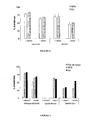
- the Figures 1A and 1B show that all of the anionic polymers tested (ie, polyglutamic acid, alginic acid, dextran sulfate and carboxymethyl cellulose) are effective to allow inhibition of luciferase.
- polyglutamic acid and alginic acid allow an increase in equivalent gene extinction between them. This extinction is specific because no extinction is obtained when the siRNA targeted to luciferase is replaced by a siRNA control, having no target.
- luciferase-specific siRNA are mixed with different amounts of polyglutamic acid (APG) ie 0.15, 0.3, 0.6 and 1.2 ⁇ g APG then associated with the cationic liposome RPR209120 / DOPE (4 nmol of cationic lipid / ⁇ g of siRNA + anionic macromolecule mixture), before being placed in contact with the cells for 24 hours. Luciferase activity is measured 48 hours after treatment. The results are expressed as percent inhibition over cells that received no treatment.
- APG polyglutamic acid
- luciferase-specific siRNA are mixed with 0.3 ⁇ g of various anionic macromolecules (DNA, APG-60k (degree of polymerization 371, average molecular weight 56000), APG-4k (degree of polymerization 28, average molecular weight 4300 ) then associated with the cationic liposome RPR209120 / DOPE (4 nmol of cationic lipid / ⁇ g of mixture siRNA + anionic macromolecule), before being placed in contact with the cells for 24 hours
- the luciferase activity is measured 48 hours after the treatment. expressed as percent inhibition over cells that received no treatment.
- luciferase-specific siRNA are mixed with 0.3 ⁇ g of various anionic macromolecules (DNA, APG, AA) and then combined with the cationic lipid RPR120535 prepared in liposome (by association with a neutral lipid such as DOPE) or in micelles (4 nmol of cationic lipid / ⁇ g of siRNA + anionic macromolecule mixture), before being placed in contact with the cells for 24 hours.
- Luciferase activity is measured 48 hours after treatment. The results are expressed as percent inhibition over cells that received no treatment.
- the results, presented on the figure 4 show that the addition of anionic macromolecule in the formulation provides a good efficiency of inhibition of luciferase, the cationic lipid is prepared as liposome or in the form of micelles.
- luciferase-specific siRNA are mixed with 0.3 ⁇ g of various anionic macromolecules (DNA, APG, AA) and then combined with different cationic lipids under optimal transfection conditions for each (RPR209120 / DOPE, 4 nmol / ⁇ g mixture of siRNA + anionic macromolecule, LipofectAmine and DMRIE-C, 5 ⁇ l / ⁇ g of mixture (siRNA + anionic macromolecule) before being placed in contact with the cells for 24 hours
- the luciferase activity is measured 48 hours after the treatment
- the results are expressed in percentage of inhibition compared to cells having received no treatment.
- mice Female Swiss mice aged 5 weeks are treated with an intraperitoneal injection of Lipopolysaccharides (E coli LPS, Sigma Aldrich) in 150 mM NaCl at a dose of 4 mg / kg. A blood sample in the retro-orbital sinus is made 1:30 later. The determination of TNFalpha present in the blood is carried out on 100 ⁇ l of serum using the DuoSet Mouse TNFalpha assay kit (R & D Systems). 24 hours before treatment with LPS, the mice intraperitoneally receive 5 ⁇ g of siRNAs formulated in lipoplexes with the cationic liposome RPR209120 / DOPE (6 nmol of cationic lipid / ⁇ g of (siRNA + anionic macromolecule)).
- siRNAs formulated in lipoplexes with the cationic liposome RPR209120 / DOPE
- the figure 6 shows the inhibition rates obtained.
- Liposomes RPR209120 DOPE (1: 1) in the presence or absence of PEG 2000 at 1, 3 and 5% (mole / mole of total lipid) are prepared by sonication.
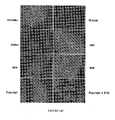
- Lipoplexes formed with increasing concentrations of cationic lipids are prepared (charge ratio of 0.5 to 3) and analyzed on a polyacrylamide gel in the presence of urea. At the end of the migration, the gels are placed in a SybrGreen bath to stain the RNA. The results are presented on figures 7 and 8 .
- the Figure 7 shows the complexation profiles of siRNAs by the RPR: DOPE formulations containing the different anionic macromolecules in 150mM NaCl as a function of the charge ratio.
- the siRNA / polymer ratio is 1/1 w / w.
- the figure 8 shows the complexing profile of siRNAs by 0-5% RPR: DOPE: PEG formulations containing alginic acid in 150mM NaCl as a function of the charge ratio.
- the siRNA / polymer ratio is 1/1 w / w.
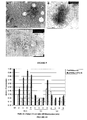
- the size of the lipoplexes (siRNA / anionic macromolecule formulated with RPR: DOPE: PEG 0-5%) was measured (by quasi-elastic light scattering in a Zeta Malvern apparatus) in 150 mM NaCl as a function of the charge ratio, the amount of anionic macromolecule ( figure 8A : polyglutamic acid APG-60k; figure 8 B : polyglutamic acid APG-4k; figure 8 C alginic acid) and the percentage of PEG for each anionic macromolecule.
- the ratio siRNA / polymer (w / w) has been changed from 1 / 0.5 to 1/2.
- the figure 8 shows that the addition of PEG promotes the formation of smaller particles, whatever the anionic macromolecule used in the lipolexes according to the invention.
- the lipoplexes have a size of about 150 nm with 5% PEG, whatever the ratio of charges.
- the addition of only 1% PEG does not sufficiently stabilize the particles, they aggregate, in the same way as with formulations without PEG.
- RNA / anionic macromolecules formulated with RPR: DOPE: PEG 0 or 5% in 150 mM NaCl prepared with a charge ratio of 6 with different anionic macromolecules was analyzed by transmission electron microscopy (TEM). .
- Figure 9 Figure 9A alginic acid in the absence of PEG; Figure 9B polyglutamic acid (APG-4k) in the absence of PEG; Figure 9C polyglutamic acid (APG-4k) in the presence of 5% PEG).
- lipoplexes In the presence of 5% PEG, most lipoplexes have a spherical morphology and appear to be contiguous to each other. The population is heterogeneous, with sizes ranging from 50 to 200 nm in diameter on average.
- Transfection studies were performed on B16 melanoma cells constitutively expressing Luciferase (SV40 promoter). Transfections with different lipoplexes (siRNA / anionic macromolecule formulated with RPR: DOPE in 150 mM NaCl) were carried out over 48 hours, by varying the charge ratio, the amount of anionic macromolecules, the amount of siRNA and the addition of PEG to lipoplexes. The experiments are performed in triplicate, with siRNA directed against luciferase and non-specific control siRNA. The results in counts per second (cps) normalized by the total protein concentration are expressed relative to the cells transfected under the same conditions with control siRNAs. The amount of total protein is an indicator of cell proliferation. Transfection experiments were performed with 20nM siRNA.
- the experiments are carried out in triplicate, with siRNA directed against an endogenous gene (RIP (TNF Receptor Interacting serine threonine kinase 1) or TNFR1 (Tumor necrosis factor receptor 1) and non-specific control siRNAs.
- RIP TNF Receptor Interacting serine threonine kinase 1
- TNFR1 Tumor necrosis factor receptor 1
- non-specific control siRNAs After 48h, the cells are harvested, the total RNAs are extracted with phenol / chloroform, then retro-transcribed into cDNA using random primers, and the cDNAs are then analyzed by quantitative PCR using primers directed against the gene of interest. accumulation of PCR products is followed by SybrGreen fluorescence.
- the Figure 11 A represents the inhibition efficiency of RIP or TNFR1 by lipoplexes (siRNA / anionic macromolecule formulated with RPR: DOPE in 150 mM NaCl) as a function of the ratio of charges, the amount of anionic macromolecule and the type of anionic macromolecule ( polyglutamic acid APG-4k or alginic acid) Transfections are performed with 20nM siRNA.
- the figure 11 B represents the RIP inhibition efficiency by siRNA / APG-4k lipoplexes formulated with RPR: DOPE in 150mM NaCl at a charge ratio of 4, 1/1 w / w by decreasing the amount of siRNA and in replacing it with anionic macromolecule.
- the level of untransfected cells is arbitrarily set to 1.
- the results presented on the figure 11A show an 80% inhibition of the RIP gene compared to untransfected cells.
- the same experiment carried out on the TNFR1 gene shows only a 50% inhibition thus showing that the efficiencies obtained vary according to the siRNA and the gene chosen.
- the addition of anionic macromolecule to a siRNA before lipoplex formulation with a cationic lipid, whether alginic acid or polyglutamic acid (APG-4k) allows a better efficiency compared to formulations without anionic macromolecules (with addition of siRNA control to retain the same amount of lipid).
- Example 14 Study of the stability of lipoplexes according to the invention in the presence or absence of PEG in serum at 37 ° C.
- the physical stability of lipoplexes in serum was monitored by 6% polyacrylamide gel electrophoresis and detection of siRNA in SybrGreenII.
- the lipoplexes are incubated in fetal calf serum 50% and the sample is then dissociated with 1% Triton X-100 which will solubilize the lipids, release the siRNA and will thus allow to quantify them.
- the stability of lipoplexes in 50% serum at 37 ° C is measured at 0h, 2h, 6h and 23h times. The results are presented on the figure 12 .
- the figure 12 thus represents the stability of siRNA / PGLA1818 lipolexes formulated with RPR: DOPE: PEG 0 or 5% in 150mM NaCl at a charge ratio of 6, in 50% serum at 37 ° C. in the absence of PEG ( figure 12A ), or in the presence of 5% PEG ( figure 12B ).
- “L” corresponds to lipoplexes and "T” to lipoplexes dissociated by Triton ..
- lipoplexes with or without PEG with polyglutamic acid are stable for 23 hours in 50% of serum. Lipoplexes with or without PEG with alginic acid were only examined for up to 6 hours of incubation. They were stable in the same way.
- an anionic macromolecule such as alginic acid or polyglutamic acid does not cause destabilization of the lipoplexes in the serum.
- the cytotoxicity of the lipolexes according to the invention is studied with the MTT test (salt of tétrazolonium).
- the tetrazolium ring that it contains is reduced, by mitochondrial succinate dehydrogenase active living cells formazan.
- the color of the medium then changes from yellow to purplish blue and the reading is carried out with a spectrophotometer at 562 nm.
- the intensity of this staining is proportional to the number of living cells present during the test but also to their metabolic activity. The results are represented on the figure 13 .
- the figure 13 represents the viability of cells transfected with siRNA / anionic macromolecule particles formulated with RPR: DOPE in 150mM NaCl as a function of the charge ratio and the amount of anionic macromolecules. The percentage of viability is expressed relative to untransfected cells. The amount of siRNA is 20nM. The amount of total protein determined by BCA assay is also shown.
- the toxicity of lipolexes was observed after 48h with alginic acid or polyglutamic acid APG-4k at a charge ratio of 4, 6 or 8, and with a siRNA / polymer ratio of 1/1 or 1/2 w / w (weight / weight).
- the viability percentages obtained were compared with those obtained for cells transfected with siRNA / RPR: DOPE (the anionic macromolecule was replaced by siRNA to retain the same amount of lipid) and for cells cultured with DMSO (positive control of toxicity).
- results represented on the figure 13 show that globally the addition of anionic macromolecules to a siRNA before lipolexes formulation with a cationic lipid does not cause additional or only very slight toxicity with alginic acid. Toxicity decreases as the load ratio increases.
- the in vivo model used is a model of B16 melanoma metastases in the lungs of C57 / BL6 mice.
- the organs of the mice that received lipoplexes with lipid-Rhodamine are ground in PBS (5mL per gram of organ), the lipids are extracted in 30 volumes of Chloroform: Methanol (1: 1 v / v ) and the fluorescence is assayed with the Wallac Victor against a range (microplate reader equipped for the determination of the fluorescence).
- the results, calculated as a percentage in the organ of the injected dose, are represented on the figure 14A .
- FIG 14A represents the biodistribution at 2h and 24h of siRNA-polyglutamic acid lipoplexes formulated with RPR: DOPE: Rhodamine in 5% Glucose at a charge ratio of 8, then injected intravenously. Mice have metastatic B16 tumors in the lungs.
- siRNAs contained in the organs of the mice that received lipoplexes with siRNA-Rhodamine are extracted according to the protocol established with the miRNeasy kit (Qiagen) and the fluorescence is assayed in the Wallac Victor against a range.
- the results, calculated as a percentage in the organ of the injected dose, are represented on the Figure 14B .
- Figure 14B represents the biodistribution at 2h and 24h of siRNA-Rhodamine lipoplexes with polyglutamic acid formulated with RPR: DOPE in 5% Glucose at a charge ratio of 8, then injected intravenously.
- the mice whether or not they had metastatic B16 tumors in the lungs.
- the figure 14C represents the biodistribution at 2h of lipoplexes siRNA polyglutamic acid formulated with RPR: DOPE: Rhodamine in 5% Glucose at a charge ratio of 8, then injected intravenously.
- the mice did or did not have metastatic B16 tumors in the lungs.
- the witnesses are identical for all organs and are thus represented only once. The settings are not the same for the different organs.
- the distribution in the spleen is quite low, about 1-2% of the injected dose for lipids and siRNAs.
- lipid-Rhodamine in blood and serum show that lipoplexes are mainly free in serum and little associated with blood cells.
- the fluorescence observed in the brain highlights the blood vessels, the lipoplexes probably not passing the blood-brain barrier. Fluorescence in the heart and spleen is quite weak and concentrated on certain points. Only the fluorescence observed in the kidneys, lungs and liver is homogeneous throughout the organ.
Landscapes
- Health & Medical Sciences (AREA)
- Life Sciences & Earth Sciences (AREA)
- Chemical & Material Sciences (AREA)
- Engineering & Computer Science (AREA)
- Genetics & Genomics (AREA)
- General Health & Medical Sciences (AREA)
- Bioinformatics & Cheminformatics (AREA)
- Organic Chemistry (AREA)
- Pharmacology & Pharmacy (AREA)
- Animal Behavior & Ethology (AREA)
- Public Health (AREA)
- Veterinary Medicine (AREA)
- Medicinal Chemistry (AREA)
- Biomedical Technology (AREA)
- Wood Science & Technology (AREA)
- Biotechnology (AREA)
- Zoology (AREA)
- General Engineering & Computer Science (AREA)
- Epidemiology (AREA)
- Biophysics (AREA)
- Molecular Biology (AREA)
- Inorganic Chemistry (AREA)
- Biochemistry (AREA)
- Microbiology (AREA)
- Plant Pathology (AREA)
- Physics & Mathematics (AREA)
- Dispersion Chemistry (AREA)
- General Chemical & Material Sciences (AREA)
- Nuclear Medicine, Radiotherapy & Molecular Imaging (AREA)
- Chemical Kinetics & Catalysis (AREA)
- Proteomics, Peptides & Aminoacids (AREA)
- Neurosurgery (AREA)
- Neurology (AREA)
- Rheumatology (AREA)
- Orthopedic Medicine & Surgery (AREA)
- Immunology (AREA)
- Physical Education & Sports Medicine (AREA)
- Hospice & Palliative Care (AREA)
- Psychiatry (AREA)
- Gastroenterology & Hepatology (AREA)
Claims (14)
- Zusammensetzung, die Folgendes umfasst:(1) ein anionisches Makromolekül, ausgenommen von Nukleinsäuren,(2) ein kationisches Lipid und(3) eine Nukleinsäure mit einer Größe kleiner gleich 200 Nukleotiden,wobei das anionische Makromolekül, das kationische Lipid und die Nukleinsäure nichtkovalent verbunden sind.
- Zusammensetzung nach Anspruch 1, wobei das anionische Makromolekül aus der Gruppe bestehend aus anionischen Polysacchariden, vorzugsweise Alginsäure, und anionischen Polypeptiden, vorzugsweise Polyglutaminsäure, ausgewählt ist.
- Zusammensetzung nach einem der Ansprüche 1 und 2, dadurch gekennzeichnet, dass das anionische Makromolekül ein durchschnittliches Molekulargewicht aufweist, das zwischen 1000 und 1.000.000 Da liegt, vorzugsweise zwischen 1000 und 100.000 Da liegt und noch mehr bevorzugt zwischen 4300 und 56.000 Da liegt.
- Zusammensetzung nach einem der Ansprüche 1 bis 3, dadurch gekennzeichnet, dass das kationische Lipid aus Lipopolyaminen, wie 2-{3-[Bis-(3-aminopropyl)amino]-propylamino}-N-ditetradecylcarbamoylmethylacetamid, 2-{3-[3-(3-Aminopropylamino)propylamino]propylamino}-N,N-dioctadecylacetamid oder 2,3-Dioleoyloxy-N-[2-(spermincarboxamido)ethyl]-N,N-dimethyl-1-propanaminiumtrifluoracetat, Dioctadecylamidoglycylspermin,5-Carboxyspermylamid von Palmitoylphosphatidylethanolamin, quartären Ammoniumverbindungen, wie 1,2-Dimyristyloxypropyl-3-dimethylhydroxyethylammoniumbromid, N-[1-(2,3-Dioleyloxy)propyl]-N,N,N-trimethylammoniumchlorid, 1,2-Dimyristoyl-3-trimethylammoniumpropan, 1,2-Dioleoyl-3-trimethylammoniumpropan, Dimethyldioctadecylammoniumbromid oder Dioleoyloxypropyldimethylhydroxyethylammoniumbromid, und Lipiden, die kationische Köpfe vom Guanidin- oder Imidazoltyp umfassen, ausgewählt ist.
- Zusammensetzung nach einem der Ansprüche 1 bis 4, dadurch gekennzeichnet, dass das kationische Lipid entweder in der Form von Mizellen oder in der Form von Liposomen durch Verbindung mit einem neutralen Lipid, wie Dioleylphosphatidylethanolamin, Cholesterin oder (N'-(raz.-1-[11-(F-Octyl)undec-10-enyl]-2-(hexadecyl)glycero-3-phosphoethanoyl)spermincarboxamid, formuliert wird.
- Zusammensetzung nach einem der Ansprüche 1 bis 5, dadurch gekennzeichnet, dass die Nukleinsäure mit einer Größe kleiner gleich 200 Nukleotiden eine Nukleinsäure, die eine Proteinfunktion modulieren kann, wie ein Antisense-Oligonukleotid, ein Oligonukleotid für das Überspringen von Exons oder eine interferierende RNA, und/oder eine modifizierte Form einer derartigen Nukleinsäure ist, wie die Morpholino-, Phosphorthioat-, Phosphoramidat- oder 2'-O-Methyl-Form.
- Zusammensetzung nach einem der Ansprüche 1 bis 6, dadurch gekennzeichnet, dass das anionische Makromolekül Polyglutaminsäure ist, das kationische Lipid 2-{3-[Bis-(3-aminopropyl)amino]propylamino}-N-ditetradecylcarbamoylmethylacetamid ist und die Nukleinsäure mit einer Größe kleiner gleich 200 Nukleotiden eine kurze interferierende RNA ist.
- Zusammensetzung nach einem der Ansprüche 1 bis 6, wobei das anionische Makromolekül Alginsäure ist, das kationische Lipid 2-{3-[Bis-(3-aminopropyl)amino]-propylamino}-N-ditetradecylcarbamoylmethylacetamid ist und die Nukleinsäure mit einer Größe kleiner gleich 200 Nukleotiden eine kurze interferierende RNA ist.
- Verfahren zum Übertragen einer Nukleinsäure in Zellen in vitro oder ex vivo, wobei das Verfahren das Inkontaktbringen der Zellen mit einer Zusammensetzung nach einem der Ansprüche 1 bis 8 umfasst.
- Verwendung einer Vektorzusammensetzung, die Folgendes umfasst:(1) ein anionisches Makromolekül, ausgenommen von Nukleinsäuren, und(2) ein kationisches Lipid,als einen pharmazeutisch unbedenklichen Vektor für eine Nukleinsäure mit einer Größe kleiner gleich 200 Nukleotiden, wobei das anionische Makromolekül, das kationische Lipid und die Nukleinsäure nichtkovalent verbunden sind.
- Zusammensetzung nach einem der Ansprüche 1 bis 8 zu deren Verwendung als Arzneimittel.
- Zusammensetzung nach Anspruch 11 zu deren Verwendung als Arzneimittel, das zur Behandlung einer Krankheit vorgesehen ist, die mit einer Störung einer Proteinfunktion verbunden ist.
- Zusammensetzung nach Anspruch 12, wobei die Krankheit aus Polyarthritis, Rheumatismen, Krebserkrankungen, Hepatitis, Lupus erythematodes, kardialer oder hepatischer Fibrose, Chorea Huntington, Achondroplasie, amyotrophischer Lateralsklerose oder Lou-Gehrig-Syndrom, Duchenne-Muskeldystrophie und Polymyositis und Alzheimer-Krankheit ausgewählt ist.
- Verfahren zur Herstellung einer wie in einem der Ansprüche 1 bis 8 definierten Zusammensetzung, wobei das Verfahren Folgendes umfasst:a) einen Schritt des Inkontaktbringens des anionischen Makromoleküls mit der Nukleinsäure zur Bildung eines Gemischs,b) einen Schritt des Inkontaktbringens des kationischen Lipids mit dem in Schritt a) erhaltenen Gemisch zur Herstellung der Zusammensetzung.
Applications Claiming Priority (2)
| Application Number | Priority Date | Filing Date | Title |
|---|---|---|---|
| FR0950336A FR2941152B1 (fr) | 2009-01-20 | 2009-01-20 | Vecteurs comprenant une macromolecule anionique et un lipide cationique pour l'administration de petits acides nucleiques. |
| PCT/EP2010/050635 WO2010084129A1 (fr) | 2009-01-20 | 2010-01-20 | Vecteurs comprenant une macromolécule anionique et un lipide cationique pour l'administration de petits acides nucléiques |
Publications (2)
| Publication Number | Publication Date |
|---|---|
| EP2389158A1 EP2389158A1 (de) | 2011-11-30 |
| EP2389158B1 true EP2389158B1 (de) | 2014-03-12 |
Family
ID=41078350
Family Applications (1)
| Application Number | Title | Priority Date | Filing Date |
|---|---|---|---|
| EP10701502.6A Not-in-force EP2389158B1 (de) | 2009-01-20 | 2010-01-20 | Vektoren, einschliesslich eines anionischen makromoleküls und eines kationischen lipids zur abgabe von kleinen nukleinsäuren |
Country Status (4)
| Country | Link |
|---|---|
| US (1) | US9572776B2 (de) |
| EP (1) | EP2389158B1 (de) |
| FR (1) | FR2941152B1 (de) |
| WO (1) | WO2010084129A1 (de) |
Families Citing this family (2)
| Publication number | Priority date | Publication date | Assignee | Title |
|---|---|---|---|---|
| CN110215043B (zh) * | 2019-05-24 | 2021-11-30 | 安徽裕佳铝塑科技有限公司 | 一种口红包装用铝塑复合管的加工工艺 |
| FR3129833B1 (fr) | 2021-12-03 | 2024-09-06 | Univ Claude Bernard Lyon | Nanoparticules pour la liberation d’acides nucleiques |
Family Cites Families (10)
| Publication number | Priority date | Publication date | Assignee | Title |
|---|---|---|---|---|
| US5264618A (en) * | 1990-04-19 | 1993-11-23 | Vical, Inc. | Cationic lipids for intracellular delivery of biologically active molecules |
| FR2741066B1 (fr) | 1995-11-14 | 1997-12-12 | Rhone Poulenc Rorer Sa | Nouveaux agents de transfection et leurs applications pharmaceutiques |
| US8217015B2 (en) * | 2003-04-04 | 2012-07-10 | Arrowhead Madison Inc. | Endosomolytic polymers |
| EP1046394A3 (de) * | 1999-04-19 | 2001-10-10 | ImaRx Pharmaceutical Corp. | Neue Zusammensetzungen zur Verwendung bei der Verabreichung von Verbindungen in das Zellinnere |
| US20030008813A1 (en) * | 1999-12-17 | 2003-01-09 | Felgner Philip L. | Intracellular protein delivery compositions and methods of use |
| EP1237581A1 (de) * | 1999-12-17 | 2002-09-11 | Gene Therapy Systems, Inc. | Verwendung von kationischen lipiden zur intrazellulären protein-verabreichung |
| CA2401327C (en) * | 2000-03-03 | 2014-05-06 | Valentis, Inc. | Nucleic acid formulations comprising poly-amino acids for gene delivery and methods of use |
| FR2858628B1 (fr) * | 2003-08-04 | 2008-01-04 | Polyplus Transfection | Nouveaux complexes d'acides nucleiques actifs pour l'arn interference et leur utilisation pour inhibiber l'expression de proteines |
| EP1938802A1 (de) * | 2006-12-22 | 2008-07-02 | INSERM (Institut National de la Santé et de la Recherche Médicale) | RNA-Interferenz (RNAi)-Moleküle gezielt auf proinflammtorische Cytokine |
| AU2010226434A1 (en) * | 2009-03-20 | 2011-10-13 | Egen, Inc. | Polyamine derivatives |
-
2009
- 2009-01-20 FR FR0950336A patent/FR2941152B1/fr not_active Expired - Fee Related
-
2010
- 2010-01-20 WO PCT/EP2010/050635 patent/WO2010084129A1/fr not_active Ceased
- 2010-01-20 US US13/145,008 patent/US9572776B2/en not_active Expired - Fee Related
- 2010-01-20 EP EP10701502.6A patent/EP2389158B1/de not_active Not-in-force
Also Published As
| Publication number | Publication date |
|---|---|
| US9572776B2 (en) | 2017-02-21 |
| US20120093915A1 (en) | 2012-04-19 |
| EP2389158A1 (de) | 2011-11-30 |
| FR2941152A1 (fr) | 2010-07-23 |
| FR2941152B1 (fr) | 2013-10-18 |
| WO2010084129A1 (fr) | 2010-07-29 |
Similar Documents
| Publication | Publication Date | Title |
|---|---|---|
| KR101198354B1 (ko) | 핵산 전달용 저밀도 지단백질 유사(LDL-like) 양이온성 나노입자, 그의 제조방법 및 이를 이용한 핵산의 전달 방법 | |
| Glodde et al. | Physiochemical properties of low and high molecular weight poly (ethylene glycol)-grafted poly (ethylene imine) copolymers and their complexes with oligonucleotides | |
| AU2011353233B2 (en) | Carrier for negatively charged drugs comprising a cationic lipid and a preparation method thereof | |
| US20260096997A1 (en) | Delivery system comprising silicon nanoparticles | |
| US20100285111A1 (en) | Self-assembling micelle-like nanoparticles for systemic gene delivery | |
| EP2890364B1 (de) | Formulierung zur verabreichung von nukleotidsequenzen zur modulierung endogener interferierender rna-mechanismen | |
| EP2892505B1 (de) | Lipidanordnungen mit anionischen lysolipiden und verwendung davon | |
| BR112015032225B1 (pt) | Composição, composição farmacêutica, uso de uma composição, e, método in vitro para dispensação de rna de fita simples a uma célula alvo ou tecido | |
| US20090130761A1 (en) | Freeze-Dried Product for Introducing Nucleic Acid, Oligonucleic Acid or Derivative Thereof | |
| US20250041221A1 (en) | Nanoparticles for release of nucleic acids | |
| JP7774254B2 (ja) | ナノ小胞とその核酸送達への使用 | |
| US8945927B2 (en) | Polymers for delivering molecules of interest | |
| CN101854918A (zh) | 核酸复合体及核酸转运用组合物 | |
| WO2010084129A1 (fr) | Vecteurs comprenant une macromolécule anionique et un lipide cationique pour l'administration de petits acides nucléiques | |
| RU2423147C1 (ru) | Композиция для доставки нуклеиновых кислот в клетки млекопитающих | |
| KR100986604B1 (ko) | 신규한 아미노지질을 함유하는 에스아이알엔에이 수송용 유전자 조성물 및 제조방법 | |
| EP0948638A1 (de) | Herstellungsmethode für das eingringen von nukleinsäure | |
| Saher | Pharmaceutical insights into improving oligonucleotide delivery and efficacy | |
| Hernandez-Mateo | Engineered Glycated Amino Dendritic Polymers as Specific Nonviral Gene Delivery Vectors Targeting the Receptor for Advanced Glycation End Products | |
| HK1142278B (en) | Nucleic acid complex and nucleic acid delivery composition |
Legal Events
| Date | Code | Title | Description |
|---|---|---|---|
| PUAI | Public reference made under article 153(3) epc to a published international application that has entered the european phase |
Free format text: ORIGINAL CODE: 0009012 |
|
| 17P | Request for examination filed |
Effective date: 20110818 |
|
| AK | Designated contracting states |
Kind code of ref document: A1 Designated state(s): AT BE BG CH CY CZ DE DK EE ES FI FR GB GR HR HU IE IS IT LI LT LU LV MC MK MT NL NO PL PT RO SE SI SK SM TR |
|
| DAX | Request for extension of the european patent (deleted) | ||
| 17Q | First examination report despatched |
Effective date: 20120910 |
|
| GRAP | Despatch of communication of intention to grant a patent |
Free format text: ORIGINAL CODE: EPIDOSNIGR1 |
|
| INTG | Intention to grant announced |
Effective date: 20130912 |
|
| GRAS | Grant fee paid |
Free format text: ORIGINAL CODE: EPIDOSNIGR3 |
|
| GRAA | (expected) grant |
Free format text: ORIGINAL CODE: 0009210 |
|
| AK | Designated contracting states |
Kind code of ref document: B1 Designated state(s): AT BE BG CH CY CZ DE DK EE ES FI FR GB GR HR HU IE IS IT LI LT LU LV MC MK MT NL NO PL PT RO SE SI SK SM TR |
|
| REG | Reference to a national code |
Ref country code: GB Ref legal event code: FG4D Free format text: NOT ENGLISH |
|
| REG | Reference to a national code |
Ref country code: CH Ref legal event code: EP |
|
| REG | Reference to a national code |
Ref country code: AT Ref legal event code: REF Ref document number: 655752 Country of ref document: AT Kind code of ref document: T Effective date: 20140315 |
|
| REG | Reference to a national code |
Ref country code: IE Ref legal event code: FG4D Free format text: LANGUAGE OF EP DOCUMENT: FRENCH |
|
| REG | Reference to a national code |
Ref country code: DE Ref legal event code: R096 Ref document number: 602010014168 Country of ref document: DE Effective date: 20140424 |
|
| REG | Reference to a national code |
Ref country code: CH Ref legal event code: NV Representative=s name: MICHELI AND CIE SA, CH |
|
| REG | Reference to a national code |
Ref country code: NL Ref legal event code: VDEP Effective date: 20140312 |
|
| PG25 | Lapsed in a contracting state [announced via postgrant information from national office to epo] |
Ref country code: NO Free format text: LAPSE BECAUSE OF FAILURE TO SUBMIT A TRANSLATION OF THE DESCRIPTION OR TO PAY THE FEE WITHIN THE PRESCRIBED TIME-LIMIT Effective date: 20140612 Ref country code: LT Free format text: LAPSE BECAUSE OF FAILURE TO SUBMIT A TRANSLATION OF THE DESCRIPTION OR TO PAY THE FEE WITHIN THE PRESCRIBED TIME-LIMIT Effective date: 20140312 |
|
| REG | Reference to a national code |
Ref country code: AT Ref legal event code: MK05 Ref document number: 655752 Country of ref document: AT Kind code of ref document: T Effective date: 20140312 |
|
| REG | Reference to a national code |
Ref country code: LT Ref legal event code: MG4D |
|
| PG25 | Lapsed in a contracting state [announced via postgrant information from national office to epo] |
Ref country code: CY Free format text: LAPSE BECAUSE OF FAILURE TO SUBMIT A TRANSLATION OF THE DESCRIPTION OR TO PAY THE FEE WITHIN THE PRESCRIBED TIME-LIMIT Effective date: 20140312 Ref country code: SE Free format text: LAPSE BECAUSE OF FAILURE TO SUBMIT A TRANSLATION OF THE DESCRIPTION OR TO PAY THE FEE WITHIN THE PRESCRIBED TIME-LIMIT Effective date: 20140312 Ref country code: FI Free format text: LAPSE BECAUSE OF FAILURE TO SUBMIT A TRANSLATION OF THE DESCRIPTION OR TO PAY THE FEE WITHIN THE PRESCRIBED TIME-LIMIT Effective date: 20140312 |
|
| PG25 | Lapsed in a contracting state [announced via postgrant information from national office to epo] |
Ref country code: LV Free format text: LAPSE BECAUSE OF FAILURE TO SUBMIT A TRANSLATION OF THE DESCRIPTION OR TO PAY THE FEE WITHIN THE PRESCRIBED TIME-LIMIT Effective date: 20140312 Ref country code: HR Free format text: LAPSE BECAUSE OF FAILURE TO SUBMIT A TRANSLATION OF THE DESCRIPTION OR TO PAY THE FEE WITHIN THE PRESCRIBED TIME-LIMIT Effective date: 20140312 |
|
| PG25 | Lapsed in a contracting state [announced via postgrant information from national office to epo] |
Ref country code: NL Free format text: LAPSE BECAUSE OF FAILURE TO SUBMIT A TRANSLATION OF THE DESCRIPTION OR TO PAY THE FEE WITHIN THE PRESCRIBED TIME-LIMIT Effective date: 20140312 Ref country code: CZ Free format text: LAPSE BECAUSE OF FAILURE TO SUBMIT A TRANSLATION OF THE DESCRIPTION OR TO PAY THE FEE WITHIN THE PRESCRIBED TIME-LIMIT Effective date: 20140312 Ref country code: BG Free format text: LAPSE BECAUSE OF FAILURE TO SUBMIT A TRANSLATION OF THE DESCRIPTION OR TO PAY THE FEE WITHIN THE PRESCRIBED TIME-LIMIT Effective date: 20140612 Ref country code: EE Free format text: LAPSE BECAUSE OF FAILURE TO SUBMIT A TRANSLATION OF THE DESCRIPTION OR TO PAY THE FEE WITHIN THE PRESCRIBED TIME-LIMIT Effective date: 20140312 Ref country code: RO Free format text: LAPSE BECAUSE OF FAILURE TO SUBMIT A TRANSLATION OF THE DESCRIPTION OR TO PAY THE FEE WITHIN THE PRESCRIBED TIME-LIMIT Effective date: 20140312 Ref country code: IS Free format text: LAPSE BECAUSE OF FAILURE TO SUBMIT A TRANSLATION OF THE DESCRIPTION OR TO PAY THE FEE WITHIN THE PRESCRIBED TIME-LIMIT Effective date: 20140712 |
|
| PG25 | Lapsed in a contracting state [announced via postgrant information from national office to epo] |
Ref country code: AT Free format text: LAPSE BECAUSE OF FAILURE TO SUBMIT A TRANSLATION OF THE DESCRIPTION OR TO PAY THE FEE WITHIN THE PRESCRIBED TIME-LIMIT Effective date: 20140312 Ref country code: PL Free format text: LAPSE BECAUSE OF FAILURE TO SUBMIT A TRANSLATION OF THE DESCRIPTION OR TO PAY THE FEE WITHIN THE PRESCRIBED TIME-LIMIT Effective date: 20140312 Ref country code: ES Free format text: LAPSE BECAUSE OF FAILURE TO SUBMIT A TRANSLATION OF THE DESCRIPTION OR TO PAY THE FEE WITHIN THE PRESCRIBED TIME-LIMIT Effective date: 20140312 Ref country code: SK Free format text: LAPSE BECAUSE OF FAILURE TO SUBMIT A TRANSLATION OF THE DESCRIPTION OR TO PAY THE FEE WITHIN THE PRESCRIBED TIME-LIMIT Effective date: 20140312 |
|
| REG | Reference to a national code |
Ref country code: DE Ref legal event code: R097 Ref document number: 602010014168 Country of ref document: DE |
|
| PG25 | Lapsed in a contracting state [announced via postgrant information from national office to epo] |
Ref country code: PT Free format text: LAPSE BECAUSE OF FAILURE TO SUBMIT A TRANSLATION OF THE DESCRIPTION OR TO PAY THE FEE WITHIN THE PRESCRIBED TIME-LIMIT Effective date: 20140714 |
|
| PLBE | No opposition filed within time limit |
Free format text: ORIGINAL CODE: 0009261 |
|
| STAA | Information on the status of an ep patent application or granted ep patent |
Free format text: STATUS: NO OPPOSITION FILED WITHIN TIME LIMIT |
|
| PG25 | Lapsed in a contracting state [announced via postgrant information from national office to epo] |
Ref country code: DK Free format text: LAPSE BECAUSE OF FAILURE TO SUBMIT A TRANSLATION OF THE DESCRIPTION OR TO PAY THE FEE WITHIN THE PRESCRIBED TIME-LIMIT Effective date: 20140312 |
|
| 26N | No opposition filed |
Effective date: 20141215 |
|
| REG | Reference to a national code |
Ref country code: DE Ref legal event code: R097 Ref document number: 602010014168 Country of ref document: DE Effective date: 20141215 |
|
| PG25 | Lapsed in a contracting state [announced via postgrant information from national office to epo] |
Ref country code: IT Free format text: LAPSE BECAUSE OF FAILURE TO SUBMIT A TRANSLATION OF THE DESCRIPTION OR TO PAY THE FEE WITHIN THE PRESCRIBED TIME-LIMIT Effective date: 20140312 |
|
| PG25 | Lapsed in a contracting state [announced via postgrant information from national office to epo] |
Ref country code: BE Free format text: LAPSE BECAUSE OF NON-PAYMENT OF DUE FEES Effective date: 20150131 |
|
| PG25 | Lapsed in a contracting state [announced via postgrant information from national office to epo] |
Ref country code: SI Free format text: LAPSE BECAUSE OF FAILURE TO SUBMIT A TRANSLATION OF THE DESCRIPTION OR TO PAY THE FEE WITHIN THE PRESCRIBED TIME-LIMIT Effective date: 20140312 |
|
| PG25 | Lapsed in a contracting state [announced via postgrant information from national office to epo] |
Ref country code: LU Free format text: LAPSE BECAUSE OF FAILURE TO SUBMIT A TRANSLATION OF THE DESCRIPTION OR TO PAY THE FEE WITHIN THE PRESCRIBED TIME-LIMIT Effective date: 20150120 |
|
| PG25 | Lapsed in a contracting state [announced via postgrant information from national office to epo] |
Ref country code: MC Free format text: LAPSE BECAUSE OF FAILURE TO SUBMIT A TRANSLATION OF THE DESCRIPTION OR TO PAY THE FEE WITHIN THE PRESCRIBED TIME-LIMIT Effective date: 20140312 |
|
| REG | Reference to a national code |
Ref country code: IE Ref legal event code: MM4A |
|
| REG | Reference to a national code |
Ref country code: FR Ref legal event code: PLFP Year of fee payment: 7 |
|
| PG25 | Lapsed in a contracting state [announced via postgrant information from national office to epo] |
Ref country code: IE Free format text: LAPSE BECAUSE OF NON-PAYMENT OF DUE FEES Effective date: 20150120 |
|
| PG25 | Lapsed in a contracting state [announced via postgrant information from national office to epo] |
Ref country code: GR Free format text: LAPSE BECAUSE OF FAILURE TO SUBMIT A TRANSLATION OF THE DESCRIPTION OR TO PAY THE FEE WITHIN THE PRESCRIBED TIME-LIMIT Effective date: 20140613 |
|
| REG | Reference to a national code |
Ref country code: FR Ref legal event code: PLFP Year of fee payment: 8 |
|
| PG25 | Lapsed in a contracting state [announced via postgrant information from national office to epo] |
Ref country code: MT Free format text: LAPSE BECAUSE OF FAILURE TO SUBMIT A TRANSLATION OF THE DESCRIPTION OR TO PAY THE FEE WITHIN THE PRESCRIBED TIME-LIMIT Effective date: 20140312 |
|
| PGFP | Annual fee paid to national office [announced via postgrant information from national office to epo] |
Ref country code: CH Payment date: 20161223 Year of fee payment: 8 Ref country code: GB Payment date: 20161228 Year of fee payment: 8 |
|
| PGFP | Annual fee paid to national office [announced via postgrant information from national office to epo] |
Ref country code: FR Payment date: 20161221 Year of fee payment: 8 |
|
| PGFP | Annual fee paid to national office [announced via postgrant information from national office to epo] |
Ref country code: DE Payment date: 20161219 Year of fee payment: 8 |
|
| PG25 | Lapsed in a contracting state [announced via postgrant information from national office to epo] |
Ref country code: HU Free format text: LAPSE BECAUSE OF FAILURE TO SUBMIT A TRANSLATION OF THE DESCRIPTION OR TO PAY THE FEE WITHIN THE PRESCRIBED TIME-LIMIT; INVALID AB INITIO Effective date: 20100120 Ref country code: SM Free format text: LAPSE BECAUSE OF FAILURE TO SUBMIT A TRANSLATION OF THE DESCRIPTION OR TO PAY THE FEE WITHIN THE PRESCRIBED TIME-LIMIT Effective date: 20140312 |
|
| PG25 | Lapsed in a contracting state [announced via postgrant information from national office to epo] |
Ref country code: TR Free format text: LAPSE BECAUSE OF FAILURE TO SUBMIT A TRANSLATION OF THE DESCRIPTION OR TO PAY THE FEE WITHIN THE PRESCRIBED TIME-LIMIT Effective date: 20140312 |
|
| PG25 | Lapsed in a contracting state [announced via postgrant information from national office to epo] |
Ref country code: MK Free format text: LAPSE BECAUSE OF FAILURE TO SUBMIT A TRANSLATION OF THE DESCRIPTION OR TO PAY THE FEE WITHIN THE PRESCRIBED TIME-LIMIT Effective date: 20140312 |
|
| REG | Reference to a national code |
Ref country code: DE Ref legal event code: R119 Ref document number: 602010014168 Country of ref document: DE |
|
| REG | Reference to a national code |
Ref country code: CH Ref legal event code: PL |
|
| GBPC | Gb: european patent ceased through non-payment of renewal fee |
Effective date: 20180120 |
|
| PG25 | Lapsed in a contracting state [announced via postgrant information from national office to epo] |
Ref country code: FR Free format text: LAPSE BECAUSE OF NON-PAYMENT OF DUE FEES Effective date: 20180131 Ref country code: DE Free format text: LAPSE BECAUSE OF NON-PAYMENT OF DUE FEES Effective date: 20180801 |
|
| REG | Reference to a national code |
Ref country code: FR Ref legal event code: ST Effective date: 20180928 |
|
| PG25 | Lapsed in a contracting state [announced via postgrant information from national office to epo] |
Ref country code: CH Free format text: LAPSE BECAUSE OF NON-PAYMENT OF DUE FEES Effective date: 20180131 Ref country code: GB Free format text: LAPSE BECAUSE OF NON-PAYMENT OF DUE FEES Effective date: 20180120 Ref country code: LI Free format text: LAPSE BECAUSE OF NON-PAYMENT OF DUE FEES Effective date: 20180131 |