EP1512756A2 - Oligonukleotide und Methoden zur Detektion des mecA Gens beim Methicillin-resistenten Staphylococcus aureus - Google Patents
Oligonukleotide und Methoden zur Detektion des mecA Gens beim Methicillin-resistenten Staphylococcus aureus Download PDFInfo
- Publication number
- EP1512756A2 EP1512756A2 EP04026759A EP04026759A EP1512756A2 EP 1512756 A2 EP1512756 A2 EP 1512756A2 EP 04026759 A EP04026759 A EP 04026759A EP 04026759 A EP04026759 A EP 04026759A EP 1512756 A2 EP1512756 A2 EP 1512756A2
- Authority
- EP
- European Patent Office
- Prior art keywords
- rna
- oligonucleotide
- seq
- primer
- sequence
- Prior art date
- Legal status (The legal status is an assumption and is not a legal conclusion. Google has not performed a legal analysis and makes no representation as to the accuracy of the status listed.)
- Granted
Links
Images


Classifications
-
- C—CHEMISTRY; METALLURGY
- C12—BIOCHEMISTRY; BEER; SPIRITS; WINE; VINEGAR; MICROBIOLOGY; ENZYMOLOGY; MUTATION OR GENETIC ENGINEERING
- C12Q—MEASURING OR TESTING PROCESSES INVOLVING ENZYMES, NUCLEIC ACIDS OR MICROORGANISMS; COMPOSITIONS OR TEST PAPERS THEREFOR; PROCESSES OF PREPARING SUCH COMPOSITIONS; CONDITION-RESPONSIVE CONTROL IN MICROBIOLOGICAL OR ENZYMOLOGICAL PROCESSES
- C12Q1/00—Measuring or testing processes involving enzymes, nucleic acids or microorganisms; Compositions therefor; Processes of preparing such compositions
- C12Q1/68—Measuring or testing processes involving enzymes, nucleic acids or microorganisms; Compositions therefor; Processes of preparing such compositions involving nucleic acids
- C12Q1/6876—Nucleic acid products used in the analysis of nucleic acids, e.g. primers or probes
- C12Q1/6888—Nucleic acid products used in the analysis of nucleic acids, e.g. primers or probes for detection or identification of organisms
- C12Q1/689—Nucleic acid products used in the analysis of nucleic acids, e.g. primers or probes for detection or identification of organisms for bacteria
-
- C—CHEMISTRY; METALLURGY
- C12—BIOCHEMISTRY; BEER; SPIRITS; WINE; VINEGAR; MICROBIOLOGY; ENZYMOLOGY; MUTATION OR GENETIC ENGINEERING
- C12Q—MEASURING OR TESTING PROCESSES INVOLVING ENZYMES, NUCLEIC ACIDS OR MICROORGANISMS; COMPOSITIONS OR TEST PAPERS THEREFOR; PROCESSES OF PREPARING SUCH COMPOSITIONS; CONDITION-RESPONSIVE CONTROL IN MICROBIOLOGICAL OR ENZYMOLOGICAL PROCESSES
- C12Q1/00—Measuring or testing processes involving enzymes, nucleic acids or microorganisms; Compositions therefor; Processes of preparing such compositions
- C12Q1/68—Measuring or testing processes involving enzymes, nucleic acids or microorganisms; Compositions therefor; Processes of preparing such compositions involving nucleic acids
- C12Q1/6813—Hybridisation assays
- C12Q1/6816—Hybridisation assays characterised by the detection means
-
- C—CHEMISTRY; METALLURGY
- C12—BIOCHEMISTRY; BEER; SPIRITS; WINE; VINEGAR; MICROBIOLOGY; ENZYMOLOGY; MUTATION OR GENETIC ENGINEERING
- C12Q—MEASURING OR TESTING PROCESSES INVOLVING ENZYMES, NUCLEIC ACIDS OR MICROORGANISMS; COMPOSITIONS OR TEST PAPERS THEREFOR; PROCESSES OF PREPARING SUCH COMPOSITIONS; CONDITION-RESPONSIVE CONTROL IN MICROBIOLOGICAL OR ENZYMOLOGICAL PROCESSES
- C12Q1/00—Measuring or testing processes involving enzymes, nucleic acids or microorganisms; Compositions therefor; Processes of preparing such compositions
- C12Q1/68—Measuring or testing processes involving enzymes, nucleic acids or microorganisms; Compositions therefor; Processes of preparing such compositions involving nucleic acids
- C12Q1/6844—Nucleic acid amplification reactions
- C12Q1/6865—Promoter-based amplification, e.g. nucleic acid sequence amplification [NASBA], self-sustained sequence replication [3SR] or transcription-based amplification system [TAS]
-
- C—CHEMISTRY; METALLURGY
- C12—BIOCHEMISTRY; BEER; SPIRITS; WINE; VINEGAR; MICROBIOLOGY; ENZYMOLOGY; MUTATION OR GENETIC ENGINEERING
- C12Q—MEASURING OR TESTING PROCESSES INVOLVING ENZYMES, NUCLEIC ACIDS OR MICROORGANISMS; COMPOSITIONS OR TEST PAPERS THEREFOR; PROCESSES OF PREPARING SUCH COMPOSITIONS; CONDITION-RESPONSIVE CONTROL IN MICROBIOLOGICAL OR ENZYMOLOGICAL PROCESSES
- C12Q2600/00—Oligonucleotides characterized by their use
- C12Q2600/158—Expression markers
Definitions
- the present invention relates to oligonucleotides and method for detecting methicillin-resistant Staphylococcus aureus (MRSA) in clinical examination.
- the oligonucleotides provided in the present invention are useful as reagents for genetic diagnosis which involves procedures such as cleavage, amplification and detection of RNA or DNA, and as reagents for inhibiting reverse transcription or translation of RNA.
- the sequences of the oligonucleotides provided in the present invention are useful for reagents or the like for quantitative determination and diagnosis of MRSA.
- MRSA is a resistant strain of Staphylococcus aureus exhibiting resistance against ⁇ -lactamase-resistant penicillins, including methicillin, which are stable against ⁇ -lactamase produced by Staphylococcus aureus.
- MRSA is a major pathogen in the nosocomial infections, and strains thereof which exhibit a slight resistance even to vancomycin, an effective therapeutic drug against the resistant strain, have also been detected.
- MRSA is causing significant problems in medical care due to the lack of an effective antimicrobial drug thereto. Thus, its accurate and rapid detection in clinical examination is an important subject in diagnosis and treatment.
- Staphylococcus aureus generally produces four types of cell wall composing-proteins PBPs(penicillin-binding proteins), i.e., PBP-1 through PBP-4, however, it had been found that MRSA also produces a new type of PBP termed PBP-2'.
- PBPs penicillin-binding proteins
- PBP-2' This type of PBP is a specific protein having poor affinity against ⁇ -lactam antibiotics, and is known to play a central role in the tolerance of this organism.
- the sequence of the mecA gene that codes for PBP-2' is known (FEBS Lett., 221, 167-171, 1987, etc.). Therefore, hybridization methods employing a gene probe specific to mecA gene have been sought to detect and identify MRSA.
- RNA derived from said gene hereafter, referred to as the "target nucleic acid”
- the Polymerase chain reaction (PCR) method is known as an amplification method.
- This method amplifies a specific sequence by repetition of a cycle comprising heat denaturation, primer annealing and extension reactions, in the presence of a pair of primers complementary and homologous to both ends of said specific sequence in the target DNA as well as a thermostable DNA polymerase.
- oligonucleotides that are highly specific to said specific sequence are required.
- oligonucleotides that are highly specific to the target DNA are required.
- RNA polymerase As amplification methods in cases where the target nucleic acid is RNA, in addition to the RT-PCR method, there are known the NASBA method and 3SR method, whereby the specific sequence is amplified by the concerted action of reverse transcriptase and RNA polymerase.
- RNA polymerase-catalyzed synthesis of RNA containing the specific sequence while the RNA in turn becomes a template for synthesis of double-stranded DNA containing the promoter sequence.
- the NASBA method and 3SR method can accomplish nucleic acid amplification at a constant temperature, and are therefore considered to be methods suitable for automation.
- the presence of mecA gene as well as its existing amount can be measured, for example, by qualitative or quantitative determination of a mRNA coding for PBP-2'.
- this mRNA is a gene from which PBP-2' is expressed, it presents in an amount much larger than the number of copies of mecA gene located on the chromosomal DNA.
- the mecA gene can be detected without culturing the bacteria from a specimen, making this method useful for rapid diagnosis.
- an oligonucleotide having high specificity to the above specific sequence is required.
- an oligonucleotide that has high specificity to the target RNA is required. Therefore, an attempt to detect the mecA gene located on the chromosomal DNA of Staphylococcus aureus by the NASBA method using specific oligonucleotide sequences has been made.
- the NASBA method or the like involves amplification reaction at relatively low temperature (for example, 41°C)
- the target RNA forms an intramolecular structure which inhibits binding of the primer, and may reduce the reaction efficiency. Consequently, a procedure of heat denaturation of the target RNA prior to the amplification reaction was required to break down the intramolecular structure of the target RNA, thereby to improve the primer binding efficiency.
- an oligonucleotide capable of binding to RNA which has formed the above-mentioned intramolecular structure is required.
- the first object of the present invention is to provide oligonucleotides that are useful in specific cleavage, amplification, or the like, as well as highly sensitive detection and identification of the mecA gene coding for cell wall composing-protein PBP-2' produced by MRSA or RNA derived from said gene.
- the present invention provides oligonucleotide sequences useful in a pharmaceutical composition for inhibiting RNA reverse transcription or translation.
- the second object of the present invention is to provide a preferable combination of oligonucleotides useful in specific amplification of RNA derived from the mecA gene coding for cell wall composing-protein PBP-2' produced by methicillin-resistant Staphylococcus aureus at a relatively low temperature (e.g., 41°C), as well as for the highly sensitive detection and identification thereof.
- a relatively low temperature e.g. 41°C
- oligonucleotide for cleavage, detection or amplification of the mecA gene, a gene element of methicillin-resistant Staphylococcus aureus (MRSA), or RNA derived from said gene, which oligonucleotide is capable of binding specifically to said mecA gene or RNA derived therefrom, and comprises at least 10 contiguous bases of any of the sequences listed as SEQ. ID. Nos. 1 to 17, or an oligonucleotide complementary to said oligonucleotide.
- MRSA methicillin-resistant Staphylococcus aureus
- said first object is achieved by an oligonucleotide as mentioned above, wherein said oligonucleotide is an oligonucleotide primer for DNA elongation reaction.
- said first object is achieved by an oligonucleotide as mentioned above, wherein said oligonucleotide is an oligonucleotide probe a portion of which is modified or labeled with a detectable marker.
- said first object is achieved by an oligonucleotide as mentioned above, wherein said oligonucleotide is a synthetic oligonucleotide in which a portion of its base(s) is(are) modified without impairing the function of said oligonucleotide as an oligonucleotide probe.
- the oligonucleotides of the invention which have been accomplished to achieve the first object, are oligonucleotides that complementarily bind in a specific manner to intramolecular structure-free regions of the target RNA in the aforementioned RNA amplification, and they are capable of binding specifically to the target RNA without the heat denaturation described above.
- the present invention provides oligonucleotides that binds to intramolecular structure-free regions of the RNA derived from the mecA gene coding for PBP-2' at a relatively low and constant temperature (35-50°C, and preferably 41°C), which are useful for specific cleavage, amplification, detection or the like of the mecA gene.
- the present invention relates to oligonucleotides which accomplish rapidly and highly sensitive detection by their use as oligonucleotide primers for amplifying the above target DNA with PCR, oligonucleotide primers for amplifying the above target RNA with NASBA or the like, and an oligonucleotide probe for detecting the target nucleic acid without or after these amplifications.
- oligonucleotide primers for amplifying the above target DNA with PCR oligonucleotide primers for amplifying the above target RNA with NASBA or the like
- an oligonucleotide probe for detecting the target nucleic acid without or after these amplifications.
- PNA peptide nucleic acid
- oligonucleotides that have been modified by a substance such as PNA to an extent that would not impair their base sequences recognizing-function are also included in the detecting probes of the present invention.
- SEQ ID Nos.1 through 17 illustrate the oligonucleotides of the present invention useful in cleavage, amplification, detection.or the like of RNA derived from the mecA gene.
- RNA derived from the mecA gene also includes RNA that has been produced by using these genes as templates.
- each of the oligonucleotides of the present invention may include entire base sequence of any of SEQ ID Nos. 1 to 17, since an order of 10 bases is adequate for specific binding to mecA gene, these oligonucleotides can be oligonucleotides comprising at least 10 contiguous bases of the described sequences, and may also be their complementary oligonucleotides.
- the oligonucleotides of the present invention can be used, for example, as an oligonucleotide primer for nucleic acid amplification. If a nucleic acid amplification method is carried out using the oligonucleotide of the present invention as the primer, only the target nucleic acid, namely mecA, can be amplified.
- examples of amplification methods include PCR, LCR, NASBA and 3SR, nucleic acid amplification methods that can be carried out at a constant temperature such as LCR, NASBA and 3SR are particularly preferable.
- MRSA can be detected by detecting the amplification product by various methods. In this case, any of the above oligonucleotides other than the oligonucleotide used in the amplification may be used as the probe, and the fragment of the amplified specific sequence can be confirmed by electrophoresis or the like.
- the oligonucleotides of the present invention can be used as probes by, for example, modifying portions or labeling them with a detectable marker.
- the oligonucleotide of the present invention labeled with the detectable marker may be hybridized to a single-stranded target nucleic acid, after which the hybridized probe can be detected via the marker.
- the marker detection may be carried out by a method suitable for the particular marker and, for example, when using an intercalator fluorescent dye for labeling the oligonucleotide, a dye with the property of exhibiting increased fluorescent intensity by intercalation in the double-stranded nucleic acid comprising the target nucleic acid and the oligonucleotide probe may be used in order to allow easy detection of only the hybridized probe without removal of the probe that has not hybridized to the target nucleic acid.
- the marker may be detected after removal of the probe that has not hybridized to the target nucleic acid.
- the target nucleic acid in the sample is preferably amplified to a detectable amount by a nucleic acid amplification method such as PCR, NASBA or 3SR method, among which isothermal nucleic acid amplification methods such as the NASBA and 3SR methods are most preferable.
- a nucleic acid amplification method such as PCR, NASBA or 3SR method, among which isothermal nucleic acid amplification methods such as the NASBA and 3SR methods are most preferable.
- it is especially preferable to modify the probe by, for example, adding glycolic acid to the 3'-end so that the probe will not function as a nucleotide primer.
- the oligonucleotide of SEQ. ID. No.18 is used as the first primer and the oligonucleotide of any of SEQ. ID. Nos.19 to 21 is used as the second primer, or the oligonucleotide of SEQ. ID. No.22 is used as the first primer and the oligonucleotide of SEQ. ID. Nos.23 or 24 is used as the second primer, or the oligonucleotide of SEQ. ID. No.25 is used as the first primer and the oligonucleotide of SEQ. ID. Nos.23 or 24 is used as the second primer.
- the invention of claim 2 which has been accomplished to achieve the aforementioned object, relates to the detection method of claim 1, characterized in that said first primer is an oligonucleotide comprising at least 10 contiguous bases of the sequence of SEQ. ID. Nos.18, 22 or 25.
- the invention of claim 3 which has been accomplished to achieve the aforementioned object, relates to the detection method of claim 1, characterized in that said second primer is an oligonucleotide comprising at least 10 contiguous bases of the sequence of SEQ. ID. Nos.19, 20, 21, 23 or 24.
- the invention of claim 4 which has been accomplished to achieve the aforementioned object, relates to a detection method for a methicillin-resistant Staphylococcus aureus (MRSA), which comprises the steps of: conducting the RNA amplification process according to claim 1 in the presence of an oligonucleotide probe labeled with an intercalator fluorescent dye, wherein the sequence of said probe is complementary to at least a portion of said RNA transcription product, and complementary binding of said probe to said RNA transcription product results in a change of the fluorescent property relative to that of a situation where a complex formation is absent; and then measuring the fluorescence intensity of the reaction solution.
- MRSA methicillin-resistant Staphylococcus aureus
- the present invention provides a combination of oligonucleotides for amplifying and detecting RNA derived from the mecA gene of methicillin-resistant Staphylococcus aureus at a relatively low and constant temperature (35-50°C, and preferably 41°C). Namely, the present invention provides a combination of an oligonucleotide primer for amplification of RNA derived from mecA gene and an oligonucleotide probe for detection and thereby provides a simple, rapidly and highly sensitive mecA gene detection method and a detection kit for clinical examination or the like using said combination.
- a second primer (a sequence complementary to the 3' end region of a specific sequence of the target RNA) complementary binds to the specific sequence of RNA derived from mecA gene of methicillin-resistant Staphylococcus aureus present in a sample as a template, and cDNA is produced by an extension reaction with RNA-dependent DNA polymerase to form a RNA-DNA double-strand, after which the RNA of the RNA-DNA double-strand is digested with Ribonuclease H to produce a single-stranded DNA.
- a first primer (a sequence homologous to the 5' end region of the target RNA, and including the RNA polymerase promoter sequence added at the 5' end) complementary binds to the single-stranded DNA, to produce a double-stranded DNA having a promoter sequence allowing transcription of RNA comprising a sequence homologous to the target RNA sequence, using DNA-dependent DNA polymerase.
- the double-stranded DNA is then used for amplification of the RNA transcription product comprising the sequence homologous to the target RNA sequence in the presence of RNA polymerase.
- the present invention is thus characterized by the use of an oligonucleotide of SEQ ID Nos.
- first and second primers may be the entire length of their respective sequences, combinations of oligonucleotides comprising at least 10 contiguous bases within each sequence may also be used.
- the target RNA must be cleaved at the 5' end of the specific sequence.
- the method of cleaving the target RNA is preferably a method in which an oligonucleotide (cleaving oligonucleotide) with a sequence complementary to a region overlapping and adjacent to the 5'-end of the specific sequence is added, thereby cleaving the target RNA with Ribonuclease H or the like.
- the 3'-end of the cleaving oligonucleotide is preferably treated by amination, for example, to prevent it from functioning as an oligonucleotide primer.
- the amplification process is preferably carried out in the presence of an oligonucleotide probe (detecting oligonucleotide probe) labeled with an intercalator fluorescent dye having a sequence complementary to at least a portion of the RNA transcription product.
- an oligonucleotide probe detecting oligonucleotide probe
- an intercalator fluorescent dye having a sequence complementary to at least a portion of the RNA transcription product.
- Complementary binding of the probe to the RNA transcription product results in a change in the fluorescent property compared to a situation where the complex formation is absent, so that the fluorescence intensity of the reaction solution may be measured.
- a labeled oligonucleotide probe is incorporated during the amplification process, it is particularly preferable to modify the probe by, for example, addition of glycolic acid to the 3'-end, to prevent it from functioning as a primer in the extension reaction.
- oligonucleotides that can be used for the oligonucleot
- a second primer (a sequence complementary to the target RNA, and including the RNA polymerase promoter sequence added at the 5' region) complementary binds to the specific sequence of RNA derived from the mecA gene of methicillin-resistant Staphylococcus aureus present in a sample as a template, and cDNA is produced by extension reaction with RNA-dependent DNA polymerase to form a RNA-DNA double-strand, after which the RNA of the RNA-DNA double-strand is digested with Ribonuclease H to produce a single-stranded DNA.
- a first primer (a sequence homologous to the 5' end region of the target RNA) complementary binds to the single-stranded DNA, to produce a double-stranded DNA having a promoter allowing the transcription of RNA comprising a sequence complementary to the target RNA sequence, using DNA-dependent DNA polymerase.
- the double-stranded DNA is then used for amplification of the RNA transcription product comprising the sequence complementary to the target RNA sequence in the presence of RNA polymerase.
- the present invention is thus characterized by the use of an oligonucleotide of SEQ ID Nos.18, 22 or 25 for the first primer and an oligonucleotide of SEQ ID Nos.19, 20, 21, 23 or 24 for the second primer.
- the first and second primers may be the entire length of their respective sequences, combinations of oligonucleotides comprising at least 10 contiguous bases within each sequence may also be used.
- the amplification process is preferably carried out in the presence of an oligonucleotide probe (detecting oligonucleotide probe) labeled with an intercalator fluorescent dye having a sequence complementary to at least a portion of the RNA transcription product.
- an oligonucleotide probe detecting oligonucleotide probe
- an intercalator fluorescent dye having a sequence complementary to at least a portion of the RNA transcription product.
- Complementary binding of the probe to the RNA transcription product results in a change in the fluorescent property compared to a situation where the complex formation is absent, so that the fluorescence intensity of the reaction solution may be measured.
- a labeled oligonucleotide probe is incorporated during the amplification process, it is particularly preferable to modify the probe by, for example, addition of glycolic acid to the 3'-end, to prevent it from functioning as a primer in the extension reaction.
- oligonucleotides that can be used for the oligonucleot
- the mecA-RNA is a synthesized and purified RNA obtained by in vitro transcription using double-stranded DNA containing the mecA-RNA base sequence as the template.
- RNA diluent 10 mM Tris-HCl (pH 8.0), 0.1 mM EDTA, 0.5 U/ ⁇ l RNase Inhibitor
- compositions were dispensed into 0.5 ml volume PCR tubes (GeneAmp Thin-Walled Reaction TM Tubes; Perkin-Elmer Co., Ltd.).
- oligonucleotide solution numbered below was used as the oligonucleotide solution.
- reaction solutions were then incubated at 41°C for 5 minutes, 1 ⁇ l of AMV-Rtase(Takara Shuzo Co., Ltd.; AMV-RTase is an enzyme that cleaves the RNA of DNA/RNA double strands) was added, and the PCR tube was incubated at 41°C for 15 minutes.
- AMV-Rtase (Takara Shuzo Co., Ltd.; AMV-RTase is an enzyme that cleaves the RNA of DNA/RNA double strands) was added, and the PCR tube was incubated at 41°C for 15 minutes.
- Polyacrylamide gel (acrylamide concentration: 5%, urea: 7 M) electrophoresis was conducted to confirm the cleaved fragments after the reaction. Dyeing after electrophoresis was carried out with a commercially available dye (SYBR Green IITM (Takara Shuzo Co., Ltd.)).
- SYBR Green IITM Takara Shuzo Co., Ltd.
- the RNA of the DNA/RNA double strands is cleaved by the ribonuclease H activity of AMV-Rtase, which allows observation of specific bands.
- the oligonucleotides of the present invention are oligonucleotides that complementary bind to RNA derived from mecA-gene coding for PBP-2', even under conditions of relatively low and constant temperature (35-50°C, preferably 41°C), which tend to produce an intramolecular structure in RNA and prevent binding of primers and probes thereto. Specific binding of the oligonucleotides is therefore possible without heat denaturation of the target RNA.
- the oligonucleotides of the invention are thus useful as oligonucleotides for cleavage, amplification, detection or the like of mecA-RNA, a gene element of MRSA, i.e. as oligonucleotide primers or oligonucleotide probes to be used in RNA amplification methods.
- oligonucleotides of the invention are also clearly useful for amplification and detection of the mecA gene.
- Oligonucleotides complementary to the above-mentioned oligonucleotides are also useful for amplification of double-stranded DNA by the PCR method, or for detection of cDNA obtained by reverse transcription of RNA.
- oligonucleotides of the invention are not limited to the specifically listed base sequences(20mers), and they may be oligonucleotides comprising at least 10 or more contiguous bases within those sequences. This is obvious from the fact that 10mer base sequences are sufficient to ensure adequate specificity of primers or probes to target nucleic acids under relatively low temperature condition (preferably, at 41°C).
- the mecA-RNA is a synthesized and purified RNA obtained by in vitro transcription using double-stranded DNA containing the mecA-RNA base sequence as the template.
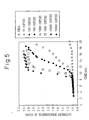
- RNA amplification products (indicated with arrows) were obtained in the systems to which mecA-RNA was added.
- these combinations of oligonucleotide primers were demonstrated as being useful in the amplification and detection of RNA derived from the mecA gene of methicillin-resistant Staphylococcus aureus.
- a combination of oligonucleotide primers according to the invention was used for specific detection of different initial copy numbers of the target RNA.
- the present invention is useful as combinations of oligonucleotide primers and oligonucleotide probes which specifically bind to RNA derived from the mecA gene coding for PBP-2', and rapidly amplify and detect the target RNA even under relatively low and constant temperature (35-50°C and preferably 41°C) conditions in which RNA in a sample would form an intramolecular structure which inhibits the primer and probe binding.
- oligonucleotides of the present invention are not only useful for mecA-RNA, but also as complementary sequences of the above oligonucleotides for detecting cDNA obtained by reverse transcription of RNA.
- the base lengths of the oligonucleotides in the combinations of the present invention are not limited to the concretely described lengths, but rather include oligonucleotides comprised of at least 10 contiguous bases within these sequences. This is clear from the fact that a base sequence of about 10 mer is adequate for ensuring specificity of primer or probe to a target nucleic acid under relatively low temperature (preferably 41°C) conditions.
Landscapes
- Chemical & Material Sciences (AREA)
- Life Sciences & Earth Sciences (AREA)
- Organic Chemistry (AREA)
- Proteomics, Peptides & Aminoacids (AREA)
- Analytical Chemistry (AREA)
- Zoology (AREA)
- Wood Science & Technology (AREA)
- Health & Medical Sciences (AREA)
- Engineering & Computer Science (AREA)
- Microbiology (AREA)
- Immunology (AREA)
- Molecular Biology (AREA)
- Biotechnology (AREA)
- Biophysics (AREA)
- Physics & Mathematics (AREA)
- Biochemistry (AREA)
- Bioinformatics & Cheminformatics (AREA)
- General Engineering & Computer Science (AREA)
- General Health & Medical Sciences (AREA)
- Genetics & Genomics (AREA)
- Measuring Or Testing Involving Enzymes Or Micro-Organisms (AREA)
Applications Claiming Priority (5)
| Application Number | Priority Date | Filing Date | Title |
|---|---|---|---|
| JP2000163149A JP2001333783A (ja) | 2000-05-29 | 2000-05-29 | メシチリン耐性黄色ブドウ球菌検出のためのオリゴヌクレオチド |
| JP2000163149 | 2000-05-29 | ||
| JP2000179394 | 2000-06-09 | ||
| JP2000179394A JP2001353000A (ja) | 2000-06-09 | 2000-06-09 | メシチリン耐性黄色ブドウ球菌のmecA遺伝子の検出法 |
| EP01112100A EP1160333A3 (de) | 2000-05-29 | 2001-05-29 | Oligonukleotide und Methoden zur Detektion des mecA Gens beim Methicillin-resistenten Staphylococcus aureus |
Related Parent Applications (1)
| Application Number | Title | Priority Date | Filing Date |
|---|---|---|---|
| EP01112100A Division EP1160333A3 (de) | 2000-05-29 | 2001-05-29 | Oligonukleotide und Methoden zur Detektion des mecA Gens beim Methicillin-resistenten Staphylococcus aureus |
Publications (3)
| Publication Number | Publication Date |
|---|---|
| EP1512756A2 true EP1512756A2 (de) | 2005-03-09 |
| EP1512756A3 EP1512756A3 (de) | 2005-05-25 |
| EP1512756B1 EP1512756B1 (de) | 2008-03-19 |
Family
ID=26593081
Family Applications (2)
| Application Number | Title | Priority Date | Filing Date |
|---|---|---|---|
| EP01112100A Withdrawn EP1160333A3 (de) | 2000-05-29 | 2001-05-29 | Oligonukleotide und Methoden zur Detektion des mecA Gens beim Methicillin-resistenten Staphylococcus aureus |
| EP04026759A Expired - Lifetime EP1512756B1 (de) | 2000-05-29 | 2001-05-29 | Methoden zur Detektion des mecA Gens beim methicillin-resistenten Staphylococcus Aureus |
Family Applications Before (1)
| Application Number | Title | Priority Date | Filing Date |
|---|---|---|---|
| EP01112100A Withdrawn EP1160333A3 (de) | 2000-05-29 | 2001-05-29 | Oligonukleotide und Methoden zur Detektion des mecA Gens beim Methicillin-resistenten Staphylococcus aureus |
Country Status (3)
| Country | Link |
|---|---|
| US (1) | US7297517B2 (de) |
| EP (2) | EP1160333A3 (de) |
| DE (1) | DE60133321T2 (de) |
Cited By (1)
| Publication number | Priority date | Publication date | Assignee | Title |
|---|---|---|---|---|
| US7888075B2 (en) | 2007-07-31 | 2011-02-15 | Quest Diagnostics Investments Incorporated | Detection of methicillin-resistant and methicillin-sensitive Staphylococcus aureus in biological samples |
Families Citing this family (14)
| Publication number | Priority date | Publication date | Assignee | Title |
|---|---|---|---|---|
| EP1360324A2 (de) | 2000-08-31 | 2003-11-12 | Mayo Foundation For Medical Education And Research | Nachweis von varicella-zoster-virus |
| EP1364063B1 (de) | 2001-01-31 | 2010-04-21 | Mayo Foundation For Medical Education And Research | Nachweis von herpex-simplex-virus |
| US7691571B2 (en) | 2001-01-31 | 2010-04-06 | Mayo Foundation For Medical Education And Research | Detection of bordetella |
| US7074598B2 (en) | 2002-09-25 | 2006-07-11 | Mayo Foundation For Medical Education And Research | Detection of vancomycin-resistant enterococcus spp. |
| US7365176B2 (en) | 2002-09-26 | 2008-04-29 | Mayo Foundation For Medical Education And Research | Detection of Epstein-Barr virus |
| US7074599B2 (en) | 2002-09-27 | 2006-07-11 | Mayo Foundation For Medical Education And Research | Detection of mecA-containing Staphylococcus spp. |
| TWI340168B (en) * | 2003-05-07 | 2011-04-11 | Tosoh Corp | Method of detecting micrometastasis |
| DE60304481T8 (de) * | 2003-11-07 | 2007-03-08 | Federal Rep. of Germany repr.by the Ministry of Health & Soc.Security, the latter repr. by the Pres. of the Robert Koch Inst. | Verfahren zur Identifizierung von Methicilin resistente Staphylococcus aureus (MRSA) |
| US7427475B2 (en) | 2003-11-18 | 2008-09-23 | Mayo Foundation For Medical Education And Research | Detection of group B streptococcus |
| JP4534627B2 (ja) * | 2004-06-30 | 2010-09-01 | 東ソー株式会社 | サイトメガロウイルスの検出および定量方法 |
| CA2572178A1 (en) * | 2004-07-26 | 2006-03-16 | Nanosphere, Inc. | Method for distinguishing methicillin resistant s. aureus from methicillin sensitive s. aureus in a mixed culture |
| CA2684570A1 (en) | 2007-04-19 | 2008-10-30 | Molecular Detection Inc. | Methods, compositions and kits for detection and analysis of antibiotic-resistant bacteria |
| CN110734988B (zh) * | 2018-07-20 | 2024-06-18 | 上海仁度生物科技股份有限公司 | 一种耐甲氧西林金黄色葡萄球菌(mrsa)核酸恒温扩增方法 |
| CN110923344B (zh) * | 2019-12-19 | 2023-06-27 | 武汉中帜生物科技股份有限公司 | 金黄色葡萄球菌及耐甲氧西林金黄色葡萄球菌耐药基因mecA检测试剂盒及其应用 |
Family Cites Families (7)
| Publication number | Priority date | Publication date | Assignee | Title |
|---|---|---|---|---|
| JPH0723800A (ja) | 1993-07-08 | 1995-01-27 | Tanabe Seiyaku Co Ltd | 核酸の検出方法 |
| DE4338119A1 (de) * | 1993-11-08 | 1995-05-11 | Bayer Ag | Spezifische Gensonden und Verfahren zum quantitativen Nachweis von methicillinresistenten Staphylococcen |
| US5994066A (en) * | 1995-09-11 | 1999-11-30 | Infectio Diagnostic, Inc. | Species-specific and universal DNA probes and amplification primers to rapidly detect and identify common bacterial pathogens and associated antibiotic resistance genes from clinical specimens for routine diagnosis in microbiology laboratories |
| JP3968810B2 (ja) * | 1997-01-24 | 2007-08-29 | 東ソー株式会社 | 核酸配列分析方法 |
| US6136533A (en) * | 1997-07-03 | 2000-10-24 | Id Biomedical | Additives for use in cycling probe reactions |
| US6503709B1 (en) * | 1997-07-03 | 2003-01-07 | Id Biomedical Corporation | Methods for rapidly detecting methicillin resistant staphylococci |
| DE60024906T2 (de) | 1999-03-05 | 2006-09-14 | Tosoh Corp., Shinnanyo | Eine am 3'-Ende modifizierte Nukleinsäuresonde, geeignet zur Hybridisierung und Detektion über Fluoreszenz |
-
2001
- 2001-05-29 DE DE60133321T patent/DE60133321T2/de not_active Expired - Lifetime
- 2001-05-29 US US09/865,579 patent/US7297517B2/en not_active Expired - Fee Related
- 2001-05-29 EP EP01112100A patent/EP1160333A3/de not_active Withdrawn
- 2001-05-29 EP EP04026759A patent/EP1512756B1/de not_active Expired - Lifetime
Cited By (1)
| Publication number | Priority date | Publication date | Assignee | Title |
|---|---|---|---|---|
| US7888075B2 (en) | 2007-07-31 | 2011-02-15 | Quest Diagnostics Investments Incorporated | Detection of methicillin-resistant and methicillin-sensitive Staphylococcus aureus in biological samples |
Also Published As
| Publication number | Publication date |
|---|---|
| DE60133321D1 (de) | 2008-04-30 |
| EP1512756A3 (de) | 2005-05-25 |
| DE60133321T2 (de) | 2009-03-05 |
| EP1512756B1 (de) | 2008-03-19 |
| US20020098492A1 (en) | 2002-07-25 |
| US7297517B2 (en) | 2007-11-20 |
| EP1160333A2 (de) | 2001-12-05 |
| EP1160333A3 (de) | 2004-01-07 |
Similar Documents
| Publication | Publication Date | Title |
|---|---|---|
| EP1512756B1 (de) | Methoden zur Detektion des mecA Gens beim methicillin-resistenten Staphylococcus Aureus | |
| JP6126381B2 (ja) | 標的核酸の検出方法及びキット | |
| JP2009000063A (ja) | 改良されたノロウイルスrna検出方法 | |
| US6562955B2 (en) | Oligonucleotides for detection of Vibrio parahaemolyticus and detection method for Vibrio parahaemolyticus using the same oligonucleotides | |
| CN105385684B (zh) | 用于为核酸扩增作对照的寡核苷酸 | |
| US20100015618A1 (en) | Dna fragment used as attached to 5' end of primer used in nucleic acid amplification reaction and use of dna fragment | |
| US20100297637A1 (en) | Primer for amplification of rrna or bacterium belonging to the genus legionella, detection method, and detection kit | |
| US7105319B2 (en) | Oligonucleotides for detecting tubercle bacillus and method therefor | |
| US6893847B2 (en) | Oligonucleotide for detecting Salmonella and method of detecting Salmonella | |
| JP2009017824A (ja) | 改良されたノロウイルスrnaの検出方法 | |
| US20020031760A1 (en) | Oligonucleotides and method for detection of small round structured virus (SRSV) RNA | |
| US7339041B2 (en) | Oligonucleotides and method for characterizing and detecting Genogroup II type small round structured virus | |
| US6756198B2 (en) | Oligonucleotide for highly sensitive detection of hepatitis C virus and method for detection thereof | |
| JP2001353000A (ja) | メシチリン耐性黄色ブドウ球菌のmecA遺伝子の検出法 | |
| EP1352974A1 (de) | Oligonukleotide zum Nachweis des untypischen Mycobacteriums Mycobacterium avium und Nachweisverfahren | |
| JP2001333783A (ja) | メシチリン耐性黄色ブドウ球菌検出のためのオリゴヌクレオチド | |
| JP2007116999A (ja) | RegIVmRNAの測定方法 | |
| JP2002531143A (ja) | リポータ遺伝子及びそのinvitroでの発現に必要な配列による標的物質の標識づけを含む、標本中の標的物質のinvitro検出方法 | |
| JPWO2006011667A1 (ja) | ヘテロ核リボヌクレオチドタンパク質B1(hnRNPB1)mRNAの測定方法 | |
| US20030008305A1 (en) | Oligonucleotide and method for detecting verotoxin | |
| JP2006223194A (ja) | スタニオカルシン1(STC1)mRNAの測定方法 |
Legal Events
| Date | Code | Title | Description |
|---|---|---|---|
| PUAI | Public reference made under article 153(3) epc to a published international application that has entered the european phase |
Free format text: ORIGINAL CODE: 0009012 |
|
| 17P | Request for examination filed |
Effective date: 20041124 |
|
| AC | Divisional application: reference to earlier application |
Ref document number: 1160333 Country of ref document: EP Kind code of ref document: P |
|
| AK | Designated contracting states |
Kind code of ref document: A2 Designated state(s): AT BE CH CY DE DK ES FI FR GB GR IE IT LI LU MC NL PT SE TR |
|
| AX | Request for extension of the european patent |
Extension state: AL LT LV MK RO SI |
|
| PUAL | Search report despatched |
Free format text: ORIGINAL CODE: 0009013 |
|
| RIN1 | Information on inventor provided before grant (corrected) |
Inventor name: ISHIGURO, TAKAHIKO Inventor name: TAYA, TOSHIKI Inventor name: SAITO, JUICHI |
|
| AK | Designated contracting states |
Kind code of ref document: A3 Designated state(s): AT BE CH CY DE DK ES FI FR GB GR IE IT LI LU MC NL PT SE TR |
|
| AX | Request for extension of the european patent |
Extension state: AL LT LV MK RO SI |
|
| RTI1 | Title (correction) |
Free format text: OLIGONUCLEOTIDES AND METHOD FOR DETECTION OF MECA GENE OF METHICILLIN-RESISTANT STAPHYLOCOCCUS AUREUS |
|
| AKX | Designation fees paid |
Designated state(s): DE FR GB IT NL |
|
| 17Q | First examination report despatched |
Effective date: 20051026 |
|
| RTI1 | Title (correction) |
Free format text: METHODS FOR DETECTION MECA GENE OF METHICILLIN-RESISTANT STAPHYLOCOCCUS AUREUS |
|
| GRAP | Despatch of communication of intention to grant a patent |
Free format text: ORIGINAL CODE: EPIDOSNIGR1 |
|
| GRAS | Grant fee paid |
Free format text: ORIGINAL CODE: EPIDOSNIGR3 |
|
| GRAA | (expected) grant |
Free format text: ORIGINAL CODE: 0009210 |
|
| AC | Divisional application: reference to earlier application |
Ref document number: 1160333 Country of ref document: EP Kind code of ref document: P |
|
| AK | Designated contracting states |
Kind code of ref document: B1 Designated state(s): DE FR GB IT NL |
|
| REG | Reference to a national code |
Ref country code: GB Ref legal event code: FG4D |
|
| REF | Corresponds to: |
Ref document number: 60133321 Country of ref document: DE Date of ref document: 20080430 Kind code of ref document: P |
|
| ET | Fr: translation filed | ||
| PLBE | No opposition filed within time limit |
Free format text: ORIGINAL CODE: 0009261 |
|
| STAA | Information on the status of an ep patent application or granted ep patent |
Free format text: STATUS: NO OPPOSITION FILED WITHIN TIME LIMIT |
|
| 26N | No opposition filed |
Effective date: 20081222 |
|
| PG25 | Lapsed in a contracting state [announced via postgrant information from national office to epo] |
Ref country code: IT Free format text: LAPSE BECAUSE OF NON-PAYMENT OF DUE FEES Effective date: 20080529 |
|
| PGRI | Patent reinstated in contracting state [announced from national office to epo] |
Ref country code: IT Effective date: 20110616 |
|
| REG | Reference to a national code |
Ref country code: FR Ref legal event code: PLFP Year of fee payment: 15 |
|
| PGFP | Annual fee paid to national office [announced via postgrant information from national office to epo] |
Ref country code: GB Payment date: 20150527 Year of fee payment: 15 Ref country code: DE Payment date: 20150527 Year of fee payment: 15 |
|
| PGFP | Annual fee paid to national office [announced via postgrant information from national office to epo] |
Ref country code: NL Payment date: 20150409 Year of fee payment: 15 Ref country code: IT Payment date: 20150515 Year of fee payment: 15 Ref country code: FR Payment date: 20150508 Year of fee payment: 15 |
|
| REG | Reference to a national code |
Ref country code: DE Ref legal event code: R119 Ref document number: 60133321 Country of ref document: DE |
|
| REG | Reference to a national code |
Ref country code: NL Ref legal event code: MM Effective date: 20160601 |
|
| GBPC | Gb: european patent ceased through non-payment of renewal fee |
Effective date: 20160529 |
|
| PG25 | Lapsed in a contracting state [announced via postgrant information from national office to epo] |
Ref country code: IT Free format text: LAPSE BECAUSE OF NON-PAYMENT OF DUE FEES Effective date: 20160529 Ref country code: NL Free format text: LAPSE BECAUSE OF NON-PAYMENT OF DUE FEES Effective date: 20160601 |
|
| REG | Reference to a national code |
Ref country code: FR Ref legal event code: ST Effective date: 20170131 |
|
| PG25 | Lapsed in a contracting state [announced via postgrant information from national office to epo] |
Ref country code: DE Free format text: LAPSE BECAUSE OF NON-PAYMENT OF DUE FEES Effective date: 20161201 Ref country code: FR Free format text: LAPSE BECAUSE OF NON-PAYMENT OF DUE FEES Effective date: 20160531 |
|
| PG25 | Lapsed in a contracting state [announced via postgrant information from national office to epo] |
Ref country code: GB Free format text: LAPSE BECAUSE OF NON-PAYMENT OF DUE FEES Effective date: 20160529 |
|
| P01 | Opt-out of the competence of the unified patent court (upc) registered |
Effective date: 20230523 |