EP1511872B1 - Steel and mould tool for plastic materials made of the steel - Google Patents
Steel and mould tool for plastic materials made of the steel Download PDFInfo
- Publication number
- EP1511872B1 EP1511872B1 EP03721267A EP03721267A EP1511872B1 EP 1511872 B1 EP1511872 B1 EP 1511872B1 EP 03721267 A EP03721267 A EP 03721267A EP 03721267 A EP03721267 A EP 03721267A EP 1511872 B1 EP1511872 B1 EP 1511872B1
- Authority
- EP
- European Patent Office
- Prior art keywords
- steel
- steel according
- max
- ppm
- steels
- Prior art date
- Legal status (The legal status is an assumption and is not a legal conclusion. Google has not performed a legal analysis and makes no representation as to the accuracy of the status listed.)
- Expired - Lifetime
Links
- 229910000831 Steel Inorganic materials 0.000 title claims description 218
- 239000010959 steel Substances 0.000 title claims description 218
- 239000000463 material Substances 0.000 title description 19
- 238000005496 tempering Methods 0.000 claims description 38
- 239000000203 mixture Substances 0.000 claims description 28
- PXHVJJICTQNCMI-UHFFFAOYSA-N nickel Substances [Ni] PXHVJJICTQNCMI-UHFFFAOYSA-N 0.000 claims description 21
- 229910052710 silicon Inorganic materials 0.000 claims description 19
- 229910052799 carbon Inorganic materials 0.000 claims description 18
- 229910052720 vanadium Inorganic materials 0.000 claims description 18
- 229910052750 molybdenum Inorganic materials 0.000 claims description 14
- 229910052759 nickel Inorganic materials 0.000 claims description 12
- 239000012535 impurity Substances 0.000 claims description 11
- 239000010936 titanium Substances 0.000 claims description 10
- 239000010955 niobium Substances 0.000 claims description 9
- 229910052719 titanium Inorganic materials 0.000 claims description 9
- 229910052721 tungsten Inorganic materials 0.000 claims description 8
- 229910052782 aluminium Inorganic materials 0.000 claims description 7
- 229910052758 niobium Inorganic materials 0.000 claims description 7
- 229910052726 zirconium Inorganic materials 0.000 claims description 7
- RTAQQCXQSZGOHL-UHFFFAOYSA-N Titanium Chemical compound [Ti] RTAQQCXQSZGOHL-UHFFFAOYSA-N 0.000 claims description 6
- QCWXUUIWCKQGHC-UHFFFAOYSA-N Zirconium Chemical compound [Zr] QCWXUUIWCKQGHC-UHFFFAOYSA-N 0.000 claims description 6
- GUCVJGMIXFAOAE-UHFFFAOYSA-N niobium atom Chemical compound [Nb] GUCVJGMIXFAOAE-UHFFFAOYSA-N 0.000 claims description 6
- 229910052698 phosphorus Inorganic materials 0.000 claims description 6
- 239000000126 substance Substances 0.000 claims description 6
- WFKWXMTUELFFGS-UHFFFAOYSA-N tungsten Chemical compound [W] WFKWXMTUELFFGS-UHFFFAOYSA-N 0.000 claims description 6
- 239000010937 tungsten Substances 0.000 claims description 6
- 238000010137 moulding (plastic) Methods 0.000 claims description 5
- XEEYBQQBJWHFJM-UHFFFAOYSA-N Iron Chemical compound [Fe] XEEYBQQBJWHFJM-UHFFFAOYSA-N 0.000 claims description 4
- 239000010941 cobalt Substances 0.000 claims description 4
- 229910017052 cobalt Inorganic materials 0.000 claims description 4
- GUTLYIVDDKVIGB-UHFFFAOYSA-N cobalt atom Chemical compound [Co] GUTLYIVDDKVIGB-UHFFFAOYSA-N 0.000 claims description 4
- 229910001315 Tool steel Inorganic materials 0.000 claims description 3
- 229910052717 sulfur Inorganic materials 0.000 claims description 3
- 229910052742 iron Inorganic materials 0.000 claims 1
- 235000019589 hardness Nutrition 0.000 description 42
- 229910045601 alloy Inorganic materials 0.000 description 25
- 239000000956 alloy Substances 0.000 description 25
- 238000004519 manufacturing process Methods 0.000 description 22
- 238000010438 heat treatment Methods 0.000 description 18
- 238000012360 testing method Methods 0.000 description 17
- 150000001247 metal acetylides Chemical class 0.000 description 16
- XUIMIQQOPSSXEZ-UHFFFAOYSA-N Silicon Chemical compound [Si] XUIMIQQOPSSXEZ-UHFFFAOYSA-N 0.000 description 14
- 239000010703 silicon Substances 0.000 description 14
- 239000011651 chromium Substances 0.000 description 11
- 239000012925 reference material Substances 0.000 description 11
- IJGRMHOSHXDMSA-UHFFFAOYSA-N Atomic nitrogen Chemical compound N#N IJGRMHOSHXDMSA-UHFFFAOYSA-N 0.000 description 10
- OKTJSMMVPCPJKN-UHFFFAOYSA-N Carbon Chemical compound [C] OKTJSMMVPCPJKN-UHFFFAOYSA-N 0.000 description 10
- 239000011159 matrix material Substances 0.000 description 10
- NINIDFKCEFEMDL-UHFFFAOYSA-N Sulfur Chemical compound [S] NINIDFKCEFEMDL-UHFFFAOYSA-N 0.000 description 9
- 239000005864 Sulphur Substances 0.000 description 9
- 229910052804 chromium Inorganic materials 0.000 description 9
- 238000001816 cooling Methods 0.000 description 9
- 239000011572 manganese Substances 0.000 description 8
- LEONUFNNVUYDNQ-UHFFFAOYSA-N vanadium atom Chemical compound [V] LEONUFNNVUYDNQ-UHFFFAOYSA-N 0.000 description 8
- 229910052748 manganese Inorganic materials 0.000 description 7
- -1 aluminium nitrides Chemical class 0.000 description 6
- 238000000034 method Methods 0.000 description 6
- 229910052757 nitrogen Inorganic materials 0.000 description 6
- 229910052760 oxygen Inorganic materials 0.000 description 6
- VYZAMTAEIAYCRO-UHFFFAOYSA-N Chromium Chemical compound [Cr] VYZAMTAEIAYCRO-UHFFFAOYSA-N 0.000 description 5
- PWHULOQIROXLJO-UHFFFAOYSA-N Manganese Chemical compound [Mn] PWHULOQIROXLJO-UHFFFAOYSA-N 0.000 description 5
- ZOKXTWBITQBERF-UHFFFAOYSA-N Molybdenum Chemical compound [Mo] ZOKXTWBITQBERF-UHFFFAOYSA-N 0.000 description 5
- 239000004411 aluminium Substances 0.000 description 5
- QVGXLLKOCUKJST-UHFFFAOYSA-N atomic oxygen Chemical compound [O] QVGXLLKOCUKJST-UHFFFAOYSA-N 0.000 description 5
- 230000000694 effects Effects 0.000 description 5
- 238000002474 experimental method Methods 0.000 description 5
- 229910000734 martensite Inorganic materials 0.000 description 5
- ZLANVVMKMCTKMT-UHFFFAOYSA-N methanidylidynevanadium(1+) Chemical class [V+]#[C-] ZLANVVMKMCTKMT-UHFFFAOYSA-N 0.000 description 5
- 239000011733 molybdenum Substances 0.000 description 5
- 239000001301 oxygen Substances 0.000 description 5
- 229910000851 Alloy steel Inorganic materials 0.000 description 4
- XAGFODPZIPBFFR-UHFFFAOYSA-N aluminium Chemical compound [Al] XAGFODPZIPBFFR-UHFFFAOYSA-N 0.000 description 4
- 229910001566 austenite Inorganic materials 0.000 description 4
- 238000011282 treatment Methods 0.000 description 4
- OAICVXFJPJFONN-UHFFFAOYSA-N Phosphorus Chemical compound [P] OAICVXFJPJFONN-UHFFFAOYSA-N 0.000 description 3
- 239000011248 coating agent Substances 0.000 description 3
- 238000000576 coating method Methods 0.000 description 3
- 238000010891 electric arc Methods 0.000 description 3
- 238000000465 moulding Methods 0.000 description 3
- 239000011574 phosphorus Substances 0.000 description 3
- 238000001556 precipitation Methods 0.000 description 3
- 230000000717 retained effect Effects 0.000 description 3
- INZDTEICWPZYJM-UHFFFAOYSA-N 1-(chloromethyl)-4-[4-(chloromethyl)phenyl]benzene Chemical compound C1=CC(CCl)=CC=C1C1=CC=C(CCl)C=C1 INZDTEICWPZYJM-UHFFFAOYSA-N 0.000 description 2
- VYPSYNLAJGMNEJ-UHFFFAOYSA-N Silicium dioxide Chemical compound O=[Si]=O VYPSYNLAJGMNEJ-UHFFFAOYSA-N 0.000 description 2
- NRTOMJZYCJJWKI-UHFFFAOYSA-N Titanium nitride Chemical compound [Ti]#N NRTOMJZYCJJWKI-UHFFFAOYSA-N 0.000 description 2
- PNEYBMLMFCGWSK-UHFFFAOYSA-N aluminium oxide Inorganic materials [O-2].[O-2].[O-2].[Al+3].[Al+3] PNEYBMLMFCGWSK-UHFFFAOYSA-N 0.000 description 2
- 238000000137 annealing Methods 0.000 description 2
- 238000005266 casting Methods 0.000 description 2
- 239000003795 chemical substances by application Substances 0.000 description 2
- 238000010586 diagram Methods 0.000 description 2
- 238000004090 dissolution Methods 0.000 description 2
- 238000009760 electrical discharge machining Methods 0.000 description 2
- 238000000265 homogenisation Methods 0.000 description 2
- 238000003754 machining Methods 0.000 description 2
- 238000001000 micrograph Methods 0.000 description 2
- 150000004767 nitrides Chemical class 0.000 description 2
- 238000005121 nitriding Methods 0.000 description 2
- 239000002994 raw material Substances 0.000 description 2
- 239000006104 solid solution Substances 0.000 description 2
- 238000004381 surface treatment Methods 0.000 description 2
- MTPVUVINMAGMJL-UHFFFAOYSA-N trimethyl(1,1,2,2,2-pentafluoroethyl)silane Chemical compound C[Si](C)(C)C(F)(F)C(F)(F)F MTPVUVINMAGMJL-UHFFFAOYSA-N 0.000 description 2
- ZOXJGFHDIHLPTG-UHFFFAOYSA-N Boron Chemical compound [B] ZOXJGFHDIHLPTG-UHFFFAOYSA-N 0.000 description 1
- 230000015572 biosynthetic process Effects 0.000 description 1
- 229910052796 boron Inorganic materials 0.000 description 1
- 230000003749 cleanliness Effects 0.000 description 1
- 229910052681 coesite Inorganic materials 0.000 description 1
- 230000000052 comparative effect Effects 0.000 description 1
- 238000009749 continuous casting Methods 0.000 description 1
- 229910052906 cristobalite Inorganic materials 0.000 description 1
- 238000005520 cutting process Methods 0.000 description 1
- 238000011161 development Methods 0.000 description 1
- 230000018109 developmental process Effects 0.000 description 1
- 238000005242 forging Methods 0.000 description 1
- 230000003993 interaction Effects 0.000 description 1
- 238000011835 investigation Methods 0.000 description 1
- WPBNNNQJVZRUHP-UHFFFAOYSA-L manganese(2+);methyl n-[[2-(methoxycarbonylcarbamothioylamino)phenyl]carbamothioyl]carbamate;n-[2-(sulfidocarbothioylamino)ethyl]carbamodithioate Chemical compound [Mn+2].[S-]C(=S)NCCNC([S-])=S.COC(=O)NC(=S)NC1=CC=CC=C1NC(=S)NC(=O)OC WPBNNNQJVZRUHP-UHFFFAOYSA-L 0.000 description 1
- VCTOKJRTAUILIH-UHFFFAOYSA-N manganese(2+);sulfide Chemical class [S-2].[Mn+2] VCTOKJRTAUILIH-UHFFFAOYSA-N 0.000 description 1
- 230000003647 oxidation Effects 0.000 description 1
- 238000007254 oxidation reaction Methods 0.000 description 1
- 238000004663 powder metallurgy Methods 0.000 description 1
- 230000002265 prevention Effects 0.000 description 1
- 238000012545 processing Methods 0.000 description 1
- 238000007670 refining Methods 0.000 description 1
- 230000008929 regeneration Effects 0.000 description 1
- 238000011069 regeneration method Methods 0.000 description 1
- 239000000377 silicon dioxide Substances 0.000 description 1
- 239000002893 slag Substances 0.000 description 1
- 238000009718 spray deposition Methods 0.000 description 1
- 229910052682 stishovite Inorganic materials 0.000 description 1
- 229910052905 tridymite Inorganic materials 0.000 description 1
- 239000011800 void material Substances 0.000 description 1
- 229910000859 α-Fe Inorganic materials 0.000 description 1
Images
Classifications
-
- C—CHEMISTRY; METALLURGY
- C22—METALLURGY; FERROUS OR NON-FERROUS ALLOYS; TREATMENT OF ALLOYS OR NON-FERROUS METALS
- C22C—ALLOYS
- C22C38/00—Ferrous alloys, e.g. steel alloys
- C22C38/18—Ferrous alloys, e.g. steel alloys containing chromium
- C22C38/22—Ferrous alloys, e.g. steel alloys containing chromium with molybdenum or tungsten
-
- C—CHEMISTRY; METALLURGY
- C21—METALLURGY OF IRON
- C21D—MODIFYING THE PHYSICAL STRUCTURE OF FERROUS METALS; GENERAL DEVICES FOR HEAT TREATMENT OF FERROUS OR NON-FERROUS METALS OR ALLOYS; MAKING METAL MALLEABLE, e.g. BY DECARBURISATION OR TEMPERING
- C21D6/00—Heat treatment of ferrous alloys
- C21D6/002—Heat treatment of ferrous alloys containing Cr
-
- C—CHEMISTRY; METALLURGY
- C22—METALLURGY; FERROUS OR NON-FERROUS ALLOYS; TREATMENT OF ALLOYS OR NON-FERROUS METALS
- C22C—ALLOYS
- C22C38/00—Ferrous alloys, e.g. steel alloys
- C22C38/18—Ferrous alloys, e.g. steel alloys containing chromium
- C22C38/24—Ferrous alloys, e.g. steel alloys containing chromium with vanadium
-
- C—CHEMISTRY; METALLURGY
- C21—METALLURGY OF IRON
- C21D—MODIFYING THE PHYSICAL STRUCTURE OF FERROUS METALS; GENERAL DEVICES FOR HEAT TREATMENT OF FERROUS OR NON-FERROUS METALS OR ALLOYS; MAKING METAL MALLEABLE, e.g. BY DECARBURISATION OR TEMPERING
- C21D1/00—General methods or devices for heat treatment, e.g. annealing, hardening, quenching or tempering
- C21D1/18—Hardening; Quenching with or without subsequent tempering
-
- C—CHEMISTRY; METALLURGY
- C21—METALLURGY OF IRON
- C21D—MODIFYING THE PHYSICAL STRUCTURE OF FERROUS METALS; GENERAL DEVICES FOR HEAT TREATMENT OF FERROUS OR NON-FERROUS METALS OR ALLOYS; MAKING METAL MALLEABLE, e.g. BY DECARBURISATION OR TEMPERING
- C21D9/00—Heat treatment, e.g. annealing, hardening, quenching or tempering, adapted for particular articles; Furnaces therefor
- C21D9/0068—Heat treatment, e.g. annealing, hardening, quenching or tempering, adapted for particular articles; Furnaces therefor for particular articles not mentioned below
Definitions
- the invention relates to a steel, i.e. an alloy, intended to be used in the first place for the manufacturing of mould tools in which plastic products shall be manufactured by some kind of moulding method in the plastic or moulded condition of the plastic material.
- the invention also relates to tools and tool details made of the steel, and blanks of the steel alloy for the manufacturing of mould tools for plastic materials and details for such tools.
- Mould tools for plastic materials are made of a great number of various steel alloys, including martensitic, medium alloyed steels.
- a commercially available steel which nominally contains 0.6% C, 4.5% Cr, 0.5% Mo and 0.2% V and which is used for cold work tools and mould tools for plastic materials.
- the standardised steel AISI S7 which is also sometimes used for inter alia mould tools for moulding plastic materials, and another commercial available tool steel, which nominally contains 0.55% C, 2.6% Cr, 2.25% Mo and 0.9% V.
- the two first named steels attained a desired hardness only after low temperature tempering, which may cause risk for retained tensions in the steel after heat treatment.
- the invention aims at providing a matrix steel which can be employed as a material for mould tools for plastic materials, i.e. a steel which is essentially void of primary carbides and which in its use condition has a matrix consisting of tempered martensite.
- the steel of the invention shall, as above mentioned, not contain any primary carbides but nevertheless have a wear resistance which is adequate for most applications. This is achieved by an adequate hardness within the range 54-59 HRC, suitably 56-58 HRC, in the hardened and high temperature tempered condition of the steel, at the same time as the steel shall have a very good toughness.
- the steel contains carbon and vanadium in well balanced amounts.
- the steel should contain at least 0.43%, preferably at least 0.44%, and suitably at least 0.46% C.
- the steel should contain at least 0.30%, preferably at least 0.40%, and suitably at least 0.45% V in order to ensure that the martensitic matrix of the steel in the hardened and tempered condition of the steel, shall contain a sufficient amount of carbon in solid solution in order to give the matrix said hardness and also in order that an adequate amount of secondarily precipitated, very small hardness increasing vanadium carbides shall be formed in the matrix of the steel.
- very small, primary precipitated vanadium carbides exist in the steel, which contribute to the prevention of grain growth during the heat treatment. Any other carbides than vanadium carbides should not exist. In order to achieve said conditions, the steel must not contain more than 0.60%, preferably max. 0.55%, and suitably max.
- the steel contains 0.49% C and 0.52% V.
- the amount of carbon in solid solution in the hardened and high temperature tempered condition of the steel nominally amounts to about 0.45%.
- Silicon exists at least in a measurable amount as a residual element from the manufacturing of the steel. Silicon, however, impairs the toughness of the steel and should therefore not exist in an amount above max. 0.25%. Normally, silicon exists in a minimum amount of at least 0.05%. An effect of silicon is that it increases the carbon activity in the steel and therefore contributes to affording the steel a desired hardness. Therefore it may be advantageous that the steel contains silicon in an amount of at least 0.1%. Nominally the steel contains 0.2% silicon.
- Aluminium may have the same or similar effect as silicon at least in a steel of the present type. Both can be used as oxidation agents in connection with the manufacturing of the steel. Both are ferrite formers and may provide a dissolution hardening effect in the matrix of the steel. Silicon therefore may be partly replaced by aluminium up to an amount of max. 0.25%. Aluminium in the steel, however, makes it necessary that the steel is very well deoxidised and has a very low content of nitrogen, because aluminium oxides and aluminium nitrides otherwise would form, which would reduce the ductility/toughness of the steel considerably. In a preferred embodiment, the steel contains max. 0.1% and most conveniently max. 0.03% Al.
- Manganese, chromium and molybdenum shall exist in a steel in a sufficient amount in order to give the steel an adequate hardenability.
- Manganese also has the function of binding the extremely low contents of sulphur which may exist in the steel to form manganese sulphides.
- Manganese therefore, shall exist in an amount of 0.1-2.0%, preferably in an amount of 0.2-1.5%.
- the steel contains at least 0.25% and max. 1.0% manganese.
- a nominal manganese content is 0.50%.
- Chromium shall exist in a minimum amount of 3.0%, preferably at least 4.0% and suitably at least 4.5% in order to give the steel a desired hardenability when the steel contains manganese and chromium in amounts which are characteristic for the steel. Maximally, the steel may contain 7.0%, preferably max. 6.0% and suitably max. 5.5% chromium.
- molybdenum shall exist in an adequate amount in the steel in order to afford, together with in the first place chromium, the steel a desired hardenability and also to give it a desired secondary hardening. Molybdenum in too high contents, however, causes precipitation of M6C carbides, which preferably should not exist in the steel. With this background, the steel therefore shall contain at least 1.5% and max. 4.0% Mo. Preferably, the steel contains at least 1.8% and max. 3.2% Mo, suitably at least 2.1% and max. 2.6% Mo in order that the steel shall not be caused to contain undesired M6C carbides at the cost of and/or in addition to the desired amount of MC carbides.
- Molybdenum in principal completely or partly may be replaced by tungsten for the achievement of a desired hardenability, but this requires twice as much tungsten as molybdenum which is a drawback. Also recirculation of scrap which is produced in connection with the manufacturing of the steel is made more difficult if the steel contains substantial contents of tungsten. Therefore, tungsten should not exist in an amount of more than max. 1.0%, preferably max. 0.3%, suitably max. 0.1%. Most conveniently, the steel should not contain any intentionally added amount of tungsten, which in the most preferred embodiment of the steel should not be tolerated more than as an impurity in the form of a residual element emanating from used raw materials for the manufacturing of the steel.
- the steel normally need not contain any further, intentionally added alloy elements.
- Cobalt for example, is an element which normally is not required for the achievement of the desired features of the steel. However, cobalt may optionally be present in an amount of max. 2.0%, preferably max. 0.7%, in order to further improve the tempering resistance. Normally, however, the steel does not contain any cobalt exceeding impurity level.
- the content e.g. may amount to 0.30-0.70%, suitably to about 0.5%.
- the steel in relation to cost reasons, should not contain nickel in amounts exceeding that content of nickel which the steel unavoidably will contain in the form of an impurity from used raw materials, i.e. less than 0.30%.
- the steel in a manner per se can optionally be alloyed with very small contents of different elements in order to improve the features of the steel in various respects, e.g. its hardenability, or for facilitating the manufacturing of the steel.
- the steel may optionally be alloyed with boron in contents up to about 30 ppm in order to improve the hot ductility of the steel.
- the steel does not contain any other strong carbide formers than vanadium.
- Niobium, titanium, and zirconium, for example, are explicitly undesired.
- Their carbides are more stabile than vanadium carbide and require higher temperature than vanadium carbide in order to be dissolved at the hardening operation. While vanadium carbides begin to be dissolved at 1000°C and are in effect completely dissolved at 1100°C, niobium carbides do not start to be dissolved until at about 1050°C. Titanium carbides and zirconium carbides are even more stabile and do not start to be dissolved until temperatures above 1200°C are reached and are not completely dissolved until in the molten condition of the steel.
- the steel does not contain more than max. 0.005% of each of said elements.
- the contents of phosphorus, sulphur, nitrogen and oxygen are kept at a very low level in the steel in order to maximise the ductility and toughness of the steel.
- phosphorus may exist as an unavoidable impurity in a maximum amount of 0.035%, preferably max. 0.015%, suitably max. 0.010%.
- Oxygen may exist in a maximal amount of 0.0020% (20 ppm), preferably max. 0.0015% (15 ppm), suitably max. 0.0010% (10 ppm).
- Nitrogen may exist in an amount of max. 0.030%, preferably max. 0.015%, suitably max. 0.010%.
- the steel is not sulphurised in order to improve the machinability of the steel, the steel contains max. 0.03% sulphur, preferably max. 0.010% S, suitably max. 0.003% (30 ppm) sulphur. However, one may conceive to improve the machinability of the steel by intentional addition of sulphur in an amount above 0.03%, preferably above 0.10% up to max. 0.30% sulphur. If the steel is sulphurised, it may in a manner known per se also contain 5-75 ppm Ca and 50-100 ppm oxygen, preferably 5-50 ppm Ca and 60-90 ppm oxygen.
- ingots or blanks having a mass exceeding 100 kg, preferably up to 10 tons and thicknesses exceeding about 200 mm, preferably up to at least 350 mm.
- conventional melt metallurgical manufacturing is employed via ingot casting, suitably bottom casting.
- continuous casting may be employed, provided it is followed by recasting to desired dimensions according to above, e.g. by ESR remelting.
- Powder metallurgy manufacturing or spray forming are unnecessarily expensive processes and do not give any advantages which motivate the cost.
- the produced ingots are hot worked to desired dimensions, when also the cast structure is broken down.
- the structure of the hot worked material can be normalised in different ways by heat treatment in order to optimise the homogeneity of the material, e.g. by homogenisation treatment at high temperature, suitably at 1200-1300°C.
- the steel is normally delivered by the steel manufacturer to the customer in the soft annealed condition of the steel; hardness about 160-220 HB, normally about 190 HB.
- the tools are normally manufactured by machining operations in the soft annealed condition of the steel, but it is also conceivable per se to manufacture the tools by conventional machining operations or by spark machining in the hardened and tempered condition of the steel.
- the heat treatment of the manufactured tools is normally carried out by the customer, preferably in a vacuum furnace, by hardening from a temperature between 950-1075°C, suitably at 1000-1050°C, for complete dissolution of existing carbides, for a period of time between 15 min to 2 h, preferably for 15-60 min, followed by cooling to 20-70°C, and high temperature tempering at 500-570°C, suitably at 520-560°C.
- the steel In the soft annealed condition of the steel, the steel has a ferritic matrix containing evenly distributed, small carbides, which may be of different kind.
- the steel In the hardened and not tempered condition, the steel has a matrix consisting of untempered martensite.
- the steel at equilibrium contains about 0.6 vol-% MC carbides.
- MC carbides At high temperature tempering, an additional precipitation of MC carbides is obtained, which affords the steel its intended hardness. These carbides have a sub microscopic size. The amount of carbides is therefore impossible to state by conventional microscopic studies. If the temperature is increased too much, the MC carbides are caused to be more coarse and become instable, which instead causes rapidly growing chromium carbides to be established, which is not desired. For these reasons, it is important that the tempering is performed at the above mentioned temperatures and holding times as far as the alloy composition of the steel of the invention is concerned.
- Eight steel alloys were manufactured in the form of laboratory ingots having a mass of 50 kg.
- the chemical compositions of these ingots, which were manufactured at a laboratory scale, are given in Table 1, the steels 1A-8A.
- the steels 1A-6A are experimental steels, while the steels 7A and 8A are reference materials.
- Table 1 there are also given the aimed compositions, 1R-6R, of the experimental steels and the nominal compositions, the steels 7N and 8N, of the reference materials, and also one of the commercial steels mentioned in the preamble, steel 9N.
- the sulphur content of the 50 kg ingots could not be kept at a desirably low level in the majority of the laboratory heats because of the limitations of the manufacturing technique.
- the content of titanium was in the order of 30 ppm and the content of niobium in the order of 10 ppm.
- the content of zirconium was less than 10 ppm.
- the following processing was applied: homogenisation treatment 10 h at 1270°C/air, forging to ⁇ 60x60 mm, regeneration treatment at 1050°C/2 h/air, and soft annealing at 850°C/2 h, cooling 10°C/h to 600°C, then free cooling in air.
- Table 2 Contents of dissolved carbon in weight-%, at the austenitising temperature, T A , and volume-% MC at T A Steel Optimal T A (°C) % C at T A % MC at T A % M7C3 at T A 1R 1020 0,41 0.14 - 2R 1020 0,41 0.42 - 3R 1020 0.38 0.56 - 4R 1020 0.39 0.52 - 5R 1020 0.42 0.59 - 6R 1020 0,40 0.93 - 7N 960 0,52 0.13 1.23 8N 1050 0,39 1.67 - 9N 960 0,47 0.64 -
- the soft annealed hardness, Brinell hardness (HB), of the alloys 1A-8A is given in Table 3. Table 1 and 3 show that a low silicon content reduces the soft annealed hardness. Table 3. Soft annealed hardness Steel Hardness (HB) 1A 174 2A 199 3A 176 4A 171 5A 181 6A 212 7A 191 8A 222
- the micro-structure was examined in the soft annealed condition and after heat treatment to hardnesses between 55 and 58 HRC of the alloys 1R-8R.
- the micro-structure consisted of tempered martensite in the hardened and tempered condition of the steels. No primary carbides were present. Nor could any titanium carbides, nitrides and/or carbonitrides be detected in any alloy.
- the steels 1A-6A were austenitised by heating for 30 minutes at different temperatures between 1000 and 1050°C, while the reference steels 7A and 8A were austenitised for 30 minutes at 960°C and 1050°C, respectively, which are the optimal austenitising temperatures of these known steels.
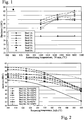
- the influence of the austenitising temperature upon the hardness of the steels 1A-6A is shown in Fig. 1 , where also the hardness of the reference materials 7A and 8A after said austenitising treatment is shown.
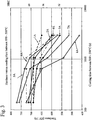
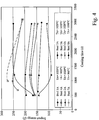
- Steel 2A had a tempering resistance which was equally as good as that of the reference material 8A up to 525°C, while the steels 1A and 3A-5A had a wear resistance on a level lower than the tempering resistance of steel 8A but significantly higher than the tempering resistance of steel 7A.
- the tempering resistance of the experimental alloys 1A-6A therefore may be considered to be good, which is important for a matrix steel which may require surface coating at a temperature up to about 500°C in order to obtain a wear resistance necessary for some tool applications. In other words, at a temperature between 450°C and 600°C, more exactly at a temperature between 500°C and 560°C, a pronounced secondary hardening is obtained by precipitation of MC carbides.
- the wear resistance is favoured by a high silicon content, but also if the silicon content is low, such as in steel 5A, a hardness above 56 HRC can be maintained after high temperature tempering up to about 540°C. This is advantageous, because it makes it possible to perform the surface treatment within a rather wide temperature range without causing the hardness of the tool to be too low.
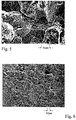
- Fig. 4 The ductility in terms of absorbed impact energy for un-notched test rods at 20°C is shown in Fig. 4 for rods of the alloys 1A-8A cooled in a vacuum furnace versus the cooling time from 800°C to 500°C.
- the shown cooling times are realistic cooling times for full size mould tools for plastic moulding. All steels are tempered to an aimed value of 55 HRC.
- the best ductility was obtained by the experimental alloys 3A, 4A, and 5A, which contain about 0.1% to about 0.2% Si and about 0.5% V.
- Figures 5 and 6 show fracture surfaces of test rods made of the alloys 1A and 3A, respectively.
- the microphotograph in Fig. 6 shows a ductile fracture of a test rod made of a steel with an adequate alloy composition according to the invention, which has a fine austenite grain size, which is a prerequisite for a good ductility.
- the intention of the work carried out in connection with the development of the present invention is to achieve a steel having a desired combination of features as indicated in the left column in Table 5.
- the experimental alloy which comes nearest the ideal is steel 5A.
- This steel has been compared with the reference material 8A. No serious drawbacks, but many advantages, in the view of its use for mould tools for plastic moulding could be registered for the steel 5A in this comparison.
- the marks for fatigue life are calculated with reference to the cleanliness of the steels.
- the pressure strength is calculated on the basis of the tempering temperature and the hardness of the materials after tempering.
- Grindability, machinability, and polishability have been calculated on the basis of the ductility, the soft annealed hardness, and the carbide content of the materials.
- the weldability is related to the carbon content and to the content of alloy elements.
- the production economy has been considered with reference to the possibility to manufacture the steels in a conventional way without problems.
- Table 5 Desired combination of features; comparison of features of examined steels Parameters/Features Desired combination of features Steel 8A Steel 7A Steel 5A Hardenability 3 1 2 3 Dimension stability at heat treatment 3 1 2 3 Hardness after tempering (56-58 HRC) 3 3 3 3 3 Impact toughness 3 2 1 3 Wear resistance 2 2 3 3 Fatigue life 3 3 3 3 3 Pressure strength 3 3 3 3 3 Grindability 3 3 3 3 Machinability 3 3 3 2 Spark machinability 3 3 2 3 Weldability 2 2 1 2 Polishability 3 3 3 3 Production economy 3 3 2 3
- steel 5A has a somewhat low hardness after hardening and high temperature tempering.
- silicon content of an optimal steel composition should be about 0.2% and that the content of dissolved carbon at 1020°C in such a steel should be about 0.45%.
- the silicon content should not exceed 0.25% in the optimal composition in order to provide an optimal ductility/toughness of the alloy.
- the aimed value of the carbon content of the steel in that case should be 0.49% in order to give an aimed hardness of 57-58 HRC after hardening and high temperature tempering.
- a suitable vanadium content of the optimal composition is estimated to be 0.52% in order to give a wider margin against grain growth in connection with the heat treatment.
- the contents of phosphorus, sulphur, nitrogen, and oxygen are kept at a very low level in order to maximise ductility and toughness.
- the steel shall not contain any other, intentionally added carbide formers than vanadium.
- Other carbide formers, such as titanium, zirconium, and niobium are each limited to max. 0.005% in the optimal alloy.
- Aluminium may be present as a residual from the manufacturing of the steel and is limited to max. 0.030, preferably to max. 0.015%.
- An optimal alloy for mould steels for plastic moulding therefore should have the composition which is given in Table 6.
- a steel 10P according to the invention was manufactured in an electric arc furnace.
- the aimed composition was the composition according to Table 6.
- the heat had a weight of 65 tons.
- the analysed composition only diverged very little from the aimed composition.
- the only elements which were outside of the given norm were sulphur and nitrogen, the contents of which amounted to 0.011% and 0.013%, respectively, instead of max. 0.010%.
- the complete composition of the steel 10P is given in Table 7, in which also the content of the most important impurities are stated.
- Table 7P, 8P, and 9P taken from the applicant's production, are stated. These steels correspond to the steels 7N, 8N, and 9N, which have the nominal compositions stated in Table 1.
- the reference materials were manufactured as 65 ton heats in an electric arc furnace. All the heats were bottom casted to the shape of ingots.
- the ingots which were manufactured of steel 9P were also refined by ESR remelting.
- the ingots, including the ESR ingots, were forged to the shape of bars having different dimensions. The bars were subjected to different heat treatments before test samples were taken out. The dimensions and heat treatments of the examined bars are given in Table 8.
- CL2 means test rod from a round bar, taken in the centre of the bar in the longitudal direction of the bar and with the impact direction in the square direction of the bar
- CR2 means the same as CL2 but with the impact direction in the longitudal direction of the bar (most unfavourable conditions)
- TL2 means test rod from a flat bar and in other respects according to CR2
- LT2 means test rod from a flat bar and in other respects according to CL2
- ST2 means test rod from a flat bar, taken out from the centre of the bar, in the shortest square direction and with the impact direction in the longitudal direction (most unfavourable conditions).
- Table 9 Hardness and impact toughness of examined steels manufactured at a production scale Steel No, type of test rod and position Hardness, HRC Impact toughness, J 7P, CL2 58 42 8P, TL2 57 83 9P, CL2 58 60 9P, TL2 58 159 10P, CR2 57.5 58 10P, TL2 57.5 196 11P, LT2 55.9 336 11P, ST2 55.9 216 12P, CR2 57 285 13P, ST2 57.7 239
Landscapes
- Chemical & Material Sciences (AREA)
- Engineering & Computer Science (AREA)
- Mechanical Engineering (AREA)
- Materials Engineering (AREA)
- Metallurgy (AREA)
- Organic Chemistry (AREA)
- Physics & Mathematics (AREA)
- Thermal Sciences (AREA)
- Crystallography & Structural Chemistry (AREA)
- Heat Treatment Of Articles (AREA)
- Heat Treatment Of Steel (AREA)
- Moulds For Moulding Plastics Or The Like (AREA)
Priority Applications (1)
| Application Number | Priority Date | Filing Date | Title |
|---|---|---|---|
| SI200332175T SI1511872T1 (sl) | 2002-06-13 | 2003-05-07 | Jeklo in kalup za ulivanje materialov iz umetne snovi, izdelan iz jekla |
Applications Claiming Priority (5)
| Application Number | Priority Date | Filing Date | Title |
|---|---|---|---|
| SE0201800A SE525269C2 (sv) | 2002-06-13 | 2002-06-13 | Stål och av stålet framställt plastformningsverktyg |
| SE0201800 | 2002-06-13 | ||
| SE0300215A SE0300215D0 (sv) | 2003-01-30 | 2003-01-30 | Stål och av stålet framställt plastformningsverktyg |
| SE0300215 | 2003-01-30 | ||
| PCT/SE2003/000728 WO2003106727A1 (en) | 2002-06-13 | 2003-05-07 | Steel and mould tool for plastic materials made of the steel |
Publications (2)
| Publication Number | Publication Date |
|---|---|
| EP1511872A1 EP1511872A1 (en) | 2005-03-09 |
| EP1511872B1 true EP1511872B1 (en) | 2012-05-23 |
Family
ID=29738560
Family Applications (1)
| Application Number | Title | Priority Date | Filing Date |
|---|---|---|---|
| EP03721267A Expired - Lifetime EP1511872B1 (en) | 2002-06-13 | 2003-05-07 | Steel and mould tool for plastic materials made of the steel |
Country Status (13)
| Country | Link |
|---|---|
| US (1) | US7722727B2 (enExample) |
| EP (1) | EP1511872B1 (enExample) |
| JP (1) | JP4624783B2 (enExample) |
| KR (1) | KR101010505B1 (enExample) |
| CN (1) | CN100402689C (enExample) |
| AU (1) | AU2003224591C1 (enExample) |
| BR (1) | BR0311756B1 (enExample) |
| CA (1) | CA2488790C (enExample) |
| ES (1) | ES2385336T3 (enExample) |
| RU (1) | RU2324760C2 (enExample) |
| SI (1) | SI1511872T1 (enExample) |
| TW (1) | TWI293990B (enExample) |
| WO (1) | WO2003106727A1 (enExample) |
Families Citing this family (21)
| Publication number | Priority date | Publication date | Assignee | Title |
|---|---|---|---|---|
| CN101240399B (zh) * | 2008-03-05 | 2010-06-02 | 钢铁研究总院 | 一种低铬低成本热作模具钢 |
| RU2361961C1 (ru) * | 2008-06-16 | 2009-07-20 | Юлия Алексеевна Щепочкина | Быстрорежущая сталь |
| BRPI1003185A2 (pt) * | 2010-03-08 | 2012-02-07 | Villares Metals Sa | aço para ferramentas de extrusão |
| CN101880836B (zh) * | 2010-07-14 | 2012-02-01 | 西安交通大学 | 一种含硼模具钢及其热处理方法 |
| IT1401998B1 (it) | 2010-09-30 | 2013-08-28 | Danieli Off Mecc | Cesoia di taglio di prodotti laminati e relativo processo di produzione |
| EP2679698B1 (en) * | 2011-02-21 | 2018-09-12 | Hitachi Metals, Ltd. | Cold-work tool steel exhibiting superior machinability |
| CN103276298B (zh) * | 2013-06-09 | 2015-08-05 | 河冶科技股份有限公司 | 高硬高韧冷热兼作模具钢及其生产方法 |
| CN105579604A (zh) * | 2013-09-27 | 2016-05-11 | 日立金属株式会社 | 高速工具钢及其制造方法 |
| AT515157B1 (de) * | 2013-11-21 | 2016-12-15 | Böhler Edelstahl GmbH & Co KG | Verfahren zur Herstellung von Kunststoffformen aus martensitischem Chromstahl und Kunststoffform |
| JP6366326B2 (ja) * | 2014-03-31 | 2018-08-01 | 山陽特殊製鋼株式会社 | 高靱性熱間工具鋼およびその製造方法 |
| JP5744300B1 (ja) | 2014-11-11 | 2015-07-08 | 日本高周波鋼業株式会社 | 熱間工具鋼 |
| CN104894483B (zh) * | 2015-05-15 | 2018-07-31 | 安泰科技股份有限公司 | 粉末冶金耐磨工具钢 |
| WO2017109233A1 (en) | 2015-12-24 | 2017-06-29 | Rovalma, S.A | Long durability high performance steel for structural, machine and tooling applications |
| JP6583533B2 (ja) * | 2016-03-04 | 2019-10-02 | 日本製鉄株式会社 | 鋼材及び油井用鋼管 |
| AU2017226126C1 (en) * | 2016-03-04 | 2020-09-17 | Nippon Steel Corporation | Steel material and oil-well steel pipe |
| TWI606120B (zh) * | 2016-08-24 | 2017-11-21 | 中國鋼鐵股份有限公司 | 沃斯田鐵系合金鋼材之表面處理方法 |
| JP6788520B2 (ja) * | 2017-02-15 | 2020-11-25 | 山陽特殊製鋼株式会社 | 優れた靱性および軟化抵抗性を有する熱間工具鋼 |
| CN111549280B (zh) * | 2020-05-18 | 2021-12-21 | 樟树市兴隆高新材料有限公司 | 一种塑料模具钢及其制备方法 |
| JP7108014B2 (ja) * | 2020-12-10 | 2022-07-27 | 山陽特殊製鋼株式会社 | Fe基合金粉末 |
| JP2022144437A (ja) * | 2021-03-19 | 2022-10-03 | 大同特殊鋼株式会社 | Fe基合金及び金属粉末 |
| CN116479334B (zh) * | 2023-04-28 | 2024-05-14 | 鞍钢股份有限公司 | 具有优异热熔损性模具钢及其制备方法 |
Citations (2)
| Publication number | Priority date | Publication date | Assignee | Title |
|---|---|---|---|---|
| WO1999050468A1 (en) * | 1998-03-27 | 1999-10-07 | Uddeholm Tooling Aktiebolag | Steel material for hot work tools |
| EP1300482A1 (de) * | 2001-10-03 | 2003-04-09 | BÖHLER Edelstahl GmbH | Warmarbeitsstahlgegenstand |
Family Cites Families (17)
| Publication number | Priority date | Publication date | Assignee | Title |
|---|---|---|---|---|
| JPS5524931A (en) * | 1978-08-08 | 1980-02-22 | Hitachi Metals Ltd | Tool steel for hot processing |
| JPS6059052A (ja) | 1983-09-09 | 1985-04-05 | Daido Steel Co Ltd | 熱間工具鋼 |
| US4886640A (en) * | 1988-08-22 | 1989-12-12 | Carpenter Technology Corporation | Hot work tool steel with good temper resistance |
| JPH0293043A (ja) | 1988-09-30 | 1990-04-03 | Nkk Corp | プラスチック成形用工具鋼 |
| SU1664869A1 (ru) * | 1989-08-02 | 1991-07-23 | Предприятие П/Я Р-6286 | Сталь |
| JPH04354852A (ja) * | 1991-05-30 | 1992-12-09 | Hitachi Metals Ltd | 高速度鋼工具用高硬度シャンク材または胴材 |
| JP2683861B2 (ja) | 1993-08-24 | 1997-12-03 | 住友金属工業株式会社 | 熱間製管用工具及びその製造方法 |
| JP2834654B2 (ja) | 1993-10-01 | 1998-12-09 | 山陽特殊製鋼株式会社 | 高靱性熱間工具鋼 |
| JP3352889B2 (ja) | 1996-10-16 | 2002-12-03 | 山陽特殊製鋼株式会社 | 窒化特性に優れた熱間工具鋼 |
| JPH10273756A (ja) * | 1997-03-31 | 1998-10-13 | Daido Steel Co Ltd | 鋳物製冷間工具およびその製造方法 |
| JPH11181549A (ja) * | 1997-12-22 | 1999-07-06 | Daido Steel Co Ltd | 溶接性に優れた鋳物製冷間工具およびその製造方法 |
| JP2000212700A (ja) * | 1998-11-20 | 2000-08-02 | Hitachi Metals Ltd | 溶接性に優れた金型 |
| JP2000273590A (ja) | 1999-03-24 | 2000-10-03 | Hitachi Metals Ltd | 溶接性および被削性に優れた熱処理用鋳鋼 |
| JP3452538B2 (ja) | 2000-06-28 | 2003-09-29 | 三菱レイヨン株式会社 | 金属含有モノマー混合物 |
| JP2002088443A (ja) | 2000-09-14 | 2002-03-27 | Daido Steel Co Ltd | 塑性加工用熱間工具鋼 |
| JP2002088449A (ja) * | 2000-09-18 | 2002-03-27 | Nkk Corp | パーライト系レール |
| JP4354852B2 (ja) | 2004-03-16 | 2009-10-28 | 日本リファイン株式会社 | 回分式活性汚泥法に適したエアリフト曝気槽 |
-
2003
- 2003-05-07 SI SI200332175T patent/SI1511872T1/sl unknown
- 2003-05-07 WO PCT/SE2003/000728 patent/WO2003106727A1/en not_active Ceased
- 2003-05-07 CN CNB038136554A patent/CN100402689C/zh not_active Expired - Lifetime
- 2003-05-07 JP JP2004513532A patent/JP4624783B2/ja not_active Expired - Lifetime
- 2003-05-07 RU RU2004134562/02A patent/RU2324760C2/ru active
- 2003-05-07 BR BRPI0311756-1A patent/BR0311756B1/pt not_active IP Right Cessation
- 2003-05-07 AU AU2003224591A patent/AU2003224591C1/en not_active Ceased
- 2003-05-07 ES ES03721267T patent/ES2385336T3/es not_active Expired - Lifetime
- 2003-05-07 KR KR1020047019970A patent/KR101010505B1/ko not_active Expired - Lifetime
- 2003-05-07 EP EP03721267A patent/EP1511872B1/en not_active Expired - Lifetime
- 2003-05-07 CA CA2488790A patent/CA2488790C/en not_active Expired - Lifetime
- 2003-05-07 US US10/514,940 patent/US7722727B2/en not_active Expired - Lifetime
- 2003-05-08 TW TW092112518A patent/TWI293990B/zh not_active IP Right Cessation
Patent Citations (3)
| Publication number | Priority date | Publication date | Assignee | Title |
|---|---|---|---|---|
| WO1999050468A1 (en) * | 1998-03-27 | 1999-10-07 | Uddeholm Tooling Aktiebolag | Steel material for hot work tools |
| EP1300482A1 (de) * | 2001-10-03 | 2003-04-09 | BÖHLER Edelstahl GmbH | Warmarbeitsstahlgegenstand |
| US20030098097A1 (en) * | 2001-10-03 | 2003-05-29 | Bohler Edelstahl Gmbh & Co. Kg | Hot-working steel article |
Also Published As
| Publication number | Publication date |
|---|---|
| TWI293990B (en) | 2008-03-01 |
| ES2385336T3 (es) | 2012-07-23 |
| US20050123434A1 (en) | 2005-06-09 |
| WO2003106727A1 (en) | 2003-12-24 |
| JP2006504868A (ja) | 2006-02-09 |
| RU2004134562A (ru) | 2005-08-20 |
| KR20050007598A (ko) | 2005-01-19 |
| AU2003224591C1 (en) | 2009-08-13 |
| SI1511872T1 (sl) | 2012-09-28 |
| JP4624783B2 (ja) | 2011-02-02 |
| EP1511872A1 (en) | 2005-03-09 |
| US7722727B2 (en) | 2010-05-25 |
| CA2488790C (en) | 2012-06-19 |
| BR0311756B1 (pt) | 2011-12-27 |
| RU2324760C2 (ru) | 2008-05-20 |
| CN1671876A (zh) | 2005-09-21 |
| AU2003224591B2 (en) | 2009-01-22 |
| TW200406495A (en) | 2004-05-01 |
| AU2003224591A1 (en) | 2003-12-31 |
| CA2488790A1 (en) | 2003-12-24 |
| BR0311756A (pt) | 2005-03-08 |
| CN100402689C (zh) | 2008-07-16 |
| KR101010505B1 (ko) | 2011-01-21 |
Similar Documents
| Publication | Publication Date | Title |
|---|---|---|
| EP1511873B1 (en) | Cold work steel and cold work tool | |
| US7722727B2 (en) | Steel and mould tool for plastic materials made of the steel | |
| EP3692180B1 (en) | Stainless steel, a prealloyed powder obtained by atomizing the steel and use of the prealloyed powder | |
| US20090252640A1 (en) | Steel alloy, a holder or a holder detail for a plastic moulding tool, a tough hardened blank for a holder or holder detail, a process for producing a steel alloy | |
| US6641681B1 (en) | Steel material and its manufacture | |
| PL196489B1 (pl) | Stop stali i zastosowanie stopu stali | |
| EP1381702B1 (en) | Steel article | |
| AU2002224270A1 (en) | Steel alloy, holders and holder details for plastic moulding tools, and tough hardened blanks for holders and holder details | |
| US20040103959A1 (en) | Steel article | |
| US7909906B2 (en) | Cold work steel and manufacturing method thereof | |
| ES2370486T3 (es) | Acero para trabajo en frío y herramienta para trabajo en frío. | |
| KR20220119836A (ko) | Nb 함유 철강절단용 나이프용 공구강 및 이의 제조방법 | |
| CA2255609C (en) | Steel alloy, steel product and use thereof |
Legal Events
| Date | Code | Title | Description |
|---|---|---|---|
| PUAI | Public reference made under article 153(3) epc to a published international application that has entered the european phase |
Free format text: ORIGINAL CODE: 0009012 |
|
| 17P | Request for examination filed |
Effective date: 20041110 |
|
| AK | Designated contracting states |
Kind code of ref document: A1 Designated state(s): AT BE BG CH CY CZ DE DK EE ES FI FR GB GR HU IE IT LI LU MC NL PT RO SE SI SK TR |
|
| AX | Request for extension of the european patent |
Extension state: AL LT LV MK |
|
| DAX | Request for extension of the european patent (deleted) | ||
| 17Q | First examination report despatched |
Effective date: 20081008 |
|
| RAP1 | Party data changed (applicant data changed or rights of an application transferred) |
Owner name: UDDEHOLMS AB |
|
| REG | Reference to a national code |
Ref country code: DE Ref legal event code: R079 Ref document number: 60341005 Country of ref document: DE Free format text: PREVIOUS MAIN CLASS: C22C0038240000 Ipc: C21D0006000000 |
|
| GRAP | Despatch of communication of intention to grant a patent |
Free format text: ORIGINAL CODE: EPIDOSNIGR1 |
|
| RIC1 | Information provided on ipc code assigned before grant |
Ipc: C21D 6/00 20060101AFI20111125BHEP Ipc: C22C 38/24 20060101ALI20111125BHEP Ipc: C22C 38/22 20060101ALI20111125BHEP |
|
| GRAS | Grant fee paid |
Free format text: ORIGINAL CODE: EPIDOSNIGR3 |
|
| GRAA | (expected) grant |
Free format text: ORIGINAL CODE: 0009210 |
|
| AK | Designated contracting states |
Kind code of ref document: B1 Designated state(s): AT BE BG CH CY CZ DE DK EE ES FI FR GB GR HU IE IT LI LU MC NL PT RO SE SI SK TR |
|
| REG | Reference to a national code |
Ref country code: GB Ref legal event code: FG4D |
|
| REG | Reference to a national code |
Ref country code: CH Ref legal event code: EP |
|
| REG | Reference to a national code |
Ref country code: AT Ref legal event code: REF Ref document number: 559125 Country of ref document: AT Kind code of ref document: T Effective date: 20120615 |
|
| REG | Reference to a national code |
Ref country code: IE Ref legal event code: FG4D |
|
| REG | Reference to a national code |
Ref country code: DE Ref legal event code: R096 Ref document number: 60341005 Country of ref document: DE Effective date: 20120719 |
|
| REG | Reference to a national code |
Ref country code: ES Ref legal event code: FG2A Ref document number: 2385336 Country of ref document: ES Kind code of ref document: T3 Effective date: 20120723 |
|
| REG | Reference to a national code |
Ref country code: NL Ref legal event code: T3 |
|
| REG | Reference to a national code |
Ref country code: SE Ref legal event code: TRGR |
|
| PG25 | Lapsed in a contracting state [announced via postgrant information from national office to epo] |
Ref country code: CY Free format text: LAPSE BECAUSE OF FAILURE TO SUBMIT A TRANSLATION OF THE DESCRIPTION OR TO PAY THE FEE WITHIN THE PRESCRIBED TIME-LIMIT Effective date: 20120523 Ref country code: FI Free format text: LAPSE BECAUSE OF FAILURE TO SUBMIT A TRANSLATION OF THE DESCRIPTION OR TO PAY THE FEE WITHIN THE PRESCRIBED TIME-LIMIT Effective date: 20120523 |
|
| PG25 | Lapsed in a contracting state [announced via postgrant information from national office to epo] |
Ref country code: GR Free format text: LAPSE BECAUSE OF FAILURE TO SUBMIT A TRANSLATION OF THE DESCRIPTION OR TO PAY THE FEE WITHIN THE PRESCRIBED TIME-LIMIT Effective date: 20120824 Ref country code: PT Free format text: LAPSE BECAUSE OF FAILURE TO SUBMIT A TRANSLATION OF THE DESCRIPTION OR TO PAY THE FEE WITHIN THE PRESCRIBED TIME-LIMIT Effective date: 20120924 |
|
| PG25 | Lapsed in a contracting state [announced via postgrant information from national office to epo] |
Ref country code: BE Free format text: LAPSE BECAUSE OF FAILURE TO SUBMIT A TRANSLATION OF THE DESCRIPTION OR TO PAY THE FEE WITHIN THE PRESCRIBED TIME-LIMIT Effective date: 20120523 |
|
| PG25 | Lapsed in a contracting state [announced via postgrant information from national office to epo] |
Ref country code: RO Free format text: LAPSE BECAUSE OF FAILURE TO SUBMIT A TRANSLATION OF THE DESCRIPTION OR TO PAY THE FEE WITHIN THE PRESCRIBED TIME-LIMIT Effective date: 20120523 Ref country code: DK Free format text: LAPSE BECAUSE OF FAILURE TO SUBMIT A TRANSLATION OF THE DESCRIPTION OR TO PAY THE FEE WITHIN THE PRESCRIBED TIME-LIMIT Effective date: 20120523 Ref country code: CZ Free format text: LAPSE BECAUSE OF FAILURE TO SUBMIT A TRANSLATION OF THE DESCRIPTION OR TO PAY THE FEE WITHIN THE PRESCRIBED TIME-LIMIT Effective date: 20120523 Ref country code: SK Free format text: LAPSE BECAUSE OF FAILURE TO SUBMIT A TRANSLATION OF THE DESCRIPTION OR TO PAY THE FEE WITHIN THE PRESCRIBED TIME-LIMIT Effective date: 20120523 Ref country code: EE Free format text: LAPSE BECAUSE OF FAILURE TO SUBMIT A TRANSLATION OF THE DESCRIPTION OR TO PAY THE FEE WITHIN THE PRESCRIBED TIME-LIMIT Effective date: 20120523 |
|
| PLBE | No opposition filed within time limit |
Free format text: ORIGINAL CODE: 0009261 |
|
| STAA | Information on the status of an ep patent application or granted ep patent |
Free format text: STATUS: NO OPPOSITION FILED WITHIN TIME LIMIT |
|
| 26N | No opposition filed |
Effective date: 20130226 |
|
| REG | Reference to a national code |
Ref country code: DE Ref legal event code: R097 Ref document number: 60341005 Country of ref document: DE Effective date: 20130226 |
|
| PG25 | Lapsed in a contracting state [announced via postgrant information from national office to epo] |
Ref country code: BG Free format text: LAPSE BECAUSE OF FAILURE TO SUBMIT A TRANSLATION OF THE DESCRIPTION OR TO PAY THE FEE WITHIN THE PRESCRIBED TIME-LIMIT Effective date: 20120823 |
|
| PG25 | Lapsed in a contracting state [announced via postgrant information from national office to epo] |
Ref country code: MC Free format text: LAPSE BECAUSE OF FAILURE TO SUBMIT A TRANSLATION OF THE DESCRIPTION OR TO PAY THE FEE WITHIN THE PRESCRIBED TIME-LIMIT Effective date: 20120523 |
|
| REG | Reference to a national code |
Ref country code: IE Ref legal event code: MM4A |
|
| PG25 | Lapsed in a contracting state [announced via postgrant information from national office to epo] |
Ref country code: IE Free format text: LAPSE BECAUSE OF NON-PAYMENT OF DUE FEES Effective date: 20130507 |
|
| PG25 | Lapsed in a contracting state [announced via postgrant information from national office to epo] |
Ref country code: HU Free format text: LAPSE BECAUSE OF FAILURE TO SUBMIT A TRANSLATION OF THE DESCRIPTION OR TO PAY THE FEE WITHIN THE PRESCRIBED TIME-LIMIT; INVALID AB INITIO Effective date: 20030507 Ref country code: LU Free format text: LAPSE BECAUSE OF NON-PAYMENT OF DUE FEES Effective date: 20130507 |
|
| REG | Reference to a national code |
Ref country code: FR Ref legal event code: PLFP Year of fee payment: 14 |
|
| REG | Reference to a national code |
Ref country code: FR Ref legal event code: PLFP Year of fee payment: 15 |
|
| REG | Reference to a national code |
Ref country code: FR Ref legal event code: PLFP Year of fee payment: 16 |
|
| PGFP | Annual fee paid to national office [announced via postgrant information from national office to epo] |
Ref country code: ES Payment date: 20200601 Year of fee payment: 18 Ref country code: NL Payment date: 20200519 Year of fee payment: 18 |
|
| PGFP | Annual fee paid to national office [announced via postgrant information from national office to epo] |
Ref country code: SI Payment date: 20200415 Year of fee payment: 18 |
|
| REG | Reference to a national code |
Ref country code: NL Ref legal event code: MM Effective date: 20210601 |
|
| PG25 | Lapsed in a contracting state [announced via postgrant information from national office to epo] |
Ref country code: SI Free format text: LAPSE BECAUSE OF NON-PAYMENT OF DUE FEES Effective date: 20210508 |
|
| REG | Reference to a national code |
Ref country code: SI Ref legal event code: KO00 Effective date: 20220121 |
|
| PG25 | Lapsed in a contracting state [announced via postgrant information from national office to epo] |
Ref country code: NL Free format text: LAPSE BECAUSE OF NON-PAYMENT OF DUE FEES Effective date: 20210601 |
|
| REG | Reference to a national code |
Ref country code: ES Ref legal event code: FD2A Effective date: 20220706 |
|
| PG25 | Lapsed in a contracting state [announced via postgrant information from national office to epo] |
Ref country code: ES Free format text: LAPSE BECAUSE OF NON-PAYMENT OF DUE FEES Effective date: 20210508 |
|
| PGFP | Annual fee paid to national office [announced via postgrant information from national office to epo] |
Ref country code: SE Payment date: 20220517 Year of fee payment: 20 Ref country code: IT Payment date: 20220523 Year of fee payment: 20 Ref country code: GB Payment date: 20220518 Year of fee payment: 20 Ref country code: FR Payment date: 20220516 Year of fee payment: 20 Ref country code: DE Payment date: 20220519 Year of fee payment: 20 |
|
| PGFP | Annual fee paid to national office [announced via postgrant information from national office to epo] |
Ref country code: TR Payment date: 20220413 Year of fee payment: 20 Ref country code: CH Payment date: 20220512 Year of fee payment: 20 Ref country code: AT Payment date: 20220519 Year of fee payment: 20 |
|
| REG | Reference to a national code |
Ref country code: DE Ref legal event code: R071 Ref document number: 60341005 Country of ref document: DE |
|
| REG | Reference to a national code |
Ref country code: CH Ref legal event code: PL |
|
| REG | Reference to a national code |
Ref country code: GB Ref legal event code: PE20 Expiry date: 20230506 |
|
| REG | Reference to a national code |
Ref country code: AT Ref legal event code: MK07 Ref document number: 559125 Country of ref document: AT Kind code of ref document: T Effective date: 20230507 |
|
| REG | Reference to a national code |
Ref country code: SE Ref legal event code: EUG |
|
| PG25 | Lapsed in a contracting state [announced via postgrant information from national office to epo] |
Ref country code: GB Free format text: LAPSE BECAUSE OF EXPIRATION OF PROTECTION Effective date: 20230506 |