EP1509600B1 - Plant thymidine kinases and their use - Google Patents
Plant thymidine kinases and their use Download PDFInfo
- Publication number
- EP1509600B1 EP1509600B1 EP03722322A EP03722322A EP1509600B1 EP 1509600 B1 EP1509600 B1 EP 1509600B1 EP 03722322 A EP03722322 A EP 03722322A EP 03722322 A EP03722322 A EP 03722322A EP 1509600 B1 EP1509600 B1 EP 1509600B1
- Authority
- EP
- European Patent Office
- Prior art keywords
- thymidine kinase
- vector
- polynucleotide
- cell
- plant
- Prior art date
- Legal status (The legal status is an assumption and is not a legal conclusion. Google has not performed a legal analysis and makes no representation as to the accuracy of the status listed.)
- Expired - Lifetime
Links
Images
Classifications
-
- C—CHEMISTRY; METALLURGY
- C12—BIOCHEMISTRY; BEER; SPIRITS; WINE; VINEGAR; MICROBIOLOGY; ENZYMOLOGY; MUTATION OR GENETIC ENGINEERING
- C12N—MICROORGANISMS OR ENZYMES; COMPOSITIONS THEREOF; PROPAGATING, PRESERVING, OR MAINTAINING MICROORGANISMS; MUTATION OR GENETIC ENGINEERING; CULTURE MEDIA
- C12N15/00—Mutation or genetic engineering; DNA or RNA concerning genetic engineering, vectors, e.g. plasmids, or their isolation, preparation or purification; Use of hosts therefor
- C12N15/09—Recombinant DNA-technology
- C12N15/63—Introduction of foreign genetic material using vectors; Vectors; Use of hosts therefor; Regulation of expression
- C12N15/79—Vectors or expression systems specially adapted for eukaryotic hosts
- C12N15/82—Vectors or expression systems specially adapted for eukaryotic hosts for plant cells, e.g. plant artificial chromosomes (PACs)
- C12N15/8241—Phenotypically and genetically modified plants via recombinant DNA technology
- C12N15/8261—Phenotypically and genetically modified plants via recombinant DNA technology with agronomic (input) traits, e.g. crop yield
-
- A—HUMAN NECESSITIES
- A61—MEDICAL OR VETERINARY SCIENCE; HYGIENE
- A61K—PREPARATIONS FOR MEDICAL, DENTAL OR TOILETRY PURPOSES
- A61K31/00—Medicinal preparations containing organic active ingredients
- A61K31/70—Carbohydrates; Sugars; Derivatives thereof
- A61K31/7042—Compounds having saccharide radicals and heterocyclic rings
- A61K31/7052—Compounds having saccharide radicals and heterocyclic rings having nitrogen as a ring hetero atom, e.g. nucleosides, nucleotides
- A61K31/706—Compounds having saccharide radicals and heterocyclic rings having nitrogen as a ring hetero atom, e.g. nucleosides, nucleotides containing six-membered rings with nitrogen as a ring hetero atom
- A61K31/7064—Compounds having saccharide radicals and heterocyclic rings having nitrogen as a ring hetero atom, e.g. nucleosides, nucleotides containing six-membered rings with nitrogen as a ring hetero atom containing condensed or non-condensed pyrimidines
- A61K31/7068—Compounds having saccharide radicals and heterocyclic rings having nitrogen as a ring hetero atom, e.g. nucleosides, nucleotides containing six-membered rings with nitrogen as a ring hetero atom containing condensed or non-condensed pyrimidines having oxo groups directly attached to the pyrimidine ring, e.g. cytidine, cytidylic acid
- A61K31/7072—Compounds having saccharide radicals and heterocyclic rings having nitrogen as a ring hetero atom, e.g. nucleosides, nucleotides containing six-membered rings with nitrogen as a ring hetero atom containing condensed or non-condensed pyrimidines having oxo groups directly attached to the pyrimidine ring, e.g. cytidine, cytidylic acid having two oxo groups directly attached to the pyrimidine ring, e.g. uridine, uridylic acid, thymidine, zidovudine
-
- A—HUMAN NECESSITIES
- A61—MEDICAL OR VETERINARY SCIENCE; HYGIENE
- A61K—PREPARATIONS FOR MEDICAL, DENTAL OR TOILETRY PURPOSES
- A61K38/00—Medicinal preparations containing peptides
- A61K38/16—Peptides having more than 20 amino acids; Gastrins; Somatostatins; Melanotropins; Derivatives thereof
- A61K38/43—Enzymes; Proenzymes; Derivatives thereof
- A61K38/45—Transferases (2)
-
- A—HUMAN NECESSITIES
- A61—MEDICAL OR VETERINARY SCIENCE; HYGIENE
- A61K—PREPARATIONS FOR MEDICAL, DENTAL OR TOILETRY PURPOSES
- A61K45/00—Medicinal preparations containing active ingredients not provided for in groups A61K31/00 - A61K41/00
- A61K45/06—Mixtures of active ingredients without chemical characterisation, e.g. antiphlogistics and cardiaca
-
- A—HUMAN NECESSITIES
- A61—MEDICAL OR VETERINARY SCIENCE; HYGIENE
- A61P—SPECIFIC THERAPEUTIC ACTIVITY OF CHEMICAL COMPOUNDS OR MEDICINAL PREPARATIONS
- A61P31/00—Antiinfectives, i.e. antibiotics, antiseptics, chemotherapeutics
- A61P31/04—Antibacterial agents
-
- A—HUMAN NECESSITIES
- A61—MEDICAL OR VETERINARY SCIENCE; HYGIENE
- A61P—SPECIFIC THERAPEUTIC ACTIVITY OF CHEMICAL COMPOUNDS OR MEDICINAL PREPARATIONS
- A61P31/00—Antiinfectives, i.e. antibiotics, antiseptics, chemotherapeutics
- A61P31/12—Antivirals
-
- A—HUMAN NECESSITIES
- A61—MEDICAL OR VETERINARY SCIENCE; HYGIENE
- A61P—SPECIFIC THERAPEUTIC ACTIVITY OF CHEMICAL COMPOUNDS OR MEDICINAL PREPARATIONS
- A61P33/00—Antiparasitic agents
-
- A—HUMAN NECESSITIES
- A61—MEDICAL OR VETERINARY SCIENCE; HYGIENE
- A61P—SPECIFIC THERAPEUTIC ACTIVITY OF CHEMICAL COMPOUNDS OR MEDICINAL PREPARATIONS
- A61P35/00—Antineoplastic agents
-
- A—HUMAN NECESSITIES
- A61—MEDICAL OR VETERINARY SCIENCE; HYGIENE
- A61P—SPECIFIC THERAPEUTIC ACTIVITY OF CHEMICAL COMPOUNDS OR MEDICINAL PREPARATIONS
- A61P37/00—Drugs for immunological or allergic disorders
- A61P37/02—Immunomodulators
- A61P37/06—Immunosuppressants, e.g. drugs for graft rejection
-
- C—CHEMISTRY; METALLURGY
- C12—BIOCHEMISTRY; BEER; SPIRITS; WINE; VINEGAR; MICROBIOLOGY; ENZYMOLOGY; MUTATION OR GENETIC ENGINEERING
- C12N—MICROORGANISMS OR ENZYMES; COMPOSITIONS THEREOF; PROPAGATING, PRESERVING, OR MAINTAINING MICROORGANISMS; MUTATION OR GENETIC ENGINEERING; CULTURE MEDIA
- C12N9/00—Enzymes; Proenzymes; Compositions thereof; Processes for preparing, activating, inhibiting, separating or purifying enzymes
- C12N9/10—Transferases (2.)
- C12N9/12—Transferases (2.) transferring phosphorus containing groups, e.g. kinases (2.7)
- C12N9/1205—Phosphotransferases with an alcohol group as acceptor (2.7.1), e.g. protein kinases
-
- C—CHEMISTRY; METALLURGY
- C12—BIOCHEMISTRY; BEER; SPIRITS; WINE; VINEGAR; MICROBIOLOGY; ENZYMOLOGY; MUTATION OR GENETIC ENGINEERING
- C12N—MICROORGANISMS OR ENZYMES; COMPOSITIONS THEREOF; PROPAGATING, PRESERVING, OR MAINTAINING MICROORGANISMS; MUTATION OR GENETIC ENGINEERING; CULTURE MEDIA
- C12N9/00—Enzymes; Proenzymes; Compositions thereof; Processes for preparing, activating, inhibiting, separating or purifying enzymes
- C12N9/10—Transferases (2.)
- C12N9/12—Transferases (2.) transferring phosphorus containing groups, e.g. kinases (2.7)
- C12N9/1205—Phosphotransferases with an alcohol group as acceptor (2.7.1), e.g. protein kinases
- C12N9/1211—Thymidine kinase (2.7.1.21)
-
- C—CHEMISTRY; METALLURGY
- C12—BIOCHEMISTRY; BEER; SPIRITS; WINE; VINEGAR; MICROBIOLOGY; ENZYMOLOGY; MUTATION OR GENETIC ENGINEERING
- C12Y—ENZYMES
- C12Y207/00—Transferases transferring phosphorus-containing groups (2.7)
- C12Y207/01—Phosphotransferases with an alcohol group as acceptor (2.7.1)
- C12Y207/01076—Deoxyadenosine kinase (2.7.1.76)
-
- Y—GENERAL TAGGING OF NEW TECHNOLOGICAL DEVELOPMENTS; GENERAL TAGGING OF CROSS-SECTIONAL TECHNOLOGIES SPANNING OVER SEVERAL SECTIONS OF THE IPC; TECHNICAL SUBJECTS COVERED BY FORMER USPC CROSS-REFERENCE ART COLLECTIONS [XRACs] AND DIGESTS
- Y02—TECHNOLOGIES OR APPLICATIONS FOR MITIGATION OR ADAPTATION AGAINST CLIMATE CHANGE
- Y02A—TECHNOLOGIES FOR ADAPTATION TO CLIMATE CHANGE
- Y02A40/00—Adaptation technologies in agriculture, forestry, livestock or agroalimentary production
- Y02A40/10—Adaptation technologies in agriculture, forestry, livestock or agroalimentary production in agriculture
- Y02A40/146—Genetically Modified [GMO] plants, e.g. transgenic plants
Definitions
- This invention relates to novel plant thymidine kinases and their use in gene therapy. More specifically the invention provides novel thymidine kinases derived from tomato.
- the invention provides novel polynucleotides encoding the plant thymidine kinases, vector constructs comprising the polynucleotide, host cells carrying the polynucleotide or vector, methods of sensitising cells to prodrugs, methods of inhibiting pathogenic agents in warm-blooded animals, and methods of synthesizing monophosphates.
- the invention provides a unique combination of a plant thymidine kinase and the nucleoside analogue AZT to treat abnormal cell growth.
- dCK phosphorylates dCyd, deoxyadenosine (dAdo) and deoxyguanosine (dGuo), but not dThd.
- dGK phosphorylates dGuo and dAdo.
- TK1 and dCK are cytosolic, and TK2 and dGK are localised in the mitochondria, although recent reports indicate a cytoplasmic localisation of TK2 as well.
- the isolated plant thymidine kinases genes can be used in gene therapy for selectively killing cells containing the genes (and being exposed to at least one nucleoside analogue) and the isolated thymidine kinases provided by the present invention can be used for the industrially important process of phosphorylating nucleosides and/or nucleoside analogues.
- the invention provides a unique combination of a plant thymidine kinase and the nucleoside analog AZT to treat abnormal cell growth.
- the invention provides plant thymidine kinase enzymes derived from tomato ( Lycopersicum esculentum ).
- the invention provides vector constructs comprising a polynucleotide of the invention, and a promoter operably linked to the polynucleotide.
- the invention provides methods of phosphorylating nucleosides or nucleoside analogs, which methods comprise the steps of (i) subjecting the nucleoside or nucleoside analog to the action of the plant thymidine kinase enzyme of the invention, and (ii) recovering the phosphorylated nucleoside or nucleoside analog.
- thymidine kinase enzymes of the invention are particularly useful for the treatment of abnormal cell growth by activating nucleoside analogs, in particular ATZ.
- identity is a measure of the degree of homology of amino acid sequences. In order to characterize the identity, subject sequences are aligned so that the highest order homology (match) is obtained. Based on these general principles the "percent identity" of two amino acid sequences is determined using the BLASTP algorithm [ Tatiana A. Tatusova, Thomas L. Madden: Blast 2 sequences - a new tool for comparing protein and nucleotide sequences; FEMS Microbiol. Lett. 1999 174 247-250 ], which is available from the National Center for Biotechnology Information (NCBI) web site, and using the default settings suggested here (i.e.
- NCBI National Center for Biotechnology Information
- conservative substitutions denotes the replacement of an amino acid residue by another, biologically similar residue. Examples of conservative substitutions include
- Modifications of this primary amino acid sequence may result in proteins which have substantially equivalent activity as compared to the unmodified counterpart polypeptides, and thus may be considered functional analogous of the parent proteins.
- Such modifications may be deliberate, e.g. as by site-directed mutagenesis, or they may occur spontaneous, and include splice variants, isoforms, homologues from other species, and polymorphisms.
- Such functional analogous are also contemplated according to the invention.
- the invention provides plant thymidine kinase enzymes having C-terminal deletions when compared to the parent (wild-type) enzyme.
- truncated enzymes may be obtained by conventional techniques, e.g. site-directed mutagenesis, or as described in the working examples.
- the invention provides isolated polynucleotides encoding plant thymidine kinase enzymes derived from tomato, preferably those plant thymidine kinase enzymes described above.
- Hybridization should be accomplished under at least low stringency conditions, but preferably at medium or high stringency conditions.
- the complementary nucleic acids or signal nucleic acids may be labelled by conventional methods known in the art to detect the presence of hybridised oligonucleotides.
- the most common method of detection is the use of autoradiography with e.g. 3 H, 125 I, 35 S, 14 C, or 32 P-labelled probes, which may then be detected using an X-ray film.
- Other labels include ligands, which bind to labelled antibodies, fluorophores, chemoluminescent agents, enzymes, or antibodies, which can then serve as specific binding pair members for a labelled ligand.
- identity is a measure of the degree of homology of nucleotide sequences. In order to characterize the identity, subject sequences are aligned so that the highest order homology (match) is obtained. Based on these general principles, the "percent identity" of two amino acid sequences or of two nucleic acids is determined using the BLASTN algorithm [ Tatiana A. Tatusova, Thomas L. Madden: Blast 2 sequences - a new tool for comparing protein and nucleotide sequences; FEMS Microbiol. Lett. 1999 174 247-250 ], which is available from the National Center for Biotechnology Information (NCBI) web site, and using the default settings suggested here (i.e.
- NCBI National Center for Biotechnology Information
- nucleic acid variations are "silent variations," which are one species of conservatively modified variations. Every nucleic acid sequence herein, which encodes a polypeptide, also describes every possible silent variation of the nucleic acid.
- the invention provides recombinant expression vectors comprising the isolated polynucleotide of the invention and a promoter operably linked to the polynucleotide.
- the expression vector of the invention preferably is one suitable for carrying out expression in a eukaryotic organism.
- the invention provides packaging cell lines capable of producing an infective virion, which cell line comprises a vector of the invention.
- Packaging cells refers to cells containing those elements necessary for production of infectious recombinant vira, which are lacking in a recombinant virus vector. Methods for preparation of packaging cell lines are known in the prior art.
- the invention provides an isolated host cell comprising the isolated polynucleotide of the invention, or the expression vector of the invention.
- the host cell of the invention is an a bacterial cell, preferably a eukaryotic cell, in particular a mammalian cell, a human cell, an oocyte, or a yeast cell.
- the host cell of the invention is a human cell, a dog cell, a monkey cell, a rat cell, a pig cell, or a mouse cell.
- plant thymidine kinase enzyme of the invention may be administered in any convenient form.
- plant thymidine kinase enzyme of the invention is incorporated into a pharmaceutical composition together with one or more adjuvants, excipients, carriers and/or diluents, and the pharmaceutical composition prepared by the skilled person using conventional methods known in the art.
- compositions may comprise plant thymidine kinase enzyme of the invention, or antibodies against a plant thymidine kinase.
- the composition may be administered alone or in combination with one or more other agents, drugs or hormones.
- the pharmaceutical composition of this invention may be administered by any suitable route, including, but not limited to oral, intravenous, intramuscular, inter-arterial, intramedullary, intrathecal, intraventricular, transdermal, subcutaneous, intraperitoneal, intranasal, anteral, topical, sublingual or rectal application, buccal, vaginal, intraorbital, intracerebral, intracranial, intraspinal, intraventricular, intracisternal, intracapsular, intrapulmonary, transmucosal, or via inhalation.
- the active ingredient may be administered in one or several doses per day.
- appropriate dosages are between 0.5 ng to about 50 ⁇ g/kg thymidine kinase/kg body weight per administration, and from about 1.0 ng/kg to about 100 ⁇ g/kg daily.
- the dose administered must of course be carefully adjusted to the age, weight and condition of the individual being treated, as well as the route of administration, dosage form and regimen, and the result desired, and the exact dosage should of course be determined by the practitioner.
- the plant thymidine kinase of the invention may be administered by genetic delivery, using cell lines and vectors as described below under methods of treatment.
- the invention provides pharmaceutical compositions comprising the polynucleotide of the invention, or a vector of the invention, or a packaging cell of the invention, or a host cell of the invention, and a pharmaceutically acceptable carrier or diluent.
- the polynucleotide of the invention may be inserted into an expression vector, e.g. a plasmid, virus or other expression vehicle, and operatively linked to expression control sequences by ligation in a way that expression of the coding sequence is achieved under conditions compatible with the expression control sequences.
- an expression vector e.g. a plasmid, virus or other expression vehicle
- Suitable expression control sequences include promoters, enhancers, transcription terminators, start codons, splicing signals for introns, and stop codons, all maintained in the correct reading frame of the polynucleotide of the invention so as to permit proper translation of mRNA.
- Expression control sequences may also include additional components such as leader sequences and fusion partner sequences.
- the present invention which relates to polynucleotides and proteins, polypeptides, peptide fragments or derivatives produced therefrom, as well as to antibodies directed against such proteins, peptides or derivatives, may be used for treating or alleviating a disorder or disease of a living animal body, including a human, which disorder or disease is responsive to the activity of a cytotoxic agent.
- the disorder, disease or condition may in particular be a cancer or a viral infection.
- GDEPT gene directed enzyme prodrug therapy
- the polynucleotides of the present invention may in particular be used as a "suicide gene", i.e. a drug-susceptibility gene. Transfer of a suicide gene to a target cell renders the cell sensitive to compounds or compositions that are relatively nontoxic to normal cells.
- suicide gene i.e. a drug-susceptibility gene.
- the invention provides a method for sensitising target cells to prodrugs, which method comprises the steps of
- the target cell may be any cell of interest, in particular a human cell, a dog cell, a monkey cell, a rat cell, a cat cel, a pig cell, or a mouse cell.
- the target cell is a human cell.
- any plant thymidine kinase enzyme may be used.
- the polynucleotide sequence encoding a plant thymidine kinase enzyme is a polynucleotide sequence of the invention.
- the prodrug is a nucleoside analogue.
- a preferred nucleoside analogue for use according to the invention is selected from the group consisting of aciclovir (9-[2-hydroxy-ethoxy]-methyl-guanosine), buciclovir (9-(3,4-dihydroxybutyl)guanine), famciclovir (2-[2-(2-Amino-9H-purin-9-yl) ethyl]-1,3-propanediol diacetate), ganciclovir (9-[2-hydroxy-1-(hydroxymethyl)ethoxyl-methyl]-guanosine), penciclovir, valciclovir, trifluorothymidine, AZT (3'-azido-3'-deoxythymidine), AIU (5'-iodo-5'-amino-2',5'-dideoxyuridine), ara-A (adenosine-arabinoside; Vivarabine), ara-C (cytidine-arabinoside),
- nucleoside analog for use according to the invention is AZT (3'-azido-3'-deoxythymidine).
- the thymidine kinase enzyme invention may be used directly via e.g., injected, implanted or ingested pharmaceutical compositions to treat a pathological process responsive to the thymidine kinase enzyme.
- the polynucleotide of the invention may be used for the expression of the thymidine kinase enzyme of the invention. This may be achieved by cell lines expressing such proteins, peptides or derivatives of the invention, or by virus vectors encoding such proteins, peptides or derivatives of the invention, or by host cells expressing such proteins, peptides or derivatives. These cells, vectors and compositions may be administered to treatment of target areas to affect a disease process responsive to cytotoxic agents.
- Suitable expression vectors may be a viral vector derived from Herpes simplex, adenovira, lentivira, retrovira, or vaccinia vira, or from various bacterially produced plasmids, and may be used for in vivo delivery of nucleotide sequences to a whole organism or a target organ, tissue or cell population. Other methods include, but are not limited to, liposome transfection, electroporation, transfection with carrier peptides containing nuclear or other localising signals, and gene delivery via slow-release systems. Specific cells may be targeted by using cell surface markers, such as markers specific for cancer cells. Both the protein and a vector construct can be targeted to cells using cell surface markers. Dividing cells may be targeted by transducing with a retroviral vector, which only infects dividing cells.
- antisense nucleotide sequences complementary to the nucleotide of the invention or portions thereof may be used to inhibit or enhance thymidine kinase enzyme expression.
- the invention provides methods for inhibiting pathogenic agents in warm-blooded animals, which methods comprises the step of administering to said animal a polynucleotide of the invention, or an expression vector of the invention.
- polynucleotide sequence or the expression vector is administered in vivo.
- the pathogenic agent is a virus, a bacterium or a parasite, or even a tumour cell.
- the pathogenic agent is an autoreactive immune cell.
- the method further comprises the step of administering a nucleoside analogue to said warm-blooded animal.
- nucleoside analogue is selected from those described above.
- nucleoside analog for use according to the invention is AZT (3'-azido-3'-deoxythymidine).
- thymidine kinase encoding genes of the present invention is for suicide systems in cell and gene based therapy.
- all types of cell and gene therapy on mammals there is a need to have systems which enable the irreversible killing of transplanted cells or cells which have been transduced by the gene therapy.
- a built-in suicide system based on the thymidine kinases according to the present invention.
- naked cells are transplanted into a subject to replace cells that have lost the ability to fulfil their function in the body or to replace dead cells. Once these cells have been transplanted and are fully integrated into the body of the subject they cannot easily be removed by surgical means.
- the cells can be killed by administering to the individual a therapeutically effective amount of a nucleoside analog, such as AZT.
- the nucleoside analogue can be administered if the transplanted cells start to proliferate in an uncontrolled manner.
- the other type of cell-based therapy includes therapeutic cells which are transplanted into the body to secrete e.g. a growth factor in a certain location. Often such therapeutic cells are encapsulated and can relatively easily be removed from the body again but the incorporation of a suicide system is preferred because the cells can be killed selectively without the use of surgery.
- a suicide gene can be achieved by construction a viral vector comprising both the therapeutic gene and a thymidine kinase according to the present invention.
- the therapeutic gene and the thymidine kinase is inserted under the control of the same promoter, optionally by separating them with an IRES construct.
- a nucleoside analogue such as AZT.
- the thymidine kinase enzyme of the invention may find different utility, including both therapeutic and biotechnological applications.
- the invention relates to use of the plant thymidine kinase enzyme of the invention for phosphorylating nucleosides or a nucleoside analogs. With the proviso thatit is not a method for treatment of the human or animal body by therapy.
- the invention provides a method for phosphorylating a nucleoside or a nucleoside analog, comprising the steps of
- thymidine kinases of the present invention may be used for phosphorylating dideoxyguanosine.
- the cDNA of plant kinases were cloned into a retrovirus vector based on the Moloney murine leukemia (MLV) virus to generate a replication-deficient recombinant retrovirus containing the TK1 kinases.
- MLV Moloney murine leukemia
- DNA fragments were amplified with Pfu polymerase (Stratagene) using primers with designed flanking restriction enzyme sites.
- Arabidopsis constructs based on AT-TK1 a were cut with BamH I lXho I, and tomato PCR fragments were cut with Bgl II / Xho I, and cloned into the Bgl II -Xho I site of plasmid vector pLCXSN, which is a retroviral transfer vector derived from pLXSN (Clontech, cat# K1060-B) by insertion of the CMV promoter upstream of the polylinker.
- pLCXSN which is a retroviral transfer vector derived from pLXSN (Clontech, cat# K1060-B) by insertion of the CMV promoter upstream of the polylinker.
- AtTK1 PZG53
- AtTK1 ⁇ 24 PZG56
- TomTK1 PZG69
- TomTK1 ⁇ 26 PZG59
- the plasmids were purified using the Qiagen plasmid kit (QIAGEN) and DNA sequences of the constructed plasmids were verified by DNA sequence determination.
- HSV1-TK Herpes simplex virus type 1 thymidine kinase
- 293T packaging cells (ATTC CRL-11268) were cultured at 37°C in OPTIMEM 1 medium (Life Technologies, Inc.).
- the constructed pLCXSN plasmid vector was transfected into the packaging cells using LipofectAMINE PLUS (Life Technology Inc.) according to the protocol provided by the supplier.
- the medium from the transfected cells was collected 48 hours after transfection, filtered through a 0.45 mm filter, pelleted by ultracentrifugation (50,000 xg, 90 minutes at 4°C) and dissolved in TEN buffer (100 mM NaCl, 10 mM Tris pH 7.5, 1 mM EDTA).
- the virus-containing buffer was subsequently used to transduce the cancer cell lines with MOI of 5.
- Glioblastoma U-87 MG ATCC HTB-14
- glioblastoma U-118 MG ATCC HTB-15
- E-MEM M Bio Whittaker Cat. No. 12-611
- E-MEM M Bio Whittaker Cat. No. 12-611
- Australian originated fetal calf serum Bio Whittaker Cat. No. 14-701
- 1 ml/l of gentamicin Bio Whittaker Cat. No. 17-518 L.
- Cells were grown at 37°C in a humidified incubator with a gas phase of 5% CO 2 .
- the cells lines were transduced with the retrovirus containing medium mixed with 5 ⁇ g/ml Polybrene, incubated for 48 hours and then cultured continuously for 3 weeks in the presence of 200 ⁇ g/ml geneticin (Life Technologies Inc.).
- AZT 3'-azido-3'-deoxythymidine; available from Sigma
- IC 50 50% growth inhibitory concentration
- cytotoxicity was determined after 5 days of drug exposure. The results of this determination are presented in Table 4.
- Table 4 Sensitivity (IC 50 ) of glioblastoma cell lines to AZT (mM) The concentrations which cause 50% lethality are shown for the each construct and parental cell line. The factor of sensitivity increase is compared to the parental cell line.
- This example describes how the genes encoding the tomato, pine, rice and thale cress thymidine kinases of the invention were identified, and how vectors to express various thymidine kinases were constructed.
- the ORF of the tomato thymidine kinase was amplified by PCR using the following primers: and and using the plasmid containing ACCN BG129197 as the template.
- PCR fragment was subsequently cut by EcoRl/BamHl and ligated into pGEX-2T vector (Amersham-Pharmacia), that was also cut by EcoRl/BamHl.
- the resulting plasmid was named pGEX-2T-TOM-TK1
- Arabidopsis thaliana thymidine kinase (AT-TK1a)
- TK1 a from Arabidopsis thaliana was amplified from a cDNA library (Stragene) using the following primers: and
- PCR fragment was subsequently cut by EcoRI/BamHI and ligated into pGEX-2T vector (Amersham-Pharmacia) that was also cut by EcoRl/BamHl.
- the resulting plasmid was named pGEX-2T-AT-TK1a.
- Arabidopsis thaliana thymidine kinase (AT-TK1b)
- TK1b from Arabidopsis thaliana was amplified from a cDNA library (Stragene) using the following strategy, which also created several N-terminal deleted mutants of AT-TK1 b.
- This full length PCR product was used for amplification of a fragment with BamHI/EcoRl overhangs using the primers and
- PCR fragment was subsequently cut by EcoRI/BamHI and ligated into pGEX-2T vector that was also cut by EcoRl/BamHl.
- the resulting plasmid was named pGEX-2T-AT-TK1b (P661).
- N-terminal deletions were made and ligated into pGEX-2T.
- An N-terminal deletion of 22 amino acids was achieved by using the primers 5' CGC GGA TCC TCC ACC GCT CTT CGC TTC TCC 3' (1mtAtTK1I-B; SEQ ID NO: 30); and 2mtAtTK1-E (SEQ ID NO: 29).
- the resulting plasmid was named pGEX-2T-AT- ⁇ N45TK1b (P663).
- N-terminal deletion of 63 amino acids was achieved by using the primers 5' CGC GGA TCC CAG CCG CTC TCC TCC TCA TC 3' (1mtATTK1S-B; SEQ ID NO: 32); and 2mtAtTK1-E (SEQ ID NO: 29).
- PCR fragment was subsequently cut by EcoRI/BamHI and ligated into pGEX-2T vector (available from Amersham-Pharmacia) that was also cut by EcoRI/BamHI.
- the resulting plasmid was named pGEX-2T-Rice-TK1.
- the thymidine kinase from HSV1 was amplified using the primers 5' CGC GGA TCC ATG GCT TCG TAC CCC GGC CAT C 3' (HSV1-for A; SEQ ID NO: 35); and 5' CCG GAA TTC TTA GTT AGC CTC CCC CAT CTC CCG 3' (HSVI -rev; SEQ ID NO: 36); and using the plasmid pCMV-pacTK described by Karreman [ Karreman C; Gene 1998 218 57-62 ] as template.
- KY895 cells were transformed by the expression plasmids of Example 2 using standard techniques, e.g. as described by e.g. Sambrook et al. [ Sambrook et al.; Molecular Cloning: A Laboratory Manual, Cold Spring Harbor Lab., Cold Spring Harbor, NY 1989 ].
- Transformed KY895 were grown to an OD600nm of 0.5-06 in LB/Ampicillin (100 ⁇ g/ml) medium at 37°C and protein expression was induced by addition of IPTG to make 100 ⁇ M. The cells were further grown for 4 h at 25°C and subsequently harvested by centrifugation. The cell pellet was subjected to sonification in the binding buffer A (20 mM NaPO 4 pH 7,3; 150 mM NaCl; 10% Glycerol; and 0.1% Triton X-100) in presence of a protease inhibitor cocktail (CompleteTM - EDTA free from Roche Dignostics).
- a protease inhibitor cocktail CompleteTM - EDTA free from Roche Dignostics.
- Table 5 Deoxyribonucleoside Kinase Activity in Extracts of KY895 Cells4 hours of induction with 0.1 mM IPTG at 25°C KY895 transformed with Thd dAdo dGuo dCyd pGEX-2T n.d. n.d. n.d. n.d. pGEX-2T-TOM-TK1 100 (124) n.d. n.d. 0.1 pGEX-2T-AT-TK1a 100 (53) n.d. n.d. n.d. pGEX-2T-AT-TK1 b 100 (4.4) n.d. n.d.
- the GST-tag protein is cleaved from the TK on the GST binding column by thrombin cleavage according to the manufacturer's protocol (Pharmacia).
- the kinetic constants of the purified TK were determined as described by Munch-Petersen et al. [ Munch-Petersen B, Knecht W, Lenz C, S ⁇ ndergaard L, Pi kur J: Functional expression of a multisubstrate deoxyribonucleoside kinase from Drosophila melanogaster and its C-terminal deletion mutants; J. Biol. Chem . 2000 275 6673-6679].
- Tables 6 and 7 demonstrate that plant TK's phosphorylate AZT more efficiently (k cat /K m ) than Thd, which is in sharp contrast to the rHSV1-TK which phosphorylates Thd far more efficiently than AZT.
- the ratio [k cat /K m (Thd)] / [k cat /K m (AZT)] for the tomato, Arabidopsis and HSV1-TKs are as follows: rTOM-TK1 1.07 rAT- ⁇ N45TK1b 0.06 rAT-TK1a 0.08 rHSV1-TK 72.7
- This example describes how host cells transformed with the plasmids obtained according to Example 2 are able to grow on plates in presence of the nucleoside analog AZT (3'-azido-3'-deoxythymidine).
- pGEX-2T is the vector and is available from Amersham-Pharmacia;
- pGEX-2T-Dm-dNK is the vector containing the gene encoding a multisubstrate deoxyribonucleoside kinase derived from Drosophila melanogaster described by Munch-Petersen et al. [ Munch-Petersen B, Knecht W, Lenz C, S ⁇ ndergaard L, Pi kur J : Functional expression of a multisubstrate deoxyribonucleoside kinase from Drosophila melanogaster and its C-terminal deletion mutants; J. Biol. Chem. 2000 275 6673-6679];
- pGEX-2T-Bm-dNK is the vector containing the gene encoding a deoxyribonucleoside kinase derived from Bombyx mori described by Knecht et al.
- Knecht W Ebert Petersen G, Munch-Petersen B, Pi kur J: Deoxyribonucleoside kinases belonging to the thymidine kinase 2 (TK2) -like group vary significantly in substrate specificity, kinetics and feed-back regulation ; J. Mol. Biol. 2002 315 529-540];
- This example describes determination of thymidine kinase activity using KY895 cells transformed with the plasmids described in Example 2.
- pGEX-2T is the vector available from Amersham-Pharmacia used as control.
- the multisubstrate deoxyribonucleoside kinase from the fruitfly Drosophila melanogaster obtained according to Munch-Petersen et al. [ Munch-Petersen B, Knecht W, Lenz C, Sondergaard L, Pi kur J: Functional expression of a multisubstrate deoxyribonucleoside kinase from Drosophila melanogaster and its C-terminal deletion mutants; J. Biol. Chem. 2000 275 6673-6679] was used as a positive control.
- Monophosphate kinase activity was tested by determining the products of the thymidine kinase catalyzed reactions, essentially as described by Munch-Petersen et a/.; J. Biol. Chem. 1998 273 7 3926-3931 .
- the amount of enzyme catalyzing the conversion of 30 nmol/min of thymidine to thymidine monophosphate (30 mU) was incubated in 100 ⁇ l of a mixture of 50 mM Tris-HCI, pH 8.0 (22°C); 2.5 mM MgCl 2 ; 2.5 mM ATP; 10 mM dithiothreitol; 0.5 mM CHAPS; 3 mg/ml of bovine serum albumin; and 100 ⁇ M 3H-labelled substrate (1.8 Ci/mmol).
- Time samples of 5 ⁇ l reaction mixture were mixed with 5 ⁇ l 5 mM thymidine, TMP, TDP and TTP. 5 ⁇ l of this mixture were plated on polyethylenimine-cellulose plates, which were developed ascending in 0.5 M LiCl 2 . The spots with the nucleosides and nucleotides were identified under UV light and cut out.
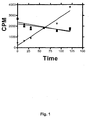
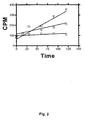
- HSV1-TK phosphorylates both substrates, but the AZT-monophosphate substrate is phospholylated at a 10 fold lower degree than the thymidine substrate.
- the plant TK1 enzymes are capable of phosphorylating AZT-monophosphate although they are unable to phosphorylate TMP. This new property has never before been reported for any thymidine kinase.
Landscapes
- Health & Medical Sciences (AREA)
- Life Sciences & Earth Sciences (AREA)
- Chemical & Material Sciences (AREA)
- Genetics & Genomics (AREA)
- Organic Chemistry (AREA)
- Engineering & Computer Science (AREA)
- General Health & Medical Sciences (AREA)
- Bioinformatics & Cheminformatics (AREA)
- Medicinal Chemistry (AREA)
- Molecular Biology (AREA)
- Zoology (AREA)
- Wood Science & Technology (AREA)
- Veterinary Medicine (AREA)
- Animal Behavior & Ethology (AREA)
- Public Health (AREA)
- Pharmacology & Pharmacy (AREA)
- General Engineering & Computer Science (AREA)
- Biotechnology (AREA)
- Biochemistry (AREA)
- Biomedical Technology (AREA)
- Microbiology (AREA)
- Epidemiology (AREA)
- Nuclear Medicine, Radiotherapy & Molecular Imaging (AREA)
- Immunology (AREA)
- Chemical Kinetics & Catalysis (AREA)
- General Chemical & Material Sciences (AREA)
- Plant Pathology (AREA)
- Biophysics (AREA)
- Physics & Mathematics (AREA)
- Gastroenterology & Hepatology (AREA)
- Proteomics, Peptides & Aminoacids (AREA)
- Communicable Diseases (AREA)
- Oncology (AREA)
- Cell Biology (AREA)
- Tropical Medicine & Parasitology (AREA)
- Virology (AREA)
- Transplantation (AREA)
- Medicines That Contain Protein Lipid Enzymes And Other Medicines (AREA)
- Pharmaceuticals Containing Other Organic And Inorganic Compounds (AREA)
- Enzymes And Modification Thereof (AREA)
Priority Applications (1)
| Application Number | Priority Date | Filing Date | Title |
|---|---|---|---|
| SI200331542T SI1509600T1 (sl) | 2002-05-23 | 2003-05-21 | Rastlinske timidinske kinaze in njihova uporaba |
Applications Claiming Priority (5)
| Application Number | Priority Date | Filing Date | Title |
|---|---|---|---|
| DK200200794 | 2002-05-23 | ||
| DKPA200200794 | 2002-05-23 | ||
| DK200300178 | 2003-02-07 | ||
| DKPA200300178 | 2003-02-07 | ||
| PCT/DK2003/000337 WO2003100045A1 (en) | 2002-05-23 | 2003-05-21 | Plant thymidine kinases and their use |
Publications (2)
| Publication Number | Publication Date |
|---|---|
| EP1509600A1 EP1509600A1 (en) | 2005-03-02 |
| EP1509600B1 true EP1509600B1 (en) | 2008-12-31 |
Family
ID=29585606
Family Applications (1)
| Application Number | Title | Priority Date | Filing Date |
|---|---|---|---|
| EP03722322A Expired - Lifetime EP1509600B1 (en) | 2002-05-23 | 2003-05-21 | Plant thymidine kinases and their use |
Country Status (15)
| Country | Link |
|---|---|
| US (1) | US7928206B2 (https=) |
| EP (1) | EP1509600B1 (https=) |
| JP (1) | JP2006504403A (https=) |
| CN (1) | CN1662647A (https=) |
| AT (1) | ATE419337T1 (https=) |
| AU (1) | AU2003229543B2 (https=) |
| CA (1) | CA2485182A1 (https=) |
| DE (1) | DE60325587D1 (https=) |
| DK (1) | DK1509600T3 (https=) |
| ES (1) | ES2320434T3 (https=) |
| MX (1) | MXPA04011572A (https=) |
| NZ (1) | NZ536623A (https=) |
| PT (1) | PT1509600E (https=) |
| RU (1) | RU2339695C2 (https=) |
| SI (1) | SI1509600T1 (https=) |
Cited By (1)
| Publication number | Priority date | Publication date | Assignee | Title |
|---|---|---|---|---|
| US8381329B2 (en) | 2006-10-24 | 2013-02-26 | Bradley Fixtures Corporation | Capacitive sensing for washroom fixture |
Families Citing this family (3)
| Publication number | Priority date | Publication date | Assignee | Title |
|---|---|---|---|---|
| JP5211303B2 (ja) * | 2007-10-25 | 2013-06-12 | 独立行政法人産業技術総合研究所 | 蛋白質の製造方法 |
| CN114107339B (zh) * | 2021-12-09 | 2024-06-07 | 菏泽学院 | 泡桐丛枝植原体胸苷激酶基因引物、基因、融合蛋白、多克隆抗体及其应用 |
| CN117016549B (zh) * | 2023-03-13 | 2024-02-27 | 山东蓬勃生物科技有限公司 | 核苷类化合物及其组合物在促进植物生长中的应用 |
Family Cites Families (5)
| Publication number | Priority date | Publication date | Assignee | Title |
|---|---|---|---|---|
| AU2434195A (en) | 1994-05-02 | 1995-11-29 | University Of Washington | Thymidine kinase mutants |
| US6197743B1 (en) | 1996-07-26 | 2001-03-06 | The Trustees Of Boston University | Compositions and methods for the treatment of viral disorders |
| JP2002516061A (ja) | 1997-10-14 | 2002-06-04 | ダーウィン モレキュラー コーポレイション | チミジンキナーゼ変異体ならびにチミジンキナーゼ活性およびグアニル酸キナーゼ活性を有する融合タンパク質 |
| WO1999067372A1 (en) | 1998-06-22 | 1999-12-29 | The Board Of Trustees Of The University Of Arkansas | Mutated herpes simplex virus type 1 thymidine kinases and uses thereof |
| GB0008966D0 (en) | 2000-04-13 | 2000-05-31 | Imp College Innovations Ltd | Vectors for gene therapy |
-
2003
- 2003-05-21 PT PT03722322T patent/PT1509600E/pt unknown
- 2003-05-21 CA CA002485182A patent/CA2485182A1/en not_active Abandoned
- 2003-05-21 ES ES03722322T patent/ES2320434T3/es not_active Expired - Lifetime
- 2003-05-21 DE DE60325587T patent/DE60325587D1/de not_active Expired - Lifetime
- 2003-05-21 SI SI200331542T patent/SI1509600T1/sl unknown
- 2003-05-21 MX MXPA04011572A patent/MXPA04011572A/es active IP Right Grant
- 2003-05-21 DK DK03722322T patent/DK1509600T3/da active
- 2003-05-21 AU AU2003229543A patent/AU2003229543B2/en not_active Ceased
- 2003-05-21 AT AT03722322T patent/ATE419337T1/de not_active IP Right Cessation
- 2003-05-21 EP EP03722322A patent/EP1509600B1/en not_active Expired - Lifetime
- 2003-05-21 NZ NZ536623A patent/NZ536623A/en not_active IP Right Cessation
- 2003-05-21 RU RU2004133390/13A patent/RU2339695C2/ru not_active IP Right Cessation
- 2003-05-21 US US10/515,417 patent/US7928206B2/en not_active Expired - Fee Related
- 2003-05-21 CN CN038138425A patent/CN1662647A/zh active Pending
- 2003-05-21 JP JP2004508286A patent/JP2006504403A/ja active Pending
Cited By (2)
| Publication number | Priority date | Publication date | Assignee | Title |
|---|---|---|---|---|
| US8381329B2 (en) | 2006-10-24 | 2013-02-26 | Bradley Fixtures Corporation | Capacitive sensing for washroom fixture |
| US9328490B2 (en) | 2006-10-24 | 2016-05-03 | Bradley Fixtures Corporation | Capacitive sensing for washroom fixture |
Also Published As
| Publication number | Publication date |
|---|---|
| CA2485182A1 (en) | 2003-12-04 |
| ES2320434T3 (es) | 2009-05-22 |
| RU2339695C2 (ru) | 2008-11-27 |
| JP2006504403A (ja) | 2006-02-09 |
| RU2004133390A (ru) | 2005-08-10 |
| US7928206B2 (en) | 2011-04-19 |
| DE60325587D1 (de) | 2009-02-12 |
| SI1509600T1 (sl) | 2009-06-30 |
| PT1509600E (pt) | 2009-03-26 |
| CN1662647A (zh) | 2005-08-31 |
| AU2003229543A1 (en) | 2003-12-12 |
| MXPA04011572A (es) | 2005-07-05 |
| EP1509600A1 (en) | 2005-03-02 |
| DK1509600T3 (da) | 2009-04-27 |
| AU2003229543B2 (en) | 2008-03-20 |
| ATE419337T1 (de) | 2009-01-15 |
| NZ536623A (en) | 2006-05-26 |
| US20060035850A1 (en) | 2006-02-16 |
Similar Documents
| Publication | Publication Date | Title |
|---|---|---|
| Gao et al. | Catalytic subunits of the porcine and rat 5′-AMP-activated protein kinase are members of the SNF1 protein kinase family | |
| SK107998A3 (en) | Variants of thymidine kinase, related nucleic acids sequences and their use in genic therapy | |
| AU783845B2 (en) | Novel deoxynucleoside kinase enzyme variants | |
| Wang et al. | Cloning and characterization of full-length mouse thymidine kinase 2: the N-terminal sequence directs import of the precursor protein into mitochondria | |
| O'Gara et al. | IMP dehydrogenase from Pneumocystis carinii as a potential drug target | |
| WO2003100045A1 (en) | Plant thymidine kinases and their use | |
| EP1509600B1 (en) | Plant thymidine kinases and their use | |
| US20070248543A1 (en) | Chicken Deoxycytidine and Deoxyadenosine Kinase Enzymes and Their Use | |
| KR101337210B1 (ko) | 티미딘 키나아제 | |
| EP1974026A2 (en) | Mutant deoxyadenosine kinase enzymes and their use | |
| Noy et al. | Antitumor activity and metabolic activation of N-methanocarbathymidine, a novel thymidine analogue with a pseudosugar rigidly fixed in the northern conformation, in murine colon cancer cells expressing herpes simplex thymidine kinase | |
| US20070202120A1 (en) | Yellow Fever Mosquito Deoxyribonucleoside Kinases And Its Use | |
| MXPA98007181A (en) | Combinations of enzymes for the destruction of proliferati cells | |
| HK1097881B (en) | Thymidine kinase |
Legal Events
| Date | Code | Title | Description |
|---|---|---|---|
| PUAI | Public reference made under article 153(3) epc to a published international application that has entered the european phase |
Free format text: ORIGINAL CODE: 0009012 |
|
| 17P | Request for examination filed |
Effective date: 20041223 |
|
| AK | Designated contracting states |
Kind code of ref document: A1 Designated state(s): AT BE BG CH CY CZ DE DK EE ES FI FR GB GR HU IE IT LI LU MC NL PT RO SE SI SK TR |
|
| AX | Request for extension of the european patent |
Extension state: AL LT LV MK |
|
| DAX | Request for extension of the european patent (deleted) | ||
| RAP1 | Party data changed (applicant data changed or rights of an application transferred) |
Owner name: MUNCH-PETERSEN, BIRGITTE Owner name: KNECHT, WOLFGANG Owner name: PISKUR, JURE |
|
| RIN1 | Information on inventor provided before grant (corrected) |
Inventor name: PISKUR, JURE Inventor name: MUNCH-PETERSEN, BIRGITTE Inventor name: KNECHT, WOLFGANG |
|
| 17Q | First examination report despatched |
Effective date: 20051104 |
|
| GRAP | Despatch of communication of intention to grant a patent |
Free format text: ORIGINAL CODE: EPIDOSNIGR1 |
|
| GRAS | Grant fee paid |
Free format text: ORIGINAL CODE: EPIDOSNIGR3 |
|
| GRAA | (expected) grant |
Free format text: ORIGINAL CODE: 0009210 |
|
| AK | Designated contracting states |
Kind code of ref document: B1 Designated state(s): AT BE BG CH CY CZ DE DK EE ES FI FR GB GR HU IE IT LI LU MC NL PT RO SE SI SK TR |
|
| REG | Reference to a national code |
Ref country code: CH Ref legal event code: EP Ref country code: GB Ref legal event code: FG4D |
|
| REF | Corresponds to: |
Ref document number: 60325587 Country of ref document: DE Date of ref document: 20090212 Kind code of ref document: P |
|
| REG | Reference to a national code |
Ref country code: IE Ref legal event code: FG4D |
|
| REG | Reference to a national code |
Ref country code: PT Ref legal event code: SC4A Free format text: AVAILABILITY OF NATIONAL TRANSLATION Effective date: 20090318 |
|
| REG | Reference to a national code |
Ref country code: RO Ref legal event code: EPE |
|
| REG | Reference to a national code |
Ref country code: SE Ref legal event code: TRGR |
|
| REG | Reference to a national code |
Ref country code: GR Ref legal event code: EP Ref document number: 20090400921 Country of ref document: GR |
|
| REG | Reference to a national code |
Ref country code: CH Ref legal event code: NV Representative=s name: MICHELI & CIE SA |
|
| REG | Reference to a national code |
Ref country code: DK Ref legal event code: T3 |
|
| REG | Reference to a national code |
Ref country code: ES Ref legal event code: FG2A Ref document number: 2320434 Country of ref document: ES Kind code of ref document: T3 |
|
| PGFP | Annual fee paid to national office [announced via postgrant information from national office to epo] |
Ref country code: BG Payment date: 20090529 Year of fee payment: 7 Ref country code: DK Payment date: 20090519 Year of fee payment: 7 Ref country code: EE Payment date: 20090525 Year of fee payment: 7 Ref country code: IE Payment date: 20090602 Year of fee payment: 7 Ref country code: NL Payment date: 20090525 Year of fee payment: 7 Ref country code: RO Payment date: 20090518 Year of fee payment: 7 Ref country code: SI Payment date: 20090518 Year of fee payment: 7 |
|
| PGFP | Annual fee paid to national office [announced via postgrant information from national office to epo] |
Ref country code: AT Payment date: 20090529 Year of fee payment: 7 Ref country code: CZ Payment date: 20090519 Year of fee payment: 7 Ref country code: FI Payment date: 20090529 Year of fee payment: 7 Ref country code: LU Payment date: 20090605 Year of fee payment: 7 Ref country code: PT Payment date: 20090521 Year of fee payment: 7 Ref country code: TR Payment date: 20090521 Year of fee payment: 7 |
|
| PGFP | Annual fee paid to national office [announced via postgrant information from national office to epo] |
Ref country code: SK Payment date: 20090519 Year of fee payment: 7 Ref country code: BE Payment date: 20090602 Year of fee payment: 7 |
|
| REG | Reference to a national code |
Ref country code: HU Ref legal event code: AG4A Ref document number: E005797 Country of ref document: HU |
|
| PGFP | Annual fee paid to national office [announced via postgrant information from national office to epo] |
Ref country code: CH Payment date: 20090526 Year of fee payment: 7 |
|
| PLBE | No opposition filed within time limit |
Free format text: ORIGINAL CODE: 0009261 |
|
| STAA | Information on the status of an ep patent application or granted ep patent |
Free format text: STATUS: NO OPPOSITION FILED WITHIN TIME LIMIT |
|
| PGFP | Annual fee paid to national office [announced via postgrant information from national office to epo] |
Ref country code: GR Payment date: 20090601 Year of fee payment: 7 Ref country code: HU Payment date: 20090602 Year of fee payment: 7 |
|
| 26N | No opposition filed |
Effective date: 20091001 |
|
| PG25 | Lapsed in a contracting state [announced via postgrant information from national office to epo] |
Ref country code: MC Free format text: LAPSE BECAUSE OF NON-PAYMENT OF DUE FEES Effective date: 20090531 |
|
| PG25 | Lapsed in a contracting state [announced via postgrant information from national office to epo] |
Ref country code: CY Free format text: LAPSE BECAUSE OF NON-PAYMENT OF DUE FEES Effective date: 20090521 |
|
| REG | Reference to a national code |
Ref country code: PT Ref legal event code: MM4A Free format text: LAPSE DUE TO NON-PAYMENT OF FEES Effective date: 20101122 |
|
| BERE | Be: lapsed |
Owner name: KNECHT, WOLFGANG Effective date: 20100531 Owner name: MUNCH-PETERSEN, BIRGITTE Effective date: 20100531 Owner name: PISKUR, JURE Effective date: 20100531 |
|
| REG | Reference to a national code |
Ref country code: NL Ref legal event code: V1 Effective date: 20101201 |
|
| REG | Reference to a national code |
Ref country code: CH Ref legal event code: PL |
|
| REG | Reference to a national code |
Ref country code: DK Ref legal event code: EBP |
|
| PG25 | Lapsed in a contracting state [announced via postgrant information from national office to epo] |
Ref country code: AT Free format text: LAPSE BECAUSE OF NON-PAYMENT OF DUE FEES Effective date: 20100521 Ref country code: FI Free format text: LAPSE BECAUSE OF NON-PAYMENT OF DUE FEES Effective date: 20100521 Ref country code: EE Free format text: LAPSE BECAUSE OF NON-PAYMENT OF DUE FEES Effective date: 20100531 |
|
| REG | Reference to a national code |
Ref country code: SI Ref legal event code: KO00 Effective date: 20101223 |
|
| REG | Reference to a national code |
Ref country code: SK Ref legal event code: MM4A Ref document number: E 5275 Country of ref document: SK Effective date: 20100521 |
|
| REG | Reference to a national code |
Ref country code: EE Ref legal event code: MM4A Ref document number: E003347 Country of ref document: EE Effective date: 20100531 |
|
| PG25 | Lapsed in a contracting state [announced via postgrant information from national office to epo] |
Ref country code: SI Free format text: LAPSE BECAUSE OF NON-PAYMENT OF DUE FEES Effective date: 20100522 Ref country code: SK Free format text: LAPSE BECAUSE OF NON-PAYMENT OF DUE FEES Effective date: 20100521 Ref country code: PT Free format text: LAPSE BECAUSE OF NON-PAYMENT OF DUE FEES Effective date: 20101122 Ref country code: LI Free format text: LAPSE BECAUSE OF NON-PAYMENT OF DUE FEES Effective date: 20100531 Ref country code: HU Free format text: LAPSE BECAUSE OF NON-PAYMENT OF DUE FEES Effective date: 20100522 Ref country code: CZ Free format text: LAPSE BECAUSE OF NON-PAYMENT OF DUE FEES Effective date: 20100521 Ref country code: CH Free format text: LAPSE BECAUSE OF NON-PAYMENT OF DUE FEES Effective date: 20100531 Ref country code: BG Free format text: LAPSE BECAUSE OF NON-PAYMENT OF DUE FEES Effective date: 20101230 |
|
| REG | Reference to a national code |
Ref country code: IE Ref legal event code: MM4A |
|
| PG25 | Lapsed in a contracting state [announced via postgrant information from national office to epo] |
Ref country code: NL Free format text: LAPSE BECAUSE OF NON-PAYMENT OF DUE FEES Effective date: 20101201 Ref country code: GR Free format text: LAPSE BECAUSE OF NON-PAYMENT OF DUE FEES Effective date: 20101202 Ref country code: BE Free format text: LAPSE BECAUSE OF NON-PAYMENT OF DUE FEES Effective date: 20100531 |
|
| PG25 | Lapsed in a contracting state [announced via postgrant information from national office to epo] |
Ref country code: DK Free format text: LAPSE BECAUSE OF NON-PAYMENT OF DUE FEES Effective date: 20100531 Ref country code: IE Free format text: LAPSE BECAUSE OF NON-PAYMENT OF DUE FEES Effective date: 20100521 |
|
| PG25 | Lapsed in a contracting state [announced via postgrant information from national office to epo] |
Ref country code: RO Free format text: LAPSE BECAUSE OF NON-PAYMENT OF DUE FEES Effective date: 20100521 |
|
| PG25 | Lapsed in a contracting state [announced via postgrant information from national office to epo] |
Ref country code: LU Free format text: LAPSE BECAUSE OF NON-PAYMENT OF DUE FEES Effective date: 20100521 |
|
| PG25 | Lapsed in a contracting state [announced via postgrant information from national office to epo] |
Ref country code: TR Free format text: LAPSE BECAUSE OF NON-PAYMENT OF DUE FEES Effective date: 20100521 |
|
| PGFP | Annual fee paid to national office [announced via postgrant information from national office to epo] |
Ref country code: DE Payment date: 20121130 Year of fee payment: 10 |
|
| PGFP | Annual fee paid to national office [announced via postgrant information from national office to epo] |
Ref country code: IT Payment date: 20121129 Year of fee payment: 10 Ref country code: SE Payment date: 20121129 Year of fee payment: 10 Ref country code: GB Payment date: 20121129 Year of fee payment: 10 Ref country code: ES Payment date: 20121204 Year of fee payment: 10 |
|
| PGFP | Annual fee paid to national office [announced via postgrant information from national office to epo] |
Ref country code: FR Payment date: 20121214 Year of fee payment: 10 |
|
| REG | Reference to a national code |
Ref country code: SE Ref legal event code: EUG |
|
| GBPC | Gb: european patent ceased through non-payment of renewal fee |
Effective date: 20130521 |
|
| PG25 | Lapsed in a contracting state [announced via postgrant information from national office to epo] |
Ref country code: DE Free format text: LAPSE BECAUSE OF NON-PAYMENT OF DUE FEES Effective date: 20131203 Ref country code: SE Free format text: LAPSE BECAUSE OF NON-PAYMENT OF DUE FEES Effective date: 20130522 |
|
| REG | Reference to a national code |
Ref country code: DE Ref legal event code: R119 Ref document number: 60325587 Country of ref document: DE Effective date: 20131203 |
|
| PG25 | Lapsed in a contracting state [announced via postgrant information from national office to epo] |
Ref country code: IT Free format text: LAPSE BECAUSE OF NON-PAYMENT OF DUE FEES Effective date: 20130521 |
|
| REG | Reference to a national code |
Ref country code: FR Ref legal event code: ST Effective date: 20140131 |
|
| PG25 | Lapsed in a contracting state [announced via postgrant information from national office to epo] |
Ref country code: GB Free format text: LAPSE BECAUSE OF NON-PAYMENT OF DUE FEES Effective date: 20130521 |
|
| PG25 | Lapsed in a contracting state [announced via postgrant information from national office to epo] |
Ref country code: FR Free format text: LAPSE BECAUSE OF NON-PAYMENT OF DUE FEES Effective date: 20130531 |
|
| REG | Reference to a national code |
Ref country code: ES Ref legal event code: FD2A Effective date: 20140611 |
|
| PG25 | Lapsed in a contracting state [announced via postgrant information from national office to epo] |
Ref country code: ES Free format text: LAPSE BECAUSE OF NON-PAYMENT OF DUE FEES Effective date: 20130522 |