EP1508581A1 - Strahlenhärtbare Harze auf Basis von Keton- und/oder Harnstoff-Aldehydharzen und ein Verfahren zu ihrer Herstellung - Google Patents
Strahlenhärtbare Harze auf Basis von Keton- und/oder Harnstoff-Aldehydharzen und ein Verfahren zu ihrer Herstellung Download PDFInfo
- Publication number
- EP1508581A1 EP1508581A1 EP04103128A EP04103128A EP1508581A1 EP 1508581 A1 EP1508581 A1 EP 1508581A1 EP 04103128 A EP04103128 A EP 04103128A EP 04103128 A EP04103128 A EP 04103128A EP 1508581 A1 EP1508581 A1 EP 1508581A1
- Authority
- EP
- European Patent Office
- Prior art keywords
- aldehyde
- ketone
- radiation curable
- urea
- component
- Prior art date
- Legal status (The legal status is an assumption and is not a legal conclusion. Google has not performed a legal analysis and makes no representation as to the accuracy of the status listed.)
- Granted
Links
- 229920005989 resin Polymers 0.000 title claims abstract description 99
- 239000011347 resin Substances 0.000 title claims abstract description 99
- 230000005855 radiation Effects 0.000 title claims abstract description 31
- 238000000034 method Methods 0.000 title claims abstract description 15
- 150000002576 ketones Chemical class 0.000 title claims description 16
- 238000002360 preparation method Methods 0.000 title claims description 10
- 229920006276 ketonic resin Polymers 0.000 claims abstract description 47
- 150000001875 compounds Chemical class 0.000 claims abstract description 17
- WSFSSNUMVMOOMR-UHFFFAOYSA-N Formaldehyde Chemical compound O=C WSFSSNUMVMOOMR-UHFFFAOYSA-N 0.000 claims description 37
- 239000000203 mixture Substances 0.000 claims description 21
- 238000006243 chemical reaction Methods 0.000 claims description 19
- XSQUKJJJFZCRTK-UHFFFAOYSA-N Urea Chemical compound NC(N)=O XSQUKJJJFZCRTK-UHFFFAOYSA-N 0.000 claims description 16
- 229920000642 polymer Polymers 0.000 claims description 13
- KWOLFJPFCHCOCG-UHFFFAOYSA-N Acetophenone Chemical compound CC(=O)C1=CC=CC=C1 KWOLFJPFCHCOCG-UHFFFAOYSA-N 0.000 claims description 12
- AMIMRNSIRUDHCM-UHFFFAOYSA-N Isopropylaldehyde Chemical compound CC(C)C=O AMIMRNSIRUDHCM-UHFFFAOYSA-N 0.000 claims description 12
- JHIVVAPYMSGYDF-UHFFFAOYSA-N cyclohexanone Chemical compound O=C1CCCCC1 JHIVVAPYMSGYDF-UHFFFAOYSA-N 0.000 claims description 12
- POSWICCRDBKBMH-UHFFFAOYSA-N 3,3,5-trimethylcyclohexan-1-one Chemical compound CC1CC(=O)CC(C)(C)C1 POSWICCRDBKBMH-UHFFFAOYSA-N 0.000 claims description 11
- -1 alkyl radicals Chemical class 0.000 claims description 10
- RRAMGCGOFNQTLD-UHFFFAOYSA-N hexamethylene diisocyanate Chemical compound O=C=NCCCCCCN=C=O RRAMGCGOFNQTLD-UHFFFAOYSA-N 0.000 claims description 10
- ZWEHNKRNPOVVGH-UHFFFAOYSA-N 2-Butanone Chemical compound CCC(C)=O ZWEHNKRNPOVVGH-UHFFFAOYSA-N 0.000 claims description 9
- 150000001299 aldehydes Chemical class 0.000 claims description 9
- 239000012948 isocyanate Substances 0.000 claims description 9
- 239000005057 Hexamethylene diisocyanate Substances 0.000 claims description 8
- 125000004432 carbon atom Chemical group C* 0.000 claims description 8
- 239000003054 catalyst Substances 0.000 claims description 8
- 229920000058 polyacrylate Polymers 0.000 claims description 8
- 229920000728 polyester Polymers 0.000 claims description 8
- 229920000570 polyether Polymers 0.000 claims description 8
- 239000004202 carbamide Substances 0.000 claims description 7
- 125000005442 diisocyanate group Chemical group 0.000 claims description 7
- 150000002513 isocyanates Chemical class 0.000 claims description 7
- NIMLQBUJDJZYEJ-UHFFFAOYSA-N isophorone diisocyanate Chemical compound CC1(C)CC(N=C=O)CC(C)(CN=C=O)C1 NIMLQBUJDJZYEJ-UHFFFAOYSA-N 0.000 claims description 7
- 239000002904 solvent Substances 0.000 claims description 7
- CSCPPACGZOOCGX-UHFFFAOYSA-N Acetone Chemical compound CC(C)=O CSCPPACGZOOCGX-UHFFFAOYSA-N 0.000 claims description 6
- 239000007795 chemical reaction product Substances 0.000 claims description 6
- YKFKEYKJGVSEIX-UHFFFAOYSA-N cyclohexanone, 4-(1,1-dimethylethyl)- Chemical compound CC(C)(C)C1CCC(=O)CC1 YKFKEYKJGVSEIX-UHFFFAOYSA-N 0.000 claims description 6
- 229920001002 functional polymer Polymers 0.000 claims description 6
- CATSNJVOTSVZJV-UHFFFAOYSA-N heptan-2-one Chemical compound CCCCCC(C)=O CATSNJVOTSVZJV-UHFFFAOYSA-N 0.000 claims description 6
- LVTJOONKWUXEFR-FZRMHRINSA-N protoneodioscin Natural products O(C[C@@H](CC[C@]1(O)[C@H](C)[C@@H]2[C@]3(C)[C@H]([C@H]4[C@@H]([C@]5(C)C(=CC4)C[C@@H](O[C@@H]4[C@H](O[C@H]6[C@@H](O)[C@@H](O)[C@@H](O)[C@H](C)O6)[C@@H](O)[C@H](O[C@H]6[C@@H](O)[C@@H](O)[C@@H](O)[C@H](C)O6)[C@H](CO)O4)CC5)CC3)C[C@@H]2O1)C)[C@H]1[C@H](O)[C@H](O)[C@H](O)[C@@H](CO)O1 LVTJOONKWUXEFR-FZRMHRINSA-N 0.000 claims description 6
- 239000005058 Isophorone diisocyanate Substances 0.000 claims description 5
- 239000004721 Polyphenylene oxide Substances 0.000 claims description 5
- OXTQEWUBDTVSFB-UHFFFAOYSA-N 2,4,4-Trimethylcyclopentanone Chemical compound CC1CC(C)(C)CC1=O OXTQEWUBDTVSFB-UHFFFAOYSA-N 0.000 claims description 4
- FTZILAQGHINQQR-UHFFFAOYSA-N 2-Methylpentanal Chemical compound CCCC(C)C=O FTZILAQGHINQQR-UHFFFAOYSA-N 0.000 claims description 4
- OMIGHNLMNHATMP-UHFFFAOYSA-N 2-hydroxyethyl prop-2-enoate Chemical compound OCCOC(=O)C=C OMIGHNLMNHATMP-UHFFFAOYSA-N 0.000 claims description 4
- ZTQSAGDEMFDKMZ-UHFFFAOYSA-N Butyraldehyde Chemical compound CCCC=O ZTQSAGDEMFDKMZ-UHFFFAOYSA-N 0.000 claims description 4
- SXVPOSFURRDKBO-UHFFFAOYSA-N Cyclododecanone Chemical compound O=C1CCCCCCCCCCC1 SXVPOSFURRDKBO-UHFFFAOYSA-N 0.000 claims description 4
- CERQOIWHTDAKMF-UHFFFAOYSA-N Methacrylic acid Chemical compound CC(=C)C(O)=O CERQOIWHTDAKMF-UHFFFAOYSA-N 0.000 claims description 4
- BGTOWKSIORTVQH-UHFFFAOYSA-N cyclopentanone Chemical compound O=C1CCCC1 BGTOWKSIORTVQH-UHFFFAOYSA-N 0.000 claims description 4
- HFJRKMMYBMWEAD-UHFFFAOYSA-N dodecanal Chemical compound CCCCCCCCCCCC=O HFJRKMMYBMWEAD-UHFFFAOYSA-N 0.000 claims description 4
- HGBOYTHUEUWSSQ-UHFFFAOYSA-N pentanal Chemical compound CCCCC=O HGBOYTHUEUWSSQ-UHFFFAOYSA-N 0.000 claims description 4
- 239000005056 polyisocyanate Substances 0.000 claims description 4
- 229920001228 polyisocyanate Polymers 0.000 claims description 4
- UMGDCJDMYOKAJW-UHFFFAOYSA-N thiourea Chemical compound NC(N)=S UMGDCJDMYOKAJW-UHFFFAOYSA-N 0.000 claims description 4
- BGJSXRVXTHVRSN-UHFFFAOYSA-N 1,3,5-trioxane Chemical compound C1OCOCO1 BGJSXRVXTHVRSN-UHFFFAOYSA-N 0.000 claims description 3
- ZUYKJZQOPXDNOK-UHFFFAOYSA-N 2-(ethylamino)-2-thiophen-2-ylcyclohexan-1-one;hydrochloride Chemical class Cl.C=1C=CSC=1C1(NCC)CCCCC1=O ZUYKJZQOPXDNOK-UHFFFAOYSA-N 0.000 claims description 3
- 229930040373 Paraformaldehyde Natural products 0.000 claims description 3
- 150000001252 acrylic acid derivatives Chemical class 0.000 claims description 3
- 239000000155 melt Substances 0.000 claims description 3
- WSFSSNUMVMOOMR-NJFSPNSNSA-N methanone Chemical compound O=[14CH2] WSFSSNUMVMOOMR-NJFSPNSNSA-N 0.000 claims description 3
- 238000005829 trimerization reaction Methods 0.000 claims description 3
- 229920002818 (Hydroxyethyl)methacrylate Polymers 0.000 claims description 2
- FDYWJVHETVDSRA-UHFFFAOYSA-N 1,1-diisocyanatobutane Chemical compound CCCC(N=C=O)N=C=O FDYWJVHETVDSRA-UHFFFAOYSA-N 0.000 claims description 2
- VKLNMSFSTCXMSB-UHFFFAOYSA-N 1,1-diisocyanatopentane Chemical compound CCCCC(N=C=O)N=C=O VKLNMSFSTCXMSB-UHFFFAOYSA-N 0.000 claims description 2
- MTZUIIAIAKMWLI-UHFFFAOYSA-N 1,2-diisocyanatobenzene Chemical compound O=C=NC1=CC=CC=C1N=C=O MTZUIIAIAKMWLI-UHFFFAOYSA-N 0.000 claims description 2
- XSCLFFBWRKTMTE-UHFFFAOYSA-N 1,3-bis(isocyanatomethyl)cyclohexane Chemical compound O=C=NCC1CCCC(CN=C=O)C1 XSCLFFBWRKTMTE-UHFFFAOYSA-N 0.000 claims description 2
- ROHUXHMNZLHBSF-UHFFFAOYSA-N 1,4-bis(isocyanatomethyl)cyclohexane Chemical compound O=C=NCC1CCC(CN=C=O)CC1 ROHUXHMNZLHBSF-UHFFFAOYSA-N 0.000 claims description 2
- AHBNSOZREBSAMG-UHFFFAOYSA-N 1,5-diisocyanato-2-methylpentane Chemical compound O=C=NCC(C)CCCN=C=O AHBNSOZREBSAMG-UHFFFAOYSA-N 0.000 claims description 2
- ATOUXIOKEJWULN-UHFFFAOYSA-N 1,6-diisocyanato-2,2,4-trimethylhexane Chemical compound O=C=NCCC(C)CC(C)(C)CN=C=O ATOUXIOKEJWULN-UHFFFAOYSA-N 0.000 claims description 2
- QGLRLXLDMZCFBP-UHFFFAOYSA-N 1,6-diisocyanato-2,4,4-trimethylhexane Chemical compound O=C=NCC(C)CC(C)(C)CCN=C=O QGLRLXLDMZCFBP-UHFFFAOYSA-N 0.000 claims description 2
- OKKTUPGXXKXHTJ-UHFFFAOYSA-N 1-(isocyanatomethyl)-1-[[1-(isocyanatomethyl)cyclohexyl]methyl]cyclohexane Chemical compound C1CCCCC1(CN=C=O)CC1(CN=C=O)CCCCC1 OKKTUPGXXKXHTJ-UHFFFAOYSA-N 0.000 claims description 2
- QADNIOOUIIQJRS-UHFFFAOYSA-N 1-isocyanato-2-(isocyanatomethyl)-1-methylcyclohexane Chemical compound O=C=NC1(C)CCCCC1CN=C=O QADNIOOUIIQJRS-UHFFFAOYSA-N 0.000 claims description 2
- JIABEENURMZTTI-UHFFFAOYSA-N 1-isocyanato-2-[(2-isocyanatophenyl)methyl]benzene Chemical compound O=C=NC1=CC=CC=C1CC1=CC=CC=C1N=C=O JIABEENURMZTTI-UHFFFAOYSA-N 0.000 claims description 2
- RQXTZKGDMNIWJF-UHFFFAOYSA-N 2-butan-2-ylcyclohexan-1-one Chemical compound CCC(C)C1CCCCC1=O RQXTZKGDMNIWJF-UHFFFAOYSA-N 0.000 claims description 2
- LGYNIFWIKSEESD-UHFFFAOYSA-N 2-ethylhexanal Chemical compound CCCCC(CC)C=O LGYNIFWIKSEESD-UHFFFAOYSA-N 0.000 claims description 2
- LFSAPCRASZRSKS-UHFFFAOYSA-N 2-methylcyclohexan-1-one Chemical compound CC1CCCCC1=O LFSAPCRASZRSKS-UHFFFAOYSA-N 0.000 claims description 2
- IQVAERDLDAZARL-UHFFFAOYSA-N 2-phenylpropanal Chemical compound O=CC(C)C1=CC=CC=C1 IQVAERDLDAZARL-UHFFFAOYSA-N 0.000 claims description 2
- ZRYDPLOWJSFQAE-UHFFFAOYSA-N 2-tert-butylcyclohexan-1-one Chemical compound CC(C)(C)C1CCCCC1=O ZRYDPLOWJSFQAE-UHFFFAOYSA-N 0.000 claims description 2
- WJIOHMVWGVGWJW-UHFFFAOYSA-N 3-methyl-n-[4-[(3-methylpyrazole-1-carbonyl)amino]butyl]pyrazole-1-carboxamide Chemical compound N1=C(C)C=CN1C(=O)NCCCCNC(=O)N1N=C(C)C=C1 WJIOHMVWGVGWJW-UHFFFAOYSA-N 0.000 claims description 2
- DCSKAMGZSIRJAQ-UHFFFAOYSA-N 4-(2-methylbutan-2-yl)cyclohexan-1-one Chemical compound CCC(C)(C)C1CCC(=O)CC1 DCSKAMGZSIRJAQ-UHFFFAOYSA-N 0.000 claims description 2
- HZRUPLCJIKCQKW-UHFFFAOYSA-N 4-(carbamoylamino)butylurea Chemical compound NC(=O)NCCCCNC(N)=O HZRUPLCJIKCQKW-UHFFFAOYSA-N 0.000 claims description 2
- XFPRKNQSYRZNRI-UHFFFAOYSA-N 4-(isocyanatomethyl)bicyclo[2.2.1]heptane Chemical compound C1CC2CCC1(CN=C=O)C2 XFPRKNQSYRZNRI-UHFFFAOYSA-N 0.000 claims description 2
- VSYIJNDEXXBJFH-UHFFFAOYSA-N 5-isocyanato-2-methylpent-1-en-3-one Chemical compound CC(=C)C(=O)CCN=C=O VSYIJNDEXXBJFH-UHFFFAOYSA-N 0.000 claims description 2
- OJLHBQIGOFOFJF-UHFFFAOYSA-N 6-(carbamoylamino)hexylurea Chemical compound NC(=O)NCCCCCCNC(N)=O OJLHBQIGOFOFJF-UHFFFAOYSA-N 0.000 claims description 2
- NIXOWILDQLNWCW-UHFFFAOYSA-M Acrylate Chemical compound [O-]C(=O)C=C NIXOWILDQLNWCW-UHFFFAOYSA-M 0.000 claims description 2
- KEZMBAQUUXDDDQ-UHFFFAOYSA-N CCC.N=C=O.N=C=O Chemical compound CCC.N=C=O.N=C=O KEZMBAQUUXDDDQ-UHFFFAOYSA-N 0.000 claims description 2
- 239000004215 Carbon black (E152) Substances 0.000 claims description 2
- WOBHKFSMXKNTIM-UHFFFAOYSA-N Hydroxyethyl methacrylate Chemical compound CC(=C)C(=O)OCCO WOBHKFSMXKNTIM-UHFFFAOYSA-N 0.000 claims description 2
- NTIZESTWPVYFNL-UHFFFAOYSA-N Methyl isobutyl ketone Chemical compound CC(C)CC(C)=O NTIZESTWPVYFNL-UHFFFAOYSA-N 0.000 claims description 2
- UIHCLUNTQKBZGK-UHFFFAOYSA-N Methyl isobutyl ketone Natural products CCC(C)C(C)=O UIHCLUNTQKBZGK-UHFFFAOYSA-N 0.000 claims description 2
- OMRDSWJXRLDPBB-UHFFFAOYSA-N N=C=O.N=C=O.C1CCCCC1 Chemical compound N=C=O.N=C=O.C1CCCCC1 OMRDSWJXRLDPBB-UHFFFAOYSA-N 0.000 claims description 2
- HDONYZHVZVCMLR-UHFFFAOYSA-N N=C=O.N=C=O.CC1CCCCC1 Chemical compound N=C=O.N=C=O.CC1CCCCC1 HDONYZHVZVCMLR-UHFFFAOYSA-N 0.000 claims description 2
- CLWKGFMSGOQXNJ-UHFFFAOYSA-N N=C=O.N=C=O.CCC1(CC)CCCCC1C Chemical compound N=C=O.N=C=O.CCC1(CC)CCCCC1C CLWKGFMSGOQXNJ-UHFFFAOYSA-N 0.000 claims description 2
- QCJBVWNJRIOSDN-UHFFFAOYSA-N N=C=O.N=C=O.CCC1CCCCC1 Chemical compound N=C=O.N=C=O.CCC1CCCCC1 QCJBVWNJRIOSDN-UHFFFAOYSA-N 0.000 claims description 2
- GNFBHJRVKAKFNZ-UHFFFAOYSA-N N=C=O.N=C=O.CCCC1CCCCC1 Chemical compound N=C=O.N=C=O.CCCC1CCCCC1 GNFBHJRVKAKFNZ-UHFFFAOYSA-N 0.000 claims description 2
- OEMVAFGEQGKIOR-UHFFFAOYSA-N N=C=O.N=C=O.CCCCCCCC Chemical compound N=C=O.N=C=O.CCCCCCCC OEMVAFGEQGKIOR-UHFFFAOYSA-N 0.000 claims description 2
- NINIDFKCEFEMDL-UHFFFAOYSA-N Sulfur Chemical group [S] NINIDFKCEFEMDL-UHFFFAOYSA-N 0.000 claims description 2
- ATJFFYVFTNAWJD-UHFFFAOYSA-N Tin Chemical compound [Sn] ATJFFYVFTNAWJD-UHFFFAOYSA-N 0.000 claims description 2
- IKHGUXGNUITLKF-XPULMUKRSA-N acetaldehyde Chemical compound [14CH]([14CH3])=O IKHGUXGNUITLKF-XPULMUKRSA-N 0.000 claims description 2
- HFBMWMNUJJDEQZ-UHFFFAOYSA-N acryloyl chloride Chemical compound ClC(=O)C=C HFBMWMNUJJDEQZ-UHFFFAOYSA-N 0.000 claims description 2
- 125000005907 alkyl ester group Chemical group 0.000 claims description 2
- 150000008064 anhydrides Chemical class 0.000 claims description 2
- QVGXLLKOCUKJST-UHFFFAOYSA-N atomic oxygen Chemical group [O] QVGXLLKOCUKJST-UHFFFAOYSA-N 0.000 claims description 2
- CGZZMOTZOONQIA-UHFFFAOYSA-N cycloheptanone Chemical compound O=C1CCCCCC1 CGZZMOTZOONQIA-UHFFFAOYSA-N 0.000 claims description 2
- IIRFCWANHMSDCG-UHFFFAOYSA-N cyclooctanone Chemical compound O=C1CCCCCCC1 IIRFCWANHMSDCG-UHFFFAOYSA-N 0.000 claims description 2
- ZUTJDJAXWKOOOI-UHFFFAOYSA-N ethylene diurea Chemical compound NC(=O)NCCNC(N)=O ZUTJDJAXWKOOOI-UHFFFAOYSA-N 0.000 claims description 2
- 125000003055 glycidyl group Chemical group C(C1CO1)* 0.000 claims description 2
- STBLQDMGPBQTMI-UHFFFAOYSA-N heptane;isocyanic acid Chemical compound N=C=O.N=C=O.CCCCCCC STBLQDMGPBQTMI-UHFFFAOYSA-N 0.000 claims description 2
- 229930195733 hydrocarbon Natural products 0.000 claims description 2
- 125000002768 hydroxyalkyl group Chemical group 0.000 claims description 2
- KQVLODRFGIKJHZ-UHFFFAOYSA-N methylenediurea Chemical compound NC(=O)NCNC(N)=O KQVLODRFGIKJHZ-UHFFFAOYSA-N 0.000 claims description 2
- 239000001301 oxygen Substances 0.000 claims description 2
- 229910052760 oxygen Inorganic materials 0.000 claims description 2
- FDPIMTJIUBPUKL-UHFFFAOYSA-N pentan-3-one Chemical compound CCC(=O)CC FDPIMTJIUBPUKL-UHFFFAOYSA-N 0.000 claims description 2
- YOSXAXYCARLZTR-UHFFFAOYSA-N prop-2-enoyl isocyanate Chemical compound C=CC(=O)N=C=O YOSXAXYCARLZTR-UHFFFAOYSA-N 0.000 claims description 2
- 229910052717 sulfur Chemical group 0.000 claims description 2
- 239000011593 sulfur Chemical group 0.000 claims description 2
- DVKJHBMWWAPEIU-UHFFFAOYSA-N toluene 2,4-diisocyanate Chemical compound CC1=CC=C(N=C=O)C=C1N=C=O DVKJHBMWWAPEIU-UHFFFAOYSA-N 0.000 claims description 2
- GRXOWOKLKIZFNP-UHFFFAOYSA-N undecane-1,1-diol Chemical compound CCCCCCCCCCC(O)O GRXOWOKLKIZFNP-UHFFFAOYSA-N 0.000 claims description 2
- QNWXHHRUDGUHIK-UHFFFAOYSA-N 7-isocyanato-2-methylhept-1-en-3-one Chemical compound CC(=C)C(=O)CCCCN=C=O QNWXHHRUDGUHIK-UHFFFAOYSA-N 0.000 claims 1
- OFOBLEOULBTSOW-UHFFFAOYSA-N Propanedioic acid Natural products OC(=O)CC(O)=O OFOBLEOULBTSOW-UHFFFAOYSA-N 0.000 claims 1
- VZCYOOQTPOCHFL-UPHRSURJSA-N maleic acid Chemical compound OC(=O)\C=C/C(O)=O VZCYOOQTPOCHFL-UPHRSURJSA-N 0.000 claims 1
- 239000011976 maleic acid Substances 0.000 claims 1
- VZCYOOQTPOCHFL-UHFFFAOYSA-N trans-butenedioic acid Natural products OC(=O)C=CC(O)=O VZCYOOQTPOCHFL-UHFFFAOYSA-N 0.000 claims 1
- 238000004519 manufacturing process Methods 0.000 abstract description 2
- 238000006116 polymerization reaction Methods 0.000 abstract 1
- 238000000576 coating method Methods 0.000 description 8
- OKKJLVBELUTLKV-UHFFFAOYSA-N Methanol Chemical compound OC OKKJLVBELUTLKV-UHFFFAOYSA-N 0.000 description 6
- 239000011248 coating agent Substances 0.000 description 6
- 238000004132 cross linking Methods 0.000 description 6
- 235000013877 carbamide Nutrition 0.000 description 5
- 239000000463 material Substances 0.000 description 4
- 239000000178 monomer Substances 0.000 description 4
- 239000000047 product Substances 0.000 description 4
- 230000009257 reactivity Effects 0.000 description 4
- WFDIJRYMOXRFFG-UHFFFAOYSA-N Acetic anhydride Chemical compound CC(=O)OC(C)=O WFDIJRYMOXRFFG-UHFFFAOYSA-N 0.000 description 3
- LFQSCWFLJHTTHZ-UHFFFAOYSA-N Ethanol Chemical compound CCO LFQSCWFLJHTTHZ-UHFFFAOYSA-N 0.000 description 3
- PEDCQBHIVMGVHV-UHFFFAOYSA-N Glycerine Chemical compound OCC(O)CO PEDCQBHIVMGVHV-UHFFFAOYSA-N 0.000 description 3
- UKLDJPRMSDWDSL-UHFFFAOYSA-L [dibutyl(dodecanoyloxy)stannyl] dodecanoate Chemical compound CCCCCCCCCCCC(=O)O[Sn](CCCC)(CCCC)OC(=O)CCCCCCCCCCC UKLDJPRMSDWDSL-UHFFFAOYSA-L 0.000 description 3
- CJTRGWNHVKRZEB-UHFFFAOYSA-N cyclohexanone;formaldehyde Chemical compound O=C.O=C1CCCCC1 CJTRGWNHVKRZEB-UHFFFAOYSA-N 0.000 description 3
- 239000012975 dibutyltin dilaurate Substances 0.000 description 3
- 239000003960 organic solvent Substances 0.000 description 3
- 239000000843 powder Substances 0.000 description 3
- 238000003786 synthesis reaction Methods 0.000 description 3
- NFDXQGNDWIPXQL-UHFFFAOYSA-N 1-cyclooctyldiazocane Chemical compound C1CCCCCCC1N1NCCCCCC1 NFDXQGNDWIPXQL-UHFFFAOYSA-N 0.000 description 2
- NLZUEZXRPGMBCV-UHFFFAOYSA-N Butylhydroxytoluene Chemical compound CC1=CC(C(C)(C)C)=C(O)C(C(C)(C)C)=C1 NLZUEZXRPGMBCV-UHFFFAOYSA-N 0.000 description 2
- LRHPLDYGYMQRHN-UHFFFAOYSA-N N-Butanol Chemical compound CCCCO LRHPLDYGYMQRHN-UHFFFAOYSA-N 0.000 description 2
- HUMNYLRZRPPJDN-UHFFFAOYSA-N benzaldehyde Chemical compound O=CC1=CC=CC=C1 HUMNYLRZRPPJDN-UHFFFAOYSA-N 0.000 description 2
- DIOQZVSQGTUSAI-UHFFFAOYSA-N decane Chemical compound CCCCCCCCCC DIOQZVSQGTUSAI-UHFFFAOYSA-N 0.000 description 2
- 239000012973 diazabicyclooctane Substances 0.000 description 2
- 239000000976 ink Substances 0.000 description 2
- 239000003504 photosensitizing agent Substances 0.000 description 2
- 239000000126 substance Substances 0.000 description 2
- 150000005846 sugar alcohols Polymers 0.000 description 2
- 238000004383 yellowing Methods 0.000 description 2
- RIWRBSMFKVOJMN-UHFFFAOYSA-N 2-methyl-1-phenylpropan-2-ol Chemical compound CC(C)(O)CC1=CC=CC=C1 RIWRBSMFKVOJMN-UHFFFAOYSA-N 0.000 description 1
- CCTFMNIEFHGTDU-UHFFFAOYSA-N 3-methoxypropyl acetate Chemical compound COCCCOC(C)=O CCTFMNIEFHGTDU-UHFFFAOYSA-N 0.000 description 1
- NKDREBFHWSQKFZ-UHFFFAOYSA-N CC(C)(CC(C)=C1CCO)CC1=O.N=C=O.N=C=O Chemical class CC(C)(CC(C)=C1CCO)CC1=O.N=C=O.N=C=O NKDREBFHWSQKFZ-UHFFFAOYSA-N 0.000 description 1
- ZHESOIPTRUDICE-UHFFFAOYSA-N CCCCCCCCC.N=C=O.N=C=O.N=C=O Chemical compound CCCCCCCCC.N=C=O.N=C=O.N=C=O ZHESOIPTRUDICE-UHFFFAOYSA-N 0.000 description 1
- OKTJSMMVPCPJKN-UHFFFAOYSA-N Carbon Chemical compound [C] OKTJSMMVPCPJKN-UHFFFAOYSA-N 0.000 description 1
- KYIMHWNKQXQBDG-UHFFFAOYSA-N N=C=O.N=C=O.CCCCCC Chemical compound N=C=O.N=C=O.CCCCCC KYIMHWNKQXQBDG-UHFFFAOYSA-N 0.000 description 1
- FUCRTFHCJZBKBB-UHFFFAOYSA-N N=C=O.N=C=O.CCCCCCCCC Chemical compound N=C=O.N=C=O.CCCCCCCCC FUCRTFHCJZBKBB-UHFFFAOYSA-N 0.000 description 1
- 239000004793 Polystyrene Substances 0.000 description 1
- ZJCCRDAZUWHFQH-UHFFFAOYSA-N Trimethylolpropane Chemical compound CCC(CO)(CO)CO ZJCCRDAZUWHFQH-UHFFFAOYSA-N 0.000 description 1
- 229920001807 Urea-formaldehyde Polymers 0.000 description 1
- NIXOWILDQLNWCW-UHFFFAOYSA-N acrylic acid group Chemical group C(C=C)(=O)O NIXOWILDQLNWCW-UHFFFAOYSA-N 0.000 description 1
- 239000000654 additive Substances 0.000 description 1
- 230000000996 additive effect Effects 0.000 description 1
- 230000001476 alcoholic effect Effects 0.000 description 1
- 150000001298 alcohols Chemical class 0.000 description 1
- 125000000217 alkyl group Chemical group 0.000 description 1
- 150000001412 amines Chemical class 0.000 description 1
- 150000003934 aromatic aldehydes Chemical class 0.000 description 1
- 125000003118 aryl group Chemical group 0.000 description 1
- 230000015572 biosynthetic process Effects 0.000 description 1
- 125000002091 cationic group Chemical group 0.000 description 1
- 239000003795 chemical substances by application Substances 0.000 description 1
- 238000001035 drying Methods 0.000 description 1
- 229920001971 elastomer Polymers 0.000 description 1
- 239000000806 elastomer Substances 0.000 description 1
- WUDNUHPRLBTKOJ-UHFFFAOYSA-N ethyl isocyanate Chemical compound CCN=C=O WUDNUHPRLBTKOJ-UHFFFAOYSA-N 0.000 description 1
- 239000012767 functional filler Substances 0.000 description 1
- 238000007306 functionalization reaction Methods 0.000 description 1
- 239000003502 gasoline Substances 0.000 description 1
- 239000011521 glass Substances 0.000 description 1
- 230000007062 hydrolysis Effects 0.000 description 1
- 238000006460 hydrolysis reaction Methods 0.000 description 1
- 125000002887 hydroxy group Chemical group [H]O* 0.000 description 1
- 238000010348 incorporation Methods 0.000 description 1
- IQPQWNKOIGAROB-UHFFFAOYSA-N isocyanate group Chemical group [N-]=C=O IQPQWNKOIGAROB-UHFFFAOYSA-N 0.000 description 1
- FPYJFEHAWHCUMM-UHFFFAOYSA-N maleic anhydride Chemical compound O=C1OC(=O)C=C1 FPYJFEHAWHCUMM-UHFFFAOYSA-N 0.000 description 1
- 230000007246 mechanism Effects 0.000 description 1
- QSHDDOUJBYECFT-UHFFFAOYSA-N mercury Chemical compound [Hg] QSHDDOUJBYECFT-UHFFFAOYSA-N 0.000 description 1
- 229910052753 mercury Inorganic materials 0.000 description 1
- 125000005395 methacrylic acid group Chemical group 0.000 description 1
- HNHVTXYLRVGMHD-UHFFFAOYSA-N n-butyl isocyanate Chemical compound CCCCN=C=O HNHVTXYLRVGMHD-UHFFFAOYSA-N 0.000 description 1
- 239000012299 nitrogen atmosphere Substances 0.000 description 1
- 230000003287 optical effect Effects 0.000 description 1
- QNGNSVIICDLXHT-UHFFFAOYSA-N para-ethylbenzaldehyde Natural products CCC1=CC=C(C=O)C=C1 QNGNSVIICDLXHT-UHFFFAOYSA-N 0.000 description 1
- 229920002866 paraformaldehyde Polymers 0.000 description 1
- WXZMFSXDPGVJKK-UHFFFAOYSA-N pentaerythritol Chemical compound OCC(CO)(CO)CO WXZMFSXDPGVJKK-UHFFFAOYSA-N 0.000 description 1
- 229920000768 polyamine Polymers 0.000 description 1
- 229920002223 polystyrene Polymers 0.000 description 1
- 238000003847 radiation curing Methods 0.000 description 1
- 238000007348 radical reaction Methods 0.000 description 1
- 238000010992 reflux Methods 0.000 description 1
- 239000007787 solid Substances 0.000 description 1
- 239000007858 starting material Substances 0.000 description 1
- 229920001187 thermosetting polymer Polymers 0.000 description 1
- 235000021122 unsaturated fatty acids Nutrition 0.000 description 1
- 150000004670 unsaturated fatty acids Chemical class 0.000 description 1
- 150000003672 ureas Chemical class 0.000 description 1
- XLYOFNOQVPJJNP-UHFFFAOYSA-N water Substances O XLYOFNOQVPJJNP-UHFFFAOYSA-N 0.000 description 1
Classifications
-
- C—CHEMISTRY; METALLURGY
- C08—ORGANIC MACROMOLECULAR COMPOUNDS; THEIR PREPARATION OR CHEMICAL WORKING-UP; COMPOSITIONS BASED THEREON
- C08L—COMPOSITIONS OF MACROMOLECULAR COMPOUNDS
- C08L61/00—Compositions of condensation polymers of aldehydes or ketones; Compositions of derivatives of such polymers
- C08L61/20—Condensation polymers of aldehydes or ketones with only compounds containing hydrogen attached to nitrogen
- C08L61/22—Condensation polymers of aldehydes or ketones with only compounds containing hydrogen attached to nitrogen of aldehydes with acyclic or carbocyclic compounds
- C08L61/24—Condensation polymers of aldehydes or ketones with only compounds containing hydrogen attached to nitrogen of aldehydes with acyclic or carbocyclic compounds with urea or thiourea
-
- C—CHEMISTRY; METALLURGY
- C08—ORGANIC MACROMOLECULAR COMPOUNDS; THEIR PREPARATION OR CHEMICAL WORKING-UP; COMPOSITIONS BASED THEREON
- C08F—MACROMOLECULAR COMPOUNDS OBTAINED BY REACTIONS ONLY INVOLVING CARBON-TO-CARBON UNSATURATED BONDS
- C08F283/00—Macromolecular compounds obtained by polymerising monomers on to polymers provided for in subclass C08G
-
- C—CHEMISTRY; METALLURGY
- C08—ORGANIC MACROMOLECULAR COMPOUNDS; THEIR PREPARATION OR CHEMICAL WORKING-UP; COMPOSITIONS BASED THEREON
- C08G—MACROMOLECULAR COMPOUNDS OBTAINED OTHERWISE THAN BY REACTIONS ONLY INVOLVING UNSATURATED CARBON-TO-CARBON BONDS
- C08G6/00—Condensation polymers of aldehydes or ketones only
- C08G6/02—Condensation polymers of aldehydes or ketones only of aldehydes with ketones
-
- C—CHEMISTRY; METALLURGY
- C08—ORGANIC MACROMOLECULAR COMPOUNDS; THEIR PREPARATION OR CHEMICAL WORKING-UP; COMPOSITIONS BASED THEREON
- C08L—COMPOSITIONS OF MACROMOLECULAR COMPOUNDS
- C08L61/00—Compositions of condensation polymers of aldehydes or ketones; Compositions of derivatives of such polymers
- C08L61/02—Condensation polymers of aldehydes or ketones only
-
- C—CHEMISTRY; METALLURGY
- C09—DYES; PAINTS; POLISHES; NATURAL RESINS; ADHESIVES; COMPOSITIONS NOT OTHERWISE PROVIDED FOR; APPLICATIONS OF MATERIALS NOT OTHERWISE PROVIDED FOR
- C09D—COATING COMPOSITIONS, e.g. PAINTS, VARNISHES OR LACQUERS; FILLING PASTES; CHEMICAL PAINT OR INK REMOVERS; INKS; CORRECTING FLUIDS; WOODSTAINS; PASTES OR SOLIDS FOR COLOURING OR PRINTING; USE OF MATERIALS THEREFOR
- C09D4/00—Coating compositions, e.g. paints, varnishes or lacquers, based on organic non-macromolecular compounds having at least one polymerisable carbon-to-carbon unsaturated bond ; Coating compositions, based on monomers of macromolecular compounds of groups C09D183/00 - C09D183/16
- C09D4/06—Organic non-macromolecular compounds having at least one polymerisable carbon-to-carbon unsaturated bond in combination with a macromolecular compound other than an unsaturated polymer of groups C09D159/00 - C09D187/00
-
- C—CHEMISTRY; METALLURGY
- C08—ORGANIC MACROMOLECULAR COMPOUNDS; THEIR PREPARATION OR CHEMICAL WORKING-UP; COMPOSITIONS BASED THEREON
- C08L—COMPOSITIONS OF MACROMOLECULAR COMPOUNDS
- C08L2205/00—Polymer mixtures characterised by other features
- C08L2205/02—Polymer mixtures characterised by other features containing two or more polymers of the same C08L -group
Definitions
- the invention relates to radiation-curable resins based on ketone and urea-aldehyde resins and a process for their preparation.
- the film-forming components are relatively low molecular weight in the coating material and therefore low viscosity, so that dispensed with high levels of organic solvents can.
- Durable coatings are obtained by applying, after application of the Coating a high molecular weight, polymeric network by z. B. UV light initiated crosslinking reactions is formed.
- Ketone-aldehyde resins are used in coating materials z. B. used as additive resins to certain properties such as drying speed, gloss, hardness or To improve scratch resistance. Because of their relatively low molecular weight conventional ketone-aldehyde resins have a low melt and solution viscosity and therefore serve in coating materials u.a. as film-forming functional fillers.
- ketone-aldehyde resins have hydroxy groups and therefore can only with z.
- polyisocyanates or amine resins are crosslinked. These crosslinking reactions are usually thermally initiated or accelerated.
- the ketone-aldehyde resins are not suitable.
- ketone-aldehyde resins are commonly used in radiation-curable coating systems z. B. used as a film-forming, but not crosslinking additional component.
- Such coatings often have a lower because of the uncrosslinked resin portions Resistance to z. As gasoline, chemicals or solvents.
- WO 95/17476, DE 23 45 624, EP 736 074, DE 28 47 796, DD 24 0318, DE 24 38 724, JP 09143396 describe the use of ketone-aldehyde and ketone resins, e.g. B. Cyclohexanone-formaldehyde resins in radiation-curable systems. radiation-induced Crosslinking reactions of these resins are not described.
- EP 0 902 065 describes the use of non-radiation-curable resins Urea (derivatives), ketone or aldehydes as an additional component in a mixture with radiation-curable resins.
- No. 4,070,500 describes the use of nonradiation curable ketone-formaldehyde resins as a film-forming component in radiation-curable inks.
- the object of the present invention was ketone-aldehyde resins and / or urea-aldehyde resins chemically modify such that radiation-curable resins result, the resistant to hydrolysis and resistance, and a high yellowing resistance have.
- ketone-aldehyde resins A) and / or urea-aldehyde resins B) by further suitable polymers such as.
- hydroxy-functional polyether polyester and / or to replace polyacrylates.
- mixtures of these polymers with the Ketone-aldehyde resins and / or urea-aldehyde resins polymer-analogous with component C) be implemented. It has been shown that initially also adducts of ketone-aldehyde resins and / or urea-aldehyde resins with z. B.
- hydroxy-functional polyethers, polyesters and / or polyacrylates using the below mentioned di- and / or Triisocyanates can be prepared, which then polymer-analogous only with component C) be implemented.
- component C polymer-analogous only with component C
- component C polymer-analogous only with component C
- Suitable ketones for the preparation of the ketone-aldehyde resins are all Ketones, in particular acetone, acetophenone, methyl ethyl ketone, heptanone-2, pentanone-3, Methyl isobutyl ketone, cyclopentanone, cyclododecanone, mixtures of 2,2,4- and 2,4,4-trimethylcyclopentanone, Cycloheptanone and cyclooctanone, cyclohexanone and all alkylsubstituted cyclohexanones having one or more alkyl radicals containing a total of 1 to Have 8 carbon atoms, individually or in mixture.
- Cyclohexanones may be 4-tert-amylcyclohexanone, 2-sec-butylcyclohexanone, 2-tert-butylcyclohexanone, 4-tert-butylcyclohexanone, 2-methylcyclohexanone and 3,3,5-trimethylcyclohexanone to be named.
- ketones usually all C-H-acidic ketones, are used.
- Prefers are ketone-aldehyde resins based on the ketones acetophenone, cyclohexanone, 4-tert-butylcyclohexanone, 3,3,5-trimethylcyclohexanone and heptanone alone or in admixture.
- aldehyde component of the ketone-aldehyde resins are suitable in principle unsubstituted or branched aldehydes, such as.
- all in the literature for ketone resin syntheses are used as suitable aldehydes mentioned.
- formaldehyde is used alone or in mixtures.
- the required formaldehyde is usually as about 20 to 40 wt .-% aqueous or alcoholic (eg methanol or butanol) solution used.
- alcoholic eg methanol or butanol
- Other uses of the Formaldehyde such.
- para-formaldehyde or trioxane also possible.
- Aromatic aldehydes, such as. B. benzaldehyde may be mixed with Formaldehyde also be included.
- component A Acetophenone, cyclohexanone, 4-tert-butylcyclohexanone, 3,3,5-trimethylcyclohexanone and Heptanone alone or in mixture and formaldehyde used.
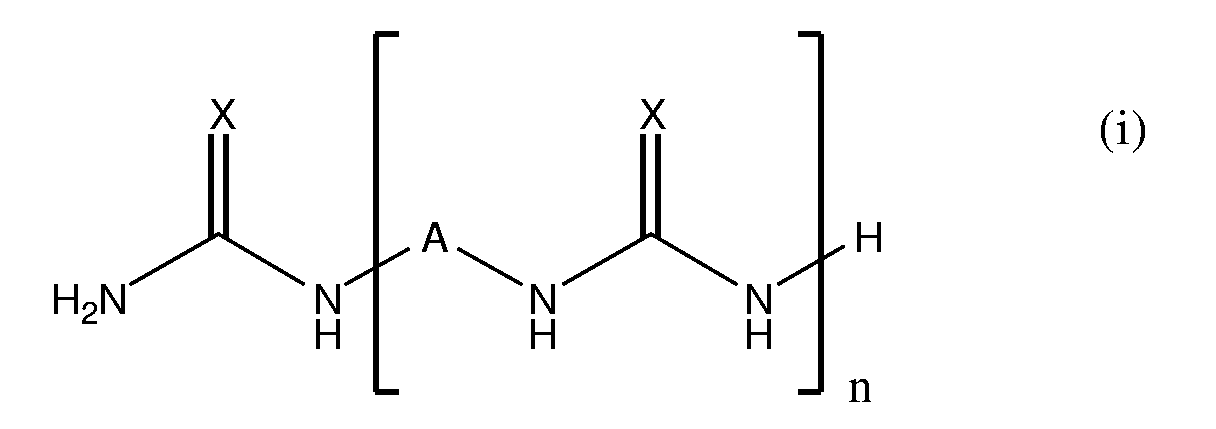
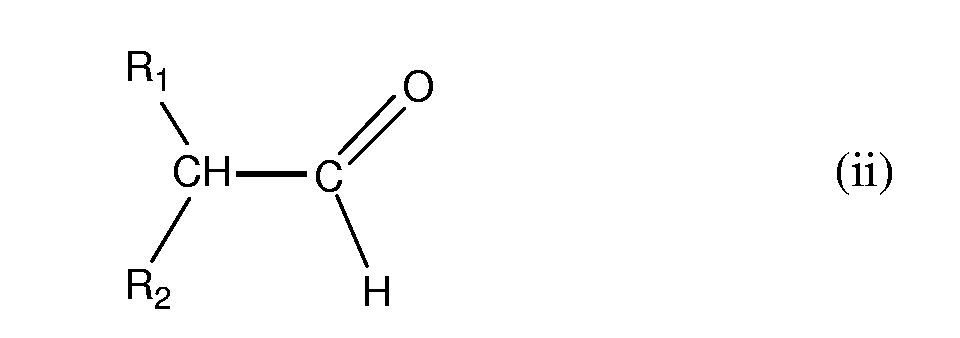
- component B) are urea-aldehyde resins using a urea of the general formula (i) in which X is oxygen or sulfur, A is an alkylene radical and n is 0 to 3, with 1.9 (n + 1) to 2.2 (n + 1) mol of an aldehyde of the general formula (ii) in which R 1 and R 2 are hydrocarbon radicals (for example alkyl, aryl and / or alkylaryl radicals) each having up to 20 carbon atoms and / or formaldehyde.
- R 1 and R 2 are hydrocarbon radicals (for example alkyl, aryl and / or alkylaryl radicals) each having up to 20 carbon atoms and / or formaldehyde.
- Suitable aldehydes of the general formula (ii) are, for example, isobutyraldehyde, 2-methylpentanal, 2-ethylhexanal and 2-phenylpropanal and mixtures thereof. Is preferred Isobutyraldehyde.
- Formaldehyde may be in aqueous form, some or all of alcohols such.
- Methanol or ethanol may be used as paraformaldehyde and / or trioxane become.
- compositions are for. B. in DE 27 57 220, DE-OS 27 57 176 and EP 0 271 776 described.
- the radiation-curable resins on which the invention is based are obtained by polymer-analogous reaction of the ketone-aldehyde resins and / or the urea-aldehyde resins in the melt or in solution of a suitable solvent with component C).
- suitable are maleic anhydride, (meth) acrylic acid derivatives such.
- radiation-curable resins can be obtained by reacting the ketone-aldehyde resins and urea-aldehyde resins with isocyanates having an ethylenically unsaturated grouping, such as.
- isocyanates having an ethylenically unsaturated grouping such as.
- B. (meth) acryloyl isocyanate, ⁇ , ⁇ -dimethyl-3-isopropenylbenzylisocyanat, (meth) acrylic alkyl isocyanate with alkyl spacers having one to 12, preferably 2 to 8, more preferably 2 to 6 carbon atoms, such as.
- methacrylethyl isocyanate, methacrylic butyl isocyanate for example, methacrylethyl isocyanate, methacrylic butyl isocyanate.
- reaction products of hydroxyalkyl (meth) acrylates whose Alkylspacer have one to 12, preferably 2 to 8, more preferably 2 to 6 carbon atoms, and diisocyanates such.
- diisocyanates such as cyclohexane diisocyanate, methylcyclohexane diisocyanate, ethylcyclohexane diisocyanate, propylcyclohexane diisocyanate, methyldiethylcyclohexane diisocyanate, phenylene diisocyanate, toluene diisocyanate, bis (isocyanatophenyl) methane, propane diisocyanate, butane diisocyanate, pentane diisocyanate, hexane diisocyanate such as hexamethylene diisocyanate (HDI) or 1,5-diisocyanato-2-methylpentane (MPDI), heptane diiso
- reaction products in the molar ratio of 1: 1 of hydroxyethyl acrylate and / or hydroxyethyl methacrylate with isophorone diisocyanate and / or H 12 MDI and / or HDI.
- polyisocyanates are those by trimerization, Allophanatization, biuretization and / or urethanization of simple diisocyanates prepared compounds having more than two isocyanate groups per molecule, for example the reaction products of these simple diisocyanates, such as IPDI, HDI and / or HMDI with polyhydric alcohols (eg glycerol, trimethylolpropane, Pentaerythritol) or polyvalent polyamines or the triisocyanurates obtained by Trimerization of the simple diisocyanates such as IPDI, HDI and HMDI, are available.
- polyhydric alcohols eg glycerol, trimethylolpropane, Pentaerythritol
- polyvalent polyamines eglycerol, trimethylolpropane, Pentaerythritol
- trimerization of the simple diisocyanates such as IPDI, HDI and HMDI
- a suitable catalyst for the preparation of the inventive Resins are used.
- Suitable compounds are all known in the literature, the accelerate an OH-NCO reaction, such as. B. diazabicyclooctane (DABCO) or Dibutyltin dilaurate (DBTL).
- DABCO diazabicyclooctane
- DBTL Dibutyltin dilaurate
- a hard resin such as the cyclohexanone-formaldehyde resin reacted with ⁇ , ⁇ -dimethyl-3-isopropenylbenzylisocyanat, products of higher hardness obtained as by the use of (meth) acrylic ethyl isocyanate and / or Hydroxyethyl isophoronediisocyanate adducts; the flexibility is, however, then lower.
- ketone-aldehyde resins and / or urea-aldehyde resins by further hydroxy-functionalized polymers such as.
- mixtures of these polymers with the ketone-aldehyde resins and / or urea-aldehyde resins polymer analogous with Component C) are reacted. It has been shown that first adducts of Ketone-aldehyde resins and / or urea-aldehyde resins with z. B.
- hydroxy-functional Polyethers, polyesters and / or polyacrylates using the above Di- and / or triisocyanates can be prepared, which only then with component C) polymer analog be implemented.
- component C) polymer analog be implemented in contrast to the "pure" ketone-aldehyde resins and / or urea-aldehyde resins can thereby properties such. Flexibility, Hardness can be adjusted even better.
- the other hydroxy-functional polymers possess usually molecular weights Mn between 200 and 10,000 g / mol, preferably between 300 and 5,000 g / mol.
- the preparation of the resins according to the invention takes place in the melt or in Solution of a suitable organic solvent of the ketone-aldehyde resins and / or Urea-aldehyde resins. If appropriate, the organic solvent may also be over Have unsaturated groups and then acts directly as a reactive thinner in the later application.
- the temperature of the reaction is selected.
- at Use of isocyanates as component C) have temperatures between 30 and 150 ° C, preferably between 50 and 140 ° C proven.
- the optionally contained solvent can, if desired, after completion of the reaction are separated, which then usually a powder of the product according to the invention is obtained.
- polyether polyester and / or polyacrylate compound C), optionally in the presence of a suitable catalyst added.
- the temperature of the reaction is selected.
- at Use of isocyanates as component C) have temperatures between 30 and 150 ° C, preferably between 50 and 140 ° C proven.
- the optionally contained solvent can, if desired, after completion of the reaction are separated, which then usually a powder of the product according to the invention is obtained.
- III is added to the solution or melt of the ketone-aldehyde resins A) and / or urea-aldehyde resins B) and the hydroxy-functional polymer, such.
- polyether polyester and / or polyacrylate a di- and / or trifunctional isocyanate and prepared a hydroxy-functional pre-adduct. Only then is the compound C), if appropriate in the presence of a suitable catalyst, added.
- the temperature of the reaction is selected.
- at Use of isocyanates as component C) have temperatures between 30 and 150 ° C, preferably between 50 and 140 ° C proven.
- the solvent optionally present can be separated off after the reaction has ended, in which case a powder of the product according to the invention is generally obtained. It has proved to be advantageous, 1 mol of the ketone-aldehyde resins and / or urea-aldehyde resins and / or additional polymers - based on M n - with 0.5 to 15 mol, preferably 1 to 10 mol, especially 2 to 8 mol of unsaturated compound (component C) to react.
- Photosensitizers can be these resins by irradiation in polymeric, insoluble Transfer networks which, depending on the content of ethylenically unsaturated groups, elastomers to Thermosets result.
- the resulting bright, clear solution has one dynamic viscosity of 11.5 Pa
- the resin solution was treated with Darocur 1173 (Ciba Specialty Chemicals, 1.5% based on solid resin). applied, applied to a glass plate and the solvent at elevated temperature (30 min, 80 ° C) evaporated. Then the films were exposed by UV light (medium pressure mercury lamp, 70 W / optical filter 350 nm) cured for about 12 sec. The previously soluble Films are no longer soluble in methyl ethyl ketone.
Landscapes
- Chemical & Material Sciences (AREA)
- Organic Chemistry (AREA)
- Health & Medical Sciences (AREA)
- Chemical Kinetics & Catalysis (AREA)
- Medicinal Chemistry (AREA)
- Polymers & Plastics (AREA)
- Materials Engineering (AREA)
- Engineering & Computer Science (AREA)
- Life Sciences & Earth Sciences (AREA)
- Wood Science & Technology (AREA)
- Polyurethanes Or Polyureas (AREA)
- Phenolic Resins Or Amino Resins (AREA)
- Macromonomer-Based Addition Polymer (AREA)
- Compositions Of Macromolecular Compounds (AREA)
- Processes Of Treating Macromolecular Substances (AREA)
- Polyoxymethylene Polymers And Polymers With Carbon-To-Carbon Bonds (AREA)
- Application Of Or Painting With Fluid Materials (AREA)
Abstract
Description
und/oder Formaldehyd verwendet.
zu der Lösung oder Schmelze der Keton-Aldehydharze A) und/oder Harnstoff-Aldehydharze B) die Verbindung C), gegebenenfalls in Anwesenheit eines geeigneten, Katalysators, zugegeben.
wird zu der Lösung oder Schmelze der Keton-Aldehydharze A) und/oder Harnstoff-Aldehydharze B) und dem hydroxyfunktionellen Polymer, wie z. B. Polyether, Polyester und/oder Polyacrylat die Verbindung C), gegebenenfalls in Anwesenheit eines geeigneten Katalysators, zugegeben.
wird zu der Lösung oder Schmelze der Keton-Aldehydharze A) und/oder Harnstoff-Aldehydharze B) und dem hydroxyfunktionellen Polymer, wie z. B. Polyether, Polyester und/oder Polyacrylat ein di- und/oder trifunktionelles Isocyanat gegeben und ein hydroxyfunktionelles Präaddukt hergestellt. Erst dann wird die Verbindung C), gegebenenfalls in Anwesenheit eines geeigneten Katalysators, zugegeben.
Es hat sich als vorteilhaft erwiesen, 1 mol der Keton-Aldehydharze und/oder Harnstoff-Aldehydharze und/oder zusätzlicher Polymere - bezogen auf Mn - mit 0,5 bis 15 mol, bevorzugt 1 bis 10 mol, besonders 2 bis 8 mol der ungesättigten Verbindung (Komponente C) zur Reaktion zu bringen.
Claims (37)
- Strahlenhärtbare Harze, im wesentlichen enthaltendA) mindestens ein Keton-Aldehydharz
und/oderB) mindestens ein Harnstoff-Aldehydharz
undC) mindestens eine Verbindung, welche mindestens eine ethylenisch ungesättigte Gruppierung mit gleichzeitig mindestens eine gegenüber A) und/oder B) reaktive Gruppierung aufweist. - Strahlenhärtbare Harze, erhalten durch polymeranaloge Umsetzung vonA) mindestens einem Keton-Aldehydharz,
und/oderB) mindestens einem Harnstoff-Aldehydharz,
mitC) mindestens einer Verbindung, welche mindestens eine ethylenisch ungesättigte Gruppierung und gleichzeitig mindestens eine gegenüber A) und B) reaktive Gruppierung aufweist. - Strahlenhärtbare Harze nach Anspruch 1 oder 2,
erhalten durch polymeranaloge Umsetzung vonund mindestens einem weiteren hydroxylfunktionaliserten Polymer.A) mindestens einem Keton-Aldehydharz,
und/oderB) mindestens einem Harnstoff-Aldehydharz,
mitC) mindestens einer Verbindung, welche mindestens eine ethylenisch ungesättigte Gruppierung und gleichzeitig mindestens eine gegenüber A) und B) reaktive Gruppierung aufweist - Strahlenhärtbare Harze nach Anspruch 3,
dadurch gekennzeichnet,
das Polyether, Polyester und/oder Polyacrylat eingesetzt werden. - Strahlenhärtbare Harze nach Anspruch 3 oder 4,
wobei Mischungen der weiteren Polymere mit den Keton-Aldehydharzen A) und/oder Harnstoff-Aldehydharzen B) polymeranalog mit Komponente C) umgesetzt werden. - Strahlenhärtbare Harze nach Anspruch 3 bis 5,
wobei zunächst Addukte aus den Keton-Aldehydharzen A) und/oder Harnstoff-Aldehydharzen B) mit den weiteren Polymeren unter Verwendung geeigneter Diund/oder Triisocyanaten hergestellt werden, die erst dann mit Komponente C) polymeranalog umgesetzt werden. - Strahlenhärtbare Harze nach mindestens einem der vorhergehenden Ansprüche,
dadurch gekennzeichnet, dass C-H-acide Ketone in der Komponente A) eingesetzt werden. - Strahlenhärtbare Harze nach mindestens einem der vorherigen Ansprüche,
dadurch gekennzeichnet, dass in den Keton-Aldehydharzen der Komponente A), Ketone ausgewählt aus Aceton, Acetophenon, Methylethylketon, Heptanon-2, Pentanon-3, Methylisobutylketon, Cyclopentanon, Cyclododecanon, Mischungen aus 2,2,4- und 2,4,4-Trimethylcyclopentanon, Cycloheptanon, Cyclooctanon, Cyclohexanon als Ausgangsbindungen allein oder in Mischungen eingesetzt werden. - Strahlenhärtbare Harze nach mindestens einem der vorherigen Ansprüche,
dadurch gekennzeichnet, dass in den Keton-Aldehydharzen der Komponente A) alkylsubistituierte Cyclohexanone mit einem oder mehreren Alkylresten, die insgesamt 1 bis 8 Kohlenstoffatome aufweisen, einzeln oder in Mischung eingesetzt werden. - Strahlenhärtbare Harze nach Anspruch 9.
dadurch gekennzeichnet, dass in den Keton-Aldehydharzen der Komponente A) 4-tert.-Amylcyclohexanon, 2-sek.-Butylcyclohexanon, 2-tert.-Butylcyclohexanon, 4-tert.-Butylcyclohexanon, 2-Methylcyclohexanon und 3,3,5-Trimethylcyclohexanon eingesetzt werden. - Strahlenhärtbare Harze nach mindestens einem der vorherigen Ansprüche,
dadurch gekennzeichnet, dass Acetophenon, Cyclohexanon, 4-tert.-Butylcyclohexanon, 3,3,5-Trimethylcyclohexanon und Heptanon allein oder in Mischung in der Komponente A) eingesetzt werden. - Strahlenhärtbare Harze nach mindestens einem der vorherigen Ansprüche,
dadurch gekennzeichnet, dass als Aldehyd-Komponente der Keton-Aldehydharze in Komponente A) Formaldehyd, Acetaldehyd, n-Butyraldehyd und/oder iso-Butyraldehyd, Valerianaldehyd, Dodecanal allein oder in Mischungen eingesetzt werden. - Strahlenhärtbare Harze nach Anspruch 12,
dadurch gekennzeichnet, dass als Aldehyd-Komponente der Keton-Aldehydharze in Komponente A) Formaldehyd und/oder para-Formaldehyd und/oder Trioxan eingesetzt werden. - Strahlenhärtbare Harze nach Anspruch 1, 2 oder 3,
dadurch gekennzeichnet, dass Harze aus Acetophenon, Cyclohexanon, 4-tert.-Butylcyclohexanon, 3,3,5-Trimethylcyclohexanon, Heptanon allein oder in Mischung und Formaldehyd (Komponente A) eingesetzt werden. - Strahlenhärtbare Harze nach einem der vorherigen Ansprüche,
dadurch gekennzeichnet, dass als Komponente B) Harnstoff-Aldehydharze, hergestellt unter Verwendung eines Harnstoffes der allgemeinen Formel (i)in der X Sauerstoff oder Schwefel, A einen Alkylenrest bedeuten und n für 0 bis 3 steht, mit 1,9 (n + 1) bis 2,2 (n + 1) mol eines Aldehyds der allgemeinen Formel (ii) in der R1 und R2 für Kohlenwasserstoffreste mit jeweils bis zu 20 Kohlenstoffatomen stehen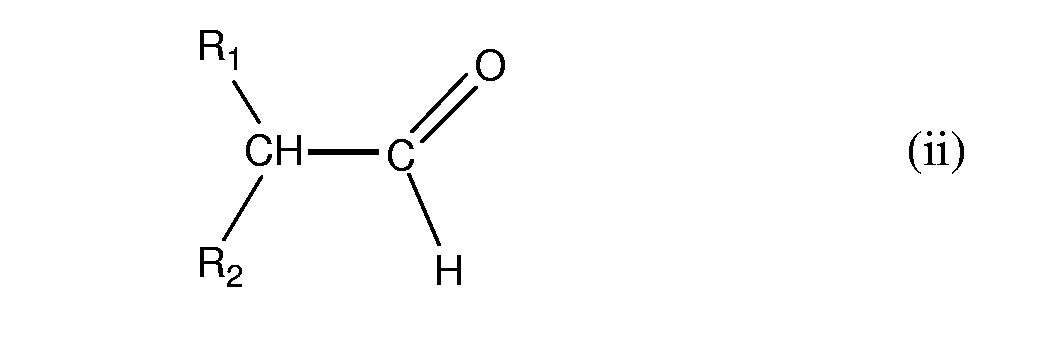
und/oder
Formaldehyd, eingesetzt werden. - Strahlenhärtbare Harze nach einem der vorherigen Ansprüche,
dadurch gekennzeichnet, dass als Komponente B) Harnstoff-Aldehydharze hergestellt unter Verwendung von Harnstoff und Thioharnstoff, Methylendihamstoff, Ethylendiharnstoff, Tetramethylendiharnstoff und/oder Hexamethylendiharnstoff oder deren Gemische eingesetzt werden. - Strahlenhärtbare Harze nach einem der vorherigen Ansprüche,
dadurch gekennzeichnet, dass als Komponente B) Harnstoff-Aldehydharze hergestellt unter Verwendung von Isobutyraldehyd, Formaldehyd, 2-Methylpentanal, 2-Ethylhexanal und 2-Phenylpropanal oder deren Gemische eingesetzt werden. - Strahlenhärtbare Harze nach einem der vorherigen Ansprüche,
dadurch gekennzeichnet, dass als Komponente B) Harnstoff-Aldehydharze hergestellt unter Verwendung von Harnstoff, Isobutyraldehyd und Formaldehyd eingesetzt werden. - Strahlenhärtbare Harze nach mindestens einem der vorherigen Ansprüche,
dadurch gekennzeichnet, dass als Komponente C) Maleinsäure eingesetzt wird. - Strahlenhärtbare Harze nach mindestens einem der vorherigen Ansprüche,
dadurch gekennzeichnet, dass als Komponente C) (Meth)acrylsäure und/oder Derivate eingesetzt werden. - Strahlenhärtbare Harze nach Anspruch 20,
dadurch gekennzeichnet, dass als Komponente C) (Meth)acryloylchlorid, Glycidyl(meth)acrylat, (Meth)acrylsäure und/oder deren niedermolekularen Alkylester und/oder Anhydriden allein oder in Mischung eingesetzt werden. - Strahlenhärtbare Harze nach mindestens einem der vorherigen Ansprüche,
dadurch gekennzeichnet, dass als Komponente C) Isocyanate, die über eine ethylenisch ungesättigte Gruppierung verfügen, bevorzugt (Meth)acryloylisocyanat, α,α-Dimethyl-3-isopropenylbenzylisocyanat, (Meth)acrylalkylisocyanat mit Alkylspacern, die über 1 bis 12, bevorzugt 2 bis 8, besonders bevorzugt 2 bis 6 Kohlenstoffatome verfügen, bevorzugt Methacrylethylisocyanat, Methacrylbutylisocyanat, eingesetzt werden. - Strahlenhärtbare Harze nach mindestens einem der vorherigen Ansprüche,
dadurch gekennzeichnet, dass als Komponente C) Umsetzungsprodukte aus Hydroxyalkyl(meth)acrylaten, deren Alkylspacer über 1 bis 12, bevorzugt 2 bis 8, besonders bevorzugt 2 bis 6 Kohlenstoffatome verfügen, mit Di- und/oder Polyisocyanaten eingesetzt werden. - Strahlenhärtbare Harze nach Anspruch 23,
dadurch gekennzeichnet, dass Diisocyanate ausgewählt aus Cyclohexandiisocyanat, Methylcyclohexandiisocyanat, Ethylcyclohexandiisocyanat, Propylcyclohexandiisocyanat, Methyldiethylcyclohexandiisocyanat, Phenylendiisocyanat, Toluylendiisocyanat, Bis(isocyanatophenyl)methan, Propandiisocyanat, Butandiisocyanat, Pentandiisocyanat, wie Hexamethylendiisocyanat (HDI), 1,5-Diisocyanato-2-methylpentan (MPDI), Heptandiisocyanat, Octandiisocyanat, 1,6-Diisocyanato-2,4,4-trimethylhexan, 1,6-Diisocyanato-2,2,4-trimethylhexan (TMDI), 4-Isocyanatomethyl-1,8-octandiisocyanat (TIN), Dekandi- und triisocyanat, Undekandiund -triisocyanat, Dodecandi- und -triisocyanate, Isophorondiisocyanat (IPDI), Bis(isocyanatomethyl-cyclohexyl)methan (H12MDI), Isocyanatomethylmethylcyclohexylisocyanat, 2,5(2,6)-Bis(isocyanatomethyl)bicyclo[2.2.1]heptan (NBDI), 1,3-Bis(isocyanatomethyl)cyclohexan (1,3-H6-XDI), 1,4-Bis(isocyanatomethyl)cyclohexan (1,4-H6-XDI) allein oder in Mischungen, eingesetzt werden. - Strahlenhärtbare Harze nach Anspruch 24,
dadurch gekennzeichnet, dass Polyisocyanate, hergestellt durch Trimerisierung, Allophanatisierung, Biuretisierung und/oder Urethanisierung einfacher Diisocyanate, eingesetzt werden. - Strahlenhärtbare Harze nach mindestens einem der vorherigen Ansprüche,
dadurch gekennzeichnet, dass als Komponente C) die Umsetzungsprodukte im molaren Verhältnis von 1:1 bis 1: 1,5, bevorzugt 1:1 von Hydroxyethylacrylat und/oder Hydroxyethylmethacrylat mit Isophorondiisocyanat und/oder H12MDI und/oder HDI eingesetzt werden. - Strahlenhärtbare Harze nach mindestens einem der vorherigen Ansprüche,
dadurch gekennzeichnet, dass 1 mol des Keton-Aldehydharzes und/oder Harnstoff-Aldehydharzes - bezogen auf Mn - und 0,5 bis 15 mol, bevorzugt 1 bis 10 mol, besonders 2 bis 8 mol der ungesättigten Verbindung eingesetzt werden. - Verfahren zur Herstellung von strahlenhärtbaren Harzen durch polymeranaloge Umsetzung vonA) mindestens einem Keton-Aldehydharz,
und/oderB) mindestens einem Harnstoff-Aldehydharz,
mitC) mindestens einer Verbindung, welche mindestens eine ethylenisch ungesättigte Gruppierung und gleichzeitig mindestens eine gegenüber A) und B) reaktive Gruppierung aufweist. - Verfahren zur Herstellung von strahlenhärtbaren Harzen durch polymeranaloge Umsetzung vonund mindestens einem weiteren hydroxyfunktionalisierten Polymer.A) mindestens einem Keton-Aldehydharz,
und/oderB) mindestens einem Harnstoff-Aldehydharz,
mitC) mindestens einer Verbindung, welche mindestens eine ethylenisch ungesättigte Gruppierung und gleichzeitig mindestens eine gegenüber A) und B) reaktive Gruppierung aufweist - Verfahren nach Anspruch 28 oder 29,
dadurch gekennzeichnet, dass ein Katalysator eingesetzt wird. - Verfahren nach Anspruch 28 bis 30,
dadurch gekennzeichnet, dass in der Schmelze oder in einem Lösemittel umgesetzt wird. - Verfahren nach mindestens einem der vorherigen Ansprüche 28 bis 31,
dadurch gekennzeichnet, dass Verbindungen nach mindestens einem der Ansprüche 3 bis 27 eingesetzt werden. - Verfahren nach mindestens einem der Ansprüche 28 bis 32,
dadurch gekennzeichnet, dass zu der Lösung oder Schmelze der Keton-Aldehydharze A) und/oder Harnstoff-Aldehydharze B) die Verbindung C), gegebenenfalls in Anwesenheit eines geeigneten Katalysators, zugegeben wird. - Verfahren nach mindestens einem der Ansprüche 28 bis 32,
dadurch gekennzeichnet, dass zu der Lösung oder Schmelze der Keton-Aldehydharze A) und/oder Harnstoff-Aldehydharze B) und dem hydroxyfunktionellen Polymer, die Verbindung C), gegebenenfalls in Anwesenheit eines geeigneten Katalysators, zugegeben wird. - Verfahren nach mindestens einem der Ansprüche 28 bis 32,
dadurch gekennzeichnet, dass zu der Lösung oder Schmelze der Keton-Aldehydharze A) und/oder Harnstoff-Aldehydharze B) und dem hydroxyfunktionellen Polymer, ein di- und/oder trifunktionelles Isocyanat gegeben und ein hydroxyfunktionelles Präaddukt hergestellt wird und anschließend die Verbindung C), gegebenenfalls in Anwesenheit eines geeigneten Katalysators, zugegeben wird. - Verfahren nach mindestens einem der Ansprüche 28 bis 35,
dadurch gekennzeichnet, dass bei Temperaturen zwischen 30 und 150 °C, bevorzugt zwischen 50 und 140 °C, umgesetzt wird. - Verfahren nach mindestens einem der Ansprüche 28 bis 32,
dadurch gekennzeichnet, dass Polyether, Polyester und/oder Polyacrylat als hydroxyfunktionalisierte Polymere eingesetzt werden.
Priority Applications (1)
| Application Number | Priority Date | Filing Date | Title |
|---|---|---|---|
| SI200430273T SI1508581T1 (sl) | 2003-08-22 | 2004-07-02 | S sevanjem strdljive smole na osnovi ketonskih in/ali sečninskih aldehidnih smol in postopek za izdelavo le-teh |
Applications Claiming Priority (2)
| Application Number | Priority Date | Filing Date | Title |
|---|---|---|---|
| DE10338562A DE10338562A1 (de) | 2003-08-22 | 2003-08-22 | Strahlenhärtbare Harze auf Basis von Keton- und/oder Harnstoff-Aldehydharzen und ein Verfahren zu ihrer Herstellung |
| DE10338562 | 2003-08-22 |
Publications (2)
| Publication Number | Publication Date |
|---|---|
| EP1508581A1 true EP1508581A1 (de) | 2005-02-23 |
| EP1508581B1 EP1508581B1 (de) | 2007-04-04 |
Family
ID=34042242
Family Applications (1)
| Application Number | Title | Priority Date | Filing Date |
|---|---|---|---|
| EP04103128A Expired - Lifetime EP1508581B1 (de) | 2003-08-22 | 2004-07-02 | Strahlenhärtbare Harze auf Basis von Keton- und/oder Harnstoff-Aldehydharzen und ein Verfahren zu ihrer Herstellung |
Country Status (14)
| Country | Link |
|---|---|
| US (1) | US7329710B2 (de) |
| EP (1) | EP1508581B1 (de) |
| CN (1) | CN1322055C (de) |
| AT (1) | ATE358689T1 (de) |
| AU (1) | AU2004205157A1 (de) |
| BR (1) | BRPI0403302A (de) |
| CA (1) | CA2478337A1 (de) |
| DE (2) | DE10338562A1 (de) |
| DK (1) | DK1508581T3 (de) |
| ES (1) | ES2282798T3 (de) |
| NO (1) | NO20043468L (de) |
| PT (1) | PT1508581E (de) |
| SI (1) | SI1508581T1 (de) |
| TW (1) | TW200512223A (de) |
Cited By (3)
| Publication number | Priority date | Publication date | Assignee | Title |
|---|---|---|---|---|
| WO2005075584A1 (de) * | 2004-02-03 | 2005-08-18 | Degussa Ag | Verwendung strahlenhärtbarer harze auf basis von keton- und/oder harnstoff-aldehydharzen |
| WO2006021479A1 (de) * | 2004-08-26 | 2006-03-02 | Degussa Gmbh | Strahlungsempfindliche masse |
| WO2006125684A1 (de) * | 2005-05-27 | 2006-11-30 | Degussa Gmbh | Copolymere, ein verfahren zu deren herstellung und die verwendung als bindemittel |
Families Citing this family (21)
| Publication number | Priority date | Publication date | Assignee | Title |
|---|---|---|---|---|
| WO2002096788A1 (de) * | 2001-05-31 | 2002-12-05 | Inventio Ag | Einrichtung zur ermittlung der position einer schienengeführten aufzugskabine mit codeträger |
| DE10326893A1 (de) * | 2003-06-14 | 2004-12-30 | Degussa Ag | Harze auf Basis von Ketonen und Aldehyde mit verbesserten Löslichkeitseigenschaften und geringen Farbzahlen |
| DE10338560A1 (de) * | 2003-08-22 | 2005-03-17 | Degussa Ag | Strahlenhärtbare Harze auf Basis hydrierter Keton- und Phenol-Aldehydharze und ein Verfahren zu ihrer Herstellung |
| DE10338562A1 (de) | 2003-08-22 | 2005-03-17 | Degussa Ag | Strahlenhärtbare Harze auf Basis von Keton- und/oder Harnstoff-Aldehydharzen und ein Verfahren zu ihrer Herstellung |
| DE10338561A1 (de) * | 2003-08-22 | 2005-04-14 | Degussa Ag | Keton-Aldehydharze, insbesondere Cyclohexanon-Formaldehydharze mit geringem Wassergehalt und hoher thermischer Bestätigkeit und Vergilbungsbeständigkeit sowie ein Verfahren zur Herstellung und Verwendung |
| DE102004005208A1 (de) * | 2004-02-03 | 2005-08-11 | Degussa Ag | Verwendung strahlenhärtbarer Harze auf Basis hydrierter Keton- und Phenol-Aldehydharze |
| DE102004020740A1 (de) * | 2004-04-27 | 2005-11-24 | Degussa Ag | Polymerzusammensetzungen von carbonylhydrierten Keton-Aldehydharzen und Polylsocyanaten in reaktiven Lösemitteln |
| DE102004031759A1 (de) * | 2004-07-01 | 2006-01-26 | Degussa Ag | Strahlungshärtbare, haftungsverbessernde Zusammensetzung aus ungesättigten, amorphen Polyestern und Reaktivverdünnern |
| DE102004039083A1 (de) * | 2004-08-12 | 2006-02-23 | Degussa Ag | Zinnfreie, hochschmelzende Reaktionsprodukte aus carbonylhydrierten Keton-Aldehydharzen, hydrierten Ketonharzen sowie carbonyl- und kernhydrierten Keton-Aldehydharzen auf Basis von aromatischen Ketonen und Polyisocyanten |
| DE102004049544A1 (de) * | 2004-10-12 | 2006-04-13 | Degussa Ag | Strahlungshärtbar modifizierte, ungesättigte, amorphe Polyester |
| DE102005002388A1 (de) * | 2005-01-19 | 2006-07-27 | Degussa Ag | Wässrige, strahlungshärtbar modifizierte, ungesättigte, amorphe Polyester |
| DE102005013329A1 (de) * | 2005-03-23 | 2006-11-16 | Degussa Ag | Niedrigviskose uretdiongruppenhaltige Polyadditionsverbindungen, Verfahren zur Herstellung und Verwendung |
| DE102005017200A1 (de) | 2005-04-13 | 2006-10-19 | Degussa Ag | Verwendung eines hochviskosen, weitgehend amorphen Polyolefins zur Herstellung einer Folie |
| DE102005026765A1 (de) * | 2005-06-10 | 2006-12-14 | Degussa Ag | Rückenfixierung von Kunstrasenrohware mit Schmelzklebern auf Basis von amorphen Poly-alpha-Olefinen und/oder modifizierten, amorphen Poly-alpha-Olefinen |
| US20070090416A1 (en) * | 2005-09-28 | 2007-04-26 | Doyle Brian S | CMOS devices with a single work function gate electrode and method of fabrication |
| DE102006000646A1 (de) * | 2006-01-03 | 2007-07-12 | Degussa Gmbh | Zusammensetzung zur Herstellung von Universalpigmentpräparationen |
| DE102006000645A1 (de) * | 2006-01-03 | 2007-07-12 | Degussa Gmbh | Universalpigmentpräparationen |
| DE102006009079A1 (de) * | 2006-02-28 | 2007-08-30 | Degussa Gmbh | Formaldehydfreie, carbonylhydrierte Keton-Aldehydharze auf Basis Formaldehyd und ein Verfahren zu ihrer Herstellung |
| CN105542098B (zh) * | 2016-02-29 | 2018-06-01 | 长兴(广州)电子材料有限公司 | 一种改性醛酮树脂及其制备方法与应用 |
| CN110128637B (zh) | 2018-02-08 | 2021-11-16 | 广东华润涂料有限公司 | 酮醛改性树脂及其制备方法 |
| CN108484854B (zh) * | 2018-03-13 | 2020-09-11 | 广东工业大学 | 一种可紫外光固化脲-异丁醛-甲醛树脂及其制备方法 |
Citations (3)
| Publication number | Priority date | Publication date | Assignee | Title |
|---|---|---|---|---|
| DE2438724B1 (de) * | 1974-08-12 | 1975-07-10 | Huber Fa Michael Muenchen | Durch UV-Bestrahlung härtbare Kaschier- und Überzugslacke |
| DE4344125A1 (de) * | 1993-12-23 | 1995-06-29 | Basf Lacke & Farben | Strahlenhärtbare Schutzlackierung, insbesondere für metallisierte Oberflächen |
| EP0902065A1 (de) * | 1997-09-10 | 1999-03-17 | Basf Aktiengesellschaft | Strahlungshärtbares Bindemittel für Druckfarben |
Family Cites Families (25)
| Publication number | Priority date | Publication date | Assignee | Title |
|---|---|---|---|---|
| DD240318A3 (de) | 1970-01-28 | 1986-10-29 | Hempel Helmut | Verfahren zur herstellung eines fotoempfindlichen materials |
| US3878021A (en) * | 1971-05-25 | 1975-04-15 | Weyerhaeuser Co | Rapid curing resin compositions comprising a ketone-aldehyde condensation polymer modified with an acyl hydrazide |
| CA1016798A (en) | 1972-09-11 | 1977-09-06 | Daniel J. Carlick | Radiation curable inks and coating compositions |
| DE2438712A1 (de) | 1974-08-12 | 1976-02-26 | Huber Fa Michael Muenchen | Strahlungshaertende druckfarben |
| US4070500A (en) | 1976-01-21 | 1978-01-24 | Millmaster Onyx Corporation | Radiation-curable compositions and method of coating therewith |
| CA1109580A (en) | 1977-11-03 | 1981-09-22 | Kohtaro Nagasawa | Radiation curable resin composition |
| DE4322112A1 (de) * | 1993-07-02 | 1995-01-12 | Sueddeutsche Kalkstickstoff | Pfropfpolymere von Keton-Aldehyd-Kondensations- bzw. Co-Kondensationsprodukten |
| DE19643703A1 (de) * | 1996-10-23 | 1998-04-30 | Huels Chemische Werke Ag | Hydrophile verseifungsstabil veresterte Kunstharze, besonders geeignet für wäßrige Systeme |
| DE19944373A1 (de) | 1999-09-16 | 2001-03-22 | Degussa | Katalysator und Verfahren zur Herstellung von farbreduzierten isocyanuratgruppenhaltigen Polyisocyananten |
| DE10033099A1 (de) | 2000-07-07 | 2002-01-17 | Degussa | Verfahren zur Herstellung von geruchsarmen und lagerstabilen monomerhaltigen Polyisocyanuraten aus Isophorondiisocyanat |
| DE10047762A1 (de) | 2000-09-27 | 2002-04-11 | Degussa | Pulverförmige, wasserdispergierbare blockierte Polyisocyanataddukte, ein Verfahren zur Herstellung und ihre Verwendung |
| DE10065176A1 (de) | 2000-12-23 | 2002-06-27 | Degussa | Katalysator und Verfahren zur Herstellung von niedrigviskosen und farbreduzierten isocyanuratgruppenhaltigen Polyisocyanaten |
| DE10163783A1 (de) | 2001-12-22 | 2003-07-03 | Degussa | Verfahren zur Herstellung epoxidierter Polyalkenylene und Verwendung von Phosphonsäuren und deren Derivaten als Katalysator |
| DE10212706A1 (de) | 2002-03-21 | 2003-10-02 | Degussa | Ungesättigte, amorphe Polyester auf Basis bestimmter Dicidolisomerer |
| DE10242265A1 (de) | 2002-09-12 | 2004-03-25 | Degussa Ag | Haftungsverbessernder Zusatz aus einem ungesättigten, amorphen Polyester |
| DE10258573A1 (de) | 2002-12-14 | 2004-07-01 | Degussa Ag | Polymermodifizierte Harze |
| DE10258574A1 (de) | 2002-12-14 | 2004-07-01 | Degussa Ag | Polymermodifizierte Harze |
| DE10261006A1 (de) | 2002-12-24 | 2004-07-08 | Degussa Ag | Dispersionen amorpher, ungesättigter Polyesterharze auf Basis bestimmter Dicidolisomerer |
| DE10261005A1 (de) | 2002-12-24 | 2004-07-08 | Degussa Ag | Dispersionen amorpher, urethanisierter ungesättigter Polyesterharze auf Basis bestimmter Dicidolisomerer |
| DE10322845A1 (de) | 2003-05-19 | 2004-12-16 | Degussa Ag | Verzweigte,amorphe Makropolyole auf Polyesterbasis mit enger Molekulargewichtsverteilung |
| DE10326893A1 (de) | 2003-06-14 | 2004-12-30 | Degussa Ag | Harze auf Basis von Ketonen und Aldehyde mit verbesserten Löslichkeitseigenschaften und geringen Farbzahlen |
| DE10338560A1 (de) * | 2003-08-22 | 2005-03-17 | Degussa Ag | Strahlenhärtbare Harze auf Basis hydrierter Keton- und Phenol-Aldehydharze und ein Verfahren zu ihrer Herstellung |
| DE10338561A1 (de) | 2003-08-22 | 2005-04-14 | Degussa Ag | Keton-Aldehydharze, insbesondere Cyclohexanon-Formaldehydharze mit geringem Wassergehalt und hoher thermischer Bestätigkeit und Vergilbungsbeständigkeit sowie ein Verfahren zur Herstellung und Verwendung |
| DE10338559A1 (de) | 2003-08-22 | 2005-04-14 | Degussa Ag | Verfahren zur Herstellung von Keton-Formaldehydharzen |
| DE10338562A1 (de) | 2003-08-22 | 2005-03-17 | Degussa Ag | Strahlenhärtbare Harze auf Basis von Keton- und/oder Harnstoff-Aldehydharzen und ein Verfahren zu ihrer Herstellung |
-
2003
- 2003-08-22 DE DE10338562A patent/DE10338562A1/de not_active Withdrawn
-
2004
- 2004-07-02 DE DE502004003376T patent/DE502004003376D1/de not_active Expired - Lifetime
- 2004-07-02 AT AT04103128T patent/ATE358689T1/de not_active IP Right Cessation
- 2004-07-02 PT PT04103128T patent/PT1508581E/pt unknown
- 2004-07-02 ES ES04103128T patent/ES2282798T3/es not_active Expired - Lifetime
- 2004-07-02 EP EP04103128A patent/EP1508581B1/de not_active Expired - Lifetime
- 2004-07-02 DK DK04103128T patent/DK1508581T3/da active
- 2004-07-02 SI SI200430273T patent/SI1508581T1/sl unknown
- 2004-08-16 TW TW093124554A patent/TW200512223A/zh unknown
- 2004-08-18 BR BR0403302-7A patent/BRPI0403302A/pt not_active IP Right Cessation
- 2004-08-20 US US10/921,989 patent/US7329710B2/en not_active Expired - Fee Related
- 2004-08-20 NO NO20043468A patent/NO20043468L/no not_active Application Discontinuation
- 2004-08-20 CN CNB2004100578728A patent/CN1322055C/zh not_active Expired - Fee Related
- 2004-08-20 CA CA002478337A patent/CA2478337A1/en not_active Abandoned
- 2004-08-20 AU AU2004205157A patent/AU2004205157A1/en not_active Abandoned
Patent Citations (3)
| Publication number | Priority date | Publication date | Assignee | Title |
|---|---|---|---|---|
| DE2438724B1 (de) * | 1974-08-12 | 1975-07-10 | Huber Fa Michael Muenchen | Durch UV-Bestrahlung härtbare Kaschier- und Überzugslacke |
| DE4344125A1 (de) * | 1993-12-23 | 1995-06-29 | Basf Lacke & Farben | Strahlenhärtbare Schutzlackierung, insbesondere für metallisierte Oberflächen |
| EP0902065A1 (de) * | 1997-09-10 | 1999-03-17 | Basf Aktiengesellschaft | Strahlungshärtbares Bindemittel für Druckfarben |
Cited By (3)
| Publication number | Priority date | Publication date | Assignee | Title |
|---|---|---|---|---|
| WO2005075584A1 (de) * | 2004-02-03 | 2005-08-18 | Degussa Ag | Verwendung strahlenhärtbarer harze auf basis von keton- und/oder harnstoff-aldehydharzen |
| WO2006021479A1 (de) * | 2004-08-26 | 2006-03-02 | Degussa Gmbh | Strahlungsempfindliche masse |
| WO2006125684A1 (de) * | 2005-05-27 | 2006-11-30 | Degussa Gmbh | Copolymere, ein verfahren zu deren herstellung und die verwendung als bindemittel |
Also Published As
| Publication number | Publication date |
|---|---|
| NO20043468L (no) | 2005-02-23 |
| ES2282798T3 (es) | 2007-10-16 |
| US20050043501A1 (en) | 2005-02-24 |
| SI1508581T1 (sl) | 2007-08-31 |
| EP1508581B1 (de) | 2007-04-04 |
| BRPI0403302A (pt) | 2005-05-31 |
| AU2004205157A1 (en) | 2005-03-10 |
| CA2478337A1 (en) | 2005-02-22 |
| PT1508581E (pt) | 2007-04-30 |
| DK1508581T3 (da) | 2007-07-30 |
| ATE358689T1 (de) | 2007-04-15 |
| CN1322055C (zh) | 2007-06-20 |
| DE10338562A1 (de) | 2005-03-17 |
| US7329710B2 (en) | 2008-02-12 |
| TW200512223A (en) | 2005-04-01 |
| DE502004003376D1 (de) | 2007-05-16 |
| CN1597772A (zh) | 2005-03-23 |
Similar Documents
| Publication | Publication Date | Title |
|---|---|---|
| EP1508581B1 (de) | Strahlenhärtbare Harze auf Basis von Keton- und/oder Harnstoff-Aldehydharzen und ein Verfahren zu ihrer Herstellung | |
| EP1508582B1 (de) | Strahlenhärtbare Harze auf Basis hydrierter Keton- und Phenol-Aldehydharze und ein Verfahren zu ihrer Herstellung | |
| EP1711566B1 (de) | Verwendung strahlenhärtbarer harze auf basis von keton- und/ oder harnstoff-aldehydharzen | |
| EP1711567A1 (de) | Verwendung strahlenhärtbarer harze auf basis hydrierter keton- und phenol-aldehydharze | |
| DE102005024246A1 (de) | Copolymere, ein Verfahren zu deren Herstellung und die Verwendung als Bindemittel | |
| EP1805242A1 (de) | Wässrige, strahlenhärtbare harze, ein verfahren zu ihrer herstellung und ihre verwendung | |
| EP1740634B1 (de) | Polymerzusammensetzungen von carbonylhydrierten keton-aldehydharzen und polyisocyanaten in reaktiven lösemitteln | |
| WO2006094849A1 (de) | Wässrige beschichtungsstoffzusammensetzungen für effektlacke | |
| DE102005010967A1 (de) | Wässrige Lackzusammensetzungen für Holz | |
| EP1776402B1 (de) | Zinnfreie, hochschmelzende reaktionsprodukte aus carbonylhydrierten keton-aldehydharzen, hydrierten ketonharzen sowie carbonyl- und kernhydrierten keton-aldehydharzen auf basis von aromatischen ketonen und polyisocyanaten | |
| WO2007077044A1 (de) | Universell einsetzbare harze | |
| DE102004060286A1 (de) | Radikalisch homo- oder copolymerisierbare Verbindungen, ein Verfahren zu ihrer Herstellung und ihre Verwendung | |
| DE102005010963A1 (de) | Wässrige Beschichtungsstoffzusammensetzungen für flexible Untergründe | |
| WO2006094850A1 (de) | Wässrige beschichtungsstoffzusammensetzungen mit verbessertem steinschlagschutz | |
| EP1786871A1 (de) | Strahlungsempfindliche masse | |
| WO2007036488A1 (de) | Nicht schmelzende reaktionsprodukte mit einer hohen glasübergangstemperatur und geringer lösungsviskosität |
Legal Events
| Date | Code | Title | Description |
|---|---|---|---|
| PUAI | Public reference made under article 153(3) epc to a published international application that has entered the european phase |
Free format text: ORIGINAL CODE: 0009012 |
|
| 17P | Request for examination filed |
Effective date: 20040702 |
|
| AK | Designated contracting states |
Kind code of ref document: A1 Designated state(s): AT BE BG CH CY CZ DE DK EE ES FI FR GB GR HU IE IT LI LU MC NL PL PT RO SE SI SK TR |
|
| AX | Request for extension of the european patent |
Extension state: AL HR LT LV MK |
|
| AKX | Designation fees paid |
Designated state(s): AT BE BG CH CY CZ DE DK EE ES FI FR GB GR HU IE IT LI LU MC NL PL PT RO SE SI SK TR |
|
| GRAP | Despatch of communication of intention to grant a patent |
Free format text: ORIGINAL CODE: EPIDOSNIGR1 |
|
| GRAS | Grant fee paid |
Free format text: ORIGINAL CODE: EPIDOSNIGR3 |
|
| RAP1 | Party data changed (applicant data changed or rights of an application transferred) |
Owner name: DEGUSSA GMBH |
|
| GRAA | (expected) grant |
Free format text: ORIGINAL CODE: 0009210 |
|
| AK | Designated contracting states |
Kind code of ref document: B1 Designated state(s): AT BE BG CH CY CZ DE DK EE ES FI FR GB GR HU IE IT LI LU MC NL PL PT RO SE SI SK TR |
|
| REG | Reference to a national code |
Ref country code: GB Ref legal event code: FG4D Free format text: NOT ENGLISH |
|
| REG | Reference to a national code |
Ref country code: RO Ref legal event code: EPE |
|
| REG | Reference to a national code |
Ref country code: CH Ref legal event code: EP Ref country code: PT Ref legal event code: SC4A Free format text: AVAILABILITY OF NATIONAL TRANSLATION Effective date: 20070410 Ref country code: CH Ref legal event code: NV Representative=s name: SCHMAUDER & PARTNER AG PATENTANWALTSBUERO |
|
| GBT | Gb: translation of ep patent filed (gb section 77(6)(a)/1977) |
Effective date: 20070410 |
|
| REF | Corresponds to: |
Ref document number: 502004003376 Country of ref document: DE Date of ref document: 20070516 Kind code of ref document: P |
|
| REG | Reference to a national code |
Ref country code: IE Ref legal event code: FG4D Free format text: LANGUAGE OF EP DOCUMENT: GERMAN |
|
| REG | Reference to a national code |
Ref country code: GR Ref legal event code: EP Ref document number: 20070401571 Country of ref document: GR |
|
| PGFP | Annual fee paid to national office [announced via postgrant information from national office to epo] |
Ref country code: PT Payment date: 20070629 Year of fee payment: 4 Ref country code: SK Payment date: 20070629 Year of fee payment: 4 |
|
| PG25 | Lapsed in a contracting state [announced via postgrant information from national office to epo] |
Ref country code: SE Free format text: LAPSE BECAUSE OF FAILURE TO SUBMIT A TRANSLATION OF THE DESCRIPTION OR TO PAY THE FEE WITHIN THE PRESCRIBED TIME-LIMIT Effective date: 20070704 |
|
| REG | Reference to a national code |
Ref country code: DK Ref legal event code: T3 Ref country code: HU Ref legal event code: AG4A Ref document number: E001662 Country of ref document: HU |
|
| REG | Reference to a national code |
Ref country code: ES Ref legal event code: FG2A Ref document number: 2282798 Country of ref document: ES Kind code of ref document: T3 |
|
| RAP2 | Party data changed (patent owner data changed or rights of a patent transferred) |
Owner name: EVONIK DEGUSSA GMBH |
|
| PG25 | Lapsed in a contracting state [announced via postgrant information from national office to epo] |
Ref country code: PL Free format text: LAPSE BECAUSE OF FAILURE TO SUBMIT A TRANSLATION OF THE DESCRIPTION OR TO PAY THE FEE WITHIN THE PRESCRIBED TIME-LIMIT Effective date: 20070404 |
|
| PGFP | Annual fee paid to national office [announced via postgrant information from national office to epo] |
Ref country code: TR Payment date: 20070622 Year of fee payment: 4 |
|
| REG | Reference to a national code |
Ref country code: IE Ref legal event code: FD4D |
|
| EN | Fr: translation not filed | ||
| NLT2 | Nl: modifications (of names), taken from the european patent patent bulletin |
Owner name: EVONIK DEGUSSA GMBH Effective date: 20071107 |
|
| PGFP | Annual fee paid to national office [announced via postgrant information from national office to epo] |
Ref country code: CZ Payment date: 20070628 Year of fee payment: 4 Ref country code: RO Payment date: 20070628 Year of fee payment: 4 |
|
| BERE | Be: lapsed |
Owner name: DEGUSSA G.M.B.H. Effective date: 20070731 |
|
| PG25 | Lapsed in a contracting state [announced via postgrant information from national office to epo] |
Ref country code: IE Free format text: LAPSE BECAUSE OF FAILURE TO SUBMIT A TRANSLATION OF THE DESCRIPTION OR TO PAY THE FEE WITHIN THE PRESCRIBED TIME-LIMIT Effective date: 20070404 Ref country code: BG Free format text: LAPSE BECAUSE OF FAILURE TO SUBMIT A TRANSLATION OF THE DESCRIPTION OR TO PAY THE FEE WITHIN THE PRESCRIBED TIME-LIMIT Effective date: 20070704 |
|
| PGFP | Annual fee paid to national office [announced via postgrant information from national office to epo] |
Ref country code: SI Payment date: 20070702 Year of fee payment: 4 |
|
| PLBE | No opposition filed within time limit |
Free format text: ORIGINAL CODE: 0009261 |
|
| STAA | Information on the status of an ep patent application or granted ep patent |
Free format text: STATUS: NO OPPOSITION FILED WITHIN TIME LIMIT |
|
| 26N | No opposition filed |
Effective date: 20080107 |
|
| REG | Reference to a national code |
Ref country code: DK Ref legal event code: EBP |
|
| PG25 | Lapsed in a contracting state [announced via postgrant information from national office to epo] |
Ref country code: FR Free format text: LAPSE BECAUSE OF FAILURE TO SUBMIT A TRANSLATION OF THE DESCRIPTION OR TO PAY THE FEE WITHIN THE PRESCRIBED TIME-LIMIT Effective date: 20071130 Ref country code: MC Free format text: LAPSE BECAUSE OF NON-PAYMENT OF DUE FEES Effective date: 20070731 |
|
| PG25 | Lapsed in a contracting state [announced via postgrant information from national office to epo] |
Ref country code: FI Free format text: LAPSE BECAUSE OF NON-PAYMENT OF DUE FEES Effective date: 20070702 |
|
| PG25 | Lapsed in a contracting state [announced via postgrant information from national office to epo] |
Ref country code: DK Free format text: LAPSE BECAUSE OF NON-PAYMENT OF DUE FEES Effective date: 20070731 |
|
| PG25 | Lapsed in a contracting state [announced via postgrant information from national office to epo] |
Ref country code: BE Free format text: LAPSE BECAUSE OF NON-PAYMENT OF DUE FEES Effective date: 20070731 |
|
| REG | Reference to a national code |
Ref country code: ES Ref legal event code: FD2A Effective date: 20070703 |
|
| PG25 | Lapsed in a contracting state [announced via postgrant information from national office to epo] |
Ref country code: FR Free format text: LAPSE BECAUSE OF FAILURE TO SUBMIT A TRANSLATION OF THE DESCRIPTION OR TO PAY THE FEE WITHIN THE PRESCRIBED TIME-LIMIT Effective date: 20070404 Ref country code: AT Free format text: LAPSE BECAUSE OF NON-PAYMENT OF DUE FEES Effective date: 20070702 |
|
| REG | Reference to a national code |
Ref country code: PT Ref legal event code: MM4A Free format text: LAPSE DUE TO NON-PAYMENT OF FEES Effective date: 20090102 |
|
| PG25 | Lapsed in a contracting state [announced via postgrant information from national office to epo] |
Ref country code: ES Free format text: LAPSE BECAUSE OF NON-PAYMENT OF DUE FEES Effective date: 20070703 Ref country code: EE Free format text: LAPSE BECAUSE OF FAILURE TO SUBMIT A TRANSLATION OF THE DESCRIPTION OR TO PAY THE FEE WITHIN THE PRESCRIBED TIME-LIMIT Effective date: 20070404 |
|
| REG | Reference to a national code |
Ref country code: CH Ref legal event code: PL |
|
| GBPC | Gb: european patent ceased through non-payment of renewal fee |
Effective date: 20080702 |
|
| NLV4 | Nl: lapsed or anulled due to non-payment of the annual fee |
Effective date: 20090201 |
|
| PG25 | Lapsed in a contracting state [announced via postgrant information from national office to epo] |
Ref country code: SK Free format text: LAPSE BECAUSE OF NON-PAYMENT OF DUE FEES Effective date: 20080702 Ref country code: SI Free format text: LAPSE BECAUSE OF NON-PAYMENT OF DUE FEES Effective date: 20080703 Ref country code: CZ Free format text: LAPSE BECAUSE OF NON-PAYMENT OF DUE FEES Effective date: 20080702 Ref country code: NL Free format text: LAPSE BECAUSE OF NON-PAYMENT OF DUE FEES Effective date: 20090201 Ref country code: PT Free format text: LAPSE BECAUSE OF NON-PAYMENT OF DUE FEES Effective date: 20090102 |
|
| PG25 | Lapsed in a contracting state [announced via postgrant information from national office to epo] |
Ref country code: GR Free format text: LAPSE BECAUSE OF NON-PAYMENT OF DUE FEES Effective date: 20090204 Ref country code: CH Free format text: LAPSE BECAUSE OF NON-PAYMENT OF DUE FEES Effective date: 20080731 Ref country code: GB Free format text: LAPSE BECAUSE OF NON-PAYMENT OF DUE FEES Effective date: 20080702 Ref country code: LI Free format text: LAPSE BECAUSE OF NON-PAYMENT OF DUE FEES Effective date: 20080731 |
|
| REG | Reference to a national code |
Ref country code: SI Ref legal event code: KO00 Effective date: 20090331 |
|
| PG25 | Lapsed in a contracting state [announced via postgrant information from national office to epo] |
Ref country code: CY Free format text: LAPSE BECAUSE OF FAILURE TO SUBMIT A TRANSLATION OF THE DESCRIPTION OR TO PAY THE FEE WITHIN THE PRESCRIBED TIME-LIMIT Effective date: 20070404 |
|
| PG25 | Lapsed in a contracting state [announced via postgrant information from national office to epo] |
Ref country code: LU Free format text: LAPSE BECAUSE OF NON-PAYMENT OF DUE FEES Effective date: 20070702 |
|
| PG25 | Lapsed in a contracting state [announced via postgrant information from national office to epo] |
Ref country code: RO Free format text: LAPSE BECAUSE OF NON-PAYMENT OF DUE FEES Effective date: 20080702 |
|
| PG25 | Lapsed in a contracting state [announced via postgrant information from national office to epo] |
Ref country code: HU Free format text: LAPSE BECAUSE OF FAILURE TO SUBMIT A TRANSLATION OF THE DESCRIPTION OR TO PAY THE FEE WITHIN THE PRESCRIBED TIME-LIMIT Effective date: 20071005 |
|
| PG25 | Lapsed in a contracting state [announced via postgrant information from national office to epo] |
Ref country code: TR Free format text: LAPSE BECAUSE OF NON-PAYMENT OF DUE FEES Effective date: 20100915 |
|
| PG25 | Lapsed in a contracting state [announced via postgrant information from national office to epo] |
Ref country code: TR Free format text: LAPSE BECAUSE OF NON-PAYMENT OF DUE FEES Effective date: 20080702 |
|
| PGFP | Annual fee paid to national office [announced via postgrant information from national office to epo] |
Ref country code: DE Payment date: 20150721 Year of fee payment: 12 |
|
| PGFP | Annual fee paid to national office [announced via postgrant information from national office to epo] |
Ref country code: IT Payment date: 20150727 Year of fee payment: 12 |
|
| REG | Reference to a national code |
Ref country code: DE Ref legal event code: R119 Ref document number: 502004003376 Country of ref document: DE |
|
| PG25 | Lapsed in a contracting state [announced via postgrant information from national office to epo] |
Ref country code: DE Free format text: LAPSE BECAUSE OF NON-PAYMENT OF DUE FEES Effective date: 20170201 |
|
| PG25 | Lapsed in a contracting state [announced via postgrant information from national office to epo] |
Ref country code: IT Free format text: LAPSE BECAUSE OF NON-PAYMENT OF DUE FEES Effective date: 20160702 |