EP1421990B1 - Verfahren zum stabilisieren von aktiven komponenten mittels polyol/polymere mikrokapsel, sowie kosmetische zusammensetzung, die die mikrokapsel enthält - Google Patents
Verfahren zum stabilisieren von aktiven komponenten mittels polyol/polymere mikrokapsel, sowie kosmetische zusammensetzung, die die mikrokapsel enthält Download PDFInfo
- Publication number
- EP1421990B1 EP1421990B1 EP03104342.5A EP03104342A EP1421990B1 EP 1421990 B1 EP1421990 B1 EP 1421990B1 EP 03104342 A EP03104342 A EP 03104342A EP 1421990 B1 EP1421990 B1 EP 1421990B1
- Authority
- EP
- European Patent Office
- Prior art keywords
- meth
- microcapsule
- acrylate
- poly
- enzyme
- Prior art date
- Legal status (The legal status is an assumption and is not a legal conclusion. Google has not performed a legal analysis and makes no representation as to the accuracy of the status listed.)
- Expired - Lifetime
Links
- 239000003094 microcapsule Substances 0.000 title claims description 164
- 229920005862 polyol Polymers 0.000 title claims description 102
- 150000003077 polyols Chemical class 0.000 title claims description 102
- 229920000642 polymer Polymers 0.000 title claims description 91
- 238000000034 method Methods 0.000 title claims description 32
- 239000000203 mixture Substances 0.000 title description 29
- 239000002537 cosmetic Substances 0.000 title description 10
- 230000000087 stabilizing effect Effects 0.000 title description 2
- 229920001223 polyethylene glycol Polymers 0.000 claims description 81
- 102000004190 Enzymes Human genes 0.000 claims description 69
- 108090000790 Enzymes Proteins 0.000 claims description 69
- 239000002202 Polyethylene glycol Substances 0.000 claims description 69
- 229920001610 polycaprolactone Polymers 0.000 claims description 28
- NIXOWILDQLNWCW-UHFFFAOYSA-M Acrylate Chemical compound [O-]C(=O)C=C NIXOWILDQLNWCW-UHFFFAOYSA-M 0.000 claims description 27
- DNIAPMSPPWPWGF-UHFFFAOYSA-N Propylene glycol Chemical compound CC(O)CO DNIAPMSPPWPWGF-UHFFFAOYSA-N 0.000 claims description 18
- 229920003229 poly(methyl methacrylate) Polymers 0.000 claims description 16
- 239000000839 emulsion Substances 0.000 claims description 14
- PEDCQBHIVMGVHV-UHFFFAOYSA-N Glycerine Chemical compound OCC(O)CO PEDCQBHIVMGVHV-UHFFFAOYSA-N 0.000 claims description 12
- 230000002209 hydrophobic effect Effects 0.000 claims description 12
- 239000000463 material Substances 0.000 claims description 12
- LYCAIKOWRPUZTN-UHFFFAOYSA-N Ethylene glycol Chemical compound OCCO LYCAIKOWRPUZTN-UHFFFAOYSA-N 0.000 claims description 8
- PUPZLCDOIYMWBV-UHFFFAOYSA-N (+/-)-1,3-Butanediol Chemical compound CC(O)CCO PUPZLCDOIYMWBV-UHFFFAOYSA-N 0.000 claims description 6
- 239000004793 Polystyrene Substances 0.000 claims description 6
- 238000009826 distribution Methods 0.000 claims description 6
- 235000011187 glycerol Nutrition 0.000 claims description 6
- 239000004632 polycaprolactone Substances 0.000 claims description 6
- 229920002223 polystyrene Polymers 0.000 claims description 6
- -1 polyvalerolactone Polymers 0.000 claims description 6
- 230000001804 emulsifying effect Effects 0.000 claims description 5
- 229920005606 polypropylene copolymer Polymers 0.000 claims description 5
- 229920001451 polypropylene glycol Polymers 0.000 claims description 5
- WGCNASOHLSPBMP-UHFFFAOYSA-N hydroxyacetaldehyde Natural products OCC=O WGCNASOHLSPBMP-UHFFFAOYSA-N 0.000 claims description 4
- 108090000769 Isomerases Proteins 0.000 claims description 3
- 102000004195 Isomerases Human genes 0.000 claims description 3
- 229920001577 copolymer Polymers 0.000 claims description 3
- HMDQPBSDHHTRNI-UHFFFAOYSA-N 1-(chloromethyl)-3-ethenylbenzene Chemical compound ClCC1=CC=CC(C=C)=C1 HMDQPBSDHHTRNI-UHFFFAOYSA-N 0.000 claims description 2
- ZRZHXNCATOYMJH-UHFFFAOYSA-N 1-(chloromethyl)-4-ethenylbenzene Chemical compound ClCC1=CC=C(C=C)C=C1 ZRZHXNCATOYMJH-UHFFFAOYSA-N 0.000 claims description 2
- BOVQCIDBZXNFEJ-UHFFFAOYSA-N 1-chloro-3-ethenylbenzene Chemical compound ClC1=CC=CC(C=C)=C1 BOVQCIDBZXNFEJ-UHFFFAOYSA-N 0.000 claims description 2
- KTZVZZJJVJQZHV-UHFFFAOYSA-N 1-chloro-4-ethenylbenzene Chemical compound ClC1=CC=C(C=C)C=C1 KTZVZZJJVJQZHV-UHFFFAOYSA-N 0.000 claims description 2
- JZHGRUMIRATHIU-UHFFFAOYSA-N 1-ethenyl-3-methylbenzene Chemical compound CC1=CC=CC(C=C)=C1 JZHGRUMIRATHIU-UHFFFAOYSA-N 0.000 claims description 2
- FXRQXYSJYZPGJZ-UHFFFAOYSA-N 2-[(2-methylpropan-2-yl)oxy]ethenylbenzene Chemical compound CC(C)(C)OC=CC1=CC=CC=C1 FXRQXYSJYZPGJZ-UHFFFAOYSA-N 0.000 claims description 2
- 125000000954 2-hydroxyethyl group Chemical group [H]C([*])([H])C([H])([H])O[H] 0.000 claims description 2
- JLBJTVDPSNHSKJ-UHFFFAOYSA-N 4-Methylstyrene Chemical compound CC1=CC=C(C=C)C=C1 JLBJTVDPSNHSKJ-UHFFFAOYSA-N 0.000 claims description 2
- HRPVXLWXLXDGHG-UHFFFAOYSA-N Acrylamide Chemical compound NC(=O)C=C HRPVXLWXLXDGHG-UHFFFAOYSA-N 0.000 claims description 2
- NLHHRLWOUZZQLW-UHFFFAOYSA-N Acrylonitrile Chemical compound C=CC#N NLHHRLWOUZZQLW-UHFFFAOYSA-N 0.000 claims description 2
- 102000004157 Hydrolases Human genes 0.000 claims description 2
- 108090000604 Hydrolases Proteins 0.000 claims description 2
- 108090000856 Lyases Proteins 0.000 claims description 2
- 102000004317 Lyases Human genes 0.000 claims description 2
- 108090000854 Oxidoreductases Proteins 0.000 claims description 2
- 102000004316 Oxidoreductases Human genes 0.000 claims description 2
- 229920005689 PLLA-PGA Polymers 0.000 claims description 2
- 229920002845 Poly(methacrylic acid) Polymers 0.000 claims description 2
- 229920000331 Polyhydroxybutyrate Polymers 0.000 claims description 2
- 229920001710 Polyorthoester Polymers 0.000 claims description 2
- 102000004357 Transferases Human genes 0.000 claims description 2
- 108090000992 Transferases Proteins 0.000 claims description 2
- 239000000178 monomer Substances 0.000 claims description 2
- 125000004108 n-butyl group Chemical group [H]C([H])([H])C([H])([H])C([H])([H])C([H])([H])* 0.000 claims description 2
- 229920001432 poly(L-lactide) Polymers 0.000 claims description 2
- 239000005015 poly(hydroxybutyrate) Substances 0.000 claims description 2
- 229920000218 poly(hydroxyvalerate) Polymers 0.000 claims description 2
- 239000002745 poly(ortho ester) Substances 0.000 claims description 2
- 229920001481 poly(stearyl methacrylate) Polymers 0.000 claims description 2
- 229920000172 poly(styrenesulfonic acid) Polymers 0.000 claims description 2
- 229920001444 polymaleic acid Polymers 0.000 claims description 2
- 229940005642 polystyrene sulfonic acid Drugs 0.000 claims description 2
- 125000000999 tert-butyl group Chemical group [H]C([H])([H])C(*)(C([H])([H])[H])C([H])([H])[H] 0.000 claims description 2
- XHUZSRRCICJJCN-UHFFFAOYSA-N 1-ethenyl-3-ethylbenzene Chemical compound CCC1=CC=CC(C=C)=C1 XHUZSRRCICJJCN-UHFFFAOYSA-N 0.000 claims 1
- WHFHDVDXYKOSKI-UHFFFAOYSA-N 1-ethenyl-4-ethylbenzene Chemical compound CCC1=CC=C(C=C)C=C1 WHFHDVDXYKOSKI-UHFFFAOYSA-N 0.000 claims 1
- 102000003960 Ligases Human genes 0.000 claims 1
- 108090000364 Ligases Proteins 0.000 claims 1
- 239000008384 inner phase Substances 0.000 claims 1
- 229920001483 poly(ethyl methacrylate) polymer Polymers 0.000 claims 1
- 229920001289 polyvinyl ether Polymers 0.000 claims 1
- 229940088598 enzyme Drugs 0.000 description 58
- YMWUJEATGCHHMB-UHFFFAOYSA-N Dichloromethane Chemical compound ClCCl YMWUJEATGCHHMB-UHFFFAOYSA-N 0.000 description 57
- 239000000243 solution Substances 0.000 description 45
- CIWBSHSKHKDKBQ-JLAZNSOCSA-N Ascorbic acid Chemical compound OC[C@H](O)[C@H]1OC(=O)C(O)=C1O CIWBSHSKHKDKBQ-JLAZNSOCSA-N 0.000 description 28
- 108090000526 Papain Proteins 0.000 description 23
- 239000004365 Protease Substances 0.000 description 23
- 229940055729 papain Drugs 0.000 description 23
- 235000019834 papain Nutrition 0.000 description 23
- 239000002904 solvent Substances 0.000 description 21
- 230000000694 effects Effects 0.000 description 16
- 238000004519 manufacturing process Methods 0.000 description 15
- 235000010323 ascorbic acid Nutrition 0.000 description 14
- 229960005070 ascorbic acid Drugs 0.000 description 14
- 239000011668 ascorbic acid Substances 0.000 description 14
- 238000009472 formulation Methods 0.000 description 14
- 239000004926 polymethyl methacrylate Substances 0.000 description 11
- 238000002156 mixing Methods 0.000 description 9
- 235000019136 lipoic acid Nutrition 0.000 description 8
- AGBQKNBQESQNJD-UHFFFAOYSA-N lipoic acid Chemical compound OC(=O)CCCCC1CCSS1 AGBQKNBQESQNJD-UHFFFAOYSA-N 0.000 description 8
- 229960002663 thioctic acid Drugs 0.000 description 8
- 241000202807 Glycyrrhiza Species 0.000 description 7
- 235000001453 Glycyrrhiza echinata Nutrition 0.000 description 7
- 235000006200 Glycyrrhiza glabra Nutrition 0.000 description 7
- 235000017382 Glycyrrhiza lepidota Nutrition 0.000 description 7
- 229940010454 licorice Drugs 0.000 description 7
- 230000003287 optical effect Effects 0.000 description 7
- LFQSCWFLJHTTHZ-UHFFFAOYSA-N Ethanol Chemical compound CCO LFQSCWFLJHTTHZ-UHFFFAOYSA-N 0.000 description 6
- ZMANZCXQSJIPKH-UHFFFAOYSA-N Triethylamine Chemical compound CCN(CC)CC ZMANZCXQSJIPKH-UHFFFAOYSA-N 0.000 description 6
- 229920001600 hydrophobic polymer Polymers 0.000 description 6
- 238000003860 storage Methods 0.000 description 6
- 239000004705 High-molecular-weight polyethylene Substances 0.000 description 5
- 230000008569 process Effects 0.000 description 5
- 239000003381 stabilizer Substances 0.000 description 5
- XLYOFNOQVPJJNP-UHFFFAOYSA-N water Substances O XLYOFNOQVPJJNP-UHFFFAOYSA-N 0.000 description 5
- 239000008346 aqueous phase Substances 0.000 description 4
- 230000003247 decreasing effect Effects 0.000 description 4
- 238000000935 solvent evaporation Methods 0.000 description 4
- 230000000638 stimulation Effects 0.000 description 4
- UHOVQNZJYSORNB-UHFFFAOYSA-N Benzene Chemical compound C1=CC=CC=C1 UHOVQNZJYSORNB-UHFFFAOYSA-N 0.000 description 3
- 229920001661 Chitosan Polymers 0.000 description 3
- 229920002307 Dextran Polymers 0.000 description 3
- HEMHJVSKTPXQMS-UHFFFAOYSA-M Sodium hydroxide Chemical compound [OH-].[Na+] HEMHJVSKTPXQMS-UHFFFAOYSA-M 0.000 description 3
- YXFVVABEGXRONW-UHFFFAOYSA-N Toluene Chemical compound CC1=CC=CC=C1 YXFVVABEGXRONW-UHFFFAOYSA-N 0.000 description 3
- 230000015572 biosynthetic process Effects 0.000 description 3
- 239000002775 capsule Substances 0.000 description 3
- 150000001875 compounds Chemical class 0.000 description 3
- 239000006071 cream Substances 0.000 description 3
- 239000003814 drug Substances 0.000 description 3
- 239000002502 liposome Substances 0.000 description 3
- 238000004811 liquid chromatography Methods 0.000 description 3
- 239000006210 lotion Substances 0.000 description 3
- 238000012423 maintenance Methods 0.000 description 3
- 239000003960 organic solvent Substances 0.000 description 3
- 239000012071 phase Substances 0.000 description 3
- 229920000193 polymethacrylate Polymers 0.000 description 3
- 239000003755 preservative agent Substances 0.000 description 3
- 230000002335 preservative effect Effects 0.000 description 3
- 239000008213 purified water Substances 0.000 description 3
- 239000002569 water oil cream Substances 0.000 description 3
- KBPLFHHGFOOTCA-UHFFFAOYSA-N 1-Octanol Chemical compound CCCCCCCCO KBPLFHHGFOOTCA-UHFFFAOYSA-N 0.000 description 2
- BBMCTIGTTCKYKF-UHFFFAOYSA-N 1-heptanol Chemical compound CCCCCCCO BBMCTIGTTCKYKF-UHFFFAOYSA-N 0.000 description 2
- CSCPPACGZOOCGX-UHFFFAOYSA-N Acetone Chemical compound CC(C)=O CSCPPACGZOOCGX-UHFFFAOYSA-N 0.000 description 2
- HEDRZPFGACZZDS-UHFFFAOYSA-N Chloroform Chemical compound ClC(Cl)Cl HEDRZPFGACZZDS-UHFFFAOYSA-N 0.000 description 2
- IAZDPXIOMUYVGZ-UHFFFAOYSA-N Dimethylsulphoxide Chemical compound CS(C)=O IAZDPXIOMUYVGZ-UHFFFAOYSA-N 0.000 description 2
- LRHPLDYGYMQRHN-UHFFFAOYSA-N N-Butanol Chemical compound CCCCO LRHPLDYGYMQRHN-UHFFFAOYSA-N 0.000 description 2
- AMQJEAYHLZJPGS-UHFFFAOYSA-N N-Pentanol Chemical compound CCCCCO AMQJEAYHLZJPGS-UHFFFAOYSA-N 0.000 description 2
- URLKBWYHVLBVBO-UHFFFAOYSA-N Para-Xylene Chemical group CC1=CC=C(C)C=C1 URLKBWYHVLBVBO-UHFFFAOYSA-N 0.000 description 2
- 239000004372 Polyvinyl alcohol Substances 0.000 description 2
- VYGQUTWHTHXGQB-FFHKNEKCSA-N Retinol Palmitate Chemical compound CCCCCCCCCCCCCCCC(=O)OC\C=C(/C)\C=C\C=C(/C)\C=C\C1=C(C)CCCC1(C)C VYGQUTWHTHXGQB-FFHKNEKCSA-N 0.000 description 2
- 235000021355 Stearic acid Nutrition 0.000 description 2
- FPIPGXGPPPQFEQ-OVSJKPMPSA-N all-trans-retinol Chemical compound OC\C=C(/C)\C=C\C=C(/C)\C=C\C1=C(C)CCCC1(C)C FPIPGXGPPPQFEQ-OVSJKPMPSA-N 0.000 description 2
- 238000004458 analytical method Methods 0.000 description 2
- 230000003064 anti-oxidating effect Effects 0.000 description 2
- 239000003963 antioxidant agent Substances 0.000 description 2
- 230000003078 antioxidant effect Effects 0.000 description 2
- 235000006708 antioxidants Nutrition 0.000 description 2
- 239000007864 aqueous solution Substances 0.000 description 2
- MWKFXSUHUHTGQN-UHFFFAOYSA-N decan-1-ol Chemical compound CCCCCCCCCCO MWKFXSUHUHTGQN-UHFFFAOYSA-N 0.000 description 2
- 230000007423 decrease Effects 0.000 description 2
- 238000002845 discoloration Methods 0.000 description 2
- 239000006185 dispersion Substances 0.000 description 2
- 239000000499 gel Substances 0.000 description 2
- BXWNKGSJHAJOGX-UHFFFAOYSA-N hexadecan-1-ol Chemical compound CCCCCCCCCCCCCCCCO BXWNKGSJHAJOGX-UHFFFAOYSA-N 0.000 description 2
- ZSIAUFGUXNUGDI-UHFFFAOYSA-N hexan-1-ol Chemical compound CCCCCCO ZSIAUFGUXNUGDI-UHFFFAOYSA-N 0.000 description 2
- AOGQPLXWSUTHQB-UHFFFAOYSA-N hexyl acetate Chemical compound CCCCCCOC(C)=O AOGQPLXWSUTHQB-UHFFFAOYSA-N 0.000 description 2
- 229920001477 hydrophilic polymer Polymers 0.000 description 2
- 239000004005 microsphere Substances 0.000 description 2
- 239000011259 mixed solution Substances 0.000 description 2
- ZWRUINPWMLAQRD-UHFFFAOYSA-N nonan-1-ol Chemical compound CCCCCCCCCO ZWRUINPWMLAQRD-UHFFFAOYSA-N 0.000 description 2
- CTQNGGLPUBDAKN-UHFFFAOYSA-N o-dimethylbenzene Natural products CC1=CC=CC=C1C CTQNGGLPUBDAKN-UHFFFAOYSA-N 0.000 description 2
- GLDOVTGHNKAZLK-UHFFFAOYSA-N octadecan-1-ol Chemical compound CCCCCCCCCCCCCCCCCCO GLDOVTGHNKAZLK-UHFFFAOYSA-N 0.000 description 2
- QIQXTHQIDYTFRH-UHFFFAOYSA-N octadecanoic acid Chemical compound CCCCCCCCCCCCCCCCCC(O)=O QIQXTHQIDYTFRH-UHFFFAOYSA-N 0.000 description 2
- OQCDKBAXFALNLD-UHFFFAOYSA-N octadecanoic acid Natural products CCCCCCCC(C)CCCCCCCCC(O)=O OQCDKBAXFALNLD-UHFFFAOYSA-N 0.000 description 2
- 239000003921 oil Substances 0.000 description 2
- 239000012074 organic phase Substances 0.000 description 2
- 238000005191 phase separation Methods 0.000 description 2
- 229920001495 poly(sodium acrylate) polymer Polymers 0.000 description 2
- 229920002451 polyvinyl alcohol Polymers 0.000 description 2
- 235000018102 proteins Nutrition 0.000 description 2
- 102000004169 proteins and genes Human genes 0.000 description 2
- 108090000623 proteins and genes Proteins 0.000 description 2
- QGNJRVVDBSJHIZ-QHLGVNSISA-N retinyl acetate Chemical compound CC(=O)OC\C=C(/C)\C=C\C=C(/C)\C=C\C1=C(C)CCCC1(C)C QGNJRVVDBSJHIZ-QHLGVNSISA-N 0.000 description 2
- NNMHYFLPFNGQFZ-UHFFFAOYSA-M sodium polyacrylate Chemical compound [Na+].[O-]C(=O)C=C NNMHYFLPFNGQFZ-UHFFFAOYSA-M 0.000 description 2
- PRAKJMSDJKAYCZ-UHFFFAOYSA-N squalane Chemical compound CC(C)CCCC(C)CCCC(C)CCCCC(C)CCCC(C)CCCC(C)C PRAKJMSDJKAYCZ-UHFFFAOYSA-N 0.000 description 2
- 230000006641 stabilisation Effects 0.000 description 2
- 238000011105 stabilization Methods 0.000 description 2
- 239000008117 stearic acid Substances 0.000 description 2
- 238000003756 stirring Methods 0.000 description 2
- VZGDMQKNWNREIO-UHFFFAOYSA-N tetrachloromethane Chemical compound ClC(Cl)(Cl)Cl VZGDMQKNWNREIO-UHFFFAOYSA-N 0.000 description 2
- 125000000383 tetramethylene group Chemical group [H]C([H])([*:1])C([H])([H])C([H])([H])C([H])([H])[*:2] 0.000 description 2
- 238000004809 thin layer chromatography Methods 0.000 description 2
- ZZPQSQFQHIGCRC-OOFFSTKBSA-N (2s,3s,4s,5r,6r)-6-[(2s,3r,4s,5s,6s)-2-[[(3s,4ar,6ar,6bs,8as,11s,12ar,14ar,14bs)-11-carboxy-4,4,6a,6b,8a,11,14b-heptamethyl-14-oxo-2,3,4a,5,6,7,8,9,10,12,12a,14a-dodecahydro-1h-picen-3-yl]oxy]-6-carboxy-4,5-dihydroxyoxan-3-yl]oxy-3,4,5-trihydroxyoxane-2-c Chemical compound [Zn].O([C@@H]1[C@@H](O)[C@H](O)[C@H](O[C@@H]1O[C@H]1CC[C@]2(C)[C@H]3C(=O)C=C4[C@@H]5C[C@](C)(CC[C@@]5(CC[C@@]4(C)[C@]3(C)CC[C@H]2C1(C)C)C)C(O)=O)C(O)=O)[C@@H]1O[C@H](C(O)=O)[C@@H](O)[C@H](O)[C@H]1O ZZPQSQFQHIGCRC-OOFFSTKBSA-N 0.000 description 1
- OYHQOLUKZRVURQ-NTGFUMLPSA-N (9Z,12Z)-9,10,12,13-tetratritiooctadeca-9,12-dienoic acid Chemical compound C(CCCCCCC\C(=C(/C\C(=C(/CCCCC)\[3H])\[3H])\[3H])\[3H])(=O)O OYHQOLUKZRVURQ-NTGFUMLPSA-N 0.000 description 1
- FPIPGXGPPPQFEQ-UHFFFAOYSA-N 13-cis retinol Natural products OCC=C(C)C=CC=C(C)C=CC1=C(C)CCCC1(C)C FPIPGXGPPPQFEQ-UHFFFAOYSA-N 0.000 description 1
- FKOKUHFZNIUSLW-UHFFFAOYSA-N 2-Hydroxypropyl stearate Chemical compound CCCCCCCCCCCCCCCCCC(=O)OCC(C)O FKOKUHFZNIUSLW-UHFFFAOYSA-N 0.000 description 1
- PTTPXKJBFFKCEK-UHFFFAOYSA-N 2-Methyl-4-heptanone Chemical compound CC(C)CC(=O)CC(C)C PTTPXKJBFFKCEK-UHFFFAOYSA-N 0.000 description 1
- WOYWLLHHWAMFCB-UHFFFAOYSA-N 2-ethylhexyl acetate Chemical compound CCCCC(CC)COC(C)=O WOYWLLHHWAMFCB-UHFFFAOYSA-N 0.000 description 1
- CWVRJTMFETXNAD-FWCWNIRPSA-N 3-O-Caffeoylquinic acid Natural products O[C@H]1[C@@H](O)C[C@@](O)(C(O)=O)C[C@H]1OC(=O)\C=C\C1=CC=C(O)C(O)=C1 CWVRJTMFETXNAD-FWCWNIRPSA-N 0.000 description 1
- FHVDTGUDJYJELY-UHFFFAOYSA-N 6-{[2-carboxy-4,5-dihydroxy-6-(phosphanyloxy)oxan-3-yl]oxy}-4,5-dihydroxy-3-phosphanyloxane-2-carboxylic acid Chemical compound O1C(C(O)=O)C(P)C(O)C(O)C1OC1C(C(O)=O)OC(OP)C(O)C1O FHVDTGUDJYJELY-UHFFFAOYSA-N 0.000 description 1
- 229920001817 Agar Polymers 0.000 description 1
- 239000004382 Amylase Substances 0.000 description 1
- 102000013142 Amylases Human genes 0.000 description 1
- 108010065511 Amylases Proteins 0.000 description 1
- 108010024976 Asparaginase Proteins 0.000 description 1
- 102000015790 Asparaginase Human genes 0.000 description 1
- 102100032948 Aspartoacylase Human genes 0.000 description 1
- 241000416162 Astragalus gummifer Species 0.000 description 1
- PZIRUHCJZBGLDY-UHFFFAOYSA-N Caffeoylquinic acid Natural products CC(CCC(=O)C(C)C1C(=O)CC2C3CC(O)C4CC(O)CCC4(C)C3CCC12C)C(=O)O PZIRUHCJZBGLDY-UHFFFAOYSA-N 0.000 description 1
- 240000008886 Ceratonia siliqua Species 0.000 description 1
- 235000013912 Ceratonia siliqua Nutrition 0.000 description 1
- 244000303965 Cyamopsis psoralioides Species 0.000 description 1
- ZAKOWWREFLAJOT-CEFNRUSXSA-N D-alpha-tocopherylacetate Chemical compound CC(=O)OC1=C(C)C(C)=C2O[C@@](CCC[C@H](C)CCC[C@H](C)CCCC(C)C)(C)CCC2=C1C ZAKOWWREFLAJOT-CEFNRUSXSA-N 0.000 description 1
- 108010003989 D-amino-acid oxidase Proteins 0.000 description 1
- 102000004674 D-amino-acid oxidase Human genes 0.000 description 1
- 102000012410 DNA Ligases Human genes 0.000 description 1
- 108010061982 DNA Ligases Proteins 0.000 description 1
- XMSXQFUHVRWGNA-UHFFFAOYSA-N Decamethylcyclopentasiloxane Chemical compound C[Si]1(C)O[Si](C)(C)O[Si](C)(C)O[Si](C)(C)O[Si](C)(C)O1 XMSXQFUHVRWGNA-UHFFFAOYSA-N 0.000 description 1
- XTJFFFGAUHQWII-UHFFFAOYSA-N Dibutyl adipate Chemical compound CCCCOC(=O)CCCCC(=O)OCCCC XTJFFFGAUHQWII-UHFFFAOYSA-N 0.000 description 1
- PYGXAGIECVVIOZ-UHFFFAOYSA-N Dibutyl decanedioate Chemical compound CCCCOC(=O)CCCCCCCCC(=O)OCCCC PYGXAGIECVVIOZ-UHFFFAOYSA-N 0.000 description 1
- 102000001390 Fructose-Bisphosphate Aldolase Human genes 0.000 description 1
- 108010068561 Fructose-Bisphosphate Aldolase Proteins 0.000 description 1
- 108010036781 Fumarate Hydratase Proteins 0.000 description 1
- 102100036160 Fumarate hydratase, mitochondrial Human genes 0.000 description 1
- 108010010803 Gelatin Proteins 0.000 description 1
- 239000004366 Glucose oxidase Substances 0.000 description 1
- 108010015776 Glucose oxidase Proteins 0.000 description 1
- 102000005548 Hexokinase Human genes 0.000 description 1
- 108700040460 Hexokinases Proteins 0.000 description 1
- 101000797251 Homo sapiens Aspartoacylase Proteins 0.000 description 1
- 238000012696 Interfacial polycondensation Methods 0.000 description 1
- JVTAAEKCZFNVCJ-UHFFFAOYSA-M Lactate Chemical compound CC(O)C([O-])=O JVTAAEKCZFNVCJ-UHFFFAOYSA-M 0.000 description 1
- 108010022065 Lactate racemase Proteins 0.000 description 1
- 239000004166 Lanolin Substances 0.000 description 1
- 241000218652 Larix Species 0.000 description 1
- 235000005590 Larix decidua Nutrition 0.000 description 1
- 239000004367 Lipase Substances 0.000 description 1
- 108090001060 Lipase Proteins 0.000 description 1
- 102000004882 Lipase Human genes 0.000 description 1
- NTIZESTWPVYFNL-UHFFFAOYSA-N Methyl isobutyl ketone Chemical compound CC(C)CC(C)=O NTIZESTWPVYFNL-UHFFFAOYSA-N 0.000 description 1
- UIHCLUNTQKBZGK-UHFFFAOYSA-N Methyl isobutyl ketone Natural products CCC(C)C(C)=O UIHCLUNTQKBZGK-UHFFFAOYSA-N 0.000 description 1
- IMNFDUFMRHMDMM-UHFFFAOYSA-N N-Heptane Chemical compound CCCCCCC IMNFDUFMRHMDMM-UHFFFAOYSA-N 0.000 description 1
- CWVRJTMFETXNAD-KLZCAUPSSA-N Neochlorogenin-saeure Natural products O[C@H]1C[C@@](O)(C[C@@H](OC(=O)C=Cc2ccc(O)c(O)c2)[C@@H]1O)C(=O)O CWVRJTMFETXNAD-KLZCAUPSSA-N 0.000 description 1
- 108010029182 Pectin lyase Proteins 0.000 description 1
- 108090000284 Pepsin A Proteins 0.000 description 1
- 102000057297 Pepsin A Human genes 0.000 description 1
- 229920003171 Poly (ethylene oxide) Polymers 0.000 description 1
- QNVSXXGDAPORNA-UHFFFAOYSA-N Resveratrol Natural products OC1=CC=CC(C=CC=2C=C(O)C(O)=CC=2)=C1 QNVSXXGDAPORNA-UHFFFAOYSA-N 0.000 description 1
- DBMJMQXJHONAFJ-UHFFFAOYSA-M Sodium laurylsulphate Chemical compound [Na+].CCCCCCCCCCCCOS([O-])(=O)=O DBMJMQXJHONAFJ-UHFFFAOYSA-M 0.000 description 1
- 229920002472 Starch Polymers 0.000 description 1
- 235000015125 Sterculia urens Nutrition 0.000 description 1
- 240000001058 Sterculia urens Species 0.000 description 1
- MSCCTZZBYHQMQJ-AZAGJHQNSA-N Tocopheryl nicotinate Chemical compound C([C@@](OC1=C(C)C=2C)(C)CCC[C@H](C)CCC[C@H](C)CCCC(C)C)CC1=C(C)C=2OC(=O)C1=CC=CN=C1 MSCCTZZBYHQMQJ-AZAGJHQNSA-N 0.000 description 1
- 229920001615 Tragacanth Polymers 0.000 description 1
- LUKBXSAWLPMMSZ-OWOJBTEDSA-N Trans-resveratrol Chemical compound C1=CC(O)=CC=C1\C=C\C1=CC(O)=CC(O)=C1 LUKBXSAWLPMMSZ-OWOJBTEDSA-N 0.000 description 1
- 102000003929 Transaminases Human genes 0.000 description 1
- 108090000340 Transaminases Proteins 0.000 description 1
- 108090000631 Trypsin Proteins 0.000 description 1
- 102000004142 Trypsin Human genes 0.000 description 1
- 108010046334 Urease Proteins 0.000 description 1
- 108010093894 Xanthine oxidase Proteins 0.000 description 1
- 102100033220 Xanthine oxidase Human genes 0.000 description 1
- OFUHPGMOWVHNPN-QWZFGMNQSA-N [(2r)-2,5,7,8-tetramethyl-2-[(4r,8r)-4,8,12-trimethyltridecyl]-3,4-dihydrochromen-6-yl] (9z,12z)-octadeca-9,12-dienoate Chemical compound O1[C@](C)(CCC[C@H](C)CCC[C@H](C)CCCC(C)C)CCC2=C(C)C(OC(=O)CCCCCCC\C=C/C\C=C/CCCCC)=C(C)C(C)=C21 OFUHPGMOWVHNPN-QWZFGMNQSA-N 0.000 description 1
- 239000008272 agar Substances 0.000 description 1
- 229940023476 agar Drugs 0.000 description 1
- 235000010419 agar Nutrition 0.000 description 1
- 229940072056 alginate Drugs 0.000 description 1
- 235000010443 alginic acid Nutrition 0.000 description 1
- 229920000615 alginic acid Polymers 0.000 description 1
- 229920003232 aliphatic polyester Polymers 0.000 description 1
- 125000005907 alkyl ester group Chemical group 0.000 description 1
- 235000019418 amylase Nutrition 0.000 description 1
- 239000012736 aqueous medium Substances 0.000 description 1
- 150000004945 aromatic hydrocarbons Chemical class 0.000 description 1
- 229960003272 asparaginase Drugs 0.000 description 1
- DCXYFEDJOCDNAF-UHFFFAOYSA-M asparaginate Chemical compound [O-]C(=O)C(N)CC(N)=O DCXYFEDJOCDNAF-UHFFFAOYSA-M 0.000 description 1
- 239000011324 bead Substances 0.000 description 1
- 235000013871 bee wax Nutrition 0.000 description 1
- 229940092738 beeswax Drugs 0.000 description 1
- 239000012166 beeswax Substances 0.000 description 1
- 229920002988 biodegradable polymer Polymers 0.000 description 1
- 239000004621 biodegradable polymer Substances 0.000 description 1
- 239000002981 blocking agent Substances 0.000 description 1
- 230000000903 blocking effect Effects 0.000 description 1
- ASSQXZCUYOADEH-UHFFFAOYSA-N butan-2-yl carbamate Chemical compound CCC(C)OC(N)=O ASSQXZCUYOADEH-UHFFFAOYSA-N 0.000 description 1
- 150000001732 carboxylic acid derivatives Chemical class 0.000 description 1
- 235000010418 carrageenan Nutrition 0.000 description 1
- 239000000679 carrageenan Substances 0.000 description 1
- 229920001525 carrageenan Polymers 0.000 description 1
- 229940113118 carrageenan Drugs 0.000 description 1
- 239000005018 casein Substances 0.000 description 1
- BECPQYXYKAMYBN-UHFFFAOYSA-N casein, tech. Chemical compound NCCCCC(C(O)=O)N=C(O)C(CC(O)=O)N=C(O)C(CCC(O)=N)N=C(O)C(CC(C)C)N=C(O)C(CCC(O)=O)N=C(O)C(CC(O)=O)N=C(O)C(CCC(O)=O)N=C(O)C(C(C)O)N=C(O)C(CCC(O)=N)N=C(O)C(CCC(O)=N)N=C(O)C(CCC(O)=N)N=C(O)C(CCC(O)=O)N=C(O)C(CCC(O)=O)N=C(O)C(COP(O)(O)=O)N=C(O)C(CCC(O)=N)N=C(O)C(N)CC1=CC=CC=C1 BECPQYXYKAMYBN-UHFFFAOYSA-N 0.000 description 1
- 235000021240 caseins Nutrition 0.000 description 1
- 229960000541 cetyl alcohol Drugs 0.000 description 1
- 230000008859 change Effects 0.000 description 1
- 239000003795 chemical substances by application Substances 0.000 description 1
- 150000001805 chlorine compounds Chemical class 0.000 description 1
- CWVRJTMFETXNAD-JUHZACGLSA-N chlorogenic acid Chemical compound O[C@@H]1[C@H](O)C[C@@](O)(C(O)=O)C[C@H]1OC(=O)\C=C\C1=CC=C(O)C(O)=C1 CWVRJTMFETXNAD-JUHZACGLSA-N 0.000 description 1
- 229940074393 chlorogenic acid Drugs 0.000 description 1
- FFQSDFBBSXGVKF-KHSQJDLVSA-N chlorogenic acid Natural products O[C@@H]1C[C@](O)(C[C@@H](CC(=O)C=Cc2ccc(O)c(O)c2)[C@@H]1O)C(=O)O FFQSDFBBSXGVKF-KHSQJDLVSA-N 0.000 description 1
- 235000001368 chlorogenic acid Nutrition 0.000 description 1
- BMRSEYFENKXDIS-KLZCAUPSSA-N cis-3-O-p-coumaroylquinic acid Natural products O[C@H]1C[C@@](O)(C[C@@H](OC(=O)C=Cc2ccc(O)cc2)[C@@H]1O)C(=O)O BMRSEYFENKXDIS-KLZCAUPSSA-N 0.000 description 1
- 238000005354 coacervation Methods 0.000 description 1
- ACTIUHUUMQJHFO-UPTCCGCDSA-N coenzyme Q10 Chemical compound COC1=C(OC)C(=O)C(C\C=C(/C)CC\C=C(/C)CC\C=C(/C)CC\C=C(/C)CC\C=C(/C)CC\C=C(/C)CC\C=C(/C)CC\C=C(/C)CC\C=C(/C)CCC=C(C)C)=C(C)C1=O ACTIUHUUMQJHFO-UPTCCGCDSA-N 0.000 description 1
- 229940049657 cyclomethicone 5 Drugs 0.000 description 1
- ZAKOWWREFLAJOT-UHFFFAOYSA-N d-alpha-Tocopheryl acetate Natural products CC(=O)OC1=C(C)C(C)=C2OC(CCCC(C)CCCC(C)CCCC(C)C)(C)CCC2=C1C ZAKOWWREFLAJOT-UHFFFAOYSA-N 0.000 description 1
- GVJHHUAWPYXKBD-UHFFFAOYSA-N d-alpha-tocopherol Natural products OC1=C(C)C(C)=C2OC(CCCC(C)CCCC(C)CCCC(C)C)(C)CCC2=C1C GVJHHUAWPYXKBD-UHFFFAOYSA-N 0.000 description 1
- DIOQZVSQGTUSAI-UHFFFAOYSA-N decane Chemical compound CCCCCCCCCC DIOQZVSQGTUSAI-UHFFFAOYSA-N 0.000 description 1
- 238000004925 denaturation Methods 0.000 description 1
- 230000036425 denaturation Effects 0.000 description 1
- 239000003599 detergent Substances 0.000 description 1
- 238000011161 development Methods 0.000 description 1
- 230000018109 developmental process Effects 0.000 description 1
- 229940100539 dibutyl adipate Drugs 0.000 description 1
- 229940031954 dibutyl sebacate Drugs 0.000 description 1
- RXKJFZQQPQGTFL-UHFFFAOYSA-N dihydroxyacetone Chemical compound OCC(=O)CO RXKJFZQQPQGTFL-UHFFFAOYSA-N 0.000 description 1
- 239000002270 dispersing agent Substances 0.000 description 1
- 239000002612 dispersion medium Substances 0.000 description 1
- 229940079593 drug Drugs 0.000 description 1
- 238000001035 drying Methods 0.000 description 1
- QYDYPVFESGNLHU-UHFFFAOYSA-N elaidic acid methyl ester Natural products CCCCCCCCC=CCCCCCCCC(=O)OC QYDYPVFESGNLHU-UHFFFAOYSA-N 0.000 description 1
- 238000004945 emulsification Methods 0.000 description 1
- 150000002148 esters Chemical class 0.000 description 1
- 238000000855 fermentation Methods 0.000 description 1
- 230000004151 fermentation Effects 0.000 description 1
- 238000001914 filtration Methods 0.000 description 1
- FOYKKGHVWRFIBD-UHFFFAOYSA-N gamma-tocopherol acetate Natural products CC(=O)OC1=C(C)C(C)=C2OC(CCCC(C)CCCC(C)CCCC(C)C)(C)CCC2=C1 FOYKKGHVWRFIBD-UHFFFAOYSA-N 0.000 description 1
- 229920000159 gelatin Polymers 0.000 description 1
- 239000008273 gelatin Substances 0.000 description 1
- 235000019322 gelatine Nutrition 0.000 description 1
- 235000011852 gelatine desserts Nutrition 0.000 description 1
- 238000001879 gelation Methods 0.000 description 1
- 229940116332 glucose oxidase Drugs 0.000 description 1
- 235000019420 glucose oxidase Nutrition 0.000 description 1
- 125000003827 glycol group Chemical group 0.000 description 1
- 239000013003 healing agent Substances 0.000 description 1
- 238000004128 high performance liquid chromatography Methods 0.000 description 1
- 238000002347 injection Methods 0.000 description 1
- 239000007924 injection Substances 0.000 description 1
- 230000003993 interaction Effects 0.000 description 1
- 235000019388 lanolin Nutrition 0.000 description 1
- 229940039717 lanolin Drugs 0.000 description 1
- 229940069445 licorice extract Drugs 0.000 description 1
- 235000019421 lipase Nutrition 0.000 description 1
- 229940057995 liquid paraffin Drugs 0.000 description 1
- 230000007774 longterm Effects 0.000 description 1
- QYDYPVFESGNLHU-KHPPLWFESA-N methyl oleate Chemical compound CCCCCCCC\C=C/CCCCCCCC(=O)OC QYDYPVFESGNLHU-KHPPLWFESA-N 0.000 description 1
- 229940073769 methyl oleate Drugs 0.000 description 1
- 244000005700 microbiome Species 0.000 description 1
- 239000002480 mineral oil Substances 0.000 description 1
- 235000010446 mineral oil Nutrition 0.000 description 1
- VLKZOEOYAKHREP-UHFFFAOYSA-N n-Hexane Chemical compound CCCCCC VLKZOEOYAKHREP-UHFFFAOYSA-N 0.000 description 1
- JXTPJDDICSTXJX-UHFFFAOYSA-N n-Triacontane Natural products CCCCCCCCCCCCCCCCCCCCCCCCCCCCCC JXTPJDDICSTXJX-UHFFFAOYSA-N 0.000 description 1
- GOQYKNQRPGWPLP-UHFFFAOYSA-N n-heptadecyl alcohol Natural products CCCCCCCCCCCCCCCCCO GOQYKNQRPGWPLP-UHFFFAOYSA-N 0.000 description 1
- BKIMMITUMNQMOS-UHFFFAOYSA-N nonane Chemical compound CCCCCCCCC BKIMMITUMNQMOS-UHFFFAOYSA-N 0.000 description 1
- TVMXDCGIABBOFY-UHFFFAOYSA-N octane Chemical compound CCCCCCCC TVMXDCGIABBOFY-UHFFFAOYSA-N 0.000 description 1
- 239000008385 outer phase Substances 0.000 description 1
- 125000000913 palmityl group Chemical group [H]C([*])([H])C([H])([H])C([H])([H])C([H])([H])C([H])([H])C([H])([H])C([H])([H])C([H])([H])C([H])([H])C([H])([H])C([H])([H])C([H])([H])C([H])([H])C([H])([H])C([H])([H])C([H])([H])[H] 0.000 description 1
- 239000002245 particle Substances 0.000 description 1
- 239000001814 pectin Substances 0.000 description 1
- 235000010987 pectin Nutrition 0.000 description 1
- 229920001277 pectin Polymers 0.000 description 1
- 229940111202 pepsin Drugs 0.000 description 1
- 230000000704 physical effect Effects 0.000 description 1
- 229920005903 polyol mixture Polymers 0.000 description 1
- 238000002360 preparation method Methods 0.000 description 1
- 229940093625 propylene glycol monostearate Drugs 0.000 description 1
- 238000010526 radical polymerization reaction Methods 0.000 description 1
- 230000009467 reduction Effects 0.000 description 1
- 230000003014 reinforcing effect Effects 0.000 description 1
- 235000021283 resveratrol Nutrition 0.000 description 1
- 229940016667 resveratrol Drugs 0.000 description 1
- 235000020944 retinol Nutrition 0.000 description 1
- 229960003471 retinol Drugs 0.000 description 1
- 239000011607 retinol Substances 0.000 description 1
- 229960000342 retinol acetate Drugs 0.000 description 1
- 235000019173 retinyl acetate Nutrition 0.000 description 1
- 239000011770 retinyl acetate Substances 0.000 description 1
- 229940108325 retinyl palmitate Drugs 0.000 description 1
- 235000019172 retinyl palmitate Nutrition 0.000 description 1
- 239000011769 retinyl palmitate Substances 0.000 description 1
- 238000007151 ring opening polymerisation reaction Methods 0.000 description 1
- 238000007127 saponification reaction Methods 0.000 description 1
- 238000000926 separation method Methods 0.000 description 1
- 229940083575 sodium dodecyl sulfate Drugs 0.000 description 1
- 229940083608 sodium hydroxide Drugs 0.000 description 1
- 235000011121 sodium hydroxide Nutrition 0.000 description 1
- 235000019333 sodium laurylsulphate Nutrition 0.000 description 1
- 239000007787 solid Substances 0.000 description 1
- 239000007921 spray Substances 0.000 description 1
- 229940032094 squalane Drugs 0.000 description 1
- 239000008107 starch Substances 0.000 description 1
- 235000019698 starch Nutrition 0.000 description 1
- 239000000021 stimulant Substances 0.000 description 1
- 239000000758 substrate Substances 0.000 description 1
- 238000003786 synthesis reaction Methods 0.000 description 1
- 230000001225 therapeutic effect Effects 0.000 description 1
- 235000010384 tocopherol Nutrition 0.000 description 1
- 229960001295 tocopherol Drugs 0.000 description 1
- 229930003799 tocopherol Natural products 0.000 description 1
- 239000011732 tocopherol Substances 0.000 description 1
- 229950009883 tocopheryl nicotinate Drugs 0.000 description 1
- 235000010487 tragacanth Nutrition 0.000 description 1
- 239000000196 tragacanth Substances 0.000 description 1
- 229940116362 tragacanth Drugs 0.000 description 1
- 239000012588 trypsin Substances 0.000 description 1
- 229920002554 vinyl polymer Polymers 0.000 description 1
- 229920003169 water-soluble polymer Polymers 0.000 description 1
- 239000001993 wax Substances 0.000 description 1
- 230000002087 whitening effect Effects 0.000 description 1
- 239000000230 xanthan gum Substances 0.000 description 1
- 229920001285 xanthan gum Polymers 0.000 description 1
- 235000010493 xanthan gum Nutrition 0.000 description 1
- 229940082509 xanthan gum Drugs 0.000 description 1
- UHVMMEOXYDMDKI-JKYCWFKZSA-L zinc;1-(5-cyanopyridin-2-yl)-3-[(1s,2s)-2-(6-fluoro-2-hydroxy-3-propanoylphenyl)cyclopropyl]urea;diacetate Chemical compound [Zn+2].CC([O-])=O.CC([O-])=O.CCC(=O)C1=CC=C(F)C([C@H]2[C@H](C2)NC(=O)NC=2N=CC(=CC=2)C#N)=C1O UHVMMEOXYDMDKI-JKYCWFKZSA-L 0.000 description 1
- GVJHHUAWPYXKBD-IEOSBIPESA-N α-tocopherol Chemical compound OC1=C(C)C(C)=C2O[C@@](CCC[C@H](C)CCC[C@H](C)CCCC(C)C)(C)CCC2=C1C GVJHHUAWPYXKBD-IEOSBIPESA-N 0.000 description 1
Images

Classifications
-
- A—HUMAN NECESSITIES
- A61—MEDICAL OR VETERINARY SCIENCE; HYGIENE
- A61K—PREPARATIONS FOR MEDICAL, DENTAL OR TOILETRY PURPOSES
- A61K8/00—Cosmetics or similar toiletry preparations
- A61K8/18—Cosmetics or similar toiletry preparations characterised by the composition
- A61K8/30—Cosmetics or similar toiletry preparations characterised by the composition containing organic compounds
- A61K8/67—Vitamins
- A61K8/676—Ascorbic acid, i.e. vitamin C
-
- A—HUMAN NECESSITIES
- A61—MEDICAL OR VETERINARY SCIENCE; HYGIENE
- A61K—PREPARATIONS FOR MEDICAL, DENTAL OR TOILETRY PURPOSES
- A61K8/00—Cosmetics or similar toiletry preparations
- A61K8/02—Cosmetics or similar toiletry preparations characterised by special physical form
- A61K8/11—Encapsulated compositions
-
- A—HUMAN NECESSITIES
- A61—MEDICAL OR VETERINARY SCIENCE; HYGIENE
- A61K—PREPARATIONS FOR MEDICAL, DENTAL OR TOILETRY PURPOSES
- A61K8/00—Cosmetics or similar toiletry preparations
- A61K8/18—Cosmetics or similar toiletry preparations characterised by the composition
- A61K8/30—Cosmetics or similar toiletry preparations characterised by the composition containing organic compounds
- A61K8/33—Cosmetics or similar toiletry preparations characterised by the composition containing organic compounds containing oxygen
- A61K8/34—Alcohols
- A61K8/345—Alcohols containing more than one hydroxy group
-
- A—HUMAN NECESSITIES
- A61—MEDICAL OR VETERINARY SCIENCE; HYGIENE
- A61K—PREPARATIONS FOR MEDICAL, DENTAL OR TOILETRY PURPOSES
- A61K8/00—Cosmetics or similar toiletry preparations
- A61K8/18—Cosmetics or similar toiletry preparations characterised by the composition
- A61K8/30—Cosmetics or similar toiletry preparations characterised by the composition containing organic compounds
- A61K8/49—Cosmetics or similar toiletry preparations characterised by the composition containing organic compounds containing heterocyclic compounds
- A61K8/4986—Cosmetics or similar toiletry preparations characterised by the composition containing organic compounds containing heterocyclic compounds with sulfur as the only hetero atom
-
- A—HUMAN NECESSITIES
- A61—MEDICAL OR VETERINARY SCIENCE; HYGIENE
- A61K—PREPARATIONS FOR MEDICAL, DENTAL OR TOILETRY PURPOSES
- A61K8/00—Cosmetics or similar toiletry preparations
- A61K8/18—Cosmetics or similar toiletry preparations characterised by the composition
- A61K8/30—Cosmetics or similar toiletry preparations characterised by the composition containing organic compounds
- A61K8/64—Proteins; Peptides; Derivatives or degradation products thereof
- A61K8/66—Enzymes
-
- A—HUMAN NECESSITIES
- A61—MEDICAL OR VETERINARY SCIENCE; HYGIENE
- A61K—PREPARATIONS FOR MEDICAL, DENTAL OR TOILETRY PURPOSES
- A61K8/00—Cosmetics or similar toiletry preparations
- A61K8/18—Cosmetics or similar toiletry preparations characterised by the composition
- A61K8/72—Cosmetics or similar toiletry preparations characterised by the composition containing organic macromolecular compounds
- A61K8/81—Cosmetics or similar toiletry preparations characterised by the composition containing organic macromolecular compounds obtained by reactions involving only carbon-to-carbon unsaturated bonds
- A61K8/8105—Compositions of homopolymers or copolymers of unsaturated aliphatic hydrocarbons having only one carbon-to-carbon double bond; Compositions of derivatives of such polymers
- A61K8/8117—Homopolymers or copolymers of aromatic olefines, e.g. polystyrene; Compositions of derivatives of such polymers
-
- A—HUMAN NECESSITIES
- A61—MEDICAL OR VETERINARY SCIENCE; HYGIENE
- A61K—PREPARATIONS FOR MEDICAL, DENTAL OR TOILETRY PURPOSES
- A61K8/00—Cosmetics or similar toiletry preparations
- A61K8/18—Cosmetics or similar toiletry preparations characterised by the composition
- A61K8/72—Cosmetics or similar toiletry preparations characterised by the composition containing organic macromolecular compounds
- A61K8/81—Cosmetics or similar toiletry preparations characterised by the composition containing organic macromolecular compounds obtained by reactions involving only carbon-to-carbon unsaturated bonds
- A61K8/8141—Compositions of homopolymers or copolymers of compounds having one or more unsaturated aliphatic radicals, each having only one carbon-to-carbon double bond, and at least one being terminated by only one carboxyl radical, or of salts, anhydrides, esters, amides, imides or nitriles thereof; Compositions of derivatives of such polymers
- A61K8/8152—Homopolymers or copolymers of esters, e.g. (meth)acrylic acid esters; Compositions of derivatives of such polymers
-
- A—HUMAN NECESSITIES
- A61—MEDICAL OR VETERINARY SCIENCE; HYGIENE
- A61K—PREPARATIONS FOR MEDICAL, DENTAL OR TOILETRY PURPOSES
- A61K8/00—Cosmetics or similar toiletry preparations
- A61K8/18—Cosmetics or similar toiletry preparations characterised by the composition
- A61K8/72—Cosmetics or similar toiletry preparations characterised by the composition containing organic macromolecular compounds
- A61K8/84—Cosmetics or similar toiletry preparations characterised by the composition containing organic macromolecular compounds obtained by reactions otherwise than those involving only carbon-carbon unsaturated bonds
- A61K8/85—Polyesters
-
- A—HUMAN NECESSITIES
- A61—MEDICAL OR VETERINARY SCIENCE; HYGIENE
- A61K—PREPARATIONS FOR MEDICAL, DENTAL OR TOILETRY PURPOSES
- A61K8/00—Cosmetics or similar toiletry preparations
- A61K8/18—Cosmetics or similar toiletry preparations characterised by the composition
- A61K8/72—Cosmetics or similar toiletry preparations characterised by the composition containing organic macromolecular compounds
- A61K8/84—Cosmetics or similar toiletry preparations characterised by the composition containing organic macromolecular compounds obtained by reactions otherwise than those involving only carbon-carbon unsaturated bonds
- A61K8/86—Polyethers
-
- A—HUMAN NECESSITIES
- A61—MEDICAL OR VETERINARY SCIENCE; HYGIENE
- A61K—PREPARATIONS FOR MEDICAL, DENTAL OR TOILETRY PURPOSES
- A61K8/00—Cosmetics or similar toiletry preparations
- A61K8/18—Cosmetics or similar toiletry preparations characterised by the composition
- A61K8/96—Cosmetics or similar toiletry preparations characterised by the composition containing materials, or derivatives thereof of undetermined constitution
- A61K8/97—Cosmetics or similar toiletry preparations characterised by the composition containing materials, or derivatives thereof of undetermined constitution from algae, fungi, lichens or plants; from derivatives thereof
- A61K8/9706—Algae
- A61K8/9711—Phaeophycota or Phaeophyta [brown algae], e.g. Fucus
-
- A—HUMAN NECESSITIES
- A61—MEDICAL OR VETERINARY SCIENCE; HYGIENE
- A61K—PREPARATIONS FOR MEDICAL, DENTAL OR TOILETRY PURPOSES
- A61K8/00—Cosmetics or similar toiletry preparations
- A61K8/18—Cosmetics or similar toiletry preparations characterised by the composition
- A61K8/96—Cosmetics or similar toiletry preparations characterised by the composition containing materials, or derivatives thereof of undetermined constitution
- A61K8/97—Cosmetics or similar toiletry preparations characterised by the composition containing materials, or derivatives thereof of undetermined constitution from algae, fungi, lichens or plants; from derivatives thereof
- A61K8/9706—Algae
- A61K8/9717—Rhodophycota or Rhodophyta [red algae], e.g. Porphyra
-
- A—HUMAN NECESSITIES
- A61—MEDICAL OR VETERINARY SCIENCE; HYGIENE
- A61K—PREPARATIONS FOR MEDICAL, DENTAL OR TOILETRY PURPOSES
- A61K8/00—Cosmetics or similar toiletry preparations
- A61K8/18—Cosmetics or similar toiletry preparations characterised by the composition
- A61K8/96—Cosmetics or similar toiletry preparations characterised by the composition containing materials, or derivatives thereof of undetermined constitution
- A61K8/97—Cosmetics or similar toiletry preparations characterised by the composition containing materials, or derivatives thereof of undetermined constitution from algae, fungi, lichens or plants; from derivatives thereof
- A61K8/9783—Angiosperms [Magnoliophyta]
- A61K8/9789—Magnoliopsida [dicotyledons]
-
- A—HUMAN NECESSITIES
- A61—MEDICAL OR VETERINARY SCIENCE; HYGIENE
- A61Q—SPECIFIC USE OF COSMETICS OR SIMILAR TOILETRY PREPARATIONS
- A61Q19/00—Preparations for care of the skin
-
- B—PERFORMING OPERATIONS; TRANSPORTING
- B01—PHYSICAL OR CHEMICAL PROCESSES OR APPARATUS IN GENERAL
- B01J—CHEMICAL OR PHYSICAL PROCESSES, e.g. CATALYSIS OR COLLOID CHEMISTRY; THEIR RELEVANT APPARATUS
- B01J13/00—Colloid chemistry, e.g. the production of colloidal materials or their solutions, not otherwise provided for; Making microcapsules or microballoons
- B01J13/02—Making microcapsules or microballoons
- B01J13/06—Making microcapsules or microballoons by phase separation
-
- B—PERFORMING OPERATIONS; TRANSPORTING
- B01—PHYSICAL OR CHEMICAL PROCESSES OR APPARATUS IN GENERAL
- B01J—CHEMICAL OR PHYSICAL PROCESSES, e.g. CATALYSIS OR COLLOID CHEMISTRY; THEIR RELEVANT APPARATUS
- B01J13/00—Colloid chemistry, e.g. the production of colloidal materials or their solutions, not otherwise provided for; Making microcapsules or microballoons
- B01J13/02—Making microcapsules or microballoons
- B01J13/06—Making microcapsules or microballoons by phase separation
- B01J13/12—Making microcapsules or microballoons by phase separation removing solvent from the wall-forming material solution
-
- A—HUMAN NECESSITIES
- A61—MEDICAL OR VETERINARY SCIENCE; HYGIENE
- A61K—PREPARATIONS FOR MEDICAL, DENTAL OR TOILETRY PURPOSES
- A61K2800/00—Properties of cosmetic compositions or active ingredients thereof or formulation aids used therein and process related aspects
- A61K2800/40—Chemical, physico-chemical or functional or structural properties of particular ingredients
- A61K2800/41—Particular ingredients further characterized by their size
- A61K2800/412—Microsized, i.e. having sizes between 0.1 and 100 microns
-
- A—HUMAN NECESSITIES
- A61—MEDICAL OR VETERINARY SCIENCE; HYGIENE
- A61K—PREPARATIONS FOR MEDICAL, DENTAL OR TOILETRY PURPOSES
- A61K2800/00—Properties of cosmetic compositions or active ingredients thereof or formulation aids used therein and process related aspects
- A61K2800/40—Chemical, physico-chemical or functional or structural properties of particular ingredients
- A61K2800/52—Stabilizers
-
- Y—GENERAL TAGGING OF NEW TECHNOLOGICAL DEVELOPMENTS; GENERAL TAGGING OF CROSS-SECTIONAL TECHNOLOGIES SPANNING OVER SEVERAL SECTIONS OF THE IPC; TECHNICAL SUBJECTS COVERED BY FORMER USPC CROSS-REFERENCE ART COLLECTIONS [XRACs] AND DIGESTS
- Y10—TECHNICAL SUBJECTS COVERED BY FORMER USPC
- Y10T—TECHNICAL SUBJECTS COVERED BY FORMER US CLASSIFICATION
- Y10T428/00—Stock material or miscellaneous articles
- Y10T428/29—Coated or structually defined flake, particle, cell, strand, strand portion, rod, filament, macroscopic fiber or mass thereof
- Y10T428/2982—Particulate matter [e.g., sphere, flake, etc.]
- Y10T428/2984—Microcapsule with fluid core [includes liposome]
Definitions
- the present invention relates to a method for stabilizing an enzyme using polyol/polymer microcapsules. More particularly, the present invention relates to polyol/polymer microcapsules that effectively stabilize the enzyme which is unstable in the formulations, through increasing the solubility thereof in hydrophobic polymer by using polyol, and to a method for preparing the polyol/polymer microcapsules.
- various active components of a cosmetic composition have excellent effects such as improving wrinkling of the skin, whitening effect, reinforcing moisturization and antioxidation, but their application has been restricted because they are easily deteriorated through contact with external stimulants such as air or moisture, for example, discoloration, change of scent or the like. Therefore, stabilization of the enzyme is actively studied.
- active components have been capsulized to be blocked it from external stimulation.
- Polymers have been mainly employed to capsulize the active components.
- Methods for capsulizing the active components using polymers include interfacial polycondensation, spray dry, coacervation, solvent evaporation or the like. Using such methods, an oil-soluble component is generally collected in hydrophobic polymer and a water-soluble component is generally collected in hydrophilic polymer.
- Jeffery et al. suggested double emulsion-solvent evaporation techniques(1993 ).
- This method capsulizes a water-soluble component more stably than simple w/o emulsion-solvent evaporation techniques, but it has a low collection rate because the water-soluble component is diffused into an aqueous media.
- Remunan-Lopez et al. suggested a multinuclei microcapsule that capsulizes oil- and water-soluble components at the same time by using chitosan(Eur. J. Pharma. Biopharma., 1998, 45, p.49 ).
- microcapsules can be produced only when the following preconditions are satisfed : an inside aqueous phase should be viscous, an active component to be contained should be dispersed and perfectly dissolved in a concentrated solution of chitosan, an organic phase should be polymer dilute solution, and the organic solvent and the polymer should not be activated with chitosan.
- a method for simultaneously capsulizing oil- and water-soluble components in liposome(not polymer) is disclosed in Korean Patent Publication No. 1993-211990 .
- the liposome has a merit of capsulizing an oil- and a water-soluble component at the same time, however the stability of liposome in a cosmetic formulation has not yet been verified
- WO 00/32307 discloses a method of preparing double-walled microspheres comprising the steps of emulsifying a polyethylene glycol(FEG)/dexctran solution in a mineral oil and hardening the PEG/dextran beads to obtain microspheres comprising an inner PEG wall and an outer dextran wall.
- the PEG of WO 00/32307 has a molar mass of 500 000 g/mol.
- the inventors of the present invention made an effort to invent a stabilized transfer system that increases the solubility of an active component without changing the physical properties of a polymer, and can block denaturation of an enzyme. As a result, the inventors discovered that a polyol/polymer microcapsule is suitable to stabilize an enzyme and completed the present invention.
- the object of the present invention is to provide a polyol/polymer microcapsule which can stably contain an enzyme using a low-molecular and a high-molecular weight polyol and polymer solution, and provides a method for preparing the microcapsule.
- the present invention provides a polyol/polymer microcapsule stably containing an enzyme using a low-molecular and a high-molecular weight polyol and polymer solution, and a method for preparing the microcapsule.
- a method for preparing polyol/polymer microcapsules according to the present invention comprises the following steps of:
- the polymer solution of step 1) may contain wall-component polymer for microcapsule.
- the low and the high molecular weight polyol are mixed, and the mixture is dissolved in a polymer solution prepared by dissolving wall-component polymer in a solvent.
- the amount of the sum of low molecular weight polyol and high molecular weight polyol and the amount of wall-component polymer contained in the polymer solution may be controlled according to the thickness of the wall material, and preferably the same.
- the mixture of polyols and the wall-component polymer are respectively employed in about 20wt% to the solvent.
- the resulting solution is poured into an aqueous solution containing an stabilizer and emulsified by a homogenizer.
- the resulting emulsion is stirred in a vacuum evaporator under reduced-pressure for 10 ⁇ 120min. to remove solvent.
- the resultant is then filtered to collect microcapsules and to remove other aqueous material.
- the collected microcapsules are completely dried in a vacuum dryer while blocking light at room temperature for 24 ⁇ 48 hours.
- the present disclosure provides a microcapsule containing not only oil- but also water-soluble active components produced by using amphiphilic polyol, and provides a cosmetic composition containing the microcapsule.
- the cosmetic composition of the present disclosure can contain such active components as licorice and ascorbic acid that have been restricted in their use in cosmetic compositions due to their decreased stability and discoloration through contact with high temperatures, moisture or air, because the microcapsule can prevent a reduction of the efficiency of the active component by collecting the active component in the polyol/polymer microcapsule.
- a method for preparing microcapsules containing an active component according to the present disclosure may comprise the following steps of :
- polyol is dissolved in a solvent at a mixing ratio of polyol to solvent of 0.05:1 ⁇ 1:1, then the oil- and water-soluble active components are added to the resulting solution.
- the mixed solution is added to the polymer solution, stirred and dispersed by a magnetic stirrer, and emulsified at room temperature for 5min, at 5,000rpm to collect an emulsion.
- the polyol and the solvent are removed from the emulsion while stirring under reduced-pressure, then a hard polyol/polymer microcapsules are produced.
- the microcapsules according to the present invention can stably collect an oil- and a water-soluble component at the same time through a simple manufacturing process using polyol when preparing the microcapsules.
- the active component is dissolved or completely dispersed in a solvent.
- the present disclosure manifolds the active component that is able to be collected into the polymer by using amphiphilic polymer.
- Active components which can be collected into the polyol/polymer microcapsule of the present disclosure include those able to dissolve in polyol, polymer solvent, or a mixing solution of polyol and polymer; for example, oil-soluble active components including retinol, retinyl acetate, retinyl palmitate, tocopherol, tocopheryl acetate, tocopheryl linoleate, tocopheryl nicotinate, linoleic acid, coenzyme Q-10, resveratrol, lipoic acid and licorice extract; water-soluble active components including ascorbic acid and derivatives thereof, and chlorogenic acid.
- the present disclosure may employ one or more of the above active components.
- the polyol used in the present invention increases the solubility of the active component and stabilizes the active component by forming a polyol domain in the microcapsule.
- the polyol includes polyethylene glycol, polypropylene glycol, and copolymers and derivatives thereof; and compounds comprising low molecular weight alcohol, such as butylenes glycol, propylene glycol or glycerin.
- the amount of the polyol is preferably about 0.1 ⁇ 70 wt% to the total polymer weight. If the amount of the polyol is less than 0.1wt%, the active component is difficult to disperse efficiently and if the content of the polyol is more than 70wt%, the yield of the microcapsule decreases.
- polyol/polymer microcapsules produced by the above method can be applied to stabilize an enzyme or a protein.
- the techniques can be introduced other enzyme utility techniques.
- a polyol/polymer microcapsule containing an enzyme according to the present invention may have a triple-layered constitution, in which the enzyme forms the internal nuclei, hydrophobic high molecular weight polyol surrounds the enzyme, and finally the wall-component polymer forms the outer wall.
- a method for manufacturing a triple-layered microcapsule to stabilize an enzyme comprises the following steps of :
- the enzyme is dispersed into a low molecular weight polyol.
- an enzyme has partial solubility in a low molecular weight polyol.
- an enzyme forms spherical dispersoids with relatively high wettability in a low molecular weight polyol and only the external layer of the enzyme partially dissolves therein to form enzyme/polyol mixture phase dispersed solution.
- the enzyme/polyol dispersed solution is then re-dispersed into a polymer solution, which comprises a high molecular weight polyol, a wall-component polymer(wall material) and a solvent.
- the enzyme phase protected with a low molecular weight polyol through the above process can stably disperse without being affected by solvent in the polymer solution.
- the high molecular weight polyol acts as a buffer that prevents direct contact between the enzyme and the hydrophobic polymer wall material in the microcapsule.
- the solvent is selectively removed from the resulting solution of enzyme/polyol/polymer/solvent.
- phase separation is formed because the polyol is immiscible in the polymer.
- the aqueous low molecular weight polyol flows out to the outer aqueous phase through external interface of the microcapsule, due to its high polarity, and high molecular weight polyol remains in the microcapsule.
- the microcapsule is composed of triple layers in which the enzyme forms the internal nuclei, hydrophobic high molecular weight polyol surrounds the enzyme, and finally the wall-component polymer forms the outer wall.
- the microcapsules according to the present invention used low molecular weight polyol as the template for forming the internal vesicle of the microcapsule and as the dispersion media of the enzyme, and used high molecular weight polyol as the hydrophobic dispersing agent of the enzyme and as the blocking agent to prevent the enzyme from being denatured by the polymer of the internal wall material, which is totally different from conventional simple microcapsule, and can maintain stability of the enzyme during the formulation process and long time of storage.
- microcapsules of the present invention may be applied to pharmaceuticals or cosmetics.
- Enzymes used in the present invention include oxidoreductase such as glucose oxidase, xanthine oxidase and D-amino acid oxidase; transferase such as transaminase and hexokinase; hydrolase such as lipase, amylase, pepsin, trypsin, urease, asparaginase and papain; lyase such as aldolase, fumarase and pectin lyase; isomerase such as lactate catal isomerase, lactate racemase and UDP-d-glucose-4-epimerase; and synthase such as aspartate ammonia lyase and DNA ligase. These enzymes may be employed singly or by mixing.
- a mixture of a low and a high molecular weight polyol is employed.
- the low molecular weight polyol makes the enzyme disperse completely and acts as a template which flows out to the outside of the microcapsule during the process to form the microcapsule.
- the low molecular weight polyol may be 1000g/mol and less of polyeter type, for example, polyethylene glycol, polypropylene glycol, copolymers or derivatives thereof; or compounds comprising a low molecular alcohol such as butylenes glycol, propylene glycol or glycerin.
- the amount of the low molecular weight polyol is about 0.1 ⁇ 70wt% to the total weight of the microcapsule. If the amount of the polyol is less than 0.1wt%,it is difficult to disperse the active component efficiently and if the amount of the polyol is more than 70wt%, the yield of the microcapsule decreases.
- the high molecular weight polyol can provide hydrophobic distribution to an enzyme in the microcapsule and can prevent the enzyme from being denatured by the hydrophobic polymer of the wall material.
- the hydrophobicity of the polyol increases according to the molecular weight of the polyol.
- the molecular weight of the polyol should be high enough to increase the hydrophobic distribution effect.
- high molecular weight polyol may be more than 1000g/mol of polyeter wax type, for example, polyethylene glycols, polypropylene glycol, copolymers or derivatives thereof.
- the amount of the polyol is preferably about 0.1 ⁇ 90 wt% to the total weight of the microcapsule.
- the amount of the high molecular polyol is less than 0.1wt%, it is difficult to expect an efficient hydrophobic distribution effect, and if the amount of the high molecular polyol is more than 90wt%, it is difficult to form a hard microcapsule because of high concentration of polyol.
- Polymers for wall material(wall-component polymer) of the microcapsule include biodegradable hydrophobic aliphatic polyester such as poly-L-lactic acid, poly-D,L-glycolic acid, poly-L-lactic acid-co-glycolic acid, poly-D,L-lactic acid-co-glycolic acid, polycaprolactone, polyvalerolactone, polyhydroxybutyrate, polyhydroxyvalerate, polyorthoester, and copolymers produced from monomers thereof.
- Polymers for wall material of the microcapsule also include unsaturated carboxylic acid such as polystyrene, poly p- or m-methylstyrene, poly p- or m-ethystyrene, poly p- or m-chlorostyrene, poly p- or m-chloromethylstyrene, polystyrene sulfonic acid, poly p-, m- or t-butoxystyrene, polymethyl(meth)acrylate, polyethy(meth)acrylate, polypropyl(meth)acrylate, poly n-butyl(meth)acrylate, polyisobutyl(meth)acrylate, poly t-butyl(meth)acrylate, poly 2-ethylhexyl(meth)acrylate, poly n-octyl(meth)acrylate, polylauryl (meth)acrylate, polystearyl(meth)acrylate, poly
- the amount of the polymer is preferably about 1 ⁇ 99.99 wt% to the total weight of the microcapsule. If the amount of the polymer is less than 1wt%, it is difficult to form the microcapsule and if the amount of the polymer is more than 99.99 wt%, it is difficult for the enzyme to be expressed due to the lower concentration of the enzyme.
- Solvents for the present invention may comprise any compound that has similar solubility to the polymer used, for example, linear alkan such as hexan, heptan, octan, nonan and decan; alcohol with 4 ⁇ 10 carbons such as butanol, linear or branched pentanol, hexanol, heptanol, octanol, nonanol and decanol; alkyl ester with 7 or more of cabons such as n-hexyl acetate, 2-ethylhexyl acetate, methyl oleate, dibutyl sebacate, dibutyl adipate, and 2-butyl carbamate; aliphatic ketone such as methyl isobutyl ketone and isobutyl ketone; aromatic hydrocarbon such as benzene, toluene and o- or p-xylene; and chlorides such as methylene chloride, chloroform and carbon
- Stabilizers for the present invention may comprise any a water-soluble polymer that can improve dispersion stability of the microcapsule in the water-soluble phase, for example, arabic, tragacanth, karaya, larch, ghatti, locust bean, guar, agar, alginate, carrageenan, furcellaran, pectin, gelatin, starch and derivatives thereof; dextran, xanthan gum and derivatives thereof produced by microorganism fermentation synthesis; and copolymer containing polyvinyl, polyacryl, polyol produced by radical or ring opening polymerization and derivatives thereof; and one or more of the polymers may be used.
- polyvinyl alcohol may be used.
- the amount of the stabilizer is preferably about 0.01 ⁇ 30 wt% to the weight of the microcapsule dispersed solution. If the amount of the stabilizer is less than 0.01wt%, the microcapsule may have decreased dispersion stability and if the amount of the stabilizer is more than 30wt%, the microcapsule may not be produced by gelation of the solution.
- the amount of wall-component polymer for the microcapsule containing an active component is about 1 ⁇ 99.99 wt% of the total weight of the microcapsule. If the amount is less than 1%, forming the microcapsule is difficult, and if the amount is more than 99.99%, the active component is not efficiently expressed.
- Each of the polyethylene glycols with molecular weight of 400, 4000, 8000 and 12000 g/mol was mixed with polycaprolacton(Mw 80000g/mol) at 1:1 ratio in methylene chloride(solvent) and stirred at room temperature to make solution.
- Each amount of the polyethylene glycol and polycaprolacton was 15wt% to the methylene chloride.
- Each of the solution was dissolved into water solution of 1% polyvinyl alcohol(average saponification 89mol%) and emulsified by mechanical homogenizer at 5000rpm for 5min.
- the concentration of solution of polyethylene glycol/polycaprolacton/methylene chloride is 30 wt% in the aqueous phase.
- the emulsion was stirred in a vacuum evaporator under reduced-pressure at room temperature to eliminate methylene chloride.
- the dispersed solution was then filtered to collect capsule.
- the collected microcapsules were dried in a vacuum dryer at room temperature for one day.
- Each of the polyethylene glycols with molecular weight of 400, 4000, 8000 and 12000 g/mol was mixed with polymethylmethacrylate(Mw 75000g/mol) at 1:1 ratio in methylene chloride(solvent) and stirred at room temperature to make solution.
- Each amount of polyethylene glycol and polymethylmethacrylate employed was 20wt% to the methylene chloride. The following steps were same with those of Example 1 to prepare the polyethylene glycol/polymethylmethacrylate microcapsule.
- polyethylene glycols with molecular weight of 400, 4000, 8000 and 12000 g/mol were mixed with polystyrene(Mw 100000g/mol) at 1:1 ratio in methylene chloride and stirred at room temperature.
- polystyrene(Mw 100000g/mol) was mixed with polystyrene(Mw 100000g/mol) at 1:1 ratio in methylene chloride and stirred at room temperature.
- Mw 100000g/mol polystyrene
- polyethylene glycol as low molecular weight polyol and 8000g/mol of polyethylene glycol as high molecular weight polyol were mixed at 7:3, 5:5 and 3:7 ratios in polycaprolacton/methylene chloride solution.
- the sum(weight) of low molecular weight polyol was high molecular weight polyol was same with the weight of polycaprolacton.
- Each amount of polyethylene glycol and polycaprolacton employed was 20wt% to the methylene chloride(solvent). The following steps were same with those of Example 1 to prepare the polyethylene glycol/polycaprolacton microcapsules.
- Papain was dispersed in 400g/mol of low molecular polyethylene glycol.
- the amount of the papain was 1, 3 and 5 wt% to the total weight of the capsule, respectively.
- the resulting solution was then re-dispersed in a solution of 8000g/mol of high molecular weight polyethylene glycol and polycaprolacton in methylene chloride.
- the amounts of the components used in this Example are same with Example 4.
- the following steps were same with those of Example 1 to prepare the polyethylene glycol/polycaprolacton microcapsules.
- Butylene glycol/polymethylmethacrylate microcapsules were prepared in a similar procedure to that described in Example 2 above, except that butylene glycol was used instead of polyethylene glycol. Butylene glycol and polymethylmethacrylate(Mw 75000g/mol) was mixed at 3:7 ratio in methylene chloride and stirred at room temperature to dissolve. Each of the butylene glycol and polymethylmethacrylate employed were 20wt% to the methylene chloride. The following steps were same with those of Example 1 to prepare the polyethylene glycol/polymethylmethacrylate microcapsules.
- Licorice with 5wt% to polymer was dissolved in a mixed solution of polyethylene glycol and methylene chloride.
- the resulting solution was mixed with polymethyl(meth)acrylate in methylene chloride.
- the amounts of the components used in this Example are same with those of Example 2.
- the following steps were same with those of Example 1 to prepare the polyethylene glycol/olymethylmethacrylate microcapsules.
- Ascorbic acid with 5wt% to polymer was dispersed in polyethylene glycol, then the dispersed solution re-dispersed in polymethylmethacrylate in methylene chloride.
- the amounts of the components used in this Example are same with those of Example 2.
- the following steps were same with those of Example 1 to prepare the polyethylene glycol/polymethylmethacrylate microcapsules.
- Ascorbic acid and lipoic acid with 5wt% to polymer were dispersed in polyethylene glycol, then the dispersed solution re-dispersed in polymethylmethacrylate in methylene chloride.
- the amounts of the components used in this Example are same with those of Example 2.
- the following steps were same with those of Example 1 to prepare the polyethylene glycol/polymethylmethacrylate microcapsules containing ascorbic acid and lipoic acid at the same time.
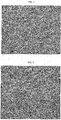
- polyethylene glycol/polymer microcapsules prepared in Examples 1 ⁇ 3 were observed with optical microscope. As shown in Figure 1 , the polyethylene glycol/polymer microcapsules have an average particle diameter of 5 ⁇ 20mm and are spherical. Spherical domain of polyethylene glycol is formed inside of the each microcapsule. However, it was found that the introduction volume of the polyethylene glycol depends on the molecular weight. The introduction volume in the microcapsules according to the molecular weight of polyethylene glycol were measured quantitatively with a thin layer chromatography, and the results are shown in Table 1. ⁇ Table 1> Polyethylene glycol introduction volume (%) 400 g/mol 4000g/mol 8000g/mol 12000g/mol Example 1 0 0.5 14 21 Example 2 0 0.7 18 20 Example 3 0 0.3 9 16
- the introduction volume of polyethylene glycol depended on the molecular weight. As the molecular weight of polyethylene glycol increased, the introduction volume of polyethylene glycol increased because of decreasing polarity. However, the optical microscopic photograph showed that a low molecular weight polyethylene glycol can also form an internal domain. Such formation of the microcapsule and domain happens because the polyethylene glycol forms a specific domain in the microcapsule by phase separation, and then slowly flew out to the external microcapsule during the solvent removal. This behavior of the low molecular weight polyethylene glycol shows that a low molecular weight polyethylene glycol acts as a template to induce formation of an internal domain during the manufacturing process of the microcapsule. It was also found that a high molecular weight polyethylene glycol was loaded in the microcapsule irrespective of the process.
- microcapsule containing licorice with high concentration because the solubility of licorice is limited.
- the licorice does not absolutely dissolve in organic solvent such as methylene chloride, and does not dissolve more than 2% in polyol at 60 °C or more.
- a microcapsule containing with 10% or more of concentration licorice was prepared by selecting and mixing suitable polyol and organic solvent at room temperature.
- Example 8 confirmed that a water-soluble component as well as an oil-soluble component can be capsulized.
- ascorbic acid is easily discolored and unstable in cosmetic compositions
- the present invention capsulized ascorbic acid into polymer capsule with a simple method of a polyol/polymer microcapsule.
- Example 9 which collected lipoic acid and ascorbic acid at the same time, confirmed that the microcapsule of the present invention is also able to collect both oil- and water-soluble active components at the same time.
- the lipoic acid is an oil-soluble component which has an excellent antioxidation effect
- the ascorbic acid is a water-soluble component. Effects of these two active components are maximized when they are used at the same time rather than separately( H. R. Rosenberg, R. Culik, Arch. Biochem. Biophys. 80 (1959) 86-93 ).
- H. R. Rosenberg, R. Culik, Arch. Biochem. Biophys. 80 (1959) 86-93 H. R. Rosenberg, R. Culik, Arch. Biochem. Biophys. 80 (1959) 86-93 .
- H. R. Rosenberg, R. Culik, Arch. Biochem. Biophys. 80 (1959) 86-93 H. R. Rosenberg, R. Culik, Arch. Biochem. Biophys. 80 (1959
- the present invention confirmed that it is possible to collect two active components having different solubilities in a single microcapsule by using the manufacturing method of polyol/polymer microcapsules.
- the amounts of active components in the microcapsules of the above Examples 7 ⁇ 9 were analized with HPLC, and collection ratios of the active components were more than 95%.
- the polyethylene glycol/polycaprolacton microcapsule produced in Example 4 was quantitatively analized by thin layer chromatography and the result is shown in Table 2.
- the introduction volume of polyethylene glycol into the microcapsule was found to depend on the mixing ratio of a low and a high molecular weight polyethylene glycol.
- the optical microscopic photograph of Figure 2 shows that the shape of the microcapsule was independent of the mixing ratio of a low and a high molecular weight polyethylene glycol. This result shows that the low molecular weight polyethylene glycol is just a template for domain forming, and the high molecular weight polyethylene glycol remains in the microcapsule.
- Figure 3 shows an optical microscopic photograph of a polyethylene glycol/polycaprolacton containing papain microcapsules prepared in the Example 5. Contrary to Figure 1 , areas of the papain can be easily observed in the microcapsule.
- Figure 4 shows a scanning electron microscopic photograph of a polyethylene glycol/polycaprolacton containing papain microcapsules.
- the external wall of the microcapsule was formed with smooth polycaprolacton and it was found that papain and polyethylene glycol were efficiently collected within the external wall of polycaprolacton since effluence of papain or polyethylene glycol to the outside of the microcapsule was not observed.
- the introduction volume of papain in the microcapsules was analized as follows: 50ml of the microcapsules containing papain were added into 1ml of dimethylsulfoxide and incubated for an hour. 2ml solution of 0.05% sodiumdodecylsulfate/0.01 N sodiumhydroxide was added thereto the solution was and held at room temperature for one hour to dissolve polymer and enzyme completely. The resulting solution was then protein analyzed by Micro-BCA, and the result is shown in Table 3. As shown in Table 3, the method of the present invention is able to efficiently collect enzyme. ⁇ Table 3> Papain introduction volume (wt%, calculated value) Introduction volume of papain (wt%, measured value) Introduction ratio (%) 1 0.99 99 3 2.79 93 5 4.55 91
- Activities of papain in the microcapsules were analyzed as follows: 20ml of microcapsules containing papain was added into 1 ml of acetone and irradiated with ultrasonic waves for 10 seconds, then centrifuged at 12000rpm for 5min. This process was repeated three times to obtain pure enzyme. Activity of the pure enzyme was measured with UV spectrophotometer using casein as substrate at 280nm. Activities of papain according to storage condition are shown in Table 4. Papain in polyethylene glycol/polycaprolacton microcapsules showed excellent activity after long time storage. This excellent activity means that the polyol such as polyethylene glycol efficiently stabilizes enzyme in the microcapsules.
- the polyol is suitably located between enzyme and wall-component polymer such as polycaprolacton to provide hydrophobic distribution and block direct interaction of enzyme and polymer, and therefore, to stabilize the enzyme.
- wall-component polymer such as polycaprolacton
- microcapsules were employed to the following Formulation 1 ⁇ 3.
- Formulation 1 (a soluble formulation)
- a soluble formulation as colorless gel was made according to the composition of the Table 5.
- the viscosity of the soluble formulation is 4,000cps.
- the viscosity was measured with Brookfield(LVDVII+) at 30°C, 12rpm.
- Ethanol 10 Sodium polyacrylate 0.5 Preservative I quantitative Purified water To 100
- a lotion was made according to the composition of the Table 7.
- a lotion as an opaque gel was produced by dissolving the organic phase and aqueous phase completely at 70°C and emulsifying at 7,000rpm for 5min.
- the viscosity of the lotion was 2,500cps.
- Table 7> Component Content (wt%) Stearic acid 2 Cetyl alcohol 2 Lanolin alcohol 2 Liquid paraffin 7 Cyclomethicone 5 5 Polyoxyethylene monooleic acid ester 2 Preservative and antioxidant quantitative Glycerin 3 Propylene glycol 5 Triethylamine 1 Microcapsules of Examples 7 ⁇ 9 8 Sodium polyacrylate 0.15 Purified water To 100
- a cream was made according to the composition of the Table 9.
- Table 9 Component Content (wt%) Bees wax 2 Stearyl alcohol 5 Stearic acid 8 Squalane 10 Propylene glycol monostearate 3 Polyoxyethylene cetyl eter 1 Preservative and antioxidant quantitative Propylene glycol 8 Glycerin 4 Triethylamine 1 Microcapsules of Examples 7 ⁇ 9 2 Purified water To 100
- the active components in polyol/polymer microcapsules according to the present disclosure had excellent stability in a cosmetic formulations. Accordingly, the active component, which had restricted utility in cosmetic formulation, can be stably used by using the polyol/polymer microcapsule system according to the present disclosure in the formulation containing the microcapsules prepared to collect water- and oil-soluble components at the same time in Example 9, it was found that both the water- and the oil-soluble components can have excellent stability. This excellent stability may be the result that direct contact between the active component and external stimulation are efficiently blocked by the external wall of polymer surrounding the active component.
- the polyol/polymer microcapsule according to the present disclosure is a system that efficiently introduces various active components.
- the system is able to collect a water-soluble component, an oil-soluble component or oil- and water-soluble components at the same time in the microcapsule.
- the polyol/polymer microcapsule containing an active component also blocks the effects on the active component of contact with detergent, oil, moisture and air through giving stability to an unstable active component. Owing to the active component not contacting directly the outside but being enclosed within the external wall of polymer, the microcapsule relaxes the stimulation of skin which occurs by direct contact of the active component with the skin.
Landscapes
- Life Sciences & Earth Sciences (AREA)
- Health & Medical Sciences (AREA)
- Animal Behavior & Ethology (AREA)
- General Health & Medical Sciences (AREA)
- Public Health (AREA)
- Veterinary Medicine (AREA)
- Epidemiology (AREA)
- Birds (AREA)
- Biotechnology (AREA)
- Engineering & Computer Science (AREA)
- Chemical & Material Sciences (AREA)
- Organic Chemistry (AREA)
- Botany (AREA)
- Microbiology (AREA)
- Mycology (AREA)
- Dispersion Chemistry (AREA)
- Chemical Kinetics & Catalysis (AREA)
- Dermatology (AREA)
- Emergency Medicine (AREA)
- Cosmetics (AREA)
- Medicinal Preparation (AREA)
- Enzymes And Modification Thereof (AREA)
- Manufacturing Of Micro-Capsules (AREA)
Claims (3)
- Verfahren zum Herstellen von dreischichtigen Mikrokapseln, die ein darin stabilisiertes Enzym beinhalten, umfassend die Schritte;1) Dispergieren eines Enzyms in einem Polyol mit niedrigem Molekulargewicht ausgewählt aus der Gruppe bestehend aus Polyethylenglykol, Polypropylenglykol, und Copolymeren oder Derivaten davon, Butylenglykol, Propylenglykol oder Glyzerin, wobei deren Molekulargewicht 1000 g/mol oder weniger beträgt, um das Enzym zu dispergieren und stabilisieren;2) Re-Dispergieren der dispergierten Enzym/Polyol-Lösung aus Schritt 1) in einer Polymerlösung beinhaltend ein Polyol mit hohem Molekulargewicht ausgewählt aus der Gruppe bestehend aus Polyethylenglykol, Polypropylenglykol, und Copolymeren oder Derivativen davon, wobei deren Molekulargewicht mehr als 1000 g/mol beträgt, um eine hydrophobe Verteilung des Enzyms in der Mikrokapsel bereitzustellen, welche einen Puffer bereitstellt, der einen direkten Kontakt zwischen dem Enzym und dem hydrophoben Wandmaterial in der Mikrokapsel verhindert;3) Emulgieren der Lösung aus Schritt 2), um eine Emulsion zu sammeln; und4) Verfestigen der Enzym/Polyol/Polymer-Emulsion aus Schritt 2) und Trennen des wässrigen Polyols mit niedrigem Molekulargewicht, das von einer inneren Phase durch eine äußere Oberfläche der Kapsel herausfließt, während das Polyol mit hohem Molekulargewicht in der Mikrokapsel verbleibt, und Sammeln der harten Polymer-Mikrokapseln;wobei ein Wand-Komponenten-Polymer ausgewählt aus der Gruppe bestehend aus Poly-L-Milchsäure, Poly-D,L-Glykolsäure, Poly-L-Milchsäure-Co-Glykolsäure, Poly-D,L-Milchsäure-Co-Glykolsäure, Polycaprolacton, Polyvalerolacton, Polyhydroxybutyrat, Polyhydroxyvalerat, Polyorthoester, und von diesen Monomeren hergestellte Copolymere, Polystyrol, Poly-p- oder m-Methylstyrol, Poly-p- oder m-Ethylstyrol, Poly-p- oder m-Chlorostyrol, Poly-p- oder m-Chloromethylstyrol, Polystyrol-Sulfonsäure, Poly-p-, m-, oder t-Butoxystyrol, Polymethyl(meth)acrylat, Polyethyl(meth)acrylat, Polypropyl(meth)acrylat, Poly-n-butyl(meth)acrylat, Polyisobutyl(meth)acrylat, Poly-t-butyl(meth)acrylat, Poly-2-ethylhexyl(meth)acrylat, Poly-n-octyl(meth)acrylat, Polylauryl(meth)acrylat, Polystearyl(meth)acrylat, Poly-2-hydroxyethyl(meth)acrylat, Polyethylenglykol(meth)acrylat, Methoxypolyethylen-Glykol(meth)acrylat, Polyglycidyl(meth)acrylat, Polydimethylaminoethyl(meth)acrylat, Polydiethylaminoethyl(meth)acrylat, Polyvinylpropionat, Polyvinylbutyrat, Polyvinylether, Polyallylbutylether, Polyallylglycidilether, Poly(meth)acrylsäure, Polymaleinsäure, Polyalkyl(meth)acrylamid und Poly(meth)acrylonitril in der Polymerlösung von Schritt 2) gelöst wird,
wodurch eine Drei-Komponenten-Mikrokapsel hergestellt wird, in welcher das Enzym umgeben und geschützt durch das Polyol mit hohem Molekulargewicht ist und das Wand-Komponenten-Polymer eine äußere Wand um das Enzym und das Polyol mit hohem Molekulargewicht bildet. - Verfahren nach Anspruch 1, wobei das Enzym wenigstens eines ist ausgewählt aus der Gruppe bestehend aus Oxidoreduktase, Transferase, Hydrolase, Lyase, Isomerase, Synthase und Ligase.
- Mikrokapsel, die aus dreifachen Schichten gebildet ist, umfassend:einen internen Nukleus mit Enzym;hydophobes Polyol mit einem hohen Molekulargewicht, dessen Molekulargewicht mehr als 1000 g/mol beträgt, welches den Nukleus umgibt; undeine äußere Polymerwand,wobei die Mikrokapsel durch das Verfahren nach Anspruch 1 hergestellt ist.
Applications Claiming Priority (4)
| Application Number | Priority Date | Filing Date | Title |
|---|---|---|---|
| KR2002073433 | 2002-11-25 | ||
| KR10-2002-0073433A KR100517072B1 (ko) | 2002-11-25 | 2002-11-25 | 폴리올/고분자 마이크로캡슐 및 이를 이용한 효소 안정화방법 |
| KR2003019384 | 2003-03-28 | ||
| KR1020030019384A KR101096374B1 (ko) | 2003-03-28 | 2003-03-28 | 폴리올/고분자 마이크로캡슐을 이용한 유효성분 안정화방법 및 이를 함유하는 화장료 조성물 |
Publications (2)
| Publication Number | Publication Date |
|---|---|
| EP1421990A1 EP1421990A1 (de) | 2004-05-26 |
| EP1421990B1 true EP1421990B1 (de) | 2016-01-20 |
Family
ID=32232784
Family Applications (1)
| Application Number | Title | Priority Date | Filing Date |
|---|---|---|---|
| EP03104342.5A Expired - Lifetime EP1421990B1 (de) | 2002-11-25 | 2003-11-24 | Verfahren zum stabilisieren von aktiven komponenten mittels polyol/polymere mikrokapsel, sowie kosmetische zusammensetzung, die die mikrokapsel enthält |
Country Status (3)
| Country | Link |
|---|---|
| US (1) | US7691296B2 (de) |
| EP (1) | EP1421990B1 (de) |
| JP (1) | JP2004174492A (de) |
Families Citing this family (31)
| Publication number | Priority date | Publication date | Assignee | Title |
|---|---|---|---|---|
| US20050096256A1 (en) | 2003-07-01 | 2005-05-05 | President And Fellows Of Harvard College | Compositions for manipulating the lifespan and stress response of cells and organisms |
| US20060025337A1 (en) | 2003-07-01 | 2006-02-02 | President And Fellows Of Harvard College | Sirtuin related therapeutics and diagnostics for neurodegenerative diseases |
| US20060024340A1 (en) * | 2004-07-30 | 2006-02-02 | Elder Stewart T | Encapsulated fluorescent whitening compositions for improved surface appearance |
| EP1877054A2 (de) | 2005-03-30 | 2008-01-16 | Sirtris Pharmaceuticals, Inc. | Nicotinamidribosid und analoge davon |
| EP1909910A1 (de) | 2005-08-04 | 2008-04-16 | Sirtris Pharmaceuticals, Inc. | Benzimidazol-derivative als sirtuin-modulatoren |
| JP5264492B2 (ja) * | 2005-10-25 | 2013-08-14 | エボニック デグサ ゲーエムベーハー | 超分岐ポリマーを含有する調製物 |
| US9828597B2 (en) | 2006-11-22 | 2017-11-28 | Toyota Motor Engineering & Manufacturing North America, Inc. | Biofunctional materials |
| EP1982698A1 (de) * | 2007-04-18 | 2008-10-22 | Evonik Degussa GmbH | Präparate zur gesteuerten Freisetzung von bioaktiven Naturstoffen |
| EP2142293A2 (de) * | 2007-04-26 | 2010-01-13 | Basf Se | Enzymatisches verfahren zur herstellung von mikrokapseln |
| US20080292692A1 (en) * | 2007-05-21 | 2008-11-27 | Shira Pilch | Impermeable Capsules |
| JP5453693B2 (ja) * | 2007-10-29 | 2014-03-26 | ディーエスエム アイピー アセッツ ビー.ブイ. | レスベラトロルおよびペクチンを含有する組成物 |
| WO2010046286A1 (de) * | 2008-10-24 | 2010-04-29 | Basf Se | Verfahren zur herstellung von effektstoff-haltigen mikropartikeln |
| WO2010140987A1 (en) | 2009-06-05 | 2010-12-09 | Nanyang Technological University | Multi-phase microparticles and method of manufacturing multi-phase microparticles |
| WO2011091084A2 (en) * | 2010-01-19 | 2011-07-28 | Basf Corporation | Stabilized proteases for use in skin care |
| US9121016B2 (en) | 2011-09-09 | 2015-09-01 | Toyota Motor Engineering & Manufacturing North America, Inc. | Coatings containing polymer modified enzyme for stable self-cleaning of organic stains |
| US10988714B2 (en) | 2010-06-21 | 2021-04-27 | Regents Of The University Of Minnesota | Methods of facilitating removal of a fingerprint from a substrate or a coating |
| US11015149B2 (en) | 2010-06-21 | 2021-05-25 | Toyota Motor Corporation | Methods of facilitating removal of a fingerprint |
| US8796009B2 (en) | 2010-06-21 | 2014-08-05 | Toyota Motor Engineering & Manufacturing North America, Inc. | Clearcoat containing thermolysin-like protease from Bacillus stearothermophilus for cleaning of insect body stains |
| US9388370B2 (en) | 2010-06-21 | 2016-07-12 | Toyota Motor Engineering & Manufacturing North America, Inc. | Thermolysin-like protease for cleaning insect body stains |
| WO2013025986A2 (en) | 2011-08-17 | 2013-02-21 | Basf Corporation | Marine based cosmetic active ingredients and use thereof |
| FR3002844B1 (fr) * | 2013-03-05 | 2016-08-12 | Sensient Cosmetic Tech | Composition pulverulente utile pour la preparation de compositions cosmetiques blanchissantes |
| CN103894121B (zh) * | 2014-03-12 | 2016-02-10 | 上海交通大学 | 纳米沸石强化黄原胶复合水凝胶功能微球的制备及应用 |
| RU2569734C2 (ru) * | 2014-03-31 | 2015-11-27 | Александр Александрович Кролевец | Способ получения нанокапсул резвератрола в альгинате натрия |
| RU2626828C1 (ru) * | 2016-01-20 | 2017-08-02 | Александр Александрович Кролевец | Способ получения нанокапсул резвератрола в каппа-каррагинане |
| KR102610938B1 (ko) * | 2018-08-31 | 2023-12-08 | (주)아모레퍼시픽 | 유화입자를 형성하는 나노캡슐 및 이를 포함하는 유화 조성물 |
| CN110227395A (zh) * | 2019-07-10 | 2019-09-13 | 广东奔源科技发展有限公司 | 气流纳米的制备方法 |
| CN111621986A (zh) * | 2019-12-05 | 2020-09-04 | 山东汇高智慧纺织科技有限公司 | 一种含驱蚊微胶囊多功能织物及其制备方法 |
| CN111150050B (zh) * | 2020-01-11 | 2022-09-30 | 浙江工商大学 | 白藜芦醇微胶囊的制备方法 |
| CN111249249B (zh) * | 2020-02-14 | 2022-06-10 | 上海宇昂水性新材料科技股份有限公司 | 一种辅酶q10的海藻酸钠微球及其制备方法 |
| CN111529511B (zh) * | 2020-04-28 | 2022-04-15 | 北京诺葆营养科技有限公司 | 一种益生菌微胶囊及其制备方法与应用 |
| CN113081999B (zh) * | 2021-04-27 | 2023-05-05 | 安徽箐补堂生物科技有限公司 | 一种用于包埋植物提取物的微胶囊壁材及其制备 |
Family Cites Families (16)
| Publication number | Priority date | Publication date | Assignee | Title |
|---|---|---|---|---|
| BE757727A (fr) * | 1969-10-22 | 1971-04-20 | Balchem Corp | Procede d'encapsulation |
| US3664963A (en) * | 1969-10-22 | 1972-05-23 | Balchem Corp | Encapsulation process |
| JPS523342B2 (de) * | 1972-01-26 | 1977-01-27 | ||
| US4389330A (en) | 1980-10-06 | 1983-06-21 | Stolle Research And Development Corporation | Microencapsulation process |
| JP2562624B2 (ja) * | 1986-11-07 | 1996-12-11 | 昭和電工株式会社 | 水溶性マイクロカプセルおよび液体洗剤組成物 |
| US5460817A (en) * | 1988-01-19 | 1995-10-24 | Allied Colloids Ltd. | Particulate composition comprising a core of matrix polymer with active ingredient distributed therein |
| ES2084698T5 (es) * | 1989-05-04 | 2005-03-01 | Southern Research Institute | Procedimiento de encapsulacion. |
| US5385959A (en) * | 1992-04-29 | 1995-01-31 | Lever Brothers Company, Division Of Conopco, Inc. | Capsule which comprises a component subject to degradation and a composite polymer |
| EP0772393A1 (de) | 1994-07-22 | 1997-05-14 | Novartis AG | Sphärische micropartikel die einen nukleierungs beschleuniger und biologish aktive verbindungen enthalten |
| DE4432647A1 (de) * | 1994-09-14 | 1996-03-21 | Bayer Ag | 1,3-Dioxan-2-on-Gruppen enthaltende Oligourethane |
| US5672213A (en) * | 1995-08-18 | 1997-09-30 | Alcon Laboratories, Inc. | Liquid enzyme compositions containing aromatic acid derivatives |
| US5740537A (en) * | 1996-01-30 | 1998-04-14 | Telefonaktiebolaget L M Ericsson (Publ) | Method and circuitry for selectively permitting communication in a multi-user communication system |
| US5911923A (en) * | 1996-07-01 | 1999-06-15 | Microtek Laboratories, Inc. | Method for microencapsulating water-soluble or water-dispersible or water-sensitive materials in an organic continuous phase |
| US6287587B2 (en) | 1997-07-15 | 2001-09-11 | Takeda Chemical Industries, Ltd. | Process for producing sustained-release preparation by in-water drying |
| CA2352802C (en) | 1998-12-01 | 2004-02-24 | Brown University Research Foundation | Preparation of multiwall polymeric microcapsules from hydrophilic polymers |
| US6420333B1 (en) * | 2001-08-28 | 2002-07-16 | Unilever Home & Personal Care Usa Division Of Conopco, Inc. | Manufacture of capsules for incorporation into detergent and personal care compositions |
-
2003
- 2003-11-20 US US10/716,877 patent/US7691296B2/en not_active Expired - Lifetime
- 2003-11-24 EP EP03104342.5A patent/EP1421990B1/de not_active Expired - Lifetime
- 2003-11-25 JP JP2003394526A patent/JP2004174492A/ja active Pending
Also Published As
| Publication number | Publication date |
|---|---|
| EP1421990A1 (de) | 2004-05-26 |
| US20040108608A1 (en) | 2004-06-10 |
| JP2004174492A (ja) | 2004-06-24 |
| US7691296B2 (en) | 2010-04-06 |
Similar Documents
| Publication | Publication Date | Title |
|---|---|---|
| US7691296B2 (en) | Method for stabilizing active components using polyol/polymer microcapsule, and cosmetic composition containing the microcapsule | |
| Ribeiro et al. | Microencapsulation of lipophilic drugs in chitosan-coated alginate microspheres | |
| Carrasquillo et al. | Non-aqueous encapsulation of excipient-stabilized spray-freeze dried BSA into poly (lactide-co-glycolide) microspheres results in release of native protein | |
| JP3933886B2 (ja) | 少なくとも一つの水溶性化粧品として又は皮膚科学的に活性な成分を含む水性コアを有するマイクロカプセル及びそれを含む化粧品又は皮膚科学的組成物 | |
| US5489401A (en) | Method for entrapment of active materials in chitosan | |
| EP1255534B1 (de) | Herstellungsverfahren von kolloidale systeme enthaltenden mikrokugeln | |
| EP0687173B1 (de) | Teilchenfoermige synthetische traeger sowie verfahren zu deren herstellung | |
| Liu et al. | Immobilization and bioactivity of glucose oxidase in hydrogel microspheres formulated by an emulsification–internal gelation–adsorption–polyelectrolyte coating method | |
| Lamprecht et al. | Design of rolipram-loaded nanoparticles: comparison of two preparation methods | |
| JP5575667B2 (ja) | 薬物の投与のためのナノ粒子キャリア及びその製造方法 | |
| ITMI20002456A1 (it) | Microsfere di enzimi pancreatici con elevata stabilita' e relativo metodo di preparazione | |
| KR20010042660A (ko) | 활성 물질의 담체 매트릭스로의 결합 | |
| JP4982178B2 (ja) | マイクロカプセル封入系およびその適用 | |
| CA2097801C (en) | Method of producing collagen particles, and the use of such particles as substrates for active substances | |
| JP2004331750A (ja) | ポリヒドロキシアルカノエートを含有する磁性構造体及びその製造方法ならびにその用途 | |
| Lorenzo-Lamosam et al. | Development of a microencapsulated form of cefuroxime axetil using pH-sensitive acrylic polymers | |
| Farsana et al. | Hydrogel based nanosponges drug delivery for topical applications-A updated review | |
| JP2003526503A (ja) | ナノカプセルの形態にあるコロイド粒子の調製方法 | |
| EP1539118A1 (de) | Mikropartikel | |
| JP2003175092A (ja) | ポリヒドロキシアルカノエートを含有する粒状体及びその製造方法ならびにその用途 | |
| JP2004250450A (ja) | 有効成分をマイクロカプセル内に含有する化粧料 | |
| KR101096374B1 (ko) | 폴리올/고분자 마이크로캡슐을 이용한 유효성분 안정화방법 및 이를 함유하는 화장료 조성물 | |
| Kassab et al. | Molecular recognition by Kluyveromyces of amphotericin B-loaded, galactose-tagged, poly (lactic acid) microspheres | |
| KR100517072B1 (ko) | 폴리올/고분자 마이크로캡슐 및 이를 이용한 효소 안정화방법 | |
| Mašková et al. | Development of compartmentalized antibacterial systems based on encapsulated alliinase |
Legal Events
| Date | Code | Title | Description |
|---|---|---|---|
| PUAI | Public reference made under article 153(3) epc to a published international application that has entered the european phase |
Free format text: ORIGINAL CODE: 0009012 |
|
| AK | Designated contracting states |
Kind code of ref document: A1 Designated state(s): AT BE BG CH CY CZ DE DK EE ES FI FR GB GR HU IE IT LI LU MC NL PT RO SE SI SK TR |
|
| AX | Request for extension of the european patent |
Extension state: AL LT LV MK |
|
| 17P | Request for examination filed |
Effective date: 20041030 |
|
| AKX | Designation fees paid |
Designated state(s): DE FR GB |
|
| 17Q | First examination report despatched |
Effective date: 20071022 |
|
| REG | Reference to a national code |
Ref country code: DE Ref legal event code: R079 Ref document number: 60348483 Country of ref document: DE Free format text: PREVIOUS MAIN CLASS: B01J0013120000 Ipc: A61K0008000000 |
|
| RIC1 | Information provided on ipc code assigned before grant |
Ipc: A61K 8/00 20060101AFI20150324BHEP |
|
| GRAP | Despatch of communication of intention to grant a patent |
Free format text: ORIGINAL CODE: EPIDOSNIGR1 |
|
| INTG | Intention to grant announced |
Effective date: 20150717 |
|
| GRAS | Grant fee paid |
Free format text: ORIGINAL CODE: EPIDOSNIGR3 |
|
| GRAA | (expected) grant |
Free format text: ORIGINAL CODE: 0009210 |
|
| AK | Designated contracting states |
Kind code of ref document: B1 Designated state(s): DE FR GB |
|
| REG | Reference to a national code |
Ref country code: GB Ref legal event code: FG4D |
|
| REG | Reference to a national code |
Ref country code: DE Ref legal event code: R096 Ref document number: 60348483 Country of ref document: DE |
|
| REG | Reference to a national code |
Ref country code: FR Ref legal event code: PLFP Year of fee payment: 14 |
|
| REG | Reference to a national code |
Ref country code: DE Ref legal event code: R097 Ref document number: 60348483 Country of ref document: DE |
|
| PLBE | No opposition filed within time limit |
Free format text: ORIGINAL CODE: 0009261 |
|
| STAA | Information on the status of an ep patent application or granted ep patent |
Free format text: STATUS: NO OPPOSITION FILED WITHIN TIME LIMIT |
|
| 26N | No opposition filed |
Effective date: 20161021 |
|
| REG | Reference to a national code |
Ref country code: DE Ref legal event code: R119 Ref document number: 60348483 Country of ref document: DE |
|
| GBPC | Gb: european patent ceased through non-payment of renewal fee |
Effective date: 20161124 |
|
| REG | Reference to a national code |
Ref country code: FR Ref legal event code: PLFP Year of fee payment: 15 |
|
| PG25 | Lapsed in a contracting state [announced via postgrant information from national office to epo] |
Ref country code: DE Free format text: LAPSE BECAUSE OF NON-PAYMENT OF DUE FEES Effective date: 20170601 Ref country code: GB Free format text: LAPSE BECAUSE OF NON-PAYMENT OF DUE FEES Effective date: 20161124 |
|
| REG | Reference to a national code |
Ref country code: FR Ref legal event code: PLFP Year of fee payment: 16 |
|
| PGFP | Annual fee paid to national office [announced via postgrant information from national office to epo] |
Ref country code: FR Payment date: 20200923 Year of fee payment: 18 |
|
| PG25 | Lapsed in a contracting state [announced via postgrant information from national office to epo] |
Ref country code: FR Free format text: LAPSE BECAUSE OF NON-PAYMENT OF DUE FEES Effective date: 20211130 |