EP1373431B1 - Asymmetric dendrimers - Google Patents
Asymmetric dendrimers Download PDFInfo
- Publication number
- EP1373431B1 EP1373431B1 EP02712104A EP02712104A EP1373431B1 EP 1373431 B1 EP1373431 B1 EP 1373431B1 EP 02712104 A EP02712104 A EP 02712104A EP 02712104 A EP02712104 A EP 02712104A EP 1373431 B1 EP1373431 B1 EP 1373431B1
- Authority
- EP
- European Patent Office
- Prior art keywords
- aryl
- dendrite
- vinyl
- different
- acetylenyl
- Prior art date
- Legal status (The legal status is an assumption and is not a legal conclusion. Google has not performed a legal analysis and makes no representation as to the accuracy of the status listed.)
- Expired - Lifetime
Links
Images






Classifications
-
- C—CHEMISTRY; METALLURGY
- C09—DYES; PAINTS; POLISHES; NATURAL RESINS; ADHESIVES; COMPOSITIONS NOT OTHERWISE PROVIDED FOR; APPLICATIONS OF MATERIALS NOT OTHERWISE PROVIDED FOR
- C09K—MATERIALS FOR MISCELLANEOUS APPLICATIONS, NOT PROVIDED FOR ELSEWHERE
- C09K11/00—Luminescent, e.g. electroluminescent, chemiluminescent materials
- C09K11/06—Luminescent, e.g. electroluminescent, chemiluminescent materials containing organic luminescent materials
-
- C—CHEMISTRY; METALLURGY
- C08—ORGANIC MACROMOLECULAR COMPOUNDS; THEIR PREPARATION OR CHEMICAL WORKING-UP; COMPOSITIONS BASED THEREON
- C08G—MACROMOLECULAR COMPOUNDS OBTAINED OTHERWISE THAN BY REACTIONS ONLY INVOLVING UNSATURATED CARBON-TO-CARBON BONDS
- C08G83/00—Macromolecular compounds not provided for in groups C08G2/00 - C08G81/00
- C08G83/002—Dendritic macromolecules
- C08G83/003—Dendrimers
-
- H—ELECTRICITY
- H10—SEMICONDUCTOR DEVICES; ELECTRIC SOLID-STATE DEVICES NOT OTHERWISE PROVIDED FOR
- H10K—ORGANIC ELECTRIC SOLID-STATE DEVICES
- H10K85/00—Organic materials used in the body or electrodes of devices covered by this subclass
- H10K85/791—Starburst compounds
-
- C—CHEMISTRY; METALLURGY
- C09—DYES; PAINTS; POLISHES; NATURAL RESINS; ADHESIVES; COMPOSITIONS NOT OTHERWISE PROVIDED FOR; APPLICATIONS OF MATERIALS NOT OTHERWISE PROVIDED FOR
- C09K—MATERIALS FOR MISCELLANEOUS APPLICATIONS, NOT PROVIDED FOR ELSEWHERE
- C09K2211/00—Chemical nature of organic luminescent or tenebrescent compounds
- C09K2211/10—Non-macromolecular compounds
- C09K2211/1003—Carbocyclic compounds
-
- C—CHEMISTRY; METALLURGY
- C09—DYES; PAINTS; POLISHES; NATURAL RESINS; ADHESIVES; COMPOSITIONS NOT OTHERWISE PROVIDED FOR; APPLICATIONS OF MATERIALS NOT OTHERWISE PROVIDED FOR
- C09K—MATERIALS FOR MISCELLANEOUS APPLICATIONS, NOT PROVIDED FOR ELSEWHERE
- C09K2211/00—Chemical nature of organic luminescent or tenebrescent compounds
- C09K2211/10—Non-macromolecular compounds
- C09K2211/1003—Carbocyclic compounds
- C09K2211/1007—Non-condensed systems
-
- C—CHEMISTRY; METALLURGY
- C09—DYES; PAINTS; POLISHES; NATURAL RESINS; ADHESIVES; COMPOSITIONS NOT OTHERWISE PROVIDED FOR; APPLICATIONS OF MATERIALS NOT OTHERWISE PROVIDED FOR
- C09K—MATERIALS FOR MISCELLANEOUS APPLICATIONS, NOT PROVIDED FOR ELSEWHERE
- C09K2211/00—Chemical nature of organic luminescent or tenebrescent compounds
- C09K2211/10—Non-macromolecular compounds
- C09K2211/1003—Carbocyclic compounds
- C09K2211/1014—Carbocyclic compounds bridged by heteroatoms, e.g. N, P, Si or B
-
- C—CHEMISTRY; METALLURGY
- C09—DYES; PAINTS; POLISHES; NATURAL RESINS; ADHESIVES; COMPOSITIONS NOT OTHERWISE PROVIDED FOR; APPLICATIONS OF MATERIALS NOT OTHERWISE PROVIDED FOR
- C09K—MATERIALS FOR MISCELLANEOUS APPLICATIONS, NOT PROVIDED FOR ELSEWHERE
- C09K2211/00—Chemical nature of organic luminescent or tenebrescent compounds
- C09K2211/10—Non-macromolecular compounds
- C09K2211/1018—Heterocyclic compounds
- C09K2211/1025—Heterocyclic compounds characterised by ligands
- C09K2211/1029—Heterocyclic compounds characterised by ligands containing one nitrogen atom as the heteroatom
-
- C—CHEMISTRY; METALLURGY
- C09—DYES; PAINTS; POLISHES; NATURAL RESINS; ADHESIVES; COMPOSITIONS NOT OTHERWISE PROVIDED FOR; APPLICATIONS OF MATERIALS NOT OTHERWISE PROVIDED FOR
- C09K—MATERIALS FOR MISCELLANEOUS APPLICATIONS, NOT PROVIDED FOR ELSEWHERE
- C09K2211/00—Chemical nature of organic luminescent or tenebrescent compounds
- C09K2211/10—Non-macromolecular compounds
- C09K2211/1018—Heterocyclic compounds
- C09K2211/1025—Heterocyclic compounds characterised by ligands
- C09K2211/1044—Heterocyclic compounds characterised by ligands containing two nitrogen atoms as heteroatoms
- C09K2211/1048—Heterocyclic compounds characterised by ligands containing two nitrogen atoms as heteroatoms with oxygen
-
- H—ELECTRICITY
- H10—SEMICONDUCTOR DEVICES; ELECTRIC SOLID-STATE DEVICES NOT OTHERWISE PROVIDED FOR
- H10K—ORGANIC ELECTRIC SOLID-STATE DEVICES
- H10K50/00—Organic light-emitting devices
- H10K50/10—OLEDs or polymer light-emitting diodes [PLED]
- H10K50/11—OLEDs or polymer light-emitting diodes [PLED] characterised by the electroluminescent [EL] layers
-
- H—ELECTRICITY
- H10—SEMICONDUCTOR DEVICES; ELECTRIC SOLID-STATE DEVICES NOT OTHERWISE PROVIDED FOR
- H10K—ORGANIC ELECTRIC SOLID-STATE DEVICES
- H10K85/00—Organic materials used in the body or electrodes of devices covered by this subclass
- H10K85/10—Organic polymers or oligomers
- H10K85/111—Organic polymers or oligomers comprising aromatic, heteroaromatic, or aryl chains, e.g. polyaniline, polyphenylene or polyphenylene vinylene
- H10K85/113—Heteroaromatic compounds comprising sulfur or selene, e.g. polythiophene
- H10K85/1135—Polyethylene dioxythiophene [PEDOT]; Derivatives thereof
-
- Y—GENERAL TAGGING OF NEW TECHNOLOGICAL DEVELOPMENTS; GENERAL TAGGING OF CROSS-SECTIONAL TECHNOLOGIES SPANNING OVER SEVERAL SECTIONS OF THE IPC; TECHNICAL SUBJECTS COVERED BY FORMER USPC CROSS-REFERENCE ART COLLECTIONS [XRACs] AND DIGESTS
- Y02—TECHNOLOGIES OR APPLICATIONS FOR MITIGATION OR ADAPTATION AGAINST CLIMATE CHANGE
- Y02E—REDUCTION OF GREENHOUSE GAS [GHG] EMISSIONS, RELATED TO ENERGY GENERATION, TRANSMISSION OR DISTRIBUTION
- Y02E10/00—Energy generation through renewable energy sources
- Y02E10/50—Photovoltaic [PV] energy
- Y02E10/549—Organic PV cells
-
- Y—GENERAL TAGGING OF NEW TECHNOLOGICAL DEVELOPMENTS; GENERAL TAGGING OF CROSS-SECTIONAL TECHNOLOGIES SPANNING OVER SEVERAL SECTIONS OF THE IPC; TECHNICAL SUBJECTS COVERED BY FORMER USPC CROSS-REFERENCE ART COLLECTIONS [XRACs] AND DIGESTS
- Y10—TECHNICAL SUBJECTS COVERED BY FORMER USPC
- Y10S—TECHNICAL SUBJECTS COVERED BY FORMER USPC CROSS-REFERENCE ART COLLECTIONS [XRACs] AND DIGESTS
- Y10S428/00—Stock material or miscellaneous articles
- Y10S428/917—Electroluminescent
Definitions
- This invention relates to asymmetric dendrimers and light emitting devices containing them.
- Dendritic materials have several advantages over molecular and polymeric materials including: a) the electronic properties can be changed without altering the processing properties; b) a greater variety of chromophores can be used as the dendritic architecture can stop ⁇ - ⁇ stacking of the chromophores; c) the efficiency of light-emitting diodes can be controlled by the dendrimer generation i.e. the number of sets of branching points within a dendron (also called dendrite); and d) the dendrimer architecture makes the formation of blends with other dendrimers, polymers and molecular materials simple.
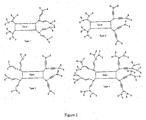
- Dendrimers consist of dendrons or dendritic structures terminating in surface groups and a core (see Figure 1).
- Dendrons have at least one, and preferably more than one, branching point.
- the branching points are atoms or groups to which at least two linkers or branches are attached. The nature of the branching points and the links between the branching points can be varied.
- a branching group can be directly connected to the next branching group (e.g. aryl-aryl), or there can be linking groups in between (e.g. aryl - vinyl - aryl). There are at least three attachments in total to a branching group, but only two are needed to a linker group. These can be illustrated as follows:
- acetylenyl refers to acetylenyl groups that are di-valent
- vinyl refers to vinyl groups that are di- or tri-valent
- aryl refers to aryl groups that are di-, tri- or multivalent.
- the dendrimer types that are likely to have the greatest promise are those that contain mostly conjugated dendrons. These include those described in WO99/21935; these are compounds having the formula: CORE - [DENDRITE] n in which CORE represents an atom or group, n represents an integer of at least 1 and DENDRITE, which may the same or different if n is greater than 1, represents an inherently at least partly conjugated dendritic structure comprising aryl and/or heteroaryl groups and alkenyl groups connected to each other via a carbon atom of an alkenyl group to a ring carbon atom of an aryl or heteroaryl group, CORE terminating in the first single bond which is connected to a ring carbon atom of an (hetero)aryl group to which more than one at least partly conjugated dendritic branch is attached (i.e. a branching point), said ring carbon atom forming part of DEN
- suitable branching groups include aryl and heteroaryl where the definition of (hetero)aryl includes aromatic fused ring systems such as naphthalene and fluorene.
- Suitable linking groups between the branching groups include (hetero)aryl as well as vinyl and acetylenyl groups. In a conjugated system the linking groups are attached to the branching groups by an sp 2 or sp hybridized carbon atom.
- suitable links between branching groups for at least partially conjugated dendrons include aryl-aryl, aryl-vinyl-aryl, aryl-acetylenyl-aryl, and aryl- aryl'-aryl (where aryl' may be different from aryl). It is also possible for there to be more than one linking group between branching points so combinations such as aryl-vinyl-acetylenyl-aryl, aryl-aryl'- vinyl-aryl or aryl-aryl'-acetylenyl-aryl are also suitable.
- the core terminates at the single bond to the first branching group, i.e. a bond to the ring carbon (sp 2 carbon) of a (hetero)aryl branching group, the ring carbon forming part of the dendron.
- a bond to the ring carbon (sp 2 carbon) of a (hetero)aryl branching group the ring carbon forming part of the dendron.
- having the same linking group between the branching points in the dendrons in the dendrimer is not necessarily advantageous.
- an aryl-vinyl-aryl link may be advantageous for hole transport in an LED (light emitting diode) but for electron transport an aryl-aryl'-aryl linkage such as in a phenyl-oxadiazole-phenyl dendron could have superior properties.
- the present invention provides (a) a light emitting dendrimer having the formula: CORE - [DENDRITE 1 ] n [DENDRITE 2 ] m in which CORE represents an atom or group, n and m, which may be the same or different, each represent an integer of at least 1, each DENDRITE 1 , which may be the same or different when n is greater than 1, and each DENDRITE 2 , which may be the same or different when m is greater than 1, represent dendritic structures, at least one of said structures being fully conjugated and comprising aryl and/or heteroaryl groups and, optionally, vinyl and/or acetylenyl groups, connected via sp 2 or sp hybridized carbon atoms of said (hetero) aryl, vinyl and acetylenyl groups, and at least one branching point and/or link between branching points in DENDRITE 1 being different from those in DENDRITE 2 , CORE terminating in the single bond which is connected to
- Type 1 there are aryl-aryl or, more generally, aryl-(aryl') a -aryl, wherein aryl includes heteroaryl and aryl' is the same as or different from aryl and a is an integer from 0 to 3, and aryl-vinyl-aryl linkages (or, more generally, aryl-(vinyl) x -[aryl' v- (vinyl) y ] z -aryl where x is an integer from 1 to 3, preferably 1 or 2, y is an integer from 0 to 3, preferably 0, 1 or 2, v and z are independently from 0 to 3 (where the aryl groups are branching points), in Type 2 aryl-(aryl') a -aryl and aryl-acetylenyl-aryl linkages (or, more generally, aryl-(acetylenyl) d -[(aryl') c -(acetylenyl)
- aryl-aryl and either aryl-vinyl-aryl or aryl-acetylenyl-aryl (or their more general variants). It is to be understood that references to aryl (and aryl') include heteroaryl and fused aromatic ring systems.
- the dendrimers contain two or more of the following types of linkages between branching points within the dendrites: aryl-aryl, aryl-vinyl-aryl, aryl-acetylenyl-aryl and aryl-vinyl-acetylenyl-aryl.
- the number of vinyl and acetylenyl linkages can be 1 or more and in Type 4 the number and order of the different units, in this case vinyl and acetylenyl units, can be varied.
- one dendron can contain more than one type of link between the branch points.
- a single dendron may contain a mixture of aryl-aryl links and aryl-vinyl-aryl links. It is to be appreciated that although in these units aryl acts as the branching points, aryl can also be a linking group.
- DENDRITE 1 differs from DENDRITE 2 by having different branching points and/or different links (because differences in surface groups and/or generation, although they can be present, are regarded as insignificant for the purposes of deciding whether or not the dendritic structures are "different"); in this regard the branching points and/or links of one of DENDRITE 1 and DENDRITE 2 are regarded as different from the branching points and/or links of the other of DENDRITE 1 and DENDRITE 2 if the aryl group or groups in the first one are not all the same as the group or groups of the second one.
- a dendrite with a phenyl-phenyl structure is regarded as different from a dendrite with a phenyl-pyridyl structure.
- DENDRITE 1 differs from DENDRITE 2 merely in a different link then, for two links to be regarded as different one said link must comprise at least one aryl, heteroaryl, vinyl or acetylenyl group which is not present in the other of said two links.
- DENDRITE 1 differs from DENDRITE 2 merely in a different link
- two links to be regarded as different one said link must comprise at least one aryl, heteroaryl, vinyl or acetylenyl group which is not present in the other of said two links.
- Type 4 dendrimers can also be present in Type 4 dendrimers. Indeed for Type 4 dendrimers a difference merely in the number of vinyl or acetylenyl groups as links should not be regarded as a difference.
- conjugated dendrons indicate that they are made up of alternating double and single bonds, apart from the surface groups.
- this does not mean that the ⁇ system is fully delocalised.
- the delocalisation of the ⁇ system is dependent on the regiochemistry of the attachments.
- the dendrimer may have more than one luminescent moiety and the energy resulting from electrical or optical excitation may be transferred to one of them for light emission.
- the dendrimer incorporates at least two inherently at least partially-conjugated luminescent moieties which moieties may or may not be conjugated with each other, wherein the dendron includes at least one of the said luminescent moieties.
- the luminescent moiety or moieties further from the core of the dendrimer generally have a larger HOMO-LUMO energy gap than the luminescent moiety or moieties closer to or partly or wholly within the core of the dendrimer.
- the HOMO-LUMO energy gap on the dendrite is substantially the same although the surface groups may change the HOMO-LUMO energy gap of the chromophores at the surface of the dendrimer.
- the surface group makes the chromophore at the distal end of the dendrite of lower HOMO-LUMO energy compared to that of the next one in.
- the relative HOMO-LUMO energy gaps of the moieties can be measured by methods known per se using a UV-visible spectrophotometer.
- One of the luminescent moieties may be, or (partly or wholly) within, the core itself, which will thus preferably have a smaller inherent HOMO-LUMO energy gap than the other luminescent moiety or moieties in the dendron.
- the dendrons themselves may each contain more than one luminescent moiety, in which case those further from the core will again preferably have larger inherent HOMO-LUMO energy gap than those closer to the core.
- the core itself need not be luminescent, although luminescent cores are generally preferred.
- the dendrimer of the present invention is a dendrimer which is luminescent in the solid state.
- the dendrimer of the present invention comprises a luminescent core.
- at least one component of the dendrons is luminescent.
- the HOMO-LUMO energy gap of the core is lower than that of the conjugated moieties in the dendrons.
- the HOMO-LUMO energy gap of the moieties in the dendrite generally decreases from the surface to the point of attachment to the core.
- the surface groups in a dendrimer of the invention may be the same or different.
- the surface groups within a given dendron of a dendrimer of the invention may be the same or different.
- Suitable surface groups for the dendrimers include branched and unbranched alkyl (especially t-butyl), branched and unbranched alkoxy, hydroxy, alkylsilane, carboxy, carbalkoxy, and vinyl.
- a more comprehensive list includes a further-reactable alkene, (meth)acrylate, sulphur-containing, or silicon-containing group; a sulphonyl group; a polyether group; a C 1 -to-C 15 alkyl (preferably t-butyl) group; an amine group; a mono-, di- or tri-C 1 -to-C 15 alkyl amine group; a -COOR group wherein R is hydrogen or C 1 -to-C 15 alkyl; an -OR group wherein R is hydrogen, aryl, or a C 1 -to-C 15 alkyl or alkenyl; an -O 2 SR group wherein R is C 1 -to-C 15 alkyl or
- the dendrimer is solution-processable i.e. the surface groups are such that the dendrimer can be dissolved in a solvent.
- the surface group can be chosen such that the dendrimer can be photopatterned.
- a cross-linkable group is present which can be cross-linked upon irradiation or by chemical reaction.
- the surface group comprises a protecting group which can be removed to leave a group which can be cross-linked.
- the surface groups are selected so the dendrimers are soluble in solvents suitable for solution processing.
- the aryl (and aryl') groups within the dendrons can be typically benzene, naphthalene, anthracene, fluorene, pyridine, oxadiazole, triazole, triazine, thiophene and where appropriate substituted variations. These groups may optionally be substituted, typically by C 1 to C 15 alkyl or alkoxy groups.
- the aryl groups at the branching points are preferably benzene rings, preferably coupled at ring positions 1, 3 and 5, pyridyl or triazinyl rings.
- the dendrons themselves can contain a, or the, fluorescent chromophore.
- the cores can be comprised of luminescent or non-luminescent moieties. In the latter case the dendrons must contain luminescent groups. In the case of the cores being luminescent they can be comprised of either organic and/or organometallic fluorophores and/or phosphors.
- Typical cores include one or more moieties of benzene, pyridine, pyrimidine, triazine, thiophene, fluorene, divinylbenzene, distyrylethylene, divinylpyridine, pyrimidine, triazine, divinylthiophene, oxadiazole, coronene, or a fluorescent dye or marker compound or an organometallic complex such as a lanthanide, or iridium complex, or a platinum porphyrin, or a distyryl anthracene, porphyrin or distyrylbenzene moiety.
- These various rings may be substituted, for example by C 1 to C 15 alkyl or alkoxy groups.
- one or more of the dendrons attached to the core can be unconjugated.
- dendrons include ether-type aryl dendrons, for example where benzene rings are attached via a methyleneoxy link.
- the dendrimers for the present invention can be prepared in a similar manner to those described in WO99/21935.
- the dendrons are first prepared and then the dendrons are reacted to form the dendrimer.
- this will involve the preparation of 2 to 3 dendrons whereas in Type 4 only one type of dendron may need to be prepared.
- the dendrons are then reacted with a functionality to form the core.
- the dendrimer can be incorporated into a light-emitting device such as a light-emitting diode (LED), also known as an electroluminescent (EL) device, in a conventional manner.
- a light-emitting device such as a light-emitting diode (LED), also known as an electroluminescent (EL) device
- the dendrimer acts as the light emitting element.
- the dendrimers can be made soluble in conventional solvents such as toluene, THF, water and alcoholic solvents such as methanol.
- an organic light emitting or electroluminescent device can be formed from a light emitting layer sandwiched between two electrodes, at least one of which must be transparent to the emitted light.
- Such a device can have a conventional arrangement comprising a transparent substrate layer, a transparent electrode layer, a light emitting layer and a back electrode.
- the standard materials can be used.
- the transparent substrate layer is made of glass although other transparent materials, for example PET, can also be used.
- the anode which is generally transparent, is preferably made from indium tin oxide (ITO) although other similar materials including indium oxide/tin oxide, tin oxide/antimony, zinc oxide/aluminum, gold and platinum can also be used.
- ITO indium tin oxide
- Conducting polymers such as PANI (polyaniline) or PEDOT (poly(3,4-ethylenedioxythiophene) can also be used.
- the cathode is normally made of a low work function metal or alloy such as Al, Ca, Mg, Li, or MgAg or optionally with an additional layer of LiF.
- a low work function metal or alloy such as Al, Ca, Mg, Li, or MgAg or optionally with an additional layer of LiF.
- other layers may also be present, including a hole transporting material and/or an electron transporting material.
- the substrate may be an opaque material such as silicon and the light is emitted through the opposing electrode.
- the light emitting device of the present invention comprises a light emitting element comprising a dendrimer according to the present invention.
- the light emitting device of the present invention comprises a layer of a dendrimer according the present invention together with one or more layers of other materials.
- the light emitting device of the present invention includes a hole-transporting and/or electron-transporting layer.
- the layer containing the dendrimer also contains another material, preferably said material is organic.
- the light emitting device of the present invention is a light emitting diode (LED).
- the dendrimers of the present invention can be deposited by known solution processing methods, such as spin-coating, printing or dip-coating.
- the dendrimer can be deposited as a neat film or as a blend with dendrimers, polymers and/or molecular materials.
- the thickness is typically 10 nm to 1000 nm, preferably less than 200 nm, more preferably 30-120 nm.
- Other organic layers, for example charge transporting materials can be deposited on top of the dendrimer film by evaporation, or by solution processing from a solvent in which the first layer is not soluble.
- the dendrimers can also be used in other semiconducting devices including photodiodes, solar cells, FET or a solid state triode.
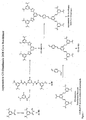
- a distyryl benzene dendrimer was prepared comprising dendrons with aryl-vinyl-aryl linkages and with aryl-aryl linkages. The reaction scheme is shown in figure 3, and the synthesis detailed in examples 1-2. A distyryl benzene cored dendrimer was also prepared comprising dendrons with aryl-vinyl-aryl linkages and phenyl-oxadiazole-phenyl linkages. The reaction scheme for this second compound is shown in figure 7, and the synthesis detailed in examples 3-7.
- the aqueous layer was separated and extracted with DCM (2 x 10 cm 3 ).
- the DCM extracts and the organic portion were dried over anhydrous magnesium sulfate, filtered, and the solvents were completely removed to leave a yellow oil.
- Purification by column chromatography over silica gel using ethyl acetate-light petroleum (0:1 to 1:10) as eluent gave 246 mg (79%) of 1 as a light yellow oil.
- Lithium ethoxide (1.0 M, 5.2 cm 3 , 5.2 mmol) was added dropwise over 20 minutes to a suspension of the 3,5-di(3',5'-di- tert -butylstyryl)benzaldehyde (see WO 99/21935 ) (1.40 g, 2.61 mmol), 4-vinylbenzyltriphenylphosphonium chloride (1.30 g, 3.14 mmol) and 15 cm 3 of ether. The mixture was stirred at room temperature for 1 h and then washed with water (2 x 30 cm 3 ) and brine (1 x 30 cm 3 ), and dried (MgSO 4 ) and filtered. The solvent was completely removed to leave a white solid. The solid was dissolved in DCM and passed through a plug of silica gel using DCM as eluent. The filtrate was collected and the solvent was completely removed.
- the dendrimers of Examples 2 and 7 are used as emissive materials in light-emitting diodes in Examples 8 and 9, respectively.
- THF tetrahydrofuran
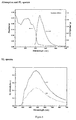
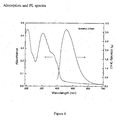
- Figure 5 shows the absorption and PL emission spectra of a film of compound 2.
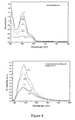
- Figure 4 shows the absorption and PL emission of a film of a blend of compound 2 and 2-(4-biphenylyl)-5-(4-tert-butylphenyl)-1,3,4-oxadiazole (PBD).
- Figure 8 shows the absorption and PL emission spectra of a film of compound 7.
- the dendrimers of Examples 2 and 7 have been incorporated into single layer devices.
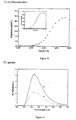
- unoptimised devices with structure ITO/PEDOT/dendrimer2/Mg/Al had an EL efficiency of 0.01 %, brightness of 65 cd/m 2 , and a power efficiency of 0.002 Lm/W.
- Figure 5 (bottom) shows the EL emission spectrum of the device.
- Figure 6 shows the current-voltage-luminance characteristics (top) and the current-luminance-efficiency characteristics (bottom).
- a dendron was synthesised that comprised a mixture of aryl-acetylenyl-aryl links and aryl-vinyl-aryl links, i.e. that had different links within one dendron, and this was used to form both a porphyrin cored dendrimer (6) and a divinylbenzene cored dendrimer (8).
- Distryrylbenzene and porphyrin cored dendrimers containing both alkene and acetylene links in the dendrons and the process for making them are set out in Figure 12; the numbers apply accordingly.
- Triphenylphosphine (3.92 g, 14.96 mmol) was added in one portion to a stirred solution of -3,5-bis[2-(3,5-di- tert -butylphenyl)vinyl]benzaldehyde ( 1 ) (2.00 g, 3.74 mmol) and carbon tetrabromide (2.48 g, 7.38 mmol) in dichloromethane (20 mL). Heat was evolved and the mixture stirred at room temperature for 75 min.
- n -Butyllithium (2.5 M in hexanes, 2.9 mL, 7.20 mmol) was added to a solution of 1,1-dibromo-2- ⁇ 3,5-bis[2-(3,5-di- tert -butylphenyl)vinyl]phenyl ⁇ ethane( 2 ) (2.37 g, 3.43 mmol) in tetrahydrofuran (40 mL) under argon at -78°C. The mixture was stirred at -78°C for 1 h then at room temperature for 1 h. Water (25 mL) was added and the aqueous layer separated and extracted with ether (25 mL).
- Nitrogen was bubbled through a solution of 3,5-bis[2-(3,5-di- tert- butylphenyl)vinyl]phenyl acetylene ( 3 ) (1.00 g, 1.88 mmol) and 3,5-dibromobenzaldehyde (191 mg, 0.725 mmol) in tetrahydrofuran (10 mL) and triethylamine (15 mL) for 15 min. Tetrakis(triphenylphosphine)palladium(0) (60 mg, 52 ⁇ mol) and copper(I) iodide (18 mg, 94 ⁇ mol) were added and nitrogen bubbled through the solution for a further 15 min and the mixture then stirred at 70°C for 17.5 h.
- Tetrahydrofuran (15 mL) was added to a flask containing 3,5-bis( ⁇ 3,5-bis[2-(3,5-di- tert- butylphenyl)vinyl]phenyl ⁇ -ethynyl)benzaldehyde (4) (500 mg, 4.30 mmol), [4-(dimethoxyphosphorylmethyl)benzylphosphonic acid dimethyl ester (7) (65.9 mg, 2.05 mmol) and potassium tert -butoxide (57.4 mg, 5.11 mmol). The solution immediately turned red and was stirred under nitrogen for 67 h. Water (20 mL) was added and the emulsion extracted with dichloromethane (4 ⁇ 50 mL).
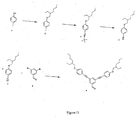
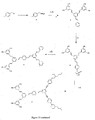
- Distryrylbenzene cored dendrimers containing alkene and acetylene linked dendrons and alkene linked and ether linked dendrons and the process for making them are set out in Figure 13; the numbers apply accordingly.
- Tetrakis(triphenylphosphine)palladium(0) (0.52 g, 0.45 mmol) was added to a degassed suspension oftrimethylsilyl acetylene (3.00 mL, 2.09 g, 21.2 mmol), 4-(2-ethylhexyloxy)iodobenzene (2) (4.27 g, 12.9 mmol) and copper (I) iodide (294 mg, 1.54 mmol) in tetrahydrofuran (20 mL) and triethylamine (30 mL). The mixture was stirred under argon at room temperature for 64.5 h.
- Tetrabutylammonium fluoride (1.0 M in tetrahydrofuran, 13.2 mL, 13.2 mmol) was added to a stirred solution of [4-(2-ethylhexyloxy)phenylethynyl]trimethylsilane ( 3 ) (2.59 g, 13.2 mmol) in tetrahydrofuran (70 mL) and the solution stirred under nitrogen at room temperature for 100 min.
- Nitrogen was bubbled through a solution of 1-(2-Ethylhexyloxy)-4-ethynylbenzene (4) (1.69 g, 7.34 mmol) and 3,5-dibromobenzaldehyde ( 5 ) (692 mg, 2.62 mmol) in tetrahydrofuran (33 mL) and triethylamine (50 mL) for 5 min. Tetrakis(triphenylphosphine)palladium(0) (218 mg, 0.189 mmol) and copper(I) iodide (65 mg, 0.34 mmol) were added and nitrogen bubbled through the solution for a further 5 min, before stirring at 70°C for 23 h.
- Lithium ethoxide (1.0 M in ethanol, 15.0 mL, 15 mmol) was added to a stirred suspension of 3,5-bis[(3,5-di- tert -butylphenyl)vinyl]benzaldehyde (A) (WO99/9921935) (4.00 g, 7.48 mmol) and 4-methylbenzylphosphoniumchloride ( 8 ) (3.62 g, 8.98 mmol) in diethyl ether (40 mL), giving a clear orange solution which was stirred at room temperature for 2 h.
- Potassium tert -butoxide (36.8 mg, 3.28 mmol) was added to a solution of 3,5-bis[4-(2-ethylhexyloxy)phenylethynyl]benzaldehyde (6) (153 mg, 2.74 mmol) and 4-( ⁇ 3,5-bis[(3,5-di-tert-butylphenyl)vinyl]phenyl ⁇ vinyl)benzylphosphonic acid dimethyl ester ( 10 ) (200 mg, 2.74 mmol) in tetrahydrofuran (4 mL) and the mixture stirred at room temperature in the dark for 19 h. The solution turned red-orange and acquired blue fluorescence.
Landscapes
- Chemical & Material Sciences (AREA)
- Engineering & Computer Science (AREA)
- Materials Engineering (AREA)
- Organic Chemistry (AREA)
- Health & Medical Sciences (AREA)
- Chemical Kinetics & Catalysis (AREA)
- Medicinal Chemistry (AREA)
- Polymers & Plastics (AREA)
- Electroluminescent Light Sources (AREA)
- Organic Low-Molecular-Weight Compounds And Preparation Thereof (AREA)
- Other Resins Obtained By Reactions Not Involving Carbon-To-Carbon Unsaturated Bonds (AREA)
- Polyoxymethylene Polymers And Polymers With Carbon-To-Carbon Bonds (AREA)
Applications Claiming Priority (3)
| Application Number | Priority Date | Filing Date | Title |
|---|---|---|---|
| GB0104176 | 2001-02-20 | ||
| GBGB0104176.3A GB0104176D0 (en) | 2001-02-20 | 2001-02-20 | Asymmetric dendrimers |
| PCT/GB2002/000765 WO2002066575A1 (en) | 2001-02-20 | 2002-02-20 | Asymmetric dendrimers |
Publications (2)
| Publication Number | Publication Date |
|---|---|
| EP1373431A1 EP1373431A1 (en) | 2004-01-02 |
| EP1373431B1 true EP1373431B1 (en) | 2006-10-18 |
Family
ID=9909140
Family Applications (1)
| Application Number | Title | Priority Date | Filing Date |
|---|---|---|---|
| EP02712104A Expired - Lifetime EP1373431B1 (en) | 2001-02-20 | 2002-02-20 | Asymmetric dendrimers |
Country Status (7)
| Country | Link |
|---|---|
| US (2) | US7537842B2 (enExample) |
| EP (1) | EP1373431B1 (enExample) |
| JP (2) | JP5346422B2 (enExample) |
| AT (1) | ATE342948T1 (enExample) |
| DE (1) | DE60215473T2 (enExample) |
| GB (1) | GB0104176D0 (enExample) |
| WO (1) | WO2002066575A1 (enExample) |
Families Citing this family (25)
| Publication number | Priority date | Publication date | Assignee | Title |
|---|---|---|---|---|
| GB0104176D0 (en) * | 2001-02-20 | 2001-04-11 | Isis Innovation | Asymmetric dendrimers |
| GB0104177D0 (en) | 2001-02-20 | 2001-04-11 | Isis Innovation | Aryl-aryl dendrimers |
| CN1277872C (zh) * | 2001-02-20 | 2006-10-04 | 安德鲁斯街大学管理处 | 含金属的树状物 |
| GB0220092D0 (en) | 2002-08-29 | 2002-10-09 | Isis Innovation | Reactive dendrimers |
| GB0220080D0 (en) | 2002-08-29 | 2002-10-09 | Isis Innovation | Blended dendrimers |
| GB0311234D0 (en) | 2003-05-16 | 2003-06-18 | Isis Innovation | Organic phosphorescent material and organic optoelectronic device |
| US7364670B2 (en) * | 2003-07-17 | 2008-04-29 | Fujifilm Corporation | Liquid crystalline compound, liquid crystalline composition and retardation film |
| US7344583B2 (en) | 2005-03-31 | 2008-03-18 | 3M Innovative Properties Company | Methods of making metal particles within cored dendrimers |
| WO2008036700A2 (en) | 2006-09-19 | 2008-03-27 | 3M Innovative Properties Company | Templated metal oxide particles and methods of making |
| KR101249117B1 (ko) * | 2006-11-13 | 2013-03-29 | 삼성전자주식회사 | 메탈로센 덴드리머, 이를 이용한 유기 메모리 소자 및 그의제조방법 |
| WO2008111658A1 (ja) | 2007-03-09 | 2008-09-18 | Sumitomo Chemical Company, Limited | 高分子化合物およびそれを含む組成物 |
| KR101458204B1 (ko) * | 2007-04-02 | 2014-11-04 | 삼성전자주식회사 | 메탈로센 코어를 가지는 덴드리머, 이를 이용한 유기메모리 소자 및 그의 제조방법 |
| US9395352B2 (en) | 2007-04-06 | 2016-07-19 | Arizona Board Of Regents On Behalf Of Arizona State University | Devices and methods for target molecule characterization |
| US8968540B2 (en) | 2008-10-06 | 2015-03-03 | Arizona Board Of Regents, A Body Corporate Of The State Of Arizona Acting For And On Behalf Of Arizona State University | Trans-base tunnel reader for sequencing |
| JP5388097B2 (ja) * | 2008-10-28 | 2014-01-15 | 国立大学法人 東京大学 | 液晶材料、液晶材料膜、コーティング材、及び、液晶材料膜製造方法 |
| KR101202351B1 (ko) * | 2010-07-16 | 2012-11-16 | 삼성디스플레이 주식회사 | 덴드리머 및 이를 이용한 유기 발광 소자 |
| WO2012047224A1 (en) | 2010-10-07 | 2012-04-12 | Hewlett-Packard Development Company, L.P. | Emissive dendrimer composition |
| US10493168B2 (en) * | 2012-02-27 | 2019-12-03 | Oxygen Enterprises, Ltd | Phosphorescent meso-unsubstituted metallo-porphyrin probe molecules for measuring oxygen and imaging methods |
| WO2013130510A1 (en) * | 2012-02-27 | 2013-09-06 | Sergei Vinogradov | Improved phosphorescent molecules for measuring oxygen and imaging methods |
| US9274430B2 (en) | 2012-10-10 | 2016-03-01 | Arizona Board Of Regents On Behalf Of Arizona State University | Systems and devices for molecule sensing and method of manufacturing thereof |
| JP6056605B2 (ja) * | 2013-03-28 | 2017-01-11 | 富士通株式会社 | 有機色素、及び感光性素子 |
| WO2015126963A1 (en) * | 2014-02-18 | 2015-08-27 | Arizona Board Of Regents Acting For And On Behalf Of Arizona State University | A three arm y-shaped bisbiotin ligand |
| US10336713B2 (en) | 2014-02-27 | 2019-07-02 | Arizona Board Of Regents, Acting For And On Behalf Of, Arizona State University | Triazole-based reader molecules and methods for synthesizing and use thereof |
| US10266325B2 (en) | 2016-06-07 | 2019-04-23 | International Business Machines Corporation | Polymer with blue light absorbing units chemically bonded to a polymeric backbone of the polymer |
| KR102731320B1 (ko) | 2024-03-27 | 2024-11-19 | 주식회사 예쓰바이오 | 유기성 폐기물 분해용 균주 및 이를 이용하는 유기성 폐기물의 처리 방법 |
Family Cites Families (21)
| Publication number | Priority date | Publication date | Assignee | Title |
|---|---|---|---|---|
| JPH01105955A (ja) * | 1987-10-19 | 1989-04-24 | Konica Corp | 電子写真感光体 |
| JPH0721629B2 (ja) | 1988-05-02 | 1995-03-08 | 宇部興産株式会社 | ホトレジスト用感光剤 |
| US5041516A (en) | 1989-06-21 | 1991-08-20 | Cornell Research Foundation, Inc. | Dendritic molecules and method of production |
| US5150006A (en) | 1991-08-01 | 1992-09-22 | Eastman Kodak Company | Blue emitting internal junction organic electroluminescent device (II) |
| JP3490727B2 (ja) | 1991-11-28 | 2004-01-26 | 三洋電機株式会社 | 電界発光素子 |
| JP3284766B2 (ja) | 1994-06-29 | 2002-05-20 | 三菱化学株式会社 | 有機電界発光素子 |
| EP0700917B1 (en) | 1994-09-12 | 2002-05-08 | Motorola, Inc. | Light emitting devices comprising organometallic complexes |
| JPH09241265A (ja) | 1996-03-07 | 1997-09-16 | Juzo Nakayama | テトラチエニルシラン誘導体およびその製造方法 |
| ATE268806T1 (de) | 1997-10-23 | 2004-06-15 | Isis Innovation | Lichtemittierende dendrimere |
| US5972247A (en) | 1998-03-20 | 1999-10-26 | Eastman Kodak Company | Organic electroluminescent elements for stable blue electroluminescent devices |
| EP1009042A3 (en) | 1998-12-09 | 2002-07-03 | Eastman Kodak Company | Electroliuminescent device with arylethylene derivatives in hole transport layer |
| US6465115B2 (en) | 1998-12-09 | 2002-10-15 | Eastman Kodak Company | Electroluminescent device with anthracene derivatives hole transport layer |
| EP1009043A3 (en) | 1998-12-09 | 2002-07-03 | Eastman Kodak Company | Electroluminescent device with polyphenyl hydrocarbon hole transport layer |
| US6361886B2 (en) | 1998-12-09 | 2002-03-26 | Eastman Kodak Company | Electroluminescent device with improved hole transport layer |
| DE60042010D1 (de) | 1999-09-30 | 2009-05-28 | Idemitsu Kosan Co | Organisches electrolumineszenz-element mit einer amin-verbindung |
| GB0002936D0 (en) * | 2000-02-09 | 2000-03-29 | Isis Innovation | Improved dendrimers |
| GB0104177D0 (en) | 2001-02-20 | 2001-04-11 | Isis Innovation | Aryl-aryl dendrimers |
| CN1277872C (zh) | 2001-02-20 | 2006-10-04 | 安德鲁斯街大学管理处 | 含金属的树状物 |
| GB0104176D0 (en) * | 2001-02-20 | 2001-04-11 | Isis Innovation | Asymmetric dendrimers |
| CN100530746C (zh) | 2002-03-18 | 2009-08-19 | 埃西斯创新有限公司 | 用于发光器件的磷光质枝晶体 |
| GB0220092D0 (en) * | 2002-08-29 | 2002-10-09 | Isis Innovation | Reactive dendrimers |
-
2001
- 2001-02-20 GB GBGB0104176.3A patent/GB0104176D0/en not_active Ceased
-
2002
- 2002-02-20 AT AT02712104T patent/ATE342948T1/de not_active IP Right Cessation
- 2002-02-20 DE DE60215473T patent/DE60215473T2/de not_active Expired - Lifetime
- 2002-02-20 EP EP02712104A patent/EP1373431B1/en not_active Expired - Lifetime
- 2002-02-20 JP JP2002566283A patent/JP5346422B2/ja not_active Expired - Fee Related
- 2002-02-20 WO PCT/GB2002/000765 patent/WO2002066575A1/en not_active Ceased
- 2002-02-20 US US10/468,863 patent/US7537842B2/en not_active Expired - Lifetime
-
2008
- 2008-09-16 JP JP2008236656A patent/JP2009060115A/ja active Pending
-
2009
- 2009-05-26 US US12/472,176 patent/US7960557B2/en not_active Expired - Fee Related
Also Published As
| Publication number | Publication date |
|---|---|
| JP2009060115A (ja) | 2009-03-19 |
| US20040110029A1 (en) | 2004-06-10 |
| US20090326238A1 (en) | 2009-12-31 |
| GB0104176D0 (en) | 2001-04-11 |
| US7960557B2 (en) | 2011-06-14 |
| JP2004526020A (ja) | 2004-08-26 |
| WO2002066575A1 (en) | 2002-08-29 |
| DE60215473D1 (de) | 2006-11-30 |
| DE60215473T2 (de) | 2007-06-14 |
| EP1373431A1 (en) | 2004-01-02 |
| ATE342948T1 (de) | 2006-11-15 |
| US7537842B2 (en) | 2009-05-26 |
| JP5346422B2 (ja) | 2013-11-20 |
Similar Documents
| Publication | Publication Date | Title |
|---|---|---|
| US7960557B2 (en) | Asymmetric dendrimers | |
| EP1362382B1 (en) | Aryl-aryl dendrimers having a metalloporphyrine core | |
| US7682708B2 (en) | Dendrimers | |
| EP2030266B1 (en) | Light emitting devices and compositions | |
| JP2004526020A5 (enExample) | ||
| TW200837037A (en) | Arylamine compounds and electronic devices | |
| US7083862B2 (en) | Dendrimers | |
| KR20060113254A (ko) | 아미노스티릴 화합물, 이의 제조 방법 및 이를 구비한 유기발광 소자 | |
| CN102414178A (zh) | 具有含氮原子的芳香环配位体的金属络合物 | |
| KR101156425B1 (ko) | 디메틸렌사이클로헥산 화합물, 이의 제조 방법 및 이를구비한 유기 발광 소자 | |
| KR20060021143A (ko) | 터페닐계 화합물 및 이를 이용한 유기 전계 발광 소자 |
Legal Events
| Date | Code | Title | Description |
|---|---|---|---|
| PUAI | Public reference made under article 153(3) epc to a published international application that has entered the european phase |
Free format text: ORIGINAL CODE: 0009012 |
|
| 17P | Request for examination filed |
Effective date: 20030828 |
|
| AK | Designated contracting states |
Kind code of ref document: A1 Designated state(s): AT BE CH CY DE DK ES FI FR GB GR IE IT LI LU MC NL PT SE TR |
|
| AX | Request for extension of the european patent |
Extension state: AL LT LV MK RO SI |
|
| 17Q | First examination report despatched |
Effective date: 20040614 |
|
| RAP1 | Party data changed (applicant data changed or rights of an application transferred) |
Owner name: ISIS INNOVATION LIMITED Owner name: THE UNIVERSITY COURT OF THE UNIVERSITY OF ST. ANDR |
|
| GRAP | Despatch of communication of intention to grant a patent |
Free format text: ORIGINAL CODE: EPIDOSNIGR1 |
|
| RIC1 | Information provided on ipc code assigned before grant |
Ipc: H05B 33/14 20060101ALI20060522BHEP Ipc: C07C 211/55 20060101ALI20060522BHEP Ipc: H01L 51/50 20060101ALI20060522BHEP Ipc: C08G 83/00 20060101ALI20060522BHEP Ipc: C09K 11/06 20060101AFI20060522BHEP |
|
| GRAS | Grant fee paid |
Free format text: ORIGINAL CODE: EPIDOSNIGR3 |
|
| GRAA | (expected) grant |
Free format text: ORIGINAL CODE: 0009210 |
|
| AK | Designated contracting states |
Kind code of ref document: B1 Designated state(s): AT BE CH CY DE DK ES FI FR GB GR IE IT LI LU MC NL PT SE TR |
|
| PG25 | Lapsed in a contracting state [announced via postgrant information from national office to epo] |
Ref country code: IT Free format text: LAPSE BECAUSE OF FAILURE TO SUBMIT A TRANSLATION OF THE DESCRIPTION OR TO PAY THE FEE WITHIN THE PRESCRIBED TIME-LIMIT;WARNING: LAPSES OF ITALIAN PATENTS WITH EFFECTIVE DATE BEFORE 2007 MAY HAVE OCCURRED AT ANY TIME BEFORE 2007. THE CORRECT EFFECTIVE DATE MAY BE DIFFERENT FROM THE ONE RECORDED. Effective date: 20061018 Ref country code: AT Free format text: LAPSE BECAUSE OF FAILURE TO SUBMIT A TRANSLATION OF THE DESCRIPTION OR TO PAY THE FEE WITHIN THE PRESCRIBED TIME-LIMIT Effective date: 20061018 Ref country code: FI Free format text: LAPSE BECAUSE OF FAILURE TO SUBMIT A TRANSLATION OF THE DESCRIPTION OR TO PAY THE FEE WITHIN THE PRESCRIBED TIME-LIMIT Effective date: 20061018 Ref country code: LI Free format text: LAPSE BECAUSE OF FAILURE TO SUBMIT A TRANSLATION OF THE DESCRIPTION OR TO PAY THE FEE WITHIN THE PRESCRIBED TIME-LIMIT Effective date: 20061018 Ref country code: CH Free format text: LAPSE BECAUSE OF FAILURE TO SUBMIT A TRANSLATION OF THE DESCRIPTION OR TO PAY THE FEE WITHIN THE PRESCRIBED TIME-LIMIT Effective date: 20061018 Ref country code: BE Free format text: LAPSE BECAUSE OF FAILURE TO SUBMIT A TRANSLATION OF THE DESCRIPTION OR TO PAY THE FEE WITHIN THE PRESCRIBED TIME-LIMIT Effective date: 20061018 |
|
| REG | Reference to a national code |
Ref country code: GB Ref legal event code: FG4D |
|
| REG | Reference to a national code |
Ref country code: CH Ref legal event code: EP Ref country code: IE Ref legal event code: FG4D |
|
| REF | Corresponds to: |
Ref document number: 60215473 Country of ref document: DE Date of ref document: 20061130 Kind code of ref document: P |
|
| PG25 | Lapsed in a contracting state [announced via postgrant information from national office to epo] |
Ref country code: DK Free format text: LAPSE BECAUSE OF FAILURE TO SUBMIT A TRANSLATION OF THE DESCRIPTION OR TO PAY THE FEE WITHIN THE PRESCRIBED TIME-LIMIT Effective date: 20070118 Ref country code: SE Free format text: LAPSE BECAUSE OF FAILURE TO SUBMIT A TRANSLATION OF THE DESCRIPTION OR TO PAY THE FEE WITHIN THE PRESCRIBED TIME-LIMIT Effective date: 20070118 |
|
| PG25 | Lapsed in a contracting state [announced via postgrant information from national office to epo] |
Ref country code: ES Free format text: LAPSE BECAUSE OF FAILURE TO SUBMIT A TRANSLATION OF THE DESCRIPTION OR TO PAY THE FEE WITHIN THE PRESCRIBED TIME-LIMIT Effective date: 20070129 |
|
| PG25 | Lapsed in a contracting state [announced via postgrant information from national office to epo] |
Ref country code: MC Free format text: LAPSE BECAUSE OF NON-PAYMENT OF DUE FEES Effective date: 20070228 |
|
| PG25 | Lapsed in a contracting state [announced via postgrant information from national office to epo] |
Ref country code: PT Free format text: LAPSE BECAUSE OF FAILURE TO SUBMIT A TRANSLATION OF THE DESCRIPTION OR TO PAY THE FEE WITHIN THE PRESCRIBED TIME-LIMIT Effective date: 20070319 |
|
| ET | Fr: translation filed | ||
| REG | Reference to a national code |
Ref country code: CH Ref legal event code: PL |
|
| PLBE | No opposition filed within time limit |
Free format text: ORIGINAL CODE: 0009261 |
|
| STAA | Information on the status of an ep patent application or granted ep patent |
Free format text: STATUS: NO OPPOSITION FILED WITHIN TIME LIMIT |
|
| 26N | No opposition filed |
Effective date: 20070719 |
|
| PG25 | Lapsed in a contracting state [announced via postgrant information from national office to epo] |
Ref country code: IE Free format text: LAPSE BECAUSE OF NON-PAYMENT OF DUE FEES Effective date: 20070220 |
|
| PG25 | Lapsed in a contracting state [announced via postgrant information from national office to epo] |
Ref country code: GR Free format text: LAPSE BECAUSE OF FAILURE TO SUBMIT A TRANSLATION OF THE DESCRIPTION OR TO PAY THE FEE WITHIN THE PRESCRIBED TIME-LIMIT Effective date: 20070119 |
|
| PG25 | Lapsed in a contracting state [announced via postgrant information from national office to epo] |
Ref country code: LU Free format text: LAPSE BECAUSE OF NON-PAYMENT OF DUE FEES Effective date: 20070220 Ref country code: CY Free format text: LAPSE BECAUSE OF FAILURE TO SUBMIT A TRANSLATION OF THE DESCRIPTION OR TO PAY THE FEE WITHIN THE PRESCRIBED TIME-LIMIT Effective date: 20061018 |
|
| PG25 | Lapsed in a contracting state [announced via postgrant information from national office to epo] |
Ref country code: TR Free format text: LAPSE BECAUSE OF FAILURE TO SUBMIT A TRANSLATION OF THE DESCRIPTION OR TO PAY THE FEE WITHIN THE PRESCRIBED TIME-LIMIT Effective date: 20061018 |
|
| REG | Reference to a national code |
Ref country code: FR Ref legal event code: PLFP Year of fee payment: 15 |
|
| REG | Reference to a national code |
Ref country code: DE Ref legal event code: R082 Ref document number: 60215473 Country of ref document: DE Representative=s name: LORENZ SEIDLER GOSSEL RECHTSANWAELTE PATENTANW, DE Ref country code: DE Ref legal event code: R081 Ref document number: 60215473 Country of ref document: DE Owner name: THE UNIVERSITY COURT OF THE UNIVERSITY OF ST. , GB Free format text: FORMER OWNERS: ISIS INNOVATION LTD., SUMMERTOWN, OXFORD, GB; THE UNIVERSITY COURT OF THE UNIVERSITY OF ST. ANDREWS, ST. ANDREWS, GB Ref country code: DE Ref legal event code: R081 Ref document number: 60215473 Country of ref document: DE Owner name: OXFORD UNIVERSITY INNOVATION LIMITED, GB Free format text: FORMER OWNERS: ISIS INNOVATION LTD., SUMMERTOWN, OXFORD, GB; THE UNIVERSITY COURT OF THE UNIVERSITY OF ST. ANDREWS, ST. ANDREWS, GB Ref country code: DE Ref legal event code: R081 Ref document number: 60215473 Country of ref document: DE Owner name: CAMBRIDGE DISPLAY TECHNOLOGY LIMITED, GODMANCH, GB Free format text: FORMER OWNERS: ISIS INNOVATION LTD., SUMMERTOWN, OXFORD, GB; THE UNIVERSITY COURT OF THE UNIVERSITY OF ST. ANDREWS, ST. ANDREWS, GB Ref country code: DE Ref legal event code: R082 Ref document number: 60215473 Country of ref document: DE Representative=s name: GRUENECKER PATENT- UND RECHTSANWAELTE PARTG MB, DE |
|
| REG | Reference to a national code |
Ref country code: NL Ref legal event code: HC Owner name: OXFORD UNIVERSITY INNOVATION LIMITED; GB Free format text: DETAILS ASSIGNMENT: VERANDERING VAN EIGENAAR(S), VERANDERING VAN NAAM VAN DE EIGENAAR(S); FORMER OWNER NAME: THE UNIVERSITY COURT OF THE UNIVERSITY OF ST.ANDREWS Effective date: 20160802 |
|
| REG | Reference to a national code |
Ref country code: FR Ref legal event code: PLFP Year of fee payment: 16 |
|
| REG | Reference to a national code |
Ref country code: FR Ref legal event code: CA Effective date: 20170710 Ref country code: FR Ref legal event code: CD Owner name: ISIS INNOVATION LIMITED Effective date: 20170710 |
|
| REG | Reference to a national code |
Ref country code: FR Ref legal event code: PLFP Year of fee payment: 17 |
|
| REG | Reference to a national code |
Ref country code: DE Ref legal event code: R081 Ref document number: 60215473 Country of ref document: DE Owner name: CAMBRIDGE DISPLAY TECHNOLOGY LIMITED, GODMANCH, GB Free format text: FORMER OWNERS: OXFORD UNIVERSITY INNOVATION LIMITED, OXFORD, OXFORDSHIRE, GB; THE UNIVERSITY COURT OF THE UNIVERSITY OF ST. ANDREWS, ST. ANDREWS, GB Ref country code: DE Ref legal event code: R082 Ref document number: 60215473 Country of ref document: DE Representative=s name: GRUENECKER PATENT- UND RECHTSANWAELTE PARTG MB, DE Ref country code: DE Ref legal event code: R081 Ref document number: 60215473 Country of ref document: DE Owner name: CAMBRIDGE DISPLAY TECHNOLOGY LIMITED, GODMANCH, GB Free format text: FORMER OWNERS: OXFORD UNIVERSITY INNOVATION LIMITED, OXFORD, GB; THE UNIVERSITY COURT OF THE UNIVERSITY OF ST. ANDREWS, ST. ANDREWS, GB |
|
| REG | Reference to a national code |
Ref country code: NL Ref legal event code: PD Owner name: CAMBRIDGE DISPLAY TECHNOLOGY LIMITED; GB Free format text: DETAILS ASSIGNMENT: CHANGE OF OWNER(S), ASSIGNMENT; FORMER OWNER NAME: THE UNIVERSITY COURT OF THE UNIVERSITY OF ST.ANDREWS Effective date: 20181119 |
|
| PGFP | Annual fee paid to national office [announced via postgrant information from national office to epo] |
Ref country code: DE Payment date: 20190115 Year of fee payment: 18 Ref country code: GB Payment date: 20190128 Year of fee payment: 18 Ref country code: NL Payment date: 20190131 Year of fee payment: 18 Ref country code: FR Payment date: 20190117 Year of fee payment: 18 |
|
| REG | Reference to a national code |
Ref country code: DE Ref legal event code: R119 Ref document number: 60215473 Country of ref document: DE |
|
| REG | Reference to a national code |
Ref country code: NL Ref legal event code: MM Effective date: 20200301 |
|
| GBPC | Gb: european patent ceased through non-payment of renewal fee |
Effective date: 20200220 |
|
| PG25 | Lapsed in a contracting state [announced via postgrant information from national office to epo] |
Ref country code: NL Free format text: LAPSE BECAUSE OF NON-PAYMENT OF DUE FEES Effective date: 20200301 |
|
| PG25 | Lapsed in a contracting state [announced via postgrant information from national office to epo] |
Ref country code: DE Free format text: LAPSE BECAUSE OF NON-PAYMENT OF DUE FEES Effective date: 20200901 Ref country code: FR Free format text: LAPSE BECAUSE OF NON-PAYMENT OF DUE FEES Effective date: 20200229 Ref country code: GB Free format text: LAPSE BECAUSE OF NON-PAYMENT OF DUE FEES Effective date: 20200220 |