EP1364048B1 - Verfahren zur durchführung einer subtraktiven hybridisierung - Google Patents
Verfahren zur durchführung einer subtraktiven hybridisierung Download PDFInfo
- Publication number
- EP1364048B1 EP1364048B1 EP01957439A EP01957439A EP1364048B1 EP 1364048 B1 EP1364048 B1 EP 1364048B1 EP 01957439 A EP01957439 A EP 01957439A EP 01957439 A EP01957439 A EP 01957439A EP 1364048 B1 EP1364048 B1 EP 1364048B1
- Authority
- EP
- European Patent Office
- Prior art keywords
- driver
- tester
- sample
- dna
- rda
- Prior art date
- Legal status (The legal status is an assumption and is not a legal conclusion. Google has not performed a legal analysis and makes no representation as to the accuracy of the status listed.)
- Expired - Lifetime
Links
- 238000000034 method Methods 0.000 title claims abstract description 119
- 238000009396 hybridization Methods 0.000 title claims abstract description 83
- 150000007523 nucleic acids Chemical class 0.000 claims abstract description 51
- 102000039446 nucleic acids Human genes 0.000 claims abstract description 43
- 108020004707 nucleic acids Proteins 0.000 claims abstract description 43
- 108091034117 Oligonucleotide Proteins 0.000 claims abstract description 31
- 108091093088 Amplicon Proteins 0.000 claims description 130
- 239000012634 fragment Substances 0.000 claims description 58
- 108091008146 restriction endonucleases Proteins 0.000 claims description 40
- 108020004414 DNA Proteins 0.000 claims description 38
- 102000053602 DNA Human genes 0.000 claims description 30
- 239000000203 mixture Substances 0.000 claims description 22
- 239000002299 complementary DNA Substances 0.000 claims description 15
- 230000029087 digestion Effects 0.000 claims description 15
- 108020004682 Single-Stranded DNA Proteins 0.000 claims description 13
- 101710163270 Nuclease Proteins 0.000 claims description 8
- 108091028043 Nucleic acid sequence Proteins 0.000 claims description 7
- 238000011049 filling Methods 0.000 claims description 7
- 230000000007 visual effect Effects 0.000 claims description 6
- 108010014303 DNA-directed DNA polymerase Proteins 0.000 claims description 5
- 102000016928 DNA-directed DNA polymerase Human genes 0.000 claims description 5
- 238000002156 mixing Methods 0.000 claims description 5
- 230000000063 preceeding effect Effects 0.000 claims description 3
- 239000007787 solid Substances 0.000 claims description 2
- 239000000758 substrate Substances 0.000 claims description 2
- 238000002955 isolation Methods 0.000 abstract description 17
- 238000012986 modification Methods 0.000 abstract description 13
- 230000004048 modification Effects 0.000 abstract description 13
- 230000006872 improvement Effects 0.000 abstract description 4
- JLCPHMBAVCMARE-UHFFFAOYSA-N [3-[[3-[[3-[[3-[[3-[[3-[[3-[[3-[[3-[[3-[[3-[[5-(2-amino-6-oxo-1H-purin-9-yl)-3-[[3-[[3-[[3-[[3-[[3-[[5-(2-amino-6-oxo-1H-purin-9-yl)-3-[[5-(2-amino-6-oxo-1H-purin-9-yl)-3-hydroxyoxolan-2-yl]methoxy-hydroxyphosphoryl]oxyoxolan-2-yl]methoxy-hydroxyphosphoryl]oxy-5-(5-methyl-2,4-dioxopyrimidin-1-yl)oxolan-2-yl]methoxy-hydroxyphosphoryl]oxy-5-(6-aminopurin-9-yl)oxolan-2-yl]methoxy-hydroxyphosphoryl]oxy-5-(6-aminopurin-9-yl)oxolan-2-yl]methoxy-hydroxyphosphoryl]oxy-5-(6-aminopurin-9-yl)oxolan-2-yl]methoxy-hydroxyphosphoryl]oxy-5-(6-aminopurin-9-yl)oxolan-2-yl]methoxy-hydroxyphosphoryl]oxyoxolan-2-yl]methoxy-hydroxyphosphoryl]oxy-5-(5-methyl-2,4-dioxopyrimidin-1-yl)oxolan-2-yl]methoxy-hydroxyphosphoryl]oxy-5-(4-amino-2-oxopyrimidin-1-yl)oxolan-2-yl]methoxy-hydroxyphosphoryl]oxy-5-(5-methyl-2,4-dioxopyrimidin-1-yl)oxolan-2-yl]methoxy-hydroxyphosphoryl]oxy-5-(5-methyl-2,4-dioxopyrimidin-1-yl)oxolan-2-yl]methoxy-hydroxyphosphoryl]oxy-5-(6-aminopurin-9-yl)oxolan-2-yl]methoxy-hydroxyphosphoryl]oxy-5-(6-aminopurin-9-yl)oxolan-2-yl]methoxy-hydroxyphosphoryl]oxy-5-(4-amino-2-oxopyrimidin-1-yl)oxolan-2-yl]methoxy-hydroxyphosphoryl]oxy-5-(4-amino-2-oxopyrimidin-1-yl)oxolan-2-yl]methoxy-hydroxyphosphoryl]oxy-5-(4-amino-2-oxopyrimidin-1-yl)oxolan-2-yl]methoxy-hydroxyphosphoryl]oxy-5-(6-aminopurin-9-yl)oxolan-2-yl]methoxy-hydroxyphosphoryl]oxy-5-(4-amino-2-oxopyrimidin-1-yl)oxolan-2-yl]methyl [5-(6-aminopurin-9-yl)-2-(hydroxymethyl)oxolan-3-yl] hydrogen phosphate Polymers Cc1cn(C2CC(OP(O)(=O)OCC3OC(CC3OP(O)(=O)OCC3OC(CC3O)n3cnc4c3nc(N)[nH]c4=O)n3cnc4c3nc(N)[nH]c4=O)C(COP(O)(=O)OC3CC(OC3COP(O)(=O)OC3CC(OC3COP(O)(=O)OC3CC(OC3COP(O)(=O)OC3CC(OC3COP(O)(=O)OC3CC(OC3COP(O)(=O)OC3CC(OC3COP(O)(=O)OC3CC(OC3COP(O)(=O)OC3CC(OC3COP(O)(=O)OC3CC(OC3COP(O)(=O)OC3CC(OC3COP(O)(=O)OC3CC(OC3COP(O)(=O)OC3CC(OC3COP(O)(=O)OC3CC(OC3COP(O)(=O)OC3CC(OC3COP(O)(=O)OC3CC(OC3COP(O)(=O)OC3CC(OC3COP(O)(=O)OC3CC(OC3CO)n3cnc4c(N)ncnc34)n3ccc(N)nc3=O)n3cnc4c(N)ncnc34)n3ccc(N)nc3=O)n3ccc(N)nc3=O)n3ccc(N)nc3=O)n3cnc4c(N)ncnc34)n3cnc4c(N)ncnc34)n3cc(C)c(=O)[nH]c3=O)n3cc(C)c(=O)[nH]c3=O)n3ccc(N)nc3=O)n3cc(C)c(=O)[nH]c3=O)n3cnc4c3nc(N)[nH]c4=O)n3cnc4c(N)ncnc34)n3cnc4c(N)ncnc34)n3cnc4c(N)ncnc34)n3cnc4c(N)ncnc34)O2)c(=O)[nH]c1=O JLCPHMBAVCMARE-UHFFFAOYSA-N 0.000 abstract description 3
- 239000003153 chemical reaction reagent Substances 0.000 abstract description 2
- 239000000047 product Substances 0.000 description 65
- 239000000523 sample Substances 0.000 description 59
- 239000013615 primer Substances 0.000 description 51
- 238000003752 polymerase chain reaction Methods 0.000 description 48
- 238000006243 chemical reaction Methods 0.000 description 35
- 230000003321 amplification Effects 0.000 description 32
- 238000003199 nucleic acid amplification method Methods 0.000 description 32
- 210000002381 plasma Anatomy 0.000 description 19
- HEDRZPFGACZZDS-UHFFFAOYSA-N Chloroform Chemical compound ClC(Cl)Cl HEDRZPFGACZZDS-UHFFFAOYSA-N 0.000 description 16
- 239000000872 buffer Substances 0.000 description 16
- 241000700605 Viruses Species 0.000 description 13
- 238000000746 purification Methods 0.000 description 13
- 238000004458 analytical method Methods 0.000 description 11
- 230000002829 reductive effect Effects 0.000 description 11
- YBJHBAHKTGYVGT-ZKWXMUAHSA-N (+)-Biotin Chemical compound N1C(=O)N[C@@H]2[C@H](CCCCC(=O)O)SC[C@@H]21 YBJHBAHKTGYVGT-ZKWXMUAHSA-N 0.000 description 10
- LFQSCWFLJHTTHZ-UHFFFAOYSA-N Ethanol Chemical compound CCO LFQSCWFLJHTTHZ-UHFFFAOYSA-N 0.000 description 10
- FAPWRFPIFSIZLT-UHFFFAOYSA-M Sodium chloride Chemical compound [Na+].[Cl-] FAPWRFPIFSIZLT-UHFFFAOYSA-M 0.000 description 10
- 230000037452 priming Effects 0.000 description 10
- 108010086093 Mung Bean Nuclease Proteins 0.000 description 9
- 241000282577 Pan troglodytes Species 0.000 description 9
- 238000012300 Sequence Analysis Methods 0.000 description 9
- 238000010367 cloning Methods 0.000 description 9
- 208000015181 infectious disease Diseases 0.000 description 9
- 238000002360 preparation method Methods 0.000 description 9
- KFZMGEQAYNKOFK-UHFFFAOYSA-N Isopropanol Chemical compound CC(C)O KFZMGEQAYNKOFK-UHFFFAOYSA-N 0.000 description 8
- ISWSIDIOOBJBQZ-UHFFFAOYSA-N Phenol Chemical compound OC1=CC=CC=C1 ISWSIDIOOBJBQZ-UHFFFAOYSA-N 0.000 description 8
- 208000006930 Pseudomyxoma Peritonei Diseases 0.000 description 8
- 238000000605 extraction Methods 0.000 description 8
- 239000012678 infectious agent Substances 0.000 description 8
- 229920000306 polymethylpentene Polymers 0.000 description 8
- 239000007983 Tris buffer Substances 0.000 description 7
- 239000000463 material Substances 0.000 description 7
- 210000002966 serum Anatomy 0.000 description 7
- LENZDBCJOHFCAS-UHFFFAOYSA-N tris Chemical compound OCC(N)(CO)CO LENZDBCJOHFCAS-UHFFFAOYSA-N 0.000 description 7
- 230000003612 virological effect Effects 0.000 description 7
- 102000004190 Enzymes Human genes 0.000 description 6
- 108090000790 Enzymes Proteins 0.000 description 6
- 238000011534 incubation Methods 0.000 description 6
- 239000013612 plasmid Substances 0.000 description 6
- 239000011780 sodium chloride Substances 0.000 description 6
- 238000012360 testing method Methods 0.000 description 6
- XLYOFNOQVPJJNP-UHFFFAOYSA-N water Substances O XLYOFNOQVPJJNP-UHFFFAOYSA-N 0.000 description 6
- 241000588724 Escherichia coli Species 0.000 description 5
- 239000011543 agarose gel Substances 0.000 description 5
- 229960002685 biotin Drugs 0.000 description 5
- 235000020958 biotin Nutrition 0.000 description 5
- 239000011616 biotin Substances 0.000 description 5
- 230000000295 complement effect Effects 0.000 description 5
- 238000001514 detection method Methods 0.000 description 5
- 230000002441 reversible effect Effects 0.000 description 5
- 238000010561 standard procedure Methods 0.000 description 5
- KCXVZYZYPLLWCC-UHFFFAOYSA-N EDTA Chemical compound OC(=O)CN(CC(O)=O)CCN(CC(O)=O)CC(O)=O KCXVZYZYPLLWCC-UHFFFAOYSA-N 0.000 description 4
- 102000003960 Ligases Human genes 0.000 description 4
- 108090000364 Ligases Proteins 0.000 description 4
- TWRXJAOTZQYOKJ-UHFFFAOYSA-L Magnesium chloride Chemical compound [Mg+2].[Cl-].[Cl-] TWRXJAOTZQYOKJ-UHFFFAOYSA-L 0.000 description 4
- 238000012408 PCR amplification Methods 0.000 description 4
- 238000002105 Southern blotting Methods 0.000 description 4
- 238000013461 design Methods 0.000 description 4
- 238000010586 diagram Methods 0.000 description 4
- ZMMJGEGLRURXTF-UHFFFAOYSA-N ethidium bromide Chemical compound [Br-].C12=CC(N)=CC=C2C2=CC=C(N)C=C2[N+](CC)=C1C1=CC=CC=C1 ZMMJGEGLRURXTF-UHFFFAOYSA-N 0.000 description 4
- 229960005542 ethidium bromide Drugs 0.000 description 4
- 239000000499 gel Substances 0.000 description 4
- 239000002773 nucleotide Substances 0.000 description 4
- 238000004806 packaging method and process Methods 0.000 description 4
- 238000005215 recombination Methods 0.000 description 4
- 230000006798 recombination Effects 0.000 description 4
- 230000035945 sensitivity Effects 0.000 description 4
- 102000012410 DNA Ligases Human genes 0.000 description 3
- 108010061982 DNA Ligases Proteins 0.000 description 3
- 239000004677 Nylon Substances 0.000 description 3
- 241000282579 Pan Species 0.000 description 3
- 230000001154 acute effect Effects 0.000 description 3
- 230000003044 adaptive effect Effects 0.000 description 3
- 230000008901 benefit Effects 0.000 description 3
- 230000000903 blocking effect Effects 0.000 description 3
- 238000010790 dilution Methods 0.000 description 3
- 239000012895 dilution Substances 0.000 description 3
- 201000010099 disease Diseases 0.000 description 3
- 208000037265 diseases, disorders, signs and symptoms Diseases 0.000 description 3
- 230000000694 effects Effects 0.000 description 3
- 238000009630 liquid culture Methods 0.000 description 3
- 238000010369 molecular cloning Methods 0.000 description 3
- 125000003729 nucleotide group Chemical group 0.000 description 3
- 229920001778 nylon Polymers 0.000 description 3
- 239000008188 pellet Substances 0.000 description 3
- 238000012809 post-inoculation Methods 0.000 description 3
- 108090000623 proteins and genes Proteins 0.000 description 3
- 238000010839 reverse transcription Methods 0.000 description 3
- 238000012216 screening Methods 0.000 description 3
- 238000012163 sequencing technique Methods 0.000 description 3
- 239000000243 solution Substances 0.000 description 3
- 241000894007 species Species 0.000 description 3
- 230000009466 transformation Effects 0.000 description 3
- 239000003656 tris buffered saline Substances 0.000 description 3
- 239000013598 vector Substances 0.000 description 3
- NKDFYOWSKOHCCO-YPVLXUMRSA-N 20-hydroxyecdysone Chemical compound C1[C@@H](O)[C@@H](O)C[C@]2(C)[C@@H](CC[C@@]3([C@@H]([C@@](C)(O)[C@H](O)CCC(C)(O)C)CC[C@]33O)C)C3=CC(=O)[C@@H]21 NKDFYOWSKOHCCO-YPVLXUMRSA-N 0.000 description 2
- 230000006820 DNA synthesis Effects 0.000 description 2
- 241000711549 Hepacivirus C Species 0.000 description 2
- 241001465754 Metazoa Species 0.000 description 2
- 229920001213 Polysorbate 20 Polymers 0.000 description 2
- 108010090804 Streptavidin Proteins 0.000 description 2
- 239000007984 Tris EDTA buffer Substances 0.000 description 2
- 239000013504 Triton X-100 Substances 0.000 description 2
- 229920004890 Triton X-100 Polymers 0.000 description 2
- 230000004075 alteration Effects 0.000 description 2
- -1 amplicons) Chemical class 0.000 description 2
- 210000004369 blood Anatomy 0.000 description 2
- 239000008280 blood Substances 0.000 description 2
- 238000010804 cDNA synthesis Methods 0.000 description 2
- 238000004364 calculation method Methods 0.000 description 2
- 239000013599 cloning vector Substances 0.000 description 2
- 230000003247 decreasing effect Effects 0.000 description 2
- 238000001962 electrophoresis Methods 0.000 description 2
- 238000012869 ethanol precipitation Methods 0.000 description 2
- 238000002474 experimental method Methods 0.000 description 2
- 230000002068 genetic effect Effects 0.000 description 2
- 239000011521 glass Substances 0.000 description 2
- 238000011081 inoculation Methods 0.000 description 2
- BPHPUYQFMNQIOC-NXRLNHOXSA-N isopropyl beta-D-thiogalactopyranoside Chemical compound CC(C)S[C@@H]1O[C@H](CO)[C@H](O)[C@H](O)[C@H]1O BPHPUYQFMNQIOC-NXRLNHOXSA-N 0.000 description 2
- 229910001629 magnesium chloride Inorganic materials 0.000 description 2
- 239000008267 milk Substances 0.000 description 2
- 210000004080 milk Anatomy 0.000 description 2
- 235000013336 milk Nutrition 0.000 description 2
- 230000036961 partial effect Effects 0.000 description 2
- 239000002245 particle Substances 0.000 description 2
- 239000012071 phase Substances 0.000 description 2
- 238000007747 plating Methods 0.000 description 2
- 239000000256 polyoxyethylene sorbitan monolaurate Substances 0.000 description 2
- 235000010486 polyoxyethylene sorbitan monolaurate Nutrition 0.000 description 2
- 229920000136 polysorbate Polymers 0.000 description 2
- 238000012808 pre-inoculation Methods 0.000 description 2
- 239000011347 resin Substances 0.000 description 2
- 229920005989 resin Polymers 0.000 description 2
- 238000003757 reverse transcription PCR Methods 0.000 description 2
- 238000004448 titration Methods 0.000 description 2
- 238000005406 washing Methods 0.000 description 2
- DGVVWUTYPXICAM-UHFFFAOYSA-N β‐Mercaptoethanol Chemical compound OCCS DGVVWUTYPXICAM-UHFFFAOYSA-N 0.000 description 2
- QKNYBSVHEMOAJP-UHFFFAOYSA-N 2-amino-2-(hydroxymethyl)propane-1,3-diol;hydron;chloride Chemical compound Cl.OCC(N)(CO)CO QKNYBSVHEMOAJP-UHFFFAOYSA-N 0.000 description 1
- OPIFSICVWOWJMJ-AEOCFKNESA-N 5-bromo-4-chloro-3-indolyl beta-D-galactoside Chemical compound O[C@@H]1[C@@H](O)[C@@H](O)[C@@H](CO)O[C@H]1OC1=CNC2=CC=C(Br)C(Cl)=C12 OPIFSICVWOWJMJ-AEOCFKNESA-N 0.000 description 1
- QRXMUCSWCMTJGU-UHFFFAOYSA-N 5-bromo-4-chloro-3-indolyl phosphate Chemical compound C1=C(Br)C(Cl)=C2C(OP(O)(=O)O)=CNC2=C1 QRXMUCSWCMTJGU-UHFFFAOYSA-N 0.000 description 1
- ITZMJCSORYKOSI-AJNGGQMLSA-N APGPR Enterostatin Chemical compound C[C@H](N)C(=O)N1CCC[C@H]1C(=O)NCC(=O)N1[C@H](C(=O)N[C@@H](CCCN=C(N)N)C(O)=O)CCC1 ITZMJCSORYKOSI-AJNGGQMLSA-N 0.000 description 1
- 229920001817 Agar Polymers 0.000 description 1
- 102000002260 Alkaline Phosphatase Human genes 0.000 description 1
- 108020004774 Alkaline Phosphatase Proteins 0.000 description 1
- 108091003079 Bovine Serum Albumin Proteins 0.000 description 1
- 241000283707 Capra Species 0.000 description 1
- 108020004635 Complementary DNA Proteins 0.000 description 1
- 108091035707 Consensus sequence Proteins 0.000 description 1
- 239000003155 DNA primer Substances 0.000 description 1
- 238000001712 DNA sequencing Methods 0.000 description 1
- 108010042407 Endonucleases Proteins 0.000 description 1
- 102000004533 Endonucleases Human genes 0.000 description 1
- 241000701959 Escherichia virus Lambda Species 0.000 description 1
- 241000531123 GB virus C Species 0.000 description 1
- 108010010803 Gelatin Proteins 0.000 description 1
- OWXMKDGYPWMGEB-UHFFFAOYSA-N HEPPS Chemical compound OCCN1CCN(CCCS(O)(=O)=O)CC1 OWXMKDGYPWMGEB-UHFFFAOYSA-N 0.000 description 1
- 208000005176 Hepatitis C Diseases 0.000 description 1
- 208000005331 Hepatitis D Diseases 0.000 description 1
- 241000282412 Homo Species 0.000 description 1
- 238000009004 PCR Kit Methods 0.000 description 1
- 241000682990 Pegivirus A Species 0.000 description 1
- 208000037581 Persistent Infection Diseases 0.000 description 1
- 108020004511 Recombinant DNA Proteins 0.000 description 1
- 240000004808 Saccharomyces cerevisiae Species 0.000 description 1
- 229920002684 Sepharose Polymers 0.000 description 1
- VMHLLURERBWHNL-UHFFFAOYSA-M Sodium acetate Chemical compound [Na+].CC([O-])=O VMHLLURERBWHNL-UHFFFAOYSA-M 0.000 description 1
- 239000008272 agar Substances 0.000 description 1
- 238000000246 agarose gel electrophoresis Methods 0.000 description 1
- AVKUERGKIZMTKX-NJBDSQKTSA-N ampicillin Chemical compound C1([C@@H](N)C(=O)N[C@H]2[C@H]3SC([C@@H](N3C2=O)C(O)=O)(C)C)=CC=CC=C1 AVKUERGKIZMTKX-NJBDSQKTSA-N 0.000 description 1
- 229960000723 ampicillin Drugs 0.000 description 1
- 238000010171 animal model Methods 0.000 description 1
- 230000000890 antigenic effect Effects 0.000 description 1
- 238000013459 approach Methods 0.000 description 1
- 239000008346 aqueous phase Substances 0.000 description 1
- 108010058966 bacteriophage T7 induced DNA polymerase Proteins 0.000 description 1
- 230000009286 beneficial effect Effects 0.000 description 1
- 230000027455 binding Effects 0.000 description 1
- 230000015572 biosynthetic process Effects 0.000 description 1
- 210000001124 body fluid Anatomy 0.000 description 1
- 239000010839 body fluid Substances 0.000 description 1
- 229940098773 bovine serum albumin Drugs 0.000 description 1
- 238000004113 cell culture Methods 0.000 description 1
- 230000001413 cellular effect Effects 0.000 description 1
- 238000003776 cleavage reaction Methods 0.000 description 1
- 230000000052 comparative effect Effects 0.000 description 1
- 238000012790 confirmation Methods 0.000 description 1
- 238000010276 construction Methods 0.000 description 1
- 230000001419 dependent effect Effects 0.000 description 1
- 230000010460 detection of virus Effects 0.000 description 1
- 238000011161 development Methods 0.000 description 1
- 238000007865 diluting Methods 0.000 description 1
- 239000000539 dimer Substances 0.000 description 1
- 230000003292 diminished effect Effects 0.000 description 1
- 241001493065 dsRNA viruses Species 0.000 description 1
- 238000005516 engineering process Methods 0.000 description 1
- 238000011156 evaluation Methods 0.000 description 1
- ASKSDLRLUXEOOR-SUFRFZPQSA-N gbv-c Chemical compound C1=CC=C2C(C[C@@H](C(=O)N[C@@H](CCC(O)=O)C(=O)N[C@@H](CC=3C4=CC=CC=C4NC=3)C(=O)N[C@@H]([C@@H](C)CC)C(=O)N[C@@H](CCSC)C(=O)N[C@@H](CCCNC(N)=N)C(=O)N[C@@H](CCC(N)=O)C(=O)N[C@@H](C(C)C)C(=O)N[C@@H](CCCNC(N)=N)C(=O)N[C@@H](CCSC)C(=O)N[C@@H](C(C)C)C(=O)N[C@@H](CCSC)C(=O)N[C@@H](CO)C(=O)N[C@@H](CCCNC(N)=N)C(=O)N[C@@H](CC(C)C)C(=O)N[C@@H](CCCNC(N)=N)C(=O)N[C@@H](C)C(O)=O)NC(=O)[C@@H](N)CC(C)C)=CNC2=C1 ASKSDLRLUXEOOR-SUFRFZPQSA-N 0.000 description 1
- 238000001502 gel electrophoresis Methods 0.000 description 1
- 238000001641 gel filtration chromatography Methods 0.000 description 1
- 239000008273 gelatin Substances 0.000 description 1
- 229920000159 gelatin Polymers 0.000 description 1
- 235000019322 gelatine Nutrition 0.000 description 1
- 235000011852 gelatine desserts Nutrition 0.000 description 1
- 238000002523 gelfiltration Methods 0.000 description 1
- 238000003505 heat denaturation Methods 0.000 description 1
- 208000006454 hepatitis Diseases 0.000 description 1
- 231100000283 hepatitis Toxicity 0.000 description 1
- 208000005252 hepatitis A Diseases 0.000 description 1
- 208000002672 hepatitis B Diseases 0.000 description 1
- 201000010284 hepatitis E Diseases 0.000 description 1
- 238000003018 immunoassay Methods 0.000 description 1
- 230000003993 interaction Effects 0.000 description 1
- 230000002452 interceptive effect Effects 0.000 description 1
- 210000004185 liver Anatomy 0.000 description 1
- 239000003550 marker Substances 0.000 description 1
- 239000012528 membrane Substances 0.000 description 1
- 239000002480 mineral oil Substances 0.000 description 1
- 235000010446 mineral oil Nutrition 0.000 description 1
- 239000013642 negative control Substances 0.000 description 1
- 230000009871 nonspecific binding Effects 0.000 description 1
- 230000005298 paramagnetic effect Effects 0.000 description 1
- 239000013610 patient sample Substances 0.000 description 1
- 235000020030 perry Nutrition 0.000 description 1
- 238000013492 plasmid preparation Methods 0.000 description 1
- 238000011176 pooling Methods 0.000 description 1
- 239000013641 positive control Substances 0.000 description 1
- 230000008569 process Effects 0.000 description 1
- 108020001580 protein domains Proteins 0.000 description 1
- 102000004169 proteins and genes Human genes 0.000 description 1
- 239000011541 reaction mixture Substances 0.000 description 1
- 230000009467 reduction Effects 0.000 description 1
- 230000001105 regulatory effect Effects 0.000 description 1
- 230000004044 response Effects 0.000 description 1
- 238000012552 review Methods 0.000 description 1
- 238000005070 sampling Methods 0.000 description 1
- 229920006395 saturated elastomer Polymers 0.000 description 1
- 230000007017 scission Effects 0.000 description 1
- 235000017281 sodium acetate Nutrition 0.000 description 1
- 239000001632 sodium acetate Substances 0.000 description 1
- 239000007858 starting material Substances 0.000 description 1
- 239000011550 stock solution Substances 0.000 description 1
- 239000006228 supernatant Substances 0.000 description 1
- 238000012546 transfer Methods 0.000 description 1
- 241001308709 unidentified virus Species 0.000 description 1
- 210000002700 urine Anatomy 0.000 description 1
Images

Classifications
-
- C—CHEMISTRY; METALLURGY
- C12—BIOCHEMISTRY; BEER; SPIRITS; WINE; VINEGAR; MICROBIOLOGY; ENZYMOLOGY; MUTATION OR GENETIC ENGINEERING
- C12Q—MEASURING OR TESTING PROCESSES INVOLVING ENZYMES, NUCLEIC ACIDS OR MICROORGANISMS; COMPOSITIONS OR TEST PAPERS THEREFOR; PROCESSES OF PREPARING SUCH COMPOSITIONS; CONDITION-RESPONSIVE CONTROL IN MICROBIOLOGICAL OR ENZYMOLOGICAL PROCESSES
- C12Q1/00—Measuring or testing processes involving enzymes, nucleic acids or microorganisms; Compositions therefor; Processes of preparing such compositions
- C12Q1/68—Measuring or testing processes involving enzymes, nucleic acids or microorganisms; Compositions therefor; Processes of preparing such compositions involving nucleic acids
- C12Q1/6809—Methods for determination or identification of nucleic acids involving differential detection
Definitions
- the subject invention relates to improvements in nucleic acid isolation, and more particularly, relates to modifications to the subtractive hybridization method and to reagents such as oligonucleotides that are useful when performing the method.
- Subtractive hybridization methods enrich for nucleic acid sequences present in one sample but absent, decreased, or altered in an otherwise identical sample. For a review, see O.D. Ermolaeva et al., Genetic Anal.: Biomol. Eng. 13:49-58 (1996).
- a "target” in such methods is the set of nucleic acid sequences to be enriched, and the “tester and driver” are nearly identical nucleic acid samples that preferably differ from one another only by the presence or absence of the target sequence(s) respectively.
- driver and tester nucleic acid are extracted from the samples; cDNA then is prepared if the nucleic acid of interest is RNA; driver DNA and tester DNA are fragmented and one or the other is modified to enable subsequent purification; and finally, a mixture of the fragmented DNAs, in which driver is in substantial excess over tester, is heat denatured and complementary single strands are allowed to reanneal. Due to the excess of driver versus tester, a majority of tester sequences held in common with driver will exist as tester/driver hybrids. Species containing sequences common to driver and tester are eliminated by means of the described modification, leaving a tester-only population enriched in target sequences. If further enrichment is required, additional rounds of subtraction are performed. Finally, individual fragments cloned from the subtraction products are screened for target sequences (i.e., those sequences present in tester but absent, or significantly reduced, in driver)(O.D. Ermolaeva et al., supra) .
- target sequences i.e., those
- RDA Representational Difference Analysis
- PCR polymerase chain reaction
- PCR-based subtractive hybridization is partially dependent on the initial amplicon complexity and/or the relative abundance of target sequence within the amplicon.
- An amplicon may be defined as the entity comprising the set of nucleic acid sequences amplified by PCR.
- Amplicon complexity is reduced in the RDA procedure by the amplification of only a representative subset of all possible fragments from driver and tester. Such subsets are achieved by selective amplification of nucleic acid fragments based on size.
- the starting nucleic acid can be enriched for target sequences prior to subtraction by partial purification, accomplished by passing the sample through a two-micron filter prior to extraction, thereby eliminating most of the cellular nucleic acids present in the sample and alleviating the necessity of reducing amplicon complexity (Simons et al., Proc. Natl. Aca. Sci. USA 92:3401-3405 (1995)).
- the present invention provides a modified subtractive hybridization method termed Selectively Primed Adaptive Driver-RDA ("SPAD-RDA”), which utilizes a driver-versus-driver subtraction control performed in parallel with the driver - versus-tester subtraction step.
- the products of the driver control subtraction from each round can be used as the driver of the subsequent round.
- This method for performing subtractive hybridization uses a tester sample and a driver sample to determine the presence of a nucleic acid sequence difference in the tester sample.
- the method comprises the steps of (a) separately isolating total nucleic acid from the tester sample and the driver sample, and generating double-stranded cDNA/SNA from the total nucleic acid from the tester sample and the driver sample; (b) digesting the double-stranded cDNA/DNA generated from the tester sample and the driver sample of step (a) with a restriction endonuclease in order to produce a set of restriction fragments for each sample; (c) ligating the driver and tester restriction fragments of each act of step (b) to an oligonucleotide adapter set 1, and amplifying the resulting products with selective primers such that a subset of the restriction fragments of step (b) is amplified; (d) removing the selective primers sequences by restriction endonuclease digestion in order to produce tester and driver amplicons, lig
- Steps (c) through (h) can be repeated for any desired number of times.
- the restriction endonuclease of step (b) and/or step (h) may be a 4-6 basepair recognition site (with an overhanging 5' end, preferably a 4 basepair recognition site.
- the restriction endonuclease may be, for example, Sau3AI.
- any restriction enzyme with a palindromic tetra- or hexa-nucleotide recognition sequence may be used. The choice of enzyme will affect both amplicon complexity and the design of the oligonucleotide adaptors.
- Amplicon complexity is increased when a restriction endonuclease with a 4 bp recognition site is used, relative to the complexity obtained when a restriction endonuclease with a 6 bp recognition site is used. This is due to the greater number of amplifiable sequences in the former vs. the latter. Furthermore, the choice of restriction endonuclease affects oligonucleotide adaptor design since the adaptor must be compatible with the sequence and structure present on the ends of the restriction endonuclease digested DNA in order for efficient ligation to occur.
- the present invention also includes a method for visual identification of unique tester sequences comprising the steps of: (a) separately isolating total nucleic acid from a tester sample and a driver sample, and generating double-stranded cDNA/DNA from the total nucleic acid from the tester sample and the driver sample; (b) digesting the double-stranded cDNA/DNA generated from the tester sample and the driver sample of step (a) with a restriction endonuclease in order to produce a set of restriction fragments for each sample; (c) ligating the driver and tester restriction fragments of step (b) to an oligonucleotide adapter set 1, and amplifying the resulting products with selective primers such that a subset of the restriction fragments of step (b) is amplified; (d) removing the selective primers sequences by restriction endonuclease digestion in order to produce tester and driver amplicons, ligating the 5'-ends of the driver and tester amplicons to an oligonucleot
- the present invention provides novel modifications to subtractive hybridization methods and, in particular, to the RDA method, resulting in an improved RDA method herein termed "Selectively Primed Adaptive Driver-RDA" ("SPAD-RDA").
- Selectively Primed Adaptive Driver-RDA (“SPAD-RDA”
- the present improved method integrates several modifications into a single protocol. It also demonstrates the improved utility of SPAD-RDA versus unmodified RDA and the effective use of non-paired driver and tester samples in conjunction with SPAD-RDA.
- the present invention demonstrates the use of selective priming to control amplicon complexity for subtractive hybridization methods and, in particular, for RDA, while maximizing the probability that a target sequence will be represented in the tester amplicon.
- oligonucleotide primers containing selective bases at their 3' ends are provided herein. Such primers demonstrate that amplicon complexity can be regulated through primer design.
- a different oligonucleotide adapter set for each round of RDA subtraction also is provided by the present invention, along with specific examples of such adapter sets and their use.
- an adaptive driver strategy for subtractive hybridization methods in particular for RDA, is provided, in which the products of a driver versus driver control subtraction are used as driver for the subsequent round.
- the use of the driver control as a visual reference to aid in identification of tester-unique fragments also is provided.
- the role of product analysis is expanded by applying immunoscreening and differential hybridization strategies to the detection of tester-unique sequences in the subtraction products.
- the method of the present invention has several uses. It, can be utilized to determine whether an infectious agent is present in a test sample by using a pre-inoculation (or a pre-infection) sample as the driver and a post-inoculation (or post-infection) sample as the tester.
- the method described herein can be used for genetic testing to identify a marker associated with an individual's predisposition to a disease or to determine the alteration of a gene wherein detection of the alteration itself is diagnostic of the disease. In these determinations, a pooled normal sample serves as the driver, and the patient sample is used as the tester.
- test samples that can be utilized by the present invention include but are not limited to body fluids such as whole blood, serum, plasma, and urine. Other samples, such as tissues, also can be utilized, or any sample from which nucleic acids can be extracted. It also is within the scope of the present invention that cell cultures and/or cell supernatants may be utilized.
- RNA virus e.g., >25,000 base pairs ["bp"] DNA
- a test sample such as a cell line, blood, plasma or tissue sample.
- a modification of RDA described by Simons et al., supra and Hubank et al., supra broadened the conventional RDA procedure to include RNA and/or single-stranded DNA by converting them to double-stranded DNA and incorporating them into the driver and tester.
- This previous modification also increased the complexity of the nucleic acid sequences being subjected to RDA by fragmenting the DNA with a restriction enzyme that had a 4 bp recognition site, as opposed to restriction enzymes that had a 6 bp recognition site, as was used in conventional RDA.
- These modifications increased the probability of detection/isolation of smaller viral genomes (e.g., 15,000 bases), especially those of RNA or single-stranded DNA.
- At least one previous report demonstrated that increased complexity could result in reduced sensitivity for the detection of tester-specific sequences, indicating that a sequence that was present in low copy number, such as a low titer virus, would be difficult to detect.
- the present invention overcomes the problems of the conventional RDA procedure and the modifications by Simons et al. and Hubank et al. by allowing the detection of viruses at lower titers or viruses with a small genome, in a straightforward manner.
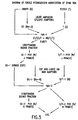
- FIGURE 2 The method of the present invention is set forth in FIGURE 2.
- viral sequences were isolated from a sample known to contain hepatitis C virus (i.e., an RNA virus). The isolation and cloning of HCV sequences were achieved by modifying the conventional RDA procedure as described by Lisitsyn et al., supra (1993).
- the two genomes under evaluation were designated as the "tester” (the post-infection serum known to contain HCV) and the “driver” (a pre-infection serum from the same individual without HCV).
- tester the post-infection serum known to contain HCV
- driver a pre-infection serum from the same individual without HCV.
- total nucleic acid DNA and RNA was isolated from the tester sample and the driver sample (not shown), by using a commercially available kit for total nucleic acid isolation (available from United States Biochemical [USB], Cleveland, OH).
- a DNA-only or an RNA-only extraction procedure can be utilized, as known and described in the art.
- the sample of driver and tester are obtained from the same source since the basis of the method is a comparison and subtraction of common nucleic acids.
- highly related, but non-identical, material for the source of the tester and driver nucleic acids.
- highly related, but non-identical is meant >95% sequence identity using standardized programs known in the art.
- Double-stranded DNA was generated from the total nucleic acid by random primed reverse transcription of the RNA, followed by random primed DNA synthesis. This treatment converted RNA and single-stranded DNA to double-stranded DNA molecules amenable to RDA.
- the double-stranded tester and driver DNAs were amplified to generate an abundant amount of starting material. This was achieved by cleaving double-stranded DNA prepared as described hereinabove with a restriction endonuclease that had a 4 bp recognition site (in this example, with Sau3AI).
- the DNA fragments (FIGURE 2, top) were ligated to oligonucleotide adapters (termed “set #1"), end-filled and PCR amplified using selective primers.
- the design of the selective primers i.e., R-Bam 19C and R-Bam 19G was such that only a subset of all the restriction fragments present would be amplified, thereby reducing the amplicon complexity.
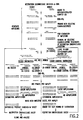
- FIGURE 1 presents a diagram exemplifying the PCR priming of a SAU3AI DNA fragment, ligated to the R-Bam adapter set, by (i) oligonucleotide primer R-Bam 24, or by (ii) selective oligonucleotide primer R-Bam19N. Boxed sequences appearing in FIGURE 1 are the 4 bp Sau3AI recognition sites, (n) indicates any of the 4 nucleotides and (N) represents the selective base, the complement of (n).
- the selective primer sequence was removed by restriction endonuclease digestion (in this example, with Sau3AI), which liberated a large amount of tester and driver nucleic acid (i.e., amplicons), which could then be used in the first round of subtractive hybridization.
- FIGURE 2 The remaining steps depicted in FIGURE 2 were designed to enrich for DNA sequences unique to the tester. This was accomplished by combining subtractive hybridization and kinetic enrichment into a single step. Briefly, an oligonucleotide adapter set (termed “set #2”) was ligated to the 5'-ends of a portion of the driver (henceforth designated “driver-control”) and tester amplicons. Driver-control and tester ligated to adapter set #2 were then mixed separately with an excess of non-ligated driver amplicon, denatured, and allowed to hybridize under standard conditions for at least 20 hours.
- set #2 an oligonucleotide adapter set
- the 3'-ends of the reannealed driver/tester DNA hybridization and the reannealed driver/driver-control DNA hybridization were filled in using a thermostable DNA polymerase at elevated temperature, as is known and described in the art.
- the reannealed sequences that were unique to the tester contained the ligated adapter on both strands of the annealed sequence.
- 3' end-filling of these molecules created sequences complementary to PCR primers on both DNA strands.
- these DNA species were amplified exponentially when subjected to PCR.
- a low level of tester:tester or driver-control:driver-control hybrids formed for sequences that were held in common with the driver. These DNA species also were amplified exponentially.
- hybrid molecules in which one strand was derived from the tester or driver-control and one strand was derived from the driver amplicon, amplified linearly when subjected to PCR. This occurred because only one strand (derived from the tester or driver-control) contained the ligated adapter sequence, and 3'-end filling only generated sequences complementary to the PCR primer on the strand derived from the driver amplicon.
- the double-stranded DNA of interest i.e. primarily tester-unique sequence
- the subtraction products of the driver/tester and driver/driver-control hybridizations were cleaved with restriction endonuclease (e.g., Sau3A I) to remove the oligonucleotide adapters (FIGURE 2, bottom).
- restriction endonuclease e.g., Sau3A I
- a portion of these DNA products was then subjected to additional rounds of subtraction and amplification (beginning with the ligation of an oligonucleotide adapter set not used in any previous round of RDA).
- the driver for each new round of RDA was the restriction endonuclease cleaved product of the driver/driver-control subtraction from the previous round (e.g., first round driver/driver-control products are recycled as driver in the second round, etc.).
- RDA amplicons previously were derived from DNA that had been digested with a restriction endonuclease having a 4-base or a 6-base recognition site. Thus, only those fragments that were short enough to be efficiently amplified by PCR were well-represented in the amplicon, thereby reducing amplicon complexity.
- spin column purification is similar in purpose to the size selection step performed by gel electrophoresis on the tester amplicon as previously described in the art, except that selection against small PCR products is maintained throughout the procedure, not just at the beginning.
- the ability to select against small PCR products is an improvement heretofore not realized by known RDA methods.
- the driver amplicon is generated once at the beginning of the procedure and used for subtraction against both the tester amplicon and the difference product from all subsequent rounds.
- the driver no longer accurately reflects the relative composition of the subtraction product with respect to common sequences.
- the result using current RDA methodology is that with each round of subtraction, the driver becomes less and less effective. Therefore, a shortcoming of the presently known RDA methods is that sequences common to driver and tester that are inefficiently subtracted can be incorrectly isolated as tester-unique sequences by RDA.
- driver vs. driver was developed which was performed in parallel with the driver vs. tester subtraction (see FIGURE 2). The product of this control subtraction was used as driver for the subsequent round.
- This ability to utilize a control subtraction provides a source of variable driver throughout the procedure that accurately represents those fragments held in common with the driver/tester subtraction product.
- An additional advantage is that by comparison to the driver/tester subtraction product, the driver control provides a visual reference to assist in the identification of those fragments that are tester-specific.
- a dot blot of all 72 minipreps from Example 2 was prepared and hybridized versus an HCV genome probe. Briefly, 0.5 ⁇ l of each plasmid preparation was spotted onto a Hybond-N filter (available from Amersham, Arlington Heights, IL, cat.# RPN2020B), denatured, neutralized, UV cross-linked and dried with heat under a vacuum, as directed by the supplier. The dot blot was pre-hybridized, hybridized with a 32 P-labeled probe covering the entire HCV genome, washed and exposed, as described and known in the art.
- Hybond-N filter available from Amersham, Arlington Heights, IL, cat.# RPN2020B
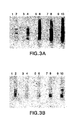
- Southern blot hybridizations were performed according to standard procedures as described in the art (see, e.g., Sambrook et al. Molecular Cloning: A Laboratory Manual, 2 nd ed. Cold Spring Harbor Laboratory Press, Cold Spring Harbor, New York (1989)) to compare the performance of SPAD-RDA described herein versus that of the RDA method previously described by Lisitsyn et al., Science 259:946-951 (1993). Briefly, 400 to 500 ng DNA of Sau3AI digested driver, tester and the products from all four rounds of subtraction were electrophoresed on three separate 2% agarose gels: one gel each for the two different methods and one summary gel for side-by-side comparison. Following transfer, the blots were pre-hybridized, hybridized with a 32 P-labled probe covering the entire HCV genome, washed and exposed.
- Example 6 Subtractive Hybridization of Non-Paired samples Using Reduced Complexity Amplicons and a Recycled Driver Control
- the immunoreactive clones were isolated from the original plates and then subjected to a second round of immunoscreening using the methods described above.
- the inserts of those clones which remained immunoreactive following the second round of immunoscreening were isolated by PCR amplification of the insert using ⁇ gt11 forward and reverse primers.
- PCR products were separated by electrophoresis through a 2% agarose gel, and then excised and purified using the QIAEX Gel Extraction Kit (Qiagen, Chatsworth, CA). Purified PCR products were sequenced directly on an ABI Model 373 DNA Sequencer using the ABI Sequencing Ready Reaction Kit (Perkin-Elmer, Norwalk, CT) and ⁇ gt11 forward and reverse primers.
- Example 8 Determination of the degree of enrichment of tester-specific sequences achieved by modified-RDA.
- the libraries prepared in ⁇ gt11 were screened by southern hybridization with three cDNA probes that encompassed the entire HCV-colonel genome, as follows.
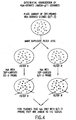
- the ⁇ gt11 libraries prepared from each of the amplicons obtained for each round of modified RDA were used to infect E. coli cells according to established, well-known methods. Twenty-five thousand pfu were plated for the tester and D/T-1, D/T-2, and D/T-3 libraries. For the D/T-4 library, since a preliminary experiment revealed that the density of hybridizable plaques was so high that an accurate count was not possible, the library was replated at 200 and 1000 pfu per plate. Duplicate filter lifts were prepared from duplicate filters of each library (i.e., D/T-1, 2, 3, and 4), and the filters were hybridized using standard methods with three 32 P-radiolabelled cDNAs which encompassed the entire HCV genome.
- the recombination efficiency of the library was determined by plating a portion of the library in the presence of IPIG and XGAL, and then determining the number of recombinant (white) plaques and non-recombinant (blue) plaques. The efficiency is the number of white plaques obtained divided by the total number plated.
- b calculation of the ratio of hybridization positive to hybridization negative plaques was performed by dividing the average number of hybridization positive plaques by the number of actual recombinant plaques an the plate; i.e. 25,000 (the number of plaques plated) times the recombination efficiency of the library.
- c Fold Enrich. Fold enrichment, calculation of the fold enrichment was performed by dividing the ratio of positive:negative plaques obtained for each library into that obtained for the tester library.
- Sequences present in the library that are found only in the tester will hybridize with the tester amplicon probe but not with the driver amplicon probe; sequences that are common to both tester and driver will hybridize with both probes.
- sequences that are tester-specific, and potentially derived from a novel infectious agent or possibly a gene that is upregulated during infection and/or disease can be isolated.
- the ⁇ gt11 library derived from the third round of modified RDA (D/T-3; Table 4) was utilized for differential hybridization, as follows. Five thousand plaques were plated on each of four large NZY-agar plates as described above. The phage DNA was then immobilized onto nylon filters, denatured, neutralized, UV-crosslinked and dried in an 80°C vacuum oven for 30 minutes. Duplicate "lifts" of phage DNA were made from each plate. The filters were then hybridized with radiolabeled probe tester and driver amplicons.
- the probes were prepared from 25 ng of DC-3 or D/T-3 DNA, which had been digested with Sau3AI to remove linker/primer sequences followed by removal of linker/primer DNA fragments using G50 Sepharose spin columns.
- the probes were radiolabeled using random primers followed by removal of unincorporated 32 P-dATP using standard methods.
- One set of duplicate filters was hybridized and washed under stringent conditions with the tester probes and the other set with the driver probe. The filters were exposed to x-ray film and the autoradiographs from duplicate filters compared. Those plaques that hybridized with the tester probe, but not the driver probe, were picked for subsequent testing. A total of 12 plaques were isolated and subjected to a second round of differential hybridization screening.
- plaques were shown to hybridize with the tester probe. These four plaques (clones) were isolated from the plates and the insert sequence amplified using ⁇ gt11 forward and reverse primers (Stratagene, La Jolla, CA). PCR products were separated by electrophoresis through a 2% agarose gel and then excised and purified using the QIAEX Gel Extraction Kit (Qiagen, Chatsworth, CA). Purified PCR products were sequenced directly on an ABI Model 373 DNA Sequencer (PE Applied Biosystems, Foster City, CA) using the ABI Sequencing Ready Reaction Kit (Perkin-Elmer) and gt11 forward and reverse primers.
- ⁇ gt11 forward and reverse primers (Stratagene, La Jolla, CA). PCR products were separated by electrophoresis through a 2% agarose gel and then excised and purified using the QIAEX Gel Extraction Kit (Qiagen, Chatsworth, CA). Purified PCR products were sequenced directly on an ABI
- Example 10 Isolation of a Novel Virus by Subtractive Hybridization of Non-Paired Samples Using SPAD-RDA
- Example 6 The utility of the SPAD-RDA procedure using non-paired samples was demonstrated in Example 6. This strategy was applied to a sample derived from a chimpanzee (CH19) infected with HCV but also suspected of harboring an additional unidentified virus(s). Previously, serum from a human donor containing virus-like particles was serially passed through 6 chimpanzees. A plasma pool of these chimpanzees was inoculated into CH19, resulting in acute resolving hepatitis.
- driver amplicon was prepared using total nucleic acids from 100 ⁇ l of a plasma pool, obtained by combining equal volumes of plasma from 6 normal chimpanzees.
- CH19 tester amplicon was prepared from 2 pools of plasma total nucleic acids (0 to 30 days post infection and 36 to 83 days post infection). 100 ⁇ l of each tester pool was processed individually through the small scale amplicon stage, at which time equal volumes of each were combined and used to generate a single large scale tester amplicon.
- the method of extraction and the procedures used for the first- and second-strand cDNA synthesis were as described in Example 2.
- Example 2 The methods and procedures for the hybridization and selective amplification of the amplicons are described in Example 2 with the following exceptions: 1) 0.5 to 1.0 ⁇ g Sau3AI cut cDNA, representing the entire CH427 HCV genome, was added to the 40 ⁇ g of driver prior to each round of subtraction. This was done to reduce the chance that HCV, known to be present in the CH19 sample, would be enriched by SPAD-RDA, and so increase the chance that other virus(s) possibly present in the sample would be detected. 2) The length of hybridization was maintained at 21 to 22 hours for each of the subtractive components of the procedure. 3) Only 3 rounds of subtraction were performed.
- Example 11 Subtractive Hybridization of Paired or Non-Paired Samples Using Reduced Complexity Amplicons and a Single Hybridization Reaction as the Source for both the Recycled Driver Control and the Target-Enriched Fraction
- recombinant libraries prepared from the SPAD-RDA products can be analyzed by immunoscreening and by differential hybridization to identify tester-unique sequences. These all combine to allow the identification and isolation of many target sequences that otherwise would be difficult or impossible to isolate, such as those contained within a complex genomic background and/or present at a low copy number.
Landscapes
- Chemical & Material Sciences (AREA)
- Life Sciences & Earth Sciences (AREA)
- Organic Chemistry (AREA)
- Health & Medical Sciences (AREA)
- Analytical Chemistry (AREA)
- Proteomics, Peptides & Aminoacids (AREA)
- Zoology (AREA)
- Engineering & Computer Science (AREA)
- Wood Science & Technology (AREA)
- Immunology (AREA)
- Bioinformatics & Cheminformatics (AREA)
- Molecular Biology (AREA)
- Biophysics (AREA)
- Biotechnology (AREA)
- Physics & Mathematics (AREA)
- Biochemistry (AREA)
- Microbiology (AREA)
- General Engineering & Computer Science (AREA)
- General Health & Medical Sciences (AREA)
- Genetics & Genomics (AREA)
- Measuring Or Testing Involving Enzymes Or Micro-Organisms (AREA)
- Led Device Packages (AREA)
- Saccharide Compounds (AREA)
- Preparation Of Compounds By Using Micro-Organisms (AREA)
Claims (8)
- Ein Verfahren zur Durchführung einer subtraktiven Hybridisierung unter Verwendung einer Testerprobe und einer Treiberprobe, um das Vorliegen eines Unterschieds in der Nucleinsäuresequenz zwischen der Testerprobe und der Treiberprobe zu bestimmen, das folgendes umfasst:(a) getrenntes Isolieren der Gesamtnucleinsäure aus der Testerprobe und der Treiberprobe, und Erzeugen von doppelsträngiger cDNS/DNS aus der Gesamtnucleinsäure von der Testerprobe und der Treiberprobe;(b) Verdauen der doppelsträngigen cDNS/DNS, die aus der Testerprobe und der Treiberprobe in Schritt (a) erzeugt wurde, mit einer Restriktionsendonuclease, um einen Satz von Restriktionsfragmenten für jede Probe zu erzeugen;(c) Ligieren der Treiber- und Tester-Restriktionsfragmente von jedem Satz aus Schritt (b) an einen Oligonucleotid-Adaptersatz 1, und Amplifizieren der resultierenden Produkte mit selektiven Primern, so dass ein Teilsatz der Restriktionsfragmente aus Schritt (b) amplifiziert wird;(d) Entfernen der selektiven Primersequenzen (erste Runde) oder der Adaptersequenzen (anschließende Runden) mittels Restriktions-Endonucleaseverdau, um Tester- und Treiber-Amplikons zu erzeugen, Ligieren der 5'-Enden der Treiber- und Tester-Amplikons an einen Oligonucleotid-Adaptersatz 2, um Treiber-Kontrolle und Tester zu bilden, getrenntes Mischen von Treiber-Kontrolle und Tester jeweils mit einem Überschuss an nicht-ligiertem Treiber-Amplikon, Denaturieren der resultierenden Mischungen, und Erlauben, dass die denaturierten Nucleinsäurestränge in der jeweiligen Mischung hybridisieren;(e) Auffüllen der 3'-Enden des wiederverschmolzenen Treibers/Testers und der wiederverschmolzenen Treiber/Treiber-Kontrolle unter Verwendung einer thermostabilen DNS-Polymerase, und Amplifizieren der sich ergebenden Sequenzen;(f) Entfernen der restlichen einzelsträngigen DNS durch Verdau mit einer Einzelstrang-DNS-Nuclease und Amplifizieren;(g) Wiederholen der Schritte (d) bis (f),wobei in den Schritten (d) bis (f) ein Oligonucleotid-Adaptersatz verwendet wird, der in keiner der vorangehenden Runden der RDA verwendet wurde, wobei eine Runde aus der Ausführung der RDA-Schritte (d) bis (f) besteht, und für jede neue RDA-Runde, das Restriktionsendonuclease-geschnittene Produkt der Treiber/Treiber-Kontrolle-Subtraktion aus den unmittelbar vorangehenden Schritten (d) bis (f) als Treiber verwendet wird.
- Das Verfahren gemäß Anspruch 1, worin die Restriktionsendonuclease von Schritt (b) eine 4 - 6 Basenpaar Erkennungsstelle besitzt.
- Das Verfahren gemäß Anspruch 2, worin die Restriktionsendonuclease von Schritt (b) eine 4 Basenpaar Erkennungsstelle besitzt.
- Das Verfahren gemäß Anspruch 3, worin die Restriktionsendonuclease Sau3AI ist.
- Das Verfahren gemäß Anspruch 1, worin das Restriktionsenzym von Schritt (d) eine 4 - 6 Basenpaar Erkennungsstelle besitzt.
- Das Verfahren gemäß Anspruch 5, worin das Restriktionsenzym von Schritt (d) eine 4 Basenpaar Erkennungsstelle besitzt.
- Das Verfahren gemäß Anspruch 6, worin das Restriktionsenzym Sau3AI ist.
- Ein Verfahren zur visuellen Identifizierung eindeutiger Testersequenzen, das die folgenden Schritte umfasst:(a) getrenntes Isolieren der Gesamtnucleinsäure aus einer Testerprobe und einer Treiberprobe, und Erzeugen von doppelsträngiger cDNS/DNS aus der Gesamtnucleinsäure der Testerprobe und Treiberprobe;(b) Verdauen der doppelsträngigen cDNS/DNS, die aus der Testerprobe und der Treiberprobe aus Schritt (a) erzeugt wurde, mit einer Restriktionsendonuclease, um einen Satz von Restriktionsfragmenten für jede Probe zu erzeugen;(c) Ligieren der Treiber- und Tester-Restriktionsfragmente aus Schritt (b) an einen Oligonucleotid-Adaptersatz 1 und Amplifizieren der resultierenden Produkte mit selektiven Primern, so dass ein Teilsatz der Restriktionsfragmente aus Schritt (b) amplifiziert wird;(d) Entfernen der selektiven Primersequenzen (erste Runde) oder der Adaptersequenzen (anschließende Runden) mittels Restriktions-Endonucleaseverdau, um Tester- und Treiber-Amplikons zu erzeugen, Ligieren der 5'-Enden der Treiber- und Tester-Amplikons an einen Oligonucleotid-Adaptersatz 2, um Treiber-Kontrolle und Tester zu bilden, getrenntes Mischen von Treiber-Kontrolle und Tester jeweils mit einem Überschuss an nicht-ligiertem Treiber-Amplikon, Denaturieren der resultierenden Mischungen, und Erlauben, dass die denaturierten Nucleinsäurestränge in der jeweiligen Mischung hybridisieren;(e) Auffüllen der 3'-Enden des wiederverschmolzenen Treibers/Testers und der wiederverschmolzenen Treiber/Treiber-Kontrolle unter Verwendung einer thermostabilen DNS-Polymerase und Amplifizieren der sich ergebenden Sequenzen;(f) Entfernen der restlichen einzelsträngigen DNS durch Verdau mit einer Einzelstrang-DNS-Nuclease und Amplifizieren;wobei in den Schritten (d) bis (f) ein Oligonucleotid-Adaptersatz verwendet wird, der in keiner der vorangehenden Runden der RDA verwendet wurde, wobei eine Runde aus der Ausführung der RDA-Schritte (d) bis (f) besteht, und für jede neue RDA-Runde, das Restriktionsendonuclease-geschnittene Produkt der Treiber/Treiber-Kontrolle-Subtraktion aus den unmittelbar vorangehenden Schritten (d) bis (f) als Treiber verwendet wird,(g) Aufbringen der Treiber-Tester und Treiber-Kontrollprodukte auf ein festes Substrat; und(h) visuelles Identifizieren der Treiber-Tester-Banden, welche nicht in den Treiber-Kontrollbanden vorhanden sind.
Applications Claiming Priority (3)
| Application Number | Priority Date | Filing Date | Title |
|---|---|---|---|
| US09/631,349 US6455255B1 (en) | 2000-08-02 | 2000-08-02 | Method of performing subtractive hybridization using RDA |
| US631349 | 2000-08-02 | ||
| PCT/US2001/024480 WO2002010458A2 (en) | 2000-08-02 | 2001-08-02 | Method of performing subtractive hybridization |
Publications (2)
| Publication Number | Publication Date |
|---|---|
| EP1364048A2 EP1364048A2 (de) | 2003-11-26 |
| EP1364048B1 true EP1364048B1 (de) | 2006-09-27 |
Family
ID=24530821
Family Applications (1)
| Application Number | Title | Priority Date | Filing Date |
|---|---|---|---|
| EP01957439A Expired - Lifetime EP1364048B1 (de) | 2000-08-02 | 2001-08-02 | Verfahren zur durchführung einer subtraktiven hybridisierung |
Country Status (8)
| Country | Link |
|---|---|
| US (1) | US6455255B1 (de) |
| EP (1) | EP1364048B1 (de) |
| JP (1) | JP4856842B2 (de) |
| AT (1) | ATE340873T1 (de) |
| CA (1) | CA2417501A1 (de) |
| DE (1) | DE60123481T2 (de) |
| ES (1) | ES2272516T3 (de) |
| WO (1) | WO2002010458A2 (de) |
Families Citing this family (8)
| Publication number | Priority date | Publication date | Assignee | Title |
|---|---|---|---|---|
| CN1264744A (zh) * | 1999-02-26 | 2000-08-30 | 上海生元基因开发有限公司 | 一种通过循环差减进行大规模cDNA克隆和测序的方法 |
| US8389213B2 (en) * | 2000-12-19 | 2013-03-05 | Suntory Holdings Limited | Method for concentration of gene |
| US6632611B2 (en) * | 2001-07-20 | 2003-10-14 | Affymetrix, Inc. | Method of target enrichment and amplification |
| GB2412170A (en) * | 2004-03-16 | 2005-09-21 | Plant Bioscience Ltd | A method for enriching for target nucleic acids in a sample |
| JPWO2006093082A1 (ja) * | 2005-03-01 | 2008-08-07 | 和光純薬工業株式会社 | サブトラクション・ポリヌクレオチドの取得方法 |
| WO2007100384A2 (en) * | 2005-10-24 | 2007-09-07 | Invitrogen Corporation | Three frame cdna expression libraries for functional screening of proteins |
| US9388457B2 (en) | 2007-09-14 | 2016-07-12 | Affymetrix, Inc. | Locus specific amplification using array probes |
| WO2011030154A1 (en) * | 2009-09-12 | 2011-03-17 | Zoragen Biotechnologies Llp | Detection of quantitative genetic differences |
Family Cites Families (9)
| Publication number | Priority date | Publication date | Assignee | Title |
|---|---|---|---|---|
| US4683195A (en) | 1986-01-30 | 1987-07-28 | Cetus Corporation | Process for amplifying, detecting, and/or-cloning nucleic acid sequences |
| US5436142A (en) * | 1992-11-12 | 1995-07-25 | Cold Spring Harbor Laboratory | Methods for producing probes capable of distingushing variant genomic sequences |
| US5958738A (en) | 1997-03-24 | 1999-09-28 | Roche Diagnostics Corporation | Procedure for subtractive hybridization and difference analysis |
| ATE537270T1 (de) * | 1997-10-30 | 2011-12-15 | Cold Spring Harbor Lab | Sondenanordnungen und deren verwendungen für verfahren zur dns-unterscheidung |
| EP1066369B1 (de) * | 1998-03-18 | 2006-07-19 | Quark Biotech, Inc. | Selektion/subtraktionsansatz zur genidentifizierung |
| EP1127163A2 (de) * | 1998-11-02 | 2001-08-29 | The Brigham & Women's Hospital, Inc. | Eine methode zur genomischen subtraktiven hybridisierung |
| JP2000139461A (ja) * | 1998-11-06 | 2000-05-23 | Hitachi Koki Co Ltd | 核酸サブトラクション法及びその装置 |
| CN1264744A (zh) * | 1999-02-26 | 2000-08-30 | 上海生元基因开发有限公司 | 一种通过循环差减进行大规模cDNA克隆和测序的方法 |
| JP2000308489A (ja) * | 1999-04-28 | 2000-11-07 | Dai Ichi Seiyaku Co Ltd | 微小変異dna検出方法 |
-
2000
- 2000-08-02 US US09/631,349 patent/US6455255B1/en not_active Expired - Fee Related
-
2001
- 2001-08-02 AT AT01957439T patent/ATE340873T1/de not_active IP Right Cessation
- 2001-08-02 ES ES01957439T patent/ES2272516T3/es not_active Expired - Lifetime
- 2001-08-02 EP EP01957439A patent/EP1364048B1/de not_active Expired - Lifetime
- 2001-08-02 JP JP2002516374A patent/JP4856842B2/ja not_active Expired - Fee Related
- 2001-08-02 WO PCT/US2001/024480 patent/WO2002010458A2/en not_active Ceased
- 2001-08-02 CA CA002417501A patent/CA2417501A1/en not_active Abandoned
- 2001-08-02 DE DE60123481T patent/DE60123481T2/de not_active Expired - Lifetime
Also Published As
| Publication number | Publication date |
|---|---|
| WO2002010458A2 (en) | 2002-02-07 |
| WO2002010458A8 (en) | 2007-07-05 |
| JP2004516014A (ja) | 2004-06-03 |
| ES2272516T3 (es) | 2007-05-01 |
| EP1364048A2 (de) | 2003-11-26 |
| US6455255B1 (en) | 2002-09-24 |
| DE60123481D1 (de) | 2006-11-09 |
| DE60123481T2 (de) | 2007-06-21 |
| ATE340873T1 (de) | 2006-10-15 |
| CA2417501A1 (en) | 2002-02-07 |
| JP4856842B2 (ja) | 2012-01-18 |
| WO2002010458A3 (en) | 2003-09-04 |
Similar Documents
| Publication | Publication Date | Title |
|---|---|---|
| EP0525882B1 (de) | Quantifikation von Nukleinsäuren | |
| US5569582A (en) | Rapid amplification and detection of nucleic acids | |
| EP0427074A2 (de) | Nukleinsäure-Amplifikation unter Verwendung von transkriptionsfähiger Haarnadelsonde | |
| IE83814B1 (en) | Quantification of nucleic acid | |
| JPH04506599A (ja) | 特定の核酸配列を検出する方法及びその応用 | |
| EP0648222B1 (de) | Verfahren zur einfachen nukleotid-primer-verlängerung zum nachweis spezifischer allele und dafür geeigneter kit | |
| ES2228480T3 (es) | Composiciones y procedimientos para analisis genetico. | |
| AU712685B2 (en) | RecA-assisted cloning of DNA | |
| US6455255B1 (en) | Method of performing subtractive hybridization using RDA | |
| EP0372524A2 (de) | Verfahren zur Anreicherung und zum Klonen von DNS, das einer Insertion oder einer Deletion entspricht | |
| WO1997012058A1 (en) | Method for quantifying nucleic acid using multiple competitor nucleic acids | |
| US5759780A (en) | Methods for enriching target nucleic acid sequences | |
| JP3494509B2 (ja) | 核酸合成法 | |
| US6316192B1 (en) | Method for enrichment of unique DNA fragments through cyclical removal of PCR adapter attached to DNA fragments whose sequences are shared between two DNA pools | |
| JP2002355098A (ja) | B型肝炎ウイルスの遺伝子型分類方法並びにそのためのプライマー及びプローブ | |
| Hardie et al. | DNA single strand conformation polymorphism identifies five defined strains of hepatitis B virus (HBV) during an outbreak of HBV infection in an oncology unit | |
| US7166432B2 (en) | Compositions and methods for genetic analysis | |
| DE60015210T2 (de) | Oligonukleotid Primer zur effizienten reversen Transkription von Hepatitis C Virus (HCV) RNS und Verfahren zu deren Verwendung | |
| JP3709211B2 (ja) | アデノウイルスの検出及び鑑別方法並びにそれに用いるオリゴヌクレオチド及びdna断片 | |
| WO2000020629A2 (en) | Quantitation of rna | |
| KR101911220B1 (ko) | 돼지열병 바이러스 백신주 접종 돼지 및 돼지열병 바이러스 야외주 감염 돼지의 감별용 pna 프로브 및 이를 이용한 감별방법 | |
| US20240124930A1 (en) | Diagnostic and/or Sequencing Method and Kit | |
| Birkenmeyer et al. | Selectively primed adaptive driver RDA (SPAD‐RDA): An improved method for subtractive hybridization | |
| CN113265460B (zh) | 检测耳聋基因slc26a4点突变的引物及其应用 | |
| JPH07298897A (ja) | 2つの標識プライマーを用いた標的核酸の生成、増幅及び検出方法並びにそれらを含有するpcrキット |
Legal Events
| Date | Code | Title | Description |
|---|---|---|---|
| PUAI | Public reference made under article 153(3) epc to a published international application that has entered the european phase |
Free format text: ORIGINAL CODE: 0009012 |
|
| 17P | Request for examination filed |
Effective date: 20030226 |
|
| AK | Designated contracting states |
Kind code of ref document: A2 Designated state(s): AT BE CH CY DE DK ES FI FR GB GR IE IT LI LU MC NL PT SE TR |
|
| 17Q | First examination report despatched |
Effective date: 20040819 |
|
| GRAP | Despatch of communication of intention to grant a patent |
Free format text: ORIGINAL CODE: EPIDOSNIGR1 |
|
| GRAS | Grant fee paid |
Free format text: ORIGINAL CODE: EPIDOSNIGR3 |
|
| GRAA | (expected) grant |
Free format text: ORIGINAL CODE: 0009210 |
|
| AK | Designated contracting states |
Kind code of ref document: B1 Designated state(s): AT BE CH CY DE DK ES FI FR GB GR IE IT LI LU MC NL PT SE TR |
|
| PG25 | Lapsed in a contracting state [announced via postgrant information from national office to epo] |
Ref country code: IT Free format text: LAPSE BECAUSE OF FAILURE TO SUBMIT A TRANSLATION OF THE DESCRIPTION OR TO PAY THE FEE WITHIN THE PRESCRIBED TIME-LIMIT;WARNING: LAPSES OF ITALIAN PATENTS WITH EFFECTIVE DATE BEFORE 2007 MAY HAVE OCCURRED AT ANY TIME BEFORE 2007. THE CORRECT EFFECTIVE DATE MAY BE DIFFERENT FROM THE ONE RECORDED. Effective date: 20060927 Ref country code: FI Free format text: LAPSE BECAUSE OF FAILURE TO SUBMIT A TRANSLATION OF THE DESCRIPTION OR TO PAY THE FEE WITHIN THE PRESCRIBED TIME-LIMIT Effective date: 20060927 Ref country code: NL Free format text: LAPSE BECAUSE OF FAILURE TO SUBMIT A TRANSLATION OF THE DESCRIPTION OR TO PAY THE FEE WITHIN THE PRESCRIBED TIME-LIMIT Effective date: 20060927 Ref country code: CH Free format text: LAPSE BECAUSE OF FAILURE TO SUBMIT A TRANSLATION OF THE DESCRIPTION OR TO PAY THE FEE WITHIN THE PRESCRIBED TIME-LIMIT Effective date: 20060927 Ref country code: BE Free format text: LAPSE BECAUSE OF FAILURE TO SUBMIT A TRANSLATION OF THE DESCRIPTION OR TO PAY THE FEE WITHIN THE PRESCRIBED TIME-LIMIT Effective date: 20060927 Ref country code: LI Free format text: LAPSE BECAUSE OF FAILURE TO SUBMIT A TRANSLATION OF THE DESCRIPTION OR TO PAY THE FEE WITHIN THE PRESCRIBED TIME-LIMIT Effective date: 20060927 Ref country code: AT Free format text: LAPSE BECAUSE OF FAILURE TO SUBMIT A TRANSLATION OF THE DESCRIPTION OR TO PAY THE FEE WITHIN THE PRESCRIBED TIME-LIMIT Effective date: 20060927 |
|
| REG | Reference to a national code |
Ref country code: GB Ref legal event code: FG4D |
|
| REG | Reference to a national code |
Ref country code: CH Ref legal event code: EP |
|
| REG | Reference to a national code |
Ref country code: IE Ref legal event code: FG4D |
|
| REF | Corresponds to: |
Ref document number: 60123481 Country of ref document: DE Date of ref document: 20061109 Kind code of ref document: P |
|
| PG25 | Lapsed in a contracting state [announced via postgrant information from national office to epo] |
Ref country code: SE Free format text: LAPSE BECAUSE OF FAILURE TO SUBMIT A TRANSLATION OF THE DESCRIPTION OR TO PAY THE FEE WITHIN THE PRESCRIBED TIME-LIMIT Effective date: 20061227 Ref country code: DK Free format text: LAPSE BECAUSE OF FAILURE TO SUBMIT A TRANSLATION OF THE DESCRIPTION OR TO PAY THE FEE WITHIN THE PRESCRIBED TIME-LIMIT Effective date: 20061227 |
|
| NLV1 | Nl: lapsed or annulled due to failure to fulfill the requirements of art. 29p and 29m of the patents act | ||
| PG25 | Lapsed in a contracting state [announced via postgrant information from national office to epo] |
Ref country code: PT Free format text: LAPSE BECAUSE OF FAILURE TO SUBMIT A TRANSLATION OF THE DESCRIPTION OR TO PAY THE FEE WITHIN THE PRESCRIBED TIME-LIMIT Effective date: 20070313 |
|
| ET | Fr: translation filed | ||
| REG | Reference to a national code |
Ref country code: CH Ref legal event code: PL |
|
| REG | Reference to a national code |
Ref country code: ES Ref legal event code: FG2A Ref document number: 2272516 Country of ref document: ES Kind code of ref document: T3 |
|
| PLBE | No opposition filed within time limit |
Free format text: ORIGINAL CODE: 0009261 |
|
| STAA | Information on the status of an ep patent application or granted ep patent |
Free format text: STATUS: NO OPPOSITION FILED WITHIN TIME LIMIT |
|
| D17D | Deferred search report published (deleted) | ||
| 26N | No opposition filed |
Effective date: 20070628 |
|
| PG25 | Lapsed in a contracting state [announced via postgrant information from national office to epo] |
Ref country code: GR Free format text: LAPSE BECAUSE OF FAILURE TO SUBMIT A TRANSLATION OF THE DESCRIPTION OR TO PAY THE FEE WITHIN THE PRESCRIBED TIME-LIMIT Effective date: 20061228 Ref country code: MC Free format text: LAPSE BECAUSE OF NON-PAYMENT OF DUE FEES Effective date: 20070831 |
|
| PG25 | Lapsed in a contracting state [announced via postgrant information from national office to epo] |
Ref country code: IE Free format text: LAPSE BECAUSE OF NON-PAYMENT OF DUE FEES Effective date: 20070802 |
|
| PG25 | Lapsed in a contracting state [announced via postgrant information from national office to epo] |
Ref country code: LU Free format text: LAPSE BECAUSE OF NON-PAYMENT OF DUE FEES Effective date: 20070802 Ref country code: CY Free format text: LAPSE BECAUSE OF FAILURE TO SUBMIT A TRANSLATION OF THE DESCRIPTION OR TO PAY THE FEE WITHIN THE PRESCRIBED TIME-LIMIT Effective date: 20060927 |
|
| PG25 | Lapsed in a contracting state [announced via postgrant information from national office to epo] |
Ref country code: TR Free format text: LAPSE BECAUSE OF FAILURE TO SUBMIT A TRANSLATION OF THE DESCRIPTION OR TO PAY THE FEE WITHIN THE PRESCRIBED TIME-LIMIT Effective date: 20060927 |
|
| PGFP | Annual fee paid to national office [announced via postgrant information from national office to epo] |
Ref country code: GB Payment date: 20120726 Year of fee payment: 12 |
|
| PGFP | Annual fee paid to national office [announced via postgrant information from national office to epo] |
Ref country code: IT Payment date: 20120809 Year of fee payment: 12 Ref country code: DE Payment date: 20120831 Year of fee payment: 12 Ref country code: ES Payment date: 20120809 Year of fee payment: 12 Ref country code: FR Payment date: 20120809 Year of fee payment: 12 |
|
| GBPC | Gb: european patent ceased through non-payment of renewal fee |
Effective date: 20130802 |
|
| PG25 | Lapsed in a contracting state [announced via postgrant information from national office to epo] |
Ref country code: DE Free format text: LAPSE BECAUSE OF NON-PAYMENT OF DUE FEES Effective date: 20140301 |
|
| REG | Reference to a national code |
Ref country code: DE Ref legal event code: R119 Ref document number: 60123481 Country of ref document: DE Effective date: 20140301 |
|
| REG | Reference to a national code |
Ref country code: FR Ref legal event code: ST Effective date: 20140430 |
|
| PG25 | Lapsed in a contracting state [announced via postgrant information from national office to epo] |
Ref country code: IT Free format text: LAPSE BECAUSE OF NON-PAYMENT OF DUE FEES Effective date: 20130802 |
|
| PG25 | Lapsed in a contracting state [announced via postgrant information from national office to epo] |
Ref country code: GB Free format text: LAPSE BECAUSE OF NON-PAYMENT OF DUE FEES Effective date: 20130802 |
|
| PG25 | Lapsed in a contracting state [announced via postgrant information from national office to epo] |
Ref country code: FR Free format text: LAPSE BECAUSE OF NON-PAYMENT OF DUE FEES Effective date: 20130902 |
|
| REG | Reference to a national code |
Ref country code: ES Ref legal event code: FD2A Effective date: 20140909 |
|
| PG25 | Lapsed in a contracting state [announced via postgrant information from national office to epo] |
Ref country code: ES Free format text: LAPSE BECAUSE OF NON-PAYMENT OF DUE FEES Effective date: 20130803 |