EP1359518A2 - Vorladen von Inhalten in Cachespeichern für Informationsgeräte - Google Patents
Vorladen von Inhalten in Cachespeichern für Informationsgeräte Download PDFInfo
- Publication number
- EP1359518A2 EP1359518A2 EP03003205A EP03003205A EP1359518A2 EP 1359518 A2 EP1359518 A2 EP 1359518A2 EP 03003205 A EP03003205 A EP 03003205A EP 03003205 A EP03003205 A EP 03003205A EP 1359518 A2 EP1359518 A2 EP 1359518A2
- Authority
- EP
- European Patent Office
- Prior art keywords
- loading
- proxy
- request
- information content
- information
- Prior art date
- Legal status (The legal status is an assumption and is not a legal conclusion. Google has not performed a legal analysis and makes no representation as to the accuracy of the status listed.)
- Withdrawn
Links
Images

Classifications
-
- G—PHYSICS
- G06—COMPUTING OR CALCULATING; COUNTING
- G06F—ELECTRIC DIGITAL DATA PROCESSING
- G06F12/00—Accessing, addressing or allocating within memory systems or architectures
- G06F12/02—Addressing or allocation; Relocation
- G06F12/08—Addressing or allocation; Relocation in hierarchically structured memory systems, e.g. virtual memory systems
- G06F12/0802—Addressing of a memory level in which the access to the desired data or data block requires associative addressing means, e.g. caches
- G06F12/0862—Addressing of a memory level in which the access to the desired data or data block requires associative addressing means, e.g. caches with prefetch
-
- H—ELECTRICITY
- H04—ELECTRIC COMMUNICATION TECHNIQUE
- H04L—TRANSMISSION OF DIGITAL INFORMATION, e.g. TELEGRAPHIC COMMUNICATION
- H04L67/00—Network arrangements or protocols for supporting network services or applications
- H04L67/50—Network services
- H04L67/56—Provisioning of proxy services
- H04L67/568—Storing data temporarily at an intermediate stage, e.g. caching
- H04L67/5681—Pre-fetching or pre-delivering data based on network characteristics
-
- G—PHYSICS
- G06—COMPUTING OR CALCULATING; COUNTING
- G06F—ELECTRIC DIGITAL DATA PROCESSING
- G06F16/00—Information retrieval; Database structures therefor; File system structures therefor
- G06F16/90—Details of database functions independent of the retrieved data types
- G06F16/95—Retrieval from the web
- G06F16/957—Browsing optimisation, e.g. caching or content distillation
- G06F16/9574—Browsing optimisation, e.g. caching or content distillation of access to content, e.g. by caching
-
- H—ELECTRICITY
- H04—ELECTRIC COMMUNICATION TECHNIQUE
- H04L—TRANSMISSION OF DIGITAL INFORMATION, e.g. TELEGRAPHIC COMMUNICATION
- H04L67/00—Network arrangements or protocols for supporting network services or applications
- H04L67/2866—Architectures; Arrangements
- H04L67/288—Distributed intermediate devices, i.e. intermediate devices for interaction with other intermediate devices on the same level
-
- H—ELECTRICITY
- H04—ELECTRIC COMMUNICATION TECHNIQUE
- H04L—TRANSMISSION OF DIGITAL INFORMATION, e.g. TELEGRAPHIC COMMUNICATION
- H04L67/00—Network arrangements or protocols for supporting network services or applications
- H04L67/50—Network services
- H04L67/56—Provisioning of proxy services
-
- H—ELECTRICITY
- H04—ELECTRIC COMMUNICATION TECHNIQUE
- H04L—TRANSMISSION OF DIGITAL INFORMATION, e.g. TELEGRAPHIC COMMUNICATION
- H04L67/00—Network arrangements or protocols for supporting network services or applications
- H04L67/50—Network services
- H04L67/56—Provisioning of proxy services
- H04L67/568—Storing data temporarily at an intermediate stage, e.g. caching
- H04L67/5682—Policies or rules for updating, deleting or replacing the stored data
-
- H—ELECTRICITY
- H04—ELECTRIC COMMUNICATION TECHNIQUE
- H04L—TRANSMISSION OF DIGITAL INFORMATION, e.g. TELEGRAPHIC COMMUNICATION
- H04L67/00—Network arrangements or protocols for supporting network services or applications
- H04L67/50—Network services
- H04L67/60—Scheduling or organising the servicing of application requests, e.g. requests for application data transmissions using the analysis and optimisation of the required network resources
- H04L67/62—Establishing a time schedule for servicing the requests
-
- G—PHYSICS
- G06—COMPUTING OR CALCULATING; COUNTING
- G06F—ELECTRIC DIGITAL DATA PROCESSING
- G06F2212/00—Indexing scheme relating to accessing, addressing or allocation within memory systems or architectures
- G06F2212/60—Details of cache memory
- G06F2212/6028—Prefetching based on hints or prefetch instructions
-
- Y—GENERAL TAGGING OF NEW TECHNOLOGICAL DEVELOPMENTS; GENERAL TAGGING OF CROSS-SECTIONAL TECHNOLOGIES SPANNING OVER SEVERAL SECTIONS OF THE IPC; TECHNICAL SUBJECTS COVERED BY FORMER USPC CROSS-REFERENCE ART COLLECTIONS [XRACs] AND DIGESTS
- Y10—TECHNICAL SUBJECTS COVERED BY FORMER USPC
- Y10S—TECHNICAL SUBJECTS COVERED BY FORMER USPC CROSS-REFERENCE ART COLLECTIONS [XRACs] AND DIGESTS
- Y10S715/00—Data processing: presentation processing of document, operator interface processing, and screen saver display processing
- Y10S715/961—Operator interface with visual structure or function dictated by intended use
- Y10S715/963—Calendar or scheduling
Definitions
- the present invention relates to systems for providing an information appliance with information content, including multimedia from a remote, on-line content provider, and more particularly relates to systems for caching information content at intermediate locations readily accessible to the information appliance.
- Various information appliances exist that enable customers to be provided with information content.
- the customers may be mobile, traveling from location to location and utilizing multiple information appliances, such as in the case of a traveling salesperson.
- Such information appliances include televisions, portable computers and automobile navigational aids, among others.
- the information appliance connects to an access node of a network of interconnected servers that are in turn connected to multimedia servers that provide information content.
- multimedia servers that provide information content.
- a mobile customer is able to download multimedia information content to review news, movies, radio, books and other files containing information of various types and formats.
- a mobile customer's review of the requested/desired information content is delayed until an entire file or a substantial portion of a file is received at the information appliance.
- This delay may be significant, as the information appliance may need to access remotely located information content providers via a vast network of interconnected servers.
- packet loss during transmission can result in reception of low-quality versions of real-time information content that is to be presented to the mobile customer.
- delay and packet loss are magnified as transmission distance increases and as the number of interconnected servers that are interacted with along the transmission path increases.
- a cache provides a place to store information more or less temporarily, saving time and reducing the burden of re-obtaining the stored information from a remote location via the network. For example, a web page that has been requested by a conventional web browser is stored in the browser's cache directory on the hard disk of the information appliance. That way, when the mobile customer returns to a recently viewed page, the browser can obtain the web page from the cache rather than the original server, thereby saving time and reducing network traffic.
- caching can be implemented on a network by distributing information content to multiple cache servers from which most users would obtain information and by periodically refreshing the information content stored at each cache server.
- the cache server is located relatively close to information appliances and typically within an enterprise that saves information content that server users have requested so that successive requests for previously requested information content can be satisfied by the cache server rather than requiring an extended use of the network.
- the cache server not only serves its users by obtaining information more quickly but also reduces network traffic.
- a cache server improves the speed and the reliability of the delivery of information content, providing a higher quality of service because information content is not transmitted via congested networks.
- An exemplary method for pre-loading information content into a cache include viewing or accessing information content using an information appliance. Then transmitting a request to pre-load the information content to a cache associated with another information appliance. And lasting viewing or accessing the information content at the other information appliance.
- the information content will arrive at a particular information appliance prior to the arrival of the user at that information appliance. Waiting by the user for the information content is eliminated. Furthermore, pre-loading greatly increases the allowable data transfer time for the information content. With this increased data transfer time, the information content of the present invention may arrive at a particular information appliance with a higher quality than the same information content of the current conventional systems, since the higher quality version of the information content may have a prohibitively long data transfer time in the current conventional systems.
- the interface may be, for example, an application running on a computer, or an application running on a personal digital assistant (PDA), or any other number of interfaces.
- PDA personal digital assistant
- the user calendar stores a plurality of events and locations for any given day. For example, events and locations such as a flight, a hotel, and a rental car can be stored for a typical day, in the user calendar if the user were to go on a business trip. Associated with these events and locations is also the time duration for these events to take place.
- the user can instruct the system to pre-load information content to the various locations where the user will be present.
- the system then retrieves information on the network address for the information appliances associated with the locations and network addresses of the caches and proxy servers associated with the information appliances. Then the information content is transmitted to the locations specified by the user.
- a system pre-loads information content to caches and information appliances for mobile customers.
- the system preferably consults a calendar for the mobile customer to determine the identity of the proxy server to pre-load with specified information content at a particular time.
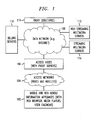
- Fig. 1 is a diagram illustrating various components of one embodiment of the present invention.
- the type of information content shown in this figure is multimedia information. It should be understood, however, that the present invention may be adapted to service other types of information content.
- Information appliances 102 are used by the user to view the information content.
- the information appliances available to the user preferably include a web browser, one or more media players or other applications that can properly process the information content, and a user calendar which will be discussed in detail hereinafter.
- the media players may be an MPEG movie player, an MP3 music player or a player capable of processing other types of media.
- the information appliances 102 may be wired or wireless and can communicate with access networks 104, which also may be wired or wireless.
- the access networks 104 provide communication channels between the information appliances 102 and the access nodes 106, which contain proxy servers that have caches for pre-loading information content. Each cache or partition of a cache can be associated with one or more information appliances 102.
- the information content is stored in multimedia servers 112 and 114, as streaming type and non-streaming type, respectively.
- Proxy directories 116 are servers that associate each information appliance 102 with a network address of a proxy server 106 that includes caches. When a user requests information content to be pre-loaded to a specific information appliance 102, information content is retrieved from proxy directory 116 so that it can be pre-loaded to the appropriate cache.
- Billing servers 110 monitor the activities of the proxy servers in the access nodes 106, and generate billing information for each user based on these activities.
- a data network 108 links the various system components together, including the billing servers 110, the proxy directory 116, the multimedia servers 112 and 114, and the proxy servers 106.
- the data network 108 which may be the Internet, an intranet or any other suitable network, enables communication between the aforementioned components.
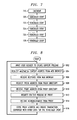
- Fig. 2 is a flow chart depicting an exemplary sequence of actions performed by a user of the present invention.
- the user views the information content at a first information appliance.
- the user may view a personal calendar to determine a scheduled event, along with the location of the event and the period of time during which the user will be at the event.
- the event may be, for example, an airline flight.
- the user selectes the event at step 230, and thereafter, in step 240, the calendar will issue commands to the proxy servers to pre-load the information content to the proxy server associated with the event.
- Fig. 3 is a flow chart depicting another exemplary sequence of actions performed by a user of the present invention.
- the user views the information content at a first information appliance.
- the user in step 320, can instruct the information appliance to issue the necessary command to pre-load the information content to the cache associated with the next scheduled event in the user calendar, whether or not the user is aware of the scheduled events in the user calendar.
- the commands issued by the information appliance may include communicating with the user calendar; comparing the time duration of the events with the current time to determine the next event; and instructing the user calendar to communicate with the proxy servers to pre-load the information content.
- Fig. 4 is a flow chart depicting yet another exemplary sequence of actions performed by a user of the present invention.
- the user first views the information content at a first information appliance.
- the user decides to continue viewing the same information content later in time at a second information appliance, the user, in step 420, views a user interface supplied by an organization associated with a second location. For example, if the user wishes to pre-load the information content into a cache associated with an information appliance on a flight that the user will be taking, then the user would view a web page provided by an airline.
- the user will then use the interface to submit a request that the information content be pre-loaded into the cache associated with the second information appliance.
- the organization will then issue a command to pre-load the information content to the appropriate cache.
- the command may include communicating with the proxy server associated with the second location and instructing the proxy server to pre-load the information content into caches associated with the second location.
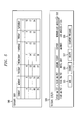
- Fig. 5 is a diagram illustrating one aspect of the user calendar of the present invention.
- a user interface embodied as a monthly calendar 510 is provided to the user, with a memory partition associated with each day of the month. It should be noted that although only one month is shown in the figure, the user calendar of the present invention can store several months of calendar information.
- the user calendar also includes a memory partition 520, which is shown in Fig.5, for illustrative purposes, as being associated with the date February 6 th , 2001, and which can be accessed by the user, for example, by using a mouse-pointer and double-clicking on that date on the monthly calendar.
- Memory partition 520 contains a listing of any events 522 and 524 scheduled for the user on that day.
- each event such as event 522 and 524
- time duration associated with each event
- type of the event associated with the type of the event
- specific location where the event will occur.
- the user calendar also stores other data associated with each scheduled event but not made accessible to the user, such as the network address for the proxy server containing the cache associated with a scheduled event, and a unique identifier used by the present invention to identify the scheduled event. This additional data allows information content to be loaded into the appropriate cache in response to the user requests.
- the user calendar also permits the user to perform a variety of functions.
- the user is first allowed to scroll down the list of scheduled events and select an event from the list, as shown by the box drawn around event 522.
- the calendar also includes several interface "buttons" that permit the user to add a selected scheduled event 525, change the data associated with a selected scheduled event 526, delete a selected scheduled event 527, and request pre-loading of content to a cache associated with a selected scheduled event 528.
- the operation of the user calendar when the user selects the content pre-loading button will be discussed in detail hereinafter in connection with Fig. 6.
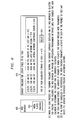
- Fig. 6 is a diagram illustrating another feature of the user calendar of the present invention.
- a user chooses to pre-load information content to the selected scheduled event by, for example, clicking on the Content Pre-load button 528 shown in Fig. 5, a new window 610 is displayed to the user.
- the new window is associated with only one scheduled event, in this case the airline flight CO 1500.
- the calendar Upon user selection of the Content Pre-load button, the calendar will take information content that is currently being processed by the information appliance, transmit a request for content pre-loading to a proxy server associated with the scheduled event, and display the name of the pre-loaded information content in window 610.
- the movie Raiders of the Lost Ark is being downloaded via browser 20 and played on media player 622.
- the calendar instructs the proxy server associated with the flight CO 1500 to pre-load the movie file into the proxy server's cache, and displays the content pre-loading as entry 612 in window 610.
- a usage indicator 618 is also provided in window 610 for displaying the percentage of the portion of the cache allocated to the user that is currently being used to store content pre-loads.
- a delete button 619 is also provided so that the user may cancel one ore more items of selected information content. In the case that a user cancels an item of content or an event is cancelled or rescheduled, the user calendar will transmit a message to the associated server so that it may delete the scheduled pre-loads or information content.
- Fig. 7 is a diagram illustrating one embodiment of a data structure of the user calendar.
- the calendar 710 is the monthly calendar shown in Fig. 5 as item 510.
- Each day in the monthly calendar 710 has a memory partition associated with it where a number of scheduled events are stored. This association is accomplished by a pointer that connects a day in the monthly calendar 710 with the first scheduled event 720.
- the first scheduled event then in turn points to a second scheduled event 722, and so on.
- the scheduled events 720 and 722 correspond to the scheduled events 522 and 524 in Fig. 5, and the remainder 724-728 would correspond to any additional scheduled events added by the user.
- Fig. 8 is a flow chart depicting an exemplary operation performed by the user calendar when the user requests that information content be pre-loaded into a cache associated with a selected scheduled event.
- the user calendar awaits a user request to pre-load information content.
- the user calendar asks the user's information appliance for a network address of the information content to be pre-loaded.
- the user calendar receives the network address for the information content and, in step 808, communicates with the proxy directory, shown as item 116 in Fig. 1, to request a proxy address for a proxy server associated with the stored scheduled event.
- the user calendar receives the proxy server address and, in step 812, requests the proxy server to pre-load the information content.
- step 814 the user calendar receives an acknowledgement from the proxy server, wherein the acknowledgement includes a unique transaction identifier associated with the request for pre-loading.
- step 816 the user calendar then stores the proxy server address and the unique identifier, maintaining the association between the data and the scheduled event. After the data is stored, the user calendar can return to the initial step in the process and wait for instructions from the user.
- Fig. 9 is a flow chart depicting another exemplary operation performed by the user calendar when a user submits a request to delete an information content pre-load.
- the user calendar awaits a user to request to delete a content pre-load.
- the user calendar reads the proxy server address and the unique transaction identifier associated with the pre-loading sought to be deleted.
- the user calendar transmits a request to the proxy server to delete the content pre-loading identified by the transaction identifier.
- the user calendar receives an acknowledgement from the proxy server and, in step 910, deletes the proxy address and unique transaction identifier associated with the deleted content pre-load.
- the user calendar may be presented in several embodiments without departing from the spirit of the present invention.
- the user calendar may be a software program installed in a stand-alone hardware device, such as a Personal Digital Assistant (PDA), that is in wireless communication with the proxy servers, the information appliances and other components of the present invention.
- PDA Personal Digital Assistant
- the user calendar may be software components or modules installed as parts of a larger software program, such as the user interface provided by an airline mentioned in the discussion for Fig. 4.
- the user calendar is in wired communication with the proxy servers, the information appliances and other components of the present invention.
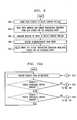
- Fig. 10A is a flow chart depicting an exemplary method by which a proxy server of the present invention processes pre-loading requests.
- the proxy server receives a request from an interface.
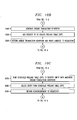
- the proxy server examines the request to determine whether it is a request to create a scheduled content pre-loading or a request to delete a scheduled content pre-load. If the request is to create a content pre-load, then the proxy server operation proceeds to Fig. 10B. If, however, the request is to delete a request for content pre-load, then the proxy server operation proceeds to Fig. 10C.
- the proxy server in step 1040, if the request is to create a pre-load, the proxy server, in step 1040, generates a unique transaction identifier for the request.
- the server adds the request to a Scheduled Pre-load Table (SPT). This includes adding all the information needed for the content pre-loading to occur, including the date and time of the scheduled event during which the information content will be used, together with the network address of the information content.
- SPT Scheduled Pre-load Table
- the proxy server may store all requests in the SPT, and execute all requested pre-loads together at some time prior to the scheduled event. The details of the SPT and its operations will be discussed in detail hereinafter in connection with Fig. 13.
- the proxy server transmits the unique transaction identifier and proxy server address to the requestor, which in an advantageous embodiment is the user calendar, and returns to step 1010 to await further pre-loading requests.
- the proxy server in step 1070 first searches the SPT to identify an entry with a unique transaction identifier that matches the one transmitted along with the deletion request. In step 1080, once the matching entry is found, it is deleted from the SPT. In step 1090, the proxy server transmits an acknowledgement to the originator of the request (e.g., a user calendar) indicating that the entry has been deleted, and the proxy server returns to step 1010 to await further requests.
- the originator of the request e.g., a user calendar
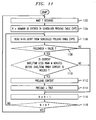
- Fig. 11 is a flow chart depicting an exemplary method by which the proxy server of the present invention executes pre-loading.
- the Scheduled Pre-load Table includes entries for each request for a content pre-load. Each entry includes a unique transaction identifier; the identity of the user who submitted the request; a network address of the information content sought to be pre-loaded; the point in the information content where the pre-loading will begin; the date and time of the scheduled event where the information content will be used; and the status of the pre-loading.
- the pre-loading status can indicate either: pre-loading has not started; pre-loading is in progress; or pre-loading completed.
- step 1102 the proxy server waits T seconds, where T seconds is the time interval between executions of requests for pre-loading.
- T seconds is the time interval between executions of requests for pre-loading.
- step 1104 after T seconds have elapsed, a memory location is designated as a counter and an integer N is stored in the counter, where N is the total number of entries in the SPT.
- the proxy server reads the entry corresponding to the integer N stored in the counter (i.e., the Nth entry).
- step 1108 the status of the pre-loading is read. If the status indicates that pre-loading has not begun, then, in step 1110, the proxy server determines if the current date and time is less than M minutes before the date and time of the scheduled event, where M is a predetermined number.
- step 1112 If the time of the scheduled event is after the current time, pre-loading is performed in step 1112, and the status of the request is changed in step 1114 to indicate that pre-loading is either in progress or has been completed.
- step 1116 after the pre-loading is completed, the counter is decremented by "1".
- step 1118 if the value of the counter is less than zero (indicating that all requests in the SPT have been executed), then the process returns to step 1102, where the proxy server awaits T seconds before it again beings executing pre-loading requests. If the value of the counter is greater than or equal to zero (indicating that not all requests in the SPT have been executed), then the process returns to step 1106, where the proxy server executes the next request for pre-loading.
- the proxy server may determine that pre-loading the request should not be executed and, thus, that request is skipped and the next entry is considered. For example, in step 1108, if the status of the pre-loading request indicates that re-loading is in progress or has been completed, then steps 1110-1114 are skipped, and the proxy server proceeds to step 1116, where the counter is decremented, thereby signaling that the next request should be considered. In step 1110, if current date and time is not more than M minutes before the date and time of the scheduled event, then steps 1112-1114 are skipped, and the process proceeds to step 1116.
- the proxy directory 116 shown in Fig. 1 stores the network addresses of all the proxy servers used in the system. As will be discussed in detail in connection with Figs. 12-17, the proxy directory 116 may be partitioned into different categories, with each category representing a different industry or service provider.
- Fig. 12 is a diagram illustrating an exemplary proxy directory of the present invention for an airline.
- the directory contains one or more entries, each associated with a particular aircraft.
- Field 1210 contains the name of the airline that operates the aircraft, such as American Airlines.
- Field 1220 stores the flight number, such as CO 1500.
- Field 1230 contains the flight's date and time of departure.
- field 1240 contain the proxy address associated with the aircraft assigned to the flight.
- the proxy address is represented by an IP address.
- an embodiment of the proxy directory can use any number of address formats to designate a proxy address.
- the airlines would maintain the proxy directory, which would receive requests for aircraft proxy addresses.
- a request for an aircraft proxy address may include the airline name 1210, the flight number 1220, and the departuredate and time 1230.
- a search is conducted on the directory and a response is returned to the requestor (e.g., user calendar) which includes the associated aircraft proxy address 1240.
- the proxy directory may be configured in any number of ways.
- the aircraft proxy directory may use one cache to store content for all of the passengers in the aircraft; in such case, only one aircraft proxy address 1240 will be associated with the flight.
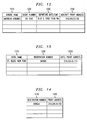
- Fig. 13 is a diagram illustrating an exemplary proxy directory of the present invention for a hotel.
- Field 1310 contains the name of the hotel, such as the St. Regis hotel in New York City.
- Field 1320 contains a unique reservation number associated with the reservation made by the user. An alphanumerical sequence of any length can be used as the reservation number, but as an example it is represented in the figure as a six digit number.
- Field 1330 contains the proxy address of the proxy server associated with the hotel reservation. In the figure, the proxy address is represented by an IP address. However, an embodiment of the proxy directory can use any number of address formats to designate a proxy address.
- the hotel may use one cache to store the information content associated with one reservation number 1320.
- the hotel would maintain the proxy directory, which would receive requests for hotel proxy addresses.
- a request for a hotel proxy address may include the hotel name 1310 and the reservation number 1320.
- a search is conducted on the directory and a response is returned to the requestor (e.g. user calendar), which includes the associated hotel proxy address 1330.
- Fig. 14 is a diagram illustrating an exemplary proxy directory of the present invention for a rental car agency.
- Field 1410 contains a unique reservation number associated with a reservation made by the user for a rental car. An alphanumerical sequence of any length can be used as the reservation number, but as an example it is represented in the figure as a six digit number.
- Field 1420 contains a proxy address associated with the reservation number. In the figure, the proxy address is represented by an IP address. However, an embodiment of the proxy directory can use any number of address formats to designate a proxy address.
- the rental car agency would maintain the proxy directory, which would receive requests for rental car proxy addresses.
- a request for a rental car proxy address may include the reservation number 1410.
- a search is conducted on the directory and a response is returned to the requestor (e.g, user calendar) which includes the associated rental car proxy address 1420.
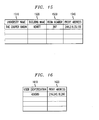
- Fig. 15 is a diagram illustrating an exemplary proxy directory of the present invention for a location within an university.
- a proxy directory is made for university locations since it is anticipated that college students will constitute a significant portion of the users of the present invention.
- One reason is that universities provide students with high-bandwidth network connections that make using electronic information more convenient. Also, college students have historically been eager to use electronic information and most likely would welcome systems such as the present invention which increase electronic information's ease of use.
- Field 1510 contains the name of the university, such as The Cooper Union.
- Field 1520 contains the name of a building within the university, such as the name "Hewitt.”
- Field 1530 contains the number of a room in the building, such as the room number 207.
- the room may be a dorm room where the user wishes to view a movie, or the room may be a classroom where the user wishes to give a multimedia presentation.
- Field 1540 is the proxy address associated with the room specified in field 1530.
- the proxy address is represented by an IP address.
- an embodiment of the proxy directory can use any number of address formats to designate a proxy address.
- the university would maintain the proxy directory, which would receive requests for a proxy address.
- a request for a proxy address may include the university name 1510, building name 1520 and room number 1530.
- a search is conducted on the directory and a response is returned to the requestor (e.g., user calendar) which includes the associated proxy address 1540.
- Fig. 16 is a diagram illustrating an exemplary proxy directory of the present invention for an internet service provider.
- the present invention not only allows the user to pre-loading information content to a physical information appliance at a physical location, it also allows the user to pre-loading information content to a virtual, network location as well.
- the user views information content through a network connection operated by an Internet service provider, he may choose to pre-loading the information content to the Internet service provider so that he may view the same information content when he establishes another network connection at another location through the same Internet service provider.
- Field 1610 of the Internet service provider proxy directory contains a user identification. An alphanumerical sequence of any length can be used as the reservation number, but as an example it is represented in the figure as a six digit number.
- Field 1620 includes an address of the proxy that serves the user. In the figure, the proxy address is represented by an IP address. However, an embodiment of the proxy directory can use any number of address formats to designate a proxy address.
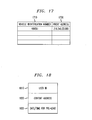
- Fig. 17 is a diagram illustrating an exemplary proxy directory of the present invention maintained by an automobile manufacturer.
- Field 1710 contains a Vehicle Identification Number (VIN).
- VIN Vehicle Identification Number
- An alphanumerical sequence of any length can be used as the reservation number, but as an example it is represented in the figure as a six digit number.
- Field 1720 includes a proxy address associated with the automobile. In the figure, the proxy address is represented by an IP address. However, an embodiment of the proxy directory can use any number of address formats to designate a proxy address.
- the automobile manufacturer would maintain the proxy directory, which would receive requests for a proxy address.
- a request for a proxy address may include the VIN 1710.
- a search is conducted on the directory and a response is returned to the requestor (e.g., user calendar) which includes the associated proxy address 1720.
- the present invention will pre-loading the information content into a temporary proxy.
- the Scheduled Pre-load Table (SPT) of the temporary proxy will be transferred to the proxy server associated with the information appliance, so that the information content will be transferred to a cache associated with the information appliance.
- SPT Scheduled Pre-load Table
- Fig. 18 is a diagram illustrating an exemplary message format by which a proxy server may communicate with a billing server to record charges incurred for information content pre-loads.
- Field 1810 of the message contains a unique user identification.
- Field 1820 contains the network address for the information content that was pre-loaded at the request of the user identified in field 2010.
- Field 1830 contains the date and the time the pre-loading took place.
- Field 1830 is significant since financial charges depend greatly on the time that the pre-loading took place. For example, charges for pre-loads may be the largest at a peak traffic hour, such as during the afternoon, while during early morning hours the charges may be the smallest.
Landscapes
- Engineering & Computer Science (AREA)
- Computer Networks & Wireless Communication (AREA)
- Signal Processing (AREA)
- Theoretical Computer Science (AREA)
- Physics & Mathematics (AREA)
- General Engineering & Computer Science (AREA)
- General Physics & Mathematics (AREA)
- Databases & Information Systems (AREA)
- Data Mining & Analysis (AREA)
- Information Transfer Between Computers (AREA)
- Management, Administration, Business Operations System, And Electronic Commerce (AREA)
- Information Retrieval, Db Structures And Fs Structures Therefor (AREA)
Applications Claiming Priority (2)
| Application Number | Priority Date | Filing Date | Title |
|---|---|---|---|
| US10/083,819 US7010762B2 (en) | 2002-02-27 | 2002-02-27 | Pre-loading content to caches for information appliances |
| US83819 | 2002-02-27 |
Publications (2)
| Publication Number | Publication Date |
|---|---|
| EP1359518A2 true EP1359518A2 (de) | 2003-11-05 |
| EP1359518A3 EP1359518A3 (de) | 2003-11-19 |
Family
ID=27753358
Family Applications (1)
| Application Number | Title | Priority Date | Filing Date |
|---|---|---|---|
| EP03003205A Withdrawn EP1359518A3 (de) | 2002-02-27 | 2003-02-20 | Vorladen von Inhalten in Cachespeichern für Informationsgeräte |
Country Status (4)
| Country | Link |
|---|---|
| US (2) | US7010762B2 (de) |
| EP (1) | EP1359518A3 (de) |
| JP (1) | JP2004005447A (de) |
| CA (1) | CA2419366A1 (de) |
Cited By (3)
| Publication number | Priority date | Publication date | Assignee | Title |
|---|---|---|---|---|
| CN106909690A (zh) * | 2017-03-07 | 2017-06-30 | 四川驹马企业管理有限公司 | 网络数据缓存方法 |
| CN107070991A (zh) * | 2017-03-08 | 2017-08-18 | 四川驹马企业管理有限公司 | 网络数据缓存装置与系统 |
| CN107430606A (zh) * | 2014-12-01 | 2017-12-01 | 信息科学有限责任公司 | 具有并行持久性的消息代理系统 |
Families Citing this family (71)
| Publication number | Priority date | Publication date | Assignee | Title |
|---|---|---|---|---|
| US20030154485A1 (en) * | 2002-02-12 | 2003-08-14 | Johnson Carolynn Rae | Allocation of recording space per user and application |
| US7103724B2 (en) * | 2002-04-01 | 2006-09-05 | Intel Corporation | Method and apparatus to generate cache data |
| GB2392518B (en) * | 2002-09-02 | 2004-09-22 | 3Com Corp | Computer network and method of operating same to preload content of selected web pages |
| US7650416B2 (en) * | 2003-08-12 | 2010-01-19 | Riverbed Technology | Content delivery for client-server protocols with user affinities using connection end-point proxies |
| US8364815B2 (en) | 2005-03-18 | 2013-01-29 | Riverbed Technology, Inc. | Reliability and availability of distributed servers |
| US8938553B2 (en) * | 2003-08-12 | 2015-01-20 | Riverbed Technology, Inc. | Cooperative proxy auto-discovery and connection interception through network address translation |
| WO2005048011A2 (en) * | 2003-11-04 | 2005-05-26 | Thomson Licensing | Cache server at hotspots for downloading services |
| JP2007529072A (ja) * | 2004-03-12 | 2007-10-18 | トムソン ライセンシング | キャッシュネットワーク環境におけるダウンロードスケジューリングシステム及び方法 |
| US20060031353A1 (en) * | 2004-05-21 | 2006-02-09 | Bea Systems, Inc. | Dynamic publishing in a service oriented architecture |
| US20060031930A1 (en) * | 2004-05-21 | 2006-02-09 | Bea Systems, Inc. | Dynamically configurable service oriented architecture |
| US7310684B2 (en) * | 2004-05-21 | 2007-12-18 | Bea Systems, Inc. | Message processing in a service oriented architecture |
| US20050267892A1 (en) * | 2004-05-21 | 2005-12-01 | Patrick Paul B | Service proxy definition |
| US20060031355A1 (en) * | 2004-05-21 | 2006-02-09 | Bea Systems, Inc. | Programmable service oriented architecture |
| US7653008B2 (en) * | 2004-05-21 | 2010-01-26 | Bea Systems, Inc. | Dynamically configurable service oriented architecture |
| US20050273520A1 (en) * | 2004-05-21 | 2005-12-08 | Bea Systems, Inc. | Service oriented architecture with file transport protocol |
| US7774485B2 (en) * | 2004-05-21 | 2010-08-10 | Bea Systems, Inc. | Dynamic service composition and orchestration |
| US20060031354A1 (en) * | 2004-05-21 | 2006-02-09 | Bea Systems, Inc. | Service oriented architecture |
| US20050264581A1 (en) * | 2004-05-21 | 2005-12-01 | Bea Systems, Inc. | Dynamic program modification |
| US20060031432A1 (en) * | 2004-05-21 | 2006-02-09 | Bea Systens, Inc. | Service oriented architecture with message processing pipelines |
| US20050270970A1 (en) * | 2004-05-21 | 2005-12-08 | Bea Systems, Inc. | Failsafe service oriented architecture |
| US20060069791A1 (en) * | 2004-05-21 | 2006-03-30 | Bea Systems, Inc. | Service oriented architecture with interchangeable transport protocols |
| US20050278374A1 (en) * | 2004-05-21 | 2005-12-15 | Bea Systems, Inc. | Dynamic program modification |
| US20050278335A1 (en) * | 2004-05-21 | 2005-12-15 | Bea Systems, Inc. | Service oriented architecture with alerts |
| US20050273497A1 (en) * | 2004-05-21 | 2005-12-08 | Bea Systems, Inc. | Service oriented architecture with electronic mail transport protocol |
| US20060031433A1 (en) * | 2004-05-21 | 2006-02-09 | Bea Systems, Inc. | Batch updating for a service oriented architecture |
| US20060080419A1 (en) * | 2004-05-21 | 2006-04-13 | Bea Systems, Inc. | Reliable updating for a service oriented architecture |
| US20060007918A1 (en) * | 2004-05-21 | 2006-01-12 | Bea Systems, Inc. | Scaleable service oriented architecture |
| US20060031481A1 (en) * | 2004-05-21 | 2006-02-09 | Bea Systems, Inc. | Service oriented architecture with monitoring |
| US20050267947A1 (en) * | 2004-05-21 | 2005-12-01 | Bea Systems, Inc. | Service oriented architecture with message processing pipelines |
| US20050273521A1 (en) * | 2004-05-21 | 2005-12-08 | Bea Systems, Inc. | Dynamically configurable service oriented architecture |
| US8023966B2 (en) * | 2004-12-21 | 2011-09-20 | Nokia Corporation | Systems, devices, methods and computer program products for downloading content to mobile devices in a roaming environment |
| US7937379B2 (en) * | 2005-03-09 | 2011-05-03 | Vudu, Inc. | Fragmentation of a file for instant access |
| US20090025046A1 (en) * | 2005-03-09 | 2009-01-22 | Wond, Llc | Hybrid architecture for media services |
| US7698451B2 (en) | 2005-03-09 | 2010-04-13 | Vudu, Inc. | Method and apparatus for instant playback of a movie title |
| US9176955B2 (en) | 2005-03-09 | 2015-11-03 | Vvond, Inc. | Method and apparatus for sharing media files among network nodes |
| US7191215B2 (en) * | 2005-03-09 | 2007-03-13 | Marquee, Inc. | Method and system for providing instantaneous media-on-demand services by transmitting contents in pieces from client machines |
| US20080022343A1 (en) | 2006-07-24 | 2008-01-24 | Vvond, Inc. | Multiple audio streams |
| US8219635B2 (en) | 2005-03-09 | 2012-07-10 | Vudu, Inc. | Continuous data feeding in a distributed environment |
| US8904463B2 (en) | 2005-03-09 | 2014-12-02 | Vudu, Inc. | Live video broadcasting on distributed networks |
| US20060248194A1 (en) | 2005-03-18 | 2006-11-02 | Riverbed Technology, Inc. | Connection forwarding |
| US7610280B2 (en) * | 2005-05-05 | 2009-10-27 | Cisco Technology, Inc. | Method and system for dynamically pre-positioning content in a network based detecting or predicting user presence |
| US8099511B1 (en) | 2005-06-11 | 2012-01-17 | Vudu, Inc. | Instantaneous media-on-demand |
| DE102006011829B4 (de) * | 2006-03-13 | 2015-10-22 | Bayerische Motoren Werke Aktiengesellschaft | Verfahren zur Datenkommunikation |
| WO2008005629A2 (en) * | 2006-05-26 | 2008-01-10 | Riverbed Technology, Inc. | Throttling of predictive acks in an accelerated network communication system |
| US7769834B2 (en) | 2006-05-30 | 2010-08-03 | Riverbed Technology, Inc. | System for selecting a proxy pair based on configurations of autodiscovered proxies on a network |
| JP4860365B2 (ja) * | 2006-06-19 | 2012-01-25 | ソニー・エリクソン・モバイルコミュニケーションズ株式会社 | 情報処理装置、情報処理方法、情報処理プログラム、及び携帯端末装置 |
| US7873620B2 (en) * | 2006-06-29 | 2011-01-18 | Microsoft Corporation | Desktop search from mobile device |
| US8296812B1 (en) | 2006-09-01 | 2012-10-23 | Vudu, Inc. | Streaming video using erasure encoding |
| US8429702B2 (en) * | 2006-09-11 | 2013-04-23 | At&T Intellectual Property I, L.P. | Methods and apparatus for selecting and pushing customized electronic media content |
| US8533310B2 (en) * | 2007-03-09 | 2013-09-10 | Riverbed Technology, Inc. | Method and apparatus for acceleration by prefetching associated objects |
| US8996394B2 (en) * | 2007-05-18 | 2015-03-31 | Oracle International Corporation | System and method for enabling decision activities in a process management and design environment |
| US8185916B2 (en) | 2007-06-28 | 2012-05-22 | Oracle International Corporation | System and method for integrating a business process management system with an enterprise service bus |
| US8185546B2 (en) * | 2007-08-13 | 2012-05-22 | Oracle International Corporation | Enhanced control to users to populate a cache in a database system |
| EP2274911A1 (de) * | 2008-05-05 | 2011-01-19 | Hewlett-Packard Development Company, L.P. | Kommunikation vor einem eingeplanten ereignis |
| FR2933213A1 (fr) | 2008-06-30 | 2010-01-01 | Thomson Licensing | Methode d'affichage d'interface utilisateur et methode d'emission correspondante |
| US20100091687A1 (en) * | 2008-10-15 | 2010-04-15 | Ted Beers | Status of events |
| US8332528B2 (en) * | 2008-11-18 | 2012-12-11 | Agere Systems Llc | Personal broadcast and content delivery engine |
| US9417851B2 (en) * | 2009-05-13 | 2016-08-16 | Adobe Systems Incorporated | Location-based application development for runtime environments |
| US20130179476A1 (en) * | 2012-01-09 | 2013-07-11 | Microsoft Corporation | Scalable billing usage data storage |
| US10261938B1 (en) | 2012-08-31 | 2019-04-16 | Amazon Technologies, Inc. | Content preloading using predictive models |
| US9374626B2 (en) | 2013-07-17 | 2016-06-21 | Intel Corporation | Use of digital TV bandwidth for web cache pre-loading |
| US9787619B2 (en) * | 2013-11-08 | 2017-10-10 | Gogo Llc | Data caching in a hybrid communications system |
| US20150201001A1 (en) * | 2014-01-13 | 2015-07-16 | Facebook, Inc. | Systems and methods for priority-based digital content downloading |
| US10223160B2 (en) * | 2015-08-31 | 2019-03-05 | Ayla Networks, Inc. | Compact schedules for resource-constrained devices |
| US11526521B2 (en) * | 2016-07-15 | 2022-12-13 | Microsoft Technology Licensing, Llc | Prefetching using dynamic user model to reduce latency |
| US20180115627A1 (en) * | 2016-10-24 | 2018-04-26 | Honeywell International Inc. | Internet cache server system |
| US10361997B2 (en) | 2016-12-29 | 2019-07-23 | Riverbed Technology, Inc. | Auto discovery between proxies in an IPv6 network |
| US10798437B2 (en) * | 2017-12-29 | 2020-10-06 | Sling Media LLC | Systems and methods for predictive media file transfer to user-carried storage components |
| CN113449229B (zh) * | 2020-03-27 | 2024-11-19 | 北京沃东天骏信息技术有限公司 | 一种数据加载的方法、装置和存储介质 |
| CN114116859B (zh) * | 2021-01-29 | 2025-06-17 | 北京京东拓先科技有限公司 | 号源信息发送方法、装置、电子设备和计算机可读介质 |
| CN113779461B (zh) * | 2021-09-02 | 2024-09-27 | 北京有竹居网络技术有限公司 | 数据加载方法、装置和电子设备 |
Family Cites Families (20)
| Publication number | Priority date | Publication date | Assignee | Title |
|---|---|---|---|---|
| US4843542A (en) * | 1986-11-12 | 1989-06-27 | Xerox Corporation | Virtual memory cache for use in multi-processing systems |
| US5265235A (en) * | 1990-11-30 | 1993-11-23 | Xerox Corporation | Consistency protocols for shared memory multiprocessors |
| US5581704A (en) * | 1993-12-06 | 1996-12-03 | Panasonic Technologies, Inc. | System for maintaining data coherency in cache memory by periodically broadcasting invalidation reports from server to client |
| US5603058A (en) * | 1994-09-08 | 1997-02-11 | International Business Machines Corporation | Video optimized media streamer having communication nodes received digital data from storage node and transmitted said data to adapters for generating isochronous digital data streams |
| US5712976A (en) * | 1994-09-08 | 1998-01-27 | International Business Machines Corporation | Video data streamer for simultaneously conveying same one or different ones of data blocks stored in storage node to each of plurality of communication nodes |
| US6016520A (en) * | 1995-07-14 | 2000-01-18 | Microsoft Corporation | Method of viewing at a client viewing station a multiple media title stored at a server and containing a plurality of topics utilizing anticipatory caching |
| US5978841A (en) * | 1996-03-08 | 1999-11-02 | Berger; Louis | Look ahead caching process for improved information retrieval response time by caching bodies of information before they are requested by the user |
| US5838910A (en) * | 1996-03-14 | 1998-11-17 | Domenikos; Steven D. | Systems and methods for executing application programs from a memory device linked to a server at an internet site |
| US6098096A (en) * | 1996-12-09 | 2000-08-01 | Sun Microsystems, Inc. | Method and apparatus for dynamic cache preloading across a network |
| US6119203A (en) * | 1998-08-03 | 2000-09-12 | Motorola, Inc. | Mechanism for sharing data cache resources between data prefetch operations and normal load/store operations in a data processing system |
| US6052700A (en) * | 1998-09-17 | 2000-04-18 | Bull Hn Information Systems Inc. | Calendar clock caching in a multiprocessor data processing system |
| US7130616B2 (en) | 2000-04-25 | 2006-10-31 | Simple Devices | System and method for providing content, management, and interactivity for client devices |
| US6369840B1 (en) * | 1999-03-10 | 2002-04-09 | America Online, Inc. | Multi-layered online calendaring and purchasing |
| EP1049028A3 (de) * | 1999-04-26 | 2001-01-31 | Sarnoff Corporation | Effiziente Endgebraucherinformationsverteilung |
| US6912503B1 (en) | 2000-01-14 | 2005-06-28 | Gilbarco Inc. | Multistage data purchase with mobile information ordering and docking station receipt |
| US7747782B2 (en) * | 2000-04-26 | 2010-06-29 | Novarra, Inc. | System and method for providing and displaying information content |
| JP2002049766A (ja) * | 2000-08-03 | 2002-02-15 | Kddi Corp | コンテンツ提供方法 |
| US20020161476A1 (en) * | 2001-04-05 | 2002-10-31 | David Panofsky | System for vending and dispensing digital files |
| US7689521B2 (en) * | 2001-06-28 | 2010-03-30 | Microsoft Corporation | Continuous time bayesian network models for predicting users' presence, activities, and component usage |
| US7343365B2 (en) * | 2002-02-20 | 2008-03-11 | Microsoft Corporation | Computer system architecture for automatic context associations |
-
2002
- 2002-02-27 US US10/083,819 patent/US7010762B2/en not_active Expired - Fee Related
-
2003
- 2003-02-20 CA CA002419366A patent/CA2419366A1/en not_active Abandoned
- 2003-02-20 EP EP03003205A patent/EP1359518A3/de not_active Withdrawn
- 2003-02-27 JP JP2003050190A patent/JP2004005447A/ja active Pending
-
2005
- 2005-08-30 US US11/215,414 patent/US20050283574A1/en not_active Abandoned
Cited By (3)
| Publication number | Priority date | Publication date | Assignee | Title |
|---|---|---|---|---|
| CN107430606A (zh) * | 2014-12-01 | 2017-12-01 | 信息科学有限责任公司 | 具有并行持久性的消息代理系统 |
| CN106909690A (zh) * | 2017-03-07 | 2017-06-30 | 四川驹马企业管理有限公司 | 网络数据缓存方法 |
| CN107070991A (zh) * | 2017-03-08 | 2017-08-18 | 四川驹马企业管理有限公司 | 网络数据缓存装置与系统 |
Also Published As
| Publication number | Publication date |
|---|---|
| US7010762B2 (en) | 2006-03-07 |
| CA2419366A1 (en) | 2003-08-27 |
| EP1359518A3 (de) | 2003-11-19 |
| JP2004005447A (ja) | 2004-01-08 |
| US20030163646A1 (en) | 2003-08-28 |
| US20050283574A1 (en) | 2005-12-22 |
Similar Documents
| Publication | Publication Date | Title |
|---|---|---|
| US7010762B2 (en) | Pre-loading content to caches for information appliances | |
| US7424520B2 (en) | Method and apparatus for restructuring of personalized data for transmission from a data network to connected and portable network appliances | |
| US9836445B2 (en) | Dynamic page generator | |
| US5946687A (en) | Geo-enabled personal information manager | |
| US6370580B2 (en) | Web serving system that coordinates multiple servers to optimize file transfers | |
| US7571167B1 (en) | Peer-to-peer network content object information caching | |
| US7342928B2 (en) | Method and system for accessing a peer-to-peer network | |
| US20030085924A1 (en) | Method and system for displaying categorized information on a user interface | |
| US6282543B1 (en) | Database search and display method and database search system | |
| JP2927259B2 (ja) | ダウンロード装置 | |
| JP2001521334A (ja) | 通信ネットワークノード | |
| JP2003141167A (ja) | コンテンツ提供システム、検索サーバ、コンテンツ提供方法 | |
| JPH09134364A (ja) | 情報検索システム | |
| US20020078162A1 (en) | Program generation system, network system and agent system | |
| JP2003030034A (ja) | コンテンツ提供方法、コンテンツ提供装置、コンテンツ提供プログラム及びコンテンツ提供プログラムを記録した記録媒体 | |
| JPH10198590A (ja) | コンテンツ管理方式 | |
| JP5811799B2 (ja) | 情報処理装置及びスケジュール管理プログラム | |
| JP2001027960A (ja) | 文書管理システムおよび文書管理方法 | |
| JP2002149688A (ja) | 情報配信システム及びその方法 | |
| JP3441028B2 (ja) | マルチメディア端末装置 | |
| JP2003099413A (ja) | 分散処理システム | |
| JPH11175451A (ja) | 情報配信装置 | |
| JP2002032259A (ja) | 図面情報配信方法、通信システム及び図面情報配信プログラムを記録した記録媒体 | |
| JPH117449A (ja) | ハイパーテキスト情報収集方法 | |
| JP2002196970A (ja) | Webページ表示装置 |
Legal Events
| Date | Code | Title | Description |
|---|---|---|---|
| PUAI | Public reference made under article 153(3) epc to a published international application that has entered the european phase |
Free format text: ORIGINAL CODE: 0009012 |
|
| PUAL | Search report despatched |
Free format text: ORIGINAL CODE: 0009013 |
|
| AK | Designated contracting states |
Kind code of ref document: A2 Designated state(s): AT BE BG CH CY CZ DE DK EE ES FI FR GB GR HU IE IT LI LU MC NL PT SE SI SK TR |
|
| AX | Request for extension of the european patent |
Extension state: AL LT LV MK RO |
|
| AK | Designated contracting states |
Kind code of ref document: A3 Designated state(s): AT BE BG CH CY CZ DE DK EE ES FI FR GB GR HU IE IT LI LU MC NL PT SE SI SK TR |
|
| AX | Request for extension of the european patent |
Extension state: AL LT LV MK RO |
|
| RIN1 | Information on inventor provided before grant (corrected) |
Inventor name: O'NEIL, JOSEPH THOMAS |
|
| 17P | Request for examination filed |
Effective date: 20040210 |
|
| 17Q | First examination report despatched |
Effective date: 20040503 |
|
| AKX | Designation fees paid |
Designated state(s): DE FR GB |
|
| 17Q | First examination report despatched |
Effective date: 20040503 |
|
| STAA | Information on the status of an ep patent application or granted ep patent |
Free format text: STATUS: THE APPLICATION IS DEEMED TO BE WITHDRAWN |
|
| 18D | Application deemed to be withdrawn |
Effective date: 20111101 |