EP1335331A2 - Système de règlement financier - Google Patents
Système de règlement financier Download PDFInfo
- Publication number
- EP1335331A2 EP1335331A2 EP02020297A EP02020297A EP1335331A2 EP 1335331 A2 EP1335331 A2 EP 1335331A2 EP 02020297 A EP02020297 A EP 02020297A EP 02020297 A EP02020297 A EP 02020297A EP 1335331 A2 EP1335331 A2 EP 1335331A2
- Authority
- EP
- European Patent Office
- Prior art keywords
- settlement
- terminal
- processing
- card
- programs
- Prior art date
- Legal status (The legal status is an assumption and is not a legal conclusion. Google has not performed a legal analysis and makes no representation as to the accuracy of the status listed.)
- Ceased
Links
Images




Classifications
-
- G—PHYSICS
- G07—CHECKING-DEVICES
- G07F—COIN-FREED OR LIKE APPARATUS
- G07F7/00—Mechanisms actuated by objects other than coins to free or to actuate vending, hiring, coin or paper currency dispensing or refunding apparatus
- G07F7/08—Mechanisms actuated by objects other than coins to free or to actuate vending, hiring, coin or paper currency dispensing or refunding apparatus by coded identity card or credit card or other personal identification means
- G07F7/10—Mechanisms actuated by objects other than coins to free or to actuate vending, hiring, coin or paper currency dispensing or refunding apparatus by coded identity card or credit card or other personal identification means together with a coded signal, e.g. in the form of personal identification information, like personal identification number [PIN] or biometric data
- G07F7/1008—Active credit-cards provided with means to personalise their use, e.g. with PIN-introduction/comparison system
-
- G—PHYSICS
- G06—COMPUTING OR CALCULATING; COUNTING
- G06Q—INFORMATION AND COMMUNICATION TECHNOLOGY [ICT] SPECIALLY ADAPTED FOR ADMINISTRATIVE, COMMERCIAL, FINANCIAL, MANAGERIAL OR SUPERVISORY PURPOSES; SYSTEMS OR METHODS SPECIALLY ADAPTED FOR ADMINISTRATIVE, COMMERCIAL, FINANCIAL, MANAGERIAL OR SUPERVISORY PURPOSES, NOT OTHERWISE PROVIDED FOR
- G06Q20/00—Payment architectures, schemes or protocols
- G06Q20/08—Payment architectures
- G06Q20/10—Payment architectures specially adapted for electronic funds transfer [EFT] systems; specially adapted for home banking systems
- G06Q20/102—Bill distribution or payments
-
- G—PHYSICS
- G06—COMPUTING OR CALCULATING; COUNTING
- G06Q—INFORMATION AND COMMUNICATION TECHNOLOGY [ICT] SPECIALLY ADAPTED FOR ADMINISTRATIVE, COMMERCIAL, FINANCIAL, MANAGERIAL OR SUPERVISORY PURPOSES; SYSTEMS OR METHODS SPECIALLY ADAPTED FOR ADMINISTRATIVE, COMMERCIAL, FINANCIAL, MANAGERIAL OR SUPERVISORY PURPOSES, NOT OTHERWISE PROVIDED FOR
- G06Q20/00—Payment architectures, schemes or protocols
- G06Q20/08—Payment architectures
- G06Q20/18—Payment architectures involving self-service terminals [SST], vending machines, kiosks or multimedia terminals
-
- G—PHYSICS
- G06—COMPUTING OR CALCULATING; COUNTING
- G06Q—INFORMATION AND COMMUNICATION TECHNOLOGY [ICT] SPECIALLY ADAPTED FOR ADMINISTRATIVE, COMMERCIAL, FINANCIAL, MANAGERIAL OR SUPERVISORY PURPOSES; SYSTEMS OR METHODS SPECIALLY ADAPTED FOR ADMINISTRATIVE, COMMERCIAL, FINANCIAL, MANAGERIAL OR SUPERVISORY PURPOSES, NOT OTHERWISE PROVIDED FOR
- G06Q20/00—Payment architectures, schemes or protocols
- G06Q20/30—Payment architectures, schemes or protocols characterised by the use of specific devices or networks
- G06Q20/34—Payment architectures, schemes or protocols characterised by the use of specific devices or networks using cards, e.g. integrated circuit [IC] cards or magnetic cards
- G06Q20/355—Personalisation of cards for use
- G06Q20/3552—Downloading or loading of personalisation data
Definitions
- the present invention relates generally to a settlement system and a settlement method for executing settlement of accounts using a transaction medium (e.g., an IC card) that stores information on at least one settlement function, and more particularly, to a settlement system that allows a total system to reduce costs, by distributing of a plurality of processing steps in settlement processing using the IC card to each of an IC card processing terminal, a settlement terminal and a settlement server.
- a transaction medium e.g., an IC card
- the IC card is a plastic card in which a CPU and an LSI chip with a stored memory (ROM, RAM, etc.) are embedded. As this card can ensure higher security and store a larger data amount, compared to the conventional magnetic card, only one card can embody a plurality of settlement functions including a credit card, electronic money, etc.
- the IC card communicates with an IC card-processing terminal (hereinafter to be simply referred to as "IC card terminal). And, according to the control of the IC card terminal, the CPU in the LSI chip executes an application program (including the OS) to be stored in memory, to embody the individual settlement functions.
- Fig. 10 shows a configuration example of the conventional settlement system using the IC card.
- the settlement system shown in Fig. 10 is a system using, for instance, a POS system for stores like a supermarket, a convenience store, etc.
- the POS system is a system to execute a POS (Point of Sales) job, including management of merchandise sales information, and comprises a POS terminal 2 and a POS server 3 to connect to that for making communication.
- Each of the POS terminal 2 and the POS server 3 is a computer device having a CPU and memory to store a program necessary for POS processing and a data file (POS program data).
- the POS terminal 2 includes a communication control unit 22 for making communication with the POS server 3, and a communication control unit 23 for making communication with an IC card terminal 10, and the POS server 3 includes a communication control unit 32 for making communication with the POS terminal 2, and a communication control unit 33 for connecting to an external network.
- a communication control unit 22 for making communication with the POS server 3
- a communication control unit 23 for making communication with an IC card terminal 10
- the POS server 3 includes a communication control unit 32 for making communication with the POS terminal 2, and a communication control unit 33 for connecting to an external network.
- wired or non-wired system can be used.
- the IC card terminal 10 to execute reading or writing to the IC card is a computer device having a CPU and memory, and connects to the POS terminal 2 through a communication control unit 16.
- a communication control unit 16 When settlement of accounts is to be made using a credit function of the IC card, since the IC card terminal 10 has to obtain an authentication from a credit card company, it connects to a settlement center 40 of the credit card company through the POS server 3, using a given communication line.
- the conventional IC card terminal 10 stores a program for settlement, and the settlement program includes three-layered processes as described below.
- the required number of the IC card terminals 10 to be installed at each store must be larger than the number of the POS terminals 2. Therefore, as the required number of the IC card terminals 10 is the largest in the settlement system, a problem occurs that when price for the IC card terminal 10 becomes higher, price for the total settlement system could also soar up.
- the settlement system comprising an IC card terminal (transaction medium terminal), a settlement terminal and a settlement server, under the present invention.
- Settlement processing by the IC card that has so far been performed by the IC card terminal is to be distributed to the settlement terminal and the settlement server. This distribution would reduce processing load by the IC card terminal, and the IC card terminal would no more need a CPU having high processing capability or a large capacity of memory, so that cost of the IC card terminal can be reduced and the total settlement system can embody low-costing.
- Settlement processing comprising a plurality of processing steps is distributed, for instance, as described below, and the distributed processes are allocated to the transaction medium terminal, the settlement terminal and the settlement server.
- processing to read and write information toward the transaction medium is allocated to the transaction medium processing terminal, and to the settlement terminal, processing common to a plurality of settlement functions is allocated, and to the settlement server, processing intrinsic to each of a plurality of settlement functions is allocated.
- process to read and write information against the transaction medium is allocated to the transaction medium processing terminal, and to the settlement terminal, process with relatively low change frequencies is allocated, and further, to the settlement server, processing with relatively high change frequencies is allocated.
- process to read and write information against the transaction medium is allocated to the transaction medium processing terminal, and to the settlement terminal, process that requires external data input is allocated, and further, to the settlement server, process with relatively high change frequencies is allocated.
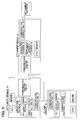
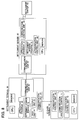
- Fig. 1 shows a first configuration example of the settlement system in the embodiment of the present invention.
- the first configuration example is configured with an IC card terminal 10, a settlement terminal 20 and a settlement server 30, and the settlement server 30 can communicate with the settlement center 40 of a credit card company through a network.
- the settlement terminal 20 and the settlement server 30 are, for instance, as shown in Fig. 21, a POS terminal and a POS server in a POS system.
- the settlement terminal 20 and the settlement server 30 are computer devices with a CPU and memory, and they can store application programs 21 and 31 for other processes than IC card settlement processing (for instance, POS job). Also, the settlement terminal 20 has a communication control unit 22 for making communication with the settlement server 30, and a communication control unit 23 for making communication with the IC card terminal 10, and further, the settlement server 30 has a communication control unit 32 for making communication with the settlement terminal 20, and a communication control unit 33 to connect to an external network. Here, communication can be made either by wired or non-wired system. Moreover, the settlement terminal 20 has an input unit 24 like a numeric keypad, and an output unit (display unit) 25 like a liquid crystal display. For information, the IC card terminal 10 in the first configuration example is not required to have an I/O unit.
- the IC card terminal 10 to execute reading and writing against the IC card is a computer device with a CPU and memory, and connects to the settlement terminal 20 through a communication control unit 16. Also, when settlement is made using of a credit function of the IC card, as the IC card terminal 10 needs an authentication of a credit card company, it connects to the settlement center 40 of a credit card company through the settlement server 30, using a pre-determined communication line.
- the number of the IC card terminals 10 is more than the numbers of the settlement terminals 20 and the settlement servers 30, and further, the number of the settlement terminals 20 is more than the number of the settlement servers 30.
- a communication protocol control process 11 a settlement common process 12 and a settlement specific process 13, which are component elements of a settlement program (settlement process) required for IC card settlement, are distributed to the IC card terminal 10, the settlement terminal 20 and the settlement server 30, respectively.
- the settlement program for IC card settlement has, as described in the conventional technology, three-layered structure: i.e., the communication protocol control process 11 to control communication between the IC card and the IC card terminal, the settlement common process 12, that is to say a process common to credit card companies, and the settlement specific process 13 intrinsic to credit card company-by-company.
- the feature is that a portion of the three-layered processes, all of which the IC card terminal has so far processed, are distributed to the settlement terminal 20 and the settlement server 30.
- the settlement specific process 13 is allocated to the settlement server 30, and to the settlement terminal 20, the settlement common process 12 is allocated. Furthermore, the communication protocol control process 11 is mounted on the IC card terminal 10 which makes direct communication with the IC card, as was mounted previously.
- the settlement specific process 13 is a process intrinsic to credit card company-by-company, and needs program change at relatively close intervals. Therefore, the settlement specific process 13 is allocated to a smaller number of the settlement servers 30 in the settlement system. By this allocation, when the program is to be changed, compared to the case when the program must be changed as to the relatively larger number of the IC card terminals 10, the number of devices that need program change becomes smaller, and maintenance of the settlement system can be made easily.
- processing load of the IC card terminal 10 can be reduced, and the IC card terminal 10 can be configured using a CPU having a relatively low processing capability and relatively small capacity of memory, so that low-cost IC card terminal can be embodied.
- the settlement common process 12 where program change will rarely take place, includes process that needs input from customers, like settlement amount or PIN, and needs an input device (numeric keypad, etc.) and relatively large capacity of memory to hold the entered data, as well. Therefore, the settlement common process 12 is allocated to the settlement terminal 20 that has a larger processing capability than the IC card terminal 10. If the settlement terminal 20 is the POS terminal, as the input device is integrated into the settlement terminal 20, the integrated input device can be used. Further, as the settlement server 30 is usually not installed to selling sections where shoppers would visit, the settlement common process 12 that needs input from customers is not allocated to the settlement server 30.
- the communication protocol control process 11 is a process to read and write data, gaining access to the IC card, program change will not rarely take place and its processing load is relatively small, therefore, even the IC card terminal 10 with a CPU having relatively low processing capability and relatively small capacity of memory can sufficiently execute processing, so, that is the reason for leaving this process as the process for the IC card terminal 10.
- the communication protocol control process 11 can be even allocated to the settlement terminal 20.
- processing time could be longer because communication between the IC card terminal 10 and the settlement terminal 20 is necessary. Therefore, in order to shorten the processing time as far as possible, by reducing device-to-device communication, it is preferable to leave the communication protocol control process 11, that will not load the IC card terminal 10, on the side of the IC card terminal 10.
- the IC card terminal 10 From the viewpoint of shortening processing time, it is preferable to allow the IC card terminal 10 to execute all processes, however, in order to embody low-costing of the settlement system, with the load of the IC card terminal 10 and processing time in optimally well balanced state, it is most preferable, as described above, to decentralize the three-stepped processes making up the settlement program to the IC card terminal 10, the settlement terminal 20 and the settlement server 30, respectively.
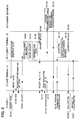
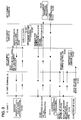
- Figs. 2 and 3 are flowcharts of settlement processing in the embodiment of the present invention.
- the settlement terminal 20 sends a card insert waiting signal to the IC card terminal 10, informing that the settlement terminal is in waiting state (S100).
- the IC card is inserted into the IC card terminal 10 (S101).
- the IC card terminal 10 sends a reset (Reset) signal to the IC card (S102).
- the IC card sends communication protocol information of the IC card to the IC card terminal 10 as an ATR (Answer to Reset) signal (S103).
- the IC card terminal 10 sends an AID (Application ID) list request signal to the IC card, using communication based on the received communication protocol information (S104).
- the AID is an ID to identify an applicable application program corresponding to each of a plurality of functions (settlement methods) held by the IC card
- the AID list is a table of AIDs corresponding to each of the functions (settlement methods) held by the IC card.
- the plurality of settlement methods denotes, for instance, settlement by the credit card function, settlement by electronic money, etc., and further, settlement method may use functions of a plurality of credit cards issued from a plurality of different credit card companies or electronic money function.
- the IC card When receiving the AID list request signal, the IC card sends the AID list to the IC card terminal 10 (S105). The IC card terminal 10 further transfers the received AID list to the settlement terminal 20.
- a plurality of settlement methods for instance, (1) credit card function of A Company, (2) credit card function of B Company, (3) electronic money function of C Company, (4) electronic money function of D Company, etc.
- a plurality of settlement methods for instance, (1) credit card function of A Company, (2) credit card function of B Company, (3) electronic money function of C Company, (4) electronic money function of D Company, etc.
- the operation to specify the amount means, for instance, depressing the key "subtotal" (S108). The following describes about processing in case of using the credit card function.
- the settlement terminal 20 informs the IC card terminal 10 of the selected settlement method, AID corresponding to the selected method, and settlement information including entered amount (S109).
- the IC card terminal 10 When obtaining the AID, the IC card terminal 10 sends an AID specify signal to specify that AID to the IC card (S110). Further, when receiving a reply from the IC card (Sill), the IC card terminal 10 sends a read signal of the application data corresponding to that AID (S112). When receiving the read signal, the IC card sends the application data corresponding to the specified AID to the IC card terminal 10 (S113). The application data is further transferred to the settlement server 30 through the settlement terminal 20.
- the settlement server 30 When receiving the application data, the settlement server 30 reads out information table corresponding to that application data (S114).
- Each information table corresponding to the individual function registers, for instance, a credit card company code (brand identifier), a corporation code, a partnership identification code, a terminal floor limit amount, etc.
- the credit card company code is a code to identify the brand of a credit card company which offers credit card function
- the corporation code is a code of the corporation which issues a credit card attaching the brand of that credit card
- the partnership identification code is a code of a corporation that offers another credit card function to be attached to the same credit card
- the terminal floor limit amount is the upper limit amount that can be settled (off-line) without an approval of the settlement center of the credit card company.
- the settlement server 30 After reading out the information table, the settlement server 30 sends a random number generation request signal for customer's PIN to the IC card (S115).
- the IC card generates random numbers based on the signal, and the generated random numbers are sent to the settlement terminal 20 (S116).
- the settlement terminal 20 accepts input of the PIN (for instance, secret numbers) from the customer.
- the settlement terminal 20 encrypts the PIN with the received random numbers (S118), and sends the encrypted PIN to the IC card (S119).
- the IC card decodes the encrypted PIN with the same random numbers, and collates the decoded PIN with the PIN registered in the IC card (S120).
- the collated result is informed to the settlement terminal 20 (S121).
- the settlement terminal 20 informs the settlement server 30 of the result of collating the PINS and the entered settlement information (amount, payment method) (S122).
- the settlement server 30 sends the data for verifying the IC card, the data for authentication, including the received result of collating the PINS and settlement information that are already encrypted with a pre-determined public key to the IC card (S123).
- This encrypted data for verifying the IC card is data for verifying the IC card.
- IC card decodes the encrypted data for verifying the IC card received from the settlement server 30, using a secret key corresponding to the public key (S124). By doing so, the IC card can obtain the settlement information. Then, the IC card returns the decoded data to the settlement server 30. The settlement server 30 verifies the IC card, after collating the decoded data and the authentication data before encrypting (S125), and confirms the validity of the IC card.
- the settlement server 30 makes a judgment whether settlement is processed on-line requiring an approval of the settlement center, or off-line not requiring an approval of the settlement center, collating the information table read out at the step S114 with the amount entered at the step S107 (S126).
- the following shows a processing example when the judgment is made that settlement is processed on-line.
- the settlement server 30 sends an encrypted data generation request for on-line authentication to the IC card (S127).
- the IC card generates encrypted data for on-line authentication, after encrypting the data for authentication including the settlement information (settlement amount) to be obtained by decoding at the step S124 and the customer information (customer identification number) to be stored on the IC card with a pre-determined public key of the IC card, and sent to the settlement center (S128).
- the settlement center When receiving the encrypted data for on-line authentication, the settlement center decodes the received data with a secret key corresponding to the public key, and executes a given settlement approval processing based on the decoded data (S129). Then, the settlement center sends the result of the approval processing to the IC card (S130). At this time, the settlement center encrypts the decoded data again with a secret key, and sends the encrypted data for on-line authentication to the IC card, together with the result of the approval processing.
- the IC card decodes the encrypted data for on-line authentication sent together with the result of the approval processing using the public key, to obtain the decoded data for authentication, and performs authentication processing of the settlement center (external authentication processing), as collating with the data for authentication at the step S128 (S131).
- the external authentication processing is processing for confirming validity of the settlement center.
- the settlement terminal 20 sends a complete process start request to the IC card, based on the result of the external authentication processing (S133). Then, the IC card makes a final judgment about the success or failure of the transaction, based on the complete process start request, and sends the result of this final judgment to the settlement terminal 20 (S134).
- the settlement terminal 20 displays an instruction to pull out the IC card on its display unit 25 (S135).
- the IC card terminal 10 sends a note to the settlement terminal 20, informing the card has been pulled out (S137). Now, processing is finished.
- the IC card terminal 10 controls communication with the IC card, as an interface with the IC card, through the process from the beginning to the end, and executes only the communication protocol control process 11 in the settlement program.
- the settlement terminal 20 mainly holds information (payment method, amount, PIN, etc.) entered from the input device, as the settlement common process 12, and executes processing regarding that (selecting application, collating PIN, etc.).
- the settlement server 30 executes the IC card authentication processing to confirm the validity of the IC card, and off-line/on-line judgment processing to check whether the transaction contents need to be approved by the settlement center or not.
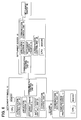
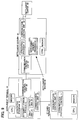
- Fig. 4 shows a second configuration example of the settlement system in this embodiment of the present invention.
- the settlement common process 12 is not executed by the settlement terminal 20, but instead, by the IC card terminal 10.
- this configuration only the settlement specific process 13 of the settlement program that are divided into 3 portions, is shifted from the IC card terminal 10 to the settlement server 30, and even this configuration example can reduce the load of the IC card terminal 10, compared to the conventional configuration, so as to contribute to the cost reduction of the total settlement system.
- the settlement server 13 executes the settlement specific process 13, the program can be changed easily.
- the IC card terminal 10 and the settlement server 30 can be directly connected through lines.
- such a configuration can be approved, where the IC card terminal 10 and the settlement server 30 are connected through the settlement terminal 20.
- Fig. 5 shows a third configuration example of the settlement system in the embodiment of the present invention.
- the third configuration example shows a configuration where the settlement common process 12 is not executed by the settlement terminal 20, but instead, by the IC card terminal 10, and as the IC card terminal 10 does not include an input device (numeric keypad, etc.) and an output device (display device, etc.) to be required in the settlement common process 12, the input device and output device to be installed to the settlement terminal 20 are to be used, instead.
- the settlement common process 12 is executed by the IC card terminal 10, however, as the IC card terminal 10 does not include the input unit 24 and the output unit 25, cost of the IC card terminal 10 can be reduced, and because the number of the IC card terminals 10 to be used is the largest in the settlement system, this cost reduction could lead up to the total cost reduction of the settlement system.
- Fig. 6 shows a fourth configuration example of the settlement system in the embodiment of the present invention.
- the settlement server 30 and the settlement terminal 20 authentication control units 38 and 28 are installed respectively, and the settlement terminal 20 executes a settlement terminal authentication process to confirm the validity of the settlement server 30.
- the settlement process is distributed to the settlement terminal and the settlement server, except the IC card terminal, it is preferable from the viewpoint of ensuring security that each device verifies its communicating partner, when any device-to-device (the IC card terminal, the settlement terminal and the settlement server) communication takes place.
- the fourth configuration example shows a configuration where the settlement server 30 and the settlement terminal 20 execute the authentication processing.
- Fig. 7 describes about authentication processing method.
- the authentication process is to be executed in advance, before the settlement process shown in Figs. 2 and 3 is executed.
- the settlement terminal 20 generates a pre-determined e-text X for authentication, encrypts the text with a pre-determined encrypting key A, and eventually sends the encrypted e-text to the settlement server 30.
- the settlement server 30 decodes the encrypted e-text with the same encrypting key A, and encrypts the decoded authentication e-text X with a public key B.
- the settlement server 30 sends the encrypted e-text to the settlement terminal 20, then, the settlement terminal 20 decodes the encrypted e-text with a secret key C, and compares the decoded authentication e-text Y with the original authentication e-text X, and if agreed, the settlement terminal 20 judges that the settlement server 30 is valid.
- Fig. 8 shows a fifth configuration example of the settlement system in the embodiment of the present invention.
- the fifth configuration example shows a configuration where authentication processing is performed between the settlement server 30 and the IC card terminal 10.
- the IC card terminal 10 has an authentication control unit 18 to execute authentication processing shown in Fig. 7.
- authentication processing is performed between the IC card terminal 10 and the settlement terminal 20. It is further approved that authentication processing is performed among three devices, the IC card terminal 10, the settlement terminal 20 and the settlement server 30.
- a program corresponding to process to be allocated to the settlement server 30 may be stored in the hard disk drive, the main storage of the settlement server 30, or, the program may be imbedded in a dedicated device (for instance, LSI) mounted on a settlement board added to the settlement server 30.
- LSI dedicated device
- Fig. 9 shows a configuration example of the settlement system having the settlement server that amounts the settlement board.
- the LSI on the settlement board 36 executes the settlement specific process 13 allocated to the settlement server 30.
- processing that must ensure security including the device-to-device authentication processing, processing of portion of the settlement common process to be allocated to the settlement terminal 20 (for instance, process of collating PINs, etc.) may be executed, not limited to the settlement specific process 13.
- the settlement terminal 20 and the settlement server 30 may be a POS terminal and a POS server in a POS system, respectively, or any terminal and server of any other system.
- the settlement terminal 20 is an automatic vending machine that can make settlement not only by cash but also by the IC card
- the settlement server is a server monitoring sales of the automatic vending machine through a network (that is to say, a kind of POS server).
- the transaction medium is not limited to the IC card, but may be, for instance, any transaction medium not in the form of card.
- settlement processing by the IC card is to be further distributed to the settlement terminal and the settlement server.
- processing load by the IC card terminal would be reduced, and as a result, the IC card terminal would not need a CPU having a high processing capability or a large capacity of memory, bringing cost of the IC card terminal down, so that the total settlement system can embody low-costing.
Landscapes
- Business, Economics & Management (AREA)
- Accounting & Taxation (AREA)
- Engineering & Computer Science (AREA)
- General Physics & Mathematics (AREA)
- Finance (AREA)
- Physics & Mathematics (AREA)
- Theoretical Computer Science (AREA)
- General Business, Economics & Management (AREA)
- Strategic Management (AREA)
- Development Economics (AREA)
- Economics (AREA)
- Microelectronics & Electronic Packaging (AREA)
- Computer Networks & Wireless Communication (AREA)
- Cash Registers Or Receiving Machines (AREA)
- Financial Or Insurance-Related Operations Such As Payment And Settlement (AREA)
- Control Of Vending Devices And Auxiliary Devices For Vending Devices (AREA)
Applications Claiming Priority (2)
| Application Number | Priority Date | Filing Date | Title |
|---|---|---|---|
| JP2002029497 | 2002-02-06 | ||
| JP2002029497A JP2003233874A (ja) | 2002-02-06 | 2002-02-06 | 決済システム |
Publications (2)
| Publication Number | Publication Date |
|---|---|
| EP1335331A2 true EP1335331A2 (fr) | 2003-08-13 |
| EP1335331A3 EP1335331A3 (fr) | 2003-11-26 |
Family
ID=27606490
Family Applications (1)
| Application Number | Title | Priority Date | Filing Date |
|---|---|---|---|
| EP02020297A Ceased EP1335331A3 (fr) | 2002-02-06 | 2002-09-11 | Système de règlement financier |
Country Status (3)
| Country | Link |
|---|---|
| US (1) | US20030149664A1 (fr) |
| EP (1) | EP1335331A3 (fr) |
| JP (1) | JP2003233874A (fr) |
Cited By (1)
| Publication number | Priority date | Publication date | Assignee | Title |
|---|---|---|---|---|
| US8608064B2 (en) | 2009-11-27 | 2013-12-17 | China Unionpay Co., Ltd. | Payment system and method of IC card and a multi-application IC card as well as a payment terminal |
Families Citing this family (15)
| Publication number | Priority date | Publication date | Assignee | Title |
|---|---|---|---|---|
| US8156042B2 (en) | 2003-08-29 | 2012-04-10 | Starbucks Corporation | Method and apparatus for automatically reloading a stored value card |
| US20050080672A1 (en) * | 2003-10-13 | 2005-04-14 | Starbucks Corporation | Creating customer loyalty |
| WO2005048145A1 (fr) * | 2003-10-13 | 2005-05-26 | Starbucks Corporation D/B/A Starbucks Coffee Company | Carte double |
| AU2003271997C1 (en) * | 2003-10-13 | 2010-03-11 | Starbucks Corporation D/B/A Starbucks Coffee Company | Dual card |
| JP4634784B2 (ja) * | 2004-12-06 | 2011-02-16 | 株式会社三共 | 携帯端末装置およびアプリケーションプログラム |
| JP4660180B2 (ja) * | 2004-12-15 | 2011-03-30 | テックファーム株式会社 | 通信システム、読み書き装置、読み書き方法、及び読み書きプログラム |
| JP2009104553A (ja) * | 2007-10-25 | 2009-05-14 | Toshiba Tec Corp | 商品販売データ処理装置 |
| NL1036231C2 (nl) * | 2008-11-24 | 2010-05-28 | Bell Identification B V | Werkwijze en computerprogramma voor het wijzigen van een identificatiecode van een transactie-autorisatiemedium. |
| JP5493679B2 (ja) * | 2009-10-15 | 2014-05-14 | 富士通株式会社 | 復号鍵送信装置、コンピュータプログラム、復号鍵送信システム及び復号鍵送信方法 |
| JP5440652B2 (ja) * | 2012-05-11 | 2014-03-12 | カシオ計算機株式会社 | 売上データ処理装置、及びプログラム |
| JP6032092B2 (ja) * | 2013-03-26 | 2016-11-24 | 株式会社デンソーウェーブ | ネットワークシステム |
| JP6149488B2 (ja) * | 2013-04-24 | 2017-06-21 | 株式会社デンソーウェーブ | 決済システム |
| WO2015134384A2 (fr) | 2014-03-07 | 2015-09-11 | Starbucks Corporation Dba Starbucks Coffee Company | Carte à double fonction avec fonctionnalité de carte clé et fonctionnalité de carte à valeur stockée |
| CN106844199A (zh) * | 2016-12-27 | 2017-06-13 | 广州智慧城市发展研究院 | 一种金融ic卡圈存圈提测试系统 |
| CN106846664A (zh) * | 2016-12-28 | 2017-06-13 | 广州智慧城市发展研究院 | 一种金融ic卡圈存圈提测试系统 |
Family Cites Families (19)
| Publication number | Priority date | Publication date | Assignee | Title |
|---|---|---|---|---|
| AUPN447595A0 (en) * | 1995-07-31 | 1995-08-24 | Achelles, Peter | Remote smart card terminal link |
| US6505170B1 (en) * | 1996-10-04 | 2003-01-07 | Western Union North America | Distributed device management system |
| JP3660101B2 (ja) * | 1996-11-14 | 2005-06-15 | 松下電器産業株式会社 | パーソナル電子決済システム |
| JP3802074B2 (ja) * | 1997-06-27 | 2006-07-26 | スイスコム モービル アーゲー | 携帯可能な身分証明要素でのトランザクション方法 |
| US7657490B1 (en) * | 1999-08-02 | 2010-02-02 | Softbankbb Corporation | Electronic settlement system, settlement device, and terminal |
| US7376587B1 (en) * | 2000-07-11 | 2008-05-20 | Western Union Financial Services, Inc. | Method for enabling transfer of funds through a computer network |
| JP3813780B2 (ja) * | 2000-02-02 | 2006-08-23 | 株式会社東芝 | 購買情報利用システム |
| JP3860379B2 (ja) * | 2000-02-03 | 2006-12-20 | 沖電気工業株式会社 | 電子決済システム |
| US20060173790A1 (en) * | 2000-03-16 | 2006-08-03 | Harexinfotech, Inc. | Optical payment transceiver and system using the same |
| JP3368886B2 (ja) * | 2000-03-22 | 2003-01-20 | 日本電気株式会社 | 携帯端末装置 |
| JP2001344545A (ja) * | 2000-03-29 | 2001-12-14 | Ibm Japan Ltd | 処理システム、サーバ、処理端末、通信端末、処理方法、データ管理方法、処理実行方法、プログラム |
| GB2368422B (en) * | 2000-05-10 | 2003-03-26 | Sony Corp | Electronic settlement system, settlement management device, store device, client, data storage device, computer program, and storage medium |
| FR2809852B1 (fr) * | 2000-05-30 | 2002-11-29 | Dassault Automatismes | Terminal de paiement comprenant une carte memoire non volatile extractible |
| FR2812744A1 (fr) * | 2000-08-04 | 2002-02-08 | Dassault Automatismes | Dispositif de paiement electronique au moyen d'un appareil consommateur et d'un appareil commercant communiquant par une liaison sans fil |
| US20020103711A1 (en) * | 2000-12-15 | 2002-08-01 | Karas Peter Michael | Online method and system for ordering and having delivered a paper greeting message and payment instrument |
| US7266533B2 (en) * | 2000-12-15 | 2007-09-04 | The Western Union Company | Electronic gift greeting |
| JP3714170B2 (ja) * | 2001-02-05 | 2005-11-09 | 日本電気株式会社 | オンラインショッピング決済方法及びそのシステム並びにオンラインショッピング決済プログラム |
| US7165052B2 (en) * | 2001-03-31 | 2007-01-16 | First Data Corporation | Payment service method and system |
| US7184980B2 (en) * | 2001-11-15 | 2007-02-27 | First Data Corporation | Online incremental payment method |
-
2002
- 2002-02-06 JP JP2002029497A patent/JP2003233874A/ja active Pending
- 2002-07-26 US US10/205,370 patent/US20030149664A1/en not_active Abandoned
- 2002-09-11 EP EP02020297A patent/EP1335331A3/fr not_active Ceased
Non-Patent Citations (1)
| Title |
|---|
| None * |
Cited By (1)
| Publication number | Priority date | Publication date | Assignee | Title |
|---|---|---|---|---|
| US8608064B2 (en) | 2009-11-27 | 2013-12-17 | China Unionpay Co., Ltd. | Payment system and method of IC card and a multi-application IC card as well as a payment terminal |
Also Published As
| Publication number | Publication date |
|---|---|
| US20030149664A1 (en) | 2003-08-07 |
| EP1335331A3 (fr) | 2003-11-26 |
| JP2003233874A (ja) | 2003-08-22 |
Similar Documents
| Publication | Publication Date | Title |
|---|---|---|
| EP1335331A2 (fr) | Système de règlement financier | |
| US7765162B2 (en) | Method and system for conducting off-line and on-line pre-authorized payment transactions | |
| US20050205666A1 (en) | Loyalty automatic merchandiser system | |
| JP2006523879A (ja) | 支払装置および方法 | |
| US20100145852A1 (en) | Methods and systems for managing loss or theft of atm cards | |
| KR20030038350A (ko) | 온라인 및 오프라인에서의 전자상품권 유통 방법 | |
| US20040267672A1 (en) | System and method for conducting secure electronic transactions | |
| CN115099811B (zh) | 使用时间减少的装置处理的系统和方法 | |
| CN101211488A (zh) | 电子货币系统 | |
| US20180025337A1 (en) | Standardizing point of sale services and leveraging instances of the plu data | |
| JP5433868B2 (ja) | 電子決済システム | |
| US6012637A (en) | Card system for collectively loading right of use in predetermined amount of money and method of processing the card | |
| EP1079347A2 (fr) | Procédé et dispositif pour le traitement électronique de paiements sans numéraire à l'aide de modules de sécurité | |
| KR20050008439A (ko) | 카드 사용자의 용도 정의 정보가 포함된 카드 및 상기카드의 운영방법 | |
| JP2005135297A (ja) | 電子マネー決済方法および電子マネー処理装置および電子マネー処理システム | |
| CN113383374A (zh) | 自动售货机系统 | |
| US20190197535A1 (en) | Flexible emv-compliant identification transaction method | |
| CN101496029A (zh) | 用于执行电子交易的设备和方法 | |
| CN101377876A (zh) | 支付终端、支付系统以及计算机可读取的介质 | |
| KR100836007B1 (ko) | 결제승인 처리방법 | |
| KR100729662B1 (ko) | 스마트카드의 신용대출서비스 운영방법 | |
| KR100796972B1 (ko) | 전자지갑 위탁 관리 시스템 | |
| JP4716759B2 (ja) | Icカード端末装置 | |
| KR100804635B1 (ko) | 카드 사용자의 용도 정의 정보 운용서버 | |
| KR20020036481A (ko) | 전자카드를 이용한 온라인 방식의 결제방법 |
Legal Events
| Date | Code | Title | Description |
|---|---|---|---|
| PUAI | Public reference made under article 153(3) epc to a published international application that has entered the european phase |
Free format text: ORIGINAL CODE: 0009012 |
|
| AK | Designated contracting states |
Designated state(s): AT BE BG CH CY CZ DE DK EE ES FI FR GB GR IE IT LI LU MC NL PT SE SK TR |
|
| AX | Request for extension of the european patent |
Extension state: AL LT LV MK RO SI |
|
| PUAL | Search report despatched |
Free format text: ORIGINAL CODE: 0009013 |
|
| AK | Designated contracting states |
Kind code of ref document: A3 Designated state(s): AT BE BG CH CY CZ DE DK EE ES FI FR GB GR IE IT LI LU MC NL PT SE SK TR |
|
| AX | Request for extension of the european patent |
Extension state: AL LT LV MK RO SI |
|
| 17P | Request for examination filed |
Effective date: 20031125 |
|
| AKX | Designation fees paid |
Designated state(s): DE FR GB |
|
| 17Q | First examination report despatched |
Effective date: 20041004 |
|
| STAA | Information on the status of an ep patent application or granted ep patent |
Free format text: STATUS: THE APPLICATION HAS BEEN REFUSED |
|
| 18R | Application refused |
Effective date: 20061123 |