EP1307460B1 - VERFAHREN ZUR HERSTELLUNG VON IMIDAZO [1,2-c] [2,3]BENZODIAZEPINEN UND ZWISCHENPRODUKTE BEI DEREN HERSTELLUNG - Google Patents
VERFAHREN ZUR HERSTELLUNG VON IMIDAZO [1,2-c] [2,3]BENZODIAZEPINEN UND ZWISCHENPRODUKTE BEI DEREN HERSTELLUNG Download PDFInfo
- Publication number
- EP1307460B1 EP1307460B1 EP01956566A EP01956566A EP1307460B1 EP 1307460 B1 EP1307460 B1 EP 1307460B1 EP 01956566 A EP01956566 A EP 01956566A EP 01956566 A EP01956566 A EP 01956566A EP 1307460 B1 EP1307460 B1 EP 1307460B1
- Authority
- EP
- European Patent Office
- Prior art keywords
- halogen
- alkoxy
- general formula
- alkyl
- imidazo
- Prior art date
- Legal status (The legal status is an assumption and is not a legal conclusion. Google has not performed a legal analysis and makes no representation as to the accuracy of the status listed.)
- Expired - Lifetime
Links
- 0 CC1(*)C#CC(C(c2cc(*)c(*)cc2CC(O)=O)=O)=CC=C1 Chemical compound CC1(*)C#CC(C(c2cc(*)c(*)cc2CC(O)=O)=O)=CC=C1 0.000 description 4
Classifications
-
- C—CHEMISTRY; METALLURGY
- C07—ORGANIC CHEMISTRY
- C07D—HETEROCYCLIC COMPOUNDS
- C07D487/00—Heterocyclic compounds containing nitrogen atoms as the only ring hetero atoms in the condensed system, not provided for by groups C07D451/00 - C07D477/00
- C07D487/02—Heterocyclic compounds containing nitrogen atoms as the only ring hetero atoms in the condensed system, not provided for by groups C07D451/00 - C07D477/00 in which the condensed system contains two hetero rings
- C07D487/04—Ortho-condensed systems
-
- C—CHEMISTRY; METALLURGY
- C07—ORGANIC CHEMISTRY
- C07D—HETEROCYCLIC COMPOUNDS
- C07D263/00—Heterocyclic compounds containing 1,3-oxazole or hydrogenated 1,3-oxazole rings
- C07D263/02—Heterocyclic compounds containing 1,3-oxazole or hydrogenated 1,3-oxazole rings not condensed with other rings
- C07D263/30—Heterocyclic compounds containing 1,3-oxazole or hydrogenated 1,3-oxazole rings not condensed with other rings having two or three double bonds between ring members or between ring members and non-ring members
- C07D263/32—Heterocyclic compounds containing 1,3-oxazole or hydrogenated 1,3-oxazole rings not condensed with other rings having two or three double bonds between ring members or between ring members and non-ring members with only hydrogen atoms, hydrocarbon or substituted hydrocarbon radicals, directly attached to ring carbon atoms
-
- C—CHEMISTRY; METALLURGY
- C07—ORGANIC CHEMISTRY
- C07D—HETEROCYCLIC COMPOUNDS
- C07D317/00—Heterocyclic compounds containing five-membered rings having two oxygen atoms as the only ring hetero atoms
- C07D317/08—Heterocyclic compounds containing five-membered rings having two oxygen atoms as the only ring hetero atoms having the hetero atoms in positions 1 and 3
- C07D317/44—Heterocyclic compounds containing five-membered rings having two oxygen atoms as the only ring hetero atoms having the hetero atoms in positions 1 and 3 ortho- or peri-condensed with carbocyclic rings or ring systems
- C07D317/46—Heterocyclic compounds containing five-membered rings having two oxygen atoms as the only ring hetero atoms having the hetero atoms in positions 1 and 3 ortho- or peri-condensed with carbocyclic rings or ring systems condensed with one six-membered ring
- C07D317/48—Methylenedioxybenzenes or hydrogenated methylenedioxybenzenes, unsubstituted on the hetero ring
- C07D317/50—Methylenedioxybenzenes or hydrogenated methylenedioxybenzenes, unsubstituted on the hetero ring with only hydrogen atoms, hydrocarbon or substituted hydrocarbon radicals, directly attached to atoms of the carbocyclic ring
- C07D317/60—Radicals substituted by carbon atoms having three bonds to hetero atoms with at the most one bond to halogen, e.g. ester or nitrile radicals
-
- C—CHEMISTRY; METALLURGY
- C07—ORGANIC CHEMISTRY
- C07D—HETEROCYCLIC COMPOUNDS
- C07D413/00—Heterocyclic compounds containing two or more hetero rings, at least one ring having nitrogen and oxygen atoms as the only ring hetero atoms
- C07D413/02—Heterocyclic compounds containing two or more hetero rings, at least one ring having nitrogen and oxygen atoms as the only ring hetero atoms containing two hetero rings
- C07D413/06—Heterocyclic compounds containing two or more hetero rings, at least one ring having nitrogen and oxygen atoms as the only ring hetero atoms containing two hetero rings linked by a carbon chain containing only aliphatic carbon atoms
-
- C—CHEMISTRY; METALLURGY
- C07—ORGANIC CHEMISTRY
- C07D—HETEROCYCLIC COMPOUNDS
- C07D491/00—Heterocyclic compounds containing in the condensed ring system both one or more rings having oxygen atoms as the only ring hetero atoms and one or more rings having nitrogen atoms as the only ring hetero atoms, not provided for by groups C07D451/00 - C07D459/00, C07D463/00, C07D477/00 or C07D489/00
- C07D491/12—Heterocyclic compounds containing in the condensed ring system both one or more rings having oxygen atoms as the only ring hetero atoms and one or more rings having nitrogen atoms as the only ring hetero atoms, not provided for by groups C07D451/00 - C07D459/00, C07D463/00, C07D477/00 or C07D489/00 in which the condensed system contains three hetero rings
- C07D491/14—Ortho-condensed systems
Definitions
- C 1 -C 6 alkyl is in each case a straight-chain or branched alkyl radical such as, for example, methyl, ethyl, propyl, isopropyl, butyl, isobutyl, sec. To understand butyl, pentyl, isopentyl or hexyl.
- R 2 and R 3 with the meaning C 2 -C 6 alkenyl each contain at least one double bond, such as vinyl, propenyl, buten-1-yl, isobutenyl, penten-1-yl, 2,2-dimethyl-buten-1 -yl, 3-methylbuten-1-yl, hexen-1-yl.
- R 2 and R 3 are C 1 -C 6 -alkynyl, then at least one triple bond is present, such as, for example, ethynyl, propynyl, butyn-1-yl, butyn-2-yl, pentyl-1-yl, pentyl-2-yl , 3-methylbutyn-1-yl, hexyn-1-yl.
- the alkenyl or alkynyl radicals described above can optionally also be substituted with halogen atoms. If there is a halogenated alkyl radical, this can be halogenated one or more times, but can also be perhalogenated, such as —CF 3 .
- Halogen within the above radicals is fluorine, chlorine, bromine and understanding iodine.
- R 2 and R 3 in the meaning aryl and hetaryl radical can optionally be mono-, di- or trisubstituted by halogen, C 1-4 alkoxy or C 1-4 alkyl radicals; any permutations are possible.
- the aryl and hetaryl radical can be present as a mono- or bicyclic group and 5-12 Contain ring atoms, preferably 5-9 ring atoms, such as phenyl, Biphenyl, naphthyl, indenyl as aryl and thienyl, furyl, pyranyl, pyrrolyl, Pyrazolyl, pyridyl, pyrimidyl, pyridazinyl, oxazolyl, iso-oxazolyl, thiazolyl, Isothioazolyl, 1,3,4-oxadiazol-2-yl, 1,2,4-oxadiazol-5-yl, 1,2,4-oxadiazol-3-yl, Containing quinolyl, isoquinolyl, benzo [1] thienyl, benzofuranyl as hetaryl radical 1-3 heteroatoms such as sulfur, oxygen, and / or nitrogen.
- the preferred radicals are
- R 2 and R 3 with the meaning C 3 -C 8 cycloalkyl mean, for example, the cyclopropyl, cyclobutyl, cyclopentyl, cyclohexyl and cycloheptyl radical.
- Straight-chain or branched aliphatic carboxylic acid residues such as, for example, formyl, acetyl, propinoyl, butanoyl, isopropylcarbonyl, caproyl, valeroyl or trimethylacetyl are suitable as C 1 -C 6 alkanoyl residues.
- R 1 is preferably hydrogen, chlorine, nitro, methoxy
- R 2 and R 3 are hydrogen or C 1-4 alkyl or phenyl
- X and Y together -O-CH 2 -O-.
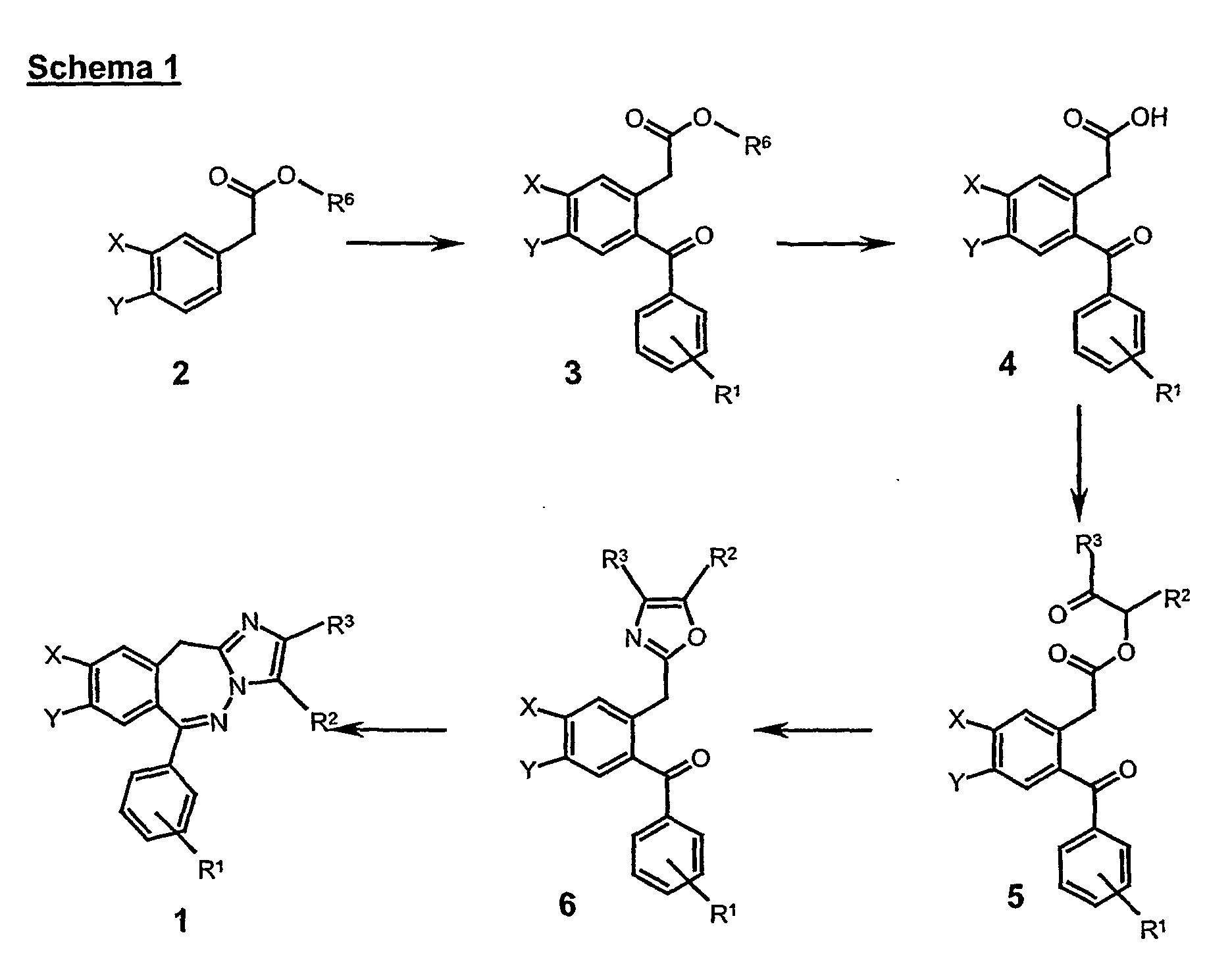
- the object of this invention is a new process for the synthesis of the compounds of general formula 1.
- This invention also relates to new, previously unknown intermediates of general formulas 5 and 6 which are run through in the course of the synthesis and are per se or derivatized as starting materials for the Synthesis of other target molecules can be used.
- the process according to the invention results in fewer intermediate stages go through as in the known prior art synthesis that The number of cleaning steps is significantly lower and the overall yield will be raised.
- the method according to the invention enables the production of Compounds of formula I on an industrial scale.
- reaction of a compound of general formula 2 to a compound of general formula 3 is carried out according to a process known per se (e.g. J. Chem. Soc., Perkin Trans. 1 1991 , 169-173) of a Friedel-Crafts reaction ,
- compounds of general formula 2 are reacted in the presence of Lewis acids such as tin tetrachloride, aluminum trichloride, titanium tetrachloride and an acylating agent such as benzoyl chloride, benzoic anhydride or another activated carboxylic acid derivative.
- Lewis acids such as tin tetrachloride, aluminum trichloride, titanium tetrachloride and an acylating agent such as benzoyl chloride, benzoic anhydride or another activated carboxylic acid derivative.
- a significant increase in yield is achieved if N , N -dimethylacetamide is additionally added to the reaction mixture.
- Halogenated hydrocarbons such as. B. m
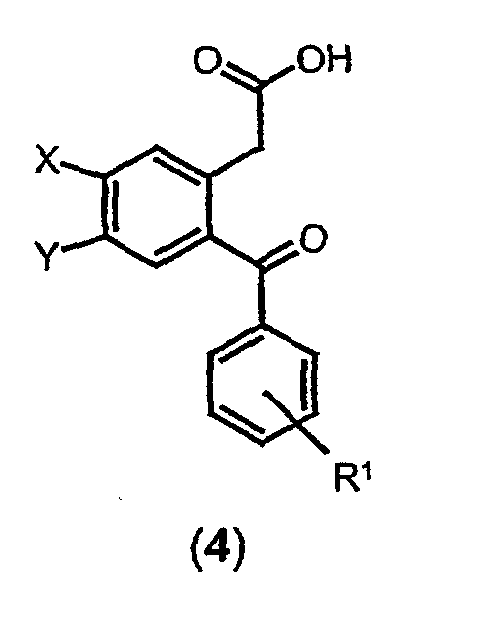
- the reaction of a compound of general formula 3 to a compound of general formula 4 is carried out according to a process of a saponification reaction which is known per se.
- a compound of general formula 3 is heated in the presence of a base such as alkali hydroxide, but preferably sodium hydroxide, in a solvent such as a lower, preferably primary alcohol or water or mixtures thereof.
- the reaction is carried out in a temperature range from 25 ° to 150 ° C., but preferably in the temperature range from 70 ° to 110 ° C.
- the reaction of a compound of general formula 4 to a compound of formula 5 is carried out by an esterification process known per se.
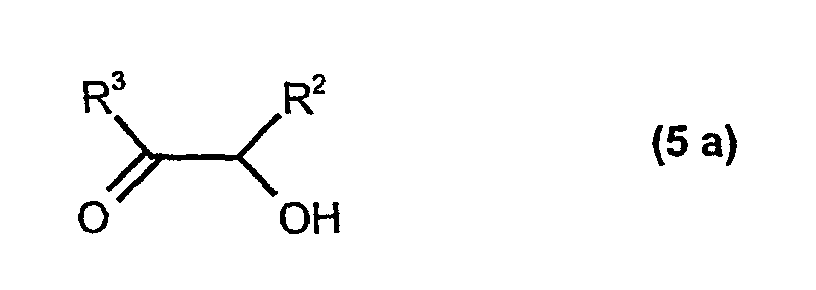
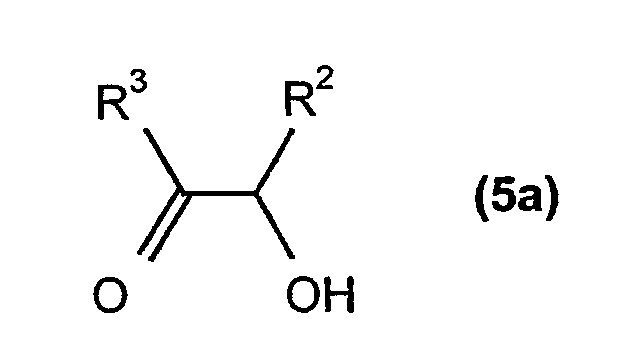
- a compound of general formula 4 in the presence of an activating reagent such as. B. carbonyldiimidazole and an alcohol of the formula implemented as 3-hydroxy-2-butanone.
- Halogenated hydrocarbons such as. B. methylene chloride or ethylene chloride and THF and mixtures thereof.
- the reaction is carried out in a temperature range from -20 ° to 100 ° C, but preferably in the temperature range from 0 ° to 25 ° C.
- R 2 and R 3 in compounds of the general formula 5 can be varied by standard methods. This can be done by using other alcohols in the esterification step, but also by transesterifying an existing ester.
- R 2 and R 3 can therefore mean hydrogen, halogen, alkoxy, hydroxy, cyano, alkanoyl, optionally substituted alkynyl, optionally substituted alkenyl, optionally substituted by halogen, hydroxy, alkoxy, substituted alkyl, cycloalkyl or an optionally substituted aryl or hetaryl radical have.
- the reaction of a compound of general formula 5 to a compound of general formula 6 is carried out according to a known process for the preparation of oxazoles by condensation of two carbonyl groups with ammonia.
- a compound of general formula 5 in the presence of ammonium acetate, ammonia, an ammonia solution or another ammonia donor such as. B. acetamide or formamide in the presence of acetic acid.
- Halogenated hydrocarbons such as. As methylene chloride or ethylene chloride, organic acids such as. B. formic acid or acetic acid and lower alcohols such as. B. methanol or ethanol, but also ethylene glycol and mixtures thereof.
- the reaction is carried out in a temperature range from 0 ° to 150 ° C., but preferably in the temperature range from 50 ° to 100 ° C.
- the reaction of a compound of general formula 6 to a compound of general formula 1 is carried out by a process known per se by hydrazinolysis or hydrazone formation.
- a compound of general formula 6 is reacted in the presence of hydrazine or hydrazine hydrate.
- Halogenated hydrocarbons such as. As methylene chloride or ethylene chloride, organic acids such as. B. formic acid or acetic acid and lower alcohols such as. B. methanol or ethanol, but also ethylene glycol and mixtures thereof.
- the reaction is carried out in a temperature range from 0 ° to 200 ° C., but preferably in the temperature range from 80 ° to 120 ° C. A reaction in an autoclave is possible.
- the reaction of a compound of general formula 5 to a compound of formula 1 also takes place in a one-pot reaction.
- a compound of formula 5 in the presence of ammonium acetate, ammonia, an ammonia solution or another ammonia donor such as. B. acetamide or formamide in the presence of acetic acid.
- Halogenated hydrocarbons such as. As methylene chloride or ethylene chloride, organic acids such as. B. formic acid or acetic acid and lower alcohols such as. B. methanol or ethanol, but also ethylene glycol and mixtures thereof.
- the reaction is carried out in a temperature range from 0 ° to 150 ° C., but preferably in the temperature range from 50 ° to 100 ° C.
- hydrazine or hydrazine hydrate are added to the reaction mixture.
- the reaction is carried out in a temperature range from 0 ° to 200 ° C., but preferably in the temperature range from 80 ° to 120 ° C. A reaction in an autoclave is possible.
Landscapes
- Chemical & Material Sciences (AREA)
- Organic Chemistry (AREA)
- Pharmaceuticals Containing Other Organic And Inorganic Compounds (AREA)
- Nitrogen Condensed Heterocyclic Rings (AREA)
- Nitrogen And Oxygen Or Sulfur-Condensed Heterocyclic Ring Systems (AREA)
- Heterocyclic Compounds That Contain Two Or More Ring Oxygen Atoms (AREA)
- Plural Heterocyclic Compounds (AREA)
Description

R1 = Wasserstoff, C1-C6-Alkyl, Nitro, Halogen, Cyano, C1-C4-Alkoxy, -CF3, Hydroxy oder C1-C6-Alkanoyloxy,
R2 und R3 gleich oder verschieden sind und Wasserstoff, Halogen, C1-C6-Alkoxy, Hydroxy, Cyano, C1-C6-Alkanoyl, C2-C6-Alkynyl, C2-C6-Alkenyl, gegebenenfalls durch Halogen, Hydroxy oder C1-6-Alkoxy substituiertes C1-C6-Alkyl, C3-C7-Cycloalkyl oder einen gegebenenfalls mit Halogen, C1-4-Alkoxy oder C1-4-Alkyl substituierten Aryl- oder Hetarylrest,
X = Wasserstoff oder Halogen,
Y = C1-C6-Alkoxy oder
X und Y gemeinsam -O-(CH2)n-O- mit
n = 1, 2 oder 3 bedeuten.
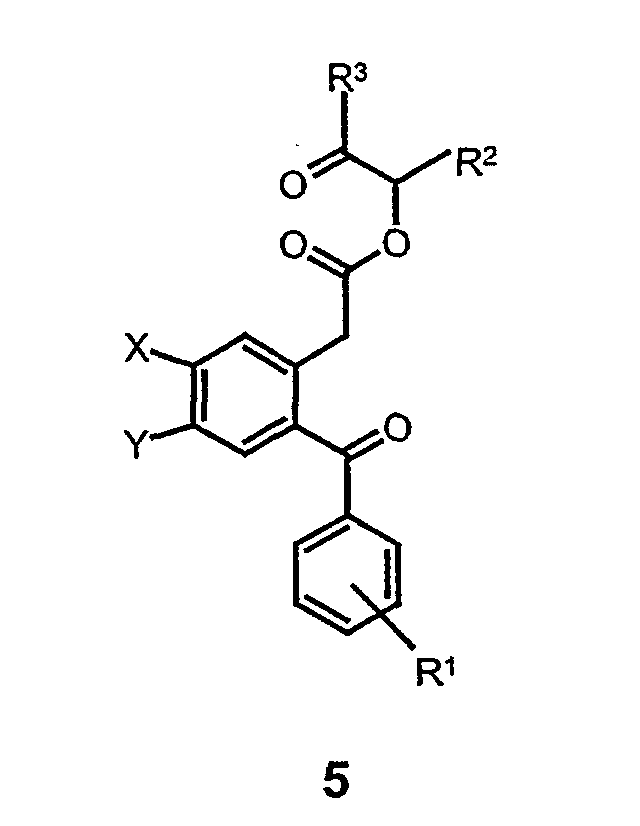
R1 = Wasserstoff, C1-C6-Alkyl, Nitro, Halogen, Cyano, C1-C4-Alkoxy, -CF3, Hydroxy oder C1-C6-Alkanoyloxy,
R2 und R3 gleich oder verschieden sind und Wasserstoff, Halogen, C1-C6-Alkoxy, Hydroxy, Cyano, C1-C6-Alkanoyl, C2-C6-Alkynyl, C2-C6-Alkenyl, gegebenenfalls durch Halogen, Hydroxy oder C1-6-Alkoxy substituiertes C1-C6-Alkyl, C3-C7-Cycloalkyl oder einen gegebenenfalls mit Halogen, C1-4-Alkoxy oder C1-4-Alkyl substituierten Aryl- oder Hetarylrest,
X = Wasserstoff oder Halogen,
Y = C1-C6-Alkoxy oder
X und Y gemeinsam -O-(CH2)n-O- mit
n = 1, 2 oder 3 bedeuten
und
Oxazol-Derivate der allgemeinen Formel 6,

R1 = Wasserstoff, C1-C6-Alkyl, Nitro, Halogen, Cyano, C1-C4-Alkoxy, -CF3, Hydroxy oder C1-C6-Alkanoyloxy,
R2 und R3 gleich oder verschieden sind und Wasserstoff, Halogen, C1-C6-Alkoxy, Hydroxy, Cyano, C1-C6-Alkanoyl, C2-C6-Alkynyl, C2-C6-Alkenyl, gegebenenfalls durch Halogen, Hydroxy oder C1-6-Alkoxy substituiertes C1-C6-Alkyl, C3-C7-Cycloalkyl oder einen gegebenenfalls mit Halogen, C1-4-Alkoxy oder C1-4-Alkyl substituierten Aryl- oder Hetarylrest,
X = Wasserstoff oder Halogen,
Y = C1-C6-Alkoxy oder
X und Y gemeinsam -O-(CH2)n-O- mit
n = 1, 2 oder 3 bedeuten.
worin R1, R2 und R3, sowie X und Y die vorstehende Bedeutung haben,
aus Phenylessigsäuren der allgemeinen Formel 4,
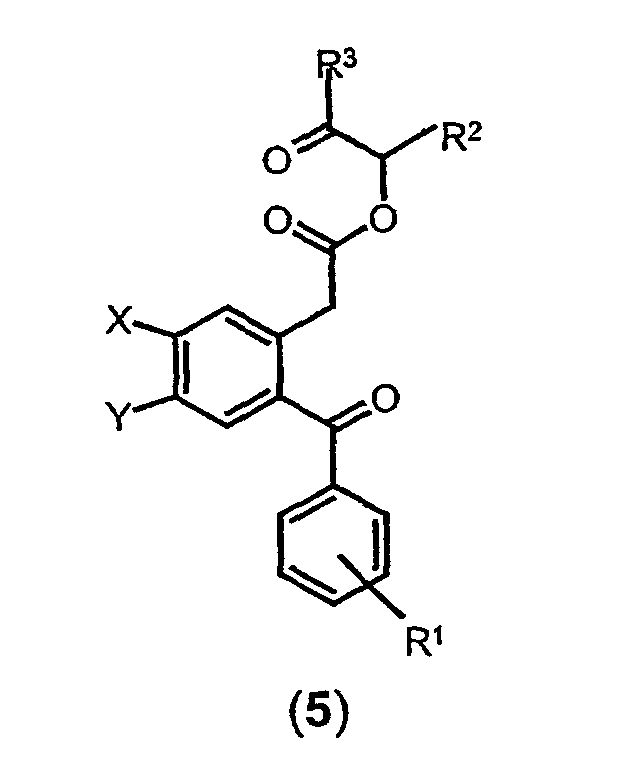
X, Y, R1, R2 und R3 die oben genannte Bedeutung haben,

X, Y, R1, R2 und R3 die oben genannte Bedeutung haben und anschließender
| Smp.: 74-76°C, Verbrennungsanalyse | Ber. | C 68.45 | H 4.73 |
| Gef. | C 68.53 | H 4.59 |
| Smp.: 185-189°C, Verbrennungsanalyse | Ber. | C 67.60 | H 4.25 |
| Gef. | C 67.66 | H 4.20 |
| Smp.: 81-83°C, Verbrennungsanalyse | Ber. | C 67.79 | H 5.12 |
| Gef. | C 67.83 | H 5.04 |
| Verbrennungsanalyse | Ber. | C 71.63 | H 5.11 | N 4.18 |
| Gef. | C 71.47 | H 5.04 | N 3.97 |
| Smp.: 177°C, Verbrennungsanalyse | Ber. | C 72.49 | H 5.18 | N 12.88 |
| Gef. | C 72.33 | H 5.31 | N 12.46 |
Claims (5)
- Verfahren zur Herstellung von Imidazo[1,2-c][2,3]benzodiazepinen der allgemeinen Formel 1worin
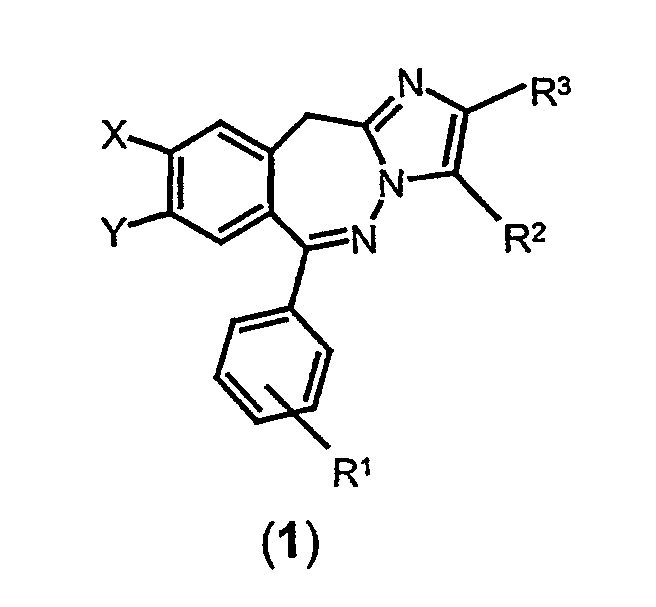
R1 = Wasserstoff, C1-C6-Alkyl, Nitro, Halogen, Cyano, C1-C4-Alkoxy, -CF3, Hydroxy oder C1-C6-Alkanoyloxy,
R2 und R3 gleich oder verschieden sind und Wasserstoff, Halogen, C1-C6-Alkoxy, Hydroxy, Cyano, C1-C6-Alkanoyl, C2-C6-Alkynyl, C2-C6-Alkenyl, gegebenenfalls durch Halogen, Hydroxy oder C1-6-Alkoxy substituiertes C1-C6-Alkyl, C3-C7-Cycloalkyl oder einen gegebenenfalls mit Halogen, C1-4-Alkoxy oder C1-4-Alkyl substituierten Aryl- oder Hetarylrest,
X = Wasserstoff oder Halogen,
Y = C1-C6-Alkoxy oder
X und Y gemeinsam -O-(CH2)n-O- mit
n = 1, 2 oder 3 bedeuten,
aus Phenylessigsäuren der allgemeinen Formel 4,worin
X, Y und R1 die oben genannte Bedeutung haben,a) durch Veresterung mit einem Alkohol der Formel 5azum Phenylessigester der allgemeinen Formel 5, worin
worin
X, Y, R1, R2 und R3 die oben genannte Bedeutung haben,b) durch Kondensation mit Ammoniak oder einem Ammoniak-Donor zu dem Oxazol der allgemeinen Formel 6,worin
X, Y, R1, R2 und R3 die oben genannte Bedeutung haben und anschließender Hydrazinolyse zu den Verbindungen der allgemeinen Formel 1worin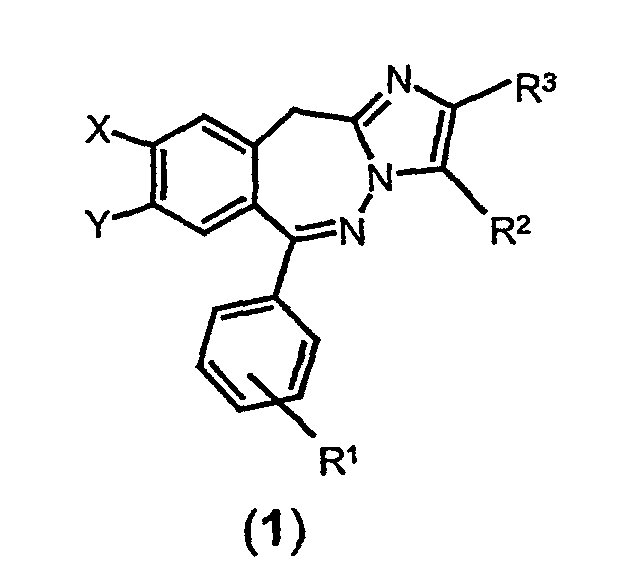
X, Y, R1, R2 und R3 die oben genannte Bedeutung haben. - Verfahren nach Anspruch 1, wobei Verbindungen der allgemeinen Formel 5 mittels Eintopfreaktion durch Umsetzung in Gegenwart von Ammoniumacetat und Ammoniak oder einem Ammoniak-Donor bei 0 - 150 °C im Lösungsmittel oder Lösungsmittelgemischen und anschließend mit Hydrazin bei 0 - 200 °C, gegebenenfalls im Autoklaven, in die Verbindungen der allgemeinen Formel 1 umgesetzt werden.
- Verfahren nach Anspruch 1 oder 2 zur Herstellung von 2,3-Dimethyl-6-phenyl-(12H)-[1,3]dioxolo[4,5-h]imidazo[1,2-c][2,3]benzodiazepin
2,3-Dimethyl-6-(4-chlor-phenyl)-(12H)-[1,3]dioxolo[4,5-h]imidazo[1,2-c][2,3] benzodiazepin
2,3-Dimethyl-6-(4-nitro-phenyl)- (12H)-[1,3]dioxolo[4,5-h]imidazo[1,2-c][2,3] benzodiazepin
2,3-Dimethyl-6-(4-methoxy-phenyl)- (12H)-[1,3]dioxolo[4,5-h]imidazo[1,2-c][2,3] benzodiazepin
2,3-Diethyl-6-phenyl-(12H)-[1,3]dioxolo[4,5-h]imidazo[1,2-c][2,3]benzodiazepin
2,3-Diphenyl-6-phenyl-(12H)-[1,3]dioxolo[4,5-h]imidazo[1,2-c][2,3]benzodiazepin - Phenylessigsäureester der allgemeinen Formel 5,worin

R1 = Wasserstoff, C1-C6-Alkyl, Nitro, Halogen, Cyano, C1-C4-Alkoxy, -CF3, Hydroxy oder C1-C6-Alkanoyloxy,
R2 und R3 gleich oder verschieden sind und Wasserstoff, Halogen, C1-C6-Alkoxy, Hydroxy, Cyano, C1-C6-Alkanoyl, C2-C6-Alkynyl, C2-C6-Alkenyl, gegebenenfalls durch Halogen, Hydroxy oder C1-6-Alkoxy substituiertes C1-C6-Alkyl, C3-C7-Cycloalkyl oder einen gegebenenfalls mit Halogen, C1-4-Alkoxy oder C1-4-Alkyl substituierten Aryl- oder Hetarylrest,
X = Wasserstoff oder Halogen,
Y = C1-C6-Alkoxy oder
X und Y gemeinsam -O-(CH2)n-O- mit
n = 1, 2 oder 3 bedeuten. - Oxazol-Derivate der allgemeinen Formel 6,worin

R1 = Wasserstoff, C1-C6-Alkyl, Nitro, Halogen, Cyano, C1-C4-Alkoxy, -CF3, Hydroxy oder C1-C6-Alkanoyloxy,
R2 und R3 gleich oder verschieden sind und Wasserstoff, Halogen, C1-C6-Alkoxy, Hydroxy, Cyano, C1-C6-Alkanoyl, C2-C6-Alkynyl, C2-C6-Alkenyl, gegebenenfalls durch Halogen, Hydroxy oder C1-6-Alkoxy substituiertes C1-C6-Alkyl, C3-C7-Cycloalkyl oder einen gegebenenfalls mit Halogen, C1-4-Alkoxy oder C1-4-Alkyl substituierten Aryl- oder Hetarylrest,
X = Wasserstoff oder Halogen,
Y = C1-C6-Alkoxy oder
X und Y gemeinsam -O-(CH2)n-O- mit
n = 1, 2 oder 3 bedeuten.
Applications Claiming Priority (3)
| Application Number | Priority Date | Filing Date | Title |
|---|---|---|---|
| DE10041671 | 2000-08-10 | ||
| DE10041671A DE10041671C1 (de) | 2000-08-10 | 2000-08-10 | Verfahren zur Herstellung von Imidazo[1,2-c][2,3]benzodiazepinen sowie Phenylessigsäureester und Oxazol-Derivate als Zwischenprodukte bei deren Herstellung |
| PCT/EP2001/008661 WO2002012247A1 (de) | 2000-08-10 | 2001-07-26 | Verfahren zur herstellung von imidazo[1,2-c][2,3]benzodiazepinen und zwischenprodukte bei deren herstellung |
Publications (2)
| Publication Number | Publication Date |
|---|---|
| EP1307460A1 EP1307460A1 (de) | 2003-05-07 |
| EP1307460B1 true EP1307460B1 (de) | 2004-03-03 |
Family
ID=7653689
Family Applications (1)
| Application Number | Title | Priority Date | Filing Date |
|---|---|---|---|
| EP01956566A Expired - Lifetime EP1307460B1 (de) | 2000-08-10 | 2001-07-26 | VERFAHREN ZUR HERSTELLUNG VON IMIDAZO [1,2-c] [2,3]BENZODIAZEPINEN UND ZWISCHENPRODUKTE BEI DEREN HERSTELLUNG |
Country Status (30)
| Country | Link |
|---|---|
| US (1) | US6784292B2 (de) |
| EP (1) | EP1307460B1 (de) |
| JP (1) | JP2004505981A (de) |
| KR (1) | KR20030021263A (de) |
| CN (1) | CN1205213C (de) |
| AT (1) | ATE260921T1 (de) |
| AU (2) | AU2001278512B2 (de) |
| BG (1) | BG107519A (de) |
| BR (1) | BR0112810A (de) |
| CA (1) | CA2417804A1 (de) |
| CZ (1) | CZ2003676A3 (de) |
| DE (2) | DE10041671C1 (de) |
| DK (1) | DK1307460T3 (de) |
| EA (1) | EA005570B1 (de) |
| EE (1) | EE200300058A (de) |
| ES (1) | ES2217173T3 (de) |
| HR (1) | HRP20030174A2 (de) |
| HU (1) | HUP0301500A3 (de) |
| IL (1) | IL154165A0 (de) |
| MX (1) | MXPA02012913A (de) |
| NO (1) | NO20030605D0 (de) |
| NZ (1) | NZ523479A (de) |
| PL (1) | PL359586A1 (de) |
| PT (1) | PT1307460E (de) |
| SK (1) | SK2892003A3 (de) |
| TR (1) | TR200401281T4 (de) |
| UA (1) | UA79737C2 (de) |
| WO (1) | WO2002012247A1 (de) |
| YU (1) | YU8903A (de) |
| ZA (1) | ZA200301862B (de) |
Families Citing this family (4)
| Publication number | Priority date | Publication date | Assignee | Title |
|---|---|---|---|---|
| US8173806B2 (en) * | 2006-03-17 | 2012-05-08 | Mitsubishi Gas Chemical Company, Inc. | Method for production of quinazolin-4-one derivative |
| KR200453637Y1 (ko) * | 2009-06-23 | 2011-05-19 | (주)대양스톤 | 씽크대용 볼 고정장치 |
| CN104498543B (zh) * | 2015-01-22 | 2017-10-31 | 中国石油大学(华东) | 一种脂肪酶催化合成乙偶姻脂肪酸酯的方法 |
| CN104557533A (zh) * | 2015-01-22 | 2015-04-29 | 中国石油大学(华东) | 一种磷钨酸催化合成乙偶姻短链脂肪酸酯的方法 |
Family Cites Families (2)
| Publication number | Priority date | Publication date | Assignee | Title |
|---|---|---|---|---|
| DE19604919A1 (de) * | 1996-02-01 | 1997-08-07 | Schering Ag | Neue 2,3-Benzodiazepinderivate, deren Herstellung und Verwendung als Arzneimittel |
| HUP9701325A1 (hu) | 1997-07-31 | 2000-08-28 | Gyógyszerkutató Intézet Kft. | Új 2,3-benzodiazepin-származékok |
-
2000
- 2000-08-10 DE DE10041671A patent/DE10041671C1/de not_active Expired - Lifetime
-
2001
- 2001-07-26 AU AU2001278512A patent/AU2001278512B2/en not_active Ceased
- 2001-07-26 CA CA002417804A patent/CA2417804A1/en not_active Abandoned
- 2001-07-26 PL PL01359586A patent/PL359586A1/xx not_active Application Discontinuation
- 2001-07-26 PT PT01956566T patent/PT1307460E/pt unknown
- 2001-07-26 IL IL15416501A patent/IL154165A0/xx unknown
- 2001-07-26 HU HU0301500A patent/HUP0301500A3/hu unknown
- 2001-07-26 KR KR10-2003-7001796A patent/KR20030021263A/ko not_active Ceased
- 2001-07-26 ES ES01956566T patent/ES2217173T3/es not_active Expired - Lifetime
- 2001-07-26 AT AT01956566T patent/ATE260921T1/de not_active IP Right Cessation
- 2001-07-26 CN CNB018139876A patent/CN1205213C/zh not_active Expired - Fee Related
- 2001-07-26 NZ NZ523479A patent/NZ523479A/en unknown
- 2001-07-26 US US10/344,156 patent/US6784292B2/en not_active Expired - Fee Related
- 2001-07-26 DE DE50101634T patent/DE50101634D1/de not_active Expired - Fee Related
- 2001-07-26 TR TR2004/01281T patent/TR200401281T4/xx unknown
- 2001-07-26 BR BR0112810-8A patent/BR0112810A/pt not_active IP Right Cessation
- 2001-07-26 EA EA200300220A patent/EA005570B1/ru not_active IP Right Cessation
- 2001-07-26 UA UA2003032066A patent/UA79737C2/uk unknown
- 2001-07-26 AU AU7851201A patent/AU7851201A/xx active Pending
- 2001-07-26 JP JP2002518222A patent/JP2004505981A/ja active Pending
- 2001-07-26 CZ CZ2003676A patent/CZ2003676A3/cs unknown
- 2001-07-26 WO PCT/EP2001/008661 patent/WO2002012247A1/de not_active Ceased
- 2001-07-26 DK DK01956566T patent/DK1307460T3/da active
- 2001-07-26 EP EP01956566A patent/EP1307460B1/de not_active Expired - Lifetime
- 2001-07-26 HR HR20030174A patent/HRP20030174A2/hr not_active Application Discontinuation
- 2001-07-26 EE EEP200300058A patent/EE200300058A/xx unknown
- 2001-07-26 MX MXPA02012913A patent/MXPA02012913A/es active IP Right Grant
- 2001-07-26 YU YU8903A patent/YU8903A/sh unknown
- 2001-07-26 SK SK289-2003A patent/SK2892003A3/sk unknown
-
2003
- 2003-02-04 BG BG107519A patent/BG107519A/bg unknown
- 2003-02-07 NO NO20030605A patent/NO20030605D0/no not_active Application Discontinuation
- 2003-03-06 ZA ZA200301862A patent/ZA200301862B/en unknown
Also Published As
Similar Documents
| Publication | Publication Date | Title |
|---|---|---|
| Eberlein et al. | The Stevens [1, 2]-shift of oxonium ylides: a route to substituted tetrahydrofuranones | |
| DE4419315A1 (de) | Heteropyrrolizinverbindungen und deren Anwendung in der Pharmazie | |
| DE4419246A1 (de) | Heteroarylsubstituierte Pyrrolizinverbindungen und deren Anwendung in der Pharmazie | |
| DE3042466A1 (de) | N-substituierte (omega) -(2-oxo-4-imidazolin-l-yl)-alkansaeure-derivate, verfahren zu ihrer herstellung und diese enthaltende pharmazeutische praeparate | |
| DE3486438T2 (de) | Verfahren zur Herstellung von 1-(Phenyl)-1-hydroxy-2-amino-3-fluor-propan-Derivaten | |
| DE69231843T2 (de) | Verfahren zur Herstellung von insektiziden, nematiziden und akariziden 2-Aryl-3-subst.-5- trifluormethylpyrrolen aus N-(subst. Benzyl)-2,2,2-trifluoracetimidoylchloriden | |
| DE10041671C1 (de) | Verfahren zur Herstellung von Imidazo[1,2-c][2,3]benzodiazepinen sowie Phenylessigsäureester und Oxazol-Derivate als Zwischenprodukte bei deren Herstellung | |
| DE3881817T2 (de) | 3,5-Dihydroxy-6,8-nonadiensäuren und -derivate als hypocholesterolemische Mittel. | |
| DE69823844T2 (de) | Verfahren zur herstellung von als protease inhibitoren wervollen 4-hydroxy-2-oxo-pyran-derivaten | |
| EP0560109B1 (de) | Verfahren zur Herstellung von 1-Fluorcyclopropyl-methyl-keton | |
| DE60315448T2 (de) | 1-azadibenzoazulene als inhibitoren der produktion von tumornekrosefaktor und zwischenprodukte für deren herstellung | |
| DE69706757T2 (de) | Verfahren zur Herstellung von 3-Amino substituierten Crotonaten | |
| DE69613303T2 (de) | Verfahren zur Herstellung von alph-beta-ungesättigten Trifluormethylcarboxylverbindungen | |
| Tasgin et al. | Ring annulation versus alkylation of pyrrole with α-phosphoryl-α, β-unsaturated ketones | |
| DE69106897T2 (de) | Verfahren zur Herstellung von Haloketosäureabkömmlingen. | |
| CH556837A (de) | Verfahren zur herstellung neuer spiroindanpyrrolidinderivate. | |
| EP1340747A1 (de) | Verfahren zur Herstellung von 2-Halogenalkyl-Nicotinsäurealkylester | |
| EP1398315B1 (de) | Antiinflammatorische Oxo- und Hydroxyderivative von Pyrrolizinen und deren Anwendung in der Pharmazie | |
| Zhang et al. | Controllable synthesis of pyrazolo [3, 4-b] pyridines or substituted malononitrile derivatives through multi-component reactions in ionic liquid | |
| DE2950478A1 (de) | 4,5-diaryl-4-imidazolin-2-on-derivate, verfahren zu ihrer herstellung und diese enthaltende pharmazeutische praeparate | |
| EP1611083B1 (de) | Synthese von 2-chlormethyl-6-methylbenzoesäureestern | |
| DE2931887C2 (de) | ||
| DE69004272T2 (de) | Antiinflammatorisch wirkende 1-Heteroaryl-3-acyl-2-oxindole. | |
| EP0018533A1 (de) | Substituierte Pentan-(oder Penten-)-carbonsäuren und ihre Derivate, Verfahren zu ihrer Herstellung und ihre Verwendung zur Herstellung von 3-(Aryl-vinyl)-2,2-dimethyl-cyclopropan-1-carbonsäureestern | |
| DE60001615T2 (de) | Verfahren zur Herstellung von trisubstituierten Oxazolen |
Legal Events
| Date | Code | Title | Description |
|---|---|---|---|
| PUAI | Public reference made under article 153(3) epc to a published international application that has entered the european phase |
Free format text: ORIGINAL CODE: 0009012 |
|
| 17P | Request for examination filed |
Effective date: 20030116 |
|
| AK | Designated contracting states |
Designated state(s): AT BE CH CY DE DK ES FI FR GB GR IE IT LI LU MC NL PT SE TR |
|
| AX | Request for extension of the european patent |
Extension state: AL LT LV MK RO SI |
|
| GRAP | Despatch of communication of intention to grant a patent |
Free format text: ORIGINAL CODE: EPIDOSNIGR1 |
|
| RTI1 | Title (correction) |
Free format text: METHOD FOR THE PRODUCTION OF IMIDAZO-(1,2-C)(2,3)-BENZODIAZEPINES AND INTERMEDIATES IN THE PRODUCTION THEREOF |
|
| GRAS | Grant fee paid |
Free format text: ORIGINAL CODE: EPIDOSNIGR3 |
|
| GRAA | (expected) grant |
Free format text: ORIGINAL CODE: 0009210 |
|
| AK | Designated contracting states |
Kind code of ref document: B1 Designated state(s): AT BE CH CY DE DK ES FI FR GB GR IE IT LI LU MC NL PT SE TR |
|
| AX | Request for extension of the european patent |
Extension state: LT LV RO SI |
|
| REG | Reference to a national code |
Ref country code: GB Ref legal event code: FG4D Free format text: NOT ENGLISH |
|
| REG | Reference to a national code |
Ref country code: CH Ref legal event code: EP |
|
| REG | Reference to a national code |
Ref country code: IE Ref legal event code: FG4D Free format text: GERMAN |
|
| REF | Corresponds to: |
Ref document number: 50101634 Country of ref document: DE Date of ref document: 20040408 Kind code of ref document: P |
|
| REG | Reference to a national code |
Ref country code: SE Ref legal event code: TRGR |
|
| REG | Reference to a national code |
Ref country code: GR Ref legal event code: EP Ref document number: 20040401767 Country of ref document: GR |
|
| REG | Reference to a national code |
Ref country code: DK Ref legal event code: T3 |
|
| GBT | Gb: translation of ep patent filed (gb section 77(6)(a)/1977) |
Effective date: 20040628 |
|
| REG | Reference to a national code |
Ref country code: PT Ref legal event code: SC4A Free format text: AVAILABILITY OF NATIONAL TRANSLATION Effective date: 20040526 |
|
| LTIE | Lt: invalidation of european patent or patent extension |
Effective date: 20040303 |
|
| REG | Reference to a national code |
Ref country code: ES Ref legal event code: FG2A Ref document number: 2217173 Country of ref document: ES Kind code of ref document: T3 |
|
| ET | Fr: translation filed | ||
| PLBE | No opposition filed within time limit |
Free format text: ORIGINAL CODE: 0009261 |
|
| STAA | Information on the status of an ep patent application or granted ep patent |
Free format text: STATUS: NO OPPOSITION FILED WITHIN TIME LIMIT |
|
| 26N | No opposition filed |
Effective date: 20041206 |
|
| PGFP | Annual fee paid to national office [announced via postgrant information from national office to epo] |
Ref country code: DK Payment date: 20070612 Year of fee payment: 7 |
|
| PGFP | Annual fee paid to national office [announced via postgrant information from national office to epo] |
Ref country code: FI Payment date: 20070613 Year of fee payment: 7 |
|
| PGFP | Annual fee paid to national office [announced via postgrant information from national office to epo] |
Ref country code: CH Payment date: 20070615 Year of fee payment: 7 Ref country code: SE Payment date: 20070615 Year of fee payment: 7 |
|
| PGFP | Annual fee paid to national office [announced via postgrant information from national office to epo] |
Ref country code: IE Payment date: 20070618 Year of fee payment: 7 Ref country code: PT Payment date: 20070618 Year of fee payment: 7 |
|
| PGFP | Annual fee paid to national office [announced via postgrant information from national office to epo] |
Ref country code: MC Payment date: 20070620 Year of fee payment: 7 |
|
| PGFP | Annual fee paid to national office [announced via postgrant information from national office to epo] |
Ref country code: DE Payment date: 20070621 Year of fee payment: 7 |
|
| PGFP | Annual fee paid to national office [announced via postgrant information from national office to epo] |
Ref country code: ES Payment date: 20070704 Year of fee payment: 7 |
|
| PGFP | Annual fee paid to national office [announced via postgrant information from national office to epo] |
Ref country code: LU Payment date: 20070719 Year of fee payment: 7 |
|
| PGFP | Annual fee paid to national office [announced via postgrant information from national office to epo] |
Ref country code: AT Payment date: 20070607 Year of fee payment: 7 Ref country code: GB Payment date: 20070622 Year of fee payment: 7 Ref country code: TR Payment date: 20070614 Year of fee payment: 7 |
|
| PGFP | Annual fee paid to national office [announced via postgrant information from national office to epo] |
Ref country code: IT Payment date: 20070616 Year of fee payment: 7 |
|
| PGFP | Annual fee paid to national office [announced via postgrant information from national office to epo] |
Ref country code: BE Payment date: 20070711 Year of fee payment: 7 Ref country code: NL Payment date: 20070613 Year of fee payment: 7 |
|
| PGFP | Annual fee paid to national office [announced via postgrant information from national office to epo] |
Ref country code: FR Payment date: 20070611 Year of fee payment: 7 |
|
| PGFP | Annual fee paid to national office [announced via postgrant information from national office to epo] |
Ref country code: GR Payment date: 20070626 Year of fee payment: 7 |
|
| PGFP | Annual fee paid to national office [announced via postgrant information from national office to epo] |
Ref country code: CY Payment date: 20070613 Year of fee payment: 7 |
|
| REG | Reference to a national code |
Ref country code: PT Ref legal event code: MM4A Free format text: LAPSE DUE TO NON-PAYMENT OF FEES Effective date: 20090126 |
|
| REG | Reference to a national code |
Ref country code: CH Ref legal event code: PL |
|
| REG | Reference to a national code |
Ref country code: DK Ref legal event code: EBP |
|
| EUG | Se: european patent has lapsed | ||
| GBPC | Gb: european patent ceased through non-payment of renewal fee |
Effective date: 20080726 |
|
| PG25 | Lapsed in a contracting state [announced via postgrant information from national office to epo] |
Ref country code: MC Free format text: LAPSE BECAUSE OF NON-PAYMENT OF DUE FEES Effective date: 20080731 |
|
| NLV4 | Nl: lapsed or anulled due to non-payment of the annual fee |
Effective date: 20090201 |
|
| REG | Reference to a national code |
Ref country code: IE Ref legal event code: MM4A |
|
| PG25 | Lapsed in a contracting state [announced via postgrant information from national office to epo] |
Ref country code: DE Free format text: LAPSE BECAUSE OF NON-PAYMENT OF DUE FEES Effective date: 20090203 Ref country code: AT Free format text: LAPSE BECAUSE OF NON-PAYMENT OF DUE FEES Effective date: 20080726 |
|
| REG | Reference to a national code |
Ref country code: FR Ref legal event code: ST Effective date: 20090331 |
|
| PG25 | Lapsed in a contracting state [announced via postgrant information from national office to epo] |
Ref country code: NL Free format text: LAPSE BECAUSE OF NON-PAYMENT OF DUE FEES Effective date: 20090201 Ref country code: PT Free format text: LAPSE BECAUSE OF NON-PAYMENT OF DUE FEES Effective date: 20090126 Ref country code: FI Free format text: LAPSE BECAUSE OF NON-PAYMENT OF DUE FEES Effective date: 20080726 |
|
| PG25 | Lapsed in a contracting state [announced via postgrant information from national office to epo] |
Ref country code: GB Free format text: LAPSE BECAUSE OF NON-PAYMENT OF DUE FEES Effective date: 20080726 Ref country code: GR Free format text: LAPSE BECAUSE OF NON-PAYMENT OF DUE FEES Effective date: 20090204 Ref country code: CH Free format text: LAPSE BECAUSE OF NON-PAYMENT OF DUE FEES Effective date: 20080731 Ref country code: LI Free format text: LAPSE BECAUSE OF NON-PAYMENT OF DUE FEES Effective date: 20080731 |
|
| PG25 | Lapsed in a contracting state [announced via postgrant information from national office to epo] |
Ref country code: CY Free format text: LAPSE BECAUSE OF NON-PAYMENT OF DUE FEES Effective date: 20080726 Ref country code: DK Free format text: LAPSE BECAUSE OF NON-PAYMENT OF DUE FEES Effective date: 20080731 Ref country code: IE Free format text: LAPSE BECAUSE OF NON-PAYMENT OF DUE FEES Effective date: 20080728 |
|
| PG25 | Lapsed in a contracting state [announced via postgrant information from national office to epo] |
Ref country code: IT Free format text: LAPSE BECAUSE OF NON-PAYMENT OF DUE FEES Effective date: 20080726 Ref country code: FR Free format text: LAPSE BECAUSE OF NON-PAYMENT OF DUE FEES Effective date: 20080731 |
|
| REG | Reference to a national code |
Ref country code: ES Ref legal event code: FD2A Effective date: 20080728 |
|
| PG25 | Lapsed in a contracting state [announced via postgrant information from national office to epo] |
Ref country code: ES Free format text: LAPSE BECAUSE OF NON-PAYMENT OF DUE FEES Effective date: 20080728 |
|
| PG25 | Lapsed in a contracting state [announced via postgrant information from national office to epo] |
Ref country code: LU Free format text: LAPSE BECAUSE OF NON-PAYMENT OF DUE FEES Effective date: 20080726 Ref country code: BE Free format text: LAPSE BECAUSE OF NON-PAYMENT OF DUE FEES Effective date: 20080731 Ref country code: SE Free format text: LAPSE BECAUSE OF NON-PAYMENT OF DUE FEES Effective date: 20080727 |
|
| PG25 | Lapsed in a contracting state [announced via postgrant information from national office to epo] |
Ref country code: TR Free format text: LAPSE BECAUSE OF NON-PAYMENT OF DUE FEES Effective date: 20100929 |
|
| PG25 | Lapsed in a contracting state [announced via postgrant information from national office to epo] |
Ref country code: TR Free format text: LAPSE BECAUSE OF NON-PAYMENT OF DUE FEES Effective date: 20080726 |