EP1270754B1 - Two-step aging treatment for Ni-Cr-Mo alloys - Google Patents
Two-step aging treatment for Ni-Cr-Mo alloys Download PDFInfo
- Publication number
- EP1270754B1 EP1270754B1 EP02014216A EP02014216A EP1270754B1 EP 1270754 B1 EP1270754 B1 EP 1270754B1 EP 02014216 A EP02014216 A EP 02014216A EP 02014216 A EP02014216 A EP 02014216A EP 1270754 B1 EP1270754 B1 EP 1270754B1
- Authority
- EP
- European Patent Office
- Prior art keywords
- alloy
- hours
- temperature
- alloys
- cooling
- Prior art date
- Legal status (The legal status is an assumption and is not a legal conclusion. Google has not performed a legal analysis and makes no representation as to the accuracy of the status listed.)
- Expired - Lifetime
Links
- 230000032683 aging Effects 0.000 title claims description 28
- 229910001182 Mo alloy Inorganic materials 0.000 title claims description 7
- 238000011282 treatment Methods 0.000 title description 22
- 229910045601 alloy Inorganic materials 0.000 claims description 170
- 239000000956 alloy Substances 0.000 claims description 170
- 239000011651 chromium Substances 0.000 claims description 46
- 229910052804 chromium Inorganic materials 0.000 claims description 41
- VYZAMTAEIAYCRO-UHFFFAOYSA-N Chromium Chemical compound [Cr] VYZAMTAEIAYCRO-UHFFFAOYSA-N 0.000 claims description 37
- 238000000034 method Methods 0.000 claims description 26
- ZOKXTWBITQBERF-UHFFFAOYSA-N Molybdenum Chemical compound [Mo] ZOKXTWBITQBERF-UHFFFAOYSA-N 0.000 claims description 19
- PXHVJJICTQNCMI-UHFFFAOYSA-N Nickel Chemical compound [Ni] PXHVJJICTQNCMI-UHFFFAOYSA-N 0.000 claims description 19
- 229910052750 molybdenum Inorganic materials 0.000 claims description 19
- 239000011733 molybdenum Substances 0.000 claims description 19
- XEEYBQQBJWHFJM-UHFFFAOYSA-N Iron Chemical compound [Fe] XEEYBQQBJWHFJM-UHFFFAOYSA-N 0.000 claims description 18
- 238000010438 heat treatment Methods 0.000 claims description 17
- 238000001816 cooling Methods 0.000 claims description 14
- 239000000203 mixture Substances 0.000 claims description 10
- 239000010936 titanium Substances 0.000 claims description 10
- 239000010949 copper Substances 0.000 claims description 9
- 229910052742 iron Inorganic materials 0.000 claims description 8
- 239000011572 manganese Substances 0.000 claims description 8
- 239000010955 niobium Substances 0.000 claims description 8
- 229910052782 aluminium Inorganic materials 0.000 claims description 7
- XAGFODPZIPBFFR-UHFFFAOYSA-N aluminium Chemical compound [Al] XAGFODPZIPBFFR-UHFFFAOYSA-N 0.000 claims description 7
- ZOXJGFHDIHLPTG-UHFFFAOYSA-N Boron Chemical compound [B] ZOXJGFHDIHLPTG-UHFFFAOYSA-N 0.000 claims description 6
- OKTJSMMVPCPJKN-UHFFFAOYSA-N Carbon Chemical compound [C] OKTJSMMVPCPJKN-UHFFFAOYSA-N 0.000 claims description 6
- 229910052796 boron Inorganic materials 0.000 claims description 6
- 229910052799 carbon Inorganic materials 0.000 claims description 6
- 229910017052 cobalt Inorganic materials 0.000 claims description 6
- 239000010941 cobalt Substances 0.000 claims description 6
- GUTLYIVDDKVIGB-UHFFFAOYSA-N cobalt atom Chemical compound [Co] GUTLYIVDDKVIGB-UHFFFAOYSA-N 0.000 claims description 6
- 229910052759 nickel Inorganic materials 0.000 claims description 6
- RYGMFSIKBFXOCR-UHFFFAOYSA-N Copper Chemical compound [Cu] RYGMFSIKBFXOCR-UHFFFAOYSA-N 0.000 claims description 5
- OAICVXFJPJFONN-UHFFFAOYSA-N Phosphorus Chemical compound [P] OAICVXFJPJFONN-UHFFFAOYSA-N 0.000 claims description 5
- NINIDFKCEFEMDL-UHFFFAOYSA-N Sulfur Chemical compound [S] NINIDFKCEFEMDL-UHFFFAOYSA-N 0.000 claims description 5
- OGSYQYXYGXIQFH-UHFFFAOYSA-N chromium molybdenum nickel Chemical compound [Cr].[Ni].[Mo] OGSYQYXYGXIQFH-UHFFFAOYSA-N 0.000 claims description 5
- 229910052802 copper Inorganic materials 0.000 claims description 5
- 229910052698 phosphorus Inorganic materials 0.000 claims description 5
- 239000011574 phosphorus Substances 0.000 claims description 5
- 229910052710 silicon Inorganic materials 0.000 claims description 5
- 239000010703 silicon Substances 0.000 claims description 5
- 229910052717 sulfur Inorganic materials 0.000 claims description 5
- 239000011593 sulfur Substances 0.000 claims description 5
- WFKWXMTUELFFGS-UHFFFAOYSA-N tungsten Chemical compound [W] WFKWXMTUELFFGS-UHFFFAOYSA-N 0.000 claims description 5
- 229910052721 tungsten Inorganic materials 0.000 claims description 5
- 239000010937 tungsten Substances 0.000 claims description 5
- 229910052720 vanadium Inorganic materials 0.000 claims description 5
- LEONUFNNVUYDNQ-UHFFFAOYSA-N vanadium atom Chemical compound [V] LEONUFNNVUYDNQ-UHFFFAOYSA-N 0.000 claims description 5
- FYYHWMGAXLPEAU-UHFFFAOYSA-N Magnesium Chemical compound [Mg] FYYHWMGAXLPEAU-UHFFFAOYSA-N 0.000 claims description 4
- RTAQQCXQSZGOHL-UHFFFAOYSA-N Titanium Chemical compound [Ti] RTAQQCXQSZGOHL-UHFFFAOYSA-N 0.000 claims description 4
- 229910052749 magnesium Inorganic materials 0.000 claims description 4
- 239000011777 magnesium Substances 0.000 claims description 4
- 229910052758 niobium Inorganic materials 0.000 claims description 4
- GUCVJGMIXFAOAE-UHFFFAOYSA-N niobium atom Chemical compound [Nb] GUCVJGMIXFAOAE-UHFFFAOYSA-N 0.000 claims description 4
- 229910052719 titanium Inorganic materials 0.000 claims description 4
- PWHULOQIROXLJO-UHFFFAOYSA-N Manganese Chemical compound [Mn] PWHULOQIROXLJO-UHFFFAOYSA-N 0.000 claims description 3
- 229910052748 manganese Inorganic materials 0.000 claims description 3
- WPBNNNQJVZRUHP-UHFFFAOYSA-L manganese(2+);methyl n-[[2-(methoxycarbonylcarbamothioylamino)phenyl]carbamothioyl]carbamate;n-[2-(sulfidocarbothioylamino)ethyl]carbamodithioate Chemical compound [Mn+2].[S-]C(=S)NCCNC([S-])=S.COC(=O)NC(=S)NC1=CC=CC=C1NC(=S)NC(=O)OC WPBNNNQJVZRUHP-UHFFFAOYSA-L 0.000 claims description 3
- 229910052761 rare earth metal Inorganic materials 0.000 claims description 3
- 229910052715 tantalum Inorganic materials 0.000 claims description 3
- GUVRBAGPIYLISA-UHFFFAOYSA-N tantalum atom Chemical compound [Ta] GUVRBAGPIYLISA-UHFFFAOYSA-N 0.000 claims description 3
- 229910052684 Cerium Inorganic materials 0.000 claims description 2
- GWXLDORMOJMVQZ-UHFFFAOYSA-N cerium Chemical compound [Ce] GWXLDORMOJMVQZ-UHFFFAOYSA-N 0.000 claims description 2
- 239000012535 impurity Substances 0.000 claims 2
- 238000003483 aging Methods 0.000 description 18
- 229910000856 hastalloy Inorganic materials 0.000 description 8
- 230000007797 corrosion Effects 0.000 description 6
- 238000005260 corrosion Methods 0.000 description 6
- 229910001026 inconel Inorganic materials 0.000 description 5
- 239000000463 material Substances 0.000 description 5
- 238000005275 alloying Methods 0.000 description 4
- DDTIGTPWGISMKL-UHFFFAOYSA-N molybdenum nickel Chemical compound [Ni].[Mo] DDTIGTPWGISMKL-UHFFFAOYSA-N 0.000 description 4
- 238000001556 precipitation Methods 0.000 description 4
- 230000002939 deleterious effect Effects 0.000 description 3
- 229910000599 Cr alloy Inorganic materials 0.000 description 2
- 238000000137 annealing Methods 0.000 description 2
- 230000015572 biosynthetic process Effects 0.000 description 2
- 230000000694 effects Effects 0.000 description 2
- 239000002244 precipitate Substances 0.000 description 2
- 239000000126 substance Substances 0.000 description 2
- 229910000640 Fe alloy Inorganic materials 0.000 description 1
- 229910001199 N alloy Inorganic materials 0.000 description 1
- 229910018487 Ni—Cr Inorganic materials 0.000 description 1
- 229910000796 S alloy Inorganic materials 0.000 description 1
- XUIMIQQOPSSXEZ-UHFFFAOYSA-N Silicon Chemical compound [Si] XUIMIQQOPSSXEZ-UHFFFAOYSA-N 0.000 description 1
- 238000004458 analytical method Methods 0.000 description 1
- 230000009286 beneficial effect Effects 0.000 description 1
- 238000001311 chemical methods and process Methods 0.000 description 1
- 238000006243 chemical reaction Methods 0.000 description 1
- VNNRSPGTAMTISX-UHFFFAOYSA-N chromium nickel Chemical compound [Cr].[Ni] VNNRSPGTAMTISX-UHFFFAOYSA-N 0.000 description 1
- 230000001419 dependent effect Effects 0.000 description 1
- 238000013213 extrapolation Methods 0.000 description 1
- 238000000265 homogenisation Methods 0.000 description 1
- 238000005098 hot rolling Methods 0.000 description 1
- 230000003993 interaction Effects 0.000 description 1
- 238000004519 manufacturing process Methods 0.000 description 1
- 229910052751 metal Inorganic materials 0.000 description 1
- 239000002184 metal Substances 0.000 description 1
- 239000000047 product Substances 0.000 description 1
- 230000002035 prolonged effect Effects 0.000 description 1
- 239000006104 solid solution Substances 0.000 description 1
- 239000000243 solution Substances 0.000 description 1
- 230000035882 stress Effects 0.000 description 1
- 238000010998 test method Methods 0.000 description 1
Images
Classifications
-
- C—CHEMISTRY; METALLURGY
- C22—METALLURGY; FERROUS OR NON-FERROUS ALLOYS; TREATMENT OF ALLOYS OR NON-FERROUS METALS
- C22C—ALLOYS
- C22C19/00—Alloys based on nickel or cobalt
- C22C19/03—Alloys based on nickel or cobalt based on nickel
- C22C19/05—Alloys based on nickel or cobalt based on nickel with chromium
-
- C—CHEMISTRY; METALLURGY
- C22—METALLURGY; FERROUS OR NON-FERROUS ALLOYS; TREATMENT OF ALLOYS OR NON-FERROUS METALS
- C22C—ALLOYS
- C22C19/00—Alloys based on nickel or cobalt
- C22C19/03—Alloys based on nickel or cobalt based on nickel
- C22C19/05—Alloys based on nickel or cobalt based on nickel with chromium
- C22C19/058—Alloys based on nickel or cobalt based on nickel with chromium without Mo and W
-
- C—CHEMISTRY; METALLURGY
- C22—METALLURGY; FERROUS OR NON-FERROUS ALLOYS; TREATMENT OF ALLOYS OR NON-FERROUS METALS
- C22C—ALLOYS
- C22C19/00—Alloys based on nickel or cobalt
- C22C19/03—Alloys based on nickel or cobalt based on nickel
- C22C19/05—Alloys based on nickel or cobalt based on nickel with chromium
- C22C19/051—Alloys based on nickel or cobalt based on nickel with chromium and Mo or W
- C22C19/055—Alloys based on nickel or cobalt based on nickel with chromium and Mo or W with the maximum Cr content being at least 20% but less than 30%
-
- C—CHEMISTRY; METALLURGY
- C22—METALLURGY; FERROUS OR NON-FERROUS ALLOYS; TREATMENT OF ALLOYS OR NON-FERROUS METALS
- C22C—ALLOYS
- C22C19/00—Alloys based on nickel or cobalt
- C22C19/03—Alloys based on nickel or cobalt based on nickel
- C22C19/05—Alloys based on nickel or cobalt based on nickel with chromium
- C22C19/051—Alloys based on nickel or cobalt based on nickel with chromium and Mo or W
- C22C19/056—Alloys based on nickel or cobalt based on nickel with chromium and Mo or W with the maximum Cr content being at least 10% but less than 20%
-
- C—CHEMISTRY; METALLURGY
- C22—METALLURGY; FERROUS OR NON-FERROUS ALLOYS; TREATMENT OF ALLOYS OR NON-FERROUS METALS
- C22F—CHANGING THE PHYSICAL STRUCTURE OF NON-FERROUS METALS AND NON-FERROUS ALLOYS
- C22F1/00—Changing the physical structure of non-ferrous metals or alloys by heat treatment or by hot or cold working
- C22F1/10—Changing the physical structure of non-ferrous metals or alloys by heat treatment or by hot or cold working of nickel or cobalt or alloys based thereon
Definitions
- the invention relates to heat treatment processes for nickel-chromium molybdenum-alloys having a chromium content of from 12 to 23.5 weight percent.
- Ni-Cr-Mo alloys and particularly those with chromium content of 15 to 24% have been popular for use in corrosive environments such as encountered in the chemical and petrochemical industries.
- Age-hardening is a process used in the metallurgical industry to give an alloy composition higher strength, as measured by its yield strength, tensile strength, and by notched stress rupture tests typically used in the art.
- Various applications demand a combination of high tensile strength and low thermal expansion properties.
- One such application is in the aerospace industry.
- Another application is seal rings used in land-based gas turbines.
- a combination of high tensile strength and ductility is also very useful for bolts. Because of the demanding operating conditions and performance parameters for metal products in these applications, various methods of age-hardening have been used.
- One common technique is to heat the alloy to a selected high temperature, hold the alloy at that temperature for a period of time and then cool the alloy to room temperature.
- the alloy may be heated to one temperature, cooled, heated again to a second temperature and cooled. Examples of these processes are disclosed in United States Patent No. 3,871,928 .
- the temperatures and time periods used to age harden an alloy depend upon the composition of the alloy. For all age-hardenable commercial alloys there are established times and temperatures used that have become standard in the industry because they are known to produce the desired properties. For Ni-Cr-Mo alloys having high chromium content, that is chromium greater than 12% , the general view in the art is that heat treatment beyond the initial annealing in an effort to improve mechanical properties would be impractical due to the lengthy required times (hundreds to thousands of hours) and such treatments simply have not been done.
- Ni-Cr-Mo alloys and nickel-molybdenum (Ni-Mo) alloys are widely utilized for commercial applications in the chemical industry, for example.
- alloys such as these are not usually considered responsive to heat treatment, and are therefore used in the annealed condition.
- HAYNES® 242TM alloy which will be discussed later.
- Ni-Cr-Mo and Ni-Mo alloys are not commercially age-hardenable does not mean that they do not exhibit any metallurgical response to thermal exposure at intermediate temperatures.
- alloys of this type can exhibit complex secondary phase reactions when exposed in the temperature range from about 538°C to 871°C.
- the phases which form can often be deleterious to both alloy ductility and other aspects of service performance. This is particularly observed with Ni-Mo alloys containing about 25 to 30 % molybdenum. In such materials, exposure at temperatures from about 538°C to 871°C can result in the rapid formation of embrittling Ni 3 Mo or Ni 4 Mo phases in the microstructure. This can be a problem for both component manufacturing and for component performance.
- Ni-Cr-Mo alloys with about 16 % molybdenum and 16 % chromium weight percent content
- the occurrence of these particular intermetallic phases is not usually observed after short term thermal exposures.
- Ni 2 (Mo,Cr) is evidenced in the microstructure.
- a long-range-ordered phase, with structure similar to that of Pt 2 Mo, the Ni 2 (Mo,Cr) phase serves to significantly increase the strength of these materials without a severe loss of ductility.
- the one major drawback is the prolonged aging time required to produce this phase.
- United States Patent No. 4,818,486 discloses a low thermal expansion nickel based alloy that contains 5% to 12% chromium and 10% to 30% molybdenum.
- the patent teaches that the aging times typically required to obtain desired hardness without deleterious phases being formed is well over 1000 hours at temperatures of 649°C to 816°C for most Ni-Mo-Cr alloys.
- the aging time to harden the alloy composition disclosed in the '486 patent is as little as 24 hours at 649°C.
- the alloy of this patent has been marketed under the trademarks 242 alloy and HAYNES 242 alloy.
- HAYNES 242 alloy has been sold for applications requiring high tensile strength and a low coefficient of thermal expansion. Other beneficial properties of the 242 alloy include good thermal stability, good low cycle fatigue resistance, and excellent containment capabilities due to its tensile strength and ductility.
- HAYNES 242 alloy consists of about 8 % (weight percent) chromium, about 20-30 % molybdenum, about 0.35 % to up to about 0.5 % aluminum, up to 0.03 % carbon, up to about 0.8 % manganese, up to about 0.8 % silicon, up to about 2 % iron, up to about 1 % cobalt, up to about 0.006 % boron, and the balance weight percent being nickel.
- Ni-Cr-Mo alloy is disclosed in United States Patent No. 5,019,184 to Crum et al. That alloy contains 19% to 23% chromium and 14 to 17% molybdenum.
- the patent discloses homogenization heat treatment at temperatures ranging from 1149°C to 1260°C for periods of from 5 to 50 hours. The purpose of the treatment is to produce a corrosion resistant alloy having a desired microstructure rather than to strengthen the alloy. No tensile strength data is given for any of these samples disclosed in the patent.
- the alloy of this patent has been commercialized under the designation INCONEL® alloy 686.
- Ni-Cr-Mo alloy Yet another corrosion resistant Ni-Cr-Mo alloy is disclosed in United States Patent No. 4,906,437 to Heubner et al. This alloy contains 22% to 24% chromium and 15% to 16.5% molybdenum. There is no disclosure of any heat treatment or age hardening of this alloy. The alloy disclosed in this patent has been commercialized under the designation VDM NICROFER 923 h Mo or Alloy 59.
- Ni-Cr-Mo alloy A high yield strength Ni-Cr-Mo alloy is disclosed in United States Patent No. 4,129,464 to Matthews et al. This alloy contains 13% to 18% chromium and 13% to 18% molybdenum.
- the patent says that the alloy could be aged using a single step aging treatment of at least 50 hours at 482°C to 593°C, but all examples are aged 168 hours or more. The statement that at least 50 hours is required was an extrapolation of the results obtained from a 168 hours aging treatment.
- the improved age-hardening process involves an alloy with this P value that has been given an age hardening treatment at about 704°C for at least 8 hours and preferably for about 12 to 20 hours, furnace cooling to a temperature from about 538°C to about 718°C and holding the material at that temperature for at least 8 hours and preferably for about 28 to 36 hours, followed by air cooling to room temperature.
- a Ni-Cr-Mo alloy having 12% to 23.5% chromium and treated with this two-step heat treatment or age-hardening process shows improved or comparable tensile strength to the standard aging process used in the lower chromium level 242 alloy. Because of the combination of high yield strength and ductility properties, the alloy and two-step aging process significantly increase affordability of this alloy for applications requiring such properties.
- This age hardening process involves aging the alloy at about 691°C to about 760°C for from 8 to 20 hours, cooling the alloy to a temperature of at from about 538°C to about 718°C, maintaining the alloy within that temperature range for at least 8 hours and preferably for from 24 to 36 hours and cooling the alloy to room temperature.
- Ni-Cr-Mo commercial alloys whose compositions are set forth in Table 1.
- the commercial alloys were HASTELLOY S sheet, HASTELLOY C-276 plate, HASTELLOY C-4 plate, Alloy 59 sheet and INCONEL alloy 686 sheet.
- the designation "n.m.” in Table 1 indicates that the presence of an element was not measured. Table 1 also reports the P value for each alloy.
- the chromium content of the test alloys ranged from 11.56% for alloy H to 26.06% for alloy P. Molybdenum ranged from 9.91% in alloy G to 23.89% in alloy S. All of the alloys contained similar amounts of aluminum, cobalt, iron, and manganese. Tungsten was present within a range of 0.11% to 0.34%. The alloys also contained small amounts of boron, carbon, cerium, copper, magnesium, phosphorus, sulfur, silicon, and vanadium. The test alloys were annealed after hot rolling to 12.7mm plate at annealing temperatures in the range of 1038°C to 1093°C for thirty minutes. The commercial alloys were cut from sheets and plates available from the manufacturer.
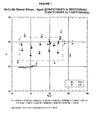
- Figure 1 is a graph of the tested alloys based upon the P value of the alloy and the chromium content. Each alloy that had acceptable tensile properties is plotted with a dot. An X is used to plot those alloys whose tensile properties were not acceptable after the alloy was subjected to the two-step aging treatment. A box has been drawn around the acceptable alloys. It is readily apparent from Figure 1 that the acceptable alloys have a chromium content of 12% to 23.5% and a P value within the range of 31.2 to 35.9.
- the test results for Alloy M indicate that the first step should be at least about 8 hours long at a temperature ranging from about 691°C to about 760°C while the second step should be at least about 24 hours long at a temperature ranging from about 538°C to about 691°C.
- the data also indicates that when a higher temperature is used for the first step then a lower temperature can be used for the second step. While first step temperatures of up to 927°C were found to be useful in age hardening the alloy, microstructural examination revealed that an undesirable grain boundary precipitation occurred when the first step temperature was 760°C or greater. This precipitation would be expected to degrade corrosion resistance.
- Ni 2 (Mo,Cr) age hardening begins with short range ordering followed by creation of precipitates that impart the hardening property. Upon continued heating a solvus temperature will be reached at which the precipitates will go back into solution.
- the short range ordering is also related to time and temperature. Both the short range ordering and the solvus temperature vary from one- alloy composition to another. To provide age hardening any two-step aging treatment must involve a selection of times and temperatures that provides either the necessary short range ordering or the initial precipitation of the hardening phase in the first step and avoids the solvus during the second step. This can be seen in the data for Alloy M in Table 3.
- Alloy K has higher molybdenum and lower chromium than Alloys M, N and O. Alloy K was tested at 704°C, 732°C and 760°C for 8, 16 and 32 hours as shown in Table 4. The data shows that the first treatment could be 8 hours at 760°C when the second step was conducted for 40 hours at 704°C or 718°C but not at 732°C. The second step could be run for 8 hours at 704°C when the first step was conducted for 32 hours at 732°C. From this data we conclude that higher temperatures can be used in the second step for alloys having higher molybdenum and lower chromium. Moreover, either step can be as short as 8 hours when the other step is 32 to 40 hours.
- an acceptable age hardening response can be obtained when the first step is at least about 8 hours long at a temperature ranging from about 691°C to about 760°C and the second step is at least about 8 hours long at a temperature of from about 538°C to about 718°C.
- the two-step age-hardening treatment here disclosed can be done in a total time of less than 100 hours and preferably less than 50 hours. Indeed, we prefer to complete the process in from 40 to 48 hours. By using heat treatments totaling less than 100 hours, and preferably not greater than 50 hours, one can produce lower cost, high chromium, Ni-Cr-Mo alloys that have desirable tensile properties. While the process here disclosed may also work when total aging times exceed 100 hours, the energy costs associated with such treatments make the process less desirable and commercially impractical.
Landscapes
- Chemical & Material Sciences (AREA)
- Engineering & Computer Science (AREA)
- Materials Engineering (AREA)
- Mechanical Engineering (AREA)
- Metallurgy (AREA)
- Organic Chemistry (AREA)
- Physics & Mathematics (AREA)
- Thermal Sciences (AREA)
- Crystallography & Structural Chemistry (AREA)
- Heat Treatment Of Steel (AREA)
- Turbine Rotor Nozzle Sealing (AREA)
- Heat Treatment Of Articles (AREA)
- Heat Treatment Of Nonferrous Metals Or Alloys (AREA)
Applications Claiming Priority (4)
| Application Number | Priority Date | Filing Date | Title |
|---|---|---|---|
| US165650 | 1988-03-08 | ||
| US894179 | 2001-06-28 | ||
| US09/894,179 US6544362B2 (en) | 2001-06-28 | 2001-06-28 | Two step aging treatment for Ni-Cr-Mo alloys |
| US10/165,650 US6638373B2 (en) | 2001-06-28 | 2002-06-07 | Two step aging treatment for Ni-Cr-Mo alloys |
Publications (2)
| Publication Number | Publication Date |
|---|---|
| EP1270754A1 EP1270754A1 (en) | 2003-01-02 |
| EP1270754B1 true EP1270754B1 (en) | 2012-04-25 |
Family
ID=26861569
Family Applications (1)
| Application Number | Title | Priority Date | Filing Date |
|---|---|---|---|
| EP02014216A Expired - Lifetime EP1270754B1 (en) | 2001-06-28 | 2002-06-26 | Two-step aging treatment for Ni-Cr-Mo alloys |
Country Status (9)
| Country | Link |
|---|---|
| EP (1) | EP1270754B1 (enExample) |
| JP (1) | JP4206229B2 (enExample) |
| KR (1) | KR20030003017A (enExample) |
| CN (1) | CN1246490C (enExample) |
| AU (1) | AU785025B2 (enExample) |
| CA (1) | CA2391903C (enExample) |
| GB (1) | GB2377944B (enExample) |
| MX (1) | MXPA02006453A (enExample) |
| TW (1) | TWI224146B (enExample) |
Families Citing this family (19)
| Publication number | Priority date | Publication date | Assignee | Title |
|---|---|---|---|---|
| KR20030003016A (ko) * | 2001-06-28 | 2003-01-09 | 하이네스인터내셔널인코포레이티드 | Ni-Cr-Mo합금의 에이징 처리방법 및 결과의 합금 |
| US6860948B1 (en) * | 2003-09-05 | 2005-03-01 | Haynes International, Inc. | Age-hardenable, corrosion resistant Ni—Cr—Mo alloys |
| RU2321653C1 (ru) * | 2006-05-31 | 2008-04-10 | Юлия Алексеевна Щепочкина | Сплав на основе никеля |
| US7785532B2 (en) | 2006-08-09 | 2010-08-31 | Haynes International, Inc. | Hybrid corrosion-resistant nickel alloys |
| RU2330083C1 (ru) * | 2006-10-09 | 2008-07-27 | Юлия Алексеевна Щепочкина | Сплав на основе никеля |
| JP4816950B2 (ja) * | 2006-11-10 | 2011-11-16 | 三菱マテリアル株式会社 | 耐食性および耐摩耗性に優れたNi基合金およびそのNi基合金からなるコンダクターロール |
| CN101333613B (zh) * | 2008-08-06 | 2010-06-09 | 钢铁研究总院 | 一种中温平板式固体氧化物燃料电池金属连接体用镍基膨胀合金 |
| DE102011013091A1 (de) * | 2010-03-16 | 2011-12-22 | Thyssenkrupp Vdm Gmbh | Nickel-Chrom-Kobalt-Molybdän-Legierung |
| US9761883B2 (en) * | 2011-11-03 | 2017-09-12 | Johnson Controls Technology Company | Battery grid with varied corrosion resistance |
| CN103740983B (zh) * | 2013-12-19 | 2015-11-04 | 重庆材料研究院有限公司 | 高强韧耐腐蚀时效强化型镍基合金及直接时效热处理方法 |
| JP5725630B1 (ja) * | 2014-02-26 | 2015-05-27 | 日立金属Mmcスーパーアロイ株式会社 | 熱間鍛造性および耐食性に優れたNi基合金 |
| EP3574541A1 (en) | 2017-01-27 | 2019-12-04 | CPS Technology Holdings LLC | Battery grid |
| RU2672647C1 (ru) * | 2017-08-01 | 2018-11-16 | Акционерное общество "Чепецкий механический завод" | Коррозионностойкий сплав |
| WO2021045183A1 (ja) * | 2019-09-06 | 2021-03-11 | 日立金属株式会社 | Ni基合金、Ni基合金粉末、Ni基合金部材、およびNi基合金部材を備えた製造物 |
| CN114045452A (zh) * | 2021-11-15 | 2022-02-15 | 贵州航宇科技发展股份有限公司 | 一种Haynes242合金锻件的锻造及热处理方法 |
| CN114182139B (zh) * | 2021-12-10 | 2022-12-02 | 西北工业大学 | 一种析出强化镍基高温合金及其制备方法 |
| CN116083755A (zh) * | 2023-02-28 | 2023-05-09 | 广东博盈特焊技术股份有限公司 | 一种激光熔覆用耐高温腐蚀合金粉末及其制备方法和用途 |
| CN116716518B (zh) * | 2023-06-30 | 2024-02-09 | 江西宝顺昌特种合金制造有限公司 | 一种哈氏合金c-4管板及其制备方法 |
| CN120119193B (zh) * | 2025-04-01 | 2025-08-26 | 内蒙古电力(集团)有限责任公司内蒙古电力科学研究院分公司 | 一种gh4169高温合金加速老化方法 |
Family Cites Families (11)
| Publication number | Priority date | Publication date | Assignee | Title |
|---|---|---|---|---|
| US4043810A (en) * | 1971-09-13 | 1977-08-23 | Cabot Corporation | Cast thermally stable high temperature nickel-base alloys and casting made therefrom |
| US3871928A (en) * | 1973-08-13 | 1975-03-18 | Int Nickel Co | Heat treatment of nickel alloys |
| JPS5837382B2 (ja) * | 1976-06-04 | 1983-08-16 | 三菱重工業株式会社 | ニツケル基耐熱合金の熱処理方法 |
| US4129464A (en) * | 1977-08-24 | 1978-12-12 | Cabot Corporation | High yield strength Ni-Cr-Mo alloys and methods of producing the same |
| US4245698A (en) * | 1978-03-01 | 1981-01-20 | Exxon Research & Engineering Co. | Superalloys having improved resistance to hydrogen embrittlement and methods of producing and using the same |
| JPH064900B2 (ja) * | 1984-12-19 | 1994-01-19 | 日立金属株式会社 | 耐食性高強度Ni基合金 |
| US5556594A (en) * | 1986-05-30 | 1996-09-17 | Crs Holdings, Inc. | Corrosion resistant age hardenable nickel-base alloy |
| US5217684A (en) * | 1986-11-28 | 1993-06-08 | Sumitomo Metal Industries, Ltd. | Precipitation-hardening-type Ni-base alloy exhibiting improved corrosion resistance |
| JPH03257131A (ja) * | 1990-03-07 | 1991-11-15 | Mitsubishi Materials Corp | 金属間化合物析出硬化Ni基合金製刃物材およびその製造方法 |
| US5360496A (en) * | 1991-08-26 | 1994-11-01 | Aluminum Company Of America | Nickel base alloy forged parts |
| DE4203328C1 (enExample) * | 1992-02-06 | 1993-01-07 | Krupp Vdm Gmbh, 5980 Werdohl, De |
-
2002
- 2002-06-25 KR KR1020020035498A patent/KR20030003017A/ko not_active Ceased
- 2002-06-26 GB GB0214712A patent/GB2377944B/en not_active Expired - Lifetime
- 2002-06-26 AU AU50645/02A patent/AU785025B2/en not_active Expired
- 2002-06-26 EP EP02014216A patent/EP1270754B1/en not_active Expired - Lifetime
- 2002-06-27 CA CA002391903A patent/CA2391903C/en not_active Expired - Lifetime
- 2002-06-27 CN CNB021472084A patent/CN1246490C/zh not_active Expired - Lifetime
- 2002-06-27 MX MXPA02006453A patent/MXPA02006453A/es active IP Right Grant
- 2002-06-28 TW TW091114334A patent/TWI224146B/zh not_active IP Right Cessation
- 2002-06-28 JP JP2002190729A patent/JP4206229B2/ja not_active Expired - Lifetime
Also Published As
| Publication number | Publication date |
|---|---|
| TWI224146B (en) | 2004-11-21 |
| CN1246490C (zh) | 2006-03-22 |
| GB0214712D0 (en) | 2002-08-07 |
| GB2377944A (en) | 2003-01-29 |
| CN1412331A (zh) | 2003-04-23 |
| MXPA02006453A (es) | 2004-05-05 |
| EP1270754A1 (en) | 2003-01-02 |
| AU5064502A (en) | 2003-01-02 |
| GB2377944B (en) | 2005-03-23 |
| AU785025B2 (en) | 2006-08-24 |
| JP4206229B2 (ja) | 2009-01-07 |
| JP2003027163A (ja) | 2003-01-29 |
| CA2391903A1 (en) | 2002-12-28 |
| KR20030003017A (ko) | 2003-01-09 |
| GB2377944A9 (en) | 2003-03-13 |
| CA2391903C (en) | 2009-09-29 |
Similar Documents
| Publication | Publication Date | Title |
|---|---|---|
| EP1270755B1 (en) | Aging treatment for Ni-Cr-Mo alloys | |
| EP1270754B1 (en) | Two-step aging treatment for Ni-Cr-Mo alloys | |
| JP4861651B2 (ja) | 進歩したガスタービンエンジン用Ni−Cr−Co合金 | |
| US3046108A (en) | Age-hardenable nickel alloy | |
| EP2675931B1 (en) | HIGH TEMPERATURE LOW THERMAL EXPANSION Ni-Mo-Cr ALLOY | |
| EP1512767A1 (en) | Age-hardenable, corrosion resistant Ni-Cr-Mo alloys | |
| KR102660878B1 (ko) | 2 상의 Ni-Cr-Mo 합금 제조 방법 | |
| EP3775307B1 (en) | High temperature titanium alloys | |
| EP0392484B1 (en) | Corrosion-resistant nickel-chromium-molybdenum alloys | |
| JP3308090B2 (ja) | Fe基超耐熱合金 | |
| US6638373B2 (en) | Two step aging treatment for Ni-Cr-Mo alloys | |
| JP2010265550A (ja) | Ni−Cr−Mo合金の時効処理 | |
| JP3794999B2 (ja) | ニッケル基合金、ニッケル基合金の熱処理方法、およびニッケル基合金を用いた原子力用部材 | |
| US5429690A (en) | Method of precipitation-hardening a nickel alloy | |
| RU2791029C1 (ru) | Никелевый сплав с хорошей коррозионной стойкостью и высоким пределом прочности при растяжении и способ получения полуфабрикатов | |
| RU2808314C2 (ru) | Способ получения порошка из никелевого сплава с хорошей коррозионной стойкостью и высоким пределом прочности при растяжении и его применение (варианты) | |
| JPS6343457B2 (enExample) | ||
| JPH0684535B2 (ja) | ニッケル基合金の製造方法 |
Legal Events
| Date | Code | Title | Description |
|---|---|---|---|
| PUAI | Public reference made under article 153(3) epc to a published international application that has entered the european phase |
Free format text: ORIGINAL CODE: 0009012 |
|
| AK | Designated contracting states |
Kind code of ref document: A1 Designated state(s): AT BE CH CY DE DK ES FI FR GB GR IE IT LI LU MC NL PT SE TR |
|
| AX | Request for extension of the european patent |
Free format text: AL;LT;LV;MK;RO;SI |
|
| 17P | Request for examination filed |
Effective date: 20030409 |
|
| AKX | Designation fees paid |
Designated state(s): AT DE FR IT SE |
|
| GRAP | Despatch of communication of intention to grant a patent |
Free format text: ORIGINAL CODE: EPIDOSNIGR1 |
|
| GRAS | Grant fee paid |
Free format text: ORIGINAL CODE: EPIDOSNIGR3 |
|
| GRAA | (expected) grant |
Free format text: ORIGINAL CODE: 0009210 |
|
| AK | Designated contracting states |
Kind code of ref document: B1 Designated state(s): AT DE FR IT SE |
|
| REG | Reference to a national code |
Ref country code: AT Ref legal event code: REF Ref document number: 555222 Country of ref document: AT Kind code of ref document: T Effective date: 20120515 |
|
| REG | Reference to a national code |
Ref country code: DE Ref legal event code: R096 Ref document number: 60242722 Country of ref document: DE Effective date: 20120621 |
|
| REG | Reference to a national code |
Ref country code: SE Ref legal event code: TRGR |
|
| PLBE | No opposition filed within time limit |
Free format text: ORIGINAL CODE: 0009261 |
|
| STAA | Information on the status of an ep patent application or granted ep patent |
Free format text: STATUS: NO OPPOSITION FILED WITHIN TIME LIMIT |
|
| 26N | No opposition filed |
Effective date: 20130128 |
|
| REG | Reference to a national code |
Ref country code: DE Ref legal event code: R097 Ref document number: 60242722 Country of ref document: DE Effective date: 20130128 |
|
| REG | Reference to a national code |
Ref country code: FR Ref legal event code: PLFP Year of fee payment: 15 |
|
| REG | Reference to a national code |
Ref country code: FR Ref legal event code: PLFP Year of fee payment: 16 |
|
| REG | Reference to a national code |
Ref country code: FR Ref legal event code: PLFP Year of fee payment: 17 |
|
| PGFP | Annual fee paid to national office [announced via postgrant information from national office to epo] |
Ref country code: FR Payment date: 20210625 Year of fee payment: 20 Ref country code: DE Payment date: 20210629 Year of fee payment: 20 Ref country code: IT Payment date: 20210621 Year of fee payment: 20 |
|
| PGFP | Annual fee paid to national office [announced via postgrant information from national office to epo] |
Ref country code: AT Payment date: 20210604 Year of fee payment: 20 |
|
| PGFP | Annual fee paid to national office [announced via postgrant information from national office to epo] |
Ref country code: SE Payment date: 20210630 Year of fee payment: 20 |
|
| REG | Reference to a national code |
Ref country code: DE Ref legal event code: R071 Ref document number: 60242722 Country of ref document: DE |
|
| REG | Reference to a national code |
Ref country code: SE Ref legal event code: EUG |
|
| REG | Reference to a national code |
Ref country code: AT Ref legal event code: MK07 Ref document number: 555222 Country of ref document: AT Kind code of ref document: T Effective date: 20220626 |