EP1250305B1 - Abwasserreinigung beim verfahren zur herstellung von wasserfreier ameisensäure - Google Patents
Abwasserreinigung beim verfahren zur herstellung von wasserfreier ameisensäure Download PDFInfo
- Publication number
- EP1250305B1 EP1250305B1 EP01907445A EP01907445A EP1250305B1 EP 1250305 B1 EP1250305 B1 EP 1250305B1 EP 01907445 A EP01907445 A EP 01907445A EP 01907445 A EP01907445 A EP 01907445A EP 1250305 B1 EP1250305 B1 EP 1250305B1
- Authority
- EP
- European Patent Office
- Prior art keywords
- distillation
- formic acid
- water
- distillation device
- extractant
- Prior art date
- Legal status (The legal status is an assumption and is not a legal conclusion. Google has not performed a legal analysis and makes no representation as to the accuracy of the status listed.)
- Expired - Lifetime
Links
- BDAGIHXWWSANSR-UHFFFAOYSA-N methanoic acid Natural products OC=O BDAGIHXWWSANSR-UHFFFAOYSA-N 0.000 title claims abstract description 115
- 235000019253 formic acid Nutrition 0.000 title claims abstract description 46
- OSWFIVFLDKOXQC-UHFFFAOYSA-N 4-(3-methoxyphenyl)aniline Chemical compound COC1=CC=CC(C=2C=CC(N)=CC=2)=C1 OSWFIVFLDKOXQC-UHFFFAOYSA-N 0.000 title claims abstract description 45
- XLYOFNOQVPJJNP-UHFFFAOYSA-N water Substances O XLYOFNOQVPJJNP-UHFFFAOYSA-N 0.000 title claims abstract description 34
- 238000004519 manufacturing process Methods 0.000 title description 3
- 238000004065 wastewater treatment Methods 0.000 title description 2
- 238000004821 distillation Methods 0.000 claims abstract description 63
- 238000000034 method Methods 0.000 claims abstract description 57
- TZIHFWKZFHZASV-UHFFFAOYSA-N methyl formate Chemical compound COC=O TZIHFWKZFHZASV-UHFFFAOYSA-N 0.000 claims abstract description 45
- 230000007062 hydrolysis Effects 0.000 claims abstract description 28
- 238000006460 hydrolysis reaction Methods 0.000 claims abstract description 28
- 239000002351 wastewater Substances 0.000 claims abstract description 28
- OKKJLVBELUTLKV-UHFFFAOYSA-N Methanol Chemical compound OC OKKJLVBELUTLKV-UHFFFAOYSA-N 0.000 claims description 30
- 238000000605 extraction Methods 0.000 claims description 12
- 238000000622 liquid--liquid extraction Methods 0.000 claims description 10
- 239000000203 mixture Substances 0.000 claims description 10
- 238000000638 solvent extraction Methods 0.000 claims description 10
- 125000003118 aryl group Chemical group 0.000 claims description 7
- 230000015572 biosynthetic process Effects 0.000 claims description 6
- NZMAJUHVSZBJHL-UHFFFAOYSA-N n,n-dibutylformamide Chemical compound CCCCN(C=O)CCCC NZMAJUHVSZBJHL-UHFFFAOYSA-N 0.000 claims description 5
- 239000012071 phase Substances 0.000 claims description 5
- 238000003786 synthesis reaction Methods 0.000 claims description 5
- 125000000217 alkyl group Chemical group 0.000 claims description 4
- 239000008346 aqueous phase Substances 0.000 claims description 4
- 125000000753 cycloalkyl group Chemical group 0.000 claims description 4
- 125000004433 nitrogen atom Chemical group N* 0.000 claims description 4
- 125000004178 (C1-C4) alkyl group Chemical group 0.000 claims description 3
- 125000003710 aryl alkyl group Chemical group 0.000 claims description 3
- 125000000623 heterocyclic group Chemical group 0.000 claims description 3
- 229910052739 hydrogen Inorganic materials 0.000 claims description 3
- 239000001257 hydrogen Substances 0.000 claims description 3
- GBDYFPAHVXJQEP-UHFFFAOYSA-N n-ethyl-n-phenylformamide Chemical compound CCN(C=O)C1=CC=CC=C1 GBDYFPAHVXJQEP-UHFFFAOYSA-N 0.000 claims description 3
- LYELEANKTIGQME-UHFFFAOYSA-N n-heptan-2-yl-n-methylformamide Chemical compound CCCCCC(C)N(C)C=O LYELEANKTIGQME-UHFFFAOYSA-N 0.000 claims description 3
- 150000003857 carboxamides Chemical class 0.000 claims description 2
- MEXKFCWMWJZDMF-UHFFFAOYSA-N n,n-dibutylacetamide Chemical compound CCCCN(C(C)=O)CCCC MEXKFCWMWJZDMF-UHFFFAOYSA-N 0.000 claims description 2
- 125000004435 hydrogen atom Chemical group [H]* 0.000 claims 1
- FWHFWYKSIPTXBJ-UHFFFAOYSA-N n-butyl-n-cyclohexylformamide Chemical compound CCCCN(C=O)C1CCCCC1 FWHFWYKSIPTXBJ-UHFFFAOYSA-N 0.000 claims 1
- HPWNCPYWUHXVNZ-UHFFFAOYSA-N n-butyl-n-ethylheptanamide Chemical compound CCCCCCC(=O)N(CC)CCCC HPWNCPYWUHXVNZ-UHFFFAOYSA-N 0.000 claims 1
- 239000007858 starting material Substances 0.000 claims 1
- 238000010626 work up procedure Methods 0.000 abstract 3
- 238000010438 heat treatment Methods 0.000 abstract 1
- 239000003795 chemical substances by application Substances 0.000 description 7
- 238000000926 separation method Methods 0.000 description 4
- XEKOWRVHYACXOJ-UHFFFAOYSA-N Ethyl acetate Chemical compound CCOC(C)=O XEKOWRVHYACXOJ-UHFFFAOYSA-N 0.000 description 3
- UFHFLCQGNIYNRP-UHFFFAOYSA-N Hydrogen Chemical compound [H][H] UFHFLCQGNIYNRP-UHFFFAOYSA-N 0.000 description 3
- 239000000126 substance Substances 0.000 description 3
- OKTJSMMVPCPJKN-UHFFFAOYSA-N Carbon Chemical compound [C] OKTJSMMVPCPJKN-UHFFFAOYSA-N 0.000 description 2
- UGFAIRIUMAVXCW-UHFFFAOYSA-N Carbon monoxide Chemical compound [O+]#[C-] UGFAIRIUMAVXCW-UHFFFAOYSA-N 0.000 description 2
- ZHNUHDYFZUAESO-UHFFFAOYSA-N Formamide Chemical compound NC=O ZHNUHDYFZUAESO-UHFFFAOYSA-N 0.000 description 2
- QAOWNCQODCNURD-UHFFFAOYSA-N Sulfuric acid Chemical compound OS(O)(=O)=O QAOWNCQODCNURD-UHFFFAOYSA-N 0.000 description 2
- 238000006887 Ullmann reaction Methods 0.000 description 2
- 239000003463 adsorbent Substances 0.000 description 2
- 229910002091 carbon monoxide Inorganic materials 0.000 description 2
- 150000001732 carboxylic acid derivatives Chemical class 0.000 description 2
- 230000000694 effects Effects 0.000 description 2
- 239000007788 liquid Substances 0.000 description 2
- 239000010865 sewage Substances 0.000 description 2
- 239000000243 solution Substances 0.000 description 2
- ZAFNJMIOTHYJRJ-UHFFFAOYSA-N Diisopropyl ether Chemical compound CC(C)OC(C)C ZAFNJMIOTHYJRJ-UHFFFAOYSA-N 0.000 description 1
- NTIZESTWPVYFNL-UHFFFAOYSA-N Methyl isobutyl ketone Chemical compound CC(C)CC(C)=O NTIZESTWPVYFNL-UHFFFAOYSA-N 0.000 description 1
- UIHCLUNTQKBZGK-UHFFFAOYSA-N Methyl isobutyl ketone Natural products CCC(C)C(C)=O UIHCLUNTQKBZGK-UHFFFAOYSA-N 0.000 description 1
- BFNBIHQBYMNNAN-UHFFFAOYSA-N ammonium sulfate Chemical compound N.N.OS(O)(=O)=O BFNBIHQBYMNNAN-UHFFFAOYSA-N 0.000 description 1
- 229910052921 ammonium sulfate Inorganic materials 0.000 description 1
- 235000011130 ammonium sulphate Nutrition 0.000 description 1
- 239000007864 aqueous solution Substances 0.000 description 1
- CDQSJQSWAWPGKG-UHFFFAOYSA-N butane-1,1-diol Chemical compound CCCC(O)O CDQSJQSWAWPGKG-UHFFFAOYSA-N 0.000 description 1
- 229910052799 carbon Inorganic materials 0.000 description 1
- 150000001875 compounds Chemical class 0.000 description 1
- 238000007599 discharging Methods 0.000 description 1
- 230000001747 exhibiting effect Effects 0.000 description 1
- 238000002474 experimental method Methods 0.000 description 1
- 238000000895 extractive distillation Methods 0.000 description 1
- HQVFCQRVQFYGRJ-UHFFFAOYSA-N formic acid;hydrate Chemical compound O.OC=O HQVFCQRVQFYGRJ-UHFFFAOYSA-N 0.000 description 1
- 239000012535 impurity Substances 0.000 description 1
- 239000007791 liquid phase Substances 0.000 description 1
- DDCALWHVZHDBHI-UHFFFAOYSA-N n-ethyl-n-hexylpentanamide Chemical compound CCCCCCN(CC)C(=O)CCCC DDCALWHVZHDBHI-UHFFFAOYSA-N 0.000 description 1
- 238000002360 preparation method Methods 0.000 description 1
- 238000000746 purification Methods 0.000 description 1
- 230000003134 recirculating effect Effects 0.000 description 1
- 238000011084 recovery Methods 0.000 description 1
- 238000004064 recycling Methods 0.000 description 1
- 230000008929 regeneration Effects 0.000 description 1
- 238000011069 regeneration method Methods 0.000 description 1
- 150000003839 salts Chemical class 0.000 description 1
- STCOOQWBFONSKY-UHFFFAOYSA-N tributyl phosphate Chemical compound CCCCOP(=O)(OCCCC)OCCCC STCOOQWBFONSKY-UHFFFAOYSA-N 0.000 description 1
- 239000012808 vapor phase Substances 0.000 description 1
Images


Classifications
-
- C—CHEMISTRY; METALLURGY
- C07—ORGANIC CHEMISTRY
- C07C—ACYCLIC OR CARBOCYCLIC COMPOUNDS
- C07C51/00—Preparation of carboxylic acids or their salts, halides or anhydrides
- C07C51/42—Separation; Purification; Stabilisation; Use of additives
- C07C51/43—Separation; Purification; Stabilisation; Use of additives by change of the physical state, e.g. crystallisation
- C07C51/44—Separation; Purification; Stabilisation; Use of additives by change of the physical state, e.g. crystallisation by distillation
- C07C51/445—Separation; Purification; Stabilisation; Use of additives by change of the physical state, e.g. crystallisation by distillation by steam distillation
-
- B—PERFORMING OPERATIONS; TRANSPORTING
- B01—PHYSICAL OR CHEMICAL PROCESSES OR APPARATUS IN GENERAL
- B01J—CHEMICAL OR PHYSICAL PROCESSES, e.g. CATALYSIS OR COLLOID CHEMISTRY; THEIR RELEVANT APPARATUS
- B01J14/00—Chemical processes in general for reacting liquids with liquids; Apparatus specially adapted therefor
-
- C—CHEMISTRY; METALLURGY
- C07—ORGANIC CHEMISTRY
- C07C—ACYCLIC OR CARBOCYCLIC COMPOUNDS
- C07C51/00—Preparation of carboxylic acids or their salts, halides or anhydrides
- C07C51/09—Preparation of carboxylic acids or their salts, halides or anhydrides from carboxylic acid esters or lactones
-
- C—CHEMISTRY; METALLURGY
- C07—ORGANIC CHEMISTRY
- C07C—ACYCLIC OR CARBOCYCLIC COMPOUNDS
- C07C51/00—Preparation of carboxylic acids or their salts, halides or anhydrides
- C07C51/42—Separation; Purification; Stabilisation; Use of additives
- C07C51/43—Separation; Purification; Stabilisation; Use of additives by change of the physical state, e.g. crystallisation
- C07C51/44—Separation; Purification; Stabilisation; Use of additives by change of the physical state, e.g. crystallisation by distillation
-
- C—CHEMISTRY; METALLURGY
- C07—ORGANIC CHEMISTRY
- C07C—ACYCLIC OR CARBOCYCLIC COMPOUNDS
- C07C51/00—Preparation of carboxylic acids or their salts, halides or anhydrides
- C07C51/42—Separation; Purification; Stabilisation; Use of additives
- C07C51/48—Separation; Purification; Stabilisation; Use of additives by liquid-liquid treatment
-
- B—PERFORMING OPERATIONS; TRANSPORTING
- B01—PHYSICAL OR CHEMICAL PROCESSES OR APPARATUS IN GENERAL
- B01J—CHEMICAL OR PHYSICAL PROCESSES, e.g. CATALYSIS OR COLLOID CHEMISTRY; THEIR RELEVANT APPARATUS
- B01J2219/00—Chemical, physical or physico-chemical processes in general; Their relevant apparatus
- B01J2219/00002—Chemical plants
- B01J2219/00004—Scale aspects
- B01J2219/00006—Large-scale industrial plants
Definitions
- the invention relates to a device and a method for obtaining anhydrous or substantially anhydrous formic acid and the use of a steam stream in this method.
- the hydrolysis is usually carried out in a temperature range of 80 to 150 ° C.
- the distillation of the hydrolysis mixture can in principle be carried out at any pressure, preferably 0.5 to 2 bar. In general, working under normal pressure is recommended. In this case, the temperature in the column bottom is about 110 ° C and at the top of the column about 30 to 40 ° C.
- the hydrolysis mixture is advantageously added in a temperature range from 80 to 150 ° C, and the methanol is preferably removed liquid at temperatures of 55 to 65 ° C.
- a satisfactory separation of the mixture in methyl formate and methanol on the one hand and the aqueous formic acid on the other hand is already possible with a distillation column having 25 theoretical plates (preferred is a theoretical plate number of 35 to 45).
- the design of the column provided for process step (b) may be of any desired type, but in particular a sieve bottom or packed column is recommended.
- liquid-liquid extraction of formic acid from its aqueous solution by means of an extractant is preferably carried out at atmospheric pressure and at temperatures of 60 to 120, in particular 70 to 90 ° C in countercurrent.
- extractant usually requires extraction facilities with 1 to 12 theoretical plates.
- Suitable extraction devices for this purpose are in particular liquid-liquid extraction columns. In most cases, satisfactory results are achieved with 4 to 6 theoretical plates.
- extractant is not limited. Particularly suitable as extracting agents are carboxylic acid amides of the abovementioned general formula I. Such extractants are, above all, N, N-di-n-butylformamide and also N, N-di-n-butylacetamide, N-methyl-N-2-heptylformamide, Nn Butyl-N-2-ethylhexylformamide, Nn-butyl-N-cyclohexylformamide and N-ethylformanilide as well as mixtures of these compounds. Other suitable extractants include diisopropyl ether, methyl isobutyl ketone, ethyl acetate, tributyl phosphate and butanediol.
- the extract phase is separated by distillation in a corresponding distillation device into a liquid phase, which generally comprises predominantly formic acid and extractant, and a predominantly water and small amounts of formic acid having vapor phase. It is an extractive distillation.
- the bottom temperature is preferably 140 to 180 ° C. A sufficient separation effect is usually achieved from 5 theoretical plates.
- the return of the formic acid-water mixture is usually in vapor form.
- the distillation device (usually designed as a column) for carrying out the step (f) is expediently operated under reduced pressure - about 50 to 300 mbar - and correspondingly low head temperatures - about 30 to 60 ° C - operated.
- This variant of the method relates to steps (b) and (d).
- the distillation devices for carrying out steps b) and d) are arranged in an overall distillation device.
- the distillation facilities are usually designed as columns.
- water required for the hydrolysis is provided in the form of water vapor.
- the object of the present invention is to provide a method by which the recovery of valuable substances from the effluent leaving the extraction device is ensured.
- the wastewater should be so thoroughly freed of recyclables and possibly other impurities that further purification of the wastewater is no longer required.
- the process should be practicable and economically attractive.
- the process according to the invention is characterized in that steam which is introduced into the distillation device provided for carrying out step (ii) is used as stripping steam for wastewater stripping of the waste water discharged from the process in step (iii) before being introduced into this distillation device ,
- formic acid containing a maximum of 30%, preferably a maximum of 15% water.
- Steam is intended to mean gaseous water, the latter also including liquid components and other components (other than water).
- the process according to the invention is particularly economical, since the steam which is required anyway for the process is additionally used for wastewater treatment.
- the process is energy efficient, requires little investment and is easy to implement.
- the wastewater can be purified by the process so effectively that the wastewater can then be discharged directly into a sewage treatment plant.
- recyclables of the process are recovered and recycled.
- the extractant used is a carboxylic acid amide of the general formula I. used, in which the radicals R 1 and R 2 are alkyl, cycloalkyl, aryl or aralkyl groups, or R 1 and R 2 together with the N-atom form a heterocyclic 5- or 6-membered ring and that only one of the radicals is an aryl group and in which R 3 is hydrogen or a C 1 -C 4 -alkyl group.
- extractants are N, N-di-n-butylformamide, N, N-dinutylacetamide, N-methyl-N-2-heptylformamide, Nn-butyl-N-2-ethylhexylformamide, Nn-butyl-N-cyclohexylformamide and / or N-ethylformanilide.
- the extractant used may be a single extractant or an extractant mixture.
- steps (ii) and (iv) are carried out in a single distillation apparatus.
- the steam used as stripping steam generally has a temperature of 110 to 200 ° C, preferably from 140 ° to 180 ° C, on.
- the temperature at which the stripping steam is introduced into the distillation device is usually lower.
- the invention also relates to the use of a steam stream in the process described above.
- the steam stream is first used as Strippdampfstrom for Abwasserstrippung and then as Eduktstrom to provide water for the hydrolysis of methyl formate.
- a synthesis reactor is to be understood as meaning a device in which, on the one hand, the synthesis of methyl formate takes place (usually in a corresponding reactor) and in which, on the other hand, separation of the resulting hydrolysis mixture (usually in a distillation device downstream of the reactor) is carried out.
- the hydrolysis reactor in which the hydrolysis of methyl formate takes place, can be of any desired design. Distillation columns are preferably used as distillation units.
- the extraction device is usually designed as a liquid-liquid extraction column. As a wastewater stripping usually a stripping column is used. In most cases, this stripping column has 3 to 20, preferably 5 to 10, thermodynamic separation stages.
- the distillation device for carrying out the step (ii) and the distillation device for carrying out the step (iv) are arranged in a single distillation device.
- the latter is usually designed as a distillation column.
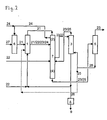
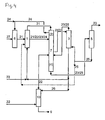
- Fig. 1 systems for carrying out a method according to the prior art and in Fig. 3 respectively.
- Fig. 4 systems for carrying out the method according to the invention have in common that they have a synthesis reactor 6, a hydrolysis reactor 1, a distillation device 2 for performing step (ii), a distillation device 4 for performing step (iv), an extraction device 3 and a distillation device 5 for Carrying out the step (vi).
- the distillation devices 2, 4 may be arranged in a common distillation device 7.
- Fig. 3 and Fig. 4 The plants for carrying out the process according to the invention ( Fig. 3 and Fig. 4 ) in contrast to those in Fig. 1 respectively.
- Fig. 2 The purified wastewater is passed from this to the sewage treatment plant 9. In the Fig. 1 respectively.
- Fig. 2 The plants according to the prior art which have been shown to contain an adsorber device 8 instead of the wastewater stripping device 10.
- the example test is carried out in a plant which is shown schematically in FIG Fig. 4 is shown.
- the extractant used is N, N-di-n-butylformamide.
- the wastewater is stripped in a stripping column with about 1 kg / h steam.
- the extractant is completely removed from the wastewater.
- the stripping column has a diameter of 30 mm and is equipped with 30 bubble trays.
- Table 1 The results of the experiment are shown in Table 1 below.
- Table 1 shows that by the process according to the invention, the extractant N, N-di-n-butylformamide can be completely and formic acid largely removed from the wastewater.
Landscapes
- Chemical & Material Sciences (AREA)
- Organic Chemistry (AREA)
- Engineering & Computer Science (AREA)
- Oil, Petroleum & Natural Gas (AREA)
- Crystallography & Structural Chemistry (AREA)
- Chemical Kinetics & Catalysis (AREA)
- Organic Low-Molecular-Weight Compounds And Preparation Thereof (AREA)
- Heat Treatment Of Water, Waste Water Or Sewage (AREA)
- Treatment Of Water By Oxidation Or Reduction (AREA)
Description
- Die Erfindung betrifft eine Vorrichtung und ein Verfahren zur Gewinnung von wasserfreier oder weitgehend wasserfreier Ameisensäure und die Verwendung eines Wasserdampfstroms in diesem Verfahren.
- Aus "Ullmanns Encyklopädie der technischen Chemie", 4. Auflage, Band 7, Seite 365, ist bekannt, Ameisensäure durch Acydolyse von Formamid mit Schwefelsäure herzustellen. Dieses Verfahren hat jedoch den Nachteil, daß stöchiometrische Mengen Ammoniumsulfat als Zwangsanfall erhalten werden.
- Ein weitere Möglichkeit zur Herstellung von Ameisensäure besteht in der Hydrolyse von Methylformiat, das aus Methanol und Kohlenmonoxid synthetisiert wird. Dabei liegen die folgenden Gleichungen zugrunde:
CO + CH3-OH → CH3-O-CO-H CH3O-CO-H + H2O → CH3-OH + H-CO-OH Brutto: CO + H2O → H-CO-OH - Die in "Ullmanns Encyklopädie der technischen Chemie", 4. Auflage, Band 7, Seite 366 beschriebene Hydrolyse von Methylformiat
HCOOCH3 + H2O HCOOH + CH3OH
hat den Nachteil einer ungünstigen Lage des Hydrolysegleichgewichtes. Eine Gleichgewichtsverschiebung durch destillative Entfernung der gewünschten Verfahrensprodukte ist nicht möglich, da Methylformiat (Sdp. 32°C) wesentlich niedriger als Methanol (Sdp. 65°C) und Ameisensäure (Sdp. 101°C) siedet. Aus der anfallenden wäßrigen Ameisensäurelösung kann wasserfreie Ameisensäure wegen Azeotropbildung mit Wasser nicht ohne weiteres destillativ gewonnen werden. Die Schwierigkeit besteht also darin, aus dem Hydrolysegemisch des Methylformiats wasserfreie Ameisensäure zu gewinnen. - Ein in der
EP-B-0 017 866 beschriebenes, die Verfahrensschritte a) bis g) aufweisendes Verfahren ermöglicht ausgehend von Methylformiat die Herstellung wasserfreier Ameisensäure. Dabei erhält man wasserfreie Ameisensäure, falls man - a) Methylformiat der Hydrolyse unterwirft,
- b) vom erhaltenen Hydrolysegemisch Methanol sowie überschüssiges Methylformiat abdestilliert,
- c) das Ameisensäure und Wasser enthaltende Sumpfprodukt der Destillation (b) in einer Flüssig-flüssig-Extraktion mit einem hauptsächlich die Ameisensäure aufnehmenden Extraktionsmittel extrahiert,
- d) die hierbei erhaltene Ameisensäure, Extraktionsmittel und eine Teilmenge des Wassers aufweisende Extraktphase einer Destillation unterwirft,
- e) das bei dieser Destillation erhaltene Wasser und eine Teilmenge der Ameisensäure enthaltende Kopfprodukt in den unteren Teil der Destillationskolonne der Stufe (b) zurückführt,
- f) das vorwiegend Extraktionsmittel und Ameisensäure enthaltende Sumpfprodukt der Destillationsstufe (d) destillativ in wasserfreie Ameisensäure und das Extraktionsmittel auftrennt und
- g) das die Stufe (f) verlassende Extraktionsmittel in den Verfahrensgang zurückführt.
- Es ist bei diesem Verfahren besonders zweckmäßig,
- h) die Destillationsschritte (b) und (d) in einer einzigen Kolonne vorzunehmen,
- i) das für die Hydrolyse benötigte Wasser dampfförmig in den unteren Teil der für die Durchführung von Schritt (b) vorgesehenen Kolonne einzubringen,
- k) Methylformiat und Wasser bei der Hydrolyse (a) im Molverhältnis 1:2 bis 1:10 einzusetzen und/oder
- 1) als Extraktionsmittel ein Carbonsäureamid der allgemeinen Formel I

- Im folgenden werden die Verfahrensschritte (a) bis (i) des vorstehend beschriebenen Verfahrens näher erläutert.
- Die Hydrolyse wird üblicherweise in einem Temperaturbereich von 80 bis 150°C durchgeführt.
- Die Destillation des Hydrolysegemisches kann prinzipiell bei beliebigem Druck, bevorzugt 0,5 bis 2 bar, vorgenommen werden. Im allgemeinen empfiehlt sich das Arbeiten unter Normaldruck. In diesem Fall beträgt die Temperatur im Kolonnensumpf etwa 110°C und am Kolonnenkopf etwa 30 bis 40°C. Das Hydrolysegemisch wird zweckmäßigerweise in einem Temperaturbereich von 80 bis 150°C zugegeben, und das Methanol entnimmt man vorzugsweise flüssig bei Temperaturen von 55 bis 65°C. Eine zufriedenstellende Trennung des Gemisches in Methylformiat sowie Methanol einerseits und die wäßrige Ameisenäure andererseits ist bereits mit einer Destillationskolonne möglich, die 25 theoretische Böden aufweist (bevorzugt ist eine theoretische Bodenzahl von 35 bis 45). Die Bauart der für den Verfahrensschritt (b) vorgesehenen Kolonne kann beliebig sein, besonders empfiehlt sich jedoch eine Siebboden- oder Füllkörper-Kolonne.
- Die Flüssig-flüssig-Extraktion der Ameisensäure aus ihrer wäßrigen Lösung mittels eines Extraktionsmittels wird vorzugsweise bei Normaldruck und bei Temperaturen von 60 bis 120, insbesondere 70 bis 90°C im Gegenstrom vorgenommen. Je nach Art des Extraktionsmittels benötigt man in der Regel Extraktionseinrichtungen mit 1 bis 12 theoretischen Trennstufen. Geeignete Extraktionseinrichtungen dafür sind insbesondere Flüssig-flüssig-Extraktionskolonnen. In den meisten Fällen erzielt man mit 4 bis 6 theoretischen Trennstufen befriedigende Ergebnisse.
- Die Wahl des Extraktionsmittels ist nicht beschränkt. Als Extraktionsmittel besonders geeignet sind Carbonsäureamide der vorstehend genannten allgemeinen Formel I. Derartige Extraktionsmittel sind vor allem N,N-Di-n-butylformamid sowie außerdem N,N-Di-n-butylacetamid, N-Methyl-N-2-heptylformamid, N-n-Butyl-N-2-ethylhexylformamid, N-n-Butyl-N-cyclohexylformamid und N-Ethylformanilid sowie Gemische dieser Verbindungen. Weitere geeignete Extraktionsmittel sind u.a. Diisopropylether, Methylisobutylketon, Ethylacetat, Tributylphosphat und Butandiolformiat.
- Die Extraktphase wird in einer entsprechenden Destillationseinrichtung destillativ in eine Flüssigphase, die in der Regel vorwiegend Ameisensäure und Extraktionsmittel aufweist, sowie eine vorwiegend Wasser und geringe Mengen Ameisensäure aufweisende Dampfphase getrennt. Es handelt sich dabei um eine Extraktivdestillation. Die Sumpftemperatur beträgt vorzugsweise 140 bis 180°C. Ein ausreichender Trenneffekt wird in der Regel ab 5 theoretischen Böden erzielt.
- Die Rückführung des Ameisensäure-Wassergemischs erfolgt in der Regel dampfförmig.
- Die Destillationseinrichtung (meist als Kolonne ausgebildet) zur Durchführung der Stufe (f) wird zweckmäßigerweise unter vermindertem Druck - etwa 50 bis 300 mbar - und entsprechend niedrigen Kopftemperaturen - etwa 30 bis 60°C - betrieben.
- Diese Variante des Verfahrens betrifft die Schritte (b) und (d). Die Destillationseinrichtungen zur Durchführung der Stufen b) und d) werden in einer Gesamtdestillationseinrichtung angeordenet. Die Destillationseinrichtungen sind dabei in der Regel als Kolonnen ausgebildet.
- In diesem Schritt wird für die Hydrolyse benötigtes Wasser in Form von Wasserdampf bereitgestellt.
- Es hat sich als besonders vorteilhaft herausgestellt, für die Hydrolyse benötigtes Wasser dampfförmig in den unteren Teil der für die Durchführung der Stufe b) vorgesehenen Destillationseinrichtung einzubringen. Dadurch wird mit dem ohnehin für die Hydrolyse benötigten Wasser gleichzeitig noch Wärmeenergie in Form von Wasserdampf in das Verfahren eingeführt. Durch die Einführung des Wasserdampfes wird soviel Energie in die Destillationseinrichtung eingebracht, daß der entsprechende Sumpfverdampfer entsprechend kleiner ausgelegt werden kann, da durch den Sumpfverdampfer weniger Energie eingebracht werden muß.
- Es ist notwendig, einen Teil der wäßrigen Phase, die bei der Flüssig-flüssig-Extraktion der Ameisensäure entsteht, aus dem Verfahren auszuschleusen, damit ein Auslaß für schwerflüchtige Nebenkomponenten (zum Beispiel Salze) geschaffen wird. Anderenfalls würden sich schwerflüchtige Nebenkomponenten im Prozeß anreichern, was sich negativ auf die Produktqualität auswirkt. In der aus der Extraktionseinrichtung zur Durchführung der Flüssig-flüssig-Extraktion ablaufenden wäßrigen Phase sind jedoch noch geringe Mengen an Wertstoffen, insbesondere Ameisensäure und Extraktionsmittel enthalten. Diese Stoffe dürfen nicht in das Abwasser gelangen, da die eingesetzten Extraktionsmittel in der Regel biologisch schwer abbaubar sind. Um das anfallende Abwasser zu reinigen und die Wertstoffe zurückzugewinnen, wird allgemein eine Mehrsäulen-Adsorber-Verschaltung verwendet, deren Anschaffung und Betrieb sehr kostspielig ist. Besonders aufwendig ist in der Regel die Regenerierung des Adsorbens. Als Adsorbens wird vorwiegend Aktivkohle eingesetzt.
- Aufgabe der vorliegenden Erfindung ist es, ein Verfahren bereitzustellen, durch das die Wiedergewinnung der Wertstoffe aus dem die Extraktionseinrichtung verlassenden Abwasser gewährleistet wird. Dabei soll das Abwasser so gründlich von den Wertstoffen und gegebenenfalls von anderen Verunreinigungen befreit werden, daß eine weitere Reinigung des Abwassers nicht mehr erforderlich ist.
Das Verfahren soll praktisch durchführbar und wirtschaftlich attraktiv sein. - Die Lösung dieser Aufgabe geht aus von dem Verfahren zur Gewinnung von wasserfreier oder weitgehend wasserfreier Ameisensäure, bei dem man
- (i) Methylformiat der Hydrolyse unterwirft,
- (ii) vom erhaltenen Hydrolysegemisch Methanol sowie überschüssiges Methylformiat in einer Destillationseinrichtung abdestilliert und in den unteren Teil dieser Destillationseinrichtung Wasserdampf einleitet,
- (iii) das Ameisensäure und Wasser enthaltende Sumpfprodukt der Destillation (ii) in einer Flüssig-flüssig-Extraktion mit einem hauptsächlich die Ameisensäure aufnehmenden Extraktionsmittel extrahiert, und eine Teilmenge der bei der Flüssig-flüssig-Extraktion entstehenden wäßrigen Phase als Abwasser aus dem Prozeß ausschleust,
- (iv) die hierbei erhaltene, Ameisensäure, Extraktionsmittel und eine Teilmenge des Wassers aufweisende Extraktphase einer Destillation unterwirft,
- (v) das bei dieser Destillation erhaltene, Wasser und eine Teilmenge der Ameisensäure enthaltende Kopfprodukt in den unteren Teil der Destillationseinrichtung der Stufe (ii) zurückführt,
- (vi) das vorwiegend Extraktionsmittel und Ameisensäure enthaltende Sumpfprodukt der Destillationsstufe (iv) destillativ in wasserfreie oder weitgehend wasserfreie Ameisensäure und das Extraktionsmittel auftrennt und
- (vii) das die Stufe (vi) verlassende Extraktionsmittel in den Verfahrensgang zurückführt.
- Das erfindungsgemäße Verfahren ist dadurch gekennzeichnet, daß Wasserdampf, der in die für die Durchführung der Stufe (ii) vorgesehene Destillationseinrichtung eingeleitet wird, vor dem Einleiten in diese Destillationseinrichtung als Strippdampf für eine Abwasserstrippung des in Stufe (iii) aus dem Prozeß ausgeschleusten Abwassers eingesetzt wird.
- Unter weitgehend wasserfreier Ameisensäure soll Ameisensäure verstanden werden, die maximal 30 %, bevorzugt maximal 15 % Wasser, enthält. Unter Wasserdampf soll gasförmiges Wasser verstanden werden, wobei letzteres auch noch flüssige Bestandteile und andere Komponenten (außer Wasser) enthalten kann.
- Das erfindungsgemäße Verfahren ist besonders wirtschaftlich, da der ohnehin für das Verfahren benötigte Wasserdampf zusätzlich noch für die Abwasseraufbereitung eingesetzt wird. Das Verfahren ist energiesparend, erfordert einen geringen Investitionsaufwand und ist einfach durchführbar. Das Abwasser kann durch das Verfahren so effektiv gereinigt werden, daß das Abwasser anschließend direkt in eine Kläranlage eingeleitet werden kann. Außerdem werden Wertstoffe des Verfahrens wiedergewonnen und rezykliert.
- In einer bevorzugten Ausführungsform der Erfindung wird als Extraktionsmittel ein Carbonsäureamid der allgemeinen Formel I

- In einer bevorzugten Ausführungsform der Erfindung werden die Schritte (ii) und (iv) in einer einzigen Destillationseinrichtung durchgeführt.
- Der als Strippdampf eingesetzte Wasserdampf weist in der Regel eine Temperatur von 110 bis 200°C, bevorzugt von 140° bis 180°C, auf. Die Temperatur, mit der der Strippdampf in die Destillationseinrichtung eingeleitet wird, ist meist niedriger.
- Die Erfindung betrifft auch die Verwendung eines Wasserdampfstroms in dem vorstehend beschriebenen Verfahren. Dabei wird der Wasserdampfstrom zunächst als Strippdampfstrom für Abwasserstrippung und anschließend als Eduktstrom zur Bereitstellung von Wasser für die Hydrolyse von Methylformiat verwendet.
- Erfindungsgemäß wird auch eine Vorrichtung zur Durchführung des vorstehend beschriebenen Verfahrens bereitgestellt. Diese enthält,
- α) einen Synthesereaktor,
- β) einen Hydrolysereaktor
- χ) eine Destillationseinrichtung zur Durchführung der Stufe (ii),
- δ) eine Destillationseinrichtung zur Durchführung der Stufe (iv),
- ε) eine Extraktionseinrichtung
- φ) eine Destillationseinrichtung zur Durchführung der Stufe (vi) und
- γ) eine Abwasserstrippeinrichtung.
- Als Synthesereaktor soll eine Einrichtung verstanden werden, in der einerseits die Synthese von Methylformiat erfolgt (meist in einem entsprechenden Reaktor) und in der gegebenenfalls andererseits noch eine Trennung des erhaltenen Hydrolysegemischs (meist in einer dem Reaktor nachgeschalteten Destillationseinrichtung) durchgeführt wird. Der Hydrolysereaktor, in dem die Hydrolyse von Methylformiat erfolgt, kann beliebig ausgebildet sein. Als Destillationseinrichtungen werden bevorzugt Destillationskolonnen eingesetzt. Die Extraktionseinrichtung ist in der Regel als Flüssig-flüssig-Extraktionskolonne ausgebildet. Als Abwasserstrippeinrichtung wird in der Regel eine Strippkolonne eingesetzt. Meist weist diese Strippkolonne 3 bis 20, bevorzugt 5 bis 10, thermodynamische Trennstufen auf.
- In einer bevorzugten Ausführungsform der Erfindung ist die Destillationseinrichtung zur Durchführung der Stufe (ii) und die Destillationseinrichtung zur Durchführung der Stufe (iv) in einer einzigen Destillationseinrichtung angeordnet. Letztere ist in der Regel als Destillationskolonne ausgebildet.
-
- in Fig. 1 sowie in Fig. 2
- Schemata für Anlagen für die Durchführung von Verfahren zur Herstellung von wasserfreier Ameisensäure nach dem Stand der Technik und
- in Fig. 3 sowie in Fig. 4
- Schemata von Anlagen zur Durchführung des erfindungsgemäßen Verfahrens.
- Die über, neben bzw. unter den Verbindungsleitungen eingetragenen Zahlen sollen ein Hinweis auf die in den entsprechenden Strömen enthaltenen Komponenten geben, die den größten Anteil haben. Da diese Anteile jedoch variieren können, können diese Bezugszeichen nur als Richtwert dienen. Dabei bedeuten 21 Methylformiat, 22 Wasser, 23 Ameisensäure, 24 Methanol, 25 Extraktionsmittel, 26 Abwasser und 27 Kohlenmonoxid.
- Die in
Fig. 1 bzw.Fig. 2 aufgezeigten Anlagen zur Durchführung eines Verfahrens nach dem Stand der Technik und die inFig. 3 bzw.Fig. 4 dargestellten Anlagen zur Durchführung des erfindungsgemäßen Verfahrens haben gemeinsam, daß diese einen Synthesereaktor 6, einen Hydrolysereaktor 1, eine Destillationseinrichtung 2 zur Durchführung der Stufe (ii), eine Destillationseinrichtung 4 zur Durchführung der Stufe (iv), eine Extraktionseinrichtung 3 und eine Destillationseinrichtung 5 zur Durchführung der Stufe (vi) aufweisen. Dabei können die Destillationseinrichtungen 2, 4 in einer gemeinsamen Destillationseinrichtung 7 angeordnet sein. - Die Anlagen zur Durchführung des erfindungsgemäßen Verfahrens (
Fig. 3 undFig. 4 ) enthalten im Gegensatz zu den inFig. 1 bzw.Fig. 2 aufgezeigten Anlagen eine Abwasserstrippeinrichtung 10. Das gereinigte Abwasser wird aus dieser in die Kläranlage 9 geleitet. Die inFig. 1 bzw.Fig. 2 aufgezeigten Anlagen zur Durchführung des Verfahrens nach dem Stand der Technik enthalten anstatt der Abwasserstrippeinrichtung 10 eine Adsorbereinrichtung 8. - Im folgenden soll die Erfindung anhand eines Ausführungsbeispiels näher erläutert werden.
- Der Beispielsversuch wird in einer Anlage durchgeführt, die schematisch in
Fig. 4 aufgezeigt ist. Als Extraktionsmittel wird N,N-Di-n-butylformamid eingesetzt. Es werden kontinuierlich 5,3 kg wäßrige Ameisensäure hergestellt. Dabei fallen ca. 400 g/h Abwasser an. Das Abwasser wird in einer Strippkolonne mit ca. 1 kg/h Dampf gestrippt. Das Extraktionsmittel wird dabei vollständig aus dem Abwasser entfernt. Die zur Strippung verwendete Technikumskolonne hat einen Durchmesser von 30 mm und ist mit 30 Glockenböden ausgestattet. Die Ergebnisse des Versuchs sind in der nachstehenden Tabelle 1 aufgeführt.Tabelle 1 Abwasser (ungereinigt) Abwasser (gereinigt) Strippdampf (unbeladen) Strippdampf (beladen) Anfall im Verfahren kg/h 0,375 0,385 1,052 1,042 wasser Anteil Gew.-% 98,25 99,86 100 99,42 Extraktionsmittel Anteil Gew.-% 0,76 0 0 0,27 Ameisensäure Anteil Gew.-% 0,99 0,14 0 0,30 Temperatur °C 110 115 160 114 - Tabelle 1 zeigt, daß durch das erfindungsgemäße Verfahren das Extraktionsmittel N,N-Di-n-butylformamid vollständig und Ameisensäure weitgehend aus dem Abwasser entfernt werden kann.
Claims (9)
- Verfahren zur Gewinnung von wasserfreier oder weitgehend wasserfreier Ameisensäure, bei dem man(i) Methylformiat der Hydrolyse unterwirft,(ii) vom erhaltenen Hydrolysegemisch Methanol sowie überschüssiges Methylformiat in einer Destillationseinrichtung abdestilliert und in den unteren Teil dieser Destillationseinrichtung Wasserdampf einleitet,(iii) das Ameisensäure und Wasser enthaltende Sumpfprodukt der Destillation ii) in einer Flüssig-flüssig-Extraktion mit einem hauptsächlich die Ameisensäure aufnehmenden Extraktionsmittel extrahiert und eine Teilmenge der bei der Flüssig-flüssig-Extraktion entstehenden wäßrigen Phase als Abwasser aus dem Prozeß schleust,(iv) die hierbei erhaltene Ameisensäure, Extraktionsmittel und eine Teilmenge des Wassers aufweisende Extraktphase einer Destillation unterwirft,(v) das bei dieser Destillation erhaltene, Wasser und eine Teilmenge der Ameisensäure enthaltende Kopfprodukt in den unteren Teil der Destillationseinrichtung der Stufe ii) zurückführt,(vi) das vorwiegend Extraktionsmittel und Ameisensäure enthaltende Sumpfprodukt der Destillationsstufe iv) destillativ in wasserfreie oder weitgehend wasserfreie Ameisensäure und das Extraktionsmittel auftrennt und(vii) das die Stufe vi) verlassende Extraktionsmittel in den Verfahrensgang zurückführt,dadurch gekennzeichnet, daß Wasserdampf, der in die für die Durchführung der Stufe ii) vorgesehene Destillationseinrichtung eingeleitet wird, vor dem Einleiten in diese Destillationseinrichtung, als Strippdampf für eine Abwasserstrippung des in Stufe iii) aus dem Prozeß ausgeschleusten Abwassers, eingesetzt wird.
- Verfahren nach Anspruch 1, dadurch gekennzeichnet, daß als Extraktionsmittel ein Carbonsäureamid der allgemeinen Formel I

- Verfahren nach Anspruch 1 oder 2, dadurch gekennzeichnet, daß als Extraktionsmittel N,N-Di-n-butylformamid" N,N-Di-n-butylacetamid, N-Methyl-N-2-heptylformamid, N-n-Butyl-N-2-ethylhexylformamid, N-n-Butyl-N-cyclohexylformamid und/oder N-Ethylformanilid eingesetzt wird.
- Verfahren nach einem der Ansprüche 1 bis 3, dadurch gekennzeichnet, daß die Schritte ii) und iv) in einer einzigen Destillationseinrichtung durchgeführt werden.
- Verfahren nach einem der Ansprüche 1 bis 4, dadurch gekennzeichnet, daß der als Strippdampf eingesetzte Wasserdampf eine Temperatur von 110 bis 200°C, bevorzugt von 140 bis 180°C, aufweist.
- Verwendung eines Wasserdampfstroms in dem Verfahren gemäß eines der Ansprüche 1 bis 5 zunächst als Strippdampfstrom für Abwasserstrippung und anschließend als Eduktstrom zur Bereitstellung von Wasser für die Hydrolyse von Methylformiat.
- Vorrichtung zur Durchführung des Verfahrens gemäß eines der Ansprüche 1 bis 5, enthaltend,α) einen Synthesereaktor (6),β) einen Hydrolysereaktor (1),χ) eine Destillationseinrichtung (2) zur Durchführung der Stufe ii),δ) eine Destillationseinrichtung (4) zur Durchführung der Stufe iv),ε) eine Extraktionseinrichtung (3),φ) eine Destillationseinrichtung (5) zur Durchführung der Stufe vi)
undγ) eine Abwasserstrippeinrichtung (10). - Vorrichtung nach Anspruch 7, dadurch gekennzeichnet, daß die Destillationseinrichtung (2) zur Durchführung der Stufe ii) und die Destillationseinrichtung (4) zur Durchführung der Stufe iv) in einer einzigen Destillationseinrichtung (7) angeordnet sind.
- Vorrichtung nach Anspruch 7 oder 8, dadurch gekennzeichnet, daß als Abwasserstrippeinrichtung (10) eine Strippkolonne eingesetzt wird.
Applications Claiming Priority (3)
| Application Number | Priority Date | Filing Date | Title |
|---|---|---|---|
| DE10002794 | 2000-01-24 | ||
| DE10002794A DE10002794A1 (de) | 2000-01-24 | 2000-01-24 | Abwasserreinigung beim Verfahren zur Herstellung von wasserfreier Ameisensäure |
| PCT/EP2001/000346 WO2001055069A2 (de) | 2000-01-24 | 2001-01-12 | Abwasserreinigung beim verfahren zur herstellung von wasserfreier ameisensäure |
Publications (2)
| Publication Number | Publication Date |
|---|---|
| EP1250305A2 EP1250305A2 (de) | 2002-10-23 |
| EP1250305B1 true EP1250305B1 (de) | 2009-08-12 |
Family
ID=7628465
Family Applications (1)
| Application Number | Title | Priority Date | Filing Date |
|---|---|---|---|
| EP01907445A Expired - Lifetime EP1250305B1 (de) | 2000-01-24 | 2001-01-12 | Abwasserreinigung beim verfahren zur herstellung von wasserfreier ameisensäure |
Country Status (12)
| Country | Link |
|---|---|
| US (1) | US6867329B2 (de) |
| EP (1) | EP1250305B1 (de) |
| JP (1) | JP4681192B2 (de) |
| KR (1) | KR100772760B1 (de) |
| CN (1) | CN1271034C (de) |
| AT (1) | ATE439339T1 (de) |
| AU (1) | AU2001235416A1 (de) |
| BR (1) | BR0107825B1 (de) |
| DE (2) | DE10002794A1 (de) |
| MY (1) | MY131970A (de) |
| NO (1) | NO327831B1 (de) |
| WO (1) | WO2001055069A2 (de) |
Families Citing this family (18)
| Publication number | Priority date | Publication date | Assignee | Title |
|---|---|---|---|---|
| FI121541B (fi) * | 2008-04-21 | 2010-12-31 | Kemira Oyj | Menetelmä muurahaishapon talteenottamiseksi |
| US9193593B2 (en) | 2010-03-26 | 2015-11-24 | Dioxide Materials, Inc. | Hydrogenation of formic acid to formaldehyde |
| US9815021B2 (en) | 2010-03-26 | 2017-11-14 | Dioxide Materials, Inc. | Electrocatalytic process for carbon dioxide conversion |
| US9790161B2 (en) | 2010-03-26 | 2017-10-17 | Dioxide Materials, Inc | Process for the sustainable production of acrylic acid |
| US9566574B2 (en) | 2010-07-04 | 2017-02-14 | Dioxide Materials, Inc. | Catalyst mixtures |
| US20110237830A1 (en) | 2010-03-26 | 2011-09-29 | Dioxide Materials Inc | Novel catalyst mixtures |
| US9957624B2 (en) | 2010-03-26 | 2018-05-01 | Dioxide Materials, Inc. | Electrochemical devices comprising novel catalyst mixtures |
| US9012345B2 (en) | 2010-03-26 | 2015-04-21 | Dioxide Materials, Inc. | Electrocatalysts for carbon dioxide conversion |
| US10173169B2 (en) | 2010-03-26 | 2019-01-08 | Dioxide Materials, Inc | Devices for electrocatalytic conversion of carbon dioxide |
| US8956990B2 (en) | 2010-03-26 | 2015-02-17 | Dioxide Materials, Inc. | Catalyst mixtures |
| WO2013030162A1 (en) | 2011-08-27 | 2013-03-07 | Taminco | Process of formic acid production by hydrolysis of methyl formate |
| CN104822861B (zh) | 2012-09-24 | 2017-03-08 | 二氧化碳材料公司 | 用于将二氧化碳转化为有用燃料和化学品的装置和方法 |
| US10647652B2 (en) | 2013-02-24 | 2020-05-12 | Dioxide Materials, Inc. | Process for the sustainable production of acrylic acid |
| US10774431B2 (en) | 2014-10-21 | 2020-09-15 | Dioxide Materials, Inc. | Ion-conducting membranes |
| US10975480B2 (en) | 2015-02-03 | 2021-04-13 | Dioxide Materials, Inc. | Electrocatalytic process for carbon dioxide conversion |
| CN108707062A (zh) * | 2018-06-08 | 2018-10-26 | 聊城市鲁西化工工程设计有限责任公司 | 一种用于钾盐回收处理的工艺 |
| WO2022239847A1 (ja) * | 2021-05-14 | 2022-11-17 | リファインホールディングス株式会社 | カルボン酸の回収方法 |
| CN116751140A (zh) * | 2023-05-29 | 2023-09-15 | 山东聊城鲁西硝基复肥有限公司 | 一种n-甲酸基脲废液的资源化利用方法及系统 |
Family Cites Families (12)
| Publication number | Priority date | Publication date | Assignee | Title |
|---|---|---|---|---|
| DE2853991A1 (de) * | 1978-12-14 | 1980-07-03 | Basf Ag | Verfahren zur gewinnung von wasserfreier oder weitgehend wasserfreier ameisensaeure |
| DE2914671A1 (de) * | 1979-04-11 | 1980-10-23 | Basf Ag | Verfahren zur gewinnung von wasserfreier oder weitgehend wasserfreier ameisensaeure |
| JPS585895B2 (ja) * | 1980-07-17 | 1983-02-02 | 日本ソレツクス株式会社 | 有機酸の分離方法 |
| DE3319651A1 (de) * | 1983-05-31 | 1984-12-06 | Basf Ag, 6700 Ludwigshafen | Verfahren zur destillativen gewinnung von ameisensaeure |
| DE3411384A1 (de) * | 1984-03-28 | 1985-10-10 | Basf Ag, 6700 Ludwigshafen | Verfahren zur gewinnung von wasserfreier oder weitgehend wasserfreier ameisensaeure durch hydrolyse von methylformiat |
| DE3417790A1 (de) * | 1984-05-14 | 1985-11-14 | Basf Ag, 6700 Ludwigshafen | Verfahren zur herstellung von ameisensaeure |
| DE3428321A1 (de) * | 1984-08-01 | 1986-02-13 | Hüls AG, 4370 Marl | Verfahren zur gewinnung von ameisensaeure |
| DE3428319A1 (de) * | 1984-08-01 | 1986-02-13 | Hüls AG, 4370 Marl | Verfahren zur gewinnung wasserfreier bzw. weitgehendwasserfreier ameisensaeure |
| JP3572636B2 (ja) * | 1993-09-14 | 2004-10-06 | 三菱化学株式会社 | ブタンジオールの製造方法 |
| DE19953832A1 (de) * | 1999-11-09 | 2001-05-10 | Basf Ag | Verfahren zur Herstellung von Ameisensäure |
| DE10002791A1 (de) * | 2000-01-24 | 2001-07-26 | Basf Ag | Verfahren zur Gewinnung von wasserfreier Ameisensäure |
| DE10002790A1 (de) * | 2000-01-24 | 2001-07-26 | Basf Ag | Verfahren zur Reinigung von Abgasströmen |
-
2000
- 2000-01-24 DE DE10002794A patent/DE10002794A1/de not_active Withdrawn
-
2001
- 2001-01-12 DE DE50115031T patent/DE50115031D1/de not_active Expired - Lifetime
- 2001-01-12 AT AT01907445T patent/ATE439339T1/de not_active IP Right Cessation
- 2001-01-12 BR BRPI0107825-9A patent/BR0107825B1/pt not_active IP Right Cessation
- 2001-01-12 US US10/181,455 patent/US6867329B2/en not_active Expired - Lifetime
- 2001-01-12 WO PCT/EP2001/000346 patent/WO2001055069A2/de not_active Ceased
- 2001-01-12 JP JP2001555013A patent/JP4681192B2/ja not_active Expired - Fee Related
- 2001-01-12 CN CNB018040659A patent/CN1271034C/zh not_active Expired - Fee Related
- 2001-01-12 AU AU2001235416A patent/AU2001235416A1/en not_active Abandoned
- 2001-01-12 EP EP01907445A patent/EP1250305B1/de not_active Expired - Lifetime
- 2001-01-12 KR KR1020027009417A patent/KR100772760B1/ko not_active Expired - Fee Related
- 2001-01-16 MY MYPI20010183A patent/MY131970A/en unknown
-
2002
- 2002-07-22 NO NO20023481A patent/NO327831B1/no not_active IP Right Cessation
Also Published As
| Publication number | Publication date |
|---|---|
| NO20023481L (no) | 2002-08-21 |
| DE10002794A1 (de) | 2001-07-26 |
| NO327831B1 (no) | 2009-10-05 |
| MY131970A (en) | 2007-09-28 |
| JP4681192B2 (ja) | 2011-05-11 |
| US20030036664A1 (en) | 2003-02-20 |
| BR0107825A (pt) | 2002-10-29 |
| BR0107825B1 (pt) | 2011-07-12 |
| AU2001235416A1 (en) | 2001-08-07 |
| WO2001055069A3 (de) | 2002-01-17 |
| JP2003520832A (ja) | 2003-07-08 |
| KR100772760B1 (ko) | 2007-11-01 |
| NO20023481D0 (no) | 2002-07-22 |
| US6867329B2 (en) | 2005-03-15 |
| ATE439339T1 (de) | 2009-08-15 |
| CN1396899A (zh) | 2003-02-12 |
| KR20020070349A (ko) | 2002-09-05 |
| EP1250305A2 (de) | 2002-10-23 |
| DE50115031D1 (de) | 2009-09-24 |
| WO2001055069A2 (de) | 2001-08-02 |
| CN1271034C (zh) | 2006-08-23 |
Similar Documents
| Publication | Publication Date | Title |
|---|---|---|
| EP1250305B1 (de) | Abwasserreinigung beim verfahren zur herstellung von wasserfreier ameisensäure | |
| EP1252128B1 (de) | Verfahren zur gewinnung von wasserfreier ameisensäure | |
| DE69311585T2 (de) | Verfahren zur Reinigung von Acrylsäure zu hoher Reinheit bei der Herstellung von Acrylsäure | |
| DE2834140C2 (de) | ||
| DE69305766T2 (de) | Verfahren zur Herstellung von Epichlorhydrin | |
| DE19610356B4 (de) | Verfahren zum Reinigen von Essigsäure | |
| DE1593122B2 (de) | Kontinuierliches Verfahren zur Reinigung von rohen, olefinisch ungesättigten Nitrilen | |
| EP0962444B1 (de) | Verfahren zur Aufarbeitung von rohem, flüssigem Vinylacetat | |
| EP1250306B1 (de) | Verfahren zur reinigung von abgasströmen | |
| DE1618240C3 (de) | Verfahren zur Gewinnung von Vinylacetat aus einem Gemisch von Vinylacetat, Äthylacetat und gegebenenfalls wenig | |
| EP1250307B1 (de) | Verwendung eines extraktionsmittels als antischaummittel bei der herstellung von wasserfreier ameisensäure | |
| DE1255103B (de) | Verfahren zur kontinuierlichen Gewinnung von Acrylsaeurenitril und Acetonitril aus deren waessrigen Loesungen | |
| DE69204493T2 (de) | Verfahren zur Reinigung von Dimethylcarbonat. | |
| EP0717028B1 (de) | Verfahren und Vorrichtung zur Gewinnung von Ameisensäure | |
| DD128974B1 (de) | Verfahren zur reingewinnung von aethylaminen | |
| DE1925038C3 (de) | Verfahren zur Gewinnung von Terephthalsäure | |
| DE1197074B (de) | Verfahren zur Rueckgewinnung der bei der Essig-saeuresynthese aus Kohlenoxyd und Methylalkohol verwendeten nickel- und jodhaltigen Katalysa-toren | |
| DE3632975C2 (de) | ||
| DE2123181C3 (de) | Borsäurerückgewinnung | |
| DE2261779C3 (de) | Verfahren zur Herstellung von wasserfreiem Acrolein | |
| EP0578259A1 (de) | Verfahren zur Rückgewinnung von hochsiedenden Komponenten aus Abwasser | |
| DE1167847B (de) | Verfahren zur Herstellung von reinem Melamin aus Harnstoff | |
| DE1229510B (de) | Verfahren zur Reinigung von fluessigen Gemischen aus alpha, alpha, gamma-alpha, gammaTrimethyladipinsaeure | |
| DE2123184A1 (en) | Purification and yield increase of cyclohexanone-cyclohexanol - mixtures - which result from oxidation in air of cyclohexane | |
| CH620221A5 (en) | Process for regenerating an alkali-metal-alkylamide-containing system |
Legal Events
| Date | Code | Title | Description |
|---|---|---|---|
| PUAI | Public reference made under article 153(3) epc to a published international application that has entered the european phase |
Free format text: ORIGINAL CODE: 0009012 |
|
| 17P | Request for examination filed |
Effective date: 20020711 |
|
| AK | Designated contracting states |
Kind code of ref document: A2 Designated state(s): AT BE CH CY DE DK ES FI FR GB GR IE IT LI LU MC NL PT SE TR |
|
| AX | Request for extension of the european patent |
Free format text: AL;LT;LV;MK;RO;SI |
|
| RIN1 | Information on inventor provided before grant (corrected) |
Inventor name: SAUER, FRIEDRICH Inventor name: AUER, HEINZ Inventor name: HASSE, HANS Inventor name: HAMMER, HANS Inventor name: ADRIAN, TILL Inventor name: BESSLING, BERND Inventor name: VICARI, MAXIMILIAN |
|
| RIN1 | Information on inventor provided before grant (corrected) |
Inventor name: VICARI, MAXIMILIAN Inventor name: HAMMER, HANS Inventor name: HASSE, HANS Inventor name: AUER, HEINZ Inventor name: BESSLING, BERND Inventor name: SAUER, FRIEDRICH Inventor name: ADRIAN, TILL |
|
| RAP1 | Party data changed (applicant data changed or rights of an application transferred) |
Owner name: BASF SE |
|
| GRAP | Despatch of communication of intention to grant a patent |
Free format text: ORIGINAL CODE: EPIDOSNIGR1 |
|
| GRAS | Grant fee paid |
Free format text: ORIGINAL CODE: EPIDOSNIGR3 |
|
| GRAA | (expected) grant |
Free format text: ORIGINAL CODE: 0009210 |
|
| AK | Designated contracting states |
Kind code of ref document: B1 Designated state(s): AT BE CH CY DE DK ES FI FR GB GR IE IT LI LU MC NL PT SE TR |
|
| REG | Reference to a national code |
Ref country code: GB Ref legal event code: FG4D Free format text: NOT ENGLISH |
|
| REG | Reference to a national code |
Ref country code: CH Ref legal event code: EP |
|
| REG | Reference to a national code |
Ref country code: IE Ref legal event code: FG4D |
|
| REF | Corresponds to: |
Ref document number: 50115031 Country of ref document: DE Date of ref document: 20090924 Kind code of ref document: P |
|
| REG | Reference to a national code |
Ref country code: SE Ref legal event code: TRGR |
|
| PG25 | Lapsed in a contracting state [announced via postgrant information from national office to epo] |
Ref country code: ES Free format text: LAPSE BECAUSE OF FAILURE TO SUBMIT A TRANSLATION OF THE DESCRIPTION OR TO PAY THE FEE WITHIN THE PRESCRIBED TIME-LIMIT Effective date: 20091123 |
|
| REG | Reference to a national code |
Ref country code: IE Ref legal event code: FD4D |
|
| PG25 | Lapsed in a contracting state [announced via postgrant information from national office to epo] |
Ref country code: PT Free format text: LAPSE BECAUSE OF FAILURE TO SUBMIT A TRANSLATION OF THE DESCRIPTION OR TO PAY THE FEE WITHIN THE PRESCRIBED TIME-LIMIT Effective date: 20091212 |
|
| PG25 | Lapsed in a contracting state [announced via postgrant information from national office to epo] |
Ref country code: DK Free format text: LAPSE BECAUSE OF FAILURE TO SUBMIT A TRANSLATION OF THE DESCRIPTION OR TO PAY THE FEE WITHIN THE PRESCRIBED TIME-LIMIT Effective date: 20090812 Ref country code: IE Free format text: LAPSE BECAUSE OF FAILURE TO SUBMIT A TRANSLATION OF THE DESCRIPTION OR TO PAY THE FEE WITHIN THE PRESCRIBED TIME-LIMIT Effective date: 20090812 |
|
| PLBE | No opposition filed within time limit |
Free format text: ORIGINAL CODE: 0009261 |
|
| STAA | Information on the status of an ep patent application or granted ep patent |
Free format text: STATUS: NO OPPOSITION FILED WITHIN TIME LIMIT |
|
| 26N | No opposition filed |
Effective date: 20100517 |
|
| PG25 | Lapsed in a contracting state [announced via postgrant information from national office to epo] |
Ref country code: MC Free format text: LAPSE BECAUSE OF NON-PAYMENT OF DUE FEES Effective date: 20100131 |
|
| REG | Reference to a national code |
Ref country code: CH Ref legal event code: PL |
|
| PG25 | Lapsed in a contracting state [announced via postgrant information from national office to epo] |
Ref country code: GR Free format text: LAPSE BECAUSE OF FAILURE TO SUBMIT A TRANSLATION OF THE DESCRIPTION OR TO PAY THE FEE WITHIN THE PRESCRIBED TIME-LIMIT Effective date: 20091113 Ref country code: CH Free format text: LAPSE BECAUSE OF NON-PAYMENT OF DUE FEES Effective date: 20100131 Ref country code: LI Free format text: LAPSE BECAUSE OF NON-PAYMENT OF DUE FEES Effective date: 20100131 |
|
| PG25 | Lapsed in a contracting state [announced via postgrant information from national office to epo] |
Ref country code: AT Free format text: LAPSE BECAUSE OF NON-PAYMENT OF DUE FEES Effective date: 20100112 |
|
| PG25 | Lapsed in a contracting state [announced via postgrant information from national office to epo] |
Ref country code: CY Free format text: LAPSE BECAUSE OF FAILURE TO SUBMIT A TRANSLATION OF THE DESCRIPTION OR TO PAY THE FEE WITHIN THE PRESCRIBED TIME-LIMIT Effective date: 20090812 |
|
| PG25 | Lapsed in a contracting state [announced via postgrant information from national office to epo] |
Ref country code: LU Free format text: LAPSE BECAUSE OF NON-PAYMENT OF DUE FEES Effective date: 20100112 |
|
| PG25 | Lapsed in a contracting state [announced via postgrant information from national office to epo] |
Ref country code: TR Free format text: LAPSE BECAUSE OF FAILURE TO SUBMIT A TRANSLATION OF THE DESCRIPTION OR TO PAY THE FEE WITHIN THE PRESCRIBED TIME-LIMIT Effective date: 20090812 |
|
| REG | Reference to a national code |
Ref country code: FR Ref legal event code: PLFP Year of fee payment: 16 |
|
| REG | Reference to a national code |
Ref country code: FR Ref legal event code: PLFP Year of fee payment: 17 |
|
| PGFP | Annual fee paid to national office [announced via postgrant information from national office to epo] |
Ref country code: NL Payment date: 20170125 Year of fee payment: 17 |
|
| PGFP | Annual fee paid to national office [announced via postgrant information from national office to epo] |
Ref country code: SE Payment date: 20170126 Year of fee payment: 17 Ref country code: FR Payment date: 20170127 Year of fee payment: 17 |
|
| PGFP | Annual fee paid to national office [announced via postgrant information from national office to epo] |
Ref country code: GB Payment date: 20170131 Year of fee payment: 17 Ref country code: BE Payment date: 20170125 Year of fee payment: 17 |
|
| PGFP | Annual fee paid to national office [announced via postgrant information from national office to epo] |
Ref country code: IT Payment date: 20170123 Year of fee payment: 17 |
|
| PGFP | Annual fee paid to national office [announced via postgrant information from national office to epo] |
Ref country code: FI Payment date: 20180123 Year of fee payment: 18 |
|
| REG | Reference to a national code |
Ref country code: SE Ref legal event code: EUG |
|
| REG | Reference to a national code |
Ref country code: NL Ref legal event code: MM Effective date: 20180201 |
|
| GBPC | Gb: european patent ceased through non-payment of renewal fee |
Effective date: 20180112 |
|
| PG25 | Lapsed in a contracting state [announced via postgrant information from national office to epo] |
Ref country code: SE Free format text: LAPSE BECAUSE OF NON-PAYMENT OF DUE FEES Effective date: 20180113 Ref country code: FR Free format text: LAPSE BECAUSE OF NON-PAYMENT OF DUE FEES Effective date: 20180131 |
|
| REG | Reference to a national code |
Ref country code: FR Ref legal event code: ST Effective date: 20180928 |
|
| REG | Reference to a national code |
Ref country code: BE Ref legal event code: MM Effective date: 20180131 |
|
| PG25 | Lapsed in a contracting state [announced via postgrant information from national office to epo] |
Ref country code: NL Free format text: LAPSE BECAUSE OF NON-PAYMENT OF DUE FEES Effective date: 20180201 Ref country code: BE Free format text: LAPSE BECAUSE OF NON-PAYMENT OF DUE FEES Effective date: 20180131 Ref country code: GB Free format text: LAPSE BECAUSE OF NON-PAYMENT OF DUE FEES Effective date: 20180112 |
|
| PG25 | Lapsed in a contracting state [announced via postgrant information from national office to epo] |
Ref country code: IT Free format text: LAPSE BECAUSE OF NON-PAYMENT OF DUE FEES Effective date: 20180112 |
|
| PGFP | Annual fee paid to national office [announced via postgrant information from national office to epo] |
Ref country code: DE Payment date: 20190401 Year of fee payment: 19 |
|
| PG25 | Lapsed in a contracting state [announced via postgrant information from national office to epo] |
Ref country code: FI Free format text: LAPSE BECAUSE OF NON-PAYMENT OF DUE FEES Effective date: 20190112 |
|
| REG | Reference to a national code |
Ref country code: DE Ref legal event code: R119 Ref document number: 50115031 Country of ref document: DE |
|
| PG25 | Lapsed in a contracting state [announced via postgrant information from national office to epo] |
Ref country code: DE Free format text: LAPSE BECAUSE OF NON-PAYMENT OF DUE FEES Effective date: 20200801 |