EP1248195A2 - Verbindungsprüfung zwischen einer programmgesteuerten Einheit und einer Schaltung - Google Patents
Verbindungsprüfung zwischen einer programmgesteuerten Einheit und einer Schaltung Download PDFInfo
- Publication number
- EP1248195A2 EP1248195A2 EP02006862A EP02006862A EP1248195A2 EP 1248195 A2 EP1248195 A2 EP 1248195A2 EP 02006862 A EP02006862 A EP 02006862A EP 02006862 A EP02006862 A EP 02006862A EP 1248195 A2 EP1248195 A2 EP 1248195A2
- Authority
- EP
- European Patent Office
- Prior art keywords
- program
- controlled unit
- emulation
- circuit
- controlled
- Prior art date
- Legal status (The legal status is an assumption and is not a legal conclusion. Google has not performed a legal analysis and makes no representation as to the accuracy of the status listed.)
- Granted
Links
Images

Classifications
-
- G—PHYSICS
- G06—COMPUTING OR CALCULATING; COUNTING
- G06F—ELECTRIC DIGITAL DATA PROCESSING
- G06F11/00—Error detection; Error correction; Monitoring
- G06F11/22—Detection or location of defective computer hardware by testing during standby operation or during idle time, e.g. start-up testing
- G06F11/26—Functional testing
- G06F11/261—Functional testing by simulating additional hardware, e.g. fault simulation
Definitions
- the present application relates to a device according to the Preambles of claims 1 and 9, i.e. a program-controlled Unit.
- Program-controlled units such as microprocessors, microcontrollers, Signal processors etc. have been in for many years Countless embodiments are known and do not require any further details Explanation.
- An emulator is often used for this.
- An emulator is able to determine the occurrence of predefinable states or to recognize events and on one as well predeterminable manner on the occurrence of the concerned State or event.
- the predeterminable states or events exist, for example in that inside or outside the program-controlled Unit specific data, addresses or control signals are transferred or stored.
- states or events include that Stopping the program-controlled unit, reading out and / or changing the contents of registers or internal or external storage, and / or the recording and Evaluation of the courses occurring before and / or afterwards of interesting data, addresses, signals, and / or Register and memory contents.
- program-controlled programs can be used in mass products Units, which in the following the simplicity for the sake of mass production version of the program-controlled Unit, generally not in emulators are used because they only partially provide access to the data of interest, addresses, Signals, registers and memory exist, and because they are not have the possibility of the appearance of the interested Monitor states and events in real time and record.
- FIG. 1A shows the basic structure of a mass production version
- FIG. 1B shows the structure of an emulation version the program-controlled unit.
- the mass production version of the shown in Figure 1A program-controlled unit contains a core 31, peripheral units 32, 33, and 34 such as timers, A / D converters, Memory etc., as well as the Core 31 and the peripheral units 32, 33, and 34 connecting bus 35.
- the core 31 also contains an emulation interface 36, via which is one in the emulation version of the program-controlled Emulation unit provided with the core 31 is connectable.
- the emulation version of the program-controlled one shown in FIG. 1B Unit contains the mass production version, thus also the core 31, the peripheral units 32, 33, and 34, bus 35, and emulation interface 36, and additionally for the emulation of the mass production version required components, these components being an emulation unit 37, debug resources 38, and an emulator interface 39 comprise, via which the emulation unit 37 can be connected to a control unit 40 controlling the emulation is.
- the emulation unit 37 contains, for example, a so-called Breakpoint or watchpoint logic, which is required is to monitor the states or events whose occurrence should be set, and to prevent the occurrence of to recognize monitoring states or events.
- Emulation versions of the type of FIG. 1B can (must but not) be multi-chip modules such as those in DE 197 432 64 are described.
- the components that are in the mass production version of the program-controlled unit 1A, and the components that make up the emulation version the program-controlled unit in contrast has, housed on different chips, and this different chips are made when needed (during manufacture an emulation version of the program-controlled unit) in appropriately connected together.
- the present invention is therefore based on the object to find a program-controlled unit that both alone as well as in cooperation with other circuits works properly under all circumstances.
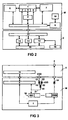
- Figure 2 shows the basic structure of the emulation version the program-controlled one considered in more detail here Unit.
- the program-controlled unit shown consists of a Mass production part M and an emulation part E, where these parts on the same or on different semiconductor chips can be accommodated, and being the mass production part M optionally alone (without emulation part E, so as a mass production version of the program-controlled unit) or together with the emulation part E (in the emulation version) the program-controlled unit can be used.
- the program-controlled unit shown in FIG. 2 has besides the structure described above, some special features on, the following with reference to Figure 3 and the figure 2 already explained above described in more detail become.
- the program-controlled Unit more precisely the mass production version or the mass production part M of the emulator version has an input connection through which you signal can be whether the program-controlled unit with is connected to a certain other circuit.
- the signaling is preferably, but not necessarily through the circuit, the presence of which is thereby recognizable should be.
- the circuit in the example under consideration is the emulation part E of the program-controlled unit; the Circuit can also be any other circuit (e.g. a memory or an A / D converter) this circuit being on the same chip as the program-controlled Unit or on a different chip than the program-controlled Unit can be provided.
- the Circuit can also be any other circuit (e.g. a memory or an A / D converter) this circuit being on the same chip as the program-controlled Unit or on a different chip than the program-controlled Unit can be provided.
- Said input port, through which the mass production part M signals the presence of the emulation part E. is designated by the reference number 17 in FIG and is referred to below as the detection connection.
- the program-controlled unit shown in FIG. 3 corresponds to although not all of the components shown in FIG shown program-controlled unit are shown, the program-controlled unit shown in FIG.
- the detection connection 17 is in the example considered Pad of the mass production part M, which with an associated, Connection of the emulation part, not shown in the figures E is connected (if an emulation part E is present is), and which within the mass production part M with the emulation interface 8 and the status of Detection terminal 17 indicating memory element IBD an emulation control memory 18 is connected.
- the connection with the emulation interface 8 and the memory element IBD takes place via a bonding wire 19, which the Detection connector 17 connects to another pad 20, and a line 21, the further pad 20 optionally via the bond wire 19 with the detection terminal 17 or over a bond wire 22 with a hereinafter as a deactivation pad designated pad 23 of the mass production part M. is.
- the deactivation pad 23 is permanent and independent whether the emulation part E is connected or not, charged with a potential whose evaluation too the result is that on the mass production part M no emulation part E is connected.
- VDD and VSS can also be interchanged, and that instead of VDD and VSS any other potentials can be used.
- the signals by which it is signaled whether the mass production part M an emulation part E is connected or not are preferably static, i.e. permanently one signals at certain levels. This makes it possible determine particularly easily whether on the mass production part M an emulation part E is connected or not.
- the mass production part M If the mass production part M, more specifically the pad 20 a signal is fed to the same signaling becomes that at the mass production part M no emulation part E is connected, the mass production part M ignores Data coming or coming from an emulation part E. seem and / or refrains from emulating part E issue. In the example considered, this is done using a appropriate control of the emulation interface 8 and a locking mechanism, not shown in the figures, by which depending on the content of the emulation control memory 18, more precisely depending on the content of the element IBD of the same, access to the emulation part E released or be blocked.
- the mass production part M In the other case, i.e. if the mass production part M, more precisely said the pad 20 is given a signal, by which it is signaled that the mass production part M an emulation part E is connected, the mass production part M and the emulation part E properly communicate and cooperate.
- the pad 20 optionally with the detection connection 17 or can be connected to the deactivation pad 23, can Mass production part M to be determined whether this with can communicate and cooperate in an emulation part E. should.
- By connecting the pad 20 to the deactivation pad 23 can be reliably prevented if necessary that the mass production part M with one to the emulation interface 8 connected device communicate and can cooperate. This can prevent that in Mass production part M through secret data Exposing the chip and tapping the emulation interface 8 can be read out.
- the emulation control store 18 contains other elements in addition to the IBD element, in which for emulation and / or communication and / or the cooperation with the emulation part E helpful Information is stored or cached.
- the program-controlled Unit has a connection through which it can signal the emulator that it is accessing executes the emulation part E, or - more generally and for expressed any other system configuration - that the program-controlled unit has a connection via which it can signal an external facility that they just connected to it with a certain other one Facility communicates or cooperates.
- connection is one with the reference symbol in FIG 24 designated pad and is hereinafter referred to as an access display pad designated.
- the access display pad 24 is not with one in the figures shown pad of the emulation part E and is connected by the emulation part E of the Suer unit connected to it 40 fed.
- the supply of this signal to the control unit does not have to be done via emulation part E.
- the transfer this signal to the control unit could also be via a Connection of the mass production part M take place directly is connected to the control unit.
- the access display pad 24 is within the mass production part M with a memory element EMM of the emulation control memory 18 connected.
- the storage element is EMM described by a logic that detects whether the Mass production part M accesses emulation part E.
- control unit is connected to the Access indicator pad 24 signals when the mass production part M on a component of the emulation part E. accesses to which the control unit also has access.
- the accesses of the mass production part signaled to the control unit M on the emulation part E can only be such accesses on your own initiative of the mass production part, or their time is not known to the control unit. But it can also further or all accesses are signaled.
- Mass production part M by a rising edge in the signaled via the access display pad 24, that he started accessing emulation part E. and that the mass production part M by a falling edge in the output from the access display pad 24 Signal signals that he has access to the Emulation part E has ended (or vice versa).
- control unit on the rising edge (at the high level) of the Signals recognize that until further notice (until falling Edge) no or only certain data in the emulation part may delete or overwrite, and that afterwards data read and evaluated in the emulation part not yet or no longer the ones to be evaluated Data is; on the falling edge (at the low level) of the signal, the control unit can recognize that it is now delete data in the program-controlled unit and can overwrite, and / or that they immediately or soon with reading and evaluating in the program-controlled Unit stored data should or must begin.
- the program that executes a program in the monitor memory 13 stored program causes, but can not) be stored in the overlay memory 14 program whose Execution was caused by the emulator.
- This program is a modification of the normal Operation executed application program emerged Program.
- the modified one stored in the overlay memory Application program corresponds to that in normal operation executed application program, but contains on time calls of debug sequences from the Monitor memory.
- the emulation part contains the program-controlled Unity a mechanism by which simultaneous Accesses of the mass production part M and Control part on the same component of the emulation part be prevented.
- the program-controlled Unity a mechanism by which simultaneous Accesses of the mass production part M and Control part on the same component of the emulation part be prevented.
- access to mass production part M takes precedence. This can of course also be the other way round or of component to vary component.
- the emulation part E of the program-controlled Unit contain a mechanism by which accesses of the mass production part on the monitor memory prevented become. This can prevent a not program that is running correctly overwrites the monitor memory and thereby becomes completely uncontrollable.
- This Mechanism can, for example, in the emulation interface of the Emulation part to be included and write access to the Prevent memory area occupied by the monitor memory.
- Another protection mechanism of the considered program-controlled Unity may consist of the output drivers one contained in the program-controlled unit Trace memory can be switched off. This can prevent it be that programs to be kept secret that in the programmable unit are stored via the Control unit can be read out.
- a program-controlled unit designed as described can regardless of the details of practical implementation better communicate with connected facilities and cooperate as has been the case so far, but at the same time without these facilities under all circumstances work flawlessly.
Landscapes
- Engineering & Computer Science (AREA)
- Computer Hardware Design (AREA)
- General Engineering & Computer Science (AREA)
- Theoretical Computer Science (AREA)
- Quality & Reliability (AREA)
- Physics & Mathematics (AREA)
- General Physics & Mathematics (AREA)
- Test And Diagnosis Of Digital Computers (AREA)
- Programmable Controllers (AREA)
Abstract
Description
- einen sogenannten Overlay-Speicher, in welchen Programme und/oder Daten gespeichert werden können, die während der Emulation anstelle der Programme und/oder Daten verwendet werden sollen, die in dem normalerweise benutzten Speicher gespeichert sind, und
- einen sogenannten Monitor-Speicher, in welchem während der Emulation auszuführende Debug-Sequenzen gespeichert sind.
- daß die programmgesteuerte Einheit einen Anschluß aufweist, über welchen der programmgesteuerten Einheit signalisiert werden kann, ob die programmgesteuerte Einheit mit einer bestimmten anderen Schaltung verbunden ist, und/oder
- daß die programmgesteuerte Einheit einen Anschluß aufweist, über welchen sie einer externen Einrichtung signalisiseren kann, daß sie gerade mit einer bestimmten anderen Einrichtung kommuniziert oder kooperiert.
- daß die programmgesteuerte Einheit auf eine nicht vorhandene Systemkomponente zuzugreifen versucht,
- daß die programmgesteuerte Einheit auf Daten reagiert, die von einer Systemkomponente zu kommen scheinen, die gar nicht vorhanden ist,
- daß die programmgesteuerte Einheit mit einer mit ihr verbundenen Systemkomponente nicht ordnungsgemäß kommunizieren oder kooperieren kann, weil Zugriffe der programmgesteuerte Einheit auf diese (erste) Systemkomponente mit Zugriffen einer zweiten Systemkomponente auf die erste Systemkomponente kollidieren, und
- daß Informationen, die die programmgesteuerte Einheit in
die erste Systemkomponente schreibt und/oder die die erste
Systemkomponente über die programmgesteuerte Einheit gespeichert
hat, durch die zweite Systemkomponente
- nicht abgeholt und ausgewertet werden, bevor sie vollständig und/oder gültig sind,
- nicht abgeholt und ausgewertet werden, wenn sie nicht mehr aktuell oder nicht mehr gültig sein könnten, und/oder
- sofort abgeholt und ausgewertet werden, sobald sie vollständig und/oder gültig sind.
- Figur 1A
- eine herkömmliche Massenproduktions-Version einer programmgesteuerten Einheit,
- Figur 1B
- eine herkömmliche Emulations-Version einer programmgesteuerten Einheit,
- Figur 2
- eine im folgenden näher beschriebene Emulations-Version einer programmgesteuerten Einheit, und
- Figur 3
- eine Darstellung der in der Figur 2 gezeigten Emulations-Version einer programmgesteuerten Einheit, bei welcher einige der Besonderheiten der im folgenden beschriebenen programmgesteuerten Einheit detaillierter dargestellt sind.
- eine ein Programm ausführende CPU 1,
- eine mit der CPU 1 verbundene oder in dieser enthaltene Break-Schaltung 2 zum Anhalten der CPU 1,
- eine mit der CPU 1 verbundene oder in dieser enthaltene Inject-Schaltung 3 und einen dieser vorgeschalteten Interrupt Controller 4 zum Injizieren von in dem von der CPU 1 auszuführenden Programm nicht enthaltenen Befehlen,
- eine mit der CPU 1 verbundene oder in dieser enthaltene Trace-Schaltung 5, über welche veranlaßbar ist, daß ausgewählte Adressen, Daten, Signale, Speicher- und Registerinhalte in einem üblicherweise im Emulations-Teil untergebrachten Trace-Speicher gespeichert werden,
- einen mit der CPU 1 verbundenen Programmspeicher 6 zum Speichern eines im Normalbetrieb der programmgesteuerten Einheit von der CPU 1 auszuführenden Programms,
- einen mit der CPU 1 verbundenen Datenspeicher 7 zum Speichern von zur Befehlsausführung benötigten und durch die Befehlsausführung erzeugten Daten,
- eine mit der Breakschaltung 2, dem Interrupt-Controller 4, der Trace-Schaltung 5, dem Programmspeicher 6, und dem Datenspeicher 7 verbundene Emulations-Schnittstelle 8 zum Anschließen des Emulations-Teils E an den Massenproduktions-Teil M,
- ein mit der Emulations-Schnittstelle 8 verbundenes, im folgenden als OCDS-Modul bezeichnetes On Chip Debug Support Modul 9, und
- eine im betrachteten Beispiel durch eine JTAG-Schnittstelle gebildete, aber auch durch eine andere Schnittstelle realisierbare Schnittstelle 10, über welche das OCDS-Modul 9 mit außerhalb der programmgesteuerten Einheit vorgesehenen Systemkomponenten kommunizieren kann.
- eine Emulations-Schnittstelle 11 zum Anschließen des Emulations-Teils E an den Massenproduktions-Teil M,
- eine mit der Emulations-Schnittstelle 11 verbundene Emulations-Einheit 12,
- einen mit der Emulations-Schnittstelle 11 verbundenen Monitor-Speicher 13, in welchem zur Überwachung des Massenproduktions-Teils M dienende Programme (Debug-Sequenzen, Monitor-Programme) gespeichert sind,
- einen mit der Emulations-Schnittstelle 11 verbundenen Overlay-Speicher 14, welchen der Massenproduktions-Teil M anstelle des Programmspeichers 6 als Programmspeicher verwenden kann,
- eine mit der Emulations-Einheit 12, dem Monitor-Speicher 13, und dem Overlay-Speicher 14 verbundene Emulator-Schnittstelle 15 zum Anschluß des Emulations-Teils E an die außerhalb der programmgesteuerte Einheit vorgesehene, die Emulation steuernde Steuereinheit 40, und
- eine mit der Emulations-Einheit 12 verbundene, im betrachteten Beispiel durch eine JTAG-Schnittstelle gebildete, aber auch durch eine andere Schnittstelle realisierbare zweite Schnittstelle 16, über welche die Emulations-Einheit 12 mit außerhalb der programmgesteuerten Einheit vorgesehenen Systemkomponenten kommunizieren kann, welche aber anders aufgebaut ist als die Emulator-Schnittstelle 15.
wobei durch die Möglichkeit 2) der Massenproduktions-Teil M umfangreicher und/oder komfortabler emulierbar ist (die Emulations-Einheit 12 weist einen größeren Funktionsumfang als das OCDS-Modul 9, oder zusätzliche Emulationsfunktionen auf), und
wobei durch die Möglichkeit 3) der Massenproduktions-Teil M noch umfangreicher und/oder komfortabler emulierbar ist (die Emulation kann zusätzlich unter Verwendung des Monitor-Speichers 13, des Overlay-Speichers 14 und gegebenenfalls weiterer, in der Figur 2 nicht gezeigter Debug-Ressourcen wie beispielsweise eines sogenannten Trace-Speicher erfolgen).
- daß die Steuereinheit im Emulations-Teil gespeicherte Daten löscht oder überschreibt, die der Massenproduktions-Teil M noch benötigen könnte oder benötigen wird, und
- daß die Steuereinheit im Emulations-Teil oder im Massenproduktions-Teil gespeicherte Daten ausliest und auswertet, bevor die auszuwertenden Daten dort gespeichert sind, oder nachdem die auszuwertenden Daten bereits wieder gelöscht oder überschrieben sind, oder wenn die Daten schon veraltet sind.
- 1
- CPU
- 2
- Break-Schaltung
- 3
- Inject-Schaltung
- 4
- Interrupt Controller
- 5
- Trace-Schaltung
- 6
- Programmspeicher
- 7
- Datenspeicher
- 8
- Emulations-Schnittstelle
- 9
- OCDS-Modul
- 10
- JTAG-Schnittstelle
- 11
- Emulations-Schnittstelle
- 12
- Emulations-Einheit
- 13
- Monitor-Speicher
- 14
- Overlay-Speicher
- 15
- Emulator-Schnittstelle
- 16
- JTAG-Schnittstelle
- 17
- Detektionsanschluß
- 18
- Emulations-Steuerspeicher
- 19
- Bonddraht
- 20
- weiterer Pad
- 21
- Leitung
- 22
- Bonddraht
- 23
- Deaktivierungs-Pad
- 24
- Zugriffsanzeige-Pad
- 31
- CPU
- 32 - 34
- Peripherie-Einheiten
- 35
- Bus
- 36
- Emulations-Interface
- 37
- Emulations-Einheit
- 38
- Debug-Ressourcen
- 39
- Emulator-Schnittstelle
- 40
- Steuereinheit
- E
- Emulations-Teil
- M
- Massenproduktions-Teil
Claims (15)
- Programmgesteuerte Einheit,
dadurch gekennzeichnet, daß die programmgesteuerte Einheit (M) einen Anschluß (17) aufweist, über welchen der programmgesteuerten Einheit signalisiert werden kann, ob die programmgesteuerte Einheit mit einer bestimmten anderen Schaltung (E) verbunden ist. - Programmgesteuerte Einheit nach Anspruch 1,
dadurch gekennzeichnet, daß die programmgesteuerte Einheit (M) davon ausgeht, daß sie mit der bestimmten anderen Schaltung (E) verbunden ist, wenn und so lange ihr über den besagten Anschluß ein bestimmtes Signal zugeführt wird. - Programmgesteuerte Einheit nach Anspruch 1 oder 2,
dadurch gekennzeichnet, daß es sich bei dem Signal, das der programmgesteuerten Einheit (M) zugeführt werden muß, damit diese davon ausgeht, daß sie mit der bestimmten anderen Schaltung (E) verbunden ist, um ein einen dauerhaft hohen oder dauerhaft niedrigen Spannungspegel aufweisendes Signal handelt. - Programmgesteuerte Einheit nach einem der vorhergehenden Ansprüche,
dadurch gekennzeichnet, daß die programmgesteuerte Einheit (M) dann, wenn sie nicht mit der bestimmten anderen Schaltung (E) verbunden zu sein scheint, nicht versucht, mit der bestimmten anderen Schaltung zu kommunizieren oder zu kooperieren. - Programmgesteuerte Einheit nach einem der vorhergehenden Ansprüche,
dadurch gekennzeichnet, daß die programmgesteuerte Einheit (M) dann, wenn sie nicht mit der bestimmten anderen Schaltung (E) verbunden zu sein scheint, von der bestimmten anderen Schaltung zu kommen scheinende Daten ignoriert. - Programmgesteuerte Einheit nach einem der vorhergehenden Ansprüche,
dadurch gekennzeichnet, daß die programmgesteuerte Einheit (M) eine Schnittstelle (8) aufweist, welche für den Austausch von Daten zwischen der programmgesteuerten Einheit und der bestimmten anderen Schaltung (E) reserviert ist, und daß diese Schnittstelle dann, wenn die programmgesteuerte Einheit nicht mit der bestimmten anderen Schaltung verbunden zu sein scheint, die ihr zugeführten Daten nicht weiterleitet. - Programmgesteuerte Einheit nach einem der vorhergehenden Ansprüche,
dadurch gekennzeichnet, daß Vorkehrungen (20, 22, 23) getroffen sind, die es ermöglichen, daß die programmgesteuerte Einheit (M) anstelle des Signals, das ihr über den besagten Anschluß (17) zugeführt wird, ein innerhalb der programmgesteuerten Einheit verfügbares anderes Signal auswertet. - Programmgesteuerte Einheit nach Anspruch 7,
dadurch gekennzeichnet, daß das andere Signal ein Signal ist, durch welches angezeigt wird, daß die programmgesteuerte Einheit (M) nicht mit der bestimmten Schaltung (E) verbunden ist. - Programmgesteuerte Einheit,
dadurch gekennzeichnet, daß die programmgesteuerte Einheit (M) einen Anschluß (24) aufweist, über welchen sie einer externen Einrichtung signalisiseren kann, daß sie gerade mit einer bestimmten anderen Einrichtung (E) kommuniziert oder kooperiert. - Programmgesteuerte Einheit nach Anspruch 9,
dadurch gekennzeichnet, daß die externe Einrichtung eine mit der bestimmten anderen Einrichtung (E) kommunizierende oder kooperierende Einrichtung ist. - Programmgesteuerte Einheit nach Anspruch 9 oder 10,
dadurch gekennzeichnet, daß die bestimmte andere Einrichtung (E) eine zur Emulation der programmgesteuerten Einheit (M) vorgesehene Einrichtung ist. - Programmgesteuerte Einheit nach einem der Ansprüche 9 bis 11,
dadurch gekennzeichnet, daß die externe Einrichtung eine die Emulation steuernde Steuereinheit (40) ist. - Programmgesteuerte Einheit nach einem der Ansprüche 9 bis 12,
dadurch gekennzeichnet, daß die programmgesteuerte Einheit (M) der externen Einrichtung signalisiert, daß sie mit der bestimmten anderen Einrichtung (E) kommuniziert oder kooperiert, wenn sie lesend oder schreibend auf eine Speichereinrichtung (13) der bestimmten anderen Einrichtung zugreift, die auch die externe Einrichtung auslesen oder beschreiben kann. - Programmgesteuerte Einheit nach Anspruch 13,
dadurch gekennzeichnet, daß die programmgesteuerte Einheit (M) der externen Einrichtung signalisiert, daß sie mit der bestimmten anderen Einrichtung (E) kommuniziert oder kooperiert, wenn und so lange sie ein in der bestimmten anderen Einrichtung gespeichertes Programm ausführt. - Programmgesteuerte Einheit nach Anspruch 14,
dadurch gekennzeichnet, daß die programmgesteuerte Einheit (M) der externen Einrichtung signalisiert, daß sie mit der bestimmten anderen Einrichtung (E) kommuniziert oder kooperiert, wenn und so lange sie ein in der anderen Einrichtung gespeichertes Programm ausführt, dessen Ausführung die programmgesteuerte Einheit selbst veranlaßt hat.
Applications Claiming Priority (2)
| Application Number | Priority Date | Filing Date | Title |
|---|---|---|---|
| DE10116865A DE10116865A1 (de) | 2001-04-04 | 2001-04-04 | Programmgesteuerte Einheit |
| DE10116865 | 2001-04-04 |
Publications (3)
| Publication Number | Publication Date |
|---|---|
| EP1248195A2 true EP1248195A2 (de) | 2002-10-09 |
| EP1248195A3 EP1248195A3 (de) | 2003-01-02 |
| EP1248195B1 EP1248195B1 (de) | 2009-08-12 |
Family
ID=7680416
Family Applications (1)
| Application Number | Title | Priority Date | Filing Date |
|---|---|---|---|
| EP02006862A Expired - Lifetime EP1248195B1 (de) | 2001-04-04 | 2002-03-26 | Verbindungsprüfung zwischen einer programmgesteuerten Einheit und einer Schaltung |
Country Status (3)
| Country | Link |
|---|---|
| US (1) | US20020157040A1 (de) |
| EP (1) | EP1248195B1 (de) |
| DE (2) | DE10116865A1 (de) |
Families Citing this family (1)
| Publication number | Priority date | Publication date | Assignee | Title |
|---|---|---|---|---|
| EP1553495B1 (de) * | 2004-01-06 | 2015-11-18 | Infineon Technologies AG | Programmgesteuerte Einheit |
Citations (3)
| Publication number | Priority date | Publication date | Assignee | Title |
|---|---|---|---|---|
| JPH1185559A (ja) | 1997-09-05 | 1999-03-30 | Hitachi Ltd | エミュレータ |
| US6131125A (en) | 1997-11-14 | 2000-10-10 | Kawasaki Lsi U.S.A., Inc. | Plug-and-play data cable with protocol translation |
| DE20012567U1 (de) | 2000-07-20 | 2000-11-16 | Gossen-Metrawatt GmbH, 90471 Nürnberg | Digitales Multimeter |
Family Cites Families (8)
| Publication number | Priority date | Publication date | Assignee | Title |
|---|---|---|---|---|
| US5202976A (en) * | 1988-12-30 | 1993-04-13 | Hewlett-Packard Company | Method and apparatus for coordinating measurement activity upon a plurality of emulators |
| JPH07191877A (ja) * | 1993-12-27 | 1995-07-28 | Toshiba Corp | コンピュータデバッグ装置 |
| US6446867B1 (en) * | 1995-11-22 | 2002-09-10 | Jorge Sanchez | Electro-optic interface system and method of operation |
| DE19743264C2 (de) * | 1997-09-30 | 2002-01-17 | Infineon Technologies Ag | Verfahren zur Herstellung einer Emulationsschaltkreisanordnung sowie Emulationsschaltkreisanordnung mit zwei integrierten Schaltkreisen |
| US5968178A (en) * | 1997-11-04 | 1999-10-19 | Cypress Semiconductor Corp. | Circuit and method for resetting a microcontroller |
| US6105090A (en) * | 1997-11-17 | 2000-08-15 | International Business Machines Corporation | Method and apparatus for activating a power interlock system and automatically disabling a power supply in a computer having PCI slots |
| JP2001134461A (ja) * | 1999-11-05 | 2001-05-18 | Fujitsu Ltd | リセット制御システムおよび方法 |
| US6654816B1 (en) * | 2000-05-31 | 2003-11-25 | Hewlett-Packard Development Company, L.P. | Communication interface systems for locally analyzing computers |
-
2001
- 2001-04-04 DE DE10116865A patent/DE10116865A1/de not_active Withdrawn
-
2002
- 2002-03-26 DE DE50213757T patent/DE50213757D1/de not_active Expired - Lifetime
- 2002-03-26 EP EP02006862A patent/EP1248195B1/de not_active Expired - Lifetime
- 2002-04-04 US US10/116,155 patent/US20020157040A1/en not_active Abandoned
Patent Citations (3)
| Publication number | Priority date | Publication date | Assignee | Title |
|---|---|---|---|---|
| JPH1185559A (ja) | 1997-09-05 | 1999-03-30 | Hitachi Ltd | エミュレータ |
| US6131125A (en) | 1997-11-14 | 2000-10-10 | Kawasaki Lsi U.S.A., Inc. | Plug-and-play data cable with protocol translation |
| DE20012567U1 (de) | 2000-07-20 | 2000-11-16 | Gossen-Metrawatt GmbH, 90471 Nürnberg | Digitales Multimeter |
Non-Patent Citations (1)
| Title |
|---|
| F. HALSALL: "Data communication, computer networks and OSI", 1988, EDDISON-WESLEY, pages: 54 - 58 |
Also Published As
| Publication number | Publication date |
|---|---|
| US20020157040A1 (en) | 2002-10-24 |
| EP1248195B1 (de) | 2009-08-12 |
| EP1248195A3 (de) | 2003-01-02 |
| DE10116865A1 (de) | 2002-11-07 |
| DE50213757D1 (de) | 2009-09-24 |
Similar Documents
| Publication | Publication Date | Title |
|---|---|---|
| DE69523549T2 (de) | Mikroprozessor mit Fehlersuchsystem | |
| EP1248198B1 (de) | Programmgesteuerte Einheit mit Emulations-Einheiten | |
| DE10333817B4 (de) | Emulationsschnittstellensystem | |
| EP1720100B1 (de) | Verfahren und Vorrichtung zur Emulation einer programmierbaren Einheit | |
| DE69523884T2 (de) | Mikroprozessor mit Fehlersuchsystem | |
| EP1295340B1 (de) | Halbleiter-chip | |
| DE69708255T2 (de) | Diagnosesystem und Verfahren bei einer integrierten Schaltung | |
| DE19781620B4 (de) | Bus-Patcher | |
| CH654943A5 (de) | Pruefeinrichtung fuer mikroprogramme. | |
| EP0500973B1 (de) | EEPROM und Verfahren zum Ändern einer Initialisierungsroutine im EEPROM | |
| DE69815006T2 (de) | Datenverarbeitungseinheit mit Fehlerbeseitungsmöglichkeiten | |
| EP1565825A2 (de) | Einrichtung und verfahren zur analyse von eingebetteten systemen | |
| DE4429764C2 (de) | Zeitgebereinrichtung für einen Mikrocomputer | |
| DE3037475A1 (de) | Schnittstellenschaltungsanordnung fuer eine datenverarbeitungsanlage | |
| DE3410497A1 (de) | Rechneranordnung | |
| DE10136724A1 (de) | Ablaufverfolgungssteuerschaltung | |
| DE10139660B4 (de) | Programmgesteuerte Einheit mit Debug-Ressourcen | |
| DE69915788T2 (de) | Mikrokontrollgerät mit Fehlerbeseitigungsunterstützung | |
| DE3916811C2 (de) | ||
| EP1248195B1 (de) | Verbindungsprüfung zwischen einer programmgesteuerten Einheit und einer Schaltung | |
| EP2287742B1 (de) | Programmgesteuerte Einheit | |
| EP1260905B1 (de) | Programmgesteuerte Einheit | |
| DE3885935T2 (de) | Digitaler In-Circuit-Prüfer mit Kanalspeicherlöschschutz. | |
| EP1365325B1 (de) | Anordnung zur In-Circuit-Emulation einer programmgesteuerten Einheit | |
| EP1248197A2 (de) | Verfahren zum Emulieren einer programmgesteuerten Einheit |
Legal Events
| Date | Code | Title | Description |
|---|---|---|---|
| PUAI | Public reference made under article 153(3) epc to a published international application that has entered the european phase |
Free format text: ORIGINAL CODE: 0009012 |
|
| AK | Designated contracting states |
Kind code of ref document: A2 Designated state(s): AT BE CH CY DE DK ES FI FR GB GR IE IT LI LU MC NL PT SE TR |
|
| AX | Request for extension of the european patent |
Free format text: AL;LT;LV;MK;RO;SI |
|
| PUAL | Search report despatched |
Free format text: ORIGINAL CODE: 0009013 |
|
| AK | Designated contracting states |
Kind code of ref document: A3 Designated state(s): AT BE CH CY DE DK ES FI FR GB GR IE IT LI LU MC NL PT SE TR |
|
| AX | Request for extension of the european patent |
Free format text: AL;LT;LV;MK;RO;SI |
|
| 17P | Request for examination filed |
Effective date: 20030630 |
|
| AKX | Designation fees paid |
Designated state(s): DE FR IT |
|
| 17Q | First examination report despatched |
Effective date: 20031106 |
|
| GRAP | Despatch of communication of intention to grant a patent |
Free format text: ORIGINAL CODE: EPIDOSNIGR1 |
|
| GRAS | Grant fee paid |
Free format text: ORIGINAL CODE: EPIDOSNIGR3 |
|
| GRAA | (expected) grant |
Free format text: ORIGINAL CODE: 0009210 |
|
| AK | Designated contracting states |
Kind code of ref document: B1 Designated state(s): DE FR IT |
|
| REF | Corresponds to: |
Ref document number: 50213757 Country of ref document: DE Date of ref document: 20090924 Kind code of ref document: P |
|
| RAP2 | Party data changed (patent owner data changed or rights of a patent transferred) |
Owner name: INFINEON TECHNOLOGIES AG |
|
| PLBE | No opposition filed within time limit |
Free format text: ORIGINAL CODE: 0009261 |
|
| STAA | Information on the status of an ep patent application or granted ep patent |
Free format text: STATUS: NO OPPOSITION FILED WITHIN TIME LIMIT |
|
| 26N | No opposition filed |
Effective date: 20100517 |
|
| REG | Reference to a national code |
Ref country code: FR Ref legal event code: ST Effective date: 20101130 |
|
| PG25 | Lapsed in a contracting state [announced via postgrant information from national office to epo] |
Ref country code: FR Free format text: LAPSE BECAUSE OF NON-PAYMENT OF DUE FEES Effective date: 20100331 |
|
| PG25 | Lapsed in a contracting state [announced via postgrant information from national office to epo] |
Ref country code: IT Free format text: LAPSE BECAUSE OF FAILURE TO SUBMIT A TRANSLATION OF THE DESCRIPTION OR TO PAY THE FEE WITHIN THE PRESCRIBED TIME-LIMIT Effective date: 20090812 |
|
| PGFP | Annual fee paid to national office [announced via postgrant information from national office to epo] |
Ref country code: DE Payment date: 20210525 Year of fee payment: 20 |
|
| REG | Reference to a national code |
Ref country code: DE Ref legal event code: R071 Ref document number: 50213757 Country of ref document: DE |