EP1245298B1 - Verfahren zum Herstellen eines beschichteten Kunststoffkörpers - Google Patents
Verfahren zum Herstellen eines beschichteten Kunststoffkörpers Download PDFInfo
- Publication number
- EP1245298B1 EP1245298B1 EP01107967A EP01107967A EP1245298B1 EP 1245298 B1 EP1245298 B1 EP 1245298B1 EP 01107967 A EP01107967 A EP 01107967A EP 01107967 A EP01107967 A EP 01107967A EP 1245298 B1 EP1245298 B1 EP 1245298B1
- Authority
- EP
- European Patent Office
- Prior art keywords
- layer
- substrate
- intermediate layer
- plasma
- coating
- Prior art date
- Legal status (The legal status is an assumption and is not a legal conclusion. Google has not performed a legal analysis and makes no representation as to the accuracy of the status listed.)
- Expired - Lifetime
Links
- 238000000034 method Methods 0.000 title claims abstract description 27
- 239000004033 plastic Substances 0.000 title abstract description 9
- 229920003023 plastic Polymers 0.000 title abstract description 9
- 239000010410 layer Substances 0.000 claims abstract description 54
- 239000000758 substrate Substances 0.000 claims abstract description 33
- 239000002346 layers by function Substances 0.000 claims abstract description 12
- 238000000576 coating method Methods 0.000 claims description 16
- 239000011248 coating agent Substances 0.000 claims description 15
- 230000000694 effects Effects 0.000 claims description 3
- 229920003229 poly(methyl methacrylate) Polymers 0.000 claims description 3
- 239000004926 polymethyl methacrylate Substances 0.000 claims description 3
- 229920002994 synthetic fiber Polymers 0.000 claims 2
- 238000000623 plasma-assisted chemical vapour deposition Methods 0.000 abstract description 9
- 230000015556 catabolic process Effects 0.000 abstract 1
- 238000005229 chemical vapour deposition Methods 0.000 abstract 1
- 238000006731 degradation reaction Methods 0.000 abstract 1
- 239000011241 protective layer Substances 0.000 description 3
- 239000000853 adhesive Substances 0.000 description 2
- 230000001070 adhesive effect Effects 0.000 description 2
- 230000003287 optical effect Effects 0.000 description 2
- 229920000642 polymer Polymers 0.000 description 2
- NIXOWILDQLNWCW-UHFFFAOYSA-N Acrylic acid Chemical class OC(=O)C=C NIXOWILDQLNWCW-UHFFFAOYSA-N 0.000 description 1
- 230000006750 UV protection Effects 0.000 description 1
- 239000002390 adhesive tape Substances 0.000 description 1
- 238000004873 anchoring Methods 0.000 description 1
- 239000003795 chemical substances by application Substances 0.000 description 1
- 238000004140 cleaning Methods 0.000 description 1
- 239000011247 coating layer Substances 0.000 description 1
- 229920001577 copolymer Polymers 0.000 description 1
- 238000000151 deposition Methods 0.000 description 1
- 230000008021 deposition Effects 0.000 description 1
- 230000003670 easy-to-clean Effects 0.000 description 1
- 238000002474 experimental method Methods 0.000 description 1
- 230000002209 hydrophobic effect Effects 0.000 description 1
- 150000002484 inorganic compounds Chemical class 0.000 description 1
- 229910010272 inorganic material Inorganic materials 0.000 description 1
- 239000011229 interlayer Substances 0.000 description 1
- 239000000463 material Substances 0.000 description 1
- 238000005268 plasma chemical vapour deposition Methods 0.000 description 1
- 238000009832 plasma treatment Methods 0.000 description 1
- 229920005554 polynitrile Polymers 0.000 description 1
- 239000002994 raw material Substances 0.000 description 1
- 239000000126 substance Substances 0.000 description 1
Images

Classifications
-
- G—PHYSICS
- G02—OPTICS
- G02B—OPTICAL ELEMENTS, SYSTEMS OR APPARATUS
- G02B1/00—Optical elements characterised by the material of which they are made; Optical coatings for optical elements
- G02B1/10—Optical coatings produced by application to, or surface treatment of, optical elements
- G02B1/11—Anti-reflection coatings
-
- B—PERFORMING OPERATIONS; TRANSPORTING
- B05—SPRAYING OR ATOMISING IN GENERAL; APPLYING FLUENT MATERIALS TO SURFACES, IN GENERAL
- B05D—PROCESSES FOR APPLYING FLUENT MATERIALS TO SURFACES, IN GENERAL
- B05D1/00—Processes for applying liquids or other fluent materials
- B05D1/62—Plasma-deposition of organic layers
-
- B—PERFORMING OPERATIONS; TRANSPORTING
- B05—SPRAYING OR ATOMISING IN GENERAL; APPLYING FLUENT MATERIALS TO SURFACES, IN GENERAL
- B05D—PROCESSES FOR APPLYING FLUENT MATERIALS TO SURFACES, IN GENERAL
- B05D7/00—Processes, other than flocking, specially adapted for applying liquids or other fluent materials to particular surfaces or for applying particular liquids or other fluent materials
- B05D7/02—Processes, other than flocking, specially adapted for applying liquids or other fluent materials to particular surfaces or for applying particular liquids or other fluent materials to macromolecular substances, e.g. rubber
-
- B—PERFORMING OPERATIONS; TRANSPORTING
- B05—SPRAYING OR ATOMISING IN GENERAL; APPLYING FLUENT MATERIALS TO SURFACES, IN GENERAL
- B05D—PROCESSES FOR APPLYING FLUENT MATERIALS TO SURFACES, IN GENERAL
- B05D7/00—Processes, other than flocking, specially adapted for applying liquids or other fluent materials to particular surfaces or for applying particular liquids or other fluent materials
- B05D7/50—Multilayers
-
- C—CHEMISTRY; METALLURGY
- C23—COATING METALLIC MATERIAL; COATING MATERIAL WITH METALLIC MATERIAL; CHEMICAL SURFACE TREATMENT; DIFFUSION TREATMENT OF METALLIC MATERIAL; COATING BY VACUUM EVAPORATION, BY SPUTTERING, BY ION IMPLANTATION OR BY CHEMICAL VAPOUR DEPOSITION, IN GENERAL; INHIBITING CORROSION OF METALLIC MATERIAL OR INCRUSTATION IN GENERAL
- C23C—COATING METALLIC MATERIAL; COATING MATERIAL WITH METALLIC MATERIAL; SURFACE TREATMENT OF METALLIC MATERIAL BY DIFFUSION INTO THE SURFACE, BY CHEMICAL CONVERSION OR SUBSTITUTION; COATING BY VACUUM EVAPORATION, BY SPUTTERING, BY ION IMPLANTATION OR BY CHEMICAL VAPOUR DEPOSITION, IN GENERAL
- C23C16/00—Chemical coating by decomposition of gaseous compounds, without leaving reaction products of surface material in the coating, i.e. chemical vapour deposition [CVD] processes
- C23C16/02—Pretreatment of the material to be coated
- C23C16/0272—Deposition of sub-layers, e.g. to promote the adhesion of the main coating
- C23C16/029—Graded interfaces
-
- G—PHYSICS
- G02—OPTICS
- G02B—OPTICAL ELEMENTS, SYSTEMS OR APPARATUS
- G02B1/00—Optical elements characterised by the material of which they are made; Optical coatings for optical elements
- G02B1/10—Optical coatings produced by application to, or surface treatment of, optical elements
-
- B—PERFORMING OPERATIONS; TRANSPORTING
- B05—SPRAYING OR ATOMISING IN GENERAL; APPLYING FLUENT MATERIALS TO SURFACES, IN GENERAL
- B05D—PROCESSES FOR APPLYING FLUENT MATERIALS TO SURFACES, IN GENERAL
- B05D2201/00—Polymeric substrate or laminate
- B05D2201/02—Polymeric substrate
-
- B—PERFORMING OPERATIONS; TRANSPORTING
- B05—SPRAYING OR ATOMISING IN GENERAL; APPLYING FLUENT MATERIALS TO SURFACES, IN GENERAL
- B05D—PROCESSES FOR APPLYING FLUENT MATERIALS TO SURFACES, IN GENERAL
- B05D7/00—Processes, other than flocking, specially adapted for applying liquids or other fluent materials to particular surfaces or for applying particular liquids or other fluent materials
- B05D7/50—Multilayers
- B05D7/56—Three layers or more
Definitions
- the invention relates to the coating of a substrate made of an organic plastic for producing a coated body.
- bodies of any kind and shape Particularly suitable are curved bodies or slightly curved bodies, for example spectacle lenses.
- flat or approximately flat body such as display covers come into consideration, eg. As in mobile devices, telephone base stations, etc.
- plastic is z.
- PMMA polymethyl methacrylate
- PMMA has proven very successful in the various fields of application and is cost-effective.
- the coating is a multiple coating.
- the individual layers are optical functional layers such as an anti-reflection layer, but also layers with special mechanical properties such as a hydrophobic cover layer, the so-called cleaning layer, which is easy to clean mechanically.
- a so-called primer-anti-scratch coating is generally applied, here referred to quite generally as "intermediate layer". This is crucial for the usability of the whole product. It is responsible for the adhesion of the entire layer package to the substrate.
- the intermediate layer may be a single homogeneous layer. It can also be a multilayer coating. In this case, the individual layers form a gradient, starting from a layer which follows directly on the substrate and this is essentially identical or similar as an organic agent, to a layer which is close to the next functional layer and which is essentially the same or similar as inorganic compound.
- a plastic is provided by means of a plasma-assisted CVD method (PECVD method) by a high-frequency electrical discharge at reduced gas pressure with a protective layer. It is about achieving the highest possible toughness of this layer to avoid embrittlement.
- PECVD method plasma-assisted CVD method
- DE 197 03 538 A1 describes a method for modifying surfaces of PMMA substrates.
- the substrate surface is provided with a protective layer. This should allow to achieve improved adhesion for subsequently applied functional layers.
- the application of said protective layer is an additional process step and thus means additional expense and cost.
- the WO 01/07678 shows a plasma CVD method in which the substrate temperature is kept below 50 ° C.
- the DE 19740806 shows a coated by means of a PICVD method microtiter plate made of PMMA.
- the invention has for its object to provide a method and an apparatus, whereby a substrate made of plastic, in particular Polymethylmetakrylat (PMMA) with an intermediate layer, the so-called primer anti-scratch coating, and functional layers can be coated, with reliable adhesion of the intermediate layer on Substrate and of course the individual layers with each other, so that a detachment is excluded.
- Method and device should be inexpensive. This is to make it possible to produce climate-resistant and / or UV-resistant products.
- the invention provides a corresponding product which is characterized by a reliable adhesion between substrate, intermediate layer and functional layers, which can be produced inexpensively and which is optionally climate-resistant and UV-resistant.
- the inventors have recognized the following: In the previously used PECVD method for applying layers to a substrate, the interface of the substrate is disturbed by the associated energy load or destroyed in its structure. This results in a reduction in adhesion between substrate and adjacent layer. Accordingly, the inventors have recognized that the energy load associated with the plasma discharge must be minimized to increase adhesion. It's about both the amount of energy applied and how it's applied. The permissible limit of the load for achieving a sufficient adhesion in practice can be determined by the experiment.
- the energy load can be limited in that the plasma application is pulsed, that is, for example, periodically and thus always at constant intervals, or intermittently, the intervals do not have to be consistent.
- This method was introduced by the Applicant and referred to as the "PICVD" method.
- Essential here is the aforementioned pulsed mode of operation. As a result, the energy load is reduced, and at the same time the anchoring effect, which results in the plasma treatment, is maintained.
- the stated basic idea of the invention-reduction of the energy load of the interface or boundary region of the substrate, in particular by applying a high deposition rate in the PECVD process step can be realized. This means that you can grow the layer quickly, thus applying as much layer substance in the shortest possible time.
- climatic resistance and the UV resistance are basically achievable.
- the layers consist of climatic tests, which are carried out according to ISO 9022-2.
- the invention is applicable to any type of coating.
- the layer properties can be controlled by the raw materials used as well as by the operating parameters of the plant.
- the layer properties can be changed within wide limits.
- the intermediate layer will generally be a so-called gradient layer which is composed of several layers and in which the substrate-near layer is essentially the same as the substrate, and the substrate-remote layer is essentially the same as the functional layers.
- the invention can also be applied when using the so-called remote PECVD method or the remote PICVD method.
- remote PECVD method or the remote PICVD method.
- plasma space and coating space separated. From the plasma space, excited species are directed into the coating room.
- FIG. 1 one recognizes a substrate 1. On this an intermediate layer 2 is applied. This has a primer - anti-scratch function. It is reliably anchored to the substrate because it has been applied according to the invention with minimal energy load on the substrate.
- the intermediate layer 2 may be a so-called gradient layer, composed of several individual layers of different composition.
- the substrate-near individual layer of the substrate 1 is the same, while the upper, substrate-distant layer of a subsequent layer is the same.
- the following layer is the functional layer 3. This exercises, for example, optical functions.
Landscapes
- Physics & Mathematics (AREA)
- Engineering & Computer Science (AREA)
- Chemical & Material Sciences (AREA)
- Life Sciences & Earth Sciences (AREA)
- Wood Science & Technology (AREA)
- Plasma & Fusion (AREA)
- General Physics & Mathematics (AREA)
- Optics & Photonics (AREA)
- General Chemical & Material Sciences (AREA)
- Chemical Kinetics & Catalysis (AREA)
- Materials Engineering (AREA)
- Mechanical Engineering (AREA)
- Metallurgy (AREA)
- Organic Chemistry (AREA)
- Laminated Bodies (AREA)
- Chemical Vapour Deposition (AREA)
- Application Of Or Painting With Fluid Materials (AREA)
- Vehicle Interior And Exterior Ornaments, Soundproofing, And Insulation (AREA)
Description
- Die Erfindung betrifft das Beschichten eines Substrates aus einem organischen Kunststoff zum Erzeugen eines beschichteten Körpers. Dabei handelt es sich um Körper jeglicher Art und Gestalt. In Betracht kommen insbesondere gekrümmte Körper oder leicht gekrümmte Körper, beispielsweise Brillengläser. Ferner kommen flache oder annähernd flache Körper wie Display-Abdeckscheiben in Betracht, z. B. bei Mobilfunkgeräten, Telefon-Feststationen, usw. Bei dem genannten Kunststoff handelt es sich z. B. um Polymethylmetakrylat (PMMA) sowie dessen Derivate oder mit diesem wesensgleiche Kunststoffe. PMMA hat sich bei den verschiedenen Anwendungsgebieten sehr bewährt und ist kostengünstig.
- Die Beschichtung ist eine Mehrfachbeschichtung. Die einzelnen Schichten sind optische Funktionsschichten wie zum Beispiel eine Anti-Reflex-Schicht, aber auch Schichten mit besonderen mechanischen Eigenschaften wie beispielsweise eine hydrophobe Deckschicht, die sogenannte Reinigungsschicht, die sich mechanisch leicht reinigen läßt. Zwischen den Funktionsschichten und dem Substrat wird im allgemeinen eine sogenannte Haftvermittler-Antikratz-Schicht aufgebracht, hier ganz allgemein "Zwischenschicht" genannt. Dieser kommt entscheidende Bedeutung für die Brauchbarkeit des ganzen Produktes zu. Sie ist nämlich für die Haftung des gesamten Schichtpaketes am Substrat verantwortlich. Die Zwischenschicht kann eine einzige homogene Schicht sein. Sie kann auch eine Mehrlagenschicht sein. Dabei bilden die einzelnen Schichten einen Gradienten, ausgehend von einer Schicht, die unmittelbar auf das Substrat folgt und diesem als Organikum wesensgleich oder ähnlich ist, bis zu einer Schicht, die der nächstfolgenden Funktionsschicht nahe ist und die dieser als Anorganikum wesensgleich oder ähnlich ist.
- Es sind zahlreiche Verfahren zum Herstellen von Gegenständen der genannten Art bekannt, das heißt von Kunststoffsubstraten mit hierauf befindlichen Schichten. Ein solches Verfahren ist in
DE 195 23 444 A1 beschrieben. Dabei wird ein Kunststoff mittels eines plasmaunterstützten CVD-Verfahrens (PECVD-Verfahren) durch eine elektrische Hochfrequenzentladung bei vermindertem Gasdruck mit einer Schutzschicht versehen. Dabei geht es um das Erzielen einer möglichst hohen Zähigkeit dieser Schicht zur Vermeidung der Versprödung. -
DE 197 03 538 A1 beschreibt ein Verfahren zum Modifizieren von Oberflächen von PMMA-Substraten. Hierbei wird die Substrat-Oberfläche mit einer schützenden Schicht versehen. Damit soll sich eine verbesserte Haftung für nachfolgend aufzubringende Funktionsschichten erreichen lassen. Das Aufbringen der genannten Schutzschicht stellt einen zusätzlichen Verfahrensschritt dar und bedeutet somit zusätzlichen Aufwand und Kosten. - Weitere Verfahren zum Aufbringen dünner Schichten auf Kunststoff-Substrate sind beschrieben in
DE 34 13 019 A1 ,EP 0 422 323 A1 ,DE 40 04 116 A1 und anderen. Dabei geht es unter anderem auch um die Haftung der Schicht, die auf das Substrat aufgebracht wird, und zwar mittels des CVD- oder PECVD-Verfahrens.DE 100 10 766 zeigt und beschreibt ein Verfahren und eine Vorrichtung zur Beschichtung von insbesondere gekrümmten Substraten, beispielsweise von Brillengläsern. - Die
WO 01/07678 DE 19740806 zeigt eine mittels eines PICVD-Verfahrens beschichtete Mikrotiterplatte aus PMMA. - Die bisher angewandten Verfahren haben nicht befriedigt. Dabei wurde nicht die notwendige Haftfestigkeit erzielt. Vielmehr besteht bei derart hergestellten Gegenständen die Gefahr des Lösens der genannten Zwischenschicht, und damit des gesamten Schichtpaketes. Dies kann dazu führen, daß der Gegenstand vorzeitig unbrauchbar wird.
- Der Erfindung liegt die Aufgabe zugrunde, ein Verfahren sowie eine Vorrichtung anzugeben, womit ein Substrat aus Kunststoff, insbesondere aus Polymethylmetakrylat (PMMA) mit einer Zwischenschicht, der sogenannten Haftvermittler-Antikratz-Schicht, sowie Funktionsschichten beschichtet werden kann, bei zuverlässigem Anhaften der Zwischenschicht am Substrat und natürlich auch der einzelnen Schichten untereinander, so daß ein Ablösen ausgeschlossen ist. Verfahren und Vorrichtung sollen kostengünstig sein. Hiermit soll es ermöglicht werden, klimabeständige und/oder UV-beständige Produkte zu erzeugen. Außerdem soll durch die Erfindung ein entsprechendes Produkt angegeben werden, das sich durch eine zuverlässige Haftung zwischen Substrat, Zwischenschicht und Funktionsschichten auszeichnet, das sich kostengünstig herstellen läßt und das gegebenenfalls klimabeständig und UV-beständig ist.
- Diese Aufgabe wird durch die Merkmale des unabhängigen Anspruches 1 gelöst.
- Die Erfinder haben folgendes erkannt: Bei den bisher angewandten PECVD-Verfahren zum Aufbringen von Schichten auf einem Substrat wird das Interface des Substrates durch die damit verbundene Energiebelastung gestört oder in seiner Struktur zerstört. Dies hat eine Verringerung der Haftfähigkeit zwischen Substrat und angrenzender Schicht zur Folge. Demgemäß haben die Erfinder erkannt, daß die Energiebelastung, die mit der Plasmaentladung verbunden ist, minimiert werden muß, um die Haftung zu steigern. Dabei geht es sowohl um das Maß der aufgebrachten Energie als auch um die Art und Weise ihres Aufbringens. Der zulässige Grenzwert der Belastung zum Erzielen einer in der Praxis ausreichenden Haftung läßt sich durch den Versuch ermitteln.
- Die beiden wesentlichen Wege zum Anwenden dieser Erkenntnis sind die folgenden:
- Zum einen läßt sich die Energiebelastung dadurch in Grenzen halten, daß die Plasmaanwendung in gepulster Weise geschieht, das heißt zum Beispiel periodisch und somit in stets gleichbleibenden Intervallen, oder intermittierend, wobei die Intervalle nicht gleichbleibend sein müssen. Dieses Verfahren wurde von der Anmelderin eingeführt und als "PICVD" Verfahren bezeichnet. Wesentlich hierbei ist die erwähnte gepulste Betriebsweise. Hierdurch wird die Energiebelastung verringert, und gleichzeitig bleibt die Verankerungswirkung, welche die Plasmabehandlung zur Folge hat, erhalten.
- Zum anderen läßt sich der genannte Grundgedanke der Erfindung-Verringerung der Energiebelastung des Interface- oder des Grenzbereiches des Substrates, insbesondere durch Anwenden einer hohen Beschichtungsrate beim PECVD-Verfahrensschritt verwirklichen. Dies bedeutet, daß man die Schicht schnell anwachsen läßt, somit möglichst viel Schichtsubstanz in einer möglichst kurzen Zeitspanne aufbringt.
- Mit der Erfindung ist es somit möglich, Polymere und Copolymere sowie deren Derivate von Acrylsäure und deren Derivate einschließlich Polynitril oder wesensgleiche Kunststoffe mit einem Schichtpaket zu belegen, das schwer beschichtbare PMMA sowie dessen Derivate oder wesensgleiche Kunststoffe bei höchster Zuverlässigkeit des Haftens. Damit lassen sich dünne, hochwertige Schichten im Mikrometer- oder Submikrometerbereich zuverlässig an das Substrat binden. Das Verfahren und die Vorrichtung zu dessen Durchführung sind besonders kostengünstig, weil die gesamte Beschichtung in ein und derselben Einrichtung aufgebracht werden kann. Praktische Versuche haben ergeben, daß die Schichten eine Prüfung der Haftfestigkeit mit dem Klebeband nach DIN 58 196, Teil 6, standhalten.
- Ein weiterer wichtiger Vorteil sind die Klimabeständigkeit und die UV-Beständigkeit. Diese sind grundsätzlich erzielbar. So bestehen die Schichten Klimatests, die nach ISO 9022-2 durchgeführt werden.
- Die Erfindung ist bei jeglicher Art von Beschichtung anwendbar. Die Schichteigenschaften lassen sich durch die eingesetzten Rohstoffe sowie durch die Betriebsparameter der Anlage steuern. Die Schichteigenschaften lassen sich in weiten Grenzen verändern. Die Zwischenschicht wird im allgemeinen eine sogenannte Gradientenschicht sein, die aus mehreren Schichten zusammengesetzt ist, und bei der die substratnahe Schicht dem Substrat wesensgleich ist, und die substratferne Schicht den Funktionsschichten wesensgleich ist.
- Die Erfindung läßt sich auch anwenden bei Verwendung des sogenannten Remote-PECVD-Verfahrens bzw. des Remote-PICVD-Verfahrens. Hierbei sind bekanntlich Plasmaraum und Beschichtungsraum voneinander getrennt. Aus dem Plasmaraum werden angeregte Species in den Beschichtungsraum geleitet.
- Auch ist eine Kombination der beiden genannten Wege möglich. So kann man das Energieniveau bei der Plasma-Anwendung auf einem geringen Wert halten, dabei gleichzeitig aber gleichwohl Plasma in gepulster Weise anwenden.
- Die Erfindung ist anhand der Zeichnung näher erläutert. Darin ist im einzelnen folgendes dargestellt:
-
Figur 1 veranschaulicht in einer perspektivischen Schnittdarstellung einen erfindungsgemäßen Körper. -
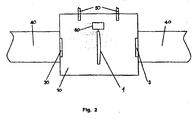
Figur 2 zeigt in schematischer Darstellung eine Vorrichtung zum Beschichten eines Substrates. - In
Figur 1 erkennt man ein Substrat 1. Auf dieses ist eine Zwischenschicht 2 aufgebracht. Diese hat eine Haftvermittler - Antikratz-Funktion. Sie ist zuverlässig am Substrat verankert, weil sie erfindungsgemäß bei minimaler Energiebelastung auf das Substrat aufgebracht wurde. - Die Zwischenschicht 2 kann eine sogenannte Gradientenschicht sein, aufgebaut aus mehreren Einzelschichten unterschiedlicher Zusammensetzung. Dabei ist die substratnahe Einzelschicht dem Substrat 1 wesensgleich, während die obere, substratferne Schicht einer nachfolgenden Schicht wesensgleich ist.
- Die nachfolgende Schicht ist die Funktionsschicht 3. Diese übt beispielsweise optische Funktionen aus.
- Den Abschluß bildet eine Deckschicht 4.
- Die in
Figur 2 gezeigte Vorrichtung weist die folgenden Komponenten auf: - ein Beschichtungsreaktor 10 trägt das Substrat 1. Man erkennt ein Mikrowellenfenster 30, einen Mikrowellenhohlleiter 40, einen Gaseinlaß 50 sowie einen Substrathalter 60.
-
- 1
- Substrat
- 2
- Zwischenschicht
- 3
- Funktionsschicht
- 4
- Deckschicht
- 10
- Beschichtungsreaktor
- 30
- Mikrowellenfenster
- 40
- Mikrowellenhohlleiter
- 50
- Gaseinlaß
- 60
- Substrathalter
Claims (3)
- Verfahren zum Beschichten eines Substrates aus einem organischen Kunststoff, insbesondere aus Polymethylmetakrylat (PMMA) oder einem Derivat hiervon oder einem mit diesem wesensgleichen Kunststoff, mit einer Mehrzahl von Funktionsschichten sowie mit einer zwischen diesen beiden befindlichen Zwischenschicht,
dadurch gekennzeichnet, dass
die Zwischenschicht auf das Substrat mittels eines PICVD-Verfahrens aufgebracht wird,
wobei die Gesamtdauer der Plasmaeinwirkung wenigstens ein Tausendstel der einwirkungsfreien Zeitspanne zwischen zwei Plasmaimpulsen beträgt, und höchstens gleich dieser ist. - Verfahren nach Anspruch 1, dadurch gekennzeichnet, daß der Einwirkungsimpuls der Plasmabeaufschlagung zwischen 0,1 und 10 ms, vorzugsweise zwischen 0,5 und 5 ms dauert.
- Verfahren nach einem der Ansprüche 1 oder 2, dadurch gekennzeichnet, daß die Beschichtungsrate bei der Plasma-Einwirkung pro Zeiteinheit und pro Flächeneinheit > 10 Nanometer/min ist, vorzugsweise > 100 Nanometer/min.
Priority Applications (8)
| Application Number | Priority Date | Filing Date | Title |
|---|---|---|---|
| EP01107967A EP1245298B1 (de) | 2001-03-29 | 2001-03-29 | Verfahren zum Herstellen eines beschichteten Kunststoffkörpers |
| AT01107967T ATE387266T1 (de) | 2001-03-29 | 2001-03-29 | Verfahren zum herstellen eines beschichteten kunststoffkörpers |
| DE50113662T DE50113662D1 (de) | 2001-03-29 | 2001-03-29 | Verfahren zum Herstellen eines beschichteten Kunststoffkörpers |
| PCT/EP2002/003528 WO2002094458A2 (de) | 2001-03-29 | 2002-03-28 | Verfahren zur herstellung eines beschichteten kunststoffkörpers |
| JP2002591166A JP2005508728A (ja) | 2001-03-29 | 2002-03-28 | コーティングされたプラスチック物体の製造方法 |
| US10/473,261 US20040101636A1 (en) | 2001-03-29 | 2002-03-28 | Method for producing a coated synthetic body |
| EP02748647A EP1417042B1 (de) | 2001-03-29 | 2002-03-28 | Verfahren zur herstellung eines beschichteten kunststoffkörpers |
| CNA028076052A CN1537034A (zh) | 2001-03-29 | 2002-03-28 | 生产涂渍的合成物体的方法 |
Applications Claiming Priority (1)
| Application Number | Priority Date | Filing Date | Title |
|---|---|---|---|
| EP01107967A EP1245298B1 (de) | 2001-03-29 | 2001-03-29 | Verfahren zum Herstellen eines beschichteten Kunststoffkörpers |
Publications (2)
| Publication Number | Publication Date |
|---|---|
| EP1245298A1 EP1245298A1 (de) | 2002-10-02 |
| EP1245298B1 true EP1245298B1 (de) | 2008-02-27 |
Family
ID=8176992
Family Applications (1)
| Application Number | Title | Priority Date | Filing Date |
|---|---|---|---|
| EP01107967A Expired - Lifetime EP1245298B1 (de) | 2001-03-29 | 2001-03-29 | Verfahren zum Herstellen eines beschichteten Kunststoffkörpers |
Country Status (3)
| Country | Link |
|---|---|
| EP (1) | EP1245298B1 (de) |
| AT (1) | ATE387266T1 (de) |
| DE (1) | DE50113662D1 (de) |
Cited By (1)
| Publication number | Priority date | Publication date | Assignee | Title |
|---|---|---|---|---|
| RU2418074C1 (ru) * | 2009-10-07 | 2011-05-10 | Общество с ограниченной ответственностью "МИФИ-АМЕТО" | Способ упрочнения изделий из металлических материалов с получением наноструктурированных поверхностных слоев |
Families Citing this family (2)
| Publication number | Priority date | Publication date | Assignee | Title |
|---|---|---|---|---|
| DE102004036170B4 (de) * | 2004-07-26 | 2007-10-11 | Schott Ag | Vakuumbeschichtungsanlage und Verfahren zur Vakuumbeschichtung und deren Verwendung |
| GB0509648D0 (en) * | 2005-05-12 | 2005-06-15 | Dow Corning Ireland Ltd | Plasma system to deposit adhesion primer layers |
Family Cites Families (8)
| Publication number | Priority date | Publication date | Assignee | Title |
|---|---|---|---|---|
| US4842941A (en) * | 1987-04-06 | 1989-06-27 | General Electric Company | Method for forming abrasion-resistant polycarbonate articles, and articles of manufacture produced thereby |
| DE4438359C2 (de) * | 1994-10-27 | 2001-10-04 | Schott Glas | Behälter aus Kunststoff mit einer Sperrbeschichtung |
| EP0752483A1 (de) * | 1995-06-28 | 1997-01-08 | ANTEC Angewandte Neue Technologien GmbH | Verfahren zur Beschichtung von Gegenständen aus Metall oder Kunststoff |
| DE19523444A1 (de) * | 1995-06-28 | 1997-01-02 | Antec Angewandte Neue Technolo | Verfahren zur Beschichtung von Kunststoffen oder ähnlichen weichen Werkstoffen |
| IT1284629B1 (it) * | 1996-04-17 | 1998-05-21 | Cetev Cent Tecnolog Vuoto | Metodo per la deposizione di film ottici con struttura mista inorganico-organica. |
| DE19643865C2 (de) * | 1996-10-30 | 1999-04-08 | Schott Glas | Plasmaunterstütztes chemisches Abscheidungsverfahren (CVD) mit entfernter Anregung eines Anregungsgases (Remote-Plasma-CVD-Verfahren) zur Beschichtung oder zur Behandlung großflächiger Substrate und Vorrichtung zur Durchführung desselben |
| DE19740806C2 (de) * | 1997-09-17 | 1999-10-07 | Schott Glas | Mikrotiterplatte aus Kunststoff |
| DE19935046C2 (de) * | 1999-07-26 | 2001-07-12 | Schott Glas | Plasma-CVD-Verfahren und Vorrichtung zur Herstellung einer mikrokristallinen Si:H-Schicht auf einem Substrat sowie deren Verwendung |
-
2001
- 2001-03-29 AT AT01107967T patent/ATE387266T1/de not_active IP Right Cessation
- 2001-03-29 EP EP01107967A patent/EP1245298B1/de not_active Expired - Lifetime
- 2001-03-29 DE DE50113662T patent/DE50113662D1/de not_active Expired - Lifetime
Cited By (1)
| Publication number | Priority date | Publication date | Assignee | Title |
|---|---|---|---|---|
| RU2418074C1 (ru) * | 2009-10-07 | 2011-05-10 | Общество с ограниченной ответственностью "МИФИ-АМЕТО" | Способ упрочнения изделий из металлических материалов с получением наноструктурированных поверхностных слоев |
Also Published As
| Publication number | Publication date |
|---|---|
| DE50113662D1 (de) | 2008-04-10 |
| ATE387266T1 (de) | 2008-03-15 |
| EP1245298A1 (de) | 2002-10-02 |
Similar Documents
| Publication | Publication Date | Title |
|---|---|---|
| DE3786800T2 (de) | Anlage zur kontinuierlichen Verbundbeschichtung von bandförmigem Gut. | |
| DE69914222T2 (de) | Verfahren zum Metallisieren der Oberfläche eines festen Polymersubstrats und auf diese Weise erhaltenes Produkt | |
| DE102012206081A1 (de) | Beschichtung von Behältern mit Plasmadüsen | |
| DE102004012463A1 (de) | Verfahren zur Bildung eines Belages aus Nanoverbundstoff | |
| DE10112731A1 (de) | Beschichtung von Substraten | |
| DE19953667B4 (de) | Schicht mit selektiv funktionalisierter Oberfläche, Verfahren zur Herstellung sowie deren Verwendung | |
| DE4216999C2 (de) | Verfahren zur Oberflächenbeschichtung von Silbergegenständen und nach diesem Verfahren hergestellte Schutzschicht | |
| DE19754056C1 (de) | Verfahren zum Beschichten von Elastomerkomponenten | |
| EP2288739A1 (de) | Transparentes barriereschichtsystem | |
| EP1417042B1 (de) | Verfahren zur herstellung eines beschichteten kunststoffkörpers | |
| DE10308989B4 (de) | Verfahren und Vorrichtung zur Herstellung eines mehrschichtigen Kunststoffformteiles | |
| EP0918586A1 (de) | Werkzeug insbesondere für die spanende materialbearbeitung | |
| DE102008028537B4 (de) | Verfahren zum Abscheiden einer Kratzschutzbeschichtung auf einem Kunststoffsubstrat | |
| DE10017846C2 (de) | Verfahren zum Abscheiden einer Polymerschicht und Verwendung derselben | |
| EP1245298A1 (de) | Verfahren zum Herstellen eines beschichteten Kunststoffkörpers | |
| EP2578180A1 (de) | Dentalwerkzeug sowie Verfahren zu dessen Herstellung | |
| EP1524329A1 (de) | Modulare Vorrichtung zur Beschichtung von Oberflächen | |
| DE10000663C2 (de) | Verfahren zum Beschichten eines Substrats | |
| DE10012516C1 (de) | Kunststoffbauteil mit Schutzschicht und Verfahren zu dessen Herstellung | |
| WO2009030435A1 (de) | Verfahren zur herstellung von dlc-schichten und dotierte polymere oder diamantartige kohlenstoffschichten | |
| DE102008050196A1 (de) | Vorrichtung und Verfahren zum Abscheiden einer Gradientenschicht | |
| EP1655385B1 (de) | Verfahren zum Aufbringen optischer Beschichtungen | |
| EP1164388B1 (de) | Verfahren zum Herstellen eines Gegenstands, der optische Schichten aufweist | |
| WO2018072774A1 (de) | Vorrichtung und verfahren zur herstellung definierter eigenschaften von gradientenschichten in einem system mehrlagiger beschichtungen bei sputter-anlagen | |
| EP0223998A1 (de) | Verfahren und Vorrichtung zur ein-oder mehrfachen Beschichtung der Oberflächen, vorzugsweise der inneren Oberfläche eines offenen Hohlkörpers aus Kunststoff |
Legal Events
| Date | Code | Title | Description |
|---|---|---|---|
| PUAI | Public reference made under article 153(3) epc to a published international application that has entered the european phase |
Free format text: ORIGINAL CODE: 0009012 |
|
| 17P | Request for examination filed |
Effective date: 20010329 |
|
| AK | Designated contracting states |
Kind code of ref document: A1 Designated state(s): AT BE CH CY DE DK ES FI FR GB GR IE IT LI LU MC NL PT SE TR |
|
| AX | Request for extension of the european patent |
Free format text: AL;LT;LV;MK;RO;SI |
|
| AKX | Designation fees paid |
Designated state(s): AT BE CH CY DE DK ES FI FR GB GR IE IT LI LU MC NL PT SE TR |
|
| RAP1 | Party data changed (applicant data changed or rights of an application transferred) |
Owner name: SCHOTT AG |
|
| 17Q | First examination report despatched |
Effective date: 20061026 |
|
| GRAP | Despatch of communication of intention to grant a patent |
Free format text: ORIGINAL CODE: EPIDOSNIGR1 |
|
| GRAS | Grant fee paid |
Free format text: ORIGINAL CODE: EPIDOSNIGR3 |
|
| GRAA | (expected) grant |
Free format text: ORIGINAL CODE: 0009210 |
|
| AK | Designated contracting states |
Kind code of ref document: B1 Designated state(s): AT BE CH CY DE DK ES FI FR GB GR IE IT LI LU MC NL PT SE TR |
|
| REG | Reference to a national code |
Ref country code: GB Ref legal event code: FG4D Free format text: NOT ENGLISH |
|
| REG | Reference to a national code |
Ref country code: CH Ref legal event code: EP |
|
| REG | Reference to a national code |
Ref country code: IE Ref legal event code: FG4D Free format text: LANGUAGE OF EP DOCUMENT: GERMAN |
|
| REF | Corresponds to: |
Ref document number: 50113662 Country of ref document: DE Date of ref document: 20080410 Kind code of ref document: P |
|
| PG25 | Lapsed in a contracting state [announced via postgrant information from national office to epo] |
Ref country code: ES Free format text: LAPSE BECAUSE OF FAILURE TO SUBMIT A TRANSLATION OF THE DESCRIPTION OR TO PAY THE FEE WITHIN THE PRESCRIBED TIME-LIMIT Effective date: 20080607 Ref country code: FI Free format text: LAPSE BECAUSE OF FAILURE TO SUBMIT A TRANSLATION OF THE DESCRIPTION OR TO PAY THE FEE WITHIN THE PRESCRIBED TIME-LIMIT Effective date: 20080227 |
|
| NLV1 | Nl: lapsed or annulled due to failure to fulfill the requirements of art. 29p and 29m of the patents act | ||
| BERE | Be: lapsed |
Owner name: SCHOTT A.G. Effective date: 20080331 |
|
| REG | Reference to a national code |
Ref country code: IE Ref legal event code: FD4D |
|
| ET | Fr: translation filed | ||
| PG25 | Lapsed in a contracting state [announced via postgrant information from national office to epo] |
Ref country code: PT Free format text: LAPSE BECAUSE OF FAILURE TO SUBMIT A TRANSLATION OF THE DESCRIPTION OR TO PAY THE FEE WITHIN THE PRESCRIBED TIME-LIMIT Effective date: 20080721 Ref country code: MC Free format text: LAPSE BECAUSE OF NON-PAYMENT OF DUE FEES Effective date: 20080331 Ref country code: SE Free format text: LAPSE BECAUSE OF FAILURE TO SUBMIT A TRANSLATION OF THE DESCRIPTION OR TO PAY THE FEE WITHIN THE PRESCRIBED TIME-LIMIT Effective date: 20080527 Ref country code: NL Free format text: LAPSE BECAUSE OF FAILURE TO SUBMIT A TRANSLATION OF THE DESCRIPTION OR TO PAY THE FEE WITHIN THE PRESCRIBED TIME-LIMIT Effective date: 20080227 Ref country code: IE Free format text: LAPSE BECAUSE OF FAILURE TO SUBMIT A TRANSLATION OF THE DESCRIPTION OR TO PAY THE FEE WITHIN THE PRESCRIBED TIME-LIMIT Effective date: 20080227 Ref country code: DK Free format text: LAPSE BECAUSE OF FAILURE TO SUBMIT A TRANSLATION OF THE DESCRIPTION OR TO PAY THE FEE WITHIN THE PRESCRIBED TIME-LIMIT Effective date: 20080227 |
|
| REG | Reference to a national code |
Ref country code: CH Ref legal event code: PL |
|
| PLBE | No opposition filed within time limit |
Free format text: ORIGINAL CODE: 0009261 |
|
| STAA | Information on the status of an ep patent application or granted ep patent |
Free format text: STATUS: NO OPPOSITION FILED WITHIN TIME LIMIT |
|
| PG25 | Lapsed in a contracting state [announced via postgrant information from national office to epo] |
Ref country code: LI Free format text: LAPSE BECAUSE OF NON-PAYMENT OF DUE FEES Effective date: 20080331 Ref country code: CH Free format text: LAPSE BECAUSE OF NON-PAYMENT OF DUE FEES Effective date: 20080331 |
|
| 26N | No opposition filed |
Effective date: 20081128 |
|
| PG25 | Lapsed in a contracting state [announced via postgrant information from national office to epo] |
Ref country code: BE Free format text: LAPSE BECAUSE OF NON-PAYMENT OF DUE FEES Effective date: 20080331 |
|
| PG25 | Lapsed in a contracting state [announced via postgrant information from national office to epo] |
Ref country code: CY Free format text: LAPSE BECAUSE OF FAILURE TO SUBMIT A TRANSLATION OF THE DESCRIPTION OR TO PAY THE FEE WITHIN THE PRESCRIBED TIME-LIMIT Effective date: 20080227 |
|
| PG25 | Lapsed in a contracting state [announced via postgrant information from national office to epo] |
Ref country code: AT Free format text: LAPSE BECAUSE OF NON-PAYMENT OF DUE FEES Effective date: 20080329 Ref country code: IT Free format text: LAPSE BECAUSE OF FAILURE TO SUBMIT A TRANSLATION OF THE DESCRIPTION OR TO PAY THE FEE WITHIN THE PRESCRIBED TIME-LIMIT Effective date: 20080227 |
|
| PG25 | Lapsed in a contracting state [announced via postgrant information from national office to epo] |
Ref country code: LU Free format text: LAPSE BECAUSE OF NON-PAYMENT OF DUE FEES Effective date: 20080329 |
|
| PG25 | Lapsed in a contracting state [announced via postgrant information from national office to epo] |
Ref country code: TR Free format text: LAPSE BECAUSE OF FAILURE TO SUBMIT A TRANSLATION OF THE DESCRIPTION OR TO PAY THE FEE WITHIN THE PRESCRIBED TIME-LIMIT Effective date: 20080227 |
|
| PG25 | Lapsed in a contracting state [announced via postgrant information from national office to epo] |
Ref country code: GR Free format text: LAPSE BECAUSE OF FAILURE TO SUBMIT A TRANSLATION OF THE DESCRIPTION OR TO PAY THE FEE WITHIN THE PRESCRIBED TIME-LIMIT Effective date: 20080528 |
|
| REG | Reference to a national code |
Ref country code: FR Ref legal event code: PLFP Year of fee payment: 16 |
|
| REG | Reference to a national code |
Ref country code: FR Ref legal event code: PLFP Year of fee payment: 17 |
|
| REG | Reference to a national code |
Ref country code: FR Ref legal event code: PLFP Year of fee payment: 18 |
|
| PGFP | Annual fee paid to national office [announced via postgrant information from national office to epo] |
Ref country code: GB Payment date: 20200323 Year of fee payment: 20 Ref country code: DE Payment date: 20200320 Year of fee payment: 20 |
|
| PGFP | Annual fee paid to national office [announced via postgrant information from national office to epo] |
Ref country code: FR Payment date: 20200319 Year of fee payment: 20 |
|
| REG | Reference to a national code |
Ref country code: DE Ref legal event code: R071 Ref document number: 50113662 Country of ref document: DE |
|
| REG | Reference to a national code |
Ref country code: GB Ref legal event code: PE20 Expiry date: 20210328 |
|
| PG25 | Lapsed in a contracting state [announced via postgrant information from national office to epo] |
Ref country code: GB Free format text: LAPSE BECAUSE OF EXPIRATION OF PROTECTION Effective date: 20210328 |