EP1235945B1 - Rotating magnet array and sputter source - Google Patents
Rotating magnet array and sputter source Download PDFInfo
- Publication number
- EP1235945B1 EP1235945B1 EP00966934A EP00966934A EP1235945B1 EP 1235945 B1 EP1235945 B1 EP 1235945B1 EP 00966934 A EP00966934 A EP 00966934A EP 00966934 A EP00966934 A EP 00966934A EP 1235945 B1 EP1235945 B1 EP 1235945B1
- Authority
- EP
- European Patent Office
- Prior art keywords
- magnets
- magnet array
- magnetic path
- plate
- substrate
- Prior art date
- Legal status (The legal status is an assumption and is not a legal conclusion. Google has not performed a legal analysis and makes no representation as to the accuracy of the status listed.)
- Expired - Lifetime
Links
- 238000004544 sputter deposition Methods 0.000 claims abstract description 56
- 239000000758 substrate Substances 0.000 claims abstract description 50
- 238000000151 deposition Methods 0.000 claims abstract description 40
- 238000000576 coating method Methods 0.000 claims abstract description 30
- 239000011248 coating agent Substances 0.000 claims abstract description 23
- 229910052751 metal Inorganic materials 0.000 claims abstract description 23
- 239000002184 metal Substances 0.000 claims abstract description 23
- 239000007789 gas Substances 0.000 claims description 49
- 230000003628 erosive effect Effects 0.000 claims description 34
- 230000008021 deposition Effects 0.000 claims description 32
- 238000005477 sputtering target Methods 0.000 claims description 27
- 238000000034 method Methods 0.000 claims description 26
- 238000012545 processing Methods 0.000 claims description 13
- 239000000919 ceramic Substances 0.000 claims description 12
- XAGFODPZIPBFFR-UHFFFAOYSA-N aluminium Chemical compound [Al] XAGFODPZIPBFFR-UHFFFAOYSA-N 0.000 claims description 8
- 229910052782 aluminium Inorganic materials 0.000 claims description 7
- 239000000463 material Substances 0.000 claims description 7
- QVGXLLKOCUKJST-UHFFFAOYSA-N atomic oxygen Chemical compound [O] QVGXLLKOCUKJST-UHFFFAOYSA-N 0.000 claims description 4
- 239000001301 oxygen Substances 0.000 claims description 4
- 229910052760 oxygen Inorganic materials 0.000 claims description 4
- 238000001755 magnetron sputter deposition Methods 0.000 claims description 3
- 239000012799 electrically-conductive coating Substances 0.000 claims description 2
- 238000013461 design Methods 0.000 abstract description 28
- 230000008569 process Effects 0.000 description 11
- TWNQGVIAIRXVLR-UHFFFAOYSA-N oxo(oxoalumanyloxy)alumane Chemical compound O=[Al]O[Al]=O TWNQGVIAIRXVLR-UHFFFAOYSA-N 0.000 description 10
- 235000012431 wafers Nutrition 0.000 description 6
- 238000002347 injection Methods 0.000 description 4
- 239000007924 injection Substances 0.000 description 4
- 238000005546 reactive sputtering Methods 0.000 description 4
- XUIMIQQOPSSXEZ-UHFFFAOYSA-N Silicon Chemical compound [Si] XUIMIQQOPSSXEZ-UHFFFAOYSA-N 0.000 description 3
- 238000003491 array Methods 0.000 description 3
- 230000008901 benefit Effects 0.000 description 3
- 239000002826 coolant Substances 0.000 description 3
- 238000001816 cooling Methods 0.000 description 3
- 229910001172 neodymium magnet Inorganic materials 0.000 description 3
- 229910052710 silicon Inorganic materials 0.000 description 3
- 239000010703 silicon Substances 0.000 description 3
- XKRFYHLGVUSROY-UHFFFAOYSA-N Argon Chemical compound [Ar] XKRFYHLGVUSROY-UHFFFAOYSA-N 0.000 description 2
- IJGRMHOSHXDMSA-UHFFFAOYSA-N Atomic nitrogen Chemical compound N#N IJGRMHOSHXDMSA-UHFFFAOYSA-N 0.000 description 2
- RYGMFSIKBFXOCR-UHFFFAOYSA-N Copper Chemical compound [Cu] RYGMFSIKBFXOCR-UHFFFAOYSA-N 0.000 description 2
- NRTOMJZYCJJWKI-UHFFFAOYSA-N Titanium nitride Chemical compound [Ti]#N NRTOMJZYCJJWKI-UHFFFAOYSA-N 0.000 description 2
- 230000000903 blocking effect Effects 0.000 description 2
- 229910052802 copper Inorganic materials 0.000 description 2
- 239000010949 copper Substances 0.000 description 2
- 239000003989 dielectric material Substances 0.000 description 2
- 230000004907 flux Effects 0.000 description 2
- 150000002500 ions Chemical class 0.000 description 2
- 239000010410 layer Substances 0.000 description 2
- 238000005259 measurement Methods 0.000 description 2
- 230000007246 mechanism Effects 0.000 description 2
- 238000001465 metallisation Methods 0.000 description 2
- 239000000523 sample Substances 0.000 description 2
- 239000004065 semiconductor Substances 0.000 description 2
- 238000000926 separation method Methods 0.000 description 2
- XLYOFNOQVPJJNP-UHFFFAOYSA-N water Substances O XLYOFNOQVPJJNP-UHFFFAOYSA-N 0.000 description 2
- VYZAMTAEIAYCRO-UHFFFAOYSA-N Chromium Chemical compound [Cr] VYZAMTAEIAYCRO-UHFFFAOYSA-N 0.000 description 1
- MYMOFIZGZYHOMD-UHFFFAOYSA-N Dioxygen Chemical compound O=O MYMOFIZGZYHOMD-UHFFFAOYSA-N 0.000 description 1
- 229910001030 Iron–nickel alloy Inorganic materials 0.000 description 1
- 229910052581 Si3N4 Inorganic materials 0.000 description 1
- VYPSYNLAJGMNEJ-UHFFFAOYSA-N Silicium dioxide Chemical compound O=[Si]=O VYPSYNLAJGMNEJ-UHFFFAOYSA-N 0.000 description 1
- GWEVSGVZZGPLCZ-UHFFFAOYSA-N Titan oxide Chemical compound O=[Ti]=O GWEVSGVZZGPLCZ-UHFFFAOYSA-N 0.000 description 1
- RTAQQCXQSZGOHL-UHFFFAOYSA-N Titanium Chemical compound [Ti] RTAQQCXQSZGOHL-UHFFFAOYSA-N 0.000 description 1
- 239000004411 aluminium Substances 0.000 description 1
- 238000013459 approach Methods 0.000 description 1
- 229910052786 argon Inorganic materials 0.000 description 1
- ZDVYABSQRRRIOJ-UHFFFAOYSA-N boron;iron Chemical compound [Fe]#B ZDVYABSQRRRIOJ-UHFFFAOYSA-N 0.000 description 1
- 239000011247 coating layer Substances 0.000 description 1
- 238000004891 communication Methods 0.000 description 1
- PMHQVHHXPFUNSP-UHFFFAOYSA-M copper(1+);methylsulfanylmethane;bromide Chemical compound Br[Cu].CSC PMHQVHHXPFUNSP-UHFFFAOYSA-M 0.000 description 1
- 229910001882 dioxygen Inorganic materials 0.000 description 1
- 230000009977 dual effect Effects 0.000 description 1
- 239000012530 fluid Substances 0.000 description 1
- 230000006872 improvement Effects 0.000 description 1
- UGKDIUIOSMUOAW-UHFFFAOYSA-N iron nickel Chemical compound [Fe].[Ni] UGKDIUIOSMUOAW-UHFFFAOYSA-N 0.000 description 1
- 238000012986 modification Methods 0.000 description 1
- 230000004048 modification Effects 0.000 description 1
- 150000004767 nitrides Chemical class 0.000 description 1
- 229910052757 nitrogen Inorganic materials 0.000 description 1
- 238000013386 optimize process Methods 0.000 description 1
- RVTZCBVAJQQJTK-UHFFFAOYSA-N oxygen(2-);zirconium(4+) Chemical compound [O-2].[O-2].[Zr+4] RVTZCBVAJQQJTK-UHFFFAOYSA-N 0.000 description 1
- 238000004886 process control Methods 0.000 description 1
- 229910052761 rare earth metal Inorganic materials 0.000 description 1
- 150000002910 rare earth metals Chemical class 0.000 description 1
- 230000009467 reduction Effects 0.000 description 1
- HQVNEWCFYHHQES-UHFFFAOYSA-N silicon nitride Chemical compound N12[Si]34N5[Si]62N3[Si]51N64 HQVNEWCFYHHQES-UHFFFAOYSA-N 0.000 description 1
- 229910052814 silicon oxide Inorganic materials 0.000 description 1
- 238000005478 sputtering type Methods 0.000 description 1
- 239000010936 titanium Substances 0.000 description 1
- 229910052719 titanium Inorganic materials 0.000 description 1
- OGIDPMRJRNCKJF-UHFFFAOYSA-N titanium oxide Inorganic materials [Ti]=O OGIDPMRJRNCKJF-UHFFFAOYSA-N 0.000 description 1
- MAKDTFFYCIMFQP-UHFFFAOYSA-N titanium tungsten Chemical compound [Ti].[W] MAKDTFFYCIMFQP-UHFFFAOYSA-N 0.000 description 1
- 238000013022 venting Methods 0.000 description 1
- 229910001928 zirconium oxide Inorganic materials 0.000 description 1
Images




Classifications
-
- H—ELECTRICITY
- H01—ELECTRIC ELEMENTS
- H01J—ELECTRIC DISCHARGE TUBES OR DISCHARGE LAMPS
- H01J37/00—Discharge tubes with provision for introducing objects or material to be exposed to the discharge, e.g. for the purpose of examination or processing thereof
- H01J37/32—Gas-filled discharge tubes
- H01J37/34—Gas-filled discharge tubes operating with cathodic sputtering
- H01J37/3402—Gas-filled discharge tubes operating with cathodic sputtering using supplementary magnetic fields
- H01J37/3405—Magnetron sputtering
- H01J37/3408—Planar magnetron sputtering
-
- C—CHEMISTRY; METALLURGY
- C23—COATING METALLIC MATERIAL; COATING MATERIAL WITH METALLIC MATERIAL; CHEMICAL SURFACE TREATMENT; DIFFUSION TREATMENT OF METALLIC MATERIAL; COATING BY VACUUM EVAPORATION, BY SPUTTERING, BY ION IMPLANTATION OR BY CHEMICAL VAPOUR DEPOSITION, IN GENERAL; INHIBITING CORROSION OF METALLIC MATERIAL OR INCRUSTATION IN GENERAL
- C23C—COATING METALLIC MATERIAL; COATING MATERIAL WITH METALLIC MATERIAL; SURFACE TREATMENT OF METALLIC MATERIAL BY DIFFUSION INTO THE SURFACE, BY CHEMICAL CONVERSION OR SUBSTITUTION; COATING BY VACUUM EVAPORATION, BY SPUTTERING, BY ION IMPLANTATION OR BY CHEMICAL VAPOUR DEPOSITION, IN GENERAL
- C23C14/00—Coating by vacuum evaporation, by sputtering or by ion implantation of the coating forming material
- C23C14/22—Coating by vacuum evaporation, by sputtering or by ion implantation of the coating forming material characterised by the process of coating
- C23C14/34—Sputtering
- C23C14/35—Sputtering by application of a magnetic field, e.g. magnetron sputtering
-
- H—ELECTRICITY
- H01—ELECTRIC ELEMENTS
- H01J—ELECTRIC DISCHARGE TUBES OR DISCHARGE LAMPS
- H01J37/00—Discharge tubes with provision for introducing objects or material to be exposed to the discharge, e.g. for the purpose of examination or processing thereof
- H01J37/32—Gas-filled discharge tubes
- H01J37/34—Gas-filled discharge tubes operating with cathodic sputtering
- H01J37/3411—Constructional aspects of the reactor
- H01J37/345—Magnet arrangements in particular for cathodic sputtering apparatus
- H01J37/3455—Movable magnets
Definitions
- the present invention is directed to a method and apparatus for depositing metal and metal-reactive gas coatings onto a substrate.
- RF diode sputtering from a ceramic target. While somewhat effective, the RF diode sputtering process is quite slow with deposition rates of approximately 500 Angstroms/Minute. With such low deposition rates batch loading is required for economic machine throughput.
- Batch processing involves coating multiple substrates in a single deposition run.
- batch processing has long been recognized by the semiconductor industry as less than optimum because of several factors.
- Single substrate processing offers the benefits of better wafer-to-wafer deposition control and reduced losses in non-useable wafers due to deposition run problems.
- a commercially viable deposition rate would have to be increased by a substantial amount over the rate achievable in conventional RF diode sputtering systems. For example, a three times increase in deposition rate over the conventional RF diode approach would yield an acceptable rate for commercial applications.
- This increased rate can be achievable by utilizing a reactive sputtering process.
- an Aluminum target is placed in proximity to the presence of Oxygen to create an Al 2 O 3 film as it is being deposited. The rate increase is realized because the sputter rate for metallic Aluminum is many times faster than for Aluminum Oxide and more conventional DC type power supplies can be used.
- deposition uniformity In addition to deposition rate, another important processing parameter is the deposition uniformity, which directly impacts the number of usable devices yielded from each substrate.
- An acceptable commercial deposition full range uniformity (of the coating layer thickness over the entire substrate) is ⁇ 2 % and is thus a major parameter in the source design. To achieve this kind of uniformity a large area sputter target would be needed.
- magnetron systems typically include a source, a metal target (typically Aluminum (Al) acting as a cathode), an electrode, and a substrate in close proximity to the electrode.
- a sputter gas medium, such as Argon (Ar) is introduced in the vacuum chamber and is ionized.
- Ar + ions accelerate towards the negatively charged target and collide with the target to release Al atoms that are deposited on the substrate.
- One conventional magnetron design utilizes a stationary magnet to generate a magnetic field that is used to keep electrons from escaping the target vicinity before ionizing a number of Ar atoms which sputter the target.
- use of stationary magnets creates a "trenching" of the target which results in a non-uniform erosion of the target. This is disadvantageous because utilizing a non-uniform erosion pattern increases the risk that the deposited film will be non-uniform.
- US 5,164,063 discloses a sputtering cathode arrangement consisting of at least two magnet arrangements off-center from the axis of rotation, each of which produces a self-contained tunnel of magnetic lines of force.
- US 4,498,969 discloses a sputtering apparatus comprising an assembly supporting a magnet adjacent the cathode target and capable of rotating said magnet to produce a rotating magnetic field substantially parallel to the surface of the target in the region to be sputtered.
- US 5,026,471 shows a sputtering device wherein the magnet arrangement includes a center row of small magnets extending in longitudinal direction of the target, a further continuous row of small magnets disposed at the edge of a supporting yoke and two round magnets, each of which is at the respective end of the center row of magnets.
- the present invention provides a magnet array for a rotating magnetron sputtering system.
- a plurality of magnets are disposed on a plate.
- the plurality of magnets is arranged such that a magnetic path is formed.
- the shape of the magnetic path is a double-lobe structure that includes first and second lobes that are symmetrical about an axis in the plane of the plate that intersects a center of rotation of the plate.
- the magnets are arranged in several rows.
- a first row of magnets has a double-lobe structure that corresponds to the first and second lobes of the magnetic path.
- Second and third rows of magnets are arranged in the shape of a rings inside the first and second lobes of the magnetic path magnetic path.
- the lobe structure is designed to maximize the erosion of the perimeter region of a sputtering target.
- the lobe structure can be circular or elliptical in shape.
- the present invention further provides a sputtering system for depositing a coating on a substrate.
- the sputtering system includes a metal sputtering target that is coupled to a power source, where the sputtering target shaped as an annulus.
- the sputtering system also includes a rotatable magnet array disposed over the sputtering target.
- the magnet array can be shaped as in the embodiments described above. With this magnet array, the resulting magnetic path generates a substantially uniform erosion of the sputtering target.
- the present invention provides a method for the deposition of a metal-reactive gas material onto a substrate.
- a magnet array such as the magnet arrays described in the preceding embodiments, is rotated in proximity to a metal sputtering target. The rotation of the magnetic path thereby generates a substantially uniform erosion of the sputtering target.
- a reactive gas is introduced proximate to a surface of the substrate to react with sputtered metal atoms released from the sputtering plate. The resulting metal-reactive gas coating deposits on the surface of the substrate at a high rate.
- Fig. 1 is a schematic view of a magnet array according to an embodiment of the present invention.
- Fig. 2 is a schematic view of a magnet array according to another embodiment of the present invention.
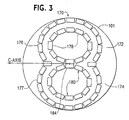
- Fig. 3 is a schematic view of a magnet array according to another embodiment of the present invention.
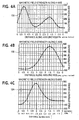
- Figs. 4A-4C are plots of the magnetic field strengths measured along the A-axis, C-axis and B-axis, respectively, for the magnet array of Fig. 1 .
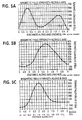
- Figs. 5A-5C are plots of the magnetic field strengths measured along the A-axis, C-axis and B-axis, respectively, for the magnet array of Fig. 2 .
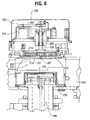
- Fig. 6 is a schematic view of a sputtering system according to an embodiment of the present invention.
- Fig. 7 is a schematic view of a sputtering source according to another embodiment of the present invention.
- Fig. 8 is a schematic view of a sputtering target according to an embodiment of the present invention.
- the present invention provides a sputtering system and magnet array for depositing metal and metal-reactive gas coatings onto a substrate.
- the metal-reactive gas coatings can be electrically conductive or insulating.
- the magnet array is designed for use in a rotating magnetron.
- the magnet array and sputtering system of the present invention are used for the high rate deposition of a dielectric material, such as an Aluminum Oxide coating, on a substrate. While the embodiments described herein are used to deposit Aluminum Oxide coatings on a silicon wafer substrate, the present invention is not limited for use with this particular coating or substrate, as would be apparent to one skilled in the art given the present description.
- Fig. 1 shows one embodiment of the invention, magnet array 100, which can be incorporated into the sputtering system of the present invention or a conventional rotating magnetron sputtering system to provide a high rate deposition of a metal or an insulating or dielectric film layer onto a substrate.
- a plurality of magnets are disposed on plate 101 that can be rotated about an axis, which corresponds to the center of rotation 120 of plate 101.
- Plate 101 is preferably circular, however the shape of plate 101 can be modified depending on the type of sputtering system used.
- the magnet array of the present invention utilizes a symmetrical double-lobe design.
- the magnet array design shown in Fig. 1 utilizes two elliptical magnetic lobes 102, 104 that overlap at the center of rotation 120 and are symmetric about the C-axis shown in Fig. 1 .
- Lobe 102 includes an outer row (or ring) of magnets 106 and an inner ring of magnets 108.
- Lobe 104 includes an outer row of magnets 107 and an inner ring of magnets 110.
- the dual lobe nature of the present invention enables a higher deposition rate and greater yield of the sputtering target than in conventional magnet designs.
- the polarity of the magnets comprising outer rows 106 and 107 is North ("N") and the polarity of the magnets comprising inner rings 108 and 110 is South (“S").
- the polarity of the magnets in the outer and inner rings can be switched.
- a center magnet 114 can be utilized having the same polarity as inner rings 108 and 110. Center magnet 114 can be disposed directly over the axis of rotation.
- a center magnet set (such as shown in Fig. 3 , described below) comprising two or more magnets can be disposed over the axis of rotation.
- a center magnet or center magnet set can be used to further control the resulting erosion profile of a target, such as by blocking the inner erosion of the target.
- the magnets comprising magnet array 100 are all of the same magnetic field strength.
- the magnets comprise rare-earth magnets such as Neodimium Iron Boron (NdFeB) magnets. These magnets have high pole field strengths on the order of 5000 Gauss.
- the example magnets shown in Fig. 1 each have a rectangular shape.
- the magnets utilized in magnet array 100 can comprise any shape, such as rectangular, square, or circular shapes.
- a continuous erosion track or closed-loop erosion path 112 is formed between outer rows 106 and 107 and inner rows 108 and 110.
- the erosion track resembles a "figure-8" (corresponding to the space between the outer and inner rows of magnets). Flux from one row of magnets to the other forms a tunnel. When sputtering, an intense plasma forms in the tunnel, and by rotating the magnet array, the plasma is swept around the surface of the target. Thus, when magnet array 100 is rotated, the sputter target surface is eroded over nearly the entire available surface area.
- the separation between outer and inner rows of magnets controls both the shape of the magnetic flux lines running North to South and the magnetic field strength at the target surface. For example, if the outer and inner rows are separated too widely, the magnetic field strength will weaken. In addition, if the outer and inner rows are spaced too close together, the magnetic field strength also will weaken. Optimal separation depends on the magnet material and size as well as geometry of the sputtering structure. In this embodiment, acceptable results occur when the inner and outer rows of magnet array 100 are separated by about 15-30 mm.
- the magnetic field strength profiles parallel to the sputter target surface for magnet array 100 are shown graphically in Figs. 4A-4C , where the resulting erosion pattern on the target follows the measured field strength when the magnet array is not rotating. These measurements were taken with a conventional magnetic field probe at a predetermined distance from the magnetic pole. The field strength was measured along the denoted axes as a function of radial distance from the center out towards the edge. The axes chosen were the A, B, and C axes denoted in Fig. 1 . For example, as shown in Fig. 4B , along the C-axis, the magnetic field strength 132 is greatest between center magnet 114 and magnet 115 (and similarly between 114 and 116 due to the symmetrical magnet array design).
- Figs. 4A and 4C show magnetic field strength curves 130 and 134, respectively, which represent the field strengths along the A and B axes. By combining the field strengths along each of the axes and rotating these axes at the center of plate 101, a substantially uniform erosion track over the surface of the target is achieved. Figs. 4A-4C show that the erosion track is substantially uniform, with varying field strengths of ⁇ 10 % at all points greater than 0.5 inches from the center of the magnet array.
- the curvature and strength of the lobe design can be varied depending on the sputtering target design, the erosion rate sought, and the type of film being deposited on the substrate.
- FIG. 2 Another embodiment of the magnet array of the present invention is shown in Fig. 2 .
- Magnet array 150 comprises a plurality of magnets disposed on plate 101 that can be rotated about an axis, which corresponds to the center of rotation 120 of plate 101.
- This design utilizes two circular magnetic lobes 152, 154 that overlap at the center of rotation 120 and are symmetric about the C-axis shown in Fig. 1 .
- Lobe 152 includes an outer row of magnets 156 and an inner ring of magnets 158.
- Lobe 154 includes an outer row of magnets 157 and an inner ring of magnets 160.
- the closed-loop erosion track 162 has a different target erosion profile than track 112 of magnet array 100.
- FIG. 5A-5C The magnetic field strength profiles perpendicular to the sputtering target surface for magnet array 150 are shown graphically in Figs. 5A-5C , where the resulting erosion pattern on the target follows the measured field strength when the magnet array is not rotating. Similar to Figs. 4A-4C , these measurements were taken with a conventional magnetic field probe at a predetermined distance from the surface. The field strength was measured as a function of radial distance from the center out towards the edge along an axis. The axes chosen were the A, B, and C axes denoted in Fig. 2 .
- Magnet array 170 comprises of plurality of magnets disposed on plate 101 that can be rotated about an axis, which corresponds to the center of rotation of plate 101.
- This design utilizes two circular magnetic lobes 172, 174 that are symmetric about the C-axis.
- Lobe 172 includes an outer row of magnets 176 and an inner ring of magnets 178.
- Lobe 174 includes an outer row of magnets 177 and an inner ring of magnets 180.
- two magnets, or center magnet set 184 are disposed surrounding and proximate to (in this example, on either side of) the center of rotation of plate 101.
- Magnet set 184 can be used to control the resulting erosion profile of a target, in this case by blocking the inner erosion of the target.
- the curvature of the lobe patterns controls the erosion profile.
- the deposition onto the substrate is reduced towards the outer edges.
- a more elliptical magnet array design such as magnet array 100, can be utilized to improve the uniformity and greater erosion rate towards the edges of the target.
- the elliptical lobe pattern of magnet array 100 of Fig. 1 is designed so that the curvature of the outer regions of magnet rows 106, 107, 108, and 110 have a flatter (as opposed to a more circular) shape, thereby increasing the rate from the edge of the target.
- the double-lobe, elliptical design of magnet array 100 a greater magnetic field is available for eroding the target, as compared to conventional designs that use a single lobe that is asymmetrical with respect to the axis of rotation.
- the more circular lobe design of magnet array 150 may be useful depending on the type of material being deposited on the substrate.
- the symmetrical and dual-lobe design of magnet arrays 100, 150, and 170 generates an increased sputter rate (i.e., the amount of target sputtered off per unit time).
- the magnet array design should minimize the area of the target that is not sputtering. Otherwise, the target may accumulate material and begin to arc, which is damaging to the sputtering system.
- another design parameter of the present invention is based, at least in part, on the discovery by the inventors that the erosion profile in a reactive environment differs from that in a non-reactive environment.
- magnet array designs optimized for metal deposition may not be necessarily well suited for reactive applications.
- Fig. 6 schematically shows a sputtering system 200 that is capable of depositing a coating on the surface of a substrate at a high rate, according to one embodiment of the present invention.
- the coating can be a metal coating or a metal-reactive gas coating.
- Metal-reactive gas coatings can be electrically conductive or insulating.
- Example metal-reactive gas coatings include oxides such as Al 2 O 3 , zirconium oxide, silicon oxide, titanium oxide, and nitrides such as titanium nitride, aluminum nitride, silicon nitride, and the like.
- the embodiment of the present invention illustrated in Fig. 6 is not intended to be limiting, but rather an exemplary embodiment that produces desired results. Variations on the actual structure of the device shown in Fig. 6 will become apparent to those of skill in the art given the present description.
- the main components of sputtering system 200 include a cathode assembly 202, a magnet array 210, a sputtering target 220, a substrate 230, a lower electrode 240, and a vacuum system 250.
- Cathode assembly 202 includes a source, such as conventional power supply (not shown) to activate the sputtering process.
- the target 220 is charged by the source to act as the cathode for the sputtering system.
- Target 220 can comprise any metal that is conventionally deposited on substrates, such as Aluminum, Titanium, Copper, Chrome, Nickel-Iron (NiFe), and Titanium-Tungsten (TiW).
- target 220 is an aluminum plate shaped like an annulus. Target 220 is discussed in greater detail with respect to Fig. 8 .
- Sputtering system 200 also includes a rotational subsystem to rotate magnet array 210.
- a motor 203 is coupled to a belt 204 which rotates a shaft 205 about axis of rotation 207 in a conventional manner.
- a spindle 206 can be used to mount magnet array 210.
- magnet array 210 can comprise a magnet array 100, magnet array 150, or magnet array 170 discussed above or a variation based on the teachings herein.
- Motor 203 can have an adjustable speed. In operation, the spindle 206 rotates magnet array 210 to create a rotating field at the sputtering target surface.
- Sputtering system 200 further includes a backing plate 216.
- backing plate 216 is electrically isolated and water cooled.
- Target 220 is attached or bonded to backing plate 216.
- the backing plate/target assembly is mounted to a vacuum chamber 250 such that the target surface 221 is positioned opposite the substrate 230 to be coated.
- the outside surface of the backing plate is placed at atmospheric pressure and positioned in front of magnet array 210.
- a sputter gas medium such as Ar gas
- Ionized Ar + atoms are attracted to the negatively charged target 220 during the sputtering process.
- a portion of the released Al atoms will eventually deposit on substrate 230, which is supported by lower electrode 240.
- electrode 240 includes a moveable platform that provides height adjustment for the substrate and allows for process repeatability.
- conventional magnetron control equipment (not shown), such as ion gauges, control computers, valve controllers, etc., can be utilized to optimize process repeatability, as will become apparent to those of skill in the art given the present description.
- sputtering system 200 further includes a reactive gas injection unit 235 to provide for the introduction of a reactive gas, such as Oxygen or Nitrogen.
- a reactive gas such as Oxygen or Nitrogen.
- the O 2 reacts with the Al - atoms released during the sputtering process to form a dielectric or insulating coating of Al 2 O 3 on the substrate 230.
- a coating such as titanium nitride, can be used to coat substrate 230.
- the reactive gas injection system 235 can include a shower ring injector to provide for the uniform introduction of the gas proximate to the exposed surface of substrate 230.
- reactive gas injection system 235 would not be utilized.
- Main vacuum chamber 250 can be a conventional vacuum system capable of creating a pressure ranging from 13.3kg/m 2 [10 -2 Torr] to about 0.000133 kg/m 2 [10 -7 Torr] in reaction chamber 222 with operating pressure in the range of 1.33 kg/m 2 [10 -3 Torr].
- Fig. 7 schematically shows a more detailed view of several additional embodiments of sputtering system 200.
- Magnet array 210 is positioned over target 220, which is shaped as an annulus.
- target 220 is attached or bonded by conventional means to a liquid-cooled backing plate 216.
- Water, or other types of coolant can be fed to a copper (or the like) backing plate 216 through coolant feed line 217, which is in fluid communication with a coolant conduit (not shown) in contact with backing plate 216.
- Cooling is important because during the sputtering process, the majority of the power applied to the target is converted to heat. Cooling also helps prevent the target from becoming de-bonded with backing plate 216. Further, by providing target cooling, sputtering source 200 can be temperature controlled during high rate sputtering applications.
- Sputtering system 200 also provides several alternative mechanism for injecting a sputter gas medium, such as Ar, into the reaction chamber for sputtering.
- sputtering system 200 includes a gas feed 225 which can be used to inject Ar gas substantially parallel to or across the surface of target 220. Gas flows from feed 225 along a first gas path or conduit 226 to a gas introduction port 228 located proximate to the central region of target 220. From gas introduction port 228, Ar gas can flow radially outward across the surface of the target 220, to further help provide uniform sputtering of the target.
- sputtering system 200 include a perimeter gas feed 227, which is used to introduce Ar across the surface of target 220 from the perimeter of the target inward towards the central region along path 229.
- the perimeter gas feed 227 can be coupled to a conventional shower ring injector which is disposed outside the perimeter of target 220 and directs gas flow inward towards the central region of target 220.
- Ar gas, or the like can be introduced to the reaction chamber utilizing the above-mentioned mechanisms, either alone or in combination.
- magnet array 210 has magnetic field with a reduced erosion profile (or "dead spot") near its central region.
- a dead spot can be utilized to help control the erosion profile.
- magnet arrays which are designed to sputter metal have a dead spot in the center. This is acceptable for metal deposition because the central region of the target is passive during sputtering. However, with reactive sputtering, the region of the target proximate to the dead spot does not sputter; rather, it can accumulate the dielectric compound and become a problem area in terms of arcing. If there is arcing, the process becomes unacceptable.
- a ceramic insert or series of ceramic inserts can be used to reduce the arcing problem. A proper combination magnet array, the target and the ceramic inserts are designed to address these problems.
- sputtering system 200 can further include ceramic inserts 221 and 222.
- Outer ceramic insert 222 is disposed on the perimeter of target 222 and central ceramic insert 221 is disposed in the central region of target 220.
- central ceramic insert 221 can be further designed to allow a gas flow path for Ar gas that is introduced across target 220 at gas introduction port 228.
- Additional ceramic inserts can be designed to correspond to erosion path created by magnet array 210 in order to minimize arcing problems.
- Fig. 8 shows an embodiment where a metal target 300 to be used with the magnet array and sputtering system of the present invention.
- Metal target 300 is an annulus shaped structure composed of the target metal to be deposited on the substrate.
- the target can be configured to resemble an annulus, where the hole in central region 302 corresponds to the central dead spot.
- target 300 has an outer diameter of about 0.29m [11.5 inches] and an inner diameter of about 0.06m [2.5 inches].
- target 300 can be optimized depending on the type of material to be deposited, the desired film characteristics, the size of the substrate, and the specific design of the magnet array being used.
- the annulus shaped target allows for the injection of the sputter medium gas through the central region, as discussed above with respect to Fig. 7 .
- a sputtering system similar to that shown in Figs. 6 and 7 , was utilized to perform several experimental coating runs on silicon wafer substrate.
- An aluminium target was utilized having a shape similar to that shown for target 300 in Fig. 8 .
- the outer diameter of the target was approximately 0.29m [11.5 inches] and the inner diameter was approximately 0.06m [2.5 inches].
- a magnet array similar in shape to magnet array 100 from Fig. 1 was utilized.
- the magnet array was disposed on a 0.3m [12 inch] diameter circular plate and included 47 NdFeB magnets arranged in a symmetrical dual-lobe pattern, with each lobe having an elliptical shape.
- Each NdFeB magnet was rectangular shaped with a length of about 0.02m [1 inch] and a width of about 0.01 m [0.5 inches], with each having a magnetic pole field of about 5000 Gauss.
- the outer row of each lobe was N-polarized and the inner rows were S-polarized.
- the outer and inner rows of each lobe were separated by about 20 mm.
- a conventional pulsed DC plasma generator was used to supply about 4 KWatts of power to the sputtering target.
- the reactive gas (O 2 ) was introduced to the reaction chamber via a gas introduction system similar to that shown in Fig. 5 .
- the magnet array and sputtering system of the present invention provides an acceptable single substrate processing device for semiconductor and other film deposition applications.
Landscapes
- Chemical & Material Sciences (AREA)
- Engineering & Computer Science (AREA)
- Physics & Mathematics (AREA)
- Plasma & Fusion (AREA)
- Analytical Chemistry (AREA)
- Materials Engineering (AREA)
- Chemical Kinetics & Catalysis (AREA)
- Mechanical Engineering (AREA)
- Metallurgy (AREA)
- Organic Chemistry (AREA)
- Physical Vapour Deposition (AREA)
- Magnetic Treatment Devices (AREA)
- Telephone Function (AREA)
- Catching Or Destruction (AREA)
Applications Claiming Priority (3)
| Application Number | Priority Date | Filing Date | Title |
|---|---|---|---|
| US09/406,853 US6258217B1 (en) | 1999-09-29 | 1999-09-29 | Rotating magnet array and sputter source |
| US406853 | 1999-09-29 | ||
| PCT/US2000/026503 WO2001023634A1 (en) | 1999-09-29 | 2000-09-27 | Rotating magnet array and sputter source |
Publications (3)
| Publication Number | Publication Date |
|---|---|
| EP1235945A1 EP1235945A1 (en) | 2002-09-04 |
| EP1235945A4 EP1235945A4 (en) | 2007-01-17 |
| EP1235945B1 true EP1235945B1 (en) | 2008-11-05 |
Family
ID=23609684
Family Applications (1)
| Application Number | Title | Priority Date | Filing Date |
|---|---|---|---|
| EP00966934A Expired - Lifetime EP1235945B1 (en) | 1999-09-29 | 2000-09-27 | Rotating magnet array and sputter source |
Country Status (8)
| Country | Link |
|---|---|
| US (1) | US6258217B1 (enExample) |
| EP (1) | EP1235945B1 (enExample) |
| JP (1) | JP2003510464A (enExample) |
| AT (1) | ATE413688T1 (enExample) |
| AU (1) | AU7720700A (enExample) |
| DE (1) | DE60040757D1 (enExample) |
| HK (1) | HK1049502A1 (enExample) |
| WO (1) | WO2001023634A1 (enExample) |
Families Citing this family (28)
| Publication number | Priority date | Publication date | Assignee | Title |
|---|---|---|---|---|
| US6454911B1 (en) | 2000-06-01 | 2002-09-24 | Honeywell International Inc. | Method and apparatus for determining the pass through flux of magnetic materials |
| US7041204B1 (en) | 2000-10-27 | 2006-05-09 | Honeywell International Inc. | Physical vapor deposition components and methods of formation |
| WO2002086186A1 (en) * | 2001-04-24 | 2002-10-31 | Tosoh Smd, Inc. | Target and method of optimizing target profile |
| SE521095C2 (sv) | 2001-06-08 | 2003-09-30 | Cardinal Cg Co | Förfarande för reaktiv sputtring |
| US6758950B2 (en) | 2002-01-14 | 2004-07-06 | Seagate Technology Llc | Controlled magnetron shape for uniformly sputtered thin film |
| US20040129559A1 (en) * | 2002-04-12 | 2004-07-08 | Misner Josh W. | Diffusion bonded assemblies and fabrication methods |
| US7041200B2 (en) * | 2002-04-19 | 2006-05-09 | Applied Materials, Inc. | Reducing particle generation during sputter deposition |
| JP4493284B2 (ja) * | 2003-05-26 | 2010-06-30 | キヤノンアネルバ株式会社 | スパッタリング装置 |
| US7101466B2 (en) * | 2003-09-19 | 2006-09-05 | Kdf Electronic + Vacuum Services Inc | Linear sweeping magnetron sputtering cathode and scanning in-line system for arc-free reactive deposition and high target utilization |
| US7182843B2 (en) * | 2003-11-05 | 2007-02-27 | Dexter Magnetic Technologies, Inc. | Rotating sputtering magnetron |
| US8597479B2 (en) * | 2005-02-08 | 2013-12-03 | Tohoku Seiki Industries, Ltd. | Sputtering system |
| US7585399B1 (en) * | 2005-03-31 | 2009-09-08 | Novellus Systems, Inc. | Rotating magnet arrays for magnetron sputtering apparatus |
| DE102005019100B4 (de) * | 2005-04-25 | 2009-02-12 | Steag Hamatech Ag | Magnetsystem für eine Zerstäubungskathode |
| CN101203935A (zh) * | 2005-06-04 | 2008-06-18 | 应用材料合资有限公司 | 溅射磁控管 |
| WO2007053586A2 (en) | 2005-11-01 | 2007-05-10 | Cardinal Cg Company | Reactive sputter deposition processes and equipment |
| US9771647B1 (en) | 2008-12-08 | 2017-09-26 | Michael A. Scobey | Cathode assemblies and sputtering systems |
| US8137517B1 (en) | 2009-02-10 | 2012-03-20 | Wd Media, Inc. | Dual position DC magnetron assembly |
| JP5328462B2 (ja) * | 2009-04-23 | 2013-10-30 | 昭和電工株式会社 | マグネトロンスパッタ装置、インライン式成膜装置、磁気記録媒体の製造方法 |
| US9380692B2 (en) * | 2009-08-31 | 2016-06-28 | Samsung Electronics Co., Ltd. | Apparatus and arrangements of magnetic field generators to facilitate physical vapor deposition to form semiconductor films |
| JP5730077B2 (ja) * | 2010-06-03 | 2015-06-03 | キヤノンアネルバ株式会社 | 磁石ユニットおよびマグネトロンスパッタリング装置 |
| US20120024229A1 (en) * | 2010-08-02 | 2012-02-02 | Applied Materials, Inc. | Control of plasma profile using magnetic null arrangement by auxiliary magnets |
| WO2012035603A1 (ja) * | 2010-09-13 | 2012-03-22 | 株式会社シンクロン | 磁場発生装置、マグネトロンカソード及びスパッタ装置 |
| US8674327B1 (en) | 2012-05-10 | 2014-03-18 | WD Media, LLC | Systems and methods for uniformly implanting materials on substrates using directed magnetic fields |
| US20140124359A1 (en) * | 2012-11-02 | 2014-05-08 | Intermolecular, Inc. | New Magnet Design Which Improves Erosion Profile for PVD Systems |
| GB201815216D0 (en) * | 2018-09-18 | 2018-10-31 | Spts Technologies Ltd | Apparatus and a method of controlling thickness variation in a material layer formed using physical vapour deposition |
| CN112030118A (zh) * | 2020-07-31 | 2020-12-04 | 中国原子能科学研究院 | 一种氘化聚乙烯纳米线阵列靶的制备方法 |
| US11479847B2 (en) | 2020-10-14 | 2022-10-25 | Alluxa, Inc. | Sputtering system with a plurality of cathode assemblies |
| US12400830B2 (en) | 2023-08-07 | 2025-08-26 | Bühler AG | RF sputtering of multiple electrodes with optimized plasma coupling through the implementation of capacitive and inductive components |
Family Cites Families (40)
| Publication number | Priority date | Publication date | Assignee | Title |
|---|---|---|---|---|
| US3878085A (en) | 1973-07-05 | 1975-04-15 | Sloan Technology Corp | Cathode sputtering apparatus |
| US4166018A (en) | 1974-01-31 | 1979-08-28 | Airco, Inc. | Sputtering process and apparatus |
| US3976555A (en) | 1975-03-20 | 1976-08-24 | Coulter Information Systems, Inc. | Method and apparatus for supplying background gas in a sputtering chamber |
| US4422916A (en) | 1981-02-12 | 1983-12-27 | Shatterproof Glass Corporation | Magnetron cathode sputtering apparatus |
| US4444643A (en) | 1982-09-03 | 1984-04-24 | Gartek Systems, Inc. | Planar magnetron sputtering device |
| CA1184880A (en) * | 1982-11-18 | 1985-04-02 | Kovilvila Ramachandran | Sputtering apparatus and method |
| US4581118A (en) | 1983-01-26 | 1986-04-08 | Materials Research Corporation | Shaped field magnetron electrode |
| JPS6260866A (ja) | 1985-08-02 | 1987-03-17 | Fujitsu Ltd | マグネトロンスパツタ装置 |
| US4714536A (en) | 1985-08-26 | 1987-12-22 | Varian Associates, Inc. | Planar magnetron sputtering device with combined circumferential and radial movement of magnetic fields |
| JPS6247478A (ja) | 1985-08-26 | 1987-03-02 | バリアン・アソシエイツ・インコ−ポレイテツド | 磁場の円運動と放射状運動を組み合わせたプレ−ナ・マグネトロン・スパツタリング装置 |
| JPH0240739B2 (ja) | 1986-03-11 | 1990-09-13 | Fujitsu Ltd | Supatsutasochi |
| DE3619194A1 (de) | 1986-06-06 | 1987-12-10 | Leybold Heraeus Gmbh & Co Kg | Magnetron-zerstaeubungskatode fuer vakuum-beschichtungsanlagen |
| JPS63149374A (ja) | 1986-12-12 | 1988-06-22 | Fujitsu Ltd | スパツタ装置 |
| JP2643149B2 (ja) | 1987-06-03 | 1997-08-20 | 株式会社ブリヂストン | 表面処理方法 |
| JP2627651B2 (ja) | 1988-10-17 | 1997-07-09 | アネルバ株式会社 | マグネトロンスパッタリング装置 |
| US5130005A (en) | 1990-10-31 | 1992-07-14 | Materials Research Corporation | Magnetron sputter coating method and apparatus with rotating magnet cathode |
| US4995958A (en) | 1989-05-22 | 1991-02-26 | Varian Associates, Inc. | Sputtering apparatus with a rotating magnet array having a geometry for specified target erosion profile |
| JPH0310072A (ja) * | 1989-06-07 | 1991-01-17 | Fujitsu Ltd | マグネトロンスパッタリング装置 |
| DE3929695C2 (de) * | 1989-09-07 | 1996-12-19 | Leybold Ag | Vorrichtung zum Beschichten eines Substrats |
| US5635036A (en) | 1990-01-26 | 1997-06-03 | Varian Associates, Inc. | Collimated deposition apparatus and method |
| EP0439360A3 (en) | 1990-01-26 | 1992-01-15 | Varian Associates, Inc. | Rotating sputtering apparatus for selected erosion |
| DE69133275T2 (de) | 1990-01-26 | 2004-04-29 | Varian Semiconductor Equipment Associates Inc., Gloucester | Sputtervorrichtung mit rotierender Magnetanordnung, deren Geometrie ein vorgegebenes Targetabtragsprofil erzeugt |
| US5252194A (en) | 1990-01-26 | 1993-10-12 | Varian Associates, Inc. | Rotating sputtering apparatus for selected erosion |
| DE69129081T2 (de) | 1990-01-29 | 1998-07-02 | Varian Associates | Gerät und Verfahren zur Niederschlagung durch einen Kollimator |
| KR950000011B1 (ko) | 1990-02-28 | 1995-01-07 | 니찌덴 아네루바 가부시끼가이샤 | 마그네트론 스패터링장치 및 박막형성방법 |
| US5320728A (en) | 1990-03-30 | 1994-06-14 | Applied Materials, Inc. | Planar magnetron sputtering source producing improved coating thickness uniformity, step coverage and step coverage uniformity |
| AU8918291A (en) | 1990-10-31 | 1992-05-26 | Materials Research Corporation | Magnetron sputter coating method and apparatus with rotating magnet cathode |
| DE4039101C2 (de) | 1990-12-07 | 1998-05-28 | Leybold Ag | Ortsfeste Magnetron-Zerstäubungskathode für Vakuumbeschichtungsanlagen |
| US5171415A (en) | 1990-12-21 | 1992-12-15 | Novellus Systems, Inc. | Cooling method and apparatus for magnetron sputtering |
| DE4106770C2 (de) * | 1991-03-04 | 1996-10-17 | Leybold Ag | Verrichtung zum reaktiven Beschichten eines Substrats |
| US5194131A (en) | 1991-08-16 | 1993-03-16 | Varian Associates, Inc. | Apparatus and method for multiple ring sputtering from a single target |
| DE4128340C2 (de) * | 1991-08-27 | 1999-09-23 | Leybold Ag | Zerstäubungskathodenanordnung nach dem Magnetron-Prinzip für die Beschichtung einer kreisringförmigen Beschichtungsfläche |
| US5188717A (en) | 1991-09-12 | 1993-02-23 | Novellus Systems, Inc. | Sweeping method and magnet track apparatus for magnetron sputtering |
| US5314597A (en) | 1992-03-20 | 1994-05-24 | Varian Associates, Inc. | Sputtering apparatus with a magnet array having a geometry for a specified target erosion profile |
| US5248402A (en) | 1992-07-29 | 1993-09-28 | Cvc Products, Inc. | Apple-shaped magnetron for sputtering system |
| US5417833A (en) | 1993-04-14 | 1995-05-23 | Varian Associates, Inc. | Sputtering apparatus having a rotating magnet array and fixed electromagnets |
| WO1996004839A1 (en) | 1994-08-08 | 1996-02-22 | Computed Anatomy, Incorporated | Processing of keratoscopic images using local spatial phase |
| EP0801416A1 (en) | 1996-04-10 | 1997-10-15 | Applied Materials, Inc. | Plasma processing chamber with epicyclic magnet source assembly |
| US5855744A (en) | 1996-07-19 | 1999-01-05 | Applied Komatsu Technology, Inc. | Non-planar magnet tracking during magnetron sputtering |
| US5830327A (en) * | 1996-10-02 | 1998-11-03 | Intevac, Inc. | Methods and apparatus for sputtering with rotating magnet sputter sources |
-
1999
- 1999-09-29 US US09/406,853 patent/US6258217B1/en not_active Expired - Lifetime
-
2000
- 2000-09-27 DE DE60040757T patent/DE60040757D1/de not_active Expired - Lifetime
- 2000-09-27 AU AU77207/00A patent/AU7720700A/en not_active Abandoned
- 2000-09-27 WO PCT/US2000/026503 patent/WO2001023634A1/en not_active Ceased
- 2000-09-27 HK HK03101395.6A patent/HK1049502A1/zh unknown
- 2000-09-27 AT AT00966934T patent/ATE413688T1/de not_active IP Right Cessation
- 2000-09-27 EP EP00966934A patent/EP1235945B1/en not_active Expired - Lifetime
- 2000-09-27 JP JP2001527013A patent/JP2003510464A/ja active Pending
Also Published As
| Publication number | Publication date |
|---|---|
| WO2001023634A1 (en) | 2001-04-05 |
| EP1235945A1 (en) | 2002-09-04 |
| DE60040757D1 (de) | 2008-12-18 |
| JP2003510464A (ja) | 2003-03-18 |
| ATE413688T1 (de) | 2008-11-15 |
| EP1235945A4 (en) | 2007-01-17 |
| US6258217B1 (en) | 2001-07-10 |
| HK1049502A1 (zh) | 2003-05-16 |
| AU7720700A (en) | 2001-04-30 |
Similar Documents
| Publication | Publication Date | Title |
|---|---|---|
| US6258217B1 (en) | Rotating magnet array and sputter source | |
| US6197165B1 (en) | Method and apparatus for ionized physical vapor deposition | |
| US6506290B1 (en) | Sputtering apparatus with magnetron device | |
| US4842703A (en) | Magnetron cathode and method for sputter coating | |
| US5795451A (en) | Sputtering apparatus with a rotating magnet array | |
| KR100776861B1 (ko) | 큰 영역 기판의 마그네트론 스퍼터링 시스템 | |
| KR100322330B1 (ko) | 재료의 이온 스퍼터링 방법 및 장치 | |
| US6790323B2 (en) | Self ionized sputtering using a high density plasma source | |
| US5130005A (en) | Magnetron sputter coating method and apparatus with rotating magnet cathode | |
| US6132575A (en) | Magnetron reactor for providing a high density, inductively coupled plasma source for sputtering metal and dielectric films | |
| US5194131A (en) | Apparatus and method for multiple ring sputtering from a single target | |
| EP3880862B1 (en) | Tilted magnetron in a pvd sputtering deposition chamber | |
| US4025410A (en) | Sputtering apparatus and methods using a magnetic field | |
| JPH04124264A (ja) | 基体上に物質層を堆積する方法と装置 | |
| US20100078312A1 (en) | Sputtering Chamber Having ICP Coil and Targets on Top Wall | |
| EP1095394A1 (en) | Feedthrough overlap coil | |
| JP5417437B2 (ja) | 成膜方法及び成膜装置 | |
| US12176191B2 (en) | Magnetron design for improved bottom coverage and uniformity | |
| CA2093635C (en) | Magnetron sputter coating method and apparatus with rotating magnet cathode | |
| US20050098427A1 (en) | RF coil design for improved film uniformity of an ion metal plasma source | |
| US5753089A (en) | Sputter coating station | |
| US20030127322A1 (en) | Sputtering apparatus and magnetron unit | |
| JP2000319780A (ja) | スパッタリングカソード及びこれを備えたマグネトロン型スパッタリング装置 | |
| KR200155046Y1 (ko) | 반도체 소자 제조공정용 스퍼터링 시스템의 자기장 조절구조 | |
| JPS62167877A (ja) | プラズマ移動式マグネトロン型スパツタ装置 |
Legal Events
| Date | Code | Title | Description |
|---|---|---|---|
| PUAI | Public reference made under article 153(3) epc to a published international application that has entered the european phase |
Free format text: ORIGINAL CODE: 0009012 |
|
| 17P | Request for examination filed |
Effective date: 20020411 |
|
| AK | Designated contracting states |
Kind code of ref document: A1 Designated state(s): AT BE CH CY DE DK ES FI FR GB GR IE IT LI LU MC NL PT SE |
|
| AX | Request for extension of the european patent |
Free format text: AL;LT;LV;MK;RO;SI |
|
| A4 | Supplementary search report drawn up and despatched |
Effective date: 20061218 |
|
| RIC1 | Information provided on ipc code assigned before grant |
Ipc: H01J 37/34 20060101AFI20061212BHEP Ipc: C23C 14/35 20060101ALI20061212BHEP |
|
| 17Q | First examination report despatched |
Effective date: 20070521 |
|
| RAP1 | Party data changed (applicant data changed or rights of an application transferred) |
Owner name: OERLIKON USA INC. |
|
| GRAP | Despatch of communication of intention to grant a patent |
Free format text: ORIGINAL CODE: EPIDOSNIGR1 |
|
| GRAC | Information related to communication of intention to grant a patent modified |
Free format text: ORIGINAL CODE: EPIDOSCIGR1 |
|
| GRAS | Grant fee paid |
Free format text: ORIGINAL CODE: EPIDOSNIGR3 |
|
| GRAA | (expected) grant |
Free format text: ORIGINAL CODE: 0009210 |
|
| AK | Designated contracting states |
Kind code of ref document: B1 Designated state(s): AT BE CH CY DE DK ES FI FR GB GR IE IT LI LU MC NL PT SE |
|
| REG | Reference to a national code |
Ref country code: GB Ref legal event code: FG4D |
|
| REG | Reference to a national code |
Ref country code: CH Ref legal event code: EP |
|
| REG | Reference to a national code |
Ref country code: CH Ref legal event code: NV Representative=s name: BOVARD AG PATENTANWAELTE |
|
| REG | Reference to a national code |
Ref country code: IE Ref legal event code: FG4D |
|
| REF | Corresponds to: |
Ref document number: 60040757 Country of ref document: DE Date of ref document: 20081218 Kind code of ref document: P |
|
| NLV1 | Nl: lapsed or annulled due to failure to fulfill the requirements of art. 29p and 29m of the patents act | ||
| PG25 | Lapsed in a contracting state [announced via postgrant information from national office to epo] |
Ref country code: ES Free format text: LAPSE BECAUSE OF FAILURE TO SUBMIT A TRANSLATION OF THE DESCRIPTION OR TO PAY THE FEE WITHIN THE PRESCRIBED TIME-LIMIT Effective date: 20090216 Ref country code: AT Free format text: LAPSE BECAUSE OF FAILURE TO SUBMIT A TRANSLATION OF THE DESCRIPTION OR TO PAY THE FEE WITHIN THE PRESCRIBED TIME-LIMIT Effective date: 20081105 |
|
| REG | Reference to a national code |
Ref country code: HK Ref legal event code: WD Ref document number: 1049502 Country of ref document: HK |
|
| PG25 | Lapsed in a contracting state [announced via postgrant information from national office to epo] |
Ref country code: NL Free format text: LAPSE BECAUSE OF FAILURE TO SUBMIT A TRANSLATION OF THE DESCRIPTION OR TO PAY THE FEE WITHIN THE PRESCRIBED TIME-LIMIT Effective date: 20081105 Ref country code: FI Free format text: LAPSE BECAUSE OF FAILURE TO SUBMIT A TRANSLATION OF THE DESCRIPTION OR TO PAY THE FEE WITHIN THE PRESCRIBED TIME-LIMIT Effective date: 20081105 |
|
| PG25 | Lapsed in a contracting state [announced via postgrant information from national office to epo] |
Ref country code: DK Free format text: LAPSE BECAUSE OF FAILURE TO SUBMIT A TRANSLATION OF THE DESCRIPTION OR TO PAY THE FEE WITHIN THE PRESCRIBED TIME-LIMIT Effective date: 20081105 Ref country code: BE Free format text: LAPSE BECAUSE OF FAILURE TO SUBMIT A TRANSLATION OF THE DESCRIPTION OR TO PAY THE FEE WITHIN THE PRESCRIBED TIME-LIMIT Effective date: 20081105 |
|
| PG25 | Lapsed in a contracting state [announced via postgrant information from national office to epo] |
Ref country code: SE Free format text: LAPSE BECAUSE OF FAILURE TO SUBMIT A TRANSLATION OF THE DESCRIPTION OR TO PAY THE FEE WITHIN THE PRESCRIBED TIME-LIMIT Effective date: 20090205 Ref country code: PT Free format text: LAPSE BECAUSE OF FAILURE TO SUBMIT A TRANSLATION OF THE DESCRIPTION OR TO PAY THE FEE WITHIN THE PRESCRIBED TIME-LIMIT Effective date: 20090406 |
|
| PLBE | No opposition filed within time limit |
Free format text: ORIGINAL CODE: 0009261 |
|
| STAA | Information on the status of an ep patent application or granted ep patent |
Free format text: STATUS: NO OPPOSITION FILED WITHIN TIME LIMIT |
|
| 26N | No opposition filed |
Effective date: 20090806 |
|
| PGFP | Annual fee paid to national office [announced via postgrant information from national office to epo] |
Ref country code: GB Payment date: 20090922 Year of fee payment: 10 Ref country code: CH Payment date: 20090923 Year of fee payment: 10 |
|
| PGFP | Annual fee paid to national office [announced via postgrant information from national office to epo] |
Ref country code: DE Payment date: 20090922 Year of fee payment: 10 |
|
| PG25 | Lapsed in a contracting state [announced via postgrant information from national office to epo] |
Ref country code: MC Free format text: LAPSE BECAUSE OF NON-PAYMENT OF DUE FEES Effective date: 20090930 |
|
| REG | Reference to a national code |
Ref country code: IE Ref legal event code: MM4A |
|
| PG25 | Lapsed in a contracting state [announced via postgrant information from national office to epo] |
Ref country code: IE Free format text: LAPSE BECAUSE OF NON-PAYMENT OF DUE FEES Effective date: 20090927 |
|
| PG25 | Lapsed in a contracting state [announced via postgrant information from national office to epo] |
Ref country code: GR Free format text: LAPSE BECAUSE OF FAILURE TO SUBMIT A TRANSLATION OF THE DESCRIPTION OR TO PAY THE FEE WITHIN THE PRESCRIBED TIME-LIMIT Effective date: 20090206 |
|
| PG25 | Lapsed in a contracting state [announced via postgrant information from national office to epo] |
Ref country code: IT Free format text: LAPSE BECAUSE OF FAILURE TO SUBMIT A TRANSLATION OF THE DESCRIPTION OR TO PAY THE FEE WITHIN THE PRESCRIBED TIME-LIMIT Effective date: 20081105 |
|
| REG | Reference to a national code |
Ref country code: CH Ref legal event code: PFA Owner name: OERLIKON USA INC. Free format text: OERLIKON USA INC.#10050 16TH STREET NORTH#ST. PETERSBURG, FL 33716 (US) -TRANSFER TO- OERLIKON USA INC.#10050 16TH STREET NORTH#ST. PETERSBURG, FL 33716 (US) |
|
| PG25 | Lapsed in a contracting state [announced via postgrant information from national office to epo] |
Ref country code: LU Free format text: LAPSE BECAUSE OF NON-PAYMENT OF DUE FEES Effective date: 20090927 |
|
| REG | Reference to a national code |
Ref country code: CH Ref legal event code: PL |
|
| GBPC | Gb: european patent ceased through non-payment of renewal fee |
Effective date: 20100927 |
|
| REG | Reference to a national code |
Ref country code: FR Ref legal event code: ST Effective date: 20110531 |
|
| REG | Reference to a national code |
Ref country code: DE Ref legal event code: R119 Ref document number: 60040757 Country of ref document: DE Effective date: 20110401 |
|
| PG25 | Lapsed in a contracting state [announced via postgrant information from national office to epo] |
Ref country code: DE Free format text: LAPSE BECAUSE OF NON-PAYMENT OF DUE FEES Effective date: 20110401 Ref country code: CH Free format text: LAPSE BECAUSE OF NON-PAYMENT OF DUE FEES Effective date: 20100930 Ref country code: FR Free format text: LAPSE BECAUSE OF NON-PAYMENT OF DUE FEES Effective date: 20100930 Ref country code: LI Free format text: LAPSE BECAUSE OF NON-PAYMENT OF DUE FEES Effective date: 20100930 |
|
| PG25 | Lapsed in a contracting state [announced via postgrant information from national office to epo] |
Ref country code: GB Free format text: LAPSE BECAUSE OF NON-PAYMENT OF DUE FEES Effective date: 20100927 |
|
| PG25 | Lapsed in a contracting state [announced via postgrant information from national office to epo] |
Ref country code: CY Free format text: LAPSE BECAUSE OF FAILURE TO SUBMIT A TRANSLATION OF THE DESCRIPTION OR TO PAY THE FEE WITHIN THE PRESCRIBED TIME-LIMIT Effective date: 20081105 |
|
| PGFP | Annual fee paid to national office [announced via postgrant information from national office to epo] |
Ref country code: FR Payment date: 20091001 Year of fee payment: 10 |