Technical Field
The present invention relates to secondary
batteries using non-aqueous electrolytes and devices
using the same.
Background Art
Recently, AV devices and electronic devices
such as personal computers of portable or cordless type
have been rapidly developed, and secondary batteries
which are small in size, light in weight and high in
energy density are earnestly demanded as electric
sources for driving these devices. Among them, non-aqueous
electrolyte batteries using a negative
electrode containing lithium as an active material are
expected much as batteries having high voltage and high
energy density.
In the above batteries, lithium-containing
metal oxides which show a voltage on the order of 4 V
are used for positive electrode active materials, and
materials capable of intercalation or deintercalation
of lithium, such as carbonaceous materials, are used
for negative electrodes.
One of the most important tasks in these non-aqueous
electrolyte batteries is to ensure the safety.
Particularly, in lithium ion secondary
batteries, when they are charged in excess of a given
charging voltage due to, for example, troubles of
charging control circuits, they are in overcharged
state, and lithium ions in the positive electrode are
excessively extracted and migrate to negative electrode
to cause absorption of lithium in an amount larger than
the prescribed design capacity in the negative
electrode or precipitation of lithium as metallic
lithium on the surface of negative electrode. If the
batteries are further forcedly charged in such a state,
internal resistance of the batteries increases and
generation of heat due to the Joule's heat becomes
great to cause abnormal heat generation, and, in the
worst case, result in thermal runaway. In order to
solve these problems, for example, a means for
interrupting the charging current upon detecting the
change of internal pressure of batteries is generally
employed as disclosed in U.S. Patent No.4,943,497.
However, in the case of using such mechanical
current interruption mechanism, reduction of cost is
difficult and, furthermore, with the batteries becoming
smaller and thinner, it becomes structurally difficult
to insert the mechanism in the batteries.
For solving the above problems, there is
proposed a method of adding to the electrolyte an
additive which causes a reversible redox reaction,
thereby to self-consume the electric energy introduced
into the batteries as a redox shuttle (for example, JP-A-1-206571,
JP-A-6-338347, JP-A-7-302614, etc.).
However, in the method of using such redox
shuttle, when the overcharging current becomes great,
there are limits in charge transfer reaction rate and
lithium ion transfer rate, and, thus, it is said that
such method is not completely safe.
For solving the above problems, JP-9-50822
and JP-A-10-50342 propose a means of adding an aromatic
compound having a methoxy group and a halogen group to
batteries which polymerizes at the time of overcharging
to result in rising of temperature and, thus, to ensure
the safety.
Furthermore, JP-A-9-106835 and JP-A-10-321258
propose methods according to which biphenyl or
thiophene is added to the electrolyte, which
polymerizes at overcharging to increase voltage of the
batteries and internal pressure of the batteries or
forms a conductive polymer to produce in the batteries
a path through which electrons can move, whereby
occurrence of thermal runaway at the time of
overcharging is inhibited.
Disclosure of Invention
As a result of investigation conducted by the
inventors on these prior art, it has been found that
when the above-mentioned additives are used, safety at
overcharging can be improved, but cycle characteristics
and storage characteristics which are essential for the
batteries in ordinary use are conspicuously
deteriorated.
Therefore, the inventors disassembled the
deteriorated batteries and observed them, and analyzed
the factors for the deterioration of the batteries. As
a result, it has become clear that the additives are
reduced and decomposed on the surface of the negative
electrode, and the decomposition products cover the
surface of the negative electrode and deteriorate the
discharge characteristics.
The present invention solves the problems and
provides excellent batteries which have ensured safety
at overcharging with maintaining satisfactorily the
cycle characteristics and storage characteristics at
usual time which are characteristics essentially
required for batteries.
For solving the above problems, according to
the present invention, a lithium-containing composite
oxide is used as a positive electrode active material,
a material capable of absorbing and releasing lithium
is used as negative electrode, and a non-aqueous
electrolyte containing a non-aqueous solvent is used,
and, besides, an organic compound having a HOMO energy
(highest occupied molecular orbital energy) of -8.5 eV
to -11.0 eV and a LUMO energy (lowest unoccupied
molecular orbital energy) of -0.135 eV to 3.5 eV which
are calculated using PM3 method for Hamiltonian in
semiempirical molecular orbital calculation method is
added as an additive to the non-aqueous electrolyte.
Amount of the additive is preferably in the
range of 0.1-20% by weight based on the total of the
non-aqueous solvent and the additive.
Brief Description of Drawings
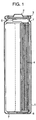
FIG. 1 is a longitudinal sectional view of a
cylindrical battery in the examples of the present
invention and the comparative examples.
FIG. 2 is a graph which shows voltage
temperature behavior of the comparative battery at
overcharging.
FIG. 3 is a graph which shows voltage
temperature behavior of the battery in the examples of
the present invention at overcharging.
Best Mode for Carrying Out the Invention
As mentioned above, according to the present
invention, a lithium-containing composite oxide is used
as a positive electrode active material, a material
capable of absorbing and releasing lithium is used as
negative electrode, and a non-aqueous electrolyte
containing a non-aqueous solvent is used, and, besides,
an organic compound having a HOMO energy (highest
occupied molecular orbital energy) of -8.5 eV to -11.0
eV and a LUMO energy (lowest unoccupied molecular
orbital energy) of -0.135 eV to 3.5 eV which are
calculated using PM3 method for Hamiltonian in
semiempirical molecular orbital calculation method is
added as an additive to the non-aqueous electrolyte.
The organic compound added must be chemically
stable in the region of potential of positive electrode
at which the batteries are usually worked (3.0 - 4.3 V
in the case of using LiCoO2 for positive electrode and a
carbonaceous material for negative electrode), and,
further, must be rapidly oxidized and polymerized in
the overcharging region, namely, must have a proper
electrochemical oxidizability.
The inventors have attempted to make an
evaluation on the proper electrochemical oxidizability
using an orbital energy level (HOMO energy (highest
occupied molecular orbital energy)) of occupying
electrons which can be most easily removed. As well
known to one skilled in the art, HOMO energy can be
calculated using PM3 method for Hamiltonian in
semiempirical molecular orbital calculation method.
(At present, it can be easily calculated by a computer
using MOPAC. See, for example, JP-A-6-333576.)
As a result of investigation conducted on the
relation between electrochemical oxidizability of the
organic compound added and HOMO energy, it has been
found that when the HOMO energy is -8.5 eV to -11.0 eV,
the compound is stable in the region of potential where
batteries are ordinarily used and is efficiently
oxidative electrolyzed and polymerized at overcharging.
Therefore, it is desired that the organic compound used
as the additive in the present invention has a HOMO
energy of -8.5 eV to -11.0 eV.
In addition, it is necessary that being
different from the additives of the prior art, the
organic compound added in the present invention is
stable in the region of potential of negative electrode
at which the battery is normally used for
satisfactorily maintaining cycle characteristics or
storage characteristics (0 V - 1.5 V on the basis of Li
metal electrode). The inventors have attempted to
evaluate this stability based on reduction resistance.
It is known that reduction resistance of an
organic compound has a correlation with LUMO energy
(lowest unoccupied molecular orbital energy) of
molecular orbit. (For example, JP-A-5-290882 specifies
the reduction resistance of non-aqueous electrolyte by
LUMO energy. However, this patent publication makes no
mention of reduction resistance of additives.)
That is, the higher the LUMO energy of the
added organic compound is, the lower the reduction
potential is, namely, the organic compound is difficult
to reduce. Like the HOMO energy, the LUMO energy can
also be calculated using PM3 method for Hamiltonian in
semiempirical molecular orbital calculation method.
As a result of investigation conducted on the
relation between reduction resistance and LUMO energy
of the organic compound added, it has been found that
when, for example, carbonaceous materials, Sn
compounds, Si compounds or the like are used as
negative electrode, it has been found that at least the
LUMO energy (lowest unoccupied molecular orbital
energy) is preferably -0.135 eV to 3.5 eV, especially
preferably 0.3 eV to 3.5 eV.
According to the present invention, an
organic compound having the specific HOMO energy and
LUMO energy as mentioned above is added to the
electrolyte. Electrolytic polymerization of the
organic compound begins on the active material of
positive electrode when the battery reaches the
overcharging region. Due to this reaction, the
reaction efficiency of lithium ion being extracted from
positive electrode extremely lowers and thus
deterioration of thermal stability of active material
of positive electrode can be inhibited.
Furthermore, since a polymer produced by the
polymerization is formed on the surface of positive
electrode, it hinders the charge transfer reaction of
the positive electrode active material, can extremely
increase the internal resistance of battery, and can
stop the current from an electric source. In this way,
stability at overcharging can be ensured. Moreover,
since this organic compound is high in reduction
resistance, at an ordinary time, covering of negative
electrode with a decomposition product of the organic
compound is inhibited and cycle characteristics and
storage stability are maintained satisfactorily.
As such additives of the present invention,
it has been found that oxidative electrolysis
polymerization of aromatic compounds or compounds
having a vinyl group easily takes place, and these
compounds are high in transformation efficiency and the
oxidative electrolysis polymerization proceeds
effectively.
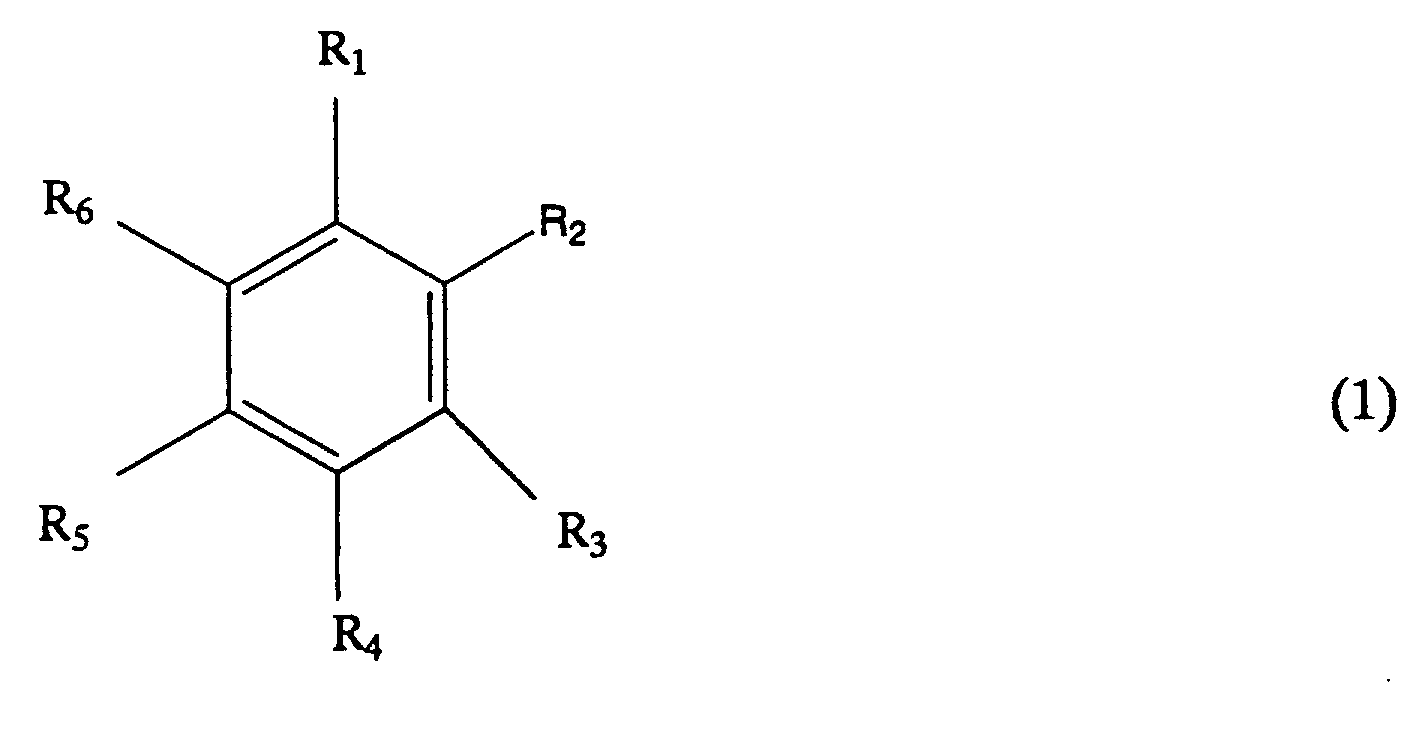
Specifically, as the additives of the present
invention, mention may be made of aromatic compounds
represented by the following formula (1) and having a
HOMO energy (highest occupied molecular orbital energy)
of -8.5 eV to -11.0 eV and a LUMO energy (lowest
unoccupied molecular orbital energy) of -0.135 eV to
3.5 eV.
(in the formula, R1-R6 independently of one another are
groups selected from the group consisting of hydrogen
atom, alkyl group, aryl group and amino group, with a
proviso that the number of the hydrogen atom is not
more than 5, and the adjacent 2 alkyl groups may form a
5-memberd or 6-membered ring).
In the above formula (1), the alkyl group is
a straight chain or branched chain alkyl group or a
straight chain or branched chain cycloalkyl group, and
it may be a saturated group or an unsaturated group
such as an alkenyl-substituted alkyl. It may be
unsubstituted or substituted with a halogen atom such
as fluorine atom or chlorine atom, an alkoxy group such
as methoxy group or ethoxy group, an aryl group such as
phenyl group, or the like. The cycloalkyl group may
contain in the ring a hetero-atom selected from S, N, O
and P, preferably N.
The alkyl group is preferably a lower alkyl
group, and the lower alkyl group means a straight chain
or branched chain alkyl group of 1-10 carbon atoms or a
straight chain or branched chain cycloalkyl group of 3-10
carbon atoms.
The lower alkyl group is preferably
cyclopentyl group, cyclohexyl group, vinyl group, allyl
group, or the like, and as a preferred cycloalkyl group
containing a hetero-atom in the ring, mention may be
made of piperazinyl group, piperidyl group, or the
like.
The aryl group means a group containing one
or more aromatic rings. The aromatic rings may be
heterocyclic rings containing a hetero-atom selected
from S, N, O and P, and, furthermore, may be
pseudoaromatic rings. The term "pseudoaromatic" means
a group which is not aromatic in an accurate sense, but
behaves in the same manner as an aromatic ring due to
unlocalization of electrons, such as furan, thiophene
and pyrrole. Furthermore, the aryl group may be
substituted with a halogen atom such as fluorine atom
or chlorine atom, an alkyl group such as methyl group
or ethyl group, an alkoxy group such as methoxy group
or ethoxy group, or the like.
Examples of the aromatic ring are benzene,
biphenyl, naphthalene, 1-benzylnaphthalene, anthracene,
dihydroanthracene, pyridine, 4-phenylpyridine, 3-phenylpyridine,
thiophene, benzothiophene, furan,
pyran, isobenzofuran, chromene, pyrrole, imidazole,
pyrazole, pyrimidine, indole, indolizine, isoindole,
quinoline, isoquinoline, quinoxaline, carbazole, and
the like.
The aryl group is preferably a substituted or
unsubstituted phenyl group, more preferably an
unsubstituted group.
The amino group may be substituted with a
halogen atom such as fluorine atom or chlorine atom, a
lower alkyl group such as methyl group or ethyl group,
an alkoxy group such as methoxy group or ethoxy group,
an aryl group such as phenyl group, or the like.
The ring formed by the adjacent two alkyl
groups is preferably a 6-membered ring, and the number
of the rings is preferably 1-3.
Examples of the aromatic compounds
represented by the formula (1) are hexaphenylbenzene,
phenylcyclohexane, 1,3,5-triphenylbenzene, p-terphenyl,
dodecahydrophenylene, 1-phenylpiperazine,
divinylbenzene, dicyclohexylbenzene, and the like.
As other additives, mention may be made of
unsaturated compounds represented by the following
formula (2) and having a HOMO energy (highest occupied
molecular orbital energy) of -8.5 eV to -11.0 eV and a
LUMO energy (lowest unoccupied molecular orbital
energy) of -0.135 eV to 3.5 eV.
(in the above formula, R1-R4 independently of one
another are hydrogen atom, alkyl group, alkoxy group,
aryl group or oxycarbonyl group represented by R5OCO-,
and the adjacent two alkyl groups of R1 and R2; R3 and
R4 may form a 5-membered or 6-membered ring).
In the above formula (2), the alkyl group is
a straight chain or branched chain alkyl group or a
straight chain or branched chain cycloalkyl group, and
it may be a saturated group or an unsaturated group.
It may be substituted with a halogen atom such as
fluorine atom or chlorine atom, an alkoxy group such as
methoxy group or ethoxy group, an aryl group such as
phenyl group, or the like. The cycloalkyl group may
contain in the ring a hetero-atom selected from S, N, O
and P.
The alkyl group is preferably a lower alkyl
group, and the lower alkyl group here means a straight
chain or branched chain alkyl group of 1-10 carbon
atoms or a straight chain or branched chain cycloalkyl
group of 3-10 carbon atoms.
The lower alkyl group is preferably
cyclopentyl group, cyclohexyl group, vinyl group, allyl
group, methyl group, ethyl group, t-butyl group, or the
like.
The alkoxy group is a straight chain or
branched chain alkoxy group or a straight chain or
branched chain cycloalkoxy group, and it may be a
saturated group or an unsaturated group. It may be
substituted with a halogen atom such as fluorine atom
or chlorine atom, an aryl group such as phenyl group,
or the like, and may contain an unsaturated bond. The
alkoxy group is preferably a lower alkoxy group, and
the lower alkoxy group here means a straight chain or
branched chain alkoxy group of 1-10 carbon atoms or a
straight chain or branched chain cycloalkoxy group of
3-10 carbon atoms. Preferred lower alkoxy group is a
branched unsubstituted alkoxy group containing an
unsaturated bond.
The aryl group means a group containing one
or more aromatic rings or composed of one or more
aromatic rings. The aromatic rings may be heterocyclic
rings containing a hetero-atom selected from S, N, O
and P, and, furthermore, may be pseudoaromatic rings.
The term "pseudoaromatic" means a group which is not
aromatic in an accurate sense, but behaves in the same
manner as an aromatic ring due to unlocalization of
electrons, such as furan, thiophene and pyrrole.
Furthermore, the aryl group may be substituted with a
halogen atom such as fluorine atom or chlorine atom, a
lower alkyl group such as methyl group or ethyl group,
an alkoxy group such as methoxy group or ethoxy group,
or the like.
Examples of the aromatic rings are benzene,
biphenyl, naphthalene, 1-benzylnaphthalene, anthracene,
dihydroanthracene, pyridine, 4-phenylpyridine, 3-phenylpyridine,
thiophene, benzothiophene, furan,
pyran, isobenzofuran, chromene, pyrrole, imidazole,
pyrazole, pyrimidine, indole, indolizine, isoindole,
quinoline, isoquinoline, quinoxaline, carbazole, and
the like.
The aryl group is preferably a substituted or
unsubstituted phenyl group, more preferably an
unsubstituted phenyl group.
R5 of the oxycarbonyl group represented by
R5OCO- is an alkyl group or an aryl group, and
preferable alkyl groups or aryl groups are as mentioned
with reference to the formula (2), and, among them,
methyl group and ethyl group are preferred.
Examples of the unsaturated compounds of the
formula (2) are vinylcyclohexane, t-butylvinyl ether,
methyl methacrylate monomer, cis-stilbene,
methylenecyclohexane, tetraphenylethylene, and 2,3-dimethyl-1,3-butadiene.
Furthermore, the additives may be tertiary
amines represented by the following formula (3) and
having a HOMO energy (highest occupied molecular
orbital energy) of -8.5 eV to -11.0 eV and a LUMO
energy (lowest unoccupied molecular orbital energy) of
-0.135 eV to 3.5 eV.
(in the above formula, R1-R3 independently of one
another are alkyl group or aryl group).
In the above formula (3), the alkyl group is
a straight chain or branched chain alkyl group or a
straight chain or branched chain cycloalkyl group, and
it may be a saturated group or an unsaturated group.
It may be unsubstituted or substituted with a halogen
atom such as fluorine atom or chlorine atom, an alkoxy
group such as methoxy group or ethoxy group, an aryl
group such as phenyl group, or the like. The
cycloalkyl group may contain in the ring a hetero-atom
selected from S, N, O and P, preferably N.
The alkyl group is preferably a lower alkyl
group, and the lower alkyl group means a straight chain
or branched chain alkyl group of 1-10 carbon atoms or a
straight chain or branched chain cycloalkyl group of 3-10
carbon atoms.
As preferable lower alkyl groups, mention may
be made of lower alkyl groups substituted with phenyl
group, such as benzyl group.
The aryl group means a group containing one
or more aromatic rings. The aromatic rings may be
heterocyclic rings containing a hetero-atom selected
from S, N, O and P, and, furthermore, may be
pseudoaromatic rings. The term "pseudoaromatic" means
a group which is not aromatic in an accurate sense, but
behaves in the same manner as an aromatic ring due to
unlocalization of electrons, such as furan, thiophene
or pyrrole. Furthermore, the aryl group may be
substituted with a halogen atom such as fluorine atom
or chlorine atom, an alkyl group such as methyl group
or ethyl group, an alkoxy group such as methoxy group
or ethoxy group, or the like.
Examples of the aromatic rings are benzene,
biphenyl, naphthalene, 1-benzylnaphthalene, anthracene,
dihydroanthracene, pyridine, 4-phenylpyridine, 3-phenylpyridine,
thiophene, benzothiophene, furan,
pyran, isobenzofuran, chromene, pyrrole, imidazole,
pyrazole, pyrimidine, indole, indolizine, isoindole,
quinoline, isoquinoline, quinoxaline, carbazole, and
the like.
The aryl group is preferably a substituted or
unsubstituted phenyl group or naphthyl group, more
preferably an unsubstituted group.
Examples of the compounds of the formula (3)
are tribenzylamine and N-phenyldibenzylamine.
Moreover, the additives may be unsaturated
chain organic compounds which contain 1-10, preferably
3-7 double bonds and in which the carbon number of the
straight chain portion is 10-30, and which have a HOMO
energy (highest occupied molecular orbital energy) of-8.5
eV to -11.0 eV and a LUMO energy (lowest unoccupied
molecular orbital energy) of -0.135 eV to 3.5 eV.
Examples of these additives are squalene and
(E)-β-farnesene.
As other additives, mention may be made of
tris (4-methoxyphenyl)phosphine, (1R)-(+)-α-pinene,
dicyclopentadiene, di(ethylene glycol)divinyl ether,
9,10-dihydroanthracene, triptycene, [2,2]-p-cyclophane,
and the like.
Furthermore, the present invention more
effectively functions in non-aqueous electrolyte
batteries in which the positive electrode and the
negative electrode are opposed to each other with
interposing therebetween an insulating microporous
polyolefin film capable of being impregnated with
electrolyte and holding it or an electrolyte
essentially consisting of an electrolyte and a polymer,
at least a part of which is gelled.
For example, in a battery using a microporous
polyolefin film as a separator, it becomes possible to
stop overcharging current by the development of
shutdown mechanism of the separator caused by heat
melting thereof.
In this case, owing to the addition of the
additives, the reaction efficiency of lithium ion being
extracted from positive electrode markedly decreases
and the battery temperature rises in such a state that
heat stability of the positive electrode active
material is maintained, and, hence, the battery does
not cause abnormal heat generation and the battery
temperature gradually lowers at the point of time when
the current is stopped. Thus, safety can be ensured.
Moreover, reliability can be enhanced by
combining with a charging control system of the non-aqueous
electrolyte battery which has a function to
break a circuit of charging upon sensing the rising of
battery temperature.
For breaking the charging circuit with
detecting the rising of battery temperature, use of
a positive temperature coefficient thermistor (PTC)
or a temperature fuse is preferred, and the highest
reliability can be obtained when the working
temperature of these positive temperature coefficient
thermistor and temperature fuse is in the range of 60-120°C.
Devices superior in long-term life and high
in reliability and safety can be realized by mounting
thereon the above non-aqueous electrolyte batteries and
control systems for charging the non-aqueous
electrolyte batteries.
Since the additives used in the present
invention are not for redox shuttles, the oxidation
reaction is preferably irreversible, and they differ in
the purpose from those of JP-A-7-362614 and JP-A-9-50822
which aim at reversibility of redox reaction.
Other constitutive elements of the present
invention will be explained in detail below.
More preferred lithium-containing composite
oxides used as positive electrode active materials in
the present invention include LixCoO2, LixNiO2 (U.S.
Patent No.4,302,518), LixMnO2, LixCoyNi1-yO2 (JP-A-63-299056),
LixCofV1-fOz, LixNi1-yMyO2 (M = Ti, V, Mn, Fe),
LixCoaNibMcO2 (M = Ti, Mn, Al, Mg, Fe, Zr), LixMn2O4,
LixMn2-yMyO4 (M = Na, Mg, Sc, Y, Fe, Co, Ni, Ti, Zr, Cu,
Zn, Al, Pb, Sb) (x=0-1.2, y=0-0.9, f=0.9-0.98, z=2.0-2.3,
a+b+c=1, 0≦a≦1, 0≦b≦1, 0≦c≦1). The value x is
a value before starting of charging and discharging,
which increases or decreases by charging and
discharging.
The lithium-containing composite oxides used
as positive electrode active materials in the present
invention can be prepared by mixing carbonate, nitrate,
oxide or hydroxide of lithium with carbonate, nitrate,
oxide or hydroxide of a transition metal such as
cobalt, manganese or nickel at a desired composition,
grinding the mixture and firing the powder or by a
solution reaction. The firing method is especially
preferred, and the firing temperature can be 250-1500°C
at which a part of the mixed compound is decomposed and
molten. The firing time is preferably 1-80 hours. The
firing gas atmosphere can be any of air atmosphere,
oxidizing atmosphere or reducing atmosphere, and has no
special limitation.
In the present invention, a plurality of
different positive electrode active materials may be
used in combination. For example, those which are
opposite in behavior of expansion and contraction at
the time of charging and discharging can be used.
Preferred examples of positive electrode active
materials which expand at the time of discharging (at
the time of intercalation of lithium ion) and contract
at the time of charging (at the time of deintercalation
of lithium ion) are spinel type lithium-containing
manganese oxides, and preferred examples of positive
electrode active materials which contract at the time
of discharging (at the time of intercalation of lithium
ion) and expand at the time of charging (at the time of
deintercalation of lithium ion) are lithium-containing
cobalt oxides. Preferred structural formula of the
spinel type lithium-containing manganese oxides is Li1-
xMn2O4 (0≦X≦1) and preferred examples of the lithium-containing
cobalt oxides are Li1-xCoO2 (0≦x≦1).
Conducting agents in the positive electrode
active materials of the present invention can be any
electron conductive materials as far as they do not
undergo chemical changes in the constructed batteries.
For example, there may be used graphite such as natural
graphite (flake graphite, etc.) and artificial
graphite, carbon blacks such as acetylene black, ketjen
black, channel black, furnace black, lamp black and
thermal black, conductive fibers such as carbon fibers
and metal fibers, metal powders such as carbon
fluoride, copper, nickel, aluminum and silver,
conductive whiskers such as zinc oxide and potassium
titanate, conductive metal oxides such as titanium
oxide, and organic conductive materials such as
polyphenylene derivatives. These can be contained each
alone or in admixture. Of these conducting agents,
especially preferred are artificial graphite, acetylene
black and nickel powders. Amount of the conducting
agents is not especially limited, but is preferably 1-50%
by weight, especially preferably 1-30% by weight.
In the case of carbon or graphite, 2-15% by weight is
especially preferred.
Preferred binders in the positive electrode
mix in the present invention are polymers having a
decomposition temperature of not lower than 300°C.
Examples of the binders are polyethylene,
polypropylene, polytetrafluoroethylene (PTFE),
polyvinylidene fluoride (PVDF), tetrafluoroethylene-hexafluoroethylene
copolymer, tetrafluoroethylene-hexafluoropropylene
copolymer (FEP),
tetrafluoroethylene-perfluoroalkylvinyl ether copolymer
(PFA), vinylidene fluoride-hexafluoropropylene
copolymer, vinylidene fluoride-chlorotrifluoroethylene
copolymer, ethylene-tetrafluoroethylene copolymer (ETFE
resin), polychlorotrifluoroethylene (PCTFE), vinylidene
fluoride-pentafluoropropylene copolymer, propylenetetrafluoroethylene
copolymer, ethylenechlorotrifluoroethylene
copolymer (ECTFE), vinylidene
fluoride-hexafluoropropylene-tetrafluoroethylene
copolymer, and vinylidene fluoride-perfluoromethylvinyl
ether-tetrafluoroethylene copolymer. Of these binders,
the most preferred are polyvinylidene fluoride (PVDF)
and polytetrafluoroethylene (PTFE).
As current collectors of positive electrodes,
there may be used any electron conductors as far as
they do not undergo chemical changes in the constructed
batteries. For examples, as materials of the
collectors, there may be used stainless steel, nickel,
aluminum, titanium and carbon, and, besides, aluminum
or stainless steel the surface of which is treated with
carbon, nickel, titanium or silver. Aluminum or
aluminum alloys are especially preferred. The surface
of these materials may be oxidized. Moreover, the
surface of the collectors may be made rough by a
surface treatment. As for the shape of the collectors,
they may be in the form of foil, film, sheet, net, and
molded articles of punched material, lath, porous body,
foamed body, fiber group, nonwoven fabrics, and the
like. Thickness thereof is not particularly limited,
and those of 1-500 µm are used.
The negative electrode materials used in the
present invention may be lithium, lithium alloys, and
compounds capable of absorbing and releasing lithium
ions, such as alloys, intermetallic compounds, carbons,
organic compounds, inorganic compounds, metal complexes
and organic high molecular compounds. These may be
used each alone or in combination.
As the lithium alloys, mention may be made of
Li-Al (U.S. Patent No.4,002,492), Li-Al-Mn, Li-Al-Mg,
Li-Al-Sn, Li-Al-In, Li-Al-Cd, Li-Al-Te, Li-Ga (JP-A-60-257072),
Li-Cd, Li-In, Li-Pb, Li-Bi, Li-Mg, and the
like. The lithium content is preferably not less than
10%.
The alloys and the intermetallic compounds
include compounds of transition metals and silicon,
compounds of transition metals and tin, and the like.
Compounds of nickel and silicon are especially
preferred.
Examples of the carbonaceous materials are
cokes, pyrolytic carbons, natural graphite, artificial
graphite, mesocarbon microbeads, graphitized mesophase
spherules, vapor deposited carbons, glassy carbons,
carbon fibers (polyacrylonitrile fibers, pitch fibers,
cellulose fibers and vapor deposited carbon fibers),
amorphous carbons, and carbons prepared by firing
organic materials. These may be used each alone or in
combination. Among them, preferred are graphite
materials such as those obtained by graphitizing
mesophase spherules, natural graphite and artificial
graphite. The carbonaceous materials may contain
different compounds such as O, B, P, N, S, SiC and B4C
in addition to carbon. The content is preferably 0-10%
by weight.
The inorganic compounds include, for example,
tin compounds and silicon compounds, and inorganic
oxides include, for example, titanium oxides, tungsten
oxides, molybdenum oxides, niobium oxides, vanadium
oxides and iron oxides. Furthermore, inorganic
chalcogenides include, for example, iron sulfide,
molybdenum sulfide and titanium sulfide. As the
organic high molecular compounds, there may be used
polythiophene, polyacetylene, and the like, and as
nitrides, there may be used cobalt nitrides, copper
nitrides, nickel nitrides, iron nitrides, manganese
nitrides, and the like.
These negative electrode materials may also
be used as composites, and, for example, there may be
considered combinations of carbon and alloy, carbon and
inorganic compound, and the like.
Average particle size of the carbon materials
used in the present invention is preferably 0.1-60 µm,
more preferably 0.5-30 µm. Specific surface area is
preferably 1-10 m2/g. Furthermore, from the point of
crystal structure, a graphite which has a carbon
hexagonal plane spacing (d002) of 3.35-3.40 Å and a
size of crystallites in the direction of axis c (LC) of
not less than 100Å is preferred.
In the present invention, since Li is
contained in the positive electrode active material, a
negative electrode material containing no Li (such as
carbon) can be used. Moreover, when Li is added to
such negative electrode material containing no Li in a
small amount (about 0.01-10 parts by weight based on
100 parts by weight of the negative electrode
material), even if the material becomes inactive owing
to the reaction of a part of Li with electrolyte, Li
can be supplemented with Li contained in the negative
electrode material and this is preferred. Li can be
contained in the negative electrode material, for
example, in the following manner. That is, lithium
metal which is molten by heating is coated on a
collector to which a negative electrode material is
pressed, thereby impregnating the negative electrode
material with Li, or lithium metal is previously
applied to electrode group by press bonding and Li is
electrochemically doped in the negative electrode
material in the electrolyte.
The conducting agents in the negative
electrode mix can be any electron conductive materials
which do not undergo chemical changes in the
constructed batteries like the conducting agents in the
positive electrode mix. Furthermore, in the case of
using carbonaceous materials as the negative electrode
materials, the carbonaceous materials per se have
electron conductivity and, hence, the conducting agents
may be or may not be contained.
The binders in the negative electrode mix may
be either thermoplastic resins or thermosetting resins,
and preferred are polymers having a decomposition
temperature of not lower than 300°C. Examples of
the binders are polyethylene, polypropylene,
polytetrafluoroethylene (PTFE), polyvinylidene fluoride
(PVDF), styrene-butadiene rubber, tetrafluoroethylenehexafluoropropylene
copolymer (FEP),
tetrafluoroethylene-perfluoroalkylvinyl ether copolymer
(PFA), vinylidene fluoride-hexafluoropropylene
copolymer, vinylidene fluoride-chlorotrifluoroethylene
copolymer, ethylene-tetrafluoroethylene copolymer (ETFE
resin), polychlorotrifluoroethylene (PCTFE), vinylidene
fluoride-pentafluoropropylene copolymer, propylenetetrafluoroethylene
copolymer, ethylenechlorotrifluoroethylene
copolymer (ECTFE), vinylidene
fluoride-hexafluoropropylene-tetrafluoroethylene
copolymer, and vinylidene fluoride-perfluoromethylvinyl
ether-tetrafluoroethylene copolymer. More preferred
are styrene-butadiene rubber and polyvinylidene
fluoride. Of these binders, styrene-butadiene rubber
is most preferred.
As current collectors of negative electrodes,
there may be used any electron conductors as far as
they do not undergo chemical changes in the constructed
batteries. For examples, as materials of the
collectors, there may be used stainless steel, nickel,
copper, titanium and carbon, and, besides, copper or
stainless steel the surface of which is treated with
carbon, nickel, titanium or silver, and, further, Al-Cd
alloys. Copper or copper alloys are especially
preferred. The surface of these materials may be
oxidized. Moreover, the surface of the collectors may
be made rough by a surface treatment. As for the shape
of the collectors, they may be in the form of foil,
film, sheet, net, and molded articles of punched
material, lath, porous body, foamed body, fiber group,
nonwoven fabrics, and the like. Thickness is not
particularly limited, and those of 1-500 µm are used.
The electrode mixes can contain various
additives such as fillers, dispersing agents, ion
conducting agents, pressure-increasing agents and
others in addition to the conducting agents and the
binders. The fillers can be any fibrous materials
which do not undergo chemical changes in the
constructed batteries. Generally, fibers of olefinic
polymers such as polypropylene and polyethylene, glass
and carbon are used. Amount of the fillers is not
especially limited, but is preferably 0-30% by weight.
In addition to the mix layer containing
positive electrode active material and negative
electrode material, the positive electrode and the
negative electrode used in the present invention may
further have an undercoat layer provided for the
purpose of improving adhesion between the collector and
the mix layer, conductivity, cycle characteristics and
charge and discharge efficiency or a protective layer
provided for the purpose of mechanical protection or
chemical protection of the mix layer. This undercoat
layer or protective layer can contain binders,
particles of conducting agent, particles having no
conductivity, and the like.
The non-aqueous electrolyte in the present
invention comprises a non-aqueous solvent containing at
least one non-cyclic ester and a lithium salt soluble
in the solvent.
As the non-cyclic esters, mention may be made
of non-cyclic carbonates such as dimethyl carbonate
(DMC), diethyl carbonate (DEC), ethylmethyl carbonate
(EMC), and dipropyl carbonate (DPC) and aliphatic
carboxylic acid esters such as methyl formate, methyl
acetate, methyl propionate and ethyl propionate. Among
them, preferred are non-cyclic carbonates such as
dimethyl carbonate, diethyl carbonate and ethylmethyl
carbonate.
The non-aqueous solvents may further contain
cyclic carbonates such as ethylene carbonate (EC),
propylene carbonate (PC), butylene carbonate (BC) and
vinylene carbonate (VC), γ-lactones such as γ-butyrolactone,
non-cyclic ethers such as 1,2-dimethoxyethane
(DME), 1,2-diethoxyethane (DEE) and
ethoxymethoxyethane (EME), cyclic ethers such as
tetrahydrofuran and 2-methyltetrahydrofuran, and non-protonic
organic solvents such as dimethyl sulfoxide,
1,3-dioxolan, formamide, acetamide, dimethylformamide,
dioxolan, acetonitrile, propylnitrile, nitromethane,
ethyl monoglyme, phosphoric acid triesters,
trimethoxymethane, dioxolan derivatives, sulfolane,
methylsulfolane, 1,3-dimethyl-2-imidazolidinone, 3-methyl-2-oxazolidinone,
propylene carbonate
derivatives, tetrahydrofuran derivatives, ethyl ether,
1,3-propanesultone, anisole, dimethyl sulfoxide, and N-methylpyrrolidone.
These may be used each alone or in
admixture of two or more. Among them, it is preferred
to use a mixed system of cyclic carbonate and non-cyclic
carbonate or a mixed system of cyclic carbonate,
non-cyclic carbonate and aliphatic carboxylic acid
ester as a main component.
The lithium salts which dissolve in these
solvents include, for example, LiClO4, LiBF4, LiPF6,
LiAlCl4, LiSbF6, LiSCN, LiCl, LiCF3SO3, LiCF3CO2,
Li(CF3SO2)2, LiAsF6, LiN(CF3SO2)2, LiB10Cl10 (JP-A-57-74974),
lithium salts of lower aliphatic carboxylic
acids (JP-A-60-41733), LiCl, LiBr, LiI (JP-A-60-247265),
chloroborane lithium (JP-A-61-165957), lithium
tetraphenylborate (JP-A-61-214376), and the like.
These may be contained each alone or in combination of
two or more in the electrolyte and the like. Among
them, it is especially preferred to contain LiPF6.
Especially preferable electrolyte in the
present invention is one which contains at least
ethylene carbonate and ethylmethyl carbonate and LiPF6
as a lithium salt. Amount of the electrolyte contained
in the battery is not particularly limited, and it can
be used in a necessary amount depending on the amount
of positive electrode active material and that of
negative electrode material and the size of the
battery. Amount of the lithium salt dissolved in the
non-aqueous solvent is not particularly limited, but is
preferably 0.2-2 mols/l, especially preferably 0.5-1.5
mol/l.
Moreover, if necessary, known additives may
further be added to the electrolyte as far as they do
not damage the effects of the present invention. The
electrolyte is ordinarily used by impregnating or
filling a separator such as of porous polymer, glass
filter or nonwoven fabric with the electrolyte.
Furthermore, in order to make the electrolyte
nonflammable, halogen-containing solvents such as
carbon tetrachloride and ethylene trifluorochloride can
be contained in the electrolyte. Moreover, carbon
dioxide can be contained in the electrolyte for giving
suitability for high-temperature storage.
Moreover, there may be used a gelled
electrolyte comprising an organic solid electrolyte
which contains the above non-aqueous electrolyte. As
the organic solid electrolyte, effective are polymeric
matrix materials such as polyethylene oxide,
polypropylene oxide, polyphosphazene, polyaziridine,
polyethylene sulfide, polyvinyl alcohol, polyvinylidene
fluoride and polyhexafluoropropylene, and derivatives,
mixtures and composites thereof. Especially preferred
are copolymers of vinylidene fluoride and
hexafluoropropylene and mixtures of polyvinylidene
fluoride and polyethylene oxide.
As the separator, an insulating microporous
thin film having a high ion permeability and a desired
mechanical strength is used. The separator preferably
has a function of closing the pores at a temperature of
not lower than 80°C to enhance the resistance. Sheets
or nonwoven fabrics made from olefin polymers
comprising one or combination of polypropylene and
polyethylene or glass fibers are used from the points
of organic solvent resistance and hydrophobic
properties. Pore diameter of the separator is
preferably in such a range that active materials,
binders and conducting agents which are released from
the electrode sheets do not permeate through the pores,
and, for example, the pore diameter is preferably 0.01-1
µm. Thickness of the separator is generally 10-300
µm. The porosity is determined depending on
permeability to electron or ion, kind of materials or
film thickness, and is generally 30-80%.
Shape of batteries can be any of coin type,
button type, sheet type, cylinder type, flat type and
rectangular type. When the shape of batteries is coin
type or button type, the mix of positive electrode
active material or negative electrode material is used
mainly by compressing into a shape of pellet.
Thickness and diameter of the pellet are determined
depending on the size of batteries. When the shape of
batteries is sheet type, cylinder type or rectangular
type, the mix of positive electrode active material or
negative electrode material is used mainly by coating
on a collector, then drying and compressing the
collector. For coating, general coating methods can be
employed. For example, there may be employed reverse-roll
coating method, direct roll coating method, blade
coating method, knife coating method, extrusion coating
method, curtain coating method, gravure coating method,
bar coating method, casting method, dip coating method,
and squeeze coating method. Among them, blade coating
method, knife coating method and extrusion coating
method are preferred. The coating is preferably
carried out at a speed of 0.1-100 m/min. In this case,
a satisfactory surface state of the coat layer can be
obtained by selecting the coating method in conformity
with solution property and drying property of the mix.
The coating may be carried out sequentially on each
side or simultaneously on both sides. Furthermore, it
is preferred to provide the coat layers on both sides
of the collector, and the coating layer on one side may
comprise a plurality of layers including the mix layer.
The mix layer contains a binder, a conducting material
and the like in addition to materials which participate
in intercalation and deintercalation of lithium ions,
such as positive electrode active material and negative
electrode material. In addition to the mix layer,
there may be provided a protective layer containing no
active material, an undercoat layer provided on the
collector, an intermediate layer provided between the
mix layers, and the like. It is preferred that these
layers which contain no active material contain
conductive particles, insulation particles, binder, and
the like.
The coating may be continuous coating,
intermittent coating or stripe coating. Thickness,
length or width of the coat layer is determined
depending on the size of battery, and thickness of the
coat layer on one side is especially preferably 1-2000
µm in the compressed state after drying.
For drying or dehydration of pellets or
sheets, generally employed methods can be utilized. It
is especially preferred to use hot air, vacuum,
infrared rays, far infrared rays, electron rays and
low-humidity air each alone or in combination. The
temperature is preferably in the range of 80-350°C,
especially preferably in the range of 100-250°C. Water
content is preferably not more than 2000 ppm in the
whole battery, and preferably not more than 500 ppm in
the positive electrode mix, the negative electrode
mix and the electrolyte from the point of cycle
characteristics. The pressing method of the sheet can
be generally employed methods, and especially preferred
are mold pressing method and calender pressing method.
The pressing pressure is not particularly limited, but
preferably is 0.2-3 t/cm2. The pressing speed of
calender pressing method is preferably 0.1-50 m/min.
The pressing temperature is preferably from room
temperature to 200°C. Ratio of width of positive
electrode sheet to that of negative electrode sheet is
preferably 0.9-1.1, especially preferably 0.95-1.0.
Ratio of content of the positive electrode active
material and the negative electrode material cannot be
limited because it varies depending on the kind of
compounds and the formulation of the mix, but can be
limited to optimum value from the viewpoints of
capacity, cycle characteristics and safety.
The shape of the rolled electrodes in the
present invention is not necessarily in the form of
true cylinder, and may be in the form of ellipsoidal
cylinder having a ellipsoidal section or in the form of
square pillar such as rectangle.
Preferred combinations in the present
invention are combinations of the preferred chemical
materials and the preferred battery constituting parts
as mentioned above. Examples of preferred combinations
are as follows. LixCoO2, LixNiO2, LixMn2O4 (0≦X≦1) are
contained as positive electrode active materials, and
acetylene black is contained together as a conducting
agent. The current collector of positive electrode is
made of stainless steel or aluminum, and is in the form
of net, sheet, foil or lath. The negative electrode
material preferably does not contain lithium metal
alone, but contains at least one compound such as alloy
and carbonaceous material. The current collector of
negative electrode is made of stainless steel or copper
and is in the form of net, sheet, foil or lath. Carbon
materials such as acetylene black and graphite as
electron conducting agent may be contained in the mix
used together with positive electrode active materials
or negative electrode materials. As the binders, there
may be used fluorine-containing thermoplastic compounds
such as polyvinylidene fluoride and
polytetrafluoroethylene, polymers containing acrylic
acid, and elastomers such as styrene-butadiene rubber
and ethylene-propylene terpolymer each alone or in
admixture. The electrolyte preferably contains cyclic
or non-cyclic carbonates such as ethylene carbonate,
diethyl carbonate, dimethyl carbonate and ethylmethyl
carbonate or additionally aliphatic carboxylic acid
esters such as methyl acetate and methyl propionate,
and LiPF6 as a lithium salt. The separator preferably
comprises polypropylene or polyethylene each alone or
in combination. The battery may have any shapes such
as cylindrical shape, flat shape, thin shape and
rectangular shape. The battery preferably has a means
for ensuring safety against errors in working (e.g.,
internal pressure releasing type safety valve, current
interrupting type safety valve, separator which
enhances resistance at high temperatures).
Examples
Examples of the present invention will be
explained below referring to the drawings.
Example 1
FIG. 1 is a longitudinal sectional view of a
cylindrical battery used in this example. In FIG. 1,
the reference numeral 1 indicates a battery case made
by processing a stainless steel plate having resistance
to organic electrolyte, 2 indicates a sealing plate
provided with a safety valve, 3 indicates an insulation
packing, 4 indicates an electrode plate group, and a
positive electrode and a negative electrode between
which a separator is interposed are rolled a plurality
of times into a spiral form and inserted in the case 1.
A positive electrode lead 5 is drawn from the positive
electrode and connected to the sealing plate 2, and a
negative electrode lead 6 is drawn from the negative
electrode and connected to the bottom of the battery
case 1. The reference numeral 7 indicates an
insulation ring, which is provided at the upper and
lower portions of the electrode plate group 4. The
positive electrode, the negative electrode, and others
will be explained in detail below.
The positive electrode was made in the
following manner. Li2CO3 and Co3O4 were mixed and fired
at 900°C for 10 hours to prepare an LiCoO2 powder. This
powder was mixed with 3% of acetylene black and 7% of a
fluorocarbon polymer binder based on the weight of the
LiCoO2 powder, followed by suspending the mixture in an
aqueous carboxymethyl cellulose solution to prepare a
positive electrode mix paste. The resulting positive
electrode mix paste was coated on an aluminum foil of
30 µm in thickness and dried, followed by rolling to
make a positive electrode plate of 0.18 mm in
thickness, 37 mm in width and 390 mm in length.
For the negative electrode, a mesophase
spherule which was graphitized at a high temperature of
2800°C (hereinafter referred to as "mesophase graphite")
was used. This mesophase graphite was mixed with 5% of
a styrene-butadiene rubber based on the weight of the
mesophase graphite, and then the mixture was suspended
in an aqueous carboxymethyl cellulose solution to
prepare a paste. This negative electrode mix paste was
coated on both sides of a Cu foil of 0.02 mm in
thickness and dried, followed by rolling to make a
negative electrode plate of 0.20 mm in thickness, 39 mm
in width and 420 mm in length.
A lead made of aluminum was attached to the
positive electrode plate and a lead made of nickel was
attached to the negative electrode plate, and the
positive electrode plate and the negative electrode
plate with a polypropylene separator of 0.025 mm in
thickness, 45 mm in width and 950 mm in length
interposed between the positive electrode plate and the
negative electrode plate were rolled into a spiral form
and inserted in a battery case of 17.0 mm in diameter
and 50.0 mm in height. The electrolyte used was one
prepared by dissolving 1 mol/liter of LiPF6 in a mixed
solvent comprising EC, DEC and MP at a volume ratio of
30:50:20, and as additives to the electrolyte, each of
hexaphenylbenzene, p-terphenyl, 1-phenylpiperazine,
1,2,3,4-tetrahydoisoquinoline, phenylcyclohexane,
1,3,5-triphenylbenzene, dodecahydrotriphenylene, and
divinylbenzene which were the organic compounds of the
formula (1) was added in an amount of 2% by weight
based on the total weight of the organic solvent and
the additive. The electrolyte was poured into the
battery case, and then the case was sealed to make
batteries 1-9 of the present invention.
Example 2
Cylindrical batteries of spiral type were
made in the same manner as in Example 1, except that t-butylvinyl
ether, methyl methacrylate monomer,
vinylcyclohexane, and 2,3-dimethyl-1,3-butadiene which
were the organic compounds of the formula (2) were used
as the additives to the electrolyte. The thus obtained
batteries were referred to as batteries 10-14 of the
present invention.
Example 3
Cylindrical batteries of spiral type were
made in the same manner as in Example 1, except that
tribenzylamine and N-phenyl-dibenzylamine which were
the organic compounds of the formula (3) were used as
the additives to the electrolyte. The thus obtained
batteries were referred to as batteries 15 and 16 of
the present invention.
Example 4
Cylindrical batteries of spiral type were
made in the same manner as in Example 1, except that
squalene and (E)-β-farnesene which were the organic
compounds corresponding to the unsaturated chain
organic compounds having 1-10 double bonds and 10-30
carbon atoms in the straight chain portion were used as
the additives to the electrolyte. The thus obtained
batteries were referred to as batteries 15 and 16 of
the present invention.
Example 5
Cylindrical batteries of spiral type were
made in the same manner as in Example 1, except that
tris(4-methoxyphenyl)phosphine, (1R)-(+)-α-pinene,
dicyclopentadiene, di(ethylene glycol)divinyl ether,
9,10-dihydroanthracene, triptycene and [2,2]-p-cyclophane
were used as the additives to the
electrolyte. The thus obtained batteries were referred
to as batteries 19-25 of the present invention.
Comparative Example 1
A comparative cylindrical battery of spiral
type in which the additive to the electrolyte was not
added was made in the same manner as in Example 1. The
thus obtained battery was referred to as comparative
battery (battery 26).
Comparative Example 2
Cylindrical batteries of spiral type were
made in the same manner as in Example 1, except that
biphenyl, thiophene and 3-chlorothiophene were used as
the additives to the electrolyte. The thus obtained
batteries were referred to as comparative batteries
(batteries 27-29).
Then, five cells each of the batteries 1-25
of the present invention and the comparative batteries
26-29 were subjected to constant voltage charging at a
limit current of 500 mA and a charging voltage of 4.2 V
for a charging time of 2 hours at an environmental
temperature of 20°C, and discharge characteristics of
these batteries at 1A were examined in the charging
state. Thereafter, these batteries were stored in the
charging state in a thermostat chamber at 80°C for 5
days, and the batteries after stored were also
subjected to charging and discharging under the same
conditions as above, and capacity recovery rate after
storing (capacity after storing/capacity before storing
× 100(%)) was obtained. The results are shown in
Tables 1-6.
Furthermore, 20 cells each of the batteries
were subjected to overcharging at 1A from the charging
state and it was confirmed whether abnormal heat
generation occurred or not. The number of cells among
20 cells in which abnormal heat generation occurred is
shown in Tables 1-6.
| (Example 1) |
| No. | Additives | HOMO | LUMO | Recovery rate after storing | Overcharging test |
| 1 | Hexaphenylbenzene | -9.442 | 0.0813 | 91.2 | 0/20 |
| 2 | p-Terphenyl | -9.3829 | 0.0474 | 93.7 | 0/20 |
| 3 | 1-Phenylpiperazine | -8.8402 | 0.3045 | 94.8 | 0/20 |
| 4 | 1,2,3,4-Tetrahydroisoquinoline | -9.1063 | 0.3747 | 92.8 | 0/20 |
| 5 | Phenylcyclohexane | -9.4288 | 0.3961 | 92.3 | 0/20 |
| 6 | 1,3,5-Triphenylbenzene | -9.5698 | 0.1704 | 93.7 | 0/20 |
| 7 | Dodecahydrotriphenylene | -8.8282 | 0.5063 | 91.4 | 0/20 |
| 8 | Divinylbenzene | -9.0738 | -0.1222 | 91.7 | 0/20 |
| 9 | 1,4-Dicyclohexylbenzene | -9.2999 | 0.3508 | 91.7 | 0/20 |
| (Example 2) |
| No. | Additives | HOMO | LUMO | Recovery rate after storing | Overcharging test |
| 10 | t-Butylvinyl ether | -9.3128 | 1.4402 | 93.5 | 0/20 |
| 11 | Methyl methacrylate monomer | -10.56 | 0.4128 | 91.5 | 0/20 |
| 12 | Vinylcyclohexane | -10.124 | 1.1991 | 91.7 | 0/20 |
| 13 | 2,3-Dimethyl-1,3-butadiene | -9.5072 | 0.6255 | 91.5 | 0/20 |
| 14 | Methylenecyclohexane | -9.8256 | 1.1529 | 94.6 | 0/20 |
| (Example 3) |
| No. | Additives | HOMO | LUMO | Recovery rate after storing | Overcharging test |
| 15 | Tribenzylamine | -9.0909 | 0.1285 | 94.8 | 0/20 |
| 16 | N-phenyldibenzylamine | -9.2571 | 0.2468 | 92.6 | 0/20 |
| (Example 4) |
| No. | Additives | HOMO | LUMO | Recovery rate after storing | Overcharging test |
| 17 | Squalene | -9.2002 | 0.9853 | 93.4 | 0/20 |
| 18 | (E)-β-farnesene | -9.3018 | 0.3382 | 91.5 | 0/20 |
| (Example 5) |
| No. | Additives | HOMO | LUMO | Recovery rate after storing | Overcharging test |
| 19 | Tris(4-methoxyphenyl)-phosphine | -8.7072 | 0.1294 | 94.1 | 0/20 |
| 20 | (1R)-(+)-α-pinene | -9.6117 | 1.1448 | 94.3 | 0/20 |
| 21 | Dicyclopentadiene | -9.5743 | 0.9682 | 93.2 | 0/20 |
| 22 | Di-(ethyleneglycol)-divinylether | -9.5991 | 1.1676 | 92.5 | 0/20 |
| 23 | 9,10-Dihydroanthracene | -9.171 | 0.3121 | 91.7 | 0/20 |
| 24 | Triptycene | -9.2378 | 0.1824 | 93.9 | 0/20 |
| 25 | [2,2]-p-cyclophane | -8.9716 | 0.2534 | 91.1 | 0/20 |
| (Comparative Example 1 and 2) |
| No. | Additives | HOMO | LUMO | Recovery rate after storing | Overcharging test |
| 26 | NO | | | 93.9 | 8/20 |
| 27 | Biphenyl | -9.1449 | -0.1419 | 78.4 | 0/20 |
| 28 | Thiophene | -9.5429 | -0.1917 | 72.3 | 0/20 |
| 29 | 3-Chlorothiophene | -9.2515 | -0.4247 | 69.6 | 0/20 |
As shown in Table 6, in the case of the
battery 26 in which the additives were not added,
abnormal heat generation occurred in 8 cells among 20
cells when subjected to overcharging. Hitherto, the
safety of batteries has been ensured by providing a
plurality of safety mechanisms comprising a protective
circuit for charging voltage and a current interrupting
mechanism, but the abnormal heat generation may occur
in case no safety protection was provided as in the
Comparative Example 1.
FIG. 2 shows the results of measurement of
voltage and battery side temperature in Comparative
Example 1 (battery 26) when subjected to overcharging.
It can be seen that by carrying out the
overcharging, first, lithium in the positive electrode
was extracted, then there were caused increase of
electronic resistance of positive electrode, increase
of liquid resistance due to oxidative decomposition of
the electrolyte, and increase of battery temperature
due to exhaustion of liquid, and, thus, since heat
stability already lowered at the melting temperature of
the separator, the abnormal heat generation occurred.
On the other hand, as shown in Tables 1-5, in
the batteries 1-25 in which the additives of the
present invention were added to the electrolyte, no
abnormal heat generation occurred even when they were
subjected to overcharging test. FIG. 3 shows
overcharging behavior of the battery in which
hexaphenylbenzene was added to the electrolyte in
Example 1 as a representative example.
It can be seen that in the above example the
battery voltage markedly increased just after starting
of overcharging, and polarization characteristics of
the battery were deteriorated. The battery temperature
also rose early, and flow of the current stopped at the
melting temperature of the separator, and as a result,
the battery temperature safely lowered without causing
abnormal heat generation.
This is because an oxidation polymerized film
of high resistance is formed on the surface of the
positive electrode by oxidation polymerization of the
additive preferentially to the extraction of lithium in
the positive electrode at the time of overcharging, and
due to the increase of polarization, decomposition of
the electrolyte proceeds dominantly, whereby flow of
current is stopped in the battery owing to exhaustion
of the electrolyte or shutdown of the separator before
heat stability of the positive electrode lowers.
Naturally, reliability of battery charging
system can be improved by providing a positive
temperature coefficient thermistor (PTC) or a
temperature fuse as a function of breaking a charging
circuit upon sensing the rise of battery temperature.
The working temperature of the positive temperature
coefficient thermistor (PTC) and the temperature fuse
is desirably in the range of 60-120°C because it is
essential that the positive electrode active material
works at a thermally stable temperature and does not
work at usual environmental temperatures of battery
devices.
Moreover, since the additives used in the
Examples were superior in reduction resistance in the
negative electrode, they were superior in storage
characteristics at high temperatures as compared with
the conventional additives used in Comparative Example
2.
As mentioned above, it has been found that
batteries which are safe even at the time of
overcharging, good in high-temperature storage
characteristics and very high in reliability can be
realized by using the additives of the present
invention.
As a result of investigation on concentration
of the additives, an improvement of safety was
recognized at 0.1% by weight or more. When the amount
was more than 20% by weight, discharge characteristics
of batteries began to deteriorate. It is considered
that this is because the electric conductivity of the
electrolyte per se decreased.
From the above, amount of the additives to
the electrolyte is preferably in the range of 0.1-20%
by weight.
The present invention is not limited to these
Examples.
Industrial Applicability
As explained above, the present invention is
a non-aqueous electrolyte secondary battery,
characterized in that an additive having a HOMO energy
of -8.5 eV to -11.0 eV and a LUMO energy of -0.135 eV
to 3.5 eV is added to the electrolyte in an amount of
0.1-20% by weight based on the total amount of the
solvent and the additive. Batteries which are safe
even at the time of overcharging, excellent in storage
characteristics and very high in reliability can be
realized by adding the additives of the present
invention. The reliability of these batteries is
further improved by using a microporous polyolefin film
as the separator.
Moreover, non-aqueous electrolyte secondary
batteries of higher reliability can be provided by
mounting a charging control means which breaks the
charging circuit upon detecting the rise of battery
temperature.
Portable telephones, portable information
terminal devices, cam coders, personal computers, PDA,
portable audio devices, electric cars, electric sources
for road leveling, and the like which are high in
safety and excellent in long-term life characteristics
can be provided by using the non-aqueous electrolyte
secondary batteries of the present invention.