EP1176971B1 - Verwendung von phyllanthus zur behandlung von chronisch entzündlichen und fibrotischen prozessen - Google Patents
Verwendung von phyllanthus zur behandlung von chronisch entzündlichen und fibrotischen prozessen Download PDFInfo
- Publication number
- EP1176971B1 EP1176971B1 EP00927102A EP00927102A EP1176971B1 EP 1176971 B1 EP1176971 B1 EP 1176971B1 EP 00927102 A EP00927102 A EP 00927102A EP 00927102 A EP00927102 A EP 00927102A EP 1176971 B1 EP1176971 B1 EP 1176971B1
- Authority
- EP
- European Patent Office
- Prior art keywords
- phyllanthus
- use according
- liver
- extract
- mixtures
- Prior art date
- Legal status (The legal status is an assumption and is not a legal conclusion. Google has not performed a legal analysis and makes no representation as to the accuracy of the status listed.)
- Expired - Lifetime
Links
Images







Classifications
-
- A—HUMAN NECESSITIES
- A61—MEDICAL OR VETERINARY SCIENCE; HYGIENE
- A61K—PREPARATIONS FOR MEDICAL, DENTAL OR TOILETRY PURPOSES
- A61K36/00—Medicinal preparations of undetermined constitution containing material from algae, lichens, fungi or plants, or derivatives thereof, e.g. traditional herbal medicines
- A61K36/18—Magnoliophyta (angiosperms)
- A61K36/185—Magnoliopsida (dicotyledons)
- A61K36/47—Euphorbiaceae (Spurge family), e.g. Ricinus (castorbean)
-
- A—HUMAN NECESSITIES
- A61—MEDICAL OR VETERINARY SCIENCE; HYGIENE
- A61P—SPECIFIC THERAPEUTIC ACTIVITY OF CHEMICAL COMPOUNDS OR MEDICINAL PREPARATIONS
- A61P1/00—Drugs for disorders of the alimentary tract or the digestive system
- A61P1/04—Drugs for disorders of the alimentary tract or the digestive system for ulcers, gastritis or reflux esophagitis, e.g. antacids, inhibitors of acid secretion, mucosal protectants
-
- A—HUMAN NECESSITIES
- A61—MEDICAL OR VETERINARY SCIENCE; HYGIENE
- A61P—SPECIFIC THERAPEUTIC ACTIVITY OF CHEMICAL COMPOUNDS OR MEDICINAL PREPARATIONS
- A61P1/00—Drugs for disorders of the alimentary tract or the digestive system
- A61P1/16—Drugs for disorders of the alimentary tract or the digestive system for liver or gallbladder disorders, e.g. hepatoprotective agents, cholagogues, litholytics
-
- A—HUMAN NECESSITIES
- A61—MEDICAL OR VETERINARY SCIENCE; HYGIENE
- A61P—SPECIFIC THERAPEUTIC ACTIVITY OF CHEMICAL COMPOUNDS OR MEDICINAL PREPARATIONS
- A61P1/00—Drugs for disorders of the alimentary tract or the digestive system
- A61P1/18—Drugs for disorders of the alimentary tract or the digestive system for pancreatic disorders, e.g. pancreatic enzymes
-
- A—HUMAN NECESSITIES
- A61—MEDICAL OR VETERINARY SCIENCE; HYGIENE
- A61P—SPECIFIC THERAPEUTIC ACTIVITY OF CHEMICAL COMPOUNDS OR MEDICINAL PREPARATIONS
- A61P11/00—Drugs for disorders of the respiratory system
-
- A—HUMAN NECESSITIES
- A61—MEDICAL OR VETERINARY SCIENCE; HYGIENE
- A61P—SPECIFIC THERAPEUTIC ACTIVITY OF CHEMICAL COMPOUNDS OR MEDICINAL PREPARATIONS
- A61P13/00—Drugs for disorders of the urinary system
-
- A—HUMAN NECESSITIES
- A61—MEDICAL OR VETERINARY SCIENCE; HYGIENE
- A61P—SPECIFIC THERAPEUTIC ACTIVITY OF CHEMICAL COMPOUNDS OR MEDICINAL PREPARATIONS
- A61P13/00—Drugs for disorders of the urinary system
- A61P13/12—Drugs for disorders of the urinary system of the kidneys
-
- A—HUMAN NECESSITIES
- A61—MEDICAL OR VETERINARY SCIENCE; HYGIENE
- A61P—SPECIFIC THERAPEUTIC ACTIVITY OF CHEMICAL COMPOUNDS OR MEDICINAL PREPARATIONS
- A61P19/00—Drugs for skeletal disorders
- A61P19/02—Drugs for skeletal disorders for joint disorders, e.g. arthritis, arthrosis
-
- A—HUMAN NECESSITIES
- A61—MEDICAL OR VETERINARY SCIENCE; HYGIENE
- A61P—SPECIFIC THERAPEUTIC ACTIVITY OF CHEMICAL COMPOUNDS OR MEDICINAL PREPARATIONS
- A61P29/00—Non-central analgesic, antipyretic or antiinflammatory agents, e.g. antirheumatic agents; Non-steroidal antiinflammatory drugs [NSAID]
-
- A—HUMAN NECESSITIES
- A61—MEDICAL OR VETERINARY SCIENCE; HYGIENE
- A61P—SPECIFIC THERAPEUTIC ACTIVITY OF CHEMICAL COMPOUNDS OR MEDICINAL PREPARATIONS
- A61P31/00—Antiinfectives, i.e. antibiotics, antiseptics, chemotherapeutics
- A61P31/12—Antivirals
- A61P31/20—Antivirals for DNA viruses
-
- A—HUMAN NECESSITIES
- A61—MEDICAL OR VETERINARY SCIENCE; HYGIENE
- A61P—SPECIFIC THERAPEUTIC ACTIVITY OF CHEMICAL COMPOUNDS OR MEDICINAL PREPARATIONS
- A61P35/00—Antineoplastic agents
-
- A—HUMAN NECESSITIES
- A61—MEDICAL OR VETERINARY SCIENCE; HYGIENE
- A61P—SPECIFIC THERAPEUTIC ACTIVITY OF CHEMICAL COMPOUNDS OR MEDICINAL PREPARATIONS
- A61P37/00—Drugs for immunological or allergic disorders
- A61P37/02—Immunomodulators
-
- A—HUMAN NECESSITIES
- A61—MEDICAL OR VETERINARY SCIENCE; HYGIENE
- A61P—SPECIFIC THERAPEUTIC ACTIVITY OF CHEMICAL COMPOUNDS OR MEDICINAL PREPARATIONS
- A61P43/00—Drugs for specific purposes, not provided for in groups A61P1/00-A61P41/00
-
- A—HUMAN NECESSITIES
- A61—MEDICAL OR VETERINARY SCIENCE; HYGIENE
- A61P—SPECIFIC THERAPEUTIC ACTIVITY OF CHEMICAL COMPOUNDS OR MEDICINAL PREPARATIONS
- A61P9/00—Drugs for disorders of the cardiovascular system
- A61P9/10—Drugs for disorders of the cardiovascular system for treating ischaemic or atherosclerotic diseases, e.g. antianginal drugs, coronary vasodilators, drugs for myocardial infarction, retinopathy, cerebrovascula insufficiency, renal arteriosclerosis
-
- A—HUMAN NECESSITIES
- A61—MEDICAL OR VETERINARY SCIENCE; HYGIENE
- A61K—PREPARATIONS FOR MEDICAL, DENTAL OR TOILETRY PURPOSES
- A61K39/00—Medicinal preparations containing antigens or antibodies
- A61K2039/51—Medicinal preparations containing antigens or antibodies comprising whole cells, viruses or DNA/RNA
- A61K2039/515—Animal cells
- A61K2039/5154—Antigen presenting cells [APCs], e.g. dendritic cells or macrophages
Definitions
- the present invention relates to the use of phyllanthus for the manufacture of a medicament for prevention or treating connective tissue augmentation.
- the description of the present invention further provides how Phyllanthus maintains the level on reduced glutathione, to inhibit the lipopolysaccharide (LPS) -induced Nitric oxide synthase (NOS) and to inhibit expression of the cyclooxygenase (COX-2) protein can be used.
- LPS lipopolysaccharide
- NOS Nitric oxide synthase
- COX-2 cyclooxygenase
- Phyllanthus comprises a widespread group of plants that are native to Central and South India, Taiwan, and areas of Central and Central America.
- the term phyllanthus in the sense of this invention is understood to mean all representatives of the botanical family Phyllanthus, such as Phyllanthus niruri or in particular Phyllanthus amarus etc. It is known from Indian folk medicine to treat a large number of diseases with Phyllanthus. The author on that the plant is obstruent de-than, diuretic, astringent and cooling known, for example, one in Volume I "Doctor KM Nadkarni's Indian Materia Medica (revised and enlarged by AK Nadkarni edition rd 3)".
- compositions with phyllanthus for the treatment of jaundice, dropsy, gonorrhea, menorrhagia and other impairments of the urogenital tract of a similar type are also described.
- the use of the juice of the stem mixed with oil as an ophthalmic or applications against ulcers, for the treatment of wounds and swellings etc., as well as the use of the leaves for the treatment of itching or other skin disorders.
- a large number of active substances which are isolated from Phyllanthus are also known can be, Phyllanthin, Hypophyllanthin, Triacontanol, Triacontanal, Repandusin Textre A (see e.g. JP 03206044 A; AIDS-Res-Hum-Retroviruses (11/1992), Vol. 8 (11), phyllantostatin-1, phyllantoside, phyllantocin, phyllantocinic acid (see for example EP-173 4480; US 4,388,457), phyllamycin A, B and C, Retrojusticidin B, Justicidin A and B (see e.g.
- oxidative stress seems to be responsible. That means one stresses the living cell by enriching toxic oxidized Compounds such as lipid hydroperoxides, hydrogen peroxide, singular oxygen and hydroxyl hyperoxide anions.
- the stress can be caused by locally produced or external radicals, in particular so-called reactive oxygen species (ROS) or peroxonitrite radicals etc.
- ROS reactive oxygen species
- the oxidative stress can e.g. also through exposure to radiation, xenobiotics, Heavy metal ions or ischemia reperfusion (intermittent interruption of the Blood supply to an organ) can be induced. In the latter case, the Xanthine oxidase, an oxidase of approx.
- Oxidative stress plays an important role in the development of a number of acute and in particular chronic diseases, e.g. Inflammation of various Type, microangiopathies, fibrosis, rheumatoid arthritis and other rheumatic Diseases, arteriosclerosis (LDL oxidation), tumor development and progression, possibly Alzheimer's disease, but also drug-induced acute damage, such as acetaminophen damage to the liver.
- chronic diseases e.g. Inflammation of various Type, microangiopathies, fibrosis, rheumatoid arthritis and other rheumatic Diseases, arteriosclerosis (LDL oxidation), tumor development and progression, possibly Alzheimer's disease, but also drug-induced acute damage, such as acetaminophen damage to the liver.
- the liver plays an important role as the central dynamic organ of the body Role in a large number of the physiological and microphysiological mentioned Processes whereby the metabolic activities of the liver (intermediate metabolism) crucial on the one hand for the supply of others Organs, but also for chemical conversion (metabolism) of pharmaceutically active substances (see Pschyrembel, Klinisches Dictionary, de Gruyter Verlag, 1986, pp. 935 - 937).
- the one already described Phenomenon of oxidative stress is also largely caused by the body in the body Fights liver.
- a reservoir of different reduced Compounds of antioxidants e.g.
- L-ascorbic acid, carotenoids, dihydrolipoic acid, Uric acid, glutathione or ⁇ -tocopherol which with the help of various Enzyme activities (e.g. superoxide dismutase, peroxidases such as glutathione peroxidase, Catalase etc.) prevent the occurrence of reactive radicals.
- Enzyme activities e.g. superoxide dismutase, peroxidases such as glutathione peroxidase, Catalase etc.
- Oxidative stress has a particularly disadvantageous effect on a large number of Functions of the liver tissue.
- the liver tissue often reacts to this Connective tissue reverberation, which is the further progression of a sustainable Liver damage, such as promoting the development of a liver tumor.
- Connective tissue reverberation is the further progression of a sustainable Liver damage, such as promoting the development of a liver tumor.
- Bile acids involved.
- the present invention is therefore based on the object of liver-active substances to provide both prophylactic and therapeutic Have effect.
- An object of the present invention is the use of Phyllanthus for the manufacture of a medicament for the prevention or treatment of connective tissue multiplication, in particular of fibrotic changes e.g. the liver, lungs, kidneys, pancreas, of the intestine, endocrine organs, spleen, male or female Urogenital tract, of the joints e.g. as a result of chronic inflammatory processes, such as. rheumatoid arthritis or chronic cardiomyopathies, as well as cirrhosis, an advanced stage of fibrosis.
- fibrotic changes e.g. the liver, lungs, kidneys, pancreas, of the intestine, endocrine organs, spleen, male or female Urogenital tract, of the joints e.g. as a result of chronic inflammatory processes, such as. rheumatoid arthritis or chronic cardiomyopathies, as well as cirrhosis, an advanced stage of fibrosis.
- fibrosis and cirrhosis preferably liver fibrosis and cirrhosis.
- Chronic inflammatory conditions in particular lead to tissue shrinkage and pronounced scarring with progressive loss of function of the organs. Inhibiting or preventing connective tissue proliferation therefore leads to less pronounced scarring and maintenance of functionality of the organs.
- the description of the present invention explains how Phyllanthus is used for expression of Smooth Muscle Alpha Actin (SMA) to decrease mRNA and SMA protein.
- SMA Smooth Muscle Alpha Actin
- a fibrotic liver that has an increased rate of cell division, there is an accumulation of extracellular matrix.
- the heightened Amounts of extracellular matrix are considered crucial for the further Progression of liver fibrosis, considered to be cirrhosis of the liver.
- the enrichment of extracellular matrix goes back to the activation of special ones Liver cells, the hepatic stellate cells (HSC), which in activated form as activated HSC.
- HSC hepatic stellate cells
- HSC Smooth Muscle Alpha Actin
- SMA Smooth Muscle Alpha Actin
- GFAP glial fibrillary acidic protein
- HSC treated with phyllanthus extracts markedly inhibited cell growth, what the effectiveness of phyllanthus extracts in these experiments underlines. So there is a possibility activated HSC, as in fibrotic Liver occur to return to inactivated HSC in order to do so favor regression of liver fibrosis.
- the description of the present invention explains the use of Phyllanthus for the inhibition of lipopolysaccharide (LPS) -induced nitric oxide synthase (NOS), to inhibit the induced Nitric oxide oxide synthase (iNOS) and the use of Phyllanthus for Inhibition of the expression of the cyclooxygenase (COX-2) protein.
- LPS lipopolysaccharide
- NOS induced nitric oxide synthase
- COX-2 cyclooxygenase
- LPS is a collective name for conjugates that consist of lipid and polysaccharide components are composed.
- the one in the outer membrane of the cell walls Gram-negative bacteria occurring LPS are basically made up of three components built up, namely Lipid A, the core oligosaccharide and the O-specific Side chains.
- Lipid A anchors the LPS in the bacterial Cell wall and is also responsible for the immune-activating effect of bacterial Cell wall components responsible.
- iNOS and COX-2 are more potent Mediator of inflammatory processes, such as those associated with degenerative changes known to occur in the liver.
- Another object of this invention includes use in one of the ways mentioned above, using a fraction isolated from Phyllanthus becomes.
- an isolated fraction is understood to mean, for example by chromatographic means, distillation, precipitation, extraction, Filtration or other subset of phyllanthus Phyllanthus substances. Extracts and their separated by chromatography, distillation, precipitation or extraction Fractions.
- Another use according to the invention includes uses according to a the aforementioned examples, in which one or more isolated from Phyllanthus chemical substances, especially active substances, are used. among them are in particular also from Phyllanthus extracts or other extracts isolated individual substances, so-called natural product isolates, to understand how they for example, are also known from the prior art.
- isolated active ingredients have the advantage that they are generally considerable smaller amounts of substance must be worked and often more specific Effects than can be achieved with total extracts or tablets.
- Phyllanthus is selected from individual members of the family Phyllanthus, from the group Phyllanthus amarus, Phyllanthus niruri, Phyllanthus emblica, Phyllanthus urinaria, Phyllanthus myrtifolius Moon, Phyllanthus maderas pratensis and / or Phyllanthus ussuriensis.
- leaves, bark, flowers, seeds, Fruits, stems, branches, trunk, roots and / or wood from Phyllanthus are used preferably the Herba drug, i.e. all aerial parts of the plant.
- the use of Phyllanthus in crushed form and / or in unchanged form, i.e. as a whole sheet, as granules, powder, precipitate, extract, dried extract and / or exudate take place, with extracts or dried Extracts are preferred.
- the manufacture of Phyllanthus for use in the present invention includes Production of phyllanthus powder or granules from one of the aforementioned Plant parts, extraction from plants, shredded plant parts, powders, and also on residues previously treated with other solvents Hexane, water, methanol and / or other alcohols. This also includes filtration and vacuum evaporation to obtain a dried extract.
- a another method involves multiphase extraction with aqueous and / or alcoholic and / or polar solvents. Filtration is also common, for example, by cellulose filter, the precipitation, preferably with the help of Ethanol, or separation by ultracentrifugation as well as maceration. there can always be worked at elevated or lowered temperatures.
- phyllanthus in the form of an aqueous, lipophilic or alcoholic extract, the alcoholic extract, preferably with short-chain (C1 to C4) primary alcohols or mixtures thereof, in particular methanol or ethanol, is carried out with the lipophilic C5-C10, branched or unbranched, chain hydrocarbons, or mixtures of it, especially with n-hexane.
- the alcoholic extract preferably with short-chain (C1 to C4) primary alcohols or mixtures thereof, in particular methanol or ethanol
- suitable extraction agents are ethyl acetate or the like organic solvent / water mixtures, preferably methanol / water mixtures or ethanol / water mixtures.
- a suitable extraction process is for example in U.S. Patent No. 4,673,575 or U.S. Patent No. 4,937,074.
- Phyllanthus is preferred in the form of a or several remedies (see Römp, Lexikon Chemie, Version 1.4), such as an infusion solution, Solution for injection, tablet, granules, ointment, medicinal pack, Klysms and / or in the form of one or more food / food supplements used.
- Phyllanthus in the uses according to the invention can orally, topically, and / or parenterally.
- the term “active ingredient” becomes therapeutic active substances such as Vitamin C or tocopherols, especially ⁇ -tocopherol, understood that as antioxidants or as active substances against oxidative Stress are known, as well as e.g. anti-inflammatory substances. So that includes are also so-called combined preparations with Phyllanthus.
- the uses according to the invention are by no means only based on each restricted to one form, fraction or isolated active ingredient of Phyllanthus are several different shapes and / or fractions when used and / or isolated active ingredient from Phyllanthus can be used.
- auxiliary substances and additives are understood to mean substances which known for therapeutic applications or as an application for food supplements to be added to a corresponding bet allow or facilitate, e.g. Adjuvants, disintegrants and lubricants, fillers, Buffers, preservatives, stabilizers etc.
- the rest of the n-hexane-insoluble plant residue from Example 1 was 24 hours extracted successively with 3 l of distilled methanol in a Soxhlet apparatus. After filtration and vacuum evaporation, 50 g of dried methanol extract were won.
- the main components are flavonoids, oligomeric gallotannins and phenol carboxylic acids.
- the dark brown powder was insoluble in water and almost completely soluble in methanol.
- Example 3 The ethanol-precipitated and centrifuged polymeric parts acc. Example 3 were dissolved in hot water and lyophilized. Starting from 450 g of raw 5 g of extract are obtained from the powder. The main components are high molecular weight Polysaccharides and glycoproteins. The resulting product was a brown powder that was insoluble in water.
- 100 g phyllanthus powder from the Herba drug was distilled with 500 ml Methanol extracted in a Soxhlet apparatus for 12 h. Filtration and vacuum evaporation delivered 15 g of dried extract, which in 300 ml of a mixture distilled water and methanol in a ratio of 1: 1 was hot dissolved. The Solution was on a 80 ° C water bath with occasional stirring reduced to half the volume. The oily precipitate was removed by hot filtration (80 ° C) removed by cellulose paper. Hot distilled water was added to the filtrate (80 ° C) added and made up to 300 ml and then filtered again. lyophilization the filtrate gave about 10 g of dried methanol extract. This one had the appearance of a brown paste and was soluble in methanol.
- Example 5 7 different concentrations of an extract according to the invention called P 11599 acc.
- Example 5 were tested for their ability in a radical scavenger for trapping radicals.
- the test substances were diluted and double determined in DMSO incubated with a DPPH solution in methanol for 30 min at 37 ° C and the color change measured.
- the SC50 value was obtained from the results determines the concentration of sample at which 50% of the DPPH radicals are trapped become.
- DMSO was considered negative and ascorbic acid as positive Control used and - like ⁇ -tocopherol - measured.
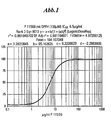
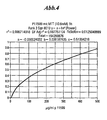
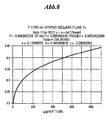
- SC50 values were 6.2 ⁇ g / ml for P11599, 10 ⁇ M for ascorbic acid, and 18 ⁇ M for a-tocopherol (see Fig. 1 - 3). How to take the curves and results P11599 was a better radical scavenger than ⁇ -tocopherol and that Equal to ascorbic acid.
- MTT (3- [4,5-dimethylthiazol-2-yl] 2,5-diphenyl-tetrazolium bromide) was found in a concentration of 10.6 mM for 1 h at 37 ° C with different concentrations of an extract P11599 according to the invention.
- Cytochrome c was at a concentration of 150 ⁇ M for 0.5 h at 37 ° C with various Concentrations of an extract P11599 according to the invention. example 5 or incubated with ascorbic acid as a reference and the change in absorption determined photometrically by the effect of the samples. As a result an extraordinarily high antioxidative potential of P11599, which is similar to that of the relatively strong reducing agent ascorbic acid (see Fig. 6 and 7).
- HSC hepatic stellate cells
- the nutrient culture medium was used to carry out the actual test series of the activated HSC phyllanthus extracts according to the invention (25% ethanol LAT no. 02700514, 50% ethanol LAT no. 0271614, 75% ethanol LAT no. 0272514) dissolved in DMSO in concentrations of 20 ⁇ g / ml, 60 ⁇ g / ml and 200 ⁇ g / ml.
- the treated HSC were then placed in culture medium for four days incubated. After harvesting the HSC was made using conventional methods Total cellular RNA isolated, its concentration and quality spectrophotometric and determined by agarose gel electrophoresis. Evidence of expression the SMA mRNA was carried out using that known in the prior art Northern blot method.
- NO nitrogen monoxide
- a hexane extract in particular reduced (LAT No. 01600514) already in a concentration of 12.5 ⁇ g / ml and an ethanol / water Extract (LAT No. 00690514) in a concentration of 250 ⁇ g / ml effective NO production.
- a reduction in LPS-induced iNOS and COX-2 protein expression was at concentrations of 125 ⁇ g / ml hexane extract and ethanol / water extract found (Fig. 11 - 14).
Landscapes
- Health & Medical Sciences (AREA)
- Life Sciences & Earth Sciences (AREA)
- Chemical & Material Sciences (AREA)
- Animal Behavior & Ethology (AREA)
- Veterinary Medicine (AREA)
- Public Health (AREA)
- General Health & Medical Sciences (AREA)
- Pharmacology & Pharmacy (AREA)
- Medicinal Chemistry (AREA)
- Engineering & Computer Science (AREA)
- Chemical Kinetics & Catalysis (AREA)
- General Chemical & Material Sciences (AREA)
- Nuclear Medicine, Radiotherapy & Molecular Imaging (AREA)
- Organic Chemistry (AREA)
- Bioinformatics & Cheminformatics (AREA)
- Natural Medicines & Medicinal Plants (AREA)
- Urology & Nephrology (AREA)
- Biotechnology (AREA)
- Immunology (AREA)
- Botany (AREA)
- Alternative & Traditional Medicine (AREA)
- Epidemiology (AREA)
- Mycology (AREA)
- Microbiology (AREA)
- Medical Informatics (AREA)
- Virology (AREA)
- Rheumatology (AREA)
- Heart & Thoracic Surgery (AREA)
- Vascular Medicine (AREA)
- Physical Education & Sports Medicine (AREA)
- Cardiology (AREA)
- Pain & Pain Management (AREA)
- Oncology (AREA)
- Molecular Biology (AREA)
- Communicable Diseases (AREA)
- Orthopedic Medicine & Surgery (AREA)
- Pulmonology (AREA)
- Gastroenterology & Hepatology (AREA)
- Medicines Containing Plant Substances (AREA)
- Pharmaceuticals Containing Other Organic And Inorganic Compounds (AREA)
Description
- Figur 1
- die Ergebnisse von Radikalfänger-Versuchen mit 1,1-Diphenyl-2-picrylhydrazyl (DPPH) und den erfindungsgemäßen Phyllanthusextrakten;
- Figur 2
- die Ergebnisse von Radikalfänger-Versuchen mit DPPH und Vitamin C als Vergleich;
- Figur 3
- die Ergebnisse von Radikalfänger-Versuchen mit DPPH und α-Tocopherol als Vergleich;
- Figur 4
- die Ergebnisse von Radikalfänger-Versuchen mit 3-[4,5-Dimethylthiazol-2-yl]-2,5-diphenyl-tetrazolium-bromid (MTT) und den erfindungsgemäßen Phyllanthusextrakten;
- Figur 5
- die Ergebnisse von Radikalfänger-Versuchen mit MTT und Vitamin C als Vergleich;
- Figur 6
- die Ergebnisse von Radikalfänger-Versuchen mit Cytochrom und den erfindungsgemäßen Phyllanthusextrakten;
- Figur 7
- die Ergebnisse von Radikalfänger-Versuchen mit Cytochrom und Vitamin C als Vergleich;
- Figur 8
- die Ergebnisse von Radikalfänger-Versuchen mit Natrium-3'[I-[(phenylamino)-carbonyl]-3,4-tetrazolium]-bis(4-methoxy-6-nitro)-benzen-sulfonsäurehydrat/Phenanzin methosulfat (XTT/PMS) und den erfindungsgemäßen Phyllanthusextrakten;
- Figur 9
- die Ergebnisse von Radikalfänger-Versuchen mit XTT/PMS und Vitamin C als Vergleich;
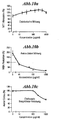
- Figur 10a-c
- die Wirkung von Phyllanthusextrakten auf Leberzellen (Hepatozyten);
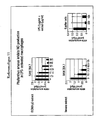
- Referenzfigur 11
- die inhibierende Wirkung von Phyllanthusextrakten auf die LPS-induzierte Expression der NOS anhand der reduzierten NO Produktion;
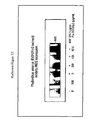
- Referenzfigur 12
- die inhibierende Wirkung eines Ethanol/Wasser-Extraktes von Phyllanthus auf die LPS-induzierte iNOS Expression;
- Referenzfigur 13
- die inhibierende Wirkung eines Hexan-Extraktes von Phyllanthus auf die LPS-induzierte COX-2 Expression; und
- Referenzfigur 14
- die inhibierende Wirkung eines Ethanol/Wasser-Extraktes von Phyllanthus auf die LPS-induzierte COX-2 Expression;
Claims (15)
- Verwendung von Phyllanthus zur Herstellung eines Arzneimittels zur Behandlung oder Prävention von Bindegewebsvermehrungen.
- Verwendung nach Anspruch 1, wobei die Bindegewebsvermehrungen fibrotische Veränderungen der Leber, der Lunge, der Niere, des Pankreas, des Darms, von endokrinen Organen, der Milz, des männlichen oder weiblichen Urogenitaltraktes oder der Gelenke oder Leberzirrhose umfassen.
- Verwendung nach Anspruch 1 oder 2, wobei eine aus Phyllanthus isolierte Fraktion verwendet wird.
- Verwendung gemäß einem der Ansprüche 1 bis 3, wobei eine oder mehrere aus Phyllanthus isolierte chemische Substanzen, verwendet werden.
- Verwendung gemäß einem der Ansprüche 1 bis 4, wobei Phyllanthus ausgewählt wird aus einzelnen Mitgliedern der Gattung Phyllanthus aus der Gruppe Phyllanthus amarus, Phyllanthus niruri, Phyllanthus emblica, Phyllanthus urinaria, Phyllanthus myrtifolius Moon, Phyllanthus maderas pratensis und/oder Phyllanthus ussuriensis.
- Verwendung gemäß einem der Ansprüche 1 bis 5, wobei Blätter, Rinde, Blüten, Samen, Früchte, Stengel, Äste, Stamm, Wurzel, Holz und/oder die Herba von Phyllanthus verwendet werden.
- Verwendung gemäß einem der Ansprüche 1 bis 6, wobei Phyllanthus in zerkleinerter Form, in unveränderter Form, als Granlulat, Pulver, Präzipitat, Extrakt, getrockneter Extrakt und/oder Exsudat eingesetzt wird.
- Verwendung gemäß Anspruch 7, wobei ein wässriger unpolarer, verzweigt- oder unverzweigt-kettiger Kohlenwasserstoff, oder Mischungen davon, vor allem mit n-Hexan, und/oder alkoholischer Extrakte, primärer Alkohole oder Mischungen davon verwendet wird.
- Verwendung nach Anspruch 8, wobei der wässrige unpolare Kohlenwasserstoff C5-C10 verzweigt- oder unverzweigt-kettige Kohlenwasserstoffe umfaßt.
- Verwendung nach Anspruch 8 oder 9, wobei der alkoholische Extrakt kurzkettige C1 bis C4 primäre Alkohole oder Mischungen davon umfaßt.
- Verwendung nach Anspruch 10, wobei der primäre Alkohol Ethanol oder Methanol ist.
- Verwendung gemäß einem der Ansprüche 1 bis 11, wobei die Anwendung in Form einer Infusionslösung, Injektionslösung, Tablette, eines Granulats einer Salbe, von Klysmen, einer Heilpackung und/oder eines Nahrungsergähzungsmittels erfolgt.
- Verwendung gemäß einem der Ansprüche 1 bis 12, wobei die Anwendung oral, topisch und/oder parenteral erfolgt.
- Verwendung gemäß einem der Ansprüche 1 bis 13, wobei zusätzlich zu Phyllanthus andere Wirkstoffe verwendet werden und gegebenenfalls geeignete Zusatz- und/oder Hilfsstoffe.
- Verwendung gemäß Anspruch 14, wobei Ascorbinsäure und/oder Tocopherole verwendet werden.
Applications Claiming Priority (3)
| Application Number | Priority Date | Filing Date | Title |
|---|---|---|---|
| DE19919585A DE19919585A1 (de) | 1999-04-29 | 1999-04-29 | Verwendung von Phyllanthus zur Behandlung von oxidativem Streß und anderen Symptomen |
| DE19919585 | 1999-04-29 | ||
| PCT/EP2000/003869 WO2000066134A1 (de) | 1999-04-29 | 2000-04-28 | Verwendung von phyllanthus zur behandlung von chronisch entzündlichen und fibrotischen prozessen |
Publications (2)
| Publication Number | Publication Date |
|---|---|
| EP1176971A1 EP1176971A1 (de) | 2002-02-06 |
| EP1176971B1 true EP1176971B1 (de) | 2004-09-08 |
Family
ID=7906333
Family Applications (2)
| Application Number | Title | Priority Date | Filing Date |
|---|---|---|---|
| EP00927103A Withdrawn EP1176972A1 (de) | 1999-04-29 | 2000-04-28 | Verwendung von phyllanthus zur gezielten stimulation des immunsystems |
| EP00927102A Expired - Lifetime EP1176971B1 (de) | 1999-04-29 | 2000-04-28 | Verwendung von phyllanthus zur behandlung von chronisch entzündlichen und fibrotischen prozessen |
Family Applications Before (1)
| Application Number | Title | Priority Date | Filing Date |
|---|---|---|---|
| EP00927103A Withdrawn EP1176972A1 (de) | 1999-04-29 | 2000-04-28 | Verwendung von phyllanthus zur gezielten stimulation des immunsystems |
Country Status (13)
| Country | Link |
|---|---|
| US (1) | US6586015B1 (de) |
| EP (2) | EP1176972A1 (de) |
| JP (2) | JP2002543140A (de) |
| CN (2) | CN1352563A (de) |
| AT (1) | ATE275411T1 (de) |
| AU (2) | AU4559300A (de) |
| BR (2) | BR0010590A (de) |
| CA (2) | CA2372223A1 (de) |
| DE (2) | DE19919585A1 (de) |
| ES (1) | ES2226831T3 (de) |
| MX (2) | MXPA01010982A (de) |
| PT (1) | PT1176971E (de) |
| WO (2) | WO2000066134A1 (de) |
Families Citing this family (22)
| Publication number | Priority date | Publication date | Assignee | Title |
|---|---|---|---|---|
| DE10030139A1 (de) * | 2000-06-20 | 2002-01-10 | Cmi Ag | Verwendung von Phyllanthusbesandteilen zur Behandlung oder Prophylaxe von Infekten durch Flaviviridae |
| ATE275413T1 (de) * | 2000-10-06 | 2004-09-15 | Phytrix Ag | Verfahren zur herstellung von phyllanthusextrakten |
| EP1333848B1 (de) * | 2000-10-06 | 2006-04-05 | Phytrix AG | Verbindungen aus phyllanthus zur prävention und/oder behandlung von erkrankungen im zusammenhang mit einem retrovirus |
| DE10120627A1 (de) * | 2001-04-26 | 2002-10-31 | Cmi Ag | Verwendung von Phyllanthusbestandteilen zur Behandlung oder Prophylaxe von Infekten durch Hepatitis B-Viren |
| US20050064053A1 (en) * | 2002-11-08 | 2005-03-24 | Em Industries | Enriched aqueous components of emblica officinalis |
| JP2006514670A (ja) | 2003-03-03 | 2006-05-11 | 稲畑香料株式会社 | 血清高比重リボタンパク質を増加させるための方法及び技術 |
| JP5508656B2 (ja) * | 2004-07-16 | 2014-06-04 | 太陽化学株式会社 | 最終糖化産物生成阻害組成物 |
| TW200607517A (en) * | 2004-08-17 | 2006-03-01 | Hepaguard Biotechnology Int L Co Ltd | Medicinal composition capable of suppressing proliferation or metastasis of tumor cells |
| WO2006131932A1 (en) * | 2005-06-09 | 2006-12-14 | Mmi Corporation | Herbal formulation capable of preventing alcohol-induced hangover, methods of preparing the same and use thereof |
| US7597910B2 (en) * | 2005-08-20 | 2009-10-06 | Slgm Medical Research Institute | Compositions and methods for treating prostate disorders |
| EP2175871B1 (de) * | 2007-07-18 | 2016-08-31 | Council of Scientific & Industrial Research | Synergistische kräuterzusammensetzung zur behandlung rheumatischer und muskuloskelettaler erkrankungen (rmsds) |
| DE102007044487A1 (de) * | 2007-09-18 | 2009-04-02 | Universität Leipzig | Verwendung des umgekehrten Zelldifferenzierungsprogramms (OCDP) zur Behandlung degenerierter, im pathologischen Zustand befindlicher Organe |
| US20110009692A1 (en) * | 2007-12-26 | 2011-01-13 | Yossi Gross | Nitric oxide generation to treat female sexual dysfunction |
| US20090198271A1 (en) * | 2008-01-31 | 2009-08-06 | Rainbow Medical Ltd. | Electrode based filter |
| US7749284B2 (en) * | 2008-04-28 | 2010-07-06 | Aveda Corporation | Oxidative hair dye compositions, methods and products |
| EP2116253A1 (de) * | 2008-05-07 | 2009-11-11 | Phytrix JV, LLC | Neuartiger Phyllanthus-Extrakt |
| US8916209B2 (en) * | 2009-10-02 | 2014-12-23 | Johnson & Johnson Consumer Companies, Inc. | Extracts of Phyllanthus niruri |
| US20110202108A1 (en) * | 2010-02-18 | 2011-08-18 | Rainbow Medical Ltd. | Electrical menorrhagia treatment |
| US20130064912A1 (en) * | 2011-09-09 | 2013-03-14 | Jon Barron | Formulation for alleviation of kidney stone and gallstone symptoms |
| IN2013CH04565A (de) | 2013-10-08 | 2015-09-25 | Benny Antony | |
| US10286022B2 (en) | 2013-10-08 | 2019-05-14 | Benny Antony | Medicinal composition of extract of seed of emblica officinalis and method of preparing the same |
| CN105168314A (zh) * | 2015-09-10 | 2015-12-23 | 福建农林大学 | 一种复方叶下珠制剂及其在犬日粮上的应用 |
Family Cites Families (11)
| Publication number | Priority date | Publication date | Assignee | Title |
|---|---|---|---|---|
| US4388457A (en) | 1982-02-11 | 1983-06-14 | University Patents, Inc. | Phyllanthostatin compounds |
| US4673575A (en) | 1985-04-26 | 1987-06-16 | Fox Chase Cancer Center | Composition, pharmaceutical preparation and method for treating viral hepatitus |
| US4937074A (en) | 1988-03-29 | 1990-06-26 | Fox Chase Cancer Center | Method of treating retrovirus infection |
| US5854233A (en) * | 1993-09-08 | 1998-12-29 | Pharmacy And Therapeutic Advisory Consultancy Ltd. | Method of treating liver disease and like indications with vasodilating agents |
| US5529778A (en) * | 1994-09-13 | 1996-06-25 | Rohatgi; Surendra | Ayurvedic composition for the prophylaxis and treatment of AIDS, flu, TB and other immuno-deficiencies and the process for preparing the same |
| US5571441A (en) | 1994-11-01 | 1996-11-05 | The Procter & Gamble Company | Nutrient supplement compositions providing physiologic feedback |
| US5648089A (en) * | 1995-07-03 | 1997-07-15 | Shawkat; Tarek | Extract solution and herbal mixture for treatment of hepatitis |
| US6136316A (en) | 1996-04-17 | 2000-10-24 | Dabur Research Foundation | Hepatoprotective compositions and composition for treatment of conditions related to hepatitis B and E infection |
| US6747136B2 (en) | 1996-04-19 | 2004-06-08 | Karolinska Innovations Ab | Human monoclonal antibodies specific for hepatitis C virus (HCV) E2 antigen |
| PT903148E (pt) | 1997-09-21 | 2002-02-28 | Schering Corp | Terapia de combinacao para a erradicacao de rna de hcv detectavel em doentes tendo infeccao cronica pelo virus da hepatite c |
| GB2355932B (en) | 1999-04-12 | 2004-01-07 | Univ Madras | A pharmaceutical formulation suitable for the treatment of hepatitis B, hepatitis C and other viral infections of the liver and a process for its preparation |
-
1999
- 1999-04-29 DE DE19919585A patent/DE19919585A1/de not_active Ceased
-
2000
- 2000-04-28 CN CN00806852A patent/CN1352563A/zh active Pending
- 2000-04-28 JP JP2000615019A patent/JP2002543140A/ja active Pending
- 2000-04-28 US US09/560,557 patent/US6586015B1/en not_active Expired - Lifetime
- 2000-04-28 JP JP2000615018A patent/JP2002543139A/ja active Pending
- 2000-04-28 AT AT00927102T patent/ATE275411T1/de not_active IP Right Cessation
- 2000-04-28 CA CA002372223A patent/CA2372223A1/en not_active Abandoned
- 2000-04-28 BR BR0010590-2A patent/BR0010590A/pt not_active Application Discontinuation
- 2000-04-28 DE DE50007689T patent/DE50007689D1/de not_active Expired - Lifetime
- 2000-04-28 CN CN00806854A patent/CN1364085A/zh active Pending
- 2000-04-28 EP EP00927103A patent/EP1176972A1/de not_active Withdrawn
- 2000-04-28 WO PCT/EP2000/003869 patent/WO2000066134A1/de not_active Ceased
- 2000-04-28 MX MXPA01010982A patent/MXPA01010982A/es unknown
- 2000-04-28 BR BR0010604-6A patent/BR0010604A/pt not_active Application Discontinuation
- 2000-04-28 EP EP00927102A patent/EP1176971B1/de not_active Expired - Lifetime
- 2000-04-28 AU AU45593/00A patent/AU4559300A/en not_active Abandoned
- 2000-04-28 PT PT00927102T patent/PT1176971E/pt unknown
- 2000-04-28 ES ES00927102T patent/ES2226831T3/es not_active Expired - Lifetime
- 2000-04-28 WO PCT/EP2000/003870 patent/WO2000066135A1/de not_active Ceased
- 2000-04-28 AU AU45592/00A patent/AU4559200A/en not_active Abandoned
- 2000-04-28 MX MXPA01010980A patent/MXPA01010980A/es active IP Right Grant
- 2000-04-28 CA CA002372220A patent/CA2372220A1/en not_active Abandoned
Also Published As
| Publication number | Publication date |
|---|---|
| JP2002543139A (ja) | 2002-12-17 |
| EP1176971A1 (de) | 2002-02-06 |
| DE50007689D1 (de) | 2004-10-14 |
| CN1364085A (zh) | 2002-08-14 |
| MXPA01010982A (es) | 2003-07-21 |
| AU4559200A (en) | 2000-11-17 |
| DE19919585A1 (de) | 2000-12-07 |
| AU4559300A (en) | 2000-11-17 |
| JP2002543140A (ja) | 2002-12-17 |
| MXPA01010980A (es) | 2003-06-30 |
| WO2000066134A1 (de) | 2000-11-09 |
| CA2372223A1 (en) | 2000-11-09 |
| US6586015B1 (en) | 2003-07-01 |
| WO2000066135A1 (de) | 2000-11-09 |
| ES2226831T3 (es) | 2005-04-01 |
| EP1176972A1 (de) | 2002-02-06 |
| PT1176971E (pt) | 2005-01-31 |
| CN1352563A (zh) | 2002-06-05 |
| ATE275411T1 (de) | 2004-09-15 |
| BR0010604A (pt) | 2002-02-05 |
| BR0010590A (pt) | 2003-07-22 |
| CA2372220A1 (en) | 2000-11-09 |
Similar Documents
| Publication | Publication Date | Title |
|---|---|---|
| EP1176971A1 (de) | Verwendung von phyllanthus zur behandlung von chronisch entzündlichen und fibrotischen prozessen | |
| Lin et al. | Evaluation of the antioxidant and hepatoprotective activity of Terminalia catappa | |
| Madrigal-Santillán et al. | Review of natural products with hepatoprotective effects | |
| Zhong et al. | Antioxidant and anti-aging activities of mycelial polysaccharides from Lepista sordida | |
| Joyeux et al. | Screening of antiradical, antilipoperoxidant and hepatoprotective effects of nine plant extracts used in Caribbean folk medicine | |
| Bhondave et al. | ‘Ashvagandharishta’prepared using yeast consortium from Woodfordia fruticosa flowers exhibit hepatoprotective effect on CCl4 induced liver damage in Wistar rats | |
| Nille et al. | A phytopharmacological review of plant-Cassia auriculata. | |
| Abd-Al-Sattar Sadiq Layl | Hepatoprotective effect of Glycyrrhiza glabra L. extracts against carbon tetrachloride-induced acute liver damage in rats | |
| KR101794006B1 (ko) | 식물 추출물을 포함하는 염증 개선용 조성물 | |
| Ramadan et al. | Hepatoprotective and antioxidant effects of Silybum marianum plant in rats | |
| KR102223248B1 (ko) | 당귀 추출물, 천궁 추출물 및 작약 추출물을 포함하는 근력 개선 또는 근감소증 예방, 개선 또는 치료용 조성물 | |
| CN110859788B (zh) | 一种塔纳卡组合物及其制备方法和应用 | |
| Amalia et al. | Update review: extraction, purification, and pharmacological activities of gotu kola terpenoids | |
| KR102585685B1 (ko) | 식물 추출물을 유효성분으로 포함하는 자외선에 의한 피부손상 예방 또는 개선용 조성물 | |
| Rajangam et al. | Evaluation of Hepatoprotective and antioxidant potential of methanolic extract of Polyalthiya longifolia fruits: An In-vitro and In-vivo approach | |
| Banarase et al. | A comprehensive review on some species of Mikania | |
| Sumathi et al. | Free radical scavenging activity of different parts of withania somnifera | |
| Kalu et al. | Aqueous extract of Combretum dolichopentalum leaf-a potent inhibitor of carbon tetrachloride induced hepatotoxicity in rats | |
| Chegini Nejad et al. | Hepatoprotective effect of Fomes fomentarius extract against carbon tetrachloride-induced acute liver injury in rat | |
| Priya et al. | Evaluation of antioxidant activity of leaf and bark extracts of Diospyros virginiana in rats | |
| Saadat et al. | Antioxidant effects of polysaccharides derivatives of various plants | |
| Antika et al. | Effect of Lawsonia inermis linn. ethanol extract on the superoxyde dismutase activity in hyperglycemic rattus Norvegicus | |
| Gara et al. | Effect of N-butanol fraction of Detarium microcarpum stem bark on some liver function and oxidative stress parameters in carbon tetrachloride induced hepatic injury in wistar rats | |
| Chandra et al. | Nephroprotective Effect of Ethanol Extract of Carica Papaya Seed on Rats Induced Rifampicin and Isoniazid | |
| Kumar et al. | Role of Katankateryadi Kwatha in Insulin Secretion and Restoration of Biochemical Changes in Streptozotocin-Nicotinamide Induced Diabetes Mellitus Type 2 in Rats |
Legal Events
| Date | Code | Title | Description |
|---|---|---|---|
| PUAI | Public reference made under article 153(3) epc to a published international application that has entered the european phase |
Free format text: ORIGINAL CODE: 0009012 |
|
| 17P | Request for examination filed |
Effective date: 20011129 |
|
| AK | Designated contracting states |
Kind code of ref document: A1 Designated state(s): AT BE CH CY DE DK ES FI FR GB GR IE IT LI LU MC NL PT SE |
|
| AX | Request for extension of the european patent |
Free format text: AL;LT;LV;MK;RO;SI |
|
| 17Q | First examination report despatched |
Effective date: 20020308 |
|
| RIC1 | Information provided on ipc code assigned before grant |
Ipc: 7A 61K 35/78 A Ipc: 7A 61P 1/16 B |
|
| RTI1 | Title (correction) |
Free format text: USE OF PHYLLANTHUS FOR TREATING FIBROTIC PROCESSES |
|
| GRAP | Despatch of communication of intention to grant a patent |
Free format text: ORIGINAL CODE: EPIDOSNIGR1 |
|
| GRAS | Grant fee paid |
Free format text: ORIGINAL CODE: EPIDOSNIGR3 |
|
| GRAA | (expected) grant |
Free format text: ORIGINAL CODE: 0009210 |
|
| RTI1 | Title (correction) |
Free format text: USE OF PHYLLANTHUS FOR TREATING CHRONIC INFLAMMATORY AND FIBROTIC PROCESSES |
|
| RAP1 | Party data changed (applicant data changed or rights of an application transferred) |
Owner name: PHYTRIX AG |
|
| AK | Designated contracting states |
Kind code of ref document: B1 Designated state(s): AT BE CH CY DE DK ES FI FR GB GR IE IT LI LU MC NL PT SE |
|
| REG | Reference to a national code |
Ref country code: GB Ref legal event code: FG4D Free format text: NOT ENGLISH |
|
| REG | Reference to a national code |
Ref country code: CH Ref legal event code: EP |
|
| REG | Reference to a national code |
Ref country code: IE Ref legal event code: FG4D Free format text: GERMAN |
|
| REF | Corresponds to: |
Ref document number: 50007689 Country of ref document: DE Date of ref document: 20041014 Kind code of ref document: P |
|
| REG | Reference to a national code |
Ref country code: CH Ref legal event code: NV Representative=s name: E. BLUM & CO. PATENTANWAELTE |
|
| REG | Reference to a national code |
Ref country code: SE Ref legal event code: TRGR |
|
| REG | Reference to a national code |
Ref country code: GR Ref legal event code: EP Ref document number: 20040404061 Country of ref document: GR |
|
| REG | Reference to a national code |
Ref country code: PT Ref legal event code: SC4A Effective date: 20041115 |
|
| LTIE | Lt: invalidation of european patent or patent extension |
Effective date: 20040908 |
|
| REG | Reference to a national code |
Ref country code: DK Ref legal event code: T3 |
|
| GBT | Gb: translation of ep patent filed (gb section 77(6)(a)/1977) |
Effective date: 20050221 |
|
| REG | Reference to a national code |
Ref country code: ES Ref legal event code: FG2A Ref document number: 2226831 Country of ref document: ES Kind code of ref document: T3 |
|
| PLBE | No opposition filed within time limit |
Free format text: ORIGINAL CODE: 0009261 |
|
| STAA | Information on the status of an ep patent application or granted ep patent |
Free format text: STATUS: NO OPPOSITION FILED WITHIN TIME LIMIT |
|
| ET | Fr: translation filed | ||
| 26N | No opposition filed |
Effective date: 20050609 |
|
| PGFP | Annual fee paid to national office [announced via postgrant information from national office to epo] |
Ref country code: IE Payment date: 20060414 Year of fee payment: 7 |
|
| PGFP | Annual fee paid to national office [announced via postgrant information from national office to epo] |
Ref country code: PT Payment date: 20060418 Year of fee payment: 7 Ref country code: SE Payment date: 20060418 Year of fee payment: 7 |
|
| PGFP | Annual fee paid to national office [announced via postgrant information from national office to epo] |
Ref country code: CH Payment date: 20060421 Year of fee payment: 7 Ref country code: MC Payment date: 20060421 Year of fee payment: 7 |
|
| PGFP | Annual fee paid to national office [announced via postgrant information from national office to epo] |
Ref country code: AT Payment date: 20060424 Year of fee payment: 7 Ref country code: BE Payment date: 20060424 Year of fee payment: 7 Ref country code: FI Payment date: 20060424 Year of fee payment: 7 Ref country code: LU Payment date: 20060424 Year of fee payment: 7 Ref country code: DK Payment date: 20060424 Year of fee payment: 7 |
|
| PGFP | Annual fee paid to national office [announced via postgrant information from national office to epo] |
Ref country code: GR Payment date: 20060425 Year of fee payment: 7 |
|
| PGFP | Annual fee paid to national office [announced via postgrant information from national office to epo] |
Ref country code: CY Payment date: 20060426 Year of fee payment: 7 |
|
| PGFP | Annual fee paid to national office [announced via postgrant information from national office to epo] |
Ref country code: IT Payment date: 20060430 Year of fee payment: 7 |
|
| REG | Reference to a national code |
Ref country code: CH Ref legal event code: PFA Owner name: PHYTRIX AG Free format text: PHYTRIX AG#NYMPHENBURGER STRASSE 20A#80335 MUENCHEN (DE) -TRANSFER TO- PHYTRIX AG#NYMPHENBURGER STRASSE 20A#80335 MUENCHEN (DE) |
|
| REG | Reference to a national code |
Ref country code: PT Ref legal event code: MM4A Free format text: LAPSE DUE TO NON-PAYMENT OF FEES Effective date: 20071029 |
|
| REG | Reference to a national code |
Ref country code: DK Ref legal event code: EBP |
|
| REG | Reference to a national code |
Ref country code: CH Ref legal event code: PL |
|
| BERE | Be: lapsed |
Owner name: *PHYTRIX A.G. Effective date: 20070430 |
|
| PG25 | Lapsed in a contracting state [announced via postgrant information from national office to epo] |
Ref country code: FI Free format text: LAPSE BECAUSE OF NON-PAYMENT OF DUE FEES Effective date: 20070428 Ref country code: PT Free format text: LAPSE BECAUSE OF NON-PAYMENT OF DUE FEES Effective date: 20071029 Ref country code: MC Free format text: LAPSE BECAUSE OF NON-PAYMENT OF DUE FEES Effective date: 20070430 |
|
| REG | Reference to a national code |
Ref country code: IE Ref legal event code: MM4A |
|
| PG25 | Lapsed in a contracting state [announced via postgrant information from national office to epo] |
Ref country code: CH Free format text: LAPSE BECAUSE OF NON-PAYMENT OF DUE FEES Effective date: 20070430 Ref country code: AT Free format text: LAPSE BECAUSE OF NON-PAYMENT OF DUE FEES Effective date: 20070428 Ref country code: LI Free format text: LAPSE BECAUSE OF NON-PAYMENT OF DUE FEES Effective date: 20070430 |
|
| PG25 | Lapsed in a contracting state [announced via postgrant information from national office to epo] |
Ref country code: BE Free format text: LAPSE BECAUSE OF NON-PAYMENT OF DUE FEES Effective date: 20070430 |
|
| PG25 | Lapsed in a contracting state [announced via postgrant information from national office to epo] |
Ref country code: DK Free format text: LAPSE BECAUSE OF NON-PAYMENT OF DUE FEES Effective date: 20070430 |
|
| PG25 | Lapsed in a contracting state [announced via postgrant information from national office to epo] |
Ref country code: IE Free format text: LAPSE BECAUSE OF NON-PAYMENT OF DUE FEES Effective date: 20070430 Ref country code: CY Free format text: LAPSE BECAUSE OF NON-PAYMENT OF DUE FEES Effective date: 20070428 |
|
| PG25 | Lapsed in a contracting state [announced via postgrant information from national office to epo] |
Ref country code: SE Free format text: LAPSE BECAUSE OF NON-PAYMENT OF DUE FEES Effective date: 20070429 |
|
| PG25 | Lapsed in a contracting state [announced via postgrant information from national office to epo] |
Ref country code: GR Free format text: LAPSE BECAUSE OF NON-PAYMENT OF DUE FEES Effective date: 20071102 |
|
| PG25 | Lapsed in a contracting state [announced via postgrant information from national office to epo] |
Ref country code: LU Free format text: LAPSE BECAUSE OF NON-PAYMENT OF DUE FEES Effective date: 20070428 |
|
| PG25 | Lapsed in a contracting state [announced via postgrant information from national office to epo] |
Ref country code: IT Free format text: LAPSE BECAUSE OF NON-PAYMENT OF DUE FEES Effective date: 20070428 |
|
| REG | Reference to a national code |
Ref country code: FR Ref legal event code: PLFP Year of fee payment: 17 |
|
| PGFP | Annual fee paid to national office [announced via postgrant information from national office to epo] |
Ref country code: NL Payment date: 20160421 Year of fee payment: 17 |
|
| PGFP | Annual fee paid to national office [announced via postgrant information from national office to epo] |
Ref country code: GB Payment date: 20160425 Year of fee payment: 17 Ref country code: ES Payment date: 20160422 Year of fee payment: 17 Ref country code: DE Payment date: 20160530 Year of fee payment: 17 |
|
| PGFP | Annual fee paid to national office [announced via postgrant information from national office to epo] |
Ref country code: FR Payment date: 20160423 Year of fee payment: 17 |
|
| REG | Reference to a national code |
Ref country code: DE Ref legal event code: R119 Ref document number: 50007689 Country of ref document: DE |
|
| REG | Reference to a national code |
Ref country code: NL Ref legal event code: MM Effective date: 20170501 |
|
| GBPC | Gb: european patent ceased through non-payment of renewal fee |
Effective date: 20170428 |
|
| REG | Reference to a national code |
Ref country code: FR Ref legal event code: ST Effective date: 20171229 |
|
| PG25 | Lapsed in a contracting state [announced via postgrant information from national office to epo] |
Ref country code: NL Free format text: LAPSE BECAUSE OF NON-PAYMENT OF DUE FEES Effective date: 20170501 Ref country code: FR Free format text: LAPSE BECAUSE OF NON-PAYMENT OF DUE FEES Effective date: 20170502 Ref country code: DE Free format text: LAPSE BECAUSE OF NON-PAYMENT OF DUE FEES Effective date: 20171103 |
|
| PG25 | Lapsed in a contracting state [announced via postgrant information from national office to epo] |
Ref country code: GB Free format text: LAPSE BECAUSE OF NON-PAYMENT OF DUE FEES Effective date: 20170428 |
|
| REG | Reference to a national code |
Ref country code: ES Ref legal event code: FD2A Effective date: 20180703 |
|
| PG25 | Lapsed in a contracting state [announced via postgrant information from national office to epo] |
Ref country code: ES Free format text: LAPSE BECAUSE OF NON-PAYMENT OF DUE FEES Effective date: 20170429 |