EP1174028A1 - Sulfonamide derivatives - Google Patents
Sulfonamide derivatives Download PDFInfo
- Publication number
- EP1174028A1 EP1174028A1 EP00922891A EP00922891A EP1174028A1 EP 1174028 A1 EP1174028 A1 EP 1174028A1 EP 00922891 A EP00922891 A EP 00922891A EP 00922891 A EP00922891 A EP 00922891A EP 1174028 A1 EP1174028 A1 EP 1174028A1
- Authority
- EP
- European Patent Office
- Prior art keywords
- group
- substituted
- alkyl
- halogens
- alkoxy
- Prior art date
- Legal status (The legal status is an assumption and is not a legal conclusion. Google has not performed a legal analysis and makes no representation as to the accuracy of the status listed.)
- Granted
Links
Classifications
-
- C—CHEMISTRY; METALLURGY
- C07—ORGANIC CHEMISTRY
- C07C—ACYCLIC OR CARBOCYCLIC COMPOUNDS
- C07C327/00—Thiocarboxylic acids
- C07C327/58—Derivatives of thiocarboxylic acids, the doubly-bound oxygen atoms being replaced by nitrogen atoms, e.g. imino-thio ethers
-
- A—HUMAN NECESSITIES
- A01—AGRICULTURE; FORESTRY; ANIMAL HUSBANDRY; HUNTING; TRAPPING; FISHING
- A01N—PRESERVATION OF BODIES OF HUMANS OR ANIMALS OR PLANTS OR PARTS THEREOF; BIOCIDES, e.g. AS DISINFECTANTS, AS PESTICIDES OR AS HERBICIDES; PEST REPELLANTS OR ATTRACTANTS; PLANT GROWTH REGULATORS
- A01N41/00—Biocides, pest repellants or attractants, or plant growth regulators containing organic compounds containing a sulfur atom bound to a hetero atom
- A01N41/02—Biocides, pest repellants or attractants, or plant growth regulators containing organic compounds containing a sulfur atom bound to a hetero atom containing a sulfur-to-oxygen double bond
- A01N41/04—Sulfonic acids; Derivatives thereof
- A01N41/06—Sulfonic acid amides
-
- A—HUMAN NECESSITIES
- A01—AGRICULTURE; FORESTRY; ANIMAL HUSBANDRY; HUNTING; TRAPPING; FISHING
- A01N—PRESERVATION OF BODIES OF HUMANS OR ANIMALS OR PLANTS OR PARTS THEREOF; BIOCIDES, e.g. AS DISINFECTANTS, AS PESTICIDES OR AS HERBICIDES; PEST REPELLANTS OR ATTRACTANTS; PLANT GROWTH REGULATORS
- A01N43/00—Biocides, pest repellants or attractants, or plant growth regulators containing heterocyclic compounds
- A01N43/02—Biocides, pest repellants or attractants, or plant growth regulators containing heterocyclic compounds having rings with one or more oxygen or sulfur atoms as the only ring hetero atoms
- A01N43/04—Biocides, pest repellants or attractants, or plant growth regulators containing heterocyclic compounds having rings with one or more oxygen or sulfur atoms as the only ring hetero atoms with one hetero atom
- A01N43/06—Biocides, pest repellants or attractants, or plant growth regulators containing heterocyclic compounds having rings with one or more oxygen or sulfur atoms as the only ring hetero atoms with one hetero atom five-membered rings
- A01N43/10—Biocides, pest repellants or attractants, or plant growth regulators containing heterocyclic compounds having rings with one or more oxygen or sulfur atoms as the only ring hetero atoms with one hetero atom five-membered rings with sulfur as the ring hetero atom
-
- A—HUMAN NECESSITIES
- A01—AGRICULTURE; FORESTRY; ANIMAL HUSBANDRY; HUNTING; TRAPPING; FISHING
- A01N—PRESERVATION OF BODIES OF HUMANS OR ANIMALS OR PLANTS OR PARTS THEREOF; BIOCIDES, e.g. AS DISINFECTANTS, AS PESTICIDES OR AS HERBICIDES; PEST REPELLANTS OR ATTRACTANTS; PLANT GROWTH REGULATORS
- A01N43/00—Biocides, pest repellants or attractants, or plant growth regulators containing heterocyclic compounds
- A01N43/34—Biocides, pest repellants or attractants, or plant growth regulators containing heterocyclic compounds having rings with one nitrogen atom as the only ring hetero atom
- A01N43/40—Biocides, pest repellants or attractants, or plant growth regulators containing heterocyclic compounds having rings with one nitrogen atom as the only ring hetero atom six-membered rings
-
- A—HUMAN NECESSITIES
- A01—AGRICULTURE; FORESTRY; ANIMAL HUSBANDRY; HUNTING; TRAPPING; FISHING
- A01N—PRESERVATION OF BODIES OF HUMANS OR ANIMALS OR PLANTS OR PARTS THEREOF; BIOCIDES, e.g. AS DISINFECTANTS, AS PESTICIDES OR AS HERBICIDES; PEST REPELLANTS OR ATTRACTANTS; PLANT GROWTH REGULATORS
- A01N43/00—Biocides, pest repellants or attractants, or plant growth regulators containing heterocyclic compounds
- A01N43/34—Biocides, pest repellants or attractants, or plant growth regulators containing heterocyclic compounds having rings with one nitrogen atom as the only ring hetero atom
- A01N43/40—Biocides, pest repellants or attractants, or plant growth regulators containing heterocyclic compounds having rings with one nitrogen atom as the only ring hetero atom six-membered rings
- A01N43/42—Biocides, pest repellants or attractants, or plant growth regulators containing heterocyclic compounds having rings with one nitrogen atom as the only ring hetero atom six-membered rings condensed with carbocyclic rings
-
- A—HUMAN NECESSITIES
- A01—AGRICULTURE; FORESTRY; ANIMAL HUSBANDRY; HUNTING; TRAPPING; FISHING
- A01N—PRESERVATION OF BODIES OF HUMANS OR ANIMALS OR PLANTS OR PARTS THEREOF; BIOCIDES, e.g. AS DISINFECTANTS, AS PESTICIDES OR AS HERBICIDES; PEST REPELLANTS OR ATTRACTANTS; PLANT GROWTH REGULATORS
- A01N43/00—Biocides, pest repellants or attractants, or plant growth regulators containing heterocyclic compounds
- A01N43/48—Biocides, pest repellants or attractants, or plant growth regulators containing heterocyclic compounds having rings with two nitrogen atoms as the only ring hetero atoms
- A01N43/50—1,3-Diazoles; Hydrogenated 1,3-diazoles
-
- A—HUMAN NECESSITIES
- A01—AGRICULTURE; FORESTRY; ANIMAL HUSBANDRY; HUNTING; TRAPPING; FISHING
- A01N—PRESERVATION OF BODIES OF HUMANS OR ANIMALS OR PLANTS OR PARTS THEREOF; BIOCIDES, e.g. AS DISINFECTANTS, AS PESTICIDES OR AS HERBICIDES; PEST REPELLANTS OR ATTRACTANTS; PLANT GROWTH REGULATORS
- A01N43/00—Biocides, pest repellants or attractants, or plant growth regulators containing heterocyclic compounds
- A01N43/48—Biocides, pest repellants or attractants, or plant growth regulators containing heterocyclic compounds having rings with two nitrogen atoms as the only ring hetero atoms
- A01N43/56—1,2-Diazoles; Hydrogenated 1,2-diazoles
-
- A—HUMAN NECESSITIES
- A01—AGRICULTURE; FORESTRY; ANIMAL HUSBANDRY; HUNTING; TRAPPING; FISHING
- A01N—PRESERVATION OF BODIES OF HUMANS OR ANIMALS OR PLANTS OR PARTS THEREOF; BIOCIDES, e.g. AS DISINFECTANTS, AS PESTICIDES OR AS HERBICIDES; PEST REPELLANTS OR ATTRACTANTS; PLANT GROWTH REGULATORS
- A01N43/00—Biocides, pest repellants or attractants, or plant growth regulators containing heterocyclic compounds
- A01N43/48—Biocides, pest repellants or attractants, or plant growth regulators containing heterocyclic compounds having rings with two nitrogen atoms as the only ring hetero atoms
- A01N43/58—1,2-Diazines; Hydrogenated 1,2-diazines
-
- A—HUMAN NECESSITIES
- A01—AGRICULTURE; FORESTRY; ANIMAL HUSBANDRY; HUNTING; TRAPPING; FISHING
- A01N—PRESERVATION OF BODIES OF HUMANS OR ANIMALS OR PLANTS OR PARTS THEREOF; BIOCIDES, e.g. AS DISINFECTANTS, AS PESTICIDES OR AS HERBICIDES; PEST REPELLANTS OR ATTRACTANTS; PLANT GROWTH REGULATORS
- A01N43/00—Biocides, pest repellants or attractants, or plant growth regulators containing heterocyclic compounds
- A01N43/48—Biocides, pest repellants or attractants, or plant growth regulators containing heterocyclic compounds having rings with two nitrogen atoms as the only ring hetero atoms
- A01N43/60—1,4-Diazines; Hydrogenated 1,4-diazines
-
- A—HUMAN NECESSITIES
- A01—AGRICULTURE; FORESTRY; ANIMAL HUSBANDRY; HUNTING; TRAPPING; FISHING
- A01N—PRESERVATION OF BODIES OF HUMANS OR ANIMALS OR PLANTS OR PARTS THEREOF; BIOCIDES, e.g. AS DISINFECTANTS, AS PESTICIDES OR AS HERBICIDES; PEST REPELLANTS OR ATTRACTANTS; PLANT GROWTH REGULATORS
- A01N43/00—Biocides, pest repellants or attractants, or plant growth regulators containing heterocyclic compounds
- A01N43/64—Biocides, pest repellants or attractants, or plant growth regulators containing heterocyclic compounds having rings with three nitrogen atoms as the only ring hetero atoms
- A01N43/647—Triazoles; Hydrogenated triazoles
- A01N43/653—1,2,4-Triazoles; Hydrogenated 1,2,4-triazoles
-
- A—HUMAN NECESSITIES
- A01—AGRICULTURE; FORESTRY; ANIMAL HUSBANDRY; HUNTING; TRAPPING; FISHING
- A01N—PRESERVATION OF BODIES OF HUMANS OR ANIMALS OR PLANTS OR PARTS THEREOF; BIOCIDES, e.g. AS DISINFECTANTS, AS PESTICIDES OR AS HERBICIDES; PEST REPELLANTS OR ATTRACTANTS; PLANT GROWTH REGULATORS
- A01N43/00—Biocides, pest repellants or attractants, or plant growth regulators containing heterocyclic compounds
- A01N43/72—Biocides, pest repellants or attractants, or plant growth regulators containing heterocyclic compounds having rings with nitrogen atoms and oxygen or sulfur atoms as ring hetero atoms
- A01N43/80—Biocides, pest repellants or attractants, or plant growth regulators containing heterocyclic compounds having rings with nitrogen atoms and oxygen or sulfur atoms as ring hetero atoms five-membered rings with one nitrogen atom and either one oxygen atom or one sulfur atom in positions 1,2
-
- A—HUMAN NECESSITIES
- A01—AGRICULTURE; FORESTRY; ANIMAL HUSBANDRY; HUNTING; TRAPPING; FISHING
- A01N—PRESERVATION OF BODIES OF HUMANS OR ANIMALS OR PLANTS OR PARTS THEREOF; BIOCIDES, e.g. AS DISINFECTANTS, AS PESTICIDES OR AS HERBICIDES; PEST REPELLANTS OR ATTRACTANTS; PLANT GROWTH REGULATORS
- A01N43/00—Biocides, pest repellants or attractants, or plant growth regulators containing heterocyclic compounds
- A01N43/72—Biocides, pest repellants or attractants, or plant growth regulators containing heterocyclic compounds having rings with nitrogen atoms and oxygen or sulfur atoms as ring hetero atoms
- A01N43/82—Biocides, pest repellants or attractants, or plant growth regulators containing heterocyclic compounds having rings with nitrogen atoms and oxygen or sulfur atoms as ring hetero atoms five-membered rings with three ring hetero atoms
-
- A—HUMAN NECESSITIES
- A01—AGRICULTURE; FORESTRY; ANIMAL HUSBANDRY; HUNTING; TRAPPING; FISHING
- A01N—PRESERVATION OF BODIES OF HUMANS OR ANIMALS OR PLANTS OR PARTS THEREOF; BIOCIDES, e.g. AS DISINFECTANTS, AS PESTICIDES OR AS HERBICIDES; PEST REPELLANTS OR ATTRACTANTS; PLANT GROWTH REGULATORS
- A01N43/00—Biocides, pest repellants or attractants, or plant growth regulators containing heterocyclic compounds
- A01N43/90—Biocides, pest repellants or attractants, or plant growth regulators containing heterocyclic compounds having two or more relevant hetero rings, condensed among themselves or with a common carbocyclic ring system
-
- C—CHEMISTRY; METALLURGY
- C07—ORGANIC CHEMISTRY
- C07C—ACYCLIC OR CARBOCYCLIC COMPOUNDS
- C07C311/00—Amides of sulfonic acids, i.e. compounds having singly-bound oxygen atoms of sulfo groups replaced by nitrogen atoms, not being part of nitro or nitroso groups
- C07C311/01—Sulfonamides having sulfur atoms of sulfonamide groups bound to acyclic carbon atoms
- C07C311/12—Sulfonamides having sulfur atoms of sulfonamide groups bound to acyclic carbon atoms of an unsaturated carbon skeleton containing rings
- C07C311/13—Sulfonamides having sulfur atoms of sulfonamide groups bound to acyclic carbon atoms of an unsaturated carbon skeleton containing rings the carbon skeleton containing six-membered aromatic rings
-
- C—CHEMISTRY; METALLURGY
- C07—ORGANIC CHEMISTRY
- C07C—ACYCLIC OR CARBOCYCLIC COMPOUNDS
- C07C311/00—Amides of sulfonic acids, i.e. compounds having singly-bound oxygen atoms of sulfo groups replaced by nitrogen atoms, not being part of nitro or nitroso groups
- C07C311/15—Sulfonamides having sulfur atoms of sulfonamide groups bound to carbon atoms of six-membered aromatic rings
- C07C311/21—Sulfonamides having sulfur atoms of sulfonamide groups bound to carbon atoms of six-membered aromatic rings having the nitrogen atom of at least one of the sulfonamide groups bound to a carbon atom of a six-membered aromatic ring
-
- C—CHEMISTRY; METALLURGY
- C07—ORGANIC CHEMISTRY
- C07C—ACYCLIC OR CARBOCYCLIC COMPOUNDS
- C07C311/00—Amides of sulfonic acids, i.e. compounds having singly-bound oxygen atoms of sulfo groups replaced by nitrogen atoms, not being part of nitro or nitroso groups
- C07C311/22—Sulfonamides, the carbon skeleton of the acid part being further substituted by singly-bound oxygen atoms
- C07C311/29—Sulfonamides, the carbon skeleton of the acid part being further substituted by singly-bound oxygen atoms having the sulfur atom of at least one of the sulfonamide groups bound to a carbon atom of a six-membered aromatic ring
-
- C—CHEMISTRY; METALLURGY
- C07—ORGANIC CHEMISTRY
- C07C—ACYCLIC OR CARBOCYCLIC COMPOUNDS
- C07C311/00—Amides of sulfonic acids, i.e. compounds having singly-bound oxygen atoms of sulfo groups replaced by nitrogen atoms, not being part of nitro or nitroso groups
- C07C311/30—Sulfonamides, the carbon skeleton of the acid part being further substituted by singly-bound nitrogen atoms, not being part of nitro or nitroso groups
- C07C311/37—Sulfonamides, the carbon skeleton of the acid part being further substituted by singly-bound nitrogen atoms, not being part of nitro or nitroso groups having the sulfur atom of at least one of the sulfonamide groups bound to a carbon atom of a six-membered aromatic ring
- C07C311/38—Sulfonamides, the carbon skeleton of the acid part being further substituted by singly-bound nitrogen atoms, not being part of nitro or nitroso groups having the sulfur atom of at least one of the sulfonamide groups bound to a carbon atom of a six-membered aromatic ring having sulfur atoms of sulfonamide groups and amino groups bound to carbon atoms of six-membered rings of the same carbon skeleton
- C07C311/44—Sulfonamides, the carbon skeleton of the acid part being further substituted by singly-bound nitrogen atoms, not being part of nitro or nitroso groups having the sulfur atom of at least one of the sulfonamide groups bound to a carbon atom of a six-membered aromatic ring having sulfur atoms of sulfonamide groups and amino groups bound to carbon atoms of six-membered rings of the same carbon skeleton having the nitrogen atom of at least one of the sulfonamide groups bound to a carbon atom of a six-membered aromatic ring
-
- C—CHEMISTRY; METALLURGY
- C07—ORGANIC CHEMISTRY
- C07C—ACYCLIC OR CARBOCYCLIC COMPOUNDS
- C07C311/00—Amides of sulfonic acids, i.e. compounds having singly-bound oxygen atoms of sulfo groups replaced by nitrogen atoms, not being part of nitro or nitroso groups
- C07C311/30—Sulfonamides, the carbon skeleton of the acid part being further substituted by singly-bound nitrogen atoms, not being part of nitro or nitroso groups
- C07C311/45—Sulfonamides, the carbon skeleton of the acid part being further substituted by singly-bound nitrogen atoms, not being part of nitro or nitroso groups at least one of the singly-bound nitrogen atoms being part of any of the groups, X being a hetero atom, Y being any atom, e.g. N-acylaminosulfonamides
- C07C311/46—Y being a hydrogen or a carbon atom
-
- C—CHEMISTRY; METALLURGY
- C07—ORGANIC CHEMISTRY
- C07C—ACYCLIC OR CARBOCYCLIC COMPOUNDS
- C07C311/00—Amides of sulfonic acids, i.e. compounds having singly-bound oxygen atoms of sulfo groups replaced by nitrogen atoms, not being part of nitro or nitroso groups
- C07C311/48—Amides of sulfonic acids, i.e. compounds having singly-bound oxygen atoms of sulfo groups replaced by nitrogen atoms, not being part of nitro or nitroso groups having nitrogen atoms of sulfonamide groups further bound to another hetero atom
-
- C—CHEMISTRY; METALLURGY
- C07—ORGANIC CHEMISTRY
- C07C—ACYCLIC OR CARBOCYCLIC COMPOUNDS
- C07C311/00—Amides of sulfonic acids, i.e. compounds having singly-bound oxygen atoms of sulfo groups replaced by nitrogen atoms, not being part of nitro or nitroso groups
- C07C311/48—Amides of sulfonic acids, i.e. compounds having singly-bound oxygen atoms of sulfo groups replaced by nitrogen atoms, not being part of nitro or nitroso groups having nitrogen atoms of sulfonamide groups further bound to another hetero atom
- C07C311/49—Amides of sulfonic acids, i.e. compounds having singly-bound oxygen atoms of sulfo groups replaced by nitrogen atoms, not being part of nitro or nitroso groups having nitrogen atoms of sulfonamide groups further bound to another hetero atom to nitrogen atoms
-
- C—CHEMISTRY; METALLURGY
- C07—ORGANIC CHEMISTRY
- C07C—ACYCLIC OR CARBOCYCLIC COMPOUNDS
- C07C311/00—Amides of sulfonic acids, i.e. compounds having singly-bound oxygen atoms of sulfo groups replaced by nitrogen atoms, not being part of nitro or nitroso groups
- C07C311/50—Compounds containing any of the groups, X being a hetero atom, Y being any atom
- C07C311/51—Y being a hydrogen or a carbon atom
-
- C—CHEMISTRY; METALLURGY
- C07—ORGANIC CHEMISTRY
- C07C—ACYCLIC OR CARBOCYCLIC COMPOUNDS
- C07C317/00—Sulfones; Sulfoxides
- C07C317/26—Sulfones; Sulfoxides having sulfone or sulfoxide groups and nitrogen atoms, not being part of nitro or nitroso groups, bound to the same carbon skeleton
- C07C317/32—Sulfones; Sulfoxides having sulfone or sulfoxide groups and nitrogen atoms, not being part of nitro or nitroso groups, bound to the same carbon skeleton with sulfone or sulfoxide groups bound to carbon atoms of six-membered aromatic rings of the carbon skeleton
- C07C317/34—Sulfones; Sulfoxides having sulfone or sulfoxide groups and nitrogen atoms, not being part of nitro or nitroso groups, bound to the same carbon skeleton with sulfone or sulfoxide groups bound to carbon atoms of six-membered aromatic rings of the carbon skeleton having sulfone or sulfoxide groups and amino groups bound to carbon atoms of six-membered aromatic rings being part of the same non-condensed ring or of a condensed ring system containing that ring
- C07C317/36—Sulfones; Sulfoxides having sulfone or sulfoxide groups and nitrogen atoms, not being part of nitro or nitroso groups, bound to the same carbon skeleton with sulfone or sulfoxide groups bound to carbon atoms of six-membered aromatic rings of the carbon skeleton having sulfone or sulfoxide groups and amino groups bound to carbon atoms of six-membered aromatic rings being part of the same non-condensed ring or of a condensed ring system containing that ring with the nitrogen atoms of the amino groups bound to hydrogen atoms or to carbon atoms
-
- C—CHEMISTRY; METALLURGY
- C07—ORGANIC CHEMISTRY
- C07C—ACYCLIC OR CARBOCYCLIC COMPOUNDS
- C07C317/00—Sulfones; Sulfoxides
- C07C317/44—Sulfones; Sulfoxides having sulfone or sulfoxide groups and carboxyl groups bound to the same carbon skeleton
- C07C317/48—Sulfones; Sulfoxides having sulfone or sulfoxide groups and carboxyl groups bound to the same carbon skeleton the carbon skeleton being further substituted by singly-bound nitrogen atoms, not being part of nitro or nitroso groups
-
- C—CHEMISTRY; METALLURGY
- C07—ORGANIC CHEMISTRY
- C07C—ACYCLIC OR CARBOCYCLIC COMPOUNDS
- C07C323/00—Thiols, sulfides, hydropolysulfides or polysulfides substituted by halogen, oxygen or nitrogen atoms, or by sulfur atoms not being part of thio groups
- C07C323/23—Thiols, sulfides, hydropolysulfides or polysulfides substituted by halogen, oxygen or nitrogen atoms, or by sulfur atoms not being part of thio groups containing thio groups and nitrogen atoms, not being part of nitro or nitroso groups, bound to the same carbon skeleton
- C07C323/46—Thiols, sulfides, hydropolysulfides or polysulfides substituted by halogen, oxygen or nitrogen atoms, or by sulfur atoms not being part of thio groups containing thio groups and nitrogen atoms, not being part of nitro or nitroso groups, bound to the same carbon skeleton having at least one of the nitrogen atoms, not being part of nitro or nitroso groups, further bound to other hetero atoms
- C07C323/49—Thiols, sulfides, hydropolysulfides or polysulfides substituted by halogen, oxygen or nitrogen atoms, or by sulfur atoms not being part of thio groups containing thio groups and nitrogen atoms, not being part of nitro or nitroso groups, bound to the same carbon skeleton having at least one of the nitrogen atoms, not being part of nitro or nitroso groups, further bound to other hetero atoms to sulfur atoms
-
- C—CHEMISTRY; METALLURGY
- C07—ORGANIC CHEMISTRY
- C07C—ACYCLIC OR CARBOCYCLIC COMPOUNDS
- C07C323/00—Thiols, sulfides, hydropolysulfides or polysulfides substituted by halogen, oxygen or nitrogen atoms, or by sulfur atoms not being part of thio groups
- C07C323/50—Thiols, sulfides, hydropolysulfides or polysulfides substituted by halogen, oxygen or nitrogen atoms, or by sulfur atoms not being part of thio groups containing thio groups and carboxyl groups bound to the same carbon skeleton
- C07C323/62—Thiols, sulfides, hydropolysulfides or polysulfides substituted by halogen, oxygen or nitrogen atoms, or by sulfur atoms not being part of thio groups containing thio groups and carboxyl groups bound to the same carbon skeleton having the sulfur atom of at least one of the thio groups bound to a carbon atom of a six-membered aromatic ring of the carbon skeleton
- C07C323/63—Thiols, sulfides, hydropolysulfides or polysulfides substituted by halogen, oxygen or nitrogen atoms, or by sulfur atoms not being part of thio groups containing thio groups and carboxyl groups bound to the same carbon skeleton having the sulfur atom of at least one of the thio groups bound to a carbon atom of a six-membered aromatic ring of the carbon skeleton the carbon skeleton being further substituted by nitrogen atoms, not being part of nitro or nitroso groups
-
- C—CHEMISTRY; METALLURGY
- C07—ORGANIC CHEMISTRY
- C07C—ACYCLIC OR CARBOCYCLIC COMPOUNDS
- C07C327/00—Thiocarboxylic acids
- C07C327/38—Amides of thiocarboxylic acids
- C07C327/48—Amides of thiocarboxylic acids having carbon atoms of thiocarboxamide groups bound to carbon atoms of six-membered aromatic rings
-
- C—CHEMISTRY; METALLURGY
- C07—ORGANIC CHEMISTRY
- C07C—ACYCLIC OR CARBOCYCLIC COMPOUNDS
- C07C2601/00—Systems containing only non-condensed rings
- C07C2601/02—Systems containing only non-condensed rings with a three-membered ring
Definitions
- This invention relates to sulfonamide derivatives useful as microbicides for agricultural or horticultural use.
- microbicides have ever been synthesized and used as microbicides for agriculture or horticulture. They have contributed greatly to supply agricultural products constantly. However, it is well-known that frequent use of restricted number of compounds has led to outbreak of microbes which are resistant to those drugs. In addition, recent rise in demand for the safety and environmental influence of chemical substances has made it desirable to develop safer microbicides for agricultural or horticultural use. This has given an intention to the researches to explore and research novel compounds with microbicidal activity. As for sulfonamide derivatives, a lot of compounds have also been synthesized so far from the interests in their biological or chemical characteristics.
- sulfonamide derivatives related to microbicides there may be cited those described in Japanese Patent Publication for Laid-Open 286366/1986, Japanese Patent Publication for Laid-Open 239264/1988, Japanese Patent Publication for Laid-Open 238006/1988, Japanese Patent Publication for Laid-Open 307851/1988, Japanese Patent Publication for Laid-Open 156952/1989, and in J. Med. Chem. 1983, 26, 1741, and in DE19725447, and so on.
- a 0 is (1) an aryl group which may be substituted, or (2) a heterocyclic group which may be substituted
- X 0 is (1) a chemical bond, (2) a methylene group which may be substituted or (3) a vinylene group which may be substituted
- B 0 is a heterocyclic group which may be substituted or an aryl group which may be substituted
- the present invention relates to:
- the compound (I 0 ), belonging to sulfonamide derivatives, may have optical isomers, diastereomers and/or any geometrical isomers thereof, and the present invention contains all the isomers and mixtures of them.
- aryl group in the "aryl group which may be substituted" regarding A 0 there can be mentioned C 6-14 aryl groups such as phenyl, naphthyl (for example, 1-naphthyl, 2-naphthyl) and so on.
- C 1-4 alkyl groups for example, methyl, ethyl, n-propyl, isopropyl, n-butyl, sec-butyl, isobutyl, tert-butyl
- substituents on the said aryl groups there can be mentioned (i) C 1-4 alkyl groups (for example, methyl, ethyl, n-propyl, isopropyl, n-butyl, sec-butyl, isobutyl, tert-butyl) optionally substituted with 1 to 5 substituents selected from halogens, hydroxy, imino, hydroxyimino, C 1-4 alkoxyimino (for example, methoxyimino, ethoxyimino), hydrazono, mono- or di-C 1-4 alkylhydrazono (for example, methylhydrazono, ethylhydrazono, dimethylhydrazono) and C 1-4 alkylthio
- the group of the above-mentioned substituents from (i) to (xlv) may be in some cases described as the substituent group (T), and the group of the above-mentioned substituents consists of those from (i) to (xliii) and (xlv)may be in some cases described as the substituent group (T').
- substituent group (T) the group of the above-mentioned substituents consists of those from (i) to (xliii) and (xlv)may be in some cases described as the substituent group (T').
- halogens mean fluorine, chlorine, bromine, and iodine.
- the number of substituents in the aryl group mentioned above is from one to five (more preferably from one to three).
- the heterocyclic group of the "heterocyclic group which may be substituted" regarding A 0 there can be mentioned, for example, a five- to six-membered heterocyclic group which contains 1 to 4 hetero atoms selected from nitrogen, oxygen and sulfur atoms, or a condensed heterocyclic group composed either of five- to six-membered heterocyclic groups which contain 1 to 4 hetero atoms selected from nitrogen, oxygen and sulfur atoms and benzene rings, or of a five- to six-membered heterocyclic groups which contain 1 to 4 heteroatoms selected from nitrogen, oxygen and sulfur atoms and, the same or different, another five- to six-membered heterocyclic groups which contain 1 to 4 heteroatoms selected from nitrogen, oxygen and sulfur atoms.
- pyrrolyl for example, 1-,2- or 3-pyrrolyl
- pyrazolyl for example, 1-, 3-,4- or 5-pyrazolyl
- imidazolyl for example, 1-, 2-, 4-, or 5-imidazolyl
- triazolyl for example, 1,2,3-triazol-1-,4- or 5-yl, 1,2,4-triazol-1-,3-,4-, or 5-yl
- tetrazolyl for example, tetrazol-1-,2- or 5-yl
- furyl for example, 2- or 3-furyl
- thienyl for example, 2- or 3-thienyl
- oxazolyl for example,2-, 4- or, 5-oxazolyl
- isooxazolyl for example, 3-, 4- or 5-isooxazolyl
- oxadiazolyl for example, 1,2,3-oxadiazol-4-or 5-yl, 1,2,4-o
- isoxazolyl triazolyl, pyridyl, quinolyl, thienyl, isoxazolyl, pyrazolyl, imidazolyl, benzothiadiazolyl, imidazopyridyl, imidazothiazolyl are especially preferable.
- substituents on the said heterocyclic groups those which are in the substituent group (T) are preferable.
- the number of the said substituents is 1 to 5 (preferably 1 to 3).
- substituents on the aryl group in the "aryl group which may be substituted” or on the heterocyclic group in the "heterocyclic group which may be substituted" both represented as A 0 , there can be mentioned: C 1-4 alkyl which may be substituted with 1 to 5 halogens, amino which may be substituted with one or two C 1-4 alkyl-carbonyl,
- phenyl groups which may be substituted with 1 to 3 substituents selected from C 1-4 alkyl, halogens and cyano are preferable, and phenyl groups which may be substituted with 1 to 3 substituents selected from C 1-4 alkyl and halogens are more preferable.
- the substituent can, most preferably, be at the 4-position of the phenyl group.
- C 1-4 alkyl for example, methyl, ethyl, n-propyl, isopropyl, n-butyl, isobutyl, sec-butyl, tert-butyl
- C 1-4 alkoxy for example, methoxy, ethoxy, n-propoxy, isopropoxy, n-butoxy, isobutoxy, sec-butoxy, tert-butoxy
- C 1-4 alkylthio for example, methylthio, ethylthio, n-propylthio, isopropylthio, n-butylthio, isobutylthio, sec-butylthio, tert-butylthio
- X 0 preferable are a chemical bond (a single bond or a bond), a methylene group which may be substituted with one or two C 1-4 alkyl or a vinylene group which may be substituted with one or two C 1-4 alkyl, a chemical bond being especially preferable.
- a chemical bond a single bond or a bond
- a chemical bond being especially preferable.
- the preferable heterocyclic groups is thienyl, pyrazolyl, imidazolyl, thiazolyl, isothiazolyl, thiadiazolyl, pyridyl, pyridazinyl, pyrimidinyl, imidazopyridyl, dioxaindanyl.
- Prefered substituents on the said heterocyclic group are nitro, halogens, cyano, C 1-4 alkyl which may be substituted with 1 to 5 halogens, C 1-4 alkoxy, and C 1-4 alkylthio.
- aryl group which may be substituted in B 0 , there can be mentioned those aryl groups similar to those described as the " aryl group which may be substituted” in A 0 .
- aryl group phenyl group is especially preferable.
- halogens (2) C 1-4 alkyl which may be substituted with 1 to 5 substituents selected from halogens, hydroxy, imino, hydroxyimino, C 1-4 alkoxyimino, hydrazono, mono-or di-C 1-4 alkylhydrazono and C 1-4 alkylthio, (3) C 2-4 alkynyl,(4) alkoxy which may be substituted with 1 to 5 substituents selected from halogens and C 1-4 alkoxy, (5) C 1-4 alkylthio, (6) C 1-4 alkylsulfinyl, (7) C 1-4 alkylsulfonyl, (8) C 1-4 alkyl-carbonyloxy, (9) C 1-4 alkoxy-carbonyl, (10) carboxyl, (11) cyano, (12) nitro, (13) nitroso, (14) formyl, (15) carbamoyl, (16) mono- or
- hydrocarbon group in the "hydrocarbon group which may be substituted" in Z 0 there may be mentioned:
- the number of the said substituents is 1 to 5 (more preferably 1 to 3).
- the said hydrocarbon group is a cycloalkyl group or an aryl group
- substituents on the said hydrocarbon group there can be mentioned a C 1-4 alkyl group which may be substituted with 1 to 5 halogens (for example, fluorine, chlorine, bromine, iodine) atoms (for example, methyl, ethyl, propyl, isopropyl, tert-butyl, chloromethyl, trifluoromethyl),
- the number of the said substituents is 1 to 5 (more preferably 1 to 3).
- C 1-4 alkyl group for example, methyl, ethyl, n-propyl, isopropyl, n-butyl, isobutyl, sec-butyl, tert-butyl
- C 1-4 alkyl group for example, methyl, ethyl, n-propyl, isopropyl, n-butyl, isobutyl, sec-butyl, tert-butyl
- C 1-4 alkyl groups for example, methyl, ethyl, n-propyl, isopropyl, n-butyl, isobutyl, sec-butyl, tert-butyl
- 1 to 5 more preferably 1 to 3
- halogens fluorine, chlorine, bromine, iodine
- C 1-4 alkyl groups for example, methyl, ethyl, n-propyl, isopropyl, n-butyl, isobutyl, sec-butyl, tert-butyl
- 1 to 5 more preferably 1 to 3
- halogens fluorine, chlorine, bromine, iodine
- C 6-14 aryl groups for example, phenyl and naphthyl such as 1-naphthyl and 2-naphthyl
- C 1-4 alkyl for example, methyl, ethyl, n-propyl, isopropyl, n-butyl, isobutyl, sec-butyl, tert-butyl
- C 1-4 alkyl for example, methyl, ethyl, n-propyl, isopropyl, n-butyl, isobutyl, sec-butyl, tert-butyl
- cyclic amino groups in Z 0 there may be mentioned three-to six-membered cyclic amino groups (for example, aziridino, azetidino, pyrrolidino, piperidino, morpholino, thiomorpholino).
- acyl group which may be substituted there may be mentioned those groups similar to those mentioned above regarding the "acyl group which may be substituted” in Z 0 .
- C 1-4 alkyl-carbonyl groups for example, acetyl, propionyl, butyryl, isobutyryl
- 1 to 5 more preferably 1 to 3
- halogens for example, fluorine, chlorine, bromine, iodine
- C 1-4 alkoxy-carbonyl groups for example, methoxycarbonyl, ethoxycarbonyl, n-propoxycarbonyl, isopropoxycarbonyl
- 1 to 5 more preferable.
- alkylsulfonyl in the “alkylsulfonyl groups which may be substituted” in R 3 , there may be mentioned C 1-4 alkylsulfonyl groups such as methylsulfonyl, ethylsulfonyl, n-propylsulfonyl, isopropylsulfonyl, and so on.
- substituents on the said alkylsulfonyl groups halogens (for example, fluorine, chlorine, bromine, iodine) are preferable.
- the number of the said substituents is 1 to 5 (more preferably 1 to 3).
- salt of compound (I 0 ) there may be mentioned any salts which are acceptable agrochemically.
- inorganic acids such as hydrofluoric acid, hydrochloric acid, hydrobromic acid, phosphoric acid, sulfuric acid, nitric acid, and perchloric acid
- organic acids such as formic acid, acetic acid, propionic acid, tartaric acid, malic acid, citric acid, oxalic acid, succinic acid, benzoic acid, picric acid, methanesulfonic acid, p-toluenesulfonic acid and so on.
- salts alkali metals such as lithium, sodium, potassium and so on, salts with alkaline earth metals such as magnesium, calcium and so on, ammonium salts such as ammonia, methylamine, dimethylamine, trimethylamine, triethylamine, ethylenediamine, TMEDA (tetramethylethylenediamine), aniline, N,N-dimethylaniline,pyridine, lutidine,collidine, hydrazine, and so on, and salts with, for example, urea and guanidine, and so on.
- alkali metals such as lithium, sodium, potassium and so on
- salts with alkaline earth metals such as magnesium, calcium and so on
- ammonium salts such as ammonia, methylamine, dimethylamine, trimethylamine, triethylamine, ethylenediamine, TMEDA (tetramethylethylenediamine), aniline, N,N-dimethylaniline,pyridine, lutidine,collidine,
- a five-membered heterocyclic group for example, those heterocyclic groups which contain, nitrogen and/or sulfur atoms as the ring constructing atoms besides carbon atoms,and especially those which contain 1 to 4 (more preferably 1 to 3) heteroatoms selected from nitrogen and sulfur atoms, exemplified by pyrolyl (for example, 1-, 2- or 3-pyrolyl), pyrazolyl (for example 1-.
- 4- or 5-pyrazolyl imidazolyl (for example, 1-, 2-, 4- or 5-imidazolyl), triazolyl (for example, 1,2,3-triazol-1-, 4- or 5-yl, 1,2,4-triazol-1-,3-,4- or 5-yl), tetrazolyl (for example, tetrazol-1-, 2- or 5-yl), thienyl (for example, 2- or 3-thienyl), thiazolyl (for example, 2-, 4- or 5-thiazolyl), isothiazolyl(for example, 3-, 4- or 5-isothiazolyl), thiadiazolyl (for example, 1,2,3-thiadiazol-4- or 5-yl, 1,2,4-thiadiazol-3- or 5-yl, 1,2,5-thiadiazol-3-yl, 1,3,4-thiadiazol-2-yl), pyrrolidinyl (for example, 1-, 2- or 3-pyrrolidinyl), and so on.
- thiadiazolyl for
- substituents on the said five-membered heterocyclic groups those selected from the group of substituents (T) described above are preferable.
- the number of the substituents is 1 to 5 (more preferably 1 to 3).
- the most preferable substituents are halogens, nitro, cyano, and C 1-4 alkyl, C 1-4 alkoxy, and C 1-4 alkylthio substituted with 1 to 5 (more preferably 1 to 3) halogens.
- condensed heterocyclic groups in the “condensed heterocyclic groups which may be substituted” in B 1 , those condensed heterocyclic groups which are composed of five- to six-membered heterocycles and benzene rings or five- to six-membered heterocycles and five- to six-membered heterocycles are preferable.
- indolyl for example, 3H-indol-2-, 3-, 4-, 5-, 6- or 7-yl
- quinolyl for example, 2-, 3-, 4-, 5-, 6-, 7- or 8-quinolyl
- isoquinolyl pyrido[2,3-d]pyrimidinyl (for example, pyrido[2;3-d]pyrimidin-2-yl)
- naphthyridinyl such as 1,5-, 1,6-, 1,7-, 1,8-, 2,6- or 2,7-naphthyridinyl (for example, 1,5-naphthyridin-2- or 3-yl
- thieno[2,3-d]pyridyl for example, thieno[2,3-d]pyridin-2-yl
- pyrazinoquinolyl for example, pyrazino[2,3-d]quinolin-2-yl
- substituents on the “condensed heterocyclic groups” selected from the group of substituents (T) described above are preferable.
- the number of the substituents is 1 to 5 (more preferably 1 to 3).
- nitro is especially preferable.
- a 1 is a C 6-14 aryl group which may be substituted with 1 to 3 C 1-4 alkyl groups
- X 1 is a chemical bond
- B 1 is a thienyl group, pyrazolyl group, isothiazolyl group, imidazolyl group, thiazolyl group, thiadiazolyl group, dioxaindanyl group or imidazopyridyl group, each of which may be substituted with 1 to 5 substituents selected from C 1-4 alkyl which may be substituted with 1 to 5 halogens, C 1-4 alkyl, C 1-4 alkoxy, C 1-4 alkylthio, cyano, halogens and nitro
- Z 1 is a C 1-6 alkyl group or C 1-4 alkoxy group.
- a 1 a phenyl which may be substituted with 1 to 3 C 1-4 alkyl is preferable, and the 4-methylphenyl group is especially preferable.
- aryl group in A 2 there may be mentioned a C 6-14 aryl groups such as phenyl, and naphthyl (for example, 1-naphthyl, 2-naphthyl).
- a phenyl group is especially preferable.
- a heterocyclic group which may be substituted in A 2 there may be mentioned the same heterocyclic groups as those which may be substituted in A 0 .
- aryl group which may be substituted in B 2 there can be mentioned the same ones as those in B 0 .
- a phenyl group is especially preferable.
- alkyl group in "an alkyl group which may be substituted with substituents selected from mono- or di-C 1-6 alkylamino, hydroxy, halogens, C 1-6 alkoxy, C 1-6 alkoxy-carbonyl, C 1-6 alkylthio and cyano" in Z 2 there may be mentioned C 1-6 alkyl groups such as methyl, ethyl, n-propyl, isopropyl, n-butyl, isobutyl, sec-butyl, tert-butyl, n-pentyl, sec-pentyl, isopentyl, neopentyl, n-hexyl, isohexyl and soon.
- the number of substituents on the said alkyl groups is 1 to 5, or more preferably 1 to 3.
- the mono- or di-C 1-6 alkylamino groups as the said substituent there may be mentioned methylamino, ethylamino, n-propylamino, dimethylamino, ethylmethylamino, diethylamino, and mono- or di-C 1-4 alkylamino groups are especially preferable.
- halogens there may be mentioned fluorine, chlorine, bromine, and iodine.
- C 1-6 alkoxy there may be mentioned methoxy, ethoxy, n-propoxy, isopropoxy, n-butoxy, isobutoxy, sec-butoxy, tert-butoxy, and so on, the C 1-4 alkoxy groups being especially preferable.
- C 1-6 alkoxy-carbonyl there may be mentioned methoxycarbonyl, ethoxycarbonyl, n-propoxycarbonyl, isopropoxycarbonyl, and so on, the C 1-4 alkoxy-carbonyl groups being especially preferable.
- C 1-6 alkylthio there may be mentioned methylthio, ethylthio, n-propylthio, isopropylthio, n-butylthio, isobutylthio, sec-butylthio, tert-butylthio, and so on, the C 1-4 alkylthio groups being especially preferable.
- alkynyl in "alkynyl which may be substituted" in Z 2 there may be mentioned C 2-6 alkynyl group such as ethynyl, 1-propynyl, 2-propynyl, 1-butynyl, 2-butynyl, 3-butynyl and so on.
- cycloalkyl in "cycloalkyl which may be substituted" there may be mentioned C 3-6 cycloalkyl such as cyclopropyl, cyclobutyl, cyclopentyl, cyclohexyl and so on.
- aryl in" the aryl group which may be substituted there may be mentioned C 6-14 aryl such as phenyl, naphthyl,(for example, 1-naphthyl, 2-naphthyl) and so on.
- six-membered heterocyclic group in the "six-membered heterocyclic group with substituents" in B 3 , there can be mentioned six-membered heterocyclic groups comprising 1 to 4 heteroatoms selected from nitrogen, oxygen and sulfur atoms.
- pyridyl for example, 2-, 3- or 4-pyridyl
- pyridazinyl for example, 3- or 4-pyridazinyl
- pyrimidinyl for example, 2-, 4-, or 5-pyrimidinyl
- pyrazinyl piperidinyl (for example, 1-, 2-, 3- or 4-piperidinyl)
- piperazinyl for example, 1- or 2-piperazinyl
- pyridyl, pyridazinyl and pyrimidinyl are especially preferable.
- substituents on the said six-membered heterocyclic groups those included in the substituents group (T) mentioned above are preferable.
- the number of the said substituents is 1 to 5 (more preferably 1 to 3).
- compound (I) to (III) or salts thereof are more preferable, and compound (II) or salts thereof are especially preferable.
- the compound (VI) shown below or salts thereof are novel compounds and can be used especially preferably.
- the said comound (VI) or salts thereof are compounds included in the compound (II) or salts thereof mentioned above.
- a 6 is a phenyl group which may be substituted with substituents selected from C 1-4 alkyl (for example, methyl, ethyl, n-propyl, isopropyl), halogens (for example, fluorine, chlorine, bromine, iodine) and cyano
- X 6 is a chemical bond ( a single bond or a bond)
- B 6 is a 2-nitrophenyl group (or 6-nitrophenyl group) or 2-cyanophenyl group (or 6-cyanophenyl group) which may be substituted with substituents selected from halogen atoms (for example, fluorine, chlorine, bromine, iodine), nitro and cyano
- Z 6 is an ethyl group, an isopropyl group, a cyclopropyl group, a methoxy group, an ethoxy group or an isopropoxy group].
- the compounds or salts thereof which have as A 6 a phenyl group which may be substituted with substituents selected from C 1-4 alkyl, halogens and cyano, as X 6 a chemical bond, as B 6 a 2-nitrophenyl group which may be substituted with substituents selected from halogen atoms, nitro and cyano, and as Z 6 an ethyl group, an isopropyl group or a cyclopropyl group.
- the number of the substituents on the phenyl group as A 6 is 1 to 3.
- methyl and chlorine atom are especially preferable.
- the substitutent of the said phenyl group is preferably at position 4 of the said phenyl group.
- the number of substituents on the 2-nitrophenyl group (or 6-nitrophenyl group) or the 2-cyanophenyl group (or 6-cyanophenyl group) as B 6 is 1 to 3.
- halogens and cyano are especially preferable.
- the said substituents are preferably at the 4 position of the 2-nitrophenyl (or 6-nitrophneyl) group or 2-cyanophenyl (or 6-cyanophenyl) group.
- compound (I 0 ), (I), (II), (III), (IV), (V) or (VI) or salts thereof mentioned above are used as microbicidal compositions, they can be applied in the per se known forms for general use of agrochemical compositions.
- one or more than two kinds (preferably not less than one nor more than three) of compound (I 0 ) or salts thereof are taken as the effective constituents and mixed with or dispersed in some appropriate liquid carrier, or mixed with or adsorbed on some appropriate solid carrier to get various forms of compositions, for example, emulsions, oils, aqueous suspensions, liquids, ULV preparations, hydrates, powders, DL (driftless) powders, granules, fine granules, fine granules F, flowable preparations, dry-flowable preparations, tablets, Jumbo preparations, sprays, ointments, pastes, foams, aerosols, micocapsules, seed coating agents, fumigants, and stick preparations for infusing the crops.
- emulsions oils, aqueous suspensions, liquids, ULV preparations, hydrates, powders, DL (driftless) powders, granules, fine granules, fine gran
- preparations may be further admixtured, if necessary, for example, with emulsifiers, suspending agents, spreading agents, permeating agents, moistening agents, dispersing agents, mucilage, stabilizers, binders, fluidization auxiliaries, hardening preventives, flocculants, antioxidants, floating agents, antifoaming agents, antifreeze agents, antiseptics, moisture removers, ultraviolet absorbers, ultraviolet scattering agents, coloring agents and suspension-stabilizers, to prepare microbicidal compositions of the present invention by the per se known methods. Namely, by mixing comound (I 0 ) or salts thereof, liquid carriers or solid carriers, if necessary, various additives mentioned above, and other active ingredients of pesticides uniformly.
- comound (I 0 ) or salts thereof liquid carriers or solid carriers, if necessary, various additives mentioned above, and other active ingredients of pesticides uniformly.
- Emulsions of the present invention can be prepared by mixing and dissolving uniformly compound (I 0 ) or salts thereof, emulsifiers, organic solvents, and so on.
- Granules and wettable granules of the present invention can be manufactured by mixing uniformly compound (I 0 ) or salts thereof, dispersing agents (surfactants), binders, fillers (or solid carriers) and so on, uniformly, and then granulating.
- Powders (DL powders and so on) of the present invention can be manufactured by mixing compound (I 0 ) or salts thereof with fillers (or solid carriers) uniformly and pulverizing the resulting mixture.
- Flowable preparations of the present invention can be manufactured by mixing, dispersing compound (I 0 ) or salts thereof, dispersing agents and so on with a mixer, and then by wet-pulverizing the resulting mixture by means of dynomill, and so on.
- Jumbo preparations for example, can be manufactured by mixing compound (I 0 ) or salts thereof with dispersing agents (surfactants), binders, floating agents, fillers (or solid carriers) uniformly, and by granulating the resulting mixture.
- Jambo formulations, powders, granules, wettable granules, hydrates and so on can be packed into water-soluble film-packages of 20 to 200g each, for the sake of convenience in spraying.
- water-soluble films there may be mentioned those of polyvinyl alcohol, carboxymethyl cellulose, starch, gelatin, polyvinylpyrrolidone, polyacrylic acid or salts thereof, pullulan (trade name: polysaccharide of a kind of starch), PAOGEN (Trade Name: a thermoelastic water soluble polymer), and so on.
- liquid carriers suitable for use, there may be mentioned, for example, water, alcohols such as methanol, ethanol, propanol, isopropanol, ethylene glycol, and so on, ketones such as acetone and methyl ethyl ketone, and so on, ethers such as 1,4-dioxane, tetrahydrofuran, ethylene glycol monomethyl ether, diethylene glycol monomethyl ether, propylene glycol monomethyl ether, and so on, aliphatic hydrocarobons such as kerosene, paraffin, fuel oil, machine oil, and edible oil, and so on, aromatic hydrocarbons such as benzene, toluene, xylene, solvent naphtha, methylnaphthalene, and so on, halogenated hydrocarbons such as dichloromethane, chloroform, carbon tetrachloride, and so on, acid amides such as N,N-dimethylformamide,
- solvents can be used by mixing one or more than two (preferably not less than one nor more than three) of them in appropriate ratios.
- solid carriers include vegetable powders such as soybean powder, tobacco powder, wheat flour,wood flour, and so on, mineral powder, for example, clays such as kaolin, bentonite, acid clay, and so on, talcs such as talcum powder, agalmatolite powder, and so on, silicate minerals such as diatomaceous earth, mica, and soon, calcium carbonate, alumina, sulfur powder, activated carbon, and so on.
- These fillers can be used by mixing one or more than two (preferably not less than one nor more than three) of them in appropriate ratios.
- ointment bases there may be used, for example, one or more than two (preferably not less than one nor more than three) of polyethylene glycol, pectin, polyol higher fatty acid esters such as glycerol mono-stearic acid ester, and so on, cellulose derivatives such as methyl cellulose, and so on, sodium alginate, bentonite, higher alcohols, polyols such as glycerol, and so on, vaseline, white Vaseline, liquid paraffin, lard, various vegetable oils, lanoline, dehydrated lanoline, hydrogenated oil, resins, or mixtures of these substances with various surfactants described below appropriately.
- nonionic surfactants such as soaps, polyoxyethylene alkylethers (NEWKALGEN FS4TM (TM means trade mark.) ,NOIGEN EA-177 TM,NOIGEN ET83TM ,NOIGEN ET157TM and so on), polyoxyethylene alkylphenyl ethers, polyoxyethylene nonylphenyl ethers (NONIPOL20 TM,NONIPOL100TMand so on),polyoxyethylene alkylaryl ethers [for example, NOIGEN EA142TM, NOIGEN EA92TM; manufacured by Dai-ichi Kogyo Seiyaku Co.,Ltd.,NONALTM ; manufactured by Toho Chemical Industry Co.,Ltd.], polyethyleneglycol ethers [for example, NONIPOL 85TM, NONIPOL160TM ; manufactured
- sodium salts, potassium salts, ammonium salts, diethanolamine salts, triethanolamine salts, monoisopropanolamin e salts, diisopropanolamine salts, triisopropanolamine salts, other tertiary amine salts such as dialkyldimethylammonium salts, and so on can be used (applied, employed), in an extent where the function of the surfactants is not influenced.
- anionic surfactants among surfactants mentioned above, which contain tert-amines as cationic part [for example, dialkyl dimethyl ammonium salts of polynaphthylmethanesulfonic acid such as NeedsTM (marketed by KUMIAI Chemical, The material is manufactured by KAO Corp.)] can be used preferable.
- antioxidants for example, dibutylhydroxytoluene (BHT), butylhydroxy anisole (BHA), tetrakis[3-(3,5-di-tert-butyl-4-hydroxyphenyl)propionyloxymeth yl]methane (Irganox 1010), DL-tocopherol, propyl gallate, erythorbic acid, sodium erythorbate, isopropyl citrate, and so on], phosphoric acid,PAP auxiliary agents (isopropyl acid phosphate), cyclodextrin (TOYODELLINE P), tall oil (Hartall fatty acids), and so on, can be used.
- One or more than two (preferably not less than one nor more than three) of these compounds can be admixed in appropriate ratios when used.
- binders dextrin, pregelatinized starch, polyvinyl alcohol, Arabic gum, sodium alginate, polyvinylpyrrolidone, glucose, saccharose, mannitol, sorbitol, and so on, can be used.
- One or more than two (preferably not less than one nor more than three) of these compounds can be admixed in appropriate ratios when used.
- PAP auxiliaries for example,isopropyl acidphosphate
- talc talc
- One or more than two (preferably not less than one nor more than three) of these compounds can be admixed in appropriateratios when used.
- white carbon diatomaceous earth, magnecium stearate, aluminum oxide, titanium dioxide, and so on, can be used.
- One or more than two (preferably not less than one nor more than three) of these compounds can be admixed in appropriate ratios when used.
- liquid paraffin ethylene glycol, diethylene glycol, triethylene glycol, isobutylene polymers (for example, IP Solvent), and so on, be used.
- IP Solvent for example, IP Solvent
- One or more than two (preferably not less than one nor more than three) of these compounds can be admixed in appropriate ratios when used.
- antioxidants dibutylhydroxytoluene, 4,4-thiobis-6-tert-butyl-3-methylphenol, butylhydroxyanisole, paraoctylphenol, mono- (or di- or tri-)( ⁇ -methylbenzyl)phenol, 2,6-di-tert-butyl-4-methylphenol, tetrakis[3-(3,5-di-tert-butyl-4-hydroxyphenyl)propionyloxymeth yl]methane, and so on, can be used.
- One or more than two (preferably not lessthan one nor more than three) of these compounds can be admixed in appropriate ratios when used.
- powder bases which have the specific gravity of 1 or less than 1 (preferably 1 to 0.5) and the particle diameter of 600 ⁇ m or less, more preferably from 600m to 10 ⁇ m, are preferably used.
- inorganic floating agents there can be mentioned those which can be obtained by calcinating natural glass-like materials and consist of glass particles with one or several air bubbles in them, for example perlite made from pearlite and orobsidian, Shirasu-balloon (Trade Name) made from Shirasu, vermiculite made from Hiru-ishi and phyllite (Trade Name)which is one of aluminosilicates and can be obtained by calcination, and so on, and as organic floating agents, there can be mentioned such substances called in general wax-like materials, for example, higher fatty acids such as stearic acid and palmitic acid which are solid at room temperatures, higher alcohols such as stearyl alcohols, and paraffin wax, and so
- wax-like materials are water-repellant, they have tendency to prevent water from penetrating into them and to prevent the agrochemical active constituents which are confined in them from leaking and spreading into surrounding water, thus making it reasonable to make use of such wax-like organic floating agents in a mixture with the glass hollow bodies mentioned above.
- silicone antifoaming agents for example, Antifoam E20
- Antifoam E20 silicone antifoaming agents
- Oneor more than two (preferably not less than one nor more than three) of these compounds can be admixed in appropriate ratios when used.
- ethylene glycol diethylene glycol, polyethylene glycol, glycerol, and so on, can be used.
- One or more than two (preferably not less than one nor more than three) of these compounds can be admixed in appropriate ratios when used.
- butylparaben and potassium sorbate can be used as antiseptic agents.
- One or more than two (preferably not less than one nor more than three) of these compounds can be admixed in appropriate ratios when used.
- anhydrous gypsum and silica gel powder can be used as moisture removers.
- One or more than two (preferably not less than one nor more than three) of these compounds can be admixed in appropriate ratios when used.
- UV absorbers 2-(2'-hydroxy-5'-methylphenyl)benzotriazole, 2-ethoxy-2'-methyloxalic acid bisanilide, dimethyl succinate-l-(2-hydroxyethyl)-4-hydroxy-2',2,6,6-tetramethylpip eridine polycondensates and so on, can be usedpreferably.
- One or more than two (preferably not less than one nor more than three) of these compounds can be admixed in appropriate ratios when used.
- titanium dioxide As ultraviolet scattering agents, titanium dioxide, and so on, can be used. One or more than two (preferably not less than one nor more than three) of these compounds can be admixed in appropriate ratios when used.
- CYANINEGREEN G As coloring agents, CYANINEGREEN G, ERIOGREEN B400, and so on, can be used. One or more than two (preferably not less than one nor more than three) of these compounds can be admixed in appropriate ratios when used.
- polyvinyl alcohol As suspension stabilizers, polyvinyl alcohol (GOHSENOL GH17 and so on), clay minerals (Kunipia F, VEEGUM R, and so on), silicone dioxide (AEROSIL COK84, and so on), and so on, can be used.
- One or more than two (preferably not less than one nor more than three) of these compounds can be admixed in appropriate ratios when used.
- Jumbo preparations, powders, granules wettable granules, hydrates and so on can be packed into water-soluble film-packages of 20 to 200g each, for convenience in spraying.
- water-soluble film there may be mentioned polyvinyl alcohol, carboxymethyl cellulose, starch, gelatin, polyvinylpyrrolidone, polyacrylic acid or salts thereof, Pullulan (Trade Name: polysaccharide of a kind of starch), PAOGEN (trade name: a thermoelastic water soluble polymer), and so on.
- compound (I 0 ) or salts thereof can be combined and used with, for example, insecticides, acaricide,nematocides, herbicides, plant hormones, plant growth regulators, antimicrobials, synergists, attractants, repellants, pigments, fertilizers, and so on.
- the present invention includes also microbiocides for agricultural or horticultural use which contain both the compound (I 0 ) or salts thereof and other active agrochmical constituents.
- the said other agrochemical constituents may be contained in the same preparation with compound (I 0 ) or salts thereof or may be formulated into separate preparations which can be mixed just before use.
- insecticides which can be used by admixing with compound (I 0 ) or salts thereof are as follows: acephate, acetamiprid, acrinathrin, alanycarb, aldrin, allethrin, Aluminium phosphide, amitraz, Arsenic acid, avermectin-B, bendiocarb,benfuracarb, bensultap, benzoximate, bifenthrin, bromopropylate, buprofezin, Calcium cyanamide, Calcium polysulfide, carbaryl:NAC, carbofuran, carbosulfan, cartap, chlordane, chlorfenvinphos:CVP, chlorfluazuron, chlorphenapyr, chlorpyrifos-methyl, chromafenozide, clofentezine, clothianidin, cyanophos:CYAP, cycloprothrin,
- antimicrobials which can be used by admixing with compound (I 0 ) or salts thereof are as follows: for example, acetic acid, acibenzolar-S-methyl, amobam, anilazine, azoxystrobin, benomyl, benthiazole, bitertanol, blasticidin-S, Bordeaux mixture, bromuconazole, buthiobate, Calcium hypochlorite, Calcium polysulfide, captan, carbendazol, carpropamid, IKF-916 (4-chloro-2-cyano-N,N-dimethyl-5-p-tolylimidazole-1-sulfonamide), chloroneb, chloropicrin, chlorothalonil:TPN, Cinnamaldehyde, RH - 7281 (3,5-dichloro-N-(3-chloro-1-ethyl-1-methyl-2-oxopropyl)4-methylbenzamide), CNA (2,6-D
- fenbuconazole Fendazosulam, fenhexamid, NNF-9425:fenoxanil, fenpiclonil, fentiazon, fentin hydroxide, ferimzone, fluazinam, fludioxonil,RPA-403397:flumetover, fluoroimide, fluquinconazole, flusulfamide, flutolanil, fosetyl-Al, fthalide, furametpyr, hexaconazole, hymexazol, imazalil, imibenconazole, iminoctadine-albesilate, iminoctadinetriacetate, iodocarb, ipconazole, iprodione, isoprothiolane, kasugamycin,kresoxim-methyl, mancozeb, maneb, mepanipyrim, mepronil, metalaxyl, metalaxyl-M,
- herbicides, plant hormones, and plant growth regulators which can be used by admixing with compound (I 0 ) or salts thereof are as follows: Abscisic acid, acetochlor, acifluorfen-sodium, alachlor, alloxydim, ametryn, amidosulfuron, amiprofos-methyl, ancymidol, asulam, atrazine, azimsulfuron, benfluralin, benfuresate, bensulfuron-methyl, bensulide:SAP, bentazone, benthiocarb, benzamizole, benzfendizone, benzofenap, Benzyl adenine, bialaphos, bifenox, Brassinolide, bromacil, bromobutide, butachlor, butafenacil, butamifos, butylate, cafenstrole, Calcium carbonate, Calcium peroxide, carbaryl, chlomethoxyn
- antimicrobial active constituents and insecticidal active constituents are especially preferable.
- antimicrobial active constituents in addition to azoxystrobin, chlorothalonil, hexaconazole, iminoctadine, mepanipyrim, kresoxim-methyl and iprodione, there may be mentioned carpropamid, diclocymet, probenazole, tricyclazole, pyroquilon, isoprothiolane, acibenzolar-S-methyl, as agents for treating the soil, seed of rice and for spraying on the water surface of the rice cultivation.
- carpropamid, diclocymet, probenazole, tricyclazole, pyroquilon, isoprothiolane, acibenzolar-S-methyl, validamycin A, ferimzone, fthalide and so on can be used more preferably, and among said agents, validamycin A, ferimzone and fthalide can be used most preferably.
- the more preferable compound are 4'-chloro-N-ethyl-2'-nitro-p-toluenesulfonanilide, 2',4'-dinitro-N-ethyl-p-toluenesulfonanilide, 2',4'-dicyano-N-ethyl-p-toluensulfonanilide, 4'-chloro-N-isopropyl-2'-nitro-p-toluenesulfonanilide, 4'-fluoro-N-isopropyl-2'-nitro-p-toluene-sulfonanilide, 4'-cyano-N-isopropyl-2'-nitro-p-toluenesulfonanilide, 4'-chloro-N-isopropyl-2'-cyano-p-toluenesulfonanilide, 2',4'-dinitro-N-
- compositions which contain compound (I 0 ) [for example, compound (I), (II), (III), (IV), (V), (VI) or (II') which will be described below] or salts thereof and nitenpyram
- compound (I 0 ) for example, compound (I), (II), (III), (IV), (V), (VI) or (II') which will be described below
- TOYODERIN commercial product name
- these compositions may further contain not less than one kind (more preferably not less than one nor more than three kinds) of other agrochemical active constituents,(for example, insecticidal, acaricidal, antimicrobial active components, and so on).
- compositions which contain compound (I 0 ) [for example, compound (I), (II), (III), (IV), (V), (VI) or (II') which will be described below] or salts thereof, ferimzone and fthalide, and compositions which contain compound (I 0 ) [compound (I), (II), (III), (IV), (V), (VI) or (II') which will be described below] or salts thereof, validamycin, ferimzone and fthalide and so on.
- compositions which contain other agrochemically active constituents are as follows:
- microbiocides obtained by combining the sulfonamide derivatives of the present invention described above [for example, compound (I), (II), (III), (IV), (V), (VI) or compound (II') which will be described below] and other agrochemical active constituents can exert excellent effectiveness in that (1) the antimicrobial/insecticidal/acaricidal/nematocidal effectiveness may be increased relative to the cases where each agent is used separately, (2) an immediate antimicrobial/insecticidal/acaricidal/nematocidal effect is gained, (3) a wide antimicrobial/insecticidal/acaricidal/nematocidal spectrum and a sustained effectiveness are gained, which has not been realized with known antimicrobicide/insecticide/acaricide/nematocide, (4) the amounts of agents needed can be decreased compared to the cases where each agents is used singly, and (5) a more reliable protective effect can be expected compared to the cases where each agent is used singly against
- diseases protected using compound (I 0 ) or salts are, for example, diseases of rice plant such as rice blast (Pyricularia oryzae), Helminthosporium leaf blight (Helminthosporium oryzae , Cochliobolus miyabeanus), Bakanae disease ( Gibberella fujikuroi), seedling blight ( Rhizopus oryzae), sheath blight (Rhizoctonia solani), and so on, those of oat such as crown rust (Puccinia coronata), and so on, those of barley such as powdery mildew ( Erysiphe graminis), scald (Rhynchsporium secalis), spot-blotch ( Cochliobolus sativus), yellow mottleleaf (Helminthosporium gramineum, Pyrenophora gramineum), net blotch ( Pyrenophra tere
- compound (I 0 ) or salts thereof show high activities against deseases caused by microorganisms of, especially, the genus Pyricularia, Cochliobolus, Curvularia, Pyrenophora, Alternaria, and others akin to them.
- rice blast As for examples of deseases caused by those microbes, there may be mentioned rice blast, Helminthosporium leaf spot, and discolored rice grains of rice plant, spot-blotch, stripe, and net blotch of barley, stripe and spot-blotch of wheat, Helminthosporium leaf spot of corn, early blight of potato, Alternaria sooty spot of HAKUSAI, ring leaf-spot and black rot of tomato, black rot of Chinese cabbage, black rot of pear, and Alternaria leaf spot of apple, and so on.
- compound (I 0 ) or salts thereof mentioned above those which have, as Z 0 , a group represented by -OR 3 or salts thereof show excellent protective effectiveness against clubroot disease in the plants of Brassica family (for example, canola, turnip, cauliflower, cabbage, KOMATSUNA, rape seed, and Chinese cabbage.
- compound (I), (II) and (III) mentioned-above or salts thereof which have , as Z 1 , Z 2 and Z 3 , a group represented by -OR 3 , respectively, are more preferable, especially preferable being compound (II') below or salts thereof.
- Compound (II') are compounds represented by the Formula (II'): or salts thereof, [where A 2' , X 2' and B 2' have the same meanings as A 2 , X 2 and B 2 mentioned above, respectively, Z 2' is a group represented by -OR 3 (R 3 has the same meaning as that mentioned above)].
- preferable compounds or salts thereof are those which have, as A 2' , either (1) a C 6-14 aryl group which may substituted with 1 to 5 substituents selected from
- B 2' is a phenyl group which may be substituted with substituents selected from
- compositions of the present invention can be used in a manner similar to the known microbicidal compositions, and can exert superior effect to the previously known compositions.
- the compositions of the present invention can be used by spraying them on the irrigated rice field, a field, an orchard, and non-cultivated land, and so on, by the per se known method.
- the amount used may be, in general, 0.3g to 3000g effective constituents per 1 hectare, or more preferably 50g to 1000g effective constituents(compound(I 0 ) or salts thereof) per 1 hectare, although it can be altered within a wide range according to the time, place, and method of applying.
- compositions of the present invention are wettable powders, they can be used by diluting them to adjust the final concentration of the effective constituents to a range of 0.1 to 1000 ppm, or more preferably to 10 to 500 ppm.
- the contents of compound (I 0 ) or salts thereof to the whole amount of the composition can usually be about 0.1 to 80 wt%, or more preferably about 1 to 20 wt% or so.
- liquids, wettable powders for example wettable granules
- aqueous suspensions,microemulsions and so on when they are used as an emulsion, they can be used in a ratio, in general, of about 1 to 80wt% or so, or more preferably of about 1 to 20 wt% or so, and when they are used as ointments or powders and so on, they can be used usually in a ratio of about 0.1 to 50 wt% or so, or more preferably in that of about 1 to 20 wt% or so.
- compositions of the present invention When they are used as granules, tablets, Jumbo agents and so on, they can be used usually in a ratio of about 5 to 50 wt% or so, or more preferably of about 1 to 20 wt% or so.
- the other agrochemical active constituents for example, insecticides, acgaricides, herbicides and (or) microbicides
- insecticides, acgaricides, herbicides and (or) microbicides which may be mixed to prepare compositions of the present invention, can be used usually in a ratio of about 1 to 80 wt% or so, or more preferably in that of about 1 to 20 wt% or so to the whole amount of the compositions.
- the contents of the additives other than the active constituents mentioned above are in general about 0.001 to 99.9 wt% or so, or more preferably about 1 to 99 wt% or so, although they vary depending upon the kinds, contents or preparation form of the agrochemical active.
- compositions usually about 1-20 wt% or so, or more preferably about 1-15 wt% of surfactants, about 1-20 wt% or so fluidization auxiliaries, about 1-90 wt% or so, or more preferably about 1-70 wt% or so of carriers.
- dilute emulsions or wettable powders for example wettable granules
- an appropriate volume for example, to about 100 to 5000 times of volume
- water and so on before use and to spray it(them).
- Compound (I 0 ) or salts thereof can be manufactured, for example, according to the reaction equations (A), (B), (C) or by means of the synthetic method (D) given below:
- Compound (I 0 ) or salts thereof can be manufactured by making compounds XI which are obtainable by the reaction of sulfonylating agents represented by Formula (VII) A 0 -X 0 -SO 2 -L (wherein A 0 and X 0 have the same meanings as those mentioned above, and L is a leaving group) with amines represented by Formula (VIII) H 2 N-B 0 (wherein B 0 has the same meaning as mentioned above), or salts thereof or 2 ⁇ by the reaction of sulfonamides represented by Formula (IX) A 0 - X 0 - SO 2 - NH 2 (wherein the symbols have the same meanings as those mentioned above) or salts thereof, with the compounds represented by Formula (X) L'-B 0 (wherein L'
- sulfonylating agent represented by Formula (VII) there can be mentioned, for example, sulfonyl chloride, sulfonyl bromide, and sulfonic anhydride, and so on.
- halogen atoms such as fluorine, chlorine, bromine, and iodine
- a lower alkoxy preferably a C 1-4 alkoxy
- a phenoxy group preferably a C 1-4 alkylthio
- a lower alkylsulfinyl preferably a C 1-4 alkylsulfinyl
- a lower alkylsulfonyl preferably a C 1-4 alkylsulfonyl
- reaction of sulfonylating agents (VII) with amines (VIII) can be carried out according to the method described in, for example, The Journal of Pesticide Science Society of Japan 21,p31(1996), Japanese Patent Publication for Opposition 6836/1970, and so on.
- hydrocarobons such as petrol ether, pentane, hexane, cyclohexane, benzene, toluene, xylene, and so on
- halogenated hydrocarbons such as dichloromethane, chloroform, carbon tetrachloride, 1,2-dichloroethane, 1,2-dichloroethylene, trichloroethylene, chlorobenzene, and so on
- ethers such as diethyl ether, diisopropyl ether, tetrahydrofuran, 1,4-dioxane, dimethoxyethane, ethyleneglycol monomethylether, diethyleneglycol dimethylether, and so on
- esters such as ethyl acetate, butyl acetate, and so on, ketones such as acetone, methyl ethyl ketone, and so on, nitriles such
- the reaction can be carried out at temperatures selected from -100 to 300 °C, or more preferably from -50 to 200 °C.
- the reaction time is 1 minute to 1 week, or more preferably 5 minutes to 24 hours.
- Acids or bases may be added to promote the reaction.
- the acids employable for that purpose there can be mentioned, for example, hydrofluoric acid, hydrochloric acid, hydrobromic acid, hydroiodic acid, phosphoric acid, sulfuric acid, nitric acid, perchloric acid, and organic acids such as formic acid, acetic acid, propionic acid, trifluoroacetic acid, tartaric acid, malic acid, oxalic acid, succinic acid, benzoic acid, picric acid, methanesulfonic acid, p-toluenesulfonic acid, trifluoromethanesulfonic acid, and so on.
- metal hydroxides such as lithium hydroxide, sodium hydroxide, potassium hydroxide, calcium hydroxide, and so on
- metal carbonates such as sodium carbonate, potassium carbonate, sodium bicarbonate, potassium bicarbonate, and so on
- metal hydrides such as sodium hydride, potassium hydride, carcium hydride, and so on
- metal amides such as lithium diisopropylamide, sodium amide, potassium amide, and so on
- organolithium reagents such as methyllithium, n-butyllithium, sec-butyllithium, tert-butyllithium, phenyllithium, and so on
- organo-magnesium reagents such as methylmagnesium bromide, ethylmagnesium chloride, and so on
- metals such as lithium metal, sodium metal, potassium methal, and so on
- organic bases such as trimethylamine, triethylamine
- metal salts for example, oxides, fluorides, chlorides, bromides, iodides, sulfides, sulfates, nitrates, phosphates, perchlorate, and so on
- metal elements of titanium, vanadium, chromium, manganum, iron, cobalt, nickel,copper, zinc, zilconium, niobium, molybdenum, ruthenium, rhodium, palladium, silver, cadmium, tungsten , platinum, gold, mercury, and so on can be used as catalyst in an amount of 0.000001 to 1000 equivalents, or more preferably 0.001 to 10 equivalents.
- the reactions of sulfonamide bodies (XI) with electrophiles are usually carried out with or without solvent.
- reaction 2 ⁇ As the solvent, in cases where it is employed, there can be mentioned those solvents which can be employed in reaction 2 ⁇ above.
- the reactions can be carried out at temperatures of -100 to 300 °C, or more preferably at -50 to 200 °C.
- the reaction time is from 1 minutes to 1 week, or more preferably from 5 minutes to 24 hours.
- Acids and bases may be added to promote the reaction, and as such acids and bases, there can be mentioned the same ones as mentioned in reaction 2 ⁇ above also here.
- metal salts for example, oxides, fluorides, chlorides, bromides, iodides, sulfides, sulfates, nitrates, phosphates, perchlorate, and so on
- metal elements of titanium, vanadium, chromium, manganum, iron, cobalt, nickel,copper,zinc, zilconium, niobium, molybdenum, ruthenium, rhodium, palladium, silver, cadmium, tungsten (wolfram), platinum, gold, mercury, and so on can be used as catalyst in an amount of 0.000001 to 1000 equivalents, or more preferably 0.001 to 10 equivalents.
- electrophiles (XII) can be used even in a large excess, unless they have an effect wrongly on the reaction of sulfonamides (XI). However, it is usually preferable to use 1.0 to 10 equivalents of them.
- electrophiles there can be mentioned, for example, halogenides such as methyl iodide, ethyl iodide, propyl bromide, propyl iodide, isopropyl idodide, cyclopropyl bromide, butyl bromide, isobutyl bromide, allyl chloride, allyl bromide, propargyl bromide, 1,2-dibromoethane, acetyl chloride, propargyl chloride, methyl chloro-formate, ethyl chloroformate, methanesulfonyl chloride, benzene-sulfonyl chloride, p-toluenes
- Compound (I 0 ) or salts thereof can be obtained by reacting sulfonylating agents represented by Formula (VII) mentioned above, with amines represented by the Formula (XIII) (wherein symbols have the same meanings as mentioned above) or salts thereof.
- the reactions of this type are usually carried out with or without solvent.
- solvent which is employable in reactions with solvent, there can be mentioned those mentioned in (A) 2 ⁇ above.
- the reaction temperature is -100 to 300 °C, or more preferably -50 to 200°C, and the reaction time is from 1 minutes to 1 week, or, more preferably from 5 minutes to 24 hours.
- Acids and bases may be added to promote the reaction, and as those acids and bases, there can be mentioned the same ones as those mentioned above regarding the reaction equation (A) (2) described above.
- metal salts for example, oxides, fluorides, chlorides, bromides, iodides, sulfides, sulfates, nitrates, phosphates, perchlorate, and so on
- metal elements of titanium vanadium. chromium, manganum, iron, cobalt, nickel,copper, zinc, zilconium, niobium, molybdenum, ruthenium, rhodium, palladium, silver, cadmium, tungsten, platinum, gold, mercury, and so on, can be added as catalyst in an amount of 0.000001 to 1000 equivalents, or more preferably 0.001 to 10 equivalents.
- Compound (I 0 ) or salts thereof can be obtained by reacting sulfonamides represented by Formula XIV (wherein each symbol has the same meaning as mentioned before) or salts thereof, with compounds represented by the Formula (X) above or salts thereof.
- reaction is carried out usually with or without solvent.
- solvent which is employable in reactions using solvent, there can be mentioned those described in (A) 2 ⁇ above.
- the reaction temperature is -100 to 300 °C, or more preferably at -50 to 200°C. and the reaction time is from 1 minutes to 1 week, or more preferably from 5 minutes to 24 hours. Acids and bases may be added to promote the reaction, and as for those acids and bases, there may be mentioned the same ones as those mentioned above regarding the reaction equation (A) 2 ⁇ .
- metal salts for example, oxides, fluorides, chlorides, bromides, iodides, sulfides, sulfates, nitrates, phosphates, perchlorate, and so on
- metal elements of titanium vanadium. chromium, manganum, iron, cobalt, nickel,copper, zinc, zilconium, niobium, molybdenum, ruthenium, rhodium, palladium, silver, cadmium, tungsten, platinum, gold, mercury, and so on, can be added as catalyst in an amount of 0.000001 to 1000 equivalents, or more preferably 0.001 to 10 equivalents.
- compound (I 0 ) or salts thereof When compound (I 0 ) or salts thereof have nitro groups as the substituent in B 0 , they can be obtained by nitrating the corresponding raw-material (compounds which have no substituents at the positions where the nitro substitution will be introduced) with nitrating agents [synthetic method (D)].
- nitrating agents 30 to 100% nitric acids and fuming nitric acids are commonly used.
- nitrating agents such as alkali metal nitrates, for example, sodium nitrate, potassium nitrate, and so on, alkyl ester nitrates such as ethyl nitrate, amyl nitrate, and so on, nitronium tetrafluoroborate (NO 2 BF 4 ), nitronium trifluoromethanesulfonate (NO 2 CF 3 SO 3 ), nitrogen oxides (for example, NO 2 , N 2 O 3 , N 2 O 4 , N 2 O 5 ), and so on. Fifty to 100% nitric acids are especially preferable.
- the nitrating agents may be used about in 1.0 to 20 equivalents to the raw-material which is not substituted at positions where nitro substitution will occur. More preferably, the ratio of nitrating agent to the raw material is 1.0 to 10 equivalents, or about 1.0 to 3.0 equivalents in cases where nitric acid of 90% or so is used.
- the nitration reaction may be carried out in the absence of solvent, it is usually done in the presence of acidic solvents such as sulfuric acid, acetic acid, acetic anhydride, trifluoroacetic acid anhydride, trifluoromethane sulfonic acid, and so on. If it is desirable, any solvents or mixtures of solvents which do not affect wrongly to the reaction can be used.
- acidic solvents such as sulfuric acid, acetic acid, acetic anhydride, trifluoroacetic acid anhydride, trifluoromethane sulfonic acid, and so on.
- any solvents or mixtures of solvents which do not affect wrongly to the reaction can be used.
- solvents there can be mentioned, in addition to the acidic solvents mentioned above, those solvents described regarding the reaction (A) 2 ⁇ above. Those solvents can either be used singly, or, if necessary, as mixtures of two or more (preferably 2 to 3) species of them together, in appropriate ratios of, for
- reaction solvent is not homogeneous
- the reaction may be made in the presence of phase-transfer-catalysts, for example, quaternary ammonium salts such as triethylbenzyl-ammonium chloride, tri-n-octylmethylammonium chloride, trimethyl-decylammonium chloride, tetramethylammonium bromide, cetyl-pyridinium bromide, and so on, and crown ethers, and so on.
- phase-transfer-catalysts for example, quaternary ammonium salts such as triethylbenzyl-ammonium chloride, tri-n-octylmethylammonium chloride, trimethyl-decylammonium chloride, tetramethylammonium bromide, cetyl-pyridinium bromide, and so on, and crown ethers, and so on.
- the most preferable solvents are acetic acid and acetic anhydride.
- the reaction temperature is usually about -50 to 200 °C, more preferably about -20 to 130°C, and the reaction time is from about 1 mimute to 24 hours, more preferably from about 15 minutes to 3 hours.
- the compound (VI) or salts thereof can be prepared according to the method (D) above, thus, for example, by nitrating the compounds which may be represented by the Formula (where B7 is a phenyl group which is substituted with substituents selected from halogen atoms (for example, fluorine, chlorine, bromine, iodine), nitro, and cyano, but at least one of the 2- and 6-positions is remained unsubstituted), and other symbols have the same meanings as mentioned above) or satls thereof.
- B7 is a phenyl group which is substituted with substituents selected from halogen atoms (for example, fluorine, chlorine, bromine, iodine), nitro, and cyano, but at least one of the 2- and 6-positions is remained unsubstituted), and other symbols have the same meanings as mentioned above) or satls thereof.
- the "phenyl group of which at least one of the 2- and 6-positions is remained unsubstituted" in B 6 can be substituted with substituents selected from halogen atoms, nitro, and cyano, and the number of substituents can be 1 to 3.
- substituents can either be introduced in advance at the stage of the raw material or the intermediates (VII) to (XIV), or necessary sabstituents can be introduced or converted into afterward, after synthesizing compound (I 0 ) or salts thereof, by means of known methods for converting functional groups following the methods describedin, for example, Organic Reactions, Organic Syntheses, Synthetic Methods of Organic Chemistry, Compendium of Organic Synthetic Methods), and so on.
- Those compounds which have alkylthio groups and can be prepared from known raw materials according to the reaction equations (A), (B) or (C), may be converted into compounds which have alkylsulfinyl groups by reacting them with 0.5 to 2.0 equivalents, or more preferably with 0.8 to 1.5 equivalents of appropriate oxidating agent (for example, hydrogen peroxide, peracetic acid, perbenzoic acid, meta-chloroperbenzoic acid, potassium permanganate).
- appropriate oxidating agent for example, hydrogen peroxide, peracetic acid, perbenzoic acid, meta-chloroperbenzoic acid, potassium permanganate.
- the compounds which have alkylthio groups which have alkylsulfonyl groups can be converted into the corresponding alkylsulfonyl compounds.
- Those compounds which have alkoxycarbonyl groups and can be prepared from known raw materials according to the reaction equations (A), (B) or (C), may be converted into compounds having carboxyl groups by subjecting them to hydrolysis reaction in the presence of bases (for example, sodium hydroxide, potassium hydroxide, and so on) or acids (for example, sulfuric acid, hydrochloric acid, and so on).
- bases for example, sodium hydroxide, potassium hydroxide, and so on
- acids for example, sulfuric acid, hydrochloric acid, and so on.
- Those compounds which have carboxyl groups can be esterified by reacting them with alcohols (for example, methanol, ethanol, and so on), in the presence of appropriate acids (for example, sulfuric acid, p-toluenesulfonic acid, and so on).
- alcohols for example, methanol, ethanol, and so on
- acids for example, sulfuric acid, p-toluenesulfonic acid, and so on.
- the carboxyl groups can be converted into compounds which have esters or amides by first activating the carboxyl groups (for example, by converting it (them) into acid chloride with thionyl chloride or phosphorus oxychloride, by converting it (them) into acid anhydride with carboxylic chloride,chlorofolmic ester by activating it (them) with dicyclohexylcarbodiimide, methylpyridinium chloride, and so on), and then by reacting the products with alcohols or amines, respectively.
- the carboxyl groups for example, by converting it (them) into acid chloride with thionyl chloride or phosphorus oxychloride, by converting it (them) into acid anhydride with carboxylic chloride,chlorofolmic ester by activating it (them) with dicyclohexylcarbodiimide, methylpyridinium chloride, and so on
- Compounds having amide (CONH 2 ) groups can be converted into compounds having cyano groups by reacting the former compounds with dehydrating agents (for example, acetic anhydride, trifluoroacetic acid anhydride, thionyl chloride, phosphorus oxychloride, phosphorus pentoxide, and so on) in the presence or absence of bases (for example, pyridine, triethylamine, and so on).
- dehydrating agents for example, acetic anhydride, trifluoroacetic acid anhydride, thionyl chloride, phosphorus oxychloride, phosphorus pentoxide, and so on
- bases for example, pyridine, triethylamine, and so on.
- Compounds having amide groups can be converted into compounds with thioamide groups by reacting the amide compounds with Lawesson's Reagent (2,4-bis(4-methoxyphenyl)-1,3-dithia-2,4-di-phosphetane-2,4-di sulfide) or with phosphorus pentasulfide, those compounds having cayno groups can be converted into compounds having thioamide groups by adding hydrogen sulfide to the cyano groups.
- Lawesson's Reagent 2,4-bis(4-methoxyphenyl)-1,3-dithia-2,4-di-phosphetane-2,4-di sulfide
- phosphorus pentasulfide those compounds having cayno groups can be converted into compounds having thioamide groups by adding hydrogen sulfide to the cyano groups.
- Compounds with carboxyl groups prepared by the synthetic method (F), and so on, compounds with ester groups or amide groups prepared by the synthetic method (G), and so on, or compounds with cyano groups prepared by the synthetic method (H), and so on, can be converted to compounds with formyl groups by subjecting them to reduction reaction with appropriate reducing agents (for example, catalytic hydrogenation, diborane, silanes, sodium borohydride, lithium aluminum hydride, diisobutyl aluminum, and so on), or compounds with methyl groups or hydroxymethyl groups prepared by the synthetic methods of (A) to (C) can be converted into compounds with formyl groups by oxidizing them with oxidizing agents (for example, chromic acids, dichromates, manganum dioxide, potassium permanganate, selenium dioxide, dimethylsulfoxide-oxalyl chloride-triethylamine [Swern oxidation], and so on).
- oxidizing agents for example, chromic acids, dichromates, manganum dioxide,
- Compounds (compounds unsubstituted at positions where formyl group can be Introduced) which can be prepared from known raw material accoding to the methods shown by the reaction equations (A), (B) or (C) can be converted into compounds with formyl groups by formylating them with formylating agents (for example, phosphorus oxychloride-N,N-dimethylformamide [Vilsmeier reaction], zinc chloride-hydrogen cyanide-hydrogen chloride [Gattermann reaction], chloroform-sodium hydroxide [Reimer-Tiemann reaction] and dichloromethoxyethane-aluminum chloride, and so on).
- formylating agents for example, phosphorus oxychloride-N,N-dimethylformamide [Vilsmeier reaction], zinc chloride-hydrogen cyanide-hydrogen chloride [Gattermann reaction], chloroform-sodium hydroxide [Reimer-Tiemann reaction] and dichloromethoxyethane
- Oximes and hydrazones can be prepared from compounds with formyl groups which can be prepared by the synthetic methods (J) or (K), by reacting them with hydroxylamines or hydrazines, respectively.
- Compounds with haloalkyl groups can be converted to compounds with various functional group by making them to react with appropriate nucleophiles (for example, mercaptanes such as methyl mercaptane, ethyl mercaptane, and so on, amines such as ammonia, methylamine, dimethylamine, and so on, alcohols such as methanol, ethanol, and so on) in the presence of appropriate bases (for example, sodium hydroxide sodium hydride, sodium carbonate, potassium carbonate, and so on).
- nucleophiles for example, mercaptanes such as methyl mercaptane, ethyl mercaptane, and so on, amines such as ammonia, methylamine, dimethylamine, and so on, alcohols such as methanol, ethanol, and so on
- bases for example, sodium hydroxide sodium hydride, sodium carbonate, potassium carbonate, and so on.
- Compounds with terminal acetylene group which can be prepared from known raw material accoding to the methods shown by the reaction equations (A), (B) or (C) can be converted into compounds with haloacetylene groups by making them to react with halogen sorces (for example, N-chlorosuccinimide, N-bromosuccinimide, N-iodosuccinimide, chlorine, bromine,iodine, and so on) in the presence of appropriate bases (for example, sodium hydroxide, sodium hydride, sodium carbonate, potassium carbonate, n-butyllithium, and so on).
- halogen sorces for example, N-chlorosuccinimide, N-bromosuccinimide, N-iodosuccinimide, chlorine, bromine,iodine, and so on
- appropriate bases for example, sodium hydroxide, sodium hydride, sodium carbonate, potassium carbonate, n-butyllithium, and so on.
- Compounds with amino groups which can be synthesized by the synthetic method (P), and so on, may be converted to compounds with nitroso groups by making them to react with oxidizing agents (for example, hydrogen peroxide, peracetic acid, perbenzoic acid, meta-chloro-perbenzoic acid, potassium permanganate, and so on).
- oxidizing agents for example, hydrogen peroxide, peracetic acid, perbenzoic acid, meta-chloro-perbenzoic acid, potassium permanganate, and so on.
- N-oxidizing agents for example, N-chlorosuccinimide, N-bromosuccinimide, iodobenzene diacetate, and so on
- bases for example, sodium carbonate, potassium carbonate, sodium hydroxide, and so on
- Compounds with hydroxy groups which can be prepared by the synthetic method s, and so on, may be converted to compounds with various substituents by making them to react with electrophiles (for example, methyl iodide, dimethyl sulfate, ethyl iodide, isopropyl iodide, propyl bromide, 1,2-dibromo ethane, acetic anhydride, acetyl chloride, methyl chloroformate, trifluoroacetic anhydride, methanesulfonyl chloride, p-toluenesulfonyl chloride, and so on), e.g., by means of substitution reactions, in the presence of appropriate bases (for example, sodium hydroxide, sodium hydride, sodium carbonate, potassium carbonate, and so on).
- electrophiles for example, methyl iodide, dimethyl sulfate, ethyl iodide, isopropyl
- the extract was washed with 1% aqueous sodium hydroxide solution, a saturated sodium chloride solution successively, dried over anhydrous magnesium sulfate, and then concentrated under reduced pressure to make the residue crystalline. Hexane was added to the crystals and the crystals were collected while washing to give 1.12 g (70%) of the title compound as pale yellow crystals.
- N-(2-Bromoethyl)-4'-chloro-2'-nitro-p-toluenesulfonanilide(0. 30 g (0.69 mmol) was dissolved in 3.0 ml of acetonitrile.
- 15% aqueous methylmercaptane sodium salt solution (0.50 g (1.07 mmol)) was added dropwise with stirring at room temperature. The mixture was stirred at room temperature for 15 hours and concentrated under reduced pressure. Water was added to the residue and the resulting mixture was extracted with ethyl acetate. The extract was washed with water and saturated sodium chloride solution, dried over anhydrous magnesium sulfate and concentrated under reduced pressure.
- Example 19-(2) In a manner similar to that in Example 19-(2), but isopropyl iodide was used instead of dimethyl sulfate and the reaction was carried out at 130°C for one hour, the title compound was obtained as white crystals in a yield of 19%.
- Example 19-(3) In a manner similar to that in Example 19-(3), but 4'-chloro-N-ethyl-2'-methoxycarbonyl-p-toluenesulfonanilide was used instead of 4'-chloro-2'-methoxycarbonyl-N-methyl-p-toluenesulfonanilide, the title compound was obtained as white crystals in a yield of 68%.
- Example 19-(3) In a manner similar to that in Example 19-(3), but 4'-chloro-N-isopropyl-2'-methoxycarbonyl-p-toluenesulfonanilide was used instead of 4'-chloro-2'-methoxycarbonyl-N-methyl-p-toluenesulfonanilide, the title compound was obtained as white crystals in a yield of 90%.
- Example 48-(4) In a manner similar to that of Example 48-(4), but isopropyl iodide was used instead of diethyl sulfate, and the reaction was carried out by heating for three hours in an oil bath kept at the temperature of 120°C to give the title compound as pale yellow crystals in a yield of 48%.
- Example 53-(2) In a manner similar to that of Example 53-(2), but isopropyl iodide was used instead of dimethyl sulfate, and the reaction was carried out by heating at 130°C for 2 hours, to give the title compound as pale yellow crystals in a yield of 24%.
- Example 55-(2) In a manner similar to that of Example 55-(2), but isopropyl iodide was used instead of diethyl sulfate, and the reaction was carried out by heating at 130°C for 2 hours, to give the title compound as pale yellow crystals in a yield of 19%.
- Example 59-(4) In a manner similar to that of Example 59-(4), but isopropyl iodide was used instead of ethyl iodide, and the reaction was carried out by heating at 80°C for 7 hours with stirring, to give the title compound as pale yellow crystals in a yield of 31%.
- Table 1 shows the compound (I 0 ) which can be prepared by the methods similar to those in Examples 1 to 93 or based upon them (for example according to the methods of reaction equations from (A) to (D) and synthetic methods form (D) to (T)).
- Abbreviations used in the Table have the meanings which follow: Me: methyl group, Et: ethyl group, n-Pr: n-propyl group, i-Pr: isopropyl group, c-Pr: cyclopropyl group, n-Bu: n-butyl group, i-Bu: isobutyl group, s-Bu: s-butyl group, t-Bu: t-butyl group, Ph: phenyl group, Ac: acetyl group.
- test compound (denoted by the compound No. in Table 1 above) was dissolved in dimethylformamide (final concentration was 1 wt%).
- Xylene final concentration was 0.02 wt%)
- Tween 20 final concentration was 0.02 wt%) were added to the solution.
- the resulting mixture was diluted with water to give a test solution which contained the effective constituent in a given concentration (200 ppm).
- a spreader adjuvant SINDAIN (Trade name, Manufactured by Takeda Chemical Industries, Ltd, and containing 20 wt% of polyoxyethylene nonylphenyl ether and 12 wt% of calcium ligninsulfonate) ) was added to this solution in the final concentration of 0.05 wt% to give a spray agent.
- the spray solution was sprayed in an amount of 10 ml/pot on young rice plants (cultural variety: Asahi No.4) which were cultivated for 2 to 3 weeks in a greenhouse. After drying up in a romm, the treated rice plants were inoculated with placing infected rice plants beside the treated ones on the condition of natural inoculation.
- the infected plants were removed and the treated rice plants were cultivated for a week in a greenhouse kept at 25-35°C (in humidity of more than 70%). Then, the ratio of the lesion area on the treated rice plants to that on untreated plants was investigated, and the protective effect of the compound was evaluated as a protection score as follows.
- Each spray solution was prepared in a manner similar to that in the Test Example 1, and sprayed in an amount of 10 ml/pot on young rice plants (cultural variety: Nihonbare or Asahi No.4) cultivated for 3 to 4 weeks in a greenhouse. After drying up in a room, the treated rice plants were inoculated with Cochliobolus miyabeanus spores by spraying suspension of 3 to 5 x 10 5 spores/ml, and had been kept in a high-humidity-room at 28°C for 2 days. After cultivation for 5 days further in a greenhouse, the ratio of the lesion area on the treated rice plants to that on untreated plants was investigated and the preventive effect of the compound was evaluated as a protection score as follows.
- Each spray solution was prepared in a manner similar to that in the Test Example 1, and sprayed in an amount of 10 ml/pot on apple seedlings (cultural variety: Starking-Delicious) cultivated for 3 to 4 weeks in a greenhouse.
- the treated apple plants were inoculated with spraying a suspension which contains 1% yeast extract, 1% sacchalose and 5 x 10 5 spores/ml of the Alternaria mali spores in an amount of 1 ml/pot.
- the treated plants were kept in a high-humidity box maintained at 28°C for 4 days.
- the ratio of the lesion area on the treated leaves relative to that on untreated ones was investigated and the protective effect of the compound was evaluated as a protection score as follows. Protection score 3: the lesioned area ratio is less than 10%
- test compound (denoted by the compound No. in Table 1 above) was dissolved in dimethylformamide (final concentration was 1 wt%). The resulting solution was admixed with xylene (final concentration was 0.02 wt%), Tween20 (Trade Name)(final concentration was 0.02 wt%) and diluted with water further. This solution was irrigated onto soil infected with club root disease in an amount of 353.7 mg compound/m 2 , followed by a thorough mixing the soil. Then, seeds of Chinese cabbage (cv. Komatsuna) were sown in the soil and cultivated in a greenhouse for 4-6 weeks. The roots of the plants were rinsed out and the degree of disease development was investigated. The test results were shown in the protection score as follows,
- protection value (1-(lesion area in the division treated with fungicide)/lesion area in the division not treated with fungicide))x100
- An estimated protection value of a mixture of active ingredients was calculated according to the Colby's formula [R.S.Colby, Weeds 15, 20-22 (1967)] and compared with the experimental protection value.
- E x + y -xy/100 [wherein, E is the estimated protection value (additive effect) which will be obtained when the active ingredients A and B are used in a mixture in concentrations a and b, respectively x is the protection value obtained when the active igredient A is used in a concentration a, and y is the protection value obtained when the active ingredient B is used in a concentration b.
- E is the estimated protection value (additive effect) which will be obtained when the active ingredients A and B are used in a mixture in concentrations a and b, respectively
- x is the protection value obtained when the active igredient A is used in a concentration a
- y the protection value obtained when the active ingredient B is used in a concentration b.
- a protection value equal 0 means that the lesion area ratio of the plants in the test group is as large as that of the plants in the untreated control group.
- a protection value equals 100 means that the plants in the test group are free from the disease.
- test compounds (denoted by the compound No. in Table 1 above), chlorothalonil, hexaconazole and azoxystrobin, individually or in combination, were dissolved in dimethylformamide (final concentration was 1 wt%).
- Xylene final concentration was 0.02 wt%)
- Tween 20 Trade Name
- a spreader adjuvant SINDAIN (Trade name, Manufactured by Takeda Chemical Industries, Ltd, and comprises 20 wt% of polyoxyethylene nonylphenyl ether and 12 wt% of calcium ligninsulfonate) was added to this solution in the final concentration of 0.05 wt% to give a spray agent. Each solution was then sprayed in an amount of 10 ml/pot on the apple seedlings (cultural variety: Starking-Delicious) cultivated for 3 to 4 weeks in a greenhouse.
- the treated apple plants were inoculated with spraying in an amount of 1 ml/pot suspension which contain 1% yeast extract, 1% sacchalose and 5 x 10 5 spores/ml of the Alternaria mali spores. After inoculation, the treated plants were kept in a high-humidity box maintained at 28°C for 4 days, and then, the lesion area ratio on the treated leaves was investigated and the protective effect of the compound was evaluated as a protection score mentioned above. The results are shown in Table 2.
- test compounds (denoted by the compound No. in Table 1 above), iminoctadine, mepanipyrim and kresoxim-methyl, individually or in combination, were tested by similar way to test example 4.
- the lesion area ratios on the treated leaves were investigated and the results are shown as protection value above.
- Table 3 shows the results.
- test compound denoted by the compound No. in Table 1 above
- azoxystrobin individually or in combination
- dimethylformamide final concentration was 1 wt%
- Xylene final concentration was 0.02 wt%)
- Tween 20 Trade Name
- a spreader adjuvant SINDAIN (Trade name, Manufactured by Takeda Chemical Industries, Ltd, and comprises 20 wt% of polyoxyethylene nonylphenyl ether and 12 wt% of calcium ligninsulfonate) was added to this solution in the final concentration of 0.05 wt% to give a spray agent.
- the spray agent above was sprayed in an amount of 10 ml/pot on rice plants (cultural variety: Asahi No.4) cultivated for 2 to 3 weeks in a greenhouse. After drying up in a room, the treated rice plants were inoculated with placing infected rice plants beside the treated ones on the condition of natural inoculation. After 24 hours, the infected plants were removed and the treated rice plants were cultivated for a week in a greenhouse kept at 25-35°C (in humidity more than 70%). Then, the ratio of the lesion area on the rice plants treated with the sulfonamide (test compounds) and that on the plants treated with another substance to that on untreated plants was investigated and the results are shown as protection value above. Table 4 shows the results.
- test compound denoted by the compound No. in Table 1 above
- ferimzone individually or in combination
- Xylene final concentration was 0.02 wt%)
- Tween 20 Trade Name
- a spreader adjuvant SINDAIN (Trade Name, Manufactured by Takeda Chemical Industries, Ltd, and comprises 20 wt% of polyoxyethylene nonylphenyl ether and 12 wt% of calcium ligninsulfonate) was added to this solution in the final concentration of 0.05 wt% to give a spray agent.
- This spray agent was sprayed in an amount of 10 ml/pot on young rice plants (cultural variety: Nihonbare or Asahi No.4) cultivated for 3 to 4 weeks in a greenhouse. After drying up in a room, the treated rice plants were inoculated with Cochliobolus miyabeanus spores by spraying suspension of 3 to 5 x 10 5 spores/ml, and had been kept in a high-humidity room at 28°C for 2 days. After cultivation for 5 days further in a greenhouse, the ratio of the lesion area on the plants treated with the test compound and that on the plants treated with another test substance to that on untreated plants was investigated. The results are shown as protection value above. Table 5 shows the results.
- test compound (denoted by the compound No. in Table 1 above) azoxystrobin, mepanipyrim and iprodione, individually or in combination, were dissolved in dimethylformamide (final concentration was 1 wt%). Xylene (final concentration was 0.02 wt%) and Tween 20 (Trade Name) (final concentration was 0.02 wt%) were added to the solution. The resulting mixture was diluted with water to give a test solution which contained a given concentration (ppm) of the active ingredient.
- ppm concentration
- a spreader adjuvant SINDAIN (Trade Name, Manufactured by Takeda Chemical Industries, Ltd, and comprises 20 wt% of polyoxyethylene nonylphenyl ether and 12 wt% of calcium ligninsulfonate) was added to this solution in the final concentration of 0.05 wt% to give a spray agent.
- the spray agent was sprayed in an amount of 10 ml/pot on young cucumber (cultural variety: Yotsuba) cultivated for 3 to 4 weeks in a greenhouse. After drying up in a room, the treated cucumbers were inoculated with pathogenic fangi on the leaves by placing the mycelial disks which were cut out from a PSA medium grown with Botrytis cinerea and then kept in a greenhouse at 28°C for 3 days. Then, the ratio of the lesion area on the plants treated with the test compound and that on the plants treated with another substances to that on untreated plants was investigated. The results are shown as protection value above. Table 6 shows the results.
- Compound (I 0 ) or salts thereof are useful as excellent agricultural or horticultural microbicides, because they are sulfonamide derivatives, are safe to use because they have little influence on human and animals, natural enemies and the environment, and show an excellent preventive effect even on drug-resistant microbes.
Landscapes
- Life Sciences & Earth Sciences (AREA)
- Organic Chemistry (AREA)
- Chemical & Material Sciences (AREA)
- Health & Medical Sciences (AREA)
- Environmental Sciences (AREA)
- Engineering & Computer Science (AREA)
- Dentistry (AREA)
- General Health & Medical Sciences (AREA)
- Wood Science & Technology (AREA)
- Zoology (AREA)
- Plant Pathology (AREA)
- Pest Control & Pesticides (AREA)
- Agronomy & Crop Science (AREA)
- Agricultural Chemicals And Associated Chemicals (AREA)
- Plural Heterocyclic Compounds (AREA)
- Heterocyclic Carbon Compounds Containing A Hetero Ring Having Nitrogen And Oxygen As The Only Ring Hetero Atoms (AREA)
- Acyclic And Carbocyclic Compounds In Medicinal Compositions (AREA)
Abstract

[wherein A1 is (1) an aryl group which may be substituted or (2) a heterocyclic group which may be substituted, X1 is (1) a chemical bond, (2) a methylene group which may be substituted, or (3) a vinylene group which may be substituted, B1 is a five-membered heterocyclic group comprising nitrogen or sulfur atoms as the ring-constructing atoms except for carbon atoms and may be substituted or a condensed heterocyclic group which may be substituted, Z1 is (1) a hydrocarbon group which may be substituted, (2) an acyl group which may be substituted, (3) formyl group, (4) an amino group which may be substituted, (5) a group represented by -N=CR1R2 (wherein each of R1 and R2 is a hydrogen atom or a hydrocarbon group which may be substituted), (6) a cyclic amino group, (7) a group represented by -OR3 (wherein R3 is a hydrogen atom, a hydrocarbon group which may be substituted, an acyl group which may be substituted, formyl group or an alkylsulfonyl group which may be substituted) or (8) -S(O)nR4 (wherein n stands for an integer from 0 to 2, R4 stands for a hydrogen atom or a hydrocarbon group which may be substituted). The said compounds or the salts thereof are sulfonamide derivatives with microbicidal action, are useful as excellent microbicides for agricultural or horticultural use, because they are safe, and they have little influence on human beings, farm animals, natural enemies, or the environment, and exert excellent control effects even on resistant microbes.
Description


[wherein A1 is (1) an aryl group which may be substituted or (2) a heterocyclic group which may be substituted, X1 is (1) a chemical bond, (2) a methylene group which may be substituted, or (3) a vinylene group which may be substituted, B1 is a five-membered heterocyclic group (except for an isoxazolyl group) or a condensed heterocyclic group which may be substituted, Z1 is (1) a hydrocarbon group which may be substituted, (2) an acyl group which may be substituted, (3) formyl group, (4) an amino group which may be substituted, (5) a group which is represented by -N=CR1R2(wherein each R1 and R2 is respectively a hydrogen atom or a hydrocarbon group which may be substituted), (6) a cyclic amino group, (7) a group which is represented by -OR3 (wherein R3 is a hydrogen atom, a hydrocarbon group which may be substituted, an acyl group which may be substituted, formyl group or an alkylsulfonyl group which may be substituted) or (8) a group represented by -S(O)nR4 (wherein, n stands for an integer from 0 to 2, R4 stands for a hydrogen atom or a hydrocarbon group which may be substituted).]

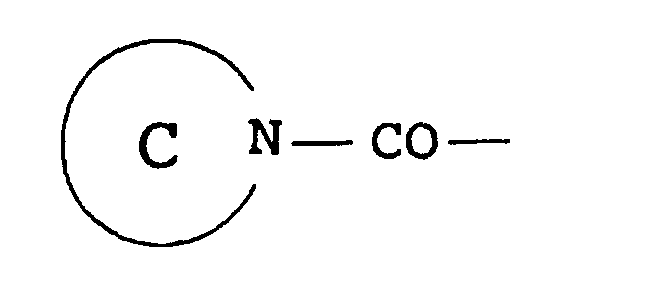

X1 is (1) a chemical bond, (2) a methylene group which may be substituted with one or two substituents selected from C1-4 alkyl, C1-4 alkoxy, C1-4 alkylthio, halogen atom and cyano or (3) a vinylene group which may be substituted with one or two substituents selected from C1-4 alkyl, C1-4 alkoxy, C1-4 alkylthio, halogen atom, and cyano, B1 is (1) a five-membered heterocyclic group which is composed of the ring-constructing heteroatoms besides carbon atoms selected from nitrogen and sulfur atoms, and which may be substituted with 1 to 5 substituents selected from the group of substituents (T) mentioned above, or (2) a condensed heterocyclic group which is constructed either with a five- to six-membered heterocyclic ring and benzene rings or with a five- to six-membered heterocyclic ring and another (the same or different) five- to six-membered heterocyclic rings and may be substituted with substituents selected from the group of substituents (T) mentioned above, Z1 is (1) a hydrocarbon group which is selected from (i) a C1-6 alkyl group which may be substituted with 1 to 5 substituents selected from (a) halogen, (b) amino, (c) mono- or di-C1-4 alkylamino, (d) hydroxy, (e) C1-4 alkoxy which may be substituted with 1 to 5 halogens, (f) mercapto, (g) C1-4 alkylthio, (h) C1-4 alkylsulfinyl, (i) C1-4 alkylsulfonyl, (j) cyano, (k) C1-4 alkoxy-carbonyl, (1) carbamoyl and (m) a mono- or di-C1-4 alkyl-carbamoyl group, (ii) a C2-6 alkenyl group which may be substituted with 1 to 5 substituents selected from (a) halogen, (b) amino, (c) mono- or di-C1-4 alkylamino, (d) hydroxy, (e) C1-4 alkoxy which may be substituted with 1 to 5 halogens, (f) mercapto, (g) C1-4 alkylthio, (h) C1-4 alkylsulfinyl, (i) C1-4 alkylsulfonyl, (j) cyano, (k) C1-4 alkoxy-carbonyl, (1) carbamoyl, and (m) mono- or di-C1-4 alkyl-carbamoyl, (iii) a C2-6 alkynyl group which may be substituted with 1 to 5 substituents selected from (a) halogen, (b) amino, (c) mono-or di-C1-4 alkylamino, (d) hydroxy, (e) C1-4 alkoxy which may be substituted with 1 to 5 halogens, (f) mercapto, (g) C1-4 alkylthio, (h) C1-4 alkylsulfinyl, (i)C1-4 alkylsulfonyl, (j) cyano, (k) C1-4 alkoxy-carbonyl, (1) carbamoyl, and (m) mono- or di-C1-4 alkyl-carbamoyl, (iv) a C3-6 cycloalkyl group which may be substituted with 1 to 5 substituents selected from (a) C1-4 alkyl which may be substituted with 1 to 5 halogens, (b) halogen, (c) amino, (d) mono- or di-C1-4 alkylamino, (e) hydroxy, (f) C1-4 alkoxy which may be substituted with 1 to 5 halogens, (g) mercapto, (h) C1-4 alkylthio, (i) C1-4 alkylsulfinyl, (j) C1-4 alkylsulfonyl, (k) cyano, (1) C1-4 alkoxy-carbonyl, (m) carbamoyl, and (n) mono- or di-C1-4 alkyl-carbamoyl, (v) a C3-6 alkadienyl group which may be substituted with 1 to 5 substituents selected from (a) halogen, (b) amino, (c) mono- and di-C1-4 alkylamino, (d) hydroxy, (e) C1-4 alkoxy which may be substituted with 1 to 5 halogens, (f) mercapto, (g) C1-4 alkylthio, (h) C1-4 alkylsulfinyl, (i) C1-4 alkylsulfonyl, (j) cyano, (k) C1-4 alkoxy-carbonyl,(1) carbamoyl and (m) mono- or di- C1-4 alkyl-carbamoyl or (vi) C6-14 aryl group which may be substituted with 1 to 5 substituents selected from (a) C1-4 alkyl which may be substituted with 1 to 5 halogens, (b) halogen, (c) amino, (d) mono- or di-C1-4 alkylamino, (e) hydroxy, (f) C1-4 alkoxy which may be substituted with 1 to 5 halogens, (g) mercapto, (h) C1-4 alkylthio, (i) C1-4 alkylsulfinyl, (j) C1-4 alkylsulfonyl, (k) cyano, (1) C1-4 alkoxy-carbonyl, (m) carbamoyl and (n) mono- or di-C1-4 alkyl-carbamoyl, (2) an acyl group selected from (i) C1-4 alkyl-carbonyl, (ii)C1-4 alkoxy-carbonyl, (iii) C1-4 alkylthio-carbonyl, (iv) C1-4 alkoxy-thiocarbonyl, (v) C1-4 alkylthio-thiocarbonyl, (vi) mono- or di-C1-4 alkyl-carbamoyl and (vii) mono- or di-C1-4 alkyl-thiocarbamoyl, each of which may be substituted with 1 to 5 halogens, (3) formyl group, (4) an amino group which may be substituted with one or two substituents selected from (a) C1-4 alkyl, (b) C1-4 alkyl-carbonyl which may be substituted with 1 to 5 halogens, (c) C1-4 alkoxy-carbonyl, (d) mono- or di-C1-4 alkyl-carbamoyl and (e) mono- or di-C1-4 alkyl-thiocarbamoyl, (5) a group represented by -N=CR1R2(wherein R1 and R2 are the same or different, and are a hydrogen atom and a C1-4 alkyl group), (6) a three- to six-membered cyclic amino group, (7) a group represented by -OR3 (wherein R3 is a hydrogen atom, a C1-4 alkyl group which may be substituted with 1 to 5 halogens, a C1-4 alkyl-carbonyl group which may be substituted with 1 to 5 halogens, a C1-4 alkoxy-carbonyl group which may be substituted with 1 to 5 halogens, formyl group or a C1-4 alkylsulfonyl group which may be substituted with 1 to 5 halogens), or (8) a group represented by -S(O)nR4 (wherein n is an integer from 0 to 2, and R4 is (a) a hydrogen atom, (b) a C1-4 alkyl group which may be substituted with 1 to 5 halogens or (c) a C6-14 aryl group which may be substituted with 1 to 5 C1-4 alkyl groups.

[wherein, A2 is (1)an aryl group which may be substituted with 1 to 5 substituents selected from a group of substituents (T') which consists of (i) a C1-4 alkyl group which may be substituted with 1 to 5 substituents selected from halogen, hydroxy, imino, hydroxyimino, C1-4 alkoxyimino, hydrazono, mono- or di-C1-4 alkylhydrazono and C1-4 alkylthio, (ii) a C3-6 cycloalkyl group which may be substituted with 1 to 5 halogens, (iii) a C2-4 alkenyl group which may be substituted with substituents selected from halogens, cyano and nitro, (iv) a C3-6 cycloalkenyl group which may be substituted with 1 to 5 halogens, (v) a C2-4 alkynyl group which may be substituted with 1 to 5 halogens, (vi) hydroxy group, (vii) a C1-4 alkoxy group which may be substituted with 1 to 5 substituents selected from halogens and C1-4 alkoxy, (viii) formyloxy group, (ix) a C1-4 alkyl-carbonyloxy group which may be substituted with 1 to 5 halogens, (x) a C1-4 alkoxy-carbonyloxy group which may be substituted with 1 to 5 halogens, (xi) mercapto group, (xii) a C1-4 alkylthio group which may be substituted with 1 to 5 halogens, (xiii) a C1-4 alkyl-carbonylthio group which may be substituted with 1 to 5 halogens,(xiv) a C1-4 alkoxy-carbonylthio group which may be substituted with 1 to 5 halogens, (xv) a C1-4 alkylsulfinyl group which may be substituted with 1 to 5 halogens, (xvi) a C1-4 alkylsulfonyl group which may be substituted with 1 to 5 halogens, (xvii) sulfamoyl group, (xviii) a mono- or di-C1-4 alkylsulfamoyl group, (xix) a group represented by


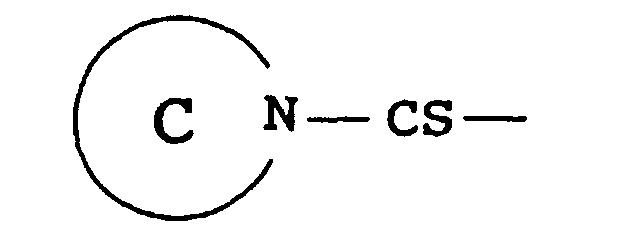
X2 is (1) a chemical bond, (2) a methylene group which may be substituted or (3) a vinylene group which may be substituted, B2 is an aryl group which may be substituted, Z2 is (1) an alkyl group which may be substituted with substituents selected from mono- or di-C1-6 alkylamino, hydroxy, halogens, C1-6 alkoxy, C1-6 alkoxy-carbonyl, C1-6 alkylthio and cyano, (2) vinyl group, (3) an allyl group, (4) a propadienyl group, (5) an alkynyl group which may be substituted, (6) a cycloalkyl group which may be substituted, (7) an aryl group which may be substituted, (8) an acyl group which may be substituted, (9) formyl group, (10) an amino group which may be substituted, (11) a group represented by -N=CR1R2 (wherein R1 and R2 are the same or different, and are a hydrogen atom and a hydrocarbon group which may be substituted respectively), (12) a cyclic amino group, (13) a group represented by -OR3 (wherein R3 is a hydrogen atom, a hydrocarbon group which may be substituted, an acyl group which may be substituted, formyl group, or an alkylsulfonyl group which may be substituted), or (14) a group represented by -S(O)nR4 (wherein, n is an integer from 0 to 2, and R4 is a hydrogen atom or a hydrocarbon group which may be substituted).
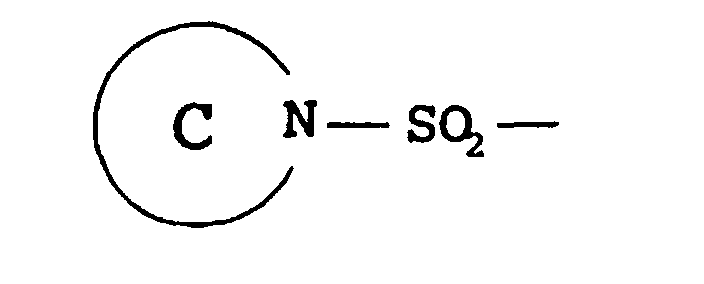

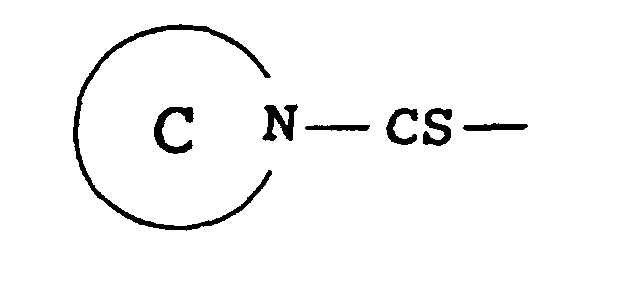


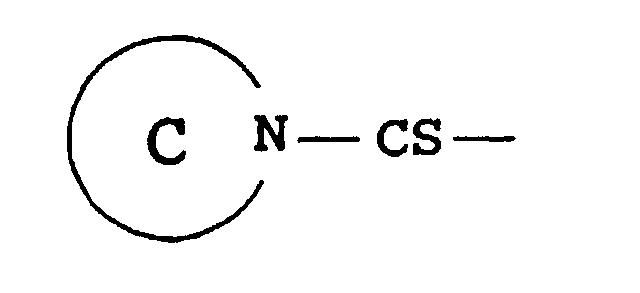

[wherein, A3 is (1) an aryl group which may be substituted or (2) a heterocyclic group which may be substituted, X3 is (1) a chemical bond, (2) a methylene group which may be substituted, or (3) a vinylene group which may be substituted,
B3 is a six-membered heterocyclic group which is substituted with substituents selected from the group of substituents (T), which consists of (i) a C1-4 alkyl group which may be substituted with 1 to 5 substituents selected from halogen,hydroxy, imino, hydroxyimino, C1-4 alkoxyimino, hydrazono, mono- or di-C1-4 alkylhydrazono and C1-4 alkylthio, (ii) a C3-6 cycloalkyl group which may be substituted with 1 to 5 halogen, (iii) a C2-4 alkenyl group which may be substituted with 1 to 5 substituents selected from halogens, cyano and nitro, (iv) a C3-6 cycloalkenyl group which may be substituted with 1 to 5 halogens, (v) a C2-4 alkynyl group which may be substituted with 1 to 5 halogens, (vi) hydroxy group, (vii) a C1-4 alkoxy group which may be substituted with 1 to 5 substituents selected from halogen and C1-4 alkoxy group, (viii) formyloxy group, (ix) C1-4 alkyl-carbonyloxy group which may be substituted with 1 to 5 halogens, (x) a C1-4 alkoxy-carbonyloxy group which may be substituted with 1 to 5 halogens, (xi) mercapto group, (xii) a C1-4 alkylthio group which may be substituted with 1 to 5 halogens, (xiii) a C1-4 alkyl-carbonylthio group which may be substituted with 1 to 5 halogens,(xiv) a C1-4 alkoxy-carbonylthio group which may be substituted with 1 to 5 halogens, (xv) a C1-4 alkylsulfinyl group which may be substituted with 1 to 5 halogens, (xvi) a C1-4 alkylsulfonyl group which may be substituted with 1 to 5 halogens, (xvii) sulfamoyl group, (xviii) a mono- or di-C1-4 alkylsulfamoyl group, (xix) a group represented by
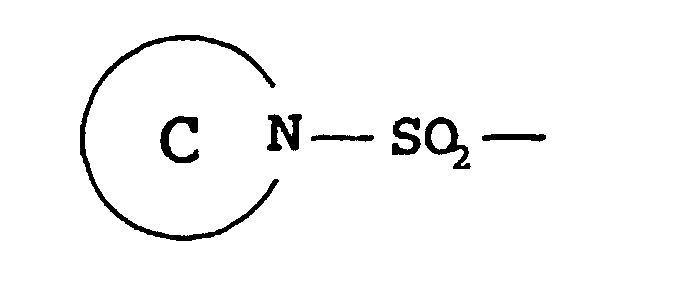
(xxvii) a C1-4 alkylthio-thiocarbonyl group, (xxviii) carbamoyl group, (xxix) a mono- or di-C1-4 alkylcarbamoyl group, (xxx) a group represented by


Z3 is (1) a hydrocarbon group which may be substituted, (2) an acyl group which may be substituted, (3) formyl group, (4) an amino group which may be substituted, (5) a group represented by -N=CR1R2 (wherein, R1 and R2 are the same or different, and a hydrogen atom or a hydrocarbon group which may be substituted), (6) cyclic amino group, (7) a group represented by -OR3 (wherein, R3 stands for a hydrogen atom, a hydrocarbon group which may be substituted, an acyl group which may be substituted, formyl group or sulfonyl group which may be substituted), or (8) a group represented by -S(O)nR4 (wherein, n is an integer from 0 to 2, R4 is a hydrogen atom or a hydrocarbon group which may be substituted)].
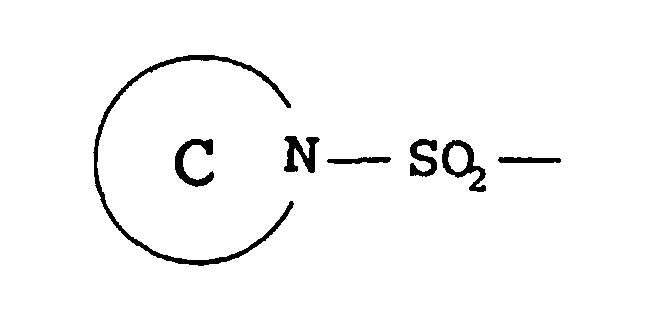
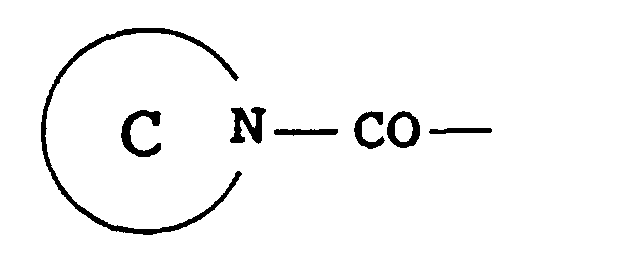

X3 is (1) chemical bond, (2) methylene group which may be substituted with one or two substituents selected from C1-4 alkyl, C1-4 alkoxy, C1-4 alkylthio, halogen atoms and cyano, (3) a vinylene group which may be substituted with one or two substituents selected from C1-4 alkyl, C1-4 alkoxy, C1-4 alkylthio, halogen atoms and cyano,
B3 is a six-membered heterocyclic group which is substituted with 1 to 5 substituents selected from the group of substituents (T) mentioned above, Z3 is (1) a hydrocarbon group which is selected from (i) a C1-6 alkyl group which may be substituted with 1 to 5 substituents selected from (a) halogen, (b) amino, (c) mono- or di-C1-4 alkylamino, (d) hydroxy, (e) C1-4 alkoxy which may be substituted with 1 to 5 halogens, (f) mercapto, (g) C1-4 alkylthio, (h) C1-4 alkylsulfinyl, (i) C1-4 alkylsulfonyl, (j) cyano, (k) C1-4 alkoxy-carbonyl, (1) carbamoyl and (m) mono- or di-C1-4 alkyl-carbamoyl, (ii) C2-6 alkenyl which may be substituted with 1 to 5 substituents selected from (a) halogens, (b) amino, (c) mono-or di-C1-4 alkylamino, (d) hydroxy, (e) C1-4 alkoxy which may be substituted with 1 to 5 halogens, (f) mercapto, (g) C1-4 alkylthio, (h) C1-4 alkylsulfinyl, (i) C1-4 alkylsulfonyl, (j) cyano, (k) C1-4 alkoxy-carbonyl, (1) carbamoyl and (m) mono- or di-C1-4 alkyl-carbamoyl, (iii) C2-6 alkynyl which may be substituted with 1 to 5 substituents selected from (a) halogen, (b) amino, (c) mono-or di-C1-4 alkylamino, (d) hydroxy, (e) C1-4 alkoxy which may be substituted with 1 to 5 halogens, (f) mercapto, (g) C1-4 alkylthio, (h) C1-4 alkylsulfinyl, (i) C1-4 alkylsulfonyl, (j) cyano, (k) C1-4 alkoxy-carbonyl, (1) carbamoyl and (m) mono- or di-C1-4 alkyl-carbamoyl, (iv) C3-6 cycloalkyl groups which may be substituted with 1 to 5 substituents selected from (a) C1-4 alkyl which may be substituted with 1 to 5 halogens, (b) halogen, (c) amino, (d) mono- or di-C1-4 alkylamino, (e) hydroxy, (f) C1-4 alkoxy which may be substituted with 1 to 5 halogens, (g) mercapto, (h) C1-4 alkylthio, (i) C1-4 alkylsulfinyl, (j) C1-4 alkylsulfonyl, (k) cyano, (1) C1-4 alkoxy-carbonyl, (m) carbamoyl and (n) mono- or di-C1-4 alkyl-carbamoyl, (v)C3-6 alkadienyl group which may be substituted with 1 to 5 substituents selected from (a) halogen, (b) amino, (c) mono- or di-C1-4 alkylamino, (d) hydroxy, (e) C1-4 alkoxy which may be substituted with 1 to 5 halogens, (f) mercapto, (g) C1-4 alkylthio, (h) C1-4 alkylsulfinyl, (i) C1-4 alkylsulfonyl, (j) cyano, (k) C1-4 alkoxy-carbonyl, (1) carbamoyl and (m) mono-or di-C1-4 alkyl-carbamoyl, and (vi) C6-14 aryl group which may be substituted with 1 to 5 substituents selected from C1-4 alkyl which may be substituted with 1 to 5 halogens, (b) halogen, (c) amino, (d) mono- or di-C1-4 alkylamino, (e) hydroxy, (f) C1-4 alkoxy which may be substituted with 1 to 5 halogens, (g) mercapto, (h) C1-4 alkylthio, (i) C1-4 alkylsulfinyl, (j) C1-4 alkylsulfonyl, (k) cyano, (1) C1-4 alkoxy-carbonyl, (m) carbamoyl and (n) mono- or di-C1-4 alkyl-carbamoyl, (2) an acyl group selected from (i)C1-4 alkyl-carbonyl, (ii) C1-4 alkoxy-carbonyl, (iii) C1-4 alkylthio-carbonyl, (iv) C1-4 alkoxy-thiocarbonyl, (v) C1-4 alkylthio-thiocarbonyl, (vi) mono- or di-C1-4 alkyl-carbamoyl and (vii) mono- or di-C1-4 alkyl-thiocarbamoyl, each of these groups may be substituted with 1 to 5 halogens, (3) formyl group, (4) an amino group which may be substituted with one or two substituents selected from (a) C1-4 alkyl, (b) C1-4 alkyl-carbonyl which may be substituted with 1 to 5 halogens, (c) C1-4 alkoxy-carbonyl, (d) mono-or di-C1-4 alkyl-carbamoyl, (e) mono- or di-C1-4 alkyl-thiocarbamoyl, (5) a group represented by -N=CR1R2 (wherein, R1 and R2 are the same or different, are a hydrogen atom or a C1-4 alkyl group), (6) three-to six-membered cyclic amino group, (7) a group represented by -OR3 (wherein, R3 is a hydrogen atom, a C1-4 alkyl group which may be substituted with 1 to 5 halogens, a C1-4 alkyl-carbonyl group which may be substituted with 1 to 5 halogens, a C1-4 alkoxy-carbonyl group which may be substituted with 1 to 5 halogens, formyl group or a C1-4 alkylsulfonyl group which may be substituted with 1 to 5 halogens), or (8) a group represented by -S(O)nR4 (wherein n is an integer from 0 to 2, R4 is (a) hydrogen atom, (b) C1-4 alkyl group which may be substituted with 1 to 5 halogens, or (c) C6-14 aryl group which may be substituted with 1 to 5 C1-4 alkyl groups).

Z4 is (1) a hydrocarbon group which may be substituted, (2) an acyl group which may be substituted, (3) formyl group, (4) an amino group which may be substituted, (5) a group represented by -N=CR1R2 (wherein R1 and R2 are the same or different, and hydrogen atom or hydrocarbon group which may be substituted), (6) a cyclic amino group, (7) a group represented by -OR3 (wherein, R3 is a hydrogen atom, a hydrocarbon group which may be substituted, an acyl group which may be substituted, formyl group or a sulfonyl group which may be substituted), or (8) a group represented by -S(O)nR4 (wherein, n is an integer from 0 to 2, R4 is a hydrogen atom or a hydrocarbon group which may be substituted)].

[wherein A5 is the 4-methylphenyl group, X5 is a chemical bond, B5 is a pyridyl or pyrimidinyl group, and Z5 is a C1-4 alkyl group].

[wherein A6 is a phenyl group which may be substituted with a substituent or substituents selected from C1-4 alkyl, halogens and cyano, X6 is a chemical bond, B6 is a 2-nitrophenyl group or a 2-cyanophenyl group which is substituted with a substituent or substituents selected from halogens, nitro and cyano, Z6 is ethyl, isopropyl, cyclopropyl, methoxy, ethoxy or isopropoxy group].
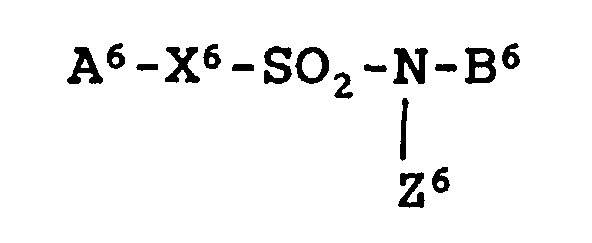

(wherein each symbol has the same meaning as defined in [15] above with an electrophile represented by Formula Z6-L" (wherein L" is a leaving group, and Z6 has the same meaning as defined in [15] above,
(wherein L is a leaving group, and each of other symbols has the same meanings as those defined in [15] above, respectively) with an amine or a salt thereof represented by Formula Z6HN-B6 (wherein each symbol has the same meaning as defined in [15] above, or, by
(wherein, each symbol has the same meaning as described in [15] above to react with a compound or a salt thereof represented by Formula L'-B6 (wherein L' is a leaving group, and the other symbol has the same meaning as defined in [15] above, respectively),or
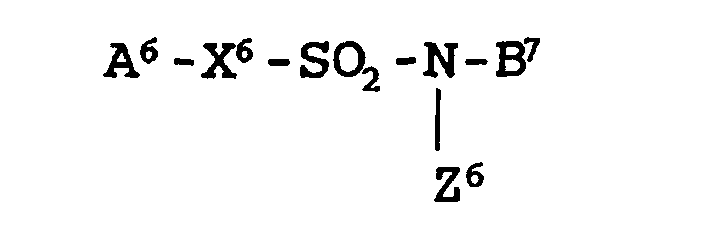
(wherein, B7 is a phenyl group which is substituted with a substituent or substituents selected from halogen, nitro and cyano, provided that both 2- and 6-positions are not substituted at the same time).
n-propoxycarbonyloxy,isopropoxycarbonyloxy) which may be substituted with 1 to 5 halogens, (xi) a mercapto group, (xii) C1-4 alkylthio groups (for example methylthio, ethylthio, n-propylthio, isopropylthio, n-butylthio, isobutylthio, sec-butylthio, tert-butylthio) which may be substituted with 1 to 5 halogens, (xiii) C1-4 alkyl-carbonylthio groups (for example, acetylthio, propionylthio, butyrylthio, isobutyrylthio) which may be substituted with 1 to 5 halogens, (xiv) C1-4 alkoxy-carbonylthio groups (for example, methoxycarbonylthio, ethoxycarbonylthio, n-propoxycarbonylthio, isopropoxycarbonylthio) which may be substituted with 1 to 5 halogens, (xv) C1-4 alkylsulfinyl groups (for example, methylsulfinyl, ethylsulfinyl, n-propylsulfinyl, isopropylsulfinyl) which may be substituted with 1 to 5 halogens, (xvi) C1-4 alkylsulfonyl groups (for example, methylsulfonyl, ethylsulfonyl, n-propylsulfonyl, isopropylsulfonyl) which may be substituted with 1 to 5 halogens, (xvii) a sulfamoyl group, (xviii) mono- or di-C1-4 alkylsulfamoyl groups (for example, methylsulfamoyl, ethylsulfamoyl, n-propylsulfamoyl, dimethylsulfamoyl, ethylmethylsulfamoyl, diethylsulfamoyl), (xix) groups represented by

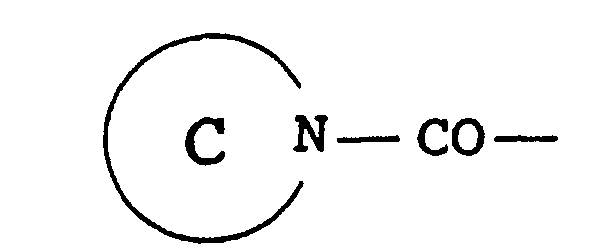

As the heterocyclic group of the "heterocyclic group which may be substituted" regarding A0, there can be mentioned, for example, a five- to six-membered heterocyclic group which contains 1 to 4 hetero atoms selected from nitrogen, oxygen and sulfur atoms, or a condensed heterocyclic group composed either of five- to six-membered heterocyclic groups which contain 1 to 4 hetero atoms selected from nitrogen, oxygen and sulfur atoms and benzene rings, or of a five- to six-membered heterocyclic groups which contain 1 to 4 heteroatoms selected from nitrogen, oxygen and sulfur atoms and, the same or different, another five- to six-membered heterocyclic groups which contain 1 to 4 heteroatoms selected from nitrogen, oxygen and sulfur atoms.
As preferable substituents on the aryl group in the "aryl group which may be substituted" or on the heterocyclic group in the "heterocyclic group which may be substituted", both represented as A0, there can be mentioned:
C1-4 alkyl which may be substituted with 1 to 5 halogens, amino which may be substituted with one or two C1-4 alkyl-carbonyl,
C1-4alkyl (for example, methyl, ethyl, n-propyl, isopropyl, n-butyl, isobutyl, sec-butyl, tert-butyl), C1-4alkoxy (for example, methoxy, ethoxy, n-propoxy, isopropoxy, n-butoxy, isobutoxy, sec-butoxy, tert-butoxy), C1-4 alkylthio (for example, methylthio, ethylthio, n-propylthio, isopropylthio, n-butylthio, isobutylthio, sec-butylthio, tert-butylthio),
As the substituents on the vinylene group regarding X0, there can be mentioned such substituents similar to those mentioned as the substituents on the methylene group regarding X0. The number of the said substituent is preferably one or two.
As the "heterocyclic group which may be substituted" in B0, there can be mentioned those heterocyclic groups similar to those described as the " heterocyclic group which may be substituted"in A0.
The number of the said substituents is 1 to 5 (more preferably 1 to 3).

Especially preferable are thienyl, pyrazolyl, isothiazolyl, imidazolyl, thiazolyl and thiadiazolyl.
X1 is a chemical bond, B1 is a thienyl group, pyrazolyl group, isothiazolyl group, imidazolyl group, thiazolyl group, thiadiazolyl group, dioxaindanyl group or imidazopyridyl group, each of which may be substituted with 1 to 5 substituents selected from C1-4 alkyl which may be substituted with 1 to 5 halogens, C1-4 alkyl, C1-4 alkoxy, C1-4 alkylthio, cyano, halogens and nitro, Z1 is a C1-6 alkyl group or C1-4 alkoxy group.
As A1, a phenyl which may be substituted with 1 to 3 C1-4 alkyl is preferable, and the 4-methylphenyl group is especially preferable.

[where A2 is (1) an aryl group or a heterocyclic group or (2) heterocyclic group, which may be substituted with 1 to 5 (more preferably 1 to 3) substituents selected from the substituent group (T') described above,
A phenyl group is especially preferable.
As a heterocyclic group which may be substituted in A2, there may be mentioned the same heterocyclic groups as those which may be substituted in A0.
- (i) the C1-4 alkyl group,
- (ii) the C1-4 alkoxy-carbonyl group,
- (iii) the carbamoyl group,
- (iv) the mono- or di-C1-4 alkylcarbamoyl group,
- (v) C1-4 alkylsulfonyl group,
- (vi) halogen atoms,
- (vii) the carboxyl group and
- (viii) the cyano group,
- (1) the chemical bond,
- (2) the methylene group which may be substituted with 1 or 2 C1-4 alkyl,
- (3) the vinylene group which may be substituted with 1 or 2 C1-4 alkyl,
- (1) a C1-4 alkyl group which may be substituted with 1 to 5 substituents selected from halogens, hydroxy, imino,hydroxyimino, C1-4 alkoxyimino, hydrazono, mono- or di-C1-4 alkylhydrazono and C1-4 alkylthio,
- (2) a C2-4 alkynyl group,
- (3) the hydroxy group,
- (4) the C1-4 alkoxy group which may be substituted with 1 to 5 substituents selected from halogens and C1-4 alkoxy groups,
- (5) a C1-4 alkyl-carbonyloxy group,
- (6) the C1-4 alkylthio group,
- (7) the C1-4 alkylsulfinyl group,
- (8) the C1-4 alkylsulfonyl group,
- (9) the mono or di-C1-4 alkylsulfamoyl group,
- (10) the amino group,
- (11) the formyl group,
- (12) the C1-4 alkoxy-carbonyl group,
- the carbamoyl group,
- the mono- or di-C1-4 alkylcarbamoyl group,
- the thiocarbamoyl group,
- halogen atoms,
- the carboxyl group,
- the thiocyanato group,
- the cyano group,
- the nitroso group, and
- the nitro group,
- (1) the C1-6 alkyl group which may be substituted with 1 to 5 substituents selected from mono- or di-C1-4 alkylamino, hydroxy, halogens, C1-4 alkoxy, C1-4 alkoxy-carbonyl, C1-4 alkylthio and cyano,
- (2) the vinyl group,
- (3) the allyl group,
- (4) the propadienyl group,
- (5) the C2-6 alkynyl group which may be substituted with 1 to 5 halogens,
- (6) the C3-6 cycloalkyl group,
- (7) the C6-14 aryl group,
- (8) the C1-4 alkyl-carbonyl which may be substituted with 1 to 5 halogens,
- (9) the amino group which may be substituted with 1 or 2 substituents selected from C1-4 alkyl, C1-4 alkyl-carbonyl and C1-4 alkoxy-carbonyl,
- (10) the group represented by -N=CR1R2 (where R1 and R2 are a C1-4 alkyl group, respectively),
- (11) the group represented by -OR3 (where R3 is a C1-4 alkyl group or a C1-4 alkyl-carbonyl group) or
- (12) the group represented by -S(O)nR4 (wherein, n is an integer from 0 to 2, R4 is (a) the C1-4 alkyl group which may be substituted with 1 to 5 halogens, or (b) the C6-14 aryl group which may be substituted with 1 to 5 C1-4 alkyl groups).
A2 is
- (2) As B2, preferable is a phenyl group which is substituted at the
2- or 4-position with substituent selected from
- (a) the C1-4 alkyl group which may be substituted with 1 to 5 substituents selected from halogens, hydroxy, imino, hydroxyimino, C1-4 alkoxyimino, hydrazono, mono- or di-C1-4 alkylhydrazono and C1-4 alkylthio,
- (b) the C2-4 alkynyl group,
- (c) the hydroxy group,
- (d) the C1-4 alkoxy group which may be substituted with 1 to 5 substituents selected from halogens and C1-4 alkoxy,
- (e) a C1-4 alkyl-carbonyloxy group,
- (f) a C1-4 alkylthio group,
- (g) a C1-4 alkylsulfinyl group,
- (h) a C1-4 alkylsulfonyl group,
- (i) a mono- or di-C1-4 alkylsulfamoyl group,
- (j) formyl group,
- (k) a C1-4 alkoxy-carbonyl group,
- (l) a carbamoyl group,
- (m) a mono- or di-C1-4 alkylcarbamoyl group,
- (n) a thiocarbamoyl group,
- (o) halogen atoms,
- (p) a carboxyl group,
- (q) a thicyanato group,
- (r) a cyano group,
- s a nitroso group, and
- (t) a nitro group.

Another preferable embodiments of compounds (II) or salts thereof are preferably the compounds or salts thereof described the following:
- [3] Compound (III) or salts thereof are preferably the compounds
represented
by the Formula (III):or a salt thereof,
[where A3 is (1) an aryl group which may be substituted or (2) a heterocyclic group which may be substituted, - X3 is (1) a chemical bond, (2) a methylene group which may be substituted or (3) a vinylene group which may be substituted,
- B3 is a six-membered heterocyclic group containing sucstituents,
- Z3 is (1) a hydrocarbon group which may be substituted, (2) an acyl group which may be substituted, (3) formyl group, (4) an amino group which may be substituted, (5) a group represented by -N=CR1R2 (wherein, R1 and R2 are the same or different, and are a hydrogen atom or hydrocarbon group which may be substituted), (6) a cyclic amino group, (7) a group represented by -OR3 (wherein R3 is a hydrogen atom, a hydrocarbon group which may be substituted, an acyl group which may be substituted, formyl group or a sulfonyl group which may be substituted), or (8) a group represented by-S(O)nR4 (wherein n is an integer from 0 to 2, R4 is a hydrogen atom or a hydrocarbon group which may be substituted)].
- [4] Compounds(IV) or salts thereof are the compounds represented
by the Formula (IV):
or salts thereof,

[wherein A4 is (1) an aryl group which may be substituted or (2) a heterocyclic group which may be substituted, - X4 is (1) a chemical bond, (2) a methylene group which may be substituted or (3) a vinylene group which may be substituted ,
- B4 is a pyridazinyl group or a pyradinyl group,
- Z4 is (1) a hydrocarbon group which may be substituted, (2) an acyl group which may be substituted, (3) formyl group, (4) an amino group which may be substituted, (5) a group represented by -N=CR1R2 (wherein R1 and R2 are the same or different, and are a hydrogen atom or a hydrocarbon group which may be substituted), (6) a cyclic amino group, (7) a group represented by -OR3 (wherein R3 is a hydrogen atom, a hydrocarbon group which may be substituted an acyl group which may be substituted with hormyl group or sulfonyl group which may be substituted, (8) a group represented by -S(O)nR4 (wherein n is an integer from 0 to 2, R4 is a hydrogen atom or a hydrocarbon group which may be substituted].

[wherein A5 is a 4-methylphenyl group, X5 is a chemical bond (a single bond or a bond), B5 is a pyridyl group or a pyrimidinyl group, Z5 is a C1-4 alkyl group (for example, methyl, ethyl, n-propyl, isopropyl)].

When compound (I0), (I), (II), (III), (IV), (V) or (VI) or salts thereof mentioned above (hereinafter, they may be called as "compound (I0) or the salts thereof" for short) are used as microbicidal compositions, they can be applied in the per se known forms for general use of agrochemical compositions. Namely, depending on the objects one or more than two kinds (preferably not less than one nor more than three) of compound (I0) or salts thereof are taken as the effective constituents and mixed with or dispersed in some appropriate liquid carrier, or mixed with or adsorbed on some appropriate solid carrier to get various forms of compositions, for example, emulsions, oils, aqueous suspensions, liquids, ULV preparations, hydrates, powders, DL (driftless) powders, granules, fine granules, fine granules F, flowable preparations, dry-flowable preparations, tablets, Jumbo preparations, sprays, ointments, pastes, foams, aerosols, micocapsules, seed coating agents, fumigants, and stick preparations for infusing the crops. These preparations may be further admixtured, if necessary, for example, with emulsifiers, suspending agents, spreading agents, permeating agents, moistening agents, dispersing agents, mucilage, stabilizers, binders, fluidization auxiliaries, hardening preventives, flocculants, antioxidants, floating agents, antifoaming agents, antifreeze agents, antiseptics, moisture removers, ultraviolet absorbers, ultraviolet scattering agents, coloring agents and suspension-stabilizers, to prepare microbicidal compositions of the present invention by the per se known methods. Namely, by mixing comound (I0) or salts thereof, liquid carriers or solid carriers, if necessary, various additives mentioned above, and other active ingredients of pesticides uniformly.
Representative herbicides, plant hormones, and plant growth regulators which can be used by admixing with compound (I0) or salts thereof are as follows: Abscisic acid, acetochlor, acifluorfen-sodium, alachlor, alloxydim, ametryn, amidosulfuron, amiprofos-methyl, ancymidol, asulam, atrazine, azimsulfuron, benfluralin, benfuresate, bensulfuron-methyl, bensulide:SAP, bentazone, benthiocarb, benzamizole, benzfendizone, benzofenap, Benzyl adenine, bialaphos, bifenox, Brassinolide, bromacil, bromobutide, butachlor, butafenacil, butamifos, butylate, cafenstrole, Calcium carbonate, Calcium peroxide, carbaryl, chlomethoxynil, chloridazon, chlorimuron-ethyl, chlorphthlim, chlorpropham, chlorsulfuron, chlorthal-dimethyl, chlorthiamid:DCBN, choline chloride, cinmethylin, cinosulfuron, clethodim, clomeprop, cloxyfonac-sodium, 4-CPA (4-chlorophenoxyacetic acid), cumyluron,cyanazine, cyclosulfamron, cyhalofop-butyl, 2,4-D salts (2,4-Dichlorophenoxyacetic acid salts), dichlorprop:2,4-DP, daimuron, dalapon:DPA, daminozide, dazomet, n-Decyl alcohol, dicamba sodium:MDBA, dichlobenil:DBN, diflufenican, dimepiperate, dimethametryn, dimethenamid, diquat, dithiopyr, diuron, endothal, esprocarb, ethephon, ethidimuron, ethoxysulfuron, ethychlozate, etobenzanid, fenarimol, fenoxaprop-ethyl, fentrazamide, flazasulfuron, florasulam, fluazifop-butyl, flumioxazin, flupropanate-sodium, flurprimidol, fluthiacet-methyl, forchlorfenuron, formesafen, gibberellin, glufosinate, glyphosate, halosulfuron-methyl, hexazinone, imazamox, imazapyr, imazaquin, imazosulfuron, inabenfide, Indole acetic acid:IAA, Indole butyric acid, ioxynil-octanoate, isouron, karbutilate, lactofen, lenacil, linuron, Maleic hydrazide, mecoprop:MCPP, MCP salts (2-Methyl-4-chlorophenoxyacetic acid salts), MCPA · thioethyl (MCPA-thioethyl), MCPB (2-Methyl-4-chlorophenoxybutanoic acid ethyl ester), mefenacet, mefluidide, mepiquat, methyl daimuron, metolachlor, metribuzin, metsulfuron-methyl, molinate, NAD (1-naphthaleneacetamide), naproanilide, napropamide, nicosulfuron, orbencarb, oxadiazon, oxaziclomefone, oxine-sulfate, paclobutrazol, paraquat, Pelargonic acid, pendimethalin, pentoxazone, pethoxamide, phenmedipham, picloram, piperonyl butoxide, piperophos, pretilachlor, primisulfuronmethyl, procarbazone, prodiamine, prohexadione-calcium, prometryn, propanil, propyzamide, pyraflufen-ethyl, pyrazolate, pyrazosulfuron-ethyl, pyrazoxyfen, pyributicarb, pyridate, pyriminobac-methyl, pyrithiobac, quiclorac, quinoclamine, quizalofop-ethy, rimsulfuron, sethoxydim, siduron, simazine, simetryn, Sodium chlorate, sulfosulfuron, swep:MCC,tebuthiuron, terbacil, terbucarb:MBPMC, thenylchlor, thiazafluron, thifensulfuron-methyl, triaziflam, triclopyr, tridiphane, trifluralin, trinexapac-ethyl, tritosulfuron, uniconazole-P, vemolate:PPTC.
Thus, the present invention includes
These compositions may further contain not less than one kind (more preferably not less than one nor more than three kinds) of other agrochemical active constituents,(for example, insecticidal, acaricidal, antimicrobial active components, and so on). As such compositions, there can be mentioned compositions which contain compound (I0) [for example, compound (I), (II), (III), (IV), (V), (VI) or (II') which will be described below] or salts thereof, ferimzone and fthalide, and compositions which contain compound (I0) [compound (I), (II), (III), (IV), (V), (VI) or (II') which will be described below] or salts thereof, validamycin, ferimzone and fthalide and so on.

[where A2', X2' and B2' have the same meanings as A2, X2 and B2 mentioned above, respectively, Z2' is a group represented by -OR3 (R3 has the same meaning as that mentioned above)].
- (i) the C1-4 alkyl group,
- (ii) the C1-4 alkoxy-carbonyl group,
- (iii) the carbamoyl group,
- (iv) mono- or di-C1-4 alkylcarbamoyl group,
- (v) the C1-4 alkylsulfonyl group,
- (vi) halogen atoms,
- (vii) the carboxyl group and
- (viii) the cyano group,
- (2) the methylene group which may be substituted with 1 or 2 C1-4 alkyl, or
- (3) the vinylene group which may be substituted with 1 or 2 C1-4 alkyl,
- (2) the C2-4 alkynyl group,
- (3) the hydroxy group,
- (4) the C1-4 alkoxy group which may be substituted with 1 to 5 substituents selected from halogens and C1-4 alkoxy,
- (5) the C1-4 alkyl-carbonyloxy group,
- (6) the C1-4 alkylthio group,
- (7) the C1-4 alkylsulfinyl group,
- (8) the C1-4 alkylsulfonyl group,
- (9) mono- or di-C1-4 alkylsulfamoyl group,
- (10) the amino group,
- (11) the formyl group,
- (12) the C1-4 alkoxy-carbonyl group,
- (13) the carbamoyl group,
- (14) mono- or di-C1-4 alkylcarbamoyl group,
- (15) the thiocarbamoyl group,
- (16) halogen atoms,
- (17) the carboxyl group,
- (18) the thiocyanato group,
- (19) the cyano group,
- (20) the nitroso group and
- (21) the nitro group,
Preferably, X2 is a chemical bond (a single bond or a bond).

2 ○ by the reaction of sulfonamides represented by Formula (IX)
with the compounds represented by Formula (X)

1 ○ The reaction of sulfonylating agents (VII) with amines (VIII) can be carried out according to the method described in, for example, The Journal of Pesticide Science Society of Japan 21,p31(1996), Japanese Patent Publication for Opposition 6836/1970, and so on. Japanese Publication Patent for Opposition 19199/1965, Japanese Patent for Laid-Open 31655/1982, Japanese Patent Application Laid-Open 219159/1983, Japanese Patent Application Laid-Open 197553/1986, Japanese Patent Application Laid-Open 271270/1986, Japanese Patent Application Laid-Open 57565/1988, Japanese Patent Application Laid-Open 272566/1989, Japanese Patent for Laid-Open 156953/1989, Japanese Patent Application Laid-Open 72151/1990, Japanese Patent Application Laid-Open 96560/1990, Japanese Patent Application Laid-Open 231465/1990, Japanese Patent Application Laid-Open 212467/1990, Japanese Patent Application Laid-Open 54161/1992, Japanese Patent Application Laid-Open 145060/1992,
The reaction of sulfonamide bodies (IX) with compounds (X) are usually carried out both with or without solvent.
Further, in order to promote the reaction, metal salts (for example, oxides, fluorides, chlorides, bromides, iodides, sulfides, sulfates, nitrates, phosphates, perchlorate, and so on) or metal elements of titanium, vanadium, chromium, manganum, iron, cobalt, nickel,copper,zinc, zilconium, niobium, molybdenum, ruthenium, rhodium, palladium, silver, cadmium, tungsten (wolfram), platinum, gold, mercury, and so on, can be used as catalyst in an amount of 0.000001 to 1000 equivalents, or more preferably 0.001 to 10 equivalents. The electrophiles (XII) can be used even in a large excess, unless they have an effect wrongly on the reaction of sulfonamides (XI). However, it is usually preferable to use 1.0 to 10 equivalents of them. As such electrophiles, there can be mentioned, for example, halogenides such as methyl iodide, ethyl iodide, propyl bromide, propyl iodide, isopropyl idodide, cyclopropyl bromide, butyl bromide, isobutyl bromide, allyl chloride, allyl bromide, propargyl bromide, 1,2-dibromoethane, acetyl chloride, propargyl chloride, methyl chloro-formate, ethyl chloroformate, methanesulfonyl chloride, benzene-sulfonyl chloride, p-toluenesulfonyl chloride, and so on, sulfuric acid esters such as dimethyl sulfate, diethyl sulfate, and so on, sulfuric acid esters such as dimethyl sulfate, diethyl sulfate, and so on, sulfonates such as methyl methanesulfonate, ethyl benzenesulfonate, isopropyl p-toluenesulfonate, and so on, and acid anhydrides such as acetic anhydride, trifluoroacetic acid anhydride, trifluoromethane-sulfonic acid anhydride, mixed anhydride of acetic acid-formic acid, and so on.
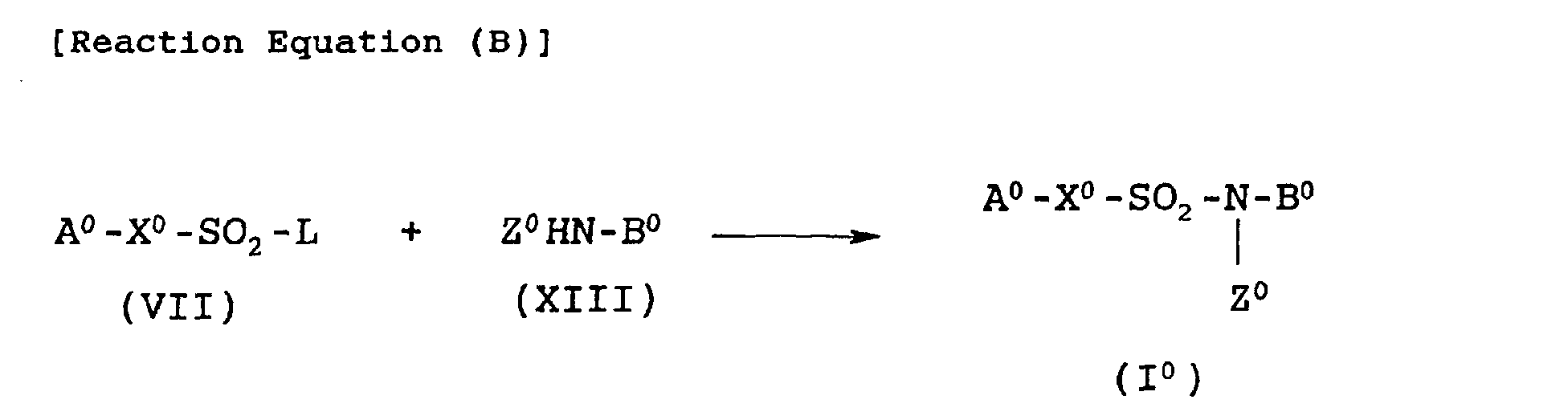

A0-X0-SO2-NHZ0
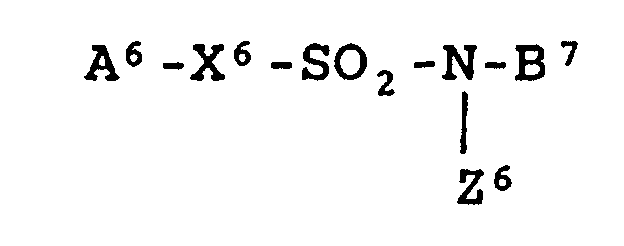
such as methanol, ethanol, and so on) in the presence of appropriate bases (for example, sodium hydroxide sodium hydride, sodium carbonate, potassium carbonate, and so on).
making them to react with halogen sorces (for example, N-chlorosuccinimide, N-bromosuccinimide, N-iodosuccinimide, chlorine, bromine,iodine, and so on) in the presence of appropriate bases (for example, sodium hydroxide, sodium hydride, sodium carbonate, potassium carbonate, n-butyllithium, and so on).
In the synthesis examples, elution in silica gel column chromatography was carried out under observation by means of TLC (Thin Layer Chromatography). In the TLC-observation, the Kieselgel 60F254 (70-230 mesh) plates manufactured by Merck & Co., were used as the TLC-plate, and as the eluents used were the same solvent as that used in the column chromatography as eluent, and as the detection method, either the UV-detector or coloration method with iodine was adopted. As silica gel for the column chromatography, Kieselgel 60 (70-230 mesh) manufactured by Merck & Co. was used.
s: singlet, d: doublet, t: triplet, q: quartet, m: multiplet, dd: double doublet, dt: double triplet, dq: double quartet, septet: septet(a set of seven lines), br: broad, brs: broad singlet, ddd: double double doublet, ddt: double double triplet, brd: broad doublet, brq: broad quartet, J: coupling constant, JHF: coupling constant of the coupling between hydrogen atom and fluorine atom, Hz: Heltz, CDCl3: deutero-chloroform(chloroform-d), DMSO-d6: dimethyl sulfoxide-d6, DMF: N,N-dimethylformamide, %: wt%, and mp: melting point. In addition, room temperature means a temperature or temperatures within 15- 25 °C.
NMR(CDCl3) δ : 2.44(3H,s), 3.17(3H,s), 7.13(1H,d,J=8.6Hz), 7.22(1H,dd,J=8.6 & 2.3Hz), 7.30(2H,d,J=8.4Hz), 7.42(1H,d,J=2.3Hz), 7.65(2H, d, J=8.4Hz).
mp: 103.5-106.0°C
NMR(CDCl3) δ : 2.43(3H,s), 2.59(3H,s), 3.17(3H,s), 7.27(2H,d,J=8.3Hz), 7.31(1H,d,J=8.2Hz), 7.43(2H,d,J=8.3Hz), 7.45(1H,dd,J=8.2 & 2.3Hz), 7.58(1H,d,J=2.3Hz).
NMR(CDCl3) δ : 1.18(3H,s), 2.44(3H,s), 3.67(2H,brq,J=7.2Hz), 7.10(1H,dd,J=8.9Hz,JHF=5.1Hz), 7.23(1H,ddd,J=8.9 & 2.9Hz,JHF=7.2Hz), 7.27(2H,d,J=8.4Hz), 7.53(2H,d,J=8.4Hz), 7.60(1H,dd,J=2.9Hz,JHF=7.7Hz).
mp: 132.5-134.0°C
NMR (CDCl3) δ : 1.18(3H,t,J=7.2Hz), 2.44(3H,s), 3.66(2H,q,J=7.2Hz), 7.05(1H,d,J=8.6Hz), 7.28(2H,d,J=8.2Hz), 7.50(1H,dd,J=8.6 & 2.5Hz), 7.53(2H,d,J=8.2Hz), 7.86(1H,d,J=2.5Hz).
mp: 148.0-149.5°C
NMR(CDCl3) δ : 1.04(3H,d,J=6.7Hz), 1.11(3H,d,J=6.7Hz), 2.43(3H,s), 3.89(3H,s), 4.36(1H,septet,J=6.7Hz), 7.06(1H,dd,J=8.8 & 2.8Hz), 7.16(1H,d,J=8.8Hz), 7.28(2H,d,J=8.3Hz), 7.38(1H,d,J=2.8Hz), 7.67(2H,d,J=8.3Hz).
mp: 182.5-184.0°C
NMR(CDCl3) δ : 7.11(1H.s), 7.18(2H,d,J=8.8Hz), 7.47(2H,d,J=8.8Hz), 7.56(2H,d,J=8.8Hz), 7.78(2H,d,J=8.8Hz).
mp: 193.0-195.0°C
NMR(CDCl3) δ : 7.53(2H,d,J=8.8Hz), 7.81(1H,dd,J=8.8 & 1.9Hz), 7.88(2H,d,J=8.8Hz), 7.95(1H,d,J=8.8Hz), 8.50(1H,d,J=1.9Hz), 10.28(1H,brs).
mp: 167.5-168.5°C
NMR(CDCl3) δ : 1.07(3H,d,J=6.7Hz), 1.19(3H,d,J=6.7Hz), 4.39(1H,septet,J=6.7Hz), 7.46(1H,d,J=8.3Hz), 7.50(2H,d,J=8.8Hz), 7.72(2H,d,J=8.8Hz), 7.89(1H,dd,J=8.3 & 2.0Hz), 8.20(1H,d,J=2.0Hz).
mp: 77.0-78.0°C
NMR(CDCl3) δ : 2.44(3H,s), 4.22(2H,dt,J=6.9 & 1.2Hz), 5.05(1H,ddt,J=17.0 & 2.5 & 1.2Hz), 5.11(1H,ddt,J=10.1 & 2.5 & 1.2Hz), 5.89(2H,ddt,J=17.0 & 10.1 & 6.9Hz), 7.05(1H,d,J=8.5Hz), 7.28(2H,d,J=8.4Hz), 7.48(1H,dd,J=8.5 & 2.4Hz), 7.54(2H,d,J=8.4Hz), 7.84(1H,d,J=2.4Hz).
mp: 172.5-174.0°C
NMR(CDCl3) δ : 2.08(3H,s), 2.45(3H,s), 3.94(3H,s), 7.22(1H,dd,J=8.8 & 2.9Hz), 7.32(2H,d,J=8.5Hz), 7.37(1H,d,J=8.8Hz), 7.56(1H, d,J=2.9Hz), 7.82(2H,d,J=8.5Hz).
mp: 180.5-182.0°C
NMR(CDCl3) δ : 2.46(6H,s), 3.90(3H,s), 6.95-7.15(2H,m), 7.33(4H,d,J=8.4Hz), 7.45-7.55(1H,m), 7.83(4H,d,J=8.4Hz).
mp: 162.0-164.0°C
NMR(CDCl3) δ : 3.28(3H,s), 6.74(1H,d,J=15.4Hz), 7.35-7.60(7H,m), 7.60(1H,dd,J=8.6 & 2.3Hz), 7.87(1H,d,J=2.3Hz).
mp: 151.5-153.0°C
NMR (CDCl3) δ : 3.28(3H,s), 7.38(1H,d,J=8.8Hz), 7.45-7.75(5H,m), 8.39(1H,dd,J=8.8 & 2.6Hz), 8.73(1H,d,J=2.6Hz).
mp: 135.0-136.5°C
NMR(CDCl3) δ :1.21(3H,t,J=7.2Hz), 2.45(3H,s), 3.69(2H,q,J=7.2Hz), 7.30(2H,d, J=8.4Hz), 7.30(1H,d,J=8.8Hz), 7.52(2H,d,J=8.4Hz), 8.38(1H,dd,J=8.8 & 2.6Hz), 8.74(1H,d,J=2.6Hz).
mp: 65.0-66.0°C
NMR(CDCl3) δ : 0.60-0.75(2H,m), 0.85-1.00(2H,m), 2.50-2.65(1H,m), 7.29(1H,d,J=9.5Hz), 7.42(1H,dd,J=9.5 & 2.4Hz), 8.05(1H,brs), 8.15(1H,d,J=2.4Hz).
mp: 98.5-100.0°C
NMR(CDCl3) δ : 0.55-0.85(2H,m), 0.85-1.20(2H,m), 2.45(3H,s), 2.60-2.80(1H,m), 7.02(1H,d,J=8.6Hz), 7.32(2H,d,J=8.2Hz), 7.48(1H,dd,J=8.6 & 2.4Hz), 7.60(2H,d,J=8.2Hz), 7.81(1H,d,J=2.4Hz).
mp: 109.5-111.5°C
NMR(CDCl3) δ : 3.92(3H,s), 7.47(1H,d,J=9.5Hz), 8.38(1H,dd,J=9.5 & 2.6Hz), 9.11(1H,d,J=2.6Hz), 10.23(1H,brs).
mp: 146.0-148.0°C
NMR(CDCl3) δ : 2.47(3H,s), 3.90(3H,s), 7.31(1H,d,J=9.0Hz), 7.32(2H,d,J=8.3Hz), 7.54(2H,d,J=8.3Hz), 8.28(1H,dd,J=9.0 & 2.5Hz), 8.71(1H,d,J=2.5Hz).
mp: 141.0-143.0°C
NMR(CDCl3) δ : 2.44(3H,s), 3.22(3H,s), 7.29(2H,d,J=8.3Hz), 7.48(2H,d,J=8.3Hz), 8.28(1H,d,J=2.4Hz), 8.48(1H,d,J=2.4Hz).
mp: 85.0-86.0°C
NMR(CDCl3) δ : 3.31(3H,s), 6.96(1H,d,J=4.0Hz), 7.17(1H,d,J=8.5Hz), 7.26(1H,d,J=4.0Hz), 7.56(1H,dd,J=8.5 & 2.5Hz), 7.90(1H,d,J=2.5Hz).
mp: 80.0-81.0°C
NMR(CDCl3) δ : 2.41(3H,s), 3.38(3H,s), 7.27(2H,d,J=8.4Hz), 7.47(2H,d,J=8.4Hz), 7.48(1H,d,J=9.3Hz), 8.02(1H,d,J=9.3Hz).
mp: 103.0-104.0°C
NMR(CDCl3) δ : 2.47(3H,s), 2.51(3H,s), 3.13(3H,s), 6.77(1H,d,J=8.7Hz), 7.34(2H,d,J=8.3Hz), 7.58(2H,d,J=8.3Hz), 7.92(1H,dd,J=8.7 & 2.6Hz), 8.17(1H,d,J=2.6Hz).
mp: 112.5-113.5°C
NMR(CDCl3) δ : 2.37(3H,s), 3.88(3H,s), 7.23(2H,d,J=8.4Hz), 7.40(1H,dd,J=9.0 & 2.6Hz), 7.67(1H,d,J=9.0Hz), 7.72(2H,d,J=8.4Hz), 7.88(1H,d,J=2.6Hz), 10.48(1H,s).
mp: 65.5-67.0°C
NMR(CDCl3) δ : 2.43(3H,s), 3.23(3H,s), 3.85(3H,s), 6.85(1H,d,J=8.5Hz), 7.27(2H,d,J=8.3Hz), 7.37(1H,dd,J=8.5 & 2.6Hz), 7.52(2H,d,J=8.3Hz), 7.82(1H,d,J=2.6Hz).
mp : 175.0-177.0°C
NMR(CDCl3) δ : 2.44(3H,s), 3.25(3H,s), 5.70-6.60(1H,br), 6.86(1H,d,J=8.5Hz), 7.31(2H,d,J=8.3Hz), 7.42(1H,dd,J=8.5 & 2.6Hz), 7.55(2H,d,J=8.3Hz), 7.98(1H,d,J=2.6Hz).
mp: 176.5-178.0°C
NMR(CDCl3) δ : 2.49(3H,s), 3.17(3H,s), 5.92(1H,brs), 6.44(1H,d,J=8.5Hz), 7.24(1H,dd,J=8.5 & 2.6Hz), 7.37(2H,d, J=8.4Hz). 7.44(1H,br), 7.61(2H,d,J=8.4Hz), 7.84(1H,d,J=2.6Hz).
mp: 145.0-147.0°C
NMR(CDCl3) δ : 2.46(3H,s), 3.22(3H,s), 7.24(1H,d,J=8.7Hz), 7.33(2H,d,J=8.3Hz), 7.54(1H,dd,J=8.7 & 2.5Hz), 7.63(1H,d,J=2.5Hz), 7.64(2H,d,J=8.3Hz).
mp: 180.5-182.5°C
NMR(CDCl3) δ : 2.50(3H,s), 3.17(3H,s), 6.34(1H,d,J=8.5Hz), 7.16(1H,dd,J=8.5 & 2.5Hz), 7.38(2H,d,J=8.3Hz), 7.64(2H,d,J=8.3Hz), 7.74(1H,d,J=2.5Hz), 8.04(1H,brs), 8.68(1H,brs).
mp: 142.0-143.5°C
NMR(CDCl3) δ : 2.49(3H,s), 2.98(3H,s), 3.12(3H,s), 6.59(1H,d,J=8.5Hz), 7.33(1H,dd,J=8.5 & 2.3Hz), 7.37(2H,d,J=8.3Hz),7.60(2H,d,J=8.3Hz),8.06(1H,d,J=2.3Hz).
mp: 92.0-94.5°C
NMR(CDCl3) δ : 2.43(3H,s), 3.14(3H,s), 6.90-7.15(4H,m), 7.25(2H,dt,J=8.3 & 0.6Hz), 7.43(2H,dt,J=8.3 & 1.8Hz).
mp: 93.5-94.5°C
NMR(CDCl3) δ : 2.45(3H,s), 3.25(3H,s), 7.11(1H,dd,J=8.8Hz,JHF=4.9Hz), 7.15-7.40(3H,m), 7.50-7.65(3H,m).
mp: 70.0-72.0°C
NMR(CDCl3) δ: 2.44(3H,s), 3.61(2H,t,J=8.1Hz), 3.97(2H,t,J=8.1Hz), 7.15(1H,d,J=8.6Hz), 7.28(2H,d,J=8.4Hz), 7.50(2H,d,J=8.4Hz), 7.54(1H,dd,J=8.6 & 2.5Hz), 7.89(1H,d,J=2.5Hz).
mp: 94.5-95.5°C
NMR(CDCl3) δ: 2.09(3H,s), 2.44(3H,s), 2.77(2H,dd,J=7.9 & 5.9Hz), 3.78(2H,dd,J=7.9 & 7.5Hz), 7.13(1H,d,J=8.6Hz), 7.28(2H,d,J=8.3Hz), 7.51(2H,d,J=8.3Hz), 7.52(1H,dd,J=8.6 & 2.5Hz), 7.87(1H,d,J=2.5Hz).
mp: >108.0°C (dec.)
NMR(CDCl3) δ : 2.45(3H,s), 3.88(1H,dd,J=15.5 & 1.7Hz), 4.40(1H,dd,J=8.9 & 1.7Hz), 6.96(1H,d,J=8.5Hz), 7.12(1H,dd,J=15.5 & 8.9Hz), 7.30(2H,d,J=8.3Hz), 7.54(1H,dd,J=8.5 & 2.4Hz), 7.57(2H,d,J=8.3Hz), 7.99(1H,d,J=2.4Hz).
NMR(CDCl3) δ : 3.48(3H,s), 5.12(2H,s), 5.92(2H,brs), 6.77(1H,d,J=9.0Hz), 7.15(1H,dd,J=9.0 & 2.9Hz), 7.78(1H,d,J=2.9Hz).
NMR(CDCl3) δ : 2.38(3H,s), 3.46(3H,s), 5.16(2H,s), 7.23(2H,d,J=8.4Hz), 7.29(1H,dd,J=9.1Hz & 2.7Hz), 7.64(2H,dt,J=8.4 & 2.0Hz), 7.70(1H,d,J=2.7Hz), 7.79(1H,d,J=9.1Hz), 9.34(1H,brs).
mp: 110.5-112.0°C
NMR(CDCl3) δ : 2.44(3H,s), 3.24(3H,s), 3.49(3H,s), 5.21(2H,s), 7.01(1H,d,J=8.8Hz), 7.15(1H,dd,J=8.8 & 2.8Hz), 7.29(2H,d,J=8.3Hz), 7.50(1H,d,J=2.8Hz), 7.57(2H,d,J=8.3Hz).
mp: 173.0-174.0°C
NMR(CDCl3) δ : 2.45(3H,s), 3.22(3H,s), 6.37(1H,brs), 6.90-7.05(2H,m), 7.25(1H,d,J=2.3Hz), 7.31(2H,d,J=8.4Hz), 7.59(2H,d,J=8.4Hz).
mp: 93.0-94.0°C
NMR(CDCl3) δ : 1.05(3H,t,J=7.3Hz), 1.83(2H,tq,J=6.5 & 7.3Hz), 2.44(3H,s), 3.24(3H,s), 3.96(2H,t,J=6.5Hz), 6.90-7.10(2H,m), 7.20-7.35(3H,m), 7.56(2H,d,J=8.3Hz).
mp: 82.5-83.5°C
NMR(CDCl3) δ : 2.42(3H,s), 3.13(3H,s), 6.98(2H,d,J=8.9Hz), 7.25(2H,d,J=8.4Hz), 7.42(2H,d,J=8.9Hz), 7.42(2H,d,J=8.4Hz).
mp: 108.0-110.5°C
NMR(CDCl3) δ : 2.45(3H,s), 3.24(3H,s), 7.00(1H,d,J=8.5Hz), 7.31(2H,d,J=8.4Hz), 7.56(2H,d,J=8.4Hz), 7.65(1H,dd,J=8.5 2.3Hz), 7.99(1H,d,J=2.3Hz).
mp: 105.0-107.0°C
NMR(CDCl3) δ : 1.15(3H,t,J=7.1Hz), 2.42(3H,s), 3.67(2H,q,J=7.1Hz), 3.81(3H,s), 6.86(1H,d,J=8.5Hz), 7.25(2H,d,J=8.4Hz), 7.38(1H,dd,J=8.5 & 2.6Hz), 7.50(2H,d,J=8.4Hz), 7.84(1H,d,J=2.6Hz).
mp: 113.5-115.5°C
NMR(CDCl3) : 1.04(3H,d,J=6.7Hz), 1.06(3H,d,J=6.7Hz), 2.42(3H,s), 3.87(3H,s), 4.49(1H,septet,J=6.7Hz), 6.94(1H,d,J=8.5Hz), 7.26(2H,d,J=8.4Hz), 7.41(1H,dd,J=8.5 & 2.6Hz), 7.60(2H,d,J=8.4Hz), 7.89(1H,d,J=2.6Hz).
mp: 163.0-165.0°C
NMR(CDCl3) δ : 1.12(3H,t,J=7.2Hz), 2.44(3H,s), 3.20-3.80(1H,br), 3.50-4.10(1H,br), 4.00-5.20(1H,br), 6.77(1H,d,J=8.6Hz), 7.30(2H,d,J=8.3Hz), 7.41(1H,dd,J=8.6 & 2.6Hz), 7.55(2H,d,J=8.3Hz), 7.99(1H,d,J=2.6Hz).
mp: 175.0-176.5°C
NMR(CDCl3) δ :1.02(3H,d,J=6.7Hz), 1.10(3H,d,J=6.7Hz), 2.46(3H,s), 4.67(1H,septet, J=6.7Hz), 6.61(1H,d,J=8.6Hz), 7.32(2H,d,J=8.3Hz), 7.36(1H,dd,J=8.6 & 2.6Hz), 7.61(2H,d,J=8.3Hz), 7.91(1H,d,J=2.6Hz).
mp: 148.5-150.0°C
NMR(CDCl3) δ : 1.05(3H,t,J=7.2Hz), 2.49(3H,s), 2.90-3.70(1H,br), 3.60-4.40(1H,br), 5.93(1H,brs), 6.37(1H,d,J=8.5Hz), 7.24(1H,dd,J=8.5 & 2.6Hz), 7.36(2H,d,J=8.3Hz), 7.61(2H,d,J=8.3Hz), 7.63(1H,brs), 7.82(1H,d,J=2.6Hz).
mp: 177.0-178.5°C
NMR(CDCl3) δ : 0.84(3H,d,J=6.7Hz), 1.14(3H,d,J=6.7Hz), 2.48(3H,s), 4.65(1H,septet,J=6.7Hz), 5.87(1H,brs), 6.43(1H,d,J=8.6Hz), 7.25(1H,dd,J=8.6 & 2.6Hz), 7.35(2H,d,J=8.3Hz), 7.67(2H,d,J=8.3Hz), 7.78(1H,d,J=2.6Hz),7.82(1H,brs).
mp: 138.5-140.5°C
NMR (CDCl3) δ : 1.10(3H,t,J=7.2Hz), 2.45(3H,s), 3.64(2H,q,J=7.2Hz), 7.20(1H,d,J=8.6Hz), 7.32(2H,d,J=8.4Hz), 7.55(1H,dd,J=8.6 & 2.5Hz), 7.60-7.75(3H,m).
mp: 129.5-130.5°C
NMR(CDCl3) δ : 1.14(6H,d,J=6.7Hz), 2.44(3H,s), 4.49(1H,septet,J=6.7Hz), 7.26(1H,d,J=8.6Hz), 7.31(2H,d,J=8.5Hz), 7.57(1H,dd,J=8.6 & 2.5Hz), 7.68(1H,d,J=2.5Hz), 7.74(2H,d,J=8.5Hz).
mp: 180.0-182.0°C
NMR(CDCl3) δ : 1.06(3H,t,J=7.2Hz), 2.49(3H,s), 3.21(1H,dq,J=7.0 & 7.2Hz), 3.88(1H,dq,J=7.0 & 7.2Hz), 6.29(1H,d,J=8.6Hz), 7.17(1H,dd,J=8.6 & 2.5Hz), 7.37(2H,d,J=8.4Hz), 7.63(2H,d,J=8.4Hz), 7.84(1H,d,J=2.5Hz), 8.01(1H,brs), 9.04(1H,brs).
mp: 189.0-191.0°C
NMR(CDCl3) δ :0.85(3H,d,J=6.8Hz), 1.23(3H,d,J=6.8Hz), 2.48(3H,s), 4.59(1H,septet,J=6.8Hz), 6.36(1H,d,J=8.6Hz), 7.19(1H,dd,J=8.6 & 2.6Hz), 7.35(2H,d,J=8.4Hz), 7.65(2H,d,J=8.4Hz), 7.98(1H,d,J=2.6Hz), 7.99(1H,brs), 9.29(1H,brs).
mp: 116.0-117.0°C
NMR(CDCl3) δ : 2.45(3H,s), 3.79(3H,s), 7.14(1H,s), 7.35(2H,d,J=8.3Hz), 7.84(2H,d,J=8.3Hz).
mp: 148.0-149.5°C
NMR(CDCl3) δ : 2.48(3H,s), 3.84(3H,s), 7.32(1H,d,J=9.0Hz), 7.35(2H,d,J=8.3Hz), 7.62(2H,d,J=8.3Hz), 8.32(1H,dd,J=9.0 & 2.5Hz), 8.54(1H,d,J=2.5Hz).
mp: 94.0-95.0°C
NMR(CDCl3) δ : 1.20(3H,t,J=7.0Hz), 2.45(3H,s), 4.03(2H,q,J=7.0Hz), 6.89(1H,s), 7.35(2H,d,J=8.3Hz), 7.82(2H,d,J=8.3Hz).
mp: 133.5-135.0°C
NMR(CDCl3) δ : 1.15(3H,t,J=7.0Hz). 2.49(3H,s), 4.10(2H,q,J=7.0Hz), 6.89(1H,d,J=8.9Hz), 7.34(2H,d,J=8.4Hz), 7.62(2H,d,J=8.4Hz), 7.95(1H,dd,J=8.9 & 2.5Hz), 8.35(1H,d,J=2.5Hz).
mp: 103.5-104.5°C
NMR(CDCl3) δ : 1.18(6H,d,J=6.2Hz), 2.45(3H,s), 4.24(1H,septet,J=6.2Hz), 6.75(1H,s), 7.34(2H,d,J=8.3Hz), 7.81(2H,d,J=8.3Hz).
mp: 160.5-162.0°C
NMR(CDCl3) δ : 1.14(6H,d,J=6.2Hz), 2.49(3H,s), 4.42(1H,septet,J=6.2Hz), 6.86(1H,d,J=9.0Hz), 7.34(2H,d,J=8.3Hz), 7.59(2H,d,J=8.3Hz), 7.94(1H,dd,J=9.0 & 2.5Hz), 8.35(1H,d,J=2.5Hz).
mp: 81.0-82.5°C
NMR(CDCl3) δ :3.81(3H,s), 7.23(1H,s), 7.53(2H,dt,J=8.7 & 2.5Hz), 7.87(2H,dt,J=8.7 & 2.5Hz).
mp: 150.0-151.0°C
MMR(CDCl3)δ :3.84(3H,s), 6.91(1H,d,J=8.9Hz), 7.54(2H,d,J=8.5Hz), 7.70(2H,d,J=8.5Hz), 8.00(1H,dd,J=8.9 & 2.5Hz), 8.37(1H,d,J=2.5Hz).
mp: 256.8-258.5°C
NMR(DMSO-d6) δ : 8.07(1H,dd,J=8.3 & 0.3Hz), 8.27(1H,dd,J=8.3 & 1.9Hz), 8.34(1H,dd,J=1.9 & 0.3Hz), 13.80(2H,brs).
mp: 287.0-289.0°C
NMR(DMSO-d6) δ : 7.77(2H,br), 8.00-8.20(3H,m), 8.25(2H,br).
mp: 177.0-197.5°C
NMR(DMSO-d6) δ : 6.68(1H,d,J=8.6Hz), 6.90-7.30(4H,m), 7.40-7.80(2H,m), 7.65(1H,dd,J=8.6 & 1.9Hz), 8.11(1H,d,J=1.9Hz).
mp: 212.0-215.0°C
NMR(DMSO-d6) δ : 2.33(3H,s), 7.35(2H,d,J=8.3Hz), 7.40(1H,brs), 7.53(1H,d,J=8.6Hz), 7.70(2H,d,J=8.3Hz), 7.79(1H,brs), 7.90(1H,dd,J=8.6 & 1.8Hz), 7.97(1H,brs), 8.26(1H,d,J=1.8Hz), 8.38(1H,brs), 12.30(1H,s).
mp: 200.0-206.0°C
NMR(DMSO-d6) δ : 2.38(3H,s), 7.31(1H,d,J=8.7Hz), 7.41(2H,d,J=8.3Hz), 7.73(2H,d,J=8.3Hz), 8.01(1H,dd,J=8.7 & 2.0Hz), 8.40(1H,d,J=2.0Hz).
mp: 157.2-157.7°C
NMR (CDCl3) δ : 1.16(6H,d,J=6.7Hz), 2.45(3H,s), 4.48(1H,q,J=6.7Hz), 7.33(2H,d,J=8.4Hz), 7.49(1H,d,J=8.3Hz), 7.74(2H,d,J=8.4Hz), 7.89(1H,dd,J=8.3 & 2.0Hz), 8.01(1H,d,J=2.0Hz).
mp: 134.5-136.5°C
NMR(CDCl3) δ : 2.39(3H,s), 7.06(1H,brs), 7.10-7.35(3H,m), 7.40-7.60(2H,m), 7.60-7.80(3H,m).
mp: 165.5-167.0°C
NMR(CDCl3) δ : 2.43(3H,s), 7.34(2H,d,J=8.4Hz), 7.62(1H,s), 7.81(2H,d,J=8.4Hz), 7.80-7.95(1H,m), 8.25-8.45(2H,m).
mp: 135.0-136.5°C
NMR(CDCl3) δ : 1.13(3H,t,J=7.2Hz), 2.46(3H,s), 3.72(2H,q,J=7.2Hz), 7.34(2H,d.J=8.4Hz), 7.50(1H,d,J=8.8Hz), 7.65(2H,d,J=8.4Hz), 8.43(1H,dd,J=8.8 & 2.2Hz), 8.54(1H,d,J=2.2Hz).
mp: 122.0-123.0°C
NMR(CDCl3) δ : 2.39(3H,s), 6.73(1H,brs), 7.00(2H,d,J=8.8Hz), 7.20(2H,d,J=8.8Hz), 7.24(2H,d,J=8.3Hz), 7.64(2H,d,J=8.3Hz).
mp: 110.0 - 111.0°C
NMR(CDCl3) δ : 2.40(3H,s), 7.27(2H,d,J=8.4Hz), 7.54(1H,dd,J=9.0 & 2.4Hz), 7.71(2H,d,J=8.4Hz), 7.83(1H,d,J=9.0Hz), 8.09(1H,d,J=2.4Hz), 9.72(1H,s).
mp: 267.0-284.0°C
NMR(DMSO-d6) δ : 2.29(3H,s), 7.06(1H,dd,J=9.1 & 2.7Hz), 7.17(2H,d,J=8.3Hz), 7.25(1H,d,J=9.1Hz), 7.42(1H,d,J=2.7Hz), 7.59(2H,d,J=8.3Hz).
mp: 132.5-134.0°C
NMR(CDCl3) δ : 1.18(3H,t,J=7.2Hz), 2.44(3H,s), 3.66(2H,q,J=7.2Hz), 7.05(1H,d,J=8.6Hz), 7.28(2H,d,J=8.2Hz), 7.50(1H,dd,J=8.6 & 2.5Hz), 7.53(2H,d,J=8.2Hz), 7.86(1H,d,J=2.5Hz).
mp: 112.0-114.0°C
NMR(CDCl3)δ : 1.06(3H,d,J=6.7Hz),1.13(3H,d,J=6.7Hz), 2.44(3H,s), 4.38(1H,septet,J=6.7Hz), 7.22(1H,d,J=8.5Hz), 7.29(2H,d,J=8.4Hz), 7.54(1H,dd,J=8.5 & 2.5Hz), 7.66(2H,d,J=8.4Hz), 7.88(1H,d,J=2.5Hz).
mp : 78.0-79.5°C
NMR(CDCl3) δ : 2.39(3H,s), 6.61(1H,brs), 6.85-7.10(4H,m), 7.23(2H,dt,J=8.3 & 0.6Hz), 7.60(2H,dt,J=8.3 & 1.8Hz).
mp: 117.5-118.5°C
NMR(CDCl3) δ : 2.39(3H,s), 7.25(2H,d,J=8.4Hz), 7.35(1H,ddd,J=9.3 & 3.0Hz,JHF=6.9Hz), 7.66(2H,d,J=8.4Hz), 7.79(1H,dd,J=3.0Hz,JHF=8.2Hz), 7.89(1H,dd,J=9.3Hz,JHF=4.9Hz), 9.51(1H,s).
mp: 276.0-278.0°C
NMR(DMSO-d6) δ : 2.29(3H,s), 6.97(1H,ddd,J=9.3 & 3.2Hz,JHF=8.3Hz), 7.16(2H,d,J=8.3Hz), 7.20-7.40(2H,m), 7.58(2H,d,J=8.3Hz).
mp: 129.0-130°C
NMR(CDCl3) δ : 1.05(3H,d,J=6.7Hz), 1.13(3H,d,J=6.7Hz), 2.44(3H,s), 4.38(1H,septet,J=6.7Hz), 7.20-7.40(4H,m), 7.55-7.75(3H,m).
mp : 182.0-184.0°C
NMR(CDCl3) δ : 2.40(3H,s), 7.18(2H,dt,J=8.8 & 2.3Hz), 7.28(2H,d,J=8.4Hz), 7.52(2H,dt,J=8.8 & 2.0Hz), 7.59(1H,s), 7.75(2H,dt,J=8.4 & 1.7Hz).
mp: 150.0-152.0°C
NMR(CDCl3) δ :2.42(3H,s), 7.33(2H,d,J=8.5Hz), 7.78(1H,dd,J=8.8 & 2.3Hz), 7.82(2H,d,J=8.5Hz), 1.95(1H,d,J=8.8Hz), 8.46(1H,d,J=2.3Hz), 10.60(1H,brs).
mp: higher than 300°C
NMR(DMSO-d6) δ : 2.31(3H,s), 7.22(2H,d,J=8.1Hz), 7.29(1H,d,J=8.9Hz), 7.39(1H,dd,J=8.9 & 2.0Hz), 7.61(2H, d,J=8.1Hz), 7.85(1H,d,J=2.0Hz).
mp: 125.0-126.0°C
MMR(CDCl3) δ : 1.07(3H,d,J=6.7Hz), 1.15(3H,d,J=6.7Hz), 2.45(3H,s), 4.40(1H,septet,J=6.7Hz), 7.31(2H,d,J=8.4Hz), 7.44(1H,d,J=8.3Hz), 7.66(2H,d,J=8.4Hz), 7.86(1H,dd,J=8.3 & 1.9Hz), 8.19(1H,d,J=1.9Hz).
Physical Constants of 2'-nitro-p-toluenesulfonanilide
mp: 115.0-116.5°C
NMR(CDCl3) δ : 2.39(3H,s), 7.15(1H,dt,J=1.3 & 8.5Hz), 7.26(2H,d,J=8.3Hz), 7.58(1H,dt,J=1.5 & 8.5Hz), 7.73(2H,d,J=8.3Hz), 7.85(1H,dd,J=8.5 & 1.3Hz), 8.11(1H,dd,J=8.5 & 1.5Hz), 9.85(1H,s).
Physical Constants of Compound No. 39
mp: 184.5-186.5°C
NMR(CDCl3) δ : 2.47(6H,s), 7.15(1H,dd,J=7.6 & 2.0Hz), 7.33(4H,d,J=8.5Hz), 7.56(1H,dt,J=2.0 & 7.5Hz), 7.62(1H,dt,J=1.9 & 7.6Hz), 7.84(4H,dt,J=8.5 & 1.9Hz), 8.02(1H,dd,J=7.5 & 1.9Hz).
mp: 131.5-132.5°C
NMR(CDCl3) δ : 2.44(3H,s), 3.26(3H,s), 7.11(1H,dd,J=7.1 & 2.2Hz), 7.29(2H,d,J=8.5Hz), 7.40-7.60(2H,m), 7.55(2H,d,J=8.5Hz), 7.85(1H,dd,J=7.5 & 2.3Hz).
mp: 167.0-168.5°C
NMR(CDCl3) δ : 2.41(3H,s), 7.30(2H,d,J=8.4Hz), 7.41(1H,s), 7.77(1H,d,J=9.0Hz), 7.77(2H,d,J=8.4Hz), 8.09(1H,dd,J=9.0 & 2.5Hz), 8.21(1H,d,J=2.5Hz).
mp: 118.0-119.0°C
NMR(CDCl3) δ : 1.10(3H,t,J=7.2Hz), 2.45(3H,s), 3.67(2H,q,J=7.2Hz), 7.30(2H,d,J=8.3Hz), 7.39(1H,d,J=8.7Hz), 7.64(2H,d,J=8.3Hz), 8.11(1H,dd,J=8.7 & 2.6Hz), 8.31(1H,d,J=2.6Hz).
mp: 154.0-157.0°C
NMR(CDCl3)δ : 1.09(3H,d,J=6.7Hz), 1.14(3H,d,J=6.7Hz), 2.45(3H,s), 4.46(1H,septet,J=6.7Hz), 7.31(2H,d,J=8.4Hz), 7.33(1H,d,J=8.7Hz), 7.69(2H,d,J=8.4Hz), 8.11(1H,dd,J=8.7 & 2.6Hz), 8.38(1H,d,J=2.6Hz).
mp: 186.0-187.0°C
NMR(CDCl3) δ : 2.41(3H,s), 7.20-7.40(1H,br), 7.29(2H,d, J=8.4Hz), 7.49(1H,dd,J=8.7 & 1.7Hz), 7.58(1H,d,J=1.7Hz), 7.72(1H,d,J=8.7Hz), 7.75(2H,d,J=8.4Hz).
mp: 112.0-114.0°C
NMR(CDCl3) δ : 1.08(3H,t,J=7.1Hz), 2.44(3H,s), 3.64(2H,q,J=7.1Hz), 7.29(2H,d,J=8.4Hz), 7.31(1H,d,J=8.3Hz), 7.55(1H,dd,J=8.3 & 1.9Hz), 7.63(2H,d,J=8.4Hz), 7.73(1H,d,J=1.9Hz).
mp: 118.0-119.0°C
NMR(CDCl3) δ : 1.06(3H,d,J=6.7Hz), 1.12(3H,d,J=6.7Hz), 2.45(3H,s), 4.45(1H,septet,J=6.7Hz), 7.26(1H,d,J=8.3Hz), 7.30(2H,d,J=8.4Hz), 7.56(1H,dd,J=8.3 & 1.9Hz), 7.68(2H,d,J=8.4Hz), 7.81(1H,d,J=1.9Hz).
mp: >160°C (dec.)
NMR(CDCl3) δ : 1.03(3H,t,J=7.2Hz), 2.47(3H,s), 3.30(3H,s), 3.00-3.50(1H,br), 3.50-4.10(1H,br), 6.72(1H,d,J=8.6Hz), 7.38(2H,d,J=8.3Hz), 7.49(1H,dd,J=8.6 & 2.4Hz), 7.62(2H,d,J=8.3Hz), 7.82(1H,d,J=2.4Hz), 10.50-12.50(2H,br).
mp: >161°C (dec.)
NMR(CDCl3) δ : 1.03(3H,t,J=7.1Hz), 1.56(3H,t,J=7.5Hz), 2.47(3H,s), 2.90-3.50(1H,br), 3.50-4.00(1H,br), 3.93(2H,q,J=7.5Hz), 6.74(1H,d,J=8.6Hz), 7.38(2H,q,J=8.4Hz), 7.49(1H,dd,J=8.6 & 2.4Hz), 7.63(2H,d,J=8.4Hz), 7.79(1H,d,J=2.4Hz), 10.50-12.50(2H,br).
mp: 122.0-123.5°C
NMR(CDCl3) δ : 2.40(3H,s), 7.16(2H,dt,J=8.7 & 2.0Hz). 7.20-7.30(2H,m), 7.37(1H,brs), 7.40(2H,dt,J=8.7 & 2.0Hz), 7.71(2H,d,J=8.3Hz).
mp: 121.0-122.5°C
NMR(CDCl3) δ : 2.42(3H,s), 7.32(2H,d,J=8.6Hz), 7.73(1H,dd,J=9.0 & 2.3Hz), 7.78(2H,d,J=8.6Hz), 7.95(1H,d,J=9.0Hz), 8.33(1H,d,J=2.3Hz).
mp:116.0-117.0°C
NMR(CDCl3) δ : 2.39(3H,s), 2.48(3H,s), 7.25(2H,d,J=8.4Hz), 7.44(1H,dd,J=8.8 & 2.3Hz), 7.68(2H,d,J=8.4Hz), 7.78(1H,d,J=8.8Hz) 7.88(1H,d,J=2.3Hz).
mp: 135.0-136.5°C
NMR(CDCl3) δ : 1.18(3H,t,J=7.2Hz), 2.43(3H,s), 2.53(3H,s), 3.50-3.80(2H,m), 6.96(1H,d,J=8.5Hz), 7.20-7.40(3H,m), 7.53(2H,d,J=8.3Hz), 7.62(1H,d,J=2.3Hz).
mp: 124.5-126.0°C
NMR(CDCl3) δ : 1.05(3H,d,J=6.7Hz), 1.11(3H,d,J=6.7Hz), 2.43(3H,s), 2.54(3H,s), 4.37(1H,septet,J=6.7Hz), 7.14(1H,d,J=8.5Hz), 7.28(2H,d,J=8.2Hz), 7.36(1H,dd,J=8.5 & 2.3Hz), 7.60-7.70(3H,m).
The resulting residue was subjected to silica gel column chromatography with chloroform as eluent to give 4.21 g (71%) of 2-amino-5-thiocyanobenzonitrile as pale yellow-white crystals.
mp: 123.5-125.0°C
NMR (CDCl3) δ : 4.77(2H,br), 6.81(1H,d,J=8.8Hz), 7.54(1H,dd,J=8.8 & 2.2Hz), 7.64(1H,d,J=2.2Hz).
mp: 50.0-54.0°C
NMR(CDCl3) δ : 2.41(3H,s), 3.20-4.60(2H,br), 6.70(1H,ddd,J=9.1 & 2.2 & 1.1Hz), 7.30-7.45(2H,m).
mp: 170.0-173.0°C
NMR(CDCl3) δ : 2.40(3H,s), 2.45(3H,s), 7.20-7.35(3H,m), 7.40(1H,dd,J=8.9 & 2.3Hz), 7.64(1H,d,J=8.9Hz), 7.67(2H,d,J=8.3Hz).
mp: 139.0-140.0°C
NMR(CDCl3) δ : 2.45(3H,s), 2.51(3H,s), 3.22(3H,s), 7.17(1H,d,J=8.4Hz), 7.25-7.45(4H,m), 7.65(2H,d,J=8.3Hz).
mp: 136.0-137.0°C
NMR(CDCl3) δ : 1.10(3H,t,J=7.2Hz), 2.44(3H,s), 2.51(3H,s), 3.63(2H,q,J=7.2Hz), 7.12(1H,d,J=8.5Hz), 7.31(2H,d,J=8.4Hz), 7.38(1H,dd,J=8.5 & 2.3Hz), 7.44(1H,d,J=2.3Hz), 7.66(2H,d,J=8.4Hz).
mp: 179.0-180.5°C
NMR(CDCl3) δ : 2.47(3H,s), 3.12(3H,s), 3.26(3H,s), 7.36(2H,d,J=8.3Hz), 7.56(1H,d,J=8.5Hz), 7.67(2H,d,J=8.3Hz), 8.13(1H,dd,J=8.5 & 2.2Hz), 8.23(1H,d,J=2.2Hz).
mp: 146.0-147.0°C
NMR(CDCl3) δ : 3.82(3H,s), 7.63(1H,dd,J=8.4 & 0.3Hz), 7.76(1H,dd,J=8.4 & 2.1Hz), 7.86(1H,s), 8.02(1H,dd,J=2.1 & 0.3Hz).
mp: 132.0-133.0°C
NMR(CDCl3) δ : 3.87(3H,s), 6.95(1H,d,J=8.8Hz), 7.53(1H,dd,J=8.4 & 2.1Hz), 7.64(1H,dd,J=8.4 & 0.3Hz), 7.88(1H,dd,J=2.1 & 0.3Hz), 8.03(1H,dd,J=8.8 & 2.5Hz), 8.39(1H,d,J=2.5Hz).
mp: 127.0-128.5°C
NMR(CDCl3) δ : 3.80(3H,s), 7.48(1H,dd,J=8.5 & 0.4Hz), 7.55(1H,dd,J=8.5 & 2.3Hz), 8.14(1H,dd,J=2.3 & 0.4Hz), 8.14(1H,s).
mp: 132.0-133.0°C
MMR(CDCl3) δ : 3.83(3H,s), 7.23(1H,d,J=9.0Hz), 7.50(1H,dd,J=8.6 & 0.3Hz), 7.59(1H,dd,J=8.6 & 2.4Hz), 7.96(1H,dd,J=2.4 & 0.3Hz), 8.06(1H,dd,J=9.0 & 2.5Hz), 8.37(1H,d,J=2.5Hz).
mp: 78.0-81.0°C
NMR(CDCl3) δ : 3.83(3H,s), 7.27(1H,s), 7.72(1H,t,J=7.8Hz), 7.92(1H,dt,J=7.8 & 0.6Hz), 8.13(1H,dt,J=7.8 & 0.6Hz), 8.20(1H,t,J=0.6Hz).
mp: 95.5-96.5°C
NMR(CDCl3) δ : 3.86(3H,s), 6.86(1H,d,J=9.0Hz), 7.73(1H,t,J=7.9Hz), 7.90-8.10(4H,m), 8.39(1H,d,J=2.5Hz).
mp: 111.0-113.0°C
NMR(CDCl3) δ : 3.86(3H,s), 7.28(1H,s), 7.80(1H,t,J=8.3Hz), 8.26(1H,ddd,J=8.3 & 1.8 & 1.1Hz), 8.52(1H,ddd,J=8.3 & 2.2 & 1.1Hz), 8.77(1H,dd,J=2.2 & 1.8Hz).
mp: 167.5-169.0°C
NMR(CDCl3) δ :3.89(3H,s), 6.90(1H,d,J=8.8Hz), 7.80(1H,t,J=8.2Hz), 7.95-8.10(2H,m), 8.40(1H,d,J=2.5Hz), 8.55-8.70(2H,m).
mp: 69.5-71.0°C
NMR(CDCl3) δ : 3.86(3H,s), 7.29(1H,s), 7.77(1H,d,J=8.4Hz), 8.05(1H,dd,J=8.4 & 2.1Hz), 8.41(1H,d,J=2.1Hz).
mp: 138.0-139.0°C
NMR(CDCl3) δ : 3.89(3H,s), 6.96(1H,d,J=8.9Hz), 7.70-7.90(2H,m), 8.05(1H,dd,J=8.9 & 2.5Hz), 8.26(1H,d,J=1.5Hz), 8.40(1H,d,J=2.5Hz).
mp: 88.0-90.5°C
NMR(CDCl3) δ : 3.84(3H,s), 7.20(1H,s), 7.72(1H,d,J=8.4Hz), 8.03(1H,dd,J=8.4 & 2.2Hz), 8.23(1H,d,J=2.2Hz).
mp: 104.5-105.5°C
NMR(CDCl3) δ : 3.92(3H,s), 7.03(1H,dd.J=9.0Hz, JHF=7.0Hz), 7.60-7.85(2H,m), 7.90-8.15(3H,m).
mp: 140.5-142.0°C
NMR(CDCl3) δ : 3.88(3H,s), 7.36(1H,d,J=9.0Hz), 7.72(1H,d,J=8.4Hz), 7.82(1H,dd,J=8.4 & 2.1Hz), 8.07(1H,d,J=2.1Hz), 8.39(1H,dd,J=9.0 & 2.5Hz), 8.58(1H,d,J=2.5Hz).
mp: 120.0-122.5°C
NMR(CDCl3) δ : 2.43(3H,s), 3.82(3H,s), 3.83(3H,s), 7.09(1H,s).
mp: 189.0-191.0°C (dec.)
NMR(CDCl3) δ : 2.14(3H,s), 3.81(3H,s), 3.99(3H,s), 7.59(1H,d,J=9.0Hz), 8.35(1H,dd,J=9.0 & 2.5Hz), 8.67(1H,d,J=2.5Hz).
mp: 65.5-66.5°C
NMR(CDCl3) δ : 3.86(3H,s), 6.99(1H,d,J=4.1Hz), 7.08(1H,s), 7.53(1H,d,J=4.1Hz).
mp: 144.0-146.0°C
NMR(CDCl3) δ : 3.99(3H,s), 7.03(1H,d,J=4.1Hz), 7.29(1H,d,J=4.1Hz), 7.37(1H,d,J=9.0Hz), 8.37(1H,dd,J=9.0 & 2.5Hz), 8.57(1H,d,J=2.5Hz).
mp: 145.0-147.0°C
NMR(CDCl3) δ : 2.49(3H,s), 3.81(3H,s), 6.82(1H,d,J=8.3Hz), 7.34(2H,d,J=8.3Hz), 7.39(1H,dd,J=8.3 & 1.8Hz), 7.63(2H,d,J=8.3Hz), 7.77(1H,d,J=1.8Hz).
mp: 92.5-94.0°C
NMR(CDCl3) δ : 3.80(3H,s), 7.40-7.70(3H,m), 7.86(1H,s), 8.17(1H,ddd,J=7.7 & 1.6 & 0.8Hz).
mp: 112.5-114.0°C
NMR(CDCl3) δ : 3.93(3H,s), 7.40-7.70(4H,m), 7.96(1H,dd,J=7.9 & 1.7Hz), 8.34(1H,dd,J=8.9 & 2.5Hz), 8.67(1H,d,J=2.5Hz).
mp: 72.0-74.5°C
NMR(CDCl3) δ : 3.83(3H,s), 7.10(1H,s), 7.50(1H,dd,J=8.0 & 7.7Hz), 7.63(1H,ddd,J=8.0 & 2.0 & 1.2Hz), 7.82(1H,ddd,J=7.7 & 1.7 & 1.2Hz), 7.92(1H,dd,J=2.0 & 1.7Hz).
mp: 157.0-159.0°C
NMR(CDCl3) δ : 3.94(3H,s), 7.35(1H,d,J=8.9Hz), 7.45-7.55(2H,m), 7.65-7.75(2H,m), 8.32(1H,dd,J=8.9 & 2.7Hz), 8.73(1H,d,J=2.7Hz).
mp: 96.0-97.0°C
NMR(CDCl3) δ : 3.84(3H,s), 7.15(1H,s), 7.83(2H,d,J=8.2Hz), 8.07(2H,d,J=8.2Hz).
mp: 133.5-135.0°C
NMR(CDCl3) δ : 3.87(3H,s), 7.34(1H,d,J=9.0Hz), 7.84(2H,d,J=8.6Hz), 7.91(2H,d,J=8.6Hz), 8.37(1H,dd,J=9.0 & 2.7Hz), 8.57(1H,d,J=2.7Hz).
mp: 90.0-92.0°C
NMR(CDCl3) δ : 2.45(3H,s), 3.80(3H,s), 7.05(1H,s), 7.40-7.55(2H,m), 7.70-7.80(2H,m).
mp: 147.5-149.5°C
NMR(CDCl3) δ : 2.42(3H,s), 3.90(3H,s), 7.32(1H,d,J=9.0Hz), 7.35-7.45(2H,m), 7.45-7.60(2H,m), 8.29(1H,dd,J=9.0 & 2.5Hz), 8.72(1H,d,J=2.5Hz).
mp: 110.3-110.8°C
NMR(CDCl3) δ : 2.46(3H,s), 2.52(3H,s), 3.82(3H,s), 6.89(1H, d,J=8.6Hz), 7.23(1H, dd,J=8.6 & 2.2Hz), 7.30(2H,d,J=8.0Hz), 7.50-7.70(3H,m).
mp: 191°C (dec.)
NMR(DMSO-d6) δ : 8.47(1H,dd,J=8.9 & 2.1Hz), 8.82(1H,d,J=2.1Hz), 9.01(1H,d,J=8.9Hz).
mp: 39.0-41.0°C
NMR(CDCl3) δ : 8.36(1H,ddd,J=9.4 & 8.1 & 1.2Hz), 7.7-7.9(2H,m), 7.67(1H,d,J=2.2Hz).
mp: 61.7-62.7°C
NMR (CDCl3) δ : 2.50(3H,s), 7.05-7.2(1H,m), 7.4-7.55(2H,m).
mp: 146.8-147.6°C
NMR(CDCl3) δ:2.47(3H,s),2.51(3H,s),3.76(3H,s),6.96(1H,d,J=8.7Hz), 7.2-7.4(3H,m), 7.44(1H,d,J=2.2Hz), 7.66(2H,d,J=8.3Hz).
mp: 115.5-118.0°C
NMR(CDCl3) δ : 2.46(3H,s), 4.00(3H,s), 4.14(3H,s), 7.35(2H,d,J=8.3Hz), 7.77(2H,d,J=8.3Hz).
mp: 119.5-121.5°C
NMR (CDCl3) δ : 1.23(3H,t,J=7.6Hz), 2.68(2H,q,J=7.6Hz), 6.90(1H,s), 7.02(2H,d,J=8.8Hz), 7.20(2H,d,J=8.8Hz), 7.26(2H,d,J=8.4Hz), 7.68(2H,d,J=8.4Hz).
mp: 104.5-105.5°C
NMR(CDCl3) δ : 1.23(3H,t,J=7.6Hz), 2.69(2H,q,J=7.6Hz), 7.30(2H,d,J=8.4Hz), 7.54(1H,dd,J=9.0 & 2.5Hz), 7.74(2H,d,J=8.4Hz), 7.84(1H,d,J=9.0Hz), 8.10(1H,d,J=2.5Hz), 9.73(1H, brs).
mp: 117.0-118.5°C
NMR(CDCl3) δ : 1.06(3H,d,J=6.7Hz), 1.13(3H,d, J=6.7Hz), 1.27(3H,t,J=7.6Hz), 2.74(2H,q,J=7.6Hz), 4.37(1H,septet,J=6.7Hz), 7.23(1H,d,J=8.6Hz), 7.32(2H,d,J=8.4Hz), 7.55(1H,dd,J=8.6 & 2.5Hz), 7.69(2H,d,J=8.4Hz), 7.89(1H,d,J=2.5Hz).
mp: 144.5-145.5°C
NMR(CDCl3) δ : 6.71(1H,s), 7.01(2H,d,J=8.9Hz), 7.23(2H,d,J=8.9Hz), 7.43(2H,d,J=8.8Hz), 7.68(2H,d,J=8.8Hz).
mp: 122.0-123.0°C
NMR (CDCl3) δ : 7.46(2H,d,J=8.8Hz), 7.57(1H,dd,J=9.0 & 2.5Hz), 7.77(2H,d,J=8.8Hz), 7.83(1H,d,J=9.0Hz), 8.12(1H,d,J=2.5Hz), 9.74(1H,s).
mp: 121.5-123.0°C
NMR(CDCl3) δ : 1.20(3H,t,J=7.2Hz), 3.68(2H,q,J=7.2Hz), 7.09(1H,d,J=8.6Hz), 7.47(2H,d,J=8.7Hz), 7.54(1H,dd,J=8.6 & 2.5Hz), 7.60(2H,d,J=8.7Hz), 7.88(1H,d,J=2.5Hz).
mp: 130.0-132.0°C
NMR(CDCl3) δ : 2.47(3H,s), 2.70-3.20(1H,br), 3.12(3H,s), 4.61(1H,brs), 4.94(1H,brs), 6.37(1H,d,J=8.5Hz), 7.10(1H,dd,J=8.5 & 2.5Hz), 7.32(2H,d,J=8.3Hz), 7.54(2H,d,J=8.3Hz), 7.60(1H,d,J=2.5Hz).
mp: 123.0-124.0°C
NMR(CDCl3) δ : 2.46(3H,s), 3.22(3H,s), 6.64(1H,d,J=8.6Hz), 7.30(2H,d,J=8.4Hz), 7.41(1H,dd,J=8.6 & 2.6Hz), 7.44(2H,d,J=8.4Hz), 7.97(1H,d,J=2.6Hz), 10.39(1H,s).
mp: 123.5-124.5°C
MMR(CDCl3) δ : 2.45(3H,s), 3.11(3H,s), 3.99(3H,s), 6.56(1H,d,J=8.6Hz), 7.18(1H,dd,J=8.6 & 2.5Hz), 7.31(2H,d,J=8.4Hz), 7.54(2H,d,J=8.4Hz), 7.96(1H,d,J=2.5Hz), 8.38(1H,s).
mp: 101.5-102.5°C
NMR(CDCl3) δ : 2.46(3H,s), 3.10(3H,s), 3.65(2H,brs), 6.21(1H,d,J=8.5Hz), 6.50(1H,dd,J=8.5 & 2.3Hz), 6.81(1H,d,J=2.3Hz), 7.31(2H,d,J=8.3Hz), 7.58(2H,d,J=8.3Hz).
mp: 113.0-114.5°C
NMR (CDCl3) δ : 2.40(3H,s), 3.63(3H,s), 6.09(1H,dd,J=1.8 & 1.1Hz), 7.17(2H,m), 7.45(2H,d,J=8.3Hz), 7.66(1H,d,J=1.8Hz), 7.66(1H, d, J=1.1Hz).
mp: 140.0-142.0°C
NMR(CDCl3) δ : 2.46(3H,s), 3.24(3H,s), 7.11(1H,d,J=8.6Hz), 7.31(2H,d,J=8.4Hz), 7.52(2H,d,J=8.4Hz), 7.57(1H,d,J=8.6Hz), 7.84(1H,d,J=2.5Hz).
mp: 85.4-86.6°C
NMR(CDCl3) δ : 1.08(3H,t,J=7.1Hz), 2.43(3H,s), 3.63(2H,q,J=7.1Hz), 7.15-7.30(4H,m), 7.44(2H,dt,J=8.4 & 2.0Hz), 7.62(2H,dt,J=8.4 & 2.0Hz).
mp: 130.0-131.5°C
NMR(CDCl3) δ : 1.41(3H,t,J=7.2Hz), 3.42(2H,dq,J=5.1 & 7.2Hz), 6.91(1H,d,J=9.0Hz), 7.61(1H,dd,J=9.0 & 2.0Hz), 8.33(1H,br), 8.52(1H,d,J=2.0Hz).
NMR(CDCl3) δ : 1.24(3H,t,J=7.2Hz), 3.75(2H,q,J=7.2Hz), 6.96(1H,d,J=4.1Hz), 7.25(1H,d,J=4.1Hz), 7.36(1H,d,J=8.3Hz), 7.88(1H,dd,J=8.3 & 1.9Hz), 8.22(1H,d,J=1.9Hz).
mp: 102.0-103.0°C
NMR(CDCl3) δ : 2.14(3H,s), 3.33(3H,s), 3.81(3H,s), 7.41(1H,d,J=8.6Hz), 7.57(1H,dd,J=8.6 & 2.4Hz), 7.82(1H,d,J=2.4Hz).
mp: 143.5-144.3°C
NMR(CDCl3) δ : 2.31(3H,s), 3.46(3H,s), 6.92(1H,brs), 7.04(2H,d,J=8.8Hz), 7.29(2H,d,J=8.8Hz).
mp: 129.5-130.7°C
NMR(CDCl3) δ : 2.18(3H,s), 2.35(3H,s), 7.44(1H,d,J=8.7Hz), 7.81(1H,dd,J=8.7 & 2.5Hz), 8.10(1H,d,J=2.5Hz), 10.70(1H,brs).
mp: 99.0-101.0°C
NMR(CDCl3) δ : 2.21(3H,s), 2.40(3H,s), 3.33(3H,s), 7.40(1H,d,J=8.6Hz), 7.61(1H,dd,J=8.6 & 2.4Hz), 7.86(1H,d,J=2.4Hz).
mp: 146.0-148.0°C
NMR(CDCl3) δ : 1.22(3H,t,J=7.2Hz), 3.71(2H,q,J=7.2Hz), 7.16(1H,d,J=8.5Hz), 7.58(1H,dd,J=8.5 & 2.5Hz), 7.78(4H,s), 7.89(1H,d,J=2.5Hz).
Abbreviations used in the Table have the meanings which follow: Me: methyl group, Et: ethyl group, n-Pr: n-propyl group, i-Pr: isopropyl group, c-Pr: cyclopropyl group, n-Bu: n-butyl group, i-Bu: isobutyl group, s-Bu: s-butyl group, t-Bu: t-butyl group, Ph: phenyl group, Ac: acetyl group.


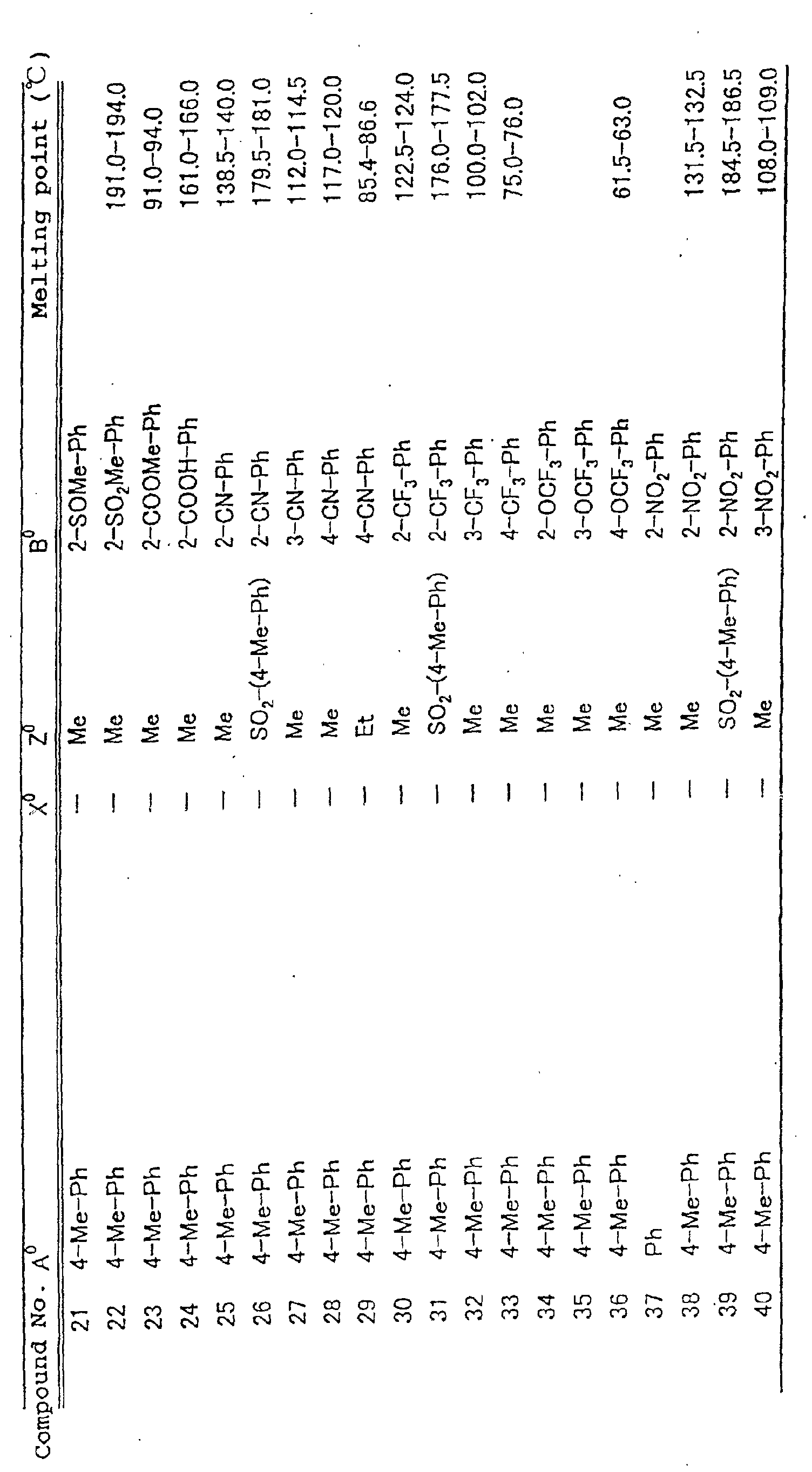
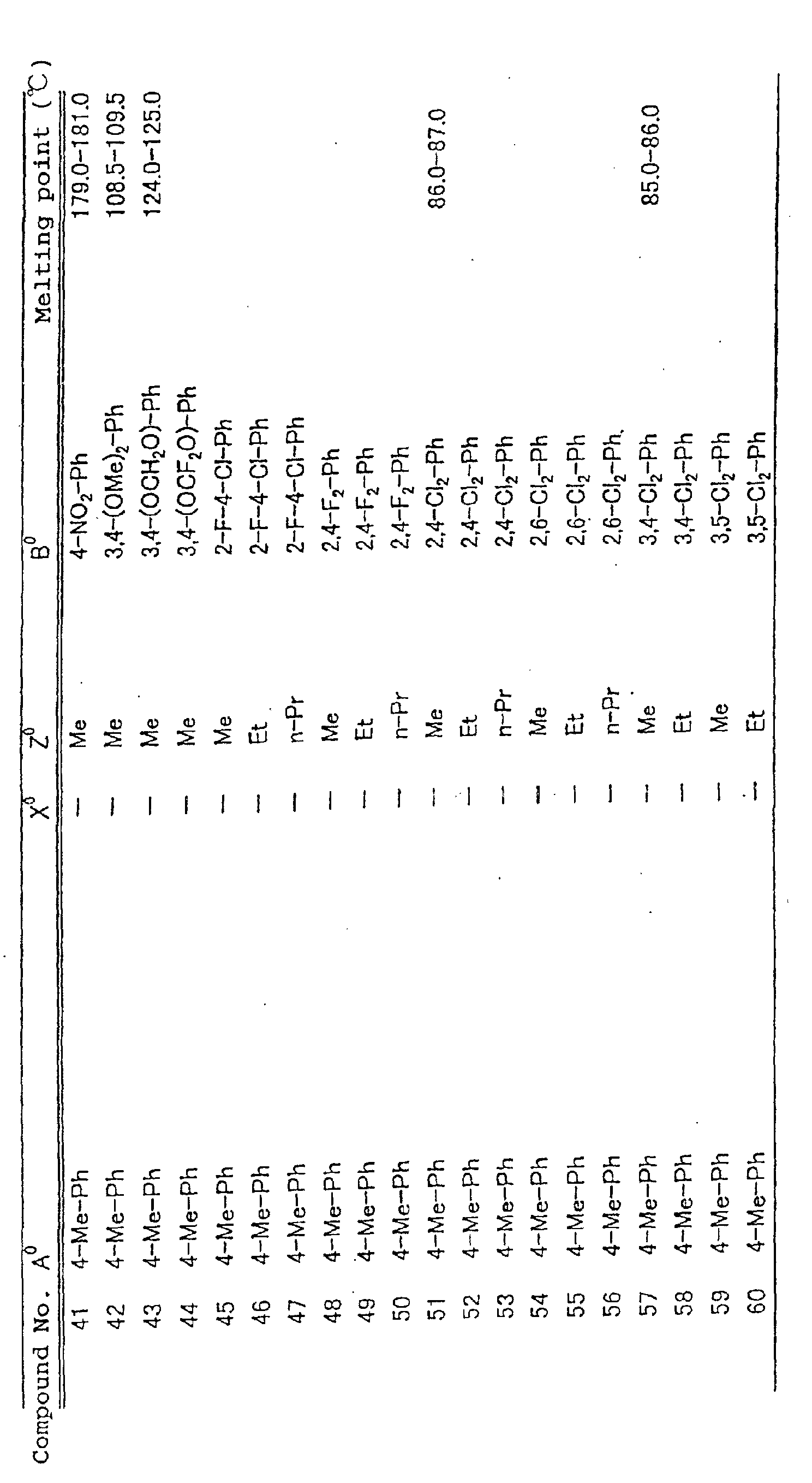

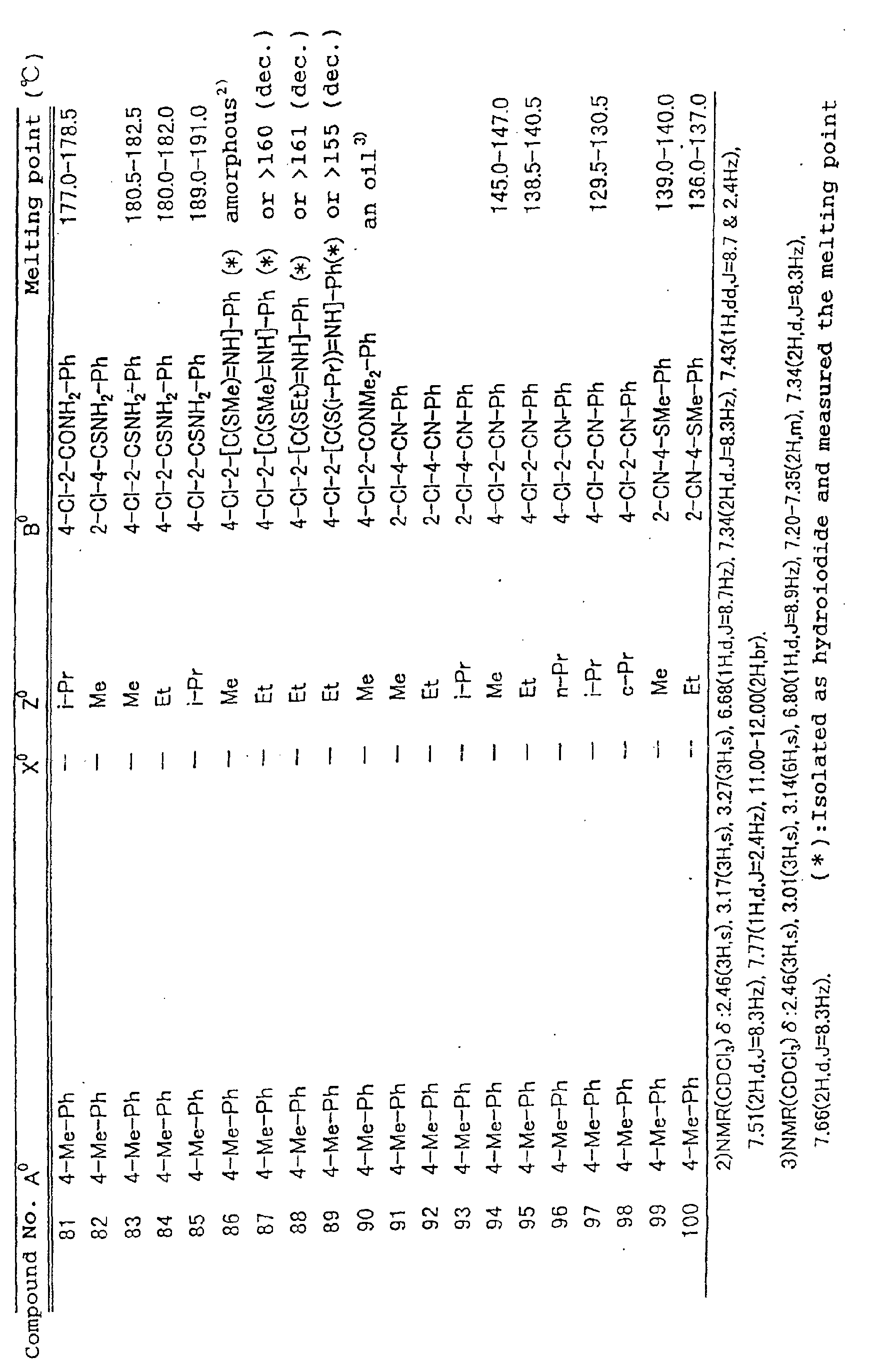


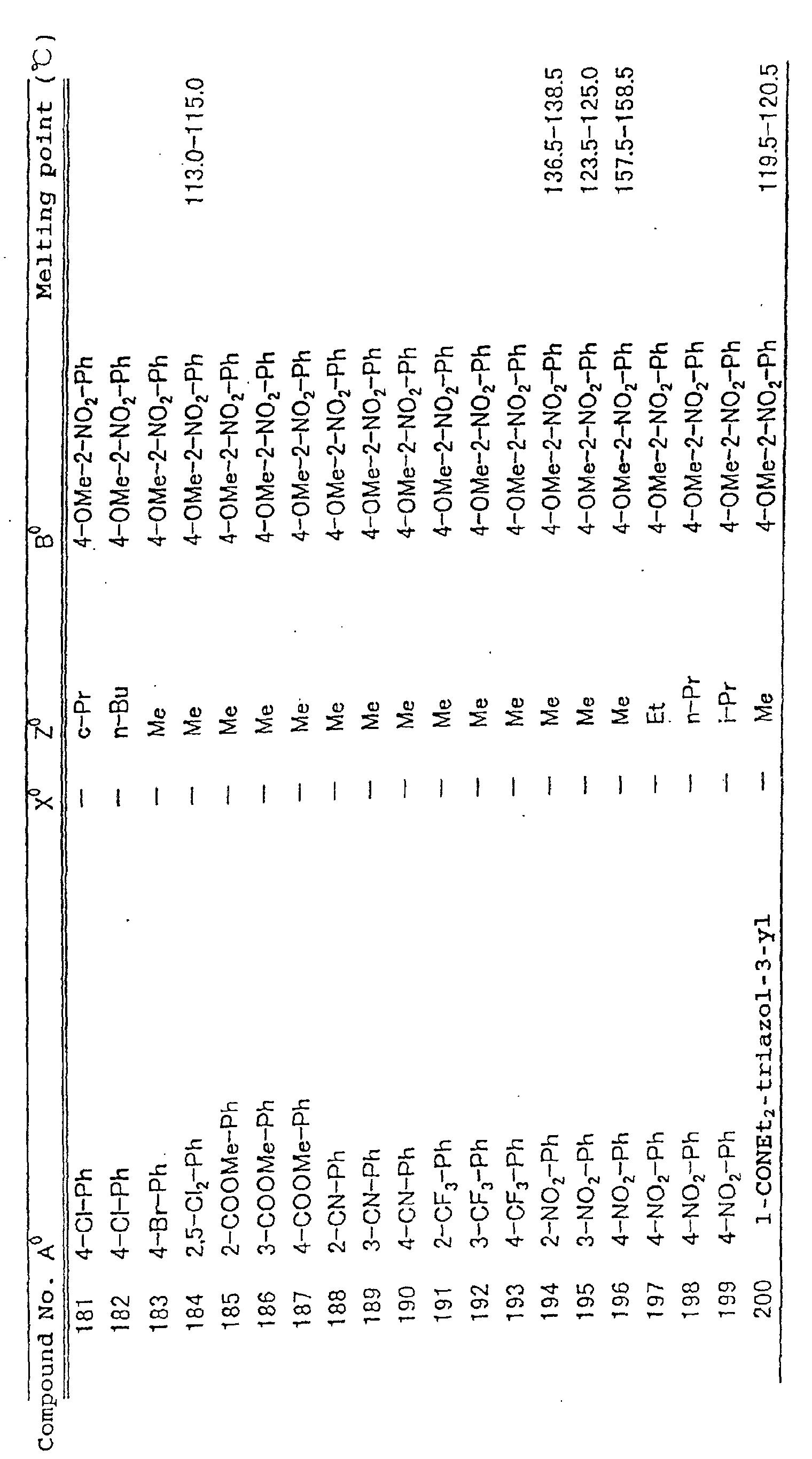
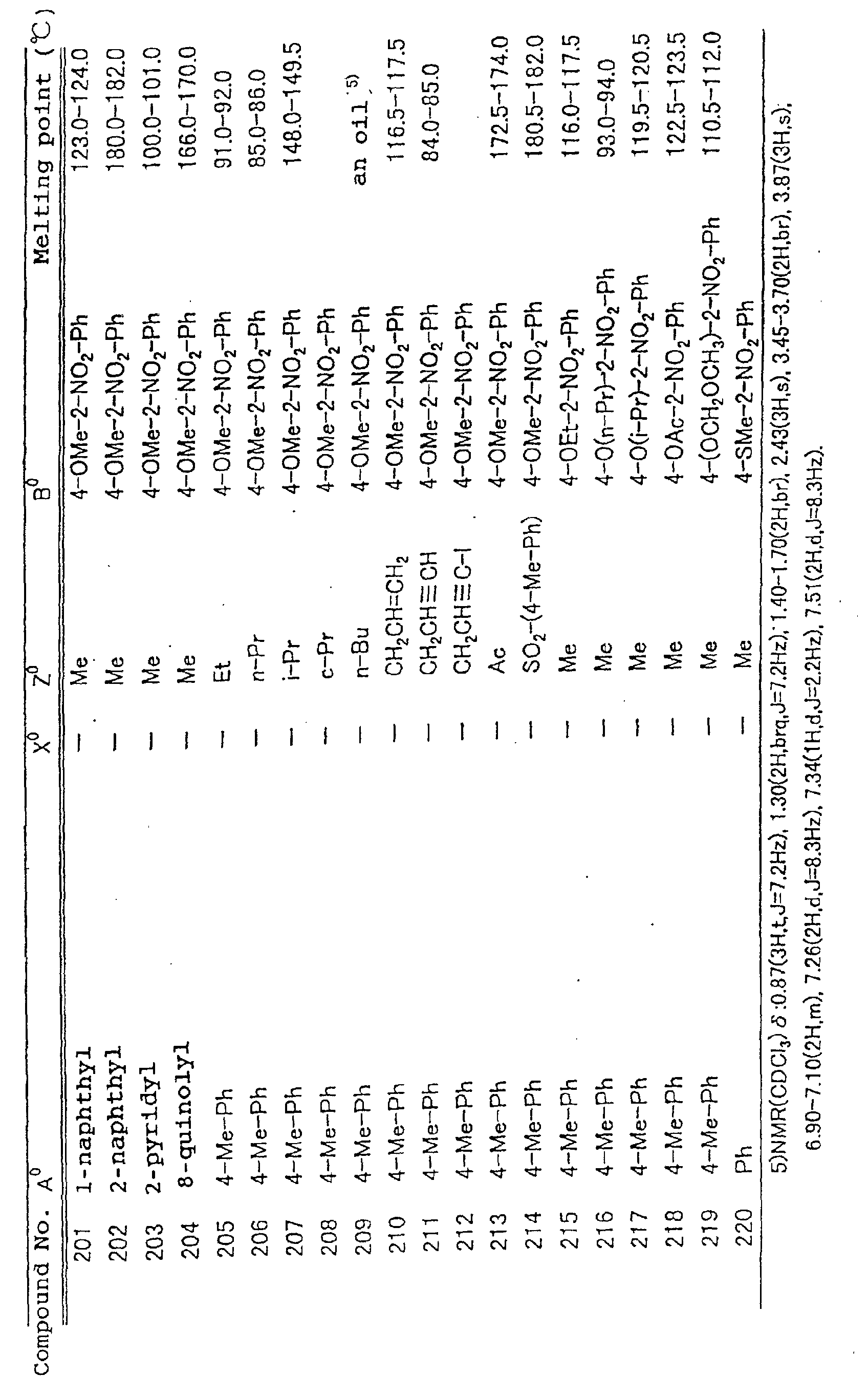
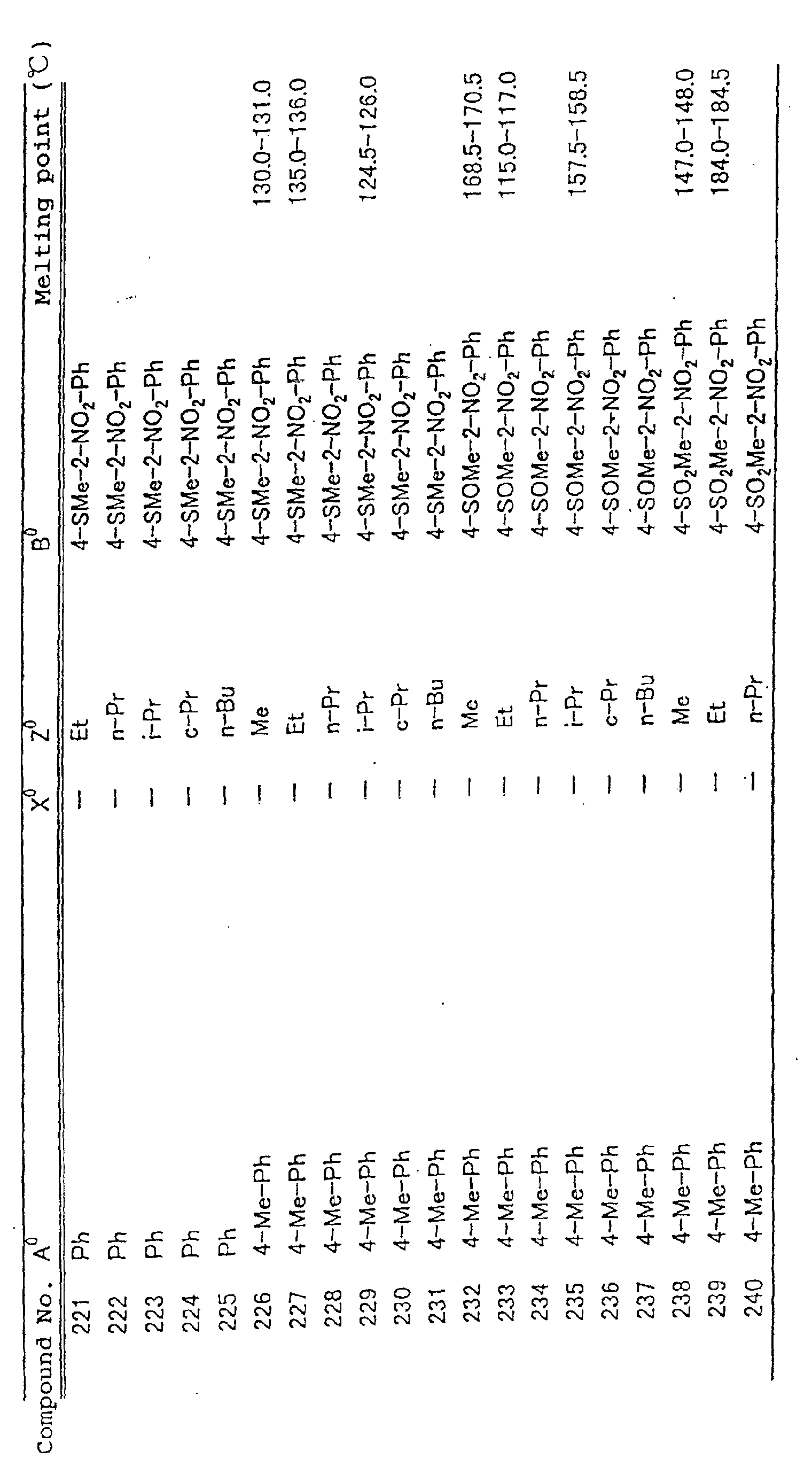
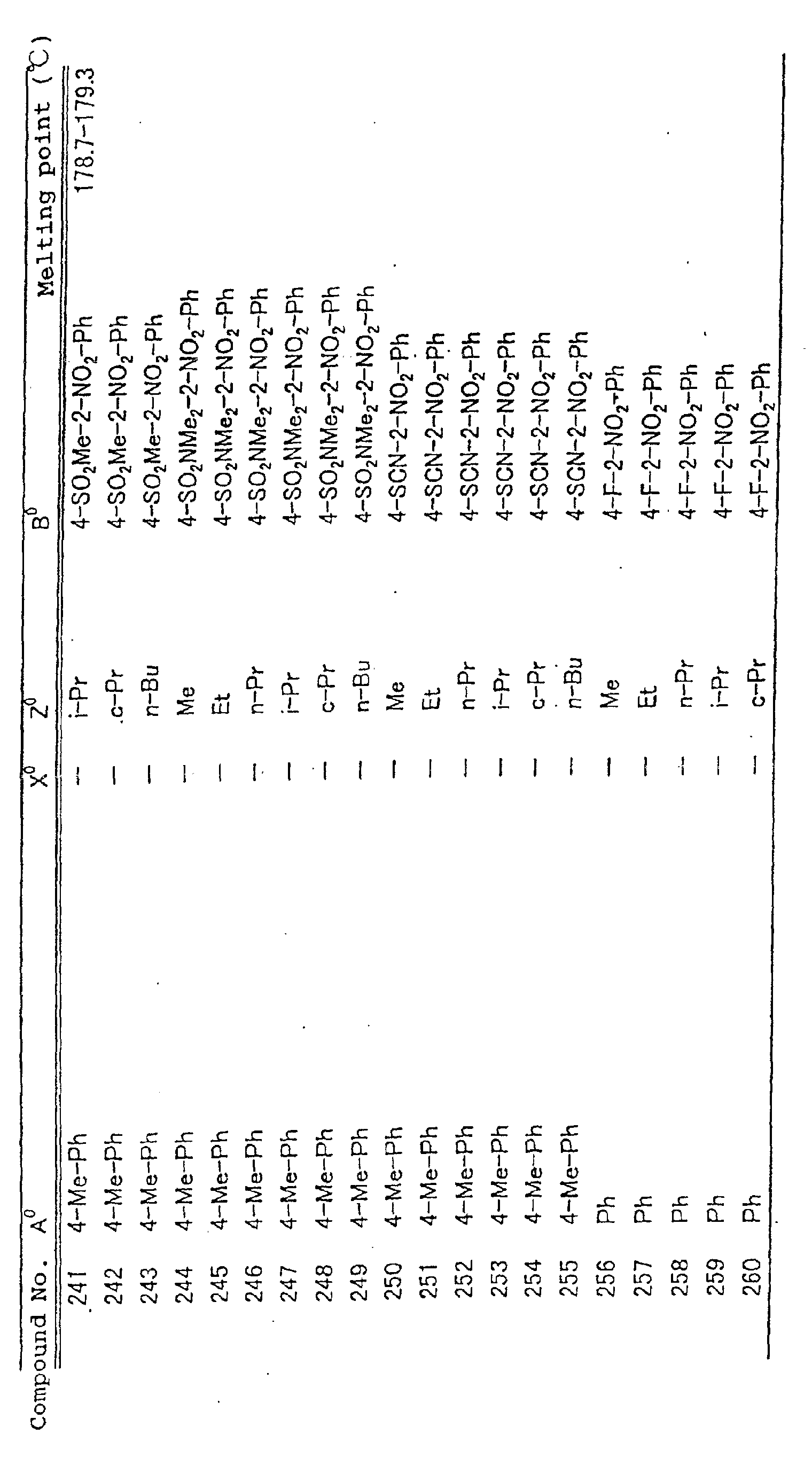


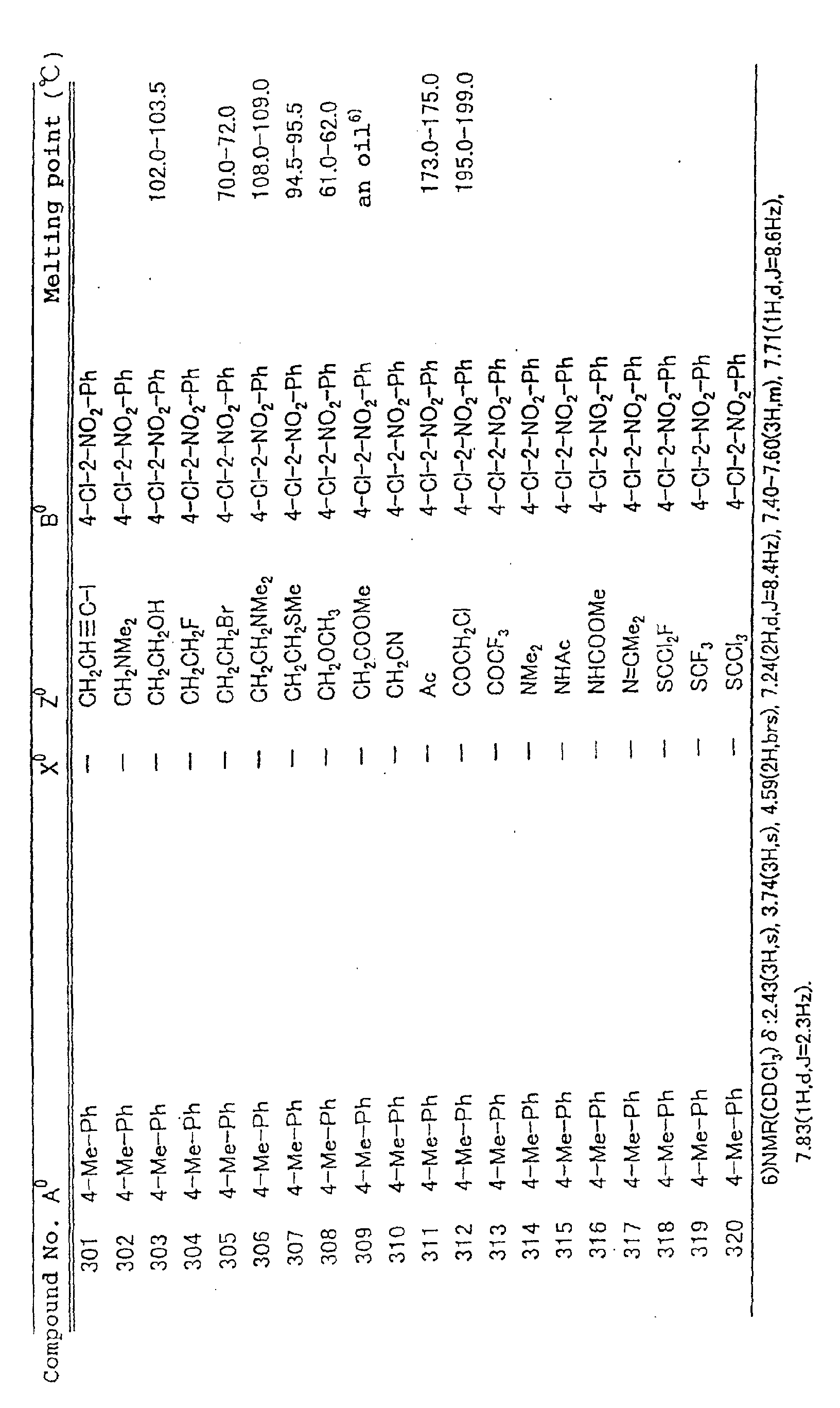

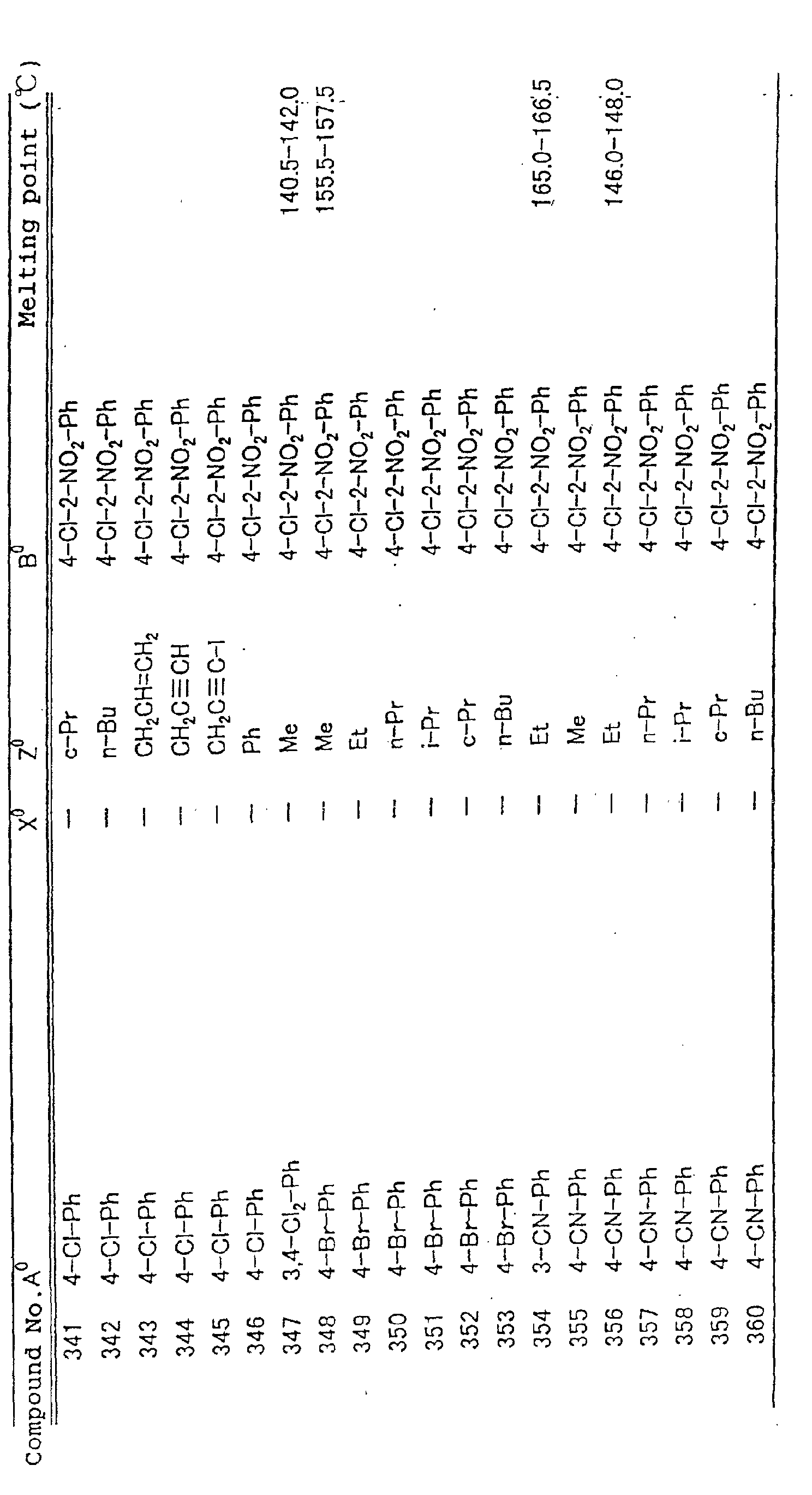


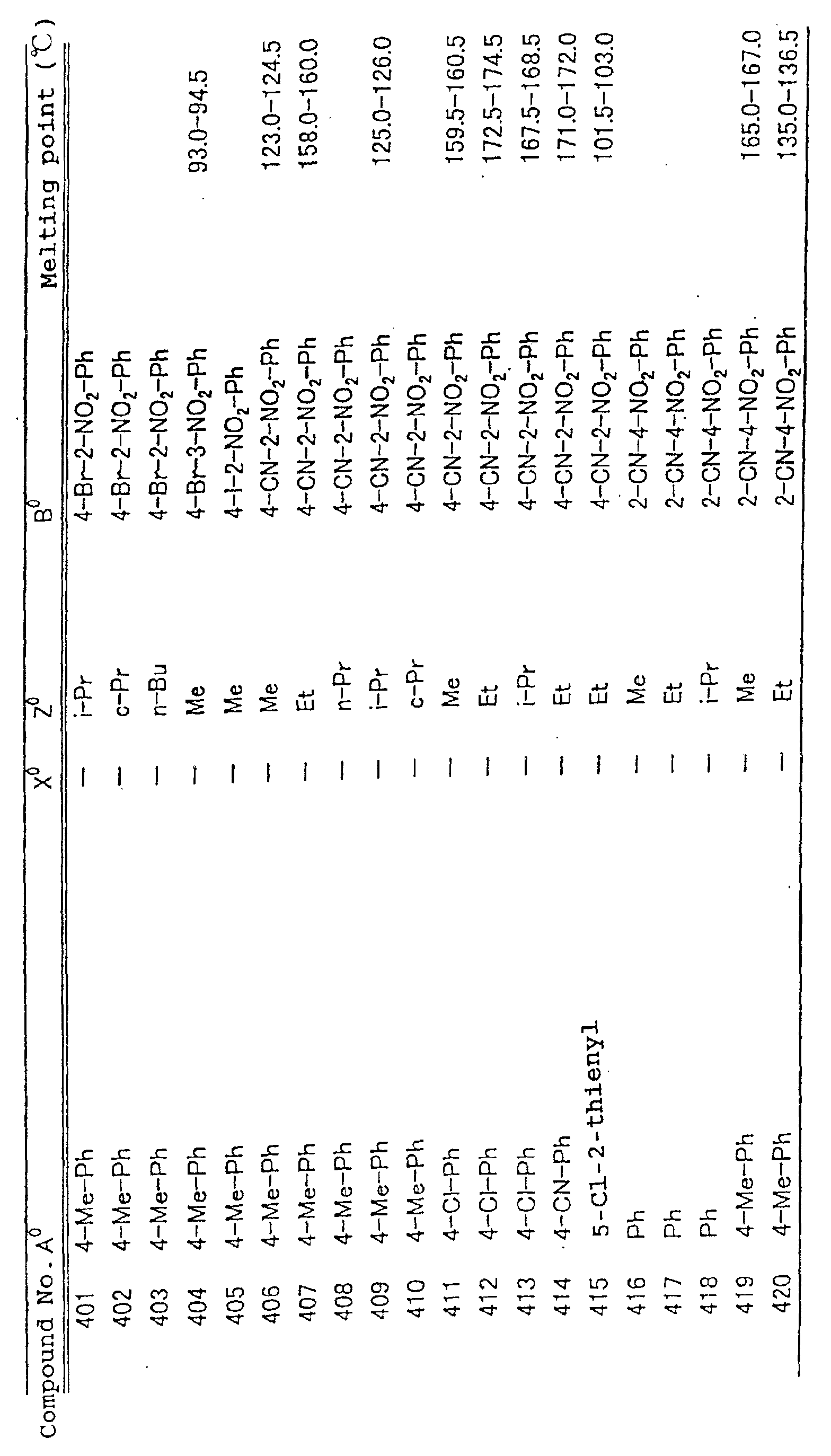


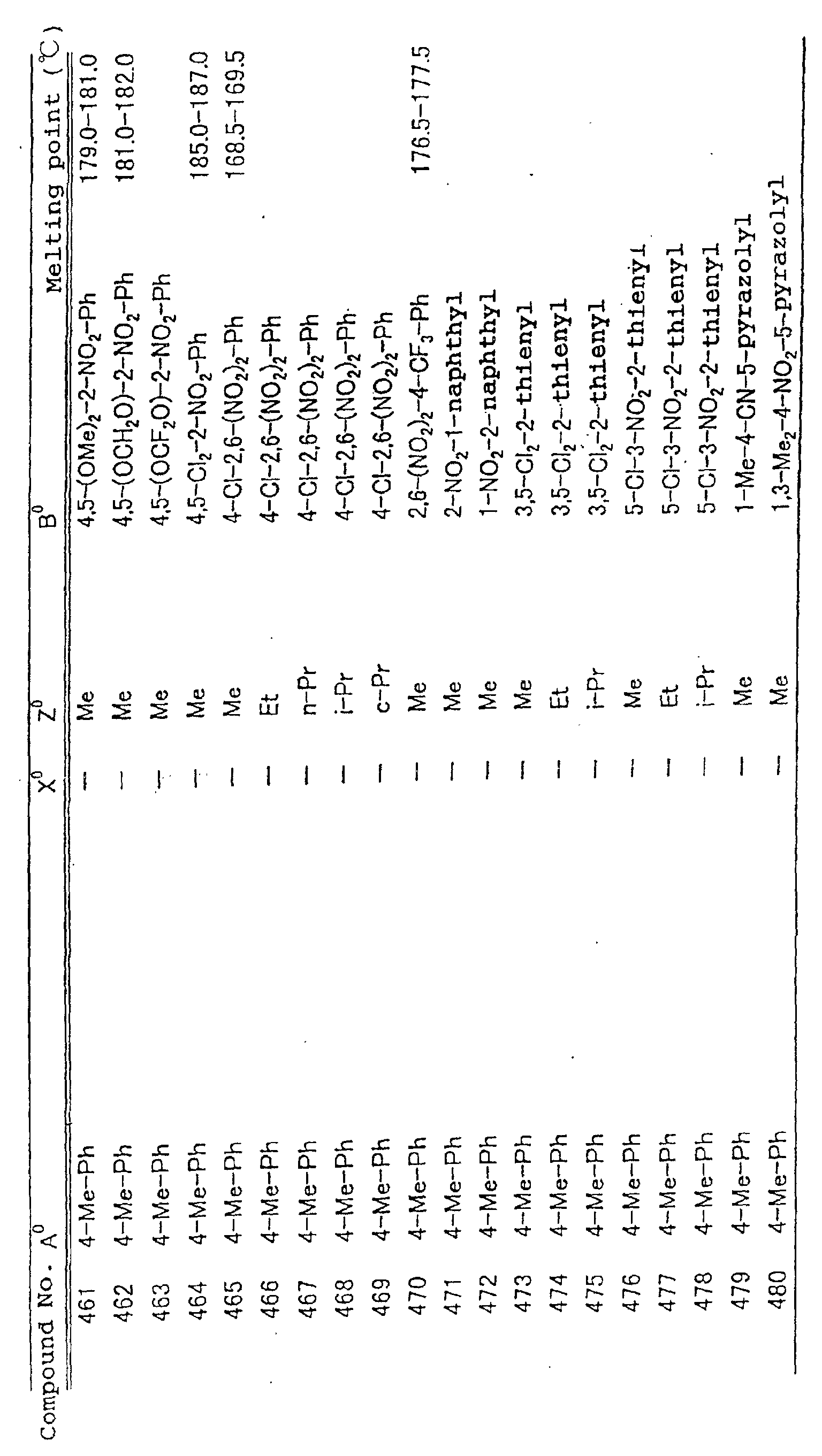
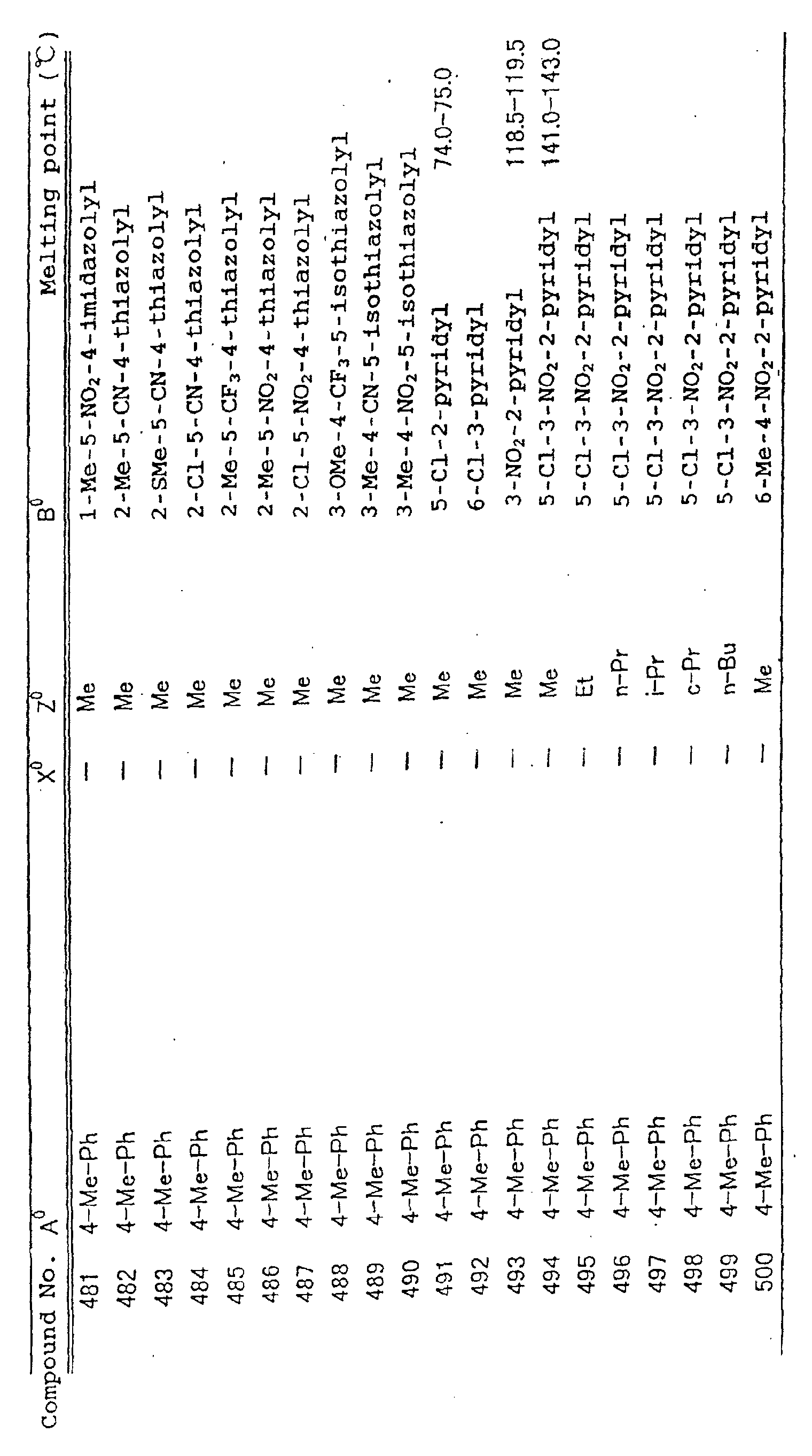


Colby's Equation:
| Test substances | Concentration of the active ingredient (ppm) | Lesion area ratio (%) | protection value | E value |
| Compound No.289 | 25 | 4.3 | 93 | - |
| 6.3 | 3.8 | 94 | - | |
| 1.6 | 20.8 | 65 | - | |
| 0.4 | 36.9 | 38 | - | |
| Compound No.421 | 25 | 0.3 | 99 | - |
| 6.3 | 2.3 | 96 | - | |
| 1.6 | 20.0 | 66 | - | |
| 0.4 | 24.7 | 58 | - | |
| Chlorothalonil | 100 | 16.8 | 72 | - |
| 25 | 60.0 | 0 | - | |
| 6.3 | 43.5 | 27 | - | |
| Azoxystrobin | 25 | 25.0 | 58 | - |
| 6.3 | 25.8 | 56 | - | |
| Hexaconazole | 6.3 | 21.7 | 63 | - |
| 1.6 | 66.7 | 0 | - | |
| 0.4 | 70.0 | 0 | - | |
| Compound No.421 +Chlorothalonil | 1.6+6.3 | 2.2 | 96 | 75 |
| 1.6+25 | 1.5 | 97 | 66 | |
| Compound No.421 +Azoxystrobin | 1.6+6.3 | 1.5 | 97 | 91 |
| Compound No.289 +Azoxystrobin | 0.4+6.3 | 10.7 | 82 | 73 |
| Compound No.289 +Hexaconazole | 0.4+0.4 | 31.0 | 48 | 38 |
| 1.6+0.4 | 16.5 | 72 | 65 | |
| 0.4+1.6 | 31.7 | 47 | 38 | |
| Untreated plot | - | 59.3 | - | - |
| Test substances | Concentration of the active ingredient (ppm) | Lesion area ratio (%) | Protection value | E value |
| Compound No.289 | 6.3 | 9.3 | 87 | - |
| 1.6 | 13.7 | 81 | - | |
| 0.4 | 18.3 | 74 | - | |
| Compound No.97 | 6.3 | 8.0 | 89 | - |
| 1.6 | 19.2 | 73 | - | |
| 0.4 | 25.0 | 65 | - | |
| Iminoctadine | 6.3 | 35.0 | 51 | - |
| 1.6 | 33.8 | 52 | - | |
| 0.4 | 66.7 | 6 | - | |
| Mepanipyrim | 6.3 | 19.3 | 73 | - |
| 1.6 | 73.3 | 0 | - | |
| 0.4 | 68.3 | 4 | ||
| Compound No.97 | 0.4+0.4 | 16.3 | 77 | 67 |
| +Iminoctadine | ||||
| Compound No.289 | 1.6+0.4 | 5.3 | 93 | 82 |
| +Mepanipyrim | ||||
| 1.6+1.6 | 4.3 | 94 | 81 | |
| Untreated plot | - | 70.8 | - | - |
Compounds No.289 showed a higher protection effect when used in combination with azoxystrobin than the estimated protection effect which was obtainable when each compound was used individually, thus Synergy effects were shown by the results.
| Test substances | Concentration of the active ingredient (ppm) | Lesion area ratio (%) | Protection value | E value |
| Compound No.289 | 200 | 25.0 | 0 | - |
| 100 | 25.0 | 0 | - | |
| Azoxystrobin | 0.5 | 5.0 | 80 | - |
| 0.1 | 11.0 | 56 | - | |
| Compound No.289 | 200+0.5 | 0.8 | 97 | 80 |
| + Azoxystrobin | ||||
| 200+0.1 | 3.5 | 86 | 56 | |
| 100+0.5 | 0.8 | 97 | 80 | |
| 100+0.1 | 5.0 | 80 | 56 | |
| Untreated plot | - | 25.0 | - | - |
| Test substances | Concentration of the active ingredient (ppm) | Lesion area ratio (%) | protection value | E value |
| Compound No.289 | 100 | 4.5 | 74.3 | - |
| 25 | 5.0 | 71.4 | - | |
| Ferimzone | 100 | 0.4 | 98.0 | - |
| 25 | 1.5 | 91.4 | - | |
| Compound No.289 + Ferimzone | 100+25 | 0.2 | 98.9 | 97.8 |
| 25+25 | 0.3 | 98.6 | 97.6 | |
| Untreated plot | - | 25.0 | - | - |
| Test substances | Concentration of the active Ingredient (ppm) | Lesion area ratio (%) | protection value | E value |
| Compound No.289 | 100 | 13.2 | 0.0 | - |
| Azoxystrobin | 10 | 3.9 | 69.8 | - |
| Mepanipyrim | 10 | 6.0 | 53.8 | - |
| Iprodione | 10 | 3.7 | 71.3 | - |
| Compound No.289 + Azoxystrobin | 100+10 | 1.9 | 85.4 | 69.3 |
| Compound No.289 + Mepanipyrim | 100+10 | 5.3 | 59.2 | 53.0 |
| Compound No.289 + Iprodione + Iprodione | 100+10 | 2.9 | 77.2 | 70.8 |
| Untreated plot | - | 25.0 | - | - |
Claims (18)
- A microbicidal composition for agricultural or horticultural use comprising a compound of Formula (I):or salt thereof

[wherein A1 is (1) an aryl group which may be substituted or (2) a heterocyclic group which may be substituted, X1 is (1) a chemical bond, (2) a methylene group which may be substituted, or (3) a vinylene group which may be substituted, B1 is a five-membered heterocyclic group (except for an isooxazolyl group) or a condensed heterocyclic group which may be substituted, Z1 is (1) a hydrocarbon group which may be substituted, (2) an acyl group which may be substituted, (3) formyl group, (4) an amino group which may be substituted, (5) a group which is represented by -N=CR1R2(wherein each R1 and R2 is repectively a hydrogen atom or a hydrocarobon group which may be substituted), (6) a cyclic amino group, (7) a group which is represented by -OR3 (wherein R3 is a hydrogen atom, a hydrocarbon group which may be substituted, an acyl group which may be substituted, formyl group or an alkylsulfonyl group which may be substituted) or (8) a group represented by -S(O)nR4 (wherein, n stands for an integer from 0 to 2, R4 stands for a hydrogen atom or a hydrocarbon group which may be substituted).] - A microbicidal composition for agricultural or horticultural use as claimed in claim 1, wherein B1 is a five-membered heterocyclic group which contains hetero-atoms selected from nitrogen atoms and sulfur atoms as the ring-constructing hetero atom in addition to the carbon atoms which may be substituted, or B1 is a condensed heterocyclic group which may be substituted.
- A microbicidal composition as claimed in claim 1, wherein A1 is (1) an aryl group which may be substituted with 1 to 5 substituents selected from a group of substituents (T) which consists of (i) a C1-4 alkyl group which may be substituted with 1 to 5 substituents selected from halogens, hydroxyl, imino, hydroxyimino, C1-4 alkoxyimino, hydrazono, mono- or di-C1-4 alkylhydrazono and C1-4 alkylthio, (ii) a C3-6 cycloalkyl group which may be substituted with 1 to 5 halogens, (iii) a C2-4 alkenyl group which may be substituted with 1 to 5 substitutents selected from halogen, cyano, and nitro, (iv) a C3-6 cycloalkenyl group which may be substituted with 1 to 5 halogens, (v) a C2-4 alkynyl group which may be substituted with 1 to 5 halogens, (vi) hydroxyl group, (vii) a C1-4 alkoxy group which may be substituted with 1 to 5 substituents selected from halogen and C1-4 alkoxy group, (viii) formyloxy group, (ix) a C1-4 alkyl-carbonyloxy group which may be substituted with 1 to 5 halogens, (x) a C1-4 alkoxy-carbonyloxy group which may be substituted with 1 to 5 halogens, (xi) mercapto group, (xii) a C1-4 alkylthio group which may be substituted with 1 to 5 halogens, (xiii) a C1-4 alkyl-carbonylthio group which may be substituted with 1 to 5 halogens, (xiv) a C1-4 alkoxy-carbonylthio group which may be substituted with 1 to 5 halogens, (xv) a C1-4 alkylsulfinyl group which may be substituted with 1 to 5 halogens, (xvi) a C1-4 alkylsulfonyl group which may be substituted with 1 to 5 halogens, (xvii) a sulfamoyl group, (xviii) a mono- or di- C1-4 alkylsulfamoyl group, (xix)a group represented by(wherein, ring C is a 3- to 6-membered heterocyclic group containing nitrogen), (xx) an amino group which may be substituted with one or two substituents selected from a C1-4 alkyl, C2-4 alkenyl, C2-4 alkynyl, hydroxy, C1-4 alkoxy, formyloxy, C1-4 alkyl-carbonyloxy, formyl and C1-4 alkyl-carbonyl, (xxi) a 3- to 6-membered cyclic amino group, (xxii) formyl group. (xxiii) a C1-4 alkyl-carbonyl group which may be substituted with 1 to 5 halogens, (xxiv) a C1-4 alkoxy-carbonyl group which may be substituted with 1 to 5 halogens, (xxv) a C1-4 alkylthio-carbonyl group, (xxvi) a C1-4 alkoxy-thiocarbonyl group, (xxvii) C1-4 alkylthio-thiocarbonyl group, (xxviii) carbamoyl group, (xxiv) a mono- or di-C1-4 alkylcarbamoyl group, (xxx) a group represented by
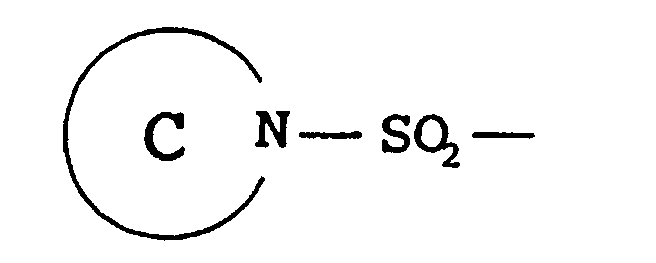 (wherein, ring C is a 3- to 6-membered heterocyclic group containing nitrogen), (xxxi) thiocarbamoyl group, (xxxii) a mono- or di-C1-4 alkyl-thiocarbamoyl group, (xxxiii) a group represented by
 (wherein, ring C is a 3- to 6-membered heterocyclic group containing nitrogen), (xxxiv) halogen atom, (xxxv) carboxyl group, (xxxvi) thiocyanato group, (xxxvii) isothiocyanato group, (xxxviii) cyano group, (xxxix) isocyano group, (xl) azido group, (xli) nitoroso group, (xlii) nitro group, (xliii) azocyano group, (xliv) azoxycyano group and (xlv) sulfo group, or (2) a heterocyclic group which may be substituted with 1 to 5 substituents selected from the group of substituents (T) mentioned above,
X1 is (1) a chemical bond, (2) a methylene group which may be substituted with one or two substituents selected from C1-4 alkyl, C1-4 alkoxy, C1-4 alkylthio, halogen atom and cyano or (3) a vinylene group which may be substituted with one or two substituents selected from C1-4 alkyl, C1-4 alkoxy, C1-4 alkylthio, halogen atom, and cyano, B1 is (1) a five-membered heterocyclic group which is composed of the ring-constructing heteroatoms besides carbon atomsselected from nitrogen and sulfur atoms, and which may be substituted with 1 to 5 substituents selected from the group of substituents (T) mentioned above, or (2) a condensed heterocyclic group which is constructed either with a five- to six-membered heterocyclic ring and benzene rings or with a five- to six-membered heterocyclic ring and another (the same or different) five- to six-membered heterocyclic rings and may be substituted with substituents selected from the group of substituents (T) mentioned above, Z1 is (1) a hydrocarbon group which is selected from (i) a C1-6 alkyl group which may be substituted with 1 to 5 substituents selected from (a) halogen, (b) amino, (c) mono- or di-C1-4 alkylamino, (d) hydroxy, (e) C1-4 alkoxy which may be substituted with 1 to 5 halogens, (f) mercapto, (g) C1-4 alkylthio, (h) C1-4 alkylsulfinyl, (i) C1-4 alkylsulfonyl, (j) cyano, (k) C1-4 alkoxy-carbonyl, (1) carbamoyl and (m) a mono- or di-C1-4 alkyl-carbamoyl groups, (ii) a C2-6 alkenyl group which may be substituted with 1 to 5 substituents selected from
(a) halogen, (b) amino, (c) mono- or di-C1-4 alkylamino, (d) hydroxy, (e) C1-4 alkoxy which may be substituted with 1 to 5 halogens, (f) mercapto, (g) C1-4 alkylthio, (h) C1-4 alkylsulfinyl, (i) C1-4 alkylsulfonyl, (j) cyano, (k) C1-4 alkoxy-carbonyl, (1) carbamoyl, and (m) mono- or di-C1-4 alkyl-carbamoyl, (iii) a C2-6 alkynyl group which may be substituted with 1 to 5 substituents selected from (a) halogen, (b) amino, (c) mono-or di-C1-4 alkylamino, (d) hydroxy, (e) C1-4 alkoxy which may be substituted with 1 to 5 halogens, (f) mercapto, (g) C1-4 alkylthio, (h) C1-4 alkylsulfinyl, (i)C1-4 alkylsulfonyl, (j) cyano, (k) C1-4 alkoxy-carbonyl, (1) carbamoyl, and (m) mono- or di-C1-4 alkyl-carbamoyl, (iv) a C3-6 cycloalkyl group which may be substituted with 1 to 5 substituents selected from (a) C1-4 alkyl which may be substituted with 1 to 5 halogens, (b) halogen, (c) amino, (d) mono- or di-C1-4 alkylamino, (e) hydroxy, (f) C1-4 alkoxy which may be substituted with 1 to 5 halogens, (g) mercapto, (h) C1-4 alkylthio, (i) C1-4 alkylsulfinyl, (j) C1-4 alkylsulfonyl, (k) cyano, (1) C1-4 alkoxy-carbonyl, (m) carbamoyl, and (n) mono- or di-C1-4 alkyl-carbamoyl, (v) a C3-6 alkadienyl group which may be substituted with 1 to 5 substituents selected from (a) halogen, (b) amino, (c) mono- and di-C1-4 alkylamino, (d) hydroxy, (e) C1-4 alkoxy which may be substituted with 1 to 5 halogens, (f) mercapto, (g) C1-4 alkylthio, (h) C1-4 alkylsulfinyl, (i) C1-4 alkylsulfonyl, (j) cyano, (k) C1-4 alkoxy-carbonyl,(1) carbamoyl and (m) mono- or di- C1-4 alkyl-carbamoyl or (vi) C6-14 aryl group which may be substituted with 1 to 5 substituents selected from (a) C1-4 alkyl which may be substituted with 1 to 5 halogens, (b) halogen, (c) amino, (d) mono- or di-C1-4 alkylamino, (e) hydroxy, (f) C1-4 alkoxy which may be substituted with 1 to 5 halogens, (g) mercapto, (h) C1-4 alkylthio, (i) C1-4 alkylsulfinyl, (j) C1-4 alkylsulfonyl. (k) cyano, (1) C1-4 alkoxy-carbonyl, (m) carbamoyl and (n) mono- or di-C1-4 alkyl-carbamoyl, (2) an acyl group selected from (i) C1-4 alkyl-carbonyl, (ii)C1-4 alkoxy-carbonyl, (iii) C1-4 alkylthio-carbonyl, (iv) C1-4 alkoxy-thiocarbonyl, (v) C1-4 alkylthio-thiocarbonyl, (vi) mono- or di-C1-4 alkyl-carbamoyl and (vii) mono- or di-C1-4 alkyl-thiocarbamoyl, each of which may be substituted with 1 to 5 halogens, (3) formyl group, (4) an amino group which may be mono- or substituted with one or two substituents selected from (a) C1-4 alkyl, (b) C1-4 alkyl-carbonyl which may be substituted with 1 to 5 halogens, (c) C1-4 alkoxy-carbonyl, (d) mono-or di-C1-4 alkyl-carbamoyl and (e) mono- or di-C1-4 alkyl-thiocarbamoyl, (5) a group represented by -N=CR1R2(wherein R1 and R2 are the same or different, and are a hydrogen arom and a C1-4 alkyl group), (6) a three- to six-membered cyclic amino group, (7) a group represented by -OR3 (wherein R3 is a hydrogen atom, a C1-4 alkyl group which may be substituted with 1 to 5 halogens, a C1-4 alkyl-carbonyl group which may be substituted with 1 to 5 halogens, a C1-4 alkoxy-carbonyl group which may be substituted with 1 to 5 halogens, formyl group or a C1-4 alkylsulfonyl group which may be substituted with 1 to 5 halogens), or (8) a group represented by -S(O)nR4 (wherein n is an integer from 0 to 2, and R4 is (a) hydrogen atom, (b) a C1-4 alkyl group which may be substituted with 1 to 5 halogens or (c) a C6-14 aryl group which may be substituted with 1 to 5 C1-4 alkyl groups. - A microbicidal composition for agricultural or horticultural use as claimed in claim 1, where A1 is a C6-14 aryl group which may be substituted with 1 to 3 alkyl group, X1 is a chemical bond, B1 is a thienyl group, a pyrazolyl group, an isothiazolyl group, an imidazolyl group, a thiazolyl group, a thiadiazolyl group, a dioxaindanyl group or a imidazopyridyl group, each of which may be substituted with 1 to 5 substituents selected from C1-4 alkyl which may be substituted with 1 to 5 halogens, C1-4 alkoxy, C1-4 alkylthio, cyano, halogens and nitro, Z1 is a C1-6 alkyl group or a C1-4 alkoxy group.
- A microbicidal composition for agricultural or horticultural use comprising a compound of Formula (II):or salt thereof,

[wherein, A2 is (1)an aryl group which may be substituted with 1 to 5 substituents selected from a group of substitutents (T') which consists of (i) a C1-4 alkyl group which may be substituted with 1 to 5 substituents selected from halogen, hydroxy, imino, hydroxyimino, C1-4 alkoxyimino, hydrazono, mono- or di-C1-4 alkylhydrazono and C1-4 alkylthio, (ii) a C3-6 cycloalkyl group which may be substituted with 1 to 5 halogens, (iii) a C2-4 alkenyl group which may be substituted with substituents selected from halogens, cyano and nitro, (iv) a C3-6 cycloalkenyl group which may be substituted with 1 to 5 halogens, (v) a C2-4 alkynyl group which may be substituted with 1 to 5 halogens, (vi) hydroxy group, (vii) a C1-4 alkoxy group which may be substituted with 1 to 5 substitutents selected from halogens and C1-4 alkoxy, (viii) formyloxy group, (ix) a C1-4 alkyl-carbonyloxy group which may be substituted with 1 to 5 halogens, (x) a C1-4 alkoxy-carbonyloxy group which may be substituted with 1 to 5 halogens, (xi) mercapto group, (xii) a C1-4 alkylthio group which may be substituted with 1 to 5 halogens, (xiii) a C1-4 alkyl-carbonylthio group which may be substituted with 1 to 5 halogens,(xiv) a C1-4 alkoxy-carbonylthio group which may be substituted with 1 to 5 halogens, (xv) a C1-4 alkylsulfinyl group which may be substituted with 1 to 5 halogens, (xvi) a C1-4 alkylsulfonyl group which may be substituted with 1 to 5 halogens, (xvii) sulfamoyl group, (xviii) a mono- or di-C1-4 alkylsulfamoyl group, (xix) a group represented by(wherein, ring C is a three- to six-membered heterocyclic group containing nitrogen), (xx) an amino group which may be mono- or disubstituted with one or two substituents selected from C1-4 alkyl, C2-4 alkenyl, C2-4 alkynyl, hydroxy, C1-4 alkoxy, formyloxy, C1-4 alkyl-carbonyloxy, formyl and C1-4 alkyl-carbonyl, (xxi) a three-to six-membered cyclic amino group, (xxii) formyl group, (xxiii) a C1-4 alkyl-carbonyl group which may be substituted with 1 to 5 halogens, (xxiv) a C1-4 alkoxy-carbonyl group which may be substituted with 1 to 5 halogens, (xxv) a C1-4 alkylthio-carbonyl group, (xxvi) a C1-4 alkoxy-thiocarbonyl group, (xxvii) a C1-4 alkylthio-thiocarbonyl group, (xxviii) carbamoyl group, (xxix) a mono- or di-C1-4 alkylcarbamoyl group, (xxx) a group represented by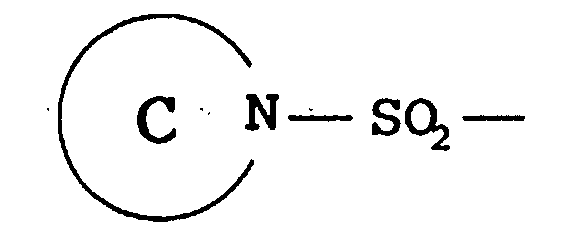 (wherein, ring C is a three- to six-membered heterocyclic group containing nitrogen), (xxxi) thiocarbamoyl group,(xxxii) a mono-or di-C1-4 alkyl-thiocarbamoyl group, (xxxiii) a group represented by
 (wherein, ring C is a three- to six-membered heterocyclic group containing nitrogen), (xxxiv) halogen atom, (xxxv) carboxyl group, (xxxvi) thiocyanato group, (xxxvii) isothiocyanato group, (xxxviii) cyano group, (xxxix) isocyano group, (xl) azido group. (xli) nitroso group, (xlii) nitro group, (xliii) azocyano group and (xliv) sulfo group or (2) a heterocyclic group, which may be substituted.
 X2 is (1) a chemical bond, (2) a methylene group which may besubstituted or (3) a vinylene group which may be substituted,B2 is an aryl group which may be substituted, Z2 is (1) an alkyl group which may be substituted with substitutents selected from mono- or di-C1-6 alkylamino, hydroxy, halogens, C1-6 alkoxy, C1-6 alkoxy-carbonyl, C1-6 alkylthio and cyano, (2) vinyl group, (3) an allyl group, (4) a propadienyl group, (5) an alkynyl group which may be substituted, (6) a cycloalkyl group which may be substituted, (7) an aryl group which may be substituted, (8) an acyl group which may be substituted, (9) formyl group, (10) an amino group which may be substituted, (11) a group represented by -N=CR1R2 (wherein R1 and R2 are the same or different, and are a hydrogen atom and a hydrocarbon group which may be substituted respectively), (12) a cyclic amino group, (13) a group represented by -OR3 (wherein R3 is a hydrogen atom, a hydrocarbon group which may be substituted, an acyl group which may be substituted, formyl group, or an alkylsulfonyl group which may be substituted), or (14) a group represented by -S(O)nR4 (wherein, n is an integer from 0 to 2, and R4 is hydrogen atom or a hydrocarbon group which may be substituted).
 - A microbicidal composition for agricultural or horticultural use as claimed in claim 5, [wherein, A2 is (1)a C6-14 aryl group which may be substituted with 1 to 5 substituents selected from a group of substitutents (T') which consists of (i) a C1-4 alkyl group which may be substituted with 1 to 5 substituents selected from halogen, hydroxy, imino, hydroxyimino, C1-4 alkoxyimino, hydrazono, mono- or di-C1-4 alkylhydrazono and C1-4 alkylthio, (ii) a C3-6 cycloalkyl group which may be substituted with 1 to 5 halogens, (iii) C2-4 alkenyl group which may be substituted with 1 to 5 substituents selected from halogens, cyano and nitro, (iv) a C3-6 cycloalkenyl group which may be substituted with 1 to 5 halogens, (v) a C2-4 alkynyl group which may be substituted with 1 to 5 halogens, (vi) hydroxy group, (vii) a C1-4 alkoxy group which may be substituted with 1 to 5 substitutents selected from halogen and C1-4 alkoxy, (viii) formyloxy group, (ix) a C1-4 alkyl-carbonyloxy group which may be substituted with 1 to 5 halogens, (x) a C1-4 alkoxy-carbonyloxy group which may be substituted with 1 to 5 halogens, (xi) mercapto group, (xii) a C1-4 alkylthio group which may be substituted with 1 to 5 halogens, (xiii) a C1-4 alkyl-carbonylthio group which may be substituted with 1 to 5 halogens,(xiv) a C1-4 alkoxy-carbonylthio group which may be substituted with 1 to 5 halogens, (xv) a C1-4 alkylsulfinyl group which may be substituted with 1 to 5 halogens, (xvi) a C1-4 alkylsulfonyl group which may be substituted with 1 to 5 halogens, (xvii) sulfamoyl group, (xviii) a mono- or di-C1-4 alkylsulfamoyl group, (xix) a group represented by(wherein, ring C is a three- to six-membered heterocyclic group containing nitrogen), (xx) an amino group which may be substituted with one or two substituents selected from C1-4 alkyl, C2-4 alkenyl, C2-4 alkynyl, hydroxy, C1-4 alkoxy, formyloxy, C1-4 alkyl-carbonyloxy, formyl and C1-4 alkyl-carbonyl, (xxi) a three to six-membered cyclic amino group, (xxii) formyl group, (xxiii) a C1-4 alkyl-carbonyl group which may be substituted with 1 to 5 halogens, (xxiv) a C1-4 alkoxy-carbonyl group which may be substituted with 1 to 5 halogens, (xxv) a C1-4 alkylthio-carbonyl group, (xxvi) a C1-4 alkoxy-thiocarbonyl group, (xxvii) a C1-4 alkylthio-thiocarbonyl group, (xxviii) carbamoyl group, (xxix) a mono- or di-C1-4 alkylcarbamoyl group, (xxx) a group represented by
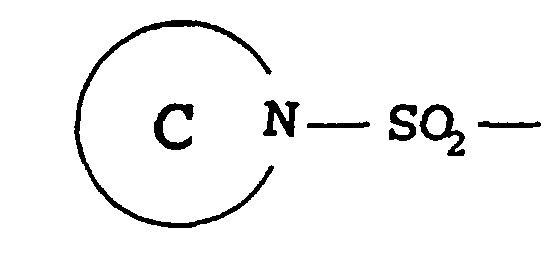 (wherein, ring C is a three- to six-membered heterocyclic group containing nitrogen), (xxxi) thiocarbamoyl group (xxxii) a mono-or di-C1-4 alkyl-thiocarbamoyl group, (xxxiii) a group represented by
 (wherein, ring C is a three- to six-membered heterocyclic group containing nitrogen), (xxxiv) halogen atom, (xxxv) carboxyl group, (xxxvi) thiocyanato group, (xxxvii) isothiocyanato group, (xxxviii) cyano group, (xxxix) isocyano group, (xl) azido group, (xli) nitroso group, (xlii) nitro group, (xliii) azocyano group and (xliv) sulfo group, or (2) heterocyclic group which may be substituted with 1 to 5 substituents selected from a group of substitutents (T) which consists of (i) C1-4 alkyl group which may be substituted with 1 to 5 substituents selected from halogens, hydroxy, imino, hydroxyimino, C1-4 alkoxyimino, hydrazono, mono-or di-C1-4 alkylhydrazono and C1-4 alkylthio, (ii) a C3-6 cycloalkyl group which may be substituted with 1 to 5 halogens, (iii) C2-4 alkenyl group which may be substituted with 1 to 5 substituents selected from halogen, cyano and nitro, (iv) C3-6 cycloalkenyl group which may be substituted with 1 to 5 halogens, (v) a C2-4 alkynyl group which may be substituted with 1 to 5 halogens, (vi) hydroxy group, (vii) C1-4 alkoxygroup which may be substituted with 1 to 5 substitutents selected from halogen and C1-4 alkoxy, (viii) formyloxy group, (ix) C1-4 alkyl-carbonyloxy group which may be substituted with 1 to 5 halogens, (x) C1-4 alkoxy-carbonyloxy group which may be substituted with 1 to 5 halogens, (xi) mercapto group, (xii) C1-4 alkylthio group which may be substituted with 1 to 5 halogens, (xiii) a C1-4 alkyl-carbonylthio group which may be substituted with 1 to 5 halogens, (xiv) a C1-4 alkoxy-carbonylthio group which may be substituted with 1 to 5 halogens, (xv) a C1-4 alkylsulfinyl group which may be substituted with 1 to 5 halogens, (xvi) a C1-4 alkylsulfonyl group which may be substituted with 1 to 5 halogens, (xvii) sulfamoyl group, (xviii) a mono- or di-C1-4 alkylsulfamoyl group, (xix) a group represented by
 (wherein, ring C is a three- to six-membered heterocyclic group containing nitrogen), (xx) an amino group which may be substituted with one or two substituents selected from C1-4 alkyl, C2-4 alkenyl, C2-4 alkynyl, hydroxy, C1-4 alkoxy, formyloxy, C1-4 alkyl-carbonyloxy, formyl and C1-4 alkyl-carbonyl, (xxi) three- to six-membered cyclic amino group, (xxii) formyl group, (xxiii) C1-4 alkyl-carbonyl group which may be substituted with 1 to 5 halogens, (xxiv) C1-4 alkoxy-carbonyl group which may be substituted with 1 to 5 halogens, (xxv) C1-4 alkylthio-carbonyl group, (xxvi) a C1-4 alkoxy-thiocarbonyl group, (xxvii) C1-4 alkylthio-thiocarbonyl group, (xxviii) a carbamoyl group, (xxix) mono- or di-C1-4 alkylcarbamoyl group, (xxx) group represented by
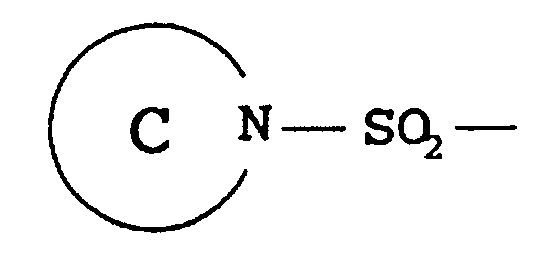 (wherein, ring C is a three- to six-membered heterocyclic group containing nitrogen), (xxxi) thiocarbamoyl group, (xxxii) mono- or di-C1-4 alkyl-thiocarbamoyl group, (xxxiii) group represented by
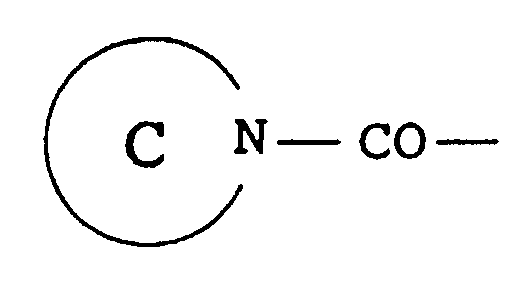 (wherein, ring C is a three- to six-membered heterocyclic group containing nitrogen), (xxxiv) halogen atom, (xxxv) carboxyl group, (xxxvi) thiocyanato group, (xxxvii) isothiocyanato group, (xxxviii) cyano group, (xxxix) isocyano group, (xl) azido group, (xli) nitroso group, (xlii) nitro group, (xliii) azocyano group and (xliv) azoxycyano group, and (xlv) sulfo group, X2 is (1) a chemical bond, (2) a methylene group which may be substituted with one or two substituents selected from C1-4 alkyl, C1-4 alkoxy, C1-4 alkylthio, halogen atoms, and cyano, or (3) vinylene group which may be substituted with one or two substituents selected from C1-4 alkyl, C1-4 alkoxy, C1-4 alkylthio, halogen atom and cyano, B2 is an aryl group which may be substituted with 1 to 5 substituents selected from the group of substituents (T) described above, Z2 is (1) C1-6 alkyl group which may be substituted with 1 to 5 substitutents selected from mono- or di-C1-4 alkylamino, hydroxy, halogen, C1-4 alkoxy, C1-4 alkoxy-carbonyl, C1-4 alkylthio and cyano, (2) vinyl group, (3) allyl group, (4) propadienyl group, (5) C2-6 alkynyl group which may be substituted with 1 to 5 substituents selected from (a) halogen, (b) amino, (c) mono- or di-C1-4 alkylamino, (d) hydroxy, (e) a C1-4 alkoxy substituted with 1 to 5 halogens, (f) mercapto, (g) C1-4 alkylthio, (h) C1-4 alkylsulfinyl, (i) C1-4 alkylsulfonyl, (j) cyano, (k) C1-4 alkoxy- carbonyl, (1) carbamoyl and (m) mono-or di-C1-4 alkyl-carbamoyl, (6) C3-6 cycloalkyl group which may be substituted with 1 to 5 substituents selected from (a) C1-4 alkyl which may be substituted with 1 to 5 halogens, (b) halogen, (c) amino, (d) mono- or di-C1-4 alkylamino, (e) hydroxy, (f) C1-4 alkoxy which may be substituted with 1 to 5 halogens, (g) mercapto, (h) C1-4 alkylthio, (i) C1-4 alkylsulfinyl, (j) C1-4 alkylsulfonyl, (k) cyano, (1) C1-4 alkoxy-carbonyl, (m) carbamoyl and (n) mono- or di-C1-4 alkyl-carbamoyl, (7) C6-14 aryl group which may be substituted with 1 to 5 substituents selected from (a) C1-4 alkyl which may be substituted with 1 to 5 halogens, (b) halogens, (c) amino, (d) mono-or di-C1-4 alkylamino, (e) hydroxy, (f) C1-4 alkoxy which may be substituted with 1 to 5 halogens, (g) mercapto, (h) C1-4 alkylthio, (i) C1-4 alkylsulfinyl, (j) C1-4 alkylsulfonyl, (k) cyano, (1) C1-4 alkoxy-carbonyl, (m) carbamoyl and (n) mono- or di-C1-4 alkyl-carbamoyl, (8) acyl group which may be selected from (i) C1-4 alkyl-carbonyl, (ii) C1-4 alkoxy-carbonyl, (iii) C1-4 alkylthio-carbonyl, (iv) C1-4 alkoxy-thiocarbonyl, (v) C1-4 alkylthio-thiocarbonyl, (vi) mono- or di-C1-4 alkyl-carbamoyl and (vii) mono- or di-C1-4 alkyl-thiocarbamoyl, each of which may be substituted with 1 to 5 halogens, (9) formyl group, (10) amino group which may be substituted with one or two substituents selected from (a) C1-4 alkyl, (b) C1-4 alkyl-carbonyl which may be substituted with 1 to 5 halogens, (c) C1-4 alkoxy-carbonyl, (d) mono- or di-C1-4 alkyl-carbamoyl and (e) mono- or di-C1-4 alkyl-thiocarbamoyl, (11) a group represented by -N=CR1R2 (wherein R1 and R2 are the same or different, and are hydrogen atom and a C1-4 alkyl group), (12) three-to six-membered cyclic amino group, (13) a group represented by -OR3 (wherein R3 is hydrogen atom, a C1-4 alkyl group which may be substituted with 1 to 5 halogens, a C1-4 alkoxy-carbonyl group which may be substituted with 1 to 5 halogens, formyl group, or C1-4 alkylsulfonyl group which may be substituted with 1 to 5 halogens), or (14) a group represented by -S(O)nR4 (wherein n is an integer from 0 to 2, and R4 (a) hydrogen atom, (b) C1-4 alkyl group which may be substituted with 1 to 5 halogens or (c) C6-14 aryl group which may be substituted with 1 to 5 C1-4 alkyl groups).
- A microbicidal composition for agricultural or horticultural use as claimed in claim 5, wherein A2 is (1) C6-14 aryl group, which may be substituted with 1 to 5 substituents selected from (i) C1-4 alkyl group which may be substituted with 1 to 5 halogens, (ii) C1-4 alkoxy group which may be substituted with 1 to 5 halogens, (iii) amino group which may be substituted with one or two C1-4 alkyl-carbonyl grouop, (iv) C1-4 alkoxy-carbonyl group, (v) halogen atom, (vi) cyano group and (vii) nitro group, or (2) thienyl group, triazolyl group, imidazolyl group, isooxazolyl group, pyrazolyl group, pyridyl group, quinolyl group, a benzothiadiazolyl group, an imidazothiazolyl group or an imidazopyridyl group, which may be substituted with 1 to 5 substituents selected from (i) C1-4 alkyl group, (ii) C1-4 alkoxy-carbonyl group, (iii) carbamoyl group, (iv) mono- or di-C1-4 alkylcarbamoyl group, (v) C1-4 alkylsulfonyl group, (vi) halogen atom, (vii) carboxyl group and (viii) cyano group, X2 is (1) a chemical bond, (2) a methylene group which may substituted with one or two C1-4 alkyl group, or (3) a vinylene group which may be substituted with one or two C1-4 alkyl, B2 is a C6-14 aryl group which may be substituted with 1 to 5 Substituents selected from (1) a C1-4 alkyl group which may be substituted with 1 to 5 substituents selected from halogen, hydroxy, imino, hydroxyimino, C1-4 alkoxyimino, hydrazono,mono- or di-C1-4 alkylhydrazono and C1-4 alkylthio, (2) C2-4 alkynyl group, (3) hydroxy group, (4) a C1-4 alkoxy group which may be substituted with 1 to 5 substitutents selected from halogens and C1-4 alkoxy, (5) a C1-4 alkyl-carbonyloxy group, (6) a C1-4 alkylthio group, (7) a C1-4 alkylsulfinyl group, (8) a C1-4 alkylsulfonyl group, (9) mono- or di-C1-4 alkylsulfamoyl group, (10) amino group, (11) formyl group, (12) C1-4 alkoxy-carbonyl group, (13) carbamoyl group, (14) mono- or di-C1-4 alkylcarbamoyl group, (15) thiocarbamoyl group, (16) halogen atom, (17) carboxyl group, (18) thiocyanato group, (19) cyano group, (20) nitroso group and (21) nitro group, Z2 is (1) a C1-6 alkyl group which may be substituted with 1 to 5 substituents selected from mono- or di-C1-4 alkylamino, hydroxy, halogen, C1-4 alkoxy, C1-4 alkoxy-carbonyl, C1-4 alkylthio and cyano, (2) vinyl group, (3) allyl group, (4) propadienyl group, (5) C2-6 alkynyl group which may be substituted with 1 to 5 halogens, (6) C3-6 cycloalkyl group, (7) C6-14 aryl group, (8) C1-4 alkyl-carbonyl which may be substituted with 1 to 5 halogens, (9) an amino group which may be substituted with one or two substituents selected from C1-4 alkyl, C1-4 alkyl-carbonyl and C1-4 alkoxy-carbonyl, (10) a group represented by -N=CR1R2(wherein, both R1 and R2 are the same or different C1-4 alkyl groups), (11) a group represented by -OR3 (wherein R3 is a C1-4 alkyl group or a C1-4 alkyl-carbonyl group), or (12) a group represented by -S(O)nR4 (wherein n is an integer from 0 to 2, R4 is (a) a C1-4 alkyl group which may be substituted with 1 to 5 halogens, or (b) a C6-14 aryl group which may be substituted with 1 to 5 C1-4 alkyl groups).
- A microbicidal composotion for agricultural or horticultural use as claimed in claim 5, whereinA2 is a phenyl group which may be substituted with 1 to 3 substitutents selected from C1-4 alkyl groups, halogen and cyano,X2 is a chemical bond, B2 is a phenyl group which may be substituted with 1 to 5 substituents selected from (1) a C1-4 alkyl group which may be substituted with 1 to 3 halogens, (2) C1-4 alkoxy group, (3) C1-4 alkylthio group, (4) thiocarbamoyl group, (5) halogen atom, (6) a cyano group and (7) nitro group, Z2 is (1) a C1-6 alkyl group which may be substituted with 1 to 3 C1-4 alkoxy groups, (2) C3-6 cycloalkyl group, (3) allyl group or (4) C1-4 alkoxy group.
- A microbicidal composition for agricultural or horticultural use as claimed in claim 5, wherein the compound or the salt thereof is 4'-chloro-N-ethyl-2'-nitro-p-toluenesulfonanilide, 2',4'-dinitro-N-ethyl-p-toluenesulfonanilide, 2',4'-dicyano-N-ethyl-p-toluenesulfonanilide, 4'-chloro-N-isopropyl-2'-nitro-p-toluenesulfonanilide, 4'-fluoro-N-isopropyl-2'-nitro-p-toluenesulfonanilide, 4'-cyano-N-isopropyl-2'-nitro-p-toluenesulfonanilide, 4'-chloro-N-isopropyl-2'-cyano-p-toluenesulfonanilide, 2',4'-dinitro-N-isopropyl-p-toluenesulfonanilide, 4'-nitro-N-isopropyl-2'-cyano-p-toluenesulfonanilide, 2'-cyano-N-methoxy-4'-nitro-p-toluenesulfonanilide or 2',4'-dinitro-N-methoxy-p-toluenesulfonanilide or salt thereof.
- A microbicidal composition for agricultural or horticultural use comprising a compound of Formula (III):or salt thereof,

[wherein,A3 is (1) an aryl group which may be substituted or (2) a heterocyclic group which may be substituted, X3 is (1) a chemical bond, (2) a methylene group which may be substituted, or (3) a vinylene group which may be substituted,B3 is a six-membered heterocyclic group which is substitutedwith substituents selected from the group of substituents (T), which consists of (i) a C1-4 alkyl group which may be substituted with 1 to 5 substituents selected from halogen,hydroxy, imino, hydroxyimino, C1-4 alkoxyimino, hydrazono, mono- or di-C1-4 alkylhydrazono and C1-4 alkylthio, (ii) C3-6 cycloalkyl group which may be substituted with 1 to 5 halogen, (iii) a C2-4 alkenyl group which may be substituted with 1 to 5 substituents selected from halogens, cyano and nitro, (iv) a C3-6 cycloalkenyl group which may be substituted with 1 to 5 halogens, (v) a C2-4 alkynyl group which may be substituted with 1 to 5 halogens, (vi) hydroxy group, (vii) a C1-4 alkoxy group which may be substituted with 1 to 5 substitutents selected from halogen and C1-4 alkoxy group, (viii) formyloxy group, (ix) C1-4 alkyl-carbonyloxy group which may be substituted with 1 to 5 halogens, (x) a C1-4 alkoxy-carbonyloxy group which may be substituted with 1 to 5 halogens, (xi) mercapto group, (xii) a C1-4 alkylthio group which may be substituted with 1 to 5 halogen, (xiii) a C1-4 alkyl-carbonylthio group which may be substituted with 1 to 5 halogens,(xiv) a C1-4 alkoxy-carbonylthio group which may be substituted with 1 to 5 halogens, (xv) a C1-4 alkylsulfinyl group which may be substituted with 1 to 5 halogens, (xvi) a C1-4 alkylsulfonyl group which may be substituted with 1 to 5 halogens, (xvii) sulfamoyl group, (xviii) a mono- or di-C1-4 alkylsulfamoyl group, (xix) a group represented by(wherein, ring C is a three- to six-membered heterocyclic group containing nitrogen), (xx) an amino group which may be substituted with one or two substituents selected from C1-4 alkyl, C2-4 alkenyl, C2-4 alkynyl, hydroxy, C1-4 alkoxy, formyloxy, C1-4 alkyl-carbonyloxy, formyl and C1-4 alkyl-carbonyl, (xxi) a three- to six-membered cyclic amino group, (xxii) formyl group, (xxiii) a C1-4 alkyl-carbonyl group which may be substituted with 1 to 5 halogens, (xxiv) a C1-4 alkoxy-carbonyl group which may be substituted with 1 to 5 halogens, (xxv) a C1-4 alkylthio-carbonyl group, (xxvi) a C1-4 alkoxy-thiocarbonyl group,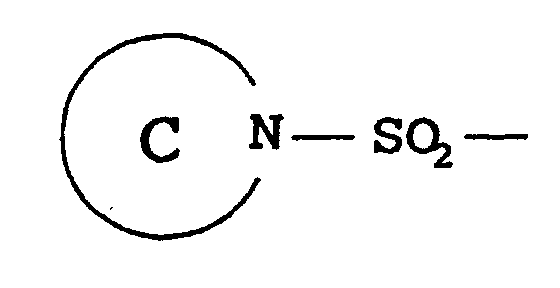
(xxvii) a C1-4 alkylthio-thiocarbonyl group, (xxviii) carbamoyl group, (xxix) a
mono- or di-C1-4 alkylcarbamoyl group, (xxx) a group represented by(wherein, ring C is a three- to six-membered heterocyclic group containing nitrogen), (xxxi) thiocarbamoyl group, (xxxii) mono- or di-C1-4 alkyl-thiocarbamoyl group, (xxxiii) a group which is represented by (wherein, ring C is a three- to six-membered heterocyclic group containing nitrogen), (xxxiv) halogen atom, (xxxv) carboxyl group, (xxxvi) thiocyanato group, (xxxvii) isothiocyanato group, (xxxviii) cyano group, (xxxix) isocyano group, (xl) azido group, (xli) nitroso group, (xlii) nitro group, (xliii) azocyano group (xliv) azoxycyano group, and (xlv) sulfo group,
 Z3 is (1) a hydrocarbon group which may be substituted, (2) an acyl group which may be substituted, (3) formyl group, (4) an amino group which may be substituted, (5) a group represented by -N=CR1R2 (wherein, R1 and R2 are the same or different, and a hydrogen atom or hydrocarbon group which may be substituted), (6) cyclic amino group, (7) a group represented by -OR3 (wherein, R3 stands for a hydrogen atom, a hydrocarbon group which may be substituted, an acyl group which may be substituted, formyl group or sulfonyl group which may be substituted), or (8) a group represented by -S(O)nR4 (wherein, n is an integer from 0 to 2, R4 is hydrogen atom or a hydrocarbon group which may be substituted)].
 - A microbicidal composition for agricultural or horticultural use as claimed in claim 10, wherein A3 is (1) C6-14 aryl group which may be substituted with 1 to 5 substituents selected from (i) C1-4 alkyl group which may be substituted with 1 to 5 substituents selected from halogens, hydroxy, imino, hydroxyimino, C1-4 alkoxyimino, hydrazono, mono- or di-C1-4 alkylhydrazono and C1-4 alkylthio, (ii) C3-6 cycloalkyl group which may be substituted with 1 to 5 halogens, (iii) C2-4 alkenyl group which may be substituted with 1 to 5 substituents selected from halogen, cyano and nitro, (iv) C3-6 cycloalkenyl group which may be substitued with 1 to 5 halogens, (v) C2-4 alkynyl group which may be substitued with 1 to 5 halogens, (vi) hydroxy group, (vii) C1-4 alkoxy group which may be substituted with 1 to 5 substitutents selected from halogen and C1-4 alkoxy, (viii) formyloxy group, (ix) C1-4 alkyl-carbonyloxy group which may be substituted with 1 to 5 halogens, (x) C1-4 alkoxy-carbonyloxy group which may be substituted with 1 to 5 halogens, (xi) mercapto group, (xii) C1-4 alkylthio group which may be substituted with 1 to 5 halogens, (xiii) C1-4 alkyl-carbonylthio group which may be substituted with 1 to 5 halogens, (xiv) C1-4 alkoxy-carbonylthio group which may be substituted with 1 to 5 halogens, (xv) C1-4 alkylsulfinyl group which may be substituted with 1 to 5 halogens, (xvi) C1-4 alkylsulfonyl group which may be substituted with 1 to 5 halogens, (xvii) sulfamoyl group, (xviii) mono- or di-C1-4 alkylsulfamoyl group, (xix) group represented by(wherein,ring C is a three- to six-membered heterocyclic group containing nitrogen), (xx) amino group which may be substituted with one or two substituents selected from C1-4 alkyl, C2-4 alkenyl, C2-4 alkynyl, hydroxy, C1-4 alkoxy, formyloxy, C1-4 alkyl-carbonyloxy, formyl and C1-4 alkyl-carbonyl, (xxi) three- to six-membered cyclic amino group, (xxii) formyl group, (xxiii) C1-4 alkyl-carbonyl group which may be substituted with 1 to 5 halogens,(xxiv) C1-4 alkoxy-carbonyl group which may be substituted with 1 to 5 halogens, (xxv) C1-4 alkylthio-carbonyl group, (xxvi) C1-4 alkoxy-thiocarbonyl group, (xxvii) C1-4 alkylthio-thiocarbonyl group, (xxviii) carbamoyl group, (xxix) mono- or di-C1-4 alkylcarbamoyl group, (xxx) group represented by
 (wherein, ring C is a three- to six-membered heterocyclic group containing nitrogen), (xxxi) thiocarbamoyl group, (xxxii) mono- or di-C1-4 alkyl-thiocarbamoyl group, (xxxiii) a group represented by
 (wherein, ring C is a three- to six-membered heterocyclic group containing nitrogen), (xxxiv) halogen atom, (xxxv) carboxyl group, (xxxvi) thiocyanato group, (xxxvii) isothiocyanato group, (xxxviii) cyano group, (xxxix) isocyano group, (xl) azido group, (xli) nitroso group, (xlii) nitro group, (xliii) azocyano group (xliv) azoxycyano group, and (xlv) sulfo group, or (2) a heterocyclic group which may be substituted with 1 to 5 substituents selected from a group of substituents (T) above.
 X3 is (1) chemical bond, (2) methylene group which may be substituted with one or two substituents selected from C1-4 alkyl, C1-4 alkoxy, C1-4 alkylthio, halogen atoms and cyano, (3) a vinylene group which may be substituted with one or two substituents selected from C1-4 alkyl, C1-4 alkoxy, C1-4 alkylthio, halogen atoms and cyano,B3 is a six-membered heterocyclic group which is substituted with 1 to 5 substituents selected from the group of substituents (T) mentioned above, Z3 is (1) a hydrocarbon group which is selected from (i) a C1-6 alkyl group which may be substituted with 1 to 5 substituents selected from (a) halogen, (b) amino, (c) mono- or di-C1-4 alkylamino, (d) hydroxy, (e) C1-4 alkoxy which may be substituted with 1 to 5 halogens, (f) mercapto, (g) C1-4 alkylthio, (h) C1-4 alkylsulfinyl, (i) C1-4 alkylsulfonyl,(j) cyano, (k) C1-4 alkoxy-carbonyl, (1) carbamoyl and (m) mono- or di-C1-4 alkyl-carbamoyl, (ii) C2-6 alkenyl which may be substituted with 1 to 5 substituents selected from (a) halogens, (b) amino, (c) mono-or di-C1-4 alkylamino, (d) hydroxy, (e) C1-4 alkoxy which may be substituted with 1 to 5 halogens, (f) mercapto, (g) C1-4 alkylthio, (h) C1-4 alkylsulfinyl, (i) C1-4 alkylsulfonyl, (j) cyano, (k) C1-4 alkoxy-carbonyl, (1) carbamoyl and (m) mono- or di-C1-4 alkyl-carbamoyl, (iii) C2-6 alkynyl which may be substituted with 1 to 5 substituents selected from (a) halogen, (b) amino, (c) mono-or di-C1-4 alkylamino, (d) hydroxy, (e) C1-4 alkoxy which may be substituted with 1 to 5 halogens, (f) mercapto, (g) C1-4 alkylthio, (h) C1-4 alkylsulfinyl, (i) C1-4 alkylsulfonyl, (j) cyano, (k) C1-4 alkoxy-carbonyl, (1) carbamoyl and (m) mono- or di-C1-4 alkyl-carbamoyl, (iv) C3-6 cycloalkyl groups which may be substituted with 1 to 5 substituents selected from (a) C1-4 alkyl which may be substituted with 1 to 5 halogens, (b) halogen, (c) amino, (d) mono- or di-C1-4 alkylamino, (e) hydroxy, (f) C1-4 alkoxy which may be substituted with 1 to 5 halogens, (g) mercapto, (h) C1-4 alkylthio, (i) C1-4 alkylsulfinyl, (j) C1-4 alkylsulfonyl, (k) cyano, (1) C1-4 alkoxy-carbonyl, (m) carbamoyl and (n) mono- or di-C1-4 alkyl-carbamoyl, (v)C3-6 alkadienyl group which may be substituted with 1 to 5 substituents selected from (a) halogen, (b) amino, (c) mono- or di-C1-4 alkylamino, (d) hydroxy, (e) C1-4 alkoxy which may be substituted with 1 to 5 halogens, (f) mercapto, (g) C1-4 alkylthio, (h) C1-4 alkylsulfinyl, (i) C1-4 alkylsulfonyl, (j) cyano, (k) C1-4 alkoxy-carbonyl, (1) carbamoyl and (m) mono-or di-C1-4 alkyl-carbamoyl, and (vi) C6-14 aryl group which may be substituted with 1 to 5 substituents selected from C1-4 alkyl which may be substituted with 1 to 5 halogens, (b) halogen, (c) amino, (d) mono- or di-C1-4 alkylamino, (e) hydroxy, (f) C1-4 alkoxy which may be substituted with 1 to 5 halogens, (g) mercapto, (h) C1-4 alkylthio, (i) C1-4 alkylsulfinyl, (j) C1-4 alkylsulfonyl, (k) cyano, (1) C1-4 alkoxy-carbonyl, (m) carbamoyl and (n) mono- or di-C1-4 alkyl-carbamoyl, (2) an acyl group selected from (i)C1-4 alkyl-carbonyl, (ii) C1-4 alkoxy-carbonyl, (iii) C1-4 alkylthio-carbonyl, (iv) C1-4 alkoxy-thiocarbonyl, (v) C1-4 alkylthio-thiocarbonyl, (vi) mono- or di-C1-4 alkyl-carbamoyl and (vii) mono- or di-C1-4 alkyl-thiocarbamoyl, each of these groups may be substituted with 1 to 5 halogens, (3) formyl group, (4) an amino group which may be substituted with one or two substituents selected from (a) C1-4 alkyl, (b) C1-4 alkyl-carbonyl which may be substituted with 1 to 5 halogens, (c) C1-4 alkoxy-carbonyl, (d) mono-or di-C1-4 alkyl-carbamoyl, (e) mono- or di-C1-4 alkyl-thiocarbamoyl, (5) a group represented by -N=CR1R2 (wherein, R1 and R2 are the same or different, are hydrogen atom or C1-4 alkyl group), (6) three-to six-membered cyclic amino group, (7) a group represented by -OR3 (wherein, R3 is hydrogen atom, a C1-4 alkyl group which may be substituted with 1 to 5 halogens, a C1-4 alkyl-carbonyl group which may be substituted with 1 to 5 halogens, a C1-4 alkoxy-carbonyl group which may be substituted with 1 to 5 halogens, formyl group or a C1-4 alkylsulfonyl group which may be substituted with 1 to 5 halogens), or (8) a group represented by -OS(O)nR4 (wherein n is an integer from 0 to 2, R4 is (a) hydrogen atom, (b) C1-4 alkyl group which may be substituted with 1 to 5 halogens, or (c) C6-14 aryl group which may be substituted with 1 to 5 C1-4 alkyl groups).
 - A microbicidal composition for agricultural or horticultural use as claimed in claim 10, wherein A3 is phenyl group which may be substituted with 1 to 5 C1-4 alkyl groups, or a imidazolyl group which may be substituted with one or two C1-4 alkyl groups, X3 is a chemical bond, B3 is a pyridyl group, a pyridazinyl group or a pyrimidinyl group which is substituted with 1 to 5 substituents selected from C1-4 alkyl which may be substituted with 1 to 5 halogens, C1-4 alkoxy, halogen, nitro and cyano, Z3 is a C1-6 alkyl group, a C3-6 cycloalkyl group or a C1-4 alkoxy group.
- A microbicidal composition for agricultural or horticultural use comprising a compound of Formula (IV)or salt thereof, [wherein, A4 is (1) an aryl group which may be substituted, or (2) a heterocyclic group which may be substituted,
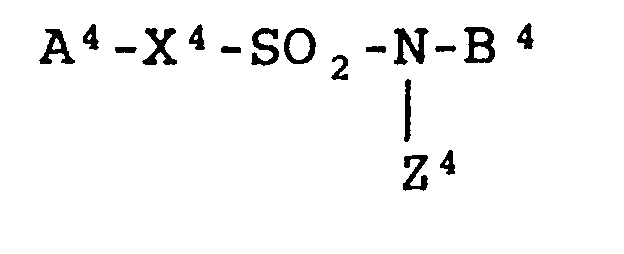 X4 is (1) a chemical bond, (2) a methylene group which may be substituted, or (3) a vinylene group which may be substituted,B4 is a pyridazinyl group or a pyrazinyl group,Z4 is (1) a hydrocarbon group which may be substituted, (2) an acyl group which may be substituted, (3) formyl group, (4) an amino group which may be substituted, (5) a group represented by -N=CR1R2 (wherein R1 and R2 are the same or different, and hydrogen atom or hydrocarbon group which may be substituted), (6) a cyclic amino group, (7) a group represented by -OR3 (wherein, R3 is hydrogen atom, a hydrocarbon group which may be substituted, an acyl group which may be substituted, formyl group or a sulfonyl group which may be substituted), or (8) a group represented by -S(O)nR4 (wherein, n is an integer from 0 to 2, R4 is hydrogen atom or a hydrocarbon group which may be substituted)].
 - A microbicide for agricultural or horticultural use comprising a compound of Formula (V)or salt thereof,

[wherein A5 is the 4-methylphenyl group, X5 is a chemical bond, B5 is a pyridyl or pyrimidinyl group, and Z5 is a C1-4 alkyl group]. - A compound of Formula (VI):or salt thereof,
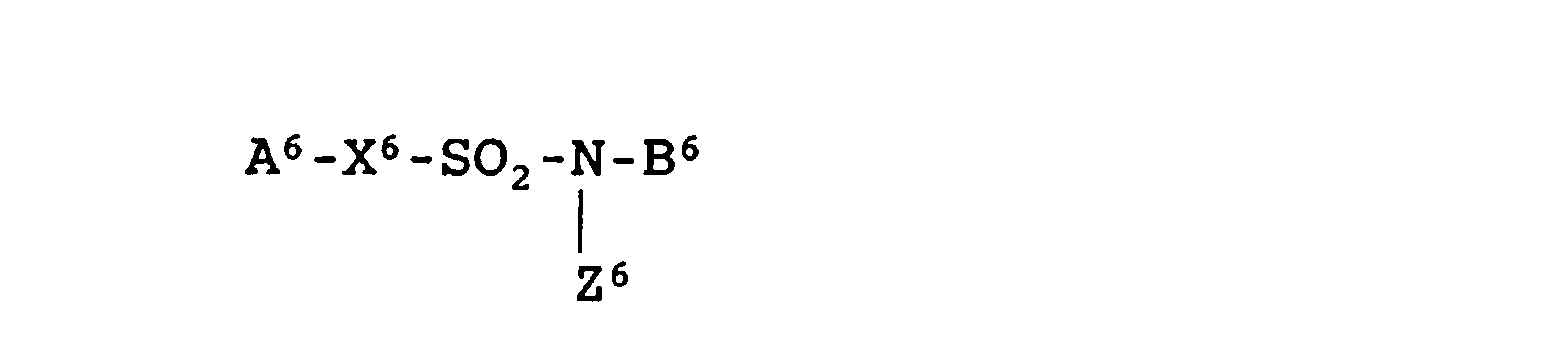
[wherein A6 is a phenyl group which may be substituted with a substituent or substituents selected from C1-4 alkyl, halogens and cyano, X6 is a chemical bond, B6 is a 2-nitrophenyl group or 2-cyanophenyl group which may be substituted with a substituent or substituents selected from halogens, nitro and cyano, Z6 is ethyl, isopropyl, cyclopropyl, methoxy, ethoxy or isopropoxy group]. - A compound or a salt thereof as claimed in claim 15, wherein A6 is a phenyl group which may be substituted with a substituent or substituents selected from C1-4 alkyl, halogens and cyano, X6 is a chemical bond, B6 is a 2-nitrophenyl group which is substituted with a substituent or substituents selected from halogens, nitro and cyano, Z6 is ethyl, isopropyl, or cyclopropyl group].
- A compound or a salt thereof as claimed in claim 15, the compound is 4'-chloro-N-ethyl-2'-nitro-p-toluenesulfonanilide, 2',4'-dinitro-N-ethyl-p-toluenesulfonanilide, 2',4'-dicyano-N-ethyl-p-toluenesulfonanilide, 4'-chloro-N-isopropyl-2'-nitro-p-toluenesulfonanilide, 4'-fluoro-N-isopropyl-2'-nitro-p-toluenesulfonanilide, 4'-cyano-N-isopropyl-2'-nitro-p-toluenesulfonanilide, 4'-chloro-N-isopropyl-2'-cyano-p-toluenesulfonanilide, 2',4'-dinitro-N-isopropyl-p-toluenesulfonanilide, 4'-nitro-N-isopropyl-2'-cyano-p-toluenesulfonanilide, 2'-cyano-N-methoxy-4'-nitro-p-toluenesulfonanilide or 2',4'- dinitro-N-methoxy-p-toluenesulfonanilide or a salt thereof.
- A method for manufacturing a compound represented by a Formula:or a salt thereof (wherein each symbol has the same meaning as defined in claim 15 characterized by :
 (1) reacting a compound represented by a Formula:or a salt thereof
(wherein each symbol has the same meaning as defined in claim 15 with an electrophile represented by Formula Z6-L" (wherein L" is a leaving group, and Z6 has the same meaning as defined in claim 15,(2) reacting a compound represented by a Formula:
(wherein L is a leaving group, and each of other symbols has the same meanings as those defined in claim 15, respectively) with an amine or a salt thereof represented by Formula Z6HN-B6 (wherein each symbol has the same meaning as defined in claim 15, or, by(3) reacting a compound represented by a Formula:
(wherein, each symbol has the same meaning as described in claim 15 to react with a compound or a salt thereof represented by Formula L'-B6 (wherein L' is a leaving group, and the other symbol has the same meaning as defined in claim 15, respectively),or(4) nitrating a compound represented by a Formula:or a salt thereof
(wherein, B7 is a phenyl group which is substituted with a substituent or substituents selected from halogen, nitro and cyano, provided that both 2- and 6-positions are not substituted at the same time).
Applications Claiming Priority (3)
| Application Number | Priority Date | Filing Date | Title |
|---|---|---|---|
| JP12316299 | 1999-04-28 | ||
| JP12316299 | 1999-04-28 | ||
| PCT/JP2000/002764 WO2000065913A1 (en) | 1999-04-28 | 2000-04-27 | Sulfonamide derivatives |
Publications (3)
| Publication Number | Publication Date |
|---|---|
| EP1174028A1 true EP1174028A1 (en) | 2002-01-23 |
| EP1174028A4 EP1174028A4 (en) | 2002-11-06 |
| EP1174028B1 EP1174028B1 (en) | 2004-12-22 |
Family
ID=14853728
Family Applications (1)
| Application Number | Title | Priority Date | Filing Date |
|---|---|---|---|
| EP00922891A Expired - Lifetime EP1174028B1 (en) | 1999-04-28 | 2000-04-27 | Sulfonamide derivatives |
Country Status (13)
| Country | Link |
|---|---|
| US (2) | US6586617B1 (en) |
| EP (1) | EP1174028B1 (en) |
| KR (1) | KR20020009602A (en) |
| CN (1) | CN1349381A (en) |
| AT (1) | ATE285175T1 (en) |
| AU (1) | AU4314800A (en) |
| BR (1) | BR0010050A (en) |
| CA (1) | CA2371104A1 (en) |
| DE (1) | DE60016910T2 (en) |
| HU (1) | HUP0200894A3 (en) |
| MX (1) | MXPA01010892A (en) |
| PL (1) | PL351930A1 (en) |
| WO (1) | WO2000065913A1 (en) |
Cited By (6)
| Publication number | Priority date | Publication date | Assignee | Title |
|---|---|---|---|---|
| WO2003075659A1 (en) * | 2002-03-13 | 2003-09-18 | Sumitomo Chemical Takeda Agro Company, Limited | Sulfonamide derivative-containing agricultural and horticultural compositions |
| WO2005033081A1 (en) * | 2003-09-18 | 2005-04-14 | Basf Aktiengesellschaft | 4-piridinylmethylsulphonamide derivatives as fungicidal plant protection agents |
| EP1534259A4 (en) * | 2002-08-15 | 2006-10-04 | Icagen Inc | Sulfonamides as potassium channel blockers |
| EP2272367A1 (en) * | 2002-01-31 | 2011-01-12 | Bayer CropScience AG | Synergistic insecticidal mixtures |
| WO2017070084A1 (en) * | 2015-10-19 | 2017-04-27 | Cardioxyl Pharmaceuticals, Inc. | N-hydroxylsulfonamide derivatives as nitroxyl donors |
| EP3585768A4 (en) * | 2017-02-24 | 2020-12-23 | Taiwanj Pharmaceuticals Co., Ltd. | Sulfonamide or amide compounds, compositions and methods for the prophylaxis and/or treatment of autoimmune, inflammation or infection related disorders |
Families Citing this family (398)
| Publication number | Priority date | Publication date | Assignee | Title |
|---|---|---|---|---|
| AR032230A1 (en) * | 2001-01-16 | 2003-10-29 | Sumitomo Chem Takeda Agro Co | SULFONAMIDE DERIVATIVE CONTAINING AN AGRICULTURAL AND HORTICALLY COMPOSITION |
| JP4171656B2 (en) * | 2001-02-28 | 2008-10-22 | テンプル・ユニバーシティ−オブ・ザ・コモンウェルス・システム・オブ・ハイアー・エデュケイション | N- (aryl) -2-arylethenesulfonamide and its pharmaceutical use |
| MXPA04008356A (en) * | 2002-02-28 | 2005-09-12 | Univ Temple | Amino-substituted (e. |
| US7161031B2 (en) * | 2002-02-28 | 2007-01-09 | Temple University - Of The Commonwealth System Of Higher Education | Amino-substituted sulfonanilides and derivatives thereof for treating proliferative disorders |
| DK1884242T3 (en) | 2005-05-26 | 2013-05-06 | Dainippon Sumitomo Pharma Co | PHARMACEUTICAL COMPOSITION COMPREHENSIVE LURASIDON |
| CN104170838B (en) | 2005-06-09 | 2016-03-30 | 拜尔农作物科学股份公司 | active substance combination |
| DE102005026482A1 (en) | 2005-06-09 | 2006-12-14 | Bayer Cropscience Ag | Active substance combination, useful e.g. for combating unwanted phytopathogenic fungus, comprises herbicides e.g. glyphosate and active substances e.g. strobilurin, triazoles, valinamide and carboxamide |
| NZ593634A (en) | 2005-09-29 | 2011-11-25 | Syngenta Participations Ag | Fungicidal compositions of cyprodinil and flutianil ((2Z)-2-(2-fluoro-5-(trifluoromethyl)phenylthio)-2-(3-(2-methoxyphenyl)thiazolidin-2-ylidene)acetonitrile) |
| GB0526252D0 (en) * | 2005-12-22 | 2006-02-01 | Novartis Ag | Organic compounds |
| MX2008012707A (en) * | 2006-04-06 | 2008-10-10 | Syngenta Participations Ag | Fungicidal compositions. |
| EP2013161A1 (en) * | 2006-05-02 | 2009-01-14 | DSMIP Assets B.V. | Process for the deprotection of protected amines |
| MX2009001839A (en) * | 2006-08-23 | 2009-03-03 | Bayer Cropscience Ag | Formulations for the controlled release of agrochemical active agents. |
| US8722928B2 (en) * | 2007-01-31 | 2014-05-13 | Valent Biosciences Corporation | Stable and non-precipitating aqueous compositions containing the potassium salt of (S)-(+)-abscisic acid, and methods of their preparation and use |
| US9161535B2 (en) * | 2007-01-31 | 2015-10-20 | Valent Biosciences Corporation | Color stable aqueous formulations containing the potassium salt of (S )-(+)-abscisic acid and methods of their use |
| NZ599377A (en) * | 2007-01-31 | 2012-08-31 | Valent Biosciences Corp | Salts, aqueous liquid compositions containing salts of S-(+)-abscisic acid and methods of their preparation |
| RU2367156C1 (en) * | 2008-03-24 | 2009-09-20 | Общество с ограниченной ответственностью "ФОСФОРОС" (ООО "ФОСФОРОС") | Method of increasing sustainability of winter rape during autumn and winter period |
| EP2116547A1 (en) * | 2008-05-09 | 2009-11-11 | Laboratorios Del. Dr. Esteve, S.A. | Substituted N-imidazo(2, 1-b) thiazole-5-sulfonamide derivatives as 5-TH6 ligands |
| WO2010011802A1 (en) * | 2008-07-24 | 2010-01-28 | Valent Biosciences Corporation | Salts, aqueous liquid compositions salts of abscisic acid analogs and methods of their preparation |
| CA2731381C (en) * | 2008-07-24 | 2016-08-23 | Valent Biosciences Corporation | Salts, aqueous liquid compositions containing salts of s-(+)-abscisic acid and methods of their preparation |
| JP2010159242A (en) * | 2008-12-12 | 2010-07-22 | Mitsubishi Materials Corp | Fluorine-containing n-alkylsulfonylimide compound and method for producing the same, and method for producing ionic compound |
| WO2010103065A1 (en) | 2009-03-11 | 2010-09-16 | Basf Se | Fungicidal compositions and their use |
| CN102448291B (en) | 2009-04-02 | 2015-05-27 | 巴斯夫欧洲公司 | Ways to reduce sun damage to plants |
| US20120077676A1 (en) | 2009-06-12 | 2012-03-29 | Basf Se | Antifungal 1,2,4-Triazolyl Derivatives Having a 5-Sulfur Substituent |
| WO2010146032A2 (en) | 2009-06-16 | 2010-12-23 | Basf Se | Fungicidal mixtures |
| EP2443098A1 (en) | 2009-06-18 | 2012-04-25 | Basf Se | Antifungal 1, 2, 4-triazolyl derivatives |
| BRPI1009642A2 (en) | 2009-06-18 | 2015-08-18 | Basf Se | "triazole compounds of formulas ie ii, compounds of formula iv, agricultural composition, use of a compound of formula i, ii and / or iv, method for controlling harmful fungi, seed, pharmaceutical composition and method for treating cancer or viral infections, or to combat zoopathogenic or humanopathogenic fungi " |
| EP2442653A2 (en) | 2009-06-18 | 2012-04-25 | Basf Se | Fungicidal mixtures |
| EP2443099A1 (en) | 2009-06-18 | 2012-04-25 | Basf Se | Antifungal 1, 2, 4-triazolyl derivatives having a 5- sulfur substituent |
| WO2010146116A1 (en) | 2009-06-18 | 2010-12-23 | Basf Se | Triazole compounds carrying a sulfur substituent |
| WO2010146115A1 (en) | 2009-06-18 | 2010-12-23 | Basf Se | Triazole compounds carrying a sulfur substituent |
| CN102459201A (en) | 2009-06-18 | 2012-05-16 | 巴斯夫欧洲公司 | Antifungal 1, 2, 4-triazolyl derivatives |
| WO2010149758A1 (en) | 2009-06-25 | 2010-12-29 | Basf Se | Antifungal 1, 2, 4-triazolyl derivatives |
| BR112012001001A2 (en) | 2009-07-14 | 2016-11-16 | Basf Se | azole compounds of formulas i and ii, compounds of formulas i and i, compounds of formula ix, agricultural composition, use of a pharmaceutical compound, method for treating cancer or virus infections to combat zoopathogenic or humanopathogenic fungi |
| AU2010277783A1 (en) | 2009-07-28 | 2012-03-08 | Basf Se | Pesticidal suspo-emulsion compositions |
| WO2011026796A1 (en) | 2009-09-01 | 2011-03-10 | Basf Se | Synergistic fungicidal mixtures comprising lactylates and method for combating phytopathogenic fungi |
| WO2011069912A1 (en) | 2009-12-07 | 2011-06-16 | Basf Se | Triazole compounds, use thereof and agents containing said compounds |
| WO2011069916A1 (en) | 2009-12-08 | 2011-06-16 | Basf Se | Triazole compounds, use thereof as a fungicide, and agents comprising same |
| WO2011069894A1 (en) | 2009-12-08 | 2011-06-16 | Basf Se | Triazole compounds, use thereof, and agents containing same |
| WO2011110583A2 (en) | 2010-03-10 | 2011-09-15 | Basf Se | Fungicidal mixtures comprising triazole derivatives |
| EP2366289A1 (en) | 2010-03-18 | 2011-09-21 | Basf Se | Synergistic fungicidal mixtures |
| PL2547209T3 (en) | 2010-03-18 | 2021-11-22 | Basf Se | Fungicidal compositions comprising a phosphate solubilizing microorganism and a fungicidally active compound |
| DE102011017716A1 (en) | 2010-04-29 | 2011-11-03 | Basf Se | Composition, useful e.g. for combating phytopathogenic harmful fungi, e.g. soil-borne pathogens, from classes of Plasmodiophoromycetes, comprises 2',4'-dimethoxy-4-cyclopropyl-1,2,3-thiadiazol-5-carboxanilide and triticonazole |
| DE102011017541A1 (en) | 2010-04-29 | 2011-11-10 | Basf Se | Composition useful for controlling phytopathogenic harmful fungi, and protecting a plant propagation material, comprises2',4'-dimethoxy-4-cyclopropyl-1,2,3-thiadiazole-5-carboxanilide and silthiofam |
| DE102011017669A1 (en) | 2010-04-29 | 2011-11-03 | Basf Se | Composition, useful e.g. for combating phytopathogenic harmful fungi, e.g. soil-borne pathogens, from classes of Plasmodiophoromycetes, comprises 2',4'-dimethoxy-4-cyclopropyl-1,2,3-thiadiazol-5-carboxanilide and fludioxonil |
| DE102011017715A1 (en) | 2010-04-29 | 2012-03-08 | Basf Se | Composition useful for controlling phytopathogenic harmful fungi, and protecting plant propagation materials, comprises 2',4'-dimethoxy-4-cyclopropyl-1,2,3-thiadiazol-5-carboxanilide and pyrimethanil as active ingredients |
| DE102011017670A1 (en) | 2010-04-29 | 2011-11-03 | Basf Se | Composition, useful e.g. for combating phytopathogenic harmful fungi, e.g. soil-borne pathogens, from classes of Plasmodiophoromycetes, comprises 2',4'-dimethoxy-4-cyclopropyl-1,2,3-thiadiazol-5-carboxanilide and fluxapyroxad |
| EP2401915A1 (en) | 2010-06-29 | 2012-01-04 | Basf Se | Pyrazolopyridine compounds |
| EP2402335A1 (en) | 2010-06-29 | 2012-01-04 | Basf Se | Pyrazolopyridine compounds |
| EP2402339A1 (en) | 2010-06-29 | 2012-01-04 | Basf Se | Pyrazolopyridine compounds |
| EP2402337A1 (en) | 2010-06-29 | 2012-01-04 | Basf Se | Pyrazolopyridine compounds |
| EP2402345A1 (en) | 2010-06-29 | 2012-01-04 | Basf Se | Pyrazole fused bicyclic compounds |
| EP2402340A1 (en) | 2010-06-29 | 2012-01-04 | Basf Se | Pyrazolopyridine compounds |
| EP2402338A1 (en) | 2010-06-29 | 2012-01-04 | Basf Se | Pyrazolopyridine compounds |
| EP2402344A1 (en) | 2010-06-29 | 2012-01-04 | Basf Se | Pyrazole fused bicyclic compounds |
| EP2402336A1 (en) | 2010-06-29 | 2012-01-04 | Basf Se | Pyrazolopyridine compounds |
| EP2402343A1 (en) | 2010-06-29 | 2012-01-04 | Basf Se | Pyrazole-fused bicyclic compounds |
| BR112013002538A2 (en) | 2010-08-03 | 2016-05-31 | Basf Se | fungicidal compositions, methods for controlling plant pathogenic fungi and protecting plants and for the protection of plant propagation material, use of plant propagation composition and material |
| EP2447262A1 (en) | 2010-10-29 | 2012-05-02 | Basf Se | Pyrrole, furane and thiophene derivatives and their use as fungicides |
| EP2447261A1 (en) | 2010-10-29 | 2012-05-02 | Basf Se | Pyrrole, furane and thiophene derivatives and their use as fungicides |
| EP2465350A1 (en) | 2010-12-15 | 2012-06-20 | Basf Se | Pesticidal mixtures |
| EP2481284A3 (en) | 2011-01-27 | 2012-10-17 | Basf Se | Pesticidal mixtures |
| EP2688405B1 (en) | 2011-03-23 | 2017-11-22 | Basf Se | Compositions containing polymeric, ionic compounds comprising imidazolium groups |
| US9137997B2 (en) | 2011-04-15 | 2015-09-22 | Basf Se | Use of substituted dithiine-dicarboximides for combating phytopathogenic fungi |
| WO2012139987A1 (en) | 2011-04-15 | 2012-10-18 | Basf Se | Use of substituted dithiine-tetracarboximides for combating phytopathogenic fungi |
| EP2699090A1 (en) | 2011-04-21 | 2014-02-26 | Basf Se | 3,4-disubstituted pyrrole 2,5-diones and their use as fungicides |
| MX2013013239A (en) | 2011-06-17 | 2014-01-08 | Basf Se | Compositions comprising fungicidal substituted dithiines and further actives. |
| ES2570187T3 (en) | 2011-07-13 | 2016-05-17 | Basf Agro Bv | Fungicidal compounds of 2- [2-halogenoalkyl-4- (phenoxy) -phenyl] -1- [1,2,4] triazol-1-yl-ethanol substituted |
| US9137996B2 (en) | 2011-07-15 | 2015-09-22 | Basf Se | Fungicidal alkyl- and aryl-substituted 2[-2-chloro-4-(dihalo-phenoxy)-phenyl]-1-[1,2,4]triazol-1-yl-ethanol compounds |
| US9173402B2 (en) | 2011-07-15 | 2015-11-03 | Basf Se | Fungicidal alkyl-substituted 2[2-chloro-4-(4-chioro-phenoxy)-phenyl]-1[1,2,4]triazol-1-yl-ethanol compounds |
| WO2013010894A1 (en) | 2011-07-15 | 2013-01-24 | Basf Se | Fungicidal phenylalkyl-substituted 2-[2-chloro-4-(4-chloro-phenoxy)-phenyl]-1-[1,2,4]triazol-1-yl-ethanol compounds |
| MX2014000511A (en) | 2011-08-15 | 2014-02-19 | Basf Se | Fungicidal substituted 1-{2-[2-halo-4-(4-halogen-phenoxy)-phenyl] -2-ethoxy-ethyl}-1h- [1,2,4]triazole compounds. |
| AU2012296887A1 (en) | 2011-08-15 | 2014-01-30 | Basf Se | Fungicidal substituted 1-{2-[2-halo-4-(4-halogen-phenoxy)-phenyl]-2-alkoxy-3-methyl-butyl}-1H-[1,2,4]triazole compounds |
| BR112014003412A2 (en) | 2011-08-15 | 2017-03-14 | Basf Se | compounds of formula i, process, compounds of formula xii, viii and xi, agrochemical compositions, use and coated seed |
| KR20140054235A (en) | 2011-08-15 | 2014-05-08 | 바스프 에스이 | Fungicidal substituted 1-{2-[2-halo-4-(4-halogen-phenoxy)-phenyl]-2-alkoxy-2-cyclyl-ethyl}-1h-[1,2,4]triazole compounds |
| MX2014001671A (en) | 2011-08-15 | 2014-05-27 | Basf Se | Fungicidal substituted 1-{2-[2-halo-4-(4-halogen-phenoxy)-phenyl] -2-alkynyloxy-ethyl}-1h-[1,2,4]triazole compounds. |
| EP2559688A1 (en) | 2011-08-15 | 2013-02-20 | Basf Se | Fungicidal substituted 1-{2-[2-halo-4-(4-halogen-phenoxy)-phenyl]-2-butoxy-ethyl}-1h [1,2,4]triazole compounds |
| JP2014524431A (en) | 2011-08-15 | 2014-09-22 | ビーエーエスエフ ソシエタス・ヨーロピア | Bactericidal substituted 1- {2- [2-halo-4- (4-halogen-phenoxy) -phenyl] -2-alkoxy-hexyl} -1H- [1,2,4] triazole compounds |
| MX2014001669A (en) | 2011-08-15 | 2014-05-27 | Basf Se | Fungicidal substituted 1-{2-[2-halo-4-(4-halogen-phenoxy)-phenyl] -2-alkoxy-2-alkynyl/alkenyl-ethyl}-1h-[1,2,4]triazole compounds. |
| WO2013055793A1 (en) | 2011-10-12 | 2013-04-18 | University Of Pittsburg-Of The Commonwealth System Of Higher Education | Small molecules targeting androgen receptor nuclear localization and/or level in prostate cancer |
| ES2665580T3 (en) | 2011-11-11 | 2018-04-26 | Gilead Apollo, Llc | ACC inhibitors and uses thereof |
| BR112014015535A8 (en) | 2011-12-21 | 2017-07-04 | Basf Se | use of compounds of formula i, method to combat phytopathogenic fungi and agrochemical compositions |
| WO2013113719A1 (en) | 2012-02-03 | 2013-08-08 | Basf Se | Fungicidal pyrimidine compounds ii |
| WO2013113778A1 (en) | 2012-02-03 | 2013-08-08 | Basf Se | Fungicidal pyrimidine compounds |
| WO2013113776A1 (en) | 2012-02-03 | 2013-08-08 | Basf Se | Fungicidal pyrimidine compounds |
| WO2013113716A1 (en) | 2012-02-03 | 2013-08-08 | Basf Se | Fungicidal pyrimidine compounds |
| WO2013113773A1 (en) | 2012-02-03 | 2013-08-08 | Basf Se | Fungicidal pyrimidine compounds |
| EP2809659A1 (en) | 2012-02-03 | 2014-12-10 | Basf Se | Fungicidal pyrimidine compounds |
| WO2013113782A1 (en) | 2012-02-03 | 2013-08-08 | Basf Se | Fungicidal pyrimidine compounds |
| WO2013113788A1 (en) | 2012-02-03 | 2013-08-08 | Basf Se | Fungicidal pyrimidine compounds |
| JP2015511940A (en) | 2012-02-03 | 2015-04-23 | ビーエーエスエフ ソシエタス・ヨーロピアBasf Se | Bactericidal pyrimidine compounds |
| WO2013113781A1 (en) | 2012-02-03 | 2013-08-08 | Basf Se | Fungicidal pyrimidine compounds i |
| WO2013113720A1 (en) | 2012-02-03 | 2013-08-08 | Basf Se | Fungicidal pyrimidine compounds |
| WO2013124250A2 (en) | 2012-02-20 | 2013-08-29 | Basf Se | Fungicidal substituted thiophenes |
| CA2865043A1 (en) | 2012-03-13 | 2013-09-19 | Basf Se | Fungicidal pyrimidine compounds |
| WO2013135672A1 (en) | 2012-03-13 | 2013-09-19 | Basf Se | Fungicidal pyrimidine compounds |
| ES2626360T3 (en) | 2012-03-30 | 2017-07-24 | Basf Se | N-substituted thiocarbonyl pyridinylidene compounds and their use to combat animal pests |
| WO2013144223A1 (en) | 2012-03-30 | 2013-10-03 | Basf Se | N-substituted pyrimidinylidene compounds and derivatives for combating animal pests |
| WO2013149940A1 (en) | 2012-04-02 | 2013-10-10 | Basf Se | Acrylamide compounds for combating invertebrate pests |
| US20150065501A1 (en) | 2012-04-03 | 2015-03-05 | Basf Se | N-substituted hetero-bicyclic furanone derivatives for combating animal |
| WO2013150115A1 (en) | 2012-04-05 | 2013-10-10 | Basf Se | N- substituted hetero - bicyclic compounds and derivatives for combating animal pests |
| WO2013164295A1 (en) | 2012-05-04 | 2013-11-07 | Basf Se | Substituted pyrazole-containing compounds and their use as pesticides |
| CN104487439B (en) | 2012-05-24 | 2017-06-09 | 巴斯夫欧洲公司 | N-thioanthranilamide compounds and their use as pesticides |
| MX2014015265A (en) | 2012-06-14 | 2015-08-12 | Basf Se | Pesticidal methods using substituted 3-pyridyl thiazole compounds and derivatives for combating animal pests. |
| WO2014009293A1 (en) | 2012-07-13 | 2014-01-16 | Basf Se | New substituted thiadiazoles and their use as fungicides |
| CN104427872A (en) | 2012-07-13 | 2015-03-18 | 巴斯夫欧洲公司 | Substituted thiadiazoles and their use as fungicides |
| AR093828A1 (en) | 2012-10-01 | 2015-06-24 | Basf Se | ACTIVE MIXTURES AS PESTICIDES, WHICH INCLUDE ANTRANILAMIDE COMPOUNDS |
| AR093771A1 (en) | 2012-10-01 | 2015-06-24 | Basf Se | METHOD TO CONTROL INSECTICIDE RESISTANT INSECTS |
| EP2903437A1 (en) | 2012-10-01 | 2015-08-12 | Basf Se | Use of n-thio-anthranilamide compounds on cultivated plants |
| KR20150067270A (en) | 2012-10-01 | 2015-06-17 | 바스프 에스이 | Pesticidally active mixtures comprising anthranilamide compounds |
| WO2014053401A2 (en) | 2012-10-01 | 2014-04-10 | Basf Se | Method of improving plant health |
| AR093772A1 (en) | 2012-10-01 | 2015-06-24 | Basf Se | METHOD FOR CONTROLLING INSECTICIDES INSECTICIDES MODULADORES DE RIANODINA |
| WO2014053407A1 (en) | 2012-10-01 | 2014-04-10 | Basf Se | N-thio-anthranilamide compounds and their use as pesticides |
| US20150257383A1 (en) | 2012-10-12 | 2015-09-17 | Basf Se | Method for combating phytopathogenic harmful microbes on cultivated plants or plant propagation material |
| WO2014079820A1 (en) | 2012-11-22 | 2014-05-30 | Basf Se | Use of anthranilamide compounds for reducing insect-vectored viral infections |
| US20160029630A1 (en) | 2012-11-27 | 2016-02-04 | Basf Se | Substituted 2-[phenoxy-phenyl]-1-[1,2,4]triazol-1-yl-ethanol compounds and their use as fungicides |
| US20150313229A1 (en) | 2012-11-27 | 2015-11-05 | Basf Se | Substituted [1,2,4] Triazole Compounds |
| CN105008336A (en) | 2012-11-27 | 2015-10-28 | 巴斯夫欧洲公司 | Substituted 2-[phenoxy-phenyl]-1-[1,2,4]triazol-1-yl-ethanol compounds and their use as fungicides |
| WO2014082879A1 (en) | 2012-11-27 | 2014-06-05 | Basf Se | Substituted [1,2,4]triazole compounds |
| WO2014086854A1 (en) | 2012-12-04 | 2014-06-12 | Basf Agro B.V., Arnhem (Nl) | Compositions comprising a quillay extract and a plant growth regulator |
| WO2014086850A1 (en) | 2012-12-04 | 2014-06-12 | Basf Agro B.V., Arnhem (Nl) | Compositions comprising a quillay extract and a fungicidal inhibitor of respiratory complex ii |
| WO2014086856A1 (en) | 2012-12-04 | 2014-06-12 | Basf Agro B.V., Arnhem (Nl) | Compositions comprising a quillay extract and a biopesticide |
| US20150315212A1 (en) | 2012-12-04 | 2015-11-05 | Basf Se | Substituted 1,4-dithiine derivatives and their use as fungicides |
| EP2746277A1 (en) | 2012-12-19 | 2014-06-25 | Basf Se | Fungicidal imidazolyl and triazolyl compounds |
| EP2746266A1 (en) | 2012-12-19 | 2014-06-25 | Basf Se | New substituted triazoles and imidazoles and their use as fungicides |
| EP2746274A1 (en) | 2012-12-19 | 2014-06-25 | Basf Se | Substituted [1,2,4]triazole compounds |
| WO2014095534A1 (en) | 2012-12-19 | 2014-06-26 | Basf Se | New substituted triazoles and imidazoles and their use as fungicides |
| EP2746279A1 (en) | 2012-12-19 | 2014-06-25 | Basf Se | Fungicidal imidazolyl and triazolyl compounds |
| BR112015014579A2 (en) | 2012-12-19 | 2017-07-11 | Basf Se | compounds of formula i, use of a compound of formula i, method for combating harmful fungi and seeds. |
| EP2746263A1 (en) | 2012-12-19 | 2014-06-25 | Basf Se | Alpha-substituted triazoles and imidazoles |
| EP2746256A1 (en) | 2012-12-19 | 2014-06-25 | Basf Se | Fungicidal imidazolyl and triazolyl compounds |
| EP2746262A1 (en) | 2012-12-19 | 2014-06-25 | Basf Se | Substituted [1,2,4]triazole and imidazole compounds for combating phytopathogenic fungi |
| EP2745691A1 (en) | 2012-12-19 | 2014-06-25 | Basf Se | Substituted imidazole compounds and their use as fungicides |
| WO2014095555A1 (en) | 2012-12-19 | 2014-06-26 | Basf Se | New substituted triazoles and imidazoles and their use as fungicides |
| EP2746264A1 (en) | 2012-12-19 | 2014-06-25 | Basf Se | Substituted [1,2,4]triazole and imidazole compounds |
| EP2746278A1 (en) | 2012-12-19 | 2014-06-25 | Basf Se | Substituted [1,2,4]triazole and imidazole compounds |
| US20150307460A1 (en) | 2012-12-19 | 2015-10-29 | Basf Se | Substituted Triazoles and Imidazoles and Their Use as Fungicides |
| EP2746255A1 (en) | 2012-12-19 | 2014-06-25 | Basf Se | Substituted [1,2,4]triazole and imidazole compounds |
| EP2746276A1 (en) | 2012-12-19 | 2014-06-25 | Basf Se | New substituted triazoles and imidazoles and their use as fungicides |
| EP2746275A1 (en) | 2012-12-19 | 2014-06-25 | Basf Se | New substituted triazoles and imidazoles and their use as fungicides |
| WO2014095381A1 (en) | 2012-12-19 | 2014-06-26 | Basf Se | Fungicidal imidazolyl and triazolyl compounds |
| WO2014095548A1 (en) | 2012-12-19 | 2014-06-26 | Basf Se | Substituted [1,2,4]triazole compounds and their use as fungicides |
| BR112015014753B8 (en) | 2012-12-20 | 2020-03-03 | Basf Agro Bv | compositions, use of a composition, method for combating phytopathogenic fungi and use of the components |
| EP2746257A1 (en) | 2012-12-21 | 2014-06-25 | Basf Se | Substituted [1,2,4]triazole and imidazole compounds |
| EP2746260A1 (en) | 2012-12-21 | 2014-06-25 | Basf Se | Substituted [1,2,4]triazole and imidazole compounds |
| EP2746258A1 (en) | 2012-12-21 | 2014-06-25 | Basf Se | Substituted [1,2,4]triazole and imidazole compounds |
| EP2746259A1 (en) | 2012-12-21 | 2014-06-25 | Basf Se | Substituted [1,2,4]triazole and imidazole compounds |
| CN105189489A (en) | 2012-12-27 | 2015-12-23 | 巴斯夫欧洲公司 | 2-(pyridin-3-yl)-5-hetaryl-thiazole compounds carrying an imine or imine-derived substituent for combating invertebrate pests |
| WO2014118099A1 (en) | 2013-01-30 | 2014-08-07 | Basf Se | Fungicidal naphthoquinones and derivatives |
| WO2014124850A1 (en) | 2013-02-14 | 2014-08-21 | Basf Se | Substituted [1,2,4]triazole and imidazole compounds |
| EP2975941A1 (en) | 2013-03-20 | 2016-01-27 | BASF Corporation | Synergistic compositions comprising a bacillus subtilis strain and a pesticide |
| UA119442C2 (en) | 2013-03-20 | 2019-06-25 | Басф Корпорейшн | Synergistic compositions comprising a bacillus subtilis strain and a biopesticide |
| EP2783569A1 (en) | 2013-03-28 | 2014-10-01 | Basf Se | Compositions comprising a triazole compound |
| WO2014170300A1 (en) | 2013-04-19 | 2014-10-23 | Basf Se | N-substituted acyl-imino-pyridine compounds and derivatives for combating animal pests |
| CA2911932A1 (en) | 2013-05-10 | 2014-11-13 | Nimbus Apollo, Inc. | Acc inhibitors and uses thereof |
| CA2911818A1 (en) | 2013-05-10 | 2014-11-13 | Nimbus Apollo, Inc. | Acc inhibitors and uses thereof |
| CN104163791B (en) * | 2013-05-20 | 2017-05-03 | 湖南化工研究院 | N-pyridine (hetero) aryl amide compound and preparation method and application thereof |
| CN104163792B (en) * | 2013-05-20 | 2017-04-12 | 湖南化工研究院 | N-picolinamide compound, preparation method and application thereof |
| EP2813499A1 (en) | 2013-06-12 | 2014-12-17 | Basf Se | Substituted [1,2,4]triazole and imidazole compounds |
| EP2815649A1 (en) | 2013-06-18 | 2014-12-24 | Basf Se | Fungicidal mixtures II comprising strobilurin-type fungicides |
| EP2815647A1 (en) | 2013-06-18 | 2014-12-24 | Basf Se | Novel strobilurin-type compounds for combating phytopathogenic fungi |
| US20160145222A1 (en) | 2013-06-21 | 2016-05-26 | Basf Se | Methods for Controlling Pests in Soybean |
| AU2014292164C1 (en) | 2013-07-15 | 2018-09-27 | Basf Se | Pesticide compounds |
| WO2015011615A1 (en) | 2013-07-22 | 2015-01-29 | Basf Corporation | Mixtures comprising a trichoderma strain and a pesticide |
| EP2835052A1 (en) | 2013-08-07 | 2015-02-11 | Basf Se | Fungicidal mixtures comprising pyrimidine fungicides |
| EP2839745A1 (en) | 2013-08-21 | 2015-02-25 | Basf Se | Agrochemical formulations comprising a 2-ethyl-hexanol alkoxylate |
| CA2923101A1 (en) | 2013-09-16 | 2015-03-19 | Basf Se | Fungicidal pyrimidine compounds |
| WO2015036059A1 (en) | 2013-09-16 | 2015-03-19 | Basf Se | Fungicidal pyrimidine compounds |
| US10206397B2 (en) | 2013-09-19 | 2019-02-19 | Basf Se | N-acylimino heterocyclic compounds |
| US20160257657A1 (en) | 2013-09-20 | 2016-09-08 | University Of Pittsburgh - Of The Commonwealth System Of Higher Education | Small molecule inhibitors of the nuclear translocation of androgen receptor for the treatment of castration-resistant prostate cancer |
| EP3046561B1 (en) | 2013-09-20 | 2023-02-22 | University of Pittsburgh - Of the Commonwealth System of Higher Education | Compounds for treating prostate cancer |
| MX386864B (en) | 2013-10-18 | 2025-03-19 | Basf Agrochemical Products Bv | USE OF ACTIVE CARBOXAMIDE DERIVATIVE AS A PESTICIDE IN SOIL AND SEED APPLICATION AND TREATMENT METHODS. |
| WO2015086462A1 (en) | 2013-12-12 | 2015-06-18 | Basf Se | Substituted [1,2,4]triazole and imidazole compounds |
| WO2015091649A1 (en) | 2013-12-18 | 2015-06-25 | Basf Se | N-substituted imino heterocyclic compounds |
| CN105829296A (en) | 2013-12-18 | 2016-08-03 | 巴斯夫欧洲公司 | Azole compounds with imine-derived substituents |
| WO2015104422A1 (en) | 2014-01-13 | 2015-07-16 | Basf Se | Dihydrothiophene compounds for controlling invertebrate pests |
| BR112016020117B1 (en) | 2014-03-26 | 2020-03-17 | Basf Se | “COMPOUNDS, COMPOSITION AND METHOD FOR COMBATING PHYTOPATHOGENIC FUNGI |
| EP2924027A1 (en) | 2014-03-28 | 2015-09-30 | Basf Se | Substituted [1,2,4]triazole and imidazole fungicidal compounds |
| EP2949649A1 (en) | 2014-05-30 | 2015-12-02 | Basf Se | Fungicide substituted [1,2,4]triazole and imidazole compounds |
| EP2949216A1 (en) | 2014-05-30 | 2015-12-02 | Basf Se | Fungicidal substituted alkynyl [1,2,4]triazole and imidazole compounds |
| BR122021017881B1 (en) | 2014-06-06 | 2021-11-23 | Basf Se | USE OF COMPOUNDS, AGROCHEMICAL COMPOSITION AND METHOD TO COMBAT PHYTOPATHOGENIC FUNGI |
| EP2952506A1 (en) | 2014-06-06 | 2015-12-09 | Basf Se | Substituted [1,2,4]triazole and imidazole compounds |
| EP2952512A1 (en) | 2014-06-06 | 2015-12-09 | Basf Se | Substituted [1,2,4]triazole compounds |
| EP2952507A1 (en) | 2014-06-06 | 2015-12-09 | Basf Se | Substituted [1,2,4]triazole compounds |
| AR100743A1 (en) | 2014-06-06 | 2016-10-26 | Basf Se | COMPOUNDS OF [1,2,4] SUBSTITUTED TRIAZOL |
| EP2979549A1 (en) | 2014-07-31 | 2016-02-03 | Basf Se | Method for improving the health of a plant |
| BR112017005140A2 (en) | 2014-10-06 | 2018-01-23 | Basf Se | compounding, mixing, composition, crop protection methods and control or control of invertebrate pests, non-therapeutic method for the treatment of parasite and seed-infested animals |
| BR112017008200A2 (en) | 2014-10-24 | 2017-12-26 | Basf Se | particles, method for depositing a metal from an electrolyte, and, uses of a polymer and particles. |
| BR112017009513A2 (en) | 2014-11-06 | 2018-02-06 | Basf Se | use of a heterobicyclic compound, use of compounds i, compounds, agricultural or veterinary composition, method for pest control or control, method for crop and seed protection |
| EP3028573A1 (en) | 2014-12-05 | 2016-06-08 | Basf Se | Use of a triazole fungicide on transgenic plants |
| EP3253209A1 (en) | 2015-02-06 | 2017-12-13 | Basf Se | Pyrazole compounds as nitrification inhibitors |
| WO2016128261A2 (en) | 2015-02-11 | 2016-08-18 | Basf Se | Pesticidal mixture comprising a pyrazole compound, an insecticide and a fungicide |
| WO2016128240A1 (en) | 2015-02-11 | 2016-08-18 | Basf Se | Pesticidal mixture comprising a pyrazole compound and two fungicides |
| BR112017021450B1 (en) | 2015-04-07 | 2021-12-28 | Basf Agrochemical Products B.V. | PEST CONTROL METHODS, PLANT HEALTH IMPROVEMENT METHOD AND COATED SEED |
| MX2017014459A (en) | 2015-05-12 | 2018-03-16 | Basf Se | THIOETER COMPOUNDS AS INHIBITORS OF NITRIFICATION. |
| WO2016198613A1 (en) | 2015-06-11 | 2016-12-15 | Basf Se | N-(thio)acylimino compounds |
| WO2016198611A1 (en) | 2015-06-11 | 2016-12-15 | Basf Se | N-(thio)acylimino heterocyclic compounds |
| WO2017016883A1 (en) | 2015-07-24 | 2017-02-02 | Basf Se | Process for preparation of cyclopentene compounds |
| WO2017055386A1 (en) | 2015-10-02 | 2017-04-06 | Basf Se | Imino compounds with a 2-chloropyrimidin-5-yl substituent as pest-control agents |
| WO2017060148A1 (en) | 2015-10-05 | 2017-04-13 | Basf Se | Pyridine derivatives for combating phytopathogenic fungi |
| WO2017076757A1 (en) | 2015-11-02 | 2017-05-11 | Basf Se | Substituted oxadiazoles for combating phytopathogenic fungi |
| EP3165094A1 (en) | 2015-11-03 | 2017-05-10 | Basf Se | Substituted oxadiazoles for combating phytopathogenic fungi |
| BR112018008288A2 (en) | 2015-11-04 | 2018-10-30 | Basf Se | use of formula compounds, formula compounds, mixture, agrochemical composition and method for combating fungi |
| EP3165093A1 (en) | 2015-11-05 | 2017-05-10 | Basf Se | Substituted oxadiazoles for combating phytopathogenic fungi |
| EP3167716A1 (en) | 2015-11-10 | 2017-05-17 | Basf Se | Substituted oxadiazoles for combating phytopathogenic fungi |
| WO2017081312A1 (en) | 2015-11-13 | 2017-05-18 | Basf Se | Substituted oxadiazoles for combating phytopathogenic fungi |
| EP3373732A1 (en) | 2015-11-13 | 2018-09-19 | Basf Se | Substituted oxadiazoles for combating phytopathogenic fungi |
| MX2018006244A (en) | 2015-11-19 | 2018-11-09 | Basf Se | Substituted oxadiazoles for combating phytopathogenic fungi. |
| CA3003946A1 (en) | 2015-11-19 | 2017-05-26 | Basf Se | Substituted oxadiazoles for combating phytopathogenic fungi |
| KR20180082557A (en) | 2015-11-25 | 2018-07-18 | 길리어드 아폴로, 엘엘씨 | Triazole ACC inhibitors and uses thereof |
| EA201890913A1 (en) | 2015-11-25 | 2018-11-30 | Джилид Аполло, Ллс | PYRAZOL COMPOUNDS AS ACC INHIBITORS AND THEIR APPLICATION |
| EA201890949A1 (en) | 2015-11-25 | 2018-12-28 | Джилид Аполло, Ллс | ESSENTIAL ETHERIC ACETYL-COA-CARBOXYLASE INHIBITORS AND THEIR OPTIONS |
| PL3383183T3 (en) | 2015-11-30 | 2020-11-16 | Basf Se | Compositions containing cis-jasmone and bacillus amyloliquefaciens |
| CN108290840A (en) | 2015-12-01 | 2018-07-17 | 巴斯夫欧洲公司 | Pyridine compounds as fungicide |
| CN108290839A (en) | 2015-12-01 | 2018-07-17 | 巴斯夫欧洲公司 | Pyridine compounds as fungicides |
| EP3205208A1 (en) | 2016-02-09 | 2017-08-16 | Basf Se | Mixtures and compositions comprising paenibacillus strains or fusaricidins and chemical pesticides |
| WO2017153217A1 (en) | 2016-03-09 | 2017-09-14 | Basf Se | Spirocyclic derivatives |
| WO2017153200A1 (en) | 2016-03-10 | 2017-09-14 | Basf Se | Fungicidal mixtures iii comprising strobilurin-type fungicides |
| BR112018068042A2 (en) | 2016-03-11 | 2019-01-08 | Basf Se | methods for controlling plant pests, plant propagating material and use of one or more compounds of formula i |
| US10980806B2 (en) | 2016-03-24 | 2021-04-20 | University of Pittsburgh—of the Commonwealth System of Higher Education | Small molecule inhibitors of the nuclear translocation of androgen receptor for the treatment of castration-resistant prostate cancer |
| CA3015934A1 (en) | 2016-04-01 | 2017-10-05 | Basf Se | Bicyclic compounds |
| BR112018069897B1 (en) | 2016-04-11 | 2023-01-17 | Basf Se | COMPOUND OF FORMULA I, AGROCHEMICAL COMPOSITION, PROCESS FOR PREPARING COMPOUNDS OF FORMULA I, NON-THERAPEUTIC USE OF COMPOUNDS AND METHOD FOR COMBATING HARMFUL PHYTOPATHOGENIC FUNGI |
| AU2017267129A1 (en) | 2016-05-18 | 2018-11-22 | Basf Se | Capsules comprising benzylpropargylethers for use as nitrification inhibitors |
| WO2018050421A1 (en) | 2016-09-13 | 2018-03-22 | Basf Se | Fungicidal mixtures i comprising quinoline fungicides |
| WO2018054723A1 (en) | 2016-09-26 | 2018-03-29 | Basf Se | Pyridine compounds for controlling phytopathogenic harmful fungi |
| WO2018054721A1 (en) | 2016-09-26 | 2018-03-29 | Basf Se | Pyridine compounds for controlling phytopathogenic harmful fungi |
| WO2018054711A1 (en) | 2016-09-26 | 2018-03-29 | Basf Se | Pyridine compounds for controlling phytopathogenic harmful fungi |
| WO2018065182A1 (en) | 2016-10-04 | 2018-04-12 | Basf Se | Reduced quinoline compounds as antifuni agents |
| WO2018073110A1 (en) | 2016-10-20 | 2018-04-26 | Basf Se | Quinoline compounds as fungicides |
| US10905120B2 (en) * | 2016-11-28 | 2021-02-02 | The Regents Of The University Of California | ABA receptor agonists that modulate transpiration |
| US20200077658A1 (en) | 2016-12-16 | 2020-03-12 | Basf Se | Pesticidal Compounds |
| EP3555056A1 (en) | 2016-12-19 | 2019-10-23 | Basf Se | Substituted oxadiazoles for combating phytopathogenic fungi |
| EP3339297A1 (en) | 2016-12-20 | 2018-06-27 | Basf Se | Substituted oxadiazoles for combating phytopathogenic fungi |
| EP3338552A1 (en) | 2016-12-21 | 2018-06-27 | Basf Se | Use of a tetrazolinone fungicide on transgenic plants |
| WO2018134127A1 (en) | 2017-01-23 | 2018-07-26 | Basf Se | Fungicidal pyridine compounds |
| WO2018149754A1 (en) | 2017-02-16 | 2018-08-23 | Basf Se | Pyridine compounds |
| WO2018153730A1 (en) | 2017-02-21 | 2018-08-30 | Basf Se | Substituted oxadiazoles for combating phytopathogenic fungi |
| WO2018162312A1 (en) | 2017-03-10 | 2018-09-13 | Basf Se | Spirocyclic derivatives |
| WO2018166855A1 (en) | 2017-03-16 | 2018-09-20 | Basf Se | Heterobicyclic substituted dihydroisoxazoles |
| BR112019020277B1 (en) | 2017-03-28 | 2023-02-14 | Basf Se | COMPOUNDS, COMPOSITION, METHOD FOR COMBATING OR CONTROLING INVERTEBRATE PESTS, METHOD FOR PROTECTING GROWING PLANTS, TREATED SEED, USES OF A COMPOUND OF FORMULA I |
| MX2019011785A (en) | 2017-03-31 | 2019-11-18 | Basf Se | Process for preparing chiral 2,3-dihydrothiazolo[3,2-a]pyrimidin- 4-ium compounds. |
| JP6923112B2 (en) * | 2017-03-31 | 2021-08-18 | 国立大学法人北海道大学 | Biarylsulfonamide derivative with filovirus cell invasion inhibitory activity |
| EP3606910A4 (en) * | 2017-04-05 | 2020-08-19 | Dongguan Hec Pesticides R&D Co., Ltd. | TRIAZOLE COMPOUND AND ITS USE IN AGRICULTURE |
| US20200187500A1 (en) | 2017-04-06 | 2020-06-18 | Basf Se | Pyridine compounds |
| AU2018247768A1 (en) | 2017-04-07 | 2019-10-03 | Basf Se | Substituted oxadiazoles for combating phytopathogenic fungi |
| WO2018188962A1 (en) | 2017-04-11 | 2018-10-18 | Basf Se | Substituted oxadiazoles for combating phytopathogenic fungi |
| WO2018192793A1 (en) | 2017-04-20 | 2018-10-25 | Basf Se | Substituted rhodanine derivatives |
| RU2019136993A (en) | 2017-04-20 | 2021-05-20 | Пи Индастриз Лтд. | NEW PHENYLAMINE COMPOUNDS |
| MX2019012813A (en) | 2017-04-26 | 2020-01-14 | Basf Se | Substituted succinimide derivatives as pesticides. |
| WO2018202428A1 (en) | 2017-05-02 | 2018-11-08 | Basf Se | Fungicidal mixture comprising substituted 3-phenyl-5-(trifluoromethyl)-1,2,4-oxadiazoles |
| WO2018202491A1 (en) | 2017-05-04 | 2018-11-08 | Basf Se | Substituted trifluoromethyloxadiazoles for combating phytopathogenic fungi |
| WO2018202487A1 (en) | 2017-05-04 | 2018-11-08 | Basf Se | Substituted 5-(haloalkyl)-5-hydroxy-isoxazoles for combating phytopathogenic fungi |
| EP3618628A1 (en) | 2017-05-05 | 2020-03-11 | Basf Se | Fungicidal mixtures comprising triazole compounds |
| ES2910854T3 (en) | 2017-05-10 | 2022-05-13 | Basf Se | Bicyclic Pesticide Compounds |
| WO2018210658A1 (en) | 2017-05-15 | 2018-11-22 | Basf Se | Heteroaryl compounds as agrochemical fungicides |
| WO2018210661A1 (en) | 2017-05-15 | 2018-11-22 | Basf Se | Heteroaryl compounds as agrochemical fungicides |
| WO2018210660A1 (en) | 2017-05-15 | 2018-11-22 | Basf Se | Heteroaryl compounds as agrochemical fungicides |
| WO2018210659A1 (en) | 2017-05-15 | 2018-11-22 | Basf Se | Heteroaryl compounds as agrochemical fungicides |
| CN110770210A (en) | 2017-05-18 | 2020-02-07 | Pi工业有限公司 | Novel amidine compounds |
| CR20190580A (en) | 2017-05-30 | 2020-02-10 | Basf Se | Pyridine and pyrazine compounds |
| WO2018219797A1 (en) | 2017-06-02 | 2018-12-06 | Basf Se | Substituted oxadiazoles for combating phytopathogenic fungi |
| WO2018224455A1 (en) | 2017-06-07 | 2018-12-13 | Basf Se | Substituted cyclopropyl derivatives |
| BR112019025331A2 (en) | 2017-06-16 | 2020-06-23 | Basf Se | COMPOUNDS OF FORMULA (I), COMPOSITION, METHODS OF PROTECTION OF CROPS AND COMBAT, NON-THERAPEUTIC METHOD OF TREATMENT, SEED, USE OF COMPOUNDS AND USE OF COMPOUND |
| WO2018234139A1 (en) | 2017-06-19 | 2018-12-27 | Basf Se | 2 - [[5- (TRIFLUOROMETHYL) -1,2,4-OXADIAZOL-3-YL] ARYLOXY] (THIO) ACETAMIDES FOR THE CONTROL OF PHYTOPATHOGENIC FUNGI |
| BR112019025191B1 (en) | 2017-06-19 | 2023-11-28 | Basf Se | SUBSTITUTED PYRIMIDINIUM COMPOUNDS, COMPOSITION, METHOD FOR PROTECTING CROPS, COATED SEED, USE OF THE COMPOUNDS AND USE OF A COMPOUND |
| WO2018234488A1 (en) | 2017-06-23 | 2018-12-27 | Basf Se | SUBSTITUTED CYCLOPROPYL DERIVATIVES |
| WO2019002158A1 (en) | 2017-06-30 | 2019-01-03 | Basf Se | Substituted trifluoromethyloxadiazoles for combating phytopathogenic fungi |
| WO2019025250A1 (en) | 2017-08-04 | 2019-02-07 | Basf Se | Substituted trifluoromethyloxadiazoles for combating phytopathogenic fungi |
| WO2019038042A1 (en) | 2017-08-21 | 2019-02-28 | Basf Se | Substituted trifluoromethyloxadiazoles for combating phytopathogenic fungi |
| EP3675638A1 (en) | 2017-08-29 | 2020-07-08 | Basf Se | Pesticidal mixtures |
| WO2019042932A1 (en) | 2017-08-31 | 2019-03-07 | Basf Se | Method of controlling rice pests in rice |
| EP3453706A1 (en) | 2017-09-08 | 2019-03-13 | Basf Se | Pesticidal imidazole compounds |
| EP3684761A1 (en) | 2017-09-18 | 2020-07-29 | Basf Se | Substituted trifluoromethyloxadiazoles for combating phytopathogenic fungi |
| WO2019057660A1 (en) | 2017-09-25 | 2019-03-28 | Basf Se | Indole and azaindole compounds with substituted 6-membered aryl and heteroaryl rings as agrochemical fungicides |
| US11399543B2 (en) | 2017-10-13 | 2022-08-02 | Basf Se | Substituted 1,2,3,5-tetrahydroimidazo[1,2-a]pyrimidiniumolates for combating animal pests |
| WO2019101511A1 (en) | 2017-11-23 | 2019-05-31 | Basf Se | Substituted trifluoromethyloxadiazoles for combating phytopathogenic fungi |
| WO2019115511A1 (en) | 2017-12-14 | 2019-06-20 | Basf Se | Fungicidal mixture comprising substituted 3-phenyl-5-(trifluoromethyl)-1,2,4-oxadiazoles |
| EP3723485A1 (en) | 2017-12-15 | 2020-10-21 | Basf Se | Fungicidal mixture comprising substituted pyridines |
| BR112020012614A2 (en) | 2017-12-20 | 2020-11-24 | Pi Industries Ltd | fluoralkenyl compounds, preparation process and use |
| WO2019121143A1 (en) | 2017-12-20 | 2019-06-27 | Basf Se | Substituted cyclopropyl derivatives |
| MX2020006566A (en) | 2017-12-21 | 2020-09-25 | Basf Se | Pesticidal compounds. |
| IL275726B2 (en) | 2018-01-09 | 2024-06-01 | Basf Se | Hetaryl silylethynyl compounds as nitrification inhibitors |
| WO2019137995A1 (en) | 2018-01-11 | 2019-07-18 | Basf Se | Novel pyridazine compounds for controlling invertebrate pests |
| KR102892169B1 (en) | 2018-01-30 | 2025-11-26 | 피아이 인더스트리스 엘티디. | Oxadiazoles for use in controlling plant pathogenic fungi |
| WO2019150311A1 (en) | 2018-02-02 | 2019-08-08 | Pi Industries Ltd. | 1-3 dithiol compounds and their use for the protection of crops from phytopathogenic microorganisms |
| CA3088722A1 (en) | 2018-02-07 | 2019-08-15 | Basf Se | New pyridine carboxamides |
| WO2019154665A1 (en) | 2018-02-07 | 2019-08-15 | Basf Se | New pyridine carboxamides |
| EP3530118A1 (en) | 2018-02-26 | 2019-08-28 | Basf Se | Fungicidal mixtures |
| EP3530116A1 (en) | 2018-02-27 | 2019-08-28 | Basf Se | Fungicidal mixtures comprising xemium |
| WO2019166558A1 (en) | 2018-02-28 | 2019-09-06 | Basf Se | Use of pyrazole propargyl ethers as nitrification inhibitors |
| BR112020016425A2 (en) | 2018-02-28 | 2020-12-15 | Basf Se | USE OF ALCOXIPYRAZOL COMPOUND, COMPOSITION FOR USE IN REDUCING NITRIFICATION, AGRICULTURAL MIXTURE AND METHODS OF REDUCING NITRIFICATION AND TREATMENT OF FERTILIZER OR COMPOSITION |
| PE20211754A1 (en) | 2018-02-28 | 2021-09-06 | Basf Se | USE OF N-FUNCTIONALIZED ALCOXY PYRAZOLE COMPOUNDS AS NITRIFICATION INHIBITORS |
| WO2019166252A1 (en) | 2018-02-28 | 2019-09-06 | Basf Se | Fungicidal mixtures comprising fenpropidin |
| WO2019166257A1 (en) | 2018-03-01 | 2019-09-06 | BASF Agro B.V. | Fungicidal compositions of mefentrifluconazole |
| EP3533333A1 (en) | 2018-03-02 | 2019-09-04 | Basf Se | Fungicidal mixtures comprising pydiflumetofen |
| EP3533331A1 (en) | 2018-03-02 | 2019-09-04 | Basf Se | Fungicidal mixtures comprising pydiflumetofen |
| EP3536150A1 (en) | 2018-03-06 | 2019-09-11 | Basf Se | Fungicidal mixtures comprising fluxapyroxad |
| US20210002232A1 (en) | 2018-03-09 | 2021-01-07 | Pi Industries Ltd. | Heterocyclic compounds as fungicides |
| WO2019175712A1 (en) | 2018-03-14 | 2019-09-19 | Basf Corporation | New uses for catechol molecules as inhibitors to glutathione s-transferase metabolic pathways |
| WO2019175713A1 (en) | 2018-03-14 | 2019-09-19 | Basf Corporation | New catechol molecules and their use as inhibitors to p450 related metabolic pathways |
| WO2019185413A1 (en) | 2018-03-27 | 2019-10-03 | Basf Se | Pesticidal substituted cyclopropyl derivatives |
| BR112020020959A2 (en) | 2018-04-16 | 2021-01-19 | Pi Industries Ltd. | USE OF PHENYLAMIDINE 4-SUBSTITUTED COMPOUNDS TO CONTROL RUST DISEASES IN VEGETABLES |
| WO2019219464A1 (en) | 2018-05-15 | 2019-11-21 | Basf Se | Substituted trifluoromethyloxadiazoles for combating phytopathogenic fungi |
| CN112423590B (en) | 2018-05-15 | 2022-07-08 | 巴斯夫欧洲公司 | Mixtures and use comprising benzpyrimoxan and oxazosulfyl and methods for their application |
| WO2019224092A1 (en) | 2018-05-22 | 2019-11-28 | Basf Se | Pesticidally active c15-derivatives of ginkgolides |
| WO2020002472A1 (en) | 2018-06-28 | 2020-01-02 | Basf Se | Use of alkynylthiophenes as nitrification inhibitors |
| DK3826983T3 (en) | 2018-07-23 | 2024-08-05 | Basf Se | USE OF SUBSTITUTED 2-THIAZOLINES AS NITRIFICATION INHIBITORS |
| US12151991B2 (en) | 2018-07-23 | 2024-11-26 | Basf Se | Use of a substituted thiazolidine compound as nitrification inhibitor |
| TW202009235A (en) | 2018-08-17 | 2020-03-01 | 印度商皮埃企業有限公司 | 1,2-dithiolone compounds and use thereof |
| EP3613736A1 (en) | 2018-08-22 | 2020-02-26 | Basf Se | Substituted glutarimide derivatives |
| CN110950810B (en) * | 2018-09-27 | 2021-12-03 | 东莞市东阳光农药研发有限公司 | Triazole compound and application thereof in agriculture |
| EP3628158A1 (en) | 2018-09-28 | 2020-04-01 | Basf Se | Pesticidal mixture comprising a mesoionic compound and a biopesticide |
| EP3628157A1 (en) | 2018-09-28 | 2020-04-01 | Basf Se | Method of controlling insecticide resistant insects and virus transmission to plants |
| EP3628156A1 (en) | 2018-09-28 | 2020-04-01 | Basf Se | Method for controlling pests of sugarcane, citrus, rapeseed, and potato plants |
| US20220046925A1 (en) | 2018-09-28 | 2022-02-17 | Basf Se | Method of controlling pests by seed treatment application of a mesoionic compound or mixture thereof |
| JP2022504040A (en) | 2018-10-01 | 2022-01-13 | ピーアイ インダストリーズ リミテッド | New oxadiazole |
| CA3112921A1 (en) | 2018-10-01 | 2020-04-09 | Pi Industries Ltd. | Novel oxadiazoles |
| EP3643705A1 (en) | 2018-10-24 | 2020-04-29 | Basf Se | Pesticidal compounds |
| WO2020095161A1 (en) | 2018-11-05 | 2020-05-14 | Pi Industries Ltd. | Nitrone compounds and use thereof |
| WO2020109039A1 (en) | 2018-11-28 | 2020-06-04 | Basf Se | Pesticidal compounds |
| EP3670501A1 (en) | 2018-12-17 | 2020-06-24 | Basf Se | Substituted [1,2,4]triazole compounds as fungicides |
| US20230031024A1 (en) | 2018-12-18 | 2023-02-02 | Basf Se | Substituted pyrimidinium compounds for combating animal pests |
| EP3696177A1 (en) | 2019-02-12 | 2020-08-19 | Basf Se | Heterocyclic compounds for the control of invertebrate pests |
| CA3131995A1 (en) | 2019-04-08 | 2020-10-15 | Pi Industries Limited | Novel oxadiazole compounds for controlling or preventing phytopathogenic fungi |
| EP3953353A1 (en) | 2019-04-08 | 2022-02-16 | PI Industries Ltd. | Novel oxadiazole compounds for controlling or preventing phytopathogenic fungi |
| BR112021020232A2 (en) | 2019-04-08 | 2021-12-07 | Pi Industries Ltd | Innovative Oxadiazole Compounds to Control or Prevent Phytopathogenic Fungi |
| EP3730489A1 (en) | 2019-04-25 | 2020-10-28 | Basf Se | Heteroaryl compounds as agrochemical fungicides |
| EP3769623A1 (en) | 2019-07-22 | 2021-01-27 | Basf Se | Mesoionic imidazolium compounds and derivatives for combating animal pests |
| EP3975718A1 (en) | 2019-05-29 | 2022-04-06 | Basf Se | Mesoionic imidazolium compounds and derivatives for combating animal pests |
| WO2020244969A1 (en) | 2019-06-06 | 2020-12-10 | Basf Se | Pyridine derivatives and their use as fungicides |
| MX2021014864A (en) | 2019-06-06 | 2022-01-18 | Basf Se | N-(PIRID-3-IL) CARBOXAMIDES FUNGICIDES. |
| WO2020244970A1 (en) | 2019-06-06 | 2020-12-10 | Basf Se | New carbocyclic pyridine carboxamides |
| EP3766879A1 (en) | 2019-07-19 | 2021-01-20 | Basf Se | Pesticidal pyrazole derivatives |
| AR119774A1 (en) | 2019-08-19 | 2022-01-12 | Pi Industries Ltd | OXADIAZOLE COMPOUNDS CONTAINING A 5-MEMBER HETEROAROMATIC RING TO CONTROL OR PREVENT PHYTOPATHOGENIC FUNGI |
| WO2021063736A1 (en) | 2019-10-02 | 2021-04-08 | Basf Se | Bicyclic pyridine derivatives |
| WO2021063735A1 (en) | 2019-10-02 | 2021-04-08 | Basf Se | New bicyclic pyridine derivatives |
| AR120374A1 (en) | 2019-11-08 | 2022-02-09 | Pi Industries Ltd | OXADIAZOLE COMPOUNDS CONTAINING FUSED HETEROCYCYL RINGS TO CONTROL OR PREVENT PHYTOPATHOGENIC FUNGI |
| CN114845551B (en) | 2019-12-23 | 2025-04-29 | 巴斯夫欧洲公司 | Enzymes enhance root uptake of agrochemically active compounds |
| US20230106291A1 (en) | 2020-02-28 | 2023-04-06 | BASF Agro B.V. | Methods and uses of a mixture comprising alpha-cypermethrin and dinotefuran for controlling invertebrate pests in t |
| WO2021175669A1 (en) | 2020-03-04 | 2021-09-10 | Basf Se | Use of substituted 1,2,4-oxadiazoles for combating phytopathogenic fungi |
| WO2021209360A1 (en) | 2020-04-14 | 2021-10-21 | Basf Se | Fungicidal mixtures comprising substituted 3-phenyl-5-(trifluoromethyl)-1,2,4-oxadiazoles |
| EP3903583A1 (en) | 2020-04-28 | 2021-11-03 | Basf Se | Use of strobilurin type compounds for combating phytopathogenic fungi containing an amino acid substitution f129l in the mitochondrial cytochrome b protein conferring resistance to qo inhibitors iii |
| CN115443267B (en) | 2020-04-28 | 2025-09-05 | 巴斯夫欧洲公司 | Insecticidal compounds |
| EP3903582A1 (en) | 2020-04-28 | 2021-11-03 | Basf Se | Use of strobilurin type compounds for combating phytopathogenic fungi containing an amino acid substitution f129l in the mitochondrial cytochrome b protein conferring resistance to qo inhibitors ii |
| EP3903584A1 (en) | 2020-04-28 | 2021-11-03 | Basf Se | Use of strobilurin type compounds for combating phytopathogenic fungi containing an amino acid substitution f129l in the mitochondrial cytochrome b protein conferring resistance to qo inhibitors iv |
| EP3903581A1 (en) | 2020-04-28 | 2021-11-03 | Basf Se | Use of strobilurin type compounds for combating phytopathogenic fungi containing an amino acid substitution f129l in the mitochondrial cytochrome b protein conferring resistance to qo inhibitors i |
| EP3909950A1 (en) | 2020-05-13 | 2021-11-17 | Basf Se | Heterocyclic compounds for the control of invertebrate pests |
| WO2021249800A1 (en) | 2020-06-10 | 2021-12-16 | Basf Se | Substituted [1,2,4]triazole compounds as fungicides |
| EP3945089A1 (en) | 2020-07-31 | 2022-02-02 | Basf Se | Use of strobilurin type compounds for combating phytopathogenic fungi containing an amino acid substitution f129l in the mitochondrial cytochrome b protein conferring resistance to qo inhibitors v |
| EP3960727A1 (en) | 2020-08-28 | 2022-03-02 | Basf Se | Use of strobilurin type compounds for combating phytopathogenic fungi containing an amino acid substitution f129l in the mitochondrial cytochrome b protein conferring resistance to qo inhibitors vi |
| EP3939961A1 (en) | 2020-07-16 | 2022-01-19 | Basf Se | Strobilurin type compounds and their use for combating phytopathogenic fungi |
| WO2022017836A1 (en) | 2020-07-20 | 2022-01-27 | BASF Agro B.V. | Fungicidal compositions comprising (r)-2-[4-(4-chlorophenoxy)-2-(trifluoromethyl)phenyl]-1- (1,2,4-triazol-1-yl)propan-2-ol |
| EP3970494A1 (en) | 2020-09-21 | 2022-03-23 | Basf Se | Use of strobilurin type compounds for combating phytopathogenic fungi containing an amino acid substitution f129l in the mitochondrial cytochrome b protein conferring resistance to qo inhibitors viii |
| PY2168941A (en) | 2020-08-18 | 2022-07-15 | Pi Industries Ltd | NEW HETEROCYCLIC COMPOUNDS TO COMBAT PHYTOPATHOGENIC FUNGI |
| EP4214203A1 (en) | 2020-09-15 | 2023-07-26 | PI Industries Ltd. | Novel picolinamide compounds for combating phytopathogenic fungi |
| WO2022058877A1 (en) | 2020-09-15 | 2022-03-24 | Pi Industries Limited | Novel picolinamide compounds for combating phytopathogenic fungi |
| TW202229241A (en) | 2020-09-26 | 2022-08-01 | 印度商皮埃企業有限公司 | Nematocidal compounds and use thereof |
| WO2022089969A1 (en) | 2020-10-27 | 2022-05-05 | BASF Agro B.V. | Compositions comprising mefentrifluconazole |
| EP4018830A1 (en) | 2020-12-23 | 2022-06-29 | Basf Se | Pesticidal mixtures |
| EP4043444A1 (en) | 2021-02-11 | 2022-08-17 | Basf Se | Substituted isoxazoline derivatives |
| BR112023022854A2 (en) | 2021-05-05 | 2024-01-23 | Pi Industries Ltd | INNOVATIVE FUSED HETEROCYCLIC COMPOUNDS TO COMBAT PHYTOPATHOGENIC FUNGI |
| WO2022238157A1 (en) | 2021-05-11 | 2022-11-17 | Basf Se | Fungicidal mixtures comprising substituted 3-phenyl-5-(trifluoromethyl)-1,2,4-oxadiazoles |
| KR20240008857A (en) | 2021-05-18 | 2024-01-19 | 바스프 에스이 | Novel substituted pyridines as fungicides |
| EP4341257A1 (en) | 2021-05-18 | 2024-03-27 | Basf Se | New substituted quinolines as fungicides |
| AR125925A1 (en) | 2021-05-26 | 2023-08-23 | Pi Industries Ltd | FUNGICIDAL COMPOSITION CONTAINING OXADIAZOLE COMPOUNDS |
| EP4094579A1 (en) | 2021-05-28 | 2022-11-30 | Basf Se | Pesticidal mixtures comprising metyltetraprole |
| CN113499851B (en) * | 2021-07-10 | 2022-07-19 | 南昌航空大学 | Combined beneficiation method for recovery of ultra-slender feldspar concentrate from sodium-potassium feldspar washing sludge |
| EP4119547A1 (en) | 2021-07-12 | 2023-01-18 | Basf Se | Triazole compounds for the control of invertebrate pests |
| AU2022321882A1 (en) | 2021-08-02 | 2024-02-15 | Basf Se | (3-pirydyl)-quinazoline |
| EP4140986A1 (en) | 2021-08-23 | 2023-03-01 | Basf Se | Pyrazine compounds for the control of invertebrate pests |
| EP4140995A1 (en) | 2021-08-27 | 2023-03-01 | Basf Se | Pyrazine compounds for the control of invertebrate pests |
| EP4151631A1 (en) | 2021-09-20 | 2023-03-22 | Basf Se | Heterocyclic compounds for the control of invertebrate pests |
| WO2023072671A1 (en) | 2021-10-28 | 2023-05-04 | Basf Se | Use of strobilurin type compounds for combating phytopathogenic fungi containing an amino acid substitution f129l in the mitochondrial cytochrome b protein conferring resistance to qo inhibitors ix |
| WO2023072670A1 (en) | 2021-10-28 | 2023-05-04 | Basf Se | Use of strobilurin type compounds for combating phytopathogenic fungi containing an amino acid substitution f129l in the mitochondrial cytochrome b protein conferring resistance to qo inhibitors x |
| EP4194453A1 (en) | 2021-12-08 | 2023-06-14 | Basf Se | Pyrazine compounds for the control of invertebrate pests |
| EP4198033A1 (en) | 2021-12-14 | 2023-06-21 | Basf Se | Heterocyclic compounds for the control of invertebrate pests |
| EP4198023A1 (en) | 2021-12-16 | 2023-06-21 | Basf Se | Pesticidally active thiosemicarbazone compounds |
| AR127972A1 (en) | 2021-12-17 | 2024-03-13 | Pi Industries Ltd | NOVEL FUSED SUBSTITUTED BICYCLIC CARBOXAMIDE PYRIDINE COMPOUNDS TO COMBAT PHYTOPATHOGENIC FUNGI |
| EP4238971A1 (en) | 2022-03-02 | 2023-09-06 | Basf Se | Substituted isoxazoline derivatives |
| WO2023203066A1 (en) | 2022-04-21 | 2023-10-26 | Basf Se | Synergistic action as nitrification inhibitors of dcd oligomers with alkoxypyrazole and its oligomers |
| CA3263381A1 (en) | 2022-08-02 | 2024-02-08 | Basf Se | Pyrazolo pesticidal compounds |
| EP4361126A1 (en) | 2022-10-24 | 2024-05-01 | Basf Se | Use of strobilurin type compounds for combating phytopathogenic fungi containing an amino acid substitution f129l in the mitochondrial cytochrome b protein conferring resistance to qo inhibitors xv |
| EP4389210A1 (en) | 2022-12-21 | 2024-06-26 | Basf Se | Heteroaryl compounds for the control of invertebrate pests |
| CN116535386B (en) * | 2023-04-19 | 2025-05-27 | 西南大学 | Cyanoethylene sulfonyl anilide compound and preparation method and medical application thereof |
| EP4455137A1 (en) | 2023-04-24 | 2024-10-30 | Basf Se | Pyrimidine compounds for the control of invertebrate pests |
| EP4467535A1 (en) | 2023-05-25 | 2024-11-27 | Basf Se | Lactam pesticidal compounds |
| EP4488273A1 (en) | 2023-07-06 | 2025-01-08 | Basf Se | Triazole compounds for the control of invertebrate pests |
| EP4488269A1 (en) | 2023-07-06 | 2025-01-08 | Basf Se | Triazole compounds for the control of invertebrate pests |
| EP4488270A1 (en) | 2023-07-06 | 2025-01-08 | Basf Se | Triazole compounds for the control of invertebrate pests |
| WO2025078181A1 (en) | 2023-10-09 | 2025-04-17 | Basf Se | Fungicidal mixture comprising substituted pyridines |
| AU2024358155A1 (en) | 2023-10-09 | 2026-04-16 | Basf Se | Fungicidal mixture comprising substituted quinazolyl quinolines |
| WO2026012814A1 (en) | 2024-07-10 | 2026-01-15 | Basf Se | Compositions and methods to enhance crop yield and plant health |
| WO2026021912A1 (en) | 2024-07-23 | 2026-01-29 | Basf Se | New substituted benzothiazine pyridine compounds for combatting phytopathogenic fungi |
| WO2026021909A1 (en) | 2024-07-23 | 2026-01-29 | Basf Se | New substituted benzothiazine pyridine compounds for combatting phytopathogenic fungi |
| WO2026021910A1 (en) | 2024-07-23 | 2026-01-29 | Basf Se | New substituted benzothiazine pyridine compounds for combatting phytopathogenic fungi |
| WO2026021911A1 (en) | 2024-07-23 | 2026-01-29 | Basf Se | New substituted benzothiazine pyridine compounds for combatting phytopathogenic fungi |
| WO2026037853A1 (en) | 2024-08-14 | 2026-02-19 | Basf Se | Benzoxazole derivatives as pesticidal compounds |
| WO2026057375A1 (en) | 2024-09-11 | 2026-03-19 | Basf Se | Mixtures of ambruticin with at least one further pesticide |
| WO2026093251A1 (en) | 2024-10-28 | 2026-05-07 | Basf Se | Pesticidal compounds and uses thereof |
Family Cites Families (26)
| Publication number | Priority date | Publication date | Assignee | Title |
|---|---|---|---|---|
| FR2000450A1 (en) | 1968-01-19 | 1969-09-05 | Revlon | |
| DE2041733A1 (en) | 1970-08-22 | 1972-02-24 | Bayer Ag | Sulphonyl-2- (arylhydrazino) -2-imidazolines, process for their preparation and their use as ectoparasiticides |
| JPS57150399A (en) | 1981-03-13 | 1982-09-17 | Fuji Photo Film Co Ltd | Reagent for determining hydrogen peroxide and its determination method |
| US4492683A (en) | 1982-08-06 | 1985-01-08 | Buffalo Color Corporation | Method for inhibiting the growth of fungi with phenyl glycine compounds |
| US4874775A (en) | 1985-06-11 | 1989-10-17 | Eli Lilly And Company | Agriculturally useful sulfonamides |
| JPS62190104A (en) | 1986-02-14 | 1987-08-20 | Hokko Chem Ind Co Ltd | Controller for soil blight |
| JPH01156952A (en) | 1986-12-16 | 1989-06-20 | Kumiai Chem Ind Co Ltd | Sulfonamide derivatives and agricultural and horticultural fungicides |
| JPS63227552A (en) | 1987-03-13 | 1988-09-21 | Shionogi & Co Ltd | 2-fluoroethyl derivative, production thereof pest exterminating agent containing said derivative as active ingredient |
| JPS63238006A (en) | 1987-03-26 | 1988-10-04 | Shionogi & Co Ltd | Agent for controlling rice blast |
| DE3717815A1 (en) | 1987-05-27 | 1988-12-15 | Bayer Ag | Fungicidal compositions based on substituted cyanamides |
| US5026625A (en) | 1987-12-01 | 1991-06-25 | Ciba-Geigy Corporation | Titanocenes, the use thereof, and n-substituted fluoroanilines |
| DE3805058A1 (en) | 1988-02-18 | 1989-08-31 | Bayer Ag | N-SULFENYLATED 2-AMINO-4-CHLORINE-THIAZOLE-SULFONAMIDES, THEIR USE, METHOD FOR THE PRODUCTION THEREOF AND THE INTERMEDIATES PRODUCED THEREOF 2,4-DICHLOR-THIAZOLE-SULPHONE ACID CHLORIDE SOURLORIDE |
| US5173503A (en) | 1989-11-15 | 1992-12-22 | Schering Agrochemicals Limited | Imidazole fungicides |
| EP0570594B1 (en) | 1991-12-10 | 1997-07-30 | Shionogi & Co., Ltd. | Hydroxamic acid derivative based on aromatic sulfonamide |
| CA2123890C (en) | 1992-09-18 | 1998-01-20 | Kiyotaka Ohno | Novel sulfonic acid derivative and medicinal use thereof |
| WO1996036596A1 (en) | 1995-05-19 | 1996-11-21 | Chiroscience Limited | 3,4-disubstituted-phenylsulphonamides and their therapeutic use |
| US5612353A (en) | 1995-06-07 | 1997-03-18 | Rhone-Poulenc Rorer Pharmaceuticals Inc. | Substituted (sulfinic acid, sulfonic acid, sulfonylamino or sulfinylamino) N-[(aminoiminomethyl)phenylalkyl]-azaheterocyclylamide compounds |
| WO1997000857A1 (en) | 1995-06-21 | 1997-01-09 | Otsuka Kagaku Kabushiki Kaisha | Sulfonamide derivatives and insecticide, miticide and nematicide containing the same |
| CZ206698A3 (en) | 1995-12-29 | 1998-11-11 | 3- Dimensional Pharmaceuticals, Inc. | Amidine inhibitors of proteases |
| EP0877775A2 (en) * | 1996-01-25 | 1998-11-18 | Basf Aktiengesellschaft | Acid disazo dyes as well as sulphonamides as their intermediate product |
| AU712082B2 (en) | 1996-02-28 | 1999-10-28 | Merck & Co., Inc. | Fibrinogen receptor antagonists |
| DE19725447A1 (en) | 1996-06-17 | 1997-12-18 | American Cyanamid Co | New N-cycloalkyl-((amino-sulphonyl)phenyl)azoxy-cyanide compounds |
| UY24949A1 (en) | 1997-04-08 | 2001-04-30 | Smithkline Beecham Corp | CALCILITE COMPOUNDS |
| US6063790A (en) | 1997-07-29 | 2000-05-16 | University Of The Sciences In Philadelphia | Diarylsulfone non-nucleoside reverse transcriptase inhibitors of human immunodeficiency virus |
| US6437133B1 (en) | 1997-11-11 | 2002-08-20 | Chisso Corporation | Method of catalytically removing a protective group containing an allyl group using a reducing agent |
| MXPA01008606A (en) | 1999-02-26 | 2003-05-05 | Merck & Co Inc | Novel sulfonamide compounds and uses thereof. |
-
2000
- 2000-04-17 US US09/958,953 patent/US6586617B1/en not_active Expired - Fee Related
- 2000-04-27 AU AU43148/00A patent/AU4314800A/en not_active Abandoned
- 2000-04-27 EP EP00922891A patent/EP1174028B1/en not_active Expired - Lifetime
- 2000-04-27 HU HU0200894A patent/HUP0200894A3/en unknown
- 2000-04-27 BR BR0010050-1A patent/BR0010050A/en not_active IP Right Cessation
- 2000-04-27 PL PL00351930A patent/PL351930A1/en not_active Application Discontinuation
- 2000-04-27 KR KR1020017013809A patent/KR20020009602A/en not_active Withdrawn
- 2000-04-27 CN CN00806813A patent/CN1349381A/en active Pending
- 2000-04-27 CA CA002371104A patent/CA2371104A1/en not_active Abandoned
- 2000-04-27 WO PCT/JP2000/002764 patent/WO2000065913A1/en not_active Ceased
- 2000-04-27 DE DE60016910T patent/DE60016910T2/en not_active Expired - Lifetime
- 2000-04-27 AT AT00922891T patent/ATE285175T1/en not_active IP Right Cessation
- 2000-04-27 MX MXPA01010892A patent/MXPA01010892A/en unknown
-
2003
- 2003-03-19 US US10/390,692 patent/US20040023938A1/en not_active Abandoned
Cited By (9)
| Publication number | Priority date | Publication date | Assignee | Title |
|---|---|---|---|---|
| EP2272367A1 (en) * | 2002-01-31 | 2011-01-12 | Bayer CropScience AG | Synergistic insecticidal mixtures |
| WO2003075659A1 (en) * | 2002-03-13 | 2003-09-18 | Sumitomo Chemical Takeda Agro Company, Limited | Sulfonamide derivative-containing agricultural and horticultural compositions |
| EP1534259A4 (en) * | 2002-08-15 | 2006-10-04 | Icagen Inc | Sulfonamides as potassium channel blockers |
| WO2005033081A1 (en) * | 2003-09-18 | 2005-04-14 | Basf Aktiengesellschaft | 4-piridinylmethylsulphonamide derivatives as fungicidal plant protection agents |
| EA008948B1 (en) * | 2003-09-18 | 2007-10-26 | Басф Акциенгезельшафт | 4-piridinylmethylsulphonamide derivatives as fungicidal plant protection agents |
| US7388018B2 (en) | 2003-09-18 | 2008-06-17 | Basf Aktiengesellschaft | 4-Piridinylmethylsulphonamide derivatives as fungicidal plant protein agents |
| WO2017070084A1 (en) * | 2015-10-19 | 2017-04-27 | Cardioxyl Pharmaceuticals, Inc. | N-hydroxylsulfonamide derivatives as nitroxyl donors |
| US10730828B2 (en) | 2015-10-19 | 2020-08-04 | Cardioxyl Pharmaceuticals, Inc. | N-hydroxylsulfonamide derivatives as nitroxyl donors |
| EP3585768A4 (en) * | 2017-02-24 | 2020-12-23 | Taiwanj Pharmaceuticals Co., Ltd. | Sulfonamide or amide compounds, compositions and methods for the prophylaxis and/or treatment of autoimmune, inflammation or infection related disorders |
Also Published As
| Publication number | Publication date |
|---|---|
| EP1174028B1 (en) | 2004-12-22 |
| WO2000065913A1 (en) | 2000-11-09 |
| PL351930A1 (en) | 2003-07-14 |
| MXPA01010892A (en) | 2002-05-06 |
| DE60016910D1 (en) | 2005-01-27 |
| AU4314800A (en) | 2000-11-17 |
| ATE285175T1 (en) | 2005-01-15 |
| US6586617B1 (en) | 2003-07-01 |
| BR0010050A (en) | 2002-01-15 |
| CN1349381A (en) | 2002-05-15 |
| EP1174028A4 (en) | 2002-11-06 |
| HUP0200894A2 (en) | 2002-07-29 |
| CA2371104A1 (en) | 2000-11-09 |
| DE60016910T2 (en) | 2005-05-25 |
| KR20020009602A (en) | 2002-02-01 |
| US20040023938A1 (en) | 2004-02-05 |
| HUP0200894A3 (en) | 2002-12-28 |
Similar Documents
| Publication | Publication Date | Title |
|---|---|---|
| US6586617B1 (en) | Sulfonamide derivatives | |
| JP4970950B2 (en) | 3-Triazolylphenyl sulfide derivatives and insecticides, acaricides, nematicides containing them as active ingredients | |
| AU685025B2 (en) | Benzylsulfide derivatives, processes for their production, intermediates thereof and pesticides | |
| JP2000026421A (en) | Diaryl sulfide derivative and pest controlling agent | |
| RU2580681C2 (en) | Method of controlling plant diseases | |
| CN105722822A (en) | Amide compound or salt thereof, agricultural/horticultural insecticide/bactericide containing said compound, and method for using same | |
| JP5113531B2 (en) | (3-Sulfur atom substituted phenyl) pyrazole derivatives | |
| JP2008260706A (en) | N- (hetero) arylpyrazole compounds | |
| KR20030066820A (en) | Sulfonamide derivative ―containing agricultural and horticultural composition | |
| DE69603470T2 (en) | PYRIDE DERIVATIVES AND PESTICIDES | |
| JP2001026506A (en) | Sulfonamide derivative | |
| JP2009517369A (en) | Cyanobenzene compounds for controlling animal pests | |
| WO2007069777A2 (en) | Fungicidal composition containing carboxylic acid amide derivative | |
| JP4205905B2 (en) | Nicotinamide derivatives | |
| JP2007284387A (en) | 3-Pyrazolylphenyl sulfide derivative and insecticide, acaricide, nematicide containing it as an active ingredient | |
| JPWO2000065913A1 (en) | Sulfonamide Derivatives | |
| JP2007284384A (en) | Phenylpyrazole derivatives and insecticides, acaricides, nematicides containing them as active ingredients | |
| JP2002201101A (en) | Agricultural and horticultural microbicide composition containing sulfonanilide derivative | |
| JP3913802B2 (en) | Benzyl sulfide derivative, production method thereof and pest control agent | |
| JP5010204B2 (en) | Composition for controlling plant diseases | |
| WO1999044993A1 (en) | Acryronitrile-based compound, method for producing the same and pest controlling agent comprising the same | |
| JP2007284386A (en) | 3-Pyrazolylphenyl sulfide derivative and insecticide, acaricide, nematicide containing it as an active ingredient | |
| WO2002034049A1 (en) | Microbicide compositions for agricultural and horticultural use containing sulfonanilide derivatives | |
| JP2005041815A (en) | Agricultural and horticultural compositions containing sulfonamide derivatives and substituted thiophene derivatives | |
| RU2140908C1 (en) | Derivatives of benzamide oxime, method of their synthesis and fungicide agent for protection of agriculture plants |
Legal Events
| Date | Code | Title | Description |
|---|---|---|---|
| PUAI | Public reference made under article 153(3) epc to a published international application that has entered the european phase |
Free format text: ORIGINAL CODE: 0009012 |
|
| 17P | Request for examination filed |
Effective date: 20011011 |
|
| AK | Designated contracting states |
Kind code of ref document: A1 Designated state(s): AT BE CH CY DE DK ES FI FR GB GR IE IT LI LU MC NL PT SE |
|
| AX | Request for extension of the european patent |
Free format text: AL;LT;LV;MK;RO;SI |
|
| RIC1 | Information provided on ipc code assigned before grant |
Free format text: 7A 01N 41/06 A, 7A 01N 47/48 B, 7A 01N 47/04 B, 7A 01N 47/24 B, 7A 01N 43/10 B, 7A 01N 43/80 B, 7A 01N 43/56 B, 7C 07C 311/21 B, 7C 07C 311/48 B, 7C 07C 303/40 B |
|
| A4 | Supplementary search report drawn up and despatched |
Effective date: 20020920 |
|
| AK | Designated contracting states |
Kind code of ref document: A4 Designated state(s): AT BE CH CY DE DK ES FI FR GB GR IE IT LI LU MC NL PT SE |
|
| 17Q | First examination report despatched |
Effective date: 20021206 |
|
| RAP1 | Party data changed (applicant data changed or rights of an application transferred) |
Owner name: SUMITOMO CHEMICAL TAKEDA AGRO COMPANY, LIMITED |
|
| GRAP | Despatch of communication of intention to grant a patent |
Free format text: ORIGINAL CODE: EPIDOSNIGR1 |
|
| RAP1 | Party data changed (applicant data changed or rights of an application transferred) |
Owner name: SUMITOMO CHEMICAL TAKEDA AGRO COMPANY, LIMITED |
|
| GRAS | Grant fee paid |
Free format text: ORIGINAL CODE: EPIDOSNIGR3 |
|
| GRAA | (expected) grant |
Free format text: ORIGINAL CODE: 0009210 |
|
| AK | Designated contracting states |
Kind code of ref document: B1 Designated state(s): AT BE CH CY DE DK ES FI FR GB GR IE IT LI LU MC NL PT SE |
|
| PG25 | Lapsed in a contracting state [announced via postgrant information from national office to epo] |
Ref country code: NL Free format text: LAPSE BECAUSE OF FAILURE TO SUBMIT A TRANSLATION OF THE DESCRIPTION OR TO PAY THE FEE WITHIN THE PRESCRIBED TIME-LIMIT Effective date: 20041222 Ref country code: BE Free format text: LAPSE BECAUSE OF FAILURE TO SUBMIT A TRANSLATION OF THE DESCRIPTION OR TO PAY THE FEE WITHIN THE PRESCRIBED TIME-LIMIT Effective date: 20041222 Ref country code: AT Free format text: LAPSE BECAUSE OF FAILURE TO SUBMIT A TRANSLATION OF THE DESCRIPTION OR TO PAY THE FEE WITHIN THE PRESCRIBED TIME-LIMIT Effective date: 20041222 Ref country code: FI Free format text: LAPSE BECAUSE OF FAILURE TO SUBMIT A TRANSLATION OF THE DESCRIPTION OR TO PAY THE FEE WITHIN THE PRESCRIBED TIME-LIMIT Effective date: 20041222 |
|
| REG | Reference to a national code |
Ref country code: GB Ref legal event code: FG4D |
|
| REG | Reference to a national code |
Ref country code: CH Ref legal event code: EP Ref country code: CH Ref legal event code: NV Representative=s name: PATENTANWAELTE SCHAAD, BALASS, MENZL & PARTNER AG |
|
| REG | Reference to a national code |
Ref country code: IE Ref legal event code: FG4D |
|
| REF | Corresponds to: |
Ref document number: 60016910 Country of ref document: DE Date of ref document: 20050127 Kind code of ref document: P |
|
| PG25 | Lapsed in a contracting state [announced via postgrant information from national office to epo] |
Ref country code: GR Free format text: LAPSE BECAUSE OF FAILURE TO SUBMIT A TRANSLATION OF THE DESCRIPTION OR TO PAY THE FEE WITHIN THE PRESCRIBED TIME-LIMIT Effective date: 20050322 Ref country code: SE Free format text: LAPSE BECAUSE OF FAILURE TO SUBMIT A TRANSLATION OF THE DESCRIPTION OR TO PAY THE FEE WITHIN THE PRESCRIBED TIME-LIMIT Effective date: 20050322 Ref country code: DK Free format text: LAPSE BECAUSE OF FAILURE TO SUBMIT A TRANSLATION OF THE DESCRIPTION OR TO PAY THE FEE WITHIN THE PRESCRIBED TIME-LIMIT Effective date: 20050322 |
|
| PG25 | Lapsed in a contracting state [announced via postgrant information from national office to epo] |
Ref country code: ES Free format text: LAPSE BECAUSE OF FAILURE TO SUBMIT A TRANSLATION OF THE DESCRIPTION OR TO PAY THE FEE WITHIN THE PRESCRIBED TIME-LIMIT Effective date: 20050402 |
|
| PG25 | Lapsed in a contracting state [announced via postgrant information from national office to epo] |
Ref country code: IE Free format text: LAPSE BECAUSE OF NON-PAYMENT OF DUE FEES Effective date: 20050427 Ref country code: LU Free format text: LAPSE BECAUSE OF NON-PAYMENT OF DUE FEES Effective date: 20050427 Ref country code: CY Free format text: LAPSE BECAUSE OF FAILURE TO SUBMIT A TRANSLATION OF THE DESCRIPTION OR TO PAY THE FEE WITHIN THE PRESCRIBED TIME-LIMIT Effective date: 20050427 |
|
| PG25 | Lapsed in a contracting state [announced via postgrant information from national office to epo] |
Ref country code: MC Free format text: LAPSE BECAUSE OF NON-PAYMENT OF DUE FEES Effective date: 20050430 |
|
| NLV1 | Nl: lapsed or annulled due to failure to fulfill the requirements of art. 29p and 29m of the patents act | ||
| ET | Fr: translation filed | ||
| PLBE | No opposition filed within time limit |
Free format text: ORIGINAL CODE: 0009261 |
|
| STAA | Information on the status of an ep patent application or granted ep patent |
Free format text: STATUS: NO OPPOSITION FILED WITHIN TIME LIMIT |
|
| 26N | No opposition filed |
Effective date: 20050923 |
|
| PG25 | Lapsed in a contracting state [announced via postgrant information from national office to epo] |
Ref country code: PT Free format text: LAPSE BECAUSE OF NON-PAYMENT OF DUE FEES Effective date: 20050522 |
|
| REG | Reference to a national code |
Ref country code: CH Ref legal event code: PUE Owner name: SUMITOMO CHEMICAL COMPANY, LIMITED Free format text: SUMITOMO CHEMICAL TAKEDA AGRO COMPANY, LIMITED#16-3 SHINKAWA 1-CHOME, CHUO-KU#TOKYO 104-0033 (JP) -TRANSFER TO- SUMITOMO CHEMICAL COMPANY, LIMITED#27-1, SHINKAWA 2-CHOME#CHUO-KU, TOKYO (JP) |
|
| REG | Reference to a national code |
Ref country code: GB Ref legal event code: 732E |
|
| REG | Reference to a national code |
Ref country code: FR Ref legal event code: TP |
|
| PGFP | Annual fee paid to national office [announced via postgrant information from national office to epo] |
Ref country code: GB Payment date: 20100329 Year of fee payment: 11 |
|
| PGFP | Annual fee paid to national office [announced via postgrant information from national office to epo] |
Ref country code: FR Payment date: 20100506 Year of fee payment: 11 |
|
| PGFP | Annual fee paid to national office [announced via postgrant information from national office to epo] |
Ref country code: IT Payment date: 20100426 Year of fee payment: 11 Ref country code: DE Payment date: 20100330 Year of fee payment: 11 |
|
| PGFP | Annual fee paid to national office [announced via postgrant information from national office to epo] |
Ref country code: CH Payment date: 20100426 Year of fee payment: 11 |
|
| REG | Reference to a national code |
Ref country code: DE Ref legal event code: R119 Ref document number: 60016910 Country of ref document: DE |
|
| REG | Reference to a national code |
Ref country code: DE Ref legal event code: R119 Ref document number: 60016910 Country of ref document: DE |
|
| REG | Reference to a national code |
Ref country code: CH Ref legal event code: PL |
|
| GBPC | Gb: european patent ceased through non-payment of renewal fee |
Effective date: 20110427 |
|
| REG | Reference to a national code |
Ref country code: FR Ref legal event code: ST Effective date: 20111230 |
|
| PG25 | Lapsed in a contracting state [announced via postgrant information from national office to epo] |
Ref country code: CH Free format text: LAPSE BECAUSE OF NON-PAYMENT OF DUE FEES Effective date: 20110430 Ref country code: FR Free format text: LAPSE BECAUSE OF NON-PAYMENT OF DUE FEES Effective date: 20110502 Ref country code: LI Free format text: LAPSE BECAUSE OF NON-PAYMENT OF DUE FEES Effective date: 20110430 |
|
| PG25 | Lapsed in a contracting state [announced via postgrant information from national office to epo] |
Ref country code: IT Free format text: LAPSE BECAUSE OF NON-PAYMENT OF DUE FEES Effective date: 20110427 Ref country code: GB Free format text: LAPSE BECAUSE OF NON-PAYMENT OF DUE FEES Effective date: 20110427 |
|
| PG25 | Lapsed in a contracting state [announced via postgrant information from national office to epo] |
Ref country code: DE Free format text: LAPSE BECAUSE OF NON-PAYMENT OF DUE FEES Effective date: 20111031 |