EP1144113B1 - Katalysator zur disproportionierung und transalkylierung von aromatischen kohlenwasserstoffen und verfahren zu seiner herstellung - Google Patents
Katalysator zur disproportionierung und transalkylierung von aromatischen kohlenwasserstoffen und verfahren zu seiner herstellung Download PDFInfo
- Publication number
- EP1144113B1 EP1144113B1 EP99947990A EP99947990A EP1144113B1 EP 1144113 B1 EP1144113 B1 EP 1144113B1 EP 99947990 A EP99947990 A EP 99947990A EP 99947990 A EP99947990 A EP 99947990A EP 1144113 B1 EP1144113 B1 EP 1144113B1
- Authority
- EP
- European Patent Office
- Prior art keywords
- weight parts
- catalyst
- alumina
- silica
- carrier
- Prior art date
- Legal status (The legal status is an assumption and is not a legal conclusion. Google has not performed a legal analysis and makes no representation as to the accuracy of the status listed.)
- Expired - Lifetime
Links
Images
Classifications
-
- C—CHEMISTRY; METALLURGY
- C07—ORGANIC CHEMISTRY
- C07C—ACYCLIC OR CARBOCYCLIC COMPOUNDS
- C07C5/00—Preparation of hydrocarbons from hydrocarbons containing the same number of carbon atoms
- C07C5/22—Preparation of hydrocarbons from hydrocarbons containing the same number of carbon atoms by isomerisation
- C07C5/27—Rearrangement of carbon atoms in the hydrocarbon skeleton
- C07C5/2729—Changing the branching point of an open chain or the point of substitution on a ring
- C07C5/2732—Catalytic processes
- C07C5/2737—Catalytic processes with crystalline alumino-silicates, e.g. molecular sieves
-
- B—PERFORMING OPERATIONS; TRANSPORTING
- B01—PHYSICAL OR CHEMICAL PROCESSES OR APPARATUS IN GENERAL
- B01J—CHEMICAL OR PHYSICAL PROCESSES, e.g. CATALYSIS OR COLLOID CHEMISTRY; THEIR RELEVANT APPARATUS
- B01J29/00—Catalysts comprising molecular sieves
- B01J29/04—Catalysts comprising molecular sieves having base-exchange properties, e.g. crystalline zeolites
- B01J29/06—Crystalline aluminosilicate zeolites; Isomorphous compounds thereof
- B01J29/18—Crystalline aluminosilicate zeolites; Isomorphous compounds thereof of the mordenite type
- B01J29/20—Crystalline aluminosilicate zeolites; Isomorphous compounds thereof of the mordenite type containing iron group metals, noble metals or copper
- B01J29/22—Noble metals
-
- B—PERFORMING OPERATIONS; TRANSPORTING
- B01—PHYSICAL OR CHEMICAL PROCESSES OR APPARATUS IN GENERAL
- B01J—CHEMICAL OR PHYSICAL PROCESSES, e.g. CATALYSIS OR COLLOID CHEMISTRY; THEIR RELEVANT APPARATUS
- B01J29/00—Catalysts comprising molecular sieves
- B01J29/04—Catalysts comprising molecular sieves having base-exchange properties, e.g. crystalline zeolites
- B01J29/06—Crystalline aluminosilicate zeolites; Isomorphous compounds thereof
- B01J29/40—Crystalline aluminosilicate zeolites; Isomorphous compounds thereof of the pentasil type, e.g. types ZSM-5, ZSM-8 or ZSM-11, as exemplified by patent documents US3702886, GB1334243 and US3709979, respectively
- B01J29/42—Crystalline aluminosilicate zeolites; Isomorphous compounds thereof of the pentasil type, e.g. types ZSM-5, ZSM-8 or ZSM-11, as exemplified by patent documents US3702886, GB1334243 and US3709979, respectively containing iron group metals, noble metals or copper
- B01J29/44—Noble metals
-
- B—PERFORMING OPERATIONS; TRANSPORTING
- B01—PHYSICAL OR CHEMICAL PROCESSES OR APPARATUS IN GENERAL
- B01J—CHEMICAL OR PHYSICAL PROCESSES, e.g. CATALYSIS OR COLLOID CHEMISTRY; THEIR RELEVANT APPARATUS
- B01J29/00—Catalysts comprising molecular sieves
- B01J29/04—Catalysts comprising molecular sieves having base-exchange properties, e.g. crystalline zeolites
- B01J29/06—Crystalline aluminosilicate zeolites; Isomorphous compounds thereof
- B01J29/70—Crystalline aluminosilicate zeolites; Isomorphous compounds thereof of types characterised by their specific structure not provided for in groups B01J29/08 - B01J29/65
- B01J29/7007—Zeolite Beta
-
- B—PERFORMING OPERATIONS; TRANSPORTING
- B01—PHYSICAL OR CHEMICAL PROCESSES OR APPARATUS IN GENERAL
- B01J—CHEMICAL OR PHYSICAL PROCESSES, e.g. CATALYSIS OR COLLOID CHEMISTRY; THEIR RELEVANT APPARATUS
- B01J29/00—Catalysts comprising molecular sieves
- B01J29/04—Catalysts comprising molecular sieves having base-exchange properties, e.g. crystalline zeolites
- B01J29/06—Crystalline aluminosilicate zeolites; Isomorphous compounds thereof
- B01J29/80—Mixtures of different zeolites
-
- B—PERFORMING OPERATIONS; TRANSPORTING
- B01—PHYSICAL OR CHEMICAL PROCESSES OR APPARATUS IN GENERAL
- B01J—CHEMICAL OR PHYSICAL PROCESSES, e.g. CATALYSIS OR COLLOID CHEMISTRY; THEIR RELEVANT APPARATUS
- B01J37/00—Processes, in general, for preparing catalysts; Processes, in general, for activation of catalysts
- B01J37/0009—Use of binding agents; Moulding; Pressing; Powdering; Granulating; Addition of materials ameliorating the mechanical properties of the product catalyst
-
- C—CHEMISTRY; METALLURGY
- C07—ORGANIC CHEMISTRY
- C07C—ACYCLIC OR CARBOCYCLIC COMPOUNDS
- C07C5/00—Preparation of hydrocarbons from hydrocarbons containing the same number of carbon atoms
- C07C5/22—Preparation of hydrocarbons from hydrocarbons containing the same number of carbon atoms by isomerisation
- C07C5/27—Rearrangement of carbon atoms in the hydrocarbon skeleton
- C07C5/2767—Changing the number of side-chains
- C07C5/277—Catalytic processes
- C07C5/2775—Catalytic processes with crystalline alumino-silicates, e.g. molecular sieves
-
- C—CHEMISTRY; METALLURGY
- C07—ORGANIC CHEMISTRY
- C07C—ACYCLIC OR CARBOCYCLIC COMPOUNDS
- C07C6/00—Preparation of hydrocarbons from hydrocarbons containing a different number of carbon atoms by redistribution reactions
- C07C6/08—Preparation of hydrocarbons from hydrocarbons containing a different number of carbon atoms by redistribution reactions by conversion at a saturated carbon-to-carbon bond
- C07C6/12—Preparation of hydrocarbons from hydrocarbons containing a different number of carbon atoms by redistribution reactions by conversion at a saturated carbon-to-carbon bond of exclusively hydrocarbons containing a six-membered aromatic ring
- C07C6/123—Preparation of hydrocarbons from hydrocarbons containing a different number of carbon atoms by redistribution reactions by conversion at a saturated carbon-to-carbon bond of exclusively hydrocarbons containing a six-membered aromatic ring of only one hydrocarbon
-
- C—CHEMISTRY; METALLURGY
- C07—ORGANIC CHEMISTRY
- C07C—ACYCLIC OR CARBOCYCLIC COMPOUNDS
- C07C6/00—Preparation of hydrocarbons from hydrocarbons containing a different number of carbon atoms by redistribution reactions
- C07C6/08—Preparation of hydrocarbons from hydrocarbons containing a different number of carbon atoms by redistribution reactions by conversion at a saturated carbon-to-carbon bond
- C07C6/12—Preparation of hydrocarbons from hydrocarbons containing a different number of carbon atoms by redistribution reactions by conversion at a saturated carbon-to-carbon bond of exclusively hydrocarbons containing a six-membered aromatic ring
- C07C6/126—Preparation of hydrocarbons from hydrocarbons containing a different number of carbon atoms by redistribution reactions by conversion at a saturated carbon-to-carbon bond of exclusively hydrocarbons containing a six-membered aromatic ring of more than one hydrocarbon
-
- B—PERFORMING OPERATIONS; TRANSPORTING
- B01—PHYSICAL OR CHEMICAL PROCESSES OR APPARATUS IN GENERAL
- B01J—CHEMICAL OR PHYSICAL PROCESSES, e.g. CATALYSIS OR COLLOID CHEMISTRY; THEIR RELEVANT APPARATUS
- B01J2229/00—Aspects of molecular sieve catalysts not covered by B01J29/00
- B01J2229/10—After treatment, characterised by the effect to be obtained
- B01J2229/20—After treatment, characterised by the effect to be obtained to introduce other elements in the catalyst composition comprising the molecular sieve, but not specially in or on the molecular sieve itself
-
- B—PERFORMING OPERATIONS; TRANSPORTING
- B01—PHYSICAL OR CHEMICAL PROCESSES OR APPARATUS IN GENERAL
- B01J—CHEMICAL OR PHYSICAL PROCESSES, e.g. CATALYSIS OR COLLOID CHEMISTRY; THEIR RELEVANT APPARATUS
- B01J2229/00—Aspects of molecular sieve catalysts not covered by B01J29/00
- B01J2229/10—After treatment, characterised by the effect to be obtained
- B01J2229/26—After treatment, characterised by the effect to be obtained to stabilize the total catalyst structure
-
- B—PERFORMING OPERATIONS; TRANSPORTING
- B01—PHYSICAL OR CHEMICAL PROCESSES OR APPARATUS IN GENERAL
- B01J—CHEMICAL OR PHYSICAL PROCESSES, e.g. CATALYSIS OR COLLOID CHEMISTRY; THEIR RELEVANT APPARATUS
- B01J2229/00—Aspects of molecular sieve catalysts not covered by B01J29/00
- B01J2229/30—After treatment, characterised by the means used
- B01J2229/42—Addition of matrix or binder particles
-
- B—PERFORMING OPERATIONS; TRANSPORTING
- B01—PHYSICAL OR CHEMICAL PROCESSES OR APPARATUS IN GENERAL
- B01J—CHEMICAL OR PHYSICAL PROCESSES, e.g. CATALYSIS OR COLLOID CHEMISTRY; THEIR RELEVANT APPARATUS
- B01J23/00—Catalysts comprising metals or metal oxides or hydroxides, not provided for in group B01J21/00
- B01J23/38—Catalysts comprising metals or metal oxides or hydroxides, not provided for in group B01J21/00 of noble metals
- B01J23/54—Catalysts comprising metals or metal oxides or hydroxides, not provided for in group B01J21/00 of noble metals combined with metals, oxides or hydroxides provided for in groups B01J23/02 - B01J23/36
- B01J23/56—Platinum group metals
- B01J23/62—Platinum group metals with gallium, indium, thallium, germanium, tin or lead
- B01J23/622—Platinum group metals with gallium, indium, thallium, germanium, tin or lead with germanium, tin or lead
- B01J23/626—Platinum group metals with gallium, indium, thallium, germanium, tin or lead with germanium, tin or lead with tin
-
- B—PERFORMING OPERATIONS; TRANSPORTING
- B01—PHYSICAL OR CHEMICAL PROCESSES OR APPARATUS IN GENERAL
- B01J—CHEMICAL OR PHYSICAL PROCESSES, e.g. CATALYSIS OR COLLOID CHEMISTRY; THEIR RELEVANT APPARATUS
- B01J29/00—Catalysts comprising molecular sieves
- B01J29/04—Catalysts comprising molecular sieves having base-exchange properties, e.g. crystalline zeolites
- B01J29/06—Crystalline aluminosilicate zeolites; Isomorphous compounds thereof
- B01J29/18—Crystalline aluminosilicate zeolites; Isomorphous compounds thereof of the mordenite type
-
- B—PERFORMING OPERATIONS; TRANSPORTING
- B01—PHYSICAL OR CHEMICAL PROCESSES OR APPARATUS IN GENERAL
- B01J—CHEMICAL OR PHYSICAL PROCESSES, e.g. CATALYSIS OR COLLOID CHEMISTRY; THEIR RELEVANT APPARATUS
- B01J29/00—Catalysts comprising molecular sieves
- B01J29/04—Catalysts comprising molecular sieves having base-exchange properties, e.g. crystalline zeolites
- B01J29/06—Crystalline aluminosilicate zeolites; Isomorphous compounds thereof
- B01J29/40—Crystalline aluminosilicate zeolites; Isomorphous compounds thereof of the pentasil type, e.g. types ZSM-5, ZSM-8 or ZSM-11, as exemplified by patent documents US3702886, GB1334243 and US3709979, respectively
-
- C—CHEMISTRY; METALLURGY
- C07—ORGANIC CHEMISTRY
- C07C—ACYCLIC OR CARBOCYCLIC COMPOUNDS
- C07C2521/00—Catalysts comprising the elements, oxides or hydroxides of magnesium, boron, aluminium, carbon, silicon, titanium, zirconium or hafnium
- C07C2521/02—Boron or aluminium; Oxides or hydroxides thereof
- C07C2521/04—Alumina
-
- C—CHEMISTRY; METALLURGY
- C07—ORGANIC CHEMISTRY
- C07C—ACYCLIC OR CARBOCYCLIC COMPOUNDS
- C07C2521/00—Catalysts comprising the elements, oxides or hydroxides of magnesium, boron, aluminium, carbon, silicon, titanium, zirconium or hafnium
- C07C2521/12—Silica and alumina
-
- C—CHEMISTRY; METALLURGY
- C07—ORGANIC CHEMISTRY
- C07C—ACYCLIC OR CARBOCYCLIC COMPOUNDS
- C07C2529/00—Catalysts comprising molecular sieves
- C07C2529/04—Catalysts comprising molecular sieves having base-exchange properties, e.g. crystalline zeolites, pillared clays
- C07C2529/06—Crystalline aluminosilicate zeolites; Isomorphous compounds thereof
- C07C2529/18—Crystalline aluminosilicate zeolites; Isomorphous compounds thereof of the mordenite type
-
- C—CHEMISTRY; METALLURGY
- C07—ORGANIC CHEMISTRY
- C07C—ACYCLIC OR CARBOCYCLIC COMPOUNDS
- C07C2529/00—Catalysts comprising molecular sieves
- C07C2529/04—Catalysts comprising molecular sieves having base-exchange properties, e.g. crystalline zeolites, pillared clays
- C07C2529/06—Crystalline aluminosilicate zeolites; Isomorphous compounds thereof
- C07C2529/18—Crystalline aluminosilicate zeolites; Isomorphous compounds thereof of the mordenite type
- C07C2529/20—Crystalline aluminosilicate zeolites; Isomorphous compounds thereof of the mordenite type containing iron group metals, noble metals or copper
- C07C2529/22—Noble metals
-
- C—CHEMISTRY; METALLURGY
- C07—ORGANIC CHEMISTRY
- C07C—ACYCLIC OR CARBOCYCLIC COMPOUNDS
- C07C2529/00—Catalysts comprising molecular sieves
- C07C2529/04—Catalysts comprising molecular sieves having base-exchange properties, e.g. crystalline zeolites, pillared clays
- C07C2529/06—Crystalline aluminosilicate zeolites; Isomorphous compounds thereof
- C07C2529/40—Crystalline aluminosilicate zeolites; Isomorphous compounds thereof of the pentasil type, e.g. types ZSM-5, ZSM-8 or ZSM-11
-
- C—CHEMISTRY; METALLURGY
- C07—ORGANIC CHEMISTRY
- C07C—ACYCLIC OR CARBOCYCLIC COMPOUNDS
- C07C2529/00—Catalysts comprising molecular sieves
- C07C2529/04—Catalysts comprising molecular sieves having base-exchange properties, e.g. crystalline zeolites, pillared clays
- C07C2529/06—Crystalline aluminosilicate zeolites; Isomorphous compounds thereof
- C07C2529/40—Crystalline aluminosilicate zeolites; Isomorphous compounds thereof of the pentasil type, e.g. types ZSM-5, ZSM-8 or ZSM-11
- C07C2529/42—Crystalline aluminosilicate zeolites; Isomorphous compounds thereof of the pentasil type, e.g. types ZSM-5, ZSM-8 or ZSM-11 containing iron group metals, noble metals or copper
- C07C2529/44—Noble metals
-
- C—CHEMISTRY; METALLURGY
- C07—ORGANIC CHEMISTRY
- C07C—ACYCLIC OR CARBOCYCLIC COMPOUNDS
- C07C2529/00—Catalysts comprising molecular sieves
- C07C2529/04—Catalysts comprising molecular sieves having base-exchange properties, e.g. crystalline zeolites, pillared clays
- C07C2529/06—Crystalline aluminosilicate zeolites; Isomorphous compounds thereof
- C07C2529/70—Crystalline aluminosilicate zeolites; Isomorphous compounds thereof of types characterised by their specific structure not provided for in groups C07C2529/08 - C07C2529/65
-
- C—CHEMISTRY; METALLURGY
- C07—ORGANIC CHEMISTRY
- C07C—ACYCLIC OR CARBOCYCLIC COMPOUNDS
- C07C2529/00—Catalysts comprising molecular sieves
- C07C2529/04—Catalysts comprising molecular sieves having base-exchange properties, e.g. crystalline zeolites, pillared clays
- C07C2529/06—Crystalline aluminosilicate zeolites; Isomorphous compounds thereof
- C07C2529/70—Crystalline aluminosilicate zeolites; Isomorphous compounds thereof of types characterised by their specific structure not provided for in groups C07C2529/08 - C07C2529/65
- C07C2529/72—Crystalline aluminosilicate zeolites; Isomorphous compounds thereof of types characterised by their specific structure not provided for in groups C07C2529/08 - C07C2529/65 containing iron group metals, noble metals or copper
- C07C2529/74—Noble metals
-
- Y—GENERAL TAGGING OF NEW TECHNOLOGICAL DEVELOPMENTS; GENERAL TAGGING OF CROSS-SECTIONAL TECHNOLOGIES SPANNING OVER SEVERAL SECTIONS OF THE IPC; TECHNICAL SUBJECTS COVERED BY FORMER USPC CROSS-REFERENCE ART COLLECTIONS [XRACs] AND DIGESTS
- Y02—TECHNOLOGIES OR APPLICATIONS FOR MITIGATION OR ADAPTATION AGAINST CLIMATE CHANGE
- Y02P—CLIMATE CHANGE MITIGATION TECHNOLOGIES IN THE PRODUCTION OR PROCESSING OF GOODS
- Y02P20/00—Technologies relating to chemical industry
- Y02P20/50—Improvements relating to the production of bulk chemicals
-
- Y—GENERAL TAGGING OF NEW TECHNOLOGICAL DEVELOPMENTS; GENERAL TAGGING OF CROSS-SECTIONAL TECHNOLOGIES SPANNING OVER SEVERAL SECTIONS OF THE IPC; TECHNICAL SUBJECTS COVERED BY FORMER USPC CROSS-REFERENCE ART COLLECTIONS [XRACs] AND DIGESTS
- Y02—TECHNOLOGIES OR APPLICATIONS FOR MITIGATION OR ADAPTATION AGAINST CLIMATE CHANGE
- Y02P—CLIMATE CHANGE MITIGATION TECHNOLOGIES IN THE PRODUCTION OR PROCESSING OF GOODS
- Y02P20/00—Technologies relating to chemical industry
- Y02P20/50—Improvements relating to the production of bulk chemicals
- Y02P20/52—Improvements relating to the production of bulk chemicals using catalysts, e.g. selective catalysts
Definitions
- the present invention relates, in general, to a catalyst for the disproportionation/transaklylation of aromatic hydrocarbons and, more particularly, to a catalyst which is useful to prepare mixed xylenes from a mixture of benzene, toluene and C9 or higher aromatic compounds through disproportionation/transalkylation. Also, the present invention is concerned with a method for preparing such a catalyst.
- Mixed xylenes very important raw materials in the petrochemical industry, are composed of ethyl benzene and xylene isomers including meta-xylene, para-xylene and ortho-xylene. From mixed xylenes, thus, pure m-xylene, p-xylene and o-xylene, all important base fractions in the petrochemical industry, can be produced.
- xylene isomers are very difficult to individually extract from the mixed xylenes by ordinary distillation processes.
- adsorptive separation, crystallization and/or isomerization are used to separate the individual isomers from the mixed xylenes.
- the separation from the fractions rich in the mixed xylenes and the synthesis by reaction are commercially utilized.
- the former includes the separation from the reformed oils produced during the reforming of naphtha and the separation from the thermally cracked oils which are produced as by-products during thermal cracking.
- the latter it can be exemplified by the disproportionation of toluene, the transalkylation of toluene/C9 aromatic hydrocarbons, and the alkylation of toluene with methanol.
- the disproportionation/transalkylation catalysts which are used for commercial purposes are usually based on zeolites, such as mordenite and ZSM-5.
- zeolites such as mordenite and ZSM-5.
- these zeolites are either molded or impregnated with catalytic metal components.
- U.S. Pat. No. 4,083,886 discloses a catalyst for transalkylating alkyl aromatic compounds such as toluene, which is prepared by molding mordenite with an inorganic oxide binder after being treated with aqueous ammonia.
- this catalyst does not employ a metal capable of hydrogenation, but performs transalkylation by zeolite itself.
- Toluene alone can be smoothly transalkylated by this catalyst. From a reaction containing C9 or higher aromatic hydrocarbons, however, a high yield of the mixed xylenes cannot be expected because the reaction is hard to dealkylate with the catalyst.
- the catalyst is deactivated faster as the proportion of C9 or higher aromatic hydrocarbons becomes larger.
- U.S. pat. No. 5,030,787 discloses a transalkylating catalyst which is based on beta-zeolite whose acidity is weakened by a steam treatment. With the intent to reduce side products and to retard the deactivation of catalyst, the weakening of acidity is conducted. However, the weakening of the acidity without the introduction of a hydrogenating metal results in deteriorating the catalytic activity of the catalyst and thus, reducing the yield of the mixed xylenes.
- U.S. Pat. No. 5,475,180 pertains to the disproportionation/transalkylation of toluene and high molecular weight aromatic hydrocarbons by use of a catalyst comprising nickel supported on mordenite.
- the nickel functions to effectively dealkylate the aromatic hydrocarbons of large molecular weights and to suppress the deactivation of the catalyst.
- this catalyst becomes deactivated faster during the catalytic reaction than does the catalyst employing activity-controlled platinum because the hydrogenation activity of nickel is far poorer than that of platinum.
- sulfur compounds are introduced into the reaction, the hydrogenation activity of the nickel is greatly deteriorated owing to its strong association with the sulfur compounds.
- the feedstocks which are fed into the commercial disproportionation/transalkylation process, usually undergo desulfurization in advance, but there is not completely excluded the possibility that sulfur compounds might flow into the disproportionation/transalkylation process owing to process accidents or operational errors.
- the platinum catalyst Upon the flowing in of sulfur compounds, the platinum catalyst has its platinum ingredient adsorbed with the sulfur compounds and thus, becomes deactivated temporarily. When the influx of sulfur compounds are stopped, however, the catalyst restores its catalytic activity because the sulfur compounds are desorbed from the platinum. In the case of nickel, the sulfur compounds, if adsorbed once, are very difficult to remove during reaction.
- U.S. Pat. No. 5, 475, 179 discloses a catalyst for the disproportionation of toluene, which is based on Si-treated ZSM-5 type zeolite. It is also described that the treatment of ZSM-5 type zeolite with silicon makes the shape selectivity of the ZSM-5 type zeolite increase, so that the selectivity for the p-xylene of the mixed xylenes produced upon the disproportionation of toluene comes to reach about 90 wt% which is far higher than the thermodynamic equilibrium, 24 wt%.
- DE 196 41 149 relates to a catalyst supported with noble metal(s) for the isomerisation of alkylaromatics containing platinum, rhenium and tin. Beside the isomerisation of C 8- hydrocarbons, the isomerisation of C 9 -hydrocarbons is described. However, no effect of the addition of rhenium and tin to a catalyst containing platinum on the isomerisation of Cg-hydrocarbons is demonstrated.
- a catalyst for the disproportionation/transalkylation of aromatic hydrocarbons which comprises: a carrier comprising 10 to 80 wt% of mordenite and/or beta type zeolite with a mole ratio of silica/alumina ranging from 10 to 200; 15 to 70 wt% of ZSM-5 type zeolite with a mole ratio of silica/alumina ranging from 30 to 500; and 5 to 90 wt% of at least one inorganic binder selected from the group consisting of gamma-alumina, silica, silica alumina, bentonite, kaolin, clinoptilolite, and montmorillonite, and metal components, which are supported on the carrier, consisting of platinum and either tin or lead, whereby mixed xylenes can be produced from benzene, toluene and C9 or higher aromatic hydrocarbons.
- a method for preparing a catalyst for the disproportionation/transalkylation of various aromatic hydrocarbons comprising the steps of a) forming a carrier which comprises 10 to 80 wt% of mordenite and/or beta type zeolite with a mole ratio of silica/alumina ranging from 10 to 200; 15 to 70 wt% of ZSM-5 type zeolite with a mole ratio of silica/alumina ranging from 30 to 500; and 5 to 90 wt% of at least one inorganic binder selected from the group consisting of gamma-alumina, silica, silica alumina, bentonite, kaolin, clinoptilolite, and montmorillonite; b) supporting 0.01 to 10.0 weight parts of tin or 0.01 to 7.0 weight parts of lead in 100 weight parts of the carrier on the carrier; and c) supporting 0.001 to 0.5 weight parts of platinum in 100 weight parts
- a method for preparing a catalyst for the disproportionation/transalkylation of various aromatic hydrocarbons comprising the steps of: a) mixing 10 to 80 wt% of mordenite and/or beta type zeolite with a mole ratio of silica/alumina ranging from 10 to 200; 15 to 70 wt% of ZSM-5 type zeolite with a mole ratio of silica/alumina ranging from 30 to 500; 5 to 90 wt% of at least one inorganic binder selected from the group consisting of gamma-alumina, silica, silica alumina, bentonite, kaolin, clinoptilolite, and montmorillonite; 0.01 to 10.0 weight parts of tin or 0.01 to 7.0 weight parts of lead in 100 weight parts of the zeolite and the binder; and 0.001 to 0.5 weight parts of platinum in 100 weight parts of the zeolite and the binder
- a method for preparing a catalyst for the disproportionation/transalkylation of various aromatic hydrocarbons comprising the steps of: a) supporting platinum on mordenite and/or beta type zeolite, ranging, in a mole ratio of silica/alumina, from 10 to 200, through impregnation or ion exchange; b) molding the platinum-supported mordenite and/or beta type zeolite with ZSM-5 type zeolite, ranging, in a mole ratio of silica/alumina, from 30 to 500 and at least one inorganic binder selected from the group consisting-of gamma-alumina, silica, silica alumina, bentonite, kaolin, clinoptilolite, and montmorillonite, into a certain form in which the mordenite and/or beta type zeolite, the ZSM-5 type zeolite, and the inorganic binder are present at an amount
- a method for preparing a catalyst for the disproportionation/transalkylation of various aromatic hydrocarbons comprising the steps of: a) supporting platinum on a mixture of at least one of mordenite and beta type zeolite, and ZSM-5 zeolite which ranges, in a mole ratio of silica/alumina, from 10 to 200 and from 30 to 500, respectively, through impregnation or ion exchange; b) molding the platinum-supported zeolite, together with at least one inorganic binder selected from the group consisting of gamma-alumina, silica, silica alumina, bentonite, kaolin, clinoptilolite, and montmorillonite, into a certain form in which the mordenite and/or beta type zeolite, the ZSM-5 type zeolite, and the inorganic binder are present at an amount of 10 to 80 wt%, 15 to 70 wt%
- a method for preparing a catalyst for the disproportionation/transalkylation of various aromatic hydrocarbons comprising the steps of: a) supporting tin or lead on mordenite and/or beta type zeolite, ranging, in a mole ratio of silica/alumina, from 10 to 200, through impregnation or ion exchange; b) molding the tin or lead-supported mordenite and/or beta type zeolite with ZSM-5 type zeolite, ranging, in a mole ratio of silica/alumina, from 30 to 500 and at least one inorganic binder selected from the group consisting of gamma-alumina, silica, silica alumina, bentonite, kaolin, clinoptilolite, and montmorillonite, into a certain form in which the mordenite and/or beta type zeolite, the ZSM-5 type zeolite, and the inorganic
- a method for preparing a catalyst for the disproportionation/transalkylation of various aromatic hydrocarbons comprising the steps of: a) supporting tin or lead on a mixture of at least one of mordenite and beta type zeolite, and ZSM-5 zeolite which ranges, in a mole ratio of silica/alumina, from 10 to 200 and from 30 to 500, respectively, through impregnation or ion exchange; b) molding the tin or lead-supported zeolite, together with at least one inorganic binder selected from the group consisting of gamma-alumina, silica, silica alumina, bentonite, kaolin, clinoptilolite, and montmorillonite, into a certain form in which the mordenite and/or beta type zeolite, the ZSM-5 type zeolite, and the inorganic binder are present at an amount of 10 to 80 wt%
- the present invention pertains to a catalyst which is useful to produce mixed xylenes from benzene, toluene and C9 or higher aromatic hydrocarbons through disproportionation/transalkylation.
- disproportionation between toluenes, transalkylation between toluene and C9 aromatic compounds, dealkylation of C9 or higher alkyl aromatic compounds, and transalkylation between benzene and C9 or higher aromatic hydrocarbons take place concurrently.
- This dealkylation is very important because toluene, needed for the disproportionation/transalkylation, is provided as a result of this reaction.
- the transalkylation between benzene and C9 or higher aromatic hydrocarbons produces toluene and mixed xylenes.
- the olefins resulting from the dealkylation such as ethylene and propylene, must be quickly hydrogenated; otherwise, the olefins are realkylated to the aromatic hydrocarbons, resulting in a decrease in the conversion rate of the C9 or higher aromatic hydrocarbons.
- the olefins themselves are oligomerized to promote the production of cokes which give rise to deactivation in the catalyst.
- a metal capable of hydrogenation is contained, along with a zeolite base, such as mordenite, beta or ZSM-5, in the catalyst.
- platinum is used in accordance with the present invention.
- tin or lead is employed.
- this controlling metal is preferably used at an amount at least three times more than that of platinum.
- Mordenite, beta and ZSM-5 which are useful zeolites in the present invention, are synthesized in sodium forms at first.
- the sodium forms are subjected to ion exchange with ammonium chloride or ammonium nitrate and these ammonium forms can be readily converted into hydrogen forms by calcination.
- an ammonium or hydrogen form of mordenite, beta or ZSM-5 is taken.
- the mordenite or beta type zeolite ranges, in the mole ratio of silica/alumina, from 10 to 200. For instance, if the mole ratio of silica/alumina is below 10, the catalyst has too potent catalytic activity with an increasing of by-products and is deactivated too fast. On the other hand, if the zeolite has too high a mole ratio of silica/alumina, the resulting catalyst is so weak in catalytic activity that the production yield of mixed xylenes is poor.
- ZSM-5 it has a mole ratio of silica/alumina from 30 to 500.
- the mole ratio less than 30 provides the catalyst with too potent catalytic activity which causes an increase in by-products, forcing the catalyst to be deactivated too fast.
- the mole ratio exceeds 500 the catalyst exerts a weak catalytic action on the aromatic hydrocarbons with a reduction in the production yield of mixed xylenes.
- the zeolites are combined with at least one inorganic binder.
- the inorganic binder usable in the present invention include gamma alumina, silica, silica alumina, bentonite, kaolin, clinoptilolite, and montmorillonite with preference to amorphous inorganic oxides of gamma alumina, silica and silica alumina and most preference to gamma alumina and silica.
- the mordenite or beta is preferably used at an amount of 10 to 80 wt%, ZSM-5 at an amount of 15 to 70 wt% and the inorganic binder at an amount of 5 to 90 wt%.
- the content of mordenite or beta is below 10 wt%, there is a deterioration in the production yield of mixed xylenes.
- a content greater than 80 wt% causes a problem of weakening the mechanical strength of the catalyst.
- ZSM-5 if used at an amount exceeding 70 wt%, has a bad effect on the production yield of mixed xylenes.
- the amount of the inorganic binder less than 5 wt% causes a weakening in the mechanical strength of the catalyst while more than 90 wt% has a problem of lowering the production yield of mixed xylenes.
- the mixture of mordenite or beta, ZSM-5 and the inorganic binder is extruded into a cylindrical shape in catalyst grains are 2 mm in diameter and 5 to 15 mm in length.
- the catalyst may be molded into a spherical shape. It should be noted that the catalyst may have any form.
- the molded carrier made of mordenite or beta, ZSM-5 and the inorganic binder preferably has the following physical properties: an apparent bulk density of 0.4 to 0.8 cc/g, an average pore diameter of 50 to 200 ⁇ , a pore volume of 0.1 to 1 cc/g, and a specific surface area of 200 to 400 m 2 /g.
- the carrier is provided to make platinum/tin or platinum/lead supported thereon.
- the metal components may be supported on a mixture of mordenite or beta, and ZSM-5 before being molded along with the inorganic binder.
- the metal components may be introduced regardless of the time when the molding is conducted. Also, whether supporting the metal components before or after the molding, either of the two metals may be introduced first. Regardless of which of them is first introduced, there is a little difference in catalytic activity.
- the two metal components may be introduced concurrently. For example, the two metals are combined with the carrier mixture and then, molded together. Alternatively, either of them is combined with the carrier mixture before molding and then, the rest is supported on the resulting carrier to give a catalyst.
- Platinum is preferably used at an amount of approximately 0.001 to 0.5 weight parts based on 100 weight parts of the carrier consisting of mordenite or beta, ZSM-5 and the inorganic binder. For example, if too little platinum is used, the resulting catalyst becomes of poor activity in terms of the dealkylation of alkyl aromatic compounds with reduction in the production yield of mixed xylenes while the catalyst is deactivated too fast. On the other hand, if platinum is used at an amount more than 0.5 weight parts based on 100 weight parts of the carrier, the resulting catalyst has too potent platinum activity, performing an active hydrocracking function to produce a significant amount of low molecular weight hydrocarbons (C1 ⁇ C5).
- the introduction of platinum to the catalyst structure may be achieved by ion exchange, impregnation or a physical mixing process.
- a solution of tetraamineplatinum chloride or tetraamine platinum nitrate in water may be used as a precursor for the platinum component.
- a solution of hydrogen hexachloroplatinate or tetraamineplatinum chloride in water is used as a precursor for the platinum component.
- any of the aqueous platinum solutions may be used.
- tin playing an important role in controlling the activity of the platinum, is preferably used at an amount of approximately 0.01 to 10.0 weight parts based on 100 weight parts of the carrier comprising mordenite or beta, ZSM-5 and the inorganic binder.
- the amount of tin exceeds 10.0 weight parts based on 100 weight parts of the carrier, the performance of platinum becomes so weak that there are caused problems of decreasing the production yield of mixed xylenes and promoting the deactivation of the catalyst.
- Lower than 0.01 weight parts of tin is insufficient to control the performance of platinum, resulting in high contents of low molecular weight hydrocarbons in the products.
- Tin is preferably introduced into the catalyst through impregnation or mixing.
- stannous chloride, stannic chloride, tin acetate, or tin sulfate may be used as a precursor for the tin component.
- lead may be used instead of tin.
- the introduction of lead may be conducted in the same manner as in tin, with respect to amount, introduction route and precursor. It is preferred that the amount of lead is on the order of approximately 0.01 to 7.0 weight parts based on 100 weight parts of the carrier comprising mordenite or beta, ZSM-5 and the inorganic binder.
- lead performs the same functions as tin and shows the same effects as those that tin does in dependence on its amount.
- lead is introduced through impregnation or mixing.
- a precursor for the lead component may be selected from lead acetate, lead nitrate and lead sulfate.
- the catalyst undergoes a drying process in air. It is preferable that the drying is conducted at a temperature of 60 to 200 °C for a period of 0.5 to 12 hours.
- a calcination process is applied for the catalyst.
- the calcination process is carried out at a temperature of 300 to 650 °C for a period of 1 to 12 hours.
- a pair of Pt/Sn or Pt/Pb when being introduced onto the carrier comprising mordenite or beta, ZSM-5 and the inorganic binder, are indifferent to their introduction order. Instead, it is very important to make the metals associated suitably with each other.
- platinum is in association with tin or lead or in the proximity of tin or lead sufficiently to have electrical and chemical influence on each other greater than does exist independently in the catalyst.
- Platinum if being in an independent state in the catalyst, exerts its high hydrogenation activity without control, effecting side reactions as above mentioned.
- platinum when in association with or sufficiently near tin or lead, platinum is subject to tin or lead in its hydrogenation activity, so an optimal production yield of mixed xylenes can be obtained with sufficient retardation of the deactivation of the catalyst.
- the catalyst according to the present invention Being useful for the disproportionation of toluene and the transalkylation of toluene/C9 aromatic hydrocarbons, the catalyst according to the present invention is able to exert its effective performance when toluene or C9 or higher aromatic hydrocarbons (C9 ⁇ C11 aromatic hydrocarbons) are fed, alone or in combination irrespective of their mole ratio of toluene/C9 or higher aromatic hydrocarbons and even when benzene is further fed.
- mixed xylenes were obtained at a yield of about 32 to 37 wt% with an aromatic loss amounting to as low as 2 wt%.
- a hydrogen form of mordenite with a mole ratio of silica/alumina of 90 was molded, together with gamma alumina as a binder, into a cylindrical shape 2 mm in diameter and 10 mm in length, so as to give a carrier in which the mordenite amounted to 50 wt%. After being dried at 150 °C for 10 hours, the carrier was calcined at 500 °C for 3 hours.
- the carrier was tested for disproportionation/transalkylation.
- 2 g of the carrier were charged in a fixed-bed reactor and subjected to reduction at 900 °C for 2 hours in a hydrogen atmosphere.
- benzene, toluene and C9 or higher aromatic hydrocarbons were allowed to be subjected to disproportionation/transalkylation.
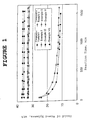
- the reaction results are given, along with reaction conditions, in Table 1 and Fig. 1.
- a catalyst was prepared in the same manner as that of Comparative Example I, except for using a hydrogen form of beta zeolite with a mole ratio of silica/alumina of 25. The catalyst was tested for disproportionation/transalkylation as in Comparative Example I. The results are given as shown in Table 1.
- a hydrogen form of mordenite with a mole ratio of silica/alumina of 90 and a hydrogen form of ZSM-5 with a mole ratio of silica/alumina of 80 were molded, together with gamma alumina as a binder, into a cylindrical shape 2 mm in diameter and 10 mm in length, so as to give a carrier in which the mordenite amounted to 50 wt%. After being dried at 150 °C for 10 hours, the carrier was calcined at 500 °C for 3 hours.
- a catalyst was prepared in the same manner as that of Comparative Example I, except for using a hydrogen form of beta zeolite with a mole ratio of silica/alumina of 25, instead of mordenite.
- the catalyst was tested for disproportionation/transalkylation as in Comparative Example III. The reaction results are given as shown in Table 1.
- a carrier was prepared in the same manner as in Comparative Example II and introduced with platinum under the same condition as in Comparative Example II to give a catalyst in the presence of which disproportionation/transalkylation was conducted as in Comparative Example V.
- the reaction results are given in Table 1.
- a carrier was treated with an aqueous H 2 PtCl 6 solution such that 0.02 weight parts of platinum were impregnated in 100 weight parts of the carrier which was, then, dried at 150 °C for 10 hours, followed by calcination at 500 °C for 3 hours to give a catalyst.
- This was tested for the same disproportionation/transalkylation as in Comparative Example I, but using the reactant mixture indicated in Table 1. The reaction condition and results are given in Table 1.
- a carrier was prepared in the same manner as in Comparative Example IV and introduced with platinum under the same condition as in Comparative Example VII to give a catalyst in the presence of which disproportionation /transalkylation was conducted as in Comparative Example VII.
- the reaction results are given in Table 1. TABLE 1 Assay for Disproportionation/Transalkylation Performance Nos. of C. Exmpl.
- a hydrogen form of mordenite with a mole ratio of silica/alumina of 90 was molded, together with gamma alumina as a binder, into a cylindrical shape 2 mm in diameter and 10 mm in length, so as to give a carrier in which the mordenite amounted to 50 wt%.
- the carrier was calcined at 500 °C for 3 hours.
- aqueous SnCl 2 solution 0.5 weight parts of tin were impregnated in 100 weight parts of the carrier, which was then dried at 150 °C for 10 hours and calcined at 500 °C for 3 hours.
- This tin-impregnated carrier was treated with an aqueous H 2 PtCl 6 solution such that 0.05 weight parts of platinum were impregnated in 100 weight parts of the mordenite and binder.
- the resulting carrier was subjected to drying at 150 °C for 10 hours and then to calcination at 500 °C for 3 hours to allow a catalyst.
- a catalyst was prepared in the same manner as that of Example I, except for using a hydrogen form of beta zeolite with a mole ratio of silica/alumina of 25.
- the catalyst was tested for disproportionation/transalkylation as in Example I, but using the reactant mixture indicated in Table 2. The results are given as shown in Table 2 and Fig. 1. As apparent from the data, this catalyst showed similar catalytic performance to that of the catalyst of Example I.
- aqueous SnCl 2 solution 0.5 weight parts of tin were impregnated in 100 weight parts of the carrier, which was then dried at 150 °C for 10 hours and calcined at 500 °C for 3 hours.
- This tin-impregnated carrier was treated with an aqueous H 2 PtCl 6 solution such that 0.05 weight parts of platinum were impregnated in 100 weight parts of the mordenite, ZSM-5 and binder.
- the resulting carrier was subjected to drying at 150 °C for 10 hours and then to calcination at 500 °C for 3 hours to allow a catalyst.
- the catalyst was tested for disproportionation/transalkylation under the same conditions as in Example I, but using a reactant mixture indicated in Table 2.
- the reaction results are given in Table 2 and Fig. 1.
- the catalyst showed a similar reaction performance to and a little bit more improved production yield of mixed xylenes than the catalyst of Example I.
- a catalyst was prepared in the same manner as that of Example III, except for using a hydrogen form of beta zeolite with a mole ratio of silica/alumina of 25, instead of mordenite, and tested for disproportionation/transalkylation as in Example III.
- the reaction results are given as shown in Table 2. There was obtained a similar performance to that of Example III.
- a catalyst was prepared in the same manner as that of Example V, except for using a hydrogen form of beta zeolite with a mole ratio of silica/alumina of 25, instead of mordenite, and tested for disproportionation/transalkylation as in Example V.
- the reaction results are given as shown in Table 2.
- a catalyst was prepared in the same manner as that of Example VII, except for using a hydrogen form of beta zeolite with a mole ratio of silica/alumina of 25, instead of mordenite and ZSM-5, and tested for disproportionation/transalkylation as in Example VII.
- the reaction results are given as shown in Table 2.
- Aromatic Reactants wt%)
- Aromatic Products Yield of mixed xylenes (wt%)
- Aromatic Loss wt%) C6-C8 C9 C10 C6-C8 C9 C10 Reference I 65.5 31.0 2.9 80.3 12.8 3.2 33.
- the production yields of mixed xylenes are traced with respect to reaction times for various catalysts.
- the catalysts according to the present invention maintain their activity constant through the reaction periods of time and thus, greatly improved in the catalyst deactivation compared with the conventional catalysts which are greatly deactivated within 500 min after the reaction.
- Example II The same procedure as that of Example I was repeated, except for using an aqueous Pb(NO 3 ) 2 solution instead of an aqueous SnCl 2 solution, to give a catalyst which contained lead at an amount of 0.6 weight parts based on 100 weight parts of the carrier.
- the catalyst was tested for disproportionation/transalkylation as in Example I, but using the reactant mixture indicated in Table 3. The reaction results are given in Table 3.
- Example II The same procedure as that of Example II was repeated, except for using an aqueous Pb(NO 3 ) 2 solution instead of an aqueous SnCl 2 solution, to give a catalyst which contained lead at an amount of 0.6 weight parts based on 100 weight parts of the carrier.
- the catalyst was tested for disproportionation/transalkylation as in Example II, but using the reactant mixture indicated in Table 3. The reaction results are given in Table 3.
- Example III The same procedure as that of Example III was repeated, except for using an aqueous Pb(NO 3 ) 2 solution instead of an aqueous SnCl 2 solution, to give a catalyst which contained lead at an amount of 0.6 weight parts based on 100 weight parts of the carrier.
- the catalyst was tested for disproportionation/transalkylation as in Example III, but using the reactant mixture indicated in Table 3. The reaction results are given in Table 3.
- Example IV The same procedure as that of Example IV was repeated, except for using an aqueous Pb(NO 3 ) 2 solution instead of an aqueous SnCl 2 solution, to give a catalyst which contained lead at an amount of 0.6 weight parts based on 100 weight parts of the carrier.
- the catalyst was tested for disproportionation/transalkylation as in Example IV, but using the reactant mixture indicated in Table 3. The reaction results are given in Table 3.
- Example V The same procedure as that of Example V was repeated, except for using an aqueous Pb(NO 3 ) 2 solution, instead of an aqueous SnCl 2 solution, to give a catalyst which contained lead at an amount of 0.5 weight parts based on 100 weight parts of the carrier.
- the catalyst was tested for disproportionation/transalkylation as in Example V, but using the reactant mixture indicated in Table 3. The reaction results are given in Table 3.
- Example VI The same procedure as that of Example VI was repeated, except for using an aqueous Pb(NO 3 ) 2 solution instead of an aqueous SnCl 2 solution, to give a catalyst which contained lead at an amount of 0.5 weight parts based on 100 weight parts of the carrier.
- the catalyst was tested for disproportionation/transalkylation as in Example VI, but using the reactant mixture indicated in Table 3. The reaction results are given in Table 3.
- Example VII The same procedure as that of Example VII was repeated, except for using an aqueous Pb(NO 3 ) 2 solution instead of an aqueous SnCl 2 solution, to give a catalyst which contained lead at an amount of 0.5 weight parts based on 100 weight parts of the carrier.
- the catalyst was tested for disproportionation/transalkylation as in Example VII, but using the reactant mixture indicated in Table 3. The reaction results are given in Table 3.
- Example VIII The same procedure as that of Example VIII was repeated, except for using an aqueous Pb(NO 3 ) 2 solution instead of an aqueous SnCl 2 solution, to give a catalyst which contained lead at an amount of 0.5 weight parts based on 100 weight parts of the carrier.
- the catalyst was tested for disproportionation/transalkylation as in Example VIII, but using the reactant mixture indicated in Table 3. The reaction results are given in Table 3. TABLE 3 Assay for Disproportionation/Transalkylation Performance Nos. of Exmpl.
- a hydrogen form of mordenite with a mole ratio of silica/alumina of 90 was molded, together with gamma alumina as a binder, into a cylindrical shape 2 mm in diameter and 10 mm in length, so as to give a platinum-impregnated carrier in which the mordenite amounted to 50 wt% based on the total weight of the carrier consisting of the mordenite and the gamma alumina binder and the platinum amounted to 0.04 weight parts based on 100 weight parts of the carrier.
- the platinum-impregnated carrier was dried at 150 °C for 10 hours and then, calcined at 500 °C for 3 hours.
- Using an aqueous SnCl 2 solution 0.4 weight parts of tin were impregnated in 100 weight parts of the carrier, which was then dried at 150 °C for 10 hours and calcined at 500 °C for 3 hours to allow a catalyst.
- the catalyst was tested for disproportionation/transalkylation under the same conditions as in Example I, but using a reactant mixture indicated in Table 4. The reaction results are given in Table 4.
- a catalyst was prepared in the same manner as that of Example XVII, except for using a hydrogen form of beta zeolite with a mole ratio of silica/alumina of 25.
- the catalyst was tested for disproportionation/transalkylation as in Example XVII. The results are given as shown in Table 4 .
- a hydrogen form of mordenite with a mole ratio of silica/alumina of 90 was mixed with ZSM-5 with a mole ratio of silica/alumina of 80, after which this mixture was molded, together with gamma alumina as a binder, into a cylindrical shape 2 mm in diameter and 10 mm in length, so as to give a platinum-impregnated carrier in which the mordenite and the ZSM-5 amounted to 40 wt% and 15 wt%, respectively, based on the total weight of the carrier consisting of the mordenite, the ZSM-5 and the gamma alumina and the platinum amounted to 0.04 weight parts based on 100 weight parts of the carrier.
- the platinum-impregnated carrier was dried at 150 °C for 10 hours and then, calcined at 500 °C for 3 hours.
- Using an aqueous SnCl 2 solution 0.4 weight parts of tin were impregnated in 100 weight parts of the carrier, which was then dried at 150 °C for 10 hours and calcined at 500 °C for 3 hours to allow a catalyst.
- the catalyst was tested for disproportionation/transalkylation under the same conditions as in Example I, but using a reactant mixture indicated in Table 4. The reaction results are given in Table 4.
- a catalyst was prepared in the same manner as that of Example XIX, except for using a hydrogen form of beta zeolite with a mole ratio of silica/alumina of 25.
- the catalyst was tested for disproportionation/transalkylation as in Example XIX, but using the reactant mixture indicated in Table 4. The results are given as shown in Table 4.
- the resulting mixture was molded, together with gamma alumina as a binder, into a cylindrical 2 mm in diameter and 10 mm in length, so as to give a platinum-impregnated carrier in which the mordenite and the ZSM-5 amounted to 40 wt% and 15 wt%, respectively, based on the total weight of the carrier consisting of the mordenite, the ZSM-5 and the gamma alumina.
- the platinum-impregnated carrier was dried at 150 °C for 10 hours and then, calcined at 500 °C for 3 hours.
- the catalyst was tested for disproportionation/transalkylation under the same conditions as in Example I, but using a reactant mixture indicated in Table 4. The reaction results are given in Table 4.
- a catalyst was prepared in the same manner as that of Example XXI, except for using a hydrogen form of beta zeolite with a mole ratio of silica/alumina of 25.
- the catalyst was tested for disproportionation/transalkylation as in Example XXI. The results are given as shown in Table 4 .
- a catalyst was prepared in the same manner as that of Example XVII, except that an aqueous Pb(NO 3 ) 2 solution, instead of an aqueous SnCl 2 solution, was used to impregnate of 0.5 weight parts of lead in 100 weight parts of the carrier.
- the catalyst was tested for disproportionation/transalkylation as in Example XVII. The results are given as shown in Table 4.
- a catalyst was prepared in the same manner as that of Example XXI, except that an aqueous Pb(NO 3 ) 2 solution, instead of an aqueous SnCl 2 solution, was used to impregnate 0.5 weight parts of lead in 100 weight parts of the carrier.
- T h e catalyst was tested for disproportionation/transalkylation as in Example XXI. The results are given as shown in Table 4. TABLE 4 Assay for Disproportionation/Transalkylation Performance Nos. of Exmpl.
- a hydrogen form of mordenite with a mole ratio of silica/alumina of 90 was molded, together with gamma alumina as a binder, into a cylindrical shape 2 mm in diameter and 10 mm in length, so as to give a tin-impregnated carrier in which the mordenite amounted to 50 wt% based on the total weight of the carrier consisting of the mordenite and the gamma alumina binder and the tin amounted to 0.4 weight parts based on 100 weight parts of the carrier.
- the tin-impregnated carrier was dried at 150 °C for 10 hours and then, calcined at 500 °C for 3 hours.
- the resulting tin-contained carrier was treated with an aqueous H 2 PtCl 6 solution such that 0.04 weight parts of platinum were impregnated in 100 weight parts of the carrier consisting of the mordenite and the binder. Thereafter, the resulting carrier was dried at 150 °C for 10 hours and calcined at 500 °C for 3 hours to allow a catalyst. This was tested for the same disproportionation/ transalkylation as in Example I, but using the reactant mixture indicated in Table 5. The reaction conditions and results are given in Table 5.
- a catalyst was prepared in the same manner as that of Example XXV, except for using a hydrogen form of beta zeolite with a mole ratio of silica/alumina of 25.
- the catalyst was tested for disproportionation/transalkylation as in Example XXV. The results are given as shown in Table 5.
- a hydrogen form of mordenite with a mole ratio of silica/alumina of 90 was mixed with ZSM-5 with a mole ratio of silica/alumina of 80, after which this mixture was molded, together with gamma alumina as a binder, into a cylindrical shape 2 mm in diameter and 10 mm in length, so as to give a tin-impregnated carrier in which the mordenite and the ZSM-5 amounted to 40 wt% and 15 wt%, respectively, based on the total weight of the carrier consisting of the mordenite, the ZSM-5 and the gamma alumina and the tin amounted to 0.4 weight parts based on 100 weight parts of the carrier.
- the tin-impregnated carrier was dried at 150 °C for 10 hours and then, calcined at 500 °C for 3 hours.
- the resulting tin-contained carrier was treated with an aqueous H 2 PtCl 6 solution such that 0.04 weight parts of platinum were impregnated in 100 weight parts of the carrier consisting of the mordenite, the ZSM-5 and the binder. Thereafter, the resulting carrier was dried at 150 °C for 10 hours and calcined at 500 °C for 3 hours to allow a catalyst. This was tested for the same disproportionation/transalkylation as in Example I, but using the reactant mixture indicated in Table 5. The reaction conditions and results are given in Table 5.
- a catalyst was prepared in the same manner as that of Example XXVII, except for using a hydrogen form of beta zeolite with a mole ratio of silica/alumina of 25.
- the catalyst was tested for disproportionation/transalkylation as in Example XXVII. The results are given as shown in Table 5.
- a catalyst was prepared in the same manner as that of Example XXV, except that an aqueous Pb(NO 3 ) 2 solution, instead of an aqueous SnCl 2 solution, was used to impregnate 0.5 weight parts of lead in 100 weight parts of the carrier.
- the catalyst was tested for disproportionation/transalkylation as in Example XXV. The results are given as s.hown in Table 5.
- a catalyst was prepared in the same manner as that of Example XXVII, except that an aqueous Pb(NO 3 ) 2 solution, instead of an aqueous SnCl 2 . solution, was used to impregnate 0.5 weight parts of lead in 100 weight parts of the carrier.
- the catalyst was tested for disproportionation/transalkylation as in Example XXVII. The results are given as shown in Table 5.
- a catalyst was prepared in a similar manner to that of Example I, except that a mixture of a hydrogen form of mordenite and a hydrogen form of beta zeolite which had mole ratios of silica/alumina of 90 and 25, respectively, was molded, together with gamma alumina as a binder, into a cylindrical shape 2 mm in diameter and 10 mm in length, so as to allow a carrier in which the mordenite, the beta zeolite and the gamma alumina amounted to 30 wt%, 25 wt% and 45 wt%, respectively.
- the catalyst was tested for disproportionation/transalkylation as in Example I. The results are given as shown in Table 6.
- a catalyst was prepared in a similar manner to that of Example I, except that a mixture of a hydrogen form of mordenite, a hydrogen form of beta zeolite and a hydrogen form of ZSM-5 which had mole ratios of silica/alumina of 90, 25 and 80, respectively, was molded, together with gamma alumina as a binder, into a cylindrical shape 2 mm in diameter and 10 mm in length, so as to allow a carrier in which the mordenite, the beta zeolite, the ZSM-5 and the gamma alumina amounted to 20 wt%, 20 wt%, 15 wt% and 45 wt%, respectively.
- the catalyst was tested for disproportionation/transalkylation as in Example I, but using the reactant mixture indicated in Table 6. The results are given as shown in Table 6.
- a catalyst was prepared in the same manner as that of Example XXXI, except that an aqueous Pb(NO 3 ), solution, instead of an aqueous SnCl 2 solution, was used to impregnate 0.5 weight parts of lead in 100 weight parts of the carrier.
- the catalyst was tested for disproportionation/transalkylation as in Example XXXI. The results are given as shown in Table 6.
- a catalyst was prepared in the same manner as that of Example XXXII, except that an aqueous Pb(NO 3 ) 2 , solution, instead of an aqueous SnCl 2 , solution, was used to impregnate 0.5 weight parts of lead in 100 weight parts of the carrier.
- the catalyst was tested for disproportionation/transalkylation as in Example XXXII. The results are given as shown in Table 6. TABLE 6 Assay for Disproportionation/Transalkylation Performance Nos. of Exmpl. Aromatic Reactants (wt%).
- the catalysts according to the present invention enable mixed xylenes to be produced at remarkably high yields from benzene, toluene and C9 or higher aromatic compounds through disproportionation/transalkylation with a great reduction in aromatic loss.
- the catalysts can maintain their catalytic activity for a long period of time without deactivation. Therefore, they can be usefully applied for industrial purposes.
Landscapes
- Chemical & Material Sciences (AREA)
- Organic Chemistry (AREA)
- Chemical Kinetics & Catalysis (AREA)
- Crystallography & Structural Chemistry (AREA)
- Engineering & Computer Science (AREA)
- Materials Engineering (AREA)
- Catalysts (AREA)
- Low-Molecular Organic Synthesis Reactions Using Catalysts (AREA)
- Organic Low-Molecular-Weight Compounds And Preparation Thereof (AREA)
Claims (13)
- Katalysator umfassend(1) einen Träger umfassend:(a) 10 bis 80 Gew.-% von mindestens einem von(i) Mordenit und(ii) Zeolith vom beta-Typ,das Mordenit und das Zeolith vom beta-Typ haben ein Molverhältnis von Silica zu Alumina von 10 bis 200,(b) 15 bis 70 Gew.-% Zeolith vom ZSM-5 Typ mit einem Molverhältnis von Silica zu Alumina von 30 bis 500; und(c) 5 bis 90 Gew.-% mindestens eines organischen Bindemittels, ausgewählt aus der Gruppe bestehend aus Gamma-Alumina, Silica, Silica-Alumina, Bentonit, Kaolin, Clinoptilolith sowie Montmorillonit; und(2) einer Metallkomponente geträgert auf diesen Träger, diese Metallkomponente besteht aus:(a) Platin, und(b) entweder Zinn oder Blei.
- Katalysator gemäß Anspruch 1, wobei das Platin in dem Träger in einer Menge von 0,001 bis 0,5 Gewichtsteilen bezogen auf 100 Gewichtsteile des Trägers vorhanden ist.
- Katalysator gemäß Ansprüchen 1 bis 2, wobei das Zinn in dem Träger in einer Menge von 0,01 bis 10,0 Gewichtsteilen bezogen auf 100 Gewichtsteile des Trägers vorhanden ist.
- Katalysator gemäß Ansprüchen 1 bis 3, wobei das Blei in dem Träger in einer Menge von 0,01 bis 7,0 Gewichtsteilen bezogen auf 100 Gewichtsteile des Trägers vorhanden ist.
- Katalysator gemäß Ansprüchen 1 bis 4, wobei die Metallkomponente aus Platin und Zinn besteht.
- Katalysator gemäß Ansprüche 1 bis 2 oder Anspruch 4, wobei die Metallkomponente aus Platin und Blei besteht.
- Verfahren zur Herstellung eines Katalysators gemäß einem der Ansprüche 1 bis 6, umfassend die Schritte:(1) Formen eines Trägers, der umfasst(a) 10 bis 80 Gew.-% von mindestens einem von(i) Mordenit und(ii) Zeolith vom beta-Typ;das Mordenit und das Zeolith vom beta-Typ haben ein Molverhältnis von Silica zu Alumina von 10 bis 200;(b) 15 bis 70 Gew.-% Zeolith vom ZSM-5-Typ mit einem Molverhältnis von Silica zu Alumina von 30 bis 500; und(c) 5 bis 90 Gew.-% mindestens eines organischen Bindemittels ausgewählt aus der Gruppe bestehend aus Gamma-Alumina, Silica, Silica-Alumina, Bentonit, Kaolin, Clinoptilolith und Montmorillonit;(2) Aufbringen von 0,01 bis 10,0 Gewichtsteilen Zinn oder 0,01 bis 7,0 Gewichtsteilen Blei in 100 Gewichtsteilen Träger; und(3) Aufbringen von 0,001 bis 0,5 Gewichtsteilen Platin auf diesen zinn- oder bleigeträgerten Träger bezogen auf 100 Gewichtsteile des Trägers, um den Katalysator zu erhalten.
- Verfahren zur Herstellung eines Katalysators gemäß einem der Ansprüche 1 bis 6, umfassend die Schritte:(1) Vermischen von(a) 10 bis 80 Gew.-% von mindestens einem von(i) Mordenit und(ii) Zeolith vom beta-Typ;das Mordenit und das Zeolith vom beta-Typ haben ein Molverhältnis von
Silica zu Alumina von 10 bis 200;(b) 15 bis 70 Gew.-% Zeolith vom ZSM-5-Typ mit einem Molverhältnis von Silica zu Alumina von 30 bis 500;(c) 5 bis 90 Gew.-% von mindestens einem organischen Bindemittel ausgewählt aus der Gruppe bestehend aus Gamma-Alumina, Silica, Silica-Alumina, Bentonit, Kaolin, Clinoptilolith und Montmorillonit;(d) 0,01 bis 10 Gewichtsteilen Zinn oder 0,01 bis 7,0 Gewichtsteilen Blei in 100 Gewichtsteilen Träger; und(e) 0,001 bis 0,5 Gewichtsteilen Platin in 100 Gewichtsteilen des Trägers;(2) Formen der Mischung, um einen Katalysator zu erhalten. - Verfahren zu Herstellung eines Katalysators gemäß einem der Ansprüche 1 bis 6, umfassend die Schritte:(1) Aufbringen von Platin auf mindestens einem von(i) Mordenit und(ii) Zeolith vom beta-Typ;das Mordenit und das Zeolith vom beta-Typ haben ein Molverhältnis von Silica zu Alumina von 10 bis 200;
durch Imprägnierung oder durch lonenaustausch;(2) Formen des Platins aufgeträgert auf mindestens einem von (i) Mordenit und (ii) Zeolith vom beta-Typ mit Zeolith vom ZSM-5 Typ mit einem Molverhältnis von Silica zu Alumina von 30 bis 500 und mindestens einem organischen Bindemittel ausgewählt aus der Gruppe bestehend aus Gamma-Alumina, Silica, Silica-Alumina, Bentonit, Kaolin, Clinoptilolith und Montmorillonit in eine bestimmte Form;
wobei
das mindestens eine von(i) Mordenit und(ii) Zeolith vom beta-Typ;das Zeolith vom ZSM-5-Typ und der anorganische Binder
vorhanden sind in einer Menge von 10 bis 80 Gew.-%, 15 bis 70 Gew.-% bzw. 5 bis 90 Gew.-% und das Platin in einer Menge von 0,001 bis 0,5 Gewichtsteilen bezogen auf 100 Gewichtsteile des Trägers bestehend aus Zeolithen und Bindemitteln vorhanden ist und(3) Aufbringen von Zinn oder Blei auf diese geformte Form in einer Menge von 0,01 bis 10,0 Gewichtsteilen bzw. 0,01 bis 7,0 Gewichtsteilen, bezogen auf 100 Gewichtsteile des Trägers, um den Katalysator zu erhalten. - Ein Verfahren zur Herstellung eines Katalysators gemäß einem der Ansprüche 1 bis 6, umfassend die Schritte:(1) Aufbringen von Platin auf eine Mischung von(a) mindestens einem von(i) Mordenit und(ii) Zeolith vom beta-Typ;das Mordenit und das Zeolith vom beta-Typ haben ein Molverhältnis von Silica zu Alumina von 10 bis 200; und(b) Zeolith vom ZSM-5-Typ mit einem Molverhältnis von Silica zu Alumina von 30 bis 500;durch Imprägnierung oder Ionenaustausch;(2) Formen des Platin geträgerten Zeoliths zusammen mit mindestens einem anorganischen Bindemittel ausgewählt aus der Gruppe bestehend aus Gamma-Alumina, Silica, Silica-Alumina, Bentonit, Kaolin, Clinoptilolith und Montmorillonit in eine bestimmte Form, wobei das Mordenit und/oder Zeolith vom beta-Typ, das Zeolith vom ZSM-5 Typ, und der Binder vorhanden sind in einer Menge von 10 bis 80 Gew.-%, 15 bis 70 Gew.-% bzw. 5 bis 90 Gew.-%, und das Platin ist in einer Menge von 0,001 bis 5 Gewichtsteilen bezogen auf 100 Gewichtsteile Träger, bestehend aus Zeolithen und dem Bindemittel, vorhanden; und(3) Aufbringen von Zinn oder Blei in diese geformte Form mit einer Menge von 0,01 bis 10 Gewichtsteilen bzw. 0,01 bis 7,0 Gewichtsteilen bezogen auf 100 Gewichtsteile Träger, um diesen Katalysator zu erhalten.
- Verfahren zur Herstellung eines Katalysators gemäß einem der Ansprüche 1 bis 6 umfassend die Schritte:(1) Aufbringen von Zinn oder Blei auf mindestens einem von(i) Mordenit und(ii) Zeolith vom beta-Typ;das Mordenit und das Zeolith vom beta-Typ haben ein
Molverhältnis von Silica zu Alumina von 10 bis 200; durch
Imprägnierung oder lonenaustausch;(2) Formen des mindestens einen(i) zinn- oder bleigeträgerten Mordenits; und(ii) zinn- oder bleigeträgerten Zeoliths vom beta-Typmit ZSM-5 Zeolith mit einem Molverhältnis von Silica zu Alumina von 300 bis 500; und mindestens einem anorganischen Bindemittel ausgewählt aus der Gruppe bestehend aus Gamma-Alumina, Silica, Silica-Alumina, Bentonit, Kaolin, Clinoptilolith und Montmorillonit in eine bestimmte Form;
wobei der mindestens eine von(i) Mordenit, und(ii) Zeolith vom beta-Typ;das Zeolith vom ZSM-5 Typ und der anorganische Binder in einer Menge vorhanden sind von 10 bis 80 Gew.-%, 15 bis 70 Gew.-% bzw. 5 bis 90 Gew.-% und das Zinn in einer Menge vorhanden ist von 0,01 bis 10 Gewichtsteilen oder das Blei ist in einer Menge von 0,01 bis 7,0 Gewichtsteilen vorhanden, bezogen auf 100 Gewichtsteile des Trägers;(3) Aufbringen von 0,001 bis 0,5 Gewichtsteilen Platin bezogen auf 100 Gewichtsteile Träger in die ausgebildete Form, um den Katalysator zu erhalten. - Verfahren zu Herstellung eines Katalysators gemäß einem der Ansprüche 1 bis 6 umfassend die Schritte:(1) Aufbringen von Zinn oder Blei auf eine Mischung von(a) einem von(i) Mordenit und(ii) Zeolith vom beta-Typ;das Mordenit und das Zeolith vom beta-Typ haben ein Molverhältnis von Silica zu Alumina von 10 bis 200; und(b) ZSM-5 Zeolith mit einem Molverhältnis von Silica zu Alumina von 30 bis 500 durch Imprägnierung oder lonenaustausch;(2) Formen des Zinn- oder Blei geträgerten Zeoliths zusammen mit mindestens einem anorganischen Bindemittel ausgewählt aus der Gruppe bestehend aus Gamma-Alumina, Silica, Silica-Alumina, Bentonit, Kaolin, Clinoptilolith und Montmorillonit in eine bestimmte Form, wobei das Mordenit und/oder Zeolith vom beta-Typ, das ZSM-5 Zeolith und das Bindemittel in einer Menge vorhanden sind von 10 bis 80 Gew.-%, 15 bis 70 Gew.-% bzw. 5 bis 90 Gew.-% und das Zinn in einer Menge vorhanden ist von 0,01 bis 10 Gewichtsteilen oder das Blei in einer Menge vorhanden ist von 0,01 bis 7 Gewichtsteilen bezogen auf 100 Gewichtsteile der Zeolithe und des Bindemittels;(3) Aufbringen von Platin in diese geformte Form mit einer Menge von 0,001 bis 0,5 Gewichtsteilen bezogen auf 100 Gewichtsteile Träger, um den Katalysator zu erhalten.
- Verfahren zur Herstellung von Mischxylolen aus aromatischen Kohlenwasserstoffen durch Dealkylierung, Disproportionierung oder Transalkylierung unter Verwendung des Katalysators gemäß einem der Ansprüche 1 bis 6.
Priority Applications (1)
| Application Number | Priority Date | Filing Date | Title |
|---|---|---|---|
| EP05022191A EP1640066B1 (de) | 1998-12-24 | 1999-10-14 | Katalysator zur Disproportionierung und Transalkylierung von aromatischen Kohlenwasserstoffen und Verfahren zu seiner Herstellung |
Applications Claiming Priority (5)
| Application Number | Priority Date | Filing Date | Title |
|---|---|---|---|
| KR9858628 | 1998-12-24 | ||
| KR1019980058628A KR100328677B1 (ko) | 1998-12-24 | 1998-12-24 | 벤젠,톨루엔및c9이상의방향족화합물로부터혼합자일렌을제조하기위한촉매및이의제조방법 |
| KR1019990009649A KR100297586B1 (ko) | 1999-03-22 | 1999-03-22 | 벤젠, 톨루엔 및 c9 이상의 방향족 화합물로부터 혼합 자일렌 제조용 촉매 및 이의 제조방법 |
| KR9909649 | 1999-03-22 | ||
| PCT/KR1999/000619 WO2000038834A1 (en) | 1998-12-24 | 1999-10-14 | Catalyst for the disproportionation/transalkylation of aromatic hydrocarbons and method for preparing the same |
Related Child Applications (1)
| Application Number | Title | Priority Date | Filing Date |
|---|---|---|---|
| EP05022191A Division EP1640066B1 (de) | 1998-12-24 | 1999-10-14 | Katalysator zur Disproportionierung und Transalkylierung von aromatischen Kohlenwasserstoffen und Verfahren zu seiner Herstellung |
Publications (2)
| Publication Number | Publication Date |
|---|---|
| EP1144113A1 EP1144113A1 (de) | 2001-10-17 |
| EP1144113B1 true EP1144113B1 (de) | 2006-03-22 |
Family
ID=36178302
Family Applications (2)
| Application Number | Title | Priority Date | Filing Date |
|---|---|---|---|
| EP99947990A Expired - Lifetime EP1144113B1 (de) | 1998-12-24 | 1999-10-14 | Katalysator zur disproportionierung und transalkylierung von aromatischen kohlenwasserstoffen und verfahren zu seiner herstellung |
| EP05022191A Expired - Lifetime EP1640066B1 (de) | 1998-12-24 | 1999-10-14 | Katalysator zur Disproportionierung und Transalkylierung von aromatischen Kohlenwasserstoffen und Verfahren zu seiner Herstellung |
Family Applications After (1)
| Application Number | Title | Priority Date | Filing Date |
|---|---|---|---|
| EP05022191A Expired - Lifetime EP1640066B1 (de) | 1998-12-24 | 1999-10-14 | Katalysator zur Disproportionierung und Transalkylierung von aromatischen Kohlenwasserstoffen und Verfahren zu seiner Herstellung |
Country Status (9)
| Country | Link |
|---|---|
| EP (2) | EP1144113B1 (de) |
| JP (1) | JP4351393B2 (de) |
| CN (1) | CN1122571C (de) |
| AT (2) | ATE387958T1 (de) |
| DE (2) | DE69930533T2 (de) |
| DK (2) | DK1144113T3 (de) |
| ES (2) | ES2303171T3 (de) |
| PT (2) | PT1144113E (de) |
| WO (1) | WO2000038834A1 (de) |
Families Citing this family (36)
| Publication number | Priority date | Publication date | Assignee | Title |
|---|---|---|---|---|
| US6504076B1 (en) * | 2001-05-18 | 2003-01-07 | Fina Technology, Inc. | Method of conversion of heavy aromatics |
| DE10256404B4 (de) * | 2002-05-31 | 2009-02-05 | Kataleuna Gmbh Catalysts | Katalysator zur Isomerisierung von festen Fischer-Tropsch-Paraffinen und Verfahren zu seiner Herstellung |
| US6706937B2 (en) * | 2002-06-11 | 2004-03-16 | Fina Technology, Inc. | Conversion of aromatic hydrocarbons |
| US7553791B2 (en) | 2002-11-14 | 2009-06-30 | Exxonmobil Chemical Patents Inc. | Heavy aromatics conversion catalyst composition and processes therefor and therewith |
| US7148391B1 (en) * | 2002-11-14 | 2006-12-12 | Exxonmobil Chemical Patents Inc. | Heavy aromatics processing |
| ITMI20022712A1 (it) * | 2002-12-20 | 2004-06-21 | Polimeri Europa Spa | Composizione catalitica e processo per la transalchilazione di idrocarburi. |
| US6972348B2 (en) * | 2004-03-24 | 2005-12-06 | Uop Llc | Catalytic conversion of polycyclic aromatics into xylenes |
| ES2327753T3 (es) | 2004-04-14 | 2009-11-03 | Institut Francais Du Petrole | Catalizador que comprende un zaolita 10mr y una zeolita 12mr y su utilizacion en un procedimiento de transalquilacion de hidrocarburos alquilaromaticos. |
| KR101270191B1 (ko) * | 2005-08-15 | 2013-05-31 | 상하이 리서치 인스티튜트 오브 페트로케미칼 테크놀로지 시노펙 | 유동상 촉매를 사용하여 촉매 분해에 의하여 에틸렌 및 프로필렌을 제조하는 방법 |
| FR2895283B1 (fr) * | 2005-12-22 | 2008-02-01 | Inst Francais Du Petrole | Catalyseur comprenant une zeolithe euo, une zeolithe 10mr et une zeolithe 12mr et son utilisation en isomerisation des composes c8 aromatiques |
| CN100460370C (zh) * | 2006-01-11 | 2009-02-11 | 中国石油化工股份有限公司 | 用于重质芳烃轻质化及烷基转移的方法 |
| US7566810B2 (en) * | 2006-09-12 | 2009-07-28 | Uop Llc | Xylene production processes employing rhenium-containing catalysts |
| CN101190866B (zh) * | 2006-11-21 | 2011-08-17 | 中国石油化工股份有限公司 | 低乙苯副产物的芳烃烷基转移和脱烷基反应方法 |
| CN101279743B (zh) * | 2007-04-04 | 2011-08-17 | 中国石油化工股份有限公司 | 共生分子筛及其合成方法 |
| EP2027917A1 (de) | 2007-07-31 | 2009-02-25 | Shell Internationale Researchmaatschappij B.V. | Katalysatorzusammensetzung sowie ihre Herstellung und Verwendung |
| CA2702423C (en) * | 2007-10-31 | 2015-04-28 | Exxonmobil Chemical Patents Inc. | Heavy aromatics processing catalyst and process of using the same |
| WO2009105391A1 (en) * | 2008-02-18 | 2009-08-27 | Shell Oil Company | Process for the conversion of ethane to aromatic hydrocarbons |
| US8772563B2 (en) | 2008-02-18 | 2014-07-08 | Shell Oil Company | Process for the conversion of ethane to aromatic hydrocarbons |
| US8809608B2 (en) | 2008-02-18 | 2014-08-19 | Shell Oil Company | Process for the conversion of lower alkanes to aromatic hydrocarbons |
| AU2009215655B2 (en) | 2008-02-20 | 2012-03-15 | Shell Internationale Research Maatschappij B.V. | Process for the conversion of ethane to aromatic hydrocarbons |
| WO2011053747A1 (en) | 2009-11-02 | 2011-05-05 | Shell Oil Company | Process for the conversion of mixed lower alkanes to aromatic hydrocarbons |
| US10118165B2 (en) * | 2015-02-04 | 2018-11-06 | Exxonmobil Chemical Patents Inc. | Catalyst compositions and use in heavy aromatics conversion processes |
| CN105347357B (zh) * | 2015-10-30 | 2017-11-28 | 歌尔股份有限公司 | 一种沸石吸音颗粒及其合成制备方法 |
| MY190501A (en) * | 2015-12-17 | 2022-04-25 | Shell Int Research | Catalyst composition, its preparation and process using such composition |
| US10710060B2 (en) * | 2016-07-13 | 2020-07-14 | Shell Oil Company | Catalyst composition comprising con-type zeolite and zsm-5-type zeolite, preparation and process using such composition |
| KR102456344B1 (ko) * | 2016-12-08 | 2022-10-21 | 쉘 인터내셔날 리써취 마트샤피지 비.브이. | 트랜스알킬화에 의한 벤젠의 합성을 위한 몰리브덴-백금-기재 촉매의 제조 방법 |
| US11097262B2 (en) * | 2017-06-15 | 2021-08-24 | Saudi Arabian Oil Company | Composite hierarchical zeolite catalyst for heavy reformate conversion to xylenes |
| US10661260B2 (en) * | 2017-06-15 | 2020-05-26 | King Fahd University Of Petroleum And Minerals | Zeolite composite catalysts for conversion of heavy reformate to xylenes |
| EP3539652A1 (de) * | 2018-03-14 | 2019-09-18 | Saudi Arabian Oil Company | Verfahren zur umwandlung schweren reformats zu btx über metall-imprägniertem zsm-5+mesoporösem mordenit-zeolithkompositkatalysator |
| EP3834931A1 (de) * | 2018-03-14 | 2021-06-16 | Saudi Arabian Oil Company | Zeolithverbundkatalysator für schwerreformatumwandlung zu xylenen |
| KR102533944B1 (ko) * | 2019-01-25 | 2023-05-17 | 엑손모빌 케미칼 패턴츠 인코포레이티드 | 저 금속 함량 촉매의 활성화 |
| KR102788458B1 (ko) * | 2019-10-30 | 2025-03-28 | 에스케이이노베이션 주식회사 | 저감된 에틸벤젠 함량을 갖는 c8 방향족 탄화수소 제조용 촉매 및 이의 제조방법 |
| KR102788449B1 (ko) * | 2019-12-17 | 2025-03-28 | 에스케이이노베이션 주식회사 | 방향족 탄화수소의 전환용 촉매 및 이의 제조방법 |
| CN114456835B (zh) | 2020-10-22 | 2023-06-06 | 中国石油化工股份有限公司 | 一种汽油组分的处理系统和处理方法 |
| CN114904571B (zh) * | 2022-03-15 | 2023-10-10 | 宁波中金石化有限公司 | 一种芳烃歧化与烷基转移催化剂及其制备方法、应用 |
| US20240309280A1 (en) * | 2023-03-14 | 2024-09-19 | Saudi Arabian Oil Company | Integrated processes and systems for producing para-xylenes |
Family Cites Families (4)
| Publication number | Priority date | Publication date | Assignee | Title |
|---|---|---|---|---|
| US4899012A (en) * | 1988-10-17 | 1990-02-06 | Uop | Catalyst for the isomerization of aromatics |
| JP2598127B2 (ja) * | 1989-03-29 | 1997-04-09 | 帝人株式会社 | キシレンの異性化方法 |
| US5759950A (en) * | 1995-06-10 | 1998-06-02 | China Petrochemical Corporation | Catalyst supported with noble metal(s) for the isomerization of alkylaromatics |
| US6060417A (en) * | 1996-06-28 | 2000-05-09 | Toray Industries, Inc. | Catalyst composition for transalkylation of alkylaromatic hydrocarbons and process for production of xylene |
-
1999
- 1999-10-14 EP EP99947990A patent/EP1144113B1/de not_active Expired - Lifetime
- 1999-10-14 AT AT05022191T patent/ATE387958T1/de not_active IP Right Cessation
- 1999-10-14 JP JP2000590778A patent/JP4351393B2/ja not_active Expired - Lifetime
- 1999-10-14 ES ES05022191T patent/ES2303171T3/es not_active Expired - Lifetime
- 1999-10-14 DE DE69930533T patent/DE69930533T2/de not_active Expired - Lifetime
- 1999-10-14 WO PCT/KR1999/000619 patent/WO2000038834A1/en not_active Ceased
- 1999-10-14 DK DK99947990T patent/DK1144113T3/da active
- 1999-10-14 EP EP05022191A patent/EP1640066B1/de not_active Expired - Lifetime
- 1999-10-14 PT PT99947990T patent/PT1144113E/pt unknown
- 1999-10-14 PT PT05022191T patent/PT1640066E/pt unknown
- 1999-10-14 AT AT99947990T patent/ATE320850T1/de not_active IP Right Cessation
- 1999-10-14 CN CN99815049A patent/CN1122571C/zh not_active Expired - Lifetime
- 1999-10-14 DE DE69938318T patent/DE69938318T2/de not_active Expired - Lifetime
- 1999-10-14 DK DK05022191T patent/DK1640066T3/da active
- 1999-10-14 ES ES99947990T patent/ES2259844T3/es not_active Expired - Lifetime
Also Published As
| Publication number | Publication date |
|---|---|
| ATE387958T1 (de) | 2008-03-15 |
| EP1640066A1 (de) | 2006-03-29 |
| DE69938318D1 (de) | 2008-04-17 |
| PT1640066E (pt) | 2008-06-17 |
| DE69938318T2 (de) | 2009-03-12 |
| ATE320850T1 (de) | 2006-04-15 |
| DK1640066T3 (da) | 2008-06-23 |
| PT1144113E (pt) | 2006-08-31 |
| EP1144113A1 (de) | 2001-10-17 |
| DE69930533D1 (de) | 2006-05-11 |
| ES2303171T3 (es) | 2008-08-01 |
| ES2259844T3 (es) | 2006-10-16 |
| DE69930533T2 (de) | 2007-03-08 |
| DK1144113T3 (da) | 2006-07-31 |
| CN1122571C (zh) | 2003-10-01 |
| JP4351393B2 (ja) | 2009-10-28 |
| CN1337890A (zh) | 2002-02-27 |
| EP1640066B1 (de) | 2008-03-05 |
| WO2000038834A1 (en) | 2000-07-06 |
| JP2002533211A (ja) | 2002-10-08 |
Similar Documents
| Publication | Publication Date | Title |
|---|---|---|
| EP1144113B1 (de) | Katalysator zur disproportionierung und transalkylierung von aromatischen kohlenwasserstoffen und verfahren zu seiner herstellung | |
| US6867340B2 (en) | Disproportionation/transalkylation of aromatic hydrocarbons | |
| US5866744A (en) | Process for converting a c9 + hydrocarbon to a C6 to C8 aromatic using a steamed, acid-leached, impregnated zeolite | |
| US7902413B2 (en) | Aromatization of alkanes using a germanium-zeolite catalyst | |
| CA1271782A (en) | Xylene isomerization process | |
| US7566810B2 (en) | Xylene production processes employing rhenium-containing catalysts | |
| EP0038141B1 (de) | Herstellung eines Aromatenbehandlungskatalysators, derart erhaltener Katalysator und seine Anwendung zur Xylolisomerisation | |
| US5804059A (en) | Process of preparing a C6 to C8 hydrocarbon with a steamed, acid-leached, molybdenum containing mordenite catalyst | |
| JPH07121362B2 (ja) | キシレン異性化触媒及び異性化方法 | |
| US7525008B2 (en) | Process for C8 alkylaromatic isomerization | |
| JP2010534567A (ja) | 触媒組成物、その製造及び使用 | |
| US7425660B2 (en) | Ethylbenzene conversion and xylene isomerization processes and catalysts therefor | |
| EP2773603B1 (de) | Katalysator und verfahren zur umwandlung von kohlenwasserstoffen | |
| EP0923512B1 (de) | Stabilisiertes katalysatorsystem zur isomerisierung von xylol | |
| US8247630B2 (en) | Process for C8 alkylaromatic isomerization | |
| KR100297586B1 (ko) | 벤젠, 톨루엔 및 c9 이상의 방향족 화합물로부터 혼합 자일렌 제조용 촉매 및 이의 제조방법 | |
| TW201822880A (zh) | 催化劑系統與使用催化劑系統的烴進料轉化製程 | |
| US5053558A (en) | Process for the isomerization of cresols | |
| KR100328677B1 (ko) | 벤젠,톨루엔및c9이상의방향족화합물로부터혼합자일렌을제조하기위한촉매및이의제조방법 | |
| CN108264445B (zh) | 甲苯歧化与/或烷基转移反应的方法 | |
| KR20210077835A (ko) | 방향족 탄화수소의 전환용 촉매 및 이의 제조방법 | |
| KR20240054273A (ko) | 촉매 조성물, 이의 제조 및 용도 | |
| KR101057636B1 (ko) | 다이메틸나프탈렌의 이성질화 촉매 및 이를 이용한다이메틸나프탈렌의 기상 이성질화 방법 | |
| KR19990079991A (ko) | 크실렌 이성화용 촉매 및 이의 제조방법 |
Legal Events
| Date | Code | Title | Description |
|---|---|---|---|
| PUAI | Public reference made under article 153(3) epc to a published international application that has entered the european phase |
Free format text: ORIGINAL CODE: 0009012 |
|
| 17P | Request for examination filed |
Effective date: 20010620 |
|
| AK | Designated contracting states |
Kind code of ref document: A1 Designated state(s): AT BE CH CY DE DK ES FI FR GB GR IE IT LI LU MC NL PT SE |
|
| AX | Request for extension of the european patent |
Free format text: AL;LT;LV;MK;RO;SI |
|
| 17Q | First examination report despatched |
Effective date: 20031020 |
|
| GRAP | Despatch of communication of intention to grant a patent |
Free format text: ORIGINAL CODE: EPIDOSNIGR1 |
|
| GRAS | Grant fee paid |
Free format text: ORIGINAL CODE: EPIDOSNIGR3 |
|
| GRAA | (expected) grant |
Free format text: ORIGINAL CODE: 0009210 |
|
| AK | Designated contracting states |
Kind code of ref document: B1 Designated state(s): AT BE CH CY DE DK ES FI FR GB GR IE IT LI LU MC NL PT SE |
|
| PG25 | Lapsed in a contracting state [announced via postgrant information from national office to epo] |
Ref country code: LI Free format text: LAPSE BECAUSE OF FAILURE TO SUBMIT A TRANSLATION OF THE DESCRIPTION OR TO PAY THE FEE WITHIN THE PRESCRIBED TIME-LIMIT Effective date: 20060322 Ref country code: IT Free format text: LAPSE BECAUSE OF FAILURE TO SUBMIT A TRANSLATION OF THE DESCRIPTION OR TO PAY THE FEE WITHIN THE PRESCRIBED TIME-LIMIT;WARNING: LAPSES OF ITALIAN PATENTS WITH EFFECTIVE DATE BEFORE 2007 MAY HAVE OCCURRED AT ANY TIME BEFORE 2007. THE CORRECT EFFECTIVE DATE MAY BE DIFFERENT FROM THE ONE RECORDED. Effective date: 20060322 Ref country code: CH Free format text: LAPSE BECAUSE OF FAILURE TO SUBMIT A TRANSLATION OF THE DESCRIPTION OR TO PAY THE FEE WITHIN THE PRESCRIBED TIME-LIMIT Effective date: 20060322 Ref country code: AT Free format text: LAPSE BECAUSE OF FAILURE TO SUBMIT A TRANSLATION OF THE DESCRIPTION OR TO PAY THE FEE WITHIN THE PRESCRIBED TIME-LIMIT Effective date: 20060322 |
|
| REG | Reference to a national code |
Ref country code: GB Ref legal event code: FG4D |
|
| REG | Reference to a national code |
Ref country code: CH Ref legal event code: EP |
|
| REG | Reference to a national code |
Ref country code: IE Ref legal event code: FG4D |
|
| REF | Corresponds to: |
Ref document number: 69930533 Country of ref document: DE Date of ref document: 20060511 Kind code of ref document: P |
|
| REG | Reference to a national code |
Ref country code: SE Ref legal event code: TRGR |
|
| REG | Reference to a national code |
Ref country code: DK Ref legal event code: T3 |
|
| REG | Reference to a national code |
Ref country code: PT Ref legal event code: SC4A Effective date: 20060620 |
|
| REG | Reference to a national code |
Ref country code: CH Ref legal event code: PL |
|
| PG25 | Lapsed in a contracting state [announced via postgrant information from national office to epo] |
Ref country code: IE Free format text: LAPSE BECAUSE OF NON-PAYMENT OF DUE FEES Effective date: 20061016 |
|
| REG | Reference to a national code |
Ref country code: ES Ref legal event code: FG2A Ref document number: 2259844 Country of ref document: ES Kind code of ref document: T3 |
|
| PG25 | Lapsed in a contracting state [announced via postgrant information from national office to epo] |
Ref country code: MC Free format text: LAPSE BECAUSE OF NON-PAYMENT OF DUE FEES Effective date: 20061031 |
|
| ET | Fr: translation filed | ||
| PLBE | No opposition filed within time limit |
Free format text: ORIGINAL CODE: 0009261 |
|
| STAA | Information on the status of an ep patent application or granted ep patent |
Free format text: STATUS: NO OPPOSITION FILED WITHIN TIME LIMIT |
|
| 26N | No opposition filed |
Effective date: 20061227 |
|
| BECA | Be: change of holder's address |
Owner name: SK ENERGY CO. LTD99 SEORIN DONG JONGRO-GU, S?OUL 1 Effective date: 20060322 |
|
| BECH | Be: change of holder |
Owner name: SK ENERGY CO. LTD Effective date: 20060322 |
|
| REG | Reference to a national code |
Ref country code: GB Ref legal event code: 732E |
|
| REG | Reference to a national code |
Ref country code: PT Ref legal event code: PC4A Owner name: SK ENERGY CO., LTD., KR Effective date: 20080313 |
|
| NLS | Nl: assignments of ep-patents |
Owner name: SK ENERGY CO., LTD. Effective date: 20071221 |
|
| PG25 | Lapsed in a contracting state [announced via postgrant information from national office to epo] |
Ref country code: GR Free format text: LAPSE BECAUSE OF FAILURE TO SUBMIT A TRANSLATION OF THE DESCRIPTION OR TO PAY THE FEE WITHIN THE PRESCRIBED TIME-LIMIT Effective date: 20060623 |
|
| REG | Reference to a national code |
Ref country code: FR Ref legal event code: TP |
|
| PG25 | Lapsed in a contracting state [announced via postgrant information from national office to epo] |
Ref country code: FI Free format text: LAPSE BECAUSE OF FAILURE TO SUBMIT A TRANSLATION OF THE DESCRIPTION OR TO PAY THE FEE WITHIN THE PRESCRIBED TIME-LIMIT Effective date: 20060322 |
|
| PG25 | Lapsed in a contracting state [announced via postgrant information from national office to epo] |
Ref country code: LU Free format text: LAPSE BECAUSE OF NON-PAYMENT OF DUE FEES Effective date: 20061014 |
|
| PG25 | Lapsed in a contracting state [announced via postgrant information from national office to epo] |
Ref country code: CY Free format text: LAPSE BECAUSE OF FAILURE TO SUBMIT A TRANSLATION OF THE DESCRIPTION OR TO PAY THE FEE WITHIN THE PRESCRIBED TIME-LIMIT Effective date: 20060322 |
|
| REG | Reference to a national code |
Ref country code: DE Ref legal event code: R082 Ref document number: 69930533 Country of ref document: DE Representative=s name: GRAMM, LINS & PARTNER GBR, DE |
|
| REG | Reference to a national code |
Ref country code: DE Ref legal event code: R082 Ref document number: 69930533 Country of ref document: DE Representative=s name: GRAMM, LINS & PARTNER PATENT- UND RECHTSANWAEL, DE Effective date: 20110808 Ref country code: DE Ref legal event code: R082 Ref document number: 69930533 Country of ref document: DE Representative=s name: GRAMM, LINS & PARTNER GBR, DE Effective date: 20110808 Ref country code: DE Ref legal event code: R081 Ref document number: 69930533 Country of ref document: DE Owner name: SK INNOVATION CO., LTD., KR Free format text: FORMER OWNER: SK ENERGY CO., LTD., SEOUL, KR Effective date: 20110808 |
|
| REG | Reference to a national code |
Ref country code: FR Ref legal event code: CD Owner name: SK INNOVATION CO., LTD., KR Effective date: 20110919 |
|
| REG | Reference to a national code |
Ref country code: NL Ref legal event code: TD Effective date: 20120131 |
|
| REG | Reference to a national code |
Ref country code: ES Ref legal event code: PC2A Owner name: SK INNOVATION CO., LTD. Effective date: 20120305 |
|
| REG | Reference to a national code |
Ref country code: DE Ref legal event code: R082 Ref document number: 69930533 Country of ref document: DE Representative=s name: GRAMM, LINS & PARTNER PATENT- UND RECHTSANWAEL, DE |
|
| REG | Reference to a national code |
Ref country code: FR Ref legal event code: PLFP Year of fee payment: 17 |
|
| REG | Reference to a national code |
Ref country code: FR Ref legal event code: PLFP Year of fee payment: 18 |
|
| REG | Reference to a national code |
Ref country code: FR Ref legal event code: PLFP Year of fee payment: 19 |
|
| REG | Reference to a national code |
Ref country code: FR Ref legal event code: PLFP Year of fee payment: 20 |
|
| PGFP | Annual fee paid to national office [announced via postgrant information from national office to epo] |
Ref country code: FR Payment date: 20180927 Year of fee payment: 20 |
|
| PGFP | Annual fee paid to national office [announced via postgrant information from national office to epo] |
Ref country code: GB Payment date: 20180921 Year of fee payment: 20 Ref country code: SE Payment date: 20180921 Year of fee payment: 20 Ref country code: DK Payment date: 20180921 Year of fee payment: 20 Ref country code: NL Payment date: 20180921 Year of fee payment: 20 Ref country code: BE Payment date: 20180921 Year of fee payment: 20 |
|
| PGFP | Annual fee paid to national office [announced via postgrant information from national office to epo] |
Ref country code: PT Payment date: 20180921 Year of fee payment: 20 |
|
| PGFP | Annual fee paid to national office [announced via postgrant information from national office to epo] |
Ref country code: DE Payment date: 20180920 Year of fee payment: 20 |
|
| PGFP | Annual fee paid to national office [announced via postgrant information from national office to epo] |
Ref country code: IT Payment date: 20181011 Year of fee payment: 20 Ref country code: ES Payment date: 20181114 Year of fee payment: 20 |
|
| REG | Reference to a national code |
Ref country code: DE Ref legal event code: R071 Ref document number: 69930533 Country of ref document: DE |
|
| REG | Reference to a national code |
Ref country code: NL Ref legal event code: MK Effective date: 20191013 |
|
| REG | Reference to a national code |
Ref country code: DK Ref legal event code: EUP Effective date: 20191014 |
|
| REG | Reference to a national code |
Ref country code: GB Ref legal event code: PE20 Expiry date: 20191013 |
|
| REG | Reference to a national code |
Ref country code: BE Ref legal event code: MK Effective date: 20191014 |
|
| REG | Reference to a national code |
Ref country code: SE Ref legal event code: EUG |
|
| PG25 | Lapsed in a contracting state [announced via postgrant information from national office to epo] |
Ref country code: GB Free format text: LAPSE BECAUSE OF EXPIRATION OF PROTECTION Effective date: 20191013 Ref country code: PT Free format text: LAPSE BECAUSE OF EXPIRATION OF PROTECTION Effective date: 20191024 |
|
| REG | Reference to a national code |
Ref country code: ES Ref legal event code: FD2A Effective date: 20200721 |
|
| PG25 | Lapsed in a contracting state [announced via postgrant information from national office to epo] |
Ref country code: ES Free format text: LAPSE BECAUSE OF EXPIRATION OF PROTECTION Effective date: 20191015 |