EP1134675A2 - Verfahren zur Simulation und/oder Planung einer Tragschienenbestückung - Google Patents
Verfahren zur Simulation und/oder Planung einer Tragschienenbestückung Download PDFInfo
- Publication number
- EP1134675A2 EP1134675A2 EP01106028A EP01106028A EP1134675A2 EP 1134675 A2 EP1134675 A2 EP 1134675A2 EP 01106028 A EP01106028 A EP 01106028A EP 01106028 A EP01106028 A EP 01106028A EP 1134675 A2 EP1134675 A2 EP 1134675A2
- Authority
- EP
- European Patent Office
- Prior art keywords
- mounting rail
- screen
- elements
- individual
- displayed
- Prior art date
- Legal status (The legal status is an assumption and is not a legal conclusion. Google has not performed a legal analysis and makes no representation as to the accuracy of the status listed.)
- Withdrawn
Links
Images


Classifications
-
- G—PHYSICS
- G06—COMPUTING OR CALCULATING; COUNTING
- G06F—ELECTRIC DIGITAL DATA PROCESSING
- G06F30/00—Computer-aided design [CAD]
- G06F30/10—Geometric CAD
-
- G—PHYSICS
- G06—COMPUTING OR CALCULATING; COUNTING
- G06F—ELECTRIC DIGITAL DATA PROCESSING
- G06F30/00—Computer-aided design [CAD]
-
- G—PHYSICS
- G06—COMPUTING OR CALCULATING; COUNTING
- G06F—ELECTRIC DIGITAL DATA PROCESSING
- G06F2111/00—Details relating to CAD techniques
- G06F2111/20—Configuration CAD, e.g. designing by assembling or positioning modules selected from libraries of predesigned modules
-
- G—PHYSICS
- G06—COMPUTING OR CALCULATING; COUNTING
- G06F—ELECTRIC DIGITAL DATA PROCESSING
- G06F2119/00—Details relating to the type or aim of the analysis or the optimisation
- G06F2119/06—Power analysis or power optimisation
-
- Y—GENERAL TAGGING OF NEW TECHNOLOGICAL DEVELOPMENTS; GENERAL TAGGING OF CROSS-SECTIONAL TECHNOLOGIES SPANNING OVER SEVERAL SECTIONS OF THE IPC; TECHNICAL SUBJECTS COVERED BY FORMER USPC CROSS-REFERENCE ART COLLECTIONS [XRACs] AND DIGESTS
- Y02—TECHNOLOGIES OR APPLICATIONS FOR MITIGATION OR ADAPTATION AGAINST CLIMATE CHANGE
- Y02E—REDUCTION OF GREENHOUSE GAS [GHG] EMISSIONS, RELATED TO ENERGY GENERATION, TRANSMISSION OR DISTRIBUTION
- Y02E60/00—Enabling technologies; Technologies with a potential or indirect contribution to GHG emissions mitigation
-
- Y—GENERAL TAGGING OF NEW TECHNOLOGICAL DEVELOPMENTS; GENERAL TAGGING OF CROSS-SECTIONAL TECHNOLOGIES SPANNING OVER SEVERAL SECTIONS OF THE IPC; TECHNICAL SUBJECTS COVERED BY FORMER USPC CROSS-REFERENCE ART COLLECTIONS [XRACs] AND DIGESTS
- Y04—INFORMATION OR COMMUNICATION TECHNOLOGIES HAVING AN IMPACT ON OTHER TECHNOLOGY AREAS
- Y04S—SYSTEMS INTEGRATING TECHNOLOGIES RELATED TO POWER NETWORK OPERATION, COMMUNICATION OR INFORMATION TECHNOLOGIES FOR IMPROVING THE ELECTRICAL POWER GENERATION, TRANSMISSION, DISTRIBUTION, MANAGEMENT OR USAGE, i.e. SMART GRIDS
- Y04S40/00—Systems for electrical power generation, transmission, distribution or end-user application management characterised by the use of communication or information technologies, or communication or information technology specific aspects supporting them
- Y04S40/20—Information technology specific aspects, e.g. CAD, simulation, modelling, system security
Definitions
- the invention relates to a method for simulating and / or planning a mounting rail assembly, in which the mounting of a mounting rail is carried out using a software routine simulated with terminal blocks and / or other elements and / or devices is and on an output device, preferably a screen, a computing unit is shown.
- the invention solves this problem by the subject matter of claim 1.
- the invention or that with her realizable program are characterized in that the individual terminal blocks and / or other elements and / or devices (not as actual Graphic) but directly as a representation of a data structure from individual (token) elements are shown on the mounting rail.
- the main advantage this embodiment is that in that the elements of the screen display "object-oriented" becomes intelligent, a more flexible, non-rigid system is created is, which significantly simplifies the planning of mounting rail assemblies, as well during the planning phase, the editability in the graphical DIN rail simulation is guaranteed.
- the principle corresponds much more to building and Assembly of a mounting rail made of components in practice.
- the terminal blocks and / or further elements are preferably displayed and / or devices on the screen photorealistic.
- the individual clamp elements stored in a database and simulating snapping on the terminal block on the mounting rail from the database one after the other from the database read out and displayed on the screen.
- a memory area for a product to be displayed is preferably stored in a memory reserved, whereupon the necessary information is read from a database, interpreted and displayed as the smallest possible graphic element on the screen with each individual element representing one of the tokens. It is preferred assignable properties to each token.
- the main task of the method according to the invention (also called rail designer) is the optimization of the workflow during project planning, ordering and assembly of terminal strips electronically.
- the usability was included great importance is attached to the original representation of the real and the virtual world.
- the invention creates an interactive project planning and ordering program for Terminal strips (offline e-commerce system).
- a special feature of the invention is the way in which a terminal block can be virtually populated.
- the individual terminals are not inserted as graphics on the terminal strip, but mapped directly from the data structure. This process is known internally with the term "DatabasePainting”.
- the specific structure of a terminal is based on the following principle.
- the single ones Terminal details are recorded in the virtual world as so-called tokens and in a database deposited.
- a token is a separate sub-object with its own properties. If the user now equips the terminal strip with a terminal, the Read token information from the database. With these values the clamp assembled from top to bottom piece by piece, positioned and with the appropriate Provide properties. This creates the impression of an image on the monitor. But appearances are deceptive.
- a clamp consists of many small objects that stand alone seen own properties, such as an item color.
- the graphical representation of the products such as a terminal block, in several steps.
- the required memory area is reserved for the product to be displayed. This is followed by the detailed structure of the sub-elements in this frame from above downward.
- the necessary information is read from a database. This information is then interpreted and as the smallest possible graphic element displayed on the screen (see Fig. 1).
- the type, size and appearance of a token i.e. the properties of the element can be modified as required using various methods.
- each token can take any form, it is possible to use any product displayed on the screen and provided with active functionality.
- the moderator chooses a pin board or -board.
- a pin board or -board In his moderator's case there are cardboards of different geometries and same colors.
- the moderator wants a washing machine on the pin board represent with the cardboards. He looks at his blueprint (which of the database corresponds) and takes the appropriate cardboard from the case. The positions, color and other required properties are now assigned to the cardboard (i.e. it will painted, cut out, labeled, etc.). The moderator repeats this process until all the elements necessary for the visualization are attached to the pin board are.
- a cardboard is removed and e.g. with a change the label. In this way, you can also display a finished Washing machine individual items can be changed.
- the procedure described above also corresponds to the procedure of graphic representation of the products on the screen in the context of the invention.
- the Tokens basically correspond to the cardboard.
- the type, size and appearance of the Tokens, i.e. the properties of the element can be determined by different methods can be modified as required.
- the sum of the tokens forms the representation of the product (e.g. the terminal block) on the screen. An example of this is shown in FIG. 4 shown.
- a terminal block with its is shown in a simplified representation Tokens and their properties.
- the prior art is usually used to represent a product uses an image format on the screen, e.g. the format TIF, BMP, CDR, WMF or DXF.
- image format e.g. the format TIF, BMP, CDR, WMF or DXF.
- These file formats differ essentially in the type and size the stored image information.
- An image in these formats becomes a point for Point or saved as a vector. If you look at every point of the picture in one of these formats, one realizes that the individual points have no intelligence.
- Existing programs use static images from tables with small symbols for visualization.
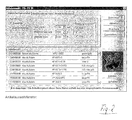
- Fig. 1 and 2 shows an item selection window. By specifically entering search criteria, you can use this Search window of the desired article found and for further processing of the project on the board of the article library.
- This method has the advantage that the display of different products on Screen done quickly and realistically.
- the marker token When using tokens, on the other hand, the marker token is only informed that the color and text content need to be changed. Thus, it is possible without any problems Enter labeling information and display it immediately.
- the positions X, Y and Z of a token can be used for functional purposes Check be used.
Landscapes
- Engineering & Computer Science (AREA)
- Physics & Mathematics (AREA)
- Theoretical Computer Science (AREA)
- Geometry (AREA)
- General Physics & Mathematics (AREA)
- Computer Hardware Design (AREA)
- Evolutionary Computation (AREA)
- General Engineering & Computer Science (AREA)
- Computational Mathematics (AREA)
- Mathematical Analysis (AREA)
- Mathematical Optimization (AREA)
- Pure & Applied Mathematics (AREA)
- Management, Administration, Business Operations System, And Electronic Commerce (AREA)
- Processing Or Creating Images (AREA)
- Data Exchanges In Wide-Area Networks (AREA)
- General Factory Administration (AREA)
Abstract
Description
- Fig. 1
- eine Abbildung eines mit der Erfindung erzeugbaren Bildschirminhalts;
- Fig. 2
- ein Artikelauswahlfenster;
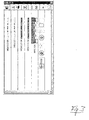
- Fig. 3
- eine Ansicht einer Artikelbibliothek;
- Fig. 4
- eine Darstellung eines Tokens.
- Planungsphase - Projektdefinition
- Konstruktionsphase - Umsetzung der Plandaten in einem CAD/CAE System (falls vorhanden) oder auf Papier
- Wirtschaftlichkeitsphase (Kaufmännische Organisation)
- Realisierungsphase (Umsetzung)
- Implementierungsphase (Einführung der Anlage)
- Der Kunde erfaßt die individuellen Klemmenleisten mit Hilfe eines Kataloges
- Übermittlung der Klemmenleistendaten per Fax oder Post
- Erfassung und Bewertung der übermittelten Daten und telefonischer Rücksprache mit dem Endkunden
- Manuelle Eingabe der Daten in das vorhandene Warenwirtschaftssystem
- Kalkulation der Klemmenleisten und deren Montage
- Festlegung eines Abgabepreises
- Angebotserstellung
- Auftragsbestätigung des Kunden
- Erstellung der Klemmenleiste auf Basis der übermittelten Fax-Daten.
- Verlustfreie Übermittlung oder Weitergabe der Projektdatei
- Nachträgliche Bearbeitungsmöglichkeiten der Projektdateien
- Zeitersparnis in allen Phasen der Projektbearbeitung bei Auftraggeber bzw. Auftragnehmer bis zur Fertigstellung der Klemmenleiste
- Örtliche Unabhängigkeit
- Minimierung der Fehlerquellen
- Der Planer und Konstrukteur erstellt den notwendigen Stromlaufplan
- Die Daten werden vom Konstrukteur in den Rail-Designer importiert
- Übermittlung der Klemmenleistendaten direkt per E-mail
- Automatisierte Datenerfassung im Warenwirtschaftssystem
- Automatische Kalkulation der Klemmenleisten und deren Montage
- Festlegung eines Abgabepreises und automatische Angebotserstellung
- Assemblieren der Klemmenleiste mit Unterstützung der Software am Arbeitsplatz
Claims (5)
- Verfahren zur Simulation und/oder Planung einer Tragschienenbestückung, bei dem mittels einer Softwareroutine die Bestückung einer Tragschiene mit Reihenklemmen und/oder weiteren Elementen und/oder Geräten simuliert wird und auf einer Ausgabeeinrichtung, vorzugsweise einem Bildschirm, einer Recheneinheit dargestellt wird, dadurch gekennzeichnet, daß die einzelnen Reihenklemmen und/oder weiteren Elemente und/oder Geräte direkt als Abbildung einer Datenstruktur aus Einzel(-Token)Elementen auf der Tragschiene abgebildet werden.
- Verfahren nach Anspruch 1, dadurch gekennzeichnet, daß die Darstellung der Reihenklemmen und/oder weiteren Elemente und/oder Geräte auf dem Bildschirm photorealistisch erfolgt.
- Verfahren nach Anspruch 1 oder 2, dadurch gekennzeichnet, daß die Klemmen-Einzelelemente in einer Datenbank abgespeichert und beim Simulieren des Aufrastens der Reihenklemme auf die Tragschiene aus der Datenbank nacheinander aus der Datenbank ausgelesen und auf dem Bildschirm darstellt werden.
- Verfahren nach einem der vorstehenden Ansprüche, dadurch gekennzeichnet, daß in einem Speicher ein Speicherbereich für ein darzustellendes Produkt reserviert wird, woraufhin aus einer Datenbank notwendige Informationen ausgelesen, interpretiert und als kleinstmögliches grafisches Element auf dem Bildschirm angezeigt werden, wobei jedes Einzelelement eines der Token darstellt.
- Verfahren nach einem der vorstehenden Ansprüche, dadurch gekennzeichnet, daß jedem Token veränderliche Eigenschaften zugewiesen werden.
Applications Claiming Priority (2)
| Application Number | Priority Date | Filing Date | Title |
|---|---|---|---|
| DE10012711A DE10012711A1 (de) | 2000-03-16 | 2000-03-16 | Verfahren zur Simulation und/oder Planung einer Tragschienenbestückung |
| DE10012711 | 2000-03-16 |
Publications (2)
| Publication Number | Publication Date |
|---|---|
| EP1134675A2 true EP1134675A2 (de) | 2001-09-19 |
| EP1134675A3 EP1134675A3 (de) | 2005-07-27 |
Family
ID=7634873
Family Applications (1)
| Application Number | Title | Priority Date | Filing Date |
|---|---|---|---|
| EP01106028A Withdrawn EP1134675A3 (de) | 2000-03-16 | 2001-03-12 | Verfahren zur Simulation und/oder Planung einer Tragschienenbestückung |
Country Status (3)
| Country | Link |
|---|---|
| US (1) | US20010025234A1 (de) |
| EP (1) | EP1134675A3 (de) |
| DE (1) | DE10012711A1 (de) |
Family Cites Families (6)
| Publication number | Priority date | Publication date | Assignee | Title |
|---|---|---|---|---|
| JPS6488881A (en) * | 1987-08-24 | 1989-04-03 | Ibm | Generation of assembling screen |
| JPH0464164A (ja) * | 1990-07-03 | 1992-02-28 | Internatl Business Mach Corp <Ibm> | シミユレーシヨン方法及び装置 |
| US5293479A (en) * | 1991-07-08 | 1994-03-08 | Quintero Smith Incorporated | Design tool and method for preparing parametric assemblies |
| US5552995A (en) * | 1993-11-24 | 1996-09-03 | The Trustees Of The Stevens Institute Of Technology | Concurrent engineering design tool and method |
| AU2759595A (en) * | 1994-06-14 | 1996-01-05 | Telefonaktiebolaget Lm Ericsson (Publ) | A method and system for manipulating intelligent representations of real equipment within a graphical computer system |
| GB2301206A (en) * | 1995-05-23 | 1996-11-27 | Compaq Computer Corp | A system for facilitating creation of a computer |
-
2000
- 2000-03-16 DE DE10012711A patent/DE10012711A1/de not_active Withdrawn
-
2001
- 2001-03-12 EP EP01106028A patent/EP1134675A3/de not_active Withdrawn
- 2001-03-12 US US09/802,875 patent/US20010025234A1/en not_active Abandoned
Also Published As
| Publication number | Publication date |
|---|---|
| US20010025234A1 (en) | 2001-09-27 |
| EP1134675A3 (de) | 2005-07-27 |
| DE10012711A1 (de) | 2001-09-20 |
Similar Documents
| Publication | Publication Date | Title |
|---|---|---|
| DE69902262T2 (de) | Animationssystem und verfahren zum definieren und anwenden von regelbasierten gruppen von objekten | |
| DE69701566T2 (de) | Medieneditiersystem und verfahren mit verbesserter effektsteuerung | |
| DE69830767T2 (de) | Verfahren und Vorrichtung zum Zusammensetzen geschichteter synthetischer graphischer Filter | |
| DE69414784T2 (de) | Vorrichtung und Verfahren zur Formmodellierung | |
| DE69310214T2 (de) | Dialogsystem | |
| EP1454280B1 (de) | System und verfahren zum testen und/oder debuggen von laufzeitsystemen zur lösung von mess-aufgaben | |
| DE69030550T2 (de) | Verfahren und System zur Erzeugung von Plänen für einen Herstellungsprozess | |
| EP1456753B1 (de) | System und verfahren zur modellierung und/oder realisierung von softwareanwendungen, insbesondere mes-anwendungen | |
| DE69233037T2 (de) | Automatisiertes neues Layout mit dimensionaler Verknüpfung | |
| EP1061422B1 (de) | Informationstechnisches System zur Definition, Optimierung und Steuerung von Prozessen | |
| DE102006055893A1 (de) | Verfahren und System zur Bestimmung eines Datenmodells zur Überlagerung mit einem realen Objekt in einem Verfahren zur Objektverfolgung | |
| DE69009544T2 (de) | Beeinflussung eines Bildes. | |
| DE69830766T2 (de) | Verfahren und Vorrichtung zum Bestimmen des Anwendungsumfangs geschichteter synthetischer graphischer Filter | |
| WO1999028799A1 (de) | Verfahren zur bildschirmgestützten definition und parametrierung von schnittstellen | |
| DE19644481A1 (de) | Computergestütztes Arbeits- und Informationssystem und zugehöriger Baustein | |
| EP2642359A1 (de) | Entwicklungseinrichtung und Verfahren zum Erstellen eines Steuergeräteprogramms | |
| DE112021003445T5 (de) | Vorrichtung zur Editierung von Bewegtbildern, Verfahren zur Editierung von Bewegtbildern, und Programm zur Editierung von Bewegtbildern | |
| EP1134675A2 (de) | Verfahren zur Simulation und/oder Planung einer Tragschienenbestückung | |
| DE4411314C2 (de) | Anordnung zur prozeßorientierten Animation eines strukturtreuen hierarchischen Simulationsmodells | |
| EP3916636A1 (de) | Verfahren und systeme zum bereitstellen von synthetischen gelabelten trainingsdatensätzen und ihre anwendungen | |
| DE69911208T2 (de) | System zur simulation eines geschäftsprozesses | |
| EP2515229A1 (de) | Softwarewerkzeug für die Automatisierungstechnik | |
| EP3621019A1 (de) | Computer-implementiertes verfahren zum erstellen von angebots- und/oder auftragsdaten eines zu individualisierenden objekts | |
| DE102015103853A1 (de) | Verfahren zur Herstellung von Blecheinrichtungen sowie Computerprogramm, Computerprogrammprodukt und System hierzu | |
| WO1995014281A1 (de) | Verfahren zur automatischen modellierung eines teilprozesses aus einem gesamtprozess durch einen rechner |
Legal Events
| Date | Code | Title | Description |
|---|---|---|---|
| PUAI | Public reference made under article 153(3) epc to a published international application that has entered the european phase |
Free format text: ORIGINAL CODE: 0009012 |
|
| AK | Designated contracting states |
Kind code of ref document: A2 Designated state(s): AT BE CH CY DE DK ES FI FR GB GR IE IT LI LU MC NL PT SE TR |
|
| AX | Request for extension of the european patent |
Free format text: AL;LT;LV;MK;RO;SI |
|
| PUAL | Search report despatched |
Free format text: ORIGINAL CODE: 0009013 |
|
| AK | Designated contracting states |
Kind code of ref document: A3 Designated state(s): AT BE CH CY DE DK ES FI FR GB GR IE IT LI LU MC NL PT SE TR |
|
| AX | Request for extension of the european patent |
Extension state: AL LT LV MK RO SI |
|
| 17P | Request for examination filed |
Effective date: 20050811 |
|
| AKX | Designation fees paid |
Designated state(s): AT BE CH CY DE DK ES FI FR GB GR IE IT LI LU MC NL PT SE TR |
|
| 17Q | First examination report despatched |
Effective date: 20081218 |
|
| STAA | Information on the status of an ep patent application or granted ep patent |
Free format text: STATUS: THE APPLICATION HAS BEEN WITHDRAWN |
|
| 18W | Application withdrawn |
Effective date: 20090225 |