EP1125477B1 - Verfahren und vorschaltgerät zum betrieb einer mit einer leuchtstofflampe versehenen leuchte - Google Patents
Verfahren und vorschaltgerät zum betrieb einer mit einer leuchtstofflampe versehenen leuchte Download PDFInfo
- Publication number
- EP1125477B1 EP1125477B1 EP99960821A EP99960821A EP1125477B1 EP 1125477 B1 EP1125477 B1 EP 1125477B1 EP 99960821 A EP99960821 A EP 99960821A EP 99960821 A EP99960821 A EP 99960821A EP 1125477 B1 EP1125477 B1 EP 1125477B1
- Authority
- EP
- European Patent Office
- Prior art keywords
- lamp
- preheating
- current
- phase
- register
- Prior art date
- Legal status (The legal status is an assumption and is not a legal conclusion. Google has not performed a legal analysis and makes no representation as to the accuracy of the status listed.)
- Expired - Lifetime
Links
- 238000000034 method Methods 0.000 title claims abstract description 50
- 238000010438 heat treatment Methods 0.000 claims abstract description 4
- 230000004044 response Effects 0.000 claims description 2
- 230000000717 retained effect Effects 0.000 claims 1
- 238000010586 diagram Methods 0.000 description 6
- 238000005259 measurement Methods 0.000 description 5
- 230000001960 triggered effect Effects 0.000 description 4
- 230000001105 regulatory effect Effects 0.000 description 3
- 238000010276 construction Methods 0.000 description 2
- 238000013461 design Methods 0.000 description 2
- 238000001514 detection method Methods 0.000 description 2
- 230000001788 irregular Effects 0.000 description 2
- 238000012545 processing Methods 0.000 description 2
- 238000009529 body temperature measurement Methods 0.000 description 1
- 230000002950 deficient Effects 0.000 description 1
- 238000011161 development Methods 0.000 description 1
- 230000000977 initiatory effect Effects 0.000 description 1
- 230000007774 longterm Effects 0.000 description 1
- 238000005457 optimization Methods 0.000 description 1
- 238000011144 upstream manufacturing Methods 0.000 description 1
Images


Classifications
-
- H—ELECTRICITY
- H05—ELECTRIC TECHNIQUES NOT OTHERWISE PROVIDED FOR
- H05B—ELECTRIC HEATING; ELECTRIC LIGHT SOURCES NOT OTHERWISE PROVIDED FOR; CIRCUIT ARRANGEMENTS FOR ELECTRIC LIGHT SOURCES, IN GENERAL
- H05B41/00—Circuit arrangements or apparatus for igniting or operating discharge lamps
- H05B41/14—Circuit arrangements
- H05B41/26—Circuit arrangements in which the lamp is fed by power derived from DC by means of a converter, e.g. by high-voltage DC
- H05B41/28—Circuit arrangements in which the lamp is fed by power derived from DC by means of a converter, e.g. by high-voltage DC using static converters
- H05B41/295—Circuit arrangements in which the lamp is fed by power derived from DC by means of a converter, e.g. by high-voltage DC using static converters with semiconductor devices and specially adapted for lamps with preheating electrodes, e.g. for fluorescent lamps
-
- H—ELECTRICITY
- H05—ELECTRIC TECHNIQUES NOT OTHERWISE PROVIDED FOR
- H05B—ELECTRIC HEATING; ELECTRIC LIGHT SOURCES NOT OTHERWISE PROVIDED FOR; CIRCUIT ARRANGEMENTS FOR ELECTRIC LIGHT SOURCES, IN GENERAL
- H05B41/00—Circuit arrangements or apparatus for igniting or operating discharge lamps
- H05B41/14—Circuit arrangements
- H05B41/36—Controlling
Definitions
- the invention relates to a method and a ballast for operating a lamp provided with a fluorescent lamp.
- ballasts are known from EP 0 889 675 A1, with which several different types of lamps of fluorescent lamps be operated under optimized operating conditions can. The degree that can be achieved with these ballasts Optimizing the operating conditions of a fluorescent lamp however leaves something to be desired.
- ballasts according to EP 0 889 675 A1 sees one Preheat phase of the electrodes. It is a ballast for warm started fluorescent lamps. At a such are those at the ends of the discharge tube Fluorescent lamp preheated in the tube protruding electrodes. In doing so, they encounter those with an emitter material Electrodes ion out, causing the contained in the discharge tube Gas filling becomes electrically conductive. Only after this The so-called discharge path of the fluorescent lamp becomes the preheating phase by ignited. With this procedure spared the electrodes. During the preheating phase, the electrode resistance of the fluorescent lamp measured, to indirectly infer the electrode temperature and perform the preheating carefully.
- the measured Electrode resistance to the lamp type of the fluorescent lamp getting closed The fluorescent lamp is initially with a low power supply and the electrode temperature measured indirectly. If the initial current is not enough to to heat the electrodes to an expected temperature, so the current is increased in stages until the electrode resistance repectively the expected electrode temperature has been reached.
- the electrode resistance is not clear criterion for differentiating the lamp types. Optimal operating conditions can be achieved with the known ballast can only be set if the lamp types to be recognized are only those whose electrode resistances differ significantly.
- ballast known from EP 0 889 675 A1 is used to determine the lamp type of the fluorescent lamp instead of the more complex measurement of the electrode resistance the simple procedure of lamp voltage measurement applied. Since the indirectly to be carried out via the electrode resistance This measurement is effective if temperature measurement is saved back to the simple procedure of lamp voltage measurement. due to the lack of optimized preheating, the Electrodes of the fluorescent lamp in this ballast increased wear. Furthermore, different Lamp types when they are the same or close to each other Have lamp voltages, also not clear be distinguished. Also the setting of optimal operating conditions is only possible with this ballast if the lamp types to be recognized are such deals, the lamp voltages differ significantly.
- the Circuit also includes a measured value evaluator, a lamp voltage measuring device as well as a DC voltage generator, with which a logic voltage can be generated.
- EP 0 759 686 describes a method and a circuit arrangement for operating an electric lamp of a predeterminable Lamp type disclosed.
- the procedure shows the steps the detection of a lamp which indicates the lamp type of the lamp first information and the step of driving the lamp in Dependence of the lamp type-specific first information.
- This initial information can be provided by a sensor that has an individual lamp type Operating state detected, or by a Input device must be specified.
- the invention is therefore based on the task of a simple one Method and a ballast for performing the method to propose a variety of common Lamp types of fluorescent lamps under a higher one Have the degree of optimization run.
- the object is achieved by a method for operating a lamp provided with a fluorescent lamp, the operating data of certain recognizable lamp types at least their nominal lamp voltage, the nominal lamp current and Preheating currents and preheating times for heating the electrodes in are stored in a register, the preheating currents being predetermined Assigned areas of the electrode resistance are the electrode resistance during a preheating phase measured and the associated with the measured electrode resistance Preheating current and the assigned preheating time set the fluorescent lamp within one of the preheating phase downstream start phase for a predetermined time is operated with a dimming current of known amperage after the present phase of the lamp voltage of the fluorescent lamp is measured, then that nominal lamp voltage in the register is searched for, the measured lamp voltage comes closest to the fluorescent lamp, and then the one for Operation of the fluorescent lamp required operating data can be set which corresponds to the measured lamp voltage per Registers are assigned.
- the lamp type recognition of the present invention is based on the principle of lamp voltage measurement during the start phase the fluorescent lamp. In addition, however, comes the knowledge of Electrode resistance due to the pre-heating phase has been determined and another selection criterion to determine the exact lamp type. With the invention The process is thus an electrode-sparing Warm start of the fluorescent lamp made and also a enables precise determination of the lamp type.
- the invention also includes the possibility of operating data to be able to change and adjust the fluorescent lamp directly or indirectly via sizes legally linked to them to be able to adjust.
- the dimming current and the lamp current for example can be changed by changing the AC frequency adjust that applied to the fluorescent lamp during operation is.
- a predetermined operating time should be can be understood, which range from a few seconds to a few minutes can.
- the dimming current set at the start of the start phase corresponds the lowest nominal lamp current stored in the register or is bigger than this. It corresponds to the least of the saved ones Nominal lamp currents, a fluorescent lamp can with low nominal lamp current even after long-term operation these conditions are not overloaded. Since the start phase but it only takes a few seconds to minutes, failure too not such fluorescent lamps whose nominal lamp currents are lower are than the dimming current.
- an optimized one is made during the starting phase Dimming current set, its amperage for operation a fluorescent lamp is sufficient, the nominal lamp current is higher than the optimized dimming current and a fluorescent lamp is not destroyed, the lamp nominal current is lower than the optimized dimming current.
- the optimized dimming current provides sufficient Energy to generate sufficient light intensity.
- a dimming setting from a few seconds to a few minutes can be accepted as there is sufficient brightness is achieved.
- Preheating phase at the beginning of a first stage the lowest in Stored preheating current set after the first Preheating stage with a first YES / NO query checks whether the electrode resistance in one of the predetermined Ranges of electrode resistance falls, and at a YES decision a further stage of the preheating phase triggered, maintaining the preheating current of the previous stage and then the start phase is initiated.
- a NO decision triggers another stage of the preheating phase, at the beginning of this stage the next higher one in the register stored preheating current set and either after a predetermined time initiated the start phase or another YES / NO query is performed using the same process steps as follows after the first YES / NO query.
- each YES decision triggers a further stage of the preheating phase, whereby the preheating current of the previous preheating stage is maintained. Every NO decision triggers another stage in the preheating phase with the next higher preheating current.
- the last one in Process flow provided YES / NO query triggers if it if the decision is NO, an increase in the preheating current is selected and then after a predetermined time the start phase without a another YES / NO query is carried out.
- a further improvement in the process is achieved if the stored operating data of the recognizable lamp types in the register are divided into lamp groups, with inside only one fluorescent lamp with different lamps Nominal lamp voltages are included that each lamp group by registering one of the areas of the electrode resistances and a preheating current is assigned that over the determined Electrode resistance or the last one during the preheating phase set is determined, which group of lamps the fluorescent lamp belongs to that during the subsequent start phase within the determined Lamp group of the register searched for the nominal lamp voltage is that of the measured lamp voltage of the fluorescent lamp comes closest, and then the one to operate the Fluorescent lamp required operating data set are assigned to the measured lamp voltage via register are.
- start-up phase can also be summarized the recognizable lamp types in lamp groups can be improved.
- Each lamp group in the register has a dimming current for this assigned, the one to be set for the start phase Dimming current during the preheating phase due to the detection the lamp group.
- the process sequence is an advantageous further development a three-stage preheating phase with two possible YES / NO queries before, a NO decision of the second YES / NO query triggers the third stage of the preheating phase, whereby compared to the previous stage of the preheating phase highest preheating current stored in the register and the start phase is initiated after a predetermined time.
- the three-stage process sequence offers three specified preheating currents, the, starting with the least, in consecutive Stages of the preheating phase can be increased.
- the three-stage process for preheating is an advantageous one Compromise with which to preheat the multitude of Lamp types is sufficiently differentiated and the design effort for the required ballast in one reasonable framework.
- Lamp voltage can be stored in the register. While the operation of the fluorescent lamp is then checked whether the lamp voltage present in operation the maximum Lamp voltage exceeds. If the maximum lamp voltage then a safety shutdown the fluorescent lamp. Checking the lamp voltage can, for example, take place continuously or in predetermined Time intervals are carried out.
- a minimum lamp voltage in the register can also be analog be saved and checked whether the present Lamp voltage falls below the minimum. In the event of a shortfall turn off the fluorescent lamp performed.
- the stored maximum lamp voltage is expediently above the highest of the lamp voltages stored in the register. Alternatively, for each individual or for Groups of lamp types have different maximum lamp voltages be saved.
- the start phase is assigned by actuating one of the lights ON / OFF switch carried out or useful when the lamp is switched on by inserting a Fluorescent lamp inserted into an empty lamp holder. On this prevents one from being on fluorescent lamp put into operation with the lamp incorrect operating data is operated. The same applies the preheating phase. This can also be done by pressing ON / OFF switch or by inserting a fluorescent lamp lead into an empty lamp holder.
- the invention also consists in a particularly simple one Design of a ballast for performing the inventive method, with a frequency generator and a control circuit which cooperates with this and which Fluorescent lamp over power transistors with an AC voltage supplied, the lamp current through a limiter is adjustable, a register in which the operating data several lamp types are registered, a sequence control which the timing of the during a start phase of Controls fluorescent lamp process steps to be carried out, a measured value evaluator, a lamp voltage measuring device and a DC voltage generator with which a logic voltage can be generated.
- the lamp current can z. B. indirectly via the frequency the AC voltage, by changing the DC voltage or can be adjusted by changing impedances.
- ballast is advantageous. Its construction allows only the control circuit as well as the downstream power transistors by the DC generator with high energy supply to operate the fluorescent lamp.
- the ballast with an electrode resistance measuring device Mistake.
- the timing of the process steps controllable the to be carried out during a preheating phase of the fluorescent lamp are.
- the sequence control, the measured value evaluator, the register and the frequency generators are useful in a common Control device arranged, also referred to as a controller becomes.
- the DC voltage generator has a connection that the parts of the ballast involved in data processing supplied with energy.
- the energy is regulated in the form of a Tapped logic voltage that is significantly lower than that lamp voltage required to supply the lamp.
- the control device, the control circuit, the lamp voltage measuring device and the electrode resistance measuring device are regulated via the DC voltage generator with a DC voltage supplied. This is called the so-called logic voltage on a separate connection of the DC voltage generator tapped and is much less than that for Lamp voltage supply required.
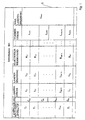
- the register R contains operating data for the lamp types T 1 , T 2 , ... T n-1 and T n , which in the present exemplary embodiment are in lamp groups G 1 , G 2 , ... G n-1 and G n are divided.
- the register R also stores, for each lamp type, the nominal lamp current I L , the nominal lamp voltage U L , the electrode resistance R E , a preheating current I vorh and a maximum lamp voltage U max .
- These operating data are also indexed in the register R according to the indexing of the lamp types T 1 , T 2 , ... T n-1 and T n with 1, 2, (n-1) and n.
- the method according to the invention initially sees a preheating phase V and a subsequent start phase S before. 2 is First the start phase S is explained, during which the actual one Determination of the lamp type, namely by measuring the lamp voltage, takes place.
- the preheating phase V which is in the process upstream of the start phase S is based on the Fig. 3 described.
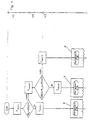
- FIG. 2 begins the flow chart K of the method for Operation of a fluorescent lamp with the start phase S.
- Fig. 3 is followed by the simplified flow diagram K the four exemplary courses of the preheating phase.
- a dimming position is set according to the exemplary embodiment according to FIG. 2, during which a predetermined, optimized dimming current I Do flows for a predetermined time.
- the predetermined dimming current IDO already corresponds to the registered nominal lamp current I L2 .
- Fluorescent lamps of the lamp type T 2 are therefore operated under optimal conditions from the start of the start phase S. Fluorescent lamps with a lower nominal lamp current are overloaded to a small but tolerable degree. Fluorescent lamps with a higher nominal lamp current can be operated safely with the optimized dimming current I Do , so that sufficient brightness is already achieved during this dimming position.
- the actual lamp voltage U L of the fluorescent lamp in operation is measured.
- the lamp type is not determined from all lamp types T 1 , T 2 , ... T n-1 and Tn stored in the register, but only within that lamp group G 1 , G 2 , ... G n-1 and G n of the register R, which was already determined during the preheating phase V by measuring the electrode resistance. Under the lamp types of a lamp group, confusion with other lamp types with the same nominal lamp voltage is excluded.
- the measured lamp voltage U L coincides with a nominal lamp voltage U L1 to U Ln stored in the lamp group G 1 , G 2 , ... G n-1 and G n of the register R, then it is exactly certain by which of the lamp types T 1 , T 2 , ... T n-1 or T n . Then the operating data of the determined lamp type T 1 , T 2 ,... T n-1 or T n assigned by register R are set. In the present exemplary embodiment, the lamp current I L is adjusted. This is z. B. via a corresponding change in the AC frequency with which the fluorescent lamp is fed. Henceforth, the fluorescent lamp is operated during an operating phase B under optimized conditions.
- the operating phase B is shown in FIG. 2 by a regular Switch-off process ended.
- FIG. 3 shows a flow diagram with an n-stage preheating phase of a fluorescent lamp.
- the stages V 1 , V 2 , ... V (n-1) and V n of the preheating phase are shown.
- the lowest preheating current I vorh1 stored in the register R is set.
- the first stage V 1 of the preheating phase is checked with a first YES / NO query A 1, if the electrode resistance R E in the predetermined range (R E> X) falls, and at a YES decision, a further stage V 2 of the Preheating phase triggered, the preheating current I vorh1 of the previous stage V 1 being maintained and then the starting phase S being initiated.
- a NO decision triggers another stage V 2 of the preheating phase, with the next higher preheating current I vorh2 set in register R being set at the beginning of this stage V 2 and either initiating the start phase S after a predetermined time or a further YES / NO query A 2 is performed, it is determined the whether the electrode resistance R e in the predetermined range (Y ⁇ R e ⁇ X) falls.
- the YES / NO query A 2 is followed by the same method steps as the YES / NO query A 1 . If the decision is YES, a further stage of the preheating phase is triggered, the preheating current I vorh2 of the previous stage V 2 being maintained and the starting phase S then being initiated.
- a NO decision triggers a further stage of the preheating phase, not shown, at the beginning of this stage the next higher preheating current stored in the register R and either starting the start phase S after a predetermined time or a further YES / NO query (not shown) ) is carried out.
- a penultimate stage V (n-1) of the preheating phase is followed by a YES / NO query A n-1 , with which it is checked whether the electrode resistance RE falls within the predetermined range (Z ⁇ R E ⁇ Y). If the decision is YES, stage V n of the preheating phase is triggered, preheating current I vorh (n-1) of previous stage V (n-1) being maintained and then starting phase S being initiated.
- a NO decision triggers the last stage V n of the preheating phase, with the highest preheating current I stored in register R being set in advance at the beginning of this stage V n and the start phase S being initiated immediately after a predetermined time without another YES / NO Query.
- a three-stage preheating phase with two possible YES / NO queries A 1 and A 2 is provided.
- a NO decision of the second YES / NO query A 2 triggers the third stage V 3 of the preheating phase.
- the highest preheating current I vorh3 stored in the register R is set and the start phase S is initiated immediately after a predetermined time without carrying out another YES / NO query.
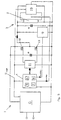
- the ballast 1 shows a ballast 1 for operation a lamp 3 provided with a fluorescent lamp 2, that is both for performing a warm start, as well suitable for performing a cold start.
- the ballast 1 has a control device, also referred to as a controller 4 on. This is with a sequence control 5, a measured value evaluator 6, a data memory designated as register 7 and provided a frequency generator 8.
- the operating data are in the register 7 of the control device 4 of several lamp types registered.
- the sequence control 5 controls the timing of the fluorescent lamp during the start phase 2 procedural steps to be carried out. Besides, is with the sequence control 5, the timing of the method steps controllable during a preheating phase of the fluorescent lamp 2 are to be carried out.
- the ballast 1 with a lamp voltage measuring device 9 and an electrode resistance measuring device 10 provided.
- the measured value evaluator 6 is supplied with the measured values of the lamp voltage measuring device 9 and the electrode resistance measuring device 10.
- the measured value evaluator 6 thus carries out the YES / NO queries required by the proposed method during the preheating phase. In addition, it evaluates the measured lamp voltage U L and the registered lamp nominal voltages U L1 ... U Ln and determines the exact lamp type in accordance with the proposed method.
- a DC voltage generator G generates a regulated logic voltage U logic , with which it supplies the parts of the ballast 1 involved in the data processing, namely the control device 4, the sequence control 5, the measured value evaluator 6, the register 7, the frequency generator 8, the lamp voltage measuring device 9 and the electrode resistance measuring device 10, supplied with energy.
- a control circuit 11 which cooperates with the frequency generator 8 and supplies the fluorescent lamp 2 with an AC voltage via power transistors 12 and 13, is likewise supplied with the logic voltage U logic .
Landscapes
- Circuit Arrangements For Discharge Lamps (AREA)
- Lighting Device Outwards From Vehicle And Optical Signal (AREA)
Description
- Fig. 1
- eine schematische Darstellung der in einem Register gespeicherten Betriebsdaten unterschiedlicher Lampentypen von Leuchtstofflampen,
- Fig. 2
- ein Ablaufschema, in dem die Ermittlung des Lampentyps während der Startphase einer Leuchtstofflampe dargestellt ist,
- Fig. 3
- ein Ablaufschema, mit einer n-stufige Vorheizphase einer Leuchtstofflampe,
- Fig. 4
- ein Ablaufschema, mit einer dreistufigen Vorheizphase einer Leuchtstofflampe,
- Fig. 5
- einen schematischen Schaltplan einer Ausführungsform eines Vorschaltgeräts.
- R
- Register
- T1
- Lampentyp
- T2
- Lampentyp
- Tn-1
- Lampentyp
- Tn
- Lampentyp
- G1
- Lampengruppe
- G2
- Lampengruppe
- Gn-1
- Lampengruppe
- Gn
- Lampengruppe
- IL
- Lampennennstrom
- UL
- Lampennennspannung
- RE
- Elektrodenwiderstand
- Ivorh
- Vorheizstrom
- Umax
- maximale Lampenspannung
- K
- Ablaufschema
- S
- Startphase
- ID
- Dimmstrom
- IDo
- optimierter Dimmstrom
- V1
- erste Stufe der Vorheizphase
- V2
- zweite Stufe der Vorheizphase
- V3
- dritte Stufe der Vorheizphase
- Vn-1
- vorletzte Stufe der Vorheizphase
- Vn
- letzte Stufe der Vorheizphase
- A1
- erste JA/NEIN-Abfrage
- A2
- zweite JA/NEIN-Abfrage
- An-1
- letzte JA/NEIN-Abfrage
- RE > X
- vorgegebener Bereich des Elektrodenwiderstands
- Y ⇐ RE ⇐ X
- vorgegebener Bereich des Elektrodenwiderstands
- Z ⇐ RE ⇐ Y
- vorgegebener Bereich des Elektrodenwiderstands
- 1
- Vorschaltgerät
- 2
- Leuchtstofflampe
- 3
- Leuchte
- 4
- Steuereinrichtung (Controller)
- 5
- Ablaufsteuerung
- 6
- Meßauswerter
- 7
- Register
- 8
- Frequenzerzeuger
- 9
- Lampenspannungsmeßeinrichtung
- 10
- Elektrodenwiderstandsmeßeinrichtung
- 11
- Ansteuerschaltung
- 12
- Leistungstransistor
- 13
- Leistungstransistor
- G
- Gleichspannungserzeuger
- ULogik
- Logikspannung
Claims (13)
- verfahren zum Betrieb einer mit einer Leuchtstofflampe (2) versehenen Leuchte (3), wobei die Betriebsdaten bestimmter erkennbarer Lampentypen (T1, T2, Tn-1, Tn) zumindest deren Lampennennspannung (UL), der Lampennennstrom (IL) sowie Vorheizströme (Ivorh1, Ivorh2, Ivorhn-1, Ivorhn) zur Heizung der Elektroden in einem Register (R) gespeichert sind, wobei die Vorheizströme (Ivorh1, Ivorh2, Ivorhn-1, Ivorhn) vorbestimmten Bereichen des Elektrodenwiderstandes (RE > X), (Y ⇐ RE ⇐ X), (Z ⇐ RE ⇐ Y) zugeordnet sind, der Elektrodenwiderstand (RE) während einer Vorheizphase (V) gemessen und der dem gemessenen Elektrodenwiderstand (RE) zugeordnete Vorheizstrom (Ivorh1, Ivorh2, Ivorhn-1, Ivorhn) eingestellt wird, daß die Leuchtstofflampe (2) innerhalb einer der Vorheizphase (V) nachgeschalteten Startphase (S) während einer vorbestimmten Zeit mit einem Dimmstrom (ID) bekannter Stromstärke betrieben wird, nach der Startphase (S) die vorliegende Lampenspannung (UL) der Leuchtstofflampe (2) gemessen wird, dann in dem Register (R) diejenige Lampennennspannung (UL1, UL2, UL(n-1), ULn) gesucht wird, die der gemessenen Lampenspannung (UL) der Leuchtstofflampe (2) am nächsten kommt, und danach die zum Betrieb der Leuchtstofflampe (2) erforderlichen Betriebsdaten eingestellt werden, die der gemessenen Lampenspannung (UL) per Register (R) zugeordnet sind.
- Verfahren nach Anspruch 1, dadurch gekennzeichnet, daß zu Beginn der Startphase (S) ein Dimmstrom (ID) eingestellt wird, der dem geringsten im Register (R) gespeicherten Lampennennstrom (IL1) entspricht oder größer ist als dieser.
- Verfahren nach Anspruch 1 oder 2, dadurch gekennzeichnet, daß während der Startphase (S) ein optimierter Dimmstrom (IDO) eingestellt wird, dessen Stromstärke für den Betrieb einer Leuchtstofflampe (2) ausreichend ist, deren Lampennennstrom (IL1, IL2, IL(n-1), ILn) höher ist als der optimierte Dimmstrom (IDo) und eine Leuchtstofflampe (2) nicht zerstört wird, deren Lampennennstrom (IL1, IL2, t IL(n-1), ILn) geringer ist als der optimierte Dimmstrom (IDo).
- Verfahren nach einem der Ansprüche 1 bis 3, dadurch gekennzeichnet, daß zu Beginn einer ersten Stufe (V1) der Vorheizphase (V) der geringste im Register (R) gespeicherte Vorheizstrom (Ivorh1) eingestellt wird, daß nach der ersten Stufe (V1) der Vorheizphase (V) mit einer ersten JA/NEIN-Abfrage (A1) überprüft wird, ob der Elektrodenwiderstand (RE) in einen der vorbestimmten Bereiche (RE > X), (Y ⇐ RE ⇐ X), (Z ⇐ RE ⇐ Y) des Elektrodenwiderstands fällt, daß eine JA-Entscheidung eine weitere Stufe der Vorheizphase (V2) auslöst, wobei der Vorheizstrom (Ivorh1) der vorherigen Stufe (V1) beibehalten und danach die Startphase (S) eingeleitet wird, und eine NEIN-Entscheidung eine weitere Stufe (V2) der Vorheizphase (V) auslöst, wobei zu Beginn dieser Stufe (V2) der nächst höhere im Register (R) gespeicherte Vorheizstrom (Ivorh2) eingestellt wird und entweder nach einer vorbestimmten Zeit die Startphase (S) eingeleitet oder eine weitere JA/NEIN-Abfrage durchgeführt wird, der die gleichen Verfahrensschritte wie nach der ersten JA/NEIN-Abfrage (A1) folgen.
- Verfahren nach einem der Ansprüche 1 bis 4, dadurch gekennzeichnet, daß die gespeicherten Betriebsdaten der erkennbaren Lampentypen (T1, T2, Tn-1, Tn) in dem Register (R) in Lampengruppen (G1, G, Gn-1, Gn) unterteilt sind, wobei innerhalb einer Lampengruppe (G1, G, Gn-1, Gn) nur Leuchtstofflampen (2) mit unterschiedlichen Lampennennspannungen (UL1, UL2, UL(n-1), ULn) enthalten sind, daß jeder Lampengruppe (G1, G, Gn-1, Gn) per Register (R) einer der Bereiche (RE > X), (Y ⇐ RE ⇐ X), (Z ⇐ RE ⇐ Y) der Elektrodenwiderstände sowie ein Vorheizstrom (Ivorh1, Ivorh2, Ivorhn-1, Ivorhn) zugeordnet ist, daß über den ermittelten Elektrodenwiderstand (RE) beziehungsweise den letzten während der Vorheizphase (V) eingestellten Vorheizstrom (Ivorh1, Ivorh2, Ivorhn-1, Ivorhn) festgestellt wird, welcher Lampengruppe (G1, G, Gn-1, Gn) die Leuchtstofflampe (2) zugehört, daß während der nachfolgenden Startphase (S) innerhalb einer Lampengruppe des Registers (R) diejenige Lampennennspannung (UL1, UL2, UL(n-1), ULn) gesucht wird, die der gemessenen Lampenspannung (UL) der Leuchtstofflampe (2) am nächsten kommt, und danach die zum Betrieb der Leuchtstofflampe (2) erforderlichen Betriebsdaten eingestellt werden, die der gemessenen Lampenspannung (UL) per Register (R) zugeordnet sind.
- Verfahren nach Anspruch 5, dadurch gekennzeichnet, daß jeder Lampengruppe des Registers (R) ein Dimmstrom (ID) zugeordnet ist, wobei der für die Startphase (S) einzustellende Dimmstrom (ID) bereits während der Vorheizphase (V) durch die Feststellung der Lampengruppe (G1, G, Gn-1, Gn) festgelegt wird.
- Verfahren nach einem der Ansprüche 1 bis 6, dadurch gekennzeichnet, daß der Verfahrensablauf eine dreistufige Vorheizphase (V) mit zwei möglichen JA/NEIN-Abfragen (A1, A2) vorsieht, wobei eine NEIN-Entscheidung der zweiten JA/NEIN-Abfrage (A2) eine dritte Stufe (V3) der Vorheizphase (V) auslöst, wobei gegenüber der vorherigen Stufe (V2) der Vorheizphase (V) der höchste im Register (R) gespeicherte Vorheizstrom (Ivorh3) eingestellt und nach einer vorbestimmten Zeit die Startphase (S) eingeleitet wird.
- Verfahren nach einem der Ansprüche 1 bis 7, dadurch gekennzeichnet, daß für jeden Lampentyp (T1, T2, Tn-1, Tn) eine maximale Lampenspannung (Umax) und/oder minimale Lampenspannung in dem Register (R) gespeichert ist, daß während des Betriebs der Leuchstofflampe (2) überprüft wird, ob die im Betrieb vorhandene Lampenspannung (UL) die maximale Lampenspannung (Umax) übersteigt bzw. die minimale Lampenspannung unterschreitet, und daß bei einer Überschreitung der maximalen Lampenspannung (Umax) bzw. Unterschreitung der minimalen Lampenspannung eine Sicherheitsabschaltung der Leuchtstofflampe (2) vorgenommen wird.
- Verfahren nach einem der Ansprüche 1 bis 8, dadurch gekennzeichnet, daß die Vorheizphase (V) durch Betätigung eines der Leuchte (3) zugeordneten EIN/AUS-Schalters oder im eingeschalteten Zustand der Leuchte (3) durch Einsetzen einer Leuchtstofflampe (2) in eine leere Lampenfassung eingeleitet wird.
- Vorschaltgerät zum Betrieb einer mit einer Leuchtstofflampe (2) versehenen Leuchte (3), mit einem Frequenzerzeuger (8) und einer mit diesem zusammenwirkenden Ansteuerschaltung (11), die die Leuchtstofflampe (2) über Leistungstransistoren (12, 13) mit einer Wechselspannung versorgt, wobei der Lampenstrom (IL) durch einen Begrenzer einstellbar ist, einem Register (R), in dem die Betriebsdaten mehrerer Lampentypen (T1, T2, Tn-1, Tn) registiert sind, einer Ablaufsteuerung (5) die den Zeitablauf der während einer Vorheizphase (V) sowie einer Startphase (S) der Leuchtstofflampe (2) durchzuführenden Verfahrensschritte steuert, einem Meßwertauswerter (6), einer Lampenspannungsmeßeinrichtung (9) sowie einem Gleichspannungserzeuger (G), mit dem eine Logikspannung (ULogik) erzeugbar ist, dadurch gekennzeichnet, daß Vorheizströme (Ivorh1, Ivorh2, Ivorhn-1, Ivorhn) zur Heizung der Elektroden in dem Register (R) speicherbar sind, wobei die Vorheizströme vorbestimmten Bereichen des Elektrodenwiderstandes (RE > X), (Y ⇐ RE ⇐ X), (Z ⇐ RE ⇐ Y) zugeordnet sind, der Elektrodenwiderstand (RE) während einer Vorheizphase (V) meßbar und der dem gemessenen Elektrodenwiderstand (RE) zugeordnete Vorheizstrom einstellbar ist.
- Vorschaltgerät nach Anspruch 10, dadurch gekennzeichnet, daß mit der Ablaufsteuerung (5) der Zeitablauf der während einer Vorheizphase (V) der Leuchtstofflampe (2) durchzuführenden Verfahrensschritte steuerbar ist.
- Vorschaltgerät nach Anspruch 10 oder 11, dadurch gekennzeichnet, daß die Ablaufsteuerung (5), der Meßwertauswerter (6), das Register (R) und der Frequenzerzeuger (8) in einer gemeinsamen Steuereinrichtung (4) vorgesehen sind.
- Vorschaltgerät nach einem der Ansprüche 10 bis 12, dadurch gekennzeichnet, daß die Steuereinrichtung (4), die Ansteuerschaltung (11), die Lampenspannungsmeßeinrichtung (9) sowie die Elektrodenwiderstansmeßeinrichtung (10) über den Gleichspannungserzeuger (G) mit einer geregelten Gleichspannung versorgt sind.
Applications Claiming Priority (3)
| Application Number | Priority Date | Filing Date | Title |
|---|---|---|---|
| DE19850441 | 1998-10-27 | ||
| DE19850441A DE19850441A1 (de) | 1998-10-27 | 1998-10-27 | Verfahren und Vorschaltgerät zum Betrieb einer mit einer Leuchtstofflampe versehenen Leuchte |
| PCT/DE1999/003422 WO2000025554A2 (de) | 1998-10-27 | 1999-10-27 | Verfahren und vorschaltgerät zum betrieb einer mit einer leuchtstofflampe versehenen leuchte |
Publications (2)
| Publication Number | Publication Date |
|---|---|
| EP1125477A2 EP1125477A2 (de) | 2001-08-22 |
| EP1125477B1 true EP1125477B1 (de) | 2002-04-10 |
Family
ID=7886404
Family Applications (1)
| Application Number | Title | Priority Date | Filing Date |
|---|---|---|---|
| EP99960821A Expired - Lifetime EP1125477B1 (de) | 1998-10-27 | 1999-10-27 | Verfahren und vorschaltgerät zum betrieb einer mit einer leuchtstofflampe versehenen leuchte |
Country Status (5)
| Country | Link |
|---|---|
| US (1) | US6525479B1 (de) |
| EP (1) | EP1125477B1 (de) |
| AT (1) | ATE216177T1 (de) |
| DE (2) | DE19850441A1 (de) |
| WO (1) | WO2000025554A2 (de) |
Cited By (4)
| Publication number | Priority date | Publication date | Assignee | Title |
|---|---|---|---|---|
| DE102007047142A1 (de) | 2007-10-02 | 2009-04-09 | Tridonicatco Gmbh & Co. Kg | Verfahren zum Erkennen des Typs einer mit einem elektronischen Vorschaltgerät zu betreibenden Gasentladungslampe sowie elektronisches Vorschaltgerät |
| DE102008012453A1 (de) | 2008-03-04 | 2009-09-10 | Tridonicatco Gmbh & Co. Kg | Verfahren zum Prüfen, ob mindestens zwei mit einem elektronischen Vorschaltgerät zu betreibende Gasentladungslampen vom gleichen Typ sind |
| DE102008022198A1 (de) | 2008-03-04 | 2009-09-10 | Tridonicatco Gmbh & Co. Kg | Typerkennung einer mit einem elektronischen Vorschaltgerät zu betreibenden Gasentladungslampe |
| DE102008012454A1 (de) | 2008-03-04 | 2009-09-10 | Tridonicatco Gmbh & Co. Kg | Verfahren zum Bestimmen von Betriebsparametern einer mit einem elektronischen Vorschaltgerät zu betreibenden Gasentladungslampe sowie ein entsprechendes Vorschaltgerät |
Families Citing this family (30)
| Publication number | Priority date | Publication date | Assignee | Title |
|---|---|---|---|---|
| DE10016035A1 (de) * | 2000-03-31 | 2001-10-18 | Trilux Lenze Gmbh & Co Kg | Verfahren und Vorschaltgerät zum Dimmen einer mit einer Leuchtstofflampe versehenen Leuchte |
| US6359387B1 (en) * | 2000-08-31 | 2002-03-19 | Philips Electronics North America Corporation | Gas-discharge lamp type recognition based on built-in lamp electrical properties |
| DE10045709A1 (de) * | 2000-09-15 | 2002-03-28 | Tridonic Bauelemente Gmbh Dorn | Elektronisches Vorschaltgerät |
| DE10045711A1 (de) * | 2000-09-15 | 2002-03-28 | Tridonic Bauelemente Gmbh Dorn | Elektronisches Vorschaltgerät |
| US6501235B2 (en) * | 2001-02-27 | 2002-12-31 | Stmicroelectronics Inc. | Microcontrolled ballast compatible with different types of gas discharge lamps and associated methods |
| DE10133515A1 (de) * | 2001-07-10 | 2003-01-30 | Patent Treuhand Ges Fuer Elektrische Gluehlampen Mbh | Schaltungsanordnung zum Betreiben einer Leuchtstofflampe |
| AU2002368295A1 (en) * | 2002-10-14 | 2004-05-04 | B And S Elektronische Gerate Gmbh | Method and device for establishing a connection between a lamp and an electronic apparatus that is disposed upstream therefrom |
| US6982528B2 (en) * | 2003-11-12 | 2006-01-03 | Lutron Electronics Co., Inc. | Thermal protection for lamp ballasts |
| US7589472B2 (en) * | 2003-12-11 | 2009-09-15 | Koninklijke Philips Electronics N.V. | Electronic ballast with lamp type determination |
| US6969955B2 (en) * | 2004-01-29 | 2005-11-29 | Axis Technologies, Inc. | Method and apparatus for dimming control of electronic ballasts |
| NL1025713C2 (nl) * | 2004-03-12 | 2005-09-13 | Nedap Nv | Identificatiesysteem voor TL-buizen. |
| DE102005003450A1 (de) * | 2005-01-25 | 2006-07-27 | Patent-Treuhand-Gesellschaft für elektrische Glühlampen mbH | Verfahren und Vorrichtung zum Regeln und Steuern einer Wendelheizung für Lampen |
| US7560866B2 (en) * | 2005-04-18 | 2009-07-14 | Marvell World Trade Ltd. | Control system for fluorescent light fixture |
| US7414369B2 (en) * | 2005-04-18 | 2008-08-19 | Marvell World Trade Ltd. | Control system for fluorescent light fixture |
| DE102005018761A1 (de) * | 2005-04-22 | 2006-10-26 | Tridonicatco Gmbh & Co. Kg | Intelligente Flyback-Heizung |
| DE202005011887U1 (de) * | 2005-07-28 | 2005-10-06 | Patent-Treuhand-Gesellschaft für elektrische Glühlampen mbH | Elektronische Schaltungsanordnung zur Steuerung eines elektronischen Vorschaltgeräts |
| DE202005013754U1 (de) * | 2005-08-31 | 2005-11-17 | Patent-Treuhand-Gesellschaft für elektrische Glühlampen mbH | Vorschaltgerät für eine Entladungslampe mit adaptiver Vorheizung |
| DE102007008148A1 (de) * | 2007-02-19 | 2008-08-21 | Patent-Treuhand-Gesellschaft für elektrische Glühlampen mbH | Universal-EVG zum Betrieb Hg-freier und Hg-haltiger D-Lampen |
| JP2009004332A (ja) * | 2007-06-25 | 2009-01-08 | Sansha Electric Mfg Co Ltd | 放電ランプ点灯制御装置及び電源回路 |
| CN101816219B (zh) * | 2007-10-02 | 2014-04-02 | 赤多尼科阿特可两合股份有限公司 | 确定气体放电灯的工作参数的方法及相应的镇流器 |
| US7868561B2 (en) | 2007-10-31 | 2011-01-11 | Lutron Electronics Co., Inc. | Two-wire dimmer circuit for a screw-in compact fluorescent lamp |
| DE102008016753A1 (de) * | 2008-03-31 | 2009-10-01 | Tridonicatco Schweiz Ag | Erkennung des Typs einer Hochdruck (HID)-Entladungslampe |
| DE102008019158B3 (de) * | 2008-04-17 | 2009-11-05 | Vossloh-Schwabe Deutschland Gmbh | Lampentyperkennung für Gasentladungslampen bei Kaltstart |
| EP2274960B1 (de) | 2008-04-25 | 2013-02-27 | OSRAM GmbH | Verfahren und schaltungsanordnung zum betreiben mindestens einer entladungslampe |
| DE102008031409A1 (de) * | 2008-07-02 | 2010-01-07 | Tridonicatco Gmbh & Co. Kg | Erkennung des Typs einer an einem Betriebsgerät angeschlossenen Gasentladungslampe |
| DE102008047440A1 (de) | 2008-09-16 | 2010-03-25 | Tridonicatco Gmbh & Co. Kg | Bestimmung des Typs eines Leuchtmittels oder der Topologie mehrerer Leuchtmittel |
| TWI463918B (zh) * | 2008-10-02 | 2014-12-01 | Everspring Ind Co Ltd | Lighting equipment start control method |
| DE102010029475A1 (de) * | 2010-05-28 | 2011-12-01 | Osram Gesellschaft mit beschränkter Haftung | Verfahren und Betriebsvorrichtung zum Betreiben von Entladungslampen unterschiedlichen Lampentyps |
| WO2012042412A2 (en) * | 2010-09-28 | 2012-04-05 | Koninklijke Philips Electronics N.V. | Device and method for automatically detecting installed lamp type |
| CN102595747B (zh) * | 2012-02-05 | 2014-03-12 | 浙江大学 | 基于数字控制电子镇流器的荧光灯灯类型识别方法及数字通用电子镇流器 |
Family Cites Families (11)
| Publication number | Priority date | Publication date | Assignee | Title |
|---|---|---|---|---|
| US4791338A (en) * | 1986-06-26 | 1988-12-13 | Thomas Industries, Inc. | Fluorescent lamp circuit with regulation responsive to voltage, current, and phase of load |
| JPH0766864B2 (ja) * | 1989-07-28 | 1995-07-19 | 東芝ライテック株式会社 | 放電灯点灯装置 |
| JPH06267687A (ja) * | 1993-03-10 | 1994-09-22 | Hitachi Lighting Ltd | 放電灯点灯装置 |
| DE4314993C2 (de) * | 1993-05-06 | 1999-05-12 | B & S Elektronische Geraete Gm | Vorschaltgerät zur Abgabe von an unterschiedliche anschließbare Lampentypen angepaßten Leistungen |
| US5600211A (en) * | 1994-09-16 | 1997-02-04 | Tridonic Bauelemente Gmbh | Electronic ballast for gas discharge lamps |
| US5646484A (en) * | 1994-11-02 | 1997-07-08 | Litebeams, Inc. | High reliability incandescent portable illumination system |
| US5691605A (en) * | 1995-03-31 | 1997-11-25 | Philips Electronics North America | Electronic ballast with interface circuitry for multiple dimming inputs |
| DE19530485A1 (de) * | 1995-08-18 | 1997-02-20 | Patent Treuhand Ges Fuer Elektrische Gluehlampen Mbh | Verfahren und Schaltungsanordnung zum Betreiben einer elektrischen Lampe |
| US5798614A (en) * | 1996-09-26 | 1998-08-25 | Rockwell International Corp. | Fluorescent lamp filament drive technique |
| DE19715341C1 (de) * | 1997-04-12 | 1998-10-15 | Vossloh Schwabe Gmbh | Elektronisches Vorschaltgerät mit automatischem Wiederanlauf |
| EP0889675A1 (de) * | 1997-07-02 | 1999-01-07 | MAGNETEK S.p.A. | Elektronisches Vorhaltgerät mit Lampentyperkennung |
-
1998
- 1998-10-27 DE DE19850441A patent/DE19850441A1/de not_active Withdrawn
-
1999
- 1999-10-27 WO PCT/DE1999/003422 patent/WO2000025554A2/de not_active Ceased
- 1999-10-27 US US09/830,522 patent/US6525479B1/en not_active Expired - Fee Related
- 1999-10-27 EP EP99960821A patent/EP1125477B1/de not_active Expired - Lifetime
- 1999-10-27 DE DE59901229T patent/DE59901229D1/de not_active Expired - Lifetime
- 1999-10-27 AT AT99960821T patent/ATE216177T1/de not_active IP Right Cessation
Cited By (7)
| Publication number | Priority date | Publication date | Assignee | Title |
|---|---|---|---|---|
| DE102007047142A1 (de) | 2007-10-02 | 2009-04-09 | Tridonicatco Gmbh & Co. Kg | Verfahren zum Erkennen des Typs einer mit einem elektronischen Vorschaltgerät zu betreibenden Gasentladungslampe sowie elektronisches Vorschaltgerät |
| DE102008012453A1 (de) | 2008-03-04 | 2009-09-10 | Tridonicatco Gmbh & Co. Kg | Verfahren zum Prüfen, ob mindestens zwei mit einem elektronischen Vorschaltgerät zu betreibende Gasentladungslampen vom gleichen Typ sind |
| DE102008022198A1 (de) | 2008-03-04 | 2009-09-10 | Tridonicatco Gmbh & Co. Kg | Typerkennung einer mit einem elektronischen Vorschaltgerät zu betreibenden Gasentladungslampe |
| DE102008012454A1 (de) | 2008-03-04 | 2009-09-10 | Tridonicatco Gmbh & Co. Kg | Verfahren zum Bestimmen von Betriebsparametern einer mit einem elektronischen Vorschaltgerät zu betreibenden Gasentladungslampe sowie ein entsprechendes Vorschaltgerät |
| CN102027809A (zh) * | 2008-03-04 | 2011-04-20 | 三多尼克两合股份有限公司 | 照明系统和检测要由电子镇流器操作的至少两个气体放电灯是否属于相同类型的方法 |
| EP2355626A2 (de) | 2008-03-04 | 2011-08-10 | Tridonic GmbH & Co KG | Beleuchtungssystem und Verfahren zum Prüfen, ob mindestens zwei mit einem EVG zu betreibende Gasentladungslampen vom gleichen Typ sind |
| CN102027809B (zh) * | 2008-03-04 | 2014-10-01 | 三多尼克两合股份有限公司 | 照明系统和检测要由电子镇流器操作的至少两个气体放电灯是否属于相同类型的方法 |
Also Published As
| Publication number | Publication date |
|---|---|
| DE19850441A1 (de) | 2000-05-11 |
| DE59901229D1 (de) | 2002-05-16 |
| US6525479B1 (en) | 2003-02-25 |
| ATE216177T1 (de) | 2002-04-15 |
| WO2000025554A2 (de) | 2000-05-04 |
| WO2000025554A3 (de) | 2000-08-17 |
| EP1125477A2 (de) | 2001-08-22 |
Similar Documents
| Publication | Publication Date | Title |
|---|---|---|
| EP1125477B1 (de) | Verfahren und vorschaltgerät zum betrieb einer mit einer leuchtstofflampe versehenen leuchte | |
| EP1103165B1 (de) | Elektronisches vorschaltgerät für mindestens eine niederdruck-entladungslampe | |
| DE68918034T2 (de) | Leistungssteuerschaltung für Gasentladungslampen und Verfahren für den Betrieb. | |
| EP1519638B1 (de) | Verfahren zum Betreiben mindestens einer Niederdruckentladungslampe | |
| EP0676121B1 (de) | Vorschaltgerät für mindestens ein parallel betriebenes gasentladungslampen-paar | |
| DE2903224C2 (de) | Schaltungsanordnung zum Zünden und Speisen einer mit einer vorheizbaren Elektrode versehenen Metalldampfentladungslampe | |
| EP0359860A1 (de) | Verfahren und Vorrichtung zum Betreiben mindestens einer Gasentladungslampe | |
| EP0677981A1 (de) | Vorschaltgerät mit Lampenwechselerkennung für Entladungslampen | |
| EP0594880A1 (de) | Verfahren und Schaltungsanordnung zum Zünden von Leuchtstofflampen bei vorbestimmter Temperatur der Lampenkathoden | |
| DE69029301T2 (de) | Anzündanordnung für eine entladungslampe | |
| EP0114370A1 (de) | Verfahren zum Betreiben einer Gasentladungslampe | |
| DE19626101A1 (de) | Beleuchtungsgerät mit Entladungslampe | |
| DE10206178B4 (de) | Entladungslampen-Zündschaltung | |
| EP1276355B1 (de) | Schaltungsanordnung zum Bestimmen eines Vorheizleistungswerts | |
| DE69616451T2 (de) | Umschaltanordnung | |
| DE69702829T2 (de) | Elektronisches Vorschaltgerät einer Gasentladungslampe mit Messung der Lampenleistung durch ein Gleichstromsignal | |
| EP2274960B1 (de) | Verfahren und schaltungsanordnung zum betreiben mindestens einer entladungslampe | |
| EP1424880A2 (de) | Vorrichtung zum Betreiben von Entladungslampen | |
| DE3208607C2 (de) | ||
| EP2380408B1 (de) | Detektorschaltung und verfahren zur ansteuerung einer leuchtstofflampe | |
| EP0599887B1 (de) | Vorrichtung zum betreiben einer gasentladungslampe | |
| EP1860925B1 (de) | Elektronisches Lampenvorschaltgerät mit Heizschaltung | |
| EP2380409B1 (de) | Detektorschaltung und verfahren zur ansteuerung einer leuchtstofflampe | |
| EP1377136A2 (de) | Vorrichtung zum Betreiben von Entladungslampen | |
| EP0563765B1 (de) | Schaltungsanordnung zur Erzeugung eines elektrischen Spannungs-Sollwertes in Abhängigkeit von einer elektrischen Steuerspannung |
Legal Events
| Date | Code | Title | Description |
|---|---|---|---|
| PUAI | Public reference made under article 153(3) epc to a published international application that has entered the european phase |
Free format text: ORIGINAL CODE: 0009012 |
|
| 17P | Request for examination filed |
Effective date: 20010406 |
|
| AK | Designated contracting states |
Kind code of ref document: A2 Designated state(s): AT BE CH CY DE DK ES FI FR GB GR IE IT LI LU MC NL PT SE |
|
| GRAG | Despatch of communication of intention to grant |
Free format text: ORIGINAL CODE: EPIDOS AGRA |
|
| 17Q | First examination report despatched |
Effective date: 20011026 |
|
| REG | Reference to a national code |
Ref country code: GB Ref legal event code: IF02 |
|
| GRAG | Despatch of communication of intention to grant |
Free format text: ORIGINAL CODE: EPIDOS AGRA |
|
| GRAH | Despatch of communication of intention to grant a patent |
Free format text: ORIGINAL CODE: EPIDOS IGRA |
|
| GRAH | Despatch of communication of intention to grant a patent |
Free format text: ORIGINAL CODE: EPIDOS IGRA |
|
| GRAA | (expected) grant |
Free format text: ORIGINAL CODE: 0009210 |
|
| AK | Designated contracting states |
Kind code of ref document: B1 Designated state(s): AT BE CH CY DE DK ES FI FR GB GR IE IT LI LU MC NL PT SE |
|
| PG25 | Lapsed in a contracting state [announced via postgrant information from national office to epo] |
Ref country code: IT Free format text: LAPSE BECAUSE OF FAILURE TO SUBMIT A TRANSLATION OF THE DESCRIPTION OR TO PAY THE FEE WITHIN THE PRE;WARNING: LAPSES OF ITALIAN PATENTS WITH EFFECTIVE DATE BEFORE 2007 MAY HAVE OCCURRED AT ANY TIME BEFORE 2007. THE CORRECT EFFECTIVE DATE MAY BE DIFFERENT FROM THE ONE RECORDED.SCRIBED TIME-LIMIT Effective date: 20020410 Ref country code: IE Free format text: LAPSE BECAUSE OF FAILURE TO SUBMIT A TRANSLATION OF THE DESCRIPTION OR TO PAY THE FEE WITHIN THE PRESCRIBED TIME-LIMIT Effective date: 20020410 Ref country code: GR Free format text: LAPSE BECAUSE OF FAILURE TO SUBMIT A TRANSLATION OF THE DESCRIPTION OR TO PAY THE FEE WITHIN THE PRESCRIBED TIME-LIMIT Effective date: 20020410 Ref country code: FI Free format text: LAPSE BECAUSE OF FAILURE TO SUBMIT A TRANSLATION OF THE DESCRIPTION OR TO PAY THE FEE WITHIN THE PRESCRIBED TIME-LIMIT Effective date: 20020410 |
|
| REF | Corresponds to: |
Ref document number: 216177 Country of ref document: AT Date of ref document: 20020415 Kind code of ref document: T |
|
| REG | Reference to a national code |
Ref country code: CH Ref legal event code: EP |
|
| REG | Reference to a national code |
Ref country code: IE Ref legal event code: FG4D Free format text: GERMAN |
|
| REF | Corresponds to: |
Ref document number: 59901229 Country of ref document: DE Date of ref document: 20020516 |
|
| PG25 | Lapsed in a contracting state [announced via postgrant information from national office to epo] |
Ref country code: SE Free format text: LAPSE BECAUSE OF FAILURE TO SUBMIT A TRANSLATION OF THE DESCRIPTION OR TO PAY THE FEE WITHIN THE PRESCRIBED TIME-LIMIT Effective date: 20020710 Ref country code: PT Free format text: LAPSE BECAUSE OF FAILURE TO SUBMIT A TRANSLATION OF THE DESCRIPTION OR TO PAY THE FEE WITHIN THE PRESCRIBED TIME-LIMIT Effective date: 20020710 Ref country code: DK Free format text: LAPSE BECAUSE OF FAILURE TO SUBMIT A TRANSLATION OF THE DESCRIPTION OR TO PAY THE FEE WITHIN THE PRESCRIBED TIME-LIMIT Effective date: 20020710 |
|
| ET | Fr: translation filed | ||
| REG | Reference to a national code |
Ref country code: CH Ref legal event code: NV Representative=s name: KATZAROV S.A. |
|
| PG25 | Lapsed in a contracting state [announced via postgrant information from national office to epo] |
Ref country code: LU Free format text: LAPSE BECAUSE OF NON-PAYMENT OF DUE FEES Effective date: 20021027 |
|
| PG25 | Lapsed in a contracting state [announced via postgrant information from national office to epo] |
Ref country code: ES Free format text: LAPSE BECAUSE OF FAILURE TO SUBMIT A TRANSLATION OF THE DESCRIPTION OR TO PAY THE FEE WITHIN THE PRESCRIBED TIME-LIMIT Effective date: 20021030 |
|
| PG25 | Lapsed in a contracting state [announced via postgrant information from national office to epo] |
Ref country code: CY Free format text: LAPSE BECAUSE OF FAILURE TO SUBMIT A TRANSLATION OF THE DESCRIPTION OR TO PAY THE FEE WITHIN THE PRESCRIBED TIME-LIMIT Effective date: 20021031 Ref country code: BE Free format text: LAPSE BECAUSE OF NON-PAYMENT OF DUE FEES Effective date: 20021031 |
|
| GBT | Gb: translation of ep patent filed (gb section 77(6)(a)/1977) |
Effective date: 20021017 |
|
| REG | Reference to a national code |
Ref country code: IE Ref legal event code: FD4D Ref document number: 1125477E Country of ref document: IE |
|
| PLBE | No opposition filed within time limit |
Free format text: ORIGINAL CODE: 0009261 |
|
| STAA | Information on the status of an ep patent application or granted ep patent |
Free format text: STATUS: NO OPPOSITION FILED WITHIN TIME LIMIT |
|
| 26N | No opposition filed |
Effective date: 20030113 |
|
| BERE | Be: lapsed |
Owner name: *TRILUX-LENZE G.M.B.H. & CO. K.G. Effective date: 20021031 |
|
| PG25 | Lapsed in a contracting state [announced via postgrant information from national office to epo] |
Ref country code: MC Free format text: LAPSE BECAUSE OF NON-PAYMENT OF DUE FEES Effective date: 20030501 |
|
| PGFP | Annual fee paid to national office [announced via postgrant information from national office to epo] |
Ref country code: GB Payment date: 20051017 Year of fee payment: 7 |
|
| PGFP | Annual fee paid to national office [announced via postgrant information from national office to epo] |
Ref country code: NL Payment date: 20051018 Year of fee payment: 7 |
|
| PGFP | Annual fee paid to national office [announced via postgrant information from national office to epo] |
Ref country code: CH Payment date: 20051024 Year of fee payment: 7 Ref country code: AT Payment date: 20051024 Year of fee payment: 7 |
|
| PG25 | Lapsed in a contracting state [announced via postgrant information from national office to epo] |
Ref country code: AT Free format text: LAPSE BECAUSE OF NON-PAYMENT OF DUE FEES Effective date: 20061027 |
|
| PG25 | Lapsed in a contracting state [announced via postgrant information from national office to epo] |
Ref country code: LI Free format text: LAPSE BECAUSE OF NON-PAYMENT OF DUE FEES Effective date: 20061031 Ref country code: CH Free format text: LAPSE BECAUSE OF NON-PAYMENT OF DUE FEES Effective date: 20061031 |
|
| PG25 | Lapsed in a contracting state [announced via postgrant information from national office to epo] |
Ref country code: NL Free format text: LAPSE BECAUSE OF NON-PAYMENT OF DUE FEES Effective date: 20070501 |
|
| REG | Reference to a national code |
Ref country code: CH Ref legal event code: PL |
|
| GBPC | Gb: european patent ceased through non-payment of renewal fee |
Effective date: 20061027 |
|
| NLV4 | Nl: lapsed or anulled due to non-payment of the annual fee |
Effective date: 20070501 |
|
| PG25 | Lapsed in a contracting state [announced via postgrant information from national office to epo] |
Ref country code: GB Free format text: LAPSE BECAUSE OF NON-PAYMENT OF DUE FEES Effective date: 20061027 |
|
| REG | Reference to a national code |
Ref country code: FR Ref legal event code: PLFP Year of fee payment: 17 |
|
| REG | Reference to a national code |
Ref country code: FR Ref legal event code: PLFP Year of fee payment: 18 |
|
| REG | Reference to a national code |
Ref country code: FR Ref legal event code: PLFP Year of fee payment: 19 |
|
| PGFP | Annual fee paid to national office [announced via postgrant information from national office to epo] |
Ref country code: FR Payment date: 20171023 Year of fee payment: 19 |
|
| PGFP | Annual fee paid to national office [announced via postgrant information from national office to epo] |
Ref country code: DE Payment date: 20171220 Year of fee payment: 19 |
|
| REG | Reference to a national code |
Ref country code: DE Ref legal event code: R119 Ref document number: 59901229 Country of ref document: DE |
|
| PG25 | Lapsed in a contracting state [announced via postgrant information from national office to epo] |
Ref country code: DE Free format text: LAPSE BECAUSE OF NON-PAYMENT OF DUE FEES Effective date: 20190501 |
|
| PG25 | Lapsed in a contracting state [announced via postgrant information from national office to epo] |
Ref country code: FR Free format text: LAPSE BECAUSE OF NON-PAYMENT OF DUE FEES Effective date: 20181031 |