EP1110538A2 - Composition cosmétique comprenant un dérivé d'aminophénol - Google Patents
Composition cosmétique comprenant un dérivé d'aminophénol Download PDFInfo
- Publication number
- EP1110538A2 EP1110538A2 EP00403333A EP00403333A EP1110538A2 EP 1110538 A2 EP1110538 A2 EP 1110538A2 EP 00403333 A EP00403333 A EP 00403333A EP 00403333 A EP00403333 A EP 00403333A EP 1110538 A2 EP1110538 A2 EP 1110538A2
- Authority
- EP
- European Patent Office
- Prior art keywords
- aminophenol
- derivative
- chosen
- saturated
- composition
- Prior art date
- Legal status (The legal status is an assumption and is not a legal conclusion. Google has not performed a legal analysis and makes no representation as to the accuracy of the status listed.)
- Granted
Links
- 0 CC1(C=CC(N*)=CC=C1)O Chemical compound CC1(C=CC(N*)=CC=C1)O 0.000 description 1
Classifications
-
- A—HUMAN NECESSITIES
- A61—MEDICAL OR VETERINARY SCIENCE; HYGIENE
- A61K—PREPARATIONS FOR MEDICAL, DENTAL OR TOILETRY PURPOSES
- A61K8/00—Cosmetics or similar toiletry preparations
- A61K8/18—Cosmetics or similar toiletry preparations characterised by the composition
- A61K8/30—Cosmetics or similar toiletry preparations characterised by the composition containing organic compounds
- A61K8/40—Cosmetics or similar toiletry preparations characterised by the composition containing organic compounds containing nitrogen
- A61K8/41—Amines
-
- A—HUMAN NECESSITIES
- A61—MEDICAL OR VETERINARY SCIENCE; HYGIENE
- A61K—PREPARATIONS FOR MEDICAL, DENTAL OR TOILETRY PURPOSES
- A61K8/00—Cosmetics or similar toiletry preparations
- A61K8/18—Cosmetics or similar toiletry preparations characterised by the composition
- A61K8/30—Cosmetics or similar toiletry preparations characterised by the composition containing organic compounds
- A61K8/63—Steroids; Derivatives thereof
-
- A—HUMAN NECESSITIES
- A61—MEDICAL OR VETERINARY SCIENCE; HYGIENE
- A61K—PREPARATIONS FOR MEDICAL, DENTAL OR TOILETRY PURPOSES
- A61K8/00—Cosmetics or similar toiletry preparations
- A61K8/18—Cosmetics or similar toiletry preparations characterised by the composition
- A61K8/30—Cosmetics or similar toiletry preparations characterised by the composition containing organic compounds
- A61K8/33—Cosmetics or similar toiletry preparations characterised by the composition containing organic compounds containing oxygen
- A61K8/34—Alcohols
-
- A—HUMAN NECESSITIES
- A61—MEDICAL OR VETERINARY SCIENCE; HYGIENE
- A61K—PREPARATIONS FOR MEDICAL, DENTAL OR TOILETRY PURPOSES
- A61K8/00—Cosmetics or similar toiletry preparations
- A61K8/18—Cosmetics or similar toiletry preparations characterised by the composition
- A61K8/30—Cosmetics or similar toiletry preparations characterised by the composition containing organic compounds
- A61K8/40—Cosmetics or similar toiletry preparations characterised by the composition containing organic compounds containing nitrogen
- A61K8/41—Amines
- A61K8/415—Aminophenols
-
- A—HUMAN NECESSITIES
- A61—MEDICAL OR VETERINARY SCIENCE; HYGIENE
- A61K—PREPARATIONS FOR MEDICAL, DENTAL OR TOILETRY PURPOSES
- A61K8/00—Cosmetics or similar toiletry preparations
- A61K8/18—Cosmetics or similar toiletry preparations characterised by the composition
- A61K8/30—Cosmetics or similar toiletry preparations characterised by the composition containing organic compounds
- A61K8/40—Cosmetics or similar toiletry preparations characterised by the composition containing organic compounds containing nitrogen
- A61K8/42—Amides
-
- A—HUMAN NECESSITIES
- A61—MEDICAL OR VETERINARY SCIENCE; HYGIENE
- A61K—PREPARATIONS FOR MEDICAL, DENTAL OR TOILETRY PURPOSES
- A61K8/00—Cosmetics or similar toiletry preparations
- A61K8/18—Cosmetics or similar toiletry preparations characterised by the composition
- A61K8/30—Cosmetics or similar toiletry preparations characterised by the composition containing organic compounds
- A61K8/40—Cosmetics or similar toiletry preparations characterised by the composition containing organic compounds containing nitrogen
- A61K8/44—Aminocarboxylic acids or derivatives thereof, e.g. aminocarboxylic acids containing sulfur; Salts; Esters or N-acylated derivatives thereof
-
- A—HUMAN NECESSITIES
- A61—MEDICAL OR VETERINARY SCIENCE; HYGIENE
- A61K—PREPARATIONS FOR MEDICAL, DENTAL OR TOILETRY PURPOSES
- A61K8/00—Cosmetics or similar toiletry preparations
- A61K8/18—Cosmetics or similar toiletry preparations characterised by the composition
- A61K8/30—Cosmetics or similar toiletry preparations characterised by the composition containing organic compounds
- A61K8/46—Cosmetics or similar toiletry preparations characterised by the composition containing organic compounds containing sulfur
- A61K8/466—Cosmetics or similar toiletry preparations characterised by the composition containing organic compounds containing sulfur containing sulfonic acid derivatives; Salts
-
- A—HUMAN NECESSITIES
- A61—MEDICAL OR VETERINARY SCIENCE; HYGIENE
- A61K—PREPARATIONS FOR MEDICAL, DENTAL OR TOILETRY PURPOSES
- A61K8/00—Cosmetics or similar toiletry preparations
- A61K8/18—Cosmetics or similar toiletry preparations characterised by the composition
- A61K8/30—Cosmetics or similar toiletry preparations characterised by the composition containing organic compounds
- A61K8/49—Cosmetics or similar toiletry preparations characterised by the composition containing organic compounds containing heterocyclic compounds
- A61K8/4993—Derivatives containing from 2 to 10 oxyalkylene groups
-
- A—HUMAN NECESSITIES
- A61—MEDICAL OR VETERINARY SCIENCE; HYGIENE
- A61K—PREPARATIONS FOR MEDICAL, DENTAL OR TOILETRY PURPOSES
- A61K8/00—Cosmetics or similar toiletry preparations
- A61K8/18—Cosmetics or similar toiletry preparations characterised by the composition
- A61K8/92—Oils, fats or waxes; Derivatives thereof, e.g. hydrogenation products thereof
- A61K8/922—Oils, fats or waxes; Derivatives thereof, e.g. hydrogenation products thereof of vegetable origin
-
- A—HUMAN NECESSITIES
- A61—MEDICAL OR VETERINARY SCIENCE; HYGIENE
- A61P—SPECIFIC THERAPEUTIC ACTIVITY OF CHEMICAL COMPOUNDS OR MEDICINAL PREPARATIONS
- A61P17/00—Drugs for dermatological disorders
-
- A—HUMAN NECESSITIES
- A61—MEDICAL OR VETERINARY SCIENCE; HYGIENE
- A61Q—SPECIFIC USE OF COSMETICS OR SIMILAR TOILETRY PREPARATIONS
- A61Q19/00—Preparations for care of the skin
- A61Q19/02—Preparations for care of the skin for chemically bleaching or whitening the skin
-
- A—HUMAN NECESSITIES
- A61—MEDICAL OR VETERINARY SCIENCE; HYGIENE
- A61Q—SPECIFIC USE OF COSMETICS OR SIMILAR TOILETRY PREPARATIONS
- A61Q5/00—Preparations for care of the hair
- A61Q5/08—Preparations for bleaching the hair
Definitions
- the invention relates to a composition, in particular a cosmetic composition, comprising a derivative aminophenol, as well as its uses. It also relates to a method of solubilization of an aminophenol derivative.
- the subject of the invention is also a method for dissolving at least one derivative aminophenol of formula (I) above comprising the step of mixing it with minus a solubilizer as defined above.
- oxyalkylenated fatty acid and sorbitan esters which can be used according to the invention, prefers oxyethylenated sorbitan monoesters, preferably formed from a saturated fatty acid comprising from 8 to 30 carbon atoms, such as mono-stearate of oxyethylenated sorbitan (20 EO) and the oxyethylenated sorbitan mono-laurate (20 EO).
- oxyalkylenated hydrogenated castor oils which can be used according to the invention, prefers oxyethylenated hydrogenated castor oils, comprising for example from 7 to 60 ethylene oxide units, preferably 40 to 60 ethylene oxide units.
- oxyethylenated fatty alcohols are preferred. and / or oxypropylenated, preferably saturated, of which the hydrocarbon chain contains advantageously from 8 to 30 carbon atoms.
- fatty alcohols oxyalkylenated consist of oxyethylenated cetyl alcohol (20 EO) oxypropylenated (5 OP), oxyethylenated lauryl alcohol comprising 4 or 23 ethylene oxide units and the mixture of oxyethylenated cetyl and stearyl alcohols, comprising 20 oxide units ethylene.
- solubilizers are oxyalkylenated, that is to say generally oxyethylenated and / or oxypropylenated. It has in fact been discovered that these solubilizers allow, in a way surprisingly, to solubilize an amount of aminophenol derivative at least equal to 10% by weight, relative to the total weight of the solubilizer used, at a temperature generally less than 80 ° C, without causing recrystallization of the derivative aminophenol at room temperature.
- solubilizers defined above can be used to solubilize the derivative of aminophenol of formula (I) before introducing it, indifferently, into the oily phase or in the aqueous phase of the composition according to the invention.
- This composition may contain from 0.01 to 15% by weight, preferably from 0.5 to 5% by weight of aminophenol derivative, relative to the total weight of the composition.
- the amount of solubilizer will depend on the amount of aminophenol derivative to be solubilized and may for example range from 0.05 to 25% by weight, preferably from 2 to 20% by weight relative to the total weight of the composition.
- composition according to the invention is more particularly intended for an application topically on the skin or hair and therefore it includes a physiologically acceptable, i.e. compatible with the skin and / or its appendages (nails, hair, hair).
- This composition can be more or less fluid and have the appearance of a white cream or colored, an ointment, a milk, a lotion, a serum, a paste, a foam. It can optionally be applied to the skin or the hair in the form of an aerosol. It can also be in solid form, and for example in the form of a stick.
- the composition according to the invention may also contain adjuvants usual in the cosmetic and dermatological fields, such as gelling agents hydrophilic or lipophilic, hydrophilic or lipophilic active agents, preservatives, antioxidants, solvents, fragrances, fillers, filters, pigments, odor absorbers and colorants.
- adjuvants usual in the cosmetic and dermatological fields, such as gelling agents hydrophilic or lipophilic, hydrophilic or lipophilic active agents, preservatives, antioxidants, solvents, fragrances, fillers, filters, pigments, odor absorbers and colorants.
- the quantities of these various adjuvants are those conventionally used in the fields considered, and for example of 0.01 to 20% of the total weight of the composition.
- These adjuvants depending on their nature, can be introduced into the fatty phase, into the aqueous phase, into vesicles lipids and / or in nanoparticles.
- the proportion of the phase fatty can range from 0.5 to 80% by weight, and preferably from 5 to 50% by weight per relative to the total weight of the composition.
- Oils, emulsifiers and coemulsifiers used in the composition in the form of an emulsion are chosen from those conventionally used in the field under consideration.
- mineral oils petroleum jelly
- oils of vegetable origin oils of vegetable origin
- lanolin oils of origin animal
- synthetic oils perhydrosqualene
- silicone oils cyclomethicone
- fluorinated oils perfluoropolyethers
- fats fatty alcohols cetyl alcohol
- fatty acids fatty acids
- waxes carnauba wax, ozokerite
- emulsifiers and coemulsifiers which can be used in the invention, mention may be made of: example, in addition to the solubilizer of the aminophenol derivative, the fatty acid and polyethylene glycol such as PEG-20 stearate, and fatty acid esters of glycerin such as glyceryl stearate.
- hydrophilic gelling agents mention may in particular be made of polymers carboxyvinyls (carbomer), acrylic copolymers such as copolymers acrylates / alkylacrylates, polyacrylamides, polysaccharides, gums natural and clays, and, as lipophilic gelling agents, mention may be made of modified clays such as bentones, metal salts of fatty acids, hydrophobic silica and polyethylenes.
- keratolytic agents and / or scaling agents can be used, UV filters, anti-irritants and soothing agents and their mixtures.
- the aminophenol derivative alone has a depigmenting activity justifying its use as the only depigmenting active ingredient of a whitening composition, it is also possible add to the composition according to the invention other depigmenting agents, which allows to use these at lower doses.
- some at fewer active ingredients can be incorporated into spherules, especially vesicles ionic or non-ionic and / or nanoparticles (nanocapsules and / or nanospheres), so that the active ingredients which are incompatible with each other or with aminophenol derivatives are isolated from each other in the composition.
- composition according to the invention may in particular constitute protective products, care or make-up for the face, the neck, the hands or the body. It can alternatively be in the form of a hair product, in particular of shampoo or conditioner.
- This composition is particularly well suited for use topically, in to whiten and / or depigment the skin, body hair and / or hair.
- the present invention therefore also relates to a cosmetic process for depigmentation and / or bleaching of human skin, body hair and / or hair, characterized in that it consists in applying to the skin, the hairs and / or the hair a composition as described above.
- the present invention finally relates to the use of the composition defined above for the manufacture of a preparation intended to depigment and / or whiten the skin, hairs and / or hair.
- Example 1 Fluid emulsion
- phase A is heated to approximately 80 ° C until complete dissolution, then introduced into phase B previously brought to the same temperature.
- Phase A ' is heated to approximately 80 ° C., then introduced into the mixture previously obtained, to form an O / W emulsion in which phase C is then added at a temperature of about 50 ° C.
- This composition helps to remove pigment spots on the face, décolleté and hands.
- phase A is first heated at around 80 ° C until complete dissolution, then introduced into phase A ' previously brought to the same temperature. The mixture is then added to the phase B heated to approximately 80 ° C for emulsification, then phase C is incorporated at approximately 50 ° C to the O / W emulsion thus obtained.
- This fluid fades pigment spots on the face, décolleté and hands.
- phases A and B are heated separately to 80 ° C then cooled to room temperature.
- Phase B is then introduced into the phase A to obtain a W / O emulsion which is then passed to the homogenizer high pressure.
- the amount of aminophenol derivative (N-ethyloxycarbonyl-4-para-aminophenol, or EPAP, and N-cholesteryloxycarbonyl-4-para-aminophenol, or CPAP) was compared in Tables 1 and 2 below. to be solubilized in various solubilizing agents, at 60 ° C.
- the Applicant has further observed that the mixture of oxyethylenated butyl alcohol (26 EO) oxypropylenated (26 OP) and hydrogenated castor oil oxyethylenated (40 EO) solubilized 20% EPAP and 14.2% CPAP and that the alcohol mixture oxyethylenated tridecyl (9 EO) and oxyethylenated hydrogenated castor oil (40 EO) allowed to solubilize 25% of EPAP.
Landscapes
- Health & Medical Sciences (AREA)
- Life Sciences & Earth Sciences (AREA)
- Animal Behavior & Ethology (AREA)
- General Health & Medical Sciences (AREA)
- Public Health (AREA)
- Veterinary Medicine (AREA)
- Birds (AREA)
- Epidemiology (AREA)
- Dermatology (AREA)
- Chemical & Material Sciences (AREA)
- Oil, Petroleum & Natural Gas (AREA)
- Bioinformatics & Cheminformatics (AREA)
- Chemical Kinetics & Catalysis (AREA)
- General Chemical & Material Sciences (AREA)
- Medicinal Chemistry (AREA)
- Nuclear Medicine, Radiotherapy & Molecular Imaging (AREA)
- Organic Chemistry (AREA)
- Pharmacology & Pharmacy (AREA)
- Engineering & Computer Science (AREA)
- Emergency Medicine (AREA)
- Cosmetics (AREA)
- Organic Low-Molecular-Weight Compounds And Preparation Thereof (AREA)
- Acyclic And Carbocyclic Compounds In Medicinal Compositions (AREA)
Abstract
Description
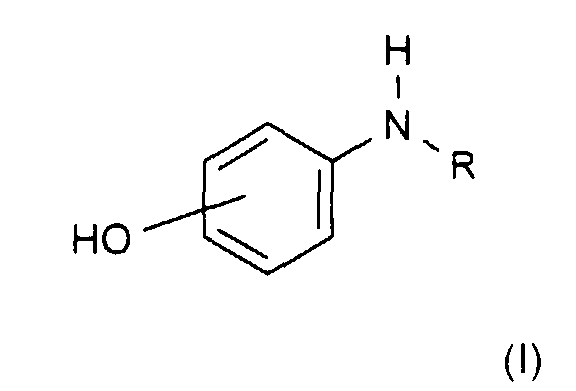
- (a) -CO-NR1R2
- (b) -CO-O-R3
- (c) -SO2-R3
- R1 représente un atome d'hydrogène ou un radical alkyle en C1 à C6, linéaire ou ramifié, saturé ou insaturé, éventuellement hydroxylé,
- R2 représente un atome d'hydrogène ou un radical choisi parmi un radical alkyle, saturé ou insaturé, linéaire, cyclique ou ramifié, en C1 à C30, éventuellement hydroxylé, et
- R3 représente un radical choisi parmi un radical alkyle, saturé ou insaturé, linéaire, cyclique ou ramifié, en C1 à C30, éventuellement hydroxylé.
- N-éthyloxycarbonyl-4-para-aminophénol 0,5 %
- Mélange d'alcools cétylique et stéarylique oxyéthylénés (20 OE) 2 %
- Huile de ricin hydrogénée oxyéthylénée (60 OE) 2,5 %
- Huile d'abricot 5 %
- Filtres UV 3,9 %
- Cyclohexasiloxane 10 %
- Sesquistéarate de méthylglucose polyéthoxylé (20 OE) 2 %
- Conservateurs 0,65 %
- Triéthanolamine 0,5 %
- EDTA disodique 0,05 %
- Glycérine 5 %
- Eau déminéralisée qsp. 100 %
- Gélifiants 4,25 %
- N-cholestéryloxycarbonyl-4-para-aminophénol 0,5 %
- Mélange d'alcools cétylique et stéarylique oxyéthylénés (20 OE) 2 %
- Huile de ricin hydrogénée oxyéthylénée (60 OE) 2,5 %
- Huile d'abricot 5 %
- Filtres UV 5,6 %
- Cyclohexasiloxane 5 %
- Sesquistéarate de méthylglucose polyéthoxylé (20 OE) 2 %
- Sesquistéarate de méthylglucose 2 %
- Conservateurs 0,65 %
- Triéthanolamine 1,35 %
- EDTA disodique 0,05 %
- Glycérine 3 %
- Eau déminéralisée qsp. 100 %
- Gélifiants 2,25 %
- N-cholestéryloxycarbonyl-4-para-aminophénol 0,5 %
- Huiles végétales 13 %
- Filtres UV 6 %
- Cyclopentasiloxane 7 %
- Huile de ricin hydrogénée oxyéthylénée (60 OE) 2,5 %
- Conservateurs 0,3 %
- EDTA disodique 0,05 %
- Copolymère isophtalate/sulfoisophtalate/dimethylol cyclohexane/ diéthylène glycol (EASTMAN AQ 38S d'EASTMAN CHEM. CO.) 2 %
- Glycérine 5 %
- Eau déminéralisée qsp. 100 %
| Solubilisation de EPAP et CPAP par les esters | ||
| Solubilisant | Quantité de EPAP solubilisée | Quantité de CPAP solubilisée |
| Mono-stéarate de sorbitane oxyéthyléné (20 OE) | 50% | 14,2% |
| Huile de ricin hydrogénée oxyéthylénée (7 OE) | 16,6% | 12,5% |
| Huile de ricin hydrogénée oxyéthylénée (40 OE) | 16,5% | 16,5% |
| Huile de ricin hydrogénée oxyéthylénée (60 OE) | 16,5% | 16,5% |
| Huile d'amande d'abricot | insoluble | insoluble |
| Huile minérale | insoluble | insoluble |
| Triglycérides caprylique/caprique | 4,7% (80°C) ; recristallise à température ambiante | 0,5% |
| Solubilisation de EPAP et CPAP par les alcools | ||
| Solubilisant | Quantité de EPAP solubilisée | Quantité de CPAP solubilisée |
| Laureth-23 | non testé | 4,8% |
| Laureth-4 | 25% | 4,8% |
| Alcool cétylique oxyéthyléné (20 OE) oxypropyléné (5 OP) | 16,5% | 14,2% |
| Octyldodécanol | insoluble | 0,5% |
| Hexyldécanol | insoluble | insoluble |
Claims (10)
- Composition comprenant, dans un milieu physiologiquement acceptable, un composé solubilisant ne se trouvant pas sous forme de vésicules, choisi parmi :et au moins un dérivé d'aminophénol de formule :(a) les esters d'acide gras et de sorbitane oxyalkylénés,(b) les huiles de ricin hydrogénées oxyalkylénées, et(c) les alcools gras oxyalkylénés,dans laquelle R est choisi parmi un radical de formules (a), (b) ou (c) suivantes :
 où :(a) -CO-NR1R2(b) -CO-O-R3(c) -SO2-R3R1 représente un atome d'hydrogène ou un radical alkyle en C1 à C6, linéaire ou ramifié, saturé ou insaturé, éventuellement hydroxylé,R2 représente un atome d'hydrogène ou un radical choisi parmi un radical alkyle, saturé ou insaturé, linéaire, cyclique ou ramifié, en C1 à C30, éventuellement hydroxylé, etR3 représente un radical choisi parmi un radical alkyle, saturé ou insaturé, linéaire, cyclique ou ramifié, en C1 à C30, éventuellement hydroxylé.
 - Composition selon la revendication 1, caractérisée en ce que ledit dérivé d'aminophénol est un dérivé de para-aminophénol.
- Composition selon la revendication 2, caractérisée en ce que ledit dérivé d'aminophénol est le N-éthyloxycarbonyl-4-para-aminophénol.
- Composition selon la revendication 2, caractérisée en ce que ledit dérivé d'aminophénol est le N-cholestéryloxycarbonyl-4-para-aminophénol.
- Composition selon l'une quelconque des revendications 1 à 4, caractérisée en ce que ledit dérivé d'aminophénol représente de 0,01 à 15% en poids, préférentiellement de 0,5 à 5% en poids, par rapport au poids total de la composition.
- Composition selon l'une quelconque des revendications 1 à 5, caractérisée en ce que ledit solubilisant est choisi parmi les huiles de ricin hydrogénées oxyéthylénées ; les mono-esters de sorbitane oxyéthylénés ; et les alcools gras oxyéthylénés et/ou oxypropylénés.
- Composition selon l'une quelconque des revendications 1 à 6, caractérisée en ce que ledit solubilisant représente de 0,05 à 25% en poids, et préférentiellement de 2 à 20% en poids, par rapport au poids total de la composition.
- Procédé cosmétique de dépigmentation et/ou blanchiment de la peau humaine, des poils et/ou des cheveux, caractérisé en ce qu'il consiste à appliquer sur la peau, les poils et/ou les cheveux une composition selon l'une quelconque des revendications 1 à 7.
- Utilisation de la composition selon l'une quelconque des revendications 1 à 7 pour la fabrication d'une préparation destinée à dépigmenter et/ou blanchir la peau, les poils et/ou les cheveux.
- Procédé de solubilisation d'au moins un dérivé d'aminophénol comprenant l'étape consistant à le mélanger à au moins un solubilisant choisi parmi :ledit dérivé d'aminophénol ayant la formule (I) suivante :(a) les esters d'acide gras et de sorbitane oxyalkylénés,(b) les huiles de ricin hydrogénées oxyalkylénées, et(c) les alcools gras oxyalkylénés,dans laquelle R est choisi parmi un radical de formules (a), (b) ou (c) suivantes :
 où :(a) -CO-NR1R2(b) -CO-O-R3(c) -SO2-R3R1 représente un atome d'hydrogène ou un radical alkyle en C1 à C6, linéaire ou ramifié, saturé ou insaturé, éventuellement hydroxylé,R2 représente un atome d'hydrogène ou un radical choisi parmi un radical alkyle, saturé ou insaturé, linéaire, cyclique ou ramifié, en C1 à C30, éventuellement hydroxylé, etR3 représente un radical choisi parmi un radical alkyle, saturé ou insaturé, linéaire, cyclique ou ramifié, en C1 à C30, éventuellement hydroxylé.
Applications Claiming Priority (2)
| Application Number | Priority Date | Filing Date | Title |
|---|---|---|---|
| FR9916075 | 1999-12-20 | ||
| FR9916075A FR2802416B1 (fr) | 1999-12-20 | 1999-12-20 | Composition cosmetique comprenant un derive d'aminophenol |
Publications (3)
| Publication Number | Publication Date |
|---|---|
| EP1110538A2 true EP1110538A2 (fr) | 2001-06-27 |
| EP1110538A3 EP1110538A3 (fr) | 2004-01-02 |
| EP1110538B1 EP1110538B1 (fr) | 2006-05-10 |
Family
ID=9553488
Family Applications (1)
| Application Number | Title | Priority Date | Filing Date |
|---|---|---|---|
| EP00403333A Expired - Lifetime EP1110538B1 (fr) | 1999-12-20 | 2000-11-29 | Composition cosmétique comprenant un dérivé d'aminophénol |
Country Status (12)
| Country | Link |
|---|---|
| US (1) | US7056498B2 (fr) |
| EP (1) | EP1110538B1 (fr) |
| JP (1) | JP2001199874A (fr) |
| KR (1) | KR100383831B1 (fr) |
| CN (1) | CN1173693C (fr) |
| AT (1) | ATE325598T1 (fr) |
| BR (1) | BR0006577A (fr) |
| CA (1) | CA2330332A1 (fr) |
| DE (1) | DE60027850D1 (fr) |
| FR (1) | FR2802416B1 (fr) |
| HU (1) | HUP0004981A3 (fr) |
| PL (1) | PL344635A1 (fr) |
Cited By (2)
| Publication number | Priority date | Publication date | Assignee | Title |
|---|---|---|---|---|
| FR2825275A1 (fr) * | 2001-09-28 | 2002-12-06 | Oreal | Composition huileuse epaissie comprenant un derive d'aminophenol |
| FR2830196A1 (fr) * | 2001-09-28 | 2003-04-04 | Oreal | Composition huileuse epaissie comprenant un derive d'aminophenol |
Families Citing this family (13)
| Publication number | Priority date | Publication date | Assignee | Title |
|---|---|---|---|---|
| FR2826275B1 (fr) * | 2001-06-26 | 2005-02-18 | Oreal | Composition notamment cosmetique contenant des derives d'aminophenol et des derives lipophiles d'acide amine |
| FR2826271B1 (fr) * | 2001-06-26 | 2005-02-18 | Oreal | Composition a base de derives lipophiles d'acide amine |
| EP1269986B1 (fr) | 2001-06-26 | 2009-02-25 | L'oreal | Compositions comprenant un composé de faible solubilité et un dérivé lipophile d'acide aminé, utilisations et procédés correspondants |
| US8007772B2 (en) * | 2002-10-02 | 2011-08-30 | L'oreal S.A. | Compositions to be applied to the skin and the integuments |
| US20060039876A1 (en) * | 2002-10-02 | 2006-02-23 | Christophe Dumousseaux | Compositions to be applied to the skin and the integuments |
| US20050238979A1 (en) * | 2004-04-08 | 2005-10-27 | Christophe Dumousseaux | Compositions for application to the skin, to the lips, to the nails, and/or to hair |
| US7981404B2 (en) * | 2004-04-08 | 2011-07-19 | L'oreal S.A. | Composition for application to the skin, to the lips, to the nails, and/or to hair |
| US20050257715A1 (en) * | 2004-04-08 | 2005-11-24 | Christophe Dumousseaux | Compositions for application to the skin, to the lips, to the nails, and/or to hair |
| WO2006037901A1 (fr) * | 2004-10-05 | 2006-04-13 | L'oreal | Kit et procede de maquillage |
| US9649261B2 (en) | 2004-10-05 | 2017-05-16 | L'oreal | Method of applying makeup to a surface and a kit for implementing such a method |
| FR2876011B1 (fr) * | 2004-10-05 | 2006-12-29 | Oreal | Procede de maquillage d'un support et kit pour la mise en oeuvre de ce procede |
| FR2888115B1 (fr) * | 2005-07-08 | 2013-02-15 | Oreal | Fond de teint liquide, procede de maquillage et kit pour la mise en oeuvre d'un tel procede. |
| FR2889921B1 (fr) | 2005-08-30 | 2007-12-28 | Oreal | Ensemble de conditionnement et d'application comportant un dispositif magnetique. |
Family Cites Families (25)
| Publication number | Priority date | Publication date | Assignee | Title |
|---|---|---|---|---|
| CH566780A5 (fr) | 1970-06-24 | 1975-09-30 | Bristol Myers Co | |
| FR2473513A1 (fr) * | 1980-01-09 | 1981-07-17 | Oreal | Nouvelles metaphenylenediamines, compositions tinctoriales pour fibres keratiniques les contenant et procede de teinture correspondant |
| CH661501A5 (fr) * | 1982-01-26 | 1987-07-31 | Oreal | Composes derivant du amino-3 propanol-2 utilisables pour la teinture des cheveux, leur procede de preparation, composition de teinture les contenant et procede de teinture de cheveux correspondant. |
| JPS61227516A (ja) | 1985-04-01 | 1986-10-09 | Shiseido Co Ltd | 皮膚外用剤 |
| US5646231A (en) * | 1988-02-17 | 1997-07-08 | Maxdem, Incorporated | Rigid-rod polymers |
| US4948843A (en) * | 1989-05-30 | 1990-08-14 | Eastman Kodak Company | Dye polymer/sol-gel composites |
| JP3002922B2 (ja) * | 1992-02-12 | 2000-01-24 | 第一工業製薬株式会社 | 高モノエステル含有ショ糖高級脂肪酸エステルの製造方法 |
| JPH06344672A (ja) | 1993-06-04 | 1994-12-20 | Mitsubishi Paper Mills Ltd | 可逆性感熱記録材料およびその製造方法 |
| FR2706297B1 (fr) * | 1993-06-16 | 1995-08-18 | Oreal | Composition de teinture d'oxydation des fibres kératiniques comprenant un paraaminophénol, un méta-aminophénol et un ortho-aminophénol, et procédé de teinture utilisant une telle composition. |
| JPH0722366A (ja) | 1993-06-29 | 1995-01-24 | Kawasaki Steel Corp | シリコンウエハ洗浄装置 |
| JP3233505B2 (ja) * | 1993-08-26 | 2001-11-26 | 御木本製薬株式会社 | 美白化粧料 |
| US5559110A (en) * | 1994-03-09 | 1996-09-24 | The Dupont Merck Pharmaceutical Company | Pharmaceutical formulations of cyclic urea type compounds |
| TW326472B (en) * | 1994-08-12 | 1998-02-11 | Kao Corp | Method for producing nonionic detergent granules |
| CA2161376C (fr) | 1994-10-27 | 2005-01-11 | Toshiaki Minami | Support d'enregistrement thermique multicolore reversible |
| EP0753295B1 (fr) * | 1995-07-13 | 1998-04-08 | L'oreal | Utilisation de particules creuses déformables contre le photobleuissement et/ou le blanchiment d'une composition cosmétique et/ou dermatologique contenant des pigments d'oxyde de titane |
| JPH0977655A (ja) * | 1995-09-14 | 1997-03-25 | Mikimoto Pharmaceut Co Ltd | 皮膚外用剤 |
| FR2751533B1 (fr) * | 1996-07-23 | 2003-08-15 | Oreal | Composition de teinture d'oxydation pour fibres keratiniques comprenant un polymere amphiphile non-ionique |
| ATE220893T1 (de) | 1996-08-21 | 2002-08-15 | Childrens Hosp Medical Center | Hautaufhellungszusammensetzungen |
| FR2767689B1 (fr) * | 1997-08-26 | 1999-10-15 | Oreal | Utilisation de derives oxamates comme agents depigmentants |
| FR2767823B1 (fr) * | 1997-08-27 | 1999-10-15 | Oreal | Composes derives d'aminophenol et leur utilisation en cosmetique |
| US5961666A (en) * | 1997-11-19 | 1999-10-05 | Lim; Mu-Ill | Hair dye compositions containing 3-substituted-4-aminophenols and 2-substituted-1-naphthols |
| FR2778561B1 (fr) * | 1998-05-14 | 2001-04-20 | Oreal | Azurants optiques comme agents blanchissants |
| FR2796838B1 (fr) | 1999-07-26 | 2003-05-23 | Oreal | Composition a base de vesicules lamellaires lipidiques incorporant un derive d'amino-phenol, procede de preparation et utilisations |
| US6582734B1 (en) * | 2000-07-20 | 2003-06-24 | Ecolab Inc. | Antimicrobial composition useful for the treatment of bovine mastitis |
| FR2820320B1 (fr) * | 2001-02-02 | 2003-04-04 | Oreal | Suspension de nanospheres de principe actif lipophile stabilisee par des polymeres hydrodispersibles |
-
1999
- 1999-12-20 FR FR9916075A patent/FR2802416B1/fr not_active Expired - Fee Related
-
2000
- 2000-11-29 AT AT00403333T patent/ATE325598T1/de not_active IP Right Cessation
- 2000-11-29 EP EP00403333A patent/EP1110538B1/fr not_active Expired - Lifetime
- 2000-11-29 DE DE60027850T patent/DE60027850D1/de not_active Expired - Lifetime
- 2000-12-14 CA CA002330332A patent/CA2330332A1/fr not_active Abandoned
- 2000-12-18 BR BR0006577-3A patent/BR0006577A/pt not_active IP Right Cessation
- 2000-12-18 JP JP2000384429A patent/JP2001199874A/ja not_active Withdrawn
- 2000-12-18 PL PL00344635A patent/PL344635A1/xx not_active Application Discontinuation
- 2000-12-19 HU HU0004981A patent/HUP0004981A3/hu unknown
- 2000-12-19 CN CNB001359606A patent/CN1173693C/zh not_active Expired - Fee Related
- 2000-12-20 US US09/739,873 patent/US7056498B2/en not_active Expired - Fee Related
- 2000-12-20 KR KR10-2000-0078901A patent/KR100383831B1/ko not_active Expired - Fee Related
Cited By (2)
| Publication number | Priority date | Publication date | Assignee | Title |
|---|---|---|---|---|
| FR2825275A1 (fr) * | 2001-09-28 | 2002-12-06 | Oreal | Composition huileuse epaissie comprenant un derive d'aminophenol |
| FR2830196A1 (fr) * | 2001-09-28 | 2003-04-04 | Oreal | Composition huileuse epaissie comprenant un derive d'aminophenol |
Also Published As
| Publication number | Publication date |
|---|---|
| HUP0004981A2 (hu) | 2001-09-28 |
| KR100383831B1 (ko) | 2003-05-14 |
| PL344635A1 (en) | 2001-07-02 |
| HUP0004981A3 (en) | 2002-12-28 |
| FR2802416A1 (fr) | 2001-06-22 |
| US7056498B2 (en) | 2006-06-06 |
| ATE325598T1 (de) | 2006-06-15 |
| CA2330332A1 (fr) | 2001-06-20 |
| EP1110538A3 (fr) | 2004-01-02 |
| CN1173693C (zh) | 2004-11-03 |
| HU0004981D0 (fr) | 2001-02-28 |
| US20020026068A1 (en) | 2002-02-28 |
| JP2001199874A (ja) | 2001-07-24 |
| DE60027850D1 (de) | 2006-06-14 |
| FR2802416B1 (fr) | 2002-07-19 |
| BR0006577A (pt) | 2001-07-17 |
| KR20010067461A (ko) | 2001-07-12 |
| CN1300588A (zh) | 2001-06-27 |
| EP1110538B1 (fr) | 2006-05-10 |
Similar Documents
| Publication | Publication Date | Title |
|---|---|---|
| EP0997140B1 (fr) | Composition d'eclaircissement de la peau et/ou des cheveux | |
| EP0780115B1 (fr) | Nanoparticules enrobées d'une phase lamellaire à base de tensioactif siliconé et compositions les contenant | |
| EP0966434B1 (fr) | Derives d'aminophenol et leur utilisation en cosmetique | |
| EP0977552B1 (fr) | Composition pour application topique sur la peau et/ou ses phaneres comprenant au moins un compose comportant un fragment iminophenol | |
| EP0681827B1 (fr) | Utilisations de bioflavonoides comme agent de protection des phanères kératiniques | |
| EP1269986B1 (fr) | Compositions comprenant un composé de faible solubilité et un dérivé lipophile d'acide aminé, utilisations et procédés correspondants | |
| EP0895779A1 (fr) | Utilisation de monoesters d'arbutine comme agent dépigmentant | |
| EP1110538B1 (fr) | Composition cosmétique comprenant un dérivé d'aminophénol | |
| EP0898956B1 (fr) | Utilisation de dérivés oxamates comme agents dépigmentants | |
| EP0913147B1 (fr) | Système à base de dérivé d'acide phosphonique et de métabisulfite pour stabiliser l'acide ascorbique | |
| FR2742674A1 (fr) | Dispersion stable d'une phase non miscible a l'eau, dans une phase aqueuse au moyen de vesicules a base de tensioactif silicone | |
| EP1038515A1 (fr) | Composition à phase aqueuse continue renfermant de l'acide L-2-oxothiazolidine 4-carboxylique | |
| EP0801947B1 (fr) | Ultilisation de l'octopirox comme agent depigmentant | |
| EP1023894B1 (fr) | Blanchiment cosmétique avec un dérivé hydroxyphényloxime | |
| FR2802415A1 (fr) | Composition cosmetique comprenant le n-ethyloxycarbonyl-4- amino-phenol et l'arbutine ou ses derives et/ou l'acide ellagique ou ses derives | |
| US6960347B2 (en) | Composition based on N-cholesteryloxycarbonyl-4-para-aminophenol and hydroquinone or one of its derivatives | |
| WO2003011244A1 (fr) | Composition renfermant un steroide et un glycol | |
| FR2796838A1 (fr) | Composition a base de vesicules lamellaires lipidiques incorporant un derive d'amino-phenol, procede de preparation et utilisations | |
| FR2788693A1 (fr) | Utilisation du miel non fermente comme agent depigmentant | |
| FR2818139A1 (fr) | Composition, notamment cosmetique, comprenant la 7-hydroxy dhea et/ou la 7-ceto dhea et au moins un agent anti-glycation | |
| FR2826275A1 (fr) | Composition notamment cosmetique contenant des derives d'aminophenol et des derives lipophiles d'acide amine | |
| FR2754253A1 (fr) | Nouvelle association de derives d'acide salicylique et d'hydroquinone comme inhibiteur de la tyrosinase pour la depigmentation de la peau, et composition la comprenant | |
| FR2826271A1 (fr) | Composition a base de derives lipophiles d'acide amine | |
| FR2830196A1 (fr) | Composition huileuse epaissie comprenant un derive d'aminophenol | |
| FR2847466A1 (fr) | Composition notamment cosmetique contenant des derives de coumarines et des derives lipophiles d'acide amine |
Legal Events
| Date | Code | Title | Description |
|---|---|---|---|
| PUAI | Public reference made under article 153(3) epc to a published international application that has entered the european phase |
Free format text: ORIGINAL CODE: 0009012 |
|
| AK | Designated contracting states |
Kind code of ref document: A2 Designated state(s): AT BE CH CY DE DK ES FI FR GB GR IE IT LI LU MC NL PT SE TR |
|
| AX | Request for extension of the european patent |
Free format text: AL;LT;LV;MK;RO;SI |
|
| PUAL | Search report despatched |
Free format text: ORIGINAL CODE: 0009013 |
|
| AK | Designated contracting states |
Kind code of ref document: A3 Designated state(s): AT BE CH CY DE DK ES FI FR GB GR IE IT LI LU MC NL PT SE TR |
|
| AX | Request for extension of the european patent |
Extension state: AL LT LV MK RO SI |
|
| RIC1 | Information provided on ipc code assigned before grant |
Ipc: 7A 61K 7/48 A |
|
| 17P | Request for examination filed |
Effective date: 20040702 |
|
| AKX | Designation fees paid |
Designated state(s): AT BE CH CY DE DK ES FI FR GB GR IE IT LI LU MC NL PT SE TR |
|
| 17Q | First examination report despatched |
Effective date: 20040903 |
|
| GRAP | Despatch of communication of intention to grant a patent |
Free format text: ORIGINAL CODE: EPIDOSNIGR1 |
|
| GRAS | Grant fee paid |
Free format text: ORIGINAL CODE: EPIDOSNIGR3 |
|
| GRAA | (expected) grant |
Free format text: ORIGINAL CODE: 0009210 |
|
| AK | Designated contracting states |
Kind code of ref document: B1 Designated state(s): AT BE CH CY DE DK ES FI FR GB GR IE IT LI LU MC NL PT SE TR |
|
| PG25 | Lapsed in a contracting state [announced via postgrant information from national office to epo] |
Ref country code: IT Free format text: LAPSE BECAUSE OF FAILURE TO SUBMIT A TRANSLATION OF THE DESCRIPTION OR TO PAY THE FEE WITHIN THE PRESCRIBED TIME-LIMIT;WARNING: LAPSES OF ITALIAN PATENTS WITH EFFECTIVE DATE BEFORE 2007 MAY HAVE OCCURRED AT ANY TIME BEFORE 2007. THE CORRECT EFFECTIVE DATE MAY BE DIFFERENT FROM THE ONE RECORDED. Effective date: 20060510 Ref country code: AT Free format text: LAPSE BECAUSE OF FAILURE TO SUBMIT A TRANSLATION OF THE DESCRIPTION OR TO PAY THE FEE WITHIN THE PRESCRIBED TIME-LIMIT Effective date: 20060510 Ref country code: NL Free format text: LAPSE BECAUSE OF FAILURE TO SUBMIT A TRANSLATION OF THE DESCRIPTION OR TO PAY THE FEE WITHIN THE PRESCRIBED TIME-LIMIT Effective date: 20060510 Ref country code: GB Free format text: LAPSE BECAUSE OF FAILURE TO SUBMIT A TRANSLATION OF THE DESCRIPTION OR TO PAY THE FEE WITHIN THE PRESCRIBED TIME-LIMIT Effective date: 20060510 Ref country code: IE Free format text: LAPSE BECAUSE OF FAILURE TO SUBMIT A TRANSLATION OF THE DESCRIPTION OR TO PAY THE FEE WITHIN THE PRESCRIBED TIME-LIMIT Effective date: 20060510 Ref country code: FI Free format text: LAPSE BECAUSE OF FAILURE TO SUBMIT A TRANSLATION OF THE DESCRIPTION OR TO PAY THE FEE WITHIN THE PRESCRIBED TIME-LIMIT Effective date: 20060510 |
|
| REG | Reference to a national code |
Ref country code: GB Ref legal event code: FG4D Free format text: NOT ENGLISH |
|
| RIC1 | Information provided on ipc code assigned before grant |
Ipc: A61K 8/34 20060101AFI20060317BHEP Ipc: A61Q 5/08 20060101ALI20060317BHEP Ipc: A61Q 19/02 20060101ALI20060317BHEP |
|
| REG | Reference to a national code |
Ref country code: CH Ref legal event code: EP |
|
| REF | Corresponds to: |
Ref document number: 60027850 Country of ref document: DE Date of ref document: 20060614 Kind code of ref document: P |
|
| REG | Reference to a national code |
Ref country code: IE Ref legal event code: FG4D Free format text: LANGUAGE OF EP DOCUMENT: FRENCH |
|
| PG25 | Lapsed in a contracting state [announced via postgrant information from national office to epo] |
Ref country code: SE Free format text: LAPSE BECAUSE OF FAILURE TO SUBMIT A TRANSLATION OF THE DESCRIPTION OR TO PAY THE FEE WITHIN THE PRESCRIBED TIME-LIMIT Effective date: 20060810 Ref country code: DK Free format text: LAPSE BECAUSE OF FAILURE TO SUBMIT A TRANSLATION OF THE DESCRIPTION OR TO PAY THE FEE WITHIN THE PRESCRIBED TIME-LIMIT Effective date: 20060810 |
|
| PG25 | Lapsed in a contracting state [announced via postgrant information from national office to epo] |
Ref country code: DE Free format text: LAPSE BECAUSE OF FAILURE TO SUBMIT A TRANSLATION OF THE DESCRIPTION OR TO PAY THE FEE WITHIN THE PRESCRIBED TIME-LIMIT Effective date: 20060811 |
|
| PG25 | Lapsed in a contracting state [announced via postgrant information from national office to epo] |
Ref country code: ES Free format text: LAPSE BECAUSE OF FAILURE TO SUBMIT A TRANSLATION OF THE DESCRIPTION OR TO PAY THE FEE WITHIN THE PRESCRIBED TIME-LIMIT Effective date: 20060821 |
|
| PG25 | Lapsed in a contracting state [announced via postgrant information from national office to epo] |
Ref country code: PT Free format text: LAPSE BECAUSE OF FAILURE TO SUBMIT A TRANSLATION OF THE DESCRIPTION OR TO PAY THE FEE WITHIN THE PRESCRIBED TIME-LIMIT Effective date: 20061010 |
|
| NLV1 | Nl: lapsed or annulled due to failure to fulfill the requirements of art. 29p and 29m of the patents act | ||
| PG25 | Lapsed in a contracting state [announced via postgrant information from national office to epo] |
Ref country code: CH Free format text: LAPSE BECAUSE OF NON-PAYMENT OF DUE FEES Effective date: 20061130 Ref country code: LI Free format text: LAPSE BECAUSE OF NON-PAYMENT OF DUE FEES Effective date: 20061130 Ref country code: MC Free format text: LAPSE BECAUSE OF NON-PAYMENT OF DUE FEES Effective date: 20061130 Ref country code: BE Free format text: LAPSE BECAUSE OF NON-PAYMENT OF DUE FEES Effective date: 20061130 |
|
| GBV | Gb: ep patent (uk) treated as always having been void in accordance with gb section 77(7)/1977 [no translation filed] |
Effective date: 20060510 |
|
| REG | Reference to a national code |
Ref country code: IE Ref legal event code: FD4D |
|
| PLBE | No opposition filed within time limit |
Free format text: ORIGINAL CODE: 0009261 |
|
| STAA | Information on the status of an ep patent application or granted ep patent |
Free format text: STATUS: NO OPPOSITION FILED WITHIN TIME LIMIT |
|
| 26N | No opposition filed |
Effective date: 20070213 |
|
| REG | Reference to a national code |
Ref country code: CH Ref legal event code: PL |
|
| REG | Reference to a national code |
Ref country code: FR Ref legal event code: ST Effective date: 20070731 |
|
| BERE | Be: lapsed |
Owner name: L'OREAL Effective date: 20061130 |
|
| PG25 | Lapsed in a contracting state [announced via postgrant information from national office to epo] |
Ref country code: GR Free format text: LAPSE BECAUSE OF FAILURE TO SUBMIT A TRANSLATION OF THE DESCRIPTION OR TO PAY THE FEE WITHIN THE PRESCRIBED TIME-LIMIT Effective date: 20060811 Ref country code: FR Free format text: LAPSE BECAUSE OF NON-PAYMENT OF DUE FEES Effective date: 20061130 |
|
| PG25 | Lapsed in a contracting state [announced via postgrant information from national office to epo] |
Ref country code: LU Free format text: LAPSE BECAUSE OF NON-PAYMENT OF DUE FEES Effective date: 20061129 Ref country code: TR Free format text: LAPSE BECAUSE OF FAILURE TO SUBMIT A TRANSLATION OF THE DESCRIPTION OR TO PAY THE FEE WITHIN THE PRESCRIBED TIME-LIMIT Effective date: 20060510 |
|
| PG25 | Lapsed in a contracting state [announced via postgrant information from national office to epo] |
Ref country code: CY Free format text: LAPSE BECAUSE OF FAILURE TO SUBMIT A TRANSLATION OF THE DESCRIPTION OR TO PAY THE FEE WITHIN THE PRESCRIBED TIME-LIMIT Effective date: 20060510 |