EP1105111B1 - Transdermally administered tolterodine as anti-muscarinic agent for the treatment of overactive bladder - Google Patents
Transdermally administered tolterodine as anti-muscarinic agent for the treatment of overactive bladder Download PDFInfo
- Publication number
- EP1105111B1 EP1105111B1 EP99946522A EP99946522A EP1105111B1 EP 1105111 B1 EP1105111 B1 EP 1105111B1 EP 99946522 A EP99946522 A EP 99946522A EP 99946522 A EP99946522 A EP 99946522A EP 1105111 B1 EP1105111 B1 EP 1105111B1
- Authority
- EP
- European Patent Office
- Prior art keywords
- tolterodine
- transdermal
- base
- tolterodine base
- patches
- Prior art date
- Legal status (The legal status is an assumption and is not a legal conclusion. Google has not performed a legal analysis and makes no representation as to the accuracy of the status listed.)
- Expired - Lifetime
Links
- OOGJQPCLVADCPB-HXUWFJFHSA-N tolterodine Chemical compound C1([C@@H](CCN(C(C)C)C(C)C)C=2C(=CC=C(C)C=2)O)=CC=CC=C1 OOGJQPCLVADCPB-HXUWFJFHSA-N 0.000 title claims abstract description 235
- 229960004045 tolterodine Drugs 0.000 title claims abstract description 227
- BDIAUFOIMFAIPU-UHFFFAOYSA-N valepotriate Natural products CC(C)CC(=O)OC1C=C(C(=COC2OC(=O)CC(C)C)COC(C)=O)C2C11CO1 BDIAUFOIMFAIPU-UHFFFAOYSA-N 0.000 title claims abstract description 227
- 206010020853 Hypertonic bladder Diseases 0.000 title claims abstract description 16
- 208000009722 Overactive Urinary Bladder Diseases 0.000 title claims abstract description 14
- 208000020629 overactive bladder Diseases 0.000 title claims abstract description 14
- 239000003149 muscarinic antagonist Substances 0.000 title 1
- 230000000694 effects Effects 0.000 claims abstract description 14
- 150000003839 salts Chemical class 0.000 claims abstract description 9
- 208000024891 symptom Diseases 0.000 claims abstract description 4
- 239000000853 adhesive Substances 0.000 claims description 34
- DUXZAXCGJSBGDW-HXUWFJFHSA-N Desfesoterodine Chemical compound C1([C@@H](CCN(C(C)C)C(C)C)C=2C(=CC=C(CO)C=2)O)=CC=CC=C1 DUXZAXCGJSBGDW-HXUWFJFHSA-N 0.000 claims description 25
- 230000004907 flux Effects 0.000 claims description 16
- 229920000858 Cyclodextrin Polymers 0.000 claims description 8
- 239000000126 substance Substances 0.000 claims description 8
- 238000004519 manufacturing process Methods 0.000 claims description 5
- 239000003937 drug carrier Substances 0.000 claims description 3
- 239000002085 irritant Substances 0.000 claims description 3
- 231100000021 irritant Toxicity 0.000 claims description 3
- 241001465754 Metazoa Species 0.000 claims description 2
- WHGYBXFWUBPSRW-FOUAGVGXSA-N beta-cyclodextrin Chemical compound OC[C@H]([C@H]([C@@H]([C@H]1O)O)O[C@H]2O[C@@H]([C@@H](O[C@H]3O[C@H](CO)[C@H]([C@@H]([C@H]3O)O)O[C@H]3O[C@H](CO)[C@H]([C@@H]([C@H]3O)O)O[C@H]3O[C@H](CO)[C@H]([C@@H]([C@H]3O)O)O[C@H]3O[C@H](CO)[C@H]([C@@H]([C@H]3O)O)O3)[C@H](O)[C@H]2O)CO)O[C@@H]1O[C@H]1[C@H](O)[C@@H](O)[C@@H]3O[C@@H]1CO WHGYBXFWUBPSRW-FOUAGVGXSA-N 0.000 claims description 2
- 235000011175 beta-cyclodextrine Nutrition 0.000 claims description 2
- 238000006243 chemical reaction Methods 0.000 claims description 2
- 230000002708 enhancing effect Effects 0.000 claims description 2
- 230000035515 penetration Effects 0.000 claims description 2
- 239000001116 FEMA 4028 Substances 0.000 claims 1
- 229960004853 betadex Drugs 0.000 claims 1
- 239000000203 mixture Substances 0.000 abstract description 47
- 238000009472 formulation Methods 0.000 abstract description 36
- 238000000034 method Methods 0.000 abstract description 11
- 150000001875 compounds Chemical class 0.000 abstract description 7
- 239000002207 metabolite Substances 0.000 abstract description 3
- 230000002685 pulmonary effect Effects 0.000 abstract description 2
- 229940002612 prodrug Drugs 0.000 abstract 1
- 239000000651 prodrug Substances 0.000 abstract 1
- 238000000338 in vitro Methods 0.000 description 54
- LFQSCWFLJHTTHZ-UHFFFAOYSA-N Ethanol Chemical compound CCO LFQSCWFLJHTTHZ-UHFFFAOYSA-N 0.000 description 51
- 239000003814 drug Substances 0.000 description 48
- 229940079593 drug Drugs 0.000 description 47
- 239000012528 membrane Substances 0.000 description 43
- 239000010410 layer Substances 0.000 description 36
- 239000000499 gel Substances 0.000 description 34
- 239000000243 solution Substances 0.000 description 29
- XEKOWRVHYACXOJ-UHFFFAOYSA-N Ethyl acetate Chemical compound CCOC(C)=O XEKOWRVHYACXOJ-UHFFFAOYSA-N 0.000 description 27
- HEMHJVSKTPXQMS-UHFFFAOYSA-M Sodium hydroxide Chemical compound [OH-].[Na+] HEMHJVSKTPXQMS-UHFFFAOYSA-M 0.000 description 27
- 238000004128 high performance liquid chromatography Methods 0.000 description 27
- 238000004090 dissolution Methods 0.000 description 26
- 229920000642 polymer Polymers 0.000 description 26
- DNIAPMSPPWPWGF-UHFFFAOYSA-N Propylene glycol Chemical compound CC(O)CO DNIAPMSPPWPWGF-UHFFFAOYSA-N 0.000 description 21
- 238000010586 diagram Methods 0.000 description 21
- TWHNMSJGYKMTRB-KXYUELECSA-N (2r,3r)-2,3-dihydroxybutanedioic acid;2-[(1r)-3-[di(propan-2-yl)amino]-1-phenylpropyl]-4-methylphenol Chemical compound OC(=O)[C@H](O)[C@@H](O)C(O)=O.C1([C@@H](CCN(C(C)C)C(C)C)C=2C(=CC=C(C)C=2)O)=CC=CC=C1 TWHNMSJGYKMTRB-KXYUELECSA-N 0.000 description 20
- 238000013271 transdermal drug delivery Methods 0.000 description 20
- 239000003623 enhancer Substances 0.000 description 16
- 230000001070 adhesive effect Effects 0.000 description 15
- 239000011248 coating agent Substances 0.000 description 14
- 238000000576 coating method Methods 0.000 description 14
- XTXRWKRVRITETP-UHFFFAOYSA-N Vinyl acetate Chemical compound CC(=O)OC=C XTXRWKRVRITETP-UHFFFAOYSA-N 0.000 description 13
- 238000009792 diffusion process Methods 0.000 description 13
- NIXOWILDQLNWCW-UHFFFAOYSA-M Acrylate Chemical compound [O-]C(=O)C=C NIXOWILDQLNWCW-UHFFFAOYSA-M 0.000 description 12
- 239000004615 ingredient Substances 0.000 description 12
- XLYOFNOQVPJJNP-UHFFFAOYSA-N water Substances O XLYOFNOQVPJJNP-UHFFFAOYSA-N 0.000 description 12
- -1 polyethylene terephthalate Polymers 0.000 description 11
- 230000001186 cumulative effect Effects 0.000 description 10
- 239000000463 material Substances 0.000 description 10
- 230000037317 transdermal delivery Effects 0.000 description 10
- WEVYAHXRMPXWCK-UHFFFAOYSA-N Acetonitrile Chemical compound CC#N WEVYAHXRMPXWCK-UHFFFAOYSA-N 0.000 description 9
- 229920001824 Barex® Polymers 0.000 description 9
- 229940093499 ethyl acetate Drugs 0.000 description 9
- 235000019439 ethyl acetate Nutrition 0.000 description 9
- 229920000728 polyester Polymers 0.000 description 9
- FEWJPZIEWOKRBE-JCYAYHJZSA-N Dextrotartaric acid Chemical compound OC(=O)[C@H](O)[C@@H](O)C(O)=O FEWJPZIEWOKRBE-JCYAYHJZSA-N 0.000 description 8
- UQDUPQYQJKYHQI-UHFFFAOYSA-N methyl laurate Chemical compound CCCCCCCCCCCC(=O)OC UQDUPQYQJKYHQI-UHFFFAOYSA-N 0.000 description 8
- 239000002904 solvent Substances 0.000 description 8
- 229940095064 tartrate Drugs 0.000 description 8
- 238000012360 testing method Methods 0.000 description 8
- 239000000017 hydrogel Substances 0.000 description 7
- 238000002347 injection Methods 0.000 description 7
- 239000007924 injection Substances 0.000 description 7
- 229920002153 Hydroxypropyl cellulose Polymers 0.000 description 6
- 239000012790 adhesive layer Substances 0.000 description 6
- 235000010977 hydroxypropyl cellulose Nutrition 0.000 description 6
- 239000001863 hydroxypropyl cellulose Substances 0.000 description 6
- 239000008363 phosphate buffer Substances 0.000 description 6
- 239000004971 Cross linker Substances 0.000 description 5
- 229920002367 Polyisobutene Polymers 0.000 description 5
- 150000001252 acrylic acid derivatives Chemical class 0.000 description 5
- 238000004520 electroporation Methods 0.000 description 5
- 206010015150 Erythema Diseases 0.000 description 4
- IMNFDUFMRHMDMM-UHFFFAOYSA-N N-Heptane Chemical compound CCCCCCC IMNFDUFMRHMDMM-UHFFFAOYSA-N 0.000 description 4
- 206010030113 Oedema Diseases 0.000 description 4
- 241000283973 Oryctolagus cuniculus Species 0.000 description 4
- 206010046543 Urinary incontinence Diseases 0.000 description 4
- 230000000052 comparative effect Effects 0.000 description 4
- 238000013461 design Methods 0.000 description 4
- 235000014113 dietary fatty acids Nutrition 0.000 description 4
- POULHZVOKOAJMA-UHFFFAOYSA-N dodecanoic acid Chemical compound CCCCCCCCCCCC(O)=O POULHZVOKOAJMA-UHFFFAOYSA-N 0.000 description 4
- 231100000321 erythema Toxicity 0.000 description 4
- 239000000194 fatty acid Substances 0.000 description 4
- 229930195729 fatty acid Natural products 0.000 description 4
- 230000001965 increasing effect Effects 0.000 description 4
- 229940068196 placebo Drugs 0.000 description 4
- 239000000902 placebo Substances 0.000 description 4
- 229920000036 polyvinylpyrrolidone Polymers 0.000 description 4
- 235000013855 polyvinylpyrrolidone Nutrition 0.000 description 4
- 210000002966 serum Anatomy 0.000 description 4
- 150000001298 alcohols Chemical class 0.000 description 3
- 208000010247 contact dermatitis Diseases 0.000 description 3
- 230000003111 delayed effect Effects 0.000 description 3
- 230000002209 hydrophobic effect Effects 0.000 description 3
- 238000001727 in vivo Methods 0.000 description 3
- 239000007788 liquid Substances 0.000 description 3
- 239000011159 matrix material Substances 0.000 description 3
- 229920006267 polyester film Polymers 0.000 description 3
- 229920001296 polysiloxane Polymers 0.000 description 3
- 239000013464 silicone adhesive Substances 0.000 description 3
- 239000003381 stabilizer Substances 0.000 description 3
- 230000009885 systemic effect Effects 0.000 description 3
- 238000000825 ultraviolet detection Methods 0.000 description 3
- WRIDQFICGBMAFQ-UHFFFAOYSA-N (E)-8-Octadecenoic acid Natural products CCCCCCCCCC=CCCCCCCC(O)=O WRIDQFICGBMAFQ-UHFFFAOYSA-N 0.000 description 2
- GHXNRYVDXNZXID-UHFFFAOYSA-N 2,2-diethylbutanoic acid Chemical compound CCC(CC)(CC)C(O)=O GHXNRYVDXNZXID-UHFFFAOYSA-N 0.000 description 2
- LQJBNNIYVWPHFW-UHFFFAOYSA-N 20:1omega9c fatty acid Natural products CCCCCCCCCCC=CCCCCCCCC(O)=O LQJBNNIYVWPHFW-UHFFFAOYSA-N 0.000 description 2
- QSBYPNXLFMSGKH-UHFFFAOYSA-N 9-Heptadecensaeure Natural products CCCCCCCC=CCCCCCCCC(O)=O QSBYPNXLFMSGKH-UHFFFAOYSA-N 0.000 description 2
- 229920003155 Eudragit® RL 100 Polymers 0.000 description 2
- 229920003157 Eudragit® RL 30 D Polymers 0.000 description 2
- PEDCQBHIVMGVHV-UHFFFAOYSA-N Glycerine Chemical compound OCC(O)CO PEDCQBHIVMGVHV-UHFFFAOYSA-N 0.000 description 2
- 231100000938 Guinea Pig Maximization Test Toxicity 0.000 description 2
- 239000005639 Lauric acid Substances 0.000 description 2
- 231100000159 OECD 404 Acute Dermal Irritation/Corrosion Toxicity 0.000 description 2
- 239000005642 Oleic acid Substances 0.000 description 2
- ZQPPMHVWECSIRJ-UHFFFAOYSA-N Oleic acid Natural products CCCCCCCCC=CCCCCCCCC(O)=O ZQPPMHVWECSIRJ-UHFFFAOYSA-N 0.000 description 2
- 239000002033 PVDF binder Substances 0.000 description 2
- 206010040880 Skin irritation Diseases 0.000 description 2
- 208000000921 Urge Urinary Incontinence Diseases 0.000 description 2
- 239000004480 active ingredient Substances 0.000 description 2
- 231100000403 acute toxicity Toxicity 0.000 description 2
- 230000007059 acute toxicity Effects 0.000 description 2
- 150000001408 amides Chemical class 0.000 description 2
- 230000001022 anti-muscarinic effect Effects 0.000 description 2
- 230000015572 biosynthetic process Effects 0.000 description 2
- 238000010241 blood sampling Methods 0.000 description 2
- KBPLFHHGFOOTCA-UHFFFAOYSA-N caprylic alcohol Natural products CCCCCCCCO KBPLFHHGFOOTCA-UHFFFAOYSA-N 0.000 description 2
- ULDHMXUKGWMISQ-UHFFFAOYSA-N carvone Chemical compound CC(=C)C1CC=C(C)C(=O)C1 ULDHMXUKGWMISQ-UHFFFAOYSA-N 0.000 description 2
- 229920001577 copolymer Polymers 0.000 description 2
- OSOIQJGOYGSIMF-UHFFFAOYSA-N cyclopentadecanone Chemical compound O=C1CCCCCCCCCCCCCC1 OSOIQJGOYGSIMF-UHFFFAOYSA-N 0.000 description 2
- 238000012377 drug delivery Methods 0.000 description 2
- 238000005370 electroosmosis Methods 0.000 description 2
- 150000002148 esters Chemical class 0.000 description 2
- 238000002474 experimental method Methods 0.000 description 2
- 150000004665 fatty acids Chemical class 0.000 description 2
- 239000000945 filler Substances 0.000 description 2
- 239000010408 film Substances 0.000 description 2
- 239000011888 foil Substances 0.000 description 2
- 230000006698 induction Effects 0.000 description 2
- 230000003993 interaction Effects 0.000 description 2
- 230000000622 irritating effect Effects 0.000 description 2
- QXJSBBXBKPUZAA-UHFFFAOYSA-N isooleic acid Natural products CCCCCCCC=CCCCCCCCCC(O)=O QXJSBBXBKPUZAA-UHFFFAOYSA-N 0.000 description 2
- 230000004048 modification Effects 0.000 description 2
- 238000012986 modification Methods 0.000 description 2
- ZQPPMHVWECSIRJ-KTKRTIGZSA-N oleic acid Chemical compound CCCCCCCC\C=C/CCCCCCCC(O)=O ZQPPMHVWECSIRJ-KTKRTIGZSA-N 0.000 description 2
- 239000006186 oral dosage form Substances 0.000 description 2
- 239000012466 permeate Substances 0.000 description 2
- 239000000546 pharmaceutical excipient Substances 0.000 description 2
- 230000000144 pharmacologic effect Effects 0.000 description 2
- 150000003904 phospholipids Chemical class 0.000 description 2
- 239000004014 plasticizer Substances 0.000 description 2
- 229920000058 polyacrylate Polymers 0.000 description 2
- 235000010482 polyoxyethylene sorbitan monooleate Nutrition 0.000 description 2
- 229920000053 polysorbate 80 Polymers 0.000 description 2
- 229920002981 polyvinylidene fluoride Polymers 0.000 description 2
- 239000001267 polyvinylpyrrolidone Substances 0.000 description 2
- 239000011148 porous material Substances 0.000 description 2
- 239000000047 product Substances 0.000 description 2
- HFHDHCJBZVLPGP-UHFFFAOYSA-N schardinger α-dextrin Chemical group O1C(C(C2O)O)C(CO)OC2OC(C(C2O)O)C(CO)OC2OC(C(C2O)O)C(CO)OC2OC(C(O)C2O)C(CO)OC2OC(C(C2O)O)C(CO)OC2OC2C(O)C(O)C1OC2CO HFHDHCJBZVLPGP-UHFFFAOYSA-N 0.000 description 2
- 239000008159 sesame oil Substances 0.000 description 2
- 235000011803 sesame oil Nutrition 0.000 description 2
- 230000036556 skin irritation Effects 0.000 description 2
- 231100000475 skin irritation Toxicity 0.000 description 2
- 231100000130 skin irritation / corrosion testing Toxicity 0.000 description 2
- 231100000245 skin permeability Toxicity 0.000 description 2
- 230000001839 systemic circulation Effects 0.000 description 2
- 230000000699 topical effect Effects 0.000 description 2
- 206010046494 urge incontinence Diseases 0.000 description 2
- 239000000341 volatile oil Substances 0.000 description 2
- HWHLPVGTWGOCJO-HXUWFJFHSA-N (1s)-1-cyclohexyl-1-phenyl-3-piperidin-1-ylpropan-1-ol Chemical group C([C@](O)(C1CCCCC1)C=1C=CC=CC=1)CN1CCCCC1 HWHLPVGTWGOCJO-HXUWFJFHSA-N 0.000 description 1
- 150000000211 1-dodecanols Chemical class 0.000 description 1
- AXTGDCSMTYGJND-UHFFFAOYSA-N 1-dodecylazepan-2-one Chemical compound CCCCCCCCCCCCN1CCCCCC1=O AXTGDCSMTYGJND-UHFFFAOYSA-N 0.000 description 1
- OOGJQPCLVADCPB-UHFFFAOYSA-N 2-[3-[di(propan-2-yl)amino]-1-phenylpropyl]-4-methylphenol Chemical compound C=1C(C)=CC=C(O)C=1C(CCN(C(C)C)C(C)C)C1=CC=CC=C1 OOGJQPCLVADCPB-UHFFFAOYSA-N 0.000 description 1
- YYSCJLLOWOUSHH-UHFFFAOYSA-N 4,4'-disulfanyldibutanoic acid Chemical compound OC(=O)CCCSSCCCC(O)=O YYSCJLLOWOUSHH-UHFFFAOYSA-N 0.000 description 1
- HIQIXEFWDLTDED-UHFFFAOYSA-N 4-hydroxy-1-piperidin-4-ylpyrrolidin-2-one Chemical compound O=C1CC(O)CN1C1CCNCC1 HIQIXEFWDLTDED-UHFFFAOYSA-N 0.000 description 1
- 244000215068 Acacia senegal Species 0.000 description 1
- NIXOWILDQLNWCW-UHFFFAOYSA-N Acrylic acid Chemical compound OC(=O)C=C NIXOWILDQLNWCW-UHFFFAOYSA-N 0.000 description 1
- 229920001817 Agar Polymers 0.000 description 1
- 241000416162 Astragalus gummifer Species 0.000 description 1
- 0 CCCOC(*)N Chemical compound CCCOC(*)N 0.000 description 1
- 229920002134 Carboxymethyl cellulose Polymers 0.000 description 1
- 241000700198 Cavia Species 0.000 description 1
- 229920002101 Chitin Polymers 0.000 description 1
- 108010001237 Cytochrome P-450 CYP2D6 Proteins 0.000 description 1
- 102100021704 Cytochrome P450 2D6 Human genes 0.000 description 1
- 229920002307 Dextran Polymers 0.000 description 1
- 239000012848 Dextrorphan Substances 0.000 description 1
- IAZDPXIOMUYVGZ-UHFFFAOYSA-N Dimethylsulphoxide Chemical class CS(C)=O IAZDPXIOMUYVGZ-UHFFFAOYSA-N 0.000 description 1
- 239000001856 Ethyl cellulose Substances 0.000 description 1
- ZZSNKZQZMQGXPY-UHFFFAOYSA-N Ethyl cellulose Chemical compound CCOCC1OC(OC)C(OCC)C(OCC)C1OC1C(O)C(O)C(OC)C(CO)O1 ZZSNKZQZMQGXPY-UHFFFAOYSA-N 0.000 description 1
- GISRWBROCYNDME-PELMWDNLSA-N F[C@H]1[C@H]([C@H](NC1=O)COC1=NC=CC2=CC(=C(C=C12)OC)C(=O)N)C Chemical compound F[C@H]1[C@H]([C@H](NC1=O)COC1=NC=CC2=CC(=C(C=C12)OC)C(=O)N)C GISRWBROCYNDME-PELMWDNLSA-N 0.000 description 1
- 229920002907 Guar gum Polymers 0.000 description 1
- 229920000084 Gum arabic Polymers 0.000 description 1
- 239000004354 Hydroxyethyl cellulose Substances 0.000 description 1
- 229920000663 Hydroxyethyl cellulose Polymers 0.000 description 1
- 229920001479 Hydroxyethyl methyl cellulose Polymers 0.000 description 1
- 108010044467 Isoenzymes Proteins 0.000 description 1
- MKXZASYAUGDDCJ-SZMVWBNQSA-N LSM-2525 Chemical compound C1CCC[C@H]2[C@@]3([H])N(C)CC[C@]21C1=CC(OC)=CC=C1C3 MKXZASYAUGDDCJ-SZMVWBNQSA-N 0.000 description 1
- 229920002884 Laureth 4 Polymers 0.000 description 1
- 239000000232 Lipid Bilayer Substances 0.000 description 1
- 229920000168 Microcrystalline cellulose Polymers 0.000 description 1
- MMOXZBCLCQITDF-UHFFFAOYSA-N N,N-diethyl-m-toluamide Chemical compound CCN(CC)C(=O)C1=CC=CC(C)=C1 MMOXZBCLCQITDF-UHFFFAOYSA-N 0.000 description 1
- 208000000693 Neurogenic Urinary Bladder Diseases 0.000 description 1
- 102000008299 Nitric Oxide Synthase Human genes 0.000 description 1
- 108010021487 Nitric Oxide Synthase Proteins 0.000 description 1
- 239000004677 Nylon Substances 0.000 description 1
- 229910019142 PO4 Inorganic materials 0.000 description 1
- 239000004698 Polyethylene Substances 0.000 description 1
- 239000004743 Polypropylene Substances 0.000 description 1
- 239000004372 Polyvinyl alcohol Substances 0.000 description 1
- 229920001328 Polyvinylidene chloride Polymers 0.000 description 1
- 239000004820 Pressure-sensitive adhesive Substances 0.000 description 1
- 206010040914 Skin reaction Diseases 0.000 description 1
- 206010070835 Skin sensitisation Diseases 0.000 description 1
- 229920002125 Sokalan® Polymers 0.000 description 1
- 229920002472 Starch Polymers 0.000 description 1
- 229920001615 Tragacanth Polymers 0.000 description 1
- 235000010489 acacia gum Nutrition 0.000 description 1
- 239000000205 acacia gum Substances 0.000 description 1
- 230000009471 action Effects 0.000 description 1
- 239000000654 additive Substances 0.000 description 1
- 239000002998 adhesive polymer Substances 0.000 description 1
- 239000000443 aerosol Substances 0.000 description 1
- 239000008272 agar Substances 0.000 description 1
- 229940023476 agar Drugs 0.000 description 1
- 235000010419 agar Nutrition 0.000 description 1
- 235000010443 alginic acid Nutrition 0.000 description 1
- 229920000615 alginic acid Polymers 0.000 description 1
- 125000001931 aliphatic group Chemical group 0.000 description 1
- 239000005030 aluminium foil Substances 0.000 description 1
- 150000001413 amino acids Chemical class 0.000 description 1
- 238000004458 analytical method Methods 0.000 description 1
- 150000001450 anions Chemical class 0.000 description 1
- 239000003963 antioxidant agent Substances 0.000 description 1
- 150000008430 aromatic amides Chemical class 0.000 description 1
- 230000006399 behavior Effects 0.000 description 1
- 230000008901 benefit Effects 0.000 description 1
- 239000001202 beta-cyclodextrine Substances 0.000 description 1
- 230000037396 body weight Effects 0.000 description 1
- 239000006172 buffering agent Substances 0.000 description 1
- DQXBYHZEEUGOBF-UHFFFAOYSA-N but-3-enoic acid;ethene Chemical compound C=C.OC(=O)CC=C DQXBYHZEEUGOBF-UHFFFAOYSA-N 0.000 description 1
- 229960001631 carbomer Drugs 0.000 description 1
- 235000010948 carboxy methyl cellulose Nutrition 0.000 description 1
- 239000001768 carboxy methyl cellulose Substances 0.000 description 1
- 239000008112 carboxymethyl-cellulose Substances 0.000 description 1
- 235000010418 carrageenan Nutrition 0.000 description 1
- 239000000679 carrageenan Substances 0.000 description 1
- 229920001525 carrageenan Polymers 0.000 description 1
- 229940113118 carrageenan Drugs 0.000 description 1
- 239000000969 carrier Substances 0.000 description 1
- 235000010980 cellulose Nutrition 0.000 description 1
- 229920002678 cellulose Polymers 0.000 description 1
- 239000001913 cellulose Substances 0.000 description 1
- 239000007795 chemical reaction product Substances 0.000 description 1
- 239000000470 constituent Substances 0.000 description 1
- 238000010276 construction Methods 0.000 description 1
- 238000013270 controlled release Methods 0.000 description 1
- 230000008878 coupling Effects 0.000 description 1
- 238000010168 coupling process Methods 0.000 description 1
- 238000005859 coupling reaction Methods 0.000 description 1
- 239000003431 cross linking reagent Substances 0.000 description 1
- 229940097362 cyclodextrins Drugs 0.000 description 1
- 230000003247 decreasing effect Effects 0.000 description 1
- 238000012938 design process Methods 0.000 description 1
- 229960001985 dextromethorphan Drugs 0.000 description 1
- JAQUASYNZVUNQP-PVAVHDDUSA-N dextrorphan Chemical compound C1C2=CC=C(O)C=C2[C@@]23CCN(C)[C@@H]1[C@H]2CCCC3 JAQUASYNZVUNQP-PVAVHDDUSA-N 0.000 description 1
- 229950006878 dextrorphan Drugs 0.000 description 1
- 239000003085 diluting agent Substances 0.000 description 1
- 208000037265 diseases, disorders, signs and symptoms Diseases 0.000 description 1
- BNIILDVGGAEEIG-UHFFFAOYSA-L disodium hydrogen phosphate Chemical compound [Na+].[Na+].OP([O-])([O-])=O BNIILDVGGAEEIG-UHFFFAOYSA-L 0.000 description 1
- 208000035475 disorder Diseases 0.000 description 1
- 239000012738 dissolution medium Substances 0.000 description 1
- 239000012153 distilled water Substances 0.000 description 1
- 238000001647 drug administration Methods 0.000 description 1
- 238000001035 drying Methods 0.000 description 1
- 239000000975 dye Substances 0.000 description 1
- 230000002500 effect on skin Effects 0.000 description 1
- 229920001971 elastomer Polymers 0.000 description 1
- 230000005684 electric field Effects 0.000 description 1
- 239000003995 emulsifying agent Substances 0.000 description 1
- 238000005516 engineering process Methods 0.000 description 1
- 230000007613 environmental effect Effects 0.000 description 1
- SWIJYDAEGSIQPZ-VZYDHVRKSA-N esoxybutynin chloride Chemical compound Cl.C1([C@@](O)(C(=O)OCC#CCN(CC)CC)C=2C=CC=CC=2)CCCCC1 SWIJYDAEGSIQPZ-VZYDHVRKSA-N 0.000 description 1
- 235000019325 ethyl cellulose Nutrition 0.000 description 1
- 229920001249 ethyl cellulose Polymers 0.000 description 1
- 239000005038 ethylene vinyl acetate Substances 0.000 description 1
- 238000013265 extended release Methods 0.000 description 1
- 150000002191 fatty alcohols Chemical class 0.000 description 1
- 230000002349 favourable effect Effects 0.000 description 1
- 239000012530 fluid Substances 0.000 description 1
- 229920002313 fluoropolymer Polymers 0.000 description 1
- 239000004811 fluoropolymer Substances 0.000 description 1
- 235000011187 glycerol Nutrition 0.000 description 1
- 235000010417 guar gum Nutrition 0.000 description 1
- 239000000665 guar gum Substances 0.000 description 1
- 229960002154 guar gum Drugs 0.000 description 1
- 238000010438 heat treatment Methods 0.000 description 1
- 229920001903 high density polyethylene Polymers 0.000 description 1
- 239000004700 high-density polyethylene Substances 0.000 description 1
- 230000036571 hydration Effects 0.000 description 1
- 238000006703 hydration reaction Methods 0.000 description 1
- 239000001257 hydrogen Substances 0.000 description 1
- 229910052739 hydrogen Inorganic materials 0.000 description 1
- 150000002433 hydrophilic molecules Chemical class 0.000 description 1
- 229920001477 hydrophilic polymer Polymers 0.000 description 1
- 235000019447 hydroxyethyl cellulose Nutrition 0.000 description 1
- 235000010979 hydroxypropyl methyl cellulose Nutrition 0.000 description 1
- 239000001866 hydroxypropyl methyl cellulose Substances 0.000 description 1
- 229920003088 hydroxypropyl methyl cellulose Polymers 0.000 description 1
- UFVKGYZPFZQRLF-UHFFFAOYSA-N hydroxypropyl methyl cellulose Chemical compound OC1C(O)C(OC)OC(CO)C1OC1C(O)C(O)C(OC2C(C(O)C(OC3C(C(O)C(O)C(CO)O3)O)C(CO)O2)O)C(CO)O1 UFVKGYZPFZQRLF-UHFFFAOYSA-N 0.000 description 1
- 239000012729 immediate-release (IR) formulation Substances 0.000 description 1
- 239000005414 inactive ingredient Substances 0.000 description 1
- 229940062711 laureth-9 Drugs 0.000 description 1
- 238000012417 linear regression Methods 0.000 description 1
- 239000002502 liposome Substances 0.000 description 1
- 229920001684 low density polyethylene Polymers 0.000 description 1
- 239000004702 low-density polyethylene Substances 0.000 description 1
- 229940099514 low-density polyethylene Drugs 0.000 description 1
- 150000002678 macrocyclic compounds Chemical class 0.000 description 1
- 230000007246 mechanism Effects 0.000 description 1
- 230000001404 mediated effect Effects 0.000 description 1
- 229940041616 menthol Drugs 0.000 description 1
- 230000037353 metabolic pathway Effects 0.000 description 1
- 230000004060 metabolic process Effects 0.000 description 1
- 239000011140 metalized polyester Substances 0.000 description 1
- 229920000609 methyl cellulose Polymers 0.000 description 1
- 239000001923 methylcellulose Substances 0.000 description 1
- 235000019813 microcrystalline cellulose Nutrition 0.000 description 1
- 239000008108 microcrystalline cellulose Substances 0.000 description 1
- 229940016286 microcrystalline cellulose Drugs 0.000 description 1
- 239000004005 microsphere Substances 0.000 description 1
- 239000002480 mineral oil Substances 0.000 description 1
- TVMXDCGIABBOFY-UHFFFAOYSA-N n-Octanol Natural products CCCCCCCC TVMXDCGIABBOFY-UHFFFAOYSA-N 0.000 description 1
- 206010029446 nocturia Diseases 0.000 description 1
- 229920001778 nylon Polymers 0.000 description 1
- WLGDAKIJYPIYLR-UHFFFAOYSA-N octane-1-sulfonic acid Chemical compound CCCCCCCCS(O)(=O)=O WLGDAKIJYPIYLR-UHFFFAOYSA-N 0.000 description 1
- 239000002674 ointment Substances 0.000 description 1
- 238000010979 pH adjustment Methods 0.000 description 1
- 239000002245 particle Substances 0.000 description 1
- 238000005192 partition Methods 0.000 description 1
- 231100000435 percutaneous penetration Toxicity 0.000 description 1
- 239000008178 pharmacologically inactive pharmaceutical agent Substances 0.000 description 1
- NBIIXXVUZAFLBC-UHFFFAOYSA-K phosphate Chemical compound [O-]P([O-])([O-])=O NBIIXXVUZAFLBC-UHFFFAOYSA-K 0.000 description 1
- 239000010452 phosphate Substances 0.000 description 1
- 150000003013 phosphoric acid derivatives Chemical class 0.000 description 1
- 230000036470 plasma concentration Effects 0.000 description 1
- ONJQDTZCDSESIW-UHFFFAOYSA-N polidocanol Chemical compound CCCCCCCCCCCCOCCOCCOCCOCCOCCOCCOCCOCCOCCO ONJQDTZCDSESIW-UHFFFAOYSA-N 0.000 description 1
- 229920001200 poly(ethylene-vinyl acetate) Polymers 0.000 description 1
- 229920000573 polyethylene Polymers 0.000 description 1
- 229920000139 polyethylene terephthalate Polymers 0.000 description 1
- 239000005020 polyethylene terephthalate Substances 0.000 description 1
- 229920006254 polymer film Polymers 0.000 description 1
- 229920001155 polypropylene Polymers 0.000 description 1
- 229920002451 polyvinyl alcohol Polymers 0.000 description 1
- 239000005033 polyvinylidene chloride Substances 0.000 description 1
- 239000000843 powder Substances 0.000 description 1
- 235000013772 propylene glycol Nutrition 0.000 description 1
- 238000011160 research Methods 0.000 description 1
- 230000004044 response Effects 0.000 description 1
- 230000001235 sensitizing effect Effects 0.000 description 1
- 230000035483 skin reaction Effects 0.000 description 1
- 231100000430 skin reaction Toxicity 0.000 description 1
- 231100000370 skin sensitisation Toxicity 0.000 description 1
- 239000011734 sodium Substances 0.000 description 1
- 239000007787 solid Substances 0.000 description 1
- 241000894007 species Species 0.000 description 1
- 239000008107 starch Substances 0.000 description 1
- 235000019698 starch Nutrition 0.000 description 1
- 238000003860 storage Methods 0.000 description 1
- 239000000758 substrate Substances 0.000 description 1
- 150000005846 sugar alcohols Polymers 0.000 description 1
- 230000009747 swallowing Effects 0.000 description 1
- 208000011580 syndromic disease Diseases 0.000 description 1
- 238000003786 synthesis reaction Methods 0.000 description 1
- 239000007916 tablet composition Substances 0.000 description 1
- 150000003892 tartrate salts Chemical class 0.000 description 1
- 229960005383 terodiline Drugs 0.000 description 1
- 229960003553 tolterodine tartrate Drugs 0.000 description 1
- 235000010487 tragacanth Nutrition 0.000 description 1
- 239000000196 tragacanth Substances 0.000 description 1
- 229940116362 tragacanth Drugs 0.000 description 1
- 230000036572 transepidermal water loss Effects 0.000 description 1
- 230000001052 transient effect Effects 0.000 description 1
- 230000002485 urinary effect Effects 0.000 description 1
- 239000003981 vehicle Substances 0.000 description 1
- 229920001285 xanthan gum Polymers 0.000 description 1
- 235000010493 xanthan gum Nutrition 0.000 description 1
- 239000000230 xanthan gum Substances 0.000 description 1
- 229940082509 xanthan gum Drugs 0.000 description 1
- UHVMMEOXYDMDKI-JKYCWFKZSA-L zinc;1-(5-cyanopyridin-2-yl)-3-[(1s,2s)-2-(6-fluoro-2-hydroxy-3-propanoylphenyl)cyclopropyl]urea;diacetate Chemical compound [Zn+2].CC([O-])=O.CC([O-])=O.CCC(=O)C1=CC=C(F)C([C@H]2[C@H](C2)NC(=O)NC=2N=CC(=CC=2)C#N)=C1O UHVMMEOXYDMDKI-JKYCWFKZSA-L 0.000 description 1
- 150000003953 γ-lactams Chemical class 0.000 description 1
Images















Classifications
-
- A—HUMAN NECESSITIES
- A61—MEDICAL OR VETERINARY SCIENCE; HYGIENE
- A61K—PREPARATIONS FOR MEDICAL, DENTAL OR TOILETRY PURPOSES
- A61K9/00—Medicinal preparations characterised by special physical form
- A61K9/70—Web, sheet or filament bases ; Films; Fibres of the matrix type containing drug
- A61K9/7023—Transdermal patches and similar drug-containing composite devices, e.g. cataplasms
- A61K9/703—Transdermal patches and similar drug-containing composite devices, e.g. cataplasms characterised by shape or structure; Details concerning release liner or backing; Refillable patches; User-activated patches
- A61K9/7038—Transdermal patches of the drug-in-adhesive type, i.e. comprising drug in the skin-adhesive layer
- A61K9/7046—Transdermal patches of the drug-in-adhesive type, i.e. comprising drug in the skin-adhesive layer the adhesive comprising macromolecular compounds
- A61K9/7053—Transdermal patches of the drug-in-adhesive type, i.e. comprising drug in the skin-adhesive layer the adhesive comprising macromolecular compounds obtained by reactions only involving carbon to carbon unsaturated bonds, e.g. polyvinyl, polyisobutylene, polystyrene
-
- A—HUMAN NECESSITIES
- A61—MEDICAL OR VETERINARY SCIENCE; HYGIENE
- A61K—PREPARATIONS FOR MEDICAL, DENTAL OR TOILETRY PURPOSES
- A61K9/00—Medicinal preparations characterised by special physical form
- A61K9/48—Preparations in capsules, e.g. of gelatin, of chocolate
- A61K9/50—Microcapsules having a gas, liquid or semi-solid filling; Solid microparticles or pellets surrounded by a distinct coating layer, e.g. coated microspheres, coated drug crystals
- A61K9/5073—Microcapsules having a gas, liquid or semi-solid filling; Solid microparticles or pellets surrounded by a distinct coating layer, e.g. coated microspheres, coated drug crystals having two or more different coatings optionally including drug-containing subcoatings
- A61K9/5078—Microcapsules having a gas, liquid or semi-solid filling; Solid microparticles or pellets surrounded by a distinct coating layer, e.g. coated microspheres, coated drug crystals having two or more different coatings optionally including drug-containing subcoatings with drug-free core
-
- A—HUMAN NECESSITIES
- A61—MEDICAL OR VETERINARY SCIENCE; HYGIENE
- A61K—PREPARATIONS FOR MEDICAL, DENTAL OR TOILETRY PURPOSES
- A61K9/00—Medicinal preparations characterised by special physical form
- A61K9/70—Web, sheet or filament bases ; Films; Fibres of the matrix type containing drug
- A61K9/7023—Transdermal patches and similar drug-containing composite devices, e.g. cataplasms
-
- A—HUMAN NECESSITIES
- A61—MEDICAL OR VETERINARY SCIENCE; HYGIENE
- A61K—PREPARATIONS FOR MEDICAL, DENTAL OR TOILETRY PURPOSES
- A61K9/00—Medicinal preparations characterised by special physical form
- A61K9/70—Web, sheet or filament bases ; Films; Fibres of the matrix type containing drug
- A61K9/7023—Transdermal patches and similar drug-containing composite devices, e.g. cataplasms
- A61K9/703—Transdermal patches and similar drug-containing composite devices, e.g. cataplasms characterised by shape or structure; Details concerning release liner or backing; Refillable patches; User-activated patches
- A61K9/7038—Transdermal patches of the drug-in-adhesive type, i.e. comprising drug in the skin-adhesive layer
- A61K9/7046—Transdermal patches of the drug-in-adhesive type, i.e. comprising drug in the skin-adhesive layer the adhesive comprising macromolecular compounds
- A61K9/7053—Transdermal patches of the drug-in-adhesive type, i.e. comprising drug in the skin-adhesive layer the adhesive comprising macromolecular compounds obtained by reactions only involving carbon to carbon unsaturated bonds, e.g. polyvinyl, polyisobutylene, polystyrene
- A61K9/7061—Polyacrylates
-
- A—HUMAN NECESSITIES
- A61—MEDICAL OR VETERINARY SCIENCE; HYGIENE
- A61K—PREPARATIONS FOR MEDICAL, DENTAL OR TOILETRY PURPOSES
- A61K9/00—Medicinal preparations characterised by special physical form
- A61K9/70—Web, sheet or filament bases ; Films; Fibres of the matrix type containing drug
- A61K9/7023—Transdermal patches and similar drug-containing composite devices, e.g. cataplasms
- A61K9/703—Transdermal patches and similar drug-containing composite devices, e.g. cataplasms characterised by shape or structure; Details concerning release liner or backing; Refillable patches; User-activated patches
- A61K9/7038—Transdermal patches of the drug-in-adhesive type, i.e. comprising drug in the skin-adhesive layer
- A61K9/7046—Transdermal patches of the drug-in-adhesive type, i.e. comprising drug in the skin-adhesive layer the adhesive comprising macromolecular compounds
- A61K9/7069—Transdermal patches of the drug-in-adhesive type, i.e. comprising drug in the skin-adhesive layer the adhesive comprising macromolecular compounds obtained otherwise than by reactions only involving carbon to carbon unsaturated bonds, e.g. polysiloxane, polyesters, polyurethane, polyethylene oxide
-
- A—HUMAN NECESSITIES
- A61—MEDICAL OR VETERINARY SCIENCE; HYGIENE
- A61K—PREPARATIONS FOR MEDICAL, DENTAL OR TOILETRY PURPOSES
- A61K9/00—Medicinal preparations characterised by special physical form
- A61K9/70—Web, sheet or filament bases ; Films; Fibres of the matrix type containing drug
- A61K9/7023—Transdermal patches and similar drug-containing composite devices, e.g. cataplasms
- A61K9/703—Transdermal patches and similar drug-containing composite devices, e.g. cataplasms characterised by shape or structure; Details concerning release liner or backing; Refillable patches; User-activated patches
- A61K9/7084—Transdermal patches having a drug layer or reservoir, and one or more separate drug-free skin-adhesive layers, e.g. between drug reservoir and skin, or surrounding the drug reservoir; Liquid-filled reservoir patches
-
- A—HUMAN NECESSITIES
- A61—MEDICAL OR VETERINARY SCIENCE; HYGIENE
- A61P—SPECIFIC THERAPEUTIC ACTIVITY OF CHEMICAL COMPOUNDS OR MEDICINAL PREPARATIONS
- A61P13/00—Drugs for disorders of the urinary system
- A61P13/02—Drugs for disorders of the urinary system of urine or of the urinary tract, e.g. urine acidifiers
-
- A—HUMAN NECESSITIES
- A61—MEDICAL OR VETERINARY SCIENCE; HYGIENE
- A61P—SPECIFIC THERAPEUTIC ACTIVITY OF CHEMICAL COMPOUNDS OR MEDICINAL PREPARATIONS
- A61P13/00—Drugs for disorders of the urinary system
- A61P13/10—Drugs for disorders of the urinary system of the bladder
Definitions
- This invention relates to a device for transdermal administration of tolterodine, optionally encompassing salts, and the tolterodine metabolite (R)-N,N-diisopropyl-3-(2-hydroxy-5-hydroxymethylphenyl-3-phenyl-propanamine; and to the use of tol-terodine, optionally encompassing salts and the tollesodine metabolite (R)-N,N-diisopropyl-3-(2-hydroxy-5-hydroxymethylphenyl-3-phenyl-propanamine, for the manufacturing of a medicament to be administered transdermally for achieving an effect against overactive bladder
- Tolterodine is an effective and safe compound for treatment of overactive bladder.
- the synthesis of tolterodine and its utility for the treatment of overactive bladder is disclosed in US 5,382,600 (Pharmacia & Upjohn AB).
- An optimal efficacy/side effect profile is obtained at an oral dosage of 1 or 2 mg twice daily.
- the high potency (and thereby low clinically effective serum concentrations) and the relatively short half-life (about 2 hours in the majority of the population, i.e. in extensive metabolisers, EMs) makes tolterodine a possible candidate for a patch formulation.
- Further properties supporting the feasibility of the patch principle are that the overactive bladder is a syndrome that might benefit of a flat serum concentration profile and that antimuscarinic compounds are not known to cause tolerance.
- Tolterodine has a molecular weight of 325.0 and 475.6 as the tartrate salt.
- the enantiomeric purity is > 99 %.
- the pK a value is 9.87 and the solubility in water is about 11 mg/ml (room temperature).
- the partition coefficient (Log P) between n-octanol and phosphate buffer at pH 7.32 is 1.83.
- Tolterodine, PNU-200583 N,N-diiso-propyl-3-(2-hydroxy-5-methylphenyl)-3-phenylpropanamine.
- DD 01 The major metabolic pathway for the metabolism of tolterodine is mediated by cytochrome P450 2D6 leading to the formation of DD 01, (R)-N,N-diisopropyl-3-(2-hydroxy-5-hydroxymethylphenyl)-3-phenylpropanamine.
- DD 01 metabolite also denoted 5-HM
- 5-HM has a similar pharmacological profile as tolterodine - see Nilvebrant L, Gillberg P-G, Sparf B. "Antimuscarinic potency and bladder selectivity of PNU-200577, a major metabolite of tolterodine.” Pharmacol. Toxicol. (1997) 81: 195-207 .
- tolterodine pharmacokinetic profile in EMs and PMs are not reflected in the clinical response, since the exposure to the sum of unbound tolterodine and DD 01 is similar in the two groups.
- the same oral dosage regimen can therefore be applied irrespective of phenotype.
- the transdermal concept is based on the same premise.
- the present invention encompasses transdermal administration of tolterodine as R-isomer.
- WO 98/03067 discloses the S-isomer of tolterodine. It claims transdermal administration of said S-isomer for treating urinary voiding disorders. It explicitly excludes transdermal administration of the R-isomer or of a racemic mixture. Anyhow WO 98/03067 only shows utility of the oral dosage form of said S-isomer. The transdermal administration thereof is just suggested, as are the parenteral, vaginal and aerosol routes, without any showing of utility.
- WO 93/23025 and WO 96/23492 disclose transdermal administration of oxobutynin and of (S)-oxybutynin or (S)-desethyloxobutynin respectively for treating neurogenic bladder disorders. It should be noted that according to WO 93/23025 an enhancer is required in order to administer oxobutynin transdermally. Oxobutynin has a chemical structure being totally different from the one of tolterodine.
- WO 95/10270 discloses transdermal administration of S-terodiline for treating urinary incontinence.
- WO 96/27375 discloses transdermal administration of dextromethorphan or dextrorphan for treating urinary incontinence.
- WO 97/25984 discloses transdermal administration of a nitric oxide synthase substrate for treating urinary incontinence symptoms.
- WO 98/00141 discloses transdermal administration of enantiomerically enriched (S)-trihexyphenidyl for treating urinary incontinence. Anyhow none of the above substances have any similarities with tolterodine.
- a transdermal formulation with tolterodine as active ingredient will provide an alternative to the tablet formulation for the oral route.
- transdermal delivery route avoids the risk for dose dumping with extended release oral forms of administration. Moreover, patient compliance will be increased as
- a first object of the present invention is to provide a device for transdermal administration of tolterodine, optionally encompassing salts and the tolterodine metabolite (R)-N,N-di ⁇ sopropyl-3-(2-hydroxy-5-hydroxymethylphenyl)-3-phenylpropanamine , for achieving an effect against overactive bladder (encompassing detrusor instability, detrusor hyperreflexia, frequency, urgency and urge incontinence).
- the administration can be to a human being or to an animal.
- the administration may be performed without the use of an enhancer.
- a second object of the invention is to provide use of a compound having an effect against overactive bladder, comprising tolterodine for the manufacture of a composition to be administered transdermally for treating overactive bladder or symptoms associated with this condition: i.e. urgency, frequency, nocturia and urge incontinence.
- the present invention relates to transdermal administration of tolterodine, optionally encompassing salts and the tolterodine metabolite (R)-N,N-diisopropyl-3-(2-hydroxy-5-hydroxymethylphenyl)-3-phenylpropanamine for achieving an effect against overactive bladder.
- This effect is primarily achieved through the systemic effect of tolterodine. Anyhow other actions are not excluded.
- Table 1 is an overview showing different factors influence on the rate control ability of a transdermal device.
- Table 2 is an overview showing different tolterodine base formulations according to Example 5 and 6.
- Table 3 is an overview showing different transdermal formulations with tolterodine base according to Example 9.
- Table 4 is an overview showing different transdermal formulations with tolterodine base according to Example 12.
- Table 5 is an overview showing different transdermal formulations with tolterodine base according to Example 14 and 15.
- Table 6 is an overview showing stability data from different transdermal formulations with tolterodine base according to Example 18.
- Transdermal delivery of drugs can be achieved from topical products such as ointments or cremes or from transdermal devices.
- the present invention relates to administration via transdermal devices as defined in the claims, which usually are called transdermal patches.
- transdermal patches can be categorized in many different ways. A comprehensive categorization of transdermal devices is found in Wick S. Developing A Drug-In-Adhesive Design For Transdermal Drug Delivery. Adhe Age 1995; 38: 18-24 .
- Wick essentially divides transdermal devices into the below four main groups:
- Fig. 1A - 1D The above four main types of transdermal devices are schematically illustrated in Fig. 1A - 1D .
- an electrical potential gradient is used for transferring the drug through the skin - see further e.g. Singh P et al. Iontophoresis in Drug Delivery: Basic Principles and Applications. Crit Rev Ther Drug Carrier Syst 1994; 11: 161-213 .
- electroporation electroosmosis
- electroincorporation electroincorporation and jet injection can be used.
- Electroporatio n is the creation of transient aqueous pores in lipid bilayer membranes by the application of a short (msec) electric pulse ( Prausnitz MR et al. Proc Int Symp Control. Rel Biact Mater 1993; 20: 95-96 ). By using electroporation the skin permeability will be altered such that resistance to drug transport is reduced. Electroporation has been employed in transdermal drug delivery by coupling it with iontophoresis ( Bommannan D et al. Pharm Res 1994; 11: 1809-1814 , Prausnitz MR et al. Proc Na Acad Sci USA 1993; 90: 10504-10508 , and Riviere JE et al. J Controlled Release 1995; 36: 299-233 ). In these cases, a short (few milliseconds) pulse of high voltage alters the skin permeability such that subsequent iontophoresis is facilitated.
- electroincorporation With electroosmosis the electric field creates a convective flow of water which allows hydrophilic compounds to be transported. Closely related to electroporation is electroincorporation but here particles (microspheres, liposomes) are placed on the surface of the skin and subsequent high voltage electrical pulses are employed ( Riviere JE and Heit MC. Pharm Res 1997; 14: 687-697 ).
- Jet injection can be used both for powders and liquids ( Muddle AG et al. Proc Int Symp Control. Rel Biact Mater 1997; 24: 713-714 , and Seyam RM et al. Urology 1997; 50: 994-998 .
- a drug can be administered by a no-needle painless injection.
- a multi-laminate type device encompass a device with many layers in a sandwich construction, such as the drug in one layer, excipients such as enhancers in a further layer, a membrane in another layer and an adhesive in still another layer. Or it could be composed of several drug-in-adhesive layers or combinations of the above layers.
- the liquid or gel used in the above reservoir type device could be hydrophilic or lipophilic, such as water, alcohols, mineral oils, silicone fluids, various copolymers, such as ethylene vinyl acetate, vinyl acetate or polyvinyl alcohol/polyvinyl pyrrolidone.
- the reservoir may also include dyes, inert fillers, diluents, antioxidants, antiirritants, antisensitizers, permeation enhancers, stabilizers, solubilizing agents and other pharmacologically inactive pharmaceutical agents being well known in the art.
- the adhesives used are generally of three types, being the rubber type, encompassing inter alia polyisobutylenes, the acrylate type and the silicone type.
- the adhesives may be chemically modified, and may have a wide range of molecular weights.
- To the adhesive could be added several types of excipients such as fillers, stabilizers, plasticizers, buffering agents, permeation enhancers, permeation retarders, antiirritants, antisensitizers, solubilizing agents and other pharmaceutical ingredients being well known in the art.
- Polymer films that may be used for making the rate-moderating membrane include, without limitation, those comprising low- and high-density polyethylene, ethyl vinyl acetate copolymers and other suitable polymers.
- the backing layer serves the purposes of preventing passage of the drug and/or environmental moisture through the outer surface of the patch, and also for providing support for the system, where needed. Further the backing layer can provide occlusion, and thus increasing the rate of delivery of the drug into the skin.
- the backing layer may be chosen so that the end product is appealing to the users, whether children, adults, elderly people or other customer groups.
- the backing layer is impermeable to the passage of tolterodine or inactive ingredients being present in the formulation and can be flexible or nonflexible. Suitable materials include, without limitation, polyester, polyethylene terephthalate, some type of nylon, polypropylene, metallized polyester films, polyvinylidene chloride and aluminium foil.
- the release liner can be made of the same materials as the backing layer.
- Hydrogels (used for the matrix type and reservoir transdermal systems) are materials, which swell when placed in excess water. They are able to swell rapidly and retain large amount of water in their swollen structure. The materials do not dissolve in water and maintain three-dimensional networks. Hydrogels are usually made of hydrophilic polymer molecules which are crosslinked either by chemical bonds or other cohesion forces such as ionic interaction, hydrogen bonding or hydrophobic interaction. Hydrogels are elastic solids in the sense that there exist remembered reference configurations to which the system returns even after being deformed for a very long time ( Park K et al. Biodegradable Hydrogels for Drug Delivery. Technomic Publishing Co., Inc. 1993 ).
- hydrogels are polyvinylpyrrolidone and cellulose hydrogels such as methylcellulose, hydroxyethylcellulose, hydroxyethylmethylcellulose, carboxymethylcellulose, ethylcellulose, hydroxypropylmethylcellulose, hydroxypropylcellulose and microcrystalline cellulose (colloidal).
- cellulose hydrogels such as methylcellulose, hydroxyethylcellulose, hydroxyethylmethylcellulose, carboxymethylcellulose, ethylcellulose, hydroxypropylmethylcellulose, hydroxypropylcellulose and microcrystalline cellulose (colloidal).
- Other examples are: Guar gum, gum arabic, agar, tragacanth, carrageenan, xanthan gum, algin, carbomer, dextran and chitin.
- a polymer-system with no foils consisting of 1, 2 or more polymers in a solvent and added drug and eg. plasticizers and enhancers.
- the polymers could be a blend of hydrophilic and hydrophobic species.
- This product should be applied to the skin using an appropriate device where the solvent evaporates and leaving a thin invisible film.
- This type of systems can also be of a multilayer type where the drug could be incorporated in different layers of polymers with different release characteristics and/or alternative layers without drug that could act as a rate limiting membrane.
- the outer layer is most preferable hydrophobic to obtain occlusion.
- the rate control ability is often a very important feature for a transdermal device in order to deliver the correct amount of drug to the patient at the correct time. Thereby maximum efficacy is achieved while side effects are minimized.
- Table 1 Type of device Factor Reservoir Matrix Drug-in-adhesive Multilaminate Polymer type(s) + + + + Modification of the polymer(s) + + + + Activity, i.e. concentration, of drug e.g.
- the drug-in-adhesive and the reservoir type device are presently considered to be the best modes for carrying out the present transdermal delivery of tolterodine
- Devices according to invention may include one or more transdermal permeation enhancing substance(s) in order to increase the amount of tolterodine which may permeate the skin and reach the systemic circulation, or in order to reduce the size of the patch.
- Enhancers suitable in the present invention may be categorized in the below groups, although enhancers not belonging to any of these groups are not excluded.
- Tolterodine base, tolterodine L-tartrate and DD 01 were supplied by Pharmacia & Upjohn (Uppsala, Sweden).
- Eudragit RL 30D, Eudragit RL 100 and Röhm 2787F were supplied by Röhm GmbH Chemische Fabrik, Polyvidone 90 was supplied by BASF, MA-24 were from Adhesives Research, Inc., silicone adhesive PSA-9839 were from NuSi] Technology and Durotak 387-2052, 387-2054, 387-2287, 387-2516, 387-2353, 387-2825, 387-2620, 87-2070 and 87-2852 were supplied by National Starch & Chemical.
- the siliconized polyester release liners (S 2016 and FL2000-696029/3) were obtained from Rexam Release, the fluoropolymer coated release liner (Scotchpak 1022), the backing membranes (Scotchpak 1012 and 1109) and CoTran membranes (with 9% and 19% vinyl acetate (VA) respectively) were all obtained from 3M Corp.
- the non-occlusive backing membrane (“Emflon 11" 0.2 mm PVDF membrane) were from Pall Specialty Materials.
- Triethylacetate were supplied by Fluka, methyl laurate (Estol 1507) by Unichema and ethanol 99,9 % by Danisco Distillers.
- the patches were prepared by either dissolving the tolterodine base directly into the polymers or by dissolving it in a solvent before adding to the polymer. Coating of the drug gel was performed using either:
- an adhesive layer was laminated to some of the formulations resulting in either a drug-in-adhesive laminate (no extra adhesive layer) or a multi-laminate (with extra adhesive layer).
- the tolterodine base was dissolved in ethanol and propylene glycol. Methyl laurate was added and the solution was thereafter filled in reservoir patches by use of a reservoir machine (A&D, GmbH, Type PF-80).
- the content of tolterodine base in the patches were determined.using a HPLC method.
- the system consisted of a Pharmacia LKB HPLC pump 2248, a Marathon-XT Autosampler, a Pharmacia LKB UV-visible detector 2141 and as data handling system was used Hewlett Packard Vectra VL2 PC with EZ-chrom software.
- the Nucleosil C18 column 5 ⁇ m 120 x 4 mm i. d. was from Phenomenex.
- the mobile phase consisted of 0.1 M phosphate buffer pH 2.5:acetonitrile (680:320, v/v). The flow rate was 1.0 ml/min., UV-detection was performed at 280 nm and the injection volume was 20 ⁇ l.
- the content of tolterodine base in the patches were determined using a HPLC method.
- the system consisted of a Pharmacia LKB HPLC pump 2248, a Marathon-XT Autosampler, a Pharmacia LKB UV-visible detector 2141 and as data handling system was used Hewlett Packard Vectra VL2 PC with EZ-chrom software.
- the Nucleosil C18 column 5 ⁇ m 150 x 4.6 mm i.d. was from Phenomenex.
- the mobile phase consisted of 0.05 M phosphate buffer pH 2.5:acetonitrile (550:450, v/v).
- the flow rate was 1.0 ml/min.
- UV-detection was performed at 285 nm and the injection volume was 50 ⁇ l.
- the content ofDD 01 in the patches was determined using a HPLC method.
- the system consisted of a Pharmacia LKB HPLC pump 2248, a Marathon-XT Autosampler, a Pharmacia LKB UV-visible detector 2141 and as data handling system was used Hewlett Packard vectra VL2 PC with EZ-chrom software.
- the Nucleosil C18 coloumn 5 ⁇ m 150 x 4.6 mm was from Phenomenex.
- the mobile phase consisted of 0.05 M phosphate buffer pH 2.5:acetonitrile (600:400, v/v) with 1.0 g of octanesulphonic acid/1000 ml.
- the flow rate was 1.0 ml/min.
- UV-detection was performed at 280 nm and the injection volume was 50 ⁇ l.
- TDS-CR convex screen
- Example 2 Full thickness pig and human skin (used in Example 1) or 765 ⁇ m skin (used in all other Examples) was used.
- the 765 ⁇ m skin was isolated by using a dermatome (Zimmer Electric Dermatome 8821, Zimmer Chirurgie).
- the skin was mounted in the diffusion cells with an available diffusion area of 1.8 cm 2 .
- the inner side of the skin was exposed to 12.1 ml receptor phase (0.05 M phosphate buffer, pH 7.4) at 37 ⁇ 1°C. Samples were withdrawn periodically and measured by HPLC. Fluxes ( ⁇ g/cm 2 /h) were obtained by linear regression of data at steady state.
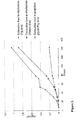
- the cumulative amount of tolterodine base in the receptor solution versus time is shown in Fig. 3 .
- the fluxes were about 4 ⁇ g/cm 2 /h when using 1 or 3 % HPC and 9 % VA CoTran membrane, about 11 ⁇ g /cm 2 /h when using 1 or 3 % HPC and 19 % VA CoTran membrane and 9 ⁇ g /cm 2 /h when using enhancer and 9 % VA CoTran membrane.
- the results show that it is possible to control the release rate of tolterodine base from a reservoir type device by changing the membrane. Also it was seen that when enhancer was added a higher flux was obtained.
- Tolterodine base was dissolved in ethyl acetate whereafter the acrylate polymer was added.
- Tolterodine base was dissolved in the acrylate polymer.
- the drug gels were each coated onto a polyester release liner (S 2016 or FL 2000-696029/3) by using the coating equipment.
- the laminate was dried at 80°C (Röhm 2787F was dried at 60°C) for 10 min.
- the dry coat weight was approximately 110 g/m 2 .
- a backing membrane (Scotchpak 1109) was laminated onto the dried drug gel. The sheets were cut into patches and stored at 2-8°C until use (packed in Barex pouches).
- Tolterodine base was dissolved in ethyl acetate whereafter the MA-24 polymer was added.
- the drug gel was coated onto a polyester release liner (S 2016) by using the coating equipment.
- the laminate was dried at 80°C for 10 min.
- the dry coat weight was approximately 110 g/m 2 .
- a backing membrane (Scotchpak 1109) was laminated onto the dried drug gel.
- the sheets were cut into patches and stored at 2-8°C until use (packed in Barex pouches).
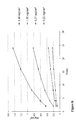
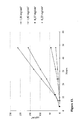
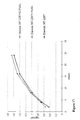
- the cumulative amount of tolterodine base in the receptor solution versus time is shown in Fig. 10-14 .
- the fluxes are in the range from 0.1 - 5.5 ⁇ g/cm 2 /h. It can be seen from the results that different fluxes can be obtained by using different polymers. Also it can be seen that higher fluxes are obtained with higher tolterodine base concentrations in the conducted experiments.
- Patches with tolterodine base in Durotak 87-2070 were manufactured according to System 4, Example 5.
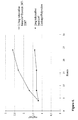
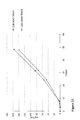
- the cumulative amount of tolterodine base in the receptor solution versus time is shown in Fig. 16 .
- the fluxes are in the range from 1,3 - 4,7 ⁇ g/cm 2 /h. It can be seen from the results that different fluxes can be obtained by using different coat weights. Also it can be seen that the highest flux is obtained with the lowest coat weight.
- Durotak 387-2287 Patches with tolterodine base in Durotak 387-2287 were manufactured according to System 4.
- Durotak 2287 does not contain XL per se but was in this experiment added two different concentrations of XL.
- the concentration of tolterodine base in the patches was about 2 mg/cm 2 and the coat weight was about 100 g/m 2 .
- the gels were prepared by suspending the tolterodine L-tartrate into the polymer Durotak 387-2287.
- a 9.4 M NaOH solution (in water) corresponding to 2 equimolar was added to some of the gel in order to try to convert the tartrate into base.
- 9.4 M NaOH solution (in water) was added to tolterodine base/Durotak 387-2287 gel in order to evaluate if the dissolution profile was changed with the addition of NaOH.
- the patches were coated according to System 4, Example 5.
- the gels were prepared by suspending the tolterodine L-tartrate into the polymer MA-24. A 9.4 M NaOH solution (in water) corresponding to 2 equimolar was added to some of the gel in order to convert the tartrate into base.
- the patches were coated according to System 5, Example 6.
- Laminate No 5 according to Example 5 containing tolterodine base in Durotak 387-2287 was used for comparison.
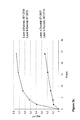
- the cumulative amount of tolterodine base in the receptor solution versus time is shown in Fig. 20 and 21 .
- the results show that it is possible to convert most of the tolterodine L-tartrate to tolterodine base when adding NaOH to the gel containing tolterodine L-tartrate and polymer.
- Tolterodine base was dissolved directly in the Durotak 387-2516 polymer.
- the drug gel was coated onto a polyester release liner (FL 2000-696029/3) by using the Laboratory Coater.
- the laminate was dried at 40/80/80°C for 10 min.
- the dry coat weight was approximately 110 g/m 2 .
- a backing membrane (Scotchpak 1109) was laminated onto the dried drug gel.
- the laminate was cut into patches and stored at 2-8°C until use (packed in Barex pouches).
- the dermal sensitising potential of tolterodine L-tartrate was investigated according to one of the methods recommended in the OECD Guidelines No 406, "Skin Sensitization", 1992 and the ECC Guideline “EEC 92/69 part 6B", 1992.
- the delayed contact hypersensitivity test used was the Guinea Pig Maximization Test described by B. Magnusson and A.M. Kligman.
- a 1 % (w/w) test article concentration in sesame oil was used for the intradermal induction.
- a 25 % (w/w) test article concentration in sesame oil was used for the topical induction and for the challenge application.
- the tolterodine base and placebo patches were applied to the rabbits. After 4 hours of exposure the test articles were removed and the skin was examined 1, 24, 48 and 72 hours and up to 7 days after termination of exposure. It was found that for tolterodine base patches 1 mg/cm 2 and 1.5 mg/cm 2 the mean scores were 0.1 for erythema and 0.0 for oedema while for tolterodine base patches 2 mg/cm 2 and placebo the mean scores were 0.2 for erythema and 0.1 for oedema. This means that tolterodine base patches of 1 mg/cm 2 , 1.5 mg/cm 2 and 2 mg/cm 2 should not be classified as skin irritants.
- DD 01 3.8 g was added to 90 g Durotak 387-2516 and 3 ml ethanol and homogenized for 5 min.
- the drug gel was coated onto a polyester release liner (FL 2000-696029/3) by using the coating equipment.
- the laminate was dried at 80°C for 10 min.
- the dry coat weight was approximately 110 g/m 2 .
- a backing membrane (Scotchpak 1109) was laminated onto the dried drug gel.
- the sheets were cut into patches and stored at 2-8°C until use (packed in Barex pouches).
- the concentration of DD 01 in the patches was 0.91 mg/cm 2 .
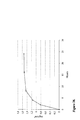
- the cumulative amount of DD 01 in the receptor solution versus time is shown in Fig 25 .
- the obtained flux was 2 ⁇ g/cm 2 /h and the amount ofDD 01 that permeated the skin was about 7%.
- Layer b 6 g tolterodine base was dissolved in 69 g Durotak 387-2516.
- the drug gel was coated onto a release liner (FL 2000-696029/3) by using the coating equipment.
- the laminate was dried at 80°C for 10 min.. The dry coat weight was approximately 50 g/m 2 .
- a backing membrane (Scotchpak 1109) was laminated onto the dried drug gel.
- the release liner was thereafter removed and a rate controlling membrane (CoTran 9728 - 19% Vinyl Acetate) was laminated onto the dried drug gel.
- the theoretically calculated concentration (not analysed) of tolterodine base in the laminate was 0.8 mg/cm 2 .
- Layer a 6 g tolterodine base was dissolved in 93 g Durotak 87-2852.
- the drug gel was coated onto a release liner (FL 2000-696029/3) by using the coating equipment.
- the laminate was dried at 80°C for 10 min.
- the dry coat weight was approximately 50 g/m 2 and the theoretically calculated concentration (not analysed) of tolterodine base in the laminate was 0.8 mg/cm 2 .
- Layer a was then laminated to layer b.
- Layer b was then the layer nearest the backing membrane whereas layer a was the outer layer.
- Layer b 6 g tolterodine base was dissolved in 93 g Durotak 87-2852.
- the drug gel was coated onto a release liner (FL 2000-696029/3) by using the coating equipment.
- the laminate was dried at 80°C for 10 min. The dry coat weight was approximately 50 g/m 2 .
- a backing membrane (Scotchpak 1109) was laminated onto the dried drug gel.
- the release liner was thereafter removed and a rate controlling membrane (CoTran 9728 - 19 % Vinyl Acetate) was laminated onto the dried drug gel.
- the theoretically calculated concentration (not analysed) of tolterodine base in the laminate was 0.8 mg/cm 2 .
- Layer a 6 g tolterodine base was dissolved in 69 g Durotak 387-2516.
- the drug gel was coated onto a release liner (FL 2000-696029/3) by using the coating equipment.
- the laminate was dried at 80°C for 10 min.
- the dry coat weight was approximately 50 g/m 2 and the theoretically calculated concentration (not analysed) of tolterodine base in the laminate was 0.8 mg/cm 2 .
- Layer a was then laminated to layer b.
- Layer b was then the layer nearest the backing membrane whereas layer a was the outer layer.
- tolterodine base 4.5 g was dissolved in 46 g PSA-9839.
- the drug gel was coated onto a polyester release liner (Scotchpak 1022) by using the coating equipment.
- the laminate was dried at 50°C for 10 min.
- the dry coat weight was approximately 150 g/m 2 .
- a backing membrane (Scotchpak 1109) was laminated onto the dried drug gel.
- the sheets were cut into patches and stores at 2-8°C until use (packed in Barex pouches).
- the theoretically concentration (not analysed) of tolterodine base in the patches was 1.5 mg/cm 2 .
- the cumulative amount of tolterodine base in the receptor solution versus time is shown in Fig 29 .
- the obtained flux was 7 ⁇ g/cm 2 /h and the amount of tolterodine base that permeated the skin was about 17 % (calculated from the theoretically calculated amount of tolterodine base in the patch).
- tolterodine base 1 g was dissolved in 20 g Durotak 387-2516.
- the drug gel was coated onto a polyester release liner (FL 2000-696029/3) by using the coating equipment.
- the laminate was dried at 80°C for 10 min.
- the dry coat weight was approximately 115 g/m 2 .
- a non-occlusive backing membrane (“Emflon 11" 0.2 ⁇ m PVDF) was laminated onto the dried drug gel.
- the sheets were cut into patches and stored at 2-8°C until use (packed in Barex pouches).
- the theoretically calculated concentration (not analysed) of tolterodine base in the patches was 1.0 mg/cm 2 .
- the cumulative amount of tolterodine base in the receptor solution versus time is shown in Fig 30 .
- the obtained flux was 0.1 ⁇ g/cm 2 /h and the amount of tolterodine base that permeated the skin was about 0.4% (calculated from the theoretically calculated amount of tolterodine base in the patch). That is, only a very small amount of tolterodine permeates the skin compared to when an occlusive backing membrane is used.
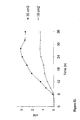
- the clinical study was performed at Quintiles Phase I Clinic, Uppsala, Sweden. Each subject started with a 15 cm 2 patch. After a two-week washout period the subjects continued with a 30 cm 2 patch. The patches were applied on the dorsal side of the upper arm for 36 hours whereafter the residual amount of tolterodine base in the patch was analysed. Blood sampling for determination of tolterodine base and metabolites were drawn pre-dose and during the 36 hours the patches were applied to the subjects. Results from the blood sampling are shown in Fig. 32 . It was seen that an apparent steady state was reached approximately 24 hours after application.
- tolterodine may be used in the transdermal administration.
- One such carrier is cyclodextrine, especially ⁇ -cyclodextrine.
- Tolterodine can be bound in the cavities of cyclodextrines to form so called inclusion complexes. Binding tolterodine to a cyclodextrine leads either to increased delivery rate or to decreased delivery rate depending on the tolterodine-cyclodextrine ratio.
- Fig. 10-13 show that an apparent 0-order delivery of tolterodine through the skin takes place from about 5 to 48 hours. During that period, only about 10 % of the loaded amount of drug in the devices is exhausted and thus this 0-order delivery rate can be maintained at least up to 7 days. Such a once-weekly patch will greatly improve patient compliance, which is important as elderly patients often use tolterodine.
- tolterodine in such a way that a therapeutically effective systemic level of tolterodine prevails to a higher extent during the day or the night.
- the above object is achievable by applying the transdermal device at the appropriate time during day or night in combination with designing the device with the appropriate release profile. The same rules for a device designed to deliver tolterodine to a lower extent during the day or the night.
- the required input rate (Ro) of tolterodine from a transdermal formulation can be exemplified by the following estimation for a poor metabolizer.
- the systemic clearance (CL) is about 10L/h and the average serum concentration (C) after tolterodine 2 mg bid is about 10 ⁇ g/L. (Brynne et al. Clin Pharmacol. Ther. 1998)).
- Required minimum patch area will be about 3 cm 2 (assuming a practically maximum flux rate of 35 ⁇ g/h/cm 2 ).
- patch areas are mainly expected to be in the range 3-50 cm 2 . Patches will be constructed for release rates ranging from 0.2 - 35 ⁇ g/h/cm 2 . DD 01 will also be used as an alternative as the active ingredient in transdermal formulations.
- a useful device for transdermal administration of tolterodine should have an hourly flux rate of tolterodine from about 0.1 ⁇ g/h/cm 2 to about 100 ⁇ g/h/cm 2 , preferably from about 0.2 ⁇ g/h/cm 2 to about 35 ⁇ g/h/cm 2 and an area of from about 2 cm 2 to about 100 cm 2 , preferably from about 5 cm 2 to about 30 cm 2 .
- a device for transdermal delivery of tolterodine should have a loading of tolterodine from about 0.1 mg/cm 2 to about 5 mg/cm 2 .
- a device for transdermal delivery during 2 or more days would further facilitate the use of the transdermal formulation. It is possible to design a device delivers tolterodine for a predefined period of time, preferably 12, 24 or 48 hours, or even up to 7 or 14 days.
- tolterodine When tolterodine is administered in a transdermal device the latter should preferably be occlusive, which means that the device does not permit water to migrate outwardly from the skin area covered by the device or at least with a lower rate than the rate of the skins ordinary transepidermal water loss. Thereby the hydration of the skin is increased which favours the penetration of tolterodine through the skin.
- tolterodine for convenience and/or in order to achieve a more rapid increase in plasma level it is possible to design a set of formulations of tolterodine, optionally encompassing salts, and , the tolterodine metabolite (R)-N,N-diisopropyl-3-(2-hydroly-5-hydroxymethylphenyl)-3-phenylpropanamine which comprises at least one device for transdermal delivery and at least one formulation for oral, sublingual, buccal, nasal, pulmonary, rectal and/or other transmucosal administration.
Landscapes
- Health & Medical Sciences (AREA)
- Engineering & Computer Science (AREA)
- Bioinformatics & Cheminformatics (AREA)
- Dermatology (AREA)
- Public Health (AREA)
- Pharmacology & Pharmacy (AREA)
- Life Sciences & Earth Sciences (AREA)
- Animal Behavior & Ethology (AREA)
- General Health & Medical Sciences (AREA)
- Medicinal Chemistry (AREA)
- Veterinary Medicine (AREA)
- Chemical & Material Sciences (AREA)
- Epidemiology (AREA)
- Urology & Nephrology (AREA)
- Chemical Kinetics & Catalysis (AREA)
- General Chemical & Material Sciences (AREA)
- Nuclear Medicine, Radiotherapy & Molecular Imaging (AREA)
- Organic Chemistry (AREA)
- Medicinal Preparation (AREA)
- Pharmaceuticals Containing Other Organic And Inorganic Compounds (AREA)
- Acyclic And Carbocyclic Compounds In Medicinal Compositions (AREA)
Applications Claiming Priority (3)
| Application Number | Priority Date | Filing Date | Title |
|---|---|---|---|
| SE9802864 | 1998-08-27 | ||
| SE9802864A SE9802864D0 (sv) | 1998-08-27 | 1998-08-27 | Transdermally administered tolterodine as antimuscarinic agent for the treatment of overactive bladder |
| PCT/SE1999/001464 WO2000012070A1 (en) | 1998-08-27 | 1999-08-26 | Transdermally administered tolterodine as anti-muscarinic agent for the treatment of overactive bladder |
Publications (2)
| Publication Number | Publication Date |
|---|---|
| EP1105111A1 EP1105111A1 (en) | 2001-06-13 |
| EP1105111B1 true EP1105111B1 (en) | 2008-08-20 |
Family
ID=20412370
Family Applications (1)
| Application Number | Title | Priority Date | Filing Date |
|---|---|---|---|
| EP99946522A Expired - Lifetime EP1105111B1 (en) | 1998-08-27 | 1999-08-26 | Transdermally administered tolterodine as anti-muscarinic agent for the treatment of overactive bladder |
Country Status (13)
| Country | Link |
|---|---|
| US (2) | US6517864B1 (https=) |
| EP (1) | EP1105111B1 (https=) |
| JP (1) | JP2002523446A (https=) |
| AT (1) | ATE405254T1 (https=) |
| AU (1) | AU758399B2 (https=) |
| CA (1) | CA2341063C (https=) |
| DE (1) | DE69939382D1 (https=) |
| ES (2) | ES2353765T3 (https=) |
| NZ (1) | NZ509928A (https=) |
| SE (1) | SE9802864D0 (https=) |
| TW (1) | TWI253349B (https=) |
| WO (1) | WO2000012070A1 (https=) |
| ZA (1) | ZA200002488B (https=) |
Families Citing this family (64)
| Publication number | Priority date | Publication date | Assignee | Title |
|---|---|---|---|---|
| WO1998003067A1 (en) * | 1996-07-19 | 1998-01-29 | Gunnar Aberg | S(-)-tolterodine in the treatment of urinary and gastrointestinal disorders |
| EP0957073A1 (en) * | 1998-05-12 | 1999-11-17 | Schwarz Pharma Ag | Novel derivatives of 3,3-diphenylpropylamines |
| SE9802864D0 (sv) * | 1998-08-27 | 1998-08-27 | Pharmacia & Upjohn Ab | Transdermally administered tolterodine as antimuscarinic agent for the treatment of overactive bladder |
| PT1031346E (pt) | 1999-01-27 | 2002-09-30 | Idea Ag | Vacinacao nao invasiva atraves da pele |
| SI1031347T1 (en) | 1999-01-27 | 2002-10-31 | Idea Ag | Transnasal transport/immunisation with highly adaptable carriers |
| DE19922662C1 (de) | 1999-05-18 | 2000-12-28 | Sanol Arznei Schwarz Gmbh | Transdermales therapeutisches System (TTS) Tolterodin enthaltend |
| WO2001001962A1 (en) * | 1999-07-05 | 2001-01-11 | Idea Ag. | A method for the improvement of transport across adaptable semi-permeable barriers |
| DE19932651A1 (de) * | 1999-07-13 | 2001-01-18 | Hexal Ag | Transdermales therapeutisches System zur Anwendung von Tolterodin |
| JP2005513080A (ja) * | 2001-12-20 | 2005-05-12 | フェムファーマ, インコーポレイテッド | 薬物の膣送達 |
| JP2006515026A (ja) * | 2003-01-02 | 2006-05-18 | フェムファーマ ホールディング カンパニー, インコーポレイテッド | 乳房の疾患および障害の処置のための薬学的調製物 |
| US9173836B2 (en) | 2003-01-02 | 2015-11-03 | FemmeParma Holding Company, Inc. | Pharmaceutical preparations for treatments of diseases and disorders of the breast |
| US20040191345A1 (en) * | 2003-03-26 | 2004-09-30 | Fredrik Nicklasson | New formulations and use thereof |
| DE10315917A1 (de) * | 2003-04-08 | 2004-11-18 | Schwarz Pharma Ag | Hochreine Basen von 3,3-Diphenylpropylaminmonoestern |
| JP5548329B2 (ja) * | 2003-08-04 | 2014-07-16 | 杏林製薬株式会社 | 経皮吸収型製剤 |
| WO2006015299A2 (en) * | 2004-07-30 | 2006-02-09 | Microchips, Inc. | Multi-reservoir device for transdermal drug delivery and sensing |
| WO2006082888A1 (ja) * | 2005-02-03 | 2006-08-10 | Kyorin Pharmaceutical Co., Ltd. | 経皮吸収型製剤 |
| CN101340884A (zh) | 2005-10-19 | 2009-01-07 | 曼尼·马纳舍·辛格尔 | 用于治疗多汗症的方法 |
| EA023147B1 (ru) * | 2006-04-13 | 2016-04-29 | Тева Фармасьютикалс Интернешнл Гмбх | Трансдермальный пластырь для лечения мигрени |
| AU2012261753B2 (en) * | 2006-04-13 | 2015-03-05 | Teva Pharmaceuticals International Gmbh | Transdermal methods and systems for the delivery of anti-migraine compounds |
| US7803778B2 (en) | 2006-05-23 | 2010-09-28 | Theracos, Inc. | Glucose transport inhibitors and methods of use |
| US7893053B2 (en) | 2006-06-16 | 2011-02-22 | Theracos, Inc. | Treating psychological conditions using muscarinic receptor M1 antagonists |
| US8748419B2 (en) | 2006-06-16 | 2014-06-10 | Theracos, Inc. | Treating obesity with muscarinic receptor M1 antagonists |
| US20080153789A1 (en) * | 2006-12-26 | 2008-06-26 | Femmepharma Holding Company, Inc. | Topical administration of danazol |
| US20080193766A1 (en) * | 2007-02-13 | 2008-08-14 | Northern Nanotechnologies | Control of Transport to and from Nanoparticle Surfaces |
| JP5583003B2 (ja) | 2007-04-02 | 2014-09-03 | セラコス・インコーポレイテッド | ベンジルグルコシド誘導体およびその用途 |
| EP2175843B1 (en) | 2007-08-08 | 2014-10-08 | Inventia Healthcare Private Limited | Extended release compositions comprising tolterodine |
| NZ583369A (en) | 2007-08-23 | 2011-08-26 | Theracos Inc | Benzylbenzene derivatives and methods of use |
| KR101188333B1 (ko) * | 2008-02-20 | 2012-10-09 | 에스케이케미칼주식회사 | 안정성이 우수하고 경피제로 유용한 톨테로딘 결정성산부가염 |
| US20090297591A1 (en) * | 2008-05-30 | 2009-12-03 | Orient Pharma Co., Ltd. | Compositions And Methods For The Transdermal Delivery Of Pharmaceutical Compounds |
| US20110223204A1 (en) * | 2008-06-04 | 2011-09-15 | Bradford J Duft | Treatment of pain with gap junction modulation compounds |
| US8155737B2 (en) * | 2008-06-19 | 2012-04-10 | Nupathe, Inc. | Pharmacokinetics of iontophoretic sumatriptan administration |
| US8366600B2 (en) * | 2008-06-19 | 2013-02-05 | Nupathe Inc. | Polyamine enhanced formulations for triptan compound iontophoresis |
| AU2009270936B2 (en) | 2008-07-15 | 2014-12-18 | Theracos, Inc. | Deuterated benzylbenzene derivatives and methods of use |
| CN103910702A (zh) | 2008-08-22 | 2014-07-09 | 泰拉科斯有限公司 | 制备sglt2抑制剂的方法 |
| WO2010068483A2 (en) | 2008-11-25 | 2010-06-17 | University Of Rochester | Mlk inhibitors and methods of use |
| CA2764526A1 (en) | 2009-06-24 | 2010-12-29 | Christine Kritikou | The use of spinosyns and spinosyn compositions against diseases caused by protozoans, viral infections and cancer |
| KR20110001103A (ko) | 2009-06-29 | 2011-01-06 | 에스케이케미칼주식회사 | 보관 안정성이 향상된 톨테로딘 함유 경피 투여 조성물 |
| US20110003000A1 (en) * | 2009-07-06 | 2011-01-06 | Femmepharma Holding Company, Inc. | Transvaginal Delivery of Drugs |
| CN105796533A (zh) * | 2009-08-10 | 2016-07-27 | 泰华制药国际有限公司 | 用离子电渗疗法治疗恶心和偏头痛的方法 |
| US20110087153A1 (en) * | 2009-10-13 | 2011-04-14 | Angelov Angel S | Transdermal Methods And Systems For The Delivery Of Rizatriptan |
| IL210279A0 (en) | 2009-12-25 | 2011-03-31 | Dexcel Pharma Technologies Ltd | Extended release compositions for high solubility, high permeability acdtive pharmaceutical ingredients |
| KR101746204B1 (ko) | 2010-02-18 | 2017-06-13 | 에스케이케미칼주식회사 | 피부 투과가 개선된 톨테로딘의 경피 투여용 조성물 |
| KR20110094858A (ko) * | 2010-02-18 | 2011-08-24 | 에스케이케미칼주식회사 | 피부 자극이 감소한 톨테로딘의 경피 투여용 조성물 |
| US20130053357A1 (en) * | 2010-04-28 | 2013-02-28 | Hisamitsu Pharmaceutical Co., Inc. | Skin irritation suppressant and transdermal preparation |
| JP6086326B2 (ja) | 2010-05-24 | 2017-03-01 | ユニヴァーシティー オブ ロチェスター | 二環式ヘテロアリールキナーゼ阻害剤および使用方法 |
| WO2011153712A1 (en) | 2010-06-12 | 2011-12-15 | Theracos, Inc. | Crystalline form of benzylbenzene sglt2 inhibitor |
| WO2012017892A1 (ja) | 2010-08-03 | 2012-02-09 | 久光製薬株式会社 | 貼付剤及びその粘着力増強方法 |
| EP2654757A1 (en) | 2010-12-22 | 2013-10-30 | Entarco SA | The use of spinosyns and spinosyn compositions as local anesthetics and as antiarrhythmic agents |
| EP3502236B1 (en) | 2011-02-18 | 2023-08-23 | The Scripps Research Institute | Directed differentiation of oligodendrocyte precursor cells to a myelinating cell fate |
| CA2868334C (en) | 2011-12-27 | 2020-03-10 | Teikoku Seiyaku Co., Ltd. | Tolterodine-containing adhesive patch |
| CA2868534A1 (en) | 2012-03-27 | 2013-10-03 | Coda Therapeutics, Inc. | Compositions and treatments based on cadherin modulation |
| JP2015520754A (ja) | 2012-05-18 | 2015-07-23 | オタゴ イノベーション リミテッド | 創傷治癒のための組合せ治療および組成物 |
| US10758494B2 (en) | 2012-06-12 | 2020-09-01 | KM Transderm Ltd. | Rivastigmine-containing adhesive patch |
| US9895320B2 (en) | 2012-09-28 | 2018-02-20 | KM Transderm Ltd. | Transdermal patch with different viscosity hydrocarbon oils in the drug layer and the adhesive layer |
| CN104884059B (zh) | 2012-11-30 | 2018-08-10 | 罗切斯特大学 | 用于hiv/aids治疗的混合谱系激酶抑制剂 |
| CN103142465B (zh) * | 2013-03-19 | 2014-10-22 | 长春健欣生物医药科技开发有限公司 | 一种托特罗定成膜水凝胶制剂及其制备方法 |
| EP3119394B1 (en) | 2014-03-19 | 2021-05-12 | Curza Global LLC | Compositions and methods comprising 2-(acylamino)imidazoles |
| US9987361B1 (en) | 2014-12-29 | 2018-06-05 | Noven Pharmaceuticals, Inc. | Compositions and method for sustained drug delivery by active transdermal technology |
| JP2020512981A (ja) | 2017-03-31 | 2020-04-30 | カーザ グローバル,リミティド ライアビリティ カンパニー | 置換2−アミノイミダゾールを含む組成物と方法 |
| JP2021534196A (ja) | 2018-08-23 | 2021-12-09 | シージェン インコーポレイテッド | 抗tigit抗体 |
| EP4185310A4 (en) * | 2020-07-23 | 2024-09-04 | Kimberly-Clark Worldwide, Inc. | METHOD OF MODULATING THE BLADDER MICROBIOME TO IMPROVE BLADDER HEALTH |
| WO2022098972A1 (en) | 2020-11-08 | 2022-05-12 | Seagen Inc. | Combination-therapy antibody drug conjugate with immune cell inhibitor |
| EP4320160A1 (en) | 2021-04-09 | 2024-02-14 | Seagen Inc. | Methods of treating cancer with anti-tigit antibodies |
| WO2024191807A1 (en) | 2023-03-10 | 2024-09-19 | Seagen Inc. | Methods of treating cancer with anti-tigit antibodies |
Family Cites Families (5)
| Publication number | Priority date | Publication date | Assignee | Title |
|---|---|---|---|---|
| US5382600A (en) | 1988-01-22 | 1995-01-17 | Pharmacia Aktiebolag | 3,3-diphenylpropylamines and pharmaceutical compositions thereof |
| ZA933349B (en) * | 1992-05-13 | 1994-06-15 | Alza Corp | Transdermal administration of oxybutynin |
| WO1998003067A1 (en) | 1996-07-19 | 1998-01-29 | Gunnar Aberg | S(-)-tolterodine in the treatment of urinary and gastrointestinal disorders |
| PT877600E (pt) * | 1996-08-09 | 2004-02-27 | Alcon Mfg Ltd | Sistemas conservantes para composicoes farmaceuticas contendo ciclodextrinas |
| SE9802864D0 (sv) * | 1998-08-27 | 1998-08-27 | Pharmacia & Upjohn Ab | Transdermally administered tolterodine as antimuscarinic agent for the treatment of overactive bladder |
-
1998
- 1998-08-27 SE SE9802864A patent/SE9802864D0/xx unknown
-
1999
- 1999-08-26 AT AT99946522T patent/ATE405254T1/de not_active IP Right Cessation
- 1999-08-26 NZ NZ509928A patent/NZ509928A/en unknown
- 1999-08-26 US US09/763,654 patent/US6517864B1/en not_active Expired - Fee Related
- 1999-08-26 DE DE69939382T patent/DE69939382D1/de not_active Expired - Lifetime
- 1999-08-26 CA CA002341063A patent/CA2341063C/en not_active Expired - Fee Related
- 1999-08-26 AU AU58919/99A patent/AU758399B2/en not_active Ceased
- 1999-08-26 ES ES99946521T patent/ES2353765T3/es not_active Expired - Lifetime
- 1999-08-26 EP EP99946522A patent/EP1105111B1/en not_active Expired - Lifetime
- 1999-08-26 WO PCT/SE1999/001464 patent/WO2000012070A1/en not_active Ceased
- 1999-08-26 ES ES99946522T patent/ES2310942T3/es not_active Expired - Lifetime
- 1999-08-26 JP JP2000567189A patent/JP2002523446A/ja active Pending
- 1999-08-27 TW TW088114752A patent/TWI253349B/zh not_active IP Right Cessation
-
2000
- 2000-05-19 ZA ZA200002488A patent/ZA200002488B/xx unknown
-
2002
- 2002-11-22 US US10/301,719 patent/US7008637B2/en not_active Expired - Fee Related
Also Published As
| Publication number | Publication date |
|---|---|
| US20030124179A1 (en) | 2003-07-03 |
| US7008637B2 (en) | 2006-03-07 |
| CA2341063C (en) | 2008-02-12 |
| AU5891999A (en) | 2000-03-21 |
| ZA200002488B (en) | 2001-05-16 |
| ATE405254T1 (de) | 2008-09-15 |
| AU758399B2 (en) | 2003-03-20 |
| CA2341063A1 (en) | 2000-03-09 |
| US6517864B1 (en) | 2003-02-11 |
| JP2002523446A (ja) | 2002-07-30 |
| WO2000012070A1 (en) | 2000-03-09 |
| TWI253349B (en) | 2006-04-21 |
| DE69939382D1 (de) | 2008-10-02 |
| EP1105111A1 (en) | 2001-06-13 |
| SE9802864D0 (sv) | 1998-08-27 |
| NZ509928A (en) | 2003-08-29 |
| ES2353765T3 (es) | 2011-03-04 |
| ES2310942T3 (es) | 2009-01-16 |
Similar Documents
| Publication | Publication Date | Title |
|---|---|---|
| EP1105111B1 (en) | Transdermally administered tolterodine as anti-muscarinic agent for the treatment of overactive bladder | |
| JP2002523446A5 (https=) | ||
| US8246979B2 (en) | Transdermal delivery system for the administration of rotigotine | |
| US6783769B1 (en) | Transdermal therapeutic system TTS containing tolterodine | |
| US6335030B1 (en) | Transdermally administered dextromethorphan as antitussive agent | |
| JP2003511425A (ja) | 二元粘着性経皮薬物デリバリーシステム | |
| WO2004012730A1 (en) | Improved transdermal delivery system for the administration of rotigotine | |
| JPH0667835B2 (ja) | 医薬組成物 | |
| EP1333817B1 (en) | Film for active ingredients dermal and transdermal administration | |
| WO2001047503A1 (en) | Transdermal administration of reboxetine | |
| US6620428B1 (en) | Transdermally administered acetylcysteine as mucolytic agent | |
| US20110237541A1 (en) | Transdermally administered aliskiren | |
| KR100272043B1 (ko) | 알쯔하이머성 치매치료용 경피흡수제제 | |
| CN116712413A (zh) | 一种普拉克索透皮贴剂 |
Legal Events
| Date | Code | Title | Description |
|---|---|---|---|
| PUAI | Public reference made under article 153(3) epc to a published international application that has entered the european phase |
Free format text: ORIGINAL CODE: 0009012 |
|
| 17P | Request for examination filed |
Effective date: 20010201 |
|
| AK | Designated contracting states |
Kind code of ref document: A1 Designated state(s): AT BE CH CY DE DK ES FI FR GB GR IE IT LI LU MC NL PT SE |
|
| AX | Request for extension of the european patent |
Free format text: AL;LT;LV;MK;RO;SI |
|
| 17Q | First examination report despatched |
Effective date: 20040421 |
|
| RAP1 | Party data changed (applicant data changed or rights of an application transferred) |
Owner name: PFIZER HEALTH AB |
|
| GRAP | Despatch of communication of intention to grant a patent |
Free format text: ORIGINAL CODE: EPIDOSNIGR1 |
|
| GRAS | Grant fee paid |
Free format text: ORIGINAL CODE: EPIDOSNIGR3 |
|
| GRAA | (expected) grant |
Free format text: ORIGINAL CODE: 0009210 |
|
| AK | Designated contracting states |
Kind code of ref document: B1 Designated state(s): AT BE CH CY DE DK ES FI FR GB GR IE IT LI LU MC NL PT SE |
|
| REG | Reference to a national code |
Ref country code: GB Ref legal event code: FG4D |
|
| REG | Reference to a national code |
Ref country code: CH Ref legal event code: EP |
|
| REG | Reference to a national code |
Ref country code: IE Ref legal event code: FG4D |
|
| REF | Corresponds to: |
Ref document number: 69939382 Country of ref document: DE Date of ref document: 20081002 Kind code of ref document: P |
|
| REG | Reference to a national code |
Ref country code: ES Ref legal event code: FG2A Ref document number: 2310942 Country of ref document: ES Kind code of ref document: T3 |
|
| PG25 | Lapsed in a contracting state [announced via postgrant information from national office to epo] |
Ref country code: NL Free format text: LAPSE BECAUSE OF FAILURE TO SUBMIT A TRANSLATION OF THE DESCRIPTION OR TO PAY THE FEE WITHIN THE PRESCRIBED TIME-LIMIT Effective date: 20080820 |
|
| PG25 | Lapsed in a contracting state [announced via postgrant information from national office to epo] |
Ref country code: FI Free format text: LAPSE BECAUSE OF FAILURE TO SUBMIT A TRANSLATION OF THE DESCRIPTION OR TO PAY THE FEE WITHIN THE PRESCRIBED TIME-LIMIT Effective date: 20080820 Ref country code: AT Free format text: LAPSE BECAUSE OF FAILURE TO SUBMIT A TRANSLATION OF THE DESCRIPTION OR TO PAY THE FEE WITHIN THE PRESCRIBED TIME-LIMIT Effective date: 20080820 |
|
| PG25 | Lapsed in a contracting state [announced via postgrant information from national office to epo] |
Ref country code: BE Free format text: LAPSE BECAUSE OF FAILURE TO SUBMIT A TRANSLATION OF THE DESCRIPTION OR TO PAY THE FEE WITHIN THE PRESCRIBED TIME-LIMIT Effective date: 20080820 Ref country code: MC Free format text: LAPSE BECAUSE OF NON-PAYMENT OF DUE FEES Effective date: 20080831 |
|
| REG | Reference to a national code |
Ref country code: CH Ref legal event code: PL |
|
| PG25 | Lapsed in a contracting state [announced via postgrant information from national office to epo] |
Ref country code: DK Free format text: LAPSE BECAUSE OF FAILURE TO SUBMIT A TRANSLATION OF THE DESCRIPTION OR TO PAY THE FEE WITHIN THE PRESCRIBED TIME-LIMIT Effective date: 20080820 |
|
| PG25 | Lapsed in a contracting state [announced via postgrant information from national office to epo] |
Ref country code: PT Free format text: LAPSE BECAUSE OF FAILURE TO SUBMIT A TRANSLATION OF THE DESCRIPTION OR TO PAY THE FEE WITHIN THE PRESCRIBED TIME-LIMIT Effective date: 20090120 |
|
| PLBE | No opposition filed within time limit |
Free format text: ORIGINAL CODE: 0009261 |
|
| STAA | Information on the status of an ep patent application or granted ep patent |
Free format text: STATUS: NO OPPOSITION FILED WITHIN TIME LIMIT |
|
| PG25 | Lapsed in a contracting state [announced via postgrant information from national office to epo] |
Ref country code: LI Free format text: LAPSE BECAUSE OF NON-PAYMENT OF DUE FEES Effective date: 20080831 Ref country code: CH Free format text: LAPSE BECAUSE OF NON-PAYMENT OF DUE FEES Effective date: 20080831 |
|
| 26N | No opposition filed |
Effective date: 20090525 |
|
| PG25 | Lapsed in a contracting state [announced via postgrant information from national office to epo] |
Ref country code: IT Free format text: LAPSE BECAUSE OF NON-PAYMENT OF DUE FEES Effective date: 20080826 |
|
| PG25 | Lapsed in a contracting state [announced via postgrant information from national office to epo] |
Ref country code: SE Free format text: LAPSE BECAUSE OF FAILURE TO SUBMIT A TRANSLATION OF THE DESCRIPTION OR TO PAY THE FEE WITHIN THE PRESCRIBED TIME-LIMIT Effective date: 20081120 |
|
| PG25 | Lapsed in a contracting state [announced via postgrant information from national office to epo] |
Ref country code: LU Free format text: LAPSE BECAUSE OF NON-PAYMENT OF DUE FEES Effective date: 20080826 |
|
| PG25 | Lapsed in a contracting state [announced via postgrant information from national office to epo] |
Ref country code: CY Free format text: LAPSE BECAUSE OF FAILURE TO SUBMIT A TRANSLATION OF THE DESCRIPTION OR TO PAY THE FEE WITHIN THE PRESCRIBED TIME-LIMIT Effective date: 20080820 |
|
| PG25 | Lapsed in a contracting state [announced via postgrant information from national office to epo] |
Ref country code: GR Free format text: LAPSE BECAUSE OF FAILURE TO SUBMIT A TRANSLATION OF THE DESCRIPTION OR TO PAY THE FEE WITHIN THE PRESCRIBED TIME-LIMIT Effective date: 20081121 |
|
| PGRI | Patent reinstated in contracting state [announced from national office to epo] |
Ref country code: IT Effective date: 20110616 |
|
| PGFP | Annual fee paid to national office [announced via postgrant information from national office to epo] |
Ref country code: GB Payment date: 20120726 Year of fee payment: 14 Ref country code: IE Payment date: 20120730 Year of fee payment: 14 |
|
| PGFP | Annual fee paid to national office [announced via postgrant information from national office to epo] |
Ref country code: IT Payment date: 20120820 Year of fee payment: 14 Ref country code: ES Payment date: 20120813 Year of fee payment: 14 Ref country code: FR Payment date: 20120809 Year of fee payment: 14 Ref country code: DE Payment date: 20120831 Year of fee payment: 14 |
|
| GBPC | Gb: european patent ceased through non-payment of renewal fee |
Effective date: 20130826 |
|
| PG25 | Lapsed in a contracting state [announced via postgrant information from national office to epo] |
Ref country code: DE Free format text: LAPSE BECAUSE OF NON-PAYMENT OF DUE FEES Effective date: 20140301 |
|
| REG | Reference to a national code |
Ref country code: IE Ref legal event code: MM4A |
|
| REG | Reference to a national code |
Ref country code: DE Ref legal event code: R119 Ref document number: 69939382 Country of ref document: DE Effective date: 20140301 |
|
| REG | Reference to a national code |
Ref country code: FR Ref legal event code: ST Effective date: 20140430 |
|
| PG25 | Lapsed in a contracting state [announced via postgrant information from national office to epo] |
Ref country code: IT Free format text: LAPSE BECAUSE OF NON-PAYMENT OF DUE FEES Effective date: 20130826 |
|
| PG25 | Lapsed in a contracting state [announced via postgrant information from national office to epo] |
Ref country code: GB Free format text: LAPSE BECAUSE OF NON-PAYMENT OF DUE FEES Effective date: 20130826 Ref country code: IE Free format text: LAPSE BECAUSE OF NON-PAYMENT OF DUE FEES Effective date: 20130826 |
|
| PG25 | Lapsed in a contracting state [announced via postgrant information from national office to epo] |
Ref country code: FR Free format text: LAPSE BECAUSE OF NON-PAYMENT OF DUE FEES Effective date: 20130902 |
|
| REG | Reference to a national code |
Ref country code: ES Ref legal event code: FD2A Effective date: 20150428 |
|
| PG25 | Lapsed in a contracting state [announced via postgrant information from national office to epo] |
Ref country code: ES Free format text: LAPSE BECAUSE OF NON-PAYMENT OF DUE FEES Effective date: 20130827 |