EP1099755B1 - Novel gene and transformant carrying the same - Google Patents
Novel gene and transformant carrying the same Download PDFInfo
- Publication number
- EP1099755B1 EP1099755B1 EP99926825A EP99926825A EP1099755B1 EP 1099755 B1 EP1099755 B1 EP 1099755B1 EP 99926825 A EP99926825 A EP 99926825A EP 99926825 A EP99926825 A EP 99926825A EP 1099755 B1 EP1099755 B1 EP 1099755B1
- Authority
- EP
- European Patent Office
- Prior art keywords
- acid
- hydroxy
- carboxymuconic
- gene
- dna
- Prior art date
- Legal status (The legal status is an assumption and is not a legal conclusion. Google has not performed a legal analysis and makes no representation as to the accuracy of the status listed.)
- Expired - Lifetime
Links
- 108090000623 proteins and genes Proteins 0.000 title claims description 53
- 101710088194 Dehydrogenase Proteins 0.000 claims description 45
- VRMXCPVFSJVVCA-UHFFFAOYSA-N 2-oxo-2H-pyran-4,6-dicarboxylic acid Chemical compound OC(=O)C=1C=C(C(O)=O)OC(=O)C=1 VRMXCPVFSJVVCA-UHFFFAOYSA-N 0.000 claims description 38
- 239000013598 vector Substances 0.000 claims description 32
- 102000004190 Enzymes Human genes 0.000 claims description 26
- 108090000790 Enzymes Proteins 0.000 claims description 26
- 125000003275 alpha amino acid group Chemical group 0.000 claims description 22
- 238000000034 method Methods 0.000 claims description 21
- 230000000694 effects Effects 0.000 claims description 13
- 238000004519 manufacturing process Methods 0.000 claims description 13
- 238000007792 addition Methods 0.000 claims description 5
- 150000001413 amino acids Chemical class 0.000 claims description 5
- 102000004169 proteins and genes Human genes 0.000 claims description 4
- 229920001184 polypeptide Polymers 0.000 claims description 3
- 102000004196 processed proteins & peptides Human genes 0.000 claims description 3
- 108090000765 processed proteins & peptides Proteins 0.000 claims description 3
- 238000012217 deletion Methods 0.000 claims 3
- 230000037430 deletion Effects 0.000 claims 3
- 238000006467 substitution reaction Methods 0.000 claims 3
- 230000000295 complement effect Effects 0.000 claims 1
- 108020004414 DNA Proteins 0.000 description 57
- 210000004027 cell Anatomy 0.000 description 43
- LFQSCWFLJHTTHZ-UHFFFAOYSA-N Ethanol Chemical compound CCO LFQSCWFLJHTTHZ-UHFFFAOYSA-N 0.000 description 28
- YQUVCSBJEUQKSH-UHFFFAOYSA-N 3,4-dihydroxybenzoic acid Chemical compound OC(=O)C1=CC=C(O)C(O)=C1 YQUVCSBJEUQKSH-UHFFFAOYSA-N 0.000 description 23
- 241001135759 Sphingomonas sp. Species 0.000 description 21
- 239000012634 fragment Substances 0.000 description 21
- 239000000047 product Substances 0.000 description 21
- 239000013612 plasmid Substances 0.000 description 20
- 239000002609 medium Substances 0.000 description 19
- 239000002585 base Substances 0.000 description 17
- 239000000203 mixture Substances 0.000 description 17
- 108091008146 restriction endonucleases Proteins 0.000 description 16
- FAPWRFPIFSIZLT-UHFFFAOYSA-M Sodium chloride Chemical compound [Na+].[Cl-] FAPWRFPIFSIZLT-UHFFFAOYSA-M 0.000 description 14
- 238000005119 centrifugation Methods 0.000 description 14
- XLYOFNOQVPJJNP-UHFFFAOYSA-N water Chemical compound O XLYOFNOQVPJJNP-UHFFFAOYSA-N 0.000 description 14
- 238000006243 chemical reaction Methods 0.000 description 12
- 244000005700 microbiome Species 0.000 description 12
- JMSVCTWVEWCHDZ-UHFFFAOYSA-N syringic acid Chemical compound COC1=CC(C(O)=O)=CC(OC)=C1O JMSVCTWVEWCHDZ-UHFFFAOYSA-N 0.000 description 12
- 241001131785 Escherichia coli HB101 Species 0.000 description 10
- 239000001963 growth medium Substances 0.000 description 10
- HEMHJVSKTPXQMS-UHFFFAOYSA-M Sodium hydroxide Chemical compound [OH-].[Na+] HEMHJVSKTPXQMS-UHFFFAOYSA-M 0.000 description 9
- 229960000723 ampicillin Drugs 0.000 description 9
- AVKUERGKIZMTKX-NJBDSQKTSA-N ampicillin Chemical compound C1([C@@H](N)C(=O)N[C@H]2[C@H]3SC([C@@H](N3C2=O)C(O)=O)(C)C)=CC=CC=C1 AVKUERGKIZMTKX-NJBDSQKTSA-N 0.000 description 9
- 239000012153 distilled water Substances 0.000 description 8
- 238000005516 engineering process Methods 0.000 description 8
- 239000011780 sodium chloride Substances 0.000 description 7
- 239000006228 supernatant Substances 0.000 description 7
- YIBXWXOYFGZLRU-UHFFFAOYSA-N syringic aldehyde Natural products CC12CCC(C3(CCC(=O)C(C)(C)C3CC=3)C)C=3C1(C)CCC2C1COC(C)(C)C(O)C(O)C1 YIBXWXOYFGZLRU-UHFFFAOYSA-N 0.000 description 7
- QKNYBSVHEMOAJP-UHFFFAOYSA-N 2-amino-2-(hydroxymethyl)propane-1,3-diol;hydron;chloride Chemical compound Cl.OCC(N)(CO)CO QKNYBSVHEMOAJP-UHFFFAOYSA-N 0.000 description 6
- 229920001817 Agar Polymers 0.000 description 6
- 241000588724 Escherichia coli Species 0.000 description 6
- ISWSIDIOOBJBQZ-UHFFFAOYSA-N Phenol Chemical compound OC1=CC=CC=C1 ISWSIDIOOBJBQZ-UHFFFAOYSA-N 0.000 description 6
- 239000008272 agar Substances 0.000 description 6
- 238000011161 development Methods 0.000 description 6
- 230000018109 developmental process Effects 0.000 description 6
- 238000001962 electrophoresis Methods 0.000 description 6
- 238000000605 extraction Methods 0.000 description 6
- 239000011541 reaction mixture Substances 0.000 description 6
- 238000012360 testing method Methods 0.000 description 6
- WKOLLVMJNQIZCI-UHFFFAOYSA-N vanillic acid Chemical compound COC1=CC(C(O)=O)=CC=C1O WKOLLVMJNQIZCI-UHFFFAOYSA-N 0.000 description 6
- TUUBOHWZSQXCSW-UHFFFAOYSA-N vanillic acid Natural products COC1=CC(O)=CC(C(O)=O)=C1 TUUBOHWZSQXCSW-UHFFFAOYSA-N 0.000 description 6
- 108020004511 Recombinant DNA Proteins 0.000 description 5
- 238000004458 analytical method Methods 0.000 description 5
- 230000029087 digestion Effects 0.000 description 5
- 238000011534 incubation Methods 0.000 description 5
- 239000000523 sample Substances 0.000 description 5
- 239000000243 solution Substances 0.000 description 5
- LZZYPRNAOMGNLH-UHFFFAOYSA-M Cetrimonium bromide Chemical compound [Br-].CCCCCCCCCCCCCCCC[N+](C)(C)C LZZYPRNAOMGNLH-UHFFFAOYSA-M 0.000 description 4
- 102000012410 DNA Ligases Human genes 0.000 description 4
- 108010061982 DNA Ligases Proteins 0.000 description 4
- PEDCQBHIVMGVHV-UHFFFAOYSA-N Glycerine Chemical compound OCC(O)CO PEDCQBHIVMGVHV-UHFFFAOYSA-N 0.000 description 4
- 238000002835 absorbance Methods 0.000 description 4
- 239000000872 buffer Substances 0.000 description 4
- 229930027917 kanamycin Natural products 0.000 description 4
- 229960000318 kanamycin Drugs 0.000 description 4
- SBUJHOSQTJFQJX-NOAMYHISSA-N kanamycin Chemical compound O[C@@H]1[C@@H](O)[C@H](O)[C@@H](CN)O[C@@H]1O[C@H]1[C@H](O)[C@@H](O[C@@H]2[C@@H]([C@@H](N)[C@H](O)[C@@H](CO)O2)O)[C@H](N)C[C@@H]1N SBUJHOSQTJFQJX-NOAMYHISSA-N 0.000 description 4
- 229930182823 kanamycin A Natural products 0.000 description 4
- 239000007788 liquid Substances 0.000 description 4
- 239000008363 phosphate buffer Substances 0.000 description 4
- 239000000725 suspension Substances 0.000 description 4
- QTBSBXVTEAMEQO-UHFFFAOYSA-N Acetic acid Chemical compound CC(O)=O QTBSBXVTEAMEQO-UHFFFAOYSA-N 0.000 description 3
- 229920000936 Agarose Polymers 0.000 description 3
- 244000153158 Ammi visnaga Species 0.000 description 3
- 235000010585 Ammi visnaga Nutrition 0.000 description 3
- 108010067770 Endopeptidase K Proteins 0.000 description 3
- WQZGKKKJIJFFOK-GASJEMHNSA-N Glucose Natural products OC[C@H]1OC(O)[C@H](O)[C@@H](O)[C@@H]1O WQZGKKKJIJFFOK-GASJEMHNSA-N 0.000 description 3
- OKKJLVBELUTLKV-UHFFFAOYSA-N Methanol Chemical compound OC OKKJLVBELUTLKV-UHFFFAOYSA-N 0.000 description 3
- 239000011543 agarose gel Substances 0.000 description 3
- BFNBIHQBYMNNAN-UHFFFAOYSA-N ammonium sulfate Chemical compound N.N.OS(O)(=O)=O BFNBIHQBYMNNAN-UHFFFAOYSA-N 0.000 description 3
- 229910052921 ammonium sulfate Inorganic materials 0.000 description 3
- 229940041514 candida albicans extract Drugs 0.000 description 3
- 239000000284 extract Substances 0.000 description 3
- 239000008103 glucose Substances 0.000 description 3
- 238000005259 measurement Methods 0.000 description 3
- 239000013600 plasmid vector Substances 0.000 description 3
- 239000008057 potassium phosphate buffer Substances 0.000 description 3
- 238000001556 precipitation Methods 0.000 description 3
- 239000012138 yeast extract Substances 0.000 description 3
- AZQWKYJCGOJGHM-UHFFFAOYSA-N 1,4-benzoquinone Chemical compound O=C1C=CC(=O)C=C1 AZQWKYJCGOJGHM-UHFFFAOYSA-N 0.000 description 2
- FWMNVWWHGCHHJJ-SKKKGAJSSA-N 4-amino-1-[(2r)-6-amino-2-[[(2r)-2-[[(2r)-2-[[(2r)-2-amino-3-phenylpropanoyl]amino]-3-phenylpropanoyl]amino]-4-methylpentanoyl]amino]hexanoyl]piperidine-4-carboxylic acid Chemical compound C([C@H](C(=O)N[C@H](CC(C)C)C(=O)N[C@H](CCCCN)C(=O)N1CCC(N)(CC1)C(O)=O)NC(=O)[C@H](N)CC=1C=CC=CC=1)C1=CC=CC=C1 FWMNVWWHGCHHJJ-SKKKGAJSSA-N 0.000 description 2
- FJKROLUGYXJWQN-UHFFFAOYSA-N 4-hydroxybenzoic acid Chemical compound OC(=O)C1=CC=C(O)C=C1 FJKROLUGYXJWQN-UHFFFAOYSA-N 0.000 description 2
- IJGRMHOSHXDMSA-UHFFFAOYSA-N Atomic nitrogen Chemical compound N#N IJGRMHOSHXDMSA-UHFFFAOYSA-N 0.000 description 2
- VTYYLEPIZMXCLO-UHFFFAOYSA-L Calcium carbonate Chemical compound [Ca+2].[O-]C([O-])=O VTYYLEPIZMXCLO-UHFFFAOYSA-L 0.000 description 2
- OKTJSMMVPCPJKN-UHFFFAOYSA-N Carbon Chemical compound [C] OKTJSMMVPCPJKN-UHFFFAOYSA-N 0.000 description 2
- SHIBSTMRCDJXLN-UHFFFAOYSA-N Digoxigenin Natural products C1CC(C2C(C3(C)CCC(O)CC3CC2)CC2O)(O)C2(C)C1C1=CC(=O)OC1 SHIBSTMRCDJXLN-UHFFFAOYSA-N 0.000 description 2
- KCXVZYZYPLLWCC-UHFFFAOYSA-N EDTA Chemical compound OC(=O)CN(CC(O)=O)CCN(CC(O)=O)CC(O)=O KCXVZYZYPLLWCC-UHFFFAOYSA-N 0.000 description 2
- 108010010803 Gelatin Proteins 0.000 description 2
- TWRXJAOTZQYOKJ-UHFFFAOYSA-L Magnesium chloride Chemical compound [Mg+2].[Cl-].[Cl-] TWRXJAOTZQYOKJ-UHFFFAOYSA-L 0.000 description 2
- CSNNHWWHGAXBCP-UHFFFAOYSA-L Magnesium sulfate Chemical compound [Mg+2].[O-][S+2]([O-])([O-])[O-] CSNNHWWHGAXBCP-UHFFFAOYSA-L 0.000 description 2
- WCUXLLCKKVVCTQ-UHFFFAOYSA-M Potassium chloride Chemical compound [Cl-].[K+] WCUXLLCKKVVCTQ-UHFFFAOYSA-M 0.000 description 2
- 241000736131 Sphingomonas Species 0.000 description 2
- XJLXINKUBYWONI-DQQFMEOOSA-N [[(2r,3r,4r,5r)-5-(6-aminopurin-9-yl)-3-hydroxy-4-phosphonooxyoxolan-2-yl]methoxy-hydroxyphosphoryl] [(2s,3r,4s,5s)-5-(3-carbamoylpyridin-1-ium-1-yl)-3,4-dihydroxyoxolan-2-yl]methyl phosphate Chemical compound NC(=O)C1=CC=C[N+]([C@@H]2[C@H]([C@@H](O)[C@H](COP([O-])(=O)OP(O)(=O)OC[C@@H]3[C@H]([C@@H](OP(O)(O)=O)[C@@H](O3)N3C4=NC=NC(N)=C4N=C3)O)O2)O)=C1 XJLXINKUBYWONI-DQQFMEOOSA-N 0.000 description 2
- 235000011130 ammonium sulphate Nutrition 0.000 description 2
- 238000000137 annealing Methods 0.000 description 2
- 229910052799 carbon Inorganic materials 0.000 description 2
- BKHZIBWEHPHYAI-UHFFFAOYSA-N chloroform;3-methylbutan-1-ol Chemical compound ClC(Cl)Cl.CC(C)CCO BKHZIBWEHPHYAI-UHFFFAOYSA-N 0.000 description 2
- YTRQFSDWAXHJCC-UHFFFAOYSA-N chloroform;phenol Chemical compound ClC(Cl)Cl.OC1=CC=CC=C1 YTRQFSDWAXHJCC-UHFFFAOYSA-N 0.000 description 2
- 238000004925 denaturation Methods 0.000 description 2
- 230000036425 denaturation Effects 0.000 description 2
- QONQRTHLHBTMGP-UHFFFAOYSA-N digitoxigenin Natural products CC12CCC(C3(CCC(O)CC3CC3)C)C3C11OC1CC2C1=CC(=O)OC1 QONQRTHLHBTMGP-UHFFFAOYSA-N 0.000 description 2
- SHIBSTMRCDJXLN-KCZCNTNESA-N digoxigenin Chemical compound C1([C@@H]2[C@@]3([C@@](CC2)(O)[C@H]2[C@@H]([C@@]4(C)CC[C@H](O)C[C@H]4CC2)C[C@H]3O)C)=CC(=O)OC1 SHIBSTMRCDJXLN-KCZCNTNESA-N 0.000 description 2
- 238000001035 drying Methods 0.000 description 2
- 238000004520 electroporation Methods 0.000 description 2
- 238000012869 ethanol precipitation Methods 0.000 description 2
- 239000013604 expression vector Substances 0.000 description 2
- 239000008273 gelatin Substances 0.000 description 2
- 229920000159 gelatin Polymers 0.000 description 2
- 235000019322 gelatine Nutrition 0.000 description 2
- 235000011852 gelatine desserts Nutrition 0.000 description 2
- 230000002209 hydrophobic effect Effects 0.000 description 2
- 239000002054 inoculum Substances 0.000 description 2
- BAUYGSIQEAFULO-UHFFFAOYSA-L iron(2+) sulfate (anhydrous) Chemical compound [Fe+2].[O-]S([O-])(=O)=O BAUYGSIQEAFULO-UHFFFAOYSA-L 0.000 description 2
- 229910000359 iron(II) sulfate Inorganic materials 0.000 description 2
- 238000010369 molecular cloning Methods 0.000 description 2
- 229920000642 polymer Polymers 0.000 description 2
- 238000002360 preparation method Methods 0.000 description 2
- 238000000746 purification Methods 0.000 description 2
- 239000002994 raw material Substances 0.000 description 2
- 238000011160 research Methods 0.000 description 2
- 239000011369 resultant mixture Substances 0.000 description 2
- 238000012163 sequencing technique Methods 0.000 description 2
- 239000012137 tryptone Substances 0.000 description 2
- 229940090248 4-hydroxybenzoic acid Drugs 0.000 description 1
- 102000002260 Alkaline Phosphatase Human genes 0.000 description 1
- 108020004774 Alkaline Phosphatase Proteins 0.000 description 1
- UXVMQQNJUSDDNG-UHFFFAOYSA-L Calcium chloride Chemical compound [Cl-].[Cl-].[Ca+2] UXVMQQNJUSDDNG-UHFFFAOYSA-L 0.000 description 1
- 102100035882 Catalase Human genes 0.000 description 1
- 108010053835 Catalase Proteins 0.000 description 1
- 241000589518 Comamonas testosteroni Species 0.000 description 1
- 235000005956 Cosmos caudatus Nutrition 0.000 description 1
- 102000000634 Cytochrome c oxidase subunit IV Human genes 0.000 description 1
- 108050008072 Cytochrome c oxidase subunit IV Proteins 0.000 description 1
- GUBGYTABKSRVRQ-WFVLMXAXSA-N DEAE-cellulose Chemical compound OC1C(O)C(O)C(CO)O[C@H]1O[C@@H]1C(CO)OC(O)C(O)C1O GUBGYTABKSRVRQ-WFVLMXAXSA-N 0.000 description 1
- 102000016928 DNA-directed DNA polymerase Human genes 0.000 description 1
- 108010014303 DNA-directed DNA polymerase Proteins 0.000 description 1
- 206010059866 Drug resistance Diseases 0.000 description 1
- 241000701959 Escherichia virus Lambda Species 0.000 description 1
- 239000007836 KH2PO4 Substances 0.000 description 1
- GUBGYTABKSRVRQ-QKKXKWKRSA-N Lactose Chemical compound OC[C@H]1O[C@@H](O[C@H]2[C@H](O)[C@@H](O)C(O)O[C@@H]2CO)[C@H](O)[C@@H](O)[C@H]1O GUBGYTABKSRVRQ-QKKXKWKRSA-N 0.000 description 1
- 102000003960 Ligases Human genes 0.000 description 1
- 108090000364 Ligases Proteins 0.000 description 1
- 239000006142 Luria-Bertani Agar Substances 0.000 description 1
- 239000004677 Nylon Substances 0.000 description 1
- 108700026244 Open Reading Frames Proteins 0.000 description 1
- 102000004316 Oxidoreductases Human genes 0.000 description 1
- 108090000854 Oxidoreductases Proteins 0.000 description 1
- 229910019142 PO4 Inorganic materials 0.000 description 1
- 108091005804 Peptidases Proteins 0.000 description 1
- 239000004365 Protease Substances 0.000 description 1
- 241000589776 Pseudomonas putida Species 0.000 description 1
- 102100037486 Reverse transcriptase/ribonuclease H Human genes 0.000 description 1
- 102000006382 Ribonucleases Human genes 0.000 description 1
- 108010083644 Ribonucleases Proteins 0.000 description 1
- 229920002684 Sepharose Polymers 0.000 description 1
- 229920002472 Starch Polymers 0.000 description 1
- 229930006000 Sucrose Natural products 0.000 description 1
- CZMRCDWAGMRECN-UGDNZRGBSA-N Sucrose Chemical compound O[C@H]1[C@H](O)[C@@H](CO)O[C@@]1(CO)O[C@@H]1[C@H](O)[C@@H](O)[C@H](O)[C@@H](CO)O1 CZMRCDWAGMRECN-UGDNZRGBSA-N 0.000 description 1
- 238000005377 adsorption chromatography Methods 0.000 description 1
- 239000003513 alkali Substances 0.000 description 1
- 230000003321 amplification Effects 0.000 description 1
- 230000001580 bacterial effect Effects 0.000 description 1
- 230000015572 biosynthetic process Effects 0.000 description 1
- KGBXLFKZBHKPEV-UHFFFAOYSA-N boric acid Chemical compound OB(O)O KGBXLFKZBHKPEV-UHFFFAOYSA-N 0.000 description 1
- AIYUHDOJVYHVIT-UHFFFAOYSA-M caesium chloride Chemical compound [Cl-].[Cs+] AIYUHDOJVYHVIT-UHFFFAOYSA-M 0.000 description 1
- 229910000019 calcium carbonate Inorganic materials 0.000 description 1
- 239000001110 calcium chloride Substances 0.000 description 1
- 229910001628 calcium chloride Inorganic materials 0.000 description 1
- 210000002421 cell wall Anatomy 0.000 description 1
- 238000004587 chromatography analysis Methods 0.000 description 1
- 238000003776 cleavage reaction Methods 0.000 description 1
- 238000010367 cloning Methods 0.000 description 1
- KTVIXTQDYHMGHF-UHFFFAOYSA-L cobalt(2+) sulfate Chemical compound [Co+2].[O-]S([O-])(=O)=O KTVIXTQDYHMGHF-UHFFFAOYSA-L 0.000 description 1
- 230000021615 conjugation Effects 0.000 description 1
- ARUVKPQLZAKDPS-UHFFFAOYSA-L copper(II) sulfate Chemical compound [Cu+2].[O-][S+2]([O-])([O-])[O-] ARUVKPQLZAKDPS-UHFFFAOYSA-L 0.000 description 1
- 229910000366 copper(II) sulfate Inorganic materials 0.000 description 1
- 230000009089 cytolysis Effects 0.000 description 1
- 230000001419 dependent effect Effects 0.000 description 1
- 230000003544 deproteinization Effects 0.000 description 1
- 238000001514 detection method Methods 0.000 description 1
- 238000010586 diagram Methods 0.000 description 1
- BNIILDVGGAEEIG-UHFFFAOYSA-L disodium hydrogen phosphate Chemical compound [Na+].[Na+].OP([O-])([O-])=O BNIILDVGGAEEIG-UHFFFAOYSA-L 0.000 description 1
- 229910000397 disodium phosphate Inorganic materials 0.000 description 1
- 230000002708 enhancing effect Effects 0.000 description 1
- 230000002255 enzymatic effect Effects 0.000 description 1
- ZMMJGEGLRURXTF-UHFFFAOYSA-N ethidium bromide Chemical compound [Br-].C12=CC(N)=CC=C2C2=CC=C(N)C=C2[N+](CC)=C1C1=CC=CC=C1 ZMMJGEGLRURXTF-UHFFFAOYSA-N 0.000 description 1
- 229960005542 ethidium bromide Drugs 0.000 description 1
- 238000002474 experimental method Methods 0.000 description 1
- 210000003495 flagella Anatomy 0.000 description 1
- -1 for example Proteins 0.000 description 1
- 238000005194 fractionation Methods 0.000 description 1
- 230000008014 freezing Effects 0.000 description 1
- 238000007710 freezing Methods 0.000 description 1
- 239000000499 gel Substances 0.000 description 1
- 238000004128 high performance liquid chromatography Methods 0.000 description 1
- 238000009396 hybridization Methods 0.000 description 1
- 229910052588 hydroxylapatite Inorganic materials 0.000 description 1
- 238000009776 industrial production Methods 0.000 description 1
- 238000003780 insertion Methods 0.000 description 1
- 230000037431 insertion Effects 0.000 description 1
- 238000002955 isolation Methods 0.000 description 1
- BPHPUYQFMNQIOC-NXRLNHOXSA-N isopropyl beta-D-thiogalactopyranoside Chemical compound CC(C)S[C@@H]1O[C@H](CO)[C@H](O)[C@H](O)[C@H]1O BPHPUYQFMNQIOC-NXRLNHOXSA-N 0.000 description 1
- 238000005304 joining Methods 0.000 description 1
- 238000007169 ligase reaction Methods 0.000 description 1
- 150000002632 lipids Chemical class 0.000 description 1
- 230000002934 lysing effect Effects 0.000 description 1
- 229910001629 magnesium chloride Inorganic materials 0.000 description 1
- 229910052943 magnesium sulfate Inorganic materials 0.000 description 1
- SQQMAOCOWKFBNP-UHFFFAOYSA-L manganese(II) sulfate Chemical compound [Mn+2].[O-]S([O-])(=O)=O SQQMAOCOWKFBNP-UHFFFAOYSA-L 0.000 description 1
- 229910000357 manganese(II) sulfate Inorganic materials 0.000 description 1
- 239000003550 marker Substances 0.000 description 1
- 235000013372 meat Nutrition 0.000 description 1
- 239000012528 membrane Substances 0.000 description 1
- 230000002906 microbiologic effect Effects 0.000 description 1
- 238000000520 microinjection Methods 0.000 description 1
- 239000011259 mixed solution Substances 0.000 description 1
- 238000012544 monitoring process Methods 0.000 description 1
- 229910000402 monopotassium phosphate Inorganic materials 0.000 description 1
- 230000000877 morphologic effect Effects 0.000 description 1
- MHWLWQUZZRMNGJ-UHFFFAOYSA-N nalidixic acid Chemical compound C1=C(C)N=C2N(CC)C=C(C(O)=O)C(=O)C2=C1 MHWLWQUZZRMNGJ-UHFFFAOYSA-N 0.000 description 1
- 229960000210 nalidixic acid Drugs 0.000 description 1
- 150000002823 nitrates Chemical class 0.000 description 1
- 229910052757 nitrogen Inorganic materials 0.000 description 1
- 238000003199 nucleic acid amplification method Methods 0.000 description 1
- 108020004707 nucleic acids Proteins 0.000 description 1
- 102000039446 nucleic acids Human genes 0.000 description 1
- 150000007523 nucleic acids Chemical class 0.000 description 1
- 239000002773 nucleotide Substances 0.000 description 1
- 125000003729 nucleotide group Chemical group 0.000 description 1
- 229920001778 nylon Polymers 0.000 description 1
- 239000003960 organic solvent Substances 0.000 description 1
- 239000002245 particle Substances 0.000 description 1
- 239000008188 pellet Substances 0.000 description 1
- XYJRXVWERLGGKC-UHFFFAOYSA-D pentacalcium;hydroxide;triphosphate Chemical compound [OH-].[Ca+2].[Ca+2].[Ca+2].[Ca+2].[Ca+2].[O-]P([O-])([O-])=O.[O-]P([O-])([O-])=O.[O-]P([O-])([O-])=O XYJRXVWERLGGKC-UHFFFAOYSA-D 0.000 description 1
- 125000001997 phenyl group Chemical group [H]C1=C([H])C([H])=C(*)C([H])=C1[H] 0.000 description 1
- 235000021317 phosphate Nutrition 0.000 description 1
- 150000003013 phosphoric acid derivatives Chemical class 0.000 description 1
- 230000001766 physiological effect Effects 0.000 description 1
- 239000000049 pigment Substances 0.000 description 1
- 239000001103 potassium chloride Substances 0.000 description 1
- 235000011164 potassium chloride Nutrition 0.000 description 1
- GNSKLFRGEWLPPA-UHFFFAOYSA-M potassium dihydrogen phosphate Chemical compound [K+].OP(O)([O-])=O GNSKLFRGEWLPPA-UHFFFAOYSA-M 0.000 description 1
- 239000002244 precipitate Substances 0.000 description 1
- 239000012264 purified product Substances 0.000 description 1
- 230000006798 recombination Effects 0.000 description 1
- 238000005215 recombination Methods 0.000 description 1
- 230000010076 replication Effects 0.000 description 1
- 150000003839 salts Chemical class 0.000 description 1
- 230000007017 scission Effects 0.000 description 1
- 238000002415 sodium dodecyl sulfate polyacrylamide gel electrophoresis Methods 0.000 description 1
- 239000001488 sodium phosphate Substances 0.000 description 1
- 229910000162 sodium phosphate Inorganic materials 0.000 description 1
- 239000002689 soil Substances 0.000 description 1
- 150000003408 sphingolipids Chemical class 0.000 description 1
- 230000010473 stable expression Effects 0.000 description 1
- 239000008107 starch Substances 0.000 description 1
- 235000019698 starch Nutrition 0.000 description 1
- 230000003068 static effect Effects 0.000 description 1
- 238000002305 strong-anion-exchange chromatography Methods 0.000 description 1
- 239000000126 substance Substances 0.000 description 1
- 239000000758 substrate Substances 0.000 description 1
- 239000005720 sucrose Substances 0.000 description 1
- 238000003786 synthesis reaction Methods 0.000 description 1
- KCDXJAYRVLXPFO-UHFFFAOYSA-N syringaldehyde Chemical compound COC1=CC(C=O)=CC(OC)=C1O KCDXJAYRVLXPFO-UHFFFAOYSA-N 0.000 description 1
- 238000010257 thawing Methods 0.000 description 1
- RYFMWSXOAZQYPI-UHFFFAOYSA-K trisodium phosphate Chemical compound [Na+].[Na+].[Na+].[O-]P([O-])([O-])=O RYFMWSXOAZQYPI-UHFFFAOYSA-K 0.000 description 1
- 238000005199 ultracentrifugation Methods 0.000 description 1
- 238000009281 ultraviolet germicidal irradiation Methods 0.000 description 1
- MWOOGOJBHIARFG-UHFFFAOYSA-N vanillin Chemical compound COC1=CC(C=O)=CC=C1O MWOOGOJBHIARFG-UHFFFAOYSA-N 0.000 description 1
- FGQOOHJZONJGDT-UHFFFAOYSA-N vanillin Natural products COC1=CC(O)=CC(C=O)=C1 FGQOOHJZONJGDT-UHFFFAOYSA-N 0.000 description 1
- 235000012141 vanillin Nutrition 0.000 description 1
- 239000011782 vitamin Substances 0.000 description 1
- 229940088594 vitamin Drugs 0.000 description 1
- 229930003231 vitamin Natural products 0.000 description 1
- 235000013343 vitamin Nutrition 0.000 description 1
- 238000005406 washing Methods 0.000 description 1
- 238000004271 weak anion exchange chromatography Methods 0.000 description 1
- 239000001052 yellow pigment Substances 0.000 description 1
- NWONKYPBYAMBJT-UHFFFAOYSA-L zinc sulfate Chemical compound [Zn+2].[O-]S([O-])(=O)=O NWONKYPBYAMBJT-UHFFFAOYSA-L 0.000 description 1
- 229910000368 zinc sulfate Inorganic materials 0.000 description 1
- 239000011686 zinc sulphate Substances 0.000 description 1
Images
Classifications
-
- C—CHEMISTRY; METALLURGY
- C12—BIOCHEMISTRY; BEER; SPIRITS; WINE; VINEGAR; MICROBIOLOGY; ENZYMOLOGY; MUTATION OR GENETIC ENGINEERING
- C12N—MICROORGANISMS OR ENZYMES; COMPOSITIONS THEREOF; PROPAGATING, PRESERVING, OR MAINTAINING MICROORGANISMS; MUTATION OR GENETIC ENGINEERING; CULTURE MEDIA
- C12N9/00—Enzymes; Proenzymes; Compositions thereof; Processes for preparing, activating, inhibiting, separating or purifying enzymes
- C12N9/0004—Oxidoreductases (1.)
- C12N9/0008—Oxidoreductases (1.) acting on the aldehyde or oxo group of donors (1.2)
-
- C—CHEMISTRY; METALLURGY
- C12—BIOCHEMISTRY; BEER; SPIRITS; WINE; VINEGAR; MICROBIOLOGY; ENZYMOLOGY; MUTATION OR GENETIC ENGINEERING
- C12P—FERMENTATION OR ENZYME-USING PROCESSES TO SYNTHESISE A DESIRED CHEMICAL COMPOUND OR COMPOSITION OR TO SEPARATE OPTICAL ISOMERS FROM A RACEMIC MIXTURE
- C12P7/00—Preparation of oxygen-containing organic compounds
- C12P7/40—Preparation of oxygen-containing organic compounds containing a carboxyl group including Peroxycarboxylic acids
- C12P7/44—Polycarboxylic acids
- C12P7/48—Tricarboxylic acids, e.g. citric acid
-
- C—CHEMISTRY; METALLURGY
- C12—BIOCHEMISTRY; BEER; SPIRITS; WINE; VINEGAR; MICROBIOLOGY; ENZYMOLOGY; MUTATION OR GENETIC ENGINEERING
- C12P—FERMENTATION OR ENZYME-USING PROCESSES TO SYNTHESISE A DESIRED CHEMICAL COMPOUND OR COMPOSITION OR TO SEPARATE OPTICAL ISOMERS FROM A RACEMIC MIXTURE
- C12P7/00—Preparation of oxygen-containing organic compounds
- C12P7/40—Preparation of oxygen-containing organic compounds containing a carboxyl group including Peroxycarboxylic acids
- C12P7/44—Polycarboxylic acids
- C12P7/50—Polycarboxylic acids having keto groups, e.g. 2-ketoglutaric acid
Definitions
- This invention relates to ⁇ -hydroxy- ⁇ -carboxymuconic acid- ⁇ -semialdehyde dehydrogenase as an enzyme which converts ⁇ -hydroxy- ⁇ -carboxymuconic acid- ⁇ -semialdehyde into 2-pyrone-4,6-dicarboxylic acid, a gene encoding this enzyme, a recombinant vector containing this enzyme, and a transformant carrying this gene; and also to a process for producing the enzyme and 2-pyrone-4,6-dicarboxylic acid by using the enzyme.
- ⁇ -Hydroxy- ⁇ -carboxymuconic acid- ⁇ -semialdehyde dehydrogenase is an enzyme which converts ⁇ -hydroxy- ⁇ -carboxymuconic acid- ⁇ -semialdehyde into 2-pyrone-4,6-dicarboxylic acid, and plays an important role in the production of 2-pyrone-4,6-dicarboxylic acid useful as raw materials for polymers.
- An object of the present invention is to provide a technique for mass-producing 2-pyrone-4,6-dicarboxylic acid by isolating the gene of ⁇ -hydroxy- ⁇ -carboxymuconic acid- ⁇ -semialdehyde dehydrogenase and then enhancing the activity of ⁇ -hydroxy- ⁇ -carboxymuconic acid- ⁇ -semialdehyde dehydrogenase encoded by the gene.
- the present inventors have proceeded with extensive research on microbiological production of 2-pyrone-4,6-dicarboxylic acid. As a result, the present inventors have succeeded in isolating, from a microorganism which contains ⁇ -hydroxy- ⁇ -carboxymuconic acid- ⁇ -semialdehyde dehydrogenase that converts ⁇ -hydroxy- ⁇ -carboxymuconic acid- ⁇ -semi-aldehyde into 2-pyrone-4,6-dicarboxylic acid, the gene of ⁇ -hydroxy- ⁇ -carboxymuconic acid- ⁇ -semialdehyde dehydrogenase by using recombinant DNA technology and further in determining its base sequence.
- the present inventors have also found a process for forming a recombinant vector of the gene and a transformant carrying the gene and then producing the enzyme and 2-pyrone-4,6-dicarboxylic acid, leading to the completion of the present invention.
- the present invention therefore, provides ⁇ -hydroxy- ⁇ -carboxymuconic acid- ⁇ -semialdehyde dehydrogenase having an amino acid sequence represented by SEQ ID NO: 1 or SEQ ID NO: 3 or an amino acid sequence with one or more amino acids deleted, substituted or added in the first-mentioned amino acid sequence, a gene encoding the enzyme, a recombinant vector containing the gene, and a transformant carrying the gene.
- the present invention also provides a process for producing 2-pyrone-4,6-dicarboxylic acid, which comprises cultivating the transformant in the presence of ⁇ -hydroxy- ⁇ -carboxymuconic acid- ⁇ -semialdehyde.
- the present invention also provides a process for producing the enzyme, which comprises cultivating the transformant and collecting ⁇ -hydroxy- ⁇ -carboxymuconic acid- ⁇ -semialdehyde dehydrogenase from the resulting culture.
- transformant according to the present invention permits production of ⁇ -hydroxy- ⁇ -carboxymuconic acid- ⁇ -semialdehyde dehydrogenase in a large amount, thereby making it possible to perform industrial production of 2-pyrone-4,6-dicarboxylic acid.
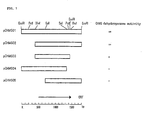
- FIG. 1 is a diagram showing a restriction map of insert DNA fragments in plasmids, which contain the gene of ⁇ -hydroxy- ⁇ -carboxymuconic acid- ⁇ -semialdehyde dehydrogenase derived from Sphingomonas sp., and indicating existence or non-existence of activity of ⁇ -hydroxy- ⁇ -carboxymuconic acid- ⁇ -semialdehyde dehydrogenase.
- a host-vector system of a microorganism can be used as an example.
- the gene can be produced, for example, by using recombinant DNA technology as will be described next. Described specifically, using as a DNA donor a microorganism having ability to convert ⁇ -hydroxy- ⁇ -carboxymuconic acid- ⁇ -semialdehyde into 2-pyrone-4,6-dicarboxylic acid, genome DNA is first extracted from the microorganism and then spliced with a restriction endonuclease into a DNA fragment.
- ends between which the genome DNA fragment can be inserted are formed in a vector DNA such as a phage or plasmid. These genome DNA fragment and opened vector DNA are caused to join together with a DNA ligase, whereby a recombinant vector is obtained.
- the recombinant vector is transferred into a host cell, and a transformant carrying the target recombinant vector is selected.
- the target recombinant vector is isolated from the recombinant cell, whereby the gene according to the present invention is produced.
- the DNA donor in the present invention is a microorganism having ability to convert ⁇ -hydroxy- ⁇ -carboxymuconic acid- ⁇ -semialdehyde into 2-pyrone-4,6-dicarboxylic acid.
- Illustrative are Sphingomonas microorganisms, with Sphingomonas sp. CR-0300100 and its mutant, Sphingomonas sp. CR-0310201 (FERM BP-6748), being particularly preferred.
- the extraction of the genome DNA from the microorganism may be performed preferably by collecting cultivated cells of the microorganism, lysing the cells, for example, with protease K , and then conducting procedures - such as deproteinization treatment by extraction with phenol, protease treatment, ribonuclease treatment, precipitation of the genome DNA with an alcohol and centrifugation - in combination as needed.
- the splicing of the separated genome DNA into fragments can be conducted, for example, by digestion of the genome DNA with a restriction endonuclease.
- the vector it is preferred to use one constructed from a pharge or plasmid, which can autonomously replicate in a host microorganism, with a view to providing a recombinant vector.
- Preferred examples of the plasmid can include pBR322, pUC18, pUC19, pUC118, pUC119, bluescript, pKK223-3, pACYC177, RSF1010 and pKT230, which use Escherichia coli as a host.
- These vectors are used after forming ends, between which a DNA fragment can be inserted, with a restriction endonuclease, for example, and optionally subjecting the ends to dephosphoryzation.
- Joining between the genome DNA fragment and the vector DNA fragment may preferably be conducted using a known DNA ligase, for example, T4 DNA ligase or the like.
- any microorganism can be used insofar as it permits stable and autonomous replication of the recombinant vector and stable expression of characters of the foreign gene.
- Escherichia coli or Pseudomonas putida is usable.
- any method can be used including, for example, conjugation, electroporation, the competent cell technique, microinjection and the particle gun technique.
- Selection of the transformant can be conducted using, as an index, a selected marker of the used vector, for example, drug resistance which is acquired by the recombination of DNA by the transformant.
- Selection of a transformant, which contains the target recombinant vector, out of these transformants may preferably be conducted, for example, by colony hybridization which makes use of a partial DNA fragment of the gene as a probe.
- Usable examples of a label for this probe can include radioisotopes, digoxigenin, enzymes and the like.
- extraction can be performed by a method known per se in the art. For example, alkali lysis [Cold Spring Harbor Laboratory Press, Molecular Cloning, Second Edition (1989)] can be used.
- the extracted recombinant vector can be recombined further by using recombinant DNA technology.
- a restriction endonuclease or the like can be used.
- the base sequence of the gene of the present invention obtained as described above can be determined, for example, by reading it in accordance with the dideoxy method.
- the base sequences of genes which encode ⁇ -hydroxy- ⁇ -carboxymuconic acid- ⁇ -semialdehyde dehydrogenase are shown under SEQ ID NO:2 and SEQ ID NO:4; the amino acid sequences of the above-described enzyme, which are estimated from the base sequences, are indicated under SEQ ID NO: 1 and SEQ ID NO: 3; and the base sequence and estimated amino acid sequence of a DNA fragment isolated in an Example, which will be described subsequently herein, are presented under SEQ ID NO: 5.
- SEQ ID NO: 1 is a partial amino acid sequence of SEQ ID NO: 3.
- Enzymes according to the present invention have similar enzymatic activity no matter they have the amino acid sequence of SEQ ID NO: 3 or the amino acid sequence of SEQ ID NO: 1. It is to be noted that enzymes - which have amino acid sequences similar to the amino acid sequence of SEQ ID NO: 1 or SEQ ID NO: 3 except that one or more amino acids have been deleted, substituted or added - and genes encoding polypeptides of these enzymes are embraced by the present invention insofar as the polypeptides have the activity of ⁇ -hydroxy- ⁇ -carboxymuconic acid- ⁇ -semialdehyde dehydrogenase.
- SEQ ID NO: 2 is a partial base sequence of SEQ ID NO. 4. It is also to be noted that base sequences similar to the base sequence described under SEQ ID NO: 2 or SEQ ID NO: 4 except that one or more bases have been deleted, substituted or added are encompassed by the present invention.
- a transformant carrying the gene of the present invention for example, the above-described transformant, a transformant with a recombinant vector formed by inserting the gene of the present invention in an expression vector having a strong promoter, a transformant with a recombinant vector formed by inserting the gene of the present invention in a vector having a high copy number in a cell, or a transformant with a recombinant vector formed by inserting the gene of the present invention in an expression vector having a strong promoter and a high copy number and then to collect the dehydrogenase from the culture.
- the cultivation is conducted depending on the properties of the used transformant, for example, at pH 5-8 and 20-37°C on a culture medium which contains a carbon source, a nitrogen source, vitamins, etc.
- ⁇ -hydroxy- ⁇ -carboxymuconic acid- ⁇ -semialdehyde as a substrate for the enzyme may be added into the culture medium but, when the transformant also produces, for example, an enzyme which converts 3,4-dihydroxybenzoic acid into ⁇ -hydroxy- ⁇ -carboxymuconic acid- ⁇ -semialdehyde, addition of 3, 4-dihydroxybenzoic acid into the culture medium and subsequent cultivation result in the production of ⁇ -hydroxy- ⁇ -carboxymuconic acid- ⁇ -semialdehyde and then in the production of 2-pyrone-4,6-dicarboxylic acid. Conditions for the production of 2-pyrone-4,6-dicarboxylic acid should be set depending on properties of the used transformant.
- Collection of 2-pyrone-3,4-dicarboxylic acid from the culture is conducted, for example, by extraction with an organic solvent.
- CR-0300100 strain was identified as being of the genus Sphingomonas.
- Sphingomonas sp. CR-0310201 was cultivated at 30°C for 24 hours under aerobic conditions on LB liquid medium, and cells were collected by centrifugation. With respect to the cell strain so collected, cell disruption treatment was conducted at 150 W for 10 minutes by an ultrasonic disrupter, followed by centrifugation under 100,000 g for 30 minutes.
- the purified product which had been subjected to the purification through the columns, was confirmed to appear as a single band as a result of SDS-PAGE, and was hence ascertained to have been a single enzyme.
- Partial amino acid sequences of the thus-isolated ⁇ -hydroxy- ⁇ -carboxymuconic acid- ⁇ -semialdehyde dehydro-genase were analyzed by an amino acid sequencer (manufactured by Applied Biosystems, Inc.).
- the thus-determined partial amino acid sequences of the enzyme are under SEQ ID NO: 6 and SEQ ID NO:7. shown
- Sphingomonas sp. CR-0310201 was inoculated to LB medium (tryptone: 10 g/L, yeast extract: 5 g/L, NaCl: 5 g/L, pH 7.0) which contained 5 g/L of glucose and then cultivated overnight at 28°C, whereby a preculture was prepared.
- the preculture was inoculated to a similar culture medium as that mentioned above, which had been newly provided in a flask, and was again cultivated overnight at 28°C. Cells were collected by centrifugation of the culture.
- the genome DNA was partially digested with restriction endonuclease EcoRI (product of TAKARA SHUZO CO., LTD.), followed by electrophoresis on 1% agarose (product of WAKO PURE CHEMICAL INDUSTRIES, LTD., "Agarose 1600").
- EcoRI restriction endonuclease EcoRI
- agarose product of WAKO PURE CHEMICAL INDUSTRIES, LTD., "Agarose 1600"
- TAE Cold Spring Harbor Laboratory Press, Molecular Cloning, Second Edition (1989)
- the agarose gel was immersed for 15 minutes in 1 ⁇ g/mL ethidium bromide and washed with water, and then, fluorescence from DNA fragments was confirmed by UV irradiation.
- EcoRI and HindIII digestion products products of TAKARA SHUZO CO., LTD.
- EcoRI and HindIII digestion products products of TAKARA SHUZO CO., LTD.
- Plasmid vector pUC19 was completely digested with restriction endonuclease EcoRI (product of TAKARA SHUZO CO., LTD.). Alkaline phosphates (Bacterial Alkaline Phosphatase) (product of TAKARA SHUZO CO., LTD.) was added to the reaction mixture, and end-dephosphoryzation of a plasmid vector digested by the restriction endonuclease was conducted.
- Competent cells of E . coli HB101 were prepared using 100 mM of calcium chloride, and were then transformed with the T4 ligase reaction mixture.
- the E . coli cells were spread on LB plate medium (which had been prepared by adding 15 g/L of agar to LB) which had been added with ampicillin such that its final concentration had reached 100 ⁇ g/mL, followed by overnight cultivation at 37°C. Formed colonies were collected as a gene library of Sphingomonas sp. CR-0310201 as obtained by using E . coli HB101 as a host.
- Sphingomonas sp. CR-0310201 was inoculated to a culture medium (polypeptone: 5 g/L, yeast extract: 0.5 g/L, meat extract:5 g/L, sodium chloride: 2 g/L, pH 7.0) placed in a test tube and was then cultivated overnight at 28°C, whereby a preculture was prepared.
- the preculture was inoculated to a similar culture medium as that mentioned above, which had been newly provided in a flask, and was again cultivated overnight at 28°C. Cells were collected by centrifugation of the culture.
- partial amino acid sequences of the gene encoding ⁇ -hydroxy- ⁇ -carboxymuconic acid- ⁇ -semialdehyde dehydrogenase said partial amino acid sequences being shown under SEQ ID NO: 6 and SEQ ID NO: 7, respectively
- partial base sequences of the gene of ⁇ -hydroxy- ⁇ -carboxymuconic acid- ⁇ -semialdehyde dehydrogenase, said gene encoding these amino acid sequences were inversely translated. From those findings, with a view to partially amplifying the gene by PCR, a synthetic nucleotide having base sequences shown under SEQ ID NO: 8 and SEQ ID NO: 9, respectively, was prepared by chemical synthesis, and was obtained as paired PCR primers.
- the partial DNA fragments of the gene of ⁇ -hydroxy- ⁇ -carboxymuconic acid- ⁇ -semialdehyde dehydrogenase were amplified by PCR making use of the primers.
- this PCR was conducted as will be described next. Firstly, a reaction mixture containing 10 mM Tris-HCl (pH8.3), 50 mM of potassium chloride, 1.5 mM of magnesium chloride, 0.001% (W/V) gelatin, 2 ⁇ M of dNTP mixed solution, 40 ng/ ⁇ L of the genome DNA and 1 ⁇ M of the PCT primers was prepared. After the reaction mixture was heat-treated at 92°C for 5 minutes, heat-resistant DNA polymerase (product of TAKARASHUZOCO., LTD., "TaKaRa Taq”) was added such that its concentration reached 0.05 U/ ⁇ L, and the resultant mixture was left over at 40°C for 6 minutes.
- heat-resistant DNA polymerase product of TAKARASHUZOCO., LTD., "TaKaRa Taq
- Plasmid pPCCH1 with the amplified DNA fragment of about 600 bp ligated to plasmid vector pUC 19 was prepared.
- pPCCH1 as a DNA template, partial DNA fragments of the gene of ⁇ -hydroxy- ⁇ -carboxymuconic acid- ⁇ -semialdehyde dehydrogenase were amplified by PCR making use of the same PCR primers as those described above.
- a chain reaction which consisted of a thermal denaturation reaction at 94°C for 30 seconds, an annealing reaction at 40°C for 2 minutes and an extending reaction at 72°C for 30 seconds was repeated 40 times, and a reaction was then conducted at 72°C for 5 minutes.
- the thus-obtained amplification product was subjected to electrophoresis, and an amplified DNA the molecular weight of which had increased as a result of insertion of digoxigenin-labeled nucleic acid was separated and cut out and was collected as an ⁇ -hydroxy- ⁇ -carboxymuconic acid- ⁇ -semialdehyde dehydrogenase gene probe.
- E. coli HB101 making up the library of Sphingomonassp. CR-0310201 were each separately inoculated with toothpicks onto a culture medium, which contained 100 ⁇ g/mL of ampicillin, at an inoculum size of about 200 cells per 9-cm Petri dish. After static incubation at 37°C for 6 hours, colonies were replicated onto nylon membranes, and colonies hybridizable with the probe obtained above in step (2) were selected using a DIG detection kit (product of Boehringer Mannheim Corporation).
- the selected E. coli strains carried plasmid pCHMS01.
- FOG. 1 E . coli strains - which carried plasmid pCHMS01 and plasmids prepared from pCHMS01 by using several restriction endonucleases, respectively - measured for ⁇ -hydroxy- ⁇ -carboxymuconic acid- ⁇ -semialdehyde dehydrogenase activity (FIG. 1).
- FOG. 1 E coli strains - which carried plasmid pCHMS01 and plasmids prepared from pCHMS01 by using several restriction endonucleases, respectively - measured for ⁇ -hydroxy- ⁇ -carboxymuconic acid- ⁇ -semialde
- the base sequence and the coded amino acid sequence are shown under SEQ ID NO: 5.
- the present invention is extremely useful for the production, especially mass-production of 2-pyrone-4,6-dicarboxylic acid which is used as raw materials for polymers.
Landscapes
- Chemical & Material Sciences (AREA)
- Organic Chemistry (AREA)
- Life Sciences & Earth Sciences (AREA)
- Engineering & Computer Science (AREA)
- Zoology (AREA)
- Wood Science & Technology (AREA)
- Health & Medical Sciences (AREA)
- Genetics & Genomics (AREA)
- Bioinformatics & Cheminformatics (AREA)
- General Health & Medical Sciences (AREA)
- Biochemistry (AREA)
- General Engineering & Computer Science (AREA)
- Microbiology (AREA)
- Biotechnology (AREA)
- Chemical Kinetics & Catalysis (AREA)
- General Chemical & Material Sciences (AREA)
- Medicinal Chemistry (AREA)
- Molecular Biology (AREA)
- Biomedical Technology (AREA)
- Micro-Organisms Or Cultivation Processes Thereof (AREA)
- Enzymes And Modification Thereof (AREA)
- Preparation Of Compounds By Using Micro-Organisms (AREA)
Applications Claiming Priority (3)
| Application Number | Priority Date | Filing Date | Title |
|---|---|---|---|
| JP20320098A JP3850557B2 (ja) | 1998-07-17 | 1998-07-17 | 新規遺伝子及びその遺伝子を保有する形質転換細胞 |
| JP20320098 | 1998-07-17 | ||
| PCT/JP1999/003410 WO2000004134A1 (en) | 1998-07-17 | 1999-06-25 | Novel gene and transformant carrying the same |
Publications (3)
| Publication Number | Publication Date |
|---|---|
| EP1099755A1 EP1099755A1 (en) | 2001-05-16 |
| EP1099755A4 EP1099755A4 (en) | 2003-01-22 |
| EP1099755B1 true EP1099755B1 (en) | 2004-09-22 |
Family
ID=16470134
Family Applications (1)
| Application Number | Title | Priority Date | Filing Date |
|---|---|---|---|
| EP99926825A Expired - Lifetime EP1099755B1 (en) | 1998-07-17 | 1999-06-25 | Novel gene and transformant carrying the same |
Country Status (5)
| Country | Link |
|---|---|
| US (2) | US6340579B1 (enExample) |
| EP (1) | EP1099755B1 (enExample) |
| JP (1) | JP3850557B2 (enExample) |
| DE (1) | DE69920470T2 (enExample) |
| WO (1) | WO2000004134A1 (enExample) |
Families Citing this family (5)
| Publication number | Priority date | Publication date | Assignee | Title |
|---|---|---|---|---|
| US20100048859A1 (en) * | 2006-06-23 | 2010-02-25 | Kohei Mase | Pdc-lactic acid copolyester and molded product thereof |
| JP4894673B2 (ja) * | 2006-09-01 | 2012-03-14 | 株式会社豊田自動織機 | 2−ピロン−4,6−ジカルボン酸の大量精製法 |
| CN101568257A (zh) * | 2006-12-22 | 2009-10-28 | 株式会社丰田自动织机 | 抗菌剂及杀菌剂 |
| US20110319640A1 (en) | 2007-08-08 | 2011-12-29 | Kabushiki Kaisha Toyota Jidoshokki | Large-scale purification of 2-pyrone-4,6-dicarboxylic acid |
| EP2192137A4 (en) * | 2007-09-19 | 2012-08-29 | Toyota Jidoshokki Kk | POLYURETHANE AND POLYURETHANE AND METHOD FOR THE PRODUCTION THEREOF |
-
1998
- 1998-07-17 JP JP20320098A patent/JP3850557B2/ja not_active Expired - Fee Related
-
1999
- 1999-06-25 DE DE69920470T patent/DE69920470T2/de not_active Expired - Lifetime
- 1999-06-25 WO PCT/JP1999/003410 patent/WO2000004134A1/ja not_active Ceased
- 1999-06-25 US US09/720,817 patent/US6340579B1/en not_active Expired - Lifetime
- 1999-06-25 EP EP99926825A patent/EP1099755B1/en not_active Expired - Lifetime
-
2001
- 2001-10-24 US US09/983,306 patent/US6716609B2/en not_active Expired - Fee Related
Also Published As
| Publication number | Publication date |
|---|---|
| US20020098562A1 (en) | 2002-07-25 |
| US6716609B2 (en) | 2004-04-06 |
| US6340579B1 (en) | 2002-01-22 |
| JP3850557B2 (ja) | 2006-11-29 |
| EP1099755A1 (en) | 2001-05-16 |
| EP1099755A4 (en) | 2003-01-22 |
| JP2000032988A (ja) | 2000-02-02 |
| DE69920470D1 (de) | 2004-10-28 |
| DE69920470T2 (de) | 2005-11-10 |
| WO2000004134A1 (en) | 2000-01-27 |
Similar Documents
| Publication | Publication Date | Title |
|---|---|---|
| US5753481A (en) | L-sorbose dehydrogenase and novel L-sorbosone dehydrogenase obtained from gluconobacter oxydans T-100 | |
| JPH10229885A (ja) | 新規アルコールアルデヒド脱水素酵素 | |
| US5888786A (en) | Method for producing 2-keto-L-gulonic acid | |
| US5147800A (en) | Host expressing ngoaiii restriction endonuclease and modification methylase from neisseria | |
| US6716609B2 (en) | Polypeptides having α-hydroxy-γ-carboxymuconic acid-ε-semialdehyde dehydrogenase activity | |
| Jones | Actinomycin production persists in a strain of Streptomyces antibioticus lacking phenoxazinone synthase | |
| JP4162383B2 (ja) | ホモグルタミン酸の生産に関与する遺伝子およびその使用 | |
| US5766871A (en) | Screening and characterization of glutaryl-7-aminocephalosporanic acid acylase | |
| US4960877A (en) | DNA having genetic information of L-α-glycerophosphate oxidase and application thereof | |
| US7811784B2 (en) | Transgenic organisms with lower growth temperature | |
| JP2000032988A5 (enExample) | ||
| JP3396740B2 (ja) | ホスホエノールピルビン酸カルボキシラーゼをコードする遺伝子 | |
| JP4415247B2 (ja) | 新規なグリセロールキナーゼ、該遺伝子及び該遺伝子を用いたグリセロールキナーゼの製造法 | |
| JP2004089052A (ja) | グルコース脱水素酵素の製造方法 | |
| EP0747478A1 (en) | Dna encoding maleate isomerase and use of the same | |
| JPH10262674A (ja) | アルカリホスファターゼをコードする遺伝子 | |
| KR100814313B1 (ko) | 대장균의 염색체 재조합에 사용되는 플라스미드 | |
| JPH0824585B2 (ja) | エステラーゼをコードする遺伝子及び該遺伝子を含有する新規微生物 | |
| JP4161236B2 (ja) | 新規なL−α−グリセロホスフェートオキシダーゼおよびその製造方法 | |
| JPWO2000008170A1 (ja) | ホモグルタミン酸の生産に関与する遺伝子およびその使用 | |
| JP3829950B2 (ja) | 新規なクレアチニンアミドヒドロラーゼ | |
| US5789226A (en) | Genes encoding enzymes of bali restriction-modification system | |
| JP4066203B2 (ja) | 新規なクレアチニンアミドヒドロラーゼ | |
| JPH09173071A (ja) | 5−アミノレブリン酸合成酵素遺伝子 | |
| JPH104967A (ja) | マレイン酸異性化酵素をコードするdnaおよびその利用 |
Legal Events
| Date | Code | Title | Description |
|---|---|---|---|
| PUAI | Public reference made under article 153(3) epc to a published international application that has entered the european phase |
Free format text: ORIGINAL CODE: 0009012 |
|
| 17P | Request for examination filed |
Effective date: 20010116 |
|
| AK | Designated contracting states |
Kind code of ref document: A1 Designated state(s): CH DE FR GB LI NL SE |
|
| A4 | Supplementary search report drawn up and despatched |
Effective date: 20021210 |
|
| AK | Designated contracting states |
Kind code of ref document: A4 Designated state(s): CH DE FR GB LI NL SE |
|
| 17Q | First examination report despatched |
Effective date: 20030915 |
|
| GRAP | Despatch of communication of intention to grant a patent |
Free format text: ORIGINAL CODE: EPIDOSNIGR1 |
|
| RIC1 | Information provided on ipc code assigned before grant |
Ipc: 7C 12N 9/02 A |
|
| RIN1 | Information on inventor provided before grant (corrected) |
Inventor name: HOTTA, YASUSHI,COSMO RES. INST. Inventor name: NISHIKAWA, SEIJI,COSMO RES. INST. Inventor name: KATAYAMA, YOSHIHIRO Inventor name: FUKUDA, MASAO Inventor name: MASAI, EIJI |
|
| GRAS | Grant fee paid |
Free format text: ORIGINAL CODE: EPIDOSNIGR3 |
|
| RAP1 | Party data changed (applicant data changed or rights of an application transferred) |
Owner name: COSMO OIL CO., LTD. Owner name: COSMO RESEARCH INSTITUTE |
|
| GRAA | (expected) grant |
Free format text: ORIGINAL CODE: 0009210 |
|
| AK | Designated contracting states |
Kind code of ref document: B1 Designated state(s): CH DE FR GB LI NL SE |
|
| REG | Reference to a national code |
Ref country code: GB Ref legal event code: FG4D |
|
| REG | Reference to a national code |
Ref country code: CH Ref legal event code: EP |
|
| REF | Corresponds to: |
Ref document number: 69920470 Country of ref document: DE Date of ref document: 20041028 Kind code of ref document: P |
|
| REG | Reference to a national code |
Ref country code: CH Ref legal event code: NV Representative=s name: NOVAGRAAF INTERNATIONAL SA |
|
| REG | Reference to a national code |
Ref country code: SE Ref legal event code: TRGR |
|
| PLBE | No opposition filed within time limit |
Free format text: ORIGINAL CODE: 0009261 |
|
| STAA | Information on the status of an ep patent application or granted ep patent |
Free format text: STATUS: NO OPPOSITION FILED WITHIN TIME LIMIT |
|
| ET | Fr: translation filed | ||
| 26N | No opposition filed |
Effective date: 20050623 |
|
| REG | Reference to a national code |
Ref country code: CH Ref legal event code: PFA Owner name: COSMO RESEARCH INSTITUTE Free format text: COSMO RESEARCH INSTITUTE#9-25, SHIBAURA 4-CHOME, MINATO-KU#TOKYO 108-0023 (JP) $ COSMO OIL CO., LTD.#1-1, SHIBAURA 1-CHOME, MINATO-KU#TOKYO 105-8528 (JP) -TRANSFER TO- COSMO RESEARCH INSTITUTE#9-25, SHIBAURA 4-CHOME, MINATO-KU#TOKYO 108-0023 (JP) $ COSMO OIL CO., LTD.#1-1, SHIBAURA 1-CHOME, MINATO-KU#TOKYO 105-8528 (JP) |
|
| PGFP | Annual fee paid to national office [announced via postgrant information from national office to epo] |
Ref country code: CH Payment date: 20130626 Year of fee payment: 15 Ref country code: GB Payment date: 20130603 Year of fee payment: 15 Ref country code: DE Payment date: 20130620 Year of fee payment: 15 Ref country code: SE Payment date: 20130617 Year of fee payment: 15 |
|
| PGFP | Annual fee paid to national office [announced via postgrant information from national office to epo] |
Ref country code: FR Payment date: 20130702 Year of fee payment: 15 Ref country code: NL Payment date: 20130606 Year of fee payment: 15 |
|
| REG | Reference to a national code |
Ref country code: DE Ref legal event code: R119 Ref document number: 69920470 Country of ref document: DE |
|
| REG | Reference to a national code |
Ref country code: NL Ref legal event code: V1 Effective date: 20150101 |
|
| PG25 | Lapsed in a contracting state [announced via postgrant information from national office to epo] |
Ref country code: SE Free format text: LAPSE BECAUSE OF NON-PAYMENT OF DUE FEES Effective date: 20140626 |
|
| REG | Reference to a national code |
Ref country code: CH Ref legal event code: PL |
|
| REG | Reference to a national code |
Ref country code: SE Ref legal event code: EUG |
|
| GBPC | Gb: european patent ceased through non-payment of renewal fee |
Effective date: 20140625 |
|
| REG | Reference to a national code |
Ref country code: DE Ref legal event code: R119 Ref document number: 69920470 Country of ref document: DE Effective date: 20150101 |
|
| REG | Reference to a national code |
Ref country code: FR Ref legal event code: ST Effective date: 20150227 |
|
| PG25 | Lapsed in a contracting state [announced via postgrant information from national office to epo] |
Ref country code: NL Free format text: LAPSE BECAUSE OF NON-PAYMENT OF DUE FEES Effective date: 20150101 |
|
| PG25 | Lapsed in a contracting state [announced via postgrant information from national office to epo] |
Ref country code: LI Free format text: LAPSE BECAUSE OF NON-PAYMENT OF DUE FEES Effective date: 20140630 Ref country code: DE Free format text: LAPSE BECAUSE OF NON-PAYMENT OF DUE FEES Effective date: 20150101 Ref country code: CH Free format text: LAPSE BECAUSE OF NON-PAYMENT OF DUE FEES Effective date: 20140630 |
|
| PG25 | Lapsed in a contracting state [announced via postgrant information from national office to epo] |
Ref country code: FR Free format text: LAPSE BECAUSE OF NON-PAYMENT OF DUE FEES Effective date: 20140630 Ref country code: GB Free format text: LAPSE BECAUSE OF NON-PAYMENT OF DUE FEES Effective date: 20140625 |