EP1079869B1 - Synthesis of poly(propylene fumarate) by acylation of propylene glycol in the presence of a proton scavenger - Google Patents
Synthesis of poly(propylene fumarate) by acylation of propylene glycol in the presence of a proton scavenger Download PDFInfo
- Publication number
- EP1079869B1 EP1079869B1 EP99915349A EP99915349A EP1079869B1 EP 1079869 B1 EP1079869 B1 EP 1079869B1 EP 99915349 A EP99915349 A EP 99915349A EP 99915349 A EP99915349 A EP 99915349A EP 1079869 B1 EP1079869 B1 EP 1079869B1
- Authority
- EP
- European Patent Office
- Prior art keywords
- fumarate
- molecular weight
- propylene
- poly
- propylene glycol
- Prior art date
- Legal status (The legal status is an assumption and is not a legal conclusion. Google has not performed a legal analysis and makes no representation as to the accuracy of the status listed.)
- Expired - Lifetime
Links
- -1 poly(propylene fumarate) Polymers 0.000 title claims abstract description 43
- 229920001299 polypropylene fumarate Polymers 0.000 title claims abstract description 27
- 239000002516 radical scavenger Substances 0.000 title claims description 10
- DNIAPMSPPWPWGF-UHFFFAOYSA-N Propylene glycol Chemical compound CC(O)CO DNIAPMSPPWPWGF-UHFFFAOYSA-N 0.000 title abstract description 57
- 230000015572 biosynthetic process Effects 0.000 title description 8
- 230000010933 acylation Effects 0.000 title description 5
- 238000005917 acylation reaction Methods 0.000 title description 5
- 238000003786 synthesis reaction Methods 0.000 title description 5
- BWHMMNNQKKPAPP-UHFFFAOYSA-L potassium carbonate Chemical compound [K+].[K+].[O-]C([O-])=O BWHMMNNQKKPAPP-UHFFFAOYSA-L 0.000 claims abstract description 32
- 238000000034 method Methods 0.000 claims abstract description 31
- 229910000027 potassium carbonate Inorganic materials 0.000 claims abstract description 16
- ZLYYJUJDFKGVKB-OWOJBTEDSA-N (e)-but-2-enedioyl dichloride Chemical compound ClC(=O)\C=C\C(Cl)=O ZLYYJUJDFKGVKB-OWOJBTEDSA-N 0.000 claims abstract description 14
- VZCYOOQTPOCHFL-UHFFFAOYSA-N trans-butenedioic acid Natural products OC(=O)C=CC(O)=O VZCYOOQTPOCHFL-UHFFFAOYSA-N 0.000 claims abstract description 11
- 239000002253 acid Substances 0.000 claims abstract description 9
- CTEFDDZVRLFMNT-NSCUHMNNSA-N (e)-4-(3-hydroxypropoxy)-4-oxobut-2-enoic acid Chemical compound OCCCOC(=O)\C=C\C(O)=O CTEFDDZVRLFMNT-NSCUHMNNSA-N 0.000 claims description 9
- 230000002028 premature Effects 0.000 claims description 4
- 150000001412 amines Chemical group 0.000 claims description 3
- 239000000872 buffer Substances 0.000 claims description 3
- 229910000288 alkali metal carbonate Inorganic materials 0.000 claims description 2
- 150000008041 alkali metal carbonates Chemical group 0.000 claims description 2
- 229910052784 alkaline earth metal Inorganic materials 0.000 claims description 2
- 150000005323 carbonate salts Chemical class 0.000 claims description 2
- UOULCEYHQNCFFH-UHFFFAOYSA-M sodium;hydroxymethanesulfonate Chemical compound [Na+].OCS([O-])(=O)=O UOULCEYHQNCFFH-UHFFFAOYSA-M 0.000 claims description 2
- 238000006243 chemical reaction Methods 0.000 abstract description 19
- 239000006227 byproduct Substances 0.000 abstract description 6
- 238000012545 processing Methods 0.000 abstract description 2
- AYAUWVRAUCDBFR-ONEGZZNKSA-N (e)-4-oxo-4-propoxybut-2-enoic acid Chemical compound CCCOC(=O)\C=C\C(O)=O AYAUWVRAUCDBFR-ONEGZZNKSA-N 0.000 abstract 2
- 229920000642 polymer Polymers 0.000 description 21
- 210000000988 bone and bone Anatomy 0.000 description 13
- 239000007943 implant Substances 0.000 description 11
- 239000000126 substance Substances 0.000 description 11
- 238000005809 transesterification reaction Methods 0.000 description 11
- HEDRZPFGACZZDS-UHFFFAOYSA-N Chloroform Chemical compound ClC(Cl)Cl HEDRZPFGACZZDS-UHFFFAOYSA-N 0.000 description 10
- 125000000325 methylidene group Chemical group [H]C([H])=* 0.000 description 9
- 238000000655 nuclear magnetic resonance spectrum Methods 0.000 description 8
- 238000001228 spectrum Methods 0.000 description 8
- 125000001434 methanylylidene group Chemical group [H]C#[*] 0.000 description 7
- 239000000178 monomer Substances 0.000 description 7
- 229910052799 carbon Inorganic materials 0.000 description 6
- 150000001875 compounds Chemical class 0.000 description 6
- 239000000203 mixture Substances 0.000 description 6
- IJGRMHOSHXDMSA-UHFFFAOYSA-N Atomic nitrogen Chemical compound N#N IJGRMHOSHXDMSA-UHFFFAOYSA-N 0.000 description 4
- RTZKZFJDLAIYFH-UHFFFAOYSA-N Diethyl ether Chemical compound CCOCC RTZKZFJDLAIYFH-UHFFFAOYSA-N 0.000 description 4
- LFQSCWFLJHTTHZ-UHFFFAOYSA-N Ethanol Chemical compound CCO LFQSCWFLJHTTHZ-UHFFFAOYSA-N 0.000 description 4
- 238000001157 Fourier transform infrared spectrum Methods 0.000 description 4
- FAPWRFPIFSIZLT-UHFFFAOYSA-M Sodium chloride Chemical compound [Na+].[Cl-] FAPWRFPIFSIZLT-UHFFFAOYSA-M 0.000 description 4
- 238000005755 formation reaction Methods 0.000 description 4
- 125000000524 functional group Chemical group 0.000 description 4
- 239000000463 material Substances 0.000 description 4
- 125000002496 methyl group Chemical group [H]C([H])([H])* 0.000 description 4
- 230000008569 process Effects 0.000 description 4
- 239000000047 product Substances 0.000 description 4
- OKTJSMMVPCPJKN-UHFFFAOYSA-N Carbon Chemical compound [C] OKTJSMMVPCPJKN-UHFFFAOYSA-N 0.000 description 3
- CURLTUGMZLYLDI-UHFFFAOYSA-N Carbon dioxide Chemical compound O=C=O CURLTUGMZLYLDI-UHFFFAOYSA-N 0.000 description 3
- VZCYOOQTPOCHFL-OWOJBTEDSA-N Fumaric acid Chemical compound OC(=O)\C=C\C(O)=O VZCYOOQTPOCHFL-OWOJBTEDSA-N 0.000 description 3
- 239000003054 catalyst Substances 0.000 description 3
- 239000002131 composite material Substances 0.000 description 3
- 238000004132 cross linking Methods 0.000 description 3
- 229920006158 high molecular weight polymer Polymers 0.000 description 3
- 238000002513 implantation Methods 0.000 description 3
- 238000001727 in vivo Methods 0.000 description 3
- 238000010189 synthetic method Methods 0.000 description 3
- OZAIFHULBGXAKX-UHFFFAOYSA-N 2-(2-cyanopropan-2-yldiazenyl)-2-methylpropanenitrile Chemical compound N#CC(C)(C)N=NC(C)(C)C#N OZAIFHULBGXAKX-UHFFFAOYSA-N 0.000 description 2
- VVQNEPGJFQJSBK-UHFFFAOYSA-N Methyl methacrylate Chemical compound COC(=O)C(C)=C VVQNEPGJFQJSBK-UHFFFAOYSA-N 0.000 description 2
- WHNWPMSKXPGLAX-UHFFFAOYSA-N N-Vinyl-2-pyrrolidone Chemical compound C=CN1CCCC1=O WHNWPMSKXPGLAX-UHFFFAOYSA-N 0.000 description 2
- 238000005481 NMR spectroscopy Methods 0.000 description 2
- PPBRXRYQALVLMV-UHFFFAOYSA-N Styrene Chemical compound C=CC1=CC=CC=C1 PPBRXRYQALVLMV-UHFFFAOYSA-N 0.000 description 2
- ADCOVFLJGNWWNZ-UHFFFAOYSA-N antimony trioxide Chemical compound O=[Sb]O[Sb]=O ADCOVFLJGNWWNZ-UHFFFAOYSA-N 0.000 description 2
- 238000005452 bending Methods 0.000 description 2
- 239000002639 bone cement Substances 0.000 description 2
- 229910002092 carbon dioxide Inorganic materials 0.000 description 2
- 238000012512 characterization method Methods 0.000 description 2
- ZQMIGQNCOMNODD-UHFFFAOYSA-N diacetyl peroxide Chemical compound CC(=O)OOC(C)=O ZQMIGQNCOMNODD-UHFFFAOYSA-N 0.000 description 2
- 238000005227 gel permeation chromatography Methods 0.000 description 2
- 230000036541 health Effects 0.000 description 2
- 125000002887 hydroxy group Chemical group [H]O* 0.000 description 2
- 239000003999 initiator Substances 0.000 description 2
- 230000004060 metabolic process Effects 0.000 description 2
- 229910052757 nitrogen Inorganic materials 0.000 description 2
- 231100000252 nontoxic Toxicity 0.000 description 2
- 230000003000 nontoxic effect Effects 0.000 description 2
- 239000003208 petroleum Substances 0.000 description 2
- VYMDGNCVAMGZFE-UHFFFAOYSA-N phenylbutazonum Chemical compound O=C1C(CCCC)C(=O)N(C=2C=CC=CC=2)N1C1=CC=CC=C1 VYMDGNCVAMGZFE-UHFFFAOYSA-N 0.000 description 2
- 239000003361 porogen Substances 0.000 description 2
- 239000002244 precipitate Substances 0.000 description 2
- 150000003138 primary alcohols Chemical class 0.000 description 2
- 150000003333 secondary alcohols Chemical class 0.000 description 2
- 239000002002 slurry Substances 0.000 description 2
- 239000011780 sodium chloride Substances 0.000 description 2
- 238000003756 stirring Methods 0.000 description 2
- 230000002194 synthesizing effect Effects 0.000 description 2
- QORWJWZARLRLPR-UHFFFAOYSA-H tricalcium bis(phosphate) Chemical compound [Ca+2].[Ca+2].[Ca+2].[O-]P([O-])([O-])=O.[O-]P([O-])([O-])=O QORWJWZARLRLPR-UHFFFAOYSA-H 0.000 description 2
- 238000007039 two-step reaction Methods 0.000 description 2
- XLYOFNOQVPJJNP-UHFFFAOYSA-N water Substances O XLYOFNOQVPJJNP-UHFFFAOYSA-N 0.000 description 2
- ZLUFYQVHJAVDHU-NSCUHMNNSA-N (6e)-2-methyl-2,3-dihydro-1,4-dioxocine-5,8-dione Chemical group CC1COC(=O)\C=C\C(=O)O1 ZLUFYQVHJAVDHU-NSCUHMNNSA-N 0.000 description 1
- PFNQVRZLDWYSCW-UHFFFAOYSA-N (fluoren-9-ylideneamino) n-naphthalen-1-ylcarbamate Chemical compound C12=CC=CC=C2C2=CC=CC=C2C1=NOC(=O)NC1=CC=CC2=CC=CC=C12 PFNQVRZLDWYSCW-UHFFFAOYSA-N 0.000 description 1
- SMZOUWXMTYCWNB-UHFFFAOYSA-N 2-(2-methoxy-5-methylphenyl)ethanamine Chemical compound COC1=CC=C(C)C=C1CCN SMZOUWXMTYCWNB-UHFFFAOYSA-N 0.000 description 1
- XILIYVSXLSWUAI-UHFFFAOYSA-N 2-(diethylamino)ethyl n'-phenylcarbamimidothioate;dihydrobromide Chemical compound Br.Br.CCN(CC)CCSC(N)=NC1=CC=CC=C1 XILIYVSXLSWUAI-UHFFFAOYSA-N 0.000 description 1
- NIXOWILDQLNWCW-UHFFFAOYSA-N 2-Propenoic acid Natural products OC(=O)C=C NIXOWILDQLNWCW-UHFFFAOYSA-N 0.000 description 1
- 238000005084 2D-nuclear magnetic resonance Methods 0.000 description 1
- 206010003694 Atrophy Diseases 0.000 description 1
- 239000004342 Benzoyl peroxide Substances 0.000 description 1
- OMPJBNCRMGITSC-UHFFFAOYSA-N Benzoylperoxide Chemical compound C=1C=CC=CC=1C(=O)OOC(=O)C1=CC=CC=C1 OMPJBNCRMGITSC-UHFFFAOYSA-N 0.000 description 1
- 208000018084 Bone neoplasm Diseases 0.000 description 1
- 0 CCC(N*)OC(C=CC(C)=O)=O Chemical compound CCC(N*)OC(C=CC(C)=O)=O 0.000 description 1
- 238000005033 Fourier transform infrared spectroscopy Methods 0.000 description 1
- WOBHKFSMXKNTIM-UHFFFAOYSA-N Hydroxyethyl methacrylate Chemical compound CC(=C)C(=O)OCCO WOBHKFSMXKNTIM-UHFFFAOYSA-N 0.000 description 1
- CERQOIWHTDAKMF-UHFFFAOYSA-N Methacrylic acid Chemical compound CC(=C)C(O)=O CERQOIWHTDAKMF-UHFFFAOYSA-N 0.000 description 1
- 239000004793 Polystyrene Substances 0.000 description 1
- 238000007171 acid catalysis Methods 0.000 description 1
- 239000003377 acid catalyst Substances 0.000 description 1
- 238000012644 addition polymerization Methods 0.000 description 1
- 150000001342 alkaline earth metals Chemical class 0.000 description 1
- 238000004458 analytical method Methods 0.000 description 1
- 125000004429 atom Chemical group 0.000 description 1
- 230000037444 atrophy Effects 0.000 description 1
- 238000005102 attenuated total reflection Methods 0.000 description 1
- 235000019400 benzoyl peroxide Nutrition 0.000 description 1
- 239000012620 biological material Substances 0.000 description 1
- 229910001417 caesium ion Inorganic materials 0.000 description 1
- 238000011088 calibration curve Methods 0.000 description 1
- 239000001569 carbon dioxide Substances 0.000 description 1
- 125000002915 carbonyl group Chemical group [*:2]C([*:1])=O 0.000 description 1
- 230000015556 catabolic process Effects 0.000 description 1
- 230000003197 catalytic effect Effects 0.000 description 1
- PBAYDYUZOSNJGU-UHFFFAOYSA-N chelidonic acid Natural products OC(=O)C1=CC(=O)C=C(C(O)=O)O1 PBAYDYUZOSNJGU-UHFFFAOYSA-N 0.000 description 1
- 239000007795 chemical reaction product Substances 0.000 description 1
- 239000003153 chemical reaction reagent Substances 0.000 description 1
- 229920001577 copolymer Polymers 0.000 description 1
- 239000013078 crystal Substances 0.000 description 1
- 230000003247 decreasing effect Effects 0.000 description 1
- 239000007857 degradation product Substances 0.000 description 1
- 238000006731 degradation reaction Methods 0.000 description 1
- 238000011161 development Methods 0.000 description 1
- 238000004821 distillation Methods 0.000 description 1
- 238000009826 distribution Methods 0.000 description 1
- 230000000694 effects Effects 0.000 description 1
- 230000008030 elimination Effects 0.000 description 1
- 238000003379 elimination reaction Methods 0.000 description 1
- 150000002148 esters Chemical group 0.000 description 1
- 238000010265 fast atom bombardment Methods 0.000 description 1
- 239000000945 filler Substances 0.000 description 1
- 239000012467 final product Substances 0.000 description 1
- 239000001530 fumaric acid Substances 0.000 description 1
- 125000004435 hydrogen atom Chemical group [H]* 0.000 description 1
- 229910052588 hydroxylapatite Inorganic materials 0.000 description 1
- 230000006872 improvement Effects 0.000 description 1
- 238000011065 in-situ storage Methods 0.000 description 1
- 239000004615 ingredient Substances 0.000 description 1
- 239000011256 inorganic filler Substances 0.000 description 1
- 229910003475 inorganic filler Inorganic materials 0.000 description 1
- 230000001788 irregular Effects 0.000 description 1
- 238000012933 kinetic analysis Methods 0.000 description 1
- 239000011159 matrix material Substances 0.000 description 1
- 238000002156 mixing Methods 0.000 description 1
- 230000004048 modification Effects 0.000 description 1
- 238000012986 modification Methods 0.000 description 1
- 239000004570 mortar (masonry) Substances 0.000 description 1
- JDEJGVSZUIJWBM-UHFFFAOYSA-N n,n,2-trimethylaniline Chemical compound CN(C)C1=CC=CC=C1C JDEJGVSZUIJWBM-UHFFFAOYSA-N 0.000 description 1
- XUZLXCQFXTZASF-UHFFFAOYSA-N nitro(phenyl)methanol Chemical compound [O-][N+](=O)C(O)C1=CC=CC=C1 XUZLXCQFXTZASF-UHFFFAOYSA-N 0.000 description 1
- 230000002188 osteogenic effect Effects 0.000 description 1
- 230000037361 pathway Effects 0.000 description 1
- XYJRXVWERLGGKC-UHFFFAOYSA-D pentacalcium;hydroxide;triphosphate Chemical compound [OH-].[Ca+2].[Ca+2].[Ca+2].[Ca+2].[Ca+2].[O-]P([O-])([O-])=O.[O-]P([O-])([O-])=O.[O-]P([O-])([O-])=O XYJRXVWERLGGKC-UHFFFAOYSA-D 0.000 description 1
- 230000010287 polarization Effects 0.000 description 1
- 238000006068 polycondensation reaction Methods 0.000 description 1
- 229920000728 polyester Polymers 0.000 description 1
- 229920002223 polystyrene Polymers 0.000 description 1
- 239000011148 porous material Substances 0.000 description 1
- 239000000843 powder Substances 0.000 description 1
- 238000002360 preparation method Methods 0.000 description 1
- 238000000746 purification Methods 0.000 description 1
- 239000011541 reaction mixture Substances 0.000 description 1
- 230000035484 reaction time Effects 0.000 description 1
- 238000011160 research Methods 0.000 description 1
- 150000003839 salts Chemical class 0.000 description 1
- 238000005070 sampling Methods 0.000 description 1
- 238000007086 side reaction Methods 0.000 description 1
- 231100001055 skeletal defect Toxicity 0.000 description 1
- 239000002904 solvent Substances 0.000 description 1
- 241000894007 species Species 0.000 description 1
- 230000003595 spectral effect Effects 0.000 description 1
- 239000006228 supernatant Substances 0.000 description 1
- 238000012549 training Methods 0.000 description 1
- 239000003643 water by type Substances 0.000 description 1
Images


Classifications
-
- C—CHEMISTRY; METALLURGY
- C08—ORGANIC MACROMOLECULAR COMPOUNDS; THEIR PREPARATION OR CHEMICAL WORKING-UP; COMPOSITIONS BASED THEREON
- C08G—MACROMOLECULAR COMPOUNDS OBTAINED OTHERWISE THAN BY REACTIONS ONLY INVOLVING UNSATURATED CARBON-TO-CARBON BONDS
- C08G63/00—Macromolecular compounds obtained by reactions forming a carboxylic ester link in the main chain of the macromolecule
- C08G63/02—Polyesters derived from hydroxycarboxylic acids or from polycarboxylic acids and polyhydroxy compounds
- C08G63/12—Polyesters derived from hydroxycarboxylic acids or from polycarboxylic acids and polyhydroxy compounds derived from polycarboxylic acids and polyhydroxy compounds
- C08G63/52—Polycarboxylic acids or polyhydroxy compounds in which at least one of the two components contains aliphatic unsaturation
- C08G63/56—Polyesters derived from ester-forming derivatives of polycarboxylic acids or of polyhydroxy compounds other than from esters thereof
-
- A—HUMAN NECESSITIES
- A61—MEDICAL OR VETERINARY SCIENCE; HYGIENE
- A61L—METHODS OR APPARATUS FOR STERILISING MATERIALS OR OBJECTS IN GENERAL; DISINFECTION, STERILISATION OR DEODORISATION OF AIR; CHEMICAL ASPECTS OF BANDAGES, DRESSINGS, ABSORBENT PADS OR SURGICAL ARTICLES; MATERIALS FOR BANDAGES, DRESSINGS, ABSORBENT PADS OR SURGICAL ARTICLES
- A61L24/00—Surgical adhesives or cements; Adhesives for colostomy devices
- A61L24/0047—Composite materials, i.e. containing one material dispersed in a matrix of the same or different material
- A61L24/0073—Composite materials, i.e. containing one material dispersed in a matrix of the same or different material with a macromolecular matrix
- A61L24/0084—Composite materials, i.e. containing one material dispersed in a matrix of the same or different material with a macromolecular matrix containing fillers of phosphorus-containing inorganic compounds, e.g. apatite
-
- A—HUMAN NECESSITIES
- A61—MEDICAL OR VETERINARY SCIENCE; HYGIENE
- A61L—METHODS OR APPARATUS FOR STERILISING MATERIALS OR OBJECTS IN GENERAL; DISINFECTION, STERILISATION OR DEODORISATION OF AIR; CHEMICAL ASPECTS OF BANDAGES, DRESSINGS, ABSORBENT PADS OR SURGICAL ARTICLES; MATERIALS FOR BANDAGES, DRESSINGS, ABSORBENT PADS OR SURGICAL ARTICLES
- A61L24/00—Surgical adhesives or cements; Adhesives for colostomy devices
- A61L24/04—Surgical adhesives or cements; Adhesives for colostomy devices containing macromolecular materials
- A61L24/046—Surgical adhesives or cements; Adhesives for colostomy devices containing macromolecular materials obtained otherwise than by reactions only involving carbon-to-carbon unsaturated bonds
-
- A—HUMAN NECESSITIES
- A61—MEDICAL OR VETERINARY SCIENCE; HYGIENE
- A61L—METHODS OR APPARATUS FOR STERILISING MATERIALS OR OBJECTS IN GENERAL; DISINFECTION, STERILISATION OR DEODORISATION OF AIR; CHEMICAL ASPECTS OF BANDAGES, DRESSINGS, ABSORBENT PADS OR SURGICAL ARTICLES; MATERIALS FOR BANDAGES, DRESSINGS, ABSORBENT PADS OR SURGICAL ARTICLES
- A61L27/00—Materials for grafts or prostheses or for coating grafts or prostheses
- A61L27/14—Macromolecular materials
- A61L27/18—Macromolecular materials obtained otherwise than by reactions only involving carbon-to-carbon unsaturated bonds
-
- C—CHEMISTRY; METALLURGY
- C08—ORGANIC MACROMOLECULAR COMPOUNDS; THEIR PREPARATION OR CHEMICAL WORKING-UP; COMPOSITIONS BASED THEREON
- C08G—MACROMOLECULAR COMPOUNDS OBTAINED OTHERWISE THAN BY REACTIONS ONLY INVOLVING UNSATURATED CARBON-TO-CARBON BONDS
- C08G63/00—Macromolecular compounds obtained by reactions forming a carboxylic ester link in the main chain of the macromolecule
- C08G63/02—Polyesters derived from hydroxycarboxylic acids or from polycarboxylic acids and polyhydroxy compounds
- C08G63/12—Polyesters derived from hydroxycarboxylic acids or from polycarboxylic acids and polyhydroxy compounds derived from polycarboxylic acids and polyhydroxy compounds
- C08G63/52—Polycarboxylic acids or polyhydroxy compounds in which at least one of the two components contains aliphatic unsaturation
Definitions
- This invention relates to methods for the synthesis of high molecular weight forms of poly(propylene fumarate) having a relatively low polydispersity index. More particularly, the present invention provides methods for synthesizing poly(propylene fumarate) having molecular weights above 4,000 and polydispersity indices below 2, and more particularly below 1.8, wherein the high molecular weight poly(propylene fumarate) is synthesized in the presence of a proton scavenger.
- the missing bone can be replaced with a mechanical device, such as a pin, plate or the like, or it can be replaced with an implant that is designed to more closely resemble the original bone itself.
- these implants comprise biodegradable compounds or parts made from such compounds.
- porous, biodegradable compounds that contain or are coated with an osteogenic substance. It is contemplated that bone tissue will grow back into the pores of the implant and will gradually replace the entire implant as the implant itself is gradually degraded in the in vivo environment.
- implants regardless of whether they are biodegradable, should be biocompatible and non-toxic.
- steps required for implantation of the implant eg. the application or generation of heat and the generation of chemical by-products
- the techniques and time periods required for implantation should be suited to the surgical environment.
- bone implants are typically formed from a substance that is initially malleable and then becomes hard after a reasonably short period of time. Because living bone tends to atrophy and degrade in the absence of compressive stress, however, it is important that the implant not become too hard. An implant whose compressive strength is too great (i.e. an implant that is too hard) will cause stress shielding of the surrounding bone. Stress shielding in turn causes the surrounding bone to weaken and may ultimately result in catastrophic failure. Hence, the suitability of a given substance for implantation as a bone replacement depends on its biocompatibility, set time, biodegradability and ultimate compressive strength. Certain polymers have been found to be suitable in this regard.
- P(PF) Poly(propylene fumarate)
- P(PF) is an unsaturated linear polyester that degrades in the presence of water into propylene glycol and fumaric acid, degradation products that are cleared from the human body by normal metabolic processes.
- P(PF) is a known polymer, its routine, reproducible synthesis and the synthesis of high molecular weight forms and forms with low polydispersity indices have not previously been successfully accomplished.
- Known methods for the synthesis of P(PF), for example by equilibrium polycondensation, utilize reactions that are difficult to control. These synthetic methods typically require extremely high heat, the presence of a catalyst, and/or long reaction times.
- P(PF) fumarate double bonds in P(PF) are reactive and crosslink at low temperatures, making it valuable as an in situ polymerizable biomaterial.
- An effective composite mixture incorporating P(PF), a crosslinking monomer ( N -vinyl pyrrolidinone), a porogen (sodium chloride), and a particulate phase ( ⁇ -tricalcium phosphate) can be injected into skeletal defects of irregular shape or size.
- the mechanical properties of the cured material can be tailored by altering the ratios of the porogen and particulate phase, as well as the monomer to polymer ratio.
- the maximum molecular weight M w of the P(PF) polymer that has heretofore been reasonably achievable without encountering an unacceptably high polydispersity index is limited to less than 3,000.
- P(PF) polymers have been produced having M w above 3,000, but because the degree of cross-linking varies greatly within the specimen, the polydispersity indices, (the ratio of weight average molecular weight to number average molecular weight), for these polymers are well above 2.0.
- Premature crosslinking of the polymer often limits the linear size or molecular weight of the linear polymer that can be achieved. It is believed that this is in part due to the fact that some of the fumarate double bonds are reaction sites for the acid-catalyzed addition of various other groups.
- the present invention provides a method for making high molecular weight linear poly(propylene fumarate) having a relatively low polydispersity index by utilizing a relatively pure intermediate. According to a first aspect of the present invention there is provided a method for synthesising poly(propylene fumarate), comprising:
- P(PF) n for which n equals at least 10 and more preferably at least 14, can be manufactured consistently and with a relatively high polydispersity index in a two-step process.
- the first step includes acylation of propylene glycol with fumaryl chloride in the presence of a proton scavenger. As generally disclosed in U.S. Patent 5,733,951, the acylation step releases 2HCl, which results in a lowering of the pH of the reaction solution.
- potassium carbonate is preferably added in molar excess, to ensure that the acid catalysis of bonding across the double bonds is minimized. This process produces a low molecular weight oligomer, bis(hydroxypropyl fumarate), which can then be transesterified according to known techniques.
- the formation of PPF is a two-step reaction process.
- the first step involves forming a short chain oligomer from fumaryl chloride and propylene glycol in the presence of potassium carbonate. This is followed by a transesterification step to form the high molecular weight polymer, PPF.
- the specifics of each reaction are described below.
- Fumaryl chloride (Acros, Pittsburgh, PA) was purified by distillation at 159-161°C. Propylene glycol was also obtained from Acros and used as received. Anhydrous potassium carbonate (Fisher, Pittsburgh, PA) was ground into a fine powder with a mortar and pestle. The solvents for polymer purification were purchased from Fisher as reagent grade and used as received.
- Oligomer preparation Fumaryl chloride, propylene glycol, and potassium carbonate were measured out in a 1:3:1.5 molar ratio.
- the propylene glycol was dissolved in chloroform (1:2 by volume) and placed in a 2 L-3 neck flask along with the powdered potassium carbonate.
- the oligomer was transferred to a 1 L-3 neck reaction vessel suspended in an oil bath.
- the bath temperature was raised to 160°C and the system was evacuated to a pressure of 100-110 mm Hg.
- Nitrogen was passed through a coil in the oil bath for preheating and subsequently bubbled into the bottom of the reaction vessel to facilitate mixing and maintain an inert environment.
- Propylene glycol was liberated by the formation of each O-CO bond during the transesterification and was condensed as a byproduct. Samples for kinetic analysis of the molecular weight progression were removed each hour during the reaction. Upon termination of the transesterification, the vessel was pressurized to 1 atm and the product was allowed to cool.
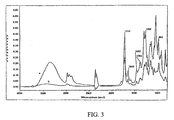
- FTIR Fourier transform infrared spectra were obtained on a Nicolet 500 spectrometer (Madison, WI). Samples were placed on a zinc selenide attenuated total reflection crystal for analysis. A total of 32 scans was collected at a 4 cm -1 resolution. The peak at 2300 cm -1 is due to the presence of carbon dioxide in the sampling chamber.
- NMR Nuclear magnetic resonance spectra were obtained on a Bruker 500 MHz spectrometer (Switzerland). 1 H, Distortionless Enhancement by Polarization Transfer-135 13 C (DEPT-135 13 C), and 2D 1 H- 13 C chemical shift correlation spectra of PPF were acquired using standard pulse programs.
- GPC Gel permeation chromatography was used to determine polymer molecular weight distributions through the application of a differential refractometer detector (Waters, Model 410, Milford, MA).
- a Phenogel guard column 50x7.8 mm, 5 ⁇ m, mixed bed, Phenomenex, Torrance, CA
- a Phenogel column 300x7.8 mm, 5 ⁇ m, mixed bed, Phenomenex
- Polystyrene standards were used to obtain a calibration curve for calculating the polymer molecular weights. Samples were analyzed for four transesterification reactions, each spanning a 16 hour time frame.
- the peak assignments are based on calculated proton and carbon chemical shifts found from the tabulated values in Silverstein et al. 10
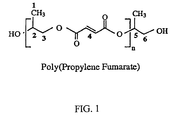
- Acylation of propylene glycol to leave a primary alcohol resulted in a methylene peak (6) with signals at 1 H 3.57-3.69 and 13 C 64.7 and a methine peak (5) with signals at 1 H 5.0-5.12 and 13 C 72.4-73.1.
- Acylation of propylene glycol to leave a secondary alcohol resulted in a methylene peak (3) with signals at 1 H 4.03-4.17 and 13 C 69.8-70.1 and a methine peak (2) with signals at 1 H 4.08-4.11 and 13 C 65.2.
- the spectra of the short chain oligomer and the higher molecular weight polymer were investigated to confirm these peak assignments.
- the secondary alcohol methylene (3) and primary alcohol methine (5) each produced two signals.
- the signals within each pair were of approximately the same intensity in the oligomer spectrum.
- one signal from each pair was more intense.
- the weaker of the two signals was attributed to the polymer end groups, while the stronger signals were assigned to the interior CH and CH 2 of the polymer chain.
- the stronger signals were more deshielded than the weaker ones because the interior species are located between two ester functionalities.
- integrated 1 H spectra gave a ratio of double bond hydrogens to methyl protons of 2:3, as expected from the backbone structure.
- the integrated spectra of P(PF) produced by the previous method showed a ratio of 1:3, verifying loss of polymer unsaturation.
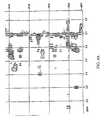
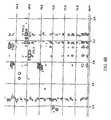
- Figure 4(a) shows the 2-D 1 H- 13 C coupled NMR spectrum for 1 H region 1.0-1.5 ppm and 13 C region 15.5-20 ppm.
- the number 1 corresponds to the methyl functionality labeled in Fig 1.
- Figure 4(b) shows a 2-D 1 H- 13 C coupled NMR spectrum for 1 H region 3.0-5.5 ppm and 13 C region 64-74 ppm.
- the number 2 corresponds to the propyl methine and 3 corresponds to the propyl methylene of the secondary alcohol functionality labeled in Figure 1
- 5 corresponds to the propyl methine and 6 corresponds to the propyl methylene of the primary alcohol functionality labeled in Figure 1.
- the label PG-1 refers to methylene from the residual propylene glycol
- the label PG-2 represents methine from the residual propylene glycol.
- Figure 4(c) shows a 2-D 1 H- 13 C coupled NMR spectrum for 1 H region 6.8-7.0 ppm and 13 C region 127-143 ppm. The number 4 corresponds to the fumarate double bond atoms as labeled in Figure 1.
- Peaks not attributable to P(PF) and due to residual propylene glycol are present at 1 H 1.
- the present invention provides an efficient and reproducible technique for synthesizing P(PF) having a molecular weight above 4,000 and a low polydispersity index.
- This P(PF) is particularly well suited for use in bone cements.
- the poly(propylene fumarate) has a weight average molecular weight above 5000 and a polydispersity index below 2.0, more preferably a weight average molecular weight above 9000 and a polydispersity index below 2.0.
- a P(PF)-containing composition that is an effective bone cement is described in detail in co-pending Application Serial No. , filed concurrently herewith and entitled Bone Replacement Compound Comprising Poly(Polypropylene Fumarate ).
- the potassium carbonate that serves as an acid neutralizer in the preferred embodiment could be replaced with any suitable proton scavenger, for example amines, buffers and carbonate salts such as but not limited to similar salts, including other alkaline earth and alkali metal carbonates.
- the P(PF) made according to the present invention is suitable for use in a replacement compound for living bone.
- the P(PF) can be incorporated into a paste, along with a monomer capable of addition polymerization an inorganic filler such as beta-tricalcium phosphate, sodium chloride or hydroxyapatite, a radical initiator such as benzoyl peroxide, azobisisobutyronitrile, or acetyl peroxide, and an accelerator such as N,N dimethyl toluidine.
- suitable monomer include vinyl pyrrolidone, acrylic acid, methyl methacrylate, styrene, methacrylic acid, or 2-hydroxy ethyl methacrylate, and copolymers thereof.
- the monomers used are biodegradable, it is contemplated that non-biodegradable monomers such as methyl methacrylate will form only short polymer chains, which, upon degradation of the poly(propylene fumarate) backbone, in vivo, will be cleared from a patient's body by normal metabolic processes.
- Various amounts of the specific ingredients may be combined to produce a useful product. For example, approximately equal amounts of the poly(propylene fumarate), monomer, and filler may be used. The amounts of each component may be varied according to the desired characteristics of the final composition, as known to one of skill in the art. Likewise, the amount of initiator and accelerator may be varied by one of skill in the art to produce a composite having desired physical characteristics.
- the components are combined in a sterile field, and pass through a moldable putty stage prior to hardening.
- a composite material having desired strength and modulus characteristics including that which approximates the physical characteristics of human trabecular bone, is produced.
Landscapes
- Health & Medical Sciences (AREA)
- Chemical & Material Sciences (AREA)
- Public Health (AREA)
- Chemical Kinetics & Catalysis (AREA)
- Veterinary Medicine (AREA)
- Epidemiology (AREA)
- Life Sciences & Earth Sciences (AREA)
- Animal Behavior & Ethology (AREA)
- General Health & Medical Sciences (AREA)
- Surgery (AREA)
- Medicinal Chemistry (AREA)
- Transplantation (AREA)
- Materials Engineering (AREA)
- Polymers & Plastics (AREA)
- Organic Chemistry (AREA)
- Inorganic Chemistry (AREA)
- Engineering & Computer Science (AREA)
- Composite Materials (AREA)
- Oral & Maxillofacial Surgery (AREA)
- Dermatology (AREA)
- Polyesters Or Polycarbonates (AREA)
- Materials For Medical Uses (AREA)
- Addition Polymer Or Copolymer, Post-Treatments, Or Chemical Modifications (AREA)
- Organic Low-Molecular-Weight Compounds And Preparation Thereof (AREA)
- Compositions Of Macromolecular Compounds (AREA)
Applications Claiming Priority (7)
| Application Number | Priority Date | Filing Date | Title |
|---|---|---|---|
| US8140598P | 1998-04-10 | 1998-04-10 | |
| US8130898P | 1998-04-10 | 1998-04-10 | |
| US81405P | 1998-04-10 | ||
| US81308P | 1998-04-10 | ||
| US8218298P | 1998-04-16 | 1998-04-16 | |
| US82182P | 1998-04-16 | ||
| PCT/US1999/007912 WO1999052469A1 (en) | 1998-04-10 | 1999-04-09 | Synthesis of poly(propylene fumarate) by acylation of propylene glycol in the presence of a proton scavenger |
Publications (3)
| Publication Number | Publication Date |
|---|---|
| EP1079869A1 EP1079869A1 (en) | 2001-03-07 |
| EP1079869A4 EP1079869A4 (en) | 2002-08-07 |
| EP1079869B1 true EP1079869B1 (en) | 2005-03-23 |
Family
ID=27373944
Family Applications (1)
| Application Number | Title | Priority Date | Filing Date |
|---|---|---|---|
| EP99915349A Expired - Lifetime EP1079869B1 (en) | 1998-04-10 | 1999-04-09 | Synthesis of poly(propylene fumarate) by acylation of propylene glycol in the presence of a proton scavenger |
Country Status (7)
| Country | Link |
|---|---|
| US (2) | US6124373A (enExample) |
| EP (1) | EP1079869B1 (enExample) |
| JP (1) | JP2002539275A (enExample) |
| AT (1) | ATE291444T1 (enExample) |
| CA (1) | CA2327730A1 (enExample) |
| DE (1) | DE69924369D1 (enExample) |
| WO (1) | WO1999052469A1 (enExample) |
Families Citing this family (46)
| Publication number | Priority date | Publication date | Assignee | Title |
|---|---|---|---|---|
| US6486232B1 (en) * | 1997-04-18 | 2002-11-26 | Cambridge Scientific, Inc. | Bioerodible polymeric semi-interpenetrating network alloys for internal fixation devices and bone cements |
| DE69924369D1 (de) | 1998-04-10 | 2005-04-28 | Univ Rice William M | Synthese von poly(propylenfumarat)durch azetylierung von propylenglykol in anwesenheit eines protonenfängers |
| KR100619611B1 (ko) * | 1999-04-16 | 2006-09-01 | 더블유엠. 마쉬 라이스 유니버시티 | 작용화 폴리(프로필렌 푸마레이트) 및 폴리(프로필렌푸마레이트-코-에틸렌 글리콜 |
| US6884778B2 (en) * | 2000-04-14 | 2005-04-26 | William Marsh Rice University | Biocompatible macromers |
| DE10032220A1 (de) * | 2000-07-03 | 2002-01-24 | Sanatis Gmbh | Magnesium-ammonium-phosphat-Zemente, deren Herstellung und Verwendung |
| WO2002085246A2 (en) * | 2001-04-19 | 2002-10-31 | Case Western Reserve University | Fabrication of a polymeric prosthetic implant |
| ATE393183T1 (de) * | 2001-06-28 | 2008-05-15 | Univ Wm Marsh Rice | Photoquervernetzung von biologischen materialien aus fumarsäurediethylester/poly(propylenfumarat) |
| US7629388B2 (en) | 2001-11-20 | 2009-12-08 | William Marsh Rice University | Synthesis and characterization of biodegradable cationic poly(propylene fumarate-co-ethylene glycol) copolymer hydrogels modified with agmatine for enhanced cell adhesion |
| US20030180344A1 (en) * | 2002-02-05 | 2003-09-25 | Cambridge Scientific, Inc. | Bioresorbable osteoconductive compositions for bone regeneration |
| US6884432B2 (en) * | 2002-04-25 | 2005-04-26 | Mayo Foundation For Medical Education And Research | Blend, cross-linkable poly(propylene fumarate) for immobilization and controlled drug delivery |
| US7273523B2 (en) * | 2002-06-07 | 2007-09-25 | Kyphon Inc. | Strontium-apatite-cement-preparations, cements formed therefrom, and uses thereof |
| US20070065652A1 (en) * | 2003-03-13 | 2007-03-22 | Willaim Marsh Rice University | Composite injectable and pre-fabricated bone replacement material and method for the production of such bone replacement material |
| ES2353689T5 (es) | 2003-03-14 | 2014-08-18 | Depuy Spine, Inc. | Dispositivo hidráulico de inyección de cemento óseo en vertebroplastia percutánea |
| US8066713B2 (en) | 2003-03-31 | 2011-11-29 | Depuy Spine, Inc. | Remotely-activated vertebroplasty injection device |
| US8415407B2 (en) | 2004-03-21 | 2013-04-09 | Depuy Spine, Inc. | Methods, materials, and apparatus for treating bone and other tissue |
| EP1646670B1 (en) * | 2003-07-01 | 2014-02-26 | Mayo Foundation For Medical Education And Research | Self-crosslinkable poly(caprolactone fumarate) |
| US7252686B2 (en) * | 2003-08-13 | 2007-08-07 | Boston Scientific Scimed | Methods for reducing bone compression fractures using wedges |
| WO2005030034A2 (en) | 2003-09-26 | 2005-04-07 | Depuy Spine, Inc. | Device for delivering viscous material |
| US20060018949A1 (en) * | 2004-04-07 | 2006-01-26 | Bausch & Lomb Incorporated | Injectable biodegradable drug delivery system |
| JP2007534449A (ja) | 2004-04-27 | 2007-11-29 | カイフォン インコーポレイテッド | 骨代替組成物および使用方法 |
| EP1786343B1 (en) | 2004-07-30 | 2012-05-02 | Depuy Spine, Inc. | Apparatus for treating bone and other tissue |
| US9255178B2 (en) * | 2004-11-12 | 2016-02-09 | Mayo Foundation For Medical Education And Research | Photocrosslinkable poly (caprolactone fumarate) |
| AU2005306295B2 (en) * | 2004-11-18 | 2011-06-16 | Mayo Foundation For Medical Education And Research | Block copolymers of polycaprolactone and poly (propylene fumarate) |
| JP5527968B2 (ja) * | 2005-04-29 | 2014-06-25 | メイヨ フオンデーシヨン フオー メデイカル エジユケーシヨン アンド リサーチ | ポリ(カプロラクトンフマレート)、ポリ(エチレングリコールフマレート)およびそれらのコポリマーに基づく親水性/疎水性ポリマーネットワーク |
| US9381024B2 (en) | 2005-07-31 | 2016-07-05 | DePuy Synthes Products, Inc. | Marked tools |
| US9918767B2 (en) | 2005-08-01 | 2018-03-20 | DePuy Synthes Products, Inc. | Temperature control system |
| US7651701B2 (en) * | 2005-08-29 | 2010-01-26 | Sanatis Gmbh | Bone cement composition and method of making the same |
| US8360629B2 (en) | 2005-11-22 | 2013-01-29 | Depuy Spine, Inc. | Mixing apparatus having central and planetary mixing elements |
| US7754005B2 (en) * | 2006-05-02 | 2010-07-13 | Kyphon Sarl | Bone cement compositions comprising an indicator agent and related methods thereof |
| US7507286B2 (en) * | 2006-06-08 | 2009-03-24 | Sanatis Gmbh | Self-foaming cement for void filling and/or delivery systems |
| ES2547854T3 (es) * | 2006-06-29 | 2015-10-09 | Depuy Spine, Inc. | Biopsia de hueso integrada y aparato de terapia |
| AU2007297097A1 (en) | 2006-09-14 | 2008-03-20 | Depuy Spine, Inc. | Bone cement and methods of use thereof |
| EP2068950B1 (en) * | 2006-09-21 | 2012-06-20 | Kyphon SÀRL | Diammonium phosphate and other ammonium salts and their use in preventing clotting |
| WO2008047371A2 (en) * | 2006-10-19 | 2008-04-24 | Depuy Spine, Inc. | Fluid delivery system |
| US20080195223A1 (en) * | 2006-11-03 | 2008-08-14 | Avram Allan Eddin | Materials and Methods and Systems for Delivering Localized Medical Treatments |
| ATE551967T1 (de) * | 2007-07-30 | 2012-04-15 | Purzer Pharmaceutical Co Ltd | Biologisch abbaubarer knochenzement und herstellungsverfahren dafür |
| US20090286907A1 (en) * | 2008-01-23 | 2009-11-19 | Beltz Mark W | Fumaric Acid/Diol Polyesters and Their Manufacture and Use |
| US7968616B2 (en) * | 2008-04-22 | 2011-06-28 | Kyphon Sarl | Bone cement composition and method |
| EP2590605A1 (en) | 2010-07-09 | 2013-05-15 | Board of Regents of the University of Texas System | Biodegradable scaffolds |
| CA2808535C (en) | 2010-08-20 | 2017-10-03 | Case Western Reserve University | Continuous digital light processing additive manufacturing of implants |
| US11865785B2 (en) * | 2010-08-20 | 2024-01-09 | H. David Dean | Continuous digital light processing additive manufacturing of implants |
| CN106470703B (zh) | 2014-05-05 | 2022-01-11 | 先进医疗解决方案以色列(西兰迪斯)公司 | 生物粘连剂和密封剂以及其使用方法 |
| KR102527453B1 (ko) * | 2014-11-18 | 2023-04-28 | 더 유니버시티 오브 아크론 | 잘 정의된 분해성 폴리 (프로필렌 푸마르산염) 중합체 및 이의 합성을 위한 확장 가능한 방법 |
| KR20190112100A (ko) | 2017-02-02 | 2019-10-02 | 더 유니버시티 오브 아크론 | 마그네슘 촉매를 사용하는 개환 중합에 의해 제조된 작용화된 폴리(프로필렌 푸마레이트) 중합체 |
| GB2594243A (en) * | 2020-04-15 | 2021-10-27 | Arterius Ltd | A bone cement |
| CN116137817A (zh) * | 2020-07-15 | 2023-05-19 | 阿克伦大学 | 通过对聚(马来酸丙二醇酯)双键进行由锌和乙酸介导的时间依赖性还原来合成聚(马来酸丙二醇酯-共-琥珀酸酯) |
Family Cites Families (17)
| Publication number | Priority date | Publication date | Assignee | Title |
|---|---|---|---|---|
| US3701748A (en) | 1966-07-20 | 1972-10-31 | Rohm & Haas | Unsaturated polyester resinous compositions |
| GB1225803A (enExample) * | 1967-06-02 | 1971-03-24 | ||
| US5286763A (en) * | 1983-03-22 | 1994-02-15 | Massachusetts Institute Of Technology | Bioerodible polymers for drug delivery in bone |
| US4722948A (en) * | 1984-03-16 | 1988-02-02 | Dynatech Corporation | Bone replacement and repair putty material from unsaturated polyester resin and vinyl pyrrolidone |
| US5989579A (en) | 1986-10-02 | 1999-11-23 | Escalon Medical Corp. | Ocular insert with anchoring protrusions |
| US4843112A (en) * | 1987-03-12 | 1989-06-27 | The Beth Israel Hospital Association | Bioerodable implant composition |
| US4888413A (en) | 1988-01-11 | 1989-12-19 | Domb Abraham J | Poly(propylene glycol fumarate) compositions for biomedical applications |
| FI904598A7 (fi) | 1989-10-10 | 1991-04-11 | Wrigley W M Jun Co | Kuidunkehruutekniikalla valmistetut ainetta vähitellen vapauttavat rakenteet |
| FR2661682B1 (fr) | 1990-05-04 | 1993-12-10 | Norsolor | Nouvelles compositions resineuses a base de resines polyesters non saturees et de nouveaux additifs anti-retrait. |
| BR9306038A (pt) | 1992-02-28 | 1998-01-13 | Univ Texas | Hidrogéis biodegradáveis fotopolimerizáveis como materiais de contato de tecidos e condutores de liberação controlada |
| US5733951A (en) * | 1994-04-28 | 1998-03-31 | Yaszemski; Michael J. | Poly(propylene fumarate) |
| US5527864A (en) * | 1995-08-08 | 1996-06-18 | Suggs; Laura J. | Poly(propylene fumarate-co-ethylene oxide) |
| US5946457A (en) | 1995-12-25 | 1999-08-31 | Sharp Kabushiki Kaisha | Image forming system having transfer device for communicating between image forming apparatus and image processing apparatus |
| US5998362A (en) | 1996-09-12 | 1999-12-07 | Merck & Co., Inc. | Conjugates useful in the treatment of prostate cancer |
| US6071982A (en) | 1997-04-18 | 2000-06-06 | Cambridge Scientific, Inc. | Bioerodible polymeric semi-interpenetrating network alloys for surgical plates and bone cements, and method for making same |
| US5854382A (en) | 1997-08-18 | 1998-12-29 | Meadox Medicals, Inc. | Bioresorbable compositions for implantable prostheses |
| DE69924369D1 (de) | 1998-04-10 | 2005-04-28 | Univ Rice William M | Synthese von poly(propylenfumarat)durch azetylierung von propylenglykol in anwesenheit eines protonenfängers |
-
1999
- 1999-04-09 DE DE69924369T patent/DE69924369D1/de not_active Expired - Fee Related
- 1999-04-09 EP EP99915349A patent/EP1079869B1/en not_active Expired - Lifetime
- 1999-04-09 CA CA002327730A patent/CA2327730A1/en not_active Abandoned
- 1999-04-09 AT AT99915349T patent/ATE291444T1/de not_active IP Right Cessation
- 1999-04-09 JP JP2000543082A patent/JP2002539275A/ja active Pending
- 1999-04-09 WO PCT/US1999/007912 patent/WO1999052469A1/en not_active Ceased
- 1999-04-09 US US09/289,361 patent/US6124373A/en not_active Expired - Lifetime
-
2000
- 2000-10-04 US US09/678,816 patent/US6355755B1/en not_active Expired - Lifetime
Also Published As
| Publication number | Publication date |
|---|---|
| EP1079869A4 (en) | 2002-08-07 |
| DE69924369D1 (de) | 2005-04-28 |
| ATE291444T1 (de) | 2005-04-15 |
| EP1079869A1 (en) | 2001-03-07 |
| US6355755B1 (en) | 2002-03-12 |
| WO1999052469A9 (en) | 2000-03-23 |
| CA2327730A1 (en) | 1999-10-21 |
| WO1999052469A1 (en) | 1999-10-21 |
| US6124373A (en) | 2000-09-26 |
| JP2002539275A (ja) | 2002-11-19 |
Similar Documents
| Publication | Publication Date | Title |
|---|---|---|
| EP1079869B1 (en) | Synthesis of poly(propylene fumarate) by acylation of propylene glycol in the presence of a proton scavenger | |
| JP3161729B2 (ja) | ラクチドとε−カプロラクトンとの共重合体から医療に応用できる物品を製造する方法 | |
| Kharas et al. | Synthesis and characterization of fumarate‐based polyesters for use in bioresorbable bone cement composites | |
| EP1267953B1 (en) | Compositions of crosslinkable prepolymers for biodegradable implants | |
| US8962786B2 (en) | Chain extenders | |
| KR100696407B1 (ko) | 폴리(프로필렌 푸마레이트)-디아크릴레이트 마크로머와가교결합된 생분해성 폴리(프로필렌 푸마레이트) 네트워크 | |
| JP3481762B2 (ja) | ポリ(アルキレンジグリコレート)、コポリマー、ブレンド、それらの製造方法及びそれらを用いた医療器具 | |
| US5688900A (en) | Absorbable polyalkylene diglycolates | |
| Peter et al. | Synthesis of poly (propylene fumarate) by acylation of propylene glycol in the presence of a proton scavenger | |
| US20050197422A1 (en) | Biocompatible polymer compositions for dual or multi staged curing | |
| Renier et al. | Development and characterization of a biodegradable polyphosphate | |
| AU2001262159A1 (en) | Compositions of crosslinkable prepolymers for biodegradable implants | |
| EP0617712B1 (en) | Copolymer of lactone and carbonate and process for the preparation of such a copolymer | |
| US6602963B2 (en) | Polyesters containing (meth)acrylate end groups | |
| US8912247B2 (en) | Hydrophilic/hydrophobic polymer networks based on poly(caprolactone fumarate), poly(ethylene glycol fumarate), and copolymers thereof | |
| KR101544788B1 (ko) | 곁사슬 또는 말단에 다양한 관능기가 도입된 생체적합성 폴리에스터 블록 공중합체 및 이의 제조 방법 | |
| AU2006294414B2 (en) | Chain extenders | |
| AU2005219452B2 (en) | Biocompatible polymer compositions for dual or multistaged curing | |
| KR20080069799A (ko) | 수산화아파타이트 나노 결정의 표면 개질 방법 | |
| Peter | Injectable, in situ polymerizable, biodegradable scaffolds based on poly (propylene fumarate) for guided bone regeneration | |
| Herath | Synthesis and characterization of novel biodegradable crosslinked polyesters | |
| MXPA97003652A (en) | Absalbib polyalykylene diglycollates |
Legal Events
| Date | Code | Title | Description |
|---|---|---|---|
| PUAI | Public reference made under article 153(3) epc to a published international application that has entered the european phase |
Free format text: ORIGINAL CODE: 0009012 |
|
| 17P | Request for examination filed |
Effective date: 20001103 |
|
| AK | Designated contracting states |
Kind code of ref document: A1 Designated state(s): AT BE CH DE ES FR GB IT LI NL SE |
|
| RIN1 | Information on inventor provided before grant (corrected) |
Inventor name: MIKOS, ANTONIOS G. Inventor name: ENGEL, PAUL S. Inventor name: SUGGS, LAURA, J. Inventor name: PETER, SUSAN, J. |
|
| RIC1 | Information provided on ipc code assigned before grant |
Free format text: 7A 61L 24/04 A, 7C 08G 63/56 B, 7C 08G 63/52 B, 7C 08L 67/06 B, 7A 61L 27/18 B, 7A 61F 2/00 B |
|
| A4 | Supplementary search report drawn up and despatched |
Effective date: 20020621 |
|
| AK | Designated contracting states |
Kind code of ref document: A4 Designated state(s): AT BE CH DE ES FR GB IT LI NL SE |
|
| 17Q | First examination report despatched |
Effective date: 20030407 |
|
| GRAP | Despatch of communication of intention to grant a patent |
Free format text: ORIGINAL CODE: EPIDOSNIGR1 |
|
| GRAS | Grant fee paid |
Free format text: ORIGINAL CODE: EPIDOSNIGR3 |
|
| GRAA | (expected) grant |
Free format text: ORIGINAL CODE: 0009210 |
|
| AK | Designated contracting states |
Kind code of ref document: B1 Designated state(s): AT BE CH DE ES FR GB IT LI NL SE |
|
| PG25 | Lapsed in a contracting state [announced via postgrant information from national office to epo] |
Ref country code: NL Free format text: LAPSE BECAUSE OF FAILURE TO SUBMIT A TRANSLATION OF THE DESCRIPTION OR TO PAY THE FEE WITHIN THE PRESCRIBED TIME-LIMIT Effective date: 20050323 Ref country code: LI Free format text: LAPSE BECAUSE OF FAILURE TO SUBMIT A TRANSLATION OF THE DESCRIPTION OR TO PAY THE FEE WITHIN THE PRESCRIBED TIME-LIMIT Effective date: 20050323 Ref country code: IT Free format text: LAPSE BECAUSE OF FAILURE TO SUBMIT A TRANSLATION OF THE DESCRIPTION OR TO PAY THE FEE WITHIN THE PRESCRIBED TIME-LIMIT;WARNING: LAPSES OF ITALIAN PATENTS WITH EFFECTIVE DATE BEFORE 2007 MAY HAVE OCCURRED AT ANY TIME BEFORE 2007. THE CORRECT EFFECTIVE DATE MAY BE DIFFERENT FROM THE ONE RECORDED. Effective date: 20050323 Ref country code: CH Free format text: LAPSE BECAUSE OF FAILURE TO SUBMIT A TRANSLATION OF THE DESCRIPTION OR TO PAY THE FEE WITHIN THE PRESCRIBED TIME-LIMIT Effective date: 20050323 Ref country code: BE Free format text: LAPSE BECAUSE OF FAILURE TO SUBMIT A TRANSLATION OF THE DESCRIPTION OR TO PAY THE FEE WITHIN THE PRESCRIBED TIME-LIMIT Effective date: 20050323 Ref country code: AT Free format text: LAPSE BECAUSE OF FAILURE TO SUBMIT A TRANSLATION OF THE DESCRIPTION OR TO PAY THE FEE WITHIN THE PRESCRIBED TIME-LIMIT Effective date: 20050323 |
|
| REG | Reference to a national code |
Ref country code: GB Ref legal event code: FG4D |
|
| REG | Reference to a national code |
Ref country code: CH Ref legal event code: EP |
|
| REF | Corresponds to: |
Ref document number: 69924369 Country of ref document: DE Date of ref document: 20050428 Kind code of ref document: P |
|
| PG25 | Lapsed in a contracting state [announced via postgrant information from national office to epo] |
Ref country code: ES Free format text: LAPSE BECAUSE OF FAILURE TO SUBMIT A TRANSLATION OF THE DESCRIPTION OR TO PAY THE FEE WITHIN THE PRESCRIBED TIME-LIMIT Effective date: 20050704 |
|
| NLV1 | Nl: lapsed or annulled due to failure to fulfill the requirements of art. 29p and 29m of the patents act | ||
| REG | Reference to a national code |
Ref country code: CH Ref legal event code: PL |
|
| PG25 | Lapsed in a contracting state [announced via postgrant information from national office to epo] |
Ref country code: DE Free format text: LAPSE BECAUSE OF NON-PAYMENT OF DUE FEES Effective date: 20051101 |
|
| PLBE | No opposition filed within time limit |
Free format text: ORIGINAL CODE: 0009261 |
|
| STAA | Information on the status of an ep patent application or granted ep patent |
Free format text: STATUS: NO OPPOSITION FILED WITHIN TIME LIMIT |
|
| 26N | No opposition filed |
Effective date: 20051227 |
|
| EN | Fr: translation not filed | ||
| PG25 | Lapsed in a contracting state [announced via postgrant information from national office to epo] |
Ref country code: SE Free format text: LAPSE BECAUSE OF FAILURE TO SUBMIT A TRANSLATION OF THE DESCRIPTION OR TO PAY THE FEE WITHIN THE PRESCRIBED TIME-LIMIT Effective date: 20050623 |
|
| PG25 | Lapsed in a contracting state [announced via postgrant information from national office to epo] |
Ref country code: FR Free format text: LAPSE BECAUSE OF NON-PAYMENT OF DUE FEES Effective date: 20050430 |
|
| PG25 | Lapsed in a contracting state [announced via postgrant information from national office to epo] |
Ref country code: FR Free format text: LAPSE BECAUSE OF NON-PAYMENT OF DUE FEES Effective date: 20050323 |
|
| PGFP | Annual fee paid to national office [announced via postgrant information from national office to epo] |
Ref country code: GB Payment date: 20130429 Year of fee payment: 15 |
|
| GBPC | Gb: european patent ceased through non-payment of renewal fee |
Effective date: 20140409 |
|
| PG25 | Lapsed in a contracting state [announced via postgrant information from national office to epo] |
Ref country code: GB Free format text: LAPSE BECAUSE OF NON-PAYMENT OF DUE FEES Effective date: 20140409 |