EP1077063A2 - Methods for treating skin pigmentation - Google Patents
Methods for treating skin pigmentation Download PDFInfo
- Publication number
- EP1077063A2 EP1077063A2 EP00306352A EP00306352A EP1077063A2 EP 1077063 A2 EP1077063 A2 EP 1077063A2 EP 00306352 A EP00306352 A EP 00306352A EP 00306352 A EP00306352 A EP 00306352A EP 1077063 A2 EP1077063 A2 EP 1077063A2
- Authority
- EP
- European Patent Office
- Prior art keywords
- alkyl
- pigmentation
- bowman
- bbi
- skin
- Prior art date
- Legal status (The legal status is an assumption and is not a legal conclusion. Google has not performed a legal analysis and makes no representation as to the accuracy of the status listed.)
- Granted
Links
Images


Classifications
-
- A—HUMAN NECESSITIES
- A61—MEDICAL OR VETERINARY SCIENCE; HYGIENE
- A61K—PREPARATIONS FOR MEDICAL, DENTAL OR TOILETRY PURPOSES
- A61K8/00—Cosmetics or similar toiletry preparations
- A61K8/02—Cosmetics or similar toiletry preparations characterised by special physical form
- A61K8/14—Liposomes; Vesicles
-
- A—HUMAN NECESSITIES
- A61—MEDICAL OR VETERINARY SCIENCE; HYGIENE
- A61K—PREPARATIONS FOR MEDICAL, DENTAL OR TOILETRY PURPOSES
- A61K36/00—Medicinal preparations of undetermined constitution containing material from algae, lichens, fungi or plants, or derivatives thereof, e.g. traditional herbal medicines
- A61K36/18—Magnoliophyta (angiosperms)
- A61K36/185—Magnoliopsida (dicotyledons)
- A61K36/48—Fabaceae or Leguminosae (Pea or Legume family); Caesalpiniaceae; Mimosaceae; Papilionaceae
-
- A—HUMAN NECESSITIES
- A61—MEDICAL OR VETERINARY SCIENCE; HYGIENE
- A61K—PREPARATIONS FOR MEDICAL, DENTAL OR TOILETRY PURPOSES
- A61K8/00—Cosmetics or similar toiletry preparations
- A61K8/18—Cosmetics or similar toiletry preparations characterised by the composition
- A61K8/30—Cosmetics or similar toiletry preparations characterised by the composition containing organic compounds
- A61K8/40—Cosmetics or similar toiletry preparations characterised by the composition containing organic compounds containing nitrogen
- A61K8/41—Amines
-
- A—HUMAN NECESSITIES
- A61—MEDICAL OR VETERINARY SCIENCE; HYGIENE
- A61K—PREPARATIONS FOR MEDICAL, DENTAL OR TOILETRY PURPOSES
- A61K8/00—Cosmetics or similar toiletry preparations
- A61K8/18—Cosmetics or similar toiletry preparations characterised by the composition
- A61K8/30—Cosmetics or similar toiletry preparations characterised by the composition containing organic compounds
- A61K8/40—Cosmetics or similar toiletry preparations characterised by the composition containing organic compounds containing nitrogen
- A61K8/42—Amides
-
- A—HUMAN NECESSITIES
- A61—MEDICAL OR VETERINARY SCIENCE; HYGIENE
- A61K—PREPARATIONS FOR MEDICAL, DENTAL OR TOILETRY PURPOSES
- A61K8/00—Cosmetics or similar toiletry preparations
- A61K8/18—Cosmetics or similar toiletry preparations characterised by the composition
- A61K8/30—Cosmetics or similar toiletry preparations characterised by the composition containing organic compounds
- A61K8/40—Cosmetics or similar toiletry preparations characterised by the composition containing organic compounds containing nitrogen
- A61K8/44—Aminocarboxylic acids or derivatives thereof, e.g. aminocarboxylic acids containing sulfur; Salts; Esters or N-acylated derivatives thereof
-
- A—HUMAN NECESSITIES
- A61—MEDICAL OR VETERINARY SCIENCE; HYGIENE
- A61K—PREPARATIONS FOR MEDICAL, DENTAL OR TOILETRY PURPOSES
- A61K8/00—Cosmetics or similar toiletry preparations
- A61K8/18—Cosmetics or similar toiletry preparations characterised by the composition
- A61K8/30—Cosmetics or similar toiletry preparations characterised by the composition containing organic compounds
- A61K8/46—Cosmetics or similar toiletry preparations characterised by the composition containing organic compounds containing sulfur
-
- A—HUMAN NECESSITIES
- A61—MEDICAL OR VETERINARY SCIENCE; HYGIENE
- A61K—PREPARATIONS FOR MEDICAL, DENTAL OR TOILETRY PURPOSES
- A61K8/00—Cosmetics or similar toiletry preparations
- A61K8/18—Cosmetics or similar toiletry preparations characterised by the composition
- A61K8/30—Cosmetics or similar toiletry preparations characterised by the composition containing organic compounds
- A61K8/49—Cosmetics or similar toiletry preparations characterised by the composition containing organic compounds containing heterocyclic compounds
- A61K8/4906—Cosmetics or similar toiletry preparations characterised by the composition containing organic compounds containing heterocyclic compounds with one nitrogen as the only hetero atom
- A61K8/4926—Cosmetics or similar toiletry preparations characterised by the composition containing organic compounds containing heterocyclic compounds with one nitrogen as the only hetero atom having six membered rings
-
- A—HUMAN NECESSITIES
- A61—MEDICAL OR VETERINARY SCIENCE; HYGIENE
- A61K—PREPARATIONS FOR MEDICAL, DENTAL OR TOILETRY PURPOSES
- A61K8/00—Cosmetics or similar toiletry preparations
- A61K8/18—Cosmetics or similar toiletry preparations characterised by the composition
- A61K8/30—Cosmetics or similar toiletry preparations characterised by the composition containing organic compounds
- A61K8/64—Proteins; Peptides; Derivatives or degradation products thereof
-
- A—HUMAN NECESSITIES
- A61—MEDICAL OR VETERINARY SCIENCE; HYGIENE
- A61K—PREPARATIONS FOR MEDICAL, DENTAL OR TOILETRY PURPOSES
- A61K8/00—Cosmetics or similar toiletry preparations
- A61K8/18—Cosmetics or similar toiletry preparations characterised by the composition
- A61K8/30—Cosmetics or similar toiletry preparations characterised by the composition containing organic compounds
- A61K8/67—Vitamins
- A61K8/676—Ascorbic acid, i.e. vitamin C
-
- A—HUMAN NECESSITIES
- A61—MEDICAL OR VETERINARY SCIENCE; HYGIENE
- A61K—PREPARATIONS FOR MEDICAL, DENTAL OR TOILETRY PURPOSES
- A61K8/00—Cosmetics or similar toiletry preparations
- A61K8/18—Cosmetics or similar toiletry preparations characterised by the composition
- A61K8/30—Cosmetics or similar toiletry preparations characterised by the composition containing organic compounds
- A61K8/67—Vitamins
- A61K8/678—Tocopherol, i.e. vitamin E
-
- A—HUMAN NECESSITIES
- A61—MEDICAL OR VETERINARY SCIENCE; HYGIENE
- A61K—PREPARATIONS FOR MEDICAL, DENTAL OR TOILETRY PURPOSES
- A61K8/00—Cosmetics or similar toiletry preparations
- A61K8/18—Cosmetics or similar toiletry preparations characterised by the composition
- A61K8/96—Cosmetics or similar toiletry preparations characterised by the composition containing materials, or derivatives thereof of undetermined constitution
- A61K8/97—Cosmetics or similar toiletry preparations characterised by the composition containing materials, or derivatives thereof of undetermined constitution from algae, fungi, lichens or plants; from derivatives thereof
- A61K8/9783—Angiosperms [Magnoliophyta]
- A61K8/9789—Magnoliopsida [dicotyledons]
-
- A—HUMAN NECESSITIES
- A61—MEDICAL OR VETERINARY SCIENCE; HYGIENE
- A61K—PREPARATIONS FOR MEDICAL, DENTAL OR TOILETRY PURPOSES
- A61K8/00—Cosmetics or similar toiletry preparations
- A61K8/18—Cosmetics or similar toiletry preparations characterised by the composition
- A61K8/96—Cosmetics or similar toiletry preparations characterised by the composition containing materials, or derivatives thereof of undetermined constitution
- A61K8/97—Cosmetics or similar toiletry preparations characterised by the composition containing materials, or derivatives thereof of undetermined constitution from algae, fungi, lichens or plants; from derivatives thereof
- A61K8/9783—Angiosperms [Magnoliophyta]
- A61K8/9794—Liliopsida [monocotyledons]
-
- A—HUMAN NECESSITIES
- A61—MEDICAL OR VETERINARY SCIENCE; HYGIENE
- A61P—SPECIFIC THERAPEUTIC ACTIVITY OF CHEMICAL COMPOUNDS OR MEDICINAL PREPARATIONS
- A61P17/00—Drugs for dermatological disorders
-
- A—HUMAN NECESSITIES
- A61—MEDICAL OR VETERINARY SCIENCE; HYGIENE
- A61P—SPECIFIC THERAPEUTIC ACTIVITY OF CHEMICAL COMPOUNDS OR MEDICINAL PREPARATIONS
- A61P17/00—Drugs for dermatological disorders
- A61P17/16—Emollients or protectives, e.g. against radiation
-
- A—HUMAN NECESSITIES
- A61—MEDICAL OR VETERINARY SCIENCE; HYGIENE
- A61Q—SPECIFIC USE OF COSMETICS OR SIMILAR TOILETRY PREPARATIONS
- A61Q19/00—Preparations for care of the skin
- A61Q19/02—Preparations for care of the skin for chemically bleaching or whitening the skin
-
- A—HUMAN NECESSITIES
- A61—MEDICAL OR VETERINARY SCIENCE; HYGIENE
- A61Q—SPECIFIC USE OF COSMETICS OR SIMILAR TOILETRY PREPARATIONS
- A61Q19/00—Preparations for care of the skin
- A61Q19/04—Preparations for care of the skin for chemically tanning the skin
Definitions
- This invention is related to methods and compositions for bringing about skin pigmentation and/or for causing skin depigmentation. More particularly, this invention relates to compounds which affect melanogenesis and can be used as depigmenting agents or as agents for darkening skin.
- Skin coloring has been of concern to human beings for many years.
- the ability to remove hyperpigmentation, such as found in age spots, freckles or aging skin generally, is of interest to individuals desiring a uniform complexion. In certain areas of the world, general body whitening is desirable. There are also hypopigmentation and hyperpigmentation disorders that are desirable to treat.
- the ability to generate a tanned appearance without incurring photodamage due to solar radiation is important to many individuals.
- There have been many methods proposed to accomplish depigmentation, as well as to accomplish darkening of the skin For example, kojic acid, hydroquinone, retinoids and other chemical compounds have been used for depigmentation. Dihydroxyacetone and like chemical compounds have been utilized for their ability to "tan" the skin without exposure to the sun.
- TRP-1 is the most abundant glycoprotein in melanocytes.
- Tyrosinase and the TRP's share structural and biological properties with the lysosomal-associated membrane protein (LAMP) gene family, therefore their targeting to the melanosomal membrane might induce their activation.
- LAMP lysosomal-associated membrane protein
- a phosphorylation/dephosphorylation reaction at the cytoplasmic tails of these proteins could be involved in the regulation of melanogenesis.
- the beta isoform of the Protein Kinase C (PKC) family has been shown to regulate human melonogenesis through tyrosinase activation. Gene expression of tyrosinase, TRP-1 and TRP-2 is coordinated.
- the Protease-activated receptor-2 (PAR-2) is a seven transmembrane G-protein-coupled receptor, that is related to, but distinct from the thrombin receptors (TR, also named PAR-1, and PAR-3) in its sequence. Both receptors are activated proteolytically by an arginine-serine cleavage at the extracellular domain. The newly created N-termini then activate these receptors as tethered ligands. Both receptors could be activated by trypsin, but only the TRs are activated by thrombin. Only PAR-2 is activated by mast cell tryptase. Both receptors could also be activated by the peptides that correspond to their new N-termini, independent of receptor cleavage.
- SLIGRL the mouse PAR-2 activating peptide
- compositions of this invention may contain one or more compounds that act as trypsin, as tryptase, as serine protease or as PAR-2 agonists, for increase in pigmentation.
- they may contain one or more compounds that act as serine protease inhibitors, trypsin inhibitors, thrombin inhibitors, tryptase inhibitors, as PAR-2 pathway inhibitors or as a PAR-2 antagonist for decrease in pigmentation, or "depigmentation”.
- mammal means any member “of the higher vertebrate animals comprising the class "Mammalia”, as defined in Webster's Medical Desk Dictionary 407(1986), and includes but is not limited to humans.
- receptor shall include both intracellullar and extracellular receptors and shall mean those molecules capable of receiving and transducing a signal.
- PAR-2 refers to the protease-activated receptor-2 or a related protease activated receptor.
- the Protease-activated receptor-2 (hereinafter, "PAR-2”) is a serine-protease activated receptor that is expressed in numerous tissues, including keratinocytes and fibroblasts.
- the thrombin receptor (also named PAR-1, hereinafter, "TR") is a serine-protease activated receptor that is expressed in numerous tissues, including keratinocytes.
- TR The biological roles of PAR-2 and TR in skin are not entirely known. However, we have found that interactions between keratinocytes and melanocytes, via the PAR-2 pathway, affect melanogenesis.
- thrombin inhibitors, and/or tryptase inhibitors, and/or trypsin inhibitors and PAR-2 antagonists can be used as depigmenting agents without irritation of the skin.
- PAR-2 agonists and serine proteases such as trypsin and tryptase can be used as darkening agents.
- PAR-2 could be useful as a target for whitening and darkening agents.
- BBI a Bowman-Birk type inhibitor
- Soybean-derived extracts and mixtures that were suggested in U.S. Patent Application Serial No. 09/110,409 as depigmenting agents contain both STI and BBI.
- BBI alone is effective to depigment skin.
- BBI may be used in all the formulations and compositions set forth in the parent application in the same range of concentration as STI.
- Figure 1 shows epidermal equivalents containing melanocytes of an African-American donor. Treatment with BBI reduces pigment deposition in these equivalents, as demonstrated by top view of the equivalents, with no staining.
- Figure 2 shows epidermal equivalents containing melanocytes of an African-American donor. Treatment with BBI reduces pigment deposition in these equivalents, as demonstrated by Fontana-Mason staining of histological sections of these equivalents.
- Figure 3 shows epidermal equivalents containing melanocytes of an African-American donor. Treatment with increasing concentrations of BBI reduces pigment deposition in these equivalents in a dose-dependent fashion, as demonstrated by Fontana-Mason staining of histological sections of these equivalents.
- Figure 4 is a graph quantifying the percent of inhibition of pigment deposition following BBI treatment.
- Figure 5 shows F&M stained histological sections from swine skin treated with BBI and STI. Melanin deposition in the swine skin is dramatically reduced following BBI or STI treatment.
- Figure 6 is a graph of computerized image analysis of pigment deposition in skin sections such as those demonstrated in Figure 5. The graph quantifies the percent of inhibition of pigment deposition in the swine skin following BBI or STI treatment.
- trypsin, tryptase and PAR-2 agonists can be used to increase pigmentation and that trypsin inhibitors, and/or tryptase inhibitors, and/or thrombin inhibitors and PAR-2 antagonists act to decrease pigmentation in mammalian skin.
- trypsin inhibitors, and/or tryptase inhibitors, and/or thrombin inhibitors and PAR-2 antagonists act to decrease pigmentation in mammalian skin.
- some of the compounds described in U.S. Patent No. 5,523,308, which is hereby incorporated herein by reference, and behave as thrombin and/or trypsin and/or tryptase inhibitors will be useful in methods of this invention.
- STI soybean trypsin inhibitor
- serine protease inhibitors may be extracted from the species belonging to the following plant families: Solanaceae (e.g., potato, tomato, tomatilla, and the like); Gramineae (e.g., rice, buckwheat, sorghum, wheat, barley, oats and the like); Cucurbitaceae (e.g., cucumbers, squash, gourd, luffa and the like); and, preferably, Leguminosae (e.g., beans, peas, lentils, peanuts, and the like).
- Solanaceae e.g., potato, tomato, tomatilla, and the like
- Gramineae e.g., rice, buckwheat, sorghum, wheat, barley, oats and the like
- Cucurbitaceae e.g., cucumbers, squash, gourd, luffa and the like
- Leguminosae e.g., beans, peas
- the compounds capable of affecting the pigmentation of the skin do so by interacting directly or indirectly with the keratinocyte PAR-2 or with its activating protease, and thereby affect melanogenesis, directly or indirectly.
- the compounds of this invention induce, in the case of increased pigmentation or reduce, in the case of decreased pigmentation, the signal to transport melanosomes by melanocytes, or to receive melanosomes by keratinocytes in the skin.
- BBI Bowman-Birk Inhibitor
- STI is a 21 KD protein with primarily trypsin inhibitory activity
- soybean-derived BBI is a smaller, 8 KD protein, which inhibits chymotrypsin and trypsin.
- BBI does not have a Kunitz-type domain, suggesting different interactions with serine proteases.
- BBI is known for its ability to prevent carcinogenesis in numerous in vivo and in vitro models. In some animal carcinogenesis models BBI was found to have strong anti-inflammatory effects. BBI is more resistant than STI to heat-denaturation.
- Kennedy AR Chemopreventive agents: protease inhibitors, Pharmacol Ther 78: 3, 167-209, Jun, 1998.
- the compounds which are active in the compositions and methods of this invention may be delivered topically by any means known to those of skill in the art. If the delivery parameters of the topically active pharmaceutical or cosmetic agent so require, the topically active composition of this invention may preferably be further composed of a pharmaceutically or cosmetically acceptable vehicle capable of functioning as a delivery system to enable the penetration of the topically active agent into the skin.
- One acceptable vehicle for topical delivery of some of the compositions of this invention may contain liposomes.
- the liposomes are more preferably non-ionic and contain a) glycerol dilaurate (preferably in an amount of between about 5% and about 70% by weight); b) compounds having the steroid backbone found in cholesterol (preferably in an amount of between about 5% and about 45% by weight); and c) one or more fatty acid ethers having from about 12 to about 18 carbon atoms (preferably in an amount of between about 5% and about 70% by weight collectively), wherein the constituent compounds of the liposomes are preferably in a ratio of about 37.5:12.5:33.3:16.7.
- Liposomes comprised of glycerol dilaurate / cholesterol/ polyoxyethylene -10-stearyl ether/polyoxyethylene-9-lauryl ether (GDL liposomes) are most preferred.
- the liposomes are present in an amount, based upon the total volume of the composition, of from about 10 mg/mL to about 100 mg/mL, and more preferably from about 20 mg/mL to about 50 mg/mL. A ratio of about 37.5:12.5:33.3:16.7 is most preferred.
- Suitable liposomes may preferably be prepared in accordance with the protocol set forth in Example 1, though other methods commonly used in the art are also acceptable.
- compositions of this invention may be prepared by combining the desired components in a suitable container and mixing them under ambient conditions in any conventional high shear mixing means well known in the art for non-ionic liposomes preparations, such as those disclosed in Niemiec et al ., "Influence of Nonionic Liposomal Composition On Topical Delivery of Peptide Drugs Into Pilosebacious Units: An In Vivo Study Using the Hamster Ear Model," 12 Pharm. Res. 1184-88 (1995) (“Niemiec”), which is incorporated by reference herein in its entirety.
- Niemiec incorporated by reference herein in its entirety.
- Other preferable formulations may contain, for example, soybean milk or other liquid formulations derived directly from legumes or other suitable plant.
- a formulation may contain a large proportion of soybean milk, an emulsifier that maintains the physical stability of the soybean milk, and, optionally a chelating agent, preservatives, emollients, humectants and/or thickeners or gelling agents.
- Oil-in-water emulsions, water-in-oil emulsions, solvent-based formulations and aqueous gels known to those of skill in the art may also be utilized as vehicles for the delivery of the compositions of this invention.
- the source of active compound to be formulated will generally depend upon the particular form of the compound Small organic molecules and peptidyl fragments can be chemically synthesized and provided in a pure form suitable for pharmaceutical/cosmetic usage. Products of natural extracts can be purified according to techniques known in the art. Recombinant sources of compounds are also available to those of ordinary skill in the art.
- the topically active pharmaceutical or cosmetic composition may be optionally combined with other ingredients such as moisturizers, cosmetic adjuvants, anti-oxidants, bleaching agents, tyrosinase inhibitors and other known depigmentation agents, surfactants, foaming agents, conditioners, humectants, fragrances, viscosifiers, buffering agents, preservatives, sunscreens and the like.
- the compositions of this invention may also contain active amounts of retinoids (i.e., compounds that bind to any members of the family of retinoid receptors), including, for example, tretinoin, retinol, esters of tretinoin and/or retinol and the like.
- the topically active pharmaceutical or cosmetic composition should be applied in an amount effective to affect changes in the pigmentation of mammalian skin.
- amount effective shall mean an amount sufficient to cover the region of skin surface where a change in pigmentation is desired.
- the composition is liberally applied to the skin surface such that, based upon a square cm of skin surface, from about 2 ⁇ l /cm 2 to about 200 ⁇ l /cm 2 of topically active agent is present when a change in pigmentation is desired.
- a thrombin and trypsin inhibitor such as Compound I or its analogs, whether synthetically- or naturally-derived in a formulation, such an active compound should be present in the amount of from about 0.0001% to about 15% by weight/volume of the composition.
- Liquid derivatives and natural extracts made directly from plants or botanical sources may be employed in the compositions of this invention in a concentration (w/v) from about 1 to about 99%.
- Fractions of natural extracts and naturally-derived protease inhibitors such as STI may have a different preferred range, from about 0.01% to about 20% and, more preferably, from about 1% to about 10% of the composition.
- mixtures of the active agents of this invention may be combined and used together in the same formulation, or in serial applications of different formulations.
- topically active agents such as PAR-2 agonists and/or inhibitors and trypsin and/or thrombin and/or tryptase and/or their inhibitors
- topically active agents such as PAR-2 agonists and/or inhibitors and trypsin and/or thrombin and/or tryptase and/or their inhibitors
- depigmenting agents are applied to the skin of a mammal at a relatively high concentration and dose (from about 0.005% to about 1% for compounds having high therapeutic indices such as Compound I and related compounds; from about 20% to about 99% for liquid derivatives and extracts of botanical materials; and from about 1% to about 20% for fractions of natural extracts and naturally-derived protease inhibitors such as STI or mixtures thereof) between one and two times daily for a period of time until the skin evidences a change in pigmentation. This may be for from about four to about ten weeks or more.
- a lower concentration and dose (from about 0.00001% to about 0.005% for compounds having high therapeutic indices such as Compound I and related compounds; from about 10% to about 90% for liquid derivatives and extracts of botanical materials; and from about 0.01% to about 5% for fractions of natural extracts and naturally-derived protease inhibitors such as STI or mixtures thereof), of active ingredient may be applied on a less frequent time schedule, e.g., about once per day to about twice per week.
- the effects of the active agents of this invention are reversible, therefore, in order to maintain these effects, continuous application or administration should be performed.
- the invention illustratively disclosed herein suitably may be practiced in the absence of any component, ingredient, or step which is not specifically disclosed herein.
- the epidermal equivalent system used in this study is the MelanoDerm mel-300 system, available commercially from MatTek Co. of Ashland, MA. This system contains human normal melanocytes, together with normal, human-derived epidermal keratinocytes, derived from African-American foreskin. These cells have been cultured to form a multi-layered, highly differentiated model of the human epidermis.
- equivalents were treated with BBI (0.1%) for three days and samples were harvested on the fourth day after beginning of treatment.
- F&M staining is a silver staining technique that clearly and cleanly marks melanins which have high silver nitrate reducing activity. Images of the stained sections were also captured for image analysis. At least three sections per equivalent, three equivalents per experiment were processed.
- Empire Images database 1.1 was used on a Gateway 2000 P5-100 computer (Media Cybernetics, Silver Springs, MD) for capturing images.
- Image Pro Plus version 3.0 was used for image analysis. Parameters measured were the surface area of silver deposits within melanocytes and the density luminosity of each pixel.
- a "pigmentation factor" was defined as the surface area of silver deposits divided by the total epidermal surface area. A value of one (100%) was assigned to untreated controls, and values of treatment groups were normalized to their relevant controls.
- Epidermal equivalents containing melanocytes as described in example 1 were treated with increasing concentrations of BBI, from 0.001% to 0.1%. Following the same experimental procedure described in example 1, the depigmenting effect of BBI was found to be dose-dependent.
- Figure 3 shows F&M stained sections of the treated equivalents, demonstrating the dose-response and the depigmenting effect of as low as 0.001% BBI.
- Computerized image analysis shown in figure 4, quantifies this effect and further demonstrates its dose-responsive nature.
- Non-ionic liposomes preparations such as those disclosed in Niemiec et al. , "Influence of Nonionic Liposomal Composition On Topical Delivery of Peptide Drugs Into Pilosebacious Units: An In Vivo Study Using the Hamster Ear Model," 12 Pharm. Res. 1184-88 (1995) (“Niemiec”), which is incorporated by reference herein in its entirety, are well known in the art, and are described in JBP-430.
- the non-ionic liposomal formulation contained glycerol dilaurate (Emulsynt GDL, ISP Van Dyk)/cholesterol (Croda)/polyoxyethylene-10-stearyl ether (Brij76, ICI)/polyoxyethylene-9-lauryl ether, as at ratio of 37.5:12.5:33.3:16.7.
- Hepes buffer, 0.05M, pH 7.4 (Gibco-BRL of Gaithersburg, MD) was used as the aqueous phase in the preparation of the liposomes.
- the BBI, STI and liposome vehicle preparations were applied each onto two sites of the swine's flank, twice daily, five days per week, for eight weeks. After eight weeks of treatment, the application of either BBI or STI resulted in a visible lightening effect. Histological analysis of F&M stained skin sections from untreated and treated sites confirmed this observation. Figure 5 shows the F&M stained skin sections of the treated swine, demonstrating a dramatic reduction in pigment deposition in sites treated with BBI or STI. Computerized image analysis, shown in figure 6, quantifies this effect and further demonstrates the depigmenting effect of BBI.
Landscapes
- Health & Medical Sciences (AREA)
- Life Sciences & Earth Sciences (AREA)
- Veterinary Medicine (AREA)
- Public Health (AREA)
- General Health & Medical Sciences (AREA)
- Animal Behavior & Ethology (AREA)
- Epidemiology (AREA)
- Birds (AREA)
- Dermatology (AREA)
- Engineering & Computer Science (AREA)
- Microbiology (AREA)
- Biotechnology (AREA)
- Botany (AREA)
- Mycology (AREA)
- Natural Medicines & Medicinal Plants (AREA)
- Medicinal Chemistry (AREA)
- Pharmacology & Pharmacy (AREA)
- Chemical & Material Sciences (AREA)
- Organic Chemistry (AREA)
- Nuclear Medicine, Radiotherapy & Molecular Imaging (AREA)
- General Chemical & Material Sciences (AREA)
- Chemical Kinetics & Catalysis (AREA)
- Bioinformatics & Cheminformatics (AREA)
- Toxicology (AREA)
- Alternative & Traditional Medicine (AREA)
- Medical Informatics (AREA)
- Cosmetics (AREA)
- Medicines That Contain Protein Lipid Enzymes And Other Medicines (AREA)
- Pharmaceuticals Containing Other Organic And Inorganic Compounds (AREA)
- Medicines Containing Plant Substances (AREA)
- Medicines Containing Material From Animals Or Micro-Organisms (AREA)
Abstract
Description
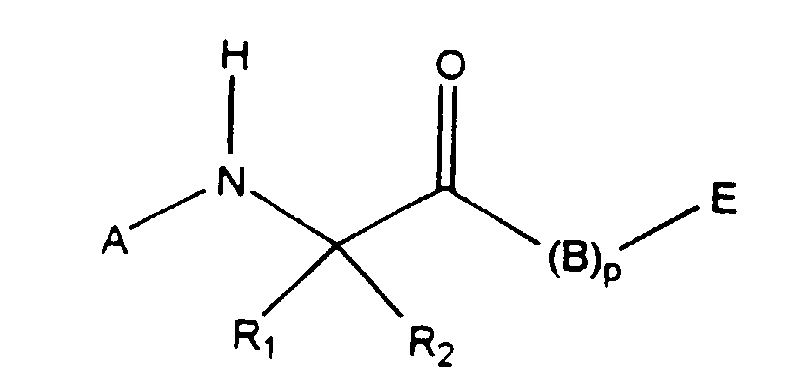
a D or L amino acid which is coupled as its carboxy terminus to the nitrogen depicted in formula I and is selected from the group consisting of alanine, asparagine, 2-azetidinecarboxylic acid, glycine, N-C1-8alkyglycine, proline, 1-amino-1-cycloC3- 8alkylcarboxylic acid, thiazzolidine-4-carboxylic acid, 5,5-dimethylthiazolidine-4-carboxylic acid, oxadolidine-4-carboxylic acid, pipecolinic acid, valine, methionine, cysteine, serine, threonine, norleucine, leucine, tert-leucine, isoleucine, phenylalanine, 1-naphthalanine, 2-naphthalamine, 2-thienylalanine, 3-thienylalanine, [1,2,3,4]-tetrahydroisoquinoline- 1-carboxylic acid and 1,2,3,4,]-tetrahydroisoquinoline-2-caroboxylic acid
C1-4alkoxycarbonyl, C1-12alkylcarbonyl, perfluoroC1-4alkyl, C1-4alkylcarbonyl, phenylC1- 4alkylcarbon1, substituted phenylC1-4alkylcarbonyl (where the phenyl substituents are independently selected from one or more of, C1-4alkyl, perfluoroC1-4alkyl, C1-4alkoxy, hydroxy, halo amido, nitro amino, C1-4alkylamino, C1-4dialkylamino, carboxy or C1- 4alkoxycarbonyl) 1,1-diphenylC1-4alkylcarbonyl, substituted 1,1-diphenylC1- 4alkylcarbonyl (where the phenyl substituents are independently selected from one or more of, C1-4alkyl, perfluoro C1-4alkyl, C1-4alkoxy, hydroxy, halo, amido, nitro, amino, C1- 4alkylamino, C1-4dialkylamino, carboxy or C1-4 alkoxycarbonyl), perfluoroC1- 4alkysulfonyl, C1-4alkysulfonyl, C1-4alkoxysulfonyl, phenysulfonyl, substituted phenylsulfonyl (where the phenyl substituents are independently selected from one or more of, C-1alkyl, perfluoro C1-4alkylamino, C1-4dialkylamino, carboxy or C1- 4alkoxycarbonyl), 10-cxamphorsulfonyl, phenylC1-4alkylsulfonyl, substituted phenylC1-4alkylsufonyl, perfluroC1-4alkylsulfinyl, C-14alkysulfinyl, phenylsulfinyl, substituted phenysulfinyl (where the phenyl substituents are independently selected from one or more of, C1-4alkyl, perfluoro C1-4alkyl, C1-4 alkoxy, hydroxy, halo, amido, nitro, amino, C1-4 alkylamino, C1-4 dialkylamino, carboxy or C1-4 alkoxycarbonyl), 1-naphthysulfonl, 2-naphthylsulfonyl, substituted naphthylsulfonyl (where the naphthyl substituents are independently selected from one or more of, C1-4alkyl, perfluroC1-4alkyl, C1-4alkoxy, hydroxy, halo, amido, nitro, amino, C1-4alkylamino, C1-4dialkylamino, carboy or C1- 4alkoxycarbonyl),1-naphthysulfinyl, 2-naphthysulfinyl, and substituted naphthylsulfinyl (where the naphthyl substituents are independently selected from one or more of, C1- 4alkyl, perfluoroC1-4alkyl, C1-4alkoxy, hydroxy, halo amido, nitro, amino, C1-4alkylamino, C104dialkylamono, carboxy or C-14alkoxycarbonyl):

Claims (10)
- A method of effecting cosmetic changes in mammalian skin pigmentation comprising administering to a mammal a pigmentation-changing effective amount of a Bowman-Birk Inhibitor or of a natural extract containing a Bowman-Birk Inhibitor.
- A method of depigmenting mammalian skin pigmentation comprising administering to a mammal a pigmentation-lightening effective amount of a Bowman-Birk Inhibitor or a natural extract containing a Bowman-Birk Inhibitor.
- A method according to claim 2 wherein said Bowman-Birk Inhibitor is derived from one or more of the botanical families leguminosae, solanaceae, gramineae and cucurbitaceae.
- A method according to claim 3 wherein said compound is derived from legumes.
- A method according to claim 4 wherein said compound is derived from undenatured soybean extract.
- A method according to claim 5 wherein said compound is derived from fractions of undenatured soybean extract.
- A composition for effecting changes in mammalian skin pigmentation comprising a pigmentation-changing effective amount of a Bowman-Birk Inhibitor or of a natural extract containing a Bowman-Birk Inhibitor.
- A composition for depigmenting mammalian skin pigmentation comprising a pigmentation-lightening effective amount of a Bowman-Birk Inhibitor or of a natural extract containing a Bowman-Birk Inhibitor.
- A composition according to claim 8 wherein said Bowman-Birk Inhibitor is derived from one or more of the botanical families leguminosae, solanaceae, gramineae and cucurbitaceae.
- A composition according to claim 9 wherein said compound is derived from undenatured soybean extract.
Applications Claiming Priority (2)
| Application Number | Priority Date | Filing Date | Title |
|---|---|---|---|
| US361429 | 1999-07-27 | ||
| US09/361,429 US6750229B2 (en) | 1998-07-06 | 1999-07-27 | Methods for treating skin pigmentation |
Publications (3)
| Publication Number | Publication Date |
|---|---|
| EP1077063A2 true EP1077063A2 (en) | 2001-02-21 |
| EP1077063A3 EP1077063A3 (en) | 2003-02-12 |
| EP1077063B1 EP1077063B1 (en) | 2007-08-29 |
Family
ID=23422024
Family Applications (1)
| Application Number | Title | Priority Date | Filing Date |
|---|---|---|---|
| EP00306352A Expired - Lifetime EP1077063B1 (en) | 1999-07-27 | 2000-07-26 | Methods for treating skin pigmentation |
Country Status (13)
| Country | Link |
|---|---|
| US (1) | US6750229B2 (en) |
| EP (1) | EP1077063B1 (en) |
| JP (1) | JP4808304B2 (en) |
| KR (1) | KR100778086B1 (en) |
| CN (1) | CN1163261C (en) |
| AT (1) | ATE371475T1 (en) |
| AU (1) | AU779448B2 (en) |
| BR (1) | BR0003184A (en) |
| CA (1) | CA2314569A1 (en) |
| DE (1) | DE60036169T2 (en) |
| ES (1) | ES2292406T3 (en) |
| MX (1) | MXPA00007388A (en) |
| TW (1) | TWI292715B (en) |
Cited By (11)
| Publication number | Priority date | Publication date | Assignee | Title |
|---|---|---|---|---|
| US6750229B2 (en) | 1998-07-06 | 2004-06-15 | Johnson & Johnson Consumer Companies, Inc. | Methods for treating skin pigmentation |
| US7192615B2 (en) | 2001-02-28 | 2007-03-20 | J&J Consumer Companies, Inc. | Compositions containing legume products |
| US7309688B2 (en) | 2000-10-27 | 2007-12-18 | Johnson & Johnson Consumer Companies | Topical anti-cancer compositions and methods of use thereof |
| FR2904541A1 (en) * | 2006-08-03 | 2008-02-08 | Soc Extraction Principes Actif | Use of a vegetable extract e.g. obtained from genus Linum made of proteic/peptidic compounds, to enhance the augmentation of melanin synthesis in melanocytes of the epidermis or hair bulb and improves the natural pigmentation of the skin |
| WO2008015342A3 (en) * | 2006-08-03 | 2008-04-24 | Soc Extraction Principes Actif | Use of a plant extract as active agent for increasing melanin synthesis in melanocytes |
| US7985404B1 (en) | 1999-07-27 | 2011-07-26 | Johnson & Johnson Consumer Companies, Inc. | Reducing hair growth, hair follicle and hair shaft size and hair pigmentation |
| US8039026B1 (en) | 1997-07-28 | 2011-10-18 | Johnson & Johnson Consumer Companies, Inc | Methods for treating skin pigmentation |
| US8093293B2 (en) | 1998-07-06 | 2012-01-10 | Johnson & Johnson Consumer Companies, Inc. | Methods for treating skin conditions |
| US8106094B2 (en) | 1998-07-06 | 2012-01-31 | Johnson & Johnson Consumer Companies, Inc. | Compositions and methods for treating skin conditions |
| US8431550B2 (en) | 2000-10-27 | 2013-04-30 | Johnson & Johnson Consumer Companies, Inc. | Topical anti-cancer compositions and methods of use thereof |
| WO2016053785A1 (en) * | 2014-09-29 | 2016-04-07 | Elc Management Llc | Actives for stimulating differentiation of keratinocytes to lighten hyperpigmented skin |
Families Citing this family (25)
| Publication number | Priority date | Publication date | Assignee | Title |
|---|---|---|---|---|
| US6346510B1 (en) | 1995-10-23 | 2002-02-12 | The Children's Medical Center Corporation | Therapeutic antiangiogenic endostatin compositions |
| AU1443301A (en) * | 1999-11-05 | 2001-06-06 | Johnson & Johnson Consumer Companies, Inc. | Soy depigmenting and skin care compositions |
| US6555143B2 (en) | 2001-02-28 | 2003-04-29 | Johnson & Johnson Consumer Products, Inc. | Legume products |
| KR101156968B1 (en) * | 2002-12-02 | 2012-06-20 | 포라 가세이 고교 가부시키가이샤 | Dendrite elongation inhibitor for melanocyte and skin preparation for external use containing the same |
| CN1324021C (en) * | 2002-12-03 | 2007-07-04 | 宝丽化学工业有限公司 | Inhibitor of dendrite elongation of melanocytes and skin external preparation containing the same |
| KR100747042B1 (en) * | 2003-08-19 | 2007-08-07 | 솔젠트 (주) | New substance 6-methyl-3-phenethyl-3,4-dihydro-lH-quanazoline-2-thione, preparation method thereof and a whitening effect composition comprising the same as an active ingredient |
| AU2006246425B2 (en) * | 2003-11-06 | 2012-03-22 | Genencor International, Inc. | Personal care compositions and methods for their use |
| FR2864539B1 (en) * | 2003-12-30 | 2012-10-26 | Lvmh Rech | OLIGONUCLEOTIDE AND USE THEREOF FOR MODULATING THE EXPRESSION OF BETA-1 PROTEIN-KINASE C ISOFORM AS CUTANEOUS DEPIGMENTING AGENT |
| US7829277B2 (en) | 2004-03-01 | 2010-11-09 | The Regents Of The University Of California | Methods for identifying compounds that suppress chemically-induced carcinogenesis |
| JP4303616B2 (en) * | 2004-03-01 | 2009-07-29 | 花王株式会社 | Detection method of melanosome transfer |
| AU2011253594B2 (en) * | 2004-07-30 | 2015-03-26 | Johnson & Johnson Consumer Companies, Inc. | Compositions and methods for treating skin conditions |
| JP2008510726A (en) * | 2004-08-20 | 2008-04-10 | エントレメッド インコーポレイテッド | Compositions and methods comprising proteinase activated receptor antagonists |
| FR2885128B1 (en) * | 2005-04-27 | 2007-07-06 | Expanscience Laboratoires Sa | DEPIGMENTING OR LIGHTENING COSMETIC COMPOSITION COMPRISING AT LEAST ONE OXAZOLINE AS AN ACTIVE INGREDIENT DEPIGMENTING OR LIGHTENING |
| US7547434B2 (en) * | 2005-09-09 | 2009-06-16 | Johnson & Johnson Consumer Companies, Inc. | Compositions and methods for mitigating skin irritation |
| US8198244B2 (en) | 2006-12-07 | 2012-06-12 | The United States Of America As Represented By The Secretary Of The Department Of Health And Human Services | Regulation of skin characteristics by DICKKOPF1 (DKK1) |
| WO2009060915A1 (en) * | 2007-11-06 | 2009-05-14 | San-Ei Gen F.F.I., Inc. | Salivary secretion promoter |
| WO2009064493A1 (en) * | 2007-11-14 | 2009-05-22 | New York University School Of Medicine | Tricyclic compounds as melanogenesis modifiers and uses thereof |
| WO2009064492A1 (en) * | 2007-11-14 | 2009-05-22 | New York University School Of Medicine | Quinoline compounds as melanogenesis modifiers and uses thereof |
| US20100040568A1 (en) * | 2008-04-30 | 2010-02-18 | Skinmedica, Inc. | Steroidal compounds as melanogenesis modifiers and uses thereof |
| US8409633B2 (en) * | 2008-09-10 | 2013-04-02 | L V M H Recherche | Methods useful in studying or modulating skin or hair pigmentation, plant extracts for use in compositions and cosmetic care method |
| JP2011079768A (en) * | 2009-10-06 | 2011-04-21 | National Institute Of Advanced Industrial Science & Technology | Medicament for inhibiting melanogenic in-vivo substance |
| WO2012103487A1 (en) | 2011-01-27 | 2012-08-02 | New York University | Coumarin compounds as melanogenesis modifiers and uses thereof |
| JP6148676B2 (en) | 2011-11-04 | 2017-06-14 | リポテック, エセ.ア. | Peptides that inhibit activated receptors and their use in cosmetic or pharmaceutical compositions |
| KR101700946B1 (en) | 2014-11-11 | 2017-02-02 | 연세대학교 산학협력단 | Compositions for preventing or improving skin pigmentation comprising CXCR4 antagonists |
| CN105148237A (en) * | 2015-09-29 | 2015-12-16 | 成都倍加特生物科技有限公司 | Orally-taken medicine for treating facial melanin deposition disease and preparation method |
Family Cites Families (218)
| Publication number | Priority date | Publication date | Assignee | Title |
|---|---|---|---|---|
| FR2041594A5 (en) | 1969-04-30 | 1971-01-29 | Expanscience | |
| US3625976A (en) | 1969-12-09 | 1971-12-07 | Int Flavors & Fragrances Inc | Coumarin ether sun-screening compounds |
| US3755560A (en) | 1971-06-30 | 1973-08-28 | Dow Chemical Co | Nongreasy cosmetic lotions |
| US4331692A (en) | 1971-07-23 | 1982-05-25 | Ulla Drevici | Cocoa fruits and products |
| GB1541463A (en) | 1975-10-11 | 1979-02-28 | Lion Dentifrice Co Ltd | Process for prparing a multiple emulsion having a dispersing form of water-phase/oil-phase/water-phase |
| US4151304A (en) | 1976-11-05 | 1979-04-24 | Lever Brothers Company | Method and composition for moisturizing the skin |
| FR2380775A1 (en) | 1977-02-22 | 1978-09-15 | Sederma Sarl | "AFTER-DEPILATION" COMPOSITION PROMOTING A PROGRESSIVE SLOWING OF HAIR REGROWTH |
| US4190671A (en) | 1977-03-17 | 1980-02-26 | Biorex Laboratories Limited | Chalcone derivatives |
| US4219569A (en) | 1978-10-10 | 1980-08-26 | The Upjohn Company | Process for treating inflammation |
| US4279930A (en) | 1978-10-10 | 1981-07-21 | The Upjohn Company | Process for treating inflammation |
| US4223018A (en) | 1979-02-09 | 1980-09-16 | Jimmie Belle | Bath composition |
| DE3040246C2 (en) | 1979-10-29 | 1985-01-10 | Osaka Chemical Laboratory Co., Ltd., Osaka | Soy Saponins A ↓ 1 ↓ and A? 2? and their use |
| JPS56135416A (en) | 1980-03-27 | 1981-10-22 | Mitsubishi Chem Ind Ltd | Pharmaceutical preparation for skin |
| US4297348A (en) | 1980-04-11 | 1981-10-27 | Rush-Hampton Industries, Inc. | Composition and method for the treatment of acne |
| US5439672A (en) | 1980-07-01 | 1995-08-08 | L'oreal | Cosmetic composition based on an aqueous dispersion of small lipid spheres |
| US4278570A (en) | 1980-08-20 | 1981-07-14 | Eli Lilly And Company | Cosmetic cleanser formulation |
| US4272544A (en) | 1980-08-20 | 1981-06-09 | Eli Lilly And Company | Skin cell renewal regime |
| LU83020A1 (en) | 1980-12-19 | 1982-07-07 | Oreal | OIL COMPOSITION FOR THE TREATMENT OF KERATINIC MATERIALS AND THE SKIN |
| DE3109420A1 (en) | 1981-03-12 | 1982-09-23 | Kastell, Wolfgang, 2000 Hamburg | AGENT FOR STOPPING HAIR LOSS AND PROMOTING HAIR GROWTH |
| FR2509988B1 (en) | 1981-07-23 | 1986-05-30 | Oreal | MIXTURE OF VEGETABLE OILS BASED ON JOJOBA OIL AS AN OXIDATION STABILIZING AGENT AND COSMETIC COMPOSITIONS CONTAINING THE SAME |
| DE3129867A1 (en) | 1981-07-29 | 1983-02-17 | Henkel Kgaa | "UNSATURATED ARYLKETONES AS ANTISEBORRHOIC ADDITIVES FOR COSMETIC AGENTS" |
| US4368187A (en) | 1981-08-03 | 1983-01-11 | Eli Lilly And Company | Sensitive-skin care regime |
| US4382960A (en) | 1981-08-03 | 1983-05-10 | Eli Lilly And Company | Cosmetic cleanser formulation |
| US4859458A (en) | 1981-09-15 | 1989-08-22 | Morton Thiokol, Inc. | Hair conditioning polymers containing alkoxylated nitrogen salts of sulfonic acid |
| US4578267A (en) | 1981-09-15 | 1986-03-25 | Morton Thiokol, Inc. | Skin conditioning polymer containing alkoxylated nitrogen salts of sulfonic acid |
| US4421769A (en) | 1981-09-29 | 1983-12-20 | The Procter & Gamble Company | Skin conditioning composition |
| FR2514643B1 (en) | 1981-10-20 | 1986-07-04 | Oreal | COPPER LANOLATE AND ANTI-ACNE COSMETIC COMPOSITIONS CONTAINING THE SAME |
| FR2520253A1 (en) | 1982-01-28 | 1983-07-29 | Oreal | NOVEL EMULSIFYING SYSTEM BASED ON PROTEIN CONDENSATION, POLYOXYETHYLENE STEROL AND PHOSPHATIDE AND USE THEREOF IN COSMETICS |
| US4550035A (en) | 1982-12-10 | 1985-10-29 | Creative Products Resource Associates, Ltd. | Cosmetic applicator useful for skin moisturizing and deodorizing |
| US4462981A (en) | 1982-12-10 | 1984-07-31 | Creative Products Resource, Associates Ltd. | Cosmetic applicator useful for skin moisturizing and deodorizing |
| US4604281A (en) | 1983-03-21 | 1986-08-05 | Charles Of The Ritz Group Ltd. | Cosmetic and skin treatment compositions containing acetylated sterols |
| DE3326455A1 (en) | 1983-07-22 | 1985-01-31 | Henkel Kgaa | COSMETIC-PHARMACEUTICAL OIL COMPONENTS |
| US5192332A (en) | 1983-10-14 | 1993-03-09 | L'oreal | Cosmetic temporary coloring compositions containing protein derivatives |
| JPS60109544A (en) | 1983-11-17 | 1985-06-15 | Kao Corp | Novel chalcone derivative and ultraviolet light absorber containing it |
| IT1180156B (en) | 1984-01-09 | 1987-09-23 | Crinos Industria Farmaco | GLYCOPROTEIN-BASED COSMETIC COMPOSITION FOR SKIN TREATMENT |
| US4690821A (en) | 1984-02-10 | 1987-09-01 | Creative Products Resource Associates, Ltd. | Towel for skin moisturizing and drying |
| DE3586747D1 (en) | 1984-03-05 | 1992-11-19 | Tonfer Inc | CLEANING SUPPLIES. |
| FR2580478B1 (en) | 1985-04-17 | 1989-05-12 | Christian Chapoton | HAIR TREATMENT DEVICE RELEASING ACTIVE SUBSTANCE AND MANUFACTURING METHOD |
| JPS6236304A (en) | 1985-06-05 | 1987-02-17 | Kashiwa Kagaku Kogyo:Kk | Cosmetic |
| US4760096A (en) | 1985-09-27 | 1988-07-26 | Schering Corporation | Moisturizing skin preparation |
| US4793991A (en) | 1986-01-31 | 1988-12-27 | Slimak Karen M | Hypoallergenic cosmetics, lip balms and lip sticks |
| US4847267A (en) | 1986-03-17 | 1989-07-11 | Charles Of The Ritz Group Ltd. | Skin treatment composition and method |
| US4970216A (en) | 1986-03-17 | 1990-11-13 | Richardson Vicks, Inc. | Skin treatment composition and method |
| LU86361A1 (en) | 1986-03-19 | 1987-11-11 | Oreal | AQUEOUS COSMETIC COMPOSITION WITH DIFFERENT FOAM FOR THE TREATMENT OF HAIR AND SKIN |
| LU86715A1 (en) | 1986-12-16 | 1988-07-14 | Oreal | COSMETIC COMPOSITION CONTAINING HYDROXYLATED CHALCON DERIVATIVES AND ITS USE FOR PROTECTING SKIN AND HAIR AGAINST LIGHT RADIATION, NEW HYDROXYLATED CHALCON DERIVATIVES AND THEIR PREPARATION METHOD |
| IT1201149B (en) | 1987-01-14 | 1989-01-27 | Indena Spa | BIOFLAVONOID COMPLEXES WITH PHOSPHOLIPIDS, THEIR PREPARATION, USE AND PHARMACEUTICAL AND COSMETIC COMPOSITIONS |
| US5166139A (en) | 1987-02-26 | 1992-11-24 | Indena, S.P.A. | Complexes of saponins and their aglycons with phospholipids and pharmaceutical and cosmetic compositions containing them |
| IT1203515B (en) | 1987-02-26 | 1989-02-15 | Indena Spa | SAPONINE COMPLEXES WITH PHOSPHOLIPIDS AND PHARMACEUTICAL AND COSMETIC COMPOSITIONS CONTAINING THEM |
| US4960764A (en) | 1987-03-06 | 1990-10-02 | Richardson-Vicks Inc. | Oil-in-water-in-silicone emulsion compositions |
| US4824662A (en) | 1987-06-15 | 1989-04-25 | Vi-Jon Laboratories, Inc. | Nail polish remover |
| IT1222012B (en) | 1987-07-10 | 1990-08-31 | Indena Spa | PHARMACEUTICAL AND COSMETIC COMPOSITIONS CONTAINING COMPLEX FLAVONOLIGNANS WITH PHOSPHOLIPIDS |
| IT1223290B (en) | 1987-07-27 | 1990-09-19 | Indena Spa | VASOCINETIC ACTION POLYUNSATURATED ACIDS AND RELATED PHARMACEUTICAL AND COSMETIC FORMULATIONS |
| LU86997A1 (en) | 1987-09-21 | 1989-04-06 | Oreal | PHOTOSTABLE FILTERING COSMETIC COMPOSITION CONTAINING BIXIN ASSOCIATED WITH A LIPOSOLUBLE UV FILTER AND ITS USE FOR THE PROTECTION OF THE HUMAN SKIN AGAINST ULTRAVIOLET RADIATION |
| CH676470A5 (en) | 1988-02-03 | 1991-01-31 | Nestle Sa | |
| FR2628317B1 (en) | 1988-03-09 | 1991-11-08 | Lvmh Rech | COMPOSITION BASED ON HYDRATED LIPID LAMID PHASES OR LIPOSOMES CONTAINING SCUTELLARIA EXTRACT, OR AT LEAST ONE FLAVONOID SUCH AS BAICALINE OR BAICALINE AND COSMETIC OR PHARMACEUTICAL COMPOSITION, IN PARTICULAR DERMATOLOGICAL, ANTI-ALLERGIC ANTI-ALLERGIC ACTIVITY THE INCORPORANT |
| DE3814839A1 (en) | 1988-05-02 | 1989-11-16 | Henkel Kgaa | HAIR TREATMENT WITH NATURAL INGREDIENTS |
| US4906457A (en) * | 1988-09-06 | 1990-03-06 | Washington State University Research Foundation, Inc. | Compositions and methods for reducing the risk of sunlight and ultraviolet induced skin cancer |
| US4851214A (en) | 1988-09-07 | 1989-07-25 | Ici Americas Inc. | Deodorants containing N-soya-N-ethyl morpholinium ethosulfate |
| US4960588A (en) | 1988-11-16 | 1990-10-02 | Helene Curtis, Inc. | Hair treatment compositions to impart durable hair set retention properties |
| US4943462A (en) | 1989-01-17 | 1990-07-24 | Semex Medical, Inc. | Nail treatment device |
| LU87449A1 (en) | 1989-02-09 | 1990-09-19 | Oreal | PROCESS FOR THE MANUFACTURE OF FOAMS FOR USE IN THE COSMETIC AND PHARMACEUTICAL AREAS AND FOAMS OBTAINED BY THIS PROCESS |
| US5116605A (en) | 1989-03-09 | 1992-05-26 | Alt John P | Composition and skin treatment method therewith for mitigating acne and male-pattern baldness |
| PT93750B (en) | 1989-04-14 | 1996-10-31 | Schering Corp | METHOD FOR THE MANUFACTURE OF COLORED CONTACT LENSES |
| US5077038A (en) | 1989-07-27 | 1991-12-31 | Vi-Jon Laboratories, Inc. | Nail polish remover |
| US5194252A (en) | 1989-07-27 | 1993-03-16 | Vijon Laboratories, Inc. | Moisture retaining aftershave |
| EP0421021A1 (en) | 1989-10-06 | 1991-04-10 | MUCOS EMULSIONSGESELLSCHAFT m.b.H. | Use of catabolic enzymes to activate macrophages and/or NK cells, medicinal composition containing these enzymes for the activation of macrophages and/or NK cells |
| US5032400A (en) | 1989-11-02 | 1991-07-16 | Erie Laboratories | Shark liver oil and garlic oil topical analgesic |
| WO1991007166A1 (en) * | 1989-11-16 | 1991-05-30 | Washington State University Research Foundation, Inc | Compositions and methods for reducing the risk of sunlight and ultraviolet induced skin cancer |
| US5622690A (en) | 1990-04-05 | 1997-04-22 | Nurture, Inc. | Seed-derived proteinaceous compositions for reduction of sunburn cell formation |
| US5077040A (en) | 1990-04-30 | 1991-12-31 | Helene Curtis, Inc. | Hair-treating microemulsion composition and method of preparing and using the same |
| FR2663633B1 (en) | 1990-06-22 | 1994-06-17 | Adir | NEW CHALCONES, THEIR PREPARATION PROCESS AND THE PHARMACEUTICAL COMPOSITIONS CONTAINING THEM. |
| CA2047160C (en) | 1990-07-25 | 2002-06-25 | Masahiro Ito | Reactive hot-melt elastic sealant composition |
| US5231090A (en) | 1990-07-30 | 1993-07-27 | University Of Miami | Treatment for hypercholesterolemia |
| US5407675A (en) | 1990-08-10 | 1995-04-18 | Etemad-Moghadam; Parviz | Method and composition for use on the scalp and eyebrow region of a subject |
| CA2049728A1 (en) | 1990-08-24 | 1992-02-25 | Kenji Kitamura | Washing composition capable of preventing and ameliorating skin irritation |
| US5217717A (en) * | 1990-09-06 | 1993-06-08 | Central Soya Company, Inc. | Method of making soybean Bowman-Birk inhibitor concentrate and use of same as a human cancer preventative and therapy |
| JP3032566B2 (en) * | 1990-11-01 | 2000-04-17 | 株式会社資生堂 | External preparation for skin |
| ES2067255T3 (en) | 1990-11-14 | 1995-03-16 | Oreal | NON-IONIC AMPHIFYL COMPOUNDS DERIVED FROM GLYCEROL, ITS PREPARATION PROCEDURE, CORRESPONDING INTERMEDIATE COMPOUNDS AND COMPOSITIONS CONTAINING SUCH COMPOUNDS. |
| US5110603A (en) | 1991-01-31 | 1992-05-05 | Kao Corporation | Bathing preparation for colloidal material |
| US5188823A (en) | 1991-02-07 | 1993-02-23 | Stepan Company | Antiperspirant formulations |
| US5449794A (en) | 1991-02-15 | 1995-09-12 | Jasmine Fockerman | Benzopyran phenol derivatives for use as antibacterial agents |
| GB9104286D0 (en) | 1991-02-28 | 1991-04-17 | Phytopharm Ltd | Pharmaceutical compositions for the treatment of skin disorders |
| US5807543A (en) | 1993-08-27 | 1998-09-15 | The Procter & Gamble Co. | Cosmetic compositions containing hydrophobically modified nonionic polymer and unsaturated quaternary ammonium surfactant |
| US5498420A (en) | 1991-04-12 | 1996-03-12 | Merz & Co. Gmbh & Co. | Stable small particle liposome preparations, their production and use in topical cosmetic, and pharmaceutical compositions |
| US5229104A (en) | 1991-04-29 | 1993-07-20 | Richardson-Vicks Inc. | Artificial tanning compositions containing positively charged paucilamellar vesicles |
| EP0514576A1 (en) | 1991-05-24 | 1992-11-25 | Societe Des Produits Nestle S.A. | Oil-soluble antioxidant mixture |
| US5310734A (en) | 1991-07-05 | 1994-05-10 | Rhone-Poulenc Rorer | Phospholipid composition |
| FR2679446B1 (en) | 1991-07-24 | 1993-10-29 | Oreal | METHOD FOR MANUFACTURING A COSMETIC COMPOSITION FOR APPLICATION TO HAIR, COMPOSITION OBTAINED BY THIS PROCESS AND METHOD FOR COSMETIC TREATMENT USING THE SAME. |
| FR2679904A1 (en) | 1991-08-01 | 1993-02-05 | Lvmh Rech | Use of a tocopherol phosphate, or of one of its derivatives, in the preparation of cosmetic or pharmaceutical compositions and compositions thus obtained |
| US5254331A (en) | 1991-09-12 | 1993-10-19 | Chanel, Inc. | Skin cream composition |
| ES2179038T3 (en) | 1991-09-13 | 2003-01-16 | Pentapharm Ag | PORTEIN FRACTION FOR COSMETIC AND DERMATOLOGICAL TREATMENT OF SKIN. |
| US5260065A (en) | 1991-09-17 | 1993-11-09 | Micro Vesicular Systems, Inc. | Blended lipid vesicles |
| AU3073692A (en) | 1991-11-25 | 1993-06-28 | Richardson-Vicks Inc. | Compositions for regulating skin wrinkles and/or skin atrophy |
| US5780459A (en) | 1991-11-25 | 1998-07-14 | The Procter & Gamble Company | Compositions for regulating skin wrinkles and or skin atrophy |
| WO1993010756A1 (en) | 1991-11-25 | 1993-06-10 | Richardson-Vicks, Inc. | Use of salicylic acid for regulating skin wrinkles and/or skin atrophy |
| JP3283553B2 (en) * | 1991-12-10 | 2002-05-20 | 株式会社創研 | Cosmetics |
| FR2687314A1 (en) | 1992-02-18 | 1993-08-20 | Oreal | LIPID VESICLE DISPERSION, COSMETIC AND / OR PHARMACEUTICAL COMPOSITION CONTAINING THE SAME, AND PROCESS FOR THE PREPARATION OF SAID DISPERSION. |
| US5766628A (en) | 1992-02-24 | 1998-06-16 | Merz + Co. Gmbh & Co. | Bath and shower composition having vesicle-forming properties and method for the production and use thereof |
| DE4206090C2 (en) | 1992-02-27 | 1998-02-05 | Perycut Chemie Ag | Insect repellent |
| US5393519A (en) | 1992-03-27 | 1995-02-28 | Helene Curtis, Inc. | Shampoo compositions |
| US5248495A (en) | 1992-04-16 | 1993-09-28 | The Procter & Gamble Company | Post foaming shaving gel composition |
| EP0574352A1 (en) | 1992-06-09 | 1993-12-15 | Ciba-Geigy Ag | Process for graft polymerization on surfaces of preformed substrates to modify surface properties |
| US5352443A (en) | 1992-06-15 | 1994-10-04 | Shiseido Co., Ltd. | Permanent waving composition |
| US5641509A (en) | 1992-06-26 | 1997-06-24 | Lancaster Group Ag | Preparation for topical use |
| US5643601A (en) | 1992-06-26 | 1997-07-01 | Lancaster Group Ag | Phospholipid-and fluorocarbon-containing cosmetic |
| DE4221256C2 (en) | 1992-06-26 | 1997-07-10 | Lancaster Group Ag | Galenic composition for topical use |
| US5438044A (en) | 1992-06-30 | 1995-08-01 | Rhone-Poulenc Rorer | Phospholipid composition |
| DE4226173A1 (en) | 1992-08-07 | 1994-02-10 | Solvay Fluor & Derivate | Bath additive |
| FR2694934B1 (en) | 1992-08-24 | 1994-11-10 | Oreal | Composition for the treatment of acne containing a salicylic acid derivative and salicylic acid derivatives. |
| US6048520A (en) | 1992-09-24 | 2000-04-11 | Helene Curtis, Inc. | Clear leave-on hair treatment composition and method |
| US5753612A (en) | 1992-10-27 | 1998-05-19 | Yissum Research Development Co. Of The Hebrew University Of Jerusalem | Pharmaceutical composition and method for inhibiting hair growth by administration of activin or activin agonists |
| US5270042A (en) | 1993-02-23 | 1993-12-14 | Juanita Whitham | Medicinal salve composition |
| RU2066992C1 (en) | 1993-03-01 | 1996-09-27 | Надежда Михайловна Остроумова | Method and remedy for removing hairs |
| CA2119064A1 (en) | 1993-03-17 | 1994-09-18 | Richard A. Berg | Dermal-epidermal in vitro test system |
| US5276058A (en) | 1993-06-09 | 1994-01-04 | Nippon Hypox Laboratories Incorporated | 3,4-dihydroxychalcone derivatives |
| ATE227114T1 (en) | 1993-08-30 | 2002-11-15 | Unilever Nv | HAIR WASH AND CONDITIONING PRODUCTS |
| FR2709756B1 (en) | 1993-09-10 | 1995-10-20 | Essilor Int | Hydrophilic, transparent material with high oxygen permeability, based on a polymer with interpenetrating networks, its method of preparation and manufacture of soft contact lenses with high oxygen permeability. |
| FR2710264B1 (en) | 1993-09-21 | 1995-12-08 | Rocher Yves Biolog Vegetale | Use for the treatment of combination skin of an effective amount of active substances. |
| FR2710524B1 (en) | 1993-09-28 | 1995-11-17 | Oreal | Composition of nail polish containing an epoxidized oil as a plasticizer. |
| GB9322007D0 (en) | 1993-10-26 | 1993-12-15 | Unilever Plc | Cosmetic composition |
| US5681852A (en) | 1993-11-12 | 1997-10-28 | The Procter & Gamble Company | Desquamation compositions |
| EP0655470B1 (en) | 1993-11-26 | 1999-05-12 | Novartis AG | Cross-linkable copolymers and hydrogels |
| DE4343431C1 (en) | 1993-12-18 | 1995-05-04 | Henkel Kgaa | Cosmetic and / or pharmaceutical preparations |
| DE69402297T2 (en) | 1993-12-22 | 1997-07-10 | Oreal | Cosmetic or dermatological powder, process for its preparation and uses |
| US5620692A (en) | 1993-12-23 | 1997-04-15 | Nurture, Inc. | Oat oil compositions with useful cosmetic and dermatological properties |
| FR2714599B1 (en) | 1993-12-30 | 1996-02-09 | Oreal | Composition for fighting against aging, acting simultaneously on the superficial and deep layers of the skin, its use. |
| FR2714600B1 (en) | 1993-12-30 | 1996-02-09 | Oreal | Protective, nutritive and / or firming composition for the simultaneous treatment of the surface and deep layers of the skin, its use. |
| FR2714602B1 (en) | 1993-12-30 | 1996-02-09 | Oreal | Anti-acne composition for the simultaneous treatment of the superficial and deep layers of the skin, its use. |
| FR2714604B1 (en) | 1993-12-30 | 1996-01-26 | Oreal | Use of a spin acceptor in a cosmetic or dermatological composition. |
| FR2714598B1 (en) | 1993-12-30 | 1996-02-09 | Oreal | Slimming composition with two types of liposomes for topical treatment, its use. |
| FR2714596B1 (en) | 1993-12-30 | 1996-02-09 | Oreal | Cosmetic composition for the simultaneous treatment of the superficial and deep layers of the skin, its use. |
| FR2714601B1 (en) | 1993-12-30 | 1996-02-09 | Oreal | Depigmenting composition for the simultaneous treatment of surface and deep layers, its use. |
| FR2714597B1 (en) | 1993-12-30 | 1996-02-09 | Oreal | Moisturizing composition for the simultaneous treatment of the superficial and deep layers of the skin, its use. |
| DE4405127A1 (en) | 1994-02-18 | 1995-08-31 | Henkel Kgaa | Hair treatment products |
| IL112649A (en) | 1994-02-22 | 1999-12-22 | Curtis Helene Ind Inc | Topically effective compositions for application to the skin or hair |
| US5547661A (en) | 1994-02-22 | 1996-08-20 | Helene Curtis, Inc. | Antiperspirant deodorant compositions |
| FR2717075B1 (en) | 1994-03-14 | 1996-04-05 | Oreal | Aqueous organopolysiloxane makeup gel. |
| US6013255A (en) | 1994-04-18 | 2000-01-11 | Gist-Brocades B.V. | Stable water-in-oil emulsions |
| FR2719219B1 (en) | 1994-05-02 | 1996-06-21 | Rocher Yves Biolog Vegetale | Cosmetic or pharmaceutical composition for topical use comprising lipid vesicles. |
| JP3127713B2 (en) | 1994-05-10 | 2001-01-29 | 株式会社村田製作所 | Optimal condition analysis method for powder molding |
| FR2720937B1 (en) | 1994-06-08 | 1997-03-28 | Oreal | Cosmetic or dermatological composition in the form of an aqueous and stable dispersion of cubic gel particles based on phytantriol and containing a fatty chain surfactant as a dispersing and stabilizing agent. |
| DE4424210C2 (en) | 1994-07-09 | 1997-12-04 | Beiersdorf Ag | Use of compositions containing surfactants and containing oil components, which are otherwise water-free, as cosmetic or dermatological shower oils |
| GB9414045D0 (en) | 1994-07-12 | 1994-08-31 | Berwind Pharma Service | Moisture barrier film coating composition, method, and coated form |
| DE4433071C1 (en) | 1994-09-16 | 1995-12-21 | Henkel Kgaa | Mild detergent mixtures |
| US5567420A (en) | 1994-11-16 | 1996-10-22 | Mceleney; John | Lotion which is temporarily colored upon application |
| JP3647093B2 (en) | 1994-11-17 | 2005-05-11 | 株式会社メニコン | Hydrophilized oxygen permeable contact lens and method for producing the same |
| CN1169112A (en) | 1994-12-06 | 1997-12-31 | 普罗克特和甘保尔公司 | Shelf-stable skin cleanser containing gelling polymers, lipids, and fatty acid glycol ester crystals |
| WO1996017591A1 (en) | 1994-12-06 | 1996-06-13 | The Procter & Gamble Company | Shelf stable skin cleansing liquid with gel forming polymer and lipid |
| DE4444238A1 (en) | 1994-12-13 | 1996-06-20 | Beiersdorf Ag | Cosmetic or dermatological drug combinations of cinnamic acid derivatives and flavone glycosides |
| GB9500116D0 (en) | 1995-01-05 | 1995-03-01 | Ciba Geigy Ag | Pharmaceutical compositions |
| US5618522A (en) | 1995-01-20 | 1997-04-08 | The Procter & Gamble Company | Emulsion compositions |
| WO1996025144A1 (en) | 1995-02-15 | 1996-08-22 | The Procter & Gamble Company | Crystalline hydroxy waxes as oil in water stabilizers for skin cleansing liquid composition |
| FR2730928B1 (en) | 1995-02-23 | 1997-04-04 | Oreal | COMPOSITION BASED ON LIPIDIC VESICLES WITH ACIDIC PH AND USE THEREOF IN TOPICAL APPLICATION |
| WO1996029048A1 (en) | 1995-03-23 | 1996-09-26 | Lancaster Group Gmbh | Cosmetic agent with condensed decomposition products of plant and animal origin |
| US5985809A (en) | 1995-05-27 | 1999-11-16 | The Procter & Gamble Company | Aqueous personal cleansing compositions comprising specific nonocclusive liquid polyol fatty acid polyester |
| GB9510833D0 (en) | 1995-05-27 | 1995-07-19 | Procter & Gamble | Cleansing compositions |
| US5942479A (en) | 1995-05-27 | 1999-08-24 | The Proctor & Gamble Company | Aqueous personal cleansing composition with a dispersed oil phase comprising two specifically defined oil components |
| US5639785A (en) | 1995-06-07 | 1997-06-17 | Global Pharma, Ltd. | Methods for the treatment of baldness and gray hair using isoflavonoid derivatives |
| US5523308A (en) | 1995-06-07 | 1996-06-04 | Costanzo; Michael J. | Peptidyl heterocycles useful in the treatment of thrombin related disorders |
| CA2197498C (en) | 1995-06-21 | 2002-12-17 | Nathalie Mougin | Cosmetic composition including a polymeric particle dispersion |
| US6013250A (en) | 1995-06-28 | 2000-01-11 | L'oreal S. A. | Composition for treating hair against chemical and photo damage |
| JP3410870B2 (en) * | 1995-07-13 | 2003-05-26 | 株式会社資生堂 | External preparation for skin |
| US5571503A (en) | 1995-08-01 | 1996-11-05 | Mausner; Jack | Anti-pollution cosmetic composition |
| US5874127A (en) | 1995-08-16 | 1999-02-23 | Ciba Vision Corporation | Method and apparatus for gaseous treatment |
| JPH0977638A (en) * | 1995-09-19 | 1997-03-25 | Art Beauty Clinic Kk | Foundation for cosmetic |
| US6063398A (en) | 1995-09-20 | 2000-05-16 | L'oreal | Cosmetic or dermopharmaceutical patch containing, in an anhydrous polymeric matrix, at least one active compound which is, in particular, unstable in oxidizing mediums, and at least one water-absorbing agent |
| US5683683A (en) | 1995-09-21 | 1997-11-04 | Helene Curtis, Inc. | Body wash composition to impart conditioning properties to skin |
| US5635165A (en) | 1995-09-27 | 1997-06-03 | Helene Curtis, Inc. | Antiperspirant deodorant compositions |
| US5885593A (en) | 1995-09-28 | 1999-03-23 | The Andrew Jergens Company | Skin care composition including cyclodextrin materials and method for treating skin therewith |
| NZ299379A (en) | 1995-10-27 | 1997-04-24 | Unilever Plc | Topical flavanone-containing composition |
| US6019962A (en) | 1995-11-07 | 2000-02-01 | The Procter & Gamble Co. | Compositions and methods for improving cosmetic products |
| CN1055077C (en) | 1995-11-24 | 2000-08-02 | 三井化学株式会社 | Hydrochalcone derivative, cosmetic composition containing said derivative and preparation method thereof |
| US5961980A (en) * | 1996-01-18 | 1999-10-05 | The Trustees Of The University Of Pennsylvania | Bowman-birk inhibitor compositions and methods for the treatment of genitourinary diseases |
| US5643587A (en) | 1996-02-15 | 1997-07-01 | Avon Products, Inc. | Composition and method for under-eye skin lightening |
| WO1997036570A1 (en) | 1996-03-29 | 1997-10-09 | S.W. Patentverwertungs Ges. M.B.H. Edelsbacher U. Partner | Cosmetic or cosmetic preparation for smoothing and tightening the skin in the case of subcutaneous fatty tissue problems, particularly cellulite |
| FR2747568B1 (en) | 1996-04-17 | 1999-09-17 | Oreal | USE OF AT LEAST ONE LIPOXYGENASE INHIBITOR AND AT LEAST ONE CYCLO-OXYGENASE INHIBITOR FOR MODIFYING HAIR AND / OR HAIR GROWTH |
| JP4223574B2 (en) * | 1996-05-24 | 2009-02-12 | サントリー株式会社 | Cosmetic composition for whitening |
| US5824702A (en) | 1996-06-07 | 1998-10-20 | Mount Sinai School Of Medicine Of The City University Of New York | Genistein as a preventive against ultraviolet induced skin photodamage and cancer |
| US5821361A (en) | 1996-06-11 | 1998-10-13 | Protein Technologies International, Inc. | Recovery of isoflavones from soy molasses |
| EP0814116A1 (en) | 1996-06-19 | 1997-12-29 | Hüls Aktiengesellschaft | Hydrophilic coating of polymeric substrate surfaces |
| US5804234A (en) | 1996-09-13 | 1998-09-08 | Suh; John D. | Plant protein for nutritional products and method of making same |
| US5665367A (en) | 1996-09-27 | 1997-09-09 | Chesebrough-Pond's Usa Co., Division Of Conopco, Inc. | Skin care compositions containing naringenin and/or quercetin and a retinoid |
| IL119535A (en) | 1996-10-31 | 2001-01-11 | Chajuss Daniel | Soy molasses and modified soy molasses for topical application |
| FR2757767B1 (en) | 1996-12-27 | 1999-02-05 | Oreal | TOPICAL COMPOSITION CONTAINING AT LEAST ONE PLANT-BASED PROTEIN AND / OR ANIMAL-BASED PROTEIN AND A POLY (2-ACRYLAMIDO 2-METHYLPROPANE SULFONIC ACID) CROSSLINKED |
| US5863546A (en) | 1997-03-02 | 1999-01-26 | Swinehart; James M | Cosmetic composition |
| JP3527406B2 (en) * | 1997-03-19 | 2004-05-17 | 株式会社資生堂 | Skin whitening external preparation |
| US5885600A (en) | 1997-04-01 | 1999-03-23 | Burlington Bio-Medical & Scientific Corp. | Natural insect repellent formula and method of making same |
| US5962015A (en) | 1997-05-02 | 1999-10-05 | Kobo Products S.A.R.L. | Stabilized liposomes |
| US6060070A (en) | 1997-06-11 | 2000-05-09 | Gorbach; Sherwood L. | Isoflavonoids for treatment and prevention of aging skin and wrinkles |
| US5885596A (en) | 1997-07-23 | 1999-03-23 | Bristol-Myers Squibb Company | Methods and compositions for fine lines and/or wrinkles |
| US8039026B1 (en) | 1997-07-28 | 2011-10-18 | Johnson & Johnson Consumer Companies, Inc | Methods for treating skin pigmentation |
| DE19735587B4 (en) * | 1997-08-16 | 2012-03-22 | Eberhard-Karls-Universität Tübingen Universitätsklinikum | A peptide having a radioprotective effect, a cosmetic or pharmaceutical composition containing the same, a nucleic acid encoding the same, a preparation process for this peptide and the use as a radioprotective agent |
| US6017893A (en) | 1997-08-29 | 2000-01-25 | Natures Sunshine Products, Inc. | Use of isoflavones to prevent hair loss and preserve the integrity of existing hair |
| US5928658A (en) | 1997-12-05 | 1999-07-27 | U.S. Cosmetics | Oil-free wax-free solid cosmetic composition |
| ES2273445T3 (en) | 1997-12-16 | 2007-05-01 | JOHNSON & JOHNSON CONSUMER COMPANIES, INC. | COMPOSITIONS AND PROCEDURES TO REGULATE PHAGOCITOSIS AND EXPRESSION OF ICAM-1. |
| FR2772613B1 (en) | 1997-12-19 | 2003-05-09 | Oreal | USE OF PHLOROGLUCINOL IN A COSMETIC COMPOSITION |
| US6030931A (en) | 1998-02-03 | 2000-02-29 | Chesebrough-Pond's Usa Co., Division Of Conopco, Inc. | Foaming cleansing skin product |
| US5928889A (en) | 1998-02-13 | 1999-07-27 | S.C. Johnson & Son, Inc. | Protocol for simulated natural biofilm formation |
| JPH11246344A (en) * | 1998-02-27 | 1999-09-14 | Shiseido Co Ltd | Preparation for external use for skin bleaching |
| WO1999047113A1 (en) | 1998-03-16 | 1999-09-23 | The Procter & Gamble Company | Compositions for regulating skin appearance |
| CN1293565A (en) | 1998-03-16 | 2001-05-02 | 宝洁公司 | Compositions for Regulating Skin Appearance |
| US5965153A (en) | 1998-03-24 | 1999-10-12 | Stabar Enterprises, Inc. | Dietary supplement for preventing or reducing shedding by animals |
| US6087415A (en) | 1998-06-11 | 2000-07-11 | Johnson & Johnson Vision Care, Inc. | Biomedical devices with hydrophilic coatings |
| US6750229B2 (en) | 1998-07-06 | 2004-06-15 | Johnson & Johnson Consumer Companies, Inc. | Methods for treating skin pigmentation |
| JP2000038334A (en) * | 1998-07-21 | 2000-02-08 | Pola Chem Ind Inc | Whitening cosmetics containing resorcinol derivatives |
| JP2000229828A (en) * | 1999-02-05 | 2000-08-22 | Kose Corp | Skin bleaching lotion |
| AU3390400A (en) | 1999-03-05 | 2000-09-21 | Johns Hopkins University, The | Regulating skin appearance and composition with a fluorinated vitamin d3 analog compound |
| AU4647300A (en) | 1999-04-19 | 2000-11-02 | Procter & Gamble Company, The | Skin care compositions containing combination of skin care actives |
| US6444647B1 (en) | 1999-04-19 | 2002-09-03 | The Procter & Gamble Company | Skin care compositions containing combination of skin care actives |
| US6492326B1 (en) | 1999-04-19 | 2002-12-10 | The Procter & Gamble Company | Skin care compositions containing combination of skin care actives |
| AU4361600A (en) | 1999-04-19 | 2000-11-02 | Procter & Gamble Company, The | Skin care compositions containing combination of skin care actives |
| WO2000062744A2 (en) | 1999-04-19 | 2000-10-26 | The Procter & Gamble Company | Skin care compositions containing combination of skin care actives |
| WO2000069404A1 (en) | 1999-05-17 | 2000-11-23 | The Procter & Gamble Company | Methods for regulating the condition of mammalian keratinous tissue via topical application of phytosterol compositions |
| AU5026700A (en) | 1999-05-18 | 2000-12-05 | Procter & Gamble Company, The | Methods for upregulating and/or modulating kgf production and increasing receptivity of keratinocytes to kgf |
| KR20020011988A (en) | 1999-05-18 | 2002-02-09 | 데이비드 엠 모이어 | Methods of regulating the condition of mammalian keratinous tissue |
| AU5026600A (en) | 1999-05-18 | 2000-12-05 | Procter & Gamble Company, The | Methods of regulating the condition of mammalian keratinous tissue |
| US7985404B1 (en) | 1999-07-27 | 2011-07-26 | Johnson & Johnson Consumer Companies, Inc. | Reducing hair growth, hair follicle and hair shaft size and hair pigmentation |
| FR2811226B1 (en) * | 2000-06-05 | 2003-06-20 | Clarins Laboratoires S A S | MOISTURIZING COSMETIC COMPOSITION COMPRISING A PLANT TRYPSIN INHIBITOR |
-
1999
- 1999-07-27 US US09/361,429 patent/US6750229B2/en not_active Expired - Lifetime
-
2000
- 2000-07-25 AU AU48819/00A patent/AU779448B2/en not_active Ceased
- 2000-07-26 DE DE60036169T patent/DE60036169T2/en not_active Expired - Lifetime
- 2000-07-26 KR KR1020000042946A patent/KR100778086B1/en not_active Expired - Fee Related
- 2000-07-26 ES ES00306352T patent/ES2292406T3/en not_active Expired - Lifetime
- 2000-07-26 EP EP00306352A patent/EP1077063B1/en not_active Expired - Lifetime
- 2000-07-26 AT AT00306352T patent/ATE371475T1/en not_active IP Right Cessation
- 2000-07-26 CA CA002314569A patent/CA2314569A1/en not_active Abandoned
- 2000-07-27 BR BR0003184-4A patent/BR0003184A/en not_active Application Discontinuation
- 2000-07-27 MX MXPA00007388A patent/MXPA00007388A/en active IP Right Grant
- 2000-07-27 CN CNB001222872A patent/CN1163261C/en not_active Expired - Fee Related
- 2000-07-27 JP JP2000227770A patent/JP4808304B2/en not_active Expired - Fee Related
- 2000-10-05 TW TW089114978A patent/TWI292715B/en not_active IP Right Cessation
Cited By (12)
| Publication number | Priority date | Publication date | Assignee | Title |
|---|---|---|---|---|
| US8039026B1 (en) | 1997-07-28 | 2011-10-18 | Johnson & Johnson Consumer Companies, Inc | Methods for treating skin pigmentation |
| US6750229B2 (en) | 1998-07-06 | 2004-06-15 | Johnson & Johnson Consumer Companies, Inc. | Methods for treating skin pigmentation |
| US8093293B2 (en) | 1998-07-06 | 2012-01-10 | Johnson & Johnson Consumer Companies, Inc. | Methods for treating skin conditions |
| US8106094B2 (en) | 1998-07-06 | 2012-01-31 | Johnson & Johnson Consumer Companies, Inc. | Compositions and methods for treating skin conditions |
| US7985404B1 (en) | 1999-07-27 | 2011-07-26 | Johnson & Johnson Consumer Companies, Inc. | Reducing hair growth, hair follicle and hair shaft size and hair pigmentation |
| US7309688B2 (en) | 2000-10-27 | 2007-12-18 | Johnson & Johnson Consumer Companies | Topical anti-cancer compositions and methods of use thereof |
| US8431550B2 (en) | 2000-10-27 | 2013-04-30 | Johnson & Johnson Consumer Companies, Inc. | Topical anti-cancer compositions and methods of use thereof |
| US7192615B2 (en) | 2001-02-28 | 2007-03-20 | J&J Consumer Companies, Inc. | Compositions containing legume products |
| US7897144B2 (en) | 2001-02-28 | 2011-03-01 | Johnson & Johnson Comsumer Companies, Inc. | Compositions containing legume products |
| FR2904541A1 (en) * | 2006-08-03 | 2008-02-08 | Soc Extraction Principes Actif | Use of a vegetable extract e.g. obtained from genus Linum made of proteic/peptidic compounds, to enhance the augmentation of melanin synthesis in melanocytes of the epidermis or hair bulb and improves the natural pigmentation of the skin |
| WO2008015342A3 (en) * | 2006-08-03 | 2008-04-24 | Soc Extraction Principes Actif | Use of a plant extract as active agent for increasing melanin synthesis in melanocytes |
| WO2016053785A1 (en) * | 2014-09-29 | 2016-04-07 | Elc Management Llc | Actives for stimulating differentiation of keratinocytes to lighten hyperpigmented skin |
Also Published As
| Publication number | Publication date |
|---|---|
| US6750229B2 (en) | 2004-06-15 |
| AU779448B2 (en) | 2005-01-27 |
| KR100778086B1 (en) | 2007-11-26 |
| CN1283507A (en) | 2001-02-14 |
| HK1032543A1 (en) | 2001-07-27 |
| TWI292715B (en) | 2008-01-21 |
| BR0003184A (en) | 2001-12-18 |
| MXPA00007388A (en) | 2004-03-09 |
| DE60036169T2 (en) | 2008-05-21 |
| JP4808304B2 (en) | 2011-11-02 |
| AU4881900A (en) | 2001-02-15 |
| CA2314569A1 (en) | 2001-01-27 |
| EP1077063A3 (en) | 2003-02-12 |
| US20020065300A1 (en) | 2002-05-30 |
| ES2292406T3 (en) | 2008-03-16 |
| JP2001081011A (en) | 2001-03-27 |
| CN1163261C (en) | 2004-08-25 |
| KR20010049880A (en) | 2001-06-15 |
| DE60036169D1 (en) | 2007-10-11 |
| EP1077063B1 (en) | 2007-08-29 |
| ATE371475T1 (en) | 2007-09-15 |
Similar Documents
| Publication | Publication Date | Title |
|---|---|---|
| US6750229B2 (en) | Methods for treating skin pigmentation | |
| CA2267077C (en) | Methods for treating skin pigmentation | |
| US6323219B1 (en) | Methods for treating immunomediated inflammatory disorders | |
| Paine et al. | An alternative approach to depigmentation by soybean extracts via inhibition of the PAR-2 pathway | |
| JP2000136124A (en) | Skin lotion | |
| JP2006273808A (en) | Whitening cosmetics | |
| AU2010249270B2 (en) | Methods for treating skin pigmentation | |
| JPH04169514A (en) | Skin medicine for external use | |
| KR20010104706A (en) | Melanocyte-stimulating hormone inhibitors | |
| MXPA99003054A (en) | Methods for treating skin pigmentation | |
| HK1032543B (en) | Methods for treating skin pigmentation | |
| CZ104699A3 (en) | Method of influencing skin pigmentation and composition for making the same |
Legal Events
| Date | Code | Title | Description |
|---|---|---|---|
| PUAI | Public reference made under article 153(3) epc to a published international application that has entered the european phase |
Free format text: ORIGINAL CODE: 0009012 |
|
| AK | Designated contracting states |
Kind code of ref document: A2 Designated state(s): AT BE CH CY DE DK ES FI FR GB GR IE IT LI LU MC NL PT SE |
|
| AX | Request for extension of the european patent |
Free format text: AL;LT;LV;MK;RO;SI |
|
| PUAL | Search report despatched |
Free format text: ORIGINAL CODE: 0009013 |
|
| AK | Designated contracting states |
Designated state(s): AT BE CH CY DE DK ES FI FR GB GR IE IT LI LU MC NL PT SE |
|
| AX | Request for extension of the european patent |
Extension state: AL LT LV MK RO SI |
|
| 17P | Request for examination filed |
Effective date: 20030728 |
|
| AKX | Designation fees paid |
Designated state(s): AT BE CH CY DE DK ES FI FR GB GR IE IT LI LU MC NL PT SE |
|
| GRAP | Despatch of communication of intention to grant a patent |
Free format text: ORIGINAL CODE: EPIDOSNIGR1 |
|
| GRAS | Grant fee paid |
Free format text: ORIGINAL CODE: EPIDOSNIGR3 |
|
| GRAA | (expected) grant |
Free format text: ORIGINAL CODE: 0009210 |
|
| AK | Designated contracting states |
Kind code of ref document: B1 Designated state(s): AT BE CH CY DE DK ES FI FR GB GR IE IT LI LU MC NL PT SE |
|
| REG | Reference to a national code |
Ref country code: GB Ref legal event code: FG4D |
|
| RIC1 | Information provided on ipc code assigned before grant |
Ipc: A61K 8/64 20060101ALI20070725BHEP Ipc: A61Q 19/02 20060101AFI20070725BHEP |
|
| REG | Reference to a national code |
Ref country code: CH Ref legal event code: EP |
|
| REG | Reference to a national code |
Ref country code: IE Ref legal event code: FG4D |
|
| REF | Corresponds to: |
Ref document number: 60036169 Country of ref document: DE Date of ref document: 20071011 Kind code of ref document: P |
|
| REG | Reference to a national code |
Ref country code: CH Ref legal event code: NV Representative=s name: E. BLUM & CO. AG PATENT- UND MARKENANWAELTE VSP |
|
| REG | Reference to a national code |
Ref country code: SE Ref legal event code: TRGR |
|
| PG25 | Lapsed in a contracting state [announced via postgrant information from national office to epo] |
Ref country code: FI Free format text: LAPSE BECAUSE OF FAILURE TO SUBMIT A TRANSLATION OF THE DESCRIPTION OR TO PAY THE FEE WITHIN THE PRESCRIBED TIME-LIMIT Effective date: 20070829 |
|
| ET | Fr: translation filed | ||
| PG25 | Lapsed in a contracting state [announced via postgrant information from national office to epo] |
Ref country code: AT Free format text: LAPSE BECAUSE OF FAILURE TO SUBMIT A TRANSLATION OF THE DESCRIPTION OR TO PAY THE FEE WITHIN THE PRESCRIBED TIME-LIMIT Effective date: 20070829 |
|
| REG | Reference to a national code |
Ref country code: ES Ref legal event code: FG2A Ref document number: 2292406 Country of ref document: ES Kind code of ref document: T3 |
|
| PG25 | Lapsed in a contracting state [announced via postgrant information from national office to epo] |
Ref country code: BE Free format text: LAPSE BECAUSE OF FAILURE TO SUBMIT A TRANSLATION OF THE DESCRIPTION OR TO PAY THE FEE WITHIN THE PRESCRIBED TIME-LIMIT Effective date: 20070829 |
|
| PG25 | Lapsed in a contracting state [announced via postgrant information from national office to epo] |
Ref country code: GR Free format text: LAPSE BECAUSE OF FAILURE TO SUBMIT A TRANSLATION OF THE DESCRIPTION OR TO PAY THE FEE WITHIN THE PRESCRIBED TIME-LIMIT Effective date: 20071130 Ref country code: DK Free format text: LAPSE BECAUSE OF FAILURE TO SUBMIT A TRANSLATION OF THE DESCRIPTION OR TO PAY THE FEE WITHIN THE PRESCRIBED TIME-LIMIT Effective date: 20070829 |
|
| PG25 | Lapsed in a contracting state [announced via postgrant information from national office to epo] |
Ref country code: PT Free format text: LAPSE BECAUSE OF FAILURE TO SUBMIT A TRANSLATION OF THE DESCRIPTION OR TO PAY THE FEE WITHIN THE PRESCRIBED TIME-LIMIT Effective date: 20080129 |
|
| PLBE | No opposition filed within time limit |
Free format text: ORIGINAL CODE: 0009261 |
|
| REG | Reference to a national code |
Ref country code: HK Ref legal event code: GR Ref document number: 1032543 Country of ref document: HK |
|
| STAA | Information on the status of an ep patent application or granted ep patent |
Free format text: STATUS: NO OPPOSITION FILED WITHIN TIME LIMIT |
|
| 26N | No opposition filed |
Effective date: 20080530 |
|
| PG25 | Lapsed in a contracting state [announced via postgrant information from national office to epo] |
Ref country code: MC Free format text: LAPSE BECAUSE OF NON-PAYMENT OF DUE FEES Effective date: 20080731 |
|
| PG25 | Lapsed in a contracting state [announced via postgrant information from national office to epo] |
Ref country code: CY Free format text: LAPSE BECAUSE OF FAILURE TO SUBMIT A TRANSLATION OF THE DESCRIPTION OR TO PAY THE FEE WITHIN THE PRESCRIBED TIME-LIMIT Effective date: 20070829 Ref country code: IE Free format text: LAPSE BECAUSE OF NON-PAYMENT OF DUE FEES Effective date: 20080728 |
|
| PG25 | Lapsed in a contracting state [announced via postgrant information from national office to epo] |
Ref country code: LU Free format text: LAPSE BECAUSE OF NON-PAYMENT OF DUE FEES Effective date: 20080726 |
|
| PGFP | Annual fee paid to national office [announced via postgrant information from national office to epo] |
Ref country code: SE Payment date: 20120711 Year of fee payment: 13 |
|
| PGFP | Annual fee paid to national office [announced via postgrant information from national office to epo] |
Ref country code: NL Payment date: 20120710 Year of fee payment: 13 |
|
| REG | Reference to a national code |
Ref country code: NL Ref legal event code: V1 Effective date: 20140201 |
|
| REG | Reference to a national code |
Ref country code: SE Ref legal event code: EUG |
|
| PG25 | Lapsed in a contracting state [announced via postgrant information from national office to epo] |
Ref country code: SE Free format text: LAPSE BECAUSE OF NON-PAYMENT OF DUE FEES Effective date: 20130727 Ref country code: NL Free format text: LAPSE BECAUSE OF NON-PAYMENT OF DUE FEES Effective date: 20140201 |
|
| REG | Reference to a national code |
Ref country code: FR Ref legal event code: PLFP Year of fee payment: 16 |
|
| PGFP | Annual fee paid to national office [announced via postgrant information from national office to epo] |
Ref country code: ES Payment date: 20150611 Year of fee payment: 16 |
|
| PGFP | Annual fee paid to national office [announced via postgrant information from national office to epo] |
Ref country code: GB Payment date: 20150722 Year of fee payment: 16 Ref country code: CH Payment date: 20150713 Year of fee payment: 16 |
|
| PGFP | Annual fee paid to national office [announced via postgrant information from national office to epo] |
Ref country code: FR Payment date: 20150629 Year of fee payment: 16 |
|
| PGFP | Annual fee paid to national office [announced via postgrant information from national office to epo] |
Ref country code: IT Payment date: 20150727 Year of fee payment: 16 |
|
| PGFP | Annual fee paid to national office [announced via postgrant information from national office to epo] |
Ref country code: DE Payment date: 20160720 Year of fee payment: 17 |
|
| REG | Reference to a national code |
Ref country code: CH Ref legal event code: PL |
|
| GBPC | Gb: european patent ceased through non-payment of renewal fee |
Effective date: 20160726 |
|
| PG25 | Lapsed in a contracting state [announced via postgrant information from national office to epo] |
Ref country code: FR Free format text: LAPSE BECAUSE OF NON-PAYMENT OF DUE FEES Effective date: 20160801 Ref country code: CH Free format text: LAPSE BECAUSE OF NON-PAYMENT OF DUE FEES Effective date: 20160731 Ref country code: LI Free format text: LAPSE BECAUSE OF NON-PAYMENT OF DUE FEES Effective date: 20160731 |
|
| REG | Reference to a national code |
Ref country code: FR Ref legal event code: ST Effective date: 20170331 |
|
| PG25 | Lapsed in a contracting state [announced via postgrant information from national office to epo] |
Ref country code: GB Free format text: LAPSE BECAUSE OF NON-PAYMENT OF DUE FEES Effective date: 20160726 |
|
| PG25 | Lapsed in a contracting state [announced via postgrant information from national office to epo] |
Ref country code: IT Free format text: LAPSE BECAUSE OF NON-PAYMENT OF DUE FEES Effective date: 20160726 |
|
| REG | Reference to a national code |
Ref country code: DE Ref legal event code: R119 Ref document number: 60036169 Country of ref document: DE |
|
| PG25 | Lapsed in a contracting state [announced via postgrant information from national office to epo] |
Ref country code: DE Free format text: LAPSE BECAUSE OF NON-PAYMENT OF DUE FEES Effective date: 20180201 |
|
| PG25 | Lapsed in a contracting state [announced via postgrant information from national office to epo] |
Ref country code: ES Free format text: LAPSE BECAUSE OF NON-PAYMENT OF DUE FEES Effective date: 20160727 |
|
| REG | Reference to a national code |
Ref country code: ES Ref legal event code: FD2A Effective date: 20181126 |