EP1046638B1 - Verfahren zur Herstellung von Aminosäurederivaten - Google Patents
Verfahren zur Herstellung von Aminosäurederivaten Download PDFInfo
- Publication number
- EP1046638B1 EP1046638B1 EP99117122A EP99117122A EP1046638B1 EP 1046638 B1 EP1046638 B1 EP 1046638B1 EP 99117122 A EP99117122 A EP 99117122A EP 99117122 A EP99117122 A EP 99117122A EP 1046638 B1 EP1046638 B1 EP 1046638B1
- Authority
- EP
- European Patent Office
- Prior art keywords
- process according
- carbon atoms
- hypohalite
- acid
- general formula
- Prior art date
- Legal status (The legal status is an assumption and is not a legal conclusion. Google has not performed a legal analysis and makes no representation as to the accuracy of the status listed.)
- Expired - Lifetime
Links
- 238000000034 method Methods 0.000 title claims description 32
- 150000003862 amino acid derivatives Chemical class 0.000 title claims description 11
- 238000002360 preparation method Methods 0.000 title claims description 5
- HEMHJVSKTPXQMS-UHFFFAOYSA-M Sodium hydroxide Chemical group [OH-].[Na+] HEMHJVSKTPXQMS-UHFFFAOYSA-M 0.000 claims description 42
- -1 alkali metal hypochlorite Chemical class 0.000 claims description 29
- 238000006243 chemical reaction Methods 0.000 claims description 27
- 125000004432 carbon atom Chemical group C* 0.000 claims description 24
- LFQSCWFLJHTTHZ-UHFFFAOYSA-N Ethanol Chemical compound CCO LFQSCWFLJHTTHZ-UHFFFAOYSA-N 0.000 claims description 17
- OFOBLEOULBTSOW-UHFFFAOYSA-N Malonic acid Chemical compound OC(=O)CC(O)=O OFOBLEOULBTSOW-UHFFFAOYSA-N 0.000 claims description 14
- 125000001931 aliphatic group Chemical group 0.000 claims description 14
- 150000001412 amines Chemical class 0.000 claims description 14
- 125000003118 aryl group Chemical group 0.000 claims description 14
- 229910052739 hydrogen Inorganic materials 0.000 claims description 13
- 239000001257 hydrogen Substances 0.000 claims description 13
- WQYVRQLZKVEZGA-UHFFFAOYSA-N hypochlorite Inorganic materials Cl[O-] WQYVRQLZKVEZGA-UHFFFAOYSA-N 0.000 claims description 13
- 239000002585 base Substances 0.000 claims description 11
- UFHFLCQGNIYNRP-UHFFFAOYSA-N Hydrogen Chemical compound [H][H] UFHFLCQGNIYNRP-UHFFFAOYSA-N 0.000 claims description 10
- 239000005708 Sodium hypochlorite Substances 0.000 claims description 10
- 238000006731 degradation reaction Methods 0.000 claims description 10
- SUKJFIGYRHOWBL-UHFFFAOYSA-N sodium hypochlorite Chemical group [Na+].Cl[O-] SUKJFIGYRHOWBL-UHFFFAOYSA-N 0.000 claims description 10
- 150000008044 alkali metal hydroxides Chemical class 0.000 claims description 9
- 230000015556 catabolic process Effects 0.000 claims description 9
- 239000002904 solvent Substances 0.000 claims description 9
- 239000007858 starting material Substances 0.000 claims description 7
- 229910001854 alkali hydroxide Inorganic materials 0.000 claims description 5
- 150000001408 amides Chemical class 0.000 claims description 5
- 125000001997 phenyl group Chemical group [H]C1=C([H])C([H])=C(*)C([H])=C1[H] 0.000 claims description 5
- 125000005913 (C3-C6) cycloalkyl group Chemical group 0.000 claims description 3
- 239000004215 Carbon black (E152) Substances 0.000 claims description 3
- 125000001072 heteroaryl group Chemical group 0.000 claims description 3
- 229930195733 hydrocarbon Natural products 0.000 claims description 3
- 150000001298 alcohols Chemical class 0.000 claims description 2
- 125000004435 hydrogen atom Chemical group [H]* 0.000 claims 3
- 125000004169 (C1-C6) alkyl group Chemical group 0.000 claims 2
- 229910052783 alkali metal Inorganic materials 0.000 claims 2
- OKKJLVBELUTLKV-UHFFFAOYSA-N Methanol Chemical compound OC OKKJLVBELUTLKV-UHFFFAOYSA-N 0.000 description 57
- 150000001413 amino acids Chemical class 0.000 description 26
- 239000000243 solution Substances 0.000 description 26
- VEXZGXHMUGYJMC-UHFFFAOYSA-N Hydrochloric acid Chemical compound Cl VEXZGXHMUGYJMC-UHFFFAOYSA-N 0.000 description 18
- 230000015572 biosynthetic process Effects 0.000 description 17
- 150000003839 salts Chemical class 0.000 description 17
- BZLVMXJERCGZMT-UHFFFAOYSA-N Methyl tert-butyl ether Chemical compound COC(C)(C)C BZLVMXJERCGZMT-UHFFFAOYSA-N 0.000 description 15
- 239000002253 acid Substances 0.000 description 15
- 238000003786 synthesis reaction Methods 0.000 description 15
- 150000002148 esters Chemical class 0.000 description 13
- 150000001875 compounds Chemical class 0.000 description 12
- 239000000706 filtrate Substances 0.000 description 12
- 239000011541 reaction mixture Substances 0.000 description 12
- 239000000203 mixture Substances 0.000 description 10
- ZIUSEGSNTOUIPT-UHFFFAOYSA-N ethyl 2-cyanoacetate Chemical compound CCOC(=O)CC#N ZIUSEGSNTOUIPT-UHFFFAOYSA-N 0.000 description 9
- 238000000605 extraction Methods 0.000 description 9
- WGQKYBSKWIADBV-UHFFFAOYSA-N benzylamine Chemical compound NCC1=CC=CC=C1 WGQKYBSKWIADBV-UHFFFAOYSA-N 0.000 description 8
- 239000012074 organic phase Substances 0.000 description 7
- 239000003960 organic solvent Substances 0.000 description 7
- PCLIMKBDDGJMGD-UHFFFAOYSA-N N-bromosuccinimide Chemical compound BrN1C(=O)CCC1=O PCLIMKBDDGJMGD-UHFFFAOYSA-N 0.000 description 6
- 239000003513 alkali Substances 0.000 description 6
- 239000007864 aqueous solution Substances 0.000 description 6
- YGYAWVDWMABLBF-UHFFFAOYSA-N Phosgene Chemical compound ClC(Cl)=O YGYAWVDWMABLBF-UHFFFAOYSA-N 0.000 description 5
- 125000000217 alkyl group Chemical group 0.000 description 5
- 239000007795 chemical reaction product Substances 0.000 description 5
- 238000005660 chlorination reaction Methods 0.000 description 5
- CVMXOHNPQYTUOZ-UHFFFAOYSA-N ethyl 2-cyano-2-propylpentanoate Chemical compound CCCC(CCC)(C#N)C(=O)OCC CVMXOHNPQYTUOZ-UHFFFAOYSA-N 0.000 description 5
- 239000012948 isocyanate Substances 0.000 description 5
- 150000002513 isocyanates Chemical class 0.000 description 5
- 108090000765 processed proteins & peptides Proteins 0.000 description 5
- 239000000047 product Substances 0.000 description 5
- 238000003756 stirring Methods 0.000 description 5
- 150000003672 ureas Chemical class 0.000 description 5
- XLYOFNOQVPJJNP-UHFFFAOYSA-N water Substances O XLYOFNOQVPJJNP-UHFFFAOYSA-N 0.000 description 5
- QGZKDVFQNNGYKY-UHFFFAOYSA-N Ammonia Chemical compound N QGZKDVFQNNGYKY-UHFFFAOYSA-N 0.000 description 4
- HEDRZPFGACZZDS-UHFFFAOYSA-N Chloroform Chemical compound ClC(Cl)Cl HEDRZPFGACZZDS-UHFFFAOYSA-N 0.000 description 4
- MZRVEZGGRBJDDB-UHFFFAOYSA-N N-Butyllithium Chemical compound [Li]CCCC MZRVEZGGRBJDDB-UHFFFAOYSA-N 0.000 description 4
- 230000029936 alkylation Effects 0.000 description 4
- 238000005804 alkylation reaction Methods 0.000 description 4
- HUMNYLRZRPPJDN-UHFFFAOYSA-N benzaldehyde Chemical compound O=CC1=CC=CC=C1 HUMNYLRZRPPJDN-UHFFFAOYSA-N 0.000 description 4
- 238000001460 carbon-13 nuclear magnetic resonance spectrum Methods 0.000 description 4
- 238000004821 distillation Methods 0.000 description 4
- 238000005516 engineering process Methods 0.000 description 4
- 229910017053 inorganic salt Inorganic materials 0.000 description 4
- 238000004519 manufacturing process Methods 0.000 description 4
- GTCAXTIRRLKXRU-UHFFFAOYSA-N methyl carbamate Chemical class COC(N)=O GTCAXTIRRLKXRU-UHFFFAOYSA-N 0.000 description 4
- 239000012071 phase Substances 0.000 description 4
- 239000007787 solid Substances 0.000 description 4
- KZNICNPSHKQLFF-UHFFFAOYSA-N succinimide Chemical compound O=C1CCC(=O)N1 KZNICNPSHKQLFF-UHFFFAOYSA-N 0.000 description 4
- 239000000725 suspension Substances 0.000 description 4
- 238000001644 13C nuclear magnetic resonance spectroscopy Methods 0.000 description 3
- WKBOTKDWSSQWDR-UHFFFAOYSA-N Bromine atom Chemical compound [Br] WKBOTKDWSSQWDR-UHFFFAOYSA-N 0.000 description 3
- XDTMQSROBMDMFD-UHFFFAOYSA-N Cyclohexane Chemical compound C1CCCCC1 XDTMQSROBMDMFD-UHFFFAOYSA-N 0.000 description 3
- RTZKZFJDLAIYFH-UHFFFAOYSA-N Diethyl ether Chemical compound CCOCC RTZKZFJDLAIYFH-UHFFFAOYSA-N 0.000 description 3
- KWYUFKZDYYNOTN-UHFFFAOYSA-M Potassium hydroxide Chemical compound [OH-].[K+] KWYUFKZDYYNOTN-UHFFFAOYSA-M 0.000 description 3
- YXFVVABEGXRONW-UHFFFAOYSA-N Toluene Chemical compound CC1=CC=CC=C1 YXFVVABEGXRONW-UHFFFAOYSA-N 0.000 description 3
- 150000007513 acids Chemical class 0.000 description 3
- GDTBXPJZTBHREO-UHFFFAOYSA-N bromine Substances BrBr GDTBXPJZTBHREO-UHFFFAOYSA-N 0.000 description 3
- 229940079593 drug Drugs 0.000 description 3
- RKVYXIZUMAUXSL-UHFFFAOYSA-N ethyl 2,2-bis(propylamino)acetate Chemical compound CCCNC(NCCC)C(=O)OCC RKVYXIZUMAUXSL-UHFFFAOYSA-N 0.000 description 3
- 238000000926 separation method Methods 0.000 description 3
- YRFODXIYZFKYQK-UHFFFAOYSA-N 1-(methoxycarbonylamino)cyclopentane-1-carboxylic acid Chemical compound COC(=O)NC1(C(O)=O)CCCC1 YRFODXIYZFKYQK-UHFFFAOYSA-N 0.000 description 2
- ROPDIBIFCAEIMI-UHFFFAOYSA-N 2-(ethylamino)-2-[ethyl(methoxycarbonyl)amino]acetic acid Chemical compound CCNC(C(O)=O)N(CC)C(=O)OC ROPDIBIFCAEIMI-UHFFFAOYSA-N 0.000 description 2
- JOLYUJMZPZVUHV-UHFFFAOYSA-N 2-[tert-butyl(methoxycarbonyl)amino]acetic acid Chemical compound COC(=O)N(C(C)(C)C)CC(O)=O JOLYUJMZPZVUHV-UHFFFAOYSA-N 0.000 description 2
- YIWUKEYIRIRTPP-UHFFFAOYSA-N 2-ethylhexan-1-ol Chemical compound CCCCC(CC)CO YIWUKEYIRIRTPP-UHFFFAOYSA-N 0.000 description 2
- 206010022998 Irritability Diseases 0.000 description 2
- KFZMGEQAYNKOFK-UHFFFAOYSA-N Isopropanol Chemical compound CC(C)O KFZMGEQAYNKOFK-UHFFFAOYSA-N 0.000 description 2
- SNDPXSYFESPGGJ-BYPYZUCNSA-N L-2-aminopentanoic acid Chemical compound CCC[C@H](N)C(O)=O SNDPXSYFESPGGJ-BYPYZUCNSA-N 0.000 description 2
- SNDPXSYFESPGGJ-UHFFFAOYSA-N L-norVal-OH Natural products CCCC(N)C(O)=O SNDPXSYFESPGGJ-UHFFFAOYSA-N 0.000 description 2
- CSNNHWWHGAXBCP-UHFFFAOYSA-L Magnesium sulfate Chemical compound [Mg+2].[O-][S+2]([O-])([O-])[O-] CSNNHWWHGAXBCP-UHFFFAOYSA-L 0.000 description 2
- FAPWRFPIFSIZLT-UHFFFAOYSA-M Sodium chloride Chemical compound [Na+].[Cl-] FAPWRFPIFSIZLT-UHFFFAOYSA-M 0.000 description 2
- QAOWNCQODCNURD-UHFFFAOYSA-N Sulfuric acid Chemical compound OS(O)(=O)=O QAOWNCQODCNURD-UHFFFAOYSA-N 0.000 description 2
- DKGAVHZHDRPRBM-UHFFFAOYSA-N Tert-Butanol Chemical compound CC(C)(C)O DKGAVHZHDRPRBM-UHFFFAOYSA-N 0.000 description 2
- 229910021529 ammonia Inorganic materials 0.000 description 2
- 239000008346 aqueous phase Substances 0.000 description 2
- 229920001222 biopolymer Polymers 0.000 description 2
- 229910052794 bromium Inorganic materials 0.000 description 2
- HQABUPZFAYXKJW-UHFFFAOYSA-N butan-1-amine Chemical compound CCCCN HQABUPZFAYXKJW-UHFFFAOYSA-N 0.000 description 2
- 150000004657 carbamic acid derivatives Chemical class 0.000 description 2
- 239000012043 crude product Substances 0.000 description 2
- 239000003814 drug Substances 0.000 description 2
- IZTZAHSTMRMMLY-UHFFFAOYSA-N ethyl 1-(methoxycarbonylamino)cyclopentane-1-carboxylate Chemical compound CCOC(=O)C1(NC(=O)OC)CCCC1 IZTZAHSTMRMMLY-UHFFFAOYSA-N 0.000 description 2
- RCORYDBLPQAIOW-UHFFFAOYSA-N ethyl 2,2-bis(ethylamino)acetate Chemical compound CCNC(NCC)C(=O)OCC RCORYDBLPQAIOW-UHFFFAOYSA-N 0.000 description 2
- RRKVOXGQWOKLRV-UHFFFAOYSA-N ethyl 2-(ethylamino)-2-[ethyl(methoxycarbonyl)amino]acetate Chemical compound COC(=O)N(CC)C(NCC)C(=O)OCC RRKVOXGQWOKLRV-UHFFFAOYSA-N 0.000 description 2
- KHLKIKPTNDIYAS-UHFFFAOYSA-N ethyl 2-[methoxycarbonyl(propyl)amino]-2-(propylamino)acetate Chemical compound CCCNC(N(CCC)C(=O)OC)C(=O)OCC KHLKIKPTNDIYAS-UHFFFAOYSA-N 0.000 description 2
- FVVKRTVQJIIOQJ-UHFFFAOYSA-N ethyl 2-[tert-butyl(methoxycarbonyl)amino]acetate Chemical compound CCOC(=O)CN(C(C)(C)C)C(=O)OC FVVKRTVQJIIOQJ-UHFFFAOYSA-N 0.000 description 2
- YOVVRWCZMVQQBU-UHFFFAOYSA-N ethyl 2-carbamoyl-2-propylpentanoate Chemical compound CCCC(CCC)(C(N)=O)C(=O)OCC YOVVRWCZMVQQBU-UHFFFAOYSA-N 0.000 description 2
- 150000001469 hydantoins Chemical class 0.000 description 2
- 230000007062 hydrolysis Effects 0.000 description 2
- 238000006460 hydrolysis reaction Methods 0.000 description 2
- 238000002955 isolation Methods 0.000 description 2
- PVWOIHVRPOBWPI-UHFFFAOYSA-N n-propyl iodide Chemical compound CCCI PVWOIHVRPOBWPI-UHFFFAOYSA-N 0.000 description 2
- QNGNSVIICDLXHT-UHFFFAOYSA-N para-ethylbenzaldehyde Natural products CCC1=CC=C(C=O)C=C1 QNGNSVIICDLXHT-UHFFFAOYSA-N 0.000 description 2
- 239000000825 pharmaceutical preparation Substances 0.000 description 2
- 229940127557 pharmaceutical product Drugs 0.000 description 2
- 239000002244 precipitate Substances 0.000 description 2
- 150000003141 primary amines Chemical class 0.000 description 2
- 102000004196 processed proteins & peptides Human genes 0.000 description 2
- 102000004169 proteins and genes Human genes 0.000 description 2
- 108090000623 proteins and genes Proteins 0.000 description 2
- 238000007127 saponification reaction Methods 0.000 description 2
- 150000003335 secondary amines Chemical class 0.000 description 2
- 229960002317 succinimide Drugs 0.000 description 2
- 231100000331 toxic Toxicity 0.000 description 2
- 230000002588 toxic effect Effects 0.000 description 2
- 239000002699 waste material Substances 0.000 description 2
- NILQLFBWTXNUOE-UHFFFAOYSA-N 1-aminocyclopentanecarboxylic acid Chemical compound OC(=O)C1(N)CCCC1 NILQLFBWTXNUOE-UHFFFAOYSA-N 0.000 description 1
- CYNYIHKIEHGYOZ-UHFFFAOYSA-N 1-bromopropane Chemical compound CCCBr CYNYIHKIEHGYOZ-UHFFFAOYSA-N 0.000 description 1
- ZEYBGXNPHAYLIQ-UHFFFAOYSA-N 2,2-bis(ethylamino)acetic acid Chemical compound CCNC(C(O)=O)NCC ZEYBGXNPHAYLIQ-UHFFFAOYSA-N 0.000 description 1
- DGWLYLJQFKGJBK-UHFFFAOYSA-N 2-(dipropylamino)acetic acid;hydrochloride Chemical compound Cl.CCCN(CCC)CC(O)=O DGWLYLJQFKGJBK-UHFFFAOYSA-N 0.000 description 1
- CZHCGMZJLLOYJW-UHFFFAOYSA-N 2-amino-2-propylpentanoic acid Chemical compound CCCC(N)(C(O)=O)CCC CZHCGMZJLLOYJW-UHFFFAOYSA-N 0.000 description 1
- HBAQYPYDRFILMT-UHFFFAOYSA-N 8-[3-(1-cyclopropylpyrazol-4-yl)-1H-pyrazolo[4,3-d]pyrimidin-5-yl]-3-methyl-3,8-diazabicyclo[3.2.1]octan-2-one Chemical class C1(CC1)N1N=CC(=C1)C1=NNC2=C1N=C(N=C2)N1C2C(N(CC1CC2)C)=O HBAQYPYDRFILMT-UHFFFAOYSA-N 0.000 description 1
- ZKQDCIXGCQPQNV-UHFFFAOYSA-N Calcium hypochlorite Chemical compound [Ca+2].Cl[O-].Cl[O-] ZKQDCIXGCQPQNV-UHFFFAOYSA-N 0.000 description 1
- 102000004190 Enzymes Human genes 0.000 description 1
- 108090000790 Enzymes Proteins 0.000 description 1
- DHMQDGOQFOQNFH-UHFFFAOYSA-N Glycine Chemical class NCC(O)=O DHMQDGOQFOQNFH-UHFFFAOYSA-N 0.000 description 1
- SGXDXUYKISDCAZ-UHFFFAOYSA-N N,N-diethylglycine Chemical compound CCN(CC)CC(O)=O SGXDXUYKISDCAZ-UHFFFAOYSA-N 0.000 description 1
- KZVRXPPUJQRGFN-UHFFFAOYSA-N N-carbamoylglycine Chemical class NC(=O)NCC(O)=O KZVRXPPUJQRGFN-UHFFFAOYSA-N 0.000 description 1
- PMZURENOXWZQFD-UHFFFAOYSA-L Sodium Sulfate Chemical compound [Na+].[Na+].[O-]S([O-])(=O)=O PMZURENOXWZQFD-UHFFFAOYSA-L 0.000 description 1
- 238000007059 Strecker synthesis reaction Methods 0.000 description 1
- DOULZPRGXYABIA-UHFFFAOYSA-J [C+4].C(CC(=O)[O-])(=O)[O-].C(CC(=O)[O-])(=O)[O-] Chemical group [C+4].C(CC(=O)[O-])(=O)[O-].C(CC(=O)[O-])(=O)[O-] DOULZPRGXYABIA-UHFFFAOYSA-J 0.000 description 1
- 230000002378 acidificating effect Effects 0.000 description 1
- 150000008431 aliphatic amides Chemical class 0.000 description 1
- 229910001860 alkaline earth metal hydroxide Inorganic materials 0.000 description 1
- 150000001409 amidines Chemical class 0.000 description 1
- 125000003277 amino group Chemical group 0.000 description 1
- 230000002082 anti-convulsion Effects 0.000 description 1
- 230000003110 anti-inflammatory effect Effects 0.000 description 1
- 230000000259 anti-tumor effect Effects 0.000 description 1
- 150000008430 aromatic amides Chemical class 0.000 description 1
- 238000011138 biotechnological process Methods 0.000 description 1
- 239000007844 bleaching agent Substances 0.000 description 1
- 229950001336 bromamide Drugs 0.000 description 1
- 229910000435 bromine oxide Inorganic materials 0.000 description 1
- 238000006555 catalytic reaction Methods 0.000 description 1
- 150000001768 cations Chemical class 0.000 description 1
- 229940125898 compound 5 Drugs 0.000 description 1
- 238000010276 construction Methods 0.000 description 1
- 238000001816 cooling Methods 0.000 description 1
- 230000005595 deprotonation Effects 0.000 description 1
- 238000010537 deprotonation reaction Methods 0.000 description 1
- HPNMFZURTQLUMO-UHFFFAOYSA-N diethylamine Chemical compound CCNCC HPNMFZURTQLUMO-UHFFFAOYSA-N 0.000 description 1
- 238000006471 dimerization reaction Methods 0.000 description 1
- WEHWNAOGRSTTBQ-UHFFFAOYSA-N dipropylamine Chemical compound CCCNCCC WEHWNAOGRSTTBQ-UHFFFAOYSA-N 0.000 description 1
- 229940000406 drug candidate Drugs 0.000 description 1
- 238000001035 drying Methods 0.000 description 1
- 230000002255 enzymatic effect Effects 0.000 description 1
- 230000032050 esterification Effects 0.000 description 1
- 238000005886 esterification reaction Methods 0.000 description 1
- WMTWXYHDGYGPIY-UHFFFAOYSA-N ethyl 2-(bromocarbamoyl)-2-propylpentanoate Chemical compound CCCC(CCC)(C(=O)NBr)C(=O)OCC WMTWXYHDGYGPIY-UHFFFAOYSA-N 0.000 description 1
- IBXYVYNIABWHQV-UHFFFAOYSA-N ethyl 2-(dipropylamino)acetate Chemical compound CCCN(CCC)CC(=O)OCC IBXYVYNIABWHQV-UHFFFAOYSA-N 0.000 description 1
- 125000001495 ethyl group Chemical group [H]C([H])([H])C([H])([H])* 0.000 description 1
- 238000001914 filtration Methods 0.000 description 1
- 150000004820 halides Chemical class 0.000 description 1
- IXCSERBJSXMMFS-UHFFFAOYSA-N hcl hcl Chemical compound Cl.Cl IXCSERBJSXMMFS-UHFFFAOYSA-N 0.000 description 1
- 150000002466 imines Chemical class 0.000 description 1
- 239000004615 ingredient Substances 0.000 description 1
- 238000005342 ion exchange Methods 0.000 description 1
- 238000004255 ion exchange chromatography Methods 0.000 description 1
- 238000011005 laboratory method Methods 0.000 description 1
- 229910052943 magnesium sulfate Inorganic materials 0.000 description 1
- 235000019341 magnesium sulphate Nutrition 0.000 description 1
- CGJMROBVSBIBKP-UHFFFAOYSA-N malonamic acid Chemical class NC(=O)CC(O)=O CGJMROBVSBIBKP-UHFFFAOYSA-N 0.000 description 1
- 239000000463 material Substances 0.000 description 1
- 238000002844 melting Methods 0.000 description 1
- 230000008018 melting Effects 0.000 description 1
- 239000012528 membrane Substances 0.000 description 1
- 239000002808 molecular sieve Substances 0.000 description 1
- 238000006053 organic reaction Methods 0.000 description 1
- 230000020477 pH reduction Effects 0.000 description 1
- WVDDGKGOMKODPV-ZQBYOMGUSA-N phenyl(114C)methanol Chemical compound O[14CH2]C1=CC=CC=C1 WVDDGKGOMKODPV-ZQBYOMGUSA-N 0.000 description 1
- SATVIFGJTRRDQU-UHFFFAOYSA-N potassium hypochlorite Chemical compound [K+].Cl[O-] SATVIFGJTRRDQU-UHFFFAOYSA-N 0.000 description 1
- 239000002243 precursor Substances 0.000 description 1
- 150000003138 primary alcohols Chemical class 0.000 description 1
- 239000002994 raw material Substances 0.000 description 1
- 230000035484 reaction time Effects 0.000 description 1
- 150000003333 secondary alcohols Chemical class 0.000 description 1
- URGAHOPLAPQHLN-UHFFFAOYSA-N sodium aluminosilicate Chemical compound [Na+].[Al+3].[O-][Si]([O-])=O.[O-][Si]([O-])=O URGAHOPLAPQHLN-UHFFFAOYSA-N 0.000 description 1
- 239000011780 sodium chloride Substances 0.000 description 1
- QDRKDTQENPPHOJ-UHFFFAOYSA-N sodium ethoxide Chemical compound [Na+].CC[O-] QDRKDTQENPPHOJ-UHFFFAOYSA-N 0.000 description 1
- 229910052938 sodium sulfate Inorganic materials 0.000 description 1
- 235000011152 sodium sulphate Nutrition 0.000 description 1
- 238000006467 substitution reaction Methods 0.000 description 1
- 238000010189 synthetic method Methods 0.000 description 1
- NPDBDJFLKKQMCM-UHFFFAOYSA-N tert-butylglycine Chemical compound CC(C)(C)C(N)C(O)=O NPDBDJFLKKQMCM-UHFFFAOYSA-N 0.000 description 1
- 150000003509 tertiary alcohols Chemical class 0.000 description 1
- 238000010626 work up procedure Methods 0.000 description 1
Classifications
-
- C—CHEMISTRY; METALLURGY
- C07—ORGANIC CHEMISTRY
- C07C—ACYCLIC OR CARBOCYCLIC COMPOUNDS
- C07C269/00—Preparation of derivatives of carbamic acid, i.e. compounds containing any of the groups, the nitrogen atom not being part of nitro or nitroso groups
-
- C—CHEMISTRY; METALLURGY
- C07—ORGANIC CHEMISTRY
- C07C—ACYCLIC OR CARBOCYCLIC COMPOUNDS
- C07C273/00—Preparation of urea or its derivatives, i.e. compounds containing any of the groups, the nitrogen atoms not being part of nitro or nitroso groups
- C07C273/18—Preparation of urea or its derivatives, i.e. compounds containing any of the groups, the nitrogen atoms not being part of nitro or nitroso groups of substituted ureas
Definitions
- the invention relates to a process for the preparation of amino acid derivatives of the general formula I.
- R 1 is C 1-6 alkyl or C 3-6 cycloalkyl and R 2 C 1-6 alkyl, phenyl, heteroaryl, (CH 2 ) 1-3 phenyl or - (CH 2 ) 1-4 - COOR means or R 1 and R 2 together - (CH 2 ) 2-6 , - (CH 2 ) 2 -O- (CH 2 ) 2 - or mean, or R 1 is hydrogen and R 2 is a tertiary hydrocarbon radical having 4 to 10 carbon atoms, R 3 is hydrogen or an alkyl radical with 1-4, in particular 1 or 2 carbon atoms and R 4 OR, where R in R 2 and R 4 is an aliphatic, aromatic or araliphatic radical with 1 to 8 carbon atoms, or NR'R ", where R 'is hydrogen or an aliphatic, aromatic or araliphatic radical having 1 to 8 C atoms and
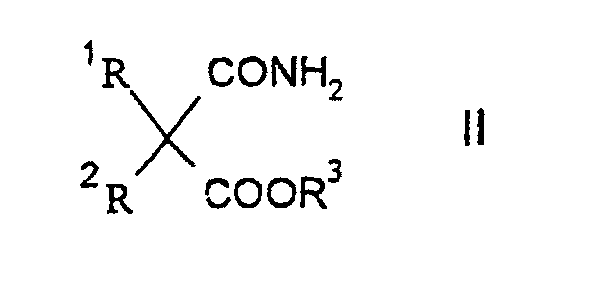
- both the compounds of the general formula II and the compounds of the general formula I are chiral.
- the racemates of the compounds of the general formula II are thus also used to obtain the racemates of the amino acid derivatives of the general formula I.
- the corresponding enantiomerically pure compounds of the general formula II with R 1 not equal to R 2 also give the corresponding enantiomerically pure compounds of the general formula I.
- Amino acids and their derivatives are of great importance for the synthesis of pharmacologically active compounds (A. S. Bommarius, M. Schwarm and K Drauz, J. Mol. Catalysis B: Enzymatic 5 (1998) 1-11).
- amino acids In addition to the course occurring amino acids also takes on the importance of unnatural Amino acids and their derivatives. So for the synthesis of highly effective pharmaceutical products derivatives of special unnatural Amino acids needed. The development of suitable synthetic processes for the The production of special amino acids is of great interest.
- the 2,2-dialkylaminoacetic acids as unnatural amino acids are of great importance for the synthesis of special peptides.
- the additional alkyl group in the 2-position compared to the natural amino acids leads to a conformative rigidity of the corresponding peptide bond and thus has a decisive influence on the tertiary structure of the total peptide (D. Obrecht, M. Altorfer, U. Bohdal, J. Daly, W. Huber, A. Labhardt, C. Lehmann, K. Muller, R. Ruffieux, P. Schonholzer, C. Spiegler, C. Zumbnmm, Biopolymers 42 (5), 575-626 (1997); M. Crisma, G.
- the ethyl cyanoacetate was first converted into the enolate with sodium ethylate and then reacted with 2 equivalents of propyl bromide.
- the 2,2-di-n-propylcyanoacetic acid ethyl ester 2 resulting in a yield of 68% was then converted into the 2,2-di-n-propylmalonic acid monoamide ethyl ester 3 with sulfuric acid in a yield of 75%.
- Reaction with a mixture of sodium hydroxide solution and bromine in chloroform then gave the 2,2-di-n-propyl-N-bromo-malonic acid monoamide ethyl ester 4 in a yield of 89%.
- the total yield based on ethyl cyanoacetate was thus 36%.
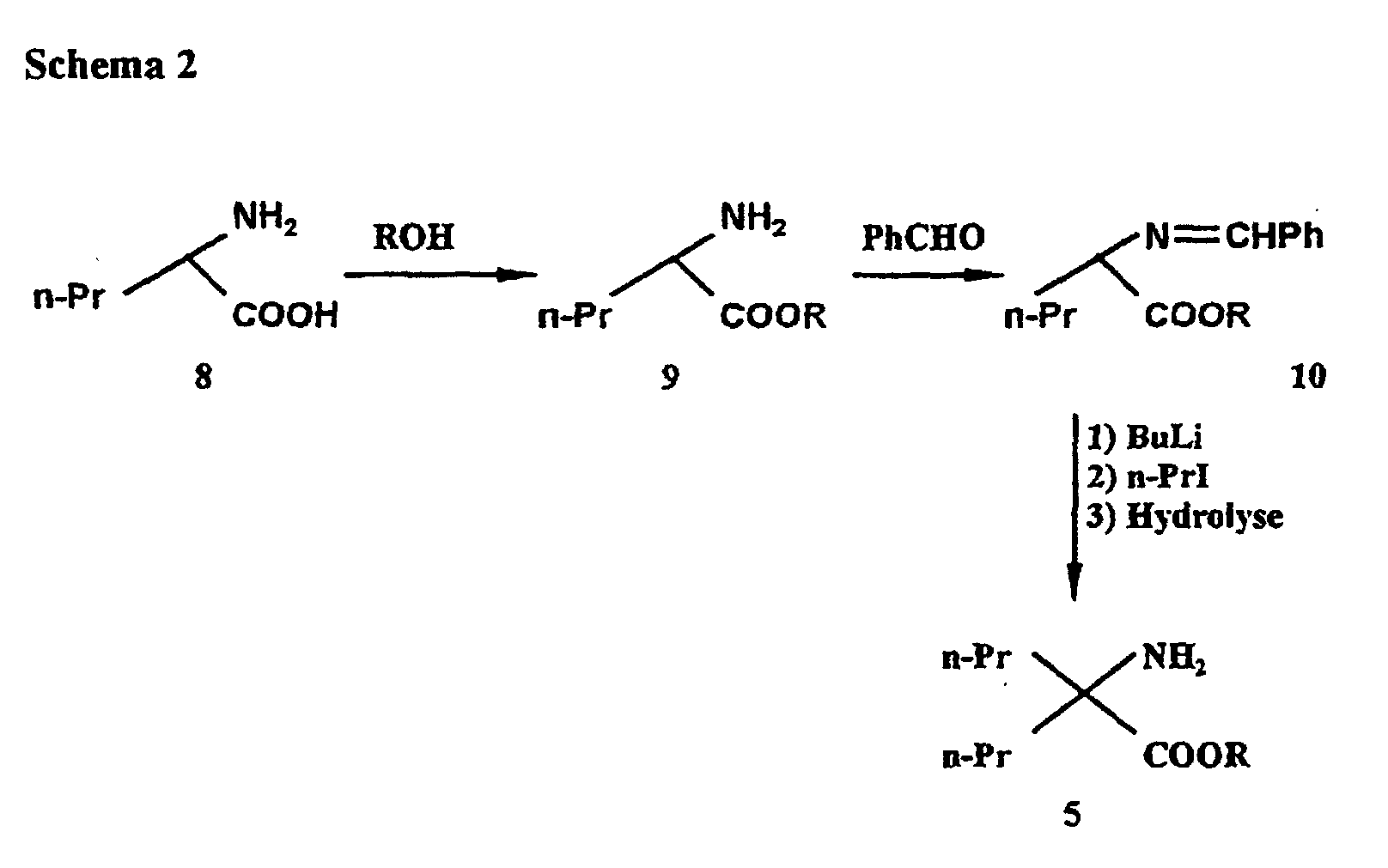
- Another method for producing amino ester 5 is based on racemic norvaline, an unnatural amino acid (EP 770613) (Scheme 2).
- the amino acid is first converted into the ester. Then will synthesized an imine by reaction with benzaldehyde by deprotonation with n-butyllithium and alkylation with propyl iodide with subsequent hydrolysis is converted to the di-n-propylglycine ester. The total yield across all levels is only 53%.
- the alkylation is also carried out with the expensive propyl iodide. Furthermore, n-butyllithium is required as the base for the alkylation. This base is but firstly expensive and secondly in technology only under large ones To take safety precautions.
- the amino acid derivatives general formula I advantageously prepared in that Malonic acid monoesteramides of the general formula II in a Hofmann degradation especially 1.0 to 1.2 equivalents of a hypohalite solution and 1.0 to 4.0 Equivalents of an alkali hydroxide in the presence of an aliphatic, aromatic or araliphatic alcohol with 1 to 8 carbon atoms or an aliphatic, aromatic or araliphatic primary or secondary amine with 1 to 16 carbon atoms or ammonia.
- the invention therefore relates to a process for the preparation of amino acid derivatives of the general formula I.
- R 1 is C 1-6 alkyl or C 3-6 cycloalkyl and R 2 C 1-6 alkyl, phenyl, heteroaryl, (CH 2 ) 1-3 phenyl or - (CH 2 ) 1-4 - COOR means or R 1 and R 2 together - (CH 2 ) 2-6 , - (CH 2 ) 2 -O- (CH 2 ) 2 - or mean, or R 1 is hydrogen and R 2 is a tertiary hydrocarbon radical having 4 to 10 carbon atoms, R 3 is hydrogen or an alkyl radical with 1-4, in particular 1 or 2 carbon atoms and R 4 OR, where R in R 2 and R 4 is an aliphatic, aromatic or araliphatic radical with 1 to 8 carbon atoms, or NR'R ", where R 'is hydrogen or an aliphatic, aromatic or araliphatic radical having 1 to 8 C atoms
- Another advantage of the method according to the invention is that the use a much smaller excess of alkali than by Hardy et al. used to good yields of N-alkoxycarbonylamino acids or N-carbamoylamino acids or their corresponding ester leads.
- N-alkoxycarbonylamino acids or N-carbamoylamino acids or their corresponding ester are also very much so interesting when looking for synthetic methods in the pharmaceutical and agro sector with where you can easily make derivatives of special amino acids, which in turn are to be used for a resolution in the enantiomers.
- This is e.g. B. the N-acylamino acids (A. S. Bommarius, K. Drauz, K. Günther, G. Knaup and M. Schwarm, Tetrahedron: Asymmetry 3197-3200 (1997)) or the N-alkoxycarbonyl derivatives of the corresponding Amino acids (DE 36 06 401; Ann. N. Y. Acad. Sci (Enzyme 9), 343-345 (1988)).
- hypohalite i.e. a salt a subhalogenous acid.
- hypohalite solutions expediently used the easily accessible, cheap hypochlorites.
- alkali hypochlorites such as potassium hypochlorite and especially sodium hypochlorite in the form of its aqueous solution, which is also known as Bleach is called.
- Calcium hypochlorite can also be used, but there are lower yields.
- the hypohalite is used in an amount of 1.0 to 1.5, preferably 1.0 to 1.2 equivalents, based on the starting material II, applied.
- Preferred bases are the alkali hydroxides, such as potassium hydroxide and in particular Sodium hydroxide, again in the form of its aqueous solutions. Also Alkaline earth metal hydroxides are suitable, but give lower yields.
- the reaction takes place in an aqueous basic medium in the presence of 2 to 20 times molar excess of the alcohol or amine instead. In general they are not included the water 30 to 80, in particular 40 to 80 wt .-% of the reaction mixture.
- Primary, secondary or tertiary alcohols with 1 to 8 carbon atoms such as. Methanol, ethanol, isopropanol, t-butanol, 2-ethylhexanol, Benzyl alcohol, etc. can be used.
- primary or secondary amines with 1 to 16 carbon atoms such as. B. diethylamine, di-n-propylamine, Butylamine or benzylamine can be used.
- the process according to the invention can be carried out continuously or batchwise be performed.
- alkali hydroxide such as B. sodium hydroxide as a base and a hypochlorite such as.
- B. Sodium hypochlorite as a salt of a subhalogenous acid in the presence of a Alcohol or an amine is first set at a temperature in the generally 0 to 20 ° C, preferably 5 to 10 ° C, with a reaction time from 0.25 to 10 hours, preferably 0.5 to 4 hours, and heats the resulting reaction mixture to a temperature of 40 to 100 ° C, preferably from 60 to 80 ° C. Depending on the temperature, the reaction is after 2 minutes ended up to 2 hours.
- the starting material of the general formula II initially only with the aqueous hypochlorite solution at a temperature of 0 to 20 ° C, preferably 5 to 10 ° C, for 0.5 to 4 hours and after adding the alkali metal hydroxide this cold reaction mixture in a 2 to 20-fold excess of an alcohol or an amine, optionally in aqueous solution at a temperature of 40 to 100 ° C, preferably 60 to 80 ° C.
- the product I is optionally separated off as an organic phase after prior removal by distillation or extraction of the alcohol or amine.
- the aqueous lower phase can be extracted with the aid of an inert organic solvent in order to obtain further product.
- the combined organic phases can after drying over z. B. molecular sieve or water-binding salts (magnesium sulfate, sodium sulfate, etc.) are freed from organic solvents.
- the product is thus obtained with high purity and in a yield of> 80%.
- the remaining aqueous phase can be acidified and again exhaustively extracted with an inert organic solvent.
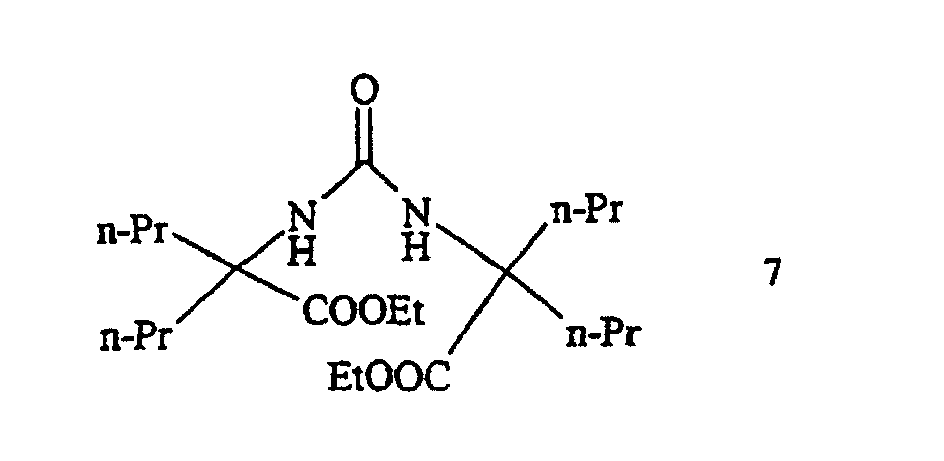
- reaction procedure according to the invention largely prevents formation undesirable urea derivatives which are analogous to the compound of formula 7.
- the disruptive dimerization reaction becomes corresponding urea derivatives under the conditions according to the invention pushed back.
- N-alkoxycarbonylamino acids or N-carbamoylamino acids or their corresponding esters of the general formula I in produce high yield and with high selectivity.
- N-bromosuccinimide is much more expensive than alkali hypohalite, especially sodium hypochlorite.
- the alkali halide in particular sodium chloride
- the alkali halide is formed in the form of its aqueous solution from the alkali hypohalite, in particular sodium hypochlorite. This can be disposed of easily.
- N-carbamoylaminoacetic acid derivatives of the general formula I in which R 4 is NR'R "and R 'is an aliphatic, aromatic or araliphatic radical having 1 to 8 C atoms and R" is hydrogen or an aliphatic, aromatic or optionally different from R' araliphatic radical having 1 to 8 carbon atoms, but are also very interesting starting compounds for the synthesis of substituted hydantoins, such as those used for. B in EP-A-0 770 613.
- N-alkoxycarbonylamino acids, or N-carbamoylamino acids or their corresponding esters of the general formula I are of course also based on the corresponding amino acids accessible. But this has to be done by the Amino acid easily accessible.
- the amino acid or her Esters with phosgene or a phosgene derivative and then with alcohol or Amine are implemented (Houben Weyl 15/1, 46 (1974)). Phosgene is highly toxic and can only be handled with great security precautions.
- the amino acid di-n-propylglycine can be obtained in the form of its hydrochloride be by the N-methoxycarbonyl-2,2-di-n-propylaminoacetic acid ethyl ester and the 2,2-di-n-propylaminoacetic acid ethyl ester are combined and that Mixture is refluxed with concentrated hydrochloric acid for 12 hours. After cooling, the mixture is extracted with MTBE and the aqueous solution is concentrated Dry it up. It is taken up again in water and the solution is concentrated in vacuo to remove excess hydrochloric acid. This leaves 43.8 g (80%) of di-n-propylglycine hydrochloride. According to the state of the art, this can be used for free Get amino acid.
- N-methoxycarbonyl-1-aminocyclopentane carboxylic acid 70% yield.
- N-methoxycarbonyl-1-aminocyclopentanecarboxylic acid ethyl ester can be obtained from the amino acid derivatives and N-methoxycarbonyl-1-aminocyclopentane carboxylic acid through implementation with concentrated hydrochloric acid the hydrochloride of 1-aminocyclopentane carboxylic acid be preserved.
- aqueous, alkaline phase remaining after the extraction is acidified with dilute hydrochloric acid and then exhaustively extracted again with MTBE. 10.4 g of a solid (mp: 98-100 ° C.) are obtained, which according to 13C-NMR spectroscopy consists of> 98% N-methoxycarbonyl-t-butylaminoacetic acid (49% yield).
- the hydrochloride of tert-leucine can be obtained from the amino acid derivatives N-methoxycarbonyl-t-butylaminoacetic acid ethyl ester and N-methoxycarbonyl-t-butylaminoacetic acid by reaction with concentrated hydrochloric acid.
Landscapes
- Chemical & Material Sciences (AREA)
- Organic Chemistry (AREA)
- Organic Low-Molecular-Weight Compounds And Preparation Thereof (AREA)
- Low-Molecular Organic Synthesis Reactions Using Catalysts (AREA)
Description

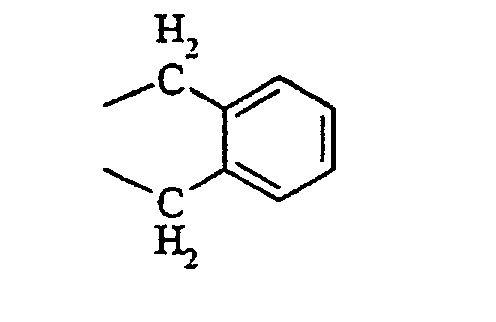
oder R1 Wasserstoff und R2 einen tertiären Kohlenwasserstoffrest mit 4 bis 10 C-Atomen bedeuten,
R3 Wasserstoff oder einen Alkylrest mit 1-4, insbesondere 1 oder 2 Kohlenstoffatomen und R4 OR, wobei R in R2 und R4 für einen aliphatischen, aromatischen oder araliphatischen Rest mit 1 bis 8 C-Atomen steht, oder NR'R", wobei R' für Wasserstoff oder für einen aliphatischen, aromatischen oder araliphatischen Rest mit 1 bis 8 C-Atomen und R" für Wasserstoff oder einen gegebenenfalls von R' verschiedenen aliphatischen, aromatischen oder araliphatischen Rest mit 1 bis 8 C-Atomen steht, bedeutet,
aus den entsprechenden Malonsäuremonoesteramiden der allgemeinen Formel II durch Hofmannschen Abbau mittels eines Hypohalits in wäßrig basischem Milieu in Gegenwart eines Alkohols oder Amins
2,2-Dialkylaminoessigsäuren wurden ebenfalls als lipophile Aminosäuren für den Aufbau von Peptiden eingesetzt, die als potentielle Wirkstoffkandidaten in Frage kommen (P. M. Hardy, I. N. Lingham, Int. J. Peptide Protein Res. 21, 392-405 (1983)).


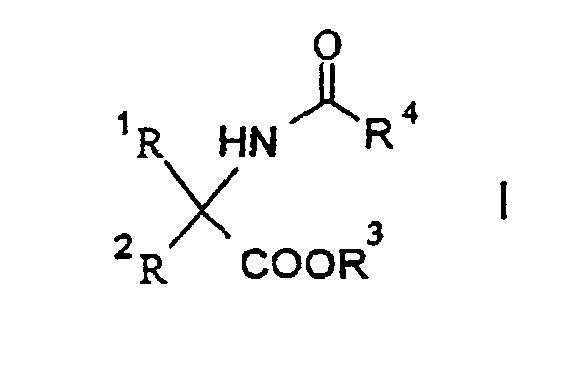

oder R1 Wasserstoff und R2 einen tertiären Kohlenwasserstoffrest mit 4 bis 10 C-Atomen bedeuten,
R3 Wasserstoff oder einen Alkylrest mit 1-4, insbesondere 1 oder 2 Kohlenstoffatomen und R4 OR, wobei R in R2 und R4 für einen aliphatischen, aromatischen oder araliphatischen Rest mit 1 bis 8 C-Atomen steht, oder NR'R", wobei R' für Wasserstoff oder für einen aliphatischen, aromatischen oder araliphatischen Rest mit 1 bis 8 C-Atomen und R" für Wasserstoff oder einen gegebenenfalls von R' verschiedenen aliphatischen, aromatischen oder araliphatischen Rest mit 1 bis 8 C-Atomen steht, bedeutet,
aus den entsprechenden Malonsäuremonoesteramiden der allgemeinen Formel II
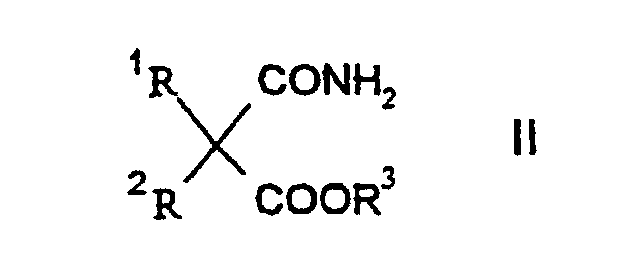
Bei dem erfindungsgemäßen Verfahren hingegen entsteht aus dem Alkalihypohalit, insbesondere Natriumhypochlorit, das Alkalihalogenid, insbesondere Natriumchlorid in Form seiner wäßrigen Lösung. Diese kann problemlos entsorgt werden.
Wie in Beispiel 1 beschrieben, kann aus den Aminosäurederivaten N-Methoxycarbonyl-t-butylaminoessigsäureethylester und N-Methoxycarbonyl-t-butylaminoessigsäure durch Umsetzung mit konzentrierter Salzsäure das Hydrochlorid des tert-Leucins erhalten werden.
Claims (10)
- Verfahren zur Herstellung von Aminosäurederivaten der allgemeinen Formel Iwobei R1 C1-6-Alkyl oder C3-6-Cycloalkyl und R2 C1-6-Alkyl, Phenyl, Heteroaryl-, (CH2)1-3-Phenyl oder -(CH2)1-4-COOR bedeutet oder R1 und R2 zusammen - -(CH2)2-6, -(CH2)2-O-(CH2)2- oder
 bedeuten,
oder R1 Wasserstoff und R2 einen tertiären Kohlenwasserstoffrest mit 4 bis 10 C-Atomen bedeuten,
R3 Wasserstoff oder einen Alkylrest mit 1-4, insbesondere 1 oder 2 Kohlenstoffatomen und R4 OR, wobei R in R2 und R4 für einen aliphatischen, aromatischen oder araliphatischen Rest mit 1 bis 8 C-Atomen steht, oder NR'R", wobei R' für Wasserstoff oder für einen aliphatischen, aromatischen oder araliphatischen Rest mit 1 bis 8 C-Atomen und R" für Wasserstoff oder einen gegebenenfalls von R' verschiedenen aliphatischen, aromatischen oder araliphatischen Rest von 1 bis 8 C-Atomen steht, bedeutet,
aus den entsprechenden Malonsäuremonoesteramiden der allgemeinen Formel IIwobei R1, R2 und R3 die oben angegebenen Bedeutungen haben, durch Hofinannschen Abbau mittels eines Hypohalits in wässrig basischem Milieu,
dadurch gekennzeichnet, daß man die Reaktion in Gegenwart eines Alkohols oder Amins durchführt. - Verfahren nach Anspruch 1,
dadurch gekennzeichnet, daß man das Hypohalit in Mengen von 1,0 bis 1,5 Äquivalenten und die Base in Mengen von 0,8 bis 4,0 Äquivalenten je mol Edukt II anwendet. - Verfahren nach Anspruch 1,
dadurch gekennzeichnet, daß man Alkohole mit 1 bis 8 C-Atomen oder Amine mit 1 bis 16 C-Atomen verwendet. - Verfahren nach Anspruch 1,
dadurch gekennzeichnet, daß man das Hypohalit in einer Menge von 1,0 bis 1,5 Äquivalenten und die Base in Mengen von 0,8 bis 1,5 Äquivalenten je mol Edukt II anwendet. - Verfahren nach Anspruch 1 oder 2,
dadurch gekennzeichnet, daß man als Hypohalit ein Alkalihypochlorit und als Base ein Alkalihydroxid verwendet. - Verfahren nach einem der Ansprüche 1 bis 4,
dadurch gekennzeichnet, daß das Alkalihypochlorit Natriumhypochlorit und das Alkalihydroxid Natriumhydroxid ist. - Verfahren nach einem der vorhergehenden Ansprüche,
dadurch gekennzeichnet, daß man das Verfahren diskontinuierlich durchführt. - Verfahren nach einem der vorhergehenden Ansprüche,
dadurch gekennzeichnet, daß man das Verfahren kontinuierlich durchführt - Verfahren nach einem der vorhergehenden Ansprüche,
dadurch gekennzeichnet, daß man das Malonsäuremonoesteramid zunächst in Gegenwart einer Hypochloritlösung bei 0-20 °C 0,5 bis 4 Stunden lang umsetzt und dann nach Zugabe des Alkalihydroxids bei einer Temperatur von 40 bis 100 °C in einen Alkohol oder ein Amin gegebenenfalls in einem weiteren Lösungsmittel einträgt. - Verfahren nach einem der vorhergehenden Ansprüche,
dadurch gekennzeichnet, daß man das Malonsäuremonoesteramid in Gegenwart einer Hypochloritlösung und Alkalihydroxydlösung bei 0-20 °C 0,5 bis 4 Stunden lang umsetzt und dann bei einer Temperatur von 40 bis 100 °C in einen Alkohol oder ein Amin gegebenenfalls in einem weiteren Lösungsmittel einträgt.
Applications Claiming Priority (2)
| Application Number | Priority Date | Filing Date | Title |
|---|---|---|---|
| DE19917961A DE19917961A1 (de) | 1999-04-21 | 1999-04-21 | Verfahren zur Herstellung von Aminosäurederivaten |
| DE19917961 | 1999-04-21 |
Publications (3)
| Publication Number | Publication Date |
|---|---|
| EP1046638A2 EP1046638A2 (de) | 2000-10-25 |
| EP1046638A3 EP1046638A3 (de) | 2000-11-15 |
| EP1046638B1 true EP1046638B1 (de) | 2003-10-01 |
Family
ID=7905276
Family Applications (1)
| Application Number | Title | Priority Date | Filing Date |
|---|---|---|---|
| EP99117122A Expired - Lifetime EP1046638B1 (de) | 1999-04-21 | 1999-08-31 | Verfahren zur Herstellung von Aminosäurederivaten |
Country Status (4)
| Country | Link |
|---|---|
| US (1) | US6399809B1 (de) |
| EP (1) | EP1046638B1 (de) |
| JP (1) | JP2000302742A (de) |
| DE (2) | DE19917961A1 (de) |
Families Citing this family (1)
| Publication number | Priority date | Publication date | Assignee | Title |
|---|---|---|---|---|
| CA2535616A1 (en) * | 2003-08-12 | 2005-03-03 | Boehringer Ingelheim International Gmbh | 1-carbamoylcycloalkylcarboxylic acid compounds, processes for making and uses thereof |
Family Cites Families (6)
| Publication number | Priority date | Publication date | Assignee | Title |
|---|---|---|---|---|
| BR6683672D0 (pt) * | 1965-10-22 | 1973-12-04 | Merck & Co Inc | Processo para a preparacao de alfa-metilfenila-laninas oticamente ativas envolvendo hidrolise de ciano esteres oticamente ativos |
| DE2710595C3 (de) * | 1977-03-11 | 1980-11-06 | Akzo Gmbh, 5600 Wuppertal | Verfahren zur Herstellung der Trans-Isomeren von Cyclohexan-l,4-diamin-, diurethanen, -diharnstoffen, -disulfonylharnstoffen und -diisocyanat |
| DE3606401A1 (de) | 1986-02-27 | 1987-09-03 | Biotechnolog Forschung Gmbh | Verfahren zur racematspaltung |
| DE4411777A1 (de) | 1994-04-06 | 1995-10-12 | Huels Chemische Werke Ag | Verfahren zur Herstellung von 1-Aminocyclopropancarbonsäurehydrochlorid |
| DE19540027A1 (de) | 1995-10-27 | 1997-04-30 | Gruenenthal Gmbh | Substituierte Imidazolidin-2,4-dion-Verbindungen als pharmazeutische Wirkstoffe |
| DE59700281D1 (de) | 1996-06-10 | 1999-09-02 | Huels Chemische Werke Ag | Verfahren zur Herstellung von Aminoessigsäuren mit alpha-ständigem tertiären Kohlenwasserstoffrest oder deren Nitrilen |
-
1999
- 1999-04-21 DE DE19917961A patent/DE19917961A1/de not_active Withdrawn
- 1999-08-31 EP EP99117122A patent/EP1046638B1/de not_active Expired - Lifetime
- 1999-08-31 DE DE59907192T patent/DE59907192D1/de not_active Expired - Fee Related
- 1999-09-09 JP JP11255764A patent/JP2000302742A/ja not_active Ceased
-
2000
- 2000-04-21 US US09/557,413 patent/US6399809B1/en not_active Expired - Fee Related
Also Published As
| Publication number | Publication date |
|---|---|
| DE19917961A1 (de) | 2000-10-26 |
| EP1046638A2 (de) | 2000-10-25 |
| DE59907192D1 (de) | 2003-11-06 |
| JP2000302742A (ja) | 2000-10-31 |
| EP1046638A3 (de) | 2000-11-15 |
| US6399809B1 (en) | 2002-06-04 |
Similar Documents
| Publication | Publication Date | Title |
|---|---|---|
| EP3655413B1 (de) | Herstellung von glufosinat durch umsetzung von 3-[n-butoxy(methyl)phosphoryl]-1-cyanopropylacetat zu einer mischung aus n-butyl(3-amino-3-cyanopropyl)-methylphosphinat und (3-amino-3-cyanopropyl)-methylphosphinsäure ammoniumsalz | |
| EP2655319B1 (de) | Verfahren zur herstellung von cis-1-ammonium-4-alkoxycyclohexancarbonitrilsalzen | |
| EP0206993A1 (de) | Neue Sulfonsäureester | |
| EP0094633B1 (de) | Spiro-2-aza-alkan-3-carbonitrile, Verfahren zu ihrer Herstellung und ihre Verwendung | |
| EP1046638B1 (de) | Verfahren zur Herstellung von Aminosäurederivaten | |
| EP0194521B1 (de) | Phosphorhaltige alpha-Aminonitrile und Verfahren zu ihrer Herstellung | |
| EP0248414B1 (de) | Aralkylimidazolderivate | |
| DE69720494T2 (de) | Optisch aktive erythro-3-amino-2-hydroxy-buttersäureester und verfahren zur herstellung der genannten ester | |
| EP0915840A1 (de) | Verfahren zur herstellung von substituierten valinamid-derivaten | |
| DE2813712A1 (de) | Verfahren zur trennung von racemischen alpha-aminonitrilen | |
| EP0216324A2 (de) | 4-Alkoxy-3-pyrrolin-2-on-1-yl-essigsäurealkyl- bzw. -benzylester sowie deren Herstellung | |
| DE69610549T2 (de) | Neue carbamatverbindungen die eine thiocarbamoylgruppe enthalten und verfahren zu ihrer herstellung | |
| EP0484855B1 (de) | Verfahren zur Herstellung von 3-Aminocrotonnitril | |
| DE69619402T2 (de) | Verfahren zur herstellung von methoximinophenylglyoxylsäure-derivaten | |
| DE60030428T2 (de) | 4-cyano-3-hydroxy-butanoyl hydrazine, derivate und verfahren zu ihrer herstellung | |
| EP0812822B1 (de) | Verfahren zur Herstellung von Aminoessigsäuren mit alpha-ständigem tertiären Kohlenwasserstoffrest oder deren Nitrilen | |
| EP0080119B1 (de) | Verfahren zur Herstellung von N-Formyl-alpha-aminosäureestern | |
| DE69613256T2 (de) | Verfahren zur Herstellung von Ketonitril-Derivaten und Hexenon-Derivaten | |
| DE69304581T2 (de) | Verfahren zur Herstellung von 1,4-Dicyano-2-Buten und ein Katalysator dafür | |
| DE3411203C1 (de) | Verfahren zur Herstellung von N-Cyanimidoestern | |
| EP0970944B1 (de) | Verfahren zur Herstellung von Aminoessigsäureestern mit alpha-ständigem tertiären Kohlenwasserstoffrest | |
| EP1554255A1 (de) | Verfahren zur herstellung von 2-amino-4-chlor-6-alkoxypyrimidinen | |
| DE69604247T2 (de) | 2-Cyanopiperazin und ihre Verwendung für die Synthese von biologisch wirksamen Stoffen | |
| EP0838454B1 (de) | Verfahren zur Acetylierung sterisch gehinderter Diamine | |
| AT401931B (de) | Verfahren zur herstellung von (s,s)-(n-(1- ethoxycarbonyl-3-oxo-3-phenylpropyl)-alanin)- (phenylmethyl)ester |
Legal Events
| Date | Code | Title | Description |
|---|---|---|---|
| PUAI | Public reference made under article 153(3) epc to a published international application that has entered the european phase |
Free format text: ORIGINAL CODE: 0009012 |
|
| PUAL | Search report despatched |
Free format text: ORIGINAL CODE: 0009013 |
|
| AK | Designated contracting states |
Kind code of ref document: A2 Designated state(s): CH DE FR GB LI |
|
| AX | Request for extension of the european patent |
Free format text: AL;LT;LV;MK;RO;SI |
|
| AK | Designated contracting states |
Kind code of ref document: A3 Designated state(s): AT BE CH CY DE DK ES FI FR GB GR IE IT LI LU MC NL PT SE |
|
| AX | Request for extension of the european patent |
Free format text: AL;LT;LV;MK;RO;SI |
|
| RAP1 | Party data changed (applicant data changed or rights of an application transferred) |
Owner name: DEGUSSA AG |
|
| 17P | Request for examination filed |
Effective date: 20010420 |
|
| AKX | Designation fees paid |
Free format text: CH DE FR GB LI |
|
| 17Q | First examination report despatched |
Effective date: 20020307 |
|
| GRAH | Despatch of communication of intention to grant a patent |
Free format text: ORIGINAL CODE: EPIDOS IGRA |
|
| GRAH | Despatch of communication of intention to grant a patent |
Free format text: ORIGINAL CODE: EPIDOS IGRA |
|
| GRAA | (expected) grant |
Free format text: ORIGINAL CODE: 0009210 |
|
| AK | Designated contracting states |
Kind code of ref document: B1 Designated state(s): CH DE FR GB LI |
|
| REG | Reference to a national code |
Ref country code: GB Ref legal event code: FG4D Free format text: NOT ENGLISH |
|
| REG | Reference to a national code |
Ref country code: CH Ref legal event code: EP |
|
| REG | Reference to a national code |
Ref country code: CH Ref legal event code: NV Representative=s name: SCHMAUDER & PARTNER AG PATENTANWALTSBUERO |
|
| REF | Corresponds to: |
Ref document number: 59907192 Country of ref document: DE Date of ref document: 20031106 Kind code of ref document: P |
|
| GBT | Gb: translation of ep patent filed (gb section 77(6)(a)/1977) |
Effective date: 20031110 |
|
| ET | Fr: translation filed | ||
| PLBE | No opposition filed within time limit |
Free format text: ORIGINAL CODE: 0009261 |
|
| STAA | Information on the status of an ep patent application or granted ep patent |
Free format text: STATUS: NO OPPOSITION FILED WITHIN TIME LIMIT |
|
| PG25 | Lapsed in a contracting state [announced via postgrant information from national office to epo] |
Ref country code: LI Free format text: LAPSE BECAUSE OF NON-PAYMENT OF DUE FEES Effective date: 20040831 Ref country code: GB Free format text: LAPSE BECAUSE OF NON-PAYMENT OF DUE FEES Effective date: 20040831 Ref country code: CH Free format text: LAPSE BECAUSE OF NON-PAYMENT OF DUE FEES Effective date: 20040831 |
|
| 26N | No opposition filed |
Effective date: 20040702 |
|
| PG25 | Lapsed in a contracting state [announced via postgrant information from national office to epo] |
Ref country code: DE Free format text: LAPSE BECAUSE OF NON-PAYMENT OF DUE FEES Effective date: 20050301 |
|
| REG | Reference to a national code |
Ref country code: CH Ref legal event code: PL |
|
| GBPC | Gb: european patent ceased through non-payment of renewal fee |
Effective date: 20040831 |
|
| PG25 | Lapsed in a contracting state [announced via postgrant information from national office to epo] |
Ref country code: FR Free format text: LAPSE BECAUSE OF NON-PAYMENT OF DUE FEES Effective date: 20050429 |
|
| REG | Reference to a national code |
Ref country code: FR Ref legal event code: ST |