EP1044203B1 - 3'-epimeric k-252a derivatives - Google Patents
3'-epimeric k-252a derivatives Download PDFInfo
- Publication number
- EP1044203B1 EP1044203B1 EP98964309A EP98964309A EP1044203B1 EP 1044203 B1 EP1044203 B1 EP 1044203B1 EP 98964309 A EP98964309 A EP 98964309A EP 98964309 A EP98964309 A EP 98964309A EP 1044203 B1 EP1044203 B1 EP 1044203B1
- Authority
- EP
- European Patent Office
- Prior art keywords
- alkyl
- unsubstituted
- substituted
- hydrogen
- aryl
- Prior art date
- Legal status (The legal status is an assumption and is not a legal conclusion. Google has not performed a legal analysis and makes no representation as to the accuracy of the status listed.)
- Expired - Lifetime
Links
- 0 *[C@@]1([C@@](C2)(*=O)O)OC2[n]2c3c4[n]1c(cccc1)c1c4c(CNC1=O)c1c3c1c2cccc1 Chemical compound *[C@@]1([C@@](C2)(*=O)O)OC2[n]2c3c4[n]1c(cccc1)c1c4c(CNC1=O)c1c3c1c2cccc1 0.000 description 12
- RUXVTUIOZFHMCS-DMVVYWCZSA-N C=C[C@@]1([C@](C2)(O)I)OC2[n]2c3c4N1C1=CCCC=C1c4c(CNC1=O)c1c3c1c2cccc1 Chemical compound C=C[C@@]1([C@](C2)(O)I)OC2[n]2c3c4N1C1=CCCC=C1c4c(CNC1=O)c1c3c1c2cccc1 RUXVTUIOZFHMCS-DMVVYWCZSA-N 0.000 description 1
- QYVQZYSGESBYPA-ZGFPZIDOSA-N CCc1c(/C=C\C)[n](C(C2)O[C@@]3(C)[C@@]2(C=O)O)c2c1c(C(NC1)=O)c1c1c2[n]3c2ccccc12 Chemical compound CCc1c(/C=C\C)[n](C(C2)O[C@@]3(C)[C@@]2(C=O)O)c2c1c(C(NC1)=O)c1c1c2[n]3c2ccccc12 QYVQZYSGESBYPA-ZGFPZIDOSA-N 0.000 description 1
- GVAIITCISOPGFE-NNKBYCLSSA-N C[C@@]1([C@H](C2)O)OC2[n]2c3c4[n]1c(cccc1)c1c4c(CN(C1=O)N)c1c3c1c2cccc1 Chemical compound C[C@@]1([C@H](C2)O)OC2[n]2c3c4[n]1c(cccc1)c1c4c(CN(C1=O)N)c1c3c1c2cccc1 GVAIITCISOPGFE-NNKBYCLSSA-N 0.000 description 1
Images


Classifications
-
- C—CHEMISTRY; METALLURGY
- C07—ORGANIC CHEMISTRY
- C07D—HETEROCYCLIC COMPOUNDS
- C07D498/00—Heterocyclic compounds containing in the condensed system at least one hetero ring having nitrogen and oxygen atoms as the only ring hetero atoms
- C07D498/22—Heterocyclic compounds containing in the condensed system at least one hetero ring having nitrogen and oxygen atoms as the only ring hetero atoms in which the condensed system contains four or more hetero rings
-
- A—HUMAN NECESSITIES
- A61—MEDICAL OR VETERINARY SCIENCE; HYGIENE
- A61P—SPECIFIC THERAPEUTIC ACTIVITY OF CHEMICAL COMPOUNDS OR MEDICINAL PREPARATIONS
- A61P21/00—Drugs for disorders of the muscular or neuromuscular system
-
- A—HUMAN NECESSITIES
- A61—MEDICAL OR VETERINARY SCIENCE; HYGIENE
- A61P—SPECIFIC THERAPEUTIC ACTIVITY OF CHEMICAL COMPOUNDS OR MEDICINAL PREPARATIONS
- A61P21/00—Drugs for disorders of the muscular or neuromuscular system
- A61P21/02—Muscle relaxants, e.g. for tetanus or cramps
-
- A—HUMAN NECESSITIES
- A61—MEDICAL OR VETERINARY SCIENCE; HYGIENE
- A61P—SPECIFIC THERAPEUTIC ACTIVITY OF CHEMICAL COMPOUNDS OR MEDICINAL PREPARATIONS
- A61P25/00—Drugs for disorders of the nervous system
-
- A—HUMAN NECESSITIES
- A61—MEDICAL OR VETERINARY SCIENCE; HYGIENE
- A61P—SPECIFIC THERAPEUTIC ACTIVITY OF CHEMICAL COMPOUNDS OR MEDICINAL PREPARATIONS
- A61P25/00—Drugs for disorders of the nervous system
- A61P25/08—Antiepileptics; Anticonvulsants
-
- A—HUMAN NECESSITIES
- A61—MEDICAL OR VETERINARY SCIENCE; HYGIENE
- A61P—SPECIFIC THERAPEUTIC ACTIVITY OF CHEMICAL COMPOUNDS OR MEDICINAL PREPARATIONS
- A61P25/00—Drugs for disorders of the nervous system
- A61P25/14—Drugs for disorders of the nervous system for treating abnormal movements, e.g. chorea, dyskinesia
-
- A—HUMAN NECESSITIES
- A61—MEDICAL OR VETERINARY SCIENCE; HYGIENE
- A61P—SPECIFIC THERAPEUTIC ACTIVITY OF CHEMICAL COMPOUNDS OR MEDICINAL PREPARATIONS
- A61P25/00—Drugs for disorders of the nervous system
- A61P25/14—Drugs for disorders of the nervous system for treating abnormal movements, e.g. chorea, dyskinesia
- A61P25/16—Anti-Parkinson drugs
-
- A—HUMAN NECESSITIES
- A61—MEDICAL OR VETERINARY SCIENCE; HYGIENE
- A61P—SPECIFIC THERAPEUTIC ACTIVITY OF CHEMICAL COMPOUNDS OR MEDICINAL PREPARATIONS
- A61P25/00—Drugs for disorders of the nervous system
- A61P25/28—Drugs for disorders of the nervous system for treating neurodegenerative disorders of the central nervous system, e.g. nootropic agents, cognition enhancers, drugs for treating Alzheimer's disease or other forms of dementia
-
- A—HUMAN NECESSITIES
- A61—MEDICAL OR VETERINARY SCIENCE; HYGIENE
- A61P—SPECIFIC THERAPEUTIC ACTIVITY OF CHEMICAL COMPOUNDS OR MEDICINAL PREPARATIONS
- A61P35/00—Antineoplastic agents
-
- A—HUMAN NECESSITIES
- A61—MEDICAL OR VETERINARY SCIENCE; HYGIENE
- A61P—SPECIFIC THERAPEUTIC ACTIVITY OF CHEMICAL COMPOUNDS OR MEDICINAL PREPARATIONS
- A61P43/00—Drugs for specific purposes, not provided for in groups A61P1/00-A61P41/00
-
- A—HUMAN NECESSITIES
- A61—MEDICAL OR VETERINARY SCIENCE; HYGIENE
- A61P—SPECIFIC THERAPEUTIC ACTIVITY OF CHEMICAL COMPOUNDS OR MEDICINAL PREPARATIONS
- A61P9/00—Drugs for disorders of the cardiovascular system
- A61P9/10—Drugs for disorders of the cardiovascular system for treating ischaemic or atherosclerotic diseases, e.g. antianginal drugs, coronary vasodilators, drugs for myocardial infarction, retinopathy, cerebrovascula insufficiency, renal arteriosclerosis
-
- C—CHEMISTRY; METALLURGY
- C07—ORGANIC CHEMISTRY
- C07H—SUGARS; DERIVATIVES THEREOF; NUCLEOSIDES; NUCLEOTIDES; NUCLEIC ACIDS
- C07H5/00—Compounds containing saccharide radicals in which the hetero bonds to oxygen have been replaced by the same number of hetero bonds to halogen, nitrogen, sulfur, selenium, or tellurium
- C07H5/04—Compounds containing saccharide radicals in which the hetero bonds to oxygen have been replaced by the same number of hetero bonds to halogen, nitrogen, sulfur, selenium, or tellurium to nitrogen
- C07H5/06—Aminosugars
Definitions
- K-252a is an indolocarbazole whose stereochemistry is shown below (Formula I):
- K-252a inhibits protein kinase C (PKC), which plays a role in regulating cell functions.
- K-252a has various activities, e.g., inhibiting smooth muscle contraction ( Jap . J. Pharmacol . 43 (suppl.): 284, 1987), inhibiting serotonin secretion ( Biochem. Biophys. Res. Commun . 144: 35, 1987), inhibiting elongation of neuraxone ( J. Neurosci. 8:715, 1988), inhibiting histamine release ( Allergy 43:100, 1988), inhibiting smooth muscle MLCK ( J. Biol. Chem. 263:6215, 1988), anti-inflammatory action ( Acta Physiol. Hung. 80:423, 1992), and promotion of cell survival ( J.
- K-252a also inhibits IL-2 production ( Exper. Cell Res. 193:175-182, 1991).
- R 1 and R 2 are H.
- R 3 is hydrogen or a protecting group. Particularly preferred are Compounds VI, VII, VIII, X, XII, XIV, XV, XVI, XVII, XVIII, XIX, XXV, and XXVII, shown below:
- 3'-epimeric K252a derivatives are formulated into pharmaceutical compositions.
- the invention also provides a method for inhibiting the activity of a tyrosine kinase, for example, protein kinase C (PKC).
- the method includes contacting the tyrosine kinase with a compound of claim 1.
- the tyrosine kinase can be in vivo or in vitro.
- the invention also provides a method for inhibiting the phosphorylation of a tyrosine kinase by a second kinase.
- the method includes contacting the second kinase with a compound of claim 1.
- the tyrosine kinase can be in vivo or in vitro.
- the invention also provides a method for enhancing the function of a cholinergic neuron.
- the method includes contacting the cholinergic neuron with a compound of claim 1.
- the cholinergic neuron can be in vivo or in vitro.
- the invention also provides a method for enhancing the survival of a cholinergic neuron.
- the method includes contacting the cholinergic neuron with a compound of claim 1.
- the cholinergic neuron can be in vivo or in vitro.
- Epimeric K-252a derivatives of the invention display pharmacological activities, including inhibition of tyrosine kinase activity, e.g., inhibition of PKC or trk tyrosine kinase, which inhibition may be useful in treatment of diseases, including cancer.
- Compounds of the invention are useful for enhancing the function and/or survival of trophic factor responsive cells, e.g., cholinergic neurons. Effects on neurons can be demonstrated in assays including the following: (1) cultured spinal cord choline acetyl-transferase ("ChAT”) assay; and (2) cultured basal forebrain neuron (“BFN”) ChAT activity assay.
- ChAT cultured spinal cord choline acetyl-transferase
- BFN cultured basal forebrain neuron
- ChAT is an enzyme in the biosynthetic pathway leading to acetylcholine. ChAT activity associated with a cholinergic neuron indicates that the neuron is functional. Neuron survival can be assayed by measuring uptake and enzymatic conversion of a dye, e.g., calcein AM, by neurons.
- a dye e.g., calcein AM
- Neuronal cells that are injured, functionally comprised, undergoing axonal degeneration, dying, or at risk of dying.
- these disorders include: Alzheimer's disease, motor neuron disorders such as amyotrophic lateral sclerosis, Parkinson's disease; cerebrovascular disorders such as stroke or ischaemia, Huntington's disease, AIDS dementia, epilepsy, multiple sclerosis, peripheral neuropathies, disorders induced by excitatory amino acids, and disorders associated with concussive or penetrating injuries of the brain or spinal cord.
- compounds of the invention can be used as therapeutic agents to enhance the function and/or survival of cells of neuronal lineage in a mammal, e.g., a human. In particular, they are useful in treatment of disorders associated with decreased ChAT activity or injury to spinal cord motoneurons.
- K-252a can be protected on the lactam amide nitrogen, e.g., as an acetate or as a silyl derivative.
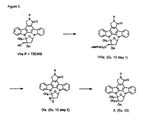
- Thionocarbonate IVa (Fig. 1) can be prepared from diol IIIa using a procedure such as that described in U.S. Pat. No. 4,923,986. Treatment of IVa with trimethylphosphite gives the exocyclic alkene V. Alkene V can be converted to (S)-methanol derivative VI using hydroboration conditions, or converted to (R)-diol VII using osmonium tetraoxide in tetrahydrofuran (THF). In Compound VII , the configuration at the sugar 3'-position is opposite to that reported as (S)-diol III in U.S. Pat. No. 4,923,986.
- the (R)-epoxide IXa (Fig. 2) can be prepared by converting (R)-diol VII to the tosyl intermediate VIII, followed by treatment with a base such as sodium hydride or sodium hydroxide.
- a base such as sodium hydride or sodium hydroxide.
- Treatment of (R)-epoxide IXa with hydride reducing agents such as lithium triethyl borohydride gives the tertiary (S)-alcohol X after deprotection of the t-butyldimethyl silyl (TBDMS) group.
- Chiral alcohol derivatives such as compounds VI, VII or X can be further converted to ether derivatives by reaction with a base and a halide or tosyl partner using conventional techniques.
- the alcohol derivatives also can be converted to ester derivatives by treatment with acid chlorides or anhydrides, or carbamates by reaction with an appropriate isocyanate by known procedures.
- Halide or sulfonate derivative of, for example, compounds VI or VII, can be displaced with various O, S, N, or C nucleophiles to yield a suitable derivative.
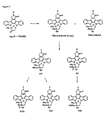
- 3'-epi-K-252a XIV can be hydrolysed to the hydroxy acid XVI using a procedure such as that used for natural K-252a. See, e.g., J. Antibiot .39:1072, 1986. Acid XVI can be converted to a variety of ester or amide derivatives using similar procedures to those described for K-252a. See, e.g., U.S. Pat. Nos. 4,923,986; 5,461,146; and 5,654,427. Amide XV can be reduced to the corresponding methylamine derivative XVII using the procedure described for conversion of natural K-252a, and XVII can be used to prepare a number of methylamide and -urea derivatives.
- 3'-epi-K-252a can be reduced to the aldehyde XVIII and condensed with various amines, hydrazines, or hydroxyl amines to form the corresponding analogs.
- the aldehyde XVIII may be treated with various metal alkyl, arylalkyl, aryl, or heteroarylalkyl reagents, e.g., Li, Mg, Zn or Cu reagents, to form the corresponding alcohol addition products.
- Aldehyde XVIII may be converted to functionalized olefins and their reduced products by treatment with phosphonium ylides ( Quart Rev. 17:406, 1963; Angew Int. 16:423, 1977), phosphonates (Horner-Wadsworth-Emmons reagents: Chem. Ber. 91:61, 1958; J. Am. Chem. Soc. 83:1733, 1961; Org. React. 25:73, 1977), silanes ( J. Org. Chem. 33:780, 1968; Synthesis 384, 1984) tellurium reagents (Tetrahedron Lett. 28:801, 1987) or boron reagents ( Tetrahedron Lett.
- alkene derived from aldehyde XVIII can be converted to an epoxide and treated, for example, with a nucleophile, as described for epoxide IX.
- Epoxide IX (Fig. 4) can be treated with a variety of nucleophiles to form tertiary alcohols of structure XIX.
- the nucleophile can be substituted.
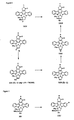
- An alternative method (Fig. 5) to prepare epoxides and tertiary 3'- epi -OH configurations of the alcohols is to convert ketone XI to an olefin of structure XX using a conventional olefination reaction, e.g., as described for aldehyde XVIII.
- the epoxide of structure XXI can be prepared asymmetrically using known methods. See, e.g., J. Org. Chem. 32:1363, Synthesis 89, 1986; 1967; J. Org. Chem. 60:3692, 1995; J. Am. Chem. Soc. 112:2801, 1990; J. Am. Chem. Soc. 116:6937, 1994; J. Org. Chem. 58:7615, 1993). Nucleophilic epoxide opening in a manner similar to that used with epoxide IX gives the substituted tertiary alcohol with the OH group in the 3'- epi configuration.
- the known (R)-alcohol XXVI (Fig. 6) can be converted to (S)-alcohol XXVII using conventional methods for inversion of a secondary alcohol. See, e.g., Tetrahedron Lett. 34:6145, 1996; Synthesis Letters, 1995, 336).
- XXVII can be prepared by treatment of epoxide XXIV with a hydride reagent such as lithium triethyl borohydride.
- Ketone XI (Fig. 6) can be converted to triflate XXII followed by treatment with tributyltin hydride to give alkene XXIII.
- Oxidation of (S)-methanol VI to an aldehyde or a carboxylic acid derivative can be achieved using appropriate oxidizing reagents (as described in Oxidations in Organic Chemistry, American Chemical Society Monograph 186, ACS Washington DC 1990).
- the aldehyde or carboxylic acid derivatives can be further transformed using described procedures to prepare derivatives XVI and XVIII (Fig. 3).
- a compound of the invention can be administered to a mammal, e.g., a human patient, as the sole active ingredient or in combination with other therapeutic agents.
- Compounds of the invention can be formulated into pharmaceutical compositions by admixture with pharmaceutically acceptable excipients and carriers. Such compositions can be formulated for any route of administration, e.g., parenteral, oral, nasal, or topical.
- the composition can be administered in unit dosage form, following preparation by conventional methods. See, e.g., Remington's Pharmaceutical Sciences (Mack Pub. Co., Easton, PA).
- the amount and concentration of the active ingredient can vary. The concentration will depend upon factors such as the total dosage of the active ingredient, the chemical characteristics (e.g., hydrophobicity) of the compounds employed, the route of administration, the patient's age, the patient's weight, and the condition being treated.
- Compounds of the invention can be provided in an physiological buffer solution containing, e.g., 0.1 to 10% w/v compound for parenteral administration.
- Typical dose ranges are from about 1 ⁇ g/kg to about 1 g/kg of body weight per day; a preferred dose range is from about 0.01 mg/kg to 100 mg/kg of body weight per day, and preferably about 0.1 to 20 mg/kg once to four times per day.
- the invention includes pharmaceutically acceptable salts of 3'-epimeric K252a derivatives.
- Pharmaceutically acceptable salts include pharmaceutically acceptable acid addition salts, metal salts, ammonium salts, organic amine addition salts, and amino acid addition salts.
- Acid addition salts include inorganic acid addition salts such as hydrochloride, sulfate and phosphate, and organic acid addition salts such as acetate, maleate, fumarate, tartrate, citrate and lactate.
- metal salts are alkali metal salts such as lithium salt, sodium salt and potassium salt, alkaline earth metal salts such as magnesium salt and calcium salt, aluminum salt, and zinc salt.
- Examples of ammonium salts are ammonium salt and tetramethylammonium salt.
- organic amine addition salts are salts with morpholine and piperidine.
- amino acid addition salts are salts with glycine, phenylalanine, glutamic acid and lysine.
- lower alkyl means an alkyl group with 1 to 6 carbons.
- aryl (alone or in terms such as arylcarbonyl and arylaminocarbonyl) means a group having 6 to 12 carbon atoms, in a single ring, or two fused rings. Examples of aryl groups are phenyl, biphenyl and naphthyl.
- a heteroaryl group contains at least one hetero atom. Preferably, the hetero atom is O, S, or N.
- heteroaryl groups are pyridyl, pyrimidyl, pyrrolyl, furyl, thienyl, imidazolyl, triazolyl, tetrazolyl, quinolyl, isoquinolyl, benzoimidazolyl, thiazolyl and benzothiazolyl.
- a substituted alkyl group has 1 to 3 independently-selected substituents.
- Preferred substituents for alkyl groups are hydroxy, lower alkoxy, substituted or unsubstituted arylalkoxy-lower alkoxy, substituted or unsubstituted heteroarylalkoxy-lower alkoxy, halogen, carboxyl, lower alkoxycarbonyl, nitro, amino, mono- or di-lower alkylamino, dioxolane, dioxane, dithiolane, and dithione.
- a substituted aryl, heteroaryl or arylalkyl group has 1 to 3 independently-selected substituents.
- Preferred substituents are lower alkyl, hydroxy, lower alkoxy, carboxy, lower alkoxycarbonyl, nitro, amino, mono- or di-lower alkylamino, and halogen.
- cholinergic neuron means a neuron that uses acetylcholine as a neurotransmitter. Examples of cholinergic neurons are basal forebrain neurons, striatal neurons, and spinal cord neurons.
- sensor neuron means a neuron responsive to an environmental stimulus such as temperature or movement. Sensory neurons are found in structures including skin, muscle and joints. A dorsal root ganglion neuron is an example of a sensory neuron.
- trophic factor-responsive cell means a cell to which a trophic factor binds. Trophic factor-responsive cells include cholinergic neurons, sensory neurons, monocytes and neoplastic cells.
- Epimeric K252a derivatives were tested for inhibition of kinase activity of baculovirus-expressed human trkA cytoplasmic domain using an ELISA-based assay as described by Angeles et al. ( Anal. Biochem. 236:49-55, 1996).
- a 96-well microtiter plate was coated with substrate solution (recombinant human phospholipase C- ⁇ /glutathione S-transferase fusion protein; Rotin et al., EMBO J., 11:559-567, 1992).
- Inhibition was measured in 100 ml assay mixtures containing 50 mM Hepes, pH 7.4, 40 ⁇ M ATP, 10 mM MnCl 2 , 0.1% BSA, 2% DMSO, and various concentrations of inhibitor. The reaction was initiated by addition of trkA kinase and allowed to proceed for 15 minutes at 37°C. An antibody to phosphotyrosine (UBI) was then added, followed by a secondary enzyme-conjugated antibody, alkaline phosphatase-labelled goat anti-mouse IgG (Bio-Rad).
- UBI phosphotyrosine
- NGF-stimulated phosphorylation of trk by selected epimeric K-252a derivatives was measured using a procedure modified from that described in U.S. Pat. No. 5,516,771.
- NIH3T3 cells transfected with trkA were grown in 100 mm dishes. Subconfluent cells were serum-starved by replacing media with serum-free 0.05% BSA-DMEM containing compound (1-100 nM) or DMSO (added to controls) for one hour at 37°C. NGF (Harlan/Bioproducts for Science) was then added to the cells at a concentration of 10 ng/ml for 5 minutes. Cells were lysed in buffer containing detergent and protease inhibitors. Clarified cell lysates were normalized to protein using BCA method and immunoprecipitated with anti-trk antibody.
- Polyclonal anti-trk antibody was prepared against a peptide corresponding to the 14 amino acids at the carboxy terminus of trk (Martin-Zanca et al., Mol. Cell. Biol 9:24-33, 1989).
- the immune complexes were collected on Protein A Sepharose beads (Sigma), separated by SDS polyacrylamide gel electrophoresis (SDS-PAGE), and transferred to a polyvinylidene difluoride (PVDF) membrane.
- the membrane was immunoblotted with anti-phosphotyrosine antibody (UBI), followed by incubation with horseradish peroxidase coupled goat anti-mouse IgG (Bio-Rad). Phosphorylated proteins were visualized using ECL (Amersham).
- the area of the trk protein band was measured and compared to NGF-stimulated control.
- the trk inhibition data revealed that the 3'epi-OH isomers were more potent for inhibiting trk in a whole cell preparation than the corresponding natural isomers.
- 3'-epi-K-252a ( XIV ) displayed an IC 50 of ⁇ 10 nM, whereas K-252a displayed an IC 50 of approximately 50 nM.
- Compound X showed a complete inhibition of trkA at ⁇ 50 nM, and an IC 50 of ⁇ 10 nM in cells.
- the natural isomer XXIX did not show complete inhibition at 100 nM.
- Diol VII displayed greater potency than the natural isomer III for trkA inhibition in NIH3T3 cells.
- 3'-Epimeric K-252a derivatives were tested for inhibition of the kinase activity of baculovirus-expressed VEGF receptor kinase domain, using the procedure described above.
- the kinase reaction mixture consisting of 50 mM Hepes, pH 7.4, 40 ⁇ M ATP, 10 mM MnCl 2 , 0.1% BSA, 2% DMSO, and various concentrations of inhibitor, was transferred to PLC- ⁇ /GST-coated plates.
- VEGFR kinase was added and the reaction was allowed to proceed for 15 min. at 37°C.
- Phosphorylated product was detected by anti-phosphotyrosine antibody (UBI).
- Protein kinase C activity was measured using the Millipore Multiscreen TCA in-plate assay (Pitt et al., J. Biomol. Screening, 1:47-51, 1996). Assays were performed in 96-well Multiscreen-DP plates (Millipore).
- Each 40-ml assay mixture contained 20 mM Hepes, pH 7.4, 10 mM MgCl 2 , 2.5 mM EGTA, 2.5 mM CaCl 2 , 80 mg/ml phosphatidyl serine, 3.2 mg/ml diolein, 200 mg/ml histone H-1 (Fluka), 5 mM [ ⁇ - 32 P]ATP, 1.5 ng protein kinase C (UBI; mixed isozymes of a, b, g), 0.1% BSA, 2% DMSO, and 3'-epimeric K-252a derivative.
- the reaction was allowed to proceed for 10 min at 37°C.
- the reaction was quenched with ice cold 50% trichloroacetic acid (TCA).
- TCA 50% trichloroacetic acid
- ChAT was employed a biochemical marker for functional cholinergic neurons. ChAT activity has been used to study the effects of neurotrophins (e.g., NGF or NT-3) on the survival and/or function of cholinergic neurons. The ChAT assay also has been used as an indication of the regulation of ChAT levels within cholinergic neurons.
- neurotrophins e.g., NGF or NT-3
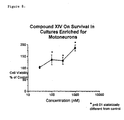
- 3'-Epimeric K-252a derivatives increased ChAT activity in the dissociated rat embryonic spinal cord culture assay (Table 5).
- Compound XVII increased ChAT activity 195% over control cultures (not treated with the epimeric K-252a derivative) after allowing a 2-3 hour plating period for cells to attach to control tissue culture wells.
- a compound was directly added to a dissociated spinal cord culture.
- Compounds which increased ChAT activity at least 120% of the control activity were considered active.
- Increased ChAT activity was observed after a single application of a selected epimeric K-252a derivative. Results are summarized in Table 5.
- Fetal rat spinal cord cells were dissociated, and experiments were performed, essentially as described by Smith et al., J. Cell Biology 101:1608-1621, 1985), and Glicksman et al., J. Neurochem. 61:210-221, 1993).
- Dissociated cells were prepared from spinal cords dissected from rats (embryonic day 14-15) by conventional trypsin dissociation techniques. Cells were plated at 6 x 10 5 cells/cm 2 on poly-1-ornithine coated plastic tissue culture wells in serum-free N2 medium supplemented with 0.05% bovine serum albumin (BSA) (Bottenstein et al., Proc. Natl. Acad. Sci. USA 76:514-517, 1979).
- BSA bovine serum albumin
- ChAT activity was measured after 2 days in vitro using a modification of the Fonnum procedure (Fonnum, J. Neurochem. 24:407-409, 1975) according to McManaman et al. ( Developmental Biology 125:311-320, 1988) and Glicksman et al. ( supra ).
- calcein AM Molecular Probes, Eugene, OR
- fluorimetric viability assay Bozyczko-Coyne et.al., J. Neurosci. Meth. 50:205-216, 1993.
- Culture medium was serially diluted in Dulbeccos phosphate buffered saline (DPBS).
- DPBS Dulbeccos phosphate buffered saline
- 6 uM calcein AM stock was added to each well.
- the plates were incubated for 30 min at 37°C, followed by serial dilution washes in DPBS.
- reaction mixture was extracted with EtOAc (2 x 20 mL), dried over sodium sulfate, filtered and concentrated in vacuo to give a light brown film.
- the mixture was purified by flash chromatography on silica gel using ethyl acetate to yield compound VIIa (TBDMS-VII) as a yellow solid (280 mg, 76% yield).
- reaction mixture was diluted with ethyl acetate (30 mL) and washed with water (3 x 15 mL). The organic phase was dried over sodium sulfate, filtered, and concentrated in vacuo to yield the tosyl intermediate VIIIa as a yellow film.
- the reaction mixture was further purified by flash chromatography on silica gel using hexane:ethyl acetate (2:1) to yield a light yellow film (0.16 g, 55% yield).
- Compound XXIII displayed the following IC 50 values in the assays described above: inhibition of trk A kinase, 4 nM; inhibition of VEGF receptor kinase, 25 nM, and inhibitiion of Protein Kinase C, >1000 nM.
Landscapes
- Health & Medical Sciences (AREA)
- Chemical & Material Sciences (AREA)
- Organic Chemistry (AREA)
- Engineering & Computer Science (AREA)
- General Health & Medical Sciences (AREA)
- Life Sciences & Earth Sciences (AREA)
- Bioinformatics & Cheminformatics (AREA)
- General Chemical & Material Sciences (AREA)
- Veterinary Medicine (AREA)
- Pharmacology & Pharmacy (AREA)
- Medicinal Chemistry (AREA)
- Animal Behavior & Ethology (AREA)
- Chemical Kinetics & Catalysis (AREA)
- Public Health (AREA)
- Nuclear Medicine, Radiotherapy & Molecular Imaging (AREA)
- Neurology (AREA)
- Neurosurgery (AREA)
- Biomedical Technology (AREA)
- Molecular Biology (AREA)
- Genetics & Genomics (AREA)
- Biotechnology (AREA)
- Biochemistry (AREA)
- Physical Education & Sports Medicine (AREA)
- Orthopedic Medicine & Surgery (AREA)
- Pain & Pain Management (AREA)
- Psychology (AREA)
- Cardiology (AREA)
- Psychiatry (AREA)
- Heart & Thoracic Surgery (AREA)
- Hospice & Palliative Care (AREA)
- Vascular Medicine (AREA)
- Urology & Nephrology (AREA)
- Pharmaceuticals Containing Other Organic And Inorganic Compounds (AREA)
- Nitrogen And Oxygen Or Sulfur-Condensed Heterocyclic Ring Systems (AREA)
- Organic Low-Molecular-Weight Compounds And Preparation Thereof (AREA)
- Heterocyclic Carbon Compounds Containing A Hetero Ring Having Oxygen Or Sulfur (AREA)
Applications Claiming Priority (3)
| Application Number | Priority Date | Filing Date | Title |
|---|---|---|---|
| US7026397P | 1997-12-31 | 1997-12-31 | |
| US70263P | 1997-12-31 | ||
| PCT/US1998/027644 WO1999033836A1 (en) | 1997-12-31 | 1998-12-30 | 3'-epimeric k-252a derivatives |
Publications (2)
| Publication Number | Publication Date |
|---|---|
| EP1044203A1 EP1044203A1 (en) | 2000-10-18 |
| EP1044203B1 true EP1044203B1 (en) | 2003-03-12 |
Family
ID=22094212
Family Applications (1)
| Application Number | Title | Priority Date | Filing Date |
|---|---|---|---|
| EP98964309A Expired - Lifetime EP1044203B1 (en) | 1997-12-31 | 1998-12-30 | 3'-epimeric k-252a derivatives |
Country Status (15)
| Country | Link |
|---|---|
| US (2) | US6093713A (enExample) |
| EP (1) | EP1044203B1 (enExample) |
| JP (1) | JP4405667B2 (enExample) |
| KR (1) | KR20010033737A (enExample) |
| CN (1) | CN1285836A (enExample) |
| AT (1) | ATE234308T1 (enExample) |
| AU (1) | AU1947499A (enExample) |
| BR (1) | BR9814543A (enExample) |
| CA (1) | CA2315953C (enExample) |
| DE (1) | DE69812177T2 (enExample) |
| DK (1) | DK1044203T3 (enExample) |
| ES (1) | ES2194385T3 (enExample) |
| NO (1) | NO20003397L (enExample) |
| PT (1) | PT1044203E (enExample) |
| WO (1) | WO1999033836A1 (enExample) |
Families Citing this family (9)
| Publication number | Priority date | Publication date | Assignee | Title |
|---|---|---|---|---|
| RU2275373C2 (ru) * | 2000-12-08 | 2006-04-27 | Орто-Макнейл Фармасьютикал, Инк. | Макрогетероциклические соединения |
| US7018999B2 (en) | 2001-05-16 | 2006-03-28 | Cephalon, Inc. | Methods for the treatment and prevention of pain |
| DE60212836T2 (de) * | 2001-05-16 | 2007-01-25 | Gpc Biotech Ag | Pyridylpyrimidin-derivate als wirksame verbindungen gegen prionen-krankheiten |
| DE10161940A1 (de) * | 2001-12-17 | 2003-07-03 | Nad Ag | N-Carbacyclus-monosubstitutierte Indolocarbazole als Proteinkinase-inhibitoren |
| US6723844B1 (en) * | 2003-02-27 | 2004-04-20 | Abbott Laboratories | Preparation of K-252a |
| DE102004025726B4 (de) * | 2004-05-26 | 2006-07-06 | Roder, Hanno, Dr. | Verwendung eines spezifischen K252a-Derivats zur Verhinderung oder Behandlung der Alzheimerschen Krankheit |
| US20060058250A1 (en) * | 2004-09-10 | 2006-03-16 | Cephalon, Inc. | Methods of treating proliferative skin diseases using carbazole derivatives |
| US20080021013A1 (en) * | 2006-07-21 | 2008-01-24 | Cephalon, Inc. | JAK inhibitors for treatment of myeloproliferative disorders |
| EP2124554B1 (en) * | 2006-12-14 | 2012-02-08 | Tautatis, Inc. | Compositions and methods for the treatment of cancer |
Family Cites Families (10)
| Publication number | Priority date | Publication date | Assignee | Title |
|---|---|---|---|---|
| JPS62155284A (ja) * | 1985-12-27 | 1987-07-10 | Kyowa Hakko Kogyo Co Ltd | 生理活性物質k−252の誘導体 |
| JPH0826036B2 (ja) | 1987-01-22 | 1996-03-13 | 協和醗酵工業株式会社 | 生理活性物質k−252の誘導体 |
| WO1988007045A1 (fr) * | 1987-03-09 | 1988-09-22 | Kyowa Hakko Kogyo Co., Ltd. | Derives de la substance physiologiquement active k-252 |
| US5621100A (en) * | 1992-07-24 | 1997-04-15 | Cephalon, Inc. | K-252a derivatives for treatment of neurological disorders |
| US5461146A (en) * | 1992-07-24 | 1995-10-24 | Cephalon, Inc. | Selected protein kinase inhibitors for the treatment of neurological disorders |
| WO1994027982A1 (en) | 1993-05-28 | 1994-12-08 | Cephalon, Inc. | Use of indolocarbazole derivatives to treat a pathological condition of the prostate |
| US5468872A (en) * | 1993-09-16 | 1995-11-21 | Cephalon, Inc. | K-252a functional derivatives potentiate neurotrophin-3 for the treatment of neurological disorders |
| US5585488A (en) * | 1994-07-04 | 1996-12-17 | Kyowa Hakko Kogyo Co., Ltd. | Process for producing indolocarbazole derivatives |
| WO1997005140A1 (en) | 1995-07-31 | 1997-02-13 | Novartis Ag | Trindene compounds |
| WO1997007081A2 (en) | 1995-08-11 | 1997-02-27 | Yale University | Glycosylated indolocarbazole synthesis |
-
1998
- 1998-12-30 CN CN98812812A patent/CN1285836A/zh active Pending
- 1998-12-30 KR KR1020007007260A patent/KR20010033737A/ko not_active Withdrawn
- 1998-12-30 CA CA2315953A patent/CA2315953C/en not_active Expired - Fee Related
- 1998-12-30 AU AU19474/99A patent/AU1947499A/en not_active Abandoned
- 1998-12-30 AT AT98964309T patent/ATE234308T1/de not_active IP Right Cessation
- 1998-12-30 WO PCT/US1998/027644 patent/WO1999033836A1/en not_active Ceased
- 1998-12-30 DE DE69812177T patent/DE69812177T2/de not_active Expired - Lifetime
- 1998-12-30 DK DK98964309T patent/DK1044203T3/da active
- 1998-12-30 EP EP98964309A patent/EP1044203B1/en not_active Expired - Lifetime
- 1998-12-30 JP JP2000526515A patent/JP4405667B2/ja not_active Expired - Fee Related
- 1998-12-30 US US09/223,518 patent/US6093713A/en not_active Expired - Lifetime
- 1998-12-30 BR BR9814543-6A patent/BR9814543A/pt not_active Application Discontinuation
- 1998-12-30 PT PT98964309T patent/PT1044203E/pt unknown
- 1998-12-30 ES ES98964309T patent/ES2194385T3/es not_active Expired - Lifetime
-
2000
- 2000-02-15 US US09/503,812 patent/US6451786B1/en not_active Expired - Fee Related
- 2000-06-29 NO NO20003397A patent/NO20003397L/no not_active Application Discontinuation
Also Published As
| Publication number | Publication date |
|---|---|
| NO20003397L (no) | 2000-08-31 |
| DE69812177T2 (de) | 2004-01-15 |
| AU1947499A (en) | 1999-07-19 |
| US6093713A (en) | 2000-07-25 |
| CA2315953C (en) | 2010-11-09 |
| WO1999033836A1 (en) | 1999-07-08 |
| JP2001527079A (ja) | 2001-12-25 |
| PT1044203E (pt) | 2003-07-31 |
| CN1285836A (zh) | 2001-02-28 |
| KR20010033737A (ko) | 2001-04-25 |
| ES2194385T3 (es) | 2003-11-16 |
| WO1999033836A9 (en) | 2000-09-14 |
| DK1044203T3 (da) | 2003-07-14 |
| NO20003397D0 (no) | 2000-06-29 |
| JP4405667B2 (ja) | 2010-01-27 |
| CA2315953A1 (en) | 1999-07-08 |
| ATE234308T1 (de) | 2003-03-15 |
| EP1044203A1 (en) | 2000-10-18 |
| BR9814543A (pt) | 2000-10-10 |
| DE69812177D1 (de) | 2003-04-17 |
| US6451786B1 (en) | 2002-09-17 |
Similar Documents
| Publication | Publication Date | Title |
|---|---|---|
| CA2420592C (en) | Fused pyrrolocarbazoles against inflammation | |
| JP2766360B2 (ja) | スタウロスポリン誘導体 | |
| EP1083903B1 (en) | Bridged indenopyrrolocarbazoles | |
| JP3344586B2 (ja) | インドロカルバゾール誘導体を含有する前立腺病理疾患の治療剤 | |
| US6093713A (en) | 3'-epimeric K-252A derivatives | |
| CZ424297A3 (cs) | Makrolidy, způsob jejich přípravy a farmaceutický prostředek, který je obsahuje | |
| US5808060A (en) | Fused isoindolones | |
| WO1997021677A9 (en) | Fused isoindolones as inhibitors of protein kinase c | |
| NZ260459A (en) | N-(tetrahydropyran-4-yloxyalkanoyl)-staurosporin derivatives and pharmaceutical compositions | |
| MXPA00006500A (en) | 3'-epimeric k-252a derivatives | |
| PT89253B (pt) | Processo para a preparacao de derivados de 4' e de composicoes farmaceuticas que os contem | |
| US20070021480A1 (en) | Biologically active compounds obtainable from Sorangium cellulosum | |
| MXPA00007381A (es) | Nuevos macrolidos conteniendo tris(oxazol) citotoxicos. | |
| JP4070810B2 (ja) | タンパク質キナーゼcの阻害剤としての縮合イソインドロン | |
| AU2001285205B2 (en) | Fused pyrrolocarbazoles against inflammation | |
| EP0272063A1 (en) | Mitomycin derivatives | |
| AU2001285205A1 (en) | Fused pyrrolocarbazoles against inflammation | |
| MXPA99002972A (en) | Novel 3, 5, and/or 6 substituted analogues of swainsonine, processes for their preparation and their use as therapeutic agents | |
| HK1032746B (en) | Bridged indenopyrrolocarbazoles | |
| JPWO1998045320A1 (ja) | 新規ヘキサデプシペプチド化合物 | |
| CS158992A3 (en) | Process for preparing 6-0-acylelasmycin a derivatives |
Legal Events
| Date | Code | Title | Description |
|---|---|---|---|
| PUAI | Public reference made under article 153(3) epc to a published international application that has entered the european phase |
Free format text: ORIGINAL CODE: 0009012 |
|
| 17P | Request for examination filed |
Effective date: 20000727 |
|
| AK | Designated contracting states |
Kind code of ref document: A1 Designated state(s): AT BE CH DE DK ES FI FR GB GR IE IT LI LU NL PT SE |
|
| 17Q | First examination report despatched |
Effective date: 20010316 |
|
| GRAG | Despatch of communication of intention to grant |
Free format text: ORIGINAL CODE: EPIDOS AGRA |
|
| GRAG | Despatch of communication of intention to grant |
Free format text: ORIGINAL CODE: EPIDOS AGRA |
|
| GRAH | Despatch of communication of intention to grant a patent |
Free format text: ORIGINAL CODE: EPIDOS IGRA |
|
| GRAH | Despatch of communication of intention to grant a patent |
Free format text: ORIGINAL CODE: EPIDOS IGRA |
|
| GRAA | (expected) grant |
Free format text: ORIGINAL CODE: 0009210 |
|
| AK | Designated contracting states |
Designated state(s): AT BE CH DE DK ES FI FR GB GR IE IT LI LU NL PT SE |
|
| REG | Reference to a national code |
Ref country code: GB Ref legal event code: FG4D |
|
| REG | Reference to a national code |
Ref country code: CH Ref legal event code: EP |
|
| REG | Reference to a national code |
Ref country code: IE Ref legal event code: FG4D |
|
| REF | Corresponds to: |
Ref document number: 69812177 Country of ref document: DE Date of ref document: 20030417 Kind code of ref document: P |
|
| REG | Reference to a national code |
Ref country code: GR Ref legal event code: EP Ref document number: 20030401716 Country of ref document: GR |
|
| REG | Reference to a national code |
Ref country code: CH Ref legal event code: NV Representative=s name: PATENTANWAELTE SCHAAD, BALASS, MENZL & PARTNER AG |
|
| REG | Reference to a national code |
Ref country code: SE Ref legal event code: TRGR |
|
| REG | Reference to a national code |
Ref country code: DK Ref legal event code: T3 |
|
| REG | Reference to a national code |
Ref country code: ES Ref legal event code: FG2A Ref document number: 2194385 Country of ref document: ES Kind code of ref document: T3 |
|
| ET | Fr: translation filed | ||
| PLBE | No opposition filed within time limit |
Free format text: ORIGINAL CODE: 0009261 |
|
| STAA | Information on the status of an ep patent application or granted ep patent |
Free format text: STATUS: NO OPPOSITION FILED WITHIN TIME LIMIT |
|
| 26N | No opposition filed |
Effective date: 20031215 |
|
| REG | Reference to a national code |
Ref country code: HK Ref legal event code: WD Ref document number: 1030421 Country of ref document: HK |
|
| PGFP | Annual fee paid to national office [announced via postgrant information from national office to epo] |
Ref country code: NL Payment date: 20081223 Year of fee payment: 11 Ref country code: IE Payment date: 20081224 Year of fee payment: 11 Ref country code: DK Payment date: 20081230 Year of fee payment: 11 Ref country code: CH Payment date: 20081229 Year of fee payment: 11 |
|
| PGFP | Annual fee paid to national office [announced via postgrant information from national office to epo] |
Ref country code: PT Payment date: 20081216 Year of fee payment: 11 Ref country code: FI Payment date: 20081230 Year of fee payment: 11 Ref country code: AT Payment date: 20081203 Year of fee payment: 11 |
|
| PGFP | Annual fee paid to national office [announced via postgrant information from national office to epo] |
Ref country code: LU Payment date: 20090106 Year of fee payment: 11 |
|
| PGFP | Annual fee paid to national office [announced via postgrant information from national office to epo] |
Ref country code: GR Payment date: 20081231 Year of fee payment: 11 |
|
| PGFP | Annual fee paid to national office [announced via postgrant information from national office to epo] |
Ref country code: BE Payment date: 20090202 Year of fee payment: 11 |
|
| PGFP | Annual fee paid to national office [announced via postgrant information from national office to epo] |
Ref country code: SE Payment date: 20081229 Year of fee payment: 11 |
|
| BERE | Be: lapsed |
Owner name: *KYOWA HAKKO KOGYO CO. LTD Effective date: 20091231 Owner name: *CEPHALON INC. Effective date: 20091231 |
|
| REG | Reference to a national code |
Ref country code: PT Ref legal event code: MM4A Free format text: LAPSE DUE TO NON-PAYMENT OF FEES Effective date: 20100630 |
|
| REG | Reference to a national code |
Ref country code: NL Ref legal event code: V1 Effective date: 20100701 |
|
| EUG | Se: european patent has lapsed | ||
| PG25 | Lapsed in a contracting state [announced via postgrant information from national office to epo] |
Ref country code: PT Free format text: LAPSE BECAUSE OF NON-PAYMENT OF DUE FEES Effective date: 20100630 |
|
| REG | Reference to a national code |
Ref country code: CH Ref legal event code: PL |
|
| REG | Reference to a national code |
Ref country code: DK Ref legal event code: EBP |
|
| PG25 | Lapsed in a contracting state [announced via postgrant information from national office to epo] |
Ref country code: FI Free format text: LAPSE BECAUSE OF NON-PAYMENT OF DUE FEES Effective date: 20091230 Ref country code: AT Free format text: LAPSE BECAUSE OF NON-PAYMENT OF DUE FEES Effective date: 20091230 |
|
| REG | Reference to a national code |
Ref country code: IE Ref legal event code: MM4A |
|
| PG25 | Lapsed in a contracting state [announced via postgrant information from national office to epo] |
Ref country code: NL Free format text: LAPSE BECAUSE OF NON-PAYMENT OF DUE FEES Effective date: 20100701 Ref country code: LI Free format text: LAPSE BECAUSE OF NON-PAYMENT OF DUE FEES Effective date: 20091231 Ref country code: IE Free format text: LAPSE BECAUSE OF NON-PAYMENT OF DUE FEES Effective date: 20091230 Ref country code: CH Free format text: LAPSE BECAUSE OF NON-PAYMENT OF DUE FEES Effective date: 20091231 Ref country code: BE Free format text: LAPSE BECAUSE OF NON-PAYMENT OF DUE FEES Effective date: 20091231 |
|
| PG25 | Lapsed in a contracting state [announced via postgrant information from national office to epo] |
Ref country code: DK Free format text: LAPSE BECAUSE OF NON-PAYMENT OF DUE FEES Effective date: 20100104 |
|
| PGFP | Annual fee paid to national office [announced via postgrant information from national office to epo] |
Ref country code: IT Payment date: 20101227 Year of fee payment: 13 Ref country code: GB Payment date: 20101229 Year of fee payment: 13 |
|
| PG25 | Lapsed in a contracting state [announced via postgrant information from national office to epo] |
Ref country code: LU Free format text: LAPSE BECAUSE OF NON-PAYMENT OF DUE FEES Effective date: 20091230 |
|
| PG25 | Lapsed in a contracting state [announced via postgrant information from national office to epo] |
Ref country code: SE Free format text: LAPSE BECAUSE OF NON-PAYMENT OF DUE FEES Effective date: 20091231 |
|
| PGFP | Annual fee paid to national office [announced via postgrant information from national office to epo] |
Ref country code: ES Payment date: 20111226 Year of fee payment: 14 Ref country code: FR Payment date: 20120104 Year of fee payment: 14 |
|
| PGFP | Annual fee paid to national office [announced via postgrant information from national office to epo] |
Ref country code: DE Payment date: 20111229 Year of fee payment: 14 |
|
| GBPC | Gb: european patent ceased through non-payment of renewal fee |
Effective date: 20121230 |
|
| REG | Reference to a national code |
Ref country code: FR Ref legal event code: ST Effective date: 20130830 |
|
| REG | Reference to a national code |
Ref country code: DE Ref legal event code: R119 Ref document number: 69812177 Country of ref document: DE Effective date: 20130702 |
|
| PG25 | Lapsed in a contracting state [announced via postgrant information from national office to epo] |
Ref country code: DE Free format text: LAPSE BECAUSE OF NON-PAYMENT OF DUE FEES Effective date: 20130702 |
|
| PG25 | Lapsed in a contracting state [announced via postgrant information from national office to epo] |
Ref country code: GB Free format text: LAPSE BECAUSE OF NON-PAYMENT OF DUE FEES Effective date: 20121230 Ref country code: FR Free format text: LAPSE BECAUSE OF NON-PAYMENT OF DUE FEES Effective date: 20130102 |
|
| PG25 | Lapsed in a contracting state [announced via postgrant information from national office to epo] |
Ref country code: IT Free format text: LAPSE BECAUSE OF NON-PAYMENT OF DUE FEES Effective date: 20121230 |
|
| REG | Reference to a national code |
Ref country code: ES Ref legal event code: FD2A Effective date: 20140307 |
|
| PG25 | Lapsed in a contracting state [announced via postgrant information from national office to epo] |
Ref country code: ES Free format text: LAPSE BECAUSE OF NON-PAYMENT OF DUE FEES Effective date: 20121231 |