EP1007603B1 - Electroluminescent phosphor particles encapsulated with an aluminum oxide based multiple oxide coating - Google Patents
Electroluminescent phosphor particles encapsulated with an aluminum oxide based multiple oxide coating Download PDFInfo
- Publication number
- EP1007603B1 EP1007603B1 EP98932876A EP98932876A EP1007603B1 EP 1007603 B1 EP1007603 B1 EP 1007603B1 EP 98932876 A EP98932876 A EP 98932876A EP 98932876 A EP98932876 A EP 98932876A EP 1007603 B1 EP1007603 B1 EP 1007603B1
- Authority
- EP
- European Patent Office
- Prior art keywords
- vapor phase
- metal oxide
- phosphor
- coating
- aluminum oxide
- Prior art date
- Legal status (The legal status is an assumption and is not a legal conclusion. Google has not performed a legal analysis and makes no representation as to the accuracy of the status listed.)
- Expired - Lifetime
Links
- 239000002245 particle Substances 0.000 title claims description 165
- OAICVXFJPJFONN-UHFFFAOYSA-N Phosphorus Chemical compound [P] OAICVXFJPJFONN-UHFFFAOYSA-N 0.000 title claims description 156
- 238000000576 coating method Methods 0.000 title claims description 116
- TWNQGVIAIRXVLR-UHFFFAOYSA-N oxo(oxoalumanyloxy)alumane Chemical compound O=[Al]O[Al]=O TWNQGVIAIRXVLR-UHFFFAOYSA-N 0.000 title claims description 97
- 239000011248 coating agent Substances 0.000 title claims description 84
- 239000002243 precursor Substances 0.000 claims description 88
- 229910044991 metal oxide Inorganic materials 0.000 claims description 66
- 150000004706 metal oxides Chemical class 0.000 claims description 66
- 238000000034 method Methods 0.000 claims description 60
- 239000012808 vapor phase Substances 0.000 claims description 57
- XLYOFNOQVPJJNP-UHFFFAOYSA-N water Substances O XLYOFNOQVPJJNP-UHFFFAOYSA-N 0.000 claims description 40
- 239000012702 metal oxide precursor Substances 0.000 claims description 38
- VYPSYNLAJGMNEJ-UHFFFAOYSA-N Silicium dioxide Chemical compound O=[Si]=O VYPSYNLAJGMNEJ-UHFFFAOYSA-N 0.000 claims description 36
- 239000000463 material Substances 0.000 claims description 36
- 238000006460 hydrolysis reaction Methods 0.000 claims description 33
- 239000007788 liquid Substances 0.000 claims description 25
- 229910052814 silicon oxide Inorganic materials 0.000 claims description 23
- 230000008569 process Effects 0.000 claims description 20
- 230000007062 hydrolysis Effects 0.000 claims description 17
- 239000000203 mixture Substances 0.000 claims description 14
- 238000005229 chemical vapour deposition Methods 0.000 claims description 13
- 238000002144 chemical decomposition reaction Methods 0.000 claims description 12
- 229910052810 boron oxide Inorganic materials 0.000 claims description 11
- JKWMSGQKBLHBQQ-UHFFFAOYSA-N diboron trioxide Chemical compound O=BOB=O JKWMSGQKBLHBQQ-UHFFFAOYSA-N 0.000 claims description 11
- 230000006378 damage Effects 0.000 claims description 9
- 150000001875 compounds Chemical class 0.000 claims description 7
- 239000005083 Zinc sulfide Substances 0.000 claims description 6
- 239000000377 silicon dioxide Substances 0.000 claims description 6
- 229910052984 zinc sulfide Inorganic materials 0.000 claims description 6
- DRDVZXDWVBGGMH-UHFFFAOYSA-N zinc;sulfide Chemical compound [S-2].[Zn+2] DRDVZXDWVBGGMH-UHFFFAOYSA-N 0.000 claims description 6
- PNEYBMLMFCGWSK-UHFFFAOYSA-N aluminium oxide Inorganic materials [O-2].[O-2].[O-2].[Al+3].[Al+3] PNEYBMLMFCGWSK-UHFFFAOYSA-N 0.000 claims description 4
- PFNQVRZLDWYSCW-UHFFFAOYSA-N (fluoren-9-ylideneamino) n-naphthalen-1-ylcarbamate Chemical compound C12=CC=CC=C2C2=CC=CC=C2C1=NOC(=O)NC1=CC=CC2=CC=CC=C12 PFNQVRZLDWYSCW-UHFFFAOYSA-N 0.000 claims description 3
- KZHJGOXRZJKJNY-UHFFFAOYSA-N dioxosilane;oxo(oxoalumanyloxy)alumane Chemical compound O=[Si]=O.O=[Si]=O.O=[Al]O[Al]=O.O=[Al]O[Al]=O.O=[Al]O[Al]=O KZHJGOXRZJKJNY-UHFFFAOYSA-N 0.000 claims description 3
- 229910052863 mullite Inorganic materials 0.000 claims description 3
- JGIATAMCQXIDNZ-UHFFFAOYSA-N calcium sulfide Chemical compound [Ca]=S JGIATAMCQXIDNZ-UHFFFAOYSA-N 0.000 claims description 2
- ZEGFMFQPWDMMEP-UHFFFAOYSA-N strontium;sulfide Chemical compound [S-2].[Sr+2] ZEGFMFQPWDMMEP-UHFFFAOYSA-N 0.000 claims description 2
- 238000006243 chemical reaction Methods 0.000 description 16
- 230000007797 corrosion Effects 0.000 description 15
- 238000005260 corrosion Methods 0.000 description 15
- SQGYOTSLMSWVJD-UHFFFAOYSA-N silver(1+) nitrate Chemical compound [Ag+].[O-]N(=O)=O SQGYOTSLMSWVJD-UHFFFAOYSA-N 0.000 description 14
- 238000012360 testing method Methods 0.000 description 13
- 239000012159 carrier gas Substances 0.000 description 11
- 238000005538 encapsulation Methods 0.000 description 11
- 239000000126 substance Substances 0.000 description 10
- IJGRMHOSHXDMSA-UHFFFAOYSA-N Atomic nitrogen Chemical compound N#N IJGRMHOSHXDMSA-UHFFFAOYSA-N 0.000 description 7
- GWEVSGVZZGPLCZ-UHFFFAOYSA-N Titan oxide Chemical compound O=[Ti]=O GWEVSGVZZGPLCZ-UHFFFAOYSA-N 0.000 description 7
- 229910052751 metal Inorganic materials 0.000 description 7
- 239000002184 metal Substances 0.000 description 7
- 229910001961 silver nitrate Inorganic materials 0.000 description 7
- JLTRXTDYQLMHGR-UHFFFAOYSA-N trimethylaluminium Chemical compound C[Al](C)C JLTRXTDYQLMHGR-UHFFFAOYSA-N 0.000 description 7
- -1 zinc sulfide) Chemical compound 0.000 description 7
- VXEGSRKPIUDPQT-UHFFFAOYSA-N 4-[4-(4-methoxyphenyl)piperazin-1-yl]aniline Chemical compound C1=CC(OC)=CC=C1N1CCN(C=2C=CC(N)=CC=2)CC1 VXEGSRKPIUDPQT-UHFFFAOYSA-N 0.000 description 6
- 239000002585 base Substances 0.000 description 6
- JGHYBJVUQGTEEB-UHFFFAOYSA-M dimethylalumanylium;chloride Chemical compound C[Al](C)Cl JGHYBJVUQGTEEB-UHFFFAOYSA-M 0.000 description 6
- 230000000717 retained effect Effects 0.000 description 6
- 239000005049 silicon tetrachloride Substances 0.000 description 6
- 238000000151 deposition Methods 0.000 description 5
- 230000008021 deposition Effects 0.000 description 5
- VEXZGXHMUGYJMC-UHFFFAOYSA-N Hydrochloric acid Chemical compound Cl VEXZGXHMUGYJMC-UHFFFAOYSA-N 0.000 description 4
- MCMNRKCIXSYSNV-UHFFFAOYSA-N Zirconium dioxide Chemical compound O=[Zr]=O MCMNRKCIXSYSNV-UHFFFAOYSA-N 0.000 description 4
- 239000007789 gas Substances 0.000 description 4
- 230000007774 longterm Effects 0.000 description 4
- 229910003455 mixed metal oxide Inorganic materials 0.000 description 4
- 239000007864 aqueous solution Substances 0.000 description 3
- QVGXLLKOCUKJST-UHFFFAOYSA-N atomic oxygen Chemical compound [O] QVGXLLKOCUKJST-UHFFFAOYSA-N 0.000 description 3
- 230000008901 benefit Effects 0.000 description 3
- 230000000694 effects Effects 0.000 description 3
- 230000005684 electric field Effects 0.000 description 3
- 229910052757 nitrogen Inorganic materials 0.000 description 3
- 229910052760 oxygen Inorganic materials 0.000 description 3
- 239000001301 oxygen Substances 0.000 description 3
- 229920000642 polymer Polymers 0.000 description 3
- LALRXNPLTWZJIJ-UHFFFAOYSA-N triethylborane Chemical compound CCB(CC)CC LALRXNPLTWZJIJ-UHFFFAOYSA-N 0.000 description 3
- XKRFYHLGVUSROY-UHFFFAOYSA-N Argon Chemical compound [Ar] XKRFYHLGVUSROY-UHFFFAOYSA-N 0.000 description 2
- BOTDANWDWHJENH-UHFFFAOYSA-N Tetraethyl orthosilicate Chemical compound CCO[Si](OCC)(OCC)OCC BOTDANWDWHJENH-UHFFFAOYSA-N 0.000 description 2
- HCHKCACWOHOZIP-UHFFFAOYSA-N Zinc Chemical compound [Zn] HCHKCACWOHOZIP-UHFFFAOYSA-N 0.000 description 2
- UHAQRCJYQAKQEE-UHFFFAOYSA-M [O-2].[OH-].O.[Al+3].P Chemical compound [O-2].[OH-].O.[Al+3].P UHAQRCJYQAKQEE-UHFFFAOYSA-M 0.000 description 2
- 230000015572 biosynthetic process Effects 0.000 description 2
- 239000003153 chemical reaction reagent Substances 0.000 description 2
- 238000005137 deposition process Methods 0.000 description 2
- 238000009792 diffusion process Methods 0.000 description 2
- 238000005401 electroluminescence Methods 0.000 description 2
- 230000001747 exhibiting effect Effects 0.000 description 2
- 238000007654 immersion Methods 0.000 description 2
- 238000004020 luminiscence type Methods 0.000 description 2
- 238000012423 maintenance Methods 0.000 description 2
- 239000011159 matrix material Substances 0.000 description 2
- 238000002156 mixing Methods 0.000 description 2
- 230000004048 modification Effects 0.000 description 2
- 238000012986 modification Methods 0.000 description 2
- 239000003921 oil Substances 0.000 description 2
- 230000003287 optical effect Effects 0.000 description 2
- 239000011253 protective coating Substances 0.000 description 2
- 230000001681 protective effect Effects 0.000 description 2
- 230000009467 reduction Effects 0.000 description 2
- 230000002829 reductive effect Effects 0.000 description 2
- 229920006395 saturated elastomer Polymers 0.000 description 2
- 230000035945 sensitivity Effects 0.000 description 2
- 239000000243 solution Substances 0.000 description 2
- 239000000758 substrate Substances 0.000 description 2
- XOLBLPGZBRYERU-UHFFFAOYSA-N tin dioxide Chemical compound O=[Sn]=O XOLBLPGZBRYERU-UHFFFAOYSA-N 0.000 description 2
- 229910001887 tin oxide Inorganic materials 0.000 description 2
- WRECIMRULFAWHA-UHFFFAOYSA-N trimethyl borate Chemical compound COB(OC)OC WRECIMRULFAWHA-UHFFFAOYSA-N 0.000 description 2
- 229910052725 zinc Inorganic materials 0.000 description 2
- 239000011701 zinc Substances 0.000 description 2
- WUPHOULIZUERAE-UHFFFAOYSA-N 3-(oxolan-2-yl)propanoic acid Chemical compound OC(=O)CCC1CCCO1 WUPHOULIZUERAE-UHFFFAOYSA-N 0.000 description 1
- 229920004439 Aclar® Polymers 0.000 description 1
- OYPRJOBELJOOCE-UHFFFAOYSA-N Calcium Chemical compound [Ca] OYPRJOBELJOOCE-UHFFFAOYSA-N 0.000 description 1
- FYYHWMGAXLPEAU-UHFFFAOYSA-N Magnesium Chemical compound [Mg] FYYHWMGAXLPEAU-UHFFFAOYSA-N 0.000 description 1
- UCKMPCXJQFINFW-UHFFFAOYSA-N Sulphide Chemical compound [S-2] UCKMPCXJQFINFW-UHFFFAOYSA-N 0.000 description 1
- ATJFFYVFTNAWJD-UHFFFAOYSA-N Tin Chemical compound [Sn] ATJFFYVFTNAWJD-UHFFFAOYSA-N 0.000 description 1
- QCWXUUIWCKQGHC-UHFFFAOYSA-N Zirconium Chemical compound [Zr] QCWXUUIWCKQGHC-UHFFFAOYSA-N 0.000 description 1
- 229910052946 acanthite Inorganic materials 0.000 description 1
- 230000002411 adverse Effects 0.000 description 1
- 238000005054 agglomeration Methods 0.000 description 1
- 230000002776 aggregation Effects 0.000 description 1
- 238000013019 agitation Methods 0.000 description 1
- 150000004703 alkoxides Chemical class 0.000 description 1
- WNROFYMDJYEPJX-UHFFFAOYSA-K aluminium hydroxide Chemical compound [OH-].[OH-].[OH-].[Al+3] WNROFYMDJYEPJX-UHFFFAOYSA-K 0.000 description 1
- SMZOGRDCAXLAAR-UHFFFAOYSA-N aluminium isopropoxide Chemical compound [Al+3].CC(C)[O-].CC(C)[O-].CC(C)[O-] SMZOGRDCAXLAAR-UHFFFAOYSA-N 0.000 description 1
- 229910052786 argon Inorganic materials 0.000 description 1
- 229910052980 cadmium sulfide Inorganic materials 0.000 description 1
- 229910052791 calcium Inorganic materials 0.000 description 1
- 239000011575 calcium Substances 0.000 description 1
- 230000015556 catabolic process Effects 0.000 description 1
- 150000001768 cations Chemical class 0.000 description 1
- 230000008859 change Effects 0.000 description 1
- 239000003795 chemical substances by application Substances 0.000 description 1
- 150000001805 chlorine compounds Chemical class 0.000 description 1
- 229910052681 coesite Inorganic materials 0.000 description 1
- 238000009833 condensation Methods 0.000 description 1
- 230000005494 condensation Effects 0.000 description 1
- 238000010276 construction Methods 0.000 description 1
- OMZSGWSJDCOLKM-UHFFFAOYSA-N copper(II) sulfide Chemical compound [S-2].[Cu+2] OMZSGWSJDCOLKM-UHFFFAOYSA-N 0.000 description 1
- 229910052593 corundum Inorganic materials 0.000 description 1
- 229910052906 cristobalite Inorganic materials 0.000 description 1
- 239000013078 crystal Substances 0.000 description 1
- 238000005034 decoration Methods 0.000 description 1
- 230000003247 decreasing effect Effects 0.000 description 1
- 238000006731 degradation reaction Methods 0.000 description 1
- 230000001419 dependent effect Effects 0.000 description 1
- HQWPLXHWEZZGKY-UHFFFAOYSA-N diethylzinc Chemical compound CC[Zn]CC HQWPLXHWEZZGKY-UHFFFAOYSA-N 0.000 description 1
- 229910001873 dinitrogen Inorganic materials 0.000 description 1
- 238000000295 emission spectrum Methods 0.000 description 1
- 229910021485 fumed silica Inorganic materials 0.000 description 1
- 239000011521 glass Substances 0.000 description 1
- 238000010438 heat treatment Methods 0.000 description 1
- 230000036571 hydration Effects 0.000 description 1
- 238000006703 hydration reaction Methods 0.000 description 1
- XLYOFNOQVPJJNP-UHFFFAOYSA-M hydroxide Chemical compound [OH-] XLYOFNOQVPJJNP-UHFFFAOYSA-M 0.000 description 1
- 230000033444 hydroxylation Effects 0.000 description 1
- 238000005805 hydroxylation reaction Methods 0.000 description 1
- 239000011261 inert gas Substances 0.000 description 1
- 230000000670 limiting effect Effects 0.000 description 1
- 229910001338 liquidmetal Inorganic materials 0.000 description 1
- 229910052749 magnesium Inorganic materials 0.000 description 1
- 239000011777 magnesium Substances 0.000 description 1
- 230000007246 mechanism Effects 0.000 description 1
- 150000002739 metals Chemical class 0.000 description 1
- 239000011368 organic material Substances 0.000 description 1
- RVTZCBVAJQQJTK-UHFFFAOYSA-N oxygen(2-);zirconium(4+) Chemical compound [O-2].[O-2].[Zr+4] RVTZCBVAJQQJTK-UHFFFAOYSA-N 0.000 description 1
- 230000035699 permeability Effects 0.000 description 1
- 239000012071 phase Substances 0.000 description 1
- 238000005424 photoluminescence Methods 0.000 description 1
- 230000000704 physical effect Effects 0.000 description 1
- 239000004033 plastic Substances 0.000 description 1
- 239000005023 polychlorotrifluoroethylene (PCTFE) polymer Substances 0.000 description 1
- 229920005596 polymer binder Polymers 0.000 description 1
- 239000002491 polymer binding agent Substances 0.000 description 1
- 238000010944 pre-mature reactiony Methods 0.000 description 1
- XPGAWFIWCWKDDL-UHFFFAOYSA-N propan-1-olate;zirconium(4+) Chemical compound [Zr+4].CCC[O-].CCC[O-].CCC[O-].CCC[O-] XPGAWFIWCWKDDL-UHFFFAOYSA-N 0.000 description 1
- 230000005855 radiation Effects 0.000 description 1
- 239000012713 reactive precursor Substances 0.000 description 1
- 230000008707 rearrangement Effects 0.000 description 1
- XUARKZBEFFVFRG-UHFFFAOYSA-N silver sulfide Chemical compound [S-2].[Ag+].[Ag+] XUARKZBEFFVFRG-UHFFFAOYSA-N 0.000 description 1
- 229940056910 silver sulfide Drugs 0.000 description 1
- 239000007787 solid Substances 0.000 description 1
- 239000006104 solid solution Substances 0.000 description 1
- 238000003756 stirring Methods 0.000 description 1
- 229910052682 stishovite Inorganic materials 0.000 description 1
- 238000006467 substitution reaction Methods 0.000 description 1
- 230000003685 thermal hair damage Effects 0.000 description 1
- 238000000904 thermoluminescence Methods 0.000 description 1
- 229910052718 tin Inorganic materials 0.000 description 1
- OGIDPMRJRNCKJF-UHFFFAOYSA-N titanium oxide Inorganic materials [Ti]=O OGIDPMRJRNCKJF-UHFFFAOYSA-N 0.000 description 1
- 229910052905 tridymite Inorganic materials 0.000 description 1
- 229910001845 yogo sapphire Inorganic materials 0.000 description 1
- 229910052726 zirconium Inorganic materials 0.000 description 1
- 229910001928 zirconium oxide Inorganic materials 0.000 description 1
Images
Classifications
-
- C—CHEMISTRY; METALLURGY
- C09—DYES; PAINTS; POLISHES; NATURAL RESINS; ADHESIVES; COMPOSITIONS NOT OTHERWISE PROVIDED FOR; APPLICATIONS OF MATERIALS NOT OTHERWISE PROVIDED FOR
- C09K—MATERIALS FOR MISCELLANEOUS APPLICATIONS, NOT PROVIDED FOR ELSEWHERE
- C09K11/00—Luminescent, e.g. electroluminescent, chemiluminescent materials
- C09K11/02—Use of particular materials as binders, particle coatings or suspension media therefor
-
- C—CHEMISTRY; METALLURGY
- C09—DYES; PAINTS; POLISHES; NATURAL RESINS; ADHESIVES; COMPOSITIONS NOT OTHERWISE PROVIDED FOR; APPLICATIONS OF MATERIALS NOT OTHERWISE PROVIDED FOR
- C09K—MATERIALS FOR MISCELLANEOUS APPLICATIONS, NOT PROVIDED FOR ELSEWHERE
- C09K11/00—Luminescent, e.g. electroluminescent, chemiluminescent materials
- C09K11/02—Use of particular materials as binders, particle coatings or suspension media therefor
- C09K11/025—Use of particular materials as binders, particle coatings or suspension media therefor non-luminescent particle coatings or suspension media
-
- C—CHEMISTRY; METALLURGY
- C09—DYES; PAINTS; POLISHES; NATURAL RESINS; ADHESIVES; COMPOSITIONS NOT OTHERWISE PROVIDED FOR; APPLICATIONS OF MATERIALS NOT OTHERWISE PROVIDED FOR
- C09K—MATERIALS FOR MISCELLANEOUS APPLICATIONS, NOT PROVIDED FOR ELSEWHERE
- C09K11/00—Luminescent, e.g. electroluminescent, chemiluminescent materials
- C09K11/08—Luminescent, e.g. electroluminescent, chemiluminescent materials containing inorganic luminescent materials
- C09K11/56—Luminescent, e.g. electroluminescent, chemiluminescent materials containing inorganic luminescent materials containing sulfur
- C09K11/562—Chalcogenides
- C09K11/565—Chalcogenides with zinc cadmium
-
- Y—GENERAL TAGGING OF NEW TECHNOLOGICAL DEVELOPMENTS; GENERAL TAGGING OF CROSS-SECTIONAL TECHNOLOGIES SPANNING OVER SEVERAL SECTIONS OF THE IPC; TECHNICAL SUBJECTS COVERED BY FORMER USPC CROSS-REFERENCE ART COLLECTIONS [XRACs] AND DIGESTS
- Y10—TECHNICAL SUBJECTS COVERED BY FORMER USPC
- Y10T—TECHNICAL SUBJECTS COVERED BY FORMER US CLASSIFICATION
- Y10T428/00—Stock material or miscellaneous articles
- Y10T428/29—Coated or structually defined flake, particle, cell, strand, strand portion, rod, filament, macroscopic fiber or mass thereof
- Y10T428/2982—Particulate matter [e.g., sphere, flake, etc.]
- Y10T428/2991—Coated
-
- Y—GENERAL TAGGING OF NEW TECHNOLOGICAL DEVELOPMENTS; GENERAL TAGGING OF CROSS-SECTIONAL TECHNOLOGIES SPANNING OVER SEVERAL SECTIONS OF THE IPC; TECHNICAL SUBJECTS COVERED BY FORMER USPC CROSS-REFERENCE ART COLLECTIONS [XRACs] AND DIGESTS
- Y10—TECHNICAL SUBJECTS COVERED BY FORMER USPC
- Y10T—TECHNICAL SUBJECTS COVERED BY FORMER US CLASSIFICATION
- Y10T428/00—Stock material or miscellaneous articles
- Y10T428/29—Coated or structually defined flake, particle, cell, strand, strand portion, rod, filament, macroscopic fiber or mass thereof
- Y10T428/2982—Particulate matter [e.g., sphere, flake, etc.]
- Y10T428/2991—Coated
- Y10T428/2993—Silicic or refractory material containing [e.g., tungsten oxide, glass, cement, etc.]
Definitions
- the present invention relates to electroluminescent phosphor particles, particularly, to phosphor particles which are encapsulated in a moisture resistant coating and exhibit high electroluminescent brightness and, even more particularly to such an electroluminescent phosphor particle encapsulated with an aluminum oxide-based multiple oxide protective coating having improved resistance to corrosion or chemical degradation from exposure to liquid water.
- the present invention also relates to a method for making such encapsulated phosphor particles and products made with these phosphor particles.
- Phosphor particles are used in a variety of applications such as flat panel displays and decorations, cathode ray tubes, and fluorescent lighting fixtures. Luminescence or light emission by phosphor particles may be stimulated by application of various forms of energy including electric fields (electroluminescence). Electroluminescent ("EL") phosphors have significant commercial importance. The luminescent brightness of such phosphors and the "maintenance" of this brightness are two criteria typically used to characterize phosphor particles.
- Luminescent brightness is typically reported as a quantity of light emitted by the subject phosphor when excited. Because of the sensitivity of phosphor emission brightness to varying conditions of excitement, it is often useful to report the brightness of phosphors as relative brightnesses rather than as absolute brightness. "Maintenance” refers to the rate at which phosphors lose brightness (i.e., decay) with operating time. The rate of decay is substantially increased if the phosphor particles are subjected to conditions of high humidity while being operated. This effect of moisture or high humidity has been referred to as "humidity-accelerated decay".
- Particulate EL phosphors are most commonly used in thick film constructions. These devices typically include a layer of an organic material having a high dielectric constant and which forms a matrix for a load of phosphor particles. Such layers are typically coated on a plastic substrate having a transparent front electrode. A rear electrode is typically applied to the back side of the phosphor layer, with a dielectric layer sandwiched therebetween. When an electric field is applied across the electrodes, the proximate portions of the layer emit light as the phosphor particles therein are excited.
- phosphor particles have been encapsulated in an inorganic coating, such as a coating of one or two oxides.
- Inorganic coating techniques have been employed with varying degrees of success.
- Hydrolysis-based processes for encapsulating EL phosphor particles in an inorganic coating e.g., hydrolysis-based chemical vapor deposition (CVD)
- CVD hydrolysis-based chemical vapor deposition
- water and oxide precursors are used to form the protective coating.
- Such hydrolysis-based CVD processes have been able to produce moisture insensitive encapsulated phosphor particles, while minimizing process related phosphor damage and retaining a high initial luminescent brightness.
- One such coating which has been considered desirable for encapsulating EL phosphors is a coating of aluminum oxide produced by a hydrolysis-based CVD process.
- the use of aluminum oxide to so coat phosphor particles has been found desirable, at least in part, because reactive, volatile precursors exist which can readily form aluminum oxide coatings exhibiting desirable optical, electrical and moisture protective properties.
- Phosphor particles with such aluminum oxide coatings have been fabricated which exhibit high brightness and moisture insensitivity (i.e., the phosphor particle is protected to a certain degree from moisture in vapor form).
- amorphous and/or low temperature derived aluminum oxide coatings such as those that have typically been produced by hydrolysis-based CVD processes, are susceptible to exhibiting undesirably low chemical durability against exposure to condensed moisture or otherwise liquid water.
- Such low chemical durability can preclude the use of such aluminum oxide coatings with aqueous polymer binder systems, can result in weak interfaces between the phosphor particle and the polymer matrix and/or can provide inadequate protection in condensing atmosphere conditions.
- an aluminum oxide phosphor coating such as the amorphous and/or low temperature derived aluminum oxide coatings produced by hydrolysis based CVD, which provides encapsulated EL phosphor particles, or phosphors in other forms, which exhibit high initial brightness, extended retained brightness (even in high humidity environments) and greater resistance to corrosion (i.e., chemical degradation) caused by exposure to condensed moisture or otherwise liquid water.
- the present invention provides novel encapsulated phosphor particles, each having a substantially transparent aluminum oxide-based multiple oxide coating.
- the encapsulated phosphors exhibit high initial luminescent brightness and high resistance to humidity-accelerated decay of luminescent brightness.
- the aluminum oxide-based coating of the present invention exhibits reduced sensitivity to chemical degradation caused by exposure to condensed moisture or otherwise liquid water (i.e., greater resistance to corrosion in a liquid water environment).
- the present multiple metal oxide coating is desirable for the present multiple metal oxide coating to be sufficiently resistant to chemical degradation (i.e., corrosion) from liquid water that sulfide-based particles encapsulated with the multiple metal oxide coating can survive immersion in a 0.1 molar silver nitrate aqueous solution, without discoloring, for at least twice as long as the same particles encapsulated with a coating of only the aluminum oxide.
- Such a silver nitrate test has typically been used to check the permeability of a phosphor coating. Because the silver nitrate is in an aqueous solution, it was found that this test could also be used to determine the chemical durability of the coating. Being more resistant to water induced corrosion enables the present metal oxide coating to survive for longer periods in a liquid water environment.
- the present invention also provides a novel method for making such encapsulated phosphor particles utilizing relatively low temperature vapor phase hydrolysis reactions and deposition processes.
- the present invention is predicated, at least in part, upon the discovery that surprisingly marked increases in the chemical durability (i.e., reduction in corrosion) of aluminum oxide phosphor coatings, which are chemically susceptible to liquid water induced corrosion, can be obtained by using other metal oxides in combination with the aluminum oxide. It has also been found that, for aluminum oxide coatings deposited by a vapor phase hydrolysis-based process (i.e., hydrolysis-based aluminum oxide coatings), the addition of other oxides can be conveniently incorporated into the aluminum oxide during the deposition process, with little or no disruption of the tendency of aluminum oxide precursors to quickly and easily form coatings that are highly protective against the humidity-accelerated decay of luminescent brightness. It has been further found that hydrolysis-based CVD techniques can be used to conveniently deposit multiple metal oxides as a coating to so encapsulate phosphor particles.
- Phosphor coatings according to the present invention can be made more chemically durable by mixing the aluminum oxide and the other metal oxide(s) together or, it is believed, by forming a layer of more chemically durable metal oxide(s) over a chemically sensitive layer of the aluminum oxide. It is believed that the teachings of the present invention are not only applicable to amorphous aluminum oxide-based multiple oxide coatings but also to crystalline or partially crystalline aluminum oxide-based multiple oxide coatings. It is also believed that the teachings of the present invention can be used to improve the resistance to liquid water induced corrosion of any aluminum oxide coating, for phosphors, which is susceptible to such corrosion.
- teachings of the present invention can be used to improve the corrosion resistance of any such chemically sensitive aluminum oxide coatings, for phosphor particles, regardless of what temperature the coatings are formed at.
- an additional metal oxide e.g., silica
- an aluminum oxide-based multiple oxide coating according to the present invention will likely be formed at a temperature which will not significantly damage the encapsulated phosphor particle (i.e., will not result in an initial brightness of less than about 50% of the uncoated phosphor particle).
- the exemplary phosphor particles disclosed herein are of the type that are stimulated to produce a luminescence or light emission by an electric field (i.e., electroluminescence). It is believed that the teachings of the present invention can also be applied to benefit other types of phosphor particles which are sensitive to moisture and can be encapsulated with an aluminum oxide coating formed from a vapor phase aluminum oxide precursor. Examples of such other types of phosphor particles may includes those which are stimulated by the application of heat (thermoluminescence), light (photoluminescence), or high energy radiation (e.g., x-rays or e-beams).
- the present encapsulated phosphor particles can exhibit the same or even improved initial and retained brightness compared to that exhibited by the same phosphor particles encapsulated with just an aluminum oxide coating. Furthermore, it has been found that phosphor particles encapsulated with the present multiple oxide coating can exhibit a high electrical efficiency that is comparable to or exceeds that exhibited by phosphor particles encapsulated with only an aluminum oxide coating.
- the present aluminum oxide-based multiple oxide coatings can provide the same, if not a greater, reduction in the loss of zinc from the phosphor by diffusion through the coating, compared to a coating of only the aluminum oxide. It is believed that other desirable properties imparted to phosphor particles by being encapsulated with an aluminum oxide coating may also be comparable or increase with the use of the present aluminum oxide-based multiple oxide coating.
- each encapsulated particle comprises a phosphor particle of an electroluminescent phosphor material which would exhibit humidity-accelerated decay in the presence of moisture without the present coating.
- the substantially transparent multiple metal oxide coating is more resistant to chemical degradation from liquid water than a coating made of an aluminum oxide (e.g., alumina) and sufficiently encapsulates the phosphor particle to provide the phosphor particle with substantial protection from humidity-accelerated decay.
- the coating comprises the aluminum oxide and at least one other metal oxide, where the metal oxides are not in the form of the compound oxide mullite (3Al 2 O 3 ⁇ 2SiO 2 ).
- the at least one other metal oxide can include, by way of example only, a silicon oxide (e.g., silica), a boron oxide (e.g., boria), a titanium oxide (e.g., titania), a tin oxide, or a zirconium oxide (e.g., zirconia). It is contemplated that these and any other suitable metal oxides may be used individually or in combination.
- the present multiple oxide coating can comprise a mixture of the aluminum oxide and the at least one other metal oxide.
- the coating can comprise a mixture of the aluminum oxide, a silicon oxide and another metal oxide (e.g., a boron oxide).
- the multiple oxide coating may include at least an inner layer and an outer layer.
- the inner layer can comprise the aluminum oxide
- the outer layer can comprise at least one other metal oxide.
- the outer layer can be a single metal oxide or a mixture of metal oxides. Multiple outer layers are also contemplated.
- a method of encapsulating phosphor particles comprises the steps of: providing a bed of phosphor particles, each of which exhibits humidity-accelerated decay in the presence of moisture; providing at least two precursors comprising a vapor phase aluminum oxide precursor and at least one other vapor phase metal oxide precursor; and exposing the bed to the precursors such that the precursors chemically react and encapsulate each phosphor particle with a multiple metal oxide coating, as described above.
- the vapor phase metal oxide precursors include any suitable precursor capable of forming the desired metal oxide for the coating.
- the resulting coating is substantially transparent, more resistant to chemical degradation from liquid water than a similar coating consisting essentially of aluminum oxide, and sufficiently encapsulating to provide the phosphor particle with substantial protection from humidity-accelerated decay.
- An exemplary coating comprises an aluminum oxide and a silicon oxide, with or without at least one other metal oxide.
- the present method can be a hydrolysis-based process that includes exposing the bed to water vapor so as to coat each phosphor particle by a vapor phase hydrolysis reaction of the vapor phase aluminum oxide precursor and the at least one other vapor phase metal oxide precursor (i.e., the vapor phase metal oxide precursors chemically react, via hydrolysis, on or near each phosphor particle and bond to each phosphor particle in the form of an encapsulating coating).
- a hydrolysis based chemical vapor deposition process It is desirable for the hydrolysis reaction to occur at a temperature that is low enough to at least substantially minimize, if not eliminate, temperature related damage to the phosphor particles.
- the encapsulated particles it is desirable for the encapsulated particles to retain a high initial luminescent brightness (e.g., greater than 50% of that exhibited by the uncoated phosphor particles). It is also desirable for this temperature to be sufficiently low to minimize, if not eliminate, temperature related damage to other properties of the phosphor particles including their color and optical and electrical properties. Such low temperature metal oxide coatings are often, though not necessarily, amorphous.
- the present method can be used to form the present multiple metal oxide coating with an inner and outer layer by exposing the bed of phosphor particles to the vapor phase aluminum oxide precursor so as to chemically react and encapsulate each phosphor particle with an inner layer comprising the aluminum oxide.
- the bed can then be exposed to the another vapor phase metal oxide precursor or multiple precursors so as to chemically react and encapsulate each inner layer with an outer layer comprising the at least one other metal oxide.
- this outer layer can likewise be encapsulated with one or more other outer layers of the same or a different metal oxide or mixture of oxides.
- the inner layer of aluminum oxide can be encapsulated by an outer layer comprising a silicon oxide and at least one additional metal oxide.
- a phosphor particle coated according to the present invention can comprise, for example, a zinc sulfide-based phosphor, a calcium sulfide-based phosphor, a zinc selenide-based phosphor, strontium sulfide-based phosphor or combinations thereof.
- Phosphors used in the present invention may be formulated in accordance with conventional practices.
- zinc sulfide based phosphors are well-known and commonly include one or more of such compounds as copper sulfide, zinc selenide, and cadmium sulfide in solid solution within the zinc sulfide crystal structure or as second phases or domains within the particle structure. Good test results have been obtained with the commercially available phosphor Sylvania Type 729.
- Phosphor particles used herein may be of many sizes, typically depending to a large extent on the particular application.
- Each phosphor particle of the present invention is sufficiently coated with an aluminum oxide-based multiple oxide coating to provide the phosphor particle with substantial protection from humidity-accelerated decay.
- a metal oxide or oxide refers to a material made up primarily of at least one metal and oxygen.
- the oxide may also contain amounts of other elements and compounds, including those originating in the precursor materials or phosphor particles, which can be generated in coating form on phosphor particles under conditions that are at least similar to that described herein.
- a metal oxide can include an oxide of a metal (e.g., titania, silica, alumina, tin oxide, zirconia, boria, etc.), a hydroxide of a metal (e.g., aluminum hydroxide), a compound containing oxygen and at least one metal, or a combination thereof.
- the present multiple oxide coatings are thin enough to be substantially transparent yet thick enough to provide sufficient impermeability to moisture. Coatings which are too thick may tend to be less transparent and result in reduced brightness.
- the method of the present invention comprises the steps of: providing a bed of phosphor particles, each of which exhibits humidity-accelerated decay in the presence of moisture; providing at least two precursors comprising a vapor phase aluminum oxide precursor and at least one other vapor phase metal oxide precursor; and exposing the bed to the precursors such that the precursors chemically react and encapsulate each phosphor particle with a multiple metal oxide coating, as previously described.
- the vapor phase metal oxide precursors include any suitable precursor capable of forming the desired metal oxide for the coating.
- the resulting coating is substantially transparent, more resistant to chemical degradation from liquid water than a similar coating consisting essentially of aluminum oxide, and sufficiently encapsulating to provide the phosphor particle with substantial protection from humidity-accelerated decay.
- An exemplary coating comprises an aluminum oxide and a silicon oxide, with or without a boron oxide.
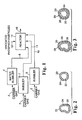
- An illustrative embodiment of the present method is shown schematically in Fig. 1.
- the present method that was used to produce the encapsulated particles described in detail below is a hydrolysis-based process, more particularly, a hydrolysis-based chemical vapor deposition (CVD) process that includes exposing the bed to water vapor so as to coat each phosphor particle by a vapor phase hydrolysis reaction of the vapor phase aluminum oxide precursor and the at least one other vapor phase metal oxide precursor.
- the hydrolysis reactions each occurred at a low enough temperature to at least substantially minimize temperature related damage to the phosphor particles being encapsulated. It is believed that the low temperature multiple metal oxide coatings produced by this method are amorphous.
- Uncoated phosphor particles 12 are placed in a reactor 14 and heated to the appropriate temperature.
- the particles are preferably agitated while in the reaction chamber 14.
- Illustrative examples of useful methods for agitating the phosphor particles include shaking, vibrating, or rotating the reactor, stirring the particles, or suspending them in a fluidized bed.
- the particles may be agitated by many different ways such that essentially the entire surface of each particle is exposed and the particles and reaction precursors may be well intermixed.
- a preferred reaction chamber is a fluidized bed reactor. Fluidizing typically tends to effectively prevent agglomeration of the particles, achieve uniform mixing of the particles and reaction precursor materials, and provide more uniform reaction conditions, thereby resulting in highly uniform encapsulation characteristics.
- fluidizing aids e.g., small amounts of fumed silica. Selection of such aids and of useful amounts thereof may be readily determined by those with ordinary skill in the art.
- the desired precursor materials in vapor phase are then added to the reactor 14 so as to produce a vapor phase hydrolysis reaction to form a coating of multiple oxide materials on the surfaces of the phosphor particles and thereby encapsulating them.
- the following is an illustrative vapor phase hydrolysis reaction: 2(Al(CH 3 ) 3 ) + SiCl 4 + 5H 2 O Al 2 O 3 + SiO 2 +6CH 4 + 4HCl
- water vapor, trimethyl aluminum (TMA) and silicon tetrachloride are considered oxide precursor materials.
- the illustrative reaction is for the formation of an anhydrous oxide.
- hydrolysis reaction may produce, at least partially, hydrous oxides, which can also be useful in the practice of the present invention. It is believed that the amount of hydroxylation and/or hydration that results from the vapor phase hydrolysis reaction would depend on the temperature at which the reaction occurs. The water to oxide precursor ratio may also have an affect.
- One technique for getting the precursor materials into vapor phase and adding them to the reaction chamber is to bubble a stream of gas, preferably inert, referred to herein as a carrier gas 2, through a neat liquid of the precursor material and then into the reaction chamber 14.
- a stream of gas preferably inert, referred to herein as a carrier gas 2
- inert gases include argon and nitrogen. Oxygen and/or air may also be used.
- An advantage of this technique is that the carrier gas/precursor streams may be used to fluidize the phosphor particles in the reaction chamber, thereby facilitating the desired encapsulation process.
- such a technique provides means for readily controlling the rate of introduction of the precursor materials into the reactor 14. Referring again to Fig.
- carrier gas 2 is bubbled through a water bubbler 4 to produce water vapor-containing precursor stream 8.
- Carrier gas 2 is also bubbled through at least two other bubblers 6 and 7 to produce at least two metal oxide precursor streams 10 and 11.
- Bubbler 6 contains a neat liquid of an aluminum oxide precursor material (e.g., TMA).
- Bubbler 7 contains a neat liquid of another metal oxide precursor material (e.g., SiCl 4 ).
- Precursor streams 8, 10 and 11 are then transported into reactor 14.
- the present method can be used to form a multiple metal oxide coating comprising a mixture of aluminum oxide and at least one other metal oxide (i.e., a mixed metal oxide coating) or a coating comprising an inner layer of aluminum oxide and at least one outer layer of at least one other metal oxide (i.e., a layered metal oxide coating).
- a mixed metal oxide coating all of the streams 8, 10 and 11 are transported into the reactor 14 at the same time.
- streams 8 and 10 are first transported into the reactor 14 until the particles are encapsulated by the aluminum oxide inner layer.
- Streams 8 and 11 are then transported into the reactor 14 to encapsulate the aluminum oxide inner layer with the outer layer of the at least one other metal oxide.
- the inner layer may comprise a mixture of aluminum oxide and one or more other metal oxides. This can be accomplished by transporting one or more other metal oxide precursor streams with streams 8 and 10. It may also be desirable, with or without a mixed oxide inner layer, for the outer layer to comprise a mixture of two or more metal oxides other than aluminum oxide. The outer layer may also be a mixture of aluminum oxide and another metal oxide.
- Precursor flow rates are adjusted to provide an adequate deposition rate and to provide an oxide coating of desired quality and character. Flow rates are adjusted such that the ratios of precursor materials present in the reactor chamber promote oxide deposition at the surface of the phosphor particles.
- Optimum flow rates for a particular application typically depend in part upon the temperature within the reaction chamber, the temperature of the precursor streams, the degree of particle agitation within the reaction chamber, and the particular precursors being used. Useful flow rates may be readily determined with trial and error experimentation. It is desirable for the flow rate of the carrier gas used to transport the precursor materials to the reaction chamber to be sufficient to agitate the phosphor particles as desired and also transport optimal quantities of precursor materials to the chamber.
- precursor materials it is also desirable for the precursor materials to have sufficiently high vapor pressures that large enough quantities of precursor material will be transported into the reactor for the hydrolysis reaction and coating process to proceed at a conveniently fast rate. For instance, precursor materials having higher vapor pressures will typically provide faster deposition rates than will precursor materials having lower vapor pressures, thereby enabling the use of shorter encapsulation times.
- Precursor sources may be heated to increase the vapor pressure of the material. In order to prevent condensation between the heated source and the reactor, it may be necessary to heat the tubing or other means used to transport the precursor material to the reactor. In many instances, like those found tabulated below, the precursor materials will be in the form of neat liquids at room temperature. In some instances, the precursor materials may be available as solids which are or can be made sublime.
- the precursor materials that are the most desirable are those that are capable of forming the present multiple metal oxide coatings via hydrolysis reactions at temperatures that are low enough not to cause substantial damage to the phosphor particles. Such factors as the presence of damaging chemical components in the precursor materials (e.g., water and chlorides) can affect the temperature at which substantial damage occurs. It is desirable for the temperature of the reactor to be maintained at low temperatures to help insure that the coatings being deposited are sufficiently encapsulating and provide desired protection against corrosion from liquid water and humidity-accelerated decay, while avoiding intrinsic thermal damage or adverse thermochemical reactions at the surfaces of the particles which cause undesirable loss of initial brightness. Encapsulation processes which are performed at temperatures that are too low may tend to result in coatings which do not provide the desired resistance to humidity-accelerated decay.
- Such coatings are not sufficiently moisture impermeable because, it is believed, of having a more open structure or a structure that contains excess trapped or unreacted water or other precursor components. Encapsulation processes which are performed at temperatures which are too high may result, for example, in decreased electroluminescent brightness, undesirable changes or shifts in the color of the light emitted by the subject phosphor, or degradation of the intrinsic decay characteristics of the subject phosphor material. Precursor materials that have produced advantageous results are as tabulated below.
- metal alkoxides e.g., aluminum isopropoxide, and zirconium n-propoxide
- other metal alkys e.g., diethyl zinc and triethyl borane.
- the mutually reactive precursor materials e.g., SiCl 4 and H 2 O
- phosphor particles may be degraded by exposure to lower temperatures, e.g., about 170 to about 210°C, under certain conditions. While I do not wish to be bound by this theory, it is postulated that phosphor materials are not sensitive only to the temperatures to which they are exposed, but that one or more effects caused by exposure of the particles to certain compositions, e.g., exposure to certain compounds, also exist, and that such effects are also dependent upon temperature.
- hydrochloric acid can be generated during the deposition of aluminum oxide coatings from, for example, the metal oxide precursor dimethyl aluminum chloride (DMAC).
- encapsulated phosphor particles 16 of the invention are removed from reactor 14.
- encapsulated phosphor particles 20 of the present invention can each comprise a particle 22 of phosphor material which is encapsulated within a mixed metal oxide coating 24 according to the present invention.
- encapsulated phosphor particles 20 of the present invention may also each comprise a phosphor particle 22 encapsulated within a layered metal oxide coating 24 having an inner layer 26 comprising an aluminum oxide and an outer layer 28 comprising at least one other metal oxide (e.g., titania), where the outer layer 28 encapsulates the inner layer 26.
- Each layer 26 and 28 of the layered metal oxide coating 24 can be individual metal oxides or a mixture of metal oxides.
- a mixed metal oxide forming a layer or all of the coating 24 may be homogeneous on a near atomic scale or somewhat heterogeneous with small regions containing either more or less of the metal oxides with respect to the overall composition of the coating 24.
- Encapsulated phosphor particles of the invention provide both high resistance to liquid water induced corrosion and humidity-accelerated decay while substantially retaining their intrinsic properties. For instance, there is typically little or no shift in the emission spectra of phosphor particles encapsulated as taught herein, such particles typically retain a substantial portion of their initial luminescent brightness, and the intrinsic decay characteristics are typically similar to, if not better than, those of the uncoated phosphor particles.
- the resistance to humidity-accelerated decay is typically such that the rate of brightness loss when operated while directly exposed to high humidity, e.g., a relative humidity of greater than 95 percent, is remarkably similar to the intrinsic brightness loss exhibited during operation in a dry environment, e.g., a relative humidity of less than about 10 percent.
- a conventional encapsulation process was followed, like that disclosed in U.S. Patent No. 5,156,885.
- 30 millimeter diameter fluidized bed reactors were used, each consisting of a glass-frit type funnel with a single bottom inlet and containing suitably sized frit (e.g., size C or D) at the bottom of the reactor bed (i.e., base frit) and the phosphor particles on top of the base frit.
- Each reactor was modified so as to be heated to a desired temperature in a controlled manner (e.g., by oil bath immersion or wire tape heating).
- a separate gas inlet tube was used to introduce each of the precursor vapors into each reactor.
- each inlet tube was tapered so as to disperse the precursor vapors. That is, the taper was such that precursor vapors bubbled out of the inlet tubes and into the phosphor particles sitting above the base frit.
- the gas inlet tubes for the metal oxide precursors were each inserted into the fluidized bed, extending through the phosphor particles, so as to introduce the metal oxide precursor vapor streams (i.e, the carrier gas and precursor vapors) into the reactor just above the base frit near or at the bottom of the phosphor particles (i.e., the reaction zone).
- the metal oxide precursor inlet tubes were inserted through the top of the funnel reactor.
- these inlet tubes could have been disposed through a side of the reactor.
- a separate inlet tube, for each reactor was connected to the bottom inlet of the funnel reactor to introduce water vapor and carrier gas into the base frit at the bottom of the reactor. In this way, the hydrolysis reaction substantially occurred in the phosphor particles and not in the base frit.
- each bubbler and how much each inlet tube is tapered depends, at least in part, on the volatility of the precursor material and the flow rate through the bubblers needed to produce the desired flow rate through the reactor.
- the bubblers were each kept at about room temperature.
- Nitrogen carrier gas was bubbled through each of the applicable liquid metal oxide precursors and through the water.
- the stream of water containing carrier gas was then passed through the funnel frit supporting the phosphor particles.
- the streams of oxide precursor containing carrier gas were each passed through their respective inlet tube and into the bed of phosphor particles.
- a reagent grade neat liquid of one aluminum oxide precursor and a reagent grade neat liquid of at least one other metal oxide precursor were used as indicated.
- the aluminum oxide precursors used in the tabulated examples were: trimethyl aluminum (TMA) and dimethyl aluminum chloride (DMAC), both of which can be purchased from Akzo Chemical, Inc. of Chicago, Illinois.
- the other metal oxide precursors used included silicon oxide and boron oxide precursors.
- TEOS tetraethylorthosilicate
- SiCl 4 silicon tetrachloride
- TMB trimethyl borate
- TEB triethyl borane
- the retained electroluminescent brightness of the tabulated phosphor samples was determined using a saturated air test (i.e., oil grid test) like that disclosed in U.S. Patent No. 5,156,885.
- the resulting test data tabulated below is in Foot-Lamberts (Ft ⁇ L).
- Sylvania type 729 phosphor particles were used in the tabulated examples.
- the physical properties of the 729 phosphor, including its size distribution, is very similar to that of the Sylvania type 723, 723RB, and 728 phosphors.
- the type 729 phosphor is a green zinc sulfide-based phosphor, like type 728.
- Each 30 mm diameter reactor, used for the tabulated examples, was charged with 60 grams of the Sylvania 729 phosphor particles.
- the temperature of the reactor for each example was controlled to within the range from about ⁇ 5°C to about ⁇ 10°C of the temperature tabulated above.
- Flow rates refer to the metered volume of a carrier gas (e.g., nitrogen gas) through the indicated solutions.
- the flow rates of dry nitrogen through the water and metal oxide precursor bubblers were as tabulated above in centimeters 3 /minute (cc/min).
- the encapsulation process was run for the time periods tabulated above.
- the silica content of the coating is in mole percent, on a cation basis.
- the Initial Brightness values for the tabulated phosphor particle examples were determined at the beginning of the brightness testing as a percentage of the initial luminescent brightness of the same phosphor in a fresh, uncoated condition.
- Samples of the encapsulated phosphor particles (i.e., aluminum oxide and multiple oxide coated) were subjected to saturated air testing to determine the retained brightness and resistance to humidity-accelerated decay of the various coated phosphor particles in environments of at least 95% humidity for extended periods of time.
- the retained brightness of each continuously operated brightness cell of the phosphor particle samples was measured as a percentage of the initial brightness of the same phosphor particles.
- the results tabulated above indicate that the type of aluminum oxide precursor used (e.g., DMAC or TMA) may affect the long term resistance to humidity-accelerated decay exhibited by the resulting encapsulated phosphor particles.
- the use of one or more other metal oxide precursors in combination with the aluminum oxide precursor can improve the long term resistance to humidity-accelerated decay and, therefore, the long term retained brightness of the encapsulated phosphor particles.
- the long term resistance to humidity-accelerated decay resulting from the use of a particular metal oxide precursor or precursors may depend on the deposition conditions employed for that particular precursor.
- the phosphor particles encapsulated with an aluminum oxide coating are significantly more sensitive to chemical degradation (i.e., corrosion) from exposure to liquid water than the aluminum oxide-based coatings (i.e., those formed using a combination of an aluminum oxide precursor and at least one other metal oxide precursor).
Landscapes
- Chemical & Material Sciences (AREA)
- Engineering & Computer Science (AREA)
- Materials Engineering (AREA)
- Organic Chemistry (AREA)
- Inorganic Chemistry (AREA)
- Luminescent Compositions (AREA)
- Electroluminescent Light Sources (AREA)
Applications Claiming Priority (3)
| Application Number | Priority Date | Filing Date | Title |
|---|---|---|---|
| US08/884,838 US5958591A (en) | 1997-06-30 | 1997-06-30 | Electroluminescent phosphor particles encapsulated with an aluminum oxide based multiple oxide coating |
| US884838 | 1997-06-30 | ||
| PCT/US1998/013275 WO1999000463A1 (en) | 1997-06-30 | 1998-06-26 | Electroluminescent phosphor particles encapsulated with an aluminum oxide based multiple oxide coating |
Publications (2)
| Publication Number | Publication Date |
|---|---|
| EP1007603A1 EP1007603A1 (en) | 2000-06-14 |
| EP1007603B1 true EP1007603B1 (en) | 2005-05-11 |
Family
ID=25385528
Family Applications (1)
| Application Number | Title | Priority Date | Filing Date |
|---|---|---|---|
| EP98932876A Expired - Lifetime EP1007603B1 (en) | 1997-06-30 | 1998-06-26 | Electroluminescent phosphor particles encapsulated with an aluminum oxide based multiple oxide coating |
Country Status (10)
| Country | Link |
|---|---|
| US (1) | US5958591A (enExample) |
| EP (1) | EP1007603B1 (enExample) |
| JP (1) | JP4795501B2 (enExample) |
| KR (1) | KR100615911B1 (enExample) |
| CN (1) | CN1192076C (enExample) |
| AU (1) | AU8266498A (enExample) |
| CA (1) | CA2289045C (enExample) |
| DE (1) | DE69830180T2 (enExample) |
| ES (1) | ES2241150T3 (enExample) |
| WO (1) | WO1999000463A1 (enExample) |
Families Citing this family (45)
| Publication number | Priority date | Publication date | Assignee | Title |
|---|---|---|---|---|
| US6419854B1 (en) * | 1998-06-16 | 2002-07-16 | Sarnoff Corporation | Long persistence red phosphors and method of making |
| US5985175A (en) * | 1998-08-19 | 1999-11-16 | Osram Sylvania Inc. | Boron oxide coated phosphor and method of making same |
| US6458512B1 (en) * | 1998-10-13 | 2002-10-01 | 3M Innovative Properties Company | Oxynitride encapsulated electroluminescent phosphor particles |
| JP4093532B2 (ja) * | 2001-03-13 | 2008-06-04 | 独立行政法人理化学研究所 | アモルファス状金属酸化物の薄膜材料の製造方法 |
| JP4234998B2 (ja) * | 2001-03-29 | 2009-03-04 | 富士フイルム株式会社 | エレクトロルミネッセンス素子 |
| US7001665B2 (en) * | 2001-04-06 | 2006-02-21 | Osram Sylvania Inc. | Electroluminescent phosphor with plural moisture resistant coatings thereon |
| JP4114331B2 (ja) * | 2001-06-15 | 2008-07-09 | 豊田合成株式会社 | 発光装置 |
| US6761971B2 (en) * | 2001-09-26 | 2004-07-13 | Osram Sylvania Inc. | Protective spinel coating for aluminate phosphors |
| CA2525823A1 (en) * | 2003-05-15 | 2004-12-02 | Osram Sylvania Inc. | A method to encapsulate phosphor via chemical vapor deposition |
| EP1733077B1 (en) * | 2004-01-15 | 2018-04-18 | Samsung Electronics Co., Ltd. | Nanocrystal doped matrixes |
| US7645397B2 (en) * | 2004-01-15 | 2010-01-12 | Nanosys, Inc. | Nanocrystal doped matrixes |
| US7238301B2 (en) * | 2004-06-29 | 2007-07-03 | Kimberly-Clark Worldwide, Inc. | Cross-linked encapsulated phosphorescent molecules |
| EP1769050B1 (en) * | 2004-07-06 | 2013-01-16 | Lightscape Materials Inc. | Efficient, green-emitting phosphors, and combinations with red-emitting phosphors |
| CN1295297C (zh) * | 2005-02-25 | 2007-01-17 | 东南大学 | 氧化铝包膜荧光粉及其膜包覆方法 |
| JP4814540B2 (ja) * | 2005-03-23 | 2011-11-16 | スタンレー電気株式会社 | 蛍光体の製造方法 |
| US7276183B2 (en) * | 2005-03-25 | 2007-10-02 | Sarnoff Corporation | Metal silicate-silica-based polymorphous phosphors and lighting devices |
| US20070096646A1 (en) * | 2005-10-28 | 2007-05-03 | Van Nice Harold L | Electroluminescent displays |
| US20070125984A1 (en) * | 2005-12-01 | 2007-06-07 | Sarnoff Corporation | Phosphors protected against moisture and LED lighting devices |
| US8906262B2 (en) * | 2005-12-02 | 2014-12-09 | Lightscape Materials, Inc. | Metal silicate halide phosphors and LED lighting devices using the same |
| DE102006011453A1 (de) * | 2006-03-13 | 2007-09-20 | Patent-Treuhand-Gesellschaft für elektrische Glühlampen mbH | Hochbeständiges Kunststoffbauteil, das zur Lumineszent geeignet ist |
| EP2043955B1 (en) * | 2006-06-12 | 2021-01-20 | ThermoSeed Global AB | Metal oxide hydrogels and hydrosols, their preparation and use |
| KR101497104B1 (ko) * | 2006-10-03 | 2015-02-27 | 라이트스케이프 머티어리얼스, 인코포레이티드 | 금속 실리케이트 할라이드 형광체 및 이를 이용한 led 조명 디바이스 |
| KR101274042B1 (ko) * | 2006-12-19 | 2013-06-12 | 서울반도체 주식회사 | 형광체, 이의 제조 방법 및 발광 다이오드 |
| KR100900620B1 (ko) * | 2007-02-20 | 2009-06-02 | 삼성전기주식회사 | 백색 발광 장치 |
| KR101414243B1 (ko) * | 2007-03-30 | 2014-07-14 | 서울반도체 주식회사 | 황화물 형광체 코팅 방법 및 코팅된 황화물 형광체를채택한 발광 소자 |
| JP2009117312A (ja) * | 2007-11-09 | 2009-05-28 | Hitachi Displays Ltd | 冷陰極蛍光ランプ |
| CN101805602B (zh) * | 2009-02-18 | 2014-03-26 | 深圳市绎立锐光科技开发有限公司 | 光波长转换材料的封装方法及结构 |
| US8283412B2 (en) * | 2009-05-01 | 2012-10-09 | Nanosys, Inc. | Functionalized matrices for dispersion of nanostructures |
| WO2011038111A1 (en) * | 2009-09-23 | 2011-03-31 | Crystalplex Corporation | Passivated nanoparticles |
| DE102009044255A1 (de) | 2009-10-15 | 2011-04-28 | Leuchtstoffwerk Breitungen Gmbh | Erdalkalimetallsilikat-Leuchtstoffe und Verfahren zur Verbesserung ihrer Langzeitstabilität |
| FI125358B (fi) * | 2010-07-09 | 2015-09-15 | Teknologian Tutkimuskeskus Vtt Oy | Termisesti ruiskutettu täysin amorfinen oksidipinnoite |
| US20140339497A1 (en) * | 2011-06-20 | 2014-11-20 | Crystalplex Corporation | Stabilized nanocrystals |
| US8629608B2 (en) * | 2011-12-02 | 2014-01-14 | General Electric Company | Fluorescent lamp of improved lumen maintenance and mercury consumption |
| EP2814905B1 (en) | 2012-02-16 | 2016-04-20 | Koninklijke Philips N.V. | Coated narrow band red-emitting fluorosilicates for semiconductor leds |
| US9139770B2 (en) | 2012-06-22 | 2015-09-22 | Nanosys, Inc. | Silicone ligands for stabilizing quantum dot films |
| TWI596188B (zh) | 2012-07-02 | 2017-08-21 | 奈米系統股份有限公司 | 高度發光奈米結構及其製造方法 |
| FR2993798B1 (fr) * | 2012-07-25 | 2015-03-06 | Commissariat Energie Atomique | Procede de marquage d'un substrat metallique par incorporation de particules inorganiques luminescentes |
| EP2970764B1 (en) | 2013-03-14 | 2018-03-07 | Nanosys, Inc. | Method for solventless quantum dot exchange |
| EP3971262B1 (en) | 2014-05-29 | 2024-04-24 | Tectus Corporation | Dispersion system for quantum dots |
| US10253257B2 (en) * | 2015-11-25 | 2019-04-09 | Intematix Corporation | Coated narrow band red phosphor |
| CA3024847A1 (en) | 2016-05-19 | 2017-11-23 | Crystalplex Corporation | Cadmium-free quantum dots, tunable quantum dots, quantum dot containing polymer, articles, films, and 3d structure containing them and methods of making and using them |
| DE102018125754A1 (de) | 2018-10-17 | 2020-04-23 | Leuchtstoffwerk Breitungen Gmbh | Erdalkalimetallsilikat-Leuchtstoff und Verfahren zum Verbessern der Langzeitstabilität eines Erdalkalimetallsilikat-Leuchtstoffes |
| JP2021115493A (ja) * | 2020-01-22 | 2021-08-10 | 株式会社島津製作所 | 磁性体粒子の操作方法 |
| WO2021233537A1 (en) * | 2020-05-20 | 2021-11-25 | Toyota Motor Europe | Self-healing coating for corrosion protection |
| CN113403064A (zh) * | 2021-06-25 | 2021-09-17 | 佛山安亿纳米材料有限公司 | 耐候性良好的硫化物荧光体及制备耐候性良好的荧光体的化学沉积法 |
Family Cites Families (28)
| Publication number | Priority date | Publication date | Assignee | Title |
|---|---|---|---|---|
| US3264133A (en) * | 1962-05-02 | 1966-08-02 | Lockheed Aircraft Corp | Electroluminescent phosphors and method for making same |
| US3306768A (en) * | 1964-01-08 | 1967-02-28 | Motorola Inc | Method of forming thin oxide films |
| US4097776A (en) * | 1977-03-25 | 1978-06-27 | The United States Of America As Represented By The Secretary Of The Air Force | Coated electroluminescent phosphors |
| US4508769A (en) * | 1982-07-06 | 1985-04-02 | Allied Corporation | Process to form amorphous, crystallizable thermoplastic polymers |
| JPS60109164A (ja) * | 1983-11-17 | 1985-06-14 | Toshiba Corp | 蛍光ランプ |
| EP0160856B1 (en) * | 1984-05-07 | 1990-07-11 | GTE Laboratories Incorporated | Method for coating phosphor particles, phosphor particle, fluorescent lamp, and manufacturing method |
| US4585673A (en) * | 1984-05-07 | 1986-04-29 | Gte Laboratories Incorporated | Method for coating phosphor particles |
| US4690832A (en) * | 1985-05-01 | 1987-09-01 | Gte Products Corporation | Process for providing hydrolysis resistant phosphors |
| JPH0662940B2 (ja) * | 1985-10-24 | 1994-08-17 | 日亜化学工業株式会社 | 螢光体 |
| JPS62177087A (ja) * | 1986-01-30 | 1987-08-03 | Alps Electric Co Ltd | 蛍光組成物 |
| JPS63318092A (ja) * | 1987-06-19 | 1988-12-26 | Stanley Electric Co Ltd | El素子の構造 |
| JPH01110590A (ja) * | 1987-10-23 | 1989-04-27 | Fujitsu Ltd | 耐湿性輝尽性螢光体およびその製法 |
| US4855189A (en) * | 1987-11-24 | 1989-08-08 | Lumel, Inc. | Electroluminescent lamps and phosphors |
| US5244750A (en) * | 1988-06-10 | 1993-09-14 | Gte Products Corporation | Coated electroluminescent phosphor |
| US4990371A (en) * | 1989-08-01 | 1991-02-05 | Gte Products Corporation | Process for coating small solids |
| US4999219A (en) * | 1989-11-07 | 1991-03-12 | Gte Laboratories Incorporated | Method for coating phosphor particles using aluminum isopropoxide precursors and an isothermal fluidized bed |
| US5057363A (en) * | 1989-12-27 | 1991-10-15 | Japan Capsular Products Inc. | Magnetic display system |
| US5051277A (en) * | 1990-01-22 | 1991-09-24 | Gte Laboratories Incorporated | Method of forming a protective bi-layer coating on phosphore particles |
| US5156885A (en) * | 1990-04-25 | 1992-10-20 | Minnesota Mining And Manufacturing Company | Method for encapsulating electroluminescent phosphor particles |
| US5593782A (en) * | 1992-07-13 | 1997-01-14 | Minnesota Mining And Manufacturing Company | Encapsulated electroluminescent phosphor and method for making same |
| US5118529A (en) * | 1990-06-18 | 1992-06-02 | Gte Laboratories Incorporated | Process for coating finely divided material with titania |
| US5080928A (en) * | 1990-10-05 | 1992-01-14 | Gte Laboratories Incorporated | Method for making moisture insensitive zinc sulfide based luminescent materials |
| US5220243A (en) * | 1990-10-05 | 1993-06-15 | Gte Products Corporation | Moisture insensitive zinc sulfide electroluminescent materials and an electroluminescent device made therefrom |
| CA2070068C (en) * | 1992-05-29 | 2000-07-04 | Masayuki Nakanishi | Magnetic display system |
| TW261631B (enExample) * | 1993-08-03 | 1995-11-01 | Futaba Denshi Kogyo Kk | |
| JP3374612B2 (ja) * | 1995-09-21 | 2003-02-10 | 松下電工株式会社 | 蛍光ランプの製造方法 |
| JPH09263753A (ja) * | 1996-03-29 | 1997-10-07 | Toshiba Corp | 蛍光体粒子の表面被覆方法 |
| JPH09272866A (ja) * | 1996-04-03 | 1997-10-21 | Toshiba Corp | 電場発光蛍光体およびその製造方法 |
-
1997
- 1997-06-30 US US08/884,838 patent/US5958591A/en not_active Expired - Lifetime
-
1998
- 1998-06-26 CA CA002289045A patent/CA2289045C/en not_active Expired - Lifetime
- 1998-06-26 KR KR1019997012259A patent/KR100615911B1/ko not_active Expired - Lifetime
- 1998-06-26 JP JP50575199A patent/JP4795501B2/ja not_active Expired - Lifetime
- 1998-06-26 DE DE69830180T patent/DE69830180T2/de not_active Expired - Lifetime
- 1998-06-26 CN CNB988066270A patent/CN1192076C/zh not_active Expired - Lifetime
- 1998-06-26 WO PCT/US1998/013275 patent/WO1999000463A1/en not_active Ceased
- 1998-06-26 EP EP98932876A patent/EP1007603B1/en not_active Expired - Lifetime
- 1998-06-26 AU AU82664/98A patent/AU8266498A/en not_active Abandoned
- 1998-06-26 ES ES98932876T patent/ES2241150T3/es not_active Expired - Lifetime
Also Published As
| Publication number | Publication date |
|---|---|
| ES2241150T3 (es) | 2005-10-16 |
| WO1999000463A1 (en) | 1999-01-07 |
| CN1261394A (zh) | 2000-07-26 |
| AU8266498A (en) | 1999-01-19 |
| CA2289045C (en) | 2006-06-06 |
| CN1192076C (zh) | 2005-03-09 |
| KR100615911B1 (ko) | 2006-08-28 |
| KR20010014184A (ko) | 2001-02-26 |
| DE69830180T2 (de) | 2006-02-23 |
| CA2289045A1 (en) | 1999-01-07 |
| JP4795501B2 (ja) | 2011-10-19 |
| EP1007603A1 (en) | 2000-06-14 |
| DE69830180D1 (de) | 2005-06-16 |
| JP2002507235A (ja) | 2002-03-05 |
| US5958591A (en) | 1999-09-28 |
Similar Documents
| Publication | Publication Date | Title |
|---|---|---|
| EP1007603B1 (en) | Electroluminescent phosphor particles encapsulated with an aluminum oxide based multiple oxide coating | |
| US5156885A (en) | Method for encapsulating electroluminescent phosphor particles | |
| US5908698A (en) | Encapsulated electroluminescent phosphor and method for making same | |
| CA2345743C (en) | Oxynitride encapsulated electroluminescent phosphor particles | |
| US5220243A (en) | Moisture insensitive zinc sulfide electroluminescent materials and an electroluminescent device made therefrom | |
| US5080928A (en) | Method for making moisture insensitive zinc sulfide based luminescent materials | |
| US8637156B2 (en) | Methods for producing coated phosphors and host material particles using atomic layer deposition methods | |
| JP2002527569A5 (enExample) | ||
| WO2008097449A2 (en) | Phosphor particles with plural coatings for leds | |
| JP2017502157A (ja) | ケイ酸塩蛍光物質 | |
| JPH0625857A (ja) | 微細な材料をチタニアで被覆する方法及びそれから生成された湿度不感受性硫化亜鉛ルミネセンス材料 | |
| MXPA99011589A (en) | Electroluminescent phosphor particles encapsulated with an aluminum oxide based multiple oxide coating | |
| US6787988B2 (en) | Process for treating previously coated phosphor particles | |
| JPH0420587A (ja) | 蛍光体およびel素子 | |
| MXPA01003696A (en) | Oxynitride encapsulated electroluminescent phosphor particles |
Legal Events
| Date | Code | Title | Description |
|---|---|---|---|
| PUAI | Public reference made under article 153(3) epc to a published international application that has entered the european phase |
Free format text: ORIGINAL CODE: 0009012 |
|
| 17P | Request for examination filed |
Effective date: 19991104 |
|
| AK | Designated contracting states |
Kind code of ref document: A1 Designated state(s): DE ES FR GB IT |
|
| 17Q | First examination report despatched |
Effective date: 20030603 |
|
| GRAP | Despatch of communication of intention to grant a patent |
Free format text: ORIGINAL CODE: EPIDOSNIGR1 |
|
| GRAS | Grant fee paid |
Free format text: ORIGINAL CODE: EPIDOSNIGR3 |
|
| GRAA | (expected) grant |
Free format text: ORIGINAL CODE: 0009210 |
|
| AK | Designated contracting states |
Kind code of ref document: B1 Designated state(s): DE ES FR GB IT |
|
| REG | Reference to a national code |
Ref country code: GB Ref legal event code: FG4D |
|
| REF | Corresponds to: |
Ref document number: 69830180 Country of ref document: DE Date of ref document: 20050616 Kind code of ref document: P |
|
| REG | Reference to a national code |
Ref country code: ES Ref legal event code: FG2A Ref document number: 2241150 Country of ref document: ES Kind code of ref document: T3 |
|
| PLBE | No opposition filed within time limit |
Free format text: ORIGINAL CODE: 0009261 |
|
| STAA | Information on the status of an ep patent application or granted ep patent |
Free format text: STATUS: NO OPPOSITION FILED WITHIN TIME LIMIT |
|
| ET | Fr: translation filed | ||
| 26N | No opposition filed |
Effective date: 20060214 |
|
| REG | Reference to a national code |
Ref country code: FR Ref legal event code: PLFP Year of fee payment: 19 |
|
| REG | Reference to a national code |
Ref country code: FR Ref legal event code: PLFP Year of fee payment: 20 |
|
| PGFP | Annual fee paid to national office [announced via postgrant information from national office to epo] |
Ref country code: GB Payment date: 20170621 Year of fee payment: 20 Ref country code: FR Payment date: 20170511 Year of fee payment: 20 |
|
| PGFP | Annual fee paid to national office [announced via postgrant information from national office to epo] |
Ref country code: IT Payment date: 20170619 Year of fee payment: 20 |
|
| PGFP | Annual fee paid to national office [announced via postgrant information from national office to epo] |
Ref country code: DE Payment date: 20170621 Year of fee payment: 20 Ref country code: ES Payment date: 20170704 Year of fee payment: 20 |
|
| REG | Reference to a national code |
Ref country code: DE Ref legal event code: R071 Ref document number: 69830180 Country of ref document: DE |
|
| REG | Reference to a national code |
Ref country code: GB Ref legal event code: PE20 Expiry date: 20180625 |
|
| PG25 | Lapsed in a contracting state [announced via postgrant information from national office to epo] |
Ref country code: GB Free format text: LAPSE BECAUSE OF EXPIRATION OF PROTECTION Effective date: 20180625 |
|
| REG | Reference to a national code |
Ref country code: ES Ref legal event code: FD2A Effective date: 20200724 |
|
| PG25 | Lapsed in a contracting state [announced via postgrant information from national office to epo] |
Ref country code: ES Free format text: LAPSE BECAUSE OF EXPIRATION OF PROTECTION Effective date: 20180627 |