EP1007043B9 - Method for treatment of cns-involved lysosomal storage diseases - Google Patents
Method for treatment of cns-involved lysosomal storage diseases Download PDFInfo
- Publication number
- EP1007043B9 EP1007043B9 EP98901673A EP98901673A EP1007043B9 EP 1007043 B9 EP1007043 B9 EP 1007043B9 EP 98901673 A EP98901673 A EP 98901673A EP 98901673 A EP98901673 A EP 98901673A EP 1007043 B9 EP1007043 B9 EP 1007043B9
- Authority
- EP
- European Patent Office
- Prior art keywords
- disease
- storage
- dnj
- mice
- cns
- Prior art date
- Legal status (The legal status is an assumption and is not a legal conclusion. Google has not performed a legal analysis and makes no representation as to the accuracy of the status listed.)
- Expired - Lifetime
Links
Images



Classifications
-
- A—HUMAN NECESSITIES
- A61—MEDICAL OR VETERINARY SCIENCE; HYGIENE
- A61K—PREPARATIONS FOR MEDICAL, DENTAL OR TOILETRY PURPOSES
- A61K31/00—Medicinal preparations containing organic active ingredients
- A61K31/70—Carbohydrates; Sugars; Derivatives thereof
- A61K31/7004—Monosaccharides having only carbon, hydrogen and oxygen atoms
-
- A—HUMAN NECESSITIES
- A61—MEDICAL OR VETERINARY SCIENCE; HYGIENE
- A61K—PREPARATIONS FOR MEDICAL, DENTAL OR TOILETRY PURPOSES
- A61K31/00—Medicinal preparations containing organic active ingredients
- A61K31/33—Heterocyclic compounds
- A61K31/395—Heterocyclic compounds having nitrogen as a ring hetero atom, e.g. guanethidine or rifamycins
- A61K31/435—Heterocyclic compounds having nitrogen as a ring hetero atom, e.g. guanethidine or rifamycins having six-membered rings with one nitrogen as the only ring hetero atom
- A61K31/44—Non condensed pyridines; Hydrogenated derivatives thereof
- A61K31/445—Non condensed piperidines, e.g. piperocaine
-
- A—HUMAN NECESSITIES
- A61—MEDICAL OR VETERINARY SCIENCE; HYGIENE
- A61K—PREPARATIONS FOR MEDICAL, DENTAL OR TOILETRY PURPOSES
- A61K31/00—Medicinal preparations containing organic active ingredients
- A61K31/70—Carbohydrates; Sugars; Derivatives thereof
-
- A—HUMAN NECESSITIES
- A61—MEDICAL OR VETERINARY SCIENCE; HYGIENE
- A61K—PREPARATIONS FOR MEDICAL, DENTAL OR TOILETRY PURPOSES
- A61K31/00—Medicinal preparations containing organic active ingredients
- A61K31/70—Carbohydrates; Sugars; Derivatives thereof
- A61K31/7012—Compounds having a free or esterified carboxyl group attached, directly or through a carbon chain, to a carbon atom of the saccharide radical, e.g. glucuronic acid, neuraminic acid
-
- A—HUMAN NECESSITIES
- A61—MEDICAL OR VETERINARY SCIENCE; HYGIENE
- A61P—SPECIFIC THERAPEUTIC ACTIVITY OF CHEMICAL COMPOUNDS OR MEDICINAL PREPARATIONS
- A61P25/00—Drugs for disorders of the nervous system
-
- A—HUMAN NECESSITIES
- A61—MEDICAL OR VETERINARY SCIENCE; HYGIENE
- A61P—SPECIFIC THERAPEUTIC ACTIVITY OF CHEMICAL COMPOUNDS OR MEDICINAL PREPARATIONS
- A61P3/00—Drugs for disorders of the metabolism
Definitions
- This invention relates to a use for the preparation of a medicament for the treatment of lysosomal storage diseases that have a significant central nervous system (CNS) involvement.
- CNS central nervous system
- diseases are caused by genetic mutations which result in the absence or deficiency of lysosomal enzymes. They include, for example, Tay-Sachs disease, Sandhoff disease, GM1 gangliosidosis and Fabry disease.
- Tay-Sachs [disease] is a prototype of a group of disorders, the GM2 gangliosidoses, characterized by defective GM2 ganglioside degradation.
- the GM2 ganglioside (monosialylated ganglioside 2) accumulates in the neurons beginning already in fetal life.
- Sandhoff disease results from a deficiency of both the A and B (basic) isozymes of ⁇ -hexosaminidase. Mutations in the HEXB gene, which encodes the ⁇ subunit of ⁇ -hexosaminidase, cause the B isozyme deficiency.
- GM1 gangliosidosis is caused by a deficiency of ⁇ -galactosidase, which results in lysosomal storage of GM1 ganglioside (monosialylated ganglioside 1).
- Fabry disease is caused by a deficiency of ⁇ -galactosidase which results in lysosomal storage of a ceramide trihexoside.
- Glycosphingolipid (GSL) storage diseases are a group of human autosomal recessive disorders (except Fabry disease which is X-linked), each of which exhibits a characteristic pathology (1). They result from the inheritance of defects in genes encoding the catabolic enzymes required for the complete breakdown of GSLs within the lysosomes.
- Gaucher disease a condition characterized by glucocerebrosidase deficiency, which occurs at high frequency in Ashkenazi Jews, has been successfully treated using enzyme replacement therapy (3,4).
- enzyme replacement therapy 3,4
- skeletal abnormalities associated with the disease respond slowly to this treatment (4) and the rare type 2 (acute neuronopathic;infantile) and rare type 3 (chronic;juvenile) are refractory to therapy.
- a use is provided for the preparation of a medicament for the in vivo treatment of patients having a lysosomal storage disease with a significant CNS involvement.
- Said use comprises administration to said patient of a small but storage-inhibitory effective amount of an N-alkyl derivative of a 1,5-iminosugar in which said alkyl group contains from 2 to 8 carbon atoms and said 1,5-iminosugar is 1,5-dideoxy-1,5-imino-D-glucitol or an O-acylated pro-drug of said 1,5-iminosugar.
- Preferred 1,5-iminosugars are:
- N-butyl DNJ a mouse model of Tay-Sachs disease (9) is used to illustrate the in vivo effect of the 1,5-iminosugars for treatment of lysosomal storage diseases having a significant CNS involvement.
- this agent unexpectedly was able to cross the blood:brain barrier to an extent which inhibited CNS storage of GM2 ganglioside compared to the untreated control mice which exhibit progressive storage of that ganglioside.
- Gaucher disease is shown to be caused by a deficiency in ⁇ -glucocerebrosidase.
- the mouse model of Tay-Sachs disease (9) is a useful model for demonstrating the in vivo effectiveness of the 1,5-iminosugars for the treatment of lysosomal storage diseases having a significant CNS involvement since this model has all the hallmarks of Tay-Sachs disease.
- Tay-Sachs disease results from mutations in the HEXA gene, which encodes the ⁇ subunit of ⁇ -hexosaminidase, leading to a deficiency in the A isoenzyme.
- the A isoenzyme is responsible for the degradation of GM2 ganglioside. When this enzyme is deficient in humans, GM2 ganglioside accumulates progressively and leads to severe neurological degeneration (10) .
- mice store GM2 ganglioside in a progressive fashion, but the levels never exceed the threshold required to elicit neurodegeneration (9) .
- mice were reared on standard mouse chow up to the age of weaning (4 weeks post-partum) when they were placed on a powdered mouse chow diet containing NB-DNJ as follows:
- mice were fed on a diet of powdered mouse chow (expanded Rat and Mouse Chow 1, ground, SDS Ltd., Witham, Essex, UK) containing NB-DNJ from weaning (4 weeks).
- the diet and compound both dry solids were mixed thoroughly before use, stored at room temperature and used within seven days of mixing. Water was available to the mice ad lib.
- the mice were housed under standard non-sterile conditions.
- the mice were given a dosing regime of 4800mg/kg/day of NB-DNJ which gave serum levels of approximately 50 ⁇ M.
- NB-DNJ pharmacokinetics of NB-DNJ are two orders of magnitude poorer in mouse relative to human, thereby necessitating high dosing regimes in the mouse in order to achieve serum levels in the predicted therapeutic range for the GSL storage disorders of 5-50 ⁇ M (5-8).
- the animals were anesthetized, perfused with phosphate buffered saline, pH 7.2, and the intact brain removed.
- the brain tissue was manually homogenized in water, freeze-dried and extracted twice with chloroform:methanol 2:1 (v/v) for two hours at room temperature and overnight at 4°C.
- a volume of the solvent extract equivalent to 5 mg dry weight for each brain was dried under nitrogen, taken up in 500 ⁇ l chloroform:methanol (1:1v/v), 83 ⁇ l of 0.35M NaOH in 96% methanol added and incubated at room temperature for 90 mins.
- the samples were partitioned by adding 83 ⁇ l H 2 O:methanol (9:1 v/v), 166.5 ⁇ l H 2 O and 416 ⁇ l chloroform, spun in a microfuge for 1 min and the upper phase retained.
- the lower phase was washed twice in Folch theoretical upper phase (chloroform:methanol:water, 1:10:10 v/v/v) and the upper phases retained and pooled with the original upper phase.
- the samples were partially dried under N 2 to remove the solvent and the residual aqueous sample made up to 1ml with H 2 O and dialyzed overnight in 2 liters of water to desalt.
- the samples were freeze-dried, extracted with 500 ⁇ l chloroform:methanol 2:1 v/v, spun at 13000rpm for 2 mins and the supernatant retained, dried under N 2 , resuspended in 10 ⁇ l chloroform:methanol:0.22% calcium chloride (60:35:8 v/v/v) and separated by TLC (Silica gel 60 plates, Merck, BDH, Poole, Dorset, UK) in chloroform:methanol: calcium chloride (60:35:0.22%), sprayed with orcinol and visualized by heating to 80°C for 10 mins.
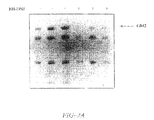
- mice by eight weeks of age (four weeks untreated from birth to weaning, 4 weeks NB-DNJ treated post-weaning) there was an unexpected reduction in the intensity of the GM2 ganglioside band, relative to the untreated age matched controls, indicating that reduced levels of storage were occurring in the presence of the drug.
- the mice were followed for twelve weeks and there was a consistent reduction in stored GM2 ganglioside in all animals from the NB-DNJ treated group, irrespective of their age (FIG. 1).
- the neurons within the Tay-Sachs mouse brains which are responsible for the GM2 storage observed in whole brain lipid extracts are confined to certain specific regions of the brain (12).
- mice were anesthetized, perfused with phosphate buffer pH 7.4 containing 4% paraformaldehyde and the brain dissected and retained in fixative overnight prior to cryopreservation and sectioning.
- Frozen brain sections (7 micron) were warmed to room temperature, stained with periodic acid-Schiff (PAS) according to the manufacturer's instructions (Sigma, Poole Dorset UK), counter-stained with Erhlich's hematoxylin and mounted in DPX (BDH).
- PAS periodic acid-Schiff
- the NB-DNJ treated mice had fewer PAS positive neurons and the intensity of staining in each neuron was reduced (FIGS. 3B and 3D), relative to the untreated age matched control's brain sections, which exhibited extensive storage (FIGS. 3A and 3C).
- EM electron microscopy
- mice were anesthetized and perfusion fixed with 2% paraformaldehyde, 2% glutaraldehyde mix in PBS.
- the brain was dissected and fixed in the same fixative overnight at 4°C.
- the brain was trimmed and 100 ⁇ m sections cut on a vibrotome, the sections washed three times in 0.1M phosphate buffer and stained with osmium tetroxide (1% in 0.1M phosphate) for 35 mins.
- the sections were dehydrated through an ethanol series, treated with propylene oxide (2 x 15 mins) and placed in Durcupan resin overnight at room temperature, transferred to glass slides and placed at 60°C for 48 hours.
- Storage areas of the brain were selected microscopically, cut out of the thick section with a scalpel blade and glued with Super Glue Loctite, Quick Tite, (Loctite Corp., Rock Hill, CT) onto an Embed 800 stub (Electron Microscopy Sciences, Fort Washington, PA). Sections were stained with uranyl acetate/lead citrate and observed with a Hitachi 600 microscope at 75 kv.
- FIG. 4A the extensive storage observed within storage neurons from untreated mice resulted in the organelles with the highest degree of storage being difficult to section, with the storage product frequently detaching partially from the surrounding membrane.
- FIG. 4B the storage within neurons was always markedly reduced, relative to the untreated controls, and as a result no sectioning artifact was observed. This was consistently observed by two independent electron microscopy groups studying independent material derived from these mice. One representative set of data is shown in FIG. 4.
- the EM data are in keeping with the cytochemical staining which indicated that there were fewer storage neurons in the brains of treated mice and that storage cells in the treated animals had reduced levels of GM2 storage, relative to the untreated controls.
- cytochemical staining which indicated that there were fewer storage neurons in the brains of treated mice and that storage cells in the treated animals had reduced levels of GM2 storage, relative to the untreated controls.
- mice had MCBs which contained less electron dense storage lipid (FIG. 4D) but also did not have the prominent concentrically arranged lamellae characteristic of the MCB in neurons from untreated mice (FIG. 4C). Instead, they exhibited a diffuse pattern of storage with membrane-like structures only clearly discernible in the periphery of the organelle (FIG. 4D).
- NB-DNJ prevents lysosomal storage and the extent of storage per cell and per MCB is dramatically reduced, in keeping with the biochemical data on whole brain GSLs (FIGS. 1 and 2).
- mice with NB-DNJ demonstrate that oral treatment of mice with NB-DNJ is well tolerated and that it results in the inhibition of GSL biosynthesis. Furthermore, in the Tay-Sachs mouse, which exhibits progressive CNS storage of GM2 ganglioside, we have been able to prevent storage, as a consequence of reducing GSL biosynthesis. This indicates that NB-DNJ can cross the blood:brain barrier to an extent which can prevent storage.
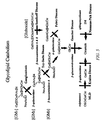
- NB-DNJ specifically inhibits the first step in GSL biosynthesis, the glucosyl-transferase catalyzed biosynthesis of GlcCer (5-7).
- GSL human glycosphingolipid
- NB-DNJ does not appear to inhibit galactosyltransferase which initiates the biosynthesis of the pathway that results in the formation of GalCer and sulphatide. Therefore, it is not believed that NB-DNJ would show efficacy against Krabbe disease and metachromatic leukodystrophy (MLD). These diseases involve the storage of GalCer and sulphatide, respectively, as shown at the bottom of FIG. 5. This can be advantageous to the invention as the formation of GalCer and sulphatide, which are important constituents of myelin, would not be affected by the treatment. Hence, myelination and myelin stability would not be impaired.
- the active agent can be administered by conventional drug administration procedures, preferably in formulations with pharmaceutically acceptable diluents and carriers.
- the active agent can be used in the free amine form or in the salt form.
- Pharmaceutically acceptable salt forms are illustrated, for example, by the HCl salt.
- the amount of active agent to be administered must be an effective amount, that is, an amount which will be medically beneficial but does not present toxic effects which overweight the advantages which accompany its use. It would be expected that the average adult human daily dosage would normally range from about 0.1 mg to about 1000 mg of the active agent.
- Suitable formulations of the active compound in pharmaceutically acceptable diluents and carriers in therapeutic dosage form can be prepared by conventional procedures such as by reference to general texts in the field, e.g., Remington's Pharmaceutical Sciences , ed. Arthur Osol, 16th ed,. 1980, Mack Publishing Co., Easton, PA, and the 18th ed., 1990.
- Conventional diluents and carriers are, e.g., water, normal saline, sugars, starch and the like substances.
Landscapes
- Health & Medical Sciences (AREA)
- Life Sciences & Earth Sciences (AREA)
- Chemical & Material Sciences (AREA)
- Medicinal Chemistry (AREA)
- Pharmacology & Pharmacy (AREA)
- Animal Behavior & Ethology (AREA)
- General Health & Medical Sciences (AREA)
- Public Health (AREA)
- Veterinary Medicine (AREA)
- Epidemiology (AREA)
- Molecular Biology (AREA)
- Bioinformatics & Cheminformatics (AREA)
- General Chemical & Material Sciences (AREA)
- Organic Chemistry (AREA)
- Nuclear Medicine, Radiotherapy & Molecular Imaging (AREA)
- Engineering & Computer Science (AREA)
- Chemical Kinetics & Catalysis (AREA)
- Neurosurgery (AREA)
- Neurology (AREA)
- Biomedical Technology (AREA)
- Diabetes (AREA)
- Hematology (AREA)
- Obesity (AREA)
- Pharmaceuticals Containing Other Organic And Inorganic Compounds (AREA)
- Medicines That Contain Protein Lipid Enzymes And Other Medicines (AREA)
- Saccharide Compounds (AREA)
- Peptides Or Proteins (AREA)
Priority Applications (1)
| Application Number | Priority Date | Filing Date | Title |
|---|---|---|---|
| EP04013466A EP1491196A3 (en) | 1997-01-13 | 1998-01-13 | Method for treatment of CNS-involved lysosomal storage diseases |
Applications Claiming Priority (3)
| Application Number | Priority Date | Filing Date | Title |
|---|---|---|---|
| US782321 | 1997-01-13 | ||
| US08/782,321 US5798366A (en) | 1993-05-13 | 1997-01-13 | Method for treatment of CNS-involved lysosomal storage diseases |
| PCT/US1998/000031 WO1998030219A1 (en) | 1997-01-13 | 1998-01-13 | Method for treatment of cns-involved lysosomal storage diseases |
Related Child Applications (1)
| Application Number | Title | Priority Date | Filing Date |
|---|---|---|---|
| EP04013466A Division EP1491196A3 (en) | 1997-01-13 | 1998-01-13 | Method for treatment of CNS-involved lysosomal storage diseases |
Publications (3)
| Publication Number | Publication Date |
|---|---|
| EP1007043A1 EP1007043A1 (en) | 2000-06-14 |
| EP1007043B1 EP1007043B1 (en) | 2004-06-09 |
| EP1007043B9 true EP1007043B9 (en) | 2004-12-22 |
Family
ID=25125672
Family Applications (2)
| Application Number | Title | Priority Date | Filing Date |
|---|---|---|---|
| EP98901673A Expired - Lifetime EP1007043B9 (en) | 1997-01-13 | 1998-01-13 | Method for treatment of cns-involved lysosomal storage diseases |
| EP04013466A Withdrawn EP1491196A3 (en) | 1997-01-13 | 1998-01-13 | Method for treatment of CNS-involved lysosomal storage diseases |
Family Applications After (1)
| Application Number | Title | Priority Date | Filing Date |
|---|---|---|---|
| EP04013466A Withdrawn EP1491196A3 (en) | 1997-01-13 | 1998-01-13 | Method for treatment of CNS-involved lysosomal storage diseases |
Country Status (11)
| Country | Link |
|---|---|
| US (1) | US5798366A (https=) |
| EP (2) | EP1007043B9 (https=) |
| JP (1) | JP2001508064A (https=) |
| AT (1) | ATE268598T1 (https=) |
| AU (1) | AU5813898A (https=) |
| CA (1) | CA2278507C (https=) |
| DE (1) | DE69824421T2 (https=) |
| DK (1) | DK1007043T3 (https=) |
| ES (1) | ES2223118T3 (https=) |
| PT (1) | PT1007043E (https=) |
| WO (1) | WO1998030219A1 (https=) |
Families Citing this family (37)
| Publication number | Priority date | Publication date | Assignee | Title |
|---|---|---|---|---|
| US6465488B1 (en) | 1997-12-11 | 2002-10-15 | Chancellor, Masters & Scholars Of The University Of Oxford | Inhibition of glycolipid biosynthesis |
| US6274597B1 (en) | 1998-06-01 | 2001-08-14 | Mount Sinai School Of Medicine Of New York University | Method of enhancing lysosomal α-Galactosidase A |
| US6610703B1 (en) | 1998-12-10 | 2003-08-26 | G.D. Searle & Co. | Method for treatment of glycolipid storage diseases |
| GB0100889D0 (en) | 2001-01-12 | 2001-02-21 | Oxford Glycosciences Uk Ltd | Compounds |
| GB9909064D0 (en) | 1999-04-20 | 1999-06-16 | Oxford Glycosciences Uk Ltd | Therapies |
| WO2000066105A2 (en) * | 1999-04-30 | 2000-11-09 | The Trustees Of Boston College | Treatment of epilepsy with imino sugars |
| ATE234626T1 (de) | 1999-07-26 | 2003-04-15 | Searle & Co | Verwendung von langkettigen n-alkyl derivaten von deoxynojirimycin mit glucocerebrosidase enzyme zur herstellung eines medikaments zur behandlung von mit glykolipiden akkumulation zusammenhängenden krankheiten |
| US6537785B1 (en) | 1999-09-14 | 2003-03-25 | Genzyme Glycobiology Research Institute, Inc. | Methods of treating lysosomal storage diseases |
| US6770468B1 (en) | 1999-09-14 | 2004-08-03 | Genzyme Glycobiology Research Institute, Inc. | Phosphodiester-α-GlcNAcase of the lysosomal targeting pathway |
| ATE384736T1 (de) * | 2001-04-30 | 2008-02-15 | Zystor Therapeutics Inc | Subzelluläres targeting von therapeutischen proteinen |
| US7560424B2 (en) | 2001-04-30 | 2009-07-14 | Zystor Therapeutics, Inc. | Targeted therapeutic proteins |
| US20040005309A1 (en) * | 2002-05-29 | 2004-01-08 | Symbiontics, Inc. | Targeted therapeutic proteins |
| US7629309B2 (en) * | 2002-05-29 | 2009-12-08 | Zystor Therapeutics, Inc. | Targeted therapeutic proteins |
| US20030072761A1 (en) * | 2001-10-16 | 2003-04-17 | Lebowitz Jonathan | Methods and compositions for targeting proteins across the blood brain barrier |
| US6905856B2 (en) * | 2001-12-21 | 2005-06-14 | Genzyme Glycobiology Research Institute, Inc. | Soluble GlcNAc phosphotransferase |
| US20030124652A1 (en) * | 2001-12-21 | 2003-07-03 | Novazyme Pharmaceuticals, Inc. | Methods of producing high mannose glycoproteins in complex carbohydrate deficient cells |
| US6800472B2 (en) | 2001-12-21 | 2004-10-05 | Genzyme Glycobiology Research Institute, Inc. | Expression of lysosomal hydrolase in cells expressing pro-N-acetylglucosamine-1-phosphodiester α-N-acetyl glucosimanidase |
| AU2003246942B2 (en) * | 2002-07-17 | 2009-06-25 | Idorsia Pharmaceuticals Ltd | Piperidinetriol derivatives as inhibitors of glycosylceramide synthase |
| AU2003248960B2 (en) * | 2002-07-17 | 2009-06-25 | Idorsia Pharmaceuticals Ltd | Piperidinetriol derivatives as inhibitors of glycosylceramidsynthase |
| AU2003302724A1 (en) * | 2002-08-13 | 2004-07-09 | Mcivor, Scott, R. | Methods of using vectors to treat metabolic disorders |
| PT2441467E (pt) | 2003-01-31 | 2015-10-12 | Sinai School Medicine | Terapia combinada para o tratamento de transtornos associados a uma deficiência proteica |
| GB0313677D0 (en) * | 2003-06-13 | 2003-07-16 | Oxford Glycosciences Uk Ltd | Novel compound |
| GB0313678D0 (en) * | 2003-06-13 | 2003-07-16 | Oxford Glycosciences Uk Ltd | Novel compounds |
| CN1922313B (zh) * | 2004-02-10 | 2011-10-26 | 生物马林医药公司 | 酸性α-糖苷酶及其片段 |
| US20050208090A1 (en) * | 2004-03-18 | 2005-09-22 | Medtronic, Inc. | Methods and systems for treatment of neurological diseases of the central nervous system |
| DE102004029310A1 (de) * | 2004-06-17 | 2005-12-29 | Clariant Gmbh | Hochkonzentrierte, wässrige Formulierungen von Oligo-und Polyestern |
| JP2008503590A (ja) * | 2004-06-21 | 2008-02-07 | メドトロニック・インコーポレーテッド | 組成物を細胞にデリバリーするための医学用システム及び方法 |
| US7884115B2 (en) * | 2004-09-28 | 2011-02-08 | Allergan, Inc. | Methods and compositions for the treatment of pain and other neurological conditions |
| US8500720B2 (en) * | 2005-05-09 | 2013-08-06 | Medtronic, Inc | Method and apparatus for treatment of cardiac disorders |
| EP2932982B1 (en) | 2005-05-17 | 2018-10-03 | Amicus Therapeutics, Inc. | A method for the treatment of pompe disease using 1-deoxynojirimycin and derivatives |
| US20090117091A1 (en) * | 2006-11-13 | 2009-05-07 | Lebowitz Jonathan | Methods for treating pompe disease |
| WO2008070769A1 (en) * | 2006-12-06 | 2008-06-12 | Medtronic, Inc. | Intrathecal catheter |
| HRP20170698T1 (hr) | 2008-05-07 | 2017-09-22 | Biomarin Pharmaceutical Inc. | Lizosomski usmjereni peptidi i njihove uporabe |
| US20100119502A1 (en) * | 2008-11-11 | 2010-05-13 | Amicus Therapeutics, Inc. | Therapy regimens, dosing regimens and stable medicaments for the treatment of pompe disease |
| EP2475376B1 (en) | 2009-06-17 | 2016-03-30 | BioMarin Pharmaceutical Inc. | Formulations for lysosomal enzymes |
| CA2731346A1 (en) * | 2010-02-09 | 2011-08-09 | The Hospital For Sick Children | Compounds for the treatment of lysosomal storage diseases |
| EP3318277A1 (en) * | 2016-11-04 | 2018-05-09 | Institut du Cerveau et de la Moelle Epiniere-ICM | Inhibitors of glucosylceramide synthase for the treatment of motor neuron diseases |
Family Cites Families (8)
| Publication number | Priority date | Publication date | Assignee | Title |
|---|---|---|---|---|
| GB1555654A (en) * | 1977-06-25 | 1979-11-14 | Exxon Research Engineering Co | Agricultural burner apparatus |
| US4065562A (en) * | 1975-12-29 | 1977-12-27 | Nippon Shinyaku Co., Ltd. | Method and composition for reducing blood glucose levels |
| NO154918C (no) * | 1977-08-27 | 1987-01-14 | Bayer Ag | Analogifremgangsmaate til fremstilling av terapeutisk aktive derivater av 3,4,5-trihydroksypiperidin. |
| GB2020278B (en) * | 1978-05-03 | 1983-02-23 | Nippon Shinyaku Co Ltd | Moranoline dervitives |
| US4849430A (en) * | 1988-03-09 | 1989-07-18 | Monsanto Company | Method of inhibiting virus |
| US5011829A (en) * | 1989-06-02 | 1991-04-30 | G. D. Searle & Co. | Pharmaceutical composition and method of inhibiting virus |
| US5030638A (en) * | 1990-02-26 | 1991-07-09 | G. D. Searle & Co. | Method of antiviral enhancement |
| US6291657B1 (en) * | 1993-05-13 | 2001-09-18 | Monsanto Company | Deoxygalactonojirimycin derivatives |
-
1997
- 1997-01-13 US US08/782,321 patent/US5798366A/en not_active Expired - Lifetime
-
1998
- 1998-01-13 CA CA002278507A patent/CA2278507C/en not_active Expired - Fee Related
- 1998-01-13 WO PCT/US1998/000031 patent/WO1998030219A1/en not_active Ceased
- 1998-01-13 PT PT98901673T patent/PT1007043E/pt unknown
- 1998-01-13 DK DK98901673T patent/DK1007043T3/da active
- 1998-01-13 EP EP98901673A patent/EP1007043B9/en not_active Expired - Lifetime
- 1998-01-13 AT AT98901673T patent/ATE268598T1/de active
- 1998-01-13 AU AU58138/98A patent/AU5813898A/en not_active Abandoned
- 1998-01-13 ES ES98901673T patent/ES2223118T3/es not_active Expired - Lifetime
- 1998-01-13 EP EP04013466A patent/EP1491196A3/en not_active Withdrawn
- 1998-01-13 JP JP53098198A patent/JP2001508064A/ja not_active Ceased
- 1998-01-13 DE DE69824421T patent/DE69824421T2/de not_active Expired - Lifetime
Also Published As
| Publication number | Publication date |
|---|---|
| ES2223118T3 (es) | 2005-02-16 |
| AU5813898A (en) | 1998-08-03 |
| DE69824421D1 (de) | 2004-07-15 |
| EP1491196A3 (en) | 2005-03-16 |
| CA2278507A1 (en) | 1998-07-16 |
| EP1007043A1 (en) | 2000-06-14 |
| DK1007043T3 (da) | 2004-10-11 |
| EP1007043B1 (en) | 2004-06-09 |
| DE69824421T2 (de) | 2005-03-03 |
| WO1998030219A1 (en) | 1998-07-16 |
| EP1491196A2 (en) | 2004-12-29 |
| JP2001508064A (ja) | 2001-06-19 |
| PT1007043E (pt) | 2004-10-29 |
| ATE268598T1 (de) | 2004-06-15 |
| CA2278507C (en) | 2007-08-28 |
| US5798366A (en) | 1998-08-25 |
Similar Documents
| Publication | Publication Date | Title |
|---|---|---|
| EP1007043B9 (en) | Method for treatment of cns-involved lysosomal storage diseases | |
| Jeyakumar et al. | Glycosphingolipid lysosomal storage diseases: therapy and pathogenesis | |
| Platt et al. | Substrate reduction therapy | |
| US8252789B2 (en) | Compositions and methods for treating lysosomal disorders | |
| Schulze et al. | Lysosomal lipid storage diseases | |
| KR102076585B1 (ko) | 리소좀 효소를 재배열하는 능력을 갖는 화합물 및 암브록솔 및/또는 암브록솔의 유도체의 조합물 | |
| Lachmann et al. | Substrate reduction therapy for glycosphingolipid storage disorders | |
| DE69401658T2 (de) | Verwendung von deoxygalactonojirimycin derivaten zu hemmung der glycolipid synthese | |
| US20120052053A1 (en) | Compositions and methods for the treatment of altered alpha-synuclein function | |
| Platt et al. | Substrate reduction therapy in mouse models of the glycosphingolipidoses | |
| MXPA01010706A (es) | Uso de inhibidores de sintesis de glucosilceramida en terapia. | |
| Schuette et al. | The glycosphingolipidoses-from disease to basic principles of metabolism | |
| Eckhardt | Pathology and current treatment of neurodegenerative sphingolipidoses | |
| AU2017251256B2 (en) | Inhibitors of glucosylceramide degradation in the treatment of diseases of the motor units | |
| US10519157B2 (en) | Deuterated compounds for treating Fabry, Gaucher, Parkinson's and related diseases and conditions, and compositions and methods thereof | |
| Fan | Iminosugars as active‐site‐specific chaperones for the treatment of lysosomal storage disorders | |
| Walkley et al. | Pathomechanisms in lysosomal storage disorders | |
| Ajmal et al. | Advanced drug delivery systems in the management of Gaucher disease | |
| AU2014265137A1 (en) | Compositions and methods for the treatment of altered alpha-synuclein function | |
| US20040137531A1 (en) | Methods of screening for inhibitors of phospholipid synthesis related to glycolipid-storage diseases | |
| Beck | Use of Small Molecules for the Treatment of Lysosomal Storage Diseases. |
Legal Events
| Date | Code | Title | Description |
|---|---|---|---|
| PUAI | Public reference made under article 153(3) epc to a published international application that has entered the european phase |
Free format text: ORIGINAL CODE: 0009012 |
|
| 17P | Request for examination filed |
Effective date: 19990713 |
|
| AK | Designated contracting states |
Kind code of ref document: A1 Designated state(s): AT BE CH DE DK ES FI FR GB GR IE IT LI LU NL PT SE |
|
| 17Q | First examination report despatched |
Effective date: 20030324 |
|
| GRAP | Despatch of communication of intention to grant a patent |
Free format text: ORIGINAL CODE: EPIDOSNIGR1 |
|
| RIC1 | Information provided on ipc code assigned before grant |
Ipc: 7A 61P 3/00 - Ipc: 7A 61K 31/70 - Ipc: 7A 61K 31/445 A |
|
| RIC1 | Information provided on ipc code assigned before grant |
Ipc: 7A 61P 3/00 - Ipc: 7A 61K 31/70 - Ipc: 7A 61K 31/445 A |
|
| GRAS | Grant fee paid |
Free format text: ORIGINAL CODE: EPIDOSNIGR3 |
|
| GRAA | (expected) grant |
Free format text: ORIGINAL CODE: 0009210 |
|
| AK | Designated contracting states |
Kind code of ref document: B1 Designated state(s): AT BE CH DE DK ES FI FR GB GR IE IT LI LU NL PT SE |
|
| REG | Reference to a national code |
Ref country code: GB Ref legal event code: FG4D |
|
| REG | Reference to a national code |
Ref country code: CH Ref legal event code: EP |
|
| REF | Corresponds to: |
Ref document number: 69824421 Country of ref document: DE Date of ref document: 20040715 Kind code of ref document: P |
|
| REG | Reference to a national code |
Ref country code: IE Ref legal event code: FG4D |
|
| REG | Reference to a national code |
Ref country code: CH Ref legal event code: NV Representative=s name: ISLER & PEDRAZZINI AG |
|
| REG | Reference to a national code |
Ref country code: SE Ref legal event code: TRGR |
|
| REG | Reference to a national code |
Ref country code: DK Ref legal event code: T3 |
|
| REG | Reference to a national code |
Ref country code: GR Ref legal event code: EP Ref document number: 20040403038 Country of ref document: GR |
|
| REG | Reference to a national code |
Ref country code: PT Ref legal event code: SC4A Free format text: AVAILABILITY OF NATIONAL TRANSLATION Effective date: 20040902 |
|
| REG | Reference to a national code |
Ref country code: ES Ref legal event code: FG2A Ref document number: 2223118 Country of ref document: ES Kind code of ref document: T3 |
|
| ET | Fr: translation filed | ||
| NLR4 | Nl: receipt of corrected translation in the netherlands language at the initiative of the proprietor of the patent | ||
| PLBE | No opposition filed within time limit |
Free format text: ORIGINAL CODE: 0009261 |
|
| STAA | Information on the status of an ep patent application or granted ep patent |
Free format text: STATUS: NO OPPOSITION FILED WITHIN TIME LIMIT |
|
| 26N | No opposition filed |
Effective date: 20050310 |
|
| PGFP | Annual fee paid to national office [announced via postgrant information from national office to epo] |
Ref country code: ES Payment date: 20060131 Year of fee payment: 9 |
|
| REG | Reference to a national code |
Ref country code: CH Ref legal event code: PCAR Free format text: ISLER & PEDRAZZINI AG;POSTFACH 1772;8027 ZUERICH (CH) |
|
| REG | Reference to a national code |
Ref country code: ES Ref legal event code: FD2A Effective date: 20070115 |
|
| PGFP | Annual fee paid to national office [announced via postgrant information from national office to epo] |
Ref country code: DK Payment date: 20080122 Year of fee payment: 11 |
|
| PGFP | Annual fee paid to national office [announced via postgrant information from national office to epo] |
Ref country code: SE Payment date: 20080117 Year of fee payment: 11 Ref country code: LU Payment date: 20080123 Year of fee payment: 11 Ref country code: FI Payment date: 20080117 Year of fee payment: 11 |
|
| PG25 | Lapsed in a contracting state [announced via postgrant information from national office to epo] |
Ref country code: ES Free format text: LAPSE BECAUSE OF NON-PAYMENT OF DUE FEES Effective date: 20070115 |
|
| REG | Reference to a national code |
Ref country code: CH Ref legal event code: PUE Owner name: ACTELION PHARMACEUTICALS LTD Free format text: PHARMACIA CORPORATION#100 RT. 2006 NORTH#PEAPACK, NJ 07977 (US) -TRANSFER TO- ACTELION PHARMACEUTICALS LTD#GEWERBESTRASSE 16#4123 ALLSCHWIL (CH) Ref country code: CH Ref legal event code: PFA Owner name: PHARMACIA CORPORATION Free format text: MONSANTO COMPANY#800 NORTH LINDBERGH BOULEVARD#ST. LOUIS, MISSOURI 63167 (US) -TRANSFER TO- PHARMACIA CORPORATION#100 RT. 2006 NORTH#PEAPACK, NJ 07977 (US) |
|
| REG | Reference to a national code |
Ref country code: GB Ref legal event code: 732E Free format text: REGISTERED BETWEEN 20090122 AND 20090128 |
|
| BECH | Be: change of holder |
Owner name: ACTELION PHARMACEUTICALS LTD Effective date: 20090527 |
|
| NLS | Nl: assignments of ep-patents |
Owner name: ACTELION PHARMACEUTICALS LTD. Effective date: 20090310 |
|
| NLT1 | Nl: modifications of names registered in virtue of documents presented to the patent office pursuant to art. 16 a, paragraph 1 |
Owner name: PHARMACIA CORPORATION |
|
| REG | Reference to a national code |
Ref country code: FR Ref legal event code: TP Ref country code: FR Ref legal event code: CD Ref country code: FR Ref legal event code: CA |
|
| EUG | Se: european patent has lapsed | ||
| REG | Reference to a national code |
Ref country code: DK Ref legal event code: EBP |
|
| PG25 | Lapsed in a contracting state [announced via postgrant information from national office to epo] |
Ref country code: FI Free format text: LAPSE BECAUSE OF NON-PAYMENT OF DUE FEES Effective date: 20090113 |
|
| REG | Reference to a national code |
Ref country code: PT Ref legal event code: PC4A Owner name: ACTELION PHARMACEUTICALS LTD., CH Effective date: 20090727 |
|
| PG25 | Lapsed in a contracting state [announced via postgrant information from national office to epo] |
Ref country code: DK Free format text: LAPSE BECAUSE OF NON-PAYMENT OF DUE FEES Effective date: 20090731 |
|
| PG25 | Lapsed in a contracting state [announced via postgrant information from national office to epo] |
Ref country code: LU Free format text: LAPSE BECAUSE OF NON-PAYMENT OF DUE FEES Effective date: 20090113 |
|
| PG25 | Lapsed in a contracting state [announced via postgrant information from national office to epo] |
Ref country code: SE Free format text: LAPSE BECAUSE OF NON-PAYMENT OF DUE FEES Effective date: 20090114 |
|
| REG | Reference to a national code |
Ref country code: DE Ref legal event code: R082 Ref document number: 69824421 Country of ref document: DE Representative=s name: WEICKMANN & WEICKMANN PATENT- UND RECHTSANWAEL, DE Ref country code: DE Ref legal event code: R082 Ref document number: 69824421 Country of ref document: DE Representative=s name: WEICKMANN & WEICKMANN PATENTANWAELTE - RECHTSA, DE Ref country code: DE Ref legal event code: R082 Ref document number: 69824421 Country of ref document: DE Representative=s name: PATENTANWAELTE WEICKMANN & WEICKMANN, DE |
|
| REG | Reference to a national code |
Ref country code: FR Ref legal event code: PLFP Year of fee payment: 19 |
|
| REG | Reference to a national code |
Ref country code: FR Ref legal event code: PLFP Year of fee payment: 20 |
|
| PGFP | Annual fee paid to national office [announced via postgrant information from national office to epo] |
Ref country code: NL Payment date: 20170119 Year of fee payment: 20 |
|
| PGFP | Annual fee paid to national office [announced via postgrant information from national office to epo] |
Ref country code: FR Payment date: 20170120 Year of fee payment: 20 Ref country code: GR Payment date: 20170116 Year of fee payment: 20 Ref country code: DE Payment date: 20170120 Year of fee payment: 20 Ref country code: CH Payment date: 20170119 Year of fee payment: 20 |
|
| PGFP | Annual fee paid to national office [announced via postgrant information from national office to epo] |
Ref country code: AT Payment date: 20170123 Year of fee payment: 20 Ref country code: IE Payment date: 20170123 Year of fee payment: 20 Ref country code: GB Payment date: 20170119 Year of fee payment: 20 Ref country code: PT Payment date: 20170113 Year of fee payment: 20 Ref country code: BE Payment date: 20170119 Year of fee payment: 20 |
|
| PGFP | Annual fee paid to national office [announced via postgrant information from national office to epo] |
Ref country code: IT Payment date: 20170124 Year of fee payment: 20 |
|
| REG | Reference to a national code |
Ref country code: DE Ref legal event code: R071 Ref document number: 69824421 Country of ref document: DE |
|
| REG | Reference to a national code |
Ref country code: CH Ref legal event code: PL |
|
| REG | Reference to a national code |
Ref country code: NL Ref legal event code: MK Effective date: 20180112 |
|
| REG | Reference to a national code |
Ref country code: GB Ref legal event code: PE20 Expiry date: 20180112 |
|
| REG | Reference to a national code |
Ref country code: IE Ref legal event code: MK9A |
|
| REG | Reference to a national code |
Ref country code: BE Ref legal event code: MK Effective date: 20180113 |
|
| REG | Reference to a national code |
Ref country code: AT Ref legal event code: MK07 Ref document number: 268598 Country of ref document: AT Kind code of ref document: T Effective date: 20180113 |
|
| PG25 | Lapsed in a contracting state [announced via postgrant information from national office to epo] |
Ref country code: IE Free format text: LAPSE BECAUSE OF EXPIRATION OF PROTECTION Effective date: 20180113 Ref country code: GB Free format text: LAPSE BECAUSE OF EXPIRATION OF PROTECTION Effective date: 20180112 |
|
| PG25 | Lapsed in a contracting state [announced via postgrant information from national office to epo] |
Ref country code: PT Free format text: LAPSE BECAUSE OF EXPIRATION OF PROTECTION Effective date: 20180123 |