EP0970211B1 - Varianten des neurotrophischen ziliarischen faktors mit erhöhter rezeptor-selektivität und verfahren zu deren auswahl - Google Patents
Varianten des neurotrophischen ziliarischen faktors mit erhöhter rezeptor-selektivität und verfahren zu deren auswahl Download PDFInfo
- Publication number
- EP0970211B1 EP0970211B1 EP98912699A EP98912699A EP0970211B1 EP 0970211 B1 EP0970211 B1 EP 0970211B1 EP 98912699 A EP98912699 A EP 98912699A EP 98912699 A EP98912699 A EP 98912699A EP 0970211 B1 EP0970211 B1 EP 0970211B1
- Authority
- EP
- European Patent Office
- Prior art keywords
- cntf
- variant
- cntfr
- pathologies
- variants
- Prior art date
- Legal status (The legal status is an assumption and is not a legal conclusion. Google has not performed a legal analysis and makes no representation as to the accuracy of the status listed.)
- Expired - Lifetime
Links
Images


Classifications
-
- C—CHEMISTRY; METALLURGY
- C12—BIOCHEMISTRY; BEER; SPIRITS; WINE; VINEGAR; MICROBIOLOGY; ENZYMOLOGY; MUTATION OR GENETIC ENGINEERING
- C12N—MICROORGANISMS OR ENZYMES; COMPOSITIONS THEREOF; PROPAGATING, PRESERVING, OR MAINTAINING MICROORGANISMS; MUTATION OR GENETIC ENGINEERING; CULTURE MEDIA
- C12N15/00—Mutation or genetic engineering; DNA or RNA concerning genetic engineering, vectors, e.g. plasmids, or their isolation, preparation or purification; Use of hosts therefor
- C12N15/09—Recombinant DNA-technology
- C12N15/11—DNA or RNA fragments; Modified forms thereof; Non-coding nucleic acids having a biological activity
-
- C—CHEMISTRY; METALLURGY
- C07—ORGANIC CHEMISTRY
- C07K—PEPTIDES
- C07K14/00—Peptides having more than 20 amino acids; Gastrins; Somatostatins; Melanotropins; Derivatives thereof
- C07K14/435—Peptides having more than 20 amino acids; Gastrins; Somatostatins; Melanotropins; Derivatives thereof from animals; from humans
- C07K14/475—Growth factors; Growth regulators
-
- A—HUMAN NECESSITIES
- A61—MEDICAL OR VETERINARY SCIENCE; HYGIENE
- A61P—SPECIFIC THERAPEUTIC ACTIVITY OF CHEMICAL COMPOUNDS OR MEDICINAL PREPARATIONS
- A61P25/00—Drugs for disorders of the nervous system
-
- A—HUMAN NECESSITIES
- A61—MEDICAL OR VETERINARY SCIENCE; HYGIENE
- A61K—PREPARATIONS FOR MEDICAL, DENTAL OR TOILETRY PURPOSES
- A61K38/00—Medicinal preparations containing peptides
Definitions
- the present invention relates to CNTF variants with enhanced neuronal receptor selectivity, useful for the treatment of neurological or other diseases or disorders.
- Ciliary neurotrophic factor is a 23-kDa neuro-cytokine, which is expressed in both the peripheral and central nervous system beginning in the late embryonic period (reviewed by Manthorpe et al., 1993; Ip and Yancopoulos 1996). Initially identified by its ability to promote the in vitro survival of embryonic chick parasympathetic neurons, CNTF was subsequently shown to exert potent growth-promoting and/or differentiating actions on a variety of neuronal and glial cells, including motor neurons, sensory neurons, sympathetic neurons, hippocampal neurons, and oligodendrocytes (reviewed by Manthorpe et al., 1993; Ip and Yancopoulos 1996).
- CNTF In vivo administration of CNTF prevents degeneration of chick spinal motor neurons during development of axotomized rat facial motor neurons and of motor neurons in mutant progressive motor neuronopathy mice.
- the neuroprotective effects of CNTF make it a candidate for the treatment of human motor neuron disease and possibly other neurodegenerative diseases (Manthorpe et al., 1993; Ip and Yancopoulos 1996).
- CNTF can also elicit biological effects in non-neuronal cells, such as glia (Hughes et al. 1988; Louis et al. 1993), hepatocytes (Schooltnik et al. 1992), skeletal muscle cells (Helgren et al. 1994), embryonic stem cells (Conover et al.1993), bone marrow stromal cells (Gimble et al.1994), and tumor plasma cells (Zhang et al.1994).
- non-neuronal cells such as glia (Hughes et al. 1988; Louis et al. 1993), hepatocytes (Schooltnik et al. 1992), skeletal muscle cells (Helgren et al. 1994), embryonic stem cells (Conover et al.1993), bone marrow stromal cells (Gimble et al.1994), and tumor plasma cells (Zhang et al.1994).
- CNTF The functional pleiotropy of CNTF is one of the likely reasons for the problems associated with the therapeutic use of this protein.
- CNTF has a short half-life in vivo (Davies et al . , 1994), and needs to be administered at high doses in order to achieve pharmacologically useful concentrations in target tissues.
- CNTF produces side-effects, such as weight loss and acute-phase response (Dittrich et al., 1995) .
- CNTF exerts its biological actions through the binding, sequential assembly, and activation of a multisubunit receptor complex composed of a ligand-specific a-receptor (CNTFR) and the signal transducing subunits gp130 and leukemia inhibitory factor receptor-b (LIFR) (Ip and Yancopoulos, 1996). Binding of CNTF to CNTFR triggers the subsequent association and heterodimerization of gp130 and LIFR, leading to the activation of a signaling cascade mediated by protein tyrosine kinases of the Jak family and STAT transcription activators.
- CNTFR ligand-specific a-receptor
- LIFR leukemia inhibitory factor receptor-b
- CNTFR can function in either membrane-bound or soluble forms (Ip and Yancopoulos , 1996).
- m-CNTFR membrane-bound form of CNTFR
- m-CNTFR glycosyl-phosphatidylinositol linkage
- s-CNTFR The soluble form of CNTFR (s-CNTFR), which can be produced by phospholipase C-mediated cleavage of m-CNTFR, serves as a cofactor in potentiating CNTF actions on cells that express gp130 and LIFR (Davis et al., 1993). Soluble CNTFR has been detected in cerebrospinal fluid and serum (Helgren et al., 1994; Davis et al., 1993), suggesting that it may be involved in mediating some of the non-neuronal actions of CNTF, such as acute-phase response 5 (Dittrich et al., 1994).
- m-CNTFR is required for neuronal action of CNTF, while s-CNTFR is thought to mediate non-neuronal effects, modified CNTF proteins with increased selectivity for m-CNTFR are expected to produce a more neuron-specific spectrum of pharmacological activities.
- the present invention relates to CNTF variants that, as an effect of specific amino acid substitutions in accordance with the invention, have a reduced ability of binding CNTFR, as compared to the natural CNTF, and a decrease of the biological activity mediated through soluble CNTFR, with an unchanged biological activity. mediated through membrane-bound CNTFR.
- CNTF variants are on the basis of a method for the treatment of neuronal diseases and disorders, in human and animals.
- the biological activities of CNTF variants can be compared between human hepatoma cells plus soluble CNTFR and human hepatoma cells stably expressing CNTFR, which provides a method for assessing selectivity for membrane-bound receptor.
- the variant according to the invention is obtained by replacing in the hCNTF (SEQ ID NO:1) the amino acid threonine in position 169 with isoleucine, and the amino acid histidine in position 174 with alanine (variant which hereinafter is referred as Thr169Ile/His174Ala/hCNTF; IA-CNTF, or SEQ ID NO:2).
- This variant is characterized by a reduced ability to bind soluble CNTFR.
- modified hCNTF The ability of the modified hCNTF to stimulate production of the acute-phase protein haptoglobin is measured in human hepatoma cells in presence of soluble CNTFR. As described hereinafter, the modified CNTF exibits decreased potency as compared to the wild-type CNTF.
- modified human CNTF protein The ability of the modified human CNTF protein to stimulate production of choline acetyltransferase in a human neuroblastoma cell line can be measured. As described hereinafter, the modified CNTF protein is equipotent with the wild-type CNTF protein in this assay.
- Human hepatoma cells which do not express CNTFR can be engineered to express the full-length human CNTFR, and these cells are used to assay the ability of modified CNTF proteins to stimulate haptoglobin production. Biological activity in this assay is compared to that obtained in parent hepatoma cells assayed in the presence of soluble CNTFR. This procedure provides a measure of selective activation of biological responses through membrane-bound versus soluble CNTFR. As described herein, the modified CNTF protein is equipotent with wild-type human CNTF in this assay, showing that it maintains high biological activity through membrane-bound CNTFR, while displaying specifically reduced activity through soluble CNTFR.
- CNTF variant that was previously shown (Italian patent patent application RM96A000492) to have increased neuronal receptor selectivity (Phe152Ala/Ser166Asp/Gln167His/human CNTF or AKDH-CNTF; a human CNTF variant containing, from amino acids 152 to 167, the sequence reported as SEQ ID NO:3 in the Italian patent application RM96A000492), is also equipotent with wild-type CNTF in hepatoma cells expressing CNTFR.
- this assay system can be used to identify CNTF variants that display different biological activities through soluble and membrane-bound CNTFR.
- certain amino acid substitutions in the human CNTF wild type protein result in modified human CNTF protein that exhibit increased selectivity for membrane-bound (neuronal) vs. soluble (non-neuronal) CNTFR and therefore, would be expected to have enhanced therapeutic properties.
- the CNTF modified molecules useful for practising the present invention, can be prepared by cloning and expressing them in procariotic and eucariotic systems.
- the resulting recombinant gene can be expressed and purified with any method, allowing the further formation of a stable biologically active protein.
- the subject of the present invention is the following.
- the modified CNTF molecules produced as herein described, or their hybrids or mutants can be used for promoting the differentiation, proliferation or surviving in vitro or in vivo of cells responding to CNTF.
- the present invention can be used for treating pathologies of any cell responding to CNTF, in the preferred embodiments, pathologies of neuronal cells expressing membrane-bound CNTF receptor, can be treated.
- Method for assessing the enhanced selectivity for membrane-bound receptor of the variants of CNTF is inducing biological responses through membrane-bound CNTF receptor or soluble CNTF receptor.
- Variants of CNTF selected by the above method. Isolated and purified DNA molecules which code for the CNTF variants. DNA recombinant molecules which comprise the above DNA functionally bound to a sequence for controlling the expression in said recombinant DNA.
- Unicellular host transformed with the recombinant DNA can be selected from the group comprising bacteria, yeasts, fungi and animal and vegetal cells.
- Use of the above variants for the preparation of drugs for the treatment of neurological diseases or disorders include degenerative pathologies as retinal pathologies, diseases or pathologies involving spinal cord, cholinergic neurones, hippocampal neurones, or motor neurones.
- the variants according to the present invention can be used also in the treatment of diseases or pathologies deriving from nervous system damages, caused by traumas, surgery operations, heart attack, infections and malignant tumours, or by the exposition to tossic agents.
- Conjugates of the above variants with other proteins or other molecules Conjugates of the above variants with antibodies against the transferring receptor for allowing the variants to cross the blood-brain barrier.
- Conjugates of the above variants with polyethyleneglycol for reducing the immunogenicity of said variants.
- E.coli HB2151 bacteria transformed with a nucleotide sequence coding for SEQ ID NO:2 was filed on February 12, 1997 with The National Collections of Industrial and Marine Bacteria Ltd. (NCIMB), Aberdeen, Scotland, UK. under access numbers NCIMB 40860.
- IA-CNTF Thr169Ile/His174Ala/human CNTF (SEQ ID NO:2):, was prepared. Mutations were generated by overlap extension PCR (Horton and Pease, 1991), using the pHenD-CNTF vector (Baumann et al. 1993) as template.
- oligonucleotide primer sets 1 (5'-GATCGTCGACATGGCTTTCACAGAGCATTC'ACCGC-3') + 2 (5'-AGAAATGAAACGAAGGTCAGCGATGGACCTTACTGTCCA-3') and 3 (5'-TGGACAGTAAGGTCCATCGCTGACCTTCGTTTCATTTCT-3') + 4 (5'-GAAACCATCGATAGCAGCACCGTAAT-3') , with cycles of 2 min at 94 °C, 2 min at 50 °C, and 3 min at 72 °C.
- the two PCR products were isolated using a Qiaex kit, mixed, and amplified in a second PCR reaction.
- PCR cycles were performed in the absence, and 35 cycles in the presence of primers 1 + 4.
- the PCR product was digested with SalI and ClaI, purified by Qiaex, and subcloned into the SalI/ClaI-digested pHenD-CNTF vector, yielding the vector pHenD-IA-CNTF.
- DNA sequencing revealed the presence of a mutation producing the Hisl74Ala substitution expected from the mutagenized primers used, as well as an additional point mutation (probably due to an error of the polymerase) which gives rise to a Thr169Ile substitution in the encoded protein sequence.
- the coding sequence for IA-CNTF was subcloned into the pRSET plasmid, which allows high-level protein expression in bacteria (Horton and Pease, 1991), using the following procedure.
- PCR amplification was performed with the pHenD-IA-CNTF vector as template, using the oligonucleotide primers 5 (5'-GTCACCATGGCTTTCACAGAGCATTCACCG-3') and 6 (5'-TGACGCGGCCGCCCTACACATTTTCTTGTTGTTAGCAATATA-3'), with 25 cycles of 2 min at 94 °C, 2 min at 50 ° C, and 2 min at 72°C.
- the PCR product was digested with NcoI and BamHI. purified using a Wizard PCR kit, and subcloned into the NcoI/BamHI-digested plasmid pRSET-CNTF (Horton and Pease, 1991). The identity of the final construct was confirmed by DNA sequencing.
- Recombinant proteins were produced in E. coli and purified by reverse-phase HPLC according to previously described procedures (Saggio et al., 1995; Di Marco et al., 1996).
- Example 2 Receptor binding activity of modified CNTF protein
- the CNTFR binding activity of CNTF and IA-CNTF was determined by measuring the ability of the proteins to compete with biotinylated CNTF for binding to solid phase-immobilized CNTFR, using a previously described procedure (Saggio et al., 1994; Saggio et al., 1995). As shown in Fig. 1, IA-CNTF displayed 15-fold reduced affinity for CNTFR, as compared to the wild-type protein.
- Example 3 Biological activity mediated through soluble CNTFR in non-neuronal cells
- the human hepatoma cell line HepG2 expresses LIFR and gp130, but not CNTFR (Baumann et al., 1993). Addition of soluble CNTFR to HepG2 cells causes a dose-dependent increase in responsiveness to CNTF, due to formation of high affinity CNTF receptor complexes.
- the biological activity of IA-CNTF is depicted in Fig. 2. At a subsaturating concentration of s-CNTFR, this variant behaved as a full agonist in the HepG2 assay, with an EC 50 value 5 times higher than that of CNTF, in agreement with its reduced affinity for CNTFR.
- Example 4 Biological activity mediated through membrane-bound CNTFR in neuronal cells
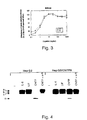
- CNTF and IA-CNTF were equipotent in this assay, as it is evidenced in the Fig.3.
- Example 5 Biological activity in non-neuronal cells engineered to express membrane-bound CNTFR
- HepG2 cells were stably transfected with an expression vector encoding full-length CNTFR.
- human cDNA encoding the full-length human CNTFR (nucleotides 264-1382 coding for amino acids 1-372 (Davis et al., 1991)) was obtained by reverse transcription-PCR from SH-SY5Y cells and cloned into the EcoRV site of the eukaryotic expression plasmid pcDNA3 (Invitrogen), which carries the neomycin resistance gene.
- HepG2/CNTFR subclone stably expressing CNTFR
- HEPG2 and HEPG2/CNTFR cells were plated in 100 ml Petri dishes, and used 24 h later, when they are semi-confluent. Cells were serum starved for 4 h, before be treated for 15 minutes with various reagents. Cells were then washed with an ice solution of phoshate salt buffer, containing NaF 50 mM, collected through centrifugation and frozen in liquid N2. Total cell extracts were prepared as previously described (Demartis et al., 1996).
- the high affinity binding of the activated STAT factors with the oligonucleotide SIE m67 was determined with electromobility shift assay according to Sadowsky and Gilman (see Sadowsky and Gilman, 1993) using 10 (g of cell extract.
- the oligonucleotide probe was labeled in the 5' end, with Klenow enzyme in presence of [ (-32P] dATP and [ (-32P] dCTP (3000 Ci/mmoli) .
- CNTF and IA-CNTF were equipotent in stimulating haptoglobin production in HeG2/CNTFR cells (Fig. 5), showing that membrane anchoring of CNTFR in non-neuronal cells is sufficient to confer a profile of relative biological activities similar to that observed in neuronal IMR-32 cells.
- AKDH-CNTF Phe152Ala/Ser166Asp/Gln167His/human CNTF
- a human CNTF variant that was previously shown (Italian patent patent application RM96A000492) to have increased neuronal receptor selectivity, is also very potent in hepatoma cells expressing CNTFR.
Landscapes
- Health & Medical Sciences (AREA)
- Chemical & Material Sciences (AREA)
- Life Sciences & Earth Sciences (AREA)
- Organic Chemistry (AREA)
- Genetics & Genomics (AREA)
- Engineering & Computer Science (AREA)
- Biomedical Technology (AREA)
- Zoology (AREA)
- Molecular Biology (AREA)
- General Health & Medical Sciences (AREA)
- Biophysics (AREA)
- Biochemistry (AREA)
- Medicinal Chemistry (AREA)
- Bioinformatics & Cheminformatics (AREA)
- Toxicology (AREA)
- Gastroenterology & Hepatology (AREA)
- Wood Science & Technology (AREA)
- General Engineering & Computer Science (AREA)
- Biotechnology (AREA)
- Proteomics, Peptides & Aminoacids (AREA)
- General Chemical & Material Sciences (AREA)
- Plant Pathology (AREA)
- Chemical Kinetics & Catalysis (AREA)
- Neurosurgery (AREA)
- Neurology (AREA)
- Nuclear Medicine, Radiotherapy & Molecular Imaging (AREA)
- Physics & Mathematics (AREA)
- Pharmacology & Pharmacy (AREA)
- Veterinary Medicine (AREA)
- Animal Behavior & Ethology (AREA)
- Microbiology (AREA)
- Public Health (AREA)
- Medicines That Contain Protein Lipid Enzymes And Other Medicines (AREA)
- Peptides Or Proteins (AREA)
- Micro-Organisms Or Cultivation Processes Thereof (AREA)
- Investigating Or Analysing Biological Materials (AREA)
- Medicines Containing Antibodies Or Antigens For Use As Internal Diagnostic Agents (AREA)
- Medicines Containing Material From Animals Or Micro-Organisms (AREA)
- Preparation Of Compounds By Using Micro-Organisms (AREA)
Claims (21)
- Variante des ciliaren neurotrophen Faktors (CNTF), dadurch gekennzeichnet, dass die Reste an den Positionen, die den Positionen 169 und 174 des humanen CNTF-Wildtyps mit der SEQ-ID-Nr. 1 entsprechen, durch einen Isoleucinrest bzw. einen Alaninrest ersetzt sind, wobei die Variante eine unveränderte Bindungsaffinität für den CNTF-Membranrezeptor bezogen auf den CNTF-Wildtyp und eine verringerte Bindungsaffinität für den löslichen CNTF-Rezeptor bezogen auf den CNTF-Wildtyp aufweist.
- Variante des CNTF nach Anspruch 1, wobei der CNTF, der CNTF-Membranrezeptor und der lösliche CNTF-Rezeptor human sind.
- DNA-Molekül, kodierend für die CNTF-Variante nach Anspruch 1 oder 2.
- DNA-Molekül nach Anspruch 3, wobei das DNA-Molekül ein isoliertes und gereinigtes DNA-Molekül ist.
- Rekombinantes DNA-Molekül, welches das DNA-Molekül nach Anspruch 4 in ' funktionsfähiger Verknüpfung mit einer Sequenz, welche die Expression des genannten DNA-Moleküls in dem rekombinanten DNA-Molekül steuert, umfasst.
- Wirtszelle, transformiert mit dem rekombinanten DNA-Molekül nach Anspruch 5.
- Wirtszelle nach Anspruch 6, wobei die Wirtszelle aus der Gruppe, die aus Bakterien, Hefen, Pilzen, Tierzellen und Pflanzenzellen besteht, ausgewählt ist.
- Konjugat der Variante nach Anspruch 1 oder 2 mit einem anderen Protein oder anderen Molekül.
- Konjugat nach Anspruch 8, wobei das Protein ein Antikörper gegen den transferierenden Rezeptor ist, welcher der Variante das Überqueren der Blut-Hirn-Schranke gestattet.
- Konjugat nach Anspruch 8, wobei das Molekül Polyethylenglycol ist, welches die immunogenität der Variante verringert.
- Verwendung der Variante nach Anspruch 1 oder 2 zur Förderung der Differenzierung, Proliferation oder des Überlebens der Zellen, die auf CNTF ansprechen, in vitro.
- Variante nach Anspruch 1 oder 2 zur Verwendung als Medikament.
- Verwendung der Varianten nach Anspruch 1 oder 2 zur Herstellung von pharmazeutischen Zusammensetzungen zur Behandlung von neurologischen Störungen.
- Verwendung nach Anspruch 13, wobei die Variante gemäß irgendeinem der Ansprüche 8 bis 10 konjugiert ist.
- Verwendung nach Anspruch 13 oder 14, wobei die Störungen Erkrankungen sind.
- Verwendung nach Anspruch 15, wobei die Erkrankungen Pathologien sind.
- Verwendung nach Anspruch 16, wobei die Pathologien degenerative Pathologien sind.
- Verwendung nach Anspruch 17, wobei die degenerativen Pathologien retinale Pathologien sind.
- Verwendung nach Anspruch 17, wobei die Pathologien aus der Gruppe, umfassend Pathologien, welche das Rückenmark, cholinerge Neuronen, Hippocampus-Neuronen und motorische Neuronen betreffen, ausgewählt sind.
- Verwendung nach Anspruch 17, wobei die Pathologien von Schädigungen des Nervensystems herrührende Pathologien sind.
- Zusammensetzung, umfassend die CNTF-Variante nach Anspruch 1 oder 2 in einem pharmazeutisch wirksamen Träger oder umfassend die Konjugate nach irgendeinem der Ansprüche 8 bis 10 in einem pharmazeutisch wirksamen Träger.
Applications Claiming Priority (3)
| Application Number | Priority Date | Filing Date | Title |
|---|---|---|---|
| ITRM970156 | 1997-03-20 | ||
| IT97RM000156A IT1291114B1 (it) | 1997-03-20 | 1997-03-20 | Varianti del fattore neurotrofico ciliare (cntf) con migliorata selettivita' al recettore, e metodo per la loro selezione |
| PCT/IT1998/000064 WO1998041625A1 (en) | 1997-03-20 | 1998-03-20 | Variants of ciliary neurotrophic factor with enhanced receptor selectivity and method for their selection |
Publications (2)
| Publication Number | Publication Date |
|---|---|
| EP0970211A1 EP0970211A1 (de) | 2000-01-12 |
| EP0970211B1 true EP0970211B1 (de) | 2005-11-16 |
Family
ID=11404878
Family Applications (1)
| Application Number | Title | Priority Date | Filing Date |
|---|---|---|---|
| EP98912699A Expired - Lifetime EP0970211B1 (de) | 1997-03-20 | 1998-03-20 | Varianten des neurotrophischen ziliarischen faktors mit erhöhter rezeptor-selektivität und verfahren zu deren auswahl |
Country Status (12)
| Country | Link |
|---|---|
| US (1) | US6660467B1 (de) |
| EP (1) | EP0970211B1 (de) |
| JP (1) | JP3200442B2 (de) |
| KR (1) | KR20010005503A (de) |
| CN (1) | CN1251132A (de) |
| AT (1) | ATE310084T1 (de) |
| AU (1) | AU718998B2 (de) |
| CA (1) | CA2284077C (de) |
| DE (1) | DE69832371T2 (de) |
| IL (1) | IL131677A0 (de) |
| IT (1) | IT1291114B1 (de) |
| WO (1) | WO1998041625A1 (de) |
Families Citing this family (1)
| Publication number | Priority date | Publication date | Assignee | Title |
|---|---|---|---|---|
| US20080254451A1 (en) * | 2004-12-28 | 2008-10-16 | Ares Trading S.A. | Compositions and Methods for Treating Schizophrenia and Related Disorders |
Family Cites Families (5)
| Publication number | Priority date | Publication date | Assignee | Title |
|---|---|---|---|---|
| CA1283046C (en) | 1986-05-29 | 1991-04-16 | Nandini Katre | Tumor necrosis factor formulation |
| US5154924A (en) * | 1989-09-07 | 1992-10-13 | Alkermes, Inc. | Transferrin receptor specific antibody-neuropharmaceutical agent conjugates |
| CA2123234A1 (en) | 1991-11-11 | 1993-05-27 | Lanfranco Callegaro | Synthesis and purification of truncated and mutein forms of human ciliary neuronotrophic factor |
| IT1284867B1 (it) | 1996-07-10 | 1998-05-22 | Angeletti P Ist Richerche Bio | Varianti del fattore neurotrofico ciliare umano (hcntf) con uno spettro di azione differente dalla molecola di tipo selvatico |
| IT1288388B1 (it) * | 1996-11-19 | 1998-09-22 | Angeletti P Ist Richerche Bio | Uso di sostanze che attivano il recettore del cntf ( fattore neurotrofico ciliare) per la preparazione di farmaci per la terapia |
-
1997
- 1997-03-20 IT IT97RM000156A patent/IT1291114B1/it active IP Right Grant
-
1998
- 1998-03-20 JP JP54029898A patent/JP3200442B2/ja not_active Expired - Lifetime
- 1998-03-20 DE DE69832371T patent/DE69832371T2/de not_active Expired - Lifetime
- 1998-03-20 CA CA002284077A patent/CA2284077C/en not_active Expired - Lifetime
- 1998-03-20 WO PCT/IT1998/000064 patent/WO1998041625A1/en not_active Ceased
- 1998-03-20 IL IL13167798A patent/IL131677A0/xx unknown
- 1998-03-20 CN CN98803484A patent/CN1251132A/zh active Pending
- 1998-03-20 KR KR1019997008560A patent/KR20010005503A/ko not_active Ceased
- 1998-03-20 AT AT98912699T patent/ATE310084T1/de active
- 1998-03-20 AU AU67458/98A patent/AU718998B2/en not_active Expired
- 1998-03-20 US US09/381,393 patent/US6660467B1/en not_active Expired - Lifetime
- 1998-03-20 EP EP98912699A patent/EP0970211B1/de not_active Expired - Lifetime
Also Published As
| Publication number | Publication date |
|---|---|
| AU718998B2 (en) | 2000-05-04 |
| IL131677A0 (en) | 2001-03-19 |
| JP3200442B2 (ja) | 2001-08-20 |
| CA2284077A1 (en) | 1998-09-24 |
| US6660467B1 (en) | 2003-12-09 |
| DE69832371D1 (de) | 2005-12-22 |
| DE69832371T2 (de) | 2006-07-27 |
| JP2000511565A (ja) | 2000-09-05 |
| IT1291114B1 (it) | 1998-12-29 |
| ITRM970156A1 (it) | 1998-09-20 |
| WO1998041625A1 (en) | 1998-09-24 |
| CN1251132A (zh) | 2000-04-19 |
| CA2284077C (en) | 2002-12-03 |
| WO1998041625A8 (en) | 1999-10-21 |
| AU6745898A (en) | 1998-10-12 |
| KR20010005503A (ko) | 2001-01-15 |
| ATE310084T1 (de) | 2005-12-15 |
| EP0970211A1 (de) | 2000-01-12 |
Similar Documents
| Publication | Publication Date | Title |
|---|---|---|
| JP4330796B2 (ja) | 改変された毛様体神経栄養因子、それらを作製する方法およびそれらの使用方法 | |
| JP5208733B2 (ja) | 組換えインターフェロンα2(IFNα2)変異体 | |
| WO1995003821A1 (en) | Prosaposin and cytokine-derived peptides as therapeutic agents | |
| JP4493854B2 (ja) | リガンドの生物学的活性を増強する方法 | |
| Heller et al. | Analysis of function and expression of the chick GPA receptor (GPAR α) suggests multiple roles in neuronal development | |
| US5332672A (en) | Prevention of ES cell differentiation by ciliary neurotrophic factor | |
| SK116593A3 (en) | Method of detection and measuring of neurotrophin activity | |
| EP0970211B1 (de) | Varianten des neurotrophischen ziliarischen faktors mit erhöhter rezeptor-selektivität und verfahren zu deren auswahl | |
| WO1998002558A2 (en) | Chimeric receptors for jak-stat signal transduction | |
| LV10312B (en) | The ciliary neurotrophic factor receptor | |
| EP0936919B1 (de) | Neurotrophischer ziliarischer faktor mit geändertem aktivitätsbereich gegenüber dem wildtyp-molekül | |
| US5955290A (en) | Assay systems using the CNTF signal transduction pathway | |
| KR100361717B1 (ko) | 조골세포증식인자 | |
| HK1027127A (en) | Variants of ciliary neurotrophic factor with enhanced receptor selectivity and method for their selection | |
| JP3457321B2 (ja) | Cntfシグナル形質導入経路を用いたアッセイ系 | |
| JP2003507393A (ja) | 改変された毛様体神経栄養因子、それらを作製する方法およびそれらの使用方法 | |
| WO1995015176A1 (en) | Methods of promoting the survival and differentiation of subclasses of cholinergic and serotonergic neurons using fibroblast growth factor-5 | |
| AU781182B2 (en) | Prosaposin and cytokine-derived peptides as therapeutic agents | |
| ITRM950380A1 (it) | Varianti del fattore neurotrofico ciliare umano (hcntf) con migliorata affinita' di legame al recettore. | |
| KR20000023692A (ko) | 야생형 분자와 활성 범위가 상이한 사람 섬모 신경영양 인자 (hCNTF) 변이체 | |
| WO1993011253A1 (en) | Cell-free ciliary neurotrophic factor/receptor complex | |
| Richardson et al. | Ciliary neurotrophic factor |
Legal Events
| Date | Code | Title | Description |
|---|---|---|---|
| PUAI | Public reference made under article 153(3) epc to a published international application that has entered the european phase |
Free format text: ORIGINAL CODE: 0009012 |
|
| 17P | Request for examination filed |
Effective date: 19991014 |
|
| AK | Designated contracting states |
Kind code of ref document: A1 Designated state(s): AT BE CH DE DK ES FI FR GB GR IE IT LI LU MC NL PT SE |
|
| 17Q | First examination report despatched |
Effective date: 20040309 |
|
| GRAP | Despatch of communication of intention to grant a patent |
Free format text: ORIGINAL CODE: EPIDOSNIGR1 |
|
| RAP3 | Party data changed (applicant data changed or rights of an application transferred) |
Owner name: ISTITUTO DI RICERCHE DI BIOLOGIA MOLECOLARE P.ANGE |
|
| GRAS | Grant fee paid |
Free format text: ORIGINAL CODE: EPIDOSNIGR3 |
|
| GRAA | (expected) grant |
Free format text: ORIGINAL CODE: 0009210 |
|
| AK | Designated contracting states |
Kind code of ref document: B1 Designated state(s): AT BE CH DE DK ES FI FR GB GR IE IT LI LU MC NL PT SE |
|
| PG25 | Lapsed in a contracting state [announced via postgrant information from national office to epo] |
Ref country code: NL Free format text: LAPSE BECAUSE OF FAILURE TO SUBMIT A TRANSLATION OF THE DESCRIPTION OR TO PAY THE FEE WITHIN THE PRESCRIBED TIME-LIMIT Effective date: 20051116 Ref country code: FI Free format text: LAPSE BECAUSE OF FAILURE TO SUBMIT A TRANSLATION OF THE DESCRIPTION OR TO PAY THE FEE WITHIN THE PRESCRIBED TIME-LIMIT Effective date: 20051116 |
|
| REG | Reference to a national code |
Ref country code: GB Ref legal event code: FG4D |
|
| REG | Reference to a national code |
Ref country code: CH Ref legal event code: EP |
|
| REG | Reference to a national code |
Ref country code: IE Ref legal event code: FG4D |
|
| REF | Corresponds to: |
Ref document number: 69832371 Country of ref document: DE Date of ref document: 20051222 Kind code of ref document: P |
|
| PG25 | Lapsed in a contracting state [announced via postgrant information from national office to epo] |
Ref country code: SE Free format text: LAPSE BECAUSE OF FAILURE TO SUBMIT A TRANSLATION OF THE DESCRIPTION OR TO PAY THE FEE WITHIN THE PRESCRIBED TIME-LIMIT Effective date: 20060216 Ref country code: GR Free format text: LAPSE BECAUSE OF FAILURE TO SUBMIT A TRANSLATION OF THE DESCRIPTION OR TO PAY THE FEE WITHIN THE PRESCRIBED TIME-LIMIT Effective date: 20060216 Ref country code: DK Free format text: LAPSE BECAUSE OF FAILURE TO SUBMIT A TRANSLATION OF THE DESCRIPTION OR TO PAY THE FEE WITHIN THE PRESCRIBED TIME-LIMIT Effective date: 20060216 |
|
| PG25 | Lapsed in a contracting state [announced via postgrant information from national office to epo] |
Ref country code: ES Free format text: LAPSE BECAUSE OF FAILURE TO SUBMIT A TRANSLATION OF THE DESCRIPTION OR TO PAY THE FEE WITHIN THE PRESCRIBED TIME-LIMIT Effective date: 20060227 |
|
| REG | Reference to a national code |
Ref country code: CH Ref legal event code: NV Representative=s name: E. BLUM & CO. PATENTANWAELTE |
|
| PG25 | Lapsed in a contracting state [announced via postgrant information from national office to epo] |
Ref country code: MC Free format text: LAPSE BECAUSE OF NON-PAYMENT OF DUE FEES Effective date: 20060331 |
|
| PG25 | Lapsed in a contracting state [announced via postgrant information from national office to epo] |
Ref country code: PT Free format text: LAPSE BECAUSE OF FAILURE TO SUBMIT A TRANSLATION OF THE DESCRIPTION OR TO PAY THE FEE WITHIN THE PRESCRIBED TIME-LIMIT Effective date: 20060417 |
|
| NLV1 | Nl: lapsed or annulled due to failure to fulfill the requirements of art. 29p and 29m of the patents act | ||
| ET | Fr: translation filed | ||
| PLBE | No opposition filed within time limit |
Free format text: ORIGINAL CODE: 0009261 |
|
| STAA | Information on the status of an ep patent application or granted ep patent |
Free format text: STATUS: NO OPPOSITION FILED WITHIN TIME LIMIT |
|
| 26N | No opposition filed |
Effective date: 20060817 |
|
| REG | Reference to a national code |
Ref country code: CH Ref legal event code: PFA Owner name: ISTITUTO DI RICERCHE DI BIOLOGIA MOLECOLARE P. AN Free format text: ISTITUTO DI RICERCHE DI BIOLOGIA MOLECOLARE P. ANGELETTI S.P.A.#VIA PONTINA KM. 30.600#00040 POMEZIA (IT) -TRANSFER TO- ISTITUTO DI RICERCHE DI BIOLOGIA MOLECOLARE P. ANGELETTI S.P.A.#VIA PONTINA KM. 30.600#00040 POMEZIA (IT) |
|
| REG | Reference to a national code |
Ref country code: DE Ref legal event code: R082 Ref document number: 69832371 Country of ref document: DE Representative=s name: ABITZ & PARTNER, DE |
|
| REG | Reference to a national code |
Ref country code: CH Ref legal event code: PUE Owner name: MSD ITALIA S.R.L., IT Free format text: FORMER OWNER: ISTITUTO DI RICERCHE DI BIOLOGIA MOLECOLARE P. ANGELETTI S.P.A., IT Ref country code: CH Ref legal event code: NV Representative=s name: SERVOPATENT GMBH, CH |
|
| REG | Reference to a national code |
Ref country code: GB Ref legal event code: 732E Free format text: REGISTERED BETWEEN 20140529 AND 20140604 |
|
| REG | Reference to a national code |
Ref country code: DE Ref legal event code: R082 Ref document number: 69832371 Country of ref document: DE Representative=s name: ABITZ & PARTNER PATENTANWAELTE MBB, DE Effective date: 20140519 Ref country code: DE Ref legal event code: R082 Ref document number: 69832371 Country of ref document: DE Representative=s name: ABITZ & PARTNER, DE Effective date: 20140519 Ref country code: DE Ref legal event code: R081 Ref document number: 69832371 Country of ref document: DE Owner name: MSD ITALIA S.R.L., IT Free format text: FORMER OWNER: ISTITUTO DI RICERCHE DI BIOLOGIA MOLECOLARE P. ANGELETTI S.P.A., 00040 POMEZIA, IT Effective date: 20140519 |
|
| REG | Reference to a national code |
Ref country code: CH Ref legal event code: NV Representative=s name: E. BLUM AND CO. AG PATENT- UND MARKENANWAELTE , CH |
|
| REG | Reference to a national code |
Ref country code: FR Ref legal event code: TP Owner name: MSD ITALIA S.R.L., IT Effective date: 20140827 Ref country code: FR Ref legal event code: RM Effective date: 20140827 |
|
| REG | Reference to a national code |
Ref country code: AT Ref legal event code: PC Ref document number: 310084 Country of ref document: AT Kind code of ref document: T Owner name: MSD ITALIA S.R.L., IT Effective date: 20140905 |
|
| REG | Reference to a national code |
Ref country code: FR Ref legal event code: PLFP Year of fee payment: 19 |
|
| REG | Reference to a national code |
Ref country code: FR Ref legal event code: PLFP Year of fee payment: 20 |
|
| PGFP | Annual fee paid to national office [announced via postgrant information from national office to epo] |
Ref country code: CH Payment date: 20170124 Year of fee payment: 20 Ref country code: FR Payment date: 20170222 Year of fee payment: 20 |
|
| PGFP | Annual fee paid to national office [announced via postgrant information from national office to epo] |
Ref country code: BE Payment date: 20170314 Year of fee payment: 20 Ref country code: IE Payment date: 20170224 Year of fee payment: 20 Ref country code: AT Payment date: 20170223 Year of fee payment: 20 Ref country code: LU Payment date: 20170307 Year of fee payment: 20 Ref country code: GB Payment date: 20170223 Year of fee payment: 20 |
|
| PGFP | Annual fee paid to national office [announced via postgrant information from national office to epo] |
Ref country code: IT Payment date: 20170309 Year of fee payment: 20 |
|
| PGFP | Annual fee paid to national office [announced via postgrant information from national office to epo] |
Ref country code: DE Payment date: 20170331 Year of fee payment: 20 |
|
| REG | Reference to a national code |
Ref country code: DE Ref legal event code: R071 Ref document number: 69832371 Country of ref document: DE |
|
| REG | Reference to a national code |
Ref country code: CH Ref legal event code: PL |
|
| REG | Reference to a national code |
Ref country code: BE Ref legal event code: MK Effective date: 20180320 |
|
| REG | Reference to a national code |
Ref country code: GB Ref legal event code: PE20 Expiry date: 20180319 |
|
| PG25 | Lapsed in a contracting state [announced via postgrant information from national office to epo] |
Ref country code: GB Free format text: LAPSE BECAUSE OF EXPIRATION OF PROTECTION Effective date: 20180319 |
|
| REG | Reference to a national code |
Ref country code: IE Ref legal event code: MK9A |
|
| REG | Reference to a national code |
Ref country code: AT Ref legal event code: MK07 Ref document number: 310084 Country of ref document: AT Kind code of ref document: T Effective date: 20180320 |
|
| PG25 | Lapsed in a contracting state [announced via postgrant information from national office to epo] |
Ref country code: IE Free format text: LAPSE BECAUSE OF EXPIRATION OF PROTECTION Effective date: 20180320 |