EP0962088B1 - Anrufumleitungssystem mit anpassungsfähigem benutzerverhaltensmodell - Google Patents
Anrufumleitungssystem mit anpassungsfähigem benutzerverhaltensmodell Download PDFInfo
- Publication number
- EP0962088B1 EP0962088B1 EP98907613A EP98907613A EP0962088B1 EP 0962088 B1 EP0962088 B1 EP 0962088B1 EP 98907613 A EP98907613 A EP 98907613A EP 98907613 A EP98907613 A EP 98907613A EP 0962088 B1 EP0962088 B1 EP 0962088B1
- Authority
- EP
- European Patent Office
- Prior art keywords
- subscriber
- call
- telephone numbers
- model
- behaviour
- Prior art date
- Legal status (The legal status is an assumption and is not a legal conclusion. Google has not performed a legal analysis and makes no representation as to the accuracy of the status listed.)
- Expired - Lifetime
Links
- 230000003044 adaptive effect Effects 0.000 title description 4
- 238000012549 training Methods 0.000 claims description 63
- 238000000034 method Methods 0.000 claims description 36
- 238000013528 artificial neural network Methods 0.000 claims description 23
- 230000003213 activating effect Effects 0.000 claims 2
- 230000007935 neutral effect Effects 0.000 claims 1
- 230000006399 behavior Effects 0.000 description 29
- 230000000694 effects Effects 0.000 description 12
- 238000013459 approach Methods 0.000 description 10
- 238000004422 calculation algorithm Methods 0.000 description 9
- 238000012545 processing Methods 0.000 description 5
- 230000006870 function Effects 0.000 description 4
- 230000008569 process Effects 0.000 description 4
- 238000004364 calculation method Methods 0.000 description 3
- 238000010586 diagram Methods 0.000 description 3
- 230000004044 response Effects 0.000 description 3
- 230000001413 cellular effect Effects 0.000 description 2
- 238000004891 communication Methods 0.000 description 2
- 238000012360 testing method Methods 0.000 description 2
- 238000013473 artificial intelligence Methods 0.000 description 1
- 230000008859 change Effects 0.000 description 1
- 230000019771 cognition Effects 0.000 description 1
- 238000005094 computer simulation Methods 0.000 description 1
- 230000003247 decreasing effect Effects 0.000 description 1
- 238000002474 experimental method Methods 0.000 description 1
- 230000003993 interaction Effects 0.000 description 1
- 230000002452 interceptive effect Effects 0.000 description 1
- 238000007620 mathematical function Methods 0.000 description 1
- 238000012986 modification Methods 0.000 description 1
- 230000004048 modification Effects 0.000 description 1
- 238000012544 monitoring process Methods 0.000 description 1
- 210000002569 neuron Anatomy 0.000 description 1
- 230000000644 propagated effect Effects 0.000 description 1
- 238000011160 research Methods 0.000 description 1
- 238000012546 transfer Methods 0.000 description 1
- 238000013519 translation Methods 0.000 description 1
- 230000000007 visual effect Effects 0.000 description 1
Images




Classifications
-
- H—ELECTRICITY
- H04—ELECTRIC COMMUNICATION TECHNIQUE
- H04M—TELEPHONIC COMMUNICATION
- H04M1/00—Substation equipment, e.g. for use by subscribers
- H04M1/26—Devices for calling a subscriber
- H04M1/27—Devices whereby a plurality of signals may be stored simultaneously
- H04M1/271—Devices whereby a plurality of signals may be stored simultaneously controlled by voice recognition
-
- H—ELECTRICITY
- H04—ELECTRIC COMMUNICATION TECHNIQUE
- H04M—TELEPHONIC COMMUNICATION
- H04M3/00—Automatic or semi-automatic exchanges
- H04M3/42—Systems providing special services or facilities to subscribers
- H04M3/42204—Arrangements at the exchange for service or number selection by voice
-
- H—ELECTRICITY
- H04—ELECTRIC COMMUNICATION TECHNIQUE
- H04M—TELEPHONIC COMMUNICATION
- H04M3/00—Automatic or semi-automatic exchanges
- H04M3/42—Systems providing special services or facilities to subscribers
- H04M3/42229—Personal communication services, i.e. services related to one subscriber independent of his terminal and/or location
-
- H—ELECTRICITY
- H04—ELECTRIC COMMUNICATION TECHNIQUE
- H04M—TELEPHONIC COMMUNICATION
- H04M3/00—Automatic or semi-automatic exchanges
- H04M3/42—Systems providing special services or facilities to subscribers
- H04M3/46—Arrangements for calling a number of substations in a predetermined sequence until an answer is obtained
-
- H—ELECTRICITY
- H04—ELECTRIC COMMUNICATION TECHNIQUE
- H04M—TELEPHONIC COMMUNICATION
- H04M3/00—Automatic or semi-automatic exchanges
- H04M3/42—Systems providing special services or facilities to subscribers
- H04M3/487—Arrangements for providing information services, e.g. recorded voice services or time announcements
- H04M3/493—Interactive information services, e.g. directory enquiries ; Arrangements therefor, e.g. interactive voice response [IVR] systems or voice portals
- H04M3/4931—Directory assistance systems
-
- G—PHYSICS
- G10—MUSICAL INSTRUMENTS; ACOUSTICS
- G10L—SPEECH ANALYSIS TECHNIQUES OR SPEECH SYNTHESIS; SPEECH RECOGNITION; SPEECH OR VOICE PROCESSING TECHNIQUES; SPEECH OR AUDIO CODING OR DECODING
- G10L15/00—Speech recognition
- G10L15/22—Procedures used during a speech recognition process, e.g. man-machine dialogue
-
- H—ELECTRICITY
- H04—ELECTRIC COMMUNICATION TECHNIQUE
- H04M—TELEPHONIC COMMUNICATION
- H04M3/00—Automatic or semi-automatic exchanges
- H04M3/22—Arrangements for supervision, monitoring or testing
- H04M3/2218—Call detail recording
-
- H—ELECTRICITY
- H04—ELECTRIC COMMUNICATION TECHNIQUE
- H04M—TELEPHONIC COMMUNICATION
- H04M3/00—Automatic or semi-automatic exchanges
- H04M3/42—Systems providing special services or facilities to subscribers
- H04M3/54—Arrangements for diverting calls for one subscriber to another predetermined subscriber
Definitions
- This invention relates generally to systems for telephonic communications and, more particularly, to a method and apparatus for determining an optimum sequence of telephone numbers to forward calls that have been made to a personal telephone number.
- the invention further relates to systems based on artificial intelligence techniques, particularly those using knowledge processing, and especially to adaptive or trainable systems that create sets of rules and use parallel distributed processing components.
- Jordan et al. (U. S. Pat. No. 4,313,035) proposes a system for keeping track of the location of the individual and routing calls to the telephone where the individual can be found at a particular time, or indicating to the caller that the individual is in transit between locations.
- One significant problem with this system is that it requires the individual to make a call to update a system database whenever he changes location.
- the system described in this patent can route calls according to the calling line identification (e.g., refusing to take calls from certain numbers) and according to the urgency of the call (e.g., playing a prerecorded announcement indicating that only emergency calls are being taken, and asking if the call is an emergency and routing accordingly).
- the calling line identification e.g., refusing to take calls from certain numbers
- the urgency of the call e.g., playing a prerecorded announcement indicating that only emergency calls are being taken, and asking if the call is an emergency and routing accordingly.
- Call-forwarding can be improved by systems and methods consistent with this invention that use a model of a subscriber's behaviour to determine sequences of telephone instruments to forward calls.
- the sequences may vary according to the time of the day and the day of the week.
- Systems and methods consistent with this invention employ the following steps to forward telephone calls: (a) receiving a call to a telephone number associated with a subscriber; (b) predicting, based on a model of the subscriber's behaviour, likelihoods of the subscriber being located at sites corresponding to stored telephone numbers by applying weights associated with the telephone numbers such that recent subscriber behaviour is favoured over previous subscriber behaviour; (c) determining a sequence of the stored telephone numbers according to the predicted likelihoods; and (d) forwarding the call to at least one of the stored telephone numbers according to the sequence.
- the model of the subscriber's behaviour may include weights determined from data representing previous calls connecting the subscriber to at least one of the stored telephone numbers. The weights are used to order the stored telephone numbers according to the predicted likelihoods.
- the model of the subscriber's behaviour may be comprised of an abstract representation based on the subscriber's environment and actions with respect to receiving telephone calls.
- the model is examined for indications that the subscriber is located at the site corresponding to a particular telephone number.
- the model of the subscriber's behaviour may be comprised of a neural network.
- the network is activated to determine indications that the subscriber is located at the site corresponding to a particular telephone number.
- the model of the subscriber's behaviour may be trained with data indicating previous calls connecting a caller successfully with the subscriber at each of the stored telephone numbers.
- Systems and methods consistent with this invention attempt to place telephone numbers in an order that minimizes the delay a caller experiences when a telephone call is forwarded, and minimizes the number of conversations the caller must have to learn that the subscriber is not available at a particular location.
- Systems and methods consistent with this invention do so by using an adaptive model, such as a neural network, trained to associate days of the week and times of the day during which a subscriber is at certain locations having telephone instruments reachable by calling specific telephone numbers. From this information, the system predicts the likelihood of the individual being at different locations given a day of the week and time of day.
- Systems and methods consistent with this invention preferably obtain data to train the network from occurrences when a caller successfully locates the subscriber.
- the duration of the call typically affects the strength of training because the longer the call the more likely it is that the recipient is actually the person called, with calls below a certain threshold duration (e.g., 30 seconds) deemed to be especially unreliable data points.
- the system can also obtain data when the subscriber calls in to check voice-mail or performs other telephonic activities from a location corresponding to one of the forwarding telephone numbers.
- Figure 1 illustrates a telephone network 100 using a call-forwarding system consistent with the present invention.
- Network 100 includes multiple telephones 110, 120, 130, and 140 connected by a telephone network server 105.
- Telephone network server 105 includes processor 150 and call-forwarding system 160, and is typically operated by a telephony service provider such as AT&T, MCI, Sprint, or a Regional Bell Operating Company (RBOC).
- a telephony service provider such as AT&T, MCI, Sprint, or a Regional Bell Operating Company (RBOC).
- RBOC Regional Bell Operating Company
- Processor 150 not only performs standard network operations, for example, connecting calls, but it also performs operations for call-forwarding system 160. Such operations include forwarding calls to personal telephone numbers as described below.
- Telephone network 100 shows a simplified abstraction, and an actual system typically includes a large number of telephones and servers configured in a complex network.
- Figure 2 is a flowchart of a procedure 200 used by call-forwarding system 160 to process calls to personal telephone numbers and forward those calls to actual telephone numbers.
- the steps of procedure 200 are preferably implemented in software that is executed by processor 150.
- Procedure 200 assumes that a subscriber with a personal telephone number has previously created a database of actual telephone numbers.
- the database may be managed by server 105 and stored in memory (not shown) of server 105.
- the database can be created using a variety of different approaches. For example, the subscriber can call a special telephone number for setting up and modifying his database. When the subscriber calls the special telephone number, the system uses a voice synthesizer to tell the subscriber: "You have entered four numbers to forward calls to. Press 1 to hear a list of the numbers, press 2 to delete all numbers.” If the subscriber then presses 1 on the telephone keypad, the system's voice synthesizer responds with "The first number is 408 565-7912.
- the system responds with the message "Enter a new number now by keying it, followed by the pound sign.”
- the system confirms it with the voice response "The new number entered is 202 408-4023. Press 1 to verify this is correct, or 2 if it is in error.”
- a more sophisticated voice recognition systems can be used to modify the database of numbers using a similar approach.
- Call-forwarding system 160 monitors all incoming calls and determines whether a call is to a subscriber's personal telephone number (step 210). All calls not to subscribers' personal telephone numbers are ignored. When determining that a received call is in fact to a specific subscriber's personal telephone number, system 160 activates a model of the subscriber's behavior (step 215).
- the model is a neural network used to predict the likelihood that a subscriber is at the location corresponding to each of the actual telephone numbers in the database. The likelihood is based on the history of subscriber's behavior encoded in the model and the current time of the day and day of the week when the call to the subscriber's personal telephone number is received.
- the actual telephone numbers from the database are then ordered in a sequence corresponding to the predicted likelihood that each corresponds to the subscriber's current location on the day and time that the call to his personal telephone number was received (step 220).
- Telephone network server 105 then connects the call to the subscriber's personal telephone number to the actual telephone number in the sequence (step 225). If the subscriber is at the location for the first actual telephone number in the sequence (step 230), then call-forwarding system 160 monitors the call to determine when the call is completed (step 245). When the call is completed, i . e ., when the subscriber hangs up, system 160 records information for a training database that is used to train the model of the subscriber's behavior (step 250), and returns to monitoring incoming calls.
- the determination that the subscriber has been located can take place several ways. For example, system 160 can allow the telephone to ring for a predetermined number of rings and conclude that the subscriber is not present if the call has not been answered during this period. Alternatively, if the length of the call is greater than a predetermined time period then the system 160 concludes that the subscriber is present. Those skilled in the art will be familiar with other methods for determining the presence of a subscriber at the receiving end of a call.
- system 160 may require that the length of a call be for at least a specific amount of time (e.g., 30 seconds) before saving a record in the training database. This avoids storing history records that do not assist in training the network.
- system 160 determines whether there are any other telephone numbers in the sequence remain that have not yet been tried (step 235). If so, system 160 tries the next number in the sequence (step 225), which would be the next most likely telephone number. The system 160 repeats this process (steps 225, 230, and 235) until the subscriber is located or no numbers in the sequence remain. At that time, system 160 informs the caller that it is unable to locate the subscriber by using a voice synthesizer (or recorded voice) to play an appropriate message such as "UNABLE TO LOCATE YOUR PARTY" (step 240).
- a voice synthesizer or recorded voice
- system 160 forwards calls to each subscriber's personal telephone number using a computational model of the subscriber's behavior.
- FIG. 3 is a block diagram of a preferred implementation of call-forwarding system 160.
- System 160 consists of four components: a model of the subscriber's behavior 310, call-forwarding controller 315, historical training data 320, and system training controller 340.
- Subscriber behavior model 310 preferably includes a neural network. When a caller dials the personal telephone number of a subscriber, this activates the network model 310 associated with that subscriber. Using information on the time of day and day of week, network model 310 produces a sequence of actual telephone numbers arranged in decreasing order of the likelihood of the individual being available at the location of a telephone corresponding to each telephone number. Each number is then tried in turn by call-forwarding controller 315 until the individual is located or the last number is tried unsuccessfully.
- Historical training data 320 contains data to train the neural network when appropriate.
- System training controller 340 trains the network model 310 using historical training data 320. System training controller 340 is described in detail below with reference to FIGs. 5-7.
- Figure 4 shows the architecture of an exemplary neural network 400 for model 310 of the call-forwarding system 160.
- Network 400 is shown as a three-layer feedforward neural network, and consists of an input layer 410, a hidden layer 420, and an output layer 430.
- Such a network architecture is described in detail in the paper by D. E. Rumelhart, G. E. Hinton, and R. J. Williams, "Learning internal representations by error propagation,” which is published in the book entitled “Parallel Distributed Processing: Explorations in the Microstructure of Cognition,” J. E. McClelland, D. E. Rumelhart, and the PDP Research Group, Editors, Cambridge, MA: MIT Press, 1986, Vol. 1, pp. 318-362.
- This paper contains certain equations that describe the computation of the activity level of a unit from its inputs, the role of the weights of connections in such computations, and how the weights of connections are modified to allow the network to learn, as do textbooks on neural network architectures and applications.
- Network 400 is preferably implemented by software, and input values are set to 0.0 for false and 1.0 for true.
- the software to simulate network 400 may be implemented in the C++ programming language using the Microsoft Visual C++® programming environment, including Microsoft Developer Studio@ and Microsoft Foundation Class®, all running under the Windows 95® or Windows NT® operating systems.
- a neural network consists of "units,” or artificial neurons, that receive inputs through “connections” from other units that are essentially artificial resistors. Each such connection has a value known as a “weight” that can be considered analogous to the resistance of a resistor.
- Each unit sums the input signal values received from its inputs after being weighted by the connection, and then applies a nonlinear mathematical function to determine a value known as the "activity level" for that unit. After processing it through an output function, the result is applied, through the weighted connections, to units in the next highest layer. For example, the outputs of layer 410 are inputs to layer 420.
- Input layer 410 with its input units, is actually a dummy layer in which the activity level for each input unit is simply set to the analog value provided as input to each unit.
- the output of each input unit is connected to the input of every unit in hidden layer 420.
- the large arrow 425 represents such full connections.
- Units in layer 420 are called “hidden units” because their values are not directly observable, unlike the units of input layer 410 and output layer 430.
- the output of each unit in hidden layer 420 is connected to the input of every unit in output layer 430.
- each output unit is provided to the rest of the system as the output of neural network 400.
- the flow of information in network 400 is in one direction only, from input layer 410 to hidden layer 420 and from hidden layer 420 to output layer 430, as arrows 425 and 435 show.
- each output unit When information is applied to the input of network 400, it propagates to hidden layer 420 and then to output layer 430.
- Input layer 410 consists of two groups of inputs 413 and 416.
- First group 413 encodes the current day of the week and consists of seven units, one for each day of the week.
- Second group 416 encodes the current time of day and consists of seven units, each indicating a time within one of the following seven categories: midnight-6am, 6-9am, 9-12 am, 12-1, 1-4 pm, 4-6 pm, and 6-12 pm.
- Network 400 first determines the current day and time by means of the appropriate system call, such as GetLocalTime, a calling program in C++, and then codes this information by setting input values to the appropriate inputs.
- appropriate system call such as GetLocalTime
- C++ a calling program in C++
- the day of week and time of day inputs are not necessarily the most significant effects on calling behavior network 400 that result in an output.
- network 400's most significant predictive capability comes from biasing toward or against specific numbers for subscribers without set schedules, such as sales persons making calls or those with flexible schedules.
- Day and time inputs become significant primarily when strong patterns occur involving these parameters, such as when people are reachable only at home on weekends, always stay late at the office on a particular night, or always make sales calls via automobile on a particular day or at particular times.
- neural network 400 may include two layers of hidden units.
- the additional hidden layer requires an additional set of connections and weights.
- Each of the two layers has approximately the same number of hidden units, which approximates the number of telephone numbers the user can be reached at.
- the advantages of the additional layer are to allow the capture of more subtle interactions among specific numbers, times, and days, than is possible with a single hidden layer.
- the disadvantages includes additional processing capacity and memory required to implement the network, longer training times, and possibly less stable training.
- Training neural network 400 There are two possible methods for training neural network 400: complete and incremental. Complete training is preferred. The high computational requirements for this type of training, however, prevent it from being used more than once per day. If network 400 is not immediately updated for calls received during each day, there may be a drop off in accuracy. To compensate for this problem, calls received on a particular day may be kept in memory of server 105, with the predicted probability of reaching the subscriber at a given telephone number calculated by a simple procedural algorithm.
- Calculation of the likelihood of a telephone number corresponding to a call in the server's memory may be done by simply setting the likelihood to 0.9 if the call has just been received and dropping the probability as a function of the time since the last successful call to the given number, and either ignoring the prediction made by the network 400 or adding the output of the procedural algorithm to that of the network. Otherwise, the prediction made by the network 400 would be used.
- Incremental training is done after each call whenever it appears that the computer is not being heavily used and computational capacity is available, and consists of that additional training necessary to update network 400 to the just completed call or calls.
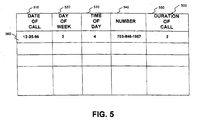
- Figure 5 shows a data structure 500 of historical call information saved for use in training behavior neural network 400.
- the columns 510, 520, 530, 540, and 550 show data recorded for each call.
- a record 560 includes for each call:
- Figure 6 shows a flowchart of a procedure 600 used by call-forwarding system 160 to train neural network 400.
- the procedure 600 is part of system training controller 340 and is implemented in software.
- system training controller 340 When an individual subscribes to a service having the functions of call-forwarding system 160, the subscriber (or network operator) sets a parameter in system training controller 340 to indicate a daily time (e.g., 2 a.m.) that system training controller 340 trains neural network 400. This time should be chosen to avoid periods when processor 150 is in use. When the appropriate time is reached, controller 340 makes a copy of the weights of the network in case an incoming call requires the network to be activated while the network is being trained. Once training has been successfully completed, the copy is deleted and the new weights recorded as the network for use for the given subscriber. If network 400 is available for training, controller 340 configures the network architecture for the behavior network (step 610).
- a daily time e.g., 2 a.m.
- the exact number of hidden units can be adjusted to yield the best generalization performance. Rules based on these adjustments are encoded in the architecture configuration and learning part of the eventual product.
- the number of hidden units must be substantially less than the number of combinations of telephone numbers crossed with the alternative times, etc., so as to force the network to generalize.
- controller 340 trains the behavior network (step 620).
- FIG. 7 shows a flowchart describing the steps for training subscriber's behavior network 400 (see step 620 of FIG. 6).
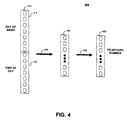
- controller 340 When initiated, controller 340 first builds a training set from historical training data shown in FIG. 5 (step 710). This historical training data is stored in a database file. Each record in the historical database is converted to an example for training.
- the following fields are preferably defined in the set of training examples: day, time, telephone number, selection probability, and the number of records for the given telephone number.
- the day and time are provided to the network input layer when training, and the telephone number is provided at the output layer of the network 400 for use by the learning algorithm.
- the selection probability is a parameter that defines the probability that the example will, at any given cycle through the training procedure, be selected as a training example. It has a value between 0.002 to 1.00.
- the number of records, and thus examples for the given telephone number is needed to determine the extent to which the inputs are set to random values, rather than the actual day of the week and time of day. This setting of inputs to random values is necessary when relatively few records exist for a given telephone number, preventing the network from generalizing sufficiently to output the given telephone number if the input values are different from those for the existing records.
- the network if a single record exists of a call to a number at 12 noon on Tuesday, the network, if trained with only this data, would have a substantial output value for the given telephone number only if the input specified noon on Tuesday. Such behavior of the network is unreasonable given such a small amount of data. If 50 records existed for the same number at diverse times and days, a reasonable output value would be likely for that number with inputs at nearly any time and day. If 50 records existed for the same number, all at noon on Tuesday, the network would again be responsive for the given number only at that time and day, but quite legitimately so, given the history of calls.
- X age specifies the number of days between the call being made and the network being trained. The values are assigned as follows: 0.01 if the call was made over a year ago, 0.02 if the call was made 181-365 days ago, 0.04 if the call was made 91-180 days ago, 0.08 if the call was made 31-90 days ago, 0.15 if the call was made 10-30 days ago, 0.30 if the call was made 4-9 days ago, 0.60 if the call was made 2-3 days ago, and 1.0 if the call was made yesterday.
- X duration depends on both the circumstances of the call and the actual duration. For calls that locate the subscriber, X duration is assigned as follows: 1.0 if duration > 60 minutes; 0.8 if 11-60 minutes, 0.6 if 2-10 minutes, 0.4 if 30-119 seconds, and 0.20 if 15-30 seconds. If the call duration is less than 15 seconds, the record is discarded as unreliable.
- the set of weights for the connections between units of the network is then set to random values to initialize the network 400 (step 720).
- a training example is then obtained from the training set (step 730). This training example is the first in the set if the weights have just been initialized. Otherwise, the next example in the set is selected. If there are no more examples in the set (as the result of the previous training example being the last in the set), the first example in the set is selected.
- the selection probability for the example is retrieved, and a random number from 0 to 1.0 is generated and compared with the selection probability. Only if the number is less than or equal to the selection probability is the example used.
- the example is only used when the random number generated is from 0 to 0.5, or 50% of the time. If the selection probability is 0.1, then the example is only used when the random number is from 0 to 0.1, or 10% of the time. If the example is not used, control is passed to obtain another training example (step 730).
- the network 400 is trained with the example and the accumulated error saved (step 750). This is done by first providing the input of the network 400 with the appropriate input signals. These can be either the actual inputs for the example or, as suggested above, randomized inputs.
- P cutoff N records / N combinations , where N records is the number of records for this number in the historical database, and N combinations is the number of input combinations, which equals the number of levels of the day of week multiplied by the number of levels of the time of day input.
- a random number from 0 to 1 is generated for each example and compared with the input randomization probability cutoff, P cutoff . If the number is less than P cutoff , a random number from 1 to 7 is generated to input to the time of day units, and a separate random number from 1 to 7 is generated to input to the day of week units. If the random number is equal to or greater than P cutoff , the actual inputs from the example are fed to the input units of the network.
- P cutoff would be 1/49, or about 0.02, and the network 400 would be trained with a random date and time for 98% of the training trials (on average).
- Training is done by applying the example to the appropriate inputs and outputs of the network 400, then using the backward propagation learning algorithm to modify the values of the weights of the connections in the network 400. Details of the backward propagation algorithm are described in the Rumelhart, Hinton, and Williams paper, which was referred to above. In this training, a set of data is used that includes both input and output data.
- a particular piece of data might consist of the day of the week and the time of day for inputs and a telephone number as output.
- the input data to the input layer are entered by setting the input unit matching the output from the example to 1.0, or "true,” and setting all other input units to 0.0, or "false.”
- the input unit corresponding to "Tuesday” is set to 1.0, while the other 6 input units are set to 0.0.
- the telephone number for each trial is then effectively applied to the output units using the following steps. First, information is applied to the inputs of the network and then allowed to propagate through the network to the output units. Next, a calculation is made of the "error" of the network for each output unit by subtracting the actual output (activity level) of each unit from either 1.0, if the unit corresponds to the telephone number associated with the given trial, or 0.0. This error value is then "propagated backward" through the earlier layers of the network 400, by systematically changing the values of the weights according to the backward propagation learning algorithm in such a manner as to reduce the error. A given set of data is applied repeatedly to a network 400 until overall error is reduced to the point that the network 400 is considered trained.
- the "accumulated error'' is determined by summing the error for all output units across all training examples.
- the error for each unit is equal to the desired output value minus the actual output value.
- a test is made of the result of the training thus far (step 760).
- the backward propagation learning algorithm is a "hill-climbing" algorithm. It uses a computation based on local information to seek a global minimum of error.
- control returns to obtain another training example (step 730). If the network 400 is "stuck,” control passes to initialize the weights and begin the training process from the beginning (step 720). If the network 400 has its accumulated error below the threshold, then the training is completed.
- Systems consistent with the present invention thus improve the accuracy of call-forwarding for personal telephone numbers using adaptive models such as neural networks of behavior of individuals corresponding to the assigned personal telephone numbers.
- the call is forwarded to a telephone at a specific location by translating the personal telephone number into the actual telephone number for the telephone at that location.
- This "translation" process includes using the model of the behavior of the party being called ( i . e ., the individual with the personal telephone number) to determine the likelihood that the individual is currently at the location for the telephone with the actual telephone number.
- the present invention may also be used in a more conventional call-forwarding system in which the number called is that of a physical telephone line rather than a personal telephone number.
- the technique can also be used in a call-forwarding system that is integrated with a multipurpose telephony application that makes use of automatic speech recognition to perform such tasks as voice activated dialing, call management, and other services, in which users are likely to call into a central number to activate these services.
- Such users can then control call-forwarding, including selecting forwarding by means of the predictive neural network, with the system determining (by caller ID) the location of the user whenever a call is made into the central number.
- the call-forwarding technique according to the present invention may be implemented by a PBX system, such as the Nortel Meridian I PBX system.
Landscapes
- Engineering & Computer Science (AREA)
- Signal Processing (AREA)
- Human Computer Interaction (AREA)
- Telephonic Communication Services (AREA)
Claims (20)
- Verfahren zur Weiterleitung eines Telefonanrufs an eine Telefonnummer, die einem Teilnehmer zugeordnet ist, mit den folgenden Schritten:Vorhersage von Wahrscheinlichkeiten, dass sich ein Teilnehmer an Orten befindet, die gespeicherten Telefonnummern entsprochen, auf der Grundlage eines Modells des Teilnehmerverhaltens (215) ;Bestimmen (220) einer Folge von gespeicherten Telefonnummern entsprechend der vorhergesagten Wahrschelnlichkelten; undWeiterleiten (225) des Anrufs an zumindest eine der gespeicherten Telefonnummern entsprechend der Folge, dadurch gekennzeichnet, dass:der Schritt der Vorhersage die Anwendung von Wertigkeiten umfasst, die den Telefonnummern zugeordnet sind, derart, dass das letzte Tellnehmerverhalten gegenüber früheren Teilnehmerverhalten begünstigt wird.
- Verfahren nach Anspruch 1, das weiterhin den Schritt der Weiterleitung (225) des empfangenen Anrufs an zumindest eine oder jede der gespeicherten Telefonnummern entsprechend der Folge umfasst.
- Verfahren nach Anspruch 1 oder 2, bei dem das Modell des Teilnehmerverhaltens Wertigkeiten (720) einschließt, die aus Daten bestimmt werden, die vorhergehende Anrufe darstellen, die den Teilnehmer verbinden, wenn er sich an einem Ort befindet, der zumindest einer der gespeicherten Telefonnummern entspricht, wobei der Feststellungsschritt den folgenden Tellschritt einschließt:Anwenden der Wertigkeiten, um die gespeicherten Telefonnummern entsprechend der vorhergesagten Wahrschelnlichkeiten zu ordnen.
- Verfahren nach Anspruch 1, 2 oder 3, bei dem das Modell des Teilnehmerverhaltens eine Darstellung auf der Grundlage der Teilnehmer-Umgebung und der Aktionen bezüglich des Empfangs von Telefonanrufen beruht, und bei dem der Vorhersageschritt den folgenden Teilschritt einschließt:Überprüfen der abstrakten Darstellung auf Anzeigen, dass der Teilnehmer sich an dem Ort befindet, der einer bestimmten Telefonnummer entspricht.
- Verfahren nach einem der vorhergehenden Ansprüche, bei dem das Modell des Teilnehmerverhaltens ein neuronales Netz (400) umfasst, und bei dem der Vorhersageschritt den folgenden Teilschritt umfasst:Aktivieren des neuronalen Netzes zur Feststellung von Anzeigen, dass sich der Teilnehmer an dem Ort befindet, der einer bestimmten Telefonnummer entspricht.
- Verfahren nach einem der vorhergehenden Ansprüche, das weiterhin den Schritt des Trainierens (340) des Modells des Teilnehmerverhaltens (310) mit Daten umfasst, die vorhergehende Anrufe anzeigen, die einen Anrufer erfolgreich mit einer der gespeicherten Telefonnummern verbunden haben.
- Verfahren nach einem der vorhergehenden Ansprüche, das weiterhin die folgenden Schritte umfasst:Schaffen (710) eines Trainingssatzes, der Informationen einschließt, die sich auf zumindest einen vorhergehend empfangenen Anruf beziehen; undModifizieren des Modells des Teilnehmerverhaltens entsprechend des Trainingssatzes.
- Verfahren nach Anspruch 7, bei dem das Modell des Teilnehmerverhaltens Wertigkeiten einschließt, die aus Daten bestimmt sind, die vorhergehende Anrufe darstellen, die den Teilnehmer verbinden, wenn sich dieser an einem Ort befindet, der zumindest einer der gespeicherten Telefonnummern entspricht, und bei dem der Schritt des Modifizierens den Teilschritt der;
Änderung der Wertigkeiten des Modells des Teilnehmerverhaltens, um die auf einen vorhergehenden Anruf bezogene Information wiederzugeben. - Verfahren nach Anspruch 2, bei dem der Weiterleitungsschritt den Teilschritt der:Feststellung, ob sich der Teilnehmer an einem Ort befindet, der der Telefonnummer zugeordnet ist, an die der empfangene Anruf weitergeleitet wurde, einschließt.
- Verfahren nach einem der vorhergehenden Ansprüche, bei dem der Feststellungsschritt den Teilschritt der:Löschung von Telefonnummern aus der Folge einschließt, die unterhalb eines Schwellenwertes der vorhergesagten Wahrscheinlichkeit liegen.
- System zur Weiterleitung eines Telefonanrufs, das Einrichtungen zum Empfang eines Anrufs an eine Telefonnummer aufweist, die einem Teilnehmer zugeordnet ist, wobei System Folgendes einschließt:Einrichtungen zur Vorhersage von Wahrscheinlichkeiten, dass sich der Teilnehmer an Orten befindet, die gespeicherten Telefonnummern entsprechen, auf der Grundlage eines Modells des Teilnehmerverhaltens;Einrichtungen zur Festlegung einer Folge der gespeicherten Telefonnummern entsprechend den vorhergesagten Wahrscheinlichkeiten; undEinrichtungen zur Weiterleitung eines Anrufs an zumindest eine der gespeicherten Telefonnummern entsprechend der Folge, dadurch gekennzeichnet, dass die Vorhersageeinrichtungen Wertigkelten anwenden, die der Telefonnummer derart zugeordnet sind, dass das letzte Teilnehmerverhalten gegenüber dem vorhergehenden Teilnehmerverhalten begünstigt wird.
- System nach Anspruch 11, das weiterhin:Einrichtungen zur Weiterleitung des empfangenen Anrufs an zumindest eine oder jede der gespeicherten Telefonnummern entsprechend der Folge umfasst.
- System nach Anspruch 11 oder 12, bei dem das Modell des Teilnehmerverhaltens Wertigkeiten einschließt, die aus Daten bestimmt sind, die vorhergehende Anrufe darstellen, die den Teilnehmer verbinden, wenn dieser sich an einem Ort befindet, der zumindest einer der gespeicherten Telefonnummern entspricht, und bei dem die Festiegungseinrichtung Folgendes einschließt:Einrichtungen zum Anwenden der Wertigkeiten zum Ordnen der gespeicherten Telefonnummern entsprechend der vorhergesagten Wahrscheinlichkeiten.
- System nach einem der Ansprüche 11-13, bei dem das Modell des Teilnehmerverhaltens eine Darstellung auf der Grundlage der Umgebung des Teilnehmers und Aktionen bezüglich des Empfangs von Telefonanrufen umfasst, und bei dem die Vorhereageeinrichtung Folgendes einschließt:Einrichtungen zur Überprüfung der abstrakten Darstellung auf Anzeigen, dass sich der Teilnehmer an dem Ort befindet, der einer bestimmten Telefonnummer entspricht.
- System nach einem der Ansprüche 11-14, bei dem das Modell des Teilnehmerverhaltens ein neuronales Netz umfasst, und bei dem die Vorhersageeinrichtung Folgendes einschließt:Einrichtungen zum Aktivieren des neuronalen Netzes zur Bestimmung von Anzeigen, dass sich der Teilnehmer an dem Ort befindet, der einer bestimmten Telefonnummer entspricht.
- System nach einem der Ansprüche 11-15, das weiterhin Folgendes umfasst:Einrichtungen zum Trainieren des Modells des Teilnehmerverhaltens mit Daten, die vorhergehende Anrufe anzeigen, die einen Anrufer erfolgreich mit jeder der gespeicherten Telefonnummern verbinden.
- System nach einem der Ansprüche 11-16, das welterhin Folgendes umfasst:Einrichtungen zum Schaffen eines Trainingssatzes, der Informationen einschließt, die sich auf zumindest einen vorher empfangenen Anruf beziehen; undEinrichtungen zur Modifikation des Modells des Teilnehmerverhaltens entsprechend dem Trainingssatz.
- System nach einem der Ansprüche 11-17, bei dem das Modell des Teilnehmerverhaltens Wertigkeiten einschließt, die aus Daten bestimmt sind, die vohergehende Anrufe darstellen, die den Teilnehmer verbinden, wenn er sich an einem Ort befindet, der zumindest einer der gespeicherten Telefonnummern entspricht, und bei dem die Modifikationseinrichtung Folgendes einschließt:Einrichtungen zum Ändern der Wertigkeiten des Modelis des Teilnehmerverhalten, um die Information wiederzugeben, die sich auf den vorhergehenden Anruf bezieht.
- System nach Anspruch 12, bei dem die Weiterleitungseinrichtung Folgendes einschließt:Einrichtungen zur Feststellung, ob sich der Teilnehmer an einer Stelle befindet, die der Telefonnummer zugeordnet ist, an die der empfangene Anruf weitergeleitet wurde.
- System nach einem der Ansprüche 11-19, bei dem die Feststellungseinrichtungen Folgendes einschließen:Einrichtungen zum Löschen von Telefonnummern aus der Folge, die unterhalb eines Schwellenwertes der vorhergesagten Wahrscheinlichkeit liegen.
Applications Claiming Priority (3)
| Application Number | Priority Date | Filing Date | Title |
|---|---|---|---|
| US806861 | 1991-12-17 | ||
| US08/806,861 US5905789A (en) | 1996-10-07 | 1997-02-26 | Call-forwarding system using adaptive model of user behavior |
| PCT/US1998/003626 WO1998038781A1 (en) | 1997-02-26 | 1998-02-25 | Call-forwarding system using adaptive model of user behavior |
Publications (2)
| Publication Number | Publication Date |
|---|---|
| EP0962088A1 EP0962088A1 (de) | 1999-12-08 |
| EP0962088B1 true EP0962088B1 (de) | 2004-05-12 |
Family
ID=25194998
Family Applications (1)
| Application Number | Title | Priority Date | Filing Date |
|---|---|---|---|
| EP98907613A Expired - Lifetime EP0962088B1 (de) | 1997-02-26 | 1998-02-25 | Anrufumleitungssystem mit anpassungsfähigem benutzerverhaltensmodell |
Country Status (6)
| Country | Link |
|---|---|
| US (1) | US5905789A (de) |
| EP (1) | EP0962088B1 (de) |
| AU (1) | AU6337598A (de) |
| CA (1) | CA2282633C (de) |
| DE (1) | DE69823810T2 (de) |
| WO (1) | WO1998038781A1 (de) |
Families Citing this family (93)
| Publication number | Priority date | Publication date | Assignee | Title |
|---|---|---|---|---|
| US7260203B2 (en) * | 1992-08-26 | 2007-08-21 | Bellsouth Intellectual Property Corporation | Method and apparatus for routing calls based on identification of the calling party or calling line |
| DE19548190A1 (de) * | 1995-12-22 | 1997-06-26 | Sel Alcatel Ag | Verfahren zum Entscheiden über die Annahme oder Nichtannahme eines Anrufs, sowie Schaltungseinheit, Fernmeldeendgerät, tragbare Geräteeinheit und Netzkomponente für ein Fernmeldenetz |
| CA2180684C (en) * | 1996-07-08 | 2001-08-21 | Paul Erb | Automatic call forwarding |
| DE19637859A1 (de) * | 1996-09-17 | 1998-03-19 | Philips Patentverwaltung | Telekommunikationssystem mit Rufumleitung |
| US6208713B1 (en) | 1996-12-05 | 2001-03-27 | Nortel Networks Limited | Method and apparatus for locating a desired record in a plurality of records in an input recognizing telephone directory |
| US6119006A (en) | 1997-01-03 | 2000-09-12 | Siemens Information And Communication Systems, Inc. | System and method for calendar-based cellular smart switching |
| US6477374B1 (en) * | 1997-01-03 | 2002-11-05 | Siemens Information And Communication Networks, Inc. | Apparatus and method for calendar based call routing |
| JPH1117796A (ja) * | 1997-06-19 | 1999-01-22 | Matsushita Electric Ind Co Ltd | 音声認識電話装置 |
| US6636733B1 (en) | 1997-09-19 | 2003-10-21 | Thompson Trust | Wireless messaging method |
| US6084954A (en) * | 1997-09-30 | 2000-07-04 | Lucent Technologies Inc. | System and method for correlating incoming and outgoing telephone calls using predictive logic |
| US6104799A (en) * | 1997-10-24 | 2000-08-15 | At&T Corp. | Customer defined call setup |
| US6301349B1 (en) * | 1998-06-04 | 2001-10-09 | Bellsouth Intellectual Property Corporation | Method and system to connect an unanswered forwarded communication directly to a voice mail service |
| US9038193B2 (en) * | 1998-08-14 | 2015-05-19 | Azos Al, Llc | System and method of data cognition incorporating autonomous security protection |
| US20080139167A1 (en) * | 1999-04-16 | 2008-06-12 | Shelia Jean Burgess | Communications Control Method And Apparatus |
| US20020128033A1 (en) * | 1998-11-30 | 2002-09-12 | Burgess Shelia Jean | Communications control method and apparatus |
| DE19843201A1 (de) * | 1998-09-14 | 1999-08-12 | Mannesmann Ag | Lasthitfirst |
| US7110526B1 (en) | 1998-10-14 | 2006-09-19 | Rockwell Electronic Commerce Technologies, Llc | Neural network for controlling calls in a telephone switch |
| JP3839605B2 (ja) * | 1998-12-22 | 2006-11-01 | 株式会社湘南合成樹脂製作所 | マンホール用ライニング材 |
| DE19906347A1 (de) * | 1999-02-17 | 2000-08-31 | Mannesmann O Tel O Gmbh | Verfahren zur Rufweiterleitung von Telefonaten und/oder adressierten Dateien, die auf elektronischem Wege über lokale oder globale Netzwerke verschickt werden |
| EP1037453A3 (de) * | 1999-03-18 | 2004-03-03 | Siemens Aktiengesellschaft | Verfahren zum Verteilen von Informationen an eine Auswahl von Teilnehmern in einem Telekommunikationsnetz |
| DE19916359A1 (de) * | 1999-04-12 | 2000-10-26 | Ericsson Telefon Ab L M | PCS Kommunikationssystem-Server Verfahren zum Steuern eines PCS Personalkommunikationssystem-Servers |
| FR2795900B1 (fr) * | 1999-06-29 | 2004-09-24 | Sigma B V B A | Centre d'appel adaptatif |
| US6678366B1 (en) * | 1999-08-31 | 2004-01-13 | Ulysses Esd, Inc. | System and method for locating subscribers using a best guess location algorithm |
| US6898274B1 (en) | 1999-09-21 | 2005-05-24 | Nortel Networks Limited | Method and apparatus for adaptive time-based call routing in a communications system |
| US6714636B1 (en) * | 1999-09-24 | 2004-03-30 | Lucent Technologies Inc. | Apparatus, method and system for subscriber control of timed and regional membership in multiple member termination groups for multiple leg telecommunication sessions |
| GB2355888A (en) * | 1999-10-27 | 2001-05-02 | Motorola Ltd | Configuring grade of service for mobile based on historical patterns of movement or environmental factors |
| US7184533B1 (en) | 1999-12-07 | 2007-02-27 | Siemens Communications, Inc. | Method and apparatus for mixed media contact notification service |
| US6771761B1 (en) | 1999-12-29 | 2004-08-03 | Bellsouth Intellectual Property Corporation | System and method for caller-selectable call routing from a single telephone number |
| US6876738B1 (en) * | 2000-06-09 | 2005-04-05 | Lucent Technologies Inc. | Apparatus, method and system for intelligent tandeming of incoming calls to application nodes in telecommunication systems |
| US6956939B1 (en) * | 2000-06-09 | 2005-10-18 | Lucent Technologies Inc. | Apparatus, method and system for message-based intelligent tandeming of incoming calls to application nodes in telecommunication systems |
| US7415516B1 (en) | 2000-08-08 | 2008-08-19 | Cisco Technology, Inc. | Net lurkers |
| US7143182B1 (en) * | 2000-08-08 | 2006-11-28 | Cisco Technology, Inc. | Smart secretary for routing call objects in a telephony network |
| US7246145B1 (en) | 2000-08-08 | 2007-07-17 | Cisco Technology, Inc. | Fully distributed, scalable infrastructure, communication system |
| US7451085B2 (en) * | 2000-10-13 | 2008-11-11 | At&T Intellectual Property Ii, L.P. | System and method for providing a compensated speech recognition model for speech recognition |
| DE10065744B4 (de) * | 2000-12-29 | 2006-06-01 | Siemens Ag | Verfahren zum Betrieb eines Systems für die Ermittlung von Planungsdaten für die Personal- und/oder Resourcenplanung eines Call Centers |
| US7133909B2 (en) | 2001-01-12 | 2006-11-07 | Microsoft Corporation | Systems and methods for locating mobile computer users in a wireless network |
| WO2002063832A1 (en) * | 2001-02-05 | 2002-08-15 | Personity, Inc. | A system and method for filtering unavailable devices in a presence and availability management system |
| US6950650B2 (en) * | 2001-02-12 | 2005-09-27 | Siemens Ag | System and method for call forwarding synchronization in a communication system |
| US7330895B1 (en) * | 2001-03-15 | 2008-02-12 | Microsoft Corporation | Representation, decision models, and user interface for encoding managing preferences, and performing automated decision making about the timing and modalities of interpersonal communications |
| US7356137B1 (en) * | 2001-05-07 | 2008-04-08 | At&T Mobility Ii Llc | Method and system for signaling presence of users in a multi-networked environment |
| US20020173297A1 (en) * | 2001-05-18 | 2002-11-21 | Phillips Alexander Lynn | Call forwarding features in mobile wireless communication devices and methods therefor |
| US7260077B2 (en) * | 2001-06-18 | 2007-08-21 | Nortel Networks Limited | Adaptive scheduling for multi-carrier systems |
| US7194080B2 (en) * | 2001-06-29 | 2007-03-20 | Bellsouth Intellectual Property Corporation | Automatically sequentially ringing alternative telephone numbers |
| US7113775B2 (en) * | 2001-07-06 | 2006-09-26 | Siemens Communications, Inc. | Self-learning intelligent call routing gatekeeper |
| EP1280080A1 (de) * | 2001-07-26 | 2003-01-29 | BRITISH TELECOMMUNICATIONS public limited company | Verfahren und Apparat zum Bilden von Benutzer-Verhaltensmodellen |
| US7099453B2 (en) * | 2001-09-26 | 2006-08-29 | Sbc Properties, L.P. | Method and apparatus for enhanced call routing in a telecommunication system |
| GB0130596D0 (en) * | 2001-12-20 | 2002-02-06 | Nokia Corp | Call handling logic |
| AU2003211970A1 (en) * | 2002-02-13 | 2003-09-04 | Matsushita Electric Industrial Co., Ltd. | Information providing apparatus, provided information presenting apparatus, and information providing method |
| US7206388B2 (en) * | 2002-03-18 | 2007-04-17 | Openwave Systems Inc. | System and method for providing voice-activated presence information |
| US20040147258A1 (en) * | 2002-08-21 | 2004-07-29 | Lg Electronics Inc. | Call pick-up system and method in a mobile communication network |
| US7082192B2 (en) * | 2002-11-07 | 2006-07-25 | International Business Machines Corporation | Locale based call forwarding |
| US20040107128A1 (en) * | 2002-11-07 | 2004-06-03 | International Business Machines Corporation | Behavior based life support services |
| US6999573B2 (en) * | 2002-11-07 | 2006-02-14 | International Business Machines Corporation | Locale based call forwarding with automated creation of new locales |
| US7401057B2 (en) | 2002-12-10 | 2008-07-15 | Asset Trust, Inc. | Entity centric computer system |
| US20040143453A1 (en) * | 2002-12-17 | 2004-07-22 | International Business Machines Corporation | Behavior based life support with default behavior patterns |
| US20040116781A1 (en) * | 2002-12-17 | 2004-06-17 | International Business Machines Corporation | Behavior based life support generating new behavior patterns from historical behavior indicators |
| US20040116783A1 (en) * | 2002-12-17 | 2004-06-17 | International Business Machines Corporation | Behavior based life support generating new behavior patterns from behavior indicators for a user |
| US20040116782A1 (en) * | 2002-12-17 | 2004-06-17 | International Business Machines Corporation | Behavior based life support with abstract behavior patterns |
| HK1059191A2 (en) * | 2003-02-26 | 2004-05-28 | Intexact Technologies Limited | A telephony system and a method of operating same |
| HK1052830A2 (en) * | 2003-02-26 | 2003-09-05 | Intexact Technologies Limited | An integrated programmable system for controlling the operation of electrical and/or electronic appliances of a premises |
| US20040174975A1 (en) * | 2003-03-05 | 2004-09-09 | Nortel Networks Limited | Common call routing for multiple telephony devices |
| US7035390B2 (en) * | 2003-03-07 | 2006-04-25 | Nortel Networks Limited | User controlled call routing for multiple telephony devices |
| US20040192270A1 (en) * | 2003-03-28 | 2004-09-30 | Kreitzer Stuart S. | Hotlist system and method for communication devices |
| US6978003B1 (en) * | 2003-05-22 | 2005-12-20 | Nortel Networks Limited | Adaptive call routing for multiple telephony terminals |
| JP4718767B2 (ja) * | 2003-06-24 | 2011-07-06 | Necインフロンティア株式会社 | コミュニケーション交換機 |
| FR2859062A1 (fr) * | 2003-08-21 | 2005-02-25 | France Telecom | Procede et systeme d'acheminement intelligent des appels telephoniques |
| US20050047575A1 (en) | 2003-08-29 | 2005-03-03 | Stephen Parker | Secure valet telephone system |
| CA2483123A1 (en) * | 2003-09-30 | 2005-03-30 | At&T Corp. | Enhanced call notification service |
| US7664249B2 (en) * | 2004-06-30 | 2010-02-16 | Microsoft Corporation | Methods and interfaces for probing and understanding behaviors of alerting and filtering systems based on models and simulation from logs |
| US7194257B2 (en) * | 2004-12-27 | 2007-03-20 | Sony Ericsson Mobile Communications Ab | Automatic dialing for a wireless communications device |
| US8713025B2 (en) | 2005-03-31 | 2014-04-29 | Square Halt Solutions, Limited Liability Company | Complete context search system |
| US7869799B2 (en) * | 2005-07-28 | 2011-01-11 | Research In Motion Limited | Method and system for forwarding calls placed to a telecommunications destination |
| US8295851B2 (en) | 2005-08-03 | 2012-10-23 | Michael Edward Finnegan | Realtime, interactive and geographically defined computerized personal matching systems and methods |
| US8880047B2 (en) | 2005-08-03 | 2014-11-04 | Jeffrey C. Konicek | Realtime, location-based cell phone enhancements, uses, and applications |
| US20070127652A1 (en) * | 2005-12-01 | 2007-06-07 | Divine Abha S | Method and system for processing calls |
| US7697503B2 (en) * | 2005-12-16 | 2010-04-13 | Qwest Communications International Inc. | Dynamic speed-dial list |
| US7933612B2 (en) * | 2006-02-28 | 2011-04-26 | Microsoft Corporation | Determining physical location based upon received signals |
| US20070206747A1 (en) * | 2006-03-01 | 2007-09-06 | Carol Gruchala | System and method for performing call screening |
| DE102006039664A1 (de) * | 2006-08-24 | 2008-03-13 | Deutsche Telekom Ag | Verfahren und System zur Durchführung einer Kommunikation in einem Telekommunikationsnetzwerk |
| US20080281760A1 (en) * | 2007-04-30 | 2008-11-13 | Bellsouth Intellectual Property Corporation | Service Negotiation |
| WO2009046169A1 (en) * | 2007-10-02 | 2009-04-09 | Ascendent Telecommunications, Inc. | Method, apparatus and system for intelligent call routing |
| US20100046731A1 (en) * | 2007-10-02 | 2010-02-25 | Douglas Gisby | Method, apparatus and system for use of presence and location information in intelligent call routing |
| EP2222067B1 (de) * | 2009-02-20 | 2018-12-19 | BlackBerry Limited | Leitweglenkung auf Basis eines Benutzerprofils, das abhängig von Gruppenzugehörigkeit erstellt wird |
| US9332121B2 (en) * | 2009-02-20 | 2016-05-03 | Blackberry Limited | Method for implementing user-specific calling preferences |
| US8761746B2 (en) * | 2009-04-16 | 2014-06-24 | Mitel Networks Corporation | Extended cascaded ringing |
| US8463257B1 (en) | 2010-01-14 | 2013-06-11 | Michael Shaoul | System for redirecting cellular phone calls to conventional landline handsets |
| GB2481992A (en) * | 2010-07-13 | 2012-01-18 | Sony Europe Ltd | Updating text-to-speech converter for broadcast signal receiver |
| US9189729B2 (en) * | 2012-07-30 | 2015-11-17 | International Business Machines Corporation | Scalable neural hardware for the noisy-OR model of Bayesian networks |
| US9805718B2 (en) * | 2013-04-19 | 2017-10-31 | Sri Internaitonal | Clarifying natural language input using targeted questions |
| US10110737B2 (en) * | 2014-09-29 | 2018-10-23 | Qualcomm Incorporated | Intelligent options in redial screens of communication devices |
| KR102318502B1 (ko) | 2017-03-20 | 2021-10-29 | 이베이 인크. | 대화 중 미션 변경의 검출 |
| US10681209B2 (en) * | 2018-11-06 | 2020-06-09 | Microsoft Technology Licensing, Llc | Sequenced device alerting |
| US10951770B2 (en) * | 2019-04-16 | 2021-03-16 | Verizon Patent And Licensing Inc. | Systems and methods for utilizing machine learning to detect and determine whether call forwarding is authorized |
Family Cites Families (95)
| Publication number | Priority date | Publication date | Assignee | Title |
|---|---|---|---|---|
| US3742143A (en) * | 1971-03-01 | 1973-06-26 | Bell Telephone Labor Inc | Limited vocabulary speech recognition circuit for machine and telephone control |
| US4313035A (en) * | 1980-01-18 | 1982-01-26 | Bell Telephone Laboratories, Incorporated | Method of providing person locator service |
| US4348550A (en) * | 1980-06-09 | 1982-09-07 | Bell Telephone Laboratories, Incorporated | Spoken word controlled automatic dialer |
| US4593157A (en) * | 1984-09-04 | 1986-06-03 | Usdan Myron S | Directory interface and dialer |
| FR2571191B1 (fr) * | 1984-10-02 | 1986-12-26 | Renault | Systeme de radiotelephone, notamment pour vehicule automobile |
| US4737976A (en) * | 1985-09-03 | 1988-04-12 | Motorola, Inc. | Hands-free control system for a radiotelephone |
| US5182765A (en) * | 1985-11-26 | 1993-01-26 | Kabushiki Kaisha Toshiba | Speech recognition system with an accurate recognition function |
| US4959855A (en) * | 1986-10-08 | 1990-09-25 | At&T Bell Laboratories | Directory assistance call processing and calling customer remote signal monitoring arrangements |
| US4829576A (en) * | 1986-10-21 | 1989-05-09 | Dragon Systems, Inc. | Voice recognition system |
| JP2584249B2 (ja) * | 1986-10-31 | 1997-02-26 | 三洋電機株式会社 | 音声認識電話機 |
| US4862498A (en) * | 1986-11-28 | 1989-08-29 | At&T Information Systems, Inc. | Method and apparatus for automatically selecting system commands for display |
| US4827500A (en) * | 1987-01-30 | 1989-05-02 | American Telephone And Telegraph Company, At&T Bell Laboratories | Automatic speech recognition to select among call destinations |
| EP0293259A3 (de) * | 1987-05-29 | 1990-03-07 | Kabushiki Kaisha Toshiba | Spracherkennungssystem, angewendet in einem Fernsprechapparat |
| US4959850A (en) * | 1987-05-29 | 1990-09-25 | Kabushiki Kaisha Toshiba | Radio telephone apparatus |
| DE3819538C3 (de) * | 1987-06-08 | 1996-08-14 | Ricoh Kk | Sprachaktivierbare Wähleinrichtung |
| US4979206A (en) * | 1987-07-10 | 1990-12-18 | At&T Bell Laboratories | Directory assistance systems |
| US4754951A (en) * | 1987-08-14 | 1988-07-05 | Union Carbide Corporation | Tuyere assembly and positioning method |
| EP0307193B1 (de) * | 1987-09-11 | 1993-11-18 | Kabushiki Kaisha Toshiba | Telefonapparat |
| EP0311414B2 (de) * | 1987-10-08 | 1997-03-12 | Nec Corporation | Sprachgesteuerte Wählvorrichtung mit Speichern für vollständige Wahl für alle Benutzer und Kurzwahl für befugte Benutzer |
| US4928302A (en) * | 1987-11-06 | 1990-05-22 | Ricoh Company, Ltd. | Voice actuated dialing apparatus |
| JPH01167898A (ja) * | 1987-12-04 | 1989-07-03 | Internatl Business Mach Corp <Ibm> | 音声認識装置 |
| US4924496A (en) * | 1988-05-12 | 1990-05-08 | Romek Figa D/B/A Abraham & Sons | Automatic incoming telephone call originating number and party display system |
| US5007081A (en) * | 1989-01-05 | 1991-04-09 | Origin Technology, Inc. | Speech activated telephone |
| JPH02209055A (ja) * | 1989-02-09 | 1990-08-20 | Toshiba Corp | 電話装置 |
| US5301227A (en) * | 1989-04-17 | 1994-04-05 | Sanyo Electic Co., Ltd. | Automatic dial telephone |
| JP2927891B2 (ja) * | 1989-06-19 | 1999-07-28 | 日本電気株式会社 | 音声ダイヤル装置 |
| US5121423A (en) * | 1989-07-13 | 1992-06-09 | Sharp Kabushiki Kaisha | Communication unit comprising caller identification function and caller identifying method in a digital communication network |
| JP3045510B2 (ja) * | 1989-12-06 | 2000-05-29 | 富士通株式会社 | 音声認識処理装置 |
| JPH03270453A (ja) * | 1990-03-20 | 1991-12-02 | Fujitsu Ltd | 自動追い掛け電話装置 |
| US5187735A (en) * | 1990-05-01 | 1993-02-16 | Tele Guia Talking Yellow Pages, Inc. | Integrated voice-mail based voice and information processing system |
| US5168548A (en) * | 1990-05-17 | 1992-12-01 | Kurzweil Applied Intelligence, Inc. | Integrated voice controlled report generating and communicating system |
| US5313516A (en) * | 1990-05-31 | 1994-05-17 | Phonemate Inc. | Telephone answering device with automatic function |
| FI89652C (fi) * | 1990-09-27 | 1993-10-25 | Nokia Mobile Phones Ltd | Foerfarande foer snabbval vid en telefonapparat |
| US5165095A (en) * | 1990-09-28 | 1992-11-17 | Texas Instruments Incorporated | Voice telephone dialing |
| US5181237A (en) * | 1990-10-12 | 1993-01-19 | At&T Bell Laboratories | Automation of telephone operator assistance calls |
| US5185781A (en) * | 1990-10-12 | 1993-02-09 | At&T Bell Laboratories | Automation of telephone operator assistance calls |
| US5243645A (en) * | 1990-11-01 | 1993-09-07 | At&T Bell Laboratories | Automatic system for forwarding of calls |
| US5163081A (en) * | 1990-11-05 | 1992-11-10 | At&T Bell Laboratories | Automated dual-party-relay telephone system |
| US5204894A (en) * | 1990-11-09 | 1993-04-20 | Bell Atlantic Network Services, Inc. | Personal electronic directory |
| JPH04207341A (ja) * | 1990-11-30 | 1992-07-29 | Sony Corp | 無線電話装置 |
| US5155763A (en) * | 1990-12-11 | 1992-10-13 | International Business Machines Corp. | Look ahead method and apparatus for predictive dialing using a neural network |
| US5553125A (en) * | 1991-01-11 | 1996-09-03 | Nokia Mobile Phones (U.K.) Limited | Telephone apparatus with calling line identification |
| GB2251763B (en) * | 1991-01-11 | 1995-06-21 | Technophone Ltd | Telephone apparatus with calling line identification |
| JP2707854B2 (ja) * | 1991-02-06 | 1998-02-04 | 日本電気株式会社 | 移動電話機 |
| US5369685A (en) * | 1991-03-07 | 1994-11-29 | Sprint Communications Company L.P. | Voice-activated telephone directory and call placement system |
| US5230017A (en) * | 1991-11-08 | 1993-07-20 | British Technology Group Usa | Communication line monitoring system |
| EP0543329B1 (de) * | 1991-11-18 | 2002-02-06 | Kabushiki Kaisha Toshiba | Sprach-Dialog-System zur Erleichterung von Rechner-Mensch-Wechselwirkung |
| JP3064627B2 (ja) * | 1992-01-28 | 2000-07-12 | 富士通株式会社 | サービス制御装置 |
| US5371779A (en) * | 1992-03-13 | 1994-12-06 | Nec Corporation | Call initiating system for mobile telephone units |
| US5315649A (en) * | 1992-04-15 | 1994-05-24 | Vcs Industries, Inc. | Toll call telephone service center |
| US5333184A (en) * | 1992-05-06 | 1994-07-26 | At&T Bell Laboratories | Call message recording for telephone systems |
| US5329578A (en) * | 1992-05-26 | 1994-07-12 | Northern Telecom Limited | Personal communication service with mobility manager |
| JPH0614098A (ja) * | 1992-06-26 | 1994-01-21 | Sharp Corp | 短縮ダイヤルリスト作成支援ツール付電話機 |
| US5274699A (en) * | 1992-07-24 | 1993-12-28 | Motorola, Inc. | Method for providing caller identification to a call recipient |
| US5325421A (en) * | 1992-08-24 | 1994-06-28 | At&T Bell Laboratories | Voice directed communications system platform |
| US5353336A (en) * | 1992-08-24 | 1994-10-04 | At&T Bell Laboratories | Voice directed communications system archetecture |
| CA2078045C (en) * | 1992-09-11 | 1999-11-16 | Mark R. Sestak | Global management of telephone directory |
| JPH06121014A (ja) * | 1992-10-06 | 1994-04-28 | Kyocera Corp | 通信端末装置 |
| US5452397A (en) * | 1992-12-11 | 1995-09-19 | Texas Instruments Incorporated | Method and system for preventing entry of confusingly similar phases in a voice recognition system vocabulary list |
| US5465401A (en) * | 1992-12-15 | 1995-11-07 | Texas Instruments Incorporated | Communication system and methods for enhanced information transfer |
| AU5803394A (en) * | 1992-12-17 | 1994-07-04 | Bell Atlantic Network Services, Inc. | Mechanized directory assistance |
| US5717738A (en) * | 1993-01-11 | 1998-02-10 | Texas Instruments Incorporated | Method and device for generating user defined spoken speed dial directories |
| US5483579A (en) * | 1993-02-25 | 1996-01-09 | Digital Acoustics, Inc. | Voice recognition dialing system |
| US5430791A (en) * | 1993-02-26 | 1995-07-04 | At&T Corp. | Technique for administering personal telephone numbers |
| CA2091658A1 (en) * | 1993-03-15 | 1994-09-16 | Matthew Lennig | Method and apparatus for automation of directory assistance using speech recognition |
| US5452340A (en) * | 1993-04-01 | 1995-09-19 | Us West Advanced Technologies, Inc. | Method of voice activated telephone dialing |
| EP0711485B1 (de) * | 1993-06-11 | 1997-04-16 | Nortel Networks Corporation | Verfahren zur versorgung von durch den anwender gesteuerten anrufverwaltungsdiensten |
| US5487111A (en) * | 1993-07-29 | 1996-01-23 | At&T Ipm Corp. | Telecommunications system sequence calling |
| JPH0795279A (ja) * | 1993-09-20 | 1995-04-07 | Fujitsu Ltd | メモリダイヤル制御方式 |
| US5371781A (en) * | 1993-09-30 | 1994-12-06 | At&T Corp. | System and method for identifying the incoming directory number when multiple directory numbers are assigned to one wireless device |
| US5392342A (en) * | 1993-10-27 | 1995-02-21 | At&T Corp. | Technique for use in sequentially routing personal telephone calls |
| CA2136796C (en) * | 1993-11-29 | 1998-11-24 | Shinichi Urasaka | Cordless telephone apparatus |
| US5394464A (en) * | 1994-03-01 | 1995-02-28 | At&T Corp. | Progressive automatic activation and automatic resetting of call coverage |
| JPH07283858A (ja) * | 1994-04-06 | 1995-10-27 | Nippon Telegr & Teleph Corp <Ntt> | 通話相手自動登録型音声ダイヤル装置 |
| JPH07282203A (ja) * | 1994-04-07 | 1995-10-27 | Hitachi Ltd | 文字入力装置 |
| US5488652A (en) * | 1994-04-14 | 1996-01-30 | Northern Telecom Limited | Method and apparatus for training speech recognition algorithms for directory assistance applications |
| US5642411A (en) * | 1994-04-25 | 1997-06-24 | Illinois Technology Transfer Llc | Anticipatory call distributor |
| JPH07320001A (ja) * | 1994-05-24 | 1995-12-08 | Toshiba Corp | 文字認識装置,認識辞書の参照方法 |
| US5509103A (en) * | 1994-06-03 | 1996-04-16 | Motorola, Inc. | Method of training neural networks used for speech recognition |
| JPH07336426A (ja) * | 1994-06-08 | 1995-12-22 | Sanyo Electric Co Ltd | 通信装置 |
| JP2776400B2 (ja) * | 1994-08-04 | 1998-07-16 | 日本電気株式会社 | 電話番号表示装置 |
| US5600704A (en) * | 1994-08-30 | 1997-02-04 | Ericsson Inc. | Systems and methods for prioritized routing of telephone calls to a subscriber |
| CA2132610C (en) * | 1994-09-21 | 1998-04-28 | Deborah L. Pinard | Delayed seizure on associated devices |
| US5568546A (en) * | 1994-10-31 | 1996-10-22 | Lucent Technologies, Inc. | Method and apparatus for dynamic abbreviated dialing assignment |
| US5479489A (en) * | 1994-11-28 | 1995-12-26 | At&T Corp. | Voice telephone dialing architecture |
| US5706339A (en) * | 1994-11-30 | 1998-01-06 | At&T | Technique for use in processing personal telephone calls |
| US5724411A (en) * | 1995-03-22 | 1998-03-03 | At&T Corp. | Method for selectively alerting multiple telephones of an incoming call |
| US5524145A (en) * | 1995-04-06 | 1996-06-04 | Bell Atlantic Network Services, Inc. | Incoming call completion threshold restriction |
| US5583564A (en) * | 1995-04-24 | 1996-12-10 | Lucent Technologies Inc. | Intelligent call forwarding with videophone display of forwarding destination |
| WO1996038971A1 (en) * | 1995-06-01 | 1996-12-05 | Harris Corporation | Computer calling method and system |
| US5712957A (en) * | 1995-09-08 | 1998-01-27 | Carnegie Mellon University | Locating and correcting erroneously recognized portions of utterances by rescoring based on two n-best lists |
| US5742674A (en) * | 1995-12-22 | 1998-04-21 | At&T Corp. | Automatic call-back system and method using data indicating best time to call |
| US5719921A (en) * | 1996-02-29 | 1998-02-17 | Nynex Science & Technology | Methods and apparatus for activating telephone services in response to speech |
| EP0896776B1 (de) * | 1996-03-29 | 2004-05-19 | BRITISH TELECOMMUNICATIONS public limited company | Leitweglenkung |
| CA2180684C (en) * | 1996-07-08 | 2001-08-21 | Paul Erb | Automatic call forwarding |
-
1997
- 1997-02-26 US US08/806,861 patent/US5905789A/en not_active Expired - Lifetime
-
1998
- 1998-02-25 AU AU63375/98A patent/AU6337598A/en not_active Abandoned
- 1998-02-25 WO PCT/US1998/003626 patent/WO1998038781A1/en not_active Ceased
- 1998-02-25 DE DE69823810T patent/DE69823810T2/de not_active Expired - Lifetime
- 1998-02-25 CA CA002282633A patent/CA2282633C/en not_active Expired - Fee Related
- 1998-02-25 EP EP98907613A patent/EP0962088B1/de not_active Expired - Lifetime
Also Published As
| Publication number | Publication date |
|---|---|
| WO1998038781A1 (en) | 1998-09-03 |
| EP0962088A1 (de) | 1999-12-08 |
| DE69823810T2 (de) | 2005-05-12 |
| AU6337598A (en) | 1998-09-18 |
| US5905789A (en) | 1999-05-18 |
| DE69823810D1 (de) | 2004-06-17 |
| CA2282633C (en) | 2003-05-13 |
| CA2282633A1 (en) | 1998-09-03 |
Similar Documents
| Publication | Publication Date | Title |
|---|---|---|
| EP0962088B1 (de) | Anrufumleitungssystem mit anpassungsfähigem benutzerverhaltensmodell | |
| US6167117A (en) | Voice-dialing system using model of calling behavior | |
| US5917891A (en) | Voice-dialing system using adaptive model of calling behavior | |
| US6061433A (en) | Dynamically changeable menus based on externally available data | |
| US8661112B2 (en) | Customized interactive voice response menus | |
| US5155763A (en) | Look ahead method and apparatus for predictive dialing using a neural network | |
| US8712821B2 (en) | Separate matching models based on type of phone associated with a caller | |
| US7245706B2 (en) | Voice response system | |
| US8781100B2 (en) | Probability multiplier process for call center routing | |
| EP0735736B1 (de) | Verfahren zur automatischen Spracherkennung von willkürlichen gesprochenen Worten | |
| US7864931B2 (en) | Personal calendaring, schedules, and notification using directory data | |
| NL1015165C2 (nl) | Communicatiesysteem. | |
| US20040066401A1 (en) | System and method for selection of a voice user interface dialogue | |
| US20060018443A1 (en) | Announcement system and method of use | |
| US20100142698A1 (en) | Separate pattern matching algorithms and computer models based on available caller data | |
| KR19980018582A (ko) | 원격 통신망 서비스에 대한 피호출 가입자 제어 방법 | |
| CA2713476A1 (en) | Routing callers from a set of callers in an out of order sequence | |
| KR19990064287A (ko) | 고객 대기행렬 설비 | |
| JPH06253002A (ja) | 電話応答機構を自動的に更新する方法 | |
| US7424108B2 (en) | Optimal dynamic agent state assignment | |
| US6466664B1 (en) | Time slot based call pacing method and apparatus | |
| US20030185374A1 (en) | Technique for effectively controlling communication links to an information assistance service | |
| EP1761015B1 (de) | Selbstanpassende Benutzerschnittstelle für Dialogsysteme | |
| CN113315876B (zh) | 电话银行服务控制方法、装置、服务器及存储介质 | |
| US7346153B2 (en) | Dynamically alerting callers of changes to menu structures in a telephone prompting system |
Legal Events
| Date | Code | Title | Description |
|---|---|---|---|
| PUAI | Public reference made under article 153(3) epc to a published international application that has entered the european phase |
Free format text: ORIGINAL CODE: 0009012 |
|
| 17P | Request for examination filed |
Effective date: 19990924 |
|
| AK | Designated contracting states |
Kind code of ref document: A1 Designated state(s): DE FR GB |
|
| RAP1 | Party data changed (applicant data changed or rights of an application transferred) |
Owner name: NORTEL NETWORKS LIMITED |
|
| 17Q | First examination report despatched |
Effective date: 20020510 |
|
| GRAP | Despatch of communication of intention to grant a patent |
Free format text: ORIGINAL CODE: EPIDOSNIGR1 |
|
| RAP1 | Party data changed (applicant data changed or rights of an application transferred) |
Owner name: NORTEL NETWORKS LIMITED |
|
| GRAA | (expected) grant |
Free format text: ORIGINAL CODE: 0009210 |
|
| GRAS | Grant fee paid |
Free format text: ORIGINAL CODE: EPIDOSNIGR3 |
|
| AK | Designated contracting states |
Kind code of ref document: B1 Designated state(s): DE FR GB |
|
| REG | Reference to a national code |
Ref country code: GB Ref legal event code: FG4D |
|
| REF | Corresponds to: |
Ref document number: 69823810 Country of ref document: DE Date of ref document: 20040617 Kind code of ref document: P |
|
| ET | Fr: translation filed | ||
| PLBE | No opposition filed within time limit |
Free format text: ORIGINAL CODE: 0009261 |
|
| STAA | Information on the status of an ep patent application or granted ep patent |
Free format text: STATUS: NO OPPOSITION FILED WITHIN TIME LIMIT |
|
| 26N | No opposition filed |
Effective date: 20050215 |
|
| REG | Reference to a national code |
Ref country code: FR Ref legal event code: PLFP Year of fee payment: 18 |
|
| PGFP | Annual fee paid to national office [announced via postgrant information from national office to epo] |
Ref country code: DE Payment date: 20150227 Year of fee payment: 18 |
|
| PGFP | Annual fee paid to national office [announced via postgrant information from national office to epo] |
Ref country code: FR Payment date: 20150126 Year of fee payment: 18 Ref country code: GB Payment date: 20150126 Year of fee payment: 18 |
|
| REG | Reference to a national code |
Ref country code: DE Ref legal event code: R119 Ref document number: 69823810 Country of ref document: DE |
|
| GBPC | Gb: european patent ceased through non-payment of renewal fee |
Effective date: 20160225 |
|
| REG | Reference to a national code |
Ref country code: FR Ref legal event code: ST Effective date: 20161028 |
|
| PG25 | Lapsed in a contracting state [announced via postgrant information from national office to epo] |
Ref country code: GB Free format text: LAPSE BECAUSE OF NON-PAYMENT OF DUE FEES Effective date: 20160225 Ref country code: DE Free format text: LAPSE BECAUSE OF NON-PAYMENT OF DUE FEES Effective date: 20160901 Ref country code: FR Free format text: LAPSE BECAUSE OF NON-PAYMENT OF DUE FEES Effective date: 20160229 |