EP0959862B2 - Hypoxisches raumsystem und einrichtung für hypoxisches training und therapie - Google Patents
Hypoxisches raumsystem und einrichtung für hypoxisches training und therapie Download PDFInfo
- Publication number
- EP0959862B2 EP0959862B2 EP96928000A EP96928000A EP0959862B2 EP 0959862 B2 EP0959862 B2 EP 0959862B2 EP 96928000 A EP96928000 A EP 96928000A EP 96928000 A EP96928000 A EP 96928000A EP 0959862 B2 EP0959862 B2 EP 0959862B2
- Authority
- EP
- European Patent Office
- Prior art keywords
- oxygen
- air
- gas mixture
- mixture
- internal space
- Prior art date
- Legal status (The legal status is an assumption and is not a legal conclusion. Google has not performed a legal analysis and makes no representation as to the accuracy of the status listed.)
- Expired - Lifetime
Links
- 206010021143 Hypoxia Diseases 0.000 title claims abstract description 51
- 230000001146 hypoxic effect Effects 0.000 title claims abstract description 51
- 238000002560 therapeutic procedure Methods 0.000 title claims abstract description 8
- 239000001301 oxygen Substances 0.000 claims abstract description 103
- 229910052760 oxygen Inorganic materials 0.000 claims abstract description 103
- QVGXLLKOCUKJST-UHFFFAOYSA-N atomic oxygen Chemical compound [O] QVGXLLKOCUKJST-UHFFFAOYSA-N 0.000 claims abstract description 100
- 239000012528 membrane Substances 0.000 claims abstract description 27
- 238000000926 separation method Methods 0.000 claims abstract description 19
- 239000002808 molecular sieve Substances 0.000 claims abstract description 15
- URGAHOPLAPQHLN-UHFFFAOYSA-N sodium aluminosilicate Chemical compound [Na+].[Al+3].[O-][Si]([O-])=O.[O-][Si]([O-])=O URGAHOPLAPQHLN-UHFFFAOYSA-N 0.000 claims abstract description 15
- 238000001179 sorption measurement Methods 0.000 claims abstract description 8
- 239000003570 air Substances 0.000 claims description 63
- 239000000203 mixture Substances 0.000 claims description 58
- IJGRMHOSHXDMSA-UHFFFAOYSA-N Atomic nitrogen Chemical compound N#N IJGRMHOSHXDMSA-UHFFFAOYSA-N 0.000 claims description 54
- 239000007789 gas Substances 0.000 claims description 44
- 229910052757 nitrogen Inorganic materials 0.000 claims description 27
- 239000012141 concentrate Substances 0.000 claims description 13
- 238000000605 extraction Methods 0.000 claims description 12
- 239000000463 material Substances 0.000 claims description 9
- 239000012465 retentate Substances 0.000 claims description 9
- 229910001882 dioxygen Inorganic materials 0.000 claims description 8
- MYMOFIZGZYHOMD-UHFFFAOYSA-N Dioxygen Chemical compound O=O MYMOFIZGZYHOMD-UHFFFAOYSA-N 0.000 claims description 7
- 239000012080 ambient air Substances 0.000 claims description 7
- 230000029058 respiratory gaseous exchange Effects 0.000 claims description 7
- 239000012466 permeate Substances 0.000 claims description 6
- 238000009423 ventilation Methods 0.000 claims description 6
- 238000004378 air conditioning Methods 0.000 claims description 4
- 238000012544 monitoring process Methods 0.000 claims description 4
- 230000001105 regulatory effect Effects 0.000 claims description 4
- 239000008280 blood Substances 0.000 claims description 3
- 210000004369 blood Anatomy 0.000 claims description 3
- 241000124008 Mammalia Species 0.000 claims description 2
- 230000036626 alertness Effects 0.000 claims 1
- 238000004891 communication Methods 0.000 claims 1
- 230000001276 controlling effect Effects 0.000 claims 1
- 238000005086 pumping Methods 0.000 claims 1
- 238000000034 method Methods 0.000 abstract description 4
- 230000008569 process Effects 0.000 abstract description 2
- CURLTUGMZLYLDI-UHFFFAOYSA-N Carbon dioxide Chemical compound O=C=O CURLTUGMZLYLDI-UHFFFAOYSA-N 0.000 description 18
- 239000001569 carbon dioxide Substances 0.000 description 9
- 229910002092 carbon dioxide Inorganic materials 0.000 description 9
- -1 poly(dimethylsiloxane) Polymers 0.000 description 6
- XLYOFNOQVPJJNP-UHFFFAOYSA-N water Chemical compound O XLYOFNOQVPJJNP-UHFFFAOYSA-N 0.000 description 6
- 238000009434 installation Methods 0.000 description 5
- 229920006395 saturated elastomer Polymers 0.000 description 5
- 239000003463 adsorbent Substances 0.000 description 4
- 230000008901 benefit Effects 0.000 description 4
- OKTJSMMVPCPJKN-UHFFFAOYSA-N Carbon Chemical compound [C] OKTJSMMVPCPJKN-UHFFFAOYSA-N 0.000 description 3
- 229910052799 carbon Inorganic materials 0.000 description 3
- 239000010457 zeolite Substances 0.000 description 3
- 230000002612 cardiopulmonary effect Effects 0.000 description 2
- 239000002131 composite material Substances 0.000 description 2
- 125000004122 cyclic group Chemical group 0.000 description 2
- 201000010099 disease Diseases 0.000 description 2
- 208000037265 diseases, disorders, signs and symptoms Diseases 0.000 description 2
- 239000000428 dust Substances 0.000 description 2
- 230000000694 effects Effects 0.000 description 2
- 239000011521 glass Substances 0.000 description 2
- 230000036541 health Effects 0.000 description 2
- 239000010410 layer Substances 0.000 description 2
- 239000002184 metal Substances 0.000 description 2
- 230000035699 permeability Effects 0.000 description 2
- 229920000435 poly(dimethylsiloxane) Polymers 0.000 description 2
- 239000000047 product Substances 0.000 description 2
- 239000000126 substance Substances 0.000 description 2
- 101100361281 Caenorhabditis elegans rpm-1 gene Proteins 0.000 description 1
- 244000043261 Hevea brasiliensis Species 0.000 description 1
- 206010020751 Hypersensitivity Diseases 0.000 description 1
- 241001465754 Metazoa Species 0.000 description 1
- 208000022873 Ocular disease Diseases 0.000 description 1
- 239000005062 Polybutadiene Substances 0.000 description 1
- 239000004698 Polyethylene Substances 0.000 description 1
- 239000004743 Polypropylene Substances 0.000 description 1
- 239000004793 Polystyrene Substances 0.000 description 1
- 208000032140 Sleepiness Diseases 0.000 description 1
- 206010041349 Somnolence Diseases 0.000 description 1
- 229910000831 Steel Inorganic materials 0.000 description 1
- 229920006356 Teflon™ FEP Polymers 0.000 description 1
- 230000006978 adaptation Effects 0.000 description 1
- 239000003513 alkali Substances 0.000 description 1
- 208000026935 allergic disease Diseases 0.000 description 1
- 230000007815 allergy Effects 0.000 description 1
- 208000008445 altitude sickness Diseases 0.000 description 1
- 229910000323 aluminium silicate Inorganic materials 0.000 description 1
- 230000001580 bacterial effect Effects 0.000 description 1
- 239000012620 biological material Substances 0.000 description 1
- 230000005540 biological transmission Effects 0.000 description 1
- 210000001601 blood-air barrier Anatomy 0.000 description 1
- 238000007664 blowing Methods 0.000 description 1
- 229920005549 butyl rubber Polymers 0.000 description 1
- 239000000919 ceramic Substances 0.000 description 1
- 230000008859 change Effects 0.000 description 1
- 238000010276 construction Methods 0.000 description 1
- 238000011109 contamination Methods 0.000 description 1
- 229920001577 copolymer Polymers 0.000 description 1
- 230000001419 dependent effect Effects 0.000 description 1
- 239000004205 dimethyl polysiloxane Substances 0.000 description 1
- 235000013870 dimethyl polysiloxane Nutrition 0.000 description 1
- 238000007599 discharging Methods 0.000 description 1
- 230000002496 gastric effect Effects 0.000 description 1
- 239000012510 hollow fiber Substances 0.000 description 1
- 210000000987 immune system Anatomy 0.000 description 1
- 230000001939 inductive effect Effects 0.000 description 1
- 229910052500 inorganic mineral Inorganic materials 0.000 description 1
- 239000011229 interlayer Substances 0.000 description 1
- 239000007788 liquid Substances 0.000 description 1
- 230000007246 mechanism Effects 0.000 description 1
- 239000011707 mineral Substances 0.000 description 1
- 229920003052 natural elastomer Polymers 0.000 description 1
- 229920001194 natural rubber Polymers 0.000 description 1
- 230000000926 neurological effect Effects 0.000 description 1
- CXQXSVUQTKDNFP-UHFFFAOYSA-N octamethyltrisiloxane Chemical compound C[Si](C)(C)O[Si](C)(C)O[Si](C)(C)C CXQXSVUQTKDNFP-UHFFFAOYSA-N 0.000 description 1
- 239000011368 organic material Substances 0.000 description 1
- 230000000149 penetrating effect Effects 0.000 description 1
- 238000004987 plasma desorption mass spectroscopy Methods 0.000 description 1
- 239000004033 plastic Substances 0.000 description 1
- 229920003023 plastic Polymers 0.000 description 1
- 229920002863 poly(1,4-phenylene oxide) polymer Polymers 0.000 description 1
- 229920003242 poly[1-(trimethylsilyl)-1-propyne] Polymers 0.000 description 1
- 229920002857 polybutadiene Polymers 0.000 description 1
- 229920000573 polyethylene Polymers 0.000 description 1
- 239000002861 polymer material Substances 0.000 description 1
- 229920005597 polymer membrane Polymers 0.000 description 1
- 229920001155 polypropylene Polymers 0.000 description 1
- 229920002223 polystyrene Polymers 0.000 description 1
- 229920002689 polyvinyl acetate Polymers 0.000 description 1
- 239000011118 polyvinyl acetate Substances 0.000 description 1
- 230000002265 prevention Effects 0.000 description 1
- 230000001681 protective effect Effects 0.000 description 1
- 238000010926 purge Methods 0.000 description 1
- 230000001172 regenerating effect Effects 0.000 description 1
- 210000002345 respiratory system Anatomy 0.000 description 1
- 230000035939 shock Effects 0.000 description 1
- 229920002379 silicone rubber Polymers 0.000 description 1
- 238000004088 simulation Methods 0.000 description 1
- 208000017520 skin disease Diseases 0.000 description 1
- 230000037321 sleepiness Effects 0.000 description 1
- GCLGEJMYGQKIIW-UHFFFAOYSA-H sodium hexametaphosphate Chemical compound [Na]OP1(=O)OP(=O)(O[Na])OP(=O)(O[Na])OP(=O)(O[Na])OP(=O)(O[Na])OP(=O)(O[Na])O1 GCLGEJMYGQKIIW-UHFFFAOYSA-H 0.000 description 1
- 239000007921 spray Substances 0.000 description 1
- 239000010959 steel Substances 0.000 description 1
- 230000001954 sterilising effect Effects 0.000 description 1
- 238000004659 sterilization and disinfection Methods 0.000 description 1
- 208000024891 symptom Diseases 0.000 description 1
- 239000002699 waste material Substances 0.000 description 1
Images
Classifications
-
- A—HUMAN NECESSITIES
- A61—MEDICAL OR VETERINARY SCIENCE; HYGIENE
- A61G—TRANSPORT, PERSONAL CONVEYANCES, OR ACCOMMODATION SPECIALLY ADAPTED FOR PATIENTS OR DISABLED PERSONS; OPERATING TABLES OR CHAIRS; CHAIRS FOR DENTISTRY; FUNERAL DEVICES
- A61G10/00—Treatment rooms or enclosures for medical purposes
-
- A—HUMAN NECESSITIES
- A61—MEDICAL OR VETERINARY SCIENCE; HYGIENE
- A61G—TRANSPORT, PERSONAL CONVEYANCES, OR ACCOMMODATION SPECIALLY ADAPTED FOR PATIENTS OR DISABLED PERSONS; OPERATING TABLES OR CHAIRS; CHAIRS FOR DENTISTRY; FUNERAL DEVICES
- A61G10/00—Treatment rooms or enclosures for medical purposes
- A61G10/04—Oxygen tents ; Oxygen hoods
-
- A—HUMAN NECESSITIES
- A61—MEDICAL OR VETERINARY SCIENCE; HYGIENE
- A61M—DEVICES FOR INTRODUCING MEDIA INTO, OR ONTO, THE BODY; DEVICES FOR TRANSDUCING BODY MEDIA OR FOR TAKING MEDIA FROM THE BODY; DEVICES FOR PRODUCING OR ENDING SLEEP OR STUPOR
- A61M16/00—Devices for influencing the respiratory system of patients by gas treatment, e.g. ventilators; Tracheal tubes
- A61M16/0045—Means for re-breathing exhaled gases, e.g. for hyperventilation treatment
-
- A—HUMAN NECESSITIES
- A61—MEDICAL OR VETERINARY SCIENCE; HYGIENE
- A61M—DEVICES FOR INTRODUCING MEDIA INTO, OR ONTO, THE BODY; DEVICES FOR TRANSDUCING BODY MEDIA OR FOR TAKING MEDIA FROM THE BODY; DEVICES FOR PRODUCING OR ENDING SLEEP OR STUPOR
- A61M16/00—Devices for influencing the respiratory system of patients by gas treatment, e.g. ventilators; Tracheal tubes
- A61M16/10—Preparation of respiratory gases or vapours
-
- A—HUMAN NECESSITIES
- A61—MEDICAL OR VETERINARY SCIENCE; HYGIENE
- A61M—DEVICES FOR INTRODUCING MEDIA INTO, OR ONTO, THE BODY; DEVICES FOR TRANSDUCING BODY MEDIA OR FOR TAKING MEDIA FROM THE BODY; DEVICES FOR PRODUCING OR ENDING SLEEP OR STUPOR
- A61M16/00—Devices for influencing the respiratory system of patients by gas treatment, e.g. ventilators; Tracheal tubes
- A61M16/10—Preparation of respiratory gases or vapours
- A61M16/1005—Preparation of respiratory gases or vapours with O2 features or with parameter measurement
- A61M16/101—Preparation of respiratory gases or vapours with O2 features or with parameter measurement using an oxygen concentrator
-
- B—PERFORMING OPERATIONS; TRANSPORTING
- B01—PHYSICAL OR CHEMICAL PROCESSES OR APPARATUS IN GENERAL
- B01D—SEPARATION
- B01D53/00—Separation of gases or vapours; Recovering vapours of volatile solvents from gases; Chemical or biological purification of waste gases, e.g. engine exhaust gases, smoke, fumes, flue gases, aerosols
- B01D53/02—Separation of gases or vapours; Recovering vapours of volatile solvents from gases; Chemical or biological purification of waste gases, e.g. engine exhaust gases, smoke, fumes, flue gases, aerosols by adsorption, e.g. preparative gas chromatography
- B01D53/04—Separation of gases or vapours; Recovering vapours of volatile solvents from gases; Chemical or biological purification of waste gases, e.g. engine exhaust gases, smoke, fumes, flue gases, aerosols by adsorption, e.g. preparative gas chromatography with stationary adsorbents
-
- A—HUMAN NECESSITIES
- A61—MEDICAL OR VETERINARY SCIENCE; HYGIENE
- A61M—DEVICES FOR INTRODUCING MEDIA INTO, OR ONTO, THE BODY; DEVICES FOR TRANSDUCING BODY MEDIA OR FOR TAKING MEDIA FROM THE BODY; DEVICES FOR PRODUCING OR ENDING SLEEP OR STUPOR
- A61M16/00—Devices for influencing the respiratory system of patients by gas treatment, e.g. ventilators; Tracheal tubes
- A61M16/10—Preparation of respiratory gases or vapours
- A61M16/105—Filters
- A61M16/1055—Filters bacterial
-
- A—HUMAN NECESSITIES
- A61—MEDICAL OR VETERINARY SCIENCE; HYGIENE
- A61M—DEVICES FOR INTRODUCING MEDIA INTO, OR ONTO, THE BODY; DEVICES FOR TRANSDUCING BODY MEDIA OR FOR TAKING MEDIA FROM THE BODY; DEVICES FOR PRODUCING OR ENDING SLEEP OR STUPOR
- A61M16/00—Devices for influencing the respiratory system of patients by gas treatment, e.g. ventilators; Tracheal tubes
- A61M16/10—Preparation of respiratory gases or vapours
- A61M16/105—Filters
- A61M16/106—Filters in a path
- A61M16/107—Filters in a path in the inspiratory path
-
- A—HUMAN NECESSITIES
- A61—MEDICAL OR VETERINARY SCIENCE; HYGIENE
- A61M—DEVICES FOR INTRODUCING MEDIA INTO, OR ONTO, THE BODY; DEVICES FOR TRANSDUCING BODY MEDIA OR FOR TAKING MEDIA FROM THE BODY; DEVICES FOR PRODUCING OR ENDING SLEEP OR STUPOR
- A61M2202/00—Special media to be introduced, removed or treated
- A61M2202/02—Gases
- A61M2202/0266—Nitrogen (N)
-
- A—HUMAN NECESSITIES
- A63—SPORTS; GAMES; AMUSEMENTS
- A63B—APPARATUS FOR PHYSICAL TRAINING, GYMNASTICS, SWIMMING, CLIMBING, OR FENCING; BALL GAMES; TRAINING EQUIPMENT
- A63B2208/00—Characteristics or parameters related to the user or player
- A63B2208/05—Characteristics or parameters related to the user or player the user being at least partly surrounded by a pressure different from the atmospheric pressure
- A63B2208/053—Characteristics or parameters related to the user or player the user being at least partly surrounded by a pressure different from the atmospheric pressure higher pressure
-
- A—HUMAN NECESSITIES
- A63—SPORTS; GAMES; AMUSEMENTS
- A63B—APPARATUS FOR PHYSICAL TRAINING, GYMNASTICS, SWIMMING, CLIMBING, OR FENCING; BALL GAMES; TRAINING EQUIPMENT
- A63B2208/00—Characteristics or parameters related to the user or player
- A63B2208/05—Characteristics or parameters related to the user or player the user being at least partly surrounded by a pressure different from the atmospheric pressure
- A63B2208/056—Characteristics or parameters related to the user or player the user being at least partly surrounded by a pressure different from the atmospheric pressure lower pressure
-
- A—HUMAN NECESSITIES
- A63—SPORTS; GAMES; AMUSEMENTS
- A63B—APPARATUS FOR PHYSICAL TRAINING, GYMNASTICS, SWIMMING, CLIMBING, OR FENCING; BALL GAMES; TRAINING EQUIPMENT
- A63B2208/00—Characteristics or parameters related to the user or player
- A63B2208/12—Characteristics or parameters related to the user or player specially adapted for children
-
- A—HUMAN NECESSITIES
- A63—SPORTS; GAMES; AMUSEMENTS
- A63B—APPARATUS FOR PHYSICAL TRAINING, GYMNASTICS, SWIMMING, CLIMBING, OR FENCING; BALL GAMES; TRAINING EQUIPMENT
- A63B2213/00—Exercising combined with therapy
- A63B2213/005—Exercising combined with therapy with respiratory gas delivering means, e.g. O2
- A63B2213/006—Exercising combined with therapy with respiratory gas delivering means, e.g. O2 under hypoxy conditions, i.e. oxygen supply subnormal
-
- B—PERFORMING OPERATIONS; TRANSPORTING
- B01—PHYSICAL OR CHEMICAL PROCESSES OR APPARATUS IN GENERAL
- B01D—SEPARATION
- B01D2253/00—Adsorbents used in seperation treatment of gases and vapours
- B01D2253/10—Inorganic adsorbents
- B01D2253/106—Silica or silicates
- B01D2253/108—Zeolites
-
- B—PERFORMING OPERATIONS; TRANSPORTING
- B01—PHYSICAL OR CHEMICAL PROCESSES OR APPARATUS IN GENERAL
- B01D—SEPARATION
- B01D2257/00—Components to be removed
- B01D2257/10—Single element gases other than halogens
- B01D2257/104—Oxygen
-
- B—PERFORMING OPERATIONS; TRANSPORTING
- B01—PHYSICAL OR CHEMICAL PROCESSES OR APPARATUS IN GENERAL
- B01D—SEPARATION
- B01D2259/00—Type of treatment
- B01D2259/40—Further details for adsorption processes and devices
- B01D2259/40007—Controlling pressure or temperature swing adsorption
- B01D2259/40009—Controlling pressure or temperature swing adsorption using sensors or gas analysers
-
- B—PERFORMING OPERATIONS; TRANSPORTING
- B01—PHYSICAL OR CHEMICAL PROCESSES OR APPARATUS IN GENERAL
- B01D—SEPARATION
- B01D2259/00—Type of treatment
- B01D2259/45—Gas separation or purification devices adapted for specific applications
- B01D2259/4508—Gas separation or purification devices adapted for specific applications for cleaning air in buildings
-
- B—PERFORMING OPERATIONS; TRANSPORTING
- B01—PHYSICAL OR CHEMICAL PROCESSES OR APPARATUS IN GENERAL
- B01D—SEPARATION
- B01D2259/00—Type of treatment
- B01D2259/45—Gas separation or purification devices adapted for specific applications
- B01D2259/4533—Gas separation or purification devices adapted for specific applications for medical purposes
-
- B—PERFORMING OPERATIONS; TRANSPORTING
- B01—PHYSICAL OR CHEMICAL PROCESSES OR APPARATUS IN GENERAL
- B01D—SEPARATION
- B01D53/00—Separation of gases or vapours; Recovering vapours of volatile solvents from gases; Chemical or biological purification of waste gases, e.g. engine exhaust gases, smoke, fumes, flue gases, aerosols
- B01D53/02—Separation of gases or vapours; Recovering vapours of volatile solvents from gases; Chemical or biological purification of waste gases, e.g. engine exhaust gases, smoke, fumes, flue gases, aerosols by adsorption, e.g. preparative gas chromatography
- B01D53/04—Separation of gases or vapours; Recovering vapours of volatile solvents from gases; Chemical or biological purification of waste gases, e.g. engine exhaust gases, smoke, fumes, flue gases, aerosols by adsorption, e.g. preparative gas chromatography with stationary adsorbents
- B01D53/0407—Constructional details of adsorbing systems
- B01D53/0415—Beds in cartridges
-
- B—PERFORMING OPERATIONS; TRANSPORTING
- B01—PHYSICAL OR CHEMICAL PROCESSES OR APPARATUS IN GENERAL
- B01D—SEPARATION
- B01D53/00—Separation of gases or vapours; Recovering vapours of volatile solvents from gases; Chemical or biological purification of waste gases, e.g. engine exhaust gases, smoke, fumes, flue gases, aerosols
- B01D53/02—Separation of gases or vapours; Recovering vapours of volatile solvents from gases; Chemical or biological purification of waste gases, e.g. engine exhaust gases, smoke, fumes, flue gases, aerosols by adsorption, e.g. preparative gas chromatography
- B01D53/04—Separation of gases or vapours; Recovering vapours of volatile solvents from gases; Chemical or biological purification of waste gases, e.g. engine exhaust gases, smoke, fumes, flue gases, aerosols by adsorption, e.g. preparative gas chromatography with stationary adsorbents
- B01D53/047—Pressure swing adsorption
-
- F—MECHANICAL ENGINEERING; LIGHTING; HEATING; WEAPONS; BLASTING
- F24—HEATING; RANGES; VENTILATING
- F24F—AIR-CONDITIONING; AIR-HUMIDIFICATION; VENTILATION; USE OF AIR CURRENTS FOR SCREENING
- F24F11/00—Control or safety arrangements
- F24F11/0001—Control or safety arrangements for ventilation
- F24F2011/0002—Control or safety arrangements for ventilation for admittance of outside air
Definitions
- the present invention relates to a system for providing oxygen-depleted air to a user for hypoxic training ortherapy whereby a low-oxygen mountain air of different altitudes is simulated, and more particularly, to a system which regulates oxygen content and the humidity of the oxygen-depleted air being delivered for noncontact inhaling by a user.
- Hypoxic training activates the immune system and protective forces of the organism, and is used for medical, health and fitness purposes.
- Hypoxic training is a drug-free alternative for treatment and prevention of cardiopulmonary, gastrointestinal, gynecological, skin and ocular diseases, as well as various types of allergy, neurological disturbances, and other diseases.
- Hypoxic Training is also successfully used for increasing strength, endurance, vitality and resistance to various diseases of healthy people and athletes.
- European Patent EP 0472 799 A1 shows one type of the apparatus for Hypoxic Training on the market.
- the apparatus employs a powerful compressor to force air through hollow polyfiber membranes in order to provide an oxygen-depleted gas mixture to the user.
- This apparatus has a number of disadvantages including excessive weight and noise level and higher than atmospheric pressure of the delivered gas mixture as well.
- the main disadvantage of this and other currently available machines is the necessity of sterilization or disposal of the contaminated elements of the respiratory system and the possibility of contamination of the entire system.
- WO 95/13044 discloses a system for regulating the atmosphere in a substantially closes sports/exercise space or an animal shelter, especially in terms of partial oxygen pressure.
- a desired normbaric atmosphere is created in a substantially closed space by means of mixing nitrogen with air - a method, widely used by sport and medical scientists since 1970 for simulating altitude hypoxia.
- This system requires a constant supply of liquid gases and expensive gas storage, mixing and monitoring equipment. Moreover, if such monitoring or regulating equipment fails, people may die in a nitrogen enriched atmosphere.
- a possible use of nitrogen and oxygen generators is suggested, but not described, forthe same known method of mixing nitrogen with ambient air.
- US 5 101 819 discloses a system for inducing hypoxic symptoms in persons in hypobaric chambers using a selectively permeable separator system or a nitrogen generator system.
- the underlying problem is to provide a system according to the preamble of claim 1 which is free of the above mentioned disadvantages and can be effectively used for hypoxic training and therapy by providing a reduced oxygen gas mixture to the internal space of the breathing chamber.
- the several embodiments presented here employ varying combinations of equipment for supplying an oxygen-depleted gas mixture for hypoxic training or therapy which requires an air composition preferably with 7 % to 15 % of oxygen and 93 % to 85 % of nitrogen.
- Each embodiment presented here may be incorporated into an air-conditioning system of any room, building or structure using the systems ventilating ducts and equipment for delivery hypoxic gas mixture.
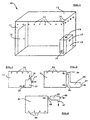
- FIG. 1 shows a simplified design of a preferred embodiment 10
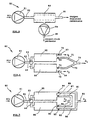
- Figure 2 shows a schematic working principle of the same embodiment.
- a collapsible hypoxic training room 11 comprises soft or hard walls made preferably from a clear glass or polymer material supported on a metal or plastic framework 19 and equipped with a door 12, a ceiling 13 and an optional floor platform.
- a hypoxicator 15 employs almost the same working principle as is well-known in medical field membrane-type or molecular sieve-type oxygen concentrators which separate ambient air into oxygen-rich and nitrogen-rich fractions.
- the main difference between the hypoxicator and an oxygen concentrator is that with an oxygen concentrator, the oxygen-rich gas mixture is used and nitrogen concentrate is released into the atmosphere, and with the hypoxicator, the nitrogen-rich gas mixture is used and the oxygen concentrate is disposed of.
- the hypoxicator presented in this invention is also several times more productive and does not need a number of elements necessary in oxygen concentrator devices.
- a custom-made hypoxicator with membrane or molecular-sieve air separation unit is used being schematically shown in figures 5 and 6 and described later in this document.
- the hypoxicator 15 installed inside the hypoxic room 11 draws internal room air through a disposable dust and bacterial filter of inlet 16 and separates it into oxygen concentrate disposed through outlet 17 and nitrogen concentrate being discharged inside room 11 through outlet 18.
- the constant gas mixture withdrawal from room 11 through outlet 17 causes the same quantities of fresh air to be drawn in through the ventilating openings 14, keeping normal atmospheric pressure inside room 11.
- the air-flow capacity of openings 14 must be larger than the maximal flow of the oxygen concentrate able to be produced by the hypoxicator 15. It will allow an even atmospheric pressure inside the hypoxic room 11.
- ventilating openings 14 may be equipped with the hypobaric valves allowing to create a necessary pressure difference inside the room 11. In this case it is advisable to reduce the number of openings 14 to one or two of a larger size.
- These valves (or valve) should be combined with a room pressure monitor and controlled by a computerized control unit which will change the air pressure inside the room 11 in accordance to the oxygen content level allowing perfectly-simulated mauntain air conditions at different altitudes.
- Suitable low-pressure valves with an extremely sensitive room pressure monitor (model RPM-1) and other necessary accessories are available from MODUS Instruments, Inc.
- the performance of the hypoxicator 15 must be enough to lower the oxygen content of the air inside the room 11 to desired level in a desired amount of time. Preferred are those able to produce at least 15 cubic feet (450 liters) per minute of nitrogen concentrate with minimum 90% purity which should be enough for one individual training room. For larger rooms more efficient hypoxicators should be used or a sluice chamber installed at the entrance in order to save energy by frequent door openings. There is no need to make the door, wall and ceiling joins of the hypoxic room 11 absolutely airtight and it may be used without a floor platform as well.
- the hypoxic room should be equipped with an oxygen-content sensor and an oxygen-depletion alarm (both not shown). Suitable are those manufactured by Micro Switch(a Honeywell Div.), Sensormedics Corp., Servomex, Matheson Gas Products, Enmet Corp. and others.
- the oxygen-content sensor constantly measures the oxygen content in the room and transmits the data to a computerized control unit (not shown) which controls the performance of the hypoxicator 15 to achieve and maintain desired air parameters in accordance to training or therapy protocol.
- Preferred oxygen content parameters for hypoxic training ortherapy lie in the range from 7% to 13% for controlled medical use and 11%-15% for public use for fitness purposes.
- Pulse oximeters manufactured by Nellcor Inc., Edentec, Ohmeda, Puritan-Bennet Corp. and Simed Corp. are suitable.
- the oximeter mounted on a finger of a user transmits constantly the pulse rate and SaO2 - data to the computerized control unit which chooses the hypoxic parameters most suitable for a user.
- a humidity and temperature control unit (not shown) may be installed in the system in orderto control humidity and temperature inside the room 11.
- the hypoxicator 15 draws the internal room air through the intake 16 returning only the oxygen-depleted gas mixture through the outlet 18 and discharging the oxygen concentrate through the outlet 17 outside the room 11.
- Fresh air is drawn through the ventilating openings 14 equalizing atmospheric pressure inside the room 11 and being mixed with the incoming through the outlet 18 oxygen-depleted air.
- the oxygen content level of the air inside the room 11 drops to preset proportions which are maintained by the computerized control unit during the session time in accordanceto training ortherapy protocol and users conditions.
- Another big advantage of the invention presented here is a gradual lowering of the oxygen content of the air inside the hypoxic room during the session which allows a better adaptation to hypoxic condition and eliminates hypoxic shock.
- a computerized control unit constantly informs a user about the simulated altitude he reaches during a session.
- Carbon dioxide produced by a user during a training or therapy session settles because of its higher density and is removed through the low-positioned intake 16 from the room 11. Because of its permeability, which is higher than oxygen and nitrogen, carbon dioxide penetrates faster the oxygen-separating membrane of the hypoxicacor 15 and is fully discharged into the atmosphere through the outlet 17. In case of a molecular sieve-type hypoxicator, carbon dioxide remains with the oxygen concentrate and is removed completely as well.
- the computerized control unit significantly reduces performance of the hypoxicator 15 the carbon dioxide constantly produced by a user will be always removed first and completely from the room 11.
- FIG 3 shows a schematic design of an alternate embodiment 30 which differs from the preferred embodiment only through the outside installation of the hypoxicator 35.
- the air inside the hypoxic training room 31 is drawn through the intake 36 inside hypoxicator 35 wherein it is separated into oxygen concentrate being disposed through the output 37 and oxygen-depleted gas mixture being returned through the outlet 38 back into room 31, etc. All other parts and devices are the same as in the preferred embodiment.
- Figure 4 shows a further alternate embodiment 40 wherein the oxygen-depleted air is pumped inside the room 41.
- the hypoxicator 45 installed preferably outside the room 41 draws outside air through the dust filter of the intake 46 and disposes oxygen-rich gas mixture through the outlet 47 blowing the oxygen-depleted air into the room 41 through the outlet 48.
- ventilating openings 44 should be installed preferably in the lower portion of the room walls allowing carbon dioxide to be blown out first.
- the air flow capacity of the ventilating openings 44 must be greater than the volume of the incoming gas mixture by maximal performance of the hypoxicator 45, because it is necessary to keep normal atmospheric pressure inside the hypoxic training room 41.
- This alternate embodiment requires a humidifier in order to reinstate the humidity of the incoming dry gas mixture to desired proportions. It is necessary because water vapor is faster than other gases in penetrating an oxygen-separating membrane which makes oxygen-depleted retentate too dry for comfortable use. In case of a molecular sieve separator water vapor is removed with the oxygen concentrate.
- the preferred type of humidifier is a disc spray dispenser widely used in air conditioning systems and which can employ the power of the incoming air stream to produce micro-sized water droplets which evaporate instantly.
- Any other humidifiers available on the market for home or office use are suitable for the invention presented here and may be installed separately inside or outside a hypoxic room. All other parts and equipment are similar to the preferred embodiment.
- Hyperbaric conditions may be easily established, if necessary, employing hyperbaric valves at the ventilating openings 44 controlled by a room pressure monitor and computerized control unit similar to the preferred embodiment.
- FIG. 5 shows a schematic design and a working principle of the membrane type hypoxicator 50.
- a compressor 51 draws an ambient air and supplies compressed air through an conduit 52 into a membrane separation unit 53 wherein it is separated into oxygen rich permeate and oxygen depleted retentate.
- the permeate is drawn by a vacuum pump 54 being disposed through the conduit 56 and the retentate is discharged through the conduit 55 inside the hypoxic room (not shown).
- the system can also work without the vacuum pump 54 being installed here for increasing the efficiency of the separation unit 53. Otherwise, a fan or a blower may be used instead of compressor 51 in which case an efficient vacuum pump 54 is required to achieve the highest air separation grade across the membranes of the separation unit 53.
- Thomas WOBL double piston compressors (series 1207 and 2807) and Thomas WOBL piston or rotary vacuum pumps (series TF16, TF25 and 2750) manufactured by Thomas Industries, Inc.
- the membrane separation unit 53 is of known construction and may consist of a set of parallel connected membrane cells or a single cell which employ either flat or capillary membranes.
- the inlet of the separation unit 53 receives compressed airfrom conduit 52, and separates the air across the membrane and delivers the oxygen-depleted retentate gas through the outlet to conduit 55.
- the separation results from a pressure difference created by a compressor 51 and/or vacuum pump 54 expelling the oxygen-rich permeate gas mixture as a result of this compressor and vacuum pump arrangement, the retentate gas mixture is delivered further inside a hypoxic room.
- Similar membrane separation units usually with hollow-fiber-polymer membranes, are used currently in the medical oxygen-enriching devices.
- the best material for the membranes is selected from the group consisting of poly(dimethylsiloxane) also referred to as PDMS or its copolymer, or poly[1-(trimethylsilyl)-1-propyne] also referred to as PMSP, available from the Sanyo Chemical Co., the Matsushita Electric Company or the General. Electric Co.
- PDMS poly(dimethylsiloxane)
- PMSP poly[1-(trimethylsilyl)-1-propyne]
- PMSP poly[1-(trimethylsilyl)-1-propyne]
- silicon rubber silicon rubber, natural rubber, carbon, polybutadiene, polystyrene, ethylcellullose, butyl rubber, Teflon-FEP, polyvinylacetate, poly(2,6-dimethylphenylene oxide) or poly(methylpentene-1).
- Suitable for use in forming the membranes are porous polyethylene or polypropylene available from Terumo, Bentley, Johnson & Johnson, Bard, Baxter Travenol, 3M, Shiley or Cope.
- Other possible materials will be apparent to those skilled in the art, who will be able to substitute equivalent materials for those enunciated here without departing from the invention.
- membrane cells are made with a porous, tubular-shaped support structure having a permeable flat sheet membrane layer on the retentate side of the support structure, the membrane layer being preferably from highly permeable organic, synthetic, ceramic, glass, metal, composite, mineral or biologic material, or combinations thereof in symmetric, asymmetric or composite shape, porous or nonporous.
- Capillary or hollow-fiber membranes may also be used effectively instead of flat membranes.
- a humidifier may be connected to hypoxicator 50, if necessary, or installed separately in hypoxic room.
- Figure 6 shows a schematic design and a working principle of the molecular-sieve type hypoxicator 60 which are almost similar to medical oxygen concentrators being commercialized since mid-1970s and operating on the original Skarstrom cycle.
- a compressor 61 draws an ambient air and pressurizes it preferably up to 3 to 10 bar pressure. Compressed air is delivered through the outlet 62, switching valves 63 and air flow paths 64 to sieve bed 65 or sieve bed 66 alternately.
- the molecular sieve material of sieve beds 65, 66 adsorbes nitrogen from the compressed air, allowing oxygen and other gases to pass through to disposal conduits 67 and 68.
- the two sieve beds 65 and 66 are pressurized alternately in a cyclic manner whereby air flow paths 64 are switched by solenoid switching valves 63.
- the sieve beds are made preferably from steel used for high-pressure gas containers.
- a pressurizing valve 69 opens depressurizing bed 65, allowing nitrogen to flow through conduit 71 to mixing outlet 73 connected to hypoxic room (not shown here).
- Some of the oxygen produced at this time by bed 66 is used to purge bed 65 (connections from conduit 68 to bed 65 and from 67 to 66 are not shown here in order to simplify the scheme).
- a pressurizing valve 70 opens, allowing depressurization of the bed 66 and the nitrogen being flown through a conduit 72 to the mixing outlet 73. The complete cycle is then repeated.
- Oxygen disposal conduits 67 and 68 having pressure regulator valves 74 and 75 may join each other, allowing single-tube oxygen transmission to a wasting point.
- compressor 61 The performance of compressor 61 is controlled by a manual or computerized control unit constantly receiving data from an oxygen content sensor, oximeter and other electronic sensors inside a hypoxic room.
- the particulary preferred materials for adsorbing nitrogen are molecular-sieve zeolites or crystalline aluminosilicates of alkali earth elements, both synthetic and natural, and Molecular-Sieve Carbon, type CMSO2, available from Calgon Corp., Bergbau-Forschung Gm-bH in Germany and Takeda Chemical Company in Japan.
- Organic zeolites, pillared interlayer clays (PILCS) and other suitable molecular sieve materials may also be used.
- the productivity of the hypoxicator in this embodiment should preferably be in a range from 30 to 50 liters per minute of oxygen with 80% to 90% purity which will allow establishing of 12%O2 hypoxic conditions in a 5 cubic meters (185 cubic feet) training room in approximately 10 to 20 minutes.
- a humidifier may be connected to hypoxicator 60, if necessary, or installed separately in hypoxic room.
- Figure 7 shows a scheme of a most efficient embodiment of hypoxicator 80 employing preferably Molecular Sieve Carbon type CMSN2 in a pressure-swing adsorption system which allows to produce nitrogen with up to 99.9% purity and absolutely free from carbon dioxide.
- Compressor 81 supplies air pressurized preferably up to 3 to 10 bar through the outlet 82, switching valve 83 and connectors 84 to molecular sieve beds 85 and 86.
- Each sieve bed is alternately pressurized in a cyclic manner and supplies nitrogen until it becomes saturated with oxygen.
- Bed 85 is pressurized by closing a pressurizing valve 89 and adsorption process begins.
- Oxygen and carbon dioxide are adsorbed by the adsorbent and nitrogen flows through the pressure regulator valve 94 and conduit 87 to mixing outlet 93 connected to hypoxic room (not shown).
- solenoid valve 83 switches the flow path of the compressed air to bed 86 which is pressurized by closing pressurizing valve 90.
- the bed 85 is depressurized by opening valve 89, allowing oxygen to escape from the adsorbent and to be disposed through the conduit 91 and outlet 96.
- the adsorbent in the sieve bed 86 becomes saturated with oxygen and valve 83 switches air flow path to bed 85 which is pressurized by closing valve 89. The complete cycle is then repeated.
- One, three or four-bed adsorbing units may be made using the same principle, if necessary.
- CMSN2 is also available from Bergbau-Forschung GmbH and Takeda Chemical Company.
- Zeolites made of organic materials are also suitable. Under normal operating conditions, the molecular sieve is completely regenerative and will last indefinitely.
- a humidifier may be connected to hypoxicator 80 or installed separately in hypoxic room. All necessary switches, valves, pressure regalators, manometers, pressure display-controllers and transmitters, filters, fittings and tubing are available from Modus Instruments, Inc., Victor Equipment Company and AirSep Corporation.
- the invented system could be applied to any closed room or structure, such as a patient room in a hospital, residential rooms, fitness club rooms, office and conference rooms, schools and child care facilities, theatres, cinemas, restaurants and even a room inside a motor vehicle or other means of transportation.
- Two basic conditions must be met to build a system are sufficient ventilation of the room allowing instant reinstating of the atmospheric pressure inside the room and a safe disposal of oxygen.
- a hypoxicator may be installed as shown in figures 1-4 inside or outside a fitness room having a sufficient ventilation through the door or window.
- hypoxic room system may be easily integrated into any air conditioning system of any building or structure using existing ventilation ducts and equipment for delivery hypoxic gas mixture to any floor or room in the building. This will improve peoples state of health, increase their productivity and lower medical expenses.
- a hypoxicator may be incorporated into any separate room air conditioner.
- Fig. 4 installation scheme of hypoxicator makes the system most suitable and safe for use in a passenger car or other motor vehicles with a closed passenger space. Since most of Americans waste hours of their active life every week inside a car some of this time could be used to their advantage -- for hypoxic training.
- a small, preferably 12V/DC - powered hypoxicator with membrane or molecular sieve type separation principles described earlier may be installed inside a car interior or behind a dashboard. There is also enough space inside or under passenger seats.
- a hypoxicators delivery system may be also integrated in a ventilating system. Two conditions must be met in this embodiment in orderto create an invented hypoxic room system: an outside air must be drawn for separation and an oxygen concentrate must be discharged outside a car. There are many openings in a car body sufficient to play a role of ventilating openings 44 and constantly equalizing air pressure in a car interior with the outside atmospheric pressure and, if necessary more openings could be made, preferably at doorjambs.
- the lowest oxygen content of the supplied gas mixture should be preferably 13% - 15% by maximal hypoxicators performance which is absolutely safe and unnoticable by a user and even may be used for fighting sleepiness and increasing attentiveness and vitality.
- maximal hypoxicators performance which is absolutely safe and unnoticable by a user and even may be used for fighting sleepiness and increasing attentiveness and vitality.
- membrane-type hypoxicator it is simple to preset the performance of the separation unit for a steady supply of the air with 13-15% of oxygen.
- the produced nitrogen should be mixed with the fresh air in proportion 1 : 2.5 which makes the air with exactly 15% of oxygen.
- the mixing must be safe and automatically which may be achieved by transmitting nitrogen through "Y"-shaped mixing adapter with a larger fresh air intake opening, allowing 2.5 times more ambient air than nitrogen to be automatically sucked into the system for mixing. This and a computerized control unit with the oxygen-depletion alarm will insure the safety of the system for hypoxic training inside a car.
- the installation scheme shown on Fig. 2 is also suitable for closed-type motor vehicles.
- car ventilation ducts and other car body openings play the role of ventilation openings 14.
- An oxygen concentrate may be discharged to outside through any specially made opening for outlet 17.
- the best place for incorporating outlet 17 is an outside mirror supporting structure because it communicates with the a car interior through the mirror adjustment mechanism wherein a connection tubing should be installed inside the mirror supporting structure ending with a specially made opening outside and with the connector at inner panel of the door for hypoxicators outlet 17.
- An inhalation mask with hypoxic air supply tubing retractable from a dashboard or other interior part may be also installed for individual hypoxic training inside a motor vehicle.
- a mask should be preferably handheld, without any straps, which is safer.
- This application is most beneficially for a long-distance truck drivers or train operators. A motorist, feeling drowsy, could take a 3-5 minute session of hypoxic inhalation which will significally increase his cardiopulmonary activity, attention and vitality.
- the presented here invention may be marketed as an anti-sleep mode device for operators of any means of transportation.
- the system can switch on automatically if a user wears on a finger or another body part a pulse oximeter connected to a computerized or fuzzy logic control unit. When a pulse rate of a user drops to the lowest for this individual level a system will be switched on automatically and hypoxic conditions will be established for a time, necessary to increase user activity to desired level. A blood saturation with oxygen is also under constant control.
- a big advantage of the invented system forthis application is that it does not disturb a user and does not cause a "panic effect" which is genetically preset in humans if a part of the oxygen in the air is replaced by carbon dioxide.
- the system may be successfully used for hypoxic training of mammals as well.
Landscapes
- Health & Medical Sciences (AREA)
- Pulmonology (AREA)
- Animal Behavior & Ethology (AREA)
- Emergency Medicine (AREA)
- Veterinary Medicine (AREA)
- Public Health (AREA)
- General Health & Medical Sciences (AREA)
- Life Sciences & Earth Sciences (AREA)
- Engineering & Computer Science (AREA)
- Biomedical Technology (AREA)
- Anesthesiology (AREA)
- Heart & Thoracic Surgery (AREA)
- Hematology (AREA)
- Chemical & Material Sciences (AREA)
- Chemical Kinetics & Catalysis (AREA)
- Oil, Petroleum & Natural Gas (AREA)
- General Chemical & Material Sciences (AREA)
- Analytical Chemistry (AREA)
- Accommodation For Nursing Or Treatment Tables (AREA)
- Separation Using Semi-Permeable Membranes (AREA)
- Oxygen, Ozone, And Oxides In General (AREA)
- Electrotherapy Devices (AREA)
Claims (20)
- System für hypoxisches Training und hypoxische Therapie zum Bereitstellen einer sauerstoffreduzierten Atmosphäre für einen Benutzer innerhalb einer externen atmosphärischen Luftumgebung mit externem Umgebungsluftdruck, wobei das System aufweist:wobei der zweite Auslass (18, 38, 48) mit dem Innenraum in Verbindung steht und die zweite Mischung zum Innenraum leitet, so dass sich die zweite Mischung mit der Luft im Innenraum vermischt, undeine Sauerstoffextraktionsvorrichtung mit einem Einlass (16, 36, 46), über den eine Zufuhrgasmischung zugeführt wird, und einem ersten und zweiten Auslass (17, 37, 47; 18, 38, 48), wobei der erste Auslass (17, 37, 47) eine erste Gasmischung überträgt, die von der Zufuhrgasmischung abgeleitet wird und einen höheren Sauerstoffgehalt als die Zufuhrgasmischung aufweist, und wobei der zweite Auslass(18, 38, 48) eine zweite Gasmischung überträgt, die von der Zufuhrgasmischung abgeleitet wird und einen Sauerstoffgehalt aufweist, der niedriger als der Sauerstoffgehalt der Zufuhrgasmischung, jedoch mindestens 7% ist;eine Atmungskammer, die einen Luft enthaltenden Innenraum und einen Eingang aufweist, der mit dem Innenraum in Verbindung steht und durch den der Benutzer den Innenraum betreten kann;
wobei der erste Auslass (17, 37, 47) die erste Mischung zur äußeren Atmosphärenumgebung leitet;
wobei die Atmungskammer Lüftungsöffnungen (14, 34, 44) aufweist, welche den Austausch von Luft in wenigstens einer Richtung zwischen der externen Atmosphärenumgebung und dem Innenraum in einem Ausmaß ermöglicht, dass, in Kombination mit der Sauerstoffextraktionsvorrichtung, die Luft im Innenraum bei einem Druck gehalten wird, der im wesentlichen gleich dem Umgebungsluftdruck der externen Atmosphärenumgebung ist, sowie bei einer im Wesentlichen konstanten Sauerstoffkonzentration, die wenigstens 7 % beträgt, jedoch wesentlich niedriger ist als die externe umgebende Sauerstoffkonzentration. - System nach Anspruch 1, bei dem der Einlass (16, 36) der Sauerstoffextraktionsvorrichtung mit dem Innenraum in Verbindung steht und die Zufuhrgasmischung aus der Luft im Innenraum zuführt.
- System nach Anspruch 1, bei dem der Einlass (46) der Sauerstoffextraktionsvorrichtung die Zufuhrgasmischung aus der Luft der externen Atmosphärenumgebung zuführt.
- System nach Anspruch 3, bei dem die Luftstromkapazität der Lüftungsöffnungen (14, 34, 44) größer ist als das Volumen der von der Sauerstoffextraktionsvorrichtung gelieferten zweiten Gasmischung.
- System nach einem der vorhergehenden Ansprüche, bei dem die Luft im Innenraum eine Sauerstoffkonzentration von 7 bis 15 % hat.
- System nach einem der vorhergehenden Ansprüche, bei dem im Innenraum der Atmungskammer eine Trainingsvorrichtung zum Trainieren des Benutzers vorgesehen ist.
- System nach einem der vorhergehenden Ansprüche, bei dem die Atmungskammer eine Tür (12) und eine Wandstruktur aufweist, welche einen geschlossenen Raum begrenzen, in den der Benutzer durch die Tür (12) hindurch eintreten kann.
- System nach einem der vorhergehenden Ansprüche, bei dem die Sauerstoffextraktionsvorrichtung außerhalb der Atmungskammer angeordnet ist, wobei der zweite Auslass (38, 48) mit der Kammer derart verbunden ist, dass die sauerstoffreduzierte Gasmischung in den geschlossenen Raum innerhalb der Kammer ausgegeben wird und sich mit der darin befindlichen Luft vermischt, wodurch bewirkt wird, dass die Luft im geschlossenen Raum eine niedrigere Sauerstoffkonzentration als die Luft außerhalb der Kammer hat.
- System nach einem der vorhergehenden Ansprüche, bei dem die Sauerstoffextraktionsvorrichtung eine Trenneinheit aufweist, zu der die Zufuhrgasmischung vom Einlass (16, 36, 46) übertragen wird, wobei die Trenneinheit die Zufuhrgasmischung in eine sauerstoffreduzierte Gasmischung mit einer niedrigeren Sauerstoffkonzentration als die Zufuhrmischung und eine sauerstoffangereicherte Gasmischung mit einer höheren Sauerstoffkonzentration als die Zufuhrmischung trennt, wobei die Trenneinheit eine Leitung (55, 71, 72, 87, 88) für die sauerstoffreduzierte Mischung aufweist, durch die die sauerstoffreduzierte Gasmischung gefördert wird, und eine Leitung (56, 67, 68, 91, 92) für die sauerstoffangereicherte Mischung, durch die die sauerstoffangereicherte Gasmischung gefördert wird;
wobei der zweite Auslass (18, 38, 48) wirkungsmäßig mit der Leitung für die sauerstoffreduzierte Mischung (55, 71, 72, 87, 88) verbunden ist und von dieser die sauerstoffreduzierte Gasmischung empfängt, wobei der erste Auslass (17, 37, 47) wirkungsmäßig mit der Leitung für die sauerstoffangereicherte Mischung (56, 67, 68, 91, 92) verbunden ist und von dieser die sauerstoffangereicherte Gasmischung empfängt sowie die sauerstoffangereicherte Mischung in die äußere Umgebung freigibt. - System nach Anspruch 9, bei dem die Trenneinheit ein Gehäuse aufweist, das einen Raum begrenzt, wobei das Gehäuse eine Trennmembran aufweist, die darin gehaltert ist und den Raum teilt, um einen Retentatraum und einen Permeatraum zu bilden, wobei die Trenneinheit ferner eine Pumpe aufweist, welche die Gasmischung durch die Membran hindurch pumpt und bewirkt, dass hierdurch die Gasmischung im Permeatraum in ein sauerstoffangereichertes Permeat, das zum ersten Auslass (17, 37, 47) geleitet wird, und ein sauerstoffreduziertes Retentat im Retentatraum getrennt wird, das zum zweiten Auslass (18, 38, 48) geleitet und innerhalb der Kammer ausgegeben wird.
- System nach Anspruch 9, bei dem die Sauerstoffextraktionsvorrichtung eine Pumpe aufweist, welche die Zufuhrgasmischung an eine Druckschwankungsadsorptionsvorrichtung heranbringt, welche ein molekulares Siebmaterial aufweist, das Stickstoff aus der Zufuhrgasmischung adsorbiert, die durch die Pumpe komprimiert wird, wobei es die sauerstoffangereicherte Mischung unabsorbiert lässt, die zur sauerstoffangereicherten Leitung (67, 68) geleitet und in die äußere Umgebung ausgegeben wird, wobei die Adsorptionsvorrichtung auf eine Druckverringerung hin ein Stickstoffkonzentratgas freigibt, das als sauerstoffreduzierte Mischung zur sauerstoffreduzierten Leitung (71, 72) gefördert und in die Kammer ausgegeben wird.
- System nach Anspruch 9, bei dem die Sauerstoffextraktionsvorrichtung eine Pumpe aufweist, welche die Zufuhrgasmischung zu einer Druckschwankungsadsorptionsvorrichtung führt, die ein molekulares Siebmaterial aufweist, welches Sauerstoff aus der Zufuhrgasmischung adsorbiert, die durch die Pumpe komprimiert ist, wobei es die sauerstoffreduzierte Mischung unabsorbiert lässt, die zur sauerstoffreduzierten Leitung (87, 88) geleitet und in die Kammer ausgegeben wird, wobei die Adsorptionsvorrichtung auf eine Druckverringerung hin ein Sauerstoffkonzentratgas freigibt, das als sauerstoffangereicherte Mischung zur sauerstoffangereicherten Leitung (91, 92) geleitet und in die äußere Umgebung ausgegeben wird.
- System nach einem der vorhergehenden Ansprüche, bei dem die Lüftungsöffnungen (14, 34) in der Kammer in einem oberen Bereich der Kammer angeordnet sind.
- System nach einem der Ansprüche 1 bis 12, bei dem die Lüftungsöffnungen (44) in der Kammer in einem unteren Bereich der Kammer angeordnet sind.
- System nach einem der vorhergehenden Ansprüche, bei dem die Kammer ein Teil eines Fahrzeugs und der Benutzer ein Fahrer des Fahrzeugs ist, wobei das System die sauerstoffarme Umgebung wahlweise zur Verfügung stellt, um die Wachsamkeit des Fahrers aufrechtzuerhalten.
- System nach einem der vorhergehenden Ansprüche, mit einer Steuereinheit, welche den Betrieb der Sauerstoffextraktionsvorrichtung steuert, und einem Sauerstoffgehaltsensor, der den Sauerstoffgehalt der Luft innerhalb des Innenraums überwacht und mit der Steuereinheit verbunden ist, um den Sauerstoffgehalt der Luft im Innenraum auf einem gewünschten Niveau zu halten.
- System nach einem der vorhergehenden Ansprüche, bei dem das System eine Feuchtigkeits- und Temperatursteuereinrichtung aufweist, welche die Feuchtigkeit und die Temperatur der Luft innerhalb des Innenraums reguliert.
- System nach Anspruch 16, bei dem das System ferner einen Pulsoximeter aufweist, welcher die Pulsrate des Benutzers und die Blutsättigung mit Sauerstoff überwacht, wobei der Oximeter Daten zur Steuereinheit überträgt und wobei die Steuereinheit den Sauerstoffgehalt der Luft innerhalb des Innenraums in Abhängigkeit der Oximeterdaten reguliert.
- System nach einem der vorhergehenden Ansprüche, bei dem das System innerhalb des Innenraums eine Trainingseinrichtung zum hypoxischen Training von Menschen oder anderen Säugetieren aufweist.
- System nach einem der vorhergehenden Ansprüche, bei dem die den Innenraum aufweisende Kammer Teil eines Gebäudes ist, wobei die Sauerstoffextraktionsvorrichtung in das Klimaanlagensystem des Gebäudes eingebaut ist und Lüftungsöffnungen des Gebäudes zum Befördern der sauerstoffreduzierten Luft in den Innenraum verwendet.
Applications Claiming Priority (3)
| Application Number | Priority Date | Filing Date | Title |
|---|---|---|---|
| US08/505,621 US5799652A (en) | 1995-05-22 | 1995-07-21 | Hypoxic room system and equipment for Hypoxic training and therapy at standard atmospheric pressure |
| PCT/US1996/011792 WO1997003631A1 (en) | 1995-07-21 | 1996-07-16 | Hypoxic room system and equipment for hypoxic training and therapy |
| US505621 | 2000-02-16 |
Publications (4)
| Publication Number | Publication Date |
|---|---|
| EP0959862A4 EP0959862A4 (de) | 1999-12-01 |
| EP0959862A1 EP0959862A1 (de) | 1999-12-01 |
| EP0959862B1 EP0959862B1 (de) | 2001-11-28 |
| EP0959862B2 true EP0959862B2 (de) | 2005-01-19 |
Family
ID=24011113
Family Applications (1)
| Application Number | Title | Priority Date | Filing Date |
|---|---|---|---|
| EP96928000A Expired - Lifetime EP0959862B2 (de) | 1995-07-21 | 1996-07-16 | Hypoxisches raumsystem und einrichtung für hypoxisches training und therapie |
Country Status (6)
| Country | Link |
|---|---|
| US (1) | US5799652A (de) |
| EP (1) | EP0959862B2 (de) |
| AT (1) | ATE209474T1 (de) |
| CA (1) | CA2227444C (de) |
| DE (1) | DE69617477T3 (de) |
| WO (1) | WO1997003631A1 (de) |
Cited By (3)
| Publication number | Priority date | Publication date | Assignee | Title |
|---|---|---|---|---|
| US7841929B2 (en) | 2002-12-02 | 2010-11-30 | Volker Spiegel | Recreation room and method for controlling the atmosphere in the room |
| WO2015019322A1 (en) * | 2013-08-07 | 2015-02-12 | F.R. Pulford & Son Pty Ltd | A hypoxic system and method for delivering oxygen depleted breathing gas to a space |
| AT17483U1 (de) * | 2020-10-09 | 2022-06-15 | Richard Rebec Ing | Höhensimulationsvorrichtung für Mensch und/oder Tier |
Families Citing this family (134)
| Publication number | Priority date | Publication date | Assignee | Title |
|---|---|---|---|---|
| US5924419A (en) * | 1995-05-22 | 1999-07-20 | Kotliar; Igor K. | Apparatus for passive hypoxic training and therapy |
| US7931733B2 (en) * | 1995-07-21 | 2011-04-26 | Kotliar Igor K | Method of producing hypoxic environments in occupied compartments with simultaneous removal of excessive carbon dioxide and humidity |
| US5964222A (en) * | 1995-07-21 | 1999-10-12 | Kotliar; Igor K. | Hypoxic tent system |
| US7207392B2 (en) * | 2000-04-17 | 2007-04-24 | Firepass Ip Holdings, Inc. | Method of preventing fire in computer room and other enclosed facilities |
| US6314754B1 (en) * | 2000-04-17 | 2001-11-13 | Igor K. Kotliar | Hypoxic fire prevention and fire suppression systems for computer rooms and other human occupied facilities |
| US8141649B2 (en) * | 2000-04-17 | 2012-03-27 | Firepass Corporation | Hypoxic fire suppression system for aerospace applications |
| US7900709B2 (en) * | 2000-12-28 | 2011-03-08 | Kotliar Igor K | Hypoxic aircraft fire prevention and suppression system with automatic emergency oxygen delivery system |
| DE19780127D2 (de) * | 1996-02-23 | 1999-03-18 | Christoph Schuster | Sauerstofftrainer |
| AUPO163896A0 (en) * | 1996-08-14 | 1996-09-05 | Resmed Limited | Determination of respiratory airflow |
| EP0865796B1 (de) * | 1996-09-02 | 2007-03-07 | Tkachuk, Elena Nikanorovna | Anlage zur herstellung eines gasgemisches bei der hypoxia-therapie |
| AUPO247496A0 (en) | 1996-09-23 | 1996-10-17 | Resmed Limited | Assisted ventilation to match patient respiratory need |
| WO1999006115A1 (en) * | 1997-07-31 | 1999-02-11 | Hypoxico Inc. | Hypoxic tent system |
| US6561185B1 (en) | 1997-09-11 | 2003-05-13 | Kroll Family Trust | Altitude adjustment method and apparatus |
| US5988161A (en) * | 1997-09-11 | 1999-11-23 | Kroll; Mark W. | Altitude adjustment method and apparatus |
| DE19811851C2 (de) | 1998-03-18 | 2001-01-04 | Wagner Alarm Sicherung | Inertisierungsverfahren zur Brandverhütung und -löschung in geschlossenen Räumen |
| US6016803A (en) * | 1998-07-21 | 2000-01-25 | Volberg; Walter | Self-contained hyperbaric chamber |
| US6352078B1 (en) * | 1999-09-18 | 2002-03-05 | David E. Harvey | Hyperbaric chamber accessories |
| US6497231B1 (en) * | 2000-03-24 | 2002-12-24 | White Perry La'monte | Hyperbaric oxygen chamber |
| US6560991B1 (en) * | 2000-12-28 | 2003-05-13 | Kotliar Igor K | Hyperbaric hypoxic fire escape and suppression systems for multilevel buildings, transportation tunnels and other human-occupied environments |
| US6557374B2 (en) * | 2000-12-28 | 2003-05-06 | Igor K. Kotliar | Tunnel fire suppression system and methods for selective delivery of breathable fire suppressant directly to fire site |
| JP2003530922A (ja) * | 2000-04-17 | 2003-10-21 | コトライアー・イガー・ケイ | 有人環境での低酸素濃度火災予防システム及び火災抑止システム並びに呼吸可能な消火性組成物 |
| GB0020809D0 (en) * | 2000-08-23 | 2000-10-11 | Edge Uk Ltd | Atmosphere regulation |
| WO2002020136A1 (en) | 2000-09-06 | 2002-03-14 | Colorado Altitude Training Llc | Altitude simulation method and system |
| US6945064B2 (en) * | 2001-01-03 | 2005-09-20 | Asir Iyadurai Jebaraj | Self-contained air-conditioned enclosure |
| AT501544A1 (de) * | 2001-01-30 | 2006-09-15 | Gluderer Lothar Erich | Klimakammer |
| US6904912B2 (en) * | 2001-01-31 | 2005-06-14 | The United States Of America As Represented By The Secretary Of The Army | Automated inhalation toxicology exposure system |
| US20030129938A1 (en) * | 2001-02-26 | 2003-07-10 | Mitchell David E. | Ofspr |
| US8221329B2 (en) * | 2001-07-31 | 2012-07-17 | The United State Of America As Represented By The Secretary Of The Army | Inhalation system and method |
| US6871645B2 (en) * | 2001-09-14 | 2005-03-29 | The United States Of America As Represented By The Secretary Of The Navy | Reduced-oxygen breathing device |
| FR2831825B1 (fr) | 2001-11-08 | 2004-01-30 | Intertechnique Sa | Procede et dispositif de regulation a dilution pour appareil respiratoire |
| US6957651B2 (en) * | 2002-01-22 | 2005-10-25 | The United States Of America As Represented By The Secretary Of The Navy | System for simulating metabolic consumption of oxygen |
| US7946959B2 (en) | 2002-05-30 | 2011-05-24 | Nike, Inc. | Training scripts |
| US20050247311A1 (en) * | 2002-09-16 | 2005-11-10 | Charles Vacchiano | Reduced-oxygen breathing device |
| WO2004054493A2 (en) * | 2002-12-12 | 2004-07-01 | Airsep Corporation | Portable hypoxic apparatus |
| DE10261809C5 (de) * | 2002-12-19 | 2009-11-19 | Henninger, Richard, Dipl.-Kaufm. | Verfahren und Vorrichtung zum Regeln des Sauerstoffgehalts in einem geschlossenen Raum |
| US7198045B2 (en) * | 2003-02-10 | 2007-04-03 | Hollis Parker Risley | Low pressure hyperbaric chamber and method of using the same |
| US20060196502A1 (en) * | 2003-02-13 | 2006-09-07 | Murray Pilcher | Oxygen deprivation system |
| US8025055B1 (en) | 2003-04-01 | 2011-09-27 | Grady Daniel J | CPAP enclosure for the treatment of breathing disorders |
| US7520277B1 (en) | 2003-04-01 | 2009-04-21 | Daniel Grady | CPAP enclosure for the treatment of sleep apnea |
| US8763712B2 (en) | 2003-04-09 | 2014-07-01 | Firepass Corporation | Hypoxic aircraft fire prevention system with advanced hypoxic generator |
| CN1202384C (zh) * | 2003-05-28 | 2005-05-18 | 林楼飞 | 一种室内采气室外制氧的方法及其分体式制氧机 |
| DE10343342B4 (de) * | 2003-07-11 | 2008-10-16 | Jahn, Axel, Dr. | Verfahren und Vorrichtung zur Klimatisierung eines Raumes mit einem Luftgemisch mit abgesenktem Sauerstoffpartialdruck |
| RU2325942C2 (ru) * | 2003-07-11 | 2008-06-10 | Аксель ЯН | Способ и устройство для кондиционирования воздуха в помещении посредством воздушной смеси с пониженным парциальным давлением кислорода |
| US7607437B2 (en) | 2003-08-04 | 2009-10-27 | Cardinal Health 203, Inc. | Compressor control system and method for a portable ventilator |
| US8118024B2 (en) | 2003-08-04 | 2012-02-21 | Carefusion 203, Inc. | Mechanical ventilation system utilizing bias valve |
| US7188621B2 (en) * | 2003-08-04 | 2007-03-13 | Pulmonetic Systems, Inc. | Portable ventilator system |
| US8156937B2 (en) | 2003-08-04 | 2012-04-17 | Carefusion 203, Inc. | Portable ventilator system |
| US7575549B2 (en) * | 2003-08-22 | 2009-08-18 | Sherwin Uda Miller | Apparatus and method for increasing, monitoring, measuring, and controlling perspiratory water and solid loss at reduced ambient pressure |
| US8535064B2 (en) * | 2003-09-11 | 2013-09-17 | Cvac Systems, Inc. | Method and apparatus for cyclic variations in altitude conditioning |
| US20050059530A1 (en) * | 2003-09-11 | 2005-03-17 | Huang-Tung Chang | Mutual action video game exercising device |
| US20080202774A1 (en) * | 2003-12-03 | 2008-08-28 | Kotliar Igor K | Method of producing hypoxic environments in enclosed compartments employing fuel cell technology |
| US20050202374A1 (en) * | 2004-01-06 | 2005-09-15 | Jan Stepanek | Hypoxia awareness training system |
| DE102004012097A1 (de) * | 2004-03-08 | 2005-09-29 | L.O.T. Low Oxygen Technology Gmbh | Aufenthaltsraum mit variabler Raumluftatmosphäre |
| US20060185669A1 (en) * | 2005-02-18 | 2006-08-24 | Oleg Bassovitch | Method and apparatus for intermittent hypoxic training |
| RU2299077C2 (ru) * | 2005-05-11 | 2007-05-20 | Семен Наумович Басович | Способ выработки гипоксической газовой смеси для гипокситерапии |
| US7926483B2 (en) * | 2005-08-04 | 2011-04-19 | Sir Issac Newton Enterprises LLC | System for controlling pressure in defined environment and associated method |
| US7591795B2 (en) * | 2005-09-28 | 2009-09-22 | Alterg, Inc. | System, method and apparatus for applying air pressure on a portion of the body of an individual |
| US20070077200A1 (en) * | 2005-09-30 | 2007-04-05 | Baker Clark R | Method and system for controlled maintenance of hypoxia for therapeutic or diagnostic purposes |
| DE102005053692B3 (de) * | 2005-11-10 | 2007-01-11 | Airbus Deutschland Gmbh | Brandschutz mit Brennstoffzellenabluft |
| RU2410143C2 (ru) | 2005-11-10 | 2011-01-27 | Эйрбас Дойчланд Гмбх | Система и способ пожаротушения |
| NZ552009A (en) * | 2006-01-24 | 2007-10-26 | Devx Tech Ip Ltd | Hypoxic training apparatus with gas supply from primary, secondary and tertiary sources |
| US20070221225A1 (en) * | 2006-01-24 | 2007-09-27 | Larry Kutt | Simulated Altitude Method and Apparatus |
| EP2033174B8 (de) | 2006-05-22 | 2015-04-15 | Nike International Ltd. | Uhrenanzeige mit lichtquellen und mit einer lichtdurchlässigen abdeckung |
| EP2051681A4 (de) * | 2006-08-04 | 2013-07-10 | Groupe Medical Gaumond Inc Gaumond Medical Group Inc | Hyperbares/hypoxisches kammersystem |
| US7588517B2 (en) * | 2006-09-08 | 2009-09-15 | Dale Richardson | Physical fitness system |
| WO2008060175A1 (en) * | 2006-11-13 | 2008-05-22 | Simon Naumovich Basovich | Method for producing a hypoxic gas mixture used for hypoxitherapy |
| KR100780448B1 (ko) | 2006-12-18 | 2007-11-28 | 이창희 | 저산소 적응훈련실 |
| KR100780447B1 (ko) * | 2006-12-19 | 2007-11-30 | 이창희 | 저압 적응훈련실 |
| WO2008100924A1 (en) * | 2007-02-12 | 2008-08-21 | O'brien William J | Variable pressure chamber having a screw compressor |
| WO2014153201A1 (en) | 2013-03-14 | 2014-09-25 | Alterg, Inc. | Method of gait evaluation and training with differential pressure system |
| AU2008311865A1 (en) | 2007-10-15 | 2009-04-23 | Alterg, Inc. | Systems, methods and apparatus for differential air pressure devices |
| US10342461B2 (en) | 2007-10-15 | 2019-07-09 | Alterg, Inc. | Method of gait evaluation and training with differential pressure system |
| US20090108082A1 (en) * | 2007-10-31 | 2009-04-30 | Richard Goldmann | Programmatic climate control of an exercise environment |
| US20090183738A1 (en) * | 2008-01-17 | 2009-07-23 | Vniimi Group Of Companies | Device for Complex Interval Normobaric Hypoxic Hyperoxic Training of a Human |
| FR2926627B1 (fr) * | 2008-01-21 | 2010-03-19 | Jacques Labrador | Systeme d'alimentation en gaz pour enceintes etanches |
| US8251876B2 (en) | 2008-04-22 | 2012-08-28 | Hill-Rom Services, Inc. | Breathing exercise apparatus |
| ES2351809B1 (es) * | 2008-07-31 | 2011-09-30 | Oscar Boada Barrao | Equipo reductor de oxígeno para control de hipoxia. |
| DE102009013396B3 (de) * | 2009-03-16 | 2010-08-05 | Dräger Medical AG & Co. KG | Vorrichtung und Verfahren zur Steuerung der Sauerstoffdosierung eines Beatmungsgerätes |
| AT11124U1 (de) * | 2009-01-14 | 2010-05-15 | Hof Georg Dipl Ing | Schwimmbecken mit abdeckung, wobei die innerhalb der abdeckung befindliche luft konditionierbar ist |
| AU2010249092A1 (en) | 2009-05-15 | 2011-11-24 | Alterg, Inc. | Differential air pressure systems |
| US8948824B2 (en) | 2009-08-05 | 2015-02-03 | Apple Inc. | Electronic devices with clips |
| JP5276630B2 (ja) | 2009-10-23 | 2013-08-28 | エア・ウォーター防災株式会社 | ガス消火設備 |
| NL2005991C2 (nl) * | 2011-01-12 | 2012-07-16 | Oosterhuis Beheer B V As | Hypoxisch brandbestrijdingssysteem, gebouw voorzien daarvan en werkwijze daarvoor. |
| WO2012129125A2 (en) | 2011-03-18 | 2012-09-27 | Alterg, Inc. | Differential air pressure systems and methods of using and calibrating such systems for mobility impaired users |
| FR2982164B1 (fr) * | 2011-11-07 | 2013-12-27 | Cie Maritime Dexpertises | Dispositif de reduction du risque incendie dans une enceinte hyperbare |
| US20130160767A1 (en) * | 2011-12-26 | 2013-06-27 | Vera Abella | Exercise machine including oxygen dispenser |
| US9180271B2 (en) | 2012-03-05 | 2015-11-10 | Hill-Rom Services Pte. Ltd. | Respiratory therapy device having standard and oscillatory PEP with nebulizer |
| ES2539187T3 (es) | 2012-03-30 | 2015-06-26 | Nl Nanomed Limited | Procedimiento para el control de un aparato de entrenamiento |
| CZ305638B6 (cs) * | 2012-06-27 | 2016-01-20 | Adam James Hansen | Zařízení pro řízenou manipulaci se vzduchem |
| JP2014129998A (ja) | 2012-11-30 | 2014-07-10 | Akira Ishibashi | 壁ならびに高清浄部屋システムおよびその製造方法ならびに建築物 |
| US9720443B2 (en) | 2013-03-15 | 2017-08-01 | Nike, Inc. | Wearable device assembly having athletic functionality |
| US8920286B2 (en) * | 2013-03-15 | 2014-12-30 | Mostafa Sheta | Exercise cell, ketosis/weight loss inducing exercise machine (KWIEM) ketosis inducing apparatus (KIA) |
| US9764170B2 (en) * | 2013-12-18 | 2017-09-19 | The United States Of America As Represented By Secretary Of The Navy | Hypoxia recovery system for mask off hypoxia training |
| NZ730091A (en) * | 2014-08-11 | 2022-09-30 | Stratosphere Atc Llc | Exercise apparatus simulating mild to high altitude environments |
| WO2016102634A1 (en) * | 2014-12-24 | 2016-06-30 | Koninklijke Philips N.V. | Air treatment |
| ES2624672T3 (es) | 2015-01-09 | 2017-07-17 | Amrona Ag | Procedimiento y sistema para prevenir y/o extinguir un incendio |
| AU2016243801B2 (en) | 2015-04-02 | 2020-05-21 | Hill-Rom Services Pte. Ltd. | Manifold for respiratory device |
| EP4512819A3 (de) * | 2015-08-12 | 2025-08-06 | The General Hospital Corporation | Zusammensetzungen und verfahren zur förderung der hypoxie oder der hypoxiereaktion zur behandlung und prävention von mitochondriendysfunktion und oxidativen stresserkrankungen |
| USD767754S1 (en) | 2015-11-02 | 2016-09-27 | Trainingmask, Llc | Resistance and filtration breathing device |
| USD765237S1 (en) | 2015-11-04 | 2016-08-30 | Trainingmask, Llc | Resistance breathing device |
| US9579540B1 (en) | 2016-01-06 | 2017-02-28 | Trainingmask, L.L.C. | Resistance breathing device |
| USD811581S1 (en) | 2016-03-03 | 2018-02-27 | Trainingmask Llc | Resistance breathing device |
| US9707444B1 (en) | 2016-03-22 | 2017-07-18 | Trainingmask Llc | Resistance breathing device |
| MX386021B (es) | 2016-09-09 | 2025-03-18 | Trainingmask L L C | Dispositivo de resistencia respiratoria. |
| USD820974S1 (en) | 2016-09-30 | 2018-06-19 | TrainingMask L.L.C. | Resistance breathing device |
| IL248385A0 (en) | 2016-10-18 | 2017-02-01 | Yeda Res & Dev | Treatment of circadian rhythm disorder |
| GB2558625B (en) * | 2017-01-11 | 2020-01-01 | Sporting Edge Uk Ltd | An air conditioning assembly |
| DE102017103468A1 (de) * | 2017-02-21 | 2018-08-23 | Mecora Medizintechnik Gmbh | Raum und Verfahren zum Herstellen eines Raums |
| TWI612412B (zh) * | 2017-02-22 | 2018-01-21 | 啓碁科技股份有限公司 | 免持電子裝置 |
| JP6877229B2 (ja) * | 2017-04-27 | 2021-05-26 | 川崎重工業株式会社 | 空気浄化システム |
| USD1010028S1 (en) | 2017-06-22 | 2024-01-02 | Boost Treadmills, LLC | Unweighting exercise treadmill |
| GB2564142B (en) * | 2017-07-05 | 2019-08-07 | Sporting Edge Uk Ltd | An altitude simulation assembly |
| US20190014726A1 (en) * | 2017-07-17 | 2019-01-17 | Stewart E. Erickson | Crop growth enhancement technology |
| DE102017212412A1 (de) * | 2017-07-19 | 2019-01-24 | Weiss Umwelttechnik Gmbh | Befeuchter und Verfahren zur Konditionierung von Luft |
| WO2019079655A1 (en) | 2017-10-18 | 2019-04-25 | Alterg, Inc. | SYSTEM FOR COLLECTING AND ANALYZING APPROPRIATE DATA AND METHODS OF OPERATING DRIVING SYSTEMS WITH RELIEF |
| US11654327B2 (en) | 2017-10-31 | 2023-05-23 | Alterg, Inc. | System for unweighting a user and related methods of exercise |
| CN108309639A (zh) * | 2018-02-11 | 2018-07-24 | 夏敬懿 | 睡眠仓、促进睡眠的方法及具有储存功能的装置 |
| US10322312B1 (en) | 2018-06-01 | 2019-06-18 | TrainingMask L.L.C. | Resistance and filtration breathing device |
| CN109089932A (zh) * | 2018-08-09 | 2018-12-28 | 曲阜师范大学 | 一种一体式智能操控实验动物跑台 |
| CN113116662B (zh) * | 2018-11-27 | 2022-04-26 | 济南昆仲信息科技有限公司 | 低气压实验装置 |
| US12544403B2 (en) | 2019-01-10 | 2026-02-10 | The General Hospital Corporation | Methods to treat mitochondrial-associated dysfunctions or diseases |
| CN110292691A (zh) * | 2019-07-12 | 2019-10-01 | 深圳市俄中博医医疗科技有限公司 | 新型常压间歇性高低氧训练设备、系统及其训练方法 |
| RU2722457C1 (ru) * | 2019-09-03 | 2020-06-01 | Евгений Леонидович Черняков | Персональное устройство психофизиологической релаксации пользователя |
| WO2021096864A1 (en) * | 2019-11-13 | 2021-05-20 | Vibragenix, LLC | System and method for generating, and delivering to standing users, therapeutic acoustic vibrations |
| JP2021117751A (ja) * | 2020-01-27 | 2021-08-10 | トヨタ自動車株式会社 | 情報処理装置、情報処理方法、プログラム、車両 |
| CN112081420A (zh) * | 2020-09-27 | 2020-12-15 | 上海建桥学院 | 一种多功能的情绪沉浸舱 |
| US11872433B2 (en) | 2020-12-01 | 2024-01-16 | Boost Treadmills, LLC | Unweighting enclosure, system and method for an exercise device |
| GB2603480B (en) * | 2021-02-03 | 2023-08-09 | Sporting Edge Uk Ltd | An air conditioning assembly |
| US20220257445A1 (en) * | 2021-02-16 | 2022-08-18 | United States Of America As Represented By The Secretary Of The Navy | Normobaric Hypoxia Trainer |
| CN113520759A (zh) * | 2021-06-21 | 2021-10-22 | 浙江科技学院 | 一种高原环境用增压增氧装置 |
| FR3125870B1 (fr) * | 2021-07-28 | 2023-10-27 | Valorisation Energies Environnement – V2E | Systeme de ventilation, salle, espace confine et batiment equipes d’un tel systeme, et procede afferent |
| CN113856165A (zh) * | 2021-08-23 | 2021-12-31 | 成建国 | 一种呼吸科用呼吸训练装置 |
| US11883713B2 (en) | 2021-10-12 | 2024-01-30 | Boost Treadmills, LLC | DAP system control and related devices and methods |
| DE102023118173A1 (de) * | 2023-07-10 | 2025-01-16 | Marion Massafra-Schneider | Hypoxie-vorrichtung und verfahren zur durchführung eines hypoxie-trainings |
Citations (4)
| Publication number | Priority date | Publication date | Assignee | Title |
|---|---|---|---|---|
| DE3526879A1 (de) † | 1985-07-26 | 1987-02-05 | Helfried Maechling | Verfahren und vorrichtung zum unterbinden von braenden bzw. explosionen bzw. des ablaufs unerwuenschter reaktionen bei luftzutritt von in einem abgegrenzten volumen befindlichen guetern, insbesondere von in tanksattel- bzw. silozuegen zu transportierendem treibstoff bzw. zu transportierenden chemischen produkten |
| FR2640878A1 (en) † | 1988-12-28 | 1990-06-29 | Martinez Francisco | Therapeutic chamber with reduced pressure |
| FR2702154A1 (fr) † | 1993-03-05 | 1994-09-09 | Cpea Services | Procédé et dispositif de fourniture d'une atmosphère respiratoire appauvrie en oxygène à un individu humain ou animal. |
| US5383448A (en) † | 1991-06-12 | 1995-01-24 | Tradotec, S.A. | Apparatus for producing a hypoxic gaseous mixture using hollow fibers of poly-4-methyl-penthene-1 |
Family Cites Families (37)
| Publication number | Priority date | Publication date | Assignee | Title |
|---|---|---|---|---|
| US365067A (en) * | 1887-06-21 | Pneumatic cabinet | ||
| US375015A (en) * | 1887-12-20 | Depurator | ||
| US476548A (en) * | 1892-06-07 | Depxrator | ||
| US826029A (en) * | 1904-11-21 | 1906-07-17 | James Edward Harper | Rarefied-air apparatus for the treatment of pulmonary tuberculosis. |
| US904172A (en) * | 1906-03-10 | 1908-11-17 | Frank Batter | Apparatus for therapeutic treatment of the air of living-rooms. |
| US911528A (en) * | 1907-12-30 | 1909-02-02 | William I Ewart | Therapeutical apparatus. |
| US1224180A (en) * | 1913-06-06 | 1917-05-01 | Simon Lake | Apparatus for treating certain diseases of the human body. |
| US1827530A (en) * | 1927-12-27 | 1931-10-13 | Carrier Engineering Corp | Method and apparatus for producing artificial climates |
| US2373333A (en) * | 1942-07-11 | 1945-04-10 | York Corp | Method and apparatus for simulating high altitude climb conditions |
| US3478769A (en) * | 1967-11-29 | 1969-11-18 | Us Navy | Automatic control system for decompression chamber |
| DE2837278A1 (de) * | 1978-08-25 | 1980-03-06 | Linde Ag | Verfahren zum bereitstellen von atemgas mit variabler sauerstoffkonzentration |
| SU1223919A1 (ru) * | 1981-12-21 | 1986-04-15 | Белорусский Научно-Исследовательский Институт Неврологии,Нейрохирургии И Физиотерапии | Способ лечени детей с задержками психического развити и гипердинамическим синдромом |
| SU1338862A1 (ru) * | 1984-09-12 | 1987-09-23 | Белорусский Научно-Исследовательский Институт Неврологии,Нейрохирургии И Физиотерапии | Способ лечени расстройств сна у больных с начальными про влени ми церебрального атеросклероза |
| EP0185980B1 (de) * | 1984-12-27 | 1995-03-01 | Teijin Limited | Gerät zur Sauerstoffanreicherung |
| US5398678A (en) * | 1985-06-10 | 1995-03-21 | Portable Hyperbarics, Inc. | Hyperbaric chamber and exercise environment |
| SU1456161A1 (ru) * | 1986-06-26 | 1989-02-07 | Всесоюзный Научно-Исследовательский Институт Медицинского Приборостроения | Устройство дл дыхани гипоксическими смес ми |
| ES2009156A6 (es) * | 1988-01-11 | 1989-09-01 | Desarrollos Estudios Y Patente | Instalacion para suministro de oxigeno en centros hospitalarios y similares. |
| US4826510A (en) * | 1988-01-13 | 1989-05-02 | The John Bunn Company | Portable low profile DC oxygen concentrator |
| JPH01274771A (ja) * | 1988-04-26 | 1989-11-02 | Sanyo Denshi Kogyo Kk | 医療用酸素濃縮装置 |
| SU1680166A1 (ru) * | 1989-01-12 | 1991-09-30 | Институт Общей Патологии И Патологической Физиологии Амн Ссср | Способ лечени больных неврастенией |
| SU1688873A1 (ru) * | 1989-02-06 | 1991-11-07 | Ш.Х. Хасанов и О.И. Тихомиров | Способ лечени больных с аллергическими ринитами и риносинусопати ми |
| IT1230268B (it) * | 1989-06-13 | 1991-10-18 | Todeschini Carlo Mandello Del | Apparecchiatura per l'esecuzione di esercizi ginnici in un'atmosfera controllata. |
| JPH0352631A (ja) * | 1989-07-20 | 1991-03-06 | Res Inst For Prod Dev | 酸素富化用高分子膜 |
| JP2637246B2 (ja) * | 1989-09-11 | 1997-08-06 | 帝人株式会社 | 酸素濃縮気体供給装置 |
| JP2608958B2 (ja) * | 1989-10-18 | 1997-05-14 | 帝人株式会社 | 酸素濃縮装置 |
| JP2829538B2 (ja) * | 1990-03-26 | 1998-11-25 | マツダ株式会社 | トルク検出装置 |
| SU1718965A1 (ru) * | 1990-04-12 | 1992-03-15 | Московский научно-исследовательский институт психиатрии | Способ лечени параноидной шизофрении |
| US5061298A (en) * | 1990-06-13 | 1991-10-29 | Air Products And Chemicals, Inc. | Gas separating membranes formed from blends of polyimide polymers |
| CA2045965A1 (en) * | 1990-06-30 | 1991-12-31 | Hiroyoshi Kawakami | Oxygen-permeable polymeric membranes |
| ES2103734T3 (es) * | 1990-08-29 | 1997-10-01 | Tradotec Sa | Dispositivo para producir una mezcla gaseosa hipoxica. |
| US5220502A (en) * | 1990-10-10 | 1993-06-15 | Cas Medical Systems, Inc. | Automatic blood pressure measurement in hyperbaric chamber |
| US5082471A (en) * | 1990-10-15 | 1992-01-21 | Membrane Technology & Research, Inc. | Life support system for personnel shelter |
| US5133339A (en) * | 1991-04-15 | 1992-07-28 | Whalen Robert T | Exercise method and apparatus utilizing differential air pressure |
| US5263476A (en) * | 1991-07-08 | 1993-11-23 | Henson-Thiery Corporation | Enclosure system for burn victims |
| US5101819A (en) * | 1991-07-11 | 1992-04-07 | Lane John C | Method for inducing hypoxia at low simulated altitudes |
| US5467764A (en) * | 1992-02-19 | 1995-11-21 | Hyperbaric Mountain Technologies, Inc. | Hypobaric sleeping chamber |
| FI98559C (fi) * | 1993-11-09 | 1997-07-10 | Aga Ab | Menetelmä ja laite säätää olennaisesti suljetun eläinsuojan tai vastaavan tilan ilmakehää |
-
1995
- 1995-07-21 US US08/505,621 patent/US5799652A/en not_active Expired - Lifetime
-
1996
- 1996-07-16 AT AT96928000T patent/ATE209474T1/de active
- 1996-07-16 CA CA002227444A patent/CA2227444C/en not_active Expired - Lifetime
- 1996-07-16 WO PCT/US1996/011792 patent/WO1997003631A1/en not_active Ceased
- 1996-07-16 DE DE69617477T patent/DE69617477T3/de not_active Expired - Lifetime
- 1996-07-16 EP EP96928000A patent/EP0959862B2/de not_active Expired - Lifetime
Patent Citations (4)
| Publication number | Priority date | Publication date | Assignee | Title |
|---|---|---|---|---|
| DE3526879A1 (de) † | 1985-07-26 | 1987-02-05 | Helfried Maechling | Verfahren und vorrichtung zum unterbinden von braenden bzw. explosionen bzw. des ablaufs unerwuenschter reaktionen bei luftzutritt von in einem abgegrenzten volumen befindlichen guetern, insbesondere von in tanksattel- bzw. silozuegen zu transportierendem treibstoff bzw. zu transportierenden chemischen produkten |
| FR2640878A1 (en) † | 1988-12-28 | 1990-06-29 | Martinez Francisco | Therapeutic chamber with reduced pressure |
| US5383448A (en) † | 1991-06-12 | 1995-01-24 | Tradotec, S.A. | Apparatus for producing a hypoxic gaseous mixture using hollow fibers of poly-4-methyl-penthene-1 |
| FR2702154A1 (fr) † | 1993-03-05 | 1994-09-09 | Cpea Services | Procédé et dispositif de fourniture d'une atmosphère respiratoire appauvrie en oxygène à un individu humain ou animal. |
Cited By (3)
| Publication number | Priority date | Publication date | Assignee | Title |
|---|---|---|---|---|
| US7841929B2 (en) | 2002-12-02 | 2010-11-30 | Volker Spiegel | Recreation room and method for controlling the atmosphere in the room |
| WO2015019322A1 (en) * | 2013-08-07 | 2015-02-12 | F.R. Pulford & Son Pty Ltd | A hypoxic system and method for delivering oxygen depleted breathing gas to a space |
| AT17483U1 (de) * | 2020-10-09 | 2022-06-15 | Richard Rebec Ing | Höhensimulationsvorrichtung für Mensch und/oder Tier |
Also Published As
| Publication number | Publication date |
|---|---|
| CA2227444C (en) | 2002-02-05 |
| US5799652A (en) | 1998-09-01 |
| CA2227444A1 (en) | 1997-02-06 |
| EP0959862B1 (de) | 2001-11-28 |
| ATE209474T1 (de) | 2001-12-15 |
| WO1997003631A1 (en) | 1997-02-06 |
| EP0959862A4 (de) | 1999-12-01 |
| DE69617477T3 (de) | 2005-07-28 |
| EP0959862A1 (de) | 1999-12-01 |
| DE69617477D1 (de) | 2002-01-10 |
| DE69617477T2 (de) | 2002-08-01 |
Similar Documents
| Publication | Publication Date | Title |
|---|---|---|
| EP0959862B2 (de) | Hypoxisches raumsystem und einrichtung für hypoxisches training und therapie | |
| US5850833A (en) | Apparatus for hypoxic training and therapy | |
| US5964222A (en) | Hypoxic tent system | |
| US5924419A (en) | Apparatus for passive hypoxic training and therapy | |
| JP5571697B2 (ja) | 酸素濃縮装置 | |
| US20080210240A1 (en) | Method of producing hypoxic environments in occupied compartments with simultaneous removal of excessive carbon dioxide and humidity | |
| ES2206606T3 (es) | Procedimiento y dispositivo para el abastecimiento de uno o de una pluralidad de espacios de un edificio con una oferta incrementada de oxigeno. | |
| JP2007167653A (ja) | 携帯式医療用酸素濃縮器 | |
| CN205505206U (zh) | 一种多功能空气调节器 | |
| CA2472752C (en) | A method of controlling the concentration of purified nitrogen and oxygen in air conditioned space | |
| JP2000314542A (ja) | 酸素富化環境装置 | |
| JPH10216455A (ja) | 特殊組成空気供給装置 | |
| CN211214868U (zh) | 间歇性高低氧训练系统 | |
| WO1999006115A1 (en) | Hypoxic tent system | |
| CN110665134B (zh) | 一种耳戴腰挂式健身增氧器 | |
| JPH08189211A (ja) | 浴室用酸素供給機構 | |
| JPH0312901B2 (de) | ||
| EP4606974A1 (de) | System zur herstellung einer individuellen atmosphäre innerhalb einer sport trainings anlage | |
| CN209529565U (zh) | 芳香氧疗养生舱及系统 | |
| JP2001000553A (ja) | 酸素療法用酸素濃縮装置 | |
| JP2637246B2 (ja) | 酸素濃縮気体供給装置 | |
| JP2001149411A (ja) | 酸素濃縮器付き電動式乗用装置 | |
| JP2000135287A (ja) | 酸素療法用酸素濃縮装置 | |
| RU99324U1 (ru) | Гипербарическая, оксигинированная, функционально адаптированная (климатически, стерильно или комфортабельно) среда, предназначенная для увеличения биодоступности кислорода воздуха для человека и/или животных в жилых, офисных или производственных помещениях посредством увеличения его парциального давления | |
| KR20060025373A (ko) | 휴대용 산소 흡입장치 |
Legal Events
| Date | Code | Title | Description |
|---|---|---|---|
| PUAI | Public reference made under article 153(3) epc to a published international application that has entered the european phase |
Free format text: ORIGINAL CODE: 0009012 |
|
| 17P | Request for examination filed |
Effective date: 19980219 |
|
| A4 | Supplementary search report drawn up and despatched |
Effective date: 19990923 |
|
| AK | Designated contracting states |
Kind code of ref document: A4 Designated state(s): AT CH DE FR GB IT LI Kind code of ref document: A1 Designated state(s): AT CH DE FR GB IT LI |
|
| 17Q | First examination report despatched |
Effective date: 20000204 |
|
| GRAG | Despatch of communication of intention to grant |
Free format text: ORIGINAL CODE: EPIDOS AGRA |
|
| GRAG | Despatch of communication of intention to grant |
Free format text: ORIGINAL CODE: EPIDOS AGRA |
|
| GRAH | Despatch of communication of intention to grant a patent |
Free format text: ORIGINAL CODE: EPIDOS IGRA |
|
| GRAH | Despatch of communication of intention to grant a patent |
Free format text: ORIGINAL CODE: EPIDOS IGRA |
|
| GRAA | (expected) grant |
Free format text: ORIGINAL CODE: 0009210 |
|
| AK | Designated contracting states |
Kind code of ref document: B1 Designated state(s): AT CH DE FR GB IT LI |
|
| REF | Corresponds to: |
Ref document number: 209474 Country of ref document: AT Date of ref document: 20011215 Kind code of ref document: T |
|
| REG | Reference to a national code |
Ref country code: CH Ref legal event code: EP |
|
| REG | Reference to a national code |
Ref country code: GB Ref legal event code: IF02 |
|
| REF | Corresponds to: |
Ref document number: 69617477 Country of ref document: DE Date of ref document: 20020110 |
|
| REG | Reference to a national code |
Ref country code: CH Ref legal event code: NV Representative=s name: SCHMAUDER & PARTNER AG PATENTANWALTSBUERO |
|
| PLBQ | Unpublished change to opponent data |
Free format text: ORIGINAL CODE: EPIDOS OPPO |
|
| PLBI | Opposition filed |
Free format text: ORIGINAL CODE: 0009260 |
|
| PLBF | Reply of patent proprietor to notice(s) of opposition |
Free format text: ORIGINAL CODE: EPIDOS OBSO |
|
| 26 | Opposition filed |
Opponent name: WAGNER ALARM- UND SICHERUNGSSYSTEME GMBH Effective date: 20020828 |
|
| PLBF | Reply of patent proprietor to notice(s) of opposition |
Free format text: ORIGINAL CODE: EPIDOS OBSO |
|
| PUAH | Patent maintained in amended form |
Free format text: ORIGINAL CODE: 0009272 |
|
| STAA | Information on the status of an ep patent application or granted ep patent |
Free format text: STATUS: PATENT MAINTAINED AS AMENDED |
|
| 27A | Patent maintained in amended form |
Effective date: 20050119 |
|
| AK | Designated contracting states |
Kind code of ref document: B2 Designated state(s): AT CH DE FR GB IT LI |
|
| REG | Reference to a national code |
Ref country code: CH Ref legal event code: AEN Free format text: AUFRECHTERHALTUNG DES PATENTES IN GEAENDERTER FORM |
|
| ET3 | Fr: translation filed ** decision concerning opposition | ||
| REG | Reference to a national code |
Ref country code: CH Ref legal event code: PCAR Free format text: SCHMAUDER & PARTNER AG PATENT- UND MARKENANWAELTE VSP;ZWAENGIWEG 7;8038 ZUERICH (CH) |
|
| PGFP | Annual fee paid to national office [announced via postgrant information from national office to epo] |
Ref country code: CH Payment date: 20130723 Year of fee payment: 18 Ref country code: AT Payment date: 20130722 Year of fee payment: 18 |
|
| PGFP | Annual fee paid to national office [announced via postgrant information from national office to epo] |
Ref country code: FR Payment date: 20130719 Year of fee payment: 18 |
|
| PGFP | Annual fee paid to national office [announced via postgrant information from national office to epo] |
Ref country code: IT Payment date: 20130729 Year of fee payment: 18 |
|
| PGFP | Annual fee paid to national office [announced via postgrant information from national office to epo] |
Ref country code: DE Payment date: 20140724 Year of fee payment: 19 |
|
| PGFP | Annual fee paid to national office [announced via postgrant information from national office to epo] |
Ref country code: GB Payment date: 20140721 Year of fee payment: 19 |
|
| REG | Reference to a national code |
Ref country code: CH Ref legal event code: PL |
|
| REG | Reference to a national code |
Ref country code: AT Ref legal event code: MM01 Ref document number: 209474 Country of ref document: AT Kind code of ref document: T Effective date: 20140716 |
|
| REG | Reference to a national code |
Ref country code: FR Ref legal event code: ST Effective date: 20150331 |
|
| PG25 | Lapsed in a contracting state [announced via postgrant information from national office to epo] |
Ref country code: IT Free format text: LAPSE BECAUSE OF NON-PAYMENT OF DUE FEES Effective date: 20140716 Ref country code: CH Free format text: LAPSE BECAUSE OF NON-PAYMENT OF DUE FEES Effective date: 20140731 Ref country code: LI Free format text: LAPSE BECAUSE OF NON-PAYMENT OF DUE FEES Effective date: 20140731 |
|
| PG25 | Lapsed in a contracting state [announced via postgrant information from national office to epo] |
Ref country code: FR Free format text: LAPSE BECAUSE OF NON-PAYMENT OF DUE FEES Effective date: 20140731 Ref country code: AT Free format text: LAPSE BECAUSE OF NON-PAYMENT OF DUE FEES Effective date: 20140716 |
|
| REG | Reference to a national code |
Ref country code: DE Ref legal event code: R119 Ref document number: 69617477 Country of ref document: DE |
|
| GBPC | Gb: european patent ceased through non-payment of renewal fee |
Effective date: 20150716 |
|
| PG25 | Lapsed in a contracting state [announced via postgrant information from national office to epo] |
Ref country code: GB Free format text: LAPSE BECAUSE OF NON-PAYMENT OF DUE FEES Effective date: 20150716 Ref country code: DE Free format text: LAPSE BECAUSE OF NON-PAYMENT OF DUE FEES Effective date: 20160202 |