EP0941341B1 - Sequence nucleotidique codant pour une flavine mono-oxgynase, proteine correspondante et leurs applications dans les domaines du diagnostic et de la therapie - Google Patents
Sequence nucleotidique codant pour une flavine mono-oxgynase, proteine correspondante et leurs applications dans les domaines du diagnostic et de la therapie Download PDFInfo
- Publication number
- EP0941341B1 EP0941341B1 EP97950244A EP97950244A EP0941341B1 EP 0941341 B1 EP0941341 B1 EP 0941341B1 EP 97950244 A EP97950244 A EP 97950244A EP 97950244 A EP97950244 A EP 97950244A EP 0941341 B1 EP0941341 B1 EP 0941341B1
- Authority
- EP
- European Patent Office
- Prior art keywords
- sequence
- nucleotide
- seq
- nucleotide sequence
- sequence seq
- Prior art date
- Legal status (The legal status is an assumption and is not a legal conclusion. Google has not performed a legal analysis and makes no representation as to the accuracy of the status listed.)
- Expired - Lifetime
Links
- 239000002773 nucleotide Substances 0.000 title claims abstract description 120
- 125000003729 nucleotide group Chemical group 0.000 title claims abstract description 119
- 108090000623 proteins and genes Proteins 0.000 title claims description 74
- 102000004169 proteins and genes Human genes 0.000 title claims description 43
- 238000003745 diagnosis Methods 0.000 title claims description 9
- 108010057167 dimethylaniline monooxygenase (N-oxide forming) Proteins 0.000 title description 55
- 238000002560 therapeutic procedure Methods 0.000 title 1
- 108090000765 processed proteins & peptides Chemical group 0.000 claims abstract description 58
- 238000000034 method Methods 0.000 claims abstract description 57
- 102000004196 processed proteins & peptides Human genes 0.000 claims abstract description 52
- 229920001184 polypeptide Chemical group 0.000 claims abstract description 51
- 150000001875 compounds Chemical class 0.000 claims abstract description 50
- 230000014509 gene expression Effects 0.000 claims abstract description 32
- 239000013598 vector Substances 0.000 claims abstract description 26
- 108091028043 Nucleic acid sequence Proteins 0.000 claims abstract description 17
- 238000010367 cloning Methods 0.000 claims abstract description 7
- 230000035772 mutation Effects 0.000 claims description 51
- 210000004027 cell Anatomy 0.000 claims description 44
- 235000018102 proteins Nutrition 0.000 claims description 41
- 230000000694 effects Effects 0.000 claims description 37
- 108020004414 DNA Proteins 0.000 claims description 36
- 230000003321 amplification Effects 0.000 claims description 33
- 238000003199 nucleic acid amplification method Methods 0.000 claims description 33
- 239000000523 sample Substances 0.000 claims description 20
- UYTPUPDQBNUYGX-UHFFFAOYSA-N guanine Chemical compound O=C1NC(N)=NC2=C1N=CN2 UYTPUPDQBNUYGX-UHFFFAOYSA-N 0.000 claims description 18
- 239000000203 mixture Substances 0.000 claims description 17
- 150000007523 nucleic acids Chemical group 0.000 claims description 17
- 239000003814 drug Substances 0.000 claims description 16
- 230000001225 therapeutic effect Effects 0.000 claims description 16
- 210000000349 chromosome Anatomy 0.000 claims description 15
- 108700028369 Alleles Proteins 0.000 claims description 13
- 238000001514 detection method Methods 0.000 claims description 13
- 229940079593 drug Drugs 0.000 claims description 13
- 206010012565 Developmental glaucoma Diseases 0.000 claims description 12
- 201000006336 Juvenile glaucoma Diseases 0.000 claims description 12
- OIRDTQYFTABQOQ-KQYNXXCUSA-N adenosine Chemical compound C1=NC=2C(N)=NC=NC=2N1[C@@H]1O[C@H](CO)[C@@H](O)[C@H]1O OIRDTQYFTABQOQ-KQYNXXCUSA-N 0.000 claims description 12
- 238000004458 analytical method Methods 0.000 claims description 12
- 208000028507 juvenile open angle glaucoma Diseases 0.000 claims description 12
- 241001465754 Metazoa Species 0.000 claims description 11
- 239000013604 expression vector Substances 0.000 claims description 9
- 238000009396 hybridization Methods 0.000 claims description 9
- 238000012163 sequencing technique Methods 0.000 claims description 9
- 239000005557 antagonist Substances 0.000 claims description 8
- 238000006243 chemical reaction Methods 0.000 claims description 8
- 125000003588 lysine group Chemical group [H]N([H])C([H])([H])C([H])([H])C([H])([H])C([H])([H])C([H])(N([H])[H])C(*)=O 0.000 claims description 8
- 239000000556 agonist Substances 0.000 claims description 7
- 239000012472 biological sample Substances 0.000 claims description 7
- 125000000291 glutamic acid group Chemical group N[C@@H](CCC(O)=O)C(=O)* 0.000 claims description 7
- 238000011282 treatment Methods 0.000 claims description 7
- 239000002126 C01EB10 - Adenosine Substances 0.000 claims description 6
- 229960005305 adenosine Drugs 0.000 claims description 6
- 238000000338 in vitro Methods 0.000 claims description 6
- 239000003795 chemical substances by application Substances 0.000 claims description 5
- 230000002401 inhibitory effect Effects 0.000 claims description 5
- 108020005187 Oligonucleotide Probes Proteins 0.000 claims description 4
- 230000000692 anti-sense effect Effects 0.000 claims description 4
- 238000003384 imaging method Methods 0.000 claims description 4
- 238000004519 manufacturing process Methods 0.000 claims description 4
- 239000002751 oligonucleotide probe Substances 0.000 claims description 4
- 230000002265 prevention Effects 0.000 claims description 4
- 230000028327 secretion Effects 0.000 claims description 4
- KDXKERNSBIXSRK-UHFFFAOYSA-N Lysine Natural products NCCCCC(N)C(O)=O KDXKERNSBIXSRK-UHFFFAOYSA-N 0.000 claims description 3
- 239000004472 Lysine Substances 0.000 claims description 3
- 239000003153 chemical reaction reagent Substances 0.000 claims description 3
- 230000000295 complement effect Effects 0.000 claims description 3
- 230000001351 cycling effect Effects 0.000 claims description 3
- 230000001939 inductive effect Effects 0.000 claims description 3
- 230000010354 integration Effects 0.000 claims description 3
- 238000007834 ligase chain reaction Methods 0.000 claims description 3
- 238000013508 migration Methods 0.000 claims description 3
- 230000005012 migration Effects 0.000 claims description 3
- 230000008569 process Effects 0.000 claims description 3
- 230000010076 replication Effects 0.000 claims description 3
- 241000701161 unidentified adenovirus Species 0.000 claims description 3
- 241001430294 unidentified retrovirus Species 0.000 claims description 3
- 239000013603 viral vector Substances 0.000 claims description 3
- 241000702421 Dependoparvovirus Species 0.000 claims description 2
- 238000002965 ELISA Methods 0.000 claims description 2
- 238000003935 denaturing gradient gel electrophoresis Methods 0.000 claims description 2
- 238000006073 displacement reaction Methods 0.000 claims description 2
- 230000008105 immune reaction Effects 0.000 claims description 2
- 230000002163 immunogen Effects 0.000 claims description 2
- 238000013518 transcription Methods 0.000 claims description 2
- 230000035897 transcription Effects 0.000 claims description 2
- 241001529453 unidentified herpesvirus Species 0.000 claims description 2
- 241000894006 Bacteria Species 0.000 claims 1
- 241000206602 Eukaryota Species 0.000 claims 1
- 101000829171 Hypocrea virens (strain Gv29-8 / FGSC 10586) Effector TSP1 Proteins 0.000 claims 1
- 125000003275 alpha amino acid group Chemical group 0.000 claims 1
- 239000013599 cloning vector Substances 0.000 claims 1
- 238000002360 preparation method Methods 0.000 claims 1
- 102000004190 Enzymes Human genes 0.000 abstract description 13
- 108090000790 Enzymes Proteins 0.000 abstract description 13
- 230000007170 pathology Effects 0.000 abstract description 9
- 230000007812 deficiency Effects 0.000 abstract description 4
- 239000008194 pharmaceutical composition Substances 0.000 abstract description 3
- 101000847334 Homo sapiens Dimethylaniline monooxygenase [N-oxide-forming] 2 Proteins 0.000 abstract 2
- 101000953909 Streptomyces viridifaciens Isobutylamine N-hydroxylase Proteins 0.000 description 122
- 239000012634 fragment Substances 0.000 description 49
- 102100035046 Dimethylaniline monooxygenase [N-oxide-forming] 4 Human genes 0.000 description 41
- 241000282553 Macaca Species 0.000 description 25
- 208000037265 diseases, disorders, signs and symptoms Diseases 0.000 description 22
- 208000035475 disorder Diseases 0.000 description 21
- 239000013615 primer Substances 0.000 description 19
- 239000000047 product Substances 0.000 description 19
- 239000000758 substrate Substances 0.000 description 18
- 108700024394 Exon Proteins 0.000 description 16
- 235000001014 amino acid Nutrition 0.000 description 16
- 150000001413 amino acids Chemical class 0.000 description 16
- 108091034117 Oligonucleotide Proteins 0.000 description 14
- 239000002676 xenobiotic agent Substances 0.000 description 14
- 108020004999 messenger RNA Proteins 0.000 description 12
- 239000000126 substance Substances 0.000 description 12
- 210000001519 tissue Anatomy 0.000 description 12
- 241000282412 Homo Species 0.000 description 11
- 108010029485 Protein Isoforms Proteins 0.000 description 11
- 102000001708 Protein Isoforms Human genes 0.000 description 11
- 108020004707 nucleic acids Proteins 0.000 description 11
- 102000039446 nucleic acids Human genes 0.000 description 11
- 238000003752 polymerase chain reaction Methods 0.000 description 11
- 101100120341 Homo sapiens FMO2 gene Proteins 0.000 description 9
- 239000004480 active ingredient Substances 0.000 description 9
- 230000004060 metabolic process Effects 0.000 description 9
- 241000894007 species Species 0.000 description 9
- 102100035041 Dimethylaniline monooxygenase [N-oxide-forming] 3 Human genes 0.000 description 8
- 210000004185 liver Anatomy 0.000 description 8
- 238000007254 oxidation reaction Methods 0.000 description 8
- 230000002034 xenobiotic effect Effects 0.000 description 8
- 239000002299 complementary DNA Substances 0.000 description 7
- 238000003780 insertion Methods 0.000 description 7
- 230000037431 insertion Effects 0.000 description 7
- LFQSCWFLJHTTHZ-UHFFFAOYSA-N Ethanol Chemical compound CCO LFQSCWFLJHTTHZ-UHFFFAOYSA-N 0.000 description 6
- 241000700605 Viruses Species 0.000 description 6
- 239000000872 buffer Substances 0.000 description 6
- 239000000575 pesticide Substances 0.000 description 6
- 102000054765 polymorphisms of proteins Human genes 0.000 description 6
- 238000007894 restriction fragment length polymorphism technique Methods 0.000 description 6
- 231100000331 toxic Toxicity 0.000 description 6
- 230000002588 toxic effect Effects 0.000 description 6
- 101710128081 Bacteriochlorophyll a protein Proteins 0.000 description 5
- 102100032788 Dimethylaniline monooxygenase [N-oxide-forming] 1 Human genes 0.000 description 5
- 208000010412 Glaucoma Diseases 0.000 description 5
- 108091092195 Intron Proteins 0.000 description 5
- 238000002509 fluorescent in situ hybridization Methods 0.000 description 5
- 238000012986 modification Methods 0.000 description 5
- 230000004048 modification Effects 0.000 description 5
- 239000013612 plasmid Substances 0.000 description 5
- 108091032973 (ribonucleotides)n+m Proteins 0.000 description 4
- HGINCPLSRVDWNT-UHFFFAOYSA-N Acrolein Chemical compound C=CC=O HGINCPLSRVDWNT-UHFFFAOYSA-N 0.000 description 4
- IJGRMHOSHXDMSA-UHFFFAOYSA-N Atomic nitrogen Chemical compound N#N IJGRMHOSHXDMSA-UHFFFAOYSA-N 0.000 description 4
- HEDRZPFGACZZDS-UHFFFAOYSA-N Chloroform Chemical compound ClC(Cl)Cl HEDRZPFGACZZDS-UHFFFAOYSA-N 0.000 description 4
- 102100035047 Flavin-containing monooxygenase 5 Human genes 0.000 description 4
- 101001022794 Homo sapiens Flavin-containing monooxygenase 5 Proteins 0.000 description 4
- 239000007983 Tris buffer Substances 0.000 description 4
- 230000001413 cellular effect Effects 0.000 description 4
- CCGSUNCLSOWKJO-UHFFFAOYSA-N cimetidine Chemical compound N#CNC(=N/C)\NCCSCC1=NC=N[C]1C CCGSUNCLSOWKJO-UHFFFAOYSA-N 0.000 description 4
- 238000001784 detoxification Methods 0.000 description 4
- 238000011161 development Methods 0.000 description 4
- 230000002068 genetic effect Effects 0.000 description 4
- 239000004009 herbicide Substances 0.000 description 4
- 230000003993 interaction Effects 0.000 description 4
- 239000000543 intermediate Substances 0.000 description 4
- 239000002207 metabolite Substances 0.000 description 4
- 229960002715 nicotine Drugs 0.000 description 4
- 238000006213 oxygenation reaction Methods 0.000 description 4
- 108091033319 polynucleotide Proteins 0.000 description 4
- 102000040430 polynucleotide Human genes 0.000 description 4
- 239000002157 polynucleotide Substances 0.000 description 4
- 238000012360 testing method Methods 0.000 description 4
- LENZDBCJOHFCAS-UHFFFAOYSA-N tris Chemical compound OCC(N)(CO)CO LENZDBCJOHFCAS-UHFFFAOYSA-N 0.000 description 4
- FWMNVWWHGCHHJJ-SKKKGAJSSA-N 4-amino-1-[(2r)-6-amino-2-[[(2r)-2-[[(2r)-2-[[(2r)-2-amino-3-phenylpropanoyl]amino]-3-phenylpropanoyl]amino]-4-methylpentanoyl]amino]hexanoyl]piperidine-4-carboxylic acid Chemical compound C([C@H](C(=O)N[C@H](CC(C)C)C(=O)N[C@H](CCCCN)C(=O)N1CCC(N)(CC1)C(O)=O)NC(=O)[C@H](N)CC=1C=CC=CC=1)C1=CC=CC=C1 FWMNVWWHGCHHJJ-SKKKGAJSSA-N 0.000 description 3
- KCXVZYZYPLLWCC-UHFFFAOYSA-N EDTA Chemical compound OC(=O)CN(CC(O)=O)CCN(CC(O)=O)CC(O)=O KCXVZYZYPLLWCC-UHFFFAOYSA-N 0.000 description 3
- 108091060211 Expressed sequence tag Proteins 0.000 description 3
- 108091071784 FMO family Proteins 0.000 description 3
- NQRYJNQNLNOLGT-UHFFFAOYSA-N Piperidine Chemical compound C1CCNCC1 NQRYJNQNLNOLGT-UHFFFAOYSA-N 0.000 description 3
- 230000004075 alteration Effects 0.000 description 3
- 230000033228 biological regulation Effects 0.000 description 3
- 230000015572 biosynthetic process Effects 0.000 description 3
- 238000005119 centrifugation Methods 0.000 description 3
- 230000002759 chromosomal effect Effects 0.000 description 3
- 229960001380 cimetidine Drugs 0.000 description 3
- 238000003776 cleavage reaction Methods 0.000 description 3
- 210000004087 cornea Anatomy 0.000 description 3
- 230000001419 dependent effect Effects 0.000 description 3
- 238000001962 electrophoresis Methods 0.000 description 3
- 230000002255 enzymatic effect Effects 0.000 description 3
- 210000003527 eukaryotic cell Anatomy 0.000 description 3
- 238000000605 extraction Methods 0.000 description 3
- 230000006870 function Effects 0.000 description 3
- 238000001415 gene therapy Methods 0.000 description 3
- 238000001727 in vivo Methods 0.000 description 3
- 230000000366 juvenile effect Effects 0.000 description 3
- 210000003734 kidney Anatomy 0.000 description 3
- 210000004072 lung Anatomy 0.000 description 3
- 208000024191 minimally invasive lung adenocarcinoma Diseases 0.000 description 3
- 230000000269 nucleophilic effect Effects 0.000 description 3
- 210000004940 nucleus Anatomy 0.000 description 3
- 230000003647 oxidation Effects 0.000 description 3
- 230000035790 physiological processes and functions Effects 0.000 description 3
- 210000001236 prokaryotic cell Anatomy 0.000 description 3
- 230000006798 recombination Effects 0.000 description 3
- 230000001105 regulatory effect Effects 0.000 description 3
- 108091008146 restriction endonucleases Proteins 0.000 description 3
- 230000007017 scission Effects 0.000 description 3
- 231100000419 toxicity Toxicity 0.000 description 3
- 230000001988 toxicity Effects 0.000 description 3
- KKAJSJJFBSOMGS-UHFFFAOYSA-N 3,6-diamino-10-methylacridinium chloride Chemical compound [Cl-].C1=C(N)C=C2[N+](C)=C(C=C(N)C=C3)C3=CC2=C1 KKAJSJJFBSOMGS-UHFFFAOYSA-N 0.000 description 2
- WUBBRNOQWQTFEX-UHFFFAOYSA-N 4-aminosalicylic acid Chemical compound NC1=CC=C(C(O)=O)C(O)=C1 WUBBRNOQWQTFEX-UHFFFAOYSA-N 0.000 description 2
- 239000003155 DNA primer Substances 0.000 description 2
- 238000001712 DNA sequencing Methods 0.000 description 2
- 108010014303 DNA-directed DNA polymerase Proteins 0.000 description 2
- 102000016928 DNA-directed DNA polymerase Human genes 0.000 description 2
- 241000196324 Embryophyta Species 0.000 description 2
- 102000040816 FMO family Human genes 0.000 description 2
- ZHNUHDYFZUAESO-UHFFFAOYSA-N Formamide Chemical compound NC=O ZHNUHDYFZUAESO-UHFFFAOYSA-N 0.000 description 2
- 206010071602 Genetic polymorphism Diseases 0.000 description 2
- KFZMGEQAYNKOFK-UHFFFAOYSA-N Isopropanol Chemical compound CC(C)O KFZMGEQAYNKOFK-UHFFFAOYSA-N 0.000 description 2
- TWRXJAOTZQYOKJ-UHFFFAOYSA-L Magnesium chloride Chemical compound [Mg+2].[Cl-].[Cl-] TWRXJAOTZQYOKJ-UHFFFAOYSA-L 0.000 description 2
- 102000008109 Mixed Function Oxygenases Human genes 0.000 description 2
- 108010074633 Mixed Function Oxygenases Proteins 0.000 description 2
- WGZDBVOTUVNQFP-UHFFFAOYSA-N N-(1-phthalazinylamino)carbamic acid ethyl ester Chemical compound C1=CC=C2C(NNC(=O)OCC)=NN=CC2=C1 WGZDBVOTUVNQFP-UHFFFAOYSA-N 0.000 description 2
- 206010030348 Open-Angle Glaucoma Diseases 0.000 description 2
- 238000012408 PCR amplification Methods 0.000 description 2
- ISWSIDIOOBJBQZ-UHFFFAOYSA-N Phenol Chemical compound OC1=CC=CC=C1 ISWSIDIOOBJBQZ-UHFFFAOYSA-N 0.000 description 2
- OAICVXFJPJFONN-UHFFFAOYSA-N Phosphorus Chemical compound [P] OAICVXFJPJFONN-UHFFFAOYSA-N 0.000 description 2
- 238000012300 Sequence Analysis Methods 0.000 description 2
- FAPWRFPIFSIZLT-UHFFFAOYSA-M Sodium chloride Chemical compound [Na+].[Cl-] FAPWRFPIFSIZLT-UHFFFAOYSA-M 0.000 description 2
- NINIDFKCEFEMDL-UHFFFAOYSA-N Sulfur Chemical compound [S] NINIDFKCEFEMDL-UHFFFAOYSA-N 0.000 description 2
- 241001080024 Telles Species 0.000 description 2
- XJLXINKUBYWONI-DQQFMEOOSA-N [[(2r,3r,4r,5r)-5-(6-aminopurin-9-yl)-3-hydroxy-4-phosphonooxyoxolan-2-yl]methoxy-hydroxyphosphoryl] [(2s,3r,4s,5s)-5-(3-carbamoylpyridin-1-ium-1-yl)-3,4-dihydroxyoxolan-2-yl]methyl phosphate Chemical compound NC(=O)C1=CC=C[N+]([C@@H]2[C@H]([C@@H](O)[C@H](COP([O-])(=O)OP(O)(=O)OC[C@@H]3[C@H]([C@@H](OP(O)(O)=O)[C@@H](O3)N3C4=NC=NC(N)=C4N=C3)O)O2)O)=C1 XJLXINKUBYWONI-DQQFMEOOSA-N 0.000 description 2
- 238000002835 absorbance Methods 0.000 description 2
- 239000002253 acid Substances 0.000 description 2
- 230000004913 activation Effects 0.000 description 2
- 239000012190 activator Substances 0.000 description 2
- 229930013930 alkaloid Natural products 0.000 description 2
- 238000010171 animal model Methods 0.000 description 2
- 230000003042 antagnostic effect Effects 0.000 description 2
- 239000000935 antidepressant agent Substances 0.000 description 2
- 238000013459 approach Methods 0.000 description 2
- 210000001106 artificial yeast chromosome Anatomy 0.000 description 2
- 238000003556 assay Methods 0.000 description 2
- 230000001580 bacterial effect Effects 0.000 description 2
- LVKZSFMYNWRPJX-UHFFFAOYSA-N benzenearsonic acid Natural products O[As](O)(=O)C1=CC=CC=C1 LVKZSFMYNWRPJX-UHFFFAOYSA-N 0.000 description 2
- 239000008280 blood Substances 0.000 description 2
- 210000004369 blood Anatomy 0.000 description 2
- 210000004556 brain Anatomy 0.000 description 2
- 230000000711 cancerogenic effect Effects 0.000 description 2
- 231100000315 carcinogenic Toxicity 0.000 description 2
- 230000014107 chromosome localization Effects 0.000 description 2
- 238000012217 deletion Methods 0.000 description 2
- 230000037430 deletion Effects 0.000 description 2
- 238000004925 denaturation Methods 0.000 description 2
- 230000036425 denaturation Effects 0.000 description 2
- 238000002405 diagnostic procedure Methods 0.000 description 2
- 230000009977 dual effect Effects 0.000 description 2
- RWSXRVCMGQZWBV-WDSKDSINSA-N glutathione Chemical compound OC(=O)[C@@H](N)CCC(=O)N[C@@H](CS)C(=O)NCC(O)=O RWSXRVCMGQZWBV-WDSKDSINSA-N 0.000 description 2
- 239000001963 growth medium Substances 0.000 description 2
- 230000002363 herbicidal effect Effects 0.000 description 2
- 238000011065 in-situ storage Methods 0.000 description 2
- 238000011534 incubation Methods 0.000 description 2
- 239000003112 inhibitor Substances 0.000 description 2
- 230000005764 inhibitory process Effects 0.000 description 2
- PHTQWCKDNZKARW-UHFFFAOYSA-N isoamylol Chemical compound CC(C)CCO PHTQWCKDNZKARW-UHFFFAOYSA-N 0.000 description 2
- 230000004807 localization Effects 0.000 description 2
- 230000007246 mechanism Effects 0.000 description 2
- 230000031864 metaphase Effects 0.000 description 2
- 229910052757 nitrogen Inorganic materials 0.000 description 2
- 150000002894 organic compounds Chemical class 0.000 description 2
- 230000004783 oxidative metabolism Effects 0.000 description 2
- 230000001575 pathological effect Effects 0.000 description 2
- 230000002093 peripheral effect Effects 0.000 description 2
- 238000002823 phage display Methods 0.000 description 2
- 229910052698 phosphorus Inorganic materials 0.000 description 2
- 239000011574 phosphorus Substances 0.000 description 2
- 231100000614 poison Toxicity 0.000 description 2
- 201000006366 primary open angle glaucoma Diseases 0.000 description 2
- 238000005215 recombination Methods 0.000 description 2
- 238000011084 recovery Methods 0.000 description 2
- 238000011160 research Methods 0.000 description 2
- 230000004044 response Effects 0.000 description 2
- 238000005204 segregation Methods 0.000 description 2
- 229920006012 semi-aromatic polyamide Polymers 0.000 description 2
- 239000000243 solution Substances 0.000 description 2
- 230000000707 stereoselective effect Effects 0.000 description 2
- 238000006467 substitution reaction Methods 0.000 description 2
- 229910052717 sulfur Inorganic materials 0.000 description 2
- 239000011593 sulfur Substances 0.000 description 2
- 239000003440 toxic substance Substances 0.000 description 2
- 230000032258 transport Effects 0.000 description 2
- 238000011144 upstream manufacturing Methods 0.000 description 2
- 230000003612 virological effect Effects 0.000 description 2
- QKNYBSVHEMOAJP-UHFFFAOYSA-N 2-amino-2-(hydroxymethyl)propane-1,3-diol;hydron;chloride Chemical compound Cl.OCC(N)(CO)CO QKNYBSVHEMOAJP-UHFFFAOYSA-N 0.000 description 1
- 108091006112 ATPases Proteins 0.000 description 1
- HRPVXLWXLXDGHG-UHFFFAOYSA-N Acrylamide Chemical compound NC(=O)C=C HRPVXLWXLXDGHG-UHFFFAOYSA-N 0.000 description 1
- 241000251468 Actinopterygii Species 0.000 description 1
- 102000057290 Adenosine Triphosphatases Human genes 0.000 description 1
- 102000002260 Alkaline Phosphatase Human genes 0.000 description 1
- 108020004774 Alkaline Phosphatase Proteins 0.000 description 1
- 208000002267 Anti-neutrophil cytoplasmic antibody-associated vasculitis Diseases 0.000 description 1
- 108020000948 Antisense Oligonucleotides Proteins 0.000 description 1
- 108091026890 Coding region Proteins 0.000 description 1
- 108020004635 Complementary DNA Proteins 0.000 description 1
- 108091035707 Consensus sequence Proteins 0.000 description 1
- 102000053602 DNA Human genes 0.000 description 1
- 102000012410 DNA Ligases Human genes 0.000 description 1
- 108010061982 DNA Ligases Proteins 0.000 description 1
- 108010067770 Endopeptidase K Proteins 0.000 description 1
- 101150039172 FMO2 gene Proteins 0.000 description 1
- WHUUTDBJXJRKMK-UHFFFAOYSA-N Glutamic acid Natural products OC(=O)C(N)CCC(O)=O WHUUTDBJXJRKMK-UHFFFAOYSA-N 0.000 description 1
- 108010024636 Glutathione Proteins 0.000 description 1
- 108091027305 Heteroduplex Proteins 0.000 description 1
- 241000238631 Hexapoda Species 0.000 description 1
- 102000003839 Human Proteins Human genes 0.000 description 1
- 108090000144 Human Proteins Proteins 0.000 description 1
- 241000861223 Issus Species 0.000 description 1
- FFEARJCKVFRZRR-BYPYZUCNSA-N L-methionine Chemical compound CSCC[C@H](N)C(O)=O FFEARJCKVFRZRR-BYPYZUCNSA-N 0.000 description 1
- 108091026898 Leader sequence (mRNA) Proteins 0.000 description 1
- 241000699670 Mus sp. Species 0.000 description 1
- 206010029155 Nephropathy toxic Diseases 0.000 description 1
- 101710163270 Nuclease Proteins 0.000 description 1
- 206010030043 Ocular hypertension Diseases 0.000 description 1
- 108700026244 Open Reading Frames Proteins 0.000 description 1
- 241000283973 Oryctolagus cuniculus Species 0.000 description 1
- 102000004316 Oxidoreductases Human genes 0.000 description 1
- 108090000854 Oxidoreductases Proteins 0.000 description 1
- ZYFVNVRFVHJEIU-UHFFFAOYSA-N PicoGreen Chemical compound CN(C)CCCN(CCCN(C)C)C1=CC(=CC2=[N+](C3=CC=CC=C3S2)C)C2=CC=CC=C2N1C1=CC=CC=C1 ZYFVNVRFVHJEIU-UHFFFAOYSA-N 0.000 description 1
- 102000007056 Recombinant Fusion Proteins Human genes 0.000 description 1
- 108010008281 Recombinant Fusion Proteins Proteins 0.000 description 1
- BUGBHKTXTAQXES-UHFFFAOYSA-N Selenium Chemical compound [Se] BUGBHKTXTAQXES-UHFFFAOYSA-N 0.000 description 1
- 108091035242 Sequence-tagged site Proteins 0.000 description 1
- DBMJMQXJHONAFJ-UHFFFAOYSA-M Sodium laurylsulphate Chemical compound [Na+].CCCCCCCCCCCCOS([O-])(=O)=O DBMJMQXJHONAFJ-UHFFFAOYSA-M 0.000 description 1
- 229930006000 Sucrose Natural products 0.000 description 1
- CZMRCDWAGMRECN-UGDNZRGBSA-N Sucrose Chemical compound O[C@H]1[C@H](O)[C@@H](CO)O[C@@]1(CO)O[C@@H]1[C@H](O)[C@@H](O)[C@H](O)[C@@H](CO)O1 CZMRCDWAGMRECN-UGDNZRGBSA-N 0.000 description 1
- 108010001244 Tli polymerase Proteins 0.000 description 1
- 206010068233 Trimethylaminuria Diseases 0.000 description 1
- 239000007984 Tris EDTA buffer Substances 0.000 description 1
- 229920004890 Triton X-100 Polymers 0.000 description 1
- 239000013504 Triton X-100 Substances 0.000 description 1
- 108091023045 Untranslated Region Proteins 0.000 description 1
- JLCPHMBAVCMARE-UHFFFAOYSA-N [3-[[3-[[3-[[3-[[3-[[3-[[3-[[3-[[3-[[3-[[3-[[5-(2-amino-6-oxo-1H-purin-9-yl)-3-[[3-[[3-[[3-[[3-[[3-[[5-(2-amino-6-oxo-1H-purin-9-yl)-3-[[5-(2-amino-6-oxo-1H-purin-9-yl)-3-hydroxyoxolan-2-yl]methoxy-hydroxyphosphoryl]oxyoxolan-2-yl]methoxy-hydroxyphosphoryl]oxy-5-(5-methyl-2,4-dioxopyrimidin-1-yl)oxolan-2-yl]methoxy-hydroxyphosphoryl]oxy-5-(6-aminopurin-9-yl)oxolan-2-yl]methoxy-hydroxyphosphoryl]oxy-5-(6-aminopurin-9-yl)oxolan-2-yl]methoxy-hydroxyphosphoryl]oxy-5-(6-aminopurin-9-yl)oxolan-2-yl]methoxy-hydroxyphosphoryl]oxy-5-(6-aminopurin-9-yl)oxolan-2-yl]methoxy-hydroxyphosphoryl]oxyoxolan-2-yl]methoxy-hydroxyphosphoryl]oxy-5-(5-methyl-2,4-dioxopyrimidin-1-yl)oxolan-2-yl]methoxy-hydroxyphosphoryl]oxy-5-(4-amino-2-oxopyrimidin-1-yl)oxolan-2-yl]methoxy-hydroxyphosphoryl]oxy-5-(5-methyl-2,4-dioxopyrimidin-1-yl)oxolan-2-yl]methoxy-hydroxyphosphoryl]oxy-5-(5-methyl-2,4-dioxopyrimidin-1-yl)oxolan-2-yl]methoxy-hydroxyphosphoryl]oxy-5-(6-aminopurin-9-yl)oxolan-2-yl]methoxy-hydroxyphosphoryl]oxy-5-(6-aminopurin-9-yl)oxolan-2-yl]methoxy-hydroxyphosphoryl]oxy-5-(4-amino-2-oxopyrimidin-1-yl)oxolan-2-yl]methoxy-hydroxyphosphoryl]oxy-5-(4-amino-2-oxopyrimidin-1-yl)oxolan-2-yl]methoxy-hydroxyphosphoryl]oxy-5-(4-amino-2-oxopyrimidin-1-yl)oxolan-2-yl]methoxy-hydroxyphosphoryl]oxy-5-(6-aminopurin-9-yl)oxolan-2-yl]methoxy-hydroxyphosphoryl]oxy-5-(4-amino-2-oxopyrimidin-1-yl)oxolan-2-yl]methyl [5-(6-aminopurin-9-yl)-2-(hydroxymethyl)oxolan-3-yl] hydrogen phosphate Polymers Cc1cn(C2CC(OP(O)(=O)OCC3OC(CC3OP(O)(=O)OCC3OC(CC3O)n3cnc4c3nc(N)[nH]c4=O)n3cnc4c3nc(N)[nH]c4=O)C(COP(O)(=O)OC3CC(OC3COP(O)(=O)OC3CC(OC3COP(O)(=O)OC3CC(OC3COP(O)(=O)OC3CC(OC3COP(O)(=O)OC3CC(OC3COP(O)(=O)OC3CC(OC3COP(O)(=O)OC3CC(OC3COP(O)(=O)OC3CC(OC3COP(O)(=O)OC3CC(OC3COP(O)(=O)OC3CC(OC3COP(O)(=O)OC3CC(OC3COP(O)(=O)OC3CC(OC3COP(O)(=O)OC3CC(OC3COP(O)(=O)OC3CC(OC3COP(O)(=O)OC3CC(OC3COP(O)(=O)OC3CC(OC3COP(O)(=O)OC3CC(OC3CO)n3cnc4c(N)ncnc34)n3ccc(N)nc3=O)n3cnc4c(N)ncnc34)n3ccc(N)nc3=O)n3ccc(N)nc3=O)n3ccc(N)nc3=O)n3cnc4c(N)ncnc34)n3cnc4c(N)ncnc34)n3cc(C)c(=O)[nH]c3=O)n3cc(C)c(=O)[nH]c3=O)n3ccc(N)nc3=O)n3cc(C)c(=O)[nH]c3=O)n3cnc4c3nc(N)[nH]c4=O)n3cnc4c(N)ncnc34)n3cnc4c(N)ncnc34)n3cnc4c(N)ncnc34)n3cnc4c(N)ncnc34)O2)c(=O)[nH]c1=O JLCPHMBAVCMARE-UHFFFAOYSA-N 0.000 description 1
- 230000005856 abnormality Effects 0.000 description 1
- 230000002378 acidificating effect Effects 0.000 description 1
- 150000007513 acids Chemical class 0.000 description 1
- 230000009471 action Effects 0.000 description 1
- 238000007792 addition Methods 0.000 description 1
- 239000000654 additive Substances 0.000 description 1
- 230000000996 additive effect Effects 0.000 description 1
- 108010045649 agarase Proteins 0.000 description 1
- 239000011543 agarose gel Substances 0.000 description 1
- 238000000246 agarose gel electrophoresis Methods 0.000 description 1
- 230000001476 alcoholic effect Effects 0.000 description 1
- 125000003282 alkyl amino group Chemical group 0.000 description 1
- 150000001412 amines Chemical class 0.000 description 1
- 125000000539 amino acid group Chemical group 0.000 description 1
- 210000004102 animal cell Anatomy 0.000 description 1
- 229940005513 antidepressants Drugs 0.000 description 1
- 239000002220 antihypertensive agent Substances 0.000 description 1
- 229940030600 antihypertensive agent Drugs 0.000 description 1
- 239000000164 antipsychotic agent Substances 0.000 description 1
- 229940005529 antipsychotics Drugs 0.000 description 1
- 239000000074 antisense oligonucleotide Substances 0.000 description 1
- 238000012230 antisense oligonucleotides Methods 0.000 description 1
- 239000003699 antiulcer agent Substances 0.000 description 1
- 238000003782 apoptosis assay Methods 0.000 description 1
- 150000004982 aromatic amines Chemical group 0.000 description 1
- 210000004436 artificial bacterial chromosome Anatomy 0.000 description 1
- 125000004429 atom Chemical group 0.000 description 1
- QVGXLLKOCUKJST-UHFFFAOYSA-N atomic oxygen Chemical compound [O] QVGXLLKOCUKJST-UHFFFAOYSA-N 0.000 description 1
- 208000025261 autosomal dominant disease Diseases 0.000 description 1
- 208000021018 autosomal dominant inheritance Diseases 0.000 description 1
- 230000008901 benefit Effects 0.000 description 1
- 230000003115 biocidal effect Effects 0.000 description 1
- 238000006065 biodegradation reaction Methods 0.000 description 1
- 230000008827 biological function Effects 0.000 description 1
- AIYUHDOJVYHVIT-UHFFFAOYSA-M caesium chloride Chemical compound [Cl-].[Cs+] AIYUHDOJVYHVIT-UHFFFAOYSA-M 0.000 description 1
- 230000003197 catalytic effect Effects 0.000 description 1
- 238000006555 catalytic reaction Methods 0.000 description 1
- 238000004113 cell culture Methods 0.000 description 1
- 230000006037 cell lysis Effects 0.000 description 1
- 210000003169 central nervous system Anatomy 0.000 description 1
- 230000008859 change Effects 0.000 description 1
- 238000012512 characterization method Methods 0.000 description 1
- 231100000045 chemical toxicity Toxicity 0.000 description 1
- 238000013329 compounding Methods 0.000 description 1
- 238000010276 construction Methods 0.000 description 1
- 238000007796 conventional method Methods 0.000 description 1
- 238000012258 culturing Methods 0.000 description 1
- UFULAYFCSOUIOV-UHFFFAOYSA-O cysteaminium Chemical compound [NH3+]CCS UFULAYFCSOUIOV-UHFFFAOYSA-O 0.000 description 1
- 235000018417 cysteine Nutrition 0.000 description 1
- 125000000151 cysteine group Chemical class N[C@@H](CS)C(=O)* 0.000 description 1
- 230000009089 cytolysis Effects 0.000 description 1
- 231100000433 cytotoxic Toxicity 0.000 description 1
- 230000001472 cytotoxic effect Effects 0.000 description 1
- 230000003247 decreasing effect Effects 0.000 description 1
- 230000002950 deficient Effects 0.000 description 1
- 230000003412 degenerative effect Effects 0.000 description 1
- 238000000502 dialysis Methods 0.000 description 1
- 230000037213 diet Effects 0.000 description 1
- 235000005911 diet Nutrition 0.000 description 1
- 238000003748 differential diagnosis Methods 0.000 description 1
- 230000029087 digestion Effects 0.000 description 1
- 238000004141 dimensional analysis Methods 0.000 description 1
- 201000010099 disease Diseases 0.000 description 1
- BFMYDTVEBKDAKJ-UHFFFAOYSA-L disodium;(2',7'-dibromo-3',6'-dioxido-3-oxospiro[2-benzofuran-1,9'-xanthene]-4'-yl)mercury;hydrate Chemical compound O.[Na+].[Na+].O1C(=O)C2=CC=CC=C2C21C1=CC(Br)=C([O-])C([Hg])=C1OC1=C2C=C(Br)C([O-])=C1 BFMYDTVEBKDAKJ-UHFFFAOYSA-L 0.000 description 1
- 150000002019 disulfides Chemical class 0.000 description 1
- 238000009509 drug development Methods 0.000 description 1
- 230000036267 drug metabolism Effects 0.000 description 1
- 238000004520 electroporation Methods 0.000 description 1
- 210000002472 endoplasmic reticulum Anatomy 0.000 description 1
- 238000005516 engineering process Methods 0.000 description 1
- 230000006862 enzymatic digestion Effects 0.000 description 1
- 230000029142 excretion Effects 0.000 description 1
- 238000005558 fluorometry Methods 0.000 description 1
- 235000013305 food Nutrition 0.000 description 1
- 230000004927 fusion Effects 0.000 description 1
- 239000000499 gel Substances 0.000 description 1
- 238000010353 genetic engineering Methods 0.000 description 1
- 235000013922 glutamic acid Nutrition 0.000 description 1
- 239000004220 glutamic acid Substances 0.000 description 1
- 229960003180 glutathione Drugs 0.000 description 1
- 239000010931 gold Substances 0.000 description 1
- 238000010438 heat treatment Methods 0.000 description 1
- 230000002440 hepatic effect Effects 0.000 description 1
- 125000005842 heteroatom Chemical group 0.000 description 1
- 210000005260 human cell Anatomy 0.000 description 1
- 150000002429 hydrazines Chemical class 0.000 description 1
- RCCPEORTSYDPMB-UHFFFAOYSA-N hydroxy benzenecarboximidothioate Chemical compound OSC(=N)C1=CC=CC=C1 RCCPEORTSYDPMB-UHFFFAOYSA-N 0.000 description 1
- 239000012216 imaging agent Substances 0.000 description 1
- BCGWQEUPMDMJNV-UHFFFAOYSA-N imipramine Chemical compound C1CC2=CC=CC=C2N(CCCN(C)C)C2=CC=CC=C21 BCGWQEUPMDMJNV-UHFFFAOYSA-N 0.000 description 1
- 229960004801 imipramine Drugs 0.000 description 1
- 208000015181 infectious disease Diseases 0.000 description 1
- 230000002458 infectious effect Effects 0.000 description 1
- 150000002484 inorganic compounds Chemical class 0.000 description 1
- 229910010272 inorganic material Inorganic materials 0.000 description 1
- 239000000138 intercalating agent Substances 0.000 description 1
- 238000002955 isolation Methods 0.000 description 1
- 238000002372 labelling Methods 0.000 description 1
- 101150066555 lacZ gene Proteins 0.000 description 1
- 239000003446 ligand Substances 0.000 description 1
- 239000012160 loading buffer Substances 0.000 description 1
- 229920002521 macromolecule Polymers 0.000 description 1
- 229910001629 magnesium chloride Inorganic materials 0.000 description 1
- 210000004962 mammalian cell Anatomy 0.000 description 1
- 239000003550 marker Substances 0.000 description 1
- 238000005259 measurement Methods 0.000 description 1
- 230000001404 mediated effect Effects 0.000 description 1
- 238000002483 medication Methods 0.000 description 1
- 238000002844 melting Methods 0.000 description 1
- 239000012528 membrane Substances 0.000 description 1
- 229960003151 mercaptamine Drugs 0.000 description 1
- 230000002503 metabolic effect Effects 0.000 description 1
- 229930182817 methionine Natural products 0.000 description 1
- 230000003228 microsomal effect Effects 0.000 description 1
- 239000003068 molecular probe Substances 0.000 description 1
- 230000007694 nephrotoxicity Effects 0.000 description 1
- 231100000417 nephrotoxicity Toxicity 0.000 description 1
- 208000015122 neurodegenerative disease Diseases 0.000 description 1
- 229930027945 nicotinamide-adenine dinucleotide Natural products 0.000 description 1
- 210000000056 organ Anatomy 0.000 description 1
- 230000008520 organization Effects 0.000 description 1
- 229910052762 osmium Inorganic materials 0.000 description 1
- SYQBFIAQOQZEGI-UHFFFAOYSA-N osmium atom Chemical compound [Os] SYQBFIAQOQZEGI-UHFFFAOYSA-N 0.000 description 1
- 239000012285 osmium tetroxide Substances 0.000 description 1
- 229910000489 osmium tetroxide Inorganic materials 0.000 description 1
- 230000036542 oxidative stress Effects 0.000 description 1
- 229910052760 oxygen Inorganic materials 0.000 description 1
- 239000001301 oxygen Substances 0.000 description 1
- 230000036961 partial effect Effects 0.000 description 1
- 238000005192 partition Methods 0.000 description 1
- 230000001717 pathogenic effect Effects 0.000 description 1
- 231100000255 pathogenic effect Toxicity 0.000 description 1
- 239000008188 pellet Substances 0.000 description 1
- 230000035515 penetration Effects 0.000 description 1
- 150000008300 phosphoramidites Chemical class 0.000 description 1
- 238000001556 precipitation Methods 0.000 description 1
- 230000003449 preventive effect Effects 0.000 description 1
- 230000005522 programmed cell death Effects 0.000 description 1
- 230000035755 proliferation Effects 0.000 description 1
- 230000013777 protein digestion Effects 0.000 description 1
- 238000000746 purification Methods 0.000 description 1
- HBCQSNAFLVXVAY-UHFFFAOYSA-N pyrimidine-2-thiol Chemical class SC1=NC=CC=N1 HBCQSNAFLVXVAY-UHFFFAOYSA-N 0.000 description 1
- 230000002829 reductive effect Effects 0.000 description 1
- 230000003362 replicative effect Effects 0.000 description 1
- 230000033458 reproduction Effects 0.000 description 1
- 230000000717 retained effect Effects 0.000 description 1
- 238000010839 reverse transcription Methods 0.000 description 1
- 238000012216 screening Methods 0.000 description 1
- 238000010187 selection method Methods 0.000 description 1
- 229910052711 selenium Inorganic materials 0.000 description 1
- 239000011669 selenium Substances 0.000 description 1
- 239000011734 sodium Substances 0.000 description 1
- 239000011780 sodium chloride Substances 0.000 description 1
- 235000019333 sodium laurylsulphate Nutrition 0.000 description 1
- 239000007787 solid Substances 0.000 description 1
- 238000003860 storage Methods 0.000 description 1
- 239000005720 sucrose Substances 0.000 description 1
- 150000003463 sulfur Chemical class 0.000 description 1
- 210000004243 sweat Anatomy 0.000 description 1
- 238000003786 synthesis reaction Methods 0.000 description 1
- 230000009897 systematic effect Effects 0.000 description 1
- 230000008685 targeting Effects 0.000 description 1
- 150000003556 thioamides Chemical class 0.000 description 1
- -1 thiocarbamides Chemical class 0.000 description 1
- 150000003568 thioethers Chemical class 0.000 description 1
- 150000003573 thiols Chemical class 0.000 description 1
- 230000008791 toxic response Effects 0.000 description 1
- 230000009466 transformation Effects 0.000 description 1
- 238000013519 translation Methods 0.000 description 1
- 238000010396 two-hybrid screening Methods 0.000 description 1
- 241000701447 unidentified baculovirus Species 0.000 description 1
- 210000002700 urine Anatomy 0.000 description 1
- 229940124549 vasodilator Drugs 0.000 description 1
- 239000003071 vasodilator agent Substances 0.000 description 1
- 108700026220 vif Genes Proteins 0.000 description 1
- XLYOFNOQVPJJNP-UHFFFAOYSA-N water Substances O XLYOFNOQVPJJNP-UHFFFAOYSA-N 0.000 description 1
- 230000022814 xenobiotic metabolic process Effects 0.000 description 1
- 210000005253 yeast cell Anatomy 0.000 description 1
Images




















Classifications
-
- C—CHEMISTRY; METALLURGY
- C12—BIOCHEMISTRY; BEER; SPIRITS; WINE; VINEGAR; MICROBIOLOGY; ENZYMOLOGY; MUTATION OR GENETIC ENGINEERING
- C12N—MICROORGANISMS OR ENZYMES; COMPOSITIONS THEREOF; PROPAGATING, PRESERVING, OR MAINTAINING MICROORGANISMS; MUTATION OR GENETIC ENGINEERING; CULTURE MEDIA
- C12N9/00—Enzymes; Proenzymes; Compositions thereof; Processes for preparing, activating, inhibiting, separating or purifying enzymes
- C12N9/0004—Oxidoreductases (1.)
- C12N9/0071—Oxidoreductases (1.) acting on paired donors with incorporation of molecular oxygen (1.14)
- C12N9/0073—Oxidoreductases (1.) acting on paired donors with incorporation of molecular oxygen (1.14) with NADH or NADPH as one donor, and incorporation of one atom of oxygen 1.14.13
-
- A—HUMAN NECESSITIES
- A61—MEDICAL OR VETERINARY SCIENCE; HYGIENE
- A61P—SPECIFIC THERAPEUTIC ACTIVITY OF CHEMICAL COMPOUNDS OR MEDICINAL PREPARATIONS
- A61P1/00—Drugs for disorders of the alimentary tract or the digestive system
- A61P1/04—Drugs for disorders of the alimentary tract or the digestive system for ulcers, gastritis or reflux esophagitis, e.g. antacids, inhibitors of acid secretion, mucosal protectants
-
- A—HUMAN NECESSITIES
- A61—MEDICAL OR VETERINARY SCIENCE; HYGIENE
- A61P—SPECIFIC THERAPEUTIC ACTIVITY OF CHEMICAL COMPOUNDS OR MEDICINAL PREPARATIONS
- A61P25/00—Drugs for disorders of the nervous system
-
- A—HUMAN NECESSITIES
- A61—MEDICAL OR VETERINARY SCIENCE; HYGIENE
- A61P—SPECIFIC THERAPEUTIC ACTIVITY OF CHEMICAL COMPOUNDS OR MEDICINAL PREPARATIONS
- A61P25/00—Drugs for disorders of the nervous system
- A61P25/24—Antidepressants
-
- A—HUMAN NECESSITIES
- A61—MEDICAL OR VETERINARY SCIENCE; HYGIENE
- A61P—SPECIFIC THERAPEUTIC ACTIVITY OF CHEMICAL COMPOUNDS OR MEDICINAL PREPARATIONS
- A61P9/00—Drugs for disorders of the cardiovascular system
- A61P9/08—Vasodilators for multiple indications
-
- A—HUMAN NECESSITIES
- A61—MEDICAL OR VETERINARY SCIENCE; HYGIENE
- A61P—SPECIFIC THERAPEUTIC ACTIVITY OF CHEMICAL COMPOUNDS OR MEDICINAL PREPARATIONS
- A61P9/00—Drugs for disorders of the cardiovascular system
- A61P9/12—Antihypertensives
-
- C—CHEMISTRY; METALLURGY
- C12—BIOCHEMISTRY; BEER; SPIRITS; WINE; VINEGAR; MICROBIOLOGY; ENZYMOLOGY; MUTATION OR GENETIC ENGINEERING
- C12Q—MEASURING OR TESTING PROCESSES INVOLVING ENZYMES, NUCLEIC ACIDS OR MICROORGANISMS; COMPOSITIONS OR TEST PAPERS THEREFOR; PROCESSES OF PREPARING SUCH COMPOSITIONS; CONDITION-RESPONSIVE CONTROL IN MICROBIOLOGICAL OR ENZYMOLOGICAL PROCESSES
- C12Q1/00—Measuring or testing processes involving enzymes, nucleic acids or microorganisms; Compositions therefor; Processes of preparing such compositions
- C12Q1/68—Measuring or testing processes involving enzymes, nucleic acids or microorganisms; Compositions therefor; Processes of preparing such compositions involving nucleic acids
- C12Q1/6876—Nucleic acid products used in the analysis of nucleic acids, e.g. primers or probes
- C12Q1/6883—Nucleic acid products used in the analysis of nucleic acids, e.g. primers or probes for diseases caused by alterations of genetic material
-
- A—HUMAN NECESSITIES
- A01—AGRICULTURE; FORESTRY; ANIMAL HUSBANDRY; HUNTING; TRAPPING; FISHING
- A01K—ANIMAL HUSBANDRY; AVICULTURE; APICULTURE; PISCICULTURE; FISHING; REARING OR BREEDING ANIMALS, NOT OTHERWISE PROVIDED FOR; NEW BREEDS OF ANIMALS
- A01K2217/00—Genetically modified animals
- A01K2217/05—Animals comprising random inserted nucleic acids (transgenic)
-
- A—HUMAN NECESSITIES
- A61—MEDICAL OR VETERINARY SCIENCE; HYGIENE
- A61K—PREPARATIONS FOR MEDICAL, DENTAL OR TOILETRY PURPOSES
- A61K38/00—Medicinal preparations containing peptides
-
- A—HUMAN NECESSITIES
- A61—MEDICAL OR VETERINARY SCIENCE; HYGIENE
- A61K—PREPARATIONS FOR MEDICAL, DENTAL OR TOILETRY PURPOSES
- A61K48/00—Medicinal preparations containing genetic material which is inserted into cells of the living body to treat genetic diseases; Gene therapy
-
- C—CHEMISTRY; METALLURGY
- C12—BIOCHEMISTRY; BEER; SPIRITS; WINE; VINEGAR; MICROBIOLOGY; ENZYMOLOGY; MUTATION OR GENETIC ENGINEERING
- C12N—MICROORGANISMS OR ENZYMES; COMPOSITIONS THEREOF; PROPAGATING, PRESERVING, OR MAINTAINING MICROORGANISMS; MUTATION OR GENETIC ENGINEERING; CULTURE MEDIA
- C12N2799/00—Uses of viruses
- C12N2799/02—Uses of viruses as vector
- C12N2799/021—Uses of viruses as vector for the expression of a heterologous nucleic acid
-
- C—CHEMISTRY; METALLURGY
- C12—BIOCHEMISTRY; BEER; SPIRITS; WINE; VINEGAR; MICROBIOLOGY; ENZYMOLOGY; MUTATION OR GENETIC ENGINEERING
- C12Q—MEASURING OR TESTING PROCESSES INVOLVING ENZYMES, NUCLEIC ACIDS OR MICROORGANISMS; COMPOSITIONS OR TEST PAPERS THEREFOR; PROCESSES OF PREPARING SUCH COMPOSITIONS; CONDITION-RESPONSIVE CONTROL IN MICROBIOLOGICAL OR ENZYMOLOGICAL PROCESSES
- C12Q2600/00—Oligonucleotides characterized by their use
- C12Q2600/156—Polymorphic or mutational markers
Definitions
- the present invention relates to a mutated human flavin monooxygenase 2 (hFMO2) as well as its nucleotide and polypeptide sequences.
- the present invention also relates to cloning and / or expression vectors containing said nucleotide sequences and cells transformed by these vectors as well as methods for preparing said polypeptides.
- the invention also comprises methods for selecting compounds and for diagnosing susceptibility to pathologies and / or deficiencies related to this mutated human FMO2, as well as pharmaceutical compositions comprising said compounds intended for the treatment and / or prevention of these pathologies. .
- Flavin monooxygenases (Lawton et al., 1994) form a family of microsomal enzymes catalyzing the NADPH-dependent oxidation of many exogenous (xenobiotic) organic compounds having a nucleophilic heteroatom such as in particular the atom. nitrogen, sulfur, phosphorus or selenium (Ziegler, DM, 1988; Ziegler, DM, 1993), whether drugs, pesticides or other potentially toxic substances. Cysteamine is the only endogenous substrate currently known to FMOs.
- FMOs represent a multigenic family. The expression of different forms of FMOs is dependent on both the tissue and the species considered.
- FMOs have been localized in different types of tissues, particularly the liver, lungs and kidneys.
- FMOs are associated with the endoplasmic reticulum and are involved in the detoxification of xenobiotic compounds, the mono-oxygenation to transform the xenobiotic substance more polar, preliminary step before its excretion. They can also be involved in the metabolic activation of various toxic and / or carcinogenic compounds present in the environment.
- FMOs have the unique property of forming a stable intermediate enzyme 4 ⁇ -hydroperoxy flavin, NADP (H) - and oxygen-dependent, in the absence of an oxidizable substrate. Because the energy of catalysis is already present in the FMO enzyme before contact with its potential substrate, the suitability of the substrate does not need to be as precise as for other types of enzymes.
- FMO FMO
- substrates accepted by FMOs including for example tertiary and secondary alkyl- and aryl-amines, many hydrazines, thiocarbamides, thioamides, sulfides, disulfides, thiols).
- FMOs FMOs
- N-oxidation or S-oxidation Gasser, 1996)
- antidepressants antipsychotics and anti-ulcer agents.
- vasodilators and antihypertensives.
- FMO substrates are oxidized to less active derivatives
- nucleophilic compounds may be metabolized to intermediates that may be more reactive and / or potentially toxic; rather than being excreted, such products can induce toxic responses by covalent attachment to cellular macromolecules, or by other mechanisms.
- mercaptopyrimidines and thiocarbamides can be activated predominantly by FMO activity (Hines et al., 1994).
- FMO nephrotoxicity associated with the glutathione conjugate of acrolein
- FMO forms an S-oxide which is then released, by basic catalyzed removal reaction, as cytotoxic acrolein (Park, SB et al., 1992).
- FMOs can play an important role both in the early stages of chemical toxicity and in the detoxification of xenobiotic compounds.
- FMO1 is known to be expressed in humans in the kidneys, but not in the liver. FMO2 is predominantly expressed in the lungs in all mammalian species tested. FMO3 has been isolated from humans in the liver where it is predominant in adults. FMO3 is the major isoform involved in the sulfoxidation of methionine and the stereospecific oxygenation of cimetidine and S-nicotine. FMO3 has a substrate specificity greater than that of FMO1 found in the liver of most animal species studied. FMO4 is a minor isoform whose function and substrate specificity are poorly known. It is present in the human liver and is also expressed in the brain where it could be involved in the oxidation of antidepressant drugs such as imipramine. FMO5 is expressed in the human liver less than FMO3. Its apparent lack of efficacy as an enzyme involved in drug metabolism suggests that it may be involved in a physiological function.
- tissue and / or species FMO isoforms are therefore likely to be a significant factor contributing to differences in FMO activity observed between tissues and / or between species.
- the variety of FMO forms could have a significant impact on the difference in tissue and / or species responses to exposure to a xenobiotic compound.
- the differences observed between tissues and / or species in the response to xenobiotic compounds and in their toxicity are related to a large part to the variations of activity and specificity involved in the metabolism of these substrates by FMOs. Genetic factors and tissue specificity in the expression of FMOs are important factors in these variations.
- trimethylaminuria a pathology present in 1% of British white subjects and manifested by a strong odor of damaged fish in exhaled air, sweat or urine, is related to a genetic deficiency of the functioning of a hepatic FMO.
- the insert which it bears contains the 3 'portions of hFM03, 5' of hFMO1, as well as the complete sequence of hFM02, and that of another new gene member of the FMO family, hFMOx.
- the identification of a label hybridizing to one of the candidate sequences indicates, since this is from a cDNA library, the presence of mRNA and therefore an expression of the sequences in question in the tissues considered.
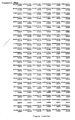
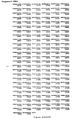
- the present invention describes in particular an isolated polynucleotide, whose sequence SEQ ID No. 1 is partially represented in FIG. 2, and which encodes a polypeptide of sequence SEQ ID No. 3 represented in FIG.
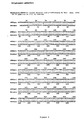
- the present invention also discloses an isolated polynucleotide, whose sequence SEQ ID No. 4 is partially shown in Figure 10, and which encodes a polypeptide of sequence SEQ ID No. 6.
- the exonic structure of the already known FMO family genes is fully conserved in the nucleotide sequence hFMO2 according to the invention.
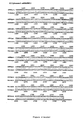
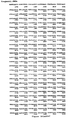
- the sequences of each of the 9 exons of the polynucleotide according to the invention (FIG. 3) have degrees of homology varying from 95% to 98% of DNA with the corresponding sequence of the messenger RNA of the macaque FMO2 (FIG. 4). .
- the divergences between the two nucleotide sequences, as well as their significance towards the peptide sequence, are presented in FIG. 5.
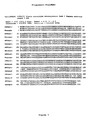
- the polynucleotide sequence SEQ ID No. 1 according to the invention encodes a polypeptide of sequence SEQ ID No. 3 of 535 acids. amines ( Figure 1); the sequence SEQ ID No.
- polypeptide sequence SEQ ID No. 3 represented in FIG. 1, also has a high degree of homology with other mammalian flavin-mono-oxygenase 2; its degrees of homology with other proteins of the family of flavin monooxygenases are less strong.
- the present invention therefore describes the DNA or RNA sequences, the DNA that may be genomic, complementary or synthetic DNA, FMOs, in particular hFM02 and hFMOx, as well as the corresponding proteins.
- the present invention further discloses cloning and / or expression vectors containing said nucleotide sequences, cells transformed with these vectors or animals containing said cells, as well as methods for preparing said polypeptides in the form of recombinant polypeptides.
- the invention also discloses compound selection methods capable of modulating FMO activity.
- the invention also provides diagnostic methods for susceptibility to FMO-related disorders as well as pharmaceutical compositions for the treatment and / or prevention of such disorders.
- a first example of such disorders could be Primary Open Angle Glaucoma (POAG).
- POAG Primary Open Angle Glaucoma
- GPAO-J GPAO-J
- monooxygenases in the etiology of glaucoma has previously been suggested (Schwartzman et al., 1987).
- metabolites of oxidation reactions by inhibiting the Na +, K + ATPase activity in the cornea, would contribute to the regulation of cornea transparency and ocular humoral secretion; however, opacity of the cornea and ocular hypertension are the two major criteria for diagnosing glaucoma.
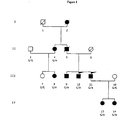
- heterozygosity site having a genotypic segregation in a family studied for the presence within it of numerous members affected by GPAO-J, was identified by the inventors in exon 8 of the hFM02 polypeptide according to the invention.
- FMOs F-like proteins
- tissue specificity of their expression As previously indicated, the expression of FMOs has been demonstrated in the liver, lungs, kidneys or brain.
- FMOs could be involved in any degenerative or toxic pathology, demonstrated or proven, especially those where programmed cell death can be demonstrated, and degenerative diseases. of the central nervous system.
- FMO-related disorders In general, the pathologies related to the functioning of FMOs, are collectively referred to as "FMO-related disorders".
- FMO any of the known human FMOs, FMO1, FMO3, FMO4 and FMO5, or newly described in this patent application, namely FMO2 or FMOx.
- Some of these disorders may have a multigenic origin but for all, the modifications of one or more FMOs contribute to the occurrence of the disorder or its aggravation.
- the present invention relates, firstly, to an isolated nucleotide sequence, characterized in that it codes for the variant of the human FMO2 protein of sequence SEQ ID No. 3 which exhibits a lysine residue in place of an acidic residue glutamic in position 402 of the sequence SEQ ID No. 3.
- the invention furthermore comprises an isolated nucleotide sequence, characterized in that it is chosen from the sequences coding for a polypeptide comprising the polypeptide of sequence SEQ ID No. 3 which exhibits a lysine residue in place of a glutamic acid residue. in position 402 or complementary to a sequence according to the present invention.
- genomic nucleotide sequences in their natural chromosomal environment that is to say in the natural state, they are sequences that have been isolated, that is to say they have been taken directly or indirectly, for example by copy (cDNA), their environment has been at least partially modified.
- Nucleic sequence means an isolated fragment of DNA and / or natural RNA, or synthetic, designating a precise sequence of nucleotides, modified or otherwise, to define a fragment, segment or region of a nucleic acid.
- alleles is meant natural mutated sequences corresponding to polymorphisms that may exist in humans and, in particular, those that can lead to the development of FMO-related disorders.
- protein variant is meant all the mutated proteins that may exist in humans, which correspond in particular to truncations, substitutions, deletions and / or additions of amino acid residues, as well as artificial variants. which will nevertheless also be called “protein variants”. In this case, the variants are linked in part to the occurrence of FMO-related disorders.
- the fragments of nucleic sequences can in particular code for domains of the protein or be used as a probe or as a primer in detection or identification or amplification methods.
- These fragments have a size at least 10 bases, and preferably 20 bases, and preferably 30 bases.
- the homology is only of statistical type, it means that the sequences have at least 80%, and preferably 90%, of nucleotides in common.
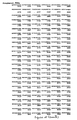
- Figure 1 represents the sequence SEQ ID No. 3
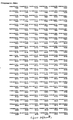
- Figure 2 partially shows the sequence SEQ ID No. 1 of FMO2
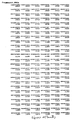
- Figure 10 partially shows the sequence SEQ ID No. 4 of FMOx, as they were sequenced on a genome of an individual that does not have visible FMO disorders.
- the invention also discloses fragments of these sequences, particularly sequences encoding polypeptides having retained all or part of the activity of the FMO protein.
- the invention thus relates to a mutated sequence comprising a point mutation.
- the present invention thus relates to a mutated nucleotide sequence in which the point mutation is unmuted, i.e., it leads to a modification of the encoded amino acid with respect to the normal sequence.
- the invention describes that certain mutations can relate to amino acids which structure the FMO proteins or the corresponding fragments thereof, especially in the regions corresponding to the catalytic sites, the regulatory sites or the binding sites of the cofactors; the mutations can also relate to the sequences involved in the transport and addressing; they can also in particular suppress the cysteines or, on the contrary, make them appear, but also change the character of the protein, either in terms of the charge, or in terms of hydrophobicity.
- mutations can also be involved in the promoter and / or regulatory sequences of human FMO genes, which may have effects on the expression of the protein, in particular on its expression level.
- nucleotide fragments that may be of interest, particularly for the diagnosis, there are also the intron genomic sequences of the FMO gene, for example the junction sequences between the introns and the exons.
- the invention thus comprises the nucleotide sequences according to the invention, characterized in that they comprise at least the G.1263mac.A mutation, as will be defined hereinafter in the examples.
- the invention also comprises the nucleotide sequences as a nucleic primer, characterized in that said sequences are chosen from the sequences SEQ ID No. 7, SEQ ID No. 8, SEQ ID No. 9 and SEQ ID No. 10.
- the invention further relates to the nucleotide sequences as specific probe, characterized in that said sequences are selected from SEQ ID NO: 11, SEQ ID NO: 12, SEQ ID NO: 13 and SEQ ID NO: 14.
- polypeptides encoded by the nucleotide sequences according to the invention in particular the polypeptide of sequence SEQ ID No. 3 which exhibits a lysine residue in place of a glutanic acid residue in position 402, are of course part of the invention.
- protein polypeptide or peptide are interchangeable.
- the present invention also cites nucleotide sequences which may comprise non-natural nucleotides, in particular sulfur nucleotides or of ⁇ or ⁇ structure.
- sequences relate, of course, to both the DNA and RNA sequences, as well as the sequences that hybridize with them, as well as the corresponding double-stranded DNAs.
- nucleic acid fragments of interest mention should be made in particular of antisense oligonucleotides, that is to say whose structure ensures, by hybridization with the target sequence, an inhibition of the expression of the corresponding product. It is also necessary to mention the sense oligonucleotides which, by interaction with proteins involved in the regulation of the expression of the corresponding product, will induce either an inhibition or an activation of this expression.
- proteins, polypeptides or peptides corresponding to the aforementioned sequences are in unnatural form, that is to say that they are not taken in their natural environment but that they could be obtained by purification from sources or obtained by genetic recombination, as will be described hereinafter.
- the invention also cites the same polypeptides or proteins obtained by chemical synthesis and which may comprise non-natural amino acids.
- the present invention cites the recombinant proteins thus obtained both in glycosylated and non-glycosylated form and which may or may not have the natural tertiary structure.
- the present invention also relates to cloning and / or expression vectors comprising a nucleotide sequence according to the invention.
- These cloning and expression vectors may include elements ensuring the expression of the sequence in a host cell, including promoter sequences and effective regulatory sequences in said cell.
- the vector in question may be replication autonomous or intended to ensure the integration of the sequence within the chromosomes of the host cell.
- prokaryotic or eukaryotic cell use will preferably be made of plasmid-like systems or viral systems, the vector viruses possibly being adenoviruses (Perricaudet et al., 1992). , retroviruses, poxviruses or herpesviruses (Epstein et al., 1992).
- the person skilled in the art knows the technologies that can be used for each of these viruses.
- virus vectors defective viruses whose culture is carried out in complementation cells, this avoiding the possible risks of proliferation of an infectious viral vector.
- plasmid or viral type systems may be used; such viruses will be, for example, retroviruses (Temin 1986) or AAVs, Adenovirus Associated Virus (Carter 1993).
- the invention also relates to prokaryotic or eukaryotic cells transformed with a vector according to the invention and this to ensure the expression of a natural or variant FMO protein or, for example, one of its domains.
- the animals characterized in that they contain a transformed cell according to the invention, are also part of the invention.
- the invention furthermore comprises a method for producing a polypeptide according to the invention, characterized in that a cell according to the invention is cultured and in that the protein produced is recovered.
- the present invention also relates to the polypeptides obtained by culturing the thus transformed cells and recovering the expressed polypeptide, said recovery being able to be carried out intracellularly or else extracellularly in the culture medium when the
- the vector has been designed to secrete the polypeptide through, for example, a "leader" sequence, the protein being expressed as a pre-protein or pre-pro-protein.
- Constructs allowing the secretion of polypeptides are known, as well for prokaryotic systems as for eukaryotic systems. Some of the FMO polypeptides may have their own system of secretion or membrane insertion.
- the cells thus obtained may make it possible to prepare natural polypeptides or FMO variants, but also fragments of these polypeptides, in particular polypeptides that may correspond to the different domains in question.
- the invention also comprises the mono- or polyclonal antibodies directed against the polypeptids according to the invention, preferably characterized in that they are obtained by immunological reaction of a human or animal organism with an immunogenic agent consisting of a polypeptide according to the invention.
- the invention in particular a recombinant or synthetic polypeptide according to the invention.
- the invention also relates to the antibodies according to the invention, characterized in that they are labeled antibodies, in particular for imaging.
- labeled monoclonal or polyclonal antibodies and in particular all or part of the mutated proteins may be used for example as an imaging agent, in vivo or ex vivo on biological samples (imaging using antibodies coupled to a detectable molecule in PET-scan imaging, for example).
- the transformed cells or non-human animals according to the invention may also be used as a model for the in vitro selection of products directly or indirectly involved in the activity of mutated FMO2 in order to study the different interactions involved. They may also be used for the in vitro selection of products interacting with mutated FMO2, as an agonist, in particular an enzymatic activator, or an antagonist, in particular an enzymatic inhibitor.
- Another potential application of the characterization of these genes is therefore the possibility of identifying compounds, in particular protein compounds, interacting with these FMOs. It can be as much inhibitors as activators, substrates or cofactors, for example. Their identification will make it possible to use them according to their interactions with the normal protein or the variant protein. In particular, we can seek to isolate agents with different effects on normal and variant FMOs.
- these cell models can be used to study the metabolism of xenobiotics, drugs or otherwise, by a normal or variant FMO. This may be implemented in the identification of the toxic potency of certain compounds, in the selection and development of compounds with reduced toxicity, or with increased activity, or in that of modified FMOs, having a better capacity to metabolize the compounds of 'interest.
- This type of cellular model can be achieved by implementing genetic engineering techniques.
- it is a question of cloning the gene in question in its normal form or in its mutated form in an expression vector, whether it is a vector to autonomous replication or an integration vector, said vector comprising all the elements allowing the expression of the gene in the cell in question, or the latter having all the elements allowing the expression of the sequence in question .
- Eukaryotic or prokaryotic cells expressing the normal or variant FMO protein (s) are thus obtained, which can then constitute models making it possible to test at the same time the interactions of different products with the FMO proteins or their variants, or to test compounds , in particular synthetic chemicals, which can interact with the product of the FMO gene, normal or mutated, and this by adding them to the culture medium of said cells.
- the products in question may be both antagonistic and antagonistic agents.
- These models may be of in vitro type, for example human cell cultures, or in normal culture, or possibly in the form of an isolated organ.
- the present invention also describes organisms such as animals, particularly mice, expressing the phenotype corresponding to normal FMO or variant of human origin. Again, these animals may be used as model animals to test the efficacy of certain pharmaceuticals.
- the present invention relates to methods of diagnosing predisposition to juvenile glaucoma in a patient, characterized in that from a biological specimen of said patient is determined the presence of the G 24431A mutation in at least one sequence coding for FMO2 by analyzing all or part of a nucleic sequence corresponding to said gene, the presence of at least one such mutation being indicative of a predisposition of said patient) to FMO2-bound juvenile glaucoma.
- the mutation that is sought for the invention is the G.1263mac.A mutation. (located in Figure 6).
- the nucleic acid sequences analyzed may be genomic DNA, cDNA or mRNA as well.
- FMO-related disorders that can be identified, we more particularly mean the pathologies associated with xenobiotic metabolism as mentioned above, or associated with the biological function of FMO, but there may be other disorders that may be related to an abnormality of FMOs.
- the diagnostic tools based on the present invention although they may allow a positive and differential diagnosis in a patient taken alone, will preferably be of interest for a presymptomatic diagnosis in a subject at risk, especially with a family history, and it is possible also to predict ante-natal diagnosis.
- the detection of a specific mutation may allow an evolutionary diagnosis, particularly as to the intensity of the disorder or the probable time of its appearance.
- the methods making it possible to demonstrate the mutation in a gene with respect to the natural gene are, of course, very numerous. They can essentially be divided into two broad categories, the first type of method being one in which the presence of a mutation is detected by comparison of the mutated sequence with the natural unmutated corresponding sequence, and the second type in which the presence of a mutation is detected. the mutation is detected indirectly, for example by highlighting mis-matches due to the presence of the mutation.
- PCR-like will be meant all methods using direct or indirect reproductions of nucleic acid sequences, or in which the labeling systems have been amplified, these techniques are of course known, generally speaking amplification of the DNA with a polymerase; when the original sample is an RNA, it is first necessary to perform a reverse transcription.
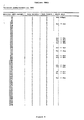
- Table 1 shows primer sequences that can be used to amplify the sequences of interest for the G.1263mac.A mutation.
- the reagent used to detect and / or identify a mutation of the FMO gene in a biological sample comprises a so-called capture probe and / or a so-called detection probe, at least one of these probes comprising a sequence according to the present invention described above. .
- the methods for diagnosing a predisposition to a mutated FMO2-linked juvenile glaucoma in a patient characterized in that said analysis is carried out by hybridization, said hybridization being preferably carried out using at least one oligonucleotide probe specific for the allele, or in that the presence of a mutation is detected by comparison with the corresponding non-mutated natural sequence, or in that said analysis is carried out by sequencing, or by electrophoretic migration, and more particularly by SSCP or DGGE, or in that said analysis is carried out by a methodology for detecting a truncation of the protein.
- the detection of the mutation or mutations, preferably the amplification is carried out by PCR or PCR-like, the primers chosen to carry out the amplification being preferably chosen from the primers according to the invention.
- the reagents for detecting and / or identifying the mutation of the gene) human FMO2 a biological sample characterized in that it comprises a so-called capture probe and / or a so-called detection probe, at least one of these probes comprising a sequence according to the invention, or an antibody according to the invention, also form part of the invention.
- the mutation of the human FMO2 gene is responsible for a modification of the product of this gene, a modification that can be used for an approach diagnostic. Indeed, the antigenicity changes may allow the development of specific antibodies. All these modifications can be used in diagnostic approach, thanks to several well-known methods based on the use of mono- or polyclonal antibodies recognizing normal protein or mutated variants, for example RIA or ELISA method.
- the present invention also describes therapeutic, curative or preventive treatments for FMO-related disorders.
- the present invention also describes therapeutic compositions comprising, as active principle, a compound capable of modulating the FMO activity, it may be compounds with pro-FMO activity, in particular as described above, or compounds with anti-FMO activity. FMO.
- pro-FMO activity compound will mean a compound that will induce FMO activity, whereas an anti-FMO compound will tend to reduce FMO activity.
- the actual effect of these types of activities will depend on the type of enzyme expressed, normal or pathological.
- compositions that are to say therapeutic compositions characterized in that they comprise as active ingredient a pro-FMO activity compound; it may be in particular all or part of polypeptides as described above, or an expression vector of these same polypeptides, or else chemical or biological compounds having a pro-FMO activity, FMO-like activity or inducing FMO production.
- compositions in which the active ingredient will have an anti-FMO action in particular anti-variant FMO.
- the active ingredient is a suppressive treatment.
- it may be, for example, compounds interacting with said enzymes, in particular protein compounds, and in particular anti-FMO antibodies, especially when these antibodies recognize the variant proteins.
- It may also be chemicals with anti-FMO activity, including variant FMO antagonists.
- the invention also describes a therapeutic composition, characterized in that it comprises as active ingredient at least one compound capable of modulating the FMO activity, preferably the FMO2 and / or FMOx activity.
- the invention also describes a therapeutic composition characterized in that it comprises as active ingredient at least one compound capable of interacting with FMO, preferably capable of interacting with FMO2 and / or FMOx, or a therapeutic composition characterized in that it exhibits a different activity on normal FMO and pathological FMO.
- the invention also describes a therapeutic composition according to the invention, characterized in that the active ingredient is a soluble sequence interacting with FMO.
- the invention also relates to the use of an active ingredient capable of modulating the activity of mutated human FMO2 to produce a medicament for the treatment and / or prevention of juvenile glaucoma, characterized in that said active ingredient is selected from the agonist and antagonist compounds of the therapeutic compositions of the invention.
- the invention also describes a method for biodegradation or biosynthesis of organic or inorganic compound, characterized in that it implements a polypeptide or a cell according to the invention.
- the polypeptides with FMO activity may advantageously be used to biodegrade according to the oxidation reactions, as described for example by Ziegler (Ziegler et al., 1993), the substrate compounds of FMO, in particular the compounds as cited in the present description, or be used for the biosynthesis of compound of interest from said substrate compounds of FMO, in particular for the biosynthesis of drug, additive food, pesticide or herbicide.
- polypeptides or cells according to the invention may advantageously be used in vitro to determine the potential metabolism of the compound of interest and to analyze the metabolites possibly obtained, their toxicity and / or their activity. The results obtained will confirm the compound or reformulate it so that it becomes or not FMO substrate, or that the metabolites formed are different.
- the invention describes the use of polypeptide or cell according to the invention, for the detoxification of xenobiotic compound, FMO substrate.
- xenobiotic compounds may be present in the environment, such as pesticide or herbicide, naturally occurring in plants such as certain alkaloids, or may be pharmaceutical compounds.
- BAC Bacterial Artificial Chromosome
- the clones thus obtained were "pooled” and screened according to a three-dimensional analysis procedure described above for the screening of YACA (Yeast Artificial Chromosome) libraries (Chumakov et al., 1992).
- the three-dimensional pools obtained were screened by PCR using primers flanking the D1S3423 marker (WI-10286). This STS ("Sequence Tagged Site") was previously located in the candidate region. A clone of the BAC 123H04M was thus isolated.
- the size of the insert carried by this BAC was determined on a 0.8% agarose gel after alternating field electrophoresis (CHEF) migration (4 hours at 9 volts / hour). cm, at an angle of 100 °, at 11 ° C in buffer 0.5xTAE). It has thus been demonstrated that the 123H04M BAC carries a 180 kb insert.
- CHEF alternating field electrophoresis
- the chromosomal location of the BAC in the 1q23-q25 candidate region was confirmed by fluorescent in situ hybridization (FISH) on metaphase chromosomes, according to the method described by Cherif et al., 1990.
- FISH fluorescent in situ hybridization
- the BAC 123H04M was located more precisely in the band. 1q23 of chromosome 1 ( Figure 9).
- the cells from three liters of culture were treated by alkaline lysis according to conventional techniques. After centrifugation of the product obtained in a cesium chloride gradient, 52 ⁇ g of BAC 123H04M DNA were purified. 7 ⁇ g of DNA were sonicated under three different conditions, to obtain fragments whose sizes are distributed uniformly from 1 to 9kb. The fragments obtained were treated in a volume of 50 ⁇ l with 2 units of Vent polymerase for 20 minutes at 70 ° C., in the presence of the 4 deoxytriphosphates (100 ⁇ M). The blunt-ended fragments resulting from this step were separated by 1% low-melting agarose gel electrophoresis (60 volts for 3 hours).
- the fragments grouped according to their sizes were excised and the resulting bands treated with agarase.
- the DNA in solution was adjusted to a concentration of 100 ng / ⁇ l.
- a ligation was performed, incubation one night, in bringing together 100 ng of 123HO4M BAC fragmented DNA and 20 ng of linearized vector DNA by enzymatic digestion, and treated with alkaline phosphatase. This reaction was carried out in a final volume of 10 ⁇ l in the presence of 40 units / ⁇ l of T4 DNA ligase (Epicenter).
- the ligation products were then used to transform by electroporation either an XL-Blue strain (for multicopy plasmids) or a D10HB strain (for BAC subclones).
- the lacZ - and antibiotic resistant clones were individually transplanted into microplates for storage and sequencing.
- the inserts of these subclones were amplified by PCR on bacterial cultures incubated overnight using the primers of the vectors flanking the insertions.
- the sequence of the ends of these inserts was determined by fluorescent automatic sequencing on an ABI 377 sequencer, equipped with the ABI Prism DNA Sequencing Analysis software (version 2.1.2).
- sequence fragments from the sub-BACs were assembled by R. Staden's Gap4 software (Bonfield et al., 1995). This software allows the reconstruction of a complete sequence from fragments of sequences. The sequence deduced from the alignment of the different fragments is the consensus sequence.
- the protein library used consists of the non-redundant fusion of Genpept libraries (GenBank automatic translation, NCBI, Benson et al., 1996); Swissprot, (George et al., 1996); and PIR / NBRF (Bairoch et al., 1996). Duplicates were eliminated by "nrdb” software (public domain, NCBI, Benson et al., 1996). The internal repetitions were then masked by the "xnu” software (public domain, NCBI, Benson et al., 1996). The resulting library, named NRPU (Non-Redundant Protein-Unique), served as a reference for protein homology searches.
- the homologies found with this library have made it possible to locate regions potentially coding for a protein fragment at least related to a known protein (coding exons).
- the EST library used consists of Genbank's "gbest" subsections (1-9) (NCBI, Benson et al., 1996). It contains all the fragments of public transcripts.
- the nucleic acid library (other than TSEs) used contains all other subsections of Genbank and EMBL (Rodriguez-Tome et al., 1996) whose duplicates were eliminated as before.
- the BLAST software package (public domain, Altschul et al., 1990) was used to search for homologies between a sequence and protein or nucleic data banks.
- the significance thresholds depend on the length and complexity of the region tested as well as the the size of the reference bank. They were adjusted and adapted to each analysis.
- DNA is extracted from the peripheral venous blood after cell lysis, protein digestion, organic partition and finally alcoholic precipitation.
- Blood (20 ml) is collected by peripheral venipuncture on a tube containing EDTA.
- the white cells are lysed in the presence of 20 ml of CLB buffer (10 mM Tris pH 7.6, 5 mM MgCl 2 , 0.32 M sucrose, 1% Triton X-100 (v / v)
- CLB buffer 10 mM Tris pH 7.6, 5 mM MgCl 2 , 0.32 M sucrose, 1% Triton X-100 (v / v)
- the nuclei are collected by centrifugation at 1600 g for 10 minutes This manipulation is repeated.
- the nuclei are washed once in RSB buffer (10 mM Tris pH 8, 10 mM NaCl, 10 mM EDTA). The pellet is resuspended in 2 ml of RSB buffer to which sodium lauryl sulfate (1%) and proteinase K (200 mg / ml) are added. The mixture is incubated at 55 ° C for at least 3 hours and regularly stirred.
- the DNA solution thus obtained is then extracted with a volume of phenol equilibrated with a 50 mM Tris pH 8 buffer. This operation is repeated and completed by extraction with a volume of chloroform / isoamyl alcohol (24: 1 v / v). .
- the DNA is precipitated with one volume of isopropanol, rinsed with ethanol (70%), dried and finally resuspended in 1 ml of TE buffer (10 mM Tris pH 8, 0.5 mM EDTA).
- TE buffer 10 mM Tris pH 8, 0.5 mM EDTA.
- the DNA concentration is evaluated by measuring the absorbance at 260 nm using the equivalence of 50 ⁇ g / ml DNA for one unit of absorbance. The DNA concentration is then adjusted to 200 ⁇ g / ml.
- oligonucleotide primers used for the genomic amplification of 123H04M BAC derived exon sequences were defined using OSP software (Hillier et al., 1991).
- All these primers contain, upstream of the bases specifically targeted by the amplification, a common oligonucleotide tail intended to allow the sequencing of the amplified fragments (PU for the upstream primers, and RP for the downstream primers; 5).
- oligonucleotide primers were synthesized according to the phosphoramidite method, on a GENSET UFPS 24.1 synthesizer.
- PCR polymerase chain reaction
- the amplification is carried out in a Perkin Elmer 9600 or MJ Research PTC200 thermal cycler with heated lid. After heating at 94 ° C for 10 minutes, 35 cycles are performed. Each cycle comprises: 30 seconds at 94 ° C, 1 minute at 55 ° C and 30 seconds at 72 ° C. A segment final elongation of 7 minutes at 72 ° C completes the amplification.
- the amount of amplification products obtained is determined on 96-well microplate, by fluorometry, using the Picogreen intercalating agent (Molecular Probes).
- This site of heterozygosity (G / A) is present in 7 patients with GPAO-J while it is absent from 3 healthy homozygous patients (G / G), all from the same family.
- 99 unrelated controls are similarly homozygous (G / G) for this site, indicating that the frequency of the A allele in the general population is less than 0.005.
- the site is contained in exon 8 of the gene coding for the hFM02 protein according to the invention; the mutation described transforms glutamic acid at position 402 of the sequence SEQ ID No. 1 of hFM02 into lysine (FIG. 1).
Landscapes
- Health & Medical Sciences (AREA)
- Chemical & Material Sciences (AREA)
- Life Sciences & Earth Sciences (AREA)
- Organic Chemistry (AREA)
- Engineering & Computer Science (AREA)
- Bioinformatics & Cheminformatics (AREA)
- General Health & Medical Sciences (AREA)
- Zoology (AREA)
- Genetics & Genomics (AREA)
- Wood Science & Technology (AREA)
- Medicinal Chemistry (AREA)
- Proteomics, Peptides & Aminoacids (AREA)
- Nuclear Medicine, Radiotherapy & Molecular Imaging (AREA)
- General Chemical & Material Sciences (AREA)
- Pharmacology & Pharmacy (AREA)
- Chemical Kinetics & Catalysis (AREA)
- Animal Behavior & Ethology (AREA)
- Public Health (AREA)
- Veterinary Medicine (AREA)
- General Engineering & Computer Science (AREA)
- Biotechnology (AREA)
- Biochemistry (AREA)
- Biomedical Technology (AREA)
- Molecular Biology (AREA)
- Analytical Chemistry (AREA)
- Microbiology (AREA)
- Physics & Mathematics (AREA)
- Heart & Thoracic Surgery (AREA)
- Biophysics (AREA)
- Immunology (AREA)
- Neurology (AREA)
- Pathology (AREA)
- Neurosurgery (AREA)
- Cardiology (AREA)
- Psychiatry (AREA)
- Pain & Pain Management (AREA)
- Micro-Organisms Or Cultivation Processes Thereof (AREA)
- Peptides Or Proteins (AREA)
- Medicines That Contain Protein Lipid Enzymes And Other Medicines (AREA)
- Measuring Or Testing Involving Enzymes Or Micro-Organisms (AREA)
Applications Claiming Priority (3)
| Application Number | Priority Date | Filing Date | Title |
|---|---|---|---|
| FR9615032A FR2756845B1 (fr) | 1996-12-06 | 1996-12-06 | Sequence nucleotidique codant pour une flavine monooxygenase , proteine correspondante et composition destinee au diagnostic et a la therapie du glaucome |
| FR9615032 | 1996-12-06 | ||
| PCT/FR1997/002226 WO1998024914A1 (fr) | 1996-12-06 | 1997-12-05 | Sequence nucleotidique codant pour une flavine mono-oxgynase, proteine correspondante et leurs applications dans les domaines du diagnostic et de la therapie |
Publications (2)
| Publication Number | Publication Date |
|---|---|
| EP0941341A1 EP0941341A1 (fr) | 1999-09-15 |
| EP0941341B1 true EP0941341B1 (fr) | 2007-01-24 |
Family
ID=9498426
Family Applications (1)
| Application Number | Title | Priority Date | Filing Date |
|---|---|---|---|
| EP97950244A Expired - Lifetime EP0941341B1 (fr) | 1996-12-06 | 1997-12-05 | Sequence nucleotidique codant pour une flavine mono-oxgynase, proteine correspondante et leurs applications dans les domaines du diagnostic et de la therapie |
Country Status (13)
| Country | Link |
|---|---|
| US (3) | US6551792B1 (da) |
| EP (1) | EP0941341B1 (da) |
| JP (1) | JP4062638B2 (da) |
| AT (1) | ATE352635T1 (da) |
| AU (1) | AU746293B2 (da) |
| CA (1) | CA2274011A1 (da) |
| CY (1) | CY2605B2 (da) |
| DE (1) | DE69737293T2 (da) |
| DK (1) | DK0941341T3 (da) |
| ES (1) | ES2279552T3 (da) |
| FR (1) | FR2756845B1 (da) |
| PT (1) | PT941341E (da) |
| WO (1) | WO1998024914A1 (da) |
Families Citing this family (9)
| Publication number | Priority date | Publication date | Assignee | Title |
|---|---|---|---|---|
| FR2756845B1 (fr) | 1996-12-06 | 1999-02-26 | Genset Sa | Sequence nucleotidique codant pour une flavine monooxygenase , proteine correspondante et composition destinee au diagnostic et a la therapie du glaucome |
| AU7500800A (en) * | 1999-09-30 | 2001-04-30 | Mcgill University | Human fmo3 gene mutations and polymorphisms, and uses thereof |
| US6902890B1 (en) | 1999-11-04 | 2005-06-07 | Diadexus, Inc. | Method of diagnosing monitoring, staging, imaging and treating cancer |
| JP2002142765A (ja) * | 2000-07-14 | 2002-05-21 | Tosoh Corp | 新規ゲノム解析法 |
| AU2001276210A1 (en) | 2000-07-18 | 2002-01-30 | National Research Council Of Canada | Cloning, sequencing and expression of a comamonas cyclopentanone 1,2-monooxygenase-encoding gene in escherichia coli |
| EP1358353B1 (en) * | 2000-12-28 | 2007-06-20 | Epidauros Biotechnologie AG | Identification of genetic determinants of polymorphic cyp3a5 expression |
| RU2730863C2 (ru) | 2015-09-11 | 2020-08-26 | Новозимс Биоаг А/С | Стабильные композиции с инокулянтом и способы их получения |
| WO2018118740A1 (en) | 2016-12-20 | 2018-06-28 | Novozymes Bioag A/S | Stable inoculant compositions and methods for producing same |
| CN111973736B (zh) * | 2020-08-17 | 2026-04-17 | 浙江大学 | 含黄素单氧化酶2在制备非酒精性脂肪肝病治疗药物中的应用 |
Family Cites Families (4)
| Publication number | Priority date | Publication date | Assignee | Title |
|---|---|---|---|---|
| DE4305696A1 (de) * | 1993-02-25 | 1994-09-01 | Hoechst Ag | Nachweisverfahren zur Identifizierung von Inhibitoren |
| US5728676A (en) * | 1994-09-08 | 1998-03-17 | Ciba-Geigy Corporation | Use of insulin-like growth factors I and II for inhibition of inflammatory response |
| JPH08140674A (ja) * | 1994-11-18 | 1996-06-04 | Sumitomo Chem Co Ltd | ヒトフラビン含有モノオキシゲナーゼ |
| FR2756845B1 (fr) | 1996-12-06 | 1999-02-26 | Genset Sa | Sequence nucleotidique codant pour une flavine monooxygenase , proteine correspondante et composition destinee au diagnostic et a la therapie du glaucome |
-
1996
- 1996-12-06 FR FR9615032A patent/FR2756845B1/fr not_active Expired - Fee Related
-
1997
- 1997-12-05 DK DK97950244T patent/DK0941341T3/da active
- 1997-12-05 AT AT97950244T patent/ATE352635T1/de active
- 1997-12-05 ES ES97950244T patent/ES2279552T3/es not_active Expired - Lifetime
- 1997-12-05 AU AU53271/98A patent/AU746293B2/en not_active Ceased
- 1997-12-05 CA CA002274011A patent/CA2274011A1/fr not_active Abandoned
- 1997-12-05 WO PCT/FR1997/002226 patent/WO1998024914A1/fr not_active Ceased
- 1997-12-05 EP EP97950244A patent/EP0941341B1/fr not_active Expired - Lifetime
- 1997-12-05 PT PT97950244T patent/PT941341E/pt unknown
- 1997-12-05 JP JP52530098A patent/JP4062638B2/ja not_active Expired - Fee Related
- 1997-12-05 DE DE69737293T patent/DE69737293T2/de not_active Expired - Lifetime
-
1999
- 1999-06-04 US US09/326,480 patent/US6551792B1/en not_active Expired - Fee Related
-
2003
- 2003-02-25 US US10/374,228 patent/US7037709B2/en not_active Expired - Fee Related
-
2006
- 2006-03-17 US US11/378,840 patent/US20060154295A1/en not_active Abandoned
-
2007
- 2007-03-22 CY CY0700006A patent/CY2605B2/xx unknown
Also Published As
| Publication number | Publication date |
|---|---|
| FR2756845A1 (fr) | 1998-06-12 |
| US6551792B1 (en) | 2003-04-22 |
| DE69737293T2 (de) | 2007-06-21 |
| WO1998024914A1 (fr) | 1998-06-11 |
| EP0941341A1 (fr) | 1999-09-15 |
| US20060154295A1 (en) | 2006-07-13 |
| AU746293B2 (en) | 2002-04-18 |
| AU5327198A (en) | 1998-06-29 |
| CA2274011A1 (fr) | 1998-06-11 |
| US20030203463A1 (en) | 2003-10-30 |
| FR2756845B1 (fr) | 1999-02-26 |
| JP4062638B2 (ja) | 2008-03-19 |
| DK0941341T3 (da) | 2007-03-19 |
| US7037709B2 (en) | 2006-05-02 |
| PT941341E (pt) | 2007-02-28 |
| CY2605B2 (en) | 2010-04-28 |
| ES2279552T3 (es) | 2007-08-16 |
| JP2001505430A (ja) | 2001-04-24 |
| DE69737293D1 (de) | 2007-03-15 |
| ATE352635T1 (de) | 2007-02-15 |
Similar Documents
| Publication | Publication Date | Title |
|---|---|---|
| Derry et al. | Mutations in a Δ8-Δ7 sterol isomerase in the tattered mouse and X-linked dominant chondrodysplasia punctata | |
| Adam et al. | Recurrent mutations in a single exon encoding the evolutionarily conserved olfactomedin-homology domain of TIGR in familial open-angle glaucoma | |
| DE69933661T2 (de) | Genomische sequenz des 5-lipoxygenase-aktivierenden proteins (flap), polymorphische marker und ihre anwendung in der diagnose von asthma | |
| JP2003514538A (ja) | 哺乳動物毒物学的反応マーカー | |
| JPH09511398A (ja) | ミトコンドリアの欠陥に関連する病気の診断、治療、並びに細胞および動物モデル | |
| EP1009767B1 (fr) | Defensine humaine def-x, gene et cdna, composition les contenant et applications au diagnostic et a la therapie | |
| JP2003510349A (ja) | 線条体機能に必要な遺伝子、その使用、およびそれを調節するための化合物 | |
| US7037709B2 (en) | Nucleotide sequence which encodes a flavin monooxygenase, the corresponding protein and their uses in the spheres of diagnosis and therapy | |
| JP2002519027A (ja) | 網膜芽腫結合タンパク質(rbp−7)をコードする核酸および前記核酸に関連する多型マーカー | |
| CA2340589A1 (en) | Toxicological response markers | |
| CA2324378A1 (en) | Glaucoma therapeutics and diagnostics | |
| US20040152106A1 (en) | Gene necessary for striatal function, uses thereof, and compounds for modulating same | |
| US6465714B2 (en) | Congenic animal models of non-insulin dependent diabetes mellitus | |
| EP1397486B1 (en) | Polymorphisms in the human gene for cytochrome p450 polypeptide 2c8 and their use in diagnostic and therapeutic applications | |
| JP2006506988A (ja) | 染色体5q35に位置したヒトII型糖尿病遺伝子−SLIT−3 | |
| EP1259606B1 (fr) | Compositions utilisables pour reguler l'activite de la parkine | |
| Li et al. | Molecular and genetic approaches to understanding alcohol-seeking behavior | |
| AU784047B2 (en) | A nucleotide sequence which encodes a flavin monooxygenase, the corresponding protein and their uses in the spheres of diagnosis and therapy | |
| CA2248144C (en) | Horse endothelin-b receptor gene and gene products | |
| US6130041A (en) | Human intronic and polymorphic SR-BI nucleic acids and uses therefor | |
| US20030096295A1 (en) | Screening methods and therapeutic treatments for pigment dispersion syndrome | |
| CA2427436A1 (fr) | Sequences polymorphes du gene humain abca1, leurs utilisations, les methodes et kits de detection. | |
| Parker | Molecular characterisation of erythropoietic protoporphyria in South Africa | |
| Candille | High-resolution linkage and physical mapping of the mouse nob gene | |
| Downes et al. | Ophthalmologists’ Perspective |
Legal Events
| Date | Code | Title | Description |
|---|---|---|---|
| PUAI | Public reference made under article 153(3) epc to a published international application that has entered the european phase |
Free format text: ORIGINAL CODE: 0009012 |
|
| 17P | Request for examination filed |
Effective date: 19990621 |
|
| AK | Designated contracting states |
Kind code of ref document: A1 Designated state(s): AT BE CH DE DK ES FI FR GB GR IE IT LI LU MC NL PT SE |
|
| 17Q | First examination report despatched |
Effective date: 20030217 |
|
| RAP1 | Party data changed (applicant data changed or rights of an application transferred) |
Owner name: INSTITUT NATIONAL DE LA SANTE ET DE LA RECHERCHE M Owner name: GENSET |
|
| RAP1 | Party data changed (applicant data changed or rights of an application transferred) |
Owner name: INSTITUT NATIONAL DE LA SANTE ET DE LA RECHERCHE M Owner name: SERONO GENETICS INSTITUTE S.A. |
|
| GRAP | Despatch of communication of intention to grant a patent |
Free format text: ORIGINAL CODE: EPIDOSNIGR1 |
|
| RIC1 | Information provided on ipc code assigned before grant |
Ipc: G01N 33/573 20060101ALI20060524BHEP Ipc: G01N 33/50 20060101ALI20060524BHEP Ipc: A61K 48/00 20060101ALI20060524BHEP Ipc: A61K 39/395 20060101ALI20060524BHEP Ipc: A61K 38/44 20060101ALI20060524BHEP Ipc: C07K 16/40 20060101ALI20060524BHEP Ipc: C12Q 1/68 20060101ALI20060524BHEP Ipc: C12Q 1/26 20060101ALI20060524BHEP Ipc: C12N 5/10 20060101ALI20060524BHEP Ipc: C12N 9/02 20060101ALI20060524BHEP Ipc: C12N 15/11 20060101ALI20060524BHEP Ipc: C12N 15/86 20060101AFI20060524BHEP |
|
| GRAS | Grant fee paid |
Free format text: ORIGINAL CODE: EPIDOSNIGR3 |
|
| GRAA | (expected) grant |
Free format text: ORIGINAL CODE: 0009210 |
|
| AK | Designated contracting states |
Kind code of ref document: B1 Designated state(s): AT BE CH DE DK ES FI FR GB GR IE IT LI LU MC NL PT SE |
|
| REG | Reference to a national code |
Ref country code: GB Ref legal event code: FG4D Free format text: NOT ENGLISH |
|
| REG | Reference to a national code |
Ref country code: CH Ref legal event code: EP |
|
| REG | Reference to a national code |
Ref country code: PT Ref legal event code: SC4A Free format text: AVAILABILITY OF NATIONAL TRANSLATION Effective date: 20070213 |
|
| REG | Reference to a national code |
Ref country code: IE Ref legal event code: FG4D Free format text: LANGUAGE OF EP DOCUMENT: FRENCH |
|
| REF | Corresponds to: |
Ref document number: 69737293 Country of ref document: DE Date of ref document: 20070315 Kind code of ref document: P |
|
| REG | Reference to a national code |
Ref country code: DK Ref legal event code: T3 |
|
| REG | Reference to a national code |
Ref country code: CH Ref legal event code: NV Representative=s name: MERCK SERONO INTERNATIONAL S.A. CORPORATE IP DEPAR |
|
| GBT | Gb: translation of ep patent filed (gb section 77(6)(a)/1977) |
Effective date: 20070321 |
|
| REG | Reference to a national code |
Ref country code: GR Ref legal event code: EP Ref document number: 20070401061 Country of ref document: GR |
|
| REG | Reference to a national code |
Ref country code: SE Ref legal event code: TRGR |
|
| REG | Reference to a national code |
Ref country code: ES Ref legal event code: FG2A Ref document number: 2279552 Country of ref document: ES Kind code of ref document: T3 |
|
| PLBE | No opposition filed within time limit |
Free format text: ORIGINAL CODE: 0009261 |
|
| STAA | Information on the status of an ep patent application or granted ep patent |
Free format text: STATUS: NO OPPOSITION FILED WITHIN TIME LIMIT |
|
| 26N | No opposition filed |
Effective date: 20071025 |
|
| REG | Reference to a national code |
Ref country code: CH Ref legal event code: PFA Owner name: SERONO GENETICS INSTITUTE S.A. Free format text: SERONO GENETICS INSTITUTE S.A.#ROUTE NATIONALE 7#91030 EVRY CEDEX (FR) $ INSTITUT NATIONAL DE LA SANTE ET DE LA RECHERCHE MEDICALE (INSERM)#101, RUE DE TOLBIAC#75013 PARIS (FR) -TRANSFER TO- SERONO GENETICS INSTITUTE S.A.#ROUTE NATIONALE 7#91030 EVRY CEDEX (FR) $ INSTITUT NATIONAL DE LA SANTE ET DE LA RECHERCHE MEDICALE (INSERM)#101, RUE DE TOLBIAC#75013 PARIS (FR) |
|
| PGFP | Annual fee paid to national office [announced via postgrant information from national office to epo] |
Ref country code: DK Payment date: 20101210 Year of fee payment: 14 Ref country code: AT Payment date: 20101129 Year of fee payment: 14 |
|
| PGFP | Annual fee paid to national office [announced via postgrant information from national office to epo] |
Ref country code: LU Payment date: 20110118 Year of fee payment: 14 |
|
| PGFP | Annual fee paid to national office [announced via postgrant information from national office to epo] |
Ref country code: GR Payment date: 20101115 Year of fee payment: 14 Ref country code: IT Payment date: 20101215 Year of fee payment: 14 Ref country code: GB Payment date: 20101201 Year of fee payment: 14 |
|
| PGFP | Annual fee paid to national office [announced via postgrant information from national office to epo] |
Ref country code: DE Payment date: 20101130 Year of fee payment: 14 |
|
| PGFP | Annual fee paid to national office [announced via postgrant information from national office to epo] |
Ref country code: NL Payment date: 20111220 Year of fee payment: 15 Ref country code: IE Payment date: 20111212 Year of fee payment: 15 Ref country code: MC Payment date: 20111128 Year of fee payment: 15 Ref country code: FR Payment date: 20111219 Year of fee payment: 15 Ref country code: FI Payment date: 20111212 Year of fee payment: 15 Ref country code: CH Payment date: 20111213 Year of fee payment: 15 Ref country code: PT Payment date: 20111205 Year of fee payment: 15 Ref country code: SE Payment date: 20111213 Year of fee payment: 15 |
|
| PGFP | Annual fee paid to national office [announced via postgrant information from national office to epo] |
Ref country code: BE Payment date: 20111229 Year of fee payment: 15 |
|
| REG | Reference to a national code |
Ref country code: PT Ref legal event code: MM4A Free format text: LAPSE DUE TO NON-PAYMENT OF FEES Effective date: 20130605 |
|
| PGFP | Annual fee paid to national office [announced via postgrant information from national office to epo] |
Ref country code: ES Payment date: 20120116 Year of fee payment: 15 |
|
| BERE | Be: lapsed |
Owner name: SERONO GENETICS INSTITUTE S.A. Effective date: 20121231 Owner name: INSTITUT NATIONAL DE LA SANTE ET DE LA RECHERCHE Effective date: 20121231 |
|
| REG | Reference to a national code |
Ref country code: NL Ref legal event code: V1 Effective date: 20130701 |
|
| PG25 | Lapsed in a contracting state [announced via postgrant information from national office to epo] |
Ref country code: SE Free format text: LAPSE BECAUSE OF NON-PAYMENT OF DUE FEES Effective date: 20121206 Ref country code: MC Free format text: LAPSE BECAUSE OF NON-PAYMENT OF DUE FEES Effective date: 20121231 |
|
| REG | Reference to a national code |
Ref country code: CH Ref legal event code: PL |
|
| REG | Reference to a national code |
Ref country code: AT Ref legal event code: MM01 Ref document number: 352635 Country of ref document: AT Kind code of ref document: T Effective date: 20121205 |
|
| REG | Reference to a national code |
Ref country code: DK Ref legal event code: EBP |
|
| GBPC | Gb: european patent ceased through non-payment of renewal fee |
Effective date: 20121205 |
|
| PG25 | Lapsed in a contracting state [announced via postgrant information from national office to epo] |
Ref country code: PT Free format text: LAPSE BECAUSE OF NON-PAYMENT OF DUE FEES Effective date: 20130605 Ref country code: FI Free format text: LAPSE BECAUSE OF NON-PAYMENT OF DUE FEES Effective date: 20121205 |
|
| REG | Reference to a national code |
Ref country code: GR Ref legal event code: ML Ref document number: 20070401061 Country of ref document: GR Effective date: 20130703 |
|
| REG | Reference to a national code |
Ref country code: IE Ref legal event code: MM4A |
|
| REG | Reference to a national code |
Ref country code: FR Ref legal event code: ST Effective date: 20130830 |
|
| PG25 | Lapsed in a contracting state [announced via postgrant information from national office to epo] |
Ref country code: BE Free format text: LAPSE BECAUSE OF NON-PAYMENT OF DUE FEES Effective date: 20121231 |
|
| REG | Reference to a national code |
Ref country code: DE Ref legal event code: R119 Ref document number: 69737293 Country of ref document: DE Effective date: 20130702 |
|
| PG25 | Lapsed in a contracting state [announced via postgrant information from national office to epo] |
Ref country code: LI Free format text: LAPSE BECAUSE OF NON-PAYMENT OF DUE FEES Effective date: 20121231 Ref country code: DE Free format text: LAPSE BECAUSE OF NON-PAYMENT OF DUE FEES Effective date: 20130702 Ref country code: NL Free format text: LAPSE BECAUSE OF NON-PAYMENT OF DUE FEES Effective date: 20130701 Ref country code: GR Free format text: LAPSE BECAUSE OF NON-PAYMENT OF DUE FEES Effective date: 20130703 Ref country code: CH Free format text: LAPSE BECAUSE OF NON-PAYMENT OF DUE FEES Effective date: 20121231 Ref country code: AT Free format text: LAPSE BECAUSE OF NON-PAYMENT OF DUE FEES Effective date: 20121205 Ref country code: IE Free format text: LAPSE BECAUSE OF NON-PAYMENT OF DUE FEES Effective date: 20121205 |
|
| PG25 | Lapsed in a contracting state [announced via postgrant information from national office to epo] |
Ref country code: GB Free format text: LAPSE BECAUSE OF NON-PAYMENT OF DUE FEES Effective date: 20121205 Ref country code: FR Free format text: LAPSE BECAUSE OF NON-PAYMENT OF DUE FEES Effective date: 20130102 |
|
| PG25 | Lapsed in a contracting state [announced via postgrant information from national office to epo] |
Ref country code: IT Free format text: LAPSE BECAUSE OF NON-PAYMENT OF DUE FEES Effective date: 20121205 |
|
| PG25 | Lapsed in a contracting state [announced via postgrant information from national office to epo] |
Ref country code: DK Free format text: LAPSE BECAUSE OF NON-PAYMENT OF DUE FEES Effective date: 20130102 |
|
| REG | Reference to a national code |
Ref country code: ES Ref legal event code: FD2A Effective date: 20140307 |
|
| PG25 | Lapsed in a contracting state [announced via postgrant information from national office to epo] |
Ref country code: LU Free format text: LAPSE BECAUSE OF NON-PAYMENT OF DUE FEES Effective date: 20121205 Ref country code: ES Free format text: LAPSE BECAUSE OF NON-PAYMENT OF DUE FEES Effective date: 20121206 |