EP0941125B1 - Methods for regulating angiogenesis - Google Patents
Methods for regulating angiogenesis Download PDFInfo
- Publication number
- EP0941125B1 EP0941125B1 EP97947319A EP97947319A EP0941125B1 EP 0941125 B1 EP0941125 B1 EP 0941125B1 EP 97947319 A EP97947319 A EP 97947319A EP 97947319 A EP97947319 A EP 97947319A EP 0941125 B1 EP0941125 B1 EP 0941125B1
- Authority
- EP
- European Patent Office
- Prior art keywords
- cells
- growth factor
- endothelial
- angiogenesis
- cell
- Prior art date
- Legal status (The legal status is an assumption and is not a legal conclusion. Google has not performed a legal analysis and makes no representation as to the accuracy of the status listed.)
- Expired - Lifetime
Links
Images




Classifications
-
- A—HUMAN NECESSITIES
- A61—MEDICAL OR VETERINARY SCIENCE; HYGIENE
- A61K—PREPARATIONS FOR MEDICAL, DENTAL OR TOILETRY PURPOSES
- A61K45/00—Medicinal preparations containing active ingredients not provided for in groups A61K31/00 - A61K41/00
- A61K45/06—Mixtures of active ingredients without chemical characterisation, e.g. antiphlogistics and cardiaca
-
- A—HUMAN NECESSITIES
- A61—MEDICAL OR VETERINARY SCIENCE; HYGIENE
- A61P—SPECIFIC THERAPEUTIC ACTIVITY OF CHEMICAL COMPOUNDS OR MEDICINAL PREPARATIONS
- A61P11/00—Drugs for disorders of the respiratory system
-
- A—HUMAN NECESSITIES
- A61—MEDICAL OR VETERINARY SCIENCE; HYGIENE
- A61P—SPECIFIC THERAPEUTIC ACTIVITY OF CHEMICAL COMPOUNDS OR MEDICINAL PREPARATIONS
- A61P13/00—Drugs for disorders of the urinary system
- A61P13/12—Drugs for disorders of the urinary system of the kidneys
-
- A—HUMAN NECESSITIES
- A61—MEDICAL OR VETERINARY SCIENCE; HYGIENE
- A61P—SPECIFIC THERAPEUTIC ACTIVITY OF CHEMICAL COMPOUNDS OR MEDICINAL PREPARATIONS
- A61P17/00—Drugs for dermatological disorders
- A61P17/06—Antipsoriatics
-
- A—HUMAN NECESSITIES
- A61—MEDICAL OR VETERINARY SCIENCE; HYGIENE
- A61P—SPECIFIC THERAPEUTIC ACTIVITY OF CHEMICAL COMPOUNDS OR MEDICINAL PREPARATIONS
- A61P19/00—Drugs for skeletal disorders
- A61P19/02—Drugs for skeletal disorders for joint disorders, e.g. arthritis, arthrosis
-
- A—HUMAN NECESSITIES
- A61—MEDICAL OR VETERINARY SCIENCE; HYGIENE
- A61P—SPECIFIC THERAPEUTIC ACTIVITY OF CHEMICAL COMPOUNDS OR MEDICINAL PREPARATIONS
- A61P27/00—Drugs for disorders of the senses
- A61P27/02—Ophthalmic agents
-
- A—HUMAN NECESSITIES
- A61—MEDICAL OR VETERINARY SCIENCE; HYGIENE
- A61P—SPECIFIC THERAPEUTIC ACTIVITY OF CHEMICAL COMPOUNDS OR MEDICINAL PREPARATIONS
- A61P27/00—Drugs for disorders of the senses
- A61P27/02—Ophthalmic agents
- A61P27/06—Antiglaucoma agents or miotics
-
- A—HUMAN NECESSITIES
- A61—MEDICAL OR VETERINARY SCIENCE; HYGIENE
- A61P—SPECIFIC THERAPEUTIC ACTIVITY OF CHEMICAL COMPOUNDS OR MEDICINAL PREPARATIONS
- A61P29/00—Non-central analgesic, antipyretic or antiinflammatory agents, e.g. antirheumatic agents; Non-steroidal antiinflammatory drugs [NSAID]
-
- A—HUMAN NECESSITIES
- A61—MEDICAL OR VETERINARY SCIENCE; HYGIENE
- A61P—SPECIFIC THERAPEUTIC ACTIVITY OF CHEMICAL COMPOUNDS OR MEDICINAL PREPARATIONS
- A61P3/00—Drugs for disorders of the metabolism
- A61P3/08—Drugs for disorders of the metabolism for glucose homeostasis
- A61P3/10—Drugs for disorders of the metabolism for glucose homeostasis for hyperglycaemia, e.g. antidiabetics
-
- A—HUMAN NECESSITIES
- A61—MEDICAL OR VETERINARY SCIENCE; HYGIENE
- A61P—SPECIFIC THERAPEUTIC ACTIVITY OF CHEMICAL COMPOUNDS OR MEDICINAL PREPARATIONS
- A61P35/00—Antineoplastic agents
-
- A—HUMAN NECESSITIES
- A61—MEDICAL OR VETERINARY SCIENCE; HYGIENE
- A61P—SPECIFIC THERAPEUTIC ACTIVITY OF CHEMICAL COMPOUNDS OR MEDICINAL PREPARATIONS
- A61P35/00—Antineoplastic agents
- A61P35/04—Antineoplastic agents specific for metastasis
-
- A—HUMAN NECESSITIES
- A61—MEDICAL OR VETERINARY SCIENCE; HYGIENE
- A61P—SPECIFIC THERAPEUTIC ACTIVITY OF CHEMICAL COMPOUNDS OR MEDICINAL PREPARATIONS
- A61P43/00—Drugs for specific purposes, not provided for in groups A61P1/00-A61P41/00
-
- A—HUMAN NECESSITIES
- A61—MEDICAL OR VETERINARY SCIENCE; HYGIENE
- A61P—SPECIFIC THERAPEUTIC ACTIVITY OF CHEMICAL COMPOUNDS OR MEDICINAL PREPARATIONS
- A61P9/00—Drugs for disorders of the cardiovascular system
- A61P9/10—Drugs for disorders of the cardiovascular system for treating ischaemic or atherosclerotic diseases, e.g. antianginal drugs, coronary vasodilators, drugs for myocardial infarction, retinopathy, cerebrovascula insufficiency, renal arteriosclerosis
-
- C—CHEMISTRY; METALLURGY
- C12—BIOCHEMISTRY; BEER; SPIRITS; WINE; VINEGAR; MICROBIOLOGY; ENZYMOLOGY; MUTATION OR GENETIC ENGINEERING
- C12N—MICROORGANISMS OR ENZYMES; COMPOSITIONS THEREOF; PROPAGATING, PRESERVING, OR MAINTAINING MICROORGANISMS; MUTATION OR GENETIC ENGINEERING; CULTURE MEDIA
- C12N5/00—Undifferentiated human, animal or plant cells, e.g. cell lines; Tissues; Cultivation or maintenance thereof; Culture media therefor
- C12N5/06—Animal cells or tissues; Human cells or tissues
- C12N5/0602—Vertebrate cells
- C12N5/069—Vascular Endothelial cells
- C12N5/0691—Vascular smooth muscle cells; 3D culture thereof, e.g. models of blood vessels
-
- C—CHEMISTRY; METALLURGY
- C12—BIOCHEMISTRY; BEER; SPIRITS; WINE; VINEGAR; MICROBIOLOGY; ENZYMOLOGY; MUTATION OR GENETIC ENGINEERING
- C12N—MICROORGANISMS OR ENZYMES; COMPOSITIONS THEREOF; PROPAGATING, PRESERVING, OR MAINTAINING MICROORGANISMS; MUTATION OR GENETIC ENGINEERING; CULTURE MEDIA
- C12N5/00—Undifferentiated human, animal or plant cells, e.g. cell lines; Tissues; Cultivation or maintenance thereof; Culture media therefor
- C12N5/06—Animal cells or tissues; Human cells or tissues
- C12N5/0602—Vertebrate cells
- C12N5/069—Vascular Endothelial cells
- C12N5/0692—Stem cells; Progenitor cells; Precursor cells
-
- A—HUMAN NECESSITIES
- A61—MEDICAL OR VETERINARY SCIENCE; HYGIENE
- A61K—PREPARATIONS FOR MEDICAL, DENTAL OR TOILETRY PURPOSES
- A61K35/00—Medicinal preparations containing materials or reaction products thereof with undetermined constitution
- A61K35/12—Materials from mammals; Compositions comprising non-specified tissues or cells; Compositions comprising non-embryonic stem cells; Genetically modified cells
- A61K2035/124—Materials from mammals; Compositions comprising non-specified tissues or cells; Compositions comprising non-embryonic stem cells; Genetically modified cells the cells being hematopoietic, bone marrow derived or blood cells
-
- A—HUMAN NECESSITIES
- A61—MEDICAL OR VETERINARY SCIENCE; HYGIENE
- A61K—PREPARATIONS FOR MEDICAL, DENTAL OR TOILETRY PURPOSES
- A61K48/00—Medicinal preparations containing genetic material which is inserted into cells of the living body to treat genetic diseases; Gene therapy
-
- C—CHEMISTRY; METALLURGY
- C12—BIOCHEMISTRY; BEER; SPIRITS; WINE; VINEGAR; MICROBIOLOGY; ENZYMOLOGY; MUTATION OR GENETIC ENGINEERING
- C12N—MICROORGANISMS OR ENZYMES; COMPOSITIONS THEREOF; PROPAGATING, PRESERVING, OR MAINTAINING MICROORGANISMS; MUTATION OR GENETIC ENGINEERING; CULTURE MEDIA
- C12N2510/00—Genetically modified cells
Definitions
- Blood vessels are the means by which oxygen and nutrients are supplied to living tissues and waste products removed from living tissue.
- Angiogenesis is the process by which new blood vessels are formed, as reviewed, for example, by Folkman and Shing, J. Biol. Chem. 267 (16), 10931-10934 (1992) .
- angiogenesis is a critical process. It is essential in reproduction, development and wound repair.
- inappropriate angiogenesis can have severe consequences. For example, it is only after many solid tumors are vascularized as a result of angiogenesis that the tumors begin to grow rapidly and metastasize. Because angiogenesis is so critical to these functions, it must be carefully regulated in order to maintain health.
- the angiogenesis, process is believed to begin with the degradation of the basement membrane by proteases secreted from endothelial cells (EC) activated by mitogens such as vascular endothelial growth factor (VEGF) and basic fibroblast growth factor (bFGF).
- VEGF vascular endothelial growth factor
- bFGF basic fibroblast growth factor
- endothelial cells In the adults, the proliferation rate of endothelial cells is typically low compared to other cell types in the body. The turnover time of these cells can exceed one thousand days. Physiological exceptions in which angiogenesis results in rapid proliferation occurs under tight regulation are found in the female reproduction system and during wound healing.
- the rate of angiogenesis involves a change in the local equilibrium between positive and negative regulators of the growth of microvessels.
- Abnormal angiogenesis occurs when the body loses its control of angiogenesis, resulting in either excessive or insufficient blood vessel growth. For instance, conditions such as ulcers, strokes, and heart attacks may result from the absence of angiogenesis normally required for natural healing. On the contrary, excessive blood vessel proliferation may favor tumor growth and spreading, blindness, psoriasis and rheumatoid arthritis.
- FGF fibroblast growth factor
- ECGF endothelial cell growth factor
- VEGF vascular endothelial growth factor
- angiogenesis is desirable.
- many diseases are driven by persistent unregulated angiogenesis.
- arthritis new capillary blood vessels invade the joint and destroy cartilage.
- new capillaries invade the vitreous humour, bleed, and cause blindness.
- Ocular neovascularization is the most common cause of blindness.
- Tumor growth and metastasis are angiogenesis-dependent. A tumor must continuously stimulate the growth of new capillary blood vessels for the tumor itself to grow.
- agents promoting or inhibiting angiogenesis may be useful at one location, they may be undesirable at another location. Thus, means to more precisely regulate angiogenesis at a given location are desirable.
- WO 93/13807 sets forth a method for administering genetically engineered endothelial cells to sites of angiogenesis for effecting gene therapy.
- WO 89/03875 discloses reendothelializing vascular linings by interrupting the flow of an injured blood vessel and applying to that vessel lining endothelial cells retrieved from the microvessels of the patient.
- the present invention provides the use of a CD34 + endothelial progenitor cell, or a modified version thereof, in the preparation of a pharmaceutical composition for the treatment of certain ischemias by site-directed delivery of the composition via a catheter, in accordance with claim 1.
- EC progenitors can be isolated from circulating blood. In vitro, these cells differentiate into ECs. Indeed, one can use a multipotent undifferentiated cell as long as it is still capable of becoming an EC, if one adds appropriate agents to result in it differentiating into an EC.
- endothelial progenitor cells are administered.
- an endothelial progenitor cell modified to express an endothelial cell mitogen may be used.
- an endothelial cell mitogen or a nucleic acid encoding an endothelial cell mitogen can further be administered.
- the present invention provides methods of enhancing angiogenesis.
- endothelial progenitor cells are isolated from the patient, preferably from peripheral blood, and readministered to the patient.
- the patient may also be treated with endothelial cell mitogens to enhance endothelial cell growth.
- the present invention includes the preparation of pharmaceutical products for all the uses contemplated in the methods described herein.
- angioblast One preferred progenitor cell is an angioblast.
- ECs endothelial cells
- vasculogenesis typically begins as a cluster formation, or blood island, comprised of EC progenitors (e.g. angioblasts) at the periphery and hematopoietic stem cells (HSCs) at the center (3).
- EC progenitors e.g. angioblasts
- HSCs hematopoietic stem cells
- EC progenitors and HSCs share certain common antigenic determinants, including flk-1, tie-2, and CD-34. Consequently, these progenitor cells have been interpreted to derive from a common hypothetical precursor, the hemangioblast (3,4).
- EC progenitors can be isolated from circulating blood. In vitro, these cells differentiate into ECs. Indeed, one can use a multipotent undifferentiated cell as long as it is still capable of becoming an EC, if one adds appropriate agents to result in it differentiating into an EC.
- EC progenitors can be used in a method for enhancing blood vessel formation, in a selected patient and in some preferred embodiments for targeting specific locations.
- the EC progenitors can be used to enhance angiogenesis or to deliver an angiogenesis modulator, e.g. pro-angiogenic agents, respectively to sites of utilitarian angiogenesis.
- the EC cells can be used alone to potentiate a patient for angiogenesis.
- Some patients typically elderly patients, may have either a limited number of ECs or a limited number of functional ECs.
- a potent angiogenesis promotor such as VEGF
- such vascularization can be limited by the lack of ECs.
- by administering the EC progenitors one can potentiate the vascularization in those patients.
- the present method permits a wide range of strategies designed to modulate angiogenesis by promoting neovascularization of ischemic tissues (24).
- EC mitogens such as VEGF and bFGF, for example, have been employed to stimulate native ECs to proliferate, migrate, remodel and thereby form new sprouts from parent vessels (25).
- a potentially limiting factor in such therapeutic paradigms is the resident population of ECs that is competent to respond to administered angiogenic cytokines.
- the finding that NO production declines as a function of.age (26) may indicate a reduction in EC number and/or viability that could be addressed by autologous EC grafting.
- angiogenesis could be amplified by prior transfection of EC progenitors to achieve constitutive expression of angiogenic cytokines and/or selected matrix proteins (27).
- EC progenitors may be obtained from human mononuclear cells obtained from peripheral blood or bone marrow of the patient before treatment. EC progenitors may also be obtained from heterologous or autologous umbilical cord blood. Peripheral blood is preferred due to convenience. The leukocyte fraction of peripheral blood is most preferred. EC progenitors may be isolated using antibodies that recognize EC progenitor specific antigens on immature human hematopoietic progenitor cells (HSCs).
- HSCs human hematopoietic progenitor cells
- CD34 is commonly shared by EC progenitor and HSCs. CD34 is expressed by all HSCs but is lost by hematopoietic cells as they differentiate (6). It is also expressed by many, including most activated, ECs in the adult (7).
- Flk-1 a receptor for vascular endothelial growth factor (VEGF) (8), is also expressed by both early HSCs and ECs, but ceases to be expressed
- EC progenitors from peripheral blood about 5ml to about 500ml of blood is taken from the patient.
- EC progenitors can be expanded in vivo by administration of recruitment growth factors, e.g., GM-CSF and IL-3, to the patient prior to removing the progenitor cells.
- recruitment growth factors e.g., GM-CSF and IL-3
- the progenitor cells may be administered to a selected patient to treat a number of conditions.
- the cells may also be stored in cryogenic conditions.
- the cells may be expanded ex vivo using, for example, the method disclosed by USP 5,541,103 .
- the progenitor cells are administered to the patient by site directed delivery via a catheter.
- the progenitor cells obtained from the patient are readministered.
- from about 10 6 to about 10 18 progenitor cells are administered to the patient for transplantation.
- the genetic material that is delivered to the EC progenitors may be genes, for example those that encode a variety of proteins including anticancer agents. Such genes include those encoding various hormones, growth factors, enzymes, cytokines, receptors, MHC molecules and the like.
- the term "genes" includes nucleic acid sequences both exogenous and endogenous to cells into which a virus vector, for example a pox virus such as swine pox containing the human TNF gene, may be introduced.
- genes encoding polypeptides for secretion from the EC progenitors so as to provide for a systemic effect by the protein encoded by the gene.
- Specific genes of interest include those encoding TNF, TGF- ⁇ , TGF- ⁇ , hemoglobin, interleukin-1, interleukin-2, interleukin-3, interleukin-4, interleukin-5, interleukin-6, interleukin-7, interleukin-8, interleukin-9, interleukin-10, interleukin-11, interleukin-12 etc., GM-CSF, G-CSF, M-CSF, human growth factor, co-stimulatory factor B7, insulin, factor VIII, factor IX, PDGF, EGF, NGF, IL-1ra, EPO, ⁇ -globin, EC mitogens and the like, as well as biologically active muteins of these proteins.
- the gene may further encode a product that regulates expression of another gene product or blocks one or more steps in a biological pathway.
- the gene may encode a toxin fused to a polypeptide, e.g., a receptor ligand, or an antibody that directs the toxin to a target, such as a tumor cell.
- the gene may encode a therapeutic protein fused to a targeting polypeptide, to deliver a therapeutic effect to a diseased tissue or organ.
- the cells can also be used to deliver genes to enhance the ability of the immune system to fight a particular disease or tumor.
- the cells can be used to deliver one or more cytokines (e.g., IL-2) to boost the immune system and/or one or more antigens.
- cytokines e.g., IL-2
- These cells may also be used to selectively administer drugs.
- the drug would be incorporated into the cell in a vehicle such as a liposome, a timed released capsule, etc.
- the EC progenitor would then selectively hone in on a site of active angiogenesis where the compound would be released. By this method, one can reduce undesired side effects at other locations.
- the present invention is used to enhance blood vessel formation in ischemic tissue, i.e., a tissue having a deficiency in blood as the result of an ischemic disease.
- ischemic tissue i.e., a tissue having a deficiency in blood as the result of an ischemic disease.
- Such tissues can include, for example, muscle, brain, kidney and lung.
- Ischemic diseases include, for example, cerebrovascular ischemia, renal ischemia, pulmonary ischemia, limb ischemia, ischemic cardiomyopathy and myocardial ischemia.
- endothelial cell mitogens may also be administered to the patient in conjunction with, or subsequent to, the administration of the EC progenitor cells.
- Endothelial cell mitogens can be administered directly, e.g., intra-arterially, intramuscularly, or intravenously, or nucleic acid encoding the mitogen may be used.
- bFGF bovine growth factor
- Pu Pu, et al, Circulation, 88:208-215 (1993)
- aFGF Yanagisawa-Miwa, et al., supra (bFGF); Ferrara, et al., Biochem. Biophys. Res. Commun., 161:851-855 (1989) (VEGF);
- Takeshita, et al., Circulation, 90:228-234 (1994) ).
- the nucleic acid encoding the EC mitogen can be administered to a blood vessel perfusing the ischemic tissue or to a site of vascular injury via a catheter, for example, a hydrogel catheter, as described by U.S.S.N. 08/ 675,523 .
- the nucleic acid also can be delivered by injection directly into the ischemic tissue using the method described in U.S.S.N. 08/545,998 .
- endothelial cell mitogen means any protein, polypeptide, mutein or portion that is capable of, directly or indirectly, inducing endothelial cell growth.
- proteins include, for example, acidic and basic fibroblast growth factors (aFGF and bFGF), vascular endothelial growth factor (VEGF), epidermal growth factor (EGF), transforming growth factor ⁇ and ⁇ (TGF- ⁇ and TFG- ⁇ ), platelet-derived endothelial growth factor (PD-ECGF), platelet-derived growth factor (PDGF), tumor necrosis factor ⁇ (TNF- ⁇ ), hepatocyte growth factor (HGF), insulin like growth factor (IGF), erythropoietin, colony stimulating factor (CSF), macrophage-CSF (M-CSF), granulocyte/macrophage CSF (GM-CSF) and nitric oxidesynthase (NOS).
- aFGF and bFGF acidic and basic fibroblast growth factors
- the endothelial cell mitogen contains a secretory signal sequence that facilitates secretion of the protein.
- a secretory signal sequence that facilitates secretion of the protein.
- Proteins having native signal sequences e.g., VEGF
- proteins that do not have native signal sequences e.g., bFGF
- nucleotide sequence of numerous endothelial cell mitogens are readily available through a number of computer data bases, for example, GenBank, EMBL and Swiss-Prot. Using this information, a DNA segment encoding the desired may be chemically synthesized or, alternatively, such a DNA segment may be obtained using routine procedures in the art, e.g, PCR amplification.
- a DNA encoding VEGF is disclosed in U.S. Patent No. 5,332,671 .
- nucleic acids encoding two or more different proteins in order optimize the therapeutic outcome.
- DNA encoding two proteins e.g., VEGF and bFGF
- VEGF and bFGF can be used, and provides an improvement over the use of bFGF alone.
- an angiogenic factor can be combined with other genes or their encoded gene products to enhance the activity of targeted cells, while simultaneously inducing angiogenesis, including, for example, nitric oxide synthase, L-arginine, fibronectin, urokinase, plasminogen activator and heparin.
- the term "effective amount" means a sufficient amount of compound, e.g. nucleic acid, delivered to produce an adequate level of the endothelial cell mitogen, i.e., levels capable of inducing endothelial cell growth and/or inducing angiogenesis.
- the important aspect is the level of mitogen expressed. Accordingly, one can use multiple transcripts or one can have the gene under the control of a promoter that will result in high levels of expression. In an alternative embodiment, the gene would be under the control of a factor that results in extremely high levels of expression, e.g., tat and the corresponding tar element.
- the nucleic acids are introduced into the EC progenitor by any method which will result in the uptake and expression of the nucleic acid by the cells.
- These can include vectors, liposomes, naked DNA, adjuvant-assisted DNA, catheters, gene gun, etc.
- Vectors include chemical conjugates such as described in WO 93/04701 , which has targeting moiety (e.g. a ligand to a cellular surface receptor), and a nucleic acid binding moiety (e.g. polylysine), viral vector (e.g. a DNA or RNA viral vector), fusion proteins such as described in PCT/US 95/02140 ( WO 95/22618 ) which is a fusion protein containing a target moiety (e.g. an antibody specific for a target cell) and a nucleic acid binding moiety (e.g. a protamine), plasmids, phage, etc.
- the vectors can be chromosomal, non-chromosomal
- Retroviral vectors include moloney murine leukemia viruses and HIV-based viruses.
- One preferred HIV-based viral vector comprises at least two vectors wherein the gag and pol genes are from an HIV genome and the env gene is from another virus.
- DNA viral vectors are preferred. These vectors include pox vectors such as orthopox or avipox vectors, herpesvirus vectors such as a herpes simplex I virus (HSV) vector [ Geller, A.I. et al., J. Neurochem, 64: 487 (1995 ); Lim, F., et al., in DNA Cloning: Mammalian Systems, D. Glover, Ed. (Oxford Univ.
- HSV herpes simplex I virus
- Pox viral vectors introduce the gene into the cells cytoplasm.
- Avipox virus vectors result in only a short term expression of the nucleic acid.
- Adenovirus vectors, adeno-associated virus vectors and herpes simplex virus (HSV) vectors are preferred for introducing the nucleic acid into neural cells.
- the adenovirus vector results in a shorter term expression (about 2 months) than adeno-associated virus (about 4 months), which in turn is shorter than HSV vectors.
- the particular vector chosen will depend upon the target cell and the condition being treated.
- the introduction can be by standard techniques, e.g. infection, transfection, transduction or transformation. Examples of modes of gene transfer include e.g., naked DNA, CaPO 4 precipitation, DEAE dextran, electroporation, protoplast fusion, lipofecton, cell microinjection, viral vectors and use of the "gene gun".
- the nucleic acid is preferably inserted into a cassette where it is operably linked to a promoter.
- the promoter must be capable of driving expression of the protein in cells of the desired target tissue.
- the selection of appropriate promoters can readily be accomplished. Preferably, one would use a high expression promoter.
- An example of a suitable promoter is the 763-base-pair cytomegalovirus (CMV) promoter.
- CMV 763-base-pair cytomegalovirus
- RSV Rous sarcoma virus
- MMT MMT promoters may also be used. Certain proteins can expressed using their native promoter.
- a cassette can then be inserted into a vector, e.g., a plasmid vector such as pUC 118, pBR322, or other known plasmid vectors, that includes, for example, an E. coli origin of replication. See, Sambrook, et al., Molecular Cloning: A Laboratory Manual, Cold Spring Harbor Laboratory press, (1989 ).
- the plasmid vector may also include a selectable marker such as the ⁇ -lactamase gene for ampicillin resistance, provided that the marker polypeptide does not adversely effect the metabolism of the organism being treated.
- the cassette can also be bound to a nucleic acid binding moiety in a synthetic delivery system, such as the system disclosed in WO 95/22618 .
- the preselected compound e.g. a nucleic acid such as DNA may also be used with a microdelivery vehicle such as cationic liposomes and adenoviral vectors.
- a microdelivery vehicle such as cationic liposomes and adenoviral vectors.
- Replication-defective recombinant adenoviral vectors can be produced in accordance with known techniques. See, Quantin, et al., Proc. Natl. Acad. Sci. USA, 89:2581-2584 (1992 ); Stratford-Perricadet, et al., J. Clin. Invest., 90:626-630 (1992) ; and Rosenfeld, et al., Cell, 68:143-155 (1992) .
- the effective dose of the nucleic acid will be a function of the particular expressed protein, the target tissue, the patient and his or her clinical condition. Effective amount of DNA are between about 1 and 4000 ⁇ g, more preferably about 1000 and 2000, most preferably between about 2000 and 4000.
- the present invention also includes the preparation of pharmaceutical products for all the uses contemplated in the methods described herein.
- a pharmaceutical product comprising nucleic acid encoding an endothelial cell mitogen and EC progenitors, in a physiologically acceptable administrable form.
- a kit may be used for the in vivo systemic introduction of an EC progenitor and an endothelial cell mitogen or nucleic acid encoding the same into a patient.
- a kit includes a carrier solution, nucleic acid or mitogen, and a catheter.
- the kit may also include instructions for the administration of the preparation.
- Human peripheral blood was obtained using a 20 gauge intravenous catheter, discarding the first 3 ml.
- Leukocyte fraction of blood was obtained by Ficoll density gradient centrifugation and plated on plastic tissue culture for 1 hr to avoid contamination by differentiated adhesive cells.
- Fluorescent activated cell sorting was carried out with >1x10 6 CD34 positive and negative mononuclear blood cells (MB CD34+ , MB CD34- ). Cells were analyzed with Becton-Dickinson FACS sorter and the lysis II analysis program using antibodies to CD34 (Biodesign).
- M-199 medium with 20 % FBS and bovine brain extract (Clonetics) was used as standard medium for all cell culture experiments.
- ketamine 50 mg/kg
- acepromazine 0.8 mg/kg
- xylazine 2mg/kg
- the femoral artery was dissected free along its entire length; all branches of the femoral artery were also dissected free.
- the femoral artery was completely excised (23).
- CD34 positive mononuclear blood cells (MB CD34+ ) were isolated from peripheral blood by CD34 antibody-coated magnetic beads (Dynal) as described above.
- MB CD34+ and MB CD34- were plated separately in standard medium on tissue culture plastic, collagen type I, or fibronectin.
- tissue culture plastic or collagen When plated on tissue culture plastic or collagen at a density of 1x10 3 /mm 2 , a limited number of MB CD34+ attached, and became spindle shaped and proliferated for 4 wks.
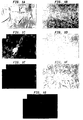
- a subset of MB CD34+ plated on fibronectin promptly attached and became spindle shaped within 3 days (Fig. 1A); the number of attaching cells (AT CD34+ ) in culture increased with time (Fig. 2). Attached cells were observed only sporadically among cultures of MB CD34- , including cells followed for up to 4 wks on fibronectin-coated plates.
- MB CD34+ were labeled with the fluorescent dye, DiI, and co-plated with unlabeled MB CD34- on fibronectin at an overall density of 5x10 3 /mm 2 ; ratio of the two cell types was identical to that of the original mononuclear cell population (1% MB CD34+ , 99% MB CD34- ).
- DiI-labeled cells derived from MB CD34+ initially accounting for only 1% of blood cells, accounted for 60.3 ⁇ 4.7% of total attaching cells analyzed by FACS.
- MB CD34+ / MB CD34- co-cultures also enhanced MB CD34 + differentiation, including formation of cellular networks and tube-like structures on fibronectin-coated plates (Figs. 1B,C). These structures consisted principally of Dil-labeled MB CD34+ derived cells (Fig. 1C). Moreover, within 12 h of co-culture, multiple cluster formations were observed (Fig. 1D), consisting principally of DiI-labeled MB CD34+ derived cells (Fig. 1E).
- clusters were comprised of round cells centrally, and sprouts of spindle-shaped cells at the periphery.
- the appearance and organization of these clusters resembled that of blood island-like cell clusters observed in dissociated quail epiblast culture, which induced ECs and gave rise to vascular structures in vitro (3).
- AT CD34+ at the cluster periphery were shown to take up DiI-labeled acetylated LDL, characteristic of EC lineage (13), whereas the round cells comprising the center of cluster did not (Figs. 1F,G); the latter detached from the cluster several days later. Similar findings were observed in the experiments using MB Flk1+ .
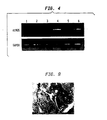
- ECs uniquely express endothelial constitutive nitric oxide synthase (ecNOS). Accordingly, MB CD34+ , MB CD34- and AT CD34+ were investigated for expression of ecNOS by RT-PCR (15). ecNOS mRNA was not detectable among MB CD34- and was present at very low levels in freshly isolated MB CD34 + (Fig. 4). In AT CD34+ cultured for 7d, however, ecNOS mRNA was markedly increased (Fig. 5).
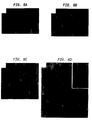
- a meshwork of cord-like structures comprised of both DiI-labeled and unlabeled cells could be seen within 3 d after co-culture (Fig. 6C). Both cell types were then re-seeded on Matrigel (Becton Dickinson) coated slides and within 12h demonstrated formation of capillary networks comprised of Dil-labeled MB CD34 + derived cells and HUVECs (Fig. 6D). To facilitate cell-cell interaction, HUVECs were pre-treated with TNF- ⁇ _( 21 ),_resulting in increased numbers of AT CD34+ (Fig. 6E); synergistic augmentation was observed upon co-incubation with VEGF. Identically treated co-cultures of HUVECs and DiI-labeled MB CD34- yielded desquamated labeled cells and/ or no cords. Similar findings were observed when EC precursors were isolated using MB Flk1+ .
- mice were employed to avoid potential graft- versus host complications. Two days later, when the limb was severely ischemic, mice were injected with 5 X 10 5 Dil-labeled human MB CD34+ or MB CD34- via the tail vein.
- a transgenic mouse overexpressing ⁇ -galactosidase was then used to test the hypothesis that homologous grafts of EC progenitors could contribute to neovascularization in vivo.
- Flk-1 cell isolation was used for selection of EC progenitors due to lack of a suitable antimouse CD34 antibody.
- Approximately 1x10 4 MB Flk1+ were isolated from whole blood of 10 ⁇ -galactosidase transgenic mice with B6,129 genetic background.
- MB Flk1+ or the same number of MB Flk1- were injected into B6,129 mice with hindlimb ischemia of 2 days duration.
- MB CD34+ were isolated from 20ml of blood obtained by direct venipuncture of normal New Zealand white rabbits immediately prior to surgical induction of unilateral hindlimb ischemia.
- freshly isolated autologous DiI-labeled MB CD34+ were re-injected into the ear vein of the same rabbit from which the blood had been initially obtained.
- histologic sections of the ischemic limbs were examined. DiI-labeled cells were localized exclusively to neovascular zones of the ischemic limb, incorporated into capillaries and consistently expressing CD31 and UEA-1 (Fig. 8J,K).
- a denuded rat carotid artery was immediately excised and placed in culture in HUVEC medium, and Dil labeled CD34+ EC progenitor cells were seeded onto the artery. After 1wk, the artery was washed with PBS to remove non-adherent cells. Consistent with the ability of CD34+ cells to differentiate into filtrating cells, DiI labeled cells were found within the smooth muscle cell layer of the artery. Scanning electron microscopy of the intimal surface, however, showed that DiI-labeled cells also had adhered to the denuded arterial surface, assuming a morphology suggestive of ECs (fig. 9). Dil labeled cells also incorporated into the capillary-like sprouts at the bare ends of the excised arterial segment, suggesting that CD34+ cells may be capable of participating in angiogenesis as well.
Landscapes
- Health & Medical Sciences (AREA)
- Life Sciences & Earth Sciences (AREA)
- Engineering & Computer Science (AREA)
- Chemical & Material Sciences (AREA)
- Organic Chemistry (AREA)
- Bioinformatics & Cheminformatics (AREA)
- General Health & Medical Sciences (AREA)
- Animal Behavior & Ethology (AREA)
- Pharmacology & Pharmacy (AREA)
- Veterinary Medicine (AREA)
- Medicinal Chemistry (AREA)
- Public Health (AREA)
- Nuclear Medicine, Radiotherapy & Molecular Imaging (AREA)
- Biomedical Technology (AREA)
- Chemical Kinetics & Catalysis (AREA)
- General Chemical & Material Sciences (AREA)
- Wood Science & Technology (AREA)
- Zoology (AREA)
- Genetics & Genomics (AREA)
- Biotechnology (AREA)
- Vascular Medicine (AREA)
- General Engineering & Computer Science (AREA)
- Biochemistry (AREA)
- Microbiology (AREA)
- Cell Biology (AREA)
- Diabetes (AREA)
- Ophthalmology & Optometry (AREA)
- Epidemiology (AREA)
- Developmental Biology & Embryology (AREA)
- Urology & Nephrology (AREA)
- Rheumatology (AREA)
- Cardiology (AREA)
- Immunology (AREA)
- Heart & Thoracic Surgery (AREA)
- Hematology (AREA)
- Endocrinology (AREA)
- Pain & Pain Management (AREA)
- Pulmonology (AREA)
- Oncology (AREA)
- Dermatology (AREA)
Priority Applications (1)
| Application Number | Priority Date | Filing Date | Title |
|---|---|---|---|
| EP05017496A EP1618898A3 (en) | 1996-11-08 | 1997-11-06 | Methods for regulating angiogenesis |
Applications Claiming Priority (3)
| Application Number | Priority Date | Filing Date | Title |
|---|---|---|---|
| US08/744,882 US5980887A (en) | 1996-11-08 | 1996-11-08 | Methods for enhancing angiogenesis with endothelial progenitor cells |
| US744882 | 1996-11-08 | ||
| PCT/US1997/019935 WO1998019712A1 (en) | 1996-11-08 | 1997-11-06 | Methods for regulating angiogenesis |
Related Child Applications (1)
| Application Number | Title | Priority Date | Filing Date |
|---|---|---|---|
| EP05017496A Division EP1618898A3 (en) | 1996-11-08 | 1997-11-06 | Methods for regulating angiogenesis |
Publications (2)
| Publication Number | Publication Date |
|---|---|
| EP0941125A1 EP0941125A1 (en) | 1999-09-15 |
| EP0941125B1 true EP0941125B1 (en) | 2008-01-30 |
Family
ID=24994332
Family Applications (2)
| Application Number | Title | Priority Date | Filing Date |
|---|---|---|---|
| EP97947319A Expired - Lifetime EP0941125B1 (en) | 1996-11-08 | 1997-11-06 | Methods for regulating angiogenesis |
| EP05017496A Ceased EP1618898A3 (en) | 1996-11-08 | 1997-11-06 | Methods for regulating angiogenesis |
Family Applications After (1)
| Application Number | Title | Priority Date | Filing Date |
|---|---|---|---|
| EP05017496A Ceased EP1618898A3 (en) | 1996-11-08 | 1997-11-06 | Methods for regulating angiogenesis |
Country Status (7)
| Country | Link |
|---|---|
| US (2) | US5980887A (https=) |
| EP (2) | EP0941125B1 (https=) |
| JP (2) | JP4628504B2 (https=) |
| AU (1) | AU743267B2 (https=) |
| CA (1) | CA2271690C (https=) |
| DE (1) | DE69738495T2 (https=) |
| WO (1) | WO1998019712A1 (https=) |
Families Citing this family (187)
| Publication number | Priority date | Publication date | Assignee | Title |
|---|---|---|---|---|
| US20020192198A1 (en) * | 1998-04-21 | 2002-12-19 | Elia James P. | Method for growing human organs and suborgans |
| US20030157074A1 (en) * | 1994-11-16 | 2003-08-21 | Mitrani Eduardo N. | Vitro micro-organs, and uses related thereto |
| US5980887A (en) * | 1996-11-08 | 1999-11-09 | St. Elizabeth's Medical Center Of Boston | Methods for enhancing angiogenesis with endothelial progenitor cells |
| US8075880B2 (en) * | 1999-01-11 | 2011-12-13 | Steward St. Elizabeth's Medical Center Of Boston, Inc. | Compositions and methods for regulating angiogenesis |
| US6486133B1 (en) | 1997-03-07 | 2002-11-26 | The Wistar Institute Of Anatomy And Biology | Methods for inducing localized vascular development and enhancing the repair of a wound in the mammamian dermis |
| DE69821011T3 (de) * | 1997-10-02 | 2009-01-08 | MAX-PLANCK-Gesellschaft zur Förderung der Wissenschaften e.V. | Verfahren zur Modulierung der Neovaskularisierung und/oder des Wachstums kollateraler Arterien und/oder anderer Arterien aus bestehenden arteriolären Verbindungen |
| US6749617B1 (en) * | 1997-11-04 | 2004-06-15 | Scimed Life Systems, Inc. | Catheter and implants for the delivery of therapeutic agents to tissues |
| US7687057B2 (en) * | 1998-01-09 | 2010-03-30 | Yissum Research Development Company Of The Hebrew University Of Jerusalem | In vitro micro-organs, and uses related thereto |
| CA2311729A1 (en) * | 1998-01-23 | 1999-07-29 | Imclone Systems Incorporated | Purified populations of stem cells |
| CA2322559C (en) * | 1998-03-09 | 2012-07-17 | St. Elizabeth's Medical Center | Compositions and methods for modulating vascularization |
| US6676937B1 (en) * | 1998-03-09 | 2004-01-13 | Caritas St. Elizabeth's Medical Center Of Boston Inc. | Compositions and methods for modulating vascularization |
| US20040228834A1 (en) * | 1998-03-09 | 2004-11-18 | Jeffrey Isner | Compositions and methods for modulating vascularization |
| US9585916B2 (en) | 1999-03-26 | 2017-03-07 | Northern Therapeutics Inc. | Cell based therapy for the pulmonary system |
| CA2266805C (en) | 1998-03-27 | 2015-04-28 | An-Go-Gen Inc. | Cell-based gene therapy in the treatment of pulmonary disorders |
| US6482406B1 (en) | 1999-03-26 | 2002-11-19 | Duncan J. Stewart | Cell-based gene therapy for the pulmonary system |
| US6620382B1 (en) * | 1998-05-22 | 2003-09-16 | Biopheresis Technologies, Llc. | Method and compositions for treatment of cancers |
| US8197430B1 (en) | 1998-05-22 | 2012-06-12 | Biopheresis Technologies, Inc. | Method and system to remove cytokine inhibitor in patients |
| WO2000002998A1 (en) | 1998-07-10 | 2000-01-20 | Brigham & Women's Hospital, Inc. | Methods for implanting cells |
| US7030083B2 (en) * | 1998-09-09 | 2006-04-18 | University Of Washington | Treatment of eclampsia and preeclampsia |
| US6677300B1 (en) * | 1998-09-09 | 2004-01-13 | Scios, Inc. | Treatment of microvascular angiopathies |
| EP1568375A1 (en) * | 1998-10-26 | 2005-08-31 | Ludwig Institute For Cancer Research | Use of VEGF-C or VEGF-D gene or protein to prevent restenosis |
| US6958147B1 (en) | 1998-10-26 | 2005-10-25 | Licentia Ltd | Use of VEGF-C to prevent restenosis |
| EP1126870B1 (en) * | 1998-10-26 | 2004-09-08 | Ludwig Institute For Cancer Research | Use of vegf-c or vegf-d gene or protein to prevent restenosis |
| DE19850986A1 (de) * | 1998-11-05 | 2000-05-25 | Aventis Pharma Gmbh | Die gentechnische Prägung von Zellen und ihre Verwendung zur Prophylaxe und Therapie von Erkrankungen |
| CA2351671A1 (en) | 1998-11-24 | 2000-06-08 | Regents Of The University Of Minnesota | Transgenic circulating endothelial cells |
| US20040131601A1 (en) * | 2000-03-30 | 2004-07-08 | Foundry Networks, Inc., A Delaward Corporation | Injection of bone marrow-derived cells and medium for angiogenesis |
| US6348050B1 (en) * | 1999-04-30 | 2002-02-19 | Medtronic, Inc. | Infusion systems for creating microenvironments in a living body |
| US20030152562A1 (en) * | 2001-10-23 | 2003-08-14 | Yissum Research Development Company Of The Hebrew University Of Jerusalem | Vitro micro-organs, and uses related thereto |
| AU2003901668A0 (en) * | 2003-03-28 | 2003-05-01 | Medvet Science Pty. Ltd. | Non-haemopoietic precursor cells |
| US7670628B2 (en) * | 1999-07-07 | 2010-03-02 | Angioblast Systems, Inc. | Mesenchymal precursor cell |
| AUPQ147799A0 (en) * | 1999-07-07 | 1999-07-29 | Medvet Science Pty. Ltd. | Mesenchymal precursor cell |
| US8062675B2 (en) | 1999-07-07 | 2011-11-22 | Angioblast Systems, Inc. | Mesenchymal precursor cell |
| US20050158289A1 (en) * | 1999-07-07 | 2005-07-21 | Simmons Paul J. | Mesenchymal precursor cell and use thereof in the repair of bone defects and fractures in mammals |
| EP1210102B1 (en) * | 1999-08-19 | 2010-04-07 | Applied Protein Sciences, LLC | Tgf-alpha polypeptides, functional fragments and methods of use therefor |
| US20020193301A1 (en) | 1999-08-19 | 2002-12-19 | Stem Cell Pharmaceuticals, Inc. | TGF-alpha polypeptides, functional fragments and methods of use therefor |
| JP2003509463A (ja) * | 1999-09-23 | 2003-03-11 | アン−ゴー−ジェン インコーポレーテッド | 肺系のための細胞ベースの遺伝子治療 |
| EP1142590B8 (en) * | 1999-10-29 | 2008-11-26 | AnGes MG, Inc. | Gene therapy for diabetic ischemic disease |
| US6379708B1 (en) * | 1999-11-20 | 2002-04-30 | Cytologic, Llc | Method for enhancing immune responses in mammals |
| US20030229393A1 (en) * | 2001-03-15 | 2003-12-11 | Kutryk Michael J. B. | Medical device with coating that promotes cell adherence and differentiation |
| US8088060B2 (en) * | 2000-03-15 | 2012-01-03 | Orbusneich Medical, Inc. | Progenitor endothelial cell capturing with a drug eluting implantable medical device |
| ATE362382T1 (de) | 2000-03-15 | 2007-06-15 | Orbusneich Medical Inc | Beschichtung welche ein anhaften von endothelzellen stimuliert |
| US9522217B2 (en) * | 2000-03-15 | 2016-12-20 | Orbusneich Medical, Inc. | Medical device with coating for capturing genetically-altered cells and methods for using same |
| US8460367B2 (en) * | 2000-03-15 | 2013-06-11 | Orbusneich Medical, Inc. | Progenitor endothelial cell capturing with a drug eluting implantable medical device |
| US20070055367A1 (en) * | 2000-03-15 | 2007-03-08 | Orbus Medical Technologies, Inc. | Medical device with coating that promotes endothelial cell adherence and differentiation |
| US20030104977A1 (en) * | 2000-03-31 | 2003-06-05 | Ugo Ripamonti | Methods for inducing angiogenesis using morphogenic proteins and stimulatory factors |
| US7166280B2 (en) * | 2000-04-06 | 2007-01-23 | Franco Wayne P | Combination growth factor therapy and cell therapy for treatment of acute and chronic heart disease |
| US20070111935A1 (en) * | 2000-04-06 | 2007-05-17 | Franco Wayne P | Combination growth factor therapy and cell therapy for treatment of acute and chronic diseases of the organs |
| US9694038B2 (en) * | 2000-04-06 | 2017-07-04 | Wayne P. Franco | Combination growth factor therapy and cell therapy for treatment of acute and chronic diseases of the organs |
| US10281478B2 (en) | 2000-04-06 | 2019-05-07 | Wayne P. Franco | Combination growth factor therapy and cell therapy for treatment of acute and chronic diseases of the organs |
| US20050277576A1 (en) * | 2000-04-06 | 2005-12-15 | Franco Wayne P | Combination growth factor therapy and cell therapy for treatment of acute and chronic diseases of the organs |
| US20100303769A1 (en) * | 2000-04-06 | 2010-12-02 | Franco Wayne P | Combination growth factor therapy and cell therapy for treatment of acute and chronic heart disease |
| US6800298B1 (en) * | 2000-05-11 | 2004-10-05 | Clemson University | Biological lubricant composition and method of applying lubricant composition |
| CA2412436C (en) * | 2000-06-05 | 2013-05-21 | The Trustees Of Columbia University In The City Of New York | Identification and use of human bone marrow-derived endothelial progenitor cells to improve myocardial function after ischemic injury |
| US6878371B2 (en) * | 2000-07-26 | 2005-04-12 | Boston Scientific Scimed, Inc. | Therapeutic angiogenesis by bone marrow-derived cell transplantation in myocardial ischemic tissue and skeletal muscle ischemic tissue |
| EP1383551B1 (en) * | 2000-11-08 | 2010-07-14 | Boston Scientific Limited | Multilumen catheter and implants for the delivery of therapeutic agents to tissues |
| US7029209B2 (en) | 2000-12-18 | 2006-04-18 | Cardemon, Inc. | Slidable boring tool with fine adjustment |
| AU2002356180A1 (en) * | 2001-08-06 | 2003-03-10 | The Regents Of The University Of California | Methods for inhibiting angiogenesis |
| WO2003013570A1 (en) * | 2001-08-09 | 2003-02-20 | Cornell Research Foundation, Inc. | Platelet-derived growth factor protection of cardiac myocardium |
| US7217570B2 (en) * | 2001-08-23 | 2007-05-15 | The Wistar Institute Of Anatomy And Biology | Organotypic intestinal culture and methods of use thereof |
| US20030054331A1 (en) * | 2001-09-14 | 2003-03-20 | Stemsource, Inc. | Preservation of non embryonic cells from non hematopoietic tissues |
| US20040031067A1 (en) * | 2001-10-11 | 2004-02-12 | Meenhard Herlyn | Regulation of human skin healing |
| US20040044403A1 (en) * | 2001-10-30 | 2004-03-04 | Joyce Bischoff | Tissue-engineered vascular structures |
| WO2003039382A2 (en) * | 2001-11-05 | 2003-05-15 | Medgenics, Inc. | System for processing tissue |
| US8608661B1 (en) | 2001-11-30 | 2013-12-17 | Advanced Cardiovascular Systems, Inc. | Method for intravascular delivery of a treatment agent beyond a blood vessel wall |
| US7771716B2 (en) | 2001-12-07 | 2010-08-10 | Cytori Therapeutics, Inc. | Methods of using regenerative cells in the treatment of musculoskeletal disorders |
| US20050048035A1 (en) | 2001-12-07 | 2005-03-03 | Fraser John K. | Methods of using regenerative cells in the treatment of stroke and related diseases and disorders |
| US20050008626A1 (en) * | 2001-12-07 | 2005-01-13 | Fraser John K. | Methods of using adipose tissue-derived cells in the treatment of cardiovascular conditions |
| US7595043B2 (en) * | 2001-12-07 | 2009-09-29 | Cytori Therapeutics, Inc. | Method for processing and using adipose-derived stem cells |
| US9597395B2 (en) | 2001-12-07 | 2017-03-21 | Cytori Therapeutics, Inc. | Methods of using adipose tissue-derived cells in the treatment of cardiovascular conditions |
| US20060204556A1 (en) * | 2001-12-07 | 2006-09-14 | Cytori Therapeutics, Inc. | Cell-loaded prostheses for regenerative intraluminal applications |
| US20050095228A1 (en) | 2001-12-07 | 2005-05-05 | Fraser John K. | Methods of using regenerative cells in the treatment of peripheral vascular disease and related disorders |
| US7651684B2 (en) * | 2001-12-07 | 2010-01-26 | Cytori Therapeutics, Inc. | Methods of using adipose tissue-derived cells in augmenting autologous fat transfer |
| JP4653952B2 (ja) | 2001-12-07 | 2011-03-16 | サイトリ セラピューティクス インコーポレイテッド | 処理済み脂肪吸引細胞で患者を治療するためのシステムと方法 |
| US7514075B2 (en) * | 2001-12-07 | 2009-04-07 | Cytori Therapeutics, Inc. | Systems and methods for separating and concentrating adipose derived stem cells from tissue |
| US7585670B2 (en) | 2001-12-07 | 2009-09-08 | Cytori Therapeutics, Inc. | Automated methods for isolating and using clinically safe adipose derived regenerative cells |
| US8404229B2 (en) * | 2001-12-07 | 2013-03-26 | Cytori Therapeutics, Inc. | Methods of using adipose derived stem cells to treat acute tubular necrosis |
| EP1467746A4 (en) * | 2001-12-20 | 2006-10-04 | Macropore Inc | SYSTEMS AND METHODS FOR TREATING PATIENTS WITH COLLAGEN-RICH MATERIAL EXTRACTED FROM ADIPOSE TISSUES |
| EP1465983B1 (en) * | 2001-12-21 | 2010-03-31 | Immunex Corporation | Endothelial stem cells, populations, methods of isolation and use thereof |
| US20030139333A1 (en) * | 2002-01-18 | 2003-07-24 | Genetix Pharmaceuticals, Inc. | Methods and compositions for promoting angiogenesis |
| US20040009146A1 (en) * | 2002-02-26 | 2004-01-15 | Osvaldo Podhajcer | Anti-tumor vaccine and method |
| US20030199464A1 (en) * | 2002-04-23 | 2003-10-23 | Silviu Itescu | Regeneration of endogenous myocardial tissue by induction of neovascularization |
| US7361368B2 (en) | 2002-06-28 | 2008-04-22 | Advanced Cardiovascular Systems, Inc. | Device and method for combining a treatment agent and a gel |
| US20040009158A1 (en) * | 2002-07-11 | 2004-01-15 | Washington University | Promotion of neovascularization using bone marrow-derived endothelial-progenitor cells |
| US20040052771A1 (en) * | 2002-07-12 | 2004-03-18 | Lim Sai Kiang | Hemangioblast progenitor cells |
| US20060165666A1 (en) * | 2002-07-12 | 2006-07-27 | Lim Sai K | Hemangioblast progenitor cells |
| AU2003242967A1 (en) * | 2002-07-12 | 2004-02-02 | Yissum Research Development Company Of The Hebrew University Of Jerusalem | Method and device for inducing biological processes by micro-organs |
| DE10234192B4 (de) * | 2002-07-26 | 2009-11-26 | Epoplus Gmbh Co.Kg | Verwendung von Erythropoetin |
| US20040037811A1 (en) * | 2002-08-22 | 2004-02-26 | The Cleveland Clinic Foundation | Stromal cell-derived factor-1 mediates stem cell homing and tissue regeneration in ischemic cardiomyopathy |
| US20050271639A1 (en) * | 2002-08-22 | 2005-12-08 | Penn Marc S | Genetically engineered cells for therapeutic applications |
| US7470538B2 (en) * | 2002-12-05 | 2008-12-30 | Case Western Reserve University | Cell-based therapies for ischemia |
| WO2004052177A2 (en) * | 2002-12-05 | 2004-06-24 | Case Western Reserve University | Cell-based therapies for ischemia |
| US7060684B1 (en) | 2002-12-16 | 2006-06-13 | Quijano Rodolfo C | Device for treating diabetes and methods thereof |
| US8940292B2 (en) | 2003-01-28 | 2015-01-27 | Wake Forest University Health Sciences | Enhancement of angiogenesis to grafts using cells engineered to produce growth factors |
| US20040197310A1 (en) * | 2003-02-12 | 2004-10-07 | Sanberg Paul R. | Compositions and methods for using umbilical cord progenitor cells in the treatment of myocardial infarction |
| EP1615996A4 (en) * | 2003-03-27 | 2006-11-15 | Texase A & M University System | USES OF VEGETABLE TOTHELIC GROWTH FACTOR AND COLLAGEN INDUCIBLE PROTEIN TYPE I (VCIP) |
| US8038991B1 (en) | 2003-04-15 | 2011-10-18 | Abbott Cardiovascular Systems Inc. | High-viscosity hyaluronic acid compositions to treat myocardial conditions |
| US8383158B2 (en) | 2003-04-15 | 2013-02-26 | Abbott Cardiovascular Systems Inc. | Methods and compositions to treat myocardial conditions |
| US8821473B2 (en) | 2003-04-15 | 2014-09-02 | Abbott Cardiovascular Systems Inc. | Methods and compositions to treat myocardial conditions |
| US20040247575A1 (en) * | 2003-06-03 | 2004-12-09 | Caplice Noel M. | Smooth muscle progenitor cells |
| CA2539346A1 (en) * | 2003-09-17 | 2005-04-21 | Macropore Biosurgery, Inc. | Methods of using regenerative cells in the treatment of peripheral vascular disease and related disorders |
| US9403908B2 (en) * | 2003-09-29 | 2016-08-02 | The Regents Of The University Of California | Method for altering hematopoietic progenitor cell adhesion, differentiation, and migration |
| US20090118817A1 (en) * | 2005-06-16 | 2009-05-07 | Mayo Foundation For Medical Education And Research | Magnetic Medical Apparatus, Kits, and Methods |
| US8465453B2 (en) * | 2003-12-03 | 2013-06-18 | Mayo Foundation For Medical Education And Research | Kits, apparatus and methods for magnetically coating medical devices with living cells |
| DE102004063927A1 (de) * | 2004-01-23 | 2005-12-15 | Epoplus Gmbh Co.Kg | Einsatz von niedrig dosiertem Erythropoietin zur Stimulation endothelialer Vorläuferzellen sowie zur Organregeneration und Progressionsverlangsamung von Endorganschäden |
| JP2007217283A (ja) * | 2004-03-30 | 2007-08-30 | Niigata Tlo:Kk | 血管新生促進剤および血管新生療法 |
| EP2946666B1 (en) * | 2004-04-30 | 2017-11-15 | OrbusNeich Medical, Inc. | Medical device with coating for capturing genetically-altered cells and methods of using same |
| US20050265980A1 (en) | 2004-05-14 | 2005-12-01 | Becton, Dickinson And Company | Cell culture environments for the serum-free expansion of mesenchymal stem cells |
| DK1759536T3 (da) | 2004-06-01 | 2011-09-05 | Kwalata Trading Ltd | In vitro-teknikker til anvendelse med stamceller |
| ATE423842T1 (de) * | 2004-08-13 | 2009-03-15 | Medtronic Inc | Isolation der endothelvorläuferzellen-untermengen und verfahren zu ihrer verwendung |
| KR20070085288A (ko) * | 2004-09-24 | 2007-08-27 | 안지오블라스트 시스템스 인코퍼레이티드 | 간엽 전구세포의 증식 및/또는 생존성 증강 방법 |
| CA2582567A1 (en) * | 2004-10-07 | 2006-04-13 | Stem Cell Therapeutics Corp. | Stimulation of proliferation of pluripotential stem cells through administration of pregnancy associated compounds |
| EP1827494A4 (en) * | 2004-11-18 | 2010-02-17 | Wayne Franco | COMBINATION GROWTH THERAPY AND CELL THERAPY FOR THE TREATMENT OF ACUTE AND CHRONIC ORGANIC DISEASES |
| US20060110374A1 (en) * | 2004-11-24 | 2006-05-25 | Dudy Czeiger | Method to accelerate stem cell recruitment and homing |
| WO2006060779A2 (en) * | 2004-12-03 | 2006-06-08 | Case Western Reserve University | Novel methods, compositions and devices for inducing neovascularization |
| JP5138384B2 (ja) * | 2005-01-10 | 2013-02-06 | サイトリ セラピューティクス インコーポレイテッド | 医療装置を監視し、管理し、サービスするための装置及び方法 |
| US20090215782A1 (en) * | 2005-04-18 | 2009-08-27 | Carlo Foresta | Use of PDE-5 Inhibitors for Endothelial Repair of Tissues Impaired by Trauma or Disease |
| US20080125745A1 (en) | 2005-04-19 | 2008-05-29 | Shubhayu Basu | Methods and compositions for treating post-cardial infarction damage |
| US9539410B2 (en) | 2005-04-19 | 2017-01-10 | Abbott Cardiovascular Systems Inc. | Methods and compositions for treating post-cardial infarction damage |
| US8828433B2 (en) * | 2005-04-19 | 2014-09-09 | Advanced Cardiovascular Systems, Inc. | Hydrogel bioscaffoldings and biomedical device coatings |
| FR2889200B1 (fr) | 2005-07-27 | 2008-01-04 | Inst Vaisseaux Et Du Sang Ass | Systeme marqueur cellulaire/ligand, ou le marqueur est du type eph, materiau cellulaire comprenant ce systeme, procede de preparation et utilisation proangiogenique |
| US20070065514A1 (en) * | 2005-09-22 | 2007-03-22 | Howell Mark D | Method for enhancing immune responses in mammals |
| US7652922B2 (en) * | 2005-09-30 | 2010-01-26 | Mosaid Technologies Incorporated | Multiple independent serial link memory |
| US20070100323A1 (en) * | 2005-10-31 | 2007-05-03 | Ludwig Florian N | Facilitation of endothelialization by in situ surface modification |
| MY147516A (en) | 2005-11-07 | 2012-12-31 | Amorcyte Inc | Compositions and method of vascular injury repair cross-reference to related applications |
| US8637005B2 (en) | 2005-11-07 | 2014-01-28 | Amorcyte, Inc. | Compositions and methods of vascular injury repair |
| US20110076255A1 (en) | 2005-11-07 | 2011-03-31 | Pecora Andrew L | Compositions and methods for treating progressive myocardial injury due to a vascular insufficiency |
| TW200734462A (en) | 2006-03-08 | 2007-09-16 | In Motion Invest Ltd | Regulating stem cells |
| US7732190B2 (en) | 2006-07-31 | 2010-06-08 | Advanced Cardiovascular Systems, Inc. | Modified two-component gelation systems, methods of use and methods of manufacture |
| US9242005B1 (en) * | 2006-08-21 | 2016-01-26 | Abbott Cardiovascular Systems Inc. | Pro-healing agent formulation compositions, methods and treatments |
| US20080075690A1 (en) * | 2006-09-22 | 2008-03-27 | Mark Douglas Howell | Method for enhancing immune responses in mammals |
| US20100034794A1 (en) * | 2006-10-03 | 2010-02-11 | Van Der Strate Barry W A | Endothelial progenitor cell compositions and neovascularization |
| WO2008085229A2 (en) * | 2006-11-15 | 2008-07-17 | Arteriocyte Inc. | Cell-based therapies for treating liver disease |
| US9005672B2 (en) | 2006-11-17 | 2015-04-14 | Abbott Cardiovascular Systems Inc. | Methods of modifying myocardial infarction expansion |
| US8741326B2 (en) | 2006-11-17 | 2014-06-03 | Abbott Cardiovascular Systems Inc. | Modified two-component gelation systems, methods of use and methods of manufacture |
| US8192760B2 (en) | 2006-12-04 | 2012-06-05 | Abbott Cardiovascular Systems Inc. | Methods and compositions for treating tissue using silk proteins |
| FR2909559B1 (fr) * | 2006-12-06 | 2012-09-07 | Inst Vaisseaux Et Du Sang | Preparations cellulaires pour une utilisation comme agent stimulant la revascularisation |
| US20100040584A1 (en) * | 2006-12-19 | 2010-02-18 | Children's Medical Center Corporation | Methods for promoting neovascularization |
| US8137968B2 (en) * | 2007-02-28 | 2012-03-20 | The Board Of Trustees Of The University Of Illinois | Selected endothelial progenitor cells and methods for use |
| AU2008223817A1 (en) * | 2007-03-02 | 2008-09-12 | National University Of Ireland, Galway | Osteopontin for the prediction and treatment of cardiovascular diseases |
| US7632340B2 (en) * | 2007-03-07 | 2009-12-15 | Hamilton Beach Brands, Inc. | Air purifier for removing particles or contaminants from air |
| JP2010523496A (ja) | 2007-03-30 | 2010-07-15 | ザ クリーブランド クリニック ファウンデーション | 虚血障害の治療方法 |
| WO2008142862A1 (ja) * | 2007-05-18 | 2008-11-27 | National University Corporation Asahikawa Medical College | 血管内皮前駆細胞の移植による抗がん療法 |
| AU2008265973A1 (en) * | 2007-06-13 | 2008-12-24 | Wake Forest University Health Sciences | Methods of restoration of erectile function |
| US20090053208A1 (en) * | 2007-08-20 | 2009-02-26 | Medtronic Vascular, Inc. | Methods and Systems for Improving Tissue Perfusion |
| WO2009079451A2 (en) | 2007-12-14 | 2009-06-25 | The Cleveland Clinic Foundation | Compositions and methods of promoting wound healing |
| US11051733B2 (en) | 2008-01-18 | 2021-07-06 | Wake Forest University Health Sciences | Isolating and purifying cells for therapy |
| US20090246179A1 (en) * | 2008-02-11 | 2009-10-01 | The Cleveland Clinic Foundation | Method of treating myocardial injury |
| WO2010006219A2 (en) * | 2008-07-09 | 2010-01-14 | Baxter International Inc. | Use of scaffold comprising fibrin for delivery of stem cells |
| WO2010021993A1 (en) | 2008-08-19 | 2010-02-25 | Cytori Therapeutics, Inc. | Methods of using adipose tissue-derived cells in the treatment of the lymphatic system and malignant disease |
| CN102245189B (zh) * | 2008-12-03 | 2015-06-17 | 阿莫塞特公司 | 改善梗死区灌注的组合物以及血管损伤修复方法 |
| JP5725509B2 (ja) | 2009-04-07 | 2015-05-27 | 国立大学法人旭川医科大学 | 単核球由来の新規血管再生細胞群及びその分化誘導法 |
| KR101738324B1 (ko) | 2009-05-01 | 2017-05-19 | 비미니 테크놀로지스 엘엘씨 | 조직 및 세포 부유화 이식편의 최적화 시스템, 방법 및 조성물 |
| CA2772610C (en) | 2009-08-28 | 2018-01-23 | The Cleveland Clinic Foundation | Sdf-1 delivery for treating ischemic tissue |
| US20110091427A1 (en) * | 2009-10-02 | 2011-04-21 | Baxter International Inc. | Methods for treating a kidney injury |
| JP5709880B2 (ja) | 2009-10-23 | 2015-04-30 | アモーサイト インコーポレイテッド | 血管の機能不全による進行性心筋傷害治療のための組成物および方法 |
| WO2012019168A2 (en) | 2010-08-06 | 2012-02-09 | Moderna Therapeutics, Inc. | Engineered nucleic acids and methods of use thereof |
| RU2013120302A (ru) | 2010-10-01 | 2014-11-20 | Модерна Терапьютикс, Инк. | Сконструированные нуклеиновые кислоты и способы их применения |
| EP2625264B1 (en) | 2010-10-08 | 2022-12-07 | Terumo BCT, Inc. | Methods and systems of growing and harvesting cells in a hollow fiber bioreactor system with control conditions |
| AU2011325871B2 (en) * | 2010-11-05 | 2016-02-04 | Medvet Science Pty Ltd | Markers of endothelial progenitor cells and uses thereof |
| EP2663868A2 (en) | 2010-12-01 | 2013-11-20 | The University of North Carolina at Chapel Hill | Methods and compositions for targeting sites of neovascular growth |
| EP2691101A2 (en) | 2011-03-31 | 2014-02-05 | Moderna Therapeutics, Inc. | Delivery and formulation of engineered nucleic acids |
| US9464124B2 (en) | 2011-09-12 | 2016-10-11 | Moderna Therapeutics, Inc. | Engineered nucleic acids and methods of use thereof |
| RU2648950C2 (ru) | 2011-10-03 | 2018-04-02 | Модерна Терапьютикс, Инк. | Модифицированные нуклеозиды, нуклеотиды и нуклеиновые кислоты и их применение |
| US9533010B2 (en) | 2011-10-31 | 2017-01-03 | Amorcyte, Llc | Compositions and methods for treating progressive myocardial injury due to a vascular insufficiency |
| CN104114572A (zh) | 2011-12-16 | 2014-10-22 | 现代治疗公司 | 经修饰的核苷、核苷酸和核酸组合物 |
| JP2015508101A (ja) | 2012-02-21 | 2015-03-16 | バクスター・インターナショナル・インコーポレイテッドBaxter International Incorp0Rated | Cd34+細胞を含む薬学的組成物 |
| US9572897B2 (en) | 2012-04-02 | 2017-02-21 | Modernatx, Inc. | Modified polynucleotides for the production of cytoplasmic and cytoskeletal proteins |
| AU2013243948A1 (en) | 2012-04-02 | 2014-10-30 | Moderna Therapeutics, Inc. | Modified polynucleotides for the production of proteins associated with human disease |
| US9254311B2 (en) | 2012-04-02 | 2016-02-09 | Moderna Therapeutics, Inc. | Modified polynucleotides for the production of proteins |
| US9283287B2 (en) | 2012-04-02 | 2016-03-15 | Moderna Therapeutics, Inc. | Modified polynucleotides for the production of nuclear proteins |
| WO2014081507A1 (en) | 2012-11-26 | 2014-05-30 | Moderna Therapeutics, Inc. | Terminally modified rna |
| US8980864B2 (en) | 2013-03-15 | 2015-03-17 | Moderna Therapeutics, Inc. | Compositions and methods of altering cholesterol levels |
| US10023626B2 (en) | 2013-09-30 | 2018-07-17 | Modernatx, Inc. | Polynucleotides encoding immune modulating polypeptides |
| JP2016538829A (ja) | 2013-10-03 | 2016-12-15 | モデルナ セラピューティクス インコーポレイテッドModerna Therapeutics,Inc. | 低密度リポタンパク質受容体をコードするポリヌクレオチド |
| JP6633522B2 (ja) | 2013-11-16 | 2020-01-22 | テルモ ビーシーティー、インコーポレーテッド | バイオリアクターにおける細胞増殖 |
| WO2015148704A1 (en) | 2014-03-25 | 2015-10-01 | Terumo Bct, Inc. | Passive replacement of media |
| US20160090569A1 (en) | 2014-09-26 | 2016-03-31 | Terumo Bct, Inc. | Scheduled Feed |
| WO2017004592A1 (en) | 2015-07-02 | 2017-01-05 | Terumo Bct, Inc. | Cell growth with mechanical stimuli |
| JP7034949B2 (ja) | 2016-05-25 | 2022-03-14 | テルモ ビーシーティー、インコーポレーテッド | 細胞の増殖 |
| US11104874B2 (en) | 2016-06-07 | 2021-08-31 | Terumo Bct, Inc. | Coating a bioreactor |
| US11685883B2 (en) | 2016-06-07 | 2023-06-27 | Terumo Bct, Inc. | Methods and systems for coating a cell growth surface |
| CN117247899A (zh) | 2017-03-31 | 2023-12-19 | 泰尔茂比司特公司 | 细胞扩增 |
| US12234441B2 (en) | 2017-03-31 | 2025-02-25 | Terumo Bct, Inc. | Cell expansion |
| US11624046B2 (en) | 2017-03-31 | 2023-04-11 | Terumo Bct, Inc. | Cell expansion |
| GB2619893A (en) | 2021-03-23 | 2023-12-20 | Terumo Bct Inc | Cell capture and expansion |
| US12152699B2 (en) | 2022-02-28 | 2024-11-26 | Terumo Bct, Inc. | Multiple-tube pinch valve assembly |
| USD1099116S1 (en) | 2022-09-01 | 2025-10-21 | Terumo Bct, Inc. | Display screen or portion thereof with a graphical user interface for displaying cell culture process steps and measurements of an associated bioreactor device |
Family Cites Families (15)
| Publication number | Priority date | Publication date | Assignee | Title |
|---|---|---|---|---|
| ATE68703T1 (de) | 1984-02-08 | 1991-11-15 | Cetus Corp | Toxinkonjugate. |
| US4883755A (en) * | 1987-10-28 | 1989-11-28 | Thomas Jefferson University | Method of reendothelializing vascular linings |
| WO1989005345A1 (en) * | 1987-12-11 | 1989-06-15 | Whitehead Institute For Biomedical Research | Genetic modification of endothelial cells |
| US5612211A (en) * | 1990-06-08 | 1997-03-18 | New York University | Stimulation, production and culturing of hematopoietic progenitor cells by fibroblast growth factors |
| JP3249516B2 (ja) * | 1990-10-31 | 2002-01-21 | ソマティクス セラピー コーポレイション | 遺伝子治療のためのレトロウイルスのベクター |
| US5199942A (en) | 1991-06-07 | 1993-04-06 | Immunex Corporation | Method for improving autologous transplantation |
| AU3429993A (en) * | 1992-01-10 | 1993-08-03 | Georgetown University | A method of administering genetically engineered endothelial cells to sites of angiogenesis for effecting genetic therapy |
| US5536641A (en) * | 1994-05-17 | 1996-07-16 | Memorial Sloane Kittering Cancer Center | Monoclonal antibody specific for vascular endothelial cell antigen endoglyx-1 and uses thereof for detection of, and isolation of, vascular endothelial cells |
| CA2197427A1 (en) * | 1994-08-26 | 1996-03-07 | Christopher Wrighton | Gene therapy for transplantation and inflammatory or thrombotic conditions |
| US5652225A (en) * | 1994-10-04 | 1997-07-29 | St. Elizabeth's Medical Center Of Boston, Inc. | Methods and products for nucleic acid delivery |
| US5874301A (en) * | 1994-11-21 | 1999-02-23 | National Jewish Center For Immunology And Respiratory Medicine | Embryonic cell populations and methods to isolate such populations |
| US5688237A (en) * | 1995-05-04 | 1997-11-18 | Cedars-Sinai Medical Center | Implantable catheter and method of use |
| US5830879A (en) * | 1995-10-02 | 1998-11-03 | St. Elizabeth's Medical Center Of Boston, Inc. | Treatment of vascular injury using vascular endothelial growth factor |
| EP0886650A1 (en) * | 1996-02-14 | 1998-12-30 | Novartis AG | Gene therapy of entothelial cells with anti-apoptotic proteins for transplantation and inflammatory conditions |
| US5980887A (en) * | 1996-11-08 | 1999-11-09 | St. Elizabeth's Medical Center Of Boston | Methods for enhancing angiogenesis with endothelial progenitor cells |
-
1996
- 1996-11-08 US US08/744,882 patent/US5980887A/en not_active Expired - Lifetime
-
1997
- 1997-11-06 AU AU52432/98A patent/AU743267B2/en not_active Ceased
- 1997-11-06 EP EP97947319A patent/EP0941125B1/en not_active Expired - Lifetime
- 1997-11-06 DE DE69738495T patent/DE69738495T2/de not_active Expired - Lifetime
- 1997-11-06 JP JP52164598A patent/JP4628504B2/ja not_active Expired - Fee Related
- 1997-11-06 CA CA2271690A patent/CA2271690C/en not_active Expired - Fee Related
- 1997-11-06 EP EP05017496A patent/EP1618898A3/en not_active Ceased
- 1997-11-06 WO PCT/US1997/019935 patent/WO1998019712A1/en not_active Ceased
-
1999
- 1999-01-11 US US09/228,020 patent/US6569428B1/en not_active Expired - Lifetime
-
2009
- 2009-06-10 JP JP2009138858A patent/JP5424385B2/ja not_active Expired - Fee Related
Also Published As
| Publication number | Publication date |
|---|---|
| JP2001503427A (ja) | 2001-03-13 |
| HK1023278A1 (en) | 2000-09-08 |
| AU743267B2 (en) | 2002-01-24 |
| AU5243298A (en) | 1998-05-29 |
| JP5424385B2 (ja) | 2014-02-26 |
| DE69738495D1 (de) | 2008-03-20 |
| EP1618898A2 (en) | 2006-01-25 |
| WO1998019712A1 (en) | 1998-05-14 |
| JP2009197028A (ja) | 2009-09-03 |
| EP1618898A3 (en) | 2007-12-12 |
| CA2271690A1 (en) | 1998-05-14 |
| DE69738495T2 (de) | 2008-08-28 |
| EP0941125A1 (en) | 1999-09-15 |
| CA2271690C (en) | 2011-09-13 |
| JP4628504B2 (ja) | 2011-02-09 |
| US5980887A (en) | 1999-11-09 |
| US6569428B1 (en) | 2003-05-27 |
Similar Documents
| Publication | Publication Date | Title |
|---|---|---|
| EP0941125B1 (en) | Methods for regulating angiogenesis | |
| US9095580B2 (en) | Compositions and methods for regulating angiogenesis | |
| Isner et al. | Angiogenesis and vasculogenesis as therapeutic strategies for postnatal neovascularization | |
| US6676937B1 (en) | Compositions and methods for modulating vascularization | |
| CA2322559C (en) | Compositions and methods for modulating vascularization | |
| US7135171B2 (en) | Endothelial precursor cells for enhancing and restoring vascular function | |
| US20060165667A1 (en) | Novel methods, compositions and devices for inducing neovascularization | |
| Rivard et al. | Angiogenesis and vasculogenesis in treatment of cardiovascular disease | |
| US20220204924A1 (en) | Engineered endothelial cells expressing an ets transcription factor | |
| CA2532138A1 (en) | Injection of bone marrow-derived cells and medium for angiogenesis | |
| US7790453B2 (en) | Smooth muscle progenitor cells | |
| WO2007063545A2 (en) | Methods of improving stem cell homing and engraftment | |
| HK1023278B (en) | Methods for regulating angiogenesis | |
| US20040247567A1 (en) | Microvascular free flaps for local or systemic delivery | |
| HK1082209A (en) | Methods for regulating angiogenesis | |
| US20090304650A1 (en) | Repair of the Bone Marrow Vasculature | |
| Bertolotti | Vascular endothelial growth factor (VEGF) gene therapy for critical limb ischemia |
Legal Events
| Date | Code | Title | Description |
|---|---|---|---|
| PUAI | Public reference made under article 153(3) epc to a published international application that has entered the european phase |
Free format text: ORIGINAL CODE: 0009012 |
|
| 17P | Request for examination filed |
Effective date: 19990512 |
|
| AK | Designated contracting states |
Kind code of ref document: A1 Designated state(s): DE FR GB IT |
|
| 17Q | First examination report despatched |
Effective date: 20010712 |
|
| RAP1 | Party data changed (applicant data changed or rights of an application transferred) |
Owner name: CARITAS ST. ELIZABETH'S MEDICAL CENTER OF BOSTON, |
|
| RIC1 | Information provided on ipc code assigned before grant |
Ipc: A61P 9/10 20060101ALI20070606BHEP Ipc: A61K 49/00 20060101ALI20070606BHEP Ipc: A61K 47/00 20060101ALI20070606BHEP Ipc: C12N 5/10 20060101ALI20070606BHEP Ipc: A61K 35/12 20060101ALI20070606BHEP Ipc: A61K 48/00 20060101AFI20070606BHEP |
|
| GRAP | Despatch of communication of intention to grant a patent |
Free format text: ORIGINAL CODE: EPIDOSNIGR1 |
|
| GRAS | Grant fee paid |
Free format text: ORIGINAL CODE: EPIDOSNIGR3 |
|
| GRAA | (expected) grant |
Free format text: ORIGINAL CODE: 0009210 |
|
| AK | Designated contracting states |
Kind code of ref document: B1 Designated state(s): DE FR GB IT |
|
| REG | Reference to a national code |
Ref country code: GB Ref legal event code: FG4D |
|
| REF | Corresponds to: |
Ref document number: 69738495 Country of ref document: DE Date of ref document: 20080320 Kind code of ref document: P |
|
| REG | Reference to a national code |
Ref country code: HK Ref legal event code: GR Ref document number: 1023278 Country of ref document: HK |
|
| ET | Fr: translation filed | ||
| PLBE | No opposition filed within time limit |
Free format text: ORIGINAL CODE: 0009261 |
|
| STAA | Information on the status of an ep patent application or granted ep patent |
Free format text: STATUS: NO OPPOSITION FILED WITHIN TIME LIMIT |
|
| 26N | No opposition filed |
Effective date: 20081031 |
|
| PGFP | Annual fee paid to national office [announced via postgrant information from national office to epo] |
Ref country code: DE Payment date: 20141128 Year of fee payment: 18 Ref country code: GB Payment date: 20141127 Year of fee payment: 18 |
|
| PGFP | Annual fee paid to national office [announced via postgrant information from national office to epo] |
Ref country code: FR Payment date: 20141217 Year of fee payment: 18 |
|
| PGFP | Annual fee paid to national office [announced via postgrant information from national office to epo] |
Ref country code: IT Payment date: 20141224 Year of fee payment: 18 |
|
| REG | Reference to a national code |
Ref country code: DE Ref legal event code: R119 Ref document number: 69738495 Country of ref document: DE |
|
| GBPC | Gb: european patent ceased through non-payment of renewal fee |
Effective date: 20151106 |
|
| PG25 | Lapsed in a contracting state [announced via postgrant information from national office to epo] |
Ref country code: IT Free format text: LAPSE BECAUSE OF NON-PAYMENT OF DUE FEES Effective date: 20151106 |
|
| REG | Reference to a national code |
Ref country code: FR Ref legal event code: ST Effective date: 20160729 |
|
| PG25 | Lapsed in a contracting state [announced via postgrant information from national office to epo] |
Ref country code: DE Free format text: LAPSE BECAUSE OF NON-PAYMENT OF DUE FEES Effective date: 20160601 Ref country code: GB Free format text: LAPSE BECAUSE OF NON-PAYMENT OF DUE FEES Effective date: 20151106 |
|
| PG25 | Lapsed in a contracting state [announced via postgrant information from national office to epo] |
Ref country code: FR Free format text: LAPSE BECAUSE OF NON-PAYMENT OF DUE FEES Effective date: 20151130 |