EP0935210A2 - Rechnergestützte Expressionvergleichsanzeige - Google Patents
Rechnergestützte Expressionvergleichsanzeige Download PDFInfo
- Publication number
- EP0935210A2 EP0935210A2 EP99300900A EP99300900A EP0935210A2 EP 0935210 A2 EP0935210 A2 EP 0935210A2 EP 99300900 A EP99300900 A EP 99300900A EP 99300900 A EP99300900 A EP 99300900A EP 0935210 A2 EP0935210 A2 EP 0935210A2
- Authority
- EP
- European Patent Office
- Prior art keywords
- sample
- axis
- expression level
- probe
- expressed sequence
- Prior art date
- Legal status (The legal status is an assumption and is not a legal conclusion. Google has not performed a legal analysis and makes no representation as to the accuracy of the status listed.)
- Ceased
Links
Images



Classifications
-
- G—PHYSICS
- G16—INFORMATION AND COMMUNICATION TECHNOLOGY [ICT] SPECIALLY ADAPTED FOR SPECIFIC APPLICATION FIELDS
- G16B—BIOINFORMATICS, i.e. INFORMATION AND COMMUNICATION TECHNOLOGY [ICT] SPECIALLY ADAPTED FOR GENETIC OR PROTEIN-RELATED DATA PROCESSING IN COMPUTATIONAL MOLECULAR BIOLOGY
- G16B25/00—ICT specially adapted for hybridisation; ICT specially adapted for gene or protein expression
- G16B25/10—Gene or protein expression profiling; Expression-ratio estimation or normalisation
-
- G—PHYSICS
- G06—COMPUTING OR CALCULATING; COUNTING
- G06T—IMAGE DATA PROCESSING OR GENERATION, IN GENERAL
- G06T11/00—Two-dimensional [2D] image generation
- G06T11/20—Drawing from basic elements
- G06T11/26—Drawing of charts or graphs
-
- C—CHEMISTRY; METALLURGY
- C12—BIOCHEMISTRY; BEER; SPIRITS; WINE; VINEGAR; MICROBIOLOGY; ENZYMOLOGY; MUTATION OR GENETIC ENGINEERING
- C12N—MICROORGANISMS OR ENZYMES; COMPOSITIONS THEREOF; PROPAGATING, PRESERVING, OR MAINTAINING MICROORGANISMS; MUTATION OR GENETIC ENGINEERING; CULTURE MEDIA
- C12N15/00—Mutation or genetic engineering; DNA or RNA concerning genetic engineering, vectors, e.g. plasmids, or their isolation, preparation or purification; Use of hosts therefor
- C12N15/09—Recombinant DNA-technology
- C12N15/10—Processes for the isolation, preparation or purification of DNA or RNA
- C12N15/1034—Isolating an individual clone by screening libraries
- C12N15/1089—Design, preparation, screening or analysis of libraries using computer algorithms
-
- C—CHEMISTRY; METALLURGY
- C12—BIOCHEMISTRY; BEER; SPIRITS; WINE; VINEGAR; MICROBIOLOGY; ENZYMOLOGY; MUTATION OR GENETIC ENGINEERING
- C12Q—MEASURING OR TESTING PROCESSES INVOLVING ENZYMES, NUCLEIC ACIDS OR MICROORGANISMS; COMPOSITIONS OR TEST PAPERS THEREFOR; PROCESSES OF PREPARING SUCH COMPOSITIONS; CONDITION-RESPONSIVE CONTROL IN MICROBIOLOGICAL OR ENZYMOLOGICAL PROCESSES
- C12Q1/00—Measuring or testing processes involving enzymes, nucleic acids or microorganisms; Compositions therefor; Processes of preparing such compositions
- C12Q1/68—Measuring or testing processes involving enzymes, nucleic acids or microorganisms; Compositions therefor; Processes of preparing such compositions involving nucleic acids
-
- G—PHYSICS
- G16—INFORMATION AND COMMUNICATION TECHNOLOGY [ICT] SPECIALLY ADAPTED FOR SPECIFIC APPLICATION FIELDS
- G16B—BIOINFORMATICS, i.e. INFORMATION AND COMMUNICATION TECHNOLOGY [ICT] SPECIALLY ADAPTED FOR GENETIC OR PROTEIN-RELATED DATA PROCESSING IN COMPUTATIONAL MOLECULAR BIOLOGY
- G16B45/00—ICT specially adapted for bioinformatics-related data visualisation, e.g. displaying of maps or networks
-
- G—PHYSICS
- G16—INFORMATION AND COMMUNICATION TECHNOLOGY [ICT] SPECIALLY ADAPTED FOR SPECIFIC APPLICATION FIELDS
- G16B—BIOINFORMATICS, i.e. INFORMATION AND COMMUNICATION TECHNOLOGY [ICT] SPECIALLY ADAPTED FOR GENETIC OR PROTEIN-RELATED DATA PROCESSING IN COMPUTATIONAL MOLECULAR BIOLOGY
- G16B25/00—ICT specially adapted for hybridisation; ICT specially adapted for gene or protein expression
Definitions
- the present invention relates to the field of computer systems. More specifically, the present invention relates to computer systems for visualizing analysis results.
- an array of nucleic acid probes is fabricated at known locations on a substrate or chip.
- a fluorescently labeled nucleic acid is then brought into contact with the chip and a scanner generates an image file (which is processed into a cell file) indicating the locations where the labeled nucleic acids bound to the chip.
- image file which is processed into a cell file
- Such systems have been used to form, for example, arrays of DNA that may be used to study and detect mutations relevant to cystic fibrosis, the P53 gene (relevant to certain cancers), HIV, and other genetic characteristics.
- the present invention provides innovative systems and methods for visualizing information collected from analyzing samples.
- the samples may include nucleic acids, proteins, or other polymers.
- Gene expression level as determined from analysis of a nucleic acid sample is one possible analysis result that may be visualized.
- a computer system may display the expression levels of multiple genes simultaneously in a way that facilitates user identification of genes whose expression is significant to a characteristic such as disease or resistance to disease. Additionally, the computer system may facilitate display of further information about relevant genes once they are identified.
- a first aspect of the invention provides a computer-implemented method for presenting expression level information as collected from first and second samples.
- the method includes steps of: displaying a first axis corresponding to expression level in the first sample, and displaying a second axis substantially perpendicular to the first axis, the second axis corresponding to expression level in the second sample.
- the method further includes a step of: for a selected expressed sequence, displaying a mark at a position. The position is selected relative to the first axis in accordance with an expression level of the selected expressed sequence in the first sample and relative to the second axis in accordance with an expression level of the selected expressed sequence in the second sample.
- a particularly useful application is displaying many marks simultaneously for many selected genes to discover which ones of the selected genes may be relevant to the characteristic.
- a second aspect of the invention provides a computer-implemented method of presenting sample analysis information.
- the method includes steps of: displaying a first axis corresponding to a concentration of a compound in a first sample as determined by monitoring binding of the compound to a selected polymer having binding affinity to the compound, and displaying a second axis substantially perpendicular to the first axis.
- the second axis corresponds to a concentration of the compound in the second sample as determined by monitoring binding of the compound to the selected polymer.
- the method further preferably includes a step of displaying a mark at a position. The position is selected relative to the first axis in accordance with the concentration in the first sample and relative to the second axis in accordance with the concentration in the second sample.
- Fig. 1 illustrates an example of a computer system that may be used to execute software embodiments of the present invention.
- Fig. 2 shows a system block diagram of a typical computer system.
- Fig. 3 illustrates an overall system for forming and analyzing arrays of polymers including biological materials such as DNA or RNA.
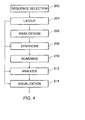
- Fig. 4 is an illustration of an embodiment of software for the overall system.
- Fig. 5 shows a flowchart of a process of monitoring the expression of a gene by comparing hybridization intensities of pairs of perfect match and mismatch probes.
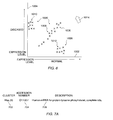
- Fig. 6 shows a screen display illustrating gene expression levels for multiple genes as collected from both normal and diseased tissue.
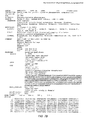
- Figs. 7A-7B show screen displays illustrating information about a particular gene selected from the display of Fig. 6.
- the present invention provides innovative methods of monitoring visualizing gene expression.
- the invention will be described in reference to preferred embodiments. However, the description is provided for purposes of illustration and not for limiting the spirit and scope of the invention.
- Fig. 1 illustrates an example of a computer system that may be used to execute software embodiments of the present invention.
- Fig. 1 shows a computer system 1 which includes a monitor 3, screen 5, cabinet 7, keyboard 9, and mouse 11.
- Mouse 11 may have one or more buttons such as mouse buttons 13.
- Cabinet 7 houses a CD-ROM drive 15 and a hard drive (not shown) that may be utilized to store and retrieve software programs including computer code incorporating the present invention.
- a CD-ROM 17 is shown as the computer readable medium, other computer readable media including floppy disks, DRAM, hard drives, flash memory, tape, and the like may be utilized.
- Cabinet 7 also houses familiar computer components (not shown) such as a processor, memory, and the like.
- Fig. 2 shows a system block diagram of computer system 1 used to execute software embodiments of the present invention.
- computer system 1 includes monitor 3 and keyboard 9.
- Computer system 1 further includes subsystems such as a central processor 50, system memory 52, I/O controller 54, display adapter 56, removable disk 58, fixed disk 60, network interface 62, and speaker 64.
- Removable disk 58 is representative of removable computer readable media like floppies, tape, CD-ROM, removable hard drive, flash memory, and the like.
- Fixed disk 60 is representative of an internal hard drive or the like.
- Other computer systems suitable for use with the present invention may include additional or fewer subsystems.
- another computer system could include more than one processor 50 (i.e., a multi-processor system) or memory cache.
- Arrows such as 66 represent the system bus architecture of computer system 1. However, these arrows are illustrative of any interconnection scheme serving to link the subsystems.
- display adapter 56 may be connected to central processor 50 through a local bus or the system may include a memory cache.
- Computer system 1 shown in Fig. 2 is but an example of a computer system suitable for use with the present invention. Other configurations of subsystems suitable for use with the present invention will be readily apparent to one of ordinary skill in the art. In one embodiment, the computer system is an IBM compatible personal computer.
- the VILSIPSTM and GeneChipTM technologies provide methods of making and using very large arrays of polymers, such as nucleic acids, on very small chips. See U.S. Patent No. 5,143,854 and PCT Patent Publication Nos. WO 90/15070 and 92/10092, each of which is hereby incorporated by reference for all purposes. Nucleic acid probes on the chip are used to detect complementary nucleic acid sequences in a sample nucleic acid of interest (the "target" nucleic acid).
- probes need not be nucleic acid probes but may also be other receptors, such as antibodies, or polymers such as peptides.
- Peptide probes may be used to detect the concentration of other peptides, proteins, or other compounds in a sample. The probes must be carefully selected to have bonding affinity to the compound whose concentration they are to be used to measure.
- the present invention provides methods of visualizing information relating to the concentration of compounds in a sample as measured by monitoring affinity of the compounds to probes.
- the concentration information is generated by analysis of hybridization intensity files for a chip containing hybridized nucleic acid probes.
- the hybridization of a nucleic acid sample to certain probes may represent the expression level of one more genes or expressed sequence tags (ESTs).
- ESTs expressed sequence tags
- Expression level information visualized by virtue of the present invention need not be obtained from probes but may originate from any source. If the expression information is collected from a probe array, the probe array need not meet any particular criteria for size and density. Furthermore, the present invention is not limited to visualizing fluorescent measurements of bondings such as hybridizations but may be readily utilized to visualize other measurements.
- a probe array may include peptide probes which may be exposed to protein samples, polypeptide samples, or other compounds which may or may not bond to the peptide probes. By appropriate selection of the peptide probes, one may detect the presence or absence of particular compounds which would bond to the peptide probes.
- the present invention is described as being part of a system that designs a chip mask, synthesizes the probes on the chip, labels nucleic acids from a target sample, and scans the hybridized probes.
- a system is set forth in U.S. Patent No. 5,571,639 which is hereby incorporated by reference for all purposes.
- the present invention may be used separately from the overall system for analyzing data generated by such systems, such as at remote locations, or for visualizing the results of other systems for generating expression information, or for visualizing concentrations of polymers other than nucleic acids.
- Fig. 3 illustrates a computerized system for forming and analyzing arrays of biological materials such as RNA or DNA.
- a computer 100 is used to design arrays of biological polymers such as RNA or DNA.
- the computer 100 may be, for example, an appropriately programmed IBM personal computer compatible running Windows NT including appropriate memory and a CPU as shown in Figs. 1 and 2.
- the computer system 100 obtains inputs from a user regarding characteristics of a gene of interest, and other inputs regarding the desired features of the array.
- the computer system may obtain information regarding a specific genetic sequence of interest from an external or internal database 102 such as GenBank.
- the output of the computer system 100 is a set of chip design computer files 104 in the form of, for example, a switch matrix, as described in PCT application WO 92/10092, and other associated computer files.
- the chip design files are provided to a system 106 that designs the lithographic masks used in the fabrication of arrays of molecules such as DNA.
- the system or process 106 may include the hardware necessary to manufacture masks 110 and also the necessary computer hardware and software 108 necessary to lay the mask patterns out on the mask in an efficient manner. As with the other features in Fig. 3, such equipment may or may not be located at the same physical site, but is shown together for ease of illustration in Fig. 3.
- the system 106 generates masks 110 or other synthesis patterns such as chrome-on-glass masks for use in the fabrication of polymer arrays.
- Synthesis system 112 includes the necessary hardware and software used to fabricate arrays of polymers on a substrate or chip 114.
- synthesizer 112 includes a light source 116 and a chemical flow cell 118 on which the substrate or chip 114 is placed.
- Mask 110 is placed between the light source and the substrate/chip, and the two are translated relative to each other at appropriate times for deprotection of selected regions of the chip.
- Selected chemical reagents are directed through flow cell 118 for coupling to deprotected regions, as well as for washing and other operations. All operations are preferably directed by an appropriately programmed computer 119, which may or may not be the same computer as the computer(s) used in mask design and mask making.
- the substrates fabricated by synthesis system 112 are optionally diced into smaller chips and exposed to marked targets.
- the targets may or may not be complementary to one or more of the molecules on the substrate.
- the targets are marked with a label such as a fluorescein label (indicated by an asterisk in Fig. 3) and placed in scanning system 120.
- Scanning system 120 again operates under the direction of an appropriately programmed digital computer 122, which also may or may not be the same computer as the computers used in synthesis, mask making, and mask design.
- the scanner 120 includes a detection device 124 such as a confocal microscope or CCD (charge-coupled device) that is used to detect the location where labeled target has bound to the substrate.
- a detection device 124 such as a confocal microscope or CCD (charge-coupled device) that is used to detect the location where labeled target has bound to the substrate.
- the output of scanner 120 is an image file(s) 124 indicating, in the case of fluorescein labeled target, the fluorescence intensity (photon counts or other related measurements, such as voltage) as a function of position on the substrate. Since higher photon counts will be observed where the labeled target has bound more strongly to the array of polymers, and since the monomer sequence of the polymers on the substrate is known as a function of position, it becomes possible to determine the sequence(s) of polymer(s) on the substrate that are complementary to the target.
- the image file 124 is provided as input to an analysis system 126 that incorporates the visualization and analysis methods of the present invention.
- the analysis system may be any one of a wide variety of computer system.
- the present invention provides various methods of analyzing and visualizing the chip design files and the image files, providing appropriate output 128.
- the chip design need not include any particular number of probes. It should be understood that the present invention does not require any particular source of expression level information.
- Fig. 4 provides a simplified illustration of the overall software system used in the operation of one embodiment of the invention.
- the system first identifies the nucleotide sequence(s) or targets that would be of interest in a particular expression level analysis at step 202.
- the sequences of interest correspond to mRNA transcripts of one or more genes, ESTs or nucleic acids derived from the mRNA transcripts. Sequence selection may be provided via manual input of text files or may be from external sources such as GenBank.
- the system evaluates the sequences of interest to determine or assist the user in determining which probes would be desirable on the chip, and provides an appropriate "layout" on the chip for the probes.
- the process of selecting probes for an expression level analysis is explained in PCT Publication No. WO 97/10365, the contents of which are herein incorporated by reference.
- An alternative probe selection process that does not require prior knowledge of sequences of interest is explained in PCT Publication No. WO97/27317 (Attorney Docket No. 18547-019410PC), the contents of which are herein incorporated by reference. Further general background on probe selection is found in PCT Publication No. WO95/11995 (Attorney Docket No.
- perfect match probe refers to a probe that has a sequence that is perfectly complementary to a particular target sequence.
- the test probe is typically perfectly complementary to a portion (subsequence) of the target sequence.
- mismatch control or mismatch probe” refer to probes whose sequence is deliberately selected not to be perfectly complementary to a particular target sequence. For each mismatch (MM) control in an array there typically exists a corresponding perfect match (PM) probe that is perfectly complementary to the same particular target sequence.
- the process compares hybridization intensities of pairs of perfect match and mismatch probes that are preferably covalently attached to the surface of a substrate or chip.
- the nucleic acid probes have a density greater than about 60 different nucleic acid probes per 1 cm 2 of the substrate.
- nucleic acid probes are selected that are complementary to the target sequence. These probes are the perfect match probes. Another set of probes is specified that are intended to be not perfectly complementary to the target sequence. These probes are the mismatch probes and each mismatch probe includes at least one nucleotide mismatch from a perfect match probe. Accordingly, a mismatch probe and the perfect match probe to which it is identical except for one base make up a pair. As mentioned earlier, the nucleotide mismatch is preferably near the center of the mismatch probe.
- the probe lengths of the perfect match probes are typically chosen to exhibit detectably greater hybridization with the target sequence relative to the mismatch probes.
- the nucleic acid probes may be all 20-mers.
- probes of varying lengths may also be synthesized on the substrate for any number of reasons including resolving ambiguities.
- the masks for the synthesis are designed.
- the software utilizes the mask design and layout information to make the DNA or other polymer chips. This step 208 will control, among other things, relative translation of a substrate and the mask, the flow of desired reagents through a flow cell, the synthesis temperature of the flow cell, and other parameters.
- another piece of software is used in scanning a chip thus synthesized and exposed to a labeled target. The software controls the scanning of the chip, and stores the data thus obtained in a file that may later be utilized to extract hybridization information.
- a computer system utilizes the layout information and the fluorescence information to evaluate the hybridized nucleic acid probes on the chip.
- the important pieces of information obtained from DNA chips are the relative fluorescent intensities obtained from the perfect match probes and mismatch probes. These intensity levels are used to estimate an expression level for a gene or EST.
- the computer system used for analysis will preferably have available other details of the experiment including possibly the gene name, gene sequence, probe sequences, probe locations bn the substrate, and the like.
- the same computer system used for analysis or another one displays the expression level information in a format useful for identifying genes of interest.
- the visualized expression level information may include information collected from multiple applications of one or more previous steps of Fig. 4.
- Fig. 5 is a flowchart describing steps of estimating an expression level for a particular gene and determining whether the expression level is sufficiently high to be displayed.
- the computer system receives raw scan data of N pairs of perfect match and mismatch probes.
- the hybridization intensities are photon counts from a fluorescein labeled target that has hybridized to the probes on the substrate.
- the hybridization intensity of a perfect match probe will be designed "I pm " and the hybridization intensity of a mismatch probe will be designed "I mm .”
- Hybridization intensities for a pair of probes are retrieved at step 954.
- the background signal intensity is subtracted from each of the hybridization intensities of the pair at step 956. Background subtraction can also be performed on all the raw scan data at the same time.
- the hybridization intensities of the pair of probes are compared to a difference threshold (D) and a ratio threshold (R). It is determined if the difference between the hybridization intensities of the pair (I pm - I mm ) is greater than or equal to the difference threshold AND the quotient of the hybridization intensities of the pair (I pm / I mm ) is greater than or equal to the ratio threshold.
- the difference thresholds are typically user defined values that have been determined to produce accurate expression monitoring of a gene or genes. In one embodiment, the difference threshold is 20 and the ratio threshold is 1.2.
- NPOS is a value that indicates the number of pairs of probes which have hybridization intensities indicating that the gene is likely expressed. NPOS is utilized in a determination of the expression of the gene.
- NNEG is a value that indicates the number of pairs of probes which have hybridization intensities indicating that the gene is likely not expressed.
- NNEG like NPOS, is utilized in a determination of the expression of the gene.
- LR log ratio value
- IDIF intensity difference value
- a decision matrix is utilized to indicate if the gene is expressed.
- the decision matrix utilizes the values N, NPOS, NNEG, LR (multiple LRs), and IDIF (multiple IDIFs).
- P1 NPOS / NNEG
- P2 NPOS / N
- SUM(LR) / N P4 SUM(IDIF)/N
- an average of the IDIF values for the probes that incremented NPOS or NNEG is calculated at step 975, which is utilized as an expression level.
- other values including one of P1 through P4 could be used to indicate expression level.
- Fig. 5 was described in reference to a single gene or EST.
- the visualization system of the present invention displays expression results for many genes to facilitate discovery of genes of interest or ESTs.
- the present invention contemplates display of expression levels of a single gene or ESTs' as collected from two or more different samples such as tissue samples.
- the sample sources preferably differ in some characteristic. It will be understood that when the term "sample” is used herein, measurements made on a single “sample” can be based on an aggregation of multiple sample collection events or even multiple organisms.
- Fig. 6 shows a screen display illustrating gene expression levels for multiple genes as collected from two tissue samples.
- a displayed horizontal axis 1002 represents expression level measured in one or more nucleic acid samples taken from the first tissue sample.
- a displayed vertical axis 1004 represents expression level in one or more nucleic acid samples taken from the second tissue sample.
- Each of marks 1006 represent a particular gene whose expression level has been measured in both the first and second tissue samples. Each mark 1006 is placed at a distance from vertical axis 1004 corresponding to expression level in the first tissue sample and at a distance from the horizontal axis 1002 corresponding to expression level in the second tissue sample.
- the expression levels used for determining the position of marks 1006 are preferably taken from the result of step 975.
- the position of each of marks 1006 depends on two iterations of the steps of Fig. 5, once for the sample taken from the first tissue sample and once for the sample taken from the second tissue sample. However, a mark is preferably displayed only if one of the samples meets the threshold criteria at step 972.
- the first tissue sample is a cancerous tissue sample and the second tissue sample is a normal tissue sample.
- the individual marks represent the expression levels of selected genes in both cancerous and normal tissue.
- a first group of marks 1008 represent genes that are neither tumor suppressors nor oncogenes since their expression levels are roughly similar for both normal and cancerous tissue. These marks 1008 fall roughly along a line which is rotated 45 degrees from each of the axes.
- a second group of marks 1010 represent genes that are likely oncogenes since their expression levels are found to be significantly higher in cancerous tissue than in normal tissue.
- a third group of marks 1012 represent genes that are likely tumor suppressors since their expression levels are found to be significantly higher in normal tissue than in cancerous tissue. It will be appreciated that expression levels for large numbers of genes can be reviewed at once to discover the oncogenes and tumor suppressors.
- the present invention would aid in the discovery of genes whose expression is associated with any characteristic that varies among tissue samples. For example, once can compare expression results from tissue from individuals who have been exposed to HIV but remain infected to tissue obtained from infected individuals to identify genes conferring resistance to HIV. One can compare expression results between tissue from plants that survive drought to plants that do not. One can compare expression levels among tissue samples at successive stages or severity levels of the same disease, among tissue samples where different ultimate outcomes of the disease (e.g., patient death or remission) are known, among diseased tissue samples that have been subject to different treatment regimes including e.g, chemotherapy, antisense RNA, etc. For cancers, one can compare expression levels between malignant cells and non-malignant cells. Also expression levels can be compared among different organs, between species, and among different stages of development of an organ.
- a third visual dimension can be used to illustrate expression level from a third tissue sample.
- the time dimension can also be used to illustrate successive groups of two or three tissue samples at successive time periods.
- the time dimension can be also used to correspond to tissue samples obtained at, e.g, successive stages of a disease.
- senses can also be incorporated within the presentation system of the present invention.
- the senses may correspond to additional dimensions.
- marks can be displayed in succession accompanies by a sound having characteristics corresponding to expression level in another tissue sample.
- the user can employ a cursor 1014 to identify a particular mark as being of interest.
- Cursor 1014 can be moved to a particular mark by use of, e.g., mouse 11.
- the mark can be selected by, e.g., depression of one of mouse buttons 13. Selection of a particular mark can be facilitated by use of a zoom display feature (not shown).
- a special mouse can transmit a tactile sensation back to the user corresponding to expression level in a tissue sample as the user passes the mouse over a corresponding mark.
- Fig. 6 is not limited to expression information.
- the two dimensions of Fig. 6 may correspond to indicators of the presence of various polymers other than nucleic acids in two different samples.
- each mark may correspond to a different polymer, polypeptide, or other compound.
- the distance of the mark from each axis would correspond to a measure of presence of the particular polymer in the sample corresponding to the axis.
- One possible measure is produced by fluorescently tagging polymer samples such as protein samples and exposing a probe array such as a peptide probe array to the protein samples.
- the fluorescent intensity of the probes will then correspond to the bonding affinity of the sample to the probes.
- the intensity measurement or a measurement derived from the intensity measurement may then be used to position the marks of Fig. 6.
- Fig. 7A shows a screen display giving information about a particular gene selected from the display of Fig. 6.
- a cluster number 702, a GenBank accession number 704, and a verbal description 706 for the selected gene are displayed.
- the user can also select a number of marks 1006 by circling them with cursor 1014. Then a list of information as shown in Fig. 7A is displayed for all the genes corresponding to the selected marks.
- GenBank accession number 704 By selecting GenBank accession number 704 with another cursor (not shown), the user can direct retrieval of the GenBank information for the selected gene. If the GenBank information is not available locally, the retrieval process can include formulating a query and transmitting the query to a GenBank web site. Once the GenBank information is retrieved, it can also be displayed. Fig. 7B depicts the GenBank information for the gene identified in Fig. 7A.
Landscapes
- Life Sciences & Earth Sciences (AREA)
- Engineering & Computer Science (AREA)
- Health & Medical Sciences (AREA)
- Chemical & Material Sciences (AREA)
- Physics & Mathematics (AREA)
- Genetics & Genomics (AREA)
- Bioinformatics & Cheminformatics (AREA)
- Organic Chemistry (AREA)
- Biotechnology (AREA)
- General Engineering & Computer Science (AREA)
- Biophysics (AREA)
- Zoology (AREA)
- Wood Science & Technology (AREA)
- General Health & Medical Sciences (AREA)
- Molecular Biology (AREA)
- Bioinformatics & Computational Biology (AREA)
- Theoretical Computer Science (AREA)
- Proteomics, Peptides & Aminoacids (AREA)
- Medical Informatics (AREA)
- Biomedical Technology (AREA)
- Analytical Chemistry (AREA)
- Evolutionary Biology (AREA)
- Spectroscopy & Molecular Physics (AREA)
- Biochemistry (AREA)
- Microbiology (AREA)
- Crystallography & Structural Chemistry (AREA)
- Data Mining & Analysis (AREA)
- Immunology (AREA)
- Plant Pathology (AREA)
- General Physics & Mathematics (AREA)
- Measuring Or Testing Involving Enzymes Or Micro-Organisms (AREA)
- Apparatus Associated With Microorganisms And Enzymes (AREA)
- Information Retrieval, Db Structures And Fs Structures Therefor (AREA)
- Medical Treatment And Welfare Office Work (AREA)
- Investigating Or Analysing Biological Materials (AREA)
Applications Claiming Priority (2)
| Application Number | Priority Date | Filing Date | Title |
|---|---|---|---|
| US09/020,743 US6420108B2 (en) | 1998-02-09 | 1998-02-09 | Computer-aided display for comparative gene expression |
| US20743 | 1998-02-09 |
Publications (2)
| Publication Number | Publication Date |
|---|---|
| EP0935210A2 true EP0935210A2 (de) | 1999-08-11 |
| EP0935210A3 EP0935210A3 (de) | 2002-11-20 |
Family
ID=21800291
Family Applications (1)
| Application Number | Title | Priority Date | Filing Date |
|---|---|---|---|
| EP99300900A Ceased EP0935210A3 (de) | 1998-02-09 | 1999-02-08 | Rechnergestützte Expressionvergleichsanzeige |
Country Status (4)
| Country | Link |
|---|---|
| US (4) | US6420108B2 (de) |
| EP (1) | EP0935210A3 (de) |
| JP (1) | JPH11342000A (de) |
| CA (1) | CA2259887A1 (de) |
Cited By (8)
| Publication number | Priority date | Publication date | Assignee | Title |
|---|---|---|---|---|
| EP1146127A2 (de) * | 2000-03-27 | 2001-10-17 | Hitachi Software Engineering Co., Ltd. | Verfahren zur Ausstellung Gen-Vesuch-Daten |
| WO2001084139A1 (en) * | 2000-05-04 | 2001-11-08 | The Board Of Trustees Of The Leland Stanford Junior University | Significance analysis of microarrays |
| EP1314787A3 (de) * | 2001-11-26 | 2004-01-07 | Kudoh, Norio | Das Midkine Gen ist assoziiert mit Krebs |
| EP1328880A4 (de) * | 2000-10-12 | 2004-12-15 | Iconix Pharm Inc | Interaktive korrelation von zusammengesetzten informationen und genomischen informationen |
| JP2006514554A (ja) * | 2002-11-21 | 2006-05-11 | ワイス | 腎細胞癌および他の固形腫瘍の診断法 |
| EP1277103A4 (de) * | 2000-08-22 | 2007-08-08 | Affymetrix Inc | System, verfahren und computersoftwareprodukt für schnittstellen für fenster mit verknüpfungen |
| US7467118B2 (en) | 2006-01-12 | 2008-12-16 | Entelos Inc. | Adjusted sparse linear programming method for classifying multi-dimensional biological data |
| US7588892B2 (en) | 2004-07-19 | 2009-09-15 | Entelos, Inc. | Reagent sets and gene signatures for renal tubule injury |
Families Citing this family (96)
| Publication number | Priority date | Publication date | Assignee | Title |
|---|---|---|---|---|
| US5959098A (en) | 1996-04-17 | 1999-09-28 | Affymetrix, Inc. | Substrate preparation process |
| US6706875B1 (en) * | 1996-04-17 | 2004-03-16 | Affyemtrix, Inc. | Substrate preparation process |
| US6420108B2 (en) * | 1998-02-09 | 2002-07-16 | Affymetrix, Inc. | Computer-aided display for comparative gene expression |
| US20040111219A1 (en) * | 1999-02-22 | 2004-06-10 | Sandeep Gulati | Active interferometric signal analysis in software |
| US6136541A (en) | 1999-02-22 | 2000-10-24 | Vialogy Corporation | Method and apparatus for analyzing hybridized biochip patterns using resonance interactions employing quantum expressor functions |
| US6245511B1 (en) * | 1999-02-22 | 2001-06-12 | Vialogy Corp | Method and apparatus for exponentially convergent therapy effectiveness monitoring using DNA microarray based viral load measurements |
| US6142681A (en) | 1999-02-22 | 2000-11-07 | Vialogy Corporation | Method and apparatus for interpreting hybridized bioelectronic DNA microarray patterns using self-scaling convergent reverberant dynamics |
| EP1041514B1 (de) * | 1999-03-30 | 2006-03-01 | Fuji Photo Film Co., Ltd. | Verfahren und Vorrichtung zur selektiven Anzeige von Ergebnissen und übereinstimmenden Bildern |
| US7060281B1 (en) * | 1999-06-18 | 2006-06-13 | Research Foundation Of The State University Of New York | Groups of barrelia burgdorferi and borrelia afzelii that cause lyme disease in humans |
| JP3451035B2 (ja) * | 1999-07-27 | 2003-09-29 | 日立ソフトウエアエンジニアリング株式会社 | マイクロアレイ情報表示方法 |
| US6510391B2 (en) * | 2000-11-22 | 2003-01-21 | Affymetrix, Inc. | Computer software products for nucleic acid hybridization analysis |
| WO2002048915A1 (en) * | 2000-12-11 | 2002-06-20 | Japan As Represented By The President Of The University Of Tokyo | Method of detecting relation between genes |
| US20020183936A1 (en) * | 2001-01-24 | 2002-12-05 | Affymetrix, Inc. | Method, system, and computer software for providing a genomic web portal |
| US20030009294A1 (en) * | 2001-06-07 | 2003-01-09 | Jill Cheng | Integrated system for gene expression analysis |
| AU2002357368A1 (en) * | 2001-12-19 | 2003-07-09 | Affymetrix, Inc. | Array plates and method for constructing array plates |
| JP3563394B2 (ja) * | 2002-03-26 | 2004-09-08 | 株式会社日立製作所 | 画面表示システム |
| DE60323625D1 (de) * | 2002-05-03 | 2008-10-30 | Vialogy Llc | Verfahren zur charakterisierung der ausgangssignale eines microarrays |
| US9453251B2 (en) | 2002-10-08 | 2016-09-27 | Pfenex Inc. | Expression of mammalian proteins in Pseudomonas fluorescens |
| BRPI0410511A (pt) * | 2003-05-01 | 2006-06-20 | Japan Science & Tech Agency | disposição na qual diferentes tipos de biosubstáncias obtidas a partir de um organismo de interesse ou substáncias sintéticas interagindo com essas substáncias são dispostos e imobilizados em um suporte, de maneira ordenada, processo para produção de uma disposição, método de identificação de genótipo, método de diagnóstico de gene para identificar genótipos humanos, método de triagem para selecionar uma variedade de transporte do traço alvo dos hìbridos obtidos, sistema de análise e exibição de genótipo, sistema de análise quantitativa de locais, sistema de análise de interação de genes, método de triagem para selecionar uma variedade de transporte do traço alvo dos hìbridos obtidos pelo cruzamento dos organismos, sistema de análise quantitativa de locais, método de análise quantitativa de traço para analisar um traço quantitativo de um organismo, método de busca de gene para procurar um gene associado à expressão de um traço de interesse, método de aperfeiçoamento de variedade para organismos, sistema de análise de interação de genes, método de análise de interação de genes para analisar interação entre genes, método de aperfeiçoamento de variedade |
| US20050027460A1 (en) * | 2003-07-29 | 2005-02-03 | Kelkar Bhooshan Prafulla | Method, program product and apparatus for discovering functionally similar gene expression profiles |
| US8321137B2 (en) * | 2003-09-29 | 2012-11-27 | Pathwork Diagnostics, Inc. | Knowledge-based storage of diagnostic models |
| US20050071087A1 (en) | 2003-09-29 | 2005-03-31 | Anderson Glenda G. | Systems and methods for detecting biological features |
| US20050069863A1 (en) * | 2003-09-29 | 2005-03-31 | Jorge Moraleda | Systems and methods for analyzing gene expression data for clinical diagnostics |
| CA2497324A1 (en) | 2004-02-17 | 2005-08-17 | Affymetrix, Inc. | Methods for fragmenting and labelling dna |
| BRPI0513826A2 (pt) | 2004-07-26 | 2010-06-22 | Dow Global Technologies Inc | processo para expressão de proteìna melhorada através de engenharia de cepa |
| EP1792263A2 (de) * | 2004-09-02 | 2007-06-06 | Vialogy Corporation | Erkennung von interessensereignissen unter verwendung von quantenresonanzinterferometrie |
| US20060073506A1 (en) | 2004-09-17 | 2006-04-06 | Affymetrix, Inc. | Methods for identifying biological samples |
| US20060073511A1 (en) | 2004-10-05 | 2006-04-06 | Affymetrix, Inc. | Methods for amplifying and analyzing nucleic acids |
| CA2524964A1 (en) | 2004-10-29 | 2006-04-29 | Affymetrix, Inc. | Automated method of manufacturing polymer arrays |
| US7682782B2 (en) | 2004-10-29 | 2010-03-23 | Affymetrix, Inc. | System, method, and product for multiple wavelength detection using single source excitation |
| WO2006088208A1 (ja) * | 2005-02-21 | 2006-08-24 | Dainippon Sumitomo Pharma Co., Ltd | 生体の生理的変化の予測方法および装置 |
| US8121793B2 (en) * | 2005-06-03 | 2012-02-21 | Eppendorf Ag | Method and device for comparative display of biological data |
| JP2007034343A (ja) * | 2005-07-21 | 2007-02-08 | Fujitsu Ltd | 遺伝子情報表示装置、遺伝子情報表示方法、遺伝子情報表示プログラム、および記録媒体 |
| WO2007062505A1 (en) | 2005-11-17 | 2007-06-07 | Socovar, Société En Commandite | Planar parallel mechanism and method |
| US20070198653A1 (en) * | 2005-12-30 | 2007-08-23 | Kurt Jarnagin | Systems and methods for remote computer-based analysis of user-provided chemogenomic data |
| US8009889B2 (en) | 2006-06-27 | 2011-08-30 | Affymetrix, Inc. | Feature intensity reconstruction of biological probe array |
| AU2007284651B2 (en) | 2006-08-09 | 2014-03-20 | Institute For Systems Biology | Organ-specific proteins and methods of their use |
| AU2007325931A1 (en) | 2006-11-02 | 2008-06-05 | Yale University | Assessment of oocyte competence |
| US7996584B2 (en) * | 2006-11-02 | 2011-08-09 | Redmere Technology Ltd. | Programmable cable with deskew and performance analysis circuits |
| US9394571B2 (en) | 2007-04-27 | 2016-07-19 | Pfenex Inc. | Method for rapidly screening microbial hosts to identify certain strains with improved yield and/or quality in the expression of heterologous proteins |
| US9580719B2 (en) * | 2007-04-27 | 2017-02-28 | Pfenex, Inc. | Method for rapidly screening microbial hosts to identify certain strains with improved yield and/or quality in the expression of heterologous proteins |
| CA2779958A1 (en) | 2008-11-06 | 2010-05-14 | University Of Miami | Role of soluble upar in the pathogenesis of proteinuric kidney disease |
| WO2010080933A1 (en) | 2009-01-07 | 2010-07-15 | Myriad Genetics, Inc | Cancer biomarkers |
| EP3722810A3 (de) | 2009-02-11 | 2021-01-13 | Caris MPI, Inc. | Molekulare profilierung von tumoren |
| EP2494077A4 (de) | 2009-10-27 | 2013-08-21 | Caris Mpi Inc | Molekulare profilierung für personalisierte medizin |
| US20110201008A1 (en) * | 2009-12-01 | 2011-08-18 | University Of Miami | Assays, methods and kits for measuring response to therapy and predicting clinical outcome in patients with b-cell lymphoma |
| US8835358B2 (en) | 2009-12-15 | 2014-09-16 | Cellular Research, Inc. | Digital counting of individual molecules by stochastic attachment of diverse labels |
| US9798855B2 (en) | 2010-01-07 | 2017-10-24 | Affymetrix, Inc. | Differential filtering of genetic data |
| US9216189B2 (en) | 2010-01-25 | 2015-12-22 | Icahn School Of Medicine At Mount Sinai | Antibodies which bind type I cannabinoid receptor/angiotensis II receptor heteromers |
| CA2797093C (en) | 2010-04-26 | 2019-10-29 | Atyr Pharma, Inc. | Innovative discovery of therapeutic, diagnostic, and antibody compositions related to protein fragments of cysteinyl-trna synthetase |
| EP2563381B1 (de) | 2010-04-27 | 2017-08-09 | aTyr Pharma, Inc. | Innovative entdeckung therapeutischer, diagnostischer und antikörperhaltiger zusammensetzungen im zusammenhang mit proteinfragmenten von isoleucyl-trna-synthetasen |
| CN103097524B (zh) | 2010-04-28 | 2016-08-03 | Atyr医药公司 | 与丙氨酰-tRNA合成酶的蛋白片段相关的治疗、诊断和抗体组合物的创新发现 |
| CA2797374C (en) | 2010-04-29 | 2021-02-16 | Pangu Biopharma Limited | Innovative discovery of therapeutic, diagnostic, and antibody compositions related to protein fragments of asparaginyl trna synthetases |
| EP2563383B1 (de) | 2010-04-29 | 2017-03-01 | Atyr Pharma, Inc. | Innovative entdeckung therapeutischer, diagnostischer und antikörperhaltiger zusammensetzungen im zusammenhang mit proteinfragmenten von valyl-trna-synthetasen |
| CN103096925A (zh) | 2010-05-03 | 2013-05-08 | Atyr医药公司 | 与精氨酰-tRNA合成酶的蛋白片段相关的治疗、诊断和抗体组合物的创新发现 |
| ES2668207T3 (es) | 2010-05-03 | 2018-05-17 | Atyr Pharma, Inc. | Descubrimiento innovador de composiciones terapéuticas, de diagnóstico y de anticuerpos relacionadas con fragmentos de proteínas de metionil-ARNt sintetasas |
| AU2011248227B2 (en) | 2010-05-03 | 2016-12-01 | Pangu Biopharma Limited | Innovative discovery of therapeutic, diagnostic, and antibody compositions related to protein fragments of phenylalanyl-alpha-tRNA synthetases |
| JP6008844B2 (ja) | 2010-05-04 | 2016-10-19 | エータイアー ファーマ, インコーポレイテッド | p38MULTI−tRNA合成酵素複合体のタンパク質フラグメントに関連した治療用、診断用および抗体組成物の革新的発見 |
| EP2568996B1 (de) | 2010-05-14 | 2017-10-04 | aTyr Pharma, Inc. | Therapeutische, diagnostische und antikörperhaltige zusammensetzungen im zusammenhang mit proteinfragmenten von phenylalanyl-beta-trna-synthetasen |
| CN103096913B (zh) | 2010-05-27 | 2017-07-18 | Atyr 医药公司 | 与谷氨酰胺酰‑tRNA合成酶的蛋白片段相关的治疗、诊断和抗体组合物的创新发现 |
| CA2800281C (en) | 2010-06-01 | 2021-01-12 | Atyr Pharma, Inc. | Innovative discovery of therapeutic, diagnostic, and antibody compositions related to protein fragments of lysyl-trna synthetases |
| EP3812469A1 (de) | 2010-07-07 | 2021-04-28 | Myriad Genetics, Inc. | Gensignaturen für krebsprognosen |
| AU2011289831C1 (en) | 2010-07-12 | 2017-06-15 | Pangu Biopharma Limited | Innovative discovery of therapeutic, diagnostic, and antibody compositions related to protein fragments of glycyl-tRNA synthetases |
| CN103108650A (zh) | 2010-08-25 | 2013-05-15 | Atyr医药公司 | 与酪氨酰-tRNA合成酶的蛋白片段相关的治疗、诊断和抗体组合物的创新发现 |
| GB201021502D0 (en) | 2010-12-20 | 2011-02-02 | Cambridge Entpr Ltd | Biomarkers |
| AU2012367247B2 (en) | 2012-01-24 | 2018-04-05 | Cd Diagnostics, Inc. | System for detecting infection in synovial fluid |
| EP2814514B1 (de) | 2012-02-16 | 2017-09-13 | Atyr Pharma, Inc. | Histidyl-trna-synthetasen zur behandlung von autoimmun- und entzündungserkrankungen |
| EP2820174B1 (de) | 2012-02-27 | 2019-12-25 | The University of North Carolina at Chapel Hill | Verfahren und verwendung für molekulare tags |
| CA2865575C (en) | 2012-02-27 | 2024-01-16 | Cellular Research, Inc. | Compositions and kits for molecular counting |
| WO2013184905A1 (en) | 2012-06-06 | 2013-12-12 | Myriad Genetics, Inc. | Hereditary cancer genes |
| GB201210565D0 (en) | 2012-06-14 | 2012-08-01 | Cambridge Entpr Ltd | Biomarkers |
| CA2891653A1 (en) | 2012-11-16 | 2014-05-22 | Myriad Genetics, Inc. | Gene signatures for cancer prognosis |
| CN104937111B (zh) | 2012-11-27 | 2018-05-11 | 智利天主教教皇大学 | 用于诊断甲状腺肿瘤的组合物和方法 |
| US10535420B2 (en) | 2013-03-15 | 2020-01-14 | Affymetrix, Inc. | Systems and methods for probe design to detect the presence of simple and complex indels |
| US11021752B2 (en) | 2013-03-15 | 2021-06-01 | Myriad Genetics, Inc. | Genes and gene signatures for diagnosis and treatment of melanoma |
| GB201404189D0 (en) | 2014-03-10 | 2014-04-23 | Cambridge Entpr Ltd | Novel biomarkers |
| CA2947624A1 (en) | 2014-05-13 | 2015-11-19 | Myriad Genetics, Inc. | Gene signatures for cancer prognosis |
| EP3164508B1 (de) | 2014-07-02 | 2023-06-07 | Myriad myPath, LLC | Gene und gensignaturen zur diagnose und behandlung von melanomen |
| EP3194619B1 (de) * | 2014-09-17 | 2019-03-06 | Vito NV | Verfahren und werkzeuge zur analyse von hybridisierung |
| GB201500729D0 (en) | 2015-01-16 | 2015-03-04 | Cambridge Entpr Ltd | Novel Biomarkers |
| CN108136051A (zh) | 2015-08-04 | 2018-06-08 | Cd诊断股份有限公司 | 检测不良局部组织反应(altr)坏死的方法 |
| EP3377650A1 (de) | 2015-11-19 | 2018-09-26 | Susanne Wagner | Signaturen zur vorhersage der krebsimmuntherapiereaktion |
| CA3010240A1 (en) | 2016-01-06 | 2017-07-13 | Alexander Gutin | Genes and gene signatures for diagnosis and treatment of melanoma |
| WO2017193062A1 (en) | 2016-05-06 | 2017-11-09 | Myriad Genetics, Inc. | Gene signatures for renal cancer prognosis |
| US12577622B2 (en) | 2017-06-02 | 2026-03-17 | Myriad Genetics, Inc. | Detecting cancer risk |
| WO2019005763A1 (en) | 2017-06-26 | 2019-01-03 | Phase Genomics Inc. | METHOD FOR REGROUPING DNA SEQUENCES |
| WO2019046832A1 (en) | 2017-09-01 | 2019-03-07 | Juno Therapeutics, Inc. | GENE EXPRESSION AND EVALUATION OF RISK OF DEVELOPMENT OF TOXICITY FOLLOWING CELL THERAPY |
| WO2019246160A2 (en) | 2018-06-18 | 2019-12-26 | Igenomix, S.L. | Methods, compositions, and kits for assessing endometrial transformation |
| EP3815092A2 (de) | 2018-06-29 | 2021-05-05 | F. Hoffmann-La Roche AG | Nachweis von mikrosatelliteninstabilität |
| CA3115922A1 (en) | 2018-10-09 | 2020-04-16 | Genecentric Therapeutics, Inc. | Detecting cancer cell of origin |
| EP3888021B1 (de) | 2018-11-30 | 2024-02-21 | Caris MPI, Inc. | Molekulare profilierung der nächsten generation |
| EP3956476A1 (de) | 2019-04-17 | 2022-02-23 | Igenomix S.L. | Verbesserte verfahren zur frühdiagnose von uterinen leiomyomen und leiomyosarkomen |
| KR20220034782A (ko) | 2019-06-12 | 2022-03-18 | 주노 쎄러퓨티크스 인코퍼레이티드 | 세포 매개 세포 독성 요법 및 친생존 bcl2 패밀리 단백질 억제제의 병용 요법 |
| CN114555112A (zh) | 2019-08-22 | 2022-05-27 | 朱诺治疗学股份有限公司 | T细胞疗法和zeste增强子同源物2(ezh2)抑制剂的组合疗法及相关方法 |
| CA3163319A1 (en) | 2019-12-02 | 2021-06-10 | Caris Mpi, Inc. | Pan-cancer platinum response predictor |
| GB201919092D0 (en) | 2019-12-20 | 2020-02-05 | Cambridge Entpr Ltd | Method of determining risk of fetal size abnormality |
Family Cites Families (54)
| Publication number | Priority date | Publication date | Assignee | Title |
|---|---|---|---|---|
| US4617431A (en) * | 1983-12-02 | 1986-10-14 | Plantronics, Inc. | Voice tube assemblies for post-auricle headsets |
| US4683202A (en) | 1985-03-28 | 1987-07-28 | Cetus Corporation | Process for amplifying nucleic acid sequences |
| NO870613L (no) | 1986-03-05 | 1987-09-07 | Molecular Diagnostics Inc | Deteksjon av mikroorganismer i en prve inneholdende nukleinsyre. |
| AU1042488A (en) | 1986-12-20 | 1988-07-15 | Kukita, Takeshi | Bilirubin antigen, monoclonal antibody therefor, process for their preparation, and their use |
| US5202231A (en) | 1987-04-01 | 1993-04-13 | Drmanac Radoje T | Method of sequencing of genomes by hybridization of oligonucleotide probes |
| US5525464A (en) | 1987-04-01 | 1996-06-11 | Hyseq, Inc. | Method of sequencing by hybridization of oligonucleotide probes |
| US4845653A (en) * | 1987-05-07 | 1989-07-04 | Becton, Dickinson And Company | Method of displaying multi-parameter data sets to aid in the analysis of data characteristics |
| US5700637A (en) | 1988-05-03 | 1997-12-23 | Isis Innovation Limited | Apparatus and method for analyzing polynucleotide sequences and method of generating oligonucleotide arrays |
| JP2897959B2 (ja) | 1988-05-20 | 1999-05-31 | エフ.ホフマン―ラ ロシュ アクチェンゲゼルシャフト | 固定化された配列特異的プローブ |
| US5206137A (en) | 1988-09-08 | 1993-04-27 | Lifecodes Corporation | Compositions and methods useful for genetic analysis |
| US6203977B1 (en) * | 1988-11-15 | 2001-03-20 | Yale University | Delineation of individual human chromosomes in metaphase and interphase cells by in situ suppression hybridization |
| JPH02299598A (ja) | 1989-04-14 | 1990-12-11 | Ro Inst For Molecular Genetics & Geneteic Res | 微視的サイズの別個の粒子と結合している核酸試料中のごく短い配列の全部または一部のオリゴヌクレチドプローブとのハイブリダイゼーションによる決定法 |
| US5143854A (en) | 1989-06-07 | 1992-09-01 | Affymax Technologies N.V. | Large scale photolithographic solid phase synthesis of polypeptides and receptor binding screening thereof |
| US5871928A (en) * | 1989-06-07 | 1999-02-16 | Fodor; Stephen P. A. | Methods for nucleic acid analysis |
| US5925525A (en) * | 1989-06-07 | 1999-07-20 | Affymetrix, Inc. | Method of identifying nucleotide differences |
| US5800992A (en) * | 1989-06-07 | 1998-09-01 | Fodor; Stephen P.A. | Method of detecting nucleic acids |
| US6040138A (en) | 1995-09-15 | 2000-03-21 | Affymetrix, Inc. | Expression monitoring by hybridization to high density oligonucleotide arrays |
| EP0834575B1 (de) | 1990-12-06 | 2001-11-28 | Affymetrix, Inc. (a Delaware Corporation) | Identifizierung von Nukleinsäuren in Proben |
| DE69132531T2 (de) | 1990-12-06 | 2001-09-13 | Affymetrix, Inc. (N.D.Ges.D.Staates Delaware) | Verbindungen und ihre Verwendung in einer binären Synthesestrategie |
| US6384847B1 (en) * | 1992-03-20 | 2002-05-07 | International Business Machines Corporation | Interactive graphical method for analyzing many-dimensional data sets |
| ATE198358T1 (de) | 1992-04-27 | 2001-01-15 | Dartmouth College | Detektion von gensequenzen in biologischen flüssigkeiten |
| US6395494B1 (en) * | 1993-05-13 | 2002-05-28 | Neorx Corporation | Method to determine TGF-β |
| US6251920B1 (en) * | 1993-05-13 | 2001-06-26 | Neorx Corporation | Prevention and treatment of cardiovascular pathologies |
| US5524070A (en) * | 1992-10-07 | 1996-06-04 | The Research Foundation Of State University Of New York | Local adaptive contrast enhancement |
| WO1995011995A1 (en) | 1993-10-26 | 1995-05-04 | Affymax Technologies N.V. | Arrays of nucleic acid probes on biological chips |
| US5632282A (en) * | 1993-07-20 | 1997-05-27 | Hay; S. Hutson | Ocular disease detection apparatus |
| ATE214633T1 (de) * | 1993-10-28 | 2002-04-15 | Houston Advanced Res Ct | Mikrofabriziertes poröses durchflussgerät |
| US5571639A (en) * | 1994-05-24 | 1996-11-05 | Affymax Technologies N.V. | Computer-aided engineering system for design of sequence arrays and lithographic masks |
| KR100404274B1 (ko) * | 1994-09-30 | 2004-04-30 | 코닌클리케 필립스 일렉트로닉스 엔.브이. | 멀티플랫폼인터프리터를포함한응용프로그램을포함하는대량데이타의표현을수신하는멀티미디어시스템,상기멀티플랫폼인터프리터와상호작용하는플랫폼서브시스템및,그시스템또는서브시스템용대용량메모리 |
| WO1997027317A1 (en) | 1996-01-23 | 1997-07-31 | Affymetrix, Inc. | Nucleic acid analysis techniques |
| US6600996B2 (en) | 1994-10-21 | 2003-07-29 | Affymetrix, Inc. | Computer-aided techniques for analyzing biological sequences |
| US5795716A (en) * | 1994-10-21 | 1998-08-18 | Chee; Mark S. | Computer-aided visualization and analysis system for sequence evaluation |
| WO1996023078A1 (en) | 1995-01-27 | 1996-08-01 | Incyte Pharmaceuticals, Inc. | Computer system storing and analyzing microbiological data |
| US5961923A (en) * | 1995-04-25 | 1999-10-05 | Irori | Matrices with memories and uses thereof |
| US5707806A (en) | 1995-06-07 | 1998-01-13 | Genzyme Corporation | Direct sequence identification of mutations by cleavage- and ligation-associated mutation-specific sequencing |
| US5777888A (en) | 1995-08-09 | 1998-07-07 | Regents Of The University Of California | Systems for generating and analyzing stimulus-response output signal matrices |
| US5871697A (en) | 1995-10-24 | 1999-02-16 | Curagen Corporation | Method and apparatus for identifying, classifying, or quantifying DNA sequences in a sample without sequencing |
| GB9522615D0 (en) | 1995-11-03 | 1996-01-03 | Pharmacia Spa | 4-Phenyl-4-oxo-butanoic acid derivatives with kynurenine-3-hydroxylase inhibiting activity |
| US5778200A (en) | 1995-11-21 | 1998-07-07 | Advanced Micro Devices, Inc. | Bus arbiter including aging factor counters to dynamically vary arbitration priority |
| US6028593A (en) * | 1995-12-01 | 2000-02-22 | Immersion Corporation | Method and apparatus for providing simulated physical interactions within computer generated environments |
| AU2189397A (en) | 1996-02-08 | 1997-08-28 | Affymetrix, Inc. | Chip-based speciation and phenotypic characterization of microorganisms |
| US5707808A (en) * | 1996-04-15 | 1998-01-13 | The Regents Of The University Of California | Optical selection and collection of DNA fragments |
| US5989835A (en) * | 1997-02-27 | 1999-11-23 | Cellomics, Inc. | System for cell-based screening |
| US6023659A (en) * | 1996-10-10 | 2000-02-08 | Incyte Pharmaceuticals, Inc. | Database system employing protein function hierarchies for viewing biomolecular sequence data |
| US5687972A (en) * | 1996-11-26 | 1997-11-18 | Petrak; Gregory H. | Unitary oil seal assembly |
| US6188783B1 (en) * | 1997-07-25 | 2001-02-13 | Affymetrix, Inc. | Method and system for providing a probe array chip design database |
| US6420108B2 (en) * | 1998-02-09 | 2002-07-16 | Affymetrix, Inc. | Computer-aided display for comparative gene expression |
| US20030036855A1 (en) * | 1998-03-16 | 2003-02-20 | Praelux Incorporated, A Corporation Of New Jersey | Method and apparatus for screening chemical compounds |
| AU2342900A (en) * | 1998-09-23 | 2000-05-01 | Cleveland Clinic Foundation, The | Novel interferon stimulated and repressed genes |
| US6567570B1 (en) * | 1998-10-30 | 2003-05-20 | Hewlett-Packard Development Company, L.P. | Optical image scanner with internal measurement of point-spread function and compensation for optical aberrations |
| US6251601B1 (en) * | 1999-02-02 | 2001-06-26 | Vysis, Inc. | Simultaneous measurement of gene expression and genomic abnormalities using nucleic acid microarrays |
| US6284465B1 (en) * | 1999-04-15 | 2001-09-04 | Agilent Technologies, Inc. | Apparatus, systems and method for locating nucleic acids bound to surfaces |
| US6569615B1 (en) * | 2000-04-10 | 2003-05-27 | The United States Of America As Represented By The Department Of Veteran's Affairs | Composition and methods for tissue preservation |
| US7731904B2 (en) * | 2000-09-19 | 2010-06-08 | Canon Kabushiki Kaisha | Method for making probe support and apparatus used for the method |
-
1998
- 1998-02-09 US US09/020,743 patent/US6420108B2/en not_active Expired - Lifetime
-
1999
- 1999-01-22 CA CA002259887A patent/CA2259887A1/en not_active Abandoned
- 1999-02-08 EP EP99300900A patent/EP0935210A3/de not_active Ceased
- 1999-02-08 JP JP3064299A patent/JPH11342000A/ja active Pending
-
2001
- 2001-12-21 US US10/028,748 patent/US20020150932A1/en not_active Abandoned
-
2006
- 2006-07-18 US US11/489,292 patent/US20070067111A1/en not_active Abandoned
-
2012
- 2012-09-25 US US13/626,773 patent/US20130169645A1/en not_active Abandoned
Cited By (12)
| Publication number | Priority date | Publication date | Assignee | Title |
|---|---|---|---|---|
| EP1146127A2 (de) * | 2000-03-27 | 2001-10-17 | Hitachi Software Engineering Co., Ltd. | Verfahren zur Ausstellung Gen-Vesuch-Daten |
| WO2001084139A1 (en) * | 2000-05-04 | 2001-11-08 | The Board Of Trustees Of The Leland Stanford Junior University | Significance analysis of microarrays |
| US7363165B2 (en) | 2000-05-04 | 2008-04-22 | The Board Of Trustees Of The Leland Stanford Junior University | Significance analysis of microarrays |
| EP1277103A4 (de) * | 2000-08-22 | 2007-08-08 | Affymetrix Inc | System, verfahren und computersoftwareprodukt für schnittstellen für fenster mit verknüpfungen |
| US7992098B2 (en) | 2000-08-22 | 2011-08-02 | Affymetrix, Inc. | System, method, and computer software product for linked window interfaces |
| EP1328880A4 (de) * | 2000-10-12 | 2004-12-15 | Iconix Pharm Inc | Interaktive korrelation von zusammengesetzten informationen und genomischen informationen |
| US7054755B2 (en) | 2000-10-12 | 2006-05-30 | Iconix Pharmaceuticals, Inc. | Interactive correlation of compound information and genomic information |
| EP1314787A3 (de) * | 2001-11-26 | 2004-01-07 | Kudoh, Norio | Das Midkine Gen ist assoziiert mit Krebs |
| JP2006514554A (ja) * | 2002-11-21 | 2006-05-11 | ワイス | 腎細胞癌および他の固形腫瘍の診断法 |
| EP1588142A4 (de) * | 2002-11-21 | 2007-10-31 | Wyeth Corp | Verfahren zur diagnose von rcc und anderen soliden tumoren |
| US7588892B2 (en) | 2004-07-19 | 2009-09-15 | Entelos, Inc. | Reagent sets and gene signatures for renal tubule injury |
| US7467118B2 (en) | 2006-01-12 | 2008-12-16 | Entelos Inc. | Adjusted sparse linear programming method for classifying multi-dimensional biological data |
Also Published As
| Publication number | Publication date |
|---|---|
| US20020150932A1 (en) | 2002-10-17 |
| US6420108B2 (en) | 2002-07-16 |
| US20070067111A1 (en) | 2007-03-22 |
| JPH11342000A (ja) | 1999-12-14 |
| US20130169645A1 (en) | 2013-07-04 |
| CA2259887A1 (en) | 1999-08-09 |
| EP0935210A3 (de) | 2002-11-20 |
| US20020015948A1 (en) | 2002-02-07 |
Similar Documents
| Publication | Publication Date | Title |
|---|---|---|
| EP0935210A2 (de) | Rechnergestützte Expressionvergleichsanzeige | |
| JP3776728B2 (ja) | 遺伝子発現および評価システム | |
| US6600996B2 (en) | Computer-aided techniques for analyzing biological sequences | |
| EP1019536B1 (de) | Polymorphismuserkennung mit hilfe cluster-analyse | |
| US6263287B1 (en) | Systems for the analysis of gene expression data | |
| US20020179097A1 (en) | Method for providing clinical diagnostic services | |
| CN107092770A (zh) | 医学分析系统 | |
| WO2021163630A1 (en) | Systems and methods for joint interactive visualization of gene expression and dna chromatin accessibility | |
| US20060129331A1 (en) | Expression data analysis systems and methods | |
| US7031843B1 (en) | Computer methods and systems for displaying information relating to gene expression data | |
| JP4557609B2 (ja) | スプライスバリアント配列のマッピング表示方法 | |
| US6994965B2 (en) | Method for displaying results of hybridization experiment | |
| US20030220748A1 (en) | Computer-aided techniques for analyzing biological sequences | |
| WO2018088635A1 (ko) | 유전체내 암 특이적 진단 마커 검출 | |
| EP1632579A2 (de) | Computerunterstütztes Verfahren zum Analysieren von biologischen Sequenzen | |
| Guan | A thesis submitted in conformity with the requirements for the degree of Master of Science Graduate Department of Computer Science | |
| Mariani et al. | Microarray Techniques and Data in Asthma/Chronic Obstructuve Pulmonary Disease | |
| Seo | Interactively Exploring |
Legal Events
| Date | Code | Title | Description |
|---|---|---|---|
| PUAI | Public reference made under article 153(3) epc to a published international application that has entered the european phase |
Free format text: ORIGINAL CODE: 0009012 |
|
| AK | Designated contracting states |
Kind code of ref document: A2 Designated state(s): AT BE CH CY DE DK ES FI FR GB GR IE IT LI LU MC NL PT SE |
|
| AX | Request for extension of the european patent |
Free format text: AL;LT;LV;MK;RO;SI |
|
| PUAL | Search report despatched |
Free format text: ORIGINAL CODE: 0009013 |
|
| AK | Designated contracting states |
Kind code of ref document: A3 Designated state(s): AT BE CH CY DE DK ES FI FR GB GR IE IT LI LU MC NL PT SE |
|
| AX | Request for extension of the european patent |
Free format text: AL;LT;LV;MK;RO;SI |
|
| 17P | Request for examination filed |
Effective date: 20030519 |
|
| AKX | Designation fees paid |
Designated state(s): AT BE CH CY DE DK ES FI FR GB GR IE IT LI LU MC NL PT SE |
|
| STAA | Information on the status of an ep patent application or granted ep patent |
Free format text: STATUS: THE APPLICATION HAS BEEN REFUSED |
|
| 18R | Application refused |
Effective date: 20071126 |