EP0915627A2 - Netzverwaltungssystem - Google Patents
Netzverwaltungssystem Download PDFInfo
- Publication number
- EP0915627A2 EP0915627A2 EP98119448A EP98119448A EP0915627A2 EP 0915627 A2 EP0915627 A2 EP 0915627A2 EP 98119448 A EP98119448 A EP 98119448A EP 98119448 A EP98119448 A EP 98119448A EP 0915627 A2 EP0915627 A2 EP 0915627A2
- Authority
- EP
- European Patent Office
- Prior art keywords
- agent
- event
- component
- information
- management
- Prior art date
- Legal status (The legal status is an assumption and is not a legal conclusion. Google has not performed a legal analysis and makes no representation as to the accuracy of the status listed.)
- Granted
Links
- 230000006854 communication Effects 0.000 claims abstract description 31
- 238000004891 communication Methods 0.000 claims abstract description 31
- 238000003780 insertion Methods 0.000 claims abstract description 9
- 230000037431 insertion Effects 0.000 claims abstract description 9
- 238000000034 method Methods 0.000 claims description 40
- 230000015654 memory Effects 0.000 claims description 21
- 230000001360 synchronised effect Effects 0.000 claims description 4
- 230000009471 action Effects 0.000 abstract description 7
- 238000007726 management method Methods 0.000 description 97
- 230000008859 change Effects 0.000 description 30
- 230000007246 mechanism Effects 0.000 description 17
- 238000012217 deletion Methods 0.000 description 6
- 230000037430 deletion Effects 0.000 description 6
- 230000006870 function Effects 0.000 description 6
- 238000012544 monitoring process Methods 0.000 description 6
- 230000009228 embryo fetal development Effects 0.000 description 5
- 230000003442 weekly effect Effects 0.000 description 5
- 238000013479 data entry Methods 0.000 description 3
- 230000004069 differentiation Effects 0.000 description 3
- 102100031184 C-Maf-inducing protein Human genes 0.000 description 2
- 101000993081 Homo sapiens C-Maf-inducing protein Proteins 0.000 description 2
- 230000008901 benefit Effects 0.000 description 2
- 230000003993 interaction Effects 0.000 description 2
- 230000000737 periodic effect Effects 0.000 description 2
- 230000006978 adaptation Effects 0.000 description 1
- 238000013459 approach Methods 0.000 description 1
- 230000007175 bidirectional communication Effects 0.000 description 1
- 230000005540 biological transmission Effects 0.000 description 1
- 238000007405 data analysis Methods 0.000 description 1
- 238000005516 engineering process Methods 0.000 description 1
- 238000001914 filtration Methods 0.000 description 1
- 239000004615 ingredient Substances 0.000 description 1
- 238000012986 modification Methods 0.000 description 1
- 230000004048 modification Effects 0.000 description 1
- 230000006855 networking Effects 0.000 description 1
- 230000008569 process Effects 0.000 description 1
- 238000011084 recovery Methods 0.000 description 1
- 230000004044 response Effects 0.000 description 1
- 238000013519 translation Methods 0.000 description 1
Images

Classifications
-
- H—ELECTRICITY
- H04—ELECTRIC COMMUNICATION TECHNIQUE
- H04L—TRANSMISSION OF DIGITAL INFORMATION, e.g. TELEGRAPHIC COMMUNICATION
- H04L41/00—Arrangements for maintenance, administration or management of data switching networks, e.g. of packet switching networks
- H04L41/02—Standardisation; Integration
- H04L41/024—Standardisation; Integration using relational databases for representation of network management data, e.g. managing via structured query language [SQL]
-
- H—ELECTRICITY
- H04—ELECTRIC COMMUNICATION TECHNIQUE
- H04L—TRANSMISSION OF DIGITAL INFORMATION, e.g. TELEGRAPHIC COMMUNICATION
- H04L41/00—Arrangements for maintenance, administration or management of data switching networks, e.g. of packet switching networks
- H04L41/02—Standardisation; Integration
- H04L41/0213—Standardised network management protocols, e.g. simple network management protocol [SNMP]
-
- H—ELECTRICITY
- H04—ELECTRIC COMMUNICATION TECHNIQUE
- H04L—TRANSMISSION OF DIGITAL INFORMATION, e.g. TELEGRAPHIC COMMUNICATION
- H04L41/00—Arrangements for maintenance, administration or management of data switching networks, e.g. of packet switching networks
- H04L41/04—Network management architectures or arrangements
- H04L41/046—Network management architectures or arrangements comprising network management agents or mobile agents therefor
-
- H—ELECTRICITY
- H04—ELECTRIC COMMUNICATION TECHNIQUE
- H04Q—SELECTING
- H04Q3/00—Selecting arrangements
- H04Q3/0016—Arrangements providing connection between exchanges
- H04Q3/0062—Provisions for network management
- H04Q3/0095—Specification, development or application of network management software, e.g. software re-use
-
- H—ELECTRICITY
- H04—ELECTRIC COMMUNICATION TECHNIQUE
- H04L—TRANSMISSION OF DIGITAL INFORMATION, e.g. TELEGRAPHIC COMMUNICATION
- H04L41/00—Arrangements for maintenance, administration or management of data switching networks, e.g. of packet switching networks
- H04L41/04—Network management architectures or arrangements
- H04L41/052—Network management architectures or arrangements using standardised network management architectures, e.g. telecommunication management network [TMN] or unified network management architecture [UNMA]
Definitions
- the present invention relates to a method and apparatus for providing synchronization and information exchange in a network.
- the invention is particularly suitable for use with satellite uplink or headend components in a conditional access television communication network.
- the synchronization and information exchange between headend and uplink components in broadband multimedia distribution networks is conventionally realized through a variety of custom communications protocols. Examples include protocols between generators of Entitlement Management Messages (EMMs) for Conditional Access (CA) Systems and other uplink/headend equipment which multiplexes those messages into the transport streams. Other examples include headends/uplinks with multiple Conditional Access Systems.
- EMMs Entitlement Management Messages
- CA Conditional Access
- Other examples include headends/uplinks with multiple Conditional Access Systems.
- CA MPEG Program Specific Information (PSI) components (these are typically named Custom PSI - CPSI) and headend PSI components.
- PSI Program Specific Information
- a headend of a cable television (CATV) network may receive video data from different programming services, e.g., ABC, CBS, CNN, HBO, NBC and the like, where the PSI components are specific to each programming service.
- CA DVB Service Information (SI) components are typically referred to as Custom SI - CSI - SI interfaces.
- Custom communications protocols using any of the standard data transport protocols such as OSI TP 0-4 or the standard Internet UDP or TCP protocols and Socket or TLI abstractions are rather complex. They take a long time to implement and integrate into systems (e.g., one to two years) and remain proprietary and therefore are difficult to maintain and upgrade.
- the present invention avoids the need to define and implement new communications protocols through a combination of techniques from the so-called "network management" operations and control paradigm.
- already implemented management protocols are used, such as the Internet Simple Network Management protocol (SNMP), in combination with ITU-T X.700 event reporting and logging functions to solve problems with component synchronization and information exchange.
- SNMP Internet Simple Network Management protocol
- X.731 state management
- X.733 alarm management
- X.734 event management
- X.735 log management
- This approach advantageously combines the benefits of the sophisticated X.700 techniques with the simplicity of management frameworks such as SNMP while avoiding the high implementation cost of X.700 and the limited functionality of SNMP style frameworks.
- the present invention relates to a method and apparatus for providing synchronization and information exchange in a network.
- the method allows a management entity component, such as a computer workstation operated at a control center, to coordinate the actions of different agent components, such as hardware used at the headend or uplink site of a television network.
- the agent components may be hardware (e.g., including firmware and software) used to provide conditional access to a television signal.
- the invention is particularly suited for use in a broadband communication network, such as a CATV network or satellite broadcast network, that provides a digital broadcast data stream to a decoder population.
- a broadband communication network such as a CATV network or satellite broadcast network
- This hardware provides various forms of data that controls an end user's ability to access the television or other data. For example, with a tiered marketing scheme, only users who pay an additional fee can access specific premium programs. To implement such a scheme, it is necessary to provide conditional access data such as private data, entitlement management messages, program-specific information, and entitlement control messages with the transmitted programming.
- conditional access data While the use of such conditional access data is known, the present invention provides a system for managing and coordinating the insertion of the conditional access data into the transmitted programming stream using a network management operations and control paradigm.
- a method for providing communication between first and second headend, uplink and/or conditional access agent components (e.g., agents) and a management component (e.g., manager) thereof in a communication network includes the step of providing respective management information bases (MIBs) for the first and second agent components and the management component.
- the MIB includes managed objects that represent managed resources.
- the first and second agent components update the respective MIBs with information of the communication network. For example, an agent may receive information regarding a new television program that requires conditional access data, in which case the agent makes a data entry in its MIB that corresponds to the new program.
- the management component periodically reads the MIBs of the first and second agent components to obtain the updated information therefrom, and store the updated information in its respective MIB. Furthermore, the management component provides information to the MIBs of the first and second agent components to synchronize an insertion of data into a digital broadcast data stream by the first and second agent components. For example, a component may create and insert Conditional Access Systems specific information into an MPEG transport stream. Essentially, the management component and the first and second agent components are synchronized with one another.
- the first agent component may advertise event schedule information of the communication network by making the event schedule information available to the management component and the second agent component via the first agent component's respective MIB.
- the method may include the further step of transmitting event reporting information from the management component to at least the first agent component to allow the first agent component to implement an event reporting procedure.
- the event reporting information defines pre-conditions for the first agent component to declare an event.
- the pre-conditions may relate to a value or state change of a parameter that is monitored by the agent. For example, a pre-condition for generating an event may be that a MIB variable has crossed a specified threshold, or a state of the agent has been changed.
- the agent has the ability to asynchronously notify the management component of an event when the pre-conditions have been met.
- the method may include the further step of transmitting information from at least a particular one of the management components to the first and second agent components to register the particular management component as a recipient of the asynchronous event notifications thereof. That is, the managers instruct the agents to send event notifications to them.
- the method may include the further step of transmitting event logging information from the management component to at least the first agent component to allow the first agent component to implement an event logging procedure according to the event reporting procedure.
- the event logging information defines preconditions for the first agent component to log an event. For example, some events may be generated but not logged, e.g., recorded, if they are not sufficiently important. Or, a particular event may not be logged unless it occurs a number of times.
- the method may include the further step of transmitting event forwarding discriminator information from the management component to at least the first agent component to allow the first agent component to implement an event forwarding discriminator procedure according to the event reporting procedure.
- the event forwarding discriminator information defines pre-conditions for the first agent to forward an event to the component to the management component.
- the manager is not necessarily notified of all events that are generated at the agent.
- the EFD pre-conditions thus define which events should be communicated to the manager by filtering all generated events.
- At least one of the first and second agent components may be a conditional access agent component for inserting conditional access data, such as EMMs and ECMs, into the digital broadcast stream.
- the management component may provide the conditional access information to the MIB of the conditional access agent component.
- An apparatus is also present for providing communication between first and second headend, uplink and/or conditional access agent components and a management component thereof in a communication network.
- the apparatus includes at least one memory associated with the first and second agent components providing respective management information bases (MIBs) thereof. That is, the agents may have their own memories, or share a common memory.
- MIBs management information bases
- a memory associated with the management component provides a MIB thereof.
- Transceivers and processors are also associated with the first and second agent components, and with the management component.
- the agents' processor(s) are responsive to their transceiver(s) for updating their MIBs with information of the communication network.
- the manager's transceiver is responsive its processor for periodically (e.g., intermittently) transmitting control signals to the agent's processor(s).
- the agents' transceiver is responsive to their processor(s) and the control signals from the manager for transmitting the updated information from their MIBs to the manager's transceiver for storage at the manager's MIB.
- the manager's transceiver is responsive to its processor for periodically transmitting information to the agents' processor(s) for storage at the agents' MIBs to synchronize insertion of data into the digital broadcast data stream by the first and second agent components.
- the manager has its own memory and processor, but it is possible for the manager and agents to share common hardware, e.g., when they are co-located.
- the present invention relates to a method and apparatus for providing synchronization and information exchange in a network using a network management operations and control paradigm.
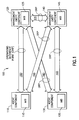
- FIG. 1 illustrates a network with management entity components and agent components in accordance with the present invention.
- the network shown generally at 100, includes one or more management entity components (e.g., managers), such as management entity components 120 and 140, and one or more agent components (e.g., agents), such as agent components 110 and 130.
- the management entity components 120 and 140 may be headend, satellite uplink, or conditional access system management entities that act in a manager's role.
- the management entity components 120 and 140 may also act in an agent's role with respect to another manager.
- the agent components 110 and 130 may be headend, satellite uplink, or conditional access system agent entities that act in an agent's role.
- Each component includes a management information base (MIB).
- MIBs 115, 125, 135 and 145 are associated with components 110, 120, 130 and 140, respectively.
- a MIB identifies the network elements (e.g., managed objects) that are to be managed, and contains a name that is associated with each managed object.
- Network management protocols use the MIB to define the managed objects in the network.
- the MIB defines the contents of the information carried with the network management protocols, as well as information describing each network management user's ability to access elements of the MIB, e.g., read or write access.
- FIG. 1 illustrates two agent components and two management entity components, it is possible to have one or more of either type of component. Moreover, each component may be implemented in common or different hardware, and be co-located or remote from one another.
- Bi-directional communication paths 150, 155, 160, 165 and 170 allow the different components to communicate with one another.
- the management entity components configure CA/headend/uplink events and EFDs at the component agents.
- the management entity components get CA/headend/uplink MIB information from the agent components.
- the management entities update their local MIBs with this information.
- the agent components send asynchronous notifications to the management entity components.
- An asynchronous notification means that the time of sending the notification by the agent is random from the manager's perspective, and is not in response to an immediately preceding request.
- the management entity components provide CA/headend/uplink MIB updates to the agent components.
- the interaction between the CA/headend/uplink system components is accomplished though the network management system as follows.
- the component advertises information such as DVB/MPEG SI/PSI information including event schedules through the MIB.
- the MIB can comprise SNMPv2 SMI MIB. This is accomplished through a software agent (e.g., SNMPv2 agent) or through an object server (e.g., CORBA object server or JavaTM RMI object server).
- a component may advertise event schedules for television programming.
- the status of the program/event information may change due to a change in scheduled programs.
- An EIS discussed in connection with FIG. 2, may be used to change this status.
- a certain amount of time before the start of the new program the EIS changes a data entry in an agent's MIB that corresponds to the new program. This MIB information is made accessible to all managers. Additionally, the change in the data entry causes a MIB value-change event to be generated, which is then processed by an EFD to determine if a management entity should be notified. If so, notifications are generated and distributed to every management entity that is registered to receive the information. Advertising thus refers to making the new MIB data available to managers and distributing notifications if warranted.
- An ORP may also be used to distribute EMMs to multiplexers, distribute ECMs to ECM generators, and synchronize ECMGs with synchronizers.
- the agent components implement X.733, X.734, and X.735 event reporting and logging by using the asynchronous notification capability of the management system.
- These capabilities include SNMP event notifications and special SNMP MIBs implementing event definitions, event forwarding definitions, and event logging.
- the CA System Manager (e.g., management entities 120 and/or 140) reads the headend/uplink MIBs on a fixed or varying periodic basis, updates its custom information and registers itself as a recipient of events caused by updates in the uplink MIB.
- the manager needs to periodically read the agent MIBs since the information at the agent can change as a result of a change in a component that is represented by an agent, and as a result of a change initiated by the manager.
- the CA System Manager updates the headend/uplink with CA information on a periodic basis or upon receiving an event from the headend/uplink or another CA System component by setting the uplink MIBs through the network management protocol, or by updating its own MIBs which cause events that result in notifications to be sent to the headend/uplink manager.
- FIG. 1 illustrates this synchronization and information exchange mechanism within the uplink/headend.
- an Operation Reference Point defines the interface between two headend/uplink components. It replaces a custom communications protocol which would need to be designed for the particular interface by a generic information exchange and event notification mechanism.
- ORPs for C(P)SI/(P)SI interaction is conceptualized using the following technologies:
- the event mechanism enables managers to configure the types of events that can be generated by an agent, and when those events should be transformed into asynchronous notifications (e.g., SNMP Traps) to be sent to different managers.
- the mechanism and information model used are based on the ITU-T TMN X.733 and X.734 standards defining event management and alarm reporting.
- the following object groups are defined:
- the Events Group stores event descriptions in a table. Each row in the table corresponds to an event that the agent is to generate.
- the event description in that table specifies when the agent is to generate the event, e.g., because a MIB variable has crossed a specified threshold, because a state has been changed, etc.
- the agent Once the agent generates an event as specified in the Event table, it checks the EFD Table to find an EFD that matches that event and specifies what kind of notification is to be generated, and to which manager that notification is to be sent. The match is performed based on event characteristics such as event type, etc.
- the EFDs in the EFD Table are controlled by three state/status variables, namely the administrative state, the operational state, and the availability status of the agent. If the administrative state is not unlocked, or the operational state is not enabled, or the availability status is not available, the EFD is inactive, which means it is ignored by the agent.
- the manager sets the administrative and operational states.
- the availability status is set as a result of an automatic scheduling function that is also associated with the EFD and specified in the EFD table. This scheduling function includes specifications of a daily start and stop time, and a weekly mask specifying when the EFD changes availability status from off-duty to available.
- This group comprises event configuration information defining the types of events that the agent shall generate.
- Common Information Model - CIM Simulcrypt Events Module -EM Events Group - Event Configuration Table Object Justification Maximum Access Right emEventName, the unique name of the target event, EntryName (SNMP) provides a unique identification of an event read emEventAdminiState, administrative state of a table row, enumerated type (ITU-T X.731) enables concurrency control between multiple management entities read-write emEventType, indicates the type of event, enumerated type (ITU-T X.734 enables differentiation between distinct event types read-write emEventText, a description of an event's function and use, ASCII string of maximum 256 characters enables textual description of an event for human readers read-write emEventChangedObjectId, the object identifier of the MIB object to check and see if the event should fire (groups of objects are identified by specifying
- enumerated type (ITU-T X.731) enables identification of backed up objects read-write emEventBackedUpObject, if the backed up status is backedUp this variable contains the object identifier of the back up object
- OBJECT IDENTIFIER (SNMP) enables specification of back up objects read-write emEventSpecificProblems, identifies the object responsible for the problem
- OBJECT IDENTIFIER enables specification of specific problems read-write emEventFrequency, identifies the number of seconds to wait between event frequency checks, 32 bit unsigned integer enables event throttling read-write emEventPersistence, identifies whether the event is generated only once or whether it is repeated in emEventFrequency intervals
- TruthValue (SNMP) enables reliable event delivery read-write emEvent
- This group comprises EFD configuration information defining what types of events an EFD will transform into notifications, at what times of day it will do so, and to which managers it will send the notifications.
- An EFD generates a notification if it is unlocked (administrative state), enabled (operational state) and available (availability status), and if all of the specified discriminators are true, e.g., if emEfdDiscriminatedTypes is specified, then the type indicated has to match the type of the event for a notification to be generated. If multiple discriminators are specified by a single EFD, then all have to be matched (e.g., using a logical AND) before a notification is generated. A discriminator that is not specified in an EFD is always TRUE.
- a single event can match multiple EFDs and generate multiple notifications if so specified by the emEfdOr variable of Table 2.
- Common Information Model - CIM Simulcrypt Events Module - EM Event Forwarding Discriminator (EFD) Group EFD Table Object Justification Maximum Access Right emEfdName, the unique name of the EFD, EntryName (SNMP) provides a unique identification of an EFD read emEfdAdminState, administrative state of a table row, enumerated type (ITU-T X.731) enables concurrency control between multiple management entities read-write emEfdOperState, operational state of an EFD, enumerated type (ITU-T X.731) enables the indication of the current operation state read-write emdEfdAvailStatus, reflects the scheduling of the EFD, enumerated type (ITU-T X.731) enables scheduling read emEfdStartTime, defines the date and time at
- DateAndTime enables the scheduling of EFDs read-write emEfdStopTime, defines the date and time at which an unlocked and enabled EFD stops functioning, i.e. changes its availability status from available to offDuty
- DateAndTime same read-write emEfdDailyStartTime
- TimeTicks SNMP
- SNMP enables daily scheduling of EFDs read-write emEfdDailyStopTime, defines the daily stop time at which an unlocked and enabled EFD stops functioning, i.e.
- TimeTicks same read-write emEfdWeeklyMask, defines the weekly schedule at which an unlocked and enabled EFD starts functioning, an octet string of 1 octet enables weekly scheduling read-write emEfdTypes, the event type that this EFD may generate notifications for, enumerated type (ITU-T X.734) enables an EFD to be specialized for a particular event type read-write emEfdCause, the probable cause that this EFD may generate notifications for, enumerated type (ITU-T X.734) enables an EFD to be specialized by probable cause read-write emEfdPerceivedSeverity, the perceived severity that this EFD may generate notifications for, enumerated type (ITU-T X.734) enables an EFD to be specialized by severity read-write emEfdSpecificProblems, the
- This group defines three types of notifications which an agent can send to a manager. These are an alarm, a state change notification, and a value change notification.
- Each EFD specifies what type of notification is to be sent for an event that has occurred in the agent. The EFD also specifies the conditions under which such a notification is to be sent and the IP address of the manager to which the notification is, to be sent. All standard SNMP traps are sent to the manager's UDP port 162. All management platforms like HP OpenView, Sun DomainManager, etc. support this mechanism.
- the first notification type that can be generated is an emEventAlarm, which carries, in addition to the standard SNMPv2 notification parameters, the following objects from the events table:
- the second notification type that can be generated is an emEventStateChange which carries, in addition to the standard SNMPv2 notification parameters, the following objects from the events table:
- the third notification type that can be generated is an emEventObjectValueChange which carries, in addition to the standard SNMPv2 notification parameters, the following objects from the events table:
- the logging mechanism enables managers to configure the types of logs that can be generated by an agent.
- the mechanism and information model used are based on the ITU-T TMN X.735 Log Model.
- the log determines which information is to be logged.
- Each log contains a discriminator construct which specifies the characteristics an event must have in order to be selected for logging.
- the generated events are filtered by the discriminator construct to determine which events are to be logged.
- the logging mechanism comprises the following object groups:
- Logs are controlled by the Log Control Table as specified in the ITU-T TMN X.735. Each entry in that table associates events with logs, and specifies when the event is to be logged in that log. The event is logged if the log discriminator holds. That is, if the event is of a certain type, if it has been generated by a certain object, if it exceeds a certain threshold, etc.
- the log control entries themselves are controlled by state/status variables, the administrative state, the operational state, and the availability status of the agent. The manager can set the administrative and operational states. The availability status is set by the agent itself based on an automatic log control scheduling mechanism which specifies the times during which the logs are to be made.
- Log Control Table entries also specify log control information and log statistics.
- the three logs defined are defined as tables in which each event is stored as a row.
- the logs in the alarm log table are logs of alarm events that have passed the log control discriminator in the Log Control Table.
- the logs in the state change log table are logs of state changes.
- logs in the object value change table are logs of object value changes.
- This group defines the types of log tables the agent is maintaining, their discriminators, the log scheduling, etc.
- DateAndTime enables the scheduling of Log Controls read-write lmLogControlStopTime, defines the date and time at which an unlocked and enabled Log Control entry stops functioning, i.e. changes its availability status from available to offDuty
- DateAndTime same read-write lmLogControlDailyStartTime
- TimeTicks SNMP
- SNMP enables daily scheduling of log control entries read-write lmLogControlDailyStopTime, defines the daily stop time at which an unlocked and enabled Log Control entry stops functioning, i.e.
- the three logs defined are defined, as tables in which each event is stored as a row.
- the logs in the alarm log table, Table 4 are logs of alarm events that have passed the log control discriminator in the Log Control Table.
- the logs in the state change log table, Table 5 are logs of state change events.
- logs in the object value change table, Table 6, are logs of object value change events.
- (P)SI information is advertised in SNMPv2 SMI tables. Each table maintains the row status through an EntryStatus type object and the administrative state in the same manner as the tables in the previous sections. All MPEG/DVB data types are mapped to SNMPv2 SMI types. Each MPEG/DVB section is represented by SNMPv2 SMI tables as follows:
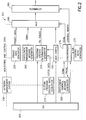
- FIG. 2 illustrates a broadcast headend with conditional access components as agents, and a network management system as a manager, in accordance with the present invention.
- a headend shown generally at 200, includes an Event Information Scheduler (EIS) 205 which provides event scheduling information to a Program Specific Information (PSI) generator 250, a mux configuration component 265, and a sychronizer 270.
- the EIS 205 is an agent that receives data from a management entity component regarding the scheduling of events.
- the events may be television programs which are scheduled by channel, programming source, e.g., CNN and HBO, and time.
- the PSI generator 250 also receives custom and/or program specific information, i.e., C(P)SI, from a C(P)SI generator component 215, and provides corresponding PSI tables to the mux 280.
- PSI is defined in the MPEG standard.
- An Entitlement Control Message Generator (ECMG) 220 provides entitlement control messages (ECMs) to the synchronizer 270, which provides the ECMs at the proper time to the mux 280.
- the synchronizer also provides control words (CW) and access criteria (AC) data to the ECMG 220.
- An Entitlement Management Message (EMM) generator 240 provides EMMs to the mux 280, while a private data generator 230 provides private data to the mux 280.
- An EMM may include cryptographic keys such as group keys which are used by a decoder to decoder an encrypted television signal, for example.
- the EMMs are appended to the various programming services to authorize the decoders to receive particular programming services, for example, according to a tiered marketing scheme. Possession of the group key or keys along with the appropriate entitlement control data allows the decoders to recover program keys from the program data sent by the service provider in the ECMs.
- ECMs and EMMs are well-known in the art, for example, as discussed in commonly-assigned U.S. Patent 5,627,892 to Kauffman.
- the mux multiplexes the input data and provides it to a scrambler 285 for scrambling (e.g., encryption), also under the control of the synchronizer.
- the output of the mux 280 may be an MPEG transport stream which includes various other types of data, including audio and video, not shown.
- the output of the scrambler 285 comprises CA data that is subsequently transmitted to an end user, e.g., via CATV network or digital satellite broadcast network.
- the synchronizer 270 times the multiplexing of the private data from component 230, EMMs from component 240, ECMs from component 220, and control words from component 275.
- components 215, 220, 230, 240 are used for providing conditional access, while components 205, 250, 265, 270, 275 and 285, are host headend components.
- the CA components of the headend 200 act as agents which communicate with a management entity component such as the network management system 295.
- the network management system 295 may be local to the headend 200, or at a remote location.
- the network management system 295 may use a communication path such as a telephone line, LAN, ATM network, or other computer network link, for example, to provide monitoring and control data to the agent components, and to receive the asynchronous notifications from the agent components.
- one or more different types of private data, EMMs, PSI tables and ECMs may be provided according to the specific format of the television or other signal in which the CA data will be used. Furthermore, while the components are logically separate, they may reside within the same physical component, in which case there is only one agent for the merged components.
- ORPs i.e., message exchanges using the transaction mechanism as defined by the procedure and information to be exchanged.
- FIG. 3 illustrates an agent component and a management entity component in accordance with the present invention.
- the agent component (e.g., agent) 300 communicates with a management entity component (e.g., manager) 370 via a network 350, such as a LAN, computer network, Internet, or telephone network.
- the agent component 300 includes a memory 302, processor 304, and transceiver 306, while the management entity component similarly includes a memory 372, processor 374, and transceiver 376.
- a network 350 such as a LAN, computer network, Internet, or telephone network.
- the agent component 300 includes a memory 302, processor 304, and transceiver 306, while the management entity component similarly includes a memory 372, processor 374, and transceiver 376.
- one or more agents may share a memory, processor, and/or transceiver, or each agent may have its own separate hardware.
- the manager has its own hardware but can possibly also share hardware with the agents.
- the manager 370 may communicate with an operator interface 380, such as a keyboard, to receive information such as the administrative and operational states of the agent components.
- the manager 380 may be implemented as a workstation, personal computer or other type of computer, or as a computer board or as a computer chip set.
- the memory 372 may comprise RAM, for example, and the processor 374 may be a microprocessor.
- the transceiver 376, or transmitter/receiver is a conventional circuit such as a modem used for transmitting and receiving data.
- a computer code to be used by the manager 370 may be stored in the memory 372 and operated on by the processor 374. Information received from the operator interface 380 may also be stored in the memory 372. Additionally, the MIB of the manager 370 may be provided as part of the general purpose memory 372.
- the processor 374 may be used to execute the computer code to communicate information to specific agents, and to process information received from the agents.
- the processors 304, 374 may read and write data from the associated memories 302, 372, and send data to, and receive data from the respective transceivers 306, 376. In this manner, the management component 370 and agent component 300 may communicate data, control signals, polling signals, and other information between themselves. Moreover, the respective processors 304, 374 may include timing circuits that indicate particular times for a specific data transmission to occur.
- the processor 304 may be responsive to the transceiver 306 for updating the MIB (in memory 306) with information of the communication network that is received by the transceiver.
- the transceiver 376 may be responsive to the processor 374 for periodically (e.g., intermittently) transmitting control signals to the processor 304, e.g., via the transceiver 306.
- the transceiver 306 is responsive to the processor 304 and the control signals from the manager for transmitting the updated information from the MIB to the manager's transceiver 376 for storage at the manager's MIB in memory 372.
- the manager's transceiver 376 is responsive to its processor 374 for periodically transmitting information to the agent's processor 304 for storage at the agent's MIB to synchronize insertion of data into the digital broadcast data stream by one or more agent components.
- the agent 300 may represent one or more resources or other agents, e.g., sub-agents.
- the MIB of the agent 300 may be provided as part of the general purpose memory 302.
- Event table data EFD table data
- log control table data may also be stored in the memory 302 for use by the agent component 300.
- Alarm, state change, and value change log data may also be stored in the memory 302.
- the processor 304 may be used to communicate information to, and receive information from, the manager 370 and any other resource or sub-agent.
- the manager 370 may be a standalone device (e.g., computer), or may be a capability implemented on a shared system.
- the manager 370 serves as an interface for a human operator/manager into the management system and includes:
- the agent components respond to requests for actions from the manager 370.
- the manager 370 may also provide the agent 300 with important unsolicited information.
- Each agent supports access to a collection of managed resources, which are represented by managed objects referred to as the MIB.
- managed objects are standardized across systems of a particular class; for example, all EMM generators support a standard set of objects, in addition to some objects that are specific to a particular manufacturer's EMM generator model.
- the manager performs a monitoring function by retrieving the value of MIB objects from the agents.
- a manager can cause an action to take place at an agent, or change the configuration settings of an agent by modifying the value of specific variables. For example, a manager can request an MPEG table insertion into an MPEG transport stream by making a table entry into the corresponding table in a MIB.
- the present invention provides a method and apparatus for providing synchronization and information exchange in a network.
- the method allows a management entity component, such as a computer workstation operated at a control center, to coordinate the actions of different agent components, such as hardware used at the headend or uplink site of a television network.
- the agent components may provide conditional access data for a television signal.
Landscapes
- Engineering & Computer Science (AREA)
- Computer Networks & Wireless Communication (AREA)
- Signal Processing (AREA)
- Databases & Information Systems (AREA)
- Data Exchanges In Wide-Area Networks (AREA)
- Information Transfer Between Computers (AREA)
- Mobile Radio Communication Systems (AREA)
- Circuits Of Receivers In General (AREA)
- Selective Calling Equipment (AREA)
- Computer And Data Communications (AREA)
Applications Claiming Priority (4)
| Application Number | Priority Date | Filing Date | Title |
|---|---|---|---|
| US6417897P | 1997-11-04 | 1997-11-04 | |
| US64178P | 1997-11-04 | ||
| US96861 | 1998-06-12 | ||
| US09/096,861 US6170005B1 (en) | 1997-11-04 | 1998-06-12 | Synchronization and information exchange between communication components using a network management operations and control paradigm |
Publications (3)
| Publication Number | Publication Date |
|---|---|
| EP0915627A2 true EP0915627A2 (de) | 1999-05-12 |
| EP0915627A3 EP0915627A3 (de) | 2000-05-24 |
| EP0915627B1 EP0915627B1 (de) | 2008-01-23 |
Family
ID=26744240
Family Applications (1)
| Application Number | Title | Priority Date | Filing Date |
|---|---|---|---|
| EP98119448A Expired - Lifetime EP0915627B1 (de) | 1997-11-04 | 1998-10-15 | Netzverwaltungssystem |
Country Status (10)
| Country | Link |
|---|---|
| US (1) | US6170005B1 (de) |
| EP (1) | EP0915627B1 (de) |
| KR (1) | KR19990044981A (de) |
| CN (1) | CN1148923C (de) |
| AT (1) | ATE385141T1 (de) |
| CA (1) | CA2252187C (de) |
| DE (1) | DE69839035T2 (de) |
| IL (1) | IL126585A (de) |
| NO (1) | NO985125L (de) |
| TW (1) | TW404142B (de) |
Cited By (6)
| Publication number | Priority date | Publication date | Assignee | Title |
|---|---|---|---|---|
| WO2002047330A3 (en) * | 2000-12-04 | 2002-12-19 | Eci Ngts Ltd | Trap filtering in a telecommunication network management |
| EP1079566A3 (de) * | 1999-08-23 | 2003-06-18 | Motorola Ireland Limited | Systemverwaltung in einem Kommunikationsnetzwerk mit SNMP und CMIP Agenten |
| EP1249967A3 (de) * | 2001-04-12 | 2004-10-20 | Mitel Knowledge Corporation | Mobile interaktive Logbücher |
| EP1443726A3 (de) * | 2003-01-30 | 2005-09-14 | Fujitsu Limited | Verfahren für die Verwaltung von Informationen, Informationsmanagementsystem, Zentralgerät, Endgerät und Computerprogrammprodukt |
| EP1603272A1 (de) * | 2004-06-01 | 2005-12-07 | Alcatel | Kommunikationsnetz für Event-Logging-Systeme und -Methoden |
| RU2516298C2 (ru) * | 2007-04-20 | 2014-05-20 | Эвоник Дегусса Гмбх | Смеси, содержащие кремнийорганические соединения, и их применение |
Families Citing this family (47)
| Publication number | Priority date | Publication date | Assignee | Title |
|---|---|---|---|---|
| US6701359B1 (en) * | 1998-07-28 | 2004-03-02 | International Business Machines Corp. | Apparatus and method for managing a multi-threaded persistent agent management information base including a managed object instance cache |
| US6332142B1 (en) * | 1999-04-26 | 2001-12-18 | 3Com Corporation | Management information base attribute discriminator |
| US6779027B1 (en) * | 1999-04-30 | 2004-08-17 | Hewlett-Packard Development Company, L.P. | Intelligent management module application programming interface with utility objects |
| US7072343B1 (en) * | 1999-09-27 | 2006-07-04 | Cisco Technology, Inc. | Methods and apparatus for controlling a data stream using a host agent acting on behalf of a host computer |
| US9066113B1 (en) | 1999-10-19 | 2015-06-23 | International Business Machines Corporation | Method for ensuring reliable playout in a DMD system |
| US20060248139A1 (en) * | 1999-12-01 | 2006-11-02 | Intel Corporation | Networked computer management with a mobile software agent |
| JP3783501B2 (ja) * | 2000-01-07 | 2006-06-07 | 富士ゼロックス株式会社 | トラップ制御システム |
| WO2001065762A2 (en) * | 2000-03-02 | 2001-09-07 | Tivo, Inc. | Conditional access system and method for prevention of replay attacks |
| US7139844B2 (en) * | 2000-08-04 | 2006-11-21 | Goldman Sachs & Co. | Method and system for processing financial data objects carried on broadcast data streams and delivering information to subscribing clients |
| US7958251B2 (en) * | 2000-08-04 | 2011-06-07 | Goldman Sachs & Co. | Method and system for processing raw financial data streams to produce and distribute structured and validated product offering data to subscribing clients |
| US7958025B2 (en) | 2000-08-04 | 2011-06-07 | Goldman Sachs & Co. | Method and system for processing raw financial data streams to produce and distribute structured and validated product offering objects |
| US20030105732A1 (en) | 2000-11-17 | 2003-06-05 | Kagalwala Raxit A. | Database schema for structure query language (SQL) server |
| US6961730B2 (en) * | 2000-11-17 | 2005-11-01 | Microsoft Corporation | Mapping database file class to operating system file class in a computer schema |
| US6816869B2 (en) * | 2000-11-17 | 2004-11-09 | Microsoft Corporation | Mapping database users to operating system users in a computer schema |
| US6810400B2 (en) * | 2000-11-17 | 2004-10-26 | Microsoft Corporation | Representing database permissions as associations in computer schema |
| US7260785B2 (en) | 2001-01-29 | 2007-08-21 | International Business Machines Corporation | Method and system for object retransmission without a continuous network connection in a digital media distribution system |
| US7689598B2 (en) * | 2001-02-15 | 2010-03-30 | International Business Machines Corporation | Method and system for file system synchronization between a central site and a plurality of remote sites |
| JP2002300482A (ja) * | 2001-03-30 | 2002-10-11 | Sanyo Electric Co Ltd | デジタルテレビ放送受信機 |
| US7136934B2 (en) * | 2001-06-19 | 2006-11-14 | Request, Inc. | Multimedia synchronization method and device |
| KR20030021536A (ko) * | 2001-09-06 | 2003-03-15 | 삼성전자주식회사 | 네트워크 통신시스템의 관리정보 동기화 방법 |
| US20030097478A1 (en) * | 2001-10-08 | 2003-05-22 | Imagearray, Ltd. | Method and system for synchronizing a presentation |
| KR100962420B1 (ko) * | 2002-01-14 | 2010-06-14 | 이르데토 아인드호벤 비.브이. | 암호화된 정보의 분배 |
| US7359965B2 (en) * | 2002-02-27 | 2008-04-15 | Ricoh Co. Ltd. | Method and apparatus for providing multiple vendor support to remotely monitored devices |
| JP3821034B2 (ja) * | 2002-03-22 | 2006-09-13 | ブラザー工業株式会社 | ネットワーク管理システム,管理対象装置,管理装置,プログラム |
| US20040031029A1 (en) * | 2002-08-06 | 2004-02-12 | Kyu-Woong Lee | Methods and systems for automatically updating software components in a network |
| US7155514B1 (en) * | 2002-09-12 | 2006-12-26 | Dorian Software Creations, Inc. | Apparatus for event log management |
| US7555545B2 (en) * | 2003-07-30 | 2009-06-30 | AT&T Intellectual Property, I,L.P | Method system and storage medium for detecting network elements |
| US8321534B1 (en) * | 2003-10-15 | 2012-11-27 | Radix Holdings, Llc | System and method for synchronization based on preferences |
| US7376078B1 (en) * | 2004-03-24 | 2008-05-20 | Juniper Networks, Inc. | Selective replay of a state information within a computing device |
| JP4351591B2 (ja) * | 2004-07-07 | 2009-10-28 | 富士通株式会社 | サーバシステムおよびサーバ |
| FR2877174A1 (fr) * | 2004-10-25 | 2006-04-28 | France Telecom | Procede, systeme et dispositif d'administration reseau |
| US20060168013A1 (en) * | 2004-11-26 | 2006-07-27 | Invensys Systems, Inc. | Message management facility for an industrial process control environment |
| US7386128B2 (en) * | 2004-12-29 | 2008-06-10 | General Instrument Corporation | Conditional access system providing access to multiple programs or services |
| KR100636235B1 (ko) * | 2005-05-24 | 2006-10-19 | 삼성전자주식회사 | 단순망 관리 프로토콜의 설정 이력 관리 시스템 및 방법 |
| US8141138B2 (en) * | 2005-10-17 | 2012-03-20 | Oracle International Corporation | Auditing correlated events using a secure web single sign-on login |
| EP1798892A1 (de) * | 2005-12-19 | 2007-06-20 | Siemens Aktiengesellschaft | Verfahren zum Laden einer Liste von Alarmen durch eine Alarmapplikation |
| US20070198993A1 (en) * | 2006-02-06 | 2007-08-23 | Zhongyao Zhang | Communication system event handling systems and techniques |
| US7966379B2 (en) * | 2006-05-05 | 2011-06-21 | Standard Microsystems Corporation | In-band event polling |
| KR101221672B1 (ko) * | 2006-11-30 | 2013-01-14 | 재단법인서울대학교산학협력재단 | 데이터 동기화 시스템 |
| US8019737B2 (en) * | 2008-03-13 | 2011-09-13 | Harris Corporation | Synchronization of metadata |
| CN102118256B (zh) * | 2009-12-31 | 2013-04-24 | 杭州华三通信技术有限公司 | 一种snmp数据获取方法及设备侧装置 |
| CN103731251A (zh) * | 2012-10-12 | 2014-04-16 | 上海斐讯数据通信技术有限公司 | 机架式设备卡同步系统及其同步方法 |
| US9135051B2 (en) * | 2012-11-02 | 2015-09-15 | Red Hat Israel, Ltd. | Redirecting guest-generated events to an event aggregator in a networked virtualization environment |
| CN105790978A (zh) * | 2014-12-23 | 2016-07-20 | 中兴通讯股份有限公司 | 一种网管通讯报文的处理方法、装置、服务器及主控板 |
| CN105357287B (zh) * | 2015-10-21 | 2019-05-10 | 浪潮(北京)电子信息产业有限公司 | 一种兼容snmp和smi-s的存储管理服务端及系统 |
| CN107294749A (zh) * | 2016-03-31 | 2017-10-24 | 北京优朋普乐科技有限公司 | 一种更新管理信息库mib的系统及方法 |
| KR102425692B1 (ko) * | 2017-11-20 | 2022-07-27 | 한국전자통신연구원 | 방송용 헤드엔드 시스템을 제어하는 장치 및 방법 |
Family Cites Families (8)
| Publication number | Priority date | Publication date | Assignee | Title |
|---|---|---|---|---|
| US5317568A (en) | 1991-04-11 | 1994-05-31 | Galileo International Partnership | Method and apparatus for managing and facilitating communications in a distributed hetergeneous network |
| US5574934A (en) * | 1993-11-24 | 1996-11-12 | Intel Corporation | Preemptive priority-based transmission of signals using virtual channels |
| US5555244A (en) | 1994-05-19 | 1996-09-10 | Integrated Network Corporation | Scalable multimedia network |
| US5519863A (en) | 1994-09-21 | 1996-05-21 | International Business Machines Corporation | Notification forwarding discriminator |
| US5627892A (en) | 1995-04-19 | 1997-05-06 | General Instrument Corporation Of Delaware | Data security scheme for point-to-point communication sessions |
| JPH10149285A (ja) * | 1996-11-18 | 1998-06-02 | Hitachi Ltd | 命令実行制御方法および情報処理装置 |
| US6014706A (en) * | 1997-01-30 | 2000-01-11 | Microsoft Corporation | Methods and apparatus for implementing control functions in a streamed video display system |
| JP3233071B2 (ja) * | 1997-07-02 | 2001-11-26 | 日本電気株式会社 | マネージャ・エージェント間同期装置及びマネージャ・エージェント間同期方法並びにマネージャ・エージェント間同期制御プログラムを記録した記録媒体 |
-
1998
- 1998-06-12 US US09/096,861 patent/US6170005B1/en not_active Expired - Lifetime
- 1998-10-15 DE DE69839035T patent/DE69839035T2/de not_active Expired - Lifetime
- 1998-10-15 IL IL12658598A patent/IL126585A/xx not_active IP Right Cessation
- 1998-10-15 AT AT98119448T patent/ATE385141T1/de not_active IP Right Cessation
- 1998-10-15 EP EP98119448A patent/EP0915627B1/de not_active Expired - Lifetime
- 1998-10-22 TW TW087117501A patent/TW404142B/zh not_active IP Right Cessation
- 1998-10-29 CA CA002252187A patent/CA2252187C/en not_active Expired - Fee Related
- 1998-11-03 NO NO985125A patent/NO985125L/no not_active Application Discontinuation
- 1998-11-03 KR KR1019980047032A patent/KR19990044981A/ko not_active Abandoned
- 1998-11-04 CN CNB981241034A patent/CN1148923C/zh not_active Expired - Fee Related
Cited By (6)
| Publication number | Priority date | Publication date | Assignee | Title |
|---|---|---|---|---|
| EP1079566A3 (de) * | 1999-08-23 | 2003-06-18 | Motorola Ireland Limited | Systemverwaltung in einem Kommunikationsnetzwerk mit SNMP und CMIP Agenten |
| WO2002047330A3 (en) * | 2000-12-04 | 2002-12-19 | Eci Ngts Ltd | Trap filtering in a telecommunication network management |
| EP1249967A3 (de) * | 2001-04-12 | 2004-10-20 | Mitel Knowledge Corporation | Mobile interaktive Logbücher |
| EP1443726A3 (de) * | 2003-01-30 | 2005-09-14 | Fujitsu Limited | Verfahren für die Verwaltung von Informationen, Informationsmanagementsystem, Zentralgerät, Endgerät und Computerprogrammprodukt |
| EP1603272A1 (de) * | 2004-06-01 | 2005-12-07 | Alcatel | Kommunikationsnetz für Event-Logging-Systeme und -Methoden |
| RU2516298C2 (ru) * | 2007-04-20 | 2014-05-20 | Эвоник Дегусса Гмбх | Смеси, содержащие кремнийорганические соединения, и их применение |
Also Published As
| Publication number | Publication date |
|---|---|
| CA2252187A1 (en) | 1999-05-04 |
| EP0915627B1 (de) | 2008-01-23 |
| CN1148923C (zh) | 2004-05-05 |
| CA2252187C (en) | 2007-06-19 |
| IL126585A0 (en) | 1999-08-17 |
| NO985125D0 (no) | 1998-11-03 |
| TW404142B (en) | 2000-09-01 |
| CN1219057A (zh) | 1999-06-09 |
| NO985125L (no) | 1999-05-05 |
| IL126585A (en) | 2003-04-10 |
| DE69839035T2 (de) | 2009-01-15 |
| ATE385141T1 (de) | 2008-02-15 |
| EP0915627A3 (de) | 2000-05-24 |
| DE69839035D1 (de) | 2008-03-13 |
| KR19990044981A (ko) | 1999-06-25 |
| US6170005B1 (en) | 2001-01-02 |
Similar Documents
| Publication | Publication Date | Title |
|---|---|---|
| EP0915627B1 (de) | Netzverwaltungssystem | |
| US7356029B2 (en) | IP data encapsulation and insertion in a transport multiplexer | |
| CA2370538C (en) | Network bandwidth optimization by dynamic channel allocation | |
| US5847751A (en) | CATV communication system remote hub for distribution of digital, analog, broadcast and interactive communications | |
| US6330601B1 (en) | Management system for a multi-level communication network | |
| US8156533B2 (en) | Media transmission system and method | |
| US7437469B2 (en) | Virtual network element framework and operating system for managing multi-service network equipment | |
| US20050015810A1 (en) | System and method for managing provisioning parameters in a cable network | |
| JP2001527350A (ja) | デジタル送信システム用のスクランブルユニット | |
| US12513781B2 (en) | Enterprise content gateway | |
| HUP0104210A2 (hu) | Eljárás és berendezés digitális információ továbbítására digitális kommunikációs hálózatban, továbbá digitális kommunikációs hálózaton kapott digitális információ feldolgozására, valamint digitális televízió jel | |
| US6944657B1 (en) | Automatic network synchronization of the network configuration with the management information database | |
| KR20020074180A (ko) | 정보 신호가 앞서는 데이터를 다운로딩 하는 방법 | |
| Paff | Hybrid fiber/coax in the public telecommunications infrastructure | |
| KR20040090992A (ko) | 자격 관리 메시지 전송 방법 및 장치 | |
| HK1018567A (en) | Network management system | |
| MXPA98009185A (en) | Synchronization and exchange of information between communication components using a paradigm of operations and control of administration of | |
| Lin et al. | Network information models and OneVision® architecture | |
| Mourelatou et al. | An approach to identifying QoS problems | |
| Schlaerth | A concept for tactical wide-area network hub management | |
| US20260136434A1 (en) | Enterprise content gateway | |
| KR100730584B1 (ko) | 방송 시스템 및 방송 서비스 방법 | |
| Lee et al. | Implementation and performance analysis of a TMN system for public ATM networks | |
| Vande Keere et al. | Rapid prototyping of a CATV network termination for ATM-based video-on-demand services | |
| Brenner et al. | Broadband video/audio/data distribution networks—The need for network management |
Legal Events
| Date | Code | Title | Description |
|---|---|---|---|
| PUAI | Public reference made under article 153(3) epc to a published international application that has entered the european phase |
Free format text: ORIGINAL CODE: 0009012 |
|
| AK | Designated contracting states |
Kind code of ref document: A2 Designated state(s): AT BE DE ES FR GB IE NL |
|
| AX | Request for extension of the european patent |
Free format text: AL;LT;LV;MK;RO;SI |
|
| PUAL | Search report despatched |
Free format text: ORIGINAL CODE: 0009013 |
|
| AK | Designated contracting states |
Kind code of ref document: A3 Designated state(s): AT BE CH CY DE DK ES FI FR GB GR IE IT LI LU MC NL PT SE |
|
| AX | Request for extension of the european patent |
Free format text: AL;LT;LV;MK;RO;SI |
|
| 17P | Request for examination filed |
Effective date: 20001108 |
|
| AKX | Designation fees paid |
Free format text: AT BE DE ES FR GB IE NL |
|
| PGFP | Annual fee paid to national office [announced via postgrant information from national office to epo] |
Ref country code: DK Payment date: 20010919 Year of fee payment: 4 |
|
| REG | Reference to a national code |
Ref country code: HK Ref legal event code: WD Ref document number: 1018567 Country of ref document: HK |
|
| GRAP | Despatch of communication of intention to grant a patent |
Free format text: ORIGINAL CODE: EPIDOSNIGR1 |
|
| GRAS | Grant fee paid |
Free format text: ORIGINAL CODE: EPIDOSNIGR3 |
|
| GRAA | (expected) grant |
Free format text: ORIGINAL CODE: 0009210 |
|
| AK | Designated contracting states |
Kind code of ref document: B1 Designated state(s): AT BE DE ES FR GB IE NL |
|
| REG | Reference to a national code |
Ref country code: GB Ref legal event code: FG4D |
|
| REG | Reference to a national code |
Ref country code: IE Ref legal event code: FG4D |
|
| REF | Corresponds to: |
Ref document number: 69839035 Country of ref document: DE Date of ref document: 20080313 Kind code of ref document: P |
|
| NLV1 | Nl: lapsed or annulled due to failure to fulfill the requirements of art. 29p and 29m of the patents act | ||
| PG25 | Lapsed in a contracting state [announced via postgrant information from national office to epo] |
Ref country code: ES Free format text: LAPSE BECAUSE OF FAILURE TO SUBMIT A TRANSLATION OF THE DESCRIPTION OR TO PAY THE FEE WITHIN THE PRESCRIBED TIME-LIMIT Effective date: 20080504 |
|
| PG25 | Lapsed in a contracting state [announced via postgrant information from national office to epo] |
Ref country code: AT Free format text: LAPSE BECAUSE OF FAILURE TO SUBMIT A TRANSLATION OF THE DESCRIPTION OR TO PAY THE FEE WITHIN THE PRESCRIBED TIME-LIMIT Effective date: 20080123 |
|
| ET | Fr: translation filed | ||
| PG25 | Lapsed in a contracting state [announced via postgrant information from national office to epo] |
Ref country code: BE Free format text: LAPSE BECAUSE OF FAILURE TO SUBMIT A TRANSLATION OF THE DESCRIPTION OR TO PAY THE FEE WITHIN THE PRESCRIBED TIME-LIMIT Effective date: 20080123 |
|
| PG25 | Lapsed in a contracting state [announced via postgrant information from national office to epo] |
Ref country code: NL Free format text: LAPSE BECAUSE OF FAILURE TO SUBMIT A TRANSLATION OF THE DESCRIPTION OR TO PAY THE FEE WITHIN THE PRESCRIBED TIME-LIMIT Effective date: 20080123 |
|
| PLBE | No opposition filed within time limit |
Free format text: ORIGINAL CODE: 0009261 |
|
| STAA | Information on the status of an ep patent application or granted ep patent |
Free format text: STATUS: NO OPPOSITION FILED WITHIN TIME LIMIT |
|
| 26N | No opposition filed |
Effective date: 20081024 |
|
| PG25 | Lapsed in a contracting state [announced via postgrant information from national office to epo] |
Ref country code: IE Free format text: LAPSE BECAUSE OF NON-PAYMENT OF DUE FEES Effective date: 20081015 |
|
| REG | Reference to a national code |
Ref country code: DE Ref legal event code: R082 Ref document number: 69839035 Country of ref document: DE Representative=s name: HOEGER, STELLRECHT & PARTNER PATENTANWAELTE, DE |
|
| REG | Reference to a national code |
Ref country code: DE Ref legal event code: R082 Ref document number: 69839035 Country of ref document: DE Representative=s name: HOEGER, STELLRECHT & PARTNER PATENTANWAELTE MB, DE Effective date: 20130813 Ref country code: DE Ref legal event code: R082 Ref document number: 69839035 Country of ref document: DE Representative=s name: HOEGER, STELLRECHT & PARTNER PATENTANWAELTE, DE Effective date: 20130813 Ref country code: DE Ref legal event code: R081 Ref document number: 69839035 Country of ref document: DE Owner name: MOTOROLA MOBILITY LLC (N.D. GES. D. STAATES DE, US Free format text: FORMER OWNER: GENERAL INSTRUMENT CORPORATION, HORSHAM, PA., US Effective date: 20130813 Ref country code: DE Ref legal event code: R081 Ref document number: 69839035 Country of ref document: DE Owner name: MOTOROLA MOBILITY LLC (N.D. GES. D. STAATES DE, US Free format text: FORMER OWNER: GENERAL INSTRUMENT CORPORATION, HORSHAM, US Effective date: 20130813 |
|
| REG | Reference to a national code |
Ref country code: GB Ref legal event code: 732E Free format text: REGISTERED BETWEEN 20130919 AND 20130925 |
|
| REG | Reference to a national code |
Ref country code: FR Ref legal event code: TP Owner name: MOTOROLA MOBILITY LLC, US Effective date: 20131230 |
|
| REG | Reference to a national code |
Ref country code: DE Ref legal event code: R082 Ref document number: 69839035 Country of ref document: DE Representative=s name: HOEGER, STELLRECHT & PARTNER PATENTANWAELTE MB, DE |
|
| REG | Reference to a national code |
Ref country code: FR Ref legal event code: PLFP Year of fee payment: 18 |
|
| REG | Reference to a national code |
Ref country code: FR Ref legal event code: PLFP Year of fee payment: 19 |
|
| PGFP | Annual fee paid to national office [announced via postgrant information from national office to epo] |
Ref country code: FR Payment date: 20161025 Year of fee payment: 19 Ref country code: DE Payment date: 20161027 Year of fee payment: 19 Ref country code: GB Payment date: 20161027 Year of fee payment: 19 |
|
| REG | Reference to a national code |
Ref country code: GB Ref legal event code: 732E Free format text: REGISTERED BETWEEN 20170831 AND 20170906 |
|
| REG | Reference to a national code |
Ref country code: FR Ref legal event code: TP Owner name: GOOGLE TECHNOLOGY HOLDINGS LLC, US Effective date: 20171214 |
|
| REG | Reference to a national code |
Ref country code: DE Ref legal event code: R119 Ref document number: 69839035 Country of ref document: DE |
|
| GBPC | Gb: european patent ceased through non-payment of renewal fee |
Effective date: 20171015 |
|
| REG | Reference to a national code |
Ref country code: FR Ref legal event code: ST Effective date: 20180629 |
|
| PG25 | Lapsed in a contracting state [announced via postgrant information from national office to epo] |
Ref country code: GB Free format text: LAPSE BECAUSE OF NON-PAYMENT OF DUE FEES Effective date: 20171015 Ref country code: DE Free format text: LAPSE BECAUSE OF NON-PAYMENT OF DUE FEES Effective date: 20180501 |
|
| PG25 | Lapsed in a contracting state [announced via postgrant information from national office to epo] |
Ref country code: FR Free format text: LAPSE BECAUSE OF NON-PAYMENT OF DUE FEES Effective date: 20171031 |
|
| P01 | Opt-out of the competence of the unified patent court (upc) registered |
Effective date: 20230524 |