EP0903904A2 - Netzwerksystem, Verfahren zur Datenverteilung und Aufzeichnungsmedium zur Speicherung von Benutzungsdaten der Verteilung - Google Patents
Netzwerksystem, Verfahren zur Datenverteilung und Aufzeichnungsmedium zur Speicherung von Benutzungsdaten der Verteilung Download PDFInfo
- Publication number
- EP0903904A2 EP0903904A2 EP98307389A EP98307389A EP0903904A2 EP 0903904 A2 EP0903904 A2 EP 0903904A2 EP 98307389 A EP98307389 A EP 98307389A EP 98307389 A EP98307389 A EP 98307389A EP 0903904 A2 EP0903904 A2 EP 0903904A2
- Authority
- EP
- European Patent Office
- Prior art keywords
- content
- information
- data
- boundary
- data package
- Prior art date
- Legal status (The legal status is an assumption and is not a legal conclusion. Google has not performed a legal analysis and makes no representation as to the accuracy of the status listed.)
- Withdrawn
Links
- 238000000034 method Methods 0.000 title claims description 81
- 238000009826 distribution Methods 0.000 title claims description 74
- 238000012545 processing Methods 0.000 claims abstract description 272
- 230000005540 biological transmission Effects 0.000 claims description 50
- 238000012546 transfer Methods 0.000 claims description 37
- 238000013475 authorization Methods 0.000 claims 45
- 230000001902 propagating effect Effects 0.000 claims 1
- 238000007726 management method Methods 0.000 description 50
- 230000006870 function Effects 0.000 description 39
- 238000004891 communication Methods 0.000 description 38
- 230000006854 communication Effects 0.000 description 38
- 239000000463 material Substances 0.000 description 13
- 238000011156 evaluation Methods 0.000 description 10
- 238000003860 storage Methods 0.000 description 8
- 230000007246 mechanism Effects 0.000 description 7
- 238000003672 processing method Methods 0.000 description 7
- 230000008859 change Effects 0.000 description 6
- 239000000872 buffer Substances 0.000 description 4
- 238000012217 deletion Methods 0.000 description 4
- 230000037430 deletion Effects 0.000 description 4
- 238000002360 preparation method Methods 0.000 description 4
- 230000008569 process Effects 0.000 description 4
- 230000000644 propagated effect Effects 0.000 description 4
- 230000004044 response Effects 0.000 description 4
- 238000004364 calculation method Methods 0.000 description 3
- 238000006243 chemical reaction Methods 0.000 description 3
- 238000010276 construction Methods 0.000 description 3
- 230000007704 transition Effects 0.000 description 3
- 238000010295 mobile communication Methods 0.000 description 2
- 238000012986 modification Methods 0.000 description 2
- 230000004048 modification Effects 0.000 description 2
- 238000012544 monitoring process Methods 0.000 description 2
- 230000008707 rearrangement Effects 0.000 description 2
- 230000007480 spreading Effects 0.000 description 2
- 238000003892 spreading Methods 0.000 description 2
- 241001479548 Maranta leuconeura Species 0.000 description 1
- 230000003466 anti-cipated effect Effects 0.000 description 1
- 230000007175 bidirectional communication Effects 0.000 description 1
- 238000004590 computer program Methods 0.000 description 1
- 239000012141 concentrate Substances 0.000 description 1
- 230000001419 dependent effect Effects 0.000 description 1
- 238000011161 development Methods 0.000 description 1
- 239000000835 fiber Substances 0.000 description 1
- 230000010365 information processing Effects 0.000 description 1
- 238000009434 installation Methods 0.000 description 1
- 230000003993 interaction Effects 0.000 description 1
- 230000001737 promoting effect Effects 0.000 description 1
- 239000004065 semiconductor Substances 0.000 description 1
- 238000004088 simulation Methods 0.000 description 1
- 238000012360 testing method Methods 0.000 description 1
- 230000009466 transformation Effects 0.000 description 1
- 238000012795 verification Methods 0.000 description 1
Images






































Classifications
-
- H—ELECTRICITY
- H04—ELECTRIC COMMUNICATION TECHNIQUE
- H04L—TRANSMISSION OF DIGITAL INFORMATION, e.g. TELEGRAPHIC COMMUNICATION
- H04L63/00—Network architectures or network communication protocols for network security
- H04L63/04—Network architectures or network communication protocols for network security for providing a confidential data exchange among entities communicating through data packet networks
- H04L63/0428—Network architectures or network communication protocols for network security for providing a confidential data exchange among entities communicating through data packet networks wherein the data content is protected, e.g. by encrypting or encapsulating the payload
-
- H—ELECTRICITY
- H04—ELECTRIC COMMUNICATION TECHNIQUE
- H04L—TRANSMISSION OF DIGITAL INFORMATION, e.g. TELEGRAPHIC COMMUNICATION
- H04L63/00—Network architectures or network communication protocols for network security
- H04L63/08—Network architectures or network communication protocols for network security for authentication of entities
-
- H—ELECTRICITY
- H04—ELECTRIC COMMUNICATION TECHNIQUE
- H04L—TRANSMISSION OF DIGITAL INFORMATION, e.g. TELEGRAPHIC COMMUNICATION
- H04L63/00—Network architectures or network communication protocols for network security
- H04L63/10—Network architectures or network communication protocols for network security for controlling access to devices or network resources
-
- H—ELECTRICITY
- H04—ELECTRIC COMMUNICATION TECHNIQUE
- H04L—TRANSMISSION OF DIGITAL INFORMATION, e.g. TELEGRAPHIC COMMUNICATION
- H04L67/00—Network arrangements or protocols for supporting network services or applications
- H04L67/01—Protocols
- H04L67/06—Protocols specially adapted for file transfer, e.g. file transfer protocol [FTP]
-
- H—ELECTRICITY
- H04—ELECTRIC COMMUNICATION TECHNIQUE
- H04L—TRANSMISSION OF DIGITAL INFORMATION, e.g. TELEGRAPHIC COMMUNICATION
- H04L9/00—Cryptographic mechanisms or cryptographic arrangements for secret or secure communications; Network security protocols
- H04L9/40—Network security protocols
-
- H—ELECTRICITY
- H04—ELECTRIC COMMUNICATION TECHNIQUE
- H04L—TRANSMISSION OF DIGITAL INFORMATION, e.g. TELEGRAPHIC COMMUNICATION
- H04L2463/00—Additional details relating to network architectures or network communication protocols for network security covered by H04L63/00
- H04L2463/101—Additional details relating to network architectures or network communication protocols for network security covered by H04L63/00 applying security measures for digital rights management
-
- H—ELECTRICITY
- H04—ELECTRIC COMMUNICATION TECHNIQUE
- H04L—TRANSMISSION OF DIGITAL INFORMATION, e.g. TELEGRAPHIC COMMUNICATION
- H04L69/00—Network arrangements, protocols or services independent of the application payload and not provided for in the other groups of this subclass
- H04L69/30—Definitions, standards or architectural aspects of layered protocol stacks
- H04L69/32—Architecture of open systems interconnection [OSI] 7-layer type protocol stacks, e.g. the interfaces between the data link level and the physical level
- H04L69/322—Intralayer communication protocols among peer entities or protocol data unit [PDU] definitions
- H04L69/329—Intralayer communication protocols among peer entities or protocol data unit [PDU] definitions in the application layer [OSI layer 7]
Definitions
- the present invention relates to a network system capable of distributing desired information in a desired format via the network, more particularly relates to a network system and a data distribution method capable of carrying out charging and other processing in the same way as normal packaged products and capable of distributing an information package as a product and a recording medium on which the data to be distributed is recorded and which can be read by a computer connected to the network.
- internet and other large scale networks connecting a plurality of computer networks are being constructed in various areas.
- CATV cable television
- multimedia processing that is, processing of video data, audio data, image data, text data, and other various forms of data linked together, through such a network. This is now being specifically realized along with the development of the network explained above.
- MCF metal content framework
- the on-line content at web sites and the internet/intranet is handled as "meta content" in an abstract format.
- the aim is to impart commonality to the methods for handling content such as the specification of the sites, the attachment of search information, and the viewing of the content.
- the use of the MCF will facilitate the positioning of sites for navigation, indexing for searches, monitoring of content, parental control, advanced control for the download of content, fetching of other content, etc.
- the main standardized system for sending data on a network is the HTML (data format of WWW). This cannot be further expanded for use for information products. It is possible to simply attach information for charging and rights in the system mentioned above, but no specification capable of handling an information structure as an information product has yet been reached.
- An aim of the present invention is to provide a network system capable of adequately and suitably distributing various types of information via a network upon demand and further suitably providing information concerning the content and capable of suitably carrying out the charging by a clear, common method so as to be able to suitably perform electronic commerce via the network.
- another aim of the present invention is to provide a data distribution method capable of adequately and suitably distributing various types of information via a network upon demand and further suitably providing information concerning the content and capable of suitably carrying out the charging by a clear, common method so as to be able to suitably perform electronic commerce via the network.
- Still another aim of the present invention is to provide a recording medium which has recorded on it a data package (information package) which is suitable for use for electronic commerce via a network and which can be read by a computer, specifically one which has recorded on it various types of information in a predetermined format so as to enable information concerning the content to be suitably provided and the charging to be suitably carried out by a clear, common method and which can be read by a computer connected to the network so as to enable information to be adequately and suitably distributed upon demand.
- a data package information package
- a computer specifically one which has recorded on it various types of information in a predetermined format so as to enable information concerning the content to be suitably provided and the charging to be suitably carried out by a clear, common method and which can be read by a computer connected to the network so as to enable information to be adequately and suitably distributed upon demand.
- the invention was designed to set the boundaries for the framework of prices in the information package. Then, the invention was designed to dynamically change the boundaries along with the preparation, distribution, and utilization of the information package. For example, the invention was designed to assemble the information package in a form including other information packages.
- the invention was designed to attach attributes for indicating the type, nature, and restrictions of the content to the information package and set rules for controlling these attributes.
- attributes are for example the data indicating content such as the owner, author, type of content, and type of service and the data used for the charging, license, and authentication.
- the invention was designed to handle multimedia data in the information package. Specifically, to enable the media data to be handled in spatial data such as structure description and attribute description, the invention was designed to express time series data by predetermined descriptors and process the time control. Further, the invention was designed to also provide a function for controlling the stream.
- the invention was designed to add control functions for extracting the content to the information package per se. These are for example for video and audio processing and the processing of authentication and charging.
- the invention was designed so that a plurality of information packages refer to each other.
- the invention was designed to change the interpretation in references dynamically in accordance with the state of the information package to be referenced and the content of the attributes of the reference. Further, it is desirable to be able to dynamically search for the destination of the reference.
- the invention was designed so that the information package describes the control for use for processing the information using its internal information or information of another structure referenced from this structure.
- the invention was designed so that this control covers not only the control inside this information package, but also the control until calling up the other structure and transferring control.
- the invention was designed so that the information package can be prepared and utilized by making clever use, at the time of the preparation and utilization, of the dispersed functions of the information package dispersed on the network by the server and client.
- the invention was designed to realize the function of determining the state of the information package being referenced and discarding it when it is deemed unnecessary.
- the network system of the present invention is a network system able to suitably distribute any content as a transactable product, comprising a data server means comprised on at least one node on the network and supplying through the network a data package (information package) having any content for which a boundary is set relating to a predetermined attribute for the transaction, information relating to the control for utilization of the content, and information of a predetermined attribute for the transaction, a data utilization means comprised on at least one node on the network, receiving the supplied data package, and substantially acquiring at least the content, and a transaction management means comprised on any node on the network and carrying out predetermined processing relating to the transaction based on the information of the predetermined attribute for the transaction of the content each time the content delineated by the boundary is newly substantially acquired by the data utilization means.
- a data server means comprised on at least one node on the network and supplying through the network a data package (information package) having any content for which a boundary is set relating to a predetermined attribute for the transaction,
- the data distribution method of the present invention is a data distribution method in a network through which a plurality of nodes are connected for distributing any content as a transactable product to a data utilization means comprised of at least one node on the network, comprising sending a data package (information package) having any content for which a boundary is set relating to a predetermined attribute for the transaction, information relating to the control for utilization of the content, and information of a predetermined attribute for the transaction, receiving the data package supplied by the data utilization means, substantially acquiring at least the content, and carrying out predetermined processing relating to the transaction based on the information of the predetermined attribute for the transaction of the content each time the content delineated by the boundary is newly substantially acquired by the data utilization means.
- the recording medium of the present invention on which the distribution use data is recorded and which can be read by a computer is a recording medium on which a data package for distributing any content as a transactable product in a network through which a plurality of nodes are connected is recorded and which can be read by a computer substantially connected to the network, wherein a data package (information package) having any content for which a boundary is set relating to a predetermined attribute for the transaction, information relating to the control for utilization of the content, and information of a predetermined attribute for the transaction is recorded.
- the present invention will be explained by taking as an example a network system, information distribution method, format of distribution use data, a specific flow of the services, etc. in the case for example of distributing a movie or other information through a network for a fee.
- the network system shown in the present embodiment is more specifically a network connecting computer networks through which a plurality of computers are connected, the internet including such a network, and cable television (CATV), satellite communications, mobile communications, and other various types and various sizes of networks.
- CATV cable television
- satellite communications mobile communications
- transmission use information structure transmission use information package
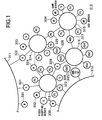
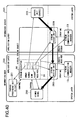
- Figure 1 is a view of an example of such a network.
- a network 310 shown in Fig. 1 has six physical sub-networks 311 to 316.
- the sub-networks 311 and 312 are key networks that cover a wider area in comparison with the other sub-networks 313 to 316 and that comprise a plurality of sub-networks connected with each other and are constructed by for example private high speed digital lines.
- the sub-networks 313 and 314 are ordinary local area networks (LAN) to which a large number of personal computers (PC) or servers (S) are connected and are mainly constituted by Ethernets or communication lines.
- LAN local area networks
- PC personal computers
- S servers
- the sub-network 315 is a cable television network connected by fiber optic cables or coaxial cables and having connected to it a head end device (HE) in a broadcasting station, television receivers (TV) connected via a set top box, personal computers (PC) connected via cable modems, etc.
- HE head end device
- TV television receivers
- PC personal computers
- the sub-network 316 is a radio transmission network, specifically, a satellite communication system, comprised of a master station (HUB) having a host computer and centrally carrying out network monitoring and control and slave stations (VSAT) which use very small antennas and have personal computers, various types of communication apparatuses, monitors, etc., for carrying out bidirectional communications via a communication satellite.
- a master station having a host computer
- VSAT network monitoring and control and slave stations
- the sub-networks 311 to 316 are connected as illustrated via routers (R) 321 to 329.
- the routers 321 to 329 exist as nodes with respect to two connected networks, have management information of both sub-networks to be routed, and output signals input via one network converted to a format which can be output to the other network.
- data can be transferred among computer networks 311 to 314, the cable television network 315, the satellite communication network 316, etc.
- the information distribution service illustrated in the present embodiment is a service by which the information provider, that is, a movie service company (FOO Movie Services), provides a movie via a network for a fee.
- the information provider that is, a movie service company (FOO Movie Services)
- FOO Movie Services provides a movie via a network for a fee.
- a typical type of the service is to send a desired list of movies and distribute a movie selected by the user from the list in accordance with a request of the user.
- This service is provided by, as shown in Fig. 2, a service provider 210, an information server 220, an advertisement provider 240, an advertisement server 250 and an information consumer 260.
- the service provider 210 to information consumer 260 are logical processing units. In actuality, they are processing systems or processing devices loaded on one node or a plurality of nodes on the network system.
- the service provider 210 to the information consumer 260 are connected via the network as mentioned above.
- a communication means is secured with respect to each other.
- the service provider 210 is a subject node for providing the information distribution service and handles the subscription by the information consumer 260 and other management of the information user, charging of advertisement fees to the advertisement provider 240, and other overall management regarding services.
- the information server 220 actually distributes the information to the information consumer 260 while appropriately using advertisements managed from the service provider 210 and transmitted from the advertisement server 250.
- the advertisement provider 240 simultaneously transmits the advertisements which it requests be distributed to an entity such as the service provider 210 distributing the information to the information consumer 260.
- the advertisement server 250 actually distributes the advertisement data to the information server 220 based on a request from the advertisement provider 240.
- the information consumer 260 receives and utilizes the information transmitted from the information server 220 and is any system on the network, for example, a personal computer or a television receiver first of all.
- the information server 220 sends a list of movies which can be distributed in response to a request of the information consumer 260.
- the information consumer 260 selects a desired movie from the list and requests its distribution.
- the information server 220 adds the advertisement supplied from the advertisement server 250 and distributes that movie.
- the service provider 210 carries out the charging for the viewing of the movie by the information consumer 260.
- the service provider 210 bills the distribution fee to the advertisement provider 240 for the distribution of the advertisement.
- the information consumer 260 subscribes to the service by the service provider 210 in advance by procedures for this.
- the information consumer 260 obtains a user number (account) by the subscription and becomes able to use the service.
- the information consumer 260 carries out the procedures for authentication for the information to be provided in accordance with need
- the processing systems on the above network system transmit among them the content to be distributed (movie in the present embodiment), written certification, bill, etc. and information for control by using a predetermined information structure (hereinafter referenced as an information package) according to the present invention.
- the information package is mainly denoted by a hyper text format based on the SGML (Standard Generalized Markup Language, ISO8879).
- the information for distribution via the network is basically configured by combining the basic units, that is, the elements, in a predetermined format or connecting them hierarchically, but usually are configured by further combining structures obtained by combining elements or further connecting them hierarchically.
- the basic unit that is, the element, is denoted by the basic format as shown in (1) or (2): where, * is an arrangement of 0 or more
- the pair of the ⁇ tag> and the ⁇ /tag> will be referred to as a "tag" with respect to data enclosed by them and describes the processing on the data etc.
- a tag without a function is particularly expressed by ⁇ null>. Accordingly, ⁇ null>data ⁇ /null> or ⁇ null>... ⁇ /null> can be used as a delimiter sign.
- a structure is configured by these elements connected for example hierarchically as shown in (3).
- This link includes an internal link and an external link for indicating a logical boundary of the information package and is distinguished by an attribute.
- the range of connection by this internal link constitutes one information package.
- the reference in the link is given as &entity when the entity of the destination of the reference is expressed as in (5).
- the link can be handled as a name.
- the name is given as &"Movie Star Wars".
- the attribute of the data is described as in (8) by using the configuration of the structure as explained above. At this time, as shown in (9), it is also possible to describe the attribute as another structure and designate it by a link.
- the information package is comprised by using such a description.
- the information package is configured by using structures having the functions as shown in Table 1 as basic structural elements, using the title part as a hub, and connecting the basic structural elements by links.
- the title part is further comprised by the information as shown in Table 2.
- the "cover” is a digest of the content and indicated by any format.
- the "name” is the name or identifier of the information package of both of them.
- the "sort” is expressed by a first sort indicating the item and a second sort indicating the content of the sort expressed as the data attribute of the first sort and shows the content as shown in Table 3.
- First sort Second sort (expressed as data attribute of first sort) Content Drama, movie, documentary, novel, advertisements, dictionary, user profile Services Calculations, shopping, various reservations, financial processing Domain Service range/coverage, user community Voucher Invoice, bill, receipt, reservation confirmation
- Program Execution environment for example: Windows, Macintosh, UNIX) Wrapped object None Universal container None
- the "calculations” means for example use of high performance computation such as FFT remotely.
- the "domain” is for handling sets such as information servers, user nodes, etc.
- the "voucher” is for transferring information between sites engaged in the transfer of the information package
- the "wrapped object” is for providing any existing entity charging a fee by utilization thereof
- the "universal container” is for providing any entity within the framework of the information package.
- designation of processing system is the description for designating the system for interpreting the content.
- the "structure description” is the link of the information package to the parts other than the title, i.e., the link part, content attribute part, control attribute part, and multimedia sequence description part.
- the reference thereof is obtained by &entity by describing the parts by ⁇ !ENTITY entity entity-description>.
- the title part, the link part expressed by link-to-linkage, link-to-content-attributes, link-to-content-attributes, and link-to-sequences, the content attribute part, the control attribute part, and the multimedia sequence description part are automatically linked into one structure by, preferably, an authoring tool at the time of generation thereof.
- the link part of the information package is a set of links with the notation as shown in (12).
- links have formats as shown in (13). Other than the link information indicating the destination of the reference, as options, the label, control tag, content tag, and other information are described.
- the control tag has described in it information of whether the reference is an internal reference or external reference, information as to whether revision is possible or not, or information on the agreements at the time of accessing, that is, the access control, as attributes of the link. Note that the default values for the reference and the possibility of revision are internal reference and revision impossible.
- the content tag is the tag attached to the entity of the destination of the reference and is for enabling understanding of the content even without actually viewing the destination of the reference.
- the content attribute part of the information package is a notation as shown in (14) and is a region in which any information such as the title, theme, author, publisher, supporter, preparation date, revision date, version, and language are described.
- the preparer can attached any one, but preferably a standardized one is used for circulation.
- the control attribute part of the information package is a notation as shown in (15) and has described in it attributes such as charging, authentication, and operation.
- the preparer may attach any one which is possible by processing provided by the network or system or processing designated by the processing system designation of the title part explained above, but preferably use is made of one which has been standardized for circulation.
- the multimedia sequence description part of the information package describes the multimedia materials, produces outputs using them, and describes the control such as the synchronization.
- the designation of the ⁇ source> is described by a local reference local-link to the link part in the information package so as to concentrate the reference thereof at the link part.
- this it is also possible to directly write this as for example ⁇ source> net-resource://audio-server/audiol ⁇ /source> (here, net-resource is the mechanism for solving the name and reference, while the part after this is the input to the mechanism.
- the synchronization between two streams is designated and controlled by describing a relative time (time interval, deviation) between these streams.
- time interval, deviation time interval between these streams.
- the unit of delay is a second.
- “max-skew” is the permissible error (so-called Quality-of-Service (QoS)) in units of milliseconds (msec).
- the stream is divided into segments in advance and described, and the relationship with the other stream is designated by using "before”, “while”, and "cobegin” for this segment as shown in for example (31).
- sequence control is carried out based on the relative interval time, but it can also be time axis based and can also be control flow based etc.
- Figs. 6A, 6B and 7A to 7C are descriptions of materials, in which Fig. 6A is a description of the pictures P1 to P4; Fig. 6B is a description of AUDIO 1 and AUDIO 2; Fig. 7A is a description of videol; Fig. 7B is a description of animationl; and Fig. 7C is a description of dialog1.
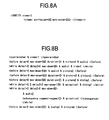
- Fig. 8A is a description of the destination of output and indicates that the sequence of each stream as shown in Fig. 5 is to be displayed on a viewer.
- Fig. 8B is a description of the sequence and prescribes that each stream is displayed by sequence as shown in Fig. 5.
- the streams are displayed on the viewer according to the sequence as shown in Fig. 5.
- an indication use object displayed by the description of the "dialog" shown in Fig. 7C is shown in Fig. 9.
- the movie distribution service briefly explained above is carried out by using the information package mentioned above. Below, however, the specific format of the information package, the configuration of each processing system, the flow of processing, etc. will be explained in detail.
- the first information package is the information package for sending the movie list to the user and making him or her to select the movie desired to be distributed.
- the Picture P1 is displayed at first.
- This Picture P1 is a stationary screen on which information, the title screen, the copyright, etc. are displayed.
- a summary of the service and promotional information are given by Audio 1 and Video 1.
- Audio 1 and Video 1 a summary of the service and promotional information are given by Audio 1 and Video 1.
- the display of the movie selection screen as "Dialog 1" as shown in Fig. 11, information on utilization is sent by the selection screen by Audio 2 and Animation 1.
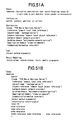
- the specific configuration of the first information package for carrying out such an operation is shown in Figs. 12 to 17 by the hypertext format.
- Figure 12 is a view of the title part of this first information package.
- the link to the link part in the package ( ⁇ linkage>), content attribute part ( ⁇ content-attributes>), control attribute part ( ⁇ control-attributes>), and multimedia sequence part ( ⁇ sequences>) are described.
- Figure 13 and Fig. 14 are views of the link part of this first information package.
- streams other than Dialogl shown in Fig. 10 that is, the streams of Picture P1, Audio 1, Audio 2, Video 1, and Animation 1, and linkages with respect to the packages (package 2 to package 6) of five movies' ("Star Wars”, “Empire Strikes Back”, “Return of the Game”, “The Ten Commandments”, and “Kagemusha") offered in the selection of Dialog 1 shown in Fig. 11 are described.
- Figure 15 is a view of the content attribute part and control attribute part of this first information package.
- this information is information regarding the operation of this information package and, for example, the fact that, regarding the charging, this information package is free, the operating environment required for the user, and the key for authentication, etc.
- Fig. 16 and Fig. 17 show the multimedia sequence part of this first information package. Note that, Fig. 17 is a view of the content of the dialog of the multimedia sequence part shown in Fig. 16.
- streams are displayed by the sequence as shown in Fig. 10.
- a second information package is the information package for actually distributing the movie requested by the user.
- the Picture P1 is first displayed. On this Picture P1, the information, title screen, copyright, etc. are displayed. After this Picture P1, the advertisement is displayed by Audio 1 and Video 1. When the advertisement is terminated, the title screen of the service provider is displayed by the Picture P2. Then, after the Picture P2, the Movie 1 itself is finally displayed. When the Movie 1 is terminated, the first Picture P1 on which the information, title screen, copyright, etc. are displayed is terminated again and the display of the stream is terminated.
- Figure 19 is a view of the title part and the link part of this second information package;
- Fig. 20 is a view of content attribute part of this second information package;
- Fig. 21 is a view of the control attribute part of this second information package;
- Fig. 22 is a view of the sequence part of this second information package.
- this second information package is a package having a movie as its content and whose main object is the distribution thereof, therefore various information concerning the movie is described in the content attribute part shown in Fig. 20.
- the characteristic feature is that the amount of information of this content attribute part has become large.
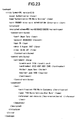
- the third information package is an information package for authentication sent to the information provider when a user is trying to obtain an information package requiring authentication.
- this information package in this information package, the name of the user, user number, age, authentication date and time, etc. are described in the content attribute part. Further, in the control attribute part, as the charging method, information such as the credit card name, credit card number, holder, etc. are described.
- part of the important information of this third information package is encrypted by an "public key” disclosed by the information provider.
- the information provider decrypts the encryption by a "private key”, interprets the content, and carries out the processing for authentication.
- the fourth information package is an information package corresponding to a bill sent to a party to the transaction when the information provider charges an advertisement fee etc. to an advertiser or other party to the transaction. In the present embodiment, it is assumed that this fourth information package is sent together one time a month in the same way as a usual bill.
- FIG. 24 A specific configuration of this fourth information package is shown in Fig. 24.
- this information package in this information package, the name of the information provider as the charging side, the date and time of issuance of the bill, etc. are described in the content attribute part. Further, in the control attribute part, a payment method is described. In the example shown in Fig. 24, information such as the name of the bank as the destination of transfer, the name of the branch, the account number, the holder, etc. are described.
- Part of the important information of this fourth information package is encrypted in the same way as the third information package.
- the information provider encrypts the information by an "public key” disclosed by the advertiser or other party to the transaction.
- the party to the transaction decrypts the encryption by a "private key” and interprets the content.
- this movie distribution service is realized by loading the processing system as shown in Fig. 2 on any node on the network system having the structure as shown in Fig. 1 and by using the information package mentioned above.
- the service provider 210 is the subject node of the information distribution service. This node carries out only the management of the information user such as subscription by the information consumer 260 and the overall management relating to the service such as the billing of advertisement fees to the advertisement provider 240. The processing relating the actual distribution of information is carried out by the information server 220 based on instructions from the service provider 210.
- the information server 220 is managed from the service provider 210 as mentioned above and actually sends the information to the information consumer 260 while appropriately using the advertisement transmitted from the advertisement server 250.
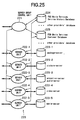
- the configuration of the information server 220 will be explained by referring to Fig. 25.
- the information server 220 has a server group control unit 221, data bases 223 -1 to 223 -5 for each type of source and data as shown in for example Fig. 25, server units (source) 222 -1 to 222 -5 respectively corresponding to the data bases 223 -1 to 223 -5 , a service history data base 224, and a customer data base 225.
- the server group control unit 221 controls the server units 222 -1 to 222 -5 and, at the same time, refers to and updates the service history data base 224 and the customer data base 225 along with each request and distribution of the information.
- FIG. 26 A more detailed configuration of the server unit 222 is shown in Fig. 26.
- the server unit 222 -i has a service control unit 226, a authentication unit 227, a charging unit 228, a stream feeder unit 229, a bulk data receiver unit 230, and a package processing unit 231.
- the service control unit 226 controls the units constituting the server unit 222 -i and controls the overall service to the information consumer 260.
- the authentication unit 227 carries out the authentication processing based on the information package transmitted from the information consumer 260 provided for authentication, for example, the third information package mentioned above, and, where the authentication is adequately carried out, carries out the processing giving permission for transmission of the stream to the stream feeder unit 229 and so on.
- the charging unit 228 carries out the charging processing accompanying the distribution of information based on the information on the charging substantially permitted by the information consumer 260. Then, the charging information obtained as a result of distribution of a series of information is written into the customer data base 225 at the end of the distribution etc.
- the stream feeder unit 229 reads and fetches the desired content of the corresponding data base 223 -i and transmits the same to the information consumer 260.
- the bulk data receiver unit 230 writes the information input for every predetermined unit into the data base 223 -i for storing the data in the corresponding data base 223 -i .
- the advertisement data sent by the information server 220 is transmitted to the information server 220 in advance.
- the advertisement data is transferred from the advertisement server 250 to the information server 220 via the bulk data receiver unit 230.
- the package processing unit 231 decrypts the information package transmitted from the service provider 210, the advertisement server 250, or the information consumer 260, appropriately applies the service control unit 226 to the bulk data receiver unit 230 for the data based on the content thereof, and successively executes the processing according to the content. Note that, the processing in this package processing unit 231 will be explained in further detail later.
- the component units of the information server 220 are usually configured across the network and constitute a dispersed server.
- this information server 220 is not provided corresponding to a specific provider, but stores and sends desired information based on instructions from a plurality of providers.
- the service history data base 224 and the customer data base 225 are provided for every provider.
- the service history data base 224 and the customer data base 225 shown in Fig. 25 are data bases of the service provider 210 of Fig. 2, that is, the "FOO Movie Services”.
- the data bases 223 -1 to 223 -5 , the service history data bases 224, and the customer data base 225 are not provided corresponding to this information server 220, but can be utilized by a plurality of information servers on the network. Particularly, as the picture, animation, audio, video, movie, and other content data bases 223 -2 to 223 -5 , those widely stored on the network are frequently utilized.
- the desired content data base is specified on the network by the name resolving mechanism referred to as "net-resource" of the resource location described in the link part of the above information package.
- the advertisement provider 240 transmits an advertisement which it is requesting distribution of to someone distributing information to the information users such as a service provider 210. Also, this advertisement provider 240 carries out only the processing concerning the overall management with the destination of distribution of advertisement and the processing concerning the payment of the advertisement fee in the same way as the service provider 210. The processing regarding actual distribution of the advertisement is carried out by the advertisement server 250.
- the advertisement server 250 actually sends the advertisement data to the information server 220 based on a request from the advertisement provider 240.
- This advertisement server 250 is different from the above information server 220 in only the information to be sent. The configuration etc. of this are the same.
- the information consumer 260 receives and utilizes the information which is provided by the service provider 210 and actually transmitted from the information server 220.
- This information consumer 260 is also not limited to various types of terminal equipment such as personal computers and apparatuses comprised mainly of television receiver and can be a system constructed on the network.
- the information consumer 260 has a package processing unit (consumer, client) 261, a service control unit 262, a authentication unit 263, a charging unit 264, a stream receiver unit 265, and a viewer unit (sink) 266.
- the package processing unit 261 appropriately applies the service control unit 262 to the viewer unit 266 based on the content of the information package transmitted from the service provider 210 and the information server 220 and successively executes the processing according to the content.
- the processing of this package processing unit 261 will be explained in further detail below.
- the service control unit 262 to the stream receiver unit 265 perform processing selected and applied by the package processing unit 261.
- the service control unit 262 coordinates with the service provider 210 and the information server 220 so that a suitable information package is suitably transmitted among the information consumer 260, the service provider 210, and the information server 220.
- the authentication unit 263 transmits the information package provided for authentication like for example the above third information package to the information server 220 and requests the authentication processing.
- the charging unit 264 transmits the information for permission for charging along with a request for information to the information server 220.
- the stream receiver unit 265 receives the stream transmitted from the information server 220.
- the received stream is output to the viewer unit 266 and output in predetermined formats. Note that, here, it is assumed that the stream also contains a picture.
- the information package transmitted from the network is also received here and sent to the package processing unit 261.
- the viewer unit 266 controls the viewer for receiving and utilizing the desired information. Specifically, it carries out the processing such as the display of the stream to the viewer and interaction by dialog.
- the control of this viewer is designated by the description in for example the information package like the description concerning the viewer existing also in the example of the information package mentioned above and carried out by instruction from the package processing unit 261 analyzing this.
- Both of the package processing units 231 and 261 decrypt the transmitted information package, appropriately apply the service control unit 262 to the viewer unit 266 based on the content thereof, and successively execute the processing according to the content.
- the processing in this package processing unit can, in more detail, be divided to a parser and an evaluation system.
- the parser converts the information package to the corresponding internal expression if the received information package has a logical format.
- the transmitted information package has the logical format as exemplified in for example Figs. 12 to 17, Figs. 19 to 22, Fig. 23, and Fig. 24, this is converted to the internal expression to be used in the information consumer 260.
- the conversion of this information package from the logical format to the internal expression will be explained in further detail later.
- the evaluation system repeats the processing for calling up the required function while interpreting the converted internal expression. Namely, tags appear when executing the processing, therefore the system repeats the processing for calling up the functions determined by the tags and further reading the next content.
- the processing called up at this time are functions such as charging, authentication, stream distribution, control of the viewer, and acquisition of a new information package provided by the authentication unit, charging unit, stream feeder and receiver unit, viewer unit, etc. in the server unit 222 and the information consumer 260 as mentioned above.
- Each of these called up functions simultaneously carries out the processing of a plurality of users, therefore, at the callup of these functions, the identifier of the user (or service and account) and the identifier of the information package during processing are simultaneously transferred to the processing unit where they are distinguished.
- a set of these identifiers that is, the state of the service, is recognized and controlled at the service control units 226 and 262.
- the structure since the structure has a graph structure in which a plurality of partial structures are derived from one portion, there are cases where there are a plurality of other functions to be called up from a certain function. Further, in general cases, there are cases where a certain information package is being processed, another information package is obtained, and the processing of the original information package is continued after this processing is terminated. For this reason, the package processing unit stores the intermediate state during execution as an "evaluation state".
- each item of the information package is loaded.
- Several units comprised of sets of tags indicating the processing or item with respect to the data and the data with respect to this are combined and handled in the form of a structure.
- Figs. 28A to 28D the left side of each is a view indicating the logical format, and the right side is a view schematically showing the internal expression.
- the element of the information package as shown in (1) shown in Fig. 28A is expressed in the internal portion of the processing system by the internal basic format of correspondence between a tag and data as indicated by "a" in Fig. 28A.
- Fig. 28B when the data part of Fig. 28A is a combination of a plurality of elements, it is internally expressed by a structure "b" comprised of the linked internal basic formats corresponding to these plurality of elements and the internal basic format "a" where the data part becomes a pointer pointing to the front position of the structure "b".
- a structure "c" comprised of the linked attributes and attribute values corresponding to the plurality of attributes and the internal basic format "a" where the tag part becomes a pointer pointing to the front position of the structure "c".
- a logical format such as one where the tag part has a plurality of attributes and the data part has a plurality of elements is internally expressed by a structure "b" comprised of linked internal basic formats corresponding to the plurality of elements, a structure “c” comprised of linked attributes and attribute values corresponding to the plurality of attributes, and an internal basic format "a” where the tag part becomes a pointer pointing to the front position of the structure "c” and the data part becomes a pointer pointing to the front position of the structure "b".
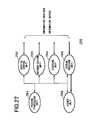
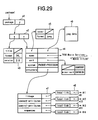
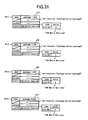
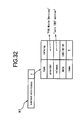
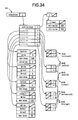
- Figs. 29 to 36 the internal expression of the first information package shown in Figs. 12 to 17 is shown in Figs. 29 to 36.
- an original internal basic format el where the data part becomes a pointer to an internal basic format e2 in which the attribute of the title part and the pointer to the structure of the data are described is provided corresponding to the tag ⁇ package>.
- the tag part of the internal basic format e2 becomes a pointer to a structure e3 in which the content of the tag of the title part, that is, data that the format provider is DVL and the version is 2.0, is described. Further, the data part of the internal basic format e2 becomes a pointer to a structure e4 in which the content of the title part, that is, the cover, name, type, etc. are described.
- the tag part of the cover of this structure e4 becomes a pointer to a structure e5 comprised of a basic format indicating that it is the cover and a basic format indicating that the format is the JPEG.
- the data part of the cover becomes a pointer to a JPEG data e6.
- the data of the structure of the structure e4 becomes a pointer to a structure e7 which indicates the structure by using the linkage part, content attribute part, control attribute part, and sequence part as tags.
- the data other than the title part to the information package refers to the pointer indicated in the data part of each item of this structure e7 and is referenced by the pointer indicated in the data part via the internal basic formats e8 to e11 each indicating that it is a local link.
- These internal basic formats e8 to e11 are internal basic formats e for connection - of which single stages are used so as to enable just one to be rewritten when referring to data via the network.
- Figure 30 and Fig. 31 are views of the internal expression of data of the link part referenced by the internal basic format e8.
- the structures e13 to e17 shown in Fig. 30 and Fig. 31 are structures indicating the existing location, content, etc. for the data to be externally referenced indicated by the structure e12 of Fig. 30.
- Fig. 32 is a view of the internal expression of the data of the content attribute part referenced by the internal basic format e9;
- Fig. 33 is a view of the internal expression of the data of the control attribute part referenced by the internal basic format e10;
- Fig. 34 to Fig. 36 are views of the internal expression of the data of the sequence part referenced by the internal basic format e11.
- the service provider 210 prepares the data of the information consumer 260 in the service history data base 224 and the customer data base 225 so as to enable management relating to the information consumer 260.
- the information consumer 260 actually tries to receive the service from the service provider 210, first, the information consumer 260 requests a service list from the information server 220. In response to this, the information server 220 transmits a service list like the first information package as shown in for example Fig. 12 to 17 to the information consumer 260. At this time, the history of the transmissions is held in the service history data base 224 of the information server 220.
- the information consumer 260 analyzes the received first information package at the package processing unit 261 and converts this to an internal expression. Then, by this, the package processing unit 261 decrypts the content of this first information package as the multimedia content and starts the processing of the multimedia sequence. Specifically, the package processing unit 261 appropriately obtains the source of the material content by access on the network according to the content of the sequence as shown in Fig. 10 described in that information package. At this time, the information server 220 transmits the desired content to the information consumer 260 upon demand. By this, the multimedia sequence as shown in Fig. 10 described in the first information package is output to the viewer unit 266 of the information consumer 260.
- the information consumer 260 requests the distribution of the selected movie to the information server 220, in other words, requests transmission of the second information package as shown in Figs. 19 to 22 for distributing the desired movie.
- the second information package is distributed from the information server 220 to the information consumer 260, and the multimedia sequence as shown in Fig. 18 is successively output to the viewer unit 266 of the information consumer 260.
- the stream to be charged that is, the movie data (Movie 1)
- the movie data is successively transmitted based on the result of processing for authentication explained next.
- the information consumer 260 In order to obtain such a content, the information consumer 260 must perform the processing for authentication. Namely, the information consumer 260 also transmits the third information package regarding the authentication as shown in Fig. 23 to the information server 220. Part of the content of this third information package is encrypted by an "public key" disclosed by the service provider 210 (FOO Movie Services).
- the package processing unit 231 of the server unit 222 of the information server 220 decrypts the encryption by the "private key" of the service provider 210 (FOO Movie Services), interprets the content, and carries out the processing for authentication. If the content of authentication is suitable, it allows the transmission so that the request of the information consumer 260 can be subsequently responded to, that is, the transmission of the movie or other content stream to be charged can be subsequently carried out.
- FOO Movie Services FOO Movie Services
- the information server 220 will not transmit the movie or other content stream if the authentication cannot be confirmed.
- the server unit 222 of the information server 220 and the information consumer 260 link up and perform the processing for usage-based charging for charging according to stream obtained.
- the third information package for authentication is transmitted from the authentication unit 263 of the information consumer 260 to the authentication unit 227 of the information server 220, the authentication processing is carried out at the information server 220 based on this, and if it is suitable, the feeder of the stream is commenced from the stream feeder unit 229 of the information server 220 to the stream receiver unit 265 of the information consumer 260.
- the function of the charging unit 264 is called up in units of periods of for example about 30 seconds.
- the charging unit 264 allows the charging of a fee corresponding to 30 seconds to the charging unit 228 of the information server 220, in other words, notifies the payment of a fee corresponding to 30 seconds.
- the charging unit 228 of the information server 220 allows the further transmission of the stream to the information consumer 260 commensurate to the paid fee to the stream feeder unit 229.
- the stream is transmitted by this.
- the information server 220 If the information consumer 260 does not desire further reception of the stream, by for example instructing the charging unit 264 not to notify payment to the charging unit 264, the information server 220 also not longer issues permission for the stream transmission from the charging unit 228 to the stream feeder unit 229. Thus, the feeder of the stream is stopped.
- the information server 220 stores the total amount of charging control information of the information consumer 260 in the customer data base 225.
- the service provider 210 (FOO Movie Services) reads the utilization fee of the information consumer 260 from the customer data base 225 every predetermined period, for example, every month, and charges it to the credit card shown in the third information package at the time of authentication.
- the service provider 210 sends the fourth information package of the bill of the advertisement fee as shown in Fig. 24 to the advertisement server 250 based on the count of advertisements on the information server 220 every preparation period, for example, every month.
- the content (part thereof) has been encrypted by an "public key” disclosed by the advertisement provider 240.
- the advertiser decrypts the content by a "private key” and carries out the processing for payment of the advertisement fee etc.
- all of the information package except the link destination (material portion) from the link-part is transferred to the information consumer 260.
- the package processing and other processing is carried out at the side of the information consumer 260.
- the information server 220 may perform the package processing and send for example only the sequence part is sent to the information consumer 260 and for the information consumer 260 to only display the content to the viewer unit 266.
- both of the charging and authentication are carried out at the information server 220 by the contract content in advance or the recognition of the apparatus of the information consumer 260.
- the link from the information package body to the sequence description part becomes a reference via the network.
- the sequence part is sent to the user after generating and linking a stream object in advance after the "source" tag of the material position.
- the information package containing the stream object is transferred on the network according to the stream data processing method explained later by referring to Figs. 38 to 54.
- the package processing unit 261 of the information consumer 260 when the package processing unit 261 of the information consumer 260 is called up, the partial structure of the information package to be processed as the "evaluation state" of the package processing unit explained above is transferred to the opposing processing function.
- the receiver executes the processing of the partial structure viewing this "evaluation state”.
- the "evaluation state" at this time and the partial structure at this time are transferred to the processing function of the information server 220, and the processing is further executed.
- the callup among the processing functions is carried out through the service control units 226 and 262 managing the state of the service as mentioned above.
- the information to be provided exists on a node different from the information consumer 260, it is transferred to the information consumer 260 via the network by the distribution of information.
- the information consumer 260 In order to suitably transfer the video data, audio data, and other stream data by appropriately responding to fast forward, stop, rewind, and other instructions from the information consumer 260, sophisticated stream control via the network is necessary.
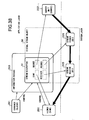
- Figure 38 is a view explaining the data processing method.
- Figure 38 is a view of a state where the package processing unit 261 of the information consumer 260 uses the stream data supplied from the server portion 222 -i via a virtual stream object 30.
- the entity of the stream data is transferred to the viewer unit 266 corresponding to the viewer portion 266 of the information consumer 260 from the server portion 222 -i after passing through the complex procedure at the system level.
- This figure shows a state where they can be handled as if they were one stream object 30 from the package processing unit 261.
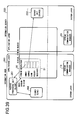
- Figures 39 and 40 are views explaining the data processing method in the actual data processing mechanism, in which Fig. 39 is a view of the state for generating the virtual stream object 30; and Fig. 40 is a view of the state when the transfer of the stream data is actually carried out.
- the package processing unit 261 is an application module using the video data, audio data, and other stream data.
- An information package 40 contains the data for generating the stream descriptor module 30 as the multimedia data structure in the application layer, and usually generated on the node of the information consumer 260 by the package processing unit 261.
- the information package is like the first information package as shown in for example Figs. 12 to 17 and has been already explained in detail, but Fig. 41 is a view of the configuration simplified for the explanation. Further, corresponding to Fig. 41, a state where the multimedia structure as shown in for example Figs. 29 to 36 is generated from the information package 40 is shown in Fig. 42.
- the information package 40 has a header part, a media data reference part, and a media data sequence part.
- the header part is a set of the data for specifying the data stream structure
- the reference information of the source media data is stored in the media data reference part
- the instructions with respect to the media data are indicated in the media data sequence part.
- the virtual stream object 30 is stored in the server unit 222 -i and is a module for handling a stream data requiring complex system level procedures for use as if it were a stream of simple material.
- the virtual stream object 30 is configured by a stream descriptor module 31, a stream feeder unit 229, and a stream receiver unit 265.
- the stream descriptor module 31 is a module for interfacing with the package processing unit 261 and the modules of the system level and, at the same time, controlling the modules of the system level and making them perform a desired operation with respect to the stream data.
- a variable owner indicating the package processing unit 261 as the master module a variable source indicating the streaming data to be processed, a variable sink designating the viewer unit 266 receiving the stream data, a variable feeder indicating the transmission unit 229 of the stream, and a variable receiver indicating the reception unit 265 of the stream are defined as instance variables.
- the stream feeder unit 229 is a module corresponding to the stream feeder unit 229 of the information server 220, for reading the stream data from the source module of the stream data in accordance with the request of the stream receiver unit 265, and outputting this to the stream receiver unit 265 according to a predetermined protocol.
- the stream receiver unit 265 corresponds to the stream receiver unit 265 of the information consumer 260, outputs the transmission request of the stream data to the stream feeder unit 229 under the control from the stream descriptor module 31 and, at the same time, outputs the transmitted stream data to the viewer unit 266 controlled by the package processing unit 261.
- the protocol between the stream feeder unit 229 and the stream receiver unit 265 is XTP.
- a stream communication manager 13 and a stream communication manager 23 shown in Figs. 39 and 40 are processing modules for generating the stream feeder unit 229 and the stream receiver unit 265 according to need and are stationed in the system.
- the server unit 222 -i is a module existing in the apparatus for storing the stream data and for supplying the stream data.
- the viewer unit 266 is a module corresponding to the viewer unit 266 of the information consumer 260 and receiving the stream data and actually utilizing it.
- the virtual stream object 30 is generated as shown in Fig. 39 by just designating the source stream data from the package processing unit 261. By executing the processing by using this as the stream data after this, the desired processing can be carried out.
- the modules link together to control the transfer etc. of the stream data. It is sufficient that the processing be carried out from the package processing unit 261 with respect to the virtual stream object 30.
- the stream descriptor module 31 is generated at the information consumer 260 based on the data source described in the information package 40 received by for example the package processing unit 261.
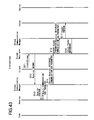
- the package processing unit 261 in the information consumer 260 calls up the method createStream to the stream descriptor module 31 and requests the generation of the stream communication mechanism shown in Fig. 40 (step S11).
- the stream descriptor module 31 requests acquisition of the stream receiver unit 265 to the stream communication manager 13 (step S12).
- the stream communication manager 13 generates a stream receiver unit 265 in response to this (step S13).
- the generated stream receiver unit 265 returns a communication parameter such as destination data for the stream feeder unit 229 as the return value (step S14).
- the stream communication manager 13 further adds the reference of the stream receiver unit 265 and returns the return value to the stream descriptor module 31 (step S15).
- the stream descriptor module 31 transmits the reference and communication parameter of the stream receiver unit 265 to the information server 220, and indicates the generation of the stream feeder unit 229 with respect to the stream communication manager 23 of the information server 220 (step S16). In response to this, the stream communication manager 23 generates the stream feeder unit 229 (step S17). Then, the stream communication manager 23 returns the reference of the stream feeder unit 229 to the stream descriptor module 31 (step S18).
- the pointers appearing after the "source” tag indicating the location of materials shown in Fig. 35 are switched from the cells of the local-link tag to the pointers pointing to the stream-object.
- the local-link thereof is pulled in to obtain the resource identifier (net-resource://.) from the information of the link part and generate a stream-object defining this as the source of the internal variable.
- the stream descriptor module 31 using the stream-object and the virtual stream object 30 containing the stream feeder unit 229 and the stream receiver unit 265 are generated.
- the pointer of the information package 40 for referring to the source thereof is replaced by the pointer to this stream object.
- the pointer at the right side of SOURCE is replaced by the pointer to the generated stream object.
- the package processing unit 261 in the information consumer 260 requests the method startStream from the stream descriptor module 31 (step S21).
- the stream descriptor module 31 requests the start of transfer to the stream receiver unit 265 (step S22).
- the stream receiver unit 265 requests transfer of the stream to the stream feeder unit of the information server 220 (step S23).
- the stream feeder unit 229 requests the transfer of the stream to the server unit 222 -i (step S24).
- the server unit 222 -i returns the stream ID and, at the same time, successively outputs streams to the stream feeder unit 229 in accordance with the request (step S25). Then, the stream feeder unit 229 and the stream receiver unit 265 cooperate to secure a transmission line (step S26) and transfer the stream output from the server unit 222 -i from the stream feeder unit 229 to the stream receiver unit 265 (step S27). The stream receiver unit 265 successively outputs the received streams to the viewer unit 266 (step S28).
- the streams are then successively transferred via the secured route.
- StartStream may be requested while the stream descriptor module 31 carries out the processing of CreateStream.
- the stream descriptor module 31 starts the processing of StartStream immediately after the end of the processing of CreateStream.
- the relationship between the supplying side of the stream data and the utilization side of the stream data can be any relationship so far as the data transfer can be carried out.
- the distance between them, type of network, type of the mounted processing device, etc. do not matter.
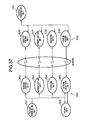
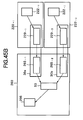
- a stream combining unit 50 is provided on the stream feeder unit 229 side thereof, the source data read from for example two server units 222 -1 and 222 -2 is combined to obtain one stream, and this is transferred to the stream receiver unit 265.
- the stream combining unit 50 is regarded as another module from the virtual stream objects 30a and 30b, but in actuality, this stream combining unit 50 is any one of the modules of the combination of the stream contained in the virtual stream objects 30a and 30b.
- FIG. 46 An example of the configuration of the stream combining unit 50 used in Fig. 45A and 45B is illustrated in Fig. 46.
- the stream combining unit 50 is configured by two timing buffers 51a and 51b, two weight multipliers 52a and 52b, and a stream adder 53 corresponding to the two input streams.
- the synchronization of input first and second data streams is established at the timing buffers 51a and 51b. For example, if the input data stream is video data, frame synchronization is established at the timing buffers 51a and 51b. Then, at the weight multipliers 52a and 52b, multiplication is carried out by predetermined weights set by a not illustrated control signal, and the two weighted streams are added at the stream adder 53 to produce one output stream.
- this type of additional function is processing that is carried out by using a module of the system level, for example, depends upon the hardware or complex processing, it becomes possible to easily perform the processing by adding such a function to the virtual stream object, therefore the invention is further effective.
- Figures 47A and 47B correspond to the example explained in brief in Fig. 45A and are views showing the configuration of a data processing system where a plurality of streams are combined and transferred as one stream.
- Figure 47A is a view of the configuration of a data processing system wherein two server units (SOURCE) 222 -1 and 222 -2 and the stream feeder unit 229 are configured on one information server 220.
- SOURCE server units
- Figure 47B is a view of the configuration of a data processing system where two server portions 222 -i and 222 -j and the stream feeder unit 229 are configured on different information servers 220 -1 to 220 -3 .
- Figure 48 corresponds to the example explained in brief in Fig. 45B and is a view of the configuration of the data processing system where a plurality of streams are individually transferred and combined.
- Fig. 49 is a schematic view for explaining the case where Fig. 48 is actually realized on a dispersed system.
- the synchronization is directly established between two stream receiver units 265 -1 and 265 -2 and two streams are substantially processed.
- the stream receiver unit 265 perform the control of the data transfer including the control of the feeder, therefore the function of the combining unit 50 including the timing buffers 51a and 51b of Fig. 46 is internally located in the stream receiver unit 265.
- the combining unit 50 including the timing buffers 51a and 51b of Fig. 46 is internally located in the stream receiver unit 265.
- the audio data, video data, and other stream data can be processed among any nodes while avoiding any complexity and trouble of processing by using the application programming interface for handling the stream processing function referred to as the virtual stream object as explained above.
- the package processing unit 261 of the stream receiver unit 265, the package processing unit 231 of the information server 220, etc. recognize the name mechanism thereof ("net-resource") when the resource identifier is obtained and specifies the actual position of the resource by the function.
- This method usually locally holds the resolving result.
- a method of simply referring to this and a method of inquiring to the server which manages each resource are used.
- a managing means is provided for every local area. By calling up this managing means, the position of the resource can be searched for. This method will be mentioned later.
- the information used for the inquiry is based on the service content at that time. Preferably, it is carried out by using the content attribute etc. added to the link.
- the network is managed while being dispersed by the managing means provided in every local area.
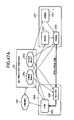
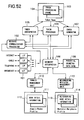
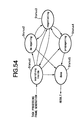
- management is carried out for every sub-network in mediators (M) 331 to 336 individually provided for the sub-networks 311 to 316.
- the mediators 331 to 336 store the information of the node in each sub-network and the information of the adjoining sub-network. By this, they manage the input and output of the data to and from each node and the destination of output of the data to be transmitted.
- the management information stored in the mediators 331 to 336 is successively updated based on addition or deletion of the nodes. For this reason, first, the mediators 331 to 336 monitor the nodes connected to the sub-network to be managed at predetermined time intervals. When a node is deleted, it immediately update the management information in that mediator. Further, when the node is added due to the connection of a new data processing device to the sub-network or connection of mobile terminal equipment, the data processing device immediately transmits the connection information of a predetermined format to the mediator. The mediator carries out the processing for giving an ID to the connected node or the like based on that information and updates the management information.
- the processing is automatically carried out according to a predetermined protocol, therefore it is sufficient that the user merely connect the data processing device or mobile terminal to the network. No setup is required with respect to the network.
- connection among nodes is achieved by a hypothetical base connection for hypothetically constructing a path between nodes.
- the node of the connection side designates the node of the destination of connection by the name of the node of the destination of connection or a function keyword indicating the nature of the node and outputs a connection request having the designation information to the mediator of the sub-network to which that node belongs.
- the mediator Based on the data of the connection request, the mediator detects a route on which the destination of connection may exist and outputs the connection request to that route. This connection request is output to all of the possible routes of connection. Further, for another sub-network, this connection request is output to the mediator of that sub-network.
- the search for a route is ended.
- the finally desired nodes are connected to each other.
- any processing is carried out by using that route and by the connection request data thereof.
- the control signal of that processing is added together with the connection request.
- the desired processing can be carried out at the node of the destination of connection based on the control signal immediately after a point of time when the connection route is secured, that is, the connection request is transmitted to the destination of connection.
- requests for the shopping environment, change of environment, requests for some sort of information, instructions for charging, changing the store, and ending the processing, etc. with respect to the video shopping server are executed if the control code thereof is added to the connection request.
- the result of execution thereof can be immediately obtained.
- requests for transmission of AV data to the video server control of transmission such as fast forward, rewind, and pause, etc. or requests for distribution of games to a game server.
- the method of specification of the node may be any other method.
- any node may be appropriately selected by for example the method of selecting the node having the shorter route.
- any route can be selected in accordance with the object of connection, transfer data, etc.
- the obtained routes are routes of the same format, for example all are routes via a public line, any one may be selected.
- a preferred transmission route is selected in accordance with the type of the data to be transferred.
- connection objects it is also possible to use the obtained plurality of routes according to some connection objects. For example, when a VOD service is requested, it is also possible to transmit a request for AV data and processing commands such as fast forward and rewind via the public telephone line and receive the distribution of the AV data by utilizing the cable TV network or a network via a communication satellite.
- connection destination node not only does not exist within the search range in that mediator, but also can no longer exist on the network due to for example rearrangement of the network, update of information, or replacement of the providers.
- an alternate node if any, is connected to by the network mediation processing, explained later.
- the network is managed for every sub-network.
- a change of the node structure such as the addition or deletion of a node may be carried out independently for every sub-network. Therefore, the flexibility with respect to a change of the network structure becomes high.
- the processing for connection is carried out by dynamically obtaining the spatial information at the time of connection - not just depending upon the spatial information determined in advance. Therefore, the spatial management is flexible. Namely, it is not just possible to connect to a destination of connection which is known in advance. It is also possible to communicate with a destination of connection existing at the time of the connection. Further, it is possible to perform the search and connect by the properties of the node etc.
- the search for the node at the time of connection can be carried out in such a flexible space by crossing the sub-nets and different networks.
- the spatial management of such a network is not limited to the case dependent upon a physical network configuration as shown in Fig. 1 and may be carried out by units of any logical configuration as shown in Fig. 50.
- Figure 50 is a view of the state where a logical sub-network in accordance with the domain structure of the service to be provided is configured on the physical network configuration.
- a logical sub-network in accordance with the domain structure of the service to be provided is configured on the physical network configuration.
- three logical sub-networks 381 to 383 exist for every provided service in a network 310b.
- a video shopping service network 381 is constituted by a sub-network 313 and part of the nodes of sub-networks 314, 315, and 316.
- a video shopping environment is provided from a video shopping provision server 332 on the sub-network 313 to the nodes. In this environment, instructions such as a shop tour, product data request, purchase, and payment are transmitted from the nodes to the server 332.
- the video-on-demand (VOD) service 382 is a network configured by the sub-network 315 and part of the sub-networks 314 and 316.
- the video data is sent from the VOD server 352 constituted by the head end device on the sub-net 315 to each node in accordance with a request from each node.
- a game service network 383 is configured by the sub-networks 314 and 315.
- a game environment is sent to each node from the game server 353 configured on the sub-net 315 in accordance with a request from each node.
- Mediators 384 to 386 are provided for each of these service networks. These mediators 384 to 386 manage the information of the nodes by the logical node structure in the logical network and the logical node name thereof and manage the information of the nearby logical sub-network adjoining it in the logical sub-network structure, that is, which can be directly connected. Accordingly, by using these logical node name and logical sub-network, the transmission of the data between any nodes is managed by exactly the same space search method as that mentioned above.
- the mediator monitors the node as mentioned above, it searches for the location of the program module loaded on the node to manage the module.
- the program module is dynamically managed by the management of the reference table among nodes.
- the reference to the physical node and the program module is expressed by a plurality of reference routes so that the communication route can be selectively used in accordance with the type of communication (specific one such as control, data transfer, or charging processing) and the type of the data (specific one such as the control data, video data, or charging information).
- the program module existing on the node is treated as a type of property of the node for the search of the node or program module. Specifically, the module is searched for based on the module name, module class name, or module designation by functional keyword.
- a search for a module becomes possible via a search of a node. It also becomes possible to load the program module of a certain node on another node. Namely, network wide dynamic dispersed processing can be carried out by appropriately loading the program module on any node on the network.
- the network can be managed by three layers, that is, a node structure of the physical local area, a logical node structural level, and the structure of the program module.
- spatial management for connection can be also carried out in the node name set by the program module.
- the communication can be carried out by any system and format.
- the format of the data there is no limit to the format of the data as well.
- the transfer of the network management information and the transfer of the control information are preferably carried out by substantially successively transferring data of a packet format.
- such a communication carried out among nodes will be referred to as a "message transfer”.
- the information for network connection transferred between the mediators mentioned above will be referred to as a "token”. Namely, this token is transferred placed on the message for the connection of the node.
- Figure 51 is a view for explaining a token.
- Figure 51A shows the items contained in the token and shows the content of the items having contents other than the node reference.
- Fig. 51B is a view of an example of the actually packaged token.
- a token usually contains various information such as instructions, a destination, task, result-handling, token-ID, origin-node, origin-mediator, token-sender and co-successors.
- the mediator of the consecutive stage through which the token from the current mediator is propagated will be referred to as a "successor", while the original mediator through which the token is propagated to the current mediator, that is, the mediator of the former stage, will be referred to as a "predecessor”.
- Search is a command for searching for the target object indicated in the destination.
- Connect is a command for connection to the target object indicated at the destination.
- Collect is a command for collecting the target objects indicated at the destination.
- “Perform” is a command for execution of a task by the target object indicated at the destination.
- the destination information is various information for specifying the target node or object that the token intends to search for, connect, or perform a certain processing on and is information such as the name, reference, object name, object reference, network domain, program domain, application domain, and communication media. Note that, in the token, any information among this information is selectively designated.
- the name and reference indicate the target node.
- a node name such as "FOO Movie Services server” is described as the name.
- the object name and object reference indicate the program module, that is, the target object.
- the server unit 222 -1 for the package-server 223 -1 of the information server 220 shown in Fig. 25 is designated as the target object.
- the network domain indicates the format of the network to which the desired node belongs such as the local area network and cable television network.
- the program domain indicates the functional format realized by the desired node such as the multimedia mutual communication system.
- the application domain indicates the form of the application realized by the desired node such as a video shopping service or video-on-demand service.
- the “task” is for prescribing the task carried out at the destination node where the instruction is carried out and contains information such as the "object", "method", and "argument".
- the "object” is the program module managed on the network by the node specified by the search and the identification in that node, the "method” is the function of the module, and the "argument” is the data used in that method.
- This task is executed at the arrival node, whereby the program is called up and the data is transferred between the origin-node and the arrival node.
- the result-handling information is information for designating the processing such as return of a result value (return-value), return of the result status (return-status), storage (store) of the result (value and status) , and propagation of the result to not only the origin-node (mediator), but also the mediators in the middle.
- the result value is the node detail information resulting from the search or object information or the result of the execution of the task.
- the result status is the status of the search and task execution, that is, completion, failure of search, error end, etc.
- processing for storing the result in mediators in the middle can be designated.
- the result of the search (value and status) is finally substantially obtained as a plurality of routes by the relay of a plurality of arrival nodes and intermediate mediators.
- a plurality of these nodes are used according to need or used after appropriately selecting them according to the node information and communication media information thereof.
- the token-ID information is the ID information given to the token in the origin-node.
- the origin-node information and the origin-mediator information are information indicating the source of the token.
- the token-sender information is the information indicating the sender of the token in each transfer between nodes.
- the co-successor information is the information indicating the mediator of the same level found as the mediator of the consecutive stage from one mediator and is the information for notifying a brother mediator of the other brother mediator.
- Figure 52 is a view of the specific configuration of a mediator.
- the mediator has a network interface 101, a message communication processing 102, a token heap 103, a token interpreter 105, a token processor 106, a token generator 107, a geometry interpreter 108, a potential geometry data base 109, a domain management unit 110, a domain node profile 111, a neighboring mediator management unit 113, and a neighboring mediator profile 114.
- the interface (I/F) 101 is the interface with networks and is provided with an I/F portion carrying out message transfer with the internet, cable, telephone net, broadcast net, etc.
- the message communication processing unit 102 actually carries out the communication between mediators via the I/F 101 or receives the request from a general node and transmits the result. In the communication between mediators, the message communication is carried out. The above token is contained in the message.
- the token interpreter 105 generates a token processing frame 104 having a configuration as shown in Fig. 53 on the token heap 103 based on the token received at the message communication processing unit 102.
- This token processing frame 104 is generated on a memory as an execution image.
- the main items of the content of the token processing frame 104 shown in Fig. 53 are the same as those of the above token.
- the arrival node information and the arrival mediator information are information respectively indicating the node at which the data arrived based on the destination information and the last mediator specifying that node.
- the predecessor and the successor are mediators of the former stage and the consecutive stage for processing the token as mentioned above.
- the processing state indicates the state at the time of the token processing.
- node reference is the reference on the network.
- a token is not generated if the token is the same as one which has been already generated or an unrequired token.
- the token processor 106 carries out the status management of the token and, at the same time, carries out the interpretation, execution, and control of the token.
- Figure 54 is a view of the transition states of the processing state.
- a task processing frame 104 is generated from the token interpreter 105, first a search is carried out in the same territory, that is, the sub-network managed by the current mediator (internal search state Status 1). When the search is completed in the territory, the routine shifts to the complete state Status 5.
- the token generator 107 generates a token based on the content of the token processing frame 104. When it is desired to request subsequent processing of the token to another mediator, the token generator generates a token based on the current content of the token processing frame and transmits this to a successor or co-successors.
- the geometry interpreter 108 recognizes and determines the relative positional relationship of mediator nodes based on the data stored in the potential geometry data base 109. Specifically, processing for determining the next destination of transmission (successor) is carried out for a certain token. The determination is made by defining the mediator with a close distance from the home mediator and having a long distance from the origin-domain or mediator (predecessor) of the former stage as the successor paying attention to for example the domain designated as the destination of the token. Note that the distance D is calculated by (32).
- the potential geometry data base 109 is a knowledge base in which the geometry of the domain is stored and further the data expressing the distance between domains is stored.
- the next destination (successor) of transmission of the token is determined from among neighboring mediators based on this knowledge.
- the domain management unit 110 is a management unit for managing its own territory. It monitors the addition or deletion of a node in the territory (within the management range) and updates the content of the domain node profile based on this.
- the domain management unit 110 corresponds to the relationship of the mediator 331 with respect to the sub-network 311 and the mediator 322 with respect to the sub-network 313 in the configuration shown in for example Fig. 1.
- the domain node profile 111 is obtained by storage of node detail information 112 and is referenced by the domain management unit 110.
- the neighboring mediator management unit 113 manages the reference of the neighboring mediator.
- the neighboring mediator management unit updates the content of the neighboring mediator profile by the recognition of another mediator in the territory by the domain management unit or the notification of co-successors from the predecessor and the notification of a new mediator as the result information from the successor.
- the neighboring mediator profile 114 is obtained by storage of the neighboring node detail information 115 and is referenced by the neighboring mediator management unit 113.
- Figure 56 is a view of the content of the node detail information 112 stored in the domain node profile 111 and the content of the neighboring node detail information 115 stored in the neighboring mediator management unit 113.
- Figure 57 is a schematic view expressing the propagation in the mediation processing.
- Fig. 57 paying attention to the mediator 100, many tokens are successively simultaneously transmitted from a plurality of mediators (predecessors) of the former stage by the message transmission. In the mediator 100, this is interpreted and the token processing frame 104 is generated on the token heap 103. At this time, tokens arriving in duplicate etc. are eliminated at the token interpreter 105. Then, tokens registered in the token processing frame are successively processed at the token processor 106.
- the token generator 107 when processing has been suitably carried out and the next transmission destination is determined, the token generator 107 generates a token and transmits it to the next mediator (successor).
- the token is sent to the successor by assuming the suitably continued processing. Accordingly, during the period until the final result is obtained, the linkage of these mediators is held based on this assumption and processing is carried out based on the assumption that the state of connection finally giving a significant result is selected.
- the information package refers to the content material and the other information package or is referenced by another information package. Further, the content material is also referenced by the information package. These references are formed by the generation of an information package such as authoring of content and become complex in structure. On the other hand, there are also information packages which are used over a long period of time.
- the information consumer 260 etc. uses the information package temporarily. Further, the information package is used copied to the site (apparatus) of the information user temporarily. Further, in this type of use, the information user side frequently easily stops the reference. Accordingly, there is no particular need to manage the information package managed by the information user. Neither is it suitable as a subject of management.
- the server side deals with the processing at the time of use, so the information package on the server is in the reference state.
- this method of management is a method referred to as a "weighted reference count”. It weights the references and manages the referenced object by the total of the weights.
- weighting for a reference preferably a value of a power of 2 is used.
- the total weight is assumed to be 256.
- the weight of each becomes 64.
- the weight becomes 32.
- the weight thereof is given to the information package as the destination of reference, and the reference weight thereof is subtracted from the weight of the referenced object.
- the weight 32 thereof is subtracted from the referenced object weight of the information package P1 and the weight becomes 224.
- the referenced object weight of the information package P1 becomes 0. It is seen that there is no referenced object and it becomes possible to erase the information package P1.
- Such an information package having 0 referenced object weight is recorded in a zero reference table.
- references of weights 16 and 32 When there are references to other information packages in the information package P1, for example, references of weights 16 and 32, the referenced object weights of the destination of reference are subtracted by 16 and 32.
- the processing is successively propagated in this way.
- a value of, for example, -1, is specially given to a top level information package as the referenced object weight. An information package which is in service is processed in this way. An information package which is no longer in service and which is no longer referenced from other information packages is registered in a zero reference table.
- the zero reference table is periodically checked, for example, one time a day. When the actual referenced object weight of the registered information package is 0, that information package is erased. Further, when the actual referenced object weight is not 0, the package is removed from the zero reference table.
- Such a delay is provided in consideration of the asynchronicity of systems and for preventing erroneous erasure.
- weighting for a reference preferably a value of a power of 2 is used as mentioned above.
- this reference weight and the referenced object weight are added as the header to the information package as shown in Fig. 60.
- the link information of the link-part is taken out and added as the reference information together with the reference weight or the weight of the referenced object is added as the header to the body of the information package as the referenced object information. Then, the processing of references and weights mentioned above is carried out on this header.
- this reference information is for storage, therefore the weight value is not circulated to the information consumer 260.
- first to fourth information packages This type of information package having any function and content may be freely generated and transmitted on the network.
- Various formats can be considered.
- An explanation will be made of the configuration of some characteristic information packages other than the above first to fourth information packages and the processing based on the information packages.
- the information package can be configured to fetch an independent information package and form another information package.
- the information package Package 1 shown in Figs. 61 to 67 is the list package for selecting the movie content.
- Picture 1 is the information and title screen, copyright display, etc.
- Audio 1 and Video 1 are streams for a brief explanation of the service and the content
- Dialog 1 is the movie selection screen shown in Fig. 69
- Audio 2 and Animation 1 are the information for use of the selection screen.
- links from this information package Package 1 to the information packages Package 2, Package 3, and Package4 are internal links.
- the information package having that movie as its content is transmitted based on this.
- the information package Package 2 is substantially the same as the second information package, usage-based charging is designated for this information package.
- the information package containing the information package Package 2 stipulates that 3,000 yen be charged per unit package. In such a case, the outermost charging stipulation, that is, the latter stipulation, is given priority.
- the charging function of the server side does not place any constraints on the stream transmission unlike the example of the operation explained above.
- the providers of the information packages Package 1 and Package 2 are the same, so such a processing of authentication and charging is proper.
- the providers of Package 1 and Package 2 are different, for example, based on the difference of the providers, authentication between providers is generated (the authentication processing further extends to the provider of Package 1 at the time of authentication of Package 2).
- usage-based charging occurs from the provider of Package 2 to the provider of Package 1 (3,000 yen is billed to the information user from the provider of Package 1).
- any program can be sent.
- FIGs. 70 to 72 An example of such an information package is shown in Figs. 70 to 72.
- the program is given as the source program of C++ in the sequence description part.
- a program is generally constituted by a plurality of modules in many cases.
- this configuration becomes the nesting type information package as mentioned above.
- a fee in units of packages can be set in the case of buying the program. Further, when a user connects to the server for use of high speed computations, it is also possible to use a usage-based fee.
- this program is a program distributed for utilization of a service from a service provider, the charge can for example be made free.
- the charge may be made in units of packages and the program fee billed.
- an information package having such a program can also be used for services such as the use of a computation server.
- this is the case where, for example, a user program is distributed or ordered in order to perform high speed Fourier transformation, calculation of astronomical orbits, simulation of semiconductor processes, etc. by utilizing the server function of a high performance computer.
- the charge is suitably usage-based based on the CPU processing time of the server computer used.
- an information package containing such a program is also used in a case of a dynamic download of functions relating to the network system as explained in the present embodiment.
- the package processing unit of the information user when obtaining a package having the content of the above second information package, if there is no program for processing this, the package processing unit of the information user obtains this program from the information server. The program is then started up and called up by the package processing unit.
- this program is used for viewing the content, so normally no charging is made.
- the first sort of the title part is the "domain”.
- a specific example of the information package is shown in Fig. 73.
- This information package is for dealing with a set of links of content by referring to this per se from the outside.
- At the service provider it is used for customer management etc.
- the information user it can be used for classification of the service provider such as favorite providers, holding locations of the servers, holding information users having common interests, favorites, etc.
- the information package is sent from the service provider to the information user also for informing it of the location of the information server and the service content.
- Fig. 73 shows five locations of the service managers of the service provider (FOO Movie Services). This is transferred in advance to the information user at the time for example of subscribing to the service.
- such an information package becomes an information package without a control attribute part and the sequence description part.
- the information package can have such a configuration.
- a network system and a data distribution method capable of adequately and suitably distributing various types of information via the network upon demand and further adequately providing information concerning the content, capable of adequately carrying out charging by a clear, common method, and thereby able to suitably handle electronic commerce via the network can be provided.
- the present invention can provide a recording medium on which a data package is recorded and which can be read by a computer where various types of information are recorded in a predetermined format which enables information concerning the content to be suitably provided and charging to be suitably carried out by a clear, common method and can be read by a computer connected to a network thereby enabling adequate and suitable distribution upon demand and enabling suitable use for electronic commerce via the network.
Landscapes
- Engineering & Computer Science (AREA)
- Computer Security & Cryptography (AREA)
- Computer Networks & Wireless Communication (AREA)
- Signal Processing (AREA)
- Computer Hardware Design (AREA)
- Computing Systems (AREA)
- General Engineering & Computer Science (AREA)
- Management, Administration, Business Operations System, And Electronic Commerce (AREA)
- Information Transfer Between Computers (AREA)
- Two-Way Televisions, Distribution Of Moving Picture Or The Like (AREA)
- Financial Or Insurance-Related Operations Such As Payment And Settlement (AREA)
- Computer And Data Communications (AREA)
- Small-Scale Networks (AREA)
Applications Claiming Priority (3)
| Application Number | Priority Date | Filing Date | Title |
|---|---|---|---|
| JP257394/97 | 1997-09-22 | ||
| JP25739497A JP3274393B2 (ja) | 1997-09-22 | 1997-09-22 | ネットワークシステム、データ配信方法、および、配信用データが記録されたコンピュータ読み取り可能な記録媒体 |
| JP25739497 | 1997-09-22 |
Publications (2)
| Publication Number | Publication Date |
|---|---|
| EP0903904A2 true EP0903904A2 (de) | 1999-03-24 |
| EP0903904A3 EP0903904A3 (de) | 2002-03-06 |
Family
ID=17305789
Family Applications (1)
| Application Number | Title | Priority Date | Filing Date |
|---|---|---|---|
| EP98307389A Withdrawn EP0903904A3 (de) | 1997-09-22 | 1998-09-11 | Netzwerksystem, Verfahren zur Datenverteilung und Aufzeichnungsmedium zur Speicherung von Benutzungsdaten der Verteilung |
Country Status (3)
| Country | Link |
|---|---|
| US (1) | US20020194130A1 (de) |
| EP (1) | EP0903904A3 (de) |
| JP (1) | JP3274393B2 (de) |
Cited By (4)
| Publication number | Priority date | Publication date | Assignee | Title |
|---|---|---|---|---|
| WO2001020907A1 (en) * | 1999-09-13 | 2001-03-22 | Videosdotcom, Inc. | System for extending a rental period of downloaded video |
| WO2001035236A1 (en) * | 1999-10-25 | 2001-05-17 | Sony Corporation | Method for managing content data |
| WO2001059637A1 (en) * | 2000-02-09 | 2001-08-16 | Hirohito Nakagawa | Software distribution system, processor, information distributing device and storage medium |
| WO2002013027A1 (en) * | 2000-08-09 | 2002-02-14 | Kanars Data Corporation | Contents distribution system and distributed contents reproducing device |
Families Citing this family (40)
| Publication number | Priority date | Publication date | Assignee | Title |
|---|---|---|---|---|
| US6747959B1 (en) | 1998-10-07 | 2004-06-08 | At&T Corp. | Voice data integrated mulitaccess by self-reservation and blocked binary tree resolution |
| US6963545B1 (en) | 1998-10-07 | 2005-11-08 | At&T Corp. | Voice-data integrated multiaccess by self-reservation and stabilized aloha contention |
| JP4025941B2 (ja) * | 1998-12-28 | 2007-12-26 | ソニー株式会社 | 情報信号の複製制御システムおよび情報出力装置 |
| JP2001022859A (ja) * | 1999-04-27 | 2001-01-26 | Victor Co Of Japan Ltd | コンテンツ情報記録方法、コンテンツ情報記録装置、コンテンツ情報記録再生方法、コンテンツ情報記録再生装置、及びメディア |
| BR0015141A (pt) * | 1999-10-29 | 2002-06-25 | Siemens Ag | Processo e disposição para a taxação em redes de comunicação |
| FI112427B (fi) * | 1999-11-05 | 2003-11-28 | Nokia Corp | Menetelmä langattoman päätelaitteen ominaisuuksien määrittämiseksi multimediasanoman välityspalvelussa, multimediasanoman välityspalvelu ja multimediapäätelaite |
| JP4741133B2 (ja) * | 1999-12-03 | 2011-08-03 | パナソニック株式会社 | データ適合化装置、データ適合化方法 |
| JP2001224005A (ja) * | 2000-02-08 | 2001-08-17 | Interactive Program Guide:Kk | 情報提供システム及び情報提供方法 |
| JP2001357300A (ja) | 2000-06-12 | 2001-12-26 | Sony Corp | 映像コンテンツ提供方法、映像コンテンツ提供システム、映像コンテンツ提供装置、映像コンテンツを提供するプログラムを格納したプログラム格納媒体、広告映像提供装置、広告映像を提供するプログラムを格納したプログラム格納媒体、映像コンテンツ再生装置、映像コンテンツを再生するプログラムを格納したプログラム格納媒体、広告料集計システム、広告料集計方法及び広告料を集計するプログラムを格納したプログラム格納媒体 |
| US7039032B1 (en) | 2000-07-14 | 2006-05-02 | At&T Corp. | Multipoll for QoS-Driven wireless LANs |
| US6804222B1 (en) | 2000-07-14 | 2004-10-12 | At&T Corp. | In-band Qos signaling reference model for QoS-driven wireless LANs |
| US6950397B1 (en) | 2000-07-14 | 2005-09-27 | At&T Corp. | RSVP/SBM based side-stream session setup, modification, and teardown for QoS-driven wireless lans |
| US7756092B1 (en) | 2000-07-14 | 2010-07-13 | At&T Intellectual Property Ii, L.P. | In-band QoS signaling reference model for QoS-driven wireless LANs connected to one or more networks |
| US7068633B1 (en) | 2000-07-14 | 2006-06-27 | At&T Corp. | Enhanced channel access mechanisms for QoS-driven wireless lans |
| US7151762B1 (en) * | 2000-07-14 | 2006-12-19 | At&T Corp. | Virtual streams for QoS-driven wireless LANs |
| US7068632B1 (en) | 2000-07-14 | 2006-06-27 | At&T Corp. | RSVP/SBM based up-stream session setup, modification, and teardown for QOS-driven wireless LANs |
| US7031287B1 (en) | 2000-07-14 | 2006-04-18 | At&T Corp. | Centralized contention and reservation request for QoS-driven wireless LANs |
| US7140045B2 (en) * | 2000-07-26 | 2006-11-21 | Sony Corporation | Method and system for user information verification |
| JP4516191B2 (ja) * | 2000-07-27 | 2010-08-04 | 株式会社 バサラ | タグ付き言語の有料タグ課金システム |
| JP2002041824A (ja) * | 2000-07-28 | 2002-02-08 | Nippon Telegr & Teleph Corp <Ntt> | 地図コンテンツ販売システム及びその地図コンテンツカタログ生成方法 |
| FI112307B (fi) * | 2000-08-02 | 2003-11-14 | Nokia Corp | Viestintäpalvelu |
| AU2001288644A1 (en) * | 2000-09-01 | 2002-04-08 | International Interactive Commerce, Ltd. | System, method, uses, products, program products, and business methods for distributed internet and distributed network services |
| US20030018694A1 (en) * | 2000-09-01 | 2003-01-23 | Shuang Chen | System, method, uses, products, program products, and business methods for distributed internet and distributed network services over multi-tiered networks |
| WO2002019097A1 (en) * | 2000-09-01 | 2002-03-07 | International Interactive Commerce, Ltd. | System and method for collaboration using web browsers |
| JP2002109102A (ja) * | 2000-09-28 | 2002-04-12 | Toshiba Corp | データ送受信システム、受信システム、著作権管理サーバ、データ課金方法及びデータ利用方法 |
| JP2002185946A (ja) * | 2000-12-08 | 2002-06-28 | Nec Mobiling Ltd | ビデオ配信システム、ビデオ配信注文端末、ビデオ鑑賞受付端末、ビデオ配信端末及び記憶媒体 |
| JP2002207905A (ja) * | 2001-01-10 | 2002-07-26 | Nippon Columbia Co Ltd | コンテンツパッケージ受注システム及びコンテンツパッケージ受注・生産システム |
| US20030036892A1 (en) * | 2001-08-17 | 2003-02-20 | Burge John R. | System for analyzing occupant motion during a vehicle crash |
| LU90817B1 (fr) * | 2001-08-20 | 2003-02-21 | Memba S A R L | Outil de modélisation et de gestion de projets |
| US20030050971A1 (en) * | 2001-09-10 | 2003-03-13 | Fuji Xerox Co., Ltd. | Client server system and method therefor |
| JP2003223394A (ja) * | 2001-11-20 | 2003-08-08 | Matsushita Electric Ind Co Ltd | 交渉機能を有する装置と合意形成システム |
| AU2003231826A1 (en) * | 2002-05-22 | 2003-12-12 | Manna Freight Systems, Inc. | Freight forwarding security system for air cargo |
| US9525566B2 (en) * | 2003-07-31 | 2016-12-20 | Cloudsoft Corporation Limited | Self-managed mediated information flow |
| JP4046698B2 (ja) * | 2004-02-04 | 2008-02-13 | シャープ株式会社 | データ提供システム及びデータ提供装置 |
| JP4612461B2 (ja) * | 2004-06-24 | 2011-01-12 | 株式会社東芝 | マイクロプロセッサ |
| US9378515B1 (en) | 2009-01-09 | 2016-06-28 | Twc Patent Trust Llt | Proximity and time based content downloader |
| US8666978B2 (en) | 2010-09-16 | 2014-03-04 | Alcatel Lucent | Method and apparatus for managing content tagging and tagged content |
| US8655881B2 (en) * | 2010-09-16 | 2014-02-18 | Alcatel Lucent | Method and apparatus for automatically tagging content |
| US8533192B2 (en) | 2010-09-16 | 2013-09-10 | Alcatel Lucent | Content capture device and methods for automatically tagging content |
| US20230065546A1 (en) * | 2021-08-31 | 2023-03-02 | Advanced Micro Devices, Inc. | Distributing Model Data in Memories in Nodes in an Electronic Device |
Family Cites Families (1)
| Publication number | Priority date | Publication date | Assignee | Title |
|---|---|---|---|---|
| JP3456085B2 (ja) * | 1996-03-05 | 2003-10-14 | ソニー株式会社 | データ処理システムおよびデータ処理方法 |
-
1997
- 1997-09-22 JP JP25739497A patent/JP3274393B2/ja not_active Expired - Fee Related
-
1998
- 1998-09-04 US US09/148,832 patent/US20020194130A1/en not_active Abandoned
- 1998-09-11 EP EP98307389A patent/EP0903904A3/de not_active Withdrawn
Non-Patent Citations (2)
| Title |
|---|
| DEPLEDGE N G ET AL: "AN OPEN, DISTRIBUTABLE, THREE-TIER CLIENT-SERVER ARCHITECTURE WITH TRANSACTION SEMANTICS" DIGITAL TECHNICAL JOURNAL, MAYNARD, MA, US, vol. 7, no. 1, 1995, pages 34-42, XP001020853 * |
| LIMPRECHT R: "MICROSOFT TRANSACTION SERVER" PROCEEDINGS OF IEEE COMPCON '97. SAN JOSE, FEB. 23 - 26, 1997, LOS ALAMITOS, IEEE COMP. SOC. PRESS, US, 23 February 1997 (1997-02-23), pages 14-18, XP000751755 ISBN: 0-8186-7805-4 * |
Cited By (5)
| Publication number | Priority date | Publication date | Assignee | Title |
|---|---|---|---|---|
| WO2001020907A1 (en) * | 1999-09-13 | 2001-03-22 | Videosdotcom, Inc. | System for extending a rental period of downloaded video |
| WO2001035236A1 (en) * | 1999-10-25 | 2001-05-17 | Sony Corporation | Method for managing content data |
| AU776920B2 (en) * | 1999-10-25 | 2004-09-23 | Sony Corporation | Method for managing content data |
| WO2001059637A1 (en) * | 2000-02-09 | 2001-08-16 | Hirohito Nakagawa | Software distribution system, processor, information distributing device and storage medium |
| WO2002013027A1 (en) * | 2000-08-09 | 2002-02-14 | Kanars Data Corporation | Contents distribution system and distributed contents reproducing device |
Also Published As
| Publication number | Publication date |
|---|---|
| US20020194130A1 (en) | 2002-12-19 |
| JPH1196237A (ja) | 1999-04-09 |
| EP0903904A3 (de) | 2002-03-06 |
| JP3274393B2 (ja) | 2002-04-15 |
Similar Documents
| Publication | Publication Date | Title |
|---|---|---|
| US20020194130A1 (en) | Network system, data distribution method and recording medium on which distribution use data is recorded and which can be read by computer | |
| US20040254851A1 (en) | Electronic merchandise distribution apparatus, electronic merchandise receiving terminal, and electronic merchandise distribution method | |
| US10769704B2 (en) | Content recommendations | |
| US6993508B1 (en) | Method and mechanism for vending digital content | |
| JP4996666B2 (ja) | ディジタルキャッシュ管理システム | |
| US6944776B1 (en) | System and method for data rights management | |
| US20040019900A1 (en) | Integration platform for interactive communications and management of video on demand services | |
| US8307123B2 (en) | Content distribution system, distribution method, content processing device, and processing method | |
| US20020032905A1 (en) | Online digital video signal transfer apparatus and method | |
| CN102739670A (zh) | 经带宽受限的网络传输与动态再现大型媒体资料的系统 | |
| EP2975843A1 (de) | Verteilung von inhalt | |
| US20020023101A1 (en) | Content managing system, content managing apparatus, and content managing method | |
| JP5585898B2 (ja) | コンテンツ配信で使用される柔軟なトークン | |
| KR20030007504A (ko) | 온라인 디지털 비디오 신호 전송 장치 및 방법 | |
| US20110066674A1 (en) | Content recommendations based on communal preferences | |
| JP2006511989A (ja) | ビデオオンデマンドの管理システムおよび方法 | |
| US20030208680A1 (en) | System for dynamically encrypting content for secure internet commerce and providing embedded fulfillment software | |
| KR100285001B1 (ko) | 멀티 미디어 네트워크 시스템 및 그 통신 방법 | |
| US20020087347A1 (en) | Information processing apparatus, method, and system, content sales system and method, transaction assisting system and method, service providing systemd and method, and recording medium | |
| EP2622553A1 (de) | Verfahren und vorrichtung zum streaming von rechteverwalteten inhalten direkt an ein zielgerät über ein netzwerk | |
| JP2004070646A (ja) | 情報端末装置、サーバ装置、コンテンツ配信システム、コンテンツの同時再生制限方法、及びプログラム | |
| JP3270703B2 (ja) | マルチメディアネットワークシステムおよびその通信方法 | |
| JP2005004648A (ja) | 情報検索システム,メタ情報提供装置,情報提供装置,情報受信装置,および情報検索方法 | |
| EP1156636B1 (de) | Verfahren zum abgeben von Inhalten | |
| WO2003090464A1 (en) | An electronic information item selection for trade and traded item control delivery system |
Legal Events
| Date | Code | Title | Description |
|---|---|---|---|
| PUAI | Public reference made under article 153(3) epc to a published international application that has entered the european phase |
Free format text: ORIGINAL CODE: 0009012 |
|
| 17P | Request for examination filed |
Effective date: 19980930 |
|
| AK | Designated contracting states |
Kind code of ref document: A2 Designated state(s): AT BE CH CY DE DK ES FI FR GB GR IE IT LI LU MC NL PT SE |
|
| AX | Request for extension of the european patent |
Free format text: AL;LT;LV;MK;RO;SI |
|
| PUAL | Search report despatched |
Free format text: ORIGINAL CODE: 0009013 |
|
| AK | Designated contracting states |
Kind code of ref document: A3 Designated state(s): AT BE CH CY DE DK ES FI FR GB GR IE IT LI LU MC NL PT SE |
|
| AX | Request for extension of the european patent |
Free format text: AL;LT;LV;MK;RO;SI |
|
| STAA | Information on the status of an ep patent application or granted ep patent |
Free format text: STATUS: THE APPLICATION HAS BEEN WITHDRAWN |
|
| 18W | Application withdrawn |
Withdrawal date: 20021001 |