-
The present invention relates to a network
system capable of distributing desired information in a
desired format via the network, more particularly relates
to a network system and a data distribution method
capable of carrying out charging and other processing in
the same way as normal packaged products and capable of
distributing an information package as a product and a
recording medium on which the data to be distributed is
recorded and which can be read by a computer connected to
the network.
-
Networks which connect various data
processing apparatuses and which allow utilization of
various types of information and various forms of data
processing are now being constructed.
-
For example, the so-called "internet" and
other large scale networks connecting a plurality of
computer networks are being constructed in various areas.
-
Further, cable television (CATV) systems are
also rapidly developing and are beginning to be used not
only for simple distribution of television programs, but
also as information network.
-
Other than this, digital exchange networks
and ISDN are being set up, mobile communication networks
are spreading, satellite communication services are being
started, and other various types and various sizes of
networks are spreading.
-
Then, it is anticipated that more effective
information processing will be carried out by so-called
"multimedia processing", that is, processing of video
data, audio data, image data, text data, and other
various forms of data linked together, through such a
network. This is now being specifically realized along
with the development of the network explained above.
-
As a basic type of processing, in recent
years, video data, audio data, and other various types of
content are now being circulated over networks.
-
Further, in broadcasting systems, digital
satellite broadcasting and cable television systems are
converting to multi-channel services. Systems are also
appearing which distribute the content and program
attribute information (service information) together.
-
In such an environment, there are growing
expectations for electronic commerce where information on
the network are treated as products and is circulated in
the same way as existing packaged products on which
information is recorded on a recording medium such as a
CD or video tape.
-
Various means are starting to be proposed for
describing the information circulating on such a network.
-
For example, Netscape Communications Corp.
and Apple Computer Inc. of the U.S. have proposed a
system referred to as a "meta content framework" (MCF).
-
In the MCF, the on-line content at web sites
and the internet/intranet is handled as "meta content" in
an abstract format. The aim is to impart commonality to
the methods for handling content such as the
specification of the sites, the attachment of search
information, and the viewing of the content.
-
Further, it is considered that the use of the
MCF will facilitate the positioning of sites for
navigation, indexing for searches, monitoring of content,
parental control, advanced control for the download of
content, fetching of other content, etc.
-
Further, Microsoft Corporation and Marimba
Co. are proposing specifications for distributing
software via the internet (OSD: Open Software
Description).
-
However, even such a method is insufficient
as a framework for handling electronic information on the
network as a product. There is a disadvantage that the
broad spectrum of electronic information on the network
cannot be suitably distributed by electronic commerce in
the same way as the distribution of conventional packaged
products where the information is recorded on
conventional recording media such as CDs and video tapes.
-
For example, there is the disadvantage that
processing relating to the charging and rights occurring
along with transactions of goods has been carried out by
specified methods for each individual application system
heretofore and that no common method has been established.
-
At the present time, the main standardized
system for sending data on a network is the HTML (data
format of WWW). This cannot be further expanded for use
for information products. It is possible to simply attach
information for charging and rights in the system
mentioned above, but no specification capable of handling
an information structure as an information product has
yet been reached.
-
Namely, all of these systems were devised
with individual applications in mind such as the
utilization of content and the distribution of programs
and therefore cannot be applied to the broad area of
distribution of information predicated upon electronic
commerce.
-
Explaining this in more detail, for example,
in services for distributing video data, audio data, and
other information via current network systems, no system
has yet been established for providing information for
selecting whether or not to utilize the distributed
information and no system has yet been established for
payment of charges. Therefore, there is the disadvantage
that it is difficult for users to safely use information.
-
In the case of already existing packaged
goods such as CDs or video tapes, in the case for example
of video content, still photos, information on the
director and starring actors, information on the ranking
of the American and global box office earnings,
advertising copy, etc. are provided on the box, jacket,
etc. A user judges whether or not he or she will buy
information, that is, the video content, by referring to
the information.
-
In movies etc. distributed via a network,
however, in actuality, the only way content is being
introduced is by enabling the user to preview a few
minutes at the start. This is extremely sparse compared
with the information in the above-mentioned case of
packaged goods. In practice, therefore, the content is
hard to understand. As a result, the product cannot be
distributed in an attractive manner.
-
Further, at the present time, many of the
charging systems which are being widely used for
distributing movies and other video data have the users
pay a standard contract fee for a certain contract
period, for example, one week or one month. Such a system
is effective for a user who routinely uses the service on
a frequent basis, but a general user who desires to
receive the content only when there is content that he or
she desires to view must be careful with the contract. A
type of distribution and a type of charging for such a
format with which the user can easily obtain just the
desired content when he or she wants it in the same way
as when acquiring content by a CD or a video tape are
therefore demanded.
-
In this way, services distributing
information via a network cannot be said to have ever
been effectively utilized equal to or more than formats
which provide information by for example a CD or a video
tape.
-
An aim of the present invention is to provide a
network system capable of adequately and suitably
distributing various types of information via a network
upon demand and further suitably providing information
concerning the content and capable of suitably carrying
out the charging by a clear, common method so as to be
able to suitably perform electronic commerce via the
network.
-
Further, another aim of the present invention is
to provide a data distribution method capable of
adequately and suitably distributing various types of
information via a network upon demand and further
suitably providing information concerning the content and
capable of suitably carrying out the charging by a clear,
common method so as to be able to suitably perform
electronic commerce via the network.
-
Further, still another aim of the present
invention is to provide a recording medium which has
recorded on it a data package (information package) which
is suitable for use for electronic commerce via a network
and which can be read by a computer, specifically one
which has recorded on it various types of information in
a predetermined format so as to enable information
concerning the content to be suitably provided and the
charging to be suitably carried out by a clear, common
method and which can be read by a computer connected to
the network so as to enable information to be adequately
and suitably distributed upon demand.
-
To achieve the above aims first the invention
was designed to set the boundaries for the framework of
prices in the information package. Then, the invention
was designed to dynamically change the boundaries along
with the preparation, distribution, and utilization of
the information package. For example, the invention was
designed to assemble the information package in a form
including other information packages.
-
Further, the invention was designed to attach
attributes for indicating the type, nature, and
restrictions of the content to the information package
and set rules for controlling these attributes. These
attributes are for example the data indicating content
such as the owner, author, type of content, and type
of service and the data used for the charging, license,
and authentication.
-
Further, by making it possible to handle continuous
media data in the information package, the invention was
designed to handle multimedia data in the information
package. Specifically, to enable the media data to be
handled in spatial data such as structure description and
attribute description, the invention was designed to
express time series data by predetermined descriptors and
process the time control. Further, the invention was
designed to also provide a function for controlling the
stream.
-
Further, the invention was designed to add control
functions for extracting the content to the information
package per se. These are for example for video and audio
processing and the processing of authentication and
charging.
-
Further, the invention was designed so that a
plurality of information packages refer to each other.
The invention was designed to change the interpretation
in references dynamically in accordance with the state of
the information package to be referenced and the content
of the attributes of the reference. Further, it is
desirable to be able to dynamically search for the
destination of the reference.
-
Further, the invention was designed so that the
information package describes the control for use for
processing the information using its internal information
or information of another structure referenced from this
structure. The invention was designed so that this
control covers not only the control inside this
information package, but also the control until calling
up the other structure and transferring control.
-
Further, the invention was designed so that the
information package can be prepared and utilized by
making clever use, at the time of the preparation and
utilization, of the dispersed functions of the
information package dispersed on the network by the
server and client.
-
Further, the invention was designed to realize the
function of determining the state of the information
package being referenced and discarding it when it is
deemed unnecessary.
-
Therefore, the network system of the present
invention is a network system able to suitably distribute
any content as a transactable product, comprising a data
server means comprised on at least one node on the
network and supplying through the network a data package
(information package) having any content for which a
boundary is set relating to a predetermined attribute for
the transaction, information relating to the control for
utilization of the content, and information of a
predetermined attribute for the transaction, a data
utilization means comprised on at least one node on the
network, receiving the supplied data package, and
substantially acquiring at least the content, and a
transaction management means comprised on any node on the
network and carrying out predetermined processing
relating to the transaction based on the information of
the predetermined attribute for the transaction of the
content each time the content delineated by the boundary
is newly substantially acquired by the data utilization
means.
-
Further, the data distribution method of the
present invention is a data distribution method in a
network through which a plurality of nodes are connected
for distributing any content as a transactable product to
a data utilization means comprised of at least one node
on the network, comprising sending a data package
(information package) having any content for which a
boundary is set relating to a predetermined attribute for
the transaction, information relating to the control for
utilization of the content, and information of a
predetermined attribute for the transaction, receiving
the data package supplied by the data utilization means,
substantially acquiring at least the content, and
carrying out predetermined processing relating to the
transaction based on the information of the predetermined
attribute for the transaction of the content each time
the content delineated by the boundary is newly
substantially acquired by the data utilization means.
-
Further, the recording medium of the present
invention on which the distribution use data is recorded
and which can be read by a computer is a recording medium
on which a data package for distributing any content as a
transactable product in a network through which a
plurality of nodes are connected is recorded and which
can be read by a computer substantially connected to the
network, wherein a data package (information package)
having any content for which a boundary is set relating
to a predetermined attribute for the transaction,
information relating to the control for utilization of
the content, and information of a predetermined attribute
for the transaction is recorded.
-
These and other aims and features of the present
invention will become more apparent by the following
description of the preferred embodiments given by way of example
only with reference to the attached drawings, wherein:
- Fig. 1 is a view explaining a network according to
an embodiment of the present invention;
- Fig. 2 is a view of a processing system relating to
the present service loaded on a network system;
- Fig. 3 is a first view for explaining a method of
establishing synchronization between streams;
- Fig. 4 is a second view for explaining the method
of establishing synchronization between streams;
- Fig. 5 is a view of a sequence designated by an
information package;
- Figs. 6A and 6B are views for explaining a
description in a multimedia sequence description part of
the information package, in which Fig. 6A is a view for
explaining the description of pictures P1 to P4; and Fig.
6B is a view for explaining the description of Audio 1
and Audio 2;
- Figs. 7A to 7C are views for explaining the
description in the multimedia sequence description part
of the information package, in which Fig. 7A is a view
for explaining the description of Video 1; Fig. 7B is a
view for explaining the description of animation 1; and
Fig. 7C is a view for explaining the description of
dialog 1;
- Figs. 8A and 8B are views for explaining the
description in the multimedia sequence description part
of the information package, in which Fig. 8A is a view
for explaining the description of a destination of
output; and Fig. 8B is a view for explaining the
description of the sequences of each of the streams shown
in Figs. 6A, 6B and 7A to 7C;
- Fig. 9 is a view of the dialog described in this
information package;
- Fig. 10 is a view of the content of the sequence
and the flow of the sequence described in a first
information package for distributing a movie list to the
user and making him or her select the movie which he or
she desires to be distributed;
- Fig. 11 is a view for explaining the dialog in the
sequence shown in Fig. 10;
- Fig. 12 is a view of a title part of the first
information package;
- Fig. 13 is a view of the first half of a link part
of the first information package;
- Fig. 14 is a view of the latter half of the link
part of the first information package;
- Fig. 15 is a view of a content attribute part and a
control attribute part of the first information package;
- Fig. 16 is a view of a multimedia sequence part of
the first information package;
- Fig. 17 is a view of the content of the dialog of
the multimedia sequence part shown in Fig. 16;
- Fig. 18 is a view of the content of the sequence
and the flow of the sequence described in a second
information package for actually distributing the
requested movie to the user;
- Fig. 19 is a view of the title part and the link
part of the second information package;
- Fig. 20 is a view of the content attribute part of
the first information package;
- Fig. 21 is a view of the control attribute part of
the first information package;
- Fig. 22 is a view of the sequence part of the first
information package;
- Fig. 23 is a view of a third information package
relating to the authentication;
- Fig. 24 is a view of a fourth information package
for charging an advertisement fee to an advertiser etc.
by an information provider;
- Fig. 25 is a view of a configuration of the
information server of the processing system shown in Fig.
2;
- Fig. 26 is a view of the configuration of a server
unit of the information server shown in Fig. 25;
- Fig. 27 is a view of the configuration of the
information user of the processing system shown in Fig.
2;
- Figs. 28A to 28D are views of a basic
correspondence of a logical format of the information
package and an internal expression inside the processing
system;
- Fig. 29 is a view for explaining the internal
expression of the title part of the first information
package shown in Figs. 12 to 17;
- Fig. 30 is a first view for explaining the internal
expression of the link part of the first information
package;
- Fig. 31 is a second view for explaining the
internal expression of the link part of the first
information package;
- Fig. 32 is a view for explaining the internal
expression of the content attribute part of the first
information package;
- Fig. 33 is a view for explaining the internal
expression of the control attribute part of the first
information package;
- Fig. 34 is a first view for explaining the internal
expression of the sequence part of the first information
package;
- Fig. 35 is a second view for explaining the
internal expression of the sequence part of the first
information package;
- Fig. 36 is a third view for explaining the internal
expression of the sequence part of the first information
package;
- Fig. 37 is a view for explaining the processing
between the server unit of the information server and the
information user;
- Fig. 38 is a view explaining the processing method
for the stream data on the network shown in Fig. 1;
- Fig. 39 is a view of a state of generating a
virtual stream object;
- Fig. 40 is a view of a state when the transfer of
the stream data is actually carried out;
- Fig. 41 is a view of the content of a contents
script for generating the virtual stream object;
- Fig. 42 is a view of a state where the virtual
stream object is generated based on the contents script
shown in Fig. 41;
- Fig. 43 is a view explaining the operation of each
module when generating the virtual stream object in the
data processing method shown in Fig. 38;
- Fig. 44 is a view explaining the operation of each
module when starting the transfer of the stream in the
data processing system shown in Fig. 38;
- Figs. 45A and 45B are views explaining the data
processing method where the stream is combined, in which
Fig. 45A is a view particularly showing the processing of
combining two sources stored in one data processing
apparatus; and Fig. 45B is a view particularly showing
the processing of combining two sources stored in two
data processing apparatuses by two virtual stream objects;
- Fig. 46 is a view of the constitution of a stream
combining unit of the data processing system shown in
Figs. 45A and 45B;
- Figs. 47A and 47B are views of the configuration of
the data processing system where a plurality of streams
are combined and transferred as one stream - a summary of
which is shown in Fig. 45A;
- Fig. 48 is a view of the configuration of the data
processing system where a plurality of streams are
individually transferred and combined - a summary of
which is shown in Fig. 45B;
- Fig. 49 is a schematic view for explaining the case
where Fig. 48 is actually realized on a dispersed system;
- Fig. 50 is a view of a state where the network is
managed by a logical sub-network;
- Figs. 51A and 51B are views for explaining a token,
in which Fig. 51A is a view explaining the item contained
in the token and a main content thereof; and Fig. 51B is
a view of the example of the actually packaged token;
- Fig. 52 is a view of the configuration of a
mediator;
- Fig. 53 is a view of the configuration of a token
processing frame;
- Fig. 54 is a view of a status transition at a task
processing;
- Fig. 55 is a view of the content of a potential
geometry data base;
- Fig. 56 is a view of the contents of node detail
information stored in a domain node profile and
neighboring node detail information stored in a
neighboring mediator management unit;
- Fig. 57 is a schematic view expressing propagation
of mediation processing;
- Fig. 58 is a view for explaining a method of
management of the information package;
- Fig. 59 is a view of an example where each
information package stores a reference weight by storing
a power of 2 in the method of management of the
information package shown in Fig. 58;
- Fig. 60 is a view for explaining a method of
addition of a reference weight and a referenced object
weight to the information package;
- Fig. 61 is a view of the title part of a nesting
type information package;
- Fig. 62 is a view of a linkage part of this
information package;
- Fig. 63 is a first view of the content attribute
part of this information package;
- Fig. 64 is a second view of the content attribute
part of this information package;
- Fig. 65 is a view of the control attribute part of
this information package;
- Fig. 66 is a first view of the sequence part of
this information package;
- Fig. 67 is a second view of the sequence part of
this information package;
- Fig. 68 is a view of the flow of the sequence of
this information package;
- Fig. 69 is a view of the state of dialog of this
information package;
- Fig. 70 is a view of the title part to the control
attribute part of the information package having the
software program;
- Fig. 71 is a first view of the sequence part of the
information package having the software program;
- Fig. 72 is a second view of the sequence part of
the information package having the software program;
- Fig. 73 is a view of the information package having
the domain.
-
-
Below, an explanation will be made next of
embodiments of the present invention.
-
In the present embodiment, the present invention
will be explained by taking as an example a network
system, information distribution method, format of
distribution use data, a specific flow of the services,
etc. in the case for example of distributing a movie or
other information through a network for a fee.
Network System
-
First, an explanation will be given of the network
system as an environment making such utilization possible
by referring to Fig. 1.
-
The network system shown in the present embodiment
is more specifically a network connecting computer
networks through which a plurality of computers are
connected, the internet including such a network, and
cable television (CATV), satellite communications, mobile
communications, and other various types and various sizes
of networks. By applying a network management apparatus,
network management method, and transmission use
information structure (transmission use information
package) explained later to such a network, it is
possible to effectively perform data transmission serving
as the basis for the use and distribution of various
types of multimedia information.
-
Figure 1 is a view of an example of such a network.
-
A network 310 shown in Fig. 1 has six physical sub-networks
311 to 316.
-
The sub-networks 311 and 312 are key networks that
cover a wider area in comparison with the other sub-networks
313 to 316 and that comprise a plurality of sub-networks
connected with each other and are constructed by
for example private high speed digital lines.
-
The sub-networks 313 and 314 are ordinary local
area networks (LAN) to which a large number of personal
computers (PC) or servers (S) are connected and are
mainly constituted by Ethernets or communication lines.
-
The sub-network 315 is a cable television network
connected by fiber optic cables or coaxial cables and
having connected to it a head end device (HE) in a
broadcasting station, television receivers (TV) connected
via a set top box, personal computers (PC) connected via
cable modems, etc.
-
The sub-network 316 is a radio transmission
network, specifically, a satellite communication system,
comprised of a master station (HUB) having a host
computer and centrally carrying out network monitoring
and control and slave stations (VSAT) which use very
small antennas and have personal computers, various types
of communication apparatuses, monitors, etc., for
carrying out bidirectional communications via a
communication satellite.
-
The sub-networks 311 to 316 are connected as
illustrated via routers (R) 321 to 329. The routers 321
to 329 exist as nodes with respect to two connected
networks, have management information of both sub-networks
to be routed, and output signals input via one
network converted to a format which can be output to the
other network. By this router, data can be transferred
among computer networks 311 to 314, the cable television
network 315, the satellite communication network 316,
etc.
Summary of Information Distribution Service
-
A brief explanation will be given next of an
information distribution service as an example of the
service to be provided in such a network system and used
in the present embodiment by referring to Fig. 2.
-
The information distribution service illustrated in
the present embodiment is a service by which the
information provider, that is, a movie service company
(FOO Movie Services), provides a movie via a network for
a fee.
-
A typical type of the service is to send a desired
list of movies and distribute a movie selected by the
user from the list in accordance with a request of the
user.
-
An explanation will be given next of a processing
system loaded on any node in the network system shown in
Fig. 1 so as to perform such a service referring to Fig.
2.
-
This service is provided by, as shown in Fig. 2, a
service provider 210, an information server 220, an
advertisement provider 240, an advertisement server 250
and an information consumer 260.
-
The service provider 210 to information consumer 260
are logical processing units. In actuality, they are
processing systems or processing devices loaded on one
node or a plurality of nodes on the network system.
-
Further, the service provider 210 to the
information consumer 260 are connected via the network as
mentioned above. A communication means is secured with
respect to each other.
-
The service provider 210 is a subject node for
providing the information distribution service and
handles the subscription by the information consumer 260
and other management of the information user, charging of
advertisement fees to the advertisement provider 240, and
other overall management regarding services.
-
The information server 220 actually distributes the
information to the information consumer 260 while
appropriately using advertisements managed from the
service provider 210 and transmitted from the
advertisement server 250.
-
The advertisement provider 240 simultaneously
transmits the advertisements which it requests be
distributed to an entity such as the service provider 210
distributing the information to the information consumer
260.
-
The advertisement server 250 actually distributes
the advertisement data to the information server 220
based on a request from the advertisement provider 240.
-
The information consumer 260 receives and utilizes
the information transmitted from the information server
220 and is any system on the network, for example, a
personal computer or a television receiver first of all.
-
Then, in order to provide the service as explained
above by such a network or along with such a service,
specifically the following processing is carried out
among processing systems:
-
First, the information server 220 sends a list of
movies which can be distributed in response to a request
of the information consumer 260.
-
The information consumer 260 selects a desired movie
from the list and requests its distribution.
-
The information server 220 adds the advertisement
supplied from the advertisement server 250 and
distributes that movie.
-
The service provider 210 carries out the charging
for the viewing of the movie by the information consumer
260.
-
Further, the service provider 210 bills the
distribution fee to the advertisement provider 240 for
the distribution of the advertisement.
-
Further, the information consumer 260 subscribes to
the service by the service provider 210 in advance by
procedures for this. The information consumer 260 obtains
a user number (account) by the subscription and becomes
able to use the service.
-
Further, the information consumer 260 carries out
the procedures for authentication for the information to
be provided in accordance with need
Information Structure Information Package)
-
Next, an explanation will be made of the format of
transmission of information used for providing the
service explained above on the network system explained
above.
-
The processing systems on the above network system
transmit among them the content to be distributed (movie
in the present embodiment), written certification, bill,
etc. and information for control by using a predetermined
information structure (hereinafter referenced as an
information package) according to the present invention.
-
This information package will be explained next.
-
Note that, in the following explanation, the
information package is mainly denoted by a hyper text
format based on the SGML (Standard Generalized Markup
Language, ISO8879).
Basic Configuration of Information Package
-
The information for distribution via the network,
that is, the information package, is basically configured
by combining the basic units, that is, the elements, in a
predetermined format or connecting them hierarchically,
but usually are configured by further combining
structures obtained by combining elements or further
connecting them hierarchically.
-
The basic unit, that is, the element, is denoted by
the basic format as shown in (1) or (2):
where, * is an arrangement of 0 or more
-
In (1), the pair of the <tag> and the </tag> will
be referred to as a "tag" with respect to data enclosed
by them and describes the processing on the data etc.
-
Further, a tag without a function is particularly
expressed by <null>. Accordingly, <null>data</null> or
<null>...</null> can be used as a delimiter sign.
-
A structure is configured by these elements
connected for example hierarchically as shown in (3).
-
Further, by adding to this structure a description
indicating a link as shown in (4), a linked structure is
constituted.
-
This link includes an internal link and an external
link for indicating a logical boundary of the information
package and is distinguished by an attribute. The range
of connection by this internal link constitutes one
information package.
-
Note that the reference in the link is given as
&entity when the entity of the destination of the
reference is expressed as in (5). When the entity is
expressed by not a symbol, but a string, the link can be
handled as a name. For example, when the entity of the
destination of the reference is expressed as in (6), the
name is given as &"Movie Star Wars". These reference and
name are provided by the system or network handling the
information package.
-
In the structure of such a basic format, the
attributes of the tag and data thereof are designated.
-
The attribute of a tag is described by the format
as shown in (7).
<tag attribute1 = value1 ... attributeN=valueN> data
</tag>
(7)
-
Further, the attribute of the data is described as
in (8) by using the configuration of the structure as
explained above. At this time, as shown in (9), it is
also possible to describe the attribute as another
structure and designate it by a link.
-
The information package is comprised by using such
a description.
Configuration of Information Package
-
The information package is configured by using
structures having the functions as shown in Table 1 as
basic structural elements, using the title part as a hub,
and connecting the basic structural elements by links.
-
Note that, in the information package explained
below, it is also possible to encipher one part of the
construction of the structure.
| Title part | Title information |
| Link part | Link among basic structural elements |
| Content attribute part | Bibliographic information |
| Control attribute part | Access control |
| Multimedia sequence part | Sequence realizing content |
Title Part
-
The title part is further comprised by the
information as shown in Table 2.
| Information package declaration |
| Cover |
| Name |
| Sort |
| Designation of processing system |
| Structure description |
-
The "cover" is a digest of the content and
indicated by any format.
-
The "name" is the name or identifier of the
information package of both of them.
-
The "sort" is expressed by a first sort indicating
the item and a second sort indicating the content of the
sort expressed as the data attribute of the first sort
and shows the content as shown in Table 3.
| First sort | Second sort (expressed as data attribute of first sort) |
| Content | Drama, movie, documentary, novel, advertisements, dictionary, user profile |
| Services | Calculations, shopping, various reservations, financial processing |
| Domain | Service range/coverage, user community |
| Voucher | Invoice, bill, receipt, reservation confirmation |
| Program | Execution environment(for example: Windows, Macintosh, UNIX) |
| Wrapped object | None |
| Universal container | None |
-
In Table 3, the "calculations" means for example
use of high performance computation such as FFT remotely.
Further, the "domain" is for handling sets such as
information servers, user nodes, etc., the "voucher" is
for transferring information between sites engaged in the
transfer of the information package, the "wrapped object"
is for providing any existing entity charging a fee by
utilization thereof, and the "universal container" is for
providing any entity within the framework of the
information package.
-
Further, the "designation of processing system" of
the title part is the description for designating the
system for interpreting the content.
-
The "structure description" is the link of the
information package to the parts other than the title,
i.e., the link part, content attribute part, control
attribute part, and multimedia sequence description part.
The reference thereof is obtained by &entity by
describing the parts by <!ENTITY entity entity-description>.
-
The configuration of the title part containing such
a content is shown in (10).
-
The title part, the link part expressed by link-to-linkage,
link-to-content-attributes, link-to-content-attributes,
and link-to-sequences, the content attribute
part, the control attribute part, and the multimedia
sequence description part are automatically linked into
one structure by, preferably, an authoring tool at the
time of generation thereof.
-
Further, particularly, a format provider mark etc.
can be attached to the title tag as exemplified in (11).
Link Part
-
The link part of the information package is a set
of links with the notation as shown in (12).
-
These links have formats as shown in (13). Other
than the link information indicating the destination of
the reference, as options, the label, control tag,
content tag, and other information are described.
-
The control tag has described in it information of
whether the reference is an internal reference or
external reference, information as to whether revision is
possible or not, or information on the agreements at the
time of accessing, that is, the access control, as
attributes of the link. Note that the default values for
the reference and the possibility of revision are
internal reference and revision impossible.
-
The content tag is the tag attached to the entity
of the destination of the reference and is for enabling
understanding of the content even without actually
viewing the destination of the reference.
Content Attribute Part
-
The content attribute part of the information
package is a notation as shown in (14) and is a region in
which any information such as the title, theme, author,
publisher, supporter, preparation date, revision date,
version, and language are described. As this content
attribute information, the preparer can attached any one,
but preferably a standardized one is used for circulation.
Control Attribute Part
-
The control attribute part of the information
package is a notation as shown in (15) and has described
in it attributes such as charging, authentication, and
operation. As this control attribute, the preparer may
attach any one which is possible by processing provided
by the network or system or processing designated by the
processing system designation of the title part explained
above, but preferably use is made of one which has been
standardized for circulation.
-
Examples of specific items of the control
attributes and examples of the description thereof are
shown in Table 4 and Table 5.
Multimedia Sequence Description Part
-
The multimedia sequence description part of the
information package describes the multimedia materials,
produces outputs using them, and describes the control
such as the synchronization.
Basic Specifications
-
Examples of the multimedia materials and the basic
description format are shown in (16) to (22).
-
Further, the computer program is described by the
type thereof and further by the format - examples of
which are shown in (23) to (26).
-
In examples of (16) to (26) mentioned above, the
designation of the <source> is described by a local
reference local-link to the link part in the information
package so as to concentrate the reference thereof at the
link part. In general, of course, it is also possible to
directly write this as for example <source> net-resource://audio-server/audiol
</source> (here, net-resource
is the mechanism for solving the name and
reference, while the part after this is the input to the
mechanism. The output of the resolving result is the
location thereof on the network) or it is also possible
to directly describe the data (for example MPEG2 data) as
<source format=MPEG2> mpeg2-data </source>.
-
Note that the expression of the link corresponding
to the above example becomes that in (27). Note that in
(27), the content tag is omitted.
Control of Synchronization Between Streams
-
The synchronization between two streams is
designated and controlled by describing a relative time
(time interval, deviation) between these streams. There
are various methods for description of the deviation
between these two streams according to situation of
deviation, the position (starting point or end point)
serving as the reference for each stream, etc., but here,
use is simply made of "before" for designating the stream
of a consecutive stage, "while" including another stream,
and "cobegin" for simultaneously starting two streams.
-
The notation regarding the synchronization between
streams with respect to the picture 1 (P1), Audio 1
(Audio 1), and Video 1 (Video 1) having the relationship
as exemplified in Fig. 3 is shown in (28).
-
Further, in Fig. 3, the designation using "cobegin"
preferred for use in place of the designation using
"while" when there is a relationship where Audio 1 (Audio
1) and Video 1 (Video 1) simultaneously start is shown in
(29).
-
In (28) and (29), the unit of delay is a second.
Further, "max-skew" is the permissible error (so-called
Quality-of-Service (QoS)) in units of milliseconds (msec).
-
Further, in order to establish synchronization with
another stream for a finer part of the stream as shown in
for example Fig. 4, as shown in (30), the stream is
divided into segments in advance and described, and the
relationship with the other stream is designated by using
"before", "while", and "cobegin" for this segment as
shown in for example (31).
-
Note that, in the present embodiment, the sequence
control is carried out based on the relative interval
time, but it can also be time axis based and can also be
control flow based etc.
Example as Sequence Description Part
-
The case of describing the stream as shown in Fig.
5 in the multimedia sequence description part of the
information package based on such a basic specifications
is shown in Figs. 6A to 8B as a more practical example of
description.
-
First, Figs. 6A, 6B and 7A to 7C are descriptions
of materials, in which Fig. 6A is a description of the
pictures P1 to P4; Fig. 6B is a description of AUDIO 1
and AUDIO 2; Fig. 7A is a description of videol; Fig. 7B
is a description of animationl; and Fig. 7C is a
description of dialog1.
-
Then, Fig. 8A is a description of the destination
of output and indicates that the sequence of each stream
as shown in Fig. 5 is to be displayed on a viewer.
-
Further, Fig. 8B is a description of the sequence
and prescribes that each stream is displayed by sequence
as shown in Fig. 5.
-
By such a description, the streams are displayed on
the viewer according to the sequence as shown in Fig. 5.
At this time, an indication use object displayed by the
description of the "dialog" shown in Fig. 7C is shown in
Fig. 9.
-
Note that the last picture 4 of the sequence is
displayed until the state of the viewer is changed.
Information Distribution Service
-
The movie distribution service briefly explained
above is carried out by using the information package
mentioned above. Below, however, the specific format of
the information package, the configuration of each
processing system, the flow of processing, etc. will be
explained in detail.
Information Package
-
A specific explanation will be given next of four
information packages based on the configuration explained
above which relate to the main processing of the movie
distribution service of the present embodiment.
First Information Package
-
First, the first information package is the
information package for sending the movie list to the
user and making him or her to select the movie desired to
be distributed.
-
The content of the stream described by this first
information package and the flow of the stream are shown
in Fig. 10, and the dialog displayed by this first
information package is shown in Fig. 11.
-
According to this first information package, as
shown in Fig. 10, the Picture P1 is displayed at first.
This Picture P1 is a stationary screen on which
information, the title screen, the copyright, etc. are
displayed. After this Picture P1, a summary of the
service and promotional information are given by Audio 1
and Video 1. Then, next, simultaneously with the display
of the movie selection screen as "Dialog 1" as shown in
Fig. 11, information on utilization is sent by the
selection screen by Audio 2 and Animation 1.
-
The specific configuration of the first information
package for carrying out such an operation is shown in
Figs. 12 to 17 by the hypertext format.
-
Figure 12 is a view of the title part of this first
information package.
-
In this title part shown in Fig. 12, for example
the cover data of the JPEG format is designated or the
fact that the name of this package is "FOO Movie
Services: MOVIE TITLES", the processing system for
interpreting the content is "PACKAGE-PROCESSOR", and so
on are designated.
-
Further, as the structure description
(<structure>), the link to the link part in the package
(<linkage>), content attribute part (<content-attributes>),
control attribute part (<control-attributes>),
and multimedia sequence part (<sequences>)
are described.
-
Further, in the attribute of for example the title
tag, the provider (for example, DVL) of this format etc.
are described.
-
Figure 13 and Fig. 14 are views of the link part of
this first information package.
-
In the link part, streams other than Dialogl shown
in Fig. 10, that is, the streams of Picture P1, Audio 1,
Audio 2, Video 1, and Animation 1, and linkages with
respect to the packages (package 2 to package 6) of five
movies' ("Star Wars", "Empire Strikes Back", "Return of
the Jedi", "The Ten Commandments", and "Kagemusha")
offered in the selection of Dialog 1 shown in Fig. 11 are
described.
-
For example from the description of Fig. 13 and
Fig. 14, it is seen that the link with respect to the
streams of the Picture P1, Audio 1, Audio 2, Video 1, and
Animation 1 is the internal link, and the link with
respect to the package of the movie to be selected is the
external link, and so on.
-
Figure 15 is a view of the content attribute part
and control attribute part of this first information
package.
-
In the content attribute part, it is described that
the publisher of this package is "FOO Movie Services" and
that the package was published in July 1997.
-
Further, in the control attribute part, it is
described that this information is information regarding
the operation of this information package and, for
example, the fact that, regarding the charging, this
information package is free, the operating environment
required for the user, and the key for authentication,
etc.
-
Further, Fig. 16 and Fig. 17 show the multimedia
sequence part of this first information package. Note
that, Fig. 17 is a view of the content of the dialog of
the multimedia sequence part shown in Fig. 16.
-
In this sequence part, the materials of the streams
of the Picture P1, Audio 1, Audio 2, Video 1, Animation
1, and Dialog 1 shown in Fig. 10 are described. In
practice, materials of streams other than Dialog 1 are
designated by links. Further, these links are
concentrated at the linkpart mentioned above, therefore
this is described here as the local reference to the link
part.
-
Note that, for Dialog 1, a description concerning
the dialog as shown in Fig. 11 is completely directly
described in this sequence part as shown in Fig. 17.
-
Further, in this sequence part, a description of
the destination of output (viewer) of these streams and a
description of these sequences are given.
-
Explaining the description content in detail, the
description of the sequence is to send Audio 1
immediately after the Picture P1 without delay (<before
delay=0 max-skew=500 duration=2> &picture1 &audio1
</before>), send the Video 1 so that both of start and
end coincide with respect to Audio 1, that is,
simultaneously with Audio 1 (<while delay1=0 delay2=0
max-skew=80> &audio1 &video1 </while>), display Dialog 1
immediately after Audio 1 without delay (<before delay=0
max-skew=500> &audio1 &dialog1 </before>), start
Animation 1 simultaneously with Dialog 1 (<cobegin
delay=0 max-skew=120> &animation1 &dialog1 </cobegin>),
and further start Audio 2 simultaneously with Animation 1
(<while delay1=0 delay2=0 max-skew=80> &audio2
&animationl </while>).
-
When the processing is carried out according to
this description, streams are displayed by the sequence
as shown in Fig. 10.
Second Information Package
-
A second information package is the information
package for actually distributing the movie requested by
the user.
-
The content of the stream described by this second
information package and the flow of the stream are shown
in Fig. 18.
-
According to this second information package, as
shown in Fig. 18, the Picture P1 is first displayed. On
this Picture P1, the information, title screen,
copyright, etc. are displayed. After this Picture P1, the
advertisement is displayed by Audio 1 and Video 1. When
the advertisement is terminated, the title screen of the
service provider is displayed by the Picture P2. Then,
after the Picture P2, the Movie 1 itself is finally
displayed. When the Movie 1 is terminated, the first
Picture P1 on which the information, title screen,
copyright, etc. are displayed is terminated again and the
display of the stream is terminated.
-
The specific configuration of the second
information package for carrying out such an operation is
shown in Fig. 19 to 22.
-
Figure 19 is a view of the title part and the link
part of this second information package; Fig. 20 is a
view of content attribute part of this second information
package; Fig. 21 is a view of the control attribute part
of this second information package; and Fig. 22 is a view
of the sequence part of this second information package.
-
The contents of the parts are substantially the
same as those of the case of the first information
package explained above, but this second information
package is a package having a movie as its content and
whose main object is the distribution thereof, therefore
various information concerning the movie is described in
the content attribute part shown in Fig. 20. The
characteristic feature is that the amount of information
of this content attribute part has become large.
Third Information Package
-
The third information package is an information
package for authentication sent to the information
provider when a user is trying to obtain an information
package requiring authentication.
-
The specific configuration of this third
information package is shown in Fig. 23.
-
As shown in Fig. 23, in this information package,
the name of the user, user number, age, authentication
date and time, etc. are described in the content
attribute part. Further, in the control attribute part,
as the charging method, information such as the credit
card name, credit card number, holder, etc. are described.
-
Note that, part of the important information of
this third information package is encrypted by an "public
key" disclosed by the information provider. The
information provider decrypts the encryption by a
"private key", interprets the content, and carries out the
processing for authentication.
-
By distributing such an information package to the
information provider when obtaining information requiring
authentication, if the content is suitable, the user can
suitably obtain the information requiring authentication.
Fourth Information Package
-
The fourth information package is an information
package corresponding to a bill sent to a party to the
transaction when the information provider charges an
advertisement fee etc. to an advertiser or other party to
the transaction. In the present embodiment, it is assumed
that this fourth information package is sent together one
time a month in the same way as a usual bill.
-
A specific configuration of this fourth information
package is shown in Fig. 24.
-
As shown in Fig. 24, in this information package,
the name of the information provider as the charging
side, the date and time of issuance of the bill, etc. are
described in the content attribute part. Further, in the
control attribute part, a payment method is described. In
the example shown in Fig. 24, information such as the
name of the bank as the destination of transfer, the name
of the branch, the account number, the holder, etc. are
described.
-
Part of the important information of this fourth
information package is encrypted in the same way as the
third information package. In this case, the information
provider encrypts the information by an "public key"
disclosed by the advertiser or other party to the
transaction. The party to the transaction decrypts the
encryption by a "private key" and interprets the content.
System Configuration
-
The configuration of the system for this movie
distribution service was briefly explained by referring
to Fig. 2, but this will be explained again in detail and
specifically.
-
As mentioned above, this movie distribution service
is realized by loading the processing system as shown in
Fig. 2 on any node on the network system having the
structure as shown in Fig. 1 and by using the information
package mentioned above.
-
The service provider 210 is the subject node of the
information distribution service. This node carries out
only the management of the information user such as
subscription by the information consumer 260 and the
overall management relating to the service such as the
billing of advertisement fees to the advertisement
provider 240. The processing relating the actual
distribution of information is carried out by the
information server 220 based on instructions from the
service provider 210.
-
The information server 220 is managed from the
service provider 210 as mentioned above and actually
sends the information to the information consumer 260
while appropriately using the advertisement transmitted
from the advertisement server 250.
-
The configuration of the information server 220
will be explained by referring to Fig. 25.
-
As shown in Fig. 25, the information server 220 has
a server group control unit 221, data bases 223-1 to 223-5
for each type of source and data as shown in for example
Fig. 25, server units (source) 222-1 to 222-5 respectively
corresponding to the data bases 223-1 to 223-5, a service
history data base 224, and a customer data base 225.
-
The server group control unit 221 controls the
server units 222-1 to 222-5 and, at the same time, refers
to and updates the service history data base 224 and the
customer data base 225 along with each request and
distribution of the information.
-
The server unit 222-i (i = 1 to 5) actually carries
out various processing for providing the information
corresponding to each data base 223-i to the information
consumer 260.
-
A more detailed configuration of the server unit
222 is shown in Fig. 26.
-
As shown in Fig. 26, the server unit 222-i has a
service control unit 226, a authentication unit 227, a
charging unit 228, a stream feeder unit 229, a bulk data
receiver unit 230, and a package processing unit 231.
-
The service control unit 226 controls the units
constituting the server unit 222-i and controls the
overall service to the information consumer 260.
-
The authentication unit 227 carries out the
authentication processing based on the information package
transmitted from the information consumer 260 provided for
authentication, for example, the third information package
mentioned above, and, where the authentication is
adequately carried out, carries out the processing giving
permission for transmission of the stream to the stream
feeder unit 229 and so on.
-
The charging unit 228 carries out the charging
processing accompanying the distribution of information
based on the information on the charging substantially
permitted by the information consumer 260. Then, the
charging information obtained as a result of distribution
of a series of information is written into the customer
data base 225 at the end of the distribution etc.
-
The stream feeder unit 229 reads and fetches the
desired content of the corresponding data base 223-i and
transmits the same to the information consumer 260.
-
The bulk data receiver unit 230 writes the
information input for every predetermined unit into the
data base 223-i for storing the data in the corresponding
data base 223-i. In the example shown in Fig. 2, the
advertisement data sent by the information server 220 is
transmitted to the information server 220 in advance. The
advertisement data is transferred from the advertisement
server 250 to the information server 220 via the bulk
data receiver unit 230.
-
The package processing unit 231 decrypts the
information package transmitted from the service provider
210, the advertisement server 250, or the information
consumer 260, appropriately applies the service control
unit 226 to the bulk data receiver unit 230 for the data
based on the content thereof, and successively executes
the processing according to the content. Note that, the
processing in this package processing unit 231 will be
explained in further detail later.
-
The component units of the information server 220
are usually configured across the network and constitute
a dispersed server.
-
Further, this information server 220 is not
provided corresponding to a specific provider, but stores
and sends desired information based on instructions from
a plurality of providers.
-
Accordingly, the service history data base 224 and
the customer data base 225 are provided for every
provider. Note that the service history data base 224 and
the customer data base 225 shown in Fig. 25 are data
bases of the service provider 210 of Fig. 2, that is, the
"FOO Movie Services".
-
Further, similarly, the data bases 223-1 to 223-5,
the service history data bases 224, and the customer data
base 225 are not provided corresponding to this
information server 220, but can be utilized by a
plurality of information servers on the network.
Particularly, as the picture, animation, audio, video,
movie, and other content data bases 223-2 to 223-5, those
widely stored on the network are frequently utilized.
-
In this case, the desired content data base is
specified on the network by the name resolving mechanism
referred to as "net-resource" of the resource location
described in the link part of the above information
package.
-
The advertisement provider 240 transmits an
advertisement which it is requesting distribution of to
someone distributing information to the information users
such as a service provider 210. Also, this advertisement
provider 240 carries out only the processing concerning
the overall management with the destination of
distribution of advertisement and the processing
concerning the payment of the advertisement fee in the
same way as the service provider 210. The processing
regarding actual distribution of the advertisement is
carried out by the advertisement server 250.
-
The advertisement server 250 actually sends the
advertisement data to the information server 220 based on
a request from the advertisement provider 240. This
advertisement server 250 is different from the above
information server 220 in only the information to be
sent. The configuration etc. of this are the same.
-
The information consumer 260 receives and utilizes
the information which is provided by the service provider
210 and actually transmitted from the information server
220. This information consumer 260 is also not limited to
various types of terminal equipment such as personal
computers and apparatuses comprised mainly of television
receiver and can be a system constructed on the network.
-
An explanation will be given next of the
configuration of this information consumer 260 by
referring to Fig. 27.
-
The information consumer 260 has a package
processing unit (consumer, client) 261, a service control
unit 262, a authentication unit 263, a charging unit 264,
a stream receiver unit 265, and a viewer unit (sink) 266.
-
The package processing unit 261 appropriately
applies the service control unit 262 to the viewer unit
266 based on the content of the information package
transmitted from the service provider 210 and the
information server 220 and successively executes the
processing according to the content. The processing of
this package processing unit 261 will be explained in
further detail below.
-
The service control unit 262 to the stream receiver
unit 265 perform processing selected and applied by the
package processing unit 261.
-
The service control unit 262 coordinates with the
service provider 210 and the information server 220 so
that a suitable information package is suitably
transmitted among the information consumer 260, the
service provider 210, and the information server 220.
-
The authentication unit 263 transmits the
information package provided for authentication like for
example the above third information package to the
information server 220 and requests the authentication
processing.
-
The charging unit 264 transmits the information for
permission for charging along with a request for
information to the information server 220.
-
The stream receiver unit 265 receives the stream
transmitted from the information server 220. The received
stream is output to the viewer unit 266 and output in
predetermined formats. Note that, here, it is assumed
that the stream also contains a picture.
-
Further, the information package transmitted from
the network is also received here and sent to the package
processing unit 261.
-
The viewer unit 266 controls the viewer for
receiving and utilizing the desired information.
Specifically, it carries out the processing such as the
display of the stream to the viewer and interaction by
dialog. The control of this viewer is designated by the
description in for example the information package like
the description concerning the viewer existing also in
the example of the information package mentioned above
and carried out by instruction from the package
processing unit 261 analyzing this.
Processing in Package Processing Unit
-
Next, a more detailed explanation will be given of
the processing of the package processing unit 231 of the
server unit 222 of the information server 220 and the
package processing unit 261 of the information consumer
260.
-
Both of the package processing units 231 and 261
decrypt the transmitted information package,
appropriately apply the service control unit 262 to the
viewer unit 266 based on the content thereof, and
successively execute the processing according to the
content.
-
The processing in this package processing unit can,
in more detail, be divided to a parser and an evaluation
system.
-
The parser converts the information package to the
corresponding internal expression if the received
information package has a logical format. Where the
transmitted information package has the logical format as
exemplified in for example Figs. 12 to 17, Figs. 19 to
22, Fig. 23, and Fig. 24, this is converted to the
internal expression to be used in the information
consumer 260. The conversion of this information package
from the logical format to the internal expression will be
explained in further detail later.
-
The evaluation system repeats the processing for
calling up the required function while interpreting the
converted internal expression. Namely, tags appear when
executing the processing, therefore the system repeats
the processing for calling up the functions determined by
the tags and further reading the next content.
-
The processing called up at this time are functions
such as charging, authentication, stream distribution,
control of the viewer, and acquisition of a new
information package provided by the authentication unit,
charging unit, stream feeder and receiver unit, viewer
unit, etc. in the server unit 222 and the information
consumer 260 as mentioned above.
-
Each of these called up functions simultaneously
carries out the processing of a plurality of users,
therefore, at the callup of these functions, the
identifier of the user (or service and account) and the
identifier of the information package during processing
are simultaneously transferred to the processing unit
where they are distinguished.
-
A set of these identifiers, that is, the state of
the service, is recognized and controlled at the service
control units 226 and 262.
-
Further, in the process of this processing, since
the structure has a graph structure in which a plurality
of partial structures are derived from one portion, there
are cases where there are a plurality of other functions
to be called up from a certain function. Further, in
general cases, there are cases where a certain
information package is being processed, another
information package is obtained, and the processing of
the original information package is continued after this
processing is terminated. For this reason, the package
processing unit stores the intermediate state during
execution as an "evaluation state".
Conversion of Information Package to Internal
Expression
-
Here, a specific explanation will be given of the
conversion of the information package from the logical
format to the internal expression in the parser of the
package processing unit 261 mentioned above by referring
to Fig. 28 to Fig. 36.
-
In the internal portion of the information consumer
260 or other processing system, each item of the
information package is loaded. Several units comprised of
sets of tags indicating the processing or item with
respect to the data and the data with respect to this are
combined and handled in the form of a structure.
-
The basic correspondence between this internal
expression and the logical format used in the explanation
heretofore will be shown in Fig. 28.
-
In Figs. 28A to 28D, the left side of each is a
view indicating the logical format, and the right side is
a view schematically showing the internal expression.
-
First, the element of the information package as
shown in (1) shown in Fig. 28A is expressed in the
internal portion of the processing system by the internal
basic format of correspondence between a tag and data as
indicated by "a" in Fig. 28A.
-
As shown in Fig. 28B, when the data part of Fig.
28A is a combination of a plurality of elements, it is
internally expressed by a structure "b" comprised of the
linked internal basic formats corresponding to these
plurality of elements and the internal basic format "a"
where the data part becomes a pointer pointing to the
front position of the structure "b".
-
Further, as shown in Fig. 28C, when the tag part of
Fig. 28A has a plurality of attributes, it is internally
expressed by a structure "c" comprised of the linked
attributes and attribute values corresponding to the
plurality of attributes and the internal basic format "a"
where the tag part becomes a pointer pointing to the
front position of the structure "c".
-
Further, as shown in Fig. 28D, a logical format
such as one where the tag part has a plurality of
attributes and the data part has a plurality of elements
is internally expressed by a structure "b" comprised of
linked internal basic formats corresponding to the
plurality of elements, a structure "c" comprised of
linked attributes and attribute values corresponding to
the plurality of attributes, and an internal basic format
"a" where the tag part becomes a pointer pointing to the
front position of the structure "c" and the data part
becomes a pointer pointing to the front position of the
structure "b".
-
As a more actual specific example, the internal
expression of the first information package shown in
Figs. 12 to 17 is shown in Figs. 29 to 36.
-
First, as shown in Fig. 29, an original internal
basic format el where the data part becomes a pointer to
an internal basic format e2 in which the attribute of the
title part and the pointer to the structure of the data
are described is provided corresponding to the tag
<package>.
-
The tag part of the internal basic format e2
becomes a pointer to a structure e3 in which the content
of the tag of the title part, that is, data that the
format provider is DVL and the version is 2.0, is
described. Further, the data part of the internal basic
format e2 becomes a pointer to a structure e4 in which
the content of the title part, that is, the cover, name,
type, etc. are described.
-
In this way, the reason why the data is referenced
by using two stages of internal basic formats at the
original part of the information package is that by
rewriting only the internal basic format e2 during this
time, it is possible to replace just the content of the
package without changing the reference to the package -
which is very convenient.
-
The tag part of the cover of this structure e4
becomes a pointer to a structure e5 comprised of a basic
format indicating that it is the cover and a basic format
indicating that the format is the JPEG. The data part of
the cover becomes a pointer to a JPEG data e6.
-
Further, the data of the structure of the structure
e4 becomes a pointer to a structure e7 which indicates
the structure by using the linkage part, content
attribute part, control attribute part, and sequence part
as tags.
-
The data other than the title part to the
information package refers to the pointer indicated in
the data part of each item of this structure e7 and is
referenced by the pointer indicated in the data part via
the internal basic formats e8 to e11 each indicating that
it is a local link.
-
These internal basic formats e8 to e11 are internal
basic formats e for connection - of which single stages
are used so as to enable just one to be rewritten when
referring to data via the network.
-
Figure 30 and Fig. 31 are views of the internal
expression of data of the link part referenced by the
internal basic format e8. In this, the structures e13 to
e17 shown in Fig. 30 and Fig. 31 are structures
indicating the existing location, content, etc. for the
data to be externally referenced indicated by the
structure e12 of Fig. 30.
-
Further, Fig. 32 is a view of the internal
expression of the data of the content attribute part
referenced by the internal basic format e9; Fig. 33 is a
view of the internal expression of the data of the
control attribute part referenced by the internal basic
format e10; and Fig. 34 to Fig. 36 are views of the
internal expression of the data of the sequence part
referenced by the internal basic format e11.
Flow of Distributed Service
-
A detailed explanation will be given next of the
flow of the distributed service of the information
actually provided by using the information package as
mentioned above under the network environment and the
processing environment at the nodes as explained
heretofore.
-
Where a certain information consumer 260 tries to
receive the information distribution service provided by
the service provider 210 (FOO Movie Services), he or she
first applies for subscription to the service. By this,
the service provider 210 prepares the data of the
information consumer 260 in the service history data base
224 and the customer data base 225 so as to enable
management relating to the information consumer 260.
-
Where the information consumer 260 actually tries to
receive the service from the service provider 210, first,
the information consumer 260 requests a service list from
the information server 220. In response to this, the
information server 220 transmits a service list like the
first information package as shown in for example Fig. 12
to 17 to the information consumer 260. At this time, the
history of the transmissions is held in the service
history data base 224 of the information server 220.
-
The information consumer 260 analyzes the received
first information package at the package processing unit
261 and converts this to an internal expression. Then, by
this, the package processing unit 261 decrypts the
content of this first information package as the
multimedia content and starts the processing of the
multimedia sequence. Specifically, the package processing
unit 261 appropriately obtains the source of the material
content by access on the network according to the content
of the sequence as shown in Fig. 10 described in that
information package. At this time, the information server
220 transmits the desired content to the information
consumer 260 upon demand. By this, the multimedia
sequence as shown in Fig. 10 described in the first
information package is output to the viewer unit 266 of
the information consumer 260.
-
Then, assume that the user selects "Star Wars" when
the dialog as shown in Fig. 12 is displayed. The
information consumer 260 then requests the distribution of
the selected movie to the information server 220, in
other words, requests transmission of the second
information package as shown in Figs. 19 to 22 for
distributing the desired movie.
-
As a result, the second information package is
distributed from the information server 220 to the
information consumer 260, and the multimedia sequence as
shown in Fig. 18 is successively output to the viewer
unit 266 of the information consumer 260. However, at this
time, the stream to be charged, that is, the movie data
(Movie 1), is successively transmitted based on the
result of processing for authentication explained next.
-
The necessity of authentication is indicated in the
description of the link to "Star Wars" of the control
attribute part of the first information package. In order
to obtain such a content, the information consumer 260
must perform the processing for authentication. Namely,
the information consumer 260 also transmits the third
information package regarding the authentication as shown
in Fig. 23 to the information server 220. Part of the
content of this third information package is encrypted by
an "public key" disclosed by the service provider 210 (FOO
Movie Services).
-
The package processing unit 231 of the server unit
222 of the information server 220 decrypts the encryption
by the "private key" of the service provider 210 (FOO
Movie Services), interprets the content, and carries out
the processing for authentication. If the content of
authentication is suitable, it allows the transmission so
that the request of the information consumer 260 can be
subsequently responded to, that is, the transmission of
the movie or other content stream to be charged can be
subsequently carried out.
-
Further, the information server 220 will not
transmit the movie or other content stream if the
authentication cannot be confirmed.
-
Note that it is also possible to perform the
processing for authentication by the transmission of this
third information package simultaneously with the request
for distribution of the second information package or
perform this when the program information, title, and
advertisement (P1, P2, Audio 1, Video 1) are displayed
after the reception of the second information package.
-
After the distribution of the movie is commenced,
the server unit 222 of the information server 220 and the
information consumer 260 link up and perform the
processing for usage-based charging for charging
according to stream obtained.
-
An explanation will next be given of the processing
of this usage-based charging by referring to Fig. 37.
-
As explained above, in order to obtain the second
information package, the third information package for
authentication is transmitted from the authentication unit
263 of the information consumer 260 to the authentication
unit 227 of the information server 220, the authentication
processing is carried out at the information server 220
based on this, and if it is suitable, the feeder of the
stream is commenced from the stream feeder unit 229 of
the information server 220 to the stream receiver unit
265 of the information consumer 260.
-
After the transmission of this stream is commenced,
when the reception of the stream is subsequently
requested at the information consumer 260, the function of
the charging unit 264 is called up in units of periods of
for example about 30 seconds. By this, the charging unit
264 allows the charging of a fee corresponding to 30
seconds to the charging unit 228 of the information
server 220, in other words, notifies the payment of a fee
corresponding to 30 seconds.
-
The charging unit 228 of the information server 220
allows the further transmission of the stream to the
information consumer 260 commensurate to the paid fee to
the stream feeder unit 229. The stream is transmitted by
this.
-
If the information consumer 260 does not desire
further reception of the stream, by for example
instructing the charging unit 264 not to notify payment
to the charging unit 264, the information server 220 also
not longer issues permission for the stream transmission
from the charging unit 228 to the stream feeder unit 229.
Thus, the feeder of the stream is stopped.
-
Then, at the end of the distribution of a series of
streams etc., the information server 220 stores the total
amount of charging control information of the information
consumer 260 in the customer data base 225.
-
Further, it counts the reproduction onto the viewer
unit 266 of advertisements (video 1, audio 1 in the
package of Fig. 18) in the information consumer 260 and
also records this in the customer data base 225.
-
Then, the service provider 210 (FOO Movie Services)
reads the utilization fee of the information consumer 260
from the customer data base 225 every predetermined
period, for example, every month, and charges it to the
credit card shown in the third information package at the
time of authentication.
-
Further, the service provider 210 (FOO Movie
Services) sends the fourth information package of the
bill of the advertisement fee as shown in Fig. 24 to the
advertisement server 250 based on the count of
advertisements on the information server 220 every
preparation period, for example, every month. The content
(part thereof) has been encrypted by an "public key"
disclosed by the advertisement provider 240. The
advertiser decrypts the content by a "private key" and
carries out the processing for payment of the
advertisement fee etc.
Modification
-
In the above format, all of the information package
except the link destination (material portion) from the
link-part is transferred to the information consumer 260.
The package processing and other processing is carried
out at the side of the information consumer 260.
-
However, where the capability of the system of the
user is small, it is possible for the information server
220 to perform the package processing and send for
example only the sequence part is sent to the information
consumer 260 and for the information consumer 260 to only
display the content to the viewer unit 266. In such a
case, both of the charging and authentication are carried
out at the information server 220 by the contract content
in advance or the recognition of the apparatus of the
information consumer 260.
-
At this time, the link from the information package
body to the sequence description part (*4 of example of
internal expression of the link part shown in Fig. 29)
becomes a reference via the network. The sequence part is
sent to the user after generating and linking a stream
object in advance after the "source" tag of the material
position. Then, the information package containing the
stream object is transferred on the network according to
the stream data processing method explained later by
referring to Figs. 38 to 54.
-
At this time, when the package processing unit 261
of the information consumer 260 is called up, the partial
structure of the information package to be processed as
the "evaluation state" of the package processing unit
explained above is transferred to the opposing processing
function. The receiver executes the processing of the
partial structure viewing this "evaluation state". When
the processing there is terminated, the "evaluation
state" at this time and the partial structure at this
time are transferred to the processing function of the
information server 220, and the processing is further
executed.
-
The callup among the processing functions is
carried out through the service control units 226 and 262
managing the state of the service as mentioned above.
Distribution of Stream Data
-
Next, an explanation will be given of the method of
actually transferring the video data, audio data, and
other stream data on the network in such a distribution
service by referring to Fig. 38 to 44.
-
As explained above, since the information to be
provided exists on a node different from the information
consumer 260, it is transferred to the information
consumer 260 via the network by the distribution of
information. In order to suitably transfer the video
data, audio data, and other stream data by appropriately
responding to fast forward, stop, rewind, and other
instructions from the information consumer 260,
sophisticated stream control via the network is necessary.
-
Below, an explanation will be made of such a
control method and transfer method.
-
Figure 38 is a view explaining the data processing
method.
-
Figure 38 is a view of a state where the package
processing unit 261 of the information consumer 260 uses
the stream data supplied from the server portion 222-i
via a virtual stream object 30. The entity of the stream
data is transferred to the viewer unit 266 corresponding
to the viewer portion 266 of the information consumer 260
from the server portion 222-i after passing through the
complex procedure at the system level. This figure shows
a state where they can be handled as if they were one
stream object 30 from the package processing unit 261.
-
Figures 39 and 40 are views explaining the data
processing method in the actual data processing
mechanism, in which Fig. 39 is a view of the state for
generating the virtual stream object 30; and Fig. 40 is a
view of the state when the transfer of the stream data is
actually carried out.
-
Below, the function of modules shown in Figs. 38 to
40 will be explained and, at the same time, the operation
at each module at the actual data processing will be
explained.
-
First, an explanation will be made of modules.
-
The package processing unit 261 is an application
module using the video data, audio data, and other stream
data.
-
An information package 40 contains the data for
generating the stream descriptor module 30 as the
multimedia data structure in the application layer, and
usually generated on the node of the information consumer
260 by the package processing unit 261.
-
The information package is like the first
information package as shown in for example Figs. 12 to
17 and has been already explained in detail, but Fig. 41
is a view of the configuration simplified for the
explanation. Further, corresponding to Fig. 41, a state
where the multimedia structure as shown in for example
Figs. 29 to 36 is generated from the information package
40 is shown in Fig. 42.
-
As shown in Fig. 41, the information package 40 has
a header part, a media data reference part, and a media
data sequence part. As shown in Fig. 42, it can be said
that the header part is a set of the data for specifying
the data stream structure, the reference information of
the source media data is stored in the media data
reference part, and the instructions with respect to the
media data are indicated in the media data sequence part.
-
The virtual stream object 30 is stored in the
server unit 222-i and is a module for handling a stream
data requiring complex system level procedures for use as
if it were a stream of simple material.
-
The virtual stream object 30 is configured by a
stream descriptor module 31, a stream feeder unit 229,
and a stream receiver unit 265.
-
The stream descriptor module 31 is a module for
interfacing with the package processing unit 261 and the
modules of the system level and, at the same time,
controlling the modules of the system level and making
them perform a desired operation with respect to the
stream data. With respect to the stream descriptor module
31, a variable owner indicating the package processing
unit 261 as the master module, a variable source
indicating the streaming data to be processed, a variable
sink designating the viewer unit 266 receiving the stream
data, a variable feeder indicating the transmission unit
229 of the stream, and a variable receiver indicating the
reception unit 265 of the stream are defined as instance
variables.
-
The stream feeder unit 229 is a module corresponding
to the stream feeder unit 229 of the information server
220, for reading the stream data from the source module
of the stream data in accordance with the request of the
stream receiver unit 265, and outputting this to the
stream receiver unit 265 according to a predetermined
protocol.
-
The stream receiver unit 265 corresponds to the
stream receiver unit 265 of the information consumer 260,
outputs the transmission request of the stream data to
the stream feeder unit 229 under the control from the
stream descriptor module 31 and, at the same time,
outputs the transmitted stream data to the viewer unit
266 controlled by the package processing unit 261.
-
Note that, the protocol between the stream feeder
unit 229 and the stream receiver unit 265 is XTP. By
this, correct control is made possible with respect to
transfer delay according to the degree of congestion of
the network and the deviation of time due to the fact
that the stream feeder unit 229 and the stream receiver
unit 265 are operating by different clocks.
-
A stream communication manager 13 and a stream
communication manager 23 shown in Figs. 39 and 40 are
processing modules for generating the stream feeder unit
229 and the stream receiver unit 265 according to need
and are stationed in the system.
-
The server unit 222-i is a module existing in the
apparatus for storing the stream data and for supplying
the stream data.
-
The viewer unit 266 is a module corresponding to
the viewer unit 266 of the information consumer 260 and
receiving the stream data and actually utilizing it.
-
In the data processing system of such a module
configuration, the virtual stream object 30 is generated
as shown in Fig. 39 by just designating the source stream
data from the package processing unit 261. By executing
the processing by using this as the stream data after
this, the desired processing can be carried out. At the
time of this data processing, as shown in Fig. 40, the
modules link together to control the transfer etc. of the
stream data. It is sufficient that the processing be
carried out from the package processing unit 261 with
respect to the virtual stream object 30.
-
Next, an explanation will be made of the flow of
the procedure and the operation at the modules when the
actual data processing is carried out in such a data
processing system by referring to the specific example
shown in Figs. 43 and 44.
-
First, an explanation will be given of the
operation of generating the virtual stream object by
referring to Fig. 43.
-
First, the stream descriptor module 31 is generated
at the information consumer 260 based on the data source
described in the information package 40 received by for
example the package processing unit 261.
-
Then, the package processing unit 261 in the
information consumer 260 calls up the method createStream
to the stream descriptor module 31 and requests the
generation of the stream communication mechanism shown in
Fig. 40 (step S11).
-
Next, the stream descriptor module 31 requests
acquisition of the stream receiver unit 265 to the stream
communication manager 13 (step S12). The stream
communication manager 13 generates a stream receiver unit
265 in response to this (step S13). The generated stream
receiver unit 265 returns a communication parameter such
as destination data for the stream feeder unit 229 as the
return value (step S14). The stream communication manager
13 further adds the reference of the stream receiver unit
265 and returns the return value to the stream descriptor
module 31 (step S15).
-
When the generation of the stream receiver unit 265
is terminated, the stream descriptor module 31 transmits
the reference and communication parameter of the stream
receiver unit 265 to the information server 220, and
indicates the generation of the stream feeder unit 229
with respect to the stream communication manager 23 of
the information server 220 (step S16). In response to
this, the stream communication manager 23 generates the
stream feeder unit 229 (step S17). Then, the stream
communication manager 23 returns the reference of the
stream feeder unit 229 to the stream descriptor module 31
(step S18).
-
Then, in the movie distributing system, when the
first information package as shown in for example Figs.
12 to 17 is transformed into the internal expression
shown in Figs. 29 to 36, the pointers appearing after the
"source" tag indicating the location of materials shown
in Fig. 35 are switched from the cells of the local-link
tag to the pointers pointing to the stream-object. For
this purpose, the local-link thereof is pulled in to
obtain the resource identifier (net-resource://.....)
from the information of the link part and generate a
stream-object defining this as the source of the internal
variable. By such a processing, the stream descriptor
module 31 using the stream-object and the virtual stream
object 30 containing the stream feeder unit 229 and the
stream receiver unit 265 are generated.
-
Note that, along with the generation of this stream
object 30, the pointer of the information package 40 for
referring to the source thereof is replaced by the
pointer to this stream object. Specifically, in the
internal expression as shown in Fig. 35, the pointer at
the right side of SOURCE is replaced by the pointer to
the generated stream object.
-
Next, an explanation will be given of the operation
for the transfer of the stream by the virtual stream
object by referring to Fig. 44.
-
First, the package processing unit 261 in the
information consumer 260 requests the method startStream
from the stream descriptor module 31 (step S21). The
stream descriptor module 31 requests the start of
transfer to the stream receiver unit 265 (step S22).
Then, the stream receiver unit 265 requests transfer of
the stream to the stream feeder unit of the information
server 220 (step S23). Further, in the information server
220, the stream feeder unit 229 requests the transfer of
the stream to the server unit 222-i (step S24).
-
The server unit 222-i returns the stream ID and, at
the same time, successively outputs streams to the stream
feeder unit 229 in accordance with the request (step S25).
Then, the stream feeder unit 229 and the stream receiver
unit 265 cooperate to secure a transmission line (step
S26) and transfer the stream output from the server unit
222-i from the stream feeder unit 229 to the stream
receiver unit 265 (step S27). The stream receiver unit
265 successively outputs the received streams to the
viewer unit 266 (step S28).
-
The streams are then successively transferred via
the secured route.
-
Note that the StartStream may be requested while
the stream descriptor module 31 carries out the
processing of CreateStream. In this case, the stream
descriptor module 31 starts the processing of StartStream
immediately after the end of the processing of
CreateStream.
-
Similarly, the operation for temporarily stopping
the transfer of a stream, the operation for restarting
the transfer again, the operation for ending the transfer
of the stream, and the processing for closing down the
stream transfer mechanism etc. are appropriately carried
out.
-
Accordingly, conventionally, when the stream data
must be transferred from the network through
communication, processing such as the generation of the
transmission module and reception module, connection of
them, and transmission, stop, and retransmission of the
stream had to be carried out one by one, but in this data
processing system, no fine control need be carried out
for these.
-
Note that other various modifications are possible
for this data processing method.
-
For example, the relationship between the supplying
side of the stream data and the utilization side of the
stream data can be any relationship so far as the data
transfer can be carried out. The distance between them,
type of network, type of the mounted processing device,
etc. do not matter.
-
Further, it is also possible to adopt a
configuration of virtual stream object whereby a
plurality of stream data can be handled in parallel or
simultaneously
-
Further, it is also possible to provide a more
sophisticated processing function other than the transfer
of the stream data to the virtual stream object. For
example, not only functions of reverse reproduction,
shuttling transfer, and fast feed, but also a simple
image processing function, for example, application of a
certain filter to the transferred video data, can be
imparted.
-
Further, it is also possible to impart a function
for combining a plurality of streams received from a
plurality of information sources in the virtual stream
object 30 and utilizing this as the virtual stream object.
-
As the format of the data processing system where
such a stream is combined, various formats can be
considered. Examples thereof are shown in Figs. 45A and
45B.
-
For example, where two sources stored in one
information server 220 are combined, as shown in Fig.
45A, it is sufficient so far as one virtual stream object
30 is generated in the same way as the present
embodiment, a stream combining unit 50 is provided on the
stream feeder unit 229 side thereof, the source data read
from for example two server units 222-1 and 222-2 is
combined to obtain one stream, and this is transferred to
the stream receiver unit 265.
-
Further, where two sources stored in two
information servers 220-1 and 220-2 are combined, as shown
in Fig. 45B, two virtual stream objects 30a and 30b are
generated, stream transmission units 229-1 and 229-2 are
respectively generated at the information servers 220-1
and 220-2 in which sources to be combined exist, and the
source data read from the server units 222-i and 222-j are
transferred by two virtual stream objects 30a and 30b.
Then, on the stream receiver unit 265 side, these two
streams are combined by the stream combining unit 50 and
output to the viewer unit 266.
-
Note that, in Fig. 45B, for explanation, the stream
combining unit 50 is regarded as another module from the
virtual stream objects 30a and 30b, but in actuality,
this stream combining unit 50 is any one of the modules
of the combination of the stream contained in the virtual
stream objects 30a and 30b.
-
Further, an example of the configuration of the
stream combining unit 50 used in Fig. 45A and 45B is
illustrated in Fig. 46.
-
The stream combining unit 50 is configured by two
timing buffers 51a and 51b, two weight multipliers 52a
and 52b, and a stream adder 53 corresponding to the two
input streams.
-
In the stream combining unit 50, the
synchronization of input first and second data streams is
established at the timing buffers 51a and 51b. For
example, if the input data stream is video data, frame
synchronization is established at the timing buffers 51a
and 51b. Then, at the weight multipliers 52a and 52b,
multiplication is carried out by predetermined weights
set by a not illustrated control signal, and the two
weighted streams are added at the stream adder 53 to
produce one output stream.
-
Note that the data processing as shown in Figs. 45A
and 45B is applied for realizing the SUPER-IMPOSE
function in the information package 40 and the functions
of "while" and "cobegin" in the first information package
shown in Figs. 12 to 17.
-
When this type of additional function is processing
that is carried out by using a module of the system
level, for example, depends upon the hardware or complex
processing, it becomes possible to easily perform the
processing by adding such a function to the virtual
stream object, therefore the invention is further
effective.
-
Even if such a function is added, this can be
handled in the interface with the application just by
increasing the definitions of the method functions.
-
The form of utilization of a plurality of streams
explained in brief with reference to Figs. 45A, 45B, and
46 will be more shown in more detail by Figs. 47A, 47B,
48, and 49.
-
Figures 47A and 47B correspond to the example
explained in brief in Fig. 45A and are views showing the
configuration of a data processing system where a
plurality of streams are combined and transferred as one
stream.
-
Figure 47A is a view of the configuration of a data
processing system wherein two server units (SOURCE) 222-1
and 222-2 and the stream feeder unit 229 are configured
on one information server 220.
-
Figure 47B is a view of the configuration of a data
processing system where two server portions 222-i and 222-j
and the stream feeder unit 229 are configured on
different information servers 220-1 to 220-3.
-
Figure 48 corresponds to the example explained in
brief in Fig. 45B and is a view of the configuration of
the data processing system where a plurality of streams
are individually transferred and combined.
-
Further, Fig. 49 is a schematic view for explaining
the case where Fig. 48 is actually realized on a
dispersed system.
-
In the example shown in Figs. 48 and 49, the
synchronization is directly established between two
stream receiver units 265-1 and 265-2 and two streams are
substantially processed. Viewing this from the viewpoint
of the control of the communication on the network, this
is because it is preferred that the stream receiver unit
265 perform the control of the data transfer including
the control of the feeder, therefore the function of the
combining unit 50 including the timing buffers 51a and
51b of Fig. 46 is internally located in the stream
receiver unit 265. When actually constructing a system on
the dispersed processing environment, such a
configuration is sometimes exhibited, but these
configurations are also within the substantial scope of
the system explained by using Figs. 45A and 45B explained
above.
-
The audio data, video data, and other stream data
can be processed among any nodes while avoiding any
complexity and trouble of processing by using the
application programming interface for handling the stream
processing function referred to as the virtual stream
object as explained above.
Network Connection
-
Next, an explanation will be given of the network
connection and the method of management of the network
system when accessing the link in a case where the actual
location of each content etc. is retrieved or when
searching for each processing system as shown in Fig. 2
on the network by referring to Fig. 1 and Figs. 50 to 57.
Connection Method
-
During the processing of the distribution service
as explained above, the package processing unit 261 of
the stream receiver unit 265, the package processing unit
231 of the information server 220, etc. recognize the
name mechanism thereof ("net-resource") when the resource
identifier is obtained and specifies the actual position
of the resource by the function.
-
This method usually locally holds the resolving
result. A method of simply referring to this and a method
of inquiring to the server which manages each resource
are used.
-
In the network system of the present embodiment,
further, a managing means is provided for every local
area. By calling up this managing means, the position of
the resource can be searched for. This method will be
mentioned later.
-
When the desired resource no longer exists at the
destination indicated by the identifier on the network
due to the rearrangement of the network, update of
information, replacement of providers, etc., this is
dealt with by similarly inquiring to the above network
mediator and obtaining a possible alternative resource.
-
Further, the information used for the inquiry is
based on the service content at that time. Preferably, it
is carried out by using the content attribute etc. added
to the link.
Network Spatial Management
-
An explanation will be made of the method of using
the managing means on the network and the method of
managing the network by such a managing means in the
method of specifying the actual position of the resource
explained above.
-
In this method, the network is managed while being
dispersed by the managing means provided in every local
area. In a network 310 shown in Fig. 1, management is
carried out for every sub-network in mediators (M) 331 to
336 individually provided for the sub-networks 311 to
316.
-
The mediators 331 to 336 store the information of
the node in each sub-network and the information of the
adjoining sub-network. By this, they manage the input and
output of the data to and from each node and the
destination of output of the data to be transmitted.
-
The management information stored in the mediators
331 to 336 is successively updated based on addition or
deletion of the nodes. For this reason, first, the
mediators 331 to 336 monitor the nodes connected to the
sub-network to be managed at predetermined time
intervals. When a node is deleted, it immediately update
the management information in that mediator. Further,
when the node is added due to the connection of a new
data processing device to the sub-network or connection
of mobile terminal equipment, the data processing device
immediately transmits the connection information of a
predetermined format to the mediator. The mediator
carries out the processing for giving an ID to the
connected node or the like based on that information and
updates the management information.
-
The processing is automatically carried out
according to a predetermined protocol, therefore it is
sufficient that the user merely connect the data
processing device or mobile terminal to the network. No
setup is required with respect to the network.
Network Connection
-
In a network system managed by such a scheme, the
connection among nodes is achieved by a hypothetical base
connection for hypothetically constructing a path between
nodes.
-
Specifically, first the node of the connection side
designates the node of the destination of connection by
the name of the node of the destination of connection or
a function keyword indicating the nature of the node and
outputs a connection request having the designation
information to the mediator of the sub-network to which
that node belongs.
-
Based on the data of the connection request, the
mediator detects a route on which the destination of
connection may exist and outputs the connection request
to that route. This connection request is output to all
of the possible routes of connection. Further, for
another sub-network, this connection request is output to
the mediator of that sub-network.
-
At this time, when the node is a node of a terminal
in the network and not the destination of connection and
when the mediator is a mediator managing the sub-network
and there is no route on which the destination of
connection might exist after this, the search for a route
is ended.
-
By successively carrying out such a heuristic
search, the finally desired nodes are connected to each
other.
-
After the route between desired nodes is found,
that is, they are substantially connected, any processing
is carried out by using that route and by the connection
request data thereof.
-
For example, it is possible to fixedly secure the
route, maintain the line, and continuously communicate.
Further, it is also possible to successively transmit the
data of the packet format and perform the data transfer
according to that route.
-
Also, when the object of connection of nodes is a
request for certain processing other than the data
transfer, preferably the control signal of that
processing is added together with the connection request.
The desired processing can be carried out at the node of
the destination of connection based on the control signal
immediately after a point of time when the connection
route is secured, that is, the connection request is
transmitted to the destination of connection.
-
Further, by immediately transmitting the result of
that processing, it is also possible to quickly receive
the processing result. For example, requests for the
shopping environment, change of environment, requests for
some sort of information, instructions for charging,
changing the store, and ending the processing, etc. with
respect to the video shopping server are executed if the
control code thereof is added to the connection request.
The result of execution thereof can be immediately
obtained. The same is also true for requests for
transmission of AV data to the video server, control of
transmission such as fast forward, rewind, and pause,
etc. or requests for distribution of games to a game
server.
-
Note that this search is carried out based on the
logical node name, in other words, information which is
only managed locally, therefore there is a possibility
that a plurality of nodes will be found in the entire
network as a result.
-
In such a case, information for specifying the node
is further transmitted. After the destination of
connection is uniquely specified, the communication
processing is commenced. Note that the method of
specification of the node may be any other method.
Generally, it is preferable to set up some sort of node
evaluation method and select the node by this evaluation
method. Specifically, for example, it is also possible to
set data that indicates the attribute of the node in the
connection request and compares the data and the
attribute of the searched node to make the evaluation or
use the distance of the route as the evaluation value and
select the node having the shortest route.
-
Note that when a plurality of destinations of
connection are found in this way, there are cases where
it is sufficient to connect to any of the destinations of
connection without having to specify one of them. In such
a case, any node may be appropriately selected by for
example the method of selecting the node having the
shorter route.
-
Further, there are also cases where it is desired
to connect a plurality of destinations of connection and
instruct parallel processing or communicate
simultaneously. In such a case, it is also possible to
make the routes to all of the nodes found valid and
perform the following processing.
-
Further, there are cases where a plurality of
routes are found for the same connection destination node
as a result of the search. In this case well, any route
can be selected in accordance with the object of
connection, transfer data, etc. For example, when the
obtained routes are routes of the same format, for
example all are routes via a public line, any one may be
selected.
-
Further, when the obtained routes are routes of
different formats, for example, a public line and ISDN
line or a cable TV network and a network via a public
telephone line, a preferred transmission route is
selected in accordance with the type of the data to be
transferred.
-
Further, it is also possible to use the obtained
plurality of routes according to some connection objects.
For example, when a VOD service is requested, it is also
possible to transmit a request for AV data and processing
commands such as fast forward and rewind via the public
telephone line and receive the distribution of the AV
data by utilizing the cable TV network or a network via a
communication satellite.
-
Furthermore, there are also cases where the
specified connection destination node not only does not
exist within the search range in that mediator, but also
can no longer exist on the network due to for example
rearrangement of the network, update of information, or
replacement of the providers. In such a case, an
alternate node, if any, is connected to by the network
mediation processing, explained later.
-
In this way, in the network 310, the network is
managed for every sub-network.
-
Accordingly, a change of the node structure such as
the addition or deletion of a node may be carried out
independently for every sub-network. Therefore, the
flexibility with respect to a change of the network
structure becomes high.
-
Particularly in the case of an information
provision service, it becomes possible to easily make a
change such as addition and deletion to and from space
for the installation of the user node and disposition of
the server node and therefore a higher quality service
can be provided.
-
Further, an increase of the management cost of the
network can be prevented.
-
Further, the processing for connection is carried
out by dynamically obtaining the spatial information at
the time of connection - not just depending upon the
spatial information determined in advance. Therefore, the
spatial management is flexible. Namely, it is not just
possible to connect to a destination of connection which
is known in advance. It is also possible to communicate
with a destination of connection existing at the time of
the connection. Further, it is possible to perform the
search and connect by the properties of the node etc.
-
Further, it is possible to dynamically add or
delete the node to and from space in this way, therefore
mobile computing can be effectively handled.
-
Further, the search for the node at the time of
connection can be carried out in such a flexible space by
crossing the sub-nets and different networks.
-
Since it becomes possible to connect desired nodes
by a plurality of routes, it becomes possible to select
networks of a plurality of different formats for every
type of for example transmission data to perform the data
transmission and the network can be more effectively
utilized by linking the routes. For example, at the time
of VOD service etc., depending on the type of the data to
be communicated, a multiplex network where the video data
is sent by satellite communication or cable and the
control data is sent by the internet or a telephone line
can be realized.
Spatial Management by Logical Network
-
The spatial management of such a network is not
limited to the case dependent upon a physical network
configuration as shown in Fig. 1 and may be carried out
by units of any logical configuration as shown in Fig.
50.
-
An explanation will be given next of such a network
configuration by referring to Fig. 50.
-
Figure 50 is a view of the state where a logical
sub-network in accordance with the domain structure of
the service to be provided is configured on the physical
network configuration. In Fig. 50, three logical sub-networks
381 to 383 exist for every provided service in a
network 310b.
-
A video shopping service network 381 is constituted
by a sub-network 313 and part of the nodes of sub-networks
314, 315, and 316. A video shopping environment
is provided from a video shopping provision server 332 on
the sub-network 313 to the nodes. In this environment,
instructions such as a shop tour, product data request,
purchase, and payment are transmitted from the nodes to
the server 332.
-
The video-on-demand (VOD) service 382 is a network
configured by the sub-network 315 and part of the sub-networks
314 and 316. The video data is sent from the VOD
server 352 constituted by the head end device on the sub-net
315 to each node in accordance with a request from
each node.
-
A game service network 383 is configured by the
sub-networks 314 and 315. A game environment is sent to
each node from the game server 353 configured on the sub-net
315 in accordance with a request from each node.
-
Mediators 384 to 386 are provided for each of these
service networks. These mediators 384 to 386 manage the
information of the nodes by the logical node structure in
the logical network and the logical node name thereof and
manage the information of the nearby logical sub-network
adjoining it in the logical sub-network structure, that
is, which can be directly connected. Accordingly, by
using these logical node name and logical sub-network,
the transmission of the data between any nodes is managed
by exactly the same space search method as that mentioned
above.
-
Note that, at this time, in the mediators 384 to
386, the configuration of these logical nodes and sub-networks
and the correspondence of them on the physical
networks are managed by separate reference tables etc.
-
Further, when such a logical sub-network is
configured, there are also cases where one physical node
is managed on a plurality of logical sub-networks, but
such a state can be permitted. There is no disadvantage
with this at all.
-
Further, there are also cases where nodes in the
same logical sub-network exist on different physical
networks, but since the correspondence with physical
networks is managed by the mediator, this is also not a
disadvantage.
-
In this way, if the network is managed by using the
logical sub-network configuration and logical nodes, the
network management matching the structure of the domain
of the service is possible without being limited by the
physical structure of the related art.
-
Spatial management, searches, and management of
connections are possible by not only the physical node
name, but also the logical node name and the logical
network space.
Mananagement of Program Module
-
Further, in this network system, it is possible to
manage the program module on the network and operate a
network wide dispersed processing system etc.
-
For this purpose, first, when for example the
mediator monitors the node as mentioned above, it
searches for the location of the program module loaded on
the node to manage the module.
-
The program module is dynamically managed by the
management of the reference table among nodes. At this
time, preferably the reference to the physical node and
the program module is expressed by a plurality of
reference routes so that the communication route can be
selectively used in accordance with the type of
communication (specific one such as control, data
transfer, or charging processing) and the type of the
data (specific one such as the control data, video data,
or charging information).
-
Then, at the time of a search, the program module
existing on the node is treated as a type of property of
the node for the search of the node or program module.
Specifically, the module is searched for based on the
module name, module class name, or module designation by
functional keyword.
-
By making such a search possible, a search for a
module becomes possible via a search of a node. It also
becomes possible to load the program module of a certain
node on another node. Namely, network wide dynamic
dispersed processing can be carried out by appropriately
loading the program module on any node on the network.
-
In this way, in this network system, at the most
significant level, the network can be managed by three
layers, that is, a node structure of the physical local
area, a logical node structural level, and the structure
of the program module.
-
Further, spatial management for connection can be
also carried out in the node name set by the program
module.
Example of Specific Configuration of Search Data
-
Next, an explanation will be given of a specific
method of construction of such a network system.
-
As explained above, in this network, the
communication can be carried out by any system and
format. There is no limit to the format of the data as
well. However, for example, the transfer of the network
management information and the transfer of the control
information are preferably carried out by substantially
successively transferring data of a packet format.
-
In the present embodiment, such a communication
carried out among nodes will be referred to as a "message
transfer". Particularly, the information for network
connection transferred between the mediators mentioned
above will be referred to as a "token". Namely, this
token is transferred placed on the message for the
connection of the node.
-
An explanation will be given next of the token by
referring to Fig. 51.
-
Figure 51 is a view for explaining a token. Figure
51A shows the items contained in the token and shows the
content of the items having contents other than the node
reference. Further, Fig. 51B is a view of an example of
the actually packaged token.
-
As shown in Fig. 51, a token usually contains
various information such as instructions, a destination,
task, result-handling, token-ID, origin-node, origin-mediator,
token-sender and co-successors.
-
Note that the mediator of the consecutive stage
through which the token from the current mediator is
propagated will be referred to as a "successor", while
the original mediator through which the token is
propagated to the current mediator, that is, the mediator
of the former stage, will be referred to as a
"predecessor".
-
As the instruction information, commands of
"search", "connect", "perform", and "collect" are set.
-
"Search" is a command for searching for the target
object indicated in the destination.
-
"Connect" is a command for connection to the target
object indicated at the destination.
-
"Collect" is a command for collecting the target
objects indicated at the destination.
-
"Perform" is a command for execution of a task by
the target object indicated at the destination.
-
The destination information is various information
for specifying the target node or object that the token
intends to search for, connect, or perform a certain
processing on and is information such as the name,
reference, object name, object reference, network domain,
program domain, application domain, and communication
media. Note that, in the token, any information among
this information is selectively designated.
-
The name and reference indicate the target node.
When this is a token for connection with respect to the
information server 220 of the system as explained by
referring to Fig. 2, a node name such as "FOO Movie
Services server" is described as the name.
-
The object name and object reference indicate the
program module, that is, the target object. For example,
in the example shown in Fig. 51, the server unit 222-1
for the package-server 223-1 of the information server
220 shown in Fig. 25 is designated as the target object.
-
The network domain indicates the format of the
network to which the desired node belongs such as the
local area network and cable television network.
-
The program domain indicates the functional format
realized by the desired node such as the multimedia
mutual communication system.
-
The application domain indicates the form of the
application realized by the desired node such as a video
shopping service or video-on-demand service.
-
The "task" is for prescribing the task carried out
at the destination node where the instruction is carried
out and contains information such as the "object",
"method", and "argument".
-
The "object" is the program module managed on the
network by the node specified by the search and the
identification in that node, the "method" is the function
of the module, and the "argument" is the data used in
that method.
-
This task is executed at the arrival node, whereby
the program is called up and the data is transferred
between the origin-node and the arrival node.
-
The result-handling information is information for
designating the processing such as return of a result
value (return-value), return of the result status
(return-status), storage (store) of the result (value and
status) , and propagation of the result to not only the
origin-node (mediator), but also the mediators in the
middle.
-
The result value is the node detail information
resulting from the search or object information or the
result of the execution of the task.
-
The result status is the status of the search and
task execution, that is, completion, failure of search,
error end, etc.
-
These results (value and status) are returned by
transmitting the token holding them to the predetermined
mediator.
-
Further, a plurality of the processing can be
designated. For example, if store&propagate is
designated, processing for storing the result in
mediators in the middle can be designated.
-
Note that, according to the form of processing for
the network connection, the result of the search (value
and status) is finally substantially obtained as a
plurality of routes by the relay of a plurality of
arrival nodes and intermediate mediators.
-
A plurality of these nodes are used according to
need or used after appropriately selecting them according
to the node information and communication media
information thereof.
-
The token-ID information is the ID information
given to the token in the origin-node.
-
The origin-node information and the origin-mediator
information are information indicating the source of the
token.
-
The token-sender information is the information
indicating the sender of the token in each transfer
between nodes.
-
The co-successor information is the information
indicating the mediator of the same level found as the
mediator of the consecutive stage from one mediator and
is the information for notifying a brother mediator of
the other brother mediator.
Example of Specific Configuration of Mediator
-
Next, the mediator which successively transfers
such tokens and, at the same time, manages the network
will be explained in detail by referring to Figs. 52 to
56.
-
Figure 52 is a view of the specific configuration
of a mediator.
-
The mediator has a network interface 101, a message
communication processing 102, a token heap 103, a token
interpreter 105, a token processor 106, a token generator
107, a geometry interpreter 108, a potential geometry
data base 109, a domain management unit 110, a domain
node profile 111, a neighboring mediator management unit
113, and a neighboring mediator profile 114.
-
The interface (I/F) 101 is the interface with
networks and is provided with an I/F portion carrying out
message transfer with the internet, cable, telephone net,
broadcast net, etc.
-
The message communication processing unit 102
actually carries out the communication between mediators
via the I/F 101 or receives the request from a general
node and transmits the result. In the communication
between mediators, the message communication is carried
out. The above token is contained in the message.
-
The token interpreter 105 generates a token
processing frame 104 having a configuration as shown in
Fig. 53 on the token heap 103 based on the token received
at the message communication processing unit 102. This
token processing frame 104 is generated on a memory as an
execution image.
-
The main items of the content of the token
processing frame 104 shown in Fig. 53 are the same as
those of the above token.
-
The arrival node information and the arrival
mediator information are information respectively
indicating the node at which the data arrived based on
the destination information and the last mediator
specifying that node.
-
The predecessor and the successor are mediators of
the former stage and the consecutive stage for processing
the token as mentioned above.
-
The processing state indicates the state at the
time of the token processing.
-
Note that, in the figure, "node reference" is the
reference on the network.
-
Note that, in the token interpreter 105, at this
time, a token is not generated if the token is the same
as one which has been already generated or an unrequired
token.
-
The token processor 106 carries out the status
management of the token and, at the same time, carries
out the interpretation, execution, and control of the
token.
-
An explanation will be given next of the transition
of the status at the time of token processing by
referring to Fig. 54.
-
Figure 54 is a view of the transition states of the
processing state.
-
In the token processor 106, when a task processing
frame 104 is generated from the token interpreter 105,
first a search is carried out in the same territory, that
is, the sub-network managed by the current mediator
(internal search state Status 1). When the search is
completed in the territory, the routine shifts to the
complete state Status 5.
-
Where the search is not completed in the territory,
successors are selected, the search content is sent to
these successors, the processing for the search is
transferred, and the mediator shifts to the transfer
state Status 2. When the result is obtained from the
successor, the routine shifts to the completion state
Status 5.
-
Where the instruction is "collect", a further
search is requested to the successor and the routine
shifts to a propagation state Status 4. When the result
is obtained from the successor, the result is reflected
on the node information in the mediator and the routine
shifts to the completion state Status 5.
-
When in the search state Status 1, the transfer
state Status 2, and the propagation state Status 4, in
order to further augment the result content by the result
state obtained from the successor, verification of the
content is requested to the co-successors and the routine
shifts to a negotiation state Status 3. Alternatively, a
test of construction of the desired result by replacing
insufficient results with each other is requested to co-successors
and the routine shifts to the negotiation
state Status 3. When the result is obtained from co-successors,
the routine shifts to each original state.
-
Note that the processing state of these tokens is
managed in the token processing frame for every token.
Even when a plurality of tokens are simultaneously
received and processed, they can be adequately processed.
-
Then, when finally the resolving is obtained and the
connection is obtained, the result is returned from the
completion state Status 5 and the task is terminated.
-
The token generator 107 generates a token based on
the content of the token processing frame 104. When it is
desired to request subsequent processing of the token to
another mediator, the token generator generates a token
based on the current content of the token processing
frame and transmits this to a successor or co-successors.
-
The
geometry interpreter 108 recognizes and
determines the relative positional relationship of
mediator nodes based on the data stored in the potential
geometry data base 109. Specifically, processing for
determining the next destination of transmission
(successor) is carried out for a certain token. The
determination is made by defining the mediator with a
close distance from the home mediator and having a long
distance from the origin-domain or mediator (predecessor)
of the former stage as the successor paying attention to
for example the domain designated as the destination of
the token. Note that the distance D is calculated by
(32).
-
The potential geometry data base 109 is a knowledge
base in which the geometry of the domain is stored and
further the data expressing the distance between domains
is stored.
-
The example of the content of this potential
geometry data base 109 is shown in Fig. 55.
-
As shown in Fig. 55, in the potential geometry data
base 109, for every three types of domains, that is, the
network domain, program domain, and application domain,
the distance between them is stored.
-
The next destination (successor) of transmission of
the token is determined from among neighboring mediators
based on this knowledge.
-
The domain management unit 110 is a management unit
for managing its own territory. It monitors the addition
or deletion of a node in the territory (within the
management range) and updates the content of the domain
node profile based on this.
-
The domain management unit 110 corresponds to the
relationship of the mediator 331 with respect to the sub-network
311 and the mediator 322 with respect to the sub-network
313 in the configuration shown in for example
Fig. 1.
-
The domain node profile 111 is obtained by storage
of node detail information 112 and is referenced by the
domain management unit 110.
-
The neighboring mediator management unit 113
manages the reference of the neighboring mediator.
-
The neighboring mediator management unit updates
the content of the neighboring mediator profile by the
recognition of another mediator in the territory by the
domain management unit or the notification of co-successors
from the predecessor and the notification of a
new mediator as the result information from the successor.
-
The neighboring mediator profile 114 is obtained by
storage of the neighboring node detail information 115
and is referenced by the neighboring mediator management
unit 113.
-
Figure 56 is a view of the content of the node
detail information 112 stored in the domain node profile
111 and the content of the neighboring node detail
information 115 stored in the neighboring mediator
management unit 113.
-
An explanation will be given next of the state
where the above token is successively propagated in a
mediator having such a configuration by referring to Fig.
57.
-
Figure 57 is a schematic view expressing the
propagation in the mediation processing.
-
In Fig. 57, paying attention to the mediator 100,
many tokens are successively simultaneously transmitted
from a plurality of mediators (predecessors) of the
former stage by the message transmission. In the mediator
100, this is interpreted and the token processing frame
104 is generated on the token heap 103. At this time,
tokens arriving in duplicate etc. are eliminated at the
token interpreter 105. Then, tokens registered in the
token processing frame are successively processed at the
token processor 106.
-
Then, when processing has been suitably carried out
and the next transmission destination is determined, the
token generator 107 generates a token and transmits it to
the next mediator (successor).
-
Note that also the exchange of tokens for carrying
out the negotiation processing is similarly carried out
between mediators of the same stage.
-
Further, also tokens for returning the result
(value and status) are transmitted between mediators.
-
In the processing for propagation in this method,
the token is sent to the successor by assuming the
suitably continued processing. Accordingly, during the
period until the final result is obtained, the linkage of
these mediators is held based on this assumption and
processing is carried out based on the assumption that
the state of connection finally giving a significant
result is selected.
-
By using the token and mediator having for example
such a configuration, a network system as mentioned above
and an information distribution service etc. on the
network system can be more flexibly realized.
Management of Information Packages
-
As explained above, the information package refers
to the content material and the other information package
or is referenced by another information package. Further,
the content material is also referenced by the
information package. These references are formed by the
generation of an information package such as authoring of
content and become complex in structure. On the other
hand, there are also information packages which are used
over a long period of time.
-
While such information packages are generated, some
will become unnecessary. It is however extremely
difficult to distinguish between them. This is because it
is necessary to judge if an information package can be
disposed of by detecting when it is no longer referenced
based on such a complex relationship of references.
-
When an unnecessary information package is left
standing, this means that the hard disk or other storage
device will continue to be filled up by the amount of
newly generated packages. This is not practical as a
resolving.
-
Further, when trying to dispose of the information
package without managing the relationship of references,
it is necessary to control the determination of validity
procedurally. The processing therefore becomes
complicated and, on top of this, there is a possibility
of erroneous disposal. In particular, this is not
suitable in a dynamic environment where information
packages are newly successively generated.
-
Therefore, an explanation will be given next of a
method of management of an information package which
enables such a state of references to be suitably grasped
and the information packages to be suitably disposed of.
-
The information consumer 260 etc. uses the
information package temporarily. Further, the information
package is used copied to the site (apparatus) of the
information user temporarily. Further, in this type of
use, the information user side frequently easily stops the
reference. Accordingly, there is no particular need to
manage the information package managed by the information
user. Neither is it suitable as a subject of management.
-
On the other hand, in use by the information user,
in most cases, the server side deals with the processing
at the time of use, so the information package on the
server is in the reference state.
-
Due to this, the entities of the more permanent
information packages on the server are covered by the
reference management.
-
In the management on the server, starting from when
the content material is generated, all operations at the
service provider side, for example, the storage in the
server, the copying to dispersed servers, and the
transfer to other providers are managed.
-
Further, where the entity of an information package
held at the information user side for a long period is
disposed of from the server or where a certain
information package being referenced is erroneously
disposed on the server and further where an information
package having an old content is intentionally forcibly
disposed of, this means that there is nothing which can
be referenced in the link-part of the information package
referring to the disposed information package. Such a
case is dealt with by dynamically specifying the
destination of reference by the function of a network
search (network mediation) of the destination of
reference as mentioned above.
-
Below, the method of management of an information
package will be explained in detail by referring to Fig.
58.
-
Basically, this method of management is a method
referred to as a "weighted reference count". It weights
the references and manages the referenced object by the
total of the weights.
-
As the weighting for a reference, preferably a
value of a power of 2 is used. In the following specific
example, the total weight is assumed to be 256.
-
First, assume that the information package P1 is
generated and that the information package P2 is
generated by using this information package P1.
(Alternatively, assume that the information package P1 is
generated in the process of processing the information
package P2 and that this is referenced). At this time, a
referenced object 256 is set in the information package
P1. The weight 256 is added to the reference to the
information package P1 in the information package P2.
-
When the information package P3 is generated based
on the information of the information package P2 and the
information package P1 is referenced from the information
package P3, a half of the weight of the information
package P2 is given from this. Each weight is therefore
made 128.
-
Further, when a reference is transferred from the
information package P2 to the information package P4, the
weight of each becomes 64. When the reference is further
transferred from the information package P4 to the
information package P5, the weight becomes 32.
-
By doing this, the total weight of the reference
side and the weight of the referenced object coincide at
all stages.
-
Then, when the information package is erased, if
another information package is referenced, the weight
thereof is given to the information package as the
destination of reference, and the reference weight
thereof is subtracted from the weight of the referenced
object. For example, when the information package P4 is
erased, the weight 32 thereof is subtracted from the
referenced object weight of the information package P1
and the weight becomes 224. When the information package
P2, the information package P3, and the information
package P5 are erased, the referenced object weight of
the information package P1 becomes 0. It is seen that
there is no referenced object and it becomes possible to
erase the information package P1. Such an information
package having 0 referenced object weight is recorded in
a zero reference table.
-
When there are references to other information
packages in the information package P1, for example,
references of weights 16 and 32, the referenced object
weights of the destination of reference are subtracted by
16 and 32.
-
The processing is successively propagated in this
way.
-
A value of, for example, -1, is specially given to
a top level information package as the referenced object
weight. An information package which is in service is
processed in this way. An information package which is no
longer in service and which is no longer referenced from
other information packages is registered in a zero
reference table.
-
The zero reference table is periodically checked,
for example, one time a day. When the actual referenced
object weight of the registered information package is 0,
that information package is erased. Further, when the
actual referenced object weight is not 0, the package is
removed from the zero reference table.
-
Such a delay is provided in consideration of the
asynchronicity of systems and for preventing erroneous
erasure.
-
Note that, when a reference of a weight 1 is
transferred to another information package, since 1
cannot be divided, the coincidence of the weight values
of the reference side and the referenced object side can
no longer be guaranteed. In this case, the reference
weights of the two are made 0. In this case, even if the
referenced object disappears, the referenced object
weight does not become 0, so the information package is
not erased, but remains in the storage device.
-
Further, where the relationship of references has a
loop structure, this structure cannot be eliminated by
the above weight method.
-
For this reason, information packages which are now
being used or having references are all tracked at a
frequency such as once a day and a specific mark is added
to them. Thereafter, all storage regions are checked and
information packages not given the mark are erased. At
this time, the mark is erased from the information
packages given the mark. This mark and sweep method is
large in cost, but can reliably eliminate unnecessary
information packages.
-
Note that, as the weighting for a reference,
preferably a value of a power of 2 is used as mentioned
above. In this case, as shown in Fig. 59, it is also
possible to express the weight by the power in the
information package. By doing this, the number of bits
used for expressing it can be reduced. Note that a
referenced object cannot be expressed by a power, so is
handled by an actual value.
-
In an actual information package, this reference
weight and the referenced object weight are added as the
header to the information package as shown in Fig. 60.
-
Namely, when storing an information package in a
server for a data base, the link information of the link-part
is taken out and added as the reference information
together with the reference weight or the weight of the
referenced object is added as the header to the body of
the information package as the referenced object
information. Then, the processing of references and
weights mentioned above is carried out on this header.
-
Note that this reference information is for
storage, therefore the weight value is not circulated to
the information consumer 260.
Example of Other Information Packages
-
In the above embodiment, the present invention was
explained by using first to fourth information packages.
This type of information package having any function and
content may be freely generated and transmitted on the
network. Various formats can be considered. An
explanation will be made of the configuration of some
characteristic information packages other than the above
first to fourth information packages and the processing
based on the information packages.
Nesting Type Information Package
-
The information package can be configured to fetch
an independent information package and form another
information package.
-
An example of such an information package is shown
in Figs. 61 to 67.
-
In the example used here, there are three
information packages Package 2, Package 3, and Package 4
corresponding to the above second information package
having movie contents such as "Star Wars", "The Empire
Strikes Back" and "Return of the Jedi". These are
assembled to produce an information product called the
"Star Wars Trilogy". The information package Package 1
shown in Figs. 61 to 67 is the list package for selecting
the movie content.
-
The flow of the sequence of this information
package Package 1 is shown in Fig. 68, and the state of
the dialog is shown in Fig. 69.
-
In the content of each stream, Picture 1 is the
information and title screen, copyright display, etc.,
Audio 1 and Video 1 are streams for a brief explanation
of the service and the content, Dialog 1 is the movie
selection screen shown in Fig. 69, and Audio 2 and
Animation 1 are the information for use of the selection
screen.
-
Further, the links from this information package
Package 1 to the information packages Package 2, Package
3, and Package4 are internal links.
-
When the information user obtains the information
packages shown in Figs. 61 to 67, processing is carried
out in the same way as that mentioned above and the
sequence shown in Fig. 68 is displayed on the viewer.
Then, when the user selects the information package
Package 2 having for example the movie "The Empire
Strikes Back" as its content by the dialog as shown in
Fig. 69, the information package is requested to the
information server and simultaneously a authentication
package similar to the above mentioned third information
package relating to authentication is transmitted to the
information server.
-
The information package having that movie as its
content is transmitted based on this. Assuming, however,
that the information package Package 2 is substantially
the same as the second information package, usage-based
charging is designated for this information package.
However, as shown in the control attribute part shown in
Fig. 65, the information package containing the
information package Package 2 stipulates that 3,000 yen
be charged per unit package. In such a case, the
outermost charging stipulation, that is, the latter
stipulation, is given priority.
-
As a result, once the information package Package 2
is certified, it is registered in the charging function
of the server side that the charging processing has been
already carried out based on the charging information of
the information package Package 1 shown in Figs. 61 to
67. Therefore, at the time of the actual distribution of
the stream, the charging function of the server side does
not place any constraints on the stream transmission
unlike the example of the operation explained above.
-
In this example, the providers of the information
packages Package 1 and Package 2 are the same, so such a
processing of authentication and charging is proper. Where
the providers of Package 1 and Package 2 are different,
for example, based on the difference of the providers,
authentication between providers is generated (the
authentication processing further extends to the provider
of Package 1 at the time of authentication of Package 2).
There, usage-based charging occurs from the provider of
Package 2 to the provider of Package 1 (3,000 yen is
billed to the information user from the provider of
Package 1).
Package Having Program
-
Next, an explanation will be given of an
information package having a software program.
-
When such an information package is used, any
program can be sent.
-
An example of such an information package is shown
in Figs. 70 to 72.
-
In this information package, the first sort of the
title-part becomes a "program".
-
Then, the program is given as the source program of
C++ in the sequence description part. However, it is also
possible to give the same by a compiled object code. In
this case, the tag becomes <compile-program language=C++>.
-
Further, a program is generally constituted by a
plurality of modules in many cases. In this case, it is
also possible to form a package for every module,
assemble them at the link part, and treat them as a
single package as a whole. In this case, this
configuration becomes the nesting type information
package as mentioned above.
-
Further, in the charging, a fee in units of
packages can be set in the case of buying the program.
Further, when a user connects to the server for use of
high speed computations, it is also possible to use a
usage-based fee.
-
As the example of use of such an information
package having a program, first, the distribution and
purchase of a program can be mentioned.
-
When this program is a program distributed for
utilization of a service from a service provider, the
charge can for example be made free.
-
Further, when it is a program which is purchased
from the network in place of a program which is purchased
in the form of a CD-ROM of the related art, the charge
may be made in units of packages and the program fee
billed.
-
Further, an information package having such a
program can also be used for services such as the use of
a computation server.
-
Specifically, this is the case where, for example,
a user program is distributed or ordered in order to
perform high speed Fourier transformation, calculation of
astronomical orbits, simulation of semiconductor
processes, etc. by utilizing the server function of a
high performance computer. In such a case, the charge is
suitably usage-based based on the CPU processing time of
the server computer used.
-
Further, an information package containing such a
program is also used in a case of a dynamic download of
functions relating to the network system as explained in
the present embodiment.
-
For example, when obtaining a package having the
content of the above second information package, if there
is no program for processing this, the package processing
unit of the information user obtains this program from
the information server. The program is then started up
and called up by the package processing unit.
-
More specifically, this is a case of the download
of a program for controlling the usage-based charging used
in the previous example of operation. By this, a
"charging function" etc. can be generated and used at any
site according to need.
-
In this case, this program is used for viewing the
content, so normally no charging is made.
Domain
-
Next, an explanation will be given of an
information package having a domain.
-
In this information package, the first sort of the
title part is the "domain". A specific example of the
information package is shown in Fig. 73.
-
This information package is for dealing with a set
of links of content by referring to this per se from the
outside.
-
At the service provider, it is used for customer
management etc.
-
Further, at the information user, it can be used
for classification of the service provider such as
favorite providers, holding locations of the servers,
holding information users having common interests,
favorites, etc.
-
Further, the information package is sent from the
service provider to the information user also for
informing it of the location of the information server
and the service content.
-
The example shown in Fig. 73 shows five locations
of the service managers of the service provider (FOO
Movie Services). This is transferred in advance to the
information user at the time for example of subscribing
to the service.
-
Note that, as illustrated in Fig. 73, such an
information package becomes an information package
without a control attribute part and the sequence
description part. The information package can have such a
configuration.
-
As explained above, according to the present
invention, a network system and a data distribution
method capable of adequately and suitably distributing
various types of information via the network upon demand
and further adequately providing information concerning
the content, capable of adequately carrying out charging
by a clear, common method, and thereby able to suitably
handle electronic commerce via the network can be
provided.
-
Further, the present invention can provide a
recording medium on which a data package is recorded and
which can be read by a computer where various types of
information are recorded in a predetermined format which
enables information concerning the content to be suitably
provided and charging to be suitably carried out by a
clear, common method and can be read by a computer
connected to a network thereby enabling adequate and
suitable distribution upon demand and enabling suitable
use for electronic commerce via the network.
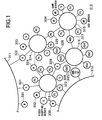















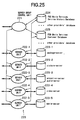

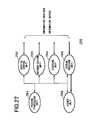

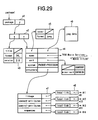

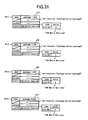
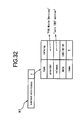

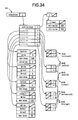


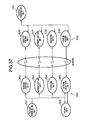
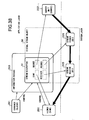
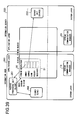
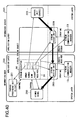


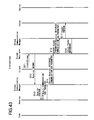


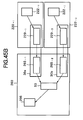

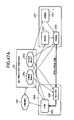


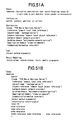
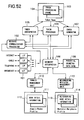

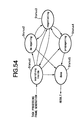
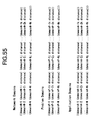


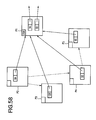

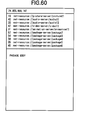
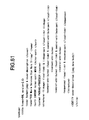



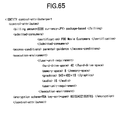







 where, * is an arrangement of 0 or more


