EP0903417A1 - Aluminium enthaltende Eisenmetallpulverlegierung - Google Patents
Aluminium enthaltende Eisenmetallpulverlegierung Download PDFInfo
- Publication number
- EP0903417A1 EP0903417A1 EP98107403A EP98107403A EP0903417A1 EP 0903417 A1 EP0903417 A1 EP 0903417A1 EP 98107403 A EP98107403 A EP 98107403A EP 98107403 A EP98107403 A EP 98107403A EP 0903417 A1 EP0903417 A1 EP 0903417A1
- Authority
- EP
- European Patent Office
- Prior art keywords
- powder
- aisi
- steels
- aluminum
- composition
- Prior art date
- Legal status (The legal status is an assumption and is not a legal conclusion. Google has not performed a legal analysis and makes no representation as to the accuracy of the status listed.)
- Granted
Links
Images







Classifications
-
- C—CHEMISTRY; METALLURGY
- C22—METALLURGY; FERROUS OR NON-FERROUS ALLOYS; TREATMENT OF ALLOYS OR NON-FERROUS METALS
- C22C—ALLOYS
- C22C33/00—Making ferrous alloys
- C22C33/02—Making ferrous alloys by powder metallurgy
- C22C33/0207—Using a mixture of pre-alloyed powders or a master alloy
Definitions
- the Present invention relates to processes for producing ferrous metal compositions having increased corrosion resistance and the compositions and parts made therefrom. More particularly, the invention relates to the discovery that the introduction of powdered aluminum containing compositions into powder standard ferrous metal compositions results in modified compositions that have increased corrosion resistance.
- Iron-chromium-nickel and iron-chromium alloys specifically in the form of stainless steels, have found widespread use in industry due to the highly desirable mechanical and corrosion properties of stainless steels in comparison with conventional low alloy steels.
- the addition of substantial quantities of chromium to steels results in the formation of a highly protective chromium oxide layer on the surface of the steel that generally protects the underlying metal from corrosion and also provides an excellent surface finish.
- the addition of nickel enhances the mechanical properties of stainless steels by promoting an austenitic structure in the alloy.
- the protective chromium oxide layer on stainless steels substantially improves the corrosion resistance of the steels to attack by chloride ions compared to low alloy steels. Because of the low resistance of low alloy steels to chloride attack, stainless steels must be used in applications that do not require the enhanced mechanical properties of stainless steels. However, stainless steels do experience higher corrosion rates in marine and other chloride containing environments and exhibit reduced lifetime corrosion performance.
- powder metal (P/M) steels are used to form the parts.
- Powder metals are produced by exposing molten metal to cooling gas(es) and/or liquid(s) in such a way that the molten metal solidifies in a particulate powder.
- the process of producing the powder is known as atomization.
- An example of a conventional water atomization process is described in U.S. Patent No. 2,956,304 issued to Batten. While the formability of powder metal provides increased versatility and allows for the production of machine parts that are not readily cast or machined from wrought metal, the corrosion resistance of powder metal parts is generally substantially lower than cast or wrought metal parts.
- metal modifiers include certain metals, "metal modifiers", are added to the molten metal prior to atomization.
- the metal modifiers were found to decrease the amount of silicon dioxide and increase the amount of chromium at the surface of the atomized alloy.
- the resultant parts formed from the alloy exhibited an improvement in the corrosion resistance over unmodified alloy parts.
- Methods include the use of multiple press/sintering processing, including hot forming of the metal powder, varying the treatment conditions of the powder and incorporating powders having higher iron contents. For example, increasing the sintering temperature to more completely reduce the oxide layers on the atomized metal is suggested in "Improving Corrosion Resistance of Stainless Steel PM Parts" Metal Powder Report , Vol. 46, No. 9, p. 22-3 (September 1991). Similar recommendations are made by Reinshagen and Mason in "Improved Corrosion Resistant Stainless Steel Based P/N Alloys” presented at the 1992 Powder Metallurgy World Congress, June 21-26, San Francisco, CA.
- powder metal parts have not achieved corrosion resistance that is comparable to cast and wrought parts. Consequently, the market for powder stainless and low alloy steel parts remains only a small percentage of the market for wrought and cast steel parts. As such, the need exists for powder metal compositions that provide increased corrosion resistance, especially with respect to chloride, for use in powder metal parts.
- Powder ferrous metal compositions are disclosed which provide for increased corrosion resistance through the admixing of powder aluminum containing compositions to standard ferrous metal compositions prior to forming the powder metal parts.
- the aluminum ranges from 0.5 to 5.0 weight % of the mixture (all percentages herein are weight percent of the mixture unless otherwise stated) admixed as an FeAl alloy powder.
- the present invention further includes a powder metal ferrous part formed from the composition produced by a method including the steps of (i) providing a ferrous powder metal composition, (ii) admixing a powder aluminum containing composition with the ferrous composition to form a blended mixture, and (iii) forming a powder metal part from at least a portion of the blended mixture.
- the addition of powder aluminum containing compositions increases the corrosion resistance of the resultant formed part which allows for use of the part in more aggressive corrosive environments than possible in the prior art.
- the present invention provides a ferrous metal composition that overcomes the problems associated with the prior art.
- the powder metal compositions of the present invention are based on the addition of powder aluminum containing compositions to standard powder ferrous metal compositions prior to forming parts from the steel powders.
- the addition of powder aluminum containing compositions, preferably in the form of FeAl alloys, to both powder stainless and low alloy steel compositions provides for increased corrosion resistance of the compositions when exposed to chlorides.
- the introduction of powder FeAl alloys into the standard powder ferrous compositions provides increased corrosion resistance for compositions having carbon contends up to at least 0.8%.
- wrought and cast Fe-Al-Mo alloys are described in "An Iron-Aluminum-Molybdenum Alloy as a Chromium-Free Stainless Steel Substitute", J.S. Dunning, U.S. Dept. of the Interior, Bureau of Mines Report of Investigations 8654 (1982) available from the U.S. Government Printing Office (1982-505-002/31) and U.S. Patent No. 5,238,645 issued to Sikka (1993).
- the use of aluminum to enhance the high temperature corrosion resistance of wrought and cast ferritic stainless steel is discussed by Sastry et al. in “Preparation and mechanical processing of Fe12Cr-6Al ferritic stainless steel", Metals Technology , Vol. 7, No. 10, p. 393-396 (October 1980).
- the introduction of aluminum in stainless and low alloy steels is to enhance the corrosion performance of the standard steel compositions.
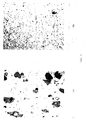
- the aluminum is present in substantially dispersed and discrete form in the alloy, as shown by the discrete darker colored regions of FeA1 in Figure 1(b), and is not fully alloyed with the matrix metal.
- the enhanced corrosion performance of the standard powder ferrous composition with admixed powder aluminum containing compositions can allow for a reduction in the grade of the steel, i.e. a decrease in the amount of alloying elements, particularly chromium and nickel, normally required to achieve a desired level of corrosion and mechanical performance.
- Standard 80 mesh steel powder was dry blended with 100 mesh FeAl alloy powder containing 50% aluminum by weight obtained from SCM Corp. NY, NY and a suitable binding lubricant, in this case Acrawax, in a cone blender for approximately 20 minutes to form the aluminum containing blended powder. At least a portion of the blended powder was molded into green parts under pressures ranging from 30-60 tsi, and nominally 50 tsi.
- the green parts were sintered in a protective environment, either N 2 , H 2 , an N 2 /H 2 mixture or a vacuum, for approximately 30 minutes at a temperature ranging from 2050° to 2300°F.
- the sintered parts were then cooled from the sintering temperature, at a cooling rate of 40°-400°F per minute, typically at 160°F/minute until a temperature less than 300°F was reached.
- a protective environment either N 2 , H 2 , an N 2 /H 2 mixture or a vacuum
- Specimens were formed in accordance with the aforementioned procedure and sintered at either 2100°F or 2300°F in a 95% N 2 /5% H 2 atmosphere and cooled at 160°F/min.
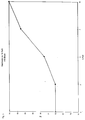
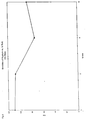
- the specimens were tested for corrosion resistance by exposing one half of the specimen to 5% NaCl artificial seawater in a plastic vial and observing the days until rust was observed on the specimen.
- the vials were open to the air and water was added as needed to maintain a substantially constant water level and chloride concentration.
- the 410 stainless steel exhibited a substantial improvement in corrosion resistance compared not to only the base stainless steels, but to the more expensive 316 alloys. A substantial cost savings may be possible if aluminum containing 400 series stainless steels could be substituted for the more expensive 300 series steels in applications not requiring the mechanical characteristics associated with 300 series steels.
- One potential application for the aluminum containing stainless steel alloys is for a flange in an automotive exhaust system that is exposed to temperatures approaching 1600°F.
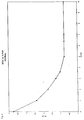
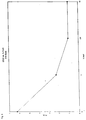
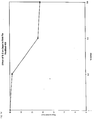
- the temper resistance of a specimen formed from a mixture containing 410L steel powder and 5% FeAl alloy powder was tested and compared to standard 410L, as shown in Figure 12.
- the specimen formed from the 410L/FeAl alloy mixture has a higher initial hardness than the base 410L, and the difference is essentially retained with increasing temperature.
- the addition of aluminum to the stainless steel may provide for parts having an increased high temperature oxidation resistance.
- Low alloy steels typically exhibit much poorer corrosion resistance in chloride containing environments than stainless steels. Consequently, the more expensive stainless steels must be used for corrosive environment applications that do not otherwise require the enhanced mechanical and/or chemical properties found in stainless steels. A substantial cost savings could be realized if less expensive steels could be employed in corrosive environment applications that do not require the high temperature mechanical properties of stainless steels. To that end, additional testing was performed to determine whether powder metal parts produced from a mixture of powder aluminum compositions and powder low alloy steels exhibit increased corrosion performance.
- Specimens formed from standard AISI 4200, 4400 and 4600 low alloy steel powders and from blended mixture containing the low alloy steel powders and 5% of the 50% Al FeAl alloy powder were prepared and tested in the aforementioned manner; the results of which are shown below: AISI Alloy Number Alloying Elements % FeAl alloy Added Days to First Rust 4200 0.1 Ni - 0.6Mo 0.0 ⁇ 1 4200 5.0 8 4400 0.85 Mo 0.0 ⁇ 1 4400 5.0 8 4600 1.8 Ni - 0.6 Mo 0.0 ⁇ 1 4600 5.0 15
- the addition of aluminum to the low alloy steel greatly increases the corrosion resistance of the steels.
- the corrosion test results do indicate that the increased corrosion resistance observed when aluminum is added to iron-chromium alloys can also be achieved in molybdenum and Ni/Mo iron alloys and suggest a similar benefit for Fe-Ni alloys.
- the increased performance of the AISI 4600 steel in comparison with the AISI 4200 steel may be indicative of a beneficial interaction between the Al and the increased levels of Ni in the AISI 4600 steel.
- the favorable interaction of the powder aluminum composition mixed with alloys representing some of the more common alloying elements indicates that the invention may be applicable to low alloy steels, in general, and may have application to other iron alloys.
- the increased corrosion resistance of the low alloy steels containing aluminum may provide a low cost alternative to the use of stainless steels in corrosive environment applications.
- the aluminum containing low alloy steel shows substantially improved corrosion performance compared to the standard or base 410L. As shown in the table below, there is a reduction in the modulus of rupture (MR) in comparison with low alloy steels; however, there is an increase of the hardness (Hard) of the Al containing low alloy blended steels.
- the addition of the FeAl alloy significantly increases the corrosion resistance of the modified iron specimen. Also, there is an increase in the hardness of the material over pure iron compositions. In addition, there is a substantial increase in the impact resistance of the modified iron composition using the FeAl alloy obtained from Ametek compared to the alloy prepared using pure iron modified with the FeAl alloy obtained from SCM.
- Al-4.4%Cu-0.8Si-0.5Mg, Al-0.25%Cu-0.6Si-1.0Mg, and Al-12Si in place of FeAl alloys were tested, namely Al-4.4%Cu-0.8Si-0.5Mg, Al-0.25%Cu-0.6Si-1.0Mg, and Al-12Si in place of FeAl alloys.
- the aluminum alloys were blended with AISI 410L and 316L and formed into parts using the same conditions as were used for the FeAl alloy modified parts.
- the Al-Cu-Si-Mg specimens showed excessive swelling during part sintering that resulted in low density and poor mechanical properties. Corrosion testing of the Al-Cu-Si-Mg parts showed no improvement in corrosion resistance over standard stainless steels as might be expected based on the swelling of the samples.
- the Al-12Si parts did not exhibit excessive swelling and increased the time to rust of the base 410L alloy from ⁇ 1 day to approximately 15 days.
- the variation in the corrosion performance of the stainless steel admixed with aluminum alloys is presumably due to the variation in the oxide films on the aluminum containing compositions and the necessary sintering conditions for each composition.
- the Al-Cu-Si-Mg powders are highly alloyed in aluminum, approximately 95% and 98%, respectively, which results in an alloy having a nearly pure aluminum oxide film.
- the pure aluminum oxide film is most likely not reduced using the sintering procedure developed for combining FeA1 alloy powder with stainless and low alloy steels.
- the oxide film on the Al-12Si powder is probably less tenacious, due to the lower Al content, and can be reduced and alloyed with the matrix metal to a greater extent than the films on the Al-Cu-Si-Mg alloys.
- the compacting and sintering conditions used to form the alloy should be selected in view of the admixed aluminum containing composition.
- Specimens formed from standard AISI 316L and 410L powder stainless steels and from 316L and 410L powder stainless steels admixed with FeAl alloy were vacuum impregnated at room temperature with a polyester resin, commercially sold as Imprec, cured at 195°F in hot water and air cooled prior to corrosion testing.
- the test specimens had previously been sintered at 2100-2300°F and cooled in a protective atmosphere at greater than 100°F.
- the impregnated standard, or base, composition specimens showed a slight improvement over the unimpregnated standard specimens.
- the time to rust increased 6-12 hours, presumably due to the resin filling the pore space in the specimen.
- the specimens formed with a mixture of FeAl alloy and stainless steel dramatically decreased in the time to rust from over 30 days for 410L containing 2.5% Al to less than a day. The cause of this result is uncertain at this time, but it is believed that the resin, or the hot water exposure during curing may have facilitated the breakdown of the steel/aluminum structure in the specimen.
- a limitation on the aluminum compounds that could be used in the present invention is that the aluminum in the composition must be capable of being reduced at temperatures less than the melting point of the steel powder.
- consideration must be given to the other elements contained in the aluminum composition to minimize the potential for contamination of the modified stainless steel composition by the other elements.
- the present invention provides significant advantages over the prior art.
- the subject invention provides modified powder metal stainless and low alloy steel compositions for use in forming machine parts that exhibit increased corrosion resistance over conventional powder metal compositions; and therefore, can be used in a much wider range of applications at a generally reduced cost. While the subject invention provides these and other advantages over the prior art, it will be understood, however, that various changes in the details, compositions and ranges of the elements which have been herein described and illustrated in order to explain the nature of the invention may be made by those skilled in the art within the principle and scope of the invention as expressed in the appended claims.
Landscapes
- Chemical & Material Sciences (AREA)
- Engineering & Computer Science (AREA)
- Materials Engineering (AREA)
- Mechanical Engineering (AREA)
- Metallurgy (AREA)
- Organic Chemistry (AREA)
- Powder Metallurgy (AREA)
- Preventing Corrosion Or Incrustation Of Metals (AREA)
Applications Claiming Priority (2)
| Application Number | Priority Date | Filing Date | Title |
|---|---|---|---|
| US08/847,423 US5864071A (en) | 1997-04-24 | 1997-04-24 | Powder ferrous metal compositions containing aluminum |
| US847423 | 1997-04-24 |
Publications (2)
| Publication Number | Publication Date |
|---|---|
| EP0903417A1 true EP0903417A1 (de) | 1999-03-24 |
| EP0903417B1 EP0903417B1 (de) | 2004-12-08 |
Family
ID=25300594
Family Applications (1)
| Application Number | Title | Priority Date | Filing Date |
|---|---|---|---|
| EP98107403A Expired - Lifetime EP0903417B1 (de) | 1997-04-24 | 1998-04-23 | Aluminium enthaltende Eisenmetallpulverlegierung |
Country Status (5)
| Country | Link |
|---|---|
| US (1) | US5864071A (de) |
| EP (1) | EP0903417B1 (de) |
| AT (1) | ATE284455T1 (de) |
| DE (1) | DE69828007T2 (de) |
| ES (1) | ES2235270T3 (de) |
Families Citing this family (3)
| Publication number | Priority date | Publication date | Assignee | Title |
|---|---|---|---|---|
| US20070077164A1 (en) * | 2005-10-03 | 2007-04-05 | Apex Advanced Technologies, Llc | Powder metallurgy methods and compositions |
| US8734715B2 (en) | 2011-01-13 | 2014-05-27 | Ut-Battelle, Llc | Method for the preparation of ferrous low carbon porous material |
| CN112080718B (zh) * | 2020-08-24 | 2022-09-06 | 向双清 | 一种通过渗Al制备FeAl基金属间化合物柔性膜的方法 |
Citations (2)
| Publication number | Priority date | Publication date | Assignee | Title |
|---|---|---|---|---|
| CH482837A (de) * | 1966-06-23 | 1969-12-15 | Deutsche Edelstahlwerke Ag | Sinterformstück |
| EP0351056A2 (de) * | 1988-07-15 | 1990-01-17 | Corning Incorporated | Sintern von metallischem Pulver ohne Sinterhilfsmittel zum Formen von Strukturen |
Family Cites Families (25)
| Publication number | Priority date | Publication date | Assignee | Title |
|---|---|---|---|---|
| US2956304A (en) * | 1956-12-06 | 1960-10-18 | Vanadium Alloys Steel Co | Apparatus for atomizing molten metal |
| DE1234998B (de) * | 1964-08-18 | 1967-02-23 | Pfizer & Co C | Verfahren zur Verbesserung der Korrosionsbestaendigkeit von Formstuecken aus rostfreiem Stahlpulver |
| US3520680A (en) * | 1968-07-22 | 1970-07-14 | Pfizer & Co C | Process of producing steel |
| US3813196A (en) * | 1969-12-03 | 1974-05-28 | Stora Kopparbergs Bergslags Ab | Device for manufacture of a powder by atomizing a stream of molten metal |
| JPS5440209A (en) * | 1977-09-07 | 1979-03-29 | Nippon Dia Clevite Co | Method of producing porous body of aluminum and alloys thereof |
| US4240831A (en) * | 1979-02-09 | 1980-12-23 | Scm Corporation | Corrosion-resistant powder-metallurgy stainless steel powders and compacts therefrom |
| US4314849A (en) * | 1979-02-09 | 1982-02-09 | Scm Corporation | Maximizing the corrosion resistance of tin containing stainless steel powder compacts |
| US4350529A (en) * | 1979-02-09 | 1982-09-21 | Scm Corporation | Corrosion-resistant powder-metallurgy stainless steel powders and compacts therefrom |
| US4331478A (en) * | 1979-02-09 | 1982-05-25 | Scm Corporation | Corrosion-resistant stainless steel powder and compacts made therefrom |
| AU8261182A (en) * | 1981-04-22 | 1982-10-28 | Unisearch Limited | Oxidation and corrosion-resistant febase-al-mn alloys |
| US4529445A (en) * | 1983-02-08 | 1985-07-16 | U.S. Philips Corporation | Invar alloy on the basis of iron having a crystal structure of the cubic NaZn13 type |
| US4472196A (en) * | 1983-06-14 | 1984-09-18 | Shieldalloy Corporation | Exothermic alloy for addition of alloying ingredients to steel |
| US4662939A (en) * | 1986-02-21 | 1987-05-05 | Pfizer Inc. | Process and composition for improved corrosion resistance |
| US4836850A (en) * | 1986-09-08 | 1989-06-06 | Gte Products Corporation | Iron group based and chromium based fine spherical particles |
| JPH0832949B2 (ja) * | 1987-12-28 | 1996-03-29 | 富士通株式会社 | 鉄―コバルト系軟質磁性材料の製造方法 |
| GB8816738D0 (en) * | 1988-07-14 | 1988-08-17 | Rolls Royce Plc | Alloy mix & method of repair of article therewith |
| JP2810057B2 (ja) * | 1988-08-05 | 1998-10-15 | 日産自動車株式会社 | アルミニウム系軸受合金 |
| US5278881A (en) * | 1989-07-20 | 1994-01-11 | Hitachi, Ltd. | Fe-Cr-Mn Alloy |
| US5334255A (en) * | 1989-12-04 | 1994-08-02 | Basf Corporation | Method for removing and reclaiming excess paint from a paint spray booth |
| US5269830A (en) * | 1990-10-26 | 1993-12-14 | The United States Of America As Represented By The United States Department Of Energy | Process for synthesizing compounds from elemental powders and product |
| US5427601A (en) * | 1990-11-29 | 1995-06-27 | Ngk Insulators, Ltd. | Sintered metal bodies and manufacturing method therefor |
| US5238645A (en) * | 1992-06-26 | 1993-08-24 | Martin Marietta Energy Systems, Inc. | Iron-aluminum alloys having high room-temperature and method for making same |
| US5399438A (en) * | 1992-09-14 | 1995-03-21 | Kabushiki Kaisha Toshiba | Stainless steel member and method of manufacturing stainless steel member |
| US5529604A (en) * | 1995-03-28 | 1996-06-25 | Ametek, Specialty Metal Products Division | Modified stainless steel powder composition |
| US5637816A (en) * | 1995-08-22 | 1997-06-10 | Lockheed Martin Energy Systems, Inc. | Metal matrix composite of an iron aluminide and ceramic particles and method thereof |
-
1997
- 1997-04-24 US US08/847,423 patent/US5864071A/en not_active Expired - Fee Related
-
1998
- 1998-04-23 ES ES98107403T patent/ES2235270T3/es not_active Expired - Lifetime
- 1998-04-23 EP EP98107403A patent/EP0903417B1/de not_active Expired - Lifetime
- 1998-04-23 DE DE69828007T patent/DE69828007T2/de not_active Expired - Fee Related
- 1998-04-23 AT AT98107403T patent/ATE284455T1/de not_active IP Right Cessation
Patent Citations (2)
| Publication number | Priority date | Publication date | Assignee | Title |
|---|---|---|---|---|
| CH482837A (de) * | 1966-06-23 | 1969-12-15 | Deutsche Edelstahlwerke Ag | Sinterformstück |
| EP0351056A2 (de) * | 1988-07-15 | 1990-01-17 | Corning Incorporated | Sintern von metallischem Pulver ohne Sinterhilfsmittel zum Formen von Strukturen |
Also Published As
| Publication number | Publication date |
|---|---|
| DE69828007D1 (de) | 2005-01-13 |
| ATE284455T1 (de) | 2004-12-15 |
| US5864071A (en) | 1999-01-26 |
| EP0903417B1 (de) | 2004-12-08 |
| ES2235270T3 (es) | 2005-07-01 |
| DE69828007T2 (de) | 2005-09-29 |
Similar Documents
| Publication | Publication Date | Title |
|---|---|---|
| US5856625A (en) | Stainless steel powders and articles produced therefrom by powder metallurgy | |
| JP6093405B2 (ja) | 窒素含有低ニッケル焼結ステンレス鋼 | |
| JP2777373B2 (ja) | 耐熱耐摩耗性鉄基焼結合金 | |
| CA2172029C (en) | A metal sintered body composite material and a method for producing the same | |
| US5403371A (en) | Iron-based powder, component made thereof, and method of making the component | |
| JPS63223142A (ja) | 内燃機関のバルブシ−ト用Fe基焼結合金 | |
| EP0787048B1 (de) | Manganhaltige materialien mit hoher zugfestigkeit | |
| EP1768803A1 (de) | Edelstahlpulver | |
| US5703304A (en) | Iron-based powder containing chromium, molybdenum and manganese | |
| EP0903417B1 (de) | Aluminium enthaltende Eisenmetallpulverlegierung | |
| US4861373A (en) | Infiltrated powder metal part having improved impact strength tensile strength and dimensional control and method for making same | |
| GB2298869A (en) | Stainless steel powders and articles produced therefrom by powder metallurgy | |
| US5918293A (en) | Iron based powder containing Mo, P and C | |
| JPS63500107A (ja) | 高速度鋼を基礎とする焼結合金 | |
| JPH06322470A (ja) | 粉末冶金用鋳鉄粉及び耐摩耗性鉄系焼結合金 | |
| JPS63109142A (ja) | 耐熱耐摩耗性鉄基焼結合金 | |
| JPS61291954A (ja) | 高温耐摩耐食焼結材料及びその製造方法 | |
| JPS5852001B2 (ja) | 快削ステンレス鋼粉末 | |
| EP1692320B1 (de) | Verfahren zur herstellung von hochdichten pulvermetallurgisch hergestellten teilen durch eisenbasierte infiltration | |
| Igharo et al. | Sintering of Mixed High Speed Steel and Iron—Phosphorus Powders | |
| JPS6039149A (ja) | 耐摩耗性および自己潤滑性のすぐれたFe基焼結合金の製造法 | |
| JP3331963B2 (ja) | 焼結バルブシートおよびその製造方法 | |
| JPS6130601A (ja) | 圧縮性に優れた析出硬化型ステンレス鋼粉末 | |
| JP3346310B2 (ja) | 高強度鉄基焼結合金 | |
| JPH059668A (ja) | 高強度高靭性を有するFe基焼結合金製バルブシート |
Legal Events
| Date | Code | Title | Description |
|---|---|---|---|
| PUAI | Public reference made under article 153(3) epc to a published international application that has entered the european phase |
Free format text: ORIGINAL CODE: 0009012 |
|
| AK | Designated contracting states |
Kind code of ref document: A1 Designated state(s): AT DE ES FR GB IT |
|
| AX | Request for extension of the european patent |
Free format text: AL;LT;LV;MK;RO;SI |
|
| 17P | Request for examination filed |
Effective date: 19990622 |
|
| AKX | Designation fees paid |
Free format text: AT DE ES FR GB IT |
|
| RAP1 | Party data changed (applicant data changed or rights of an application transferred) |
Owner name: MIBA SINTERMETALL GMBH |
|
| 17Q | First examination report despatched |
Effective date: 20031008 |
|
| GRAP | Despatch of communication of intention to grant a patent |
Free format text: ORIGINAL CODE: EPIDOSNIGR1 |
|
| GRAS | Grant fee paid |
Free format text: ORIGINAL CODE: EPIDOSNIGR3 |
|
| GRAA | (expected) grant |
Free format text: ORIGINAL CODE: 0009210 |
|
| AK | Designated contracting states |
Kind code of ref document: B1 Designated state(s): AT DE ES FR GB IT |
|
| REG | Reference to a national code |
Ref country code: GB Ref legal event code: FG4D |
|
| REF | Corresponds to: |
Ref document number: 69828007 Country of ref document: DE Date of ref document: 20050113 Kind code of ref document: P |
|
| RAP2 | Party data changed (patent owner data changed or rights of a patent transferred) |
Owner name: MIBA SINTER AUSTRIA GMBH |
|
| REG | Reference to a national code |
Ref country code: ES Ref legal event code: FG2A Ref document number: 2235270 Country of ref document: ES Kind code of ref document: T3 |
|
| ET | Fr: translation filed | ||
| REG | Reference to a national code |
Ref country code: FR Ref legal event code: CD |
|
| PLBE | No opposition filed within time limit |
Free format text: ORIGINAL CODE: 0009261 |
|
| STAA | Information on the status of an ep patent application or granted ep patent |
Free format text: STATUS: NO OPPOSITION FILED WITHIN TIME LIMIT |
|
| 26N | No opposition filed |
Effective date: 20050909 |
|
| PGFP | Annual fee paid to national office [announced via postgrant information from national office to epo] |
Ref country code: AT Payment date: 20060403 Year of fee payment: 9 |
|
| PGFP | Annual fee paid to national office [announced via postgrant information from national office to epo] |
Ref country code: FR Payment date: 20060417 Year of fee payment: 9 |
|
| PGFP | Annual fee paid to national office [announced via postgrant information from national office to epo] |
Ref country code: GB Payment date: 20060424 Year of fee payment: 9 |
|
| PGFP | Annual fee paid to national office [announced via postgrant information from national office to epo] |
Ref country code: ES Payment date: 20060426 Year of fee payment: 9 |
|
| PGFP | Annual fee paid to national office [announced via postgrant information from national office to epo] |
Ref country code: IT Payment date: 20060430 Year of fee payment: 9 |
|
| PGFP | Annual fee paid to national office [announced via postgrant information from national office to epo] |
Ref country code: DE Payment date: 20060531 Year of fee payment: 9 |
|
| GBPC | Gb: european patent ceased through non-payment of renewal fee |
Effective date: 20070423 |
|
| PG25 | Lapsed in a contracting state [announced via postgrant information from national office to epo] |
Ref country code: DE Free format text: LAPSE BECAUSE OF NON-PAYMENT OF DUE FEES Effective date: 20071101 |
|
| PG25 | Lapsed in a contracting state [announced via postgrant information from national office to epo] |
Ref country code: AT Free format text: LAPSE BECAUSE OF NON-PAYMENT OF DUE FEES Effective date: 20070423 |
|
| PG25 | Lapsed in a contracting state [announced via postgrant information from national office to epo] |
Ref country code: GB Free format text: LAPSE BECAUSE OF NON-PAYMENT OF DUE FEES Effective date: 20070423 |
|
| REG | Reference to a national code |
Ref country code: ES Ref legal event code: FD2A Effective date: 20070424 |
|
| PG25 | Lapsed in a contracting state [announced via postgrant information from national office to epo] |
Ref country code: FR Free format text: LAPSE BECAUSE OF NON-PAYMENT OF DUE FEES Effective date: 20070430 |
|
| PG25 | Lapsed in a contracting state [announced via postgrant information from national office to epo] |
Ref country code: ES Free format text: LAPSE BECAUSE OF NON-PAYMENT OF DUE FEES Effective date: 20070424 |
|
| PG25 | Lapsed in a contracting state [announced via postgrant information from national office to epo] |
Ref country code: IT Free format text: LAPSE BECAUSE OF NON-PAYMENT OF DUE FEES Effective date: 20070423 |