EP0882094B2 - Formaldehydfreie beschichtungsmittel für formkörper - Google Patents
Formaldehydfreie beschichtungsmittel für formkörper Download PDFInfo
- Publication number
- EP0882094B2 EP0882094B2 EP97905049A EP97905049A EP0882094B2 EP 0882094 B2 EP0882094 B2 EP 0882094B2 EP 97905049 A EP97905049 A EP 97905049A EP 97905049 A EP97905049 A EP 97905049A EP 0882094 B2 EP0882094 B2 EP 0882094B2
- Authority
- EP
- European Patent Office
- Prior art keywords
- weight
- formaldehyde
- acid
- use according
- free
- Prior art date
- Legal status (The legal status is an assumption and is not a legal conclusion. Google has not performed a legal analysis and makes no representation as to the accuracy of the status listed.)
- Expired - Lifetime
Links
- 239000011248 coating agent Substances 0.000 title description 19
- 238000000465 moulding Methods 0.000 title description 13
- 238000000576 coating method Methods 0.000 title description 9
- 239000000463 material Substances 0.000 title 1
- 239000011230 binding agent Substances 0.000 claims abstract description 28
- 229920000642 polymer Polymers 0.000 claims abstract description 26
- 239000008199 coating composition Substances 0.000 claims abstract description 10
- 125000002887 hydroxy group Chemical group [H]O* 0.000 claims abstract description 8
- 125000003178 carboxy group Chemical group [H]OC(*)=O 0.000 claims abstract description 6
- 150000008064 anhydrides Chemical group 0.000 claims abstract description 5
- 238000010526 radical polymerization reaction Methods 0.000 claims abstract description 3
- OFOBLEOULBTSOW-UHFFFAOYSA-N Propanedioic acid Natural products OC(=O)CC(O)=O OFOBLEOULBTSOW-UHFFFAOYSA-N 0.000 claims description 11
- VZCYOOQTPOCHFL-UPHRSURJSA-N maleic acid Chemical compound OC(=O)\C=C/C(O)=O VZCYOOQTPOCHFL-UPHRSURJSA-N 0.000 claims description 11
- 239000011976 maleic acid Substances 0.000 claims description 11
- VZCYOOQTPOCHFL-UHFFFAOYSA-N trans-butenedioic acid Natural products OC(=O)C=CC(O)=O VZCYOOQTPOCHFL-UHFFFAOYSA-N 0.000 claims description 11
- 150000001875 compounds Chemical class 0.000 claims description 10
- GSEJCLTVZPLZKY-UHFFFAOYSA-N Triethanolamine Chemical group OCCN(CCO)CCO GSEJCLTVZPLZKY-UHFFFAOYSA-N 0.000 claims description 9
- 239000012784 inorganic fiber Substances 0.000 claims description 8
- 239000012764 mineral filler Substances 0.000 claims description 8
- 238000001035 drying Methods 0.000 claims description 6
- FPYJFEHAWHCUMM-UHFFFAOYSA-N maleic anhydride Chemical compound O=C1OC(=O)C=C1 FPYJFEHAWHCUMM-UHFFFAOYSA-N 0.000 claims description 6
- 238000006243 chemical reaction Methods 0.000 claims description 4
- 229920005596 polymer binder Polymers 0.000 claims description 4
- 239000002491 polymer binding agent Substances 0.000 claims description 4
- 150000001991 dicarboxylic acids Chemical class 0.000 claims description 3
- 125000004435 hydrogen atom Chemical group [H]* 0.000 claims description 3
- 125000000008 (C1-C10) alkyl group Chemical group 0.000 claims description 2
- 125000004018 acid anhydride group Chemical group 0.000 claims 2
- 229910052739 hydrogen Inorganic materials 0.000 claims 1
- 239000001257 hydrogen Substances 0.000 claims 1
- 150000001990 dicarboxylic acid derivatives Chemical class 0.000 abstract description 5
- 150000008065 acid anhydrides Chemical class 0.000 abstract 1
- 239000000178 monomer Substances 0.000 description 35
- -1 cyclic olefins Chemical class 0.000 description 21
- 238000006116 polymerization reaction Methods 0.000 description 21
- 239000000203 mixture Substances 0.000 description 20
- XLYOFNOQVPJJNP-UHFFFAOYSA-N water Substances O XLYOFNOQVPJJNP-UHFFFAOYSA-N 0.000 description 15
- NIXOWILDQLNWCW-UHFFFAOYSA-M Acrylate Chemical compound [O-]C(=O)C=C NIXOWILDQLNWCW-UHFFFAOYSA-M 0.000 description 13
- CERQOIWHTDAKMF-UHFFFAOYSA-N Methacrylic acid Chemical compound CC(=C)C(O)=O CERQOIWHTDAKMF-UHFFFAOYSA-N 0.000 description 12
- MHAJPDPJQMAIIY-UHFFFAOYSA-N Hydrogen peroxide Chemical compound OO MHAJPDPJQMAIIY-UHFFFAOYSA-N 0.000 description 10
- 239000006185 dispersion Substances 0.000 description 10
- SMZOUWXMTYCWNB-UHFFFAOYSA-N 2-(2-methoxy-5-methylphenyl)ethanamine Chemical compound COC1=CC=C(C)C=C1CCN SMZOUWXMTYCWNB-UHFFFAOYSA-N 0.000 description 9
- 229920002472 Starch Polymers 0.000 description 9
- 239000002253 acid Substances 0.000 description 9
- NIXOWILDQLNWCW-UHFFFAOYSA-N acrylic acid group Chemical group C(C=C)(=O)O NIXOWILDQLNWCW-UHFFFAOYSA-N 0.000 description 9
- 229920001577 copolymer Polymers 0.000 description 9
- 238000000034 method Methods 0.000 description 9
- 239000008107 starch Substances 0.000 description 9
- 235000019698 starch Nutrition 0.000 description 9
- 239000003999 initiator Substances 0.000 description 8
- HRPVXLWXLXDGHG-UHFFFAOYSA-N Acrylamide Chemical compound NC(=O)C=C HRPVXLWXLXDGHG-UHFFFAOYSA-N 0.000 description 7
- 239000003085 diluting agent Substances 0.000 description 7
- 239000003995 emulsifying agent Substances 0.000 description 7
- 239000000945 filler Substances 0.000 description 7
- 238000002360 preparation method Methods 0.000 description 7
- 239000002904 solvent Substances 0.000 description 7
- 239000004971 Cross linker Substances 0.000 description 6
- IAYPIBMASNFSPL-UHFFFAOYSA-N Ethylene oxide Chemical compound C1CO1 IAYPIBMASNFSPL-UHFFFAOYSA-N 0.000 description 6
- WSFSSNUMVMOOMR-UHFFFAOYSA-N Formaldehyde Chemical compound O=C WSFSSNUMVMOOMR-UHFFFAOYSA-N 0.000 description 6
- PEDCQBHIVMGVHV-UHFFFAOYSA-N Glycerine Chemical compound OCC(O)CO PEDCQBHIVMGVHV-UHFFFAOYSA-N 0.000 description 6
- KFZMGEQAYNKOFK-UHFFFAOYSA-N Isopropanol Chemical compound CC(C)O KFZMGEQAYNKOFK-UHFFFAOYSA-N 0.000 description 6
- PXHVJJICTQNCMI-UHFFFAOYSA-N Nickel Chemical class [Ni] PXHVJJICTQNCMI-UHFFFAOYSA-N 0.000 description 6
- PPBRXRYQALVLMV-UHFFFAOYSA-N Styrene Chemical compound C=CC1=CC=CC=C1 PPBRXRYQALVLMV-UHFFFAOYSA-N 0.000 description 6
- 150000007513 acids Chemical class 0.000 description 6
- 229910052783 alkali metal Inorganic materials 0.000 description 6
- OAICVXFJPJFONN-UHFFFAOYSA-N Phosphorus Chemical compound [P] OAICVXFJPJFONN-UHFFFAOYSA-N 0.000 description 5
- GOOHAUXETOMSMM-UHFFFAOYSA-N Propylene oxide Chemical compound CC1CO1 GOOHAUXETOMSMM-UHFFFAOYSA-N 0.000 description 5
- 239000004480 active ingredient Substances 0.000 description 5
- 150000001340 alkali metals Chemical class 0.000 description 5
- 239000007864 aqueous solution Substances 0.000 description 5
- 239000003054 catalyst Substances 0.000 description 5
- 238000007720 emulsion polymerization reaction Methods 0.000 description 5
- 239000000835 fiber Substances 0.000 description 5
- 238000010528 free radical solution polymerization reaction Methods 0.000 description 5
- 229910052698 phosphorus Inorganic materials 0.000 description 5
- 239000011574 phosphorus Substances 0.000 description 5
- 150000003839 salts Chemical class 0.000 description 5
- 239000000243 solution Substances 0.000 description 5
- QGZKDVFQNNGYKY-UHFFFAOYSA-N Ammonia Chemical compound N QGZKDVFQNNGYKY-UHFFFAOYSA-N 0.000 description 4
- KAKZBPTYRLMSJV-UHFFFAOYSA-N Butadiene Chemical compound C=CC=C KAKZBPTYRLMSJV-UHFFFAOYSA-N 0.000 description 4
- RTZKZFJDLAIYFH-UHFFFAOYSA-N Diethyl ether Chemical compound CCOCC RTZKZFJDLAIYFH-UHFFFAOYSA-N 0.000 description 4
- XEEYBQQBJWHFJM-UHFFFAOYSA-N Iron Chemical class [Fe] XEEYBQQBJWHFJM-UHFFFAOYSA-N 0.000 description 4
- VQTUBCCKSQIDNK-UHFFFAOYSA-N Isobutene Chemical compound CC(C)=C VQTUBCCKSQIDNK-UHFFFAOYSA-N 0.000 description 4
- QQONPFPTGQHPMA-UHFFFAOYSA-N Propene Chemical compound CC=C QQONPFPTGQHPMA-UHFFFAOYSA-N 0.000 description 4
- 150000001298 alcohols Chemical class 0.000 description 4
- 150000001336 alkenes Chemical class 0.000 description 4
- ROOXNKNUYICQNP-UHFFFAOYSA-N ammonium persulfate Chemical compound [NH4+].[NH4+].[O-]S(=O)(=O)OOS([O-])(=O)=O ROOXNKNUYICQNP-UHFFFAOYSA-N 0.000 description 4
- 239000002585 base Substances 0.000 description 4
- 125000002843 carboxylic acid group Chemical group 0.000 description 4
- 239000003795 chemical substances by application Substances 0.000 description 4
- 239000000084 colloidal system Substances 0.000 description 4
- LPIQUOYDBNQMRZ-UHFFFAOYSA-N cyclopentene Chemical compound C1CC=CC1 LPIQUOYDBNQMRZ-UHFFFAOYSA-N 0.000 description 4
- FJKIXWOMBXYWOQ-UHFFFAOYSA-N ethenoxyethane Chemical compound CCOC=C FJKIXWOMBXYWOQ-UHFFFAOYSA-N 0.000 description 4
- 125000002496 methyl group Chemical group [H]C([H])([H])* 0.000 description 4
- 238000012673 precipitation polymerization Methods 0.000 description 4
- 230000001681 protective effect Effects 0.000 description 4
- 239000012966 redox initiator Substances 0.000 description 4
- 238000010557 suspension polymerization reaction Methods 0.000 description 4
- 229910052723 transition metal Inorganic materials 0.000 description 4
- CSCPPACGZOOCGX-UHFFFAOYSA-N Acetone Chemical compound CC(C)=O CSCPPACGZOOCGX-UHFFFAOYSA-N 0.000 description 3
- NLHHRLWOUZZQLW-UHFFFAOYSA-N Acrylonitrile Chemical compound C=CC#N NLHHRLWOUZZQLW-UHFFFAOYSA-N 0.000 description 3
- LFQSCWFLJHTTHZ-UHFFFAOYSA-N Ethanol Chemical compound CCO LFQSCWFLJHTTHZ-UHFFFAOYSA-N 0.000 description 3
- VGGSQFUCUMXWEO-UHFFFAOYSA-N Ethene Chemical compound C=C VGGSQFUCUMXWEO-UHFFFAOYSA-N 0.000 description 3
- LYCAIKOWRPUZTN-UHFFFAOYSA-N Ethylene glycol Chemical compound OCCO LYCAIKOWRPUZTN-UHFFFAOYSA-N 0.000 description 3
- NBIIXXVUZAFLBC-UHFFFAOYSA-N Phosphoric acid Chemical class OP(O)(O)=O NBIIXXVUZAFLBC-UHFFFAOYSA-N 0.000 description 3
- KWYUFKZDYYNOTN-UHFFFAOYSA-M Potassium hydroxide Chemical compound [OH-].[K+] KWYUFKZDYYNOTN-UHFFFAOYSA-M 0.000 description 3
- DNIAPMSPPWPWGF-UHFFFAOYSA-N Propylene glycol Chemical compound CC(O)CO DNIAPMSPPWPWGF-UHFFFAOYSA-N 0.000 description 3
- HEMHJVSKTPXQMS-UHFFFAOYSA-M Sodium hydroxide Chemical compound [OH-].[Na+] HEMHJVSKTPXQMS-UHFFFAOYSA-M 0.000 description 3
- WYURNTSHIVDZCO-UHFFFAOYSA-N Tetrahydrofuran Chemical compound C1CCOC1 WYURNTSHIVDZCO-UHFFFAOYSA-N 0.000 description 3
- YXFVVABEGXRONW-UHFFFAOYSA-N Toluene Chemical compound CC1=CC=CC=C1 YXFVVABEGXRONW-UHFFFAOYSA-N 0.000 description 3
- 150000003926 acrylamides Chemical class 0.000 description 3
- 239000000654 additive Substances 0.000 description 3
- 150000001412 amines Chemical class 0.000 description 3
- 150000003863 ammonium salts Chemical class 0.000 description 3
- 229910017052 cobalt Inorganic materials 0.000 description 3
- 239000010941 cobalt Chemical class 0.000 description 3
- GUTLYIVDDKVIGB-UHFFFAOYSA-N cobalt atom Chemical class [Co] GUTLYIVDDKVIGB-UHFFFAOYSA-N 0.000 description 3
- 239000003431 cross linking reagent Substances 0.000 description 3
- 125000004386 diacrylate group Chemical group 0.000 description 3
- ZBCBWPMODOFKDW-UHFFFAOYSA-N diethanolamine Chemical compound OCCNCCO ZBCBWPMODOFKDW-UHFFFAOYSA-N 0.000 description 3
- 239000000839 emulsion Substances 0.000 description 3
- 125000001495 ethyl group Chemical group [H]C([H])([H])C([H])([H])* 0.000 description 3
- 150000002334 glycols Chemical class 0.000 description 3
- 238000005470 impregnation Methods 0.000 description 3
- 238000009413 insulation Methods 0.000 description 3
- 239000002557 mineral fiber Substances 0.000 description 3
- 229910052759 nickel Inorganic materials 0.000 description 3
- JRZJOMJEPLMPRA-UHFFFAOYSA-N olefin Natural products CCCCCCCC=C JRZJOMJEPLMPRA-UHFFFAOYSA-N 0.000 description 3
- 150000002978 peroxides Chemical class 0.000 description 3
- 229920001223 polyethylene glycol Polymers 0.000 description 3
- 229920001451 polypropylene glycol Polymers 0.000 description 3
- 229920001296 polysiloxane Polymers 0.000 description 3
- 239000007787 solid Substances 0.000 description 3
- 150000003624 transition metals Chemical class 0.000 description 3
- MYRTYDVEIRVNKP-UHFFFAOYSA-N 1,2-Divinylbenzene Chemical compound C=CC1=CC=CC=C1C=C MYRTYDVEIRVNKP-UHFFFAOYSA-N 0.000 description 2
- VXNZUUAINFGPBY-UHFFFAOYSA-N 1-Butene Chemical compound CCC=C VXNZUUAINFGPBY-UHFFFAOYSA-N 0.000 description 2
- CRSBERNSMYQZNG-UHFFFAOYSA-N 1-dodecene Chemical compound CCCCCCCCCCC=C CRSBERNSMYQZNG-UHFFFAOYSA-N 0.000 description 2
- LEJBBGNFPAFPKQ-UHFFFAOYSA-N 2-(2-prop-2-enoyloxyethoxy)ethyl prop-2-enoate Chemical compound C=CC(=O)OCCOCCOC(=O)C=C LEJBBGNFPAFPKQ-UHFFFAOYSA-N 0.000 description 2
- 229920000536 2-Acrylamido-2-methylpropane sulfonic acid Polymers 0.000 description 2
- HZAXFHJVJLSVMW-UHFFFAOYSA-N 2-Aminoethan-1-ol Chemical compound NCCO HZAXFHJVJLSVMW-UHFFFAOYSA-N 0.000 description 2
- XHZPRMZZQOIPDS-UHFFFAOYSA-N 2-Methyl-2-[(1-oxo-2-propenyl)amino]-1-propanesulfonic acid Chemical compound OS(=O)(=O)CC(C)(C)NC(=O)C=C XHZPRMZZQOIPDS-UHFFFAOYSA-N 0.000 description 2
- XFCMNSHQOZQILR-UHFFFAOYSA-N 2-[2-(2-methylprop-2-enoyloxy)ethoxy]ethyl 2-methylprop-2-enoate Chemical compound CC(=C)C(=O)OCCOCCOC(=O)C(C)=C XFCMNSHQOZQILR-UHFFFAOYSA-N 0.000 description 2
- INQDDHNZXOAFFD-UHFFFAOYSA-N 2-[2-(2-prop-2-enoyloxyethoxy)ethoxy]ethyl prop-2-enoate Chemical compound C=CC(=O)OCCOCCOCCOC(=O)C=C INQDDHNZXOAFFD-UHFFFAOYSA-N 0.000 description 2
- HCLJOFJIQIJXHS-UHFFFAOYSA-N 2-[2-[2-(2-prop-2-enoyloxyethoxy)ethoxy]ethoxy]ethyl prop-2-enoate Chemical compound C=CC(=O)OCCOCCOCCOCCOC(=O)C=C HCLJOFJIQIJXHS-UHFFFAOYSA-N 0.000 description 2
- KUDUQBURMYMBIJ-UHFFFAOYSA-N 2-prop-2-enoyloxyethyl prop-2-enoate Chemical compound C=CC(=O)OCCOC(=O)C=C KUDUQBURMYMBIJ-UHFFFAOYSA-N 0.000 description 2
- HGINCPLSRVDWNT-UHFFFAOYSA-N Acrolein Chemical compound C=CC=O HGINCPLSRVDWNT-UHFFFAOYSA-N 0.000 description 2
- CIWBSHSKHKDKBQ-JLAZNSOCSA-N Ascorbic acid Chemical compound OC[C@H](O)[C@H]1OC(=O)C(O)=C1O CIWBSHSKHKDKBQ-JLAZNSOCSA-N 0.000 description 2
- IJGRMHOSHXDMSA-UHFFFAOYSA-N Atomic nitrogen Chemical compound N#N IJGRMHOSHXDMSA-UHFFFAOYSA-N 0.000 description 2
- VTYYLEPIZMXCLO-UHFFFAOYSA-L Calcium carbonate Chemical compound [Ca+2].[O-]C([O-])=O VTYYLEPIZMXCLO-UHFFFAOYSA-L 0.000 description 2
- RYGMFSIKBFXOCR-UHFFFAOYSA-N Copper Chemical class [Cu] RYGMFSIKBFXOCR-UHFFFAOYSA-N 0.000 description 2
- ROSDSFDQCJNGOL-UHFFFAOYSA-N Dimethylamine Chemical compound CNC ROSDSFDQCJNGOL-UHFFFAOYSA-N 0.000 description 2
- 229920005682 EO-PO block copolymer Polymers 0.000 description 2
- QUSNBJAOOMFDIB-UHFFFAOYSA-N Ethylamine Chemical compound CCN QUSNBJAOOMFDIB-UHFFFAOYSA-N 0.000 description 2
- YNQLUTRBYVCPMQ-UHFFFAOYSA-N Ethylbenzene Chemical compound CCC1=CC=CC=C1 YNQLUTRBYVCPMQ-UHFFFAOYSA-N 0.000 description 2
- VVQNEPGJFQJSBK-UHFFFAOYSA-N Methyl methacrylate Chemical compound COC(=O)C(C)=C VVQNEPGJFQJSBK-UHFFFAOYSA-N 0.000 description 2
- YNAVUWVOSKDBBP-UHFFFAOYSA-N Morpholine Chemical compound C1COCCN1 YNAVUWVOSKDBBP-UHFFFAOYSA-N 0.000 description 2
- CTQNGGLPUBDAKN-UHFFFAOYSA-N O-Xylene Chemical group CC1=CC=CC=C1C CTQNGGLPUBDAKN-UHFFFAOYSA-N 0.000 description 2
- URLKBWYHVLBVBO-UHFFFAOYSA-N Para-Xylene Chemical group CC1=CC=C(C)C=C1 URLKBWYHVLBVBO-UHFFFAOYSA-N 0.000 description 2
- 229920002873 Polyethylenimine Polymers 0.000 description 2
- NBBJYMSMWIIQGU-UHFFFAOYSA-N Propionic aldehyde Chemical compound CCC=O NBBJYMSMWIIQGU-UHFFFAOYSA-N 0.000 description 2
- CDBYLPFSWZWCQE-UHFFFAOYSA-L Sodium Carbonate Chemical compound [Na+].[Na+].[O-]C([O-])=O CDBYLPFSWZWCQE-UHFFFAOYSA-L 0.000 description 2
- 229920002125 Sokalan® Polymers 0.000 description 2
- QAOWNCQODCNURD-UHFFFAOYSA-N Sulfuric acid Chemical compound OS(O)(=O)=O QAOWNCQODCNURD-UHFFFAOYSA-N 0.000 description 2
- ZJCCRDAZUWHFQH-UHFFFAOYSA-N Trimethylolpropane Chemical compound CCC(CO)(CO)CO ZJCCRDAZUWHFQH-UHFFFAOYSA-N 0.000 description 2
- XTXRWKRVRITETP-UHFFFAOYSA-N Vinyl acetate Chemical compound CC(=O)OC=C XTXRWKRVRITETP-UHFFFAOYSA-N 0.000 description 2
- 239000002318 adhesion promoter Substances 0.000 description 2
- 125000000278 alkyl amino alkyl group Chemical group 0.000 description 2
- 125000000217 alkyl group Chemical group 0.000 description 2
- XXROGKLTLUQVRX-UHFFFAOYSA-N allyl alcohol Chemical compound OCC=C XXROGKLTLUQVRX-UHFFFAOYSA-N 0.000 description 2
- 229910052782 aluminium Inorganic materials 0.000 description 2
- 229910021529 ammonia Inorganic materials 0.000 description 2
- 229910001870 ammonium persulfate Inorganic materials 0.000 description 2
- 235000019395 ammonium persulphate Nutrition 0.000 description 2
- 125000000129 anionic group Chemical group 0.000 description 2
- ISAOCJYIOMOJEB-UHFFFAOYSA-N benzoin Chemical compound C=1C=CC=CC=1C(O)C(=O)C1=CC=CC=C1 ISAOCJYIOMOJEB-UHFFFAOYSA-N 0.000 description 2
- IAQRGUVFOMOMEM-UHFFFAOYSA-N butene Natural products CC=CC IAQRGUVFOMOMEM-UHFFFAOYSA-N 0.000 description 2
- 125000004432 carbon atom Chemical group C* 0.000 description 2
- 150000001735 carboxylic acids Chemical class 0.000 description 2
- 125000002091 cationic group Chemical group 0.000 description 2
- 239000001913 cellulose Substances 0.000 description 2
- 229920002678 cellulose Polymers 0.000 description 2
- MVPPADPHJFYWMZ-UHFFFAOYSA-N chlorobenzene Chemical compound ClC1=CC=CC=C1 MVPPADPHJFYWMZ-UHFFFAOYSA-N 0.000 description 2
- 238000009833 condensation Methods 0.000 description 2
- 230000005494 condensation Effects 0.000 description 2
- 239000000470 constituent Substances 0.000 description 2
- 229910052802 copper Inorganic materials 0.000 description 2
- 239000010949 copper Chemical class 0.000 description 2
- RWGFKTVRMDUZSP-UHFFFAOYSA-N cumene Chemical compound CC(C)C1=CC=CC=C1 RWGFKTVRMDUZSP-UHFFFAOYSA-N 0.000 description 2
- JHIVVAPYMSGYDF-UHFFFAOYSA-N cyclohexanone Chemical compound O=C1CCCCC1 JHIVVAPYMSGYDF-UHFFFAOYSA-N 0.000 description 2
- HGCIXCUEYOPUTN-UHFFFAOYSA-N cyclohexene Chemical compound C1CCC=CC1 HGCIXCUEYOPUTN-UHFFFAOYSA-N 0.000 description 2
- 235000014113 dietary fatty acids Nutrition 0.000 description 2
- LVTYICIALWPMFW-UHFFFAOYSA-N diisopropanolamine Chemical compound CC(O)CNCC(C)O LVTYICIALWPMFW-UHFFFAOYSA-N 0.000 description 2
- 229940043276 diisopropanolamine Drugs 0.000 description 2
- 238000012674 dispersion polymerization Methods 0.000 description 2
- HNRMPXKDFBEGFZ-UHFFFAOYSA-N ethyl trimethyl methane Natural products CCC(C)(C)C HNRMPXKDFBEGFZ-UHFFFAOYSA-N 0.000 description 2
- 239000000194 fatty acid Substances 0.000 description 2
- 229930195729 fatty acid Natural products 0.000 description 2
- 150000004665 fatty acids Chemical class 0.000 description 2
- 239000003063 flame retardant Substances 0.000 description 2
- 239000003365 glass fiber Substances 0.000 description 2
- NAQMVNRVTILPCV-UHFFFAOYSA-N hexane-1,6-diamine Chemical compound NCCCCCCN NAQMVNRVTILPCV-UHFFFAOYSA-N 0.000 description 2
- 239000004615 ingredient Substances 0.000 description 2
- 229910052742 iron Inorganic materials 0.000 description 2
- BDAGIHXWWSANSR-UHFFFAOYSA-N methanoic acid Natural products OC=O BDAGIHXWWSANSR-UHFFFAOYSA-N 0.000 description 2
- XJRBAMWJDBPFIM-UHFFFAOYSA-N methyl vinyl ether Chemical compound COC=C XJRBAMWJDBPFIM-UHFFFAOYSA-N 0.000 description 2
- VAMFXQBUQXONLZ-UHFFFAOYSA-N n-alpha-eicosene Natural products CCCCCCCCCCCCCCCCCCC=C VAMFXQBUQXONLZ-UHFFFAOYSA-N 0.000 description 2
- 238000006386 neutralization reaction Methods 0.000 description 2
- RGSFGYAAUTVSQA-UHFFFAOYSA-N pentamethylene Natural products C1CCCC1 RGSFGYAAUTVSQA-UHFFFAOYSA-N 0.000 description 2
- 239000000049 pigment Substances 0.000 description 2
- 239000004584 polyacrylic acid Substances 0.000 description 2
- 229920000151 polyglycol Polymers 0.000 description 2
- 239000010695 polyglycol Substances 0.000 description 2
- 239000003505 polymerization initiator Substances 0.000 description 2
- 229920005862 polyol Polymers 0.000 description 2
- 150000003077 polyols Chemical class 0.000 description 2
- WGYKZJWCGVVSQN-UHFFFAOYSA-N propylamine Chemical compound CCCN WGYKZJWCGVVSQN-UHFFFAOYSA-N 0.000 description 2
- AOHJOMMDDJHIJH-UHFFFAOYSA-N propylenediamine Chemical compound CC(N)CN AOHJOMMDDJHIJH-UHFFFAOYSA-N 0.000 description 2
- 150000003254 radicals Chemical class 0.000 description 2
- 239000005871 repellent Substances 0.000 description 2
- 230000002940 repellent Effects 0.000 description 2
- 229920005989 resin Polymers 0.000 description 2
- 239000011347 resin Substances 0.000 description 2
- 238000000926 separation method Methods 0.000 description 2
- VYPSYNLAJGMNEJ-UHFFFAOYSA-N silicon dioxide Inorganic materials O=[Si]=O VYPSYNLAJGMNEJ-UHFFFAOYSA-N 0.000 description 2
- CHQMHPLRPQMAMX-UHFFFAOYSA-L sodium persulfate Chemical compound [Na+].[Na+].[O-]S(=O)(=O)OOS([O-])(=O)=O CHQMHPLRPQMAMX-UHFFFAOYSA-L 0.000 description 2
- 150000005846 sugar alcohols Polymers 0.000 description 2
- 239000000725 suspension Substances 0.000 description 2
- 125000000999 tert-butyl group Chemical group [H]C([H])([H])C(*)(C([H])([H])[H])C([H])([H])[H] 0.000 description 2
- CIHOLLKRGTVIJN-UHFFFAOYSA-N tert‐butyl hydroperoxide Chemical compound CC(C)(C)OO CIHOLLKRGTVIJN-UHFFFAOYSA-N 0.000 description 2
- 238000012360 testing method Methods 0.000 description 2
- CWERGRDVMFNCDR-UHFFFAOYSA-N thioglycolic acid Chemical compound OC(=O)CS CWERGRDVMFNCDR-UHFFFAOYSA-N 0.000 description 2
- JOXIMZWYDAKGHI-UHFFFAOYSA-N toluene-4-sulfonic acid Chemical compound CC1=CC=C(S(O)(=O)=O)C=C1 JOXIMZWYDAKGHI-UHFFFAOYSA-N 0.000 description 2
- 125000000391 vinyl group Chemical group [H]C([*])=C([H])[H] 0.000 description 2
- 229920002554 vinyl polymer Polymers 0.000 description 2
- DGVVWUTYPXICAM-UHFFFAOYSA-N β‐Mercaptoethanol Chemical compound OCCS DGVVWUTYPXICAM-UHFFFAOYSA-N 0.000 description 2
- ZEMYZPXPNMSHCE-UHFFFAOYSA-N (3-methyl-1-prop-2-enoyloxypentyl) prop-2-enoate Chemical compound CCC(C)CC(OC(=O)C=C)OC(=O)C=C ZEMYZPXPNMSHCE-UHFFFAOYSA-N 0.000 description 1
- 125000006527 (C1-C5) alkyl group Chemical group 0.000 description 1
- KMOUUZVZFBCRAM-UHFFFAOYSA-N 1,2,3,6-tetrahydrophthalic anhydride Chemical compound C1C=CCC2C(=O)OC(=O)C21 KMOUUZVZFBCRAM-UHFFFAOYSA-N 0.000 description 1
- RYHBNJHYFVUHQT-UHFFFAOYSA-N 1,4-Dioxane Chemical compound C1COCCO1 RYHBNJHYFVUHQT-UHFFFAOYSA-N 0.000 description 1
- OGBWMWKMTUSNKE-UHFFFAOYSA-N 1-(2-methylprop-2-enoyloxy)hexyl 2-methylprop-2-enoate Chemical compound CCCCCC(OC(=O)C(C)=C)OC(=O)C(C)=C OGBWMWKMTUSNKE-UHFFFAOYSA-N 0.000 description 1
- AOSFMYBATFLTAQ-UHFFFAOYSA-N 1-amino-3-(benzimidazol-1-yl)propan-2-ol Chemical compound C1=CC=C2N(CC(O)CN)C=NC2=C1 AOSFMYBATFLTAQ-UHFFFAOYSA-N 0.000 description 1
- 229940106006 1-eicosene Drugs 0.000 description 1
- FIKTURVKRGQNQD-UHFFFAOYSA-N 1-eicosene Natural products CCCCCCCCCCCCCCCCCC=CC(O)=O FIKTURVKRGQNQD-UHFFFAOYSA-N 0.000 description 1
- OZCMOJQQLBXBKI-UHFFFAOYSA-N 1-ethenoxy-2-methylpropane Chemical compound CC(C)COC=C OZCMOJQQLBXBKI-UHFFFAOYSA-N 0.000 description 1
- NSOAQRMLVFRWIT-UHFFFAOYSA-N 1-ethenoxydecane Chemical compound CCCCCCCCCCOC=C NSOAQRMLVFRWIT-UHFFFAOYSA-N 0.000 description 1
- LAYAKLSFVAPMEL-UHFFFAOYSA-N 1-ethenoxydodecane Chemical compound CCCCCCCCCCCCOC=C LAYAKLSFVAPMEL-UHFFFAOYSA-N 0.000 description 1
- QJJDJWUCRAPCOL-UHFFFAOYSA-N 1-ethenoxyoctadecane Chemical compound CCCCCCCCCCCCCCCCCCOC=C QJJDJWUCRAPCOL-UHFFFAOYSA-N 0.000 description 1
- OVGRCEFMXPHEBL-UHFFFAOYSA-N 1-ethenoxypropane Chemical compound CCCOC=C OVGRCEFMXPHEBL-UHFFFAOYSA-N 0.000 description 1
- VDSAXHBDVIUOGV-UHFFFAOYSA-N 1-ethenyl-2-methyl-4,5-dihydroimidazole Chemical compound CC1=NCCN1C=C VDSAXHBDVIUOGV-UHFFFAOYSA-N 0.000 description 1
- BDHGFCVQWMDIQX-UHFFFAOYSA-N 1-ethenyl-2-methylimidazole Chemical compound CC1=NC=CN1C=C BDHGFCVQWMDIQX-UHFFFAOYSA-N 0.000 description 1
- JZHGRUMIRATHIU-UHFFFAOYSA-N 1-ethenyl-3-methylbenzene Chemical compound CC1=CC=CC(C=C)=C1 JZHGRUMIRATHIU-UHFFFAOYSA-N 0.000 description 1
- JWYVGKFDLWWQJX-UHFFFAOYSA-N 1-ethenylazepan-2-one Chemical compound C=CN1CCCCCC1=O JWYVGKFDLWWQJX-UHFFFAOYSA-N 0.000 description 1
- OSSNTDFYBPYIEC-UHFFFAOYSA-N 1-ethenylimidazole Chemical compound C=CN1C=CN=C1 OSSNTDFYBPYIEC-UHFFFAOYSA-N 0.000 description 1
- BMVXCPBXGZKUPN-UHFFFAOYSA-N 1-hexanamine Chemical compound CCCCCCN BMVXCPBXGZKUPN-UHFFFAOYSA-N 0.000 description 1
- LIKMAJRDDDTEIG-UHFFFAOYSA-N 1-hexene Chemical compound CCCCC=C LIKMAJRDDDTEIG-UHFFFAOYSA-N 0.000 description 1
- CXBDYQVECUFKRK-UHFFFAOYSA-N 1-methoxybutane Chemical compound CCCCOC CXBDYQVECUFKRK-UHFFFAOYSA-N 0.000 description 1
- KWKAKUADMBZCLK-UHFFFAOYSA-N 1-octene Chemical compound CCCCCCC=C KWKAKUADMBZCLK-UHFFFAOYSA-N 0.000 description 1
- VOBUAPTXJKMNCT-UHFFFAOYSA-N 1-prop-2-enoyloxyhexyl prop-2-enoate Chemical compound CCCCCC(OC(=O)C=C)OC(=O)C=C VOBUAPTXJKMNCT-UHFFFAOYSA-N 0.000 description 1
- KGRVJHAUYBGFFP-UHFFFAOYSA-N 2,2'-Methylenebis(4-methyl-6-tert-butylphenol) Chemical compound CC(C)(C)C1=CC(C)=CC(CC=2C(=C(C=C(C)C=2)C(C)(C)C)O)=C1O KGRVJHAUYBGFFP-UHFFFAOYSA-N 0.000 description 1
- DDHUNHGZUHZNKB-UHFFFAOYSA-N 2,2-dimethylpropane-1,3-diamine Chemical compound NCC(C)(C)CN DDHUNHGZUHZNKB-UHFFFAOYSA-N 0.000 description 1
- YAJYJWXEWKRTPO-UHFFFAOYSA-N 2,3,3,4,4,5-hexamethylhexane-2-thiol Chemical compound CC(C)C(C)(C)C(C)(C)C(C)(C)S YAJYJWXEWKRTPO-UHFFFAOYSA-N 0.000 description 1
- FXNDIJDIPNCZQJ-UHFFFAOYSA-N 2,4,4-trimethylpent-1-ene Chemical compound CC(=C)CC(C)(C)C FXNDIJDIPNCZQJ-UHFFFAOYSA-N 0.000 description 1
- LAAVYEUJEMRIGF-UHFFFAOYSA-N 2,4,4-trimethylpent-2-ene Chemical compound CC(C)=CC(C)(C)C LAAVYEUJEMRIGF-UHFFFAOYSA-N 0.000 description 1
- OZAIFHULBGXAKX-UHFFFAOYSA-N 2-(2-cyanopropan-2-yldiazenyl)-2-methylpropanenitrile Chemical compound N#CC(C)(C)N=NC(C)(C)C#N OZAIFHULBGXAKX-UHFFFAOYSA-N 0.000 description 1
- SBASXUCJHJRPEV-UHFFFAOYSA-N 2-(2-methoxyethoxy)ethanol Chemical compound COCCOCCO SBASXUCJHJRPEV-UHFFFAOYSA-N 0.000 description 1
- JJBFVQSGPLGDNX-UHFFFAOYSA-N 2-(2-methylprop-2-enoyloxy)propyl 2-methylprop-2-enoate Chemical compound CC(=C)C(=O)OC(C)COC(=O)C(C)=C JJBFVQSGPLGDNX-UHFFFAOYSA-N 0.000 description 1
- JAHNSTQSQJOJLO-UHFFFAOYSA-N 2-(3-fluorophenyl)-1h-imidazole Chemical compound FC1=CC=CC(C=2NC=CN=2)=C1 JAHNSTQSQJOJLO-UHFFFAOYSA-N 0.000 description 1
- OEPOKWHJYJXUGD-UHFFFAOYSA-N 2-(3-phenylmethoxyphenyl)-1,3-thiazole-4-carbaldehyde Chemical compound O=CC1=CSC(C=2C=C(OCC=3C=CC=CC=3)C=CC=2)=N1 OEPOKWHJYJXUGD-UHFFFAOYSA-N 0.000 description 1
- AZCYBBHXCQYWTO-UHFFFAOYSA-N 2-[(2-chloro-6-fluorophenyl)methoxy]benzaldehyde Chemical compound FC1=CC=CC(Cl)=C1COC1=CC=CC=C1C=O AZCYBBHXCQYWTO-UHFFFAOYSA-N 0.000 description 1
- HWSSEYVMGDIFMH-UHFFFAOYSA-N 2-[2-[2-(2-methylprop-2-enoyloxy)ethoxy]ethoxy]ethyl 2-methylprop-2-enoate Chemical compound CC(=C)C(=O)OCCOCCOCCOC(=O)C(C)=C HWSSEYVMGDIFMH-UHFFFAOYSA-N 0.000 description 1
- LTHJXDSHSVNJKG-UHFFFAOYSA-N 2-[2-[2-[2-(2-methylprop-2-enoyloxy)ethoxy]ethoxy]ethoxy]ethyl 2-methylprop-2-enoate Chemical compound CC(=C)C(=O)OCCOCCOCCOCCOC(=O)C(C)=C LTHJXDSHSVNJKG-UHFFFAOYSA-N 0.000 description 1
- GVNHOISKXMSMPX-UHFFFAOYSA-N 2-[butyl(2-hydroxyethyl)amino]ethanol Chemical compound CCCCN(CCO)CCO GVNHOISKXMSMPX-UHFFFAOYSA-N 0.000 description 1
- CKSAKVMRQYOFBC-UHFFFAOYSA-N 2-cyanopropan-2-yliminourea Chemical compound N#CC(C)(C)N=NC(N)=O CKSAKVMRQYOFBC-UHFFFAOYSA-N 0.000 description 1
- 125000003006 2-dimethylaminoethyl group Chemical group [H]C([H])([H])N(C([H])([H])[H])C([H])([H])C([H])([H])* 0.000 description 1
- PLWQJHWLGRXAMP-UHFFFAOYSA-N 2-ethenoxy-n,n-diethylethanamine Chemical compound CCN(CC)CCOC=C PLWQJHWLGRXAMP-UHFFFAOYSA-N 0.000 description 1
- BPGIOCZAQDIBPI-UHFFFAOYSA-N 2-ethoxyethanamine Chemical compound CCOCCN BPGIOCZAQDIBPI-UHFFFAOYSA-N 0.000 description 1
- WROUWQQRXUBECT-UHFFFAOYSA-N 2-ethylacrylic acid Chemical compound CCC(=C)C(O)=O WROUWQQRXUBECT-UHFFFAOYSA-N 0.000 description 1
- WFUGQJXVXHBTEM-UHFFFAOYSA-N 2-hydroperoxy-2-(2-hydroperoxybutan-2-ylperoxy)butane Chemical compound CCC(C)(OO)OOC(C)(CC)OO WFUGQJXVXHBTEM-UHFFFAOYSA-N 0.000 description 1
- IBZKBSXREAQDTO-UHFFFAOYSA-N 2-methoxy-n-(2-methoxyethyl)ethanamine Chemical compound COCCNCCOC IBZKBSXREAQDTO-UHFFFAOYSA-N 0.000 description 1
- XEEYSDHEOQHCDA-UHFFFAOYSA-N 2-methylprop-2-ene-1-sulfonic acid Chemical compound CC(=C)CS(O)(=O)=O XEEYSDHEOQHCDA-UHFFFAOYSA-N 0.000 description 1
- AGBXYHCHUYARJY-UHFFFAOYSA-N 2-phenylethenesulfonic acid Chemical compound OS(=O)(=O)C=CC1=CC=CC=C1 AGBXYHCHUYARJY-UHFFFAOYSA-N 0.000 description 1
- VFZKVQVQOMDJEG-UHFFFAOYSA-N 2-prop-2-enoyloxypropyl prop-2-enoate Chemical compound C=CC(=O)OC(C)COC(=O)C=C VFZKVQVQOMDJEG-UHFFFAOYSA-N 0.000 description 1
- 125000003903 2-propenyl group Chemical group [H]C([*])([H])C([H])=C([H])[H] 0.000 description 1
- QNNVICQPXUUBSN-UHFFFAOYSA-N 2-sulfanylpropan-1-ol Chemical compound CC(S)CO QNNVICQPXUUBSN-UHFFFAOYSA-N 0.000 description 1
- KGIGUEBEKRSTEW-UHFFFAOYSA-N 2-vinylpyridine Chemical compound C=CC1=CC=CC=N1 KGIGUEBEKRSTEW-UHFFFAOYSA-N 0.000 description 1
- FRIBMENBGGCKPD-UHFFFAOYSA-N 3-(2,3-dimethoxyphenyl)prop-2-enal Chemical compound COC1=CC=CC(C=CC=O)=C1OC FRIBMENBGGCKPD-UHFFFAOYSA-N 0.000 description 1
- DSSAWHFZNWVJEC-UHFFFAOYSA-N 3-(ethenoxymethyl)heptane Chemical compound CCCCC(CC)COC=C DSSAWHFZNWVJEC-UHFFFAOYSA-N 0.000 description 1
- YOOSAIJKYCBPFW-UHFFFAOYSA-N 3-[4-(3-aminopropoxy)butoxy]propan-1-amine Chemical compound NCCCOCCCCOCCCN YOOSAIJKYCBPFW-UHFFFAOYSA-N 0.000 description 1
- UZPSEGIMBGXXFB-UHFFFAOYSA-N 3-ethenoxycarbonylbut-3-enoic acid Chemical compound OC(=O)CC(=C)C(=O)OC=C UZPSEGIMBGXXFB-UHFFFAOYSA-N 0.000 description 1
- SOYBEXQHNURCGE-UHFFFAOYSA-N 3-ethoxypropan-1-amine Chemical compound CCOCCCN SOYBEXQHNURCGE-UHFFFAOYSA-N 0.000 description 1
- OSWFIVFLDKOXQC-UHFFFAOYSA-N 4-(3-methoxyphenyl)aniline Chemical compound COC1=CC=CC(C=2C=CC(N)=CC=2)=C1 OSWFIVFLDKOXQC-UHFFFAOYSA-N 0.000 description 1
- DBCAQXHNJOFNGC-UHFFFAOYSA-N 4-bromo-1,1,1-trifluorobutane Chemical compound FC(F)(F)CCCBr DBCAQXHNJOFNGC-UHFFFAOYSA-N 0.000 description 1
- HMBNQNDUEFFFNZ-UHFFFAOYSA-N 4-ethenoxybutan-1-ol Chemical compound OCCCCOC=C HMBNQNDUEFFFNZ-UHFFFAOYSA-N 0.000 description 1
- KFDVPJUYSDEJTH-UHFFFAOYSA-N 4-ethenylpyridine Chemical compound C=CC1=CC=NC=C1 KFDVPJUYSDEJTH-UHFFFAOYSA-N 0.000 description 1
- OMPJBNCRMGITSC-UHFFFAOYSA-N Benzoylperoxide Chemical compound C=1C=CC=CC=1C(=O)OOC(=O)C1=CC=CC=C1 OMPJBNCRMGITSC-UHFFFAOYSA-N 0.000 description 1
- GAWIXWVDTYZWAW-UHFFFAOYSA-N C[CH]O Chemical group C[CH]O GAWIXWVDTYZWAW-UHFFFAOYSA-N 0.000 description 1
- 229920003043 Cellulose fiber Polymers 0.000 description 1
- VEXZGXHMUGYJMC-UHFFFAOYSA-M Chloride anion Chemical compound [Cl-] VEXZGXHMUGYJMC-UHFFFAOYSA-M 0.000 description 1
- VYZAMTAEIAYCRO-UHFFFAOYSA-N Chromium Chemical compound [Cr] VYZAMTAEIAYCRO-UHFFFAOYSA-N 0.000 description 1
- 229910021591 Copper(I) chloride Inorganic materials 0.000 description 1
- XDTMQSROBMDMFD-UHFFFAOYSA-N Cyclohexane Chemical compound C1CCCCC1 XDTMQSROBMDMFD-UHFFFAOYSA-N 0.000 description 1
- 229920002307 Dextran Polymers 0.000 description 1
- PIICEJLVQHRZGT-UHFFFAOYSA-N Ethylenediamine Chemical compound NCCN PIICEJLVQHRZGT-UHFFFAOYSA-N 0.000 description 1
- AVXURJPOCDRRFD-UHFFFAOYSA-N Hydroxylamine Chemical class ON AVXURJPOCDRRFD-UHFFFAOYSA-N 0.000 description 1
- DGAQECJNVWCQMB-PUAWFVPOSA-M Ilexoside XXIX Chemical compound C[C@@H]1CC[C@@]2(CC[C@@]3(C(=CC[C@H]4[C@]3(CC[C@@H]5[C@@]4(CC[C@@H](C5(C)C)OS(=O)(=O)[O-])C)C)[C@@H]2[C@]1(C)O)C)C(=O)O[C@H]6[C@@H]([C@H]([C@@H]([C@H](O6)CO)O)O)O.[Na+] DGAQECJNVWCQMB-PUAWFVPOSA-M 0.000 description 1
- YIVJZNGAASQVEM-UHFFFAOYSA-N Lauroyl peroxide Chemical compound CCCCCCCCCCCC(=O)OOC(=O)CCCCCCCCCCC YIVJZNGAASQVEM-UHFFFAOYSA-N 0.000 description 1
- WHXSMMKQMYFTQS-UHFFFAOYSA-N Lithium Chemical compound [Li] WHXSMMKQMYFTQS-UHFFFAOYSA-N 0.000 description 1
- PWHULOQIROXLJO-UHFFFAOYSA-N Manganese Chemical class [Mn] PWHULOQIROXLJO-UHFFFAOYSA-N 0.000 description 1
- STNJBCKSHOAVAJ-UHFFFAOYSA-N Methacrolein Chemical compound CC(=C)C=O STNJBCKSHOAVAJ-UHFFFAOYSA-N 0.000 description 1
- GYCMBHHDWRMZGG-UHFFFAOYSA-N Methylacrylonitrile Chemical compound CC(=C)C#N GYCMBHHDWRMZGG-UHFFFAOYSA-N 0.000 description 1
- 229920000881 Modified starch Polymers 0.000 description 1
- JLTDJTHDQAWBAV-UHFFFAOYSA-N N,N-dimethylaniline Chemical compound CN(C)C1=CC=CC=C1 JLTDJTHDQAWBAV-UHFFFAOYSA-N 0.000 description 1
- WHNWPMSKXPGLAX-UHFFFAOYSA-N N-Vinyl-2-pyrrolidone Chemical compound C=CN1CCCC1=O WHNWPMSKXPGLAX-UHFFFAOYSA-N 0.000 description 1
- UEEJHVSXFDXPFK-UHFFFAOYSA-N N-dimethylaminoethanol Chemical compound CN(C)CCO UEEJHVSXFDXPFK-UHFFFAOYSA-N 0.000 description 1
- 239000004435 Oxo alcohol Substances 0.000 description 1
- 229910019142 PO4 Inorganic materials 0.000 description 1
- 239000002202 Polyethylene glycol Substances 0.000 description 1
- 229920002367 Polyisobutene Polymers 0.000 description 1
- 229920000388 Polyphosphate Polymers 0.000 description 1
- 239000004372 Polyvinyl alcohol Substances 0.000 description 1
- ZLMJMSJWJFRBEC-UHFFFAOYSA-N Potassium Chemical compound [K] ZLMJMSJWJFRBEC-UHFFFAOYSA-N 0.000 description 1
- XBDQKXXYIPTUBI-UHFFFAOYSA-M Propionate Chemical compound CCC([O-])=O XBDQKXXYIPTUBI-UHFFFAOYSA-M 0.000 description 1
- DWAQJAXMDSEUJJ-UHFFFAOYSA-M Sodium bisulfite Chemical compound [Na+].OS([O-])=O DWAQJAXMDSEUJJ-UHFFFAOYSA-M 0.000 description 1
- 244000028419 Styrax benzoin Species 0.000 description 1
- 235000000126 Styrax benzoin Nutrition 0.000 description 1
- QAOWNCQODCNURD-UHFFFAOYSA-L Sulfate Chemical compound [O-]S([O-])(=O)=O QAOWNCQODCNURD-UHFFFAOYSA-L 0.000 description 1
- ULUAUXLGCMPNKK-UHFFFAOYSA-N Sulfobutanedioic acid Chemical class OC(=O)CC(C(O)=O)S(O)(=O)=O ULUAUXLGCMPNKK-UHFFFAOYSA-N 0.000 description 1
- LSNNMFCWUKXFEE-UHFFFAOYSA-N Sulfurous acid Chemical class OS(O)=O LSNNMFCWUKXFEE-UHFFFAOYSA-N 0.000 description 1
- 235000008411 Sumatra benzointree Nutrition 0.000 description 1
- GWEVSGVZZGPLCZ-UHFFFAOYSA-N Titan oxide Chemical compound O=[Ti]=O GWEVSGVZZGPLCZ-UHFFFAOYSA-N 0.000 description 1
- SLINHMUFWFWBMU-UHFFFAOYSA-N Triisopropanolamine Chemical compound CC(O)CN(CC(C)O)CC(C)O SLINHMUFWFWBMU-UHFFFAOYSA-N 0.000 description 1
- DAKWPKUUDNSNPN-UHFFFAOYSA-N Trimethylolpropane triacrylate Chemical compound C=CC(=O)OCC(CC)(COC(=O)C=C)COC(=O)C=C DAKWPKUUDNSNPN-UHFFFAOYSA-N 0.000 description 1
- OKKRPWIIYQTPQF-UHFFFAOYSA-N Trimethylolpropane trimethacrylate Chemical compound CC(=C)C(=O)OCC(CC)(COC(=O)C(C)=C)COC(=O)C(C)=C OKKRPWIIYQTPQF-UHFFFAOYSA-N 0.000 description 1
- BZHJMEDXRYGGRV-UHFFFAOYSA-N Vinyl chloride Chemical compound ClC=C BZHJMEDXRYGGRV-UHFFFAOYSA-N 0.000 description 1
- QYKIQEUNHZKYBP-UHFFFAOYSA-N Vinyl ether Chemical compound C=COC=C QYKIQEUNHZKYBP-UHFFFAOYSA-N 0.000 description 1
- 229920002522 Wood fibre Polymers 0.000 description 1
- XLOMVQKBTHCTTD-UHFFFAOYSA-N Zinc monoxide Chemical compound [Zn]=O XLOMVQKBTHCTTD-UHFFFAOYSA-N 0.000 description 1
- NJSSICCENMLTKO-HRCBOCMUSA-N [(1r,2s,4r,5r)-3-hydroxy-4-(4-methylphenyl)sulfonyloxy-6,8-dioxabicyclo[3.2.1]octan-2-yl] 4-methylbenzenesulfonate Chemical compound C1=CC(C)=CC=C1S(=O)(=O)O[C@H]1C(O)[C@@H](OS(=O)(=O)C=2C=CC(C)=CC=2)[C@@H]2OC[C@H]1O2 NJSSICCENMLTKO-HRCBOCMUSA-N 0.000 description 1
- ULQMPOIOSDXIGC-UHFFFAOYSA-N [2,2-dimethyl-3-(2-methylprop-2-enoyloxy)propyl] 2-methylprop-2-enoate Chemical compound CC(=C)C(=O)OCC(C)(C)COC(=O)C(C)=C ULQMPOIOSDXIGC-UHFFFAOYSA-N 0.000 description 1
- LXEKPEMOWBOYRF-UHFFFAOYSA-N [2-[(1-azaniumyl-1-imino-2-methylpropan-2-yl)diazenyl]-2-methylpropanimidoyl]azanium;dichloride Chemical compound Cl.Cl.NC(=N)C(C)(C)N=NC(C)(C)C(N)=N LXEKPEMOWBOYRF-UHFFFAOYSA-N 0.000 description 1
- FPKJHDOKRPRUFA-UHFFFAOYSA-N [3-methyl-1-(2-methylprop-2-enoyloxy)pentyl] 2-methylprop-2-enoate Chemical compound CCC(C)CC(OC(=O)C(C)=C)OC(=O)C(C)=C FPKJHDOKRPRUFA-UHFFFAOYSA-N 0.000 description 1
- IKHGUXGNUITLKF-XPULMUKRSA-N acetaldehyde Chemical compound [14CH]([14CH3])=O IKHGUXGNUITLKF-XPULMUKRSA-N 0.000 description 1
- KXKVLQRXCPHEJC-UHFFFAOYSA-N acetic acid trimethyl ester Natural products COC(C)=O KXKVLQRXCPHEJC-UHFFFAOYSA-N 0.000 description 1
- YRKCREAYFQTBPV-UHFFFAOYSA-N acetylacetone Natural products CC(=O)CC(C)=O YRKCREAYFQTBPV-UHFFFAOYSA-N 0.000 description 1
- 150000001252 acrylic acid derivatives Chemical class 0.000 description 1
- 239000003513 alkali Substances 0.000 description 1
- XYLMUPLGERFSHI-UHFFFAOYSA-N alpha-Methylstyrene Chemical compound CC(=C)C1=CC=CC=C1 XYLMUPLGERFSHI-UHFFFAOYSA-N 0.000 description 1
- 229910000147 aluminium phosphate Inorganic materials 0.000 description 1
- 150000007854 aminals Chemical class 0.000 description 1
- 150000003868 ammonium compounds Chemical class 0.000 description 1
- 239000012736 aqueous medium Substances 0.000 description 1
- 239000007900 aqueous suspension Substances 0.000 description 1
- 235000010323 ascorbic acid Nutrition 0.000 description 1
- 229960005070 ascorbic acid Drugs 0.000 description 1
- 239000011668 ascorbic acid Substances 0.000 description 1
- QVGXLLKOCUKJST-UHFFFAOYSA-N atomic oxygen Chemical compound [O] QVGXLLKOCUKJST-UHFFFAOYSA-N 0.000 description 1
- ZETCGWYACBNPIH-UHFFFAOYSA-N azane;sulfurous acid Chemical class N.OS(O)=O ZETCGWYACBNPIH-UHFFFAOYSA-N 0.000 description 1
- 229960002130 benzoin Drugs 0.000 description 1
- 235000019400 benzoyl peroxide Nutrition 0.000 description 1
- IHWUGQBRUYYZNM-UHFFFAOYSA-N bicyclo[2.2.1]hept-2-ene-3,4-dicarboxylic acid Chemical compound C1CC2(C(O)=O)C(C(=O)O)=CC1C2 IHWUGQBRUYYZNM-UHFFFAOYSA-N 0.000 description 1
- 239000003139 biocide Substances 0.000 description 1
- JZQAAQZDDMEFGZ-UHFFFAOYSA-N bis(ethenyl) hexanedioate Chemical compound C=COC(=O)CCCCC(=O)OC=C JZQAAQZDDMEFGZ-UHFFFAOYSA-N 0.000 description 1
- 150000001642 boronic acid derivatives Chemical class 0.000 description 1
- PVEOYINWKBTPIZ-UHFFFAOYSA-N but-3-enoic acid Chemical compound OC(=O)CC=C PVEOYINWKBTPIZ-UHFFFAOYSA-N 0.000 description 1
- HQABUPZFAYXKJW-UHFFFAOYSA-N butan-1-amine Chemical compound CCCCN HQABUPZFAYXKJW-UHFFFAOYSA-N 0.000 description 1
- CDQSJQSWAWPGKG-UHFFFAOYSA-N butane-1,1-diol Chemical compound CCCC(O)O CDQSJQSWAWPGKG-UHFFFAOYSA-N 0.000 description 1
- 125000000484 butyl group Chemical group [H]C([*])([H])C([H])([H])C([H])([H])C([H])([H])[H] 0.000 description 1
- ZTQSAGDEMFDKMZ-UHFFFAOYSA-N butyric aldehyde Natural products CCCC=O ZTQSAGDEMFDKMZ-UHFFFAOYSA-N 0.000 description 1
- 229910000019 calcium carbonate Inorganic materials 0.000 description 1
- AXCZMVOFGPJBDE-UHFFFAOYSA-L calcium dihydroxide Chemical compound [OH-].[OH-].[Ca+2] AXCZMVOFGPJBDE-UHFFFAOYSA-L 0.000 description 1
- 239000000920 calcium hydroxide Substances 0.000 description 1
- 229910001861 calcium hydroxide Inorganic materials 0.000 description 1
- 238000010538 cationic polymerization reaction Methods 0.000 description 1
- 239000003638 chemical reducing agent Substances 0.000 description 1
- 229910052804 chromium Inorganic materials 0.000 description 1
- 239000011651 chromium Substances 0.000 description 1
- 239000004927 clay Substances 0.000 description 1
- 238000004040 coloring Methods 0.000 description 1
- 238000007334 copolymerization reaction Methods 0.000 description 1
- OXBLHERUFWYNTN-UHFFFAOYSA-M copper(I) chloride Chemical compound [Cu]Cl OXBLHERUFWYNTN-UHFFFAOYSA-M 0.000 description 1
- LDHQCZJRKDOVOX-NSCUHMNNSA-N crotonic acid Chemical compound C\C=C\C(O)=O LDHQCZJRKDOVOX-NSCUHMNNSA-N 0.000 description 1
- 229940045803 cuprous chloride Drugs 0.000 description 1
- ILUAAIDVFMVTAU-UHFFFAOYSA-N cyclohex-4-ene-1,2-dicarboxylic acid Chemical compound OC(=O)C1CC=CCC1C(O)=O ILUAAIDVFMVTAU-UHFFFAOYSA-N 0.000 description 1
- BLCKNMAZFRMCJJ-UHFFFAOYSA-N cyclohexyl cyclohexyloxycarbonyloxy carbonate Chemical compound C1CCCCC1OC(=O)OOC(=O)OC1CCCCC1 BLCKNMAZFRMCJJ-UHFFFAOYSA-N 0.000 description 1
- 229960002887 deanol Drugs 0.000 description 1
- LSXWFXONGKSEMY-UHFFFAOYSA-N di-tert-butyl peroxide Chemical compound CC(C)(C)OOC(C)(C)C LSXWFXONGKSEMY-UHFFFAOYSA-N 0.000 description 1
- 125000004663 dialkyl amino group Chemical group 0.000 description 1
- JBSLOWBPDRZSMB-FPLPWBNLSA-N dibutyl (z)-but-2-enedioate Chemical compound CCCCOC(=O)\C=C/C(=O)OCCCC JBSLOWBPDRZSMB-FPLPWBNLSA-N 0.000 description 1
- HPNMFZURTQLUMO-UHFFFAOYSA-N diethylamine Chemical compound CCNCC HPNMFZURTQLUMO-UHFFFAOYSA-N 0.000 description 1
- MTHSVFCYNBDYFN-UHFFFAOYSA-N diethylene glycol Chemical compound OCCOCCO MTHSVFCYNBDYFN-UHFFFAOYSA-N 0.000 description 1
- 238000010790 dilution Methods 0.000 description 1
- 239000012895 dilution Substances 0.000 description 1
- 235000013870 dimethyl polysiloxane Nutrition 0.000 description 1
- IUNMPGNGSSIWFP-UHFFFAOYSA-N dimethylaminopropylamine Chemical compound CN(C)CCCN IUNMPGNGSSIWFP-UHFFFAOYSA-N 0.000 description 1
- 239000012972 dimethylethanolamine Substances 0.000 description 1
- WEHWNAOGRSTTBQ-UHFFFAOYSA-N dipropylamine Chemical compound CCCNCCC WEHWNAOGRSTTBQ-UHFFFAOYSA-N 0.000 description 1
- 239000012153 distilled water Substances 0.000 description 1
- WNAHIZMDSQCWRP-UHFFFAOYSA-N dodecane-1-thiol Chemical compound CCCCCCCCCCCCS WNAHIZMDSQCWRP-UHFFFAOYSA-N 0.000 description 1
- 229940069096 dodecene Drugs 0.000 description 1
- 239000010459 dolomite Substances 0.000 description 1
- 229910000514 dolomite Inorganic materials 0.000 description 1
- 239000000975 dye Substances 0.000 description 1
- 238000005516 engineering process Methods 0.000 description 1
- 230000032050 esterification Effects 0.000 description 1
- 238000005886 esterification reaction Methods 0.000 description 1
- 150000002148 esters Chemical class 0.000 description 1
- VGIYPVFBQRUBDD-UHFFFAOYSA-N ethenoxycyclohexane Chemical compound C=COC1CCCCC1 VGIYPVFBQRUBDD-UHFFFAOYSA-N 0.000 description 1
- YCUBDDIKWLELPD-UHFFFAOYSA-N ethenyl 2,2-dimethylpropanoate Chemical compound CC(C)(C)C(=O)OC=C YCUBDDIKWLELPD-UHFFFAOYSA-N 0.000 description 1
- IGBZOHMCHDADGY-UHFFFAOYSA-N ethenyl 2-ethylhexanoate Chemical compound CCCCC(CC)C(=O)OC=C IGBZOHMCHDADGY-UHFFFAOYSA-N 0.000 description 1
- MEGHWIAOTJPCHQ-UHFFFAOYSA-N ethenyl butanoate Chemical compound CCCC(=O)OC=C MEGHWIAOTJPCHQ-UHFFFAOYSA-N 0.000 description 1
- CMDXMIHZUJPRHG-UHFFFAOYSA-N ethenyl decanoate Chemical compound CCCCCCCCCC(=O)OC=C CMDXMIHZUJPRHG-UHFFFAOYSA-N 0.000 description 1
- GLVVKKSPKXTQRB-UHFFFAOYSA-N ethenyl dodecanoate Chemical compound CCCCCCCCCCCC(=O)OC=C GLVVKKSPKXTQRB-UHFFFAOYSA-N 0.000 description 1
- GFJVXXWOPWLRNU-UHFFFAOYSA-N ethenyl formate Chemical compound C=COC=O GFJVXXWOPWLRNU-UHFFFAOYSA-N 0.000 description 1
- UJRIYYLGNDXVTA-UHFFFAOYSA-N ethenyl hexadecanoate Chemical compound CCCCCCCCCCCCCCCC(=O)OC=C UJRIYYLGNDXVTA-UHFFFAOYSA-N 0.000 description 1
- NWJTZFZQVYJIHU-UHFFFAOYSA-N ethenyl nonanoate Chemical compound CCCCCCCCC(=O)OC=C NWJTZFZQVYJIHU-UHFFFAOYSA-N 0.000 description 1
- AFSIMBWBBOJPJG-UHFFFAOYSA-N ethenyl octadecanoate Chemical compound CCCCCCCCCCCCCCCCCC(=O)OC=C AFSIMBWBBOJPJG-UHFFFAOYSA-N 0.000 description 1
- BLZSRIYYOIZLJL-UHFFFAOYSA-N ethenyl pentanoate Chemical compound CCCCC(=O)OC=C BLZSRIYYOIZLJL-UHFFFAOYSA-N 0.000 description 1
- BLCTWBJQROOONQ-UHFFFAOYSA-N ethenyl prop-2-enoate Chemical compound C=COC(=O)C=C BLCTWBJQROOONQ-UHFFFAOYSA-N 0.000 description 1
- UIWXSTHGICQLQT-UHFFFAOYSA-N ethenyl propanoate Chemical compound CCC(=O)OC=C UIWXSTHGICQLQT-UHFFFAOYSA-N 0.000 description 1
- 150000002170 ethers Chemical class 0.000 description 1
- STVZJERGLQHEKB-UHFFFAOYSA-N ethylene glycol dimethacrylate Substances CC(=C)C(=O)OCCOC(=O)C(C)=C STVZJERGLQHEKB-UHFFFAOYSA-N 0.000 description 1
- 230000007717 exclusion Effects 0.000 description 1
- SZVJSHCCFOBDDC-UHFFFAOYSA-N ferrosoferric oxide Chemical compound O=[Fe]O[Fe]O[Fe]=O SZVJSHCCFOBDDC-UHFFFAOYSA-N 0.000 description 1
- IMBKASBLAKCLEM-UHFFFAOYSA-L ferrous ammonium sulfate (anhydrous) Chemical compound [NH4+].[NH4+].[Fe+2].[O-]S([O-])(=O)=O.[O-]S([O-])(=O)=O IMBKASBLAKCLEM-UHFFFAOYSA-L 0.000 description 1
- 239000011790 ferrous sulphate Substances 0.000 description 1
- 235000003891 ferrous sulphate Nutrition 0.000 description 1
- 239000006260 foam Substances 0.000 description 1
- 235000019253 formic acid Nutrition 0.000 description 1
- NKHAVTQWNUWKEO-UHFFFAOYSA-N fumaric acid monomethyl ester Natural products COC(=O)C=CC(O)=O NKHAVTQWNUWKEO-UHFFFAOYSA-N 0.000 description 1
- 229910021485 fumed silica Inorganic materials 0.000 description 1
- 229940083124 ganglion-blocking antiadrenergic secondary and tertiary amines Drugs 0.000 description 1
- 238000005227 gel permeation chromatography Methods 0.000 description 1
- 230000009477 glass transition Effects 0.000 description 1
- 150000004676 glycans Chemical class 0.000 description 1
- 229920000578 graft copolymer Polymers 0.000 description 1
- 235000019382 gum benzoic Nutrition 0.000 description 1
- 229910001385 heavy metal Inorganic materials 0.000 description 1
- 125000004051 hexyl group Chemical group [H]C([H])([H])C([H])([H])C([H])([H])C([H])([H])C([H])([H])C([H])([H])* 0.000 description 1
- 229920001519 homopolymer Polymers 0.000 description 1
- 150000002432 hydroperoxides Chemical class 0.000 description 1
- 150000004679 hydroxides Chemical class 0.000 description 1
- VGYYSIDKAKXZEE-UHFFFAOYSA-L hydroxylammonium sulfate Chemical compound O[NH3+].O[NH3+].[O-]S([O-])(=O)=O VGYYSIDKAKXZEE-UHFFFAOYSA-L 0.000 description 1
- 229910000378 hydroxylammonium sulfate Inorganic materials 0.000 description 1
- TVZISJTYELEYPI-UHFFFAOYSA-N hypodiphosphoric acid Chemical compound OP(O)(=O)P(O)(O)=O TVZISJTYELEYPI-UHFFFAOYSA-N 0.000 description 1
- 239000003112 inhibitor Substances 0.000 description 1
- BAUYGSIQEAFULO-UHFFFAOYSA-L iron(2+) sulfate (anhydrous) Chemical compound [Fe+2].[O-]S([O-])(=O)=O BAUYGSIQEAFULO-UHFFFAOYSA-L 0.000 description 1
- 229910000359 iron(II) sulfate Inorganic materials 0.000 description 1
- 125000001449 isopropyl group Chemical group [H]C([H])([H])C([H])(*)C([H])([H])[H] 0.000 description 1
- JJWLVOIRVHMVIS-UHFFFAOYSA-N isopropylamine Chemical compound CC(C)N JJWLVOIRVHMVIS-UHFFFAOYSA-N 0.000 description 1
- INHCSSUBVCNVSK-UHFFFAOYSA-L lithium sulfate Inorganic materials [Li+].[Li+].[O-]S([O-])(=O)=O INHCSSUBVCNVSK-UHFFFAOYSA-L 0.000 description 1
- 239000000395 magnesium oxide Substances 0.000 description 1
- CPLXHLVBOLITMK-UHFFFAOYSA-N magnesium oxide Inorganic materials [Mg]=O CPLXHLVBOLITMK-UHFFFAOYSA-N 0.000 description 1
- AXZKOIWUVFPNLO-UHFFFAOYSA-N magnesium;oxygen(2-) Chemical compound [O-2].[Mg+2] AXZKOIWUVFPNLO-UHFFFAOYSA-N 0.000 description 1
- 229910052748 manganese Chemical class 0.000 description 1
- 239000011572 manganese Chemical class 0.000 description 1
- WPBNNNQJVZRUHP-UHFFFAOYSA-L manganese(2+);methyl n-[[2-(methoxycarbonylcarbamothioylamino)phenyl]carbamothioyl]carbamate;n-[2-(sulfidocarbothioylamino)ethyl]carbamodithioate Chemical compound [Mn+2].[S-]C(=S)NCCNC([S-])=S.COC(=O)NC(=S)NC1=CC=CC=C1NC(=S)NC(=O)OC WPBNNNQJVZRUHP-UHFFFAOYSA-L 0.000 description 1
- FQPSGWSUVKBHSU-UHFFFAOYSA-N methacrylamide Chemical compound CC(=C)C(N)=O FQPSGWSUVKBHSU-UHFFFAOYSA-N 0.000 description 1
- 125000005397 methacrylic acid ester group Chemical group 0.000 description 1
- WSFSSNUMVMOOMR-NJFSPNSNSA-N methanone Chemical compound O=[14CH2] WSFSSNUMVMOOMR-NJFSPNSNSA-N 0.000 description 1
- YDKNBNOOCSNPNS-UHFFFAOYSA-N methyl 1,3-benzoxazole-2-carboxylate Chemical compound C1=CC=C2OC(C(=O)OC)=NC2=C1 YDKNBNOOCSNPNS-UHFFFAOYSA-N 0.000 description 1
- DUVTXUGBACWHBP-UHFFFAOYSA-N methyl 2-(1h-benzimidazol-2-ylmethoxy)benzoate Chemical compound COC(=O)C1=CC=CC=C1OCC1=NC2=CC=CC=C2N1 DUVTXUGBACWHBP-UHFFFAOYSA-N 0.000 description 1
- CRVGTESFCCXCTH-UHFFFAOYSA-N methyl diethanolamine Chemical compound OCCN(C)CCO CRVGTESFCCXCTH-UHFFFAOYSA-N 0.000 description 1
- NKHAVTQWNUWKEO-IHWYPQMZSA-N methyl hydrogen fumarate Chemical compound COC(=O)\C=C/C(O)=O NKHAVTQWNUWKEO-IHWYPQMZSA-N 0.000 description 1
- LVHBHZANLOWSRM-UHFFFAOYSA-N methylenebutanedioic acid Natural products OC(=O)CC(=C)C(O)=O LVHBHZANLOWSRM-UHFFFAOYSA-N 0.000 description 1
- 239000011490 mineral wool Substances 0.000 description 1
- 235000019426 modified starch Nutrition 0.000 description 1
- 150000002763 monocarboxylic acids Chemical class 0.000 description 1
- 150000002772 monosaccharides Chemical class 0.000 description 1
- 229940113083 morpholine Drugs 0.000 description 1
- PDALYLKISJYESJ-UHFFFAOYSA-N n-butyl-n-(2-ethenoxyethyl)butan-1-amine Chemical compound CCCCN(CCCC)CCOC=C PDALYLKISJYESJ-UHFFFAOYSA-N 0.000 description 1
- OFESGEKAXKKFQT-UHFFFAOYSA-N n-ethenyl-n-methylformamide Chemical compound C=CN(C)C=O OFESGEKAXKKFQT-UHFFFAOYSA-N 0.000 description 1
- ZQXSMRAEXCEDJD-UHFFFAOYSA-N n-ethenylformamide Chemical compound C=CNC=O ZQXSMRAEXCEDJD-UHFFFAOYSA-N 0.000 description 1
- XFHJDMUEHUHAJW-UHFFFAOYSA-N n-tert-butylprop-2-enamide Chemical compound CC(C)(C)NC(=O)C=C XFHJDMUEHUHAJW-UHFFFAOYSA-N 0.000 description 1
- KKFHAJHLJHVUDM-UHFFFAOYSA-N n-vinylcarbazole Chemical compound C1=CC=C2N(C=C)C3=CC=CC=C3C2=C1 KKFHAJHLJHVUDM-UHFFFAOYSA-N 0.000 description 1
- 230000003472 neutralizing effect Effects 0.000 description 1
- 229910052757 nitrogen Inorganic materials 0.000 description 1
- 229940078552 o-xylene Drugs 0.000 description 1
- CCCMONHAUSKTEQ-UHFFFAOYSA-N octadecene Natural products CCCCCCCCCCCCCCCCC=C CCCMONHAUSKTEQ-UHFFFAOYSA-N 0.000 description 1
- KZCOBXFFBQJQHH-UHFFFAOYSA-N octane-1-thiol Chemical compound CCCCCCCCS KZCOBXFFBQJQHH-UHFFFAOYSA-N 0.000 description 1
- 229920001542 oligosaccharide Polymers 0.000 description 1
- 150000002482 oligosaccharides Chemical class 0.000 description 1
- 239000003960 organic solvent Substances 0.000 description 1
- 229910052760 oxygen Inorganic materials 0.000 description 1
- 239000001301 oxygen Substances 0.000 description 1
- 239000000123 paper Substances 0.000 description 1
- 239000002245 particle Substances 0.000 description 1
- HVAMZGADVCBITI-UHFFFAOYSA-N pent-4-enoic acid Chemical compound OC(=O)CCC=C HVAMZGADVCBITI-UHFFFAOYSA-N 0.000 description 1
- YWAKXRMUMFPDSH-UHFFFAOYSA-N pentene Chemical compound CCCC=C YWAKXRMUMFPDSH-UHFFFAOYSA-N 0.000 description 1
- 239000010451 perlite Substances 0.000 description 1
- 235000019362 perlite Nutrition 0.000 description 1
- 125000005385 peroxodisulfate group Chemical group 0.000 description 1
- 150000004976 peroxydisulfates Chemical class 0.000 description 1
- 229920001568 phenolic resin Polymers 0.000 description 1
- 235000021317 phosphate Nutrition 0.000 description 1
- AQSJGOWTSHOLKH-UHFFFAOYSA-N phosphite(3-) Chemical class [O-]P([O-])[O-] AQSJGOWTSHOLKH-UHFFFAOYSA-N 0.000 description 1
- 150000003013 phosphoric acid derivatives Chemical class 0.000 description 1
- 239000004014 plasticizer Substances 0.000 description 1
- 229920002006 poly(N-vinylimidazole) polymer Polymers 0.000 description 1
- 229920000435 poly(dimethylsiloxane) Polymers 0.000 description 1
- 229920002502 poly(methyl methacrylate-co-methacrylic acid) Polymers 0.000 description 1
- 229920001515 polyalkylene glycol Polymers 0.000 description 1
- 239000001205 polyphosphate Substances 0.000 description 1
- 235000011176 polyphosphates Nutrition 0.000 description 1
- 229920000137 polyphosphoric acid Polymers 0.000 description 1
- 229920001282 polysaccharide Polymers 0.000 description 1
- 239000005017 polysaccharide Substances 0.000 description 1
- 229920002689 polyvinyl acetate Polymers 0.000 description 1
- 239000011118 polyvinyl acetate Substances 0.000 description 1
- 229920002451 polyvinyl alcohol Polymers 0.000 description 1
- 229920001289 polyvinyl ether Polymers 0.000 description 1
- 229920002717 polyvinylpyridine Polymers 0.000 description 1
- 229920000036 polyvinylpyrrolidone Polymers 0.000 description 1
- 239000001267 polyvinylpyrrolidone Substances 0.000 description 1
- 235000013855 polyvinylpyrrolidone Nutrition 0.000 description 1
- 239000011591 potassium Substances 0.000 description 1
- 235000019394 potassium persulphate Nutrition 0.000 description 1
- 239000003755 preservative agent Substances 0.000 description 1
- 150000003138 primary alcohols Chemical class 0.000 description 1
- 150000003141 primary amines Chemical class 0.000 description 1
- 125000002924 primary amino group Chemical group [H]N([H])* 0.000 description 1
- FJWSMXKFXFFEPV-UHFFFAOYSA-N prop-2-enamide;hydrochloride Chemical compound Cl.NC(=O)C=C FJWSMXKFXFFEPV-UHFFFAOYSA-N 0.000 description 1
- UIIIBRHUICCMAI-UHFFFAOYSA-N prop-2-ene-1-sulfonic acid Chemical compound OS(=O)(=O)CC=C UIIIBRHUICCMAI-UHFFFAOYSA-N 0.000 description 1
- NPSSWQJHYLDCNV-UHFFFAOYSA-N prop-2-enoic acid;hydrochloride Chemical compound Cl.OC(=O)C=C NPSSWQJHYLDCNV-UHFFFAOYSA-N 0.000 description 1
- FBCQUCJYYPMKRO-UHFFFAOYSA-N prop-2-enyl 2-methylprop-2-enoate Chemical compound CC(=C)C(=O)OCC=C FBCQUCJYYPMKRO-UHFFFAOYSA-N 0.000 description 1
- 125000001436 propyl group Chemical group [H]C([*])([H])C([H])([H])C([H])([H])[H] 0.000 description 1
- 239000010453 quartz Substances 0.000 description 1
- 238000005956 quaternization reaction Methods 0.000 description 1
- 239000011541 reaction mixture Substances 0.000 description 1
- 238000005096 rolling process Methods 0.000 description 1
- 229920006395 saturated elastomer Polymers 0.000 description 1
- 239000011734 sodium Substances 0.000 description 1
- 229910000029 sodium carbonate Inorganic materials 0.000 description 1
- 235000010267 sodium hydrogen sulphite Nutrition 0.000 description 1
- 159000000000 sodium salts Chemical class 0.000 description 1
- 229910052938 sodium sulfate Inorganic materials 0.000 description 1
- 235000011152 sodium sulphate Nutrition 0.000 description 1
- 239000011877 solvent mixture Substances 0.000 description 1
- 238000001694 spray drying Methods 0.000 description 1
- 238000005507 spraying Methods 0.000 description 1
- 238000003756 stirring Methods 0.000 description 1
- 238000003860 storage Methods 0.000 description 1
- 239000000126 substance Substances 0.000 description 1
- 125000001424 substituent group Chemical group 0.000 description 1
- 239000000758 substrate Substances 0.000 description 1
- LSNNMFCWUKXFEE-UHFFFAOYSA-L sulfite Chemical class [O-]S([O-])=O LSNNMFCWUKXFEE-UHFFFAOYSA-L 0.000 description 1
- 125000000020 sulfo group Chemical group O=S(=O)([*])O[H] 0.000 description 1
- 150000003464 sulfur compounds Chemical class 0.000 description 1
- 150000003467 sulfuric acid derivatives Chemical class 0.000 description 1
- 239000000454 talc Substances 0.000 description 1
- 229910052623 talc Inorganic materials 0.000 description 1
- KQYLUTYUZIVHND-UHFFFAOYSA-N tert-butyl 2,2-dimethyloctaneperoxoate Chemical compound CCCCCCC(C)(C)C(=O)OOC(C)(C)C KQYLUTYUZIVHND-UHFFFAOYSA-N 0.000 description 1
- OPQYOFWUFGEMRZ-UHFFFAOYSA-N tert-butyl 2,2-dimethylpropaneperoxoate Chemical compound CC(C)(C)OOC(=O)C(C)(C)C OPQYOFWUFGEMRZ-UHFFFAOYSA-N 0.000 description 1
- GJBRNHKUVLOCEB-UHFFFAOYSA-N tert-butyl benzenecarboperoxoate Chemical compound CC(C)(C)OOC(=O)C1=CC=CC=C1 GJBRNHKUVLOCEB-UHFFFAOYSA-N 0.000 description 1
- WMXCDAVJEZZYLT-UHFFFAOYSA-N tert-butylthiol Chemical compound CC(C)(C)S WMXCDAVJEZZYLT-UHFFFAOYSA-N 0.000 description 1
- YLQBMQCUIZJEEH-UHFFFAOYSA-N tetrahydrofuran Natural products C=1C=COC=1 YLQBMQCUIZJEEH-UHFFFAOYSA-N 0.000 description 1
- UFHILTCGAOPTOV-UHFFFAOYSA-N tetrakis(ethenyl)silane Chemical compound C=C[Si](C=C)(C=C)C=C UFHILTCGAOPTOV-UHFFFAOYSA-N 0.000 description 1
- AKRQMTFHUVDMIL-UHFFFAOYSA-N tetrakis(prop-2-enyl)silane Chemical compound C=CC[Si](CC=C)(CC=C)CC=C AKRQMTFHUVDMIL-UHFFFAOYSA-N 0.000 description 1
- 239000002562 thickening agent Substances 0.000 description 1
- 150000004764 thiosulfuric acid derivatives Chemical class 0.000 description 1
- 235000010215 titanium dioxide Nutrition 0.000 description 1
- LDHQCZJRKDOVOX-UHFFFAOYSA-N trans-crotonic acid Natural products CC=CC(O)=O LDHQCZJRKDOVOX-UHFFFAOYSA-N 0.000 description 1
- 238000005809 transesterification reaction Methods 0.000 description 1
- IMFACGCPASFAPR-UHFFFAOYSA-N tributylamine Chemical compound CCCCN(CCCC)CCCC IMFACGCPASFAPR-UHFFFAOYSA-N 0.000 description 1
- GETQZCLCWQTVFV-UHFFFAOYSA-N trimethylamine Chemical compound CN(C)C GETQZCLCWQTVFV-UHFFFAOYSA-N 0.000 description 1
- 229910052720 vanadium Inorganic materials 0.000 description 1
- GPPXJZIENCGNKB-UHFFFAOYSA-N vanadium Chemical class [V]#[V] GPPXJZIENCGNKB-UHFFFAOYSA-N 0.000 description 1
- NLVXSWCKKBEXTG-UHFFFAOYSA-N vinylsulfonic acid Chemical compound OS(=O)(=O)C=C NLVXSWCKKBEXTG-UHFFFAOYSA-N 0.000 description 1
- 239000003039 volatile agent Substances 0.000 description 1
- 239000001993 wax Substances 0.000 description 1
- 239000013585 weight reducing agent Substances 0.000 description 1
- 239000002025 wood fiber Substances 0.000 description 1
- 239000011787 zinc oxide Substances 0.000 description 1
- 235000014692 zinc oxide Nutrition 0.000 description 1
- 150000007934 α,β-unsaturated carboxylic acids Chemical class 0.000 description 1
- 239000004711 α-olefin Substances 0.000 description 1
Classifications
-
- C—CHEMISTRY; METALLURGY
- C08—ORGANIC MACROMOLECULAR COMPOUNDS; THEIR PREPARATION OR CHEMICAL WORKING-UP; COMPOSITIONS BASED THEREON
- C08K—Use of inorganic or non-macromolecular organic substances as compounding ingredients
- C08K5/00—Use of organic ingredients
- C08K5/16—Nitrogen-containing compounds
- C08K5/17—Amines; Quaternary ammonium compounds
-
- C—CHEMISTRY; METALLURGY
- C08—ORGANIC MACROMOLECULAR COMPOUNDS; THEIR PREPARATION OR CHEMICAL WORKING-UP; COMPOSITIONS BASED THEREON
- C08L—COMPOSITIONS OF MACROMOLECULAR COMPOUNDS
- C08L35/00—Compositions of homopolymers or copolymers of compounds having one or more unsaturated aliphatic radicals, each having only one carbon-to-carbon double bond, and at least one being terminated by a carboxyl radical, and containing at least one other carboxyl radical in the molecule, or of salts, anhydrides, esters, amides, imides or nitriles thereof; Compositions of derivatives of such polymers
-
- C—CHEMISTRY; METALLURGY
- C08—ORGANIC MACROMOLECULAR COMPOUNDS; THEIR PREPARATION OR CHEMICAL WORKING-UP; COMPOSITIONS BASED THEREON
- C08F—MACROMOLECULAR COMPOUNDS OBTAINED BY REACTIONS ONLY INVOLVING CARBON-TO-CARBON UNSATURATED BONDS
- C08F8/00—Chemical modification by after-treatment
- C08F8/30—Introducing nitrogen atoms or nitrogen-containing groups
-
- C—CHEMISTRY; METALLURGY
- C09—DYES; PAINTS; POLISHES; NATURAL RESINS; ADHESIVES; COMPOSITIONS NOT OTHERWISE PROVIDED FOR; APPLICATIONS OF MATERIALS NOT OTHERWISE PROVIDED FOR
- C09D—COATING COMPOSITIONS, e.g. PAINTS, VARNISHES OR LACQUERS; FILLING PASTES; CHEMICAL PAINT OR INK REMOVERS; INKS; CORRECTING FLUIDS; WOODSTAINS; PASTES OR SOLIDS FOR COLOURING OR PRINTING; USE OF MATERIALS THEREFOR
- C09D135/00—Coating compositions based on homopolymers or copolymers of compounds having one or more unsaturated aliphatic radicals, each having only one carbon-to-carbon double bond, and at least one being terminated by a carboxyl radical, and containing at least another carboxyl radical in the molecule, or of salts, anhydrides, esters, amides, imides or nitriles thereof; Coating compositions based on derivatives of such polymers
-
- C—CHEMISTRY; METALLURGY
- C09—DYES; PAINTS; POLISHES; NATURAL RESINS; ADHESIVES; COMPOSITIONS NOT OTHERWISE PROVIDED FOR; APPLICATIONS OF MATERIALS NOT OTHERWISE PROVIDED FOR
- C09D—COATING COMPOSITIONS, e.g. PAINTS, VARNISHES OR LACQUERS; FILLING PASTES; CHEMICAL PAINT OR INK REMOVERS; INKS; CORRECTING FLUIDS; WOODSTAINS; PASTES OR SOLIDS FOR COLOURING OR PRINTING; USE OF MATERIALS THEREFOR
- C09D5/00—Coating compositions, e.g. paints, varnishes or lacquers, characterised by their physical nature or the effects produced; Filling pastes
- C09D5/02—Emulsion paints including aerosols
- C09D5/024—Emulsion paints including aerosols characterised by the additives
-
- C—CHEMISTRY; METALLURGY
- C08—ORGANIC MACROMOLECULAR COMPOUNDS; THEIR PREPARATION OR CHEMICAL WORKING-UP; COMPOSITIONS BASED THEREON
- C08L—COMPOSITIONS OF MACROMOLECULAR COMPOUNDS
- C08L33/00—Compositions of homopolymers or copolymers of compounds having one or more unsaturated aliphatic radicals, each having only one carbon-to-carbon double bond, and only one being terminated by only one carboxyl radical, or of salts, anhydrides, esters, amides, imides or nitriles thereof; Compositions of derivatives of such polymers
- C08L33/04—Homopolymers or copolymers of esters
- C08L33/06—Homopolymers or copolymers of esters of esters containing only carbon, hydrogen and oxygen, which oxygen atoms are present only as part of the carboxyl radical
- C08L33/062—Copolymers with monomers not covered by C08L33/06
-
- Y—GENERAL TAGGING OF NEW TECHNOLOGICAL DEVELOPMENTS; GENERAL TAGGING OF CROSS-SECTIONAL TECHNOLOGIES SPANNING OVER SEVERAL SECTIONS OF THE IPC; TECHNICAL SUBJECTS COVERED BY FORMER USPC CROSS-REFERENCE ART COLLECTIONS [XRACs] AND DIGESTS
- Y10—TECHNICAL SUBJECTS COVERED BY FORMER USPC
- Y10T—TECHNICAL SUBJECTS COVERED BY FORMER US CLASSIFICATION
- Y10T428/00—Stock material or miscellaneous articles
- Y10T428/31504—Composite [nonstructural laminate]
- Y10T428/31855—Of addition polymer from unsaturated monomers
- Y10T428/31935—Ester, halide or nitrile of addition polymer
-
- Y—GENERAL TAGGING OF NEW TECHNOLOGICAL DEVELOPMENTS; GENERAL TAGGING OF CROSS-SECTIONAL TECHNOLOGIES SPANNING OVER SEVERAL SECTIONS OF THE IPC; TECHNICAL SUBJECTS COVERED BY FORMER USPC CROSS-REFERENCE ART COLLECTIONS [XRACs] AND DIGESTS
- Y10—TECHNICAL SUBJECTS COVERED BY FORMER USPC
- Y10T—TECHNICAL SUBJECTS COVERED BY FORMER US CLASSIFICATION
- Y10T442/00—Fabric [woven, knitted, or nonwoven textile or cloth, etc.]
- Y10T442/20—Coated or impregnated woven, knit, or nonwoven fabric which is not [a] associated with another preformed layer or fiber layer or, [b] with respect to woven and knit, characterized, respectively, by a particular or differential weave or knit, wherein the coating or impregnation is neither a foamed material nor a free metal or alloy layer
- Y10T442/25—Coating or impregnation absorbs sound
Definitions
- the invention relates to the use of coating compositions for coating moldings and plates.
- Shaped bodies e.g. Acoustic panels are often made of fibers or fillers which are protected by a binder, e.g. Starch or aqueous polymer dispersions bound, i. are solidified.
- a binder e.g. Starch or aqueous polymer dispersions bound, i. are solidified.
- Shaped bodies or plates can be coated or impregnated on the surface with a coating agent in order to further improve the properties of the shaped bodies or plates.
- moldings which are obtainable by impregnating moldings, which are mainly composed of mineral fibers, non-fibrous mineral fillers and starch, with masses which contain as binders copolymers which consist of 60-95% by weight of methyl methacrylate (I) 5-40% by weight of acrylic and / or methacrylic acid (II) 0-35% by weight of one or more acrylic esters of a C 1 -C 8 -alkanol (III) 0-5% by weight of copolymerizable polyunsaturated monomers (VI) 0-5% of other copolymerizable monomers (V) are constructed in polymerized form, wherein the weight proportions of the monomers I, II, III and V are selected within the specified limits so that a polymer composed only of these monomers would have a glass transition temperature of 60 to 125 ° C.
- binders copolymers which consist of 60-95% by weight of methyl methacrylate (I) 5-40% by weight of acrylic and / or methacryl
- the starch-containing plates impregnated with such compositions do not show satisfactory deflections after storage for 48 hours in a hot and humid climate.
- EP 445 578 describes binders and coating compositions for plates containing at least one high molecular weight polycarboxylic acid and at least one polyvalent amine, alkanolamine or a polyhydric alcohol.
- high molecular weight polycarboxylic acids polyacrylic acid, poly (methyl methacrylate-co-n-butyl acrylate-co-methacrylic acid) and poly (methyl methacrylate-co-methacrylic acid) are described.
- polyhydric alcohols or alkanolamines 2-hydroxymethylbutanediol-1,4, trimethylolpropane, glycerol, poly (methyl methacrylate-co-hydroxypropyl acrylate), diethanolamine and triethanolamine are used.
- maleic acid is mentioned as a possible comonomer for the preparation of high molecular weight polycarboxylic acids
- the use of maleic acid-containing copolymers is not described in detail.
- ⁇ , ⁇ -unsaturated carboxylic acids are used.
- triethanolamine as crosslinker is mentioned in an example, but only in combination with an aqueous dispersion of a copolymer of methyl methacrylate and methacrylic acid resulting from an emulsion polymerization.
- a disadvantage is the too low flexural modulus of the coated, starchy plates. It is desirable to give the coated plate as high as possible a flexural modulus, so that even in the course of the multi-year use no undesirable deformations occur.
- aqueous binders for producing mechanically stable, heat-resistant glass fiber webs are known.
- the binders contain polycarboxylic acids and polyols.
- the coating or impregnation of plates, which are composed of organic and / or inorganic fibers, non-fibrous mineral fillers and starch and / or aqueous polymer dispersions is not mentioned.
- EP 651 088 describes a method for solidifying cellulose substrates with aqueous compositions of polycarboxylic acids, polyols and phosphorus-containing accelerators.
- the coating of the impregnation of plates, which are composed of organic and / or inorganic fibers, non-fibrous mineral fillers and starch and / or aqueous polymer dispersions is not mentioned.
- a disadvantage of previously known plates and moldings of organic and / or inorganic fibers, non-fibrous mineral fillers is their excessive deflection under humid and / or hot climatic conditions, especially when starch was used as a binder for the fibers or fillers.
- Object of the present invention were therefore, formaldehyde-free coating and lmyoggniermassen for plates of organic and / or inorganic fibers or non-fibrous mineral fillers.
- the coated or impregnated plates should have good mechanical properties, in particular a high flexural modulus, under hot and humid climatic conditions.
- the aqueous binder contains a polymer A) containing from 5 to 100% by weight, preferably from 5 to 50% by weight, particularly preferably from 10 to 40% by weight, of an ethylenically unsaturated dicarboxylic acid anhydride or an ethylenically unsaturated dicarboxylic acid, their carboxylic acid groups can form an anhydride group is constructed (hereinafter called monomers a)).
- a polymer A containing from 5 to 100% by weight, preferably from 5 to 50% by weight, particularly preferably from 10 to 40% by weight, of an ethylenically unsaturated dicarboxylic acid anhydride or an ethylenically unsaturated dicarboxylic acid, their carboxylic acid groups can form an anhydride group is constructed (hereinafter called monomers a)).
- Suitable ethylenically unsaturated dicarboxylic acids are generally those having carboxylic acid groups on adjacent carbon atoms.
- the carboxylic acid groups may also be present in the form of their salts.
- Preferred monomers a) are maleic acid, maleic anhydride, itaconic acid, norbornenedicarboxylic acid, 1,2,3,6-tetrahydrophthalic acid, 1,2,3,6-tetrahydrophthalic anhydride, their alkali metal and ammonium salts or mixtures thereof. Particularly preferred are maleic acid and maleic anhydride.
- the polymer may also contain monomers b).
- monomers b) can be used, for example:
- monomers b 1 such as acrylic acid, methacrylic acid, ethylacrylic acid, allylacetic acid, crotonic acid, vinylacetic acid, maleic monoesters such as monomethyl maleate, their mixtures or their alkali metal and ammonium salts.
- substituents such as a hydroxyl group, an amino or dialkylamino
- Acrylamides and alkyl-substituted acrylamides such as acrylamide.
- Sulfo group-containing monomers such as allylsulfonic acid, methallylsulfonic acid, styrenesulfonate, vinylsulfonic acid, allyloxybenzenesulfonic acid, 2-acrylamido-2-methylpropanesulfonic acid, their corresponding alkali metal or ammonium salts or mixtures thereof.
- Vinyl and allyl esters of C 1 to C 30 monocarboxylic acids (monomers b 8 ), such as, for example, vinyl formate, vinyl acetate, vinyl propionate, vinyl butyrate, vinyl valerate, vinyl 2-ethylhexanoate, vinyl nonanoate, vinyl decanoate, vinyl pivalate, vinyl palmitate, vinyl stearate, vinyl laurate.
- the polymer can contain, in addition to monomers a), from 0 to 95% by weight of monomers b. In addition to monomers a), the polymer preferably also contains monomers b in amounts of from 50 to 95, particularly preferably from 60 to 90,% by weight.
- Preferred monomers are acrylic acid, methacrylic acid, ethene, propene, butene, isobutene, cyclopentene, methyl vinyl ether, ethyl vinyl ether, acrylamide, 2-acrylamido-2-methylpropanesulfonic acid, vinyl acetate, styrene, butadiene, acrylonitrile or mixtures thereof.
- acrylic acid methacrylic acid, ethene, acrylamide, styrene and acrylonitrile or mixtures thereof.
- the polymers can be prepared by conventional polymerization methods, e.g. by substance, emulsion, suspension, dispersion, precipitation and solution polymerization.
- the polymerization processes mentioned it is preferable to operate with the exclusion of oxygen, preferably in a stream of nitrogen.
- the usual equipment e.g. Stirred tank, stirred tank cascades, autoclaves, tubular reactors and kneaders
- the method of solution, emulsion, precipitation or suspension polymerization is used.
- Particularly preferred are the methods of solution and emulsion polymerization.
- the polymerization may be carried out in solvents or diluents, e.g.
- Butyl methyl ether, methyl acetate, isopropanol, ethanol, water or mixtures such as Isopropanol / water mixtures are carried out.
- water or optionally with proportions of up to 60% by weight of alcohols or glycols is used as solvent or diluent. Particular preference is given to using water.
- the polymerization can be carried out at temperatures of 20 to 300, preferably from 60 to 200 ° C. Depending on the choice of the polymerization conditions, it is possible to set weight-average molecular weights of, for example, from 800 to 5,000,000, in particular from 1,000 to 1,000,000.
- the weight-average molecular weights M w are preferably in the range from 2000 to 400,000. M w is determined by gel permeation chromatography (detailed description in Examples).
- the polymerization is preferably carried out in the presence of free-radical-forming compounds.
- free-radical-forming compounds up to 30, preferably 0.05 to 15, particularly preferably 0.2 to 8,% by weight, based on the monomers used in the polymerization, are required.
- the foregoing weights refer to the sum of the components.
- Suitable polymerization initiators are, for example, peroxides, hydroperoxides, peroxydisulfates, percarbonates, peroxyesters, hydrogen peroxide and azo compounds.
- initiators which may be water-soluble or water-insoluble are hydrogen peroxide, dibenzoyl peroxide, dicyclohexyl peroxydicarbonate, dilauroyl peroxide, methyl ethyl ketone peroxide, di-tert-butyl peroxide, acetylacetone peroxide, tert-butyl hydroperoxide, cumene hydroperoxide, tert-butylperneodecanoate, tert-amyl perpivalate, tert Butyl perpivalate, tert-butyl perohexanoate, tert-butyl per-2-ethyl hexanoate, tert-butyl perbenzoate, lithium, sodium, potassium and ammonium
- the initiators may be used alone or mixed together, e.g. Mixtures of hydrogen peroxide and sodium peroxydisulfate. Water-soluble initiators are preferably used for the polymerization in an aqueous medium.
- the known redox initiator systems can also be used as polymerization initiators.
- Such redox initiator systems contain at least one peroxide-containing compound in combination with a redox coinitiator, e.g. reducing sulfur compounds, for example bisulfites, sulfites, thiosulfates, dithionites and tetrathionates of alkali metals and ammonium compounds.
- a redox coinitiator e.g. reducing sulfur compounds, for example bisulfites, sulfites, thiosulfates, dithionites and tetrathionates of alkali metals and ammonium compounds.
- peroxodisulfates with alkali metal or ammonium bisulfites, e.g. Ammonium peroxydisulfate and ammonium bisulfite.
- the amount of the peroxide-containing compound to the redox coinitiator is 30: 1 to 0.05: 1.
- transition metal catalysts may additionally be used, e.g. Salts of iron, cobalt, nickel, copper, vanadium and manganese. Suitable salts are e.g. Ferrous sulfate, cobalt II chloride, nickel II sulfate, cuprous chloride. Based on monomers, the reducing transition metal salt is used in a concentration of 0.1 ppm to 1 000 ppm. So you can use combinations of hydrogen peroxide with iron-II salts, such as 0.5 to 30% hydrogen peroxide and 0.1 to 500 ppm Mohr's salt.
- redox coinitiators and / or transition metal catalysts can be used in combination with the abovementioned initiators, for example benzoin, dimethylaniline, ascorbic acid and organically soluble complexes of heavy metals such as copper, cobalt, iron, manganese, nickel and chromium.
- initiators for example benzoin, dimethylaniline, ascorbic acid and organically soluble complexes of heavy metals such as copper, cobalt, iron, manganese, nickel and chromium.
- the commonly used amounts of redox coinitiators or transition metal catalysts are usually about 0.1 to 1,000 ppm, based on the amounts of monomers used.
- reaction mixture is polymerized at the lower limit of the temperature range for the polymerization and then polymerized at a higher temperature, it is expedient to use at least two different initiators which decompose at different temperatures, so that a sufficient concentration in each temperature interval is available to radicals.
- regulators may be used for this purpose, for example compounds containing organic SH groups, such as 2-mercaptoethanol, 2-mercaptopropanol, mercaptoacetic acid, tert-butylmercaptan, n-octylmercaptan, n-dodecylmercaptan and tert-dodecylmercaptan, C 1 to C 4 -Aldehyde, such as formaldehyde, acetaldehyde, propionaldehyde, hydroxylammonium salts such as hydroxylammonium sulfate, formic acid, sodium bisulfite or isopropanol.
- organic SH groups such as 2-mercaptoethanol, 2-mercaptopropanol, mercaptoacetic acid, tert-butylmercaptan, n-octylmercaptan, n-dodecylmercaptan and tert-dodecylmercap
- the polymerization regulators are generally used in amounts of from 0.1 to 10% by weight, based on the monomers. Also by the choice of the appropriate solvent can be influenced on the average molecular weight. Thus, the polymerization in the presence of diluents with benzylic H atoms leads to a reduction of the average molecular weight by chain transfer.
- crosslinkers are compounds having two or more ethylenically unsaturated groups, such as diacrylates or dimethacrylates of at least dihydric saturated alcohols, e.g.
- Ethylene glycol diacrylate ethylene glycol dimethacrylate, 1,2-propylene glycol diacrylate, 1,2-propylene glycol dimethacrylate, butanediol-1,4-dimethacrylate, hexanediol diacrylate, hexanediol dimethacrylate, neopentyl glycol diacrylate, neopentyl glycol dimethacrylate, 3-methylpentanediol diacrylate and 3-methylpentanediol dimethacrylate.
- the acrylic acid and methacrylic acid esters of alcohols having more than 2 OH groups can also be used as crosslinking agents, e.g.
- Trimethylolpropane triacrylate or trimethylolpropane trimethacrylate Trimethylolpropane triacrylate or trimethylolpropane trimethacrylate.
- Another class of crosslinkers are diacrylates or dimethacrylates of polyethylene glycols or polypropylene glycols having molecular weights of from 200 to 9,000, respectively.
- Polyethylene glycols or polypropylene glycols used for the preparation of the diacrylates or dimethacrylates preferably have a molecular weight of from 400 to 2,000, respectively
- the homopolymers of ethylene oxide or propylene oxide and block copolymers of ethylene oxide and propylene oxide or copolymers of ethylene oxide and propylene oxide can be used, which contain the ethylene oxide and propylene oxide units randomly distributed.
- the oligomers of ethylene oxide and propylene oxide are suitable for the preparation of crosslinking agents, e.g. Diethylene glycol diacrylate, diethylene glycol dimethacrylate, triethylene glycol diacrylate, triethylene glycol dimethacrylate, tetraethylene glycol diacrylate and / or tetraethylene glycol dimethacrylate.
- crosslinking agents e.g. Diethylene glycol diacrylate, diethylene glycol dimethacrylate, triethylene glycol diacrylate, triethylene glycol dimethacrylate, tetraethylene glycol diacrylate and / or tetraethylene glycol dimethacrylate.
- Suitable crosslinkers further include vinyl acrylate, vinyl itaconate, divinyl adipate, butanediol, trimethylolpropane, allyl methacrylate, Pentaerithrittriallylether, Triallylsaccharose, Pentaallylsaccharose, pentaallylsucrose, methylene bis (meth) acrylamide, divinylethyleneurea, divinylpropyleneurea, divinylbenzene, divinyidioxane, triallyl, tetraallylsilane, tetravinylsilane and Up - or Polyacrylsiloxane (eg Tegomere ® Th Goldschmidt AG.).
- the crosslinkers are preferably used in amounts of 10 ppm to 5 wt .-%, based on the monomers to be polymerized.
- emulsifiers or protective colloids are used for this purpose.
- anionic, nonionic, cationic and amphoteric emulsifiers into consideration.
- Anionic emulsifiers are, for example, alkylbenzenesulfonic acids, sulfonated fatty acids, sulfosuccinates, fatty alcohol sulfates, alkylphenol sulfates and fatty alcohol ether sulfates.
- nonionic emulsifiers which can be used are alkylphenol ethoxylates, primary alcohol ethoxylates, fatty acid ethoxylates, alkanolamide ethoxylates, fatty amine ethoxylates, EO / PO block copolymers and alkyl polyglucosides.
- cationic or amphoteric emulsifiers used are: quaternized aminal alkoxylates, alkylbetaines, alkylamidobetaines and sulfobetaines.
- Typical protective colloids are, for example, cellulose derivatives, polyethylene glycol, polypropylene glycol, copolymers of ethylene glycol and propylene glycol, polyvinyl acetate, polyvinyl alcohol, polyvinyl ethers, starch and starch derivatives, dextran, polyvinylpyrrolidone, polyvinylpyridine, polyethyleneimine, polyvinylimidazole, polyvinylsuccinimide, polyvinyl-2-methylsuccinimide, polyvinyl-1,3- oxazolidone-2, polyvinyl-2-methylimidazoline and maleic acid or maleic anhydride-containing copolymers, as described for example in DE 2 501 123 are described.
- the emulsifiers or protective colloids are usually used in concentrations of 0.05 to 20 wt .-%, based on the monomers.
- the monomers can be completely or partially neutralized by bases before or during the polymerization.
- bases for example, alkali or alkaline earth compounds such as sodium hydroxide, potassium hydroxide, calcium hydroxide, magnesium oxide, sodium carbonate; Ammonia; primary, secondary and tertiary amines such as ethylamine, propylamine, monoisopropylamine, monobutylamine, hexylamine, ethanolamine, dimethylamine, diethylamine, di-n-propylamine, tributylamine, triethanolamine, dimethoxyethylamine, 2-ethoxyethylamine, 3-ethoxypropylamine, dimethylethanolamine, diisopropanolamine or morpholine Question.
- bases for example, alkali or alkaline earth compounds such as sodium hydroxide, potassium hydroxide, calcium hydroxide, magnesium oxide, sodium carbonate; Ammonia; primary, secondary and tertiary amines such as ethy
- polybasic amines can also be used for neutralization, e.g. Ethylenediamine, 2-diethylaminethylamine, 2,3-diaminopropane, 1,2-propylenediamine, dimethylaminopropylamine, neopentanediamine, hexamethylenediamine, 4,9-dioxadodecane-1,12-diamine, polyethyleneimine or polyvinylamine.
- Ethylenediamine 2-diethylaminethylamine, 2,3-diaminopropane
- 1,2-propylenediamine dimethylaminopropylamine
- neopentanediamine hexamethylenediamine
- 4,9-dioxadodecane-1,12-diamine polyethyleneimine or polyvinylamine.
- ammonia for the partial or complete neutralization of the ethylenically unsaturated carboxylic acids before or during the polymerization, ammonia, triethanolamine and diethanolamine are used.
- the ethylenically unsaturated carboxylic acids are not neutralized before and during the polymerization.
- no neutralizing agent is added after the polymerization, except for alkanolamine B).
- the polymerization can be carried out continuously or batchwise in a variety of variants.
- a portion of the monomers are optionally in an appropriate diluent or solvent and optionally in the presence of an emulsifier, a protective colloid or other auxiliaries before, rendered inert, and the temperature is raised until reaching the desired polymerization temperature.
- it may also be submitted only a suitable diluent.
- the radical initiator, other monomers and other auxiliaries, such as e.g. Regulators or crosslinking agents optionally added in a diluent.
- the feed times can be chosen to be different. For example, you can choose a longer feed time for the Initiatorzulauf than for the monomer feed.
- the polymer is obtained by the process of a solution polymerization in water, usually no separation of the solvent is necessary. However, if there is a desire to isolate the polymer, e.g. a spray drying can be performed.
- the solvent can be separated by passing in steam, so as to obtain an aqueous solution or dispersion.
- the polymer can also be separated from the organic diluent by a drying process.
- the polymers A) are preferably in the form of an aqueous dispersion or solution having solids contents of preferably from 10 to 80% by weight, in particular from 40 to 65% by weight.
- Polymer A) can also be obtained by grafting maleic acid or maleic anhydride or a maleic acid or maleic anhydride-containing monomer mixture onto a grafting base.
- Suitable graft bases are, for example, monosaccharides, oligosaccharides, modified polysaccharides and alkyl polyglycol ethers.
- Such graft polymers are, for example, in DE 4 003 172 and EP 116 930 described.
- alkanolamines are used with at least two OH groups. Preference is given to alkanolamines of the formula in which R 1 is an H atom, a C 1 -C 10 -alkyl group or a C 1 -C 10 -hydroxyalkyl group and R 2 and R 3 are a C 1 -C 10 -hydroxyalkyl group.
- R 2 and R 3 independently of one another are a C 2 -C 5 -hydroxyalkyl group and R 1 is an H atom, a C 1 -C 5 -alkyl group or a C 2 -C 5 -hydroxyalkyl group.
- diethanolamine triethanolamine
- diisopropanolamine triisopropanolamine
- methyldiethanolamine butyldiethanolamine and methyldiisopropanolamine.
- triethanolamine particularly preferred is triethanolamine.
- the polymer A) and the alkanolamine B) are preferably used in such a ratio to one another that the molar ratio of carboxyl groups of component A) and the hydroxyl groups of component B) is from 20: 1 to 1: 1, preferably 8: 1 to 5: 1 and more preferably 5: 1 to 1.7: 1 (the anhydride groups are calculated here as 2 carboxyl groups).
- the preparation of the formaldehyde-free aqueous binders is carried out e.g. simply by adding the alkanolamine to the aqueous dispersion or solution of the polymers A).
- the binders according to the invention preferably contain less than 1.5% by weight, in particular less than 1.0% by weight, more preferably less than 0.5% by weight and most preferably less than 0.3% by weight. , in particular less than 0.1 wt .-%, based on the sum of A) + B) of a phosphorus-containing reaction accelerator.
- Phosphorus-containing reaction accelerators are in US 651,088 and US 583 086 called. These are, in particular, alkali metal hypophosphites, phosphites, polyphosphates, dihydrogen phosphates, polyphosphoric acid, hypophosphoric acid, phosphoric acid, alkylphosphinic acid or oligomers or polymers thereof Salts and acids.
- the binders preferably contain no phosphorus-containing reaction accelerators or no reaction-accelerating effective amounts of a phosphorus-containing compound.
- the binders of the invention may contain an esterification catalyst, e.g. Sulfuric acid or p-toluenesulfonic acid.
- the binders according to the invention can be used as impregnating agent or coating agent.
- the binders according to the invention may be the sole constituent of the impregnating agent or coating agent.
- the impregnating or coating agents may also contain other suitable additives for the particular intended use. Consider, for example, Dyes, pigments, fillers, flame retardants, water repellents, biocides, plasticizers, thickeners, adhesion promoters, reducing agents and transesterification catalysts.
- the binders according to the invention preferably have a gel content of more than 50% by weight, especially preferably above 60% by weight and most preferably above 70% by weight.
- the cured films are stored in water at 23 ° C for 48 hours. Soluble fractions remain in the water.
- the film is then dried at 50 ° C to constant weight and weighed. The weight corresponds to the gel content in% by weight, based on the weight before separation of the volatiles. Constant weight is reached when, over a period of 3 hours, less than 0.5, in particular less than 0.1, by weight reduction. % is.
- the formaldehyde-free, aqueous binders are used as coating agents or impregnating agents (collectively referred to as coating compositions) for moldings.
- the moldings are plates with a thickness of 5 to 100 mm, more preferably of 5 to 30 mm and most preferably of 10 to 25 mm.
- the edge lengths of the plates are usually between 200 and 2000 mm.
- the moldings or plates preferably consist of organic or inorganic fibers or mineral fillers, wherein the fibers and / or fillers are solidified with a polymer binder.
- inorganic fibers e.g. Mineral fibers, glass fibers and rock wool
- organic fibers e.g. called from recycled paper produced cellulose fibers or wood fibers.
- fillers are in particular perlite, called clay.
- polymer binders e.g. Phenol-formaldehyde resins
- polymer dispersions and starch e.g.
- the plates may still contain conventional flame retardants, e.g. Contain aluminum silicates and hydroxides, borates and / or phosphates.
- conventional flame retardants e.g. Contain aluminum silicates and hydroxides, borates and / or phosphates.
- the preparation of the plates often involves the addition of customary water repellents, e.g. Silicones (polysiloxanes) and / or waxes too.
- customary water repellents e.g. Silicones (polysiloxanes) and / or waxes too.
- the formaldehyde-free binders may additionally comprise customary auxiliaries in coating and impregnation technology.
- auxiliaries such as aluminum silicates, quartz, precipitated or fumed silica, light and heavy spar, talc, dolomite or calcium carbonate, coloring pigments such as titanium white, zinc white, iron oxide black and the like, foam inhibitors such as e.g. modified dimethylpolysiloxanes, adhesion promoters and preservatives.
- foam inhibitors such as e.g. modified dimethylpolysiloxanes, adhesion promoters and preservatives.
- the amounts of these additives to be used are known per se to those of ordinary skill in the art and are selected on an individual basis in accordance with the desired properties of the particular composition.
- the proportion of formaldehyde-free binder (calculated as A) + B)) is 1 to 65 wt .-%, the proportion of inert fillers 0 to 85 wt .-% and the water content at least 10 wt .-% ,
- the preparation of the coating compositions is carried out in an expedient manner by stirring the optional additives to be used in a 5 to 65% aqueous solution or dispersion of the binder.
- the coating compositions can be applied by spraying, rolling or pouring.
- the moldings or plates can be coated on all sides, on several sides or on one side. In the case of the plates, in particular sound insulation panels, the coating is preferably carried out on both sides.
- the coated moldings are dried at temperatures of 100 to 300, preferably 150 to 250 ° C and cured the coatings.
- the coated molded articles have very good mechanical properties, in particular good flexural strength under dry and moist conditions.
- the coating compositions improve the mechanical properties, in particular the rigidity even under moist and hot conditions. The improvement occurs especially clearly in the case of moldings which have uncoated poor mechanical properties.
- Viscosity 7900 mPas (at 250 sec -1 in Contraves Rheomat, DIN measuring system 108).
- Active Ingredients 49.0 wt% (active ingredients are all ingredients except water).
- the gel content is calculated. It is 83% in the present example.
- a mixture of 200 g of water, 36 g of polyacrylic acid (K value of the sodium salt in water at 25 ° C 110), 6.2 g of glycerol and 7.4 g of trimethylpropane is prepared. pH value: 2.3 Viscosity: 26 mPas Active Ingredients: 20% by weight
- the coating compositions indicated in the table were applied with a brush on the decorative side.
- the amount applied was in each case 100 g of active ingredients / m 2 .
- the plates were dried at 200 ° C for 15 minutes.
- the modulus of elasticity Eb of the uncoated and coated plates was tested in accordance with DIN 53362 at 23 ° C. and at 60 ° C. The dimensions of the specimens was 25x5x1,6 cm. test results: example coating agents Young's modulus E b at 23 ° C Young's modulus E b at 60 ° C N / mm2 N / mm 2 1 without 240 235 2 A 400 390 3 B 390 375 4 C 370 280
Landscapes
- Chemical & Material Sciences (AREA)
- Organic Chemistry (AREA)
- Health & Medical Sciences (AREA)
- Polymers & Plastics (AREA)
- Medicinal Chemistry (AREA)
- Chemical Kinetics & Catalysis (AREA)
- Wood Science & Technology (AREA)
- Life Sciences & Earth Sciences (AREA)
- Materials Engineering (AREA)
- Engineering & Computer Science (AREA)
- Dispersion Chemistry (AREA)
- General Chemical & Material Sciences (AREA)
- Paints Or Removers (AREA)
- Addition Polymer Or Copolymer, Post-Treatments, Or Chemical Modifications (AREA)
- Phenolic Resins Or Amino Resins (AREA)
- Application Of Or Painting With Fluid Materials (AREA)
- Compositions Of Macromolecular Compounds (AREA)
Description
- Die Erfindung betrifft die Verwendung von Beschichtungsmitteln zur Beschichtung von Formkörpern und Platten.
- Formkörper, z.B. Schalldämmplatten, bestehen oft aus Fasern oder Füllstoffen, welche durch ein Bindemittel, z.B. Stärke oder wäßrige Polymerdispersionen gebunden, d.h. verfestigt sind.
- Formkörper oder Platten können auf der Oberfläche mit einem Beschichtungsmittel beschichtet bzw. imprägniert werden, um die Eigenschaften der Formkörper bzw. Platten weiter zu verbessern.
- In
EP 123 234 - In
EP 386 579
60-95 Gew.-% Methylmethacrylat (I)
5-40 Gew.-% Acryl und/oder Methacrylsäure (II)
0-35 Gew.-% eines oder mehrerer Acrylsäureester eines C1- bis C8-Alkanols (III)
0- 5 Gew.-% copolymerisierbarer mehrfach ungesättigter Monomerer (VI)
- 0- 5 % sonstiger copolymerisierbarer Monomerer (V)
in polymerisierter Form aufgebaut sind, wobei die Gewichtsanteile der Monomeren I, II, III und V innerhalb der angegebenen Grenzen so gewählt sind, daß ein nur aus diesen Monomeren aufgebautes Polymerisat eine Glastemperatur von 60 bis 125°C aufweisen würde. - Die mit derartigen Massen imprägnierten stärkehaltigen Platten weisen nach 48 stündiger Lagerung im feuchtwarmen Klima nicht befriedigende Durchbiegungen auf.
- In
EP 445 578 - Aus der
EP 583 086 -
EP 651 088 - Nachteilig bei bisher bekannten Platten und Formkörpern aus organischen und/oder anorganischen Fasern, nichtfasrigen mineralischen Füllstoffen ist ihre zu starke Durchbiegung unter feuchten und/oder heißen Klimabedingungen, insbesondere wenn Stärke als Bindemittel für die Fasern, bzw. Füllstoffe verwendet wurden.
- Aufgabe der vorliegenden Erfindung waren daher, formaldehydfreie Beschichtungs- und lmprägniermassen für Platten aus organischen und/oder anorganischen Fasern oder nichtfasrigen mineralischen Füllstoffen. Die beschichteten bzw. imprägnierten Platten sollen gute mechanische Eigenschaften, insbesondere einen hohen Biegemodul, unter heißen und feuchten Klimabedingungen aufweisen.
- Demgemäß wurde die Verwendung eines formaldehydfreien, wäßrigen Bindemittels enthaltend
- A) ein durch radikalische Polymerisation erhaltenes Polymerisat, welches zu 5 bis 100 Gew.% aus einem ethylenisch ungesättigten Dicarbonsäureanhydrid oder einer ethylenisch ungesättigten Dicarbonsäure, deren Carbonsäuregruppen eine Anhydridgruppe bilden können, besteht und
- B) ein Alkanolamin mit mindestens zwei Hydroxylgruppen
- Das wäßrige Bindemittel enthält ein Polymerisat A), welches zu 5 bis 100 Gew.-%, bevorzugt 5 bis 50 Gew.-%, besonders bevorzugt 10 bis 40 Gew.-% aus einem ethylenisch ungesättigten Dicarbonsäureanhydrid oder einer ethylenisch ungesättigten Dicarbonsäure, deren Carbonsäuregruppen eine Anhydridgruppe bilden können, aufgebaut ist (im folgenden Monomere a) genannt).
- Geeignete ethylenisch ungesättigte Dicarbonsäuren sind im allgemeinen solche mit Carbonsäuregruppen an benachbarten Kohlenstoffatomen. Die Carbonsäuregruppen können auch in Form ihrer Salze vorliegen.
- Als Monomere a) werden bevorzugt Maleinsäure, Maleinsäureanhydrid, Itaconsäure, Norbornendicarbonsäure, 1,2,3,6-Tetrahydrophthalsäure, 1,2,3,6-Tetrahydrophthalsäureanhydrid, deren Alkali- und Ammoniumsalze oder Mischungen daraus. Besonders bevorzugt sind Maleinsäure und Maleinsäureanhydrid.
- Neben Monomeren a) kann das Polymerisat noch Monomere b) enthalten.
- Als Monomere b) können beispielsweise eingesetzt werden:
- Monoethylenisch ungesättigte C3- bis C10-Monocarbonsäuren, (Monomere b1), wie z.B. Acrylsäure, Methacrylsäure, Ethylacrylsäure, Allylessigsäure, Crotonsäure, Vinylessigsäure, Maleinsäurehalbester wie Maleinsäuremonomethylester, deren Mischungen bzw. deren Alkali- und Ammoniumsalze.
- Lineare 1-olefine, verzweigtkettige 1-olefine oder cyclische Olefine (Monomere b2), wie z.B. Ethen, Propen, Buten, Isobuten, Penten, Cyclopenten, Hexen, Cyclohexen, Octen, 2,4,4-Trimethyl-1-penten gegebenenfalls in Mischung mit 2,4,4-Trimethyl-2-penten, C8-C10-Olefin, 1-Dodecen, C12-C14-Olefin, Octadecen, 1-Eicosen (C20), C20-C24-Olefin; metallocenkatalytisch hergestellte Oligoolefine mit endständiger Doppelbindung, wie z.B. Oligopropen, Oligohexen und Oligooctadecen; durch kationische Polymerisation hergestellte Olefine mit hohem α-Olefin-Anteil, wie z.B. Polyisobuten.
- Vinyl- und Allylalkylether mit 1 bis 40 Kohlenstoffatomen im Alkylrest, wobei der Alkylrest noch weitere Substituenten wie eine Hydroxylgruppe, eine Amino- oder Dialkylaminogruppe oder eine bzw. mehrere Alkoxylatgruppen tragen kann (Monomere b3), wie z.B. Methylvinylether, Ethylvinylether, Propylvinylether, Isobutylvinylether, 2-Ethylhexylvinylether, Vinylcyclohexylether, Vinyl-4-hydroxybutylether, Decylvinylether, Dodecylvinylether, Octadecylvinylether, 2-(Diethylamino)ethylvinylether, 2-(Di-n-butyl-amino)ethylvinylether, Methyldiglykolvinylether sowie die entsprechenden Allylether bzw. deren Mischungen.
- Acrylamide und alkylsubstituierte Acrylamide (Monomere b4), wie z.B. Acrylamid. Methacrylamid, N-tert.-Butylacrylamid, N-Methyl(meth)acryhamid.
- Sulfogruppenhaltige Monomere (Monomere b5), wie z.B. Allylsulfonsäure, Methallylsulfonsäure, Styrolsulfonat, Vinylsulfonsäure, Allyloxybenzolsulfonsäure, 2-Acrylamido-2-methylpropansulfonsäure, deren entsprechende Alkali- oder Ammoniumsalze bzw. deren Mischungen.
- C1- bis C8-Alkylester oder C1- bis C4-Hydroxyalkylester der Acrylsäure, Methacrylsäure oder Maleinsäure oder Ester von mit 2 bis 50 Mol Ethylenoxid, Propylenoxid. Butylenoxid oder Mischungen davon alkoxylierten C1- bis C18-Alkoholen mit Acrylsäure, Methacrylsäure oder Maleinsäure (Monomere b6), wie z.B. Methyl(meth)acrylat, Ethyl (meth)acrylat, Propyl(meth)acrylat, Isopropyl(meth) acrylat, Butyl(meth)acrylat, Hexyl(meth)acrylat, 2-Ethylhexyl (meth)acrylat, Hydroxyethyl(meth)acrylat, Hydroxypropyl(meth) acrylat, Butandio1-1,4-monoacrylat, Maleinsäuredibutylester, Ethyldiglykolacrylat, Methylpolyglykolacrylat (11 EO), (Meth)acrylsäureester von mit 3,5,7,10 oder 30 Mol Ethylenoxid umgesetztem C13/C15-Oxoalkohol bzw. deren Mischungen.
- Alkylaminoalkyl(meth)acrylate oder Alkylaminoalkyl(meth)acrylamlde oder deren Quaternisierungsprodukte (Monomere b7), wie z. B. 2-(N,N-Dimethylamino)ethyl(meth)acrylat, 3-(N,N-Dimethylamino)propyl(meth)acrytat, 2-(N, N,N-Trimethylammonium)ethyl (moth)acrylat-chlorid, 2-Dimethylaminoethyl(meth)acrylamid, 3-Dimethylaminopropyl (meth)acrylamid, 3-Trimethylammoniumpropyl(meth)acrylamid-chlorid.
- Vinyl- und Allylester von C1- bis C30-Monocarbonsäuren (Monomere b8), wie z.B. Vinylformiat, Vinylacetat, Vinylpropionat, Vinylbutyrat, Vinylvalerat, Vinyl-2-ethylhexanoat, Vinylnonoat, Vinyldecanoat, Vinylpivalat, Vinylpalmitat, Vinylstearat, Vinyllaurat.
- Als weitere Monomere b9 seien noch genannt:
- N-Vinylformamid, N-Vinyl-N-methylformamid, Styrol, α-Methylstyrol, 3-Methylstyrol, Butadien, N-Vinylpyrrolidon, N-Vinylimidazol, 1-Vinyl-2-methylimidazol, 1-Vinyl-2-methyl-imidazolin, N-Vinylcaprolactam, Acrylnitril, Methacrylnitril, Allylalkohol, 2-Vinylpyridin, 4-Vinylpyridin, Diallyldimethylammoniumchlorid, Vinylidenchlorid, Vinylchlorid, Acrolein, Methacrolein und Vinylcarbazol bzw. Mischungen davon.
- Das Polymerisat kann neben Monomeren a) noch 0 bis 95 Gew.-% Monomere b enthalten. Bevorzugt enthält das Polymerisat neben Monomeren a) noch Monomere b in Mengen von 50 bis 95, besonders bevorzugt von 60 bis 90 Gew.-%.
- Bevorzugte Monomere sind Acrylsäure, Methacrylsäure, Ethen, Propen, Buten, Isobuten, Cyclopenten, Methylvinylether, Ethylvinylether, Acrylamid, 2-Acrylamido-2-methylpropansulfonsäure, Vinylacetat, Styrol, Butadien, Acrylnitril bzw. Mischungen davon.
- Besonders bevorzugt sind Acrylsäure, Methacrylsäure, Ethen, Acrylamid, Styrol und Acrylnitril bzw. Mischungen davon.
- Ganz besonders bevorzugt sind Acrylsäure, Methacrylsäure und Acrylamid bzw. Mischungen davon.
- Die Polymerisate können nach üblichen Polymerisationsverfahren hergestellt werden, z.B. durch Substanz-, Emulsions-, Suspensions-, Dispersions-, Fällungs- und Lösungspolymerisation.
- Bei den genannten Polymerisationsverfahren wird bevorzugt unter Ausschluß von Sauerstoff gearbeitet, vorzugsweise in einem Stickstoffstrom. Für alle Polymerisationsmethoden werden die üblichen Apparaturen verwendet, z.B. Rührkessel, Rührkesselkaskaden, Autoklaven, Rohrreaktoren und Kneter Bevorzugt wird nach der Methode der Lösungs-, Emulsions-, Fällungs- oder Suspensionspolymerisation gearbeitet. Besonders bevorzugt sind die Methoden der Lösungs- und Emulsionspolymerisation. Die Polymerisation kann in Lösungs- oder Verdünnungsmitteln, wie z.B. Toluol, o-Xylol, p-Xylol, Cumol, Chlorbenzol, Ethylbenzol, technischen Mischungen von Alkylaromaten, Cyclohexan, technischen Aliphatenmischungen, Aceton, Cyclohexanon, Tetrahydrofuran, Dioxan, Glykolen und Glykol-derivaten, Polyalkylenglykolen und deren Derivate, Diethylether, tert.-Butylmethylether, Essigsäuremethylester, Isopropanol, Ethanol, Wasser oder Mischungen wie z.B. Isopropanol/Wasser-Mischungen ausgeführt werden. Vorzugsweise wird als Lösungs-oder Verdünnungsmittel Wasser gegebenenfalls mit Anteilen bis zu 60 Gew.% an Alkoholen oder Glykolen verwendet. Besonders bevorzugt wird Wasser eingesetzt.
- Die Polymerisation kann bei Temperaturen von 20 bis 300, vorzugsweise von 60 bis 200°C durchgeführt werden. Je nach Wahl der Polymerisationsbedingungen lassen sich gewichtsmittlere Molekulargewichte z.B. von 800 bis 5 000 000, insbesondere von 1 000 bis 1 000 000 einstellen. Bevorzugt liegen die gewichtsmittleren Molekulargewichte Mw im Bereich von 2000 bis 400.000. Mw wird bestimmt durch Gelpermeationschromatographie (ausführliche Beschreibung in Beispielen).
- Die Polymerisation wird vorzugsweise in Gegenwart von Radikale bildenden Verbindungen durchgeführt. Man benötigt von diesen Verbindungen bis zu 30, vorzugsweise 0,05 bis 15, besonders bevorzugt 0,2 bis 8 Gew.-%, bezogen auf die bei der Polymerisation eingesetzten Monomeren. Bei mehrkomponentigen Initiatorsystemen (z.B. Redox-Initiatorsystemen) beziehen sich die vorstehenden Gewichtsangaben auf die Summe der Komponenten.
- Geeignete Polymerisationsinitiatoren sind beispielsweise Peroxide, Hydroperoxide, Peroxidisulfate, Percarbonate, Peroxiester, Wasserstoffperoxid und Azoverbindungen. Beispiele für Initiatoren, die wasserlöslich oder auch wasserunlöslich sein können, sind Wasserstoffperoxid, Dibenzoylperoxid, Dicyclohexylperoxidicarbonat, Dilauroylperoxid, Methylethylketonperoxid, Di-tert.-Butylperoxid, Acetylacetonperoxid, tert.-Butylhydroperoxid, Cumolhydroperoxid, tert.-Butylperneodecanoat, tert.-Amylperpivalat, tert.-Butylperpivalat, tert.-Butylperneohexanoat, tert.-Butylper-2-ethylhexanoat, tert.-Butyl-perbenzoat, Lithium-, Natrium-, Kalium- und Ammoniumperoxidisulfat, Azodiisobutyronitril, 2,2'-Azobis(2-amidinopropan)dihydrochlorid, 2-(Carbamoylazo)isobutyronitril und 4,4-Azobis(4-cyanovaleriansäure).
- Die Initiatoren können allein oder in Mischung untereinander angewendet werden, z.B. Mischungen aus Wasserstoffperoxid und Natriumperoxidisulfat. Für die Polymerisation in wäßrigem Medium werden bevorzugt wasserlösliche Initiatoren eingesetzt.
- Auch die bekannten Redox-Initiatorsysteme können als Polymerisationsinitiatoren verwendet werden. Solche Redox-Initiatorsysteme enthalten mindestens eine peroxidhaltige Verbindung in Kombination mit einem Redox-Coinitiator z.B. reduzierend wirkenden Schwefelverbindungen, beispielsweise Bisulfite, Sulfite, Thiosulfate, Dithionite und Tetrathionate von Alkalimetallen und Ammoniumverbindungen. So kann man Kombinationen von Peroxodisulfaten mit Alkalimetall- oder Ammoniumhydrogensulfiten einsetzen, z.B. Ammoniumperoxidisulfat und Ammoniumdisulfit. Die Menge der peroxidhaltigen Verbindung zum Redox-Coinitiator beträgt 30:1 bis 0,05:1.
- In Kombination mit den Initiatoren bzw. den Redoxinitiatorsystemen können zusätzlich Übergangsmetallkatalysatoren eingesetzt werden, z.B. Salze von Eisen, Kobalt, Nickel, Kupfer, Vanadium und Mangan. Geeignete Salz sind z.B. Eisen-II-sulfat, Kobalt-II-chlorid, Nickel-II-sulfat, Kupfer-I-chlorid. Bezogen auf Monomeren wird das reduzierend wirkende Übergangsmetallsalz in einer Konzentration von 0,1 ppm bis 1 000 ppm eingesetzt. So kann man Kombinationen von Wasserstoffperoxid mit Eisen-II-Salzen einsetzen, wie beispielsweise 0,5 bis 30 % Wasserstoffperoxid und 0,1 bis 500 ppm Mohrsches Salz.
- Auch bei der Polymerisation in organischen Lösungsmitteln können in Kombination mit den obengenannten Initiatoren Redox-Coinitiatoren und/oder Übergangsmetallkatalysatoren mitverwendet werden, z.B. Benzoin, Dimethylanilin, Ascorbinsäure sowie organisch lösliche Komplexe von Schwermetallen, wie Kupfer, Cobalt, Eisen, Mangan, Nickel und Chrom. Die üblicherweise verwendeten Mengen an Redox-Coinitiatoren bzw. Übergangsmetallkatalysatoren betragen hier üblicherweise etwa 0,1 bis 1 000 ppm, bezogen auf die eingesetzten Mengen an Monomeren.
- Falls die Reaktionsmischung an der unteren Grenze des für die Polymerisation in Betracht kommenden Temperaturbereiches anpolymerisiert und anschließend bei einer höheren Temperatur auspolymerisiert wird, ist es zweckmäßig, mindestens zwei verschiedene Initiatoren zu verwenden, die bei unterschiedlichen Temperaturen zerfallen, so daß in jedem Temperaturintervall eine ausreichende Konzentration an Radikalen zur Verfügung steht.
- Um Polymerisate mit niedrigem mittleren Molekulargewicht herzustellen, ist es oft zweckmäßig, die Copolymerisation in Gegenwart von Reglern durchzuführen. Hierfür können übliche Regler verwendet werden, wie beispielsweise organische SH-Gruppen enthaltende Verbindungen, wie 2-Mercaptoethanol, 2-Mercaptopropanol, Mercaptoessigsäure, tert.-Butylmercaptan, n-Octylmercaptan, n-Dodecylmercaptan und tert.-Dodecylmercaptan, C1- bis C4-Aldehyde, wie Formaldehyd, Acetaldehyd, Propionaldehyd, Hydroxylammoniumsalze wie Hydroxylammoniumsulfat, Ameisensäure, Natriumbisulfit oder Isopropanol. Die Polymerisationsregler werden im allgemeinen in Mengen von 0,1 bis 10 Gew.-%, bezogen auf die Monomeren eingesetzt. Auch durch die Wahl des geeigneten Lösungsmittels kann auf das mittlere Molekulargewicht Einfluß genommen werden. So führt die Polymerisation in Gegenwart von Verdünnungsmitteln mit benzylischen H-Atomen zu einer Verringerung des mittleren Molekulargewichtes durch Kettenübertragung.
- Um höhermolekulare Copolymerisate herzustellen, ist es oft zweckmäßig, bei der Polymerisation in Gegenwart von Vernetzern zu arbeiten. Solche Vernetzer sind Verbindungen mit zwei oder mehreren ethylenisch ungesättigten Gruppen, wie beispielsweise Diacrylate oder Dimethacrylate von mindestens zweiwertigen gesättigten Alkoholen, wie z.B. Ethylenglykoldiacrylat, Ethylenglykoldimethacrylat, 1,2-Propylenglykoldiacrylat, 1,2-Propylenglykoldimethacrylat, Butandiol-1,4-diacrylat, Butandiol-1,4-dimethacrylat, Hexandioldiacrylat, Hexandioldimethacrylat, Neopentylglykoldiacrylat, Neopentylglykoldimethacrylat, 3-Methylpentandioldiacrylat und 3-Methylpentandioldimethacrylat. Auch die Acrylsäure- und Methacrylsäureester von Alkoholen mit mehr als 2 OH-Gruppen können als Vernetzer eingesetzt werden, z.B. Trimethylolpropantriacrylat oder Trimethylolpropantrimethacrylat. Eine weitere Klasse von Vernetzern sind Diacrylate oder Dimethacrylate von Polyethylenglykolen oder Polypropylenglykolen mit Molekulargewichten von jeweils 200 bis 9 000. Polyethylenglykole bzw. Polypropylenglykole, die für die Herstellung der Diacrylate oder Dimethacrylate verwendet werden, haben vorzugsweise ein Molekulargewicht von jeweils 400 bis 2 000. Außer den Homopolymerisaten des Ethylenoxids bzw. Propylenoxids können auch Blockcopolymerisate aus Ethylenoxid und Propylenoxid oder Copolymerisate aus Ethylenoxid und Propylenoxid eingesetzt werden, die die Ethylenoxid- und Propylenoxid-Einheiten statistisch verteilt enthalten. Auch die Oligomeren des Ethylenoxids bzw. Propylenoxids sind für die Herstellung der Vernetzer geeignet, z.B. Diethylenglykoldiacrylat, Diethylenglykoldimethacrylat, Triethylenglykoldiacrylat, Triethylenglykoldimethacrylat, Tetraethylenglykoldiacrylat und/oder Tetraethylenglykoldimethacrylat.
- Als Vernetzer eignen sich weiterhin Vinylacrylat, Vinylmethacrylat, Vinylitaconat, Adipinsäuredivinylester, Butandioldivinylether, Trimethylolpropantrivinylether, Allylacrylat, Allylmethacrylat, Pentaerithrittriallylether, Triallylsaccharose, Pentaallylsaccharose, Pentaallylsucrose, Methylenbis(meth)acrylamid, Divinylethylenhamstoff, Divinylpropylenharnstoff, Divinylbenzol, Divinyldioxan, Triallylcyanurat, Tetraallylsilan, Tetravinylsilan und Bis- oder Polyacrylsiloxane (z.B. Tegomere® der Th. Goldschmidt AG). Die Vernetzer werden vorzugsweise in Mengen von 10 ppm bis 5 Gew.-%, bezogen auf die zu polymerisierenden Monomere, eingesetzt.
- Wird nach der Methode der Emulsions-, Fällungs-, Suspensions- oder Dispersionspolymerisation gearbeitet, so kann es vorteilhaft sein, die Polymertröpfchen bzw. Polymerteilchen durch grenzflächenaktive Hilfsstoffe zu stabilisieren. Typischerweise verwendet man hierzu Emulgatoren oder Schutzkolloide. Es kommen anionische, nichtionische, kationische und amphotere Emulgatoren in Betracht. Anionische Emulgatoren sind beispielsweise Alkylbenzolsulfonsäuren, sulfonierte Fettsäuren, Sulfosuccinate, Fettalkoholsulfate, Alkylphenolsulfate und Fettalkoholethersulfate. Als nichtionische Emulgatoren können beispielsweise Alkylphenolethoxylate, Primäralkoholethoxilate, Fettsäureethoxilate, Alkanolamidethoxilate, Fettaminethoxilate, EO/PO-Blockcopolymere und Alkylpolyglucoside verwendet werden. Als kationische bzw. amphotere Emulgatoren werden beispielsweise verwendet: Quaternisierte Aminalkoxylate, Alkylbetaine, Alkylamidobetaine und Sulfobetaine.
- Typische Schutzkolloide sind beispielsweise Cellulosederivate, Polyethylenglykol, Polypropylenglykol, Copolymerisate aus Ethylenglykol und Propylenglykol, Polyvinylacetat, Polyvinylalkohol, Polyvinylether, Stärke und Stärkederivate, Dextran, Polyvinylpyrrolidon, Polyvinylpyridin, Polyethylenimin, Polyvinylimidazol, Polyvinylsuccinimid, Polyvinyl-2-methylsuccinimid, Polyvinyl-1,3-oxazolidon-2, Polyvinyl-2-methylimidazolin und Maleinsäure bzw. Maleinsäureanhydrid enthaltende Copolymerisate, wie sie z.B. in
DE 2 501 123 beschrieben sind. - Die Emulgatoren oder Schutzkolloide werden üblicherweise in Konzentrationen von 0,05 bis 20 Gew.-%, bezogen auf die Monomere, eingesetzt.
- Wird in wäßriger Lösung oder Verdünnung polymerisiert, so können die Monomere vor oder während der Polymerisation ganz oder teilweise durch Basen neutralisiert werden. Als Basen kommen beispielsweise Alkali- oder Erdalkaliverbindungen wie Natriumhydroxid, Kaliumhydroxid, Calciumhydroxid, Magnesiumoxid, Natriumcarbonat; Ammoniak; primäre, sekundäre und tertiäre Amine, wie Ethylamin, Propylamin, Monoisopropylamin, Monobutylamin, Hexylamin, Ethanolamin, Dimethylamin, Diethylamin, Di-n-propylamin, Tributylamin, Triethanolamin, Dimethoxyethylamin, 2-Ethoxyethylamin, 3-Ethoxypropylamin, Dimethylethanolamin, Diisopropanolamin oder Morpholin in Frage.
- Weiterhin können auch mehrbasische Amine zur Neutralisation eingesetzt werden, wie z.B. Ethylendiamin, 2-Diethylaminethylamin, 2,3-Diaminopropan, 1,2-Propylendiamin, Dimethylaminopropylamin, Neopentandiamin, Hexamethylendiamin, 4,9-Dioxadodecan-1,12-diamin, Polyethylenimin oder Polyvinylamin.
- Vorzugsweise werden zur partiellen oder vollständigen Neutralisation der ethylenische ungesättigten Carbonsäuren vor oder während der Polymerisation Ammoniak, Triethanolamin und Diethanolamin eingesetzt.
- Besonders bevorzugt werden die ethylenisch ungesättigten Carbonsäuren vor und während der Polymerisation nicht neutralisiert. Bevorzugt wird auch nach der Polymerisation kein Neutralisierungsmittel, abgesehen vom Alkanolamin B), zugesetzt. Die Durchführung der Polymerisation kann nach einer Vielzahl von Varianten kontinuierlich oder diskontinuierlich durchgeführt werden. Üblicherweise legt man einen Teil der Monomeren gegebenenfalls in einem geeigneten Verdünnungsmittel oder Lösungsmittel und gegebenenfalls in Anwesenheit eines Emulgators, eines Schutzkolloids oder weiterer Hilfsstoffe vor, inertisiert, und erhöht die Temperatur bis zum Erreichen der gewünschten Polymerisationstemperatur. Es kann allerdings auch lediglich ein geeignetes Verdünnungsmittel vorgelegt sein. Innerhalb eines definierten Zeitraumes werden der Radikalinitiator, weitere Monomere und sonstige Hilfsstoffe, wie z.B. Regler oder Vernetzer jeweils gegebenenfalls in einem Verdünnungsmittel zudosiert. Die Zulaufzeiten können unterschiedlich lang gewählt werden. Beispielsweise kann man für den Initiatorzulauf eine längere Zulaufzeit wählen als für den Monomerzulauf.
- Wird das Polymerisat nach dem Verfahren einer Lösungspolymerisation in Wasser gewonnen, so ist üblicherweise keine Abtrennung des Lösungsmittels notwendig. Besteht dennoch der Wunsch, das Polymerisat zu isolieren, kann z.B. eine Sprühtrocknung durchgeführt werden.
- Wird das Polymerisat nach der Methode einer Lösungs-, Fällungs- oder Suspensionspolymerisation in einem wasserdampfflüchtigen Lösungsmittel oder Lösungsmittelgemisch hergestellt, so kann das Lösungsmittel durch Einleiten von Wasserdampf abgetrennt werden, um so zu einer wäßrigen Lösung oder Dispersion zu gelangen. Das Polymerisat kann von dem organischen Verdünnungsmittel auch durch einen Trocknungsprozeß abgetrennt werden.
- Bevorzugt liegen die Polymerisate A) in Form einer wäßrigen Dispersion oder Lösung mit Feststoffgehalten von vorzugsweise 10 bis 80 Gew.-%, insbesondere 40 bis 65 Gew.-% vor.
- Polymerisat A) kann auch durch Pfropfung von Maleinsäure bzw. Maleinsäureanhydrid bzw. einer Maleinsäure oder Maleinsäureanhydrid enthaltenden Monomermischung auf eine Pfropfgrundlage erhalten werden. Geeignete Pfropfgrundlagen sind beispielsweise Monosaccharide, Oligosaccharide, modifizierte Polysaccharide und Alkylpolyglykolether. Solche Pfropfpolymerisate sind beispielsweise in
DE 4 003 172 undEP 116 930 - Als Komponente B) werden Alkanolamine mit mindestens zwei OH-Gruppen eingesetzt. Bevorzugt sind Alkanolamine der Formel

- Besonders bevorzugt stehen R2 und R3 unabhängig voneinander für eine C2-C5-Hydroxyalkylgruppe und R1 für ein H-Atom, eine C1-C5-Alkylgruppe oder eine C2-C5-Hydroxyalkylgruppe.
- Als Verbindungen der Formel I seien z.B. Diethanolamin, Triethanolamin, Diisopropanolamin, Triisopropanolamin, Methyldiethanolamin, Butyldiethanolamin und Methyldiisopropanolamin genannt. Besonders bevorzugt ist Triethanolamin.
- Zur Herstellung der formaldehydfreien Bindemittel werden das Polymerisat A) und das Alkanolamin B) bevorzugt in einem solchen Verhältnis zueinander eingesetzt, daß das Molverhältnis von Carboxylgruppen der Komponente A) und der Hydroxylgruppen der Komponente B) 20:1 bis 1:1, bevorzugt 8:1 bis 5:1 und besonders bevorzugt 5:1 bis 1,7:1 beträgt (die Anhydridgruppen werden hierbei als 2 Carboxylgruppen berechnet).
- Die Herstellung der formaldehydfreien, wäßrigen Bindemittel erfolgt z.B. einfach durch Zugabe des Alkanolamins zur wäßrigen Dispersion oder Lösung der Polymerisate A).
- Die erfindungsgemäßen Bindemittel enthalten vorzugsweise weniger als 1,5 Gew.-%, insbesondere weniger als 1,0 Gew.-%, besonders bevorzugt weniger als 0,5 Gew.-% und ganz besonders bevorzugt weniger als 0,3 Gew.-%, insbesondere weniger als 0,1 Gew.-%, bezogen auf die Summe aus A) + B) eines Phosphor enthaltenden Reaktionsbeschleunigers. Phosphor enthaltende Reaktionsbeschleuniger sind in
US 651 088 undUS 583 086 genannt. Es handelt sich dabei insbesondere um Alkalimetallhypophoshpite, -phosphite, -polyphosphate, -dihydrogenphosphate, Polyphosphorsäure, Hypophosphorsäure, Phosphorsäure, Alkylphosphinsäure oder Oligomere bzw. Polymere dieser Salze und Säuren. - Die Bindemittel enthalten vorzugsweise keine Phosphor enthaltenden Reaktionsbeschleuniger bzw. keine zur Reaktionsbeschleunigung wirksame Mengen einer Phosphor enthaltenden Verbindung. Die erfindungsgemäßen Bindemittel können einen Veresterungskatalysator enthalten, wie z.B. Schwefelsäure oder p-Toluolsulfonsäure. Die erfindungsgemäßen Bindemittel können als Imprägnierungsmittel oder Beschichtungsmittel Verwendung finden. Die erfindungsgemäßen Bindemittel können einziger Bestandteil der Imprägnierungsmittel oder Beschichtungsmittel sein. Die Imprägnierungsmittel oder Beschichtungsmittel können jedoch auch noch weitere für die jeweilig beabsichtigte Verwendung geeignete Zusatzstoffe enthalten. In Betracht kommen z.B. Farbstoffe, Pigmente, Füllstoffe, Flammschutzmittel, Hydrophobierungsmittel, Biozide, Plastifizierungsmittel, Verdickungsmittel, Haftverbesserer, Reduktionsmittel und Umesterungskatalysatoren.
- Die erfindungsgemäßen Bindemittel haben nach Trocknung (bei 50°C, Dauer 72 Stunden) zu einem Film der Dicke 0,3 bis 1 mm und anschließender 15 minütiger Härtung bei 130°C an der Luft vorzugsweise einen Gelgehalt über 50 Gew.-%, besonders bevorzugt über 60 Gew.-% und ganz besonders bevorzugt über 70 Gew.-%.
- Nach Abschluß der Härtung werden die gehärteten Filme 48 Stunden in Wasser bei 23°C gelagert. Lösliche Anteile verbleiben dabei im Wasser. Der Film wird dann bei 50°C bis zur Gewichtskonstanz getrocknet und gewogen. Das Gewicht entspricht dem Gelgehalt in Gew.-%, bezogen auf das Gewicht vor Abtrennen der flüchtigen Anteile.. Gewichtskonstanz ist erreicht, wenn über die Gewichtsabnahme über einen Zeitraum von 3 Stunden weniger als 0,5 insbesondere weniger als 0,1 Gew.-% beträgt.
- Die formaldehydfreien, wäßrigen Bindemittel werden als Beschichtungsmittel bzw. Imprägnierungsmittel (zusammenfassend als Beschichtungsmittel bezeichnet) für Formkörper verwendet.
- Bei den Formkörpern handelt es sich um Platten mit einer Dicke von 5 bis 100 mm, besonders bevorzugt von 5 bis 30 mm und ganz besonders bevorzugt von 10 bis 25 mm. Die Kantenlängen der Platten liegen üblicherweise zwischen 200 und 2000 mm.
- Insbesondere handelt es sich um Schalldämmplatten.
- Die Formkörper bzw. Platten bestehen bevorzugt aus organischen oder anorganischen Fasern oder mineralischen Füllstoffen, wobei die Fasern und/oder Füllstoffe mit einem Polymerbindemittel verfestigt sind.
- Als Fasern seinen insbesondere anorganische Fasern, z.B. Mineralfasern, Glasfasern und Steinwolle sowie organische Fasern, z.B. aus Altpapier hergestellte Cellulosefasern oder Holzfasern genannt.
- Als Füllstoffe seien insbesondere Perlite, Ton genannt.
- Als Polymerbindemittel seien z.B. Phenol-Formaldehydharze, Polymerdispersionen und Stärke genannt.
- Neben den genannten Inhaltsstoffen können die Platten weiterhin noch übliche Brandschutzmittel wie z.B. Aluminiumsilikate und -hydroxide, Borate und/oder Phosphate enthalten.
- Schließlich fügt man bei der Herstellung der Platten oft noch übliche Hydrophobierungsmittel wie z.B. Silikone (Polysiloxane) und/oder Wachse zu.
- Verfahren zur Herstellung solcher Platten sind allgemein bekannt. Sie erfolgt z.B. durch Herstellung einer wäßrigen Suspension der Bestandteile, Entwässerung über ein Langsieb und anschließende Trocknung.
- Die formaldehydfreien Bindemittel können bei der Verwendung als Beschichtungsmittel für Formkörper zusätzlich in der Beschichtungs- und Imprägnierungstechnologie übliche Hilfsstoffe enthalten. Beispiele hierfür sind feinteilige inerte Füllstoffe wie Aluminiumsilikate, Quarz, gefällte oder pyrogene Kieselsäure, Leicht- und Schwerspat, Talkum, Dolomit, oder Calciumcarbonat, farbgebende Pigmente wie Titanweiß, Zinkweiß, Eisenoxidschwarz u.a., Schauminhibitoren wie z.B. modifizierte Dimethylpolysiloxane, Haftvermittler sowie Konservierungsmittel. Die einzusetzenden Mengen dieser Zusatzstoffe sind dem Durchschnittsfachmann an sich bekannt und werden im Einzelfall gemäß den gewünschten Eigenschaften der besonderen Masse ausgewählt.
- Bezogen auf das Gesamtgewicht des Beschichtungsmittels beträgt der Anteil des formaldehydfreien Bindemittels (berechnet als A) + B)) 1 bis 65 Gew.-%, der Anteil der inerten Füllstoffe 0 bis 85 Gew.-% und der Wasseranteil mindestens 10 Gew.-%.
- Die Herstellung der Beschichtungsmassen erfolgt in zweckmäßiger Weise durch Einrühren der gegebenenfalls mitzuverwendenden Zusatzstoffe in eine 5 bis 65 %ige wäßrige Lösung oder Dispersion des Bindemittels.
- Das Auftragen der Beschichtungsmassen kann durch Sprühen, Rollen oder Gießen erfolgen. Die aufgetragenen Mengen, bezogen auf das formaldehydfreie Bindemittel (berechnet als Summe A) + B)), beträgt im allgemeinen 2 bis 300, vorzugsweise 2 bis 100 g/m2. Die Formkörper bzw. Platten können allseitig, mehrseitig oder einseitig beschichtet werden. Im Falle der Platten, insbesondere Schalldämmplatten erfolgt die Beschichtung vorzugsweise auf beiden Seiten.
- Die beschichteten Formkörper werden bei Temperaturen von 100 bis 300, vorzugsweise von 150 bis 250°C getrocknet und die Beschichtungen gehärtet.
- Die beschichteten Formkörper weisen sehr gute mechanische Eigenschaften, insbesondere eine gute Biegefestigkeit unter trockenen und feuchten Bedingungen auf. Die Beschichtungsmassen verbessern die mechanischen Eigenschaften, insbesondere die Steifigkeit auch unter feuchten und heißen Bedingungen. Die Verbesserung tritt besonders deutlich bei Formkörpern ein, die unbeschichtet schlechte mechanisch Eigenschaften haben.
- Abkürzungen: AS: Acrylsäure
MS: Maleinsäure - 200 g einer wäßrigen Lösung eines Copolymerisates aus 80AS/20MS (Feststoffgehalt 44,5 %, pH 0,8; Mw 160000) werden gemischt mit 18 g Triethanolamin. pH-Wert: 3,7
- Viskosität: 7900 mPas (bei 250 sec-1 im Contraves Rheomat, DIN-Meßsystem 108).
- Aktive Inhaltsstoffe: 49,0 Gew.-% (aktive Inhaltsstoffe sind alle Inhaltsstoffe außer Wasser).
- Von der Mischung wird eine derart berechnete Menge in eine Silikonform (15x7x0,5 cm) gegossen und bei 50°C (72 Stunden) getrocknet, so daß die Dicke des entstehenden Filmes zwischen ca. 0,3 und 0,7 mm liegt.
- Etwa 1 g des so hergestellten Films werden 15 min bei 130°C in Luft gehärtet. Der gehärtete Film wird 48 h in destilliertem Wasser bei 23°C gelagert.
- Aus dem Gewicht des wassergelagerten Filmes nach Rücktrocknung bis zur Gewichtskonstanz im Verhältnis zum ursprünglichen Gewicht des Filmes wird der Gelanteil berechnet. Er beträgt im vorliegenden Beispiel 83 %.
- 200 g einer wäßrigen Lösung eines Copolymerisates aus 55AS/45MS (Feststoffgehalt 50,0 %, pH 1,0; Mw 3000, K-Wert in Wasser = 20) werden mit 30 g Triethanolamin gemischt. pH-Wert: 3,4
Viskosität: 580 mPas
Aktive Inhaltsstoffe: 58,8 Gew.-%
Gelanteil: 55 % - Es wird eine Mischung aus 200 g Wasser, 36 g Polyacrylsäure (K-Wert des Natriumsalzes in Wasser bei 25°C = 110), 6,2 g Glycerin und 7,4 g Trimethylpropan hergestellt.
pH-Wert: 2,3
Viskosität: 26 mPas
Aktive Inhaltsstoffe: 20 Gew.-% - Auf eine handelsübliche 16 mm dicke Schalldämmplatte, die als Bindemittel Stärke enthielt, wurden mit einem Pinsel auf der Dekorseite die in der Tabelle angegebenen Beschichtungsmassen aufgetragen. Die Auftragsmenge betrug jeweils 100 g aktive Bestandteile/m2. Die Platten wurden 15 min bei 200°C getrocknet.
- Der Elastizitätsmodul Eb der unbeschichteten und beschichteten Platten wurde gemäß DIN 53362 bei 23°C und bei 60°C geprüft. Die Abmessungen der Prüfkörper betrug 25x5x1,6 cm.
Prüfergebnisse: Beispiel Beschichtungsmittel Elastizitätsmodul Eb bei 23°C Elastizitätsmodul Eb bei 60°C N/mm2 N/mm2 1 ohne 240 235 2 A 400 390 3 B 390 375 4 C 370 280
Claims (8)
- Verwendung eines formaldehydfreien, wäßrigen Bindemittels enthaltendA) ein durch radikalische Polymerisation erhaltenes Polymerisat, welches zu 5 bis 100 Gew.-% aus einem ethylenisch ungesättigten Dicarbonsäureanhydrid oder einer ethylenisch ungesättigten Dicarbonsäure, deren Carbonsäuregruppen eine Anhydridgruppe bilden können, besteht undB) ein Alkanolamin mit mindestens zwei Hydroxylgruppenals Beschichtungsmittel für Platten mit einer Dicke von 5 bis 100 mm, welche aus organischen oder anorganischen Fasern oder mineralischen Füllstoffen bestehen, die mit einem Polymerbindemittel verfestigt sind, wobei das formaldehydfreie Bindemittel nach Trocknung bei 50°C über 72 Stunden zu einem Film der Dicke 0,3 bis 1 mm und anschließender 15 minütiger Härtung bei 130°C an der Luft einen Gelgehalt über 50 Gew.-% hat.
- Verwendung gemäß Anspruch 1, wobei es sich bei den Platten um Schalldämmplatten handelt.
- Verwendung gemäß Anspruch 1 oder 2, wobei das formaldehydfreie Bindemittel in einer Menge von 2 bis 300 g (berechnet als Summe A) + B) pro m2 auf zumindest eine Oberfläche der Platten aufgetragen wird.
- Verwendung gemäß einem der Ansprüche 1 bis 3, wobei das formaldehydfreie Bindemittel weniger als 1,5 Gew.-%, bezogen auf die Summe von A) + B) eines Phosphor enthaltenden Reaktionsbeschleunigers enthält.
- Verwendung gemäß einem der Ansprüche 1 bis 4, wobei das Polymerisat A) zu 5 bis 100 Gew.-% aus Maleinsäure oder Maleinsäureanhydrid aufgebaut ist.
- Verwendung gemäß einem der Ansprüche 1 bis 5, wobei es sich bei dem Alkanolamin um eine Verbindung
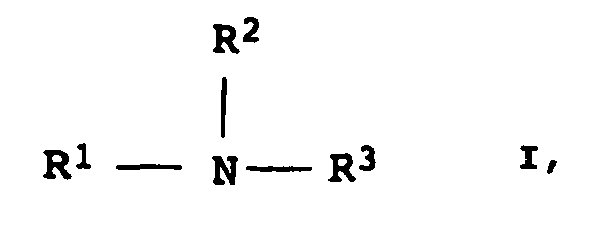
- Verwendung gemäß einem der Ansprüche 1 bis 6, wobei es sich bei dem Alkanolamin um Triethanolamin handelt.
- Verwendung gemäß einem der Ansprüche 1 bis 7, wobei das Molverhältnis der Carboxylgruppen und Säureanhydridgruppen (1 Säureanhydridgruppe berechnet als 2 Carboxylgruppen) von A) zu den Hydroxylgruppen von B) 20:1 bis 1:1 beträgt.
Applications Claiming Priority (3)
| Application Number | Priority Date | Filing Date | Title |
|---|---|---|---|
| DE19606392A DE19606392A1 (de) | 1996-02-21 | 1996-02-21 | Formaldehydfreie Beschichtungsmittel für Formkörper |
| DE19606392 | 1996-02-21 | ||
| PCT/EP1997/000773 WO1997031060A1 (de) | 1996-02-21 | 1997-02-19 | Formaldehydfreie beschichtungsmittel für formkörper |
Publications (3)
| Publication Number | Publication Date |
|---|---|
| EP0882094A1 EP0882094A1 (de) | 1998-12-09 |
| EP0882094B1 EP0882094B1 (de) | 1999-10-27 |
| EP0882094B2 true EP0882094B2 (de) | 2008-07-09 |
Family
ID=7785972
Family Applications (1)
| Application Number | Title | Priority Date | Filing Date |
|---|---|---|---|
| EP97905049A Expired - Lifetime EP0882094B2 (de) | 1996-02-21 | 1997-02-19 | Formaldehydfreie beschichtungsmittel für formkörper |
Country Status (9)
| Country | Link |
|---|---|
| US (1) | US6146746A (de) |
| EP (1) | EP0882094B2 (de) |
| JP (1) | JP3768539B2 (de) |
| KR (1) | KR100461925B1 (de) |
| AT (1) | ATE186066T1 (de) |
| DE (2) | DE19606392A1 (de) |
| DK (1) | DK0882094T4 (de) |
| ES (1) | ES2137779T3 (de) |
| WO (1) | WO1997031060A1 (de) |
Families Citing this family (76)
| Publication number | Priority date | Publication date | Assignee | Title |
|---|---|---|---|---|
| DE19606393A1 (de) * | 1996-02-21 | 1997-08-28 | Basf Ag | Formaldehydfreie Bindemittel für Formkörper |
| DE19735959A1 (de) * | 1997-08-19 | 1999-02-25 | Basf Ag | Verwendung thermisch härtbarer, wässriger Zusammensetzungen als Bindemittel für Formkörper |
| DE19851024A1 (de) * | 1998-11-05 | 2000-05-11 | Basf Ag | Wäßrige Dispersionen von wasserlöslichen Polymerisaten von N-Vinylcarbonsäureamiden, Verfahren zu ihrer Herstellung und ihre Verwendung |
| DE1061089T1 (de) * | 1999-06-15 | 2001-07-19 | Sika Ag, Vormals Kaspar Winkler & Co | Mehrzweck-, Polymer-Zementdispergiermittel für Beton mit hoher Fliessfähigkeit und Festigkeit |
| EP1164163A1 (de) | 2000-06-16 | 2001-12-19 | Rockwool International A/S | Harz für Mineralwolleprodukte |
| US6399694B1 (en) | 2000-06-30 | 2002-06-04 | Owens Corning Fiberglas Technology, Inc. | Colorable fiberglass insulation |
| US7157524B2 (en) * | 2001-05-31 | 2007-01-02 | Owens Corning Fiberglas Technology, Inc. | Surfactant-containing insulation binder |
| DE10134302C1 (de) * | 2001-07-14 | 2002-12-12 | Technocell Dekor Gmbh & Co Kg | Vorimprägnat, Verfahren zu dessen Herstellung sowie daraus erhältliche Dekorimprägnate oder dekorative Beschichtungswerkstoffe |
| US6756114B2 (en) * | 2001-08-21 | 2004-06-29 | Owens Corning Fiberglas Technology, Inc. | Moldable pellet based on the combination of synthetic cellulose fibers and thermoplastic polymers |
| US20030134553A1 (en) * | 2002-01-14 | 2003-07-17 | L.S.I. (420) Import Export And Marketing Ltd. | Sound absorbing article |
| US7384881B2 (en) * | 2002-08-16 | 2008-06-10 | H.B. Fuller Licensing & Financing, Inc. | Aqueous formaldehyde-free composition and fiberglass insulation including the same |
| US20040039098A1 (en) * | 2002-08-22 | 2004-02-26 | Hector Belmares | Formaldehyde-free coatings and acoustical panel |
| US20040048531A1 (en) * | 2002-09-09 | 2004-03-11 | Hector Belmares | Low formaldehyde emission panel |
| US6699945B1 (en) | 2002-12-03 | 2004-03-02 | Owens Corning Fiberglas Technology, Inc. | Polycarboxylic acid based co-binder |
| US7026390B2 (en) | 2002-12-19 | 2006-04-11 | Owens Corning Fiberglas Technology, Inc. | Extended binder compositions |
| US20050215153A1 (en) * | 2004-03-23 | 2005-09-29 | Cossement Marc R | Dextrin binder composition for heat resistant non-wovens |
| US20050214534A1 (en) * | 2004-03-29 | 2005-09-29 | Adamo Joseph R | Extended curable compositions for use as binders |
| DE102004016646A1 (de) * | 2004-03-31 | 2005-10-27 | Basf Ag | Verfahren zur Herstellung von Halbzeug und Formteilen |
| DE102004041127A1 (de) * | 2004-08-24 | 2006-03-02 | Basf Ag | Verfahren zur Herstellung von carboxylatreichen Copolymeren aus monoethylenisch ungesättigten Mono- und Dicarbonsäuren sowie carboxylatreiche Copolymere mit niedrigem Neutralisationsgrad |
| EP1669396A1 (de) * | 2004-12-10 | 2006-06-14 | Rockwool International A/S | Wässrige Bindemittel-Zusammensetzung für Mineralfasern |
| EP1741763B1 (de) * | 2005-07-08 | 2008-12-31 | Rohm and Haas Company | Härtbare Zusammensetzungen, die reaktive Beta-Hydroxylamide aus Lactonen enthalten |
| EP1741726A1 (de) * | 2005-07-08 | 2007-01-10 | Rohm and Haas France SAS | Wässerige härtbare Zusammensetzung und ihre Verwendung als wasserabweisendes Glassfaservliesstoff-Bindemittel |
| US7851052B2 (en) * | 2005-08-23 | 2010-12-14 | Awi Licensing Company | Coating system for sag resistant formaldehyde-free fibrous panels |
| DE602006020736D1 (de) | 2005-08-26 | 2011-04-28 | Asahi Fibreglass Co | Wässriges bindemittel für anorganische faser sowie davon gebrauch machender wärme- und/oder schalldämmungsstoff |
| GB0601888D0 (en) * | 2006-01-31 | 2006-03-08 | Psi Global Ltd | Molded filter |
| US8309231B2 (en) | 2006-05-31 | 2012-11-13 | Usg Interiors, Llc | Acoustical tile |
| CN101479428B (zh) | 2006-06-27 | 2012-11-28 | 巴斯夫欧洲公司 | 整理纸和纸制品的方法 |
| SK287845B6 (sk) * | 2007-09-18 | 2012-01-04 | Stu Fakulta Chemickej A Potravinarskej Technologie | Multifunction device for modification of cellulose materials and method for modification of cellulose materials |
| FR2924719B1 (fr) | 2007-12-05 | 2010-09-10 | Saint Gobain Isover | Composition d'encollage pour laine minerale comprenant un monosaccharide et/ou un polysaccharide et un acide organique polycarboxylique, et produits isolants obtenus. |
| US8080488B2 (en) | 2008-03-10 | 2011-12-20 | H. B. Fuller Company | Wound glass filament webs that include formaldehyde-free binder compositions, and methods of making and appliances including the same |
| FR2935707B1 (fr) | 2008-09-11 | 2012-07-20 | Saint Gobain Isover | Composition d'encollage pour laine minerale a base de sucre hydrogene et produits isolants obtenus |
| FR2946352B1 (fr) | 2009-06-04 | 2012-11-09 | Saint Gobain Isover | Composition d'encollage pour laine minerale comprenant un saccharide, un acide organique polycarboxylique et un silicone reactif, et produits isolants obtenus |
| CA2768302C (en) * | 2009-07-14 | 2015-05-05 | The Sherwin-Williams Company | Starch hybrid polymers |
| GB0912880D0 (en) | 2009-07-24 | 2009-08-26 | Psi Global Ltd | Process and apparatus for molding a filter |
| EP2475692B1 (de) | 2009-09-09 | 2015-04-29 | Basf Se | Verfahren zur herstellung einer wässrigen bindemitteldispersion |
| FR2951189B1 (fr) | 2009-10-13 | 2011-12-09 | Saint Gobain Isover | Composition d'encollage pour laine minerale comprenant un sucre reducteur et un sel metallique d'acide inorganique, et produits isolants obtenus |
| CN102040794B (zh) * | 2009-10-21 | 2014-10-08 | 罗门哈斯公司 | 可固化水性组合物 |
| DE102011005638A1 (de) | 2010-03-19 | 2011-12-15 | Basf Se | Verfahren zur Herstellung eines Formkörpers aus körnigen und/oder faserförmigen Substraten |
| US8536259B2 (en) * | 2010-06-24 | 2013-09-17 | Usg Interiors, Llc | Formaldehyde free coatings for panels |
| FR2964099B1 (fr) | 2010-08-30 | 2012-08-17 | Saint Gobain Isover | Composition d'encollage pour laine minerale comprenant un sucre non reducteur et un sel metallique d'acide inorganique, et produits isolants obtenus. |
| FR2966822B1 (fr) | 2010-11-02 | 2017-12-22 | Saint-Gobain Technical Fabrics Europe | Liant pour mat de fibres, notamment minerales, et produits obtenus |
| FR2968008B1 (fr) | 2010-11-30 | 2014-01-31 | Saint Gobain Isover | Composition d'encollage pour fibres, notamment minerales, comprenant un sucre non reducteur et un sel d'ammonium d'acide inorganique, et produits resultants. |
| US10017648B2 (en) | 2010-12-16 | 2018-07-10 | Awi Licensing Llc | Sag resistant, formaldehyde-free coated fibrous substrate |
| JP5615166B2 (ja) * | 2010-12-28 | 2014-10-29 | 旭ファイバーグラス株式会社 | 鉱物繊維用水性バインダーおよび鉱物繊維積層体 |
| FR2975689B1 (fr) | 2011-05-25 | 2014-02-28 | Saint Gobain Isover | Composition d'encollage exempte de formaldehyde pour fibres, notamment minerales, et produits resultants. |
| FR2975690B1 (fr) | 2011-05-25 | 2014-06-13 | Saint Gobain Isover | Composition d'encollage exempte de formaldehyde pour fibres, notamment minerales, et produits resultants. |
| FR2976584B1 (fr) | 2011-06-17 | 2014-12-12 | Saint Gobain Isover | Composition d'encollage pour laine minerale a base de sel d'acide lignosulfonique et d'oligosaccharide, et produits isolants obtenus. |
| FR2976585B1 (fr) | 2011-06-17 | 2013-06-07 | Saint Gobain Adfors | Liant pour mat de fibres minerales et/ou organiques et produits obtenus. |
| FR2976583B1 (fr) | 2011-06-17 | 2013-06-07 | Saint Gobain Adfors | Liant pour mat de fibres minerales et/ou organiques et produits obtenus. |
| FR2976582B1 (fr) | 2011-06-17 | 2014-12-26 | Saint Gobain Isover | Composition d'encollage pour laine minerale a faible emission de composes organiques volatils, et produits isolants obtenus. |
| US9574100B2 (en) * | 2011-06-22 | 2017-02-21 | Basf Se | Coated polymer foils with oxygen barrier properties |
| FR2978446B1 (fr) | 2011-07-27 | 2015-06-05 | Saint Gobain Isover | Composition d'encollage pour laine minerale a base de maltitol et produits isolants obtenus |
| FR2978768B1 (fr) | 2011-08-05 | 2014-11-28 | Saint Gobain Isover | Composition d'encollage pour laine minerale a base de saccharide reducteur et de saccharide hydrogene, et produits isolants obtenus |
| WO2013024084A1 (de) * | 2011-08-18 | 2013-02-21 | Basf Se | Verfahren zur herstellung eines wässrigen bindemittelsystems |
| FR2985725B1 (fr) | 2012-01-17 | 2015-06-26 | Saint Gobain Isover | Composition d'encollage pour fibres, notamment minerales, a base d'acide humique et/ou fulvique, et produits isolants resultants. |
| US8791198B2 (en) | 2012-04-30 | 2014-07-29 | H.B. Fuller Company | Curable aqueous composition |
| US9416294B2 (en) | 2012-04-30 | 2016-08-16 | H.B. Fuller Company | Curable epoxide containing formaldehyde-free compositions, articles including the same, and methods of using the same |
| DE102012105425B4 (de) | 2012-06-22 | 2017-05-04 | Carcoustics Techconsult Gmbh | Halbzeug und Formteil aus flächenförmigen Fasergebilden und Bindemitteln sowie Verfahren zu deren Herstellung |
| FR3010404B1 (fr) | 2013-09-09 | 2015-10-09 | Saint Gobain Isover | Composition d'encollage pour laine minerale et produits isolants obtenus. |
| FR3019815B1 (fr) | 2014-04-15 | 2016-05-06 | Saint Gobain Isover | Composition d'encollage a base de saccharide non reducteur et de saccharide hydrogene, et produits isolants obtenus. |
| EP3160221A4 (de) | 2014-06-27 | 2018-01-24 | Kinze Manufacturing, Inc. | Reiheneinheit mit raupe |
| EP3822237A1 (de) | 2015-01-30 | 2021-05-19 | Saint-Gobain Isover | Kleberzusammensetzung für mineralwolle auf der basis von ligninsulfonat und einer carbonylverbindung und so erhaltene dämmprodukte |
| US20180002225A1 (en) | 2015-01-30 | 2018-01-04 | Saint-Gobain Adfors | Binder for mineral fibres, comprising lignosulfonate and a carbonyl compound, and resulting mats |
| US10604608B2 (en) | 2015-11-06 | 2020-03-31 | Basf Se | Method for producing an aqueous binder |
| FR3062131B1 (fr) | 2017-01-23 | 2020-06-26 | Saint-Gobain Isover | Composition d'encollage pour laine minerale a base de sucre hydrogene et produits isolants obtenus. |
| EP3695040B1 (de) | 2017-10-09 | 2024-03-20 | Owens Corning Intellectual Capital, LLC | Wässrige bindemittelzusammensetzungen |
| WO2019074867A1 (en) | 2017-10-09 | 2019-04-18 | Owens Corning Intellectual Capital, Llc | AQUEOUS BINDING COMPOSITIONS |
| CN111295415A (zh) | 2017-10-27 | 2020-06-16 | 巴斯夫欧洲公司 | 水性粘合剂制剂 |
| ES2931335T3 (es) * | 2018-04-20 | 2022-12-28 | Basf Se | Composición adhesiva con contenido de gel a base de reticulación mediante grupos ceto o aldehído |
| CA3136476A1 (en) | 2019-04-09 | 2020-10-15 | Owens Corning Intellectual Capital, Llc | Insulation products formed with aqueous binder compositions |
| CN113840870A (zh) | 2019-04-09 | 2021-12-24 | 欧文斯科宁知识产权资产有限公司 | 水性粘结剂组合物 |
| US11813833B2 (en) | 2019-12-09 | 2023-11-14 | Owens Corning Intellectual Capital, Llc | Fiberglass insulation product |
| CA3161972A1 (en) | 2019-12-09 | 2021-06-17 | Owens Corning Intellectual Capital, Llc | Fiberglass insulation product |
| US12624194B2 (en) | 2020-09-01 | 2026-05-12 | Owens Corning Intellectual Capital, Llc | Aqueous binder compositions for mineral wool products |
| CA3197306A1 (en) | 2020-10-01 | 2022-04-07 | Owens Corning Intellectual Capital, Llc | B-stageable aqueous binder compositions |
| US12578051B2 (en) | 2021-06-04 | 2026-03-17 | Owens Corning Intellectual Capital, Llc | Fine fiber insulation products with improved thermal properties |
Citations (4)
| Publication number | Priority date | Publication date | Assignee | Title |
|---|---|---|---|---|
| DE3112694A1 (de) † | 1981-03-31 | 1982-10-28 | Basf Farben + Fasern Ag, 2000 Hamburg | Waessrige dispersion oder emulsion filmbildender bindemittel |
| EP0445578A2 (de) † | 1990-03-03 | 1991-09-11 | BASF Aktiengesellschaft | Formkörper |
| EP0583086A1 (de) † | 1992-08-06 | 1994-02-16 | Rohm And Haas Company | Wässerige hitzehärtbare Zusammensetzung und ihre Verwendung als Glassfaservliesstoff-Bindemittel |
| EP0651088A1 (de) † | 1993-10-22 | 1995-05-03 | Rohm And Haas Company | Verfahren zur Verstärkung von zellulosischen Substraten |
Family Cites Families (12)
| Publication number | Priority date | Publication date | Assignee | Title |
|---|---|---|---|---|
| DE864151C (de) * | 1944-05-28 | 1953-01-22 | Bayer Ag | Verfahren zur Herstellung gehaerteter hochmolekularer Produkte |
| DE1720712B2 (de) * | 1967-09-19 | 1976-06-24 | Bayer Ag, 5090 Leverkusen | Verfahren zur herstellung von unvernetzten reaktionsprodukten aus maleinsaeureanhydridcopolymerisaten und diaethanolaminen |
| GB1366081A (en) * | 1971-03-25 | 1974-09-11 | Ethylene Plastique Sa | Process for the treatment of the surface of a substrate with ethylene -maleic anhydride copolymer particles |
| US3857803A (en) * | 1973-06-05 | 1974-12-31 | Borden Inc | Labeling adhesive |
| DE2357951C3 (de) * | 1973-11-21 | 1978-10-19 | Basf Ag, 6700 Ludwigshafen | Verwendung von en-Addukten des Maleinsäureanhydrids als Korrosionsschutzmittel |
| JPS51132295A (en) * | 1975-03-24 | 1976-11-17 | Nok Corp | A method for preparing a hardenable material |
| JPS56104905A (en) * | 1980-01-28 | 1981-08-21 | Nippon Zeon Co Ltd | Production of novel modified resin |
| US4367259A (en) * | 1981-07-27 | 1983-01-04 | W. R. Grace & Co. | Sound deadening material |
| DE3314373A1 (de) * | 1983-04-20 | 1984-10-25 | Basf Ag, 6700 Ludwigshafen | Schalldaemmplatten auf basis von mineralischen fasern und thermoplastischen bindemitteln |
| DD247456A1 (de) * | 1986-04-02 | 1987-07-08 | Leuna Werke Veb | Herstellung waessriger loesungen carboxyl- und hydroxylgruppenenthaltender copolymerer |
| JPH0251531A (ja) * | 1988-08-12 | 1990-02-21 | Nippon Oil & Fats Co Ltd | 水溶性自己硬化型ポリマー及びその硬化物 |
| DE3907013A1 (de) * | 1989-03-04 | 1990-09-13 | Basf Ag | Formkoerper |
-
1996
- 1996-02-21 DE DE19606392A patent/DE19606392A1/de not_active Withdrawn
-
1997
- 1997-02-19 DE DE59700622T patent/DE59700622D1/de not_active Expired - Lifetime
- 1997-02-19 WO PCT/EP1997/000773 patent/WO1997031060A1/de not_active Ceased
- 1997-02-19 EP EP97905049A patent/EP0882094B2/de not_active Expired - Lifetime
- 1997-02-19 DK DK97905049T patent/DK0882094T4/da active
- 1997-02-19 KR KR19980706485A patent/KR100461925B1/ko not_active Expired - Fee Related
- 1997-02-19 JP JP52978797A patent/JP3768539B2/ja not_active Expired - Fee Related
- 1997-02-19 AT AT97905049T patent/ATE186066T1/de not_active IP Right Cessation
- 1997-02-19 US US09/101,797 patent/US6146746A/en not_active Expired - Lifetime
- 1997-02-19 ES ES97905049T patent/ES2137779T3/es not_active Expired - Lifetime
Patent Citations (4)
| Publication number | Priority date | Publication date | Assignee | Title |
|---|---|---|---|---|
| DE3112694A1 (de) † | 1981-03-31 | 1982-10-28 | Basf Farben + Fasern Ag, 2000 Hamburg | Waessrige dispersion oder emulsion filmbildender bindemittel |
| EP0445578A2 (de) † | 1990-03-03 | 1991-09-11 | BASF Aktiengesellschaft | Formkörper |
| EP0583086A1 (de) † | 1992-08-06 | 1994-02-16 | Rohm And Haas Company | Wässerige hitzehärtbare Zusammensetzung und ihre Verwendung als Glassfaservliesstoff-Bindemittel |
| EP0651088A1 (de) † | 1993-10-22 | 1995-05-03 | Rohm And Haas Company | Verfahren zur Verstärkung von zellulosischen Substraten |
Also Published As
| Publication number | Publication date |
|---|---|
| DK0882094T4 (da) | 2008-11-10 |
| KR100461925B1 (ko) | 2005-04-14 |
| JP2000508000A (ja) | 2000-06-27 |
| ES2137779T3 (es) | 1999-12-16 |
| WO1997031060A1 (de) | 1997-08-28 |
| US6146746A (en) | 2000-11-14 |
| DE59700622D1 (de) | 1999-12-02 |
| KR19990087097A (ko) | 1999-12-15 |
| EP0882094A1 (de) | 1998-12-09 |
| ATE186066T1 (de) | 1999-11-15 |
| EP0882094B1 (de) | 1999-10-27 |
| DE19606392A1 (de) | 1997-08-28 |
| DK0882094T3 (da) | 1999-12-27 |
| JP3768539B2 (ja) | 2006-04-19 |
Similar Documents
| Publication | Publication Date | Title |
|---|---|---|
| EP0882094B1 (de) | Formaldehydfreie beschichtungsmittel für formkörper | |
| EP0882093B1 (de) | Formaldehydfreie bindemittel für formkörper | |
| EP0882074B2 (de) | Formaldehydfreie, wässrige bindemittel | |
| EP0902796B1 (de) | Thermisch härtbare, wässrige zusammensetzungen | |
| EP1018523A2 (de) | Polymerdispersion | |
| EP1664418A1 (de) | Verwendung formaldehydfreier wässriger bindemittel für substrate | |
| WO1999009100A1 (de) | Wässrige zusammensetzungen | |
| WO2006063802A2 (de) | Verwendung formaldehydfreier wässriger bindemittel für substrate | |
| EP1157051B2 (de) | Polymerdispersionen | |
| EP2158266B1 (de) | Verfahren zur herstellung von formkörpern | |
| EP2723565B1 (de) | Beschichtete polymerfolien mit sauerstoffbarriereeigenschaften | |
| DE10253498A1 (de) | Verwendung von wäßrigen Bindemitteln bei der konstruktiven Holzverleimung | |
| EP3371239B1 (de) | Verfahren zur herstellung eines wässrigen bindemittels |
Legal Events
| Date | Code | Title | Description |
|---|---|---|---|
| PUAI | Public reference made under article 153(3) epc to a published international application that has entered the european phase |
Free format text: ORIGINAL CODE: 0009012 |
|
| 17P | Request for examination filed |
Effective date: 19980427 |
|
| AK | Designated contracting states |
Kind code of ref document: A1 Designated state(s): AT BE CH DE DK ES FI FR GB IT LI NL PT SE |
|
| GRAG | Despatch of communication of intention to grant |
Free format text: ORIGINAL CODE: EPIDOS AGRA |
|
| GRAG | Despatch of communication of intention to grant |
Free format text: ORIGINAL CODE: EPIDOS AGRA |
|
| GRAH | Despatch of communication of intention to grant a patent |
Free format text: ORIGINAL CODE: EPIDOS IGRA |
|
| 17Q | First examination report despatched |
Effective date: 19990316 |
|
| GRAH | Despatch of communication of intention to grant a patent |
Free format text: ORIGINAL CODE: EPIDOS IGRA |
|
| GRAA | (expected) grant |
Free format text: ORIGINAL CODE: 0009210 |
|
| AK | Designated contracting states |
Kind code of ref document: B1 Designated state(s): AT BE CH DE DK ES FI FR GB IT LI NL PT SE |
|
| REF | Corresponds to: |
Ref document number: 186066 Country of ref document: AT Date of ref document: 19991115 Kind code of ref document: T |
|
| REG | Reference to a national code |
Ref country code: CH Ref legal event code: EP |
|
| REF | Corresponds to: |
Ref document number: 59700622 Country of ref document: DE Date of ref document: 19991202 |
|
| GBT | Gb: translation of ep patent filed (gb section 77(6)(a)/1977) |
Effective date: 19991116 |
|
| REG | Reference to a national code |
Ref country code: ES Ref legal event code: FG2A Ref document number: 2137779 Country of ref document: ES Kind code of ref document: T3 |
|
| REG | Reference to a national code |
Ref country code: DK Ref legal event code: T3 |
|
| ITF | It: translation for a ep patent filed | ||
| PGFP | Annual fee paid to national office [announced via postgrant information from national office to epo] |
Ref country code: FR Payment date: 20000125 Year of fee payment: 4 |
|
| PGFP | Annual fee paid to national office [announced via postgrant information from national office to epo] |
Ref country code: PT Payment date: 20000201 Year of fee payment: 4 Ref country code: AT Payment date: 20000201 Year of fee payment: 4 |
|
| PGFP | Annual fee paid to national office [announced via postgrant information from national office to epo] |
Ref country code: FI Payment date: 20000207 Year of fee payment: 4 |
|
| PGFP | Annual fee paid to national office [announced via postgrant information from national office to epo] |
Ref country code: ES Payment date: 20000210 Year of fee payment: 4 |
|
| ET | Fr: translation filed | ||
| REG | Reference to a national code |
Ref country code: PT Ref legal event code: SC4A Free format text: AVAILABILITY OF NATIONAL TRANSLATION Effective date: 20000105 |
|
| PLBQ | Unpublished change to opponent data |
Free format text: ORIGINAL CODE: EPIDOS OPPO |
|
| PLBI | Opposition filed |
Free format text: ORIGINAL CODE: 0009260 |
|
| PLBF | Reply of patent proprietor to notice(s) of opposition |
Free format text: ORIGINAL CODE: EPIDOS OBSO |
|
| 26 | Opposition filed |
Opponent name: ROHM AND HAAS COMPANY Effective date: 20000727 |
|
| NLR1 | Nl: opposition has been filed with the epo |
Opponent name: ROHM AND HAAS COMPANY |
|
| PLBF | Reply of patent proprietor to notice(s) of opposition |
Free format text: ORIGINAL CODE: EPIDOS OBSO |
|
| PLBF | Reply of patent proprietor to notice(s) of opposition |
Free format text: ORIGINAL CODE: EPIDOS OBSO |
|
| PG25 | Lapsed in a contracting state [announced via postgrant information from national office to epo] |
Ref country code: GB Free format text: LAPSE BECAUSE OF NON-PAYMENT OF DUE FEES Effective date: 20010219 Ref country code: FI Free format text: LAPSE BECAUSE OF NON-PAYMENT OF DUE FEES Effective date: 20010219 Ref country code: AT Free format text: LAPSE BECAUSE OF NON-PAYMENT OF DUE FEES Effective date: 20010219 |
|
| PG25 | Lapsed in a contracting state [announced via postgrant information from national office to epo] |
Ref country code: ES Free format text: LAPSE BECAUSE OF NON-PAYMENT OF DUE FEES Effective date: 20010220 |
|
| PG25 | Lapsed in a contracting state [announced via postgrant information from national office to epo] |
Ref country code: LI Free format text: LAPSE BECAUSE OF NON-PAYMENT OF DUE FEES Effective date: 20010228 Ref country code: CH Free format text: LAPSE BECAUSE OF NON-PAYMENT OF DUE FEES Effective date: 20010228 |
|
| PG25 | Lapsed in a contracting state [announced via postgrant information from national office to epo] |
Ref country code: PT Free format text: LAPSE BECAUSE OF NON-PAYMENT OF DUE FEES Effective date: 20010831 |
|
| PG25 | Lapsed in a contracting state [announced via postgrant information from national office to epo] |
Ref country code: NL Free format text: LAPSE BECAUSE OF NON-PAYMENT OF DUE FEES Effective date: 20010901 |
|
| REG | Reference to a national code |
Ref country code: CH Ref legal event code: PL |
|
| GBPC | Gb: european patent ceased through non-payment of renewal fee |
Effective date: 20010219 |
|
| PG25 | Lapsed in a contracting state [announced via postgrant information from national office to epo] |
Ref country code: FR Free format text: LAPSE BECAUSE OF NON-PAYMENT OF DUE FEES Effective date: 20011031 |
|
| NLV4 | Nl: lapsed or anulled due to non-payment of the annual fee |
Effective date: 20010901 |
|
| REG | Reference to a national code |
Ref country code: FR Ref legal event code: ST |
|
| REG | Reference to a national code |
Ref country code: PT Ref legal event code: MM4A Free format text: LAPSE DUE TO NON-PAYMENT OF FEES Effective date: 20010831 |
|
| REG | Reference to a national code |
Ref country code: ES Ref legal event code: FD2A Effective date: 20021016 |
|
| PLCK | Communication despatched that opposition was rejected |
Free format text: ORIGINAL CODE: EPIDOSNREJ1 |
|
| APBP | Date of receipt of notice of appeal recorded |
Free format text: ORIGINAL CODE: EPIDOSNNOA2O |
|
| APBQ | Date of receipt of statement of grounds of appeal recorded |
Free format text: ORIGINAL CODE: EPIDOSNNOA3O |
|
| APAA | Appeal reference recorded |
Free format text: ORIGINAL CODE: EPIDOS REFN |
|
| PG25 | Lapsed in a contracting state [announced via postgrant information from national office to epo] |
Ref country code: IT Free format text: LAPSE BECAUSE OF NON-PAYMENT OF DUE FEES;WARNING: LAPSES OF ITALIAN PATENTS WITH EFFECTIVE DATE BEFORE 2007 MAY HAVE OCCURRED AT ANY TIME BEFORE 2007. THE CORRECT EFFECTIVE DATE MAY BE DIFFERENT FROM THE ONE RECORDED. Effective date: 20050219 |
|
| APAH | Appeal reference modified |
Free format text: ORIGINAL CODE: EPIDOSCREFNO |
|
| APBU | Appeal procedure closed |
Free format text: ORIGINAL CODE: EPIDOSNNOA9O |
|
| PLAY | Examination report in opposition despatched + time limit |
Free format text: ORIGINAL CODE: EPIDOSNORE2 |
|
| PLBC | Reply to examination report in opposition received |
Free format text: ORIGINAL CODE: EPIDOSNORE3 |
|
| PLAY | Examination report in opposition despatched + time limit |
Free format text: ORIGINAL CODE: EPIDOSNORE2 |
|
| PLBC | Reply to examination report in opposition received |
Free format text: ORIGINAL CODE: EPIDOSNORE3 |
|
| RAP2 | Party data changed (patent owner data changed or rights of a patent transferred) |
Owner name: BASF SE |
|
| PUAH | Patent maintained in amended form |
Free format text: ORIGINAL CODE: 0009272 |
|
| STAA | Information on the status of an ep patent application or granted ep patent |
Free format text: STATUS: PATENT MAINTAINED AS AMENDED |
|
| 27A | Patent maintained in amended form |
Effective date: 20080709 |
|
| AK | Designated contracting states |
Kind code of ref document: B2 Designated state(s): AT BE CH DE DK ES FI FR GB IT LI NL PT SE |
|
| REG | Reference to a national code |
Ref country code: ES Ref legal event code: FD2A Effective date: 20010220 |
|
| REG | Reference to a national code |
Ref country code: SE Ref legal event code: RPEO |
|
| REG | Reference to a national code |
Ref country code: DK Ref legal event code: T4 |
|
| PGFP | Annual fee paid to national office [announced via postgrant information from national office to epo] |
Ref country code: DK Payment date: 20100211 Year of fee payment: 14 |
|
| PGFP | Annual fee paid to national office [announced via postgrant information from national office to epo] |
Ref country code: BE Payment date: 20100215 Year of fee payment: 14 |
|
| PGFP | Annual fee paid to national office [announced via postgrant information from national office to epo] |
Ref country code: SE Payment date: 20100212 Year of fee payment: 14 |
|
| BERE | Be: lapsed |
Owner name: *BASF SE Effective date: 20110228 |
|
| REG | Reference to a national code |
Ref country code: DK Ref legal event code: EBP |
|
| REG | Reference to a national code |
Ref country code: SE Ref legal event code: EUG |
|
| PG25 | Lapsed in a contracting state [announced via postgrant information from national office to epo] |
Ref country code: BE Free format text: LAPSE BECAUSE OF NON-PAYMENT OF DUE FEES Effective date: 20110228 |
|
| PG25 | Lapsed in a contracting state [announced via postgrant information from national office to epo] |
Ref country code: SE Free format text: LAPSE BECAUSE OF NON-PAYMENT OF DUE FEES Effective date: 20110220 |
|
| PGFP | Annual fee paid to national office [announced via postgrant information from national office to epo] |
Ref country code: DE Payment date: 20150429 Year of fee payment: 19 |
|
| REG | Reference to a national code |
Ref country code: DE Ref legal event code: R119 Ref document number: 59700622 Country of ref document: DE |
|
| PG25 | Lapsed in a contracting state [announced via postgrant information from national office to epo] |
Ref country code: DE Free format text: LAPSE BECAUSE OF NON-PAYMENT OF DUE FEES Effective date: 20160901 |