EP0879811A1 - Naphthoquinone derivatives and electro-photosensitive material using same - Google Patents
Naphthoquinone derivatives and electro-photosensitive material using same Download PDFInfo
- Publication number
- EP0879811A1 EP0879811A1 EP98304106A EP98304106A EP0879811A1 EP 0879811 A1 EP0879811 A1 EP 0879811A1 EP 98304106 A EP98304106 A EP 98304106A EP 98304106 A EP98304106 A EP 98304106A EP 0879811 A1 EP0879811 A1 EP 0879811A1
- Authority
- EP
- European Patent Office
- Prior art keywords
- group
- groups
- substituent
- electron
- charge
- Prior art date
- Legal status (The legal status is an assumption and is not a legal conclusion. Google has not performed a legal analysis and makes no representation as to the accuracy of the status listed.)
- Withdrawn
Links
- 0 CC1C=CC(*2ccc(C)cc2)=CC1 Chemical compound CC1C=CC(*2ccc(C)cc2)=CC1 0.000 description 9
- NFBAXHOPROOJAW-UHFFFAOYSA-N O=C(C1c2ccccc2)c(cccc2)c2C1=O Chemical compound O=C(C1c2ccccc2)c(cccc2)c2C1=O NFBAXHOPROOJAW-UHFFFAOYSA-N 0.000 description 1
- CIDYIYSNDAJNGX-UHFFFAOYSA-N O=C(C=C1c2ccccc2)c2ccccc2C1=O Chemical compound O=C(C=C1c2ccccc2)c2ccccc2C1=O CIDYIYSNDAJNGX-UHFFFAOYSA-N 0.000 description 1
- KGPXIVWJPACNDT-UHFFFAOYSA-N O=C(c1cc(C(C(C(c2ccccc22)=O)=C(c3ccccc3)C2=O)=O)ccc1)C(C(c1ccccc11)=O)=C(c2ccccc2)C1=O Chemical compound O=C(c1cc(C(C(C(c2ccccc22)=O)=C(c3ccccc3)C2=O)=O)ccc1)C(C(c1ccccc11)=O)=C(c2ccccc2)C1=O KGPXIVWJPACNDT-UHFFFAOYSA-N 0.000 description 1
Images



Classifications
-
- G—PHYSICS
- G03—PHOTOGRAPHY; CINEMATOGRAPHY; ANALOGOUS TECHNIQUES USING WAVES OTHER THAN OPTICAL WAVES; ELECTROGRAPHY; HOLOGRAPHY
- G03G—ELECTROGRAPHY; ELECTROPHOTOGRAPHY; MAGNETOGRAPHY
- G03G5/00—Recording-members for original recording by exposure, e.g. to light, to heat or to electrons; Manufacture thereof; Selection of materials therefor
- G03G5/02—Charge-receiving layers
- G03G5/04—Photoconductive layers; Charge-generation layers or charge-transporting layers; Additives therefor; Binders therefor
- G03G5/06—Photoconductive layers; Charge-generation layers or charge-transporting layers; Additives therefor; Binders therefor characterised by the photoconductive material being organic
- G03G5/0601—Acyclic or carbocyclic compounds
- G03G5/0609—Acyclic or carbocyclic compounds containing oxygen
-
- C—CHEMISTRY; METALLURGY
- C07—ORGANIC CHEMISTRY
- C07C—ACYCLIC OR CARBOCYCLIC COMPOUNDS
- C07C45/00—Preparation of compounds having >C = O groups bound only to carbon or hydrogen atoms; Preparation of chelates of such compounds
- C07C45/61—Preparation of compounds having >C = O groups bound only to carbon or hydrogen atoms; Preparation of chelates of such compounds by reactions not involving the formation of >C = O groups
- C07C45/67—Preparation of compounds having >C = O groups bound only to carbon or hydrogen atoms; Preparation of chelates of such compounds by reactions not involving the formation of >C = O groups by isomerisation; by change of size of the carbon skeleton
- C07C45/68—Preparation of compounds having >C = O groups bound only to carbon or hydrogen atoms; Preparation of chelates of such compounds by reactions not involving the formation of >C = O groups by isomerisation; by change of size of the carbon skeleton by increase in the number of carbon atoms
- C07C45/72—Preparation of compounds having >C = O groups bound only to carbon or hydrogen atoms; Preparation of chelates of such compounds by reactions not involving the formation of >C = O groups by isomerisation; by change of size of the carbon skeleton by increase in the number of carbon atoms by reaction of compounds containing >C = O groups with the same or other compounds containing >C = O groups
-
- C—CHEMISTRY; METALLURGY
- C07—ORGANIC CHEMISTRY
- C07C—ACYCLIC OR CARBOCYCLIC COMPOUNDS
- C07C46/00—Preparation of quinones
- C07C46/02—Preparation of quinones by oxidation giving rise to quinoid structures
- C07C46/06—Preparation of quinones by oxidation giving rise to quinoid structures of at least one hydroxy group on a six-membered aromatic ring
-
- C—CHEMISTRY; METALLURGY
- C07—ORGANIC CHEMISTRY
- C07C—ACYCLIC OR CARBOCYCLIC COMPOUNDS
- C07C49/00—Ketones; Ketenes; Dimeric ketenes; Ketonic chelates
- C07C49/76—Ketones containing a keto group bound to a six-membered aromatic ring
- C07C49/782—Ketones containing a keto group bound to a six-membered aromatic ring polycyclic
- C07C49/792—Ketones containing a keto group bound to a six-membered aromatic ring polycyclic containing rings other than six-membered aromatic rings
-
- C—CHEMISTRY; METALLURGY
- C07—ORGANIC CHEMISTRY
- C07C—ACYCLIC OR CARBOCYCLIC COMPOUNDS
- C07C49/00—Ketones; Ketenes; Dimeric ketenes; Ketonic chelates
- C07C49/76—Ketones containing a keto group bound to a six-membered aromatic ring
- C07C49/82—Ketones containing a keto group bound to a six-membered aromatic ring containing hydroxy groups
- C07C49/83—Ketones containing a keto group bound to a six-membered aromatic ring containing hydroxy groups polycyclic
-
- C—CHEMISTRY; METALLURGY
- C07—ORGANIC CHEMISTRY
- C07C—ACYCLIC OR CARBOCYCLIC COMPOUNDS
- C07C50/00—Quinones
- C07C50/38—Quinones containing —CHO or non—quinoid keto groups
Definitions
- the present invention relates to novel naphthoquinone derivatives and to an electro-photosensitive material used for image-forming apparatuses such as electrostatic copying machine, facsimile, laser-beam printer, etc.
- Electro-photosensitive materials comprising various materials have been used in the image-forming apparatuses that employ Carlson's process, such as copying machine, facsimile, laser printer, etc.
- One of them is an inorganic photosensitive material using an inorganic material such as selenium as a photosensitive layer
- another one is an organic photosensitive material (OPC) using an organic material as a photosensitive layer.
- OPC organic photosensitive material
- the organic photosensitive material offers many advantages in regard to that it is produced cheaply and efficiently compared with the inorganic photosensitive material and, besides, it is harmless. Therefore, study has been extensively forwarded concerning the organic photosensitive material.
- organic photosensitive materials pertain to those of the laminated-layer type in which a charge-generating layer and a charge-transporting layer are laminated one upon the other, i.e., pertain to those of the function separation type, but there has also been known the one of the so-called single-layer type in which a charge-generating agent and a charge-transporting agent are dispersed in a single photosensitive layer.
- the charge-transporting agent used for these photosensitive materials must have a high carrier mobility. Most of the charge-transporting agents featuring a high carrier mobility have a positive hole-transporting property. From the standpoint of mechanical strength, therefore, the organic photosensitive materials put into practical use are limited to those of the negatively-charged laminated-layer type having a charge-transporting layer as the outermost layer. However, the negatively-charged organic photosensitive material utilizes corona discharge of negative polarity arousing problems such as generating ozone in large amounts, contaminating the environment, and deteriorating the photosensitive material.
- Japanese Laid-Open Patent Publication No. 206349/1989 proposes the use of a compound having a diphenoquinone structure or a benzoquinone structure as an electron-transporting agent for the electro-photosensitive material.
- Japanese Laid-Open Patent Publication No. 110227/1994 proposes the use of a compound having a benzoquinone structure or a naphthoquinone structure as an electron-transporting agent for the electro-photosensitive material.
- the conventional electron-transporting agents such as diphenoquinone derivatives, benzoquinone derivatives, and naphthoquinone derivatives, cannot be matched with the charge-generating agent, and permit electrons to be injected in insufficient amounts from the charge-generating agent into the electron-transporting agent.
- such electron-transporting agents are poorly compatible with the binder resin, and cause the hopping distance to be lengthened, permitting the electrons to move poorly in a low electric field. Therefore, the photosensitive materials containing the conventional electron-transporting agents exhibit a high residual potential and a low sensitivity as will become obvious from the testing of sensitivity described in Examples appearing later.
- the photosensitive material equipped with a photosensitive layer of the single-layer type offers many advantages in that it is simple in the structure, is easily prepared, suppresses the occurrence of defect in the film, and exhibits improved optical properties.
- the photosensitive material equippec with the photosensitive layer of the single-layer type uses the electron-transporting agent and the positive hole-transporting agent in combination as a charge-transporting agent.
- the photosensitive material can be used either as the one of the positively charged type or the one of the negatively charged type, enabling the range of application to be expanded.
- the conventional electron-transporting agent interacts with the positive hole-transporting agent to impair the transportation of electrons and positive holes. Because of this reason, the photosensitive material equipped with a photosensitive layer of the single-layer type has not been put into wide use.
- the object of the present invention is to provide a novel compound which can be favorably used as an electron-transporting agent in the electro-photosensitive material, and an electro-photosensitive material using this novel compound featuring higher sensitivity than the conventional photosensitive materials, by solving the above-mentioned technical problems.
- the present invention provides a naphthoquinone derivative represented by the general formula (1), wherein R 1 is an aryl group which may have a substituent, and R 2 is an alkylene group which may have a substituent, an arylene group which may have a substituent, a group (i), wherein R 3 is an alkylene group which may have a substituent, or a group (ii),
- the derivative (1) as an electron-transporting agent for the electro-photosensitive material, therefore, it is allowed to provide a highly sensitive photosensitive material.
- the naphthoquinone derivative (1) of the present invention is a combination of two naphthoquinone rings that feature excellent electron-transporting property and electron-accepting property owing to the actions of the above-mentioned substituents, and is estimated to exhibit further improved electron-transporting property.
- the naphthoquinone derivative (1) of the present invention can be used for such applications as solar cells and EL elements.
- the electro-photosensitive material of the present invention has a photosensitive layer formed on an electrically conducting substrate, and a feature resides in that the photosensitive layer contains a naphthoquinone derivative represented by the general formula (1).
- the photosensitive layer containing the naphthoquinone derivative (1) exhibits excellent electron-transporting property in a low electric field, permits the electrons and the positive holes to recombine together at a decreased ratio in the layer, permits the apparent charge-generating efficiency to approach a practical value, and, hence, exhibits improved sensitivity. Moreover, the photosensitive material exhibits a low residual potential, and improved stability and durability even when it is repetitively exposed to light.
- the naphthoquinone derivative (1) does not develop interaction relative to the positive hole-transporting agent, and does not impair the transportation of electrons and positive holes.
- the naphthoquinone derivative (1) is used for the photosensitive layer of the single-layer type which also contains a positive-hole transporting agent, there is obtained a more sensitive photosensitive material.
- the sensitivity of the photosensitive material is further improved when the photosensitive layer contains an electron-transporting agent which has an oxidation-reduction potential of -0.8 to -1.4 V.
- the electron-transporting agent works to extract electrons from the charge-generating agent and transmits them to the naphthoquinone derivative (1), enabling the electrons to be smoothly injected into the naphthoquinone derivative (1) from the charge-generating agent.
- a diphenoquinone derivative represented by the general formula (2) wherein R A , R B , R C and R D may be the same or different, and are hydrogen atoms, alkyl groups, alkoxyl groups, aryl groups, aralkyl groups, cycloalkyl groups or amino groups, or a benzoquinone derivative represented by the general formula (3).
- R E , R F , R G and R H may be the same or different, and are hydrogen atoms, alkyl groups, alkoxyl groups, aryl groups, aralkyl groups, cycloalkyl groups or amino groups which may have a substituent.
- the naphthoquinone derivative (1) used for the electro-photosensitive material of the present invention will, first, be described.
- examples of the aryl group denoted by R 1 include phenyl, tolyl, xylyl, biphenylyl, o-terphenyl, naphthyl, anthryl and phenanthryl.
- the aryl group preferably comprises 1-4 rings either as a fused system or as ring assemblies, one or more of the rings having one or more (preferably one, two or three) alkyl substituents, each preferably having 1-3 carbon atoms.
- Examples of the arylene group denoted by R 2 include phenylene, naphthylene, anthracenediyl and phenanthrylene.
- Examples of the alkylene group denoted by R 2 or R 3 include those having 1 to 6 carbon atoms, such as methylene, ethylene, trimethylene, tetramethylene, pentamethylene and hexamethylene.
- the alkylene group may have a substituent which is an alkyl group or a halogen atom.
- the aryl group may have a substituent which is an alkyl group, aralkyl group, alkoxyl group, alkanoyl group, halogen atom, aryl group or alkoxycarbonyl group.
- the alkyl group will be the one having 1 to 6 carbon atoms, such as methyl, ethyl, n-propyl, isopropyl, n-butyl, isobutyl, s-butyl, t-butyl, pentyl or hexyl.
- halogen atom examples include fluorine, chlorine, bromine and iodine.
- alkoxyl group examples include those having 1 to 6 carbon atoms, such as methoxy, ethoxy, propoxy, isopropoxy, butoxy, isobutoxy, s-butoxy, t-butoxy, pentyloxy, and hexyloxy.
- aralkyl group examples include those having 1 to 6 carbon atoms of the alkyl portion, such as benzyl, 1-phenylethyl, 3-phenylpropyl, 4-phenylbutyl, 5-phenylpentyl and 6-phenylhexyl.
- alkoxycarbonyl examples include those having 1 to 6 carbon atoms of the alkoxy portion, such as, methoxycarbonyl, ethoxycarbonyl, propoxycarbonyl, isopropoxycarbonyl, butoxycarbonyl, t-butoxycarbonyl, pentyloxycarbonyl and hexyloxycarbonyl.
- alkanoyl group examples include those having 1 to 6 carbon atoms, such as acetyl, propionyl, butylyl, isobutylyl, pentanoyl, t-butylcarbonyl and hexanoyl.
- aryl group examples include those described above.
- the alkyl group and the aryl group may have a substituent.
- the above-mentioned halogen atom can be exemplified as a substituent for the alkyl group.
- the above-mentioned alkyl group or the halogen atom can be exemplified as a substituent for the aryl group.
- the naphthoquinone derivative in which the group R2 is an alkylene group exhibits particularly excellent electron-transporting ability making it possible to obtain a highly sensitive photosensitive material.
- the naphthoquinone derivative in which the group R2 is the group (i), the group (ii) or arylene group exhibits a high glass transition temperature Tg and makes it possible to increase Tg of the photosensitive layer and, hence, prevents the surface of the photosensitive material from scarred by a cleaning blade that is press-contacted to the surface of the photosensitive material when the device is halted.
- the naphthoquinone derivative in which the arylene group has an alkyl group as a substituent exhibits excellent solubility in a solvent and compatibility with the binder resin.
- naphthoquinone derivative (1) represented by the general formula (1) include the following compounds represented by the formulas (1-1) to (1-9).
- the naphthoquinone derivative represented by the general formula (1) is synthesized as expressed by the following reaction formulas I and II. wherein R 1 and R 2 are as defined above.
- the naphthoquinone derivative (1) of the present invention is obtained by isomerizing a 1,3-indandione derivative represented by the general formula (4) without solvent or in a suitable solvent in the presence of a sodium hydride thereby to obtain a 1,4-dihydroxynaphthalene derivative represented by the general formula (5), followed by oxidation.
- sodium hydride is used at least in an equivalent amount and, preferably, in an amount of about 1.2 mol times as great with respect to the compound (4).
- the reaction is carried out, usually, at 40 to 100°C and, preferably, at 70 to 80°C, and ends in about four hours.
- R 1 and R 2 are as defined above.
- This reaction is to obtain the compound of the above-mentioned formula (4) which is the starting material for the above-mentioned reaction formula I by reacting a 1,3-indandione derivative represented by the general formula (6) with a dibromoacetyl derivative presented by the general formula (7) in the presence of a base without solvent or in a suitable solvent.
- the base examples include sodium alkoxide such as sodium methoxide, and a metal hydride such as sodium hydride. It is desired that the base is used at least in an equivalent amount and, preferably, in an amount of about 1.2 mol times as great with respect to the compound (6).
- the reaction is carried out, usually, at 40 to 100°C and, preferably, at 70 to 80°C, and ends in about five hours.
- the solvent there can be used, for example, benzene, methylene chloride, chloroform, tetrahydrofuran, dimethylformamide or dimethyl sulfoxide.
- the electro-photosensitive material of the present invention is provided with a photosensitive layer containing the naphthoquinone derivative (1) represented by the general formula (1) on an electrically conducting substrate.
- the electro-photosensitive material of the present invention may be either of the single-layer type or the laminated-layer type, but the effect of the electron-transporting agent appears conspicuously in the single-layer type photosensitive material.
- the electro-photosensitive material of the single-layer type has a single photosensitive layer formed on the electrically conducting substrate.
- This photosensitive layer comprises a binder resin containing, at least, a charge-generating agent, a positive hole-transporting agent, as well as a naphthoquinone derivative (1) as an electron-transporting agent.
- the single-layer type photosensitive material can be used being either positively charged or negatively charged but is desirably used being positively charged.
- the laminated-layer type electro-photosensitive material has at least a charge-generating layer and a charge-transporting layer formed in this order on the electrically conducting substrate, and wherein the naphthoquinone derivative (1) is contained as an electron-transporting agent in the charge-transporting layer.
- the laminated-layer type electro-photosensitive material has a greatly decreased residual potential compared with the conventional laminated-layer type electro-photosensitive materials, and exhibits improved sensitivity. It is further desired that the naphthoquinone derivative (1) is contained in the charge-generating layer, too, so that the electrons can be smoothly transferred from the charge-generating layer into the charge-transporting layer.
- the naphthoquinone derivative (1) used for the electro-photosensitive material of the present invention exhibits good solubility in a solvent and compatibility with a binder resin, as well as excellent matching with the charge-generating agent, enabling the electrons to be smoothly injected and, particularly, exhibiting excellent electron-transporting property in a low electric field.
- the electrons emitted from the charge-generating agent are smoothly injected into the electron-transporting agent comprising a naphthoquinone derivative (I) represented by the general formula (1) in a step of exposure to light. Then, the electrons are exchanged in the electron-transporting agent and migrate onto the surface of the photosensitive layer thereby to cancel a positive charge (+) with which the surface of the photosensitive layer has been charged.
- the positive holes (+) are injected into the positive hole-transporting agent and migrate onto the surface of the electrically conducting substrate without being trapped on the way and cancel the negative charge (-) on the surface of the electrically conducting substrate. It is, thus, considered that the positively charged single-layer type photosensitive material exhibits improved sensitivity.
- the negatively charged single-layer type photosensitive layer permits the electric charge to migrate in simply the opposite direction and similarly exhibits improved sensitivity.
- the electrons emitted from the charge-generating agent in the charge-generating layer are smoothly injected into the electron-transporting agent comprising a naphthoquinone derivative represented by the above-mentioned general formula (1) in the step of exposure to light. Then, the electrons are exchanged in the electron-transporting agent and migrate in the charge-transporting layer to reach the surface of the photosensitive layer thereby to cancel a positive charge (+) with which the surface of the photosensitive layer is charged.
- the positive holes (+) migrate from the charge-generating layer directly onto the surface of the electrically conducting substrate to thereby cancel the negative charge (-) on the surface of the electrically conducting substrate. It is, thus, considered that the positively charged laminated-layer type photosensitive material exhibits improved sensitivity.
- the charge-generating agent that has absorbed light as a result of exposing the photosensitive material to light forms ion pairs [positive holes (+) and electrons (-)].
- ion pairs [positive holes (+) and electrons (-)].
- the ion pairs are recombined and are extinguished at a small rate.
- the electro-photosensitive material of the present invention may contain other electron-transporting agents together with the above-mentioned naphthoquinone derivative (1).
- an electron-transporting agent having an oxidation-reduction potential of from -0.8 to -1.4 V is preferably used. The reasons are as described below.
- the energy level of LUMO which stands for an orbit of the lowest energy level among the molecular orbits without electron, and an excited electron usually migrates onto this orbit
- the energy level of LUMO which stands for an orbit of the lowest energy level among the molecular orbits without electron, and an excited electron usually migrates onto this orbit
- the energy level of LUMO is lower than that of the charge-generating agent. At the time when the ion pairs are formed, therefore, the electrons migrate into the electron-transporting agent, and the ion pairs are easily separated into the carrier. That is, the electron-transporting agent acts upon generating the electric charge so that the generation efficiency is improved.
- the carrier traps should not be generated by the impurities when the free carriers are being migrated.
- the free carriers migrate, usually, there exist traps due to impurities of small amounts.
- the free carriers migrate while repeating trapping - out-from-trapping.
- an electron transporting agent having an oxidation-reduction potential which is larger than -0.8 V is used, the separated free carriers are caused to drop onto a level on which out-from trapping is impossible; i.e., the carrier traps are formed, and the free carriers no longer migrate.
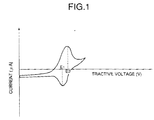
- the tractive voltage (V) and the current ( ⁇ A) were measured based on a three-electrode type cyclic voltametry by using a measuring solution prepared from the following materials.
- the electron-transporting agent there is no particular limitation on the electron-transporting agent provided its oxidation-reduction potential is from -0.8 to -1.4 V.
- a benzoquinone compound for example, a naphthoquinone compound, an anthraquinone compound, a diphenoquinone compound, a malonitrile compound, a thiopyran compound, a 2,4,8-trinitrothioxanthone, a fluorenone compound such as 3,4,5,7-tetranitro-9-fluorenone, a dinitroanthracene, a dinitroacridine, a nitroanthraquinone, and a dinitroanthraquinone.
- R A , R B , R C and R D in the above-mentioned formulas are the same groups.
- alkyl group aralkyl group, alkoxyl group and aryl group in the above-mentioned formulas, these can be exemplified those groups same as the above-mentioned groups.
- cycloalkyl group there can be used the one having 3 to 6 carbon atoms such as cyclopropyl, cyclobutyl, cyclopentyl or cyclohexyl.
- amino group that may have a substituent there can be exemplified monomethylamino, dimethylamino, monoethylamino and diethylamino, in addition to amino.
- diphenoquinone compound examples include a 3,5-dimethyl-3',5'-di(t-butyl)-4,4'-diphenoquinone (oxidation-reduction potential of -0.86 V) represented by the formula (2-1) and a 3,5,3',5'-tetrakis(t-butyl)-4,4'-diphenoquinone (oxidation-reduction potential of -0.94 V) represented by the formula (2-2).
- benzoquinone compound examples include a p-benzoquinone (oxidation-reduction potential of -0.81 V) represented by the formula (3-1) and a 2,6-di(t-butyl)-p-benzoquinone (oxidation-reduction potential of -1.31 V) represented by the formula (3-2).
- These electron-transporting agents can be used in a single kind or in a combination of two or more kinds.
- the photosensitive layer may contain any other widely known electron-transporting agents in addition to the above-mentioned electron-transporting agents.
- electron-transporting agents for example, there can be raised the compounds represented by the following general formulas (ET1) to (ET16).
- R e1 , R e2 , R e3 , R e4 and R e5 may be the same or different, and are hydrogen atoms, alkyl groups that may have a substituent, alkoxyl groups that may have a substituent, aryl groups that may have a substituent, aralkyl groups that may have a substituent, phenoxy groups that may have a substituent, or halogen atoms.
- R e6 is an alkyl group
- R e7 is an alkyl group that may have a substituent, an alkoxyl group that may have a substituent, an aryl group that may have a substituent, an aralkyl group that may have a substituent, a halogen atom, or a halogenated alkyl group
- ⁇ is an integer of from 0 to 5, but when ⁇ is 2 or larger, R e7 may not be the same.
- R e8 and R e9 may be the same or different, and are alkyl groups, ⁇ is an integer of from 1 to 4, and ⁇ is an integer of from 0 to 4, but when ⁇ and ⁇ are 2 or larger, R e8 and R e9 may not be the same, wherein R e10 is an alkyl group, an aryl group, an aralkyl group, an alkoxyl group, a halogenated alkyl group or a halogen atom, ⁇ is from 0 to 4, ⁇ is an integer of from 0 to 5, but when ⁇ is 2 or larger, R e10 may not be the same.
- R e11 is an alkyl group and ⁇ is an integer of from 1 to 4, but when ⁇ is 2 or larger, R e11 may not be the same.
- R e14 is a hydrogen atom, a halogen atom, an alkyl group or a phenyl group that may have a substituent
- R e15 is a halogen atom, an alkyl group that may have a substituent, a phenyl group that may have a substituent, an alkoxycarbonyl group, an N-alkylcarbamoyl group, a cyano group or a nitro group
- ⁇ is an integer of from 0 to 3, but when ⁇ is 2 or larger, R e15 may not be the same.
- ⁇ is an integer or 1 or 2.
- R e16 and R e17 may be the same or different, and are halogen atoms, alkyl groups that may have a substituent, cyano groups, nitro groups or alkoxylcarbonyl groups, ⁇ and ⁇ are integers of from 0 to 3 but when ⁇ or ⁇ are 2 or larger, R e16 and R e17 may not be the same.
- R e16 and R e19 may be the same or different, and are phenyl groups, polycyclic aromatic groups or heterocyclic groups which may have a substituent.
- R e20 is an amino group, a dialkylamino group, an alkoxyl group, an alkyl group or a phenyl group, ⁇ is an integer of 1 or 2, but when ⁇ is 2, R e20 may not be the same.
- R e21 is a hydrogen atom, an alkyl group, an aryl group, an alkoxyl group or an aralkyl group.
- R e22 is a halogen atom, an alkyl group that may have a substituent, a phenyl group that may have a substituent, an alkoxycarbonyl group, an N-alkylcarbamoyl group, a cyano group or a nitro group, ⁇ is an integer of from 0 to 3, but when ⁇ is 2 or larger, R e22 may not be the same.
- R e23 is an alkyl group that may have a substituent or an aryl group that may have a substituent
- R e24 is an alkyl group that may have a substituent, an aryl group that may have a substituent, or a group -O-R e24a , wherein R e24a is an alkyl group that may have a substituent or an aryl group that may have a substituent.
- R e25 , R e26 , R e27 , R e28 , R e29 , R e30 and R e31 may be the same or different, and are alkyl groups, aryl groups, aralkyl groups, alkoxyl groups, halogen atoms or halogenated alkyl groups, ⁇ and ⁇ may be the same or different and are integers of from 0 to 4.
- R e32 and R e33 may be the same or different, and are alkyl groups, aryl groups, alkoxyl groups, halogen atoms or halogenated alkyl groups, ⁇ and ⁇ may be the same or different and are integers of from 0 to 4.
- the alkyl group, aryl group, alkoxycarbonyl group, aralkyl group, alkoxyl group, halogen atom and cycloalkyl group may be the same as those mentioned above.
- heterocyclic group there can be exemplified thienyl, furyl, pyrrolyl, pyrrolidinyl, oxazolyl, isooxazolyl, thiazolyl, isothiazolyl, imidazolyl, 2H-imidazolyl, pyrazolyl, triazolyl, tetrazolyl, pyranyl, pyridyl, piperidyl, piperidino, 3-morpholinyl, morpholino and thiazolyl.
- the heterocyclic group may also be condensed with an aromatic ring.
- halogenated alkyl group there can be exemplified those having 1 to 6 carbon atoms in the alkyl moiety, such as chloromethyl, bromomethyl, fluoromethyl, iodomethyl, 2-chloroethyl, 1-fluoroethyl, 3-chloropropyl, 2-bromopropyl, 1-chloropropyl, 2-chloro-1-methylethyl, 1-bromo-1-methylethyl, 4-iodobutyl, 3-fluorobutyl, 3-chloro-2-methylpropyl, 2-iodo-2-methylpropyl, 1-fluoro-2-methylpropyl, 2-chloro-1,1-dimethylethyl, 2-bromo-1,1-dimethylethyl, 5-bromopentyl, and 4-chlorohexyl.
- polycyclic aromatic group there can be exemplified naphthyl, phenanthryl and anthryl.
- aralkyloxycarbonyl group there can be exemplified those in which the aralkyl moiety is the above-mentioned variety kinds of aralkyl groups.
- N-alkylcarbamoyl group there can be exemplified those in which the alkyl moiety is the above-mentioned variety kinds of alkyl groups.
- dialkylamino group there can be exemplified those in which the alkyl moiety is the above-mentioned variety kinds of alkyl groups.
- the two alkyl groups substituted for the amino groups may be the same or different.
- substituents there can be exemplified a halogen atom, an amino group, a hydroxyl group, a carboxyl group that may be esterified, a cyano group, an alkyl group with 1 tO 6 carbon atoms, an alkoxyl group with 1 to 6 carbon atoms, and an alkenyl group with 2 to 6 carbon atoms that may have an aryl group.
- a halogen atom an amino group, a hydroxyl group, a carboxyl group that may be esterified, a cyano group, an alkyl group with 1 tO 6 carbon atoms, an alkoxyl group with 1 to 6 carbon atoms, and an alkenyl group with 2 to 6 carbon atoms that may have an aryl group.
- electron-transporting materials such as benzoquinone compound, malononitrile, thiopyrane compound, tetracyanoethylene, 2,4,8-trinitrothioxanthone, dinitrobenzene, dinitroanthracene, dinitroacridine, nitroanthraquinone, dinitroanthraquinone, anhydrous succinic acid, anhydrous maleic acid or dibromomaleic anhydride, in addition to the above-mentioned materials.
- electron-transporting materials such as benzoquinone compound, malononitrile, thiopyrane compound, tetracyanoethylene, 2,4,8-trinitrothioxanthone, dinitrobenzene, dinitroanthracene, dinitroacridine, nitroanthraquinone, dinitroanthraquinone, anhydrous succinic acid, anhydrous maleic acid or dibromomaleic anhydride, in addition to the above-mentioned
- Described below are the charge-generating agent, positive hole-transporting agent and a binder resin used for the electro-photosensitive material of the present invention.
- CG1 and R g2 may be the same or different, and are substituted or unsubstituted alkyl groups, cycloalkyl groups, aryl groups, alkanoyl groups or aralkyl groups with not more than 18 carbon atoms.
- Q is a group represented by the formula, wherein R g3 is a hydrogen atom, an alkyl group, an aryl group or a heterocyclic group, wherein alkyl group, aryl group or heterocyclic group may have a substituent, and ⁇ is 0 or 1, represented by the formula, wherein R g4 and R g5 may be the same or different, and are hydrogen atoms, alkyl groups with 1 to 5 carbon atoms, halogen atoms, alkoxy group, aryl groups or aralkyl groups, represented by the formula, wherein R g6 is a hydrogen atom, an ethyl group, a chloroethyl group or a hydroxyethyl group, or represented by the formula, wherein R g7 , R g8 and R g9 which may be
- R g10 and R g11 may be the same or different and are hydrogen atoms, alkyl groups, alkoxyl groups or halogen atoms
- R g12 and R g13 may be the same or different and are hydrogen atoms, alkyl groups or aryl groups.
- R g14 , R g15 , R g16 and Rg 17 may be the same or different, and are hydrogen atoms, alkyl groups, alkoxyl groups or halogen atoms.
- R g18 , R g19 , R g20 and R g21 may be the same or different, and are hydrogen atoms, alkyl groups, alkoxyl groups or halogen atoms
- M is Ti or V.
- R g22 and R g23 may be the same or different, and are hydrogen atoms, alkyl groups, alkoxyl groups or halogen atoms.
- Cp3, Cp4 and Cp5 may be the same or different, and are coupler residues.
- R g24 and R g25 may be the same or different and are hydrogen atoms, alkyl groups or aryl groups, and Z is an oxygen atom or a sulfur atom.
- R g26 and R g27 may be the same or different, and are hydrogen atoms, alkyl groups or aryl groups.
- R g28 and R g29 may be the same or different, and are hydrogen atoms, alkyl groups, alkoxyl groups or halogen atoms
- R g30 and R g31 may be the same or different, and are hydrogen atoms, alkyl groups or aryl groups.
- examples of the alkyl group include substituted or unsubstituted alkyl groups with not more than 18 carbon atoms, such as octyl, nonyl, decyl, dodecyl, tridecyl, pentadecyl and octadecyl, in addition to the above-mentioned alkyl groups with 1 to 6 carbon atoms.
- cycloalkyl group alkoxyl group, alkanoyl group, heterocyclic group, aryl group and aralkyl group, there can be exemplified those same as those described above.
- substituents that may be substituted for the above-mentioned groups there can be exemplified a halogen atom, an amino group, a hydroxyl group, a carboxyl group that may be esterified, a cyano group, an alkyl group with 1 to 6 carbon atoms, an alkoxyl group with 1 to 6 carbon atoms, and an alkenyl group with 2 to 6 carbon atoms that may have an aryl group.
- Coupler residues denoted by Cp1, Cp2, Cp3, Cp4 and Cp5 there can be exemplified the groups represented by the following general formulas (Cp-1) to (Cp-11), wherein R g32 is a carbamoyl group, a sulfamoyl group, an allophanoyl group, an oxamoyl group, an anthraniloyl group, a carbazoyl group, a glycyl group, a hydantoyl group, a phthalamoyl group or a succinamoyl group, each of which may have a substituent such as a halogen atom, a phenyl group that may further have a substituent, a naphthyl group that may further have a substituent, a nitro group, a cyano group, an alkyl group, an alkenyl group, a carbonyl group or a carboxyl group, R g
- alkenyl group there can be exemplified those having 2 to 6 carbon atoms such as vinyl, allyl, 2-butenyl, 3-butenyl, 1-methylallyl, 2-pentenyl, and 2-hexenyl.
- the group Rg33 as the atomic group necessary for forming an aromatic ring being condensed with a benzene ring, there can be exemplified those alkylene groups having 1 to 4 carbon atoms, such as methylene, ethylene, trimethylene and tetramethylene.
- the aromatic ring formed by the condensation of the group R g31 with a benzene ring there can be exemplified a naphthalene ring, an anthracene ring, a phenanthrene ring, a pyrene ring, a chrysene ring and a naphthacene ring.
- the group R g33 as the atomic group necessary for forming a polycyclic hydrocarbon being condensed with a benzene ring, there can be exemplified the above-mentioned alkylene group having 1 to 4 carbon atoms, as well as a carbazole ring, a benzocarbazole ring and a dibenzofuran ring.
- aromatic heterocyclic group formed by the condensation of the group R g33 with a benzene ring there can be exemplified thienyl, furyl, pyrrolyl, oxazolyl, isooxazolyl, thiazolyl, isothiazolyl, imidazolyl, pyrazolyl, triazolyl, tetrazolyl, pyridyl and thiazolyl. It may be a heterocyclic ring (e.g., benzofuranyl, benzimidazolyl, benzoxazolyl, benzothiazolyl or quinolyl) condensed with other aromatic ring.
- heterocyclic ring e.g., benzofuranyl, benzimidazolyl, benzoxazolyl, benzothiazolyl or quinolyl
- R g35 and R g37 there can be exemplified ethylene, trimethylene or tetramethylene as the divalent chain hydrocarbon group, and there can be exemplified phenylene, naphthylene or phenanthrelene as the divalent aromatic hydrocarbon group.
- aromatic heterocyclic ring group formed by the group R g37 and two nitrogen atoms there can be exemplified benzimidazole, benzo[f]benzimidazole, dibenzo[e,g,]benzimidazole and benzopyrimidine. These groups may have a substituent same as those mentioned above.
- a powder of inorganic photoconducting material such as selenium, selenium-tellurium, selenium-arsenic, cadmium sulfide, or amorphous silicon, as well as a widely known charge-generating agent such as pyrylium salt, anthanthrone pigment, triphenylmethane pigment, threne pigment, toluidine pigment, pyrazoline pigment or quinacrydone pigment.
- the above-mentioned charge-generating agent is used in a single kind or in a combination of two or more kinds so as to absorb waves in a desired region.
- the image-forming apparatus of the digital optical system such as a laser beam printer or a facsimile that uses a source of light such as semiconductor laser, requires a photosensitive material that exhibits sensitivity in a wavelength region of noy shorter than 700 nm.
- a phthalocyanine pigment such as a metal-free phthalocyanine represented by the general formula (CG1) or an oxotitanylphthalocyanine represented by the general formula (CG2).
- CG1 metal-free phthalocyanine represented by the general formula (CG1)
- CG2 oxotitanylphthalocyanine represented by the general formula
- the phthalocyanine pigment of any crystalline shape can be used without any limitation.
- the image-forming apparatus of the analog optical type such as an electrostatic copying machine using a source of white light such as halogen lamp, requires a photosensitive material that exhibits sensitivity in the visible region. Therefore, there is preferably used a perylene pigment represented by the general formula (CG3) or a bisazo pigment represented by the general formula (CG4).
- CG3 perylene pigment represented by the general formula (CG3)
- CG4 bisazo pigment represented by the general formula (CG4).
- the positive hole-transporting agent there can be used various compounds having a high positive hole-transporting ability, such as the compounds represented by the following formulas (HT1) to (HT13).
- R h1 , R h2 , R h3 , R h4 , R h5 and R h6 may be the same or different, and are halogen atoms, alkyl groups that may have a substituent, alkoxyl groups that may have a substituent or aryl groups that may have a substituent
- a and b may be the same or different, and are integers of from 0 to 4, and c, d, e and f may be the same or different, and are integers of from 0 to 5, but when a, b, c, d, e or f is 2 or larger, R h1 , R h2 , R h3 , R h4 , R h5 and R h6 may not be the same.
- R h7 , R h8 , R h9 , R h10 and R h11 may be the same or different, and are halogen atoms, alkyl groups that may have a substituent, alkoxyl groups that may have a substituent, or aryl groups that may have a substituent, g, h, i and j may be the same or different, and are integers of from 0 to 5, and k is an integer of from 0 to 4, but when g, h, i, j or k is 2 or larger, R h7 , R h8 , R h9 , R h10 and R h11 may not be the same.
- R h12 , R h13 , R h14 and R h15 may be the same or different, and are halogen atoms, alkyl groups that may have a substituent, alkoxyl groups that may have a substituent or aryl groups that may have a substituent
- R h16 is a halogen atom, a cyano group, a nitro group, an alkyl group that may have a substituent, an alkoxyl group that may have a substituent or an aryl group that may have a substituent
- m, n, o and p may be the same or different, and are integers of from 0 to 5, and q is an integer of from 1 to 6, but when m, n, o, p or q is 2 or larger, R h12 , R h13 , R h14 , R h15 and R h16 may not be the same.
- R h17 , R h16 , R h19 and R h20 may be the same or different, and are halogen atoms, alkyl groups that may have a substituent, alkoxyl groups that may have a substituent or aryl groups that may have a substituent, and r, s, t and u may be the same or different and are integers of 0 to 5, but when r, s, t or u is 2 or larger, R h17 , R h18 , R h19 and R h20 may not be the same, wherein R h21 and R h22 may be the same or different, and are hydrogen atoms, halogen atoms, alkyl groups or alkoxyl groups, and R h23 , R h24 , R h25 and R h26 may be the same or different, and are hydrogen atoms, alkyl groups or aryl groups.
- R h27 , R h28 and R h29 may be the same or different, and are hydrogen atoms, halogen atoms, alkyl groups or alkoxyl groups.
- R h30 , R h31 , R h32 and R h33 may be the same or different and are hydrogen atoms, halogen atoms, alkyl groups or alkoxyl groups.
- R h34 , R h35 , R h36 , R h37 and R h38 may be the same or different and are hydrogen atoms, halogen atoms, alkyl groups or alkoxyl groups.
- R h39 is a hydrogen atom or an alkyl group
- R h40 , R h41 and R h42 may be the same or different, and are hydrogen atoms, halogen atoms, alkyl groups or alkoxyl groups.
- R h43 , R h44 and R h45 may be the same or different and are hydrogen atoms, halogen atoms, alkyl groups or alkoxyl groups.
- R h46 and R h47 may be the same or different, and are hydrogen atoms, halogen atoms, alkyl groups that may have a substituent or alkoxyl groups that may have a substituent
- R h48 and R h49 may be the same or different and are hydrogen atoms, alkyl groups that may have a substituent or aryl groups that may have a substituent.
- R h50 , R h51 , R h52 , R h53 , R h54 and R h55 may be the same or different, and are alkyl groups that may have a substituent, alkoxyl groups that may have a substituent, or aryl groups that may have a substituent, ⁇ is an integer of from 1 to 10, v, w, x, y, z and ⁇ may be the same or different, and are integers of from 0 to 2, but when v, w, x, y, z or ⁇ is 2, R h50 , R h51 , R h53 , R h54 and R h55 may not be the same.
- R h56 , R h57 , R h58 and R h59 may be the same or different, and are hydrogen atoms, halogen atoms, alkyl groups or alkoxyl groups, and ⁇ is a group ( ⁇ -1), ( ⁇ -2) or ( ⁇ -3) represented by,
- the alkyl group, alkoxyl group, halogen atom, aryl group and aralkyl group are the same as those described above.
- substituents which the above-mentioned groups may have, there can be exemplified a halogen atom, an amino group, a hydroxyl group, a carboxyl group that may be esterified, a cyano group, an alkyl group having 1 to 6 carbon atoms, an alkoxyl group having 1 to 6 carbon atoms, and an alkenyl group having 2 to 6 carbon atoms that may have an aryl group.
- substituents there is no particular limitation on the positions where the substituents are substituted.
- oxadiazole compound such as 2,5-di(4-methylaminophenyl)-1,3,4-oxadiazole
- styryl compound such as 9-(4-diethylaminostyryl) anthracene
- carbazole compound such as polyvinylcarbazole
- organopolysilane compound such as 1-phenyl-3-(p-dimethylaminophenyl)pyrazoline
- hydrazone compound triphenylamine compound: indole compound; oxazole compound; isooxazole compound; thiazole compound; thiadiazole compound; imidazole compound; pyrazole compound; and triazole compound.
- the positive hole-transporting agent may be used in a single kind or being mixed in two or more kinds.
- a positive hole-transporting agent having a film-forming property such as polyvinyl carbazole
- the binder resin is not necessarily needed.
- Ip ionization potential
- the easy injection of electric charge from the charge-generating agent into the positive hole-transporting agent is closely related to the ionization potential of the positive hole-transporting agent.
- the ionization potential of the positive hole-transporting agent is larger than the above-mentioned range, the degree of injection of electric charge from the charge-generating agent into the positive hole-transporting agent decreases or the degree of exchange of positive holes decreases in the positive hole-transporting agent, resulting in the drop of sensitivity.
- attention must be given to the interaction between the two or, more concretely, to the formation of a complex for migrating electric charge.
- HT1-1 a compound represented by the following formula (HT1-1), which belongs to a benzidine derivative expressed by the above-mentioned formula (HT1).
- thermoplastic resins such as styrene polymer, styrene-butadiene copolymer, styrene-acrylonitrile copolymer, styrene-maleic acid copolymer, acrylic copolymer, styrene-acrylic acid copolymer, polyethylene, ethylene-vinyl acetate copolymer, chlorinated polyethylene, polyvinyl chloride, polypropylene, ionomer, vinyl chloride-vinyl acetate copolymer, polyester, alkyd resin, polyamide, polyurethane, polycarbonate, polyarylate, polysulfon, diallyl phthalate resin, ketone resin, polyvinyl butylal resin, polyether resin, and polyester resin, as well as silicone resin, epoxy
- binder resins can be used in a mixture of one or two or more kinds.
- Preferred examples of the resin include styrene polymer, acrylic polymer, styrene-acrylic copolymer, polyester, alkyd resin, polycarbonate and polyarylate.
- a coating solution obtained by dissolving or dispersing a predetermined electron-transporting agent in a suitable solvent together with the charge-generating agent, positive hole-transporting agent and binder resin is applied onto an electrically conducting substrate by using a coating means and is dried.
- the charge-generating agent is blended in an amount of from 0.1 to 50 parts by weight and, preferably, from 0.5 co 30 parts by weight
- the electron-transporting agent is blended in an amount of from 5 to 100 parts by weight and, preferably, from 10 to 80 parts by weight per 100 parts by weight of the binder resin.
- the positive hole-transporting agent is blended in an amount of from 5 to 500 parts by weight and, preferably, from 25 to 200 parts by weight. It is desired that the total amount of the positive hole-transporting agent and the electron-transporting agent is from 20 to 500 parts by weight and, preferably, from 30 to 200 parts by weight per 100 parts by weight of the binder resin.
- the electron-accepting compound is contained in the single-layer type photosensitive layer, it is desired that the electron-accepting compound is blended in an amount of from 0.1 to 40 parts by weight and, preferably, from 0.5 to 20 parts by weight per 100 parts by weight of the binder resin.
- the single-layer type photosensitive layer has a thickness of from 5 to 100 ⁇ m and, preferably, from 10 to 50 ⁇ m.
- a charge-generating layer containing a charge-generating agent is formed on an electrically conducting substrate by such means as evaporation or coating, and a coating solution containing an electron-transporting agent and a binder resin is applied onto the charge-generating layer by coating means followed by drying to thereby form a charge-transporting layer.
- the charge-generating agent and the binder resin that constitute the charge-generating layer can be used at various ratios, but it is desired that the charge-generating agent is used in an amount of from 5 to 1000 parts by weight and, preferably, from 30 to 500 parts by weight per 100 parts by weight of the binder resin.
- the electron-accepting compound is contained in the laminated-layer type photosensitive layer, it is desired that the electron-accepting compound is blended in an amount of from 0.1 to 40 parts by weight and, preferably, from 0.5 to 20 parts by weight per 100 parts by weight of the binder resin.
- the electron-transporting agent when contained in the charge-generating layer, it is desired that the electron-transporting agent is blended in an amount of from 0.5 to 50 parts by weight and, preferably, from 1 to 40 parts by weight per 100 parts by weight of the binder resin.
- the electron-transporting agent and the binder resin that constitute the charge-transporting layer can be used at various ratios within ranges in which they do not impair the transportation of electric charge and in which they are not crystallized. It is, however, desired that the electron-transporting agent is blended in an amount of from 10 to 500 parts by weight and, preferably, from 25 to 100 parts by weight per 100 parts by weight of the binder resin, so that the electric charge generated in the charge-generating layer upon the irradiation with light can be easily transported.
- the electron-accepting compound is contained in the charge-transporting layer, it is desired that the electron-accepting compound is blended in an amount of from 0.1 to 40 parts by weight and, preferably, from 0.5 to 20 parts by weight per 100 parts by weight of the binder resin.
- the charge-generating layer has a thickness of from about 0.01 to about 5 ⁇ m and, preferably, from about 0.1 to about 3 ⁇ m
- the charge-transporting layer has a thickness of from about 2 to about 100 ⁇ m and, preferably, from about 5 to about 50 ⁇ m.
- the single-layer type photosensitive material may have a barrier layer formed between the electrically conducting substrate and the photosensitive layer
- the laminated-layer type photosensitive material may have a barrier layer formed between the electrically conducting substrate and the charge-generating layer, between the electrically conducting substrate and the charge-transporting layer, or between the charge-generating layer and the charge-transporting layer, the barrier layer having a thickness within a range in which it does not impair the properties of the photosensitive material.
- a protection layer may be formed on the surface of the photosensitive material.
- the single-layer type and the laminated-layer type photosensitive layers may be blended with a variety of widely known additives such as antioxidant, radical-trapping agent, singlet quencher, degradation-preventing agent like ultraviolet ray-absorbing agent, as well as softening agent, plasticizer, surface-reforming agent, filler, viscosity-increasing agent, dispersion stabilizer, wax, acceptor and donor.
- additives such as antioxidant, radical-trapping agent, singlet quencher, degradation-preventing agent like ultraviolet ray-absorbing agent, as well as softening agent, plasticizer, surface-reforming agent, filler, viscosity-increasing agent, dispersion stabilizer, wax, acceptor and donor.
- sensitizers such as terphenyl, halonaphthoquinones and acenaphthylene together with the charge-generating agent.
- the photosensitive layer may contain a variety of electron-transporting agents having a high electron-transporting ability together with the naphthoquinone derivative represented by the above-mentioned general formula (1).
- the electrically conducting substrate used for the photosensitive material of the present invention there can be used a variety of materials having electrically conducting property, such as aluminum, iron, copper, tin, platinum, silver, vanadium, molybdenum, chromium, cadmium, titanium, nickel, palladium, indium, stainless steel, and brass, which are simple metals, as well as a plastic material on which the above-mentioned metals are vaporized or laminated, and a glass coated with aluminum iodide, tin oxide or indium oxide.
- materials having electrically conducting property such as aluminum, iron, copper, tin, platinum, silver, vanadium, molybdenum, chromium, cadmium, titanium, nickel, palladium, indium, stainless steel, and brass, which are simple metals, as well as a plastic material on which the above-mentioned metals are vaporized or laminated, and a glass coated with aluminum iodide, tin oxide or indium oxide.
- the electrically conducting substrate may be in the form of either a sheet or a drum. What is important is that the substrate itself has electrically conducting property, or the surface of the substrate has electrically conducting property. It is desired that the electrically conducting substrate has a sufficiently large mechanical strength.
- the photosensitive layer of the present invention is produced by coating the electrically conducting substrate with a coating solution obtained by dissolving or dispersing a resin composition containing the above-mentioned components in a solvent, followed by drying.
- the above-mentioned charge-generating agent, charge-transporting agent and a binder resin are dispersed and mixed in a suitable solvent relying on a widely known method such as roll mill, ball mill, Atritor, paint shaker or ultrasonic wave dispersing machine to prepare a coating solution which is then applied by a known means and is dried.
- organic solvents can be used for preparing a coating solution, i.e., alcohols such as methanol, ethanol, isopropanol and butanol; aliphatic hydrocarbons such as n-hexane, octane and cyclohexane; aromatic hydrocarbons such as benzene, toluene and xylene; halogenated hydrocarbons such as dichloromethane, dichloroethane, carbon tetrachloride and chlorobenzene; ethers such as dimethyl ether, diethyl ether, tetrahydrofuran, ethylene glycol dimethyl ether and diethylene glycol dimethyl ether; ketones such as acetone, methyl ethyl ketone and cyclohexanone; esters such as ethyl acetate and methyl acetate; as well as dimethylformaldehyde, dimethylformamide and dimethylsulfoxide.
- solvents may be
- a 2-phenyl-1,3-indandione (4-1) (0.06 mols, 13 g) of the above-mentioned formula (6) in which R 1 is a phenyl group and 1.2 equivalent of sodium hydride (60%) were added into a four-way flask to which a refluxing tube is connected.
- the interior of the flask was deaerated to a sufficient degree, dried, and was substituted with an argon gas. Then, the flask was cooled with ice, and into which 200 ml of an anhydrous tetrahydrofuran was slowly and dropwisely added.
- a 3-phenyl-1,4-indandione derivative represented by the above-mentioned formula (4-3) and 1.2 equivalent of sodium hydride (60%) were added into an eggplant type flask to which a refluxing tube is connected.
- the interior of the flask was deaerated to a sufficient degree, dried, and was substituted with an argon gas.
- the flask was cooled with ice, and into which 200 ml of the anhydrous tetrahydrofuran was added.
- the tetrahydrofuran solution was stirred for 5 hours with refluxing and was reacted while being monitored until the spots of the 3-phenyl-1,4-indandione derivative represented by the above-mentioned formula (4-3) have disappeared.
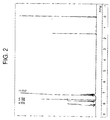
- Fig. 2 shows a 1H-NMR spectrum of the product
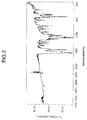
- Fig. 3 shows an IR spectrum
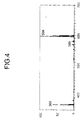
- Fig. 4 shows an MS spectrum.
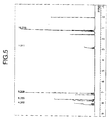
- Fig. 5 shows a 1H-NMR spectrum of the product
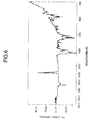
- Fig. 6 shows an IR spectrum.
- the compound (5-1) is represented by the following formula.
- Fig. 7 shows a 1R-NMR spectrum of the product
- Fig. 8 shows an IR spectrum.
- the compound (6-1) is represented by the following formula,
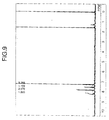
- Fig. 9 shows a 1H-NMR spectrum of the product
- Fig. 10 shows an IR spectrum
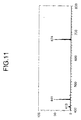
- Fig. 11 shows an MS spectrum.
- the compound (4-4) is represented by the following formula (4-4).
- ET13-1 3-phenyl-1,4-naphthoquinone represented by the following formula (ET13-1), which is disclosed in Japanese Laid-Open Patent Publication No. 110227/1994 and which pertains to the naphthoquinone derivative represented by the above-mentioned formula (ET13).
- the ionization potential was measured in the open atmosphere by using a photoelectronic analyzer (AC-1. manufactured by Riken Keiki Co.).
- the charge-generating agents, positive hole-transporting agents and electron-transporting agents shown in Tables 1 and 3 were blended together with a binder resin and a solvent at a ratio shown below, and were mixed and dispersed by using a ball mill for 50 hours to prepare coating solutions for the single-layer type photosensitive layers.
- Components Parts by weight Charge-generating agent 5 Positive hole-transporting agent 50
- Electron-transporting agent 30 Binder resin (polycarbonate) 100 Solvent (tetrahydrofuran) 800
- the above-coating solution was applied by a dip-coating method onto the surface of an aluminum blank pipe which is an electrically conducting substrate, and was dried with the hot air heated at 100°C for 60 minutes to prepare a single-layer type electro-photosensitive material having a thickness of 15 to 20 ⁇ m.
- Single-layer type electro-photosensitive materials were prepared in the same manner as in the above-mentioned Examples 1 to 3 with the exception of preparing the single-layer type photosensitive layer coating solutions by adding 5 parts by weight of the charge-generating agents, 50 parts by weight of the positive hole-transporting agents, and 30 parts by weight of the electron-transporting agents shown in Tables 2 and 3, and 100 parts by weight of the binder resin and 800 parts by weight of the solvent, and further blending 10 parts by weight of the electron-transporting agents having predetermined reduction potentials represented by the above-mentioned formulas (2-1) to (2-2) and (3-1) to (3-2).
- 100 Parts by weight of the charge-generating agents shown in Tables 1 and 3 100 parts by weight of the binder resin (polyvinyl butyral) and 2000 parts by weight of the solvent (tetrahydrofuran) were mixed and dispersed by using a ball mill for 50 hours to prepare coating solutions for forming charge-generating layers.
- the coating solution was applied by the dip-coating method onto the surface of an aluminum blank pipe which is an electrically conducting substrate, and was dried with the hot air heated at 100°C for 60 minutes to form charge-generating layer having a thickness of 1 ⁇ m.
- electro-photosensitive materials obtained in the above-mentioned Examples and Comparative Examples were tested for their photo-sensitivities and were evaluated for their sensitivities.
- the photosensitive materials of the above-mentioned Examples and Comparative Examples were applied with a voltage and were electrically charged into +700 v by using a drum-type sensitivity testing machine manufactured by GENTEC Co. Then, the photosensitive materials were exposed to light, and the potentials on the surfaces of the photosensitive materials 330 milliseconds after the exposure to light were measured as post-exposure potentials VL (V).
- the irradiation conditions differed depending upon the charge-generating agent of the phthalocyanine type and the charge-generating agent of the perylene type as described below.
- Tables 1 to 3 show the components used in the above-mentioned Examples and Comparative Examples and the measured results of post-exposure potentials VL.
- Charge generating agent agent Hole transporting Electron transporting agent VL (V) Example 1 PcH 2 HT1-1 1-1 - 209
- Example 2 PcTiO HT1-1 1-1 - 226
- Example 3 Perylene HT1-1 1-1 - 245
- Example 4 PcH 2 HT1-1 1-2 - 206
- Example 5 PcTiO HT1-1 1-2 - 222
- Example 6 Perylene HT1-1 1-2 - 240
- Example 8 PcTiO HT1-1 1-3 - 224 Example 9 Perylene HT1-1 1-3 - 243
- Example 10 PcH 2 HT1-1 1-4 - 207
- Example 11 PcTiO HT1-1 1-4 - 220
- the photosensitive materials of Examples exhibit lower post-exposure potentials and higher sensitivities than those of the photosensitive materials of Comparative Examples that use conventional electron-transporting agents or use no electron-transporting agent.
- the photosensitive materials of Examples 21 to 36 containing an electron-transporting agent having a predetermined oxidation-reduction potential and a naphthoquinone derivative (1) of the present invention, exhibit further decreased post-exposure potentials and further increased sensitivities compared with those of the photosensitive materials of other Examples.
- the naphthoquinone derivative (1) used for the electro-photosensitive materials of the present invention exhibits a high electron-transporting ability. Therefore, the electro-photosensitive materials of the present invention containing the naphthoquinone derivative (1) as an electron-transporting agent exhibit markedly decreased residual potentials and high sensitivities.
Landscapes
- Chemical & Material Sciences (AREA)
- Organic Chemistry (AREA)
- Chemical Kinetics & Catalysis (AREA)
- Health & Medical Sciences (AREA)
- Emergency Medicine (AREA)
- Physics & Mathematics (AREA)
- General Physics & Mathematics (AREA)
- Photoreceptors In Electrophotography (AREA)
- Organic Low-Molecular-Weight Compounds And Preparation Thereof (AREA)
Applications Claiming Priority (2)
| Application Number | Priority Date | Filing Date | Title |
|---|---|---|---|
| JP13359597A JP3527829B2 (ja) | 1997-05-23 | 1997-05-23 | ナフトキノン誘導体およびこれを用いた電子写真感光体 |
| JP133595/97 | 1997-05-23 |
Publications (1)
| Publication Number | Publication Date |
|---|---|
| EP0879811A1 true EP0879811A1 (en) | 1998-11-25 |
Family
ID=15108492
Family Applications (1)
| Application Number | Title | Priority Date | Filing Date |
|---|---|---|---|
| EP98304106A Withdrawn EP0879811A1 (en) | 1997-05-23 | 1998-05-22 | Naphthoquinone derivatives and electro-photosensitive material using same |
Country Status (2)
| Country | Link |
|---|---|
| EP (1) | EP0879811A1 (enExample) |
| JP (1) | JP3527829B2 (enExample) |
Cited By (2)
| Publication number | Priority date | Publication date | Assignee | Title |
|---|---|---|---|---|
| EP3051352A1 (en) * | 2015-02-02 | 2016-08-03 | Kyocera Document Solutions Inc. | Electrophotographic photosensitive member and method for manufacturing the same, and image forming apparatus |
| CN108398861A (zh) * | 2017-02-08 | 2018-08-14 | 京瓷办公信息系统株式会社 | 电子照相感光体 |
Families Citing this family (1)
| Publication number | Priority date | Publication date | Assignee | Title |
|---|---|---|---|---|
| KR100846779B1 (ko) | 2002-12-28 | 2008-07-16 | 삼성전자주식회사 | 나프토퀴논 이량체 및 이를 포함하는 전자 사진 감광체 |
Citations (2)
| Publication number | Priority date | Publication date | Assignee | Title |
|---|---|---|---|---|
| SU720414A1 (ru) * | 1978-04-19 | 1980-03-05 | Предприятие П/Я А-7850 | Электрофотографический материал |
| EP0764886A2 (en) * | 1995-09-25 | 1997-03-26 | Mita Industrial Co. Ltd. | Naphthoquinone derivative and electrophotosensitive material using the same |
-
1997
- 1997-05-23 JP JP13359597A patent/JP3527829B2/ja not_active Expired - Fee Related
-
1998
- 1998-05-22 EP EP98304106A patent/EP0879811A1/en not_active Withdrawn
Patent Citations (2)
| Publication number | Priority date | Publication date | Assignee | Title |
|---|---|---|---|---|
| SU720414A1 (ru) * | 1978-04-19 | 1980-03-05 | Предприятие П/Я А-7850 | Электрофотографический материал |
| EP0764886A2 (en) * | 1995-09-25 | 1997-03-26 | Mita Industrial Co. Ltd. | Naphthoquinone derivative and electrophotosensitive material using the same |
Non-Patent Citations (3)
| Title |
|---|
| CHEMICAL ABSTRACTS, vol. 084, no. 3, 19 January 1976, Columbus, Ohio, US; abstract no. 017008, MARKAVA E ET AL: "Isomerization of some 2,2'-(phenylene)bis(1,3-indandione) derivatives" XP002075323 * |
| CHEMICAL ABSTRACTS, vol. 093, no. 4, 28 July 1980, Columbus, Ohio, US; abstract no. 035010, BALABANOV E I ET AL: "Electrophotographic material" XP002075322 * |
| LATV. PSR ZINAT. AKAD. VESTIS, KIM. SER. (LZAKAM);75; (5); PP.613-17, Inst. Org. Sint.;Riga; USSR * |
Cited By (4)
| Publication number | Priority date | Publication date | Assignee | Title |
|---|---|---|---|---|
| EP3051352A1 (en) * | 2015-02-02 | 2016-08-03 | Kyocera Document Solutions Inc. | Electrophotographic photosensitive member and method for manufacturing the same, and image forming apparatus |
| US9760029B2 (en) | 2015-02-02 | 2017-09-12 | Kyocera Document Solutions Inc. | Electrophotographic photosensitive member, image forming apparatus, and process cartridge |
| CN108398861A (zh) * | 2017-02-08 | 2018-08-14 | 京瓷办公信息系统株式会社 | 电子照相感光体 |
| CN108398861B (zh) * | 2017-02-08 | 2021-02-23 | 京瓷办公信息系统株式会社 | 电子照相感光体 |
Also Published As
| Publication number | Publication date |
|---|---|
| JP3527829B2 (ja) | 2004-05-17 |
| JPH10324658A (ja) | 1998-12-08 |
Similar Documents
| Publication | Publication Date | Title |
|---|---|---|
| JP3471163B2 (ja) | ナフトキノン誘導体およびそれを用いた電子写真感光体 | |
| JP3272257B2 (ja) | 電子写真感光体 | |
| JP2000226354A (ja) | キノン誘導体およびこれを用いた電子写真感光体 | |
| JP3530702B2 (ja) | ジチオマレイン酸イミド誘導体を用いた電子写真感光体 | |
| EP0506492A2 (en) | Benzidine derivative and photosensitive material using said derivate | |
| EP0591010B1 (en) | Organic photosensitive material for electrophotography | |
| US6177220B1 (en) | Stilbene derivative and method of producing the same, and electrophotosensitive material | |
| US5977389A (en) | Naphthoquinone derivative | |
| JP3571165B2 (ja) | ナフトキノン誘導体を用いた電子写真感光体 | |
| US6015646A (en) | Electrophotosensitive material and image forming method using the same | |
| JP3694591B2 (ja) | スチルベン誘導体、その製造方法および電子写真感光体 | |
| US5976742A (en) | Naphthoquinone derivative and electrophotographic material using the naphthoquinone derivative | |
| JP3527829B2 (ja) | ナフトキノン誘導体およびこれを用いた電子写真感光体 | |
| JP3720927B2 (ja) | スチルベン誘導体およびそれを用いた電子写真感光体 | |
| US6395439B1 (en) | Naphthoquinone derivative and electrophotosensitive material using the same | |
| US5817810A (en) | Tryptanthrine compounds | |
| JP3264618B2 (ja) | 電子写真感光体 | |
| EP0718298A1 (en) | Electron transporting tryptoanthrinime derivatives | |
| JPH10246973A (ja) | 電子写真感光体 | |
| JP3668054B2 (ja) | キノン誘導体およびこれを用いた電子写真感光体 | |
| JP3445877B2 (ja) | 電子写真感光体 | |
| JP3448411B2 (ja) | トリプトアントリンイミン誘導体およびこれを用いた電子写真感光体 | |
| JP3315337B2 (ja) | ナフトキノン誘導体を用いた電子写真感光体 | |
| JP3246879B2 (ja) | 電子写真感光体 | |
| JP3269981B2 (ja) | 電子写真感光体 |
Legal Events
| Date | Code | Title | Description |
|---|---|---|---|
| PUAI | Public reference made under article 153(3) epc to a published international application that has entered the european phase |
Free format text: ORIGINAL CODE: 0009012 |
|
| AK | Designated contracting states |
Kind code of ref document: A1 Designated state(s): AT BE CH CY DE DK ES FI FR GB GR IE IT LI LU MC NL PT SE |
|
| AX | Request for extension of the european patent |
Free format text: AL;LT;LV;MK;RO;SI |
|
| AKX | Designation fees paid | ||
| STAA | Information on the status of an ep patent application or granted ep patent |
Free format text: STATUS: THE APPLICATION IS DEEMED TO BE WITHDRAWN |
|
| 18D | Application deemed to be withdrawn |
Effective date: 19990526 |
|
| REG | Reference to a national code |
Ref country code: DE Ref legal event code: 8566 |