EP0861307B1 - Repositionable adhesive article - Google Patents
Repositionable adhesive article Download PDFInfo
- Publication number
- EP0861307B1 EP0861307B1 EP96937706A EP96937706A EP0861307B1 EP 0861307 B1 EP0861307 B1 EP 0861307B1 EP 96937706 A EP96937706 A EP 96937706A EP 96937706 A EP96937706 A EP 96937706A EP 0861307 B1 EP0861307 B1 EP 0861307B1
- Authority
- EP
- European Patent Office
- Prior art keywords
- adhesive
- adhesive layer
- pegs
- release liner
- sheet according
- Prior art date
- Legal status (The legal status is an assumption and is not a legal conclusion. Google has not performed a legal analysis and makes no representation as to the accuracy of the status listed.)
- Expired - Lifetime
Links
- 230000001070 adhesive effect Effects 0.000 title claims description 383
- 239000000853 adhesive Substances 0.000 title claims description 382
- 239000012790 adhesive layer Substances 0.000 claims description 57
- 239000002245 particle Substances 0.000 claims description 47
- 230000000717 retained effect Effects 0.000 claims description 22
- 239000004005 microsphere Substances 0.000 claims description 18
- 239000011324 bead Substances 0.000 claims description 13
- 239000000203 mixture Substances 0.000 claims description 11
- 238000012546 transfer Methods 0.000 claims description 7
- 239000002131 composite material Substances 0.000 claims description 6
- 239000010410 layer Substances 0.000 description 65
- 238000012360 testing method Methods 0.000 description 56
- 239000000758 substrate Substances 0.000 description 55
- 239000011521 glass Substances 0.000 description 45
- 230000035882 stress Effects 0.000 description 34
- 239000002313 adhesive film Substances 0.000 description 29
- 230000000052 comparative effect Effects 0.000 description 24
- 239000004820 Pressure-sensitive adhesive Substances 0.000 description 21
- YXFVVABEGXRONW-UHFFFAOYSA-N Toluene Chemical compound CC1=CC=CC=C1 YXFVVABEGXRONW-UHFFFAOYSA-N 0.000 description 18
- 238000000926 separation method Methods 0.000 description 17
- 238000000034 method Methods 0.000 description 16
- 229920005989 resin Polymers 0.000 description 16
- 239000011347 resin Substances 0.000 description 16
- 238000011084 recovery Methods 0.000 description 15
- 238000011179 visual inspection Methods 0.000 description 11
- 238000000576 coating method Methods 0.000 description 10
- 239000007787 solid Substances 0.000 description 9
- CSCPPACGZOOCGX-UHFFFAOYSA-N Acetone Chemical compound CC(C)=O CSCPPACGZOOCGX-UHFFFAOYSA-N 0.000 description 7
- 239000011248 coating agent Substances 0.000 description 7
- 239000000463 material Substances 0.000 description 7
- XEKOWRVHYACXOJ-UHFFFAOYSA-N Ethyl acetate Chemical compound CCOC(C)=O XEKOWRVHYACXOJ-UHFFFAOYSA-N 0.000 description 6
- IMNFDUFMRHMDMM-UHFFFAOYSA-N N-Heptane Chemical compound CCCCCCC IMNFDUFMRHMDMM-UHFFFAOYSA-N 0.000 description 6
- 229910052782 aluminium Inorganic materials 0.000 description 6
- XAGFODPZIPBFFR-UHFFFAOYSA-N aluminium Chemical compound [Al] XAGFODPZIPBFFR-UHFFFAOYSA-N 0.000 description 6
- 239000000126 substance Substances 0.000 description 6
- 238000005259 measurement Methods 0.000 description 5
- FTQWRYSLUYAIRQ-UHFFFAOYSA-N n-[(octadecanoylamino)methyl]octadecanamide Chemical compound CCCCCCCCCCCCCCCCCC(=O)NCNC(=O)CCCCCCCCCCCCCCCCC FTQWRYSLUYAIRQ-UHFFFAOYSA-N 0.000 description 5
- 230000003287 optical effect Effects 0.000 description 5
- 230000015572 biosynthetic process Effects 0.000 description 4
- 238000007906 compression Methods 0.000 description 4
- 230000006835 compression Effects 0.000 description 4
- 238000002360 preparation method Methods 0.000 description 4
- 238000003825 pressing Methods 0.000 description 4
- NSMXQKNUPPXBRG-SECBINFHSA-N (R)-lisofylline Chemical compound O=C1N(CCCC[C@H](O)C)C(=O)N(C)C2=C1N(C)C=N2 NSMXQKNUPPXBRG-SECBINFHSA-N 0.000 description 3
- 241000283283 Orcinus orca Species 0.000 description 3
- 239000004698 Polyethylene Substances 0.000 description 3
- 229920006266 Vinyl film Polymers 0.000 description 3
- 230000032683 aging Effects 0.000 description 3
- 229920001577 copolymer Polymers 0.000 description 3
- 239000006260 foam Substances 0.000 description 3
- 230000036961 partial effect Effects 0.000 description 3
- -1 polyethylene Polymers 0.000 description 3
- 229920000573 polyethylene Polymers 0.000 description 3
- 238000010998 test method Methods 0.000 description 3
- YDWRZBOKATXNFI-UHFFFAOYSA-N 6-methylheptyl prop-2-enoate;prop-2-enoic acid Chemical compound OC(=O)C=C.CC(C)CCCCCOC(=O)C=C YDWRZBOKATXNFI-UHFFFAOYSA-N 0.000 description 2
- 229920002633 Kraton (polymer) Polymers 0.000 description 2
- PQJYXFVJBSRUPG-UHFFFAOYSA-N [3-(2-methylaziridine-1-carbonyl)phenyl]-(2-methylaziridin-1-yl)methanone Chemical compound CC1CN1C(=O)C1=CC=CC(C(=O)N2C(C2)C)=C1 PQJYXFVJBSRUPG-UHFFFAOYSA-N 0.000 description 2
- NIXOWILDQLNWCW-UHFFFAOYSA-N acrylic acid group Chemical group C(C=C)(=O)O NIXOWILDQLNWCW-UHFFFAOYSA-N 0.000 description 2
- 239000000654 additive Substances 0.000 description 2
- 239000002390 adhesive tape Substances 0.000 description 2
- QXJJQWWVWRCVQT-UHFFFAOYSA-K calcium;sodium;phosphate Chemical compound [Na+].[Ca+2].[O-]P([O-])([O-])=O QXJJQWWVWRCVQT-UHFFFAOYSA-K 0.000 description 2
- 239000003086 colorant Substances 0.000 description 2
- 229920001971 elastomer Polymers 0.000 description 2
- 239000011152 fibreglass Substances 0.000 description 2
- 239000000945 filler Substances 0.000 description 2
- 239000004816 latex Substances 0.000 description 2
- 229920000126 latex Polymers 0.000 description 2
- 239000007788 liquid Substances 0.000 description 2
- 230000014759 maintenance of location Effects 0.000 description 2
- 239000004033 plastic Substances 0.000 description 2
- 229920003023 plastic Polymers 0.000 description 2
- 239000004014 plasticizer Substances 0.000 description 2
- 238000010526 radical polymerization reaction Methods 0.000 description 2
- 125000000391 vinyl group Chemical group [H]C([*])=C([H])[H] 0.000 description 2
- 229920002554 vinyl polymer Polymers 0.000 description 2
- XLYOFNOQVPJJNP-UHFFFAOYSA-N water Substances O XLYOFNOQVPJJNP-UHFFFAOYSA-N 0.000 description 2
- HBKBEZURJSNABK-MWJPAGEPSA-N 2,3-dihydroxypropyl (1r,4ar,4br,10ar)-1,4a-dimethyl-7-propan-2-yl-2,3,4,4b,5,6,10,10a-octahydrophenanthrene-1-carboxylate Chemical compound C([C@@H]12)CC(C(C)C)=CC1=CC[C@@H]1[C@]2(C)CCC[C@@]1(C)C(=O)OCC(O)CO HBKBEZURJSNABK-MWJPAGEPSA-N 0.000 description 1
- SMZOUWXMTYCWNB-UHFFFAOYSA-N 2-(2-methoxy-5-methylphenyl)ethanamine Chemical compound COC1=CC=C(C)C=C1CCN SMZOUWXMTYCWNB-UHFFFAOYSA-N 0.000 description 1
- OHEDOFGKJWAYFH-UHFFFAOYSA-N 2-methylbutyl prop-2-enoate;prop-2-enoic acid Chemical compound OC(=O)C=C.CCC(C)COC(=O)C=C OHEDOFGKJWAYFH-UHFFFAOYSA-N 0.000 description 1
- 239000010963 304 stainless steel Substances 0.000 description 1
- 239000004821 Contact adhesive Substances 0.000 description 1
- LFQSCWFLJHTTHZ-UHFFFAOYSA-N Ethanol Chemical compound CCO LFQSCWFLJHTTHZ-UHFFFAOYSA-N 0.000 description 1
- 241001251094 Formica Species 0.000 description 1
- 241000411998 Gliricidia Species 0.000 description 1
- 235000009664 Gliricidia sepium Nutrition 0.000 description 1
- 229910000589 SAE 304 stainless steel Inorganic materials 0.000 description 1
- 229910000831 Steel Inorganic materials 0.000 description 1
- 229920006243 acrylic copolymer Polymers 0.000 description 1
- 230000009471 action Effects 0.000 description 1
- 239000004840 adhesive resin Substances 0.000 description 1
- 229920006223 adhesive resin Polymers 0.000 description 1
- 238000006664 bond formation reaction Methods 0.000 description 1
- 230000015556 catabolic process Effects 0.000 description 1
- 238000010276 construction Methods 0.000 description 1
- 238000005034 decoration Methods 0.000 description 1
- 230000007812 deficiency Effects 0.000 description 1
- 238000006731 degradation reaction Methods 0.000 description 1
- 230000001419 dependent effect Effects 0.000 description 1
- 239000003599 detergent Substances 0.000 description 1
- 239000010432 diamond Substances 0.000 description 1
- 238000006073 displacement reaction Methods 0.000 description 1
- 238000009826 distribution Methods 0.000 description 1
- 238000001035 drying Methods 0.000 description 1
- 230000009977 dual effect Effects 0.000 description 1
- 230000000694 effects Effects 0.000 description 1
- 238000000635 electron micrograph Methods 0.000 description 1
- 238000004049 embossing Methods 0.000 description 1
- 230000007613 environmental effect Effects 0.000 description 1
- 230000001747 exhibiting effect Effects 0.000 description 1
- 239000010408 film Substances 0.000 description 1
- 238000009472 formulation Methods 0.000 description 1
- 238000007689 inspection Methods 0.000 description 1
- 238000009434 installation Methods 0.000 description 1
- 230000002427 irreversible effect Effects 0.000 description 1
- 238000010030 laminating Methods 0.000 description 1
- 238000003475 lamination Methods 0.000 description 1
- 239000000314 lubricant Substances 0.000 description 1
- 238000004519 manufacturing process Methods 0.000 description 1
- 229910052751 metal Inorganic materials 0.000 description 1
- 239000002184 metal Substances 0.000 description 1
- 238000000386 microscopy Methods 0.000 description 1
- 238000012986 modification Methods 0.000 description 1
- 230000004048 modification Effects 0.000 description 1
- 229920000642 polymer Polymers 0.000 description 1
- 238000006116 polymerization reaction Methods 0.000 description 1
- 239000000843 powder Substances 0.000 description 1
- 230000002028 premature Effects 0.000 description 1
- 230000008569 process Effects 0.000 description 1
- 238000012545 processing Methods 0.000 description 1
- 230000001681 protective effect Effects 0.000 description 1
- 230000002441 reversible effect Effects 0.000 description 1
- 239000002904 solvent Substances 0.000 description 1
- 239000010959 steel Substances 0.000 description 1
- 238000003860 storage Methods 0.000 description 1
- 239000004094 surface-active agent Substances 0.000 description 1
- 235000012222 talc Nutrition 0.000 description 1
- 210000003813 thumb Anatomy 0.000 description 1
- 230000036962 time dependent Effects 0.000 description 1
- 238000009827 uniform distribution Methods 0.000 description 1
- 239000003981 vehicle Substances 0.000 description 1
Images
Classifications
-
- C—CHEMISTRY; METALLURGY
- C09—DYES; PAINTS; POLISHES; NATURAL RESINS; ADHESIVES; COMPOSITIONS NOT OTHERWISE PROVIDED FOR; APPLICATIONS OF MATERIALS NOT OTHERWISE PROVIDED FOR
- C09J—ADHESIVES; NON-MECHANICAL ASPECTS OF ADHESIVE PROCESSES IN GENERAL; ADHESIVE PROCESSES NOT PROVIDED FOR ELSEWHERE; USE OF MATERIALS AS ADHESIVES
- C09J7/00—Adhesives in the form of films or foils
- C09J7/30—Adhesives in the form of films or foils characterised by the adhesive composition
- C09J7/38—Pressure-sensitive adhesives [PSA]
-
- Y—GENERAL TAGGING OF NEW TECHNOLOGICAL DEVELOPMENTS; GENERAL TAGGING OF CROSS-SECTIONAL TECHNOLOGIES SPANNING OVER SEVERAL SECTIONS OF THE IPC; TECHNICAL SUBJECTS COVERED BY FORMER USPC CROSS-REFERENCE ART COLLECTIONS [XRACs] AND DIGESTS
- Y10—TECHNICAL SUBJECTS COVERED BY FORMER USPC
- Y10T—TECHNICAL SUBJECTS COVERED BY FORMER US CLASSIFICATION
- Y10T428/00—Stock material or miscellaneous articles
- Y10T428/14—Layer or component removable to expose adhesive
-
- Y—GENERAL TAGGING OF NEW TECHNOLOGICAL DEVELOPMENTS; GENERAL TAGGING OF CROSS-SECTIONAL TECHNOLOGIES SPANNING OVER SEVERAL SECTIONS OF THE IPC; TECHNICAL SUBJECTS COVERED BY FORMER USPC CROSS-REFERENCE ART COLLECTIONS [XRACs] AND DIGESTS
- Y10—TECHNICAL SUBJECTS COVERED BY FORMER USPC
- Y10T—TECHNICAL SUBJECTS COVERED BY FORMER US CLASSIFICATION
- Y10T428/00—Stock material or miscellaneous articles
- Y10T428/24—Structurally defined web or sheet [e.g., overall dimension, etc.]
- Y10T428/24174—Structurally defined web or sheet [e.g., overall dimension, etc.] including sheet or component perpendicular to plane of web or sheet
-
- Y—GENERAL TAGGING OF NEW TECHNOLOGICAL DEVELOPMENTS; GENERAL TAGGING OF CROSS-SECTIONAL TECHNOLOGIES SPANNING OVER SEVERAL SECTIONS OF THE IPC; TECHNICAL SUBJECTS COVERED BY FORMER USPC CROSS-REFERENCE ART COLLECTIONS [XRACs] AND DIGESTS
- Y10—TECHNICAL SUBJECTS COVERED BY FORMER USPC
- Y10T—TECHNICAL SUBJECTS COVERED BY FORMER US CLASSIFICATION
- Y10T428/00—Stock material or miscellaneous articles
- Y10T428/24—Structurally defined web or sheet [e.g., overall dimension, etc.]
- Y10T428/24802—Discontinuous or differential coating, impregnation or bond [e.g., artwork, printing, retouched photograph, etc.]
- Y10T428/24851—Intermediate layer is discontinuous or differential
- Y10T428/2486—Intermediate layer is discontinuous or differential with outer strippable or release layer
-
- Y—GENERAL TAGGING OF NEW TECHNOLOGICAL DEVELOPMENTS; GENERAL TAGGING OF CROSS-SECTIONAL TECHNOLOGIES SPANNING OVER SEVERAL SECTIONS OF THE IPC; TECHNICAL SUBJECTS COVERED BY FORMER USPC CROSS-REFERENCE ART COLLECTIONS [XRACs] AND DIGESTS
- Y10—TECHNICAL SUBJECTS COVERED BY FORMER USPC
- Y10T—TECHNICAL SUBJECTS COVERED BY FORMER US CLASSIFICATION
- Y10T428/00—Stock material or miscellaneous articles
- Y10T428/28—Web or sheet containing structurally defined element or component and having an adhesive outermost layer
-
- Y—GENERAL TAGGING OF NEW TECHNOLOGICAL DEVELOPMENTS; GENERAL TAGGING OF CROSS-SECTIONAL TECHNOLOGIES SPANNING OVER SEVERAL SECTIONS OF THE IPC; TECHNICAL SUBJECTS COVERED BY FORMER USPC CROSS-REFERENCE ART COLLECTIONS [XRACs] AND DIGESTS
- Y10—TECHNICAL SUBJECTS COVERED BY FORMER USPC
- Y10T—TECHNICAL SUBJECTS COVERED BY FORMER US CLASSIFICATION
- Y10T428/00—Stock material or miscellaneous articles
- Y10T428/28—Web or sheet containing structurally defined element or component and having an adhesive outermost layer
- Y10T428/2852—Adhesive compositions
- Y10T428/2861—Adhesive compositions having readily strippable combined with readily readhearable properties [e.g., stick-ons, etc.]
Definitions
- This invention relates to adhesive articles with positionable and/or repositionable bonding properties and more particularly to adhesive articles that retain positionable and repositionable bonding properties after repeated application and removal of the article.
- PSA Pressure sensitive adhesive
- application aids such as detergent and water have been used to eliminate preadhesion.
- Formulations vary, but typically include water, a surfactant or lubricant, and a solvent (generally an alcohol) that speeds bond formation and drying.
- the liquids tend to form a film between the adhesive and substrate, thus preventing contact and preadhesion.
- the liquid is difficult to remove and is seldom completely removed.
- most application aids affect the adhesive properties and prevent rapid formation of a strong bond between adhesive and substrate. The application aids may also mar or stain substrate surfaces.
- Dry application aids such as particles, powders or talcs have also proven useful in preventing preadhesion ( See, e.g., U.S. Patent Nos. 4,376,151 and 4,556,595). These techniques make application easy and provided for easy positioning and repositioning. Unfortunately, these techniques also require contact of 1 to 7 days to form a strong adhesive bond to the substrate.
- discontinuous coatings of nontacky materials that project from relatively planar adhesive surface have also been used to prevent preadhesion of a PSA layer during application.
- These adhesive films and tapes have no adhesion when placed lightly against the substrate surface.
- Such coatings include patterned polymer coatings, particles, and films ( See, e.g ., U.S. Patent Nos. 3,554,835; 4,023,570; 4,054,697; 4,151,319; 5,008,139; and U.K. Patent No. 1,541,311).
- CONTROLTACTM brand adhesives use a random distribution of hollow glass microspheres partially embedded in an adhesive layer as a means to prevent contact and preadhesion (see U.S. Patent No. 3,331,279).
- EGTacTM brand adhesive films use similar "non-fragile," hollow glass microspheres partially embedded in the adhesive surface ( See U. S. Patent No. 5,008,139).
- Hi-S-CalTM brand film with a "pressure-activated adhesive” that similarly used solid glass microspheres partially embedded in an adhesive surface as a means to prevent contact and preadhesion. In each case, application pressure to the sheet crushes and or embeds the microspheres into the adhesive layer permitting the bulk of the adhesive to contact the substrate and to instantly form a strong bond.
- U.S. Patent No. 3,314,838 describes a similar configuration wherein the tops of the hollow microspheres protruding from the adhesive layer surface are coated by a thin layer of PSA. Pressure application crushes the microspheres permitting the bulk of the adhesive layer to contact the substrate and to instantly form a strong bond.
- Microsphere and patterned adhesives exhibiting repositionable properties have also been reported ( See U.S. Patent Nos. 3,691,140 and 4,166,152).
- Deformable microspheres, as described in U.S. Patent No. 4,735,837 impart a rough or pebble-like surface and repositionable bond.
- the adhesive films readily form weak, repositionable bonds to a substrate, but do not form a strong, permanent bond.
- Topologically structured adhesive have also been described. For example, relatively large scale embossing of an adhesive has been described to permanently reduce the PSA/substrate contact area and hence the bonding strength of the PSA ( See EPO 0 279 579).
- Various topologies include concave and convex V-grooves, diamonds, cups, hemispheres, cones, volcanoes and other three dimensional shapes all having top surface areas significantly smaller than the base surface of the adhesive layer. In general, these topologies provide adhesive sheets, films and tapes with lower peel adhesion values in comparison with smooth surfaced adhesive layers. In many cases, the topologically structured surface adhesives also display a slow build in adhesion with increasing contact time.
- An adhesive sheet having a microstructured adhesive surface comprising a uniform distribution of adhesive or composite adhesive "pegs" over the functional portion of an adhesive surface and protruding outwardly from the adhesive surface provide a sheet that is both positionable and repositionable when it is laid on a substrate surface ( See U.S. Patent No. 5,296,277). Pressing the adhesive sheet results in an instant formation of a strong bond between the adhesive sheet and the substrate.
- Such an adhesive also required a relatively expensive coincident microstructured release liner to protect the adhesive pegs during storage and processing.
- a positionable-repositionable pressure sensitive adhesive is described in WO 91/06424.
- This adhesive contains a mixture of adhesive resin, detackifing resin, detackifying particles and tackifying resin. Sheet articles having a layer of this adhesive exhibit low tack, for easy positioning, and a low initial bond when pressed in place, for easy repositioning.
- Adhesive films having this kind of adhesive exhibit the ability to slide over a surface on contact, and bond with modest strength when pressed in place. The adhesive coated films slide freely when removed and recontacted to the surface. However, this adhesive shows only slow adhesion build. This slow adhesion build can increase installation time, such as when a large graphic is applied to a truck siding, the adhesion must be sufficient to allow the operation of the vehicle at normal operating speeds. Furthermore, the adhesive film sticks over a very limited application temperature range.
- an adhesive sheet comprising an adhesive layer that (1) has microstructural surface features that impart positionable and repositionable behavior to the adhesive sheet, and (2) is sufficiently elastic to permit these microstructural surface features to rapidly recover the major portion of their size and shape when the applied article is removed from a substrate, backing, or release liner surface.
- the adhesive sheet has an adhesive layer and at least one surface being topologically microstructured, either with configured structures or a coating of particles and an underlying adhesive such that the adhesive layer has at least two levels of adhesion, a contact bond and an application bond, such that initial contact bond is substantially less than the application bond and that the contact bond simultaneously changes to the application bond with the application of pressure onto the adhesive sheet.
- the adhesive articles of this invention have an adhesive layer that is sufficiently elastic to display a "retained lap shear relaxation stress" exceeding 55% and most preferably exceeding 70%.
- the adhesive articles of this invention also have at least one adhesive surface with topologically microstructured surface (also referred to as "adhesive surface features") such as projecting adhesive “pegs” or “posts", discrete, partially embedded, particles or discrete projecting clusters of particles.
- topologically microstructured surface also referred to as "adhesive surface features”
- pegs projecting adhesive
- posts discrete, partially embedded, particles or discrete projecting clusters of particles.
- These various projections such as microstructured pegs, may have adhesive tops or nonadhesive tops (provided by means of a nonadhesive cap, for example), may be a series of projections that are covered with particles that may or may not be adhesive, a discontinuous coating of particles, such as non-tacky microspheres.
- the combination of surface features on an elastic adhesive surface provides the invention with a unique combination of properties: an adhesive article or tape that may be easily positioned on a substrate surface, optionally, it may be weakly and temporally bonded to the substrate and repositioned as desired, then instantly attached to the surface of the substrate with a stronger bond by applying firm pressure.
- the invention provides an adhesive article or tape that may be removed after application, all the while retaining ease of positioning and/or repositioning and then may be rapidly, more permanently reattached.
- the present invention is an adhesive sheet comprising a backing, an elastic adhesive layer coated onto at least a portion of one major surface of the backing, and at least one surface of the adhesive layer subsumes microstructural surface features.
- Adhesive layers useful in this invention may be continuous films, discontinuous patterns, droplets, or microspheres, or combinations or blends. Furthermore, it is permissible to have one or more adhesives.
- the adhesive may be any of those well know in the art and may contain tackifying resins, plasticizers, fillers colorants and other additives known to those skilled in the art.
- the adhesive sheet may be fabricated on a release liner or a reusable belt having a microstructured surface, such as an embossed liner or an embossed reusable belt then transferred to a non-microstructured, that is, smooth release liner or wound up on itself into a tape roll, wherein the backing is a smooth backing and there is a low adhesion backsize coated thereon the side opposite the adhesive layer.
- a microstructured surface such as an embossed liner or an embossed reusable belt then transferred to a non-microstructured, that is, smooth release liner or wound up on itself into a tape roll, wherein the backing is a smooth backing and there is a low adhesion backsize coated thereon the side opposite the adhesive layer.
- adhesive sheets having, for example, different colored backings may be cut or slit into graphic designs, alphanumeric characters, or stripes and these removed from one release liner or backing and in combination applied to a new release liner or backing.
- a pressure sensitive adhesive (PSA) coated article including tapes and transfer tapes comprising an adhesive layer coated onto at least one major surface of a suitable backing, such that the PSA-coated article has recoverable positionability or recoverable two levels of adhesion -- the first level being repositionable from high energy surfaces independent of time -- wherein the positionability or two levels of adhesion is derived from pegs protruding from the adhesive wherein the pegs are predetermined in size, spacing, and shape.
- the pegs may be adhesive, particle-filled adhesive or nonadhesive.
- the recoverable aspect of the adhesive layer is derived from the elastic behavior of either the adhesive or the combination of the adhesive and the pegs.
- Improvements provided by the adhesives of the present invention include:
- a positionable tape is herein defined as a PSA tape that can be moved relative to a substrate while the adhesive side of said tape is in contact with said substrate, as long as a predetermined threshold application pressure is not exceeded.
- the carrier webs for the transfer tapes of this invention can be either embossed or unembossed as long as the positionability and repositionability are recoverable.
- the transfer tapes of this invention can have one or two sides positionable and/or repositionable.
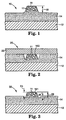
- the adhesive sheet (10) has a backing (12) and an adhesive layer (14) coated thereon and at least one surface being topologically microstructured, either with configured structures (16) or a coating of particles (not shown) and an underlying adhesive such that the adhesive layer (14) has at least two levels of adhesion, a contact bond and an application bond, such that initial contact bond is substantially less than the application bond and that the contact bond simultaneously changes to the application bond with the application of pressure onto the adhesive sheet.
- the adhesive sheet (10) may be configured in such a way as to have two topologically microstructured surfaces, with or without a backing (12).
- the adhesive articles of this invention also have at least one adhesive surface with topologically microstructured surface (also referred to as "adhesive surface features") such as projecting adhesive “pegs” or “posts", discrete, partially embedded, particles or discrete projecting clusters of particles.
- topologically microstructured surface also referred to as "adhesive surface features”
- microstructured pegs (16) may have adhesive tops or nonadhesive tops (provided by means of a nonadhesive cap, for example), may or may not contain particles (11), may be a series of projections that are covered with particles that may or may not be adhesive, a discontinuous coating of particles, such as non-tacky microspheres.
- the combination of surface features on an elastic adhesive surface provides the invention with a unique combination of properties: an adhesive article or tape that may be easily positioned on a substrate surface, optionally, it may be weakly and temporally bonded to the substrate and repositioned as desired, then instantly attached to the surface of the substrate with a stronger bond by applying firm pressure.
- the invention provides an adhesive article or tape that may be removed after application, all the while retaining ease of positioning and/or repositioning and then may be rapidly, more permanently reattached.
- Adhesive characteristics provide the functionality of the adhesive layer.
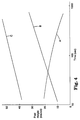
- Elastic adhesives found useful in the present invention all display a measured "retained lap shear relaxation stress” that exceeds about 55%, and preferably 70%. Adhesives having a measured "retained lap shear relaxation stress” greater than about 70% were observed to be “instantly” (within 60 seconds) positionable when removed from a substrate, backing or release liner and laid against the substrate again.
- adhesives having a measured "retained lap shear relaxation stress" between about 55% and 70% show the same positionable behavior after they are removed from a substrate, backing or release liner (12), but only after a recovery period of at least several minutes.
- Adhesives having a measured "retained lap shear relaxation stress” below about 55% do not show positionable behavior once pressed against and removed from a substrate, backing or release liner.
- a particularly unique property of the adhesive sheets (10) of the present invention is the ability of the adhesive to be elastic enough to permit the microstructures or other surface features (16) having to be compressed into the adhesive layer (14), while maintaining the general shape and size or height (18) of the microstructure or feature.
- This allows a microstructured adhesive sheet (20) to be overlaid with a release liner (22) or rolled back on itself (such as in a roll of tape configuration), such that the microstructure or feature (160) is protected during the period between manufacture and application.
- the recovery or elastic property of the adhesive that is particularly important to this invention is the percent shear stress retained by the adhesive when sheared and held at a constant displacement. This is particularly evident when for example, the release liner (22) is removed or the adhesive article (30) is unrolled, the microstructures or features (161) recover either completely to the full extent with would be reflected by the original height (28) or to at least a partial height (24), such that the difference between the partial height (24) and the "nonrecovered height (26) is sufficient to permit the adhesive article to exhibit at least two levels of adhesion.
- This recovery property may be easily measured using a modification of the lap shear tests PSTC7 and ASTM D3654.
- the adhesive articles of this invention have an adhesive layer that is sufficiently elastic to display a "retained lap shear relaxation stress" exceeding 55% and most preferably 70%.
- Adhesive layers useful in this invention may be continuous films, discontinuous patterns, droplets, or microspheres, or combinations or blends thereof.
- the adhesive may be any of those well know in the art and may contain tackifying resins, plasticizers, fillers colorants and other additives known to those skilled in the art.
- the adhesive layer has a topologically microstructured surface (also referred to as "adhesive surface features") such as projecting adhesive “pegs” or “posts", discrete and/or partially embedded particles or discrete projecting clusters of particles.
- a topologically microstructured surface such as projecting adhesive “pegs” or “posts”, discrete and/or partially embedded particles or discrete projecting clusters of particles.
- These various projections such as microstructured pegs, may have adhesive tops or nonadhesive tops (provided by means of a nonadhesive cap, for example), may be a series of projections that are covered with particles that may or may not be adhesive, a discontinuous coating of particles, such as non-tacky microspheres.
- the surface features typically have heights in the range of 4 ⁇ m to 200 ⁇ m and/or diameters in the same range.
- an adhesive coated-sheet has an adhesive that does not bond or very weakly bonds to a surface on contact (“contact bond”), to permit easy placement of the sheet, bonds (“application bond”) with the appropriate strength immediately when pressed in place, that is the contact bond changes simultaneously to an application bond when pressure is applied to the adhesive coated-sheet.
- the adhesive sheet may be removeable for relocation and behaves like the virgin sheet in application.
- the adhesive layer has at least two levels of adhesion, a contact bond and an application bond, such that initial contact bond is substantially less than the application bond and that the contact bond simultaneously changes to the application bond with the application of pressure onto the adhesive sheet
- a microstructured adhesive When a microstructured adhesive is formulated to have sufficient elasticity, the adhesive surface can recover, forcing the adhesive surface features to "reappear" (that is, the features again protrude above the adhesive surface ) within a short time frame. This allows the properties derived from the microstructure (adhesive surface features) to be reused. Many cycles of application, removal, reapplication are possible without significant degradation in any of the article's properties. Sufficient elasticity can be formulated into an adhesive without impairing its adhesive properties. Lap shear stress relaxation, a simple test method, can determine the suitability of an adhesive for this invention. Several classes of adhesives are usable within the scope of the present invention.
- the bond strength of the adhesive must be sufficient to overcome the elastic forces when the background area of the adhesive is pressed onto a substrate.
- This bond may be reversible or irreversible depending on the nature of the adhesive and substrate, (for example, the microstructure can recover when a tape is unrolled from low adhesion backside, but form a bond strong enough to damage the tape or substrate during removal of a tape that has formed a bond with a substrate).
- the resins used to prepare the Adhesive Solutions 1-9 contained acrylic copolymers that were prepared by free radical polymerization of acrylic esters and acrylic acid according to free radical polymerization techniques known to those skilled in the art, such as described in Odian, Principals of Polymerization, 3rd ed. John Wiley and Sons, New York, 1991. In the following examples all parts are given by weight.
- Each of the Adhesive Solutions 1-9 were coated within 4 hours of final preparation.
- Scotchcal brand Plus, numbers 3650-10 and 3470, Scotchcal brand, numbers 3650, 3680, 7725 and 7755, Controltac brand Plus, numbers 180-10, 181-10 and 160-30, and Controltac brand, number 180-10 films are from 3M Company, Inc., St. Paul, MN. "Melinex" film refers to MELINEX brand film, number 475/200, from ICI Americas, Inc., Wilmington, DE.
- the adhesives and adhesive articles of this invention show two distinctly different levels of bonding to a surface that are dependent on application method and pressure rather than adhesive build over time.
- the two discrete kinds of adhesion that may occur between a sample and a substrate surface are: "contact bond” that occurs when the sample adhesive touches or is laid against a substrate without being pressed in place; and “completely applied adhesion” (also referred to as the "application bond”) that occurs when the sample is intentionally pressed against a substrate to force a large percent of the adhesive to wet out the substrate surface.
- the adhesives and adhesive articles of this invention show two distinctly different levels of adhesion due to the presence of protruding surface features that reappear after having been compressed into the adhesive.
- the test data below provide a comparison of this recoverable, dual bonding behavior.
- the rating data for ease of sliding, positioning and repositioning provided a comparison of the contact adhesion and the ease of positioning or repositioning of samples at the temperatures cited.
- "Determination of the Minimum Force Needed to form a Fully Applied Adhesive Bond after Removal of an Adhesive from an Embossed Release Liner” and "Determination of the Minimum Force Needed to form a Fully Applied Adhesive Bond after Removal of an Adhesive from a Relaminated Release Liner” test data provided a comparative measure of how much force was needed to obtain a "fully applied adhesive bond" after a sample was placed in contact with a substrate surface.
- the adhesive articles of this invention display distinctly different "on contact” versus “fully applied” bonding behavior.
- the "Feature Rebound” test data are observations of how quickly and completely features, for example, pegs, posts, or particles compressed into an adhesive (latent microstructure) were rebounded by the adhesive.
- the detailed procedures for the "Peel Adhesion Testing” and the “Testing and Rating Ease of Sliding and Repositioning” are described in column 11, lines 33 to 59 and column 11 line 61 through column 12 line 9 respectively in U.S. Patent No. 5,296,277.
- KRATON 1107 resin 50 parts and available from Shell Chemical Company, Westbrook, IL
- WINGTAC 95 Plus resin 50 parts and available from Goodyear Tire and Rubber Company, Akron, OH
- KRATON 1107 resin (66.7 parts and available from Shell Chemical Company, Westbrook, IL), WINGTAC 95 Plus resin (33.3 parts and available from Goodyear Tire and Rubber Company, Akron, OH) and toluene were combined at a solids content of 40 %.
- a blend of microsphere and latex adhesives were prepared according to the recipe described in Examples 1 and 4 of the international patent application WO 92/13924.
- a blend of microsphere and latex adhesives were prepared according to "Application of Ionomeric Resin Films as Wall Decoration" in column12 lines 48-55 described in U.S. Patent No. 5,196,246.
- the vinyl backing used to prepare the examples was a 60 ⁇ m thick plasticized, white vinyl film identical to that used in 3M number 180-10 films with Controltac brand adhesive.
- Embossed release liners and particle filled, embossed release liners prepared according to the specifications described in Example 3 of U.S. Patent No. 5,296,277 were used in the preparation of Examples 1-15 and Comparative Examples C1 - C16.
- the recesses in the liner were filled with Potter's 5000 SPHERIGLASS beads were indicated.
- the pattern frequency and dimensions are given in Table 3.
- Pattern frequency (recesses per cm 2 ) Mean average recess depth ( ⁇ m) Mean average recess diameter ( ⁇ m) Particles in liner recesses. 1 1120 20 85 Spheriglass 5000 2 400 60 250 Spheriglass 5000 3 400 60 250 None 4 400 60 125 Spheriglass 5000
- This test was used to determine the "minimum force needed to form a fully applied adhesive bond after removal from an embossed release liner" and whether a sample adhesive is positionable or repositionable. The test also provides a comparative measure of the minimum amount of force needed to convert from a positionable to a fully applied adhesive bond or repositionable contact adhesive bond to a fully applied adhesive bond.
- SCOTCH-MOUNT brand, number Y-4484 double coated polyethylene foam tape (layers 4, 5, 6 and 7) was laminated to Melinex film side of the sample adhesive film (layers 1, 2 and 3). The sheet was cut into 2.5 x 5 cm pieces. The release liner (layer 7) was removed from the SCOTCH-MOUNT tape and a second, 2.5 x 10 cm sheet of Melinex film (layer 8), was then laminated to the SCOTCH-MOUNT tape (layer 6) to finish the test specimen.
- the embossed release liner (layer 2) was removed from the adhesive surface (layer 1) of the specimen.
- the specimen was gently laid with the adhesive against a standard AL-39 aluminum panel (available from Q-Panel Company, Cleveland, OH) at 22° C for 30 to 60 seconds.
- the ease of sliding, removing and repositioning the specimen on the aluminum plate was determined at 22° C as described in "Testing and Rating Ease of Sliding and Repositioning", column 12 lines 2 through 9 of U.S. Patent No. 5,296,277.
- a rating of "4" indicates that the adhesive was not positionable or repositionable and a value of "0 g" was recorded as the "minimum force needed to form a fully applied adhesive bond after removal from an embossed release liner".
- the release liner (layer 2) was removed from the adhesive surface (layer 1) of the specimen.
- the specimen was gently laid with the adhesive against a standard AL-39 aluminum panel at 22° C.
- a flat, test plate of known weight was carefully placed on top of the specimen adhesive sheet for 30 to 60 seconds, then carefully removed.
- the ease of sliding, removing and repositioning the specimen on the aluminum plate was again determined at 22° C and recorded. This procedure was repeated using a fresh specimen and plates, each of sequentially greater weight, until the rating for the sample was equal to "4".
- the weight of the heaviest plate that could be placed on the sample without obtaining a "4" rating was recorded as the "minimum force needed to form a fully applied adhesive bond after removal from an embossed release liner".
- test weights were used for the above procedure. Each test plate was 2.5 x 5.1 cm. The plates weighed: 57, 114, 227, 341, 682 and 1362 grams, respectively.
- This test was used to determine the "minimum force needed to form a fully applied adhesive bond after removal from a relaminated release liner" and whether the sample adhesive regains its positionable or repositionable behavior after it has been fully applied to a surface, such as a substantially smooth release liner.
- the method also provides a comparative measure of the minimum amount of force needed to fully reapply the adhesive to a surface.
- a test specimen of the adhesive is prepared as described in the "Determination of the Minimum Force Needed to form a Fully Applied Adhesive Bond after Removal of an Adhesive from an Embossed Release Liner" Test above.
- the release liner (layer 2) was removed from the adhesive surface (layer 1) of the specimen.
- the transparent, release liner (layer 9) from SCOTCHCAL brand, number 7755 film was removed and laminated to the adhesive surface (layer 1) of the specimen using enough lamination pressure to give at least 90 % adhesive wetout on the release liner as determined by visual inspection.
- the specimen was aged at 22° C, 50 % relative humidity for at least 24 hours before testing. For all samples, there were no visible signs of separation between the adhesive and the release liner prior to testing.
- the transparent release liner (layer 9) was removed from the adhesive surface (layer 1) of the specimen.
- the specimen was quickly, (within approximately 3 to 5 seconds) but gently laid with the adhesive against a standard AL-39 aluminum panel at 22°C.
- the amount of weight that the specimen could carry before a rating of "4" was obtained was determined using the procedure described in the "Determination of the Minimum Force Needed to form a Fully Applied Adhesive Bond after Removal of an Adhesive from an Embossed Release Liner" Test above and recorded as the "minimum force needed to form a fully applied adhesive bond after removal from a relaminated release liner".
- This test provides a comparative estimate of the rate and the extent to which an adhesive surface feature, e.g. a post or a peg, that had been compressed into an adhesive, is rebounded or returned by the adhesive to its original position.
- the test is divided into four parts providing information on the original height of the protruding post when the embossed liner is removed, the amount of deformation of the adhesive around the post when the post is compressed into the adhesive, the rate and extent to which the adhesive surface returns to its original shape, and the rate and extent to which the post is returned to its original height above the adhesive.
- a sample of the adhesive film as cast on the embossed or particle filled, embossed release liner (layers 1, 2 and 3) was used for each of the following test procedures.
- a 2.5 x 10 cm test specimen was cut from the sample adhesive tape (layers 1 and 3).
- a 2.5 x 7.5 cm piece of Melinex film (layer 10) was attached to the adhesive to form a handling tab.
- the specimen was mounted to a clean, AL-39 test panel with sufficient force to give at least 90% adhesive wetout of the 2.5 x 2.5 cm contact patch.
- the mounted specimen was aged at 22° C, 50 % relative humidity for at least 24 hours.
- the AL-39 panel and the Melinex film tabs were respectively mounted in the lower and upper jaws of an INSTRON brand Model 1122 tensile tester (available from INSTRON Corporation, Caston, MA) so that there was a slight slack in the tab.
- the per cent retained lap shear relaxation stress measurement was repeated three times for each sample adhesive using a new specimen each time.
- the arithmetic mean average for the per cent retained lap shear relaxation stress for each sample adhesive was reported as "%LSS".
- time to load The length of time needed to increase the shear stress on each sample from 0 to 65.5 kPa is also reported as "time to load”.
- Comparative examples C1 - C7 show that the commercially available, positionable adhesive films that have either a microstructured adhesive surface or a discontinuous coating of partially protruding solid particles on the adhesive, lose their positionable application behavior when their protective liners are removed and a different release liner is bonded to the adhesive surface in a manner consistent with compressing the protruding adhesive surface features into the adhesive.
- the release liner from several sheets of the 180-10 film were removed and these release liners taken from a roll of Scotchcal brand, number 7755 film, was squeeze roll laminated at 3.05 m (10 feet) per minute, 22° C, and 276 kPa (40 psi) to the adhesive side of the sheets of 180-10 film.
- the sheets were aged at 22° C, 50 % relative humidity for at least 24 hours. No signs of adhesive separation from the release liner were evident by visual inspection.
- the transparent release liner was removed and the ease of sliding, removing and repositioning the specimen on a glass plate was again determined at 22° C and 40° C. A rating of 4 was obtained for each sheet since each immediately stuck when the adhesive was gently laid on the plate. The sheets could not be lifted from the glass plate without damage.
- the release liners from several sheets of the 160-30 film were removed and the release liner taken from a roll of Scotchcal brand, number 7755 film, was squeeze roll laminated at 3.05 m (10 feet) per minute, 22° C, and 276 kPa (40 psi) to the adhesive side of the sheets of 160-30 film.
- the sheets were aged at 22° C, 50 % relative humidity for at least 24 hours. No signs of adhesive separation from the release liner were evident by visual inspection.
- the transparent release liner was removed and the ease of sliding, removing and repositioning the specimens on a glass plate was again determined at 22° C and 40° C. A rating of 4 was obtained for each sheet since each immediately stuck when the adhesive was gently laid on the plate. The sheets could not be lifted from the glass plate without damage.
- the release liners from several sheets of the 180-10 film were removed and the release liners taken from a roll of Scotchcal brand, number 7755 film, was squeeze roll laminated at 3.05 m (10 feet) per minute, 22° C, and 276 kPa (40 psi) to the adhesive side of the sheets of film.
- the sheets were aged at 22° C, 50 % relative humidity for at least 24 hours. No signs of adhesive separation from the release liners were evident by visual inspection.
- the transparent release liner was removed and the ease of sliding, removing and repositioning the specimens on a glass plate was again determined at 22° C and 40° C. A rating of 4 was obtained for each sheet since each immediately stuck when the adhesive was gently laid on the plate. The sheets could not be lifted from the glass plate without damage.
- the transparent release liner was removed from another sample.
- the surface of the adhesive was inspected microscopically within 5 minutes of removing the liner using an environmental scanning electron microscope (located at the University of Minnesota, Institute of Technology, Minneapolis, MN).
- the electron micrographs showed that the few large (greater than 60. ⁇ m diameter) hollow glass spheres were broken and pressed completely into the adhesive and the vast majority of smaller hollow glass spheres (less than 60 ⁇ m diameter) were not broken and also were completely pressed into the adhesive surface.
- the release liners from several sheets of the 3650-10 film were removed and the release liners taken from a roll of Scotchcal brand, number 7755 film, was squeeze roll laminated at 3.05 nm 10 feet per minute, 22° C, and 276 kPa (40 psi) to the adhesive side of the sheets of 3650-10 film.
- the sheets were aged at 22° C, 50 % relative humidity for at least 24 hours. No signs of adhesive separation from the release liners were evident by visual inspection.
- the transparent release liner was removed and the ease of sliding, removing and repositioning the specimens on a glass plate was again determined at 22° C and 40° C. A rating of 4 was obtained for each sheet since each immediately stuck when the adhesive was gently laid on the plate. The sheets could not be lifted from the glass plate without damage.
- the release liners from several sheets of the 3470 film were removed and the release liners taken from a roll of Scotchcal brand, number 7755 film, was squeeze roll laminated at 3.05m (10 feet) per minute, 22° C, and 276 kPa (40 psi) to the adhesive side of the sheets of 3470 film.
- the sheets were aged at 22° C, 50 % relative humidity for at least 24 hours. No signs of adhesive separation from the release liners were evident by visual inspection.
- the transparent release liner was removed and the ease of sliding, removing and repositioning the specimens on a glass plate was again determined at 22° C and 40° C. A rating of 4 was obtained for each sheet since each immediately stuck when the adhesive was gently laid on the plate. The sheets could not be lifted from the glass plate without damage.
- the release liners from several sheets of the 181-10 film were removed and the release liners taken from a roll of Scotchcal brand, number 7755 film, was squeeze roll laminated at 3.05 m (10 feet) per minute, 22° C, and 276 kPa (40 psi) to the adhesive side of the sheets of 181-10 film.
- the sheets were aged at 22° C, 50 % relative humidity for at least 24 hours. No signs of adhesive separation from the release liner were evident by visual inspection.
- the transparent release liner was removed and the ease of sliding, removing and repositioning the specimens on a glass plate was again determined at 22° C and 40° C. A rating of 4 was obtained for each sheet since each immediately stuck when the adhesive was gently laid on the plate. The sheets could not be lifted from the glass plate without damage.
- the release liners from several sheets of EG Tac brand film (LinTec, Japan) were removed and the ease of sliding, removing and repositioning the sheets on a glass plate was determined at 22° C and 40° C. A rating of 1 or 2 was obtained for each sheet.
- the release liners from several sheets of the EG Tac brand film were removed and the release liners taken from a roll of Scotchcal brand, number 7755 film, was squeeze roll laminated at 3.05 m (10 feet) per minute, 22° C, and 276 kPa (40 psi) to the adhesive side of the sheets of EG Tac brand film.
- the sheets were aged at 22° C, 50 % relative humidity for at least 24 hours. No signs of adhesive separation from the release liners were evident by visual inspection.
- the transparent release liner was removed and the ease of sliding, removing and repositioning the specimens on a glass plate was again determined at 22° C and 40° C. A rating of 4 was obtained for each sheet since each immediately stuck when the adhesive was gently laid on the plate. The sheets could not be lifted from the glass plate without damage.
- the transparent release liner was removed from another sample.
- the surface of the adhesive was inspected microscopically within 5 minutes of removing the liner. The inspection showed discrete solid glass beads scattered randomly over the surface and fully compressed into the adhesive.
- Room Decorator Kit adhesive film (3M Company, Inc., St. Paul MN), was made positionable in the following manner.
- the release liner was removed from a roll of Room Decorator Kit film and discarded.
- the adhesive side of the Room Decorator Kit film was laminated using a squeeze roll laminator heated to 70° C, to the glass bead filled, embossed release liner number 1. Removal of the embossed release liner and visual inspection of the adhesive surface under a microscope clearly shows that about 30 to 40 % of the glass bead clusters had transferred from the liner to the adhesive surface forming a semi regular pattern of protruding glass bead clusters.
- This modified Room Decorator Kit film was then laid adhesive side against a glass plate were it was easily slid over the glass surface into proper location without sticking to the glass. Pressing the adhesive film against the glass pane according to the instructions provided in the Room Decorator Kit, provided instant bonding and substantially complete wet out of the adhesive on the glass plate.
- the attached sheet of the modified Room Decorator Kit adhesive film was removed from the glass plate, immediately re-laid on the glass plate were it was easily slid over the surface and easily reattached by pressing the film against the plate.
- the process of removing the modified Room Decorator Kit adhesive film from the glass plate, immediately relaying on the plate, freely sliding the film over the surface and reattaching it with pressure was repeated each day for a week with substantially the same behavior.
- Sheets of the modified Room Decorator Kit adhesive film behaved in similar fashion when attached to, then removed from painted metal doors, a fiberglass shower, painted gloss and semi gloss walls, glass windows, painted furniture, a FORMICA table and counter top, and a 304 stainless steel panel. Sheets of the modified Room Decorator Kit adhesive film were bonded to a painted lab door and a fiberglass shower for 10 months. After 10 months the modified Room Decorator Kit adhesive film was removed, immediately re-laid against the door and shower where it was easily slid over the surface without preadhesion and easily reattached by pressing in place.
- Examples 2 - 5 and Comparative Examples C8 - C9 show the time dependent behavior of the adhesive films of this invention.
- Adhesive surfaces having either a pattern of protruding, discrete clusters of glass beads or a pattern of glass bead filled adhesive "pegs" were prepared according to the methods of U.S. Patent No. 5,141,790 and U.S. Patent No. 5,296,277.
- Examples 2-5 and comparative examples C8 and C9 may be laid against a surface and easily slid over the surface at this point. The protruding features are next pressed into the adhesive surface by laminating the adhesive film to a substantially smooth release liner.
- Comparative Examples C8 and C9 which exemplify the prior art, instantly stick to a surface that they are laid against. They did not recover their original positionable behavior within a useful period of time.
- Examples 2 - 5 exemplify the invention wherein a positionable or repositionable behavior is provided to an adhesive by means of placing an appropriate protruding feature on the surface of the adhesive, compressing the feature into the adhesive by bonding the adhesive to a release liner or other substrate surface for an indefinite period of time and then having the desired positionable or repositionable behavior reappear in a functionally useful period of time, usually a few seconds to a few minutes, by removing the adhesive article from the liner or substrate.
- the Scotchcal brand marking films shown in table 4 were made positionable in the following manner.
- the release liner was removed from a roll of the indicated Scotchcal brand marking film and discarded.
- the adhesive side of the film was laminated to the glass bead filled, embossed release liner number 1 at 3.05 m (10 feet) per minute using a PROTEC ORCA squeeze roll laminator heated to 60° C. Removal of the embossed release liner and visual inspection of the adhesive surface under a microscope showed that substantially all of the glass bead clusters had transferred to the adhesive surface forming a regular pattern of protruding glass bead clusters.
- the embossed release liner was removed from the adhesive film and discarded.
- the paper release liner from 3M number 220 Scotchcal brand film was removed and squeeze roll laminated at 3.05 m (10 feet) per minute using a PROTEC ORCA laminator heated to 60° C, to the microstructured adhesive surface.
- the relaminated sample was aged for at least 24 hours at 22° C, 50% relative humidity and showed no evidence of separation between the adhesive and liner layers, or "liner pop off".
- the Aroset brand adhesive solutions (available from Ashland Chemical, Inc., Columbus, OH) shown in Table 4, were coated to a wet thickness of about 150 ⁇ m onto the glass bead filled, embossed release liner number 1.
- the adhesive was oven dried for 1 minute at 65° C, then for 2 minutes at 93° C.
- a 60 ⁇ m thick vinyl film was laminated at 22° C to the adhesive layer on the liner to give a pressure sensitive adhesive film on a release liner. Removal of the embossed release liner and visual inspection of the adhesive surface under a microscope showed an adhesive surface that substantially replicated the surface of the release liner.
- the embossed release liner was removed from the adhesive film and discarded.
- the paper release liner from 220 Scotchcal brand film (3M Company, St. Paul, MN) was removed and squeeze roll laminated at 3,05 m (10 feet) per minute using a PROTEC ORCA laminator heated to 60° C, to the microstructured adhesive surface.
- the relaminated sample was aged for 72 hours at 22° C 50% relative humidity and showed no evidence of separation between the adhesive and liner layers, or "liner pop off".
- Premask tape number SCPM-3 (3M Company, St. Paul, MN) was laminated to the vinyl film side of the sample and test strips, 5 x 15 cm, were cut from the films.
- the paper release liner was removed and the adhesive side of the premask film was laid, after the stated waiting period, onto a "Ford" painted steel test panel at 22° C, 50% relative humidity.
- the test film was slid or repositioned across the panel surface as described in the test "Testing and Rating Ease of Sliding and Repositioning" and rated according to the published scale. The ratings for each sample are shown in Table 4.
- the embossed release liner (layer 2) was removed from the sample and the ease of sliding, removing and repositioning the sheet was immediately determined at 22° C. The result is reported in Table 5B as "Rated Ease of Sliding and Repositioning after Removal from an Embossed Release Liner".
- the embossed release liner (layer 2) was removed from another sample of the adhesive film and discarded.
- the release liner was removed from a roll of Scotchcal brand, number 7755 film, and roll laminated to the microstructured adhesive surface.
- the relaminated sample was aged for at least 24 hours at 22° C, 50% relative humidity and showed no evidence of separation between the adhesive and liner layers, or "liner pop off”.
- the relaminated release liner was removed and the ease of sliding, removing and repositioning the sheet was immediately determined at 22° C. The result is reported in Table 5B as the "Rated ease of sliding and repositioning after removal from a relaminated release liner".
- Example number Adhesive solution coated. Liner used. % LSS Time to load.
- 100 Parts of the adhesive solution designated in Table 6 was diluted with 30 parts of heptane and 30 parts of acetone.
- the diluted solution was coated to a wet thickness of about 100 ⁇ m onto particle filled, embossed release liner number 1, then dried for 15 minutes at 22° C, 15 minutes at 65° C and 15 minutes at 93° C to afford a 20 - 40 ⁇ m thick film of adhesive (layer 1) on embossed release liner (layer 2).
- Melinex film (layer 3) was roll laminated at 22° C to the air side of the adhesive.
- the embossed release liner (layer 2) was removed from the sample and the ease of sliding, removing and repositioning the sheet was immediately determined at 22° C. The result is reported in Table 6 as "Rated ease of sliding and repositioning after removal from an embossed release liner".
- the embossed release liner (layer 2) was removed from another sample of the adhesive film and discarded.
- the relaminated release liner was removed from a roll of Scotchcal brand, number 7755 film, and roll laminated to the microstructured adhesive surface.
- the relaminated sample was aged for at least 24 hours at 22° C, 50% relative humidity and showed no evidence of separation between the adhesive and liner layers, or "liner pop off”.
- the release liner was removed and the ease of sliding, removing and repositioning the sheet was immediately determined at 22° C. The result is reported in Table 6 as the "Rated ease of sliding and repositioning after removal from a relaminated release liner".
- the adhesive solution indicated in Table 7, was coated to a wet thickness of about 75 ⁇ m onto particle filled, embossed release liner number 1, then dried for 15 minutes at 22° C, 15 minutes at 40° C, 15 minutes at 70° C and 15 minutes at 90° C to afford a 20 - 40 ⁇ m thick film of adhesive (layer 1) on embossed release liner (layer 2).
- Melinex film (layer 3) was roll laminated at 22° C to the air side of the adhesive.
- the embossed release liner (layer 2) was removed from the sample and the ease of sliding, removing and repositioning the sheet was immediately determined at 22° C. The result is reported in Table 7 as "Rated ease of sliding and repositioning after removal from an embossed release liner".
- the embossed release liner (layer 2) was removed from another sample of the adhesive film and discarded.
- the relaminated release liner was removed from a roll of Scotchcal brand, number 7755 film, and roll laminated to the microstructured adhesive surface.
- the relaminated sample was aged for at least 24 hours at 22° C, 50% relative humidity and showed no evidence of separation between the adhesive and liner layers, or "liner pop off'.
- the release liner was removed and the ease of sliding, removing and repositioning the sheet was immediately determined at 22° C. The result is reported in Table 7 as the "Rated ease of sliding and repositioning after removal from a relaminated release liner".
- Example number Adhesive solution coated.
- the sample tape was used immediately for "Lap Shear Stress Relaxation” testing. Lap shear stress relaxation test adhesive sample number. Adhesive solution coated. %LSS Time to load. Examples produced using this adhesive.
Landscapes
- Chemical & Material Sciences (AREA)
- Organic Chemistry (AREA)
- Adhesive Tapes (AREA)
- Adhesives Or Adhesive Processes (AREA)
Applications Claiming Priority (3)
| Application Number | Priority Date | Filing Date | Title |
|---|---|---|---|
| US559037 | 1995-11-15 | ||
| US08/559,037 US5795636A (en) | 1995-11-15 | 1995-11-15 | Positionable and repositionable adhesive article |
| PCT/US1996/016874 WO1997018276A1 (en) | 1995-11-15 | 1996-10-21 | Repositionable adhesive article |
Publications (2)
| Publication Number | Publication Date |
|---|---|
| EP0861307A1 EP0861307A1 (en) | 1998-09-02 |
| EP0861307B1 true EP0861307B1 (en) | 2002-03-13 |
Family
ID=24232029
Family Applications (1)
| Application Number | Title | Priority Date | Filing Date |
|---|---|---|---|
| EP96937706A Expired - Lifetime EP0861307B1 (en) | 1995-11-15 | 1996-10-21 | Repositionable adhesive article |
Country Status (12)
| Country | Link |
|---|---|
| US (1) | US5795636A (enExample) |
| EP (1) | EP0861307B1 (enExample) |
| JP (1) | JP3820438B2 (enExample) |
| KR (1) | KR100422221B1 (enExample) |
| CN (1) | CN1101437C (enExample) |
| BR (1) | BR9611317A (enExample) |
| CA (1) | CA2237676C (enExample) |
| DE (1) | DE69619849T2 (enExample) |
| DK (1) | DK0861307T3 (enExample) |
| ES (1) | ES2173324T3 (enExample) |
| MX (1) | MX9803729A (enExample) |
| WO (1) | WO1997018276A1 (enExample) |
Cited By (1)
| Publication number | Priority date | Publication date | Assignee | Title |
|---|---|---|---|---|
| US11879081B2 (en) | 2019-12-20 | 2024-01-23 | Mondi Ag | Release liner for repositionable adhesive articles |
Families Citing this family (102)
| Publication number | Priority date | Publication date | Assignee | Title |
|---|---|---|---|---|
| US6440880B2 (en) * | 1993-10-29 | 2002-08-27 | 3M Innovative Properties Company | Pressure-sensitive adhesives having microstructured surfaces |
| US5662758A (en) | 1996-01-10 | 1997-09-02 | The Procter & Gamble Company | Composite material releasably sealable to a target surface when pressed thereagainst and method of making |
| NZ330835A (en) | 1996-01-10 | 2000-03-27 | Procter & Gamble | Material having a substance protected by deformable standoffs and method of making |
| US6020062A (en) * | 1996-11-08 | 2000-02-01 | D.W. Wallcovering Inc. | Article having slippable adhesive |
| US6197397B1 (en) * | 1996-12-31 | 2001-03-06 | 3M Innovative Properties Company | Adhesives having a microreplicated topography and methods of making and using same |
| US5968633A (en) * | 1997-06-06 | 1999-10-19 | The Procter & Gamble Company | Selectively-activatible sheet material for dispensing and dispersing a substance onto a target surface |
| US6099940A (en) * | 1997-07-16 | 2000-08-08 | The Procter & Gamble Company | Selectively-activatible three-dimensional sheet material having multi-stage progressive activation to deliver a substance to a target surface |
| WO1999014041A1 (en) * | 1997-09-18 | 1999-03-25 | D.W. Wallcovering, Inc. | Repositionable article |
| US7132159B1 (en) * | 1997-12-08 | 2006-11-07 | Avery Dennison Corporation | Controlled droplet formed layered structures |
| AU4429599A (en) | 1998-06-12 | 1999-12-30 | Avery Dennison Corporation | Multilayered thermoplastic film and sign cutting method using the same |
| US6203885B1 (en) | 1998-06-18 | 2001-03-20 | 3M Innovative Properties Company | Cling films having a microreplicated topography and methods of making and using same |
| JP2002519472A (ja) | 1998-06-30 | 2002-07-02 | ザイロン、インコーポレイテッド | 接着剤転移装置 |
| US6335067B1 (en) * | 1998-08-03 | 2002-01-01 | Xyron, Inc. | Adhesive transfer device |
| US6844391B1 (en) | 1998-09-23 | 2005-01-18 | Avery Dennison Corporation | Adhesives with improved rivet properties and laminates using the same |
| US6872342B2 (en) | 1999-04-09 | 2005-03-29 | The Procter & Gamble Company | Embossing and adhesive printing process |
| US6524675B1 (en) | 1999-05-13 | 2003-02-25 | 3M Innovative Properties Company | Adhesive-back articles |
| EP1232959B1 (de) * | 1999-06-02 | 2004-09-15 | Alcan Technology & Management AG | Kindersichere Verpackung für Tabletten |
| US6517664B1 (en) | 2000-01-10 | 2003-02-11 | Process Resources Corporation | Techniques for labeling of plastic, glass or metal containers or surfaces with polymeric labels |
| US6410135B1 (en) * | 2000-01-21 | 2002-06-25 | 3M Innovative Properties Company | Stretch releasing adhesive tape with differential adhesive properties |
| US6565697B1 (en) | 2000-03-01 | 2003-05-20 | Brady Worldwide, Inc. | Manufacturing method for a positionable and repositionable pressure sensitive adhesive product and an article formed therefrom |
| US6858285B1 (en) * | 2000-03-22 | 2005-02-22 | The Procter & Gamble Company | High bond strength, repositionable adherent sheet |
| US6630049B2 (en) | 2000-04-24 | 2003-10-07 | Avery Dennison Corporation | Adhesive articles with improved air egress and methods of making the same |
| ATE416241T1 (de) * | 2000-04-24 | 2008-12-15 | Avery Dennison Corp | Klebstoffartikel mit verbessertem luftaustritt und verfahren zu deren herstellung |
| US20010052384A1 (en) * | 2000-04-24 | 2001-12-20 | Michael Hannington | Adhesive articles with improved air egress and methods of making the same |
| US7060351B2 (en) * | 2000-04-24 | 2006-06-13 | Avery Dennison Corporation | Adhesive article with improved air egress |
| JP2002121503A (ja) * | 2000-09-29 | 2002-04-26 | Three M Innovative Properties Co | 床材固定用両面粘着テープ |
| US6803099B1 (en) * | 2000-10-10 | 2004-10-12 | Armstrong World Industries, Inc. | Self-adhering surface covering and method of making |
| US6656319B1 (en) * | 2000-10-25 | 2003-12-02 | 3M Innovative Properties Company | Fluid-activatable adhesive articles and methods |
| KR20020035968A (ko) * | 2000-11-07 | 2002-05-16 | 차동천 | 향발산 점착식 시트 |
| US6660352B2 (en) | 2001-01-09 | 2003-12-09 | 3M Innovative Properties Company | Adhesive electrostatic sheets |
| US6984429B2 (en) * | 2001-01-12 | 2006-01-10 | 3M Innovative Properties Company | Laminate from which decorative films can be applied to a substrate |
| US6613411B2 (en) | 2001-01-25 | 2003-09-02 | 3M Innovative Properties Company | Conformable multi-layer sheet materials |
| US6874421B2 (en) | 2001-04-20 | 2005-04-05 | 3M Innovative Properties Company | Ink jet transfer printing process |
| CA2460154C (en) * | 2001-09-14 | 2009-08-11 | Lintec Corporation | Easily applicable adhesive sheet comprising spherical protrusions and method for producing the same |
| US20050076596A1 (en) * | 2001-09-25 | 2005-04-14 | Structural Quality Assurance, Inc. | Reinforcement material and reinforcement structure of structure and method of designing reinforcement material |
| US8323773B2 (en) | 2001-10-09 | 2012-12-04 | 3M Innovative Properties Company | Laminates with structured layers |
| US20030098906A1 (en) * | 2001-10-22 | 2003-05-29 | 3M Innovative Properties Company | Ink jet transfer printing process |
| US6881471B2 (en) | 2001-10-25 | 2005-04-19 | The Procter & Gamble Company | High speed embossing and adhesive printing process and apparatus |
| DE10160139A1 (de) * | 2001-12-07 | 2003-06-18 | Bayer Cropscience Gmbh | Synergistische herbizide Mittel enthaltend bestimmte Herbizide aus der Gruppe der Benzoylcylohexandione |
| US7709070B2 (en) * | 2001-12-20 | 2010-05-04 | The Procter & Gamble Company | Articles and methods for applying color on surfaces |
| US7316832B2 (en) | 2001-12-20 | 2008-01-08 | The Procter & Gamble Company | Articles and methods for applying color on surfaces |
| KR20050012756A (ko) | 2002-05-29 | 2005-02-02 | 이 아이 듀폰 디 네모아 앤드 캄파니 | 정각 접촉 및 접착을 위한 피브릴 미세구조물 |
| US20040161564A1 (en) | 2003-02-14 | 2004-08-19 | Truog Keith L. | Dry paint transfer laminate |
| EP1597092A2 (en) * | 2003-02-14 | 2005-11-23 | The Procter & Gamble Company | Article for being applied to a surface and method thereof |
| US20040244916A1 (en) * | 2003-06-03 | 2004-12-09 | Hall David R. | Filler for architectural panel joints and tool |
| US20040247837A1 (en) * | 2003-06-09 | 2004-12-09 | Howard Enlow | Multilayer film |
| US20050196607A1 (en) * | 2003-06-09 | 2005-09-08 | Shih Frank Y. | Multi-layer dry paint decorative laminate having discoloration prevention barrier |
| EP1550546A1 (fr) * | 2003-12-29 | 2005-07-06 | Mactac Europe S.A. | Procédé de microstructuration d'une surface de substrat souple multicouche, et substrat microstructuré |
| US20060003110A1 (en) * | 2004-07-01 | 2006-01-05 | David Vanderslice | Ornamental bow |
| CA2513969A1 (en) * | 2004-08-02 | 2006-02-02 | W.R. Grace & Co.-Conn. | Method for fastening building materials together |
| US7833208B2 (en) * | 2004-12-29 | 2010-11-16 | Kimberly-Clark Worldwide, Inc. | Multilayer absorbent article |
| WO2006076116A1 (en) * | 2005-01-12 | 2006-07-20 | Avery Dennison Corporation | Adhesive article having improved application properties |
| FR2880540B1 (fr) * | 2005-01-13 | 2008-07-11 | Aventis Pharma Sa | Utilisation de derives de la purine comme inhibiteurs de la proteine hsp90 |
| US20060156663A1 (en) * | 2005-01-14 | 2006-07-20 | Zaxxon Usa, Inc. | Removable and relayable floor covering |
| US20090029156A1 (en) * | 2005-08-11 | 2009-01-29 | Kruchko Steven N | Substrate having polarized adhesive |
| WO2007021977A1 (en) * | 2005-08-11 | 2007-02-22 | Stromberg Allen And Company | Substrate having polarized adhesive |
| GB2432338A (en) * | 2005-11-21 | 2007-05-23 | 3M Innovative Properties Co | Personalised adhesive memoboard |
| GB2453081A (en) * | 2006-06-13 | 2009-03-25 | Clifton Aubrey Van Der Hoven | Adhesive mounting products and articles provided with mounting adhesive |
| US20080073899A1 (en) * | 2006-09-27 | 2008-03-27 | Parker Kevin P | Apparatus and method for binding thick sheets including photographs |
| US20080072469A1 (en) * | 2006-09-27 | 2008-03-27 | Parker Kevin P | Apparatus and method for binding thick sheets including photographs |
| JP2010512952A (ja) * | 2006-12-22 | 2010-04-30 | シェーリング コーポレイション | 患者の遵守を改善するための医薬品パッケージングシステム |
| DE102007008889A1 (de) | 2007-02-21 | 2008-08-28 | Tesa Ag | Verfahren zur Erzeugung von nano- und/oder mikrostrukturierten Oberflächen in einer klebenden, insbesondere selbstklebenden Schicht |
| WO2008137322A1 (en) * | 2007-05-07 | 2008-11-13 | 3M Innovative Properties Company | Projection screen |
| US9240131B2 (en) * | 2007-06-04 | 2016-01-19 | Avery Dennison Corporation | Adhesive articles having repositionability or slidability characteristics |
| US7923675B2 (en) | 2007-06-06 | 2011-04-12 | 3M Innovative Properties Company | Projection system having avirtual mask |
| US9457547B2 (en) * | 2007-11-07 | 2016-10-04 | Magnum Magnetics Corporation | Extrudable adherable material systems |
| US20090162595A1 (en) * | 2007-12-19 | 2009-06-25 | Chan Ko | Striped adhesive construction and method and die for making same |
| US7854817B2 (en) * | 2008-05-29 | 2010-12-21 | 3M Innovative Properties Company | Methods and assemblies for attaching articles to surfaces |
| CA137791S (en) | 2010-02-08 | 2011-06-13 | Avery Dennison Corp | Note sheet pad |
| US8778474B2 (en) * | 2010-02-08 | 2014-07-15 | Ccl Label, Inc. | Repositionable medium and stack thereof |
| US20120111311A1 (en) * | 2010-11-09 | 2012-05-10 | Steck Greg T | Customizable fire pit |
| US8580067B2 (en) * | 2012-02-23 | 2013-11-12 | Chroma Paper, Llc. | Thermo-sealing control method and packaging for resealable packaging |
| CN103881598A (zh) * | 2012-12-24 | 2014-06-25 | 鸿富锦精密工业(深圳)有限公司 | 胶带 |
| US20140183078A1 (en) * | 2012-12-31 | 2014-07-03 | Tim Newton | Removable label and method |
| US10316226B2 (en) | 2013-06-06 | 2019-06-11 | 3M Innovative Properties Company | Method for preparing structured laminating adhesive articles |
| CN105307850B (zh) | 2013-06-06 | 2018-05-15 | 3M创新有限公司 | 用于制备结构化粘合剂制品的方法 |
| WO2014197194A1 (en) | 2013-06-06 | 2014-12-11 | 3M Innovative Properties Company | Method for preparing structured adhesive articles |
| TWM466790U (zh) * | 2013-07-17 | 2013-12-01 | jia-zhen Chen | 油性筆、水性筆雙用的乾擦式重覆貼白板 |
| CN103832870B (zh) * | 2014-03-19 | 2016-04-13 | 上海福耀客车玻璃有限公司 | 一种快速安装及自动断胶条装置 |
| WO2015171456A1 (en) | 2014-05-08 | 2015-11-12 | 3M Innovative Properties Company | Pressure sensitive adhesive tape with microstructured elastomeric core |
| TWI605945B (zh) * | 2015-03-06 | 2017-11-21 | Nitto Denko Corp | Pressing Adhesive Next |
| BR112018001421A2 (pt) | 2015-07-30 | 2018-09-11 | 3M Innovative Properties Co | artigos à base de película |
| WO2017019234A1 (en) | 2015-07-30 | 2017-02-02 | 3M Innovative Properties Company | Method of making web with partially embedded fibers |
| JP2017061587A (ja) * | 2015-09-23 | 2017-03-30 | 日東電工株式会社 | 接着シート及び接着シート貼り付け方法 |
| JP6883940B2 (ja) | 2015-10-09 | 2021-06-09 | スリーエム イノベイティブ プロパティズ カンパニー | 物品、物品の製造方法、物品の取り付け方法 |
| EP3370953A1 (en) | 2015-11-02 | 2018-09-12 | 3M Innovative Properties Company | Low gloss laminated article |
| JP6838857B2 (ja) | 2015-12-07 | 2021-03-03 | スリーエム イノベイティブ プロパティズ カンパニー | 積層体、接着キット、積層構造体及びその製造方法、並びにコンタクト接着剤組成物 |
| WO2017100085A1 (en) | 2015-12-07 | 2017-06-15 | 3M Innovative Properties Company | Laminate, adhesive kit, laminated structure and production method thereof, and contact adhesive composition |
| JP6227820B1 (ja) * | 2016-05-24 | 2017-11-08 | 日東電工株式会社 | 加圧接着型粘着部材 |
| JP7164307B2 (ja) | 2017-04-10 | 2022-11-01 | スリーエム イノベイティブ プロパティズ カンパニー | 粘着シート及び粘着シートを粗面に適用する方法 |
| WO2019217567A1 (en) * | 2018-05-11 | 2019-11-14 | 3M Innovative Properties Company | Positionable and repositionable adhesive articles for stretch release removal |
| CN112153924A (zh) | 2018-05-23 | 2020-12-29 | 3M创新有限公司 | 用于重物体的壁锚定件和组件 |
| WO2019239616A1 (ja) * | 2018-06-15 | 2019-12-19 | Dic株式会社 | 粘着シート及びそれを使用した物品の製造方法 |
| AU2019305138B2 (en) | 2018-07-20 | 2022-03-31 | 3M Innovative Properties Company | High density post arrays |
| JP7262188B2 (ja) * | 2018-07-31 | 2023-04-21 | スリーエム イノベイティブ プロパティズ カンパニー | 接着剤シート |
| JP2020196800A (ja) | 2019-05-31 | 2020-12-10 | スリーエム イノベイティブ プロパティズ カンパニー | 接着剤シート |
| JP7516017B2 (ja) | 2019-06-28 | 2024-07-16 | スリーエム イノベイティブ プロパティズ カンパニー | 三次元成形された形状を有する接着フィルム |
| EP4021251B1 (en) | 2019-08-26 | 2026-06-03 | 3M Innovative Properties Company | Wall anchors and assemblies for heavyweight objects |
| JP2021095511A (ja) * | 2019-12-18 | 2021-06-24 | スリーエム イノベイティブ プロパティズ カンパニー | 接着剤シート、パネル製品、シート製品及びケーブル製品 |
| JP2021116177A (ja) * | 2020-01-28 | 2021-08-10 | スリーエム イノベイティブ プロパティズ カンパニー | ケース、ディスペンサ及び接着剤シート |
| US12011911B2 (en) | 2020-03-25 | 2024-06-18 | Flexcon Company, Inc. | Isotropic non-aqueous electrode sensing material |
| WO2023018942A1 (en) * | 2021-08-13 | 2023-02-16 | Certain Teed Gypsum, Inc. | Pressure sensitive adhesive building surface accessory |
Family Cites Families (23)
| Publication number | Priority date | Publication date | Assignee | Title |
|---|---|---|---|---|
| US3301741A (en) * | 1963-09-11 | 1967-01-31 | Minnesota Mining & Mfg | Adhesive sheet and method of making |
| DE1299235B (de) * | 1964-05-06 | 1969-07-10 | Bofors Ab | Abschussstativ fuer Raketen, Lenkwaffen u. dgl. |
| US3314838A (en) * | 1964-08-26 | 1967-04-18 | Minnesota Mining & Mfg | Pressure sensitive adhesives containing hollow spheroidal particles |
| US3554835A (en) * | 1967-08-16 | 1971-01-12 | Morgan Adhesives Co | Slidable adhesive laminate and method of making |
| US3691140A (en) * | 1970-03-09 | 1972-09-12 | Spencer Ferguson Silver | Acrylate copolymer microspheres |
| GB1493407A (en) * | 1974-12-16 | 1977-11-30 | Ici Ltd | Decorative sheet material |
| US4023570A (en) * | 1976-04-21 | 1977-05-17 | Personal Products Company | Adhesively attached absorbent liners |
| CA1106993A (en) * | 1976-05-26 | 1981-08-11 | Martin M. Sackoff | Method for making a pressure sensitive adhesive coated laminate |
| US4166152B1 (en) * | 1977-08-17 | 1999-05-18 | Minnesota Mining & Mfg | Tacky polymeric microspheres |
| US4376151A (en) * | 1981-06-29 | 1983-03-08 | Moore Business Forms, Inc. | Pressure threshold adhesive |
| JPS5813682A (ja) * | 1981-07-16 | 1983-01-26 | Nippon Carbide Ind Co Ltd | 感圧接着剤層 |
| US4418120A (en) * | 1982-07-19 | 1983-11-29 | Minnesota Mining And Manufacturing Co. | Tackified crosslinked acrylic adhesives |
| JPH0414434Y2 (enExample) * | 1985-04-08 | 1992-03-31 | ||
| DE3880341T2 (de) * | 1987-02-09 | 1993-07-29 | Bridgestone Corp | Unregelmaessiges profil aufweisende klebefolien. |
| JP2657965B2 (ja) * | 1987-10-31 | 1997-09-30 | 日本カーバイド工業 株式会社 | 感圧接着剤層 |
| AU612771B2 (en) * | 1988-02-26 | 1991-07-18 | Minnesota Mining And Manufacturing Company | Electrically conductive pressure-sensitive adhesive tape |
| US5192612A (en) * | 1989-10-31 | 1993-03-09 | Avery International Corporation | Positionable-repositionable pressure-sensitive adhesive |
| US5141790A (en) * | 1989-11-20 | 1992-08-25 | Minnesota Mining And Manufacturing Company | Repositionable pressure-sensitive adhesive tape |
| WO1992013924A1 (en) * | 1991-02-06 | 1992-08-20 | Minnesota Mining And Manufacturing Company | Positionable adhesive system with high shear strength |
| US5196246A (en) * | 1991-05-17 | 1993-03-23 | Minnesota Mining And Manufacturing Company | Wall decorating system |
| US5296277A (en) * | 1992-06-26 | 1994-03-22 | Minnesota Mining And Manufacturing Company | Positionable and repositionable adhesive articles |
| US5487929A (en) * | 1993-02-03 | 1996-01-30 | Borden, Inc. | Repositionable wall covering |
| US7044902B2 (en) * | 2003-12-09 | 2006-05-16 | Quad/Tech, Inc. | Printing press folder and folder components |
-
1995
- 1995-11-15 US US08/559,037 patent/US5795636A/en not_active Expired - Lifetime
-
1996
- 1996-10-21 EP EP96937706A patent/EP0861307B1/en not_active Expired - Lifetime
- 1996-10-21 CA CA002237676A patent/CA2237676C/en not_active Expired - Lifetime
- 1996-10-21 BR BR9611317A patent/BR9611317A/pt not_active IP Right Cessation
- 1996-10-21 DK DK96937706T patent/DK0861307T3/da active
- 1996-10-21 DE DE69619849T patent/DE69619849T2/de not_active Expired - Lifetime
- 1996-10-21 JP JP51884397A patent/JP3820438B2/ja not_active Expired - Lifetime
- 1996-10-21 ES ES96937706T patent/ES2173324T3/es not_active Expired - Lifetime
- 1996-10-21 CN CN96198246A patent/CN1101437C/zh not_active Expired - Lifetime
- 1996-10-21 KR KR10-1998-0703737A patent/KR100422221B1/ko not_active Expired - Lifetime
- 1996-10-21 WO PCT/US1996/016874 patent/WO1997018276A1/en not_active Ceased
-
1998
- 1998-05-11 MX MX9803729A patent/MX9803729A/es unknown
Cited By (1)
| Publication number | Priority date | Publication date | Assignee | Title |
|---|---|---|---|---|
| US11879081B2 (en) | 2019-12-20 | 2024-01-23 | Mondi Ag | Release liner for repositionable adhesive articles |
Also Published As
| Publication number | Publication date |
|---|---|
| DE69619849T2 (de) | 2002-11-07 |
| CN1202194A (zh) | 1998-12-16 |
| JP2000500514A (ja) | 2000-01-18 |
| US5795636A (en) | 1998-08-18 |
| CN1101437C (zh) | 2003-02-12 |
| WO1997018276A1 (en) | 1997-05-22 |
| CA2237676A1 (en) | 1997-05-22 |
| KR19990067701A (ko) | 1999-08-25 |
| BR9611317A (pt) | 1999-03-02 |
| DE69619849D1 (de) | 2002-04-18 |
| ES2173324T3 (es) | 2002-10-16 |
| JP3820438B2 (ja) | 2006-09-13 |
| KR100422221B1 (ko) | 2005-04-06 |
| EP0861307A1 (en) | 1998-09-02 |
| DK0861307T3 (da) | 2002-07-08 |
| MX9803729A (es) | 1998-09-30 |
| CA2237676C (en) | 2009-04-07 |
Similar Documents
| Publication | Publication Date | Title |
|---|---|---|
| US5795636A (en) | Positionable and repositionable adhesive article | |
| KR100253728B1 (ko) | 배치및재배치가능한접착제제품 | |
| KR100525628B1 (ko) | 미소복제된 지형을 가진 접착제 및 그 접착제의 제조 방법 및사용 방법 | |
| KR960001363B1 (ko) | 압감성 접착테이프 구조물 | |
| EP0554832B1 (en) | High solids moisture resistant latex pressure-sensitive adhesive | |
| EP1406982B1 (en) | Specular laminates | |
| AU619350B2 (en) | Hollow acrylate polymer microspheres | |
| KR101464785B1 (ko) | 연신 해제 감압 접착 물품 및 그 사용 방법 | |
| EP0315072B1 (en) | Pressure-sensitive adhesive layer | |
| JP2006070273A5 (enExample) | ||
| EP1309663A1 (en) | Structured release liners with improved adhesion of adhesive articles | |
| CA2532348A1 (en) | Adhesives and release liners with pyramidal structures | |
| CN108603079B (zh) | 可适形的、可剥离的粘合剂制品 | |
| JPH11503191A (ja) | 感圧接着剤 | |
| CN114149765B (zh) | 一种胶粘贴膜、其制备方法及其应用 | |
| WO2024134438A1 (en) | Adhesive film with clean removal after aging |
Legal Events
| Date | Code | Title | Description |
|---|---|---|---|
| PUAI | Public reference made under article 153(3) epc to a published international application that has entered the european phase |
Free format text: ORIGINAL CODE: 0009012 |
|
| 17P | Request for examination filed |
Effective date: 19980612 |
|
| AK | Designated contracting states |
Kind code of ref document: A1 Designated state(s): DE DK ES FR GB IT NL |
|
| 17Q | First examination report despatched |
Effective date: 19981009 |
|
| GRAG | Despatch of communication of intention to grant |
Free format text: ORIGINAL CODE: EPIDOS AGRA |
|
| GRAG | Despatch of communication of intention to grant |
Free format text: ORIGINAL CODE: EPIDOS AGRA |
|
| GRAG | Despatch of communication of intention to grant |
Free format text: ORIGINAL CODE: EPIDOS AGRA |
|
| GRAH | Despatch of communication of intention to grant a patent |
Free format text: ORIGINAL CODE: EPIDOS IGRA |
|
| REG | Reference to a national code |
Ref country code: GB Ref legal event code: IF02 |
|
| GRAH | Despatch of communication of intention to grant a patent |
Free format text: ORIGINAL CODE: EPIDOS IGRA |
|
| GRAA | (expected) grant |
Free format text: ORIGINAL CODE: 0009210 |
|
| AK | Designated contracting states |
Kind code of ref document: B1 Designated state(s): DE DK ES FR GB IT NL |
|
| REF | Corresponds to: |
Ref document number: 69619849 Country of ref document: DE Date of ref document: 20020418 |
|
| ET | Fr: translation filed | ||
| REG | Reference to a national code |
Ref country code: DK Ref legal event code: T3 |
|
| REG | Reference to a national code |
Ref country code: ES Ref legal event code: FG2A Ref document number: 2173324 Country of ref document: ES Kind code of ref document: T3 |
|
| PLBE | No opposition filed within time limit |
Free format text: ORIGINAL CODE: 0009261 |
|
| STAA | Information on the status of an ep patent application or granted ep patent |
Free format text: STATUS: NO OPPOSITION FILED WITHIN TIME LIMIT |
|
| 26N | No opposition filed |
Effective date: 20021216 |
|
| REG | Reference to a national code |
Ref country code: FR Ref legal event code: PLFP Year of fee payment: 20 |
|
| PGFP | Annual fee paid to national office [announced via postgrant information from national office to epo] |
Ref country code: ES Payment date: 20150915 Year of fee payment: 20 |
|
| PGFP | Annual fee paid to national office [announced via postgrant information from national office to epo] |
Ref country code: FR Payment date: 20150908 Year of fee payment: 20 |
|
| PGFP | Annual fee paid to national office [announced via postgrant information from national office to epo] |
Ref country code: DK Payment date: 20151012 Year of fee payment: 20 |
|
| PGFP | Annual fee paid to national office [announced via postgrant information from national office to epo] |
Ref country code: IT Payment date: 20151026 Year of fee payment: 20 Ref country code: GB Payment date: 20151021 Year of fee payment: 20 Ref country code: DE Payment date: 20151013 Year of fee payment: 20 |
|
| PGFP | Annual fee paid to national office [announced via postgrant information from national office to epo] |
Ref country code: NL Payment date: 20151012 Year of fee payment: 20 |
|
| REG | Reference to a national code |
Ref country code: DE Ref legal event code: R071 Ref document number: 69619849 Country of ref document: DE |
|
| REG | Reference to a national code |
Ref country code: DK Ref legal event code: EUP Effective date: 20161021 |
|
| REG | Reference to a national code |
Ref country code: NL Ref legal event code: MK Effective date: 20161020 |
|
| REG | Reference to a national code |
Ref country code: GB Ref legal event code: PE20 Expiry date: 20161020 |
|
| REG | Reference to a national code |
Ref country code: ES Ref legal event code: FD2A Effective date: 20170127 |
|
| PG25 | Lapsed in a contracting state [announced via postgrant information from national office to epo] |
Ref country code: GB Free format text: LAPSE BECAUSE OF EXPIRATION OF PROTECTION Effective date: 20161020 |
|
| PG25 | Lapsed in a contracting state [announced via postgrant information from national office to epo] |
Ref country code: ES Free format text: LAPSE BECAUSE OF EXPIRATION OF PROTECTION Effective date: 20161022 |