EP0846688B1 - Nouveaux dérivés de l'imidazoline ayant une affinité pour les récepteurs aux imidazolines - Google Patents
Nouveaux dérivés de l'imidazoline ayant une affinité pour les récepteurs aux imidazolines Download PDFInfo
- Publication number
- EP0846688B1 EP0846688B1 EP97402891A EP97402891A EP0846688B1 EP 0846688 B1 EP0846688 B1 EP 0846688B1 EP 97402891 A EP97402891 A EP 97402891A EP 97402891 A EP97402891 A EP 97402891A EP 0846688 B1 EP0846688 B1 EP 0846688B1
- Authority
- EP
- European Patent Office
- Prior art keywords
- pharmaceutically acceptable
- halogen atom
- formula
- addition salts
- imidazoline
- Prior art date
- Legal status (The legal status is an assumption and is not a legal conclusion. Google has not performed a legal analysis and makes no representation as to the accuracy of the status listed.)
- Expired - Lifetime
Links
- 0 *c(cc1)cc(*)c1C1=NCCN1 Chemical compound *c(cc1)cc(*)c1C1=NCCN1 0.000 description 2
- GQPZLKQFQZLHQX-UHFFFAOYSA-N Cc1c(C2=NCCN2)nc[n]1C Chemical compound Cc1c(C2=NCCN2)nc[n]1C GQPZLKQFQZLHQX-UHFFFAOYSA-N 0.000 description 1
Classifications
-
- C—CHEMISTRY; METALLURGY
- C07—ORGANIC CHEMISTRY
- C07D—HETEROCYCLIC COMPOUNDS
- C07D401/00—Heterocyclic compounds containing two or more hetero rings, having nitrogen atoms as the only ring hetero atoms, at least one ring being a six-membered ring with only one nitrogen atom
- C07D401/02—Heterocyclic compounds containing two or more hetero rings, having nitrogen atoms as the only ring hetero atoms, at least one ring being a six-membered ring with only one nitrogen atom containing two hetero rings
- C07D401/04—Heterocyclic compounds containing two or more hetero rings, having nitrogen atoms as the only ring hetero atoms, at least one ring being a six-membered ring with only one nitrogen atom containing two hetero rings directly linked by a ring-member-to-ring-member bond
-
- A—HUMAN NECESSITIES
- A61—MEDICAL OR VETERINARY SCIENCE; HYGIENE
- A61P—SPECIFIC THERAPEUTIC ACTIVITY OF CHEMICAL COMPOUNDS OR MEDICINAL PREPARATIONS
- A61P25/00—Drugs for disorders of the nervous system
-
- A—HUMAN NECESSITIES
- A61—MEDICAL OR VETERINARY SCIENCE; HYGIENE
- A61P—SPECIFIC THERAPEUTIC ACTIVITY OF CHEMICAL COMPOUNDS OR MEDICINAL PREPARATIONS
- A61P25/00—Drugs for disorders of the nervous system
- A61P25/24—Antidepressants
-
- A—HUMAN NECESSITIES
- A61—MEDICAL OR VETERINARY SCIENCE; HYGIENE
- A61P—SPECIFIC THERAPEUTIC ACTIVITY OF CHEMICAL COMPOUNDS OR MEDICINAL PREPARATIONS
- A61P25/00—Drugs for disorders of the nervous system
- A61P25/26—Psychostimulants, e.g. nicotine, cocaine
-
- A—HUMAN NECESSITIES
- A61—MEDICAL OR VETERINARY SCIENCE; HYGIENE
- A61P—SPECIFIC THERAPEUTIC ACTIVITY OF CHEMICAL COMPOUNDS OR MEDICINAL PREPARATIONS
- A61P3/00—Drugs for disorders of the metabolism
- A61P3/04—Anorexiants; Antiobesity agents
-
- A—HUMAN NECESSITIES
- A61—MEDICAL OR VETERINARY SCIENCE; HYGIENE
- A61P—SPECIFIC THERAPEUTIC ACTIVITY OF CHEMICAL COMPOUNDS OR MEDICINAL PREPARATIONS
- A61P3/00—Drugs for disorders of the metabolism
- A61P3/08—Drugs for disorders of the metabolism for glucose homeostasis
-
- A—HUMAN NECESSITIES
- A61—MEDICAL OR VETERINARY SCIENCE; HYGIENE
- A61P—SPECIFIC THERAPEUTIC ACTIVITY OF CHEMICAL COMPOUNDS OR MEDICINAL PREPARATIONS
- A61P3/00—Drugs for disorders of the metabolism
- A61P3/08—Drugs for disorders of the metabolism for glucose homeostasis
- A61P3/10—Drugs for disorders of the metabolism for glucose homeostasis for hyperglycaemia, e.g. antidiabetics
-
- A—HUMAN NECESSITIES
- A61—MEDICAL OR VETERINARY SCIENCE; HYGIENE
- A61P—SPECIFIC THERAPEUTIC ACTIVITY OF CHEMICAL COMPOUNDS OR MEDICINAL PREPARATIONS
- A61P35/00—Antineoplastic agents
-
- A—HUMAN NECESSITIES
- A61—MEDICAL OR VETERINARY SCIENCE; HYGIENE
- A61P—SPECIFIC THERAPEUTIC ACTIVITY OF CHEMICAL COMPOUNDS OR MEDICINAL PREPARATIONS
- A61P43/00—Drugs for specific purposes, not provided for in groups A61P1/00-A61P41/00
-
- A—HUMAN NECESSITIES
- A61—MEDICAL OR VETERINARY SCIENCE; HYGIENE
- A61P—SPECIFIC THERAPEUTIC ACTIVITY OF CHEMICAL COMPOUNDS OR MEDICINAL PREPARATIONS
- A61P7/00—Drugs for disorders of the blood or the extracellular fluid
- A61P7/06—Antianaemics
-
- A—HUMAN NECESSITIES
- A61—MEDICAL OR VETERINARY SCIENCE; HYGIENE
- A61P—SPECIFIC THERAPEUTIC ACTIVITY OF CHEMICAL COMPOUNDS OR MEDICINAL PREPARATIONS
- A61P9/00—Drugs for disorders of the cardiovascular system
-
- A—HUMAN NECESSITIES
- A61—MEDICAL OR VETERINARY SCIENCE; HYGIENE
- A61P—SPECIFIC THERAPEUTIC ACTIVITY OF CHEMICAL COMPOUNDS OR MEDICINAL PREPARATIONS
- A61P9/00—Drugs for disorders of the cardiovascular system
- A61P9/12—Antihypertensives
-
- C—CHEMISTRY; METALLURGY
- C07—ORGANIC CHEMISTRY
- C07D—HETEROCYCLIC COMPOUNDS
- C07D233/00—Heterocyclic compounds containing 1,3-diazole or hydrogenated 1,3-diazole rings, not condensed with other rings
- C07D233/04—Heterocyclic compounds containing 1,3-diazole or hydrogenated 1,3-diazole rings, not condensed with other rings having one double bond between ring members or between a ring member and a non-ring member
- C07D233/06—Heterocyclic compounds containing 1,3-diazole or hydrogenated 1,3-diazole rings, not condensed with other rings having one double bond between ring members or between a ring member and a non-ring member with only hydrogen atoms or radicals containing only hydrogen and carbon atoms, directly attached to ring carbon atoms
-
- C—CHEMISTRY; METALLURGY
- C07—ORGANIC CHEMISTRY
- C07D—HETEROCYCLIC COMPOUNDS
- C07D233/00—Heterocyclic compounds containing 1,3-diazole or hydrogenated 1,3-diazole rings, not condensed with other rings
- C07D233/04—Heterocyclic compounds containing 1,3-diazole or hydrogenated 1,3-diazole rings, not condensed with other rings having one double bond between ring members or between a ring member and a non-ring member
- C07D233/06—Heterocyclic compounds containing 1,3-diazole or hydrogenated 1,3-diazole rings, not condensed with other rings having one double bond between ring members or between a ring member and a non-ring member with only hydrogen atoms or radicals containing only hydrogen and carbon atoms, directly attached to ring carbon atoms
- C07D233/08—Heterocyclic compounds containing 1,3-diazole or hydrogenated 1,3-diazole rings, not condensed with other rings having one double bond between ring members or between a ring member and a non-ring member with only hydrogen atoms or radicals containing only hydrogen and carbon atoms, directly attached to ring carbon atoms with alkyl radicals, containing more than four carbon atoms, directly attached to ring carbon atoms
- C07D233/12—Heterocyclic compounds containing 1,3-diazole or hydrogenated 1,3-diazole rings, not condensed with other rings having one double bond between ring members or between a ring member and a non-ring member with only hydrogen atoms or radicals containing only hydrogen and carbon atoms, directly attached to ring carbon atoms with alkyl radicals, containing more than four carbon atoms, directly attached to ring carbon atoms with substituted hydrocarbon radicals attached to ring nitrogen atoms
- C07D233/18—Radicals substituted by carbon atoms having three bonds to hetero atoms with at the most one bond to halogen, e.g. ester or nitrile radicals
-
- C—CHEMISTRY; METALLURGY
- C07—ORGANIC CHEMISTRY
- C07D—HETEROCYCLIC COMPOUNDS
- C07D233/00—Heterocyclic compounds containing 1,3-diazole or hydrogenated 1,3-diazole rings, not condensed with other rings
- C07D233/04—Heterocyclic compounds containing 1,3-diazole or hydrogenated 1,3-diazole rings, not condensed with other rings having one double bond between ring members or between a ring member and a non-ring member
- C07D233/20—Heterocyclic compounds containing 1,3-diazole or hydrogenated 1,3-diazole rings, not condensed with other rings having one double bond between ring members or between a ring member and a non-ring member with substituted hydrocarbon radicals, directly attached to ring carbon atoms
-
- C—CHEMISTRY; METALLURGY
- C07—ORGANIC CHEMISTRY
- C07D—HETEROCYCLIC COMPOUNDS
- C07D233/00—Heterocyclic compounds containing 1,3-diazole or hydrogenated 1,3-diazole rings, not condensed with other rings
- C07D233/04—Heterocyclic compounds containing 1,3-diazole or hydrogenated 1,3-diazole rings, not condensed with other rings having one double bond between ring members or between a ring member and a non-ring member
- C07D233/20—Heterocyclic compounds containing 1,3-diazole or hydrogenated 1,3-diazole rings, not condensed with other rings having one double bond between ring members or between a ring member and a non-ring member with substituted hydrocarbon radicals, directly attached to ring carbon atoms
- C07D233/22—Radicals substituted by oxygen atoms
-
- C—CHEMISTRY; METALLURGY
- C07—ORGANIC CHEMISTRY
- C07D—HETEROCYCLIC COMPOUNDS
- C07D233/00—Heterocyclic compounds containing 1,3-diazole or hydrogenated 1,3-diazole rings, not condensed with other rings
- C07D233/04—Heterocyclic compounds containing 1,3-diazole or hydrogenated 1,3-diazole rings, not condensed with other rings having one double bond between ring members or between a ring member and a non-ring member
- C07D233/20—Heterocyclic compounds containing 1,3-diazole or hydrogenated 1,3-diazole rings, not condensed with other rings having one double bond between ring members or between a ring member and a non-ring member with substituted hydrocarbon radicals, directly attached to ring carbon atoms
- C07D233/24—Radicals substituted by nitrogen atoms not forming part of a nitro radical
-
- C—CHEMISTRY; METALLURGY
- C07—ORGANIC CHEMISTRY
- C07D—HETEROCYCLIC COMPOUNDS
- C07D233/00—Heterocyclic compounds containing 1,3-diazole or hydrogenated 1,3-diazole rings, not condensed with other rings
- C07D233/54—Heterocyclic compounds containing 1,3-diazole or hydrogenated 1,3-diazole rings, not condensed with other rings having two double bonds between ring members or between ring members and non-ring members
- C07D233/66—Heterocyclic compounds containing 1,3-diazole or hydrogenated 1,3-diazole rings, not condensed with other rings having two double bonds between ring members or between ring members and non-ring members with hetero atoms or with carbon atoms having three bonds to hetero atoms with at the most one bond to halogen, e.g. ester or nitrile radicals, directly attached to ring carbon atoms
- C07D233/90—Carbon atoms having three bonds to hetero atoms with at the most one bond to halogen, e.g. ester or nitrile radicals
-
- C—CHEMISTRY; METALLURGY
- C07—ORGANIC CHEMISTRY
- C07D—HETEROCYCLIC COMPOUNDS
- C07D403/00—Heterocyclic compounds containing two or more hetero rings, having nitrogen atoms as the only ring hetero atoms, not provided for by group C07D401/00
- C07D403/02—Heterocyclic compounds containing two or more hetero rings, having nitrogen atoms as the only ring hetero atoms, not provided for by group C07D401/00 containing two hetero rings
- C07D403/04—Heterocyclic compounds containing two or more hetero rings, having nitrogen atoms as the only ring hetero atoms, not provided for by group C07D401/00 containing two hetero rings directly linked by a ring-member-to-ring-member bond
-
- C—CHEMISTRY; METALLURGY
- C07—ORGANIC CHEMISTRY
- C07D—HETEROCYCLIC COMPOUNDS
- C07D417/00—Heterocyclic compounds containing two or more hetero rings, at least one ring having nitrogen and sulfur atoms as the only ring hetero atoms, not provided for by group C07D415/00
- C07D417/02—Heterocyclic compounds containing two or more hetero rings, at least one ring having nitrogen and sulfur atoms as the only ring hetero atoms, not provided for by group C07D415/00 containing two hetero rings
- C07D417/10—Heterocyclic compounds containing two or more hetero rings, at least one ring having nitrogen and sulfur atoms as the only ring hetero atoms, not provided for by group C07D415/00 containing two hetero rings linked by a carbon chain containing aromatic rings
Definitions
- the invention relates to new imidazoline derivatives, their preparation process and than the pharmaceutical compositions containing them.
- patents JP-07010871 and EP-501074 claim compounds comprising an imidazoline motif, close to those of the present invention, and useful as crosslinking agents for epoxy resins.
- the work of E. Uhlig et al. Z. Anorg. Allg. Chem., 534 , (1986), 188-198) present imidazoline derivatives acting as complexing agents of cupric ions.
- imidazoline derivatives are also very widely described.
- patent JP-60209571 presents tetrahydropyrimidines and imidazolines to analgesic properties.
- the present invention relates to new structural imidazoline derivatives original with a very high affinity for imidazoline receptors.
- imidazoline receptors are involved in stimulating the release of insulin by ⁇ cells of the pancreas (Schutz et al., Naunyn-Schniedeberg's Arch. Pharmacol., (1989), 340 (6), 712- 714).
- imidazoline receptor ligands have also been reported in the treatment of psychiatric and neurological disorders such as depression, Parkinson's disease and anorexia (DJ NUTT et al., Annals New York Academy of Sciences, (1995) , 125-139).
- the Applicant has currently discovered new derivatives with an imidazolinic structure strong ligands for imidazolinic receptors but lacking in affinity for adrenergic receptors.
- the compounds of the invention find a particularly advantageous use in therapy for the treatment of pathologies linked to imidazoline receptors due to their high affinity for these receptors, while being devoid of the effects secondary of central origin, due to their very low affinity for receptors adrenergic. Therefore the derivatives of the invention are interesting in the treatment of cardiovascular diseases, hypertension but also in the treatment of diabetic disease as well as in the treatment of psychiatric disorders and neurological like depression, Parkinson's disease and anorexia which was not the case of imidazolines known in the prior art.
- pharmaceutically acceptable acids which can be used to form a salt addition with the compounds of the invention, there may be mentioned, by way of examples and in a manner nonlimiting, hydrochloric, sulfuric, phosphoric, tartaric, malic acids, maleic, fumaric, oxalic, methanesulfonic, ethanesulfonic, camphoric, and citric.
- halogens present in the compounds of general formula (I) are chosen from bromine, chlorine, fluorine and iodine.
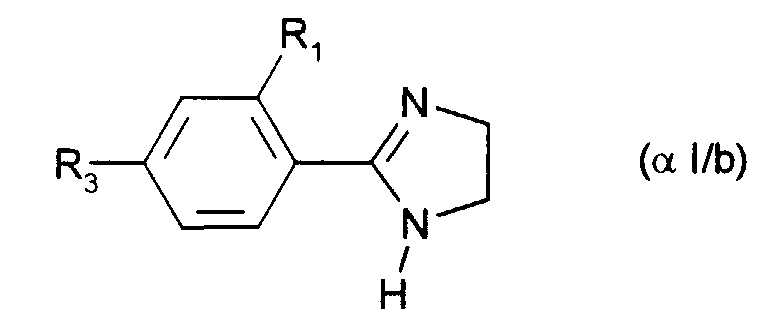
- the invention preferably relates to the compounds of formulas: in which R 1 represents a (C 1 -C 6 ) linear or branched alkyl group, in which R 1 represents a halogen atom or a linear or branched (C 1 -C 6 ) alkyl group, and R 3 different from R 1 represents a halogen atom (R 3 being different from a chlorine atom when R 1 represents a (C 1 -C 6 ) linear or branched alkyl group), in which R 1 represents a halogen atom and R 4 represents a linear or branched (C 1 -C 6 ) alkyl radical, in which R 2 and R 3 each represent a halogen atom different from each other, in which R 3 represents a radical chosen from an ethyl, n-propyl, n-butyl, trifluoromethyl, (C 1 -C 6 ) alkylthio, trifluoromethoxy, phenyl, phenoxy, (C 1
- the compounds of formula (I) have very pharmacological properties interesting for the clinician and the doctor.
- the compounds of the invention and the pharmaceutical compositions which contain them prove to be potent ligands for the imidazoline I 1 and / or I 2 receptors.
- Imidazoline receptors are also involved in anemia, including sickle cell anemia, and cancerous proliferation.
- the present invention also relates to pharmaceutical compositions containing the products of formula (I) or, where appropriate, one of their addition salts with an acid, pharmaceutically acceptable in combination with one or more excipients pharmaceutically acceptable.
- compositions according to the invention there may be mentioned, more especially those suitable for oral, parenteral, nasal, or transcutaneous, rectal, perlingual, ocular or respiratory and in particular the tablets single or coated, sublingual tablets, sachets, packages, capsules, glossettes, tablets, suppositories, creams, ointments, dermal gels, oral or injectable ampoules and aerosols.
- the dosage varies according to the patient's sex, age and weight, the route of administration, the nature of the therapeutic indication, or possibly associated treatments and ranges from 0.1 mg to 100 mg per 24 hours in 1 or 2 doses, more particularly between 1 and 10 mg, for example between 1 and 2 mg.
- a mixture consisting of 25 ml of ethylene diamine, from 0.01 moles to 0.02 moles of a nitrile and a catalytic amount (about 0.5 g) of phosphorus pentasulfide is heated to reflux, with stirring for 4 to 8 hours.
- the disappearance of the nitrile is followed by thin-layer chromotography.
- the cooled mixture is poured into 50 ml of cold water.
- the whole is then extracted with twice 50 ml of dichloromethane. After evaporation of the organic fraction, the residue is recrystallized from cyclohexane.
- the following table indicates the radioligand used to mark the receptor, the product and the concentration used to determine the non-specific fraction and the tissue chosen.
- Example B Profile of binding to the central adrenergic receptors ⁇ 1 and ⁇ 2
- the following table indicates the radioligand used to mark the receptor, the product and the concentration used to determine the non-specific fraction and the tissue chosen.
- mice used for this test are placed in a cylinder filled with water from which they cannot escape. After some efforts to get out of it, the animals resign themselves and stop, making only the movements necessary to keep the head above water.
- the animals, in groups of ten, are thus placed in the cylinder for 6 minutes, and the duration of immobility is measured during the last 4 minutes.
- the duration of immobility makes it possible to characterize the antidepressant activity of the compounds tested.
- antidepressants such as imipramine or desipramine decrease this duration of immobility.
- the compounds of the invention have shown an activity comparable to that of imipramine and desipramine, the measured time of immobility being of the same order as that obtained with the reference products.
- Example D Measurement of the affinity for monoamine oxidase
- the tests for binding to the imidazolinic site 12 as well as the affinity for the monoamine oxidase are carried out according to the protocol described by C. Carpéné (Annals. NY Acad. Sci., 1995, 763 , p. 380).
- the reference radioligand used is the tritiated BFI.
- Competitive binding experiments are carried out with the compounds of the invention in order to demonstrate their capacity to displace the reference radioligand.
- the animals used are genetically obese Zücker rats, which are subjected to sub-chronic treatment using the compounds to be tested.
- the binding to the imidazolinic sites 12 as well as the activity of the monoamine oxidase are measured after extraction of the adipose tissue ex vivo according to a method described by C. Carpéné (J. lipids. Res., 1990, 31 , p. 811).
- the compounds of the invention have a high affinity for imidazolinic binding sites 12, of the order of 1 to 100 nM, and an inhibitory effect on monoamine oxidase in adipocytes by binding to the enzyme with an affinity of the order of 10 -6 M.
- Example E Hypoglycaemic activity
- Example F Study of acute toxicity
- the acute toxicity was assessed after oral administration to groups of 8 mice (26 ⁇ 2 ranges) of increasing doses of product to be studied. The animals were observed at regular intervals during the first day and daily during the two weeks following the treatment. It appears that the compounds of the invention are very little toxic.
- Example G Pharmaceutical composition: Tablets
Landscapes
- Chemical & Material Sciences (AREA)
- Organic Chemistry (AREA)
- Health & Medical Sciences (AREA)
- Veterinary Medicine (AREA)
- General Health & Medical Sciences (AREA)
- Public Health (AREA)
- Chemical Kinetics & Catalysis (AREA)
- General Chemical & Material Sciences (AREA)
- Medicinal Chemistry (AREA)
- Nuclear Medicine, Radiotherapy & Molecular Imaging (AREA)
- Animal Behavior & Ethology (AREA)
- Pharmacology & Pharmacy (AREA)
- Life Sciences & Earth Sciences (AREA)
- Bioinformatics & Cheminformatics (AREA)
- Engineering & Computer Science (AREA)
- Diabetes (AREA)
- Hematology (AREA)
- Biomedical Technology (AREA)
- Neurology (AREA)
- Obesity (AREA)
- Neurosurgery (AREA)
- Cardiology (AREA)
- Emergency Medicine (AREA)
- Endocrinology (AREA)
- Heart & Thoracic Surgery (AREA)
- Psychiatry (AREA)
- Pain & Pain Management (AREA)
- Child & Adolescent Psychology (AREA)
- Pharmaceuticals Containing Other Organic And Inorganic Compounds (AREA)
- Nitrogen Condensed Heterocyclic Rings (AREA)
- Peptides Or Proteins (AREA)
- Plural Heterocyclic Compounds (AREA)
- Solid-Sorbent Or Filter-Aiding Compositions (AREA)
Description
Les travaux de E. Uhlig et coll. (Z. Anorg. Allg. Chem., 534, (1986), 188-198) présentent des dérivés de l'imidazoline agissant comme complexants d'ions cuivriques.

- soit un radical phényle de formule (α) :
dans laquelle R1 représente :

- soit un radical (C1-C6) alkyle, et dans ce cas :
- ou bien R2 représente un atome d'hydrogène, de même que R3 et R5, et dans ce cas R4 représente un atome d'halogène différent d'un chlore,
- ou bien R2 représente un atome d'hydrogène, de même que R4 et R5, et dans ce cas R3 représente un atome d'halogène différent d'un chlore,
- ou bien R2 représente le radical cyano, et R3, R4 et R5 représentent chacun un atome d'hydrogène,
- soit un atome d'halogène, et dans ce cas :
- ou bien R3 représentent lui aussi un atome d'halogène différent de R1, et R2, R4 et R5 représentent chacun un atome d'hydrogène,
- ou bien R3 représente un atome d'hydrogène ainsi que R2 et R5, et R4 représente alors un radical (C1-C6) alkyle,
- soit un atome d'hydrogène, et dans ce cas :
- ou bien R2, R3 et R4 représentent simultanément un atome d'hydrogène et R5 représente un groupement phényle,
- ou bien R2 et R3 représentent simultanément un atome d'halogène différent l'un de l'autre, et R4 et R5 chacun un atome d'hydrogène,
- ou bien R2 représente un atome d'halogène (différent d'un chlore et d'un fluor) ou un groupement (C2-C6) alkyle ou (C1-C6) alkylcarbonyle, et R3, R4, R5 représentent chacun un atome d'hydrogène,
- ou bien R2 représente un atome d'hydrogène, de même que R4 et R5 et dans ce cas, R3 est choisi parmi un radical éthyle, n-propyle, n-butyle, trifluorométhyle, (C1-C6) alkylthio, trifluorométhoxy, phényle, phénoxy, (C1-C6) acylamino, aminosulfonyle, aminosulfonyle substitué sur l'atome d'azote par un ou deux groupements (C1-C6) alkyle,
- ou bien R2 représente un groupement nitro, R3 représente un groupement hydroxy, R4 représente un atome d'halogène et R5 représente un atome d'hydrogène,
- ou bien R3 et R5 représentent chacun un atome d'hydrogène et R2 et R4 représentent chacun un atome d'halogène, sans pouvoir représenter simultanément deux atomes de chlore,
- soit un radical (C1-C6) alkyle, et dans ce cas :
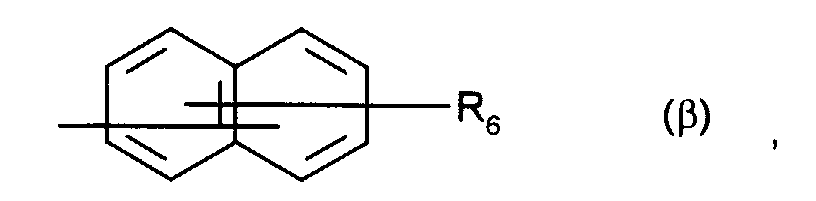
- soit un radical naphtyle de formule (β):
dans laquelle R6 représente un atome d'halogène, un groupement (C1-C6) alkyle, ou méthoxy,

- soit un radical choisi parmi les radicaux
- indol-5-yle

- 1-phényl-1-cyclohexylméthyle,
- cycloheptyle,
- 4-(benzothiazol-2-yl)benzyle, et
- le radical

- indol-5-yle
étant entendu que, par radical (C1-C6) alkyle, (C2-C6) alkyle et radical (C1-C6) alkylthio, on entend aussi bien les radicaux linéaires que les radicaux ramifiés.


- dans lequel R6 représente un atme d'halogène, un groupement (C1-C6) alkyle linéaire ou ramifié, ou méthoxy,

par exemple R représente un groupement 2-méthoxy-1-naphtyl, - 5-indolyle,
- cycloheptyle.
avec l'éthylène diamine, en présence d'une quantité catalytique de pentasulfure de phosphore,
le composé brut ainsi obtenu pouvant être, si on le désire :
- purifié suivant une ou plusieurs méthodes de purification choisies parmi la cristallisation, la chromatographie sur gel de silice, l'extraction, la filtration et le passage sur charbon ou sur résine,
- séparé, le cas échéant, sous forme pure ou sous forme de mélange, en ses éventuels isomères optiques, selon des techniques classiques de séparation,
- et/ou transformé par un acide, en sels pharmaceutiquement acceptables.


La durée de l'immobilité permet de caractériser l'activité antidépressive des composés testés. Ainsi, des antidépresseurs tels que l'imipramine ou la désipramine diminuent cette durée d'immobilité.
Les composés de l'invention ont montré une activité comparable à celle de l'imipramine et la désipramine, le temps d'immobilité mesuré étant du même ordre que celui obtenu avec les produits de référence.
Le radioligand de référence utilisé est le BFI tritié. Des expériences de liaison compétitive sont réalisées avec les composés de l'invention dans le but de mettre en évidence leur capacité à déplacer le radioligand de référence.
L'homéostasie a été évaluée par un test de tolérance au glucose, réalisé deux semaines après injection de streptozotocine.
- Test de tolérance au glucose par voie intraveineuse (IVGTT) Le glucose est dissout dans une solution aqueuse de NaCI à 0,9 % et administré par la voie de la veine saphène à des rats anesthésiés au pentobarbital (60 mg.kg-1, IP). Les échantillons de sang sont collectés séquentiellement par les vaisseaux de la queue avant et 5, 10, 15, 20 et 30 minutes après l'injection du glucose. Ils sont ensuite centrifugés et le plasma est séparé. La concentration en glucose plasmatique est déterminée immédiatement sur un aliquot de 10 µl et le plasma restant est conservé à -20°C.Une injection unique en IP du produit à tester est effectuée à des rats anesthésiés au pentobarbital, 20 minutes avant l'IVGTT.
- Test de tolérance au glucose par voie orale (OGTT) Le glucose est administré per os (2g.kg-1) à des rats vigiles. Les échantillons de sang sont collectés avant et 10, 20, 30, 40, 60, 90 et 120 minutes après l'administration du glucose. Le traitement des échantillons sanguins est identique à celui décrit précédemment.Le produit à tester est administré per os 30 minutes avant l'OGTT.
- Méthodes analytiques La concentration en glucose plasmatique est déterminée par utilisation d'un analyseur de glucose (Beckman Inc., Fullerton, CA). La tolérance au glucose est mesurée par rapport à deux paramètres : ΔG et K. ΔG représente l'augmentation de la glycémie au dessus de la ligne de base, intégrée sur une période de 30 minutes (IVGTT) ou de 120 minutes (OGTT), après surcharge en glucose.K est la vitesse de disparition du glucose entre 5 et 30 minutes (IVGTT), après administration du glucose. Le coefficient K est calculé uniquement pendant l'IVGTT.Il apparaít que les composés de l'invention ont une activité comparable à celle du gliclazide, et présentent l'avantage de ne pas induire la même hypoglycémie basale.
Il apparaít que les composés de l'invention sont très peu toxiques.
| 2-(4-Ethylphényl) Δ-2 imidazoline | 1 g |
| Amidon de blé | 20 g |
| Amidon de maïs | 20 g |
| Lactose | 30 g |
| Stéarate de magnésium | 2 g |
| Silice | 1 g |
| Hydroxypropylcellulose | 2 g |
Claims (16)
- Composés de formule (I) :dans laquelle R représente :
 leurs isomères optiques, ainsi que leurs sels d'addition à un acide, pharmaceutiquement acceptables,soit un radical phényle de formule (α) :dans laquelle R1 représente :
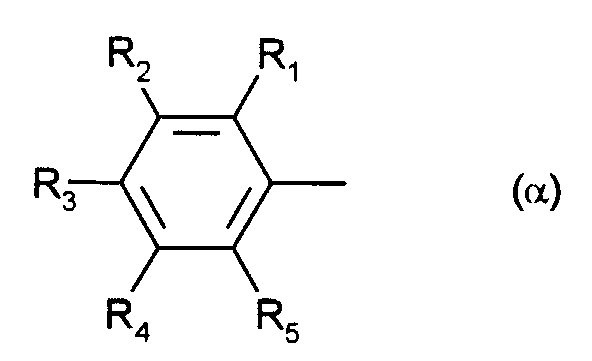 soit un radical (C1-C6) alkyle, et dans ce cas :ou bien R2 représente un atome d'hydrogène, de même que R3 et R5, et dans ce cas R4 représente un atome d'halogène différent d'un chlore,ou bien R2 représente un atome d'hydrogène, de même que R4 et R5, et dans ce cas R3 représente un atome d'halogène différent d'un chlore,ou bien R2 représente le radical cyano, et R3, R4 et R5 représentent chacun un atome d'hydrogène,soit un atome d'halogène, et dans ce cas :ou bien R3 représente lui aussi un atome d'halogène différent de R1, et R2, R4 et R5 représentent chacun un atome d'hydrogène,ou bien R3 représente un atome d'hydrogène ainsi que R2 et R5, et R4 représente alors un radical (C1-C6) alkyle,soit un atome d'hydrogène, et dans ce cas :ou bien R2, R3 et R4 représentent simultanément un atome d'hydrogène et R5 représente un groupement phényle,ou bien R2 et R3 représentent simultanément un atome d'halogène différent l'un de l'autre, et R4 et R5 chacun un atome d'hydrogène,ou bien R2 représente un atome d'halogène différent d'un chlore et d'un fluor ou un groupement (C2-C6) alkyle ou (C1-C6) alkylcarbonyle, et R3, R4, R5 représentent chacun un atome d'hydrogène,ou bien R2 représente un atome d'hydrogène, de même que R4 et R5 et dans ce cas, R3 est choisi parmi un radical éthyle, n-propyle, n-butyle, trifluorométhyle, (C1-C6) alkylthio, trifluorométhoxy, phényle, phénoxy, (C1-C6) acylamino, aminosulfonyle, aminosulfonyle substitué sur l'atome d'azote par un ou deux groupements (C1-C6) alkyle,ou bien R2 représente un groupement nitro, R3 représente un groupement hydroxy, R4 représente un atome d'halogène et R5 représente un atome d'hydrogène,ou bien R3 et R5 représentent chacun un atome d'hydrogène et R2 et R4 représentent chacun un atome d'halogène, sans pouvoir représenter simultanément deux atomes de chlore,soit un radical naphtyle de formule (β):dans laquelle R6 représente un atome d'halogène, un groupement (C1-C6) alkyle, ou méthoxy,
 soit un radical choisi parmi les radicauxindol-5-yle
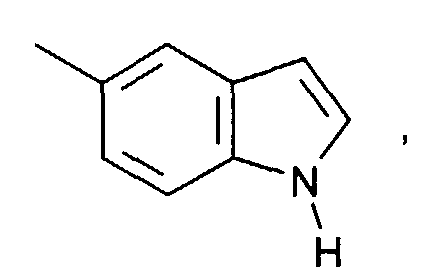 1-phényl-1-cyclohexylméthyle,cycloheptyle,4-(benzothiazol-2-yl)benzyle, etle radical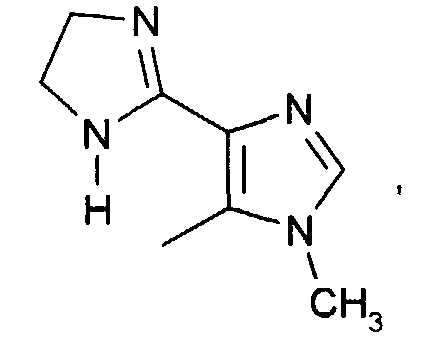
étant entendu que, par radical (C1-C6) alkyle, (C2-C6) alkyle et radical (C1-C6) alkylthio, on entend aussi bien les radicaux linéaires que les radicaux ramifiés. - Composés selon la revendication 1 de formule (α I/a):dans laquelle R1 représente un groupement (C1-C6) alkyle linéaire ou ramifié,

leurs isomères optiques, ainsi que leurs sels d'addition à un acide pharmaceutiquement acceptable. - Composés selon la revendication 1 de formule (α I/b):dans laquelle R1 représente un atome d'halogène ou un groupement (C1-C6) alkyle, linéaire ou ramifié, et R3 différent de R1 représente un atome d'halogène (R3 étant différent d'un atome de chlore lorsque R1 représente un groupement (C1-C6) alkyle linéaire ou ramifié),
leurs isomères optiques, ainsi que leurs sels d'addition à un acide pharmaceutiquement acceptable. - Composés selon la revendication 1 de formule (α I/c):dans laquelle R1 représente un atome d'halogène et R4 représente un radical (C1-C6) alkyle, linéaire ou ramifié,

leurs isomères optiques, ainsi que leurs sels d'addition à un acide pharmaceutiquement acceptable. - Composés selon la revendication 1 de formule (α I/d) :dans laquelle R2 et R3 représentent chacun un atome d'halogène différent l'un de l'autre,

ainsi que leurs sels d'addition à un acide pharmaceutiquement acceptable. - Composés selon la revendication 1 de formule (α I/e) :dans laquelle R3 représente un radical choisi parmi un radical éthyle, n-propyle, n-butyle, trifluorométhyle, (C1-C6) alkylthio, trifluorométhoxy, phényle, phénoxy, (C1-C6) acylamino, aminosulfonyle, aminosulfonyle substitué sur l'atome d'azote par un ou deux groupements (C1-C6) alkyle linéaire ou ramifié,

leurs isomères optiques, ainsi que leurs sels d'addition à un acide pharmaceutiquement acceptable. - Composés selon la revendication 1 de formule (α I/f):dans laquelle R2 représente un atome d'halogène différent d'un chlore et d'un fluor ou un groupement (C2-C6) alkyle linéaire ou ramifié ou (C1-C6) alkylcarbonyle linéaire ou ramifié.

leurs isomères optiques, ainsi que leurs sels d'addition à un acide pharmaceutiquement acceptable. - Composés de formule (I) selon la revendication 1 pour lesquels R représente un radical βdans lequel R6 représente un atome d'halogène, un groupement (C1-C6) alkyle linéaire ou ramifié, ou méthoxy,
leurs isomères optiques, ainsi que leurs sels d'addition à un acide pharmaceutiquement acceptable. - Composé selon la revendication 1 qui est le 2-(4-biphényl)Δ-2 imidazoline ainsi que ses sels d'addition à un acide pharmaceutiquement acceptable.
- Composé selon la revendication 1 qui est le 2-(3-cyano-2-méthylphényl)Δ-2 imidazoline ainsi que ses sels d'addition à un acide pharmaceutiquement acceptable.
- Composé selon la revendication 1 qui est le 2-(4-phénoxyphényl)Δ-2 imidazoline ainsi que ses sels d'addition à un acide pharmaceutiquement acceptable.
- Composé selon la revendication 1 qui est le 2-(4-éthylphényl)Δ-2 imidazoline ainsi que ses sels d'addition à un acide pharmaceutiquement acceptable.
- Procédé de préparation des composés de formule (I) selon la revendication 1, caractérisé en ce que l'on opère une condensation d'un nitrile de formule (II)
avec l'éthylène diamine, en présence d'une quantité catalytique de pentasulfure de phosphore,
le composé brut ainsi obtenu pouvant être, si on le désire :purifié suivant une ou plusieurs méthodes de purification choisies parmi la cristallisation, la chromatographie sur gel de silice, l'extraction, la filtration et le passage sur charbon ou sur résine,séparé, le cas échéant, sous forme pure ou sous forme de mélange, en ses éventuels isomères optiques, selon des techniques classiques de séparation,et/ou transformé par un acide, en sels pharmaceutiquement acceptables. - Compositions pharmaceutiques contenant les composés de formule (I) selon l'une des revendications 1 à 12 ou leurs sels d'addition à un acide, pharmaceutiquement acceptables, en combinaison avec un ou plusieurs excipients pharmaceutiquement acceptables.
- Compositions pharmaceutiques selon la revendication 14 utiles pour le traitement des pathologies liées aux récepteurs aux imidazolines.
- Compositions pharmaceutiques selon l'une des revendications 14 ou 15, utiles dans le traitement des pathologies liées au système nerveux central, de la dépression, de la maladie de Parkinson, de l'anorexie, des pathologies cardio-vasculaires, de l'hypertension, du diabète, de l'obésité, de l'anémie et du cancer.
Applications Claiming Priority (2)
| Application Number | Priority Date | Filing Date | Title |
|---|---|---|---|
| FR9614844 | 1996-12-04 | ||
| FR9614844A FR2756560A1 (fr) | 1996-12-04 | 1996-12-04 | Nouveaux derives de l'imidazoline, leur procede de preparation et les compositions pharmaceutiques qui les contiennent |
Publications (2)
| Publication Number | Publication Date |
|---|---|
| EP0846688A1 EP0846688A1 (fr) | 1998-06-10 |
| EP0846688B1 true EP0846688B1 (fr) | 2000-02-16 |
Family
ID=9498304
Family Applications (1)
| Application Number | Title | Priority Date | Filing Date |
|---|---|---|---|
| EP97402891A Expired - Lifetime EP0846688B1 (fr) | 1996-12-04 | 1997-12-02 | Nouveaux dérivés de l'imidazoline ayant une affinité pour les récepteurs aux imidazolines |
Country Status (18)
| Country | Link |
|---|---|
| US (1) | US5925665A (fr) |
| EP (1) | EP0846688B1 (fr) |
| JP (1) | JPH10168065A (fr) |
| CN (1) | CN1091443C (fr) |
| AT (1) | ATE189816T1 (fr) |
| BR (1) | BR9706126A (fr) |
| CA (1) | CA2223541A1 (fr) |
| DE (1) | DE69701307T2 (fr) |
| DK (1) | DK0846688T3 (fr) |
| ES (1) | ES2145563T3 (fr) |
| FR (1) | FR2756560A1 (fr) |
| GR (1) | GR3032715T3 (fr) |
| HU (1) | HUP9702341A3 (fr) |
| NO (1) | NO309602B1 (fr) |
| NZ (1) | NZ329312A (fr) |
| PL (1) | PL323515A1 (fr) |
| PT (1) | PT846688E (fr) |
| ZA (1) | ZA9710918B (fr) |
Families Citing this family (13)
| Publication number | Priority date | Publication date | Assignee | Title |
|---|---|---|---|---|
| AU2201699A (en) * | 1997-12-19 | 1999-07-12 | Eli Lilly And Company | Hypoglycemic imidazoline compounds |
| EP1266897A3 (fr) * | 1997-12-19 | 2003-12-03 | Eli Lilly And Company | Dérivés d'imidazoline hypoglycémiques |
| FR2787451B1 (fr) * | 1998-12-18 | 2001-01-26 | Adir | Nouveaux composes imidazoliniques, leur procede de preparation et les compositions pharmaceutiques qui les contiennent |
| GB2351082A (en) * | 1999-06-18 | 2000-12-20 | Lilly Forschung Gmbh | Synthesis of Cyclic Substituted Amidines |
| GB2351081A (en) * | 1999-06-18 | 2000-12-20 | Lilly Forschung Gmbh | Pharmaceutically active imidazoline compounds and analogues thereof |
| GB9914255D0 (en) * | 1999-06-18 | 1999-08-18 | Lilly Forschung Gmbh | Pharmaceutical compounds |
| US20040009976A1 (en) * | 2002-04-30 | 2004-01-15 | Kumiko Takeuchi | Hypoglycemic imidazoline compounds |
| EP1517688A2 (fr) | 2002-06-19 | 2005-03-30 | Solvay Pharmaceuticals GmbH | Medicament pour traiter des affections impliquant une inhibition ou une baisse d'activite de proteines transporteuses de bicarbonate regulant le ph |
| DE10315640A1 (de) * | 2003-04-04 | 2004-10-14 | Ignatov, Konstantin | Verfahren zur kontrollierten Freisetzung von Komponenten in eine Lösung |
| EP1753727B1 (fr) * | 2004-05-18 | 2008-11-19 | F.Hoffmann-La Roche Ag | Nouvelles cis-imidazolines |
| CN103275011A (zh) * | 2013-06-13 | 2013-09-04 | 南京工业大学 | 咪唑烷类杂环的新合成方法 |
| KR20160042039A (ko) | 2013-08-09 | 2016-04-18 | 알데릭스, 인코포레이티드 | 인산염 수송을 억제하기 위한 화합물 및 방법 |
| CN112624975A (zh) * | 2020-11-27 | 2021-04-09 | 华南农业大学 | 一种妥拉唑林半抗原、人工抗原、抗体及其制备和应用 |
Family Cites Families (5)
| Publication number | Priority date | Publication date | Assignee | Title |
|---|---|---|---|---|
| US4140859A (en) * | 1974-11-04 | 1979-02-20 | Sandoz, Inc. | Dilithiated 2-(o-tolyl)-2-imidazolines |
| DE2854428A1 (de) * | 1978-12-16 | 1980-06-26 | Basf Ag | Verfahren zur herstellung von 2-imidazolinen |
| US4910206A (en) * | 1986-07-14 | 1990-03-20 | Sandoz Pharmaceuticals Corp. | 5-hetero-or aryl-substituted-imidazo(2,1-a)isoquinolines and their use as PAF receptor antagonists |
| JP2545646B2 (ja) * | 1990-11-22 | 1996-10-23 | 松下電器産業株式会社 | 非線形光学材料 |
| US5574059A (en) * | 1995-10-27 | 1996-11-12 | Cornell Research Foundation, Inc. | Treating disorders mediated by vascular smooth muscle cell proliferation |
-
1996
- 1996-12-04 FR FR9614844A patent/FR2756560A1/fr not_active Withdrawn
-
1997
- 1997-12-01 JP JP9330116A patent/JPH10168065A/ja active Pending
- 1997-12-02 AT AT97402891T patent/ATE189816T1/de not_active IP Right Cessation
- 1997-12-02 DK DK97402891T patent/DK0846688T3/da active
- 1997-12-02 DE DE69701307T patent/DE69701307T2/de not_active Expired - Fee Related
- 1997-12-02 ES ES97402891T patent/ES2145563T3/es not_active Expired - Lifetime
- 1997-12-02 CA CA002223541A patent/CA2223541A1/fr not_active Abandoned
- 1997-12-02 PT PT97402891T patent/PT846688E/pt unknown
- 1997-12-02 EP EP97402891A patent/EP0846688B1/fr not_active Expired - Lifetime
- 1997-12-03 CN CN97125774A patent/CN1091443C/zh not_active Expired - Fee Related
- 1997-12-03 BR BR9706126A patent/BR9706126A/pt unknown
- 1997-12-03 US US08/984,673 patent/US5925665A/en not_active Expired - Fee Related
- 1997-12-03 NZ NZ329312A patent/NZ329312A/en unknown
- 1997-12-03 HU HU9702341A patent/HUP9702341A3/hu unknown
- 1997-12-03 NO NO975591A patent/NO309602B1/no unknown
- 1997-12-04 ZA ZA9710918A patent/ZA9710918B/xx unknown
- 1997-12-04 PL PL97323515A patent/PL323515A1/xx unknown
-
2000
- 2000-02-21 GR GR20000400414T patent/GR3032715T3/el not_active IP Right Cessation
Also Published As
| Publication number | Publication date |
|---|---|
| FR2756560A1 (fr) | 1998-06-05 |
| US5925665A (en) | 1999-07-20 |
| ATE189816T1 (de) | 2000-03-15 |
| AU719145B2 (en) | 2000-05-04 |
| DE69701307T2 (de) | 2000-09-14 |
| NZ329312A (en) | 1998-07-28 |
| ZA9710918B (en) | 1998-06-15 |
| GR3032715T3 (en) | 2000-06-30 |
| CA2223541A1 (fr) | 1998-06-04 |
| HUP9702341A3 (en) | 1999-04-28 |
| DK0846688T3 (da) | 2000-07-17 |
| HUP9702341A2 (hu) | 1998-07-28 |
| PT846688E (pt) | 2000-05-31 |
| CN1091443C (zh) | 2002-09-25 |
| PL323515A1 (en) | 1998-06-08 |
| JPH10168065A (ja) | 1998-06-23 |
| NO309602B1 (no) | 2001-02-26 |
| BR9706126A (pt) | 1999-05-18 |
| HK1011207A1 (en) | 1999-07-09 |
| NO975591L (no) | 1998-06-05 |
| NO975591D0 (no) | 1997-12-03 |
| AU4765297A (en) | 1998-06-11 |
| HU9702341D0 (en) | 1998-03-02 |
| CN1186074A (zh) | 1998-07-01 |
| DE69701307D1 (de) | 2000-03-23 |
| ES2145563T3 (es) | 2000-07-01 |
| EP0846688A1 (fr) | 1998-06-10 |
Similar Documents
| Publication | Publication Date | Title |
|---|---|---|
| EP0846688A1 (fr) | Nouveaux dérivés de l'imidazoline ayant une affinité pour les récepteurs aux imidazolines | |
| EP0377528A1 (fr) | Pipéridines, procédés de préparation et médicaments les contenant | |
| EP0479631A1 (fr) | Dérivés du spiro [4.5]décane leur procédé de préparation et les compositions pharmaceutiques les renfermant | |
| FR2612517A1 (fr) | Derives de benzoxazine, procedes de preparation de ces derives et compositions pharmaceutiques les contenant | |
| EP0710658B1 (fr) | Nouvelles 5-(aryloxymethyl)oxazolines, leur procédé de préparation et les compositions pharmaceutiques qui les contiennent | |
| EP0486385B1 (fr) | Dérivés d'imidazole, leur procédé de préparation et les compositions pharmaceutiques qui les contiennent | |
| EP0635495B1 (fr) | Dérivés de benzospiroalcène, leur procédé de préparation et les compositions pharmaceutiques qui les contiennent | |
| EP0099303A2 (fr) | Nouvelles benzothiopyranopyridinones et leurs sels, leur préparation, leur application comme médicaments et les compositions les renfermant | |
| EP1245565B1 (fr) | Dérivés d'indénoindolones, leur procédé de préparation et les compositions pharmaceutiques qui les contiennent | |
| CA1227204A (fr) | Procede de preparation de polymethylene imines disubstituees | |
| EP0008259A1 (fr) | Nouveaux dérivés de la pipéridylbenzimidazolinone, leurs procédés de préparation et les compositions pharmaceutiques les renfermant | |
| FR2499991A1 (fr) | Nouveaux 2,1,3-benzothiadiazoles et 2,1,3-benzoxadiazoles, leur preparation et leur application comme medicaments | |
| FR2539415A1 (fr) | Derives de la d-2 imidazoline, leur preparation et leur application en therapeutique | |
| EP1119564B1 (fr) | Derives d'aryl- 4-fluoro-4- (2-pyridin-2-yl-ethylamino)-methyl]-piperidin-1-yl -methanone comme agonistes du recepteur 5-ht1 | |
| EP0433167B1 (fr) | Nouveaux dérivés de la pipéridine, leur procédé de préparation et les compositions pharmaceutiques les renfermant | |
| EP1873139A1 (fr) | Nouveaux dérivés naphtaleniques, leur procédé de préparation et les compositions pharmaceutiques qui les contiennent | |
| EP1413579B1 (fr) | Dérivés de l'imidazoline, leur procédé de préparation et les compositions pharmaceutiques qui les contiennent | |
| EP1010694B1 (fr) | Dérivés spiroimidazoliniques et leur utilisation comme antagonistes alpha2-adrénergiques et bloqueurs de la recapture de monoamines | |
| EP0580503A1 (fr) | Aminoalkylchromones, leurs procédés de préparation et les compositions qui les contiennent | |
| EP0940386B1 (fr) | Nouveaux composés du benzocyclobutane, leur procédé de préparation et les compositions pharmaceutiques qui les contiennent | |
| WO1998015551A1 (fr) | Derives de quinuclidine en tant qu'antagonistes des recepteurs muscariniques | |
| HK1011207B (en) | New imidazoline compounds, process for preparing them and pharmaceutical compositions containing them | |
| BE1009520A5 (fr) | Acide (-)-(3r)-3-methyl-4- 4-[4-(4-pyridyl)-piperazin-1-yl] phenoxy butyrique. | |
| BE878563A (fr) | Nouvelles alpha-alkyl-o-oxybenzylamines, leur preparation et leur application comme medicaments | |
| WO2003011856A1 (fr) | Derives d'aminoalkylimidazole, leur preparation et leur utilisation en therapeutique |
Legal Events
| Date | Code | Title | Description |
|---|---|---|---|
| PUAI | Public reference made under article 153(3) epc to a published international application that has entered the european phase |
Free format text: ORIGINAL CODE: 0009012 |
|
| 17P | Request for examination filed |
Effective date: 19971215 |
|
| AK | Designated contracting states |
Kind code of ref document: A1 Designated state(s): AT BE CH DE DK ES FI FR GB GR IE IT LI LU NL PT SE |
|
| AX | Request for extension of the european patent |
Free format text: AL;LT;LV;MK;RO;SI |
|
| RIN1 | Information on inventor provided before grant (corrected) |
Inventor name: SCALBERT, ELIZABETH Inventor name: MANECHEZ, DOMINIQUE Inventor name: RENARD, PIERRE Inventor name: CAIGNARD, DANIEL-HENRI Inventor name: ANASTASSIADOU, MARIA Inventor name: BAZIARD-MOUYSSET, GENEVIEVE Inventor name: DANOUN, SAADIA Inventor name: PAYARD, MARC |
|
| 17Q | First examination report despatched |
Effective date: 19981221 |
|
| AKX | Designation fees paid |
Free format text: AT BE CH DE DK ES FI FR GB GR IE IT LI LU NL PT SE |
|
| RBV | Designated contracting states (corrected) |
Designated state(s): AT BE CH DE DK ES FI FR GB GR IE IT LI LU NL PT SE |
|
| GRAG | Despatch of communication of intention to grant |
Free format text: ORIGINAL CODE: EPIDOS AGRA |
|
| GRAG | Despatch of communication of intention to grant |
Free format text: ORIGINAL CODE: EPIDOS AGRA |
|
| GRAH | Despatch of communication of intention to grant a patent |
Free format text: ORIGINAL CODE: EPIDOS IGRA |
|
| GRAH | Despatch of communication of intention to grant a patent |
Free format text: ORIGINAL CODE: EPIDOS IGRA |
|
| GRAA | (expected) grant |
Free format text: ORIGINAL CODE: 0009210 |
|
| AK | Designated contracting states |
Kind code of ref document: B1 Designated state(s): AT BE CH DE DK ES FI FR GB GR IE IT LI LU NL PT SE |
|
| REF | Corresponds to: |
Ref document number: 189816 Country of ref document: AT Date of ref document: 20000315 Kind code of ref document: T |
|
| REG | Reference to a national code |
Ref country code: CH Ref legal event code: NV Representative=s name: A. BRAUN, BRAUN, HERITIER, ESCHMANN AG PATENTANWAE Ref country code: CH Ref legal event code: EP |
|
| REF | Corresponds to: |
Ref document number: 69701307 Country of ref document: DE Date of ref document: 20000323 |
|
| ITF | It: translation for a ep patent filed | ||
| REG | Reference to a national code |
Ref country code: IE Ref legal event code: FG4D Free format text: FRENCH |
|
| REG | Reference to a national code |
Ref country code: PT Ref legal event code: SC4A Free format text: AVAILABILITY OF NATIONAL TRANSLATION Effective date: 20000218 |
|
| GBT | Gb: translation of ep patent filed (gb section 77(6)(a)/1977) |
Effective date: 20000511 |
|
| REG | Reference to a national code |
Ref country code: ES Ref legal event code: FG2A Ref document number: 2145563 Country of ref document: ES Kind code of ref document: T3 |
|
| EN | Fr: translation not filed | ||
| PG25 | Lapsed in a contracting state [announced via postgrant information from national office to epo] |
Ref country code: FR Free format text: LAPSE BECAUSE OF FAILURE TO SUBMIT A TRANSLATION OF THE DESCRIPTION OR TO PAY THE FEE WITHIN THE PRESCRIBED TIME-LIMIT Effective date: 20000713 |
|
| REG | Reference to a national code |
Ref country code: DK Ref legal event code: T3 |
|
| EN4 | Fr: notification of non filing translation in an earlier bopi is erroneous | ||
| PLBE | No opposition filed within time limit |
Free format text: ORIGINAL CODE: 0009261 |
|
| STAA | Information on the status of an ep patent application or granted ep patent |
Free format text: STATUS: NO OPPOSITION FILED WITHIN TIME LIMIT |
|
| 26N | No opposition filed | ||
| REG | Reference to a national code |
Ref country code: CH Ref legal event code: PFA Free format text: ADIR ET COMPAGNIE TRANSFER- LES LABORATOIRES SERVIER |
|
| REG | Reference to a national code |
Ref country code: FR Ref legal event code: TP |
|
| REG | Reference to a national code |
Ref country code: GB Ref legal event code: 732E |
|
| REG | Reference to a national code |
Ref country code: GB Ref legal event code: IF02 |
|
| NLS | Nl: assignments of ep-patents |
Owner name: LES LABORATOIRES SERVIER |
|
| REG | Reference to a national code |
Ref country code: PT Ref legal event code: PC4A Free format text: LES LABORATOIRES SERVIER FR Effective date: 20011105 |
|
| PGFP | Annual fee paid to national office [announced via postgrant information from national office to epo] |
Ref country code: GR Payment date: 20021004 Year of fee payment: 6 Ref country code: PT Payment date: 20021004 Year of fee payment: 6 |
|
| PGFP | Annual fee paid to national office [announced via postgrant information from national office to epo] |
Ref country code: AT Payment date: 20021011 Year of fee payment: 6 |
|
| PGFP | Annual fee paid to national office [announced via postgrant information from national office to epo] |
Ref country code: IE Payment date: 20021015 Year of fee payment: 6 |
|
| PGFP | Annual fee paid to national office [announced via postgrant information from national office to epo] |
Ref country code: SE Payment date: 20021108 Year of fee payment: 6 |
|
| PGFP | Annual fee paid to national office [announced via postgrant information from national office to epo] |
Ref country code: BE Payment date: 20021112 Year of fee payment: 6 |
|
| PGFP | Annual fee paid to national office [announced via postgrant information from national office to epo] |
Ref country code: GB Payment date: 20021127 Year of fee payment: 6 |
|
| PGFP | Annual fee paid to national office [announced via postgrant information from national office to epo] |
Ref country code: LU Payment date: 20021203 Year of fee payment: 6 |
|
| PGFP | Annual fee paid to national office [announced via postgrant information from national office to epo] |
Ref country code: DK Payment date: 20021216 Year of fee payment: 6 |
|
| PGFP | Annual fee paid to national office [announced via postgrant information from national office to epo] |
Ref country code: FR Payment date: 20021217 Year of fee payment: 6 |
|
| PGFP | Annual fee paid to national office [announced via postgrant information from national office to epo] |
Ref country code: CH Payment date: 20021218 Year of fee payment: 6 |
|
| PGFP | Annual fee paid to national office [announced via postgrant information from national office to epo] |
Ref country code: FI Payment date: 20021219 Year of fee payment: 6 |
|
| PGFP | Annual fee paid to national office [announced via postgrant information from national office to epo] |
Ref country code: NL Payment date: 20021223 Year of fee payment: 6 |
|
| PGFP | Annual fee paid to national office [announced via postgrant information from national office to epo] |
Ref country code: ES Payment date: 20021230 Year of fee payment: 6 |
|
| PGFP | Annual fee paid to national office [announced via postgrant information from national office to epo] |
Ref country code: DE Payment date: 20021231 Year of fee payment: 6 |
|
| PG25 | Lapsed in a contracting state [announced via postgrant information from national office to epo] |
Ref country code: LU Free format text: LAPSE BECAUSE OF NON-PAYMENT OF DUE FEES Effective date: 20031202 Ref country code: IE Free format text: LAPSE BECAUSE OF NON-PAYMENT OF DUE FEES Effective date: 20031202 Ref country code: GB Free format text: LAPSE BECAUSE OF NON-PAYMENT OF DUE FEES Effective date: 20031202 Ref country code: FI Free format text: LAPSE BECAUSE OF NON-PAYMENT OF DUE FEES Effective date: 20031202 Ref country code: AT Free format text: LAPSE BECAUSE OF NON-PAYMENT OF DUE FEES Effective date: 20031202 |
|
| PG25 | Lapsed in a contracting state [announced via postgrant information from national office to epo] |
Ref country code: SE Free format text: LAPSE BECAUSE OF NON-PAYMENT OF DUE FEES Effective date: 20031203 Ref country code: ES Free format text: LAPSE BECAUSE OF NON-PAYMENT OF DUE FEES Effective date: 20031203 |
|
| PG25 | Lapsed in a contracting state [announced via postgrant information from national office to epo] |
Ref country code: LI Free format text: LAPSE BECAUSE OF NON-PAYMENT OF DUE FEES Effective date: 20031231 Ref country code: CH Free format text: LAPSE BECAUSE OF NON-PAYMENT OF DUE FEES Effective date: 20031231 Ref country code: BE Free format text: LAPSE BECAUSE OF NON-PAYMENT OF DUE FEES Effective date: 20031231 |
|
| PG25 | Lapsed in a contracting state [announced via postgrant information from national office to epo] |
Ref country code: DK Free format text: LAPSE BECAUSE OF NON-PAYMENT OF DUE FEES Effective date: 20040102 |
|
| BERE | Be: lapsed |
Owner name: LES LABORATOIRES *SERVIER Effective date: 20031231 |
|
| PG25 | Lapsed in a contracting state [announced via postgrant information from national office to epo] |
Ref country code: PT Free format text: LAPSE BECAUSE OF NON-PAYMENT OF DUE FEES Effective date: 20040630 |
|
| PG25 | Lapsed in a contracting state [announced via postgrant information from national office to epo] |
Ref country code: NL Free format text: LAPSE BECAUSE OF NON-PAYMENT OF DUE FEES Effective date: 20040701 Ref country code: DE Free format text: LAPSE BECAUSE OF NON-PAYMENT OF DUE FEES Effective date: 20040701 |
|
| PG25 | Lapsed in a contracting state [announced via postgrant information from national office to epo] |
Ref country code: GR Free format text: LAPSE BECAUSE OF NON-PAYMENT OF DUE FEES Effective date: 20040705 |
|
| GBPC | Gb: european patent ceased through non-payment of renewal fee |
Effective date: 20031202 |
|
| EUG | Se: european patent has lapsed | ||
| REG | Reference to a national code |
Ref country code: CH Ref legal event code: PL |
|
| REG | Reference to a national code |
Ref country code: DK Ref legal event code: EBP |
|
| NLV4 | Nl: lapsed or anulled due to non-payment of the annual fee |
Effective date: 20040701 |
|
| REG | Reference to a national code |
Ref country code: IE Ref legal event code: MM4A |
|
| REG | Reference to a national code |
Ref country code: FR Ref legal event code: ST |
|
| REG | Reference to a national code |
Ref country code: PT Ref legal event code: MM4A Free format text: LAPSE DUE TO NON-PAYMENT OF FEES Effective date: 20040630 |
|
| REG | Reference to a national code |
Ref country code: ES Ref legal event code: FD2A Effective date: 20031203 |
|
| PG25 | Lapsed in a contracting state [announced via postgrant information from national office to epo] |
Ref country code: IT Free format text: LAPSE BECAUSE OF NON-PAYMENT OF DUE FEES;WARNING: LAPSES OF ITALIAN PATENTS WITH EFFECTIVE DATE BEFORE 2007 MAY HAVE OCCURRED AT ANY TIME BEFORE 2007. THE CORRECT EFFECTIVE DATE MAY BE DIFFERENT FROM THE ONE RECORDED. Effective date: 20051202 |