EP0835500B1 - Method and apparatus for automated learning and performance evaluation - Google Patents
Method and apparatus for automated learning and performance evaluation Download PDFInfo
- Publication number
- EP0835500B1 EP0835500B1 EP95921417A EP95921417A EP0835500B1 EP 0835500 B1 EP0835500 B1 EP 0835500B1 EP 95921417 A EP95921417 A EP 95921417A EP 95921417 A EP95921417 A EP 95921417A EP 0835500 B1 EP0835500 B1 EP 0835500B1
- Authority
- EP
- European Patent Office
- Prior art keywords
- items
- item
- user
- unknown
- group
- Prior art date
- Legal status (The legal status is an assumption and is not a legal conclusion. Google has not performed a legal analysis and makes no representation as to the accuracy of the status listed.)
- Expired - Lifetime
Links
Images



Classifications
-
- G—PHYSICS
- G09—EDUCATION; CRYPTOGRAPHY; DISPLAY; ADVERTISING; SEALS
- G09B—EDUCATIONAL OR DEMONSTRATION APPLIANCES; APPLIANCES FOR TEACHING, OR COMMUNICATING WITH, THE BLIND, DEAF OR MUTE; MODELS; PLANETARIA; GLOBES; MAPS; DIAGRAMS
- G09B5/00—Electrically-operated educational appliances
- G09B5/06—Electrically-operated educational appliances with both visual and audible presentation of the material to be studied
-
- G—PHYSICS
- G09—EDUCATION; CRYPTOGRAPHY; DISPLAY; ADVERTISING; SEALS
- G09B—EDUCATIONAL OR DEMONSTRATION APPLIANCES; APPLIANCES FOR TEACHING, OR COMMUNICATING WITH, THE BLIND, DEAF OR MUTE; MODELS; PLANETARIA; GLOBES; MAPS; DIAGRAMS
- G09B7/00—Electrically-operated teaching apparatus or devices working with questions and answers
- G09B7/02—Electrically-operated teaching apparatus or devices working with questions and answers of the type wherein the student is expected to construct an answer to the question which is presented or wherein the machine gives an answer to the question presented by a student
- G09B7/04—Electrically-operated teaching apparatus or devices working with questions and answers of the type wherein the student is expected to construct an answer to the question which is presented or wherein the machine gives an answer to the question presented by a student characterised by modifying the teaching program in response to a wrong answer, e.g. repeating the question or supplying a further explanation
Definitions
- This invention relates generally to an educational training teaching tool and more specifically to a method and apparatus for automated learning and performance evaluation.
- United States Patent US-A-5,180,309 discloses an automatic question and answer device having a memory for storing questions and answers, a display and a user input for receiving user answers.
- an apparatus for teaching a group of items to a user or evaluating performance of the user.
- the apparatus comprises means for displaying each of the items to the user.
- the apparatus further comprises means for receiving a response from the user and logic means, responsive to the user's response, for sorting the items into two groups of known and unknown subjective items.
- the apparatus further comprises means for generating a sequence of subjective items, including at least one each of the known and unknown subjective items, and supplying the sequence to the display means.
- a technical advantage of the apparatus of the present invention is that a group of items can be learned faster and more completely with better retention. Another technical advantage is that boredom is used advantageously in the learning process. Another technical advantage is that the receptivity of the user is improved by employing high repetition rates for newly learned facts. It is still a further technical advantage of the invention that there is provided an apparatus which creates a pattern of known and unknown material and which adjusts the pattern to suit the individual user. It is still a further technical advantage of the invention to provide an apparatus for individualized instruction from a single set of material, customized for each individual student or user that can be taught in a way best enabling a student to learn the material.
- a method is provided evaluating performance of a user or for teaching to a user a group of items where each of the items is paired to a specific response.
- the method includes the following steps performed in this or a different order: One, the user is queried as to whether each item in the group is known or unknown. Two, the group of items are sorted into a first group of known subjective items and a second group of unknown subjective items. Three, a sequence of the subjective items is generated including at least one each of the known and unknown subjective items.
- the sequence of subjective items is displayed in the following manner: If the item is an unknown subjective item, then the item and its paired response are displayed together, if the item is a known subjective item then the item is displayed at a first time and the paired response is displayed at a later time.
- One technical advantage of the invention is that a method is provided for teaching to a user a group of items where each of the items is paired to a specific response. Another technical advantage of the method of the present invention is that the items and their paired responses are sorted into groups of known and unknown material based on a user's subjective response. Still another technical advantage of the method in accordance with the present invention is that the material is displayed to the user in such a way that unknown items are presented with their paired response at the same time while known items are displayed first while the paired response is displayed at a later time.
- the flash cards are separated into separate groups or sets of flash card chunks to be learned.
- the information is learned one chunk at a time by simply studying the cards and performing self-tests. Cards that are tested correctly are set aside while cards that are tested incorrectly are repeated until learned. When one group or chunk is learned, another group is studied until that group is learned. The process continues until all cards in all groups are learned.
- the items to be learned are separated by a test into groups of known and unknown items.
- the user then focuses on studying and repetitive learning, including the self-testing process, of the unknown items.
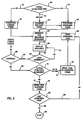
- a group of items to be learned is separated by an initial test 2 into two groups of known items 4 and unknown items 6 based on the user's actual knowledge, not his perceived knowledge.
- a sequence of known and unknown items is generated at a sequence generator 8. Each of the items in the sequence is then presented on a display 10 and then tested 12.
- the user is then presented with the test item and required to give a response at step 13.
- the response is evaluated at decision point 14. If the answer is correct, then the method follows along the path 16 and the item is then stored 18 in the collection of known items 4 and the next item in the sequence is incremented at step 20 and the process continues.
- step 24 the method follows along path 22 to step 24 where the user is provided the answer or paired response to the item.
- the process continues and at step 26 the item is stored in the collection of unknown items 6.
- step 28 the sequence is incremented and the next item in the sequence is displayed.
- the method determines at step 30 whether the item is the last item to be learned; if it is, the process stops at step 32, if not, and there are items remaining, the process continues along path 34 and the next item in the sequence is incremented and the process continues.
- a method that separates the items to be learned or for use in measuring performance into three groups based entirely on the user's perception of whether he knows the item not on the basis of whether the item is actually known or unknown.
- the terms "known” and "unknown” represent a relative multilevel degree of knowledge and not an absolute binary knowledge.
- any perceptible factor can be substituted for the known and unknown items described in the preferred embodiments.
- this invention can be used to test for use or nonuse.
- a further refinement of the sorting process sets a time limit for receiving the user's subjective response.
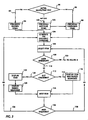
- step 40 the user is provided with an item and given an initial test as to whether he believes he knows the answer or not. Also, there is a clock running, unseen and unknown by the user, that times the response. It should be emphasized that in this test, the user is asked whether or not he knows the item, not tested on the item. If the user states that the answer is known, then the process follows path 42 and the item is stored in the perceived known items category 44. If the user responds that the item is not known, the process follows path 46 and the item is stored in the perceived unknown items category 48. If the user responds that he is not sure whether the item is known or unknown, then the process follows path 50 and the item is stored in the perceived not sure items category 52.
- the item is treated as an unknown item and stored in perceived unknown items category 48.
- the perceived not sure items in category 52 are combined with the perceived unknown items in category 48 and are called subjectively unknown items.
- the subjective unknown items together with the perceived subjective known items are directed to sequence generator 54 which creates a sequence or list of unknown and known subjective items.
- the sequence will include at least one unknown item and a plurality of randomly selected known items.
- the subjective unknown items can be thought of as arranged in order from 1 to N where N is the total number of subjective unknown items.
- the sequence generator 54 selects the first subjective unknown item and combines that with the randomly selected subjective known items to generate the sequence. Once the sequence is generated, the process follows along path 56 and the first item in the sequence is then displayed to the user by display 58. The method will continue displaying each item in the sequence until such time as a user interrupt occurs.
- the item can be displayed visually or auditorily in a variety of ways including animation, color adaptation, repetition, position, dimensional, sound and rhythm. In this way there is a continued repetitious presentation of the subjective unknown item along with randomly selected subjective known items.
- the method determines whether the user has chosen to interrupt the presentation. If not, the process follows path 62 and returns to display 58 where the next item in the sequence is presented. If there is a user interrupt detected at user interrupt 60, the process follows path 64 to decision block 66 where the method determines whether the user should continue with the current sequence or divert to other activities. If the method continues with the current sequence, the process follows path 68 to decision block 70. At decision block 70, the user is queried about the item and is asked whether the item is perceived as known or unknown. Again, this is a subjective test only. If the item is perceived known, the method follows path 72 and the item is stored at step 74 in perceived known items 44.
- the method checks at decision block 82 to see whether the unknown item is the last unknown item. If the item is not the last unknown item, the method follows path 84 to next unknown item selector 80 which selects the next unknown item and passes control to sequence generator 54 for generating new sequence. Returning to decision point 82, if the unknown item was the last unknown item, then the process follows path 86 and stops at point 88.
- next unknown item is selected at next unknown item selector 80 and a new sequence is generated by sequence generator 54.
- each of the items in a group of items to be learned has an associated paired response.
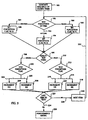
- initial step 90 the user is queried as to whether he believes he knows the item and its paired response. The user is not asked to give or provide the paired response at this time. Also the response is timed and if a response is not given within a predetermined time T, then the item and its paired response are treated as a perceived unknown item. If the user responds that he knows the item and its paired response, the process follows path 92 and the item with its associated paired response is stored in an array 94 labeled perceived known items.
- the process follows path 96 and the item is stored in array 98 as a perceived unknown item. If the user responds that he is not sure whether the item is known or unknown, the process follows path 100 and the item is stored in array 102 as a perceived not sure item.
- the items in arrays 98 and 102 are combined in a single table of unknown items.
- Sequence generator 104 produces a sequence or list of perceived known items and perceived unknown items.
- the sequence generally consists of a single perceived unknown item and a plurality of randomly selected perceived known items.
- the process follows path 110 to determine whether the selected subjective item is a perceived known or perceived unknown item at step 112. If the item is a perceived unknown item, then the process follows path 114 and both the item and its paired response are displayed to the user simultaneously at display 116. After the item and its paired response are displayed at step 116, the list of sequenced items is incremented and the next item is incremented at step 118. If the item selected at step 106 is a perceived known item, then the process follows path 120. The perceived known item is displayed at display item step 122 at a first time.
- the associated paired response is displayed to the user at display paired response step 124.
- the list of sequenced items is incremented by the next item at step 118.
- the process determines at step 126 as to whether the sequence is completed, if not, then the process follows path 128 and the next item is presented. If the item is the last item in the sequence, then the process follows path 130 and a new sequence of subjective items is generated by sequence generator 104.
- One unique feature of the method of the present invention is the novel way it permits the user to interrupt the learning process at any time. Still referring to FIGURE 3, if a user interrupt is detected at step 108, the method branches along path 132 to FIGURE 4. Referring now to FIGURE 4, the unique interrupt feature of the present invention is described. Decision box 140 is activated at the step in the process of FIGURE 3 shown at 108. If the system determines that the user has actually activated the interrupt, the process follows path 142 and the user is queried at decision block 144 as to whether he wishes to begin a new sequence or not. If the user selects to initiate a new sequence, the process branches through path 146 back to sequence generator 104 (FIGURE 3).
- Sequence generator 104 is activated to select a new unknown and generate a new sequence for continuing the method. If the user decides not to select a new sequence and responds NO, the process may follow path 148 and the user is queried at game step 150 as to whether he wishes to divert his attention. If yes, the process branches to a set of games that are specifically designed to help alleviate boredom, improve the user's attention span or teach some other aspect of the paired association such as exact spelling. There can also be games of any conventional sort such as Hangman, etc. If the user decides not to select a game, the process continues down path 152 and the user is at step 154 asked whether he would like a different test or different learning scheme such as the performance evaluation illustrated in FIGURE 5. If the user answers YES, the process branches to the new Test. If the user responds NO, then the method stops.
- timer 158 determines whether the timer timed out.
- the method is provided with a timer to measure the user's response time. It also functions, when used in connection with a stored program digital computer and display, to time out automatically and stop in the event that the user is no longer working with the device.
- timer 158 can be a counter used to measure cycling by counting the number of times an unknown has been repeated. If the user is cycling too fast, the method can automatically initiate new sequence 144 or different testing 154. If the user is cycling too slowly, the method can branch to a prescriptive game 150 or other activity.
- timer 158 has timed out, then the process follows path 160 and returns to decision point 144 and may ask the user whether he wishes to choose a new sequence. If it is determined that the timer has not stopped, the process follows path 162 and the sequence is restarted at step 164 and the process continues.
- step 180 a sequence of items is generated and presented to the user one item at a time at test perception step 182.
- step 182 the user is asked whether he knows the item, whether he does not know the item or whether he is not sure if the item is known or unknown. Again, it must be emphasized that what this invention seeks to determine is not whether the item is actually known or unknown, but whether the user believes the item is known or unknown.
- a perception flag is set, in this case a "U" for unknown. If the user responds that he does know the item, the process follows path 188 and the perception flag is set to "K" for known at step 190. If the user responds that he is not sure whether the item is known or unknown, the process follows path 192 and the perception flag is set to "U" for unknown at step 194.
- the item is presented to the user and he is queried as to his actual knowledge of the item. This occurs at reality test step 196 where the user is asked to provide an appropriate response. If the response is incorrect or wrong, the process follows path 198 where the perception flag is tested at step 200. If the flag was set to U, the process follows path 202 and the UU counter is incremented by one at 204. If the perception flag is set to "K”, the process follows path 206 and the "KU” counter is incremented by one at step 208.
- the process follows path 210 and the perception flag is tested at step 212. If the perception flag had previously been set to "K” for known, the process follows path 214 and the "KK" register is incremented by one at step 216. If the perception flag was set to "U”, the process follows path 218 and the "UK" register is incremented by one at step 220. After the appropriate registers have been incremented in steps 204, 208, 216 and 220, the process determines whether the item is the last item in the sequence at counter 222. If it is the last item in the sequence, the process moves along path 224 to performance rating step 226.
- One method of rating or evaluating performance is to divide the sum of registers 204 and 216 by the sum of registers 204, 208, 216 and 220 expressing the result as a percentage referred to as a current measure of knowledge.
- Another performance evaluation is calculated by taking one minus the sum of registers 208 and 220 divided by the sum of registers 204, 208, 216 and 220 expressed as a percentage referred to as a measure of performance ability.
- Other performance rating calculations are well-known to those of ordinary skill in the art.
- an apparatus for practicing the invention is shown as a wrist-mounted computer with a visual display.
- the display can be either an audio annunciator or the combination of a visual and audio display.
- the improved learning apparatus is shown generally at 300 and consists of a housing 302, a display 304, ports 306 and 308 that interface an external general purpose computer with the internal computer or microprocessor (not shown).
- Function switch 310 is used to control apparatus functions such as ON/OFF.
- Shown generally at 312 are the input devices which can be standard pressure sensitive switches labeled "Unknown” 314, "Not Sure” 316 and "Known 318.
- FIGURE 6 is a conventional computer system or microprocessor possessing standard processing, memory and I/O functions.
- the memory would be stored a list or file of data consisting of the items or a group of items to be taught to the user.
- shown on display 304 are the two names of a drug, the tradename and its generic name (the item and its paired response).
- Display means 304 flashes the item 320, in this case the word, "amoxil", and the paired response 322 beneath it in this case the word, "penicillin”.
- switches 314, 316 and 318 are activated as means for receiving a response from the user. If the user believes that he knows the association between amoxil and penicillin, he depresses "Known” switch 318. If, on the other hand, the user does not know the relationship, he depresses "Unknown” switch 314. If the user is unsure as to whether the relationship is known or unknown, he presses "Not Sure” switch 316.
- switches 312 Using standard computer techniques, the input from switches 312 is fed to the logic means of the microprocessor which labels the item as "Known” if switch 318 was activated by the user or "Unknown” if either switches 314 or 316 are activated by the user.
- the system continues displaying the various items 320 with the associated paired response 322 and querying the user for his perception until the list of items is completed.
- the microprocessor Once the list or sequence is completed, the microprocessor, through its stored program, generates a new list or sequence of the items to be learned, including at least one each of the known and unknown subjective of items.
- FIGURE 6 there are shown three separate displays 304A, 304B and 304C illustrating how the items 320 and the paired response 322 are presented to the user in a sequence.
- 304A both the unknown item 320 with its paired response 322 is shown on the display.
- the user can activate any of switches 312 to interrupt the process.
- the system presents a known item 326 on display 304B.
- the paired response 328 to item 326 is displayed together and presented to the user on display 304C.
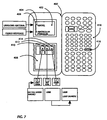
- FIGURE 7 an alternative embodiment of an apparatus in accordance with the present invention is shown generally as computer 400. Similar to the computer shown in FIGURE 6, this computer employs a standard microprocessor with conventional internal arithmetic and logic functions, conventional I/O handling and off-chip memory in RAM, ROM or other suitable memory device. As these items are well-known to those persons of ordinary skill in the art, they are not shown.
- computer 400 there is a display 402 which in the preferred embodiment is a liquid crystal display for presenting an item 404 and its associated paired response 406 to the user. In this case, the item 404 is material not known or believed to be not known by the user and referred to as unknown material.
- Switch 410 indicates that the user perceives he does not know the item.
- Switch 412 indicates that the user is not sure whether the item is known or unknown and switch 414 indicates that the user perceives he does know the item.
- keyboard 416 consisting of a full set of alpha numeric keys as well as various control keys. Keyboard 416 permits for vastly increased user input. For instance, in one embodiment of the invention, the user is permitted at anytime to interrupt the learning process and activate a game or another learning module. For instance, by activating the enter key 418, the process of displaying the group of items would be halted and the user would be asked whether he wished to continue, start the sequence over, use a new sequence, play a game or some other activity.
- a method in accord with the present invention is contained on external memory.
- the external memory can be any of the type such as a floppy disk (both 5 1/4" and 3 1/2" varieties) a card or other chip type memory such as RAM or ROM.
- a device is provided for configuring computer 400 to perform either a method of teaching a user or evaluating user performance by presenting a group of items.
- the device has means for configuring input pad 408 to query the user as to whether an item is perceived known or unknown.
- the device has means for configuring the processor of computer 400 to sort each of the items into a group of perceived known items and a second group of perceived unknown items.
- the device also has means for configuring the processor of computer 400 to generate a sequence of subjective items including at least one of said first group and one of said second group.
- the device is provided with means for configuring display 402 with the sequence of the subjective items.
- the configurations described are preferably made by stored program instructions as is well-known to those of ordinary skill in the art.
- FIGURES 6 and 7 can operate under a set of stored instructions written in accord with the various embodiments of the method shown.
Landscapes
- Engineering & Computer Science (AREA)
- Theoretical Computer Science (AREA)
- Business, Economics & Management (AREA)
- Physics & Mathematics (AREA)
- Educational Administration (AREA)
- Educational Technology (AREA)
- General Physics & Mathematics (AREA)
- Electrically Operated Instructional Devices (AREA)
- Feedback Control In General (AREA)
- Testing And Monitoring For Control Systems (AREA)
- Management, Administration, Business Operations System, And Electronic Commerce (AREA)
- Devices For Executing Special Programs (AREA)
- Elevator Control (AREA)
- General Factory Administration (AREA)
- Image Analysis (AREA)
- Measurement Of Velocity Or Position Using Acoustic Or Ultrasonic Waves (AREA)
Applications Claiming Priority (3)
| Application Number | Priority Date | Filing Date | Title |
|---|---|---|---|
| US07/682,428 US5437553A (en) | 1991-04-08 | 1991-04-08 | Method and apparatus for automated learning and performance evaluation |
| CA002221256A CA2221256C (en) | 1991-04-08 | 1995-05-24 | Method and apparatus for automated learning and performance evaluation |
| PCT/US1995/006655 WO1996037869A1 (en) | 1991-04-08 | 1995-05-24 | Method and apparatus for automated learning and performance evaluation |
Publications (3)
| Publication Number | Publication Date |
|---|---|
| EP0835500A1 EP0835500A1 (en) | 1998-04-15 |
| EP0835500A4 EP0835500A4 (en) | 1998-06-03 |
| EP0835500B1 true EP0835500B1 (en) | 2000-08-16 |
Family
ID=27170540
Family Applications (1)
| Application Number | Title | Priority Date | Filing Date |
|---|---|---|---|
| EP95921417A Expired - Lifetime EP0835500B1 (en) | 1991-04-08 | 1995-05-24 | Method and apparatus for automated learning and performance evaluation |
Country Status (15)
| Country | Link |
|---|---|
| US (3) | US5437553A (pl) |
| EP (1) | EP0835500B1 (pl) |
| JP (1) | JPH11505936A (pl) |
| AT (1) | ATE195602T1 (pl) |
| AU (1) | AU692264B2 (pl) |
| BR (1) | BR9510595A (pl) |
| CA (1) | CA2221256C (pl) |
| DE (1) | DE69518445T2 (pl) |
| DK (1) | DK0835500T3 (pl) |
| ES (1) | ES2154339T3 (pl) |
| GR (1) | GR3034776T3 (pl) |
| NO (1) | NO975349L (pl) |
| PL (1) | PL179991B1 (pl) |
| PT (1) | PT835500E (pl) |
| WO (1) | WO1996037869A1 (pl) |
Cited By (1)
| Publication number | Priority date | Publication date | Assignee | Title |
|---|---|---|---|---|
| TWI486926B (pl) * | 2014-01-28 | 2015-06-01 |
Families Citing this family (68)
| Publication number | Priority date | Publication date | Assignee | Title |
|---|---|---|---|---|
| US6334779B1 (en) * | 1994-03-24 | 2002-01-01 | Ncr Corporation | Computer-assisted curriculum |
| US6336813B1 (en) * | 1994-03-24 | 2002-01-08 | Ncr Corporation | Computer-assisted education using video conferencing |
| US6688888B1 (en) * | 1996-03-19 | 2004-02-10 | Chi Fai Ho | Computer-aided learning system and method |
| US7207804B2 (en) * | 1996-03-27 | 2007-04-24 | Michael Hersh | Application of multi-media technology to computer administered vocational personnel assessment |
| AU730985B2 (en) | 1996-03-27 | 2001-03-22 | Michael Hersh | Application of multi-media technology to psychological and educational assessment tools |
| US5944530A (en) | 1996-08-13 | 1999-08-31 | Ho; Chi Fai | Learning method and system that consider a student's concentration level |
| GB2316524B (en) * | 1996-08-16 | 2000-06-14 | Seymour James Keith Gough | Teaching aid |
| US6039575A (en) * | 1996-10-24 | 2000-03-21 | National Education Corporation | Interactive learning system with pretest |
| NL1005053C2 (nl) * | 1997-01-21 | 1998-07-22 | Uitgeverij En Boekhandel W J T | Apparaat voor zelfstudie. |
| US20040219494A1 (en) * | 1997-03-21 | 2004-11-04 | Boon John F. | Authoring tool and method of use |
| US6022221A (en) | 1997-03-21 | 2000-02-08 | Boon; John F. | Method and system for short- to long-term memory bridge |
| ZA982599B (en) * | 1997-03-28 | 1998-09-30 | Softlight Inc | Evaluation based learning system |
| US6112049A (en) * | 1997-10-21 | 2000-08-29 | The Riverside Publishing Company | Computer network based testing system |
| USRE38432E1 (en) | 1998-01-29 | 2004-02-24 | Ho Chi Fai | Computer-aided group-learning methods and systems |
| US6604084B1 (en) * | 1998-05-08 | 2003-08-05 | E-Talk Corporation | System and method for generating an evaluation in a performance evaluation system |
| US6285993B1 (en) * | 1998-06-01 | 2001-09-04 | Raytheon Company | Method and apparatus for modeling individual learning styles |
| DE19904690C2 (de) * | 1998-06-30 | 2001-06-07 | Roland Stankewitz | Vorrichtung zum Trainieren des Sprachwissens |
| US6398556B1 (en) * | 1998-07-06 | 2002-06-04 | Chi Fai Ho | Inexpensive computer-aided learning methods and apparatus for learners |
| US9792659B2 (en) * | 1999-04-13 | 2017-10-17 | Iplearn, Llc | Computer-aided methods and apparatus to access materials in a network environment |
| US6178395B1 (en) * | 1998-09-30 | 2001-01-23 | Scientific Learning Corporation | Systems and processes for data acquisition of location of a range of response time |
| DE19903845A1 (de) * | 1999-02-01 | 2000-08-03 | Christian Thiemann | Vokabel Master - ein Vokabel - lerngerät im Taschenformat |
| US20030129574A1 (en) * | 1999-12-30 | 2003-07-10 | Cerego Llc, | System, apparatus and method for maximizing effectiveness and efficiency of learning, retaining and retrieving knowledge and skills |
| US6652283B1 (en) * | 1999-12-30 | 2003-11-25 | Cerego, Llc | System apparatus and method for maximizing effectiveness and efficiency of learning retaining and retrieving knowledge and skills |
| US6419496B1 (en) | 2000-03-28 | 2002-07-16 | William Vaughan, Jr. | Learning method |
| US6921268B2 (en) * | 2002-04-03 | 2005-07-26 | Knowledge Factor, Inc. | Method and system for knowledge assessment and learning incorporating feedbacks |
| US8165518B2 (en) * | 2000-10-04 | 2012-04-24 | Knowledge Factor, Inc. | Method and system for knowledge assessment using confidence-based measurement |
| US7260355B2 (en) * | 2000-11-02 | 2007-08-21 | Skillsoft Corporation | Automated individualized learning program creation system and associated methods |
| US6606480B1 (en) | 2000-11-02 | 2003-08-12 | National Education Training Group, Inc. | Automated system and method for creating an individualized learning program |
| JP3833177B2 (ja) * | 2000-11-30 | 2006-10-11 | キヤノン株式会社 | 画像処理装置、画象処理方法、記憶媒体及びプログラム |
| US7181413B2 (en) * | 2001-04-18 | 2007-02-20 | Capital Analytics, Inc. | Performance-based training assessment |
| SE0101683D0 (sv) * | 2001-05-14 | 2001-05-14 | Torkel Klingberg | New method |
| US20040014016A1 (en) * | 2001-07-11 | 2004-01-22 | Howard Popeck | Evaluation and assessment system |
| US7922494B2 (en) * | 2001-08-28 | 2011-04-12 | International Business Machines Corporation | Method for improved administering of tests using customized user alerts |
| US7632101B2 (en) | 2001-10-05 | 2009-12-15 | Vision Works Ip Corporation | Method and apparatus for periodically questioning a user using a computer system or other device to facilitate memorization and learning of information |
| US10347145B1 (en) | 2001-10-05 | 2019-07-09 | Vision Works Ip Corporation | Method and apparatus for periodically questioning a user using a computer system or other device to facilitate memorization and learning of information |
| US7052277B2 (en) * | 2001-12-14 | 2006-05-30 | Kellman A.C.T. Services, Inc. | System and method for adaptive learning |
| AU2003210929A1 (en) * | 2002-02-06 | 2003-09-02 | Mintel Learning Technologies, Inc. | A system and method to optimize human associative memory and to enhance human memory |
| JP3839335B2 (ja) * | 2002-03-25 | 2006-11-01 | 富士通株式会社 | 学習支援方法,及び学習支援プログラム |
| JP3839336B2 (ja) * | 2002-03-26 | 2006-11-01 | 富士通株式会社 | 学習支援方法 |
| AU2002951166A0 (en) * | 2002-09-02 | 2002-09-19 | Adrian Ternouth | Recalling items of information |
| US8523575B2 (en) * | 2002-09-02 | 2013-09-03 | Nextthinksoft Pty Ltd. | Recalling items of information |
| US7309315B2 (en) * | 2002-09-06 | 2007-12-18 | Epoch Innovations, Ltd. | Apparatus, method and computer program product to facilitate ordinary visual perception via an early perceptual-motor extraction of relational information from a light stimuli array to trigger an overall visual-sensory motor integration in a subject |
| AU2002951608A0 (en) * | 2002-09-23 | 2002-10-10 | Lewis Cadman Consulting Pty Ltd | A method of delivering a test to a candidate |
| US20040098249A1 (en) * | 2002-11-18 | 2004-05-20 | Yaliang Wang | Method and system to utilize web resources for language vocabulary learning |
| US20040209232A1 (en) * | 2003-04-21 | 2004-10-21 | Dolores Neumann | Method and system for selective prenatal and postnatal learning |
| US20040230825A1 (en) * | 2003-05-16 | 2004-11-18 | Shepherd Eric Robert | Secure browser |
| US20050003336A1 (en) * | 2003-07-02 | 2005-01-06 | Berman Dennis R. | Method and system for learning keyword based materials |
| US7357640B2 (en) * | 2003-07-02 | 2008-04-15 | Drb Lit Ltd. | Lock-In Training system |
| US7364432B2 (en) * | 2004-03-31 | 2008-04-29 | Drb Lit Ltd. | Methods of selecting Lock-In Training courses and sessions |
| US20060003296A1 (en) * | 2004-06-21 | 2006-01-05 | David Dockterman | System and method for assessing mathematical fluency |
| EP1666073B1 (en) | 2004-10-13 | 2008-08-27 | The Procter and Gamble Company | Device for delivering an antimicrobial composition |
| US7828552B2 (en) * | 2005-02-22 | 2010-11-09 | Educational Testing Service | Method and system for designing adaptive, diagnostic assessments |
| US20070238079A1 (en) * | 2006-04-06 | 2007-10-11 | Big Brainz, Inc. | Strategic enforcement of long-term memory |
| WO2008027528A2 (en) * | 2006-09-01 | 2008-03-06 | K12.Inc. | Multimedia system and method for teaching basal math and science |
| WO2009117525A1 (en) | 2008-03-18 | 2009-09-24 | Jones International, Ltd. | Assessment-driven cognition system |
| US8727788B2 (en) * | 2008-06-27 | 2014-05-20 | Microsoft Corporation | Memorization optimization platform |
| US11392918B1 (en) * | 2008-11-17 | 2022-07-19 | Charles Schwab & Co, Inc. | System and method for assisting individuals in assessing and improving their behavior regarding financial and other-than-financial planning based on their personal circumstances and assisting with implementing such plans |
| US20110105217A1 (en) * | 2009-11-05 | 2011-05-05 | Haveson Brian D | Interactive gaming device |
| US20110111385A1 (en) * | 2009-11-06 | 2011-05-12 | Honeywell International Inc. | Automated training system and method based on performance evaluation |
| US20120077180A1 (en) * | 2010-09-26 | 2012-03-29 | Ajay Sohmshetty | Method and system for knowledge representation and processing using a structured visual idea map |
| GB201215377D0 (en) | 2012-08-21 | 2012-10-10 | Colby Mark A | Collabration in a communications network |
| US9265458B2 (en) | 2012-12-04 | 2016-02-23 | Sync-Think, Inc. | Application of smooth pursuit cognitive testing paradigms to clinical drug development |
| US9380976B2 (en) | 2013-03-11 | 2016-07-05 | Sync-Think, Inc. | Optical neuroinformatics |
| JP6142616B2 (ja) * | 2013-03-27 | 2017-06-07 | 富士通株式会社 | ディスカッション支援プログラム、ディスカッション支援方法、及び情報処理装置 |
| US9386950B1 (en) * | 2014-12-30 | 2016-07-12 | Online Reading Tutor Services Inc. | Systems and methods for detecting dyslexia |
| US10803765B2 (en) | 2017-12-22 | 2020-10-13 | Knowledge Factor, Inc. | Display and report generation platform for testing results |
| CN110175019B (zh) * | 2019-06-04 | 2021-11-16 | 南京大学 | 一种基于中断序列图的中断驱动系统验证方法 |
| RO137798A2 (ro) | 2022-05-16 | 2023-11-29 | Cybertrainer S.R.L. | Sistem de învăţare asistată de calculator şi metodă |
Family Cites Families (8)
| Publication number | Priority date | Publication date | Assignee | Title |
|---|---|---|---|---|
| US4829431A (en) * | 1983-12-27 | 1989-05-09 | Texas Instruments Incorporated | Method and apparatus for correlating test information |
| US4941829A (en) * | 1987-12-23 | 1990-07-17 | International Business Machines Corporation | Method for providing a dynamic tutorial display |
| US4877408A (en) * | 1988-02-09 | 1989-10-31 | Hartsfield Ben W | Competitive computer educational game |
| US5002491A (en) * | 1989-04-28 | 1991-03-26 | Comtek | Electronic classroom system enabling interactive self-paced learning |
| US5035625A (en) * | 1989-07-24 | 1991-07-30 | Munson Electronics, Inc. | Computer game teaching method and system |
| US5059127A (en) * | 1989-10-26 | 1991-10-22 | Educational Testing Service | Computerized mastery testing system, a computer administered variable length sequential testing system for making pass/fail decisions |
| US5180309A (en) * | 1990-12-04 | 1993-01-19 | United States Of America As Represented By The Secretary Of The Navy | Automated answer evaluation and scoring system and method |
| DE4408459A1 (de) * | 1994-03-12 | 1995-09-14 | Astrid Schneider | Einrichtung zur Erleichterung des Auswendig - Lernens |
-
1991
- 1991-04-08 US US07/682,428 patent/US5437553A/en not_active Expired - Lifetime
-
1995
- 1995-04-25 US US08/428,890 patent/US5545044A/en not_active Expired - Lifetime
- 1995-05-24 AT AT95921417T patent/ATE195602T1/de not_active IP Right Cessation
- 1995-05-24 PL PL95323681A patent/PL179991B1/pl not_active IP Right Cessation
- 1995-05-24 JP JP8535614A patent/JPH11505936A/ja active Pending
- 1995-05-24 WO PCT/US1995/006655 patent/WO1996037869A1/en not_active Ceased
- 1995-05-24 PT PT95921417T patent/PT835500E/pt unknown
- 1995-05-24 EP EP95921417A patent/EP0835500B1/en not_active Expired - Lifetime
- 1995-05-24 AU AU26502/95A patent/AU692264B2/en not_active Ceased
- 1995-05-24 BR BR9510595A patent/BR9510595A/pt not_active Application Discontinuation
- 1995-05-24 CA CA002221256A patent/CA2221256C/en not_active Expired - Fee Related
- 1995-05-24 ES ES95921417T patent/ES2154339T3/es not_active Expired - Lifetime
- 1995-05-24 DE DE69518445T patent/DE69518445T2/de not_active Expired - Fee Related
- 1995-05-24 DK DK95921417T patent/DK0835500T3/da active
- 1995-07-25 US US08/507,642 patent/US5577919A/en not_active Expired - Lifetime
-
1997
- 1997-11-21 NO NO975349A patent/NO975349L/no unknown
-
2000
- 2000-11-08 GR GR20000402465T patent/GR3034776T3/el not_active IP Right Cessation
Cited By (1)
| Publication number | Priority date | Publication date | Assignee | Title |
|---|---|---|---|---|
| TWI486926B (pl) * | 2014-01-28 | 2015-06-01 |
Also Published As
| Publication number | Publication date |
|---|---|
| DE69518445D1 (de) | 2000-09-21 |
| PL179991B1 (pl) | 2000-11-30 |
| GR3034776T3 (en) | 2001-02-28 |
| DK0835500T3 (da) | 2000-11-20 |
| ATE195602T1 (de) | 2000-09-15 |
| CA2221256A1 (en) | 1996-11-28 |
| DE69518445T2 (de) | 2001-02-08 |
| AU692264B2 (en) | 1998-06-04 |
| NO975349D0 (no) | 1997-11-21 |
| EP0835500A1 (en) | 1998-04-15 |
| PT835500E (pt) | 2000-12-29 |
| BR9510595A (pt) | 1999-08-10 |
| ES2154339T3 (es) | 2001-04-01 |
| US5437553A (en) | 1995-08-01 |
| PL323681A1 (en) | 1998-04-14 |
| US5545044A (en) | 1996-08-13 |
| HK1004438A1 (en) | 1998-11-27 |
| JPH11505936A (ja) | 1999-05-25 |
| AU2650295A (en) | 1996-12-11 |
| US5577919A (en) | 1996-11-26 |
| NO975349L (no) | 1998-01-23 |
| EP0835500A4 (en) | 1998-06-03 |
| WO1996037869A1 (en) | 1996-11-28 |
| CA2221256C (en) | 2005-10-11 |
Similar Documents
| Publication | Publication Date | Title |
|---|---|---|
| EP0835500B1 (en) | Method and apparatus for automated learning and performance evaluation | |
| US7011526B2 (en) | Method and system for short-to long-term memory bridge | |
| Englund et al. | Unified tri-service cognitive performance assessment battery (UTC-PAB). 1. Design and specification of the battery | |
| US5860933A (en) | Apparatus for aiding in the diagnosis of heart conditions | |
| US4151659A (en) | Machine for teaching reading | |
| Acker | A computerized approach to psychological screening—the Bexley-Maudsley Automated Psychological Screening and the Bexley-Maudsley Category sorting test | |
| Singer et al. | Effect of guided vs. discovery learning strategies on initial motor task learning, transfer, and retention | |
| JPH08179683A (ja) | 英単語学習装置 | |
| Singer et al. | Brief note: Effects of prompted and problem-solving approaches on learning and transfer of motor skills | |
| CN1133139C (zh) | 用于自动化学习和成绩评定的方法和设备 | |
| KR100347223B1 (ko) | 자동학습및성취평가를위한방법및장치 | |
| Braunfeld et al. | The Use of an Automatic Computer System in Teachin | |
| HK1004438B (en) | Method and apparatus for automated learning and performance evaluation | |
| KR20000054227A (ko) | 인공지능을 이용한 인터넷 문제은행 | |
| JP3940748B2 (ja) | 自動学習及び能力評価方法及び装置 | |
| JP3776923B2 (ja) | コンピュータシステムを用いた学習のためのデータ処理方法 | |
| JP2003177662A (ja) | 自動学習及び能力評価方法及び装置 | |
| Burton et al. | Relationship of cognitive style and word type for beginning readers | |
| Scholnick | Effects of stimulus availability on children's inferences | |
| JP2006301666A (ja) | 自動学習及び能力評価方法及び装置 | |
| RU16967U1 (ru) | Система изучения информации | |
| O'Brien et al. | Does figurative language present a unique comprehension problem? | |
| Wray | Computer‐assisted learning in language and reading | |
| Weyer | Fingerspelling by Computer. | |
| Caldwell et al. | Rule learning and complexity in simulated reading |
Legal Events
| Date | Code | Title | Description |
|---|---|---|---|
| PUAI | Public reference made under article 153(3) epc to a published international application that has entered the european phase |
Free format text: ORIGINAL CODE: 0009012 |
|
| 17P | Request for examination filed |
Effective date: 19971218 |
|
| AK | Designated contracting states |
Kind code of ref document: A1 Designated state(s): AT BE CH DE DK ES FR GB GR IE IT LI LU MC NL PT SE |
|
| AX | Request for extension of the european patent |
Free format text: LT PAYMENT 971218;LV PAYMENT 971218;SI PAYMENT 971218 |
|
| A4 | Supplementary search report drawn up and despatched | ||
| AK | Designated contracting states |
Kind code of ref document: A4 Designated state(s): AT BE CH DE DK ES FR GB GR IE IT LI LU MC NL PT SE |
|
| 17Q | First examination report despatched |
Effective date: 19990223 |
|
| GRAG | Despatch of communication of intention to grant |
Free format text: ORIGINAL CODE: EPIDOS AGRA |
|
| GRAG | Despatch of communication of intention to grant |
Free format text: ORIGINAL CODE: EPIDOS AGRA |
|
| GRAH | Despatch of communication of intention to grant a patent |
Free format text: ORIGINAL CODE: EPIDOS IGRA |
|
| GRAH | Despatch of communication of intention to grant a patent |
Free format text: ORIGINAL CODE: EPIDOS IGRA |
|
| GRAA | (expected) grant |
Free format text: ORIGINAL CODE: 0009210 |
|
| AK | Designated contracting states |
Kind code of ref document: B1 Designated state(s): AT BE CH DE DK ES FR GB GR IE IT LI LU MC NL PT SE |
|
| AX | Request for extension of the european patent |
Free format text: LT PAYMENT 19971218;LV PAYMENT 19971218;SI PAYMENT 19971218 |
|
| LTIE | Lt: invalidation of european patent or patent extension | ||
| REF | Corresponds to: |
Ref document number: 195602 Country of ref document: AT Date of ref document: 20000915 Kind code of ref document: T |
|
| REG | Reference to a national code |
Ref country code: CH Ref legal event code: EP |
|
| REG | Reference to a national code |
Ref country code: IE Ref legal event code: FG4D |
|
| ET | Fr: translation filed | ||
| REF | Corresponds to: |
Ref document number: 69518445 Country of ref document: DE Date of ref document: 20000921 |
|
| REG | Reference to a national code |
Ref country code: CH Ref legal event code: NV Representative=s name: A. BRAUN, BRAUN, HERITIER, ESCHMANN AG PATENTANWAE |
|
| ITF | It: translation for a ep patent filed | ||
| REG | Reference to a national code |
Ref country code: DK Ref legal event code: T3 |
|
| REG | Reference to a national code |
Ref country code: PT Ref legal event code: SC4A Free format text: AVAILABILITY OF NATIONAL TRANSLATION Effective date: 20000919 |
|
| REG | Reference to a national code |
Ref country code: ES Ref legal event code: FG2A Ref document number: 2154339 Country of ref document: ES Kind code of ref document: T3 |
|
| PLBE | No opposition filed within time limit |
Free format text: ORIGINAL CODE: 0009261 |
|
| STAA | Information on the status of an ep patent application or granted ep patent |
Free format text: STATUS: NO OPPOSITION FILED WITHIN TIME LIMIT |
|
| 26N | No opposition filed | ||
| REG | Reference to a national code |
Ref country code: GB Ref legal event code: IF02 |
|
| PGFP | Annual fee paid to national office [announced via postgrant information from national office to epo] |
Ref country code: IT Payment date: 20060531 Year of fee payment: 12 |
|
| PGFP | Annual fee paid to national office [announced via postgrant information from national office to epo] |
Ref country code: MC Payment date: 20061019 Year of fee payment: 12 Ref country code: AT Payment date: 20061019 Year of fee payment: 12 |
|
| PGFP | Annual fee paid to national office [announced via postgrant information from national office to epo] |
Ref country code: PT Payment date: 20061020 Year of fee payment: 12 |
|
| PGFP | Annual fee paid to national office [announced via postgrant information from national office to epo] |
Ref country code: NL Payment date: 20061024 Year of fee payment: 12 |
|
| PGFP | Annual fee paid to national office [announced via postgrant information from national office to epo] |
Ref country code: GB Payment date: 20061025 Year of fee payment: 12 |
|
| PGFP | Annual fee paid to national office [announced via postgrant information from national office to epo] |
Ref country code: IE Payment date: 20061026 Year of fee payment: 12 Ref country code: ES Payment date: 20061026 Year of fee payment: 12 |
|
| PGFP | Annual fee paid to national office [announced via postgrant information from national office to epo] |
Ref country code: SE Payment date: 20061027 Year of fee payment: 12 Ref country code: CH Payment date: 20061027 Year of fee payment: 12 |
|
| PGFP | Annual fee paid to national office [announced via postgrant information from national office to epo] |
Ref country code: GR Payment date: 20061030 Year of fee payment: 12 Ref country code: DK Payment date: 20061030 Year of fee payment: 12 |
|
| PGFP | Annual fee paid to national office [announced via postgrant information from national office to epo] |
Ref country code: LU Payment date: 20061107 Year of fee payment: 12 |
|
| PGFP | Annual fee paid to national office [announced via postgrant information from national office to epo] |
Ref country code: BE Payment date: 20061124 Year of fee payment: 12 |
|
| REG | Reference to a national code |
Ref country code: PT Ref legal event code: MM4A Free format text: LAPSE DUE TO NON-PAYMENT OF FEES Effective date: 20071126 |
|
| BERE | Be: lapsed |
Owner name: *BLOCKER ANNE SINGLETON Effective date: 20070531 Owner name: *COLLINS DEBORAH LYNN Effective date: 20070531 |
|
| EUG | Se: european patent has lapsed | ||
| REG | Reference to a national code |
Ref country code: CH Ref legal event code: PL |
|
| REG | Reference to a national code |
Ref country code: DK Ref legal event code: EBP |
|
| GBPC | Gb: european patent ceased through non-payment of renewal fee |
Effective date: 20070524 |
|
| PG25 | Lapsed in a contracting state [announced via postgrant information from national office to epo] |
Ref country code: PT Free format text: LAPSE BECAUSE OF NON-PAYMENT OF DUE FEES Effective date: 20071126 Ref country code: NL Free format text: LAPSE BECAUSE OF NON-PAYMENT OF DUE FEES Effective date: 20071201 Ref country code: MC Free format text: LAPSE BECAUSE OF NON-PAYMENT OF DUE FEES Effective date: 20070531 |
|
| NLV4 | Nl: lapsed or anulled due to non-payment of the annual fee |
Effective date: 20071201 |
|
| REG | Reference to a national code |
Ref country code: IE Ref legal event code: MM4A |
|
| PG25 | Lapsed in a contracting state [announced via postgrant information from national office to epo] |
Ref country code: AT Free format text: LAPSE BECAUSE OF NON-PAYMENT OF DUE FEES Effective date: 20070524 Ref country code: LI Free format text: LAPSE BECAUSE OF NON-PAYMENT OF DUE FEES Effective date: 20070531 Ref country code: CH Free format text: LAPSE BECAUSE OF NON-PAYMENT OF DUE FEES Effective date: 20070531 |
|
| REG | Reference to a national code |
Ref country code: FR Ref legal event code: ST Effective date: 20080131 |
|
| PG25 | Lapsed in a contracting state [announced via postgrant information from national office to epo] |
Ref country code: BE Free format text: LAPSE BECAUSE OF NON-PAYMENT OF DUE FEES Effective date: 20070531 |
|
| PG25 | Lapsed in a contracting state [announced via postgrant information from national office to epo] |
Ref country code: DK Free format text: LAPSE BECAUSE OF NON-PAYMENT OF DUE FEES Effective date: 20070531 |
|
| PG25 | Lapsed in a contracting state [announced via postgrant information from national office to epo] |
Ref country code: IE Free format text: LAPSE BECAUSE OF NON-PAYMENT OF DUE FEES Effective date: 20070524 Ref country code: GB Free format text: LAPSE BECAUSE OF NON-PAYMENT OF DUE FEES Effective date: 20070524 |
|
| PG25 | Lapsed in a contracting state [announced via postgrant information from national office to epo] |
Ref country code: SE Free format text: LAPSE BECAUSE OF NON-PAYMENT OF DUE FEES Effective date: 20070525 |
|
| PG25 | Lapsed in a contracting state [announced via postgrant information from national office to epo] |
Ref country code: FR Free format text: LAPSE BECAUSE OF NON-PAYMENT OF DUE FEES Effective date: 20070531 |
|
| REG | Reference to a national code |
Ref country code: ES Ref legal event code: FD2A Effective date: 20070525 |
|
| PG25 | Lapsed in a contracting state [announced via postgrant information from national office to epo] |
Ref country code: FR Free format text: LAPSE BECAUSE OF NON-PAYMENT OF DUE FEES Effective date: 20060531 |
|
| PG25 | Lapsed in a contracting state [announced via postgrant information from national office to epo] |
Ref country code: GR Free format text: LAPSE BECAUSE OF NON-PAYMENT OF DUE FEES Effective date: 20071204 Ref country code: ES Free format text: LAPSE BECAUSE OF NON-PAYMENT OF DUE FEES Effective date: 20070525 |
|
| PGFP | Annual fee paid to national office [announced via postgrant information from national office to epo] |
Ref country code: FR Payment date: 20061017 Year of fee payment: 12 Ref country code: DE Payment date: 20080630 Year of fee payment: 14 |
|
| PG25 | Lapsed in a contracting state [announced via postgrant information from national office to epo] |
Ref country code: LU Free format text: LAPSE BECAUSE OF NON-PAYMENT OF DUE FEES Effective date: 20070524 |
|
| PG25 | Lapsed in a contracting state [announced via postgrant information from national office to epo] |
Ref country code: IT Free format text: LAPSE BECAUSE OF NON-PAYMENT OF DUE FEES Effective date: 20070524 |
|
| PG25 | Lapsed in a contracting state [announced via postgrant information from national office to epo] |
Ref country code: DE Free format text: LAPSE BECAUSE OF NON-PAYMENT OF DUE FEES Effective date: 20091201 |